
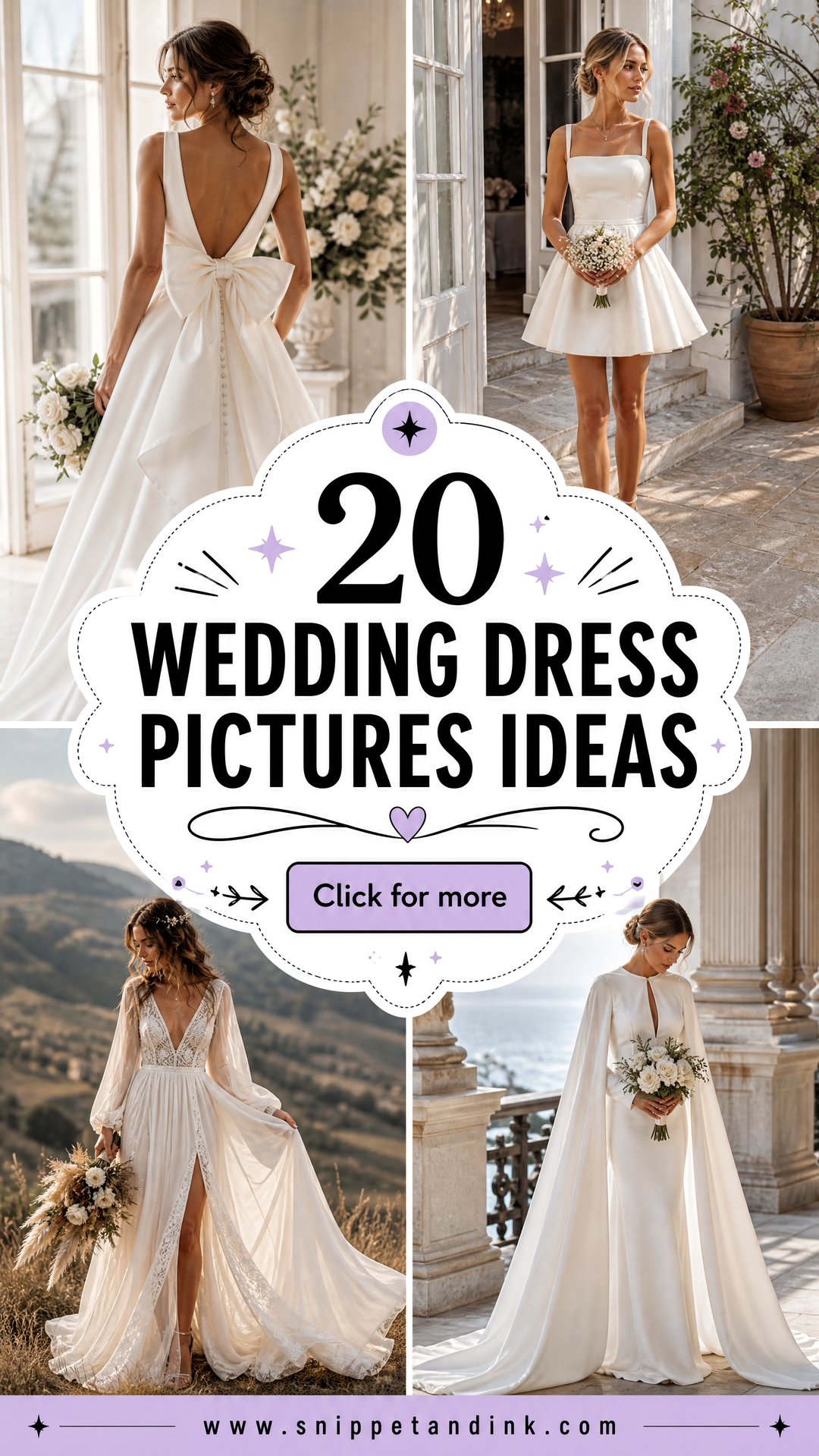
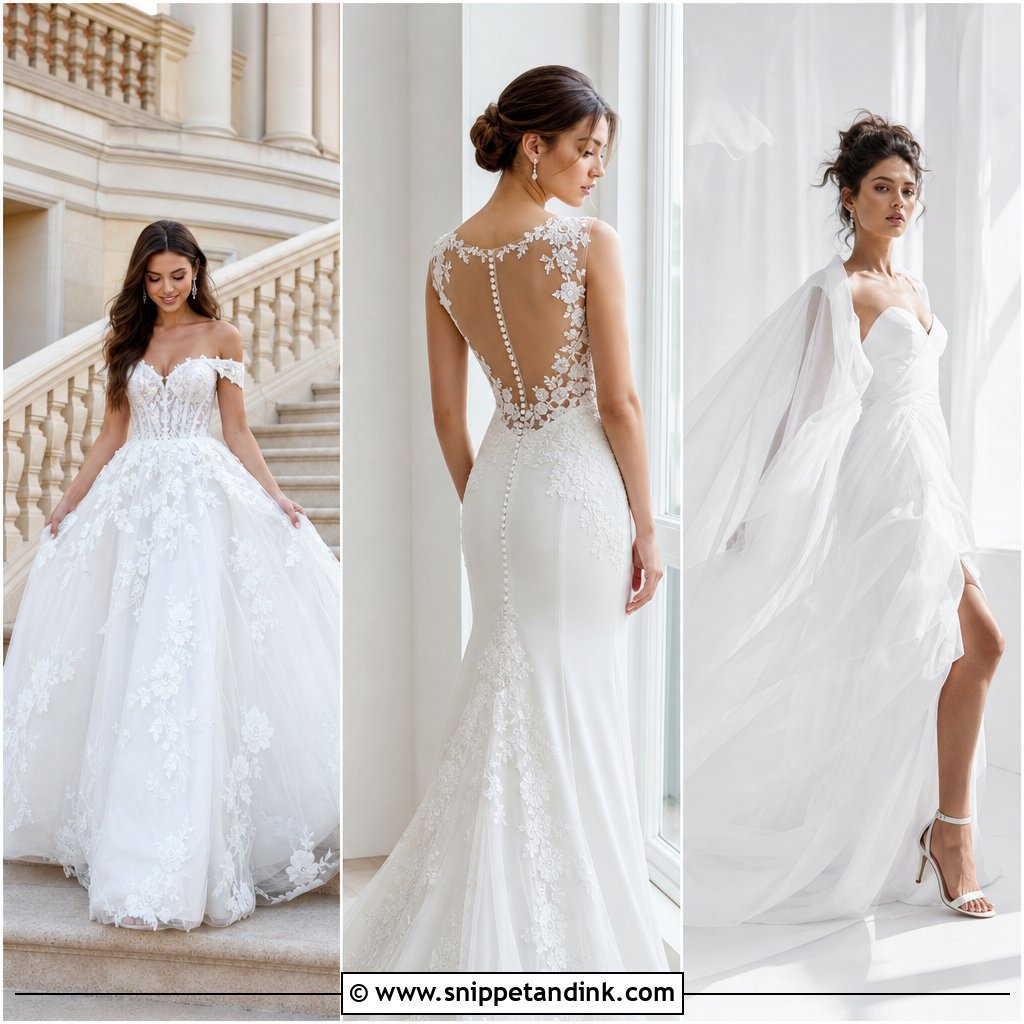
I photograph gowns all day long, and the thing I notice most is how differently a dress behaves on camera than on a hanger. Satin throws light, crepe swallows it, lace needs a bit of side light to show any texture at all. These 20 Wedding Dress Pictures Ideas are arranged as full outfits, with shoes, jewelry, veil and hair, so you can see the whole picture rather than a gown floating on its own. Bridal collections lately have leaned into basque waists, dimensional fabric, asymmetric shapes, big bows and detachable pieces, while ball gowns, lace and plain columns haven’t gone anywhere. As you look, notice which shapes you keep returning to; that pattern is more useful than any single favorite.
Reading a Dress Photo for What It Leaves Out
Designer and boutique pictures are made to sell the gown, and they’re good at it. The sample is often clipped or pinned at the back to fit the model, the light is placed to flatter the fabric, and the train has been arranged by someone standing just out of frame. None of that is dishonest, but it means a photo shows the dress at its best possible moment.
When you go to appointments, take your own pictures, and ask a friend to shoot them the way I would on the day:
- One full-length from the side and one from the back. Most brides only ever look at the front.
- One near a window in daylight, so you see the real color and how the fabric takes light.
- One with the phone flash on. It shows whether sequins or satin turn into white glare.
- A short video walking toward the camera, to see how the skirt moves.
Compare those, not the catalog shots. The dress you keep picking from your own photos is usually the right one.
1. Satin Ball Gown Wedding Dress
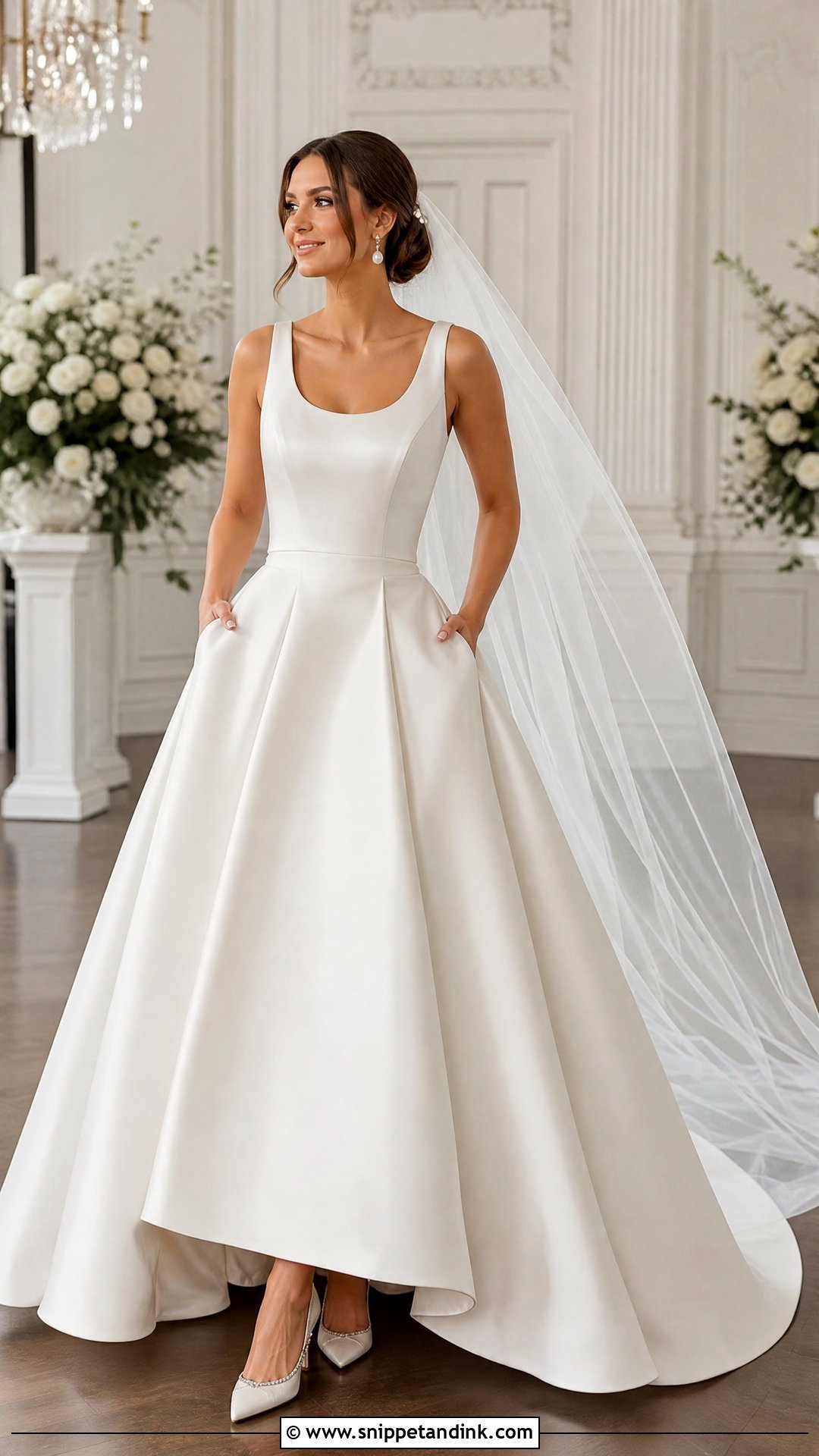
Satin is the fabric I have to think about most when I’m setting up a shot. It reflects window light in long smooth bands, which gives a ball gown real shape in pictures, but under a bare flash it can flare white across the skirt. A fitted bodice with a scoop, square or strapless neckline lets the skirt carry the drama. Pointed ivory pumps, pearl drops and a cathedral veil with a plain edge suit it, and a sleek low bun keeps the neckline clear. Internal boning and wider straps help if you want more support. Ask your tailor to hem it while you wear your actual shoes; a hem that’s half an inch off shows in every full-length frame.
2. Basque Waist Wedding Dress
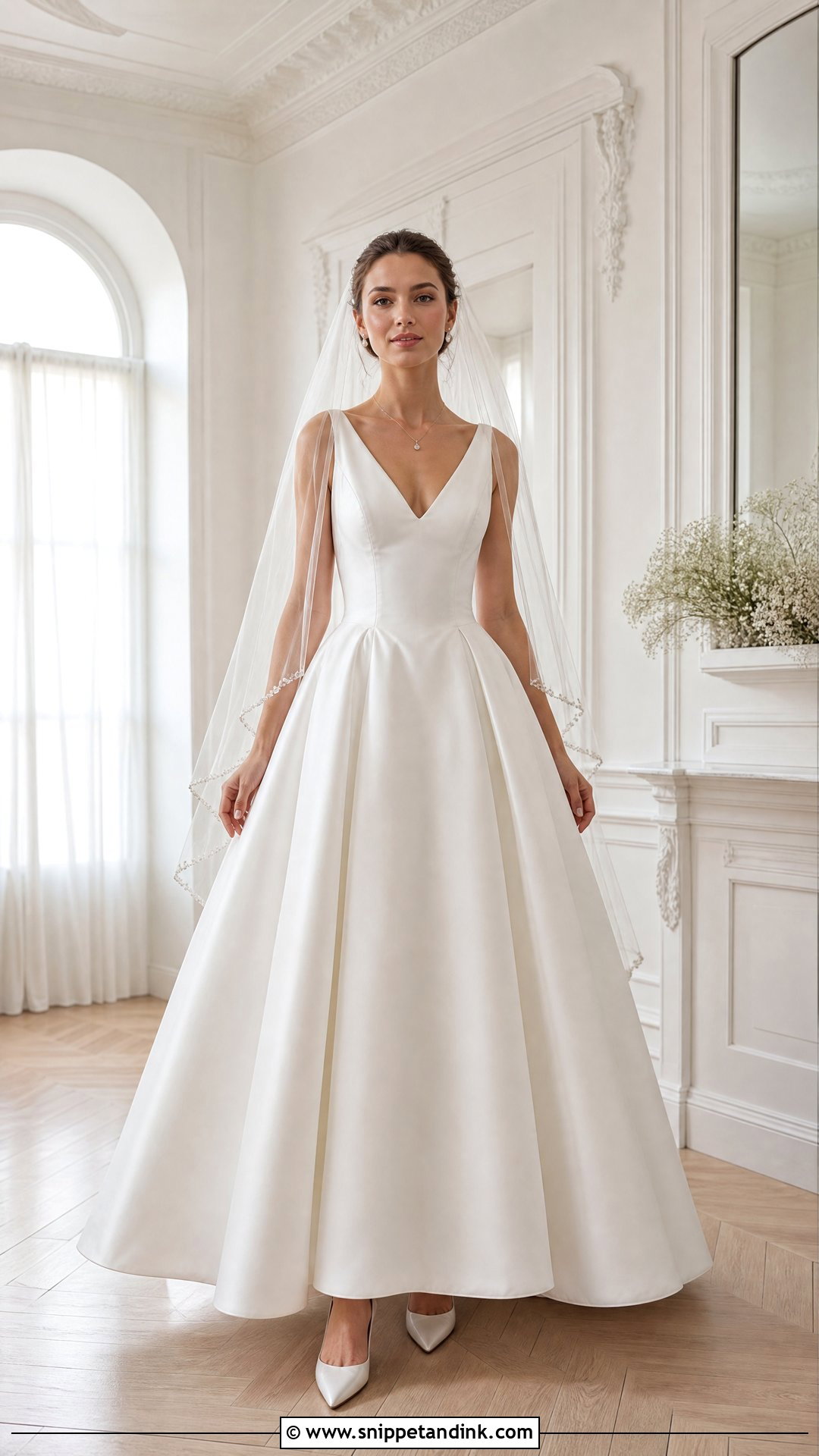
A basque waist dips into a V below the natural waist, and it reads beautifully from the front and in a slight three-quarter turn, less so straight side-on. Paired with a full satin, mikado or layered tulle skirt, the point lengthens the torso. Pointed pumps and a fine pendant keep the focus on that line. A long veil makes it formal; a fingertip veil keeps it lighter. Soft waves or a smooth bun, depending on the neckline. The fit has to be exact, because if the point shifts when you sit or digs into the waist, it wrinkles, and those creases show up in every seated photo.
3. Lace A-Line Wedding Dress
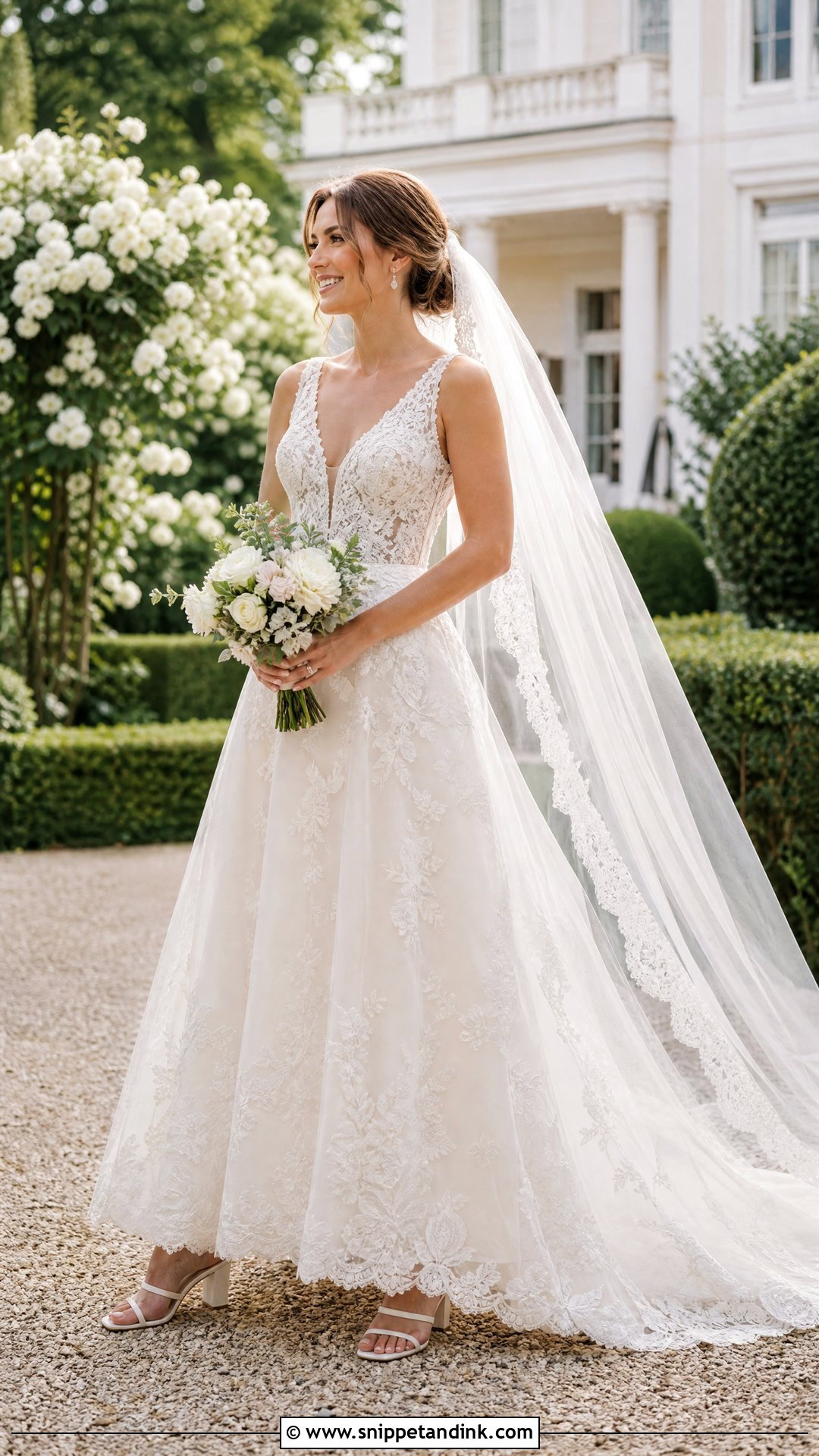
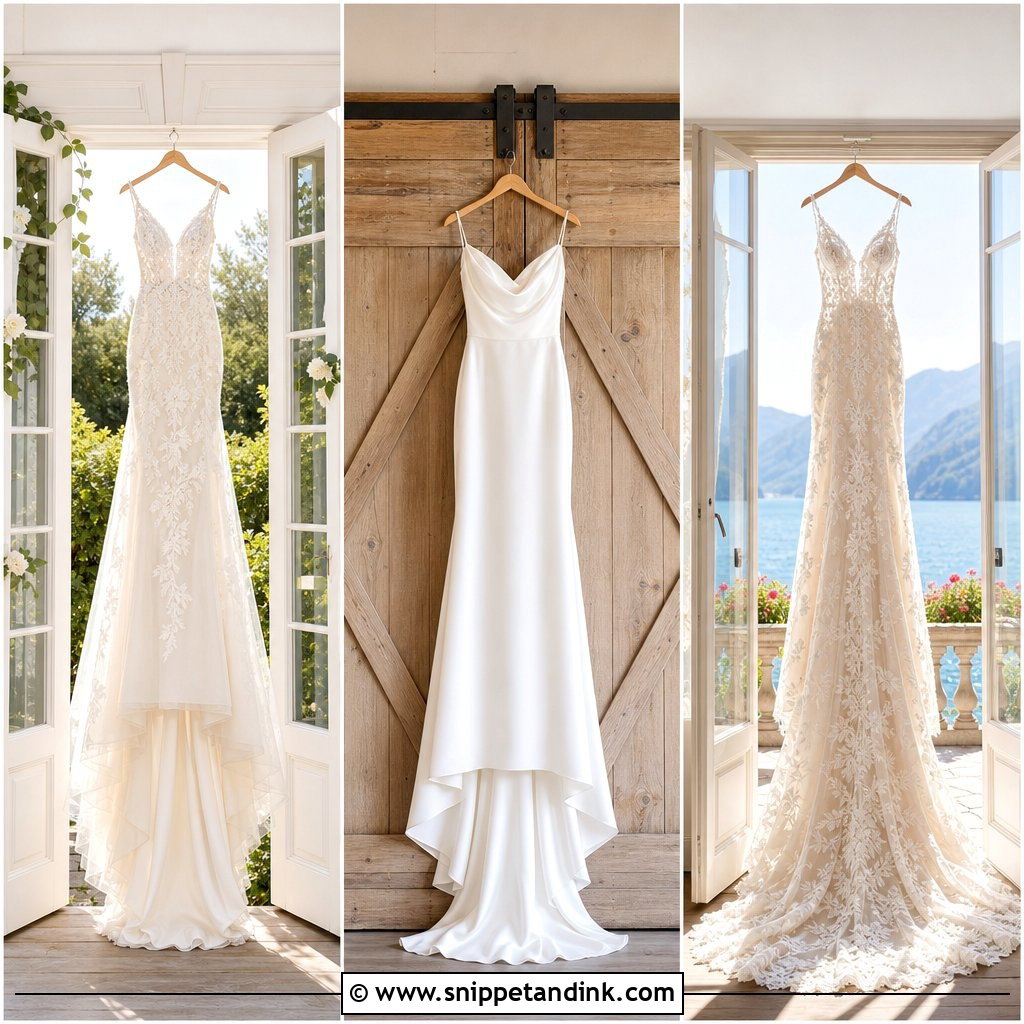
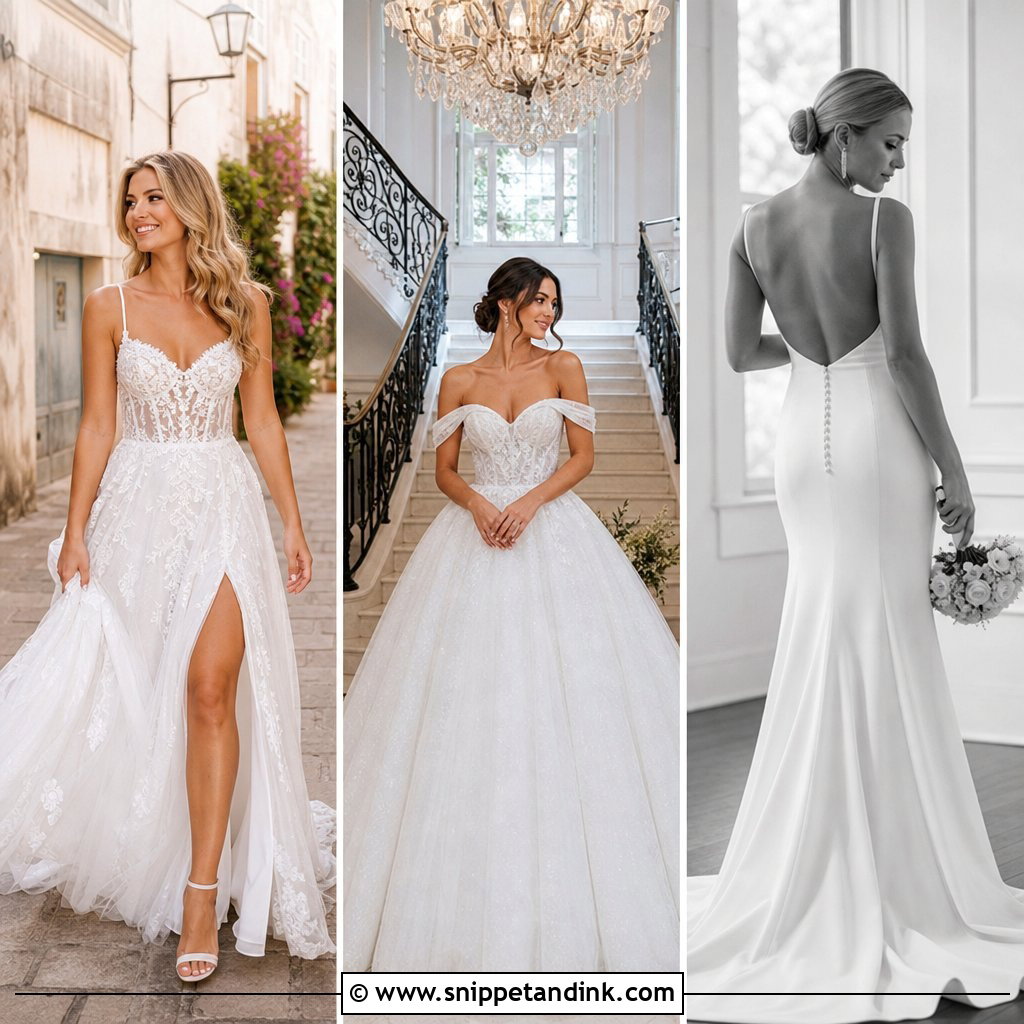
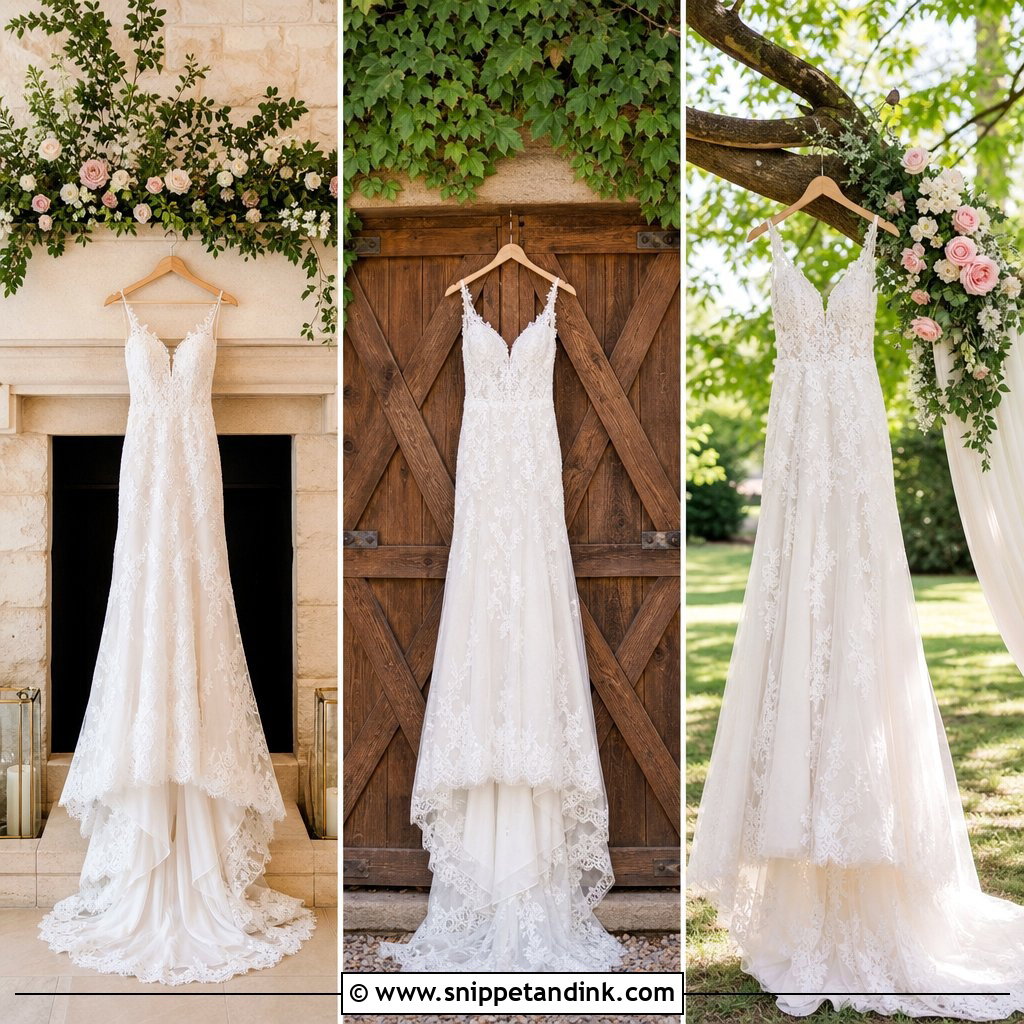
Lace on an A-line flatters almost anyone and almost any venue, gardens, estates or a traditional indoor room. On camera, lace texture disappears in flat front light and comes alive with light from the side, so I often turn brides toward a window for close-ups. A fitted bodice flowing gently from the waist is enough; extreme volume isn’t needed. The lace can cover everything or sit at the neckline, sleeves and hem. Pearl earrings, block-heel sandals and a sheer veil edged in matching lace suit it, with a small bouquet and loosely pinned hair. Detailed lace means less jewelry. Lined sleeves or a higher back add coverage without losing the airy feel.
4. Off-the-Shoulder Wedding Dress
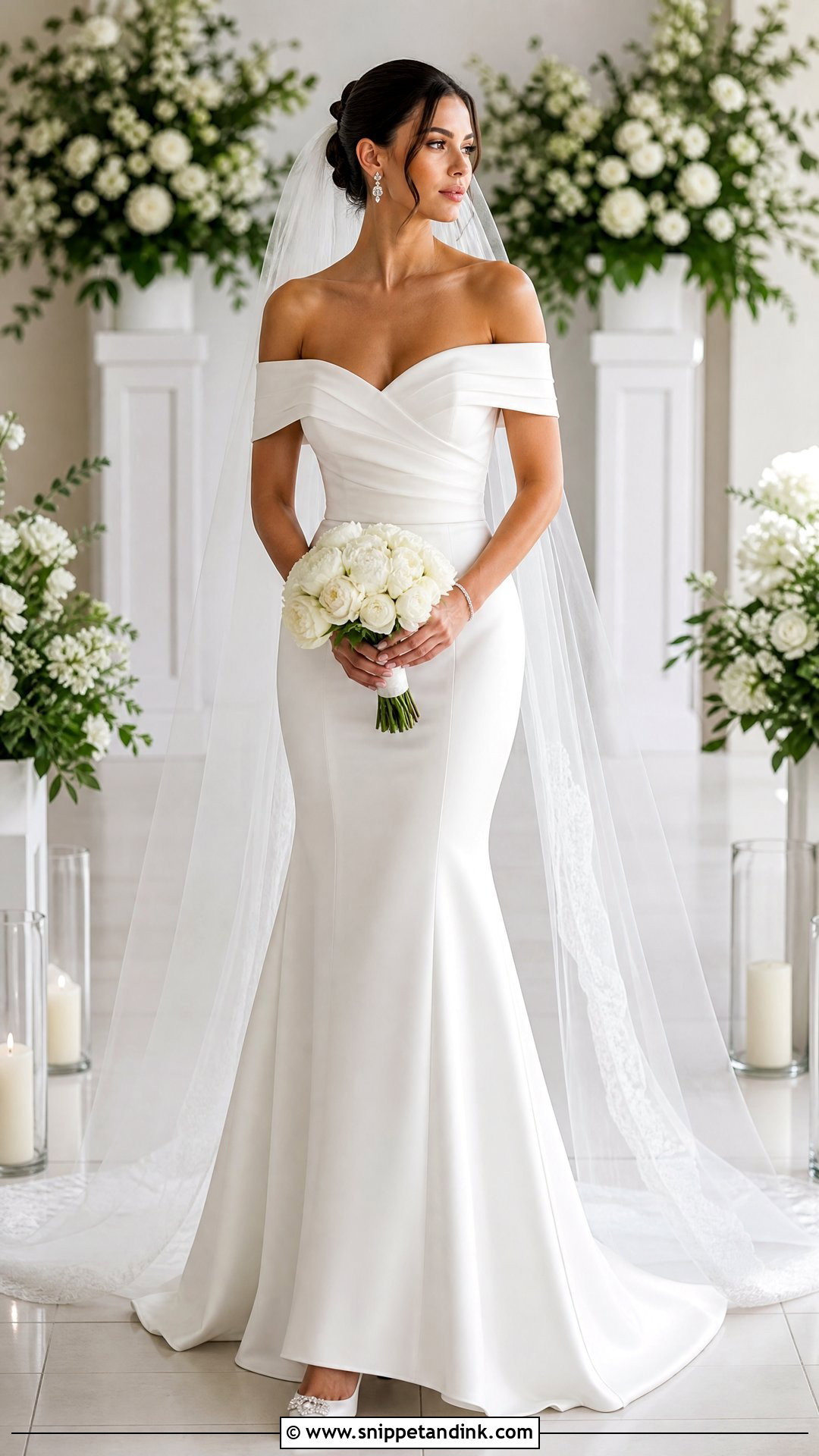
Off-the-shoulder necklines are one of my favorite shapes to photograph, because the collarbones and the line of the neck give a portrait a lot to work with. The bodice can sit on a mermaid, a draped A-line or a full ball gown. Small crystal earrings, a fine bracelet and pointed satin heels suit it; a heavy necklace fights the neckline. A low chignon keeps hair off the shoulders. What I watch for in candid shots is the sleeves creeping up as a bride hugs and waves. Strong internal construction should hold them, with fashion tape as backup, and detachable sleeves are worth asking about.
5. Minimalist Crepe Wedding Dress
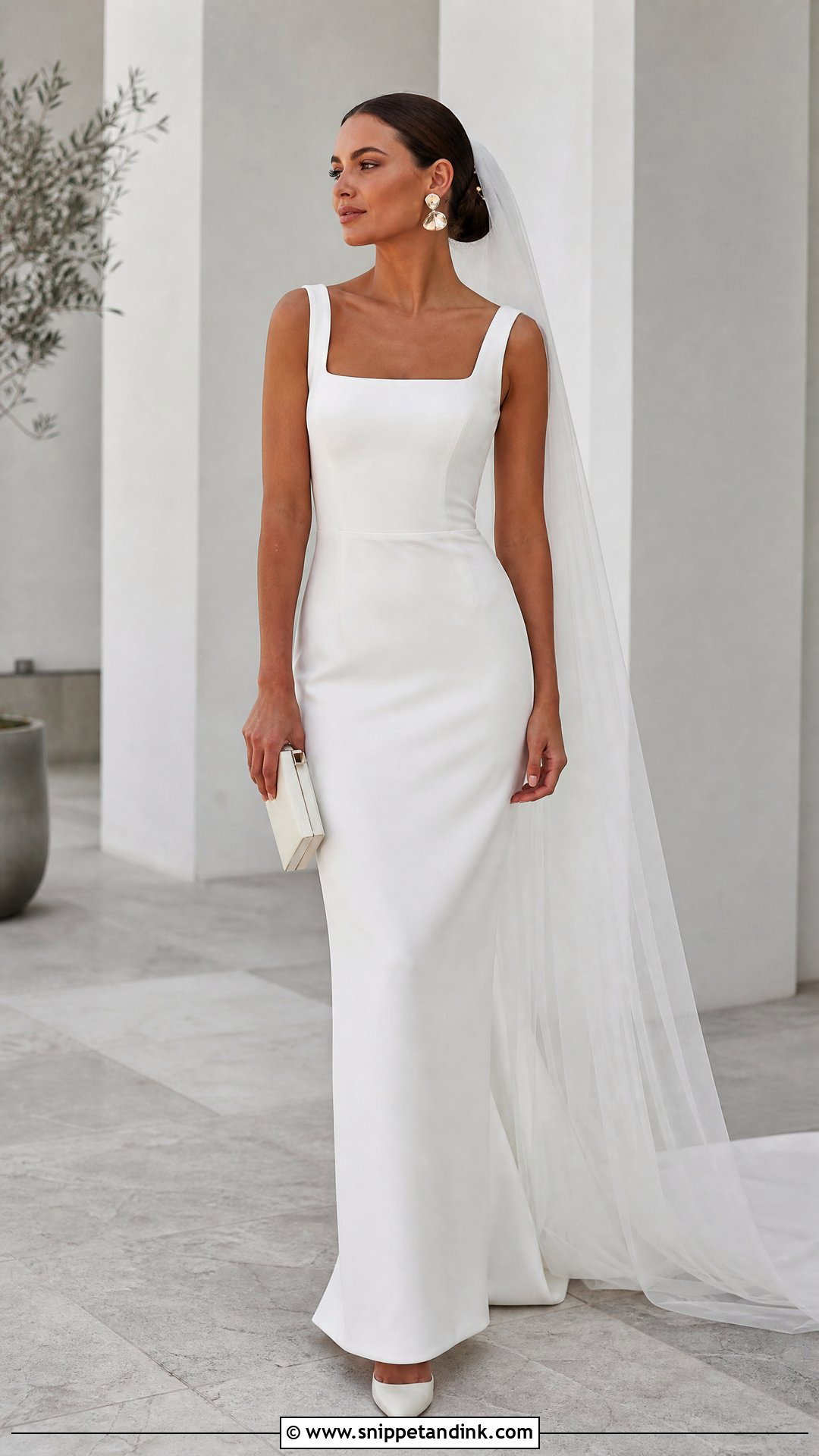
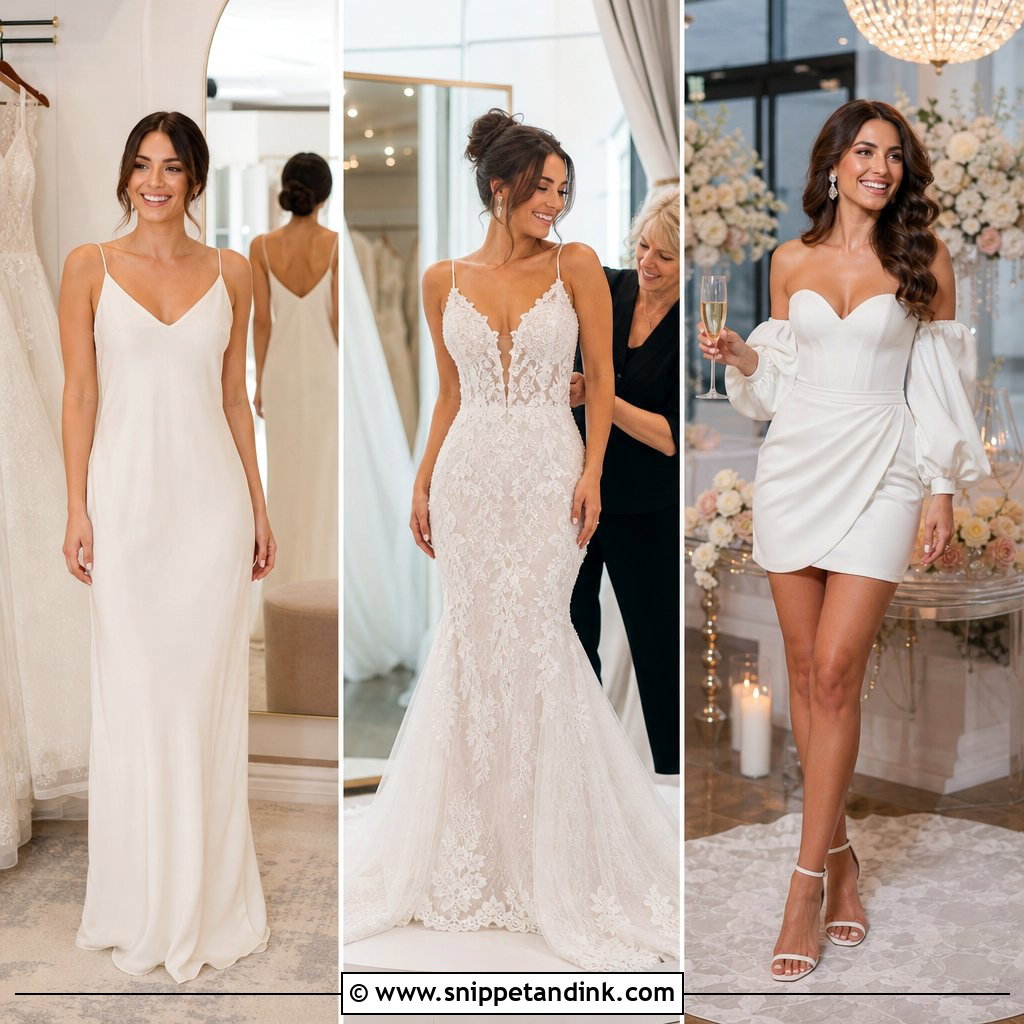
Plain crepe has a matte finish, which is lovely in soft light but unforgiving of any wrinkle or poorly fitted seam, because there’s no shine or lace to distract the eye. Tailoring is everything here. A fitted column or gentle fit-and-flare suits a bateau, square or draped neckline. Slim pointed pumps, sculptural earrings and a structured ivory clutch keep it modern, and a long plain veil adds movement for the aisle. A sleek bun, polished waves or a neat ponytail all work. Test your underwear at fittings, since crepe shows every edge. These are the pictures that age best.
6. Long-Sleeve Wedding Dress
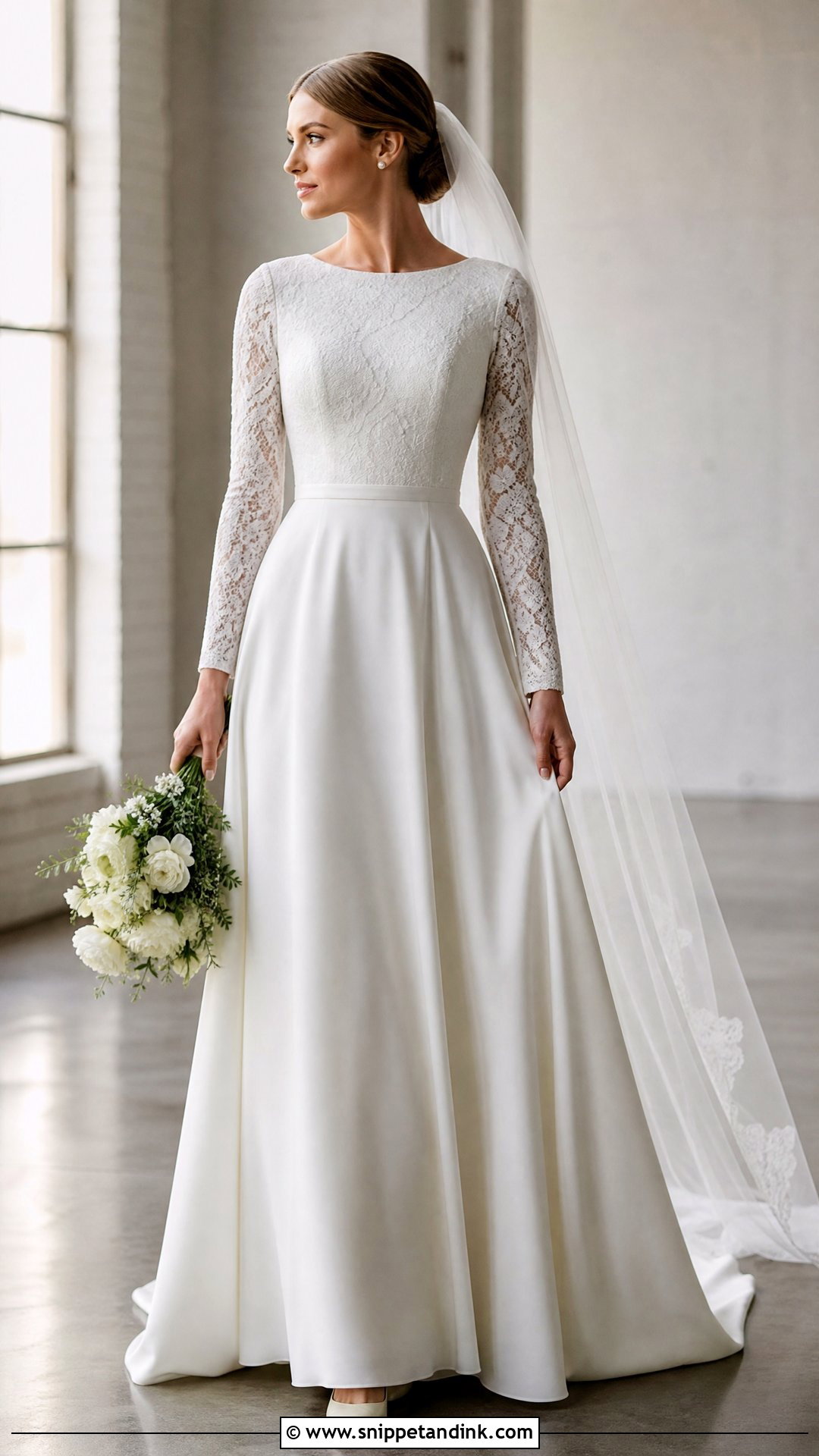
Long sleeves give coverage, and they also give me a lot of detail to frame, especially when hands are on a bouquet or adjusting a veil. Sheer lace sleeves are soft; fitted crepe or satin are tailored. An open back, a defined waist or a shaped neckline balances the coverage. Closed-toe pumps, pearl studs and a chapel veil suit it, with a low bun or side-parted waves. For cold weather, a lined bodice and a heavier skirt keep you warmer than delicate sleeves ever will. Check you can bend and reach; tight armholes make arms look stiff in photos.
7. Floral Appliqué Wedding Dress
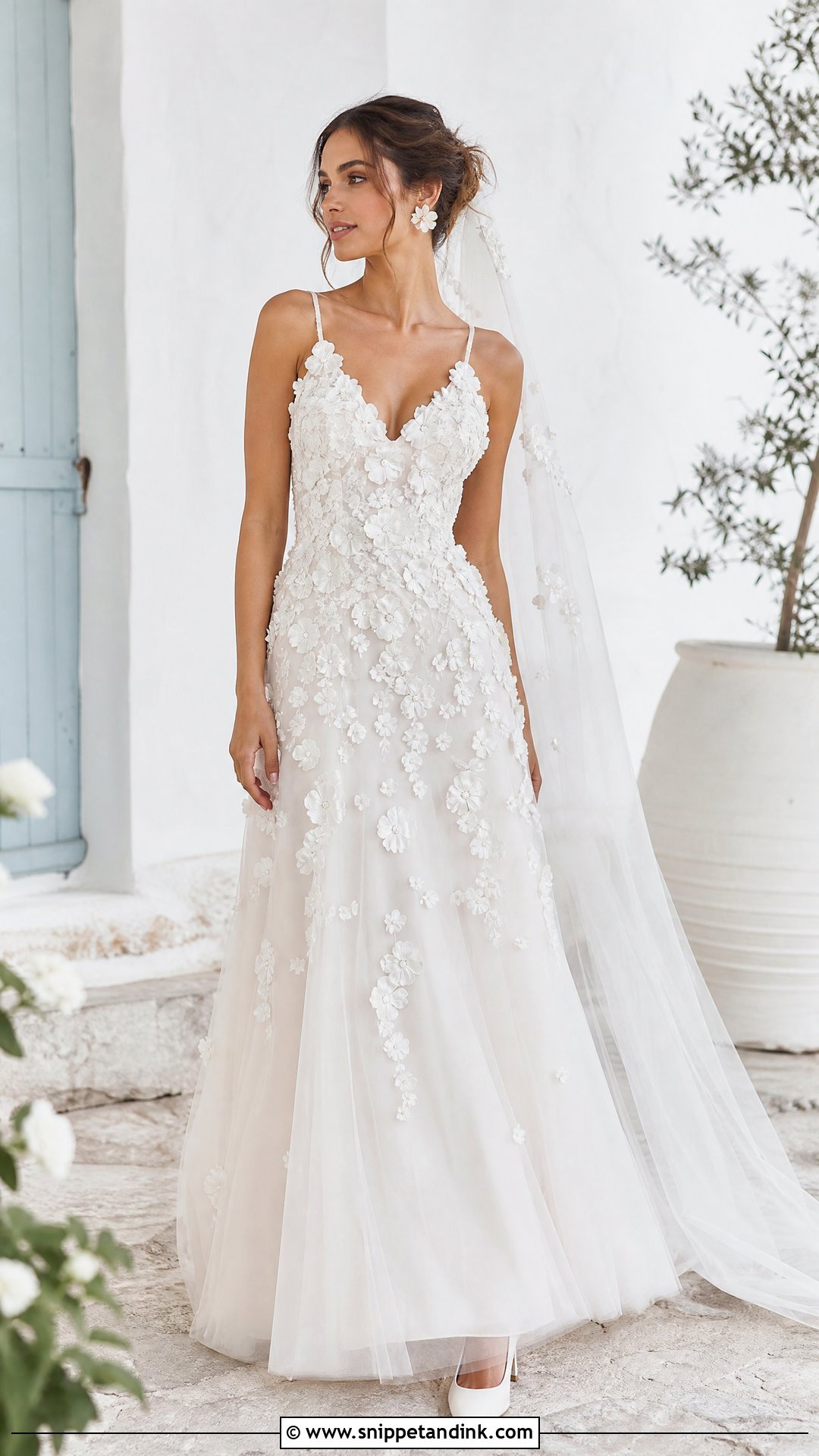
Raised appliqués cast tiny shadows, which is why they look so dimensional in person and sometimes flat in a harshly lit photo. Look at the gown in daylight and under indoor lights before you decide. Flowers can trail across a sheer bodice, cluster at the waist or scatter down a tulle skirt. Floral studs, plain ivory heels and a veil with just a few matching motifs keep it from looking themed, with a soft gathered bun or loose waves. Large flowers are bold; small ones delicate. Make sure the placement balances front, back and train, because full-length portraits from behind show every gap.
8. Corset Tulle Wedding Dress
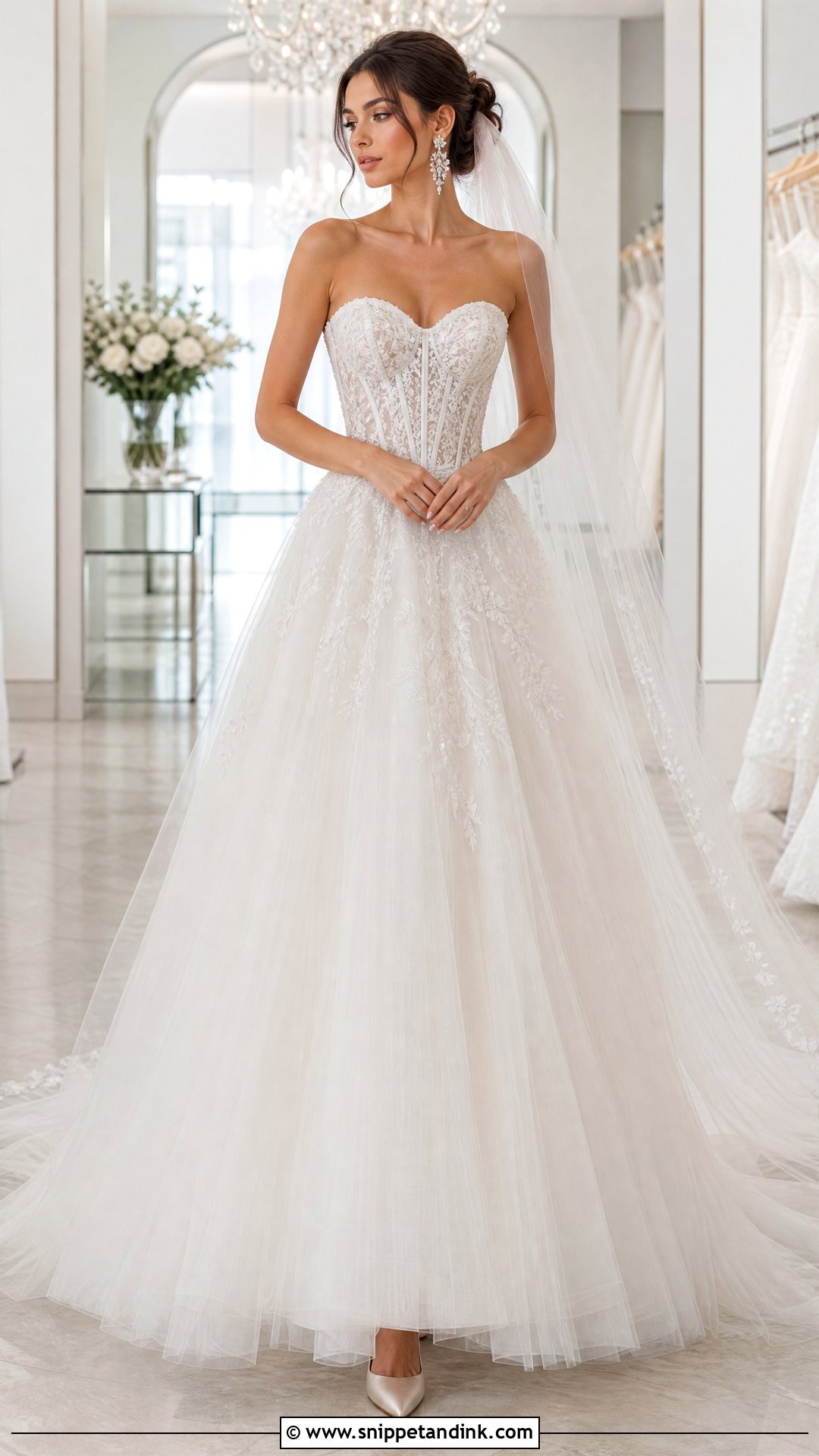
A corset bodice gives structure, and floating tulle softens it. From a photographer’s side, the boning is what makes a bodice stay smooth in seated and leaning shots instead of wrinkling at the waist. Look for supportive boning, neatly placed cups and a waist seam that blends into the layered tulle. The skirt can be full or a lighter A-line. Crystal drops, satin pumps and a sheer cathedral veil suit it, with a smooth updo to keep the bodice visible. Sheer panels can be lined for more coverage. Sit, bend and walk in fittings: supportive, not restrictive.
9. Pearl Wedding Dress
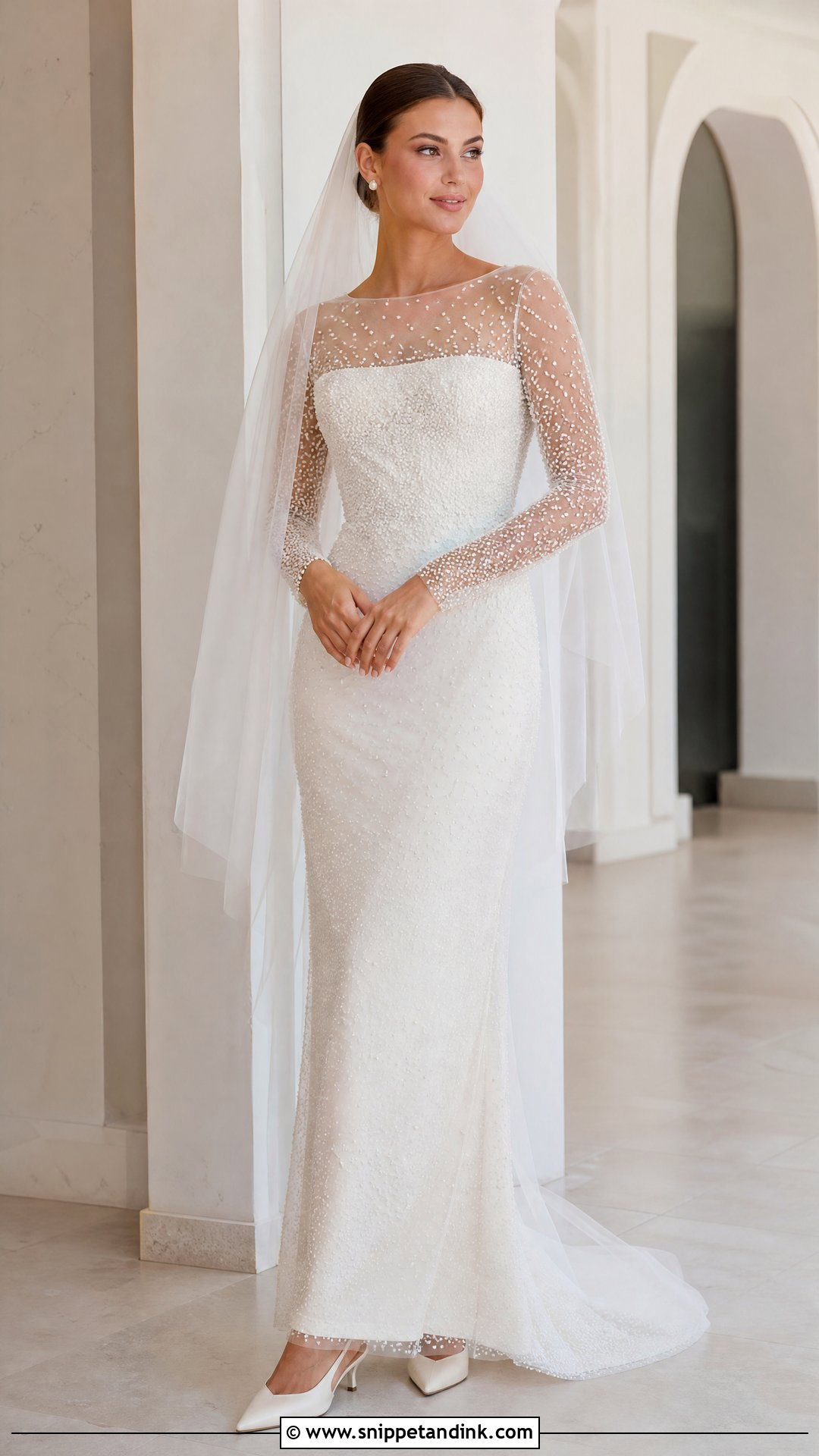
Pearls are kind to a camera. They give a soft round highlight rather than the hard sparkle of crystals, so they read as texture rather than glitter. They might cover a sheer overlay, outline a neckline, trim sleeves or cluster on the skirt. Keep accessories low key: pearl studs, ivory slingbacks, a plain veil, and a sleek bun or polished waves. The heavier the beading, the less jewelry you need. Check every bead is firmly attached and ask the salon for spares. Pearls also catch on fine veils, so practice lifting the veil away before the day.
10. Bow Back Wedding Dress
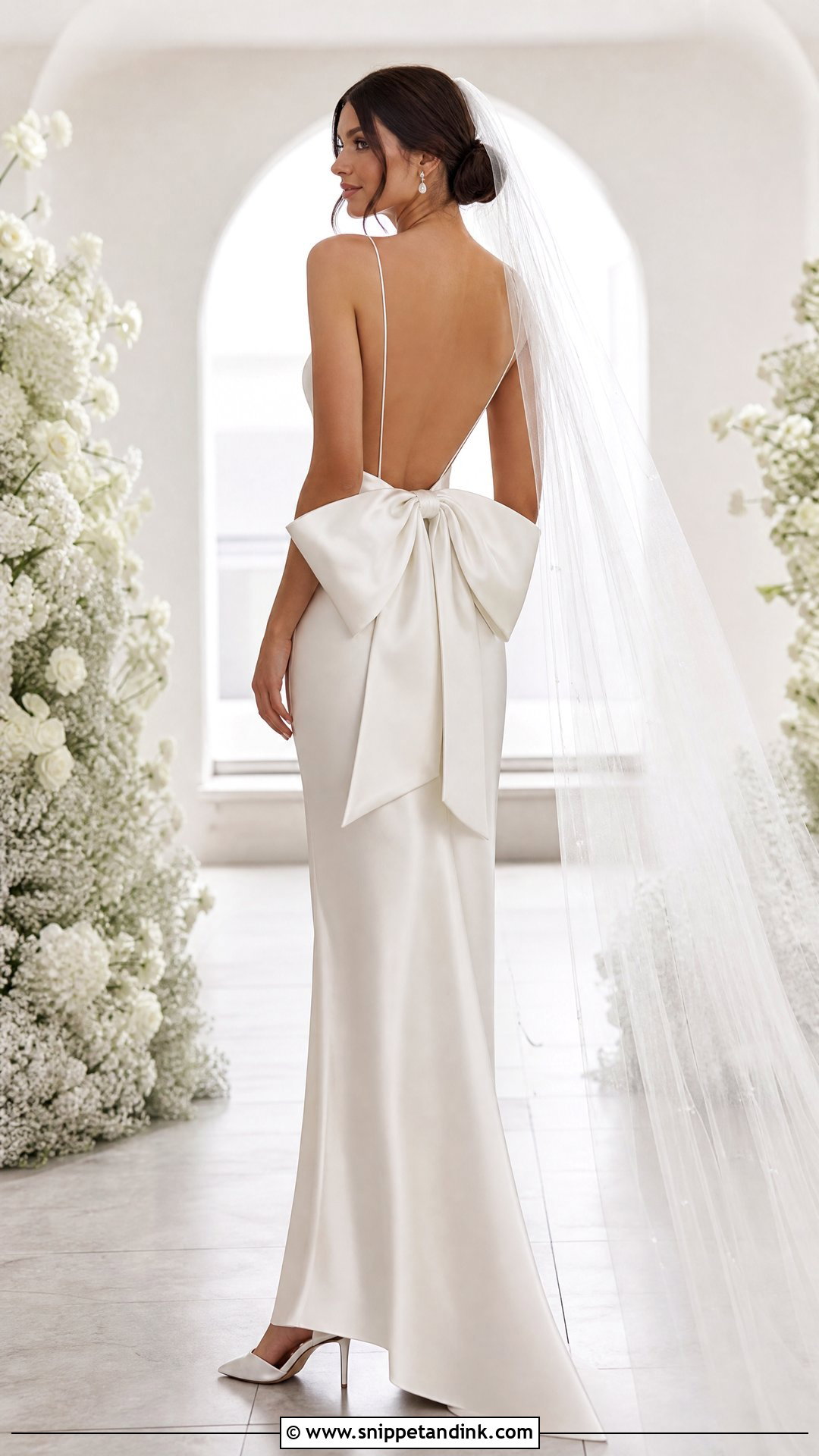
Bow-back gowns win the aisle shot from behind, the one guests see as you walk toward your partner. The bow might sit at the waist, across the shoulders or on the back of a column. Keep the front simple: delicate earrings, pointed pumps, a clean neckline. A sheer veil can fall over the bow during the ceremony and come off later so it’s fully visible. A low bun or side sweep keeps the back clear. Detachable bows add flexibility. A heavy bow droops by the evening, so make sure it’s light and securely fixed, and let your tailor adjust the tails for your height.
11. Asymmetrical Wedding Dress
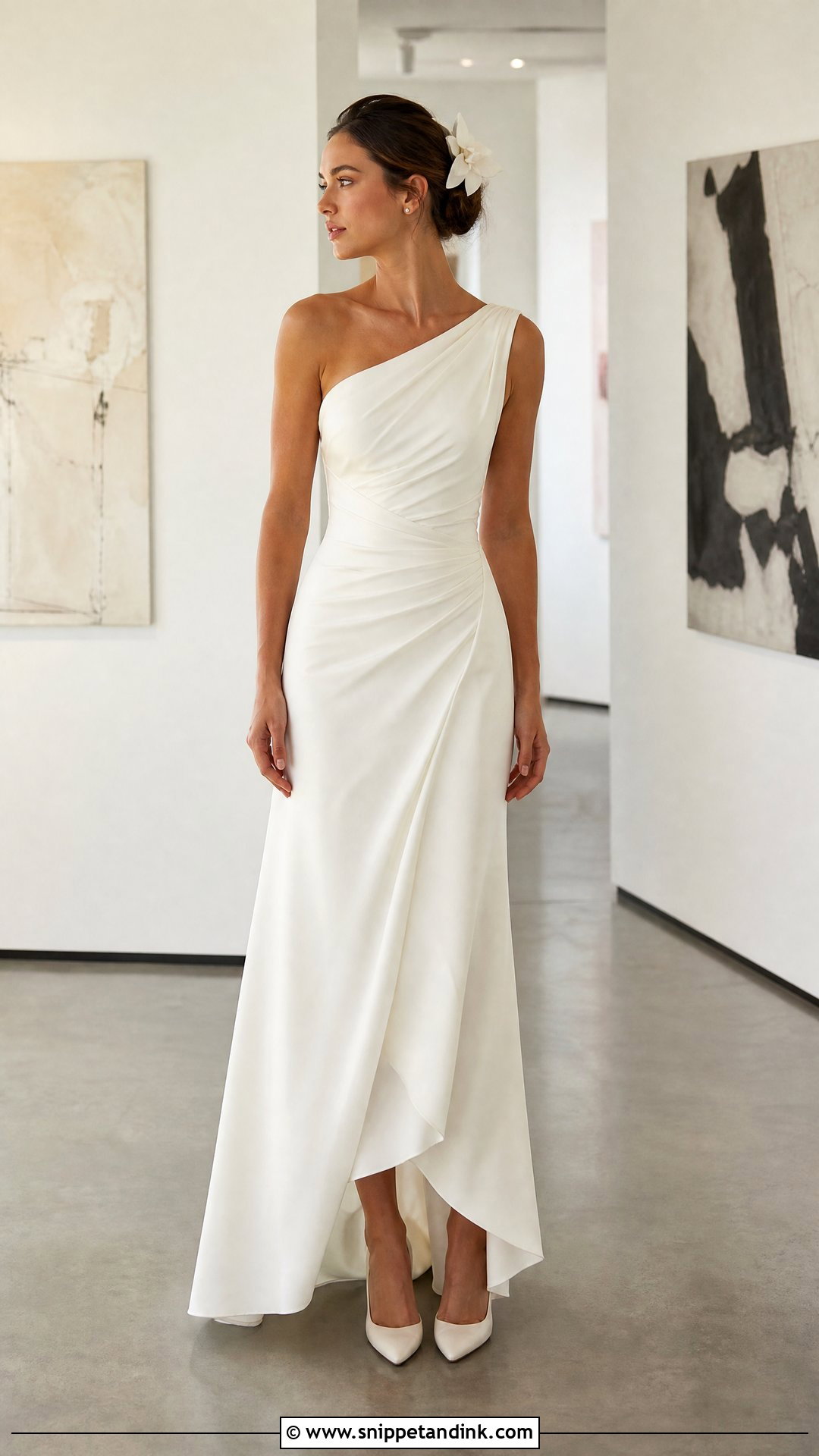
Asymmetric dresses are the ones where camera angle matters most. A one-shoulder neckline, diagonal draping, an angled waist or a skirt gathered to one side looks deliberate from one side and slightly off from the other, so I’ll usually ask which side the bride prefers. Streamlined pointed heels, a single statement earring or small studs and a compact clutch suit it, with a clean ponytail or low bun. A simple veil under the hair, or a sculptural hair piece, keeps the shape clean. In fittings, check the drape stays smooth when you walk and sit, and that the one shoulder is held securely.
12. Detachable Overskirt Wedding Dress
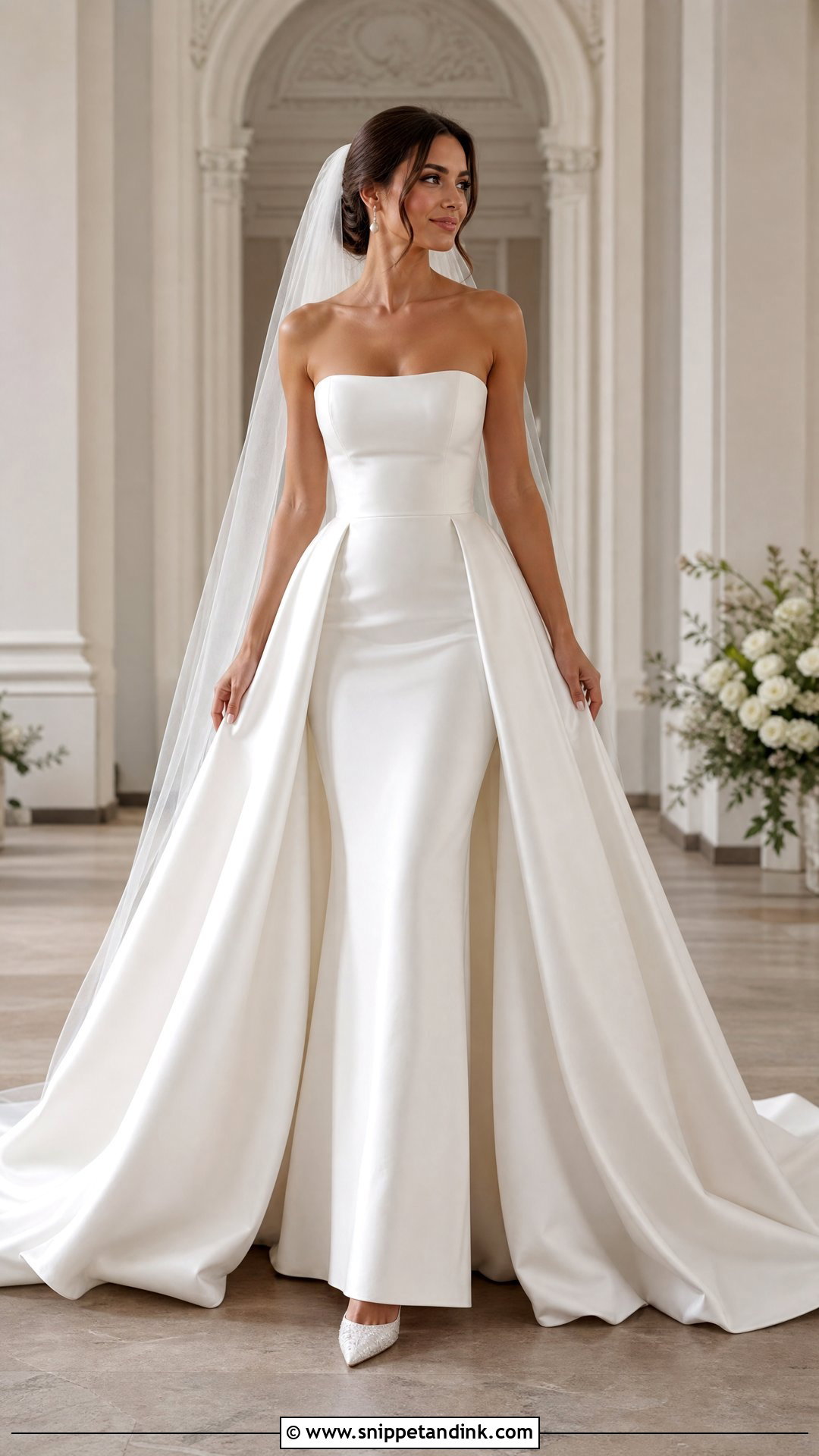
An overskirt gives you a ball gown for the ceremony and a column, mermaid or mini for the party, and you get two quite different sets of photos from one dress. A long veil, pearl earrings and elegant pumps finish the first look; a shorter veil or jeweled comb suits the second. Check how the attachment points look once the overskirt is off; they should be hidden or look like part of the design, because they’ll be in every dance floor shot. Rehearse the change with your helper before the day.
13. Tea-Length Wedding Dress
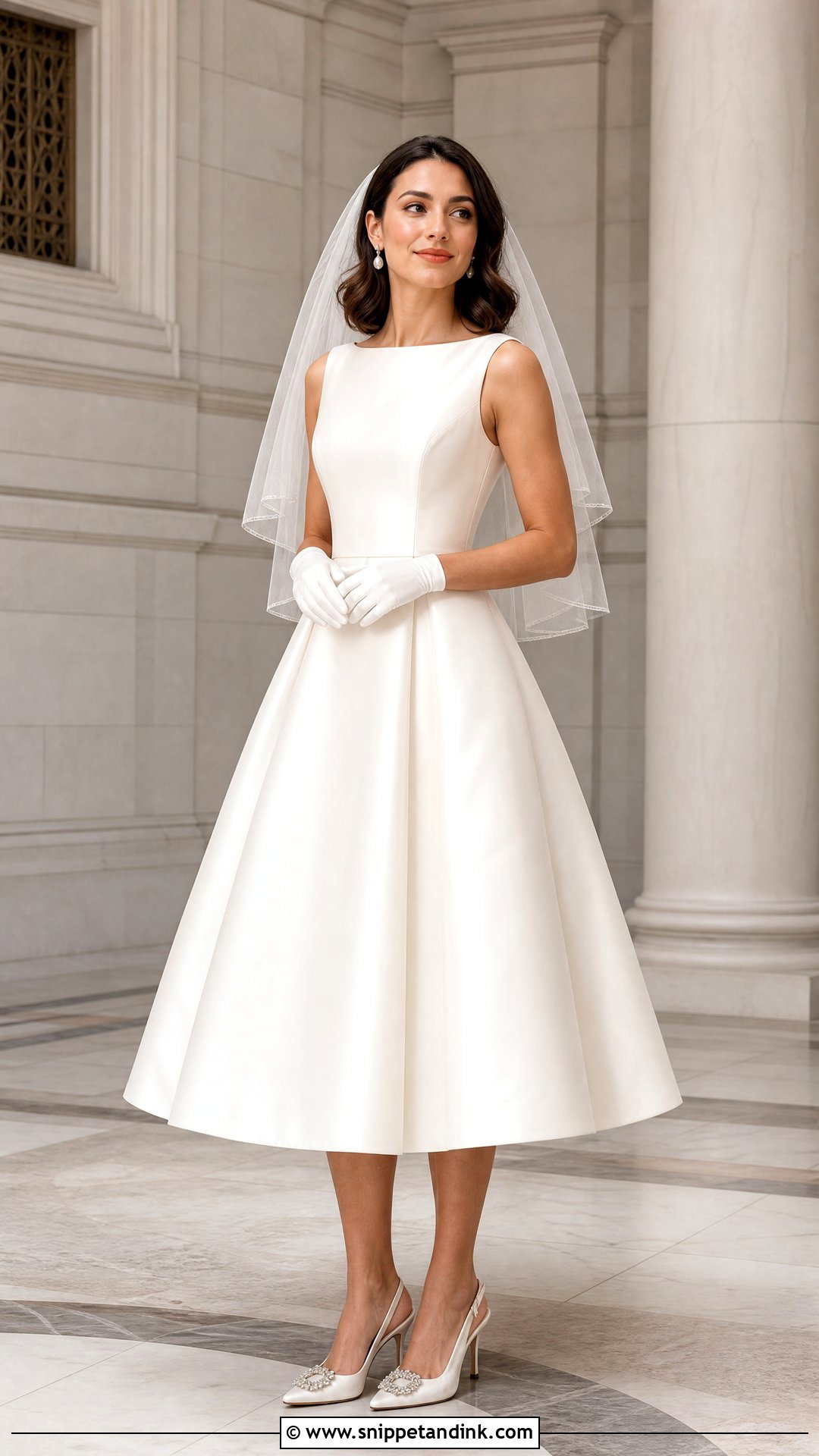
Tea length lands between knee and ankle, which puts the shoes in every full-length photo, so they need to be shoes you’re happy to look at forever. A structured A-line skirt and fitted bodice suit pointed pumps, slingbacks or embellished block heels. Pearl earrings, short gloves and a shoulder-length veil add a vintage touch without tipping into costume. A waved bob or neat bun suits the shorter line. Courthouses and daytime weddings suit it best. Have your tailor try a few hem points; even an inch changes the proportion in pictures.
14. Wedding Mini Dress
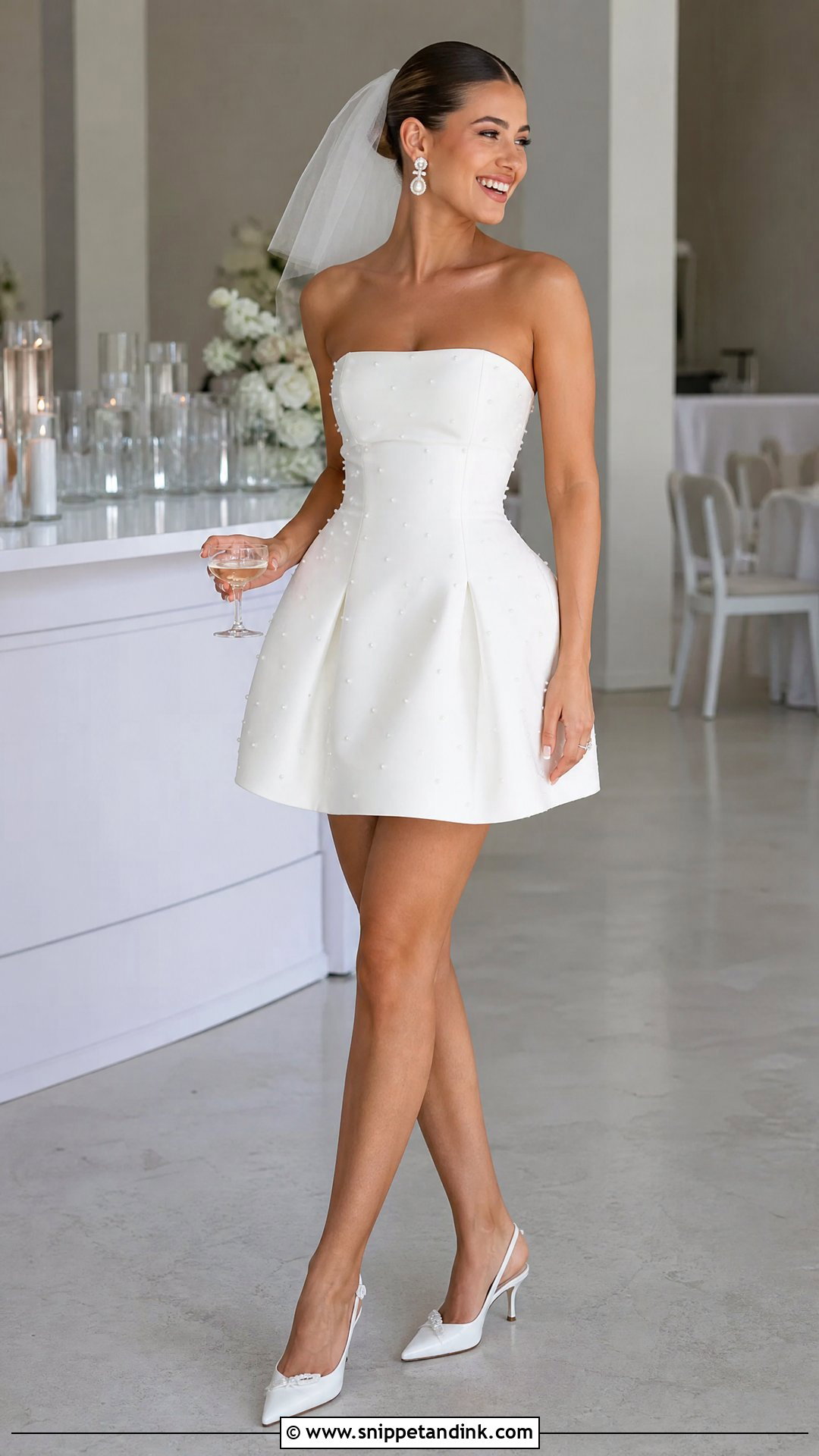
A mini suits a small ceremony, a reception change or a casual destination wedding. A structured shift, fitted corset dress or flared mini with bows, pearls or appliqués all work. Elegant slingbacks, low pumps or refined ankle straps balance the short hem, and statement earrings with a short veil keep it bridal. A sleek ponytail or softly waved bob keeps it fresh. I shoot a lot of dance floor and seated candids, and that’s where minis ride up, so check the length sitting and walking. Built-in shorts or a good lining help.
15. Boho Chiffon Wedding Dress
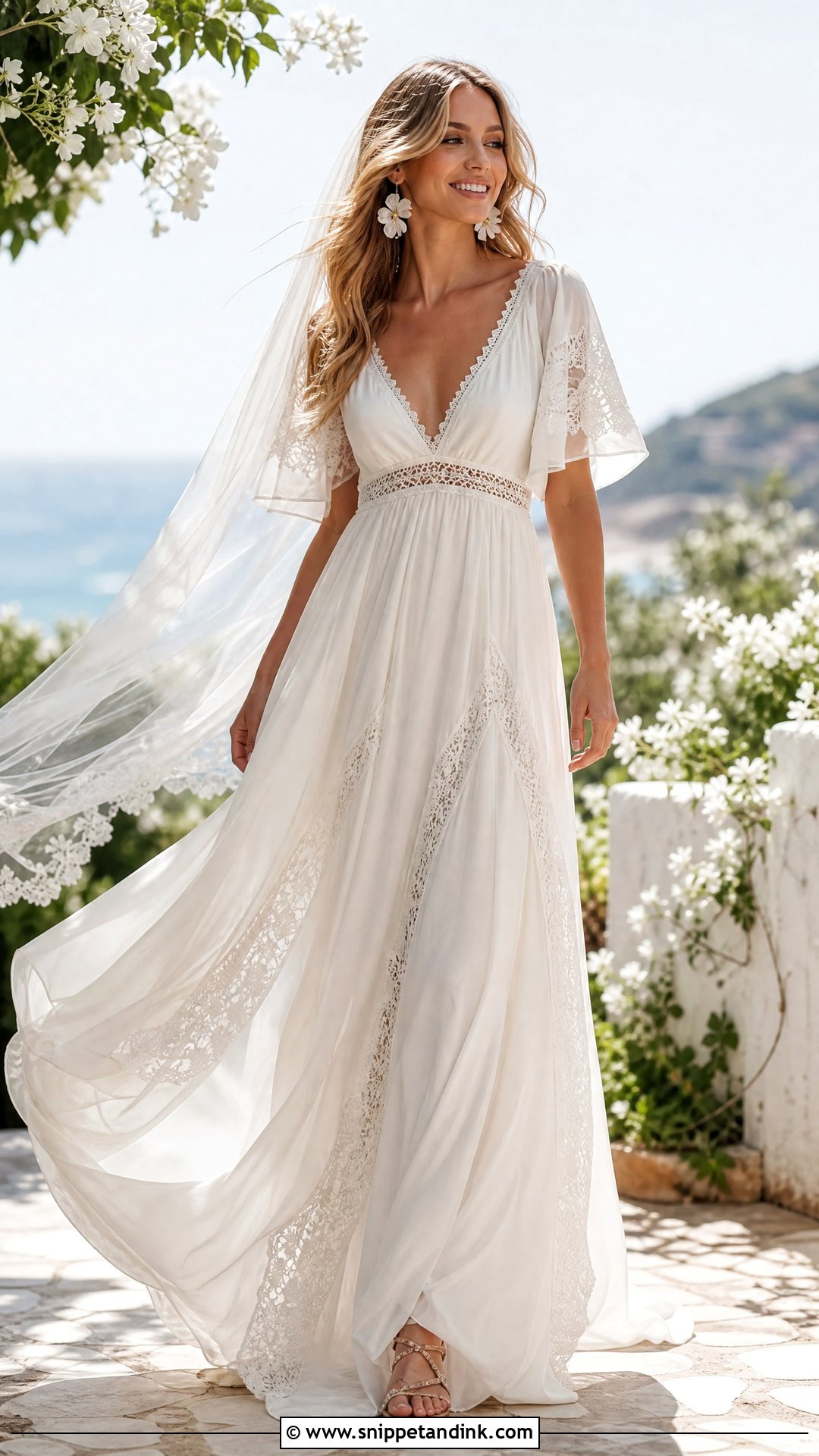
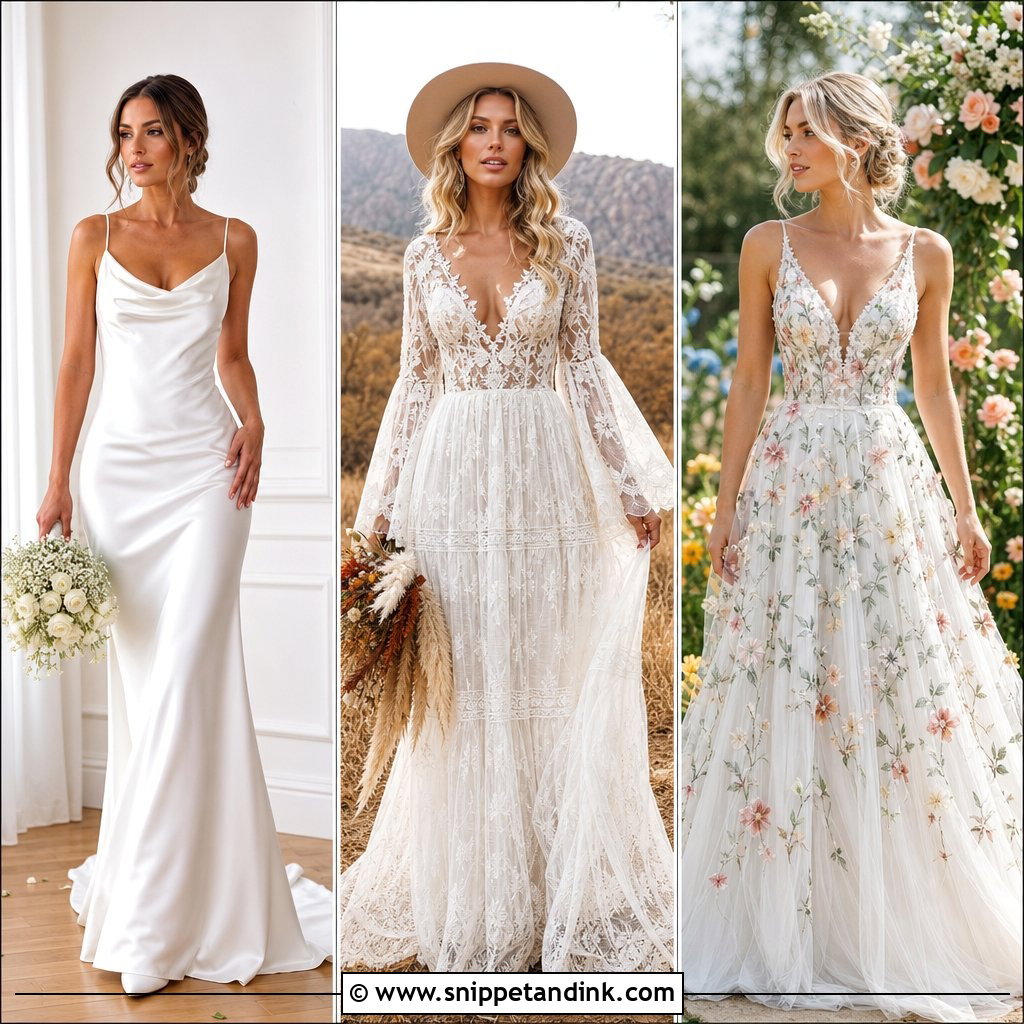
Chiffon is the fabric that gives me movement in outdoor pictures; a bit of breeze and the skirt does half the work. An A-line or empire waist with soft sleeves, a gentle V or light lace panels suits beaches and relaxed destinations. Low block heels, simple sandals or bridal flats should suit the ground you’re standing on. Small floral earrings, a delicate hair vine and a light veil keep it airy, with loose waves or a textured low bun. Heavy accessories weigh chiffon down. It can be sheer in bright backlight, which is exactly where sunset portraits happen, so check the lining. A discreet bustle controls the train.
16. Mermaid Wedding Dress
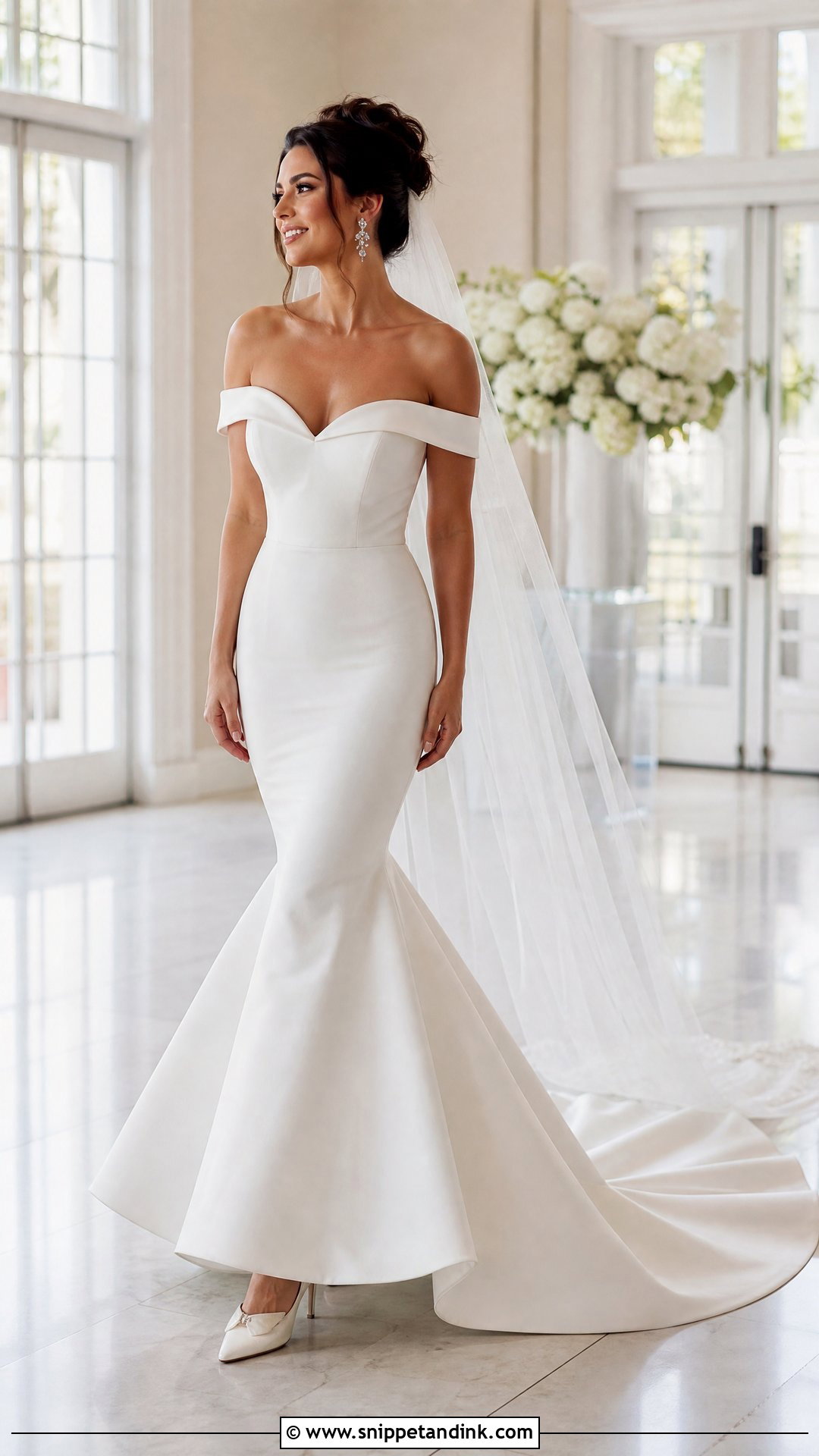
Mermaid gowns are fitted until the knee or below, then flare, and in pictures the flare point decides whether it looks graceful or tight. Strapless, off-shoulder, square or illusion necklines all suit it. Pointed heels, drop earrings and a narrow veil that doesn’t hide the shape finish it, with a polished updo. Fit matters more than size or body type. Walk, sit and climb a few steps in alterations; the flare should begin where you can stride easily. Ask for a strong bustle, because a fitted dress with a loose train is awkward to manage once the formal photos are done.
17. High-Neck Wedding Dress
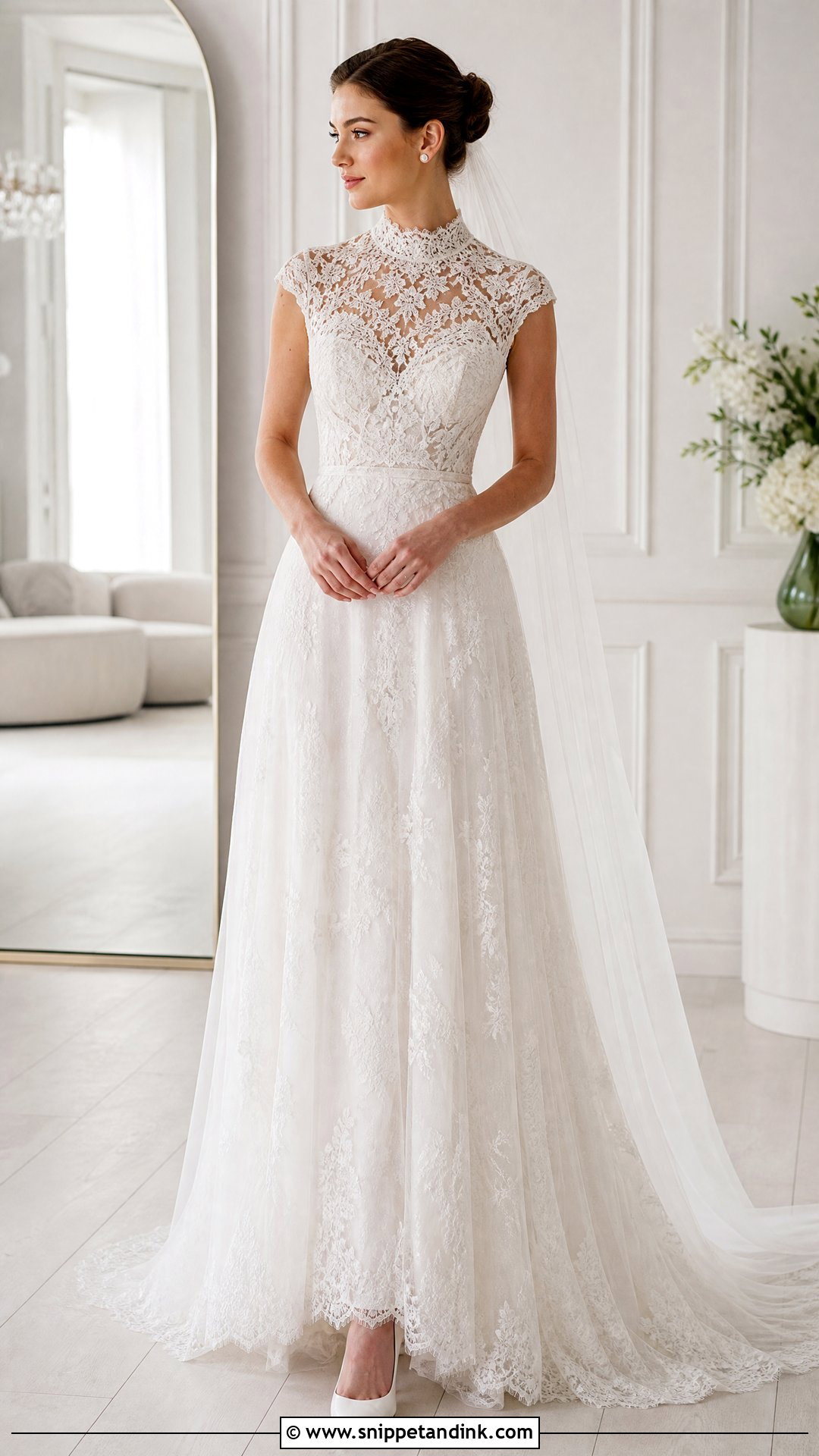
High necks are made for profile portraits and close-ups, where the collar’s shape and texture frame the face. Delicate lace is romantic, smooth satin modern, beaded tulle a little sparkly. Small studs, closed-toe pumps and a plain veil under a neat bun suit it; skip the necklace. An open back or sleeveless cut adds contrast. Check that the collar doesn’t rub or tighten when you turn your head, because it shows: brides in tight collars hold their heads stiffly in candids. Soft lining and precise alterations make the difference.
18. Cape Wedding Dress
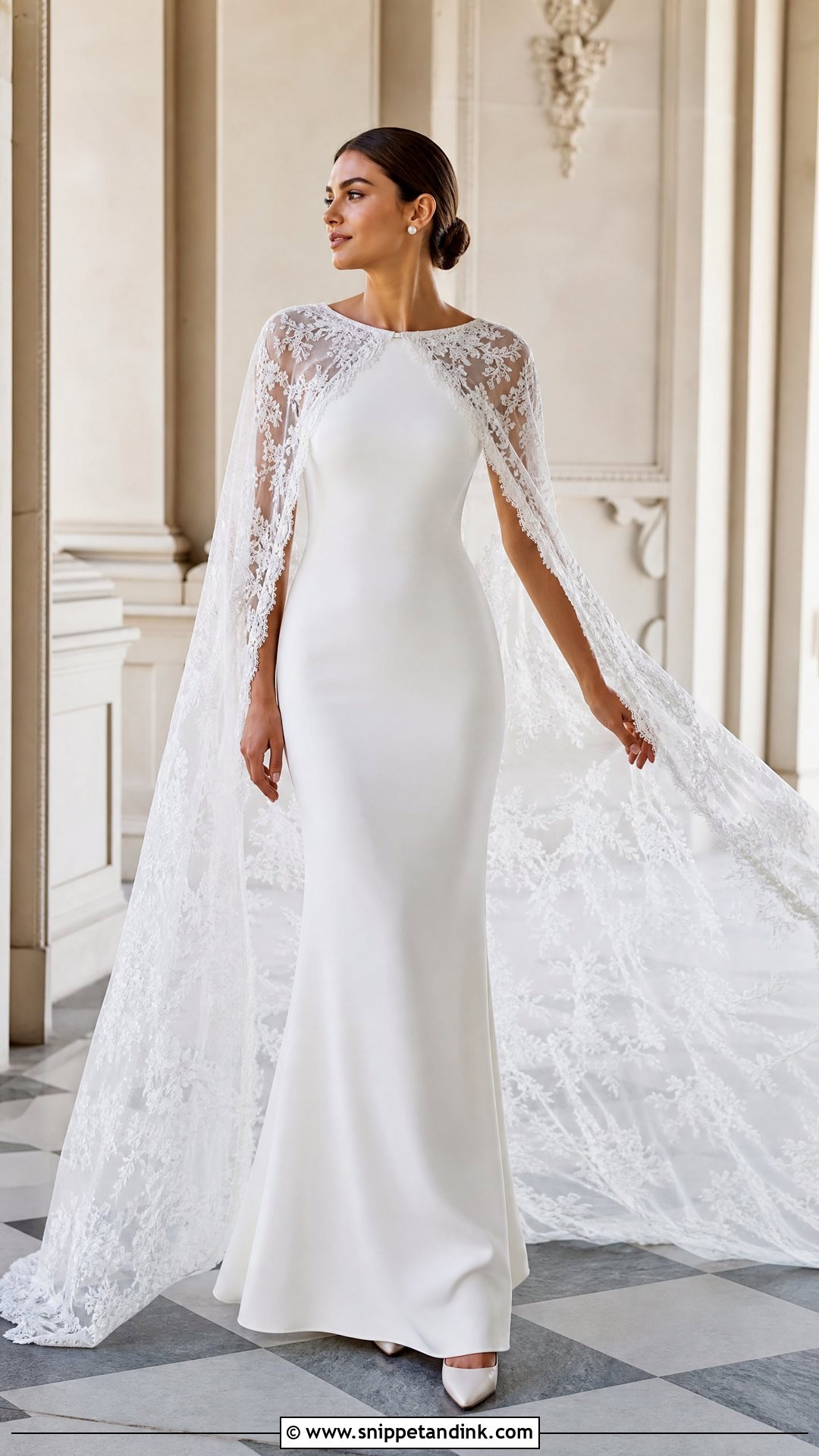
A cape is one of the most photogenic pieces a bride can wear, especially walking or in a breeze, and it can replace the veil. A sheer floor-length cape over a plain crepe gown, or lace over clean satin, both work. Keep jewelry simple, pearl studs or small crystals, with pointed ivory heels and a sleek bun so the shoulder line shows. Detachable capes give a second, lighter look after the ceremony; the fastenings should be secure but easy to undo. The length should move without tangling round your shoes. Practice walking and turning so it falls smoothly.
19. Blush Wedding Dress
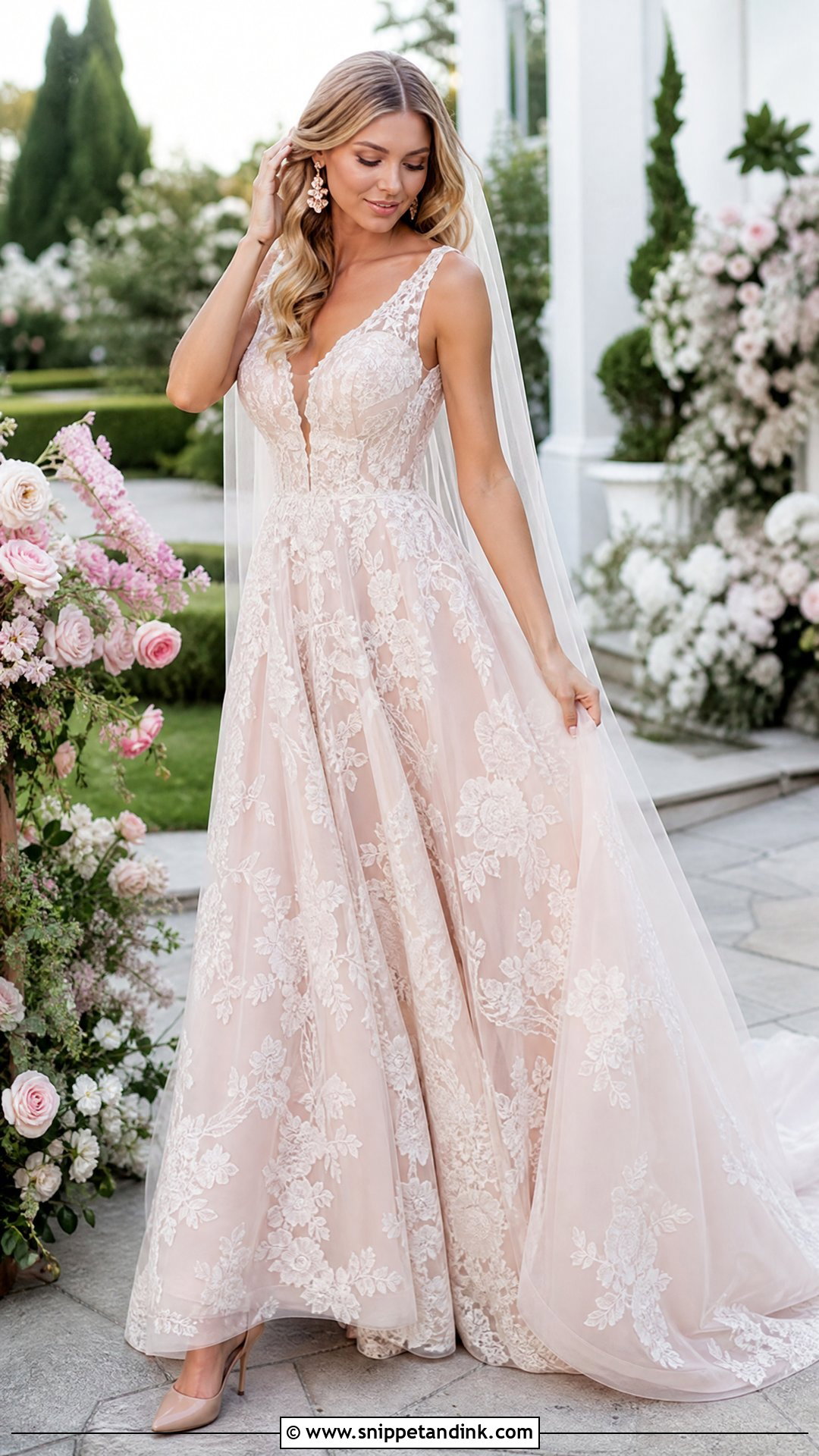
Blush is the color I see shift most between rooms. Warm indoor light can push it toward peach; open shade outdoors can make a pale blush read almost white. A pink lining under ivory lace, pale blush tulle layers or satin with a rosy undertone all work. Neutral ivory pumps, rose-gold earrings and a sheer veil matched to the top layer suit it, and too many pink accessories unbalance it. Soft waves or a low bun both suit the color. Look at fabric samples in daylight and indoors; blush runs from barely tinted ivory to clear pink.
20. Convertible Wedding Dress
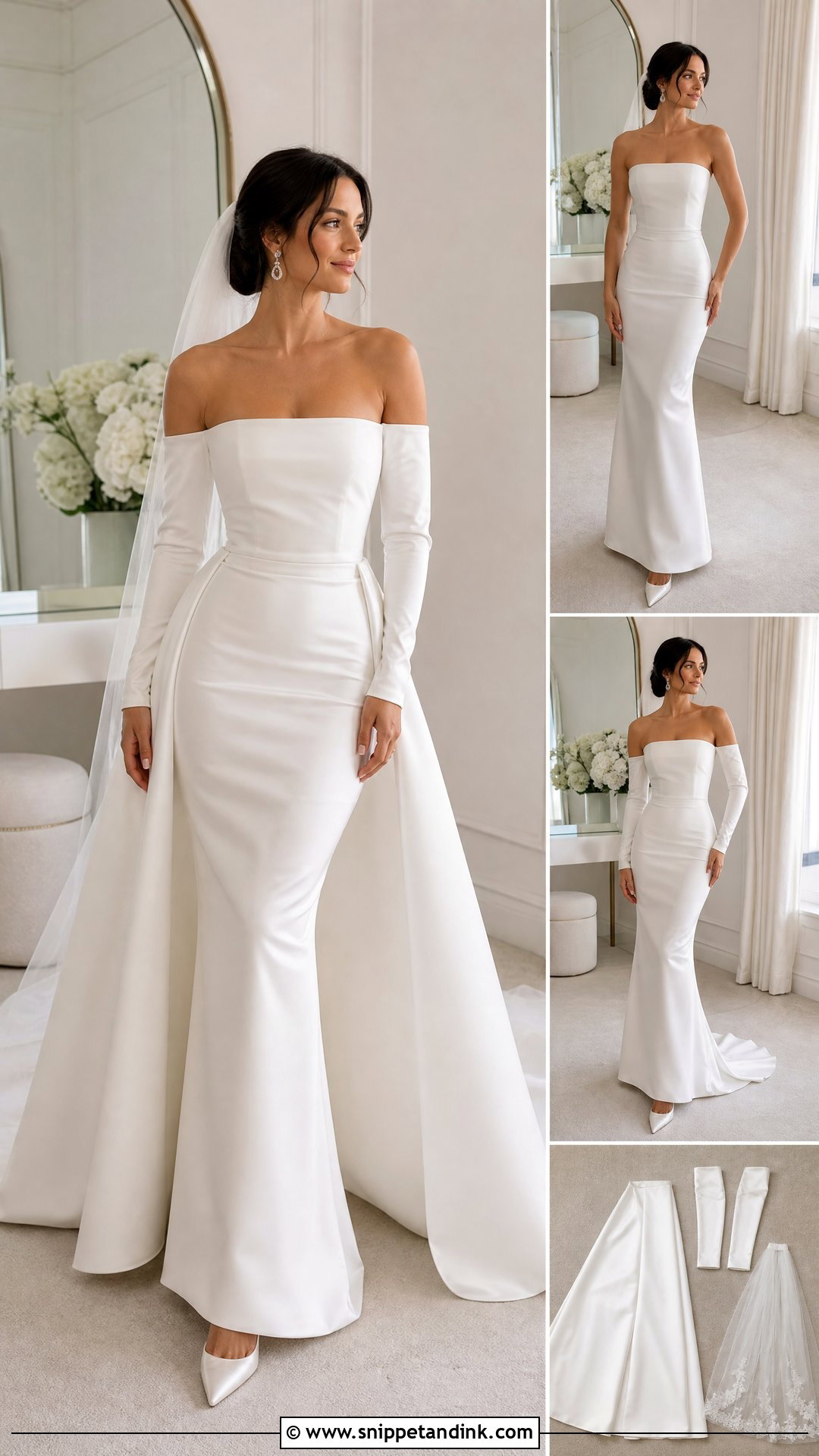
A convertible wedding dress lets you change coverage, volume or length during the day, and for me that means two or three distinct looks in the gallery. Start with a streamlined base gown and add detachable sleeves, a train, a cape or an overskirt for the ceremony. A long veil, refined earrings and pointed pumps suit the formal version; a comb or statement earrings suit the stripped-back one. Attachments should lie flat and disappear when removed. Ask the salon to demonstrate every change, and film it on your phone for whoever is helping you.
What Your Photographer Hopes the Dress Is Ready For
A few small things on the morning make a real difference to how the gown looks in your album.
Have the dress steamed and out of its bag before I arrive. I’ll often photograph it hanging on its own first, so swap the plastic shop hanger for a wooden or padded one, and think about where it can hang near a window. Set out the shoes, veil, jewelry and anything sentimental together for detail shots.
Ask one person, a bridesmaid or your planner, to be in charge of the train. A train that has been dragged into a crumpled line across the aisle is the most common thing I can’t fix later. Before the dancing, get the bustle done properly, because a half-bustled skirt drags in every reception photo.
Finally, tell your photographer if the gown is ivory, champagne or blush rather than bright white. It helps to set the color correctly from the start, so the dress looks the shade you bought rather than gray or yellow.
The Pictures Worth Saving Have Something in Common
The inspiration that helps most shows the gown, shoes, veil, jewelry and hair working together. The looks above include ball gowns, corsets, lace, shorter hems, convertible details and plain silhouettes. Save the ones that feel personal straight away, then compare what they share: neckline, fabric, waist, skirt volume. Factor in your venue, the weather, how much walking there’ll be and how comfortable you need to be. And judge every dress on you, not on the model in the picture, since what flatters a professionally lit sample may look quite different in your own photos.
You'll Like These Ideas:


Leave a Reply