
Filming a wedding dress is harder than it looks. White fabric fools a camera’s exposure, lace turns to mush when you move too fast, and a train never fits a vertical frame without planning. I shoot a lot of bridal movement, and the clips that hold attention always have one clear purpose: a reveal, a detail, a fit question answered. The ideas below suit brides, boutiques, designers, stylists and anyone making bridal content, and each one shows how a gown moves, fits and changes rather than just how it hangs. They all adapt to Reels, TikTok, Pinterest or YouTube Shorts.
White Fabric Fools Your Phone Camera
Every clip below depends on getting the gown’s tone right, and white or ivory fabric is the hardest thing a camera meters. Auto exposure keeps chasing the brightest area, so a satin bodice burns out to flat white and lace loses every bit of pattern. These are the settings and habits I rely on before any bridal clip.
- Lock exposure on the dress. On most phones, press and hold on the bodice to lock focus and exposure, then drag the brightness down slightly until you can see texture in the brightest folds.
- Use one light colour. Daylight from a large window is ideal. Switch off warm ceiling bulbs, or the gown turns yellow on one side and blue on the other.
- Side light for texture, front light for colour. Light skimming across the fabric shows lace and pleats; light from behind the camera flattens texture but gives the truest ivory.
- Frame rates. Normal speed is fine for most clips. For slow-motion walks and veil drops, shoot at a higher frame rate so movement stays smooth when slowed.
- Wipe the lens. A fingerprint smear blooms every highlight on white fabric into haze.
A small gimbal or even a phone on a short tripod makes a bigger difference than a better camera. Shaky footage of fine lace just looks out of focus.
1. Wedding Dress Before And After Reveal
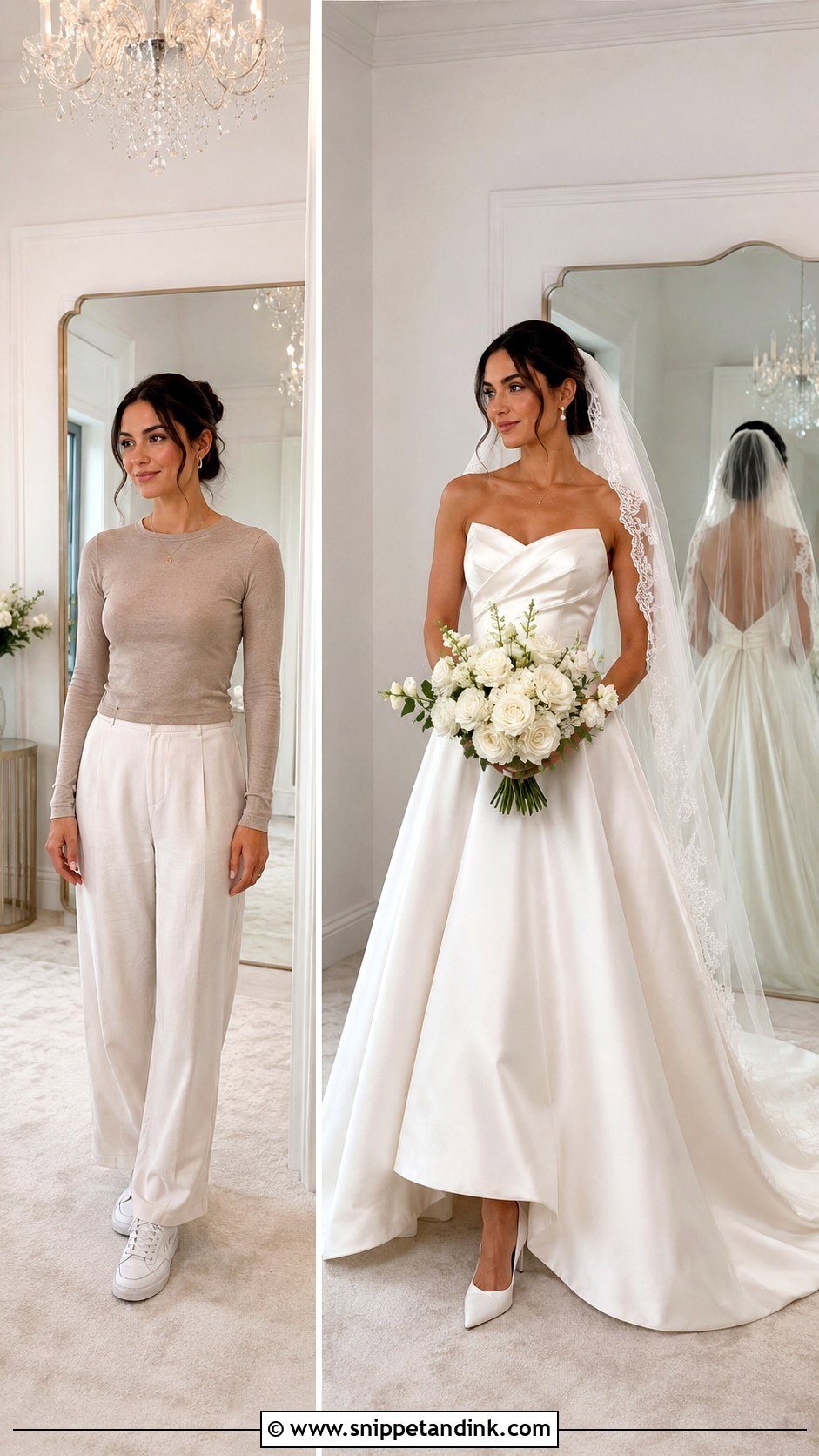
The before-and-after reveal works because viewers get the change in a second. Film the bride or model in everyday clothes in the exact spot where the reveal happens, then have her cover the lens, spin, step behind a door or walk past the camera. Cut to the full look: gown, veil, shoes, jewellery, bouquet, finished hair. The one rule I never break is a locked camera. Use a tripod and mark her feet with tape, because if the frame shifts even slightly between takes the transition jumps. After the cut, add a full-length shot, a bodice close-up and a slow turn to show the train. Pick music with a clear beat drop and let the dress, not the edit, be the surprise.
2. Wedding Dress Try-On Video
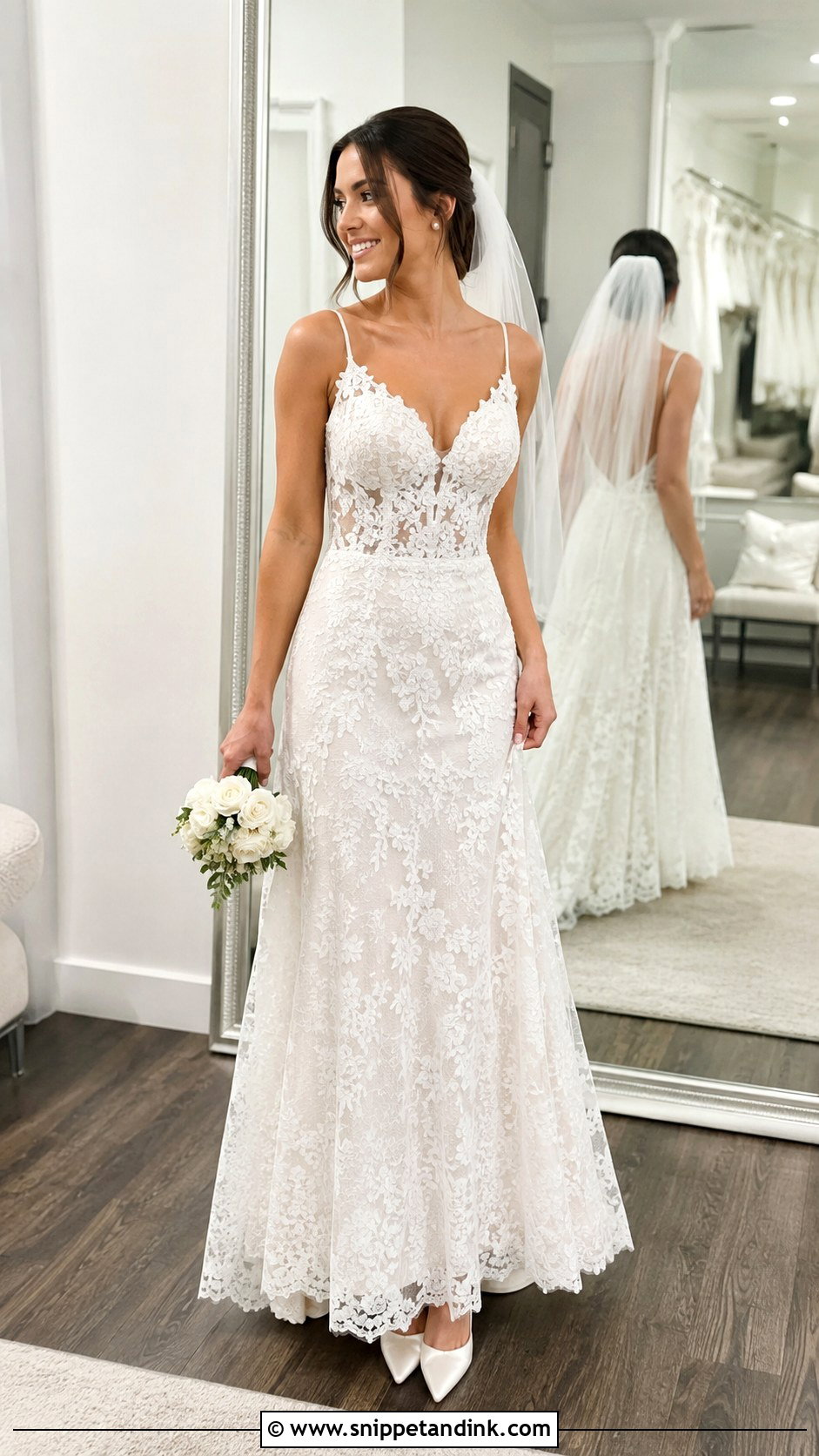
What does a gown actually look like off the hanger? A try-on clip answers exactly that. Open on the gown hanging neatly by the fitting room, show a brief, modest clip of her stepping in with help, then reveal the fastened, adjusted look. Film front, side and back from a respectful distance, then let her walk, sit, lift the train and turn to the mirror. Shop samples are usually clipped at the back, and I keep those clips out of frame while saying so in a caption, since presenting a clipped sample as the real fit misleads people. A short text line naming silhouette, fabric, neckline and train is enough.
3. Wedding Dress From Hanger To Bride
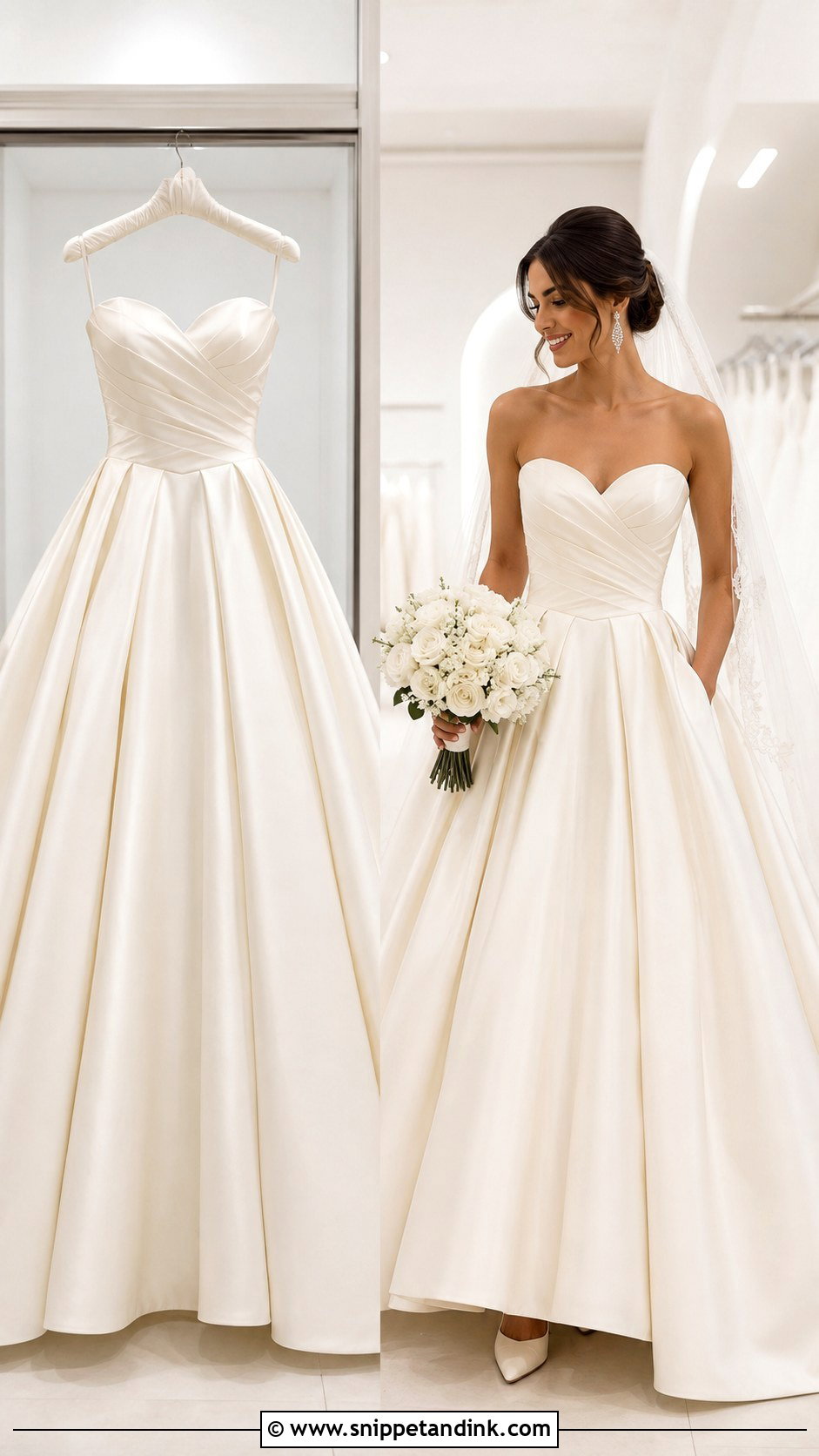
A gown changes completely once there’s a body inside it, and this format makes that visible. Film the dress hanging in a bright, plain space with one slow tilt from neckline to hem. Capture details such as lace, buttons, beading or pleats, then repeat the identical downward tilt once she’s wearing it. Matching the camera speed between the two passes is what makes it satisfying, so I count the move out loud. End wide, head to toe, with shoes, veil, jewellery and bouquet in shot. Structured ball gowns, fitted mermaids and long trains give the biggest contrast.
4. Wedding Dress 360 View
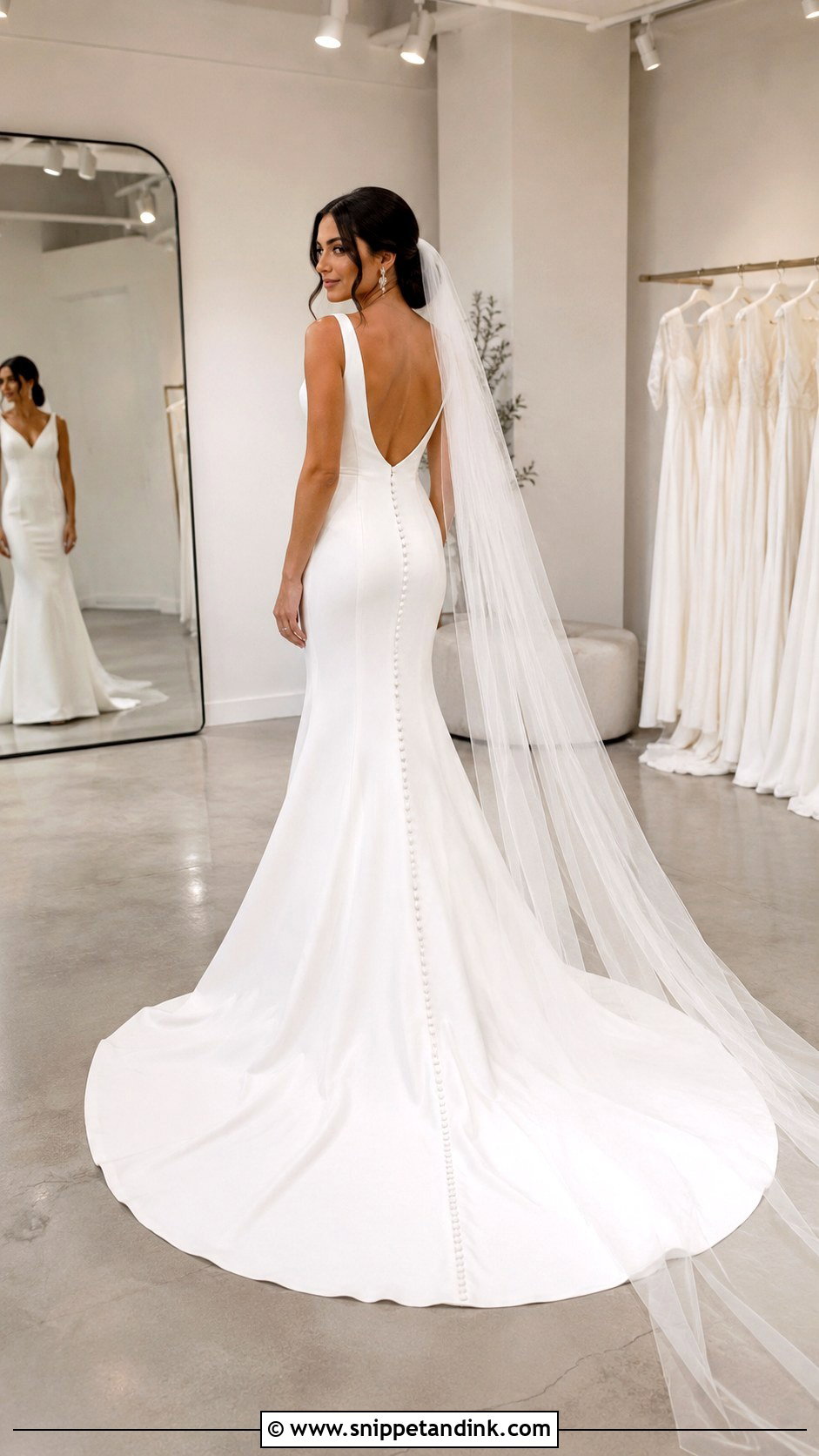
Some gowns need the full circle. Put the bride in the middle of a bright room or open patch of ground and have her turn slowly, relaxed, in small steps. Shoot one wide rotation that fits the whole train, then closer clips of neckline, waist, back, sleeves and fastening. Turning the bride is usually better than walking the camera around her; the background stays steady and lace stays sharp. If the gown has a removable overskirt, cape or sleeves, shoot a second turn without it. Done well, it’s the clip people watch three times.
5. Wedding Dress Walking Video
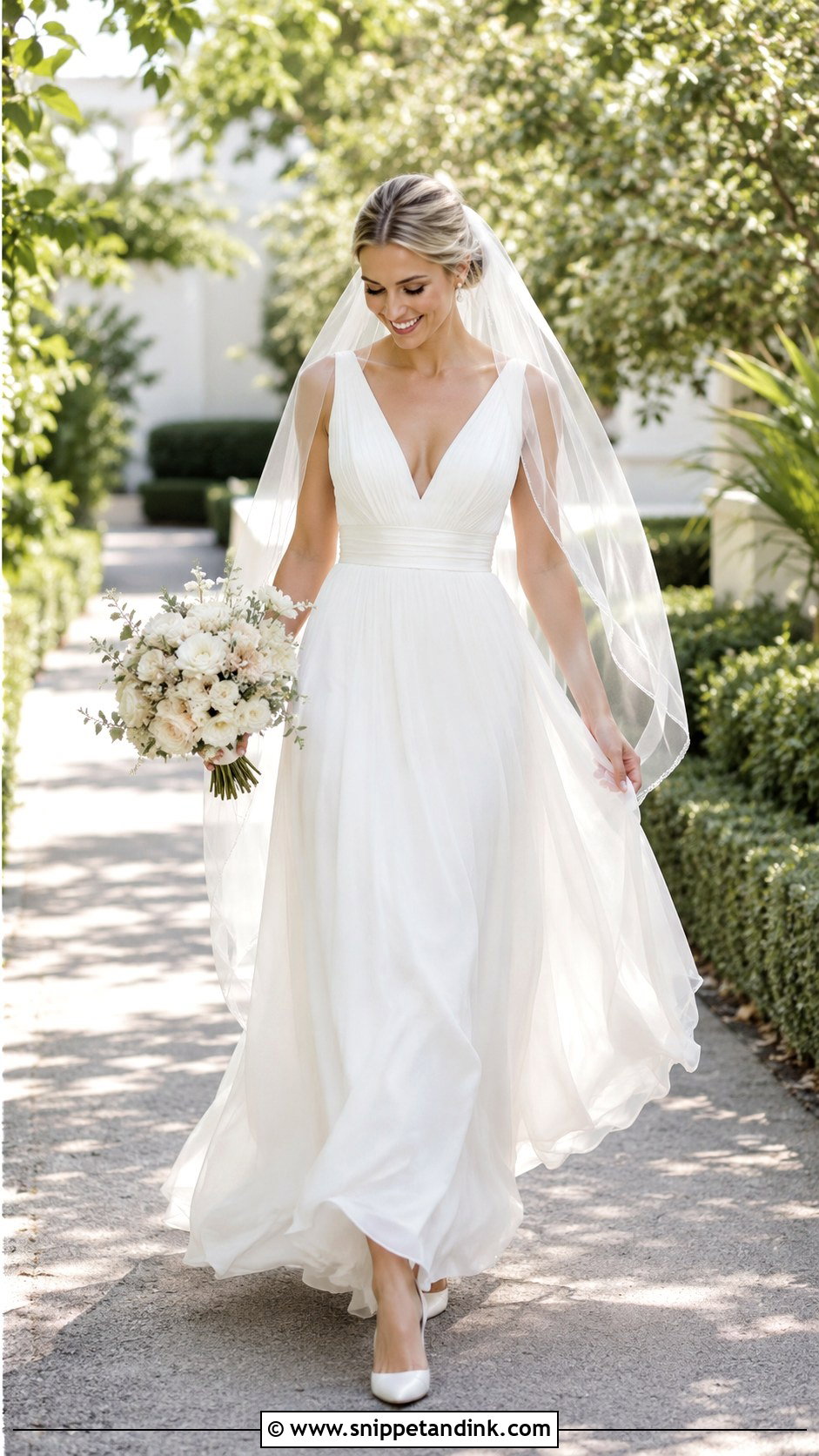
Tulle and long trains only come alive in motion. Find a clear aisle, garden path, shop walkway or bright hallway long enough for an uninterrupted full-length shot, and film her walking toward the lens, away from it and across the frame. I drop the camera to about waist height, which gives the skirt presence without cutting off her head or veil. Ask her to walk at a normal pace; a deliberately slow walk looks stiff. Get one tight clip of hem and shoes. Whoever arranges the train should step out of frame before you roll. Slow motion helps, but keep some real-speed footage so the walk feels honest.
6. Wedding Dress Detail Close-Up Video
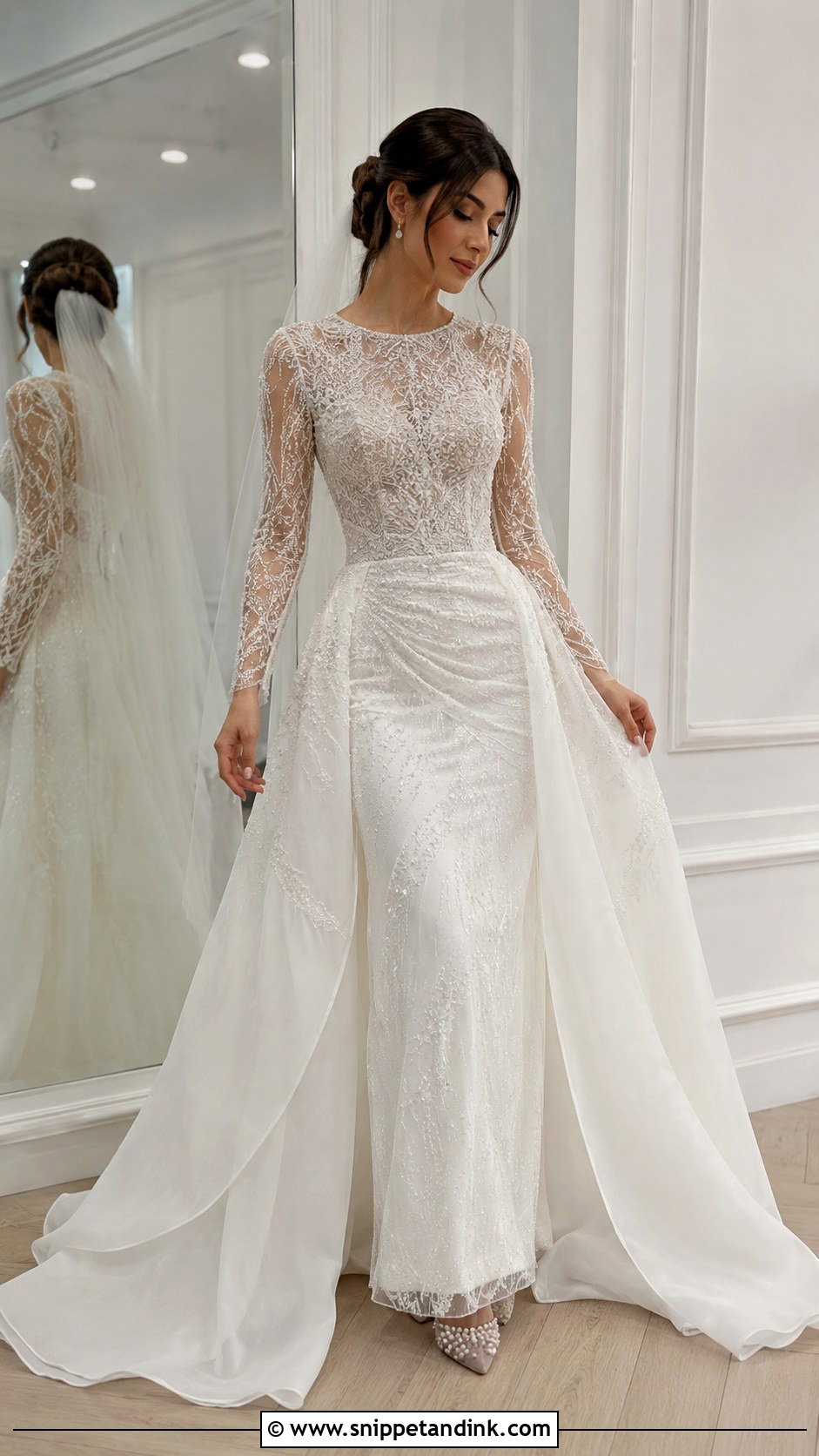
Embroidery, beading, buttons and appliqués vanish in a wide shot. A detail video brings them forward, but it should still open with the whole gown so viewers know what they’re looking at. Then move in logically: neckline, bodice, waist, sleeves, back, train. Soft, even light from a window or a large diffused source shows texture without hot spots on beads. Sequins and crystals sparkle best with a little side light, so I angle her slightly away from the window for those clips. Ask her to hold still for the tightest frames, then finish on a gentle turn. Accessories belong only if they echo the dress, like pearl earrings beside pearl embellishment.
7. Wedding Dress Veil Reveal
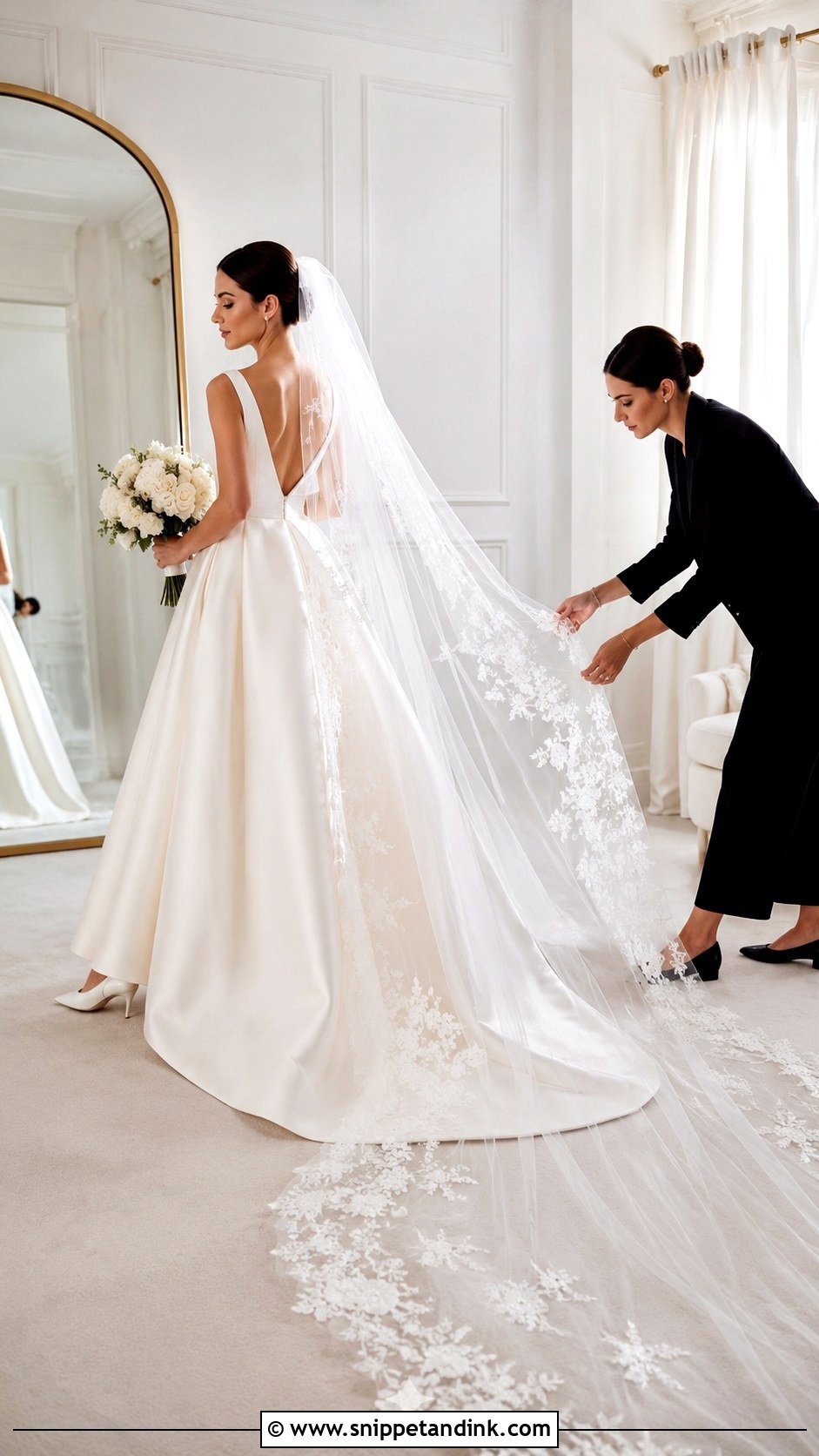
A veil changes the proportions of the whole outfit, so it earns its own reveal. Film the bride in gown, shoes and jewellery first, front and back. Then capture the stylist setting the veil into her hair and the fabric falling over the dress and train. A long back shot matters most here, particularly for lace edges, embroidery, pearls or cathedral length. Next, film her turning to the camera and gently lifting the blusher if she wears one. Sheer tulle disappears against a busy background, and I’ve found a plain wall or a darker open doorway gives it enough contrast to show the edge. Arrange the veil fully before you hit record.
8. Wedding Dress With And Without Sleeves
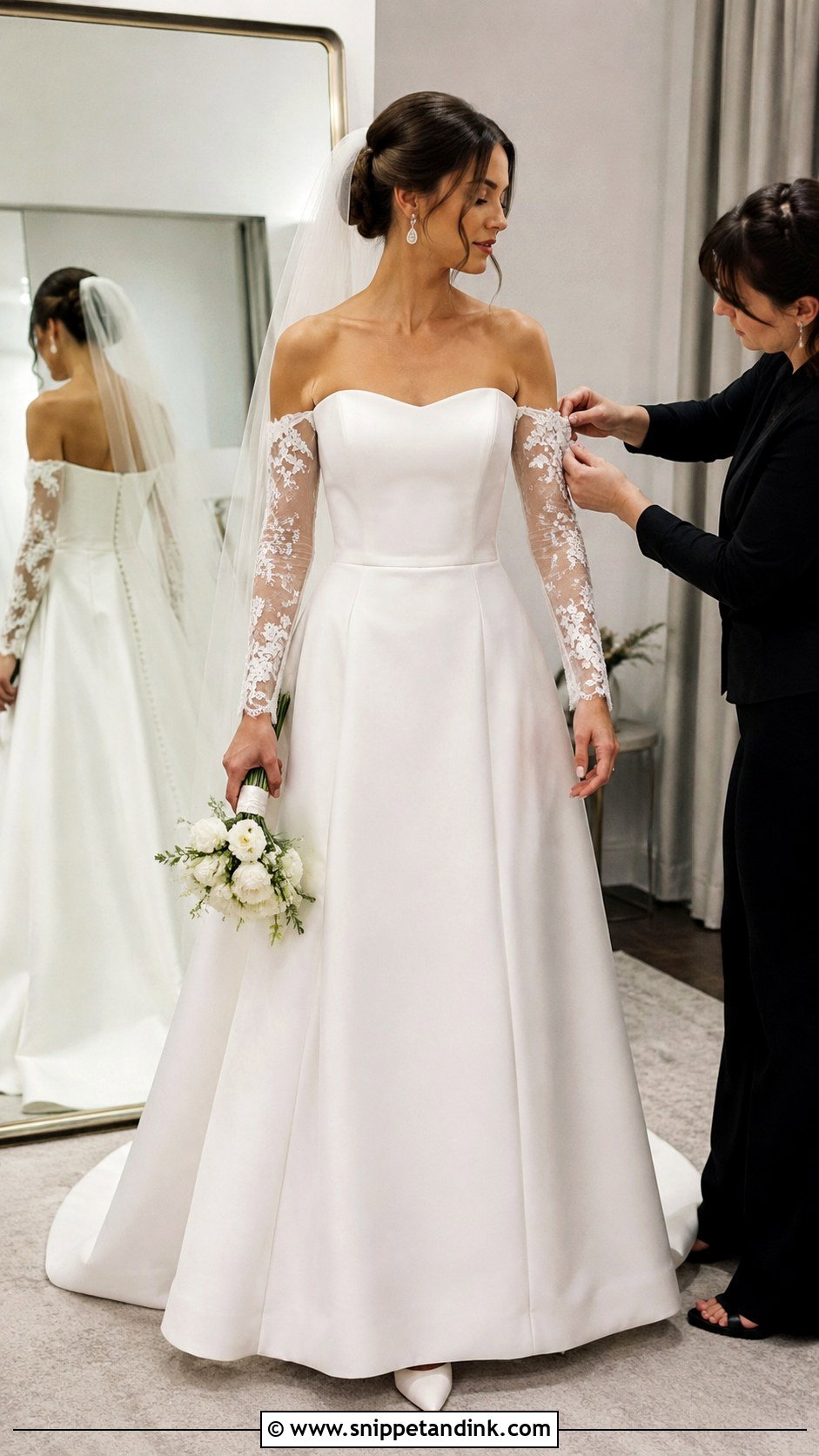
Detachable sleeves turn one gown into two, and viewers love a direct comparison. Film the strapless or sleeveless version styled complete, with a clear view of the neckline and shoulders. Show a stylist fastening each sleeve, then cut to the new look in the same pose and camera angle. Ask her to move her arms, turn and walk, because sleeves that sit well standing can ride up on a raised arm. Swapping a necklace for earrings sometimes balances the extra coverage. Close on quick alternating clips labelled “without sleeves” and “with sleeves.”
9. Wedding Dress Overskirt Transformation
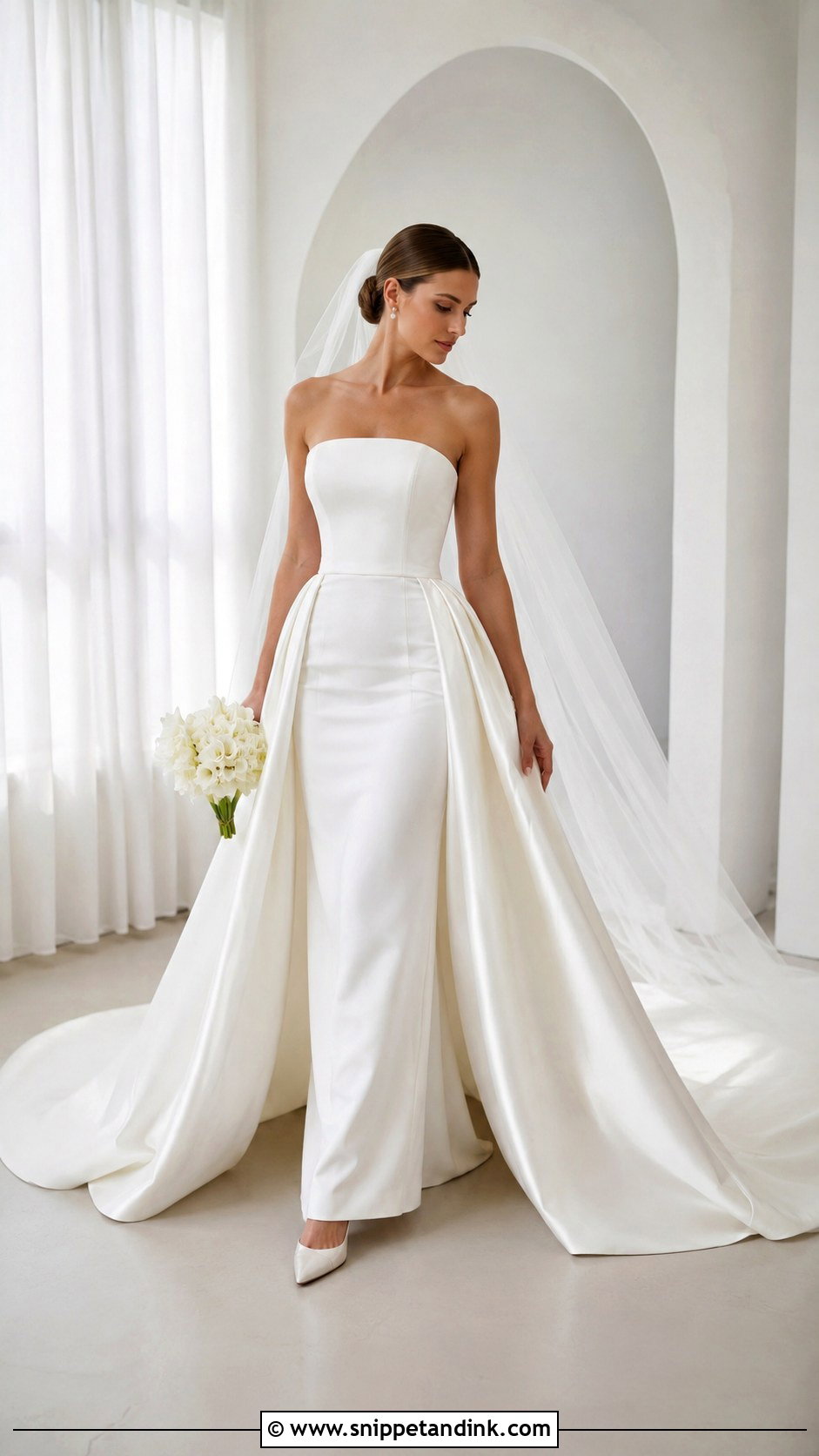
An overskirt shows how a single gown can move from a dramatic ceremony to a sleek reception. Style the base dress fully and film front, side and back. Next, capture the stylist attaching the overskirt at the waist and arranging its train, then reveal the ceremony look with a slow turn and a confident walk. Don’t hide the hooks or snaps completely; brides watching this want to know how it works. Reverse the process back to the fitted base, keeping hair, shoes and jewellery identical so the comparison reads. Sheath, mermaid, trumpet and column bases show the change most clearly.
10. Wedding Dress Train And Bustle Video
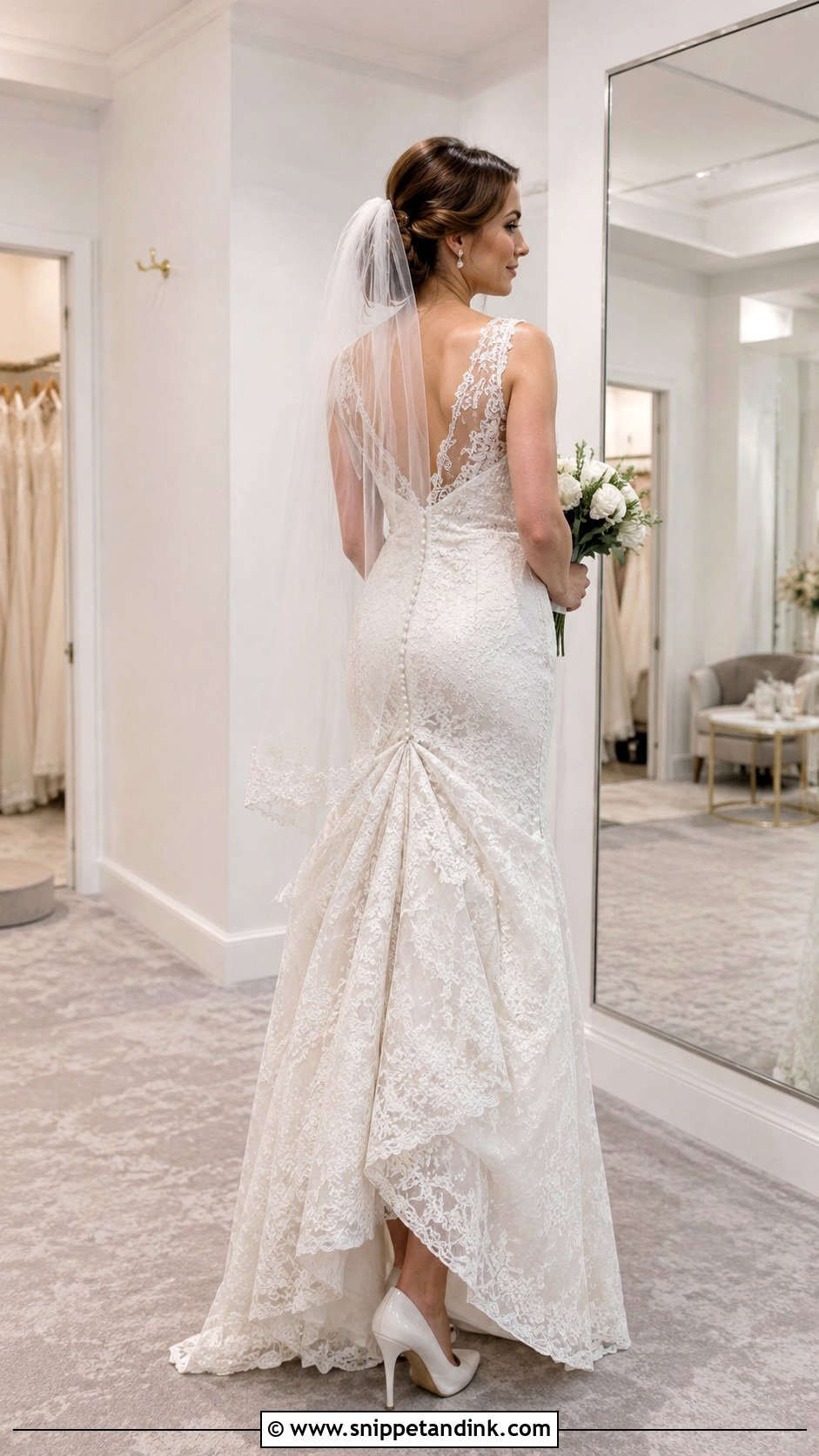
A long train makes the ceremony, and every bride then wonders what happens to it at the reception. Start with it fully spread, filmed from a slightly raised back angle; standing on a sturdy step works. Add a slow walking clip so the fabric follows her. Then show the seamstress or stylist lifting and securing the bustle at its intended points, gently, without yanking delicate fabric. Film her walking, turning and sitting once it’s done. Label the train length or bustle type only if you’re sure it’s right, because brides screenshot these. Finish with a full view, front to back, showing how the shortened hem sits with her shoes and veil.
11. Wedding Dress Accessories Comparison
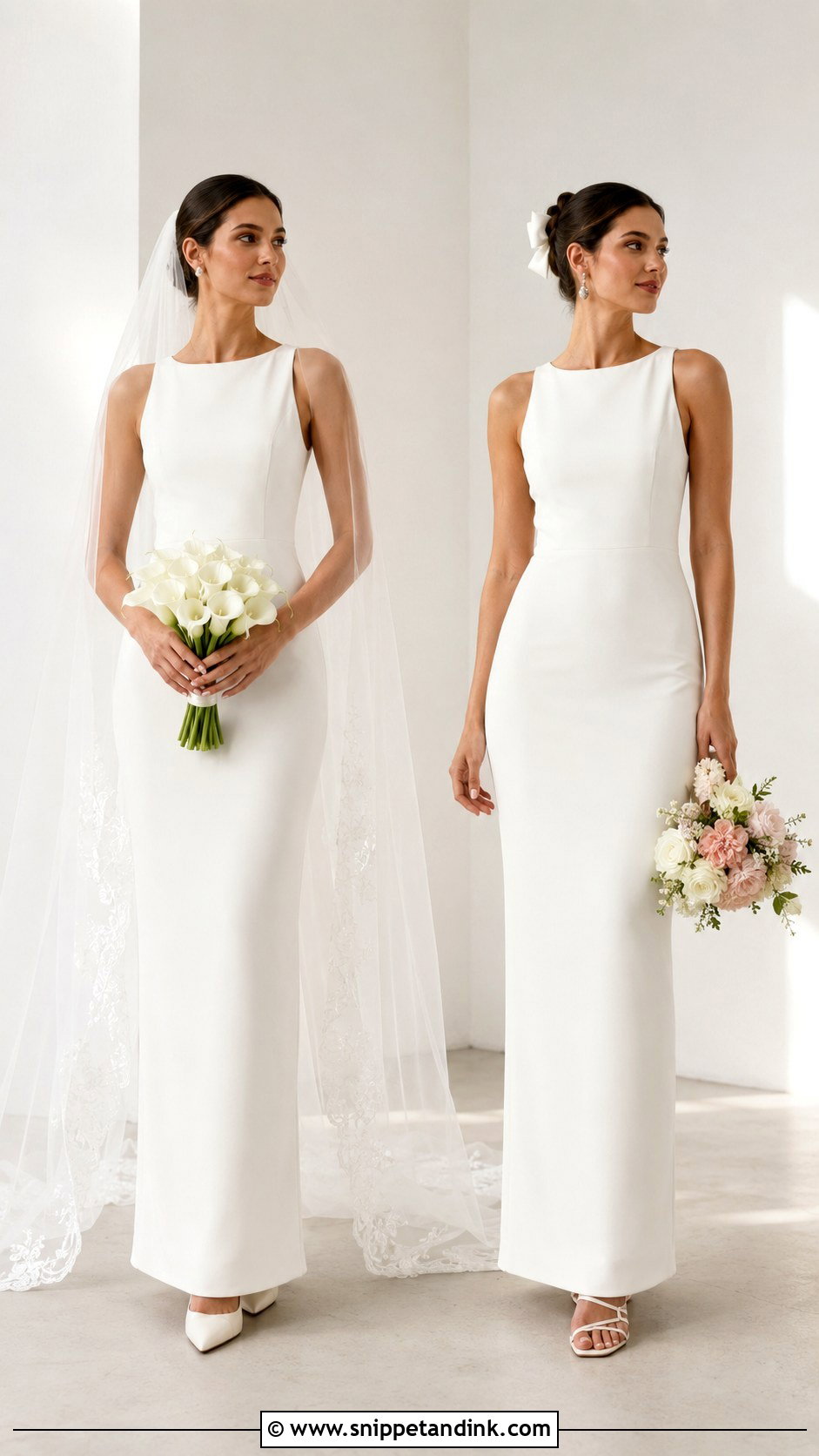
The same gown can read classic or modern purely through accessories. Build two or three full looks around one dress: a cathedral veil, pearl earrings, pointed pumps and a structured bouquet for one, a hair bow, drop earrings, sandals and smaller flowers for another. Film every version in the same spot, pose and camera position, or the comparison falls apart. On heavily beaded or lace gowns, fewer pieces always look better. Show each look head to toe, then close on neckline and hair. End with the versions side by side and ask viewers which one they’d wear.
12. Wedding Dress Silhouette Comparison
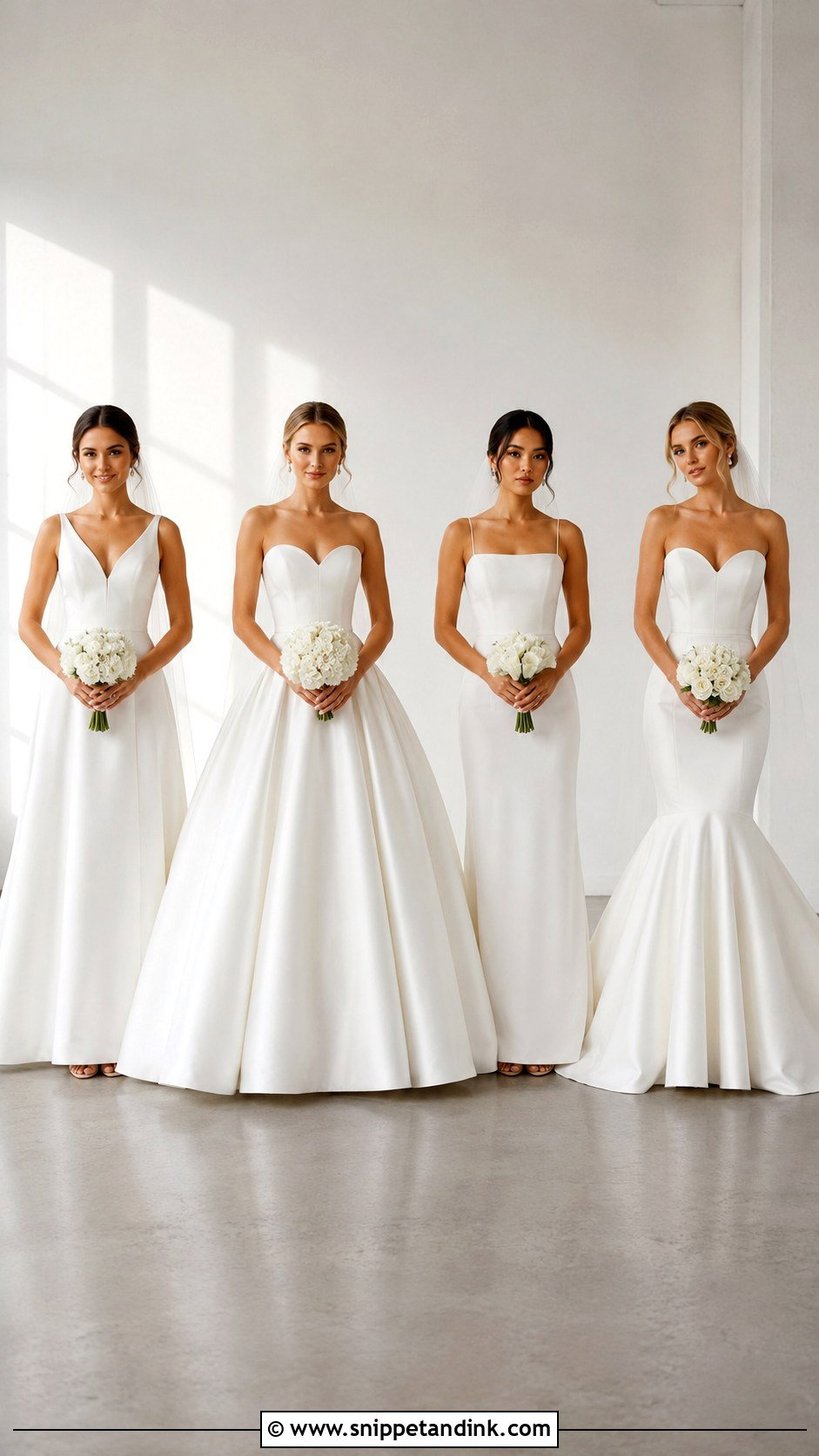
Brides often want to see how silhouette changes the whole outfit, and a comparison video does it fast. Show an A-line, ball gown, sheath and mermaid as complete looks, ideally on the same model, as long as every sample genuinely fits her safely. Shoot each from front, side and back with identical camera placement, and have her walk and turn so volume, waist and train can be compared. Keep earrings and shoes the same throughout. Add a clear label without covering the dress. I’d avoid calling any shape universally flattering; comfort, construction and how a bride wants to move matter more.
13. Wedding Dress Fabric Comparison
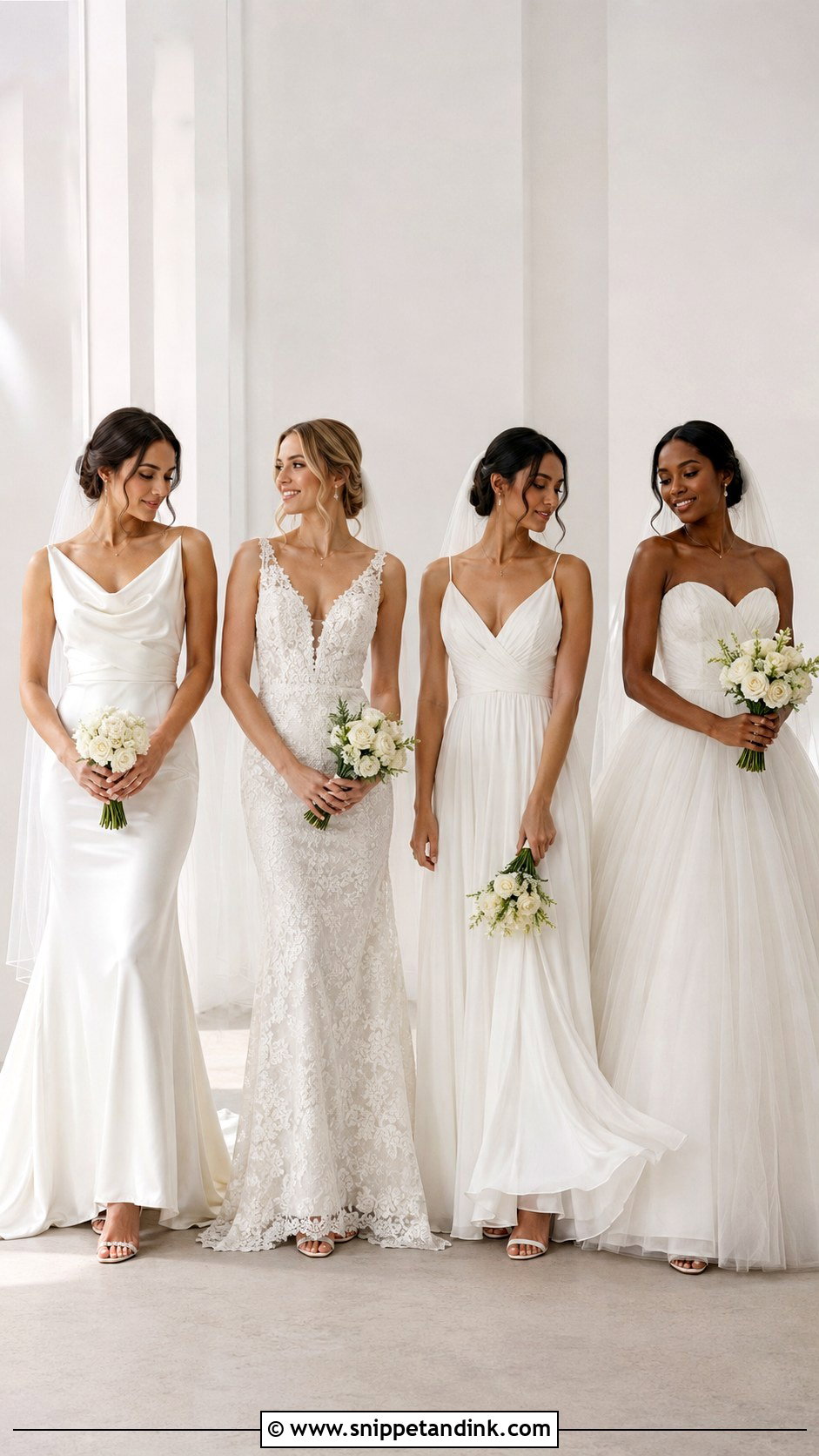
Satin, crepe, chiffon, organza, lace and tulle all handle light differently, and video shows that far better than text. Film gowns in distinct fabrics under the same light and against the same background, each standing, walking and turning. Close-ups reveal texture, sheen, transparency and how layers stack. Skip strong filters, which shift colour and make ivory look white or yellow. A good movement test is walking past a window: organza holds its shape, chiffon floats, satin catches a long highlight. Label the main fabric and finish on a split screen showing how each gown keeps its form.
14. Wedding Dress First Fitting Video
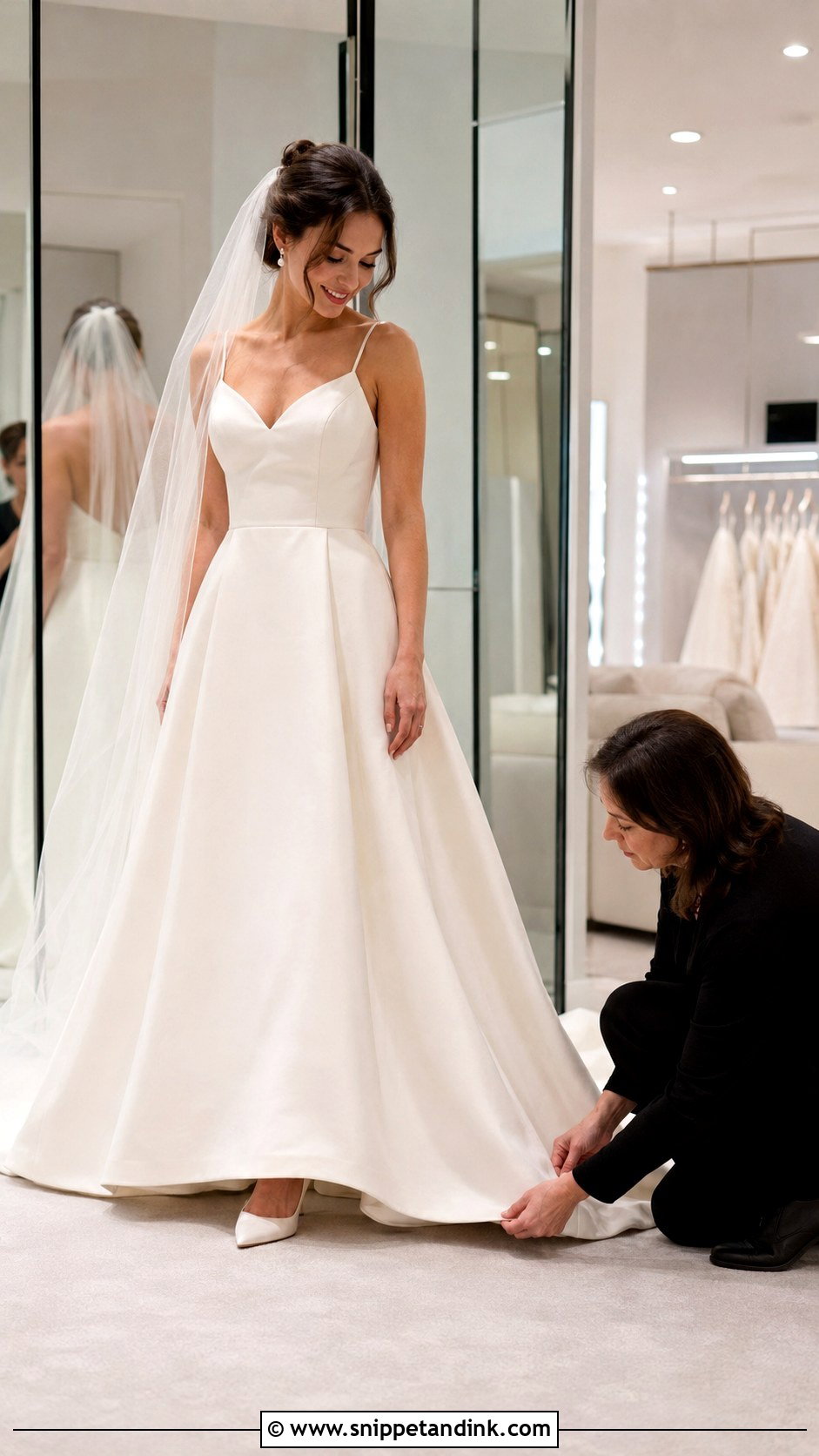
The first fitting sits between choosing a gown and wearing it finished, and it’s a surprisingly popular format. Film the dress before adjustments, then the seamstress checking hem, straps, waist, neckline and bustle points. Show pins and clips only where they explain something. The bride needs her actual wedding underwear and shoes on, since both change the fit and the hem length. Record a full-length view before and after the temporary marking, plus her walking, sitting and raising her arms. Unfinished edges aren’t flaws, and the caption should say that fittings shape a gown to one body. Tease the planned veil and jewellery at the end.
15. Wedding Dress Final Fitting Reveal
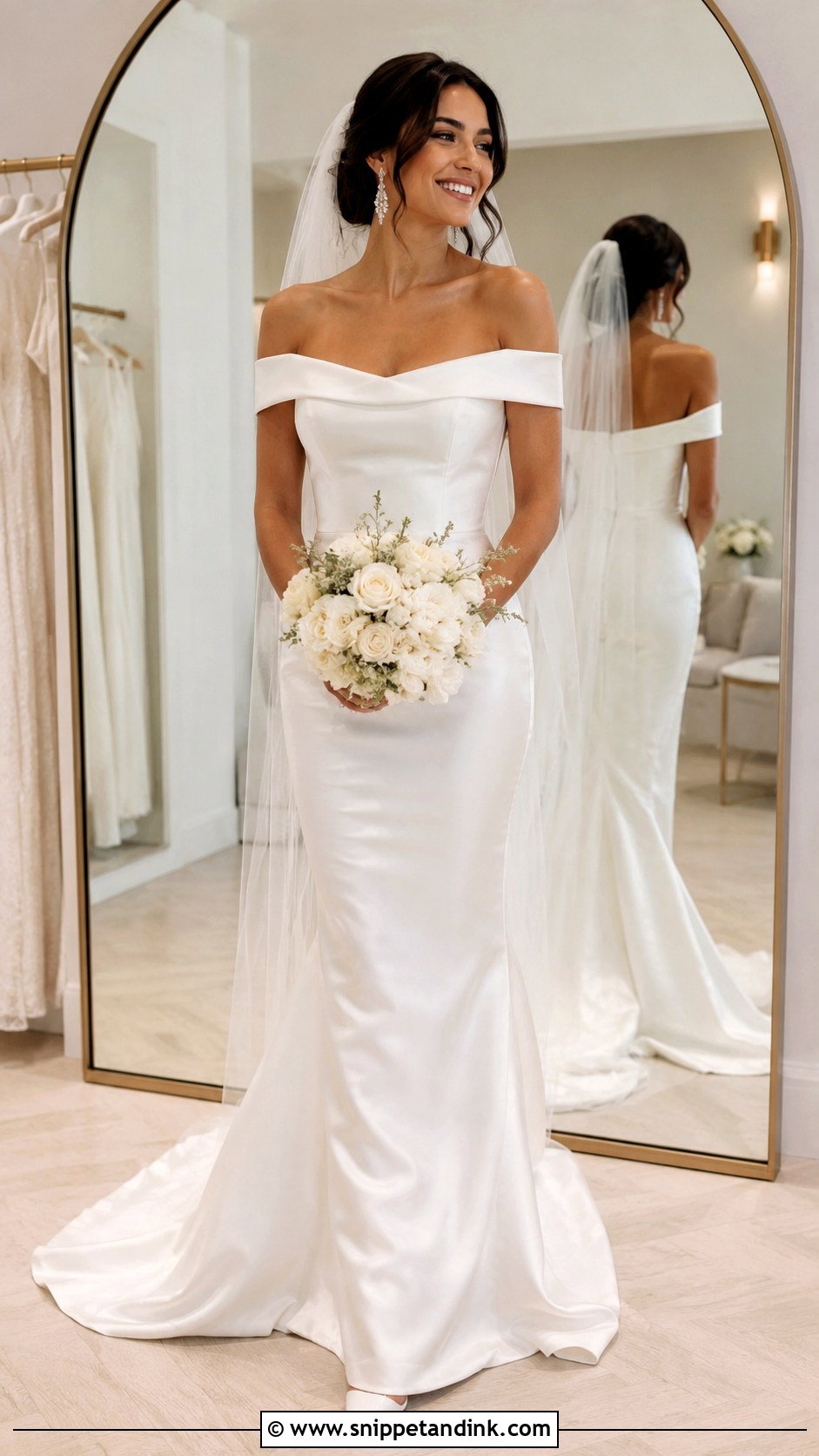
Relief is the emotion of a final fitting. Open on the gown hanging in the fitting room, then reveal her in it: full length from the front, then side and back to show the finished hem, adjusted bodice, secure straps and completed bustle. Have her walk, sit, turn and lift her arms. Add shoes, veil and jewellery so the final proportions are clear. Let the edit stay quiet and leave room for her reaction. With her permission, film her first look in the mirror; I set the camera behind and slightly to one side so I catch both her face in the reflection and the back of the gown. End on one detail that means something, covered buttons or embroidered initials.
16. Wedding Dress Boutique Tour
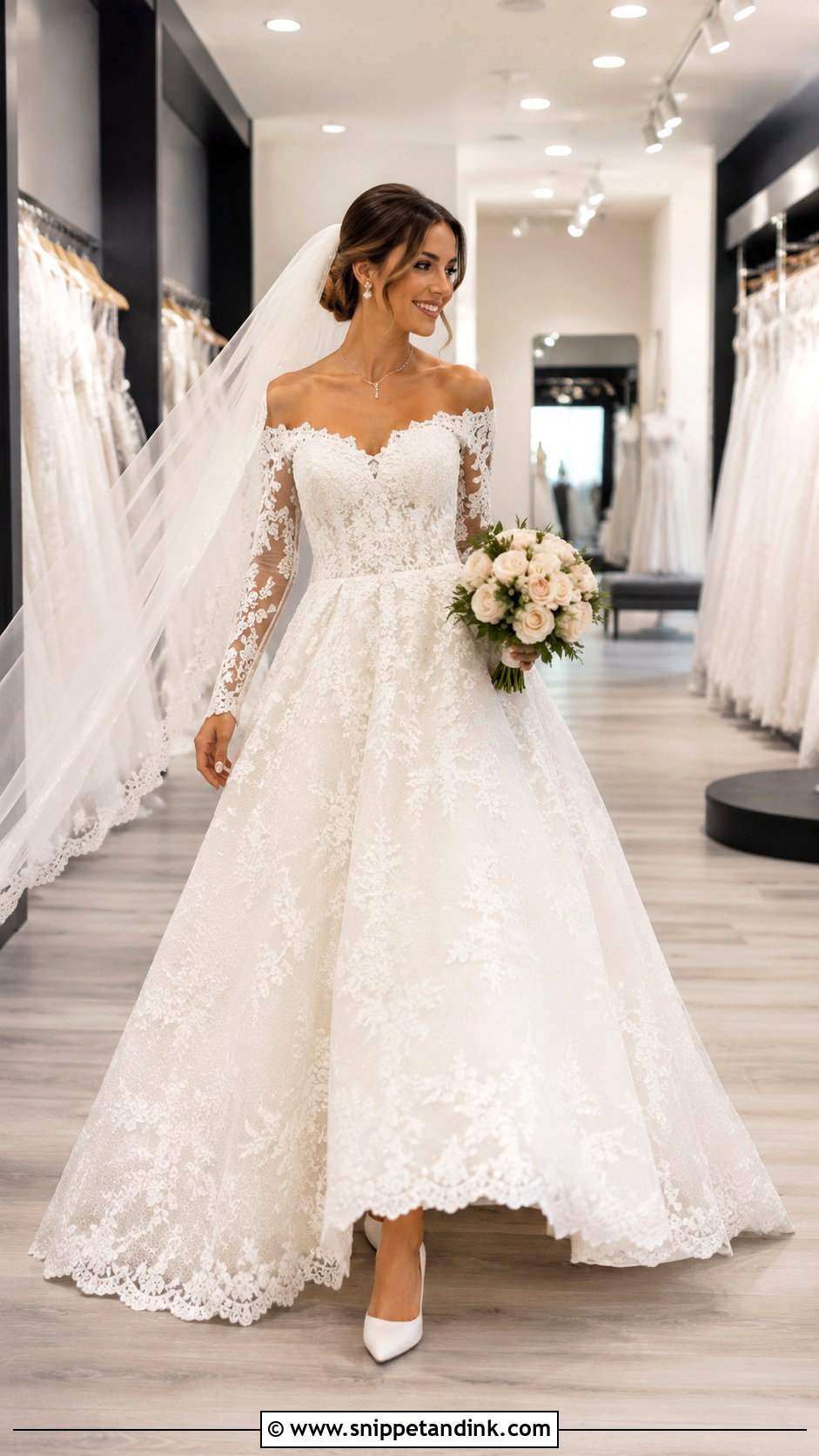
A boutique tour introduces the space while steering viewers to the gowns. Start at the entrance and move through reception, racks, fitting rooms, mirrors and accessory displays. Long pans across crowded rails lose people quickly, so place a model in a complete look in each area: a minimal crepe gown in one, a lace A-line in the next, a full ball gown with veil at the end. Clear pathways first, and get permission before any customer or staff member appears. Shop lighting is often mixed warm and cool, so I switch off what I can and set white balance manually for the space. Short labels for appointment areas, sizes or alterations help. Close on a stylist preparing a fitting room.
17. Wedding Dress Stylist Picks
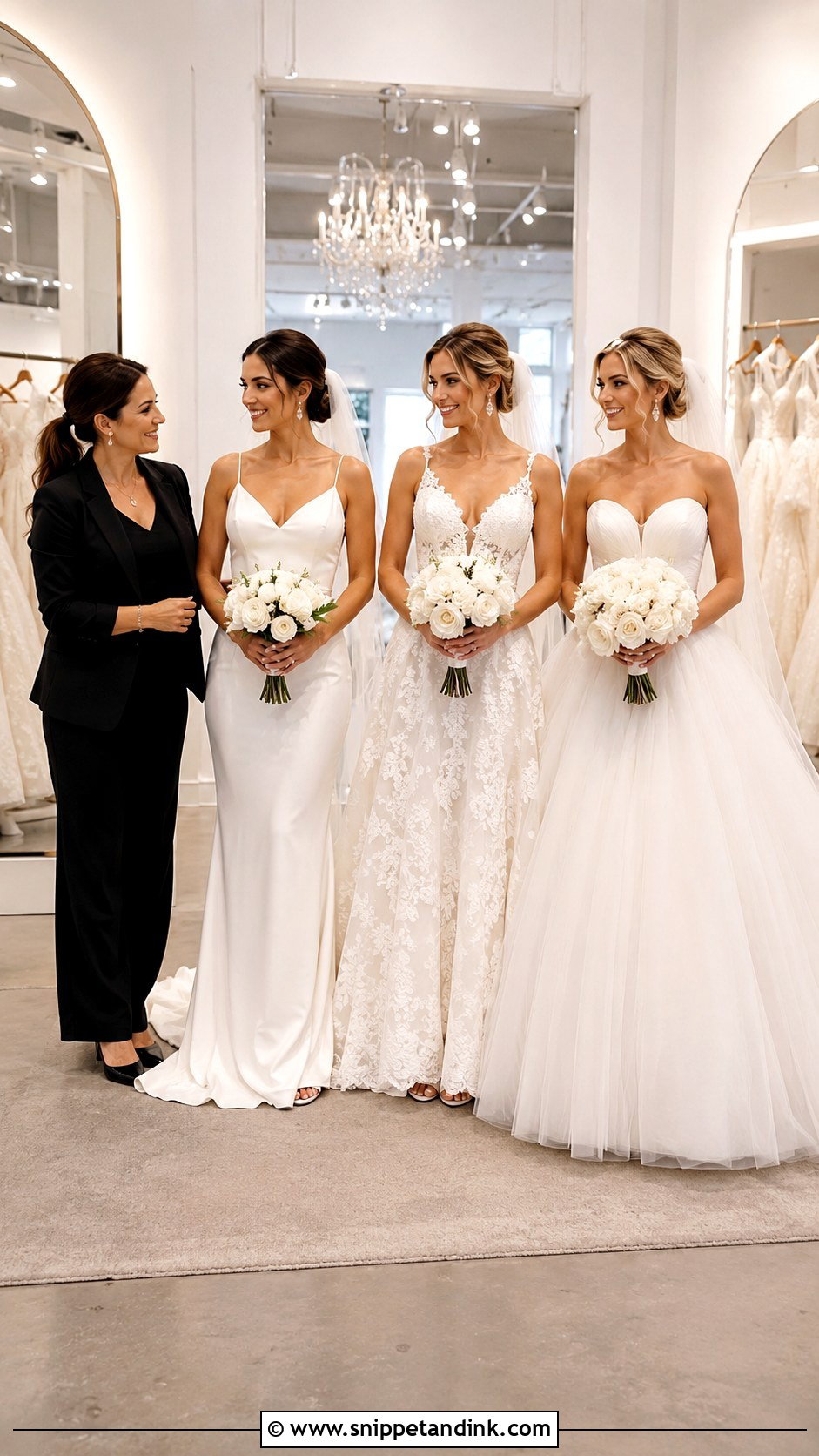
A stylist’s picks feel personal in a way a product grid never does. Choose one tight theme, maybe lightweight gowns, sleeves, minimalist dresses or dramatic trains, and have the stylist introduce three choices on hangers before each appears on a model. Give every gown a full-length shot, front and back, and a short walk. Her commentary should cover fabric, structure, movement and the one standout detail, without claiming a dress suits everyone. Style each with considered shoes, earrings and a veil or hair piece. Run all three back to back at the end with clear labels so viewers can compare.
18. Wedding Dress Day To Reception Change
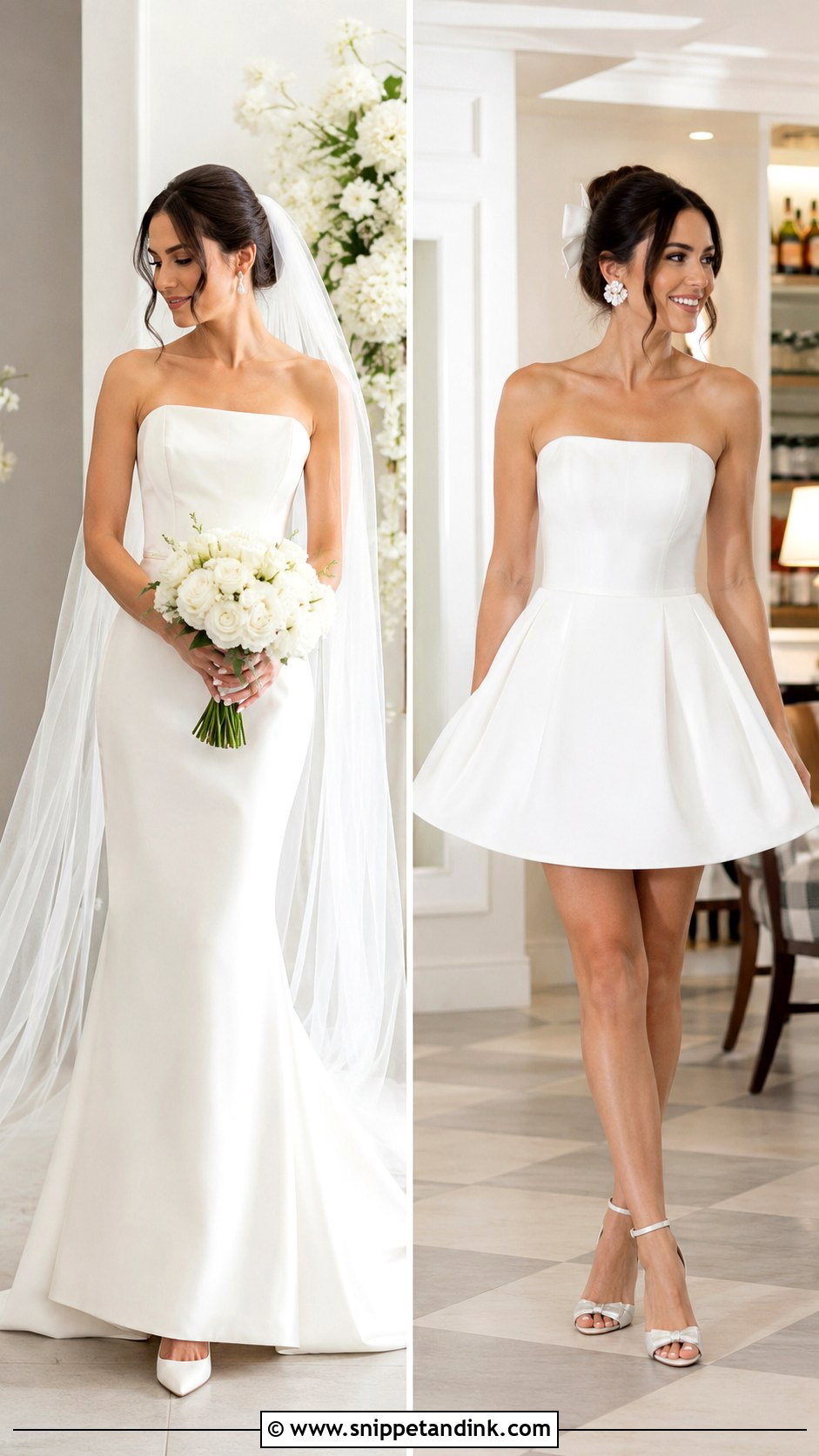
An outfit-change video tracks the bride’s style through the day. Open on the ceremony look, perhaps a full-length gown, long veil, classic pumps, earrings and formal bouquet, filmed head to toe. Use a doorway, a hand over the lens or a walking transition, then reveal the reception outfit: shorter dress, comfortable shoes, bolder earrings, a small hair piece. If she keeps the same gown, the change is removing the veil, bustling the train and swapping accessories. Match your angles across both looks so the shift is easy to follow. A side-by-side clip makes a clean ending.
19. Wedding Dress Real Bride Reaction
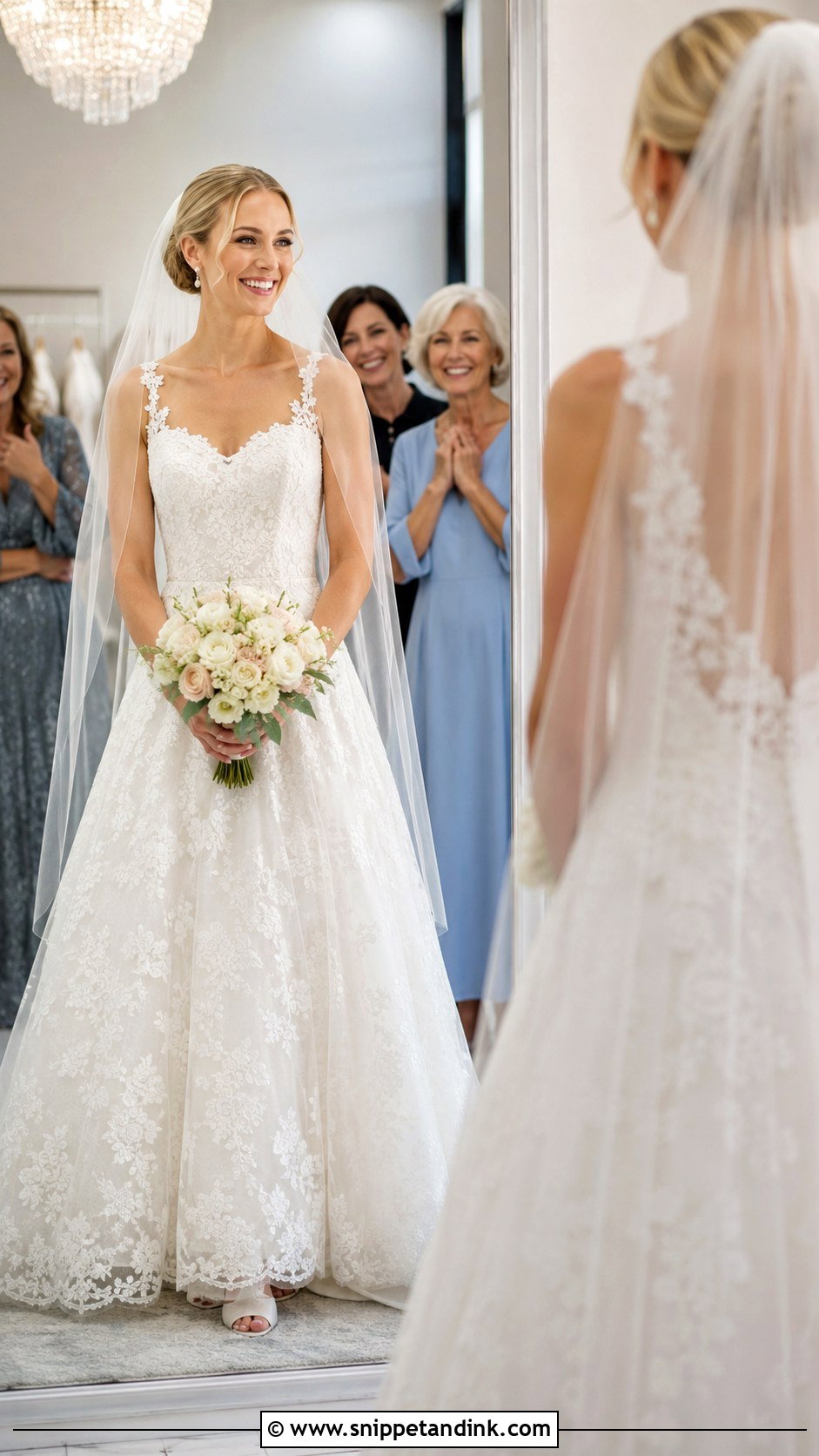
A real reaction beats any edit. With the bride’s clear consent, set the camera where it sees both her full outfit and her face when she meets the mirror, and start recording before she steps out so nobody has to fake it a second time. Approved family or friends can appear, but keep her and the gown centred. Afterward, film calm full-length footage from every angle, including train, neckline, accessories and a walk, so the video still informs. Shops are noisy, so I clip a small wireless mic on a friend nearby rather than relying on the camera’s microphone. Light editing and clean sound keep the moment sincere.
20. Wedding Dress Behind The Scenes Video
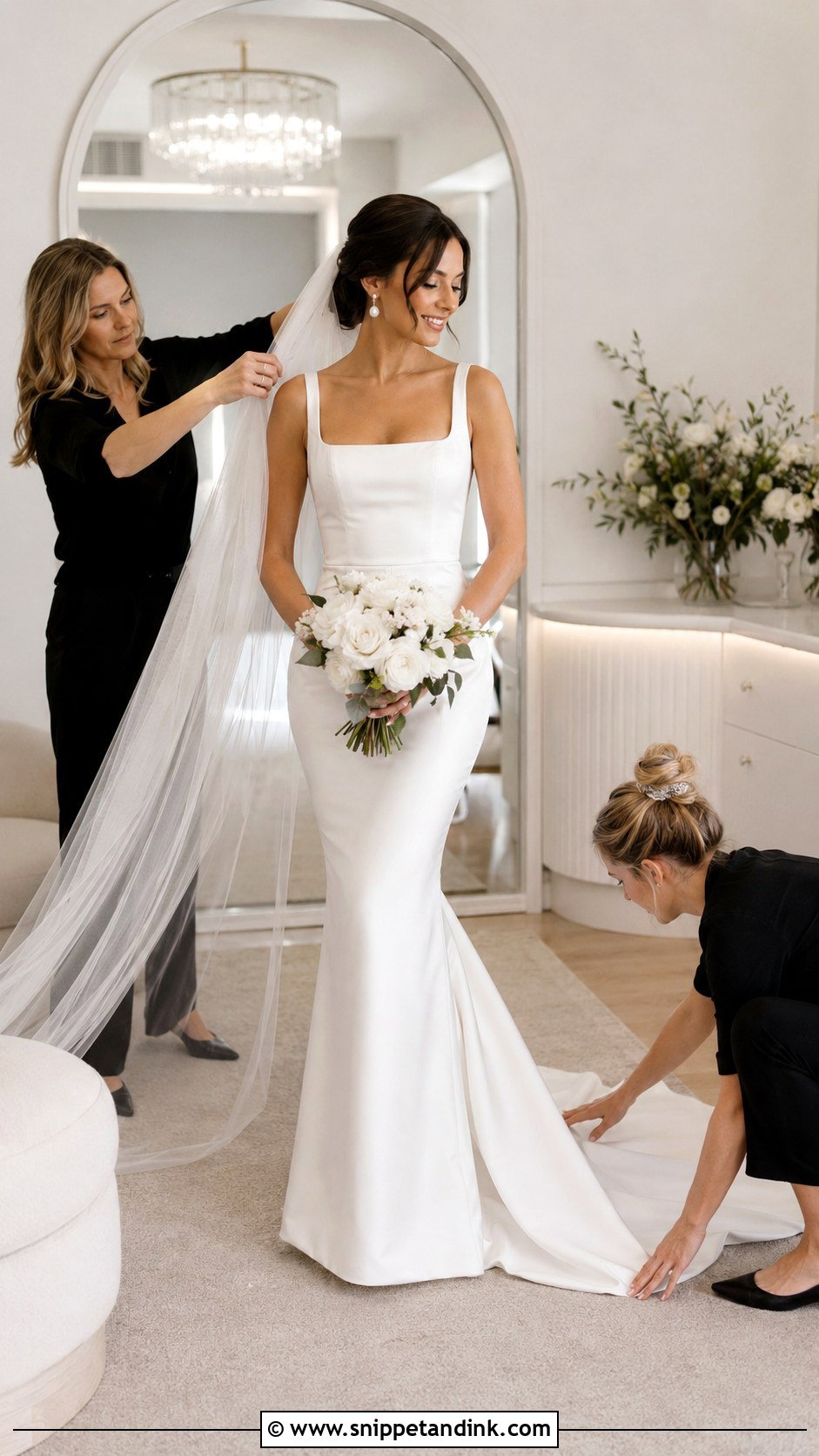
Behind-the-scenes footage shows how much work goes into a polished bridal look. Start with the gown being steamed, inspected and laid out, then the stylist setting out shoes, jewellery and veil. Film short clips of buttons being fastened, sleeves positioned, the skirt smoothed and the train arranged. Changing moments stay off camera, always, and every shot is planned around her privacy. When she’s ready, cut to a full-length reveal in a clean setting and film her walking, turning and posing while the team makes small fixes. A final wide shot of the finished look, with a glimpse of the busy room just outside the frame, ties it together.
Whose Permission You Need Before Posting
Wedding dress content involves more people than it seems, and an awkward takedown request is easy to avoid.
- The bride or model. A short written consent that says where the video will appear and whether it can be used in ads. A verbal yes at the fitting is easy to forget later.
- The designer or shop. Some designers don’t allow new collection samples on social media before a set release date, and some brides keep their gown secret from the groom. Ask both.
- Anyone else in shot. Other customers, staff and family members in the background all need to agree or be cropped out.
Protecting the Gown While You Film
A sample or a finished gown can be ruined in one take. Keep drinks and food in another room, have the model’s makeup set with powder before she steps in, and lay a clean sheet on any floor the train will touch outdoors. Shoes go on after the dress, not before, to protect the hem. For reveal takes repeated several times, the gown spends a long time on the body, so build in breaks and let the bride sit on a clean stool rather than the floor.
Shoot the Dress the Way a Bride Will Remember It
Good bridal video mixes beauty with a story that’s easy to follow. Reveals, fittings, comparisons, transformations, shop tours and detail studies can all carry that. Before filming, clear the background, check the gown for marks, plan the order of shots and make sure everyone on camera has agreed. Shoot vertical for short-form platforms and get every look head to toe; close-ups add texture, but only wide shots show fit and movement. Keep the bride or model comfortable instead of forcing a trend she doesn’t enjoy. Prepared that way, each clip shows the gown honestly and gives viewers something worth saving.
You'll Like These Ideas:


Leave a Reply