
There’s no single best wedding hairstyle; there’s the one your hair, your dress and your venue agree on. Before settling on a marriage hairstyle, I want to know how much hair you actually have, what the back of your dress looks like, and how hot the day is likely to be. The twenty looks below cover updos, braids, half-up styles and hair worn down, across most lengths and textures. With each one I’ve noted where it shines and where I’d talk a bride out of it.
What Your Hair Will and Won’t Do on the Day
Before falling for a style, look at the hair it’s made of. Many of the photos brides bring me show extensions, a professional blow-dry and perfect weather. That’s fine, as long as you know what your own hair needs to get there.
Density matters more than length
Two brides with hair to the same point can need entirely different styles. Fine, thin hair makes small buns and narrow braids; very thick hair can make an updo heavy enough to ache. I judge density by the thickness of your ponytail, not by how far down your back the hair reaches.
Texture decides how long curls last
Coarse and naturally wavy hair holds a set well; fine, silky hair often drops within a few hours. If yours is the second kind, an updo or half-up will look closer to the photos by evening than hair worn fully down.
Layers and a fringe need a plan
Short layers poke out of braids and buns, and a growing-out fringe has to be pinned or swept. Tell your stylist about any cut you’re planning, and have it done at least a month before the wedding so the hair has time to settle.
1. Classic Low Bun for Marriage
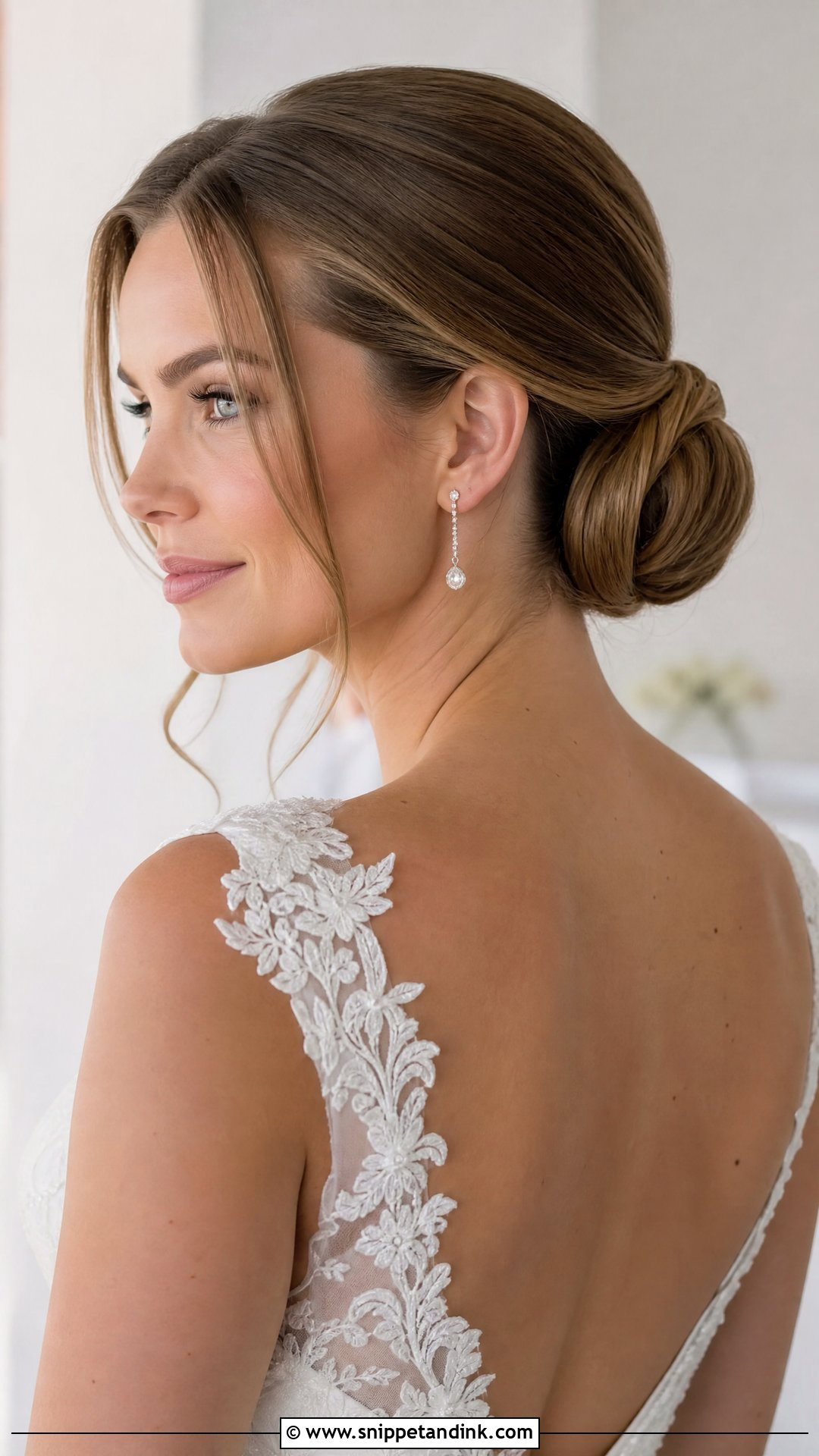
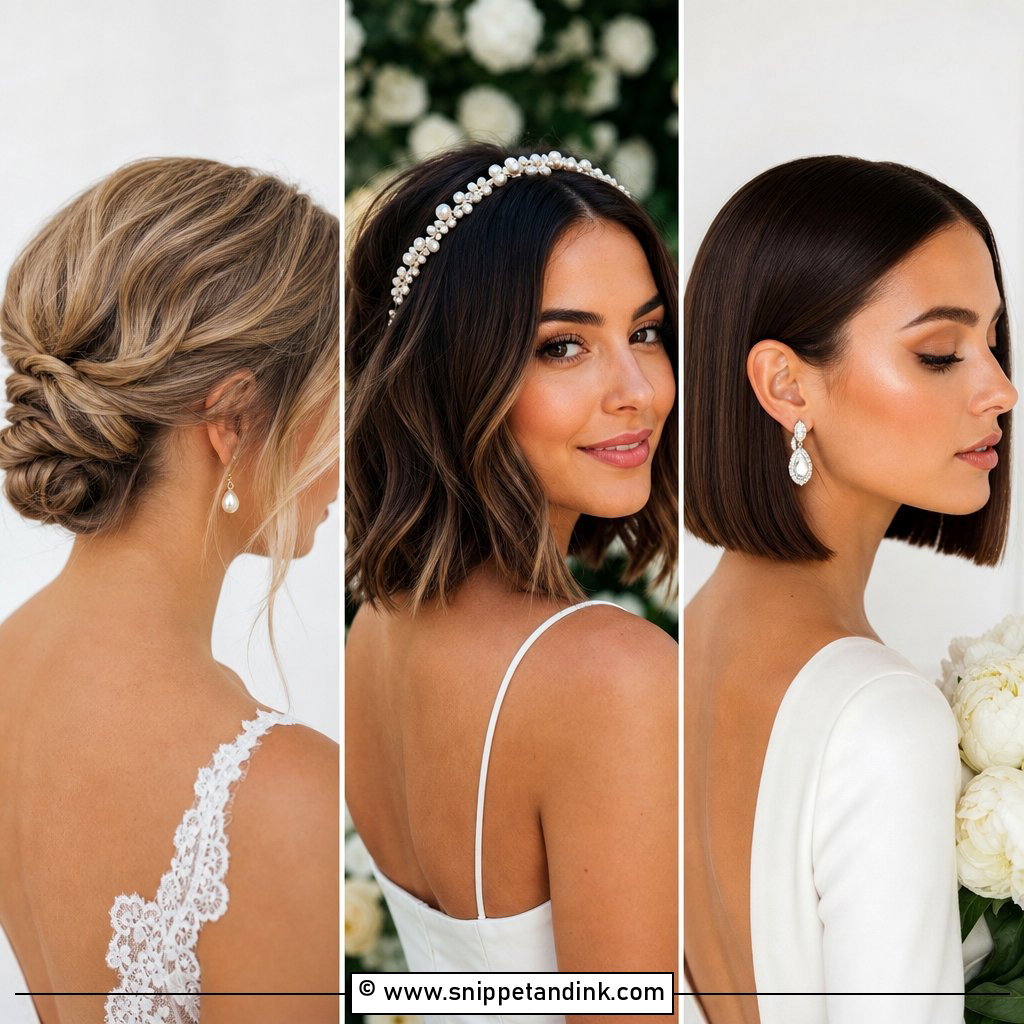
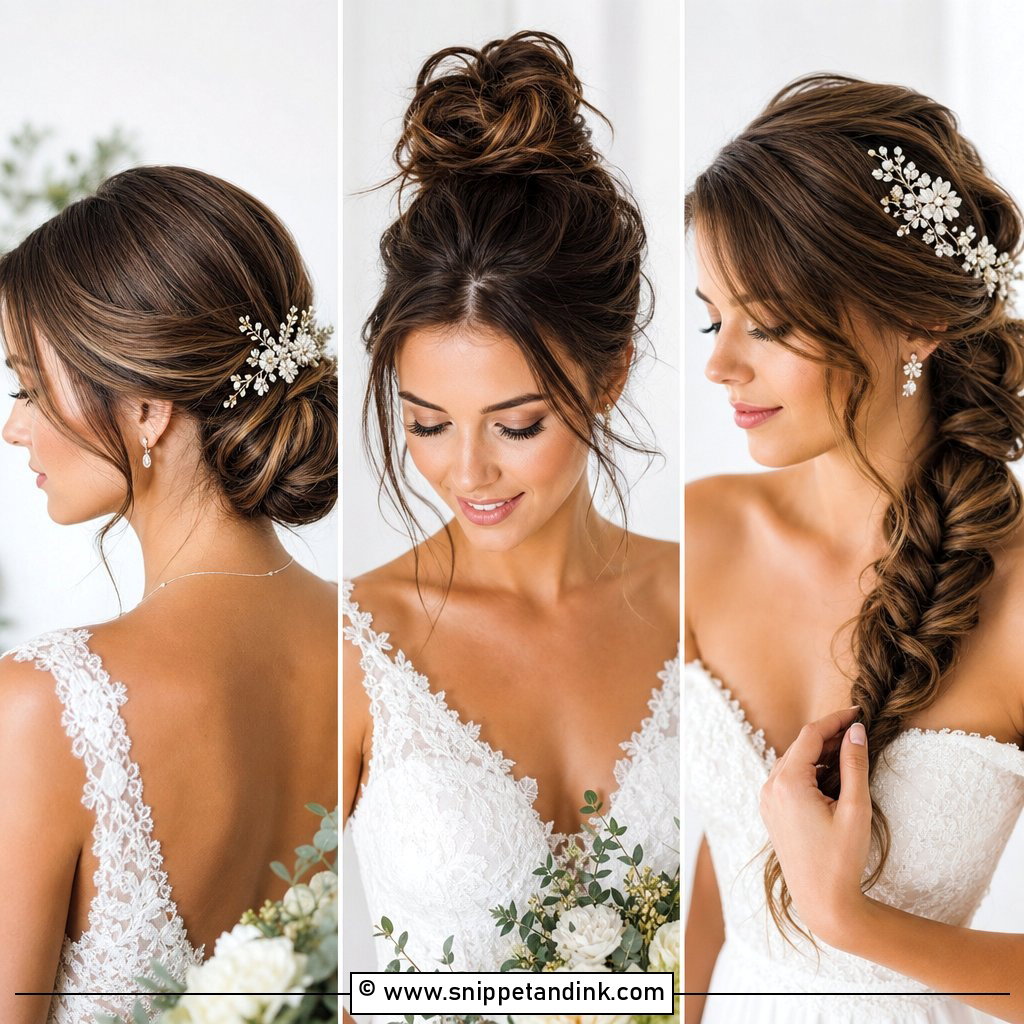
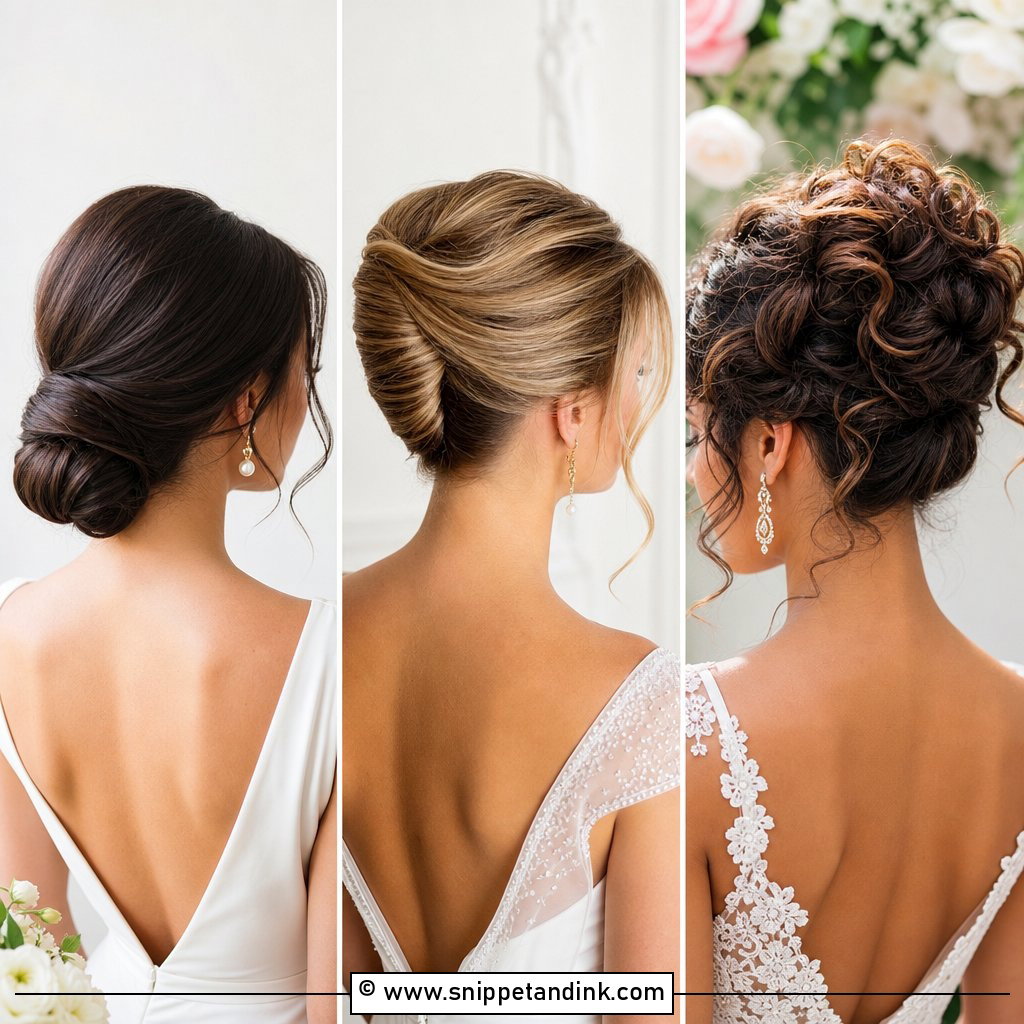
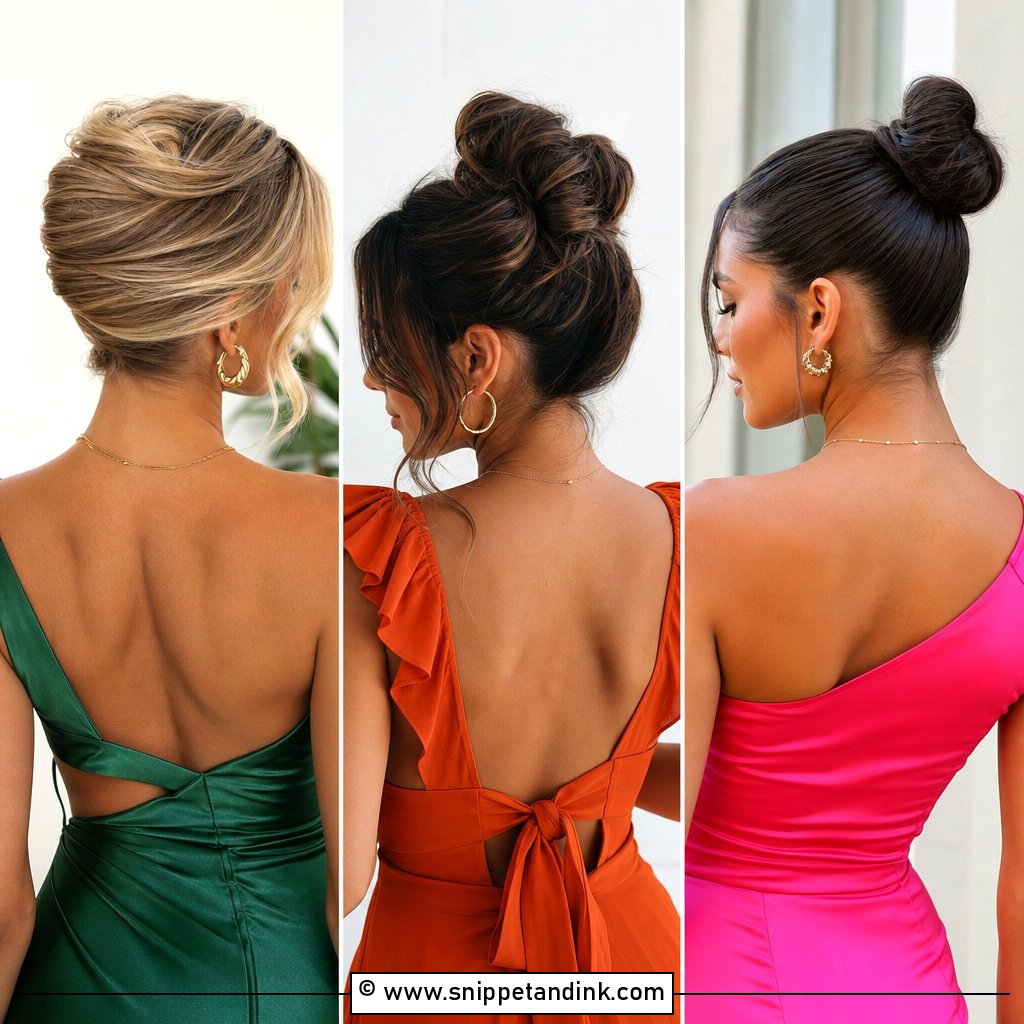
Brides keep coming back to the low bun because it’s the safest bet in the room. Sitting at the nape, it stays clear of a veil comb, a tiara and most necklines, and it won’t date in your photos. How I build it decides how it ages: a firm base ponytail first, then the bun pinned around it in a full circle, never from one side only. A few loose face-framing pieces soften it, though on very fine hair they can go stringy by evening, so I curl them separately.
2. Voluminous Half-Up Half-Down
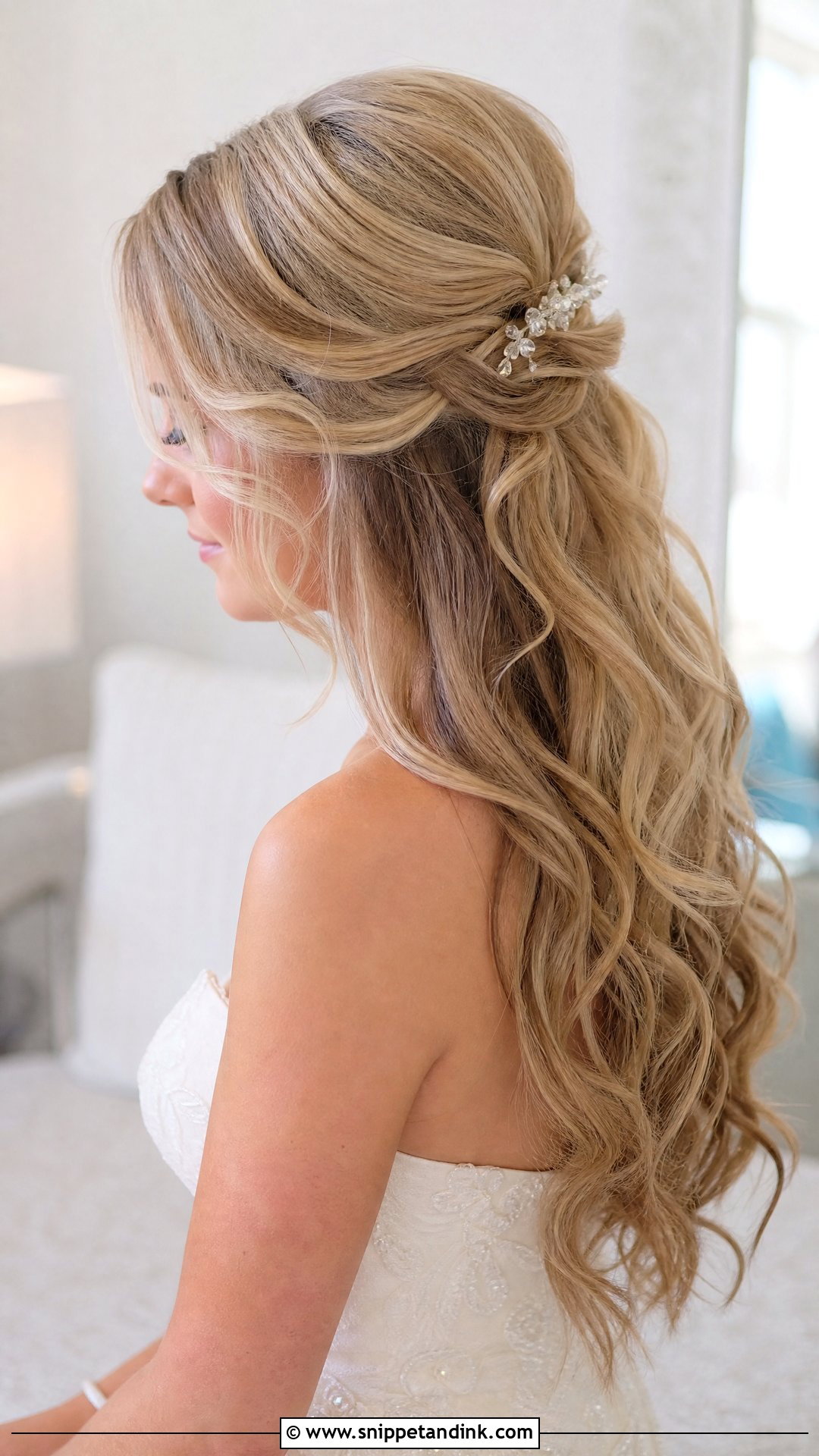
Half-up with height is all about the crown. I backcomb the roots of the top section in thin slices, smooth the surface over it and pin it back so the lift stays put. Overdone teasing looks dated, so I keep the volume modest and let the curls below carry the style. Slide the veil comb in underneath the pinned section rather than above it and the hair hides the comb completely.
3. Romantic Braided Updo
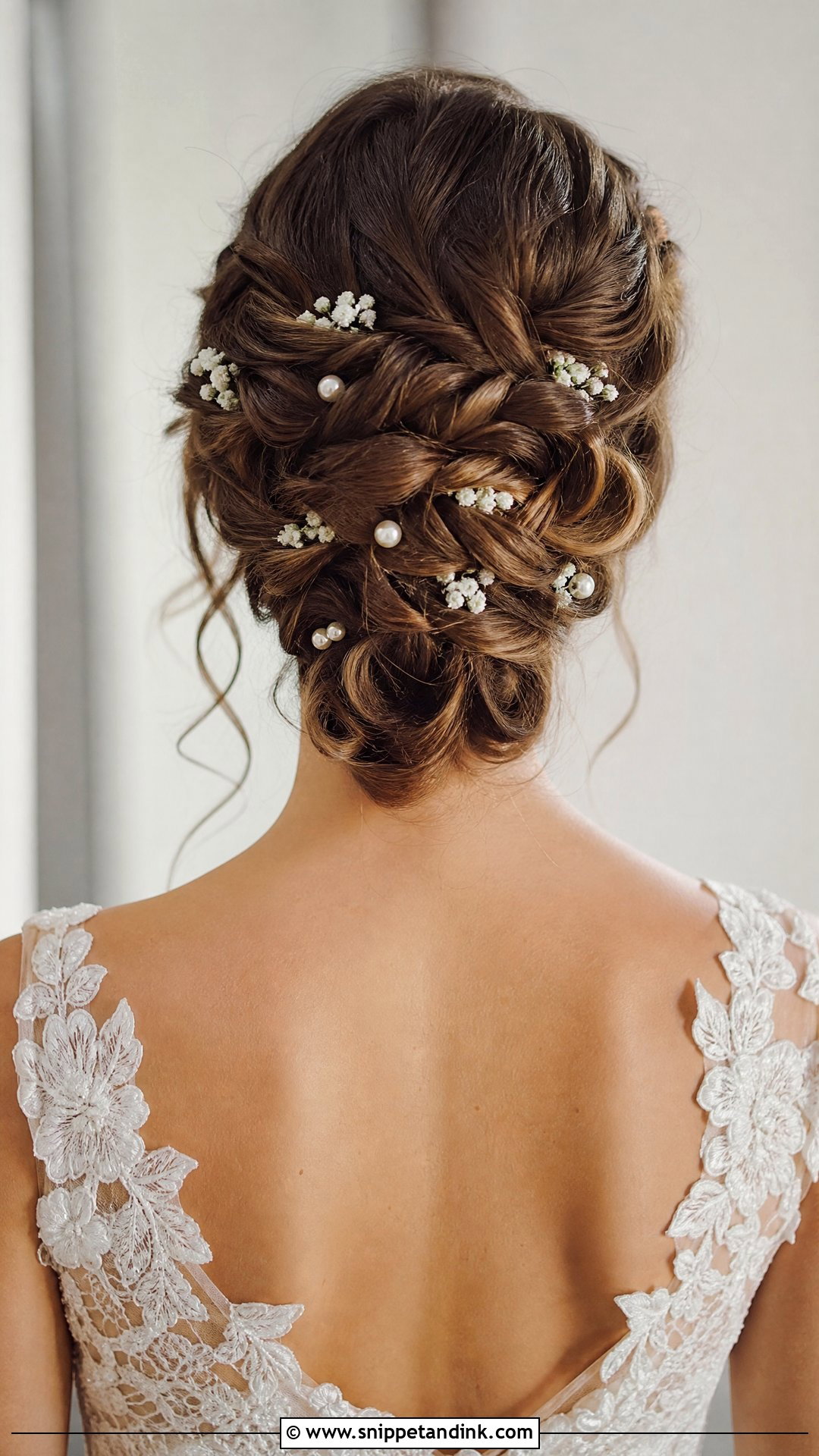
Plaits give this updo its charm, and they also give it strength. Braided hair grips pins far better than loose hair, so it’s one of my most reliable styles for slippery or freshly washed hair. I usually braid three or four sections loosely, pull them wider, then coil and pin them at the back. One thick braid reads bolder; several thin ones look finer and more detailed. Pearl pins or tiny flowers sit naturally in the braid loops, and the whole thing handles a spring breeze well.
4. Hollywood Glam Waves
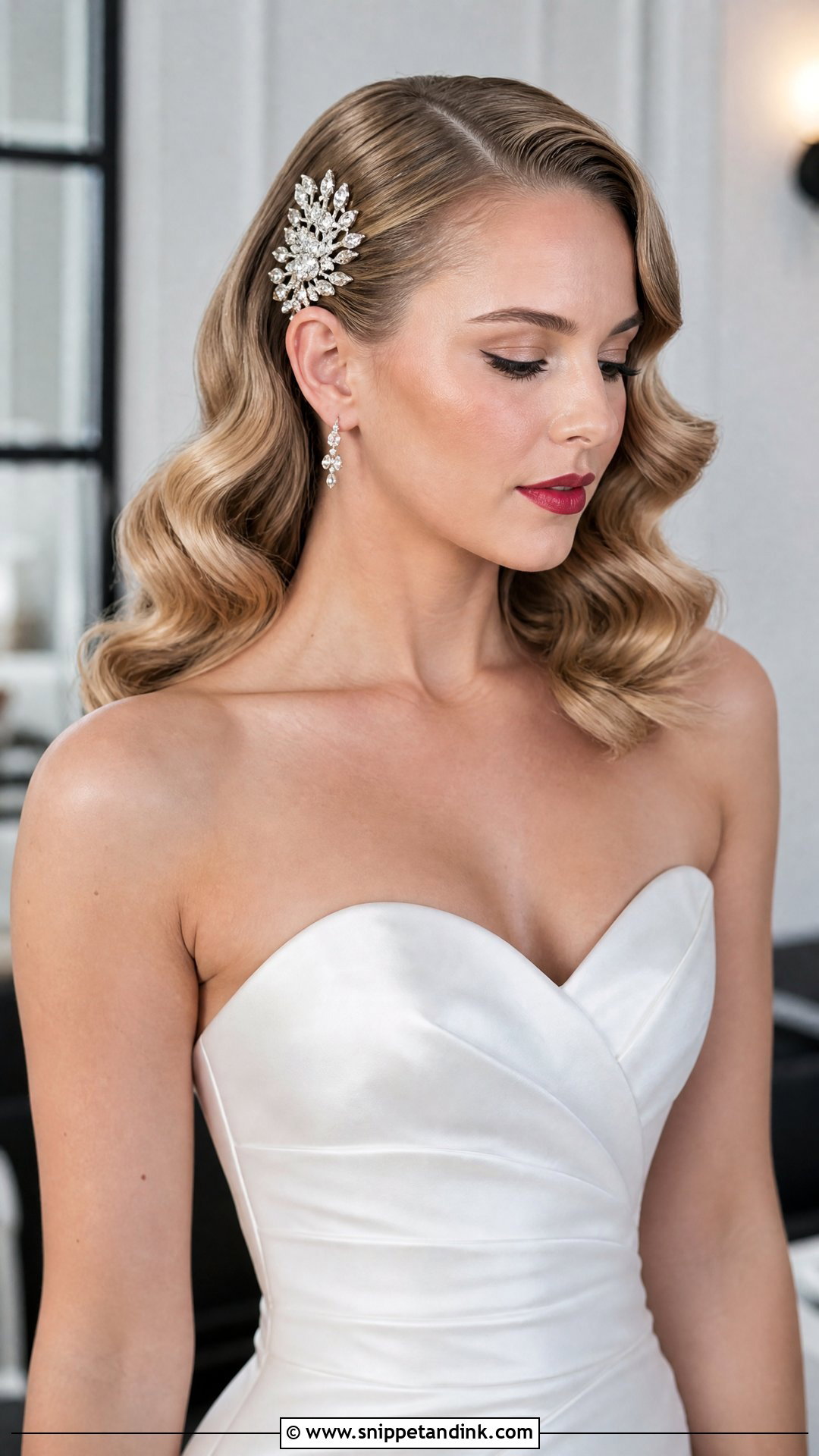
Old Hollywood waves need setting time, which is the part brides underestimate. Every section is curled in the same direction and left to cool pinned up, then brushed into one smooth S-shape and held with clips while the hairspray dries. It’s a formal look that sits well with a strapless gown and a bold lip color. I’d steer you away from it for an outdoor summer ceremony, because humidity loosens the ridges quickly. A jeweled comb on the swept side finishes it.
5. Sleek High Bun for Brides
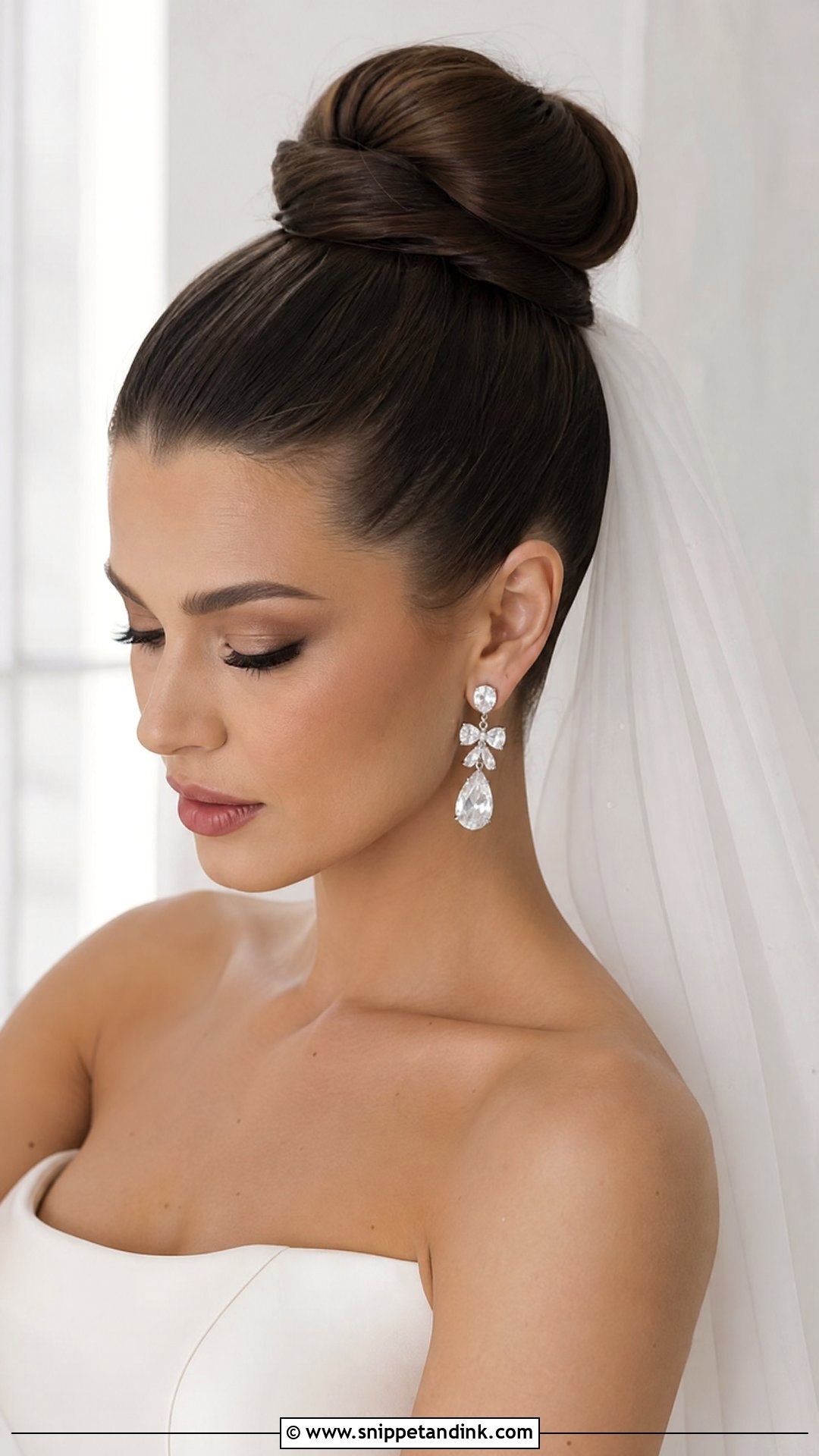
A sleek high bun is precise, and precision shows every flaw, so the prep carries it. I blow-dry the hair completely smooth, brush it up with a little gel and tie the base tight at the crown before wrapping. It lengthens the neck and puts your earrings center stage. Comfort is the trade-off. A tight high bun pulls on the scalp, and some brides have a headache by mid-afternoon, so wear it for a few hours after your trial before you commit.
6. Boho Waves With Flowers
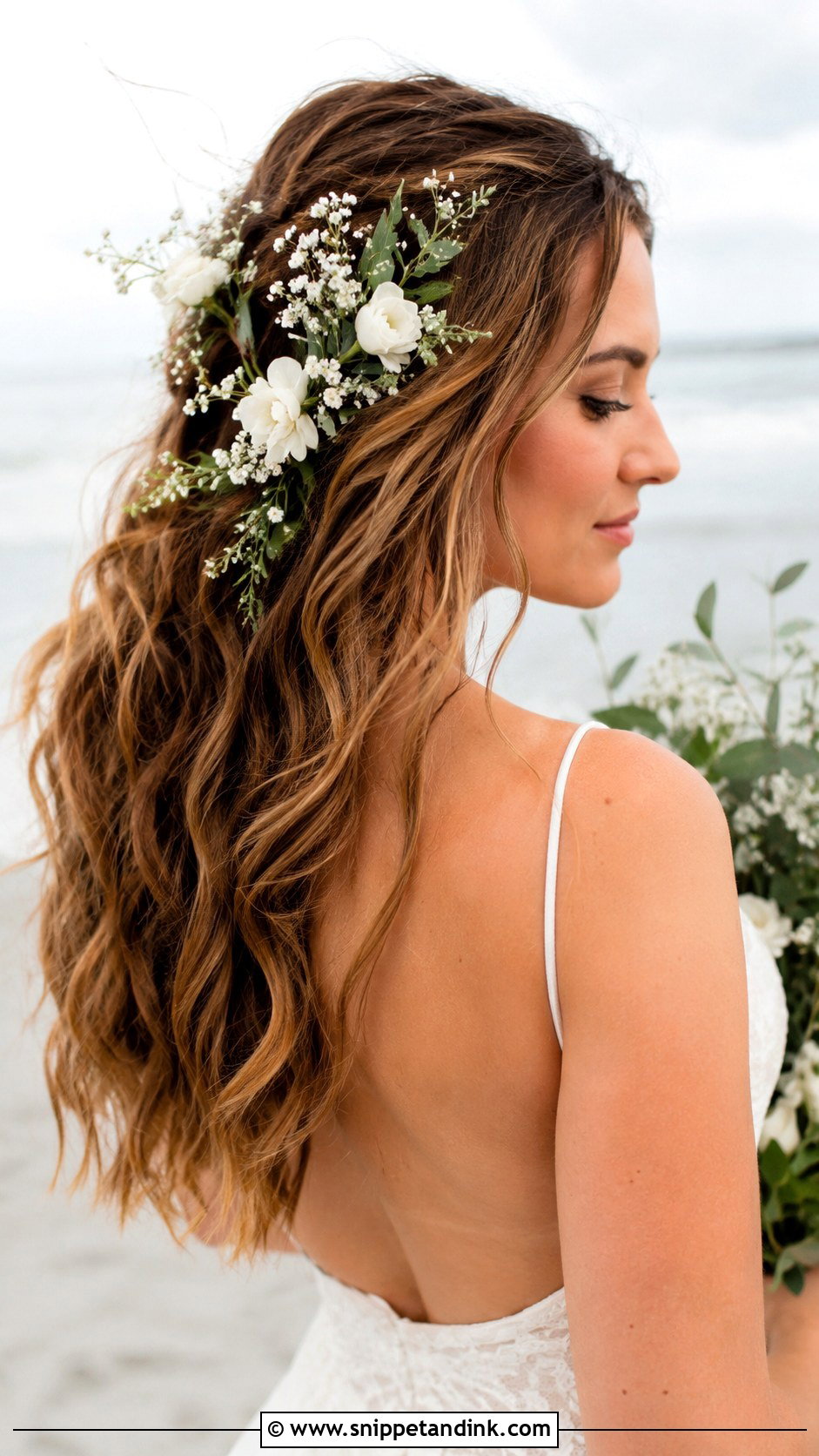
Boho waves are loose and textured on purpose, and that texture comes from a texture or salt spray on lightly curled hair. Fresh flowers tucked through them need wiring and must survive hours out of water; I ask the florist for sturdy stems like spray roses or wax flower. The style is at home with flowing gowns and barefoot beach vibes. Waves left down at the coast relax faster than you’d like, so I pin the front pieces back.
7. Twisted Chignon Updo
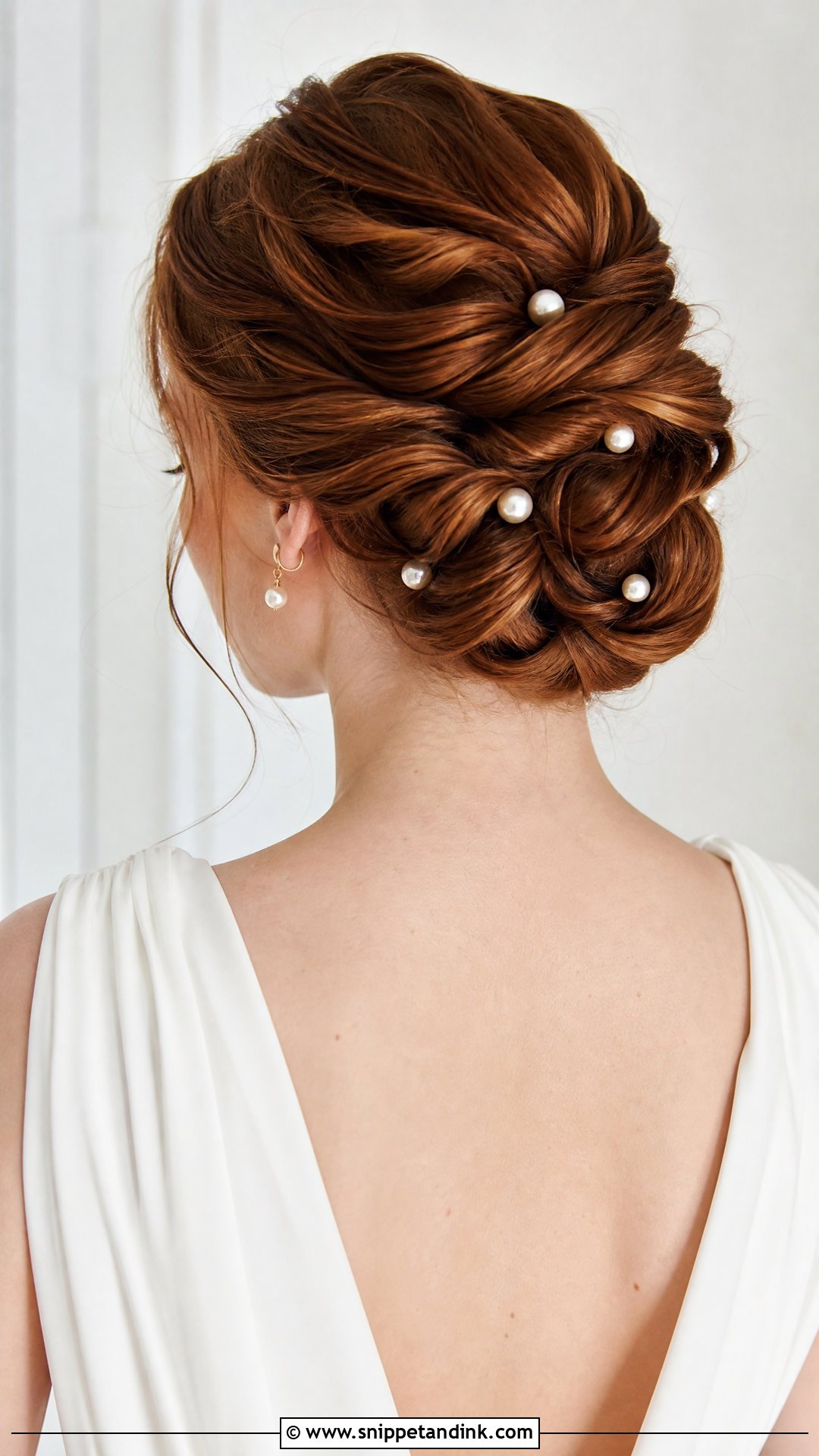
This is the chignon with more texture: the hair is gathered low and folded into twists instead of one smooth roll. Twists hide uneven layers, which makes it a good choice for hair that’s growing out. It needs medium to long hair; anything shorter than the collarbone usually wants a small padding or extension to make the shape. I leave it clean for a formal ceremony and add pearl pins for a softer one.
8. Soft Curls With Side Part
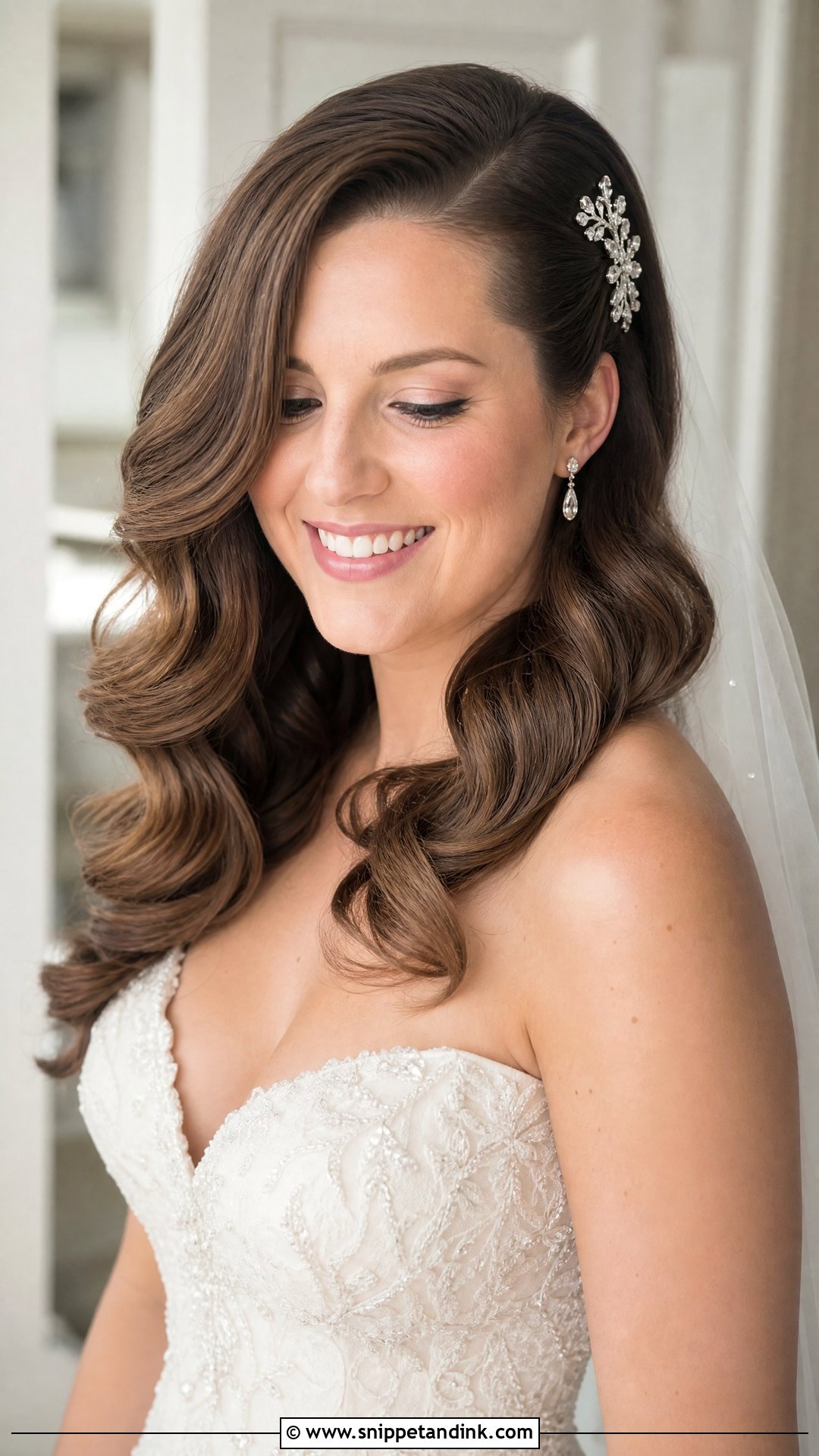
Simple doesn’t mean quick. Soft curls worn loose with a deep side part take as long as many updos, because every curl has to set before it’s brushed into a relaxed shape. The side part lifts the root and frames one side of the face. Weight and weather are its weak spots: long, heavy or fine hair drops faster, so I sometimes pin a few sections up for the ceremony and release them for the portraits. A sparkly clip near the part is enough.
9. Crown Braid for Marriage
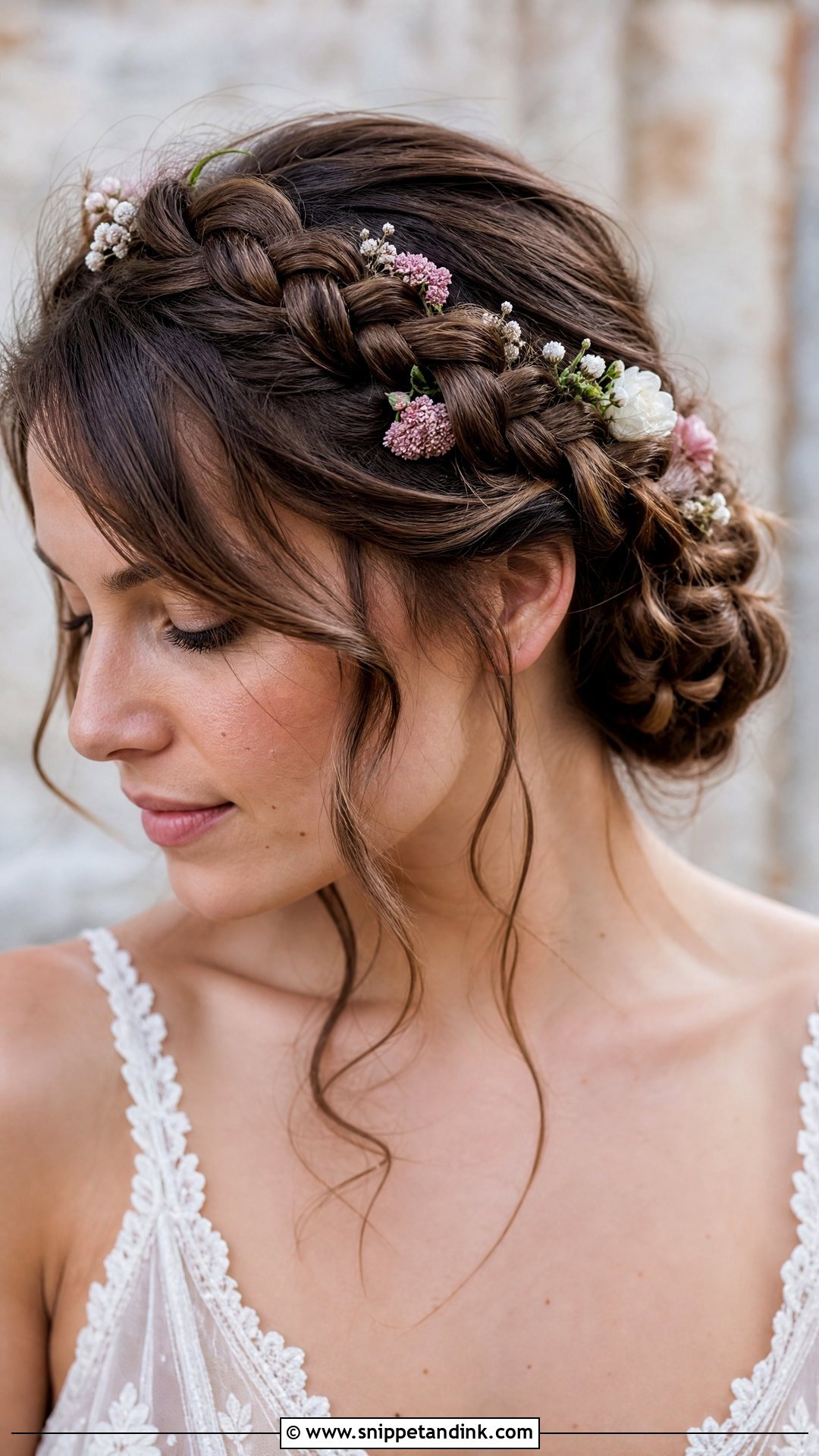
A crown braid wraps the hair around the head and does a tiara’s job. I build it from two braids, starting behind each ear and meeting at the top, because a single braid is rarely long enough to circle the whole head neatly. It holds very well in wind and keeps hair off the neck on a hot day. A heavy cathedral veil is the wrong partner, since it needs a firm base to anchor into; a shorter veil tucked beneath the braid works.
10. Messy Boho Top Knot
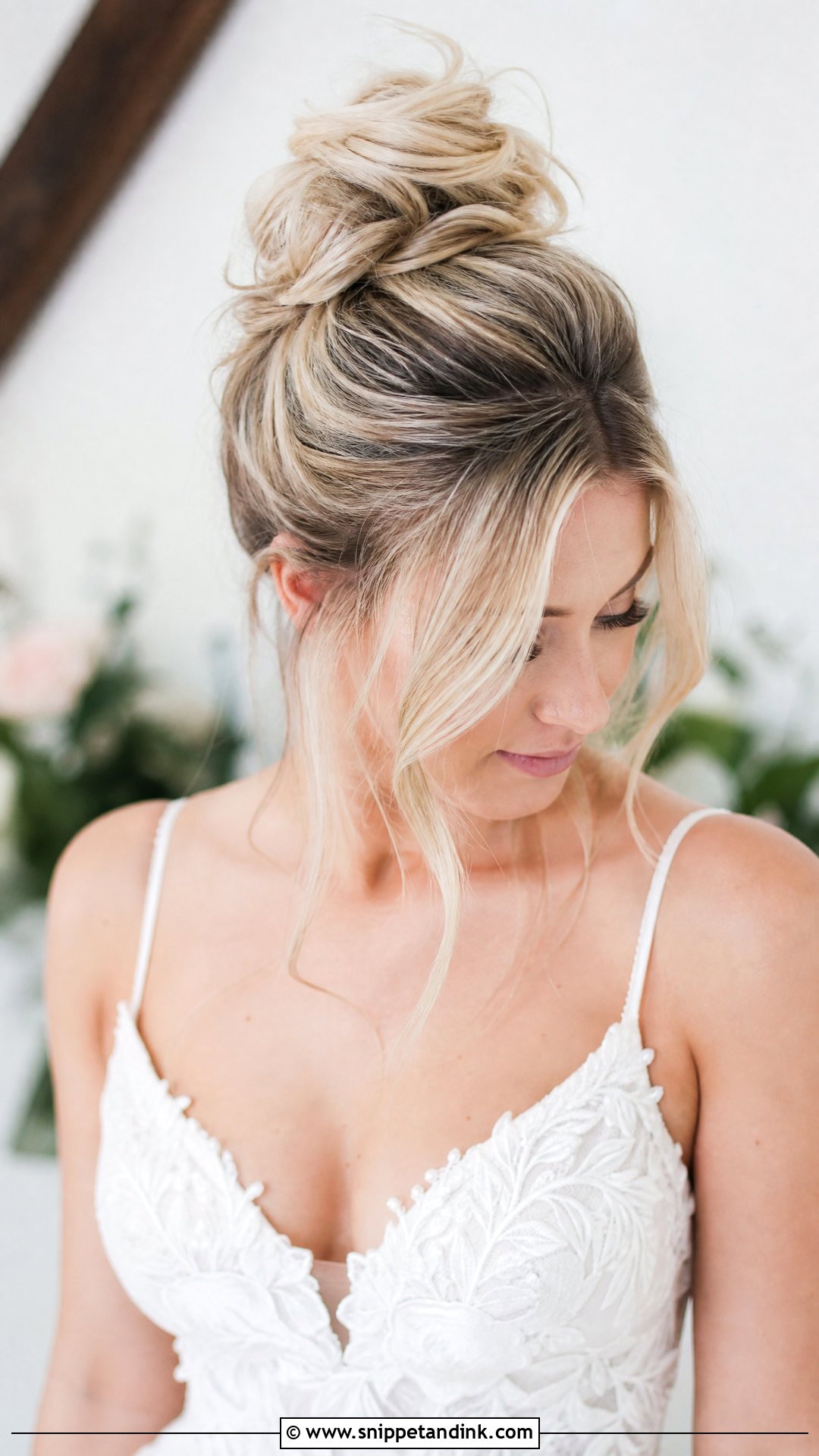
A messy top knot looks loose but is pinned tighter than people think. I tie a firm high base, wrap the hair loosely around it, then pull pieces out for texture. Fine hair makes a small knot, so I’d add a little backcombing or a clip-in piece. It keeps your neck cool at an outdoor wedding. It doesn’t pair easily with a long veil, so plan a short one, a pin, or nothing on top at all.
11. Side-Swept Curls Updo
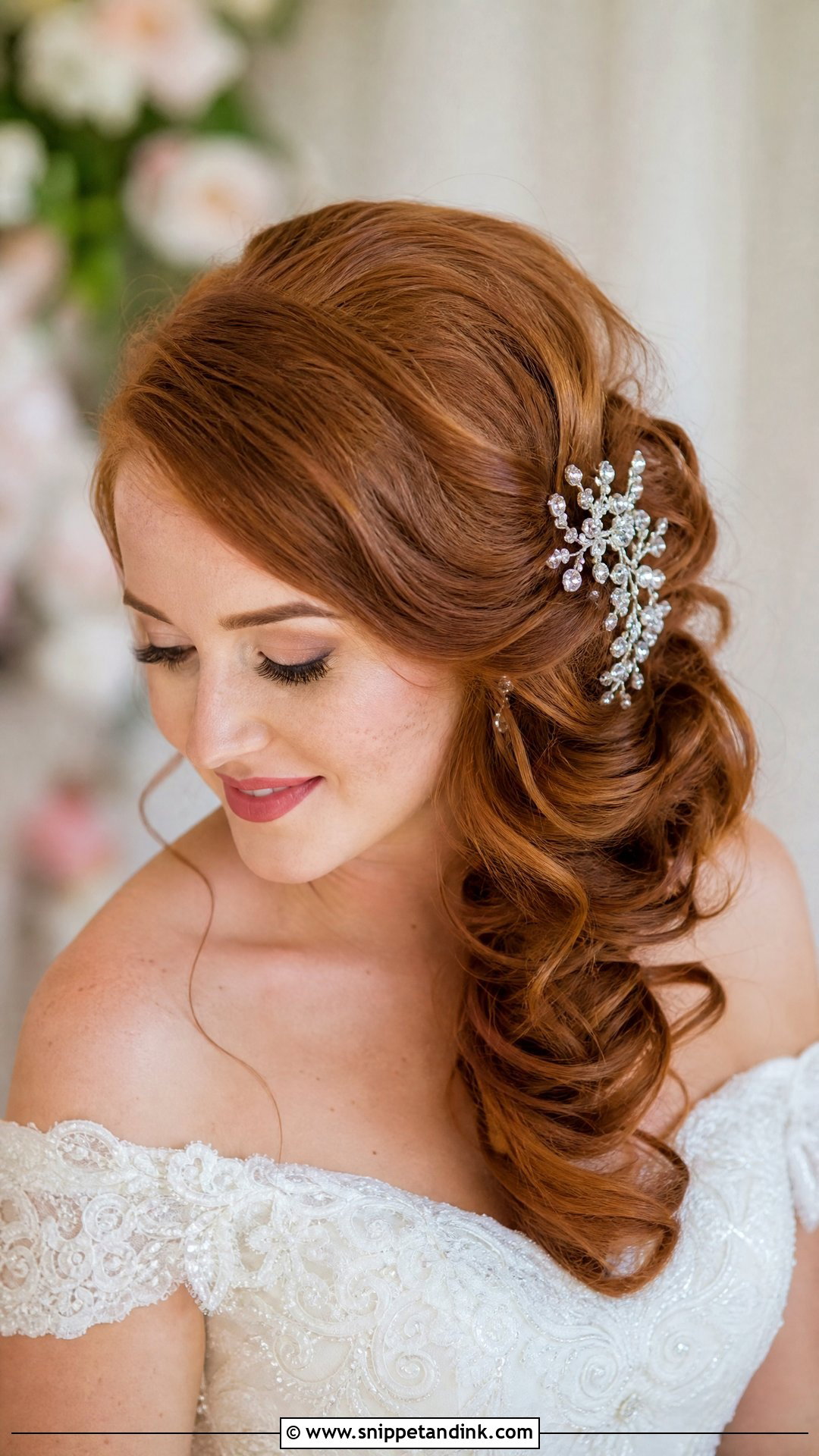
This updo gathers loose curls low on one side of the head and leaves the opposite shoulder bare. The asymmetry is the whole point, so I settle the side first, usually opposite the busier part of the neckline. You’ll need medium to long hair for the curls to gather properly. I anchor the base with crossed pins on both sides, because one-sided styles slowly creep toward the center, and a jeweled comb where the curls meet covers the pins.
12. Sleek Straight Hair Down
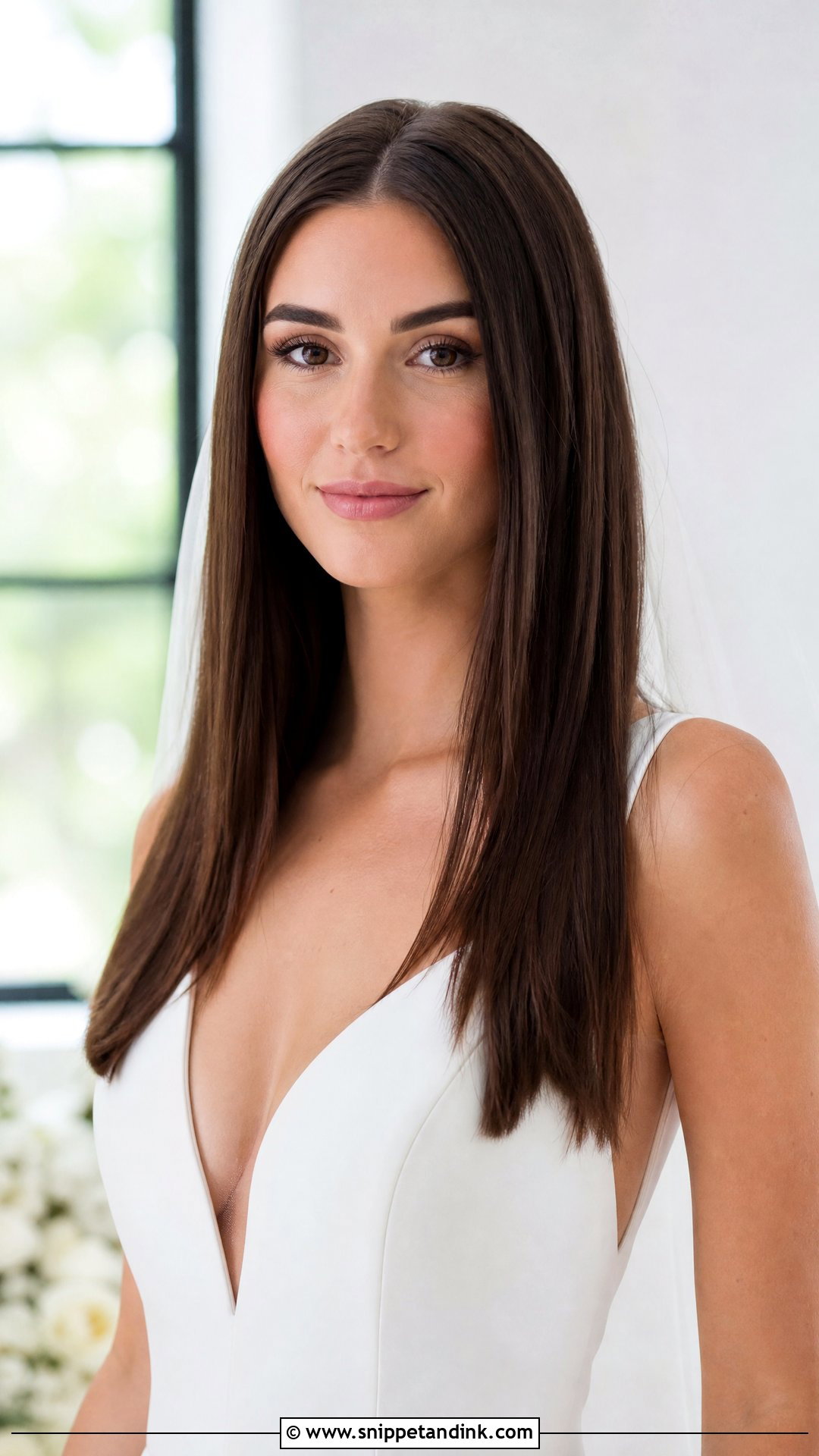
Straight, glossy hair worn down suits a minimal gown, but it leaves nowhere to hide. If your hair is naturally straight, it’s easy; if not, a careful flat-iron job and shine serum get you there, though humidity can bring frizz back by evening. I add a slight bend at the ends so it doesn’t look flat in photos. Center or side part changes the mood. Keep accessories minimal.
13. Fishtail Braid Updo
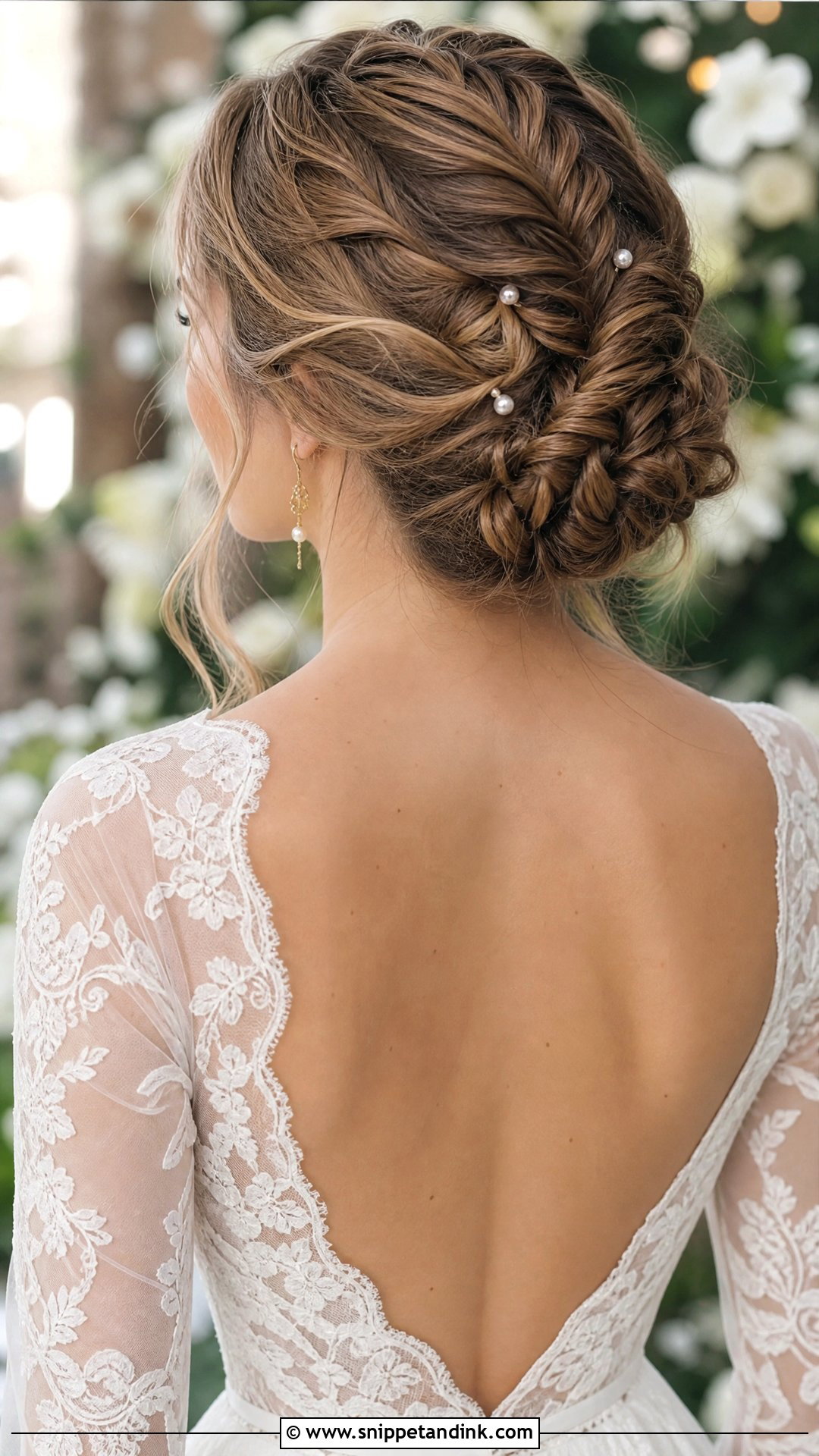
A pinned-up fishtail looks intricate because of its tight herringbone pattern, but it’s made from just two sections. I braid it fairly firm, widen the edges with my fingers, then curve it into a low updo. It reads best from behind, which matters during the ceremony when guests are looking at the back of your head. Layered hair pokes out of fishtails, so I work a little wax in as I braid. Tiny flowers or pearls slot between the stitches.
14. Vintage Pin Curls
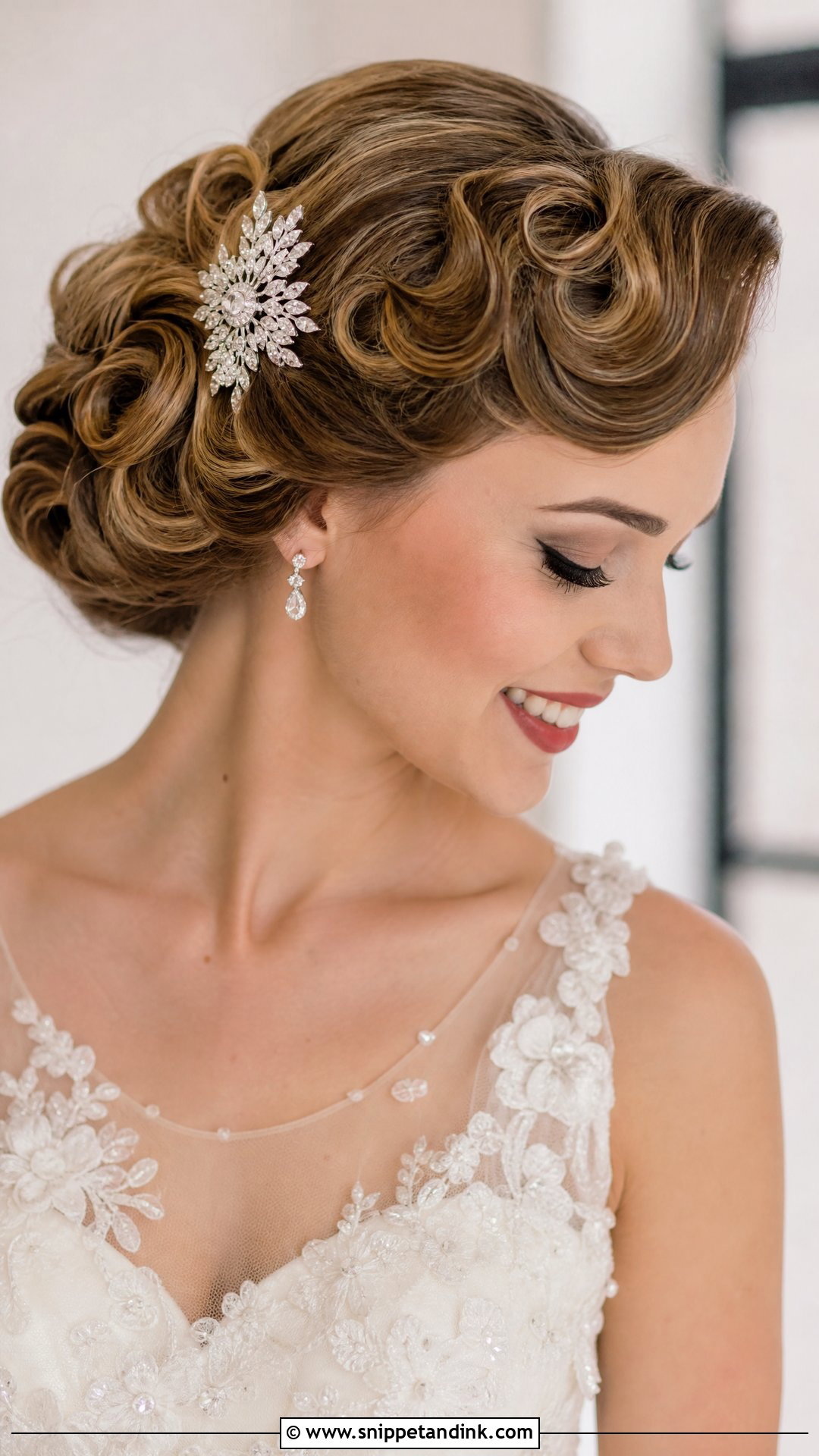
Pin curls are a set rather than a finished style. The hair is wound into small flat curls, pinned against the head and left to cool, then brushed out into a structured vintage wave or pinned into an updo. It takes time, and it depends on hair that holds a curl, so I always test it at a trial. It belongs with a vintage theme or a 1920s or 1940s gown. A jeweled clip or a small feathered piece completes the period feel.
15. Low Side Bun With Tendrils
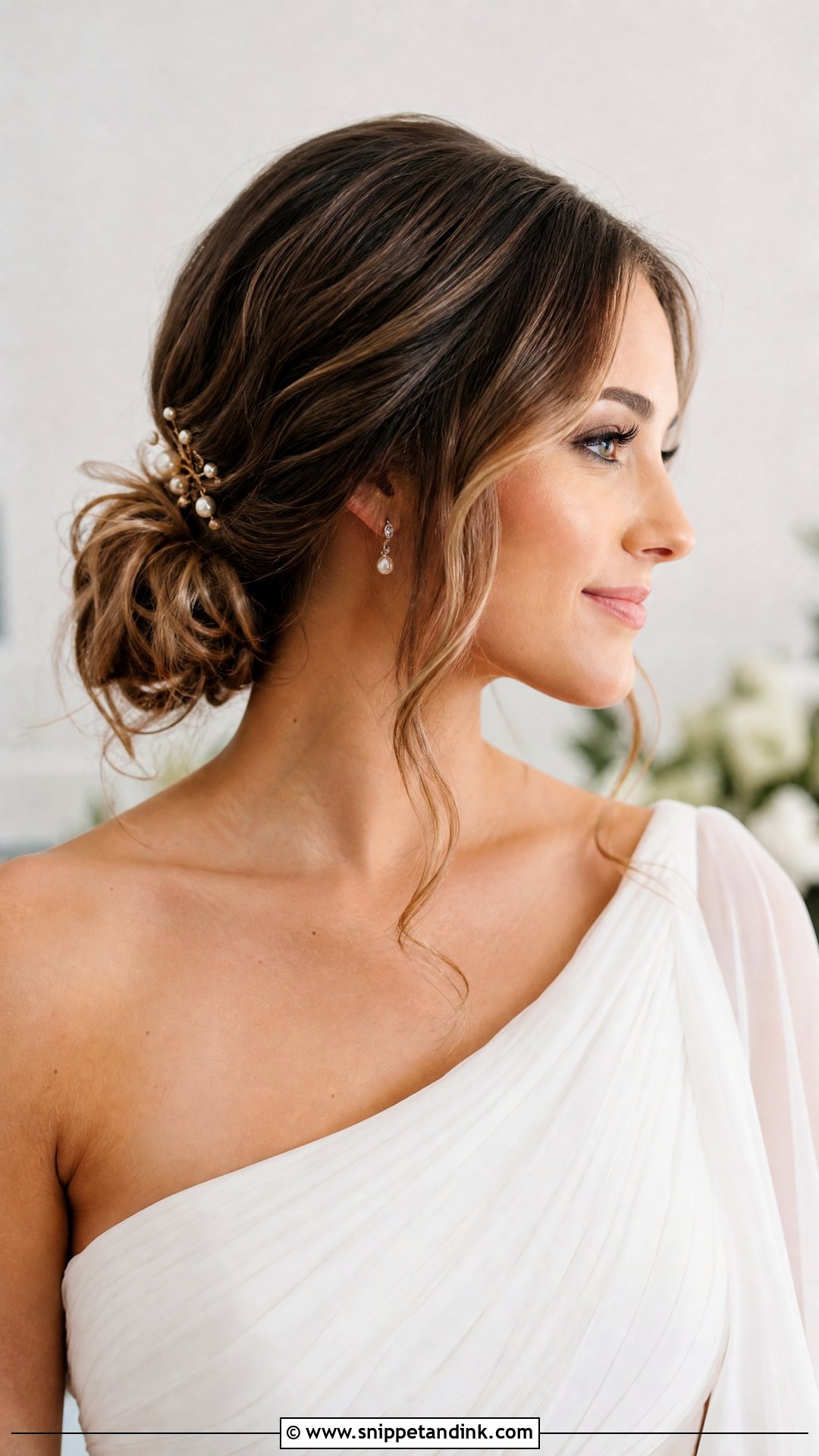
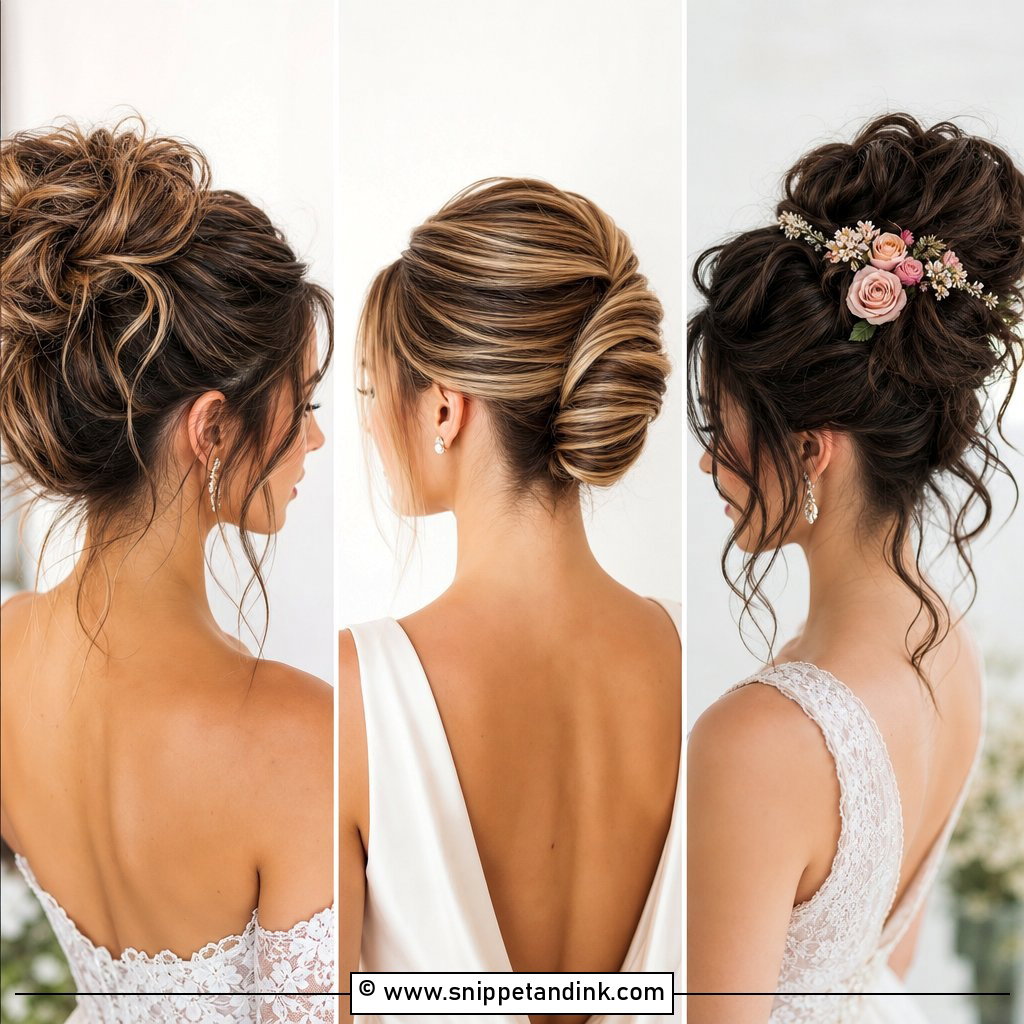
A bun set low and to one side gives a one-shoulder neckline something to balance against. I gather the hair loosely beside the neck and leave a few delicate tendrils around the face. Because the weight is off-center, the anchored side needs extra pins or the bun rolls toward the middle over the day. Small flowers or pearl pins can sit along its upper edge.
16. Curly Hair Half-Up Style
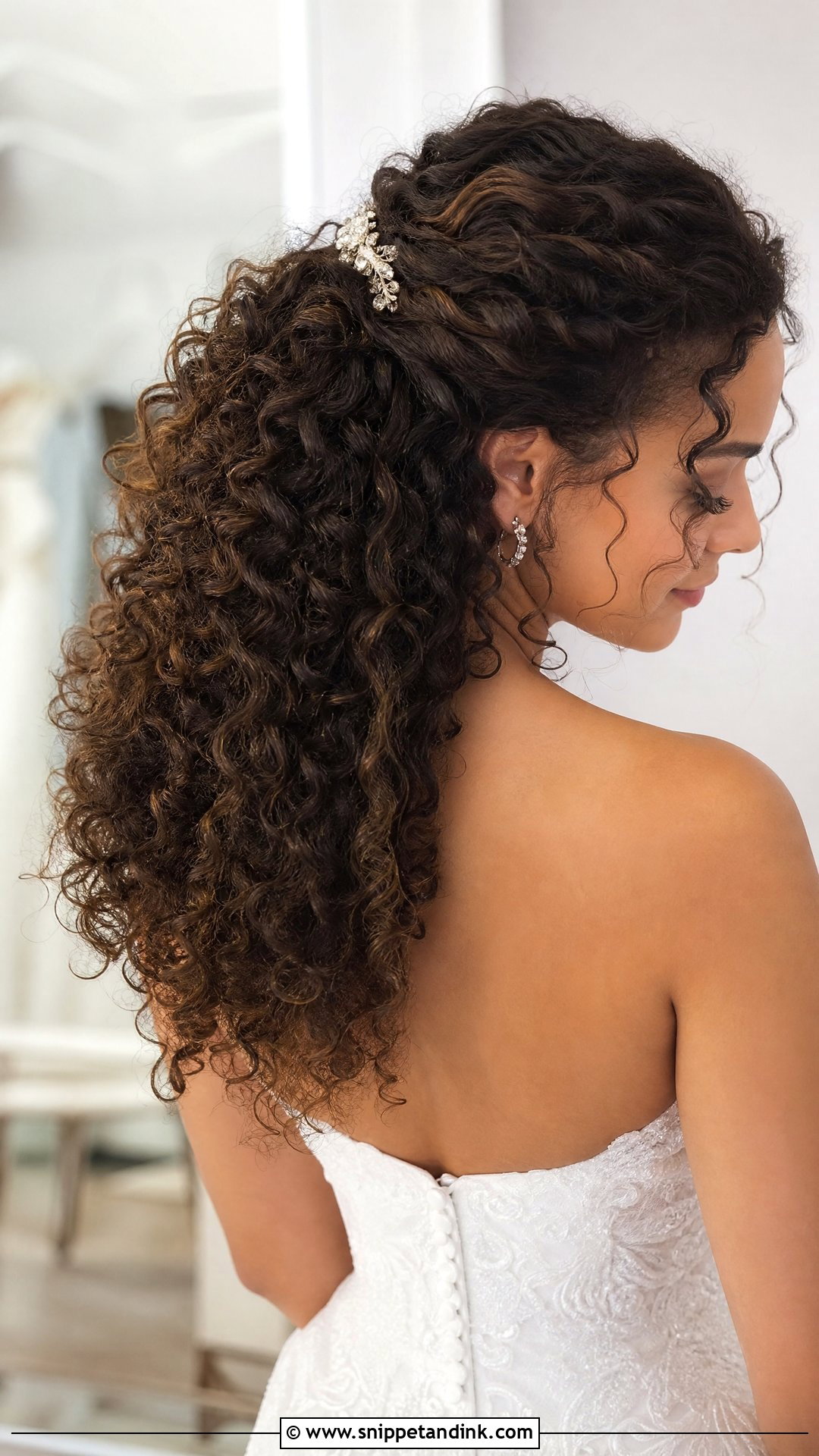
Natural curls should be shaped, not fought. For a curly half-up, I gather the top curls back with a satin-covered elastic, leave the rest free and define them with a cream rather than a brush. Curly hair gains volume through the day, especially in humidity, so I make the shape a little smaller at the start. A clip or a few flowers sit where the hair gathers. For your trial, choose a stylist who works with curls often.
17. Braided Crown With Loose Waves
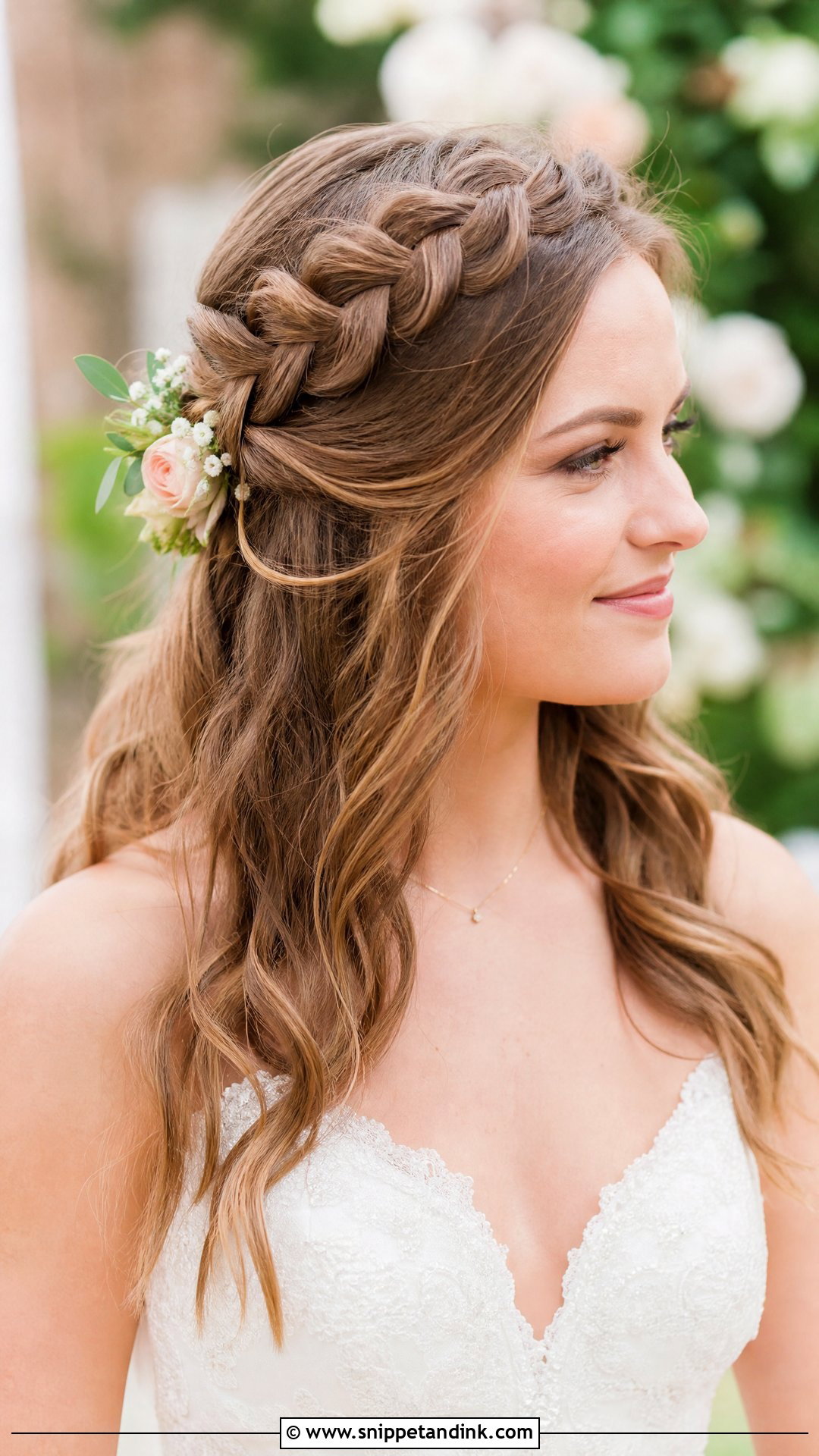
A braid across the crown with loose waves below combines two of the most requested looks. The braid holds the front away from your face while the waves show off length. I braid a small section from ear to ear and pin it, then curl the rest. The braid lasts all day; the waves relax, so I set them firmly and leave you a few pins for later. It suits garden, beach and rustic weddings.
18. Sleek Ponytail for Brides
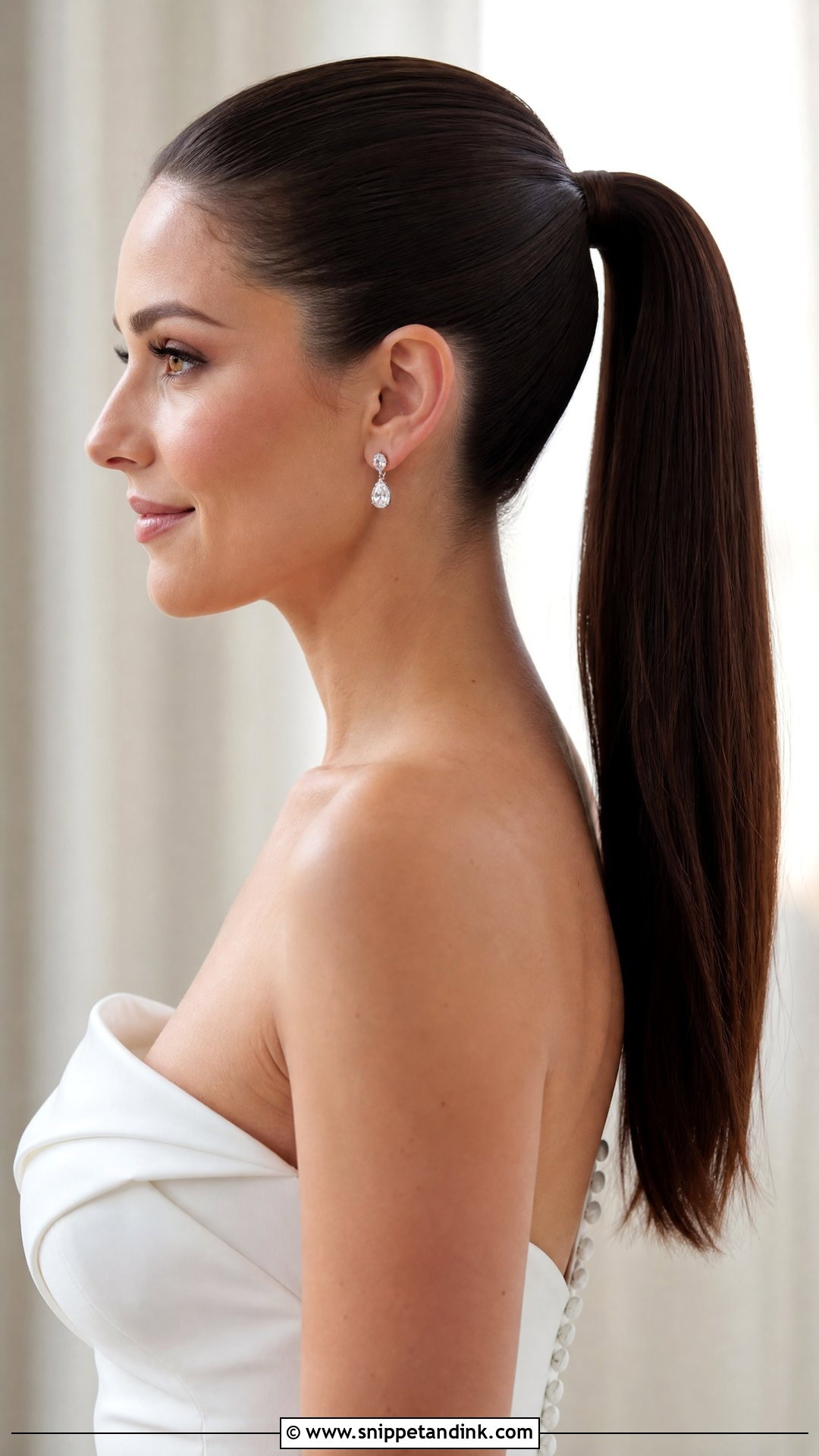
The bridal ponytail can sit high or low, and the choice changes the feel more than you’d expect. High is energetic and lifts the face; low is quieter and sits better under a veil. Either way, a section of hair wrapped around the base hides the elastic. Long ponytails are heavy, and a high one pulls on the scalp, so I’d test it for a few hours before deciding. Nothing about it gets in the way on the dance floor.
19. Twisted Halo Updo
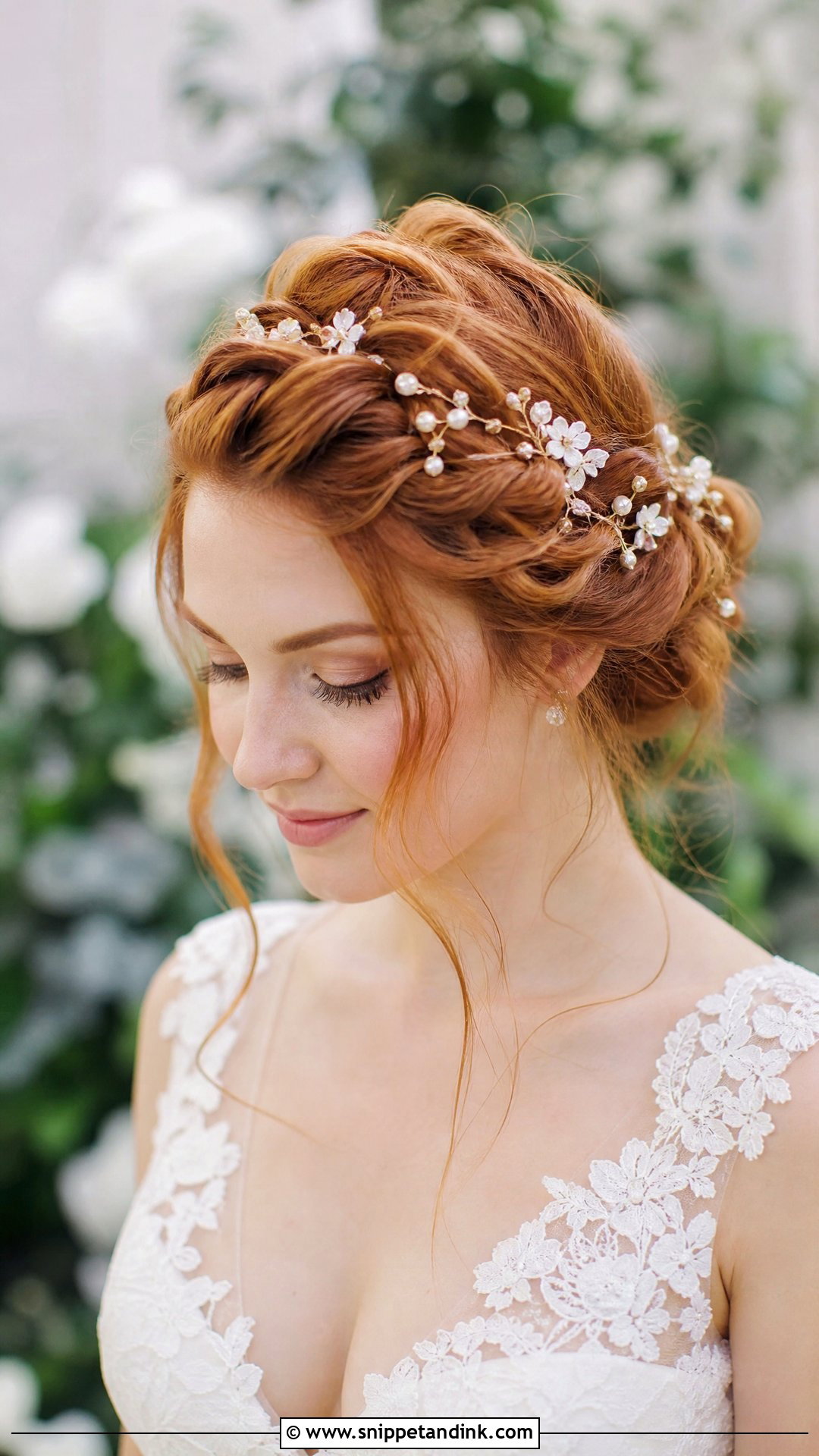
A twisted halo uses two-strand twists instead of braids to circle the head. Twists look softer and go in faster, but they can unwind in slippery hair, so I prep with texture spray first. The hair is twisted up from the nape and around, then pinned the whole way. With the neck completely clear, it’s welcome at a warm garden ceremony. Leave it plain or add a few small pearls.
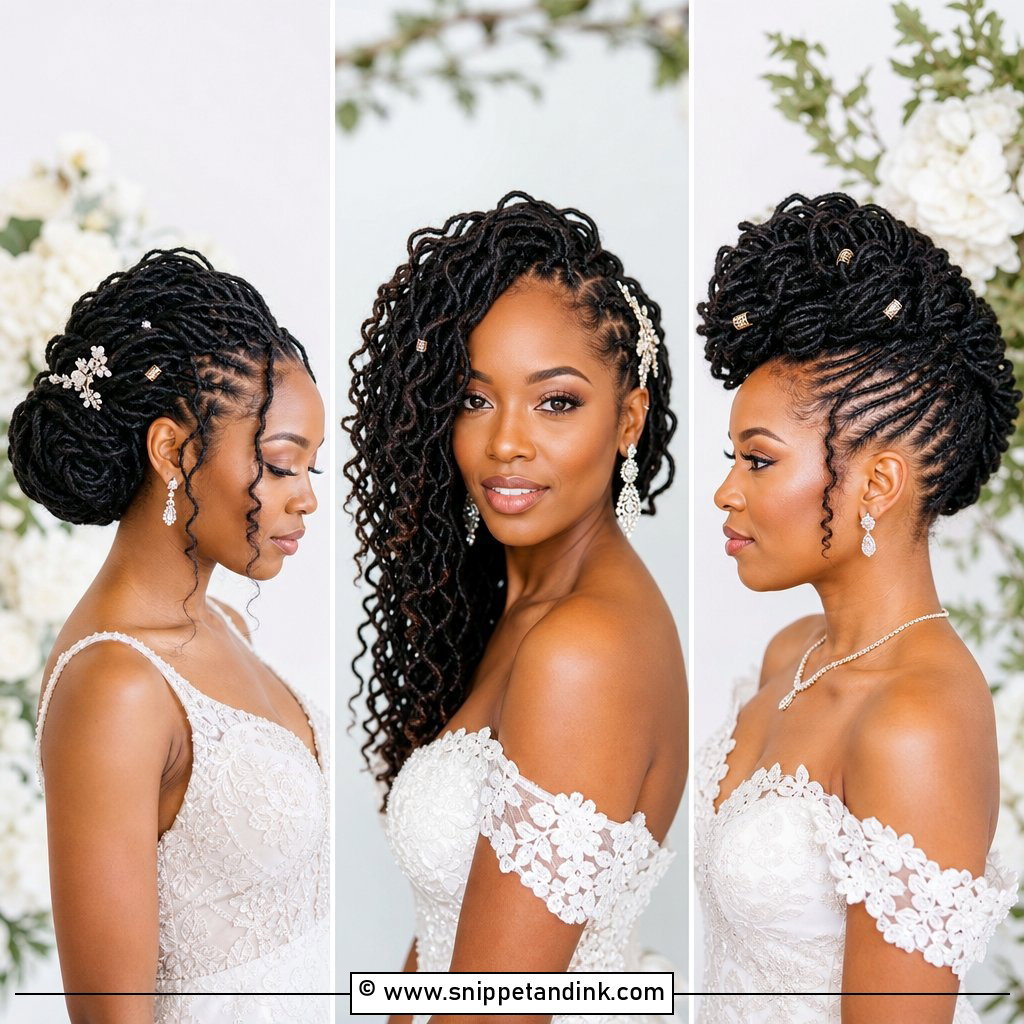
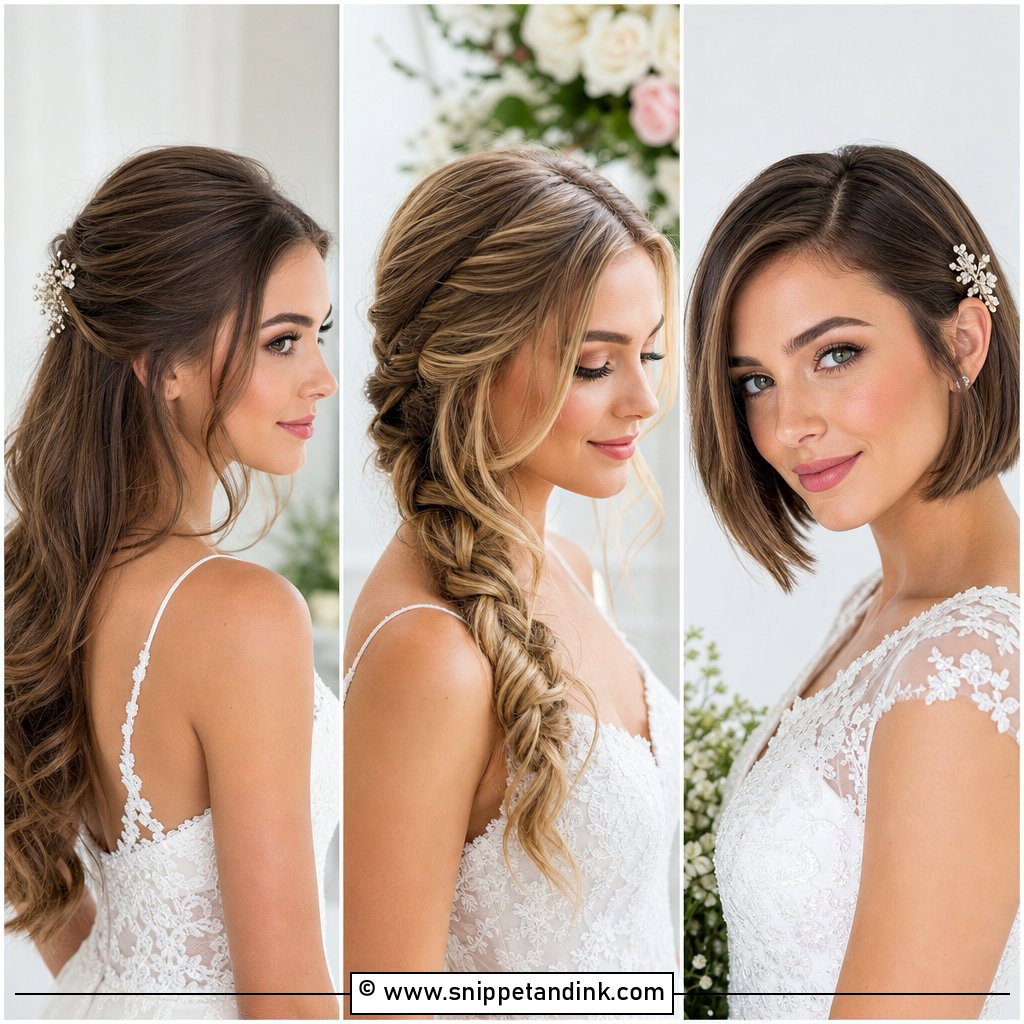
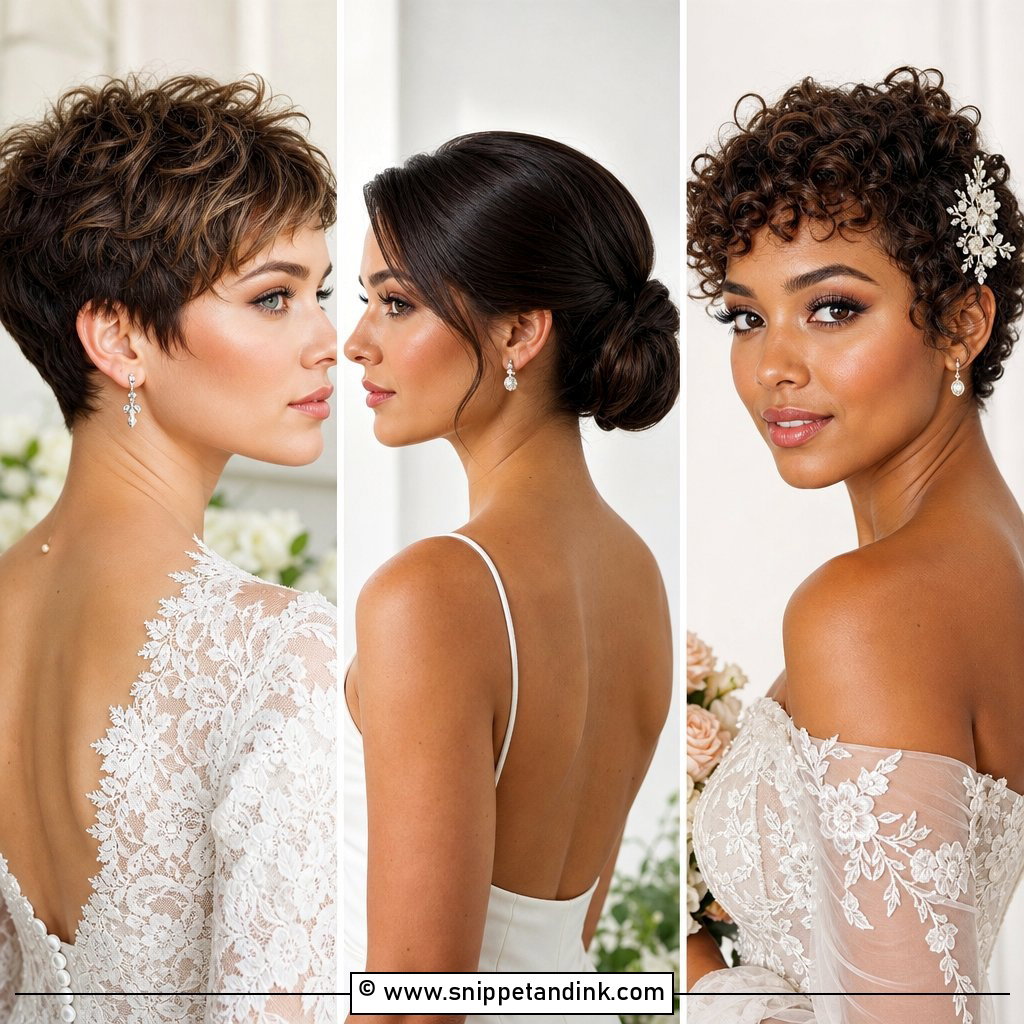
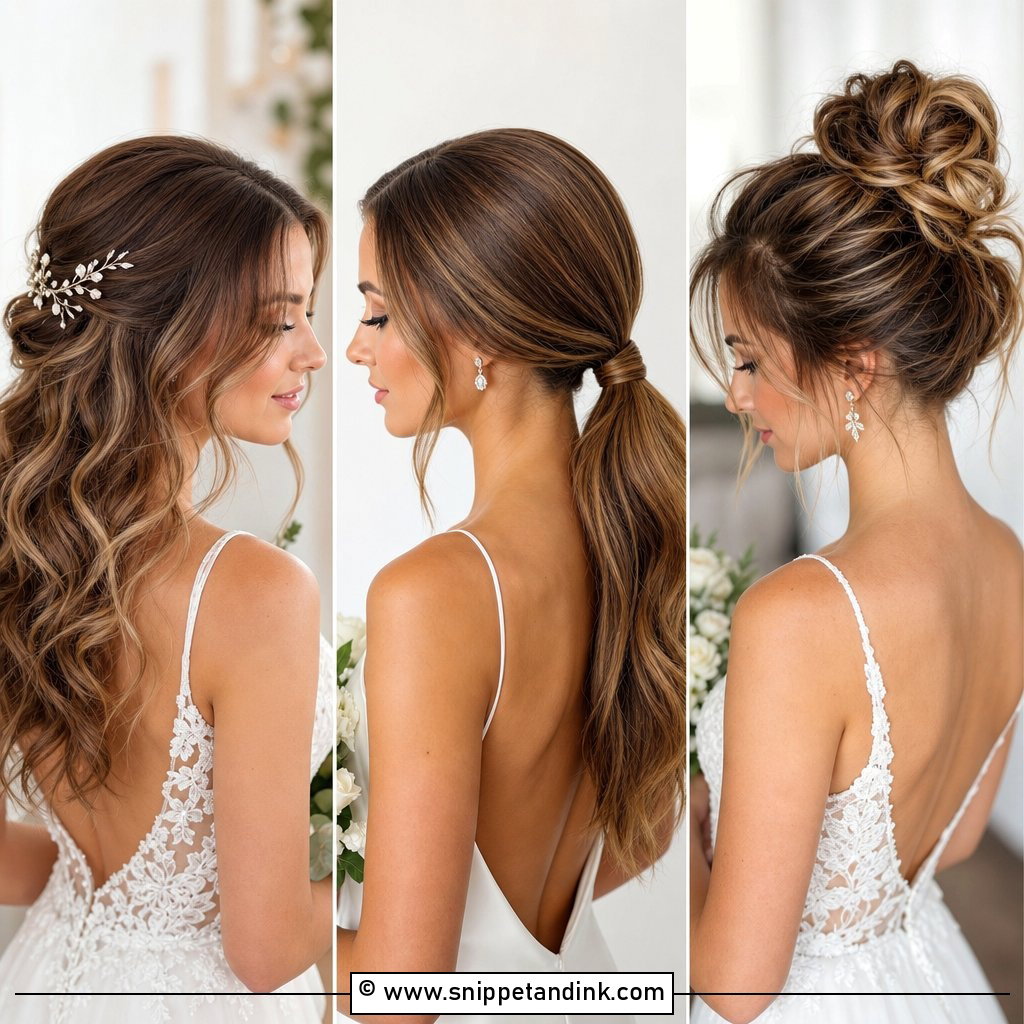
20. Loose Waves With Center Part
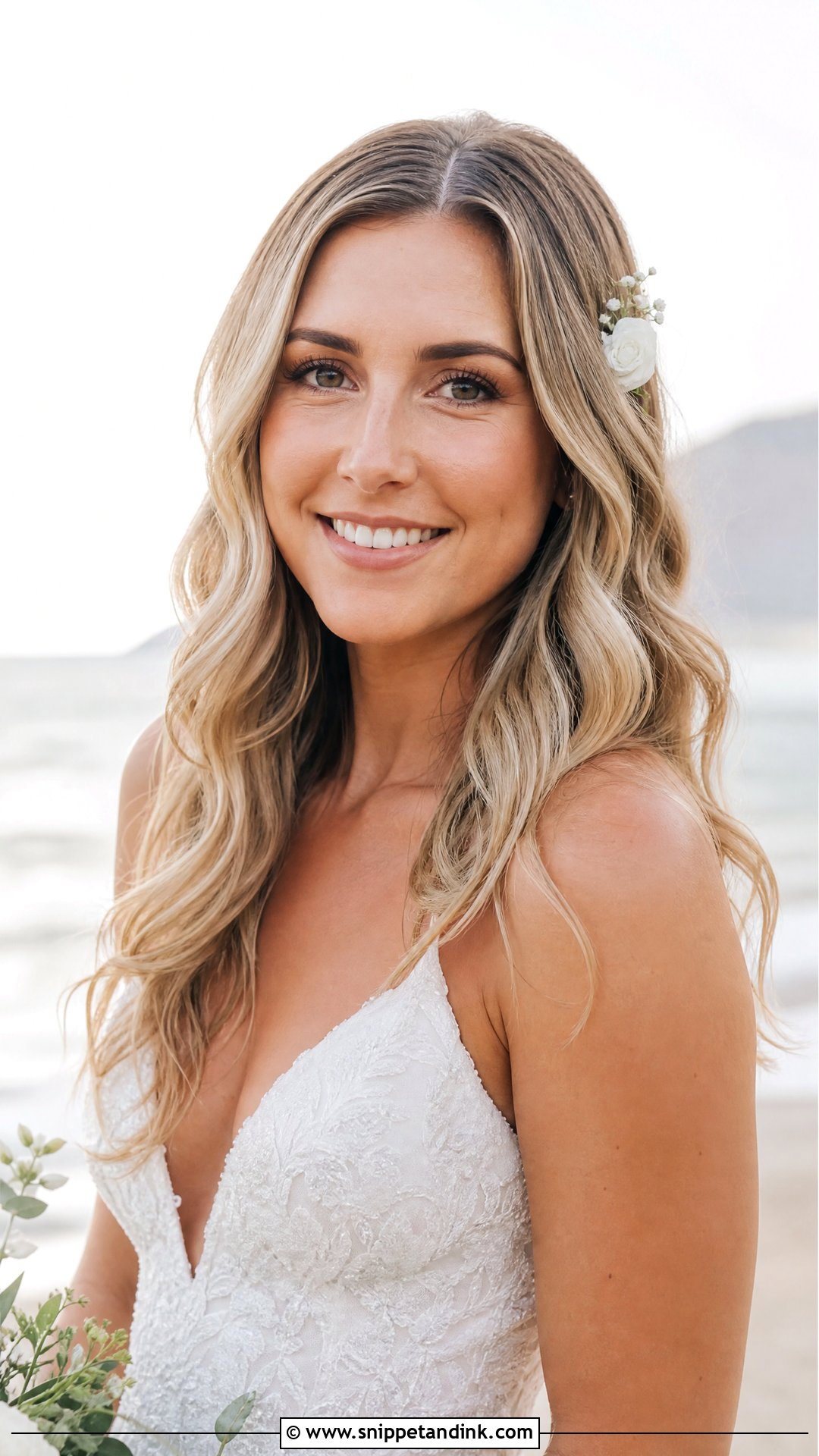
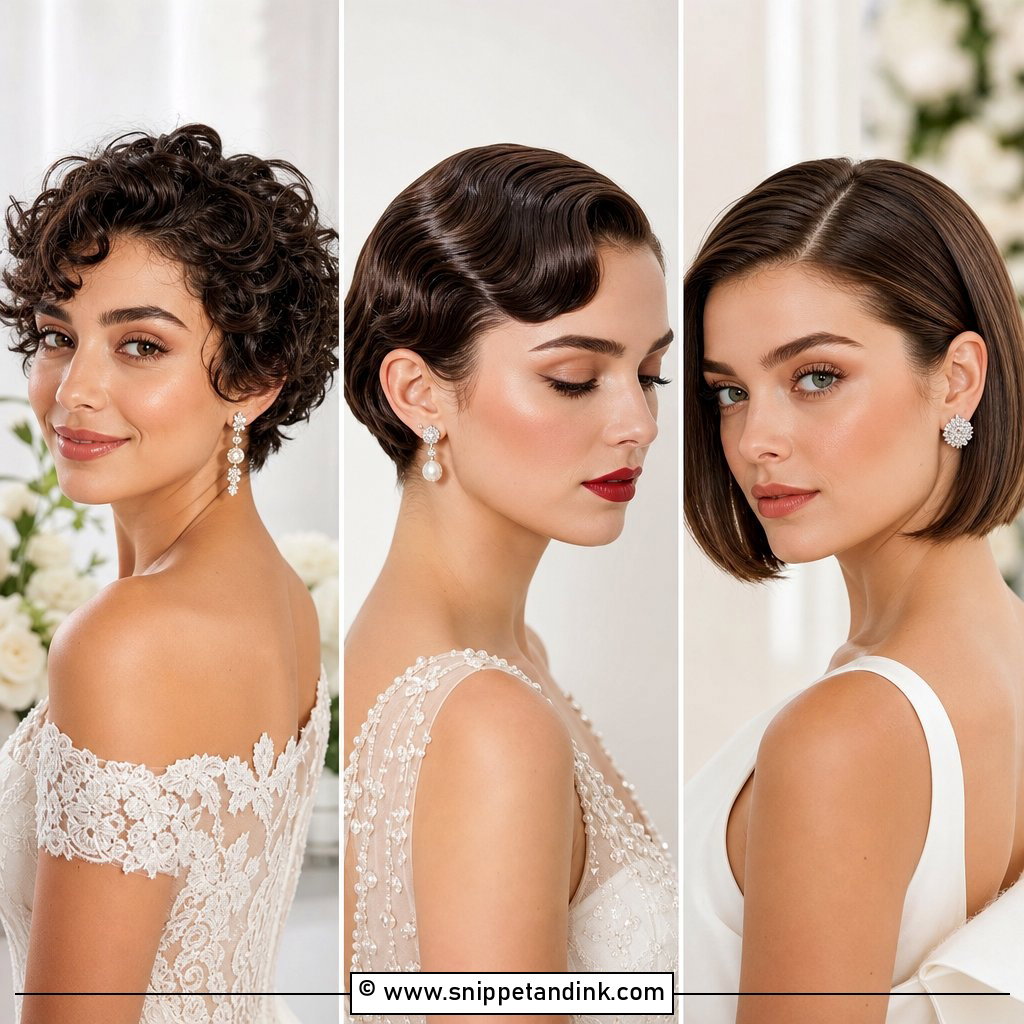
Loose waves with a center part are as natural as bridal hair gets. The waves are curled and brushed out softly, and the center part adds a clean symmetry. It suits most faces, though some brides with a very round face prefer the part slightly off center. Wind and humidity change it quickly, so at a beach wedding I’d hand a bridesmaid some pins and spray. A small hairpiece or flower behind one ear is all it needs.
Planning the Veil and Headpiece Into the Style
Most brides choose hair and veil separately, and that’s where trouble starts. A veil is held by a comb, and a comb needs solid hair to grip. I’d rather plan both together at the trial.
- Placed below the bun, a veil leaves the whole updo on view. Placed above it, at the crown, it gives a more traditional framed outline, with the style showing through the tulle.
- Long and cathedral veils are heavy. I anchor the comb into a set of crossed pins or a small hidden braid so it doesn’t drag the style backward.
- Plan the removal. If the veil comes off after the ceremony, the comb has to slide out without catching, so the person helping you should see how it was put in.
- Tiaras need a little height or a firm base at the crown. On flat, sleek hair they slide, so I add some backcombing underneath where it won’t show.
Bring the Back of Your Dress to the Trial
The right hairstyle suits your hair, your neckline, your veil and the weather, and still feels like you. Book a trial a couple of months ahead, bring a photo of your dress from the back and your veil if you have it, and take photos from every side. Then keep the style in for the rest of the afternoon. How it looks at six o’clock is the best preview you’ll get of the real day.
You'll Like These Ideas:


Leave a Reply