
Wedding hair starts weeks before the morning itself, with the cut. A good cut decides whether an updo has enough length to tuck, whether waves fall evenly, and whether a short style looks sharp or just overdue. Below are 20 cuts and styles I see brides ask for, from sleek ballerina buns and Hollywood waves to pixies, lobs and curtain bangs. For each one I’ve added what it asks of your hair, so you can walk into your trial knowing which of them your length and texture can actually carry.
Cut for the Style You Want, Not the Other Way Round
Most brides think about the hairstyle first and the cut second. I’d flip that. Your current length and layers decide which of these looks are even possible, and a cut done three months ahead can open up options a cut done the week before cannot.
Planning an updo
Ask your stylist to keep layers long and avoid short pieces around the face. A chignon, French twist or low bun needs hair that reaches at least the shoulders, and short layers poke out of rolls and twists. If you’re growing hair for the wedding, skip big reshaping cuts and just have the ends dusted.
Planning to wear it down
For waves and curls, soft internal layers help the hair move and stop it looking heavy at the bottom. Get the shape right a couple of months before, so the layers have time to grow into a natural fall.
Going short
A bob, lob or pixie is a big decision to make close to the wedding. If you’re unsure, cut it three to six months ahead and live with it for a while. That gives you time to love it, or to grow it back.
1. Sleek Ballerina Bun for Wedding
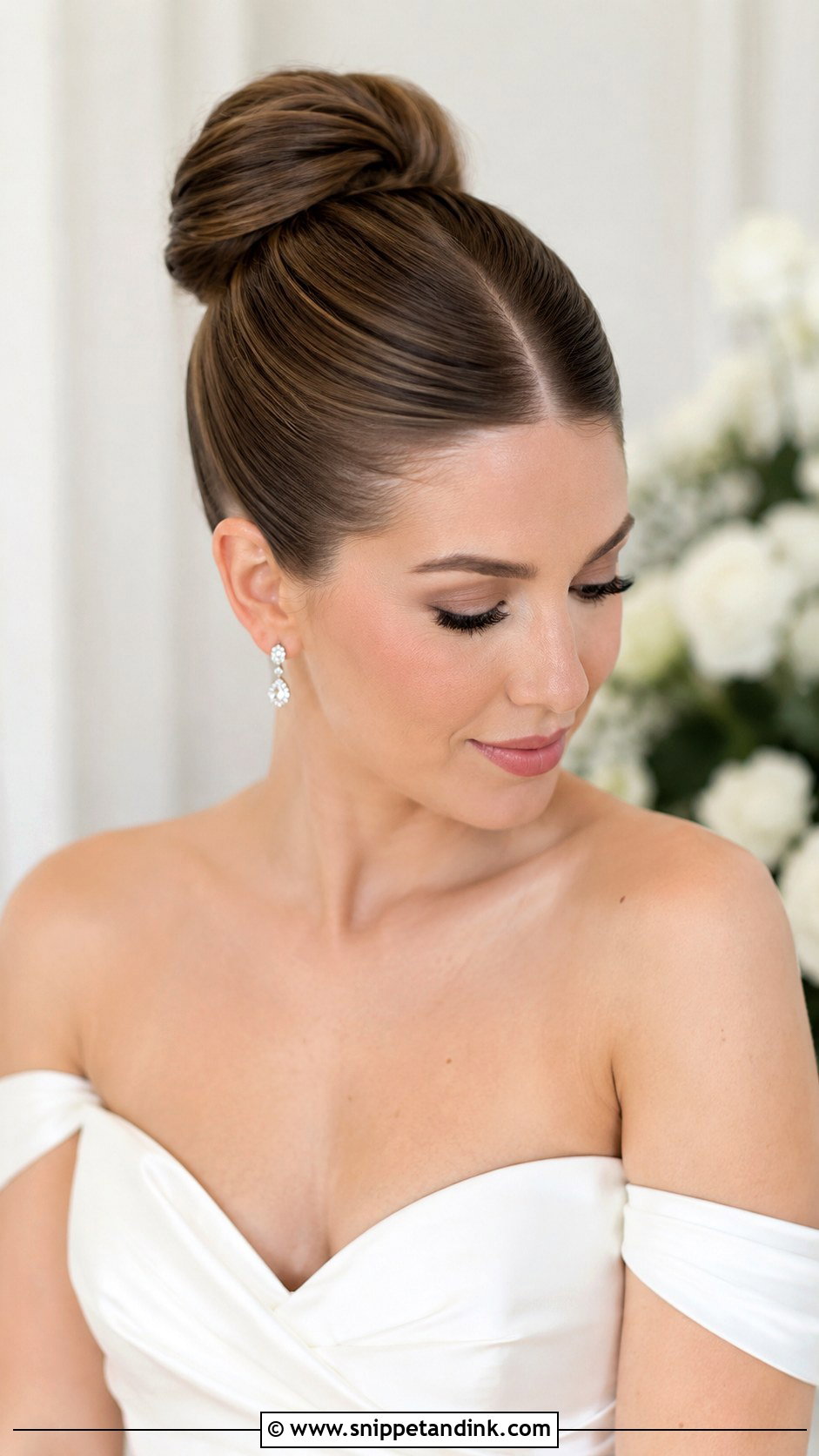
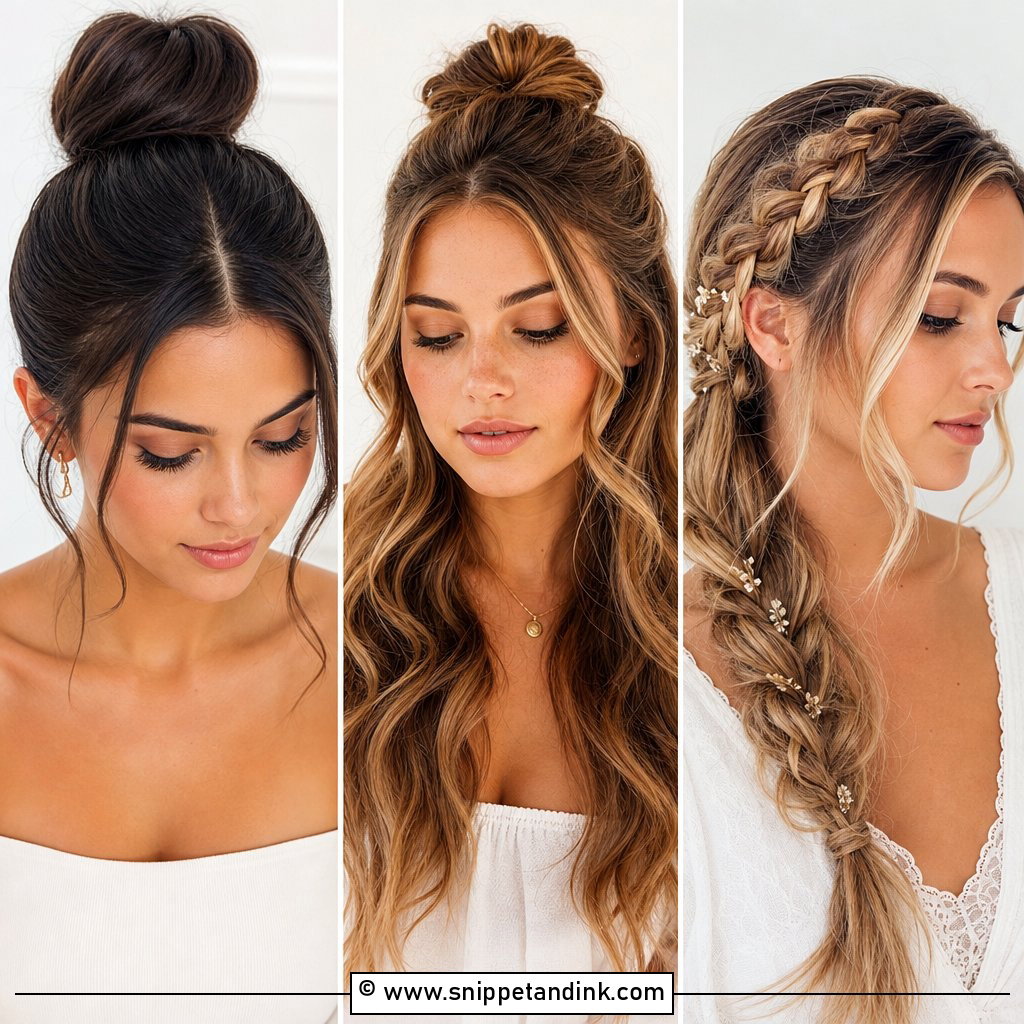
The ballerina bun is high, tight and centered, with a clean middle part, and it reads modern the moment you see it. It leaves the face completely open, which is great for statement earrings and careful makeup, and less great if you dislike your hairline or ears. I get it smooth with a firm brush and a little gel along the part, then wrap the hair around a small donut or a coiled base so the knot keeps its round shape all night. It holds well through dancing. Straight or smoothed hair suits it best; very curly hair can do it, but needs a blow-dry first.
2. Low Chignon for Wedding
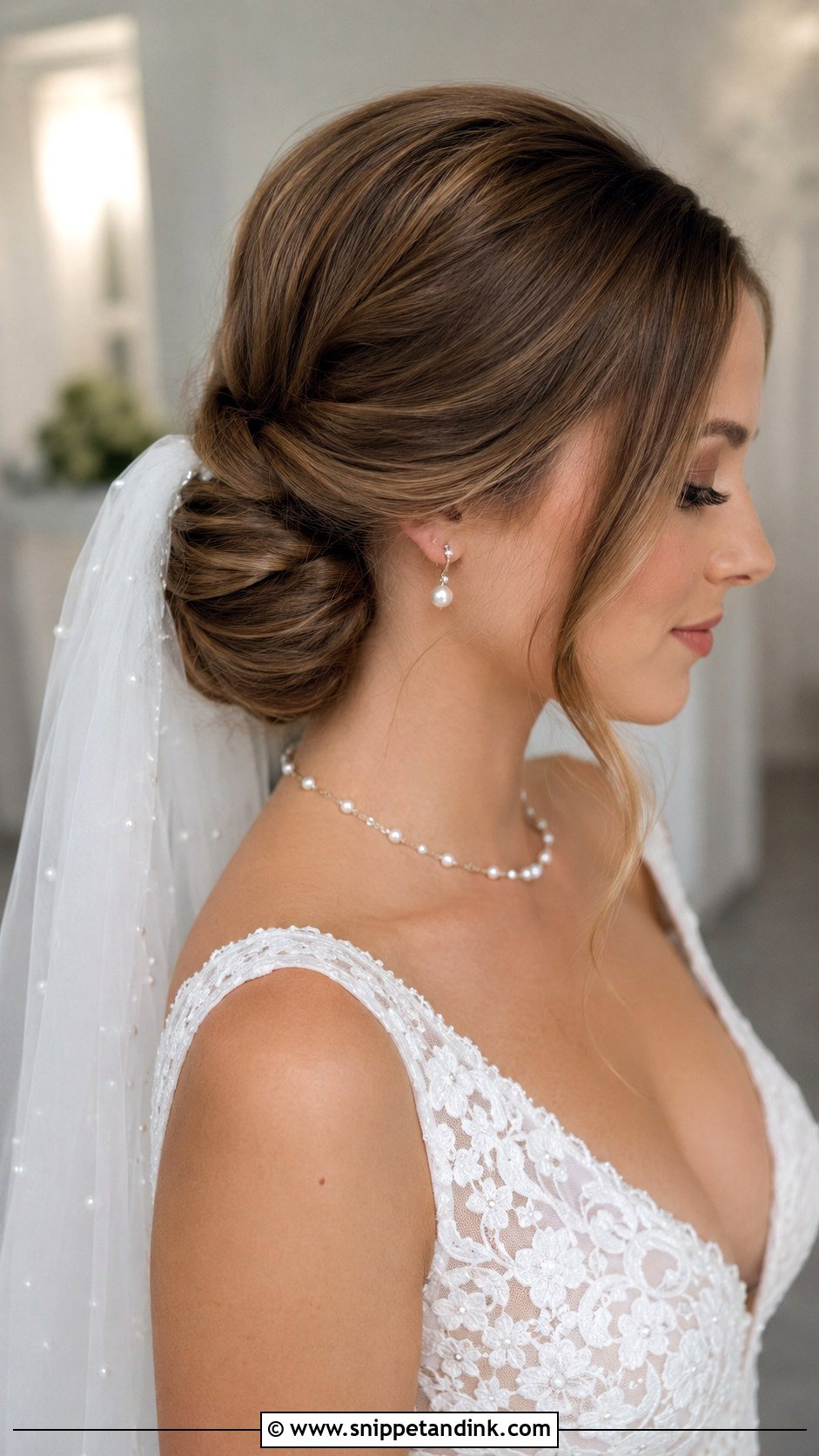
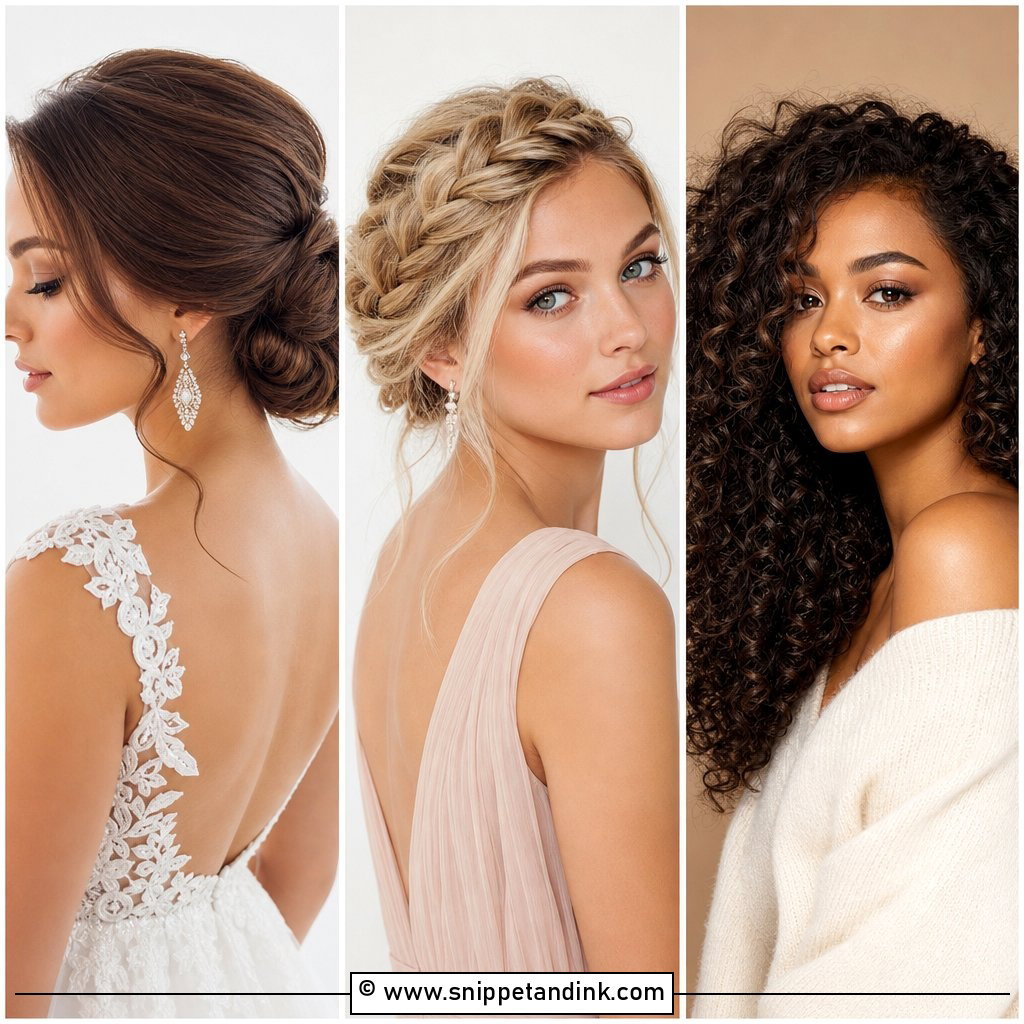
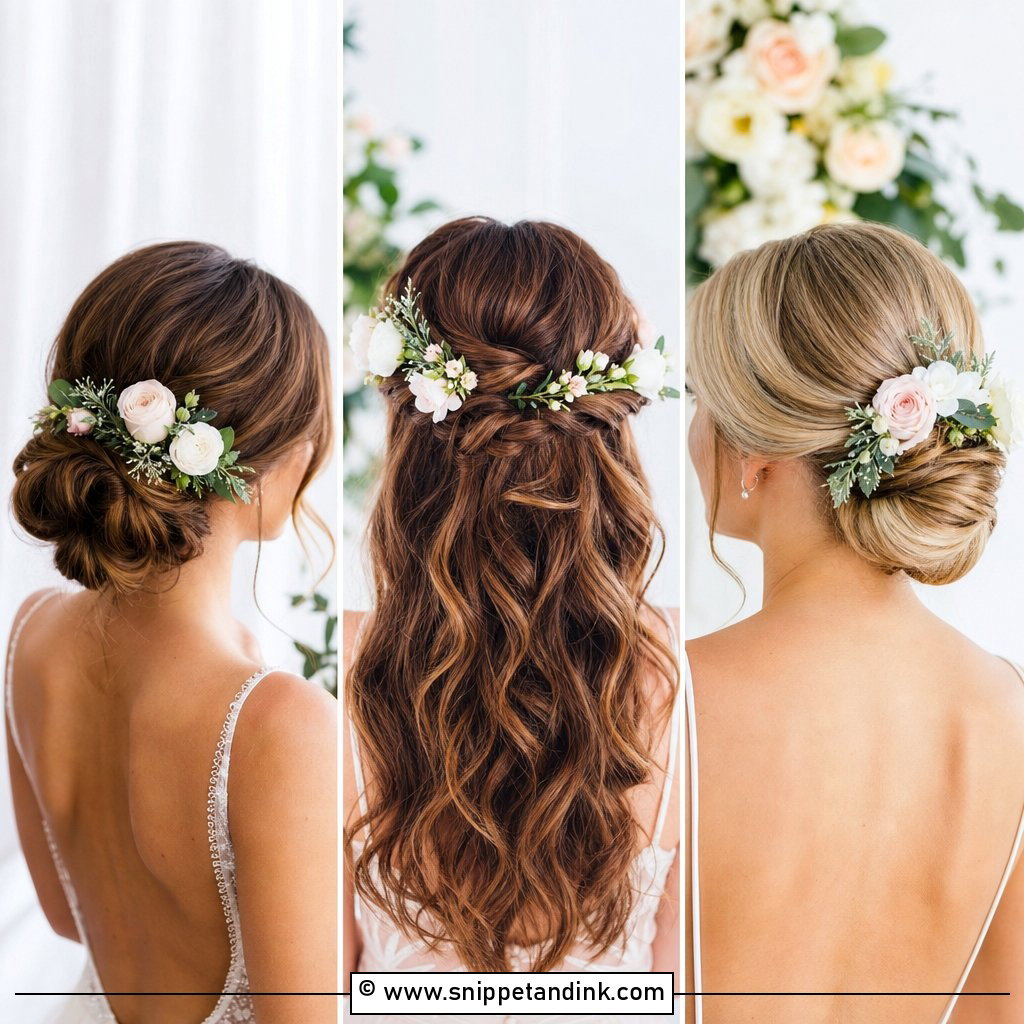
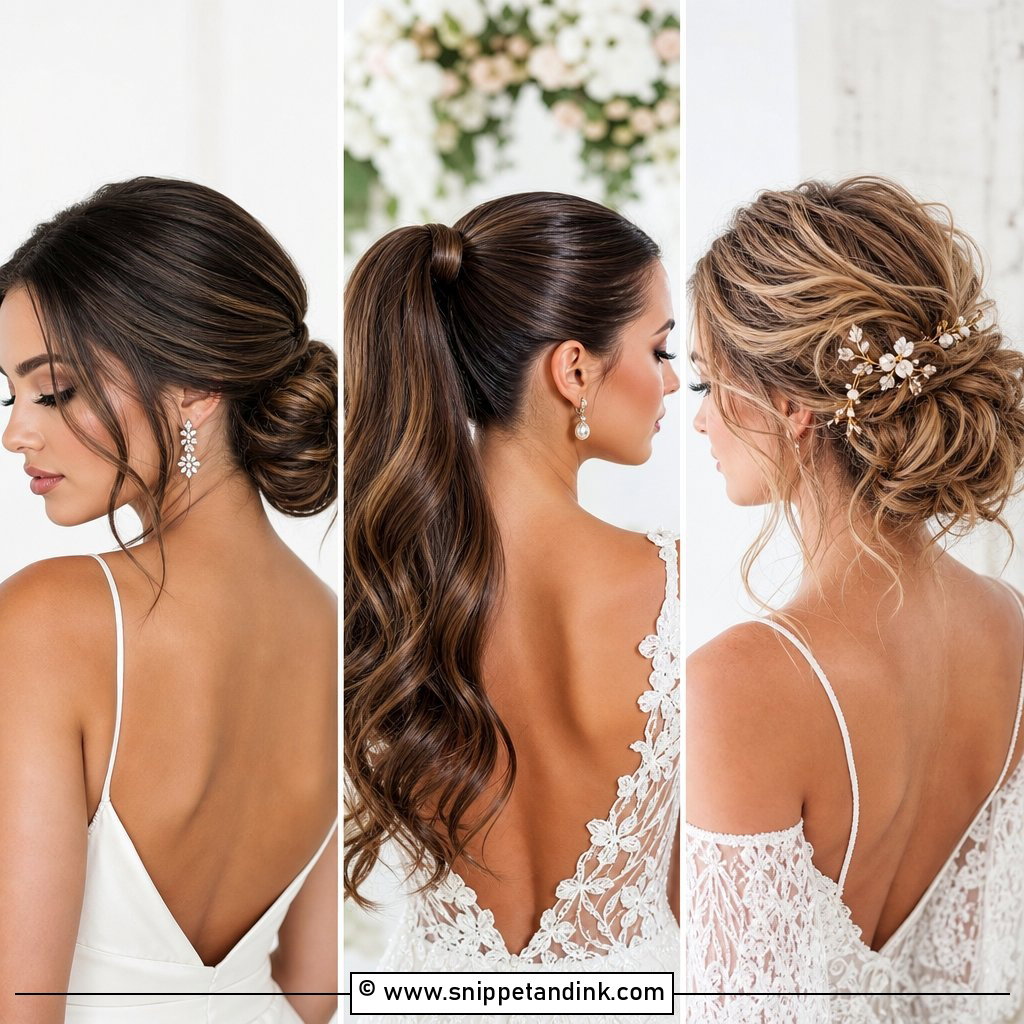
A low chignon is the updo I’d call safest for almost any venue, from a big hall to a small garden. The hair is gathered and rolled into a soft knot at the nape, which leaves room above it for a veil, a tiara or a few flowers along the side. Kept smooth it looks formal; with a few pieces loosened it softens. It needs at least shoulder-length hair, and long layers can make the roll look patchy, so tell your stylist before your next cut if you’re planning on this one. The back view is its strength, which is why it reads so well in dreamy aisle shots.
3. Hollywood Waves for Wedding
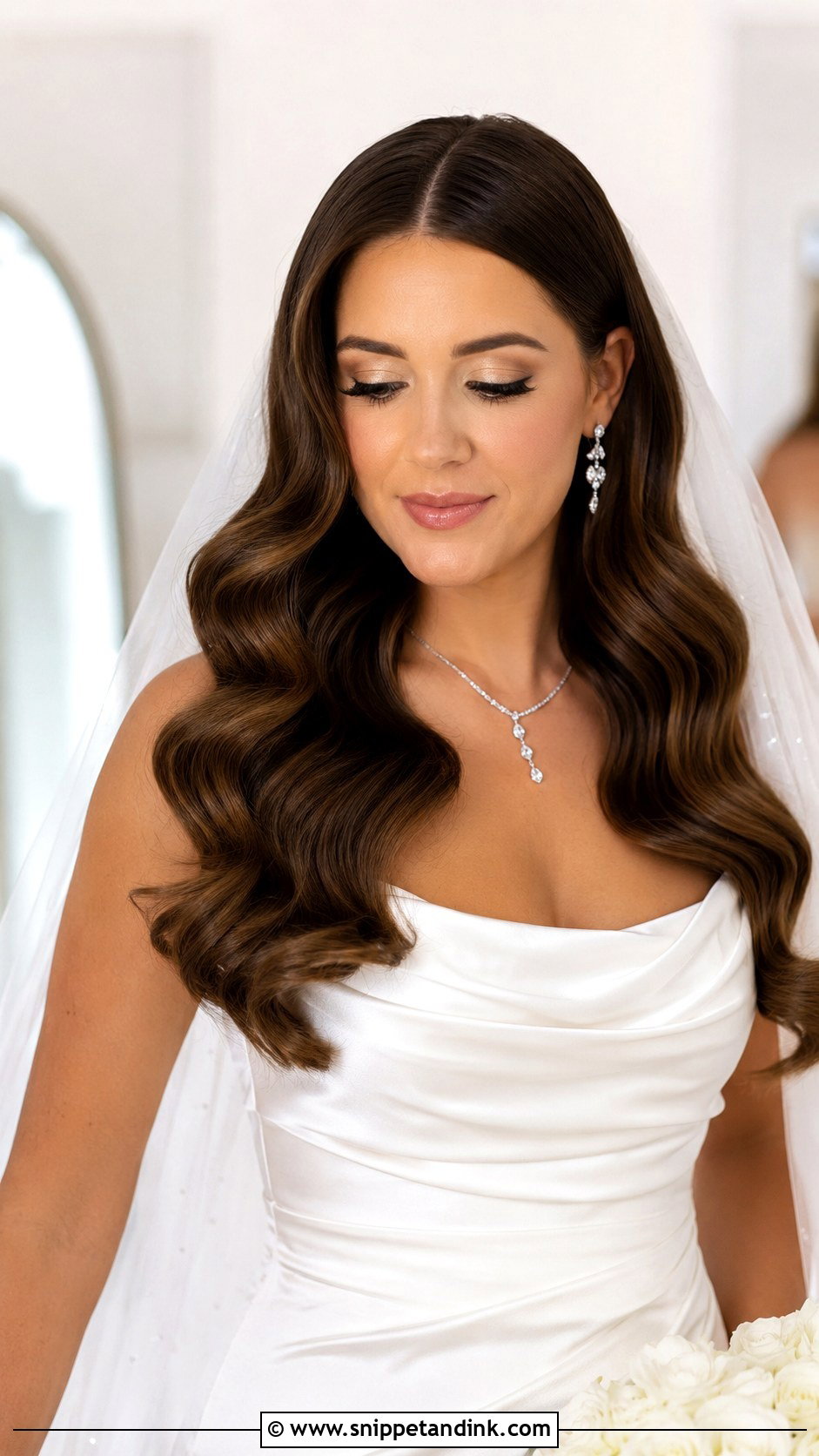
Voluminous Hollywood waves are glossy, structured S-curves that move as one piece rather than separate curls. I curl each section the same direction, pin it while it cools and brush it all out together, which is what gives the ripple. They need medium to long hair with fairly even ends, since short layers break the pattern. Wear them fully down or pinned to one side with a jeweled clip for a vintage feel. They suit fitted gowns and bold jewelry, and they’re not the right pick if you want hair you can forget about, because humidity loosens the ripple over the evening.
4. Messy High Bun for Wedding
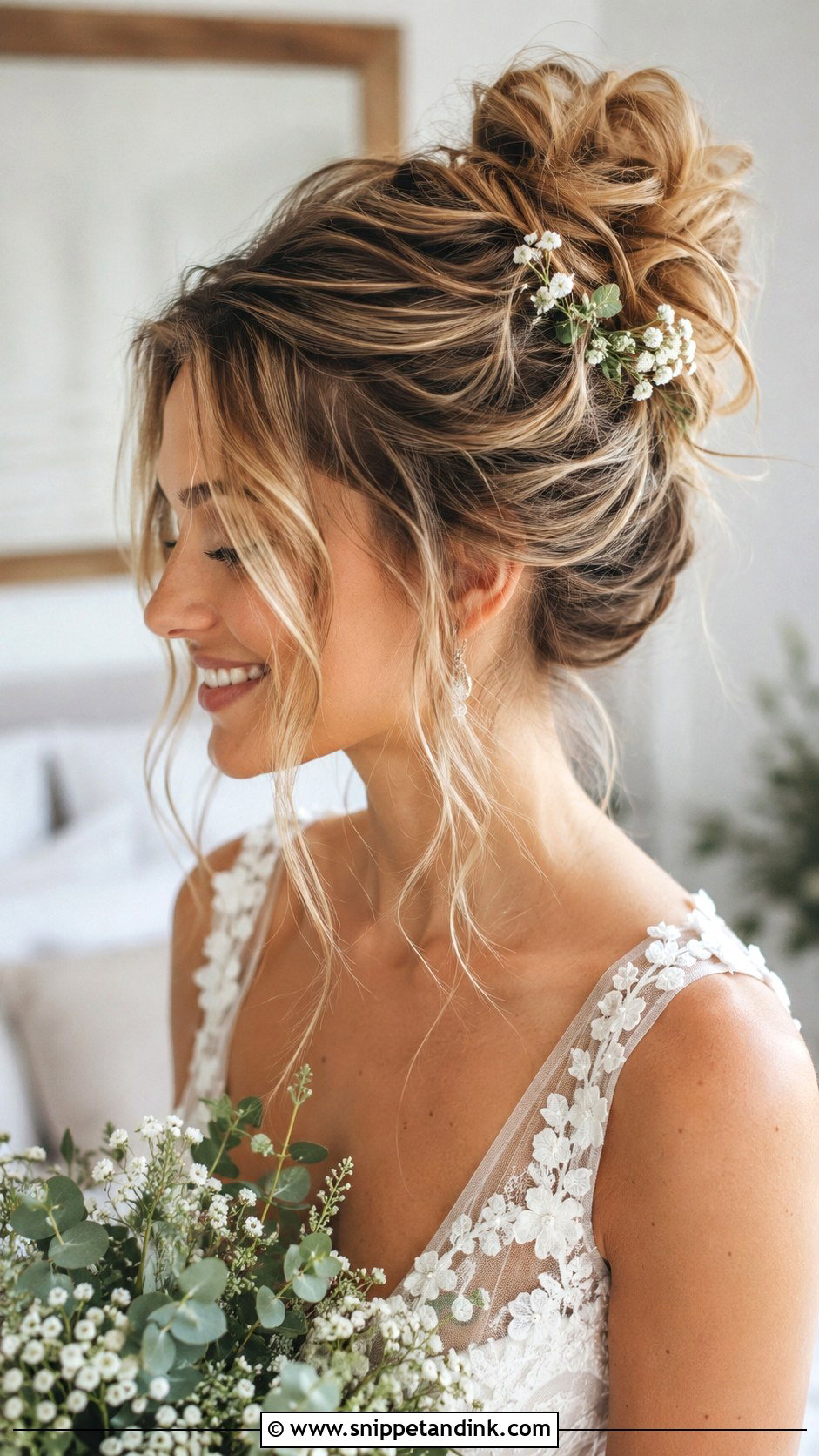
Messy high buns look unplanned, but the good ones aren’t. I curl the hair first, gather it loosely toward the crown and pin each section separately, leaving a few tendrils around the face and neck. A few hidden pins in a cross pattern keep it secure while it looks relaxed. Long and thick hair gives it the most height. It suits flowing gowns, florals and outdoor venues; for a black-tie ballroom it can look underdressed.
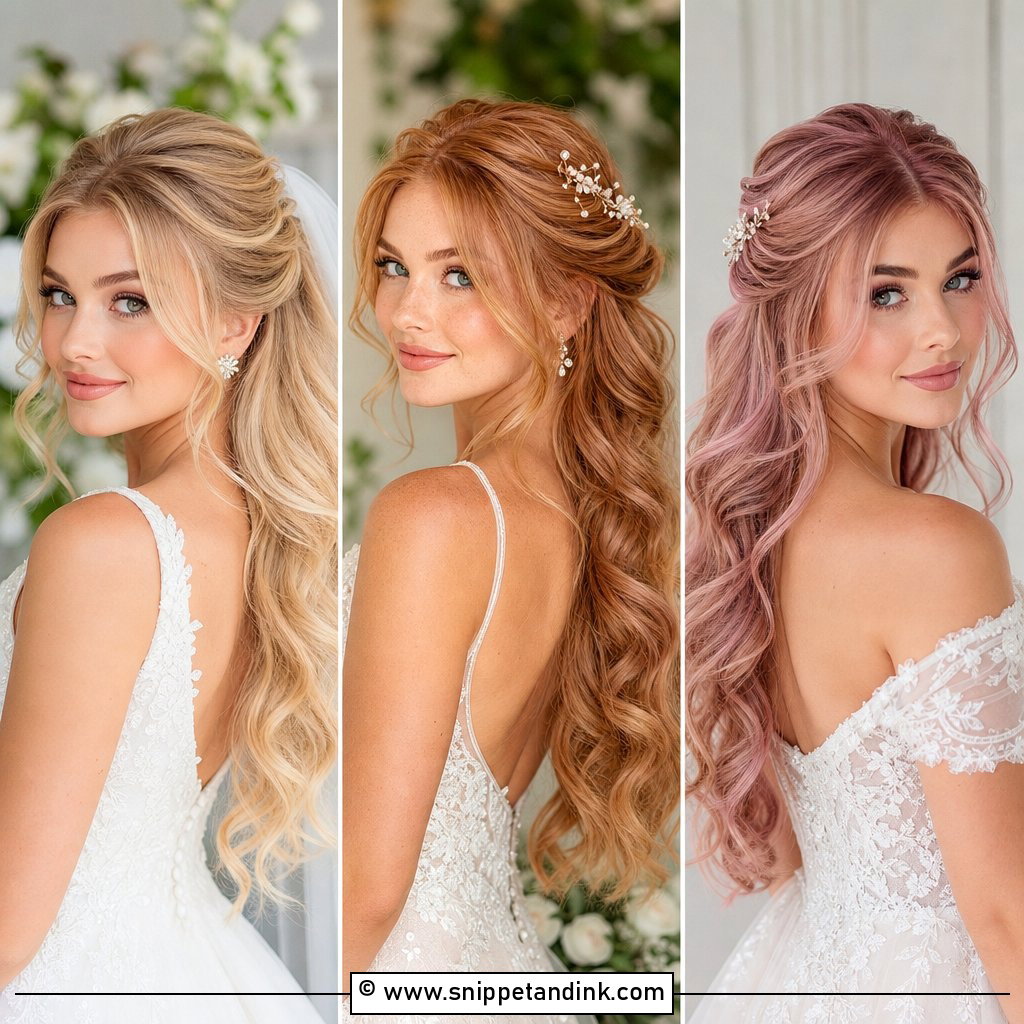
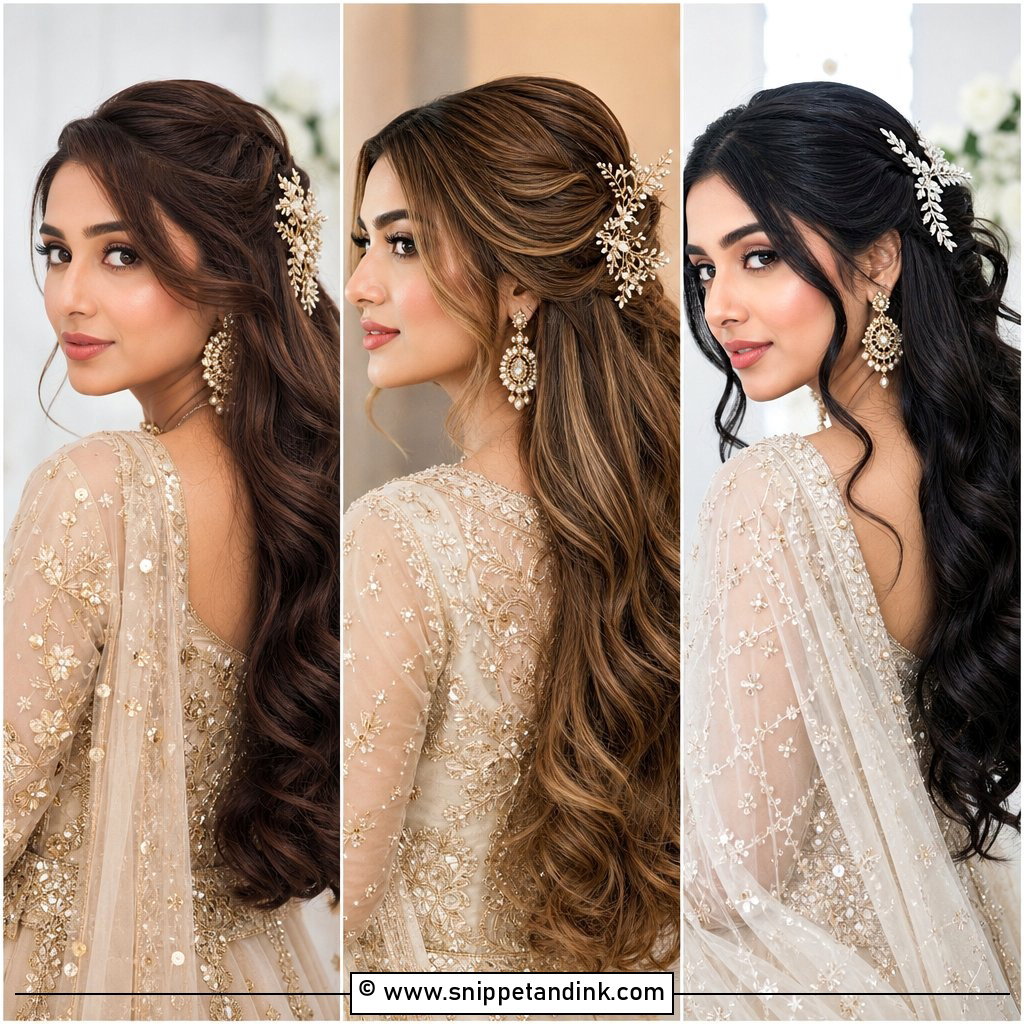
5. Half-Up Half-Down for Wedding
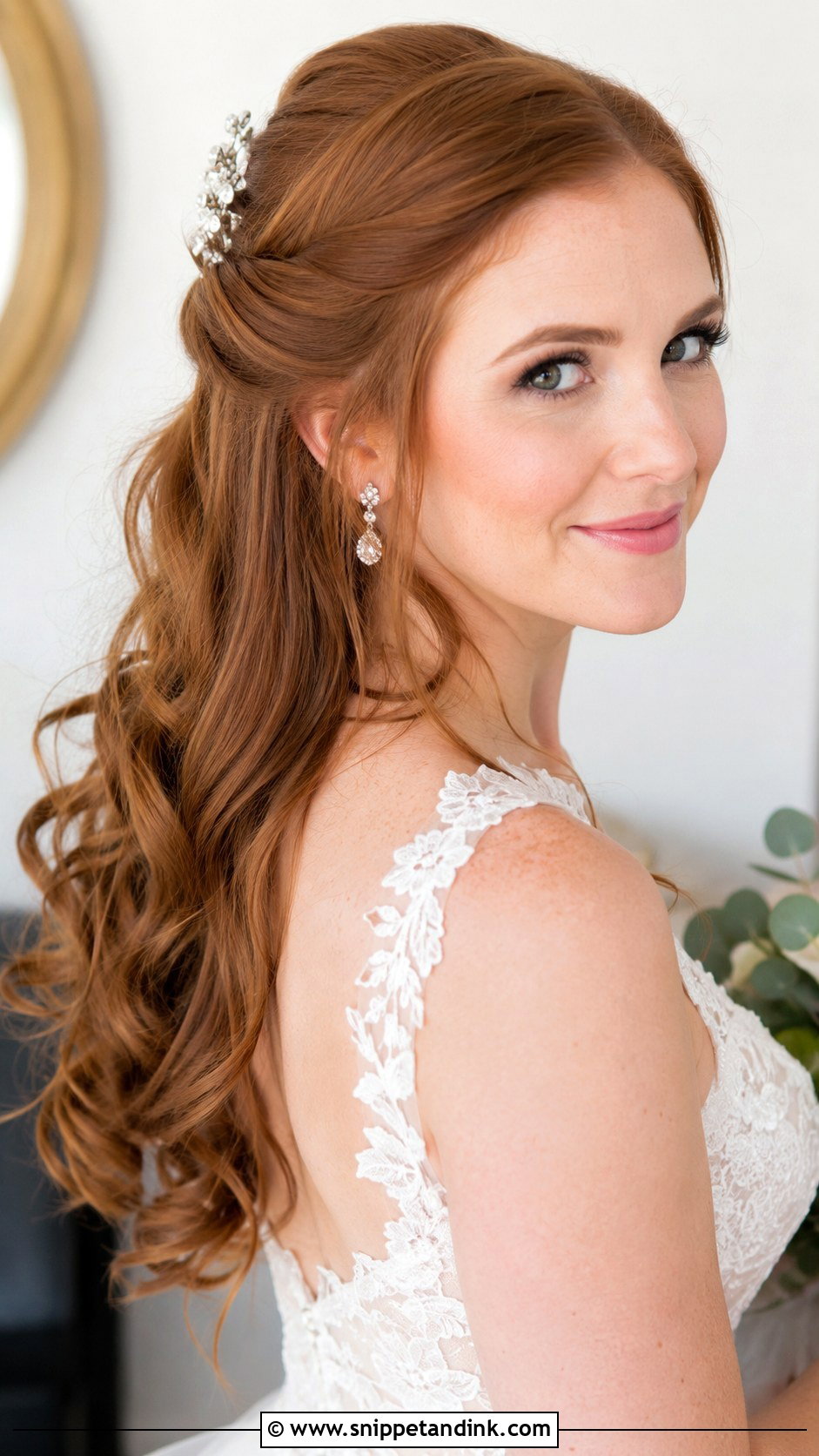
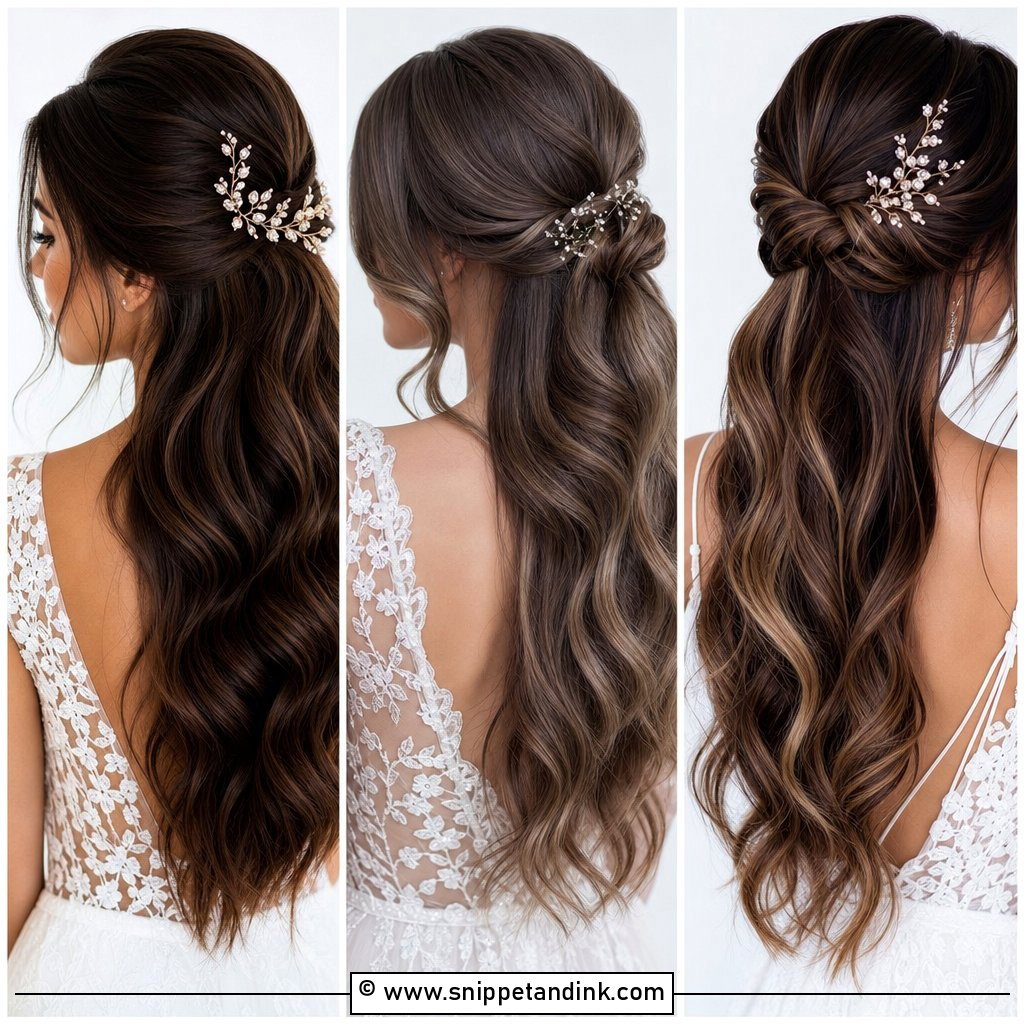
Half-up, half-down keeps hair off your face while the length still shows, which is why brides who usually wear their hair down feel comfortable in it. Right now I’m doing more versions with the top section set higher, in twists, a small braid or a mini bun visible from the front. It works on curls, waves or straight hair, on medium to long lengths. You can finish it with a jeweled clip, pins or a single flower. Its weakness is the loose length in humid weather, so I set it with a light mousse before curling.
6. French Twist for Wedding
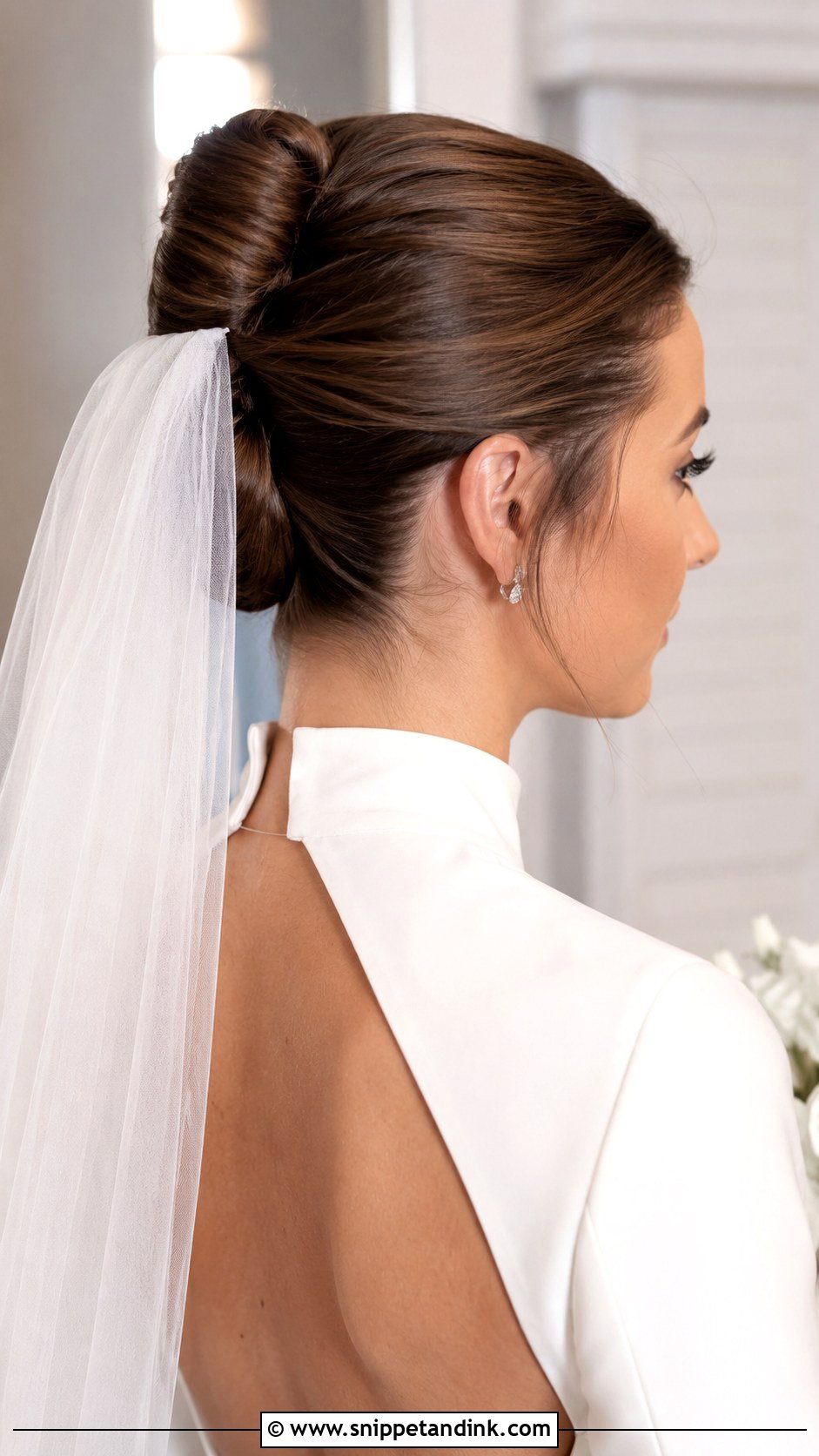
A French twist folds the hair up the back of the head into a vertical roll and tucks the ends inside. It’s structured and very secure, and it suits formal ceremonies and classic venues. A veil can sit at the top of the twist or just below it. Silky, freshly washed hair is the hardest to twist, so I add texture spray first and backcomb lightly at the base for the pins to grip. It needs medium to long hair; on very short layers the ends refuse to stay inside the roll.
7. Bridal Ponytail for Wedding
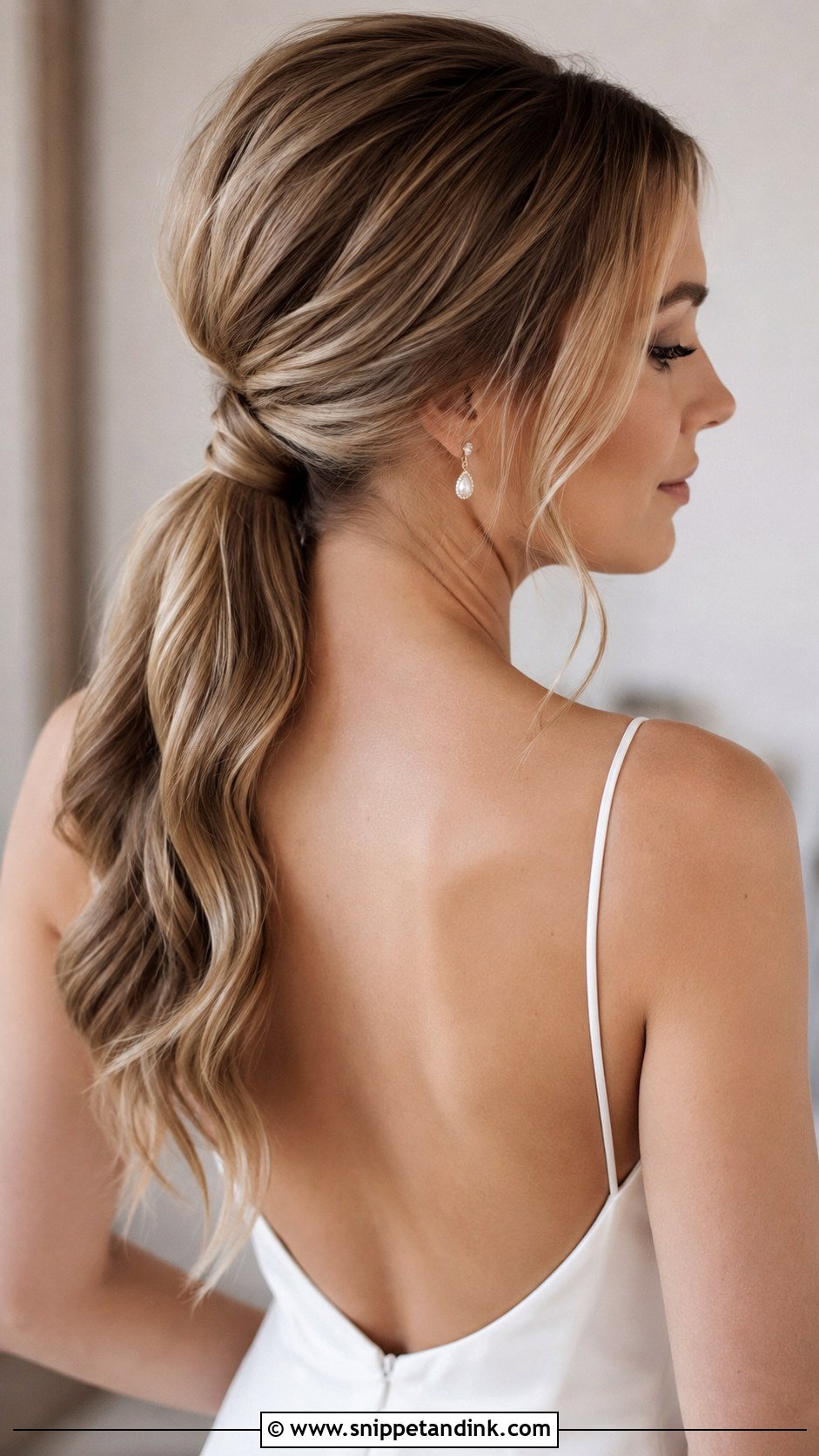
Ponytails are one of the most secure wedding styles I do, because everything hangs from one strong base. A high one feels bold and editorial, a low one softer. I always wrap a strand around the elastic and pin it underneath so no band shows, and I add a little lift at the crown so the profile doesn’t look flat. On long, heavy hair I stack two elastics so the ponytail doesn’t droop by the end of the night. Loose waves through the length add movement, and it stays comfortable through hours of dancing.
8. Sleek Bob for Wedding
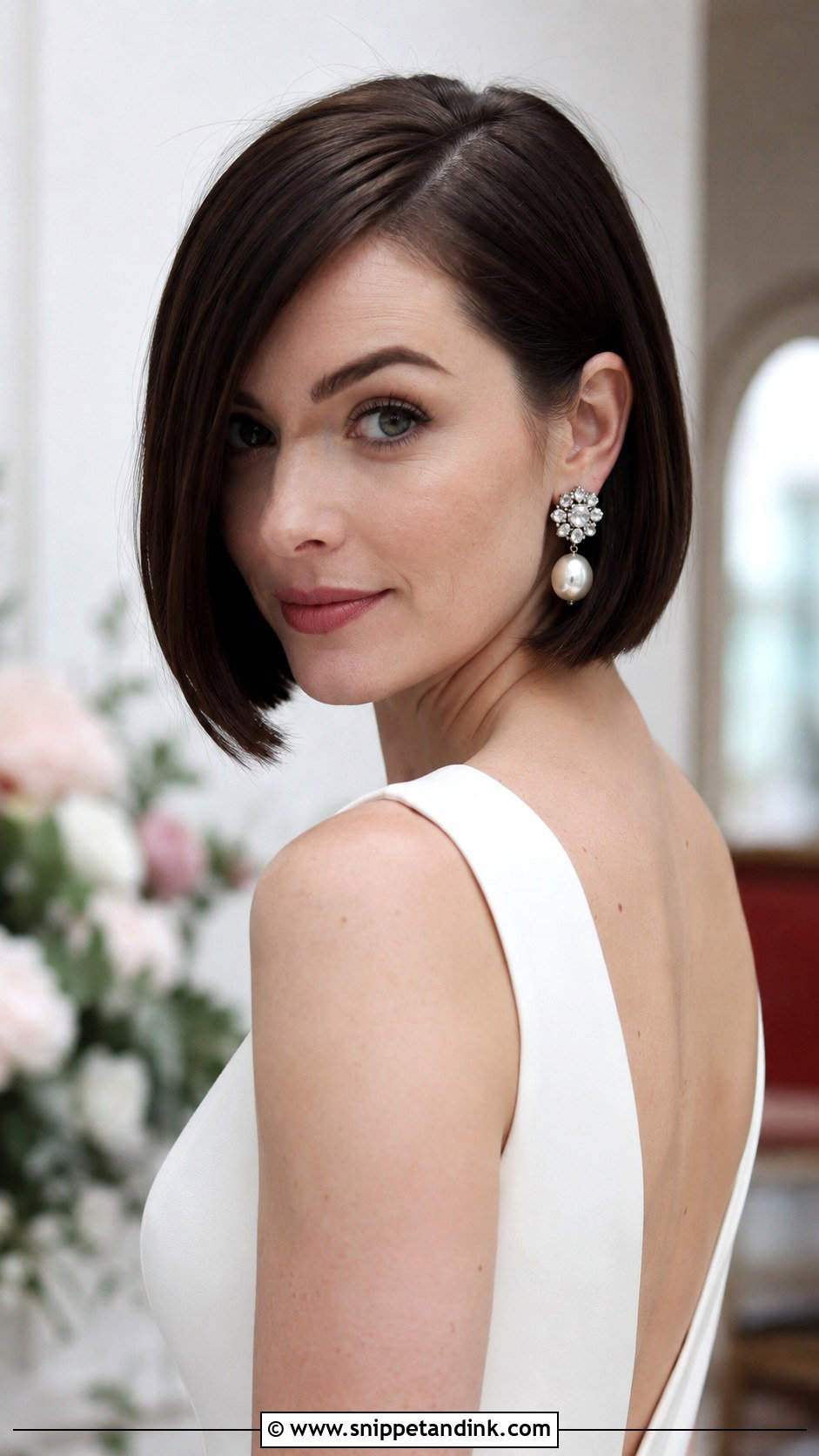
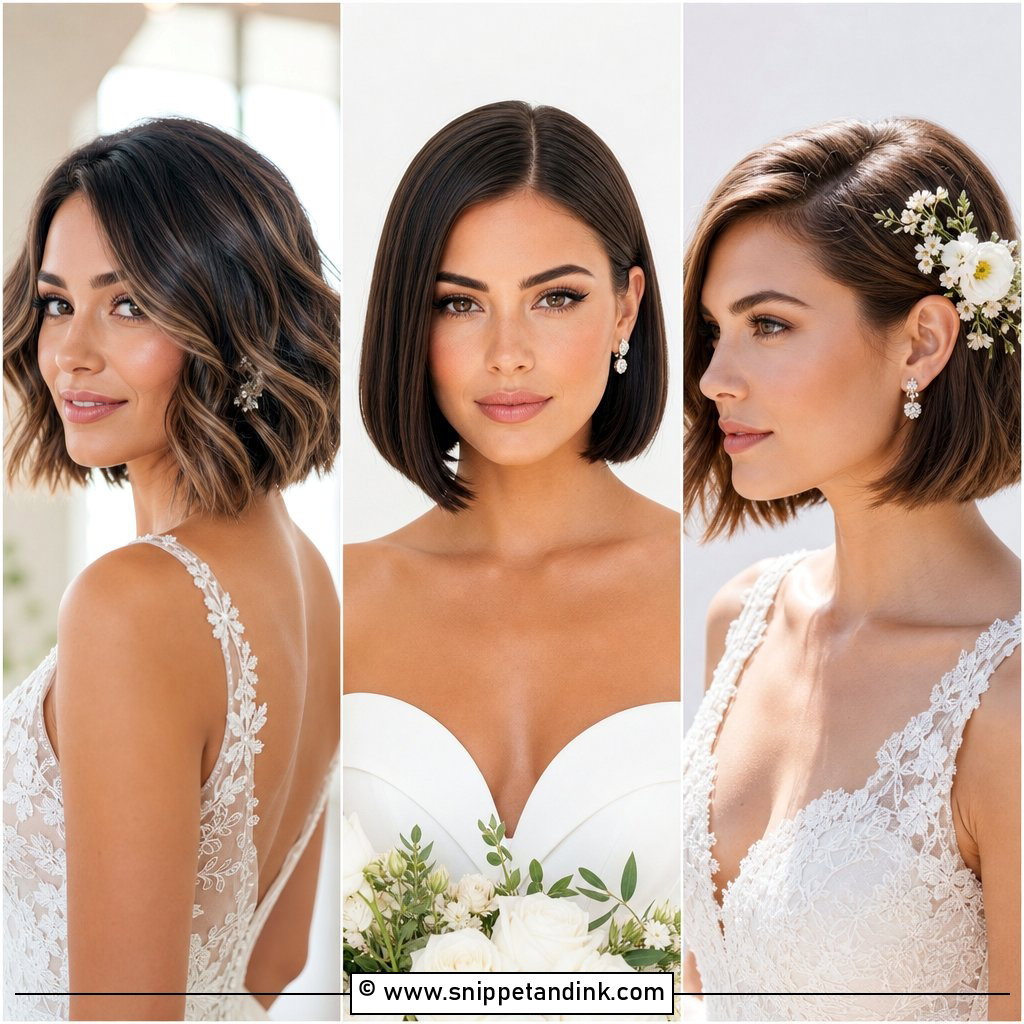
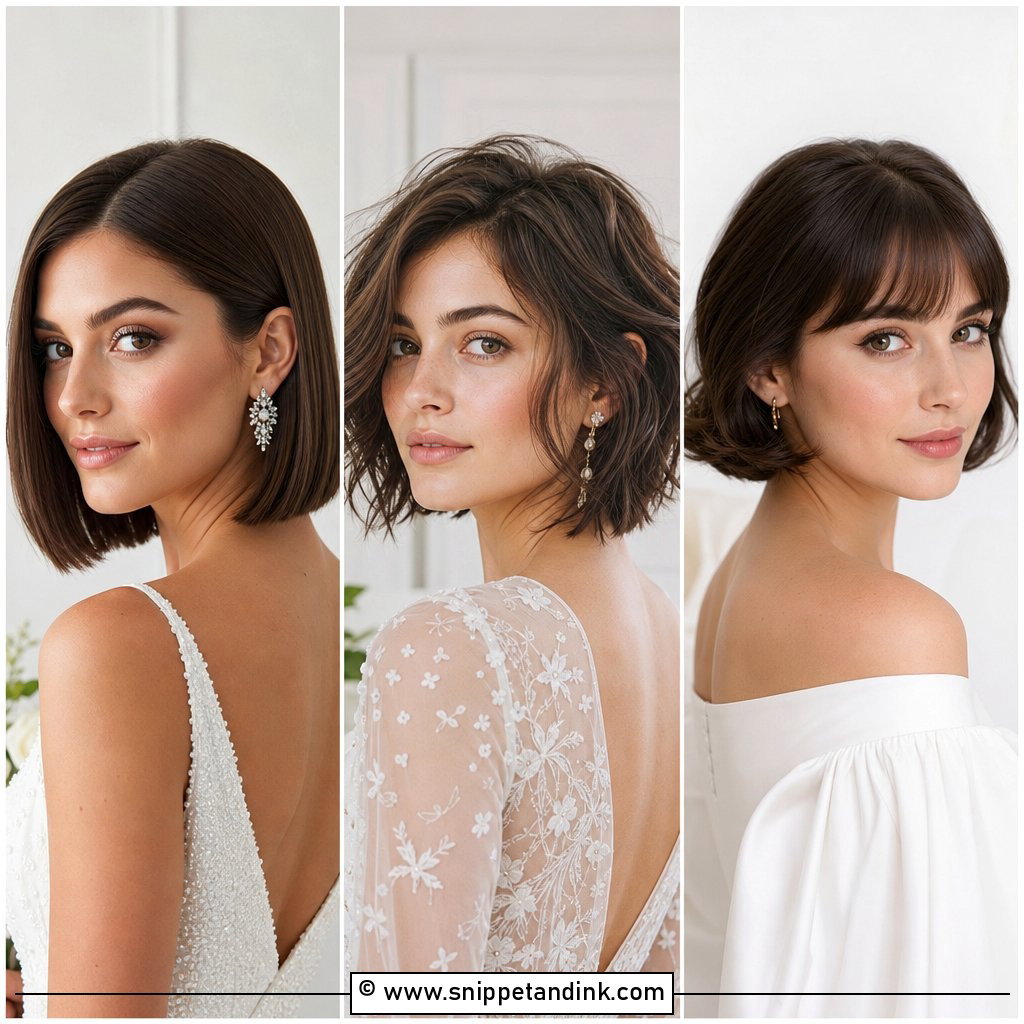
A sleek bob depends on the cut more than the styling. It should be cut to sit cleanly at the jaw with no heavy steps, then smoothed with a round brush or flat iron and a drop of shine serum. I suggest a deep side part or one side tucked behind the ear with a hidden pin for a bit of shape. Bold lip color and big earrings look sharp against those clean lines. For a minimal wedding, a bob is about as low-maintenance as wedding hair gets.
9. Boho Braided Crown for Wedding
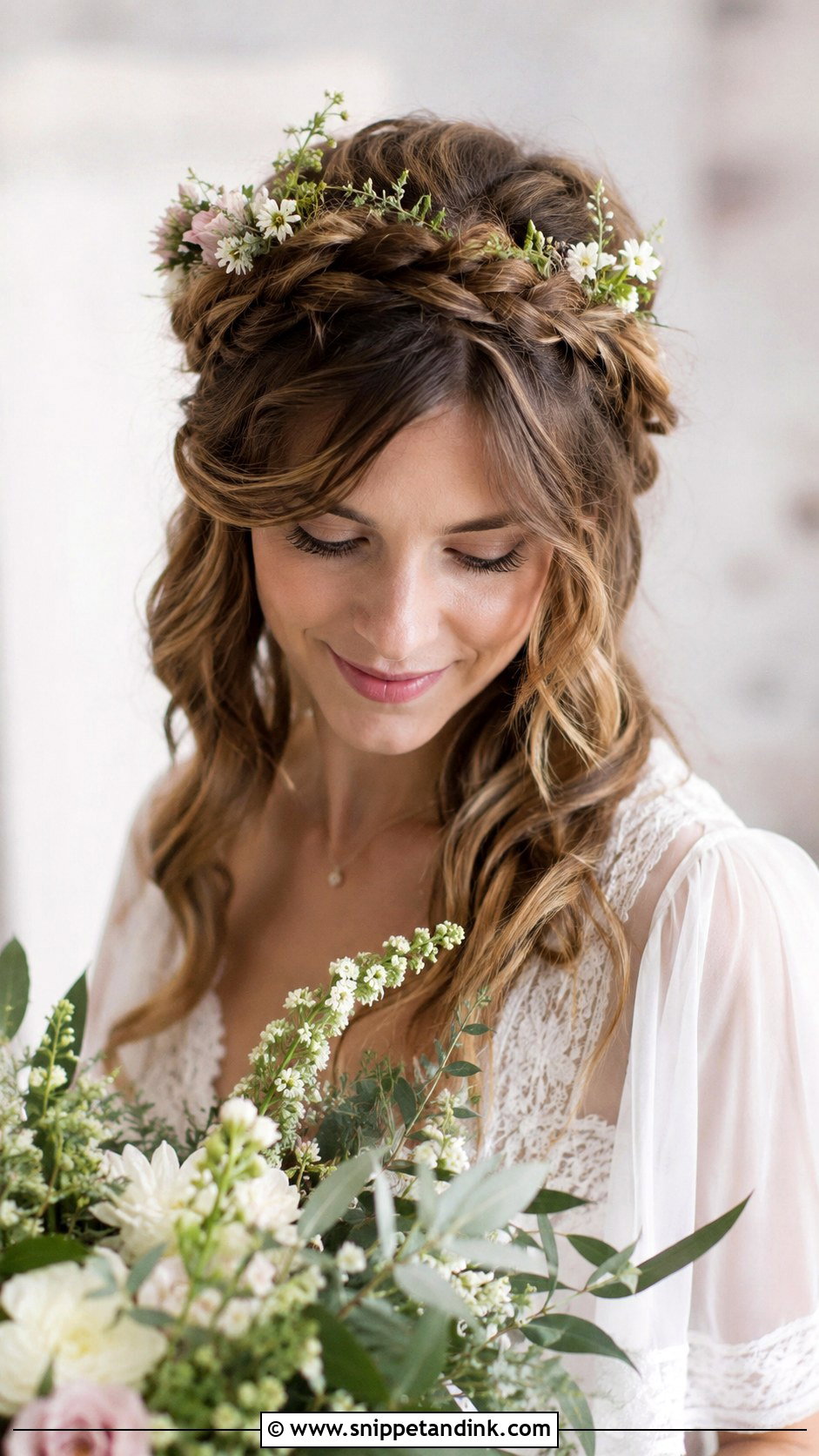
A braided crown circles the head like a halo and keeps hair off the neck, which is a real help at outdoor summer weddings. It needs medium to long hair, and on fine hair I loosen each loop of the braid by hand so the crown looks fuller. Fresh flowers or small sprigs of greenery tuck into the braid easily, but choose sturdy ones; delicate blooms wilt within a few hours out of water. Leave a couple of loose pieces at the temples to soften the frame.
10. Vintage Finger Waves for Wedding
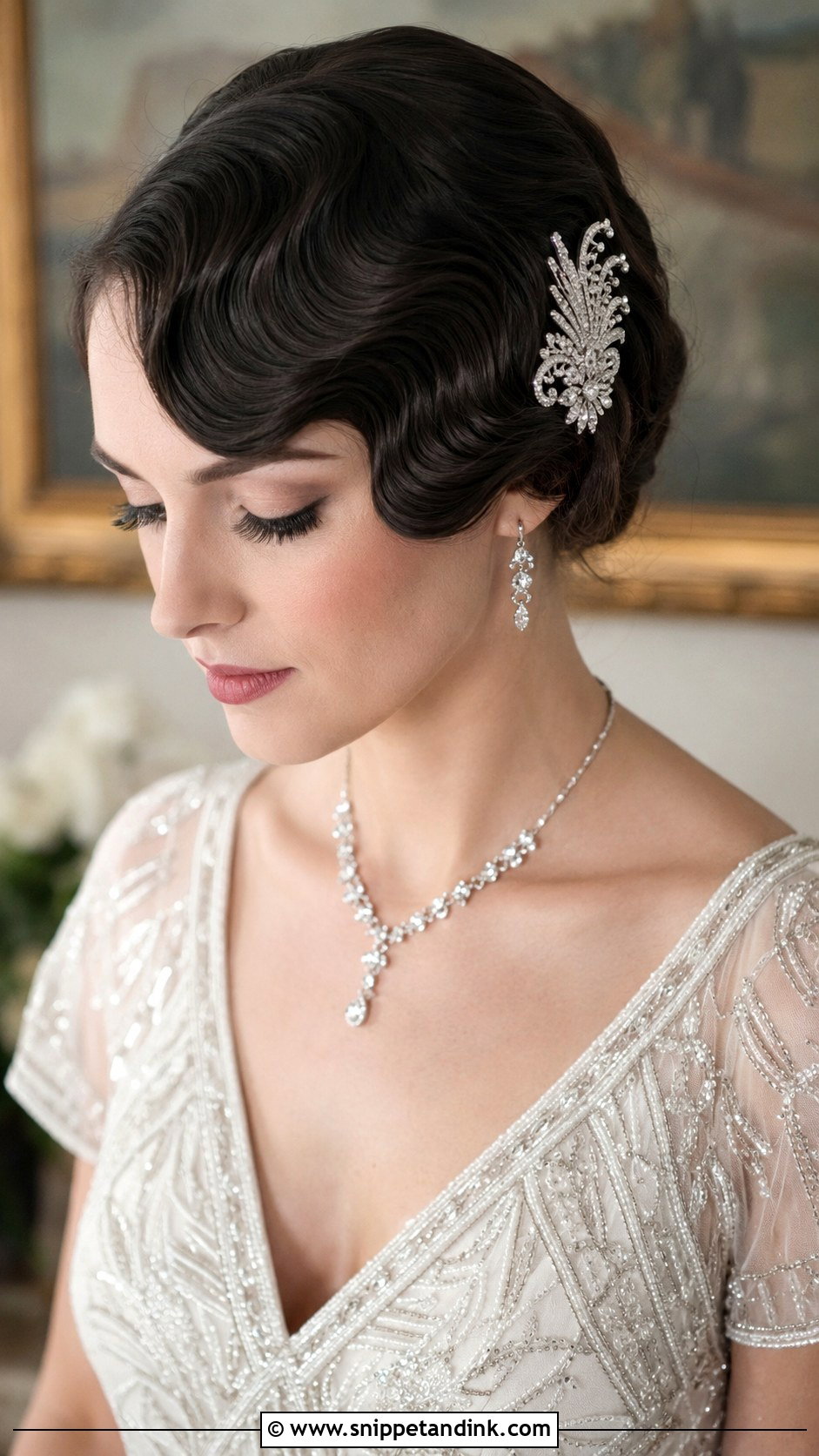
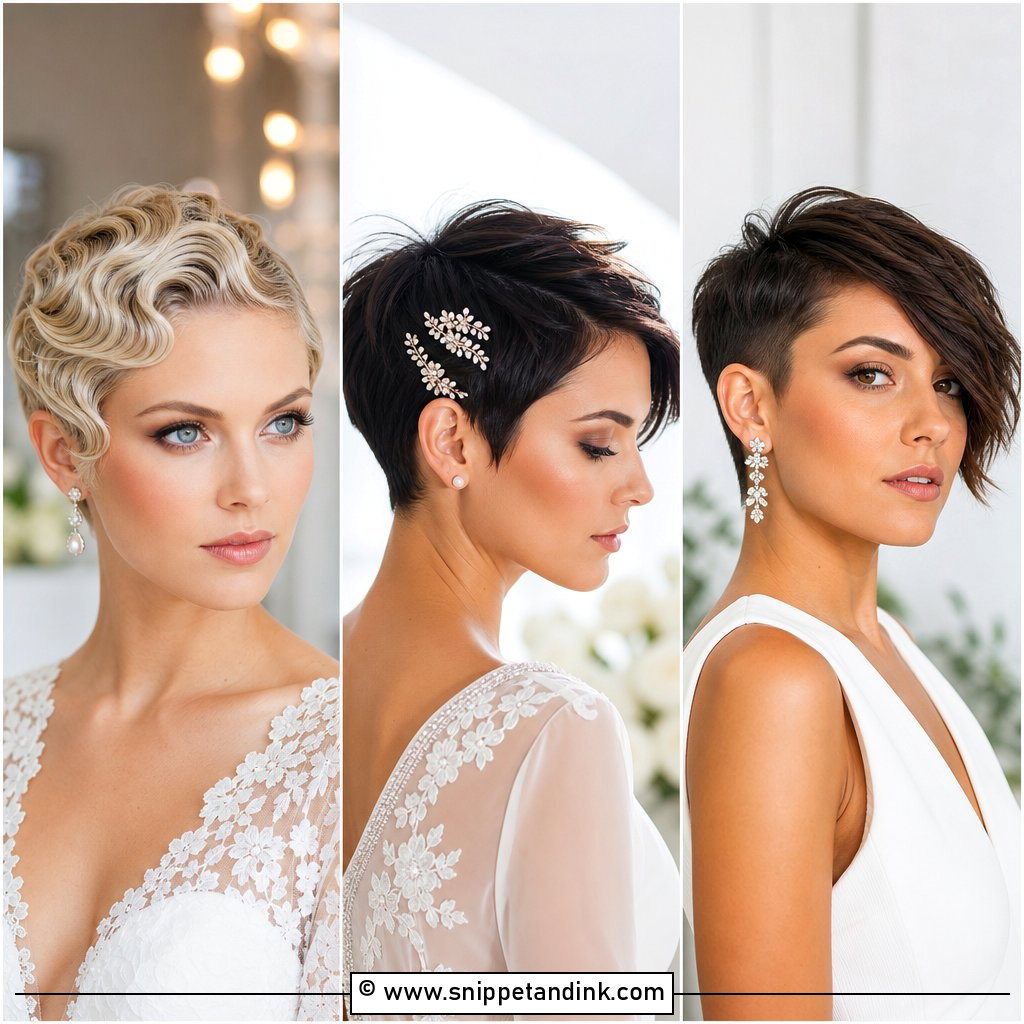
Borrowed straight from the 1920s, vintage finger waves are sculpted close to the head and set while the hair is wet. I shape the ridges with gel and fingers or clips, then let them dry fully before I touch them. It’s a skilled, slow style, so book a stylist who has actually done it before. It looks best on short to medium hair or a bob with smooth texture, and it pairs naturally with a jeweled comb or beaded headpiece at an art-deco or vintage-themed wedding. Not a style for very curly hair unless you’re happy to straighten first.
11. Loose Curls for Wedding
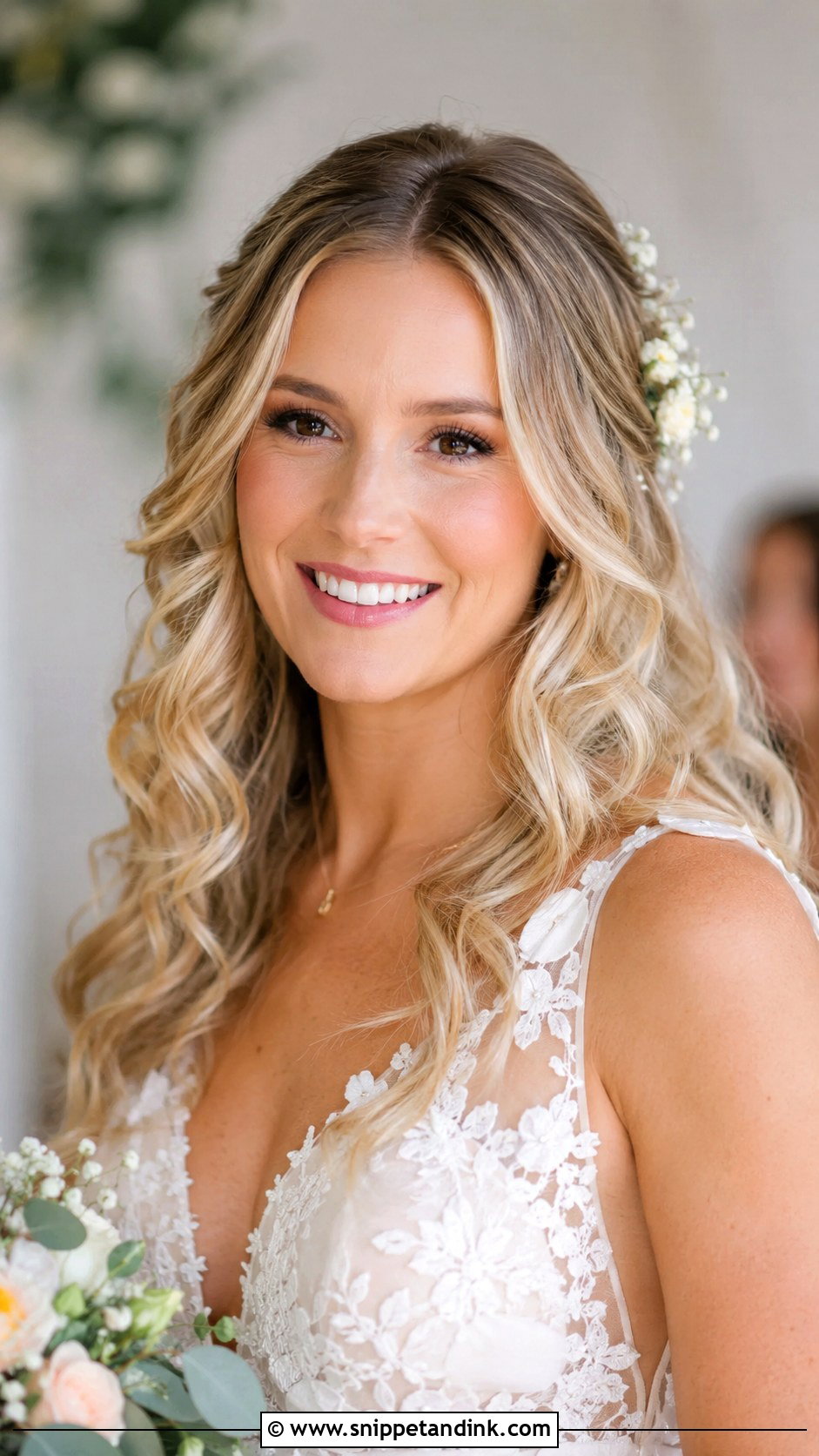
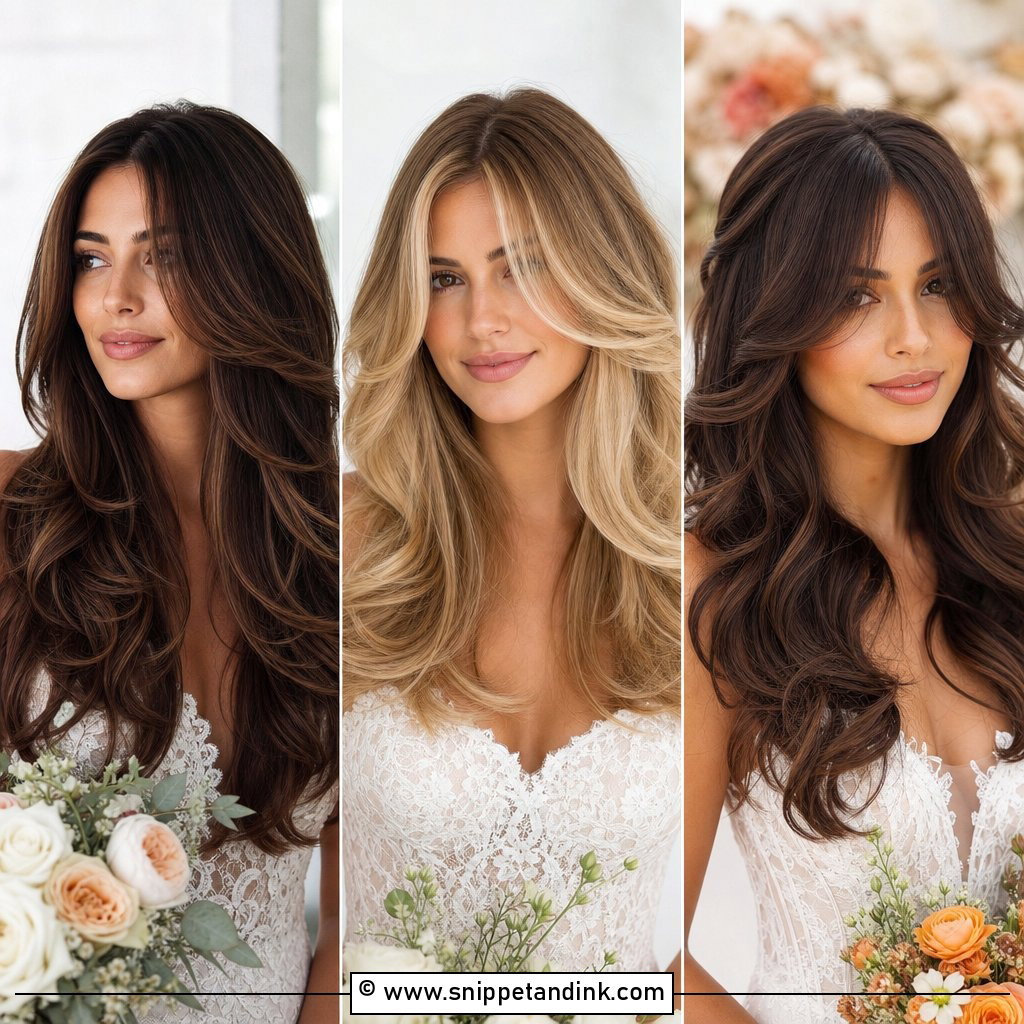
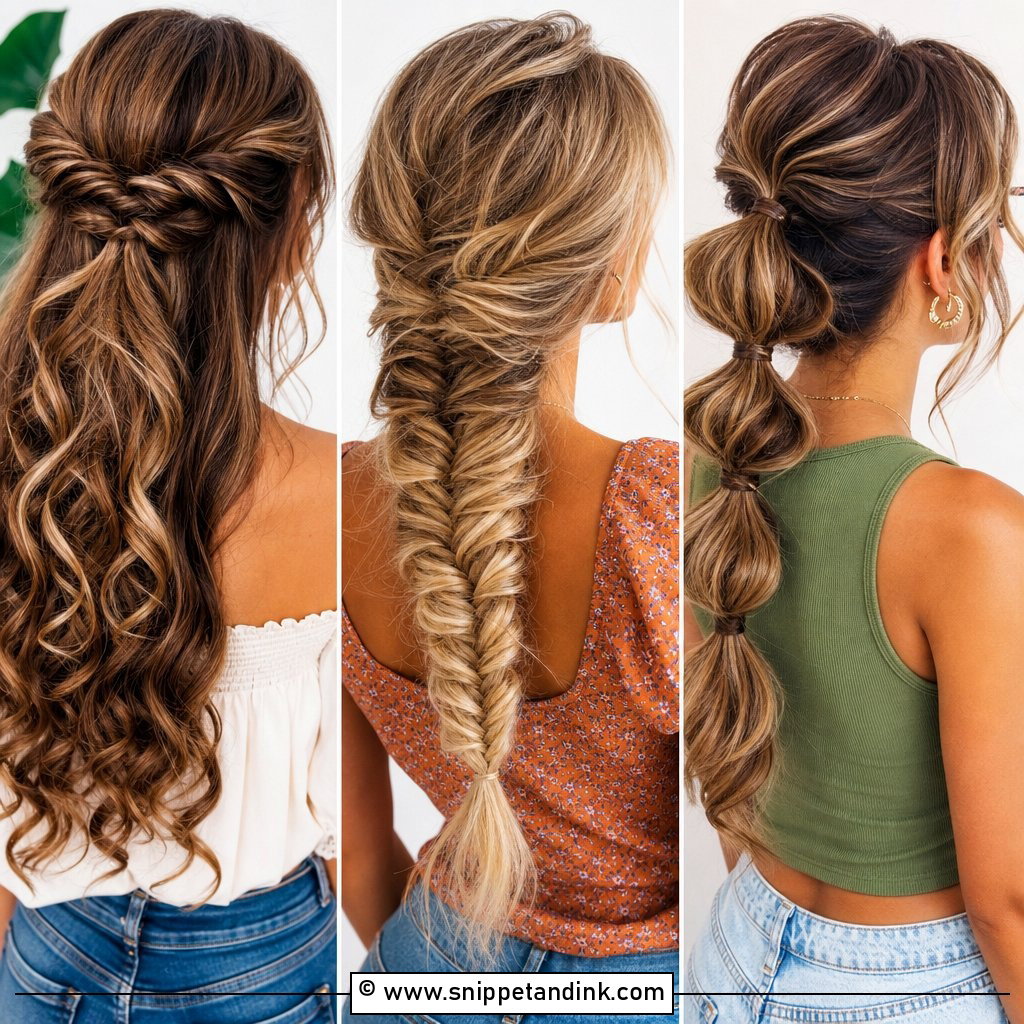
Loose curls worn down are the classic hair-down choice, and they suit spring and summer weddings. I curl in medium sections, let each curl cool and finish with a light, flexible spray so they stay soft rather than stiff. Center or side part both work; I pick at the trial based on which side your face looks best from. Medium to long hair suits it, and delicate hairpieces sit on top easily. Fine hair will relax faster, so I curl it slightly tighter than the look you want at the end.
12. Pixie Cut for Wedding
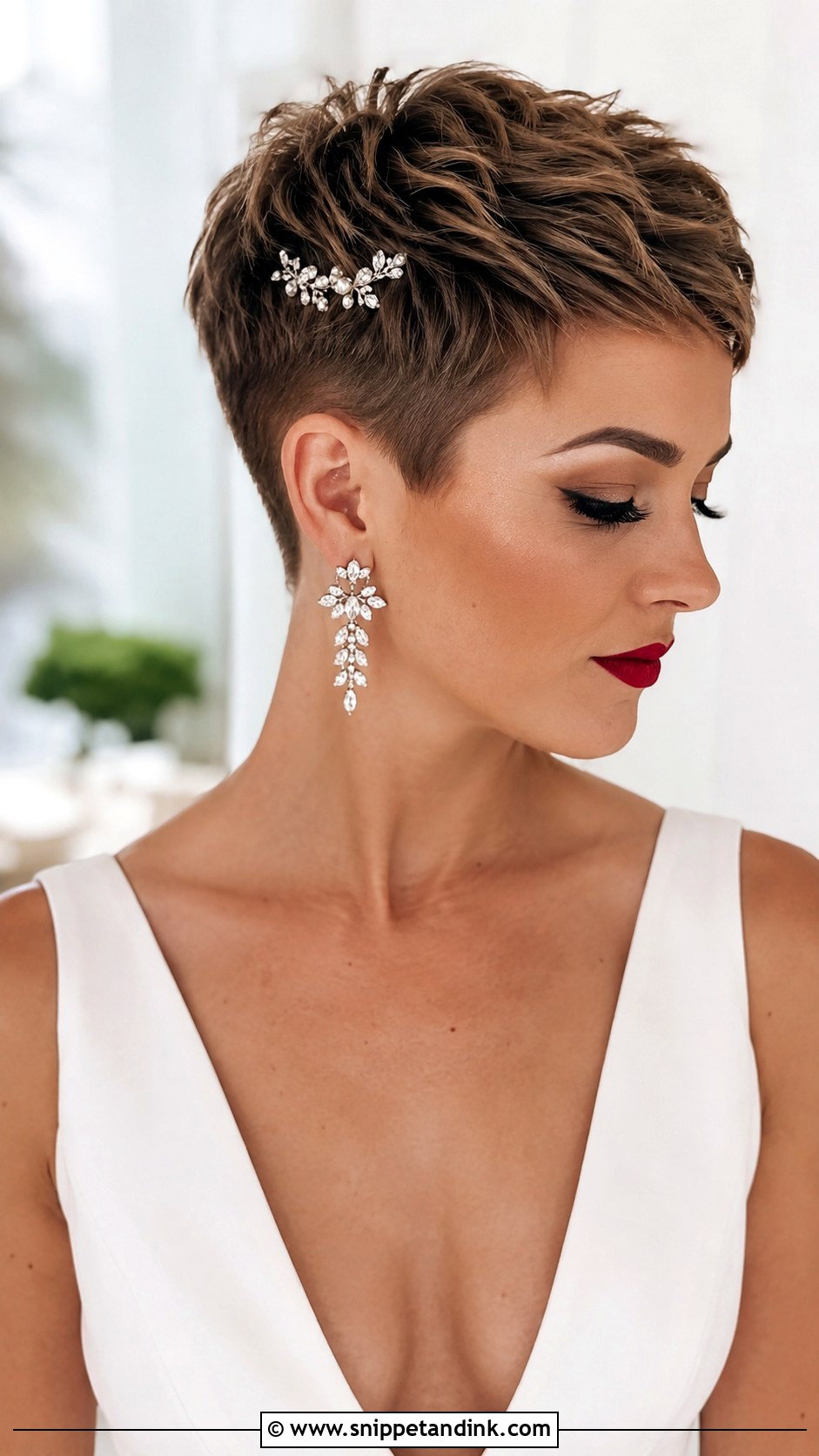
A pixie cut on the wedding day shows off the face, neck and cheekbones, and frankly it’s the least stressful option on the morning. I add texture with a little pomade or smooth it flat for a sleeker finish. A small jeweled pin, a headband or a tiny floral clip is enough to make it feel bridal. Book the cut about a week before, since a pixie grows out of shape faster than any other length. It pairs with statement earrings and stronger makeup.
13. Fishtail Braid for Wedding
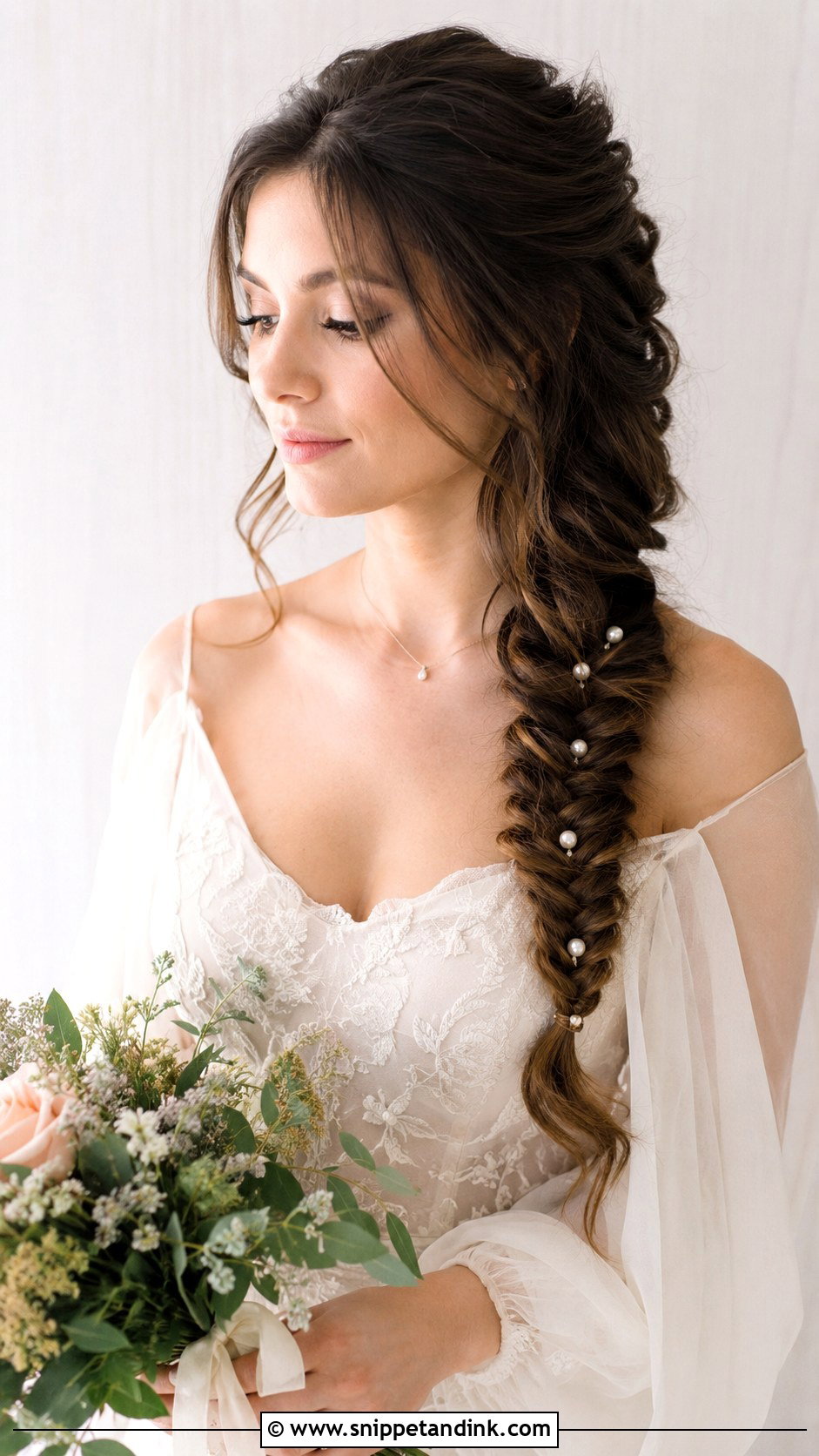
Fishtails have a herringbone texture that looks great in close-up and from behind. Worn over one shoulder, as a half-up accent or wrapped into an updo, it needs medium to long hair. I braid it tight and then loosen it slightly at the edges for a softer look. Tiny pearl pins or flowers can be tucked into the braid along its length. The tail end is the weak point, so I secure it with a clear elastic and cover it with a small wrap of hair.
14. Side-Swept Updo for Wedding
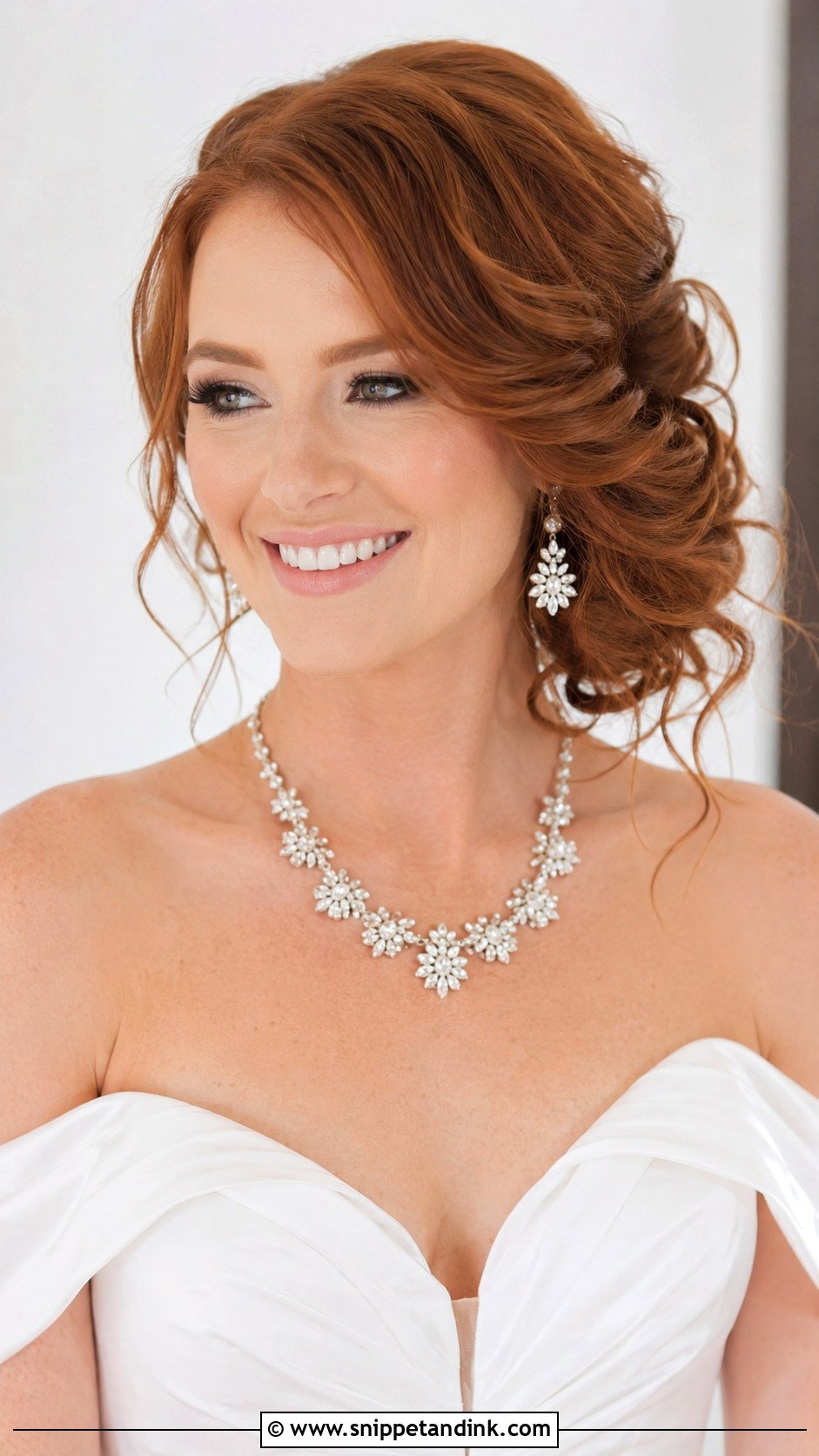
A side-swept updo gathers everything to one side, creating an asymmetrical shape that draws attention to the neckline and one earring. It works with off-shoulder gowns and big jewelry. I pin the curls or twists into place from behind with a hidden row of crossed pins; without that support, the shape slides back to center during hugs. Medium to long hair suits it, and it works at formal and garden weddings alike. Decide which side at the trial, because your best side in photos matters here.
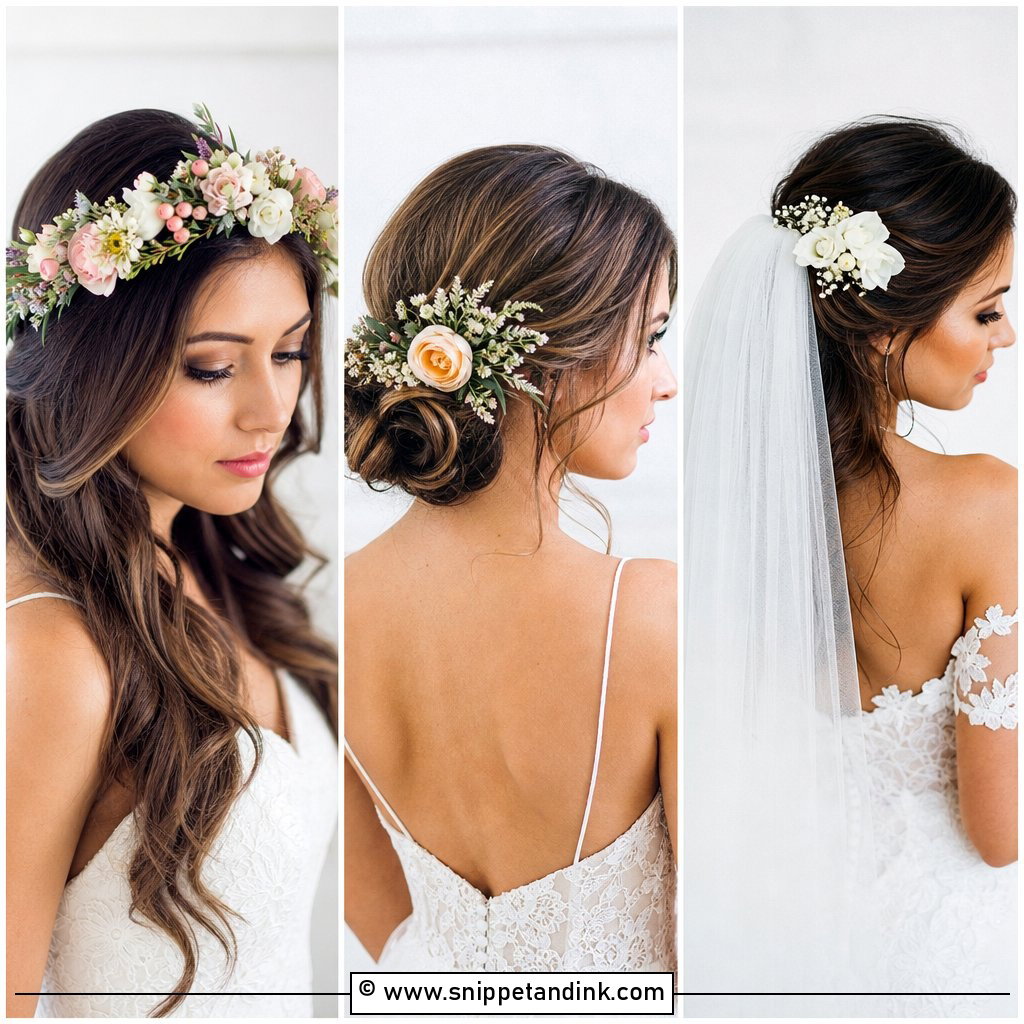

15. Sleek Low Bun for Wedding
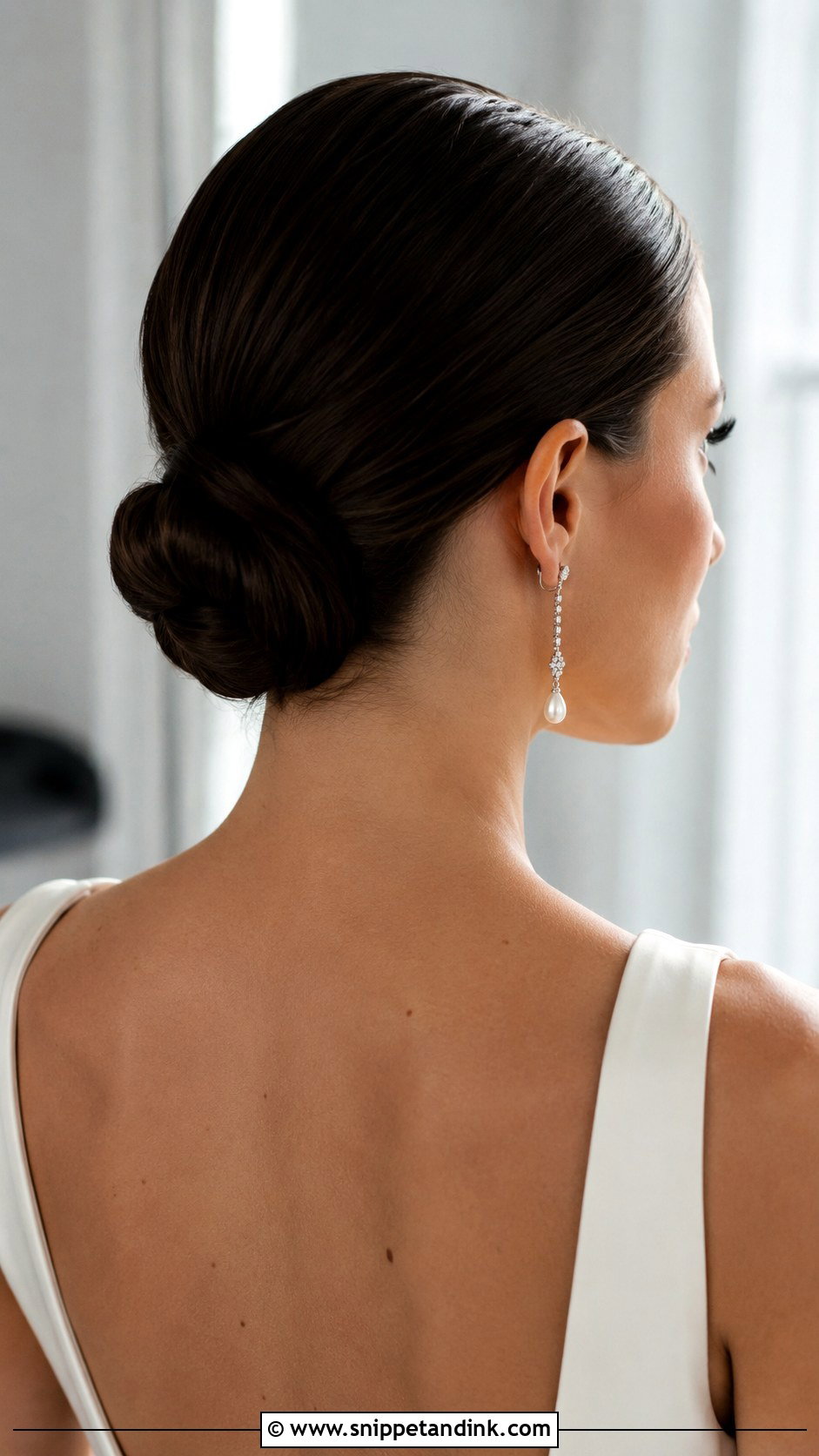
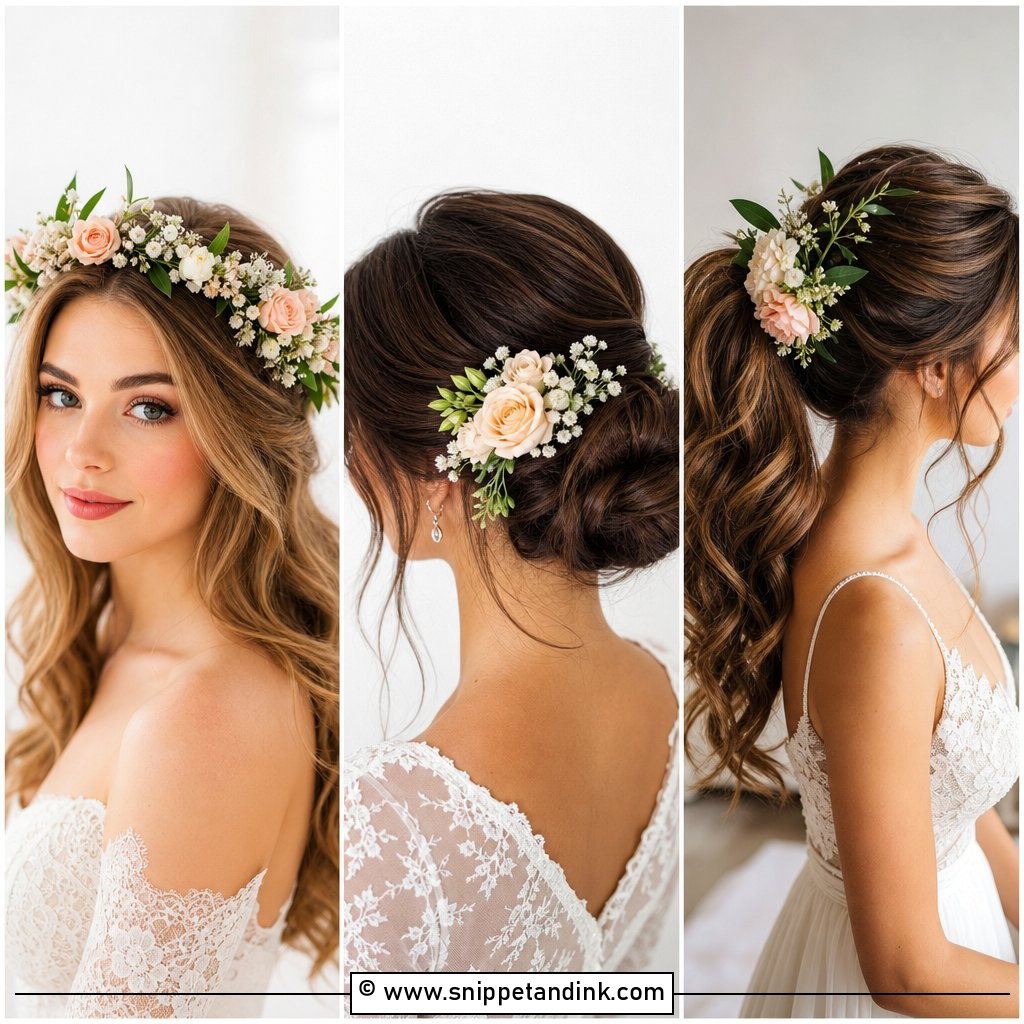
The sleek low bun is the most understated style here, and that’s why it rarely disappoints. The hair is smoothed into a neat knot at the nape, usually with a deep center part. I use a firm brush, smoothing cream and a little gel at the part, then check it under a phone flash, since flash shows every bump. It works with any face shape and with medium to long hair. A sleek veil can sit just above it.
16. Tousled Lob for Wedding
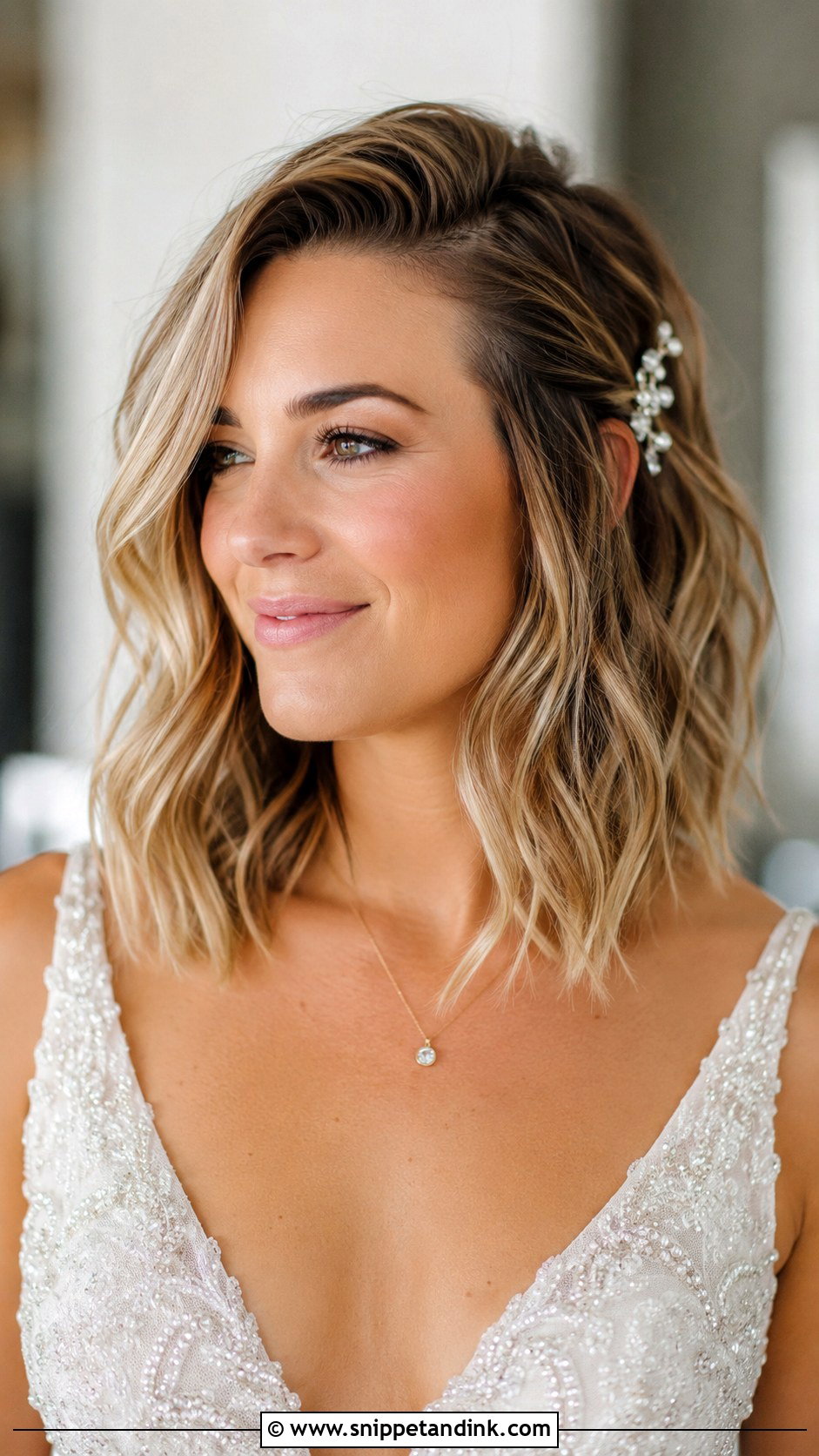
The tousled lob, a long bob that just grazes the shoulders, gives you a relaxed but polished option with no updo. I style it with soft, bent waves and a deep side part for volume, and sometimes tuck one side behind the ear with a sparkly pin. It suits casual and semi-formal weddings. The cut should have soft internal layers so the waves sit well, but not short layers on top that flip out.
17. Romantic Updo with Flowers for Wedding
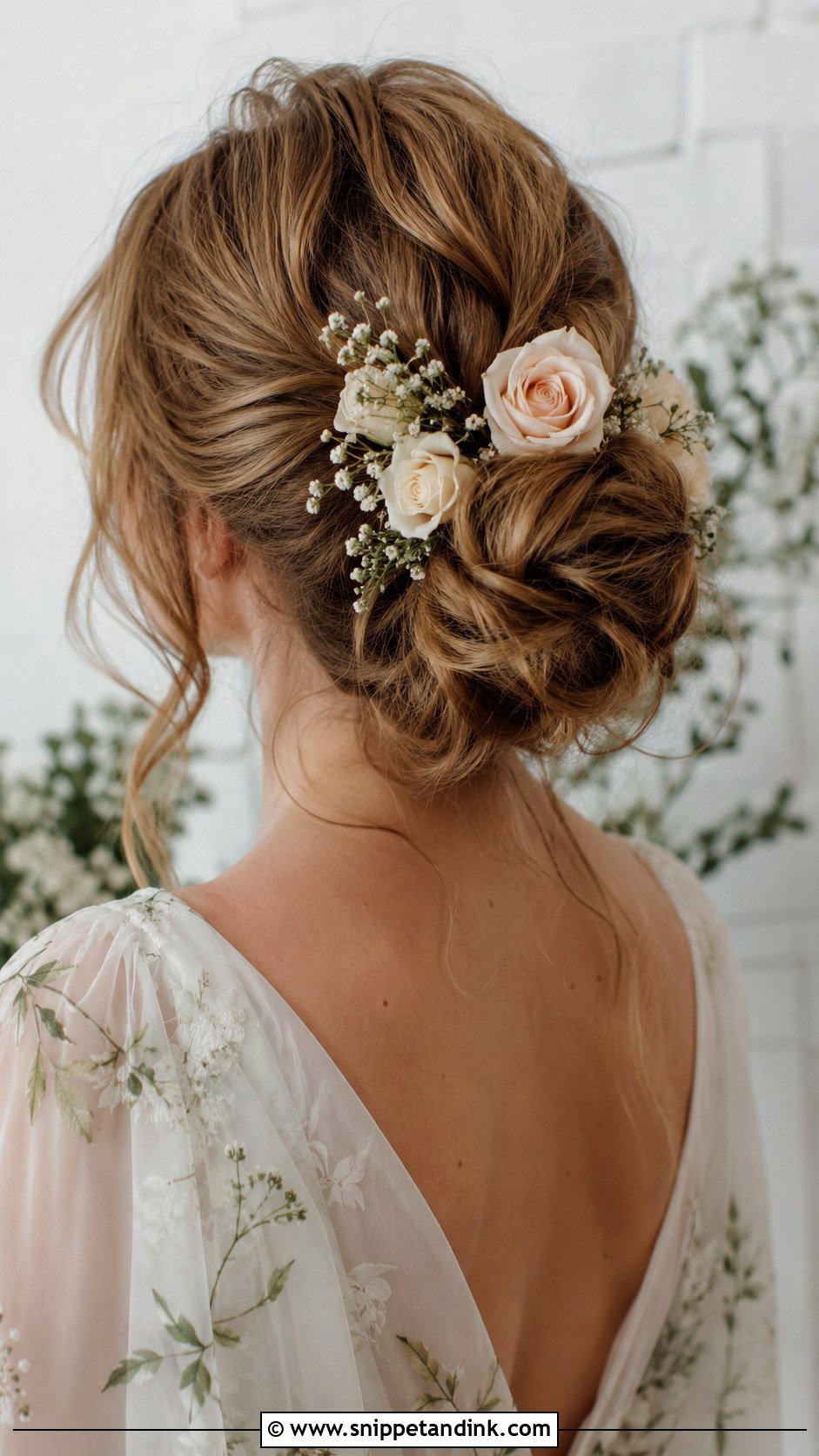
A soft updo with fresh flowers feels natural at garden and spring weddings. I gather the hair into a textured bun or twist, then tuck blooms through it. Baby’s breath, spray roses and small greenery hold up much better than delicate petals, and your florist can wire and tape them for you. Flowers should go in last, about an hour before the ceremony, so they look fresh in photos. It suits medium to long hair and flowing gowns.
18. Curtain Bangs for Wedding
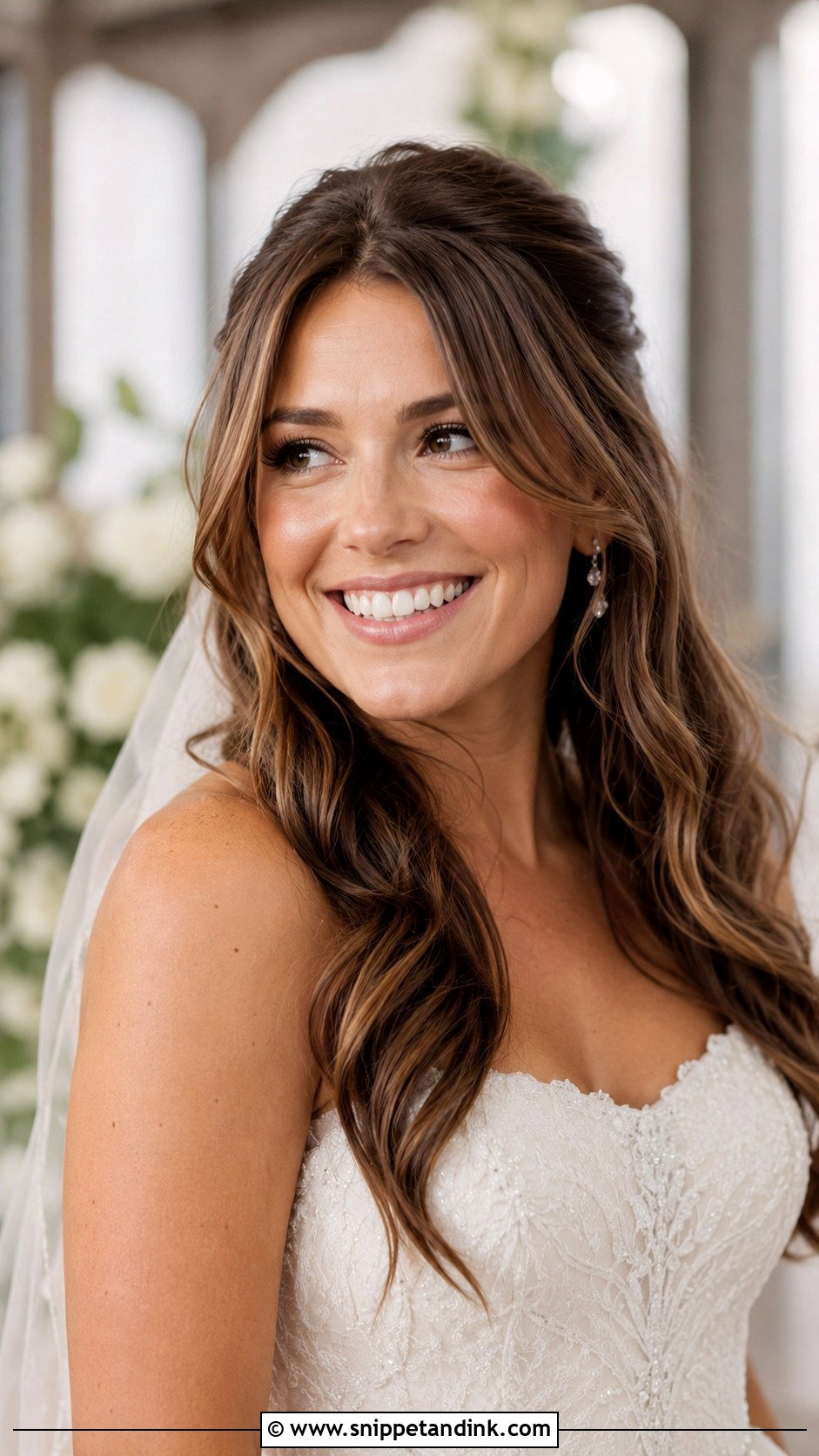
Curtain bangs sweep away from the center and graze the cheekbones, which softens the forehead and frames the eyes. They work with updos, ponytails, waves and half-up styles. Here’s my warning: if you’ve never had bangs, do not cut them for the first time right before the wedding. Get them two to four weeks ahead so you know how they behave and how to style them. I give them a slight bend with a round brush for volume. They suit medium to long hair and most face shapes.
19. Dutch Braid Updo for Wedding
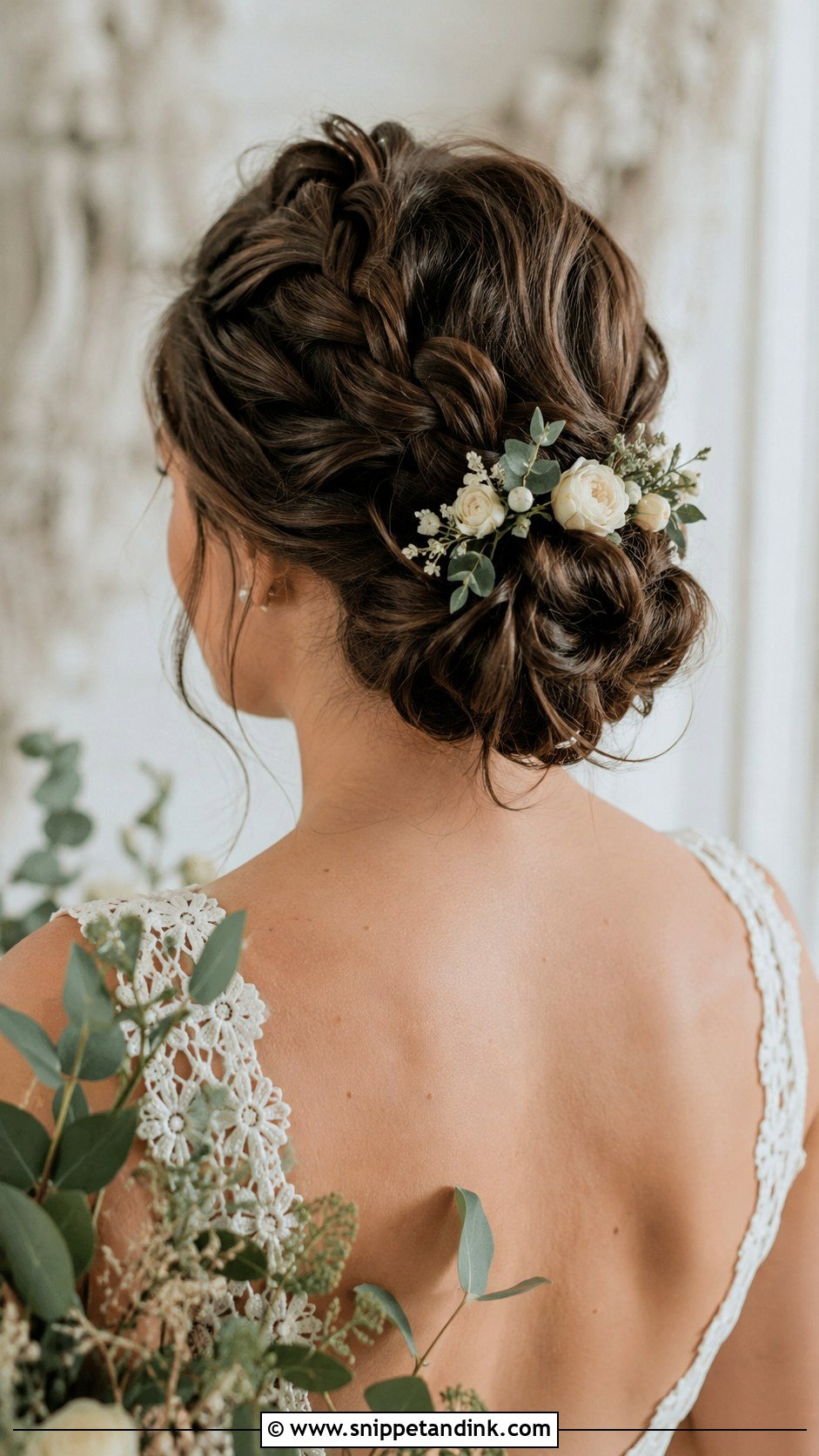
A Dutch braid updo braids the hair under itself so the plait sits raised on the head, which gives a lot of depth in photos. I wrap the braids into a low bun or a crown for the finish. Loose tendrils and a few flowers soften the structure. It suits medium to long, thick hair and holds securely all day; on fine hair, I pancake the braid gently to make it look fuller. Rustic and boho weddings are its natural home.
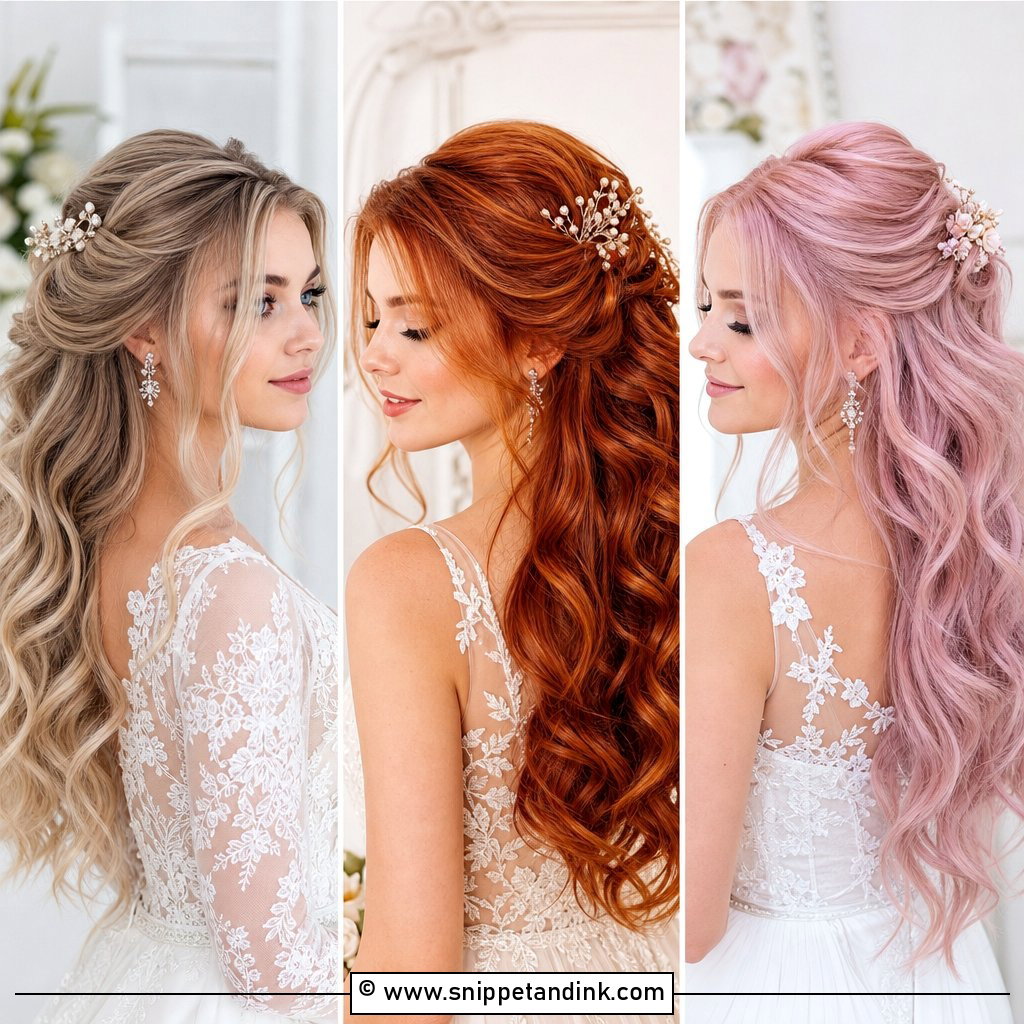
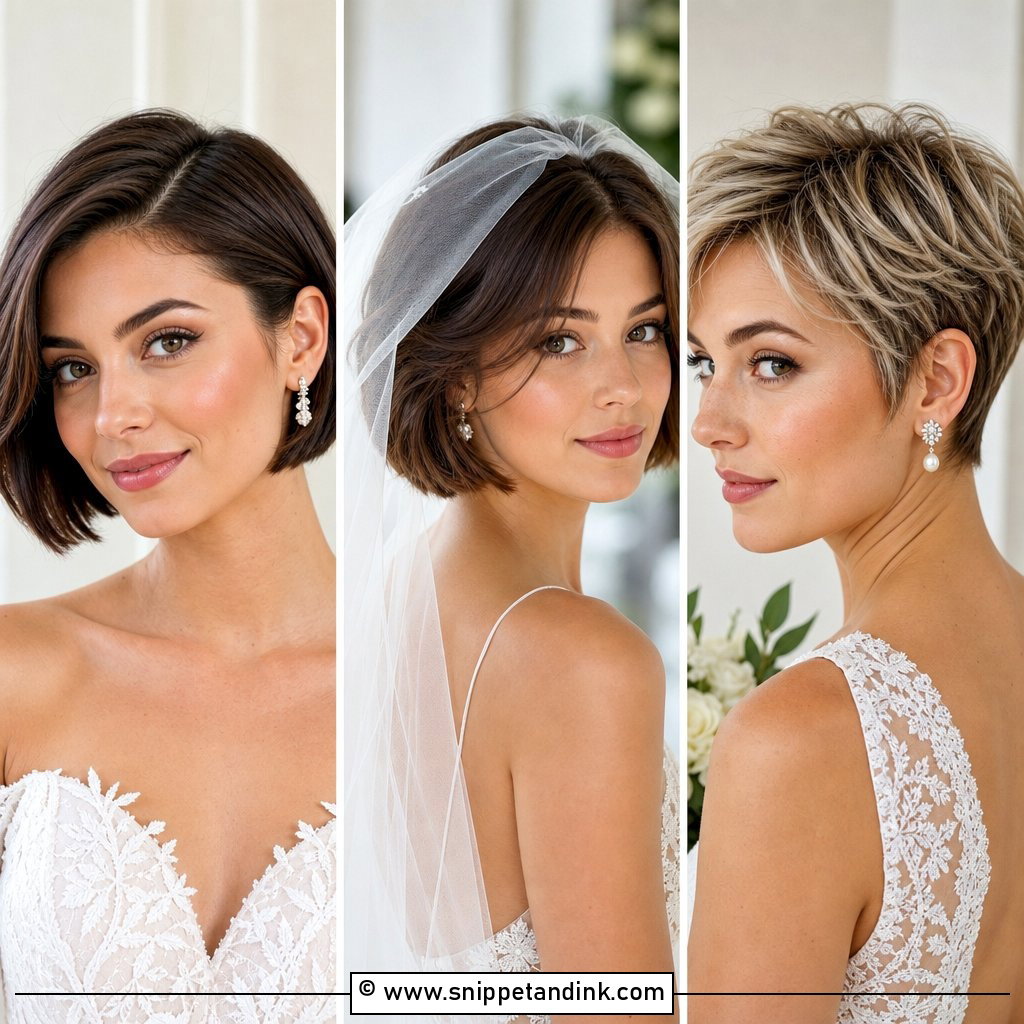
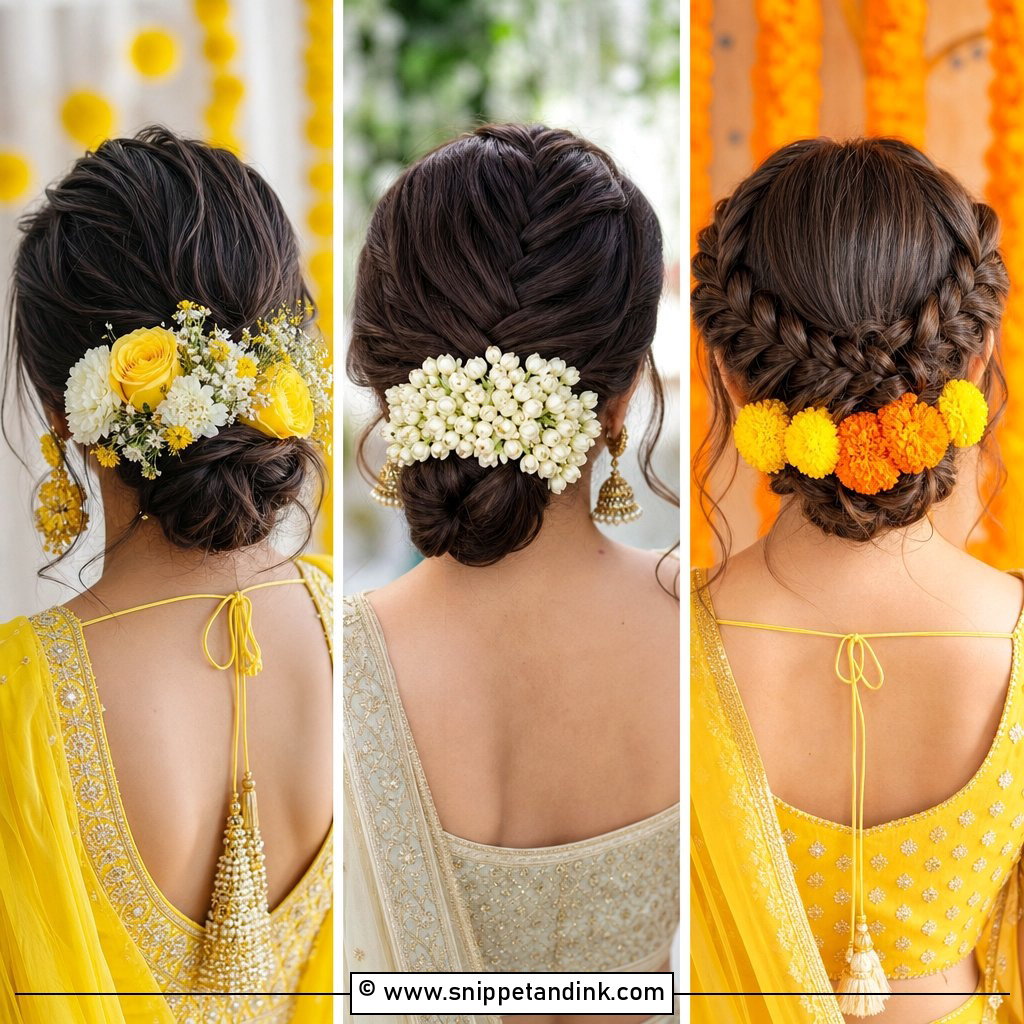
20. Soft Beach Waves for Wedding
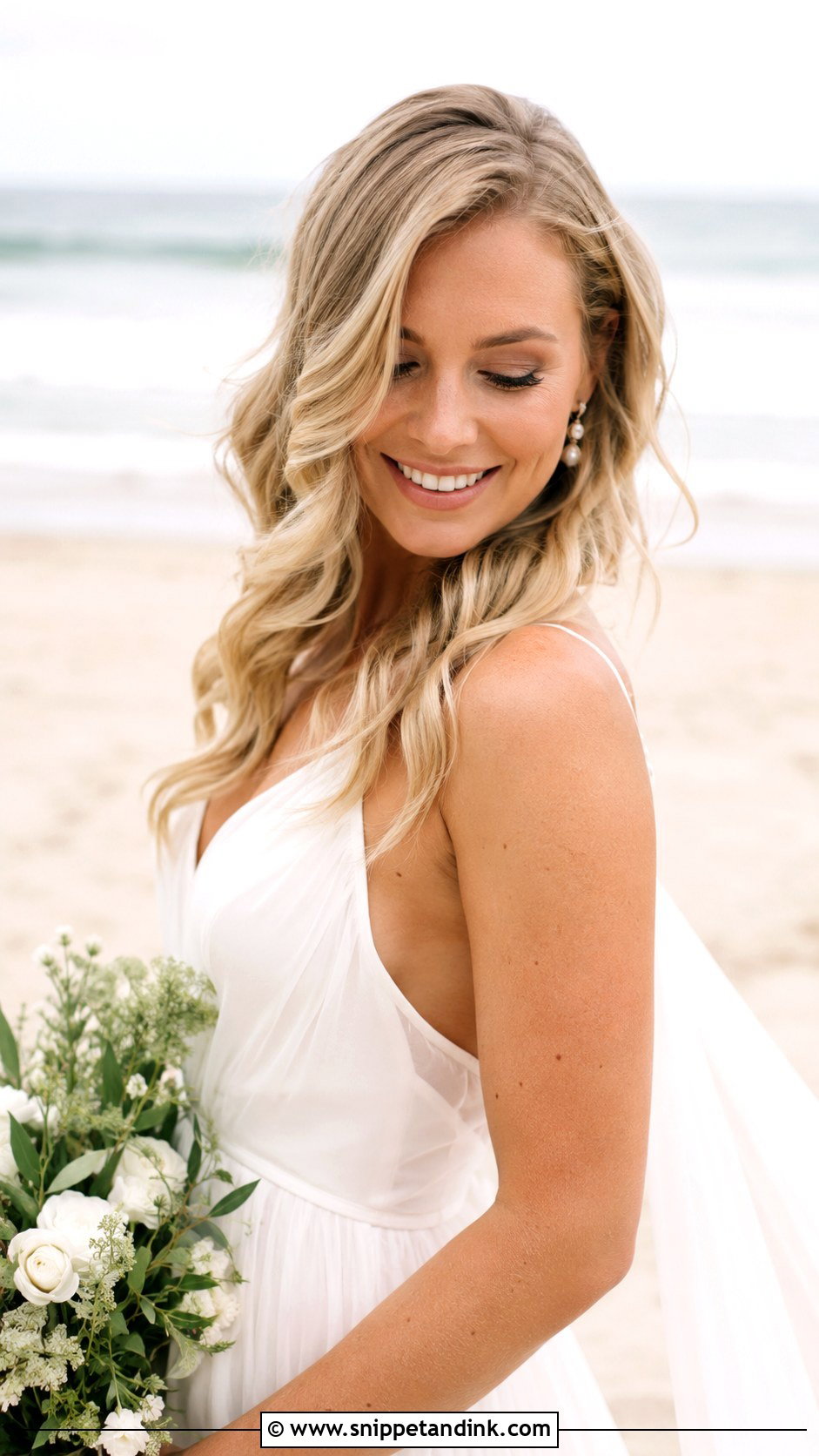
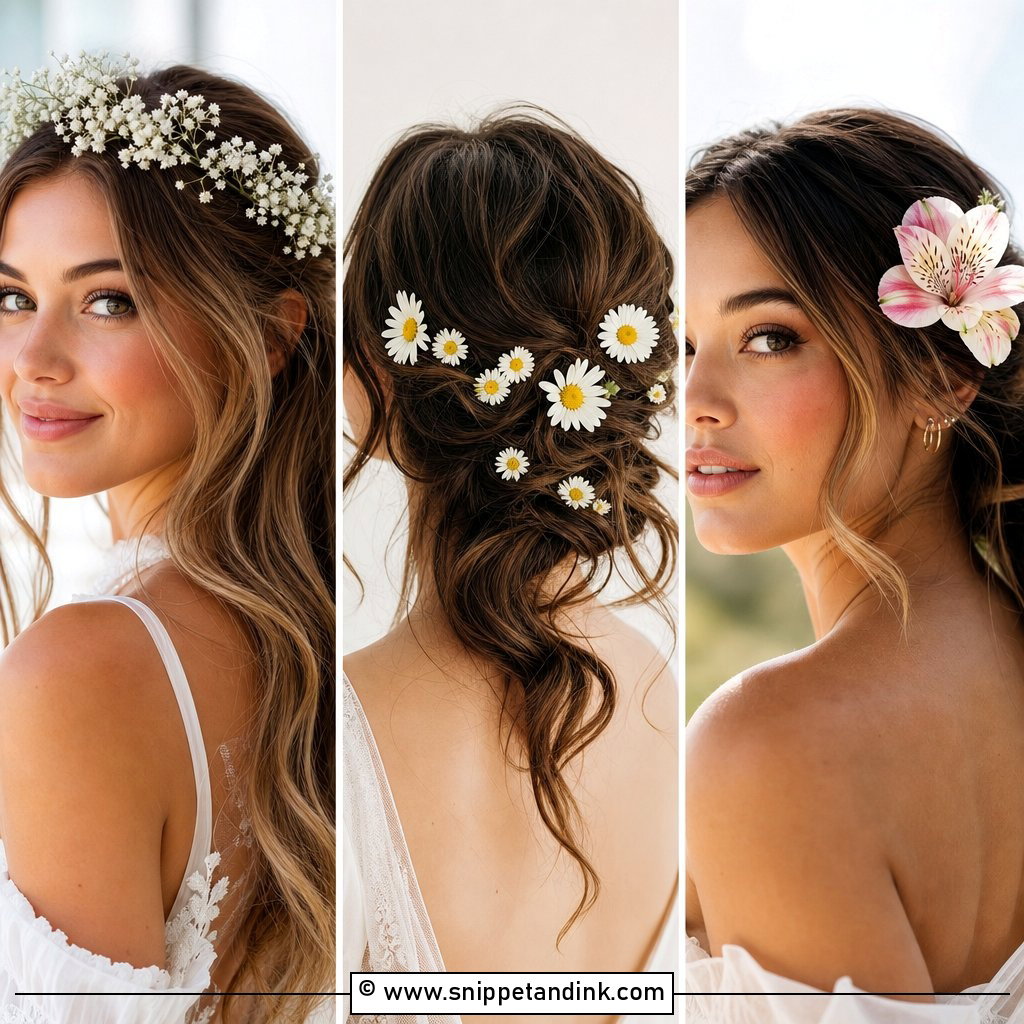
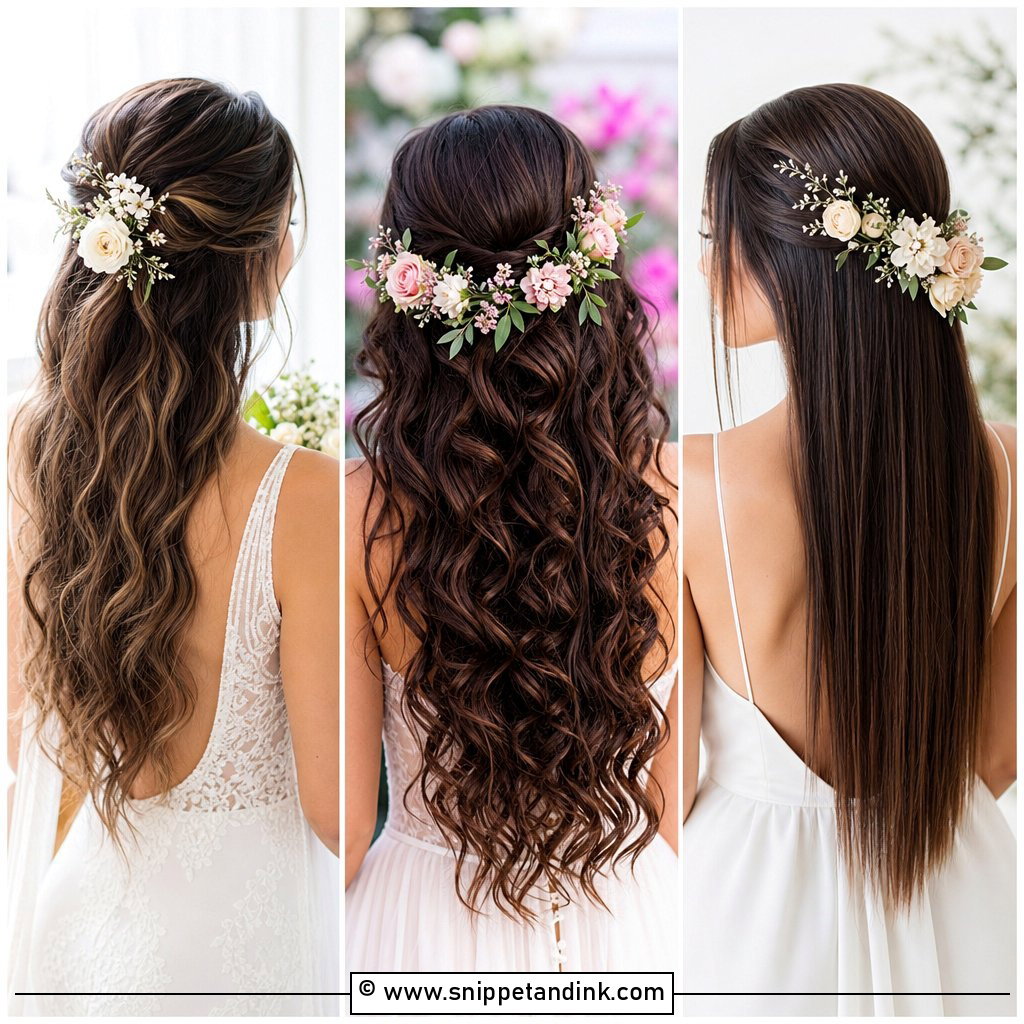
Soft beach waves are looser and more casual than Hollywood waves, with natural movement rather than a defined pattern. I make them with a flat iron or larger barrel and finish with texturizing spray rather than hairspray. A center or side part both work. They suit medium to long hair, coastal and summer weddings, and light flowing dresses. In sea air they’ll loosen within a couple of hours, so I set them a little tighter than the finished look.
A Hair Calendar for the Last Few Months
Timing is what I see go wrong most often. A fresh cut or color on the wrong week can make the whole look feel off. This is the order I suggest:
- Three to six months out: any big change of length, shape or color, so there’s time to adjust.
- Six to eight weeks out: the hair trial, ideally with your dress photo, veil and accessories.
- Four weeks out: curtain bangs or a new fringe if you’re adding one, so you can learn to style it.
- Two weeks out: color touch-up or gloss, so roots are covered but the tone has softened.
- One to two weeks out: the last trim. Pixies and bobs closer to one week, long hair closer to two.
On the wedding morning, I prefer hair washed the night before for most updos, because slightly lived-in hair holds pins better. For hair-down styles, a morning wash and blow-dry is usually fine. Avoid heavy oil or conditioner on the roots the day before.
Your Cut, Your Trial, Then the Morning
Start with what your hair already does well, then match it to your gown and venue, rather than forcing a cut toward one photo. Book your trial six to eight weeks before the wedding so there’s still time to adjust the cut, and bring two or three looks from this list plus a photo of your dress. I’d always rather hear your doubts at the trial than discover them on the morning.
You'll Like These Ideas:


Leave a Reply