
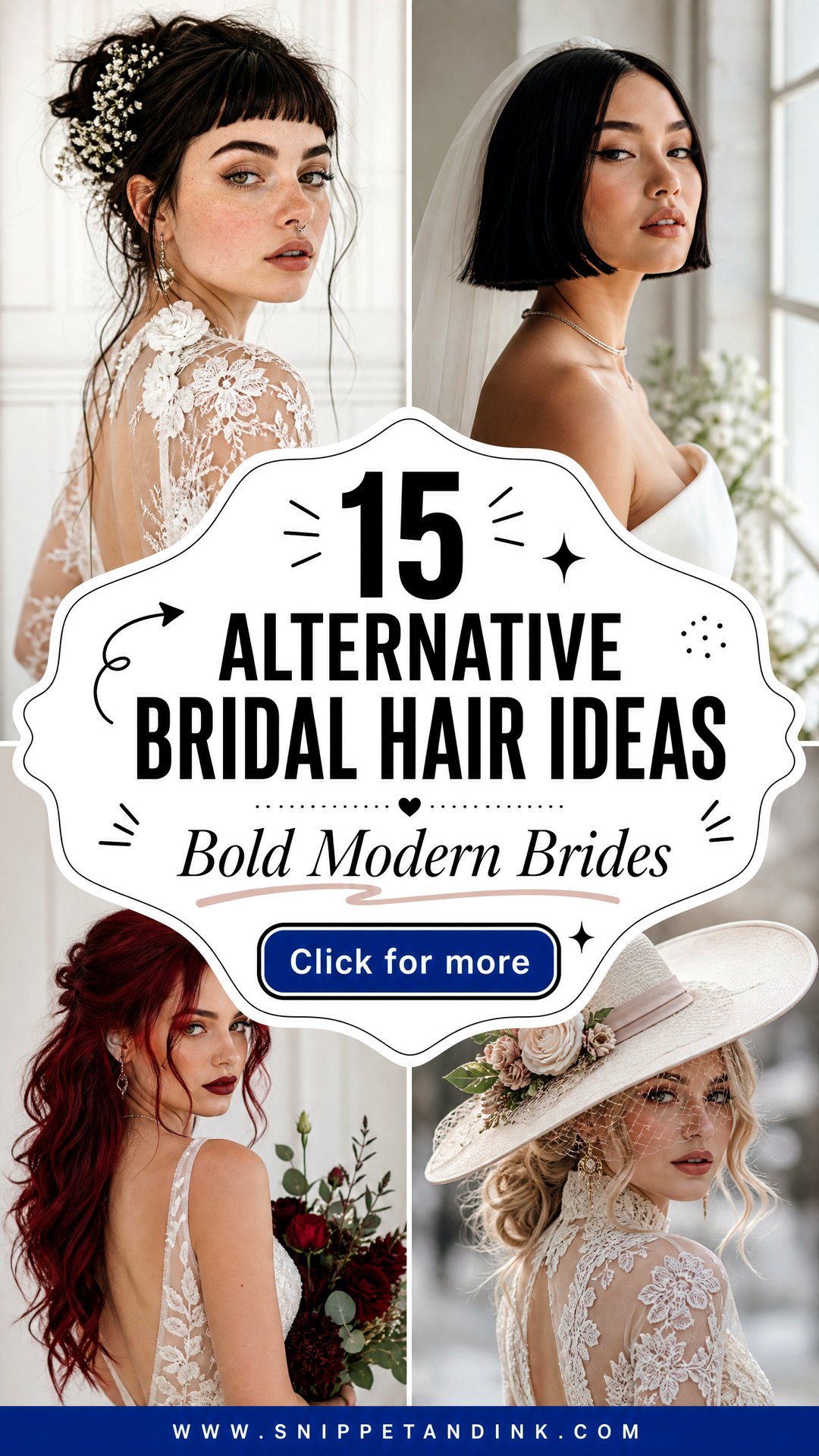
Some brides know within a minute of scrolling bridal hair boards that none of it is them. Too many identical curls, too much baby’s breath. If that’s you, there’s a whole side of wedding hair that leans toward softer grunge, gothic romance, modern vintage, sharp editorial shapes, natural texture, strong color and accessories nobody’s grandmother wore. None of it has to look messy or like a costume. When I set these styles, the work underneath is exactly as careful as a classic chignon: the same pinning, the same prep, just a different result in the mirror. Below are fifteen I’d happily do for a courthouse ceremony, a dark moody venue or a very plain gown.
Getting a Bridal Stylist to Stop Softening Your References
The most common way an alternative look goes wrong isn’t the style itself. It’s a stylist who mostly does classic bridal hair quietly nudging everything back toward safe: the wet waves get brushed out into soft curls, the blunt bob gets bevelled under, the black ribbon becomes ivory. I’ve caught myself doing it when a request is outside my habits, so I understand how it happens.
- Ask to see work that isn’t bridal at all. Editorial or photo shoot hair tells you far more about whether someone can do sculpted finger waves or a glassy center part.
- Bring two or three references that show the exact finish, plus one photo of what you do not want. The second photo saves a lot of polite back and forth.
- Point at the shine level in the picture instead of describing it. Wet look and slicked mean different things to different people.
- Bring the real accessory to the trial. A velvet ribbon, a hat or a heavy comb changes where pins need to go, and you only find that out with it on.
- If your color is unusual, mention it before the trial. Some products and hot tools can pull warmth out of red or push silver toward yellow.
If, after the trial, you catch yourself trying to love it rather than actually loving it, say so in the chair. I would much rather redo a section there than hear about it three days before the wedding.
1. Alternative Bridal Hair With Wet Look Waves
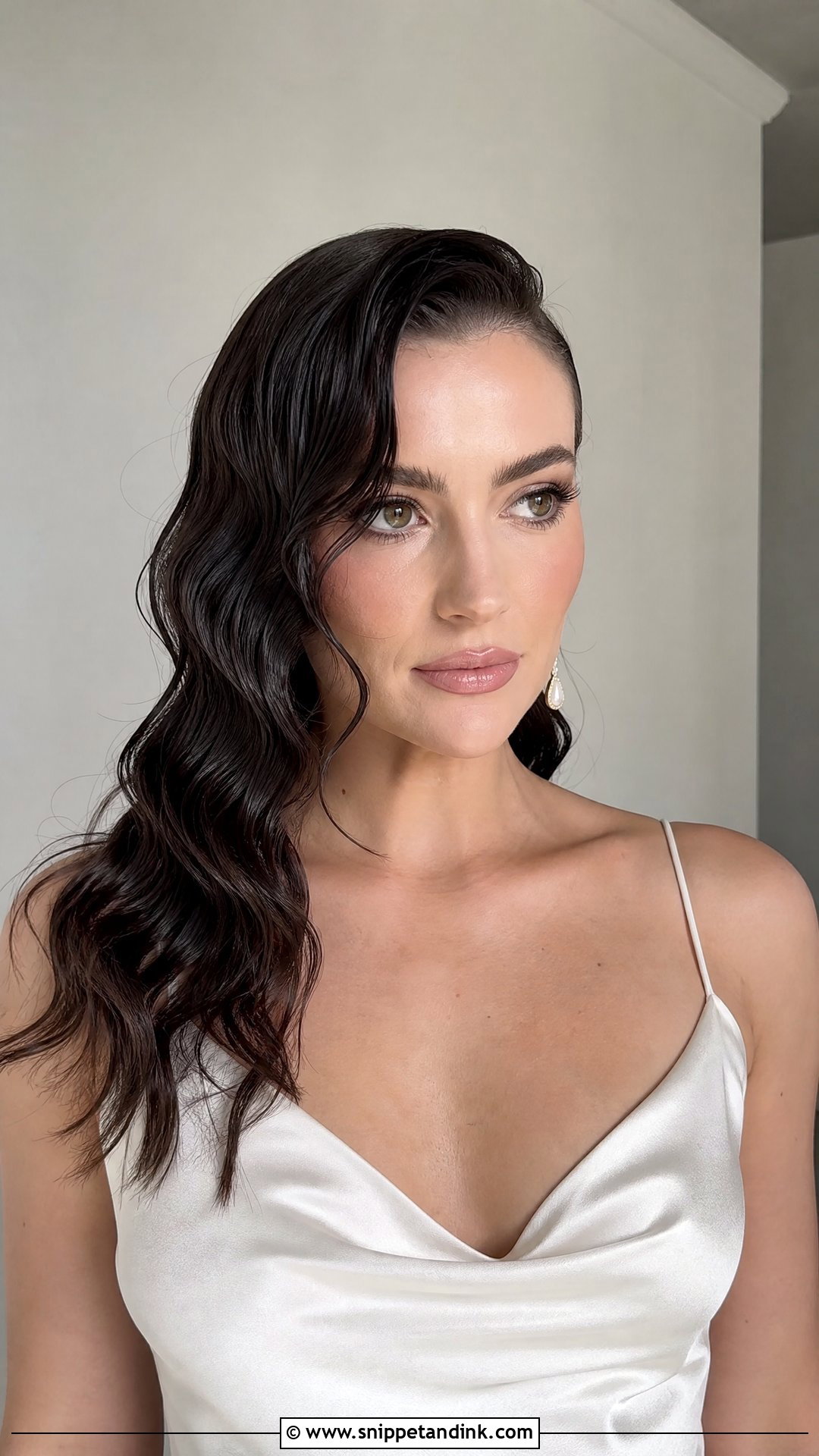
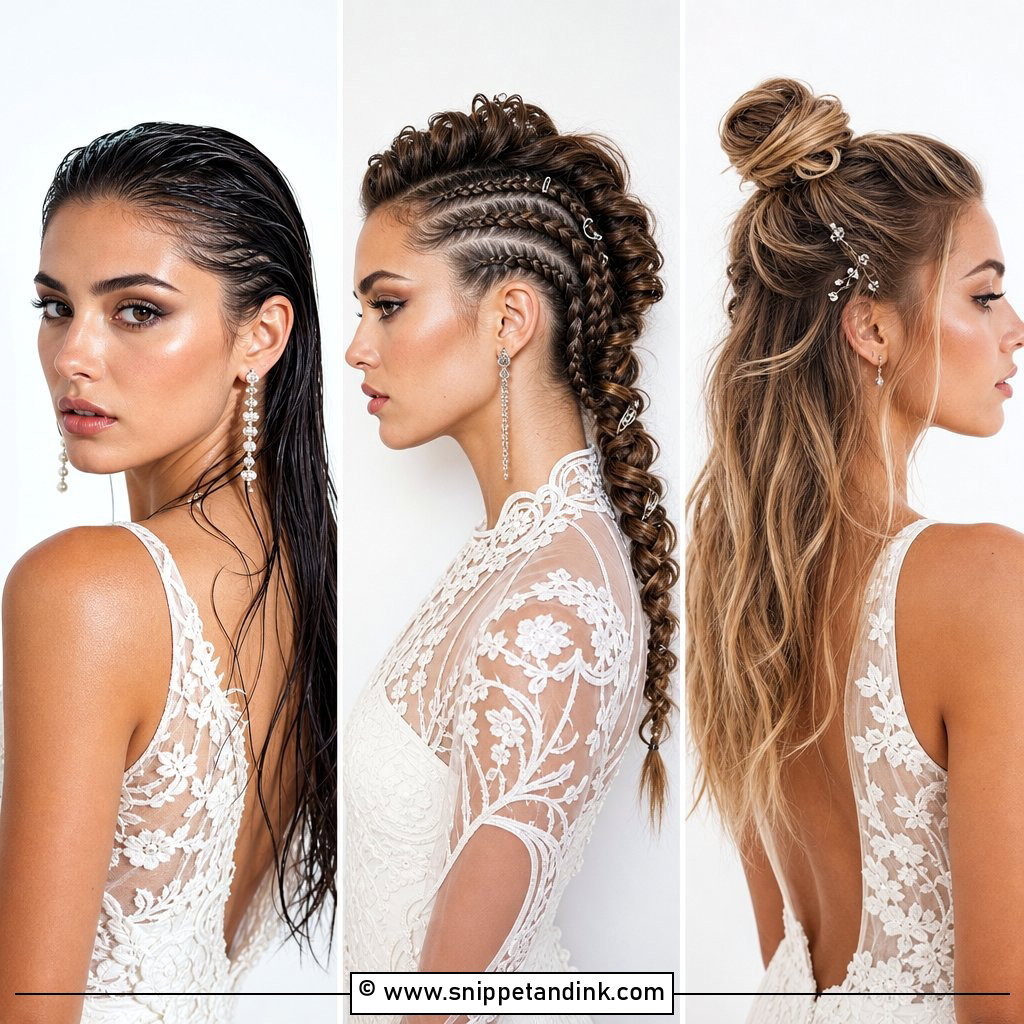
Wet look waves are mostly about product order. I work a gel or a strong-hold cream through damp hair first, set the bends with clips while it’s still wet, and only add shine spray once everything is dry, because spraying gloss onto wet gel turns the surface cloudy. A deep side part and hair worn down give the waves room to show. The finish should look sculpted, not like you just stepped out of the shower, and that line is thinner than people expect. It sits well against a slip dress or a square neckline, and it works on short, medium and long lengths as long as the ends aren’t badly split.
2. Alternative Bridal Hair With Micro Bangs
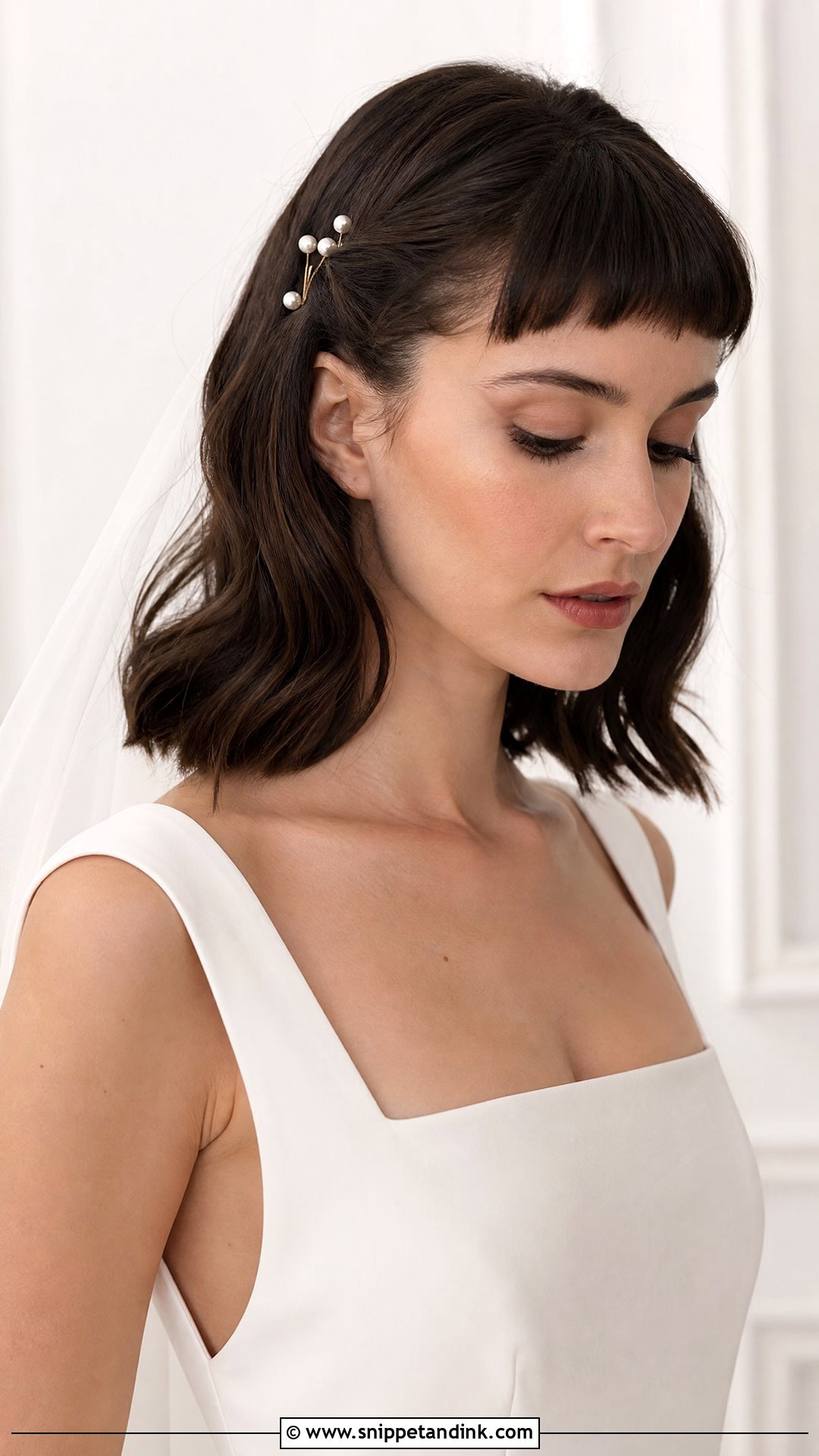
Micro bangs give bridal hair a cool edge while still feeling soft enough for a wedding. They sit nicely with a sleek bob, loose waves, a low bun or a textured updo. I really only recommend them to brides who already wear a short fringe, because the wedding version is just your everyday cut done with more care, and growing out a micro bang you regret takes months. Keep the rest of the hair quiet so the fringe carries the look. A satin ribbon, a few pearl pins or a plain veil makes it read as bridal without hiding the cut. Get it trimmed about a week before, not the day before, so it has time to settle.
3. Alternative Bridal Hair With A Textured Low Bun
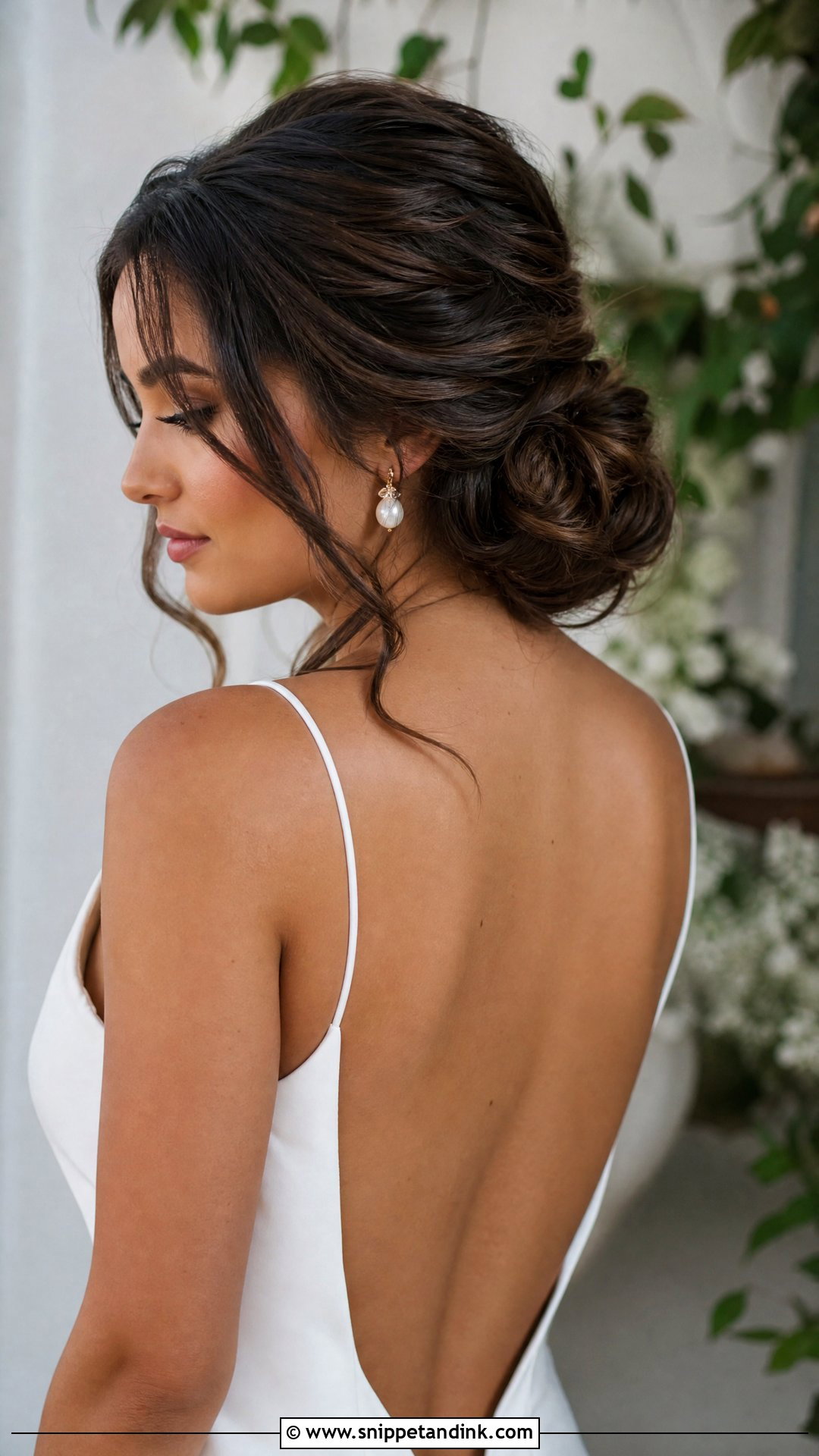
This bun only looks loose. Underneath, I build it on a small elastic base and cross-pin each section so the soft, pulled-apart outer layer is decoration rather than structure. That matters, because a bun that is genuinely loose will drop by the first dance. Layered and naturally wavy hair gives the best texture here; very fine, straight hair needs a dry texture spray and sometimes a padding piece to get the same shape. It can sit at the nape or slightly off-center. I leave a couple of face-framing pieces out, but I choose them before I start sectioning, because random strands pulled out at the end rarely look right in photos.
4. Alternative Bridal Hair With Black Ribbon
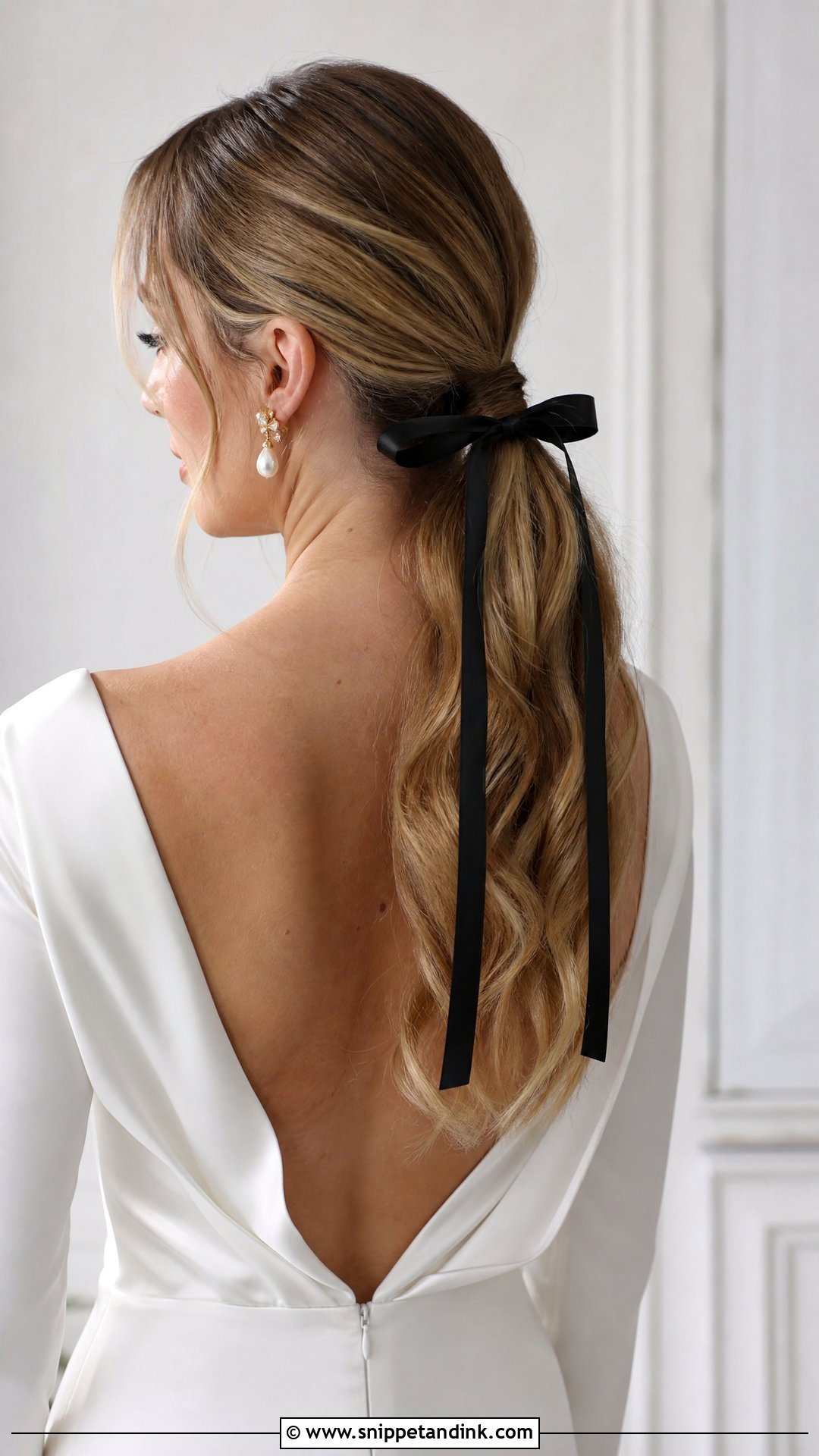
A black ribbon changes the mood of bridal hair more than almost any other single accessory. It adds contrast and a vintage note without any cut or color change, and it suits a low ponytail, half-up hair, a loose braid or a soft bun. Fabric choice matters more than people think. Velvet grips the hair and stays put; satin slides, so I anchor it underneath with two crossed bobby pins before tying anything. Cut the tails on a diagonal so they don’t fray during the day. Against ivory or champagne, black reads as deliberate, but beside a bright white gown it can look stark, so hold the ribbon against the actual dress first.
5. Alternative Bridal Hair With A Sleek Center Part
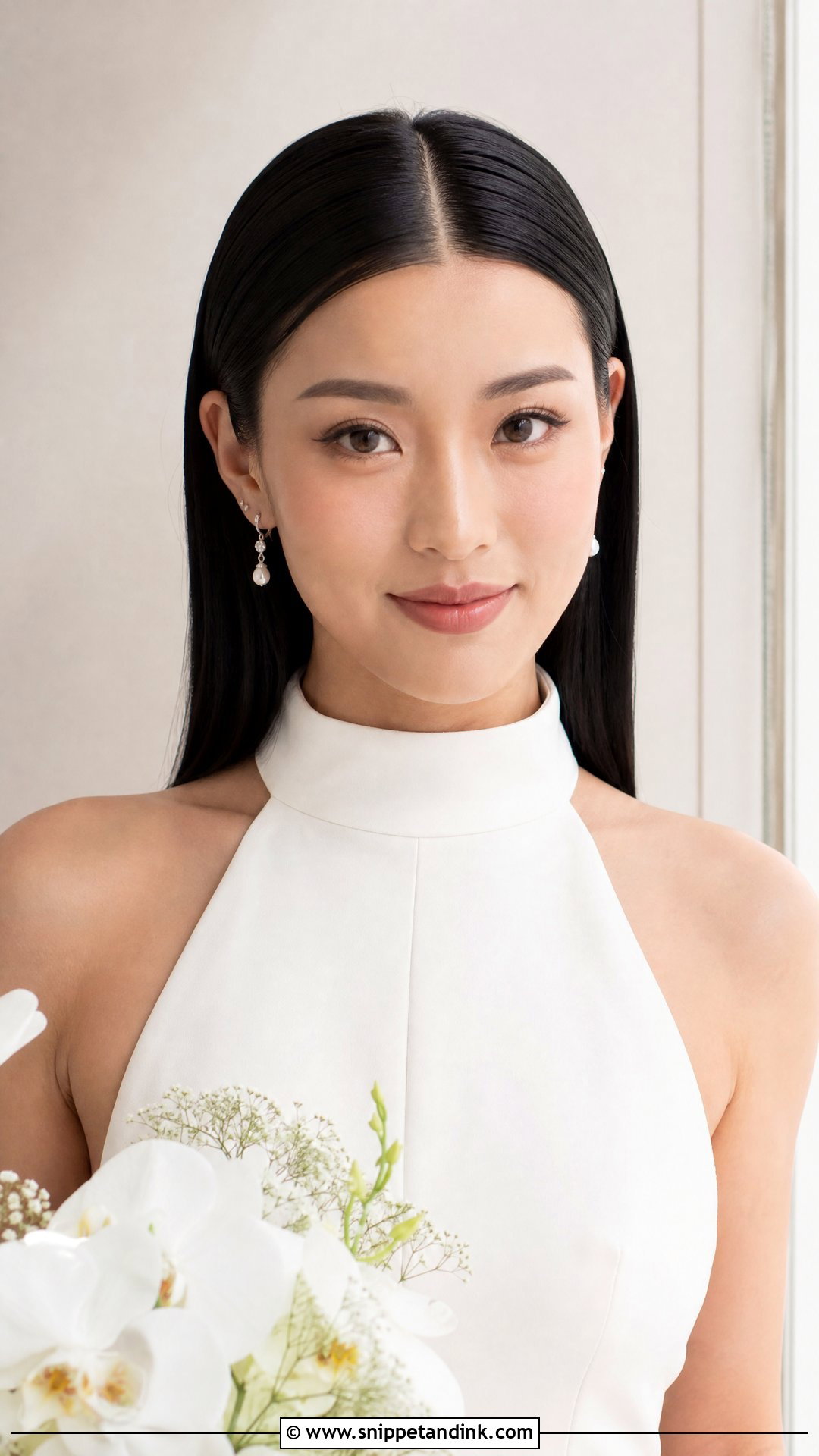
A sleek center part is unforgiving, and that is its charm. Every section has to be smoothed with a fine-tooth comb and a light pomade, and I check the part from above with a hand mirror, because a slightly crooked line that you’d never notice day to day shows up clearly in overhead shots. It frames the face plainly and lets makeup and earrings take over. Smooth lengths or a low tucked bun both suit it. It isn’t kind to a grown-out fringe, a cowlick at the front hairline or color that’s overdue a refresh, so get your cut and gloss done two or three weeks ahead. Silver pins or a sculptural comb are optional; often nothing at all is the stronger choice.
6. Alternative Bridal Hair With Finger Waves
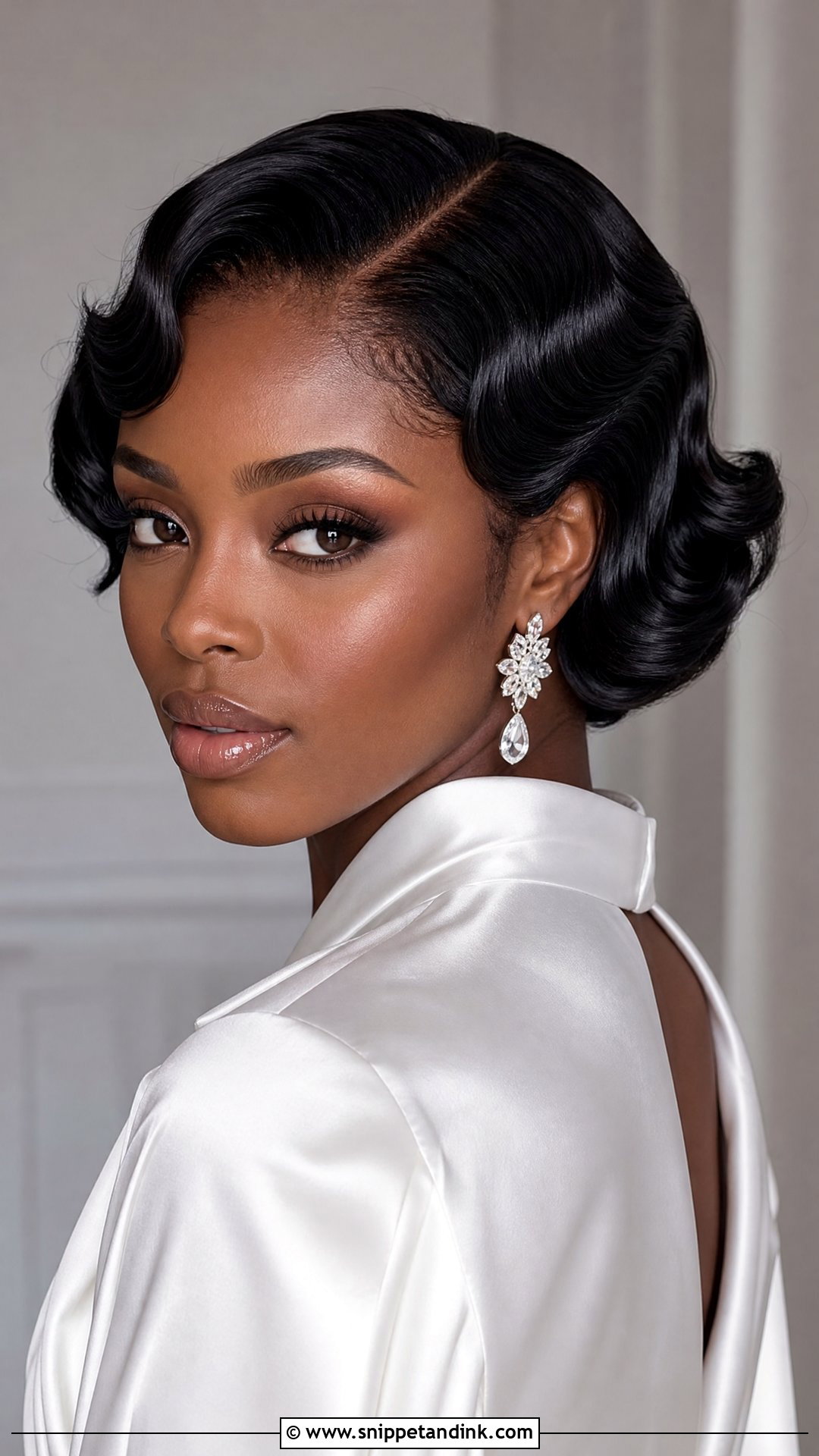
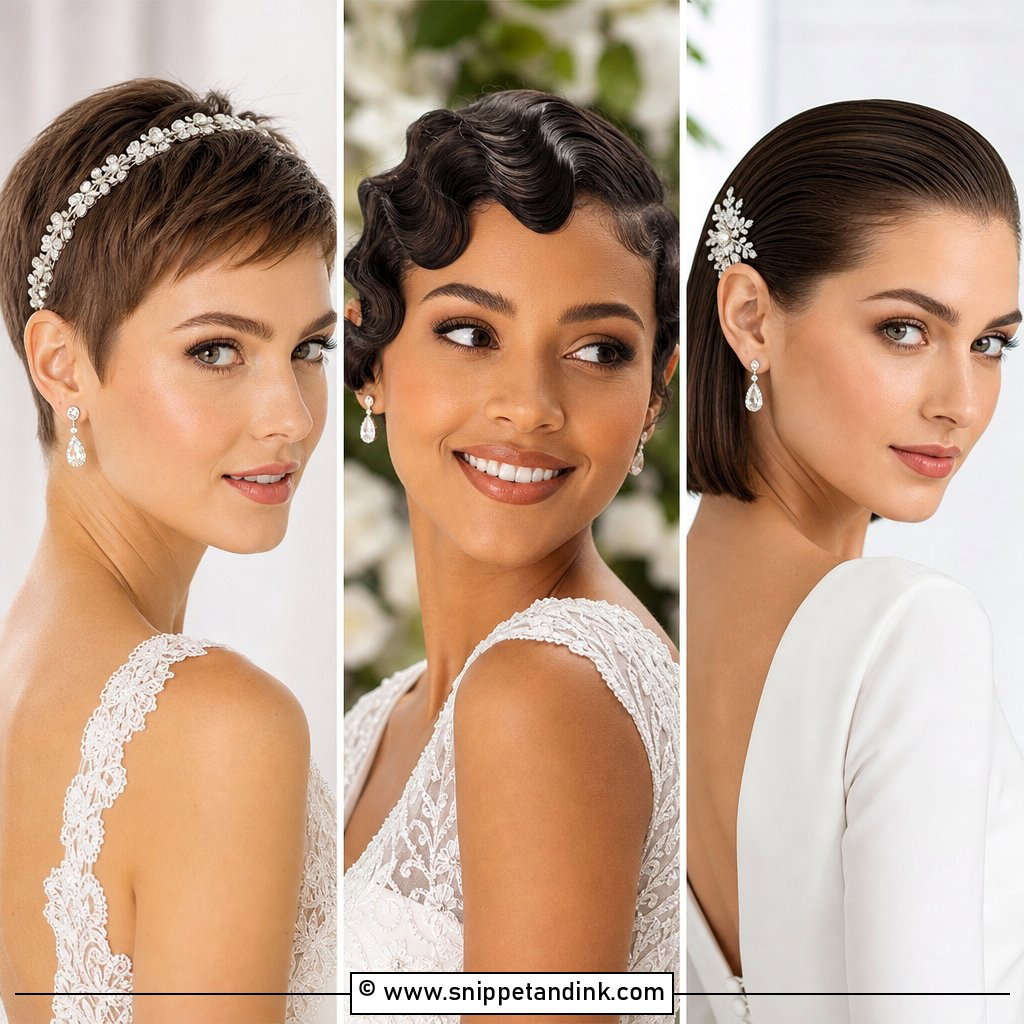
Finger waves are a technique as much as a style, and very few bridal stylists practice them regularly, so ask to see real examples before you book. The traditional method sets the ridges in wet hair with gel and clips and lets them dry fully; a faster version uses a flat iron, but it holds less well in humidity. Short hair, bobs, pixies and shoulder-length cuts take the shape best. Long hair can fake the look at the front with the length pinned into a low roll. A trial isn’t optional here. I want to see how your hair holds a ridge before the morning itself, and a birdcage veil or bold earrings finish it better than anything sitting on top.
7. Alternative Bridal Hair With A Messy French Twist
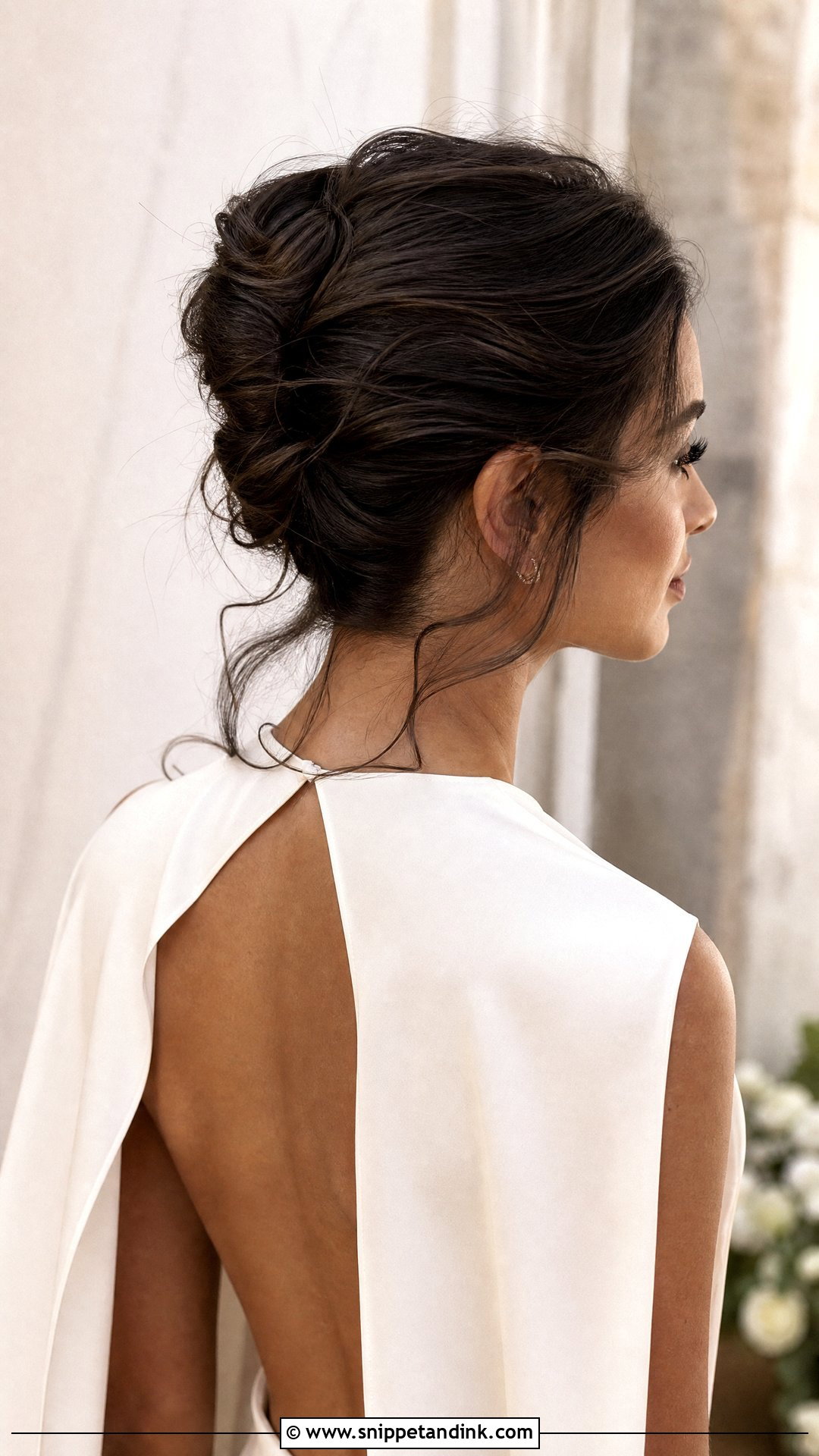
A messy French twist keeps the shape of a classic updo but trades the polish for texture. The trick is a firm core: I make a neat twist first, pin it securely along the seam, and only then loosen the outer surface with my fingers. Done the other way round, it falls. Soft volume at the crown and a few imperfect tucks give it personality. It suits brides who want the neck clear for a high neckline or an open back but don’t want to look lacquered. Pearl pins or metal clips can sit along the seam, and a veil comb slides in neatly just above it.
8. Alternative Bridal Hair With A Braided Crown
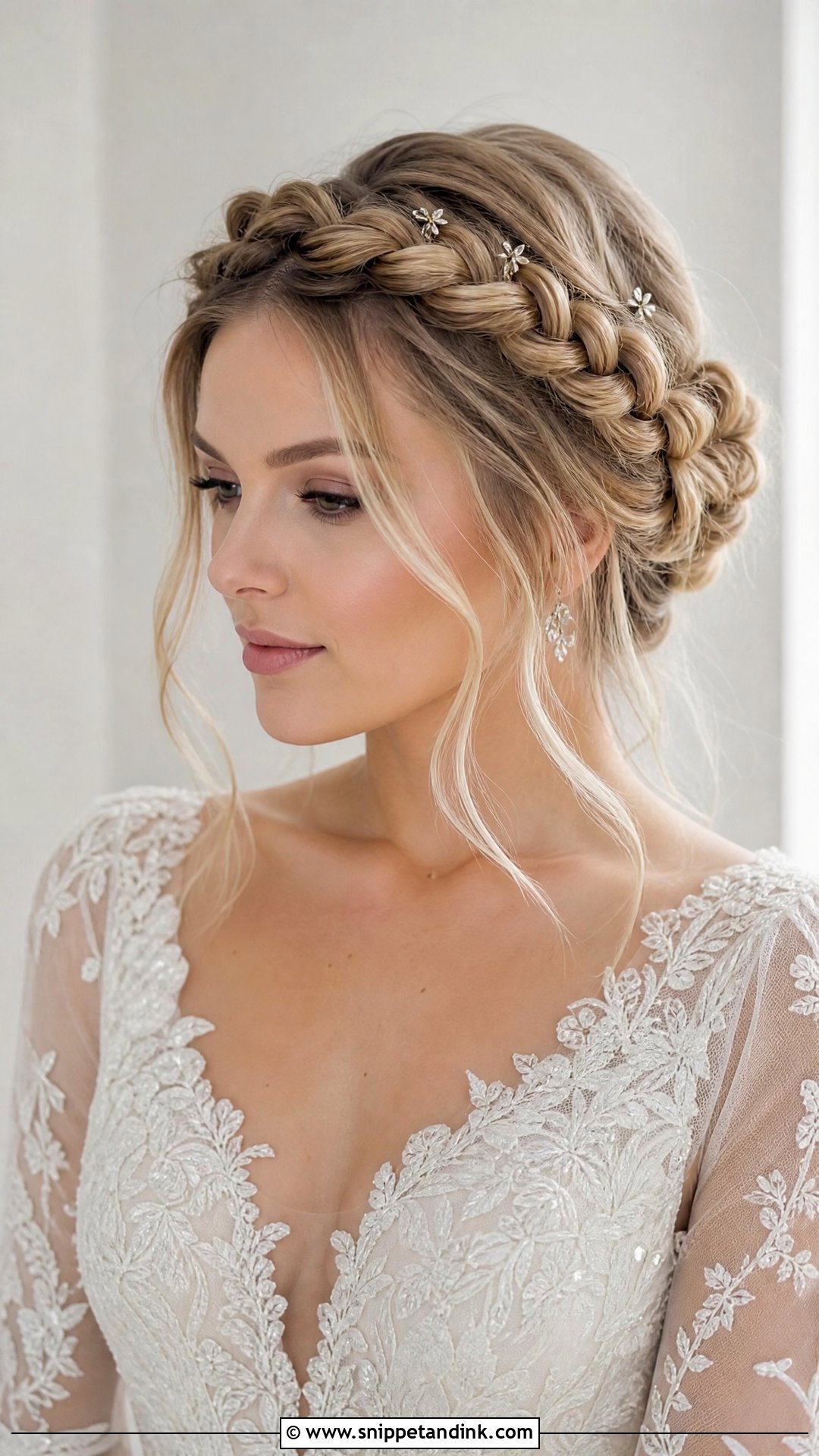
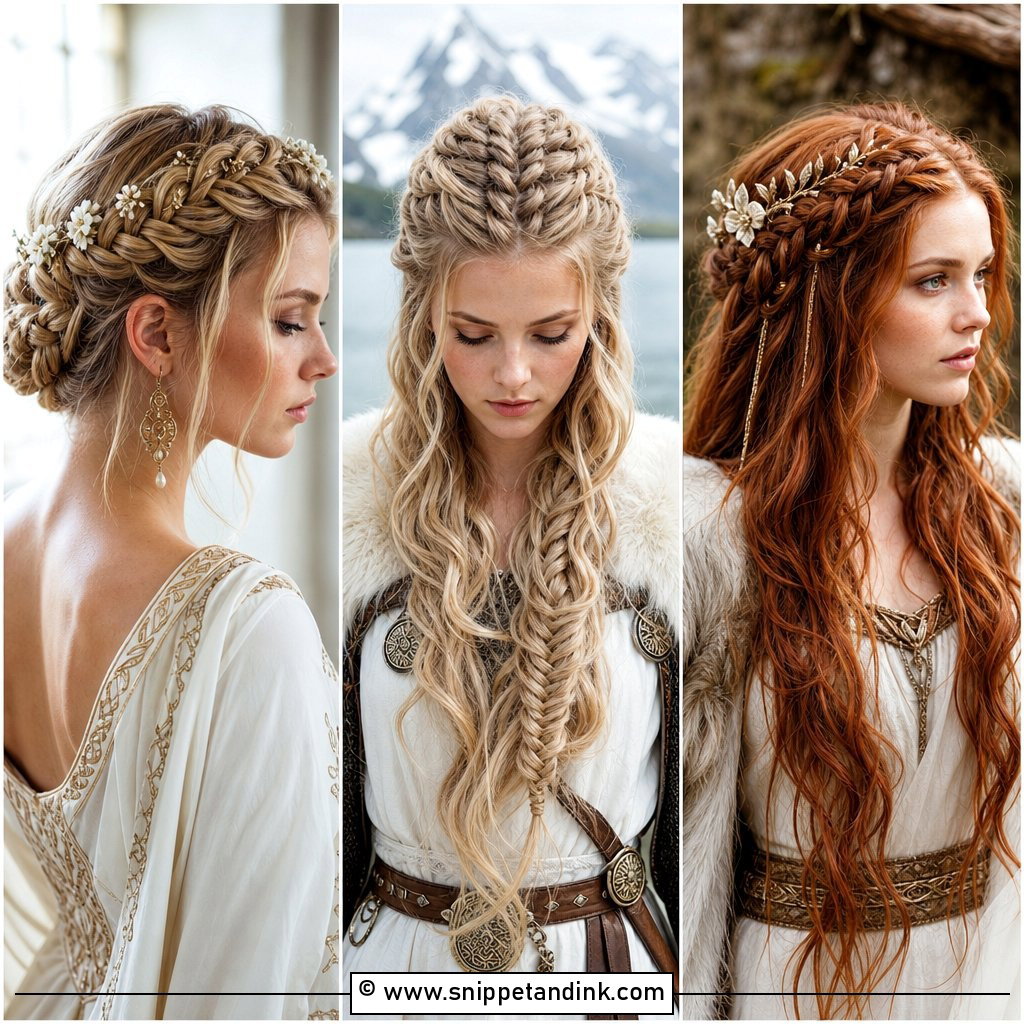
A braided crown can read alternative instead of folksy if the braid is pulled out for texture and left a little uneven. I usually start with two Dutch braids behind the ears and cross them over the top, pinning where they meet, because one braid all the way round is hard to keep even on thinner hair. Thick or coarse hair gives a fuller, more relaxed halo; fine hair may need a hidden clip-in to look substantial. It leaves the face and neckline open, and it’s one of the most dependable styles for outdoor and woodland weddings since it barely moves in wind. Tiny metal pins or a few dried stems work if you want detail.
9. Alternative Bridal Hair With A High Ponytail
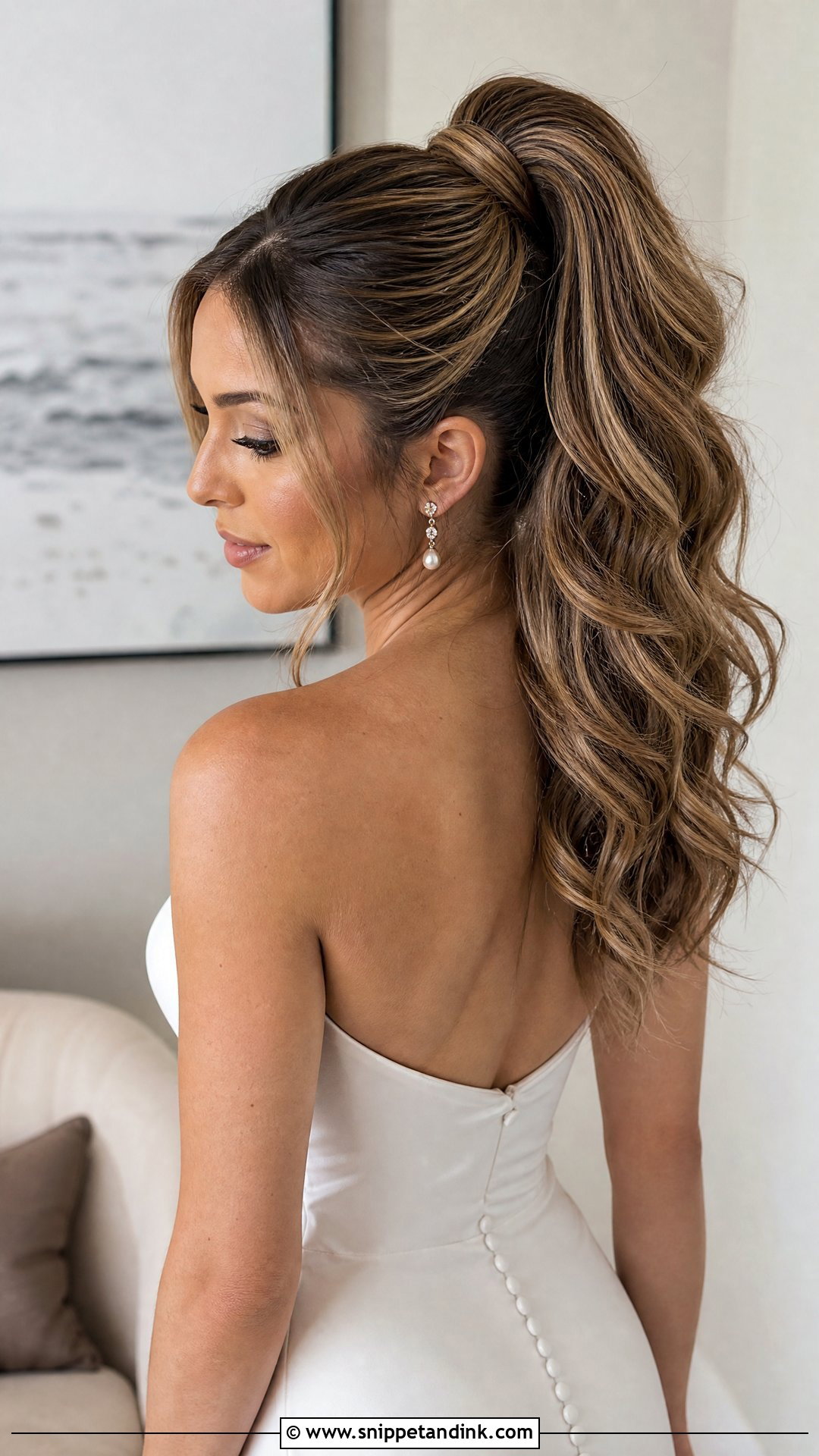
A high ponytail looks bridal when the base is smooth and the length is full, and it gives height and movement without a classic updo. I secure it with two elastics, one on top of the other, and wrap a strand of hair over them to hide both. Long hair, layered cuts and extensions all suit it. The thing I’d test is comfort. A tight, heavy pony pulls on the scalp for hours, and some people get a headache from it by mid-afternoon, so wear your trial version for a few hours before you commit. A black bow, a chrome cuff or a veil set just under the base gives it the alternative edge.
10. Alternative Bridal Hair With A Short Pixie
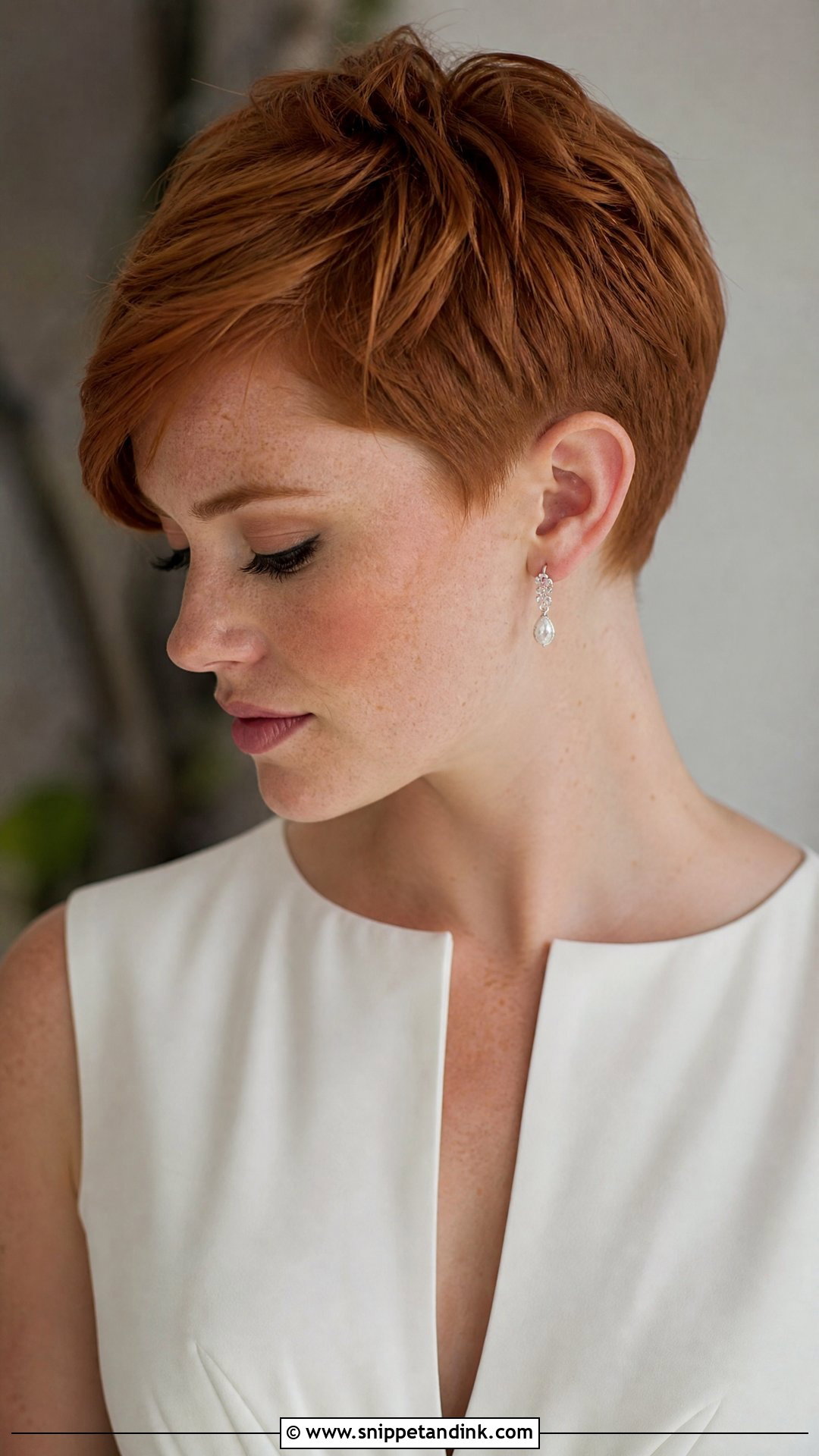
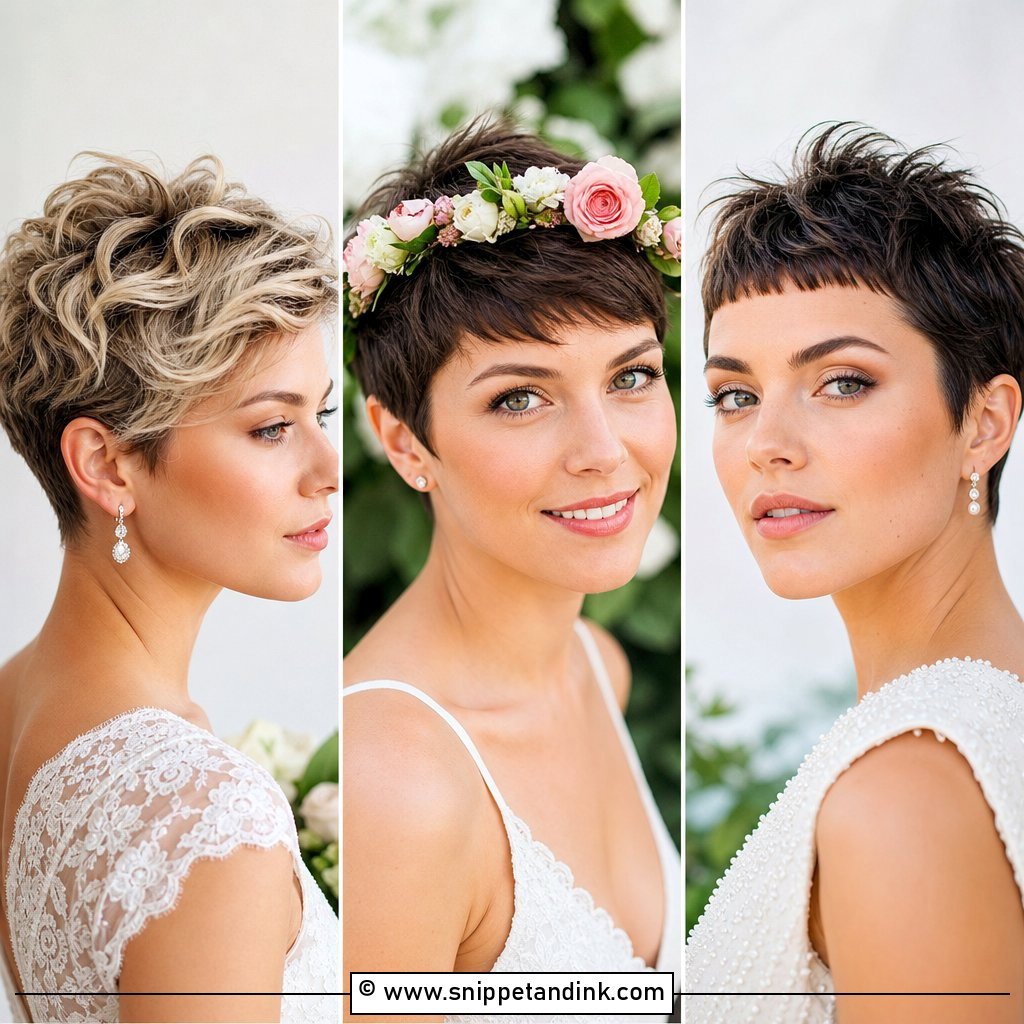
A short pixie shows the face, the neckline and your personal style in one go, so I don’t try to soften it into something it isn’t. The goal is shape and controlled texture. A smooth pixie feels chic and editorial, while a tousled one is softer. I’d book the cut about ten days before the wedding, which is long enough for it to lose that freshly cut edge at the nape. On the day it’s mostly about a light paste or wax for definition and a little spray on flyaways, nothing crunchy. A small comb or a veil set at the back crown is enough bridal detail, and statement earrings carry the rest.
11. Alternative Bridal Hair With A Blunt Bob
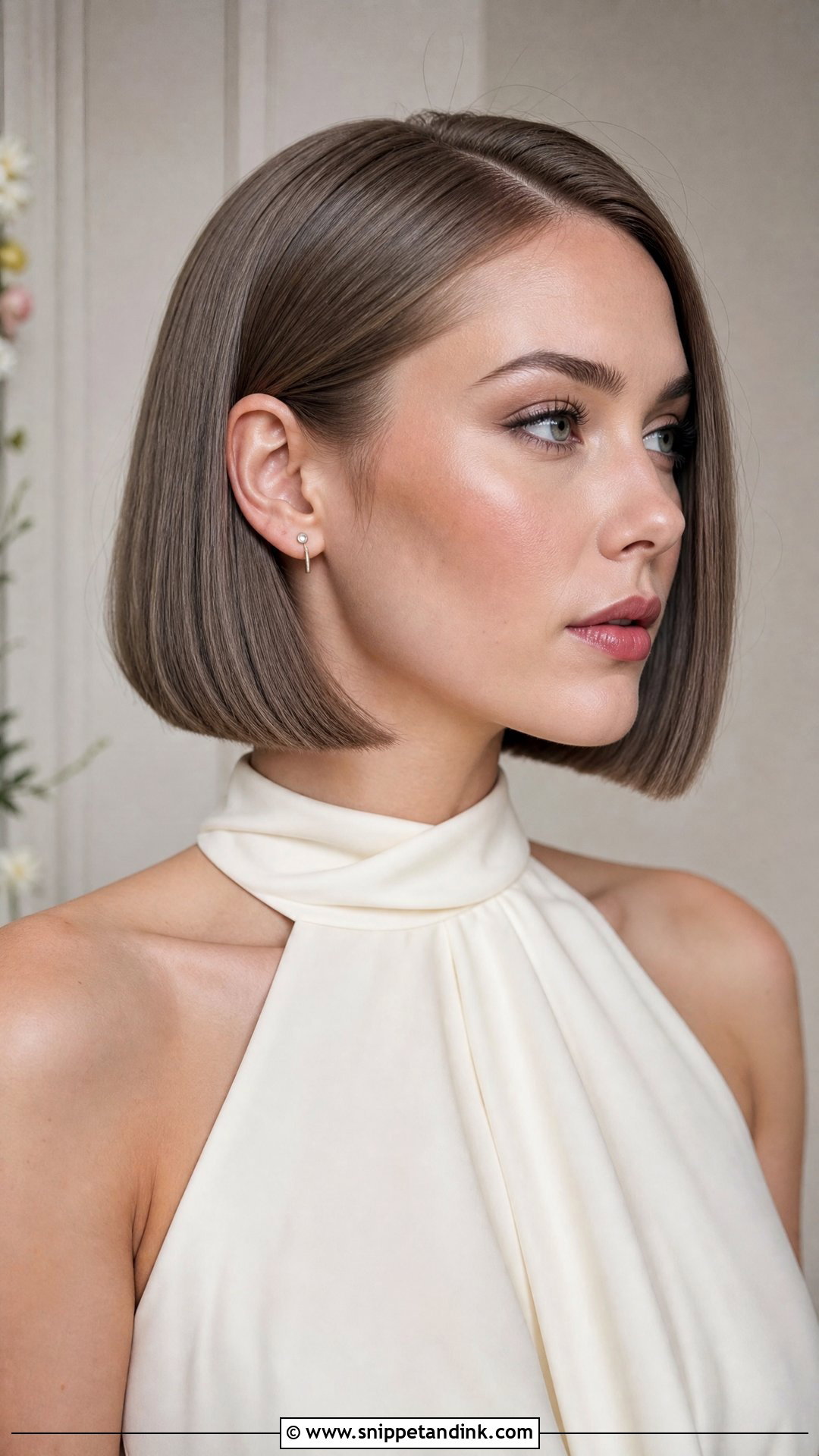
A blunt bob is all structure, and the cut does the talking. It only works if the ends are healthy, because a blunt line exaggerates any split or uneven section. Book the trim within two weeks of the wedding. I usually wear it glass-straight with a flat iron and a drop of serum, or with a very slight bend through the middle if your face suits a little movement. A veil pinned low at the back or a single barrette near the part is plenty. Keep the part crisp. Bobs on very thick hair can puff at the sides by evening, so a small travel flat iron in the bridal bag isn’t overkill.
12. Alternative Bridal Hair With Silver Hair Color
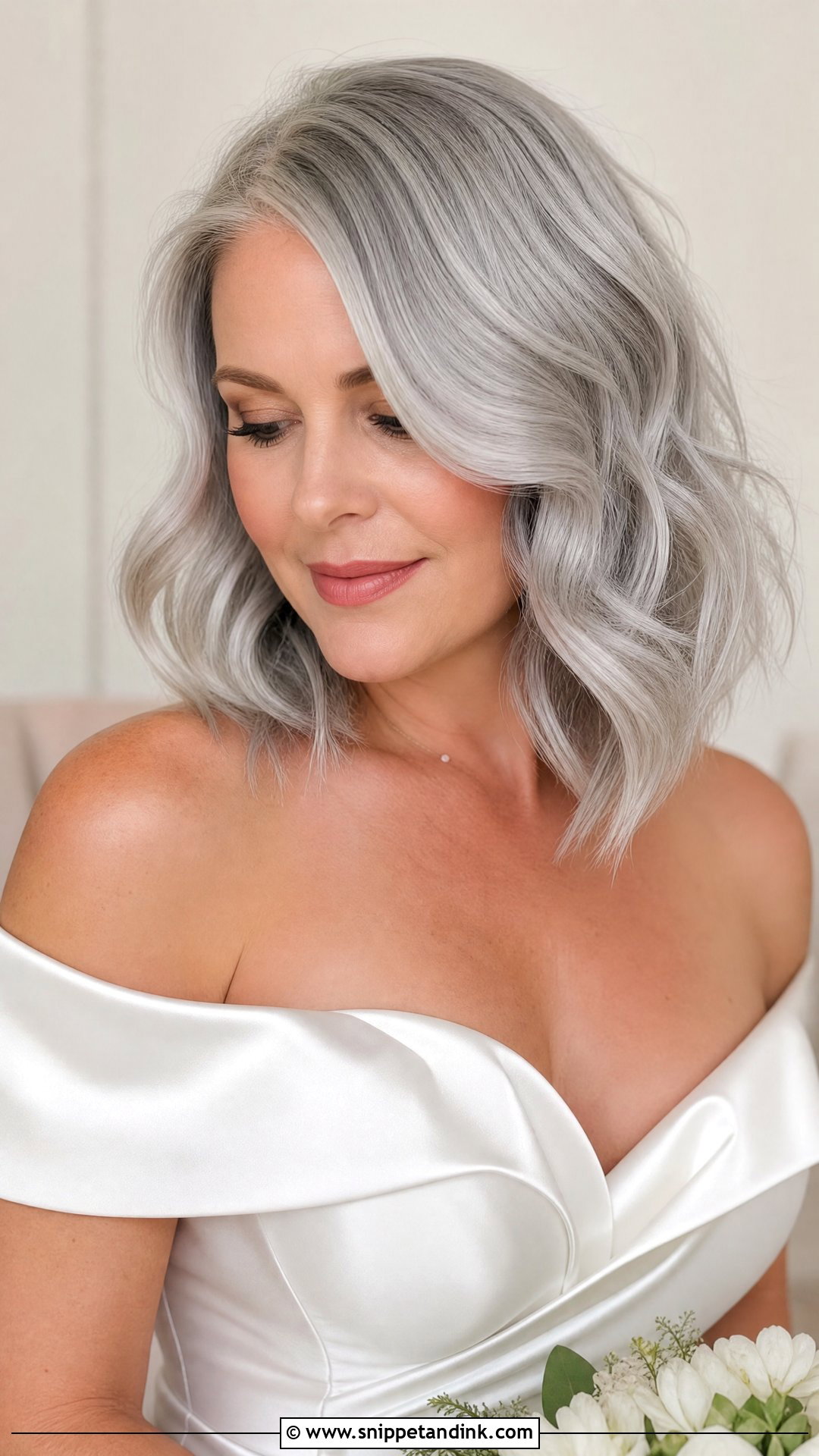
Silver is the most demanding color on this list. To get there the hair has to be lifted to a very pale yellow before it’s toned, so on anything darker than light brown that means several lightening sessions and a real risk of breakage if they’re rushed. Once you’re there, silver toner fades within a few washes. If your hair is already light, a colorist can usually get a glossy silver fairly safely. If it’s dark, I’d talk you toward silver panels, peekaboo sections or clip-in pieces rather than a full transformation near the wedding. Keep the style itself simple: soft waves, a low bun or a blunt cut lets the color show.
13. Alternative Bridal Hair With Dark Red Hair
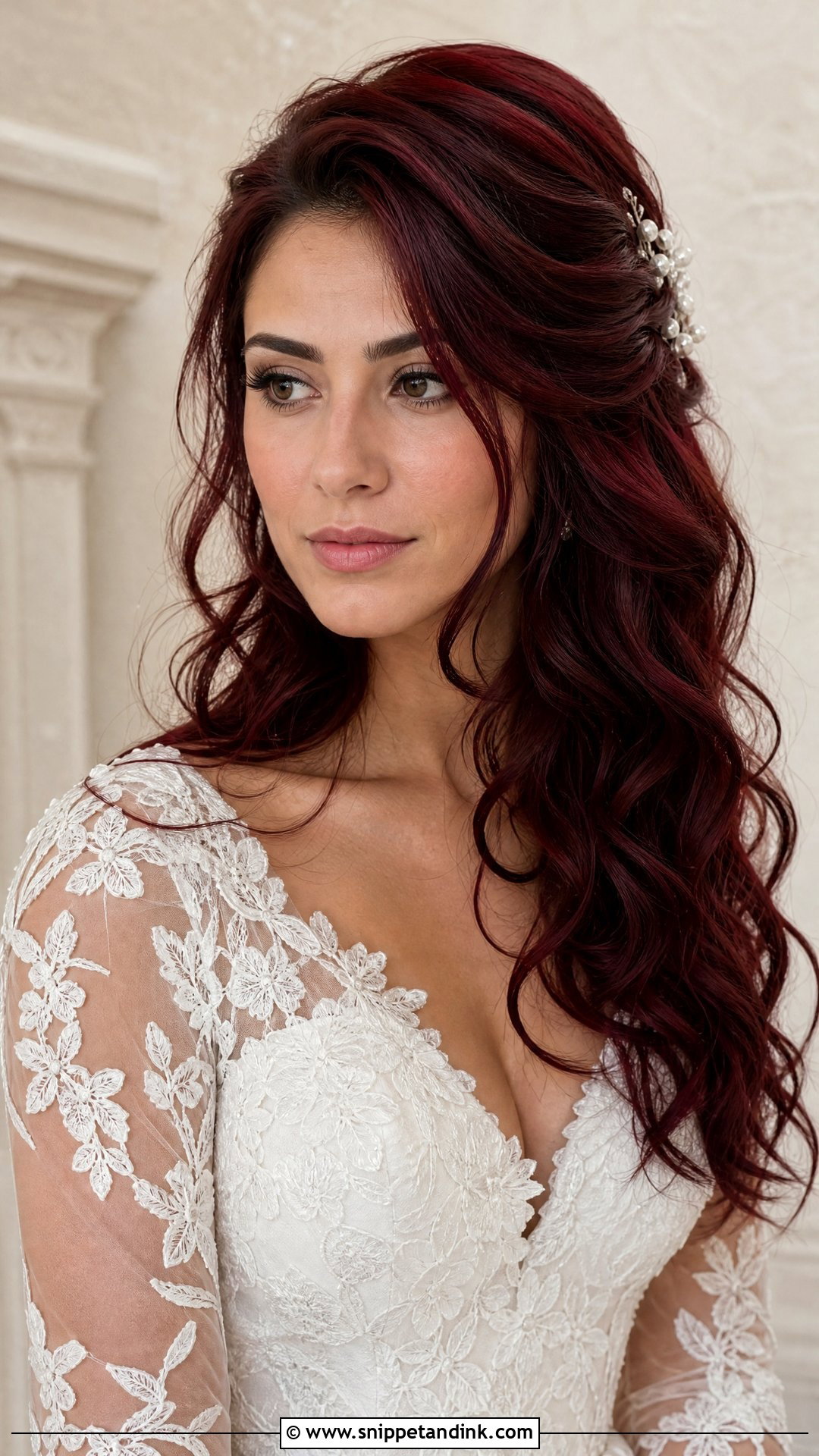
Dark red hair gives a rich, moody look, and shades like cherry brown, deep copper, burgundy and auburn look especially good with lace, satin and warm metallic accessories. Red is the fastest color to fade, so time the last gloss about a week before the wedding: fresh enough to glow, settled enough not to bleed onto a white collar. I keep styling products light on red hair. Heavy sprays and silicone-heavy serums flatten the depth, and dry shampoo can leave a grey cast that shows on camera. Soft waves, a textured bun or a long braid let the light pick up the different tones.
14. Alternative Bridal Hair With Pearl Hair Pins
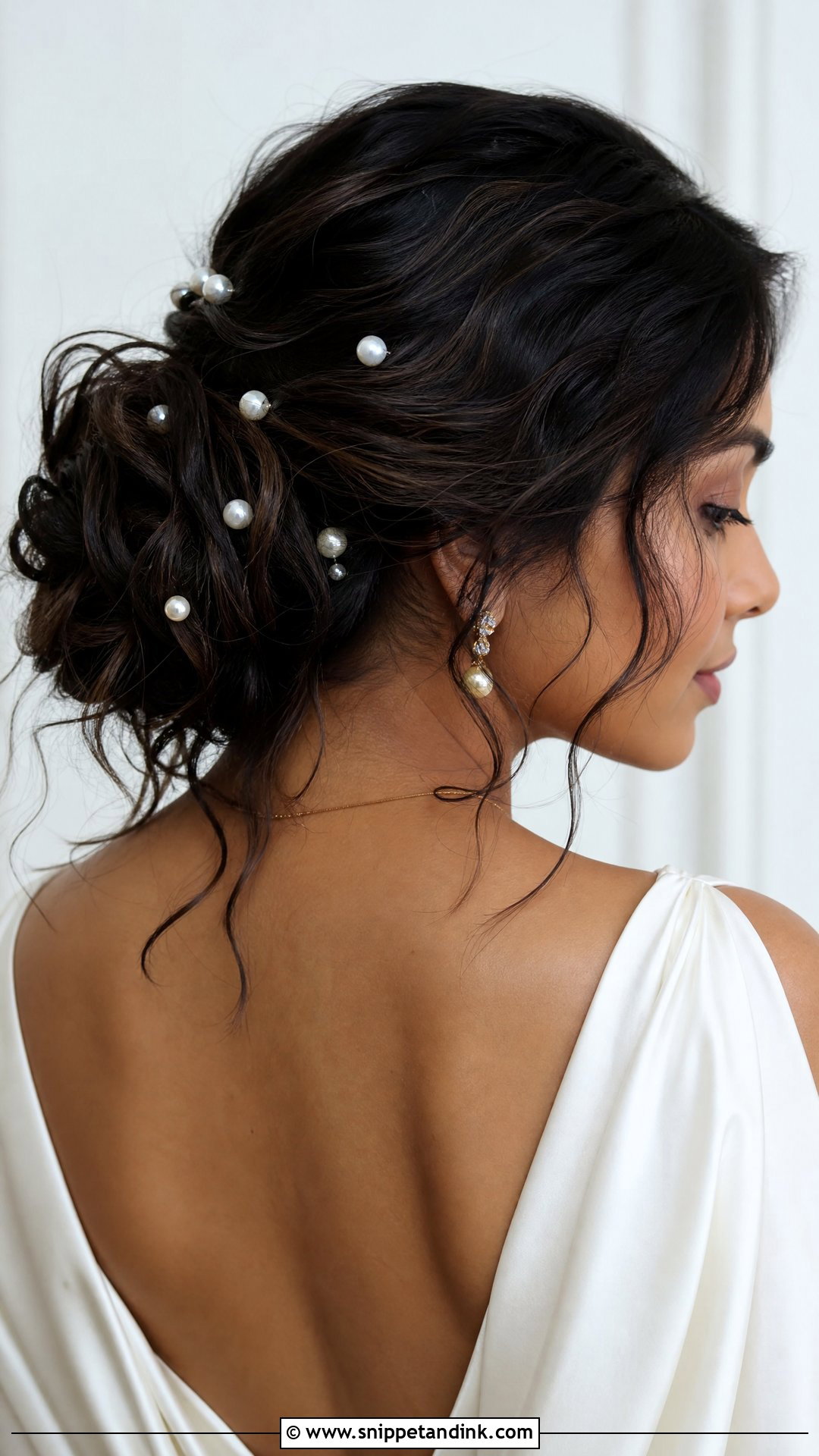
Pearl pins turn alternative when they’re placed off-pattern. Instead of a neat row, I scatter them through a messy bun, along one side of soft waves or into the cross-sections of a braid. Pins with a slight bend hold far better than straight ones, and I slide each one in against the direction of the hair so it grips rather than sliding out by evening. It’s a more delicate option than a tiara. Pearls suit short hair, long hair and natural curls alike. Keep the rest of the styling relaxed, because a sleek, formal updo plus pearls tips quickly into very traditional territory.
15. Alternative Bridal Hair With A Bridal Hat
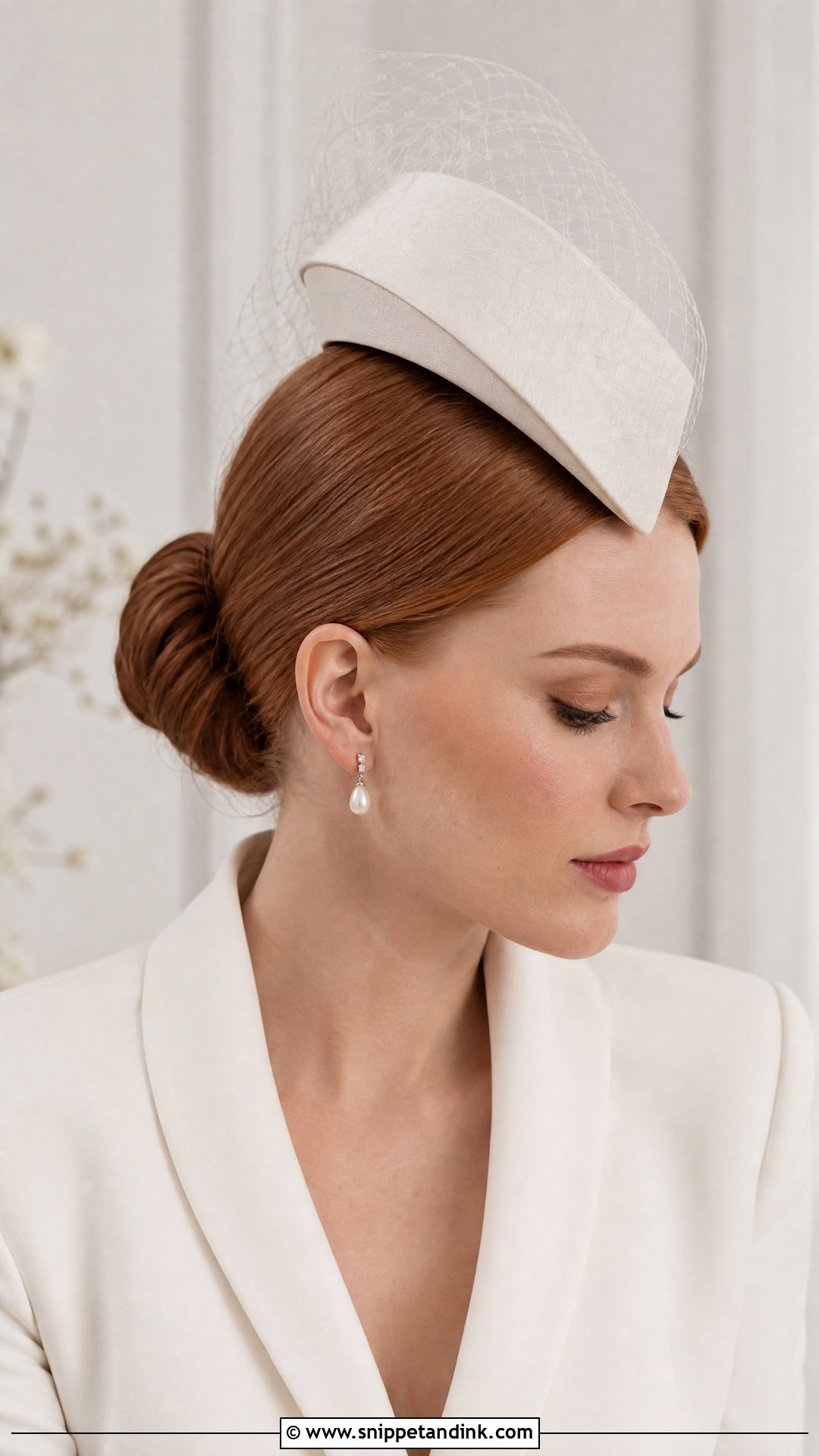
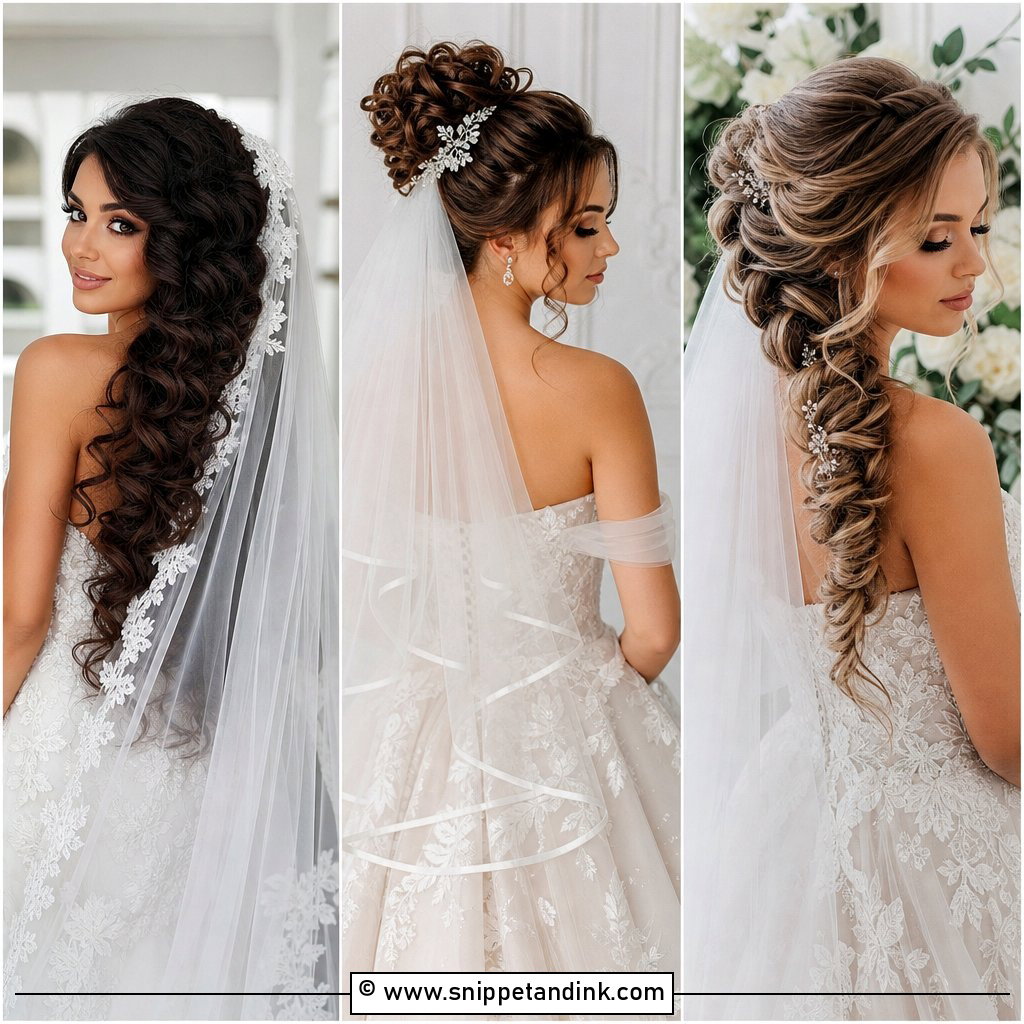
A bridal hat replaces the veil, so the hair under it has to be planned around the hat, not the other way round. I want a flat crown and the volume kept low: a sleek bun at the nape, smooth waves, a blunt bob or a low ponytail. Anything bulky at the crown pushes the hat up and makes it sit like it belongs to someone else. Small structured hats suit a courthouse; a wide brim suits an outdoor ceremony, though it also shades your face in photos, so talk to your photographer. Pin the hat through its inner band or a hidden comb, never just balanced, and bring it to your trial.
A Color Calendar for Silver, Red and Other Big Changes
Hair color is the one part of this list nobody can fix on the morning. Silver and pastel shades on dark hair usually need several lightening sessions spaced a few weeks apart, so starting around three months out is sensible, and earlier if your hair has old box dye in it. Doing it all in one appointment the week of the wedding is how hair ends up brassy, gummy or snapping at the ends.
- Ten to twelve weeks out: consultation and a strand test, especially for silver on anything darker than light brown.
- Six to eight weeks out: the main color work, so there is time for one correction if the tone is off.
- One to two weeks out: a toner or gloss refresh. Silver toner and deep reds both fade fast, and this timing keeps the shade fresh without looking freshly dyed.
- Wedding week: cool water, color-safe shampoo, and no swimming pools or new products.
If the process feels like too much on top of everything else, clip-in panels or a few silver or burgundy extension pieces give a similar effect with no commitment, and they come out for the honeymoon.
Which of These Styles Wilt by the Reception
Sleek, sculpted styles are honest about wear: they either hold or they visibly don’t. Finger waves and a glassy center part can puff up in humid air, so for a summer garden wedding I set them with a stronger product and leave a small comb and a little pomade with whoever carries your bag. Wet look waves go dull as the day goes on; a few drops of serum before the reception brings the shine back.
The textured styles are more forgiving. A messy French twist, braided crown or low bun can lose a strand or two and still look intended. Pixies and blunt bobs are the easiest of all; mostly you’re dealing with flyaways after the veil comes off.
Your Edge Should Still Feel Like You at Midnight
None of this is about rejecting pretty. It’s about wedding hair that matches your taste, your outfit and the mood of the room. Wet waves, micro bangs, dark red, a blunt bob, scattered pearls or a hat can all work, as long as the choice was deliberate and not a last-minute swerve. Take your references to a trial, wear the veil or ribbon or hat you’ll actually use, and look at the photos from behind and in profile, not only straight on. That’s how I judge a trial myself. A nontraditional bridal hairstyle ages well in the album when it genuinely suits the person wearing it.
You'll Like These Ideas:


Leave a Reply