
A low ponytail is the style I suggest most often to brides who tell me they don’t want to feel their hair all day. It sits at the nape, clears the neckline, leaves room for a veil comb and earrings, and it can be sleek, waved, braided or full depending on how the length is set before it’s tied. It also scales well across a group, so bridesmaids, and wedding guests can wear softer versions of the same shape. Below are fifteen versions I’d actually build, with notes on hair type, hold and where each one tends to give trouble.
How Low Is Low? Placing the Base for Your Neckline
The height of the tie decides more than people expect. Tied right at the nape hairline, the tail rests on the back of the neck and can brush against a high collar or the top of an open back. A finger’s width higher, it hangs clear of the fabric and the veil comb has room to sit above it.
At a trial I tie it once, ask the bride to sit, turn her head and lean back, then move it up or down. Three things guide the final spot:
- A high or lace neck: tie slightly higher so the tail doesn’t catch on the lace.
- A low open back: tie lower and let the tail fall over the spine; it frames the cut-out.
- A cathedral veil: leave at least two finger widths of smooth hair above the base for the comb.
I also ask brides to come to the trial with hair washed the day before, not that morning. Freshly washed hair is slippery, and a ponytail tied on it starts sagging within hours.
1. Sleek Wedding Low Ponytail
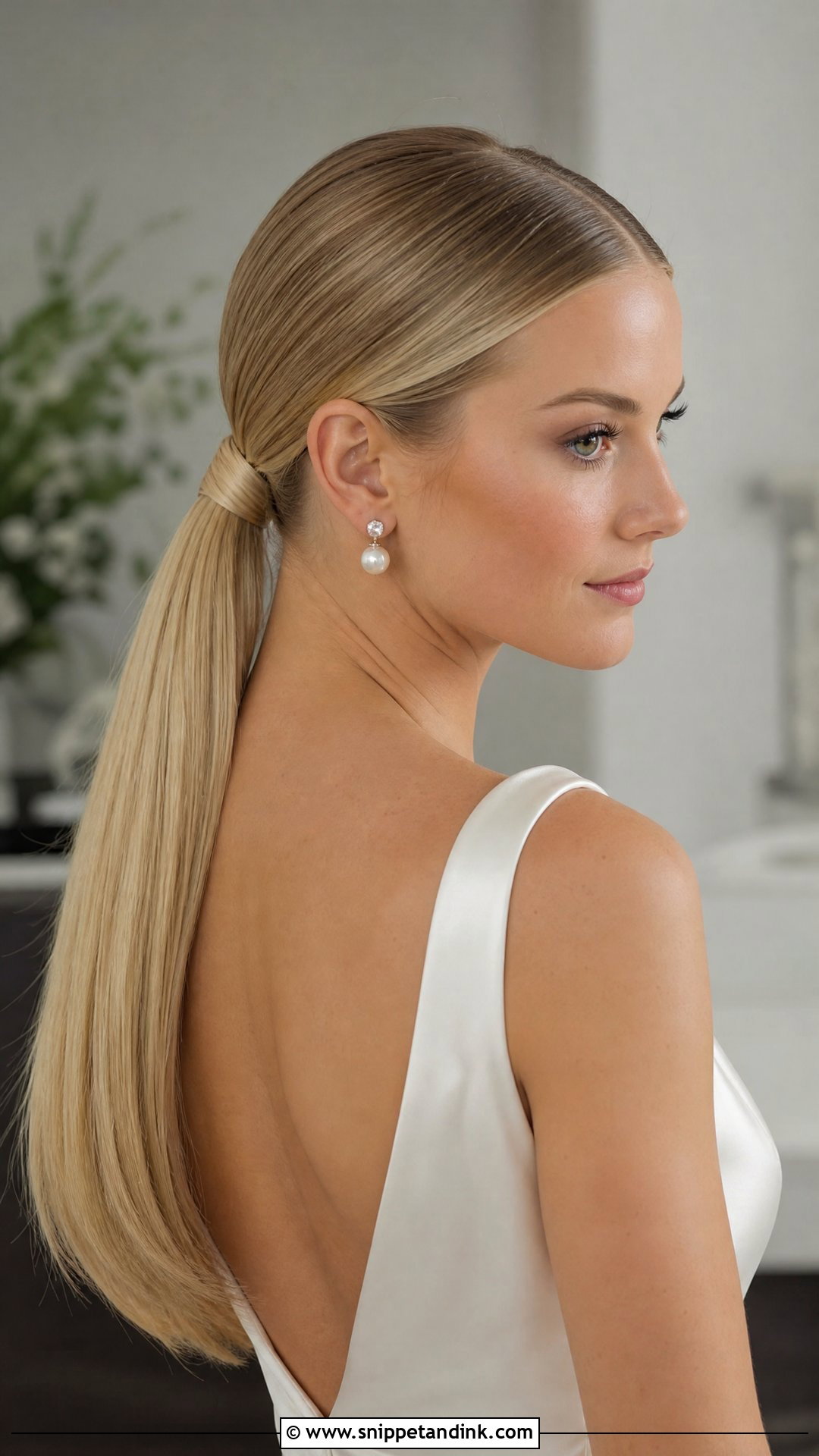
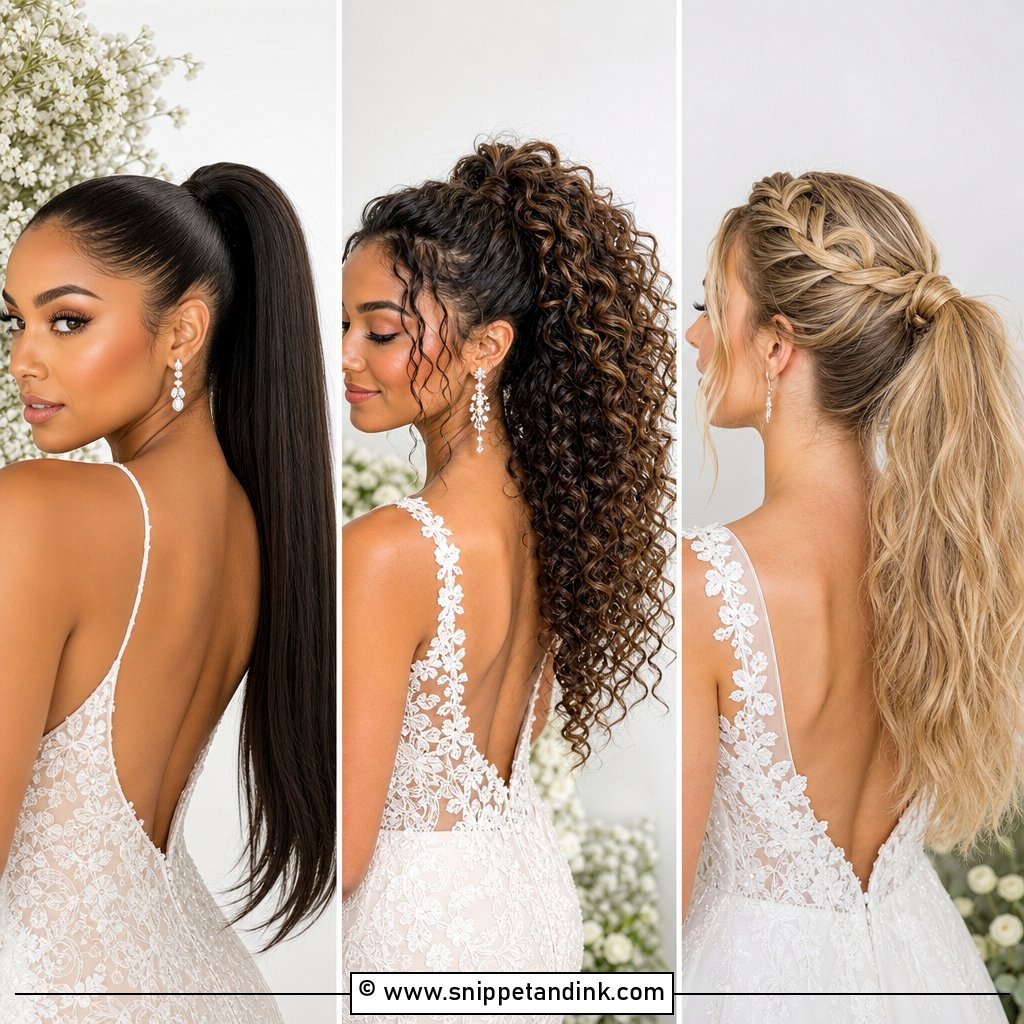
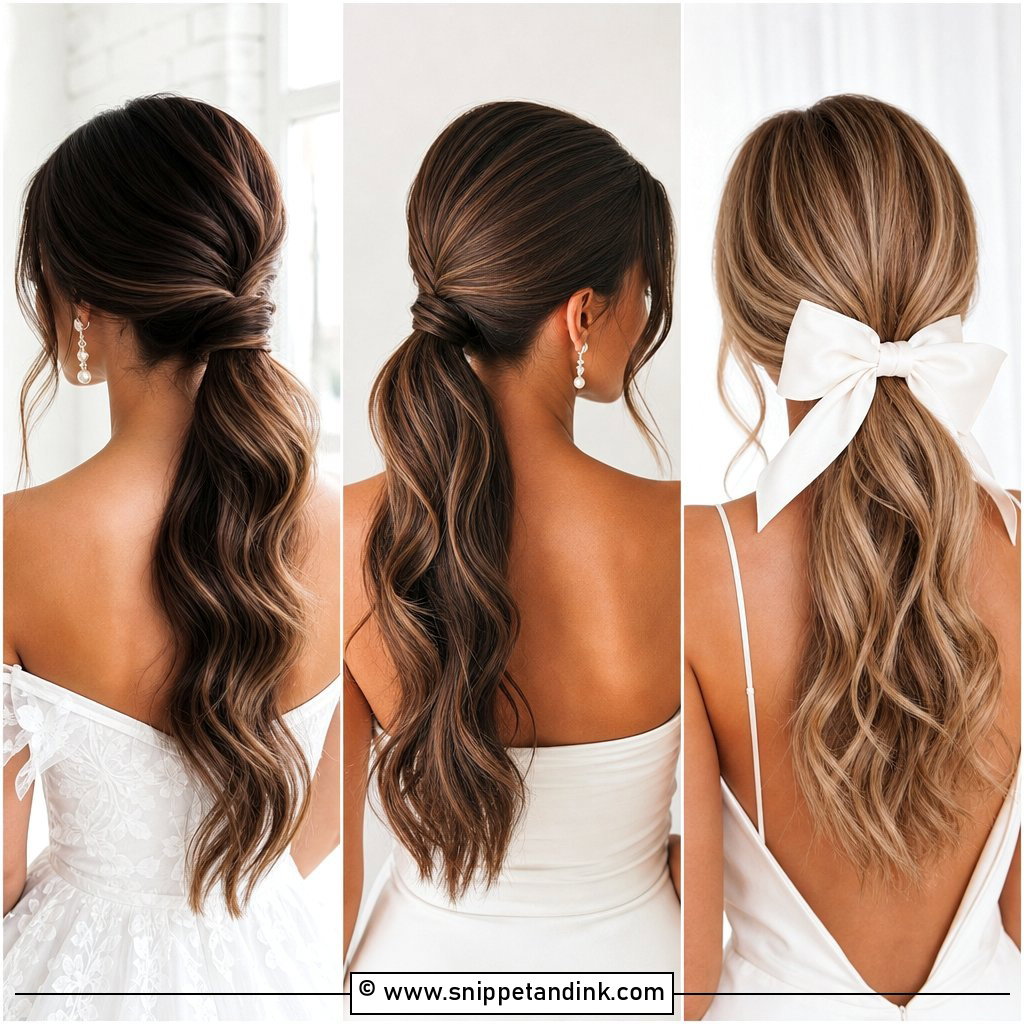
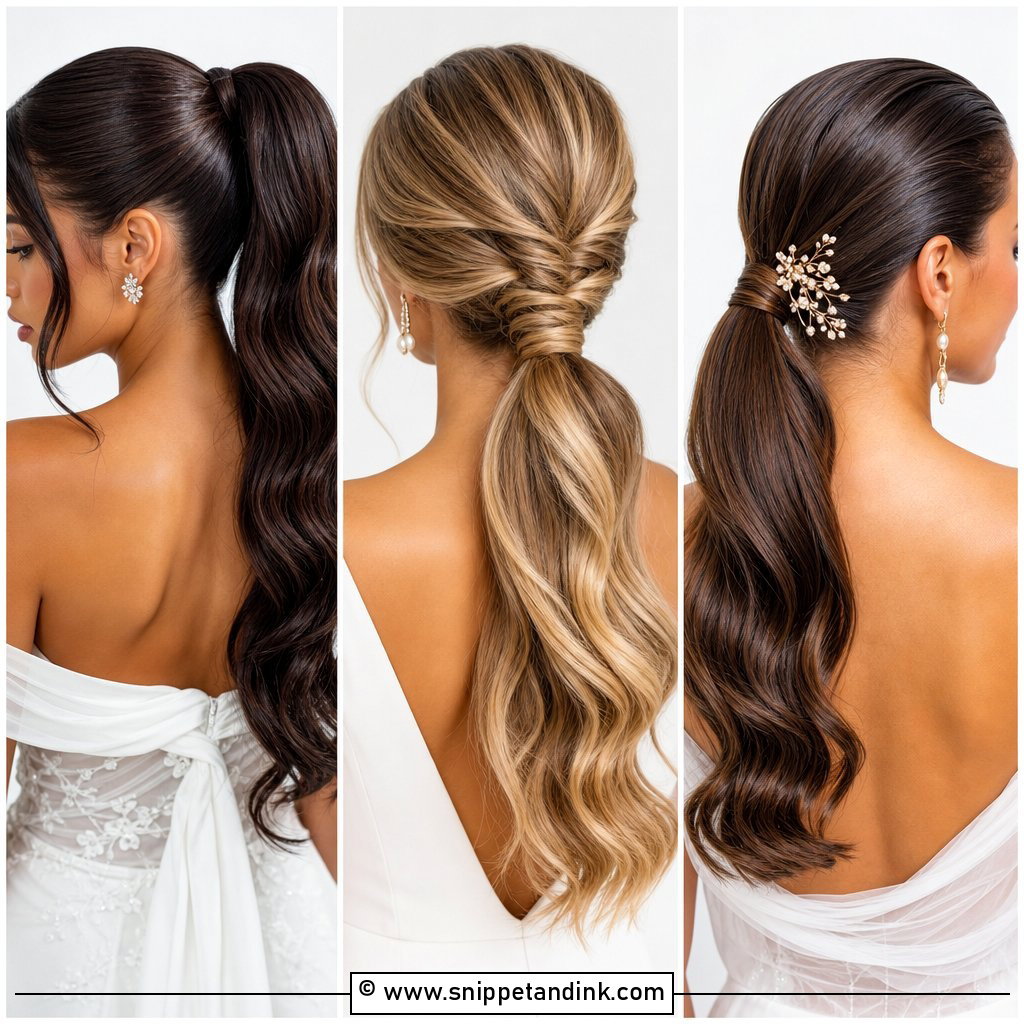
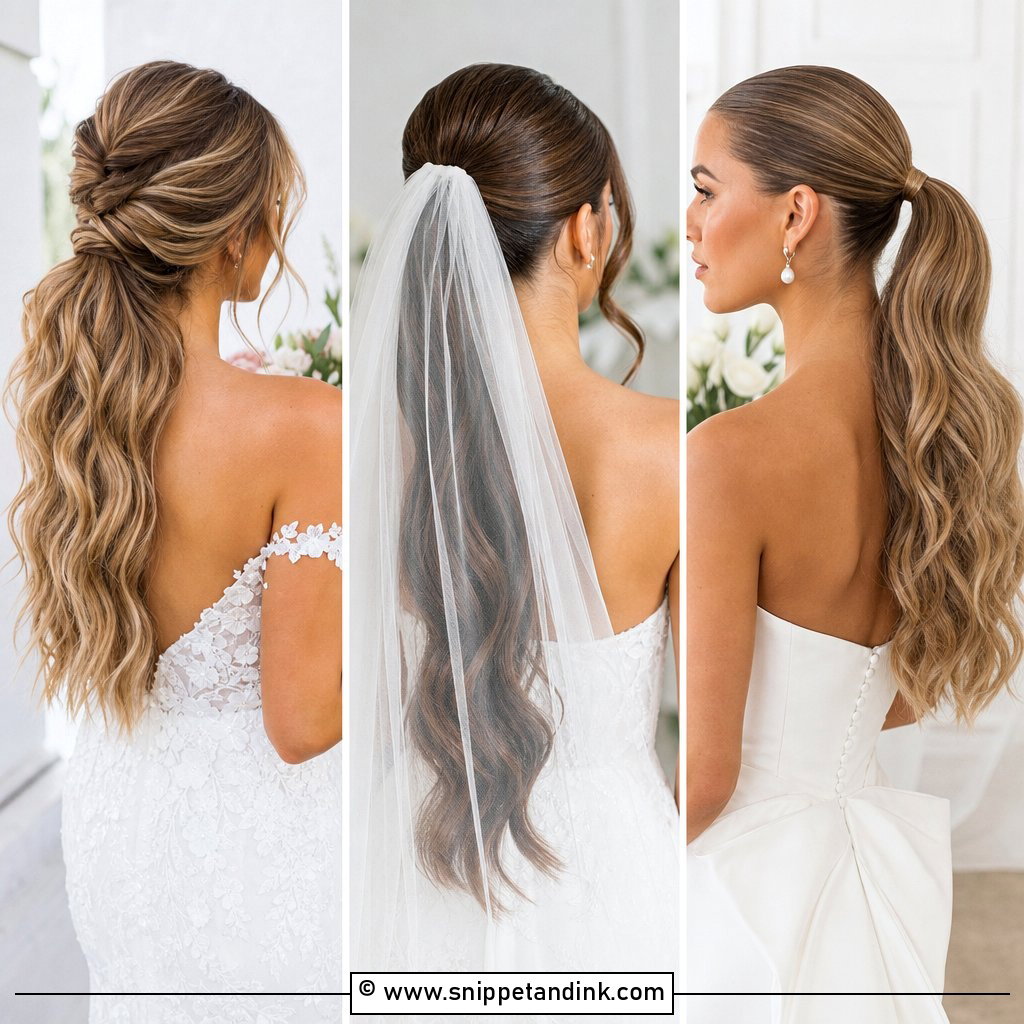
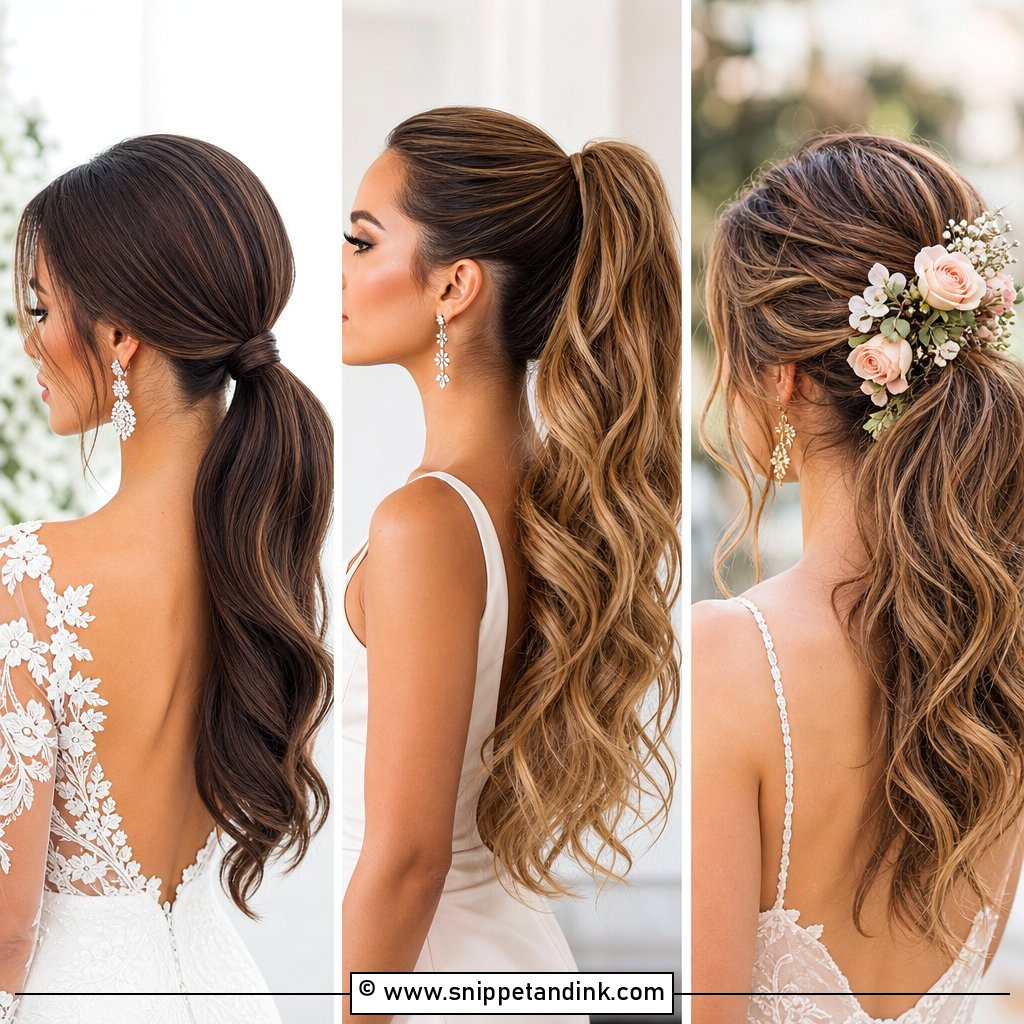
Sleek is the least forgiving version, because every bump at the crown shows. I blow-dry the hair completely smooth first, then brush it back while it’s still warm, secure it with a small elastic at the nape and wrap a thin section around the base so no band shows. The shine should come from the blow-dry and a few drops of serum on the lengths, not from a heavy gel over the top, which reads as wet in photos by evening. It suits fitted gowns and high necks because nothing competes with the line of the dress.
2. Wavy Wedding Low Ponytail
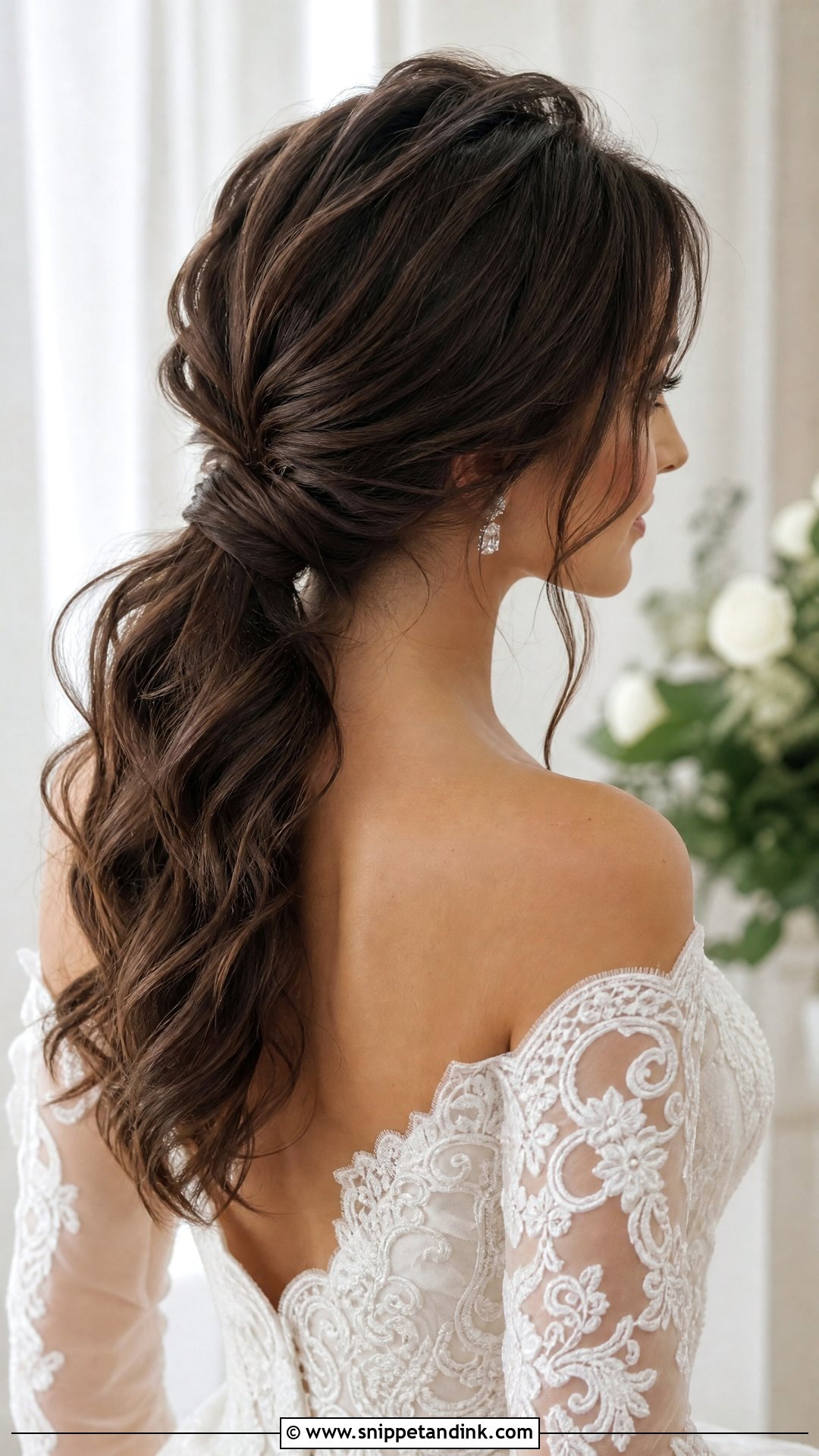
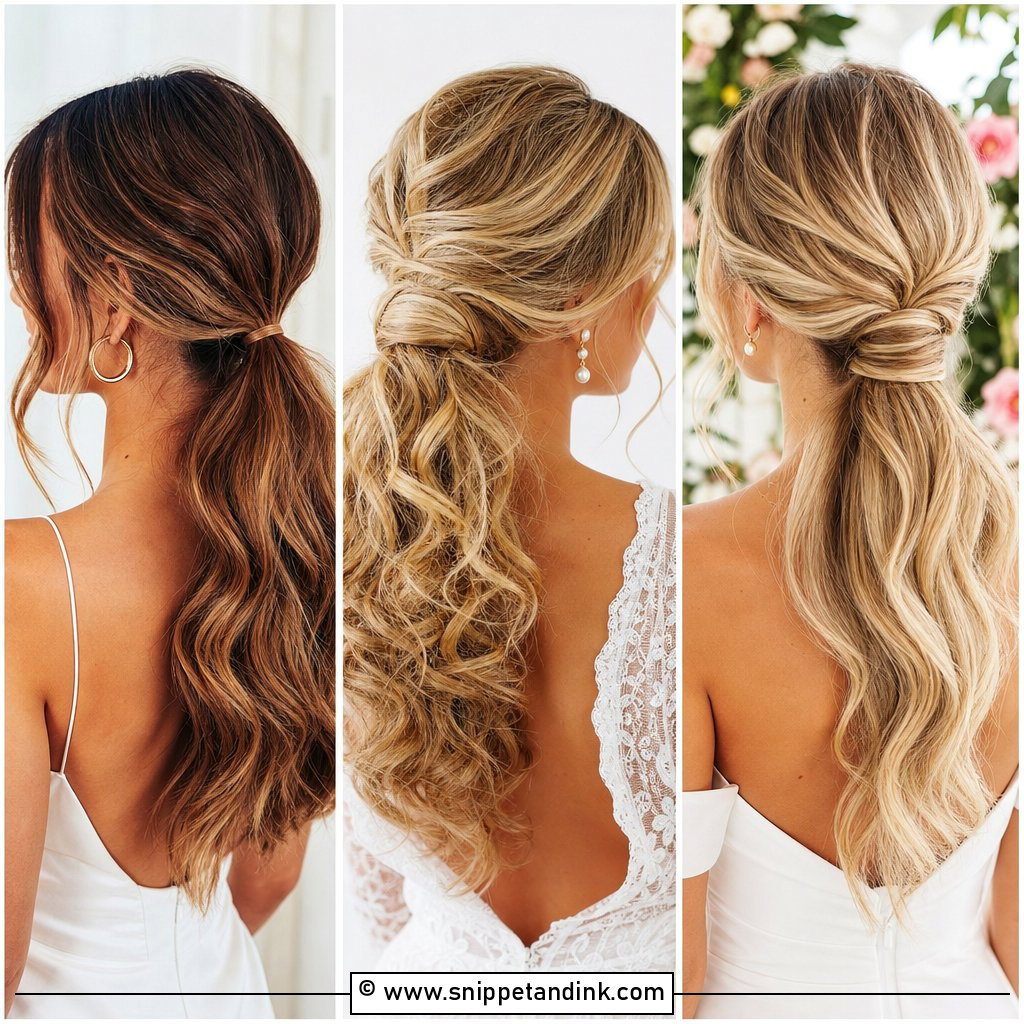
Waves have to be set before the hair is gathered, not after. I curl the full head, let every section cool, brush through loosely, and only then tie the tail, so the bend is already locked in when the elastic goes on. A little lift at the crown and a couple of soft pieces near the cheekbones keep it from looking scraped back. Lace and off-shoulder dresses sit well with this one because the movement in the tail echoes the fabric.
3. Textured Wedding Low Ponytail
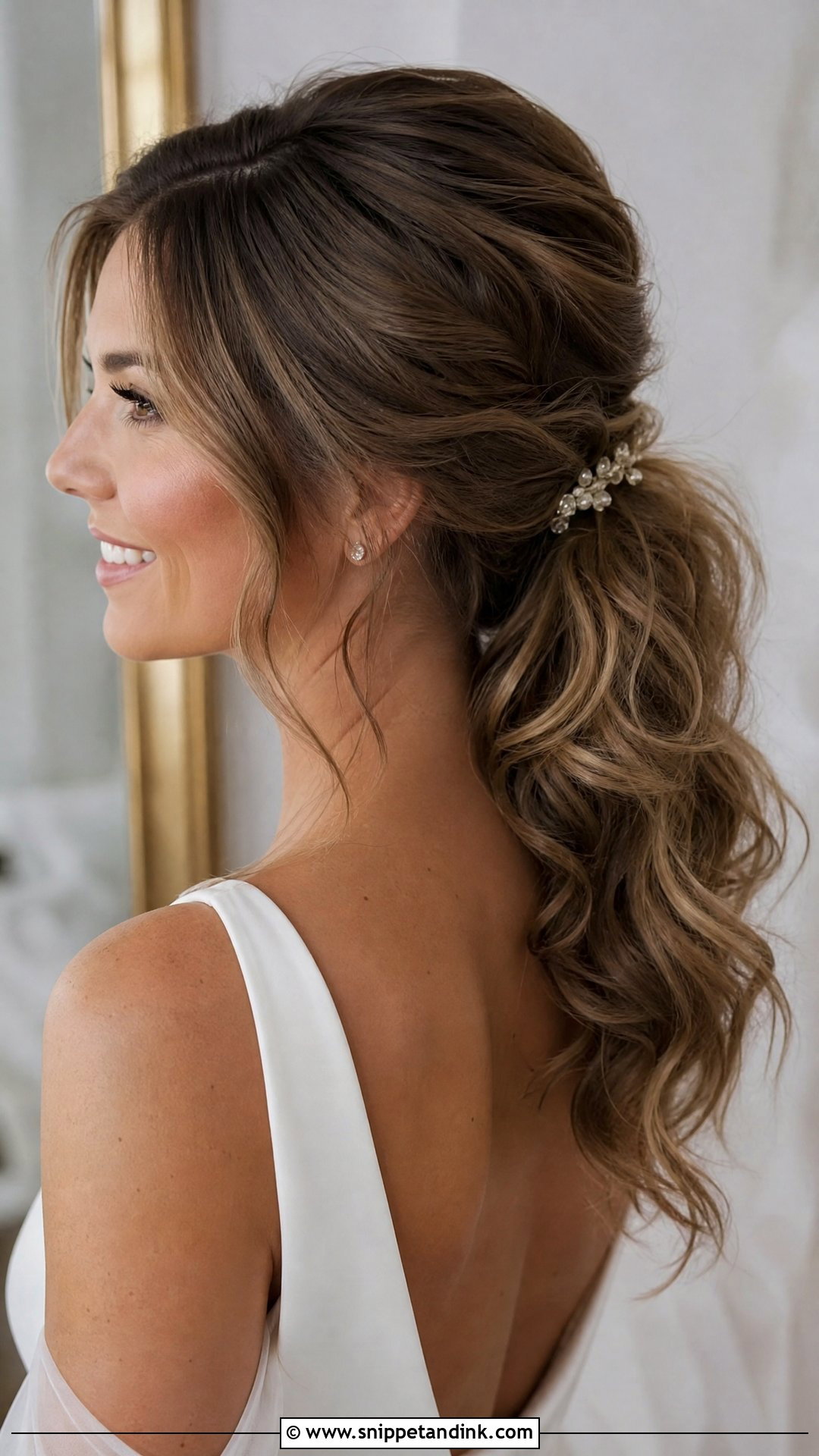
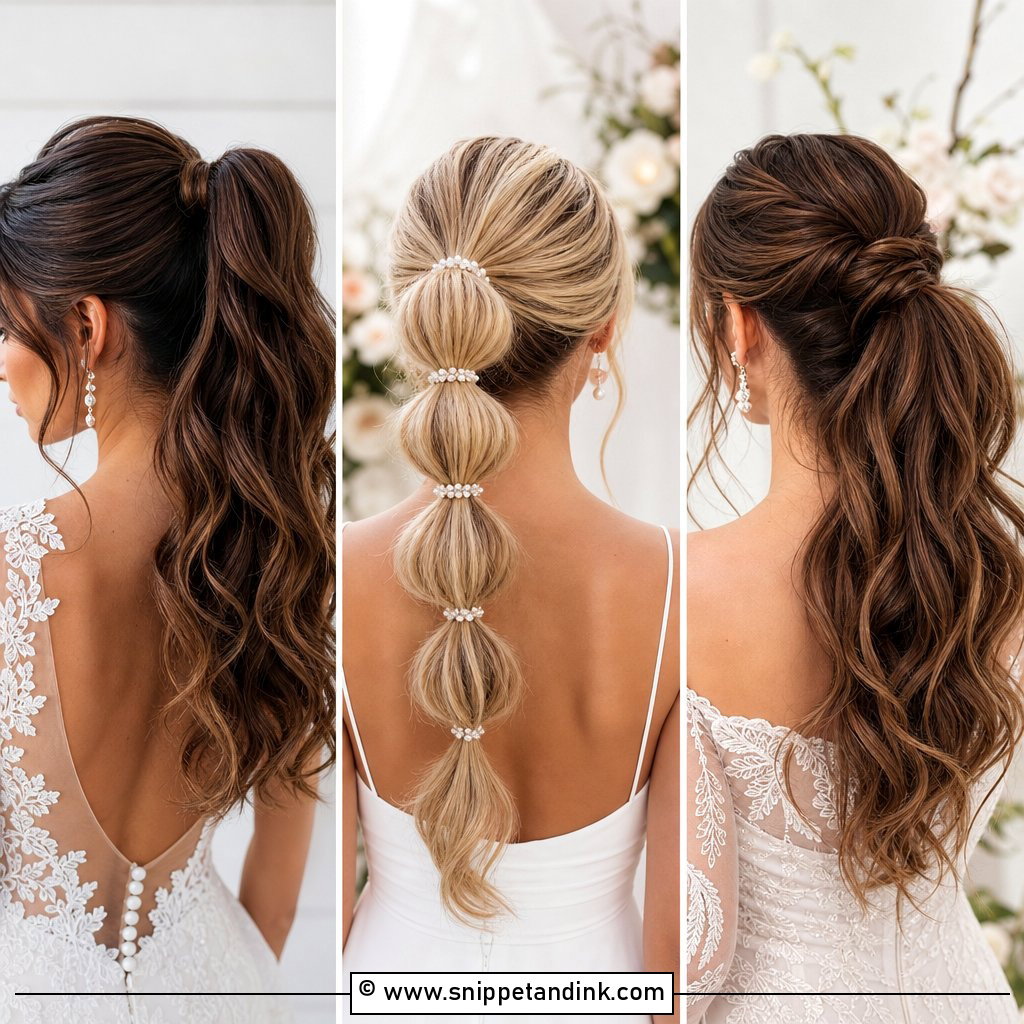
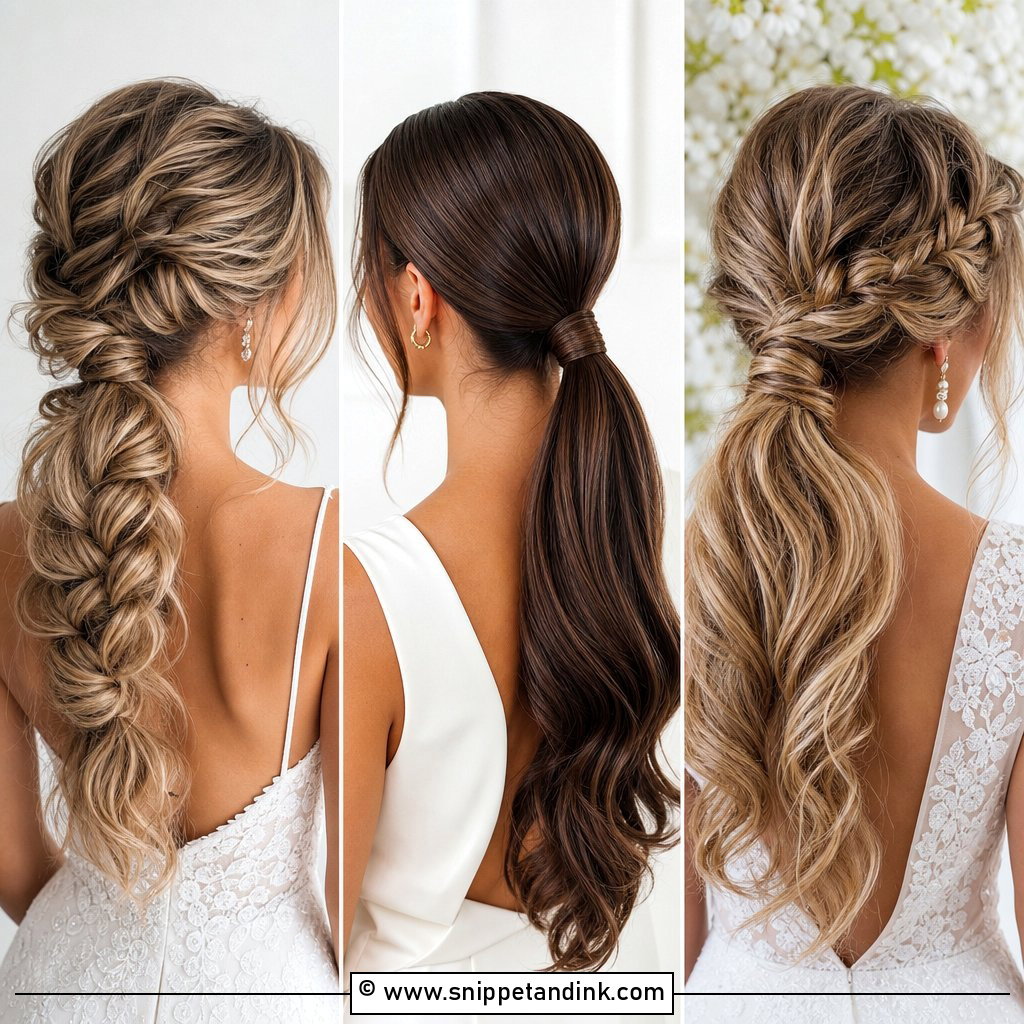
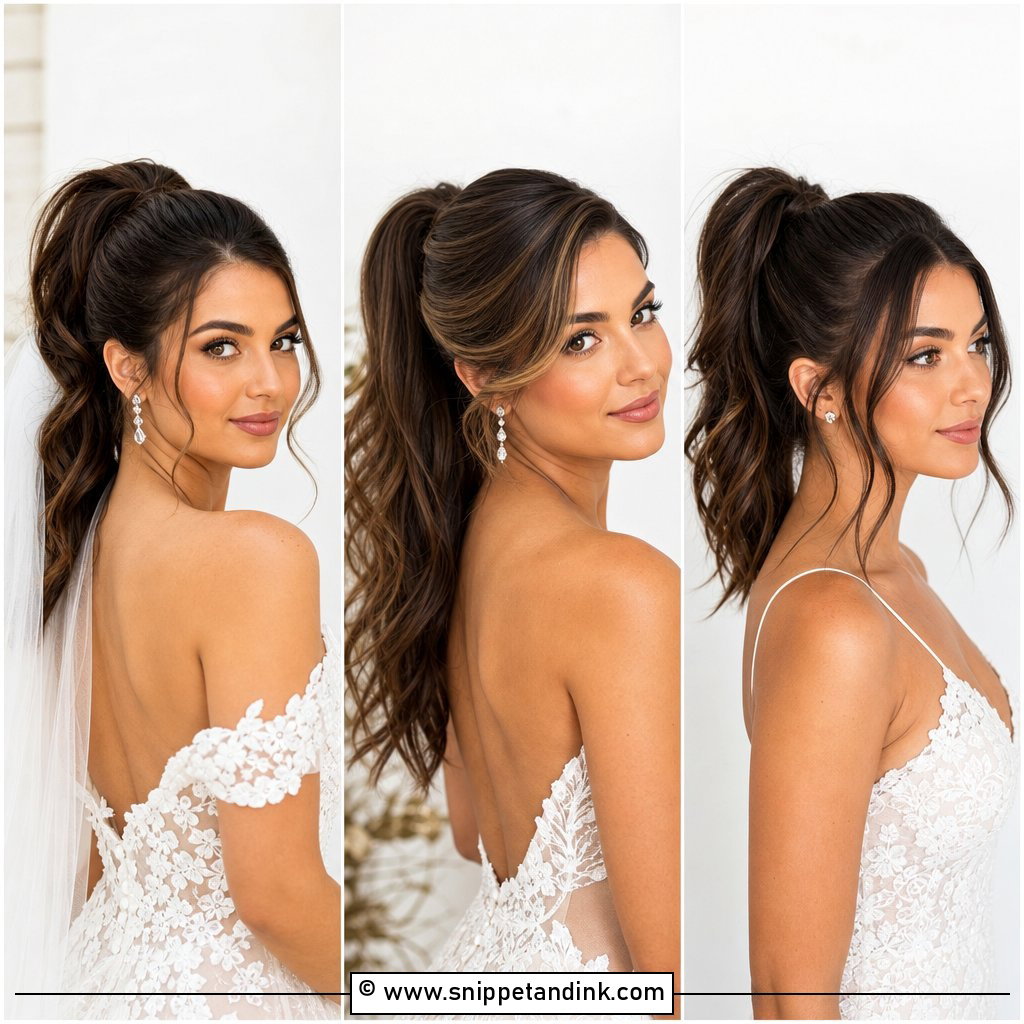
Texture is my answer for layered hair and for outdoor ceremonies. Short layers that would poke out of a sleek tail just become part of the shape here, and if the air turns damp, a style that was already a bit airy doesn’t look ruined. I prep with a dry texture spray rather than hairspray, tease the underside of the tail lightly, and leave the sides relaxed rather than flat. It needs the same secure base as any other version; the looseness only lives on the surface.
4. Curly Wedding Low Ponytail
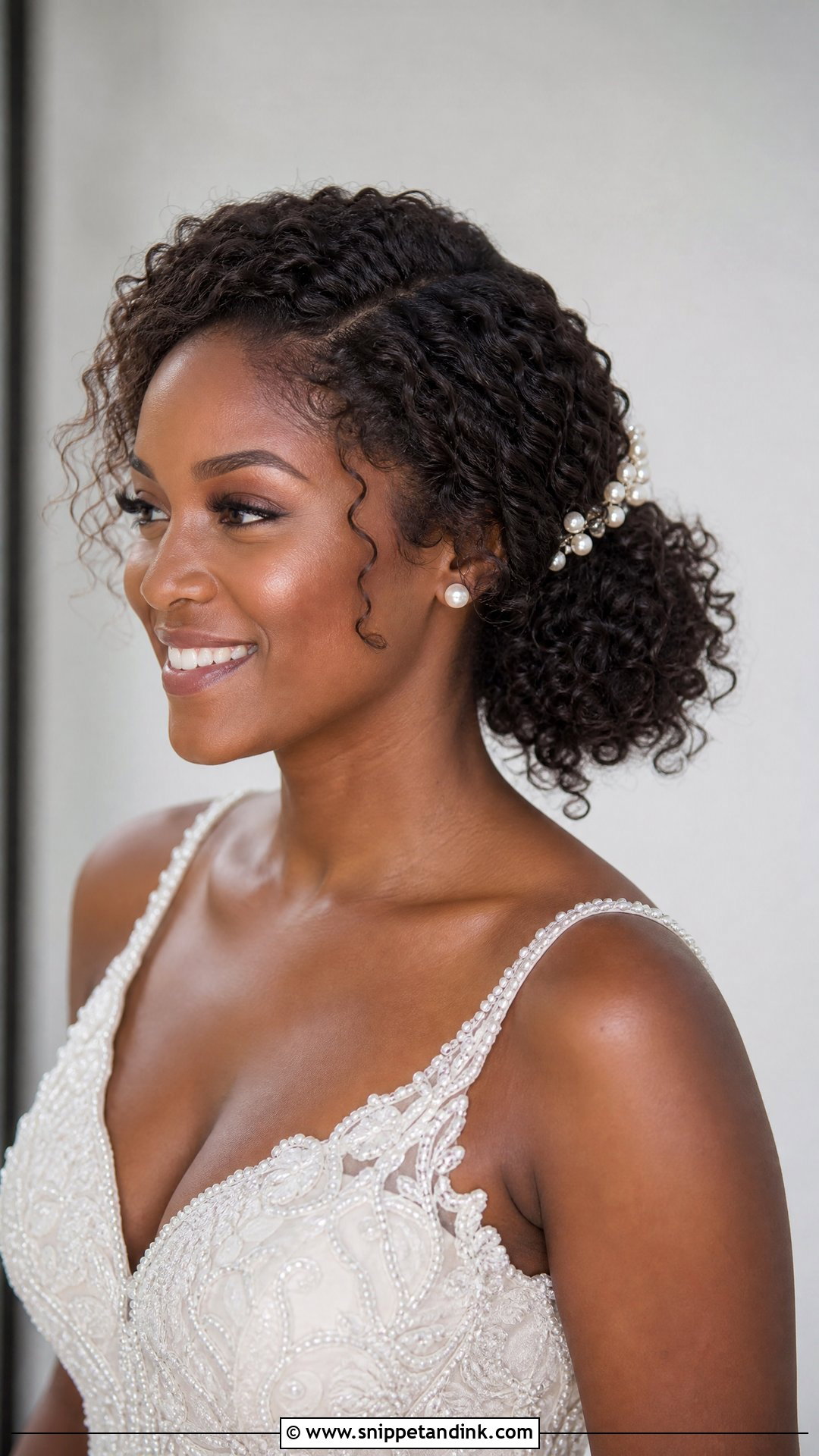
Natural curls give a low ponytail the most volume of anything on this list, and I try to work with the curl pattern instead of fighting it. I define the curls the day before or that morning with a cream and a light gel, then gather them low using my hands rather than a fine-tooth brush, which would break the clumps into frizz. Some brides want a smooth crown leading into a voluminous curly tail; others prefer a few curls left loose at the hairline. Use a fabric-covered elastic, since bare rubber snags coils when it comes out at night.
5. Braided Wedding Low Ponytail
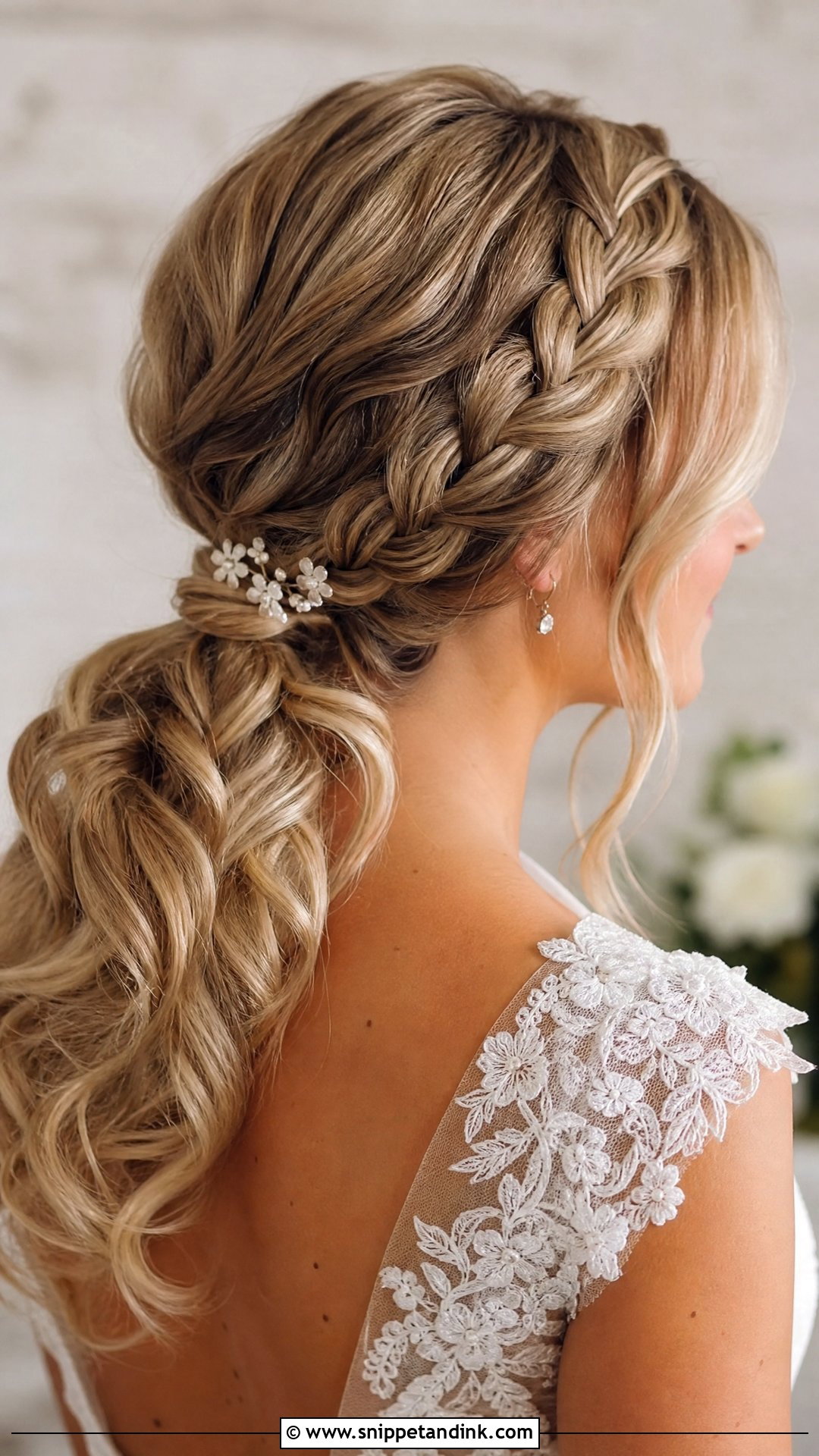
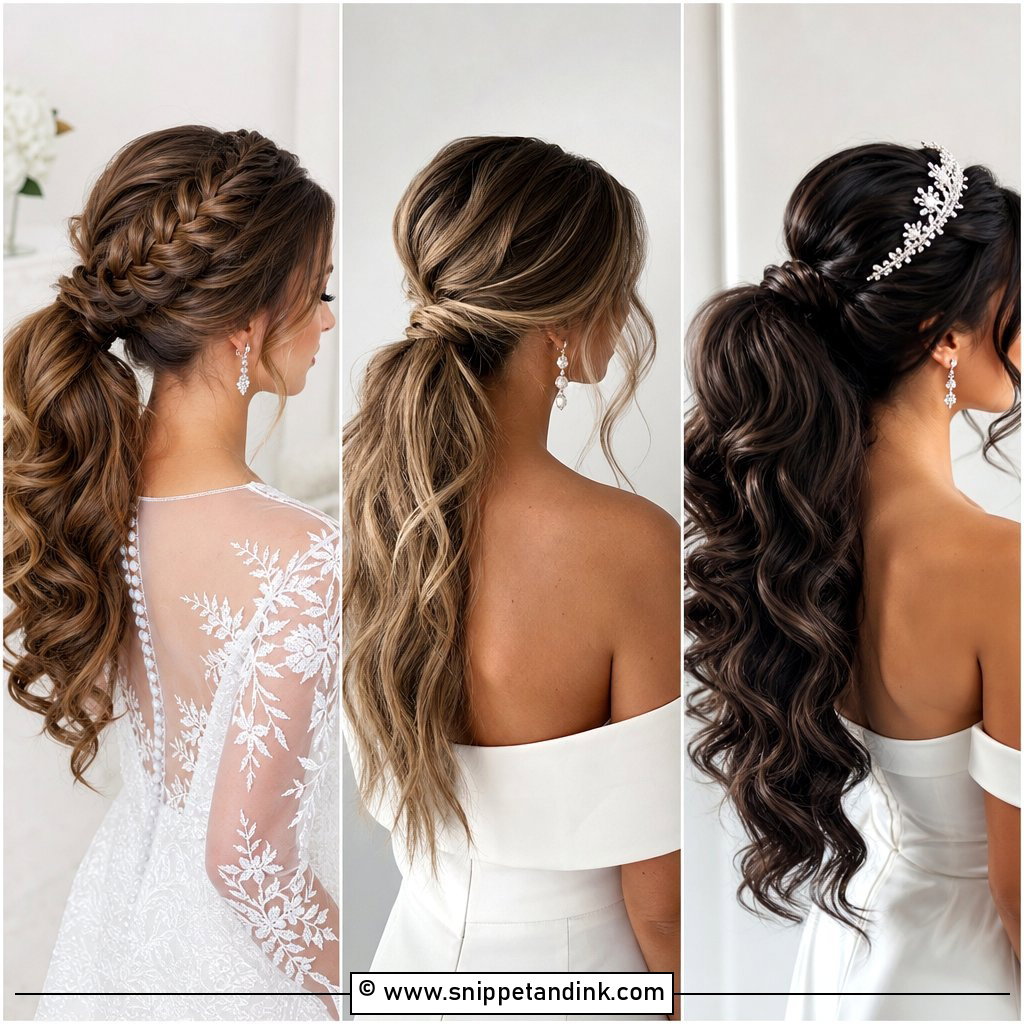
A braid gives the ponytail somewhere to hide its pins. I usually run a Dutch braid along one side from the temple, or wrap a small three-strand braid around the base to cover the elastic. Highlighted or dimensional colour looks good here because the braid shows each tone. Thick hair holds a braid better than fine hair, which tends to look stringy once it’s pulled apart, so on finer hair I keep the braid small and pancake it gently. The tail itself I leave curled.
6. Messy Wedding Low Ponytail
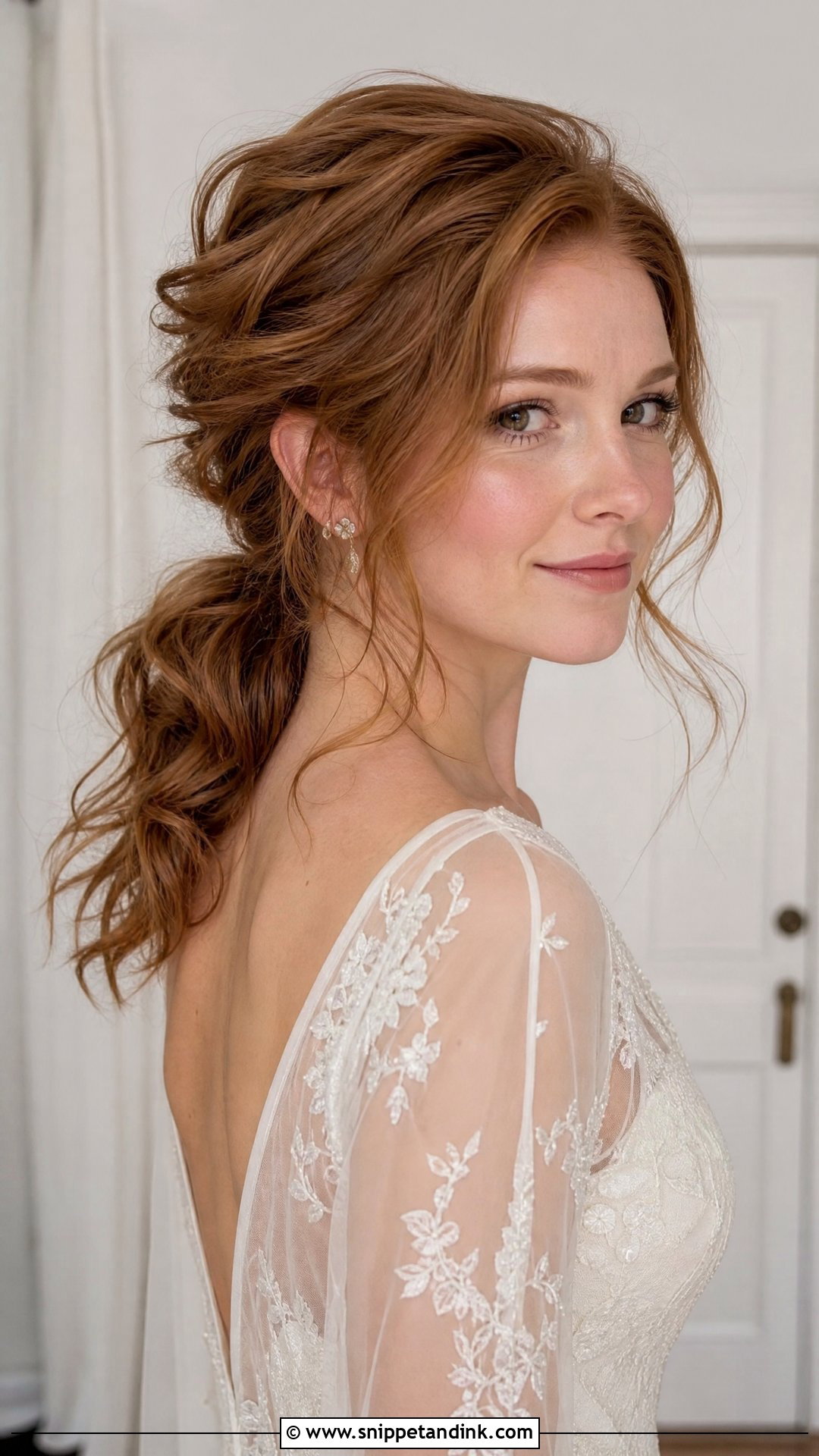
Messy still has to be built properly underneath. The crown gets a little lift, the sides are pulled back loosely, and the tail is tousled with a curling wand and broken up with fingers, but there’s a secure elastic and a few hidden pins holding the shape. Without that structure it falls apart by the first dance. I’d keep this one for barn, beach and garden weddings; with a structured ballgown it can look like the bride ran out of time.
7. Pearl Wedding Low Ponytail
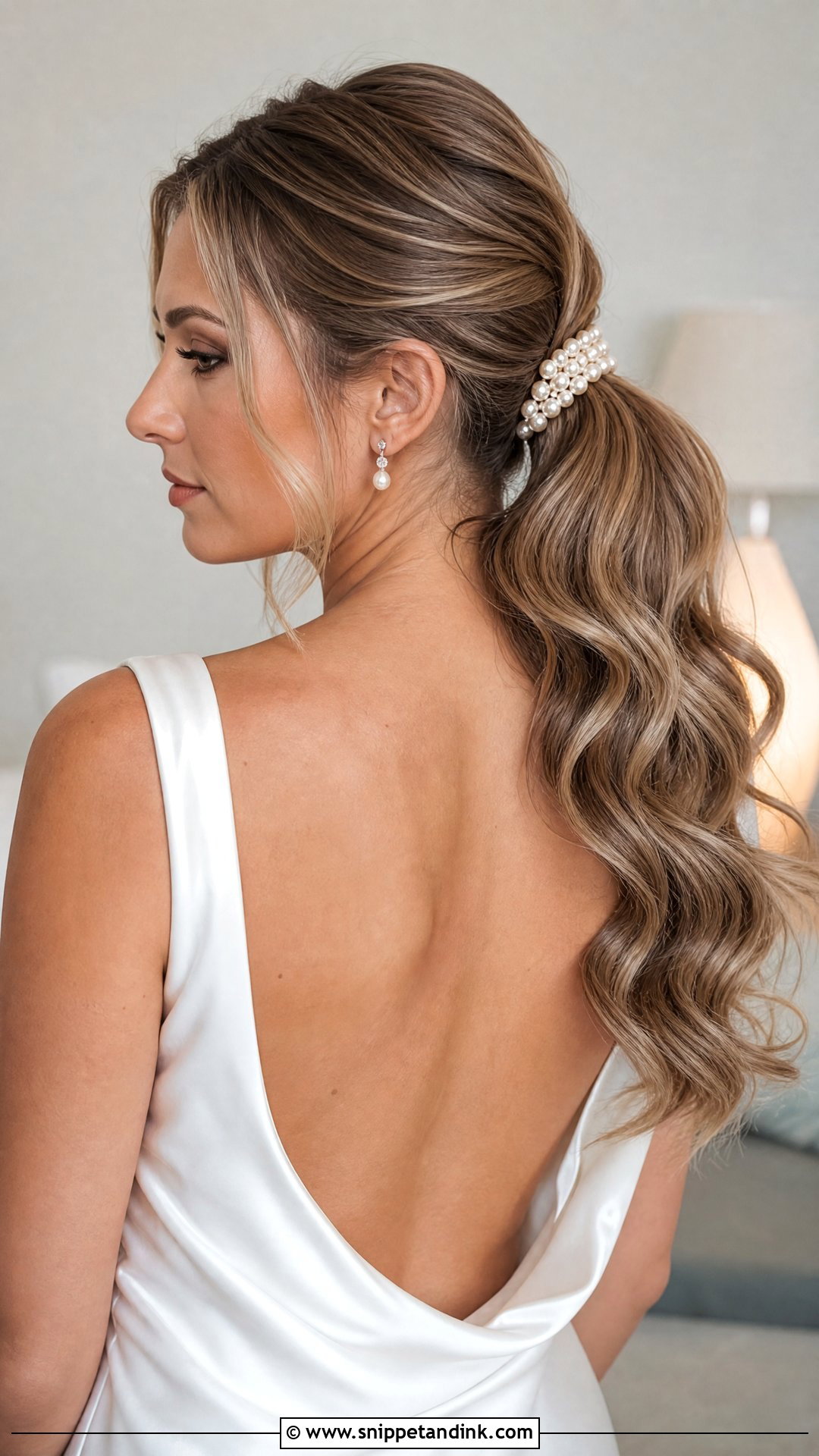
Pearls need a plan before the trial. I decide whether they run along a braid, cluster around the base or sit as a comb above the tail, and I keep them in one zone so the head doesn’t look scattered. If the dress is already heavily beaded, small pins are enough. On a plain satin gown, a stronger pearl detail at the base does the job jewellery would otherwise do. Pearl pins with a spiral end grip better than straight ones in sleek hair, which they tend to slide out of.
8. Floral Wedding Low Ponytail
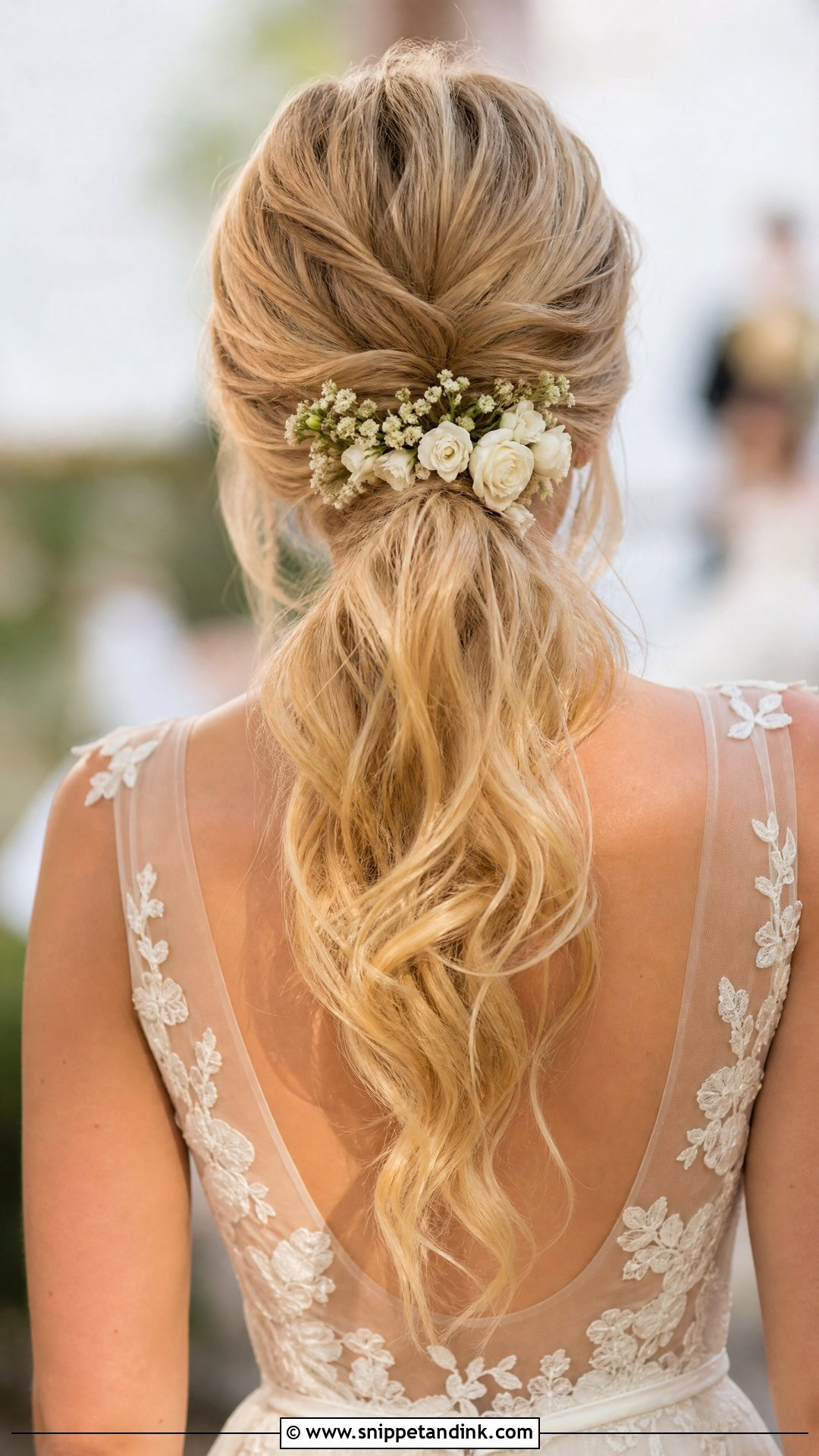
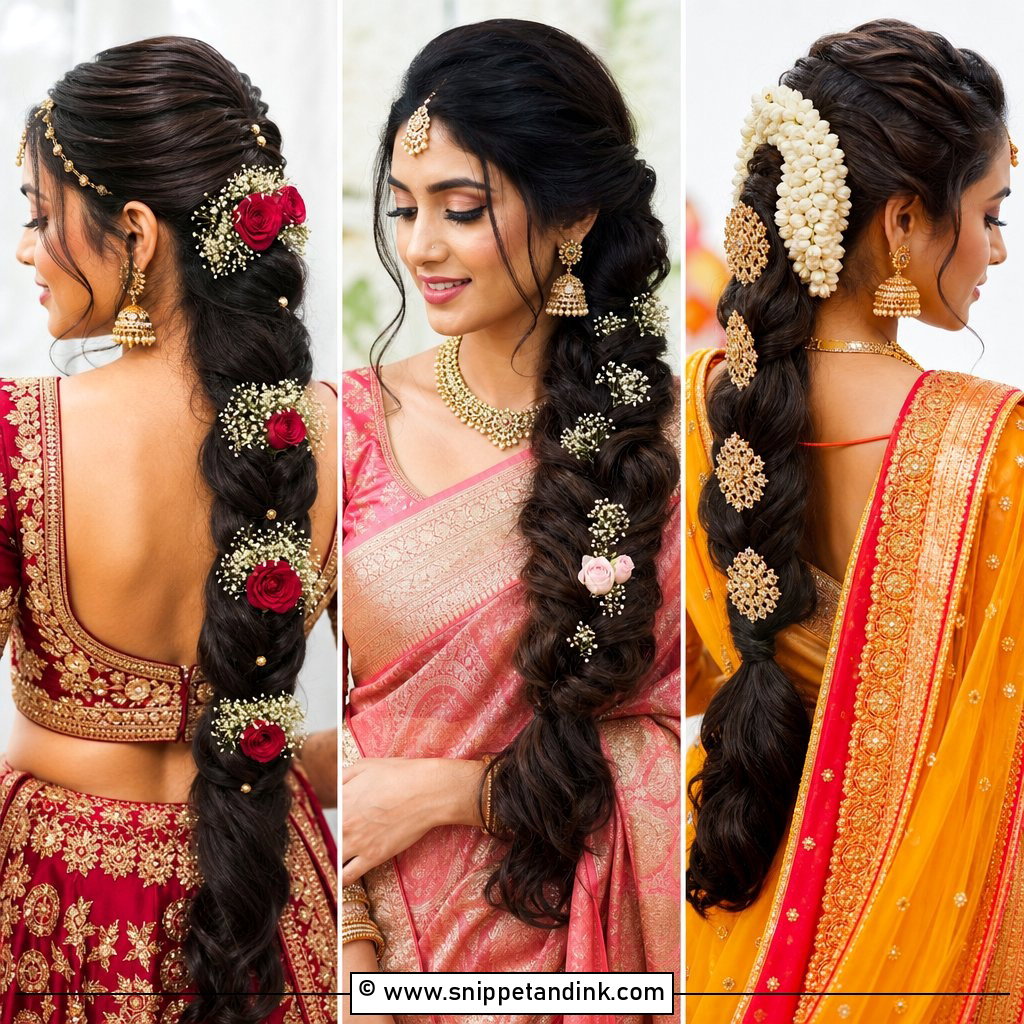
Fresh flowers wilt against warm skin, and the nape is warm. I pick blooms that can sit out of water for hours, like spray roses, waxflower and baby’s breath, and I tuck them around the base or into a braid for an asymmetrical finish. Large heavy heads pull the tail sideways. Ask your florist to wire and tape the stems, mist them, and deliver them in a box separate from the bouquets so they arrive cold.
9. Veil Wedding Low Ponytail
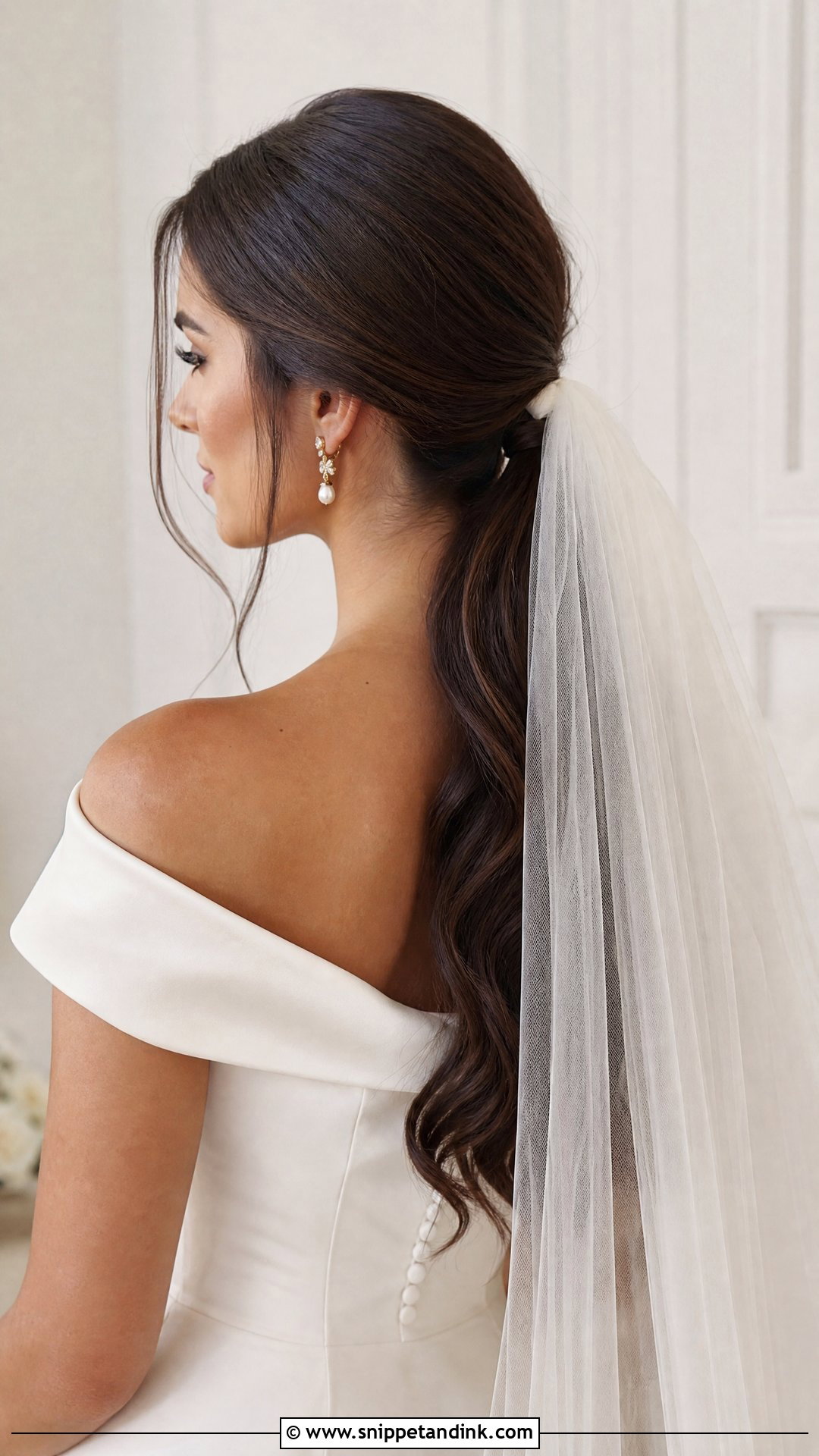
A veil needs a solid anchor, and a low ponytail gives you one if the crown is built for it. I create a small backcombed pad just above where the comb will sit, then slide the comb in against the direction of the hair so its teeth lock. It can sit above the tail for a traditional look or below it for something softer. Bring the actual veil to the trial: a long or beaded veil has real weight, and it can drag the whole tail down if the comb is only resting on smooth hair.
10. Side Part Wedding Low Ponytail
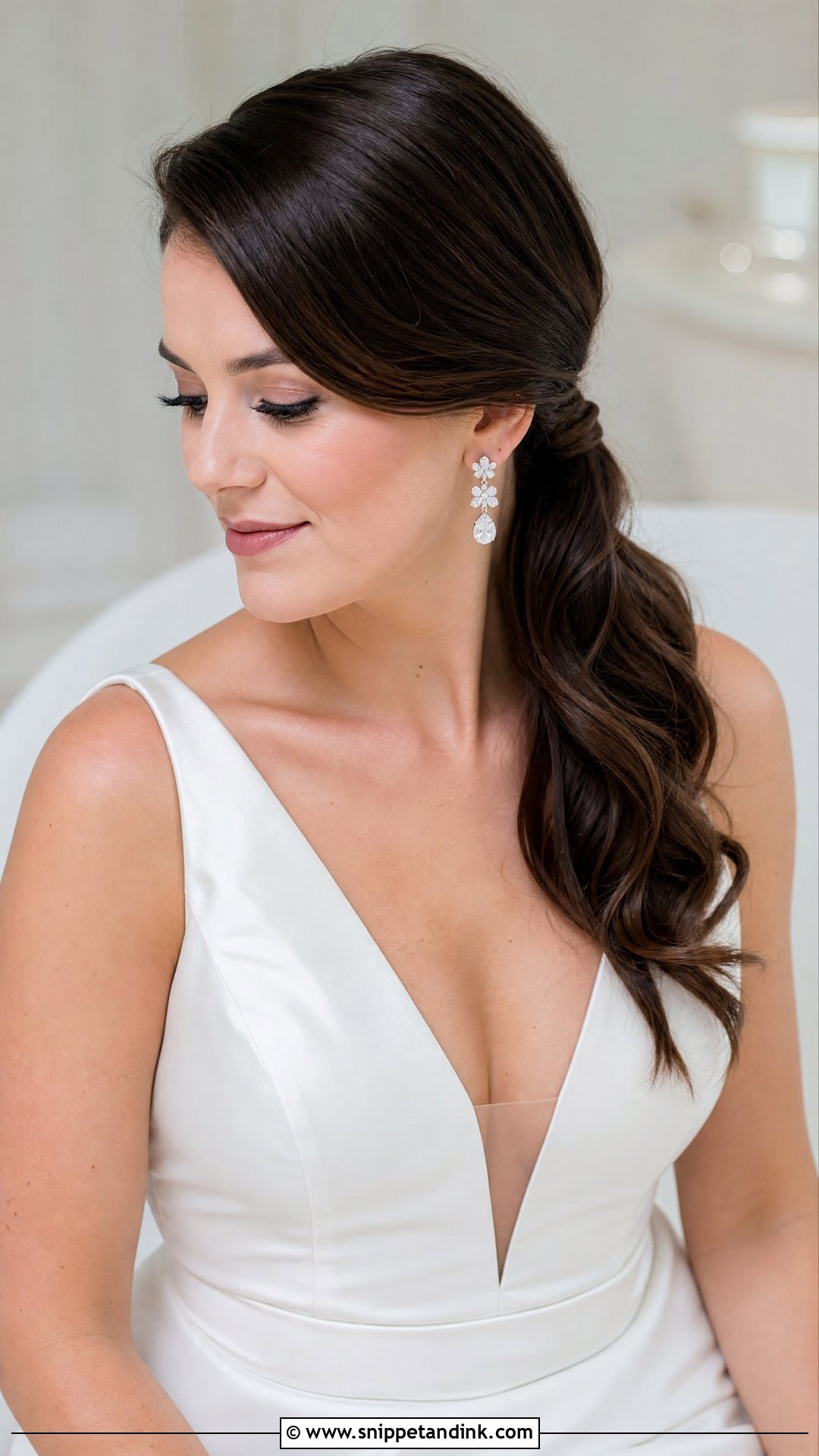
A deep side part brings a bit of old Hollywood and softens a strong jaw or a wide forehead. I tuck the shorter side behind the ear to show the earring and let the heavier side sweep across the brow before it joins the tail. Smooth waves suit it best. The part line itself needs a light hold spray and a quick pass with a flat iron at the root, otherwise the swept side starts to drift forward after a few hours of hugging guests.
11. Middle Part Wedding Low Ponytail
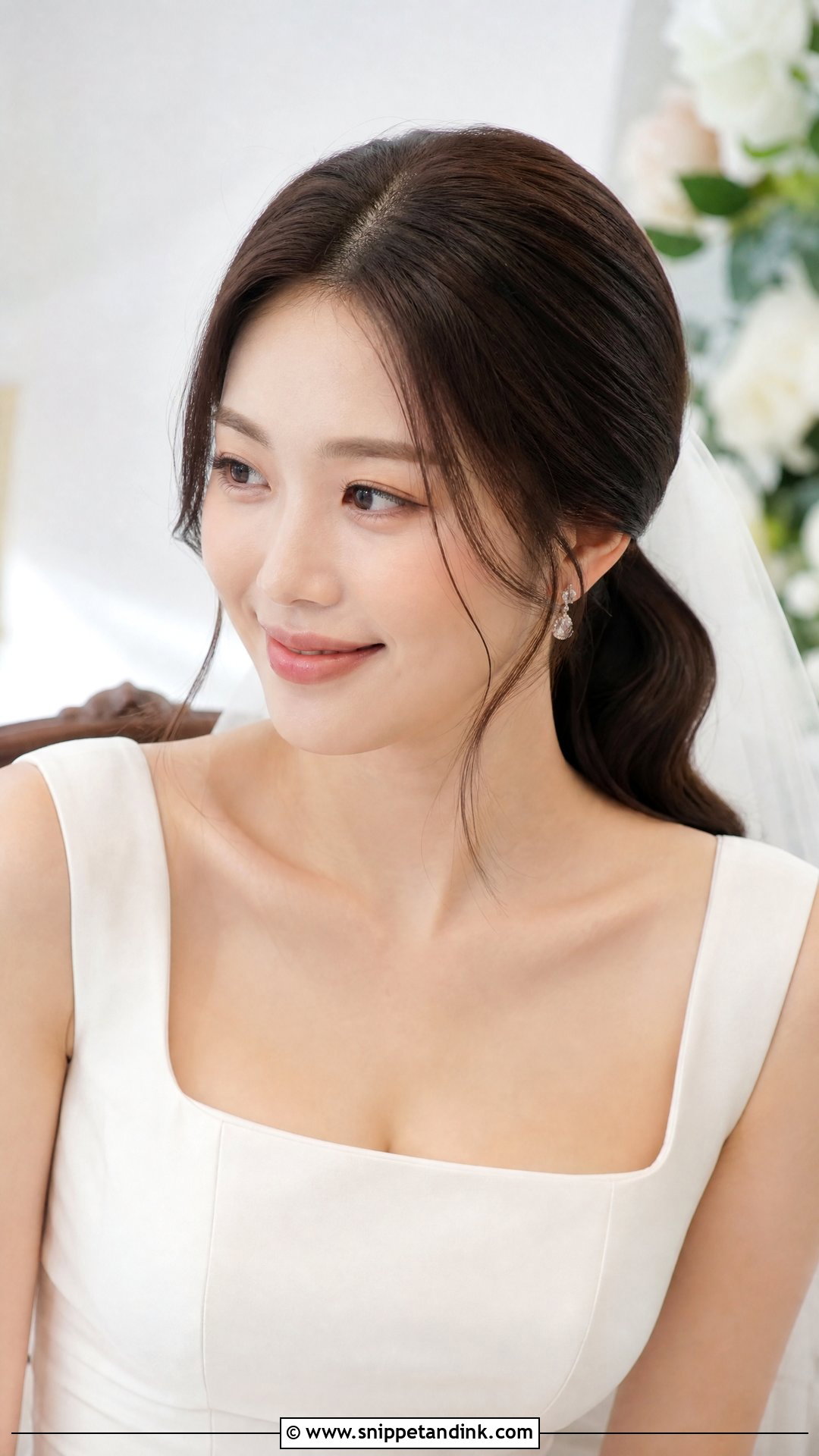
A centre part looks clean and modern, but it shows any asymmetry in the face and hairline. Before I commit, I check where the hair naturally falls and whether there’s a cowlick at the front, because a part that fights a cowlick won’t stay crisp. It suits bold earrings, square necklines and strapless gowns. Leave two thin face-framing pieces if you want it softer; tuck everything in if you want it sharp.
12. Voluminous Wedding Low Ponytail
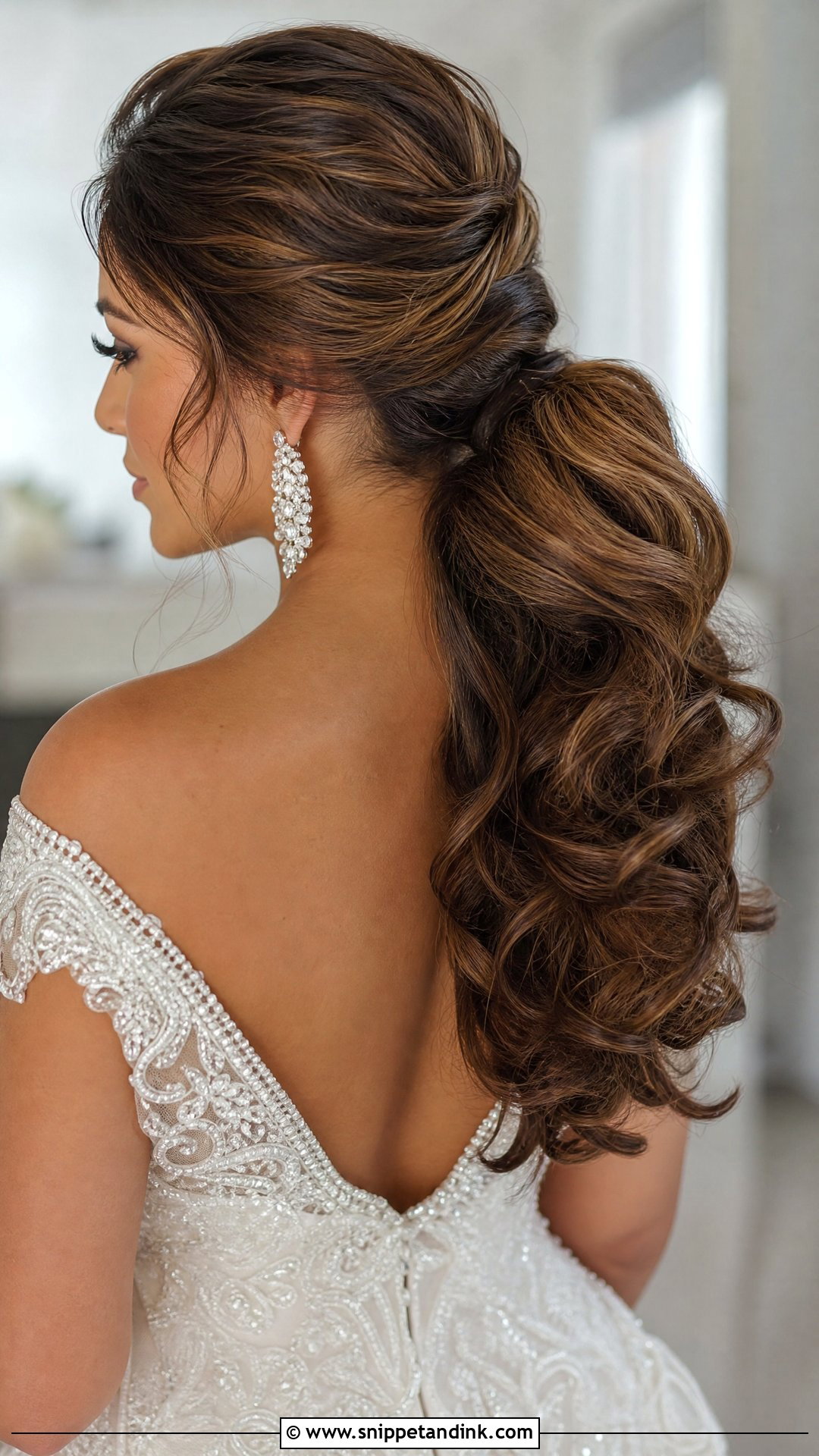
Volume is where I most often use clip-in extensions. Fine hair can be teased at the crown, but the tail itself stays thin no matter how it’s curled, so a small weft clipped under the base adds the fullness the photos are reading. The goal is full and smooth, not puffed. Dramatic gowns and long veils need this kind of weight in the hair to look balanced, and sparkly hair accessories sit better on a full base than a thin one.
13. Twisted Wedding Low Ponytail
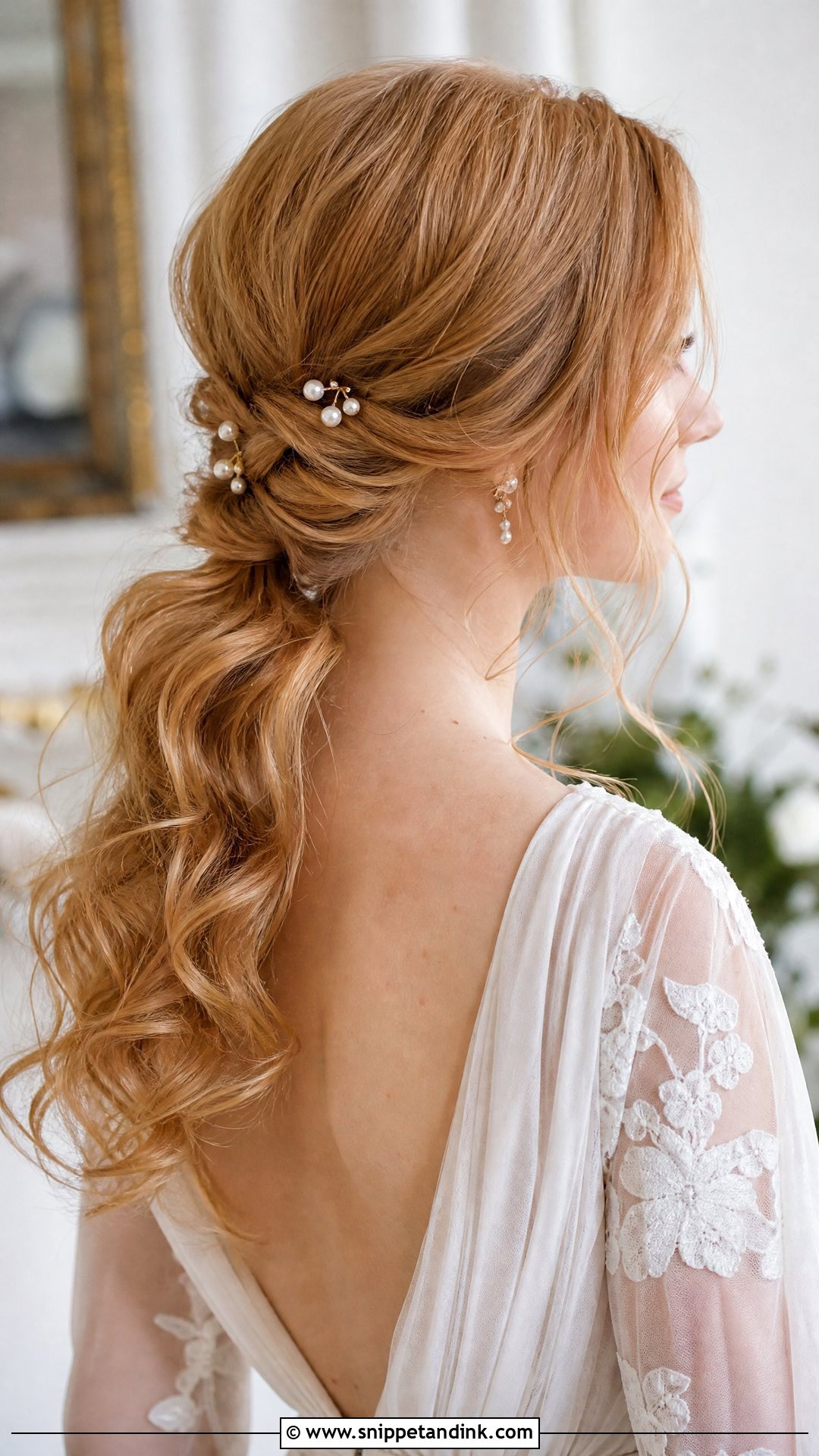
Twists are a quieter alternative to a braid, and they’re good at hiding grown-out bangs and short front layers. I twist each side back toward the nape, pin the twists where they meet, then gather everything into the tail. Pulling the twists apart a little softens them. They do loosen faster than a braid on very silky hair, so I set a few crossed pins along each one. A small comb or floral pin over the join is optional.
14. Bow Wedding Low Ponytail
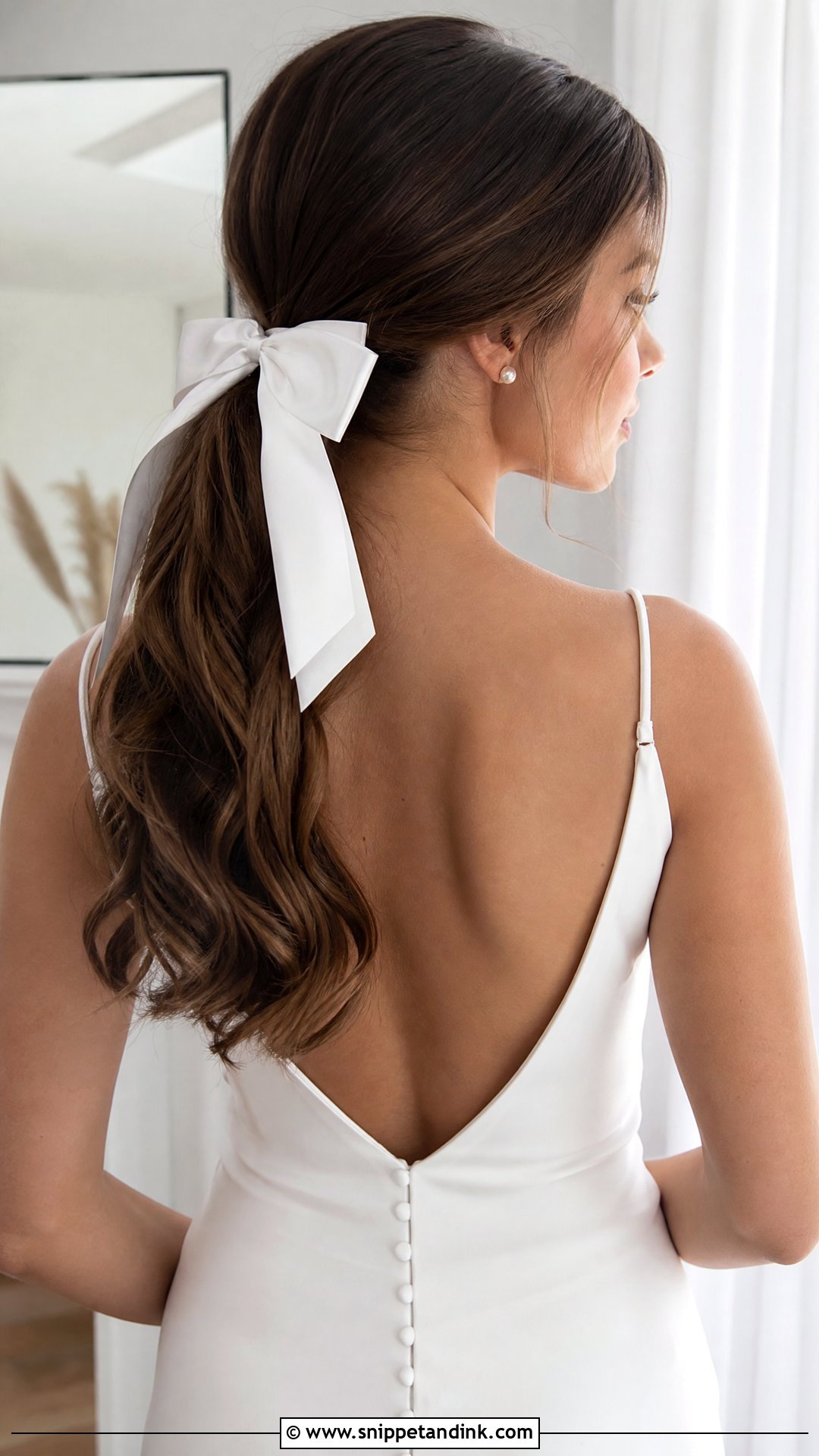
A bow is the easiest way to coordinate a wedding party without making everyone wear the same hairstyle. Satin and silk suit summer, velvet suits winter, and organza is lighter for a long day. I sew or pin the bow directly into the base rather than tying it over the elastic, because a tied ribbon slides down the tail within an hour. A slim white bow reads classic; a wide one becomes the main detail, so the rest of the hair should be quieter.
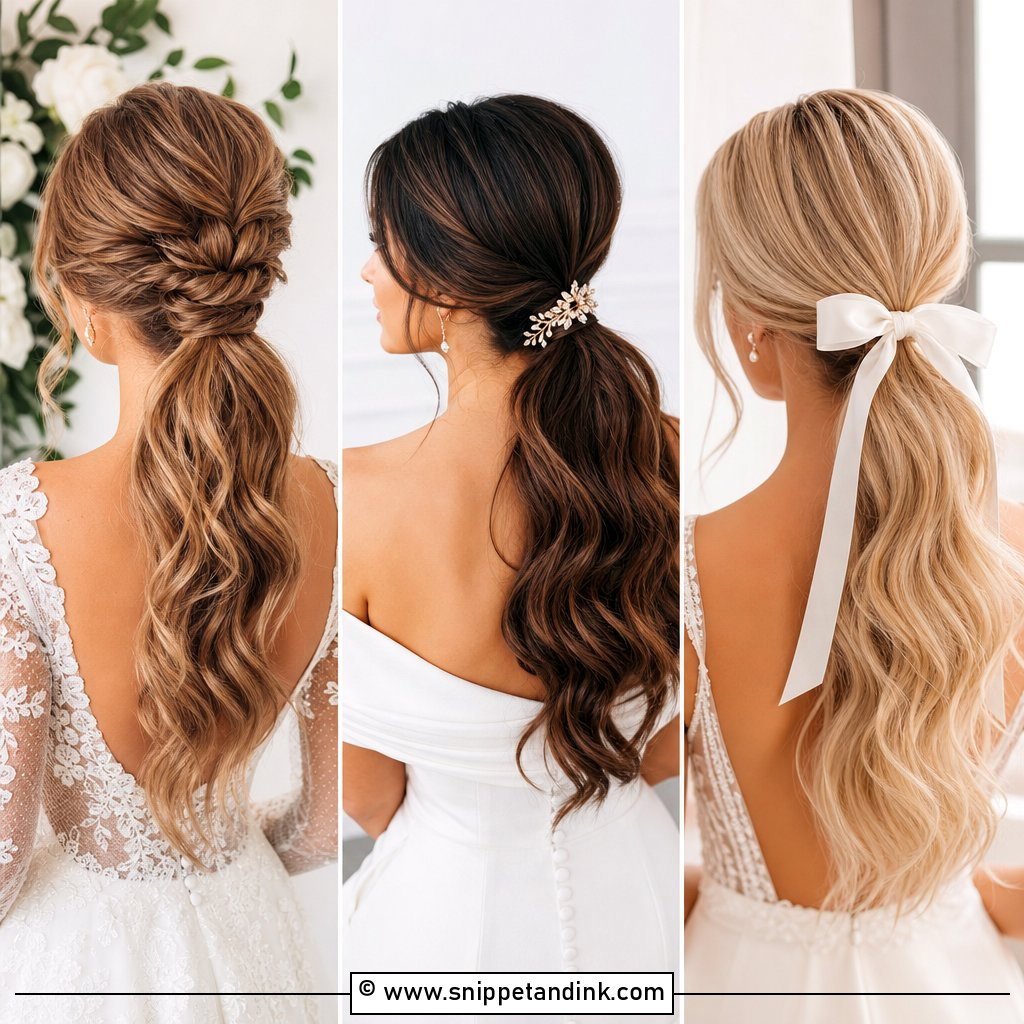
15. Hollywood Wave Wedding Low Ponytail
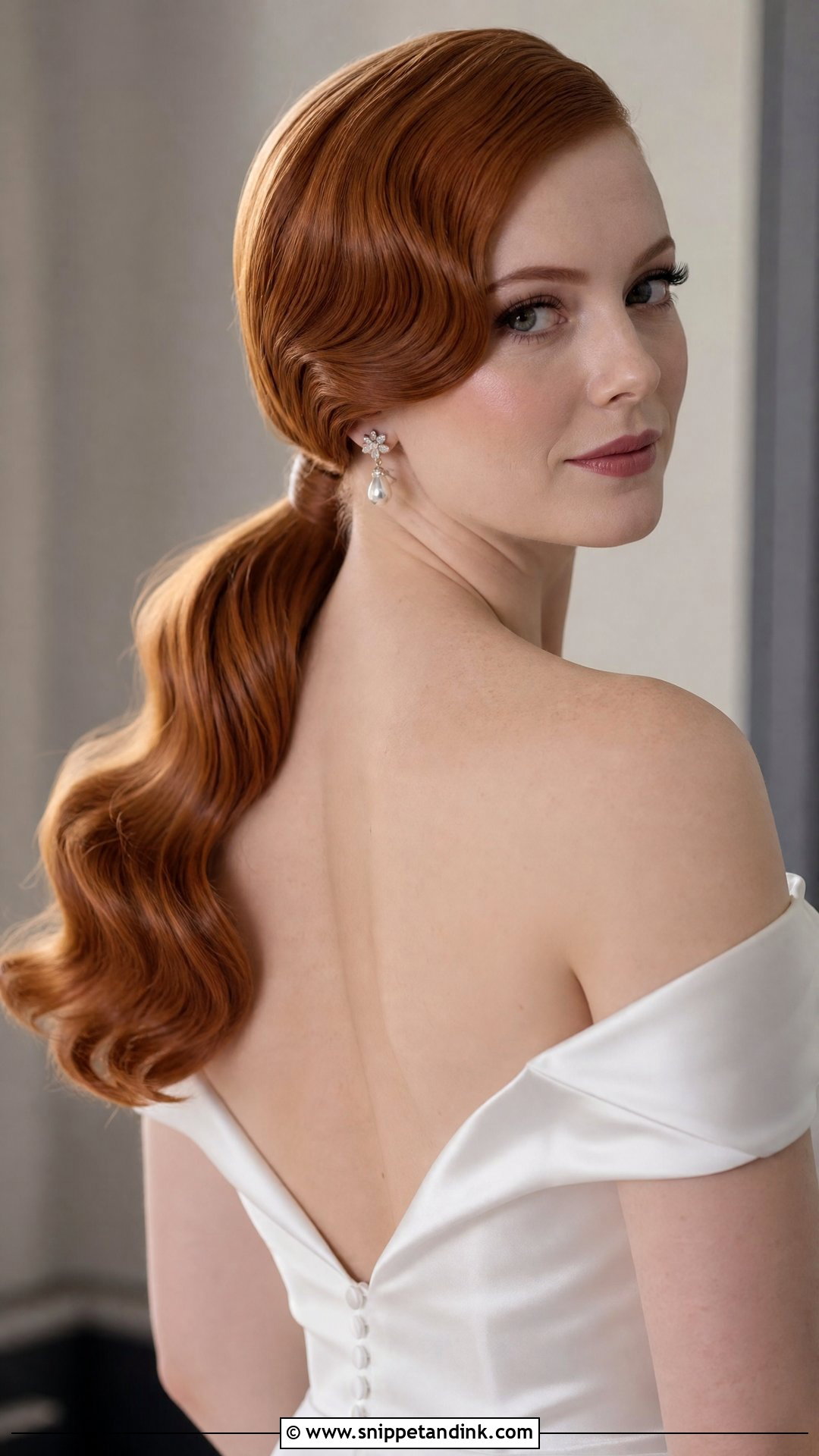
Hollywood waves on a low tail take the longest of anything here. Each section is curled in the same direction, pinned to cool, then brushed out into one uniform S-shape before the tail is tied. The crown is smooth and sculpted. A side part leans vintage; a centre part looks more current. If the waves are brushed too long they turn to frizz, and too little leaves visible curl seams, so I’d only book this with a stylist who has done it many times. Shine spray finishes it.
The Elastic Usually Gives Up Before the Curls Do
When a low ponytail fails, it’s rarely the waves that go first. It’s the base: the elastic stretches a little with every hug, the tail drops a centimetre, and suddenly there’s a gap at the crown. I prevent that with two small elastics instead of one, the first tight, the second over it, and two bobby pins pushed crosswise through the base into the scalp hair.
Car seats are the other enemy. Leaning back on a headrest flattens the crown and pushes the tail sideways, so I tell brides to sit forward on the drive. Your maid of honour should carry four pins, a small brush and a travel spray. That covers almost every fix I’m ever called back for.
Not Enough Length for a Full Tail?
Shoulder-length hair can still make a low ponytail, but it will be short and the shorter layers at the back will fall out. Clip-in wefts solve both. I match them to your colour at the ends, not the roots, since the ends are what show. Order them early, have them coloured or cut to blend, and wear them at the trial.
If extensions aren’t for you, I’d suggest a short tail with a braid wrapped around it. The braid hides how little length there is and the overall shape still reads as deliberate.
Test It Sitting Down, With the Veil In
Every one of these starts from the same base, so the decision is really about finish and accessories. Bring photos, your veil, your earrings and the hair pieces you plan to wear to the trial, and book it close enough to the wedding that your hair is at the length it’ll actually be. Think about your dress neckline, the weather and how long you’ll be on your feet. A well-built low ponytail asks less of you during the day than almost any updo.
You'll Like These Ideas:


Leave a Reply