
Sixties hair is built, not just curled. Nearly every shape from the decade, from the beehive to the flip, starts with teased volume at the crown and a smoothed surface over the top, and that structure is what makes it look so finished next to a veil. The trick for a wedding now is keeping the shape without the helmet. I’ve gone through twenty looks below, from big height to short mod cuts and natural texture, with notes on which hair types carry each one and how they sit with short dresses, lace, satin columns and courthouse outfits.
Backcombing Is the Secret, and It Has a Cost
Almost every look below depends on teasing, so it helps to know what’s happening to your hair. When I backcomb, I push the shorter hairs in a section down toward the root to build a cushion, then smooth an untouched layer over the top. Done gently, in small sections, it’s safe. Done roughly, or brushed out dry afterwards, it leaves breakage at the crown.
How your hair type changes the plan
- Fine or very straight hair collapses fastest. A hair padding piece or mesh roll gives height with far less teasing.
- Thick hair holds volume easily but gets heavy; I use fewer, bigger pins and a firm base.
- Freshly washed, silky hair won’t hold a tease. Day-old hair or a texturizing spray at the root does much better.
- Layered cuts leave short ends poking out of rolls and twists, so expect a few deliberate loose pieces.
Height also changes everything around the hair. A tall beehive adds real inches, so think about your veil placement, a low car roof and how you’ll look next to your partner. I’d always test the full height at a trial before deciding.
1. 1960s Wedding Beehive Hair
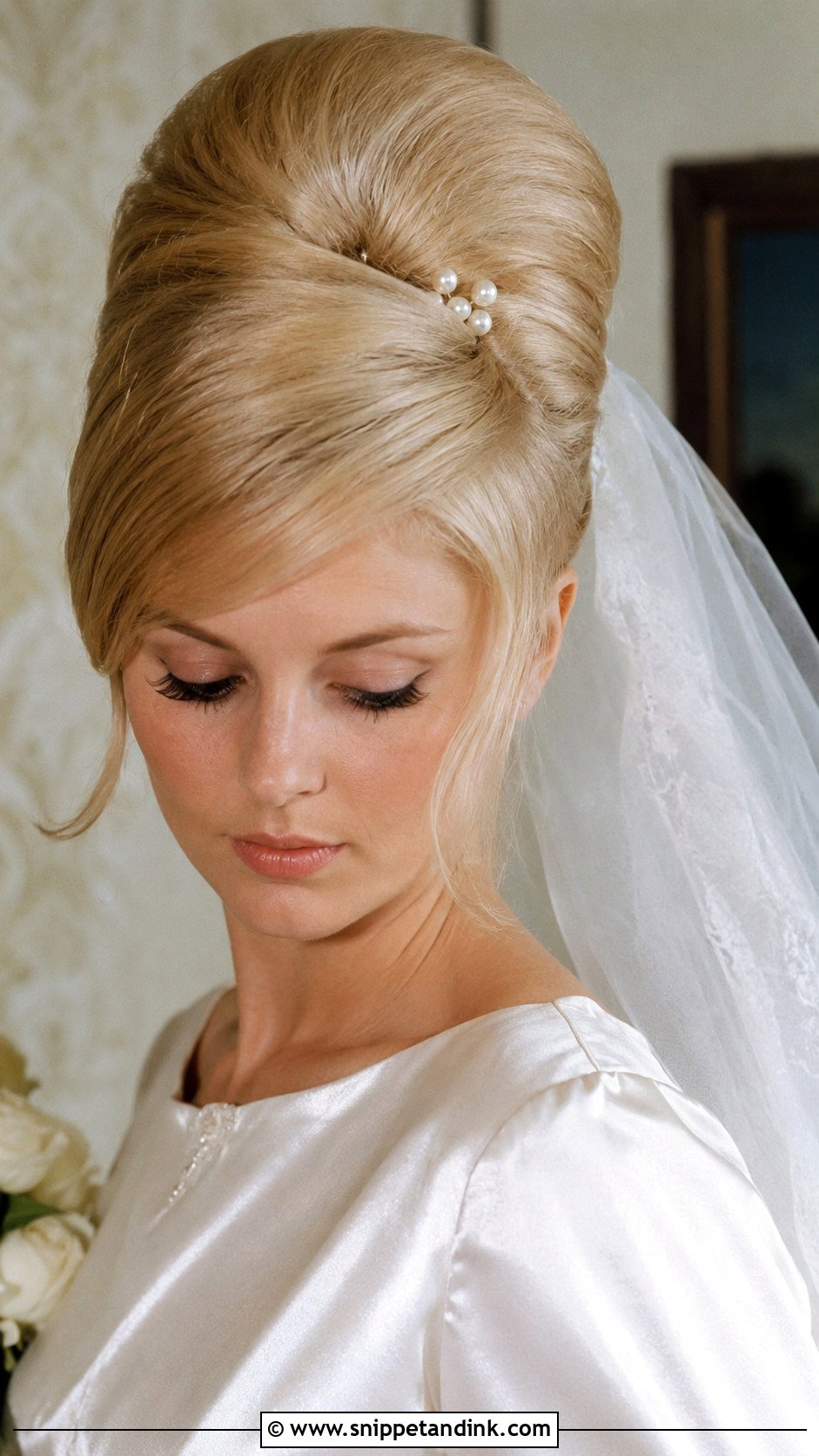
The beehive is the shape everyone pictures. I tease the crown section in small panels from the root, smooth a clean layer of hair over the top, and pin the back into a tall oval. The front must stay sleek; any frizz on that top layer shows instantly in photos. Fine hair often needs a padding piece inside to reach the height without hours of backcombing. A couple of soft pieces at the face makes it wearable, and it sits naturally with winged eyeliner and a bateau or high lace neckline.
2. 1960s Wedding Bouffant Hair
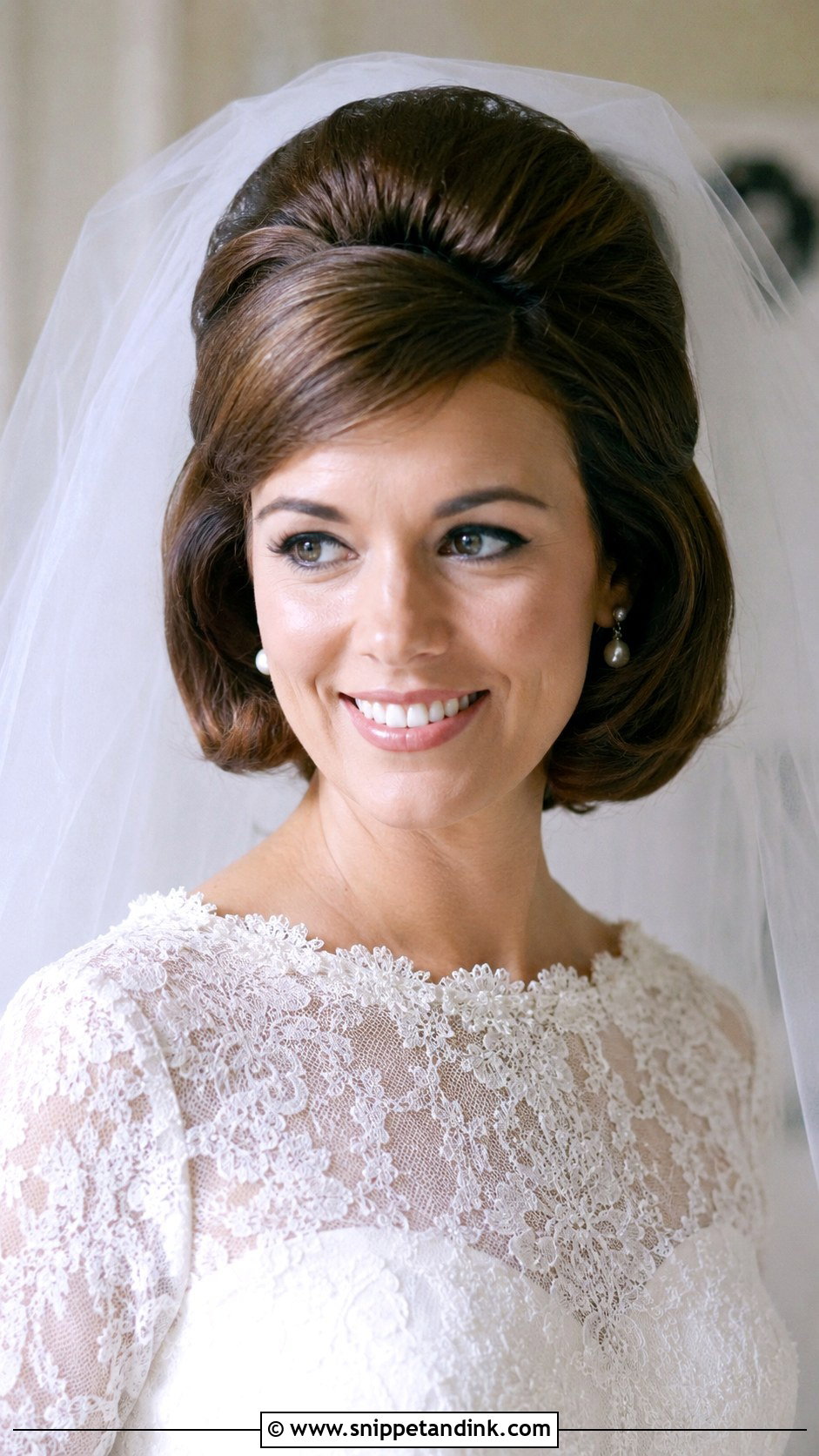
Where a beehive goes up, a bouffant goes out. The volume sits around the crown and sides in a rounded dome, so it adds width rather than height. That’s useful if you’re already tall, or if your partner is close to your height. I keep the surface glossy and tuck the ends under or fold them into a low knot. A shoulder-length veil or a satin bow sits neatly behind it.
3. 1960s Wedding Half Up Bouffant Hair
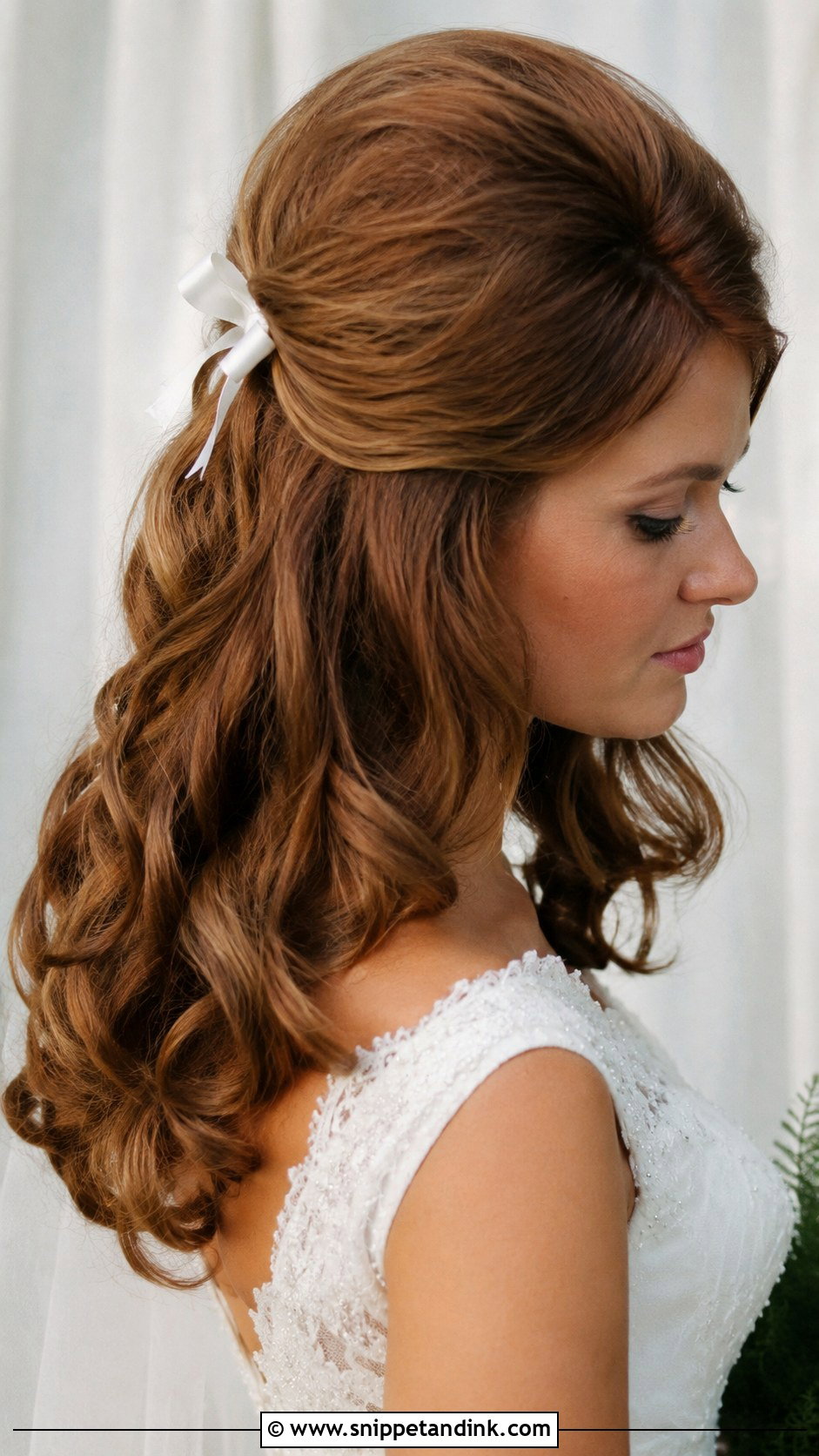
Wearing half up bouffant hair gives you the sixties lift on top and your length down below. The crown is teased and pinned, and the lengths finish in smooth curls or flipped ends. Medium and long hair suit it because the height needs some weight underneath to look balanced. The pinned section takes the strain all day, so I criss-cross the pins at the back and hide them under a small veil, pearl comb or ribbon. It’s also easy for a bridesmaid to copy in a simpler form.
4. 1960s Wedding Bubble Flip Hair
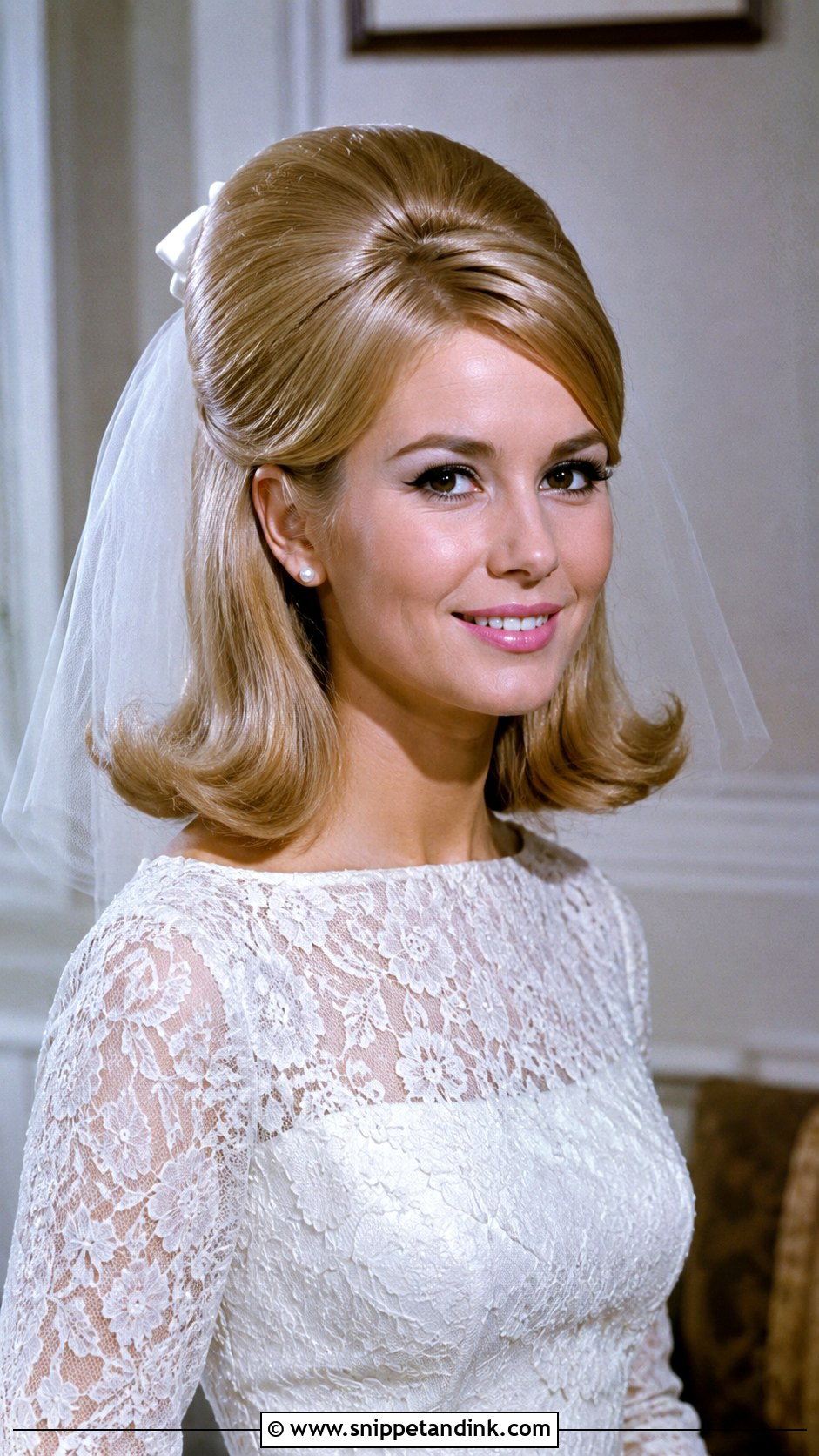
Shoulder length is the sweet spot for a bubble flip. The crown gets rounded volume and the ends curve outward in one smooth line. That flip is set with a large round brush or big rollers, not a curling iron, which gives a tighter, curlier end than the era had. It’s light and cheerful with a short veil or pillbox hat, and right at home with mod dresses and tea-length gowns. I’d warn you that collars and high necklines push the flip around, so check it against your outfit.
5. 1960s Wedding French Twist Hair
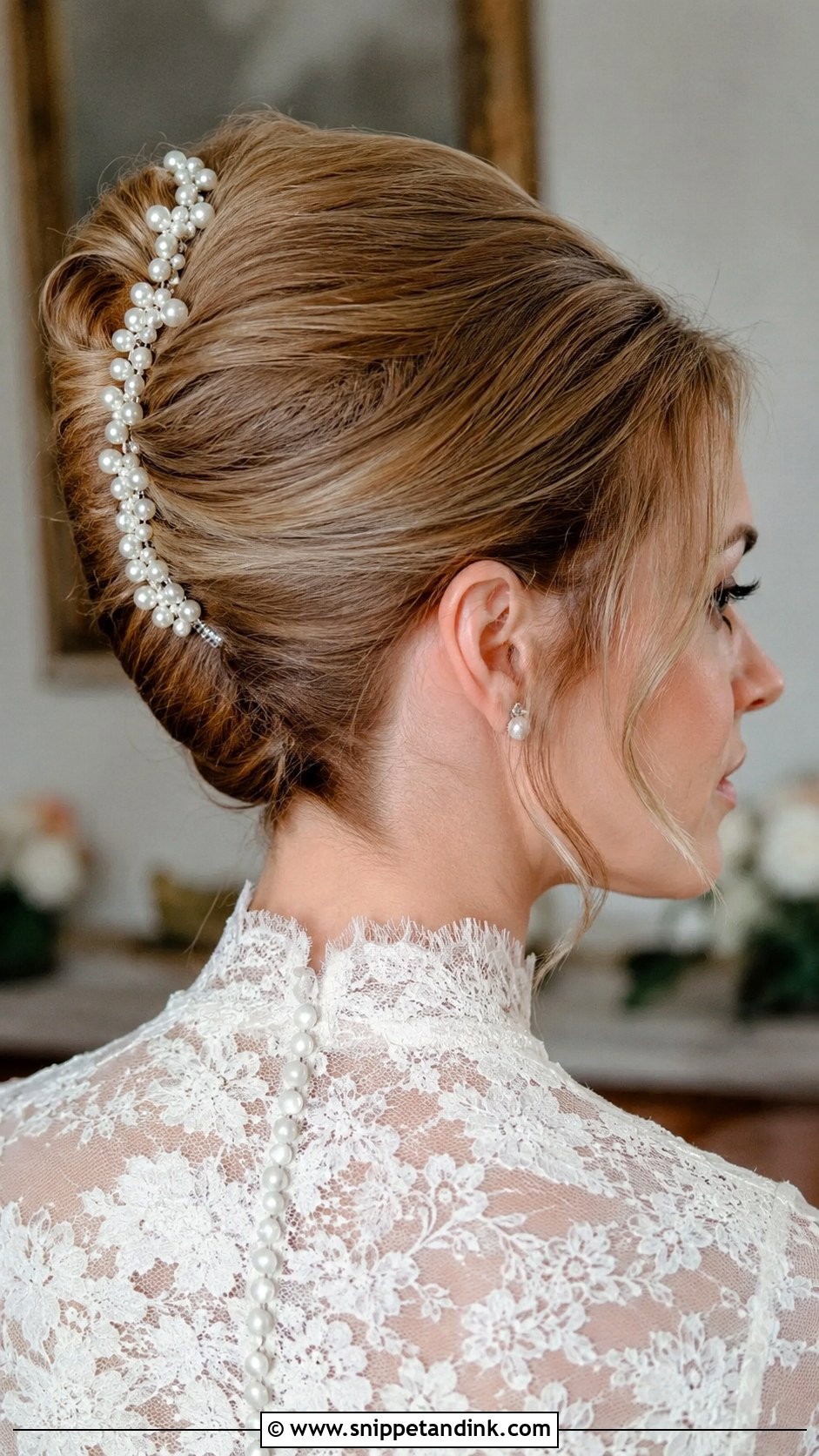
A sixties French twist had more lift at the crown than the sleek versions you see now. I tease the top, sweep everything to one side, fold it into a vertical roll up the back of the head and pin along the seam. It’s one of the most secure updos there is, and it lengthens the neck. Drop earrings, high collars and lace sleeves all suit it. Very short layers can poke out of the roll, so if your hair is layered, expect a few pieces left out at the temples on purpose.
6. 1960s Wedding Chignon Hair
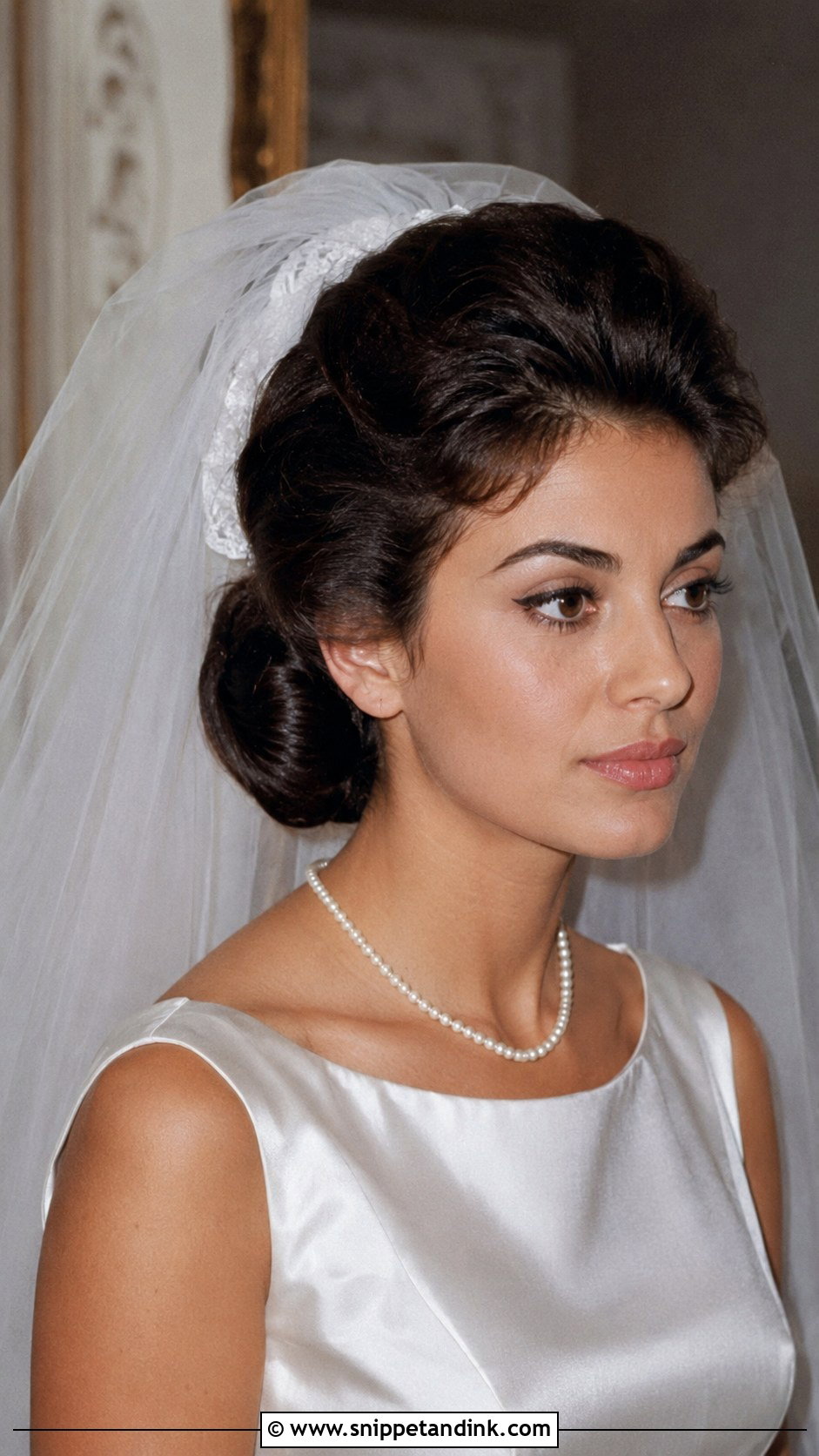
This chignon is a low knot at the nape with gentle teasing at the crown, so the profile has that sixties curve. It’s my usual suggestion for a hot day: everything is off the neck and very little can drop. A cathedral or birdcage veil, floral pins or a satin bow all attach easily at the base. Because it’s so tidy, it leaves your jewellery and the neckline of the dress to do the talking.
7. 1960s Wedding Mod Bob Hair
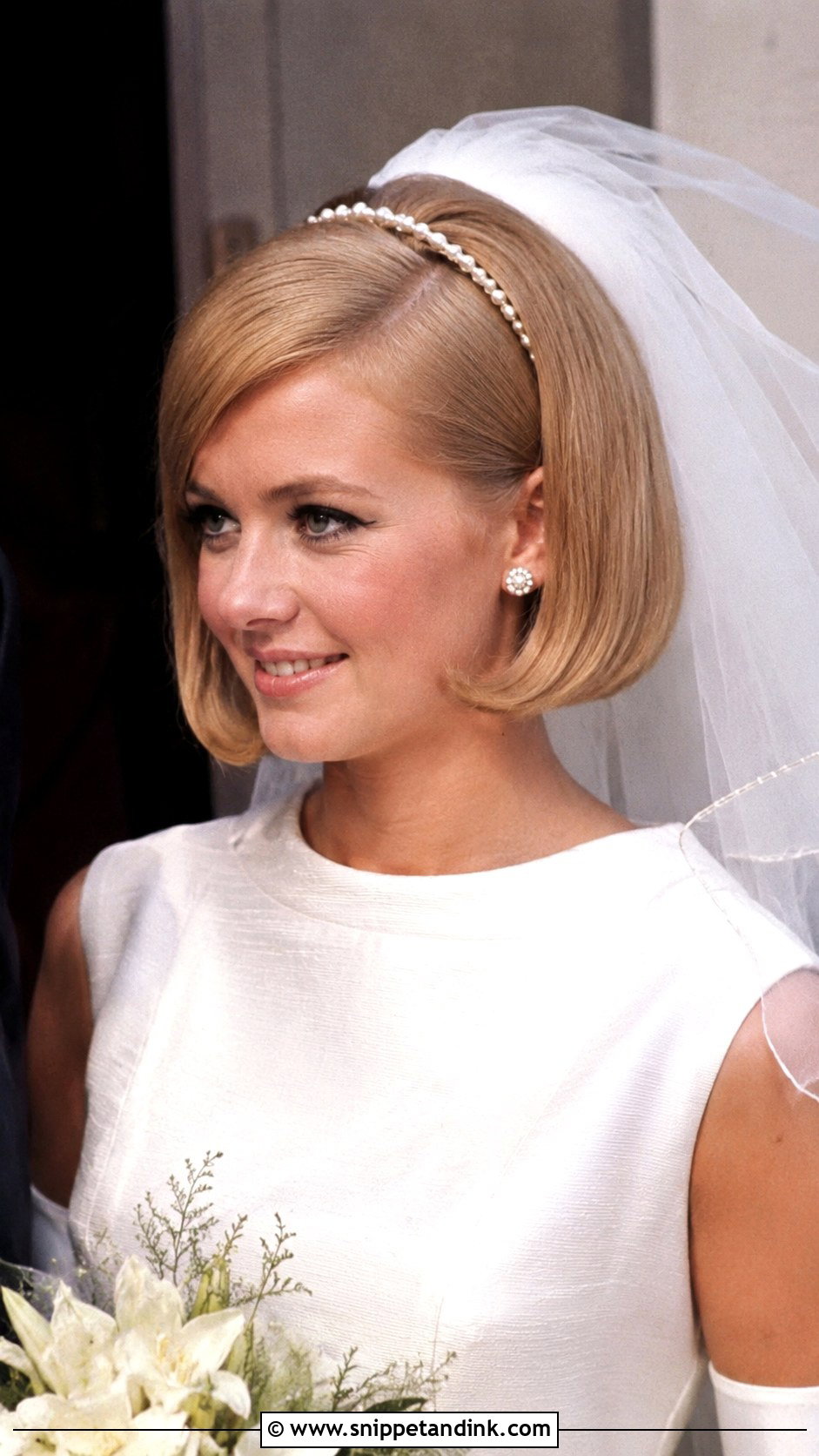
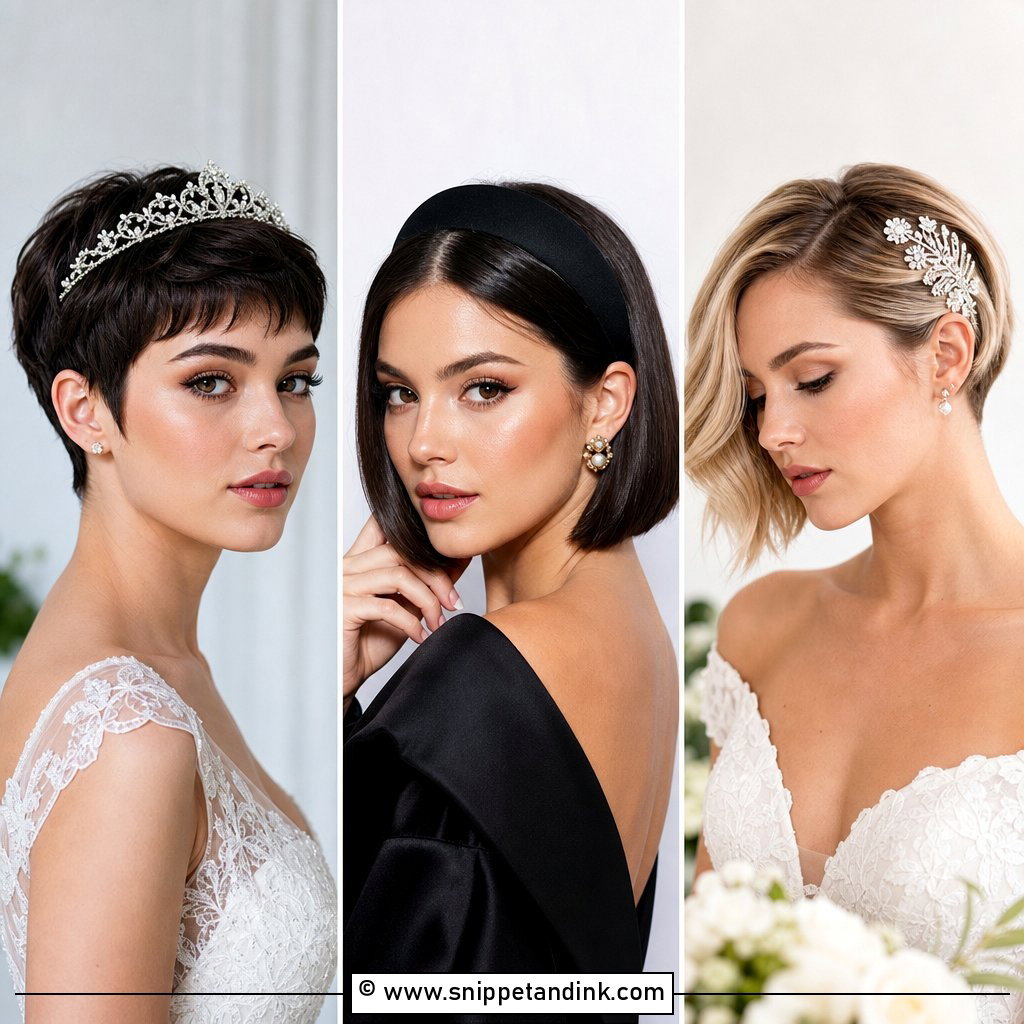
Short to medium hair suits the mod bob: clean, rounded and usually ending at the chin. A side part or a full fringe makes it more authentic. I smooth it with a paddle or round brush and turn the ends inward, then add a simple headband, bow or mini veil. It goes naturally with shift dresses and short wedding dresses. Get the cut freshened about two weeks before so the line is crisp without looking just done.
8. 1960s Wedding Pixie Hair
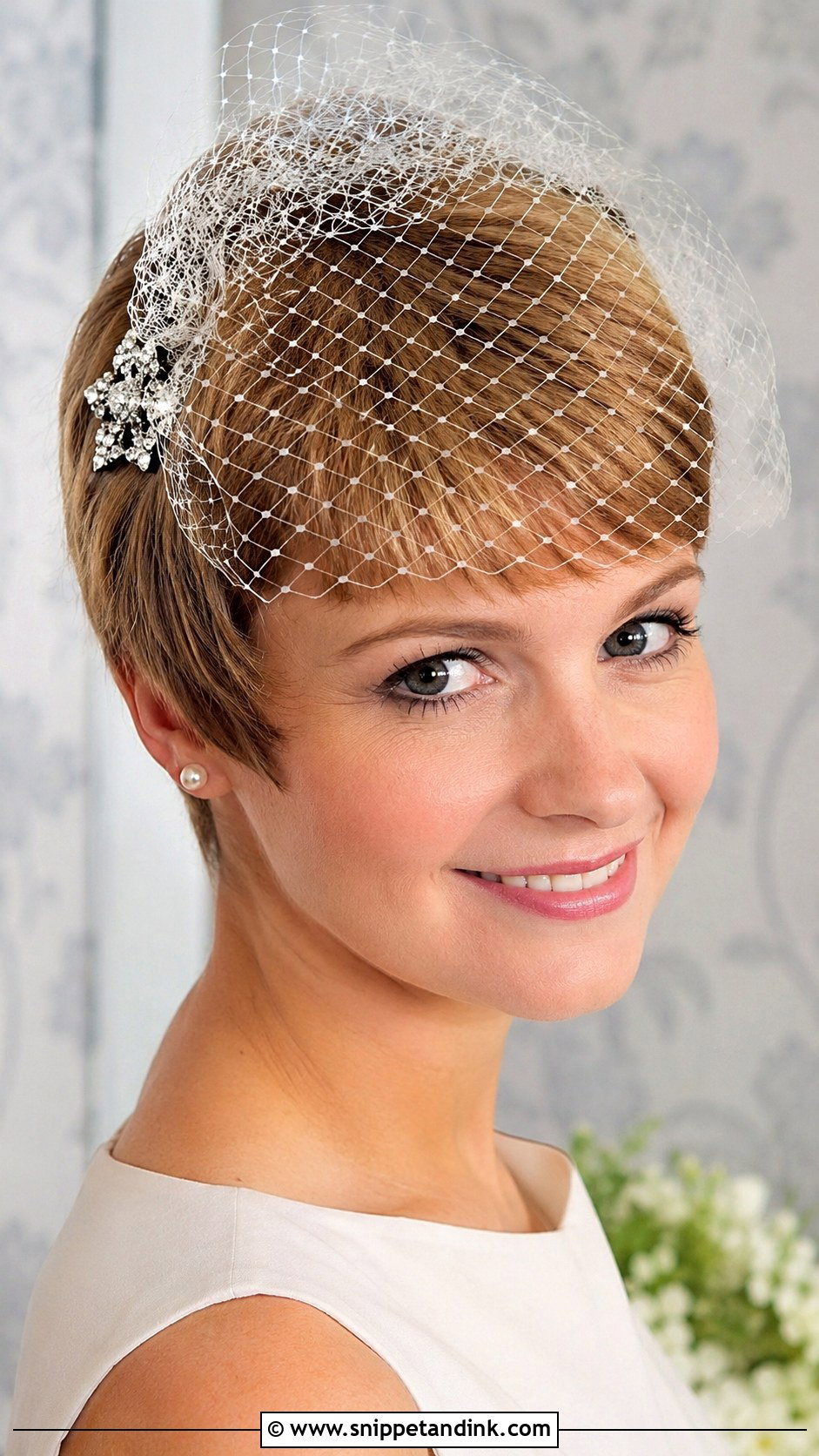
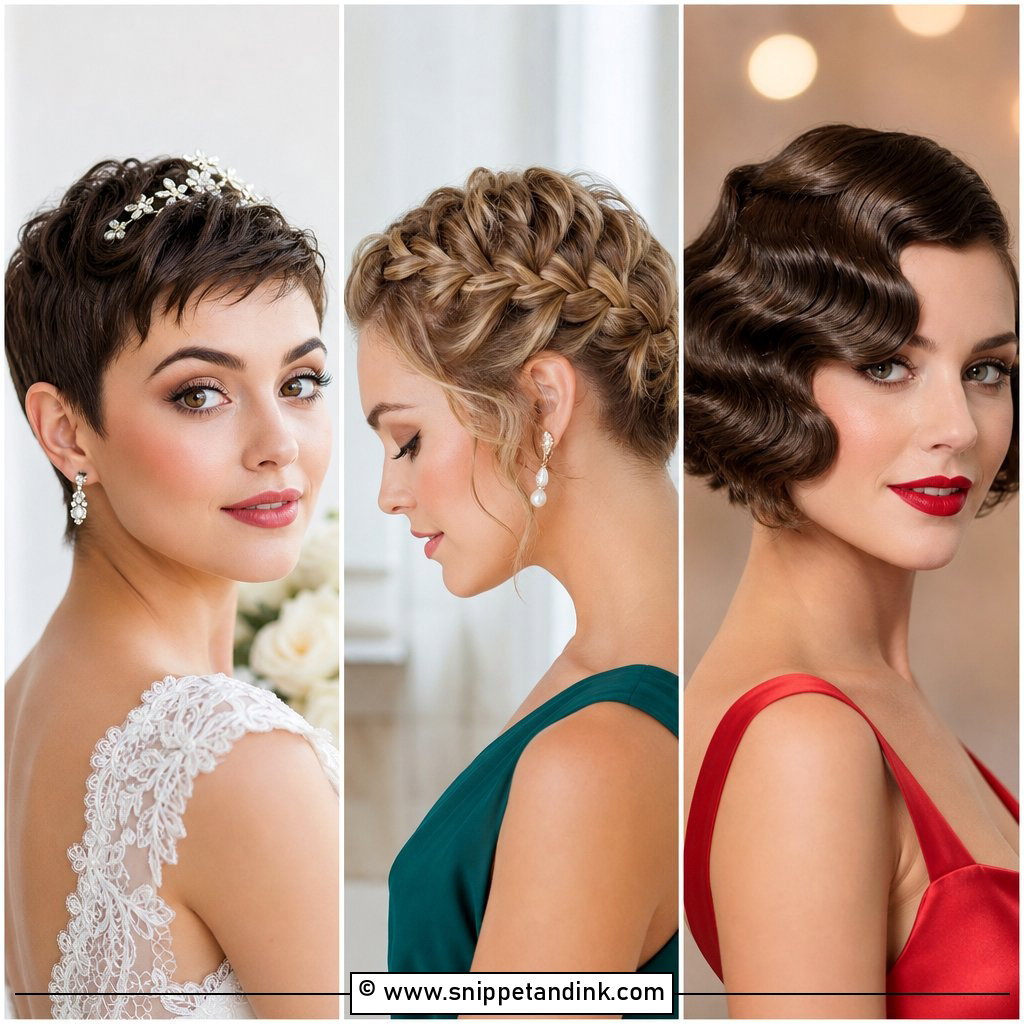
A sixties pixie had soft shaping over the forehead and ears, which is why it reads feminine even very short. On the day I mostly smooth and polish, then add one thing: a birdcage veil, a jeweled clip or a small floral comb. Short cuts can’t hide a comb, so the accessory has to be small and light. You’ll have nothing to manage all night, and your earrings will get noticed.
9. 1960s Wedding Pageboy Hair
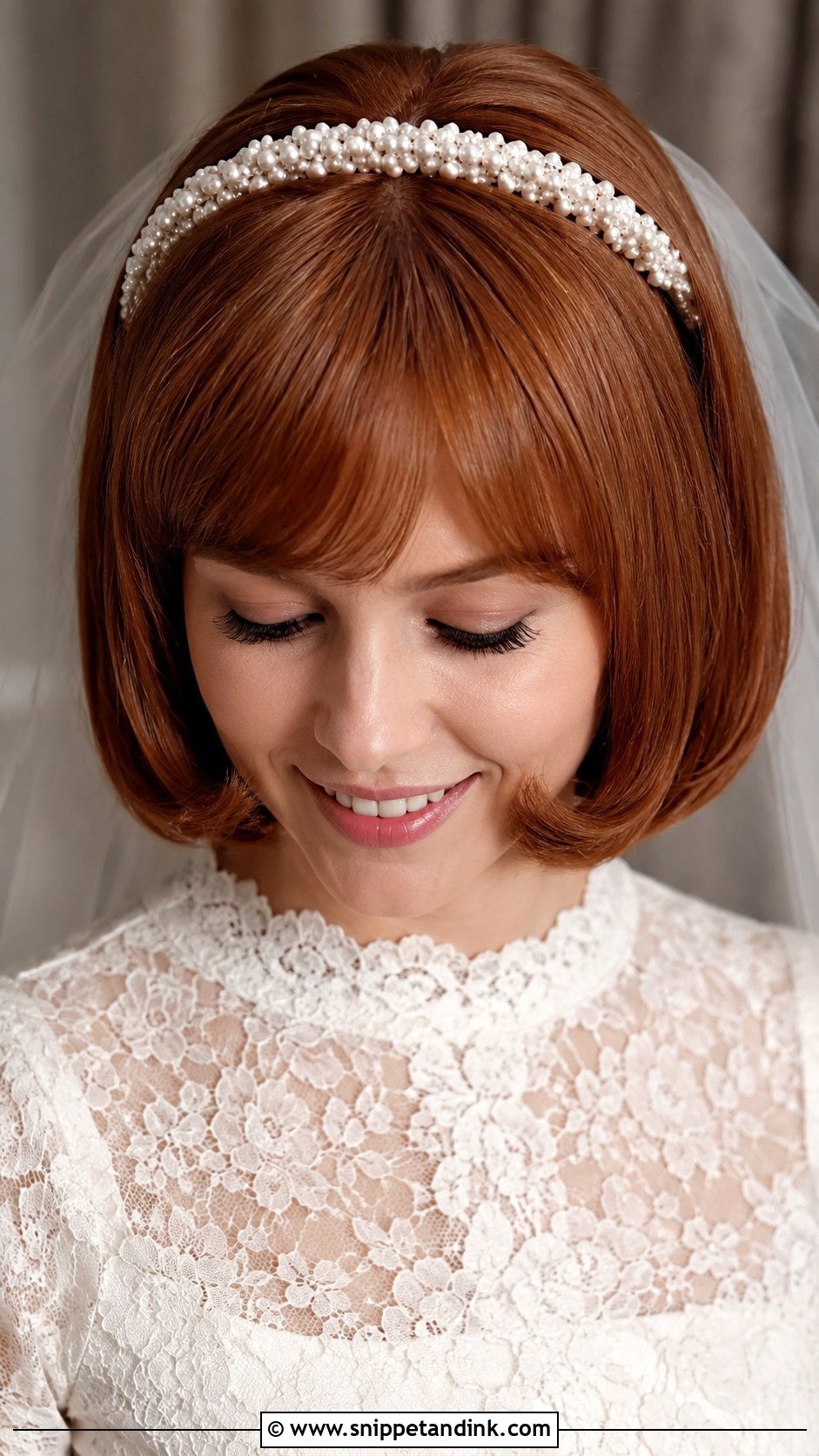
The pageboy is the low-volume option. The ends curl under in a smooth, rounded frame around the face and neck, with little or no teasing. Short to medium lengths suit it, with a centre or side part or a light fringe. I set the ends on large rollers so the curve holds through the day. A pearl headband or small veil makes it bridal. If you don’t want backcombed hair at all, start here.
10. 1960s Wedding Bardot Hair
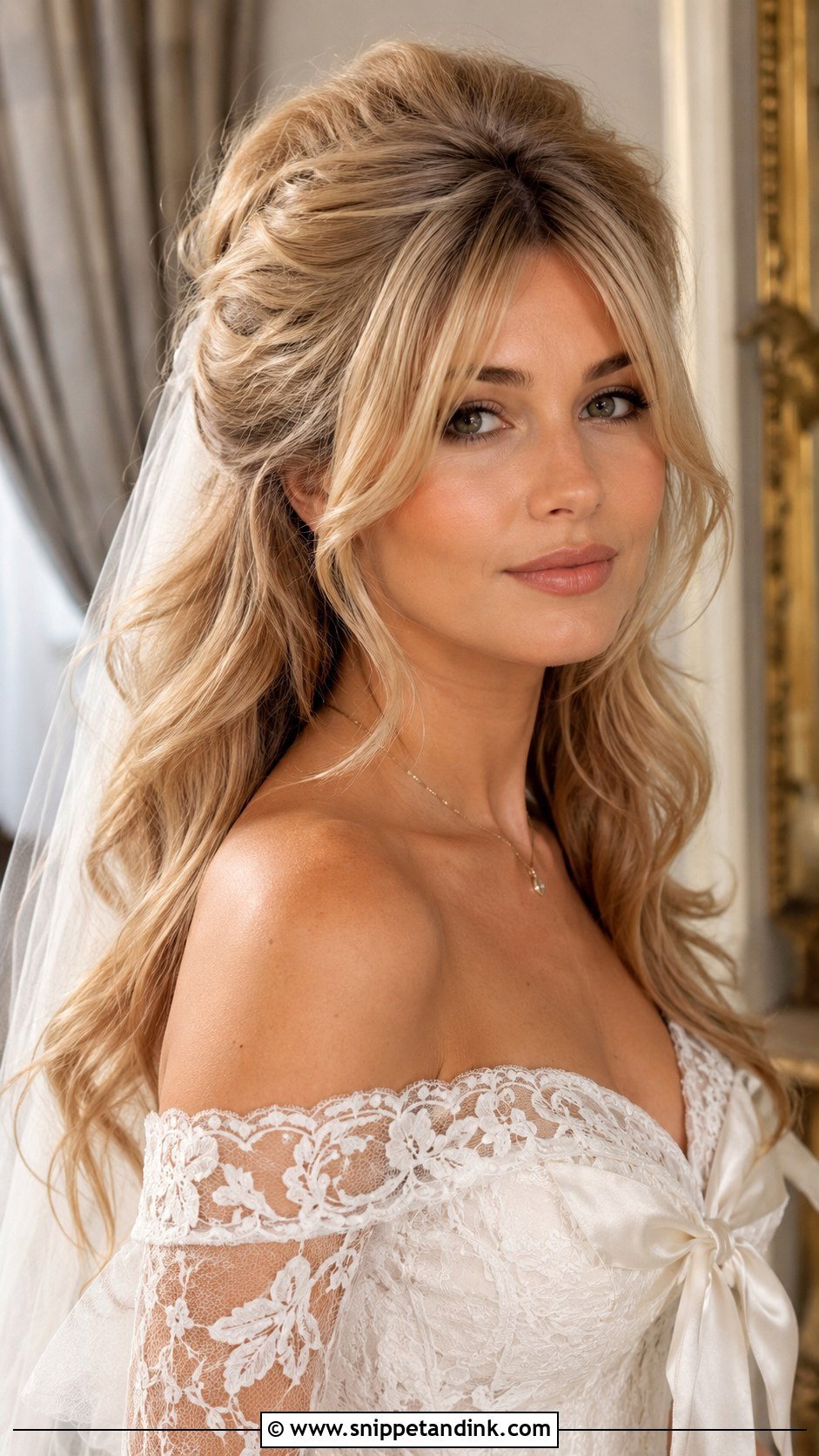
Bardot hair is the loose one: a lifted crown, long lengths and face-framing pieces, often with a centre part or curtain fringe. It looks undone, but the teasing underneath is the reason it doesn’t fall flat by the evening. Loose waves through the ends add movement. A bow, veil or floral clip at the back gives it a bridal note. It sits naturally with lace and off-shoulder gowns. Very fine, straight hair struggles to keep the crown height here, and I’d suggest a small padding piece.
11. 1960s Wedding Priscilla Beehive Hair
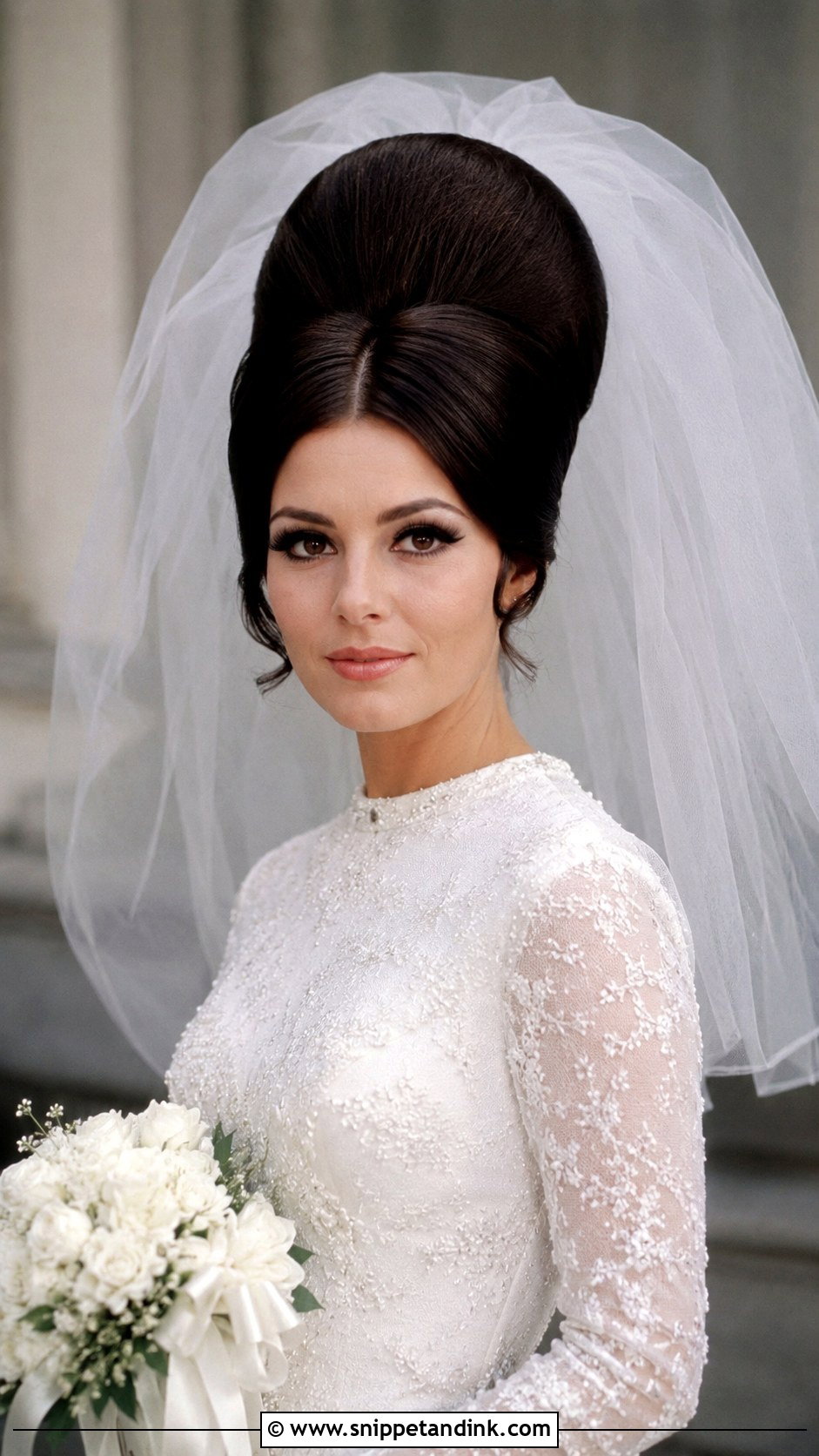
The Priscilla is the beehive taken taller and sleeker, with the sides smoothed flat to balance it. It’s a bold choice and you need to commit. I’d book a full trial and wear it for a few hours, because the height changes how a veil sits and how you get in and out of a car. A bubble veil or short veil behind the height works well. Defined lashes and a soft lip keep the face from competing with the hair.
12. 1960s Wedding Pillbox Hat Hair
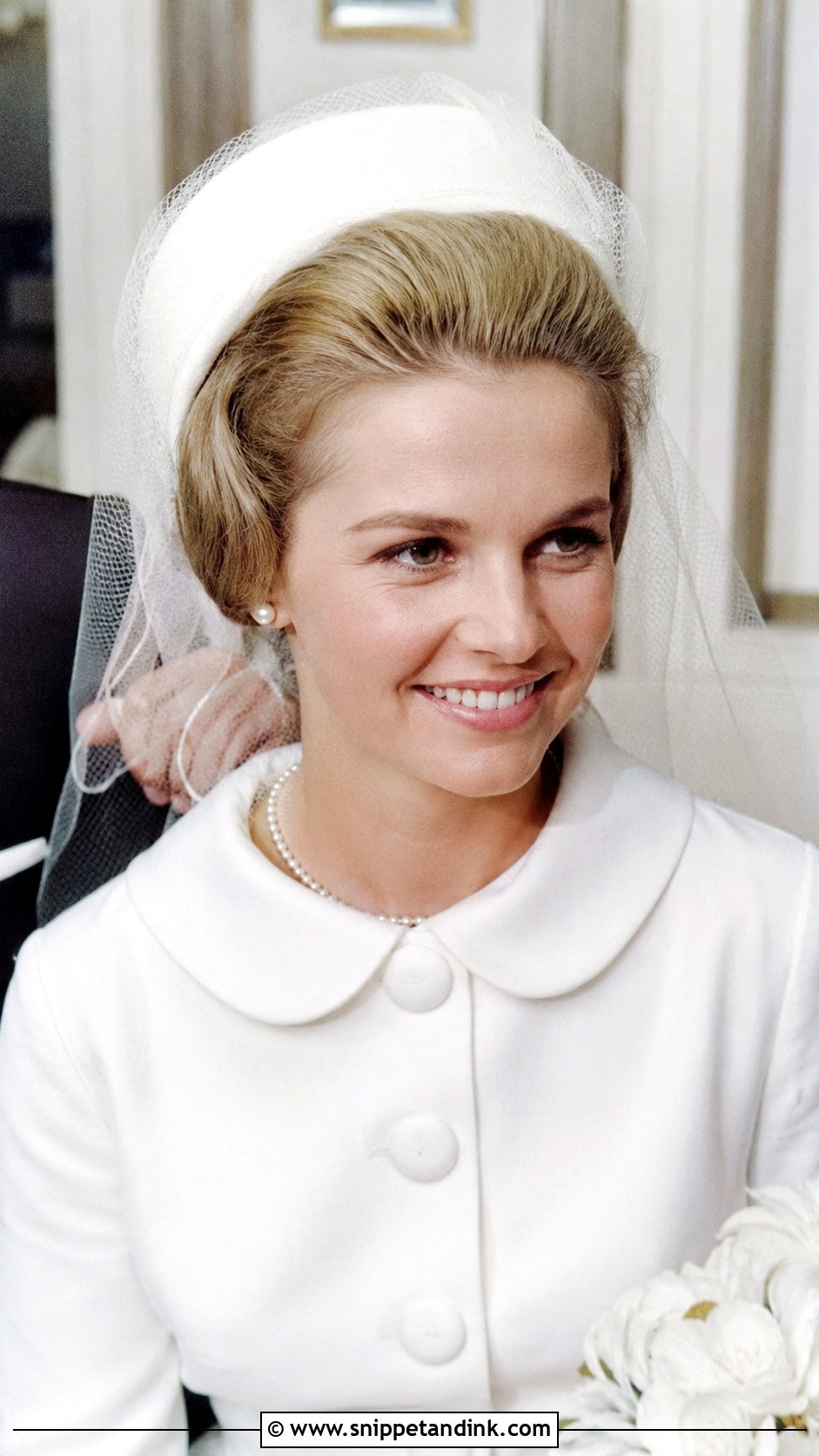
The pillbox hat is as much the look as the hair. The hair underneath should be smooth and compact so the hat sits level: a low chignon, a tucked bob or a small bouffant. I pin the hat with crossed pins through its comb or loops, and if it has none, I’d sew a small comb inside before the day. Add a short veil and it’s very sixties, especially for courthouse weddings and structured dresses.
13. 1960s Wedding Bubble Veil Hair
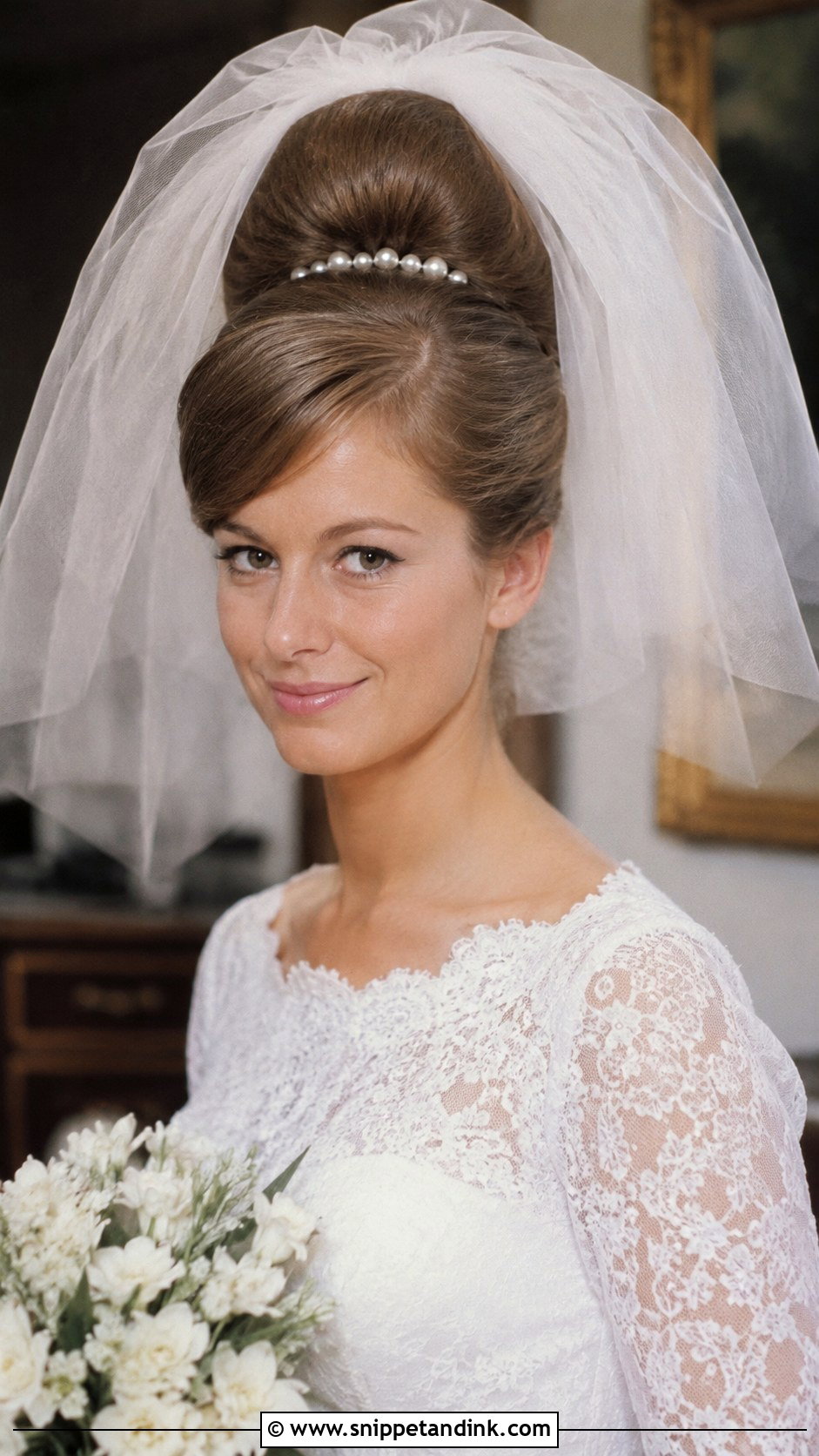
The bubble veil mirrors the round shape of big sixties hair, which is why the two belong together. The hair needs lift at the crown so the veil sits on top instead of squashing everything flat. Under it I’d put a smooth updo, a bouffant or a half up style. Pin the veil comb into the teased section, where it has something to grip. The veil softens the whole outline around your face.
14. 1960s Wedding Crown Veil Hair
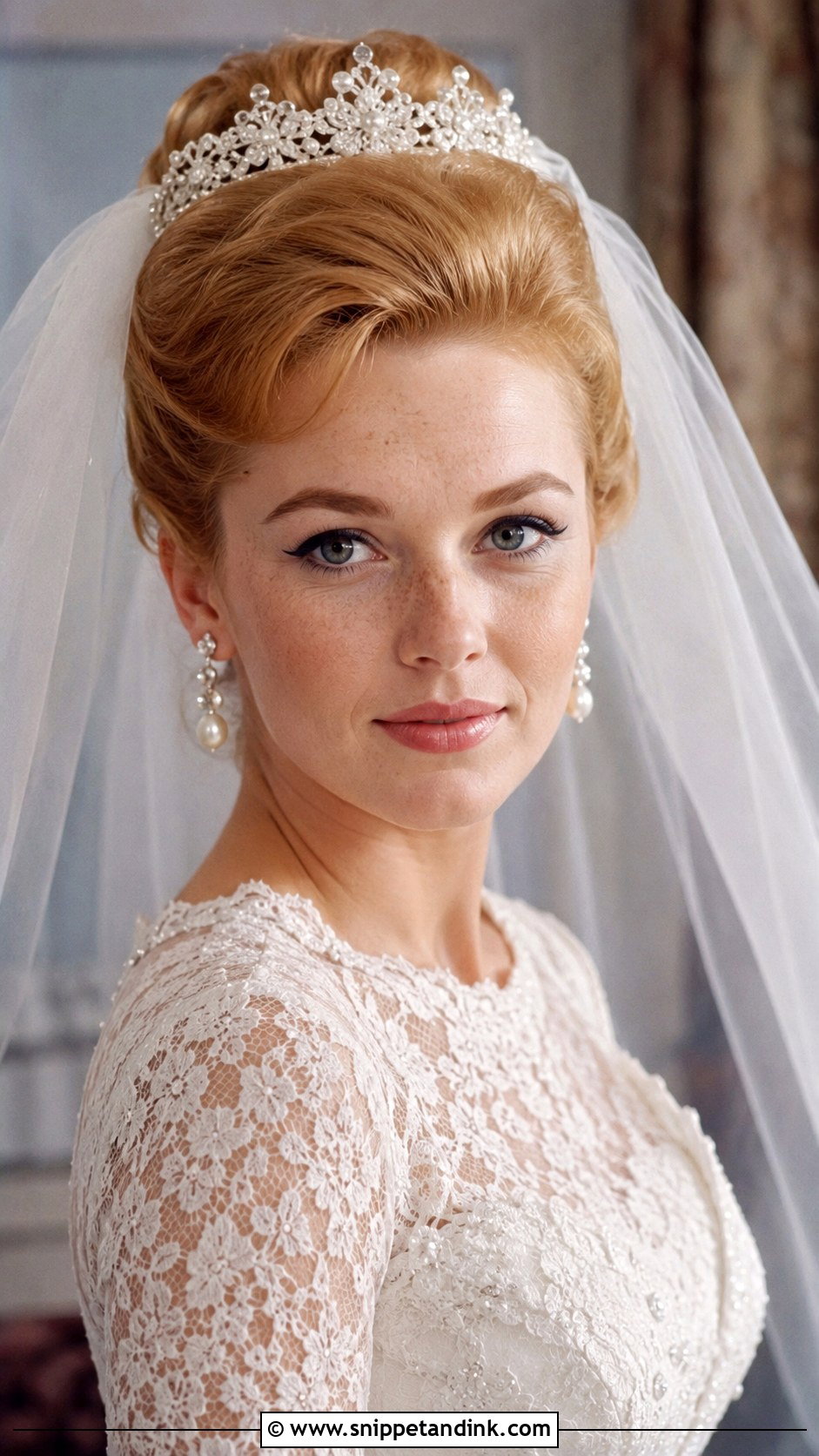
A crown headpiece over a softly teased hairstyle, with the veil falling from the back, is the formal sixties bride. The hair needs enough height to balance the crown, so a bouffant, beehive or structured updo is the base. I set the crown first, then build the veil comb in just behind it so the two don’t sit on the same pins. Keep the front smooth and soft. It sits well with lace, long sleeves and pearls.
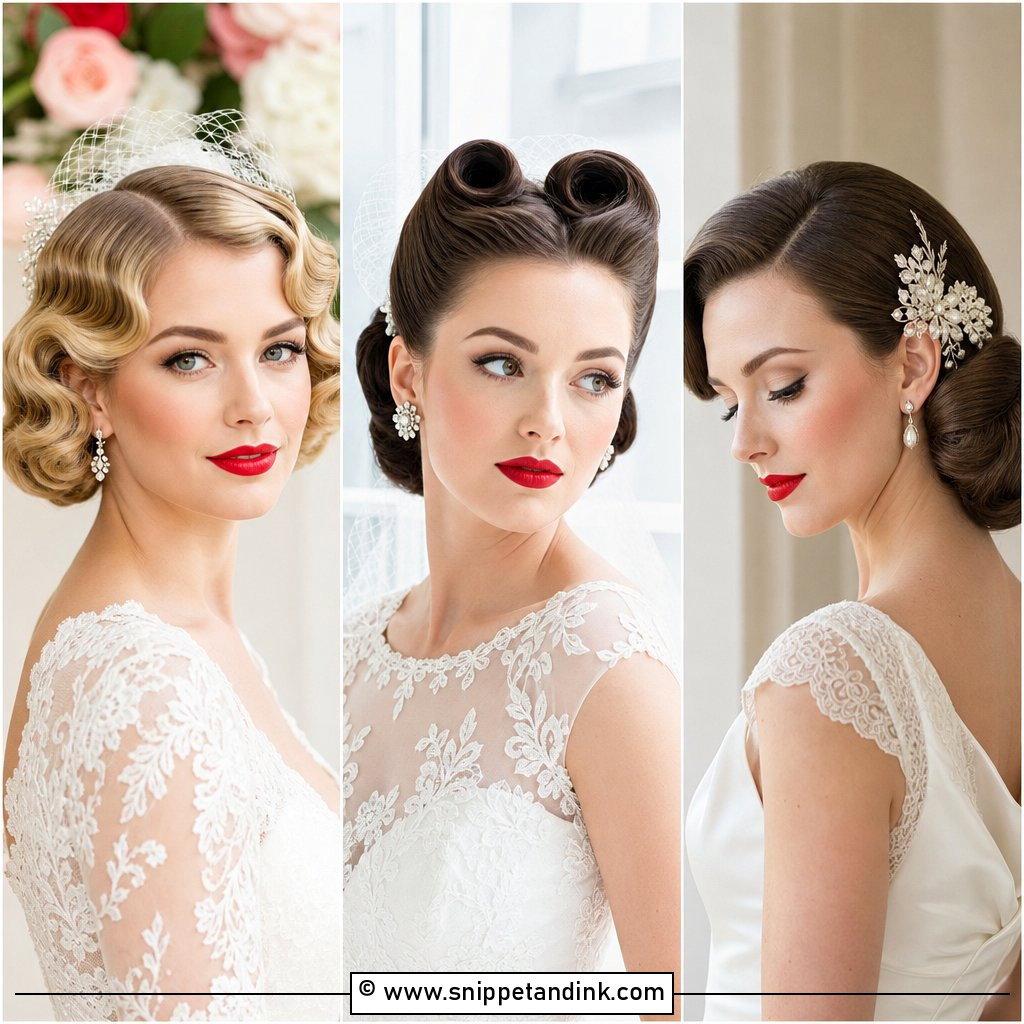
15. 1960s Wedding Flower Bouffant Hair
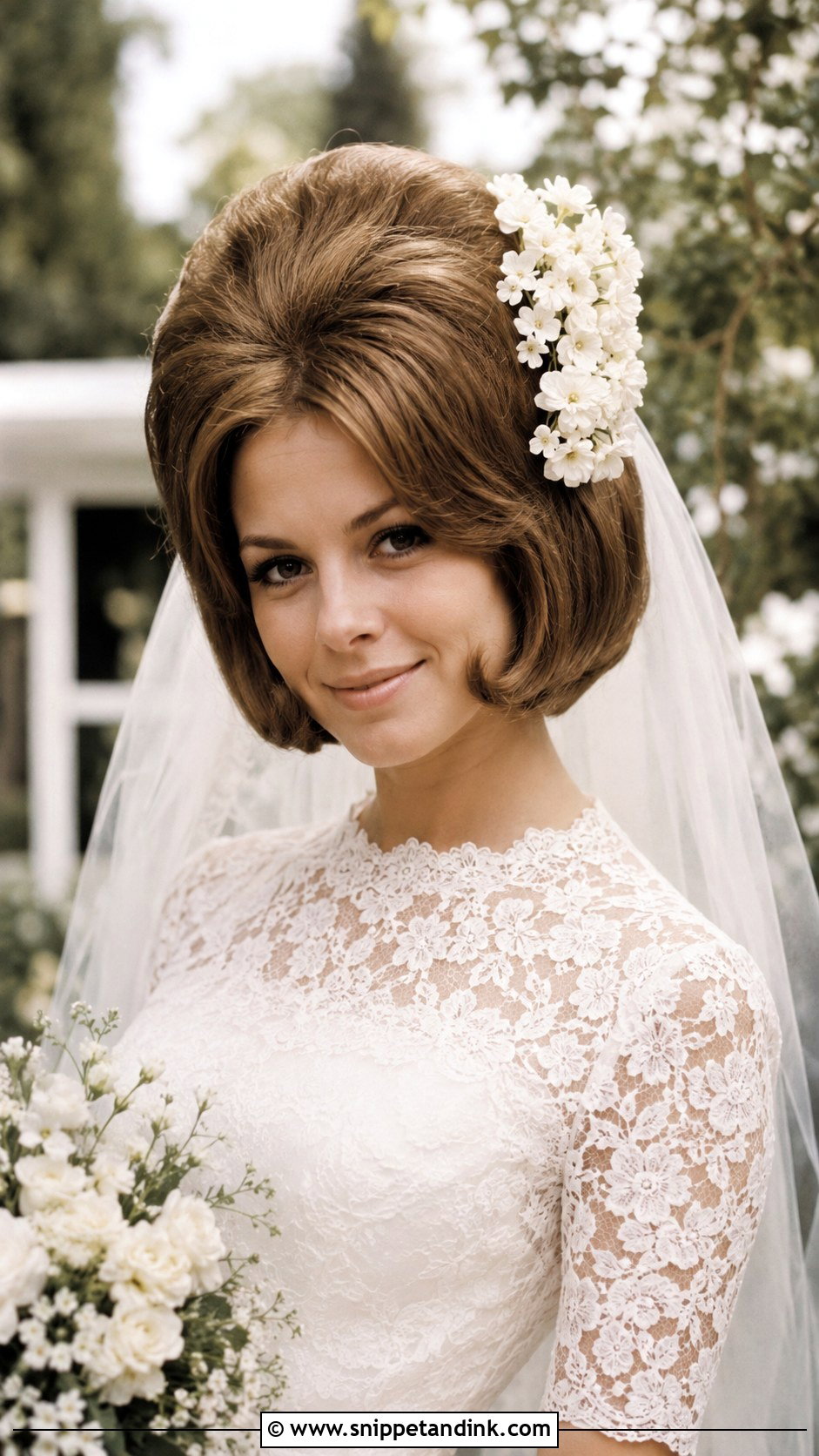
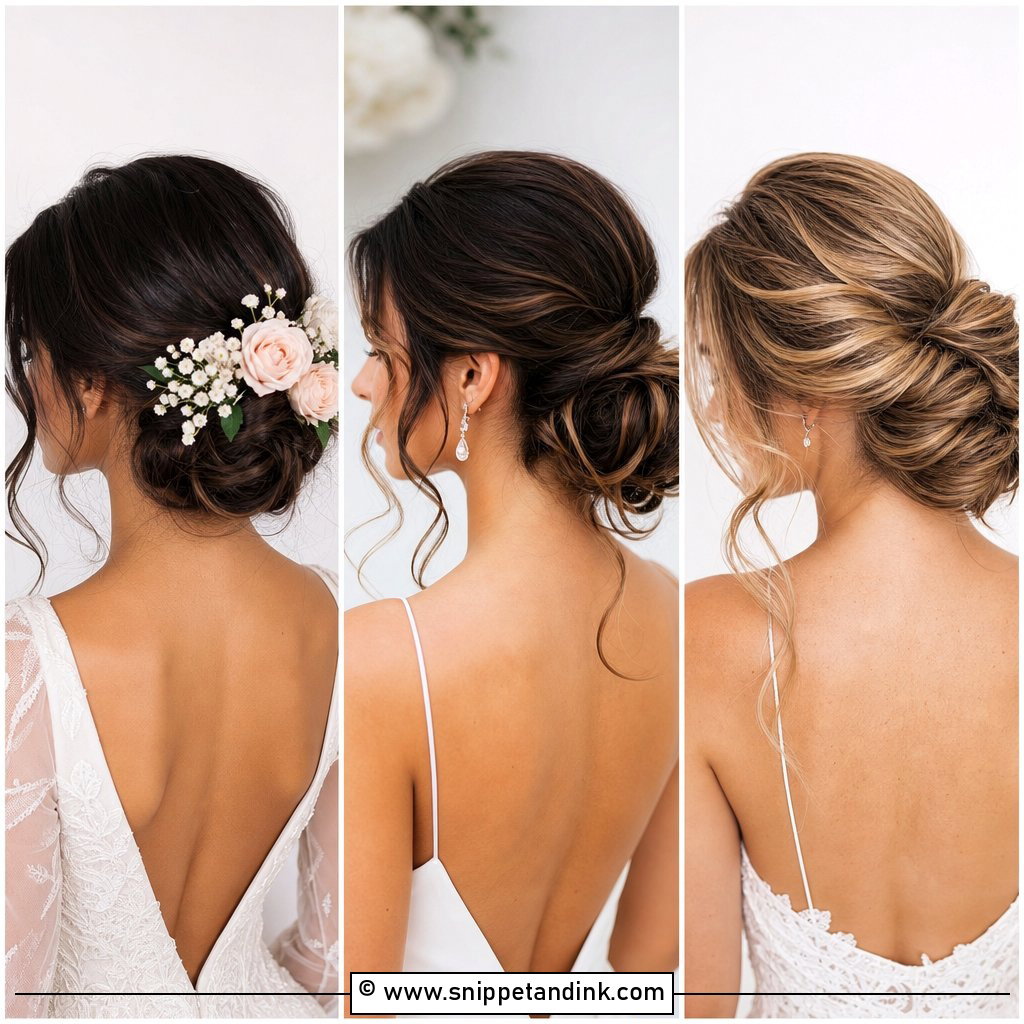
A flower bouffant takes the rounded crown and adds a cluster of blooms, a single flower or a floral comb. I place the flowers where the bouffant is pinned, toward the back or slightly to one side, because that’s where the pins hide and where the flowers have support. Fresh flowers wilt fastest in heat, so for an outdoor summer ceremony I’d use sturdier blooms or silk. The ends can be tucked or softly curled. Matching a stem to the bouquet ties it in.
16. 1960s Wedding Headband Updo Hair
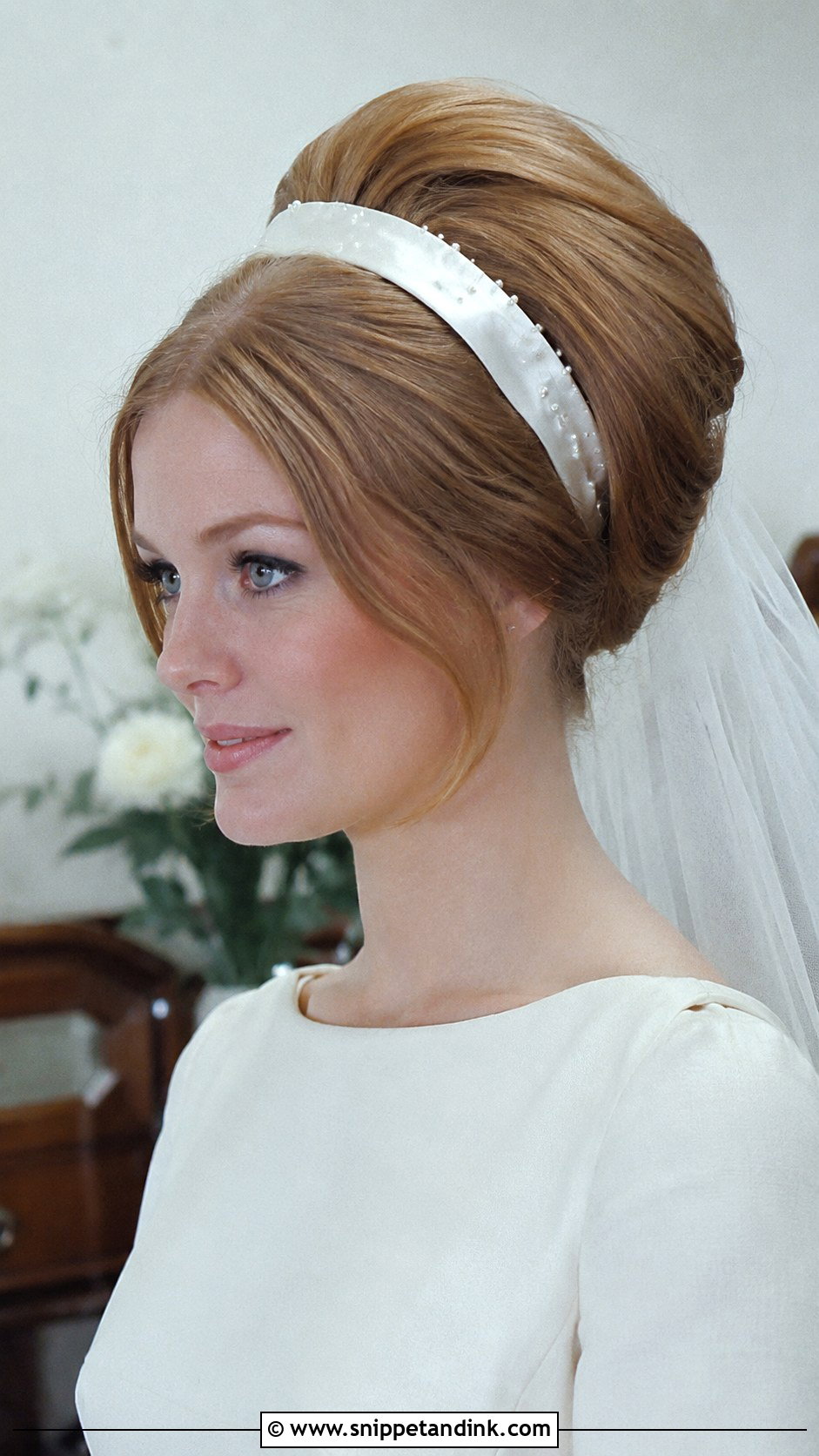
A headband does structural work in a sixties updo: it marks where the smooth front ends and the teased crown begins. Behind it the hair can go into a low bun or a soft roll. I tease just behind the band so it has something to push against, otherwise it slides back over the course of the day. Pearl, satin and crystal bands all work. It suits classic gowns, mod minis and civil ceremony outfits alike.
17. 1960s Wedding Sleek Low Bun Hair
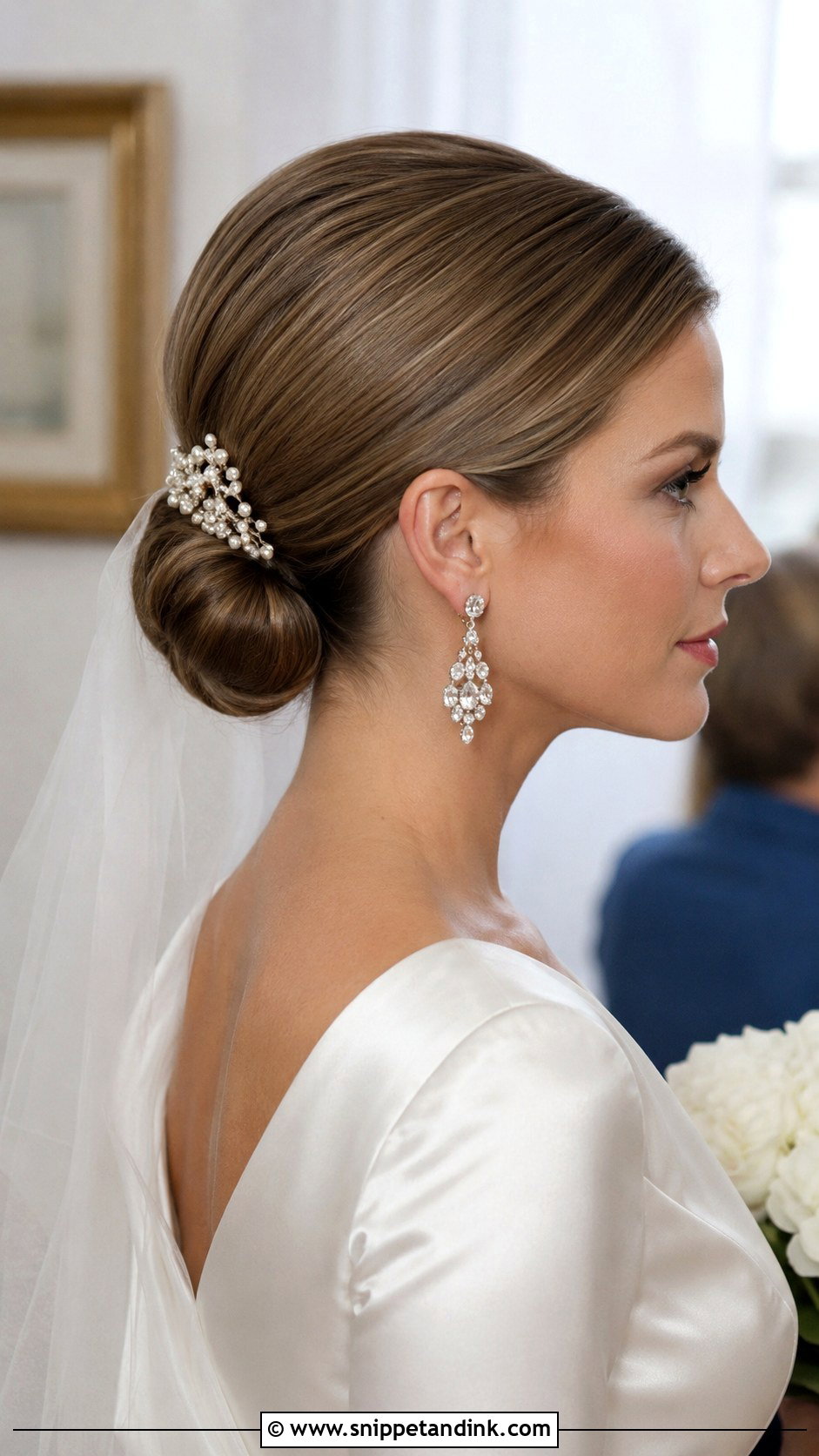
A sleek low bun with a little crown lift is the subtle version of the decade. There’s no big height, just a clean part, smooth sides and a neat knot at the nape. That small lift at the crown is what stops it reading as a plain modern bun. A veil above the bun or a pearl comb to one side finishes it. Statement earrings and high necklines get room to stand out.
18. 1960s Wedding Soft Curl Hair
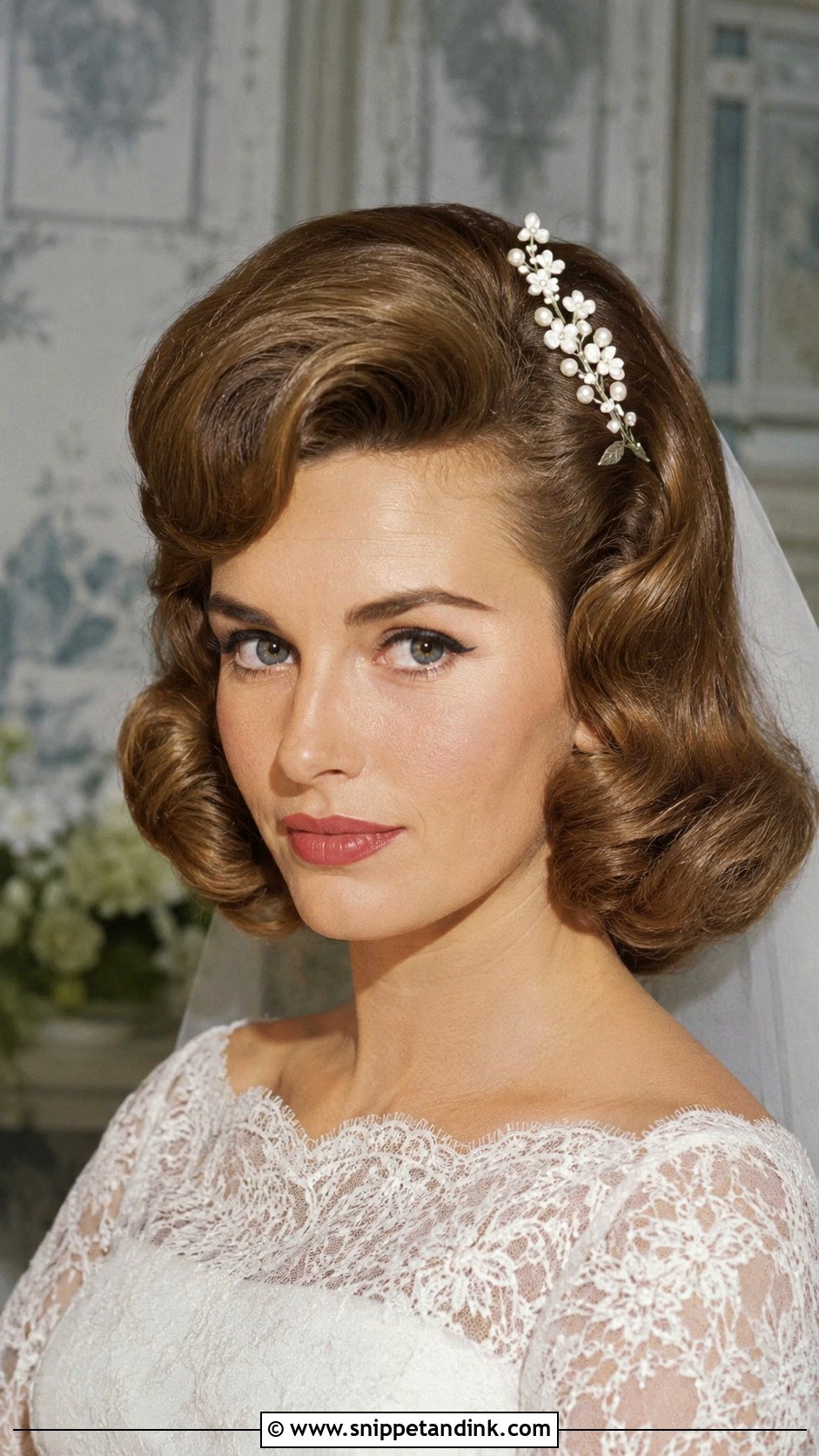
These are brushed curls, not ringlets. I set medium and long hair in large curls, let them cool completely, then brush them out into smooth waves with lift at the crown and the ends turned under or out. Skipping the cooling step is the most common reason a set falls flat. Side parts, short veils, pearl clips and floral combs all suit it. You’ll get softness and movement in photos without committing to an updo.
19. 1960s Wedding Side Swept Hair
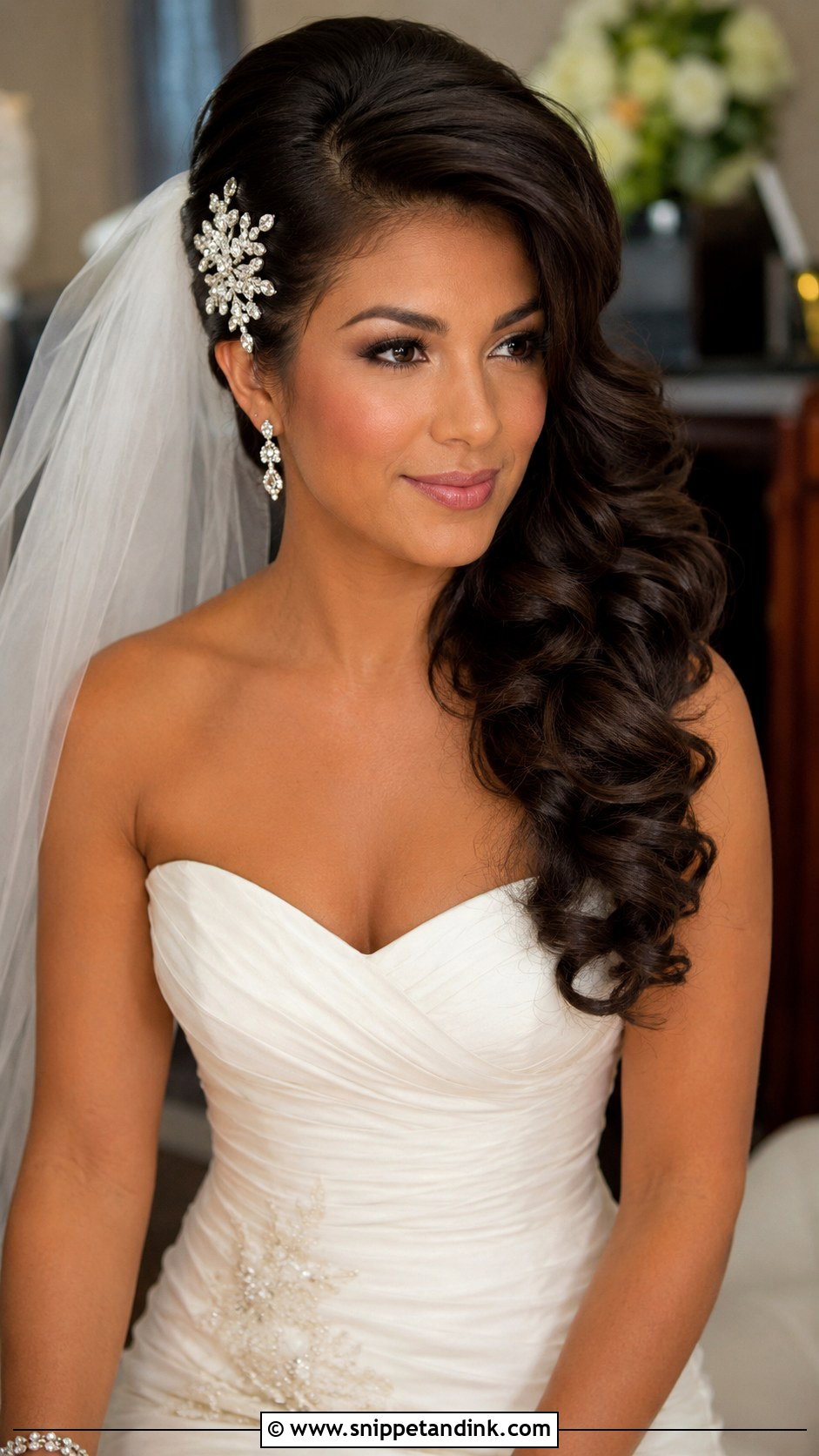
Side swept hair moves everything to one side, usually with crown volume and soft curls through the lengths. I anchor the sweep behind the ear with a hidden row of pins, then cover them with a side comb, floral pin or small veil. Medium and long hair carry it. Pick the side people will see during the ceremony, since the detail faces the camera from the front.
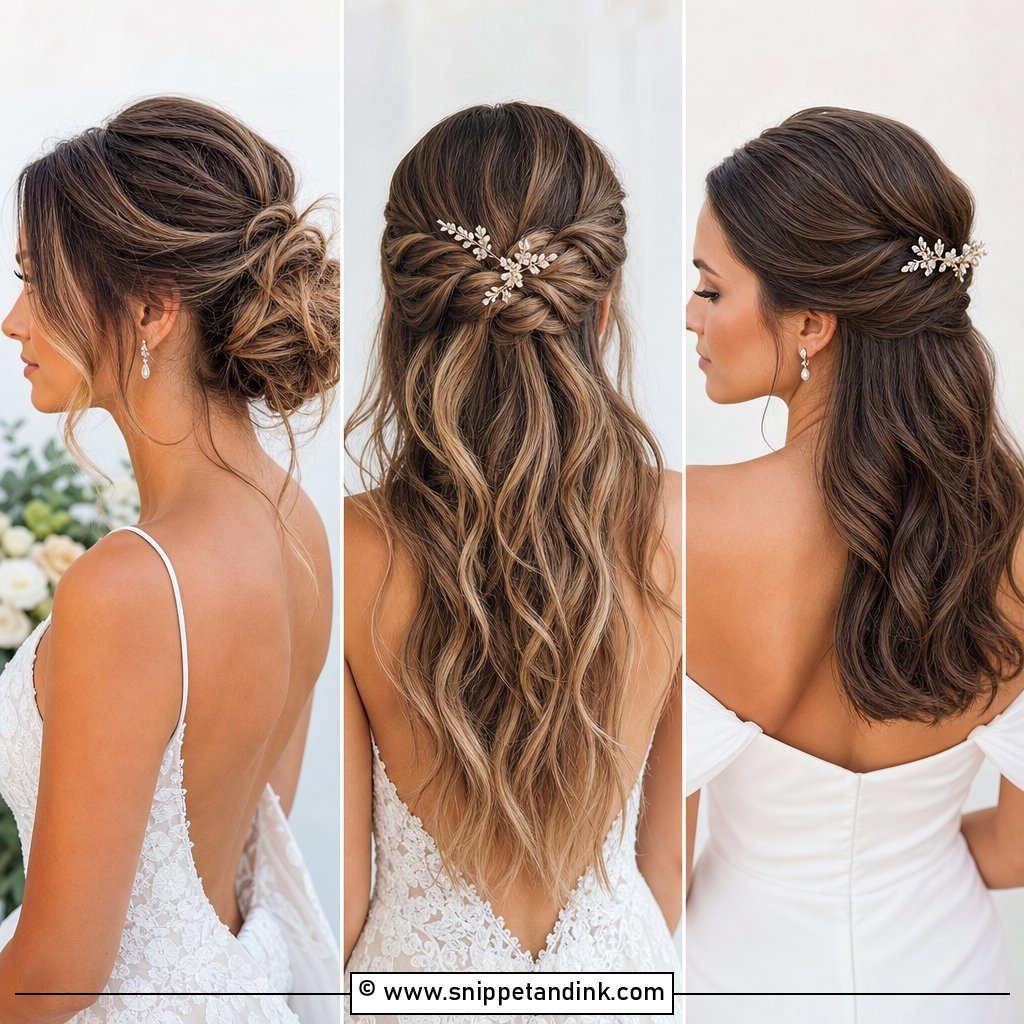
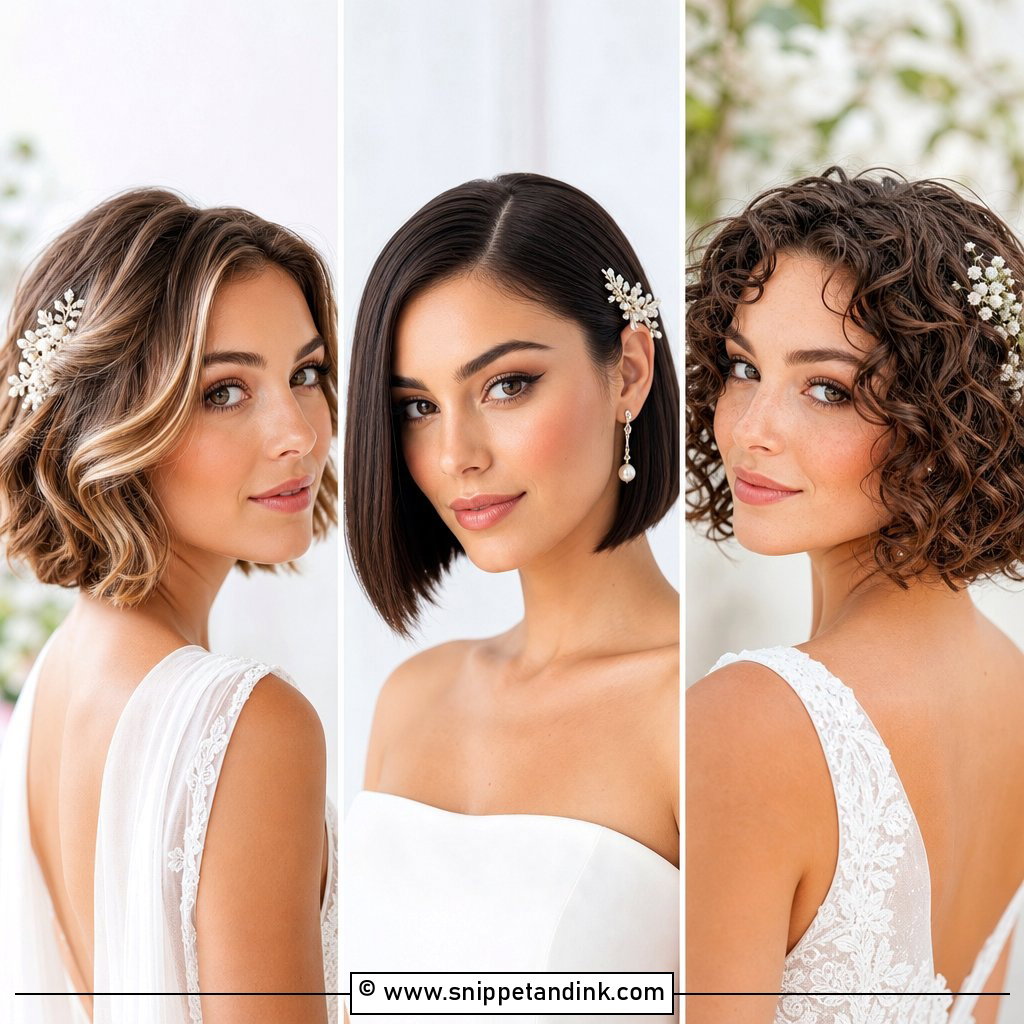
20. 1960s Wedding Afro Hair
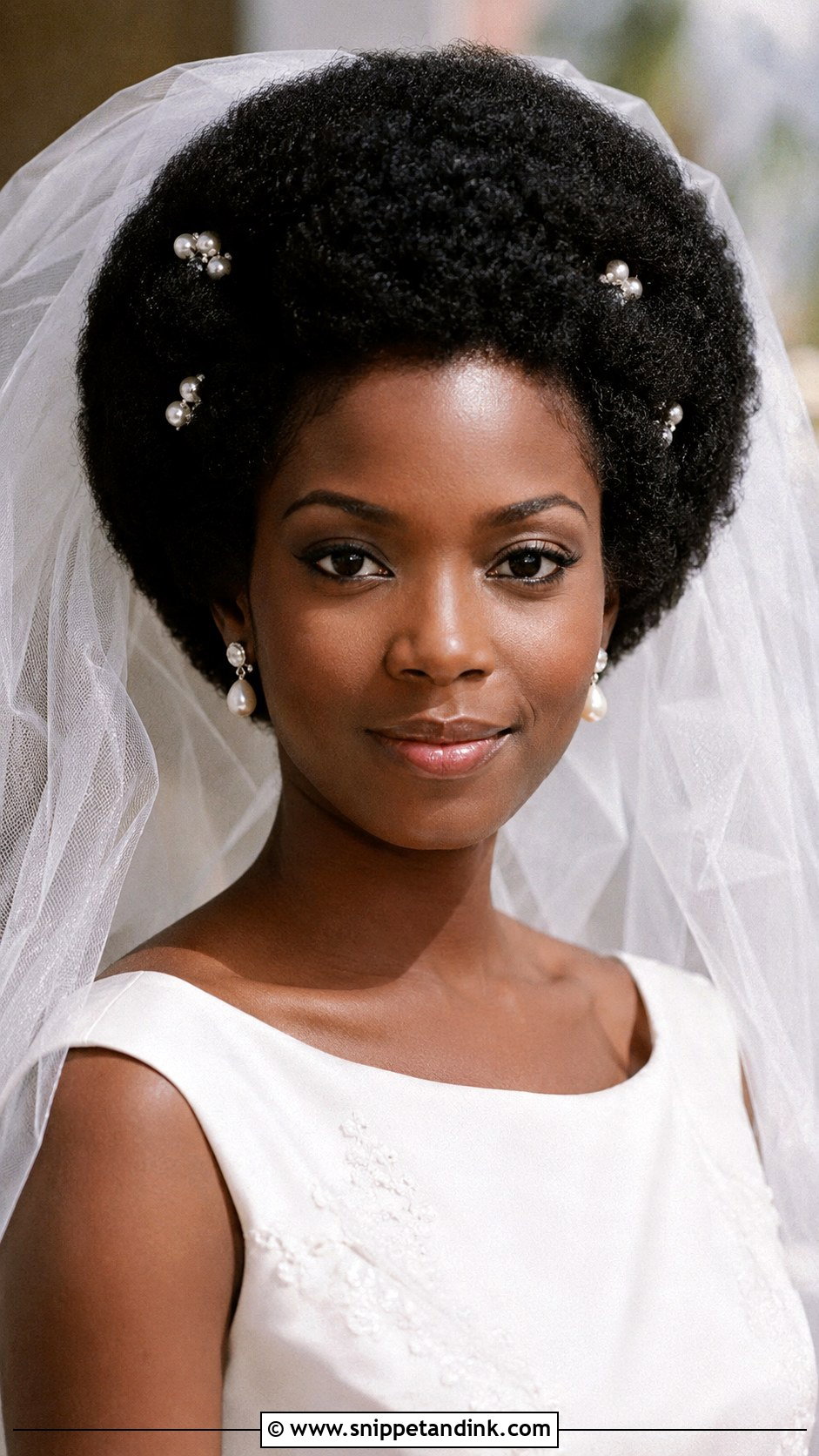
The afro belongs to late-sixties natural hair history, and it’s a powerful bridal look. For a wedding I want the shape rounded, well moisturized and picked out evenly so it balances with the face. A soft veil, pearl pins, a floral crown or a gold headband adds ceremony polish without hiding the texture, and textured hair actually grips combs better than straight hair. Humidity can shrink or reshape it, so I’d do the final pick and shaping as late as possible on the morning. Simple gowns and lace sleeves let the hair lead.
Getting the Volume Out Without Snapping Your Hair
The night ends with a lot of teasing, pins and spray in your hair, and that’s when most damage happens. Please don’t drag a brush through it at midnight. Here’s the order I’d follow:
- Take out every pin first, feeling all the way round. Sixties updos hide more than you’d expect.
- Work a generous amount of conditioner or a detangling oil into the teased areas while the hair is still dry.
- Use your fingers or a wide-tooth comb, starting at the ends and moving up toward the roots.
- Shampoo only once the knots are out, then condition again.
- If it’s late and you’re exhausted, loosely braid it and deal with it in the morning rather than forcing it.
If your big hair starts to sag during the reception, a bridesmaid can lift it from underneath with the tail of a comb and a short burst of hairspray. Don’t press on the smooth top layer, or you’ll flatten the shape you’re trying to save.
Height, Flip or Fringe Depends on Your Length
If you want bold vintage glamour, a beehive, bouffant or Priscilla gives you height. Softer brides tend to land on a half up bouffant, Bardot hair or brushed curls. Short hair has the pixie, pageboy and mod bob, and natural texture has the afro. Whichever you go for, judge it at a trial wearing your veil or hat, and make sure the volume is built in properly underneath so it still looks right at the end of the night.
You'll Like These Ideas:


Leave a Reply