
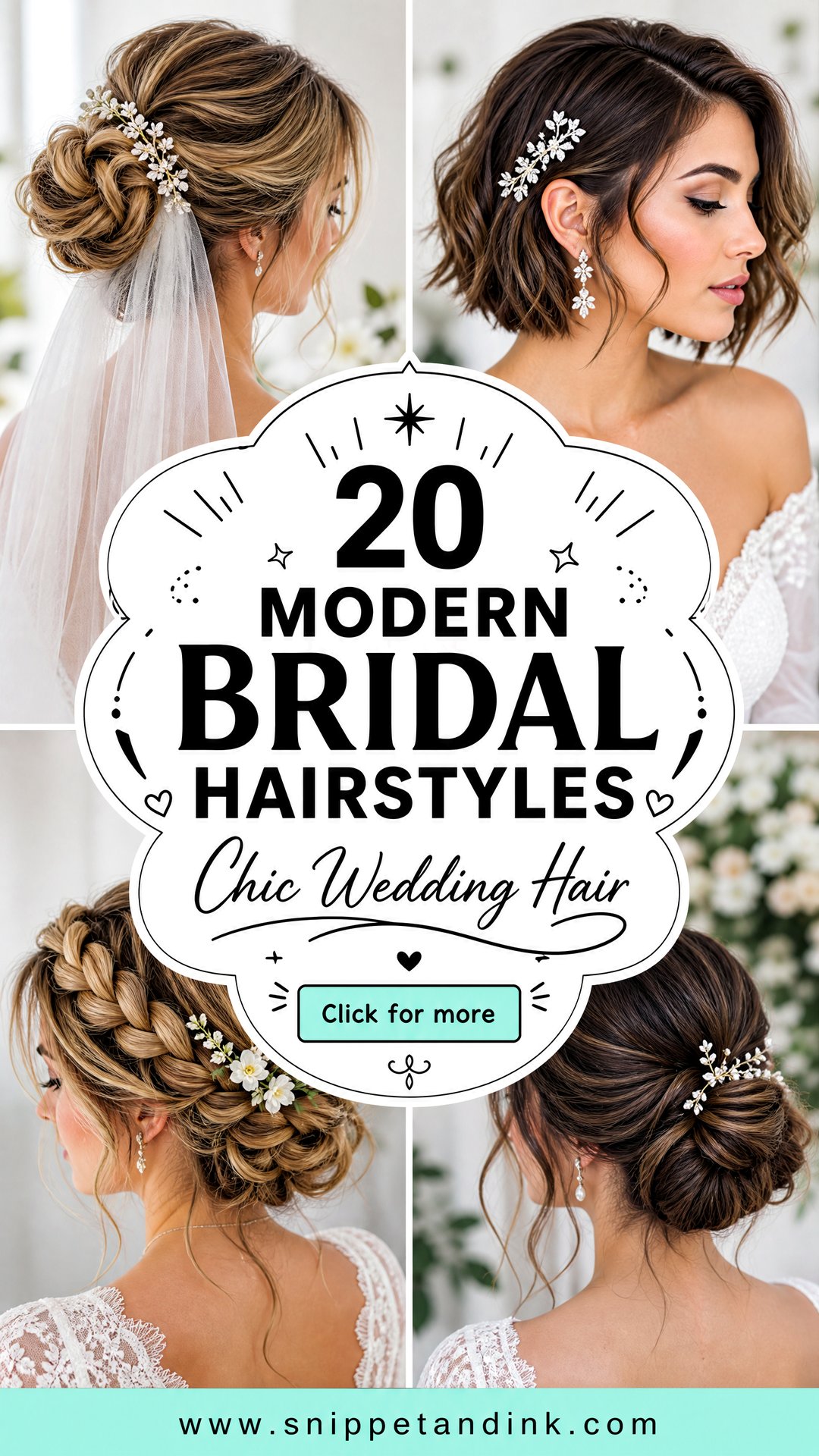
Wedding hair has relaxed a lot. Fewer brides want lacquered curls and rigid sets; most want hair that moves and still looks finished twelve hours later. That second part is where the craft is. A soft chignon, a ponytail or a crop can all look modern, but each one is built differently, holds differently and suits different hair. Below are twenty styles I do regularly, from sleek updos to pixie cuts, with notes on the texture each needs, the hidden structure behind it and the situations where I’d steer you toward something else.
Plan Cuts and Colour Around the Style You Want
The style you choose affects what your hair needs in the months before. Updos need length and grip; down styles and short cuts need fresh ends. I’d sort out the big decisions early so there are no surprises at the trial.
- If you want an updo but your hair is currently above the shoulders, start planning several months ahead, or accept that extensions may be part of the look.
- Get any major cut done at least six to eight weeks before, then only a light trim about two weeks out. A big change too close leaves no time to adjust.
- Colour about one to two weeks before the wedding, so it has softened slightly and any tone issues can be corrected.
- Avoid keratin or smoothing treatments close to the wedding if you’re planning curls. They make hair resist curling and drop faster.
Mention your plans to your colourist and hairstylist together. Highlights placed with an updo in mind can add depth to a bun or braid, while solid colour can make an intricate style look flat.
1. Low Sleek Bridal Chignon
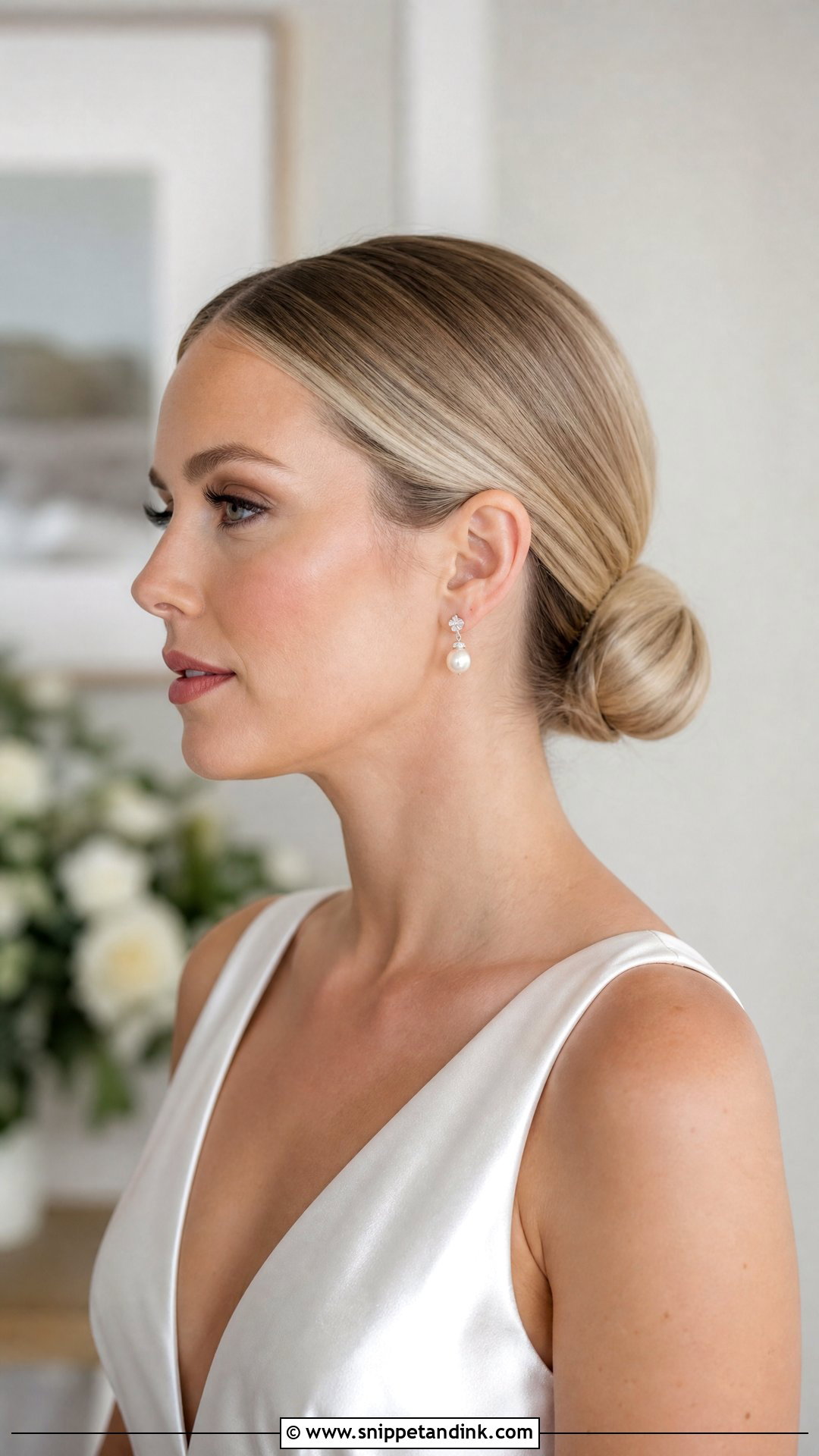
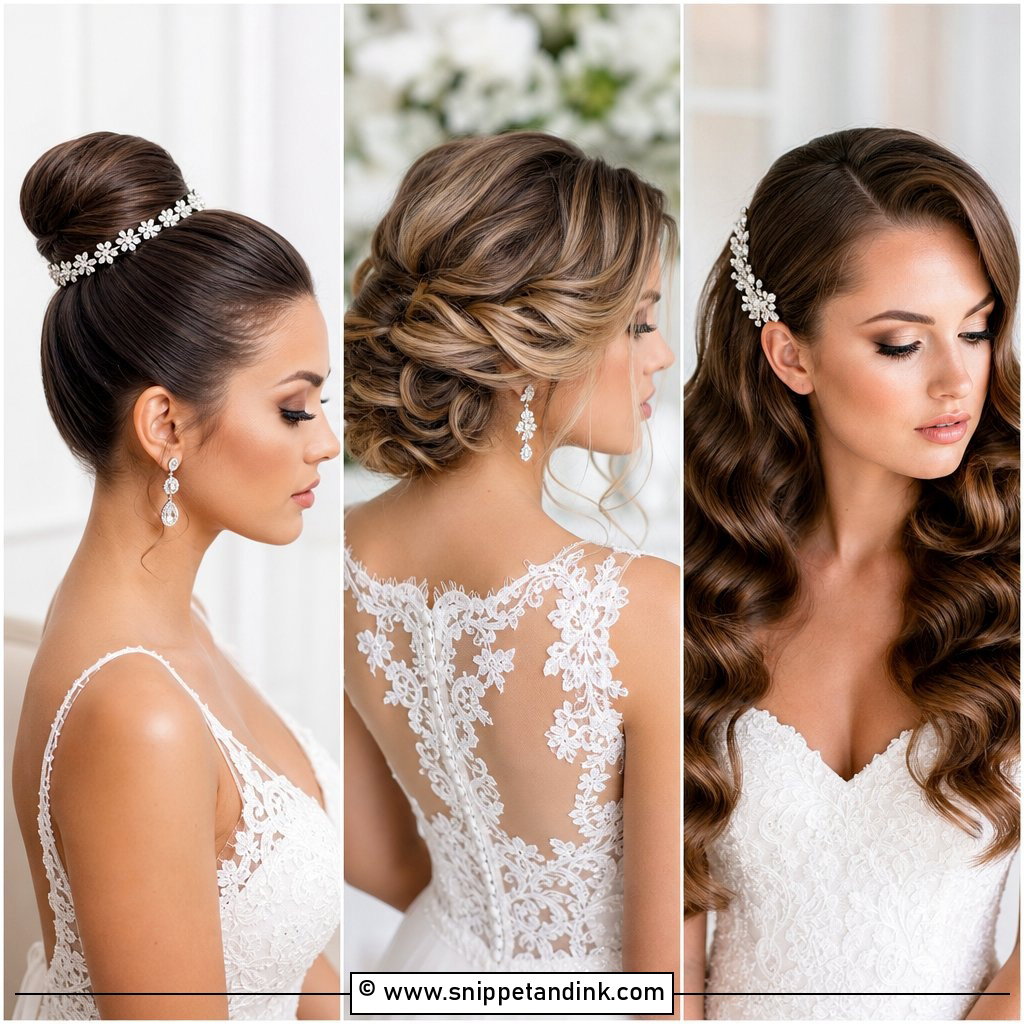
A low sleek chignon is the style I trust most for long, windy or emotional days, because there’s almost nothing loose to go wrong. I smooth the hair close to the head with a centre or slight side part, then wind it into a compact bun at the nape and pin it in an interlocking pattern so it can’t slide. It suits high necks, strapless dresses and pearl earrings. Finish with a light shine spray, not a heavy lacquer; a hard sheen looks plastic in flash photos. Very short layers around the nape can be fiddly, so I use a little gel to keep them tucked.
2. Soft Bridal Waves
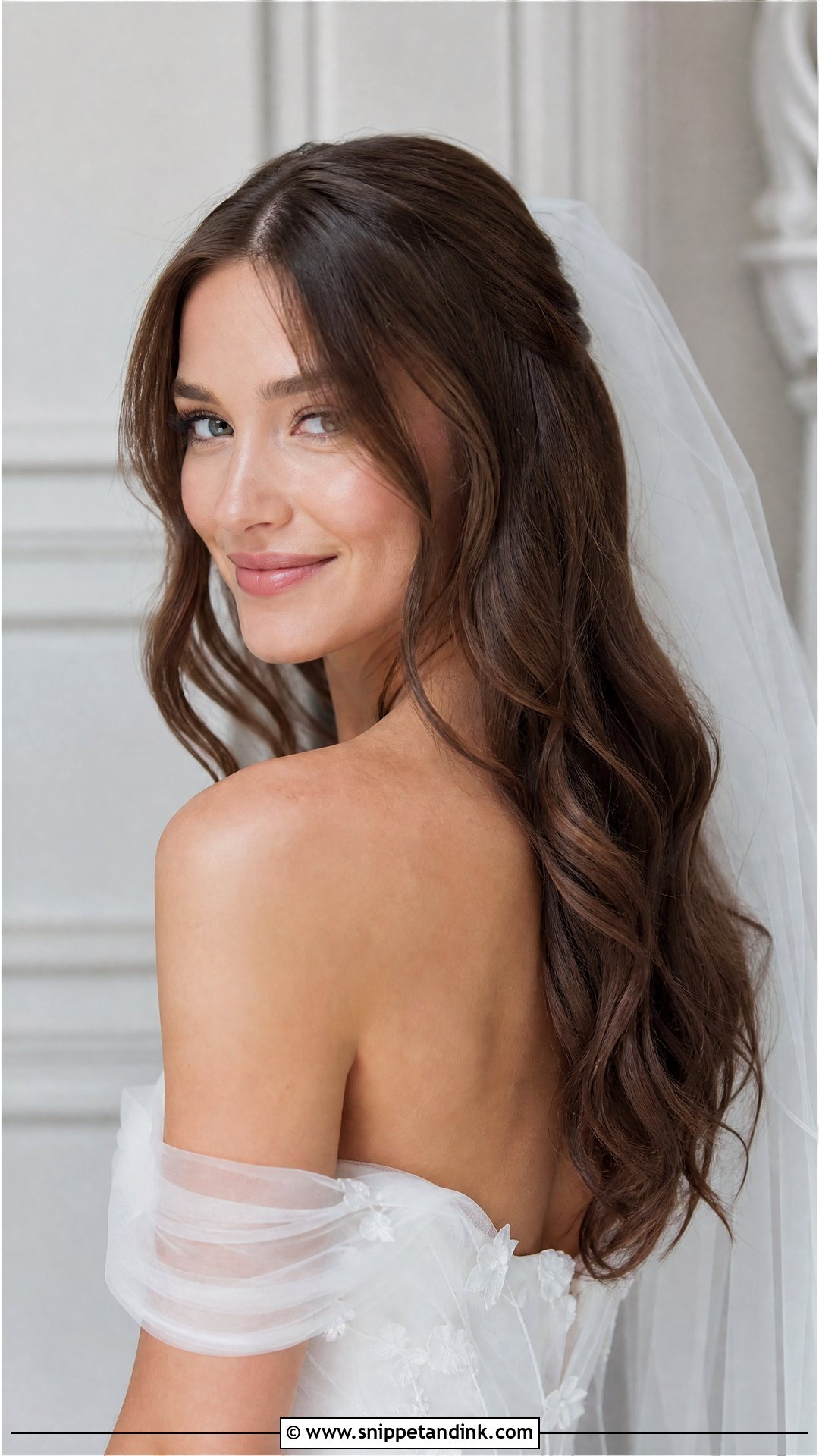
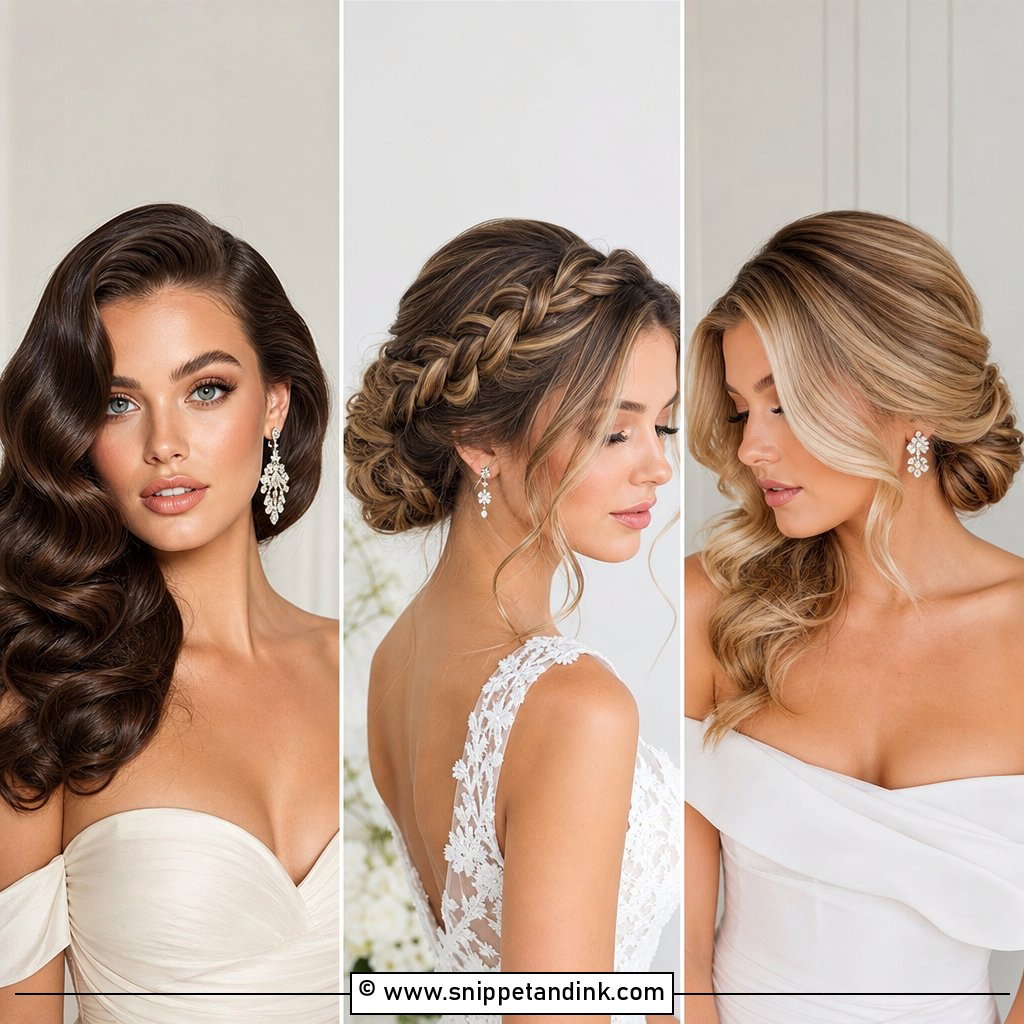
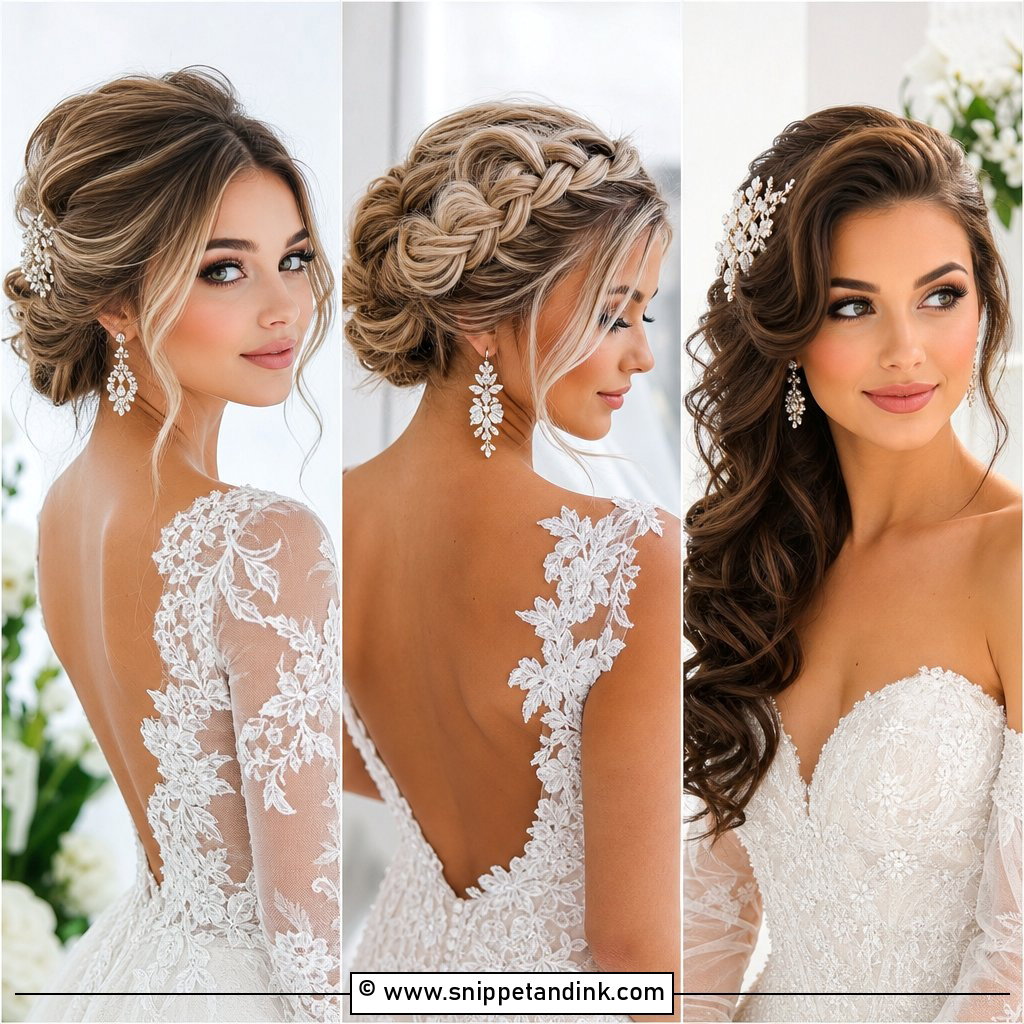
Soft waves are the down style I’m asked for most. The challenge is that loose waves on unpinned hair drop over the day, so I prep with a setting lotion, curl in sections, pin each curl to cool and brush out only once it’s cold. On fine hair I go a size smaller with the iron to allow for the drop. A middle part looks modern and a side part more classic. They pair well with off-the-shoulder dresses, simple veils and delicate combs.
3. Half Up Bridal Hair
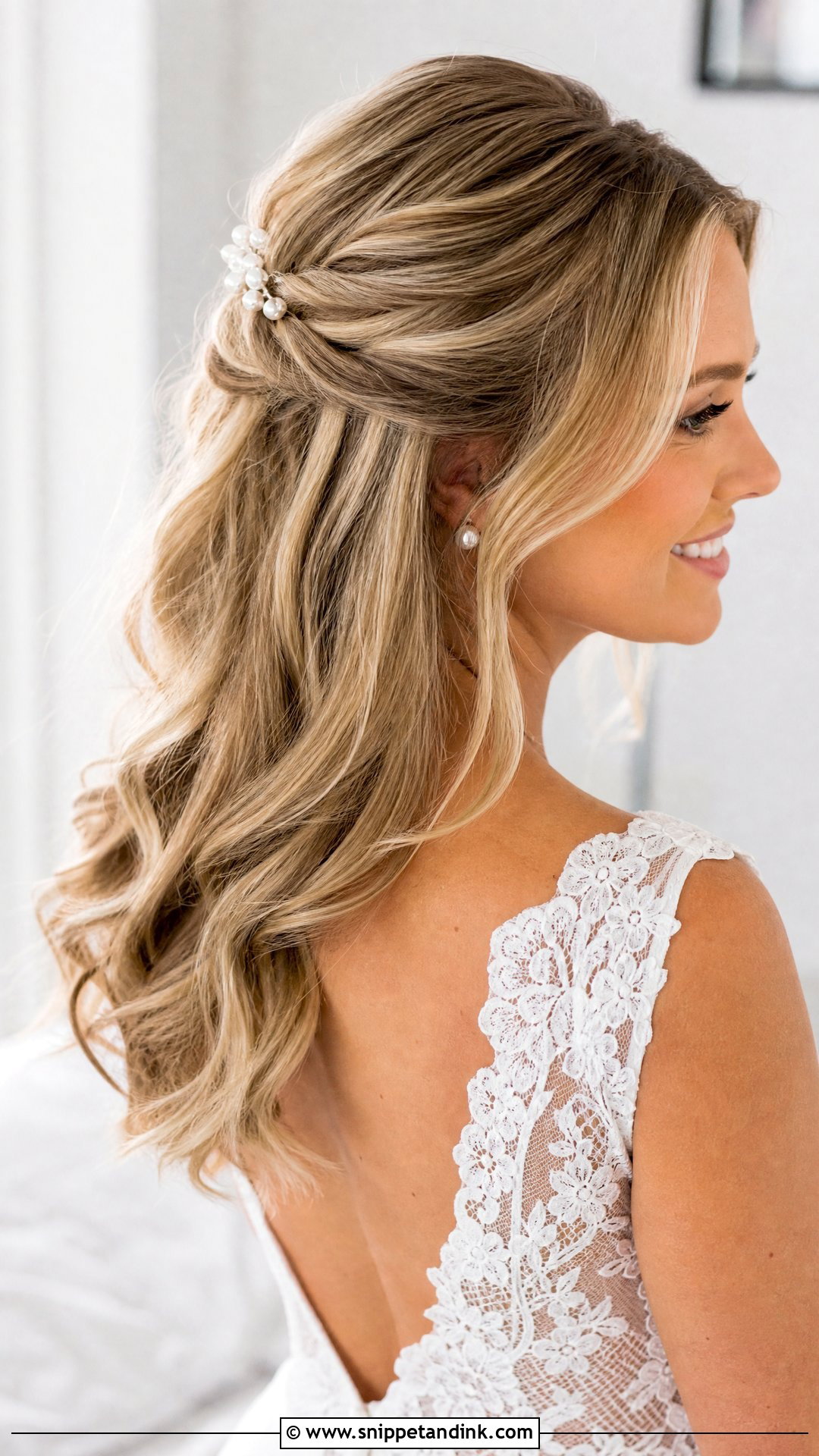
Half-up hair gives you structure at the crown and loose lengths in photos, and it solves the problem of hair blowing into your face. The secured top section also makes the best base for a veil comb. I build it with a little backcombing under the crown for lift, then pin or twist the top section back loosely. Waves, curls, twists or a small braid all work below. Keep the front pieces soft and light. A tight half-up section looks dated and pulls on the scalp after a few hours.
4. Bridal Hollywood Waves
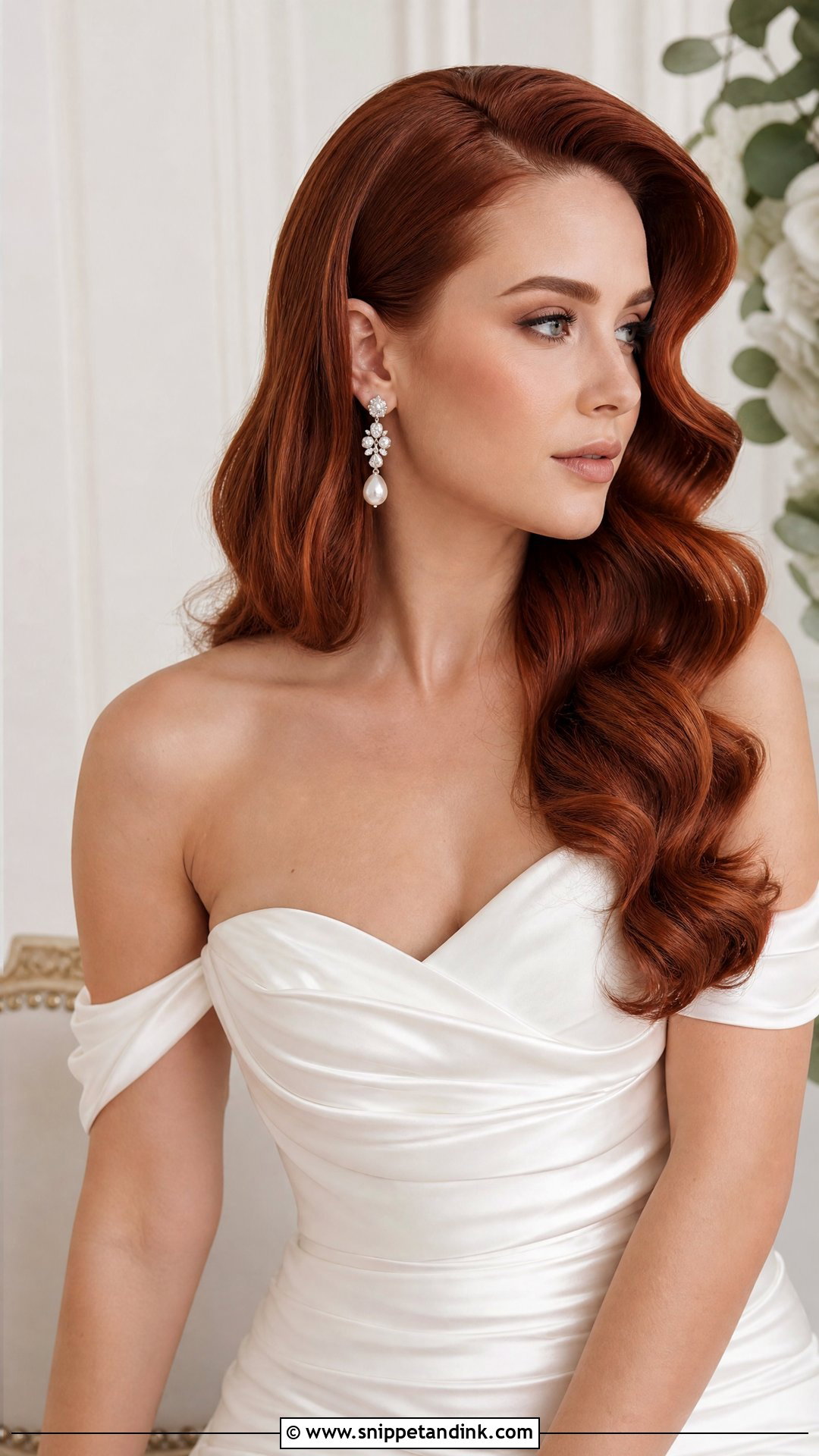
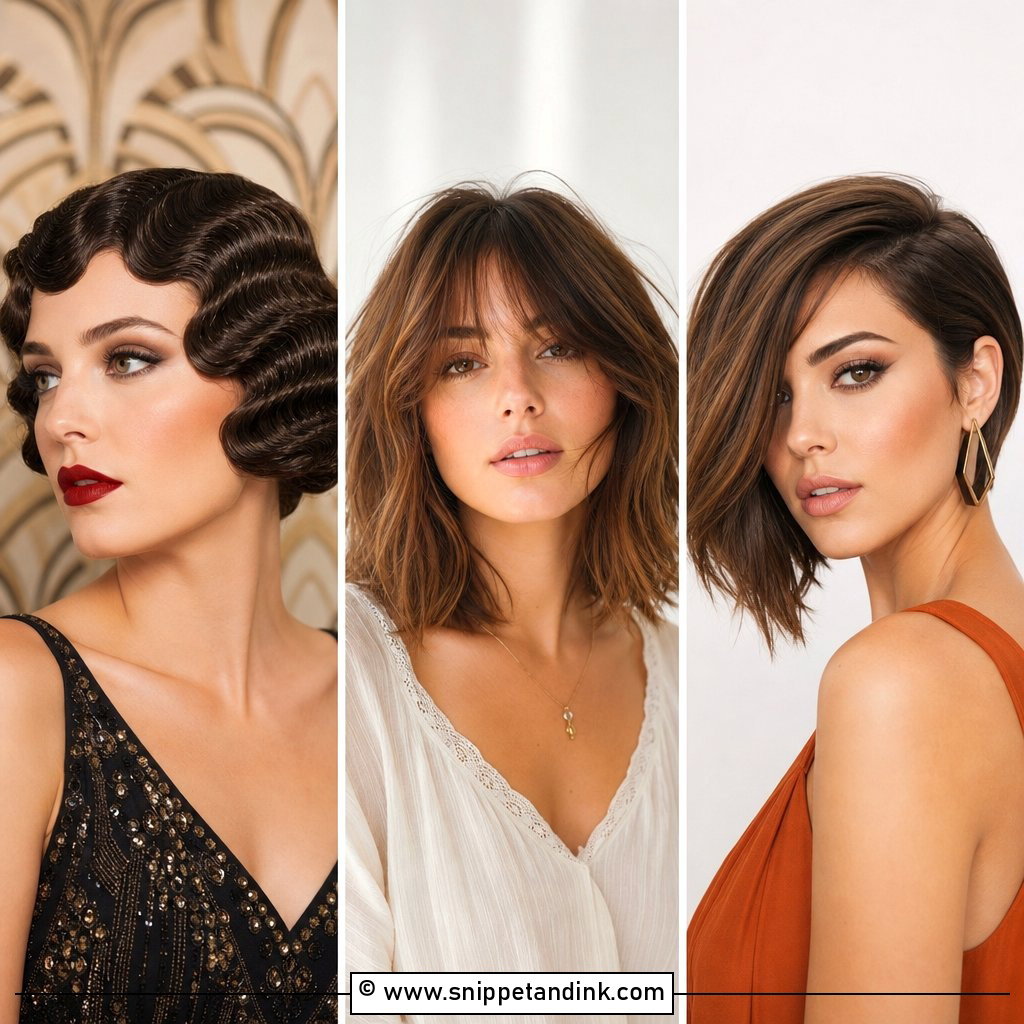
Smooth, sculpted waves with a deep side part are made for satin gowns, fitted silhouettes and statement earrings. Bridal Hollywood waves need long hair to show the pattern; on shorter hair they look like a vintage finger-wave set. I curl all sections in the same direction and brush them together so the wave forms a single shape. If your hair is very silky or drops curls quickly, book a trial for this one; I may change the prep or add hold to make it last.
5. Textured Bridal Bun
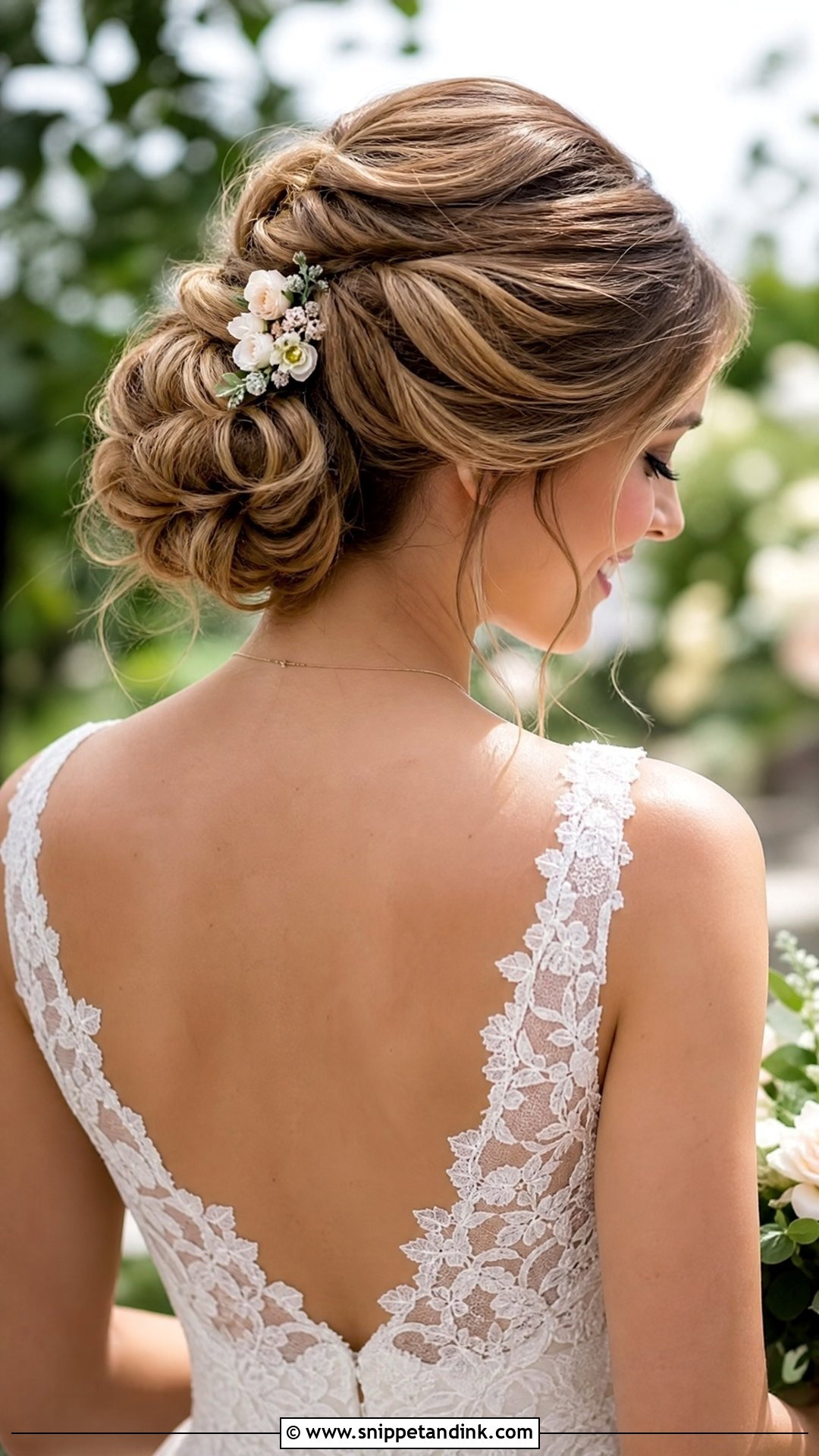
A textured bun is soft and romantic without looking unfinished. I create texture first with waves or a texture spray, then gather the hair low or mid-height and pin sections into a loose, full shape, leaving a few soft pieces at the face. It’s a natural partner for lace gowns and outdoor ceremonies. Fine hair may need extensions or padding to give the bun body. Very thick hair needs thinning out within the bun so it isn’t too heavy and doesn’t drag down by evening.
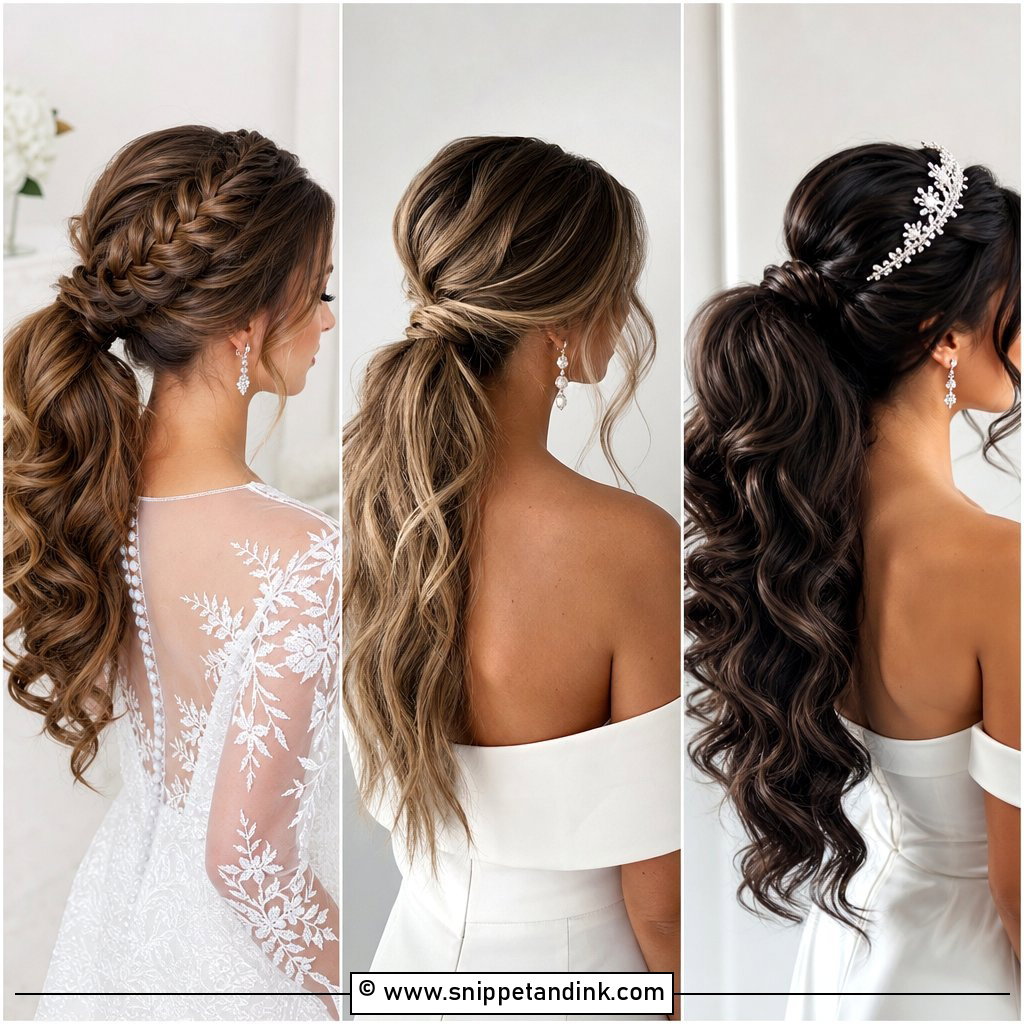
6. Bridal Ponytail
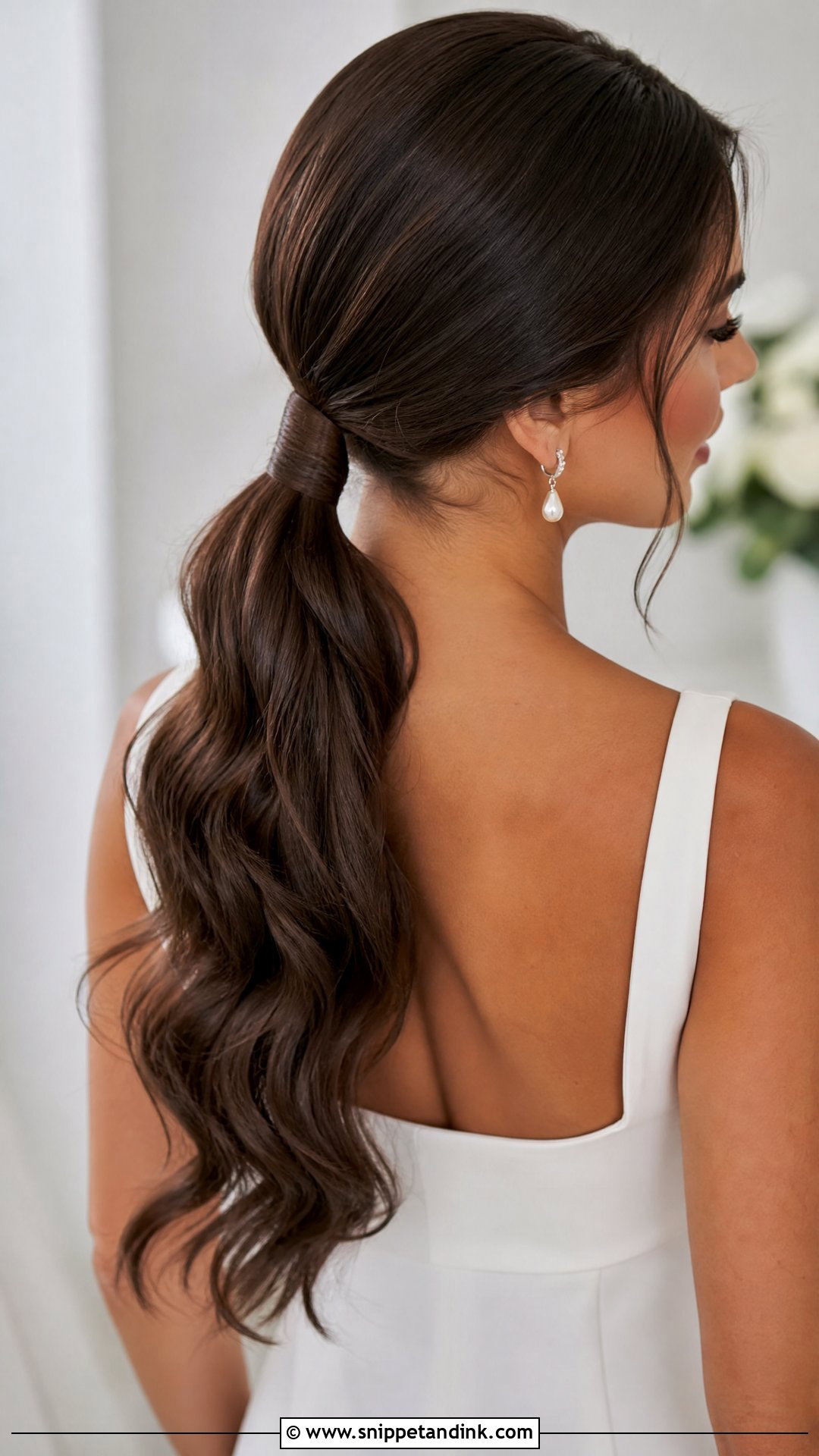
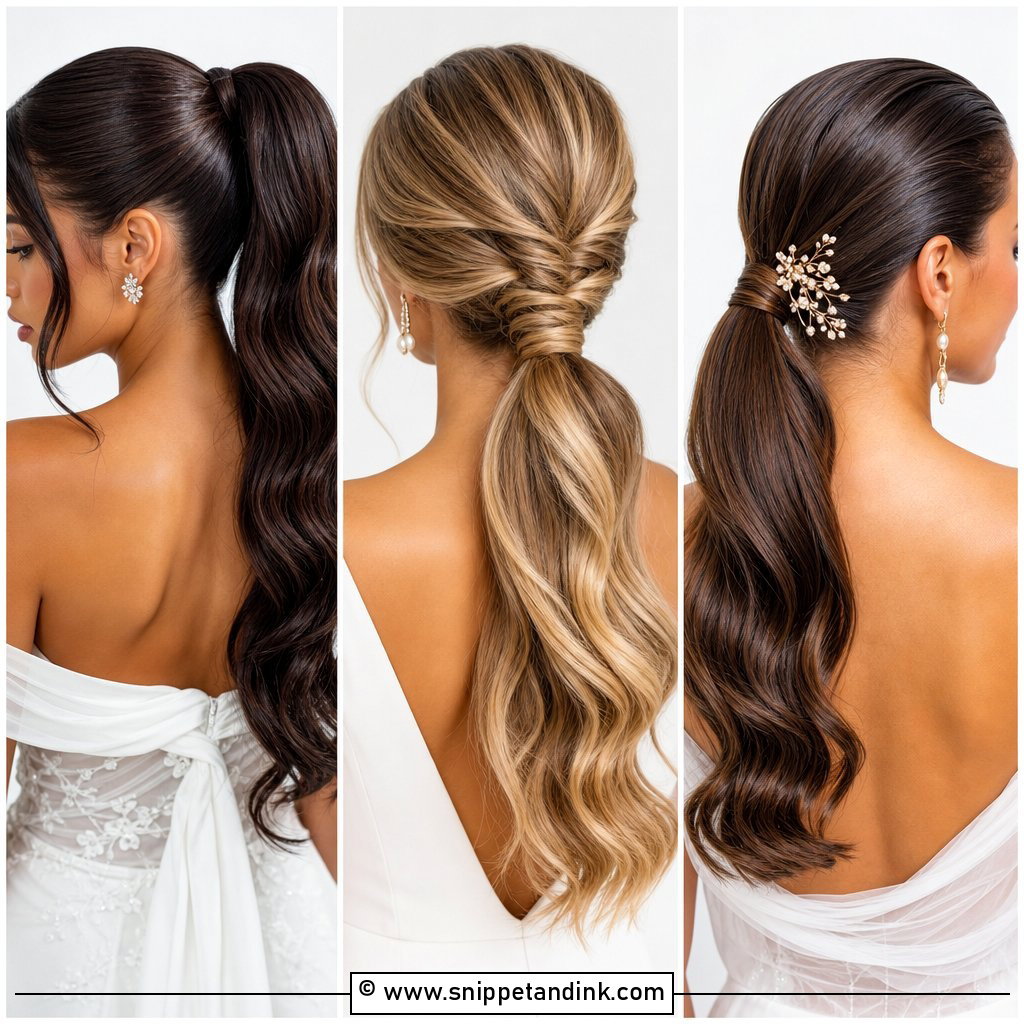
A ponytail is cleaner and more modern than a traditional bun and works with square necklines, halters, clean gowns and bridal suits. High and sleek looks fashion-led; low and polished feels quieter; full waves soften it. I secure the base with two elastics and crisscross pins so it doesn’t sag, then wrap a section of hair around the elastic to hide it. A high ponytail can give some brides a headache over many hours, so try it for a full afternoon before committing.
7. Curly Bridal Updo
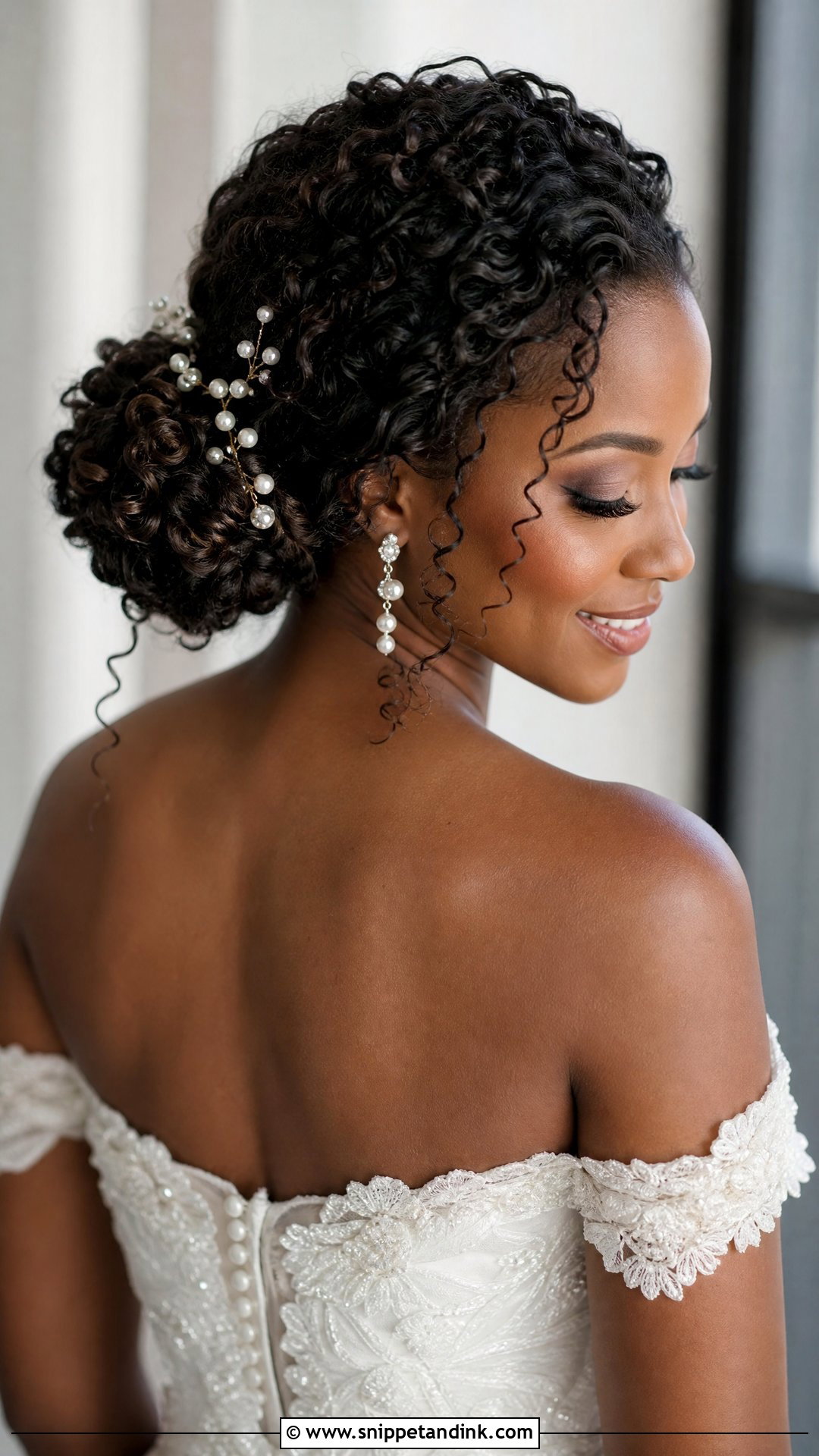
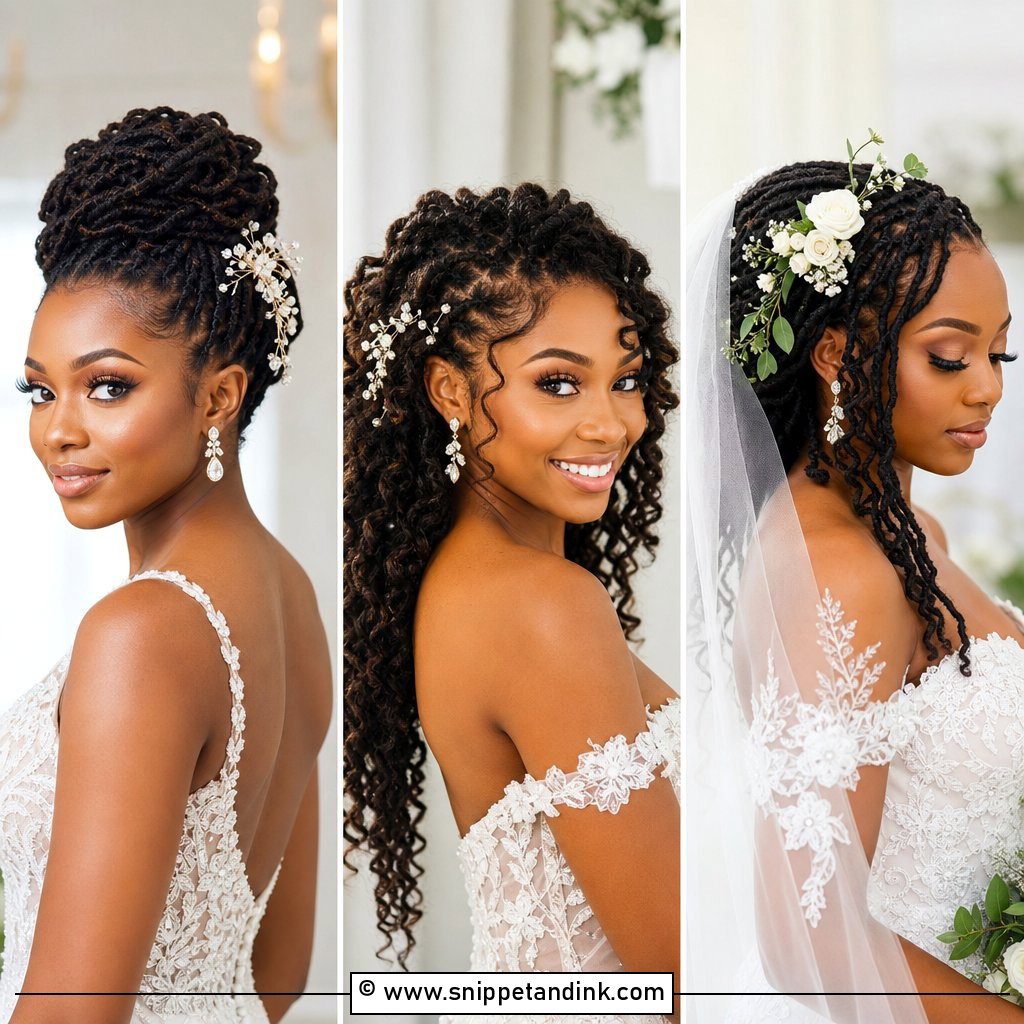
A curly updo should work with your curl pattern, not against it. I keep the curls defined, hydrated and full, then pin them low, at the crown or into a loose bun with a few tendrils. Prep starts in the days before: deep conditioning, then styling on the curls’ usual wash schedule. Brides with coily or textured hair should find a stylist who regularly works with that texture; brushing curls out or over-stretching them can make the updo look frizzy and flat.
8. Bridal Braided Bun
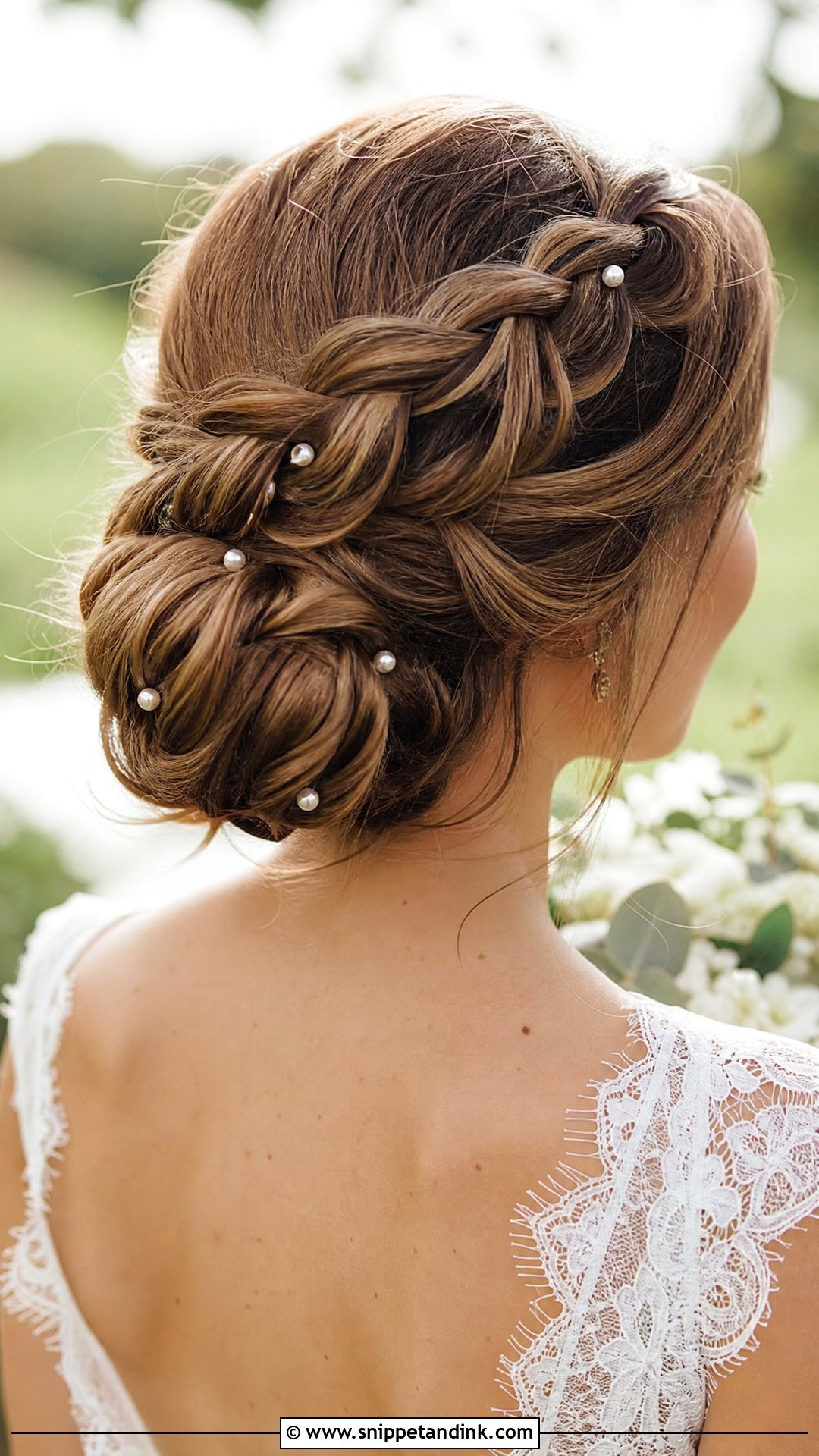
A braided bun adds detail while staying secure. The braid can wrap around the bun, run into it from the back or sweep along one side before being pinned. I pancake the braid, pulling each loop gently wider, so it looks full instead of tight and thin. It holds layered hair well, because shorter ends get tucked into the plait. It pairs nicely with floral accessories, pearl pins and lace dresses. On very fine hair, a clip-in piece woven into the braid adds thickness.
9. Side Part Bridal Waves
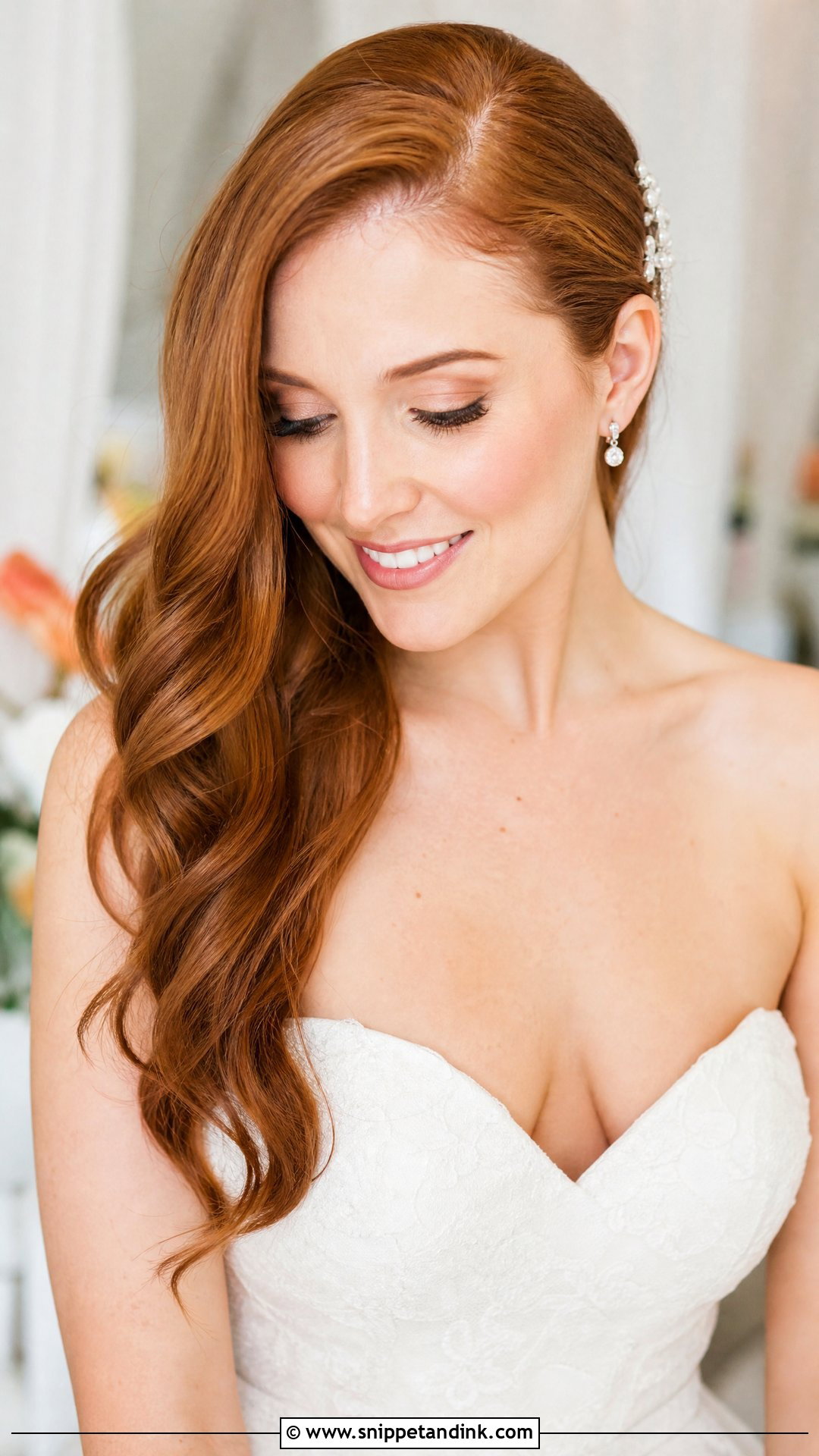
A deep side part gives waves instant shape and leaves one side open for an earring or a one-shoulder neckline. I tuck the heavier side behind the ear with a small hidden pin or comb so it doesn’t fall forward during the ceremony. The waves can be glossy, brushed out or slightly textured. Keep the crown soft and natural; backcombing too high at the part makes the shape look dated. If your hair naturally parts on the other side, I train it with a blow dry before curling.
10. Bridal Bun With Veil
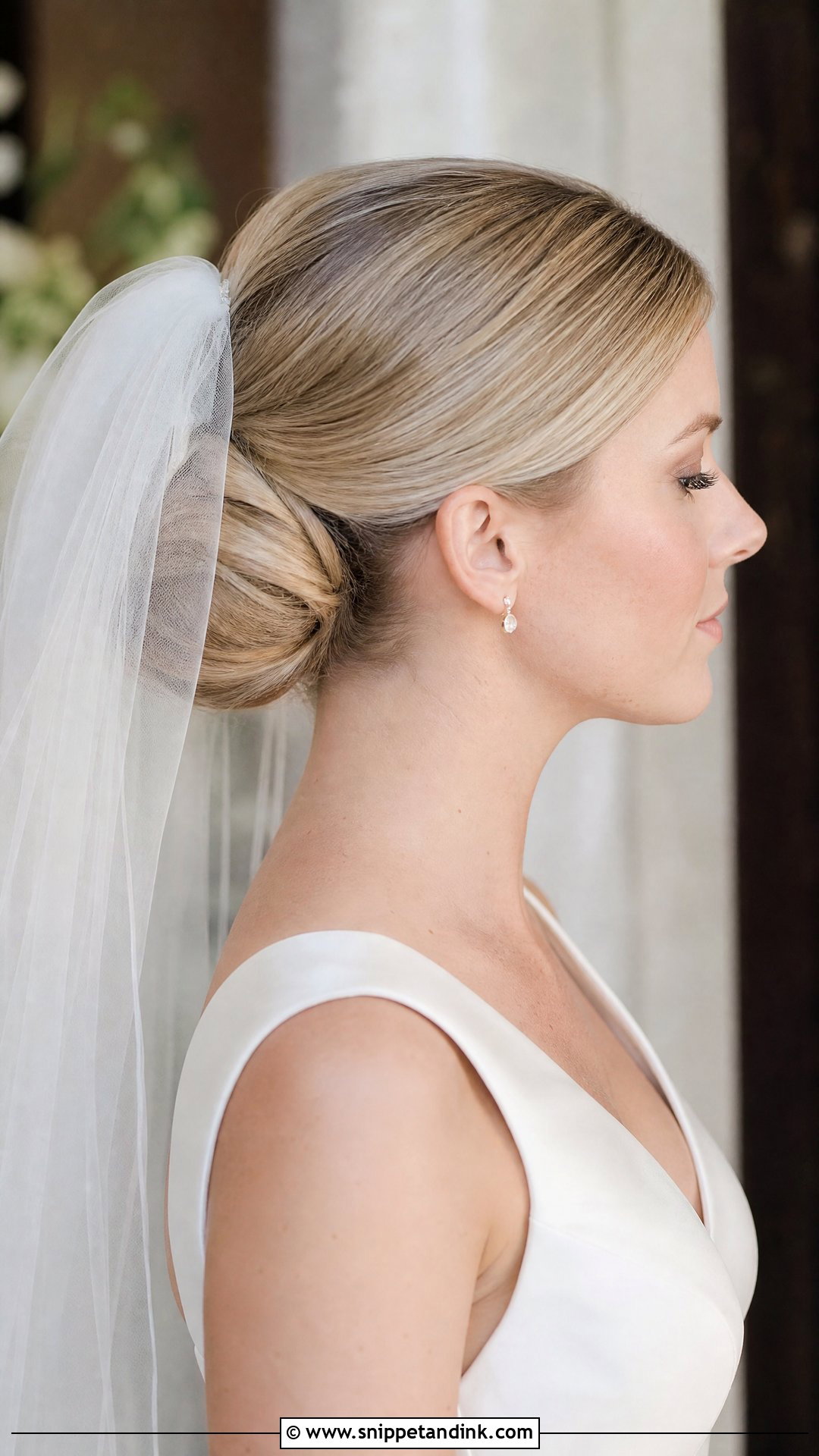
A bun with a veil is classic, but the bun’s height should be decided by the veil, not the other way round. A low bun at the nape suits a comb placed above it; a higher bun works with a veil tucked underneath. Cathedral and fingertip veils weigh more than a short tulle style, so I anchor the comb into a small backcombed section or crossed grips rather than the bun itself. That way the bun doesn’t flatten or pull. Bring your veil to the trial.
11. Bridal Hair With Pearl Pins
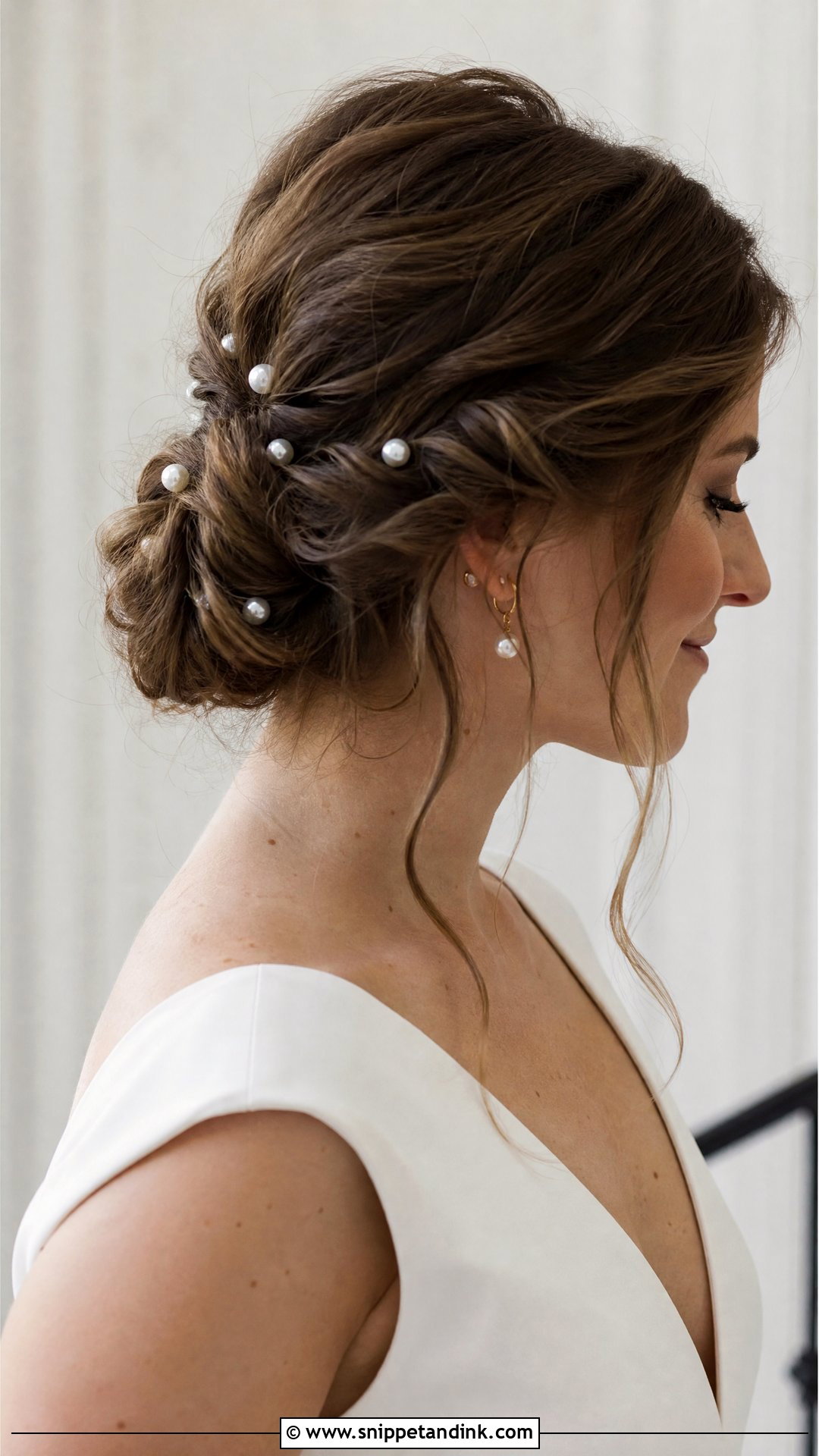
Pearl pins finish a simple style without adding much weight. I place them through a bun, along a braid, in waves or framing a half-up section. The common mistake is too many, which looks crowded; a cluster or a line usually reads cleaner than scattering. Match the pearl tone to your jewelry and dress. Slide each pin into a section already anchored with a hidden grip so it doesn’t slip down smooth hair.
12. Messy Bridal Updo
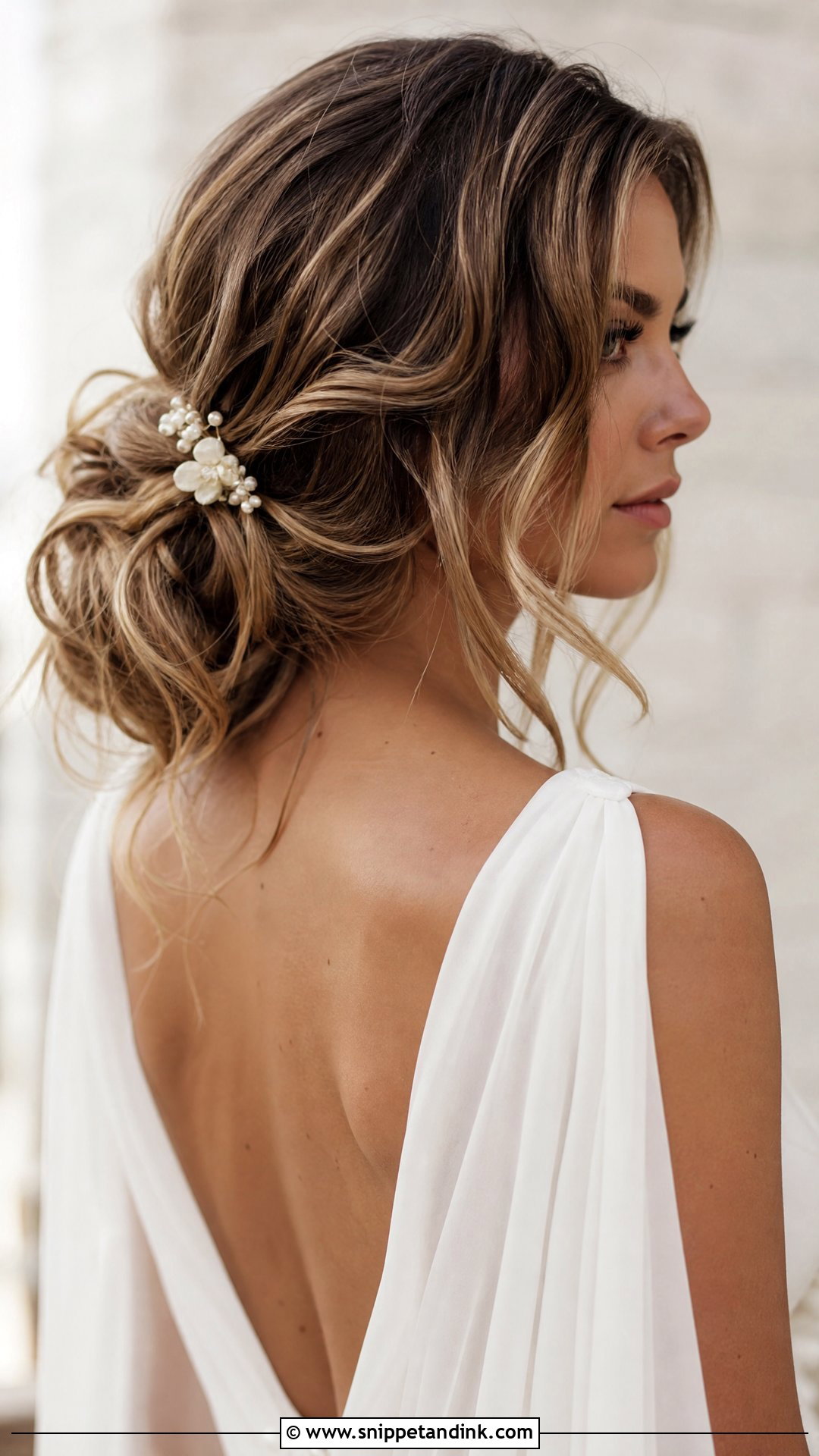
A messy updo has to look relaxed and still survive the reception. I build it with controlled texture and pinned volume, then pull out a few tendrils to frame the face. It suits lace and chiffon dresses and outdoor ceremonies. The bun can be low, twisted, braided or loosely pinned, depending on your length. To keep it polished, I hold back on loose strands; a few soft pieces flatter, but too many look unkempt by evening, especially in humidity.
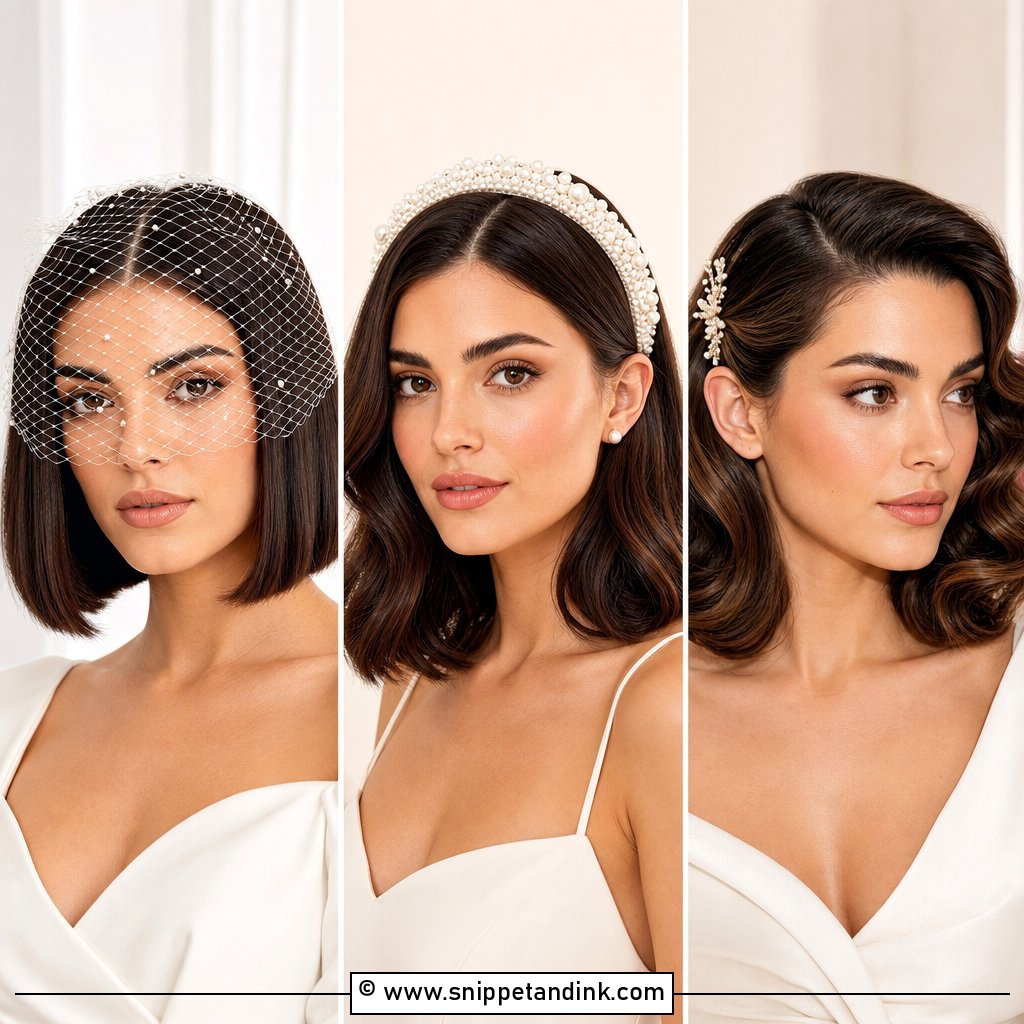
13. Short Bridal Bob
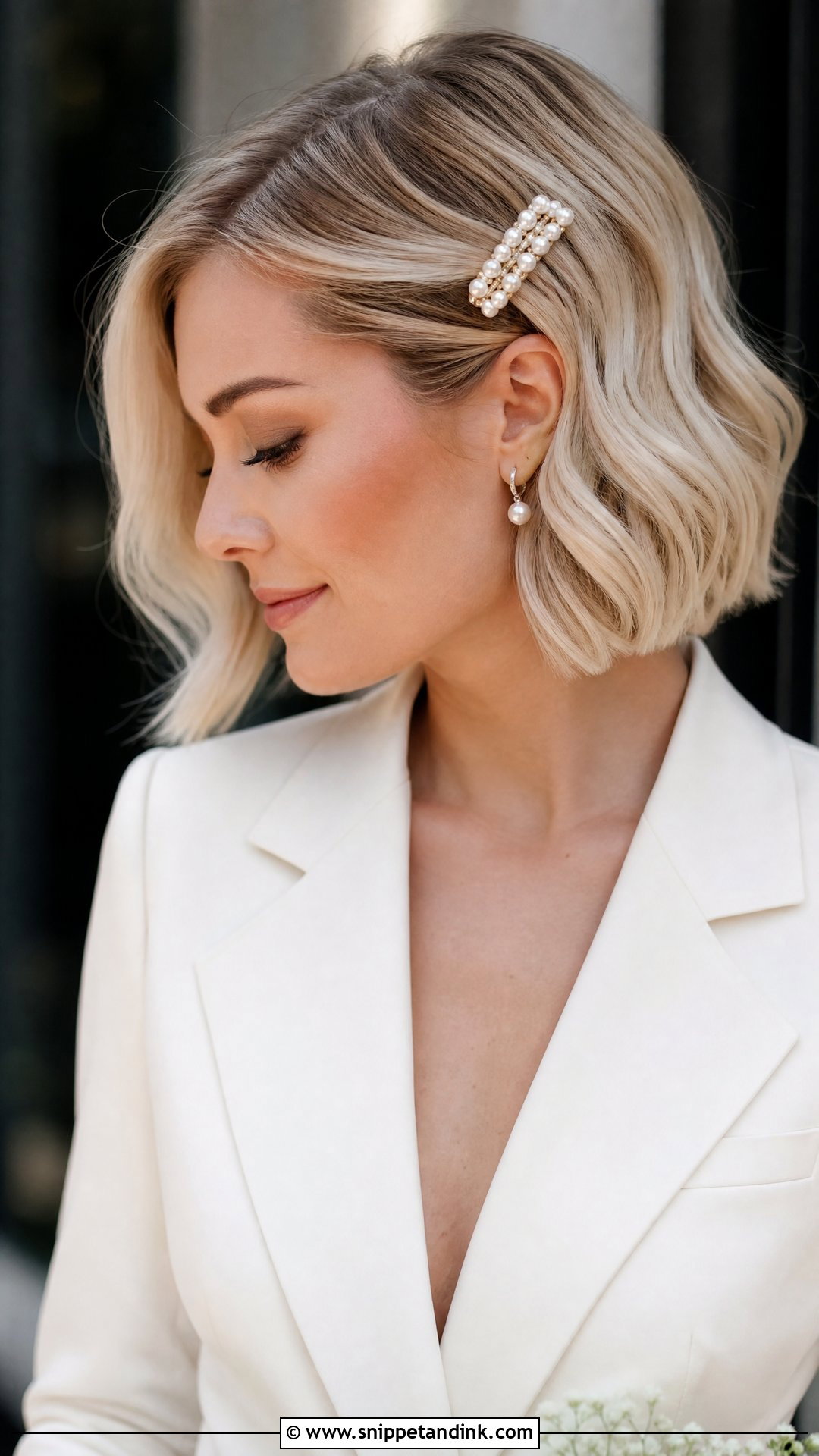
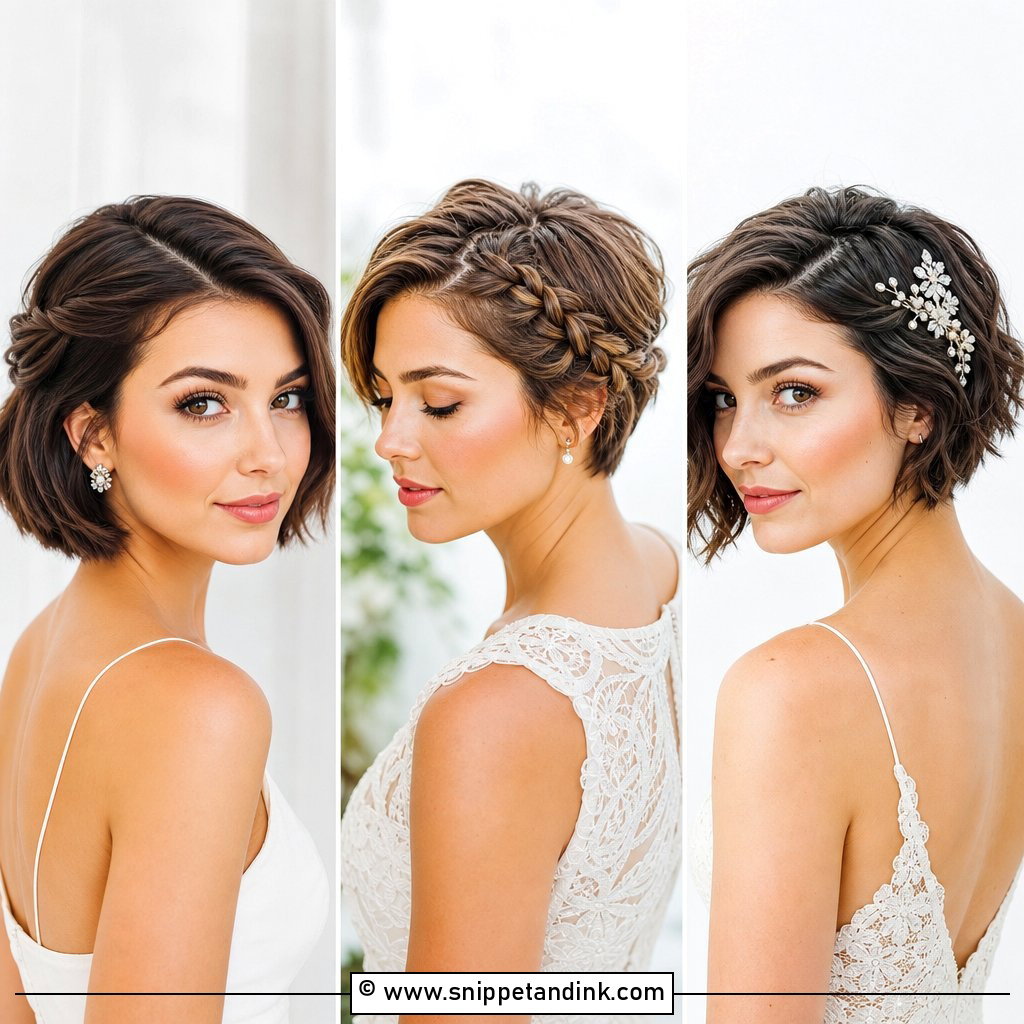
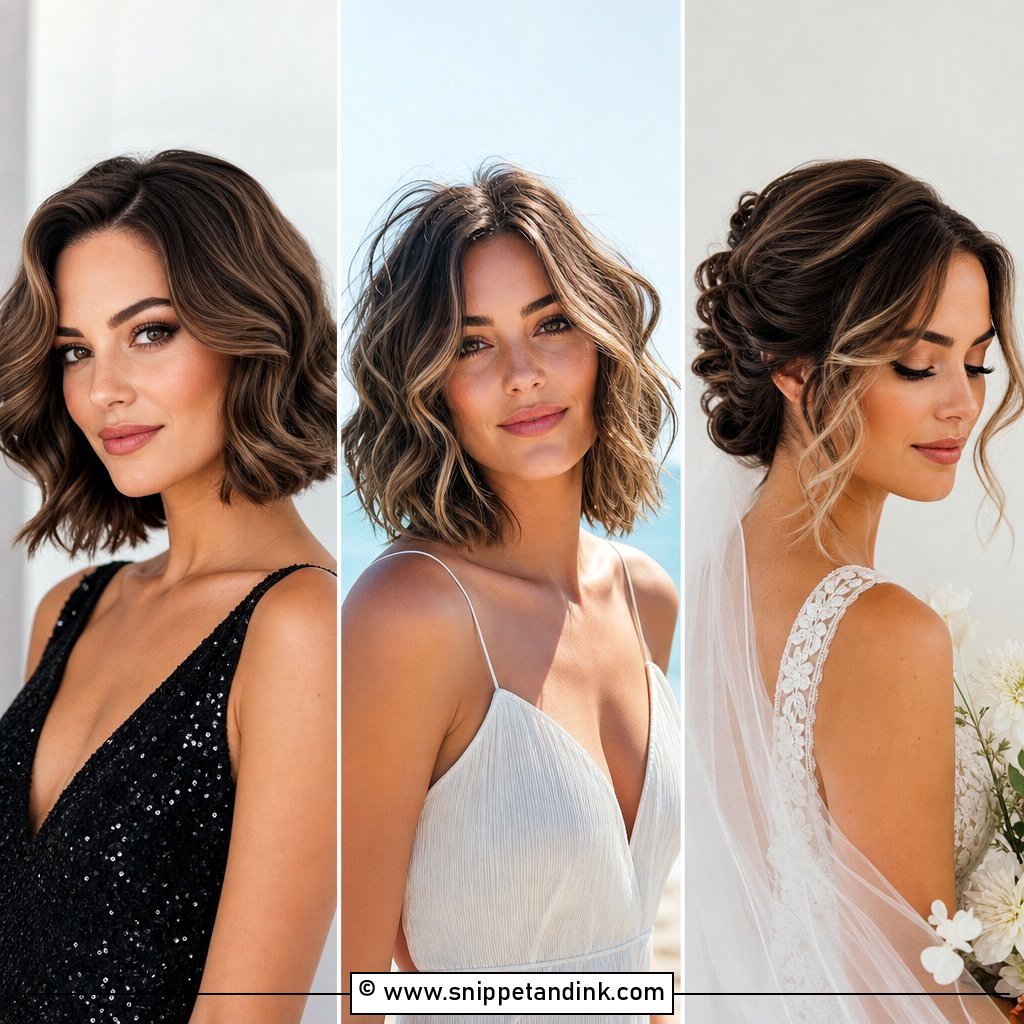
A short bridal bob doesn’t need to be forced into an updo or lengthened with extensions. A smooth tucked bob, a soft wave, a deep side part or a polished blowout can all look bridal. Accessories do the heavy lifting: a pearl headband, a small veil, a crystal comb or a barrette. Bobs show the line of the cut, so book a trim about two weeks before the wedding to keep the ends sharp without looking freshly cut. It suits minimalist gowns, courthouse weddings and bridal suits.
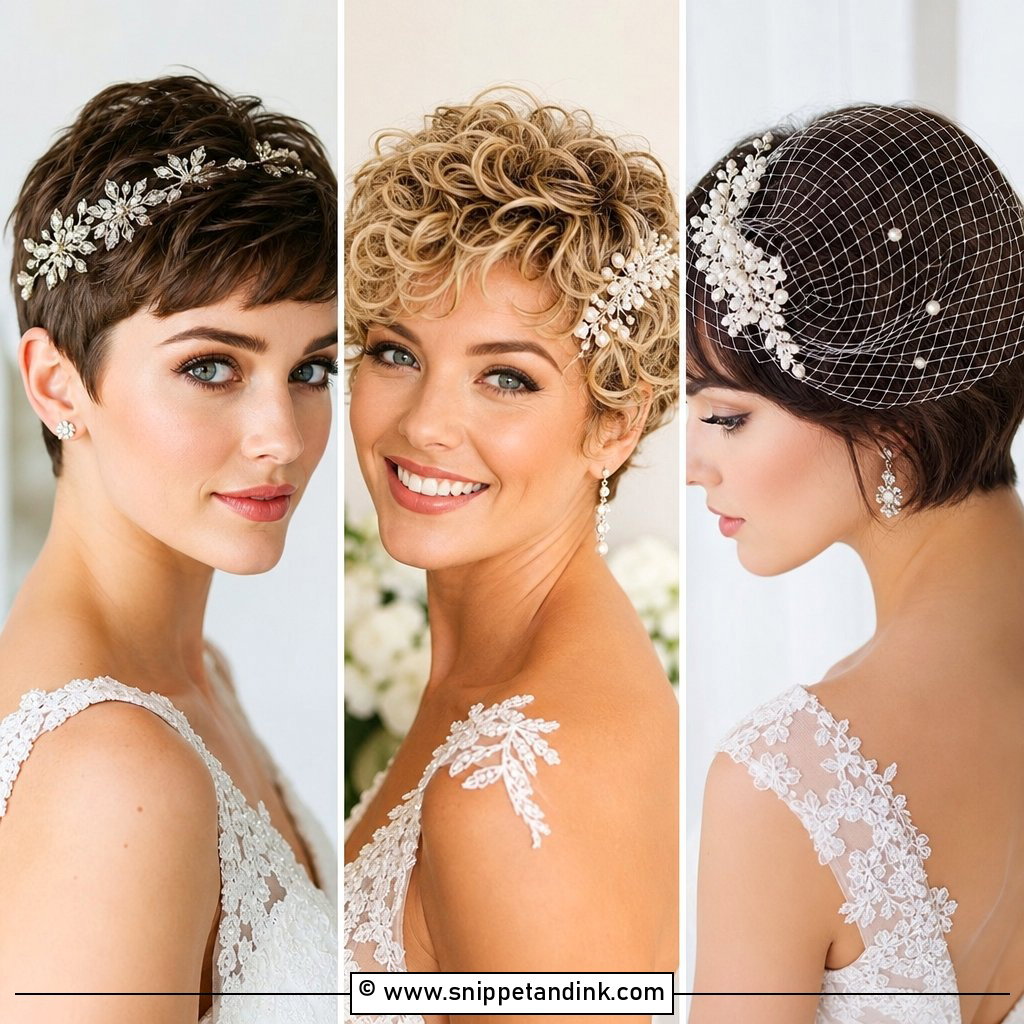
14. Bridal Pixie Cut
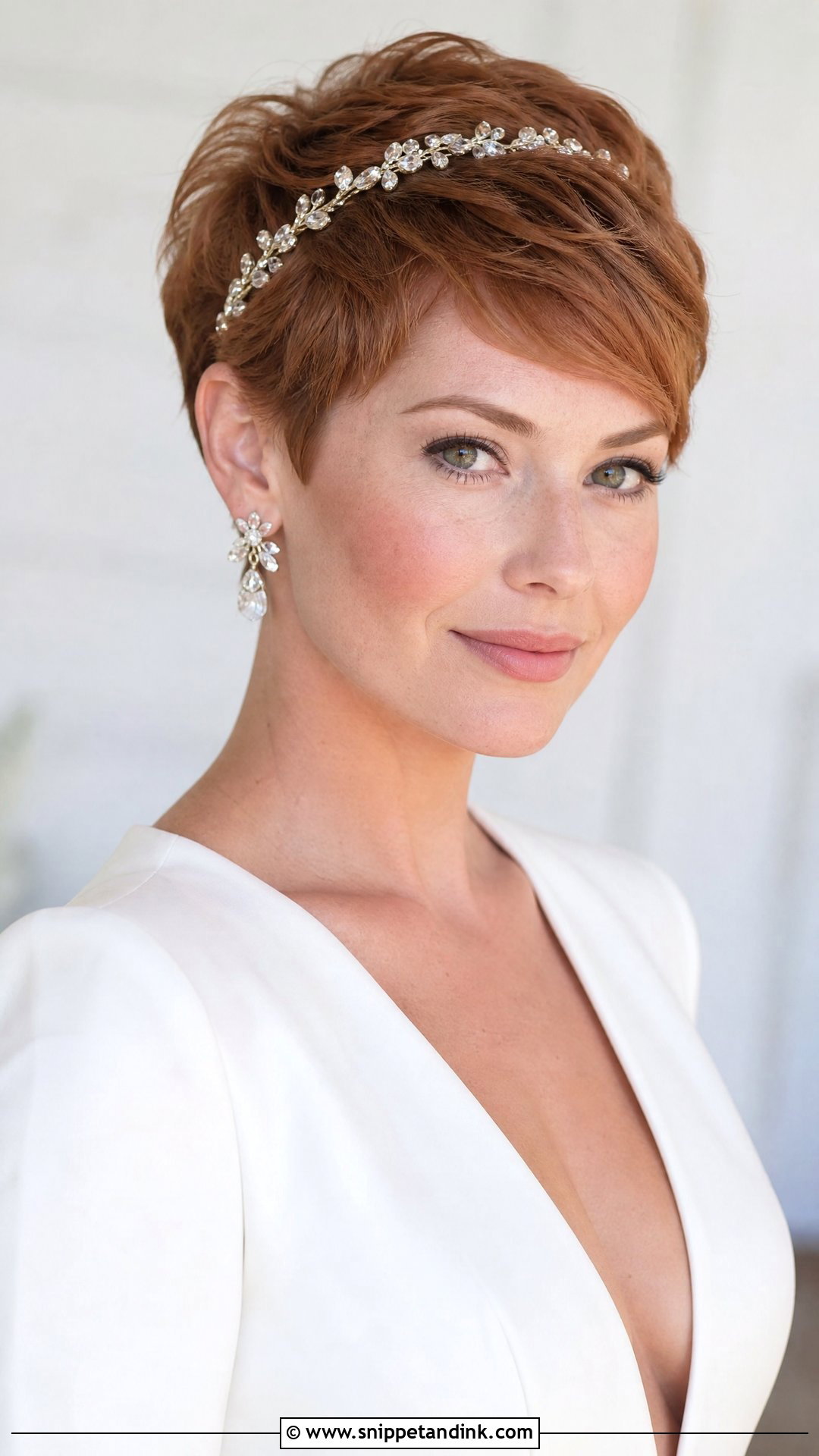
A bridal pixie cut is about shape, so the styling focuses on texture, shine and the line around the face. A sleek pixie is polished; a tousled one is softer. A delicate headband, a small comb, a birdcage veil or pearl clips add a formal note. I’d book the trim a week or two before the wedding so the shape is fresh but no longer looks newly cut. Styling cream or a light pomade adds definition without stiffness. Veils need careful anchoring on short hair; I use small, flat grips crossed under the comb.
15. Bridal Bubble Ponytail
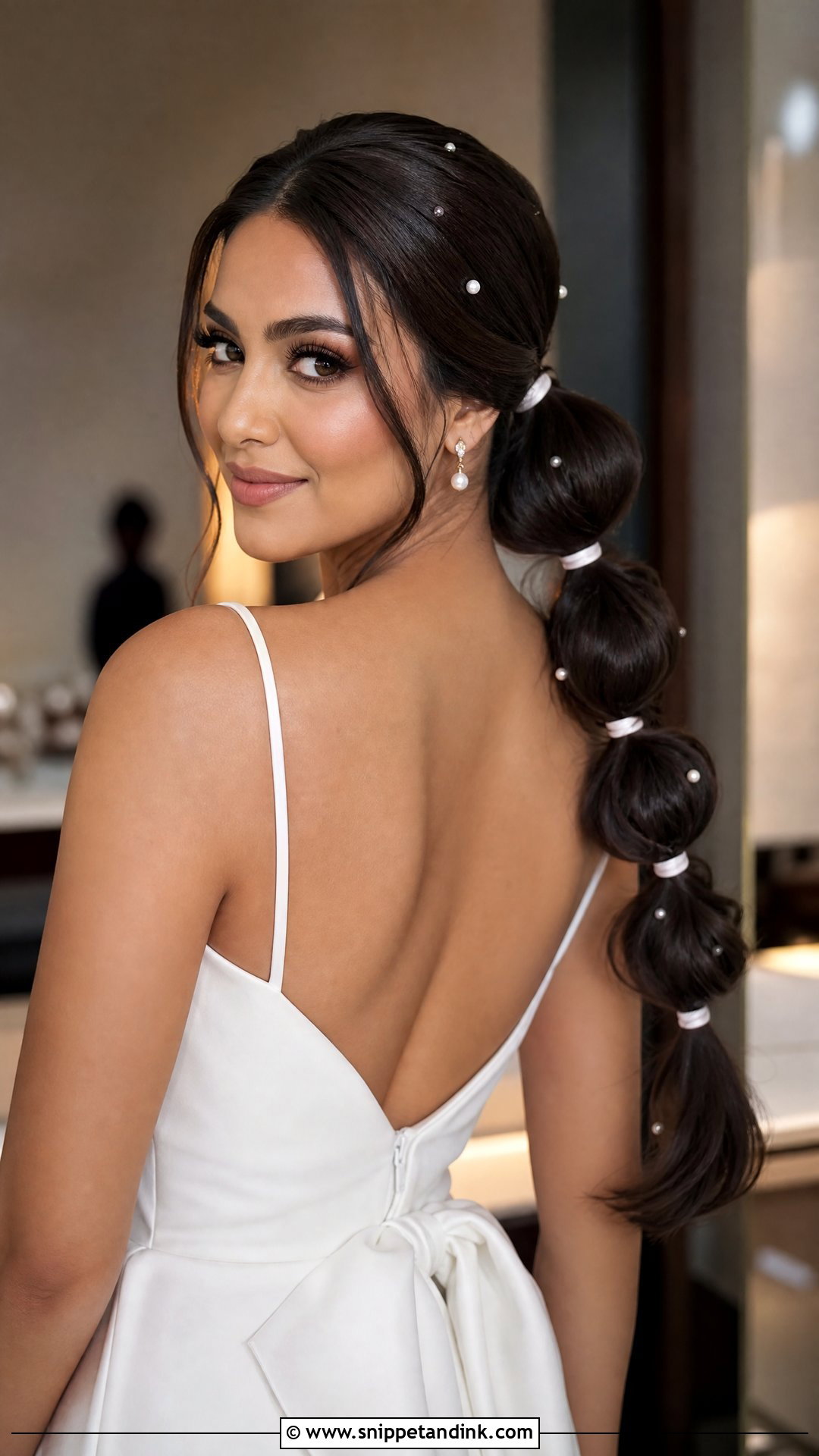
A bubble ponytail suits long hair or extensions, since the length is what shows the bubbles. I pull the hair into a ponytail and place elastics down the length, then gently loosen each section into a rounded shape. Sleek reads as fashion; softly waved looks more romantic. Wrap each elastic with hair or add tiny pearls to make it bridal. It works well for destination weddings and reception outfit changes. Keep the top smooth. On thin hair, the bubbles can look sparse without some extra volume.
16. Bridal Crown Braid
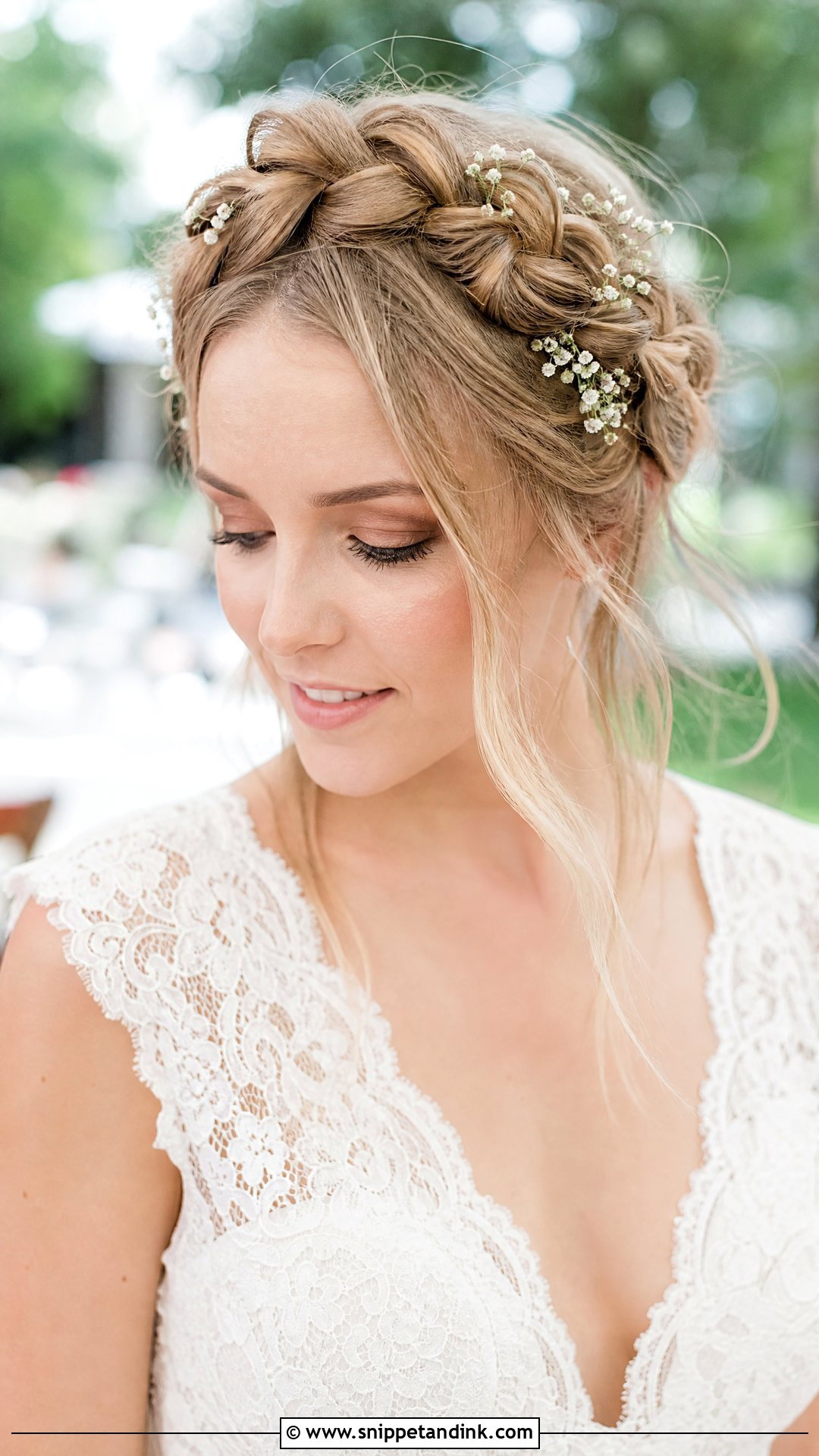
A crown braid frames the head and holds the hair securely through a long day. It can be a full halo braid, a soft braided updo or a crown braid blending into a low bun. I loosen it gently, especially around the hairline, so it looks soft rather than tight. It’s practical for layered hair because the braid catches shorter pieces. Tiny flowers or pearls add detail. Shoulder-length hair often isn’t long enough for a full halo; I’d add a clip-in or switch to a half crown.
17. Natural Bridal Curls
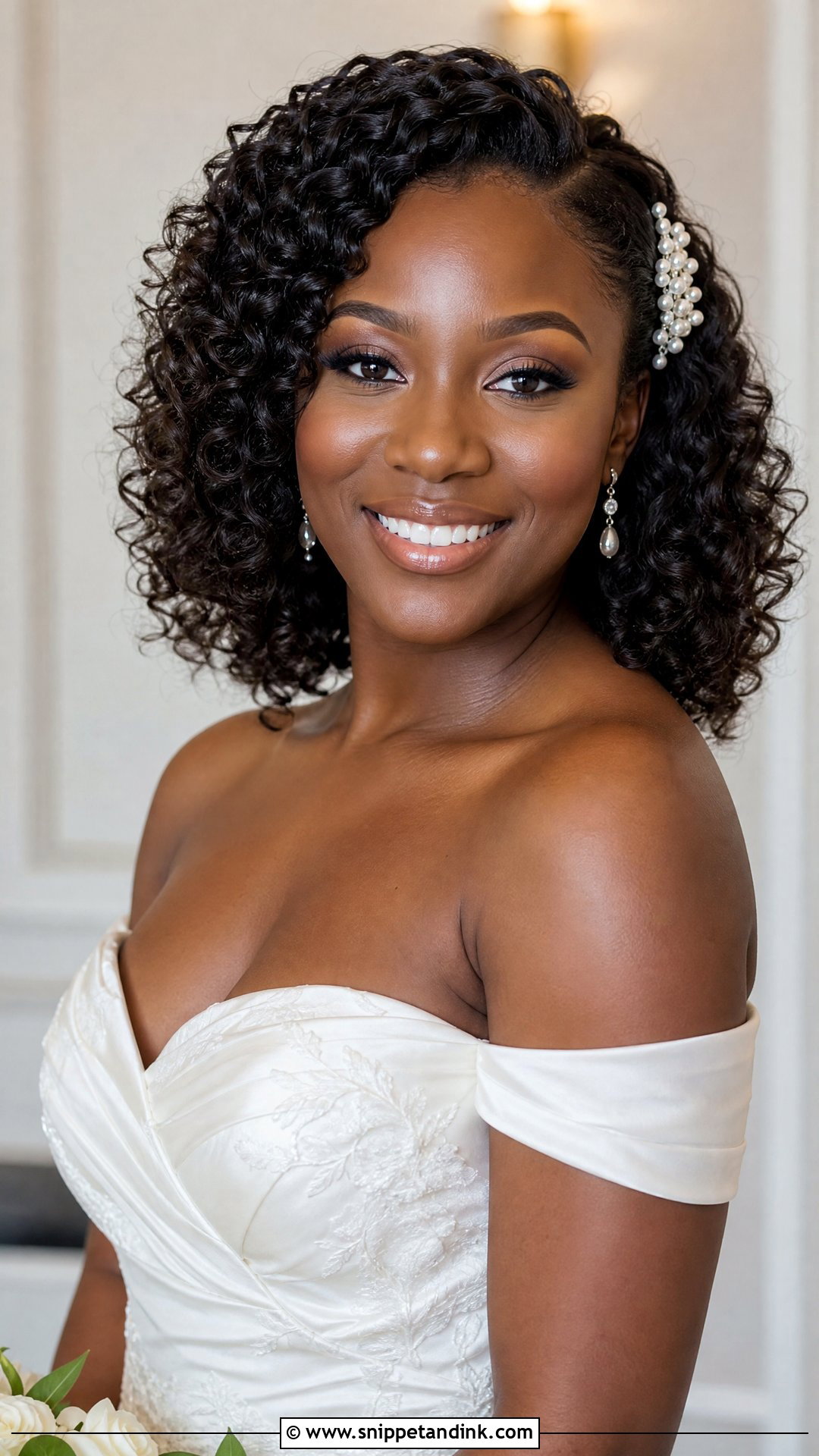
Natural curls deserve to be the feature, not hidden. I prep with moisture, curl cream and a hold product that keeps definition without crunch, then shape curls individually where needed. They can be worn down, half up for control or swept to one side. A trial is especially useful here, as curls change with weather and drying time. Add a veil, floral pins or pearl clips only where they support the curl shape, and anchor the veil to a small hidden twist.
18. Bridal French Twist
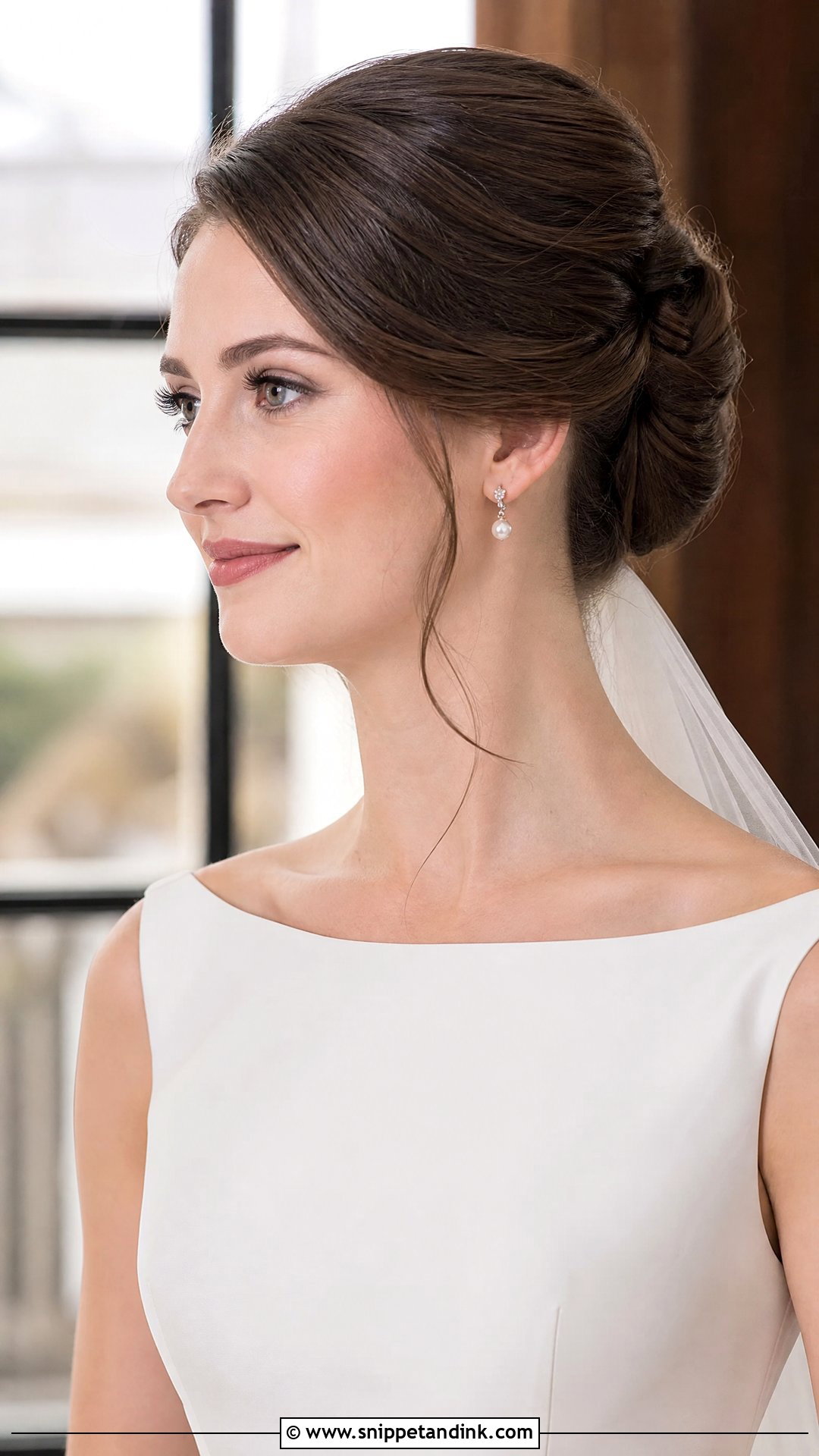
A French twist is a clean, slightly vintage updo that shows the neck and shoulders. The modern version is softer, with gentle volume at the crown and a smooth roll down the back. It suits classic gowns, bateau and off-the-shoulder necklines and pearl jewelry. Good pinning matters: I use a row of interlocking pins along the seam of the twist so it holds without visible grips. A few soft pieces at the face keep it current. Very thick hair can make the roll bulky, so I may thin the inside of the twist.
19. Bridal Waves With Headband
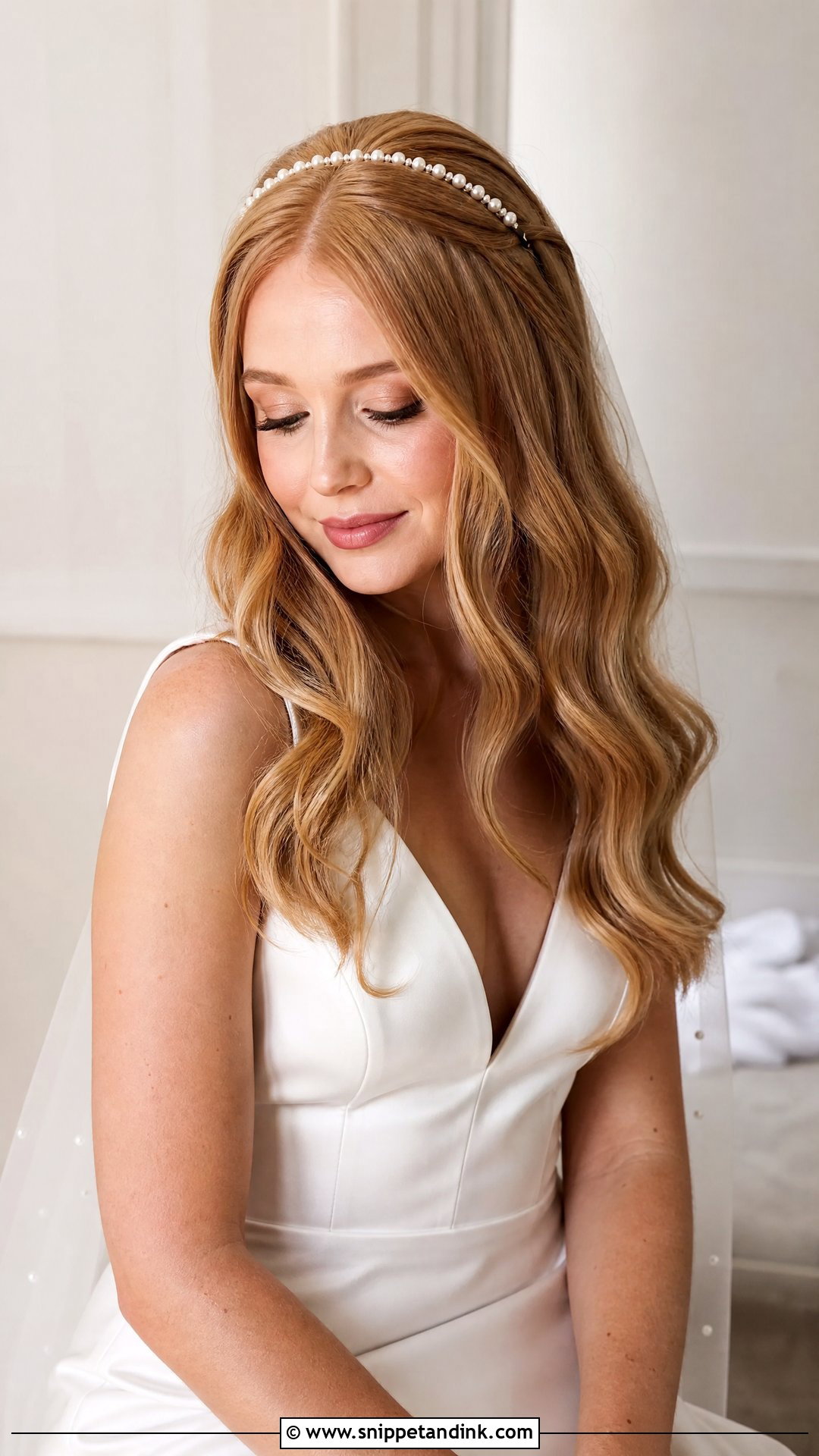
Waves held back by a band give a polished look without an updo. Bridal waves with headband styling suits medium and long hair, especially when you want movement but need the front controlled. Pearl, satin, crystal and padded headbands all work depending on the dress. A slimmer band is delicate; a wider one feels fashion-led. Keep the waves shiny and smooth so the accessory doesn’t compete with frizz. It’s also a neat match for shorter veils, which can sit just behind the band.
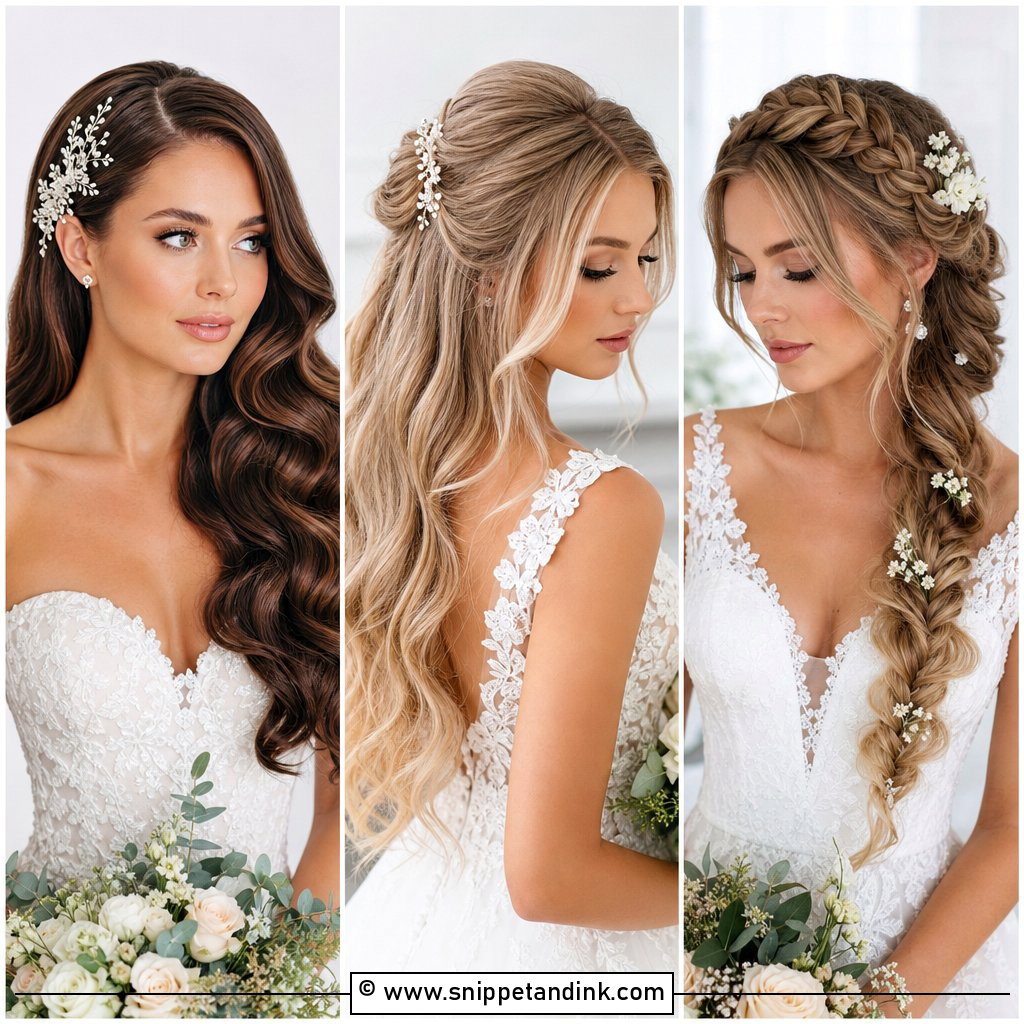
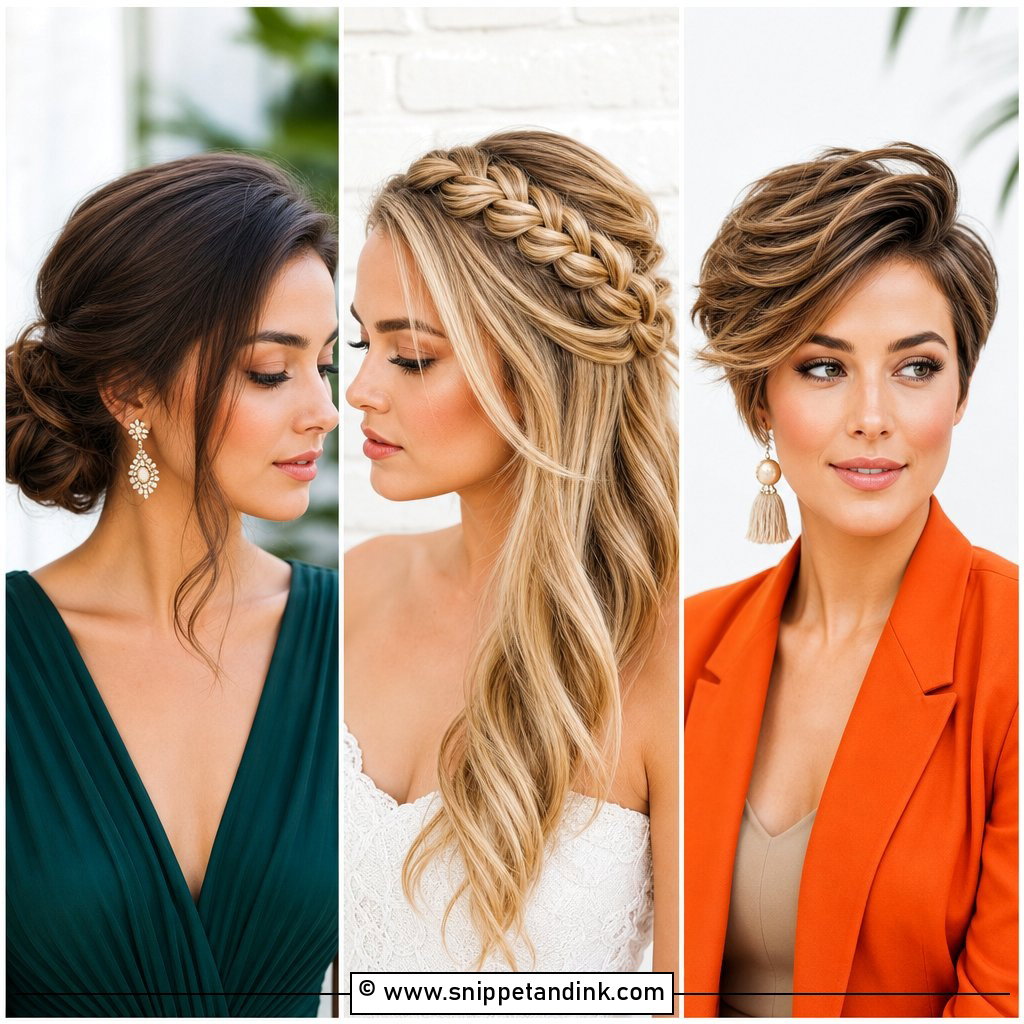
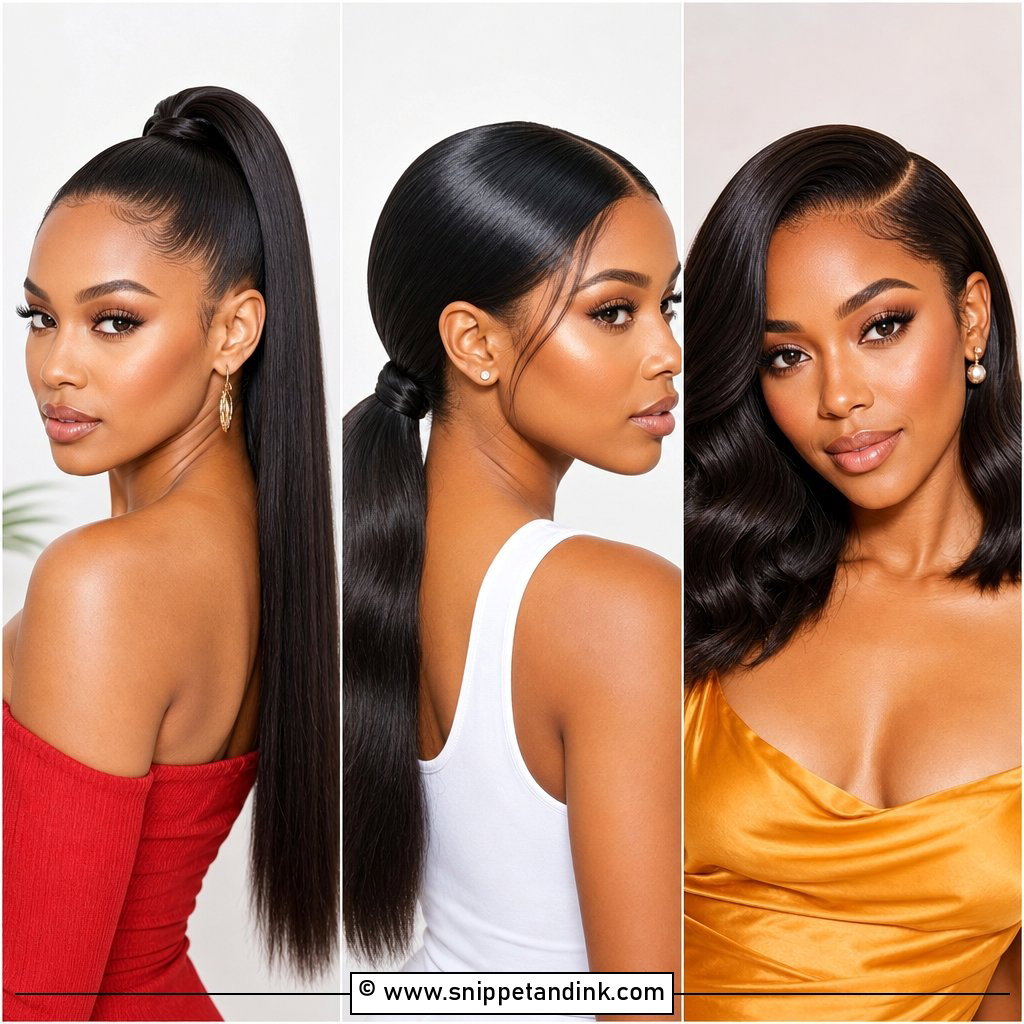
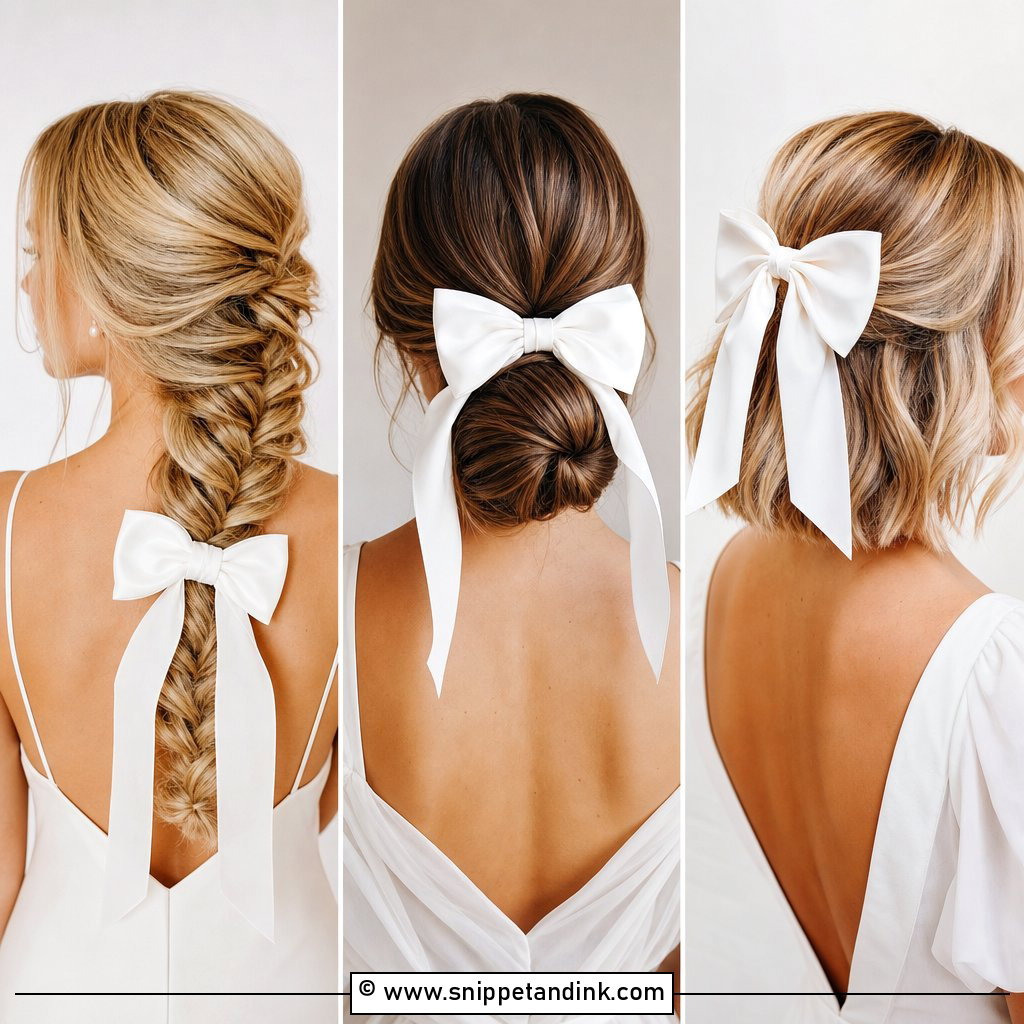
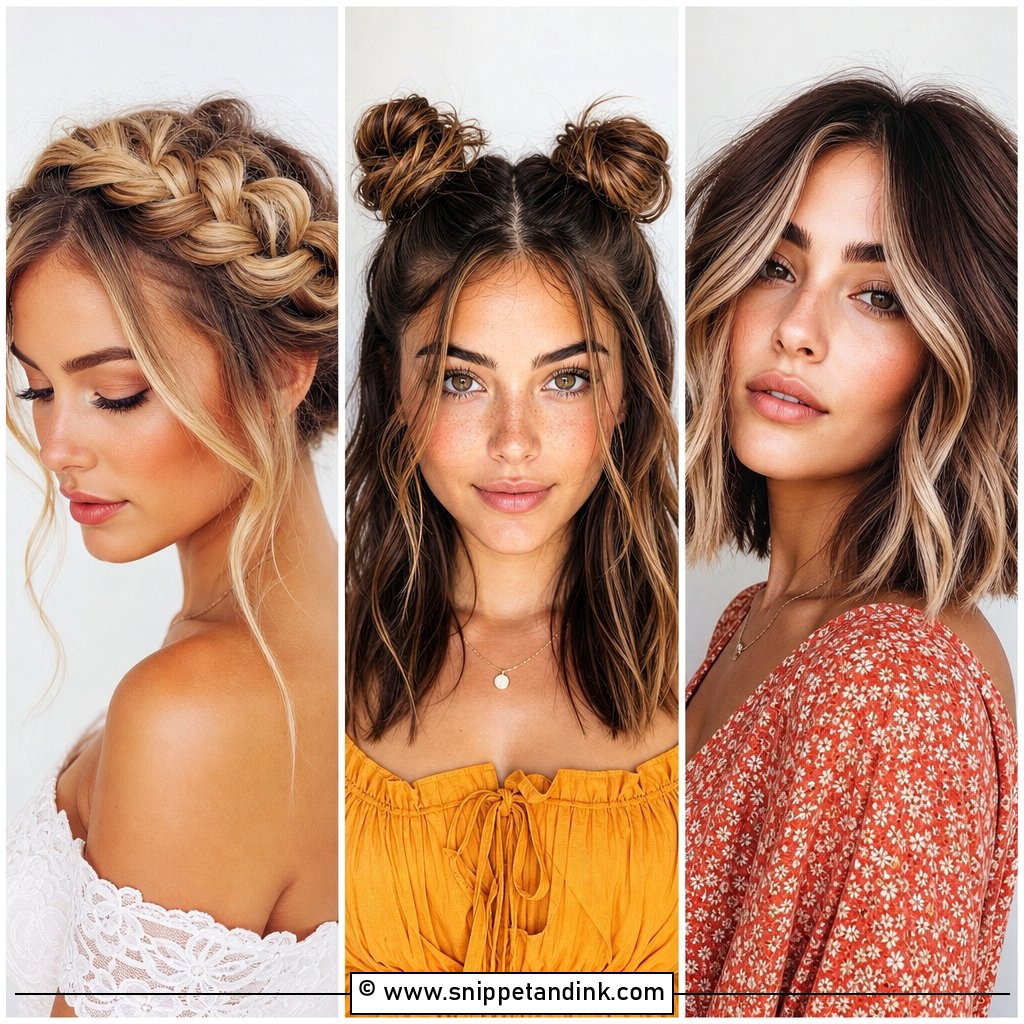
20. Bridal Low Bun With Face Framing
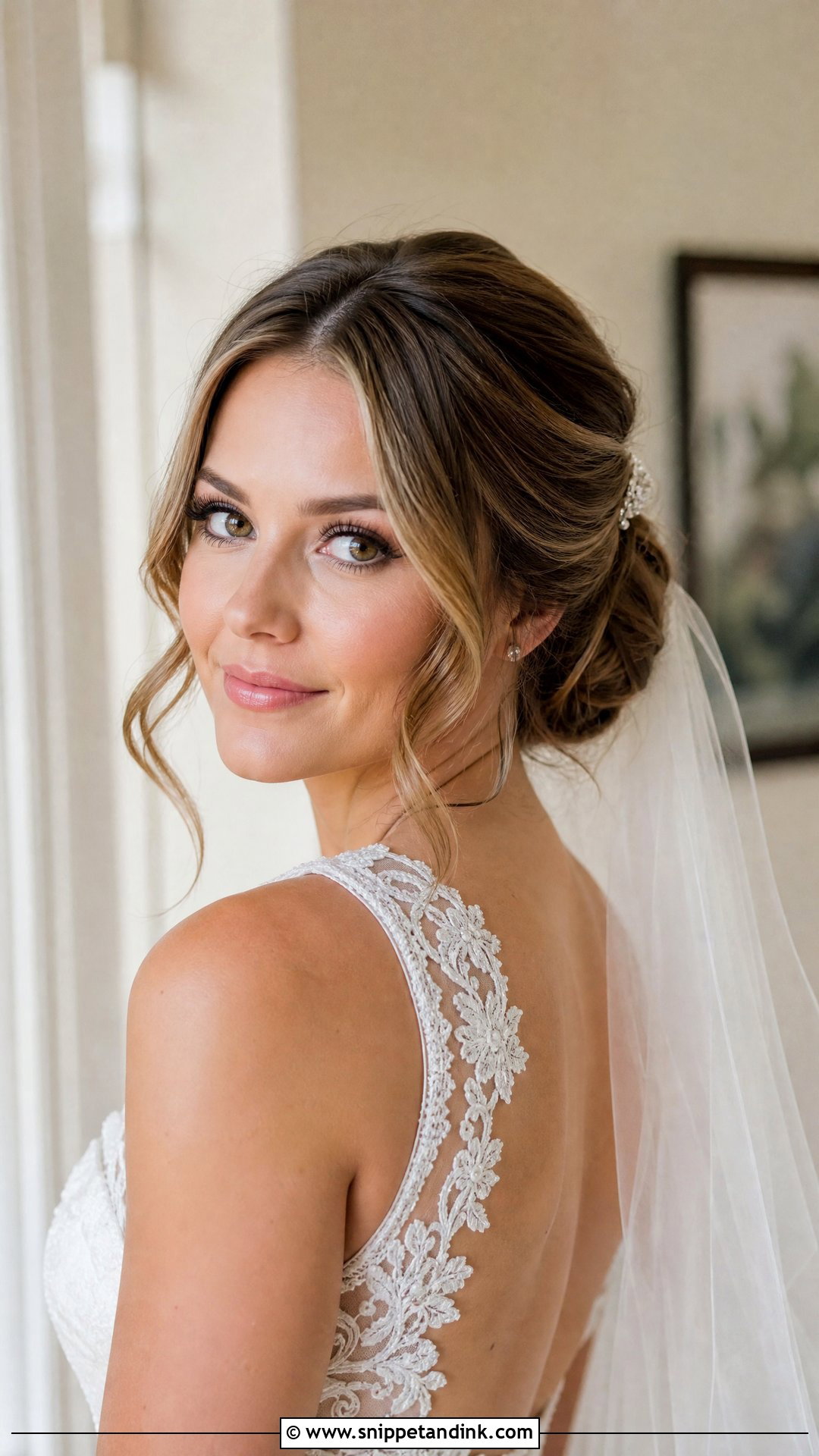
A low bun with face-framing pieces is the updo I suggest to brides who find a sleek bun too severe. The bun sits near the nape and a few soft pieces around the face soften it. Middle parts, side parts, waves, curls and texture all work. The face pieces need care; I curl them separately and set them with a light spray so they don’t fall flat by the speeches. It pairs well with veils, pearl pins, floral combs and simple earrings.
Guests See the Back of Your Head for the Whole Ceremony
Most of the ceremony, your guests are looking at you from behind, and the photographer will shoot plenty of profile and over-the-shoulder pictures. I design the back of every style as carefully as the front: where the bun sits in relation to the neckline, how a braid wraps, whether pins are visible.
At your trial, ask for photos of the back and both sides, not just the front. Look at them next to a photo of your dress from behind. A low bun may disappear behind a high back neckline; a ponytail may hide a beautiful open back or buttons. Small adjustments in height and position make a big difference.
How Much Chair Time Each Style Takes
Timing varies with hair length, thickness and the stylist, but as a rough guide, a smooth blowout or a pixie takes the least time, a sleek bun or ponytail takes a little longer, and curly updos, braided styles and anything with extensions take the most. Ask your stylist for their estimate at the trial, and add buffer for veil placement and a final check. Share your photographer’s schedule with them too, so the hair is finished before the first getting-ready shots.
Your Hair, Your Dress and a Long Day Ahead
There’s no single rule for modern wedding hair. A sleek chignon may suit a minimalist bride, while curls, waves or a textured bun suit someone who wants movement. The deciding factors are practical: your hair texture and length, your dress neckline, the venue, the weather and how the style looks from behind and in profile. Bring photos to your trial, and listen if your stylist suggests a small change; it is usually about how the style will hold on your hair. Then on the day, the look you saw at the trial is the one you get.
You'll Like These Ideas:


Leave a Reply