
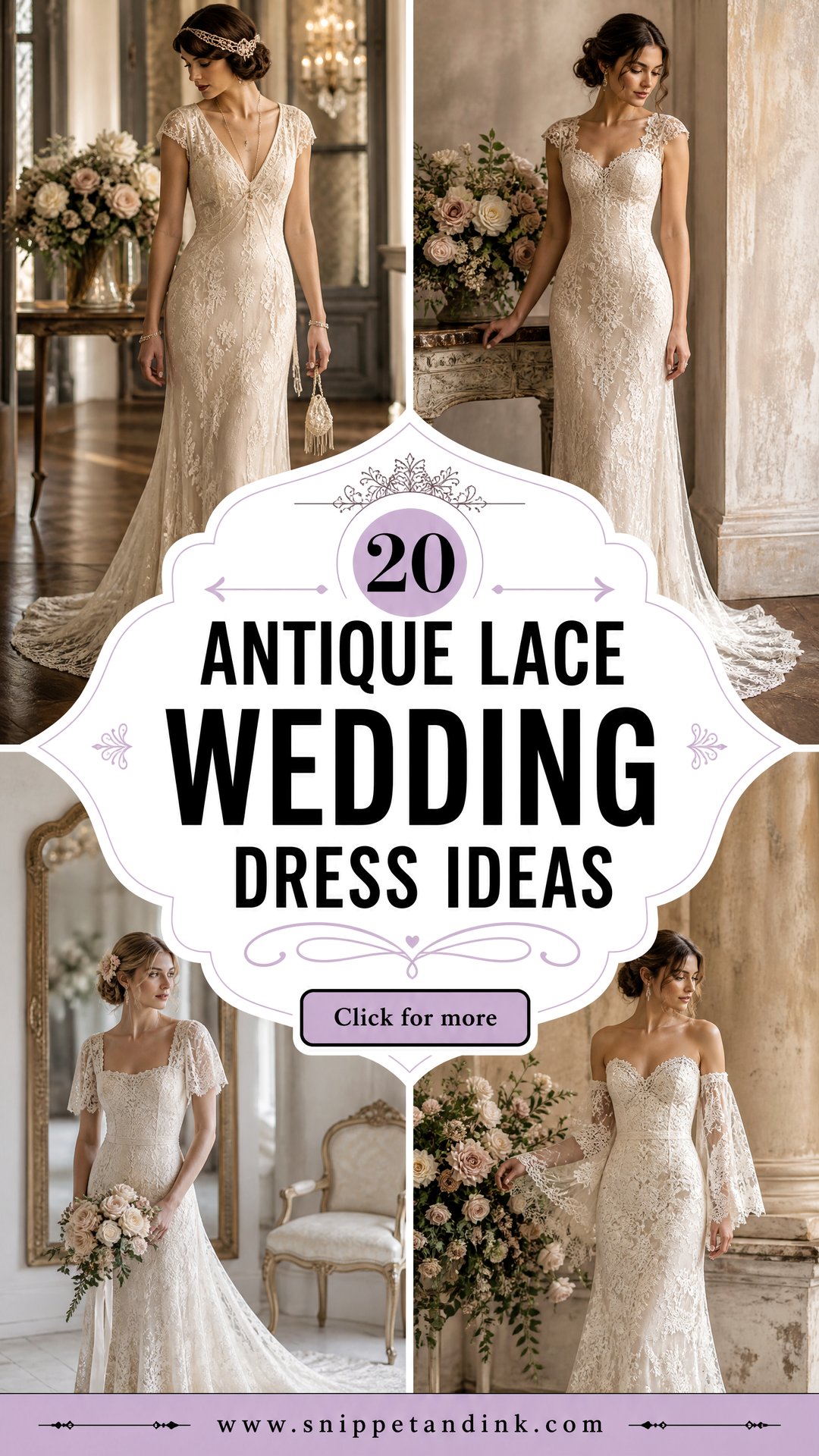
Antique lace has a softness new lace rarely matches, because decades of wear and washing have relaxed the threads. The twenty looks below run from Victorian details, Edwardian silhouettes through mid-century gowns and relaxed bohemian shapes, with options for formal ceremonies, outdoor weddings, petite frames and curvy figures. When I style a lace gown, accessories come last and stay quiet: pearls, small earrings, a sheer veil and shoes in a warm ivory rather than bright white. If you own a piece of genuinely old lace, it can be mounted over a modern lining so the dress fits like new while the fragile layer carries none of the strain.
Is It Really Antique, or New Lace Made to Look Old?
Most gowns sold as antique lace are new lace in a vintage pattern, and that’s fine. Genuinely old lace, roughly from the late 1800s to the 1930s, is a different material to wear, and it helps to know which one you’re buying before you budget for alterations. These are the checks I run at a fitting.
- Turn it over. Handmade bobbin and needle lace shows tiny irregular knots and joins on the back; machine lace repeats exactly, and modern machine lace is often synthetic with a faint sheen.
- Crush a corner gently in your hand. Old cotton and silk lace feels soft and slightly dry, while polyester springs straight back.
- Hold it to daylight. Age shows as uneven ivory, small brown spots and thin patches where threads have worn. Even cream all over usually means new lace dyed to match.
- Ask what the lace is mounted on. Antique lace should be stitched to modern net or lining that takes the strain; lace that is load-bearing at the seams will eventually split.
None of this makes reproduction lace the lesser choice. It is stronger, easier to alter and can be cleaned normally. I’d only push for the genuine article if you love a specific heirloom and accept that it needs gentle handling all day, including during hugs and the first dance.
1. Victorian High Neck Antique Lace Wedding Dress
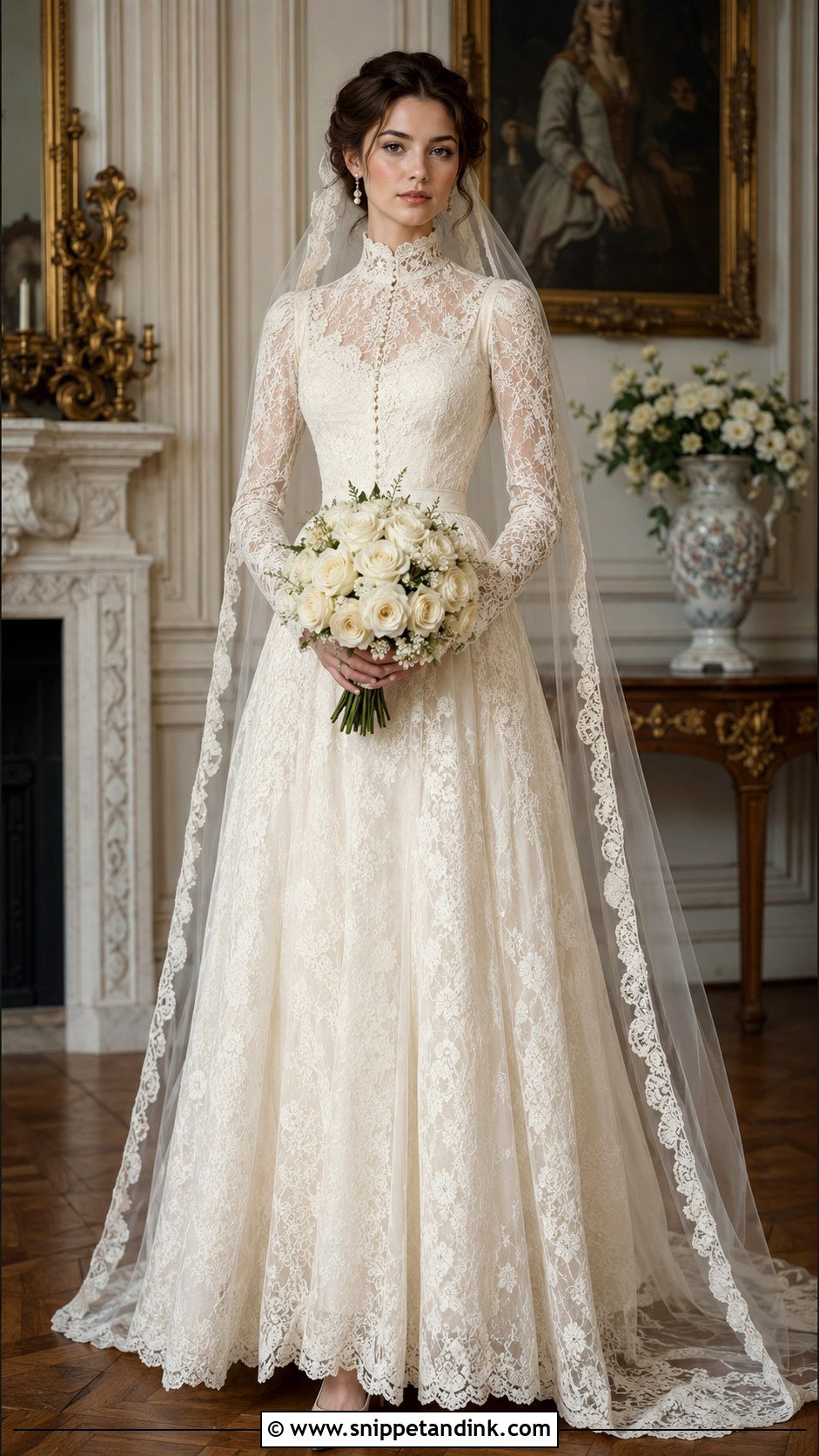
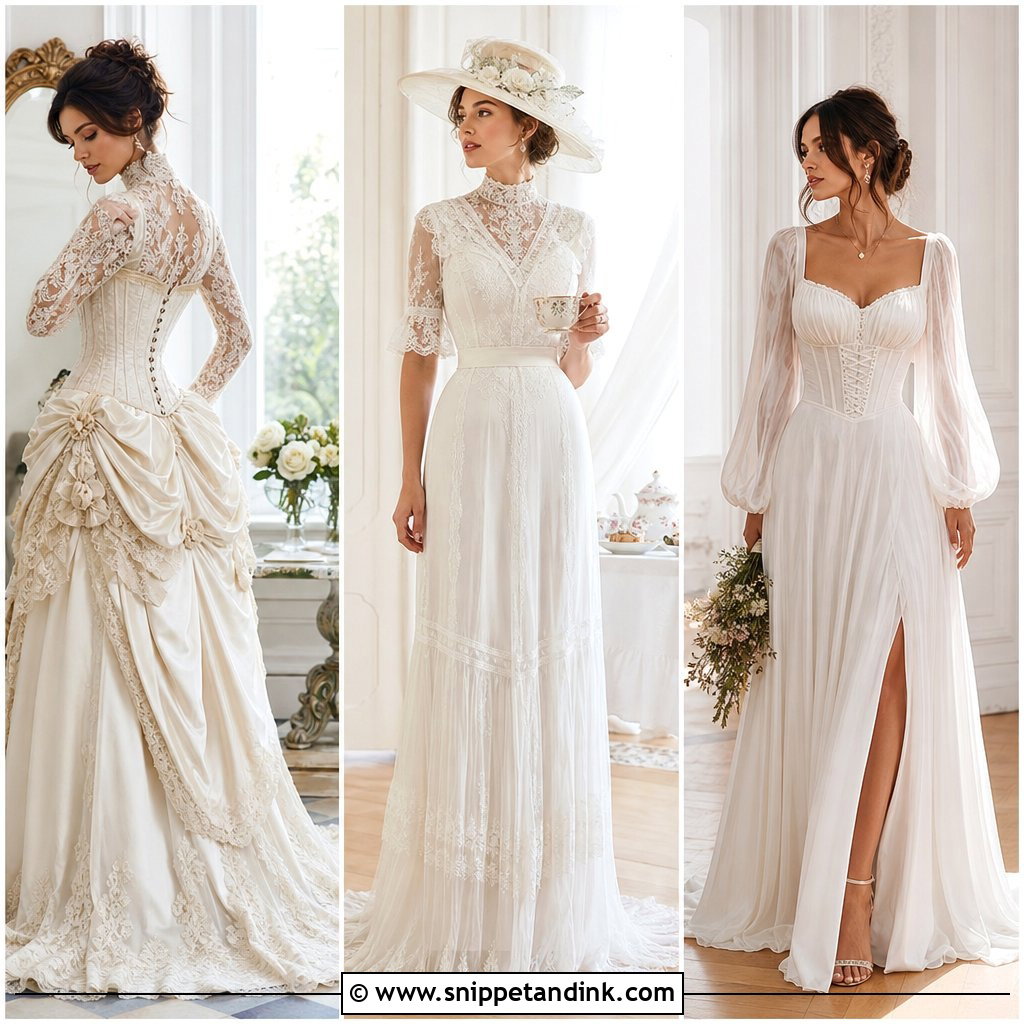
High lace collars are the detail I fit most carefully, because a collar that is even slightly snug shows every swallow in the ceremony photos. Look for an ivory A-line with a fitted lace collar, sheer long sleeves, covered buttons and a softly structured bodice, all over a smooth lining that lets the pattern read clearly. Pearl drop earrings, a lace-edged veil and pointed ivory heels finish it. Keep the hair in a neat low bun so the collar has room, and skip the necklace entirely. A loose bouquet of cream roses keeps such a formal neckline from feeling stiff.
2. Edwardian Long Sleeve Antique Lace Wedding Dress
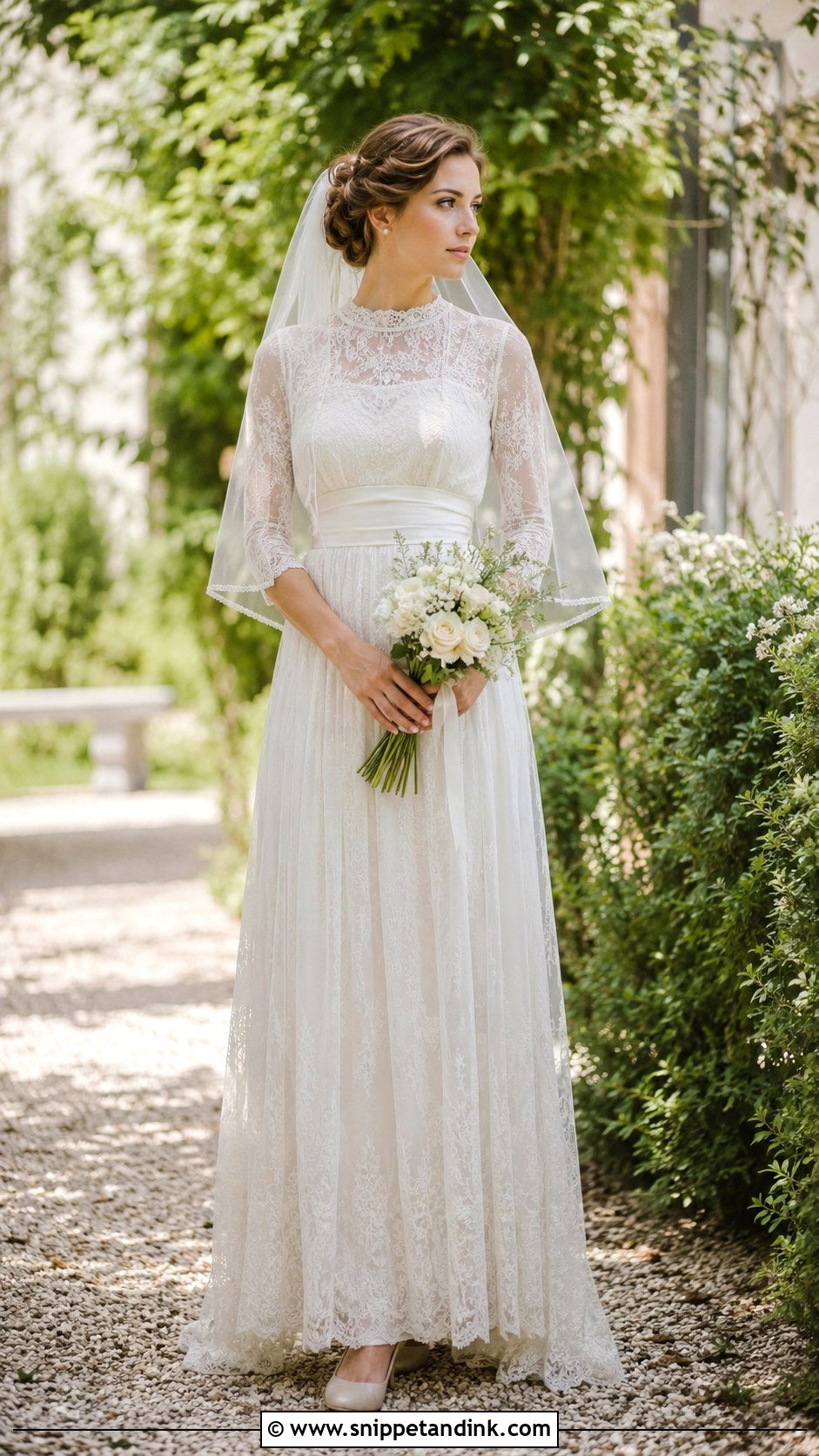
An Edwardian-inspired antique lace wedding dress moves differently from a modern gown because its fullness sits in a blouson bodice above a raised waist. Long lace sleeves and a gently layered skirt complete the shape, and a narrow satin waistband adds definition without breaking it up. I pair it with an elbow-length veil, small pearl studs and low ivory heels with slim ankle straps; a tall stiletto fights the soft posture the dress asks for. A loosely twisted updo with a few face-framing pieces and a bouquet of sweet peas and garden roses suit it. One honest caution: a blouson bodice can look shapeless on a very short torso, so try it on before you fall for the photo.
3. 1920s Drop Waist Antique Lace Wedding Dress
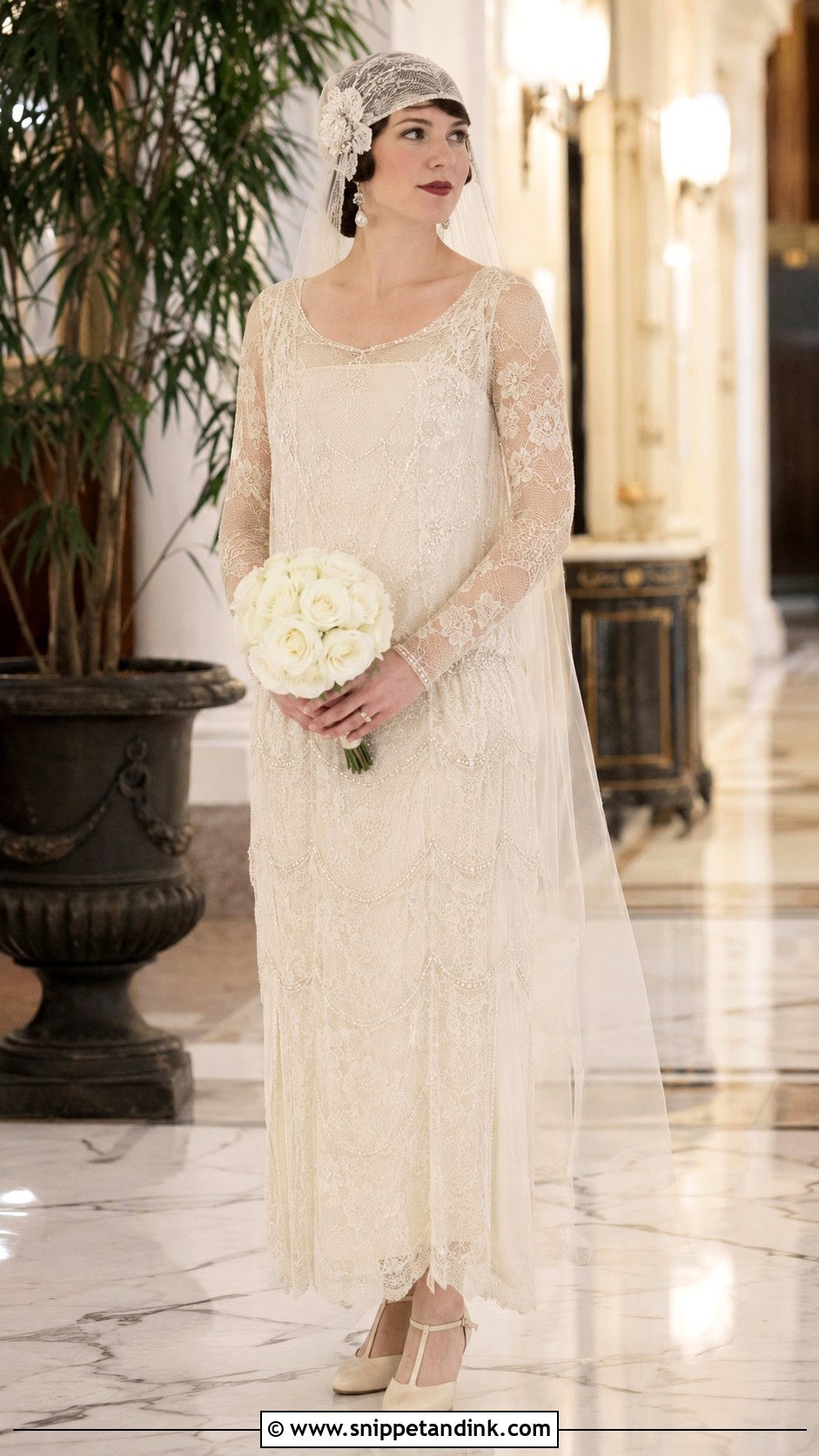
Drop waists are less forgiving than they look. The lowered seam sits at the hip, so if your hips are noticeably wider than your waist, the straight cut pulls across that seam, and I’d rather move it up an inch than fight it all day. The classic version is a straight gown with a relaxed bodice, scalloped lace panels and a fluid ankle-length skirt, sometimes with a little pearl or crystal beading on the lace. A Juliet cap veil is the giveaway twenties touch. Add closed-toe ivory heels, a small satin clutch and drop earrings, with smooth waves or a low tucked style and a compact bouquet of white roses. Nothing drags on the dance floor at that length.
4. 1930s Bias Cut Antique Lace Wedding Dress
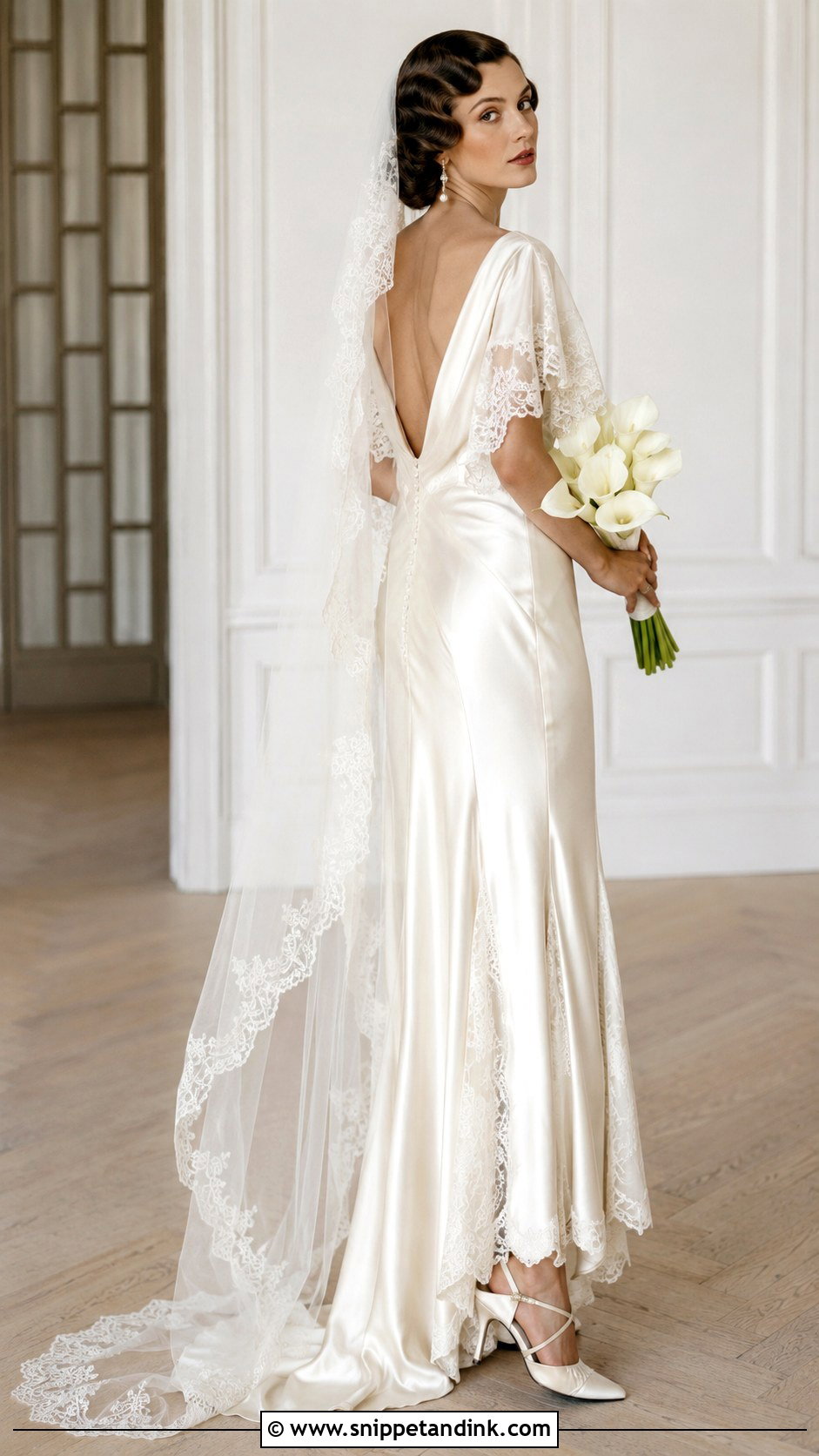
Bias-cut silk shows everything underneath it, which is why I ask brides to bring their actual underwear to every fitting for this style. Cut on the diagonal, cream silk skims the body instead of gripping it, with lace placed along the neckline, sleeves, waist and low back. A fingertip veil with a narrow lace border, vintage pearl earrings and softly pointed heels are all it needs, plus a side-parted wave or a low chignon. Long-stemmed calla lilies keep the line vertical. It’s the right shape if you want old lace without a big skirt, and the wrong one if you want structure holding you in.
5. 1940s Sweetheart Neck Antique Lace Wedding Dress
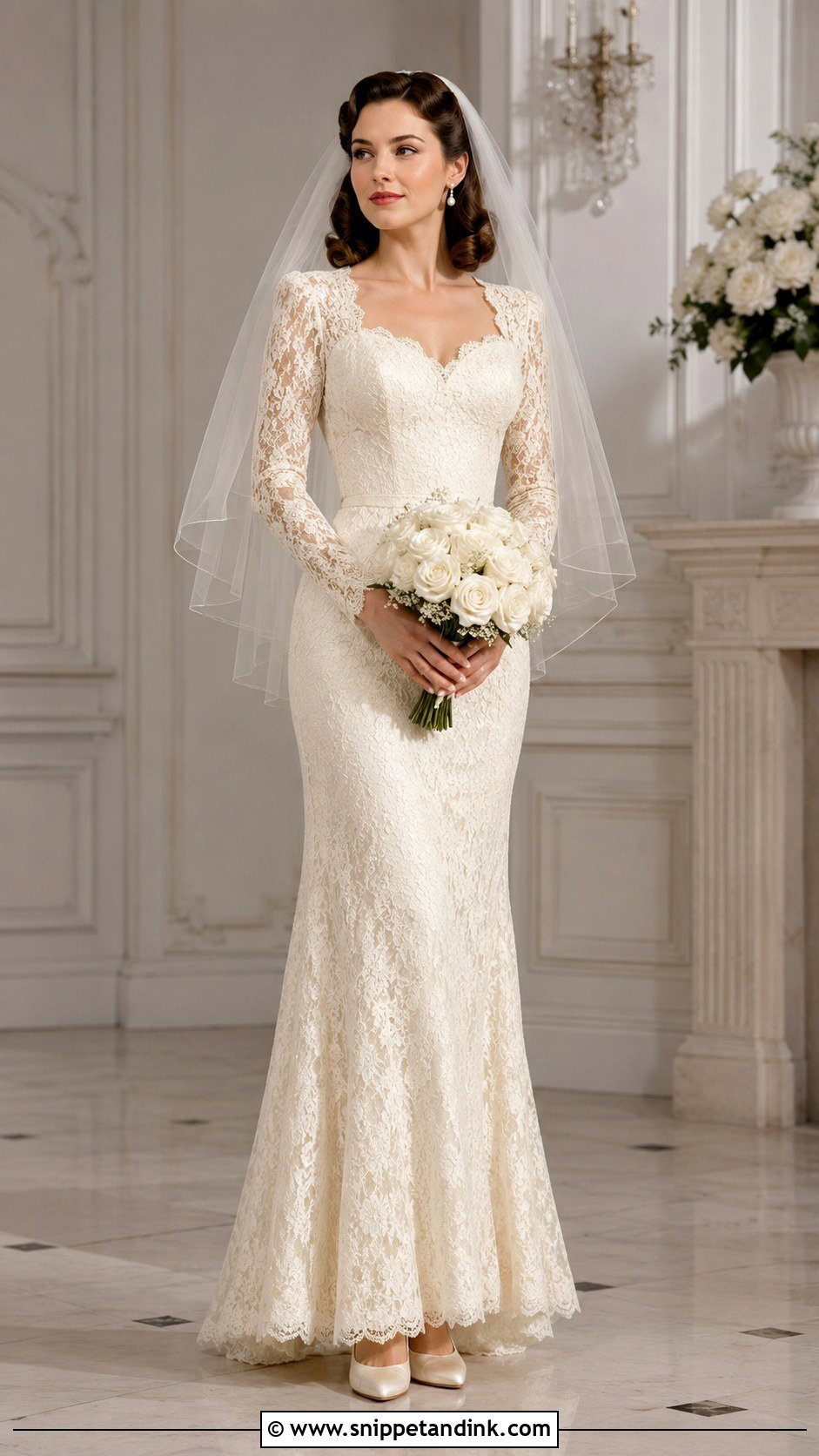
A modest sweetheart neckline frames the face while still covering enough for a traditional ceremony, which is why it turns up so often on a 1940s-inspired antique lace wedding dress. Everything else is tailored: fitted lace bodice, narrow waist, long sleeves and a softly flared skirt. Fabric was rationed in that decade, so the look leans neat rather than lavish. I’d style it with a shoulder-length veil, pearl button earrings and mid-height ivory pumps, plus polished waves or a low rolled updo. If you add a satin belt, match it closely; a belt one shade whiter than the lace makes the lace look dingy beside it.
6. 1950s Tea Length Antique Lace Wedding Dress
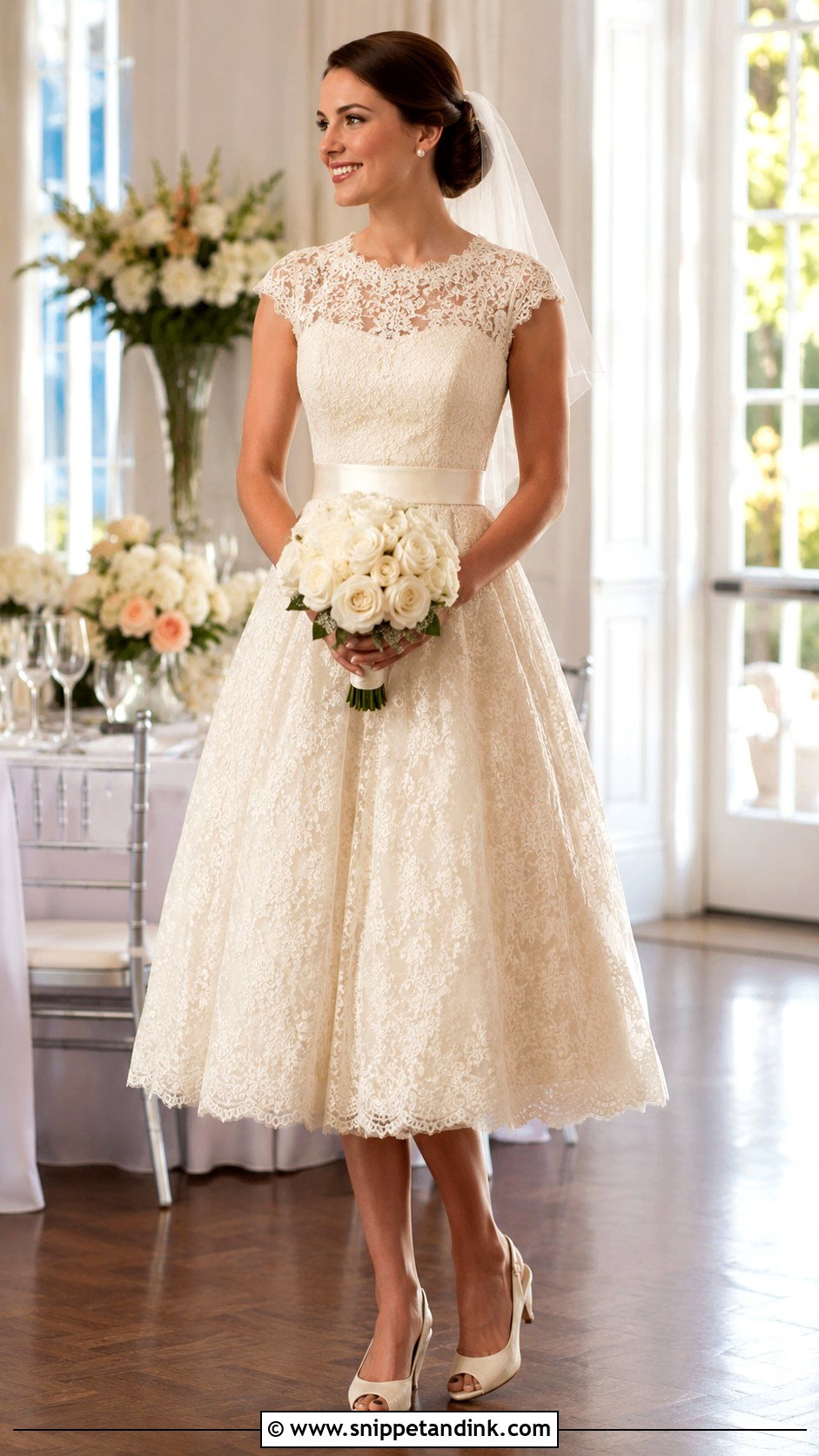
Tea length is where shoes become part of the dress. The hem falls between knee and ankle, so the fitted bodice with cap sleeves, the natural waist and the lace-covered skirt are all on show, right down to the slingbacks. Under the skirt, choose a petticoat of soft tulle rather than stiff crinoline, which scratches through fine lace and pushes it away from the body. Pearl studs, a short birdcage or shoulder-length veil and a narrow removable satin belt finish it, with a smooth bun or curled bob to keep it in period. You’ll also find greeting guests and dancing much easier in a shorter hem.
7. Antique Lace A-Line Wedding Dress
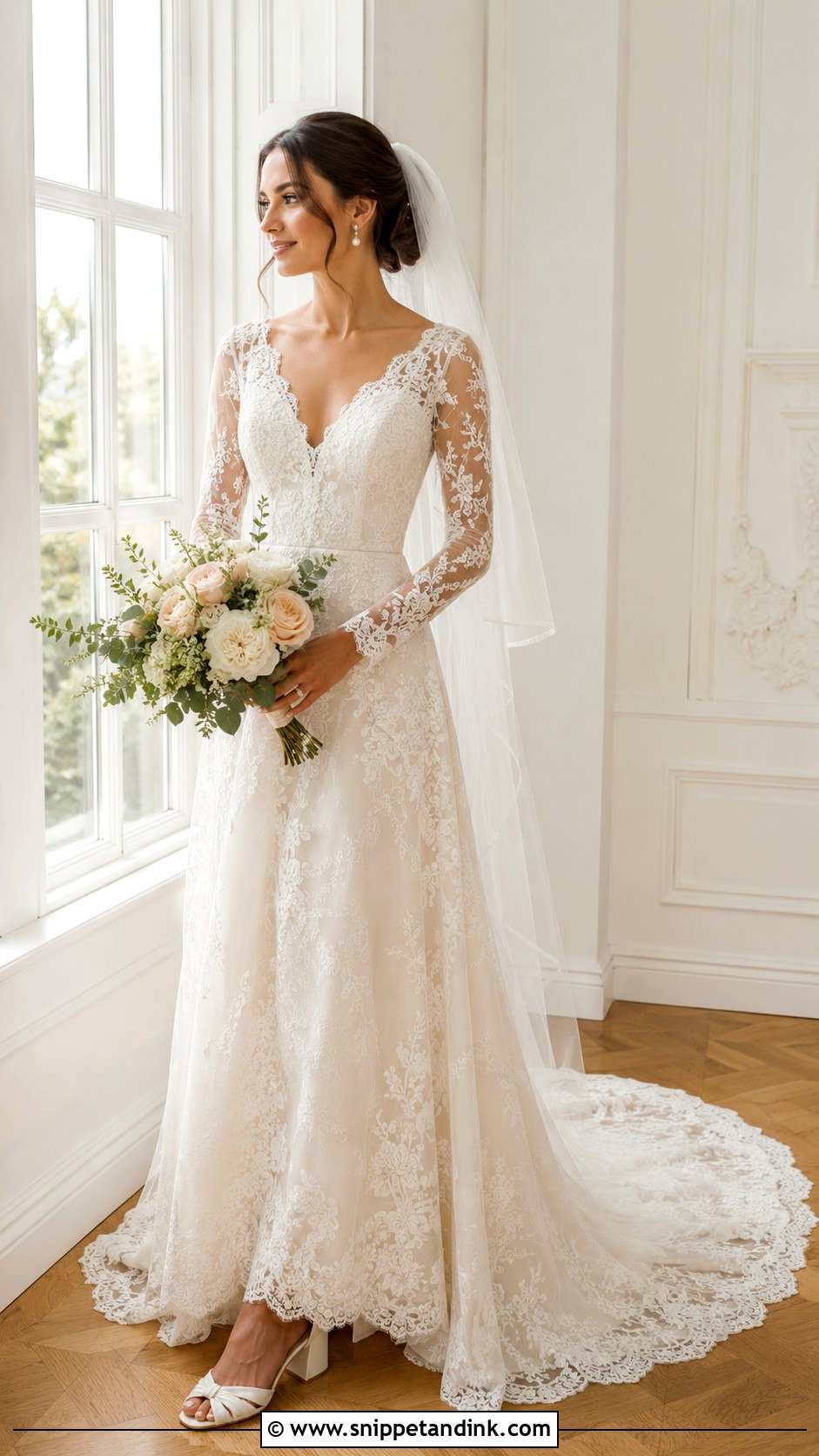
A-line fits the widest range of bodies with the least fuss, so it’s where I start most lace fittings. What I check with antique lace is how the appliqués travel from bodice into skirt: they should continue naturally down the gown, not stop in a hard line at the waist seam. A fitted V-neck bodice with supportive lining, long illusion sleeves and a medium train give enough presence for formal photographs. Add pearl earrings, comfortable ivory block heels and a light veil set beneath a low bun. Garden roses and ranunculus suit the texture. Leave out any heavily beaded belt so the lace stays in charge.
8. Antique Lace Ball Gown Wedding Dress
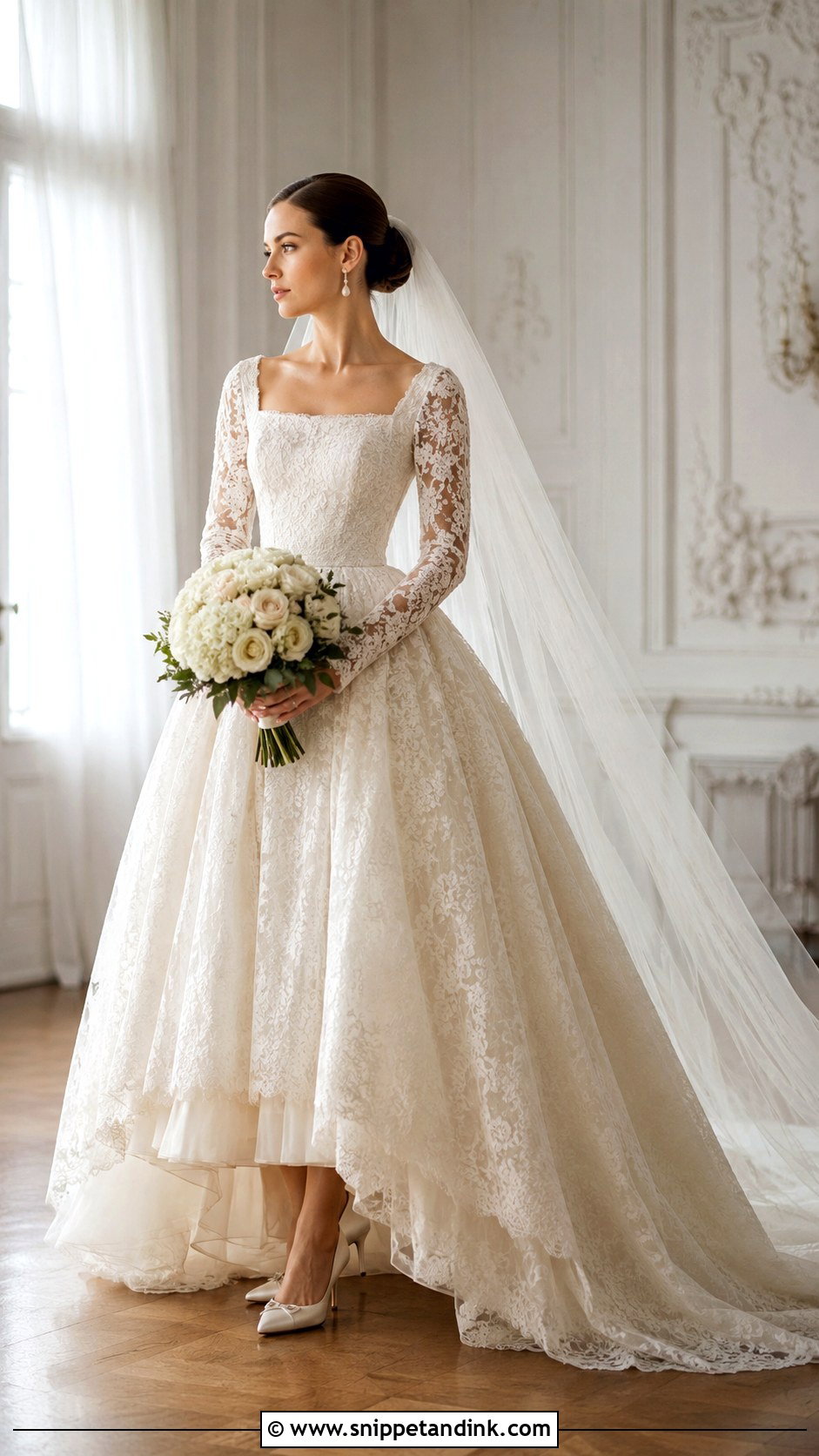
A full lace ball gown is heavy, and most of that weight hangs from the waist. I make sure the waistband is built to carry it, usually with an internal waist stay, so the bodice doesn’t get dragged down as the evening goes on. Look for a structured bodice with a square neckline, full lace sleeves and a sweeping layered skirt. A champagne or pale ivory underlay reveals the lace pattern far better than bright white lining. Pair it with a long plain tulle veil, pearl drop earrings and satin heels, and keep the bouquet medium-sized so it doesn’t compete. A smooth updo balances the volume. Save this one for a formal room or a large garden where the skirt has space.
9. Antique Lace Mermaid Wedding Dress
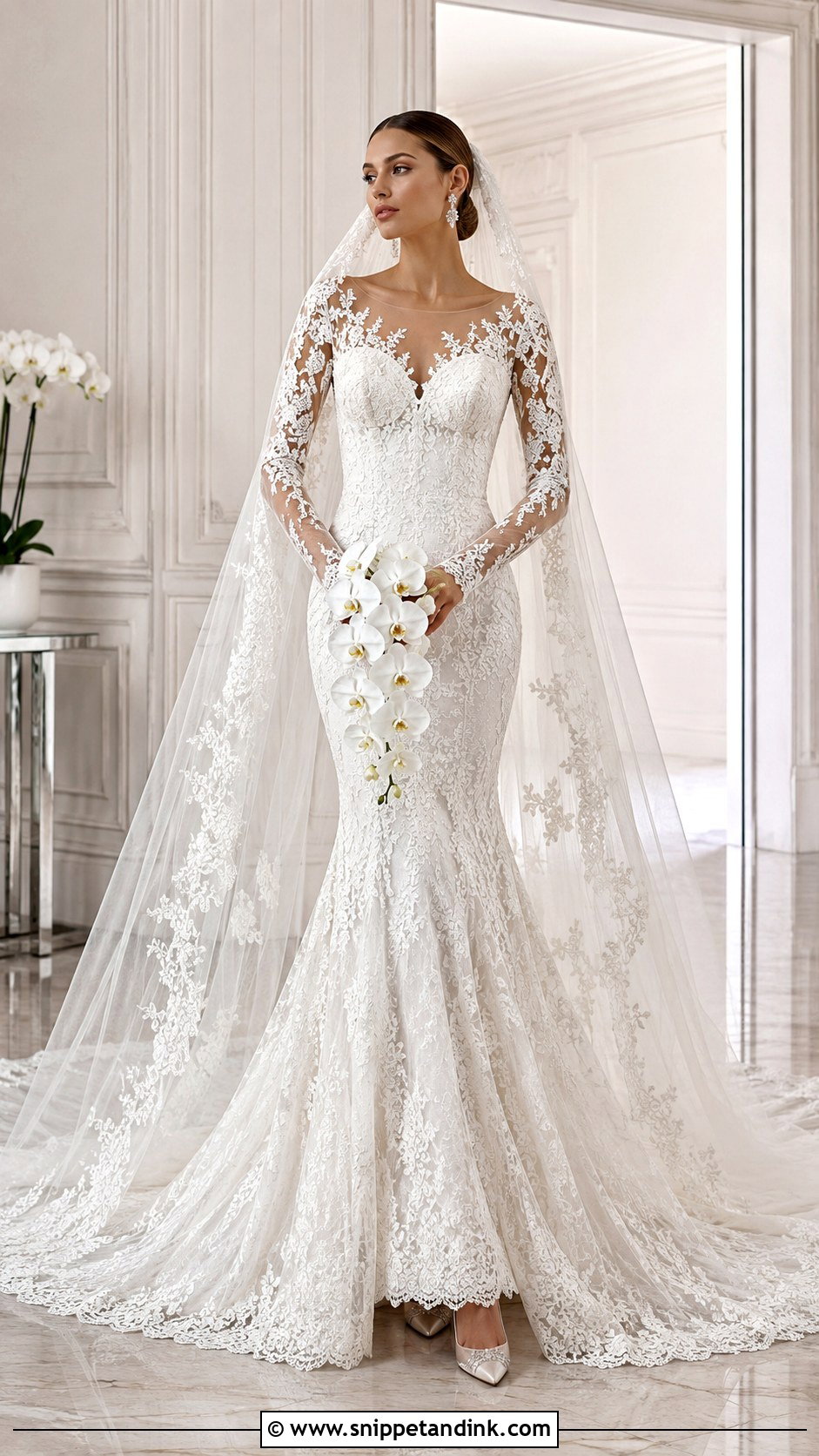
Mermaid gowns live or die by where the flare starts. Set it too high and you can’t sit; set it too low and you shuffle. Before I sign off a hem, I want to see the bride climb a step and sit on a chair. The lace motifs should follow the curve of the body and fan out into the skirt instead of ending abruptly at the hips. Above that, a supportive lined bodice with fine straps or illusion sleeves, a cathedral veil, small crystal earrings and pointed ivory heels. Keep hair sleek in a low bun, and carry a narrow bouquet of orchids. A little stretch in the lining lets you move without losing the shape.
10. Antique Lace Sheath Wedding Dress
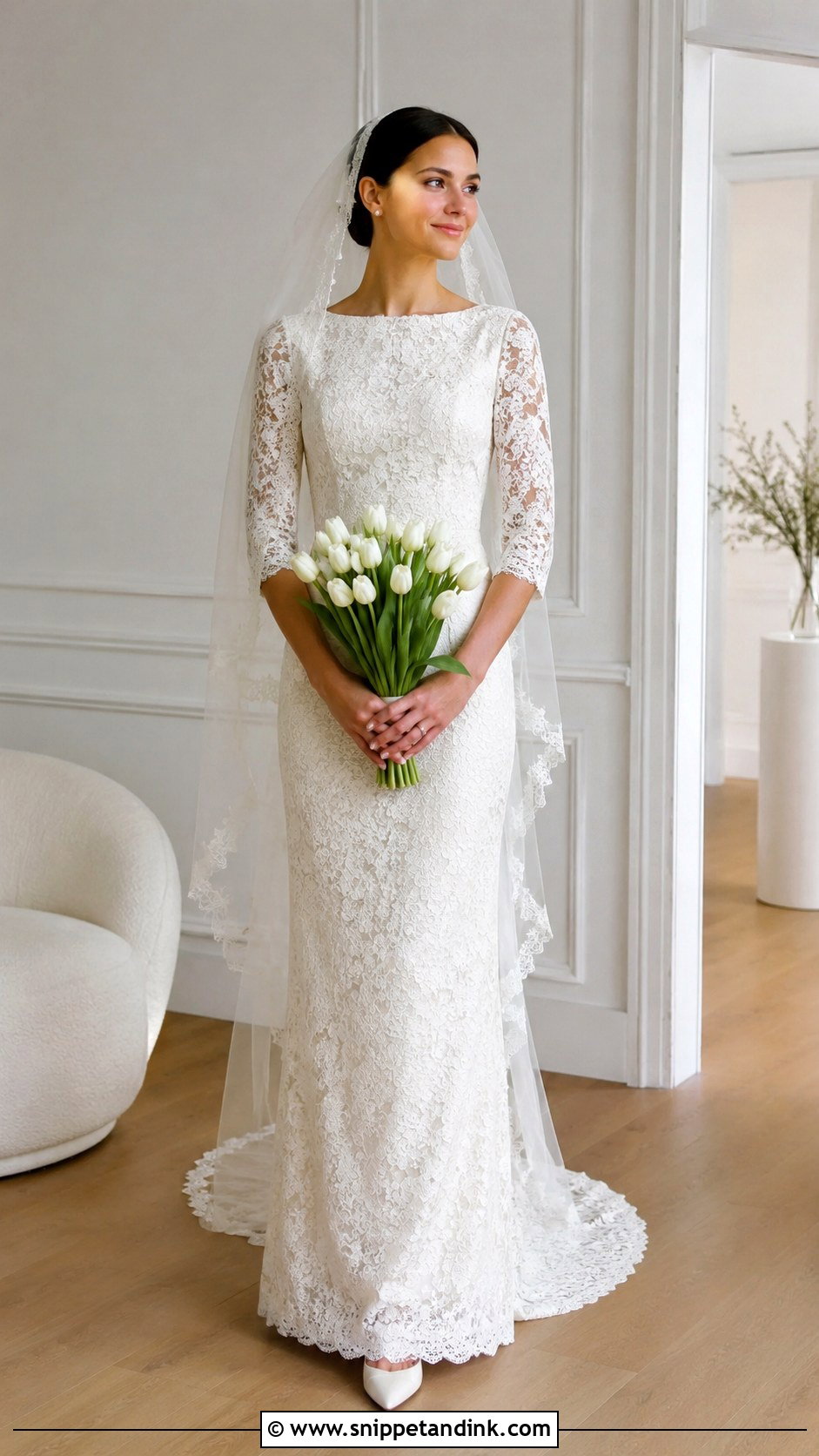
Sheath dresses hide nothing, so this is the style where alterations matter most. A straight gown with a bateau neckline, three-quarter sleeves, scalloped cuffs and a small train sits close to the body, and any strain across the hips shows up as horizontal creases in the lace. A soft neutral lining gives coverage while letting the pattern read. Pearl studs, a narrow lace-edged veil and low pointed pumps are enough. I’d choose a polished chignon for a formal venue and a looser low twist for a garden. White tulips tied with ivory ribbon keep the bouquet as restrained as the dress.
11. Antique Lace Empire Waist Wedding Dress
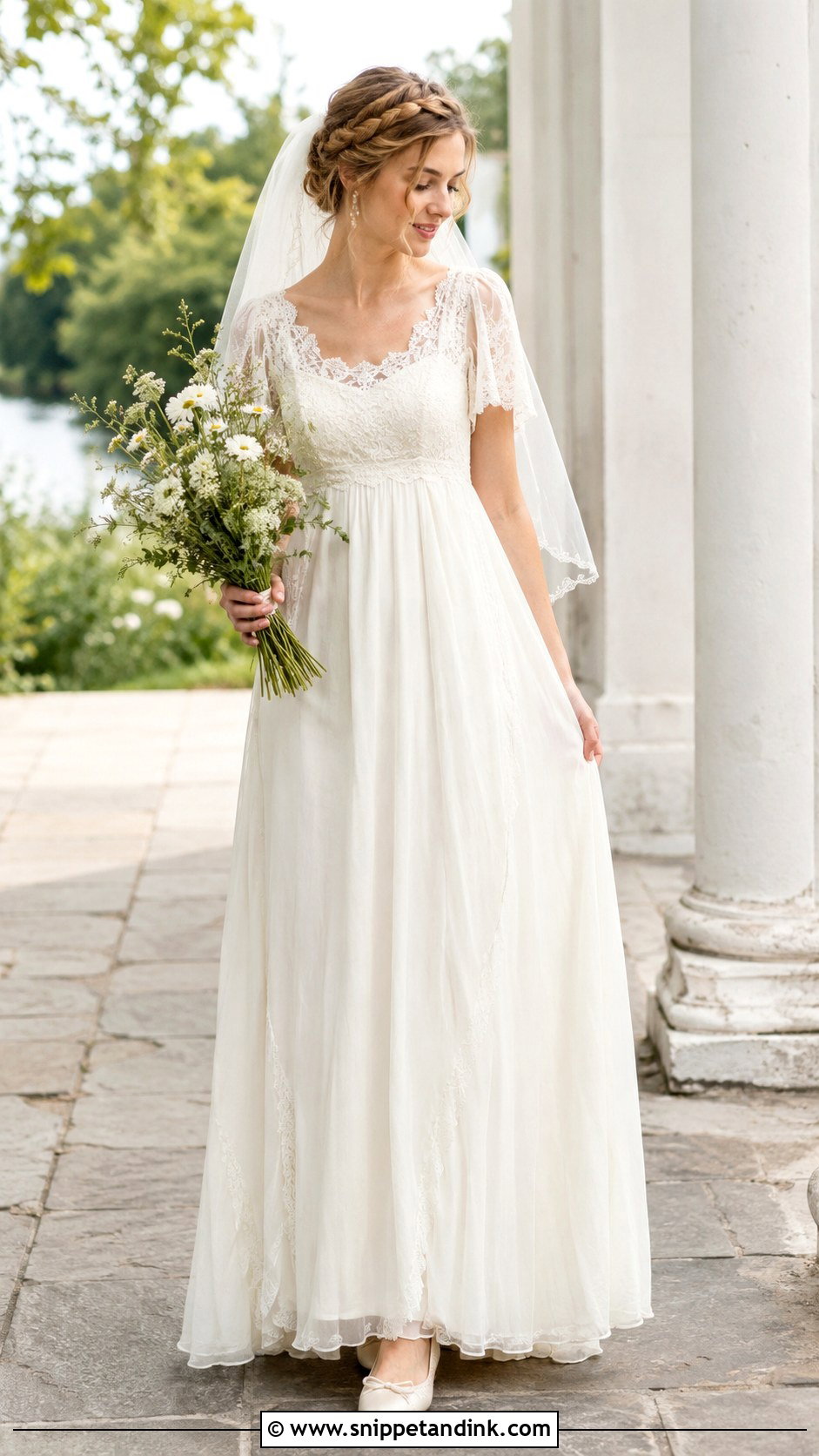
Empire waists are the most comfortable lace gowns I fit, since nothing grips below the bust seam. The bodice is fitted lace with soft flutter sleeves, and the skirt falls from just under the bust to the floor. A chiffon or silk underlayer is what gives the lace its movement; over stiff satin the same lace hangs like a curtain. Delicate drop earrings, ivory flats or low block heels and a fingertip veil with minimal trim keep it light, with loose waves or a braided updo. On a full bust, check that the seam truly sits under the bust and not across it. That is the most common fitting problem with this cut.
12. Antique Lace Square Neck Wedding Dress
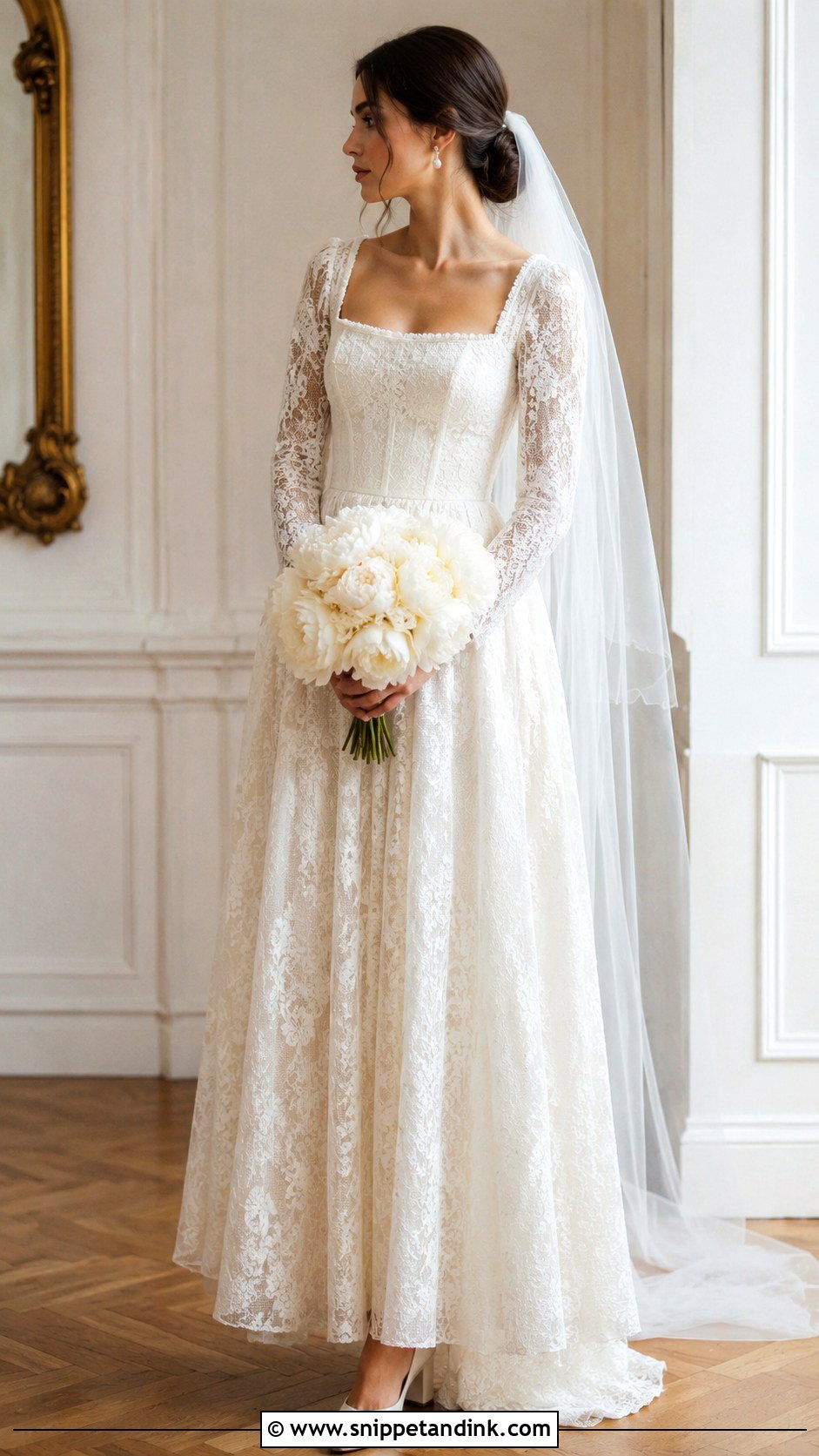
A square neckline needs a bodice that can hold a straight edge, so I look for internal boning and slightly wider shoulder placement before anything else. Without them, the corners collapse inward by the reception. The crisp line sets off floral or geometric lace well, which is why this pairing is so easy to wear. An A-line with long sheer sleeves and covered buttons down the back, a fine chain necklace, small pearl earrings, a plain tulle veil and ivory block heels make up the look. Hair can go into a low bun or a half-up style. Peonies with eucalyptus add fullness without blocking the bodice.
13. Antique Lace Off Shoulder Wedding Dress
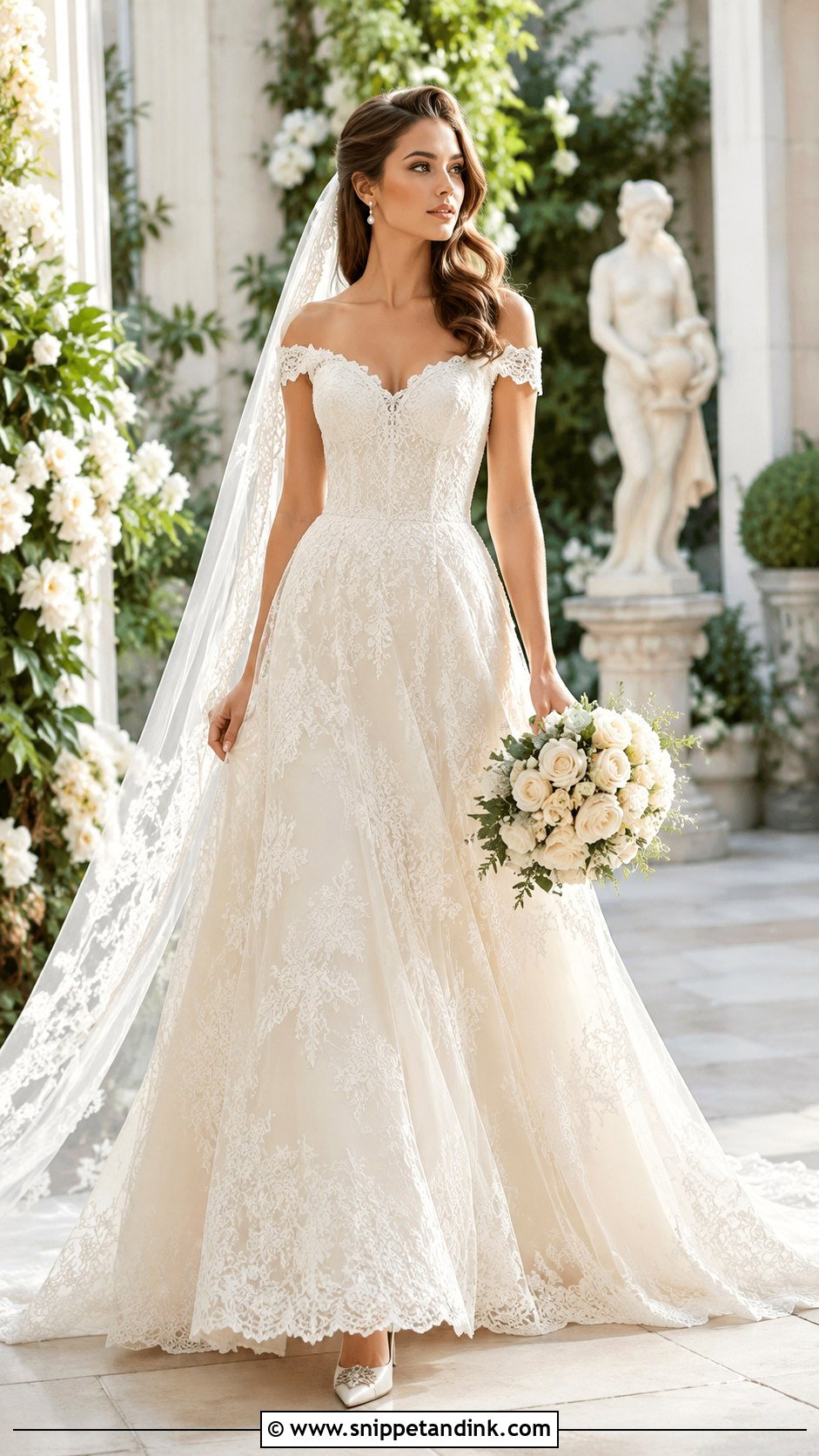
Off-the-shoulder lace looks relaxed but needs more engineering than any other neckline here. The straps rest on the upper arms, so I test them with arms raised as if for a hug, because that’s when they slide. Look for a fitted bodice with firm internal structure, a defined waist and a flowing A-line skirt. Leave the neck bare and add pearl drop earrings, a cathedral veil and ivory heels, with a loose low bun or side-swept waves. If your ceremony calls for more coverage, a removable topper cut from matching lace solves it neatly and comes off for the reception.
14. Antique Lace Bell Sleeve Wedding Dress
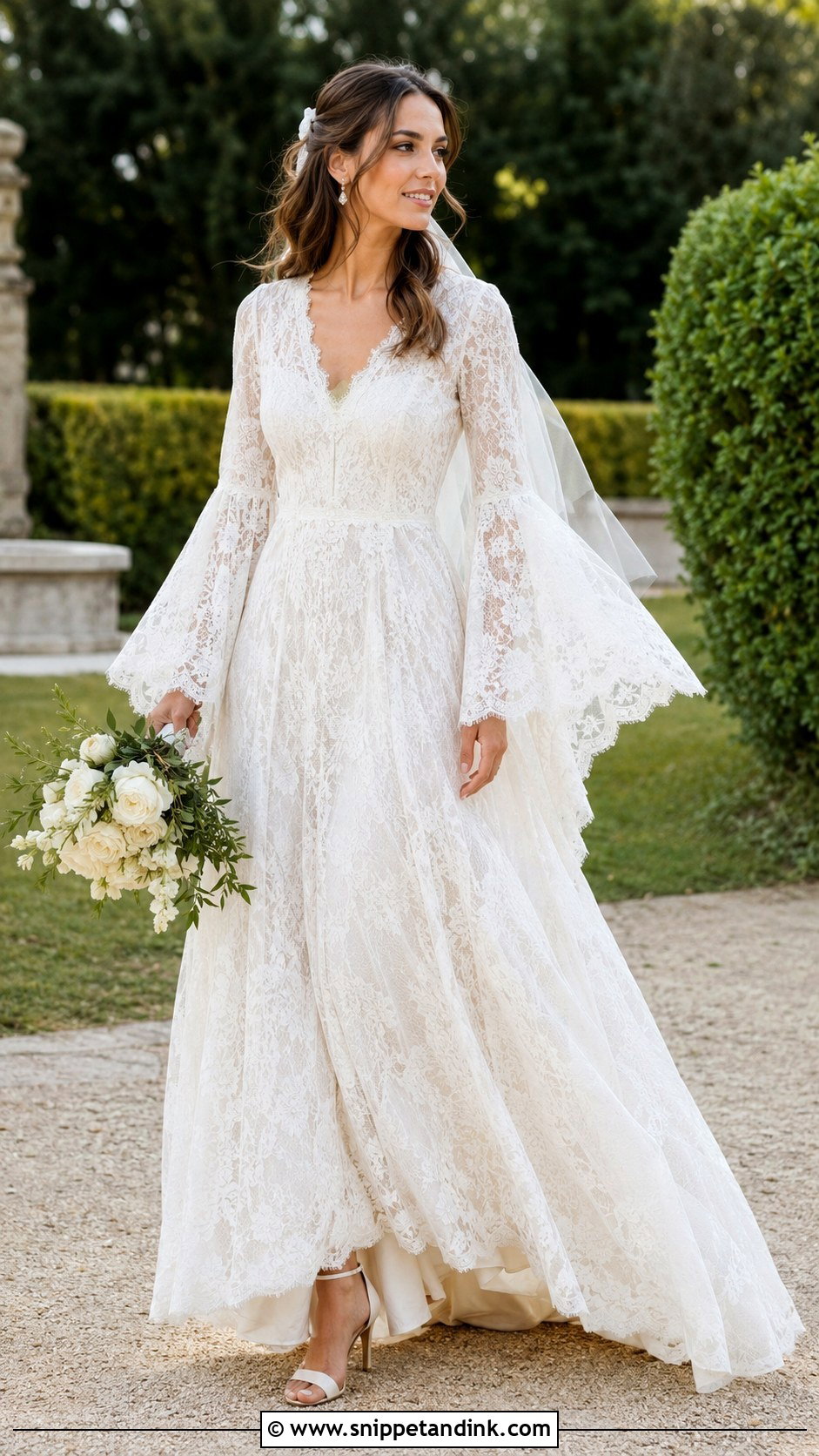
Flowing bell sleeves are lovely in photographs and occasionally a nuisance at dinner. The sleeve should fit through the upper arm and widen only below the elbow. I also check that the opening doesn’t fall past the fingertips, or it ends up in the cake and snags on the bouquet stems. Keep the rest of the gown simple: fitted bodice, modest V-neck, soft waist, light skirt. A chapel-length veil, fine gold or pearl earrings and ivory ankle-strap heels suit it, with loose waves or a braided updo and white flowers mixed with olive branches.

15. Antique Lace Puff Sleeve Wedding Dress
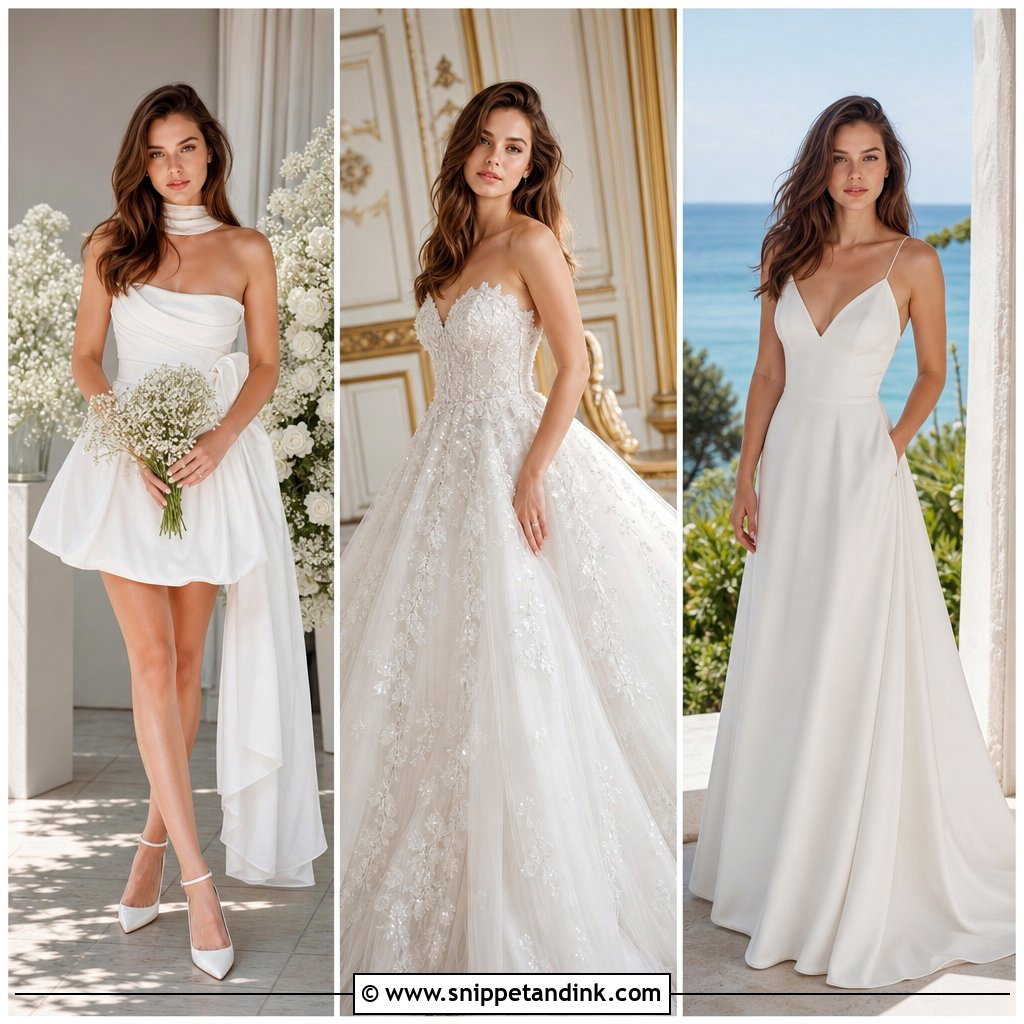
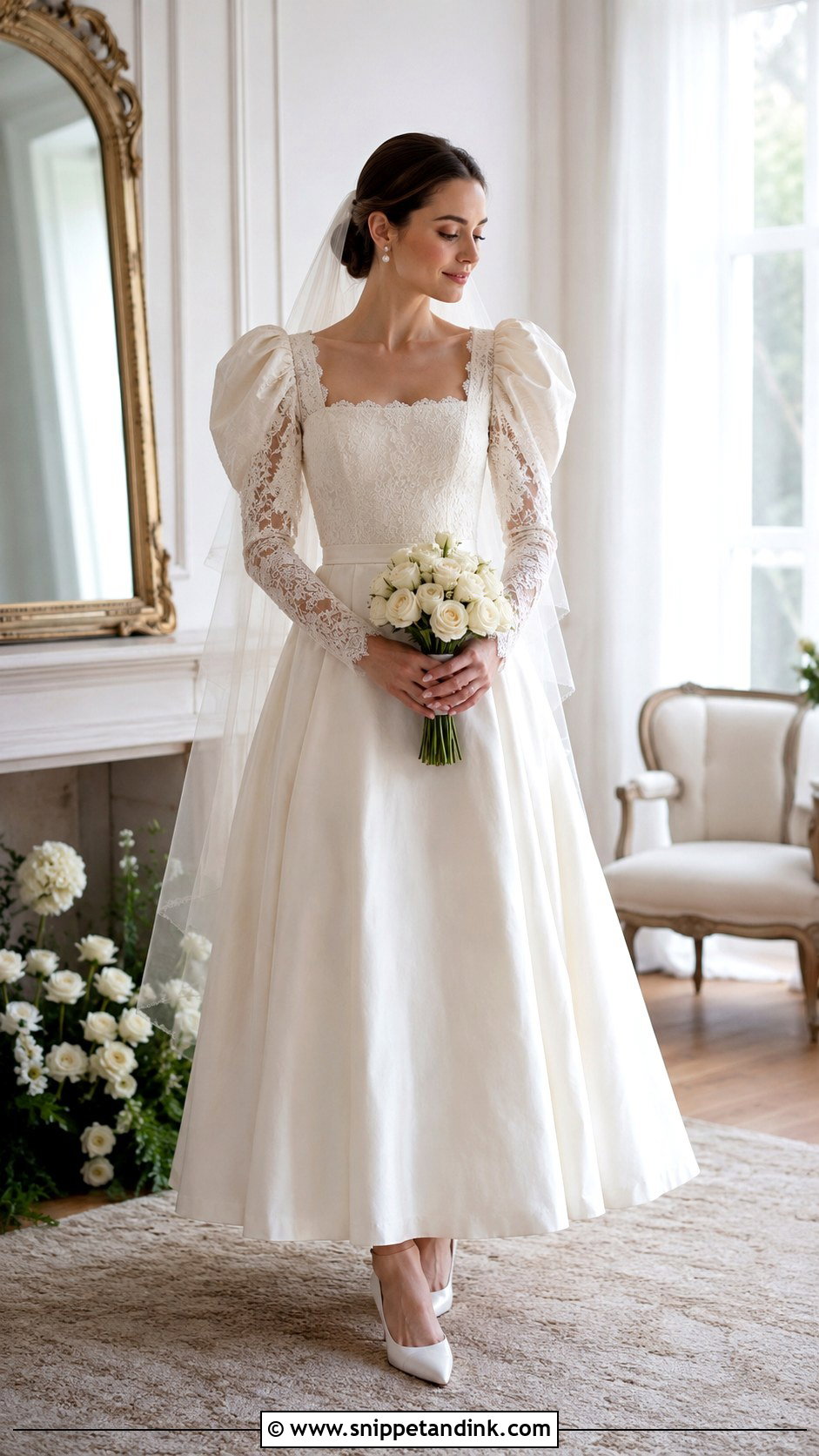
Puff sleeves change how wide your shoulders read, which makes them useful rather than merely decorative. On narrow shoulders a fuller sleeve balances a full skirt; on broad shoulders I’d go for a gently raised sleeve head instead. Pick a gown with a fitted waist, a square or sweetheart neckline and tapered lace cuffs, and keep the skirt smooth so the sleeves stay the focus. A simple veil, pearl studs, ivory pumps and a compact bouquet of white roses are plenty. Wear your hair in a clean low bun, since anything loose at the shoulder competes with the sleeve.
16. Antique Lace Corset Wedding Dress
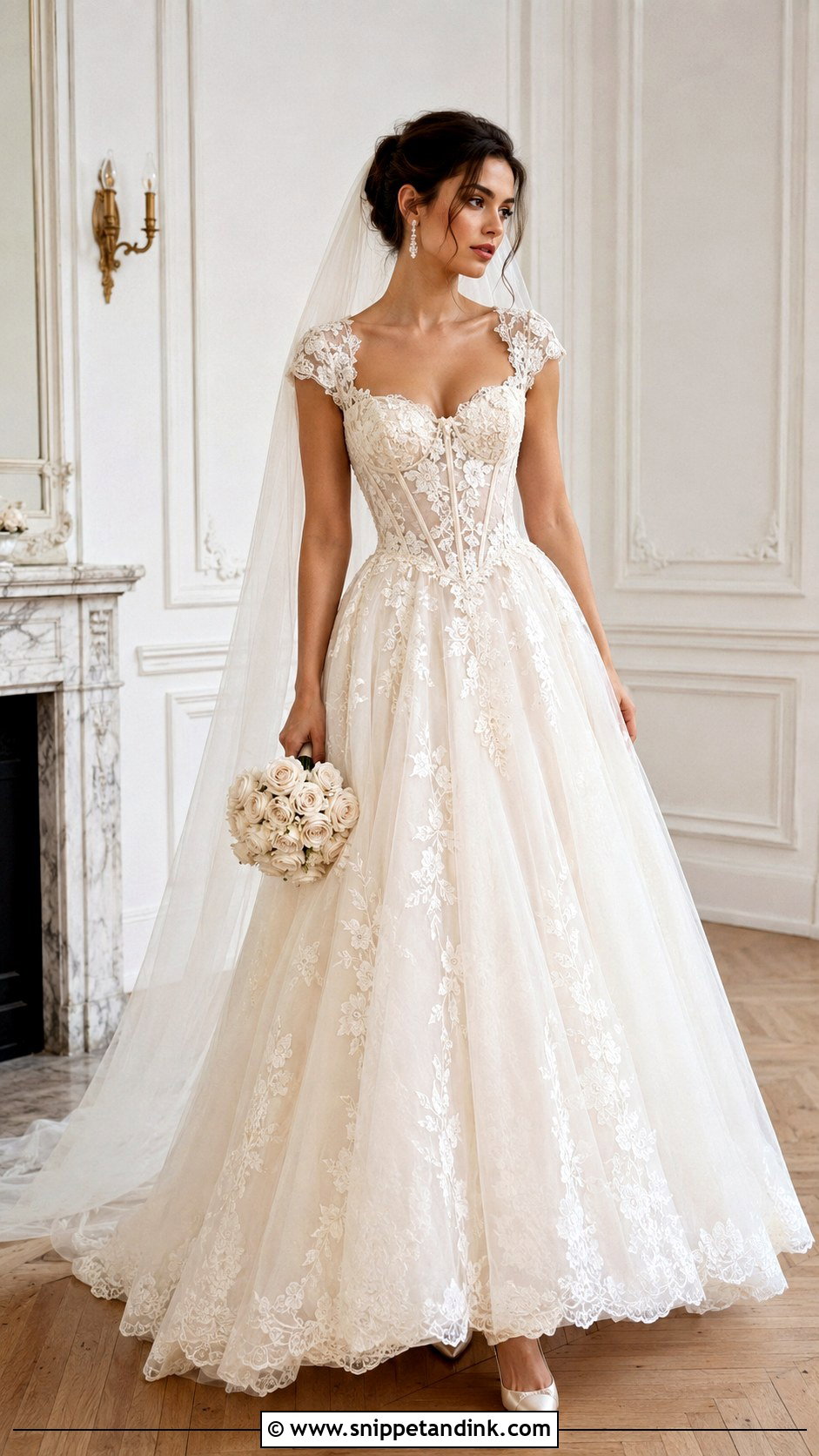
The test I give every corset bodice is simple: sit down, take a deep breath, then lift both arms. If any of those hurts or makes the top edge gap, the fitting isn’t finished. A lace corset gown should have refined seaming, a curved neckline and supportive cups, with floral lace laid over the boning so the construction reads soft. Detachable lace straps or small cap sleeves add support if you want it. Style it with a long plain veil, delicate earrings, satin heels, ivory roses and a polished updo. Book the last fitting close to the date, because even a small change in weight shows at a corset waist.
17. Antique Lace Wedding Dress With Cape
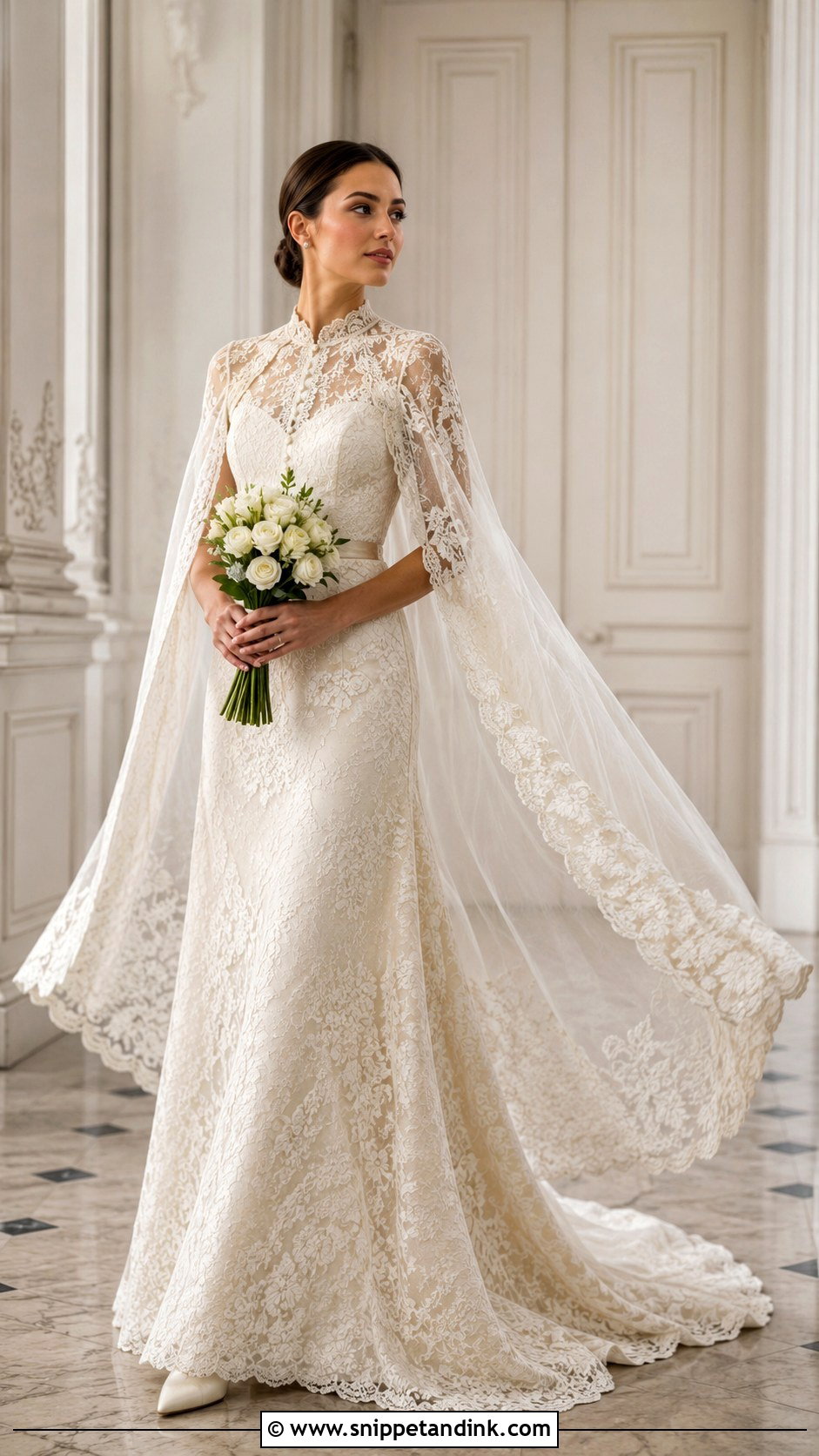
A lace cape gives a plain dress real ceremony presence, then comes off for the party. Start with a clean sheath or A-line with a lace bodice and modest train, and add a sheer lace cape that fastens at the neckline and falls to the floor. Skip the veil; a cape and a veil together tangle at the back of the neck. Pearl studs and ivory heels are enough jewellery and footwear. I steer brides toward a low bun or smooth ponytail here because loose hair snags on the fastening, especially hook-and-eye closures. A narrow bouquet of white roses keeps the long line going.
18. Antique Lace Wedding Dress With Detachable Sleeves
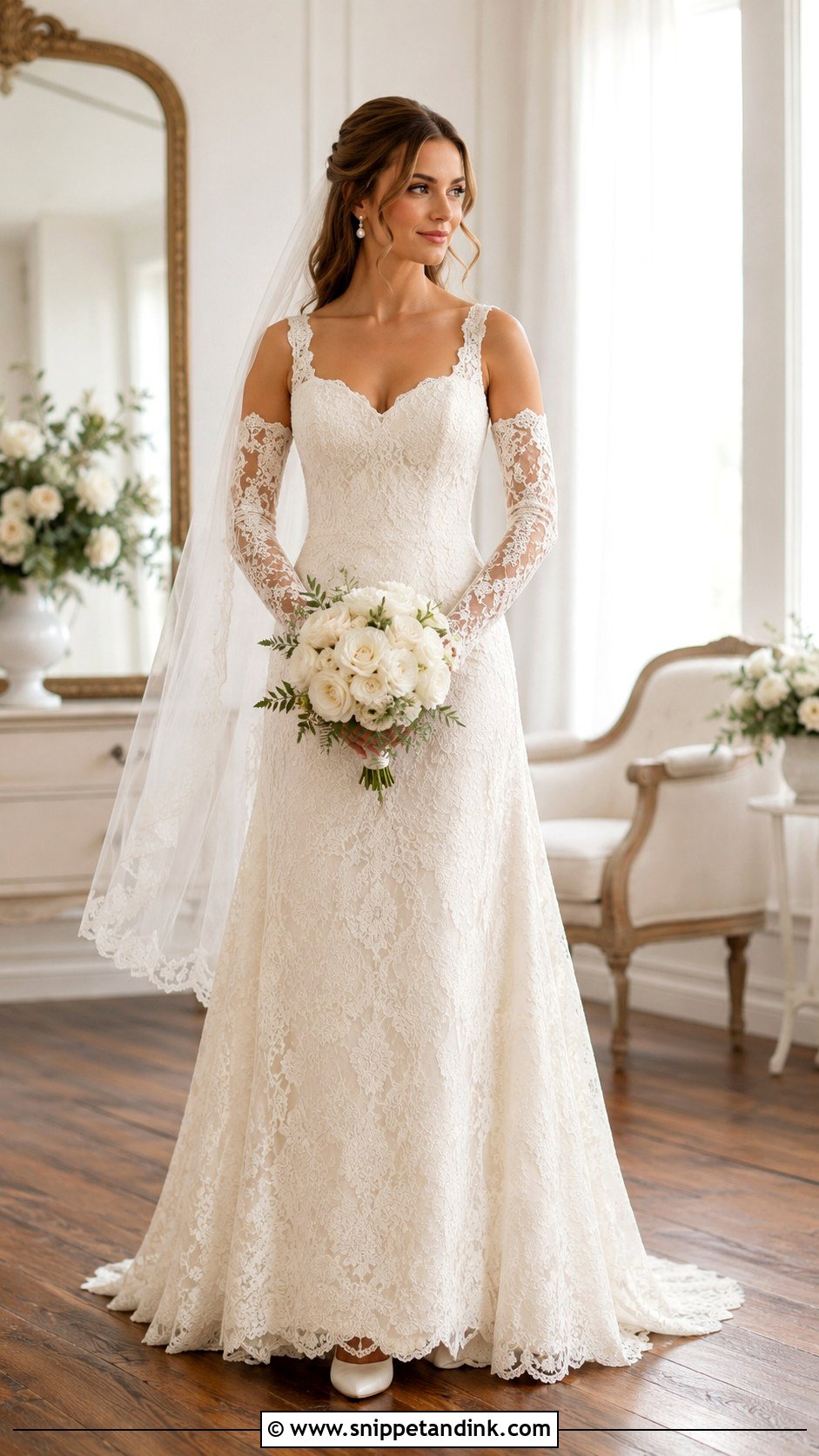
Detachable sleeves let one dress do two jobs. The bodice underneath has to be supportive on its own, strapless or sleeveless, with a defined waist and gently flared skirt, while the fitted lace sleeves attach under the arm or along the neckline. I ask the seamstress for small snaps hidden beneath lace motifs rather than buttons, so a bridesmaid can remove the sleeves in a minute without pulling threads. Wear a fingertip veil, pearl earrings and closed-toe ivory heels for the ceremony, then swap the veil for a decorative comb after the formal photos. A half-up style suits both versions without restyling.
19. Antique Lace Wedding Dress For Plus Size Brides
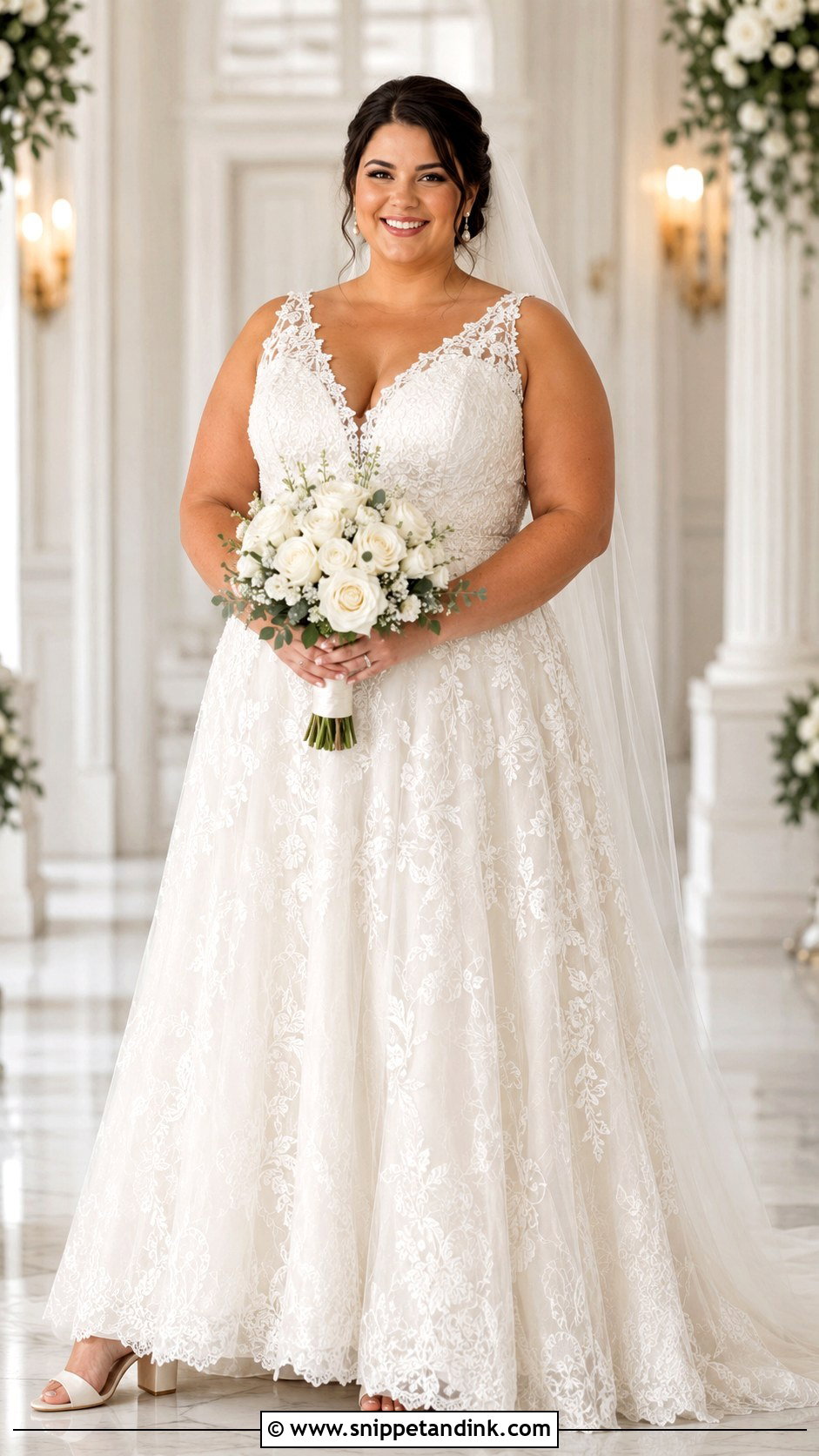
Good construction does more for a curvy figure than any number on a label. I look at the cups and lining first: built-in support, wide lace straps and a structured bodice let a deep but secure V-neck lie flat without tape. An A-line skirt flowing from the waist moves well for walking, sitting and dancing. Keep the lace motifs consistent in scale across the gown, because large motifs on the bust and tiny ones on the skirt look patched together. Comfortable block heels, pearl earrings and a veil set below a soft updo finish it. Choose a medium bouquet of white roses that doesn’t hide the neckline.

20. Antique Lace Wedding Dress For Outdoor Wedding
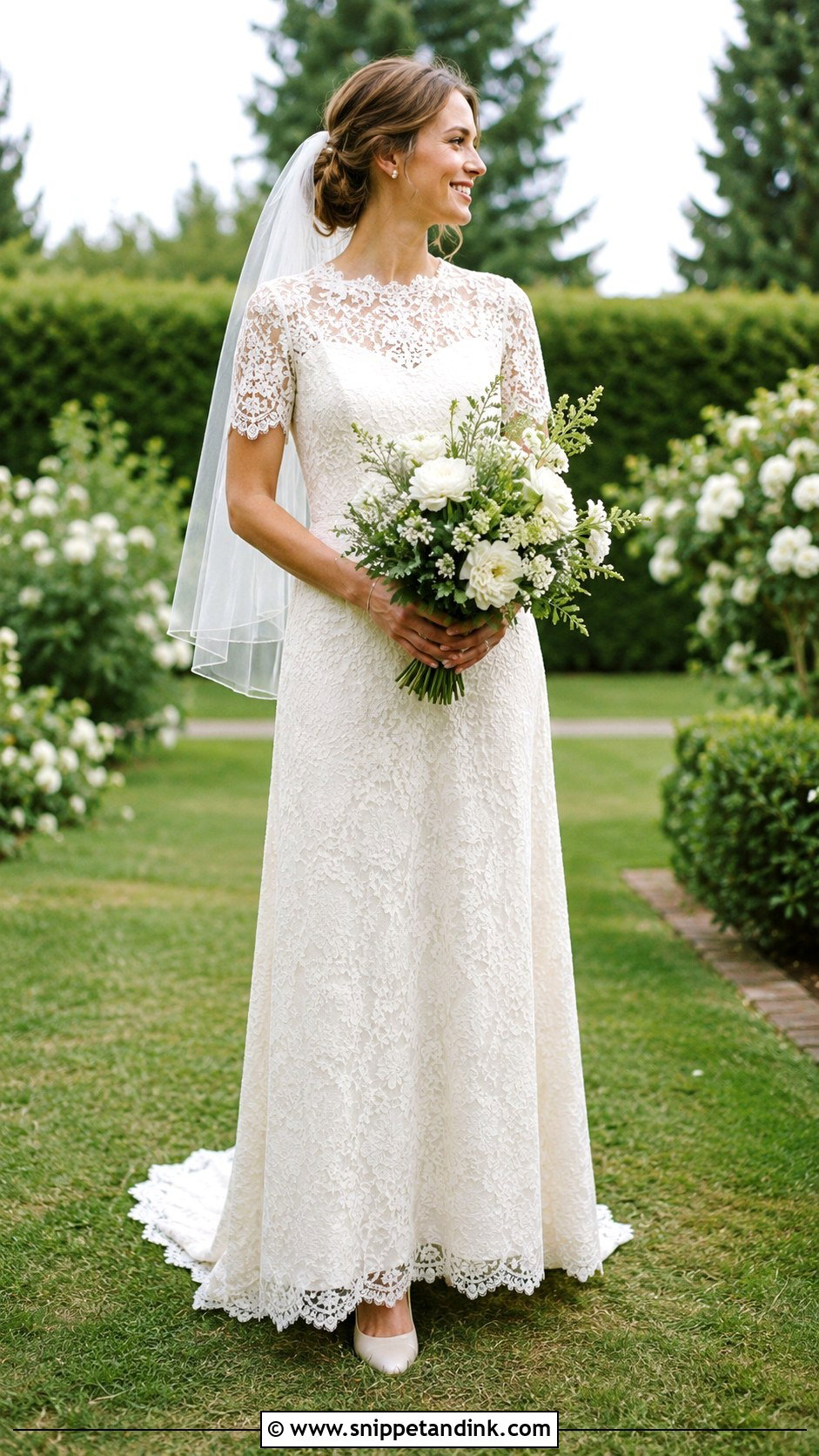
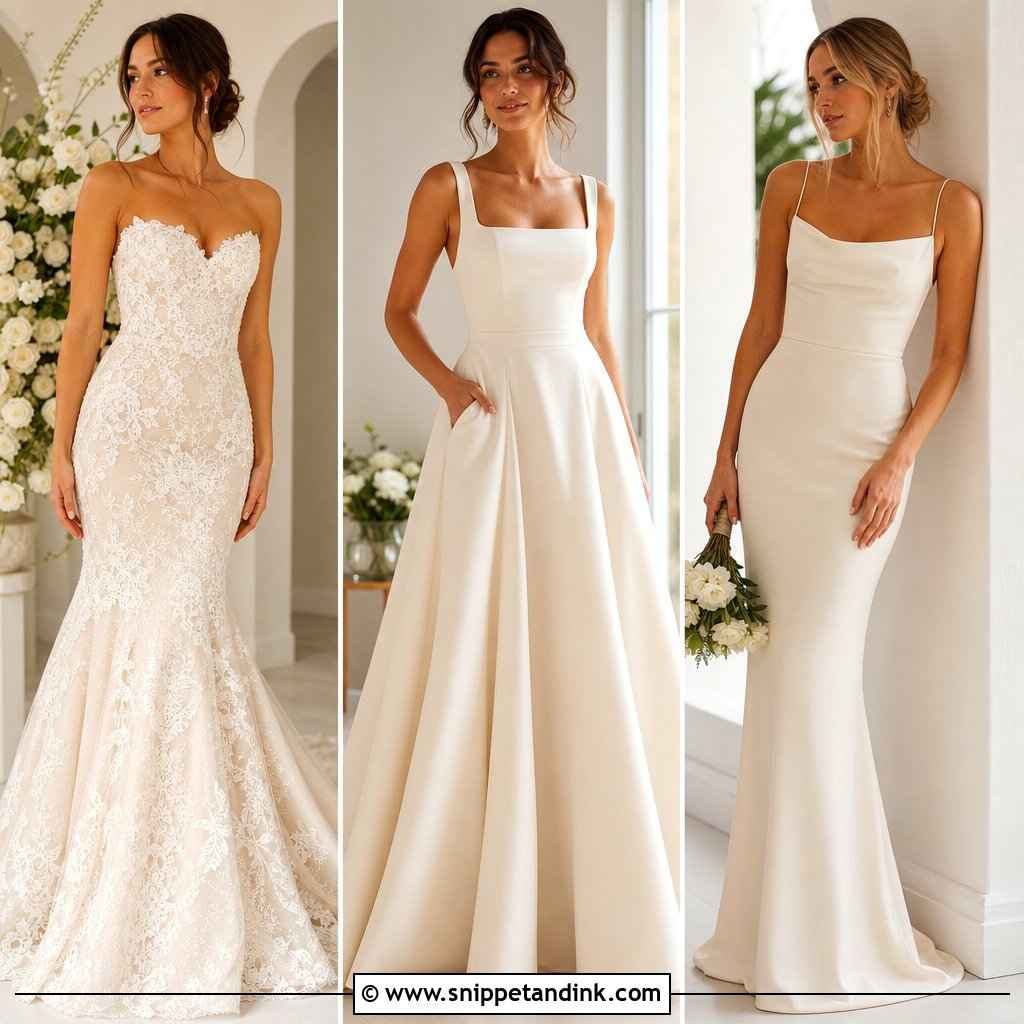
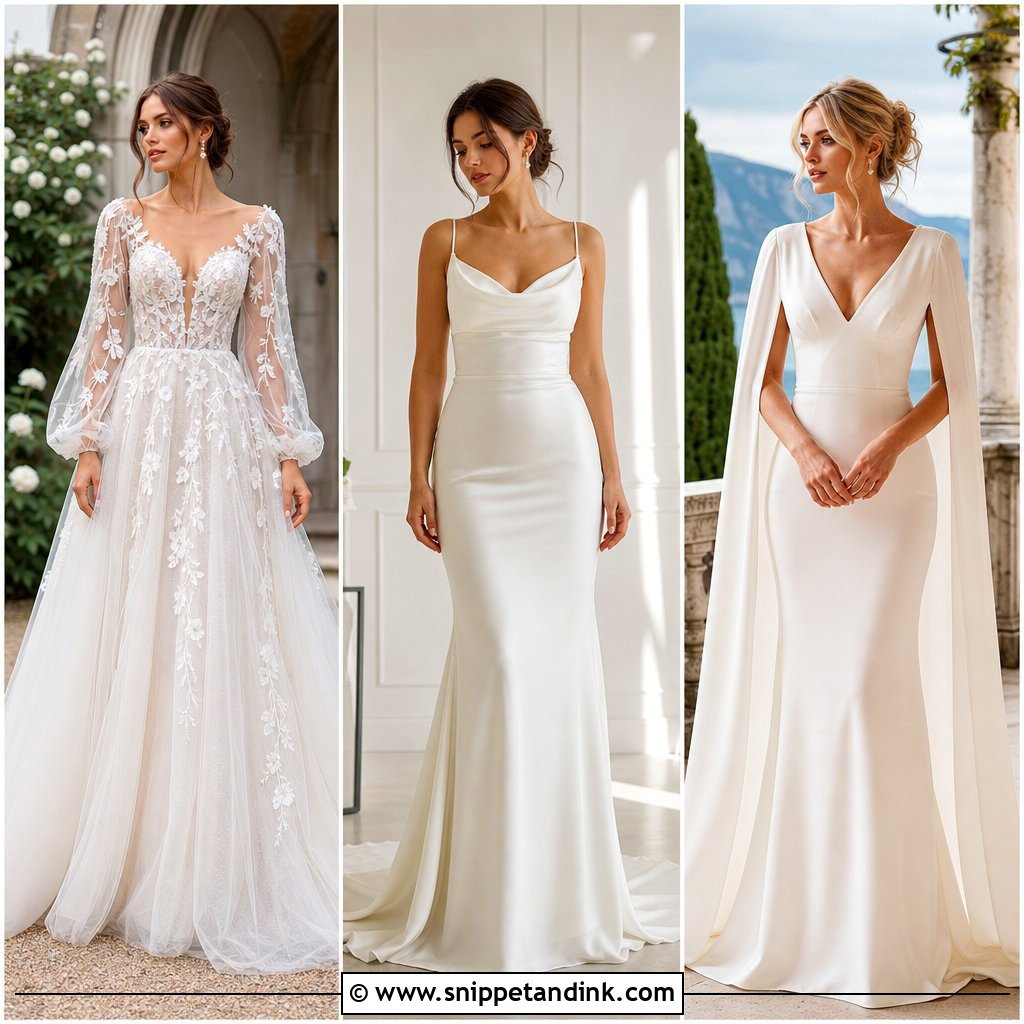
Outdoors, lace has one real enemy: anything that catches. Long trailing edges and very long sleeves collect grass seed and twigs, so I’d choose an ankle-length or floor-skimming A-line with short sleeves, a breathable lining and a small train. Block heels or bridal flats handle lawns where a stiletto sinks. Pearl studs, a light fingertip veil and a low bun hold up in a breeze. Ask for a bustle and a removable veil so the move into the reception takes minutes. White flowers mixed with textured greenery look right in open air.
Fitting Fragile Lace Without Cutting Into It
Old lace can’t be taken in like modern fabric. Once a seam is cut through a handmade motif, that motif is gone for good, so a careful seamstress works around the pattern instead of through it.
- Appliqués are lifted off by hand, the base gown is altered underneath, and the motifs are stitched back over the new seam so no join shows.
- Small holes are mended by needle-weaving with matching thread, or covered with a motif borrowed from the hem or train where nobody will look.
- Silk under Victorian and Edwardian lace was often weighted with metallic salts, and it splits along the grain with age. If the silk tears when gently pinched, replace the lining rather than patching it.
- Hand alterations on old lace take longer than standard bridal work, so start fittings earlier than a shop’s usual schedule.
Bring your wedding shoes and underwear to the very first appointment. Hem length and bodice fit both shift with them, and lace is slow to re-adjust once it has been pinned and sewn.
Why Plastic Garment Bags Are Bad for a Lace Gown
How you store the dress decides whether it lasts for the next bride in your family. Plastic traps moisture and gives off fumes that yellow natural fibres, so the gown should come out of its shop bag as soon as you’re home.
- Tell the cleaner about every spill. Champagne and sugar look invisible when dry but turn brown over the following months.
- Send genuinely old lace to a textile conservator or a cleaner experienced with heirloom gowns, never a standard dry-clean cycle. Bleach and optical brighteners should never touch it.
- Store the dress flat in a box lined with acid-free tissue, with tissue rolled into each fold so the lace never creases sharply. Hanging lets heavy skirts and bias-cut silk stretch out of shape.
- Keep the box in a cool, dry room rather than an attic or basement, and refold it along different lines once a year.
Old Lace Is Worth the Extra Fittings
Old lace rewards patience. Compare the gowns above by how they behave rather than how they hang: the weight of the fabric, where the lace sits, how the sleeves move, whether the neckline stays put and how much train you can realistically manage. Keep accessories modest so they sit beside the lace instead of over it. Then sit, walk and raise your arms in every dress on your shortlist. The one you forget you’re wearing after ten minutes is usually the right one.
You'll Like These Ideas:



Leave a Reply