
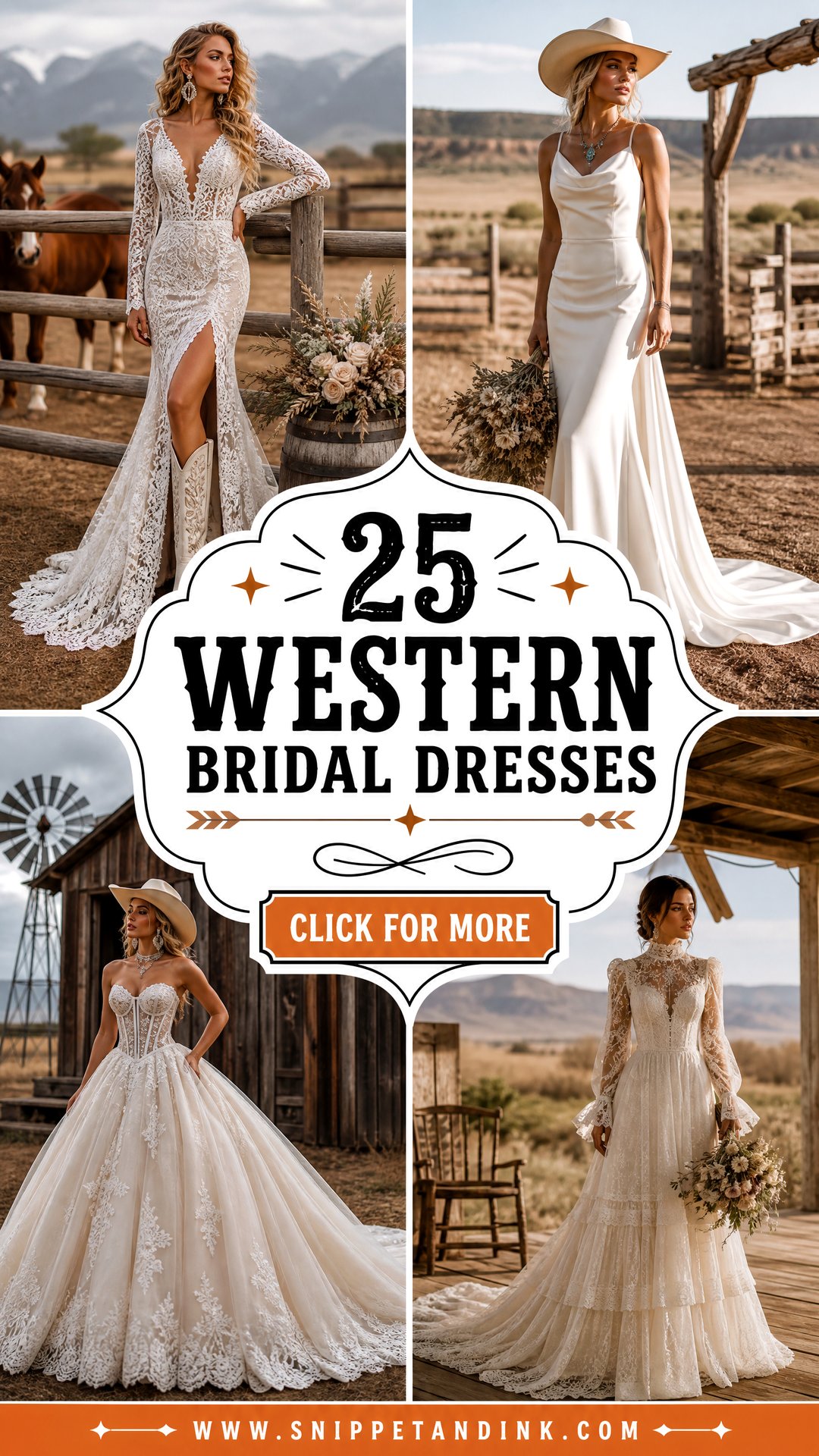
Western bridal dresses work when the gown still reads as bridal first and the Western part arrives through a few honest details: boots, a tooled belt, a hat, a bit of fringe or turquoise. The outfits I like best are the ones where the bride could take off the boots and still be standing in a wedding dress. The other thing I always ask about early is the ground. Gravel, wet grass and a dusty arena floor each change which fabric, hem and heel will actually cope. Below are 25 dresses and the styling choices I’d make with each.
Bring the Boots to Every Fitting
The most common Western fitting problem I see is a gown hemmed for one pair of shoes and worn with another. Cowboy boots have a stacked heel and a stiff shaft that pushes the skirt out at the ankle. Hem the dress in ballet flats and the front will sit too high in boots, showing more leg than you planned; hem it in stilettos and it drags.
- Buy the boots before your first fitting and wear them to every appointment, including the last one.
- Decide whether they should show. A front hem that just kisses the toe hides them; cutting it slightly higher shows the toe and keeps you from stepping on lace in long grass.
- Break new leather in around the house for a few weeks. Stiff boots start rubbing at the heel right about when portraits begin.
- Check the shaft under the skirt. Tall boots with heavy stitching can show as a ridge through slinky satin or crepe; a shorter boot or a slip fixes it.
- Pack blister plasters and a soft cloth. Pale leather picks up dust within minutes outside.
If you’re only switching into boots for the reception, hem for the shoes you’ll wear longest and let the bustle handle the difference.
1. Lace Western Bridal Dress With Cowboy Boots
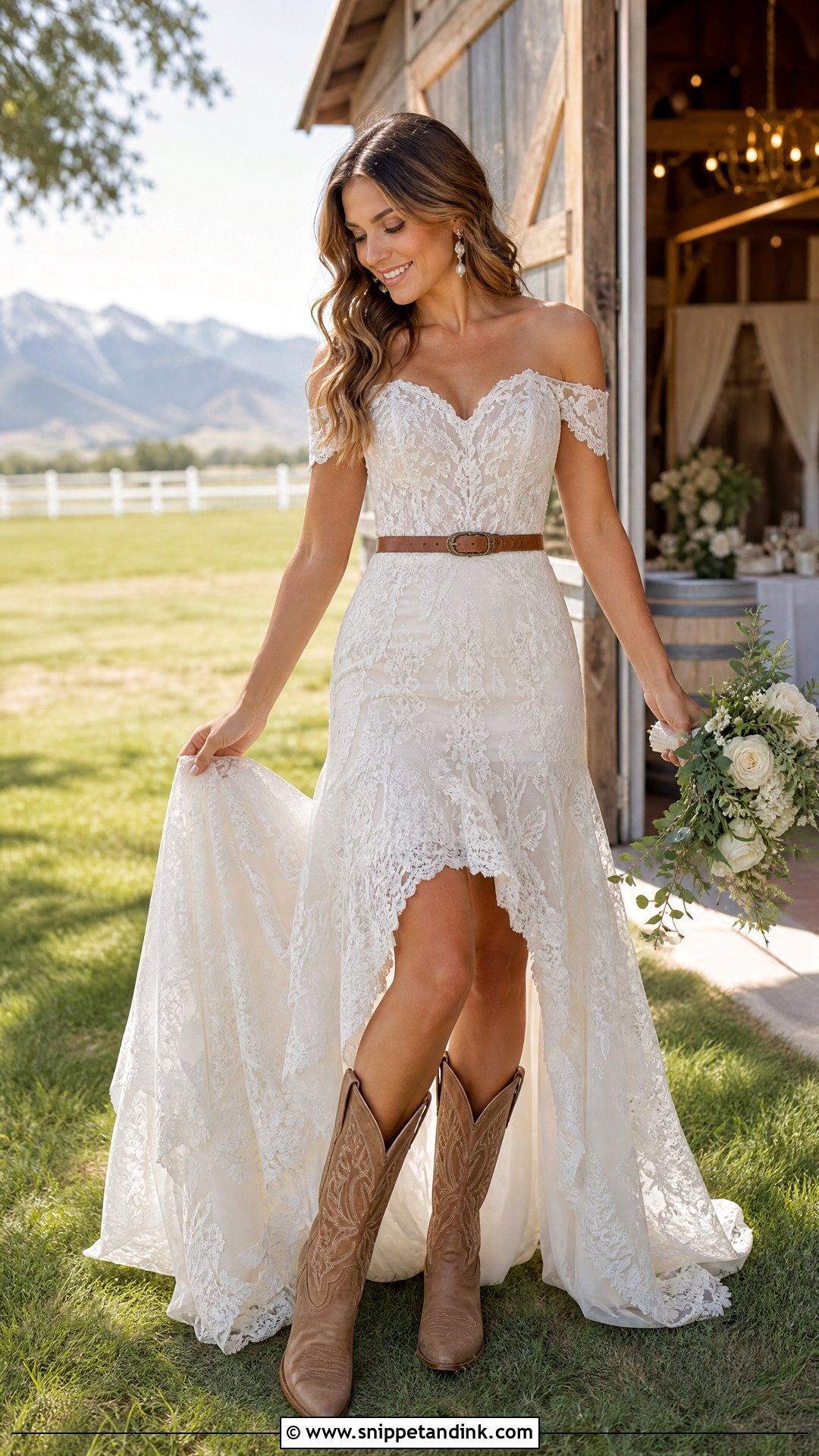
Lace with cowboy boots is the pairing I reach for most often at a barn wedding, mostly because lace forgives. A bit of dust at the hem or a grass mark from portraits disappears into the pattern, where satin would show it. An A-line or fit-and-flare gives you room on uneven ground. Match the boot to the dress tone rather than to pure white: an ivory gown next to bright white boots makes the dress look dingy in photos, so I’d go tan, brown or cream leather. A tooled belt at the natural waist and loose waves are all the extra Western it needs.
2. Boho Western Bridal Dress With Bell Sleeves
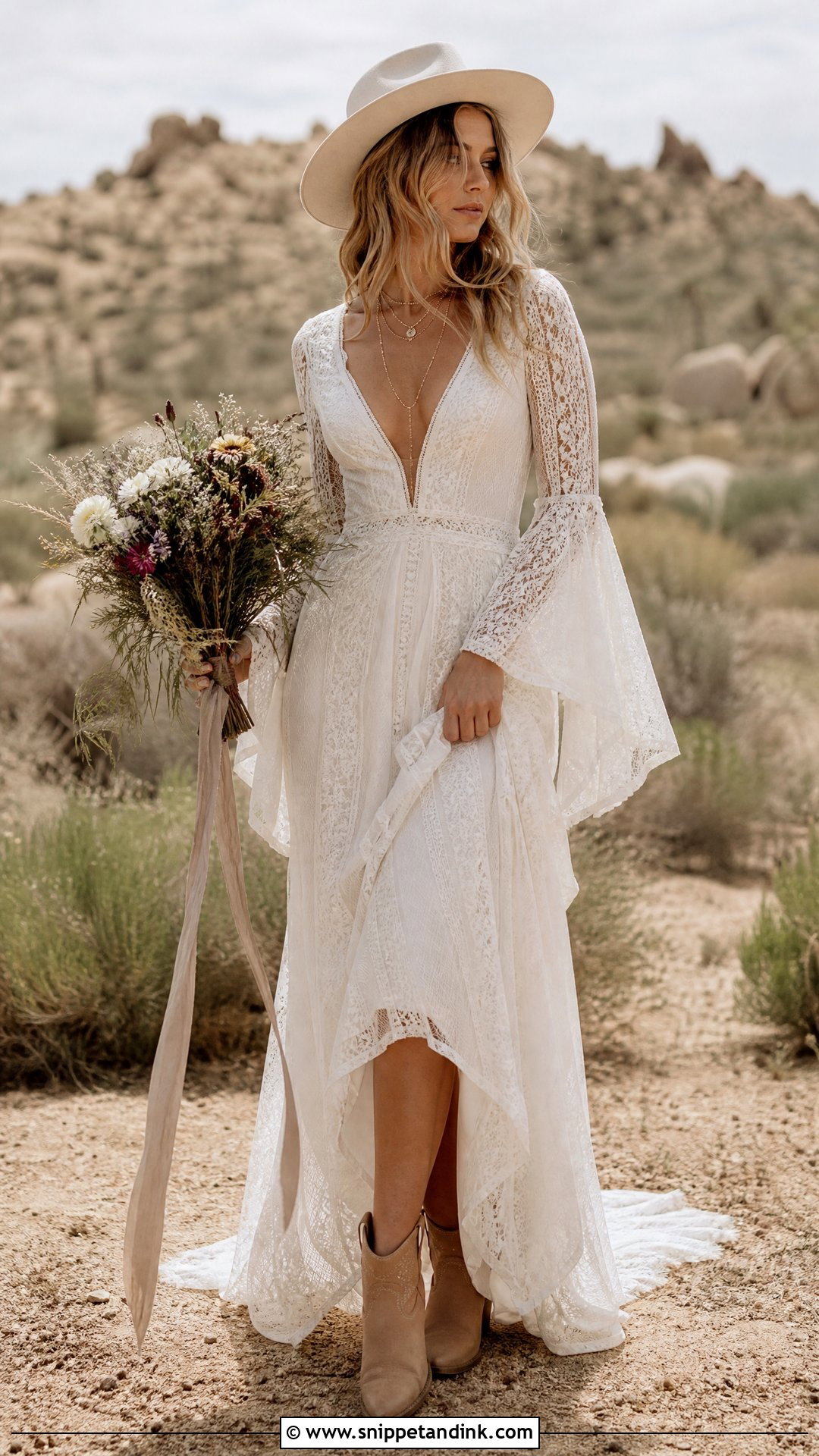
Bell sleeves are lovely in a desert breeze and a nuisance at the cake table, so I have brides practise lifting a glass and signing the license in them at a fitting. On a boho Western bridal dress, the sleeve movement is half the point, especially in chiffon or crochet-texture lace. Suede ankle boots, a wide-brim hat and a loose bouquet with dried grasses keep it earthy. If the gown also has a deep neckline or open back, pare everything else back. Too many boho pieces at once tips into festival costume.
3. Satin Western Bridal Dress With Leather Belt
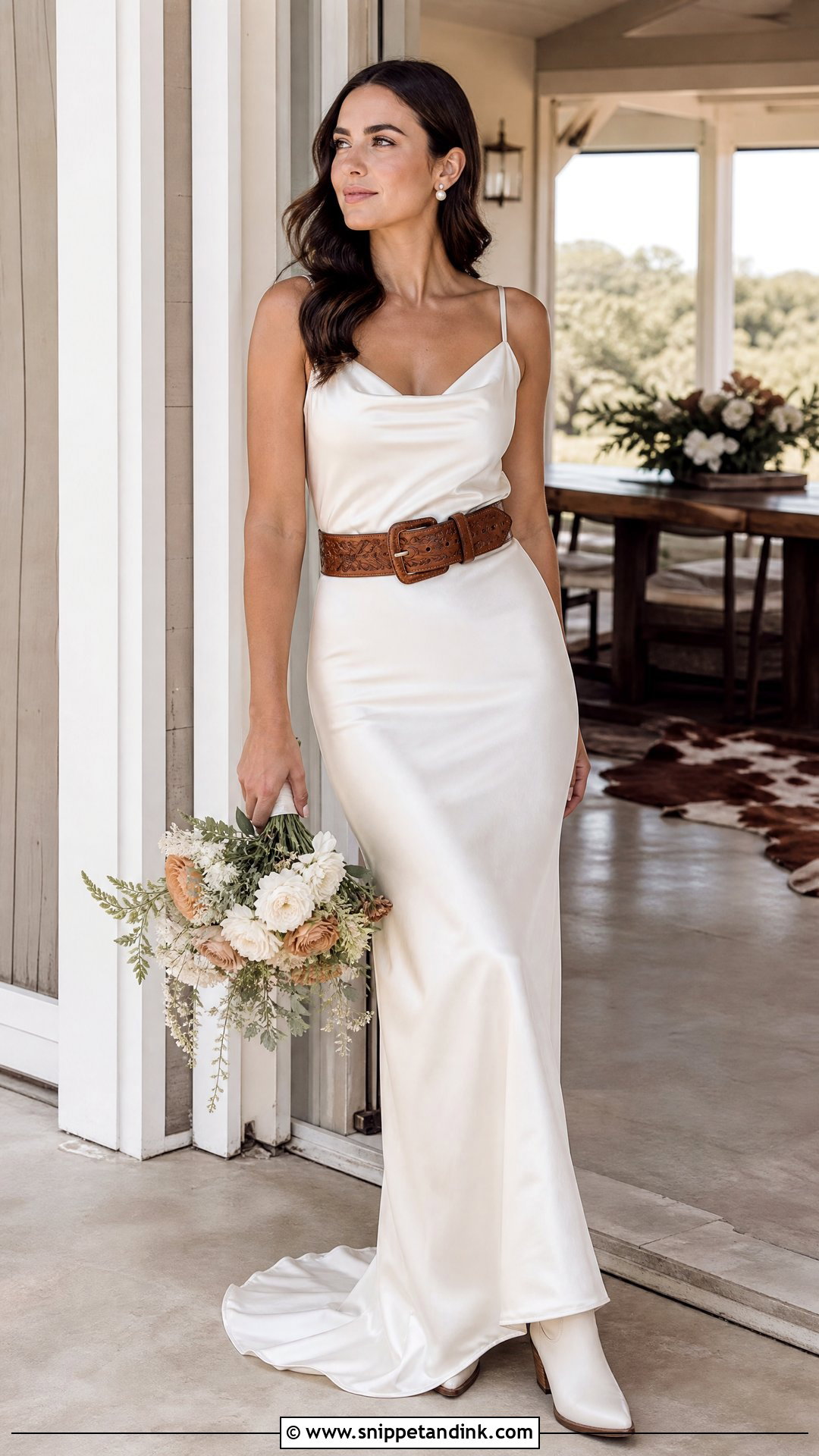
Satin is the cleanest canvas for a Western belt, because nothing competes with the leather. A slim A-line, column or bias-cut gown lets a cognac or ivory belt with a silver buckle become the single focal point. The catch is that satin shows every crease from the car ride, and a stiff belt can bunch the fabric when you sit. I have brides sit and stand in the belt at their final fitting; if it rolls, a softer or narrower strap solves it. Sleek pointed boots and pearl studs finish the outfit for a ranch house ceremony or modern barn reception.
4. Long Sleeve Western Bridal Dress With Boots
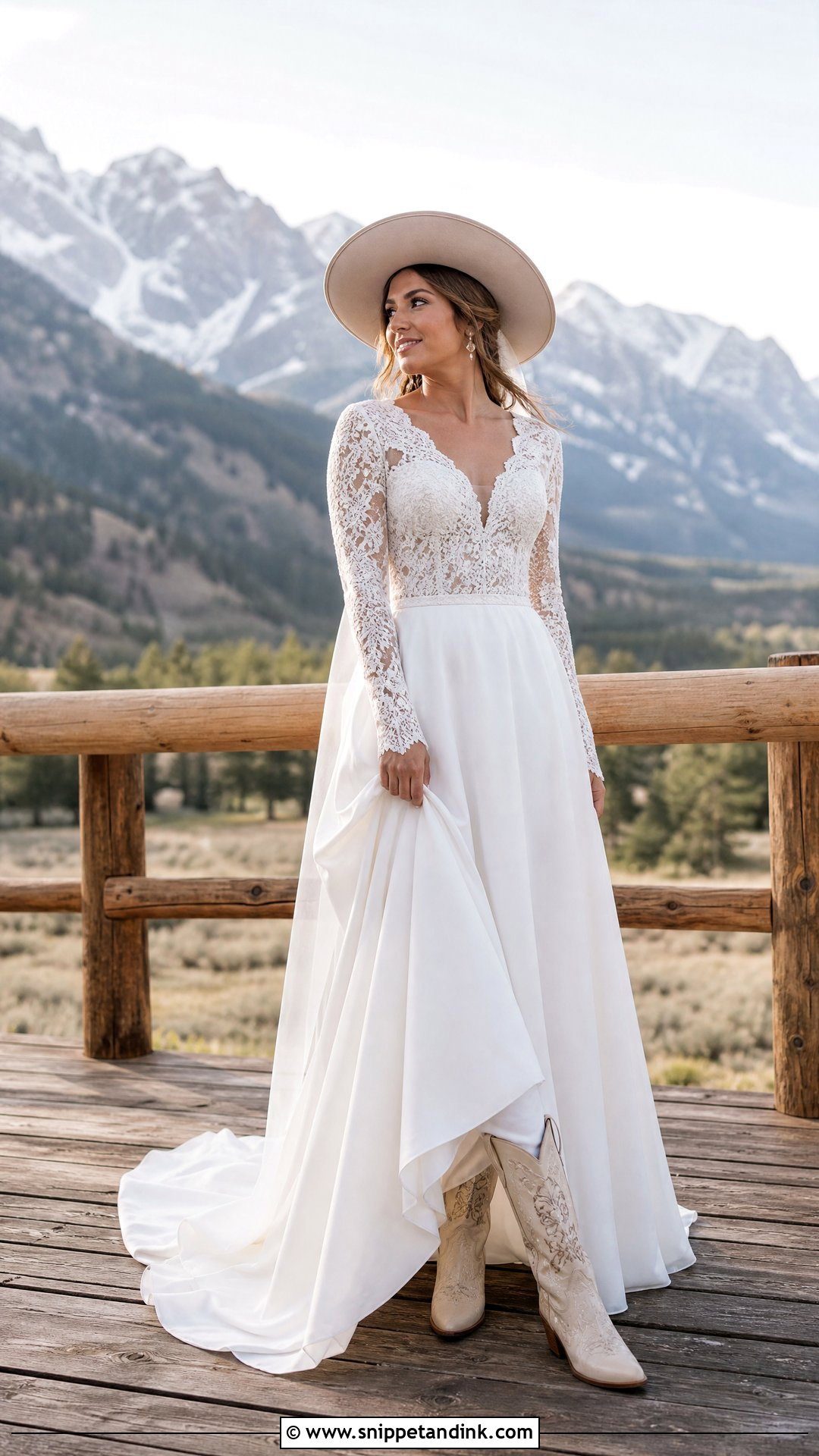
Long sleeves earn their place at fall, winter and mountain weddings, where evenings turn cold fast. Lace sleeves read romantic, crepe reads polished, and sheer embroidered sleeves sit between the two. What I check first is the armhole: a sleeve set too low pulls the whole bodice up every time you hug someone or raise the bouquet. A fitted bodice over an A-line skirt balances the coverage, and boots keep you steady on frozen or muddy ground. Add a felt hat for outdoor photos, or a low bun with statement earrings.
5. Simple Western Bridal Dress With Cowgirl Hat
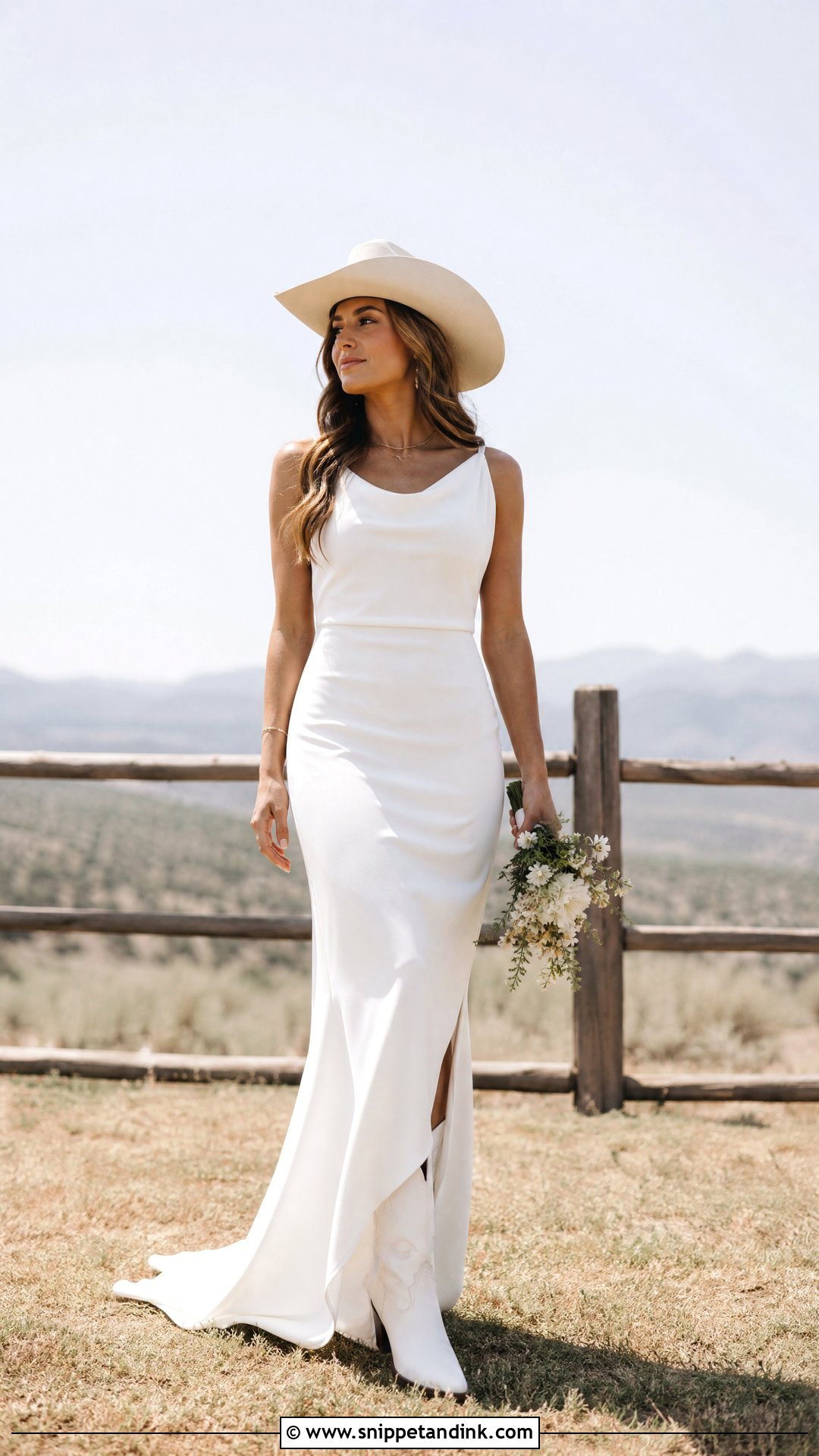
With a plain slip, crepe sheath or minimal A-line, the hat is doing all the Western work, so it has to fit. A hat that perches or slides back looks borrowed in every photo; I’d have it sized and, if needed, add a small comb or elastic inside the band. Ivory, cream or soft tan felt sits well with most bridal whites. Pair it with smooth leather boots, a structured bouquet and almost no jewelry. Press the dress on site, because a minimal gown has nowhere to hide wrinkles.
6. Fringe Western Bridal Dress With White Boots
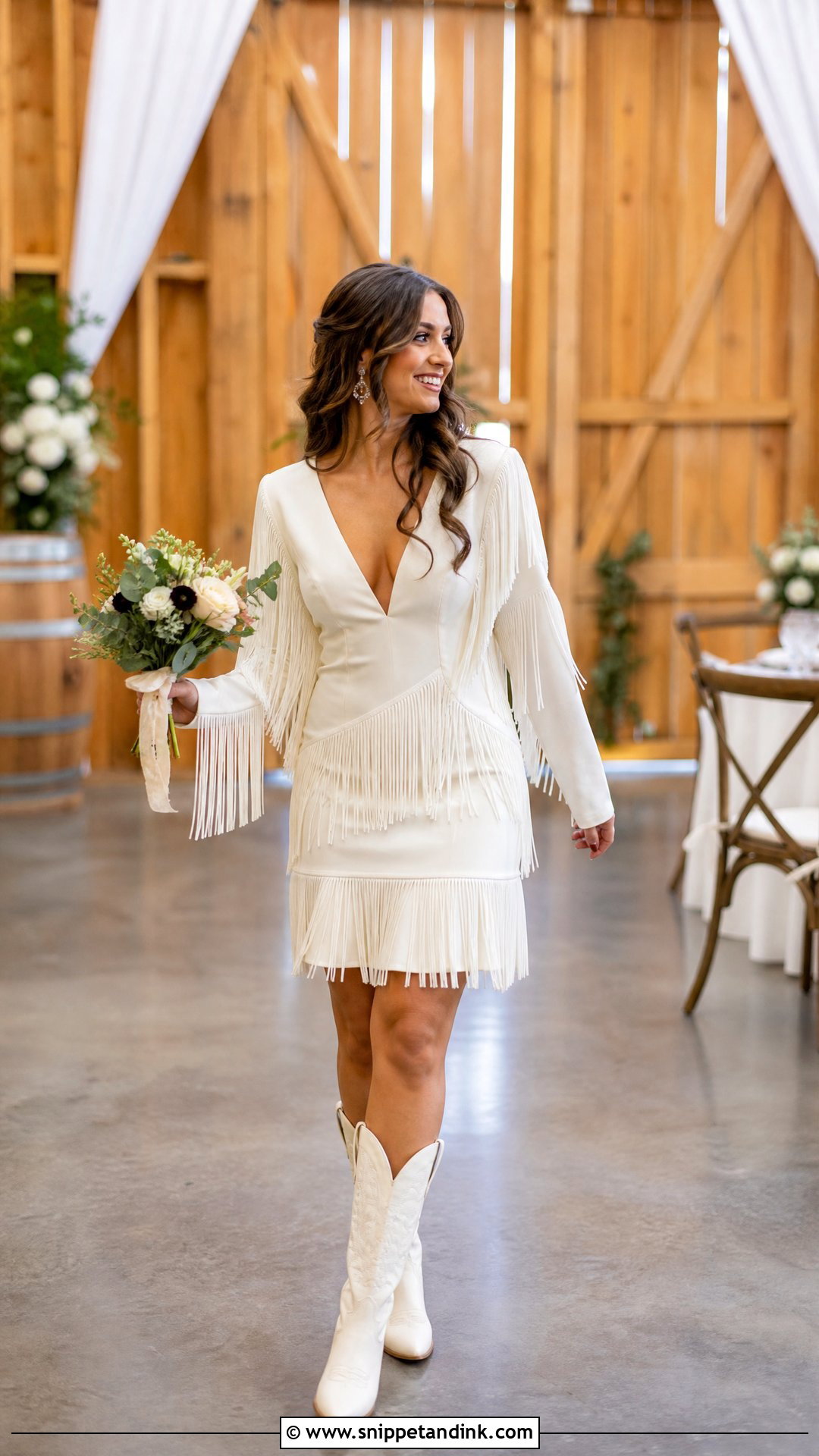
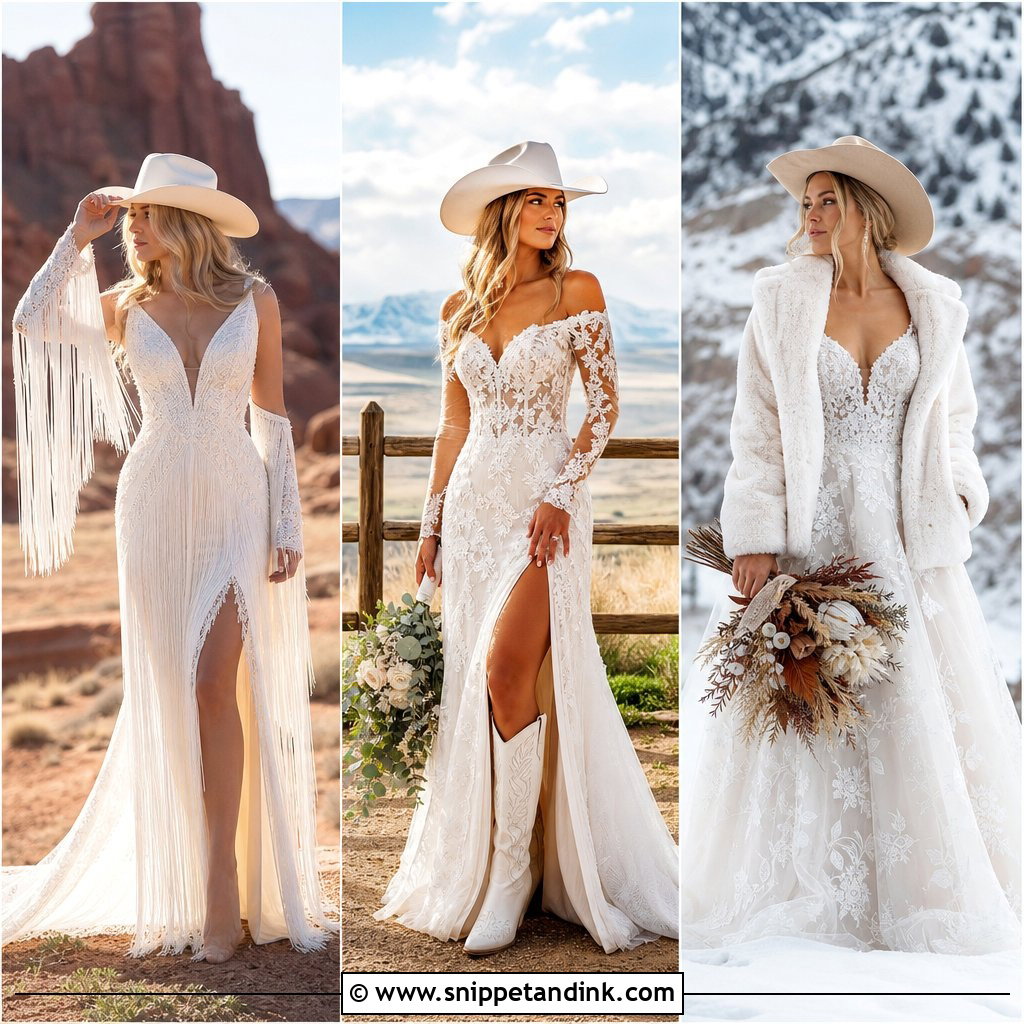
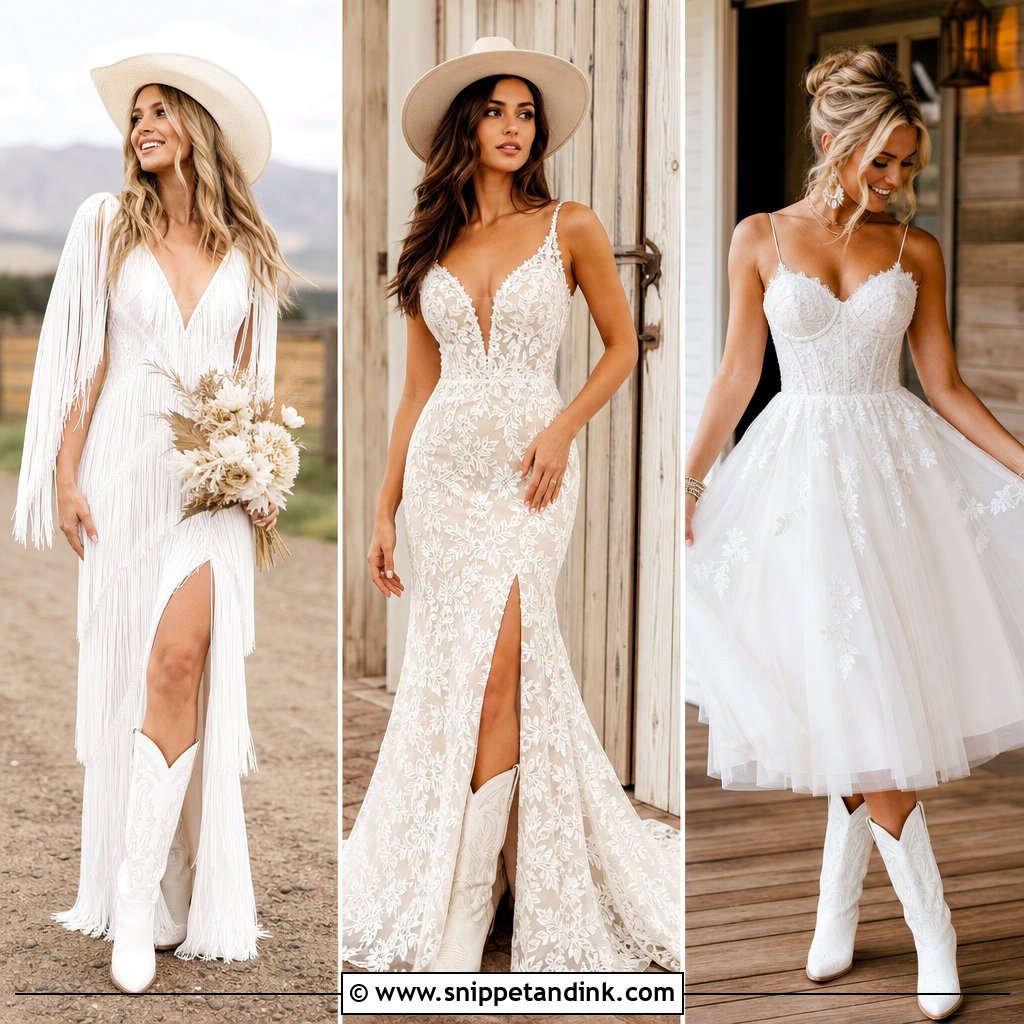
Fringe swings with every step, which is great on a dance floor and distracting if the dress is busy elsewhere. My rule is one source of movement: heavy fringe needs a simple shape, like a fitted mini, sleek midi or slim gown. White cowboy boots keep it fresh for receptions, elopements and after-parties. Check that the strands don’t tangle in a bouquet wrap or bracelet clasp before the day.
7. Tulle Western Bridal Dress With Denim Jacket
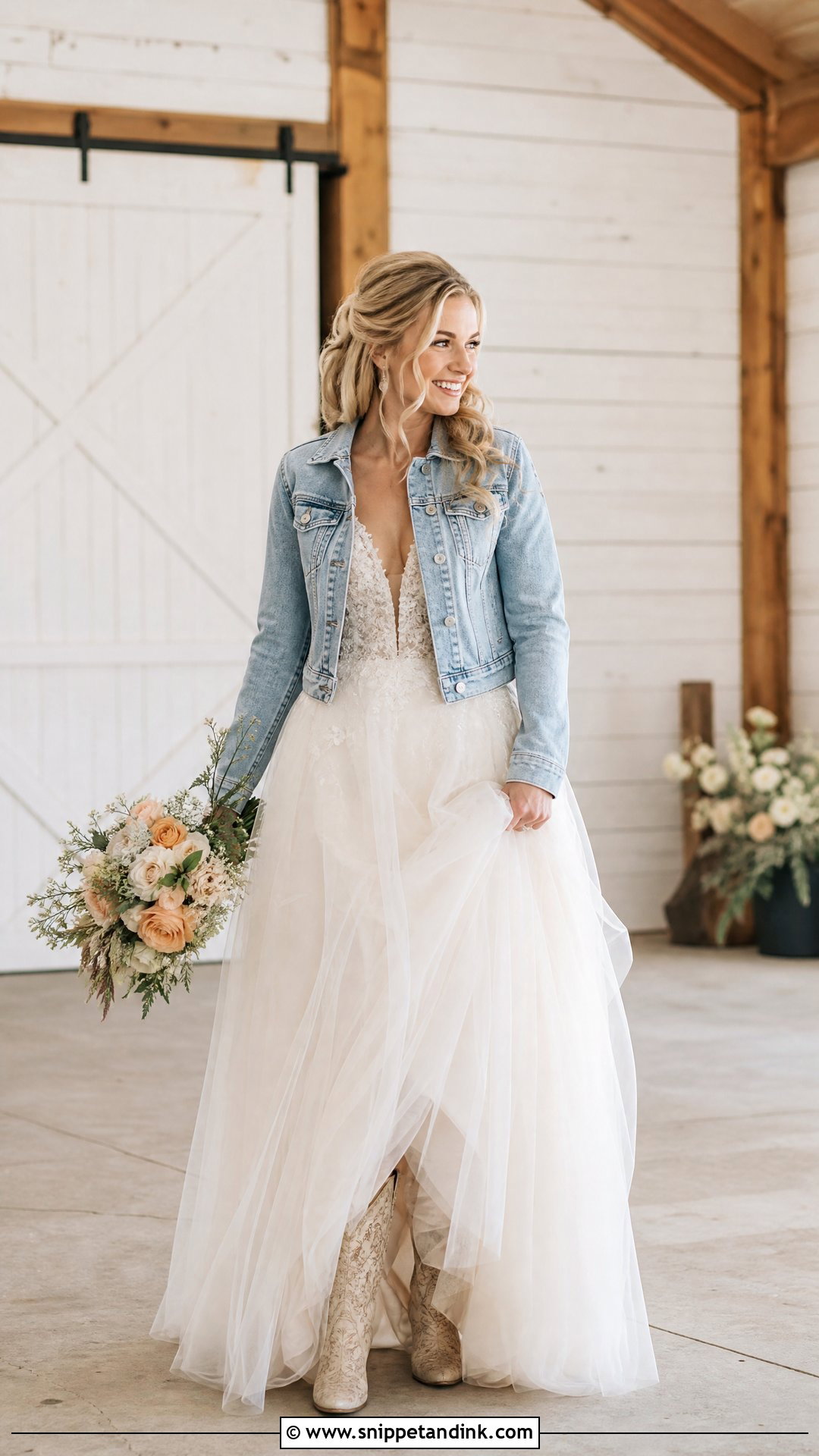
Denim over tulle is one of the friendliest pairings for a cool spring barn evening. The jacket needs to stop at the waist; anything longer swallows the skirt and the dress loses its shape from behind. Light wash looks airy, medium wash reads more Western. One warning I always give: new or dark denim can transfer dye onto ivory tulle at the underarm, so wash the jacket a couple of times first. Wear it for portraits and the reception, leave it off for the vows, and add embroidered boots and a half-up style.
8. Western Bridal Dress With Embroidered Bodice
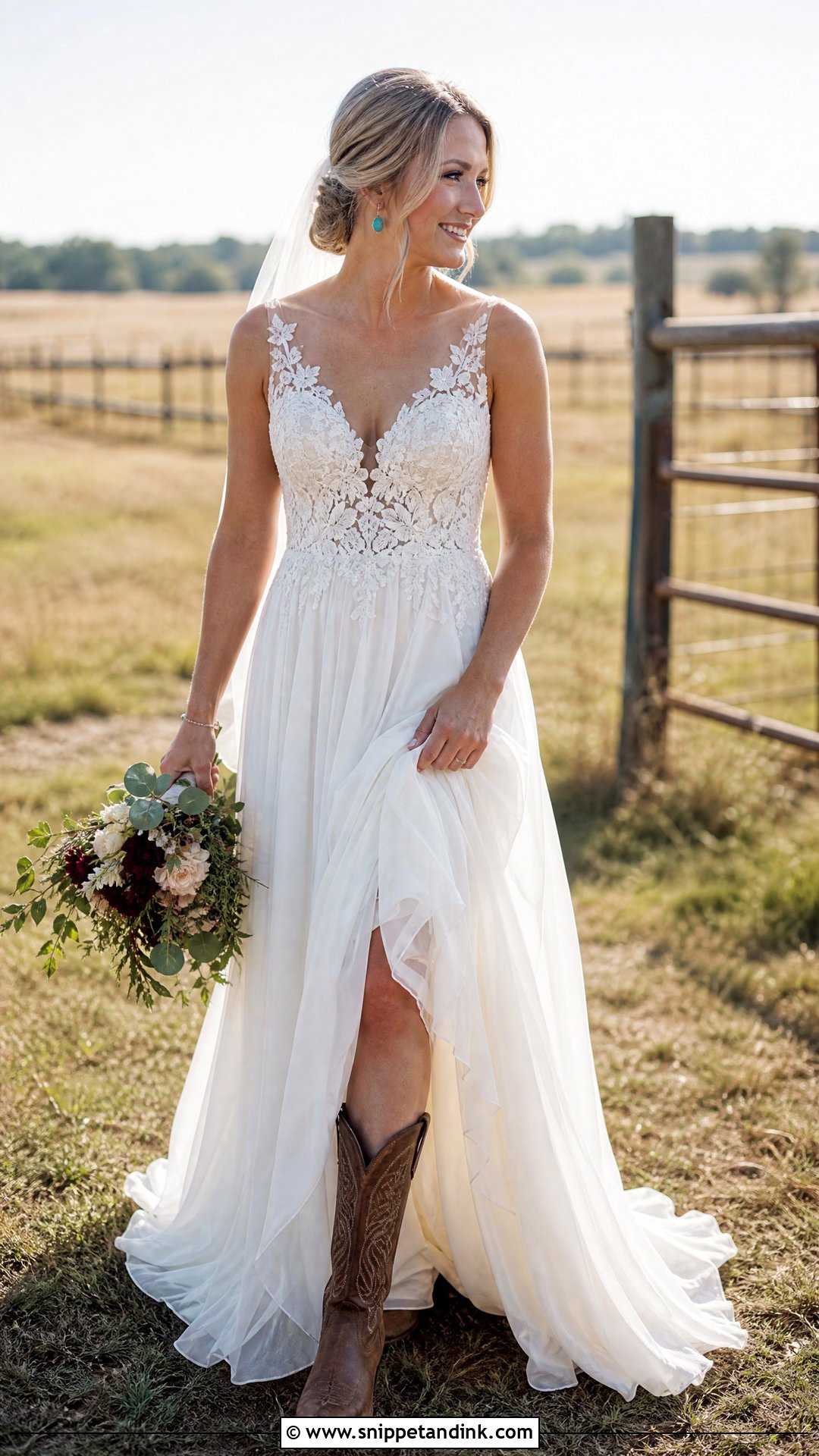
When the embroidery lives on the bodice, the skirt should go quiet. A soft A-line or flowing chiffon keeps the eye up where the stitching is and lets you move comfortably outdoors. I match accessories to the thread colour, not the fabric: warm-toned embroidery wants tan boots or a tan belt, while all-white work looks better with lighter, more traditional finishing. Small turquoise or pearl jewelry and a simple veil are plenty.
9. Corset Western Bridal Dress With Full Skirt
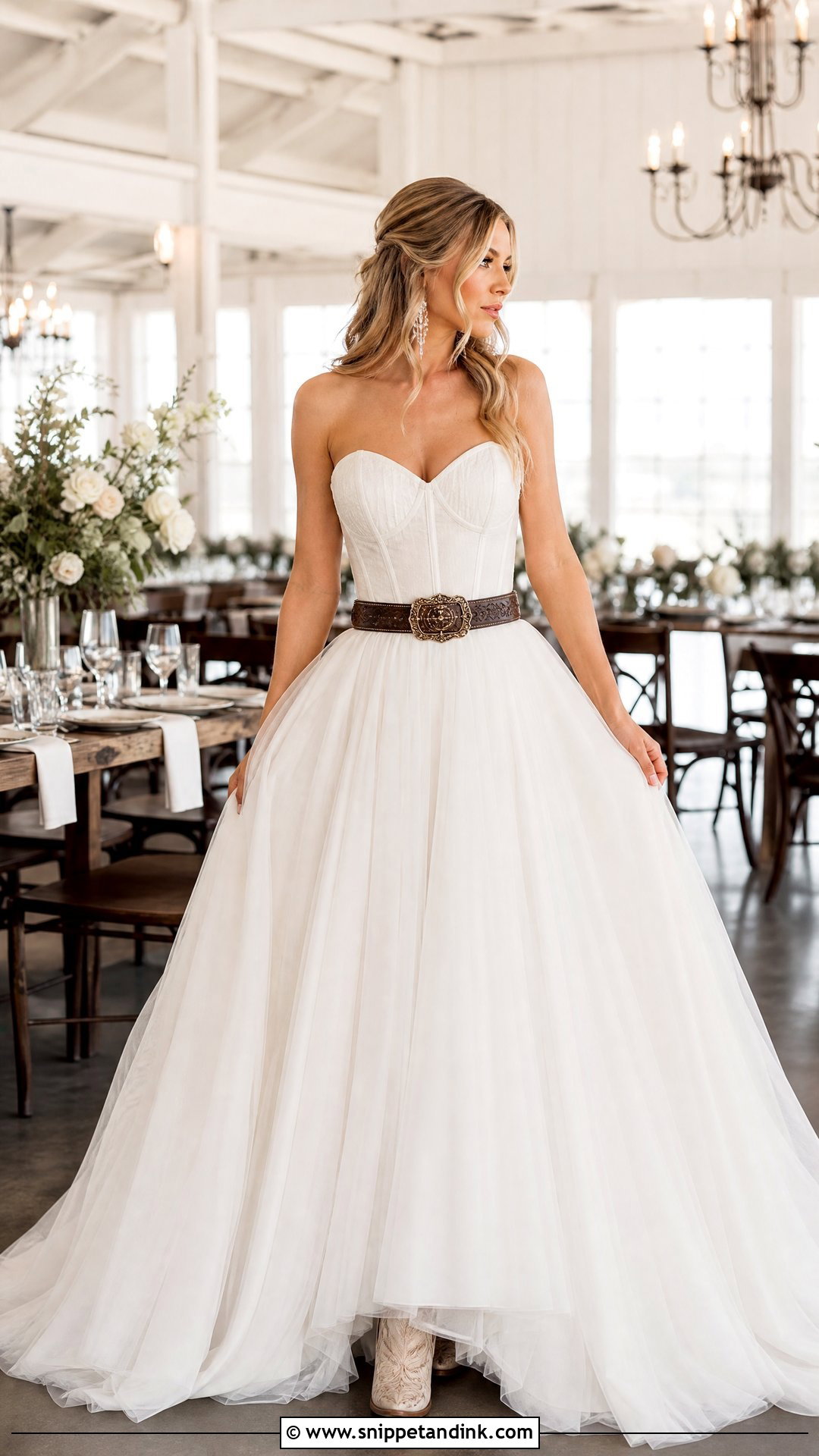
A corset Western bridal dress with a full skirt gives you structure and drama without ballroom formality. A corset defines the waist and supports the bust, but only when it has been fitted on your body rather than judged on the hanger. Lace-up backs are useful on the day, since they can be loosened a touch if heat or nerves leave you bloated. Matte fabrics, exposed boning or a soft sweetheart line keep it Western. Boots can hide under the skirt or show through a front slit, and a tooled belt or wide-brim hat can come out for photos.
10. Western Bridal Dress With High Slit
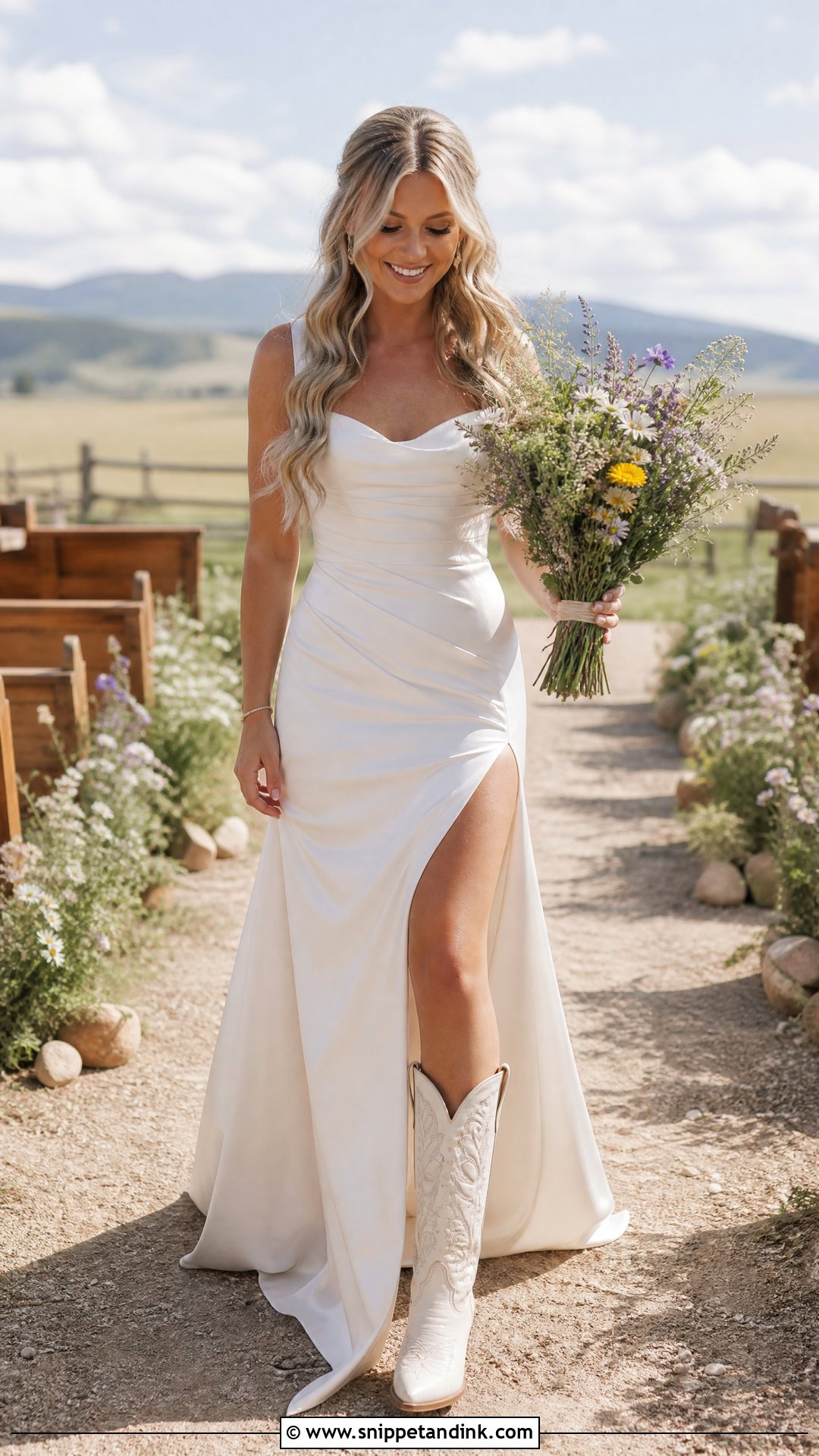
A high slit solves two problems at once: it lets you cross rough ground, and it puts your boots on show. Crepe, satin, chiffon and lace all take a slit well when the skirt is soft. Before the wedding I have the bride climb a step and sit down in the dress, because a slit that looks modest standing can open much higher when seated. If it does, a seamstress can tack it lower. Choose boots with good stitching or a pointed toe so they look chosen, not merely practical, and keep the bodice fitted.
11. Country Western Bridal Dress With Ruffle Skirt
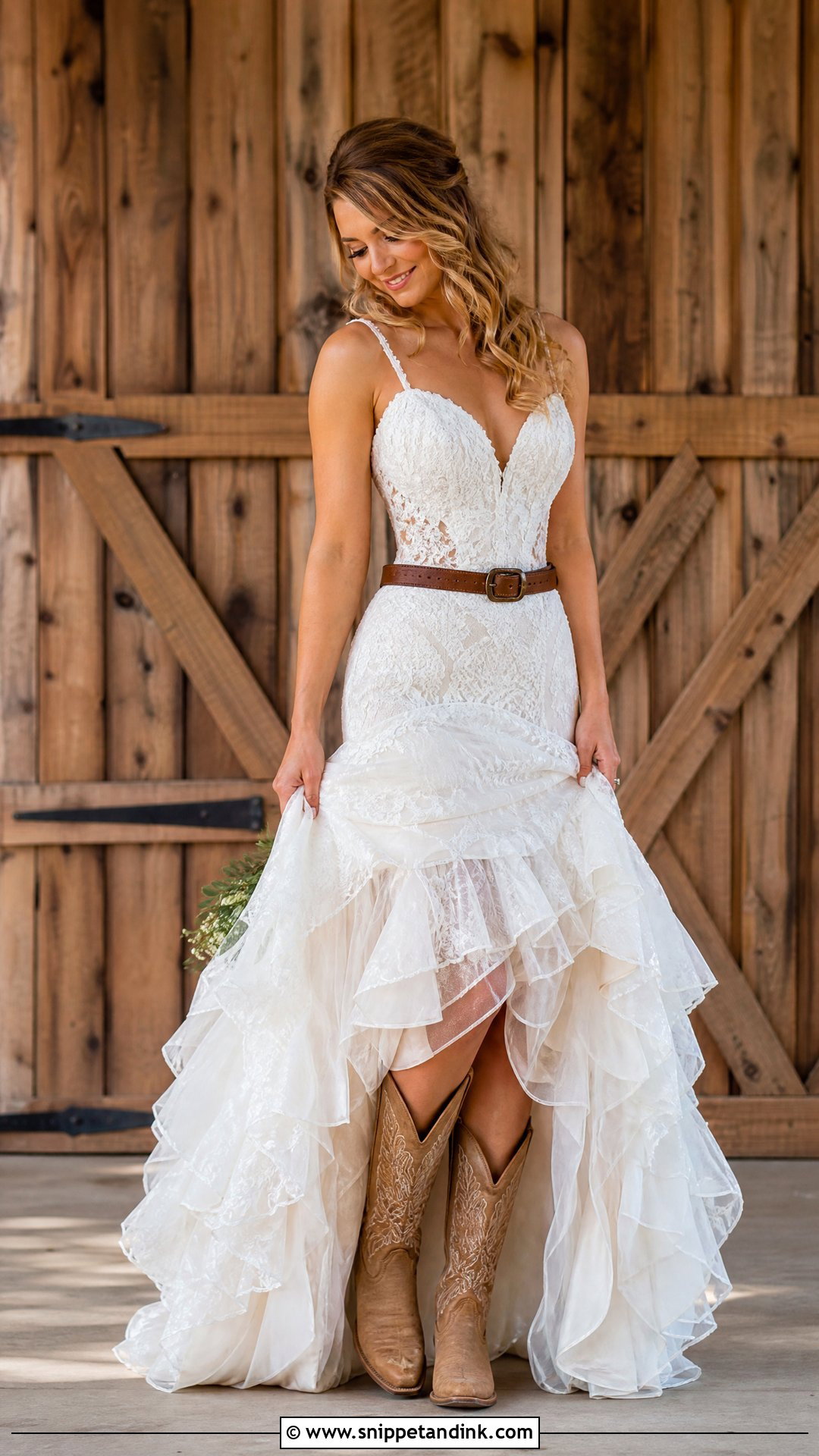
Ruffles are forgiving outdoors because they hide wind movement and the odd crease. I steer brides toward soft cascading ruffles over stiff tiers, which add bulk at the hip and can look dated. A fitted lace or satin bodice balances the volume. Expect the skirt to collect straw at a barn venue; hand someone in the wedding party a lint roller and the job of checking your hem before portraits. Tan boots, simple earrings and a slim leather belt round it off.
12. Off Shoulder Western Bridal Dress With Boots
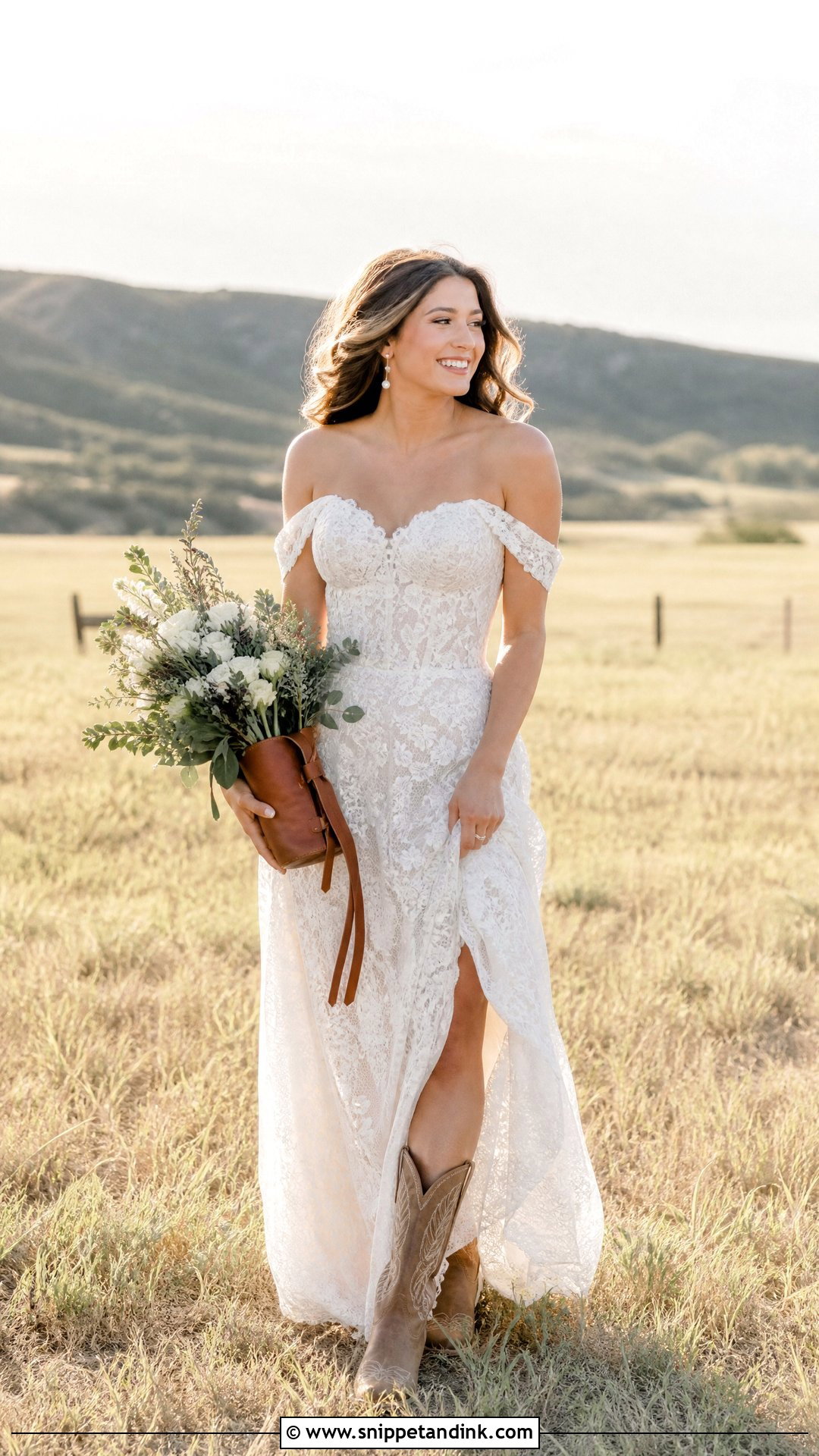
The off-shoulder line shows the collarbone and suits soft curls, pearl earrings or a delicate choker. Practically, it limits how high you can lift your arms, so I test hugging and dancing at the fitting; a band that rides up needs silicone grip or a small alteration. Lace, crepe or satin with a relaxed skirt keeps it country rather than formal. On a very simple dress, a tooled belt or a leather bouquet wrap adds the Western note. Warm evenings at a ranch venue suit it best.
13. Western Bridal Dress With Lace Jacket
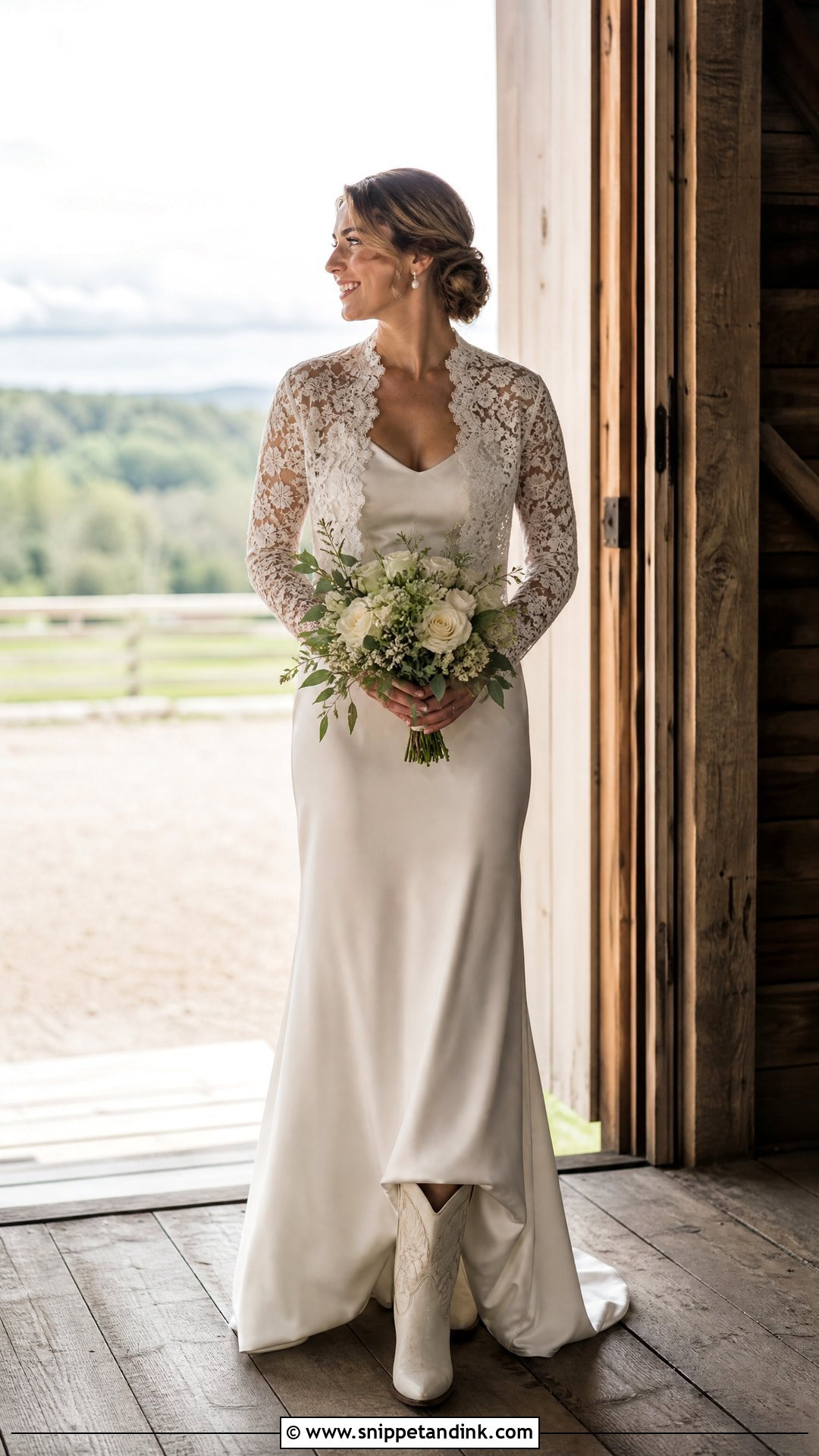
A lace jacket is the most flexible piece on this list. It turns a satin slip, crepe gown or strapless A-line into a covered ceremony look, then comes off for the reception, so you get two outfits from one dress. Floral or vine lace feels most rustic. I’d have the jacket fitted alongside the gown rather than bought separately at the last minute, because a shoulder seam sitting off your shoulder looks wrong in every photo. Cowboy boots, a low bun and delicate earrings are enough.
14. Vintage Western Bridal Dress With Prairie Details
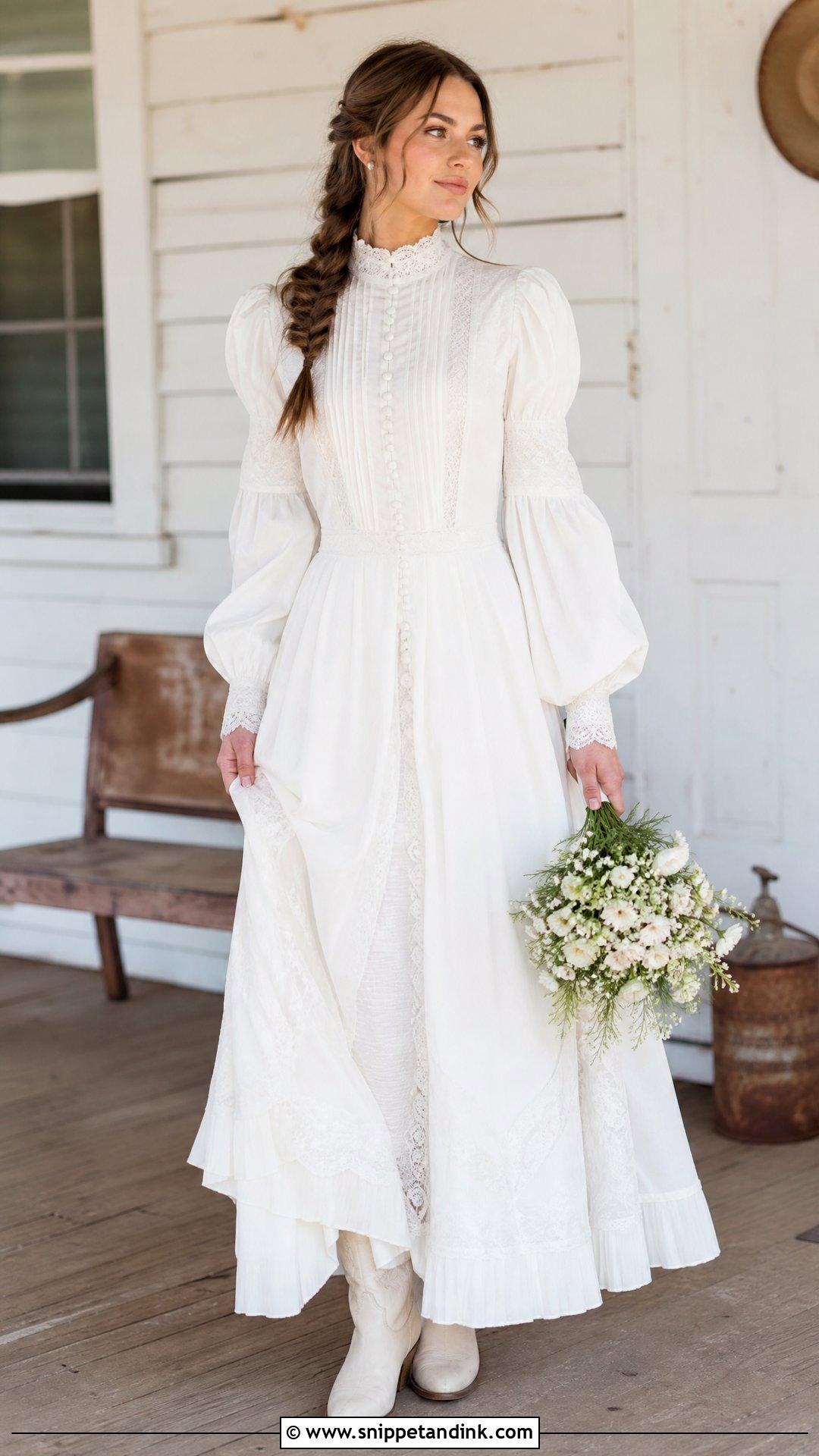
Prairie details are where Western bridal most easily slides into costume, so restraint matters. Pick one or two of the classic elements, such as puff sleeves, a high neckline, covered buttons or tiered cotton lace, rather than all of them. Cream boots, a small floral bouquet and gold or pearl jewelry suit the mood, and a low braid fits it well. If the dress is heavily detailed, I skip the hat altogether. Historic barns and family ranches are its natural setting.
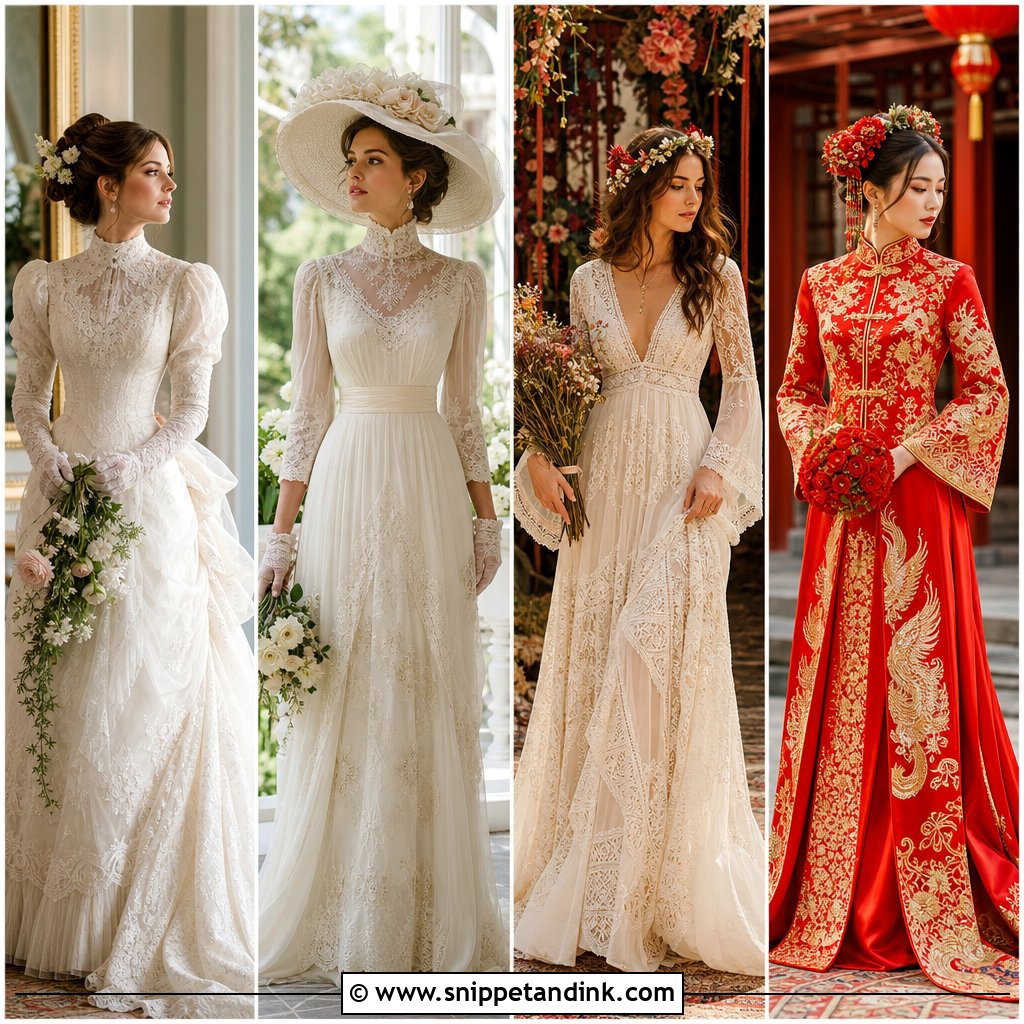

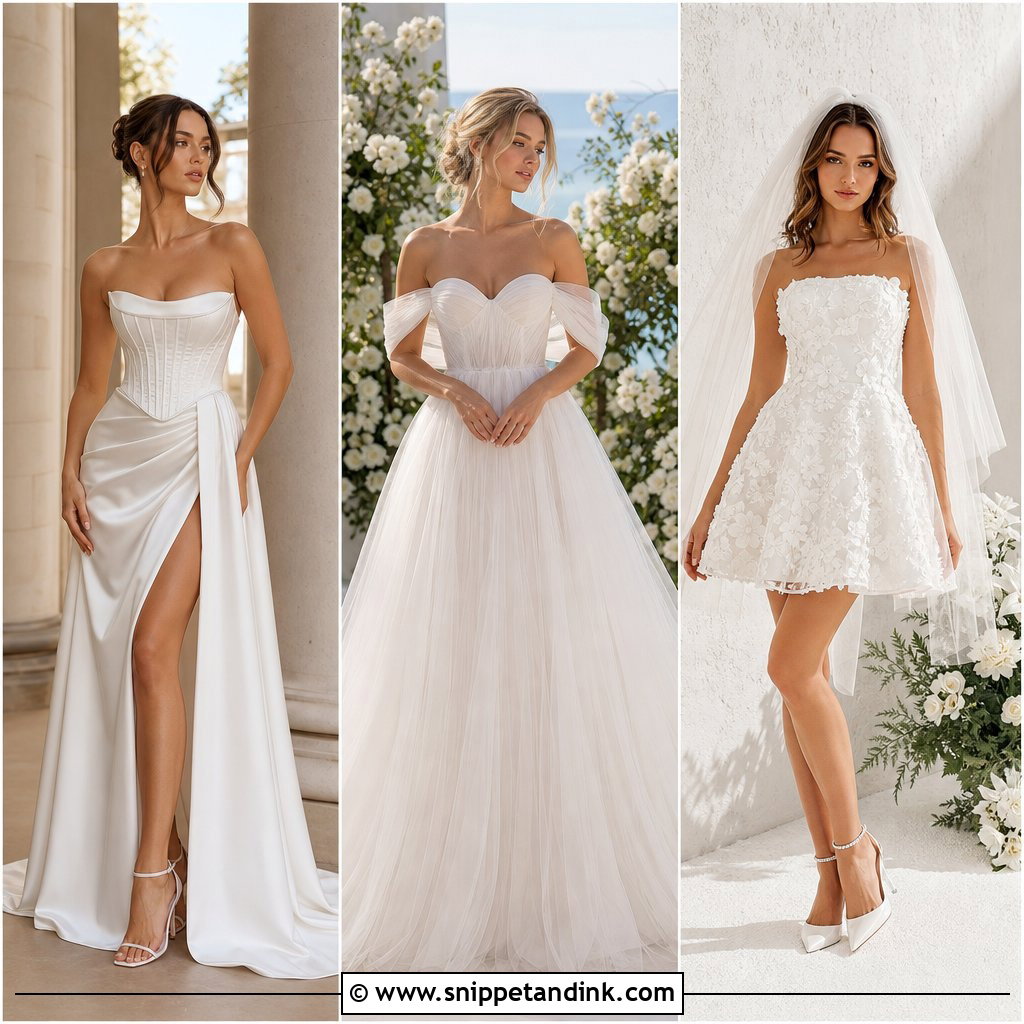
15. Short Western Bridal Dress With Cowboy Boots
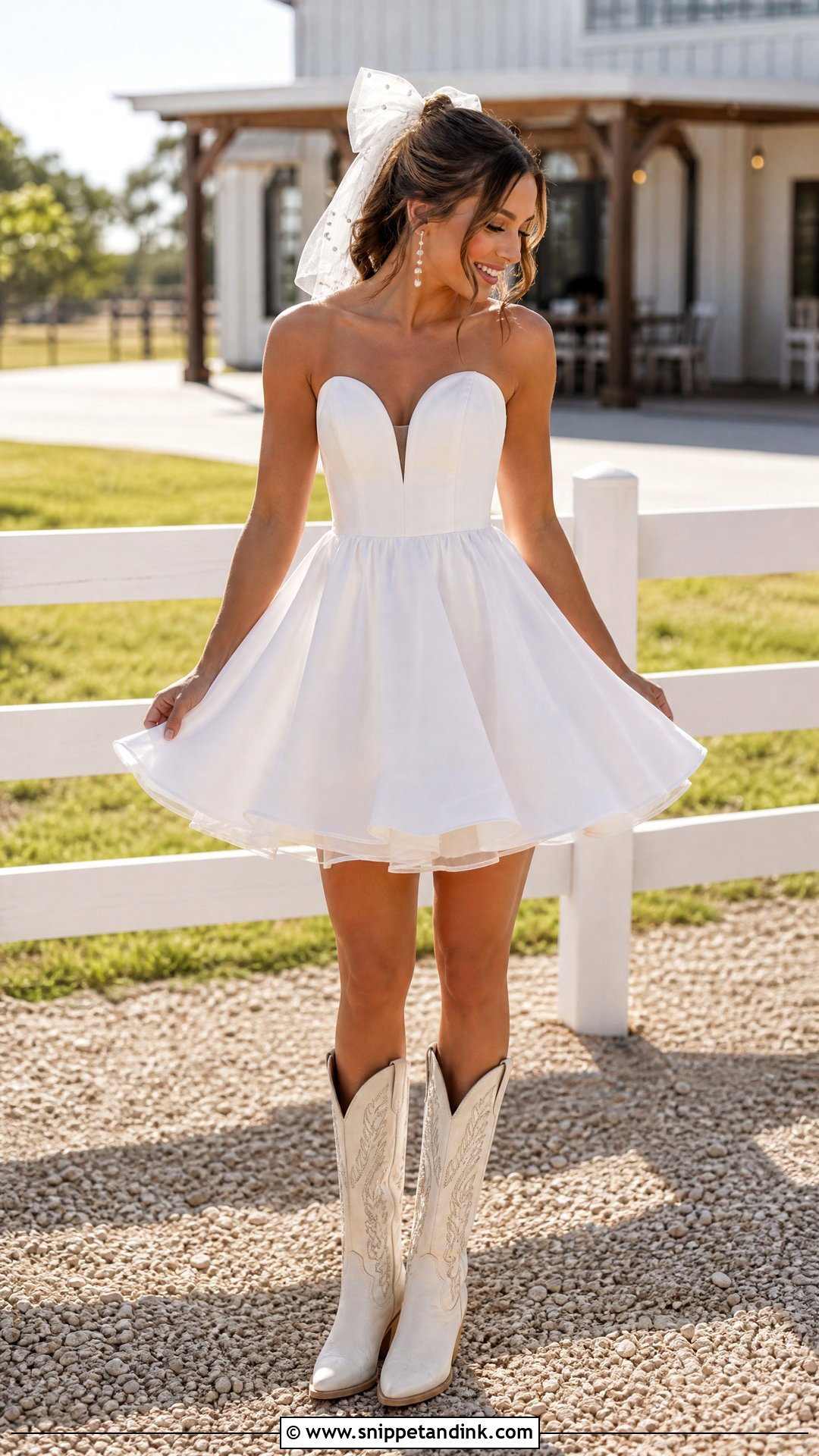
Short dresses are the easiest to move in, and they make the boots part of the outfit instead of a hidden comfort trick. A fitted mini looks modern; a flared knee-length skirt feels playful. Courthouse weddings, ranch elopements, rehearsal dinners and reception changes all suit one. With less dress, the accessories carry more of the bridal signal, so I’d add a short veil, a pearl bow or a bridal hat. Check the length while sitting, especially in satin, which rides up.
16. Plus Size Western Bridal Dress With A-Line Skirt
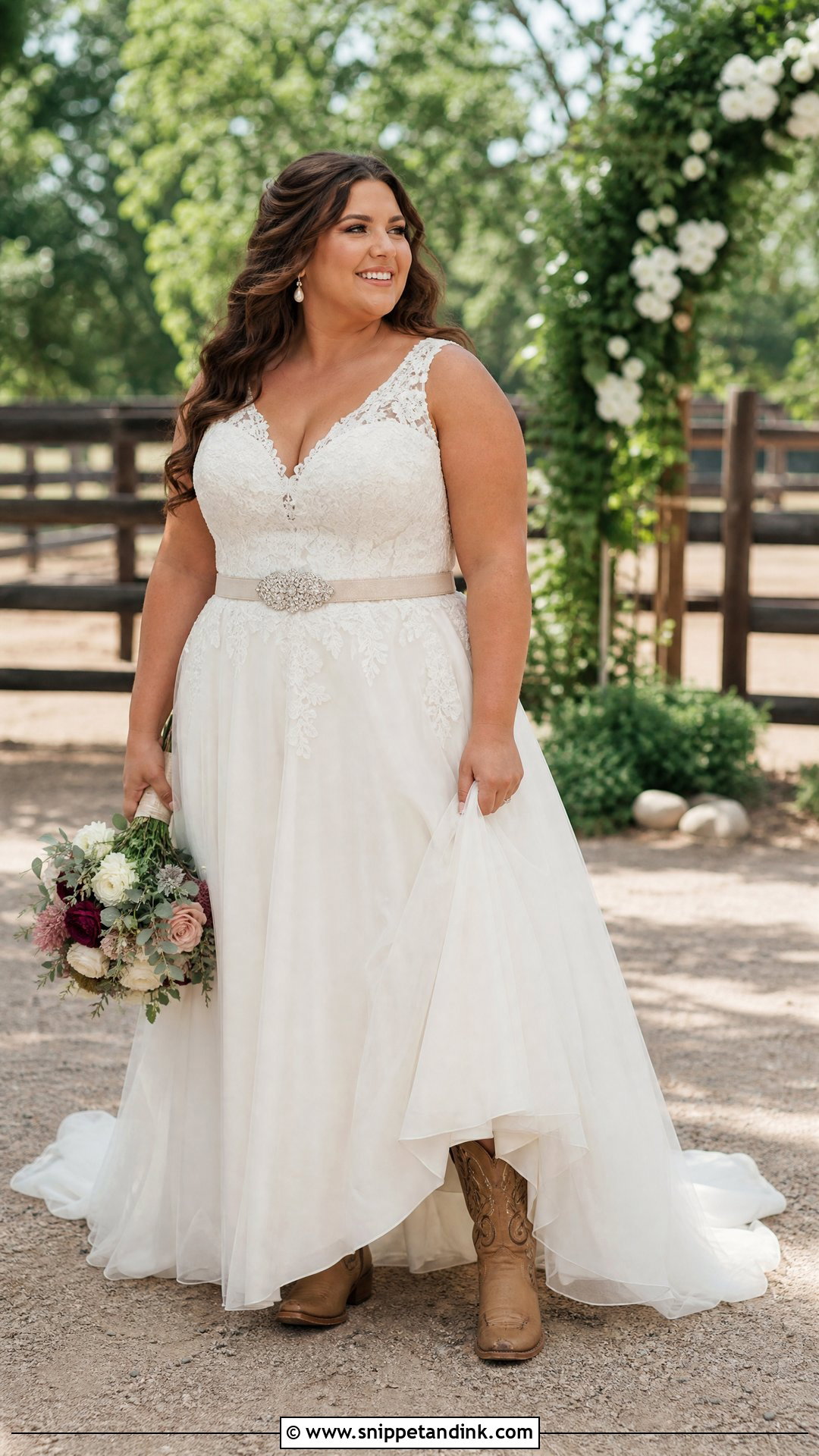
The A-line shape defines the waist and then falls away from the body, so you can sit, walk and dance without fighting the dress. For a plus size bride, the support inside matters more than the silhouette on the rack. I look for built-in boning, straps wide enough to carry weight and a bodice that never needs hitching up. Lace, chiffon, tulle and crepe all suit the cut. Style it with cowboy boots, a soft belt and jewelry you’d actually wear; fit and support are what make it look right, not hiding anything.
17. Western Bridal Dress With Turquoise Jewelry
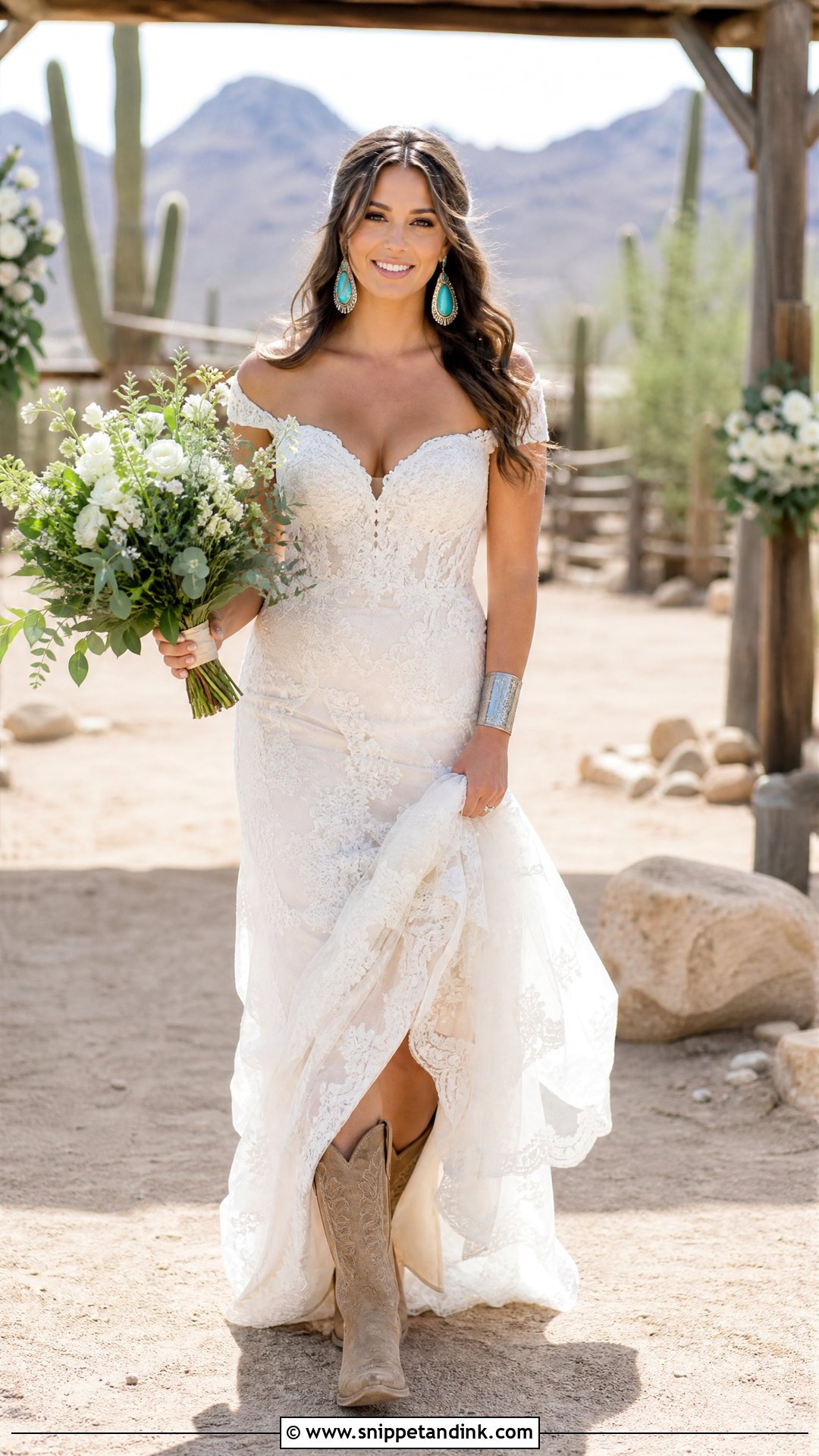
Turquoise is the most traditional way to bring colour into ranch styling, and ivory lace, satin, crepe or chiffon all set off the blue-green. I’d limit it to one or two pieces, maybe earrings and a cuff, rather than a full set that reads like a jewelry counter. Real turquoise is soft and porous, so put it on after perfume, hairspray and lotion have dried. Tan or brown boots and a bouquet of white blooms and greenery keep the palette calm. Inherited pieces carry extra meaning here.
18. Western Bridal Dress With Suede Fringe Jacket
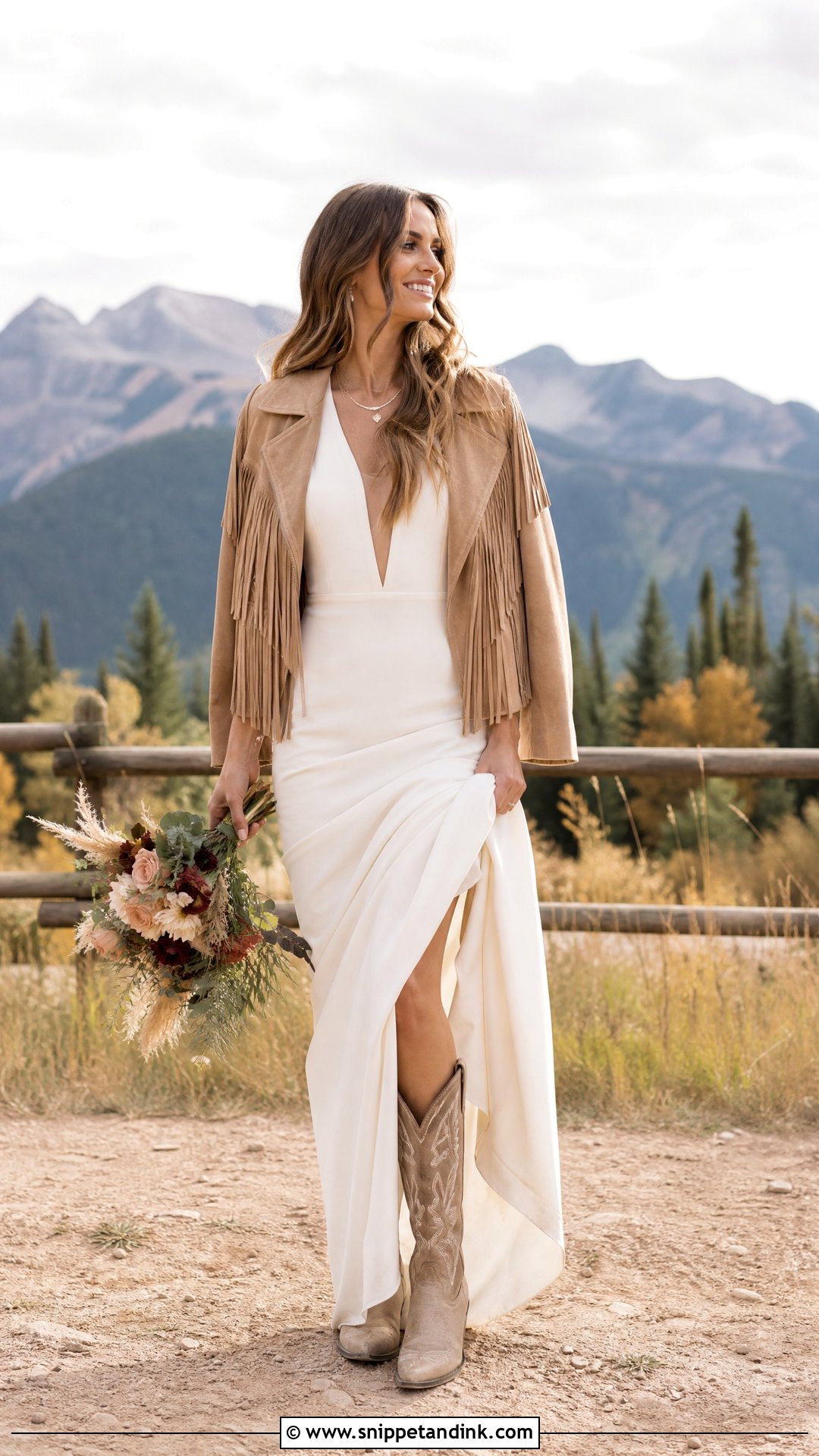
A Western bridal dress with a suede fringe jacket is a cool-weather piece for portraits and the reception. Choose ivory, beige, tan or light camel so it stays inside the bridal palette. Suede marks easily and hates rain, so I treat it with a protector spray a few weeks out, testing on an inside seam first. Underneath, a simple lace gown, slip or crepe sheath works best. Wear the jacket open so the dress shape still shows.
19. Western Bridal Dress With Ball Gown Skirt
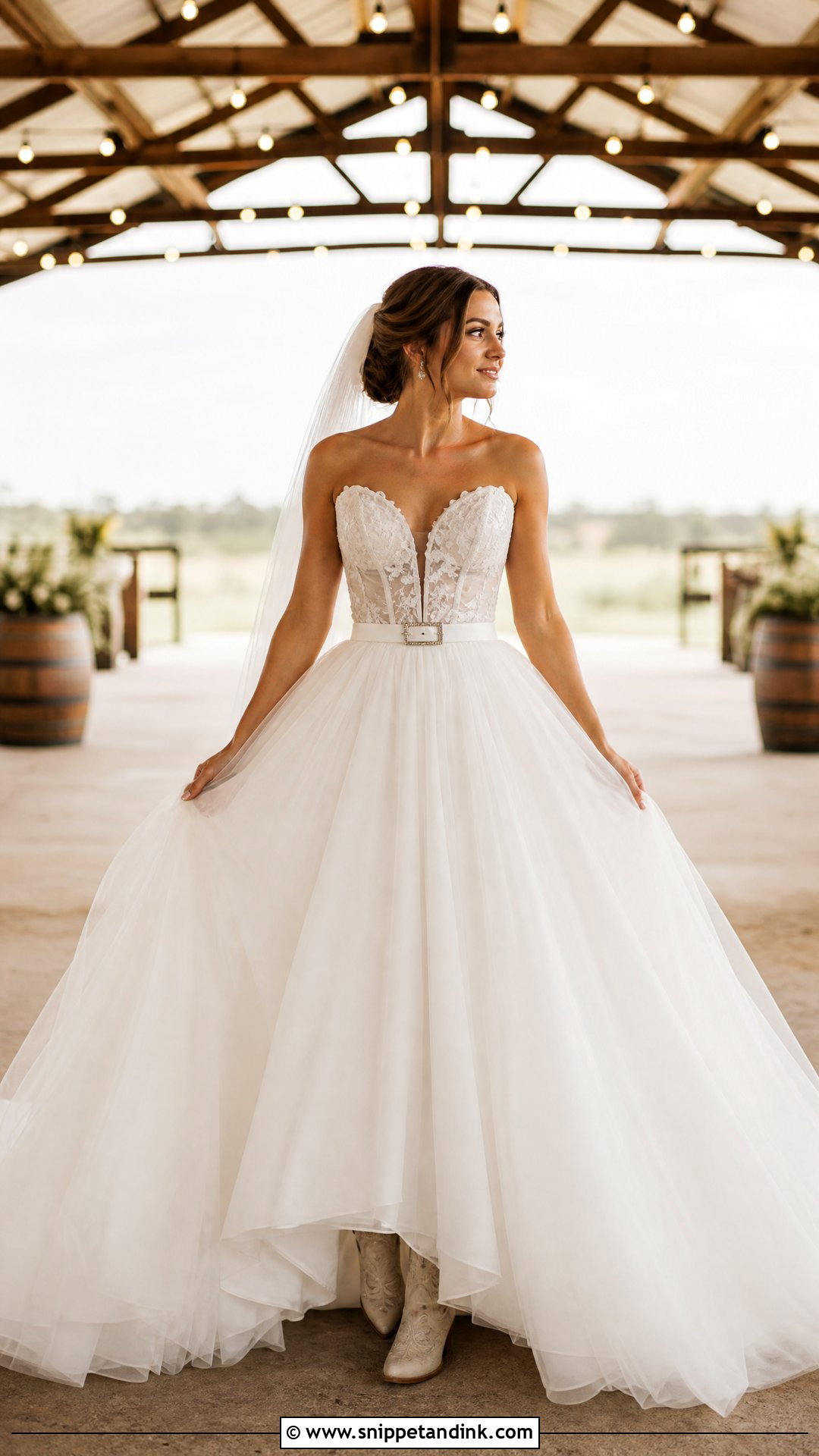
A ball gown at a ranch sounds contradictory, yet matte tulle, lace or floral appliqué make the volume feel rustic rather than formal. The boots stay hidden until you dance. The trade-off is weight and width: a full skirt drags across gravel and gathers burrs in a field, so I plan the photo route along paths where possible and choose a bustle that lifts most of the hem. Keep the veil simple, or swap it for a hat during portraits. A belt with a subtle buckle adds definition.
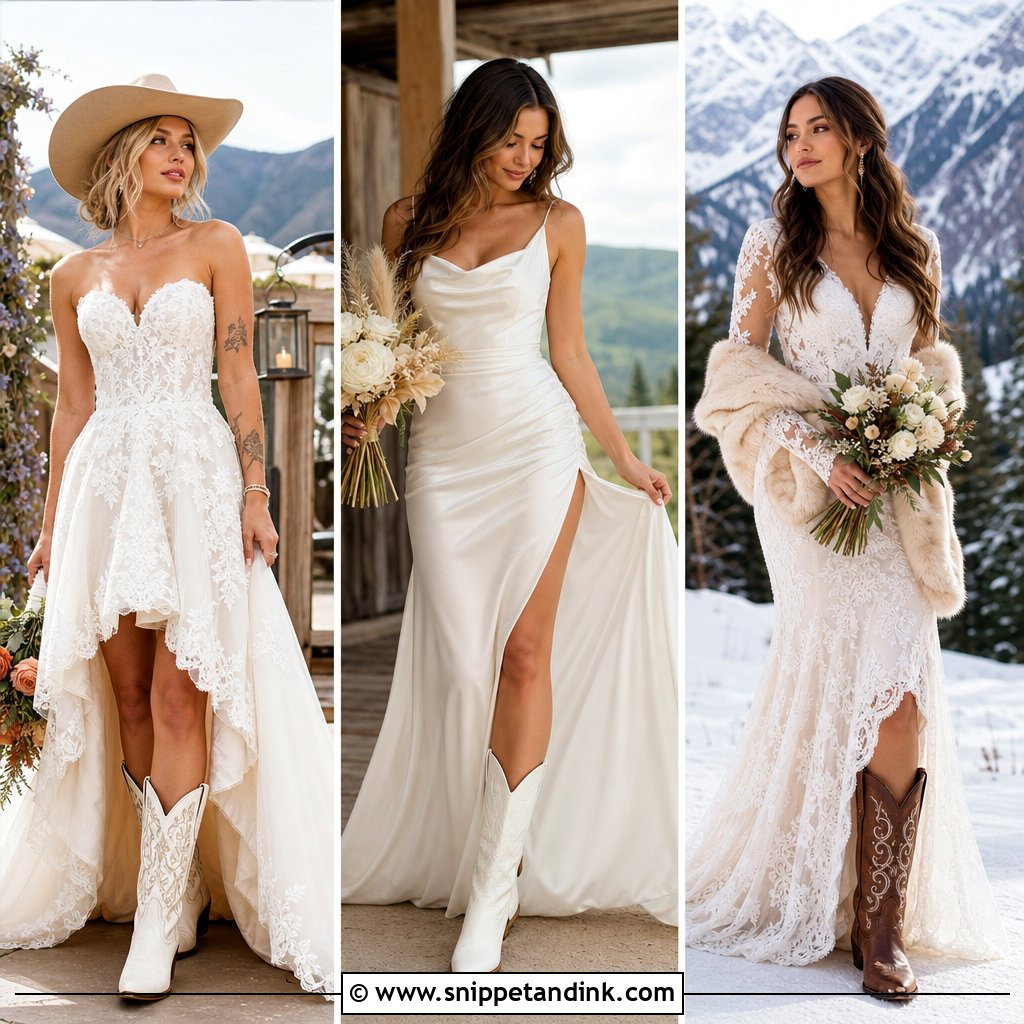
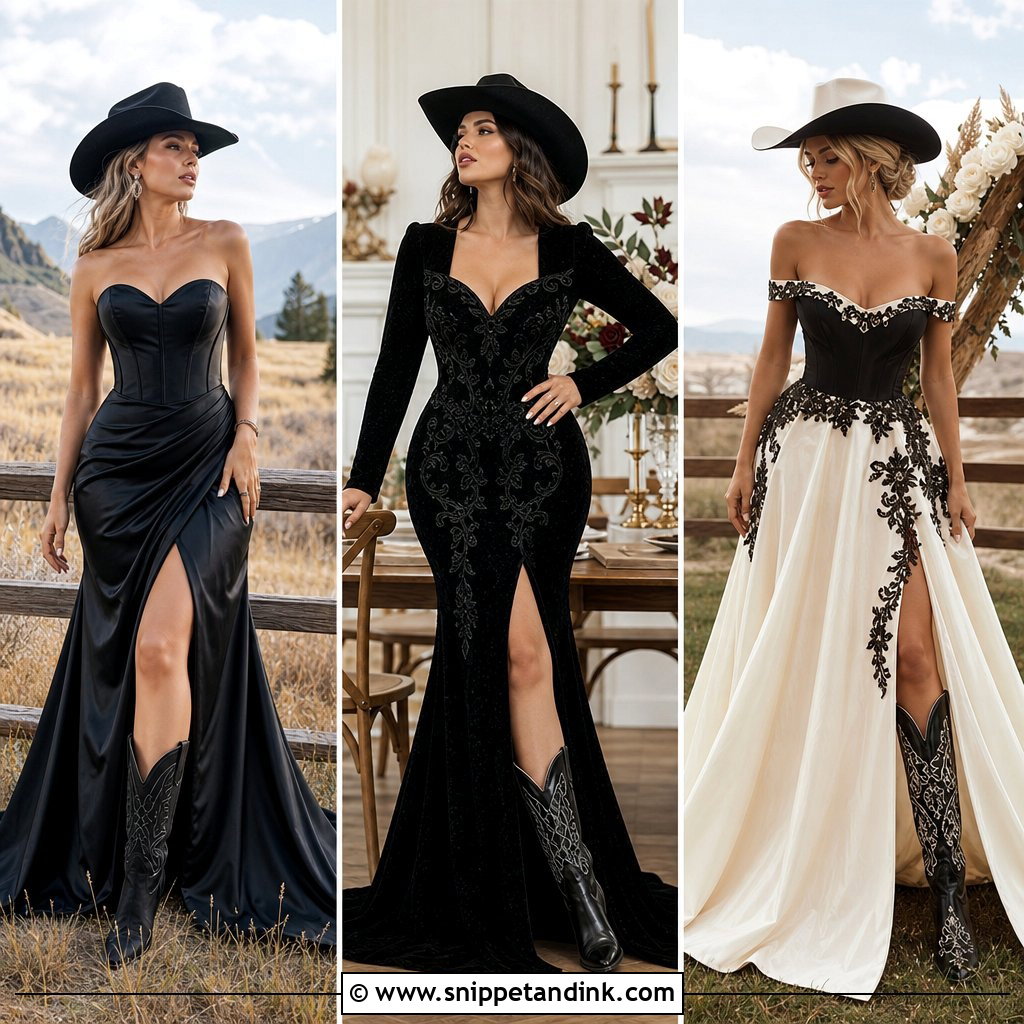

20. Western Bridal Dress With Chiffon Skirt
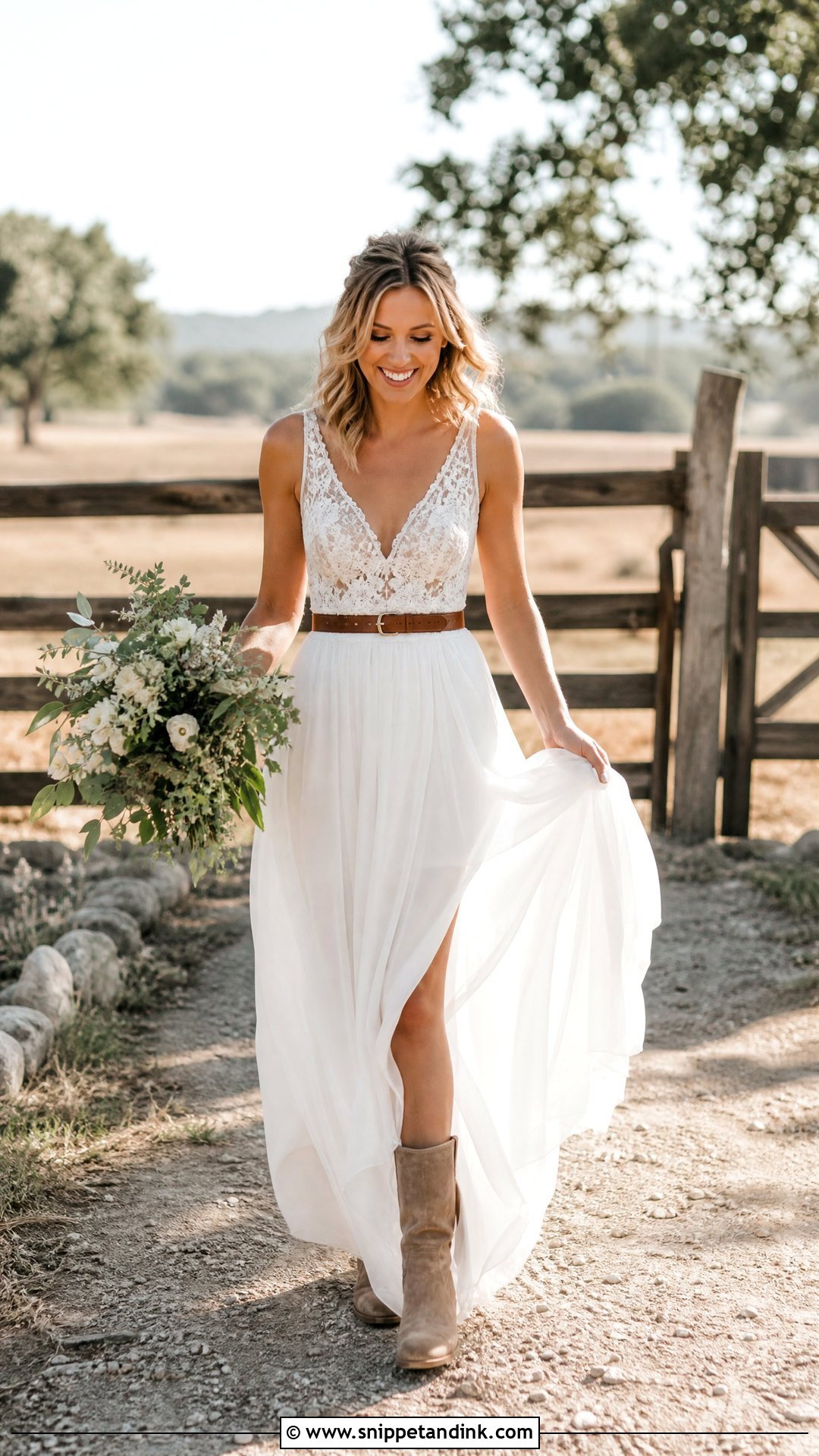
Chiffon floats, which is why it looks so good in fields, deserts and mountain settings, and why it misbehaves in strong wind. It stays cool in heat because it doesn’t cling. I pair a chiffon skirt with a lace or embroidered bodice for structure and a slim leather belt for shape. At an exposed venue, ask your photographer to keep the wind behind you so the skirt streams back instead of wrapping your legs. Suede boots, loose waves and airy greenery suit it.
21. Western Bridal Dress With Pearl Snap Shirt Layer
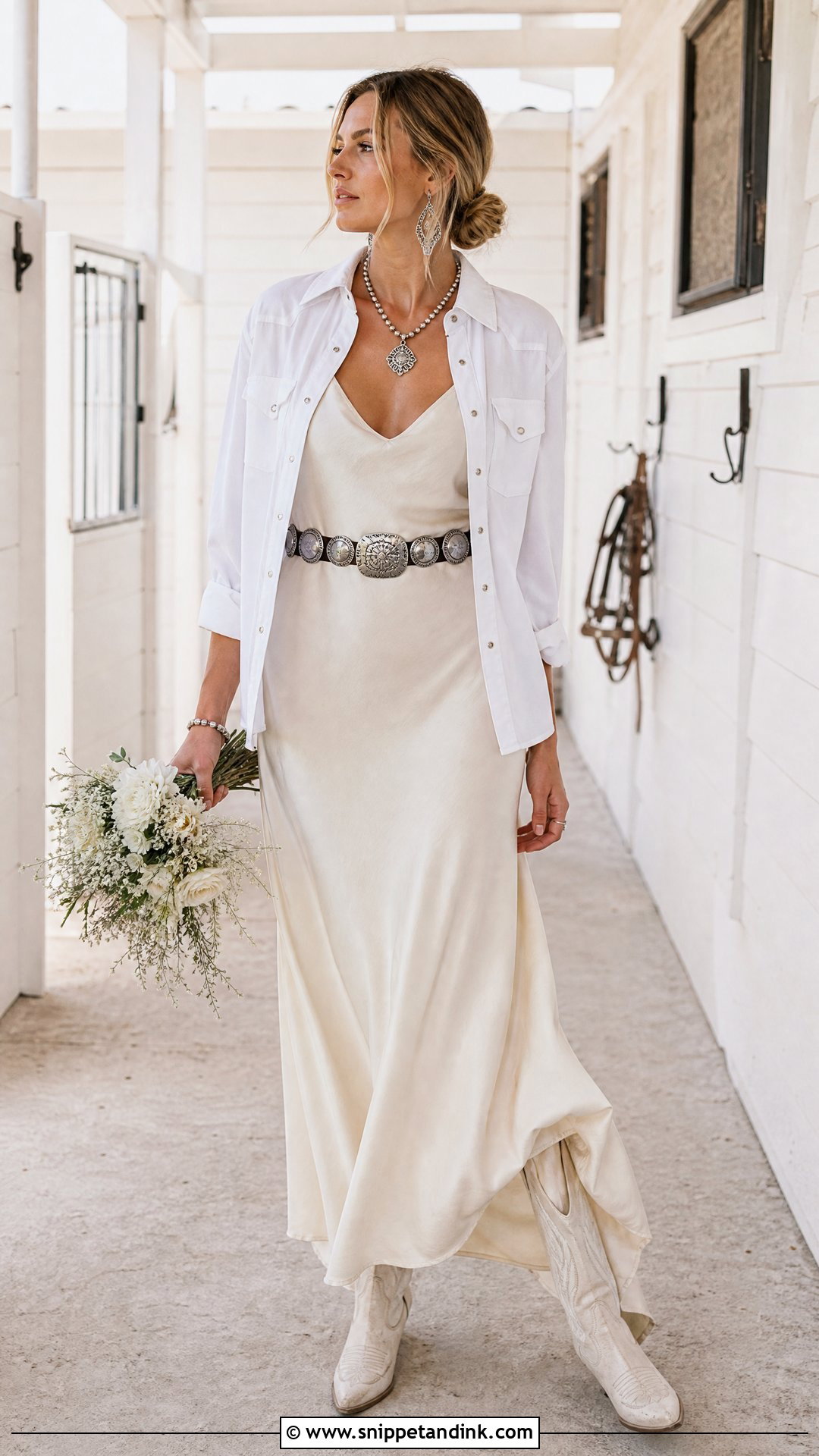
A pearl snap shirt over a wedding dress belongs at an elopement, a ranch portrait session or the reception, not a formal ceremony. Start with a simple slip, short bridal dress or fitted lace gown, then wear the shirt open like a light jacket, knotted at the waist or tucked under a statement belt. I buy it a size up so it drapes instead of pulling across the bust. White or ivory, plus cowboy boots and silver jewelry, keeps it clean.
22. Western Bridal Dress With Floral Lace Train
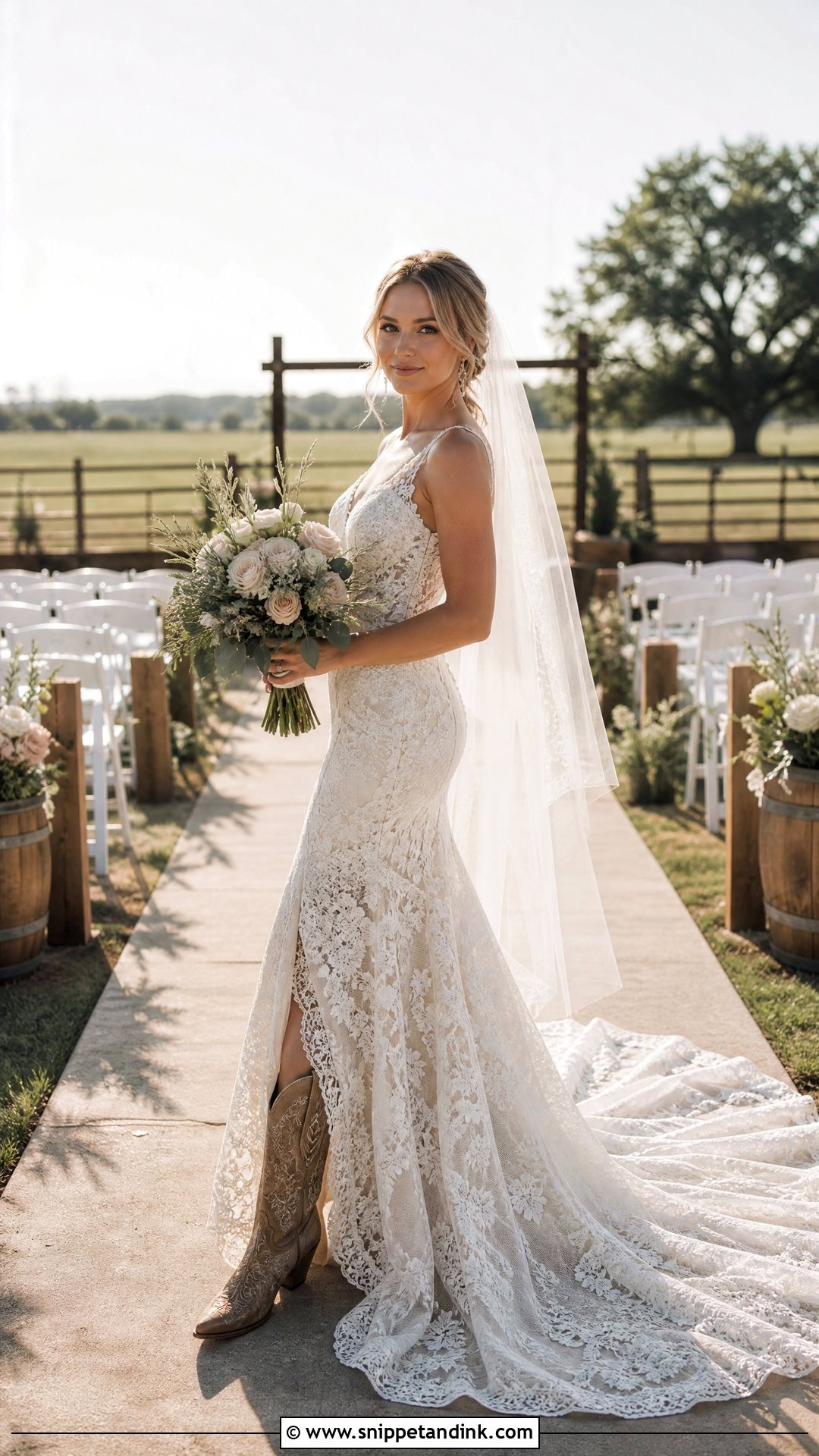
A floral lace train gives the ceremony its big entrance on an outdoor aisle or through barn doors, and a fitted or A-line gown keeps it looking connected to the body. Lace snags on rough boards, hay and brush, so walk the aisle route before the day and ask for anything sharp to be covered. Plan the bustle at your fittings and have someone in your party practise it. A long train at a barn dance won’t last an hour. Pair it with boots, a simple veil and minimal jewelry.
23. Western Bridal Dress With Crochet Lace
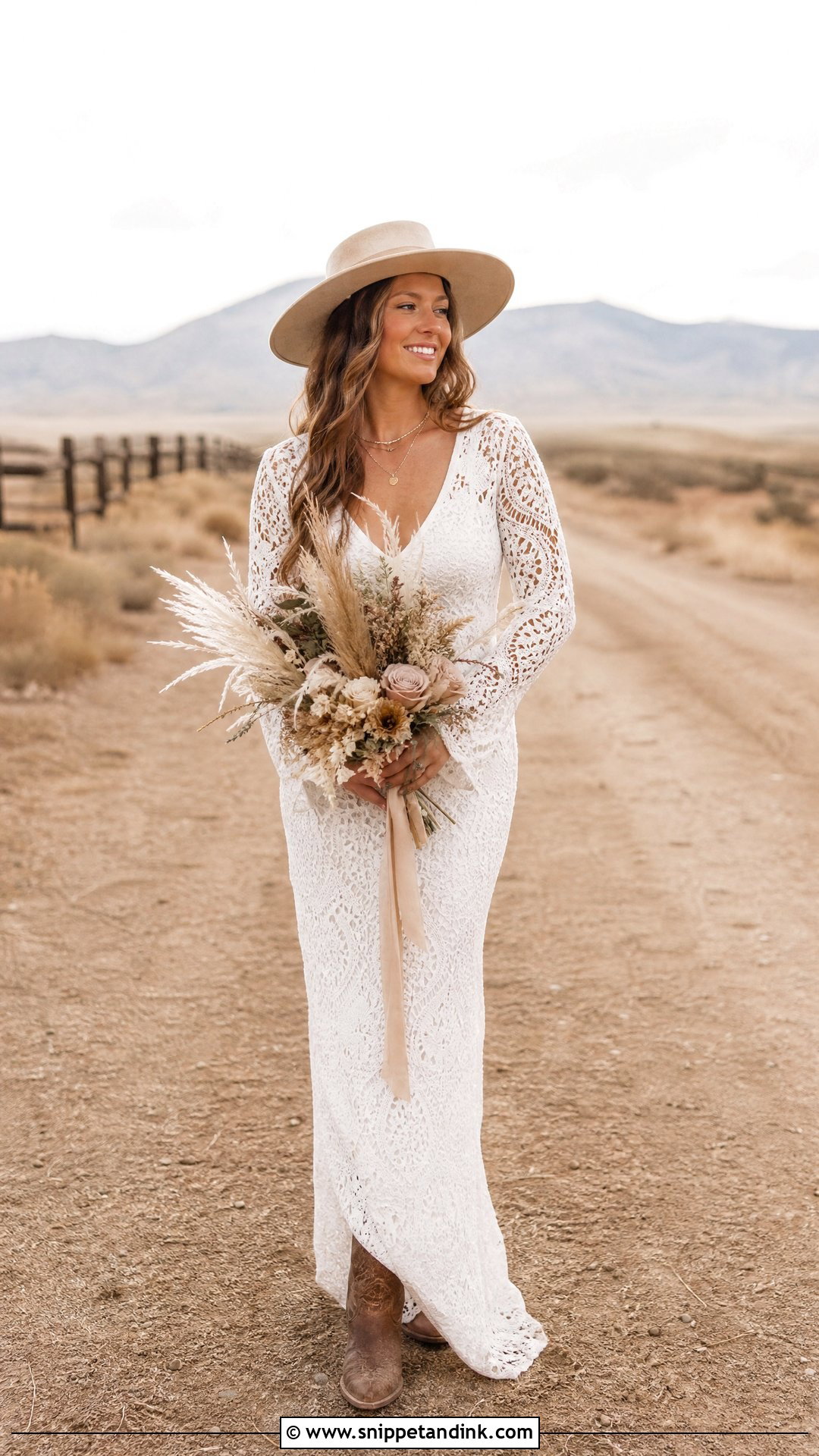
Crochet lace has more depth than fine floral lace, which gives a handmade, slightly vintage mood suited to desert venues, ranch elopements and backyard ceremonies. It sits well on sheath dresses, bell-sleeve gowns and soft A-lines. Those open holes catch on rings, bracelets and bouquet wire, so I keep jewelry smooth. Tan boots, layered necklaces and a simple hat work if the neckline allows. Avoid anything very shiny; it fights the texture.
24. Western Bridal Dress With Beaded Belt
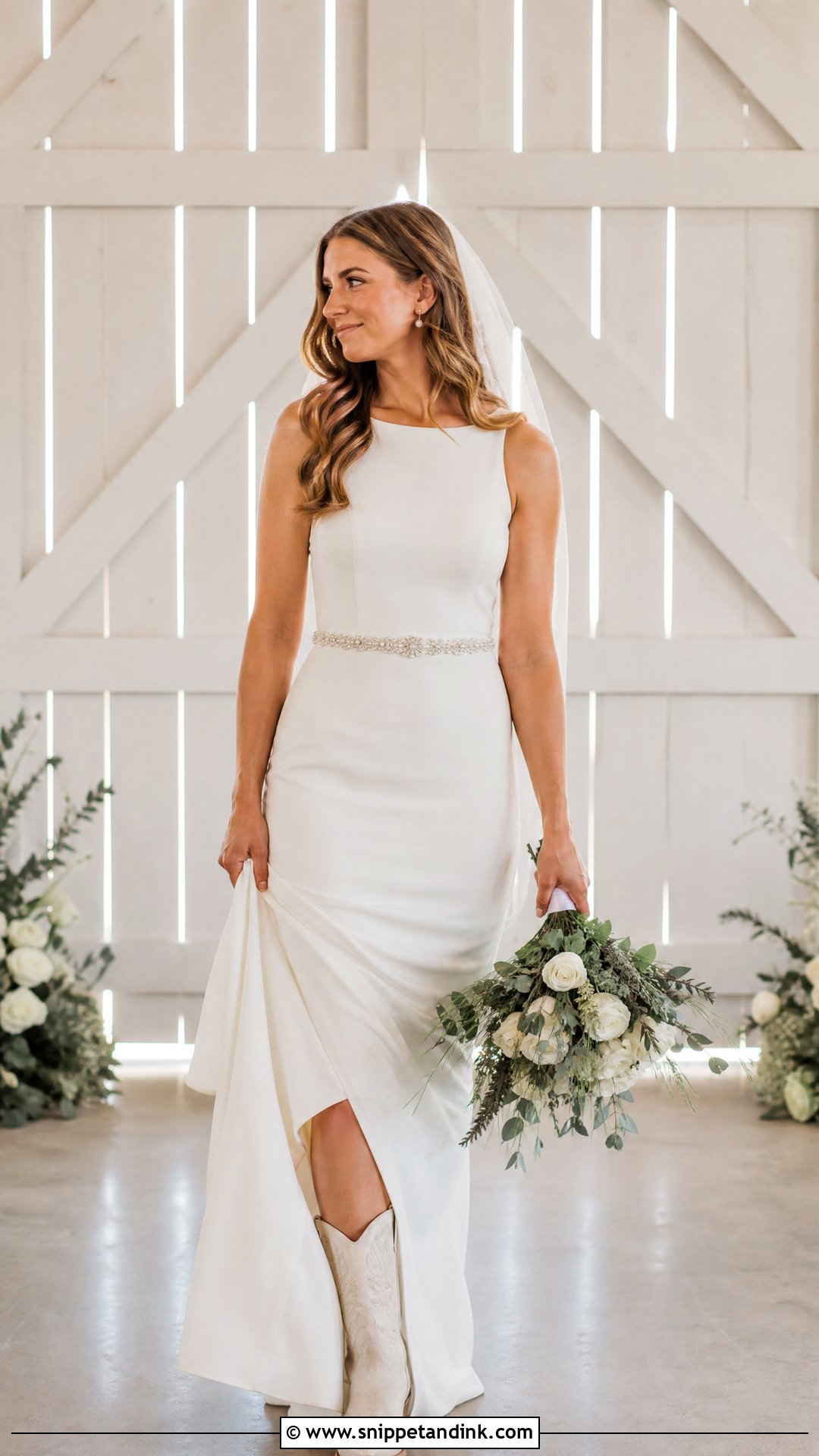
A beaded belt gives a simple satin, crepe, chiffon or tulle gown a focal point at the waist. Pearls, crystals, silver accents or subtle Western motifs all suit it. Match the boots to the metal tone or keep them neutral in ivory or tan. Heavy beading on thin fabric can pull and pucker, so I’d have the belt tacked to the dress at a couple of points instead of relying on the clasp alone. With small earrings and a soft veil, this is Western styling at its most refined.
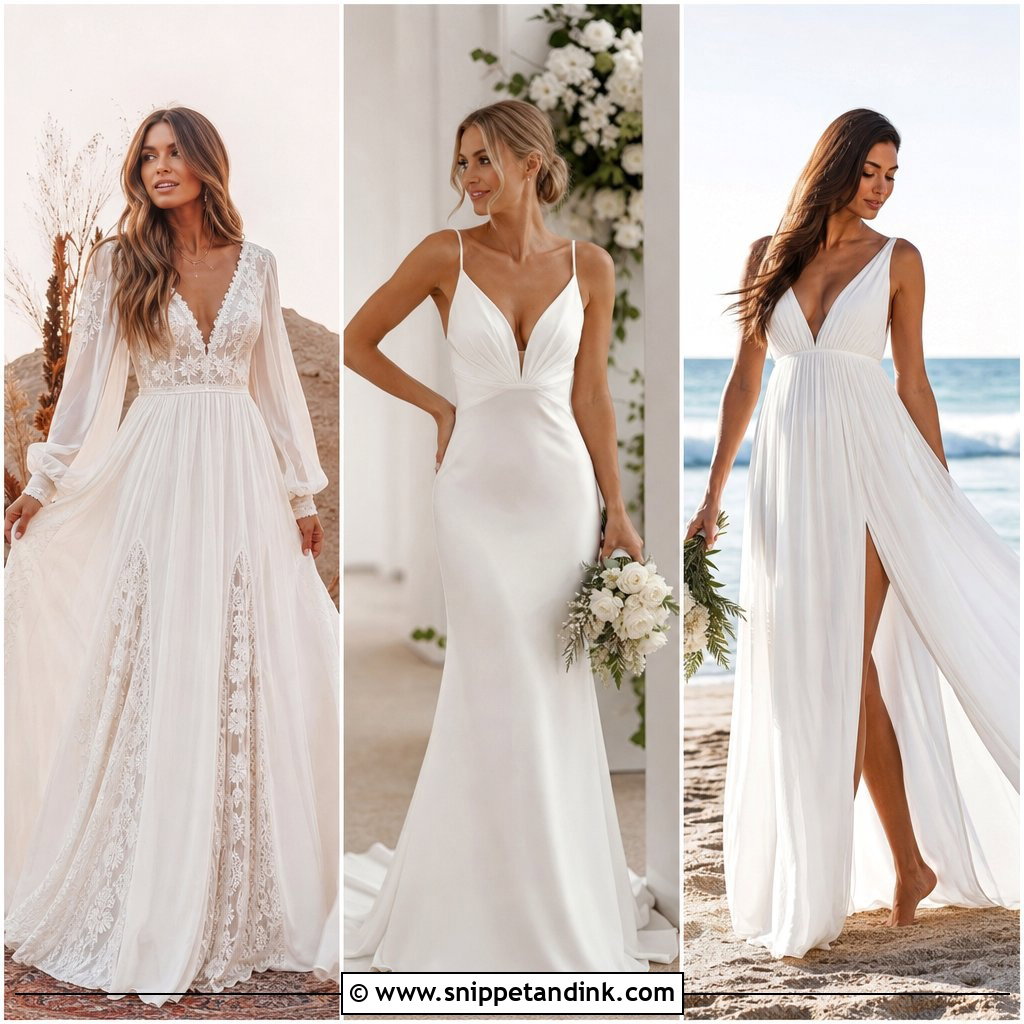

25. Western Bridal Dress With Reception Boots
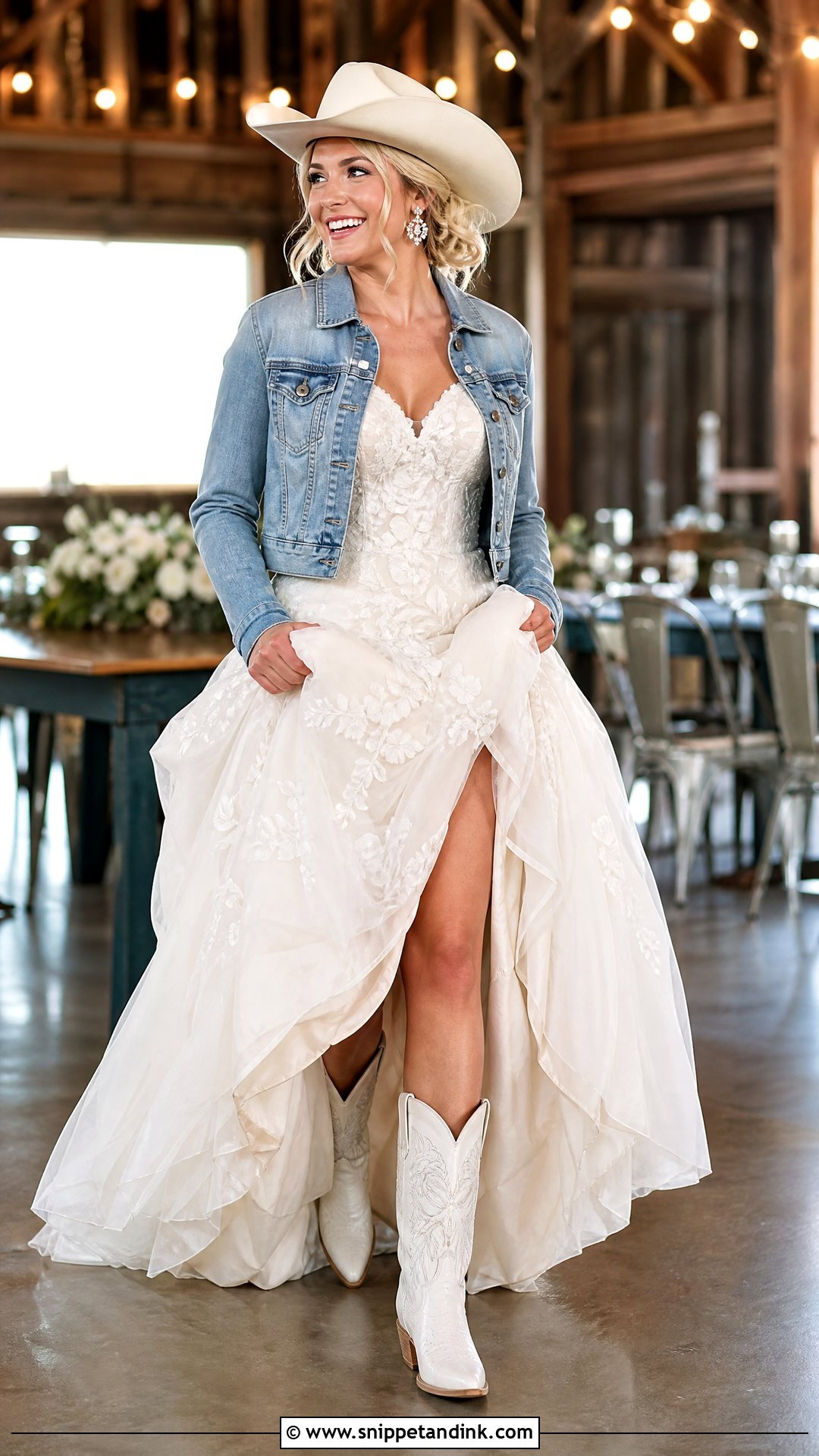
Changing shoes after the ceremony is the plan I suggest most often to brides who love a traditional gown but want to dance. Heels, sandals or bridal flats go on for the vows, then you switch to cowboy boots for dancing. The catch is hem length: a gown hemmed for heels will drag once you’re in boots, so either hem for the boots or make sure the bustle lifts it clear. Slit, tea-length and short dresses make the switch easiest. Choose boots worth showing off, like white leather, embroidery or something blue, and add a denim or fringe jacket for reception photos.
How Each Fabric Copes With Dust, Hay and Wind
Ranch and barn venues are harder on a dress than any hotel ballroom. When a bride is torn between two gowns for an outdoor Western wedding, I think about what the day will do to each fabric by the last dance.
Lace and crochet
The most forgiving. Dirt sinks into the pattern and small pulls hide well. The risk is catching on rough wood, boot hooks and bouquet wire.
Satin and crepe
Clean and modern, but grass marks and seated creases show. Steam on site, carry white chalk for small marks, and test any stain remover on a hidden seam first, since some leave a ring on satin.
Tulle and chiffon
Light and cool in heat, though both lift in wind and pick up straw, burrs and grass seed. A lint roller and a second pair of hands before portraits sort out most of it.
Suede and leather pieces
Rain is the real enemy. Treat them weeks ahead and keep a covered spot or umbrella ready for any jacket or belt. After the wedding, send the gown for professional cleaning soon; red dirt and grass stains set harder the longer they sit.
Wearing a Cowgirl Hat and a Veil on the Same Day
A hat and a veil can share the wedding, just rarely at the same moment. Most brides I dress wear the veil for the ceremony and switch to the hat for portraits and the reception. If you want both together, a short veil on a comb tucked under the back of the brim works. A long cathedral veil under a hat looks heavy and catches the wind like a sail.
Brims also cast shadow. Under midday sun a wide brim puts your eyes in the dark, so ask your photographer to tilt it back slightly or save the hat close-ups for softer evening light. Have the hat sized over your wedding hairstyle rather than your bare head, because a low bun or volume at the crown changes the fit.
Let the Ground Under Your Boots Decide
A good Western bridal outfit is a wedding dress first, with the boots, hat, belt or jacket chosen to suit it rather than piled on. A plain gown can take two or three Western pieces; a fringe or heavily laced dress usually needs only one. Before you commit, think about the surface you’ll walk on, the weather that evening and whether you’ll change for the reception. Then go with the dress you can move, sit and dance in from the first photo to the last song.
You'll Like These Ideas:








Leave a Reply