
Lace and a sweetheart neckline have been paired for decades because they solve each other’s problems. The curved neckline gives the eye a clean shape to follow, and the lace stops that shape from looking stark. In the fitting room I spend less time on which lace is prettiest and more on what sits underneath it: the boning, the lining colour, where the waist seam falls and how much the bodice moves when you breathe. Get those right and almost any silhouette below works, from a garden ceremony to a ballroom. The twenty gowns here are grouped loosely by shape first, then by lace and setting, with what I check on each one.
Four Laces You’ll Meet in Bridal Shops, and How Each Behaves
Shop labels say “lace” as if it were one fabric. It isn’t, and the type changes how a sweetheart bodice looks, how it photographs and how it survives a long day. These are the ones I see most often.
Chantilly
Fine, flat and soft, worked on a sheer net. It drapes over curves and suits sleeves and illusion panels. It’s also the most delicate, so it snags on rings, bracelets and rough beading.
Alençon
Recognisable by the corded outline around each motif. That raised cord gives the pattern definition, which is why it reads so clearly in photos and holds its shape on a structured bodice.
Guipure
Heavier, with motifs joined by bars rather than a net. It has real body and can stand on its own as a bodice layer, but it can feel stiff on a fitted mermaid and warm on a summer beach.
Embroidered tulle
Many modern gowns use embroidery on tulle rather than true lace. It’s lighter and often cheaper, and it can look very pretty, but ask what you’re buying so you can compare gowns fairly.
1. A-Line Lace Sweetheart Wedding Dress
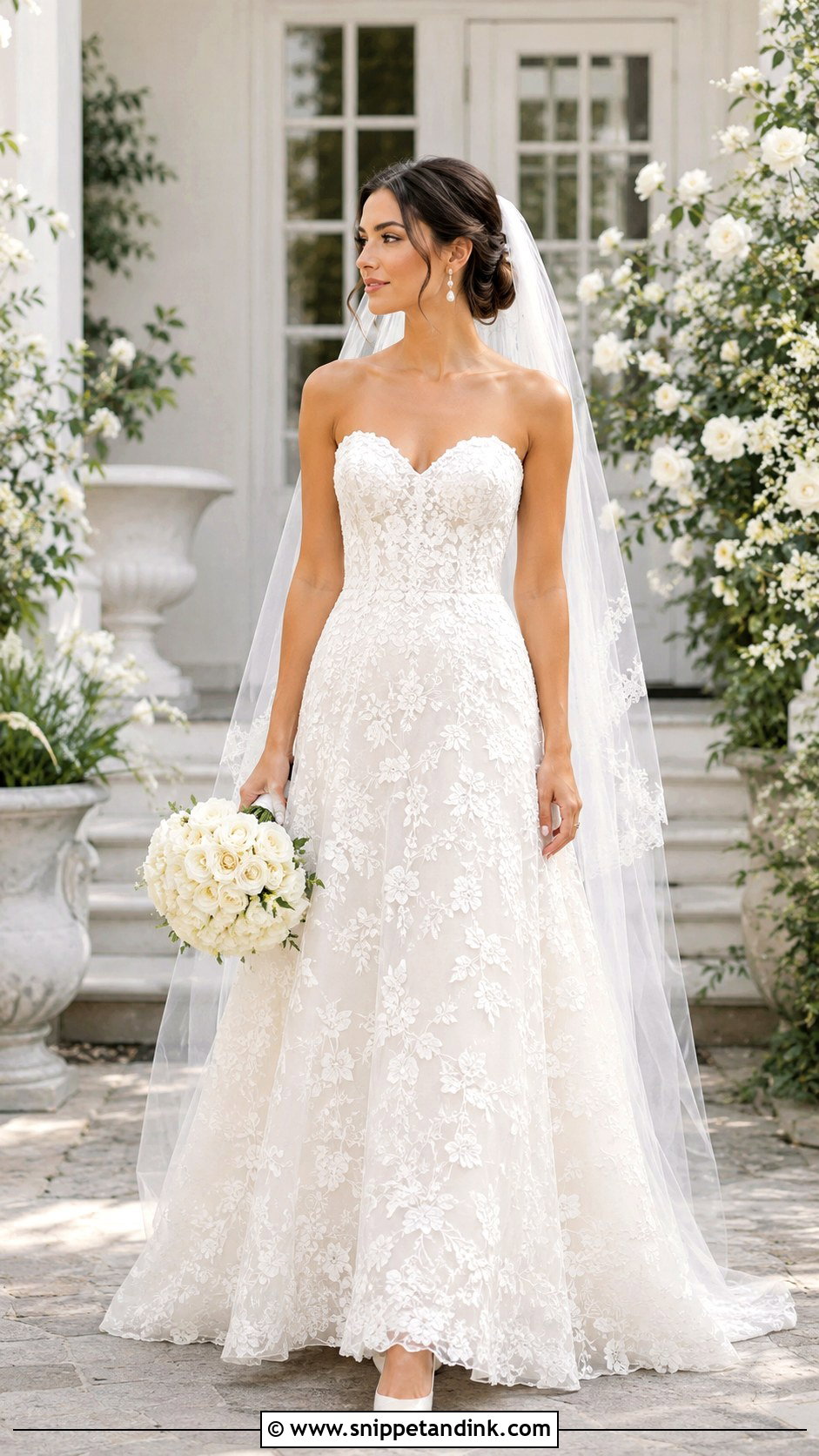
This is the gown I pull first for a bride who doesn’t know where to start, because the A-line skirt forgives a lot and tells me quickly whether she likes structure or not. Inside, I want spiral steel or flexible boning rather than stiff plastic, which tends to kink at the side seams after a few hours. A soft ivory lining under fine floral lace keeps the pattern readable in photos; a white lining under ivory lace can make the lace look dingy. A fingertip veil, pearl drops and pointed ivory pumps finish it, and I’d skip the necklace altogether so the curve of the neckline does the work. Keep the bouquet compact so it doesn’t sit on top of the bodice in every portrait.
2. Ball Gown Lace Sweetheart Wedding Dress
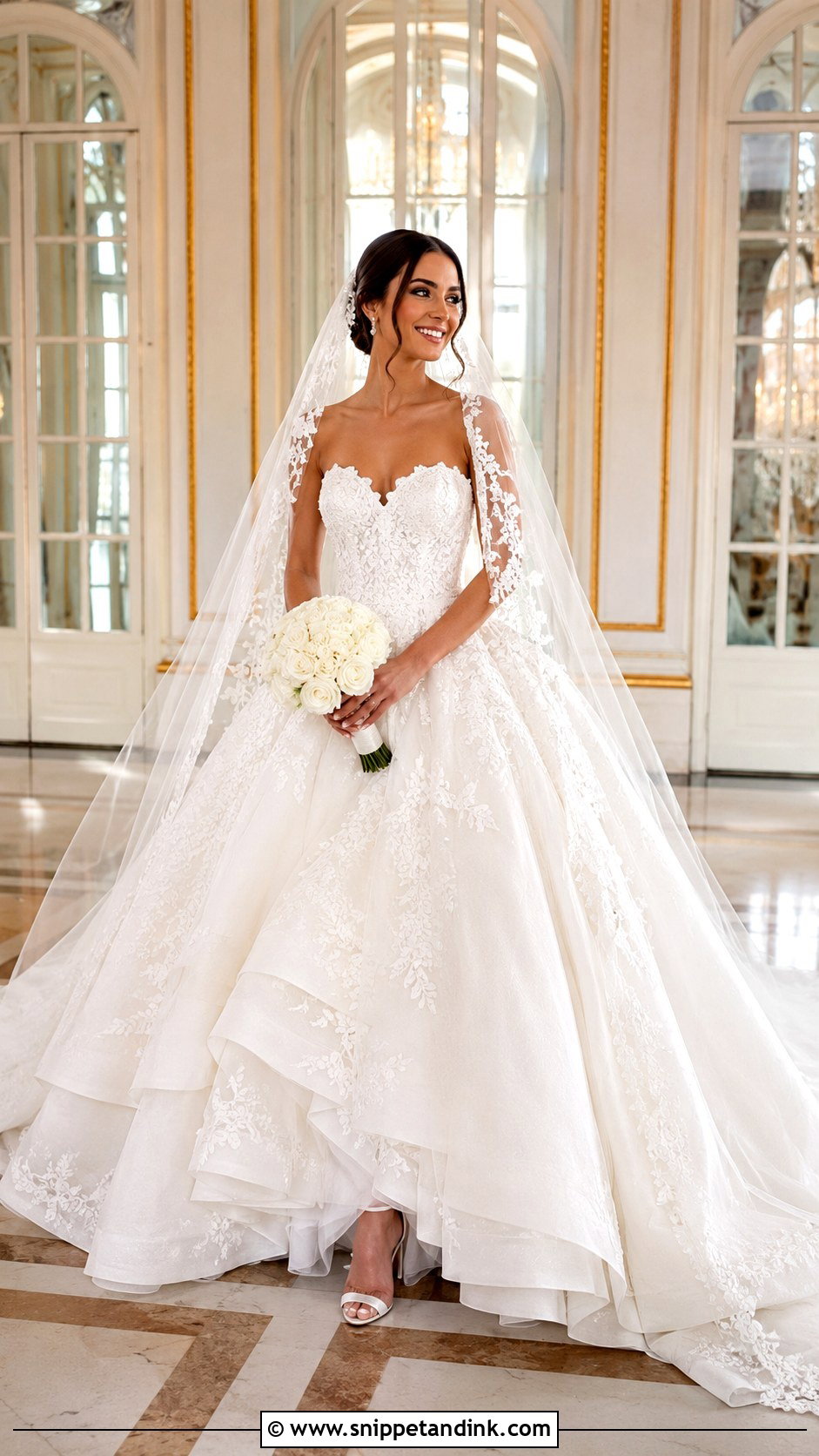
A full skirt needs a defined waist, or the volume swallows you. When I fit this gown I watch the waist seam more than anything else: if it sits even a little low, the bodice looks long and the skirt looks heavy. Scattered appliqués that travel from the neckline down into the skirt hold it together visually, and a cathedral veil edged in matching lace keeps the ceremony look consistent. Crystal studs and satin block heels are enough, since nobody will see your shoes. With this much gown, one colour family in the bouquet is plenty. It suits a ballroom or a historic venue with room to turn around.
3. Mermaid Lace Sweetheart Wedding Dress
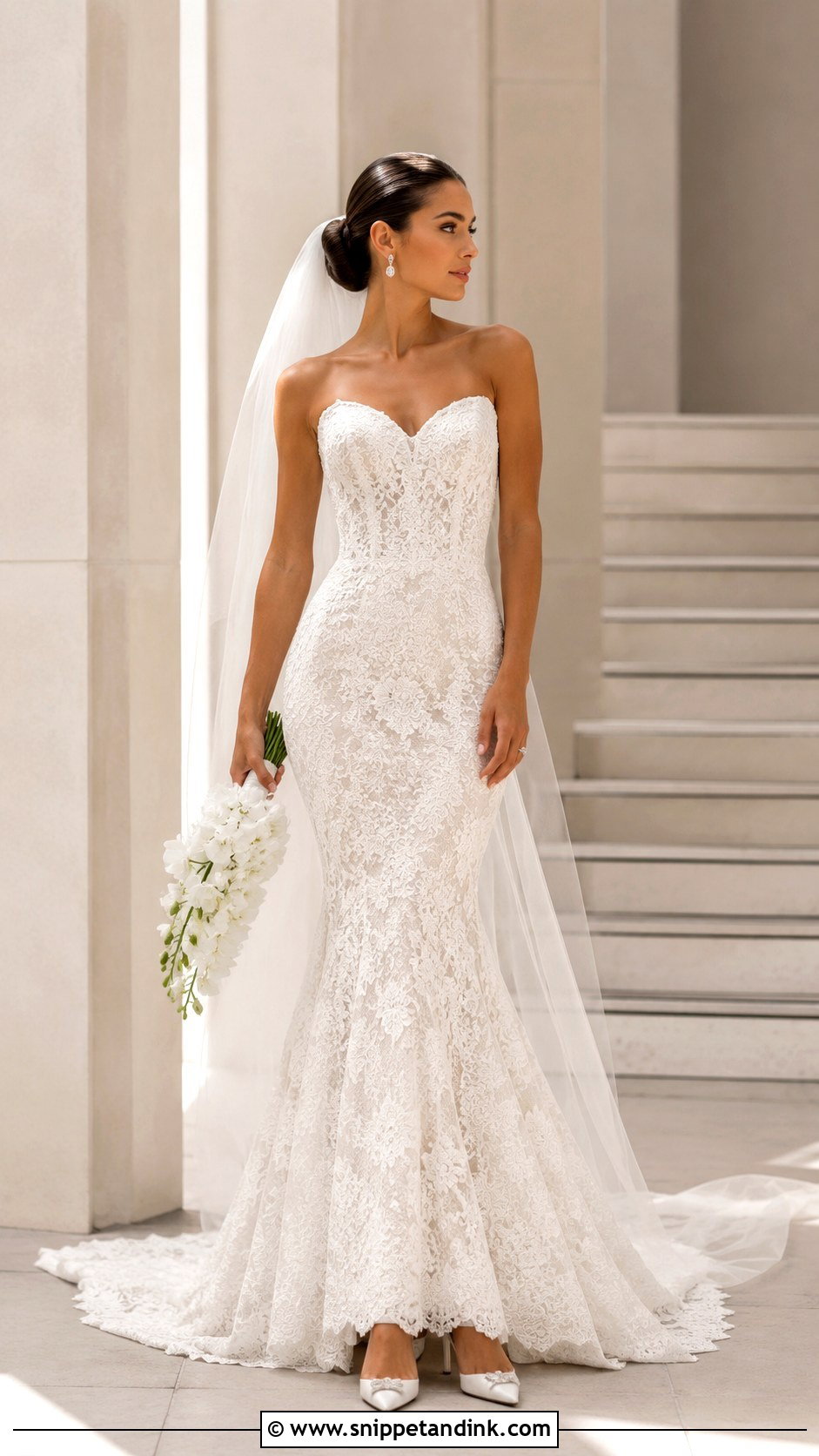
Mermaid gowns are fitted through the hips and release at or just above the knee, and that release point decides whether you can walk. I ask brides to take full strides and sit on a low chair in the sample before we talk about anything else. A stretch lining helps, and so do side seams placed so the lace motifs aren’t chopped in half. Medium-scale motifs show the shape best; very fine lace can disappear on a fitted body. A slightly raised sweetheart gives secure coverage, which matters more here because you can’t hitch a fitted bodice up mid-dance. A sleek low bun, a clean tulle veil and a narrow bouquet that doesn’t hide the waist keep the line clear. It reads best against modern architecture or a formal evening room.
4. Fit-and-Flare Lace Sweetheart Wedding Dress
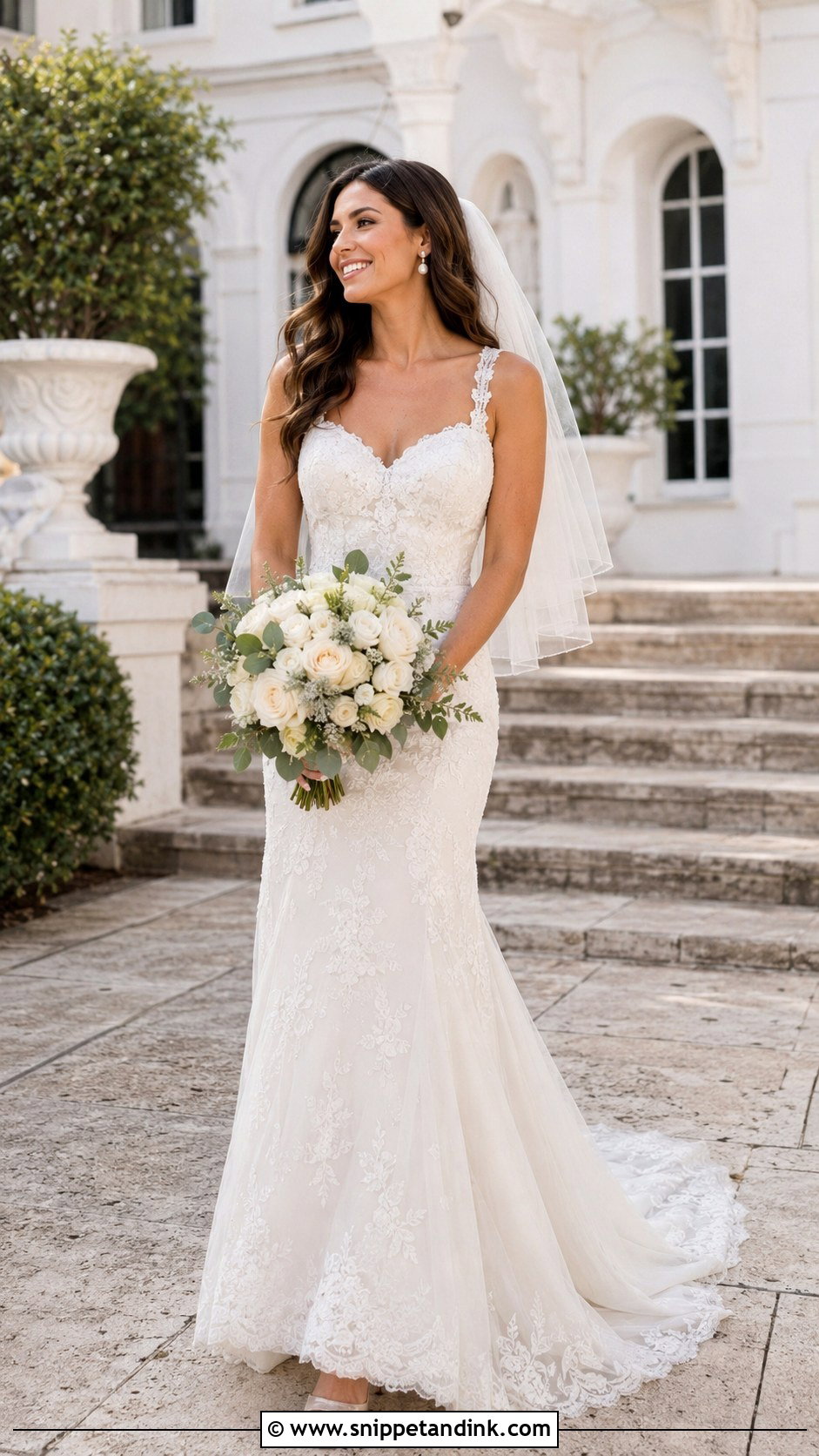
Do you want shape without being held at the knees? Fit-and-flare follows the body to the hip and opens higher than a mermaid, so the stride is far easier. Soft lace over a light lining moves well, and if you’re fuller in the bust, ask about adding straps; they can be cut from the same lace and look original. At alterations I pin the flare point with the bride standing in her actual shoes, since a higher flare almost always walks better. Pair it with a shoulder-length veil, small pearl hoops and low heels you can dance in, plus loose waves or a soft chignon and a rounded bouquet with some greenery.
5. Basque Waist Lace Sweetheart Wedding Dress
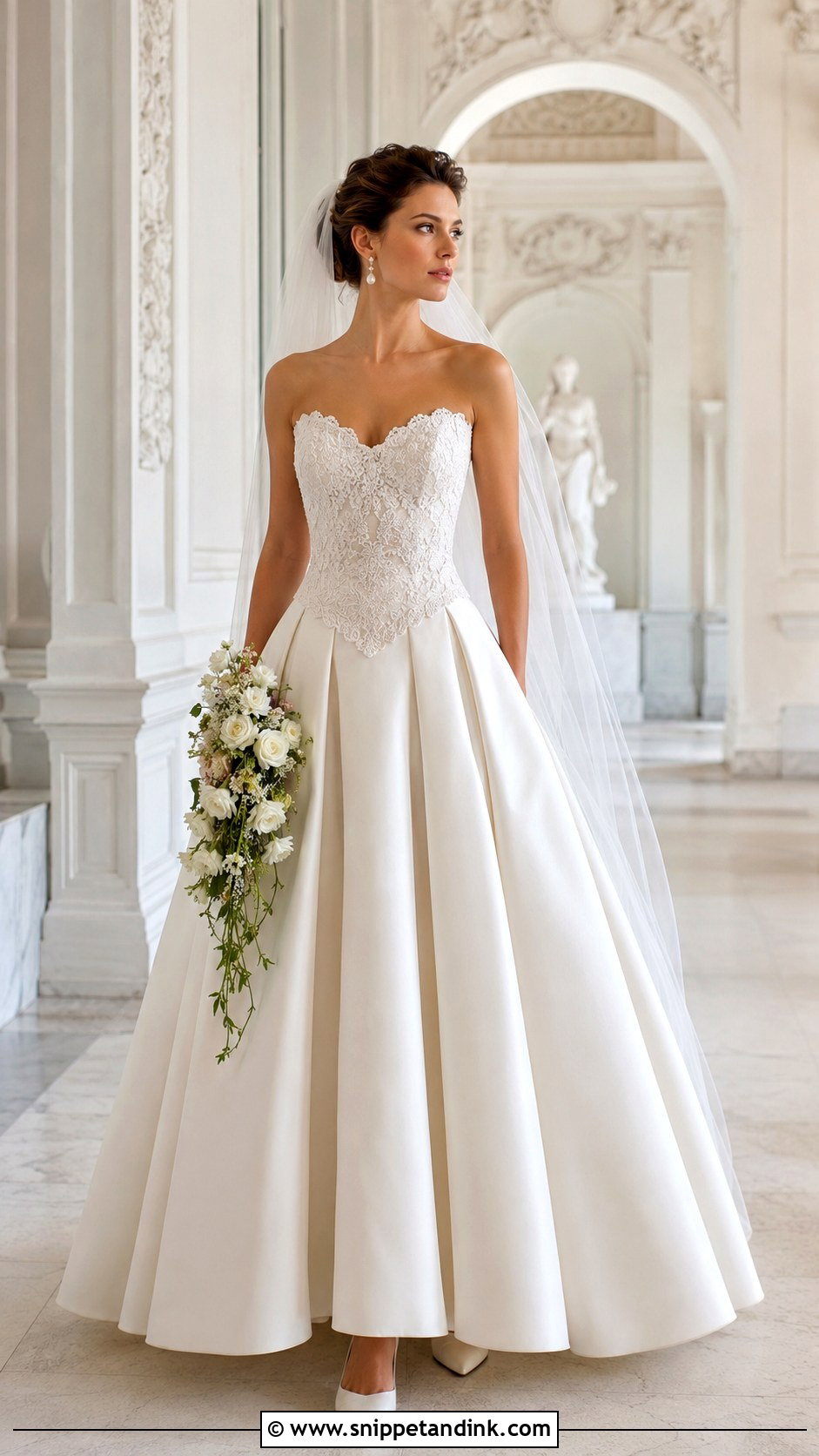
The dropped V of a basque waist lace sweetheart wedding dress lengthens the torso, so it’s a quiet favourite of mine for brides who feel short-waisted. The two curves, neckline above and V below, need to echo each other, and lace that runs with the bodice seams rather than across them keeps that line clean. Sit down in it at the first fitting. A basque point that’s even slightly too deep presses into the stomach when you’re seated for dinner, and that’s an easy fix at the start but a hard one late. A plain tulle veil, pearl earrings and satin pumps leave the waist visible; a narrow cascading bouquet repeats its long line.
6. Long Sleeve Lace Sweetheart Wedding Dress
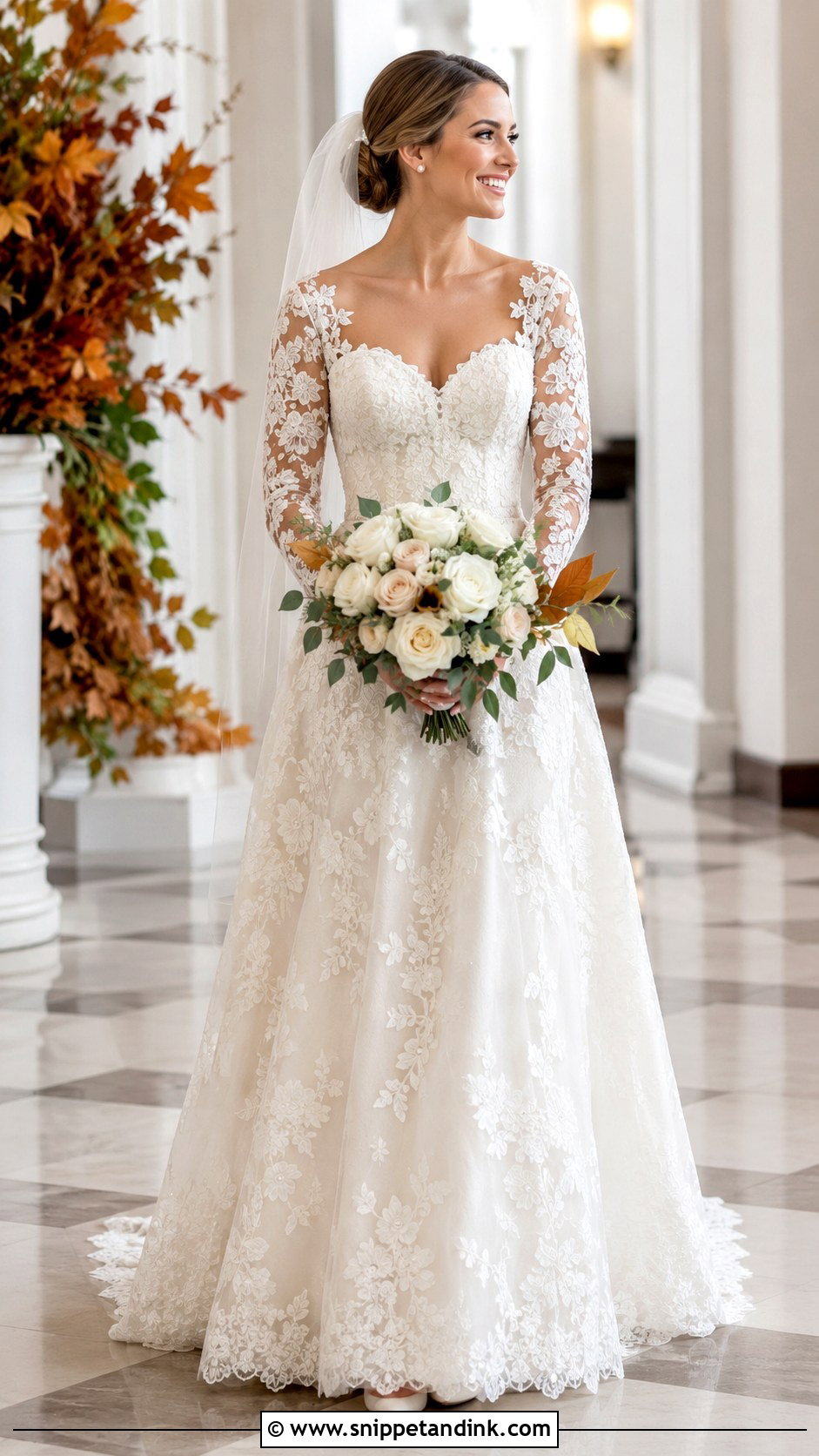
Long lace sleeves on a sweetheart bodice give you coverage while the neckline stays open, usually through a sheer illusion panel above the curve. The sleeve is where I’m strictest. Lace with some stretch, cut with ease at the elbow, is the difference between a sleeve you forget about and one that pulls every time you hug someone. Ask the seamstress to fit the sleeves with your arms raised and bent, not hanging at your sides. Pearl studs, a low bun with the veil comb tucked underneath and closed-toe heels are enough; a heavy necklace would fight the sleeves. It’s a natural pick for autumn, winter or a cold, air-conditioned room.
7. Off-the-Shoulder Lace Sweetheart Wedding Dress
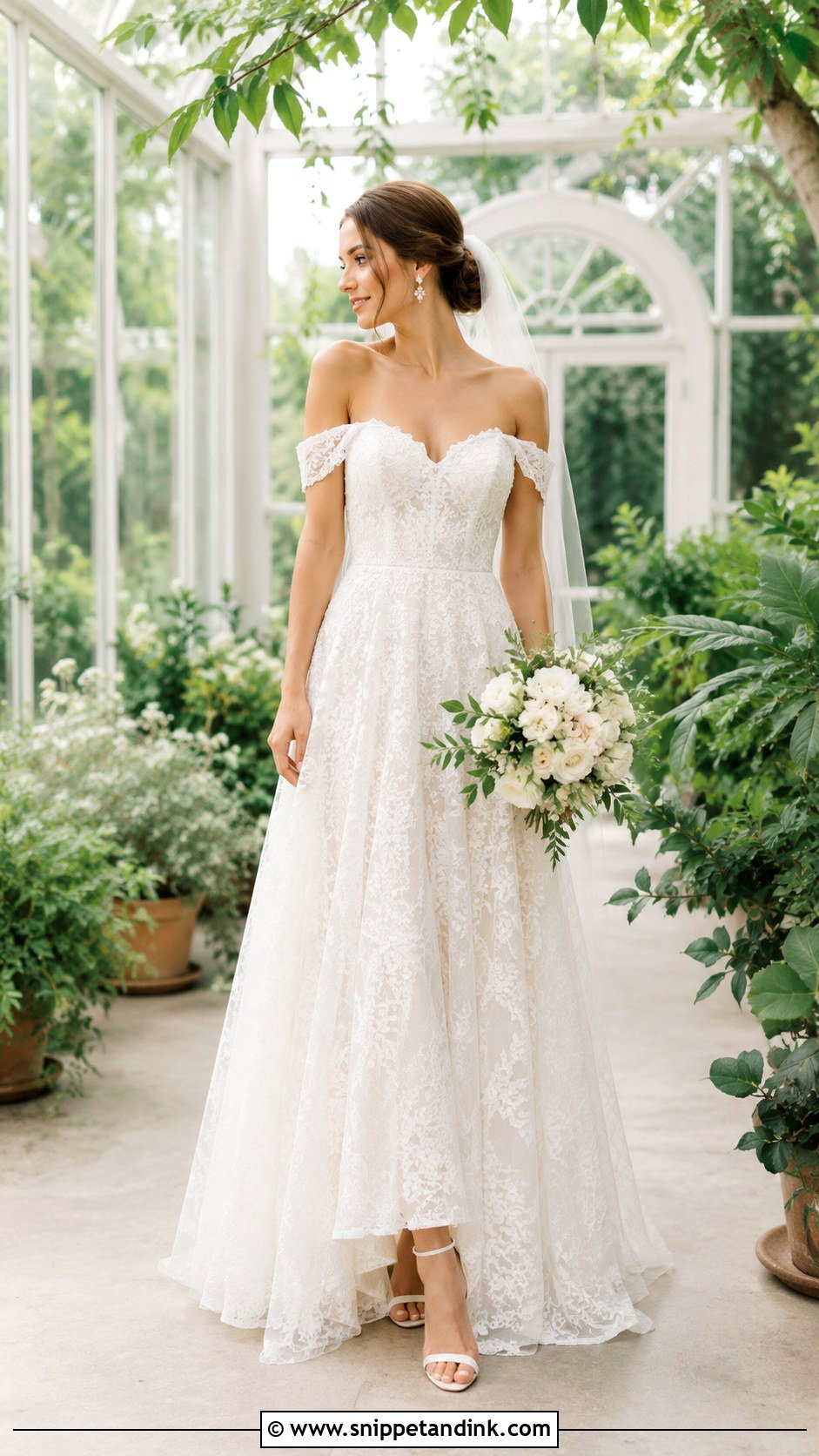
Off-the-shoulder straps carry the sweetheart curve out across the upper arm, and the most common mistake I see is setting them too low. Straps that sit well down the arm pin you in place, so you can’t lift a glass without the bodice shifting. They should rest just below the shoulder point, firm enough to stay put but with room to raise your arms to chest height. Under a full lace A-line, a smooth lining keeps the pattern from going busy. A low chignon shows the shoulder line, and a garden bouquet with soft greenery suits the texture. Add a medium veil, delicate earrings and ankle-strap heels for a conservatory or estate garden.
8. Detachable Sleeve Lace Sweetheart Wedding Dress
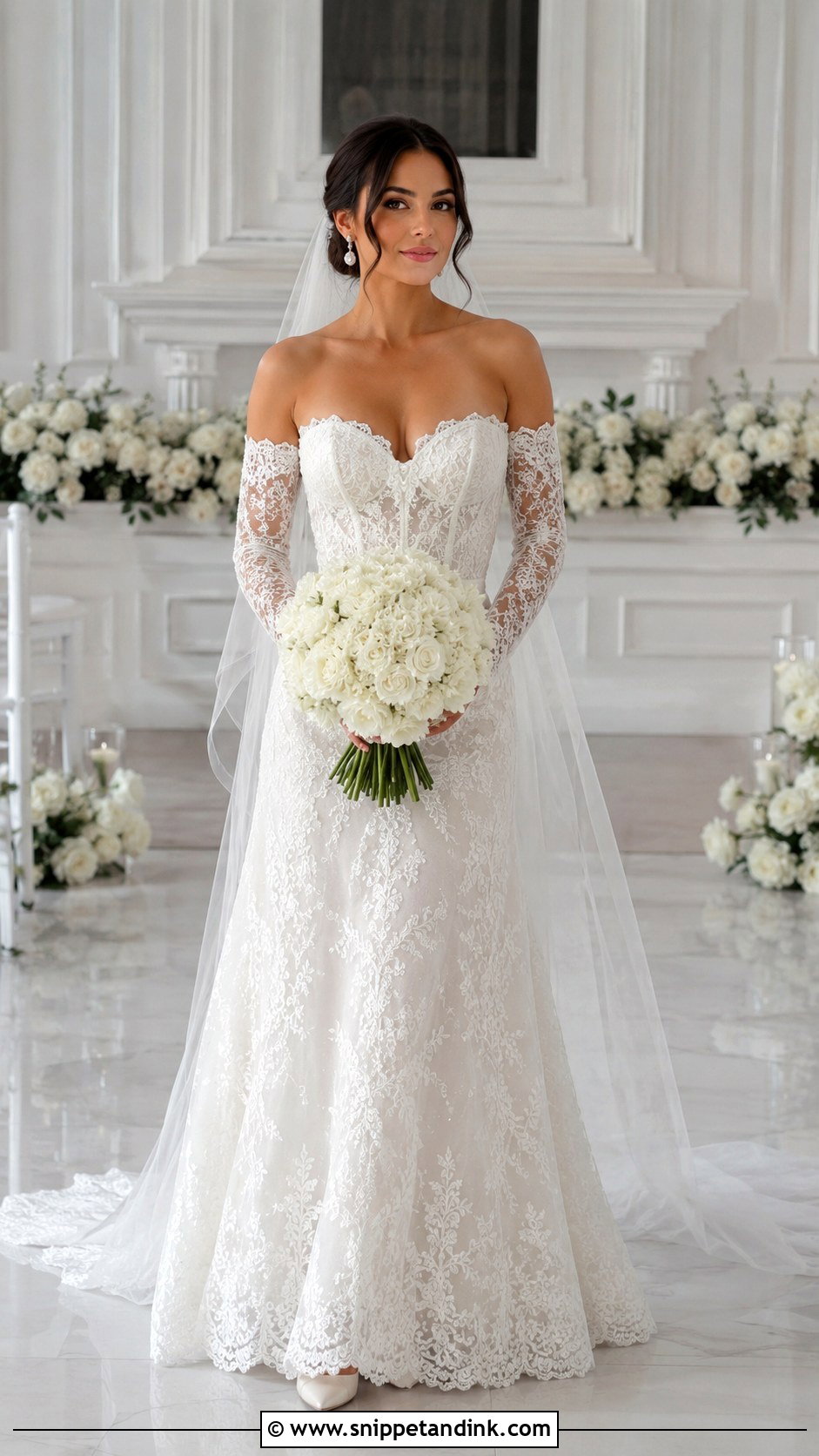
Detachable sleeves give you a covered ceremony look and a strapless one for the party, without buying a second dress. What I look at closely is the attachment: tiny buttons, hooks or snaps sewn under the lace motifs so nothing shows once the sleeves come off. Order the sleeves cut from the same lace if the maker allows it, since a near match can look obviously different in daylight. Practise the change twice with the person who’ll do it on the day; fiddly closures take longer with nerves and a crowd watching. A fingertip veil and pearl drops suit the ceremony, then swap in statement earrings or a jewelled comb once the sleeves and veil come off.
9. Strapless Chantilly Lace Sweetheart Wedding Dress
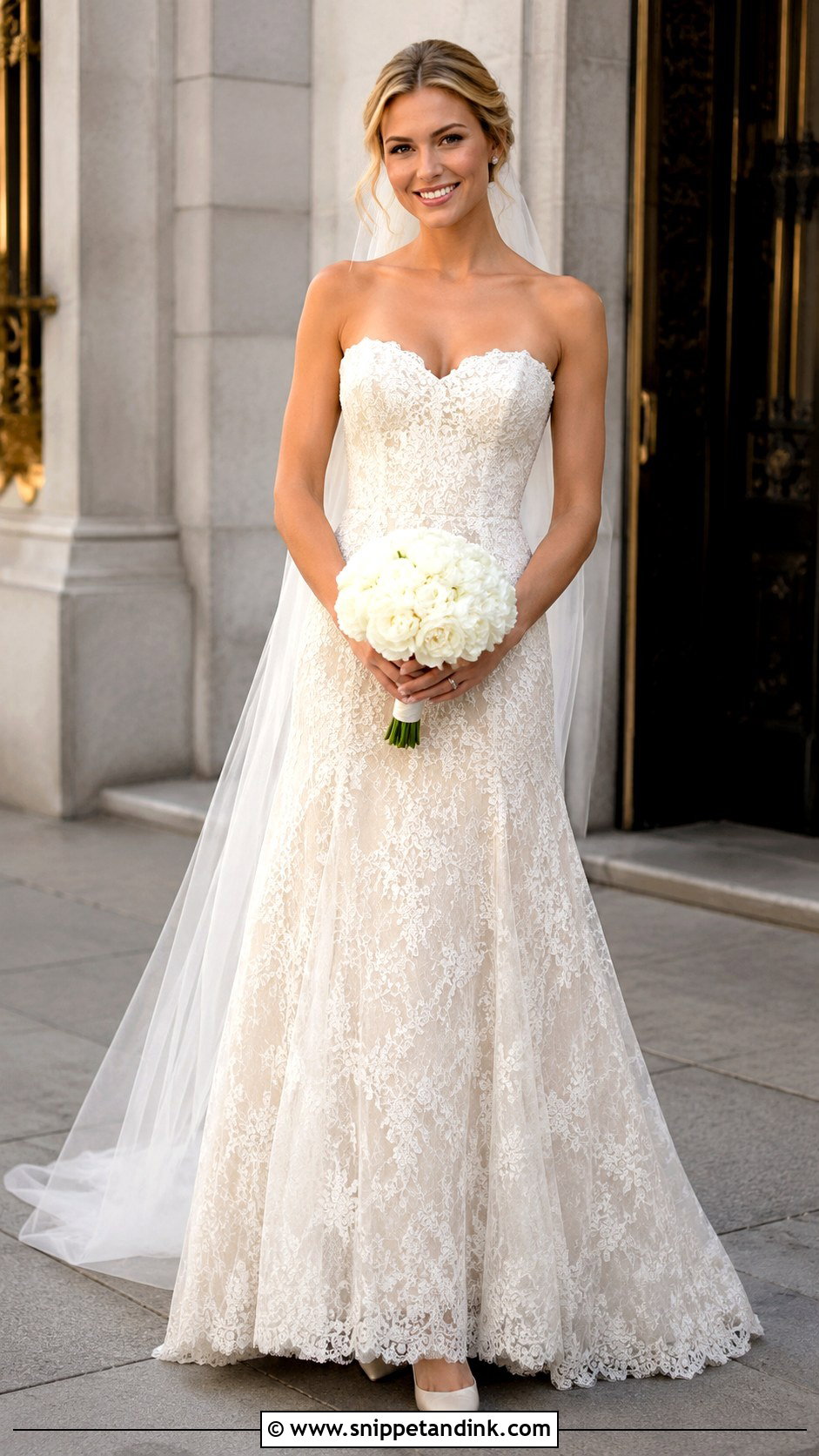
Chantilly is a fine, flat lace worked on a delicate net, so it drapes rather than sits. That softness is lovely on a strapless sweetheart, but the lace itself holds nothing up. Everything depends on a strong inner bodice, ideally with a waist stay, a grosgrain band that anchors the gown to your waist so the top doesn’t slide. A lining matched to the lace gives a classic look; a slightly deeper nude lining makes the pattern show up. A polished updo keeps hair from rubbing the fine net at the back. Add a narrow veil, diamond or crystal studs and sleek pumps for a hotel or city wedding where people will see the lace up close.
10. Floral Appliqué Lace Sweetheart Wedding Dress
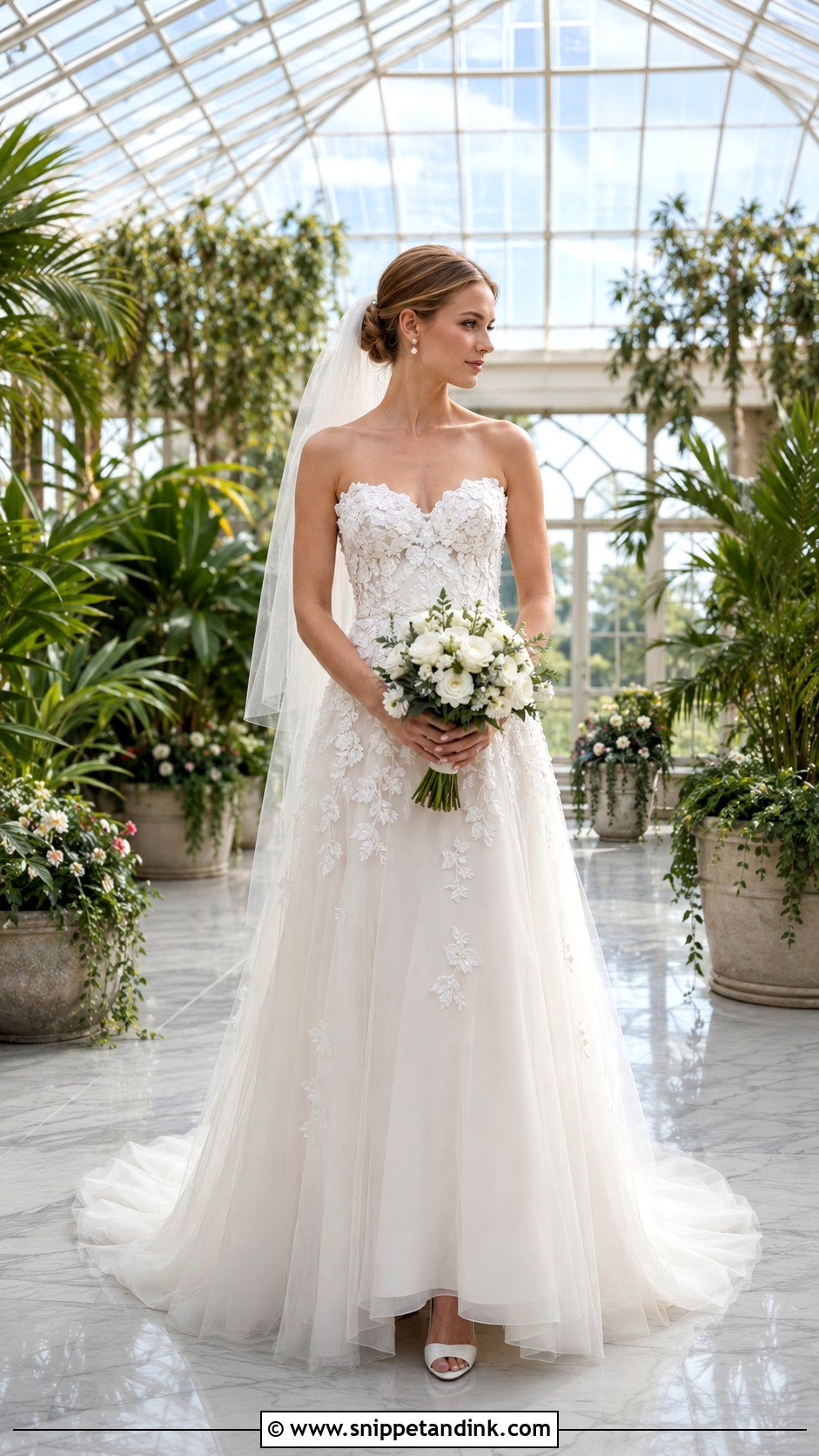
Three-dimensional appliqué flowers are hand-placed, and placement is what makes or breaks this dress. I like them dense at the bodice and thinning out down the skirt, so the waist stays defined and the hem doesn’t look weighed down. Raised petals near the underarm can catch on a bracelet or the veil’s edge, so lift your arms in the fitting and see what snags. Pearl studs, a plain veil and satin block heels keep the surface detail in charge. A neat bun or smooth half-up style works, and choose a bouquet with fewer flower varieties than the gown has. Glass conservatories and spring gardens suit it well.
11. Beaded Lace Sweetheart Wedding Dress
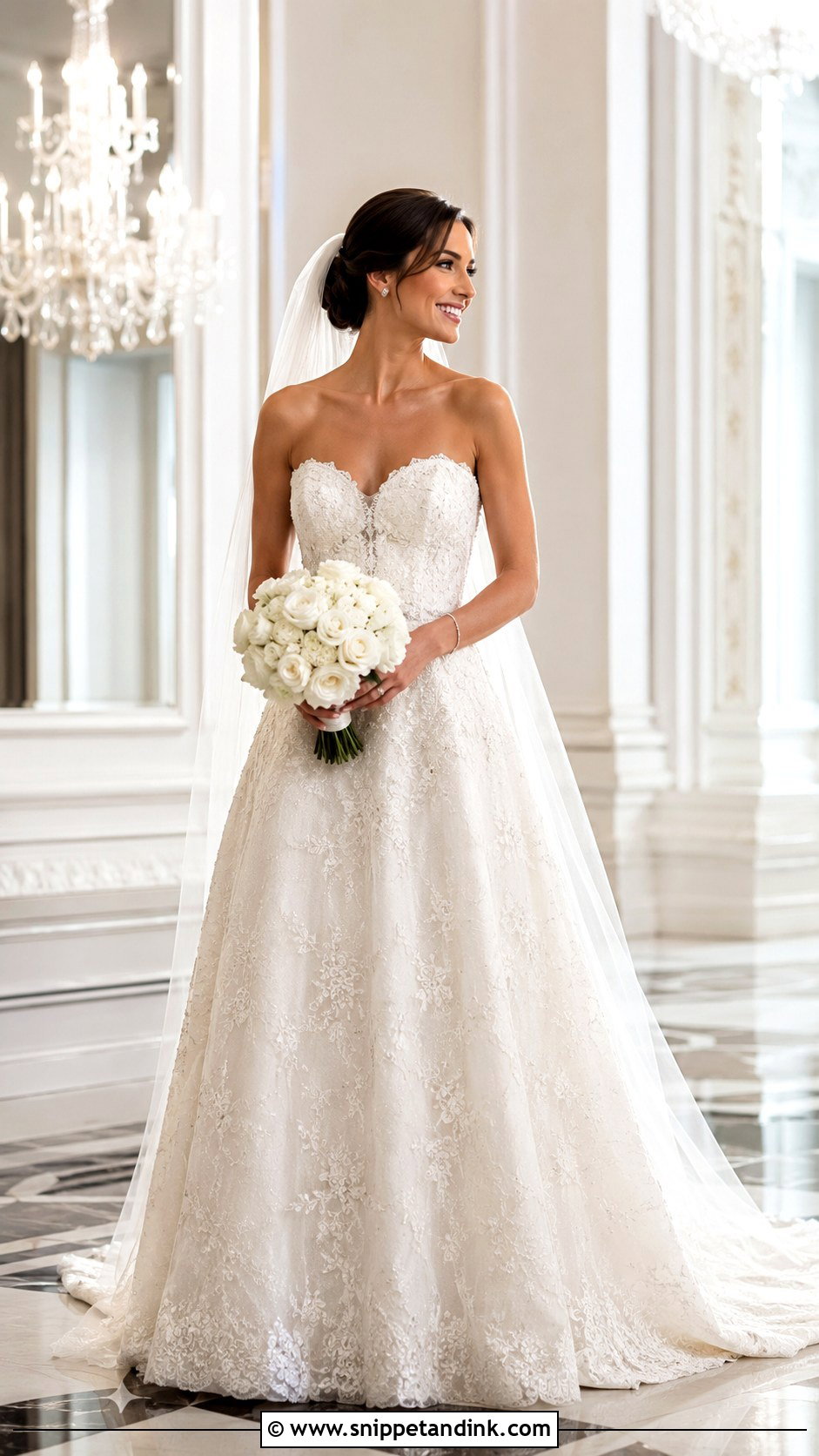
Beading that follows the lace motifs gives controlled sparkle under ceremony lights, whereas beading scattered evenly across a gown can look like a bedsheet of sequins. Turn the bodice inside out at the shop and run your hand over the underarm area. Hand-sewn beads with knotted threads behave; glued or poorly finished ones scratch, and after ten hours that inner arm is raw. A fitted bodice over a flowing A-line lets the embellishment move. Crystal studs, a slim bracelet and a plain veil are enough, with a low chignon or polished waves tucked behind the ears. A white bouquet with very little greenery suits the evening mood of a ballroom.
12. Boho Lace Sweetheart Wedding Dress
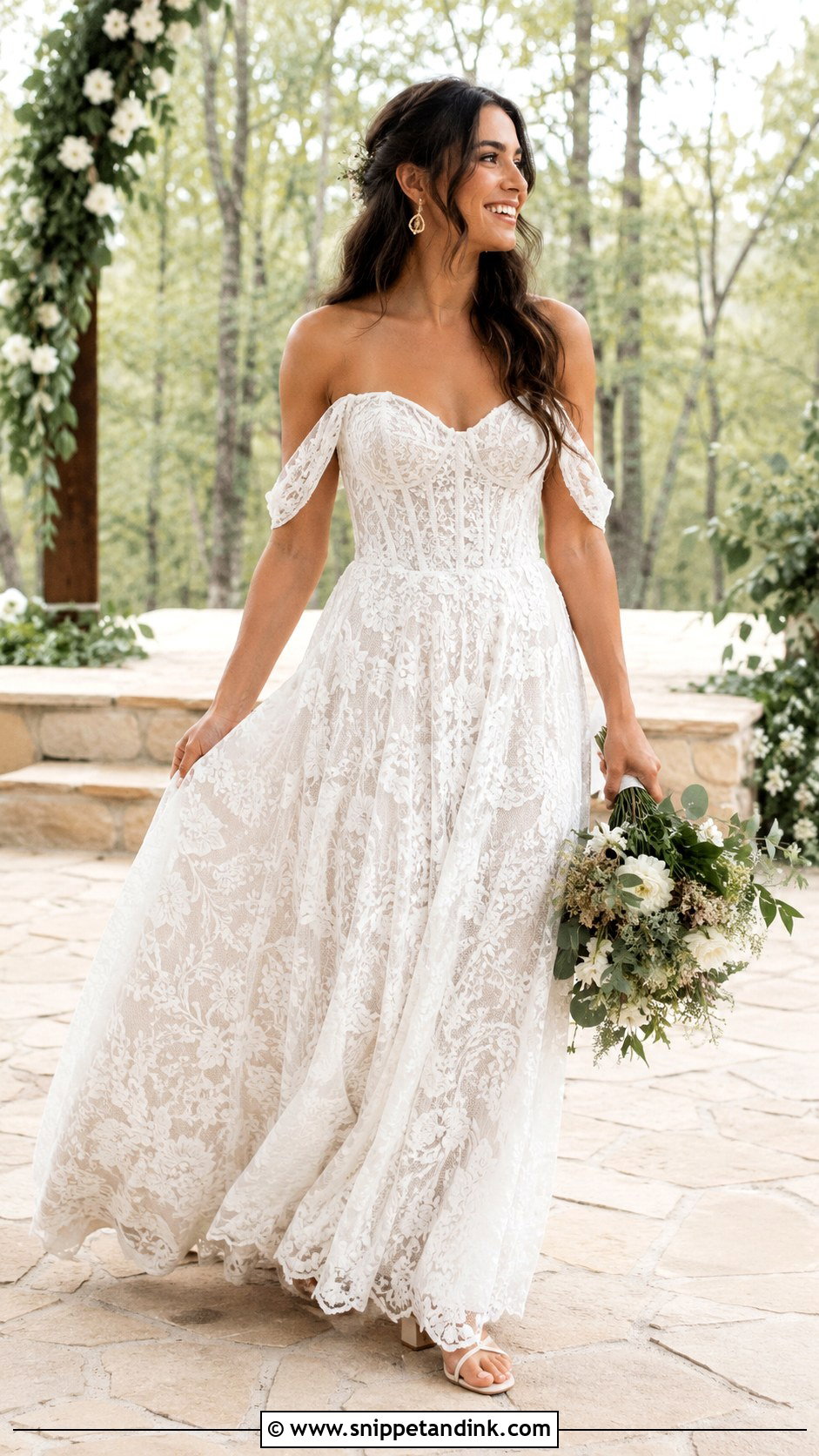
Boho is about ease, so I look for a lightly structured bodice rather than a corset and a skirt with fewer layers of tulle. Soft botanical lace and flutter sleeves or loose draped straps add movement while the sweetheart still shows. On grass, gravel or a barn floor, ask about a wrist loop or a simple bustle; a long lace train collects seeds and dust within minutes outdoors. Low block heels, small gold earrings and either a light veil or a few floral pins keep it relaxed. Loose waves and a gathered bouquet fit the mood, and I’d stop there, since the lace is already giving you texture.
13. Vintage Lace Sweetheart Wedding Dress
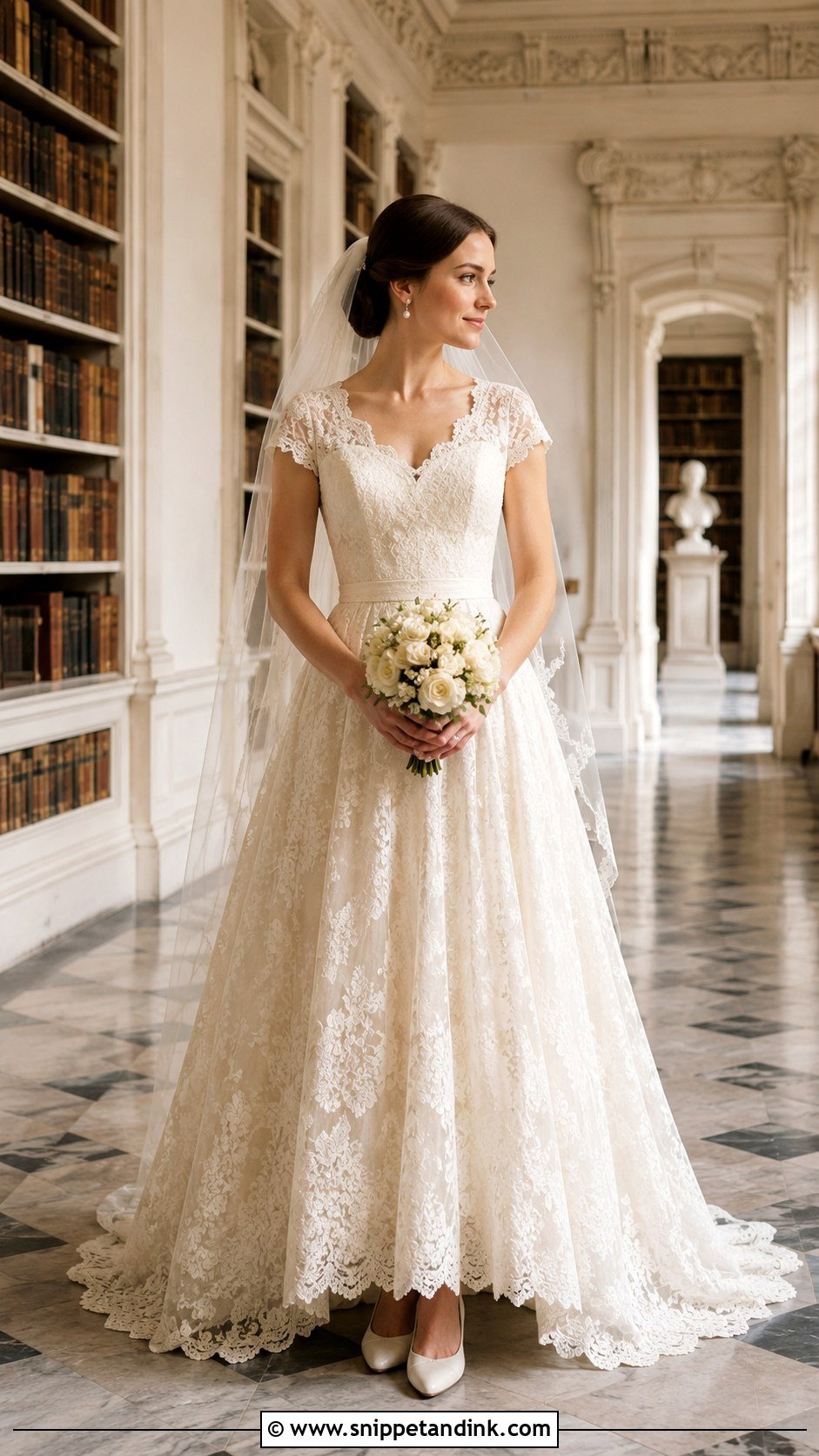
The line between vintage-inspired and costume is usually two or three references too many. Pick one or two: scalloped lace edges, covered buttons down the back or small cap sleeves, and keep everything else current. A softly curved neckline with a natural waist suits this era of dress, in ivory or a warm white. Pair it with pearl earrings, a birdcage or fingertip veil and rounded-toe pumps, plus a neat chignon. If the back is buttoned, choose a sheer veil; a heavily trimmed one hides the very detail you chose the gown for. Historic houses, libraries and theatres suit it.
14. Minimal Lace Sweetheart Wedding Dress
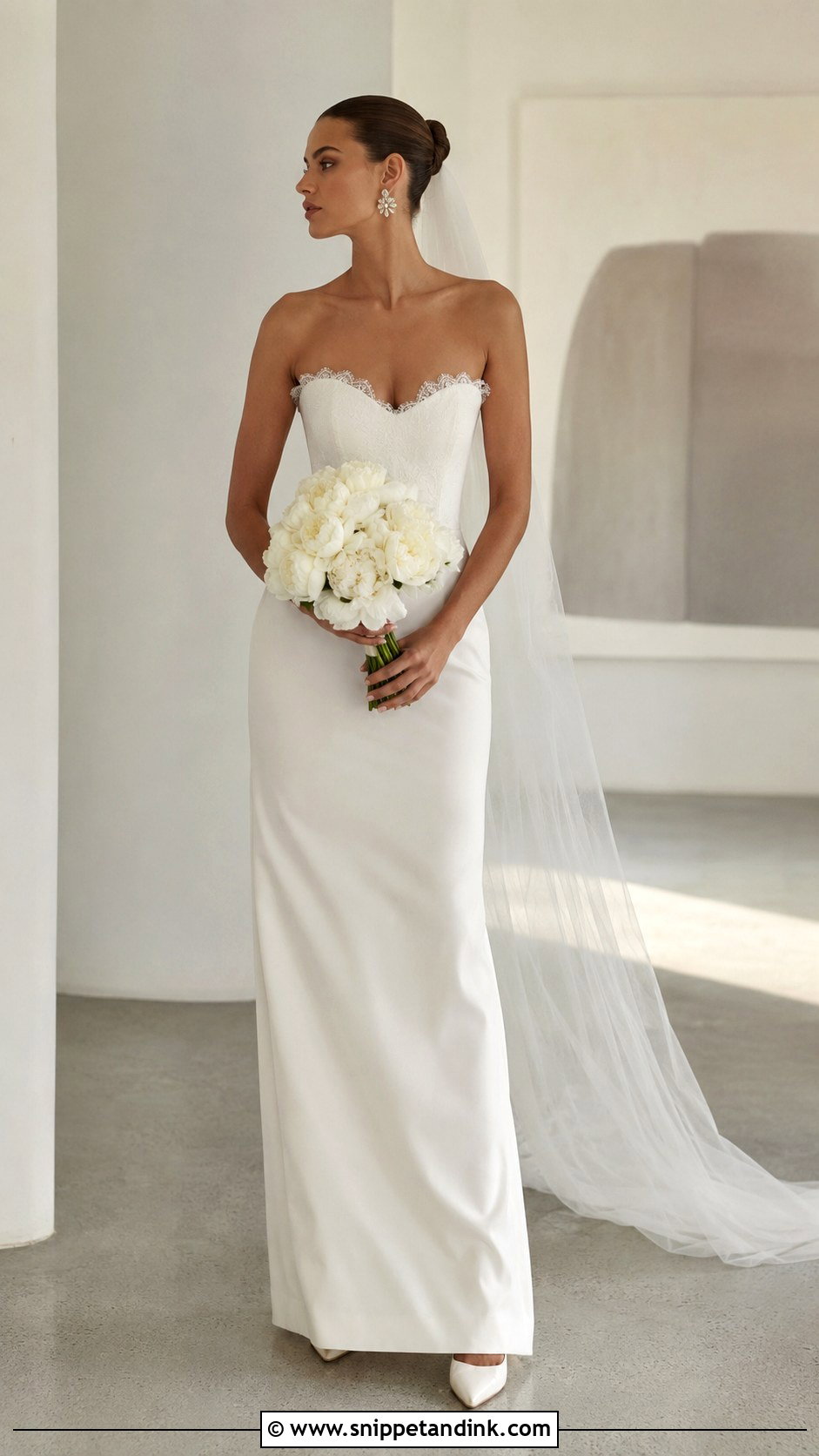
Minimal doesn’t mean lace-free; it means the lace has one job. Narrow lace trim along the neckline or waist of a sculpted bodice is one route, and a crepe gown with lace panels at the sides or back is another. Clean gowns are the hardest for a seamstress, because there’s no pattern to hide a ripple or an uneven seam, so I’d budget more attention for alterations here than for a fully laced dress. Architectural earrings, a sleek bun, pointed pumps and a plain chapel veil suit it. A structured bouquet of one flower type finishes the look for a gallery or rooftop.

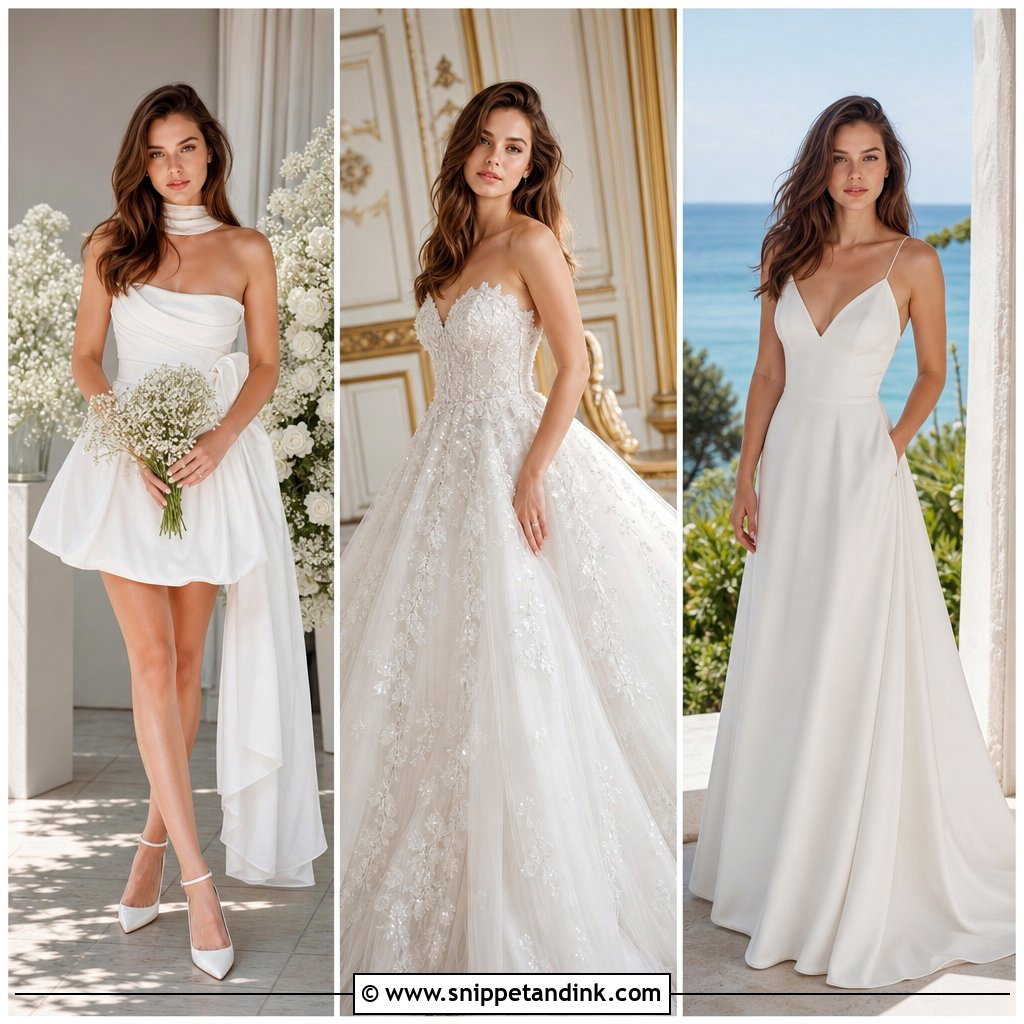
15. Plus Size Lace Sweetheart Wedding Dress
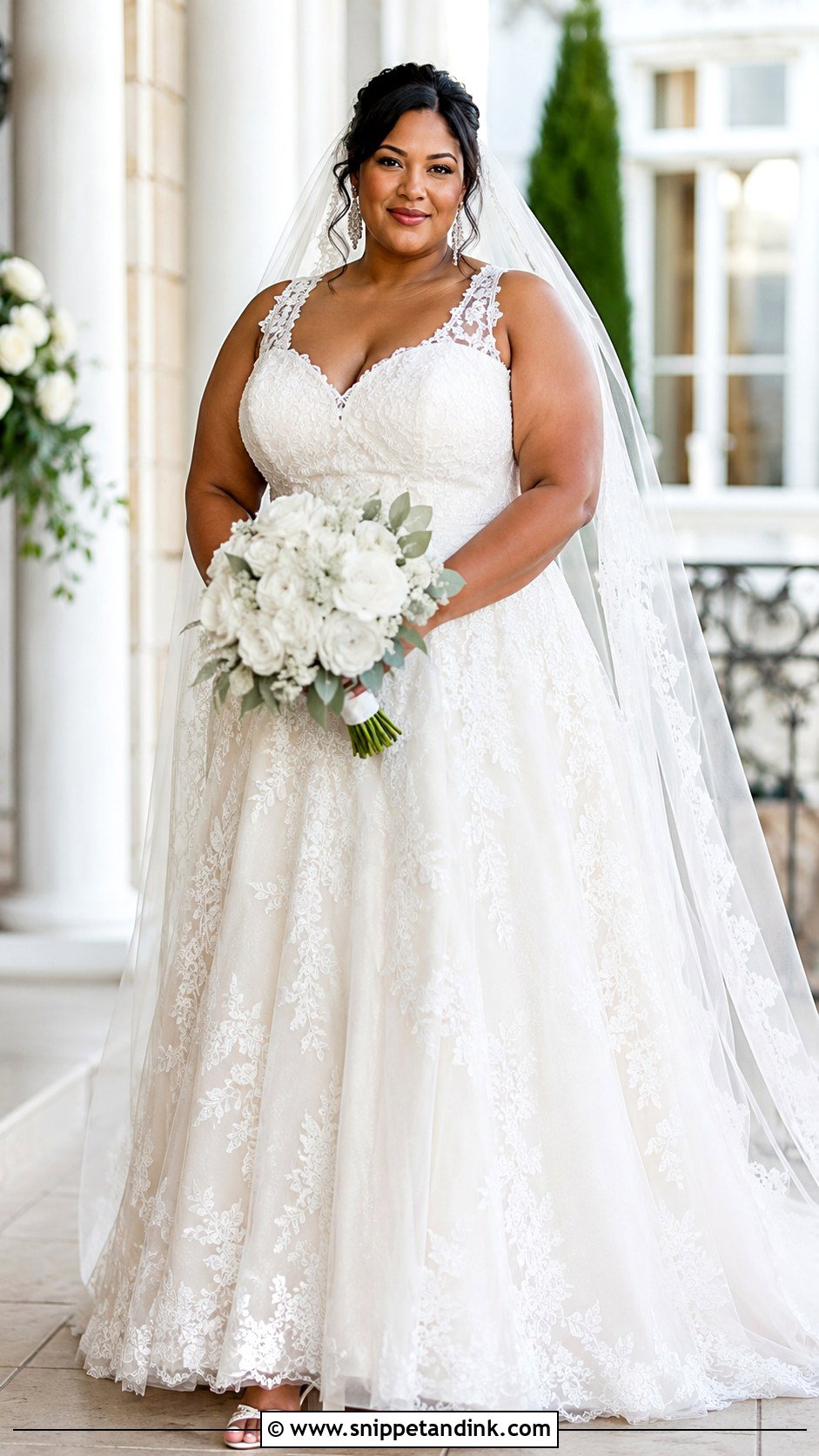
For curvier brides the sweetheart is often the most supportive neckline in the shop, because the shaped cups can be built to hold you properly. Ask whether cups are sewn in or can be added, and whether the boning flexes when you sit; rigid boning digs at the hip. A-line, ball gown and fit-and-flare all work when the waist seam lands at your natural waist, and lace motifs should run across the bodice seams rather than stop dead at them. Straps or optional sleeves are a choice, not a rule. Block heels that support you, statement earrings and a veil scaled to the skirt finish it. Sit, walk and lift your arms at every appointment.
16. Petite Lace Sweetheart Wedding Dress
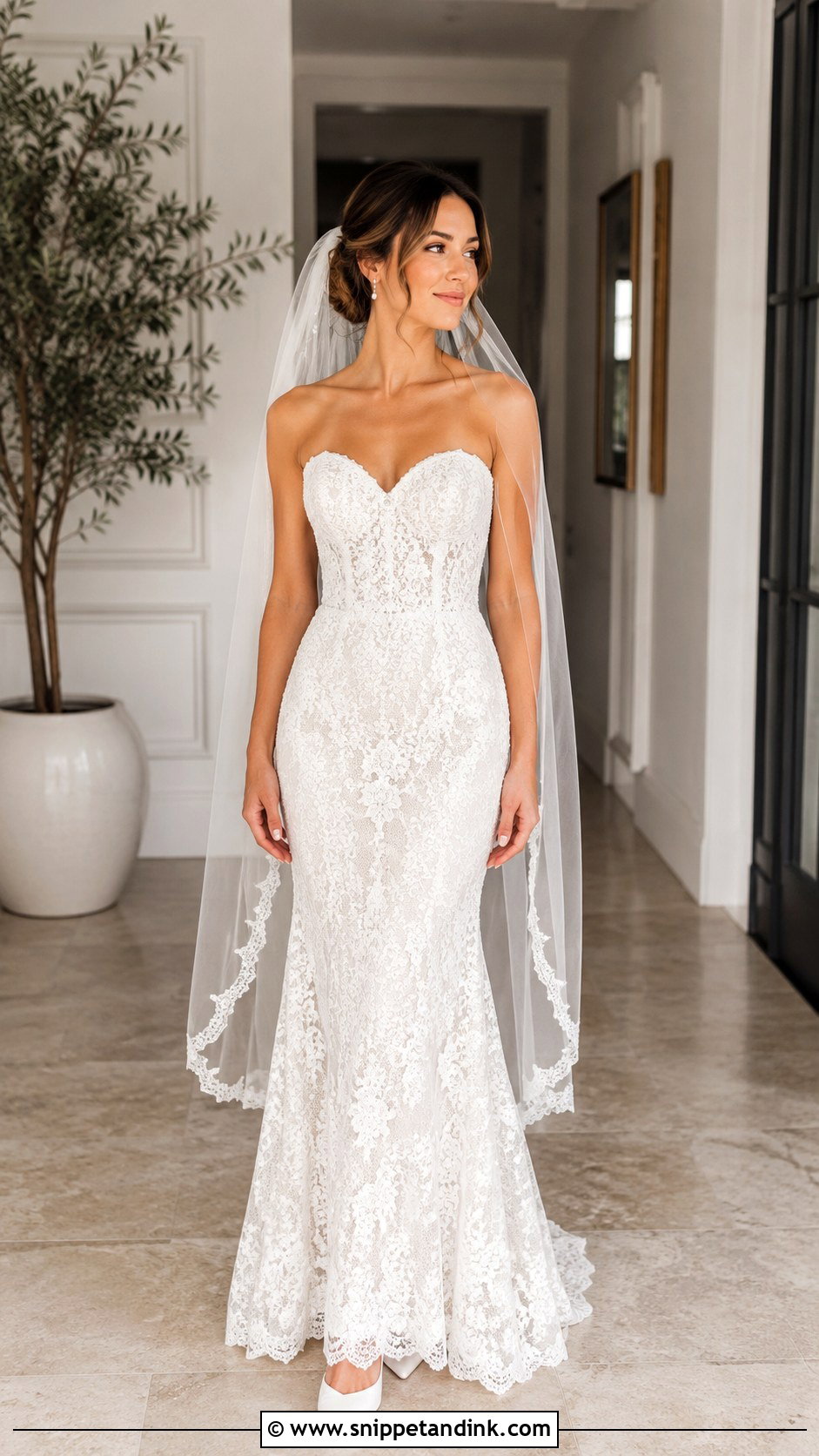
On a petite frame, proportion is everything, and most sample gowns are cut for someone taller. A natural or slightly raised waist with an A-line or narrow fit-and-flare keeps the line long. Smaller lace motifs stay in scale, and a moderate sweetheart dip stops the bodice from looking stretched. A high or medium bustle keeps the train manageable later on. Petite brides can wear volume; the tailoring just has to be exact. Ask whether the gown can be ordered with a petite or custom length, because taking six inches off a lace hem can cut through the scalloped border and move the skirt details out of place.
17. Garden Lace Sweetheart Wedding Dress
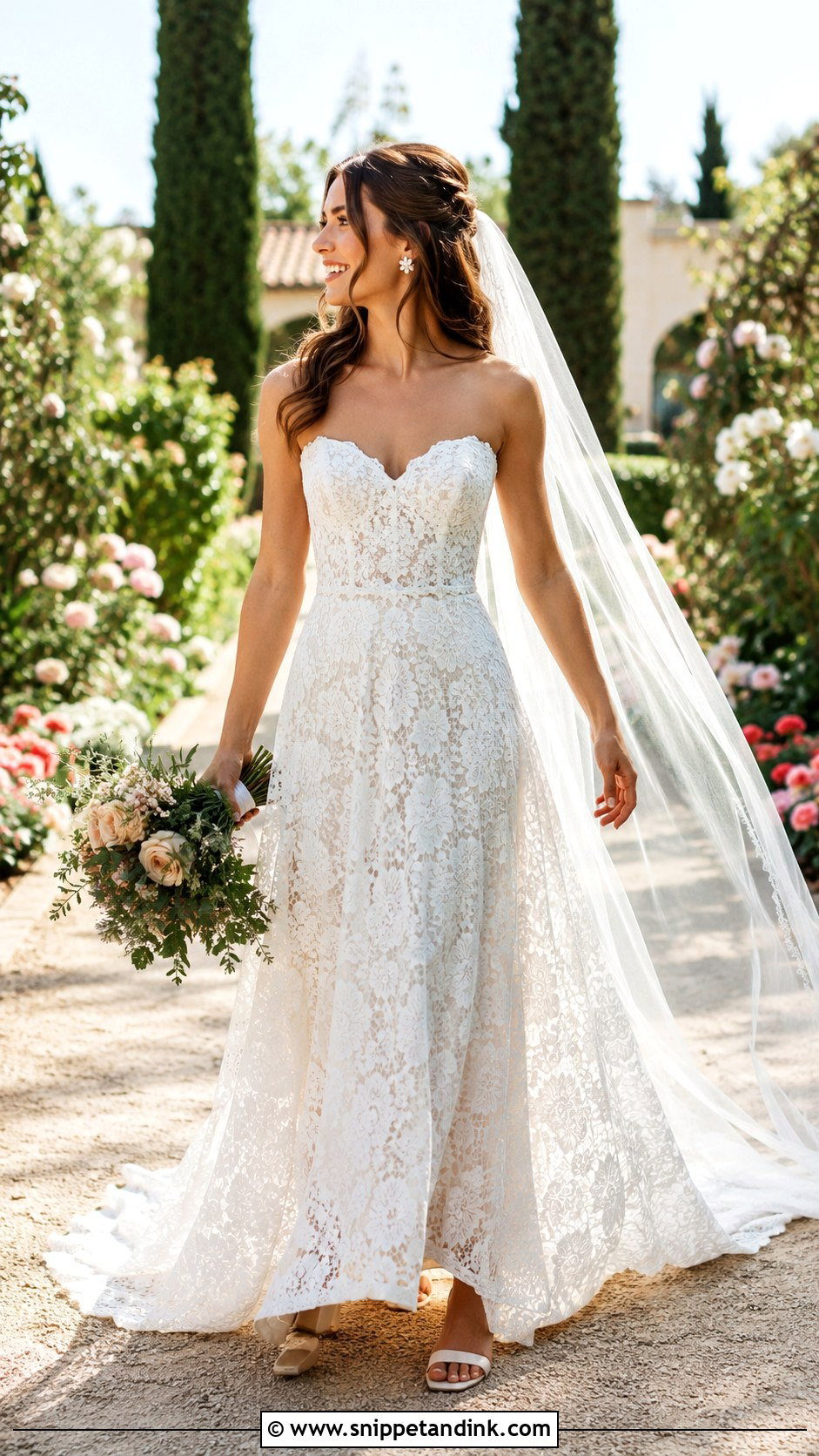
Gardens are hard on long lace, so I’d keep the train to chapel length and choose a lightweight floral lace over a fitted bodice and an A-line that swings across lawn or stone. Heel protectors stop stilettos sinking into grass; block heels or dressy flats avoid the issue entirely. A half-up style stays neat if there’s a breeze. Choose a bouquet that complements the lace without copying every embroidered flower, which looks oddly literal in photos. Bring a light wrap if the evening cools, and have the bustle fitted and practised before the day.
18. Beach Lace Sweetheart Wedding Dress
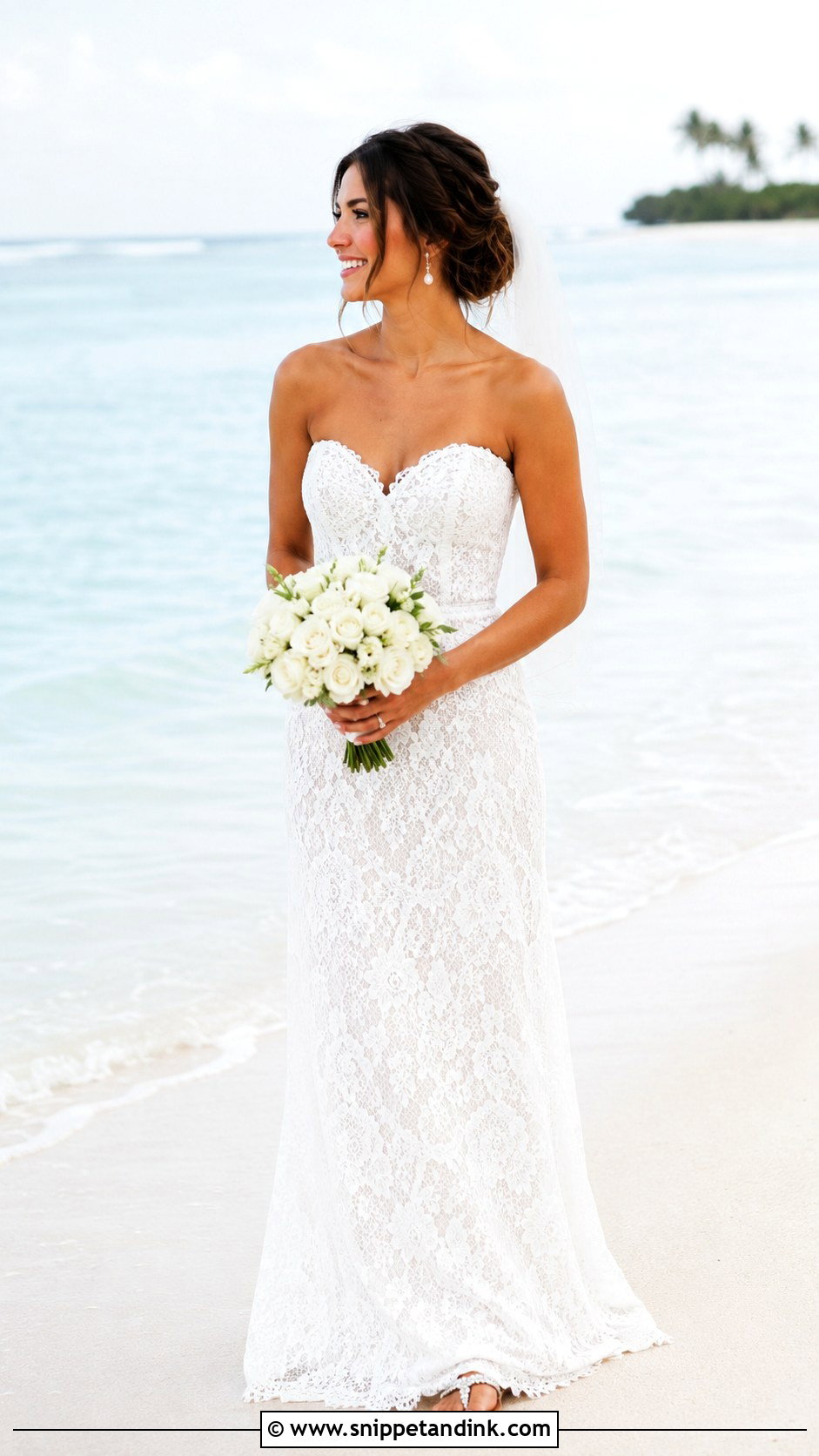
Sand, wind and salt air all work against a heavy gown. On the beach I’d choose soft lace over a breathable lining, a flexible bodice and a narrow A-line or relaxed fit-and-flare, and I’d leave dense beading at home because it gets hot and grabs sand. A long train drags wet sand unless there’s a secure bustle. Flat embellished sandals, small pearl earrings and a short veil or a single comb are far easier to control in a sea breeze than a long veil. A loose updo keeps hair off the neckline, and a compact bouquet of sturdy flowers survives the heat better than delicate trailing greenery.
19. Cathedral Train Lace Sweetheart Wedding Dress
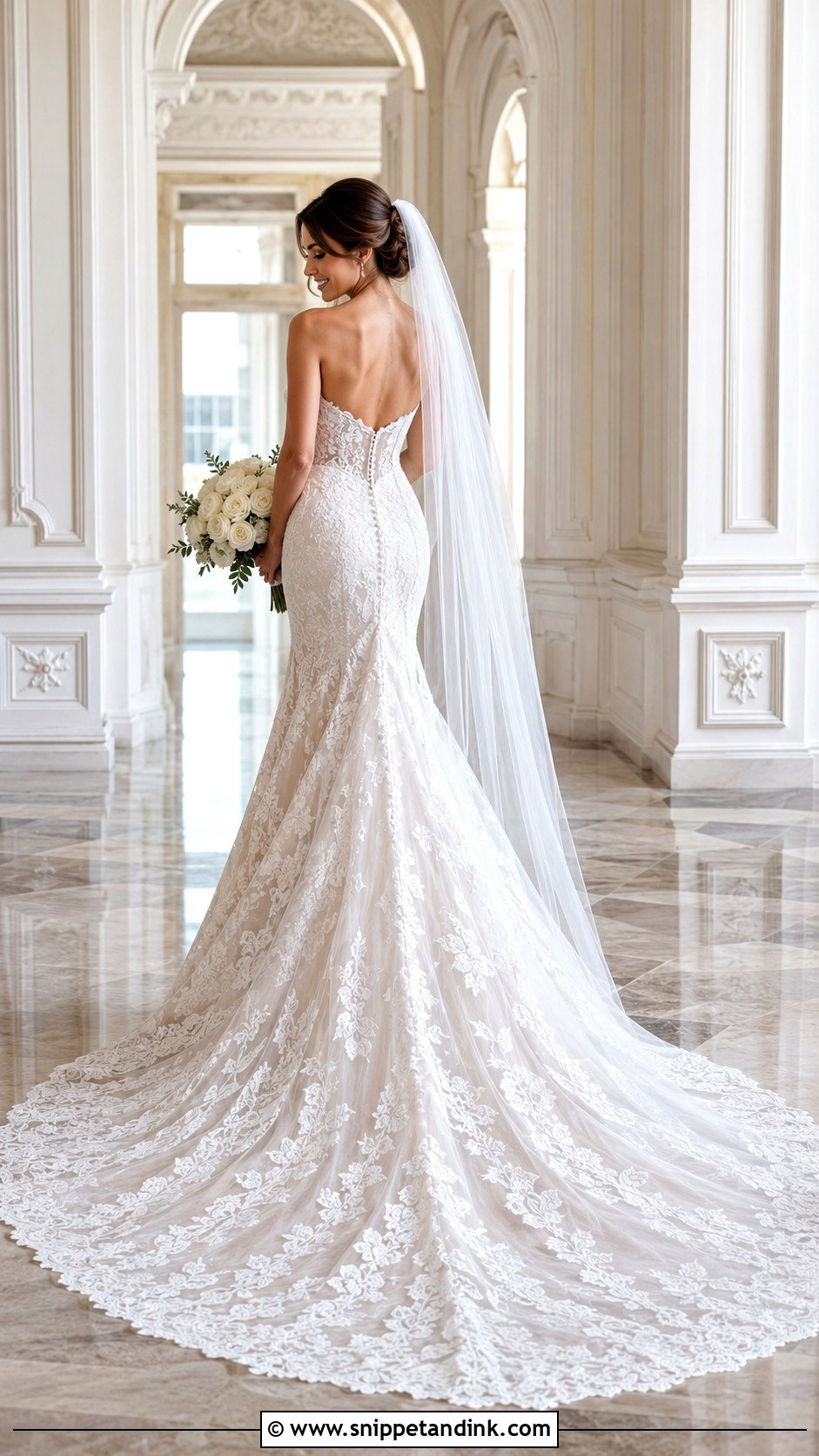
A cathedral train is about the view from behind, so the lace must continue cleanly down the skirt and into the train without a visible join. A structured bodice and fitted waist balance the extra length. A simple cathedral veil, stud earrings and satin heels finish the look, with a medium bouquet and a polished updo. The bustle is the part brides forget. I ask the seamstress to show the bustle at the final fitting, take photos of each hook and loop, and hand those photos to the person who’ll do it. Cathedral bustles can take several minutes and two pairs of hands, so plan for it before the first dance.

20. Tea-Length Lace Sweetheart Wedding Dress
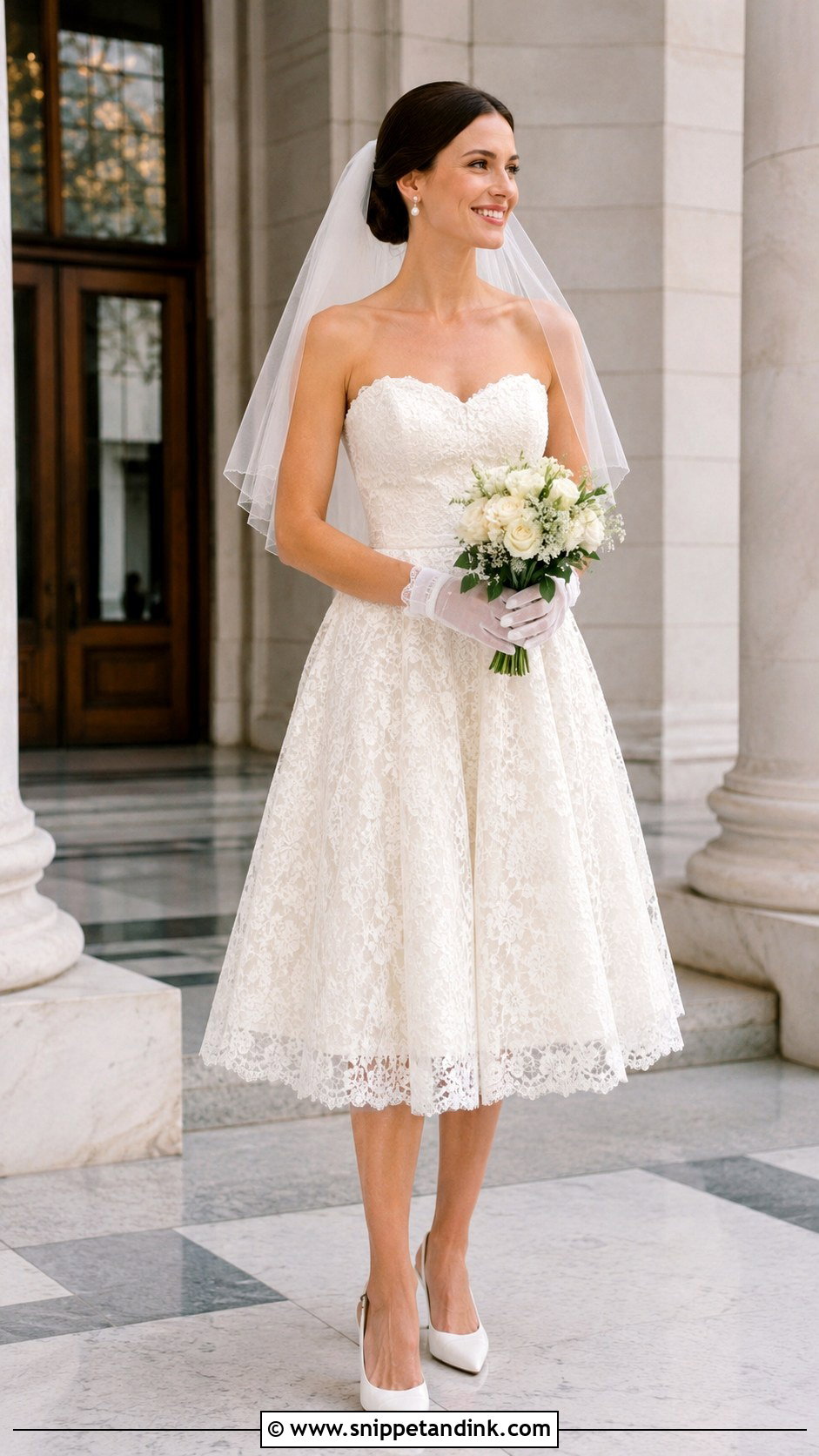
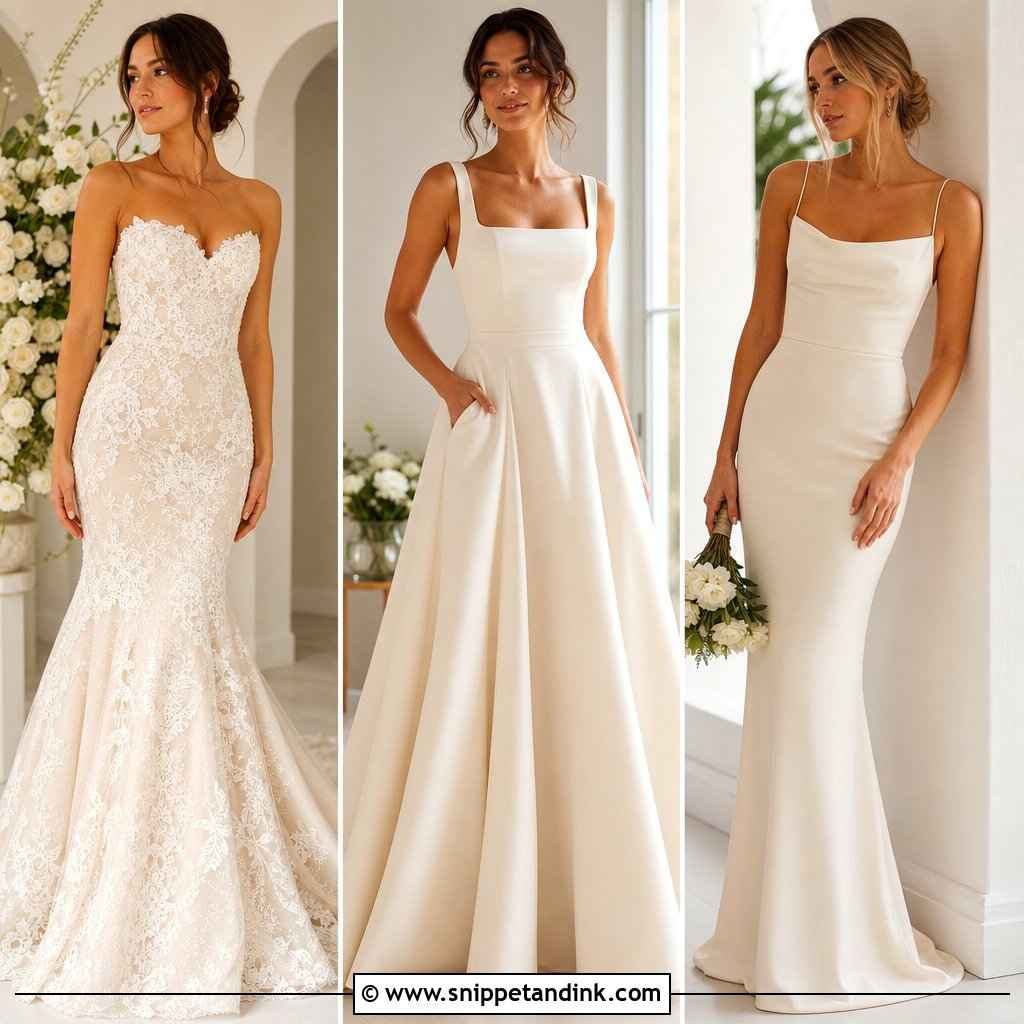
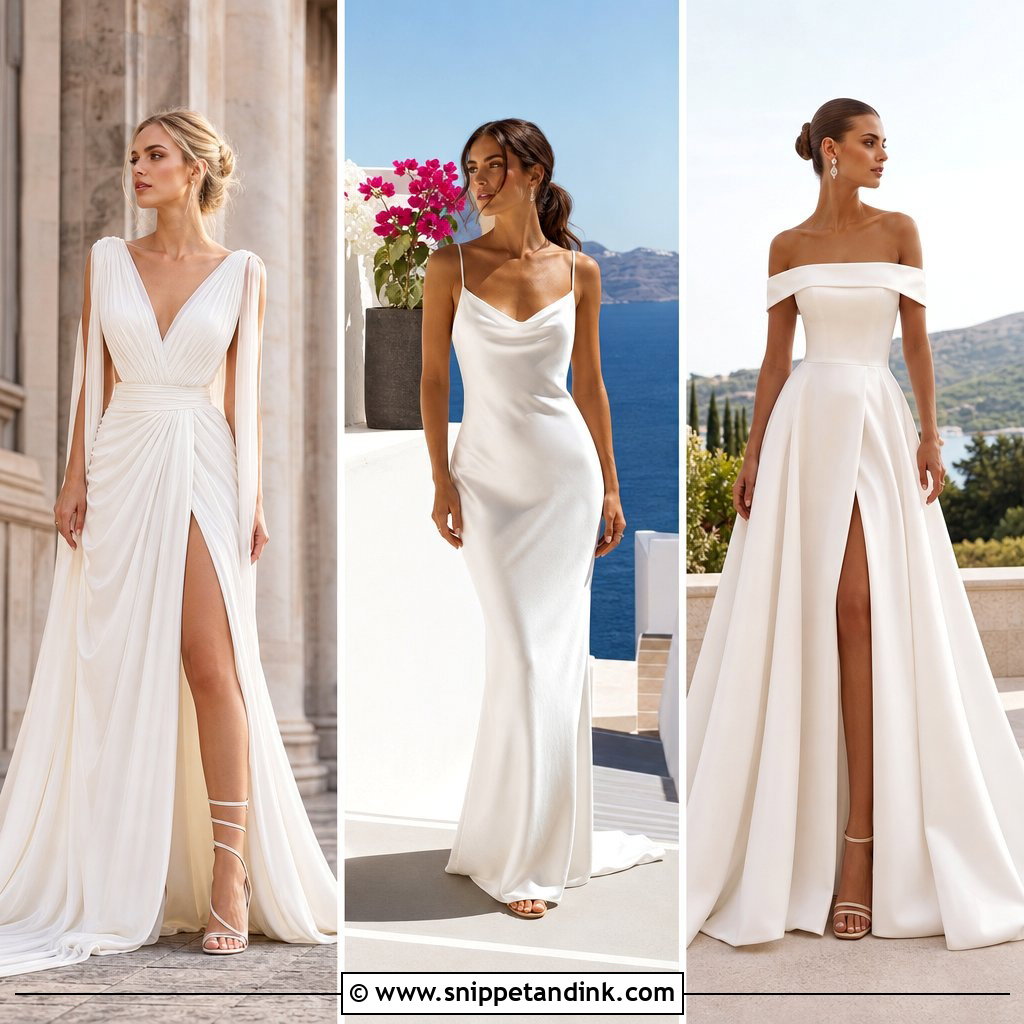
Tea length ends between the knee and ankle, which means your shoes become part of the dress. Bring them to every fitting, because the hem has to be set in those exact heels; a small change in heel height changes the whole proportion. A fitted bodice, defined waist and a crisp petticoat give the skirt its shape without much weight. Slingbacks, embellished pumps or clean flats all suit, with pearl earrings, short gloves if you like them and a birdcage or shoulder-length veil. A smooth bun or curled bob fits the shorter line. It’s a practical choice for courthouse ceremonies, restaurant receptions and daytime weddings.
When a Sweetheart Bodice Gapes, Slips or Pinches
The sweetheart is a fitted neckline, so small fit problems show at once. These are the three I correct most often, and what I’d ask your seamstress to do.
- Gaping at the top edge when you lean forward: the cups need taking in or reshaping, not just tightening at the back, which only pulls the side seams forward.
- The bodice slipping down by the reception: add a waist stay if there isn’t one, and check the gown is fitted to your bare ribcage, not over shapewear you won’t wear on the day.
- Pinching under the arm or at the centre dip: the boning may be too long for your torso. A seamstress can often shorten a channel, but it’s far easier early than at the final fitting.
Wear the exact bra or shapewear you’ll use on the day to every fitting, or none at all if cups are being built in. Swapping underwear after the final fitting is the quickest way to undo good work.
Why Lace Alterations Take Longer, and Cost More
A plain satin hem can be taken up in an afternoon. A scalloped lace hem can’t simply be cut, because you’d lose the finished border. Instead, the seamstress unpicks the lace edge, takes the length out of the skirt underneath and hand-sews the border back on, often motif by motif. The same goes for taking in a lace bodice: motifs are lifted and overlapped across the new seam so it stays invisible.
That handwork is slow. I’d allow two or three fittings spread over the last couple of months, and expect a lace gown to cost more to alter than a plain one. Prices vary widely by area, so ask for a written quote at the first fitting.
Lace Is the Finish; the Bodice Is the Decision
When brides look back at their gowns, they rarely talk about the lace pattern. They remember whether they could breathe at dinner, whether the neckline stayed put through the hugs and whether the train behaved. So test the structure first: where the waist sits, how the skirt moves, whether the train suits the venue. Try at least one silhouette you didn’t expect to like, and do the sit, walk and arms-up test in every gown. A good seamstress will do more for how you feel in the dress than any lace upgrade. Then let your veil, shoes, jewellery and flowers support the gown rather than compete with it.
You'll Like These Ideas:



Leave a Reply