
Telling Chantilly, Alençon and Guipure Apart on the Rail
Lace names get thrown around in shops as though they mean the same thing. They don’t, and the type changes the weight of a gown, how it photographs and how much abuse it can take. When I’m helping a bride compare dresses, I turn the bodice inside out and look at the back of the lace first.
- Chantilly: fine net with outlined motifs. Very light and soft, but delicate and easy to snag.
- Alençon: motifs outlined with a raised cord. More texture, holds beading well, sturdier for dancing.
- Guipure: no net at all; motifs join with bars. Heavy and graphic, better for cooler months.
- Corded or re-embroidered lace: lace with extra cord or beading stitched on top. Rich but heavier.
Run your hand lightly over the skirt. If the lace catches on your skin or a ring, it will catch on bouquets, chairs and guests too. And ask whether the appliqués are hand-placed over seams. On well-made gowns they hide the joins; on cheaper ones you’ll see the pattern stop abruptly at the side seam.
1. Strapless Lace Ballgown Wedding Dress
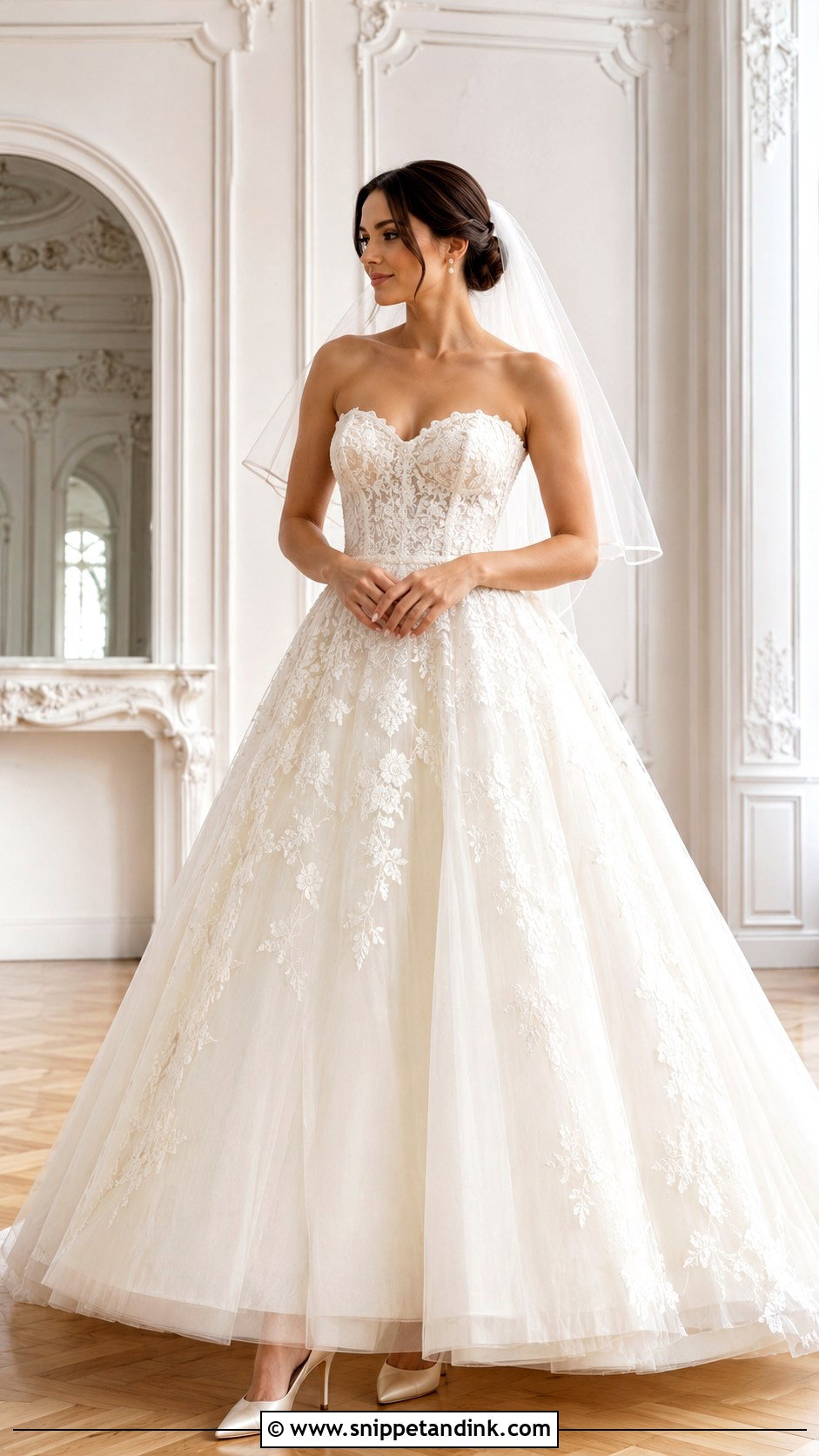
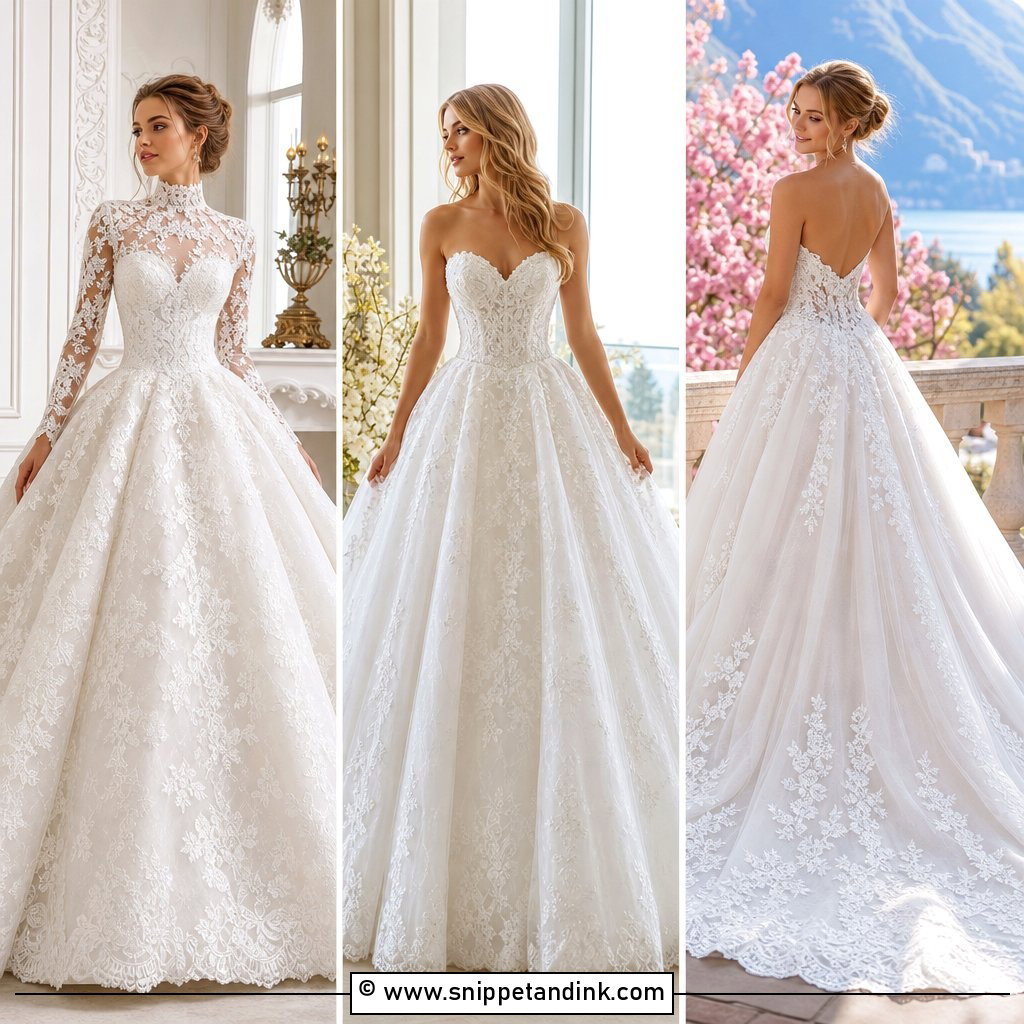
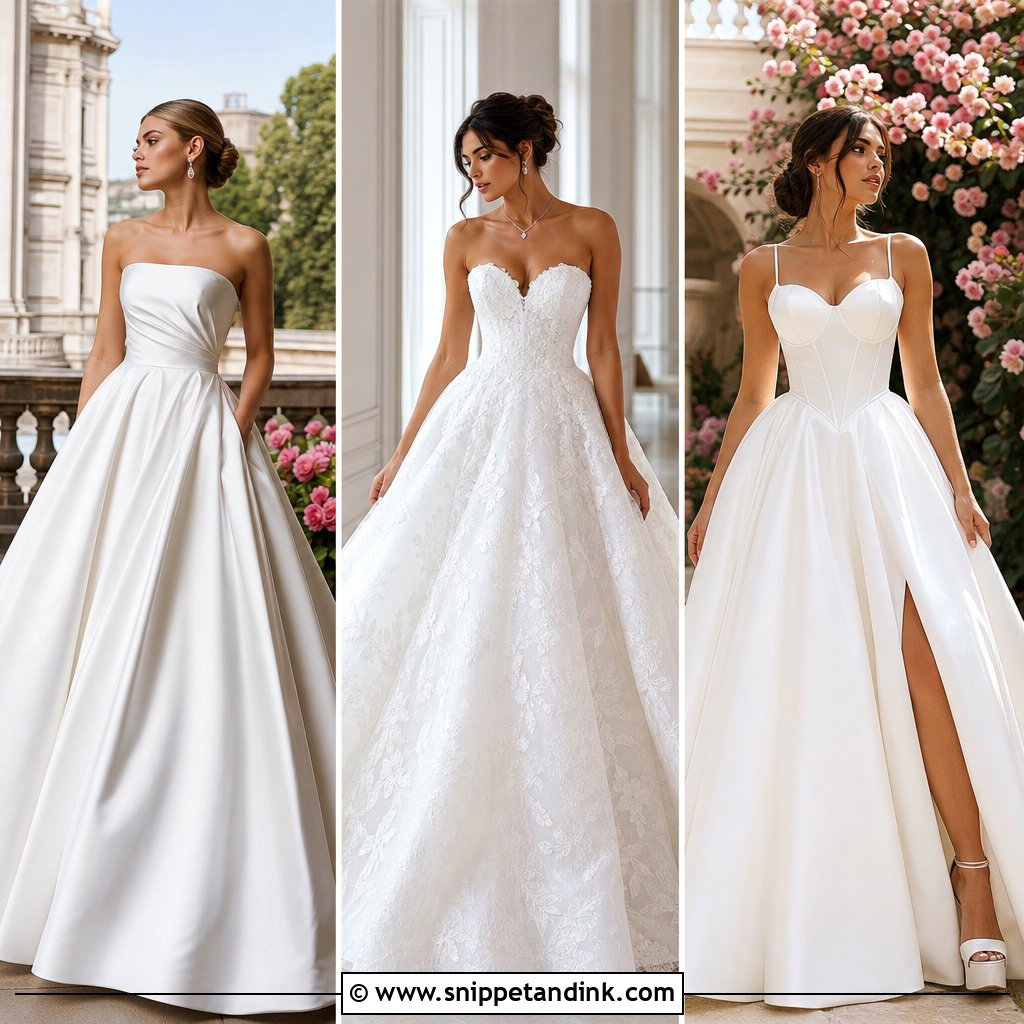
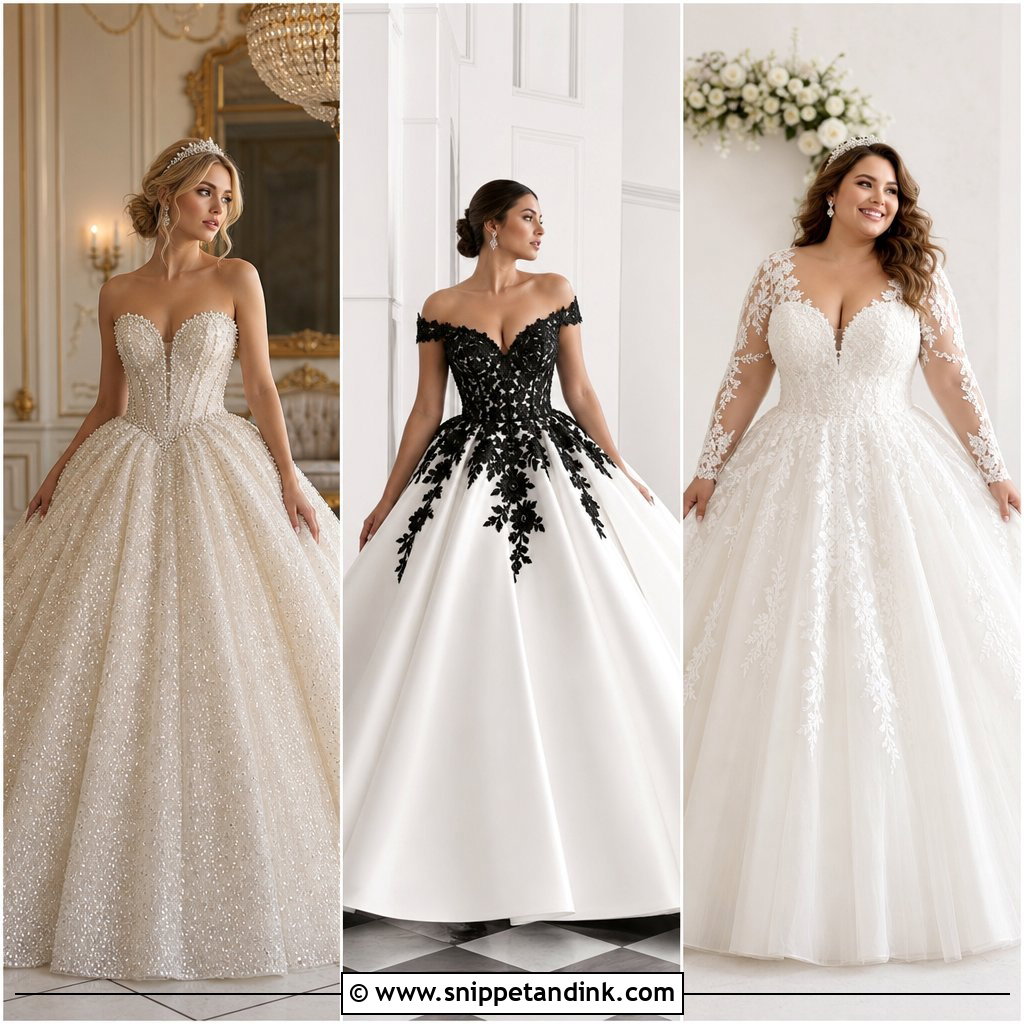
Strapless is the cleanest way into a full lace skirt, and a strapless lace ballgown wedding dress lets the bodice and the skirt do all the talking. The catch is gravity. A big skirt pulls downward all day, so the bodice needs proper boning, a waist stay and a grip tape along the top edge, or you’ll be hitching it up by the first dance. Floral lace reads romantic; Chantilly is finer and quieter. Pearl studs and a fingertip veil are plenty, since there’s already a lot of dress below the waist.
2. Long Sleeve Lace Ballgown Wedding Dress
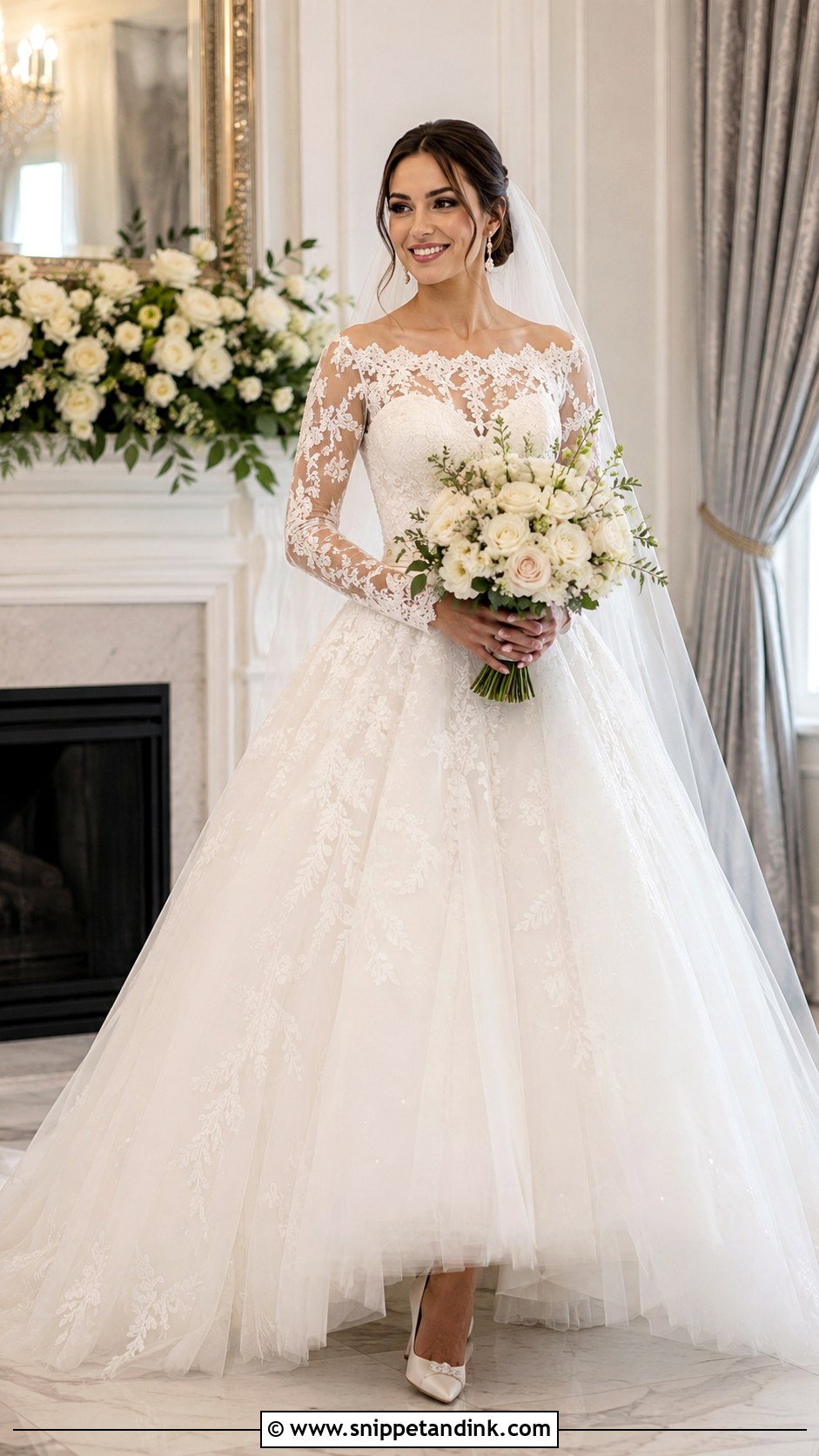
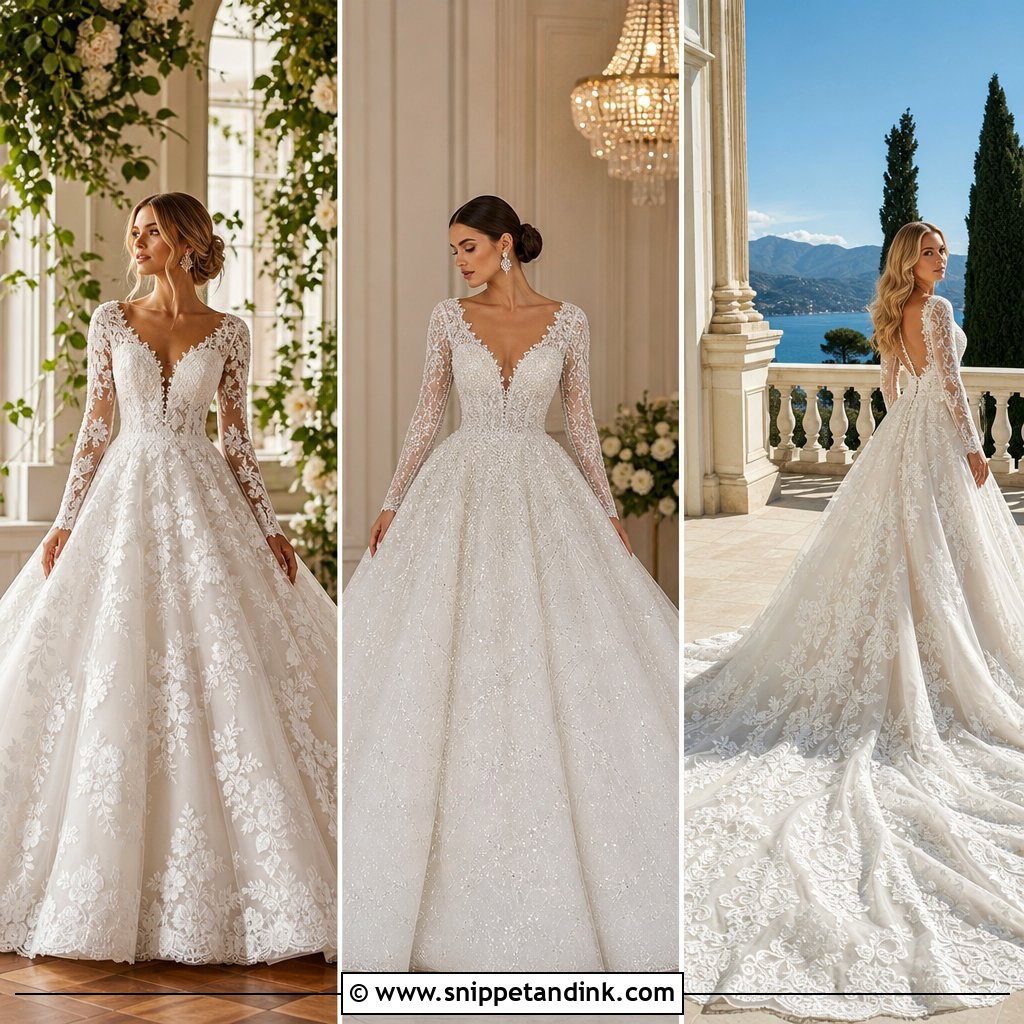
Sleeves change the whole feel of a long sleeve lace ballgown wedding dress, and the lining decides the season. Unlined lace sleeves are cool enough for late spring, while lined or corded sleeves belong to autumn and evening. I have every bride in sleeves lift her arms over her head at the fitting. If the armhole is cut low, the bodice rises with her and the waistline shifts out of place, which a seamstress can fix only if she sees it. Organza or soft tulle under the skirt keeps the weight down.
3. Off Shoulder Lace Ballgown Wedding Dress
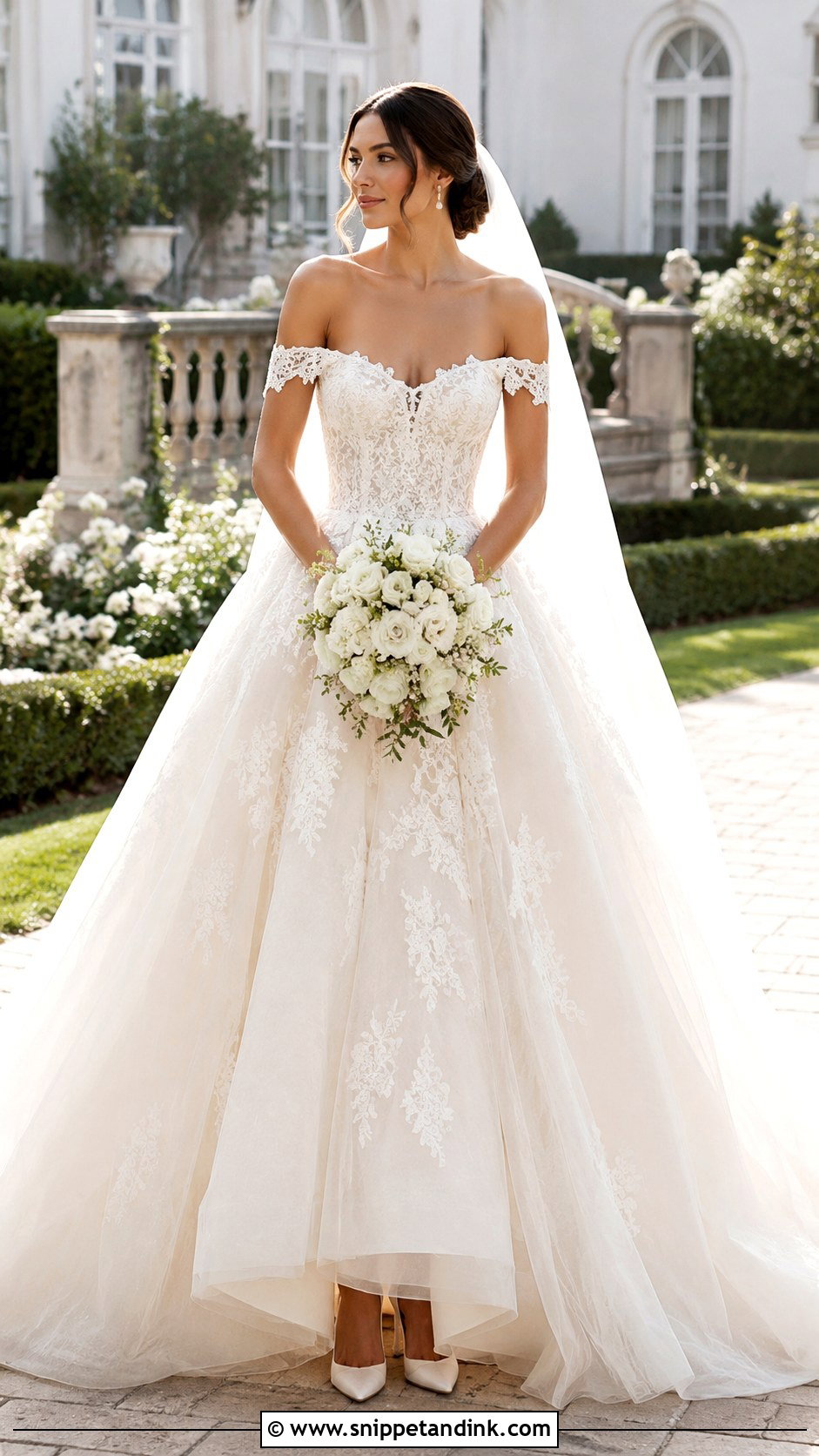
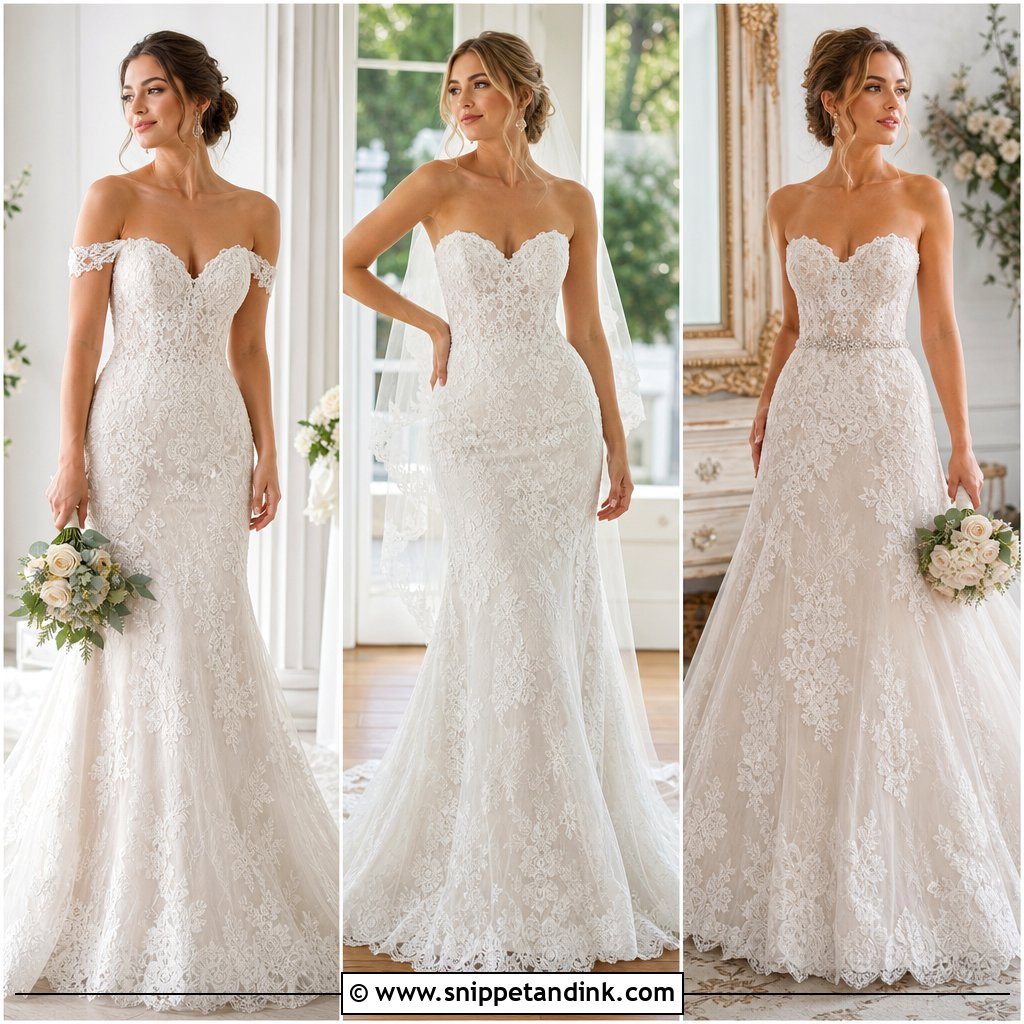
Off the shoulder straps rest on the upper arm, and that is where this gown either works or doesn’t. Too snug and you can’t raise your hands past your ribs; too loose and the straps slip toward your elbows by the reception. A basque or natural waist under the dropped neckline gives the bodice a firm anchor. Hair goes up so the collarbone is clear, and the veil should comb in low at the back of the head rather than at the crown, so it falls behind the shoulders instead of over them.
4. Sweetheart Lace Ballgown Wedding Dress
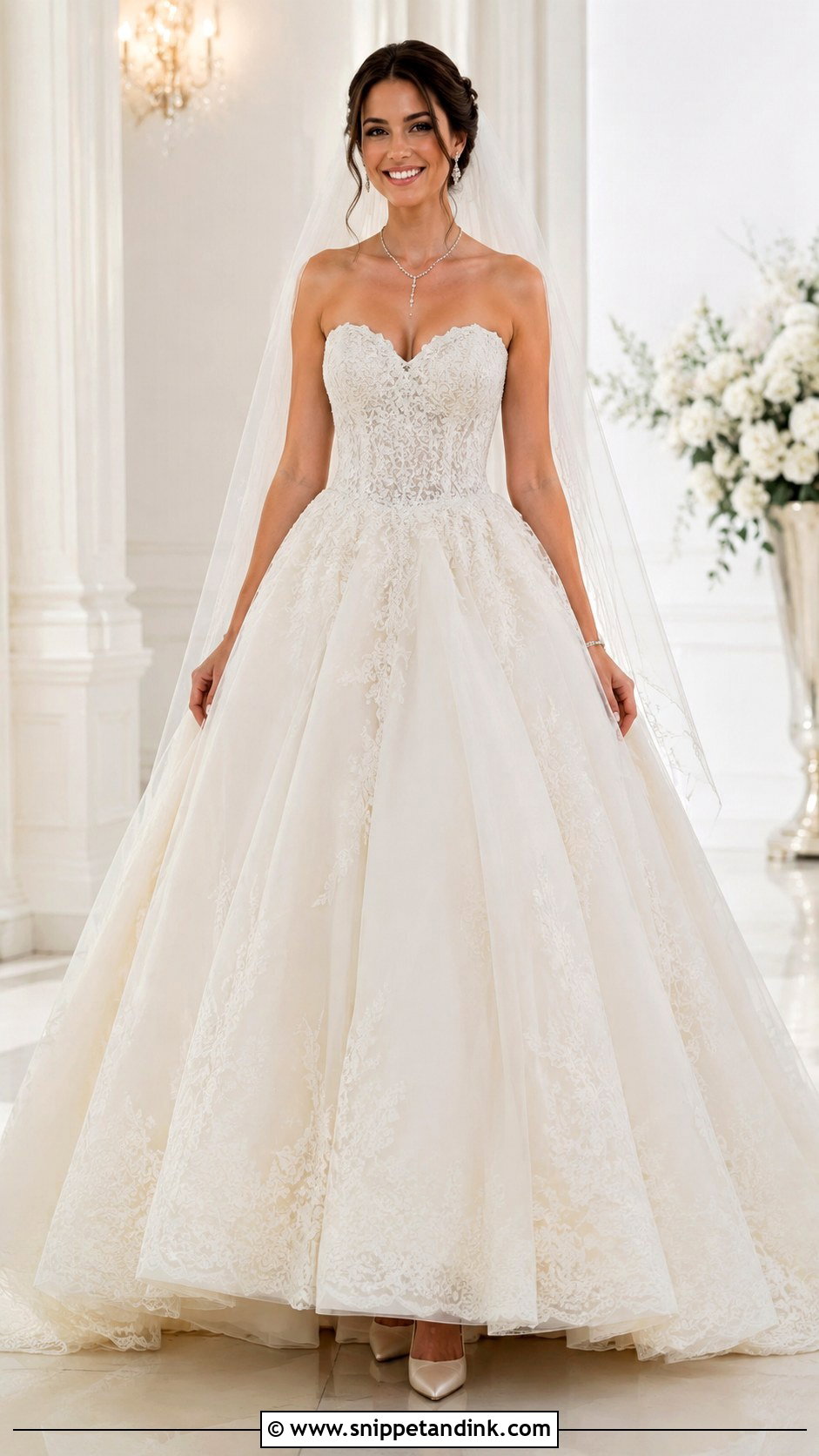
Sweethearts flatter a wide range of busts because the curved line lifts and shapes at the same time. What makes the difference is the inside: moulded cups and inner boning, sewn in rather than loose, so you can skip a bra entirely. The neckline sits nicely with lace appliqué and corset seams running down into a full skirt. A waist-length veil shows off the bodice detail; a cathedral veil adds ceremony drama but hides the back seams.
5. Basque Waist Lace Ballgown Wedding Dress
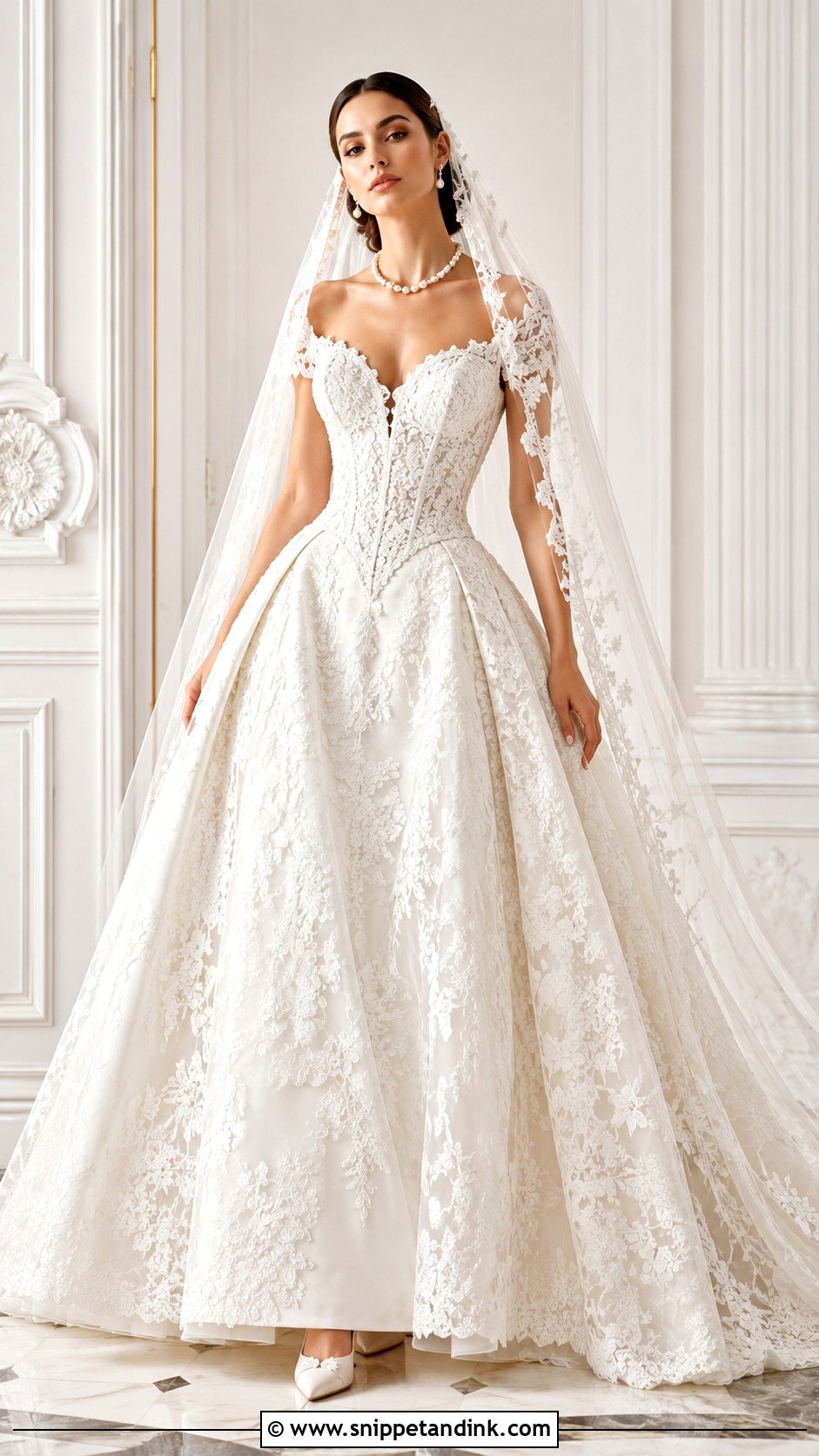
The basque waist dips into a soft V at the waist, which lengthens the torso and makes the skirt look fuller below it. It is the waistline I reach for most with shorter-waisted brides. The point has to land in the right place though. Set too low, it digs into the lap when you sit; set too high, it loses the lengthening effect. That is a fitting job, not a sizing one. Ask how the lace crosses the waist seam, too: on the better gowns it’s cut and re-appliquéd so the pattern flows down unbroken.
6. Corset Lace Ballgown Wedding Dress
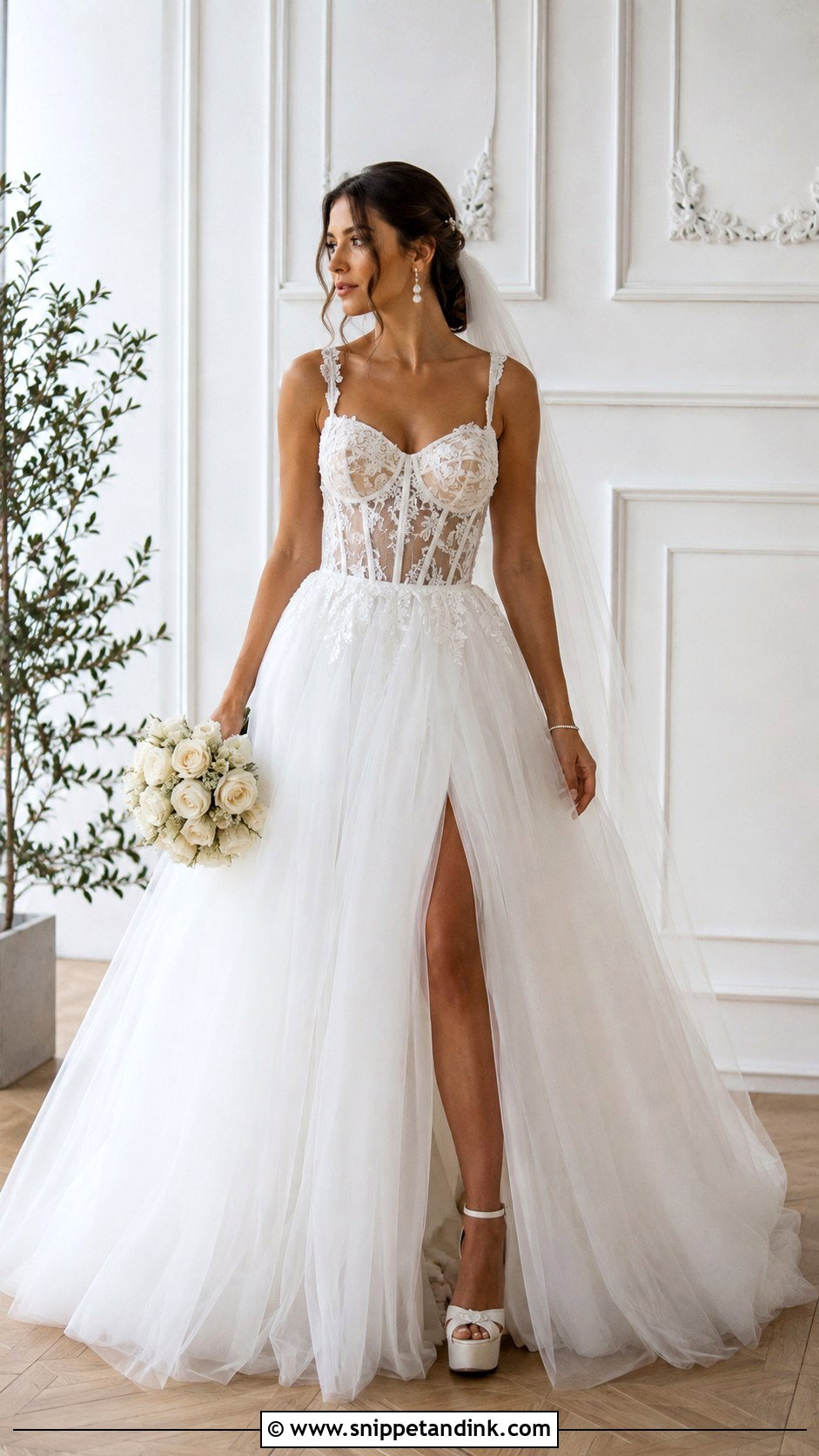
Visible boning on a lace corset is a style choice; hidden boning under a lined bodice gives the same hold with a softer look. Either way, I test it the same way. Breathe out fully, sit, then reach forward as though signing the register. If the top edge bites or the boning presses into your hips when seated, it needs adjusting. A soft tulle or layered lace skirt balances the structured top so nothing looks rigid, and a detachable veil gives you options later in the evening.
7. High Neck Lace Ballgown Wedding Dress
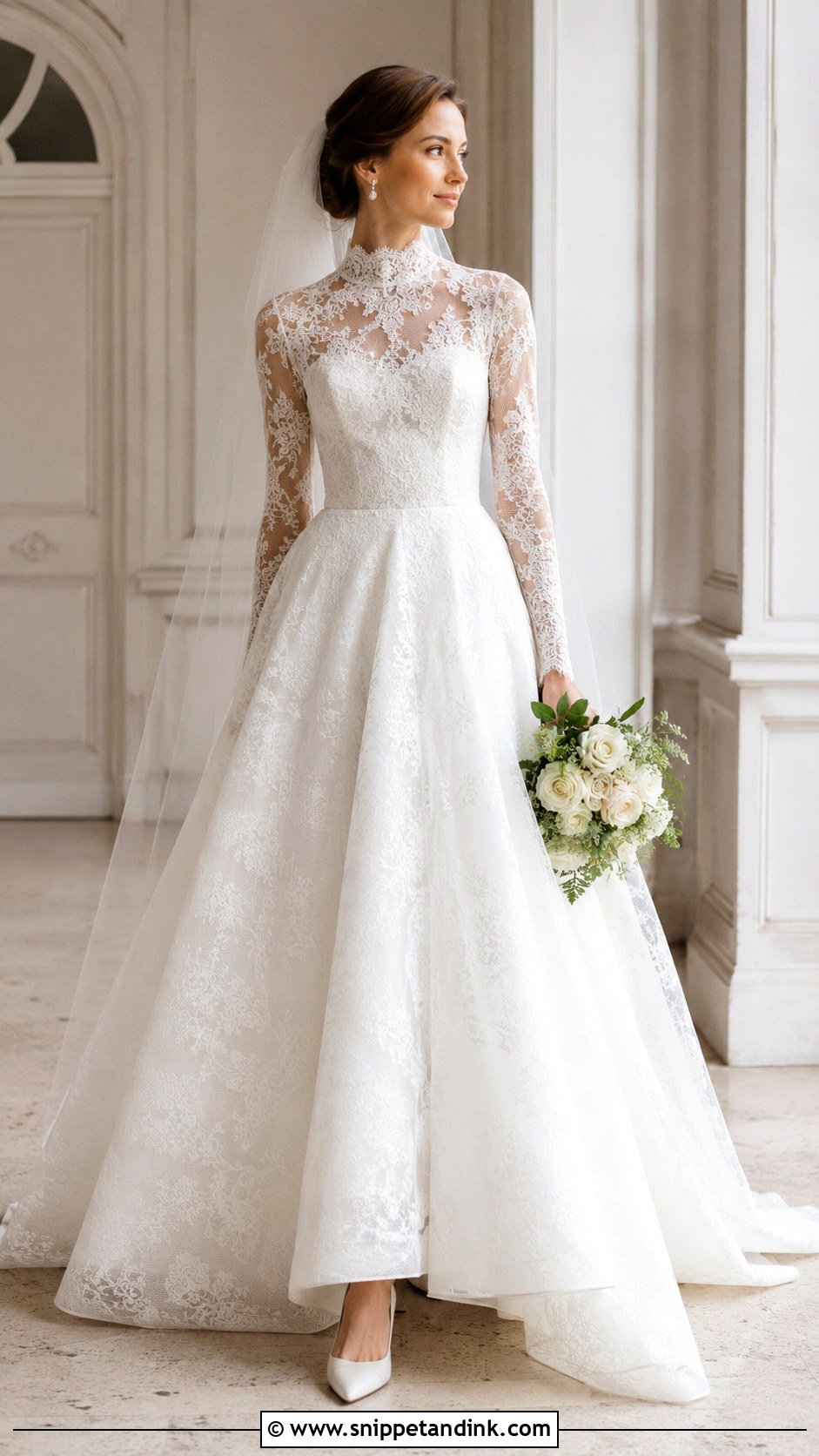
High lace necklines let the pattern sit right under the face, so the lace itself becomes your jewellery. Skip the necklace. Sheer illusion lace keeps it airy; a lined bodice gives more coverage and holds its shape better. In summer heat, a fully lined high neck plus a full skirt can get warm, so I steer brides toward unlined lace at the neck and a lighter petticoat. Small earrings and a clean updo show the neckline off properly.
8. Scoop Neck Lace Ballgown Wedding Dress
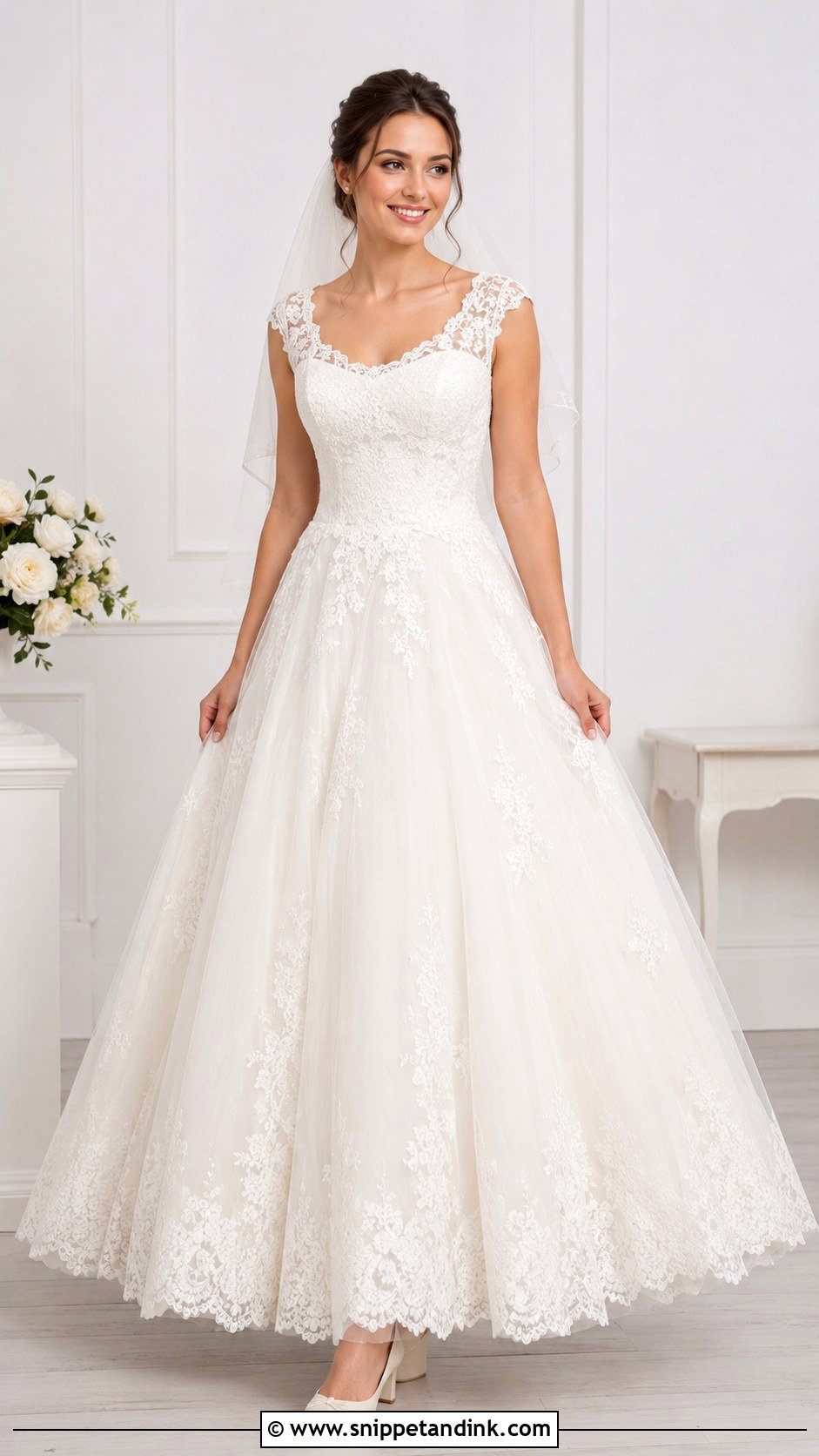
Scoop necks are easy to live with. The rounded line sits flat on the chest, doesn’t need taping, and won’t gape when you lean forward to hug someone, which is more than a deep V can promise. Appliqué along the edge frames the face without crowding it. This is one of the few ballgown necklines where I’d happily suggest loose waves or a half-up style, since there’s no strap line to compete with. Mid-height heels make sense too; you’ll want to stay comfortable through a long reception.
9. V Neck Lace Ballgown Wedding Dress
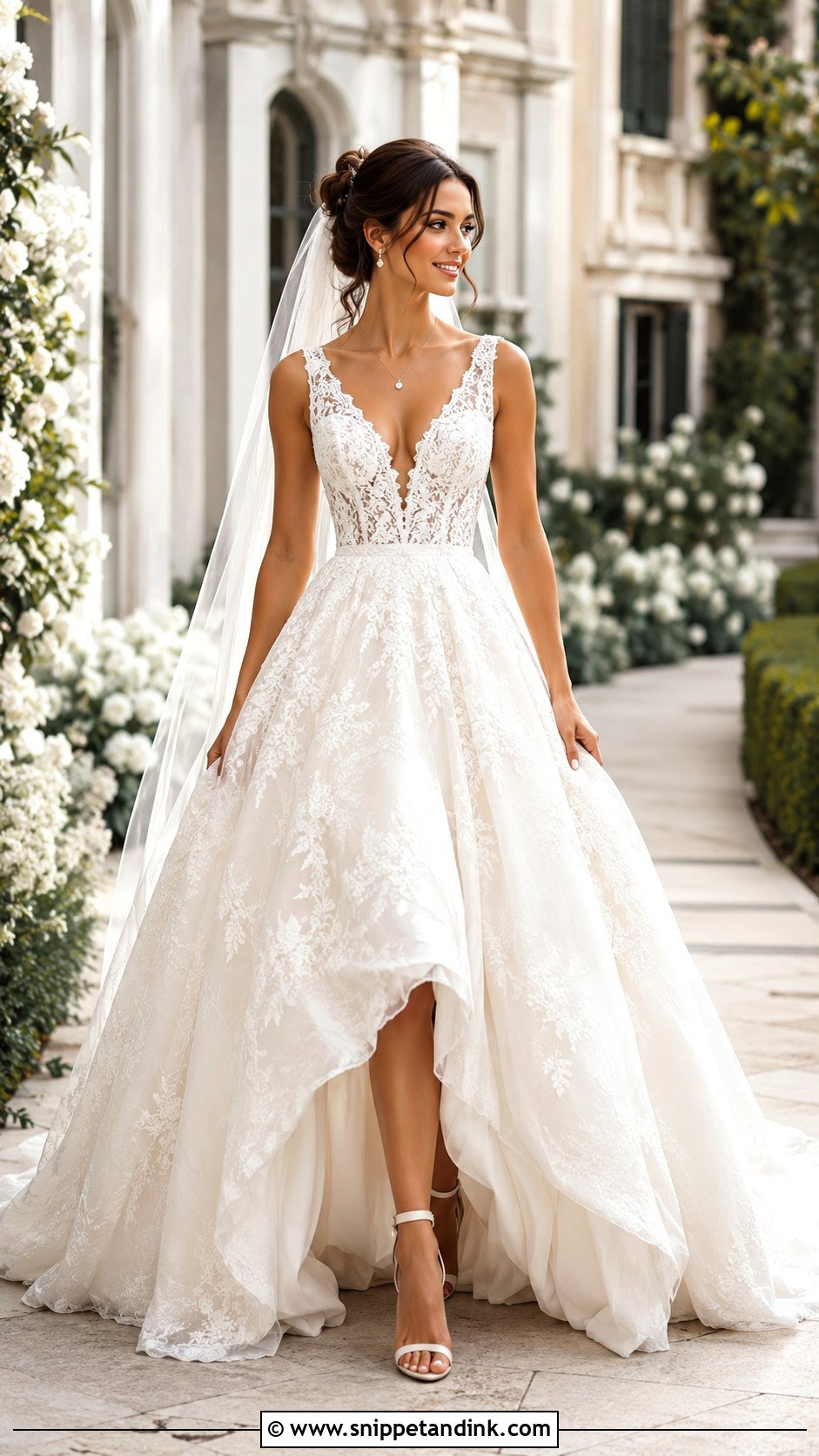
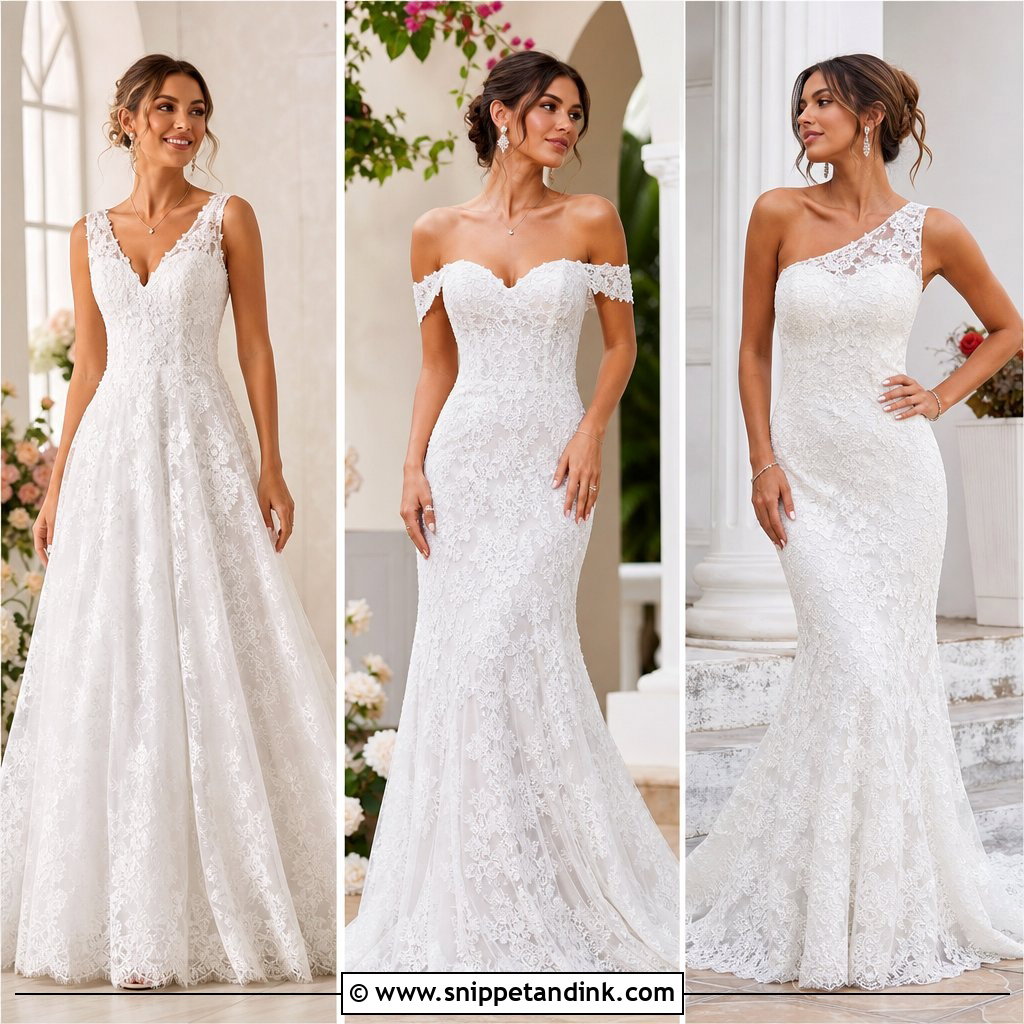
A V neck balances the width of a full skirt by drawing the eye up and narrowing the top half. Deeper Vs need illusion mesh or a fine stabiliser along the edge to stop the lace stretching and gaping, so check the inside before falling for the front. Floral lace along the bodice softens the angle. A delicate pendant can sit in the V, though I’d keep it short enough that it doesn’t swing onto the lace and snag.
10. Square Neck Lace Ballgown Wedding Dress
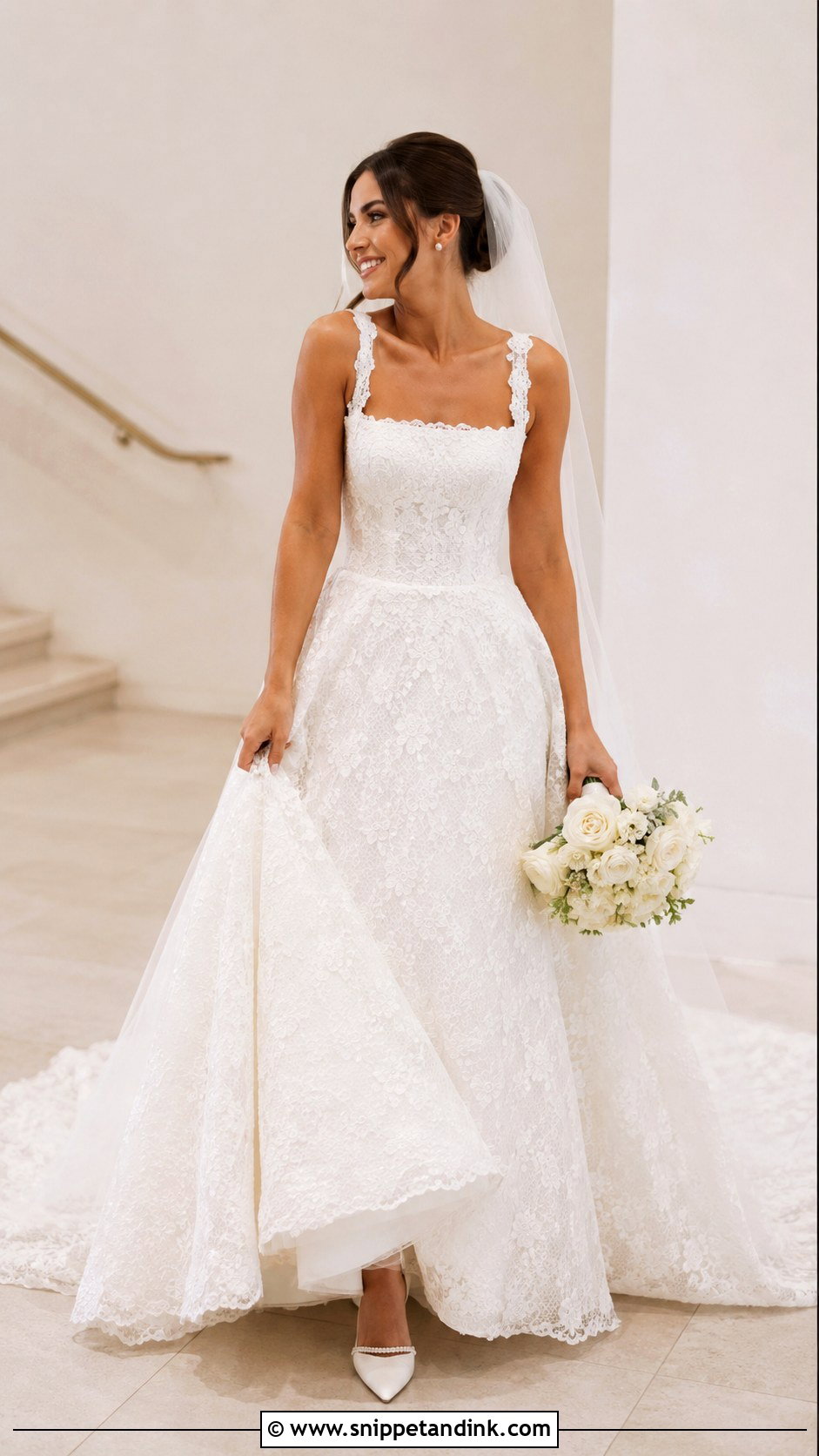
A straight square neckline gives lace something crisp to sit against, which is why it looks a touch vintage without feeling like a costume. Wide straps support more, cap sleeves soften it, long sheer sleeves make it formal. I like lace that thins out toward the hem on this shape, as it keeps the skirt from looking heavy. Pearl studs and no necklace; the neckline does the framing.
11. Illusion Lace Ballgown Wedding Dress
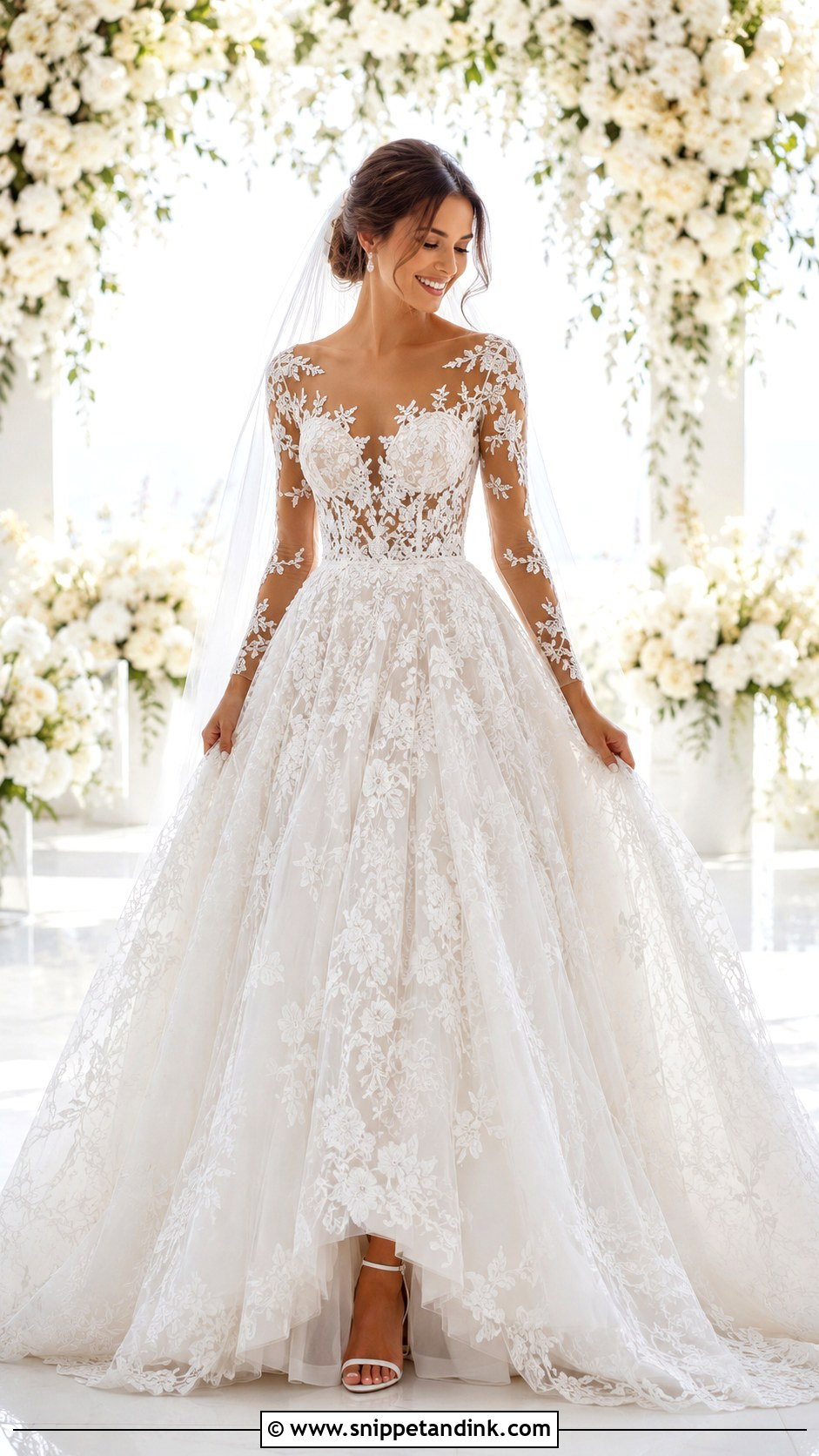
Illusion bodices place lace on a sheer mesh so it looks as though the pattern is sitting on your skin. The mesh colour matters more than anything. If it’s even slightly off your skin tone, it shows up as a grey or pink band in photos, so I take a bride to a window and check under daylight, then with a phone flash. Darker skin tones often need a specially dyed mesh, which some designers offer. The weight is low, which makes this a good choice for long days.
12. Beaded Lace Ballgown Wedding Dress
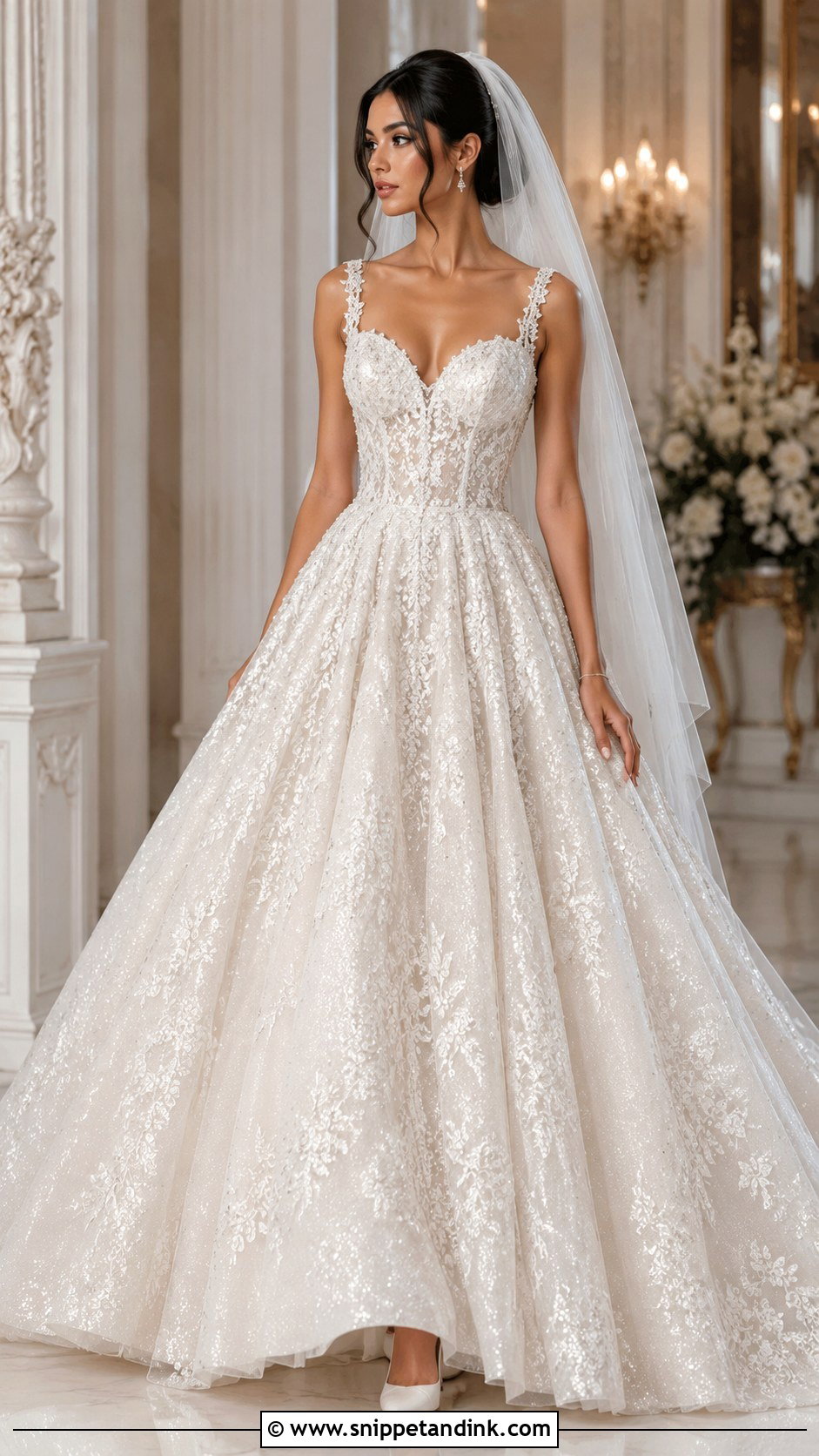
Beads on lace catch light every time you move, and the effect is stronger under evening lighting than in a sunny garden. It also adds weight. A heavily beaded skirt can pull on the waist seam over hours, so I check the waistband and ask whether there’s a waist stay inside. Beads along the hem take the most damage on stone and gravel; extra beads in a little bag from the shop are worth keeping. Stick to small studs and a thin bracelet, since the dress already sparkles.
13. Floral Lace Ballgown Wedding Dress
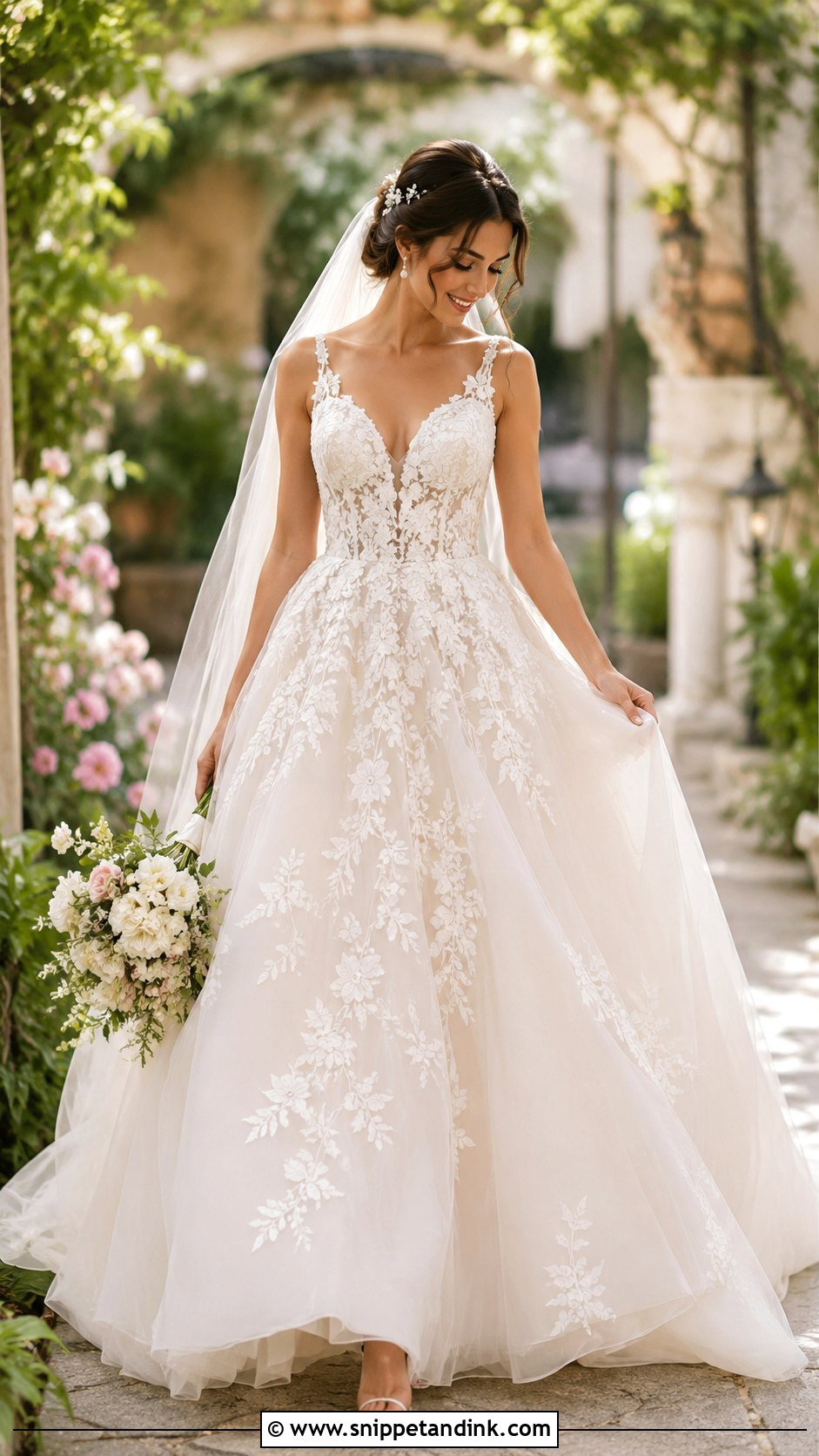
Floral lace changes with the size of the flowers. Large appliqués read bold and modern, and tiny blooms feel traditional and soft. I always look at the scale against the bride’s frame: big motifs can overwhelm a petite figure, while very small lace can disappear across a wide skirt in photos taken from the back of the aisle. Floral hair pins can echo the motifs, but choose one or the other in a big way, not both. Ask your florist to pick up one flower shape from the lace.
14. Chantilly Lace Ballgown Wedding Dress
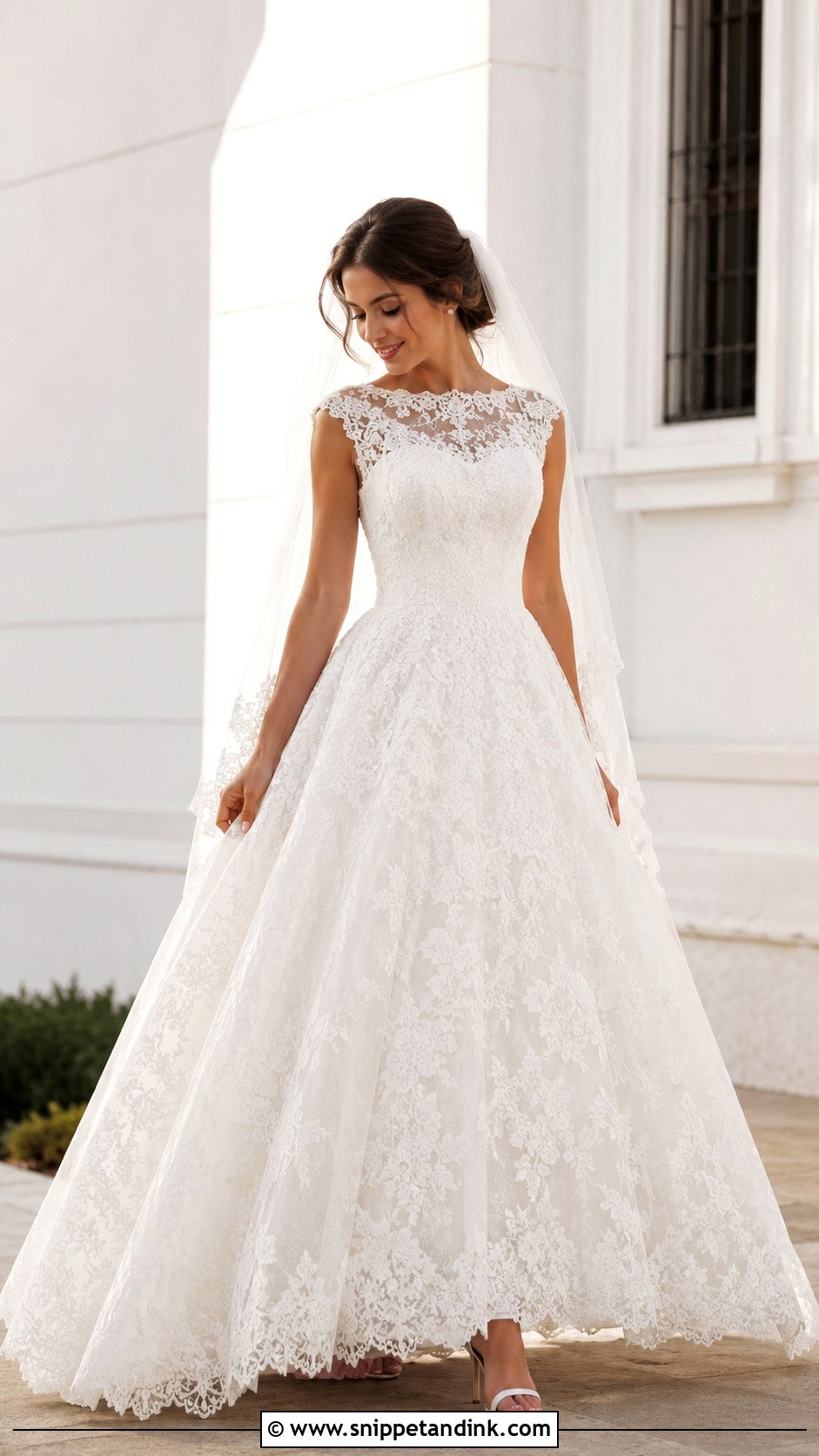
Chantilly is the finest of the bridal laces, worked on a thin net with outlined motifs, which is why it looks almost like a pencil drawing. It’s light and breathable, a real advantage under a full skirt in warm weather. It’s also the most fragile. Rings with claws, rough fingernails and Velcro on a groomsman’s shoe can all catch it. Avoid chunky jewellery, which looks heavy beside lace this delicate. A sheer veil keeps the softness going.


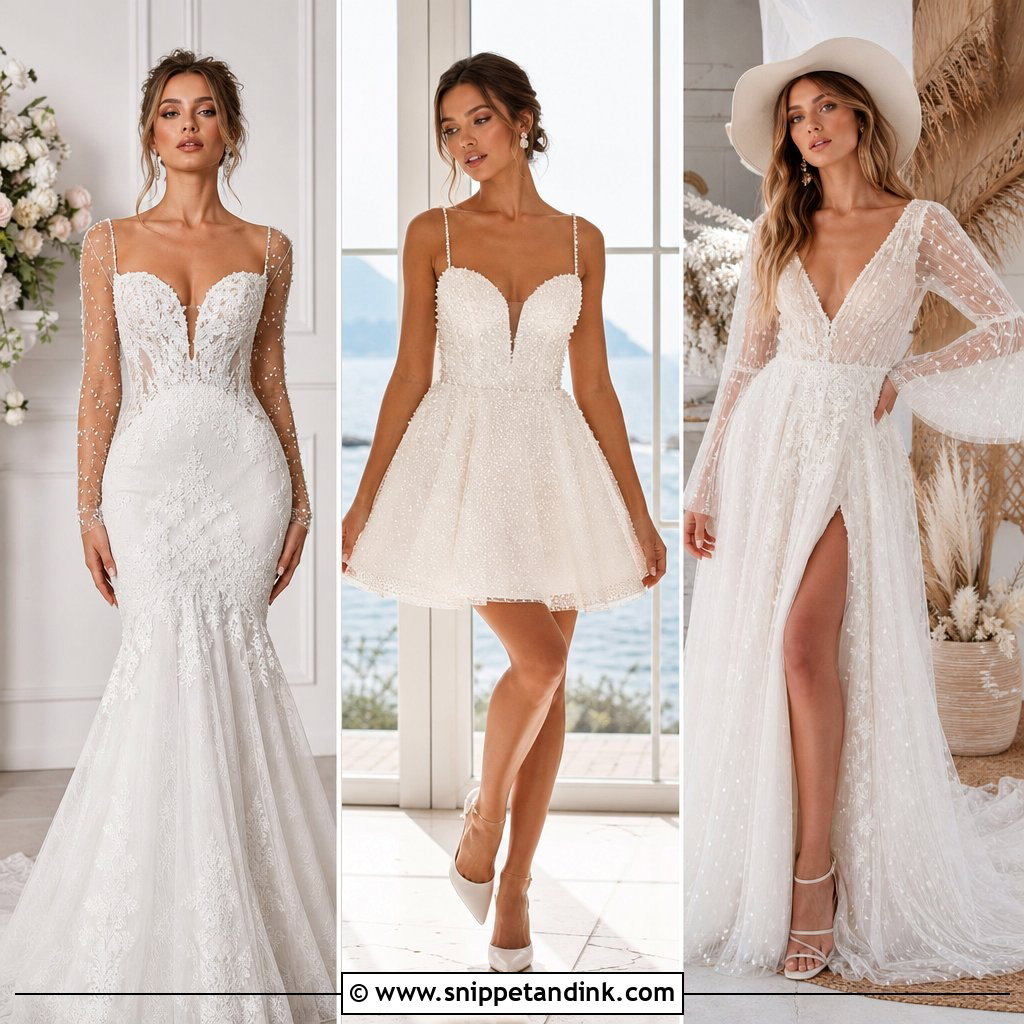
15. Alencon Lace Ballgown Wedding Dress
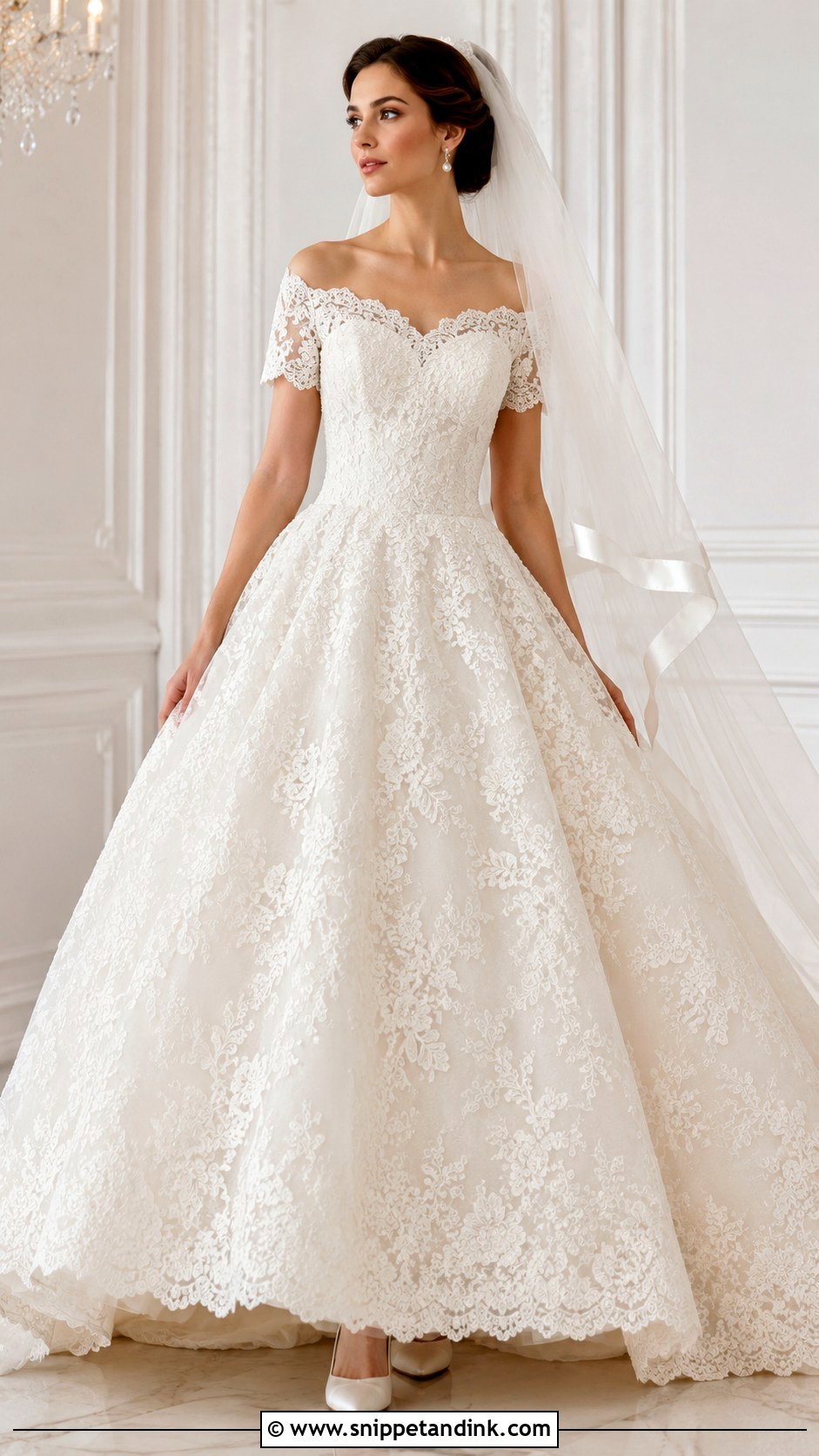
Alençon lace is outlined with a raised cord, which gives each motif a defined edge and a little shadow. That depth photographs well in close-ups and holds up to beading. It’s also sturdier than Chantilly, so I recommend it to brides who plan to dance hard. Because it looks formal, it settles naturally into ballrooms and historic houses. A satin-edged veil picks up the cord line without adding more lace on top of lace.
16. Lace Ballgown Wedding Dress With Cathedral Train
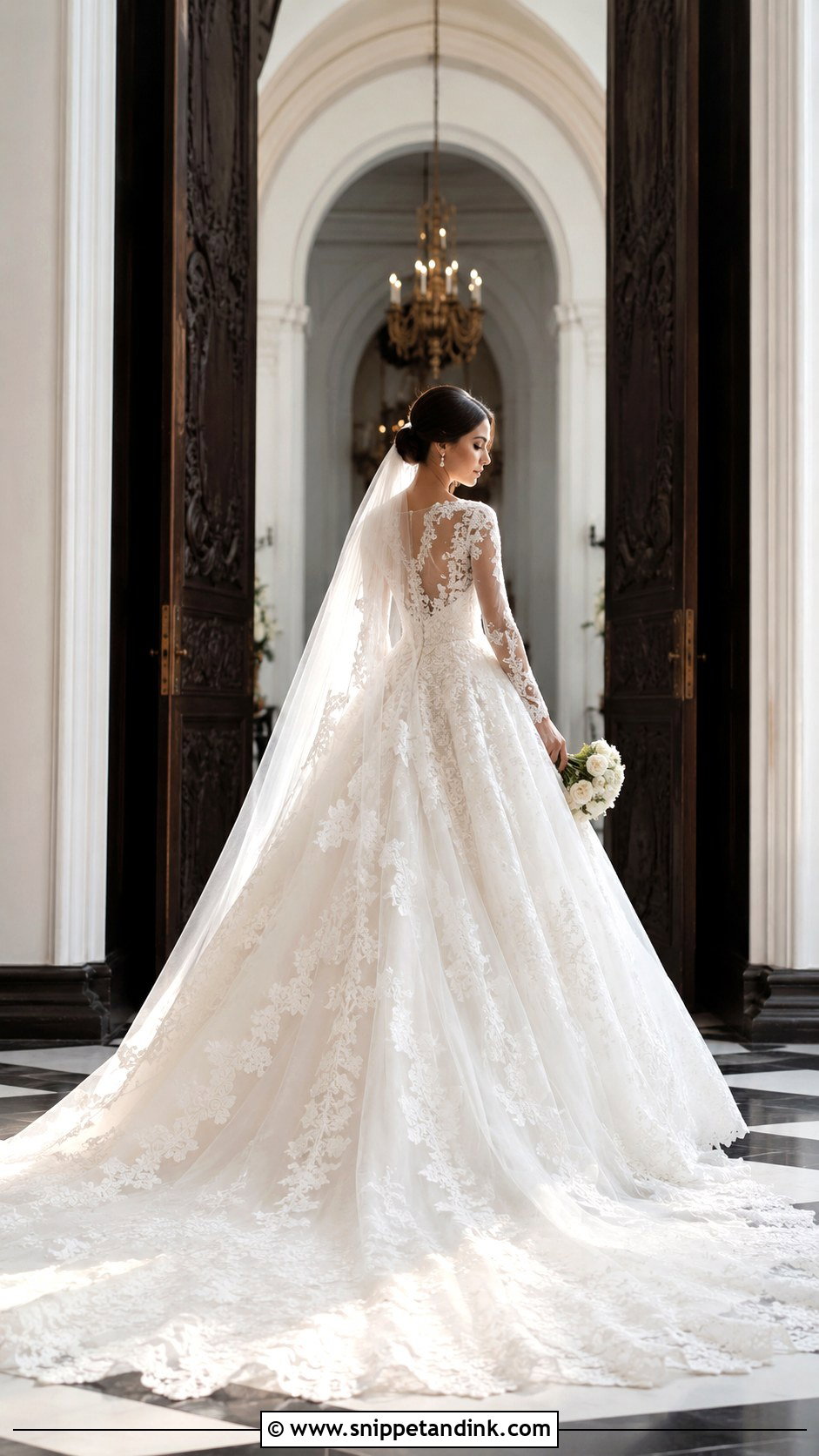
A cathedral train stretches well behind you, and the aisle has to be long enough to let it lie flat or the effect is lost. I’d measure the aisle before committing. Lace appliqué along the train makes the back view count, so let a photographer catch it from behind during the processional. Then it needs bustling. A French bustle tucks the train under in soft folds; an American bustle lifts it up over the skirt. Practise it at your last fitting with whoever will do it on the day.
17. Lace Ballgown Wedding Dress With Detachable Sleeves
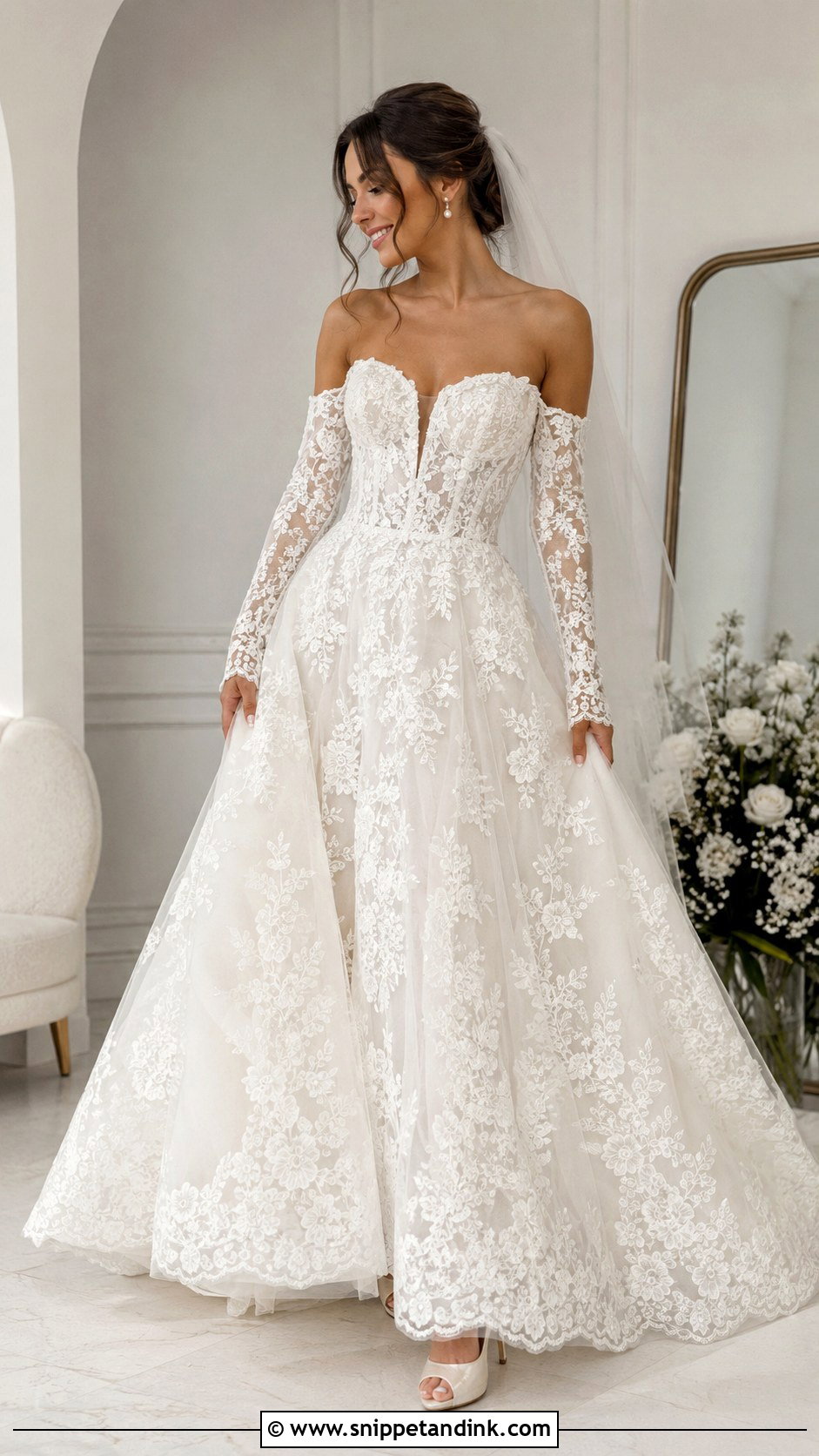
Detachable sleeves attach with tiny hooks, snaps or thread loops at the shoulder, and that attachment is the part to inspect. Good ones disappear into the lace; cheap ones show as a ridge in photos. They give you coverage for a religious ceremony and bare arms for dancing without a full outfit change. Ask for the sleeves to be cut from the same lace batch as the gown, since lace dyed at different times can differ by a shade. A bridesmaid should practise removing them, gently, before the day.
18. Lace Ballgown Wedding Dress With Bow
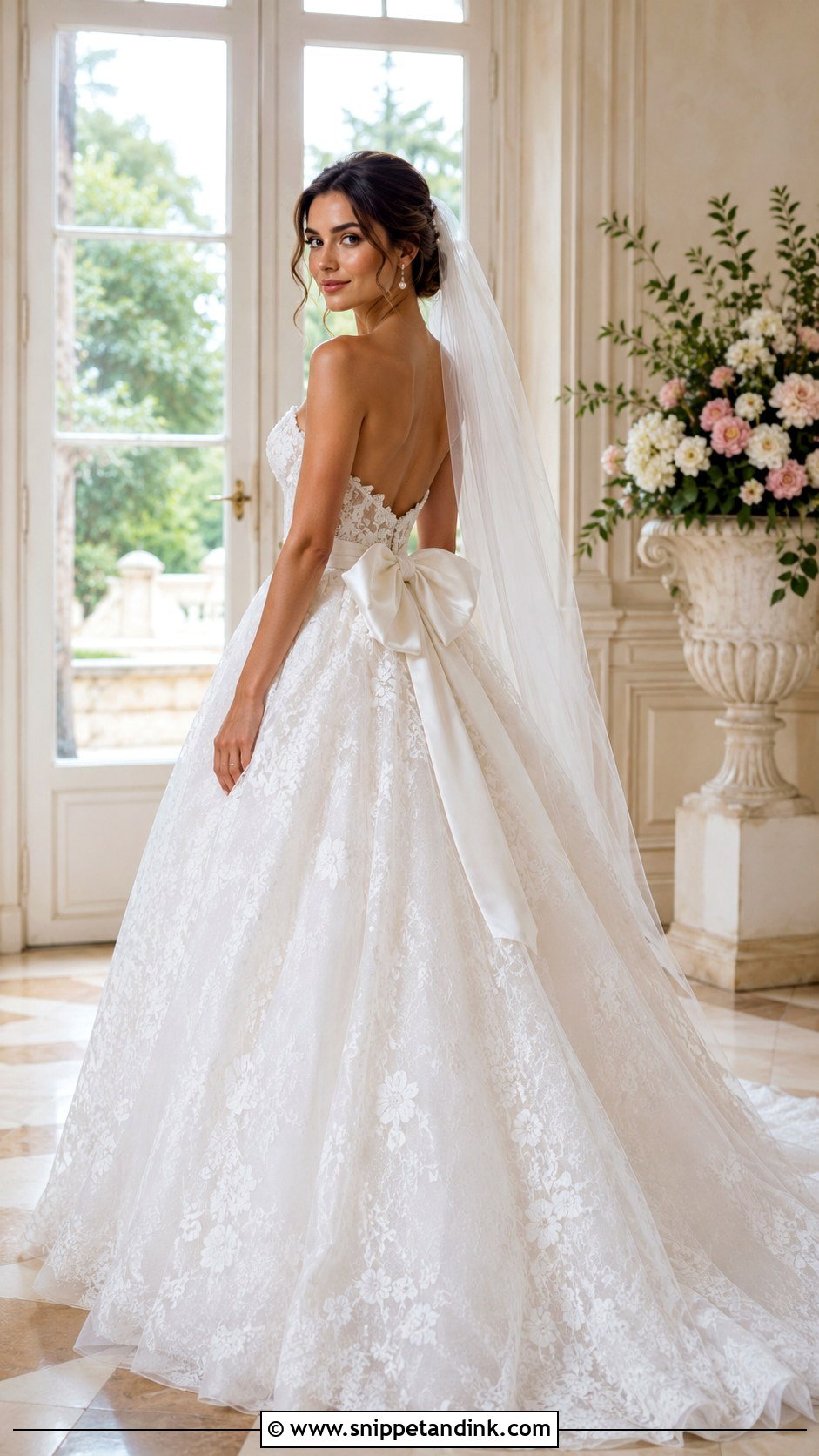
Placement is everything with a bow. At the back waist, it sharpens the waistline and gives guests something to look at during the vows. On the shoulder, it shifts the focus to your face. Large bows can flatten when you sit against a chair back, so I prefer a detachable bow or one with interfacing inside that springs back. Keep everything else plain, from pearl earrings to a clean veil, so the bow stays the single focal point.
19. Lace Ballgown Wedding Dress With Cape
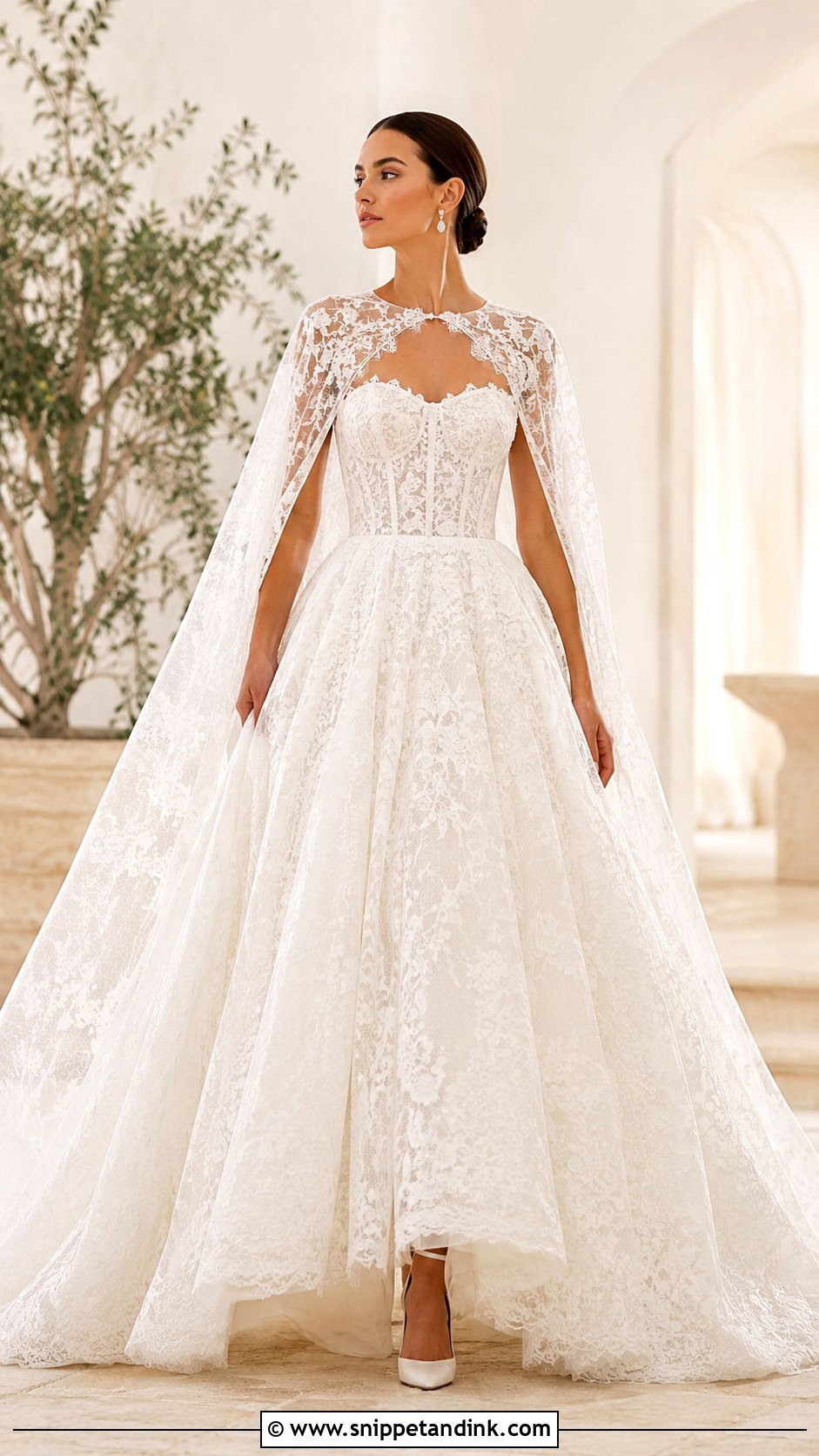
A sheer lace cape floats off the shoulders and trails behind you, and it moves far more than a veil does in a breeze. That is lovely for outdoor portraits and a nuisance in strong wind, so I add small weights or a heavier hem for open-air venues. Check where it fastens: at the shoulder seams it stays put, while a neck clasp can pull the bodice forward. Sleek hair keeps it from tangling. Many capes unhook, which helps once dinner starts and you want your arms free.

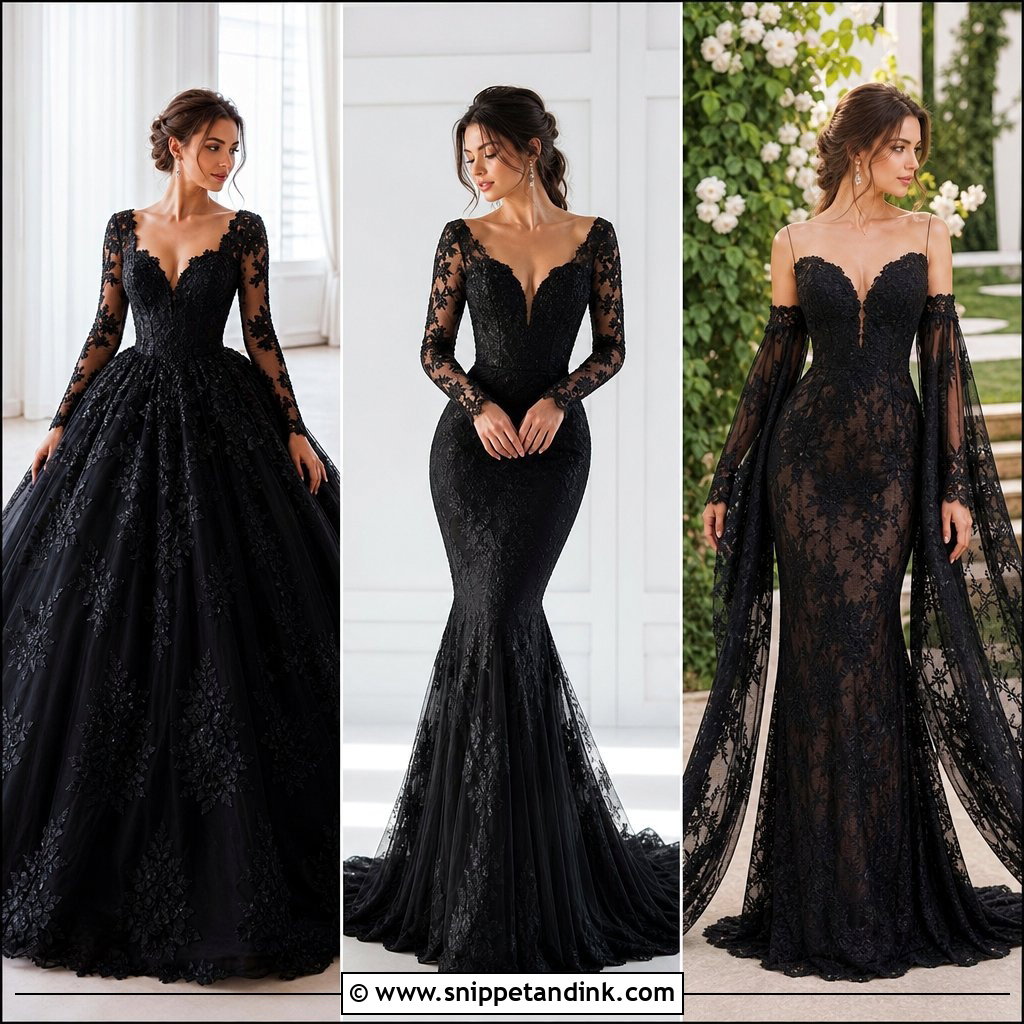
20. Lace Ballgown Wedding Dress With Veil
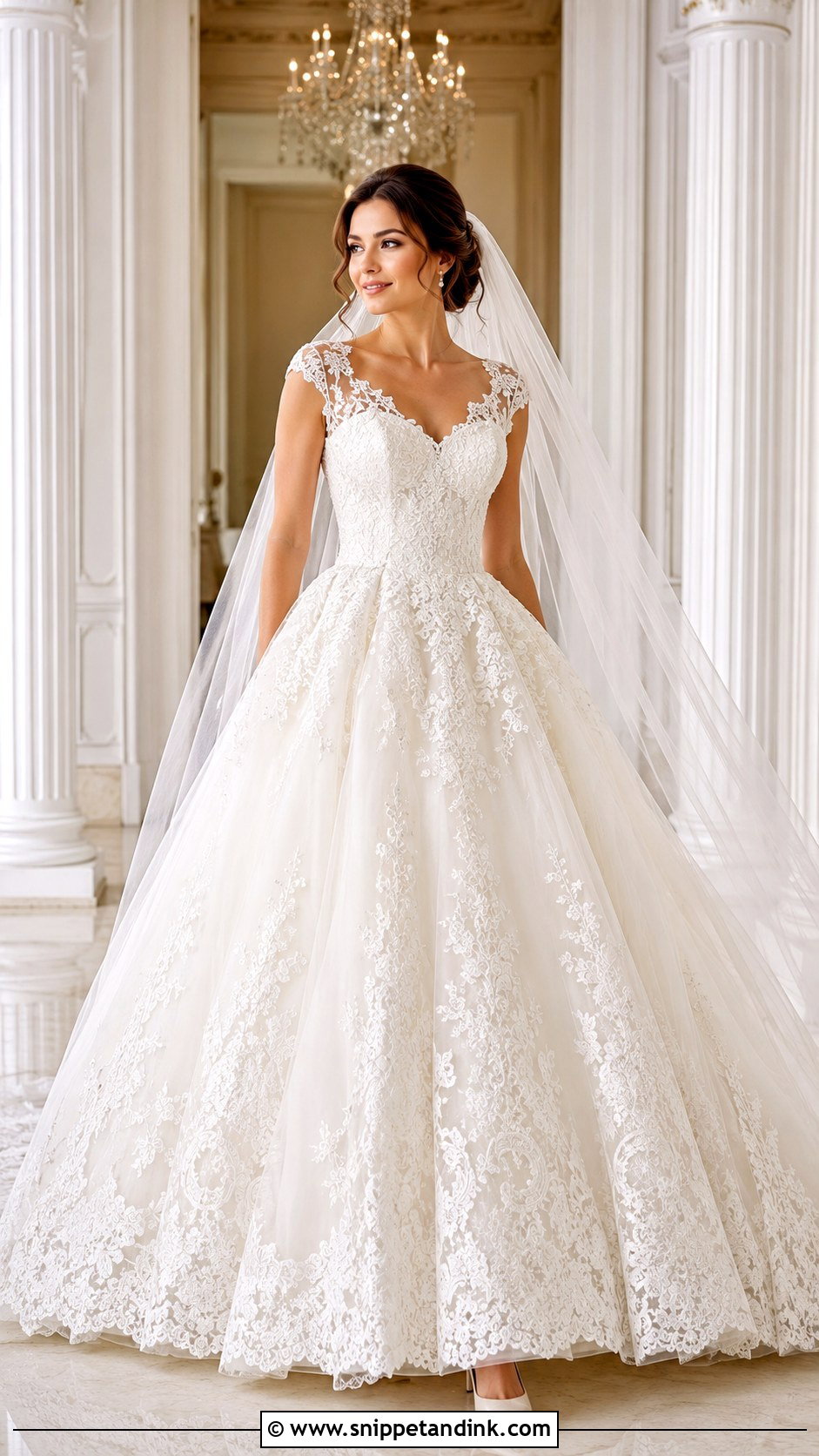
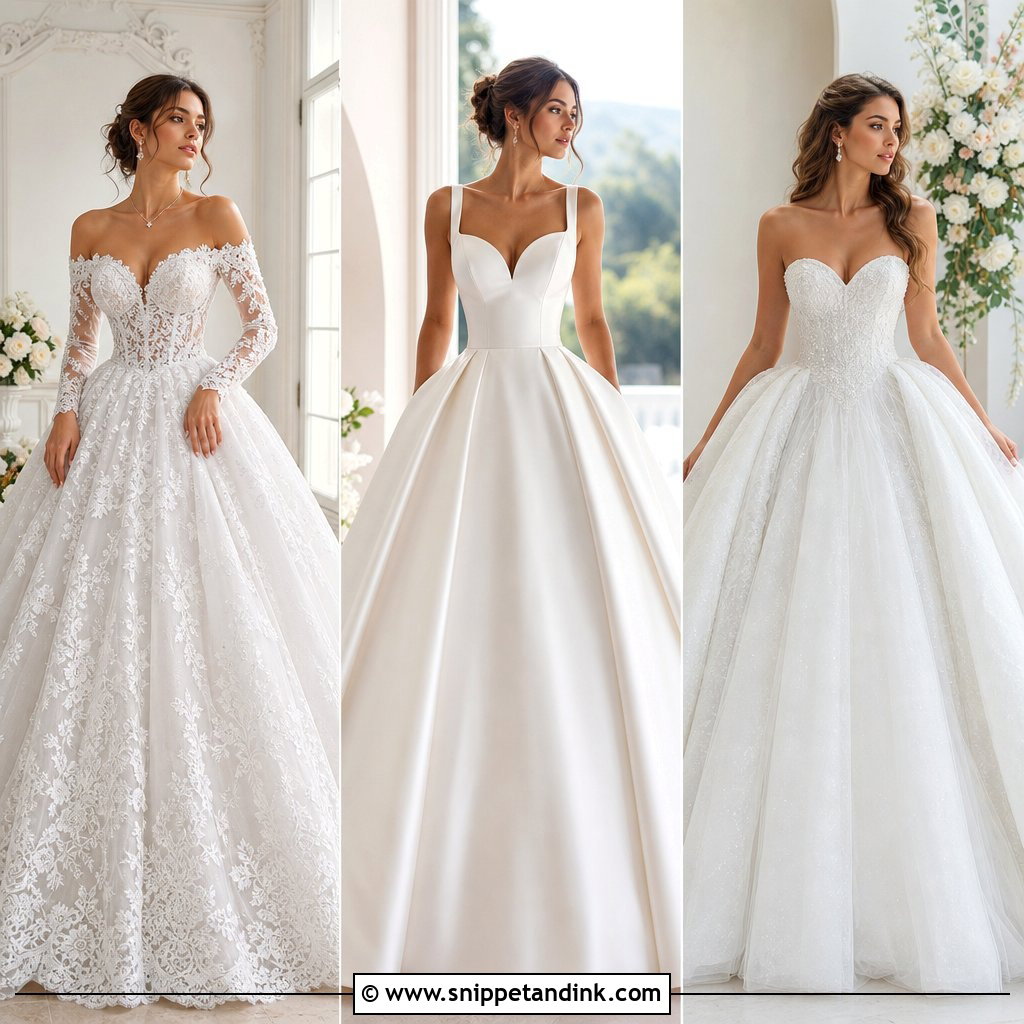
Lace on lace is where most veil choices go wrong. With a heavily patterned gown, a plain tulle veil lets the dress show through; with a simpler lace dress, a lace-edged veil adds detail where the bodice has less. Cathedral length makes a ceremony statement but drags on grass and gravel. Fingertip is easier to wear all evening. I always ask brides to bring the veil to a fitting, because how it sits with the train and the bodice’s back detail only shows when they’re seen together.
21. Plus Size Lace Ballgown Wedding Dress
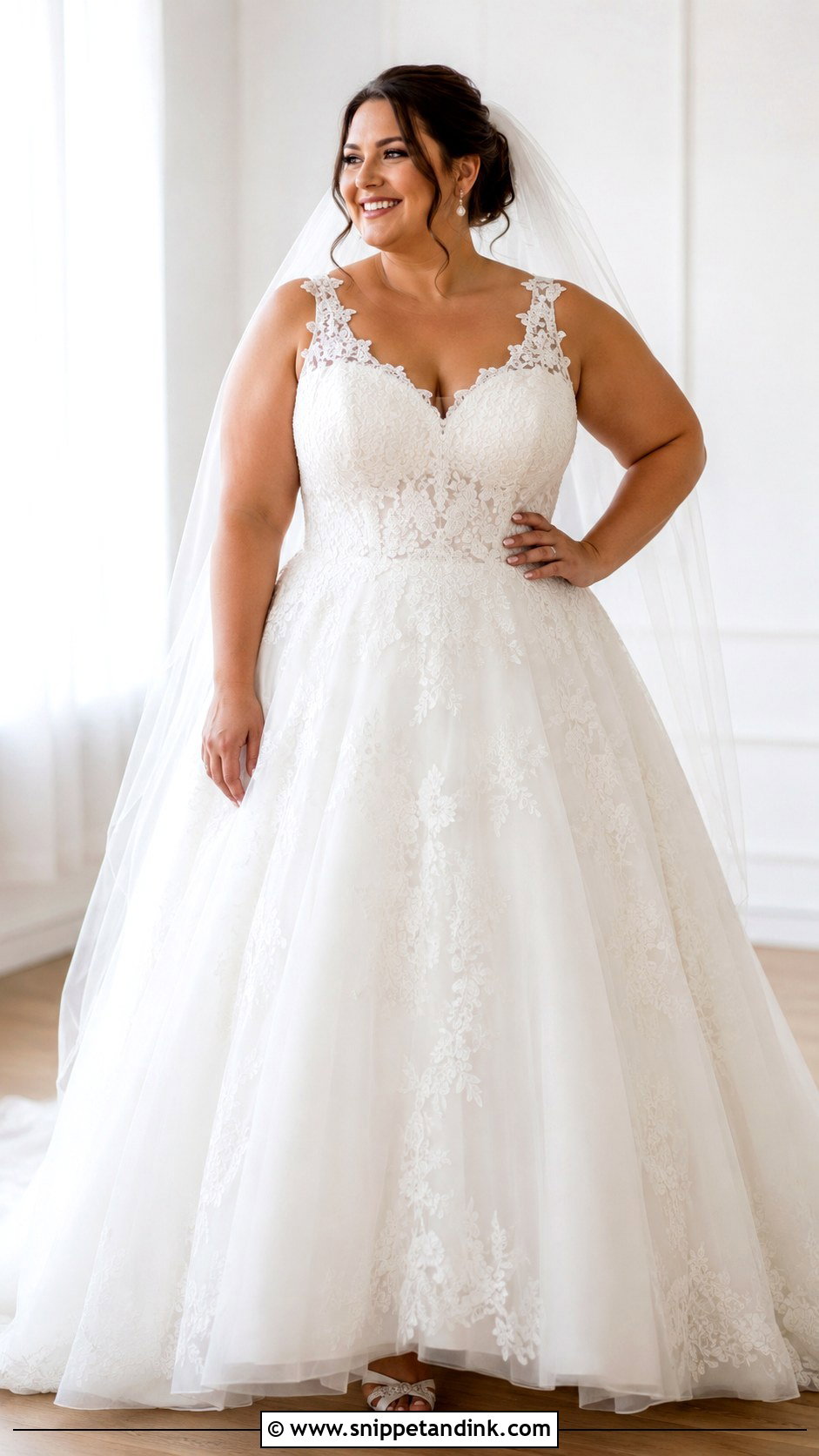
Structure is what makes a full skirt work on a curvy body. I look for a bodice with built-in cups and enough boning to hold shape across the back, plus a waistline placed at your natural waist instead of where a size chart puts it. Lace placement can lead the eye to your favourite feature, the neckline, the sleeves or the back. The skirt itself gives room through the hips, so movement is easy. Supportive shoes matter more than they look, given how long you’ll stand.
22. Petite Lace Ballgown Wedding Dress
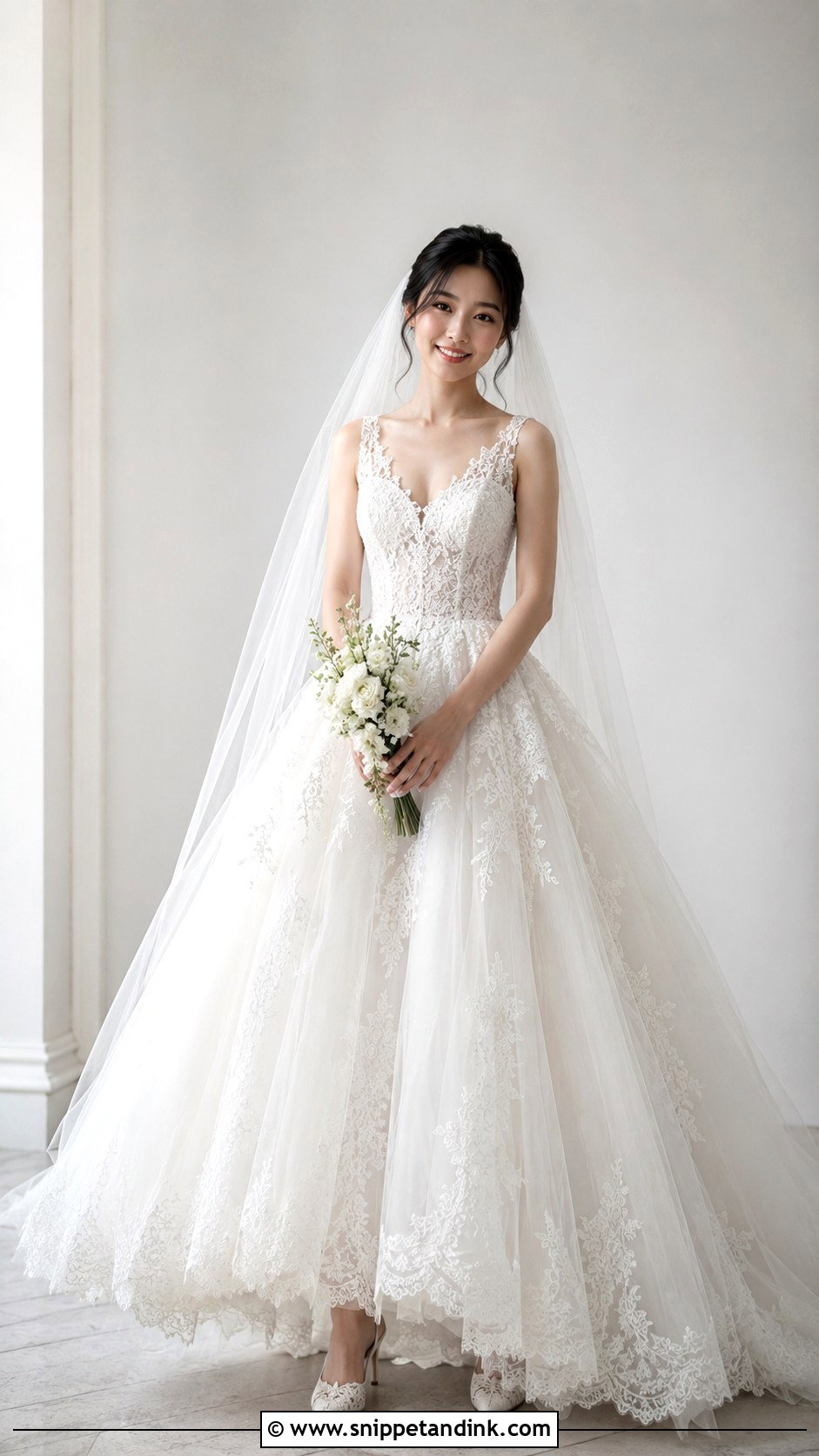
A petite lace ballgown wedding dress comes down to proportion. Shorter brides can absolutely wear volume, but the bodice length usually needs shortening so the waist sits in the right place, and the hem has to be taken up from the waist rather than the bottom if the lace edge is scalloped. Vertical lace placement and a slightly raised or basque waist lengthen the frame. Skip skirts built with lots of heavy layers. Pointed-toe shoes and a narrow bouquet keep lines long.
23. Vintage Lace Ballgown Wedding Dress
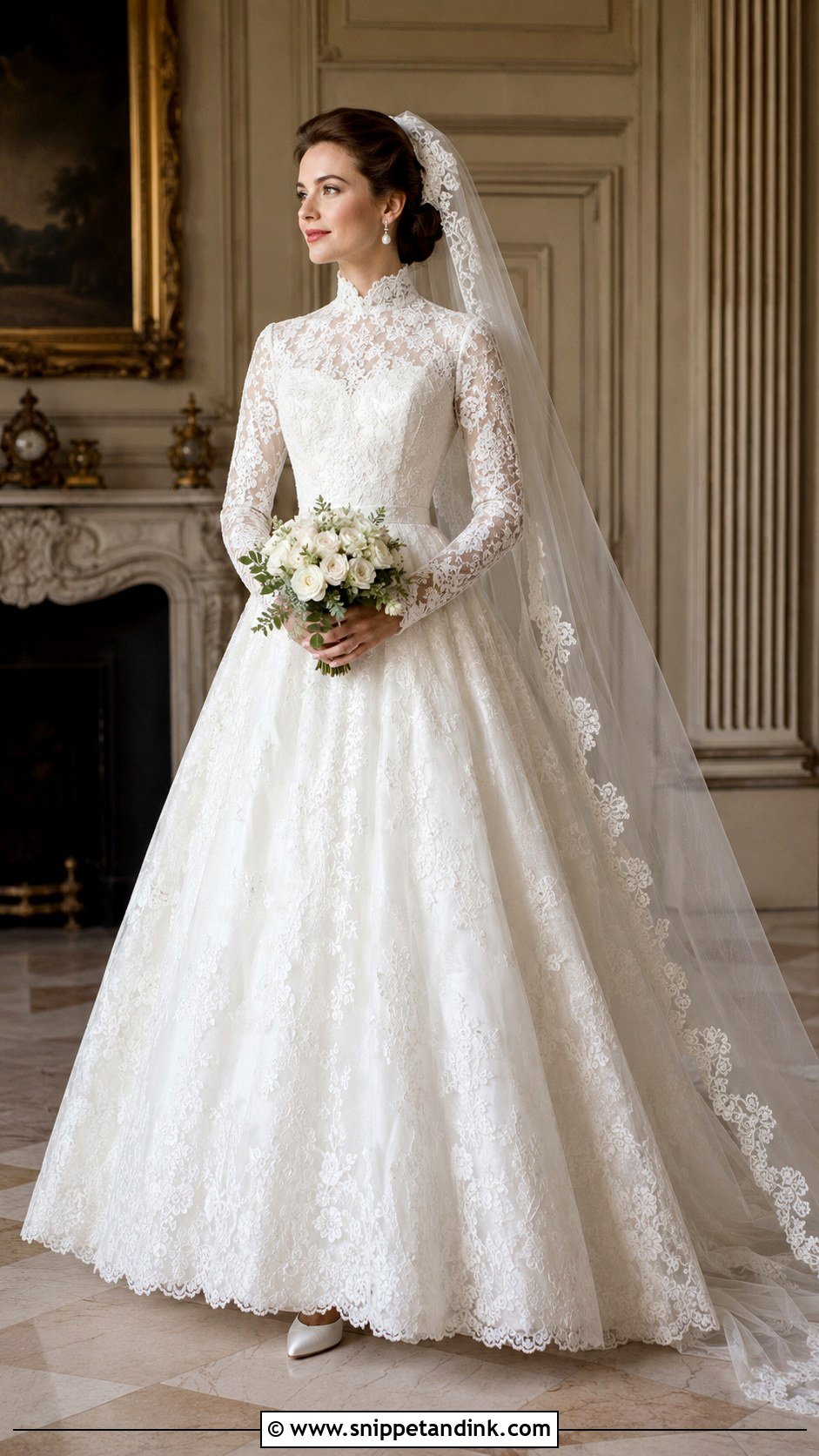
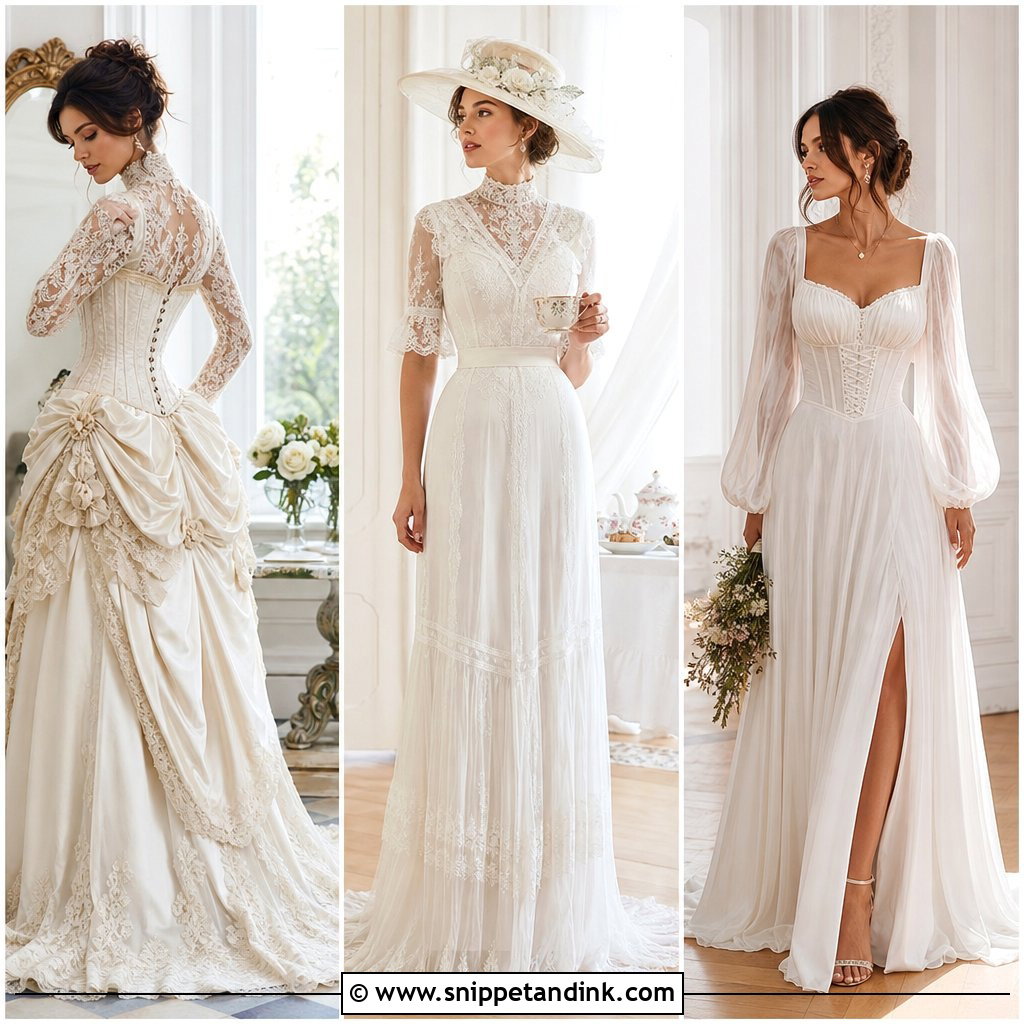
Vintage feel comes from details: covered buttons down the back, corded lace, long fitted sleeves and soft ivory instead of bright white. Choose two or three of them rather than all of them, or you start looking like you’re in period costume. A real family veil or lace-edged heirloom is a nice way to bring history in, but older tulle can be fragile, so get it cleaned and checked well ahead. Fresh, light makeup keeps the look tied to the present.
24. Modern Lace Ballgown Wedding Dress
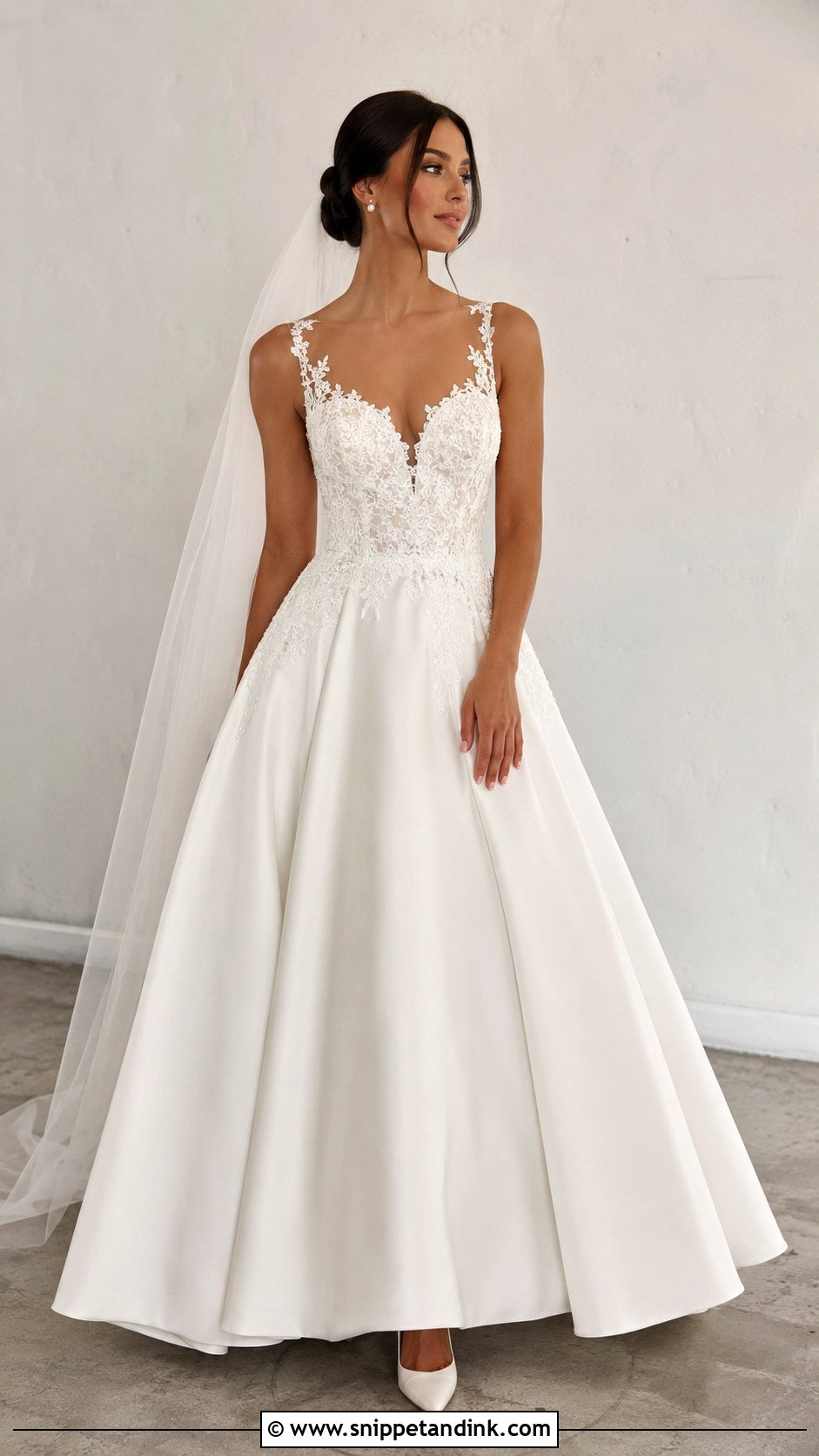
Modern ballgowns keep the volume and strip back the decoration. That might mean lace used only on the bodice, exposed seams on a clean skirt, or a sculpted neckline with sparse appliqué. My rule is one strong idea per dress; mixing a structured corset with a busy lace skirt and a cape cancels everything out. Sleek hair and sharp heels suit the cleaner lines. Going veil-free can look intentional here too.
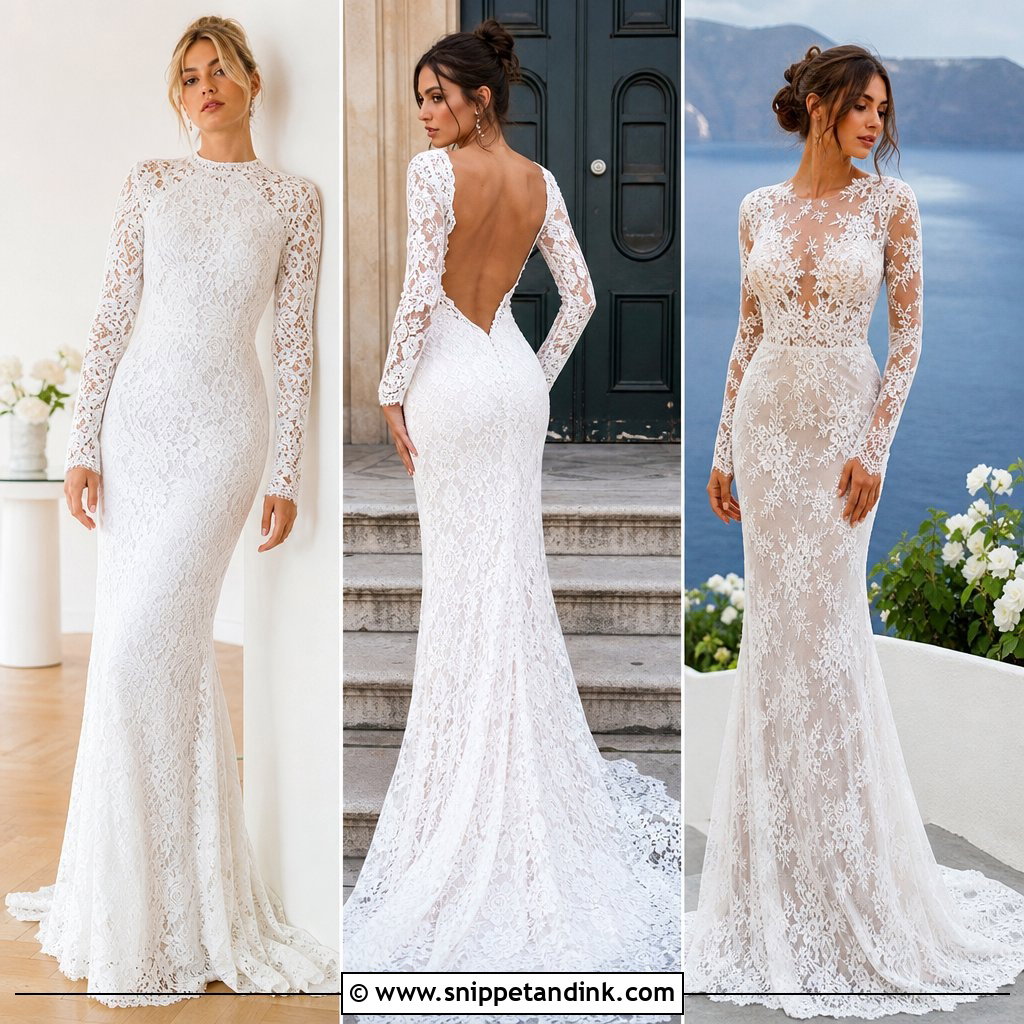
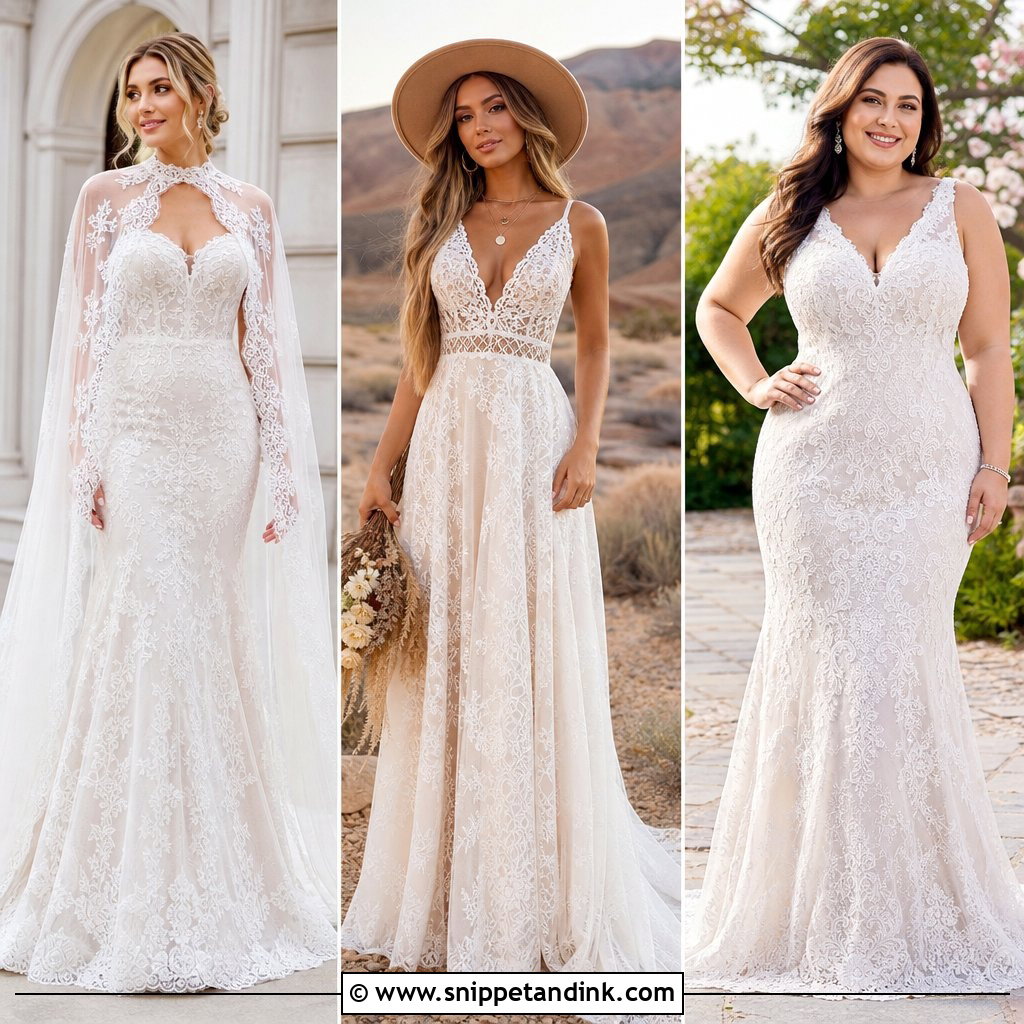
25. Simple Lace Ballgown Wedding Dress
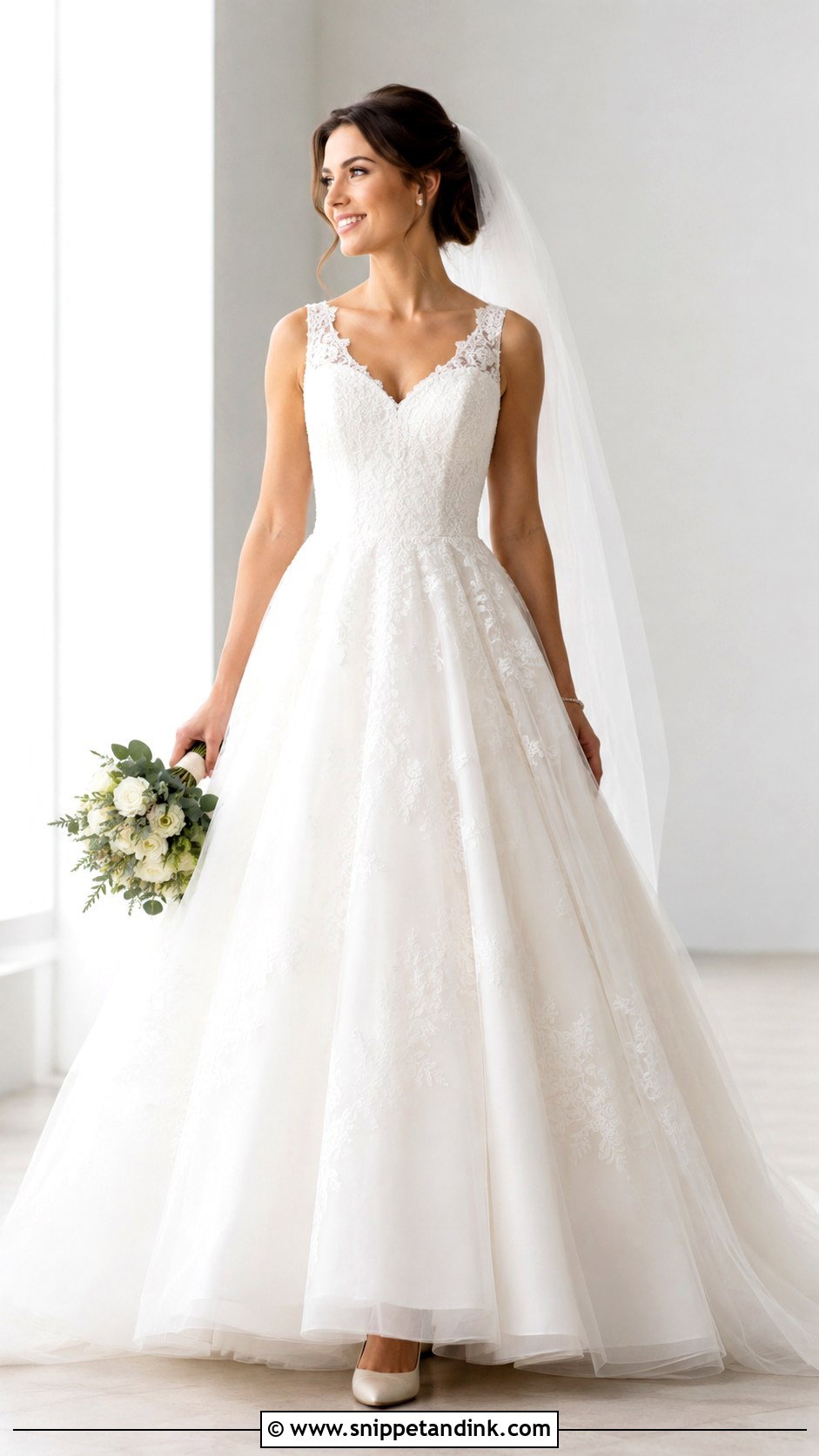
A plain bodice and a soft skirt with light lace is the gown I’d show a bride who wants a ball gown without drama. It is also the most adaptable: it can go formal with a long veil or relaxed with flowers in the hair. Light lace is easier to alter, since there’s less appliqué to move when a seam is adjusted. Pearl studs, a smooth veil and a simple bouquet keep the shape front and centre. If trends make you nervous, this is the safest bet in photos years from now.
Living in a Full Skirt for Twelve Hours
A ball gown feels wonderful for the first walk down the aisle and very different at hour eight. Most of what makes it bearable is decided at fittings, so I treat these as part of choosing the dress.
Petticoats, hoops and sitting down
Some gowns build volume with layers of tulle; others use a separate petticoat or a hoop. Hoops give a perfect shape but tilt up at the front when you sit, so I show brides how to lift the back of the skirt and sit forward on the chair. Layered tulle sits more naturally but adds warmth. If your venue is hot, ask whether one petticoat layer can come out.
The bathroom question
Nobody likes talking about it, and everyone needs a plan. The easiest method is to face the toilet, gather the skirt in front of you, and have one person help hold the back layers. Try it at the final fitting. It sounds silly until you’re doing it for the first time in a small venue bathroom.
A small repair bag for lace
- A needle threaded with ivory or matching thread, plus a few safety pins.
- Clear nail varnish to stop a run in tulle from spreading.
- Spare beads or buttons if the shop provided them.
- Chalk or a white stain pen for marks on the hem.
If lace tears, pin it from the inside and don’t pull at loose threads. A good seamstress can repair it properly after the wedding.
Which Neckline and Lace Suit Your Ball Gown?
Every gown in this list shares the same full skirt, but the neckline, the lace type and the waist decide how each one actually wears. Strapless and sweetheart suit brides who want shape at the bust; sleeves and high necks give coverage; a basque waist helps shorter torsos. Look at the whole outfit, including veil, shoes, hair and bouquet, before you decide. A lace ball gown that fits your proportions and your venue will feel right long after the photos are printed.
You'll Like These Ideas:




Leave a Reply