
A Western suit lives or dies on restraint. Most grooms who sit down with me want boots, a bolo, an embroidered shirt and a hat all at once, and we usually end up choosing one or two. Put a well-cut jacket and trousers first, then add cowboy boots and a single statement piece, and the outfit reads as a sharp suit with roots instead of a costume. Color helps a lot: tan, brown, navy, olive, rust and cream all sit naturally against timber barns, open fields and red rock. Below are twenty complete looks for the groom, a groomsman, or a guest, with notes on season, fabric and dress code for each.
Tailoring Suit Trousers to Sit Over a Boot Shaft
Most off-the-rack suit trousers are cut for dress shoes. Put them over cowboy boots and the hem catches on the top of the shaft, so the leg bunches at the ankle and the crease breaks in two places. Fixing that is the single most useful thing a tailor can do for a Western groom.
- Bring the actual boots to every fitting. Boot heels are taller than most dress shoes, and the hem has to be measured with them on.
- Ask about the leg opening. A slightly wider hem, the way bootcut jeans are shaped, lets the trouser drop over the shaft instead of riding on it. Many tailors can let out a little width if there’s seam allowance.
- Angle the hem a touch longer at the back so it reaches toward the heel while the front rests lightly on the vamp.
- Sit down during the fitting. If the trouser rides up and shows the boot shaft above the hem, you need a fraction more length.
- Groomsmen in borrowed or rented suits should do this too; a rental cut for oxfords will look short over boots.
Jackets need less change, but check the sleeve. With a bolo and an open-collar look, a clean quarter inch of shirt cuff shows the outfit was considered, not thrown together.
1. Tan Western Wedding Suit With Brown Cowboy Boots
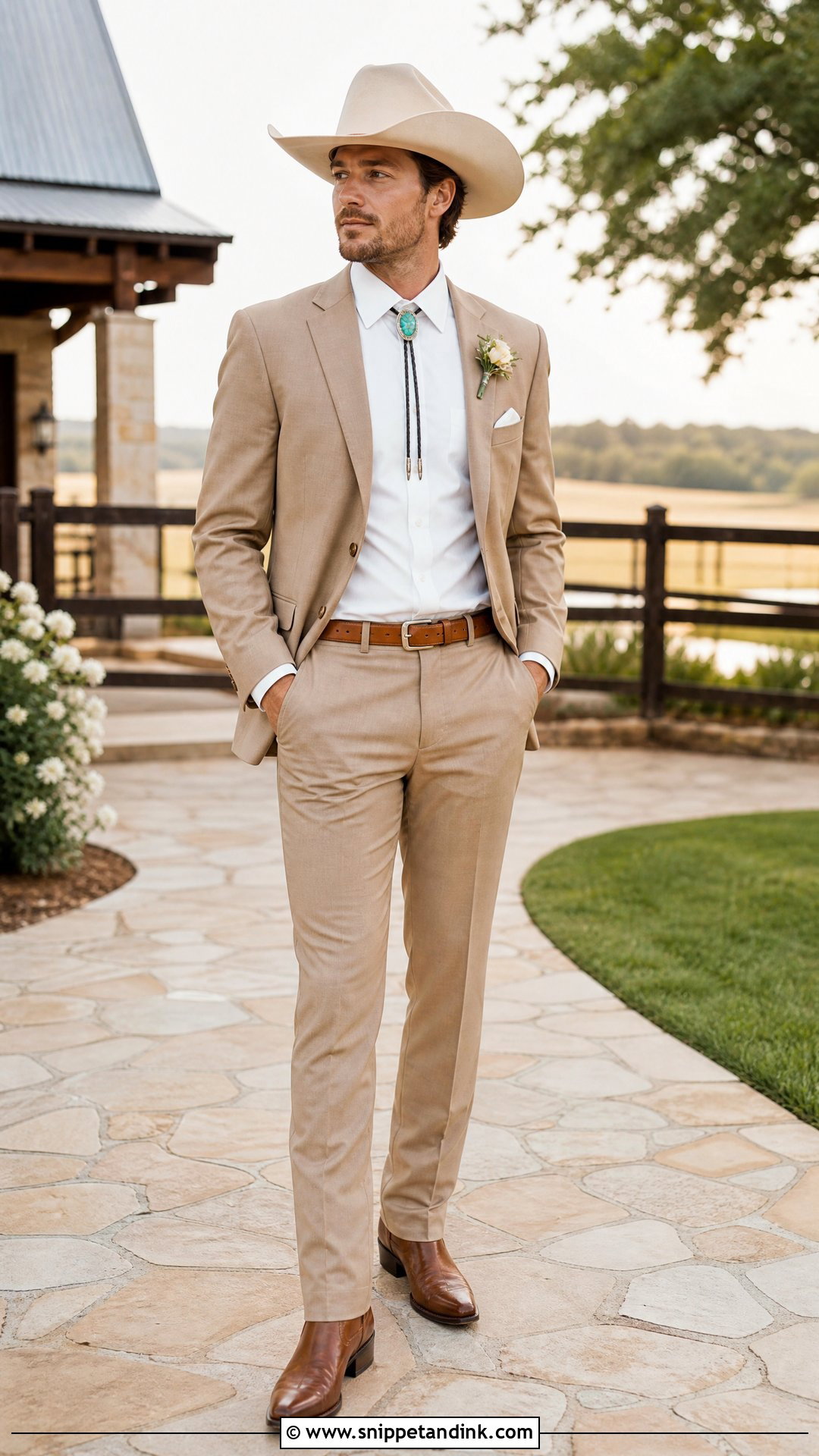
Tan is the suit I’d hand most grooms for a daytime ranch ceremony. In lightweight wool or a cotton blend it holds its shape in the heat, and a crisp white shirt keeps it clean. Medium-brown boots with a plain toe and a matching belt anchor the color, while a turquoise or silver bolo puts the Western note up near the face where photos focus. Add a cream pocket square, and a light felt hat only if the couple has said hats are welcome. The trouser hem should rest on the boot with one soft fold, never a pile of fabric at the ankle.
2. Black Western Wedding Suit With Embroidered Shirt
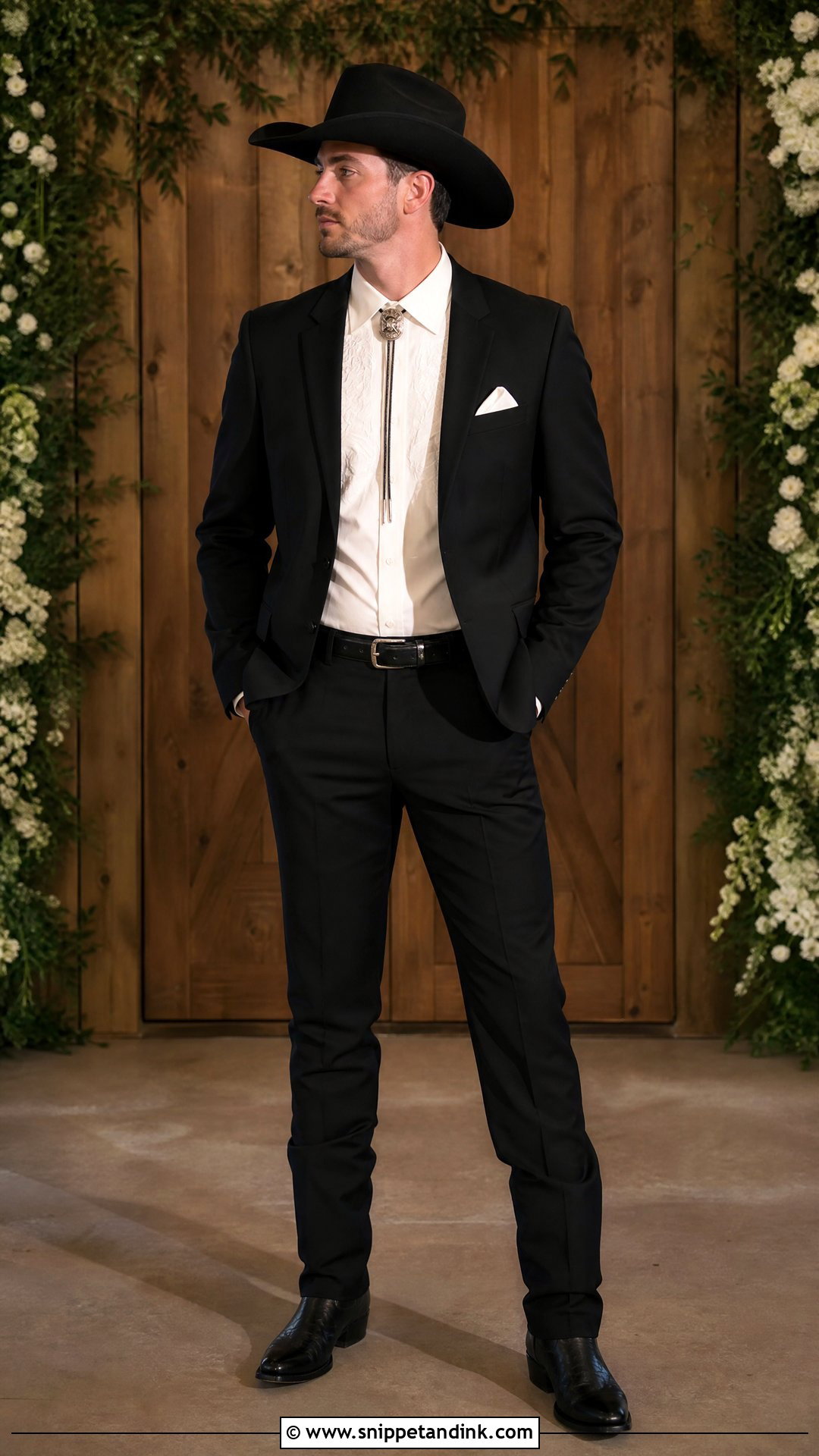
Black is the most formal starting point, and it handles one bold Western piece well. Here that piece is the shirt: black or ivory with restrained embroidery across the yoke. Keep the stitching small; large, colorful embroidery under a black jacket can look like a stage outfit. Black boots and a smooth black belt make one unbroken line. A silver bolo, a black felt hat and a plain pocket square finish it. I like a slim cut on black because it photographs crisply, but the jacket must close without pulling. It suits an evening ceremony or a dressy barn.
3. Brown Three-Piece Western Wedding Suit
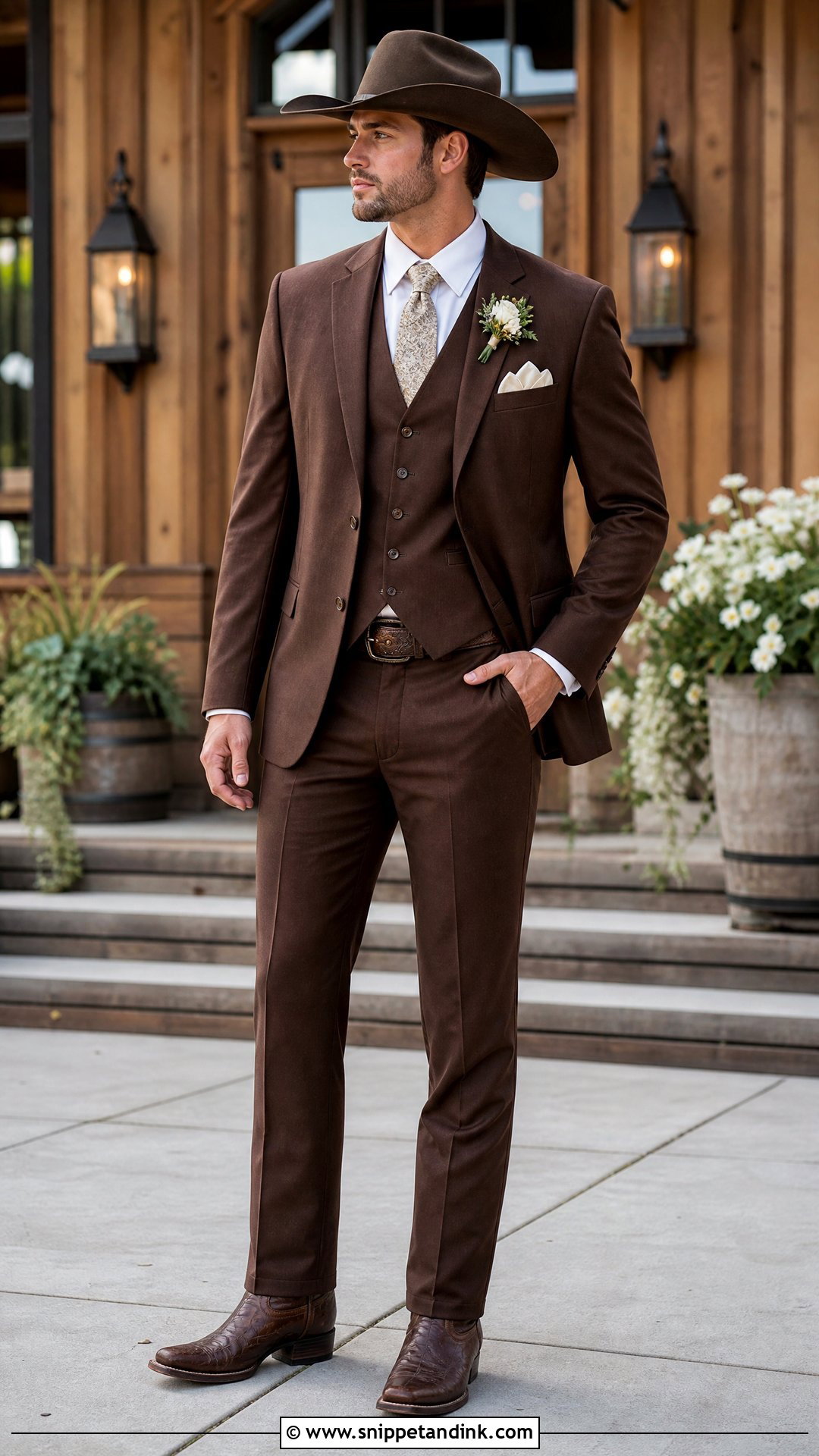
Brown wool with a matching vest is the classic groom’s three-piece, warm against wood and stone. Wear it with an ivory shirt, a patterned tie and dark-brown boots. A tooled belt is a nice private detail, though the jacket will cover most of it. An antique-style tie bar, a cream pocket square and a chocolate felt hat finish the outfit. The vest earns its keep at the reception: when the jacket comes off, you still look dressed. Choose lightweight wool for mild weather and tweed when it’s cold. It’s a traditional look that doesn’t need extra cowboy props to work.
4. Navy Western Wedding Suit With Bolo Tie
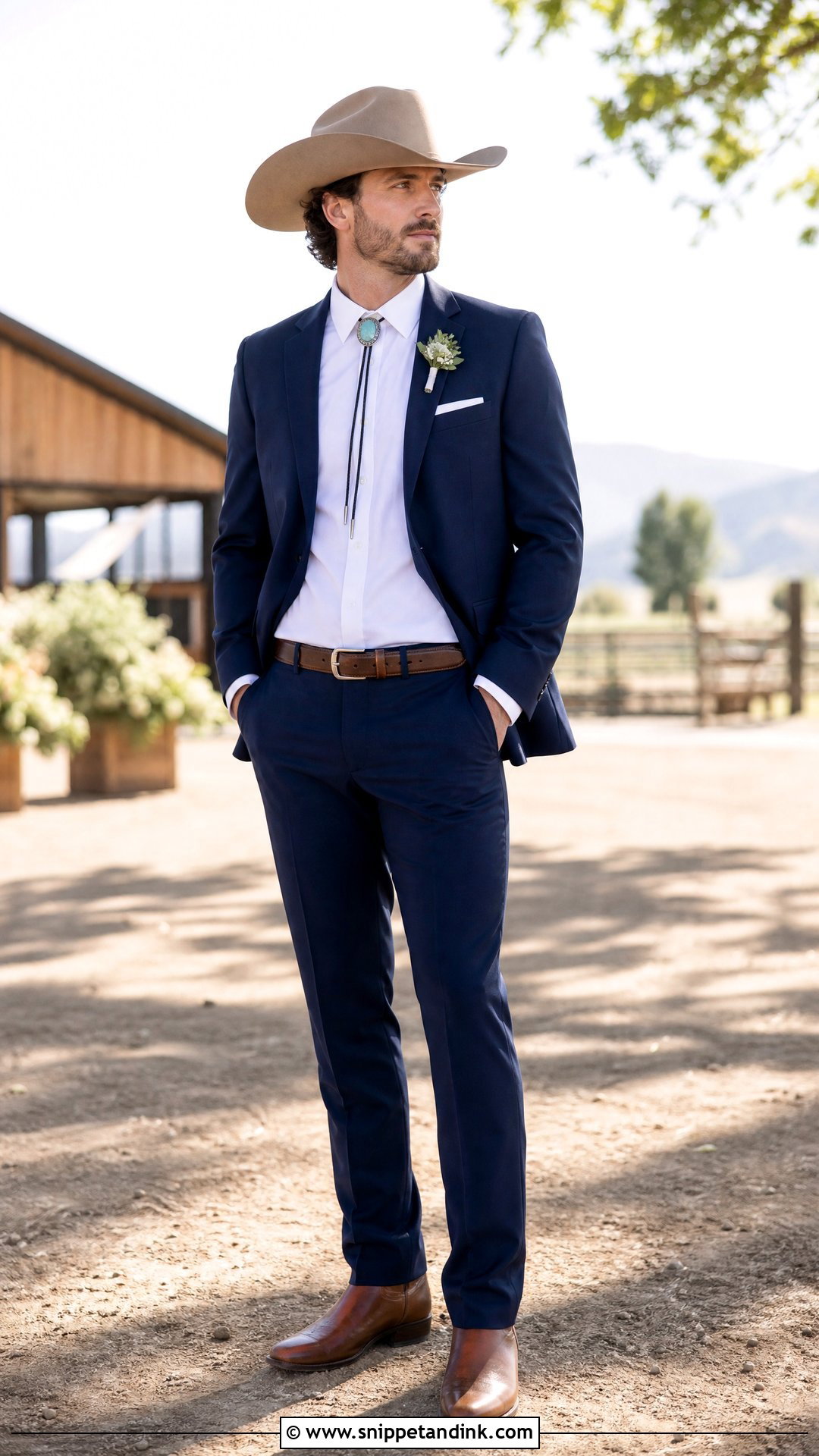
Swapping the necktie for a silver bolo tie is the simplest Western move you can make on a navy suit. I pick a slide with a restrained stone or engraving, turquoise, onyx or plain metal, and slide it up so it sits where a tie knot would, just below the collar button. Medium-brown boots and a matching belt warm up the navy. A white pocket square keeps it fresh, and a tan felt hat can come out for outdoor portraits. With a bolo this visible, skip the embroidered shirt and the big buckle. Navy covers a lot of venues, from ranch lawns to country clubs.
5. Olive Western Wedding Suit With Suede Boots
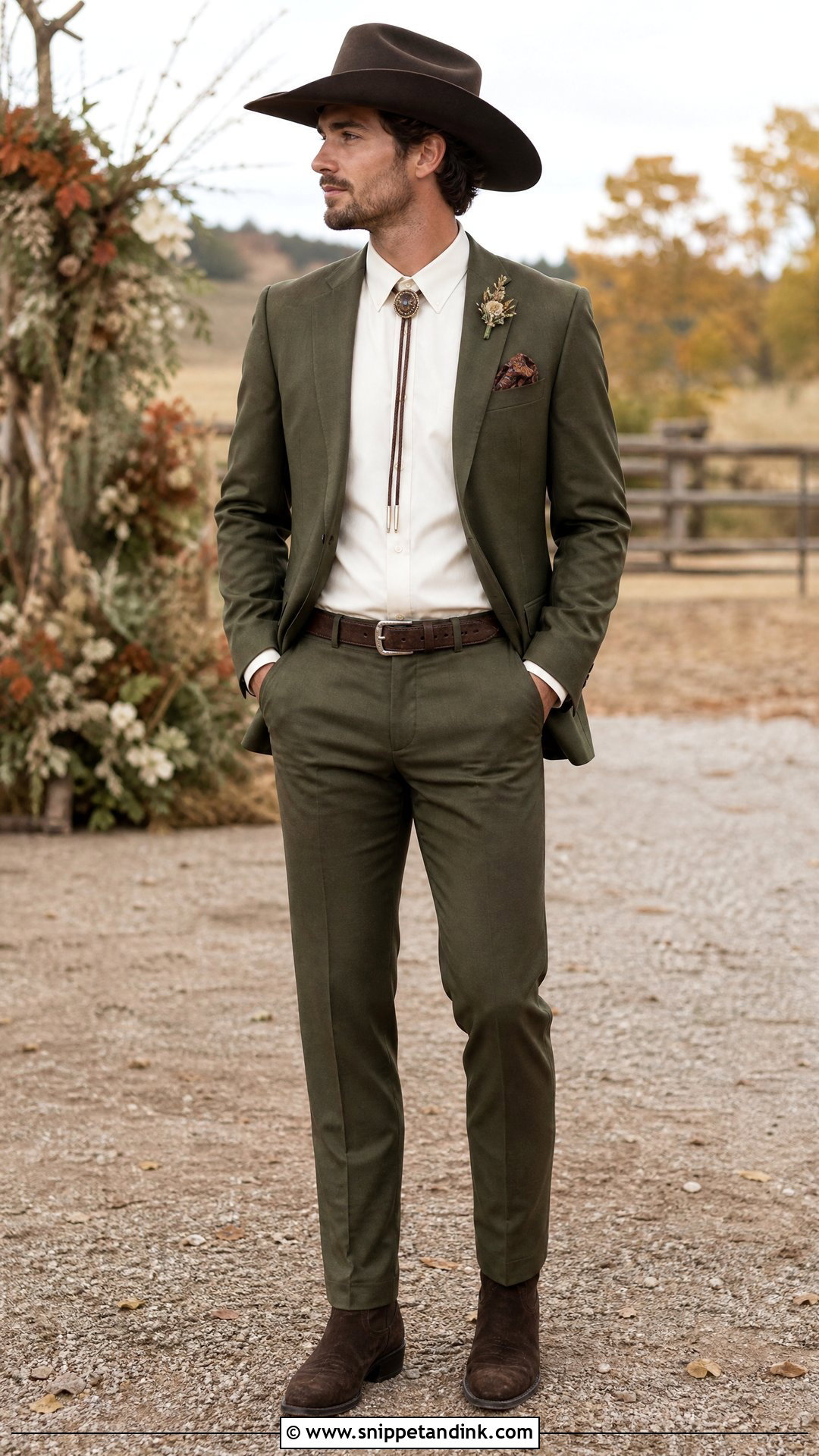
Olive blends into natural surroundings in a way brown and navy don’t, so it looks chosen rather than default. Pair an olive suit with a soft ivory shirt and a dark-brown knit tie or leather bolo. Chocolate suede boots add texture without stark contrast; a suede or smooth belt with a plain buckle goes with them. A pocket square mixing cream, rust and olive pulls the palette together quietly. The cut needs to be clean and modern, because muted green in a baggy cut drifts toward casual. Add a brown felt hat for a fall wedding in the woods or mountains.
6. Charcoal Tweed Western Wedding Suit
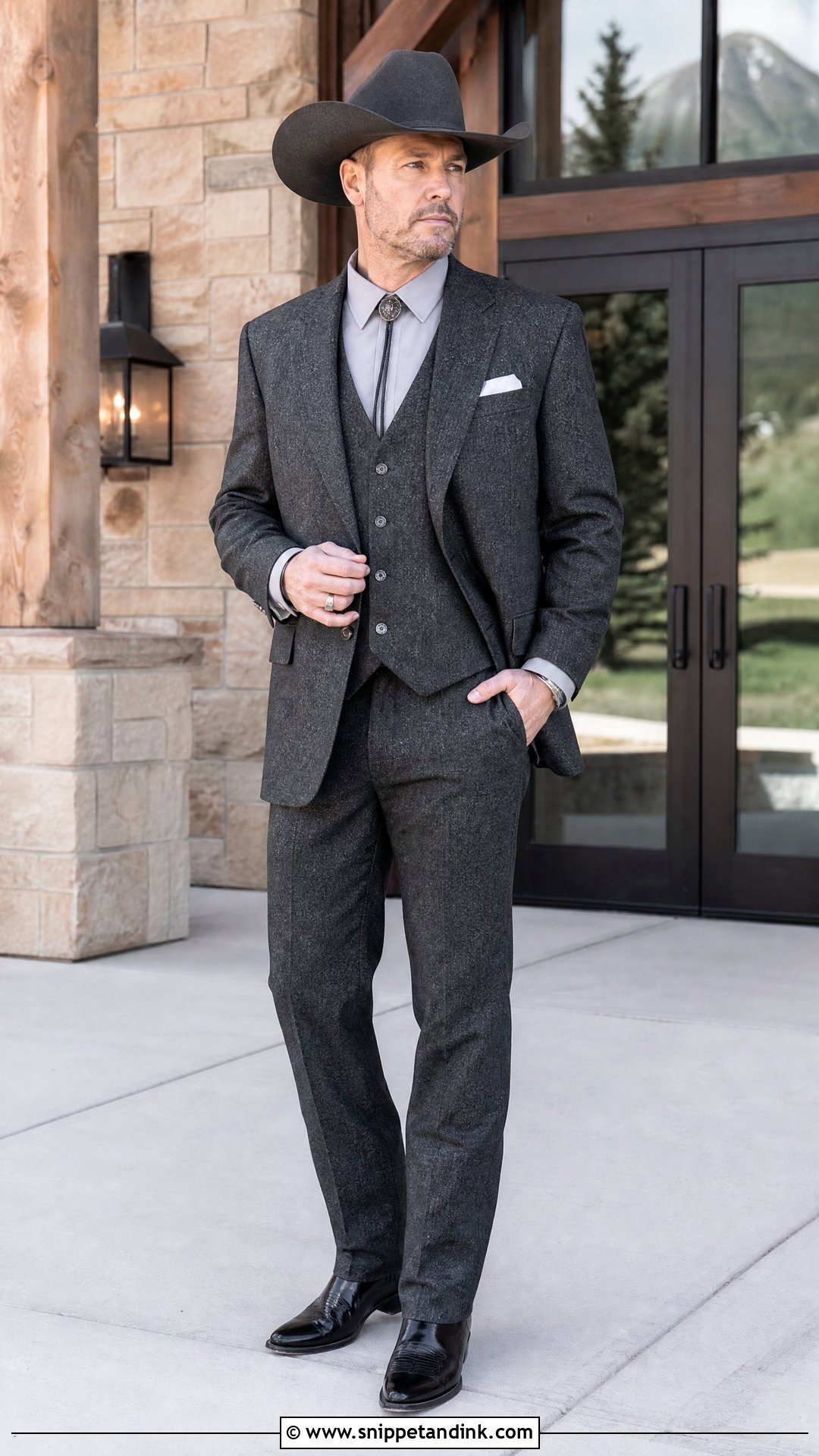
Tweed belongs to cold weather, and it already has plenty of texture, so I keep everything else plain. Choose charcoal with visible weave but little pattern, in two or three pieces, over a white, pale gray or muted blue shirt. A black leather bolo and polished black boots hold the formality. For warmth, the matching waistcoat beats throwing an unrelated coat over the top. A charcoal felt hat, silver cufflinks and a white pocket square complete it. One fitting note: tweed is bulkier than worsted, so allow for that when setting the trouser width over the boot shaft.
7. Cream Linen Western Wedding Suit
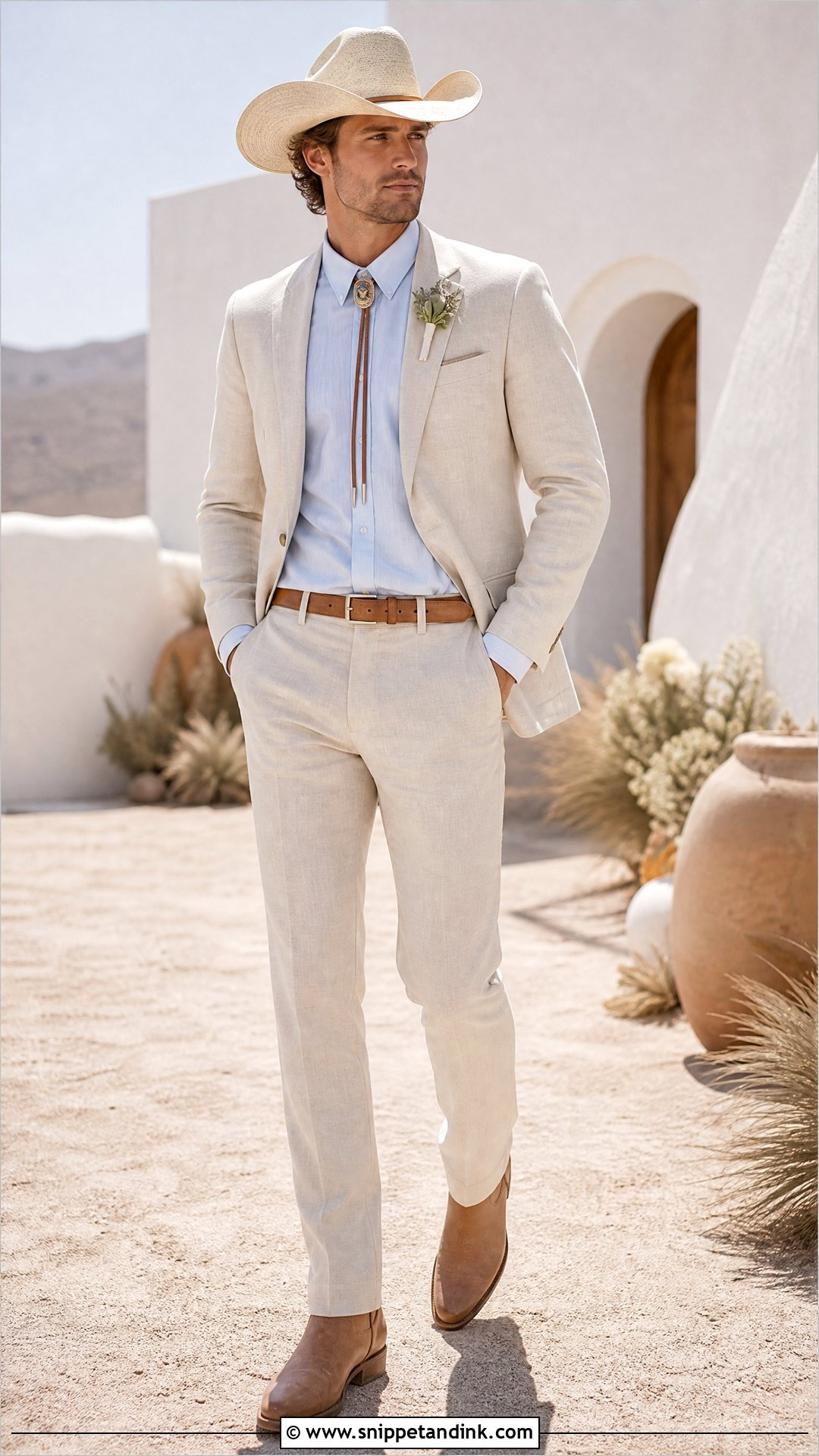
Linen breathes better than anything else on this list, and it wrinkles more than anything else on this list. That’s why I usually suggest a linen blend for grooms: you get the cool, textured look without arriving at photos already creased. Pair a cream suit with a white or pale blue cotton shirt and skip the necktie if the dress code allows; a slim leather bolo gives definition instead. Tan boots, a matching belt and a straw hat make a summer set. Leave room in the leg so the trousers fall smoothly over the shafts. A small boutonniere is plenty of color.
8. Burgundy Velvet Western Wedding Suit
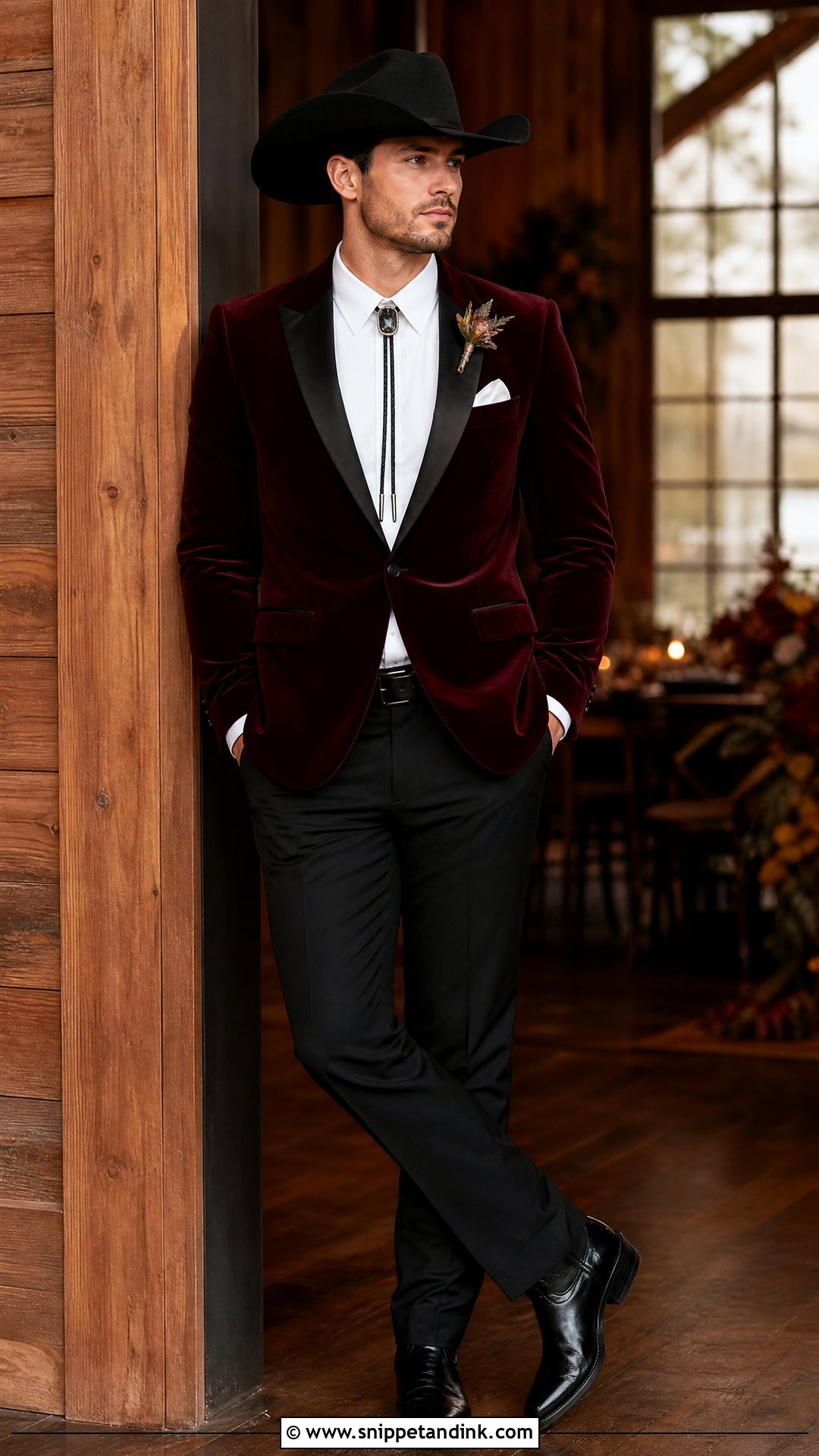
Velvet catches light differently from every angle, which makes a burgundy jacket rich in person and moody in evening photos. I always pair it with black or matching trousers; a full velvet suit is a lot of texture for most men. A crisp white shirt brightens it, a black bolo adds the cowboy reference, and polished black boots and a narrow belt finish the lower half. Wear the black felt hat for portraits and take it off for the ceremony. Keep the cut lean and avoid shine anywhere else. This one is for fall and winter, with dark wood and deep florals.
9. Rust Western Wedding Suit With Ivory Shirt
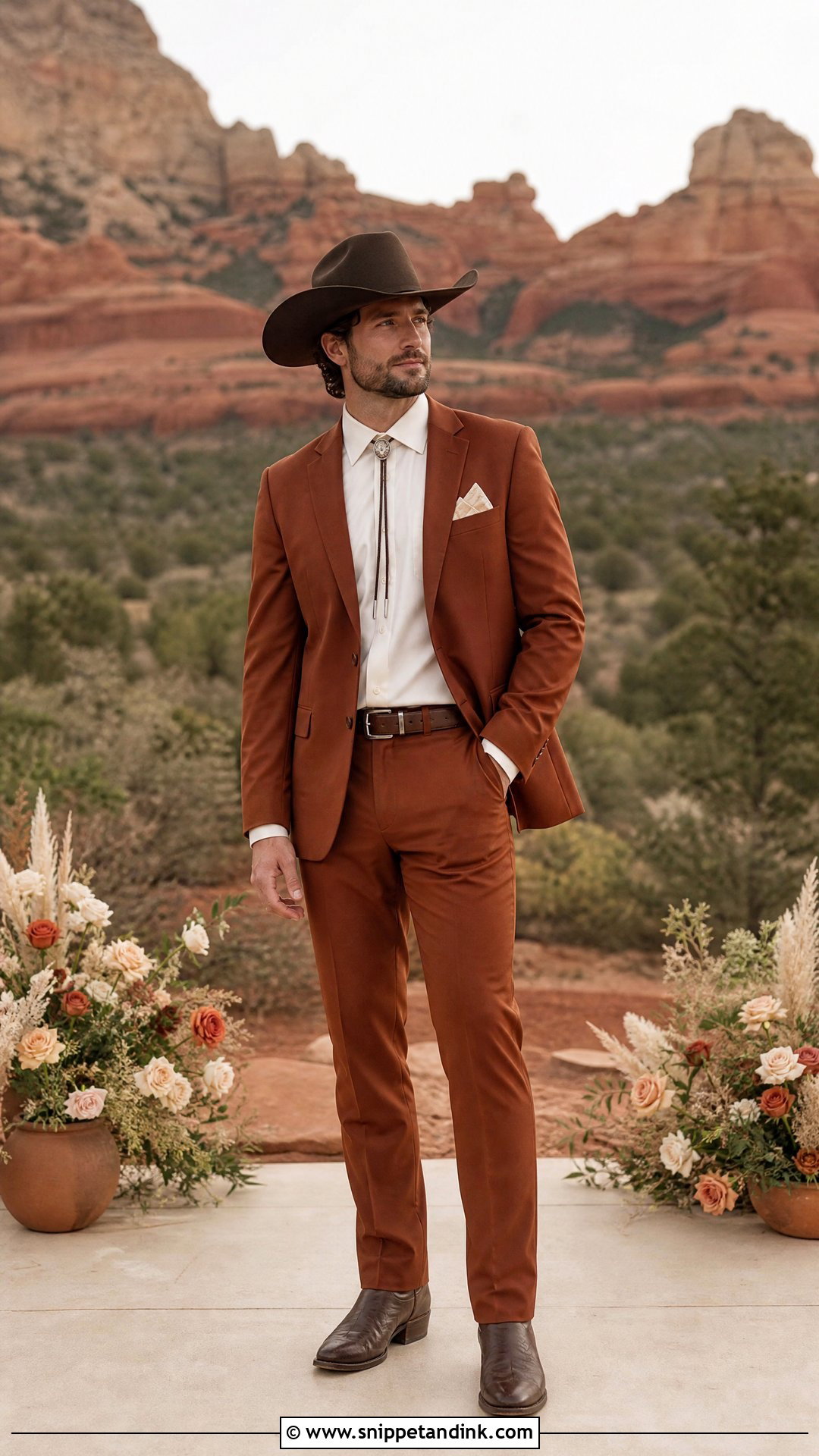
Rust has personality without looking themed. Ivory works better than bright white underneath, because stark white makes rust look orange. Dark-brown boots, a matching belt and a slim brown tie keep the palette grounded, or swap the tie for a silver bolo with a small stone. A cream pocket square and a chocolate felt hat finish it. The fabric has to be matte; shiny rust reads cheap in sunlight. Lightweight wool holds its shape across seasons. Against red rock and golden fields, this color is hard to beat.
10. Gray Plaid Western Wedding Suit
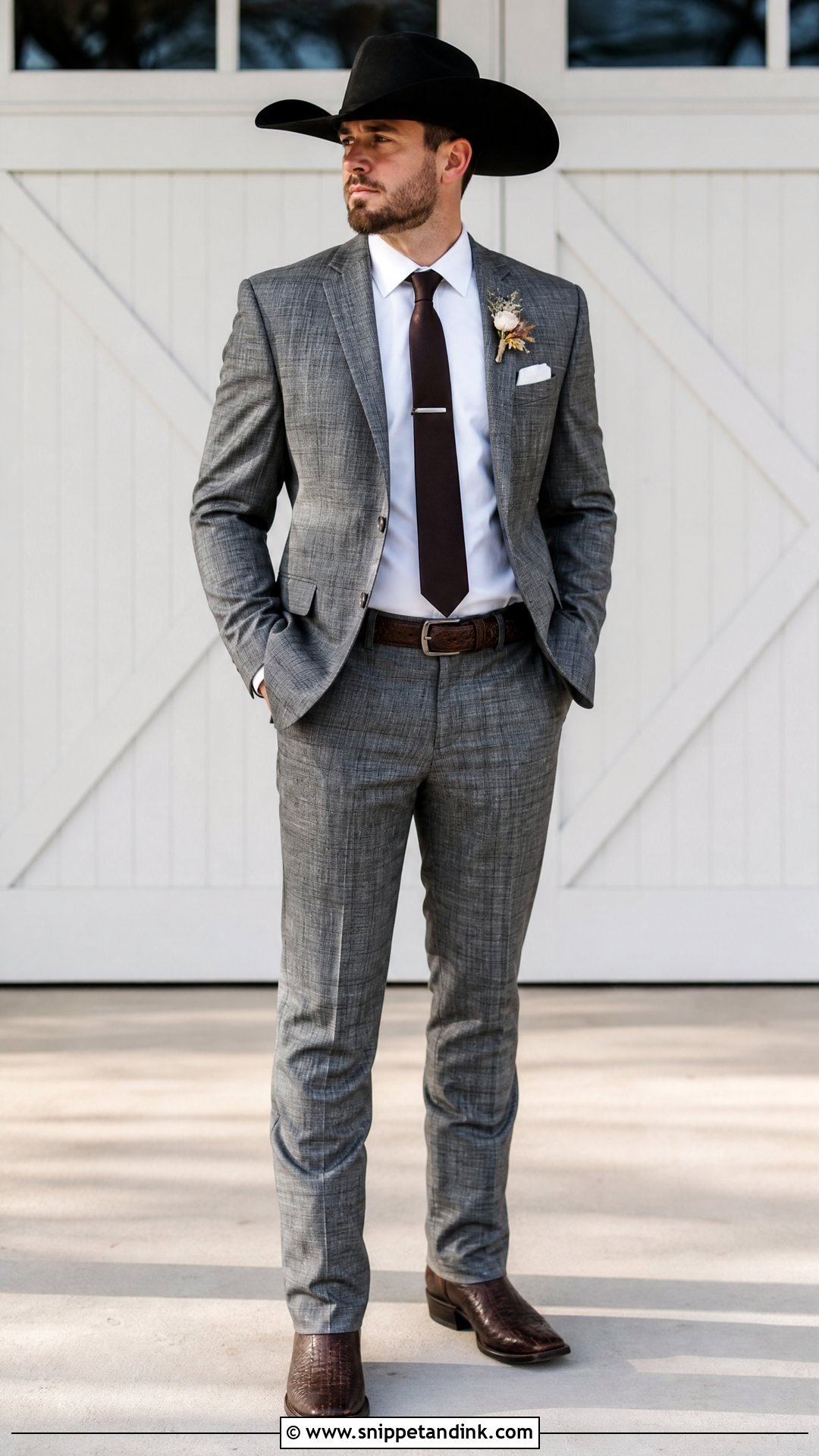
A gray plaid suit lives or dies on pattern scale. A subtle windowpane or small check looks polished; a big, high-contrast plaid becomes the only thing anyone remembers. Keep the shirt plain white, the tie dark, and the boots black or deep brown with a belt that matches them closely. Choose a tie clip or a bolo, not both. A black felt hat and a white pocket square finish it. Ask your tailor to check that the checks line up at the seams and pockets; mismatched lines are the first sign of a cheap suit. Good for grooms, groomsmen and guests alike.
11. Black Tuxedo Western Wedding Suit With Dark Jeans
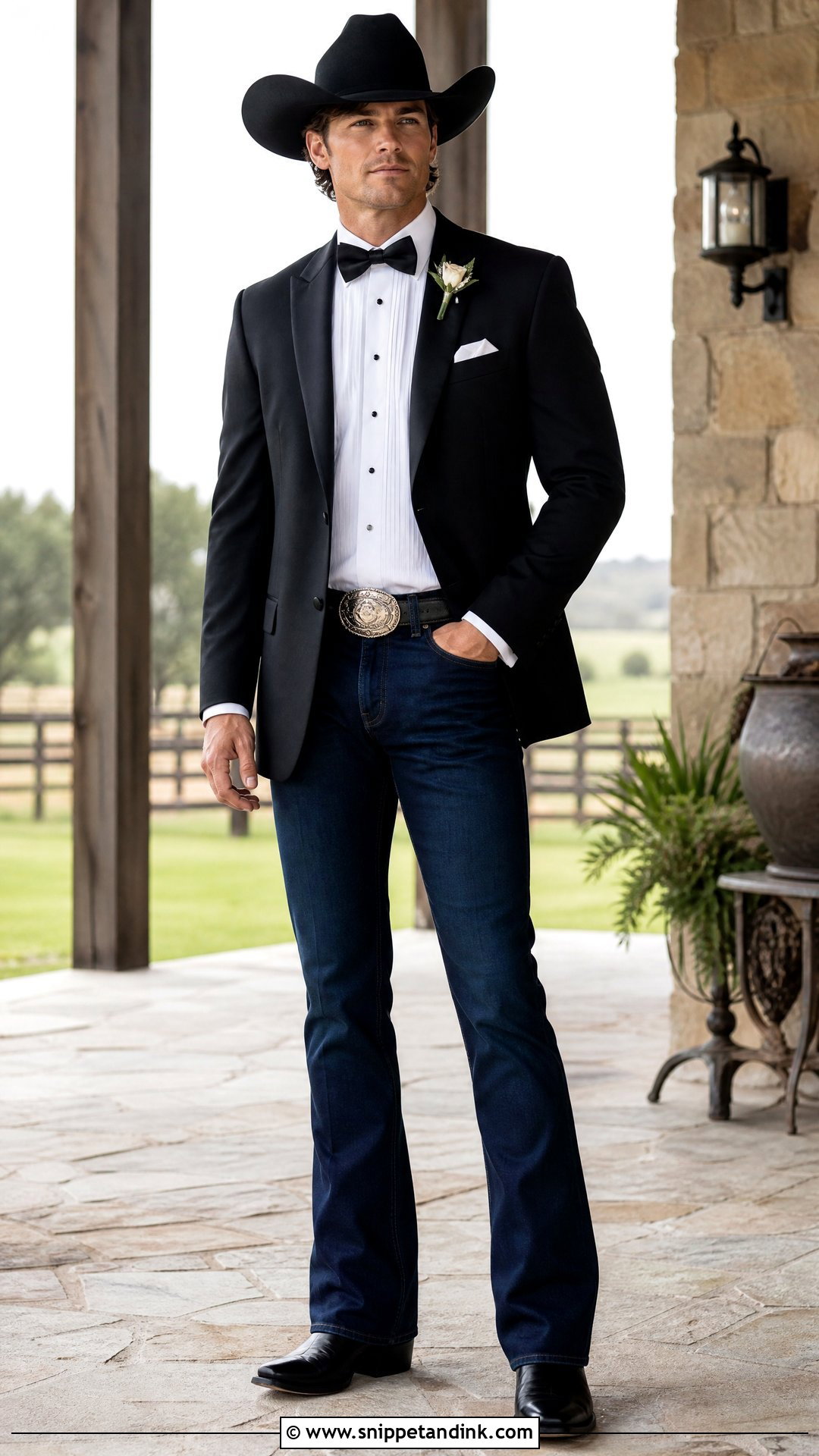
A tuxedo jacket over dark jeans is a bold call, and it only works if the invitation clearly welcomes denim. When it does, I style it carefully: elegant jacket, white tuxedo shirt, black bow tie, and dark indigo bootcut jeans with no fading, rips or fancy pockets. Polished black boots and a black belt with a small silver buckle keep it sharp. A white pocket square and black felt hat finish it. Fit is non-negotiable here. Loose jeans turn the whole outfit casual in an instant, so they should sit smoothly through the hip and fall cleanly over the boots.
12. White Dinner Jacket Western Wedding Suit
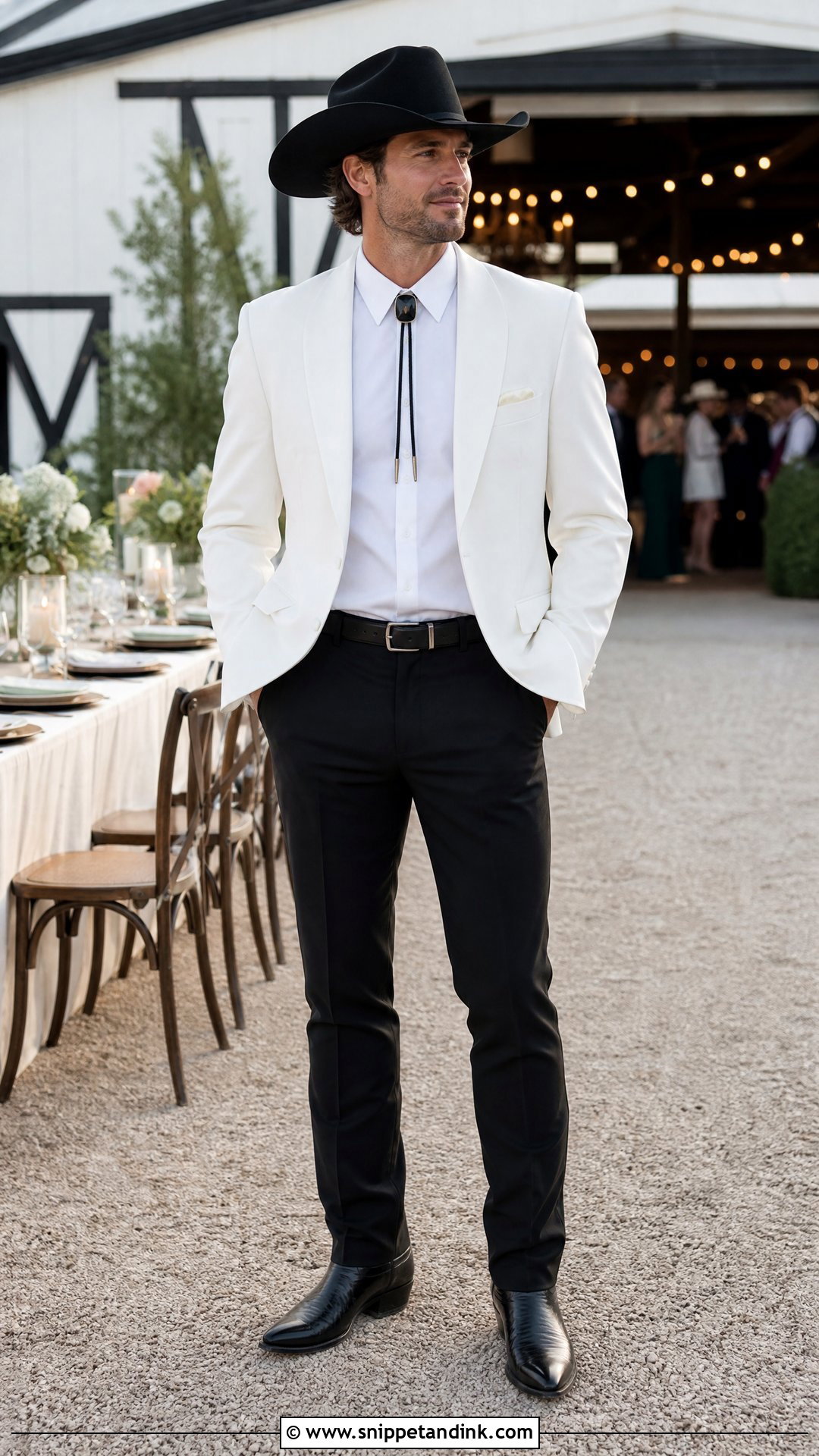
A white dinner jacket sets the groom apart from his groomsmen instantly. I pair it with black tailored trousers, a crisp white shirt and a black bow tie or onyx bolo. Polished black boots are the only country note needed; with a jacket this formal, more would distract. A slim black belt, a white pocket square and a black felt hat for outdoor portraits finish it. If bright white looks harsh against the landscape, go ivory or off-white. The jacket should be sharply tailored through the shoulders and waist, with no extra decoration. Save it for an evening ranch party or a dressy barn.
13. Chocolate Suede Western Wedding Suit
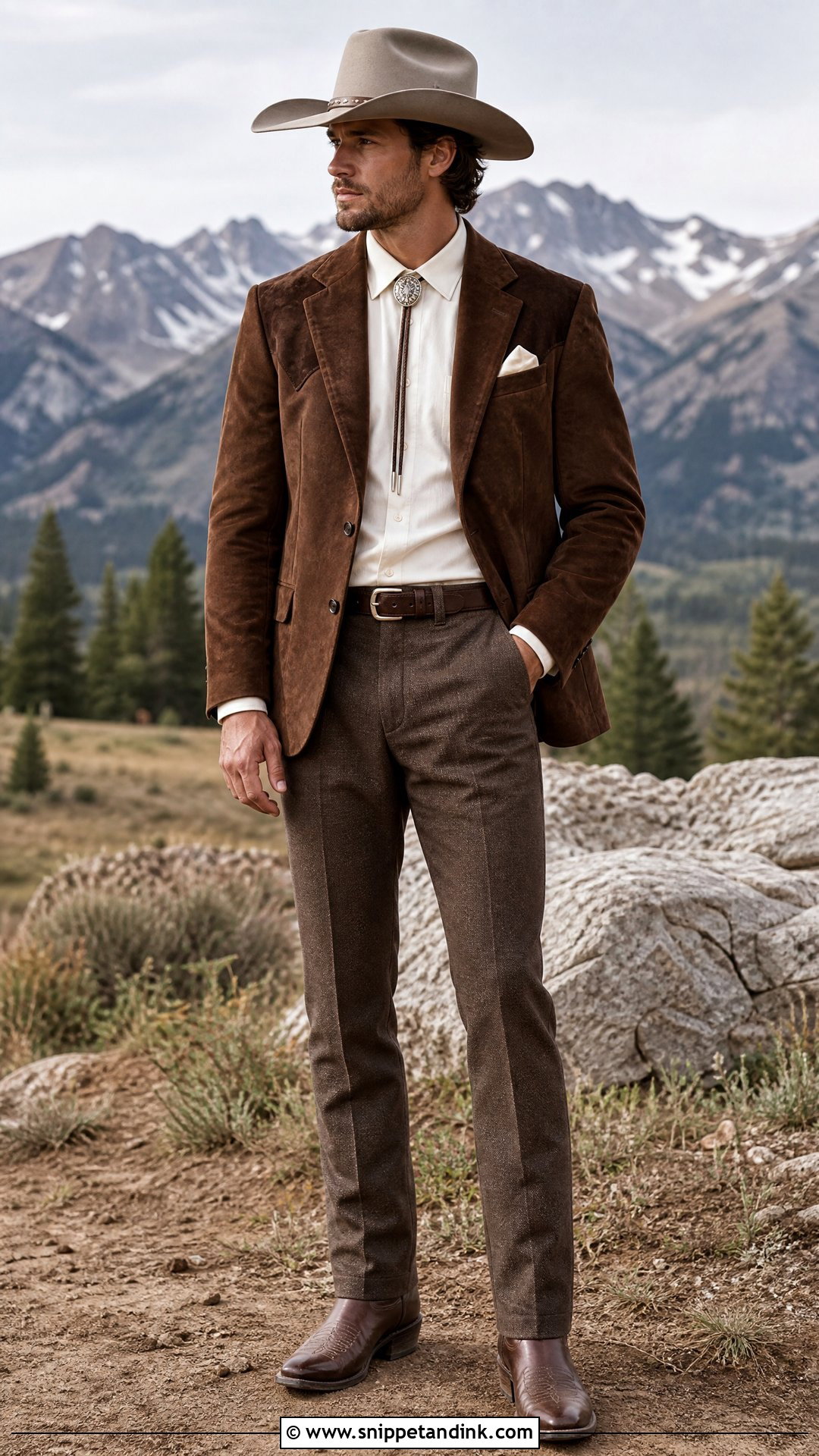
Suede jackets feel wonderful in cold weather and carry strong Western character on their own. That’s the point to remember: with suede, skip the fringe, big buckles and heavy embroidery. Pair a chocolate suede jacket with matching or closely coordinated wool trousers and an ivory shirt to lighten all that brown. A patterned tie or silver bolo adds definition. Dark-brown boots, a matching belt and a chocolate or taupe hat finish it. The tricky part is undertone; browns from different makers can clash, red against yellow, so lay every piece side by side in daylight. A small cream pocket square is enough.
14. Sage Green Western Wedding Suit
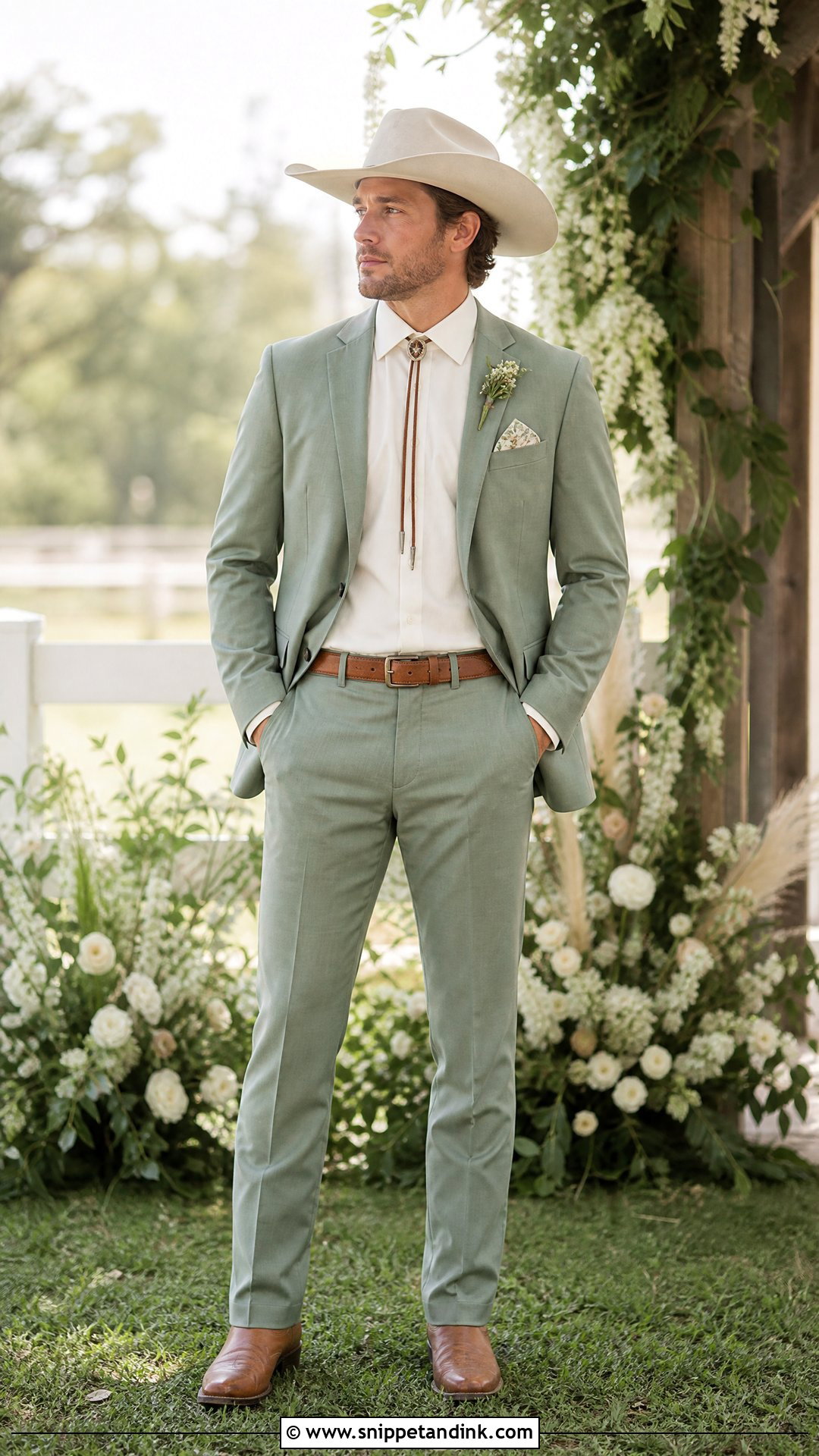
Sage is the fresh option for spring and summer. It works with an ivory shirt and either a tan leather bolo or a slim woven tie. Light-brown boots and a matching belt keep the outfit airy, and a cream felt hat adds a ranch finish. Pick a pocket square in white, beige or a small botanical print that echoes the flowers. In outdoor heat, don’t tailor it too tight; a close fit sticks and creases once you start sweating. Cotton blends or lightweight wool give structure without weight. It’s a natural fit for garden ranches and muted green palettes.
15. Embroidered Western Wedding Suit With Cowboy Hat
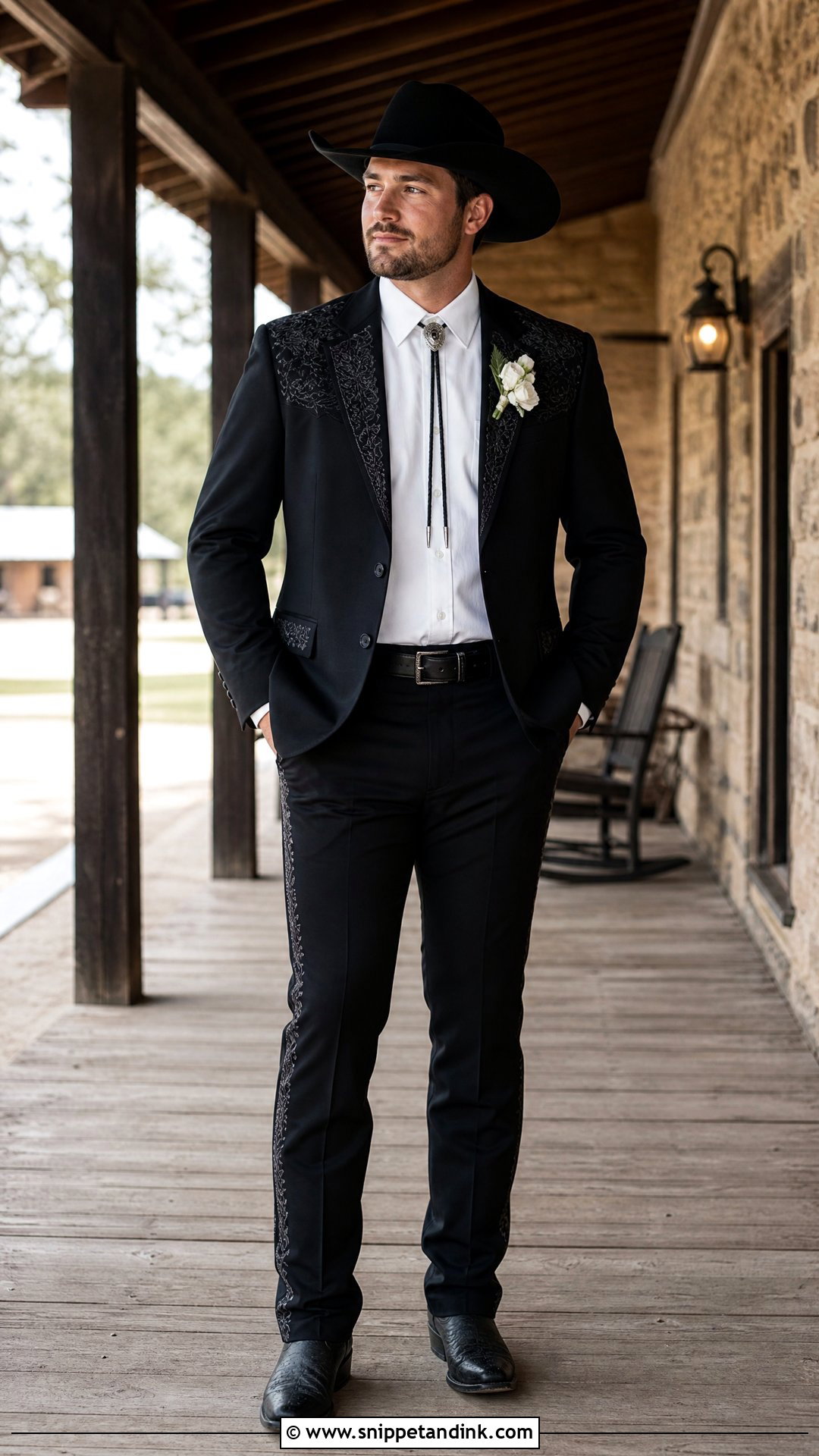
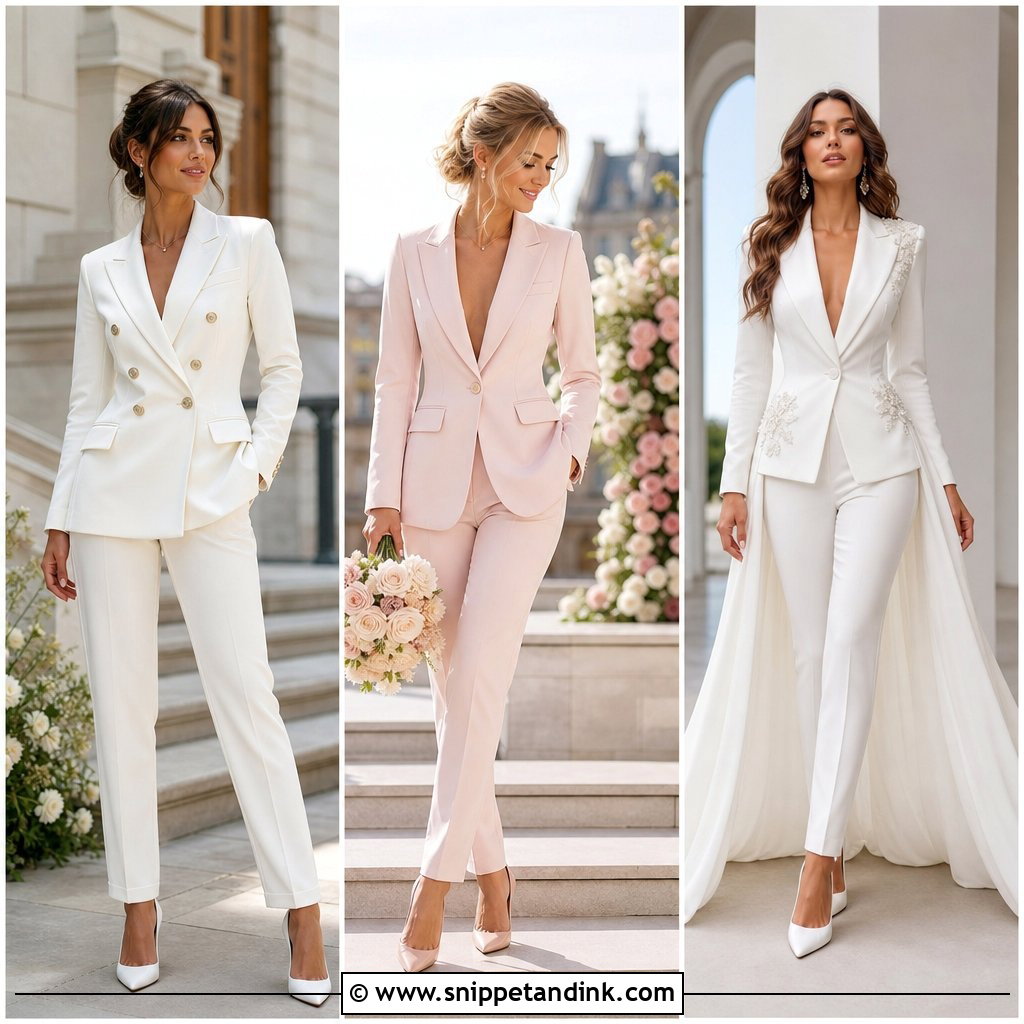
An embroidered suit is a real statement, rooted in the decorated stage suits of country music, and fit is what keeps it from looking like fancy dress. I look for tonal embroidery along the lapels, pockets, shoulders or trouser seams on black, cream or deep brown. Keep the shirt plain. Black boots, a matching belt and a structured felt hat complete it. If you add a bolo, choose a small slide; a big stone next to busy embroidery is too much. Prioritize clean shoulders, tapered sleeves and trousers with a gentle break. It suits music-loving couples and confident cowboy dress codes.
16. Camel Double-Breasted Western Wedding Suit
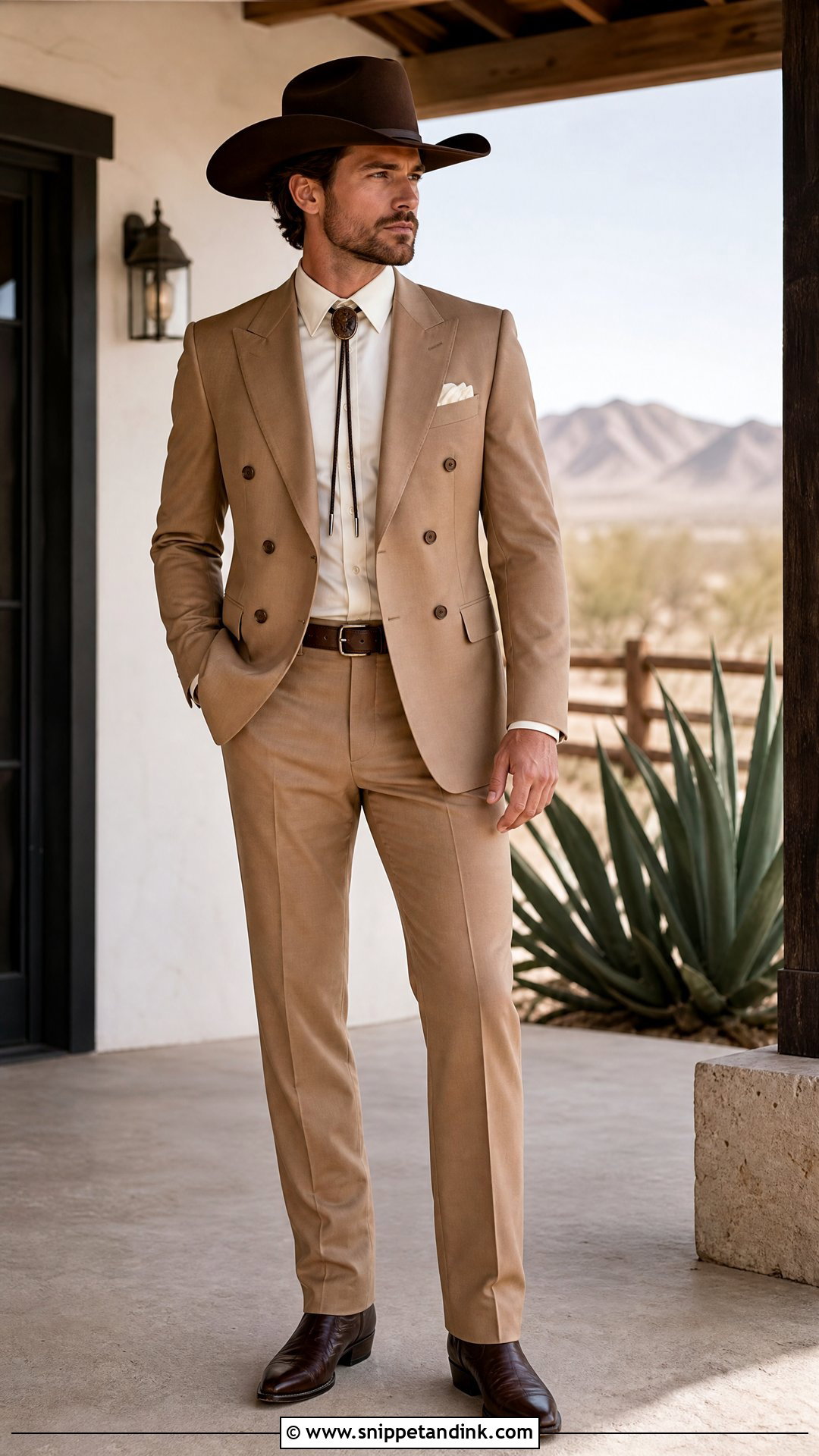
A camel double-breasted suit brings vintage tailoring into the warm colors of the West. The fit test I use: the jacket should sit close without the buttons pulling into an X shape. Wear it with a cream shirt and a dark-brown tie or understated bolo, plus chocolate boots and a matching belt in smooth leather. A dark-brown felt hat gives contrast, and a folded cream pocket square brightens the chest. Double-breasted jackets are meant to stay buttoned, so keep it fastened for photos. Since the jacket already speaks loudly, leave out embroidered shirts and big accessories.
17. Light Blue Western Wedding Suit
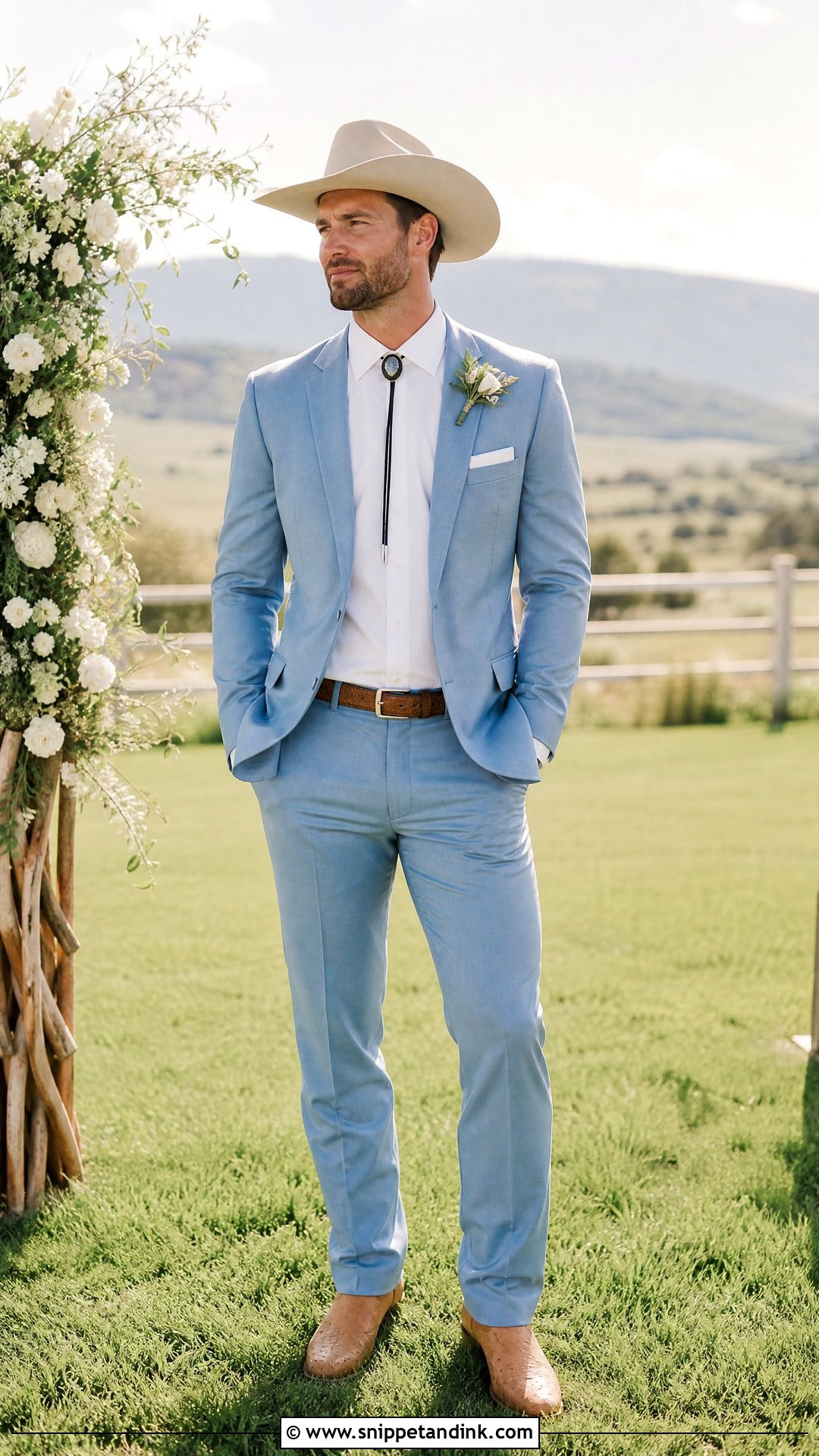
Open sky makes a light-blue suit look right at home. Pair it with a white shirt and a navy bolo or slim tie for a little contrast. Tan boots and a coordinating belt keep it relaxed but dressed. A white pocket square and a cream or pale gray felt hat suit a strong Western theme. Choose lightweight wool over chambray; chambray softens and sags by the afternoon. Have the trousers tailored through the thigh but wide enough at the hem to cover the boot shaft without riding up. It’s a softer alternative for grooms who find navy too serious.
18. Forest Green Western Wedding Suit
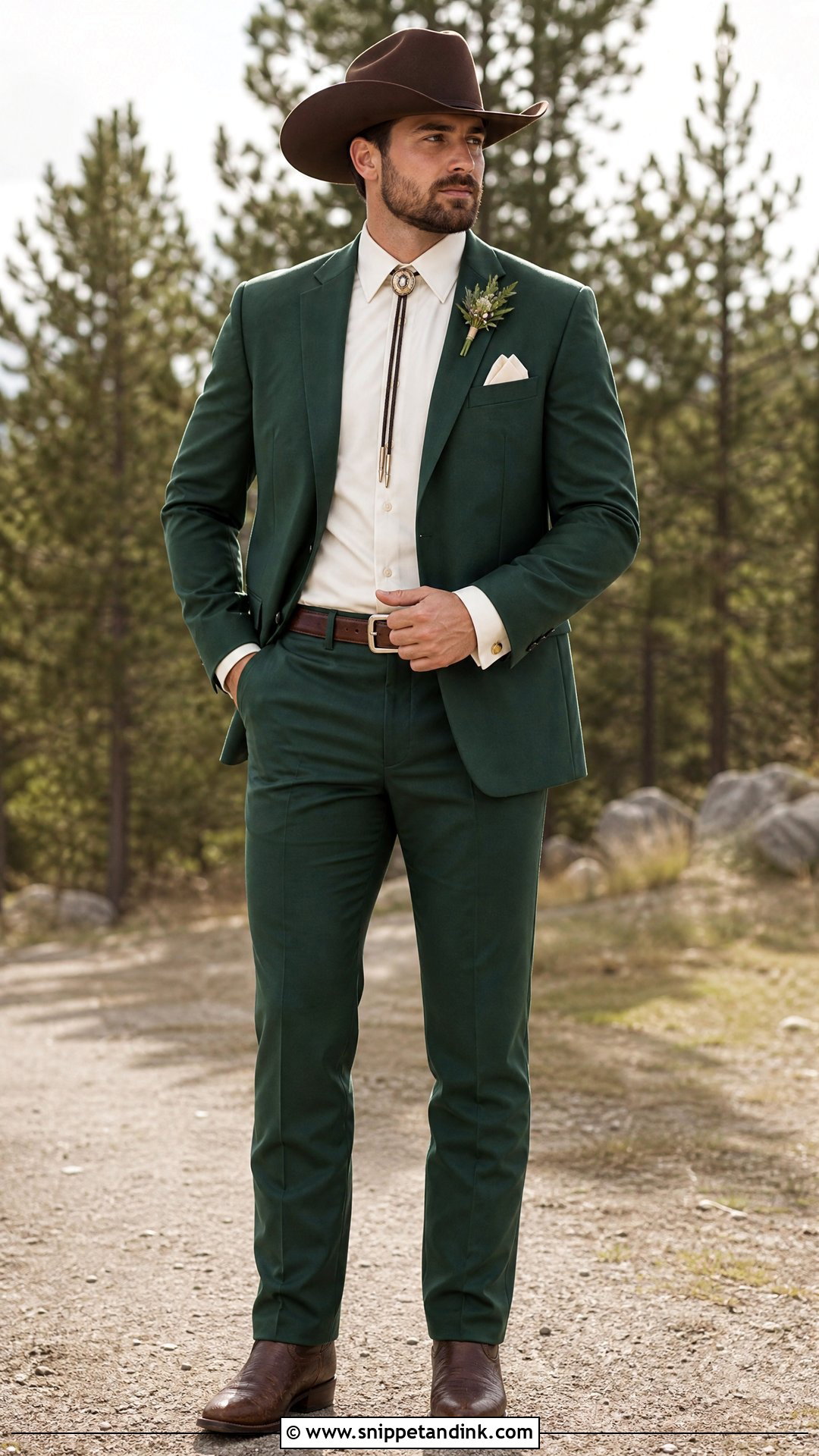
Forest green is formal and distinctive without being bright. Wear it with an ivory shirt and a dark-brown bolo; chocolate boots, a matching belt and a brown felt hat keep the palette earthy. A cream square, or a small print with green and rust, adds detail. Gold cufflinks warm it up, though silver works if the bolo slide is cool-toned. The mistake I see most is adding other jewel tones; let the suit be the color. Medium-weight wool suits cool outdoor ceremonies and indoor receptions. It looks right among evergreens.
19. Taupe Vest Western Wedding Suit
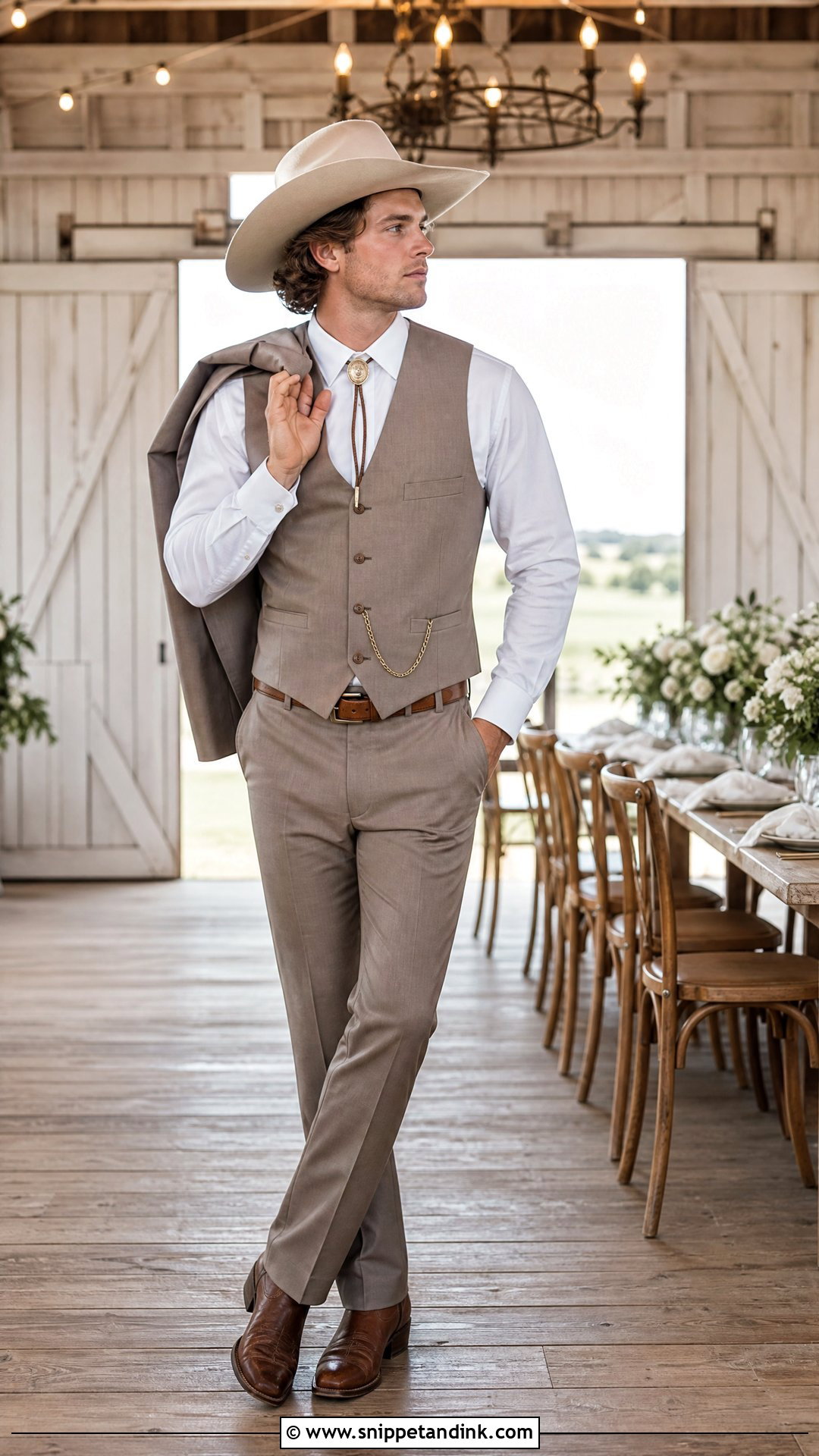
Not every Western wedding needs a jacket on all day, and a taupe three-piece is built for that. Wear the full suit for the ceremony with a white shirt, brown bolo and medium-brown boots. After formal photos, take the jacket off and let the vest carry the look. A matching belt, a simple pocket watch and a light felt hat add a traditional finish. Wait until the formal parts are over before rolling the sleeves. The vest should hug the torso without straining the buttons, and its back should be in matching fabric if you plan to spend hours jacketless. Good for summer barns and long dance nights.
20. Ivory Western Wedding Suit With Turquoise Bolo Tie
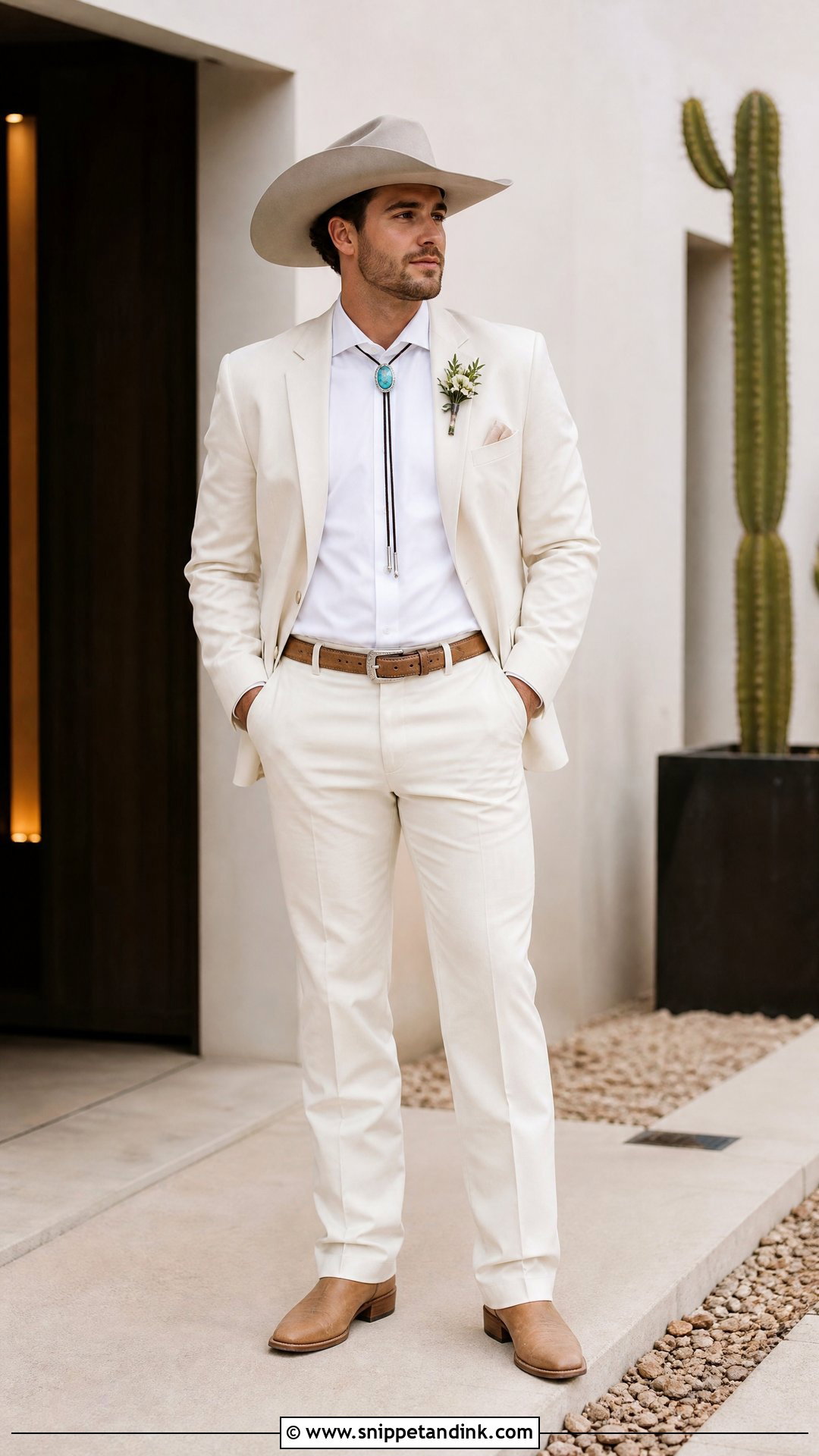
Ivory stands out from the browns and blacks at most Western weddings. A white shirt underneath keeps it tonal, and a turquoise bolo brings the only real color. Tan boots and a matching belt ground the lower half, with a light gray or beige felt hat and a small neutral pocket square. Two checks I always make: hold the fabric up in daylight to make sure it isn’t see-through, and avoid trying to match the bride’s dress exactly. Close is fine; an exact match rarely is. It suits desert ceremonies, spring ranch weddings and light neutral palettes.
When the Cowboy Hat Comes Off
A hat is the loudest Western piece a groom can wear, and old manners still apply to it. Guests who grew up around them notice when they’re ignored, so I go through the basics with every wedding party that plans to wear hats.
- Take it off indoors, for the vows if the ceremony is religious, during any prayer or anthem, and at the dinner table.
- When you set it down, rest it upside down on its crown. Laying it on the brim flattens the shape over time.
- Felt is traditionally the cold-weather hat and straw the warm-weather one. A felt hat at a hot July ceremony is also just uncomfortable.
- Get it fitted. A hat that sits too high blows off in open country, and one that’s too tight leaves a red line across the forehead in close-up photos.
- If only the groom wears one, keep the groomsmen bareheaded, or the photos lose their focus.
If the couple would rather nobody wear hats in the formal photos, put a small table near the entrance for them. Men will happily leave them there once they know it’s expected.
Boots, One Western Piece and a Suit That Fits
A good Western suit starts with tailoring and adds cowboy detail sparingly. Choose a color and cloth that suit the season, venue and formality first. Then add boots, a belt that matches them, and one obvious Western piece: a bolo, an embroidered shirt or a felt hat. Wearing all of them at once nearly always looks busier in photos than it did in the mirror. And put your money into fit, at the shoulders, sleeves, waist and trouser hem over the boot. From tan linen to burgundy velvet, every look here can carry Western character and still feel properly dressed for a wedding.
You'll Like These Ideas:


Leave a Reply