
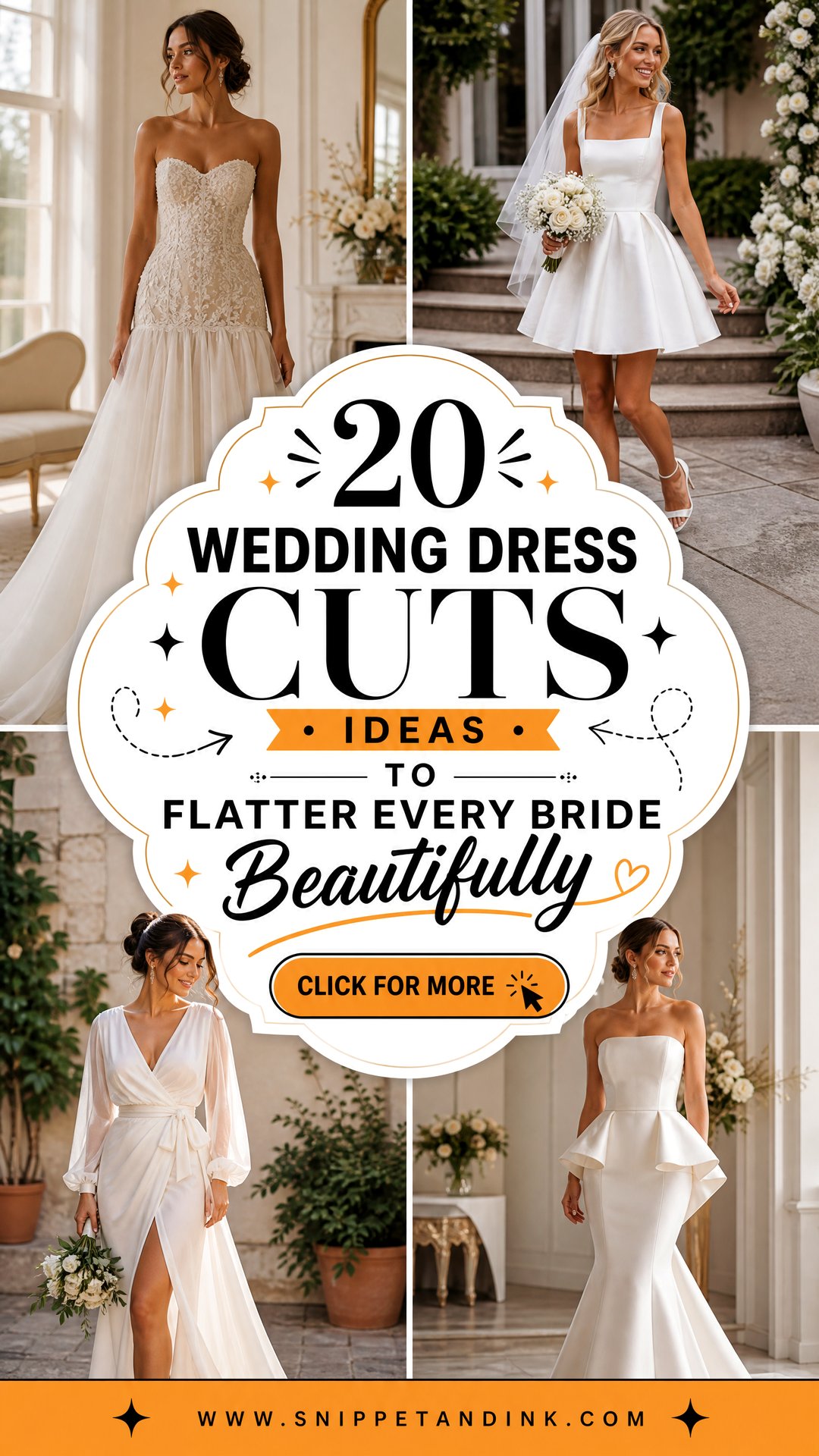
Most brides walk into their first appointment knowing what they like on other people and not yet knowing how a cut behaves on them. Silhouette decides how a gown moves, how it sits when you’re seated at dinner and how it photographs from the side, so it’s worth understanding before you think about lace or beading. I don’t style by body-type rules alone. I ask what mood you want, how much support you need and how freely you want to walk and dance. Below are twenty cuts, from the classic A-line to trending basque waists and short minis, with the pairings I’d suggest and what each one asks of you at fittings.
Try Three Opposites at Your First Appointment
The quickest way to learn which cut suits you is to try ones that have little in common. I usually pull an A-line, a sheath or column, and a ball gown or fit-and-flare for a first visit, before anyone talks about lace or beading.
- Put on each one and walk the length of the room, then sit on a chair. Notice which one you forgot you were wearing.
- Look at yourself side-on, not only from the front. Most wedding photos catch you at an angle, and that’s where cuts differ most.
- Raise your arms as if hugging someone taller than you. Bodices that look perfect standing still often shift here.
- Ask the consultant to clip the sample to your size. Shop samples rarely fit exactly, and a loose sample can make a good cut look wrong.
Once one shape clearly wins, try three or four variations within it, different fabrics and waist positions, before you start comparing details. It narrows the rail fast and stops you falling for embellishment on a cut that doesn’t work for you.
1. A-Line Wedding Dress
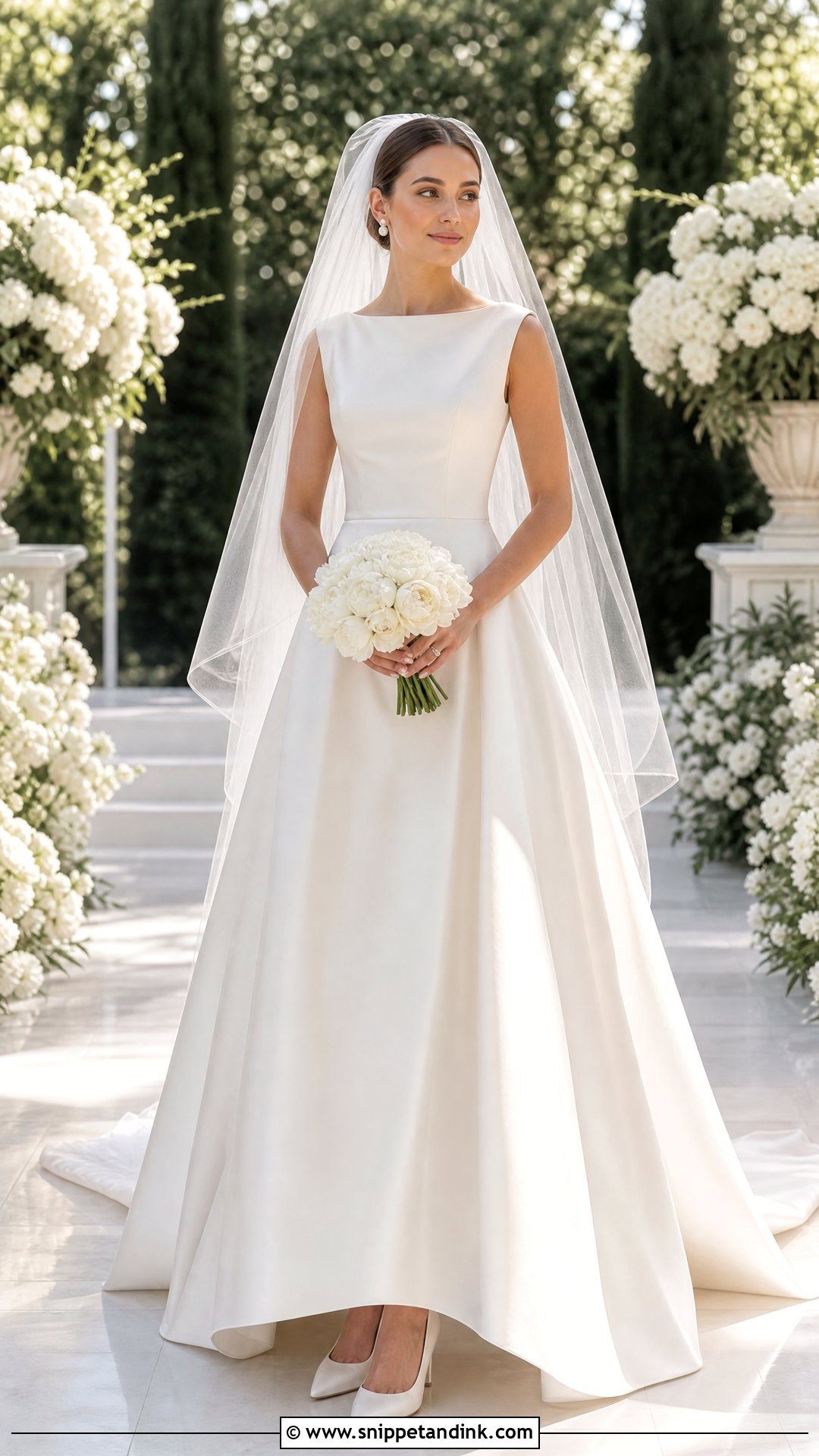
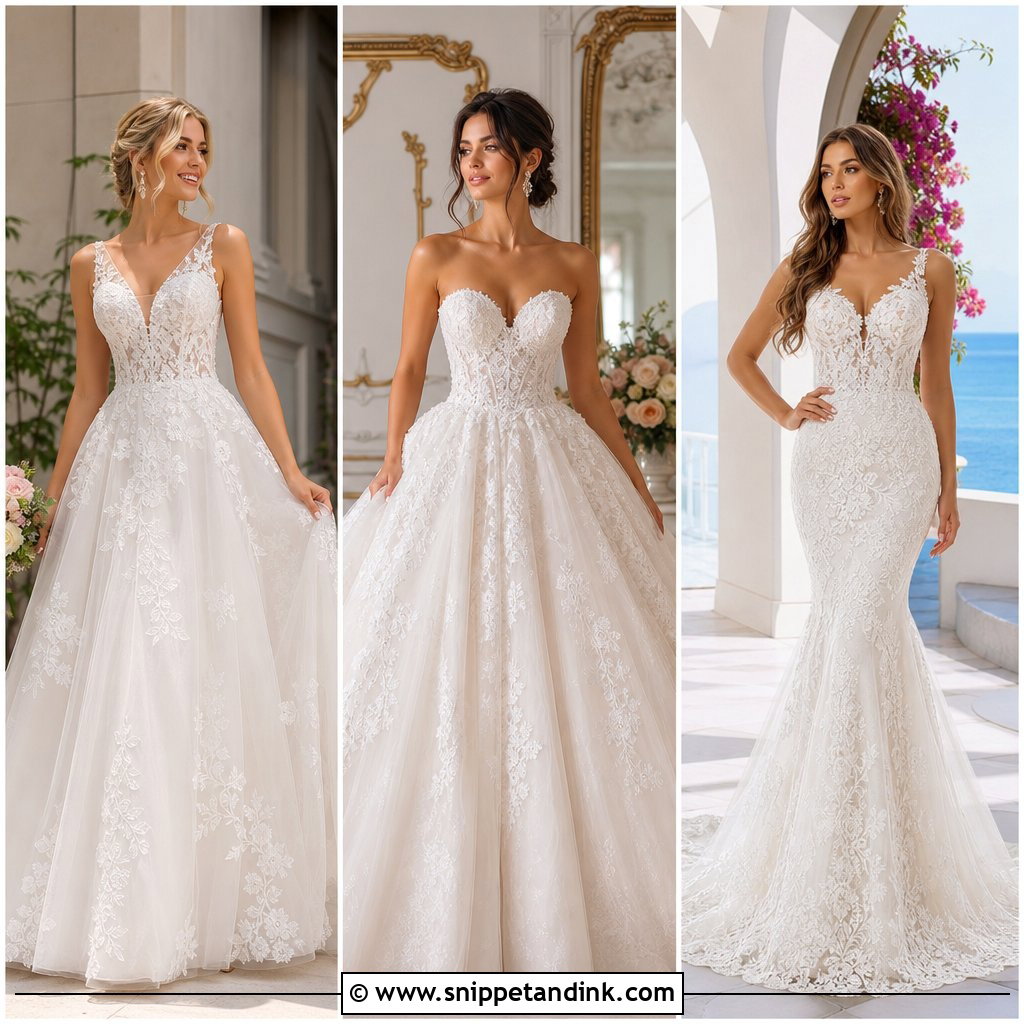
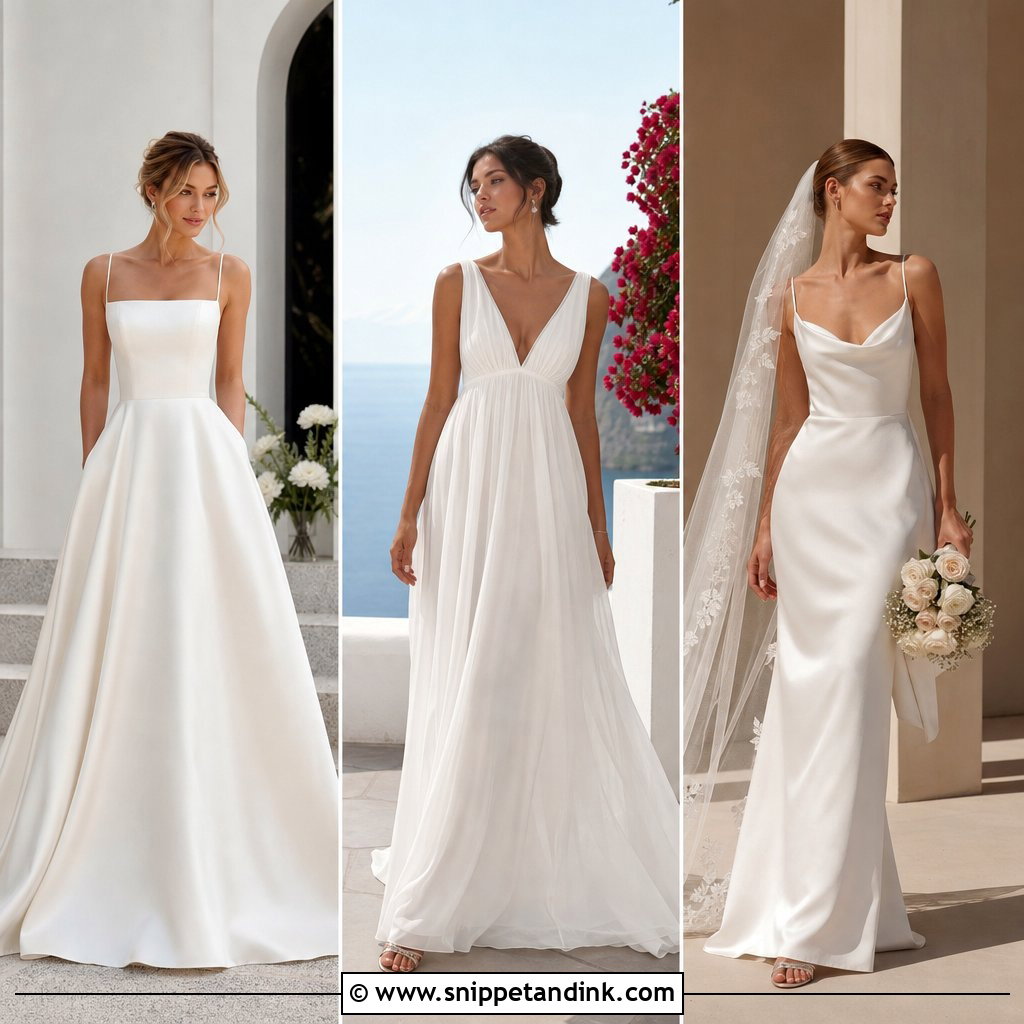
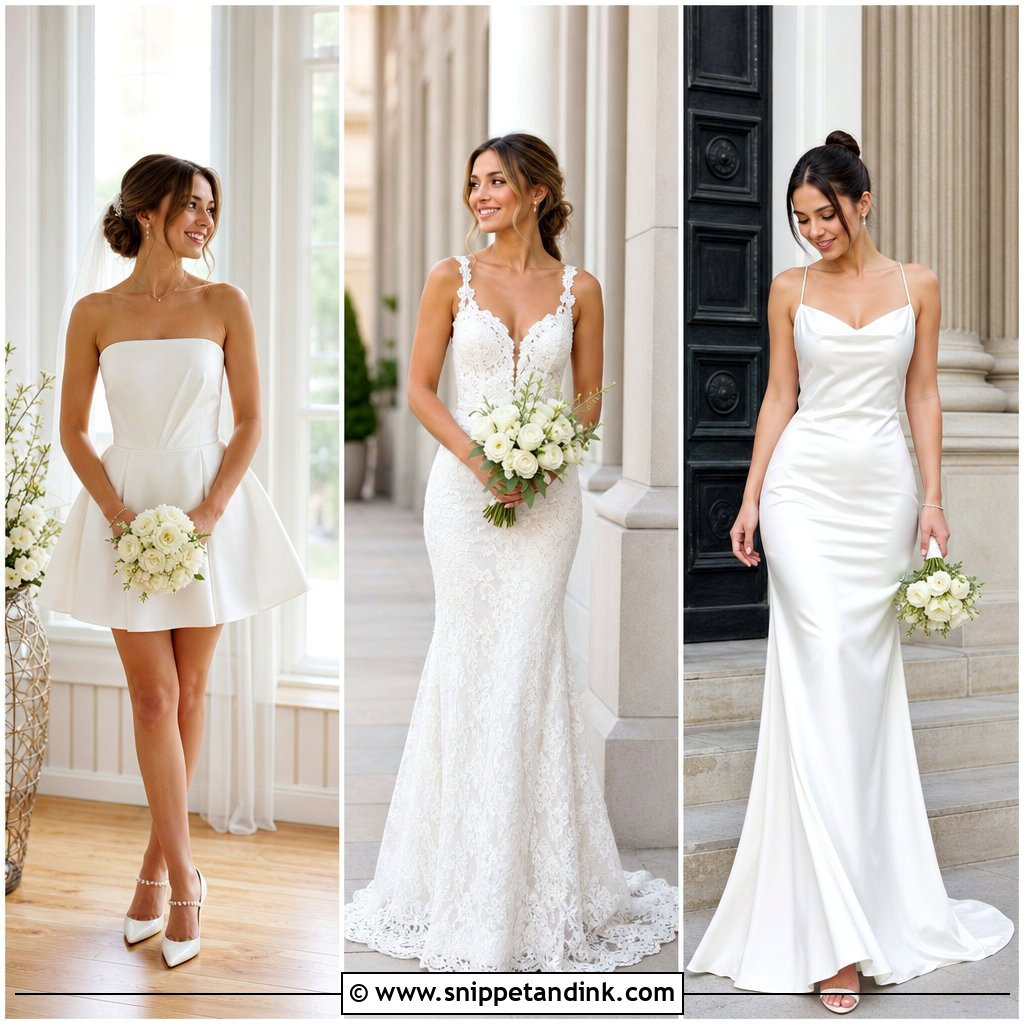
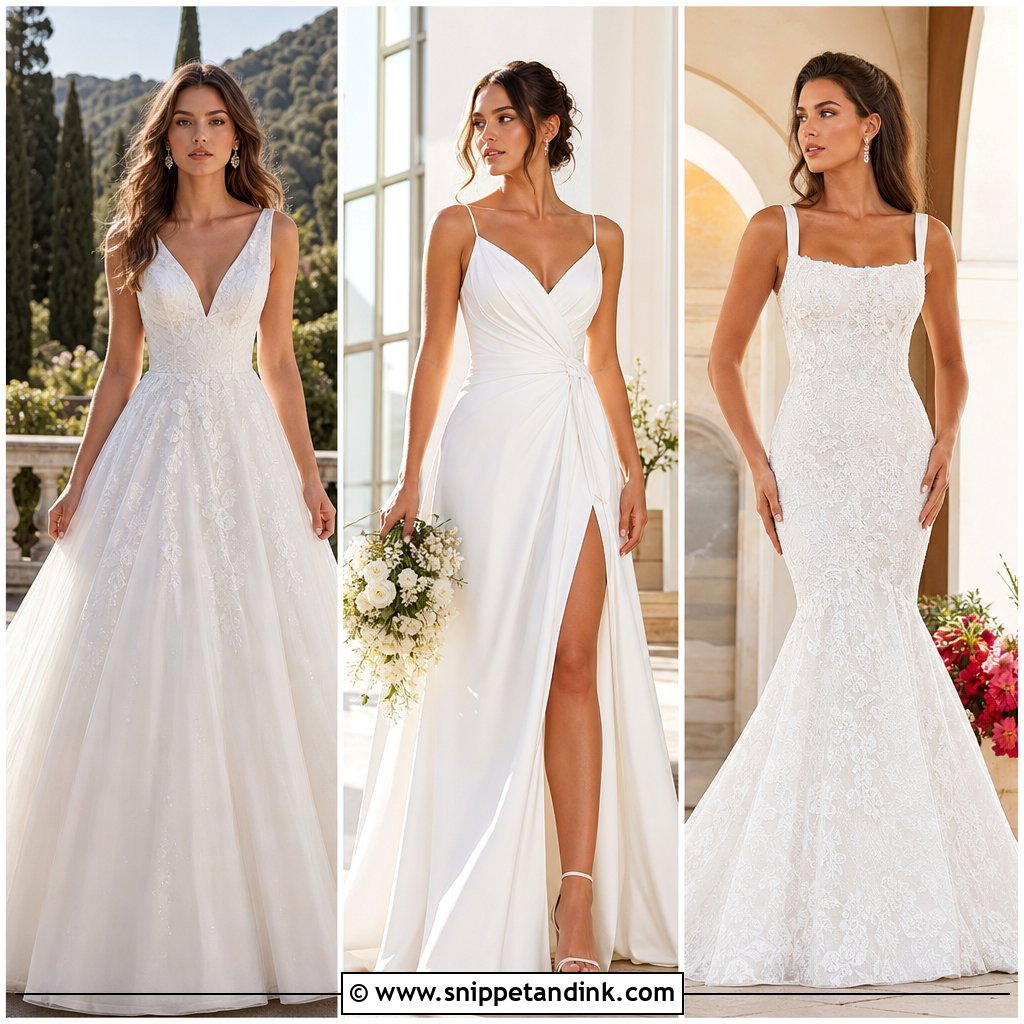
The A-line is fitted through the bodice and widens gradually to the hem, and it’s the cut I hand most often to a bride who isn’t sure where to start. It works in a garden, a ballroom, on a beach or at a courthouse, depending on fabric: structured satin looks polished, lightweight chiffon moves softly. A defined waist seam shapes you without drama. On a petite frame I’d raise the waist slightly and keep the skirt uncluttered to hold length. Curvier brides usually want supportive straps and solid internal construction. Pointed pumps, a fingertip veil, pearl earrings and a compact bouquet finish it.
2. Ball Gown Wedding Dress
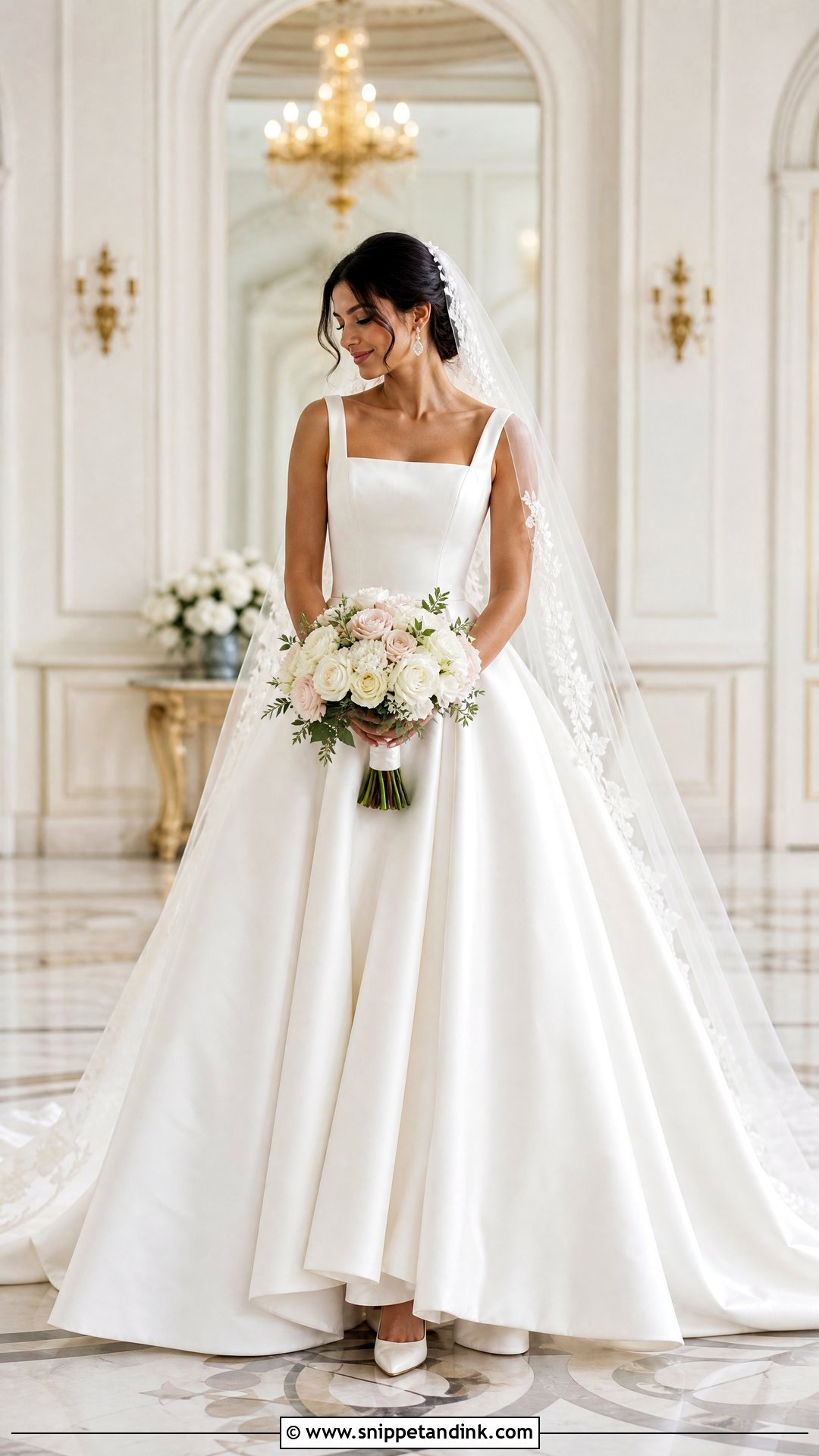
Nothing makes an entrance like a ball gown, but the skirt has practical consequences. A full skirt takes up a car seat, a narrow aisle and a bathroom stall, so walk, sit and turn in it before committing. Mikado and satin hold sculptural volume; layered tulle feels lighter and more romantic. Balance the skirt with a structured bodice, supportive straps or an off-shoulder neckline. Block-heel pumps give stability under the weight, and a cathedral veil and drop earrings suit the scale. Keep the bouquet medium-sized. Petite brides often look better in controlled volume than in the widest skirt in the shop. Ballrooms and historic estates suit it best.
3. Princess Cut Wedding Dress
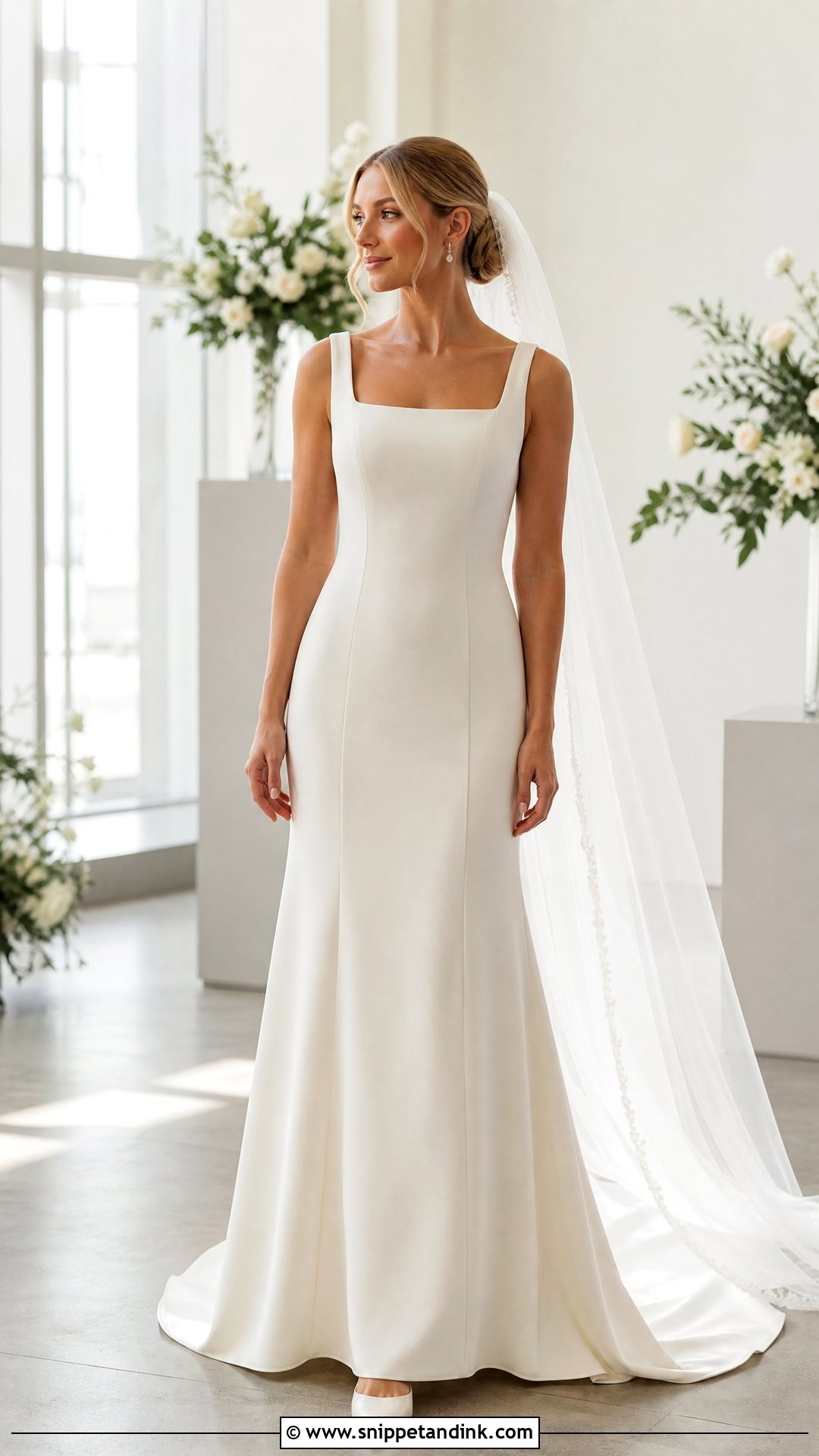
Long vertical seams give a princess cut its smooth, lengthening look. Instead of a horizontal waist seam, continuous panels shape the bodice and open gently below the hips, so the fit follows you without a visible break. Crepe looks modern, satin formal, and lace-covered panels romantic. A square neck with wide straps is a supportive pairing. Sleek pumps, a chapel veil, delicate earrings and a low bun keep it clean. Because shaping is spread across several seams, ask your seamstress to take in all panels evenly rather than just the sides; otherwise the gown can twist slightly and hang unevenly.
4. Mermaid Wedding Dress
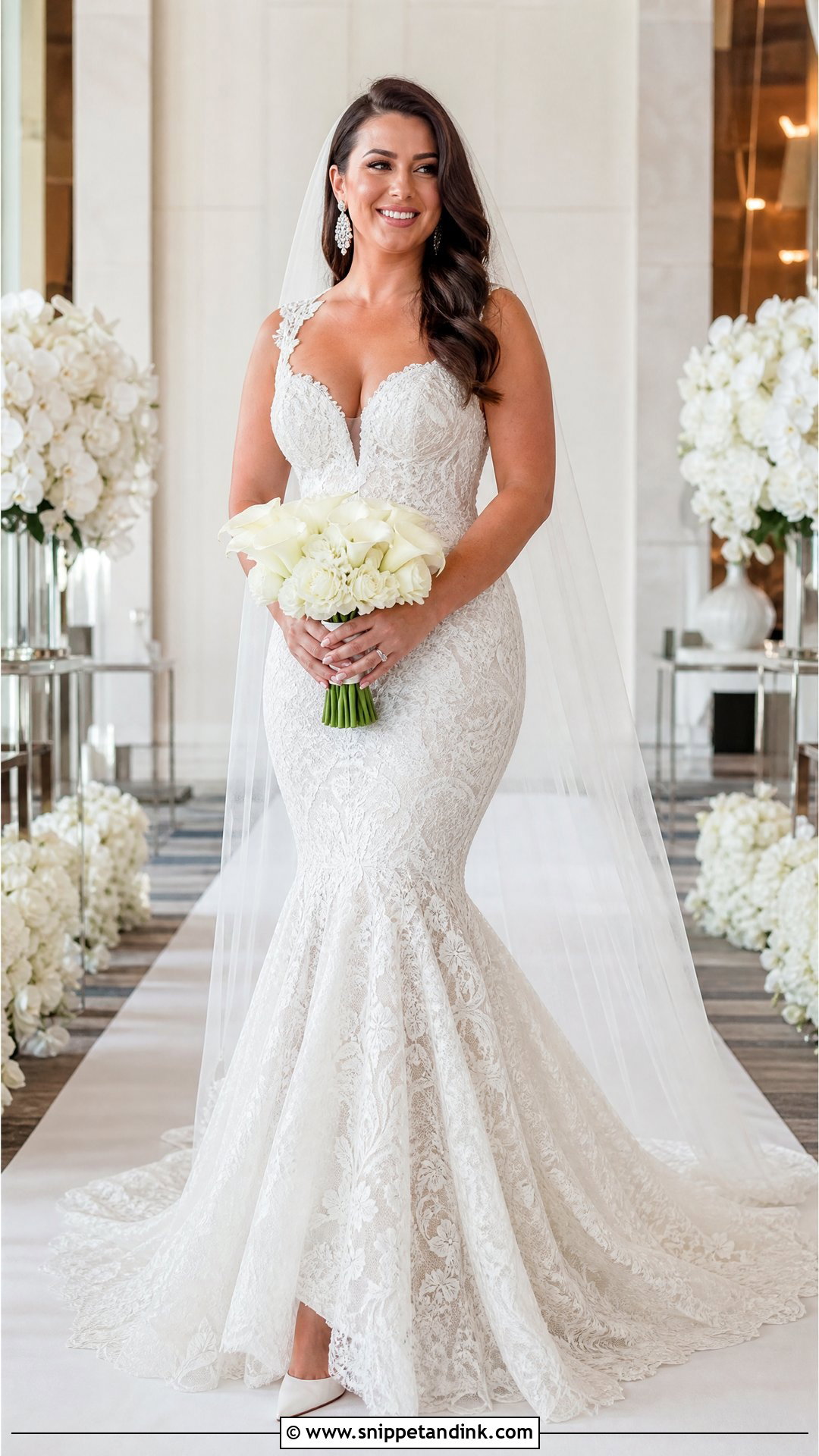
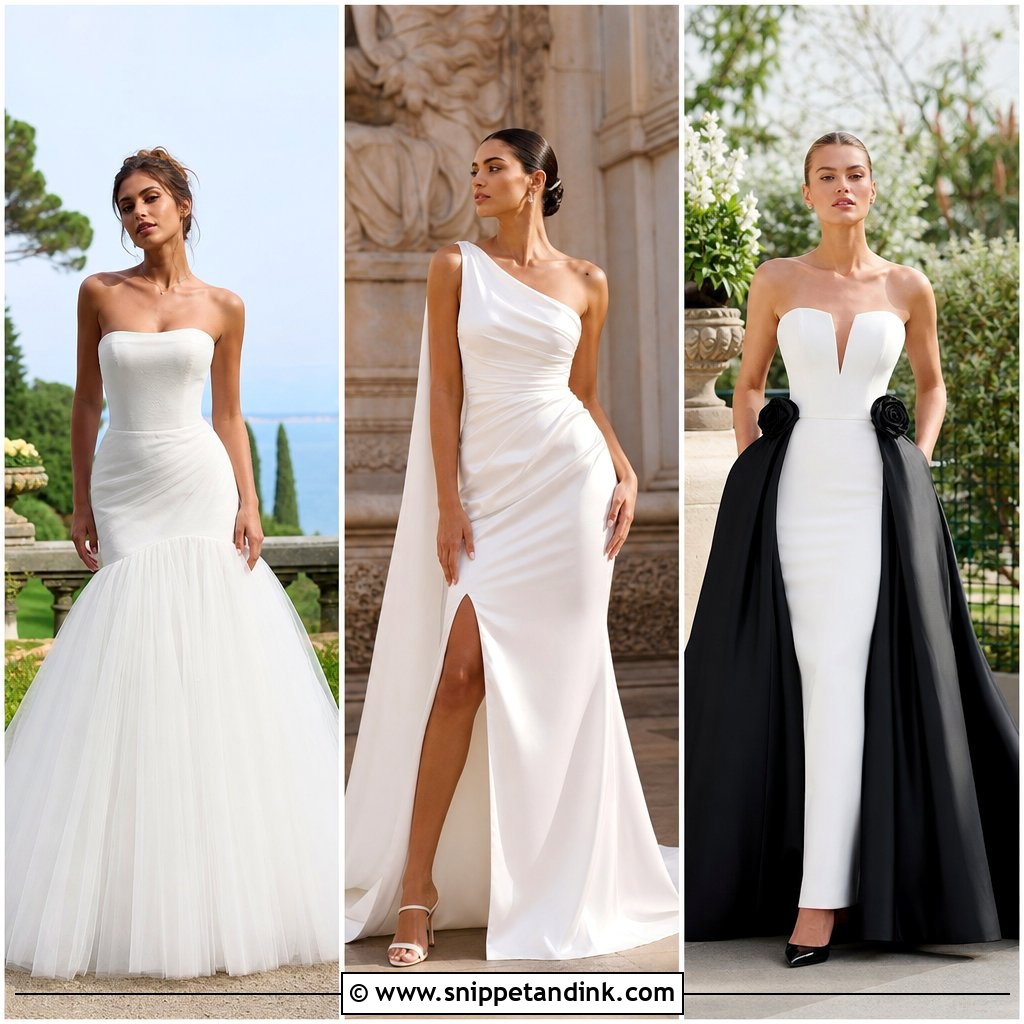
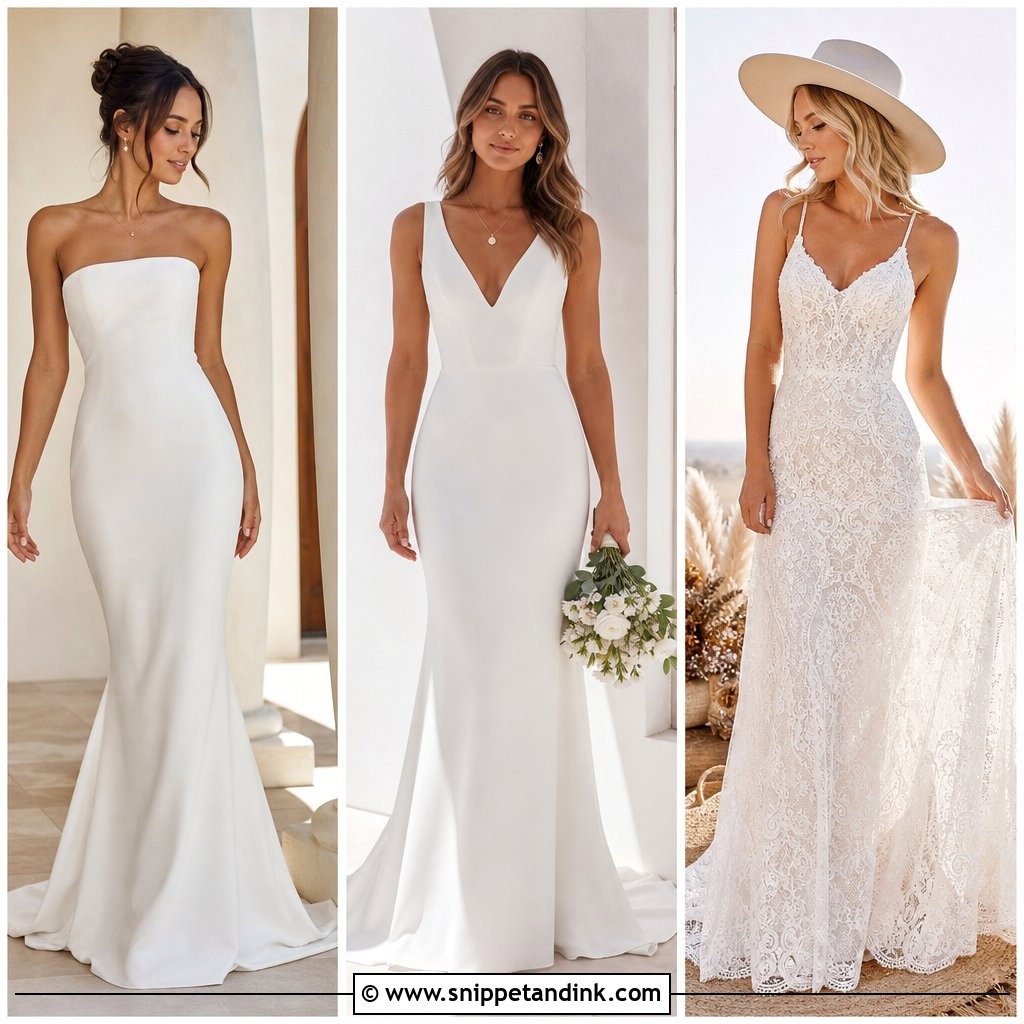
A mermaid follows the torso, hips and thighs before flaring near the knee, and it restricts your stride more than any other cut. Stretch crepe gives you more freedom; lace and beading look richer but stiffen the fit. I always have brides climb a few steps in one, since stairs are where a mermaid shows its limits. Internal boning and precise alterations keep the line smooth. Pointed heels, a long sheer veil, statement earrings and a streamlined bouquet suit glamorous hotels and evening weddings. Love the shape but want to dance? Choose a softer flare or plan a lighter reception outfit.
5. Trumpet Wedding Dress
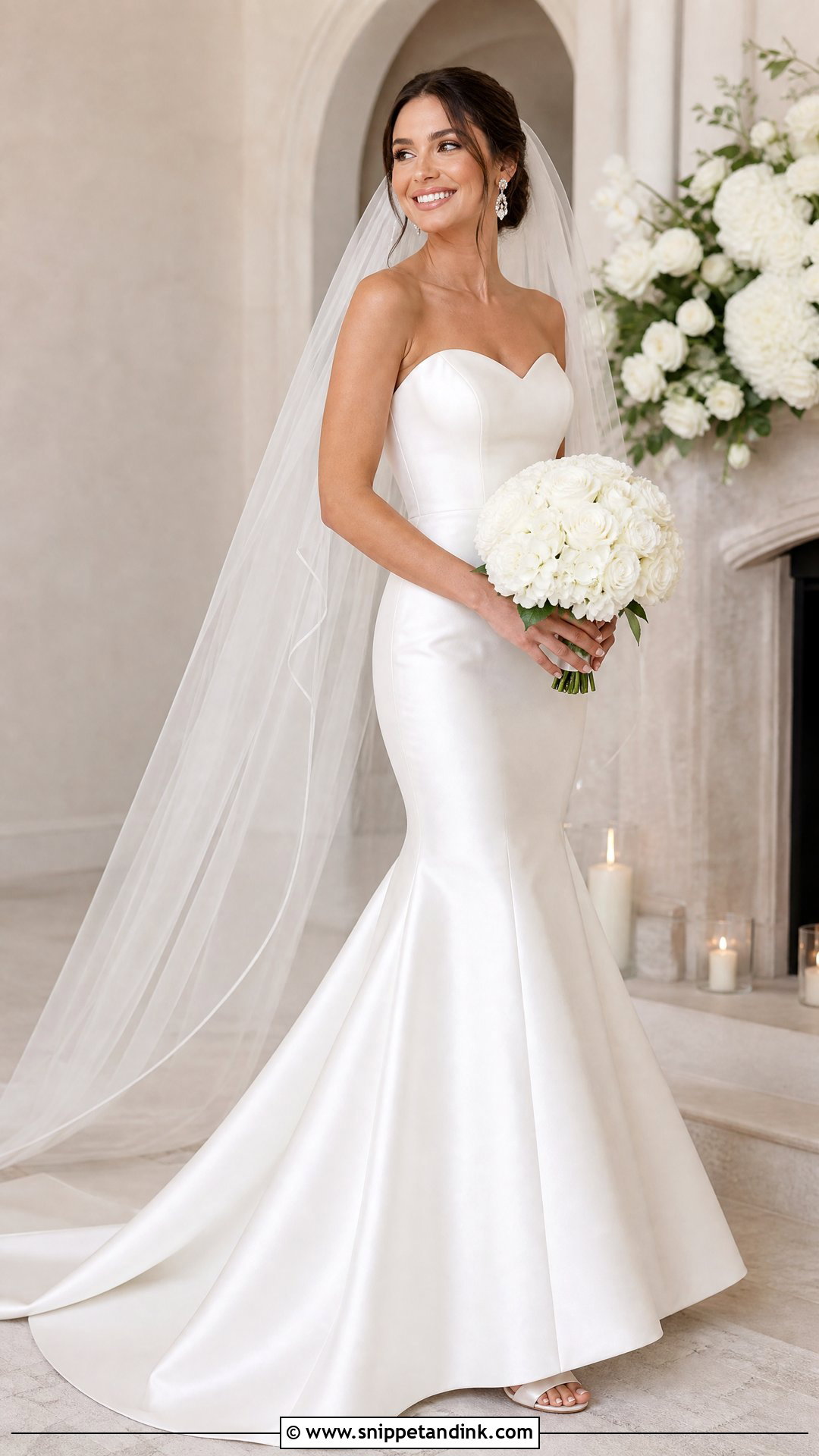
A trumpet wedding dress is the mermaid’s easier sibling: fitted through the bodice and hips, then widening from mid-thigh, which gives your legs more room. Satin makes it sculpted, floral lace romantic. A sweetheart neckline shows off the proportions; straps or sleeves add support. It photographs particularly well from a three-quarter angle, where the flare shows without swamping the figure. Hemming a trumpet is fiddly because the flare has to stay even all the way round, so bring your actual wedding shoes to every fitting. Comfortable heels, a chapel veil and crystal studs complete it.
6. Fit-And-Flare Wedding Dress
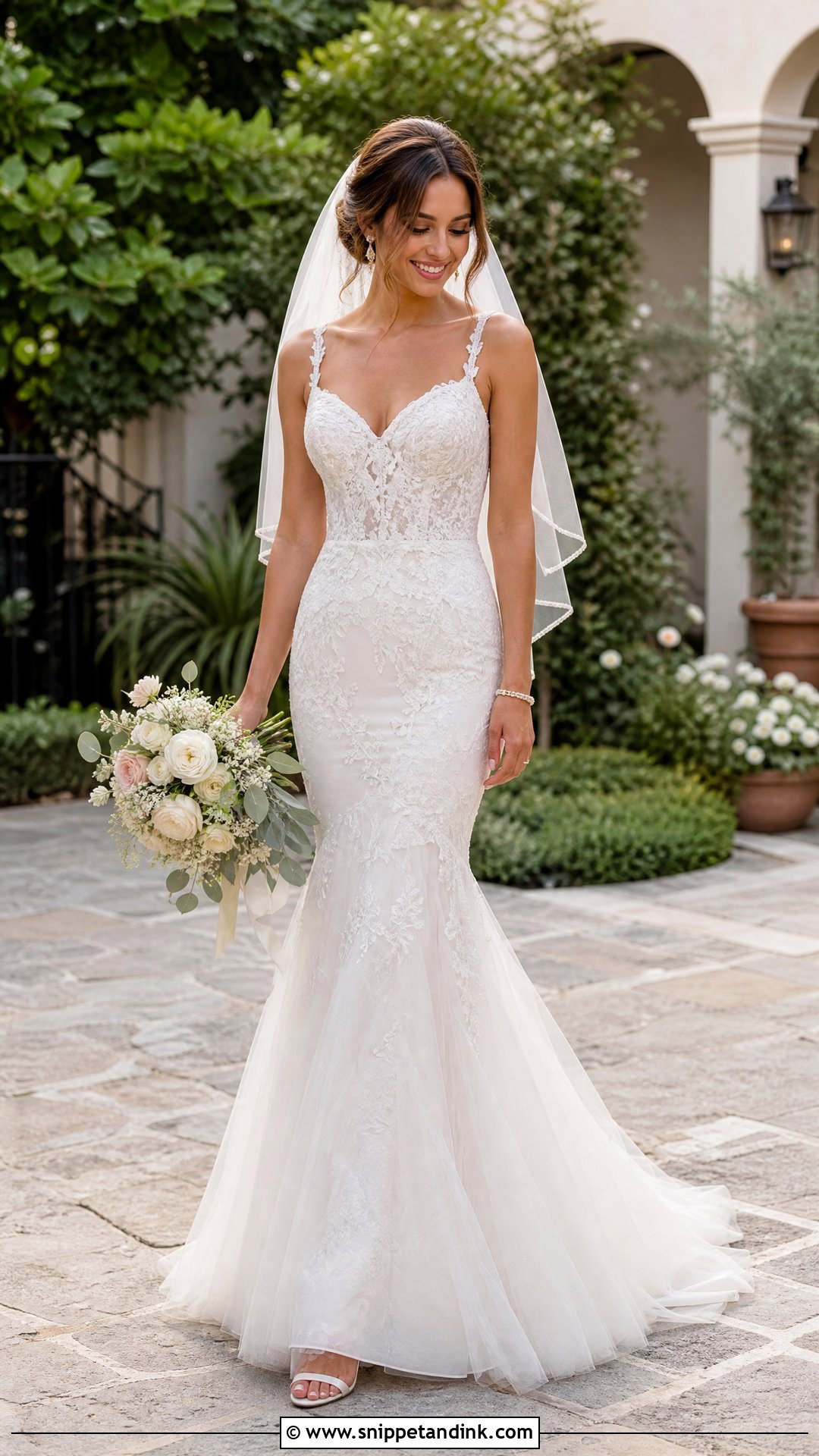
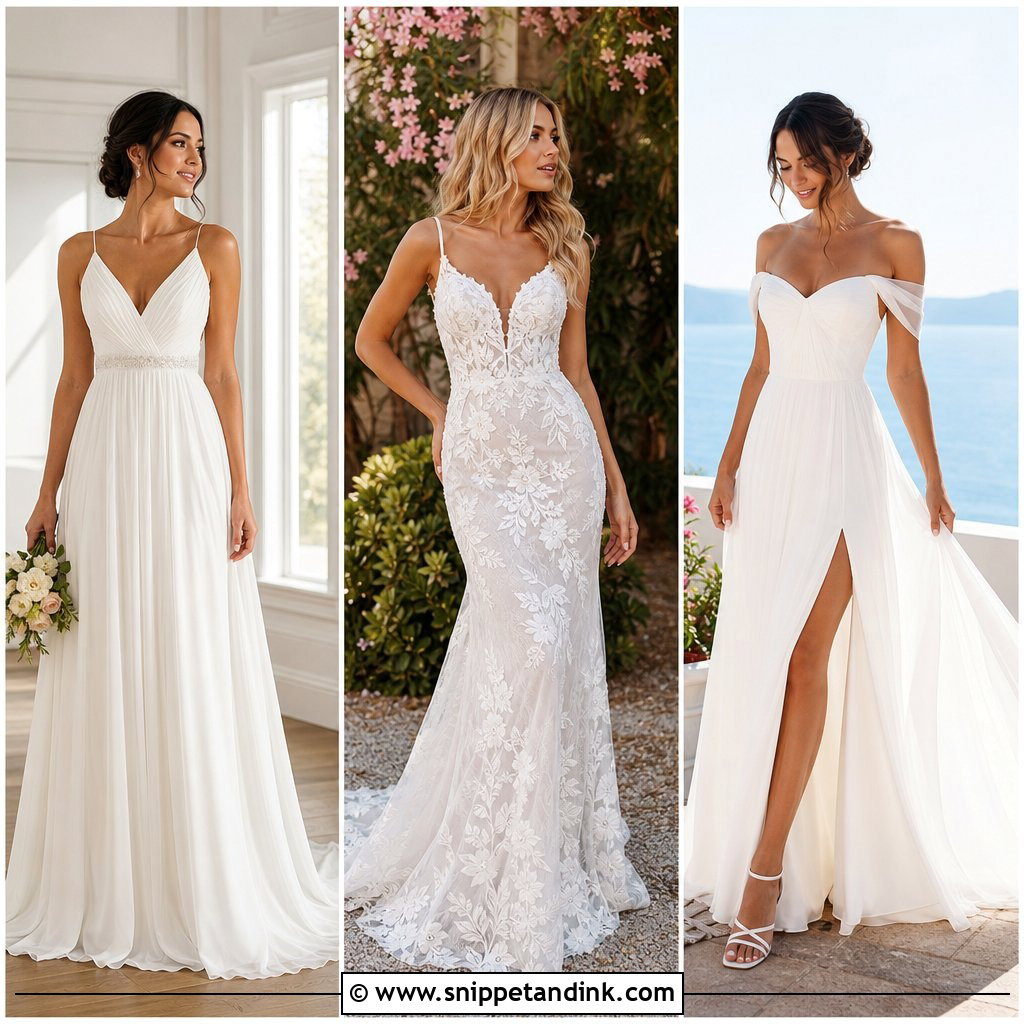
Fit-and-flare stays close through bodice and hips, then opens gradually, a gentler transition than a mermaid. That makes it practical when you’d like shape but plan to mingle and dance in one dress. Soft crepe reads modern; embroidered tulle adds texture without weight. Have a bustle added so the train doesn’t get stepped on at the reception, and check at fittings that the fabric lies flat both standing and seated, since the hip area can ripple when you sit. Supportive heels, a fingertip veil, a delicate bracelet and an airy bouquet finish the look.
7. Sheath Wedding Dress
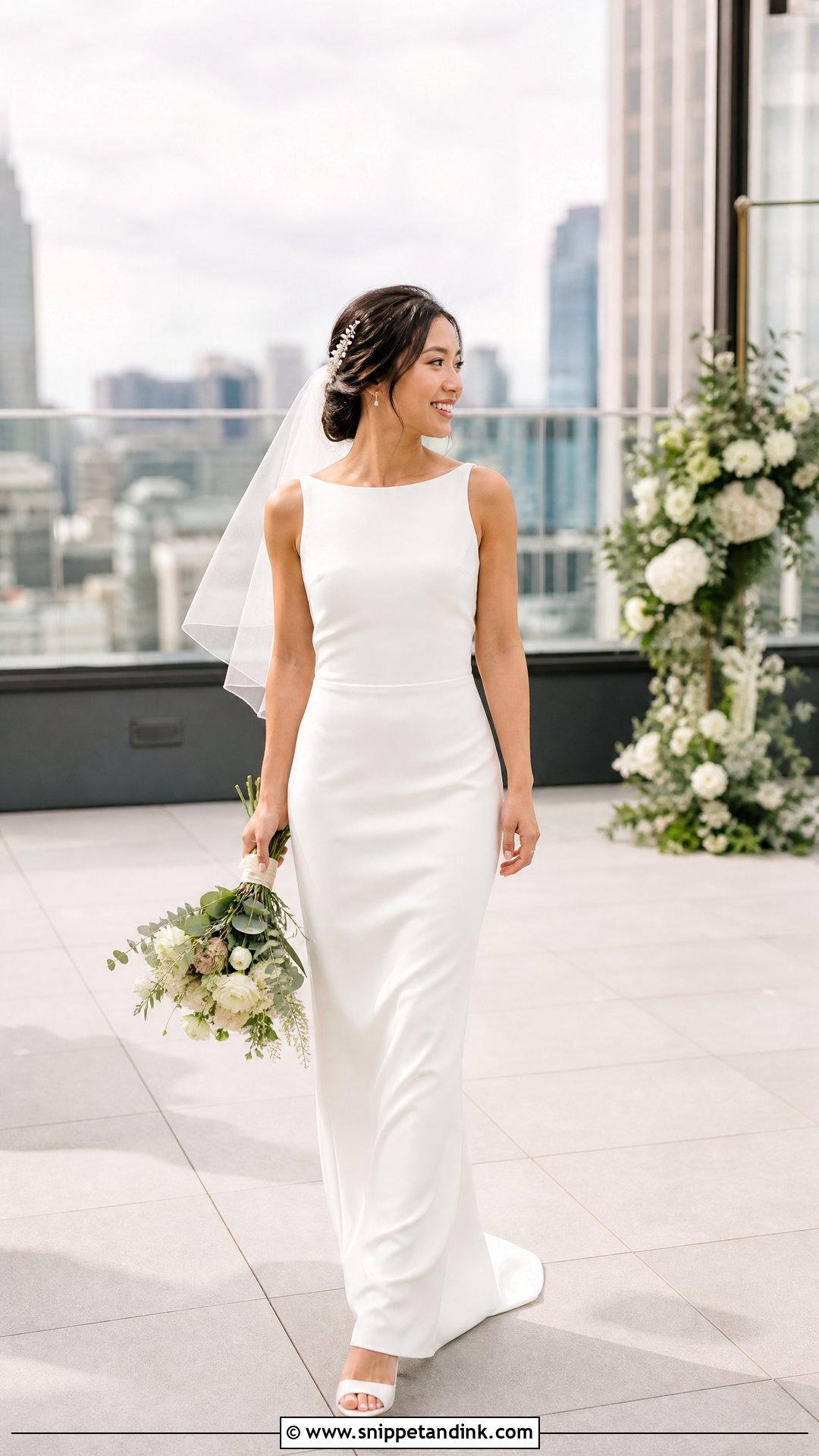
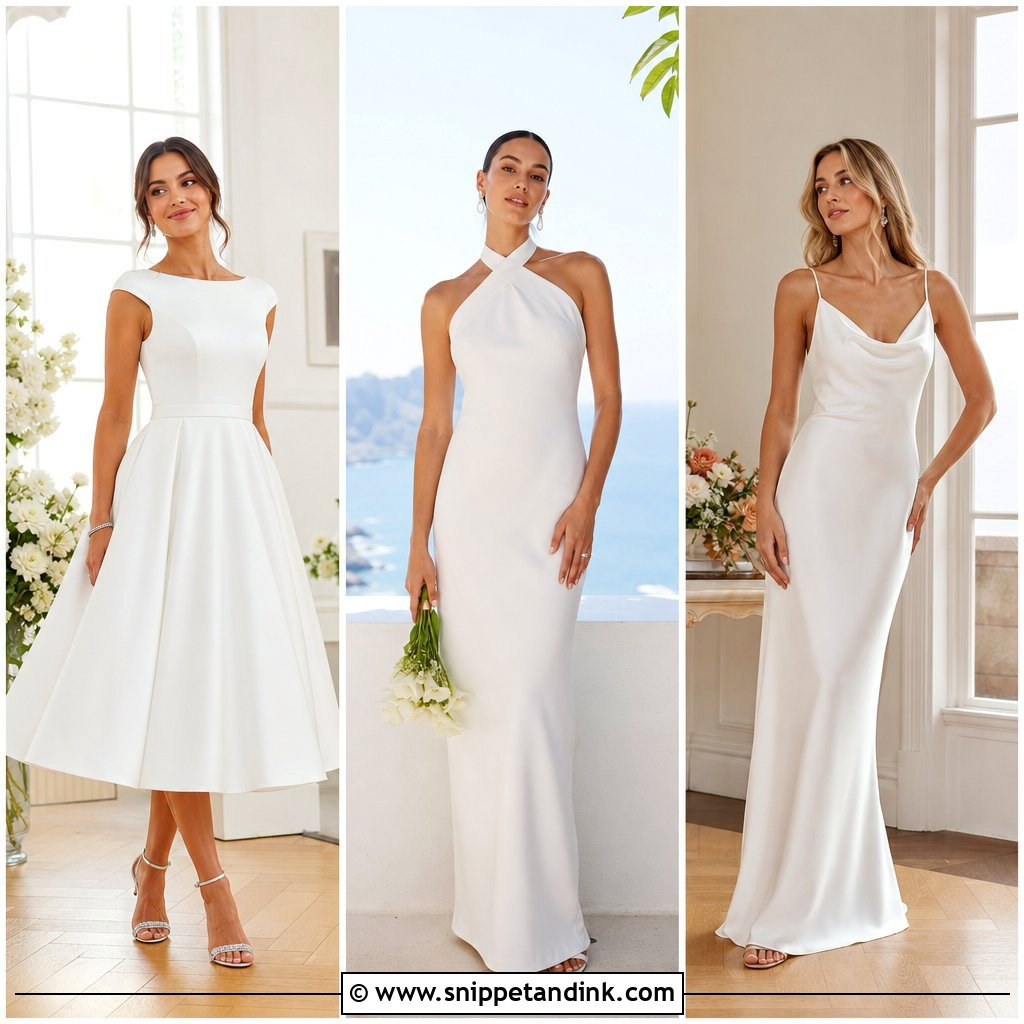
A sheath wedding dress skims the body in a fairly straight line from neckline to hem, so there is nowhere for poor tailoring to hide. Crepe gives structure, chiffon lightness, lace texture. The fit around the knees is what I watch: too narrow and you’ll shuffle, so ask for enough ease or a small walking slit. A good lining stops it clinging. Slingbacks, a short veil or pearl hairpiece and a loose hand-tied bouquet suit intimate ceremonies, rooftops and destination weddings. Add a removable overskirt if you want ceremony drama without changing the base.
8. Column Wedding Dress
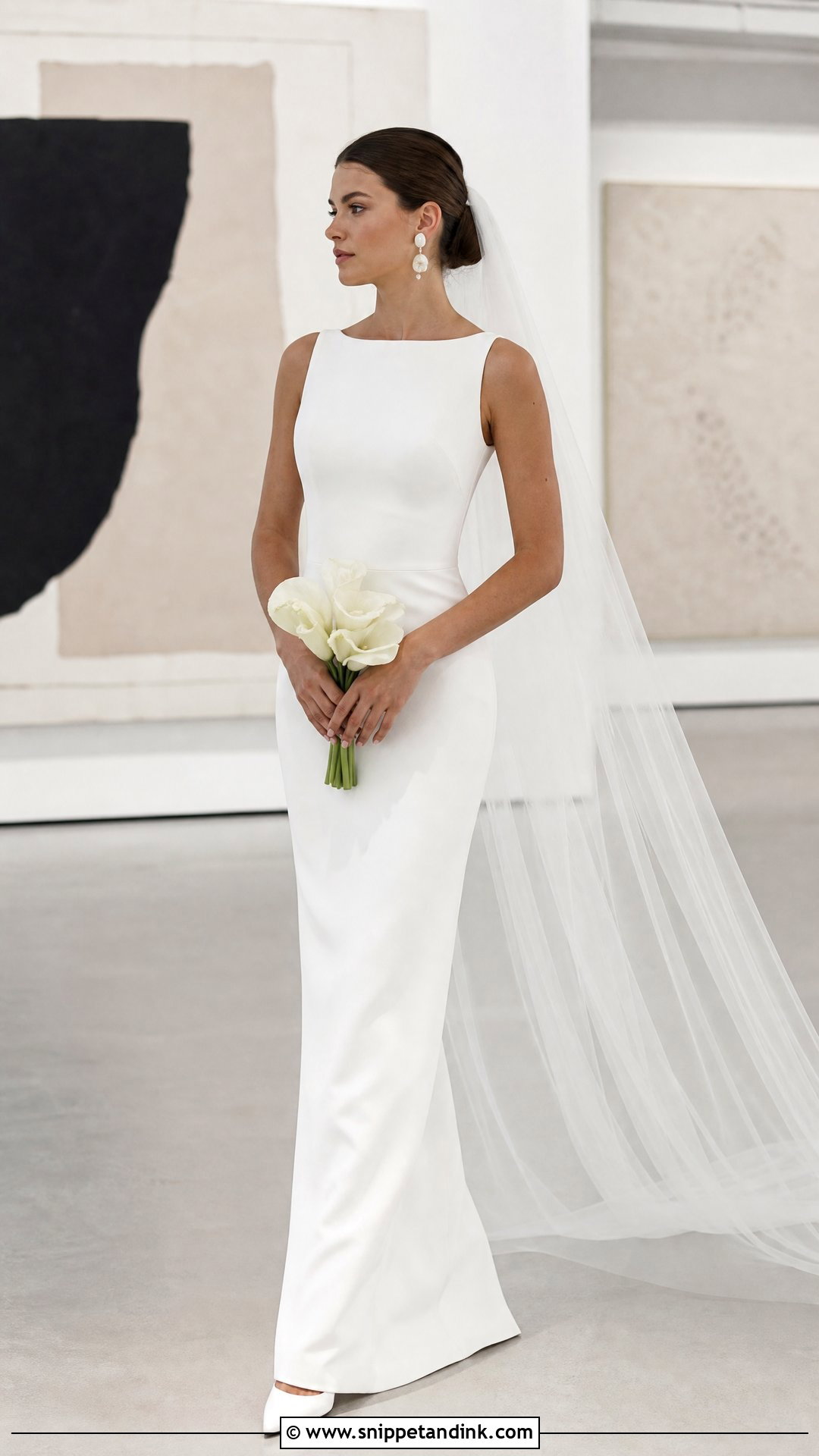
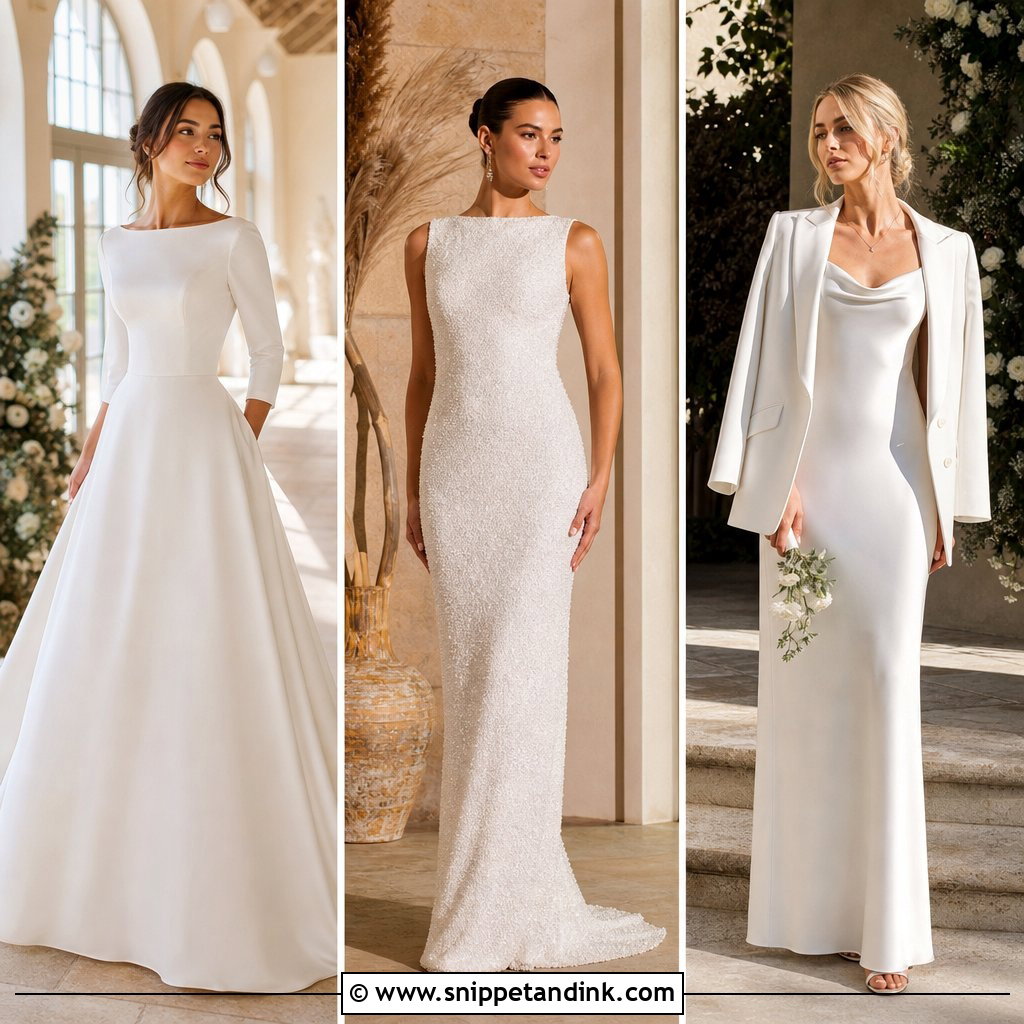
A column falls straight from the upper body with almost no flare, often sitting a little less closely at the hips than a sheath. Silk, crepe and smooth satin show off that construction, which suits galleries, city venues and courthouses. If the skirt is narrow, request a back slit or stretch lining. A defined shoulder, bateau or high neckline complements the vertical line. Sculptural earrings, pointed pumps, a slim bouquet and a plain floor-length veil complete it. On such a minimal gown, a puckered seam or a few millimeters of extra fabric is obvious, so alterations need to be precise.
9. Empire Waist Wedding Dress
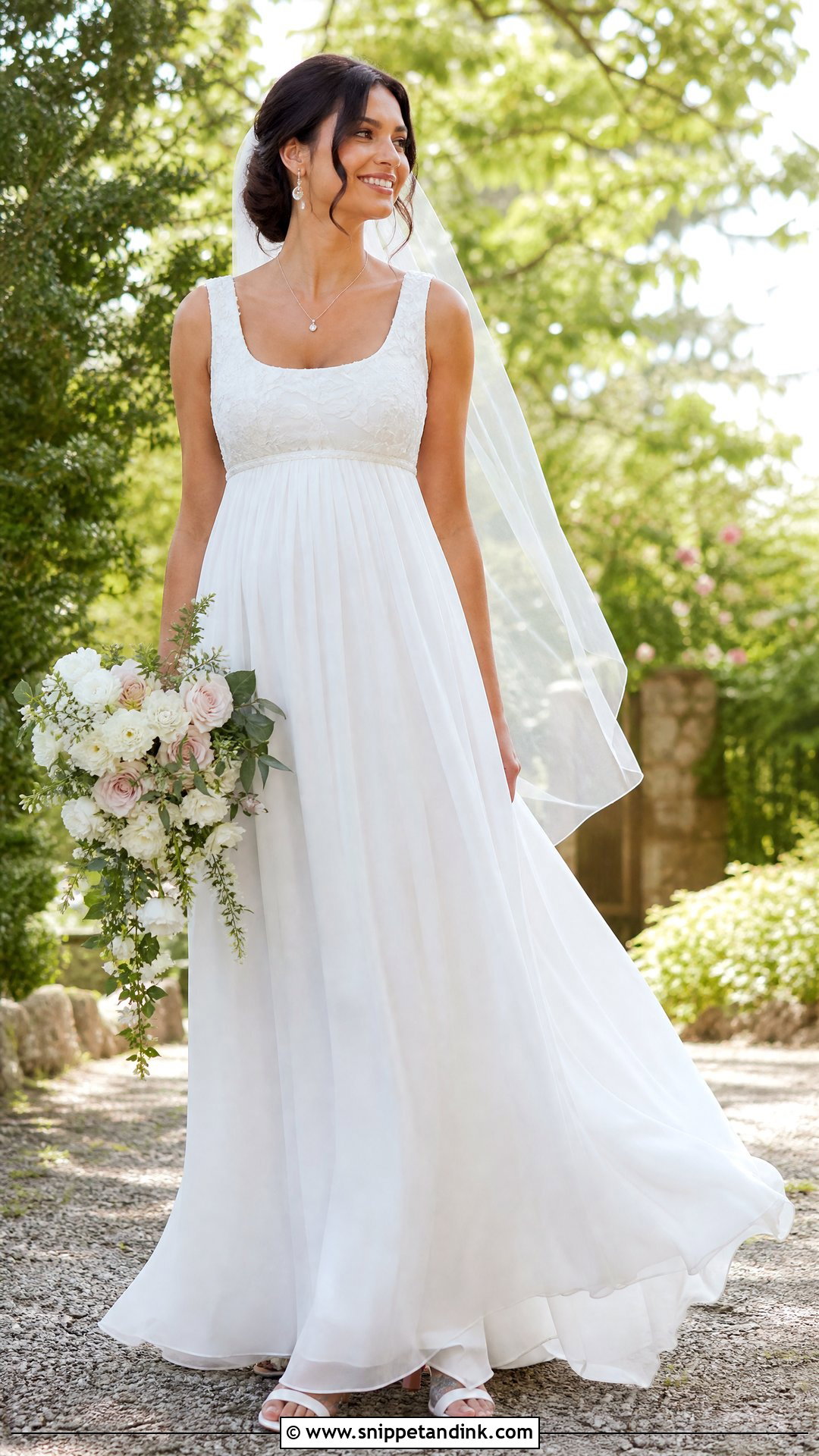
An empire waist wedding dress has its seam just under the bust, with the skirt falling freely below. That raised seam lengthens the skirt and leaves room through the waist and hips, which is why I suggest it for warm weather and for anyone who dislikes feeling held in. Chiffon, georgette and light tulle fall gently. Too much gathering right under the bust bulks it up, so look for a flatter seam. The seam must sit level and not press into the ribcage. A supportive bodice with wide straps or delicate sleeves, low block heels, a light veil and a flowing bouquet suit it outdoors.
10. Drop Waist Wedding Dress
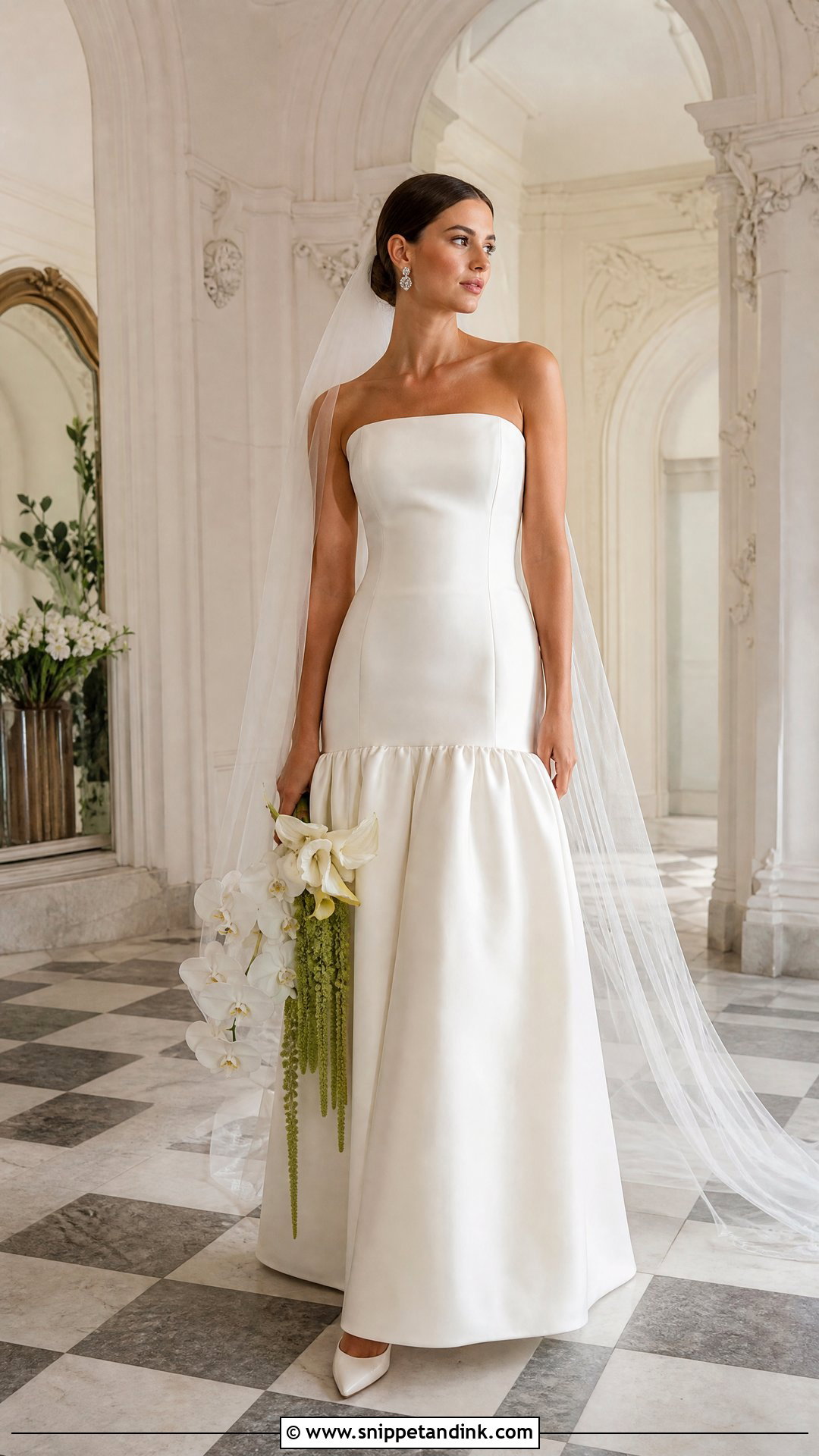
A drop waist extends the fitted bodice below the natural waist before releasing into the skirt near the upper hips. It looks long, sleek and a touch vintage, especially in smooth satin or a structured fabric, and modern versions range from minimal to dramatically full. The seam position changes how long your torso and legs look, so try two or three drop waists at different heights before deciding the cut isn’t for you. Confirm the bodice doesn’t crease when you sit. Pointed heels, a long veil, refined earrings and a small architectural bouquet suit it.
11. Basque Waist Wedding Dress
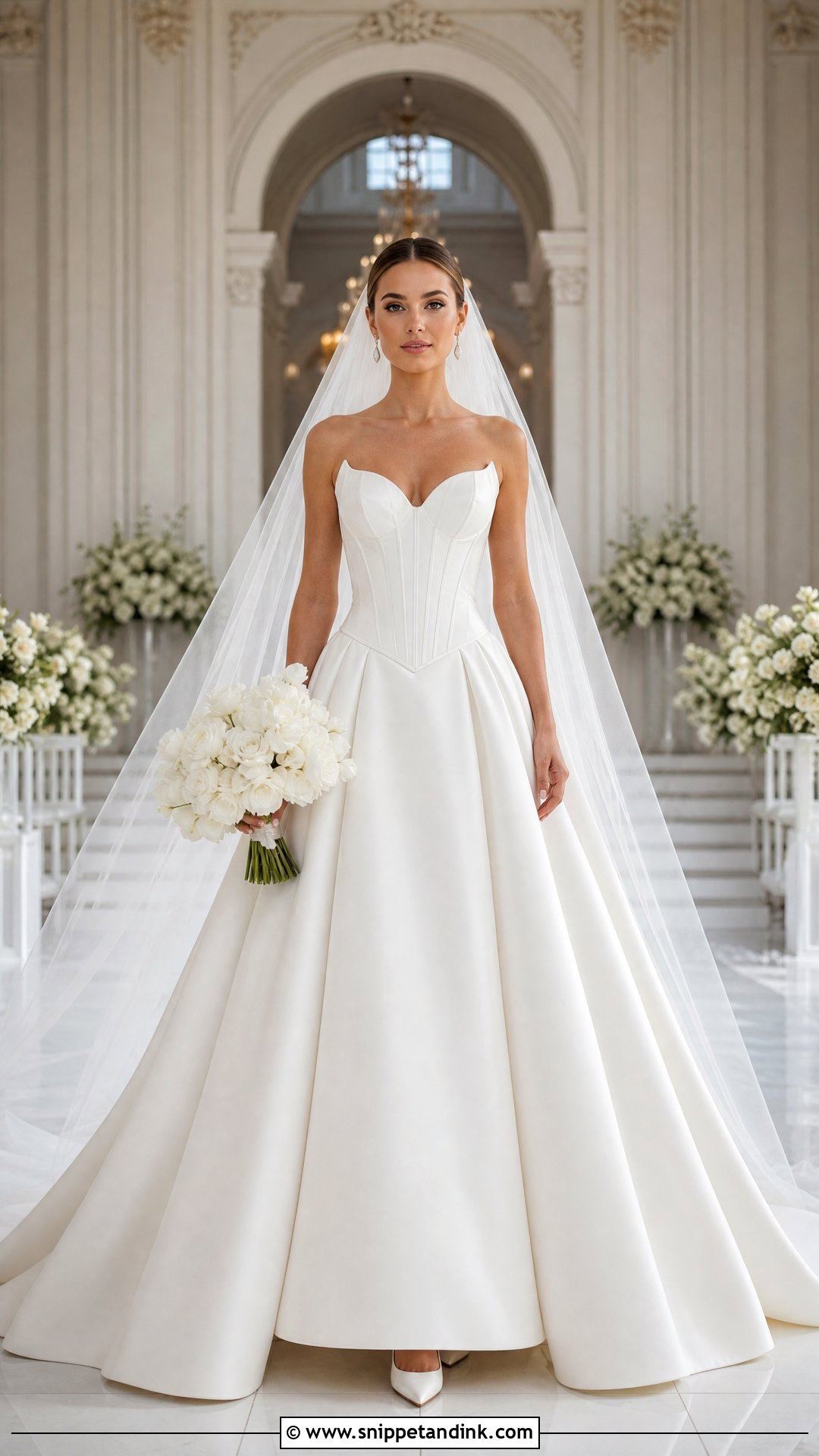
A basque waist dips into a V or curved point below the natural waist, giving a sculpted, corset-like line into an A-line or full skirt. Satin and mikado strengthen the structure; lace and drapey fabrics soften it. Where the point ends matters a lot: a shallow dip lengthens gently, while a deep one shortens the legs visually on a petite bride. Comfortable boning and a professional fitting let you sit and breathe easily. You’ll find it everywhere from minimal gowns to ornate ones. Classic pumps, a cathedral veil, drop earrings and a structured bouquet finish it.
12. Natural Waist Wedding Dress
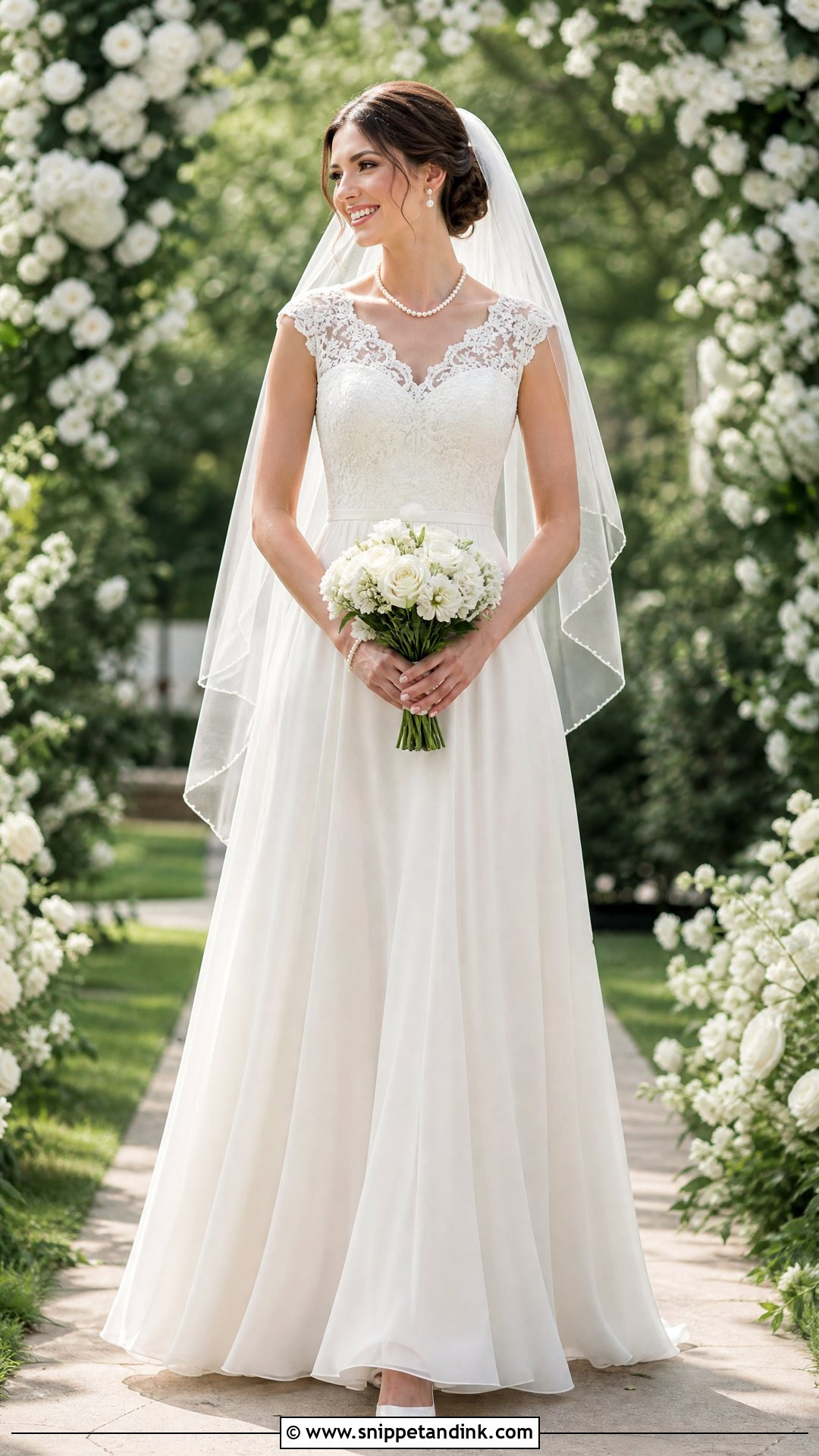
Sometimes the most familiar construction is the easiest to style. A natural waist seam sits at the narrowest point between ribcage and hips, and the skirt below can be gathered, pleated, straight or very full. A satin bodice over an A-line skirt reads formal; lace with flowing chiffon suits an outdoor ceremony. At fittings, lift your arms and watch the seam; if it rides up, the bodice needs adjusting. A narrow belt emphasizes the waist, though an uninterrupted seam looks cleaner. Mid-height heels, a fingertip veil, pearls and a classic bouquet complete it.
13. Tea-Length Wedding Dress
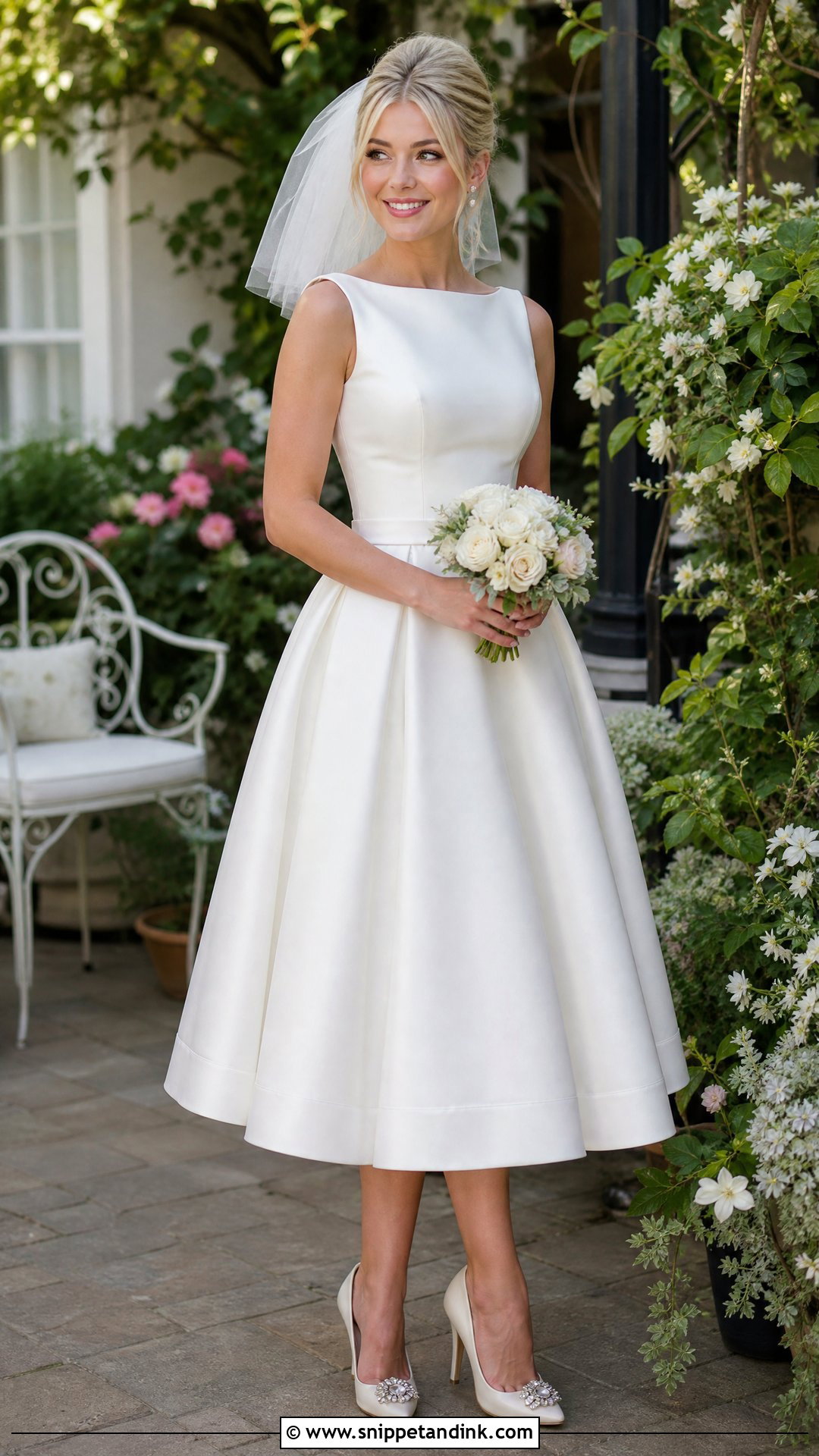
Tea length ends between knee and ankle, so your shoes become part of the outfit in every photo. It suits courthouse ceremonies, garden parties, brunch receptions and vintage-led weddings. A fitted bodice over a flared skirt gives classic movement, while a straighter tea-length cut looks modern. A petticoat adds volume; leave it out for a softer, understated shape. Have the hem set while wearing your wedding shoes, because a centimeter changes where it hits the calf. Embellished pumps, slingbacks or block heels, a birdcage or short tulle veil, pearl studs and a compact bouquet finish it.
14. Midi Wedding Dress
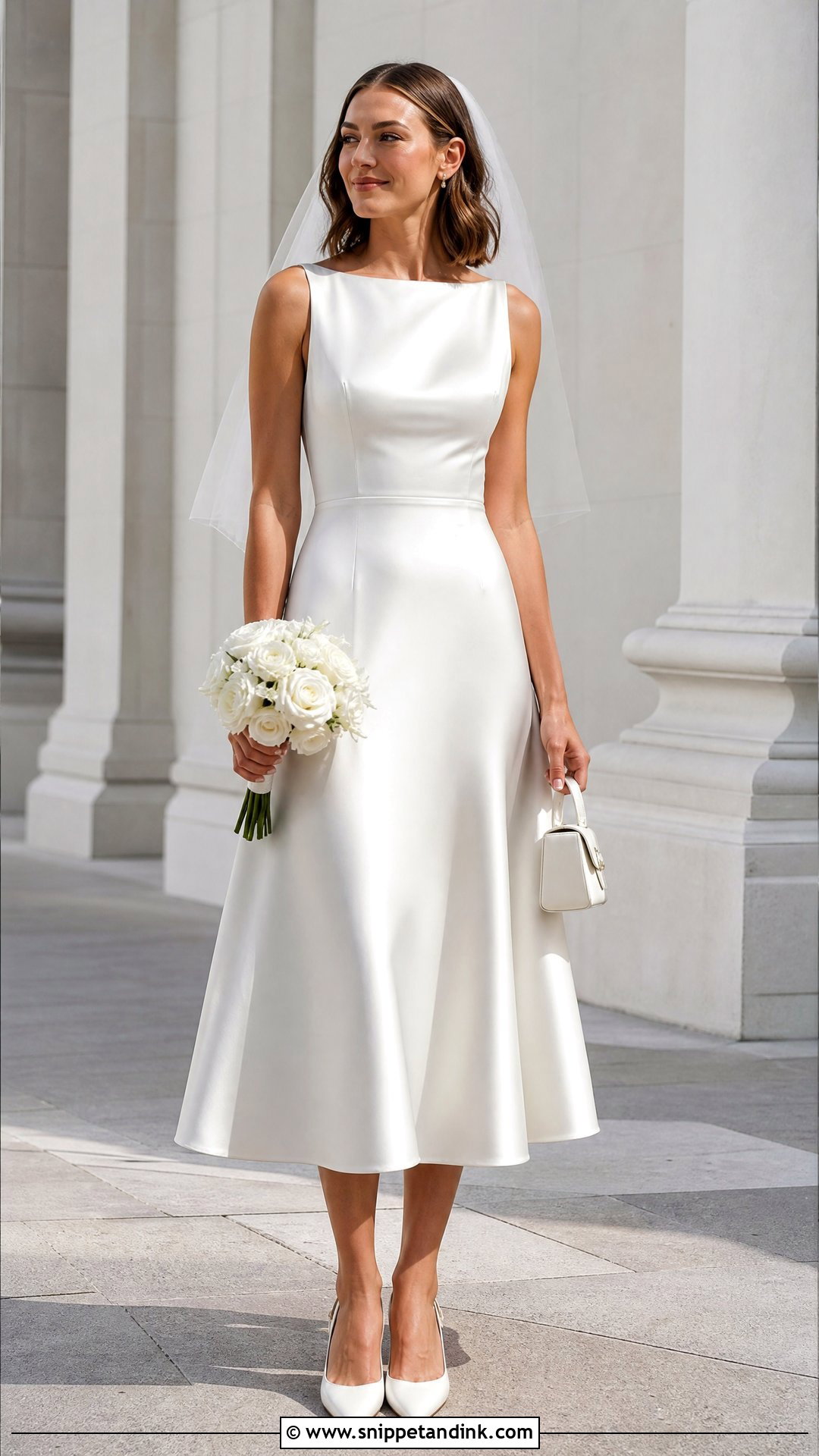
Ending around mid-calf, a midi wedding dress combines the ease of a short dress with a dressier length. It’s practical for civil ceremonies, restaurants, gardens and reception changes. A satin A-line midi looks classic; fitted crepe looks sharp and urban. The hem position is the detail I fuss over most: slightly above or below the widest part of the calf is usually more flattering than right across it. Pointed pumps, outdoor-friendly block heels or flats work, plus a shoulder-length veil, small earrings, a structured mini bag and a neat bouquet.
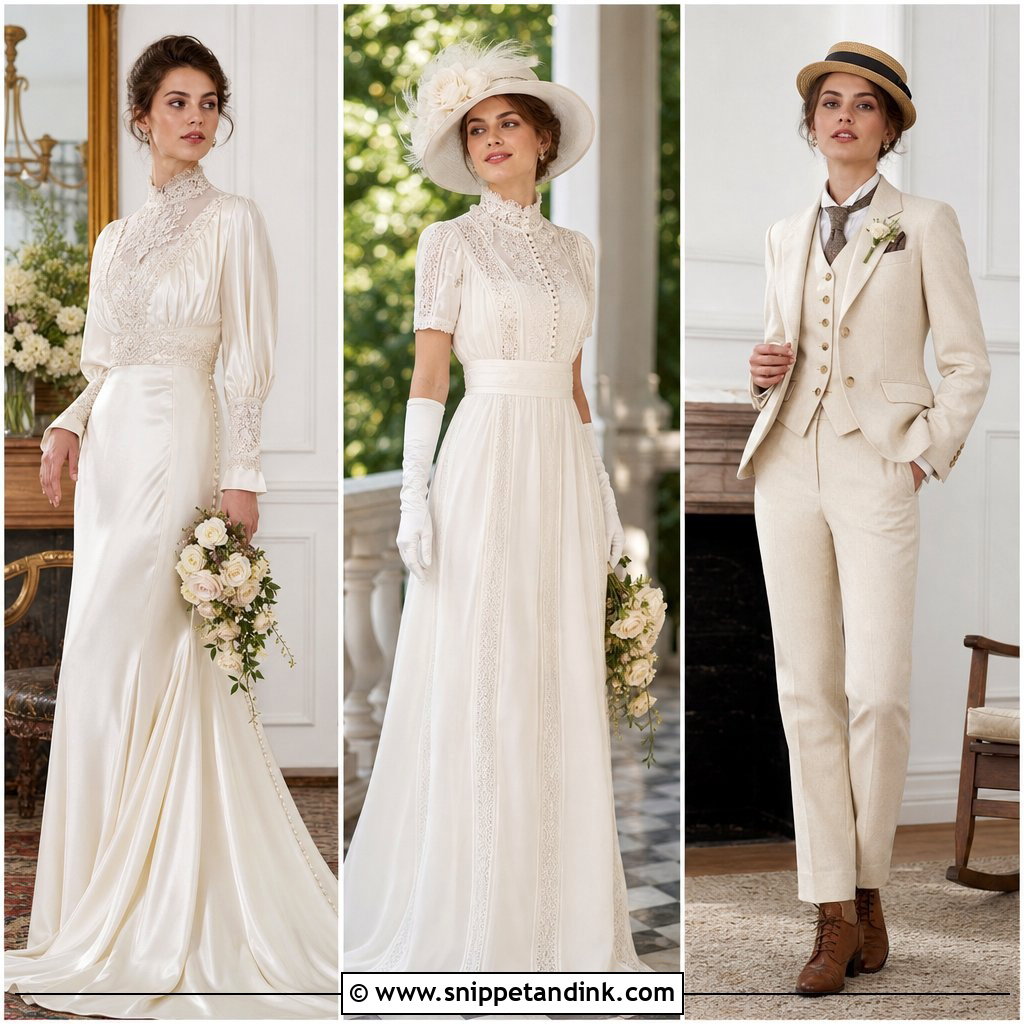
15. Mini Wedding Dress
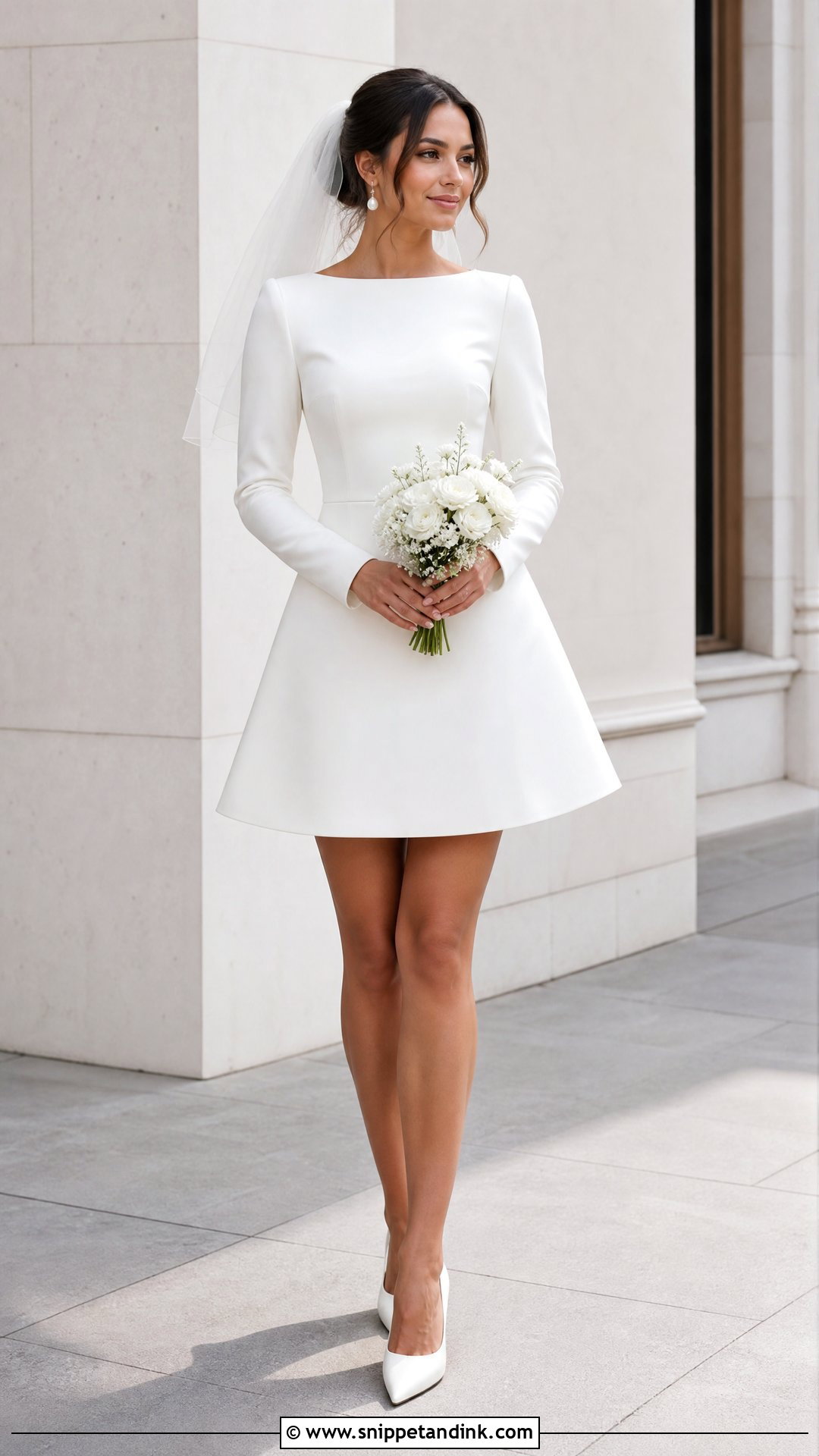
A mini finishes above the knee and brings a confident, modern mood to courthouse ceremonies, rehearsal dinners and reception changes. The fit should feel secure, not tight, because you’ll be sitting, hugging and dancing. A structured A-line mini moves easily; a tailored shift or fitted crepe looks cleaner. Long sleeves balance a short hem, and a detachable overskirt gives you two looks. Try sitting and raising your arms at the fitting; built-in shorts or a fitted underlayer help on the dance floor. Pointed pumps, low slingbacks or ballet flats, a short veil and pearl earrings mark it as bridal.
16. High-Low Wedding Dress
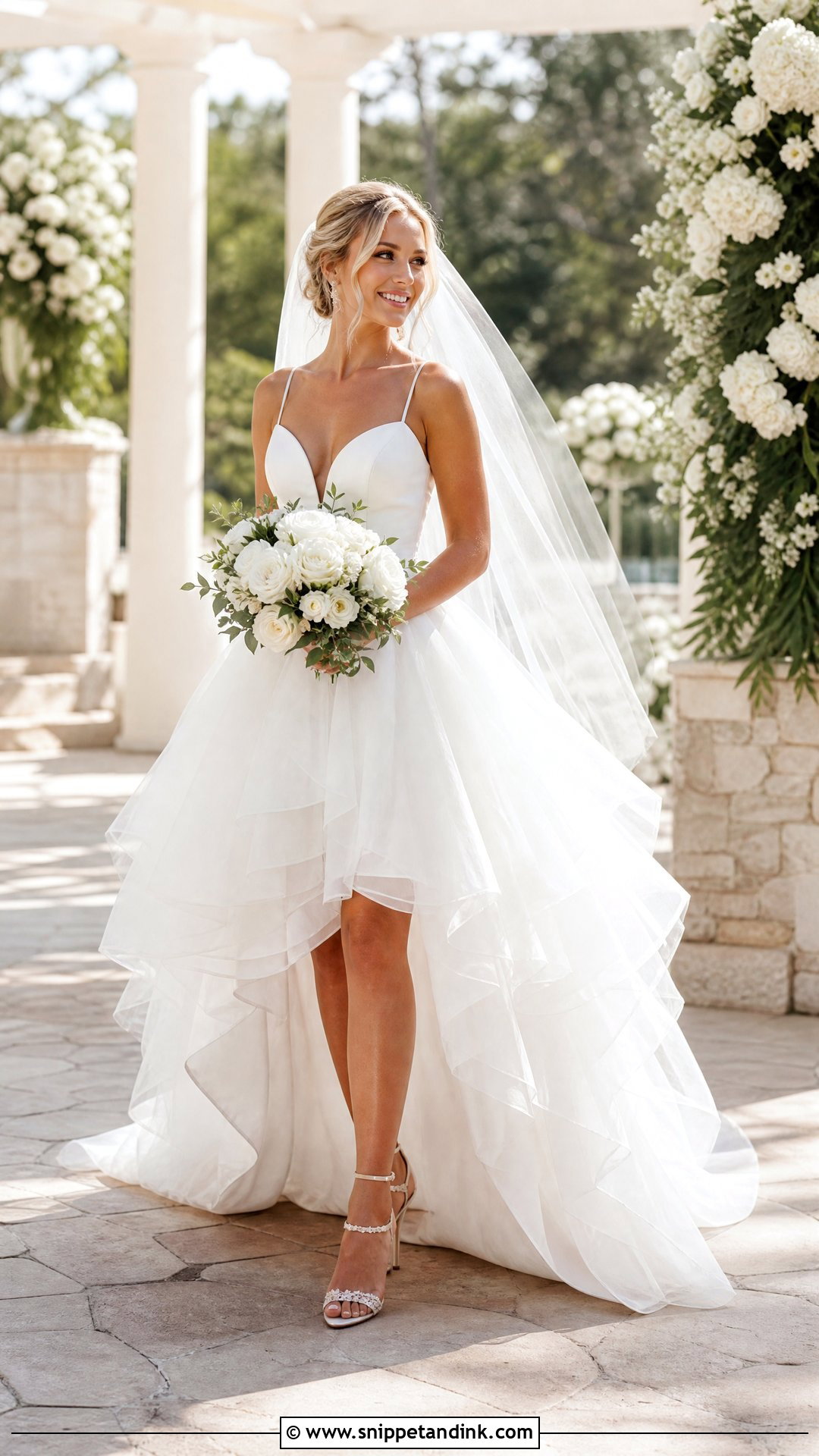
A high-low hem is shorter in front and longer at the back, showing your shoes while keeping a sweeping train. It suits outdoor weddings and modern venues, and brides who want something unconventional without going fully short. A structured skirt shows the shape clearly; soft tulle flows. The front hem should clearly clear the shoes, because a hem that’s only slightly short looks like a mistake rather than a design. The back needs a secure bustle for dancing. Keep the bodice clean if the skirt has layers or ruffles. Statement heels, a simple veil and a medium bouquet suit it.
17. Bias-Cut Wedding Dress
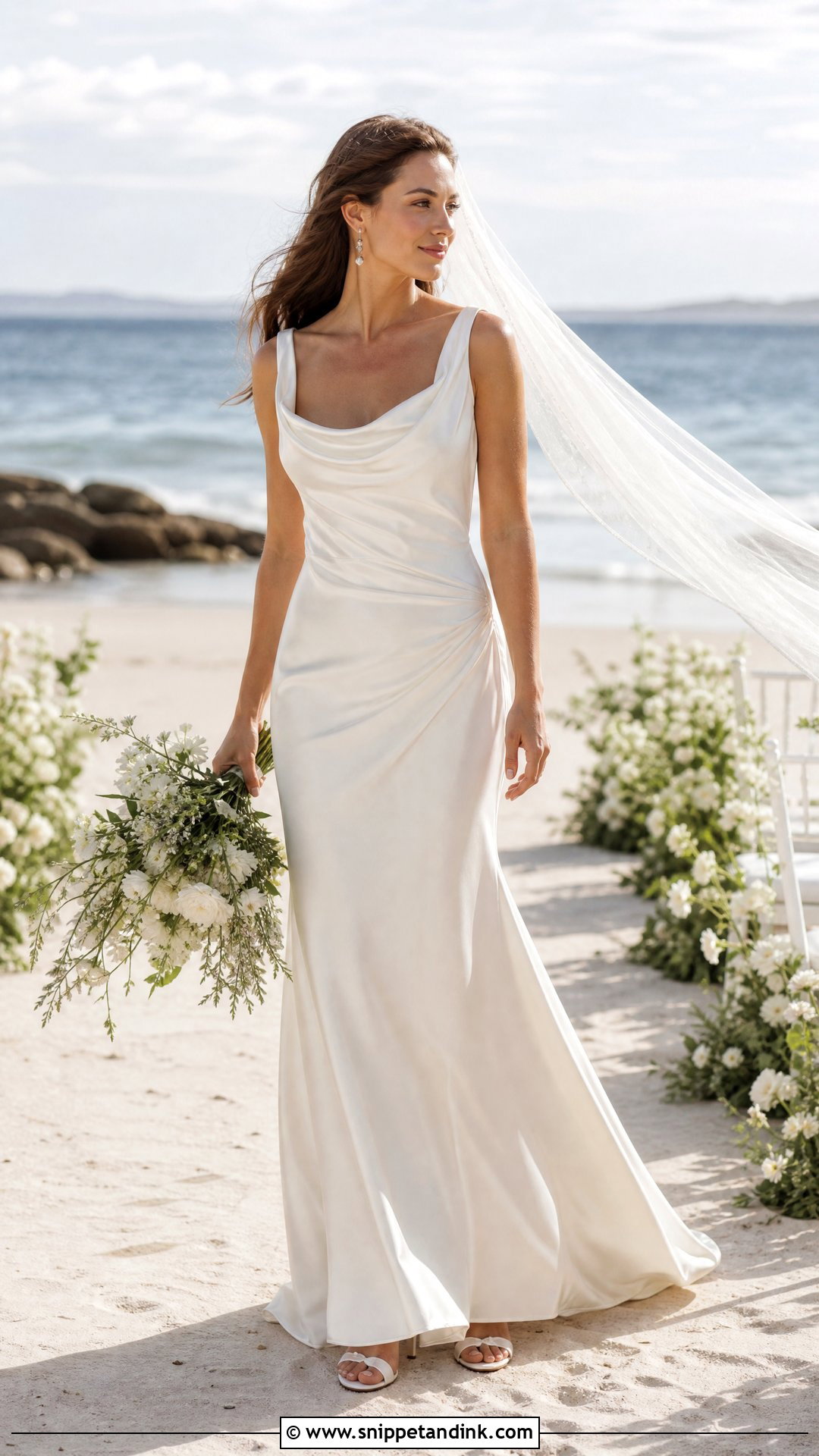
A bias-cut gown is made with fabric turned diagonally across the grain, which lets it drape and cling fluidly. Silk satin and crepe show this best. Bias fabric also stretches and settles after cutting, so the hem can drop over the first days of hanging; a seamstress experienced with bias work will let it hang before final hemming. Plan barely visible underwear, low heels, a sheer veil, fine jewelry and a loose bouquet. A cowl neck, delicate straps or a low back suit the soft line. Beach ceremonies, destination dinners and minimal city venues are its natural setting.
18. Slip Wedding Dress
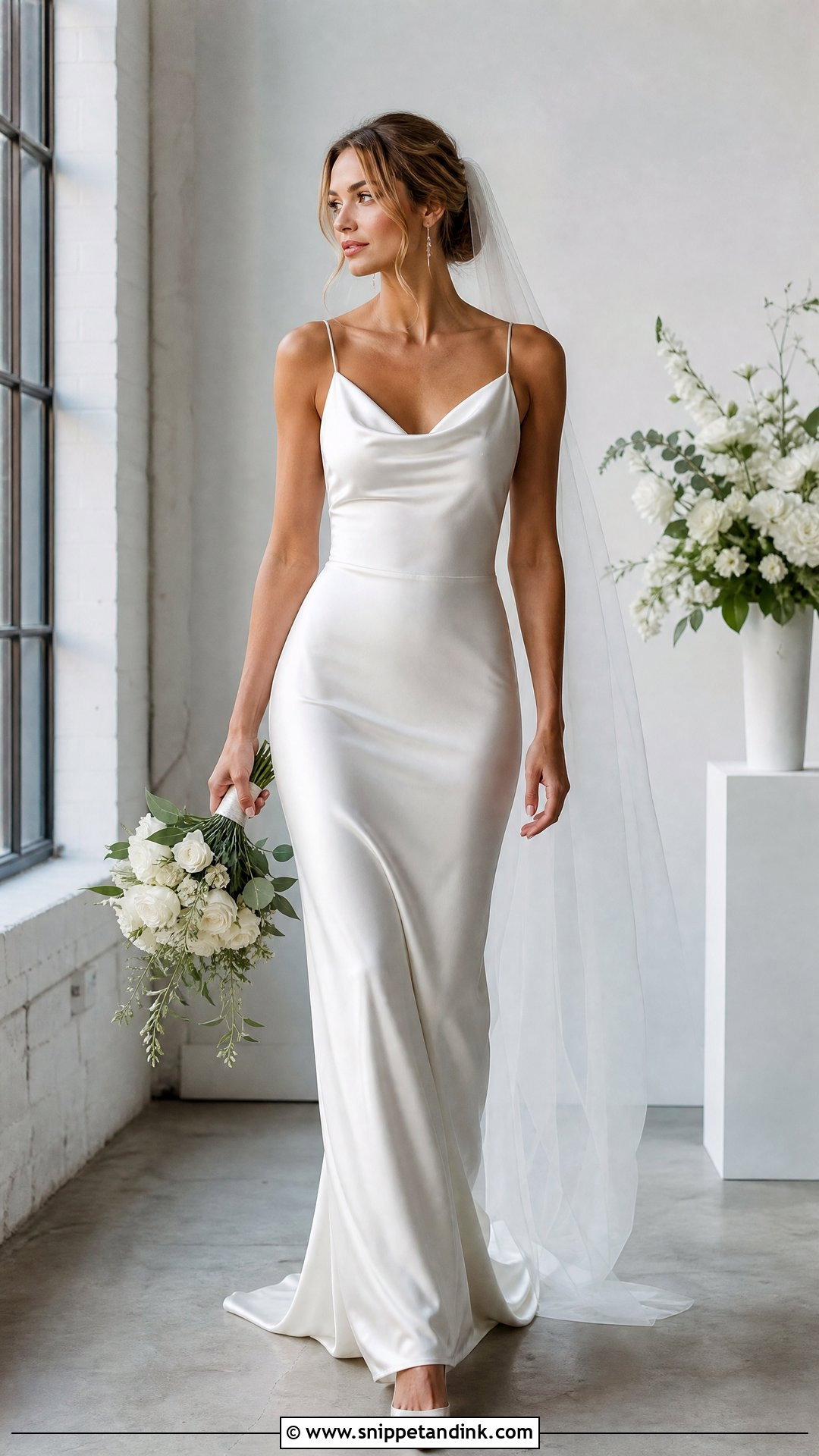
A slip dress is defined by silky fabric, narrow straps and a body-skimming shape, and it’s less forgiving than it looks. Choose substantial silk satin or lined crepe, which won’t look flimsy. A draped neck adds movement; a square one adds structure. Thin satin can show seams and underwear lines in natural light that you’d never notice in a salon, so step outside with it if you can. Minimal sandals or pointed heels, a long sheer veil and fine earrings suit it, and a blazer, sheer cape or overskirt adds ceremony coverage.
19. Wrap Wedding Dress
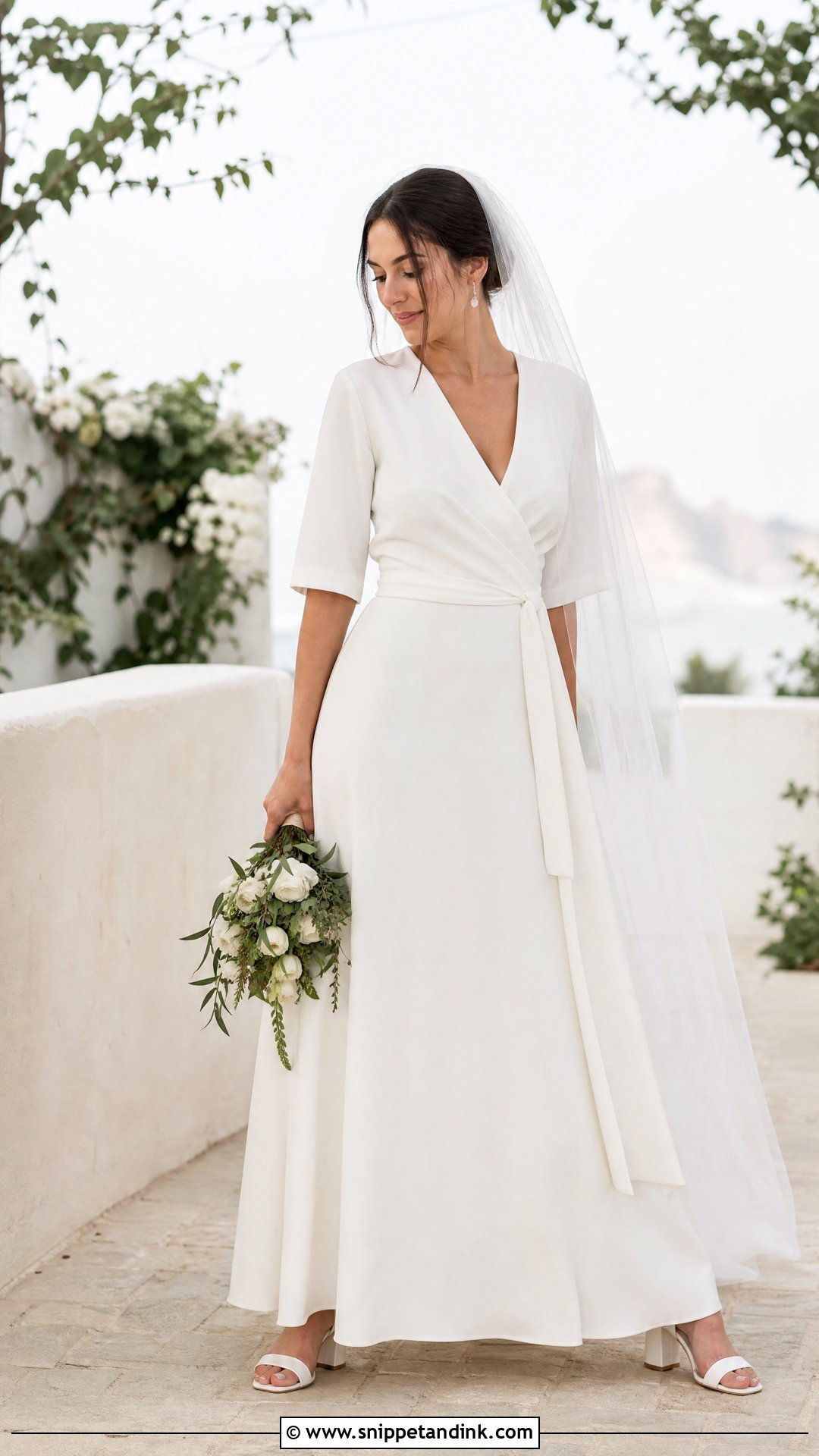
A wrap dress crosses over at the front and ties, or appears to tie, at the waist, creating a diagonal neckline. True wraps adjust easily but can gape; faux wraps hold their position with hidden seams and closures, which is what I’d usually choose for a long day. Bend forward and reach up at the fitting to check the neckline stays put. A discreet snap or internal panel adds coverage. Flowing crepe, chiffon and soft satin suit gardens and destination weddings. Flutter, elbow or long fitted sleeves are options. Keep the tie slim so it doesn’t bulk up behind the bouquet.
20. Peplum Wedding Dress
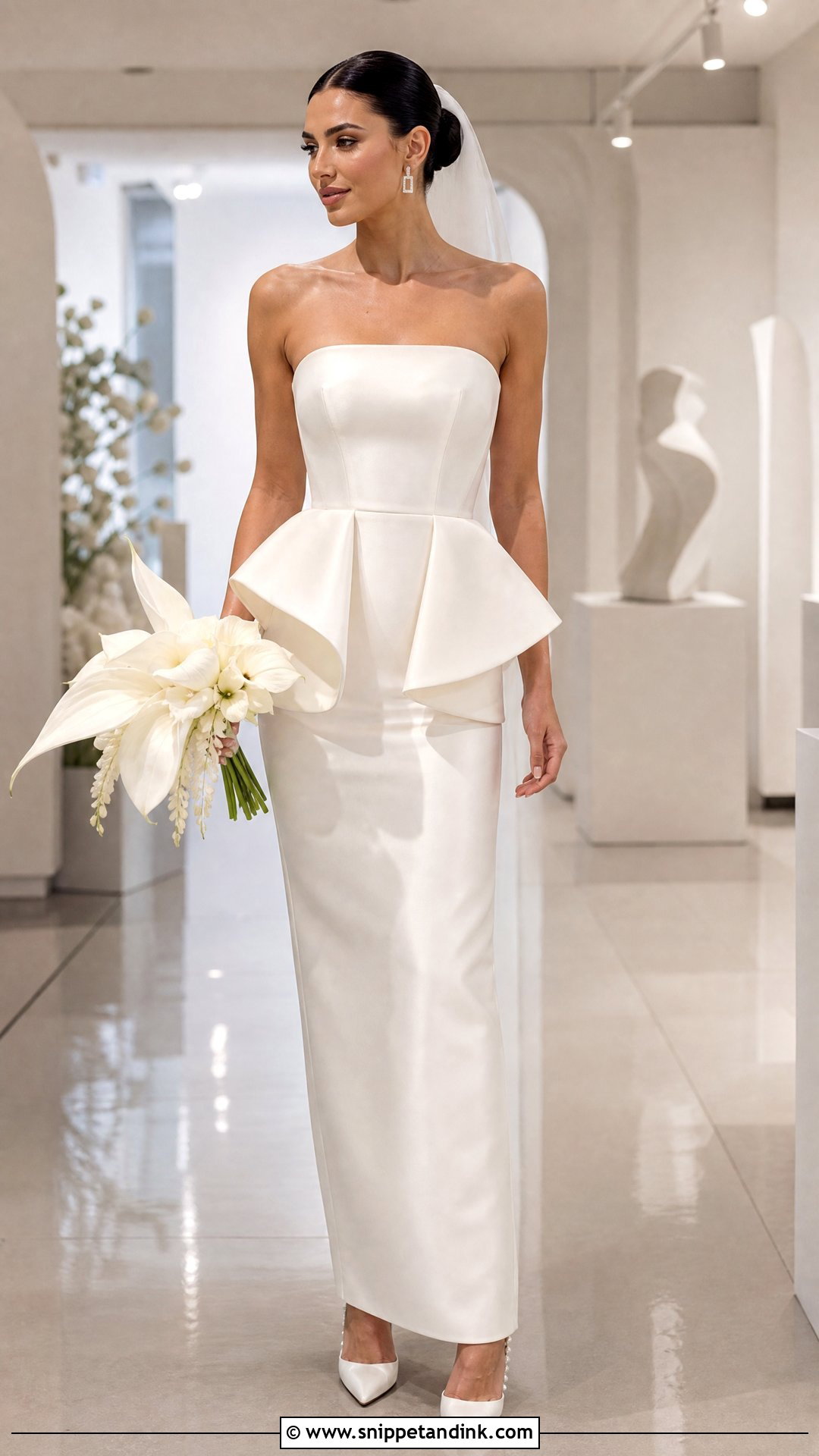
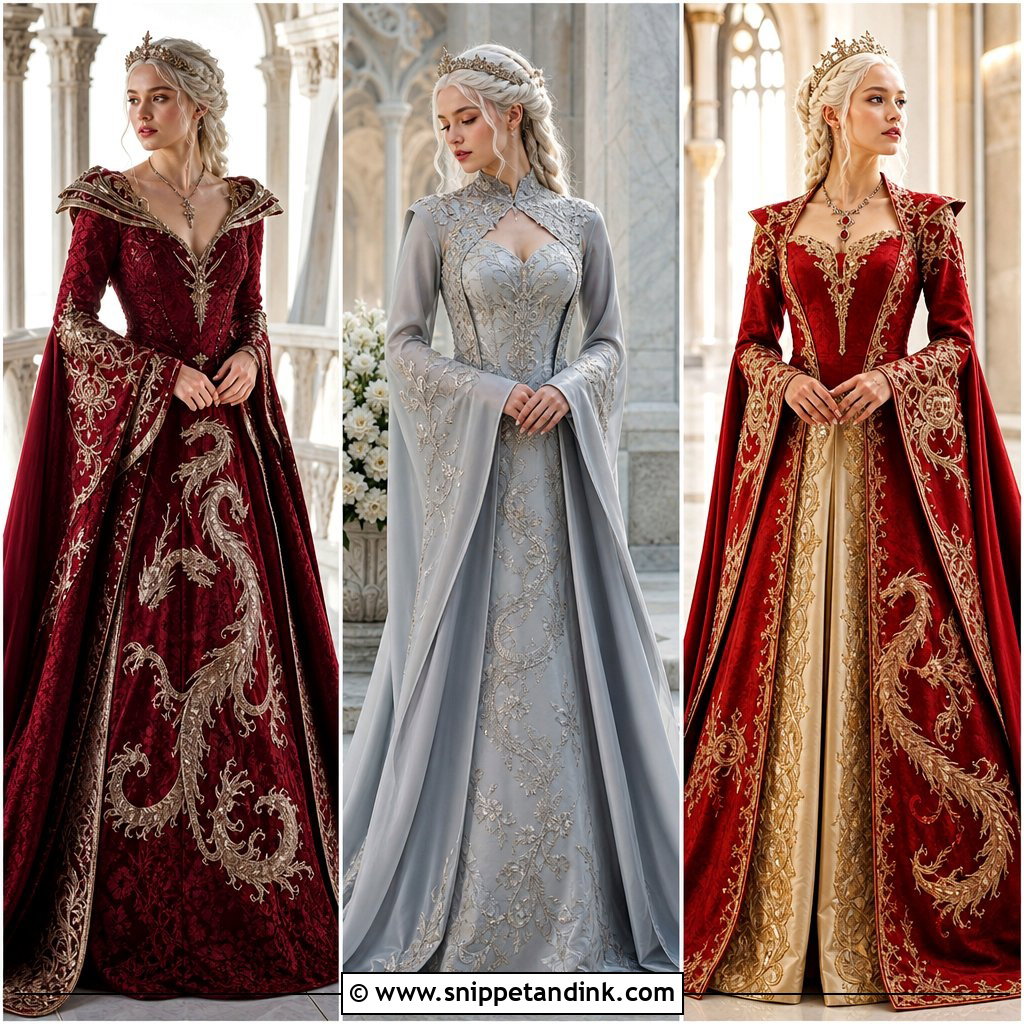
A peplum adds a short flared layer at the waist or upper hips, giving shape without ball-gown volume. Crisp satin makes it architectural; soft tulle or lace keeps it romantic. Over a straight column skirt it reads modern, over a fitted skirt it defines the waist. Check it from the side and back as well as the front, since a peplum that tilts or flips up at the back looks unbalanced in photos. Skip a bulky belt unless it’s part of the design. Subtle and dramatic versions both exist. Pointed pumps, a simple veil, geometric earrings and a structured bouquet complete it.
What a Seamstress Can Change, and What She Can’t
Brides sometimes buy a gown hoping alterations will turn it into a different silhouette. Some changes are routine; others are expensive, risky or simply impossible.
Usually straightforward
Taking in side seams, shortening a hem, adding a bustle, adding or adjusting straps, and attaching detachable sleeves are everyday work. Lifting the flare on some mermaids by a few inches is often possible too, if there is enough fabric in the seams.
Difficult or not worth trying
Adding volume to a skirt, moving a waist seam significantly, letting out a gown with no seam allowance, and reshaping a bias-cut dress all fight how the dress was built. If you need one of these, choose a different cut now rather than asking for a rescue later.
Timing
Made-to-order gowns commonly take several months to arrive, and alterations usually begin around two to three months before the date with two or three fittings. Timelines vary between shops and seasons, so ask both the salon and the seamstress for their dates before you order.
Let the Fitting Room Overrule the Body-Shape Charts
The right cut supports your body, suits the venue and lets you feel like yourself. Treat this list as a starting point and stay open at appointments; a silhouette that looks ordinary on a hanger can surprise you once it’s pinned to your size. Compare how each one moves, how structured it feels, how heavy the fabric is and where the waist and hem fall. Wear similar underwear and shoes near your planned heel height. Take photos from several angles where the salon allows it. Above all, don’t rule out a cut because a chart said so; good alterations and how you feel in it matter more.
You'll Like These Ideas:


Leave a Reply