
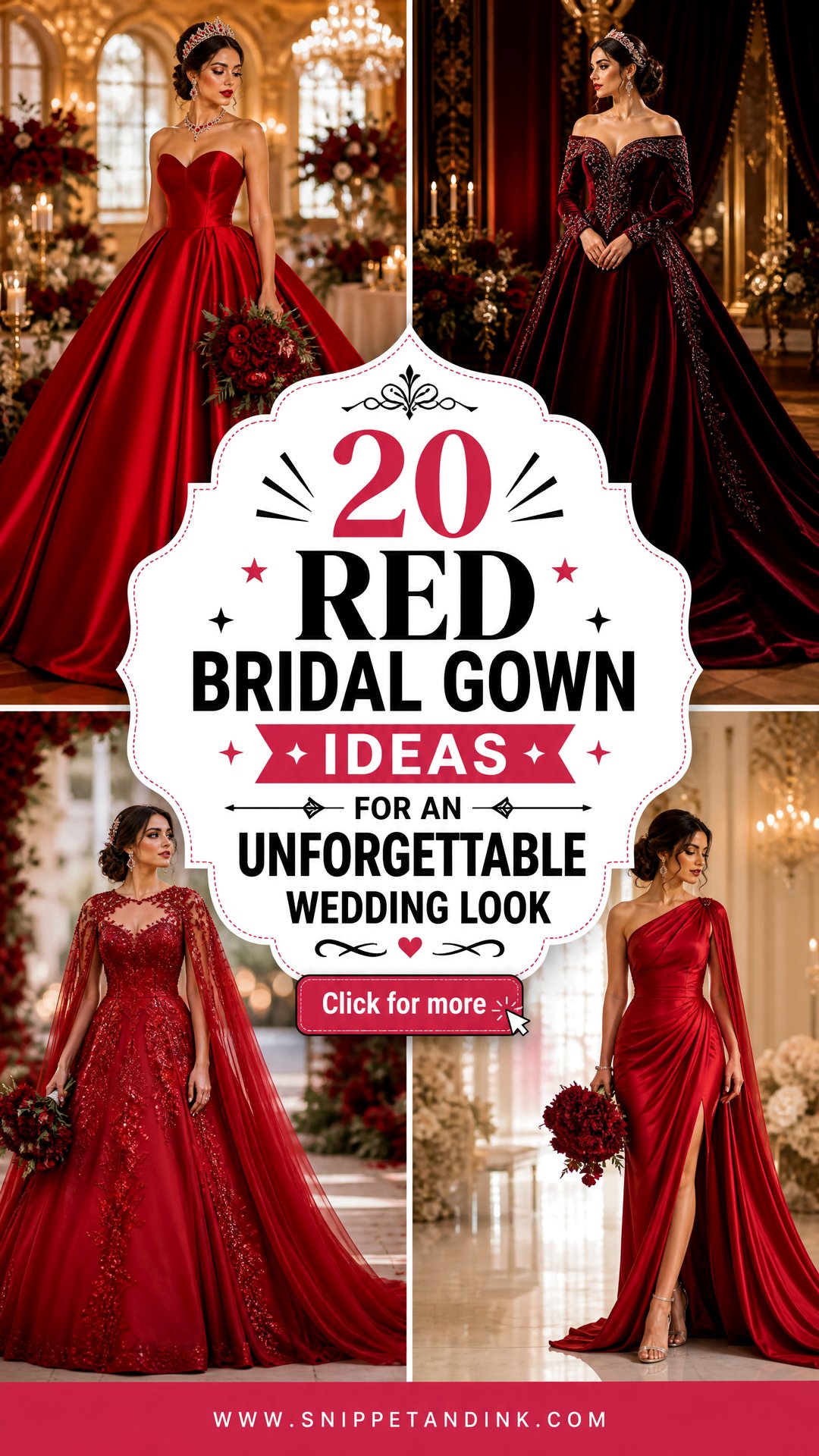
Red has a long bridal history in many cultures, and it gives you far more range than a single bright scarlet. These 20 Red Bridal Gown Ideas run from structured ball gowns and bias-cut slips to burgundy velvet and convertible pieces with removable skirts. When a bride tells me she wants red, my first question is which red, because a blue-leaning ruby and an orange-leaning tomato red behave completely differently against skin and under venue lighting. The shoes, veil and flowers then do a quieter job: they are what make a red dress read as a wedding gown rather than something for a gala.
Which Red Suits Your Skin, and Your Venue Lighting
Most of my red-gown appointments start with swatches, not dresses. Every red leans either blue (ruby, raspberry, wine) or orange (tomato, poppy, brick), and that lean matters more than how dark the red is. I hold a swatch under the bride’s chin beside a window and watch her skin. The right red makes it look clear. The wrong one picks out every bit of redness around the nose and chin, or turns her slightly sallow.
- Cool or pink undertones usually sit best with blue-based reds such as ruby and wine.
- Warm, golden undertones tend to suit orange-based reds and brick.
- Very fair skin can look washed out beside a vivid scarlet; a deeper wine is often kinder.
- Deep skin tones carry highly saturated reds with ease.
- If you can’t tell, true crimson sits in the middle and suits most people.
How the camera sees red
Then I check the same swatch under warm indoor light. Candlelight and yellow bulbs push orange-reds further toward orange and can make burgundy look brown, while flat daylight can dull a ruby. Cameras also struggle with very saturated red: a bright scarlet in plain satin can lose its folds and turn into a single flat shape. Lace, velvet, pleats and embroidery give the camera texture to hold on to, which is why textured reds usually look deeper in the final pictures. Ask your photographer how they handle red, and send them a photo of your swatch.
1. Red Satin Ball Gown
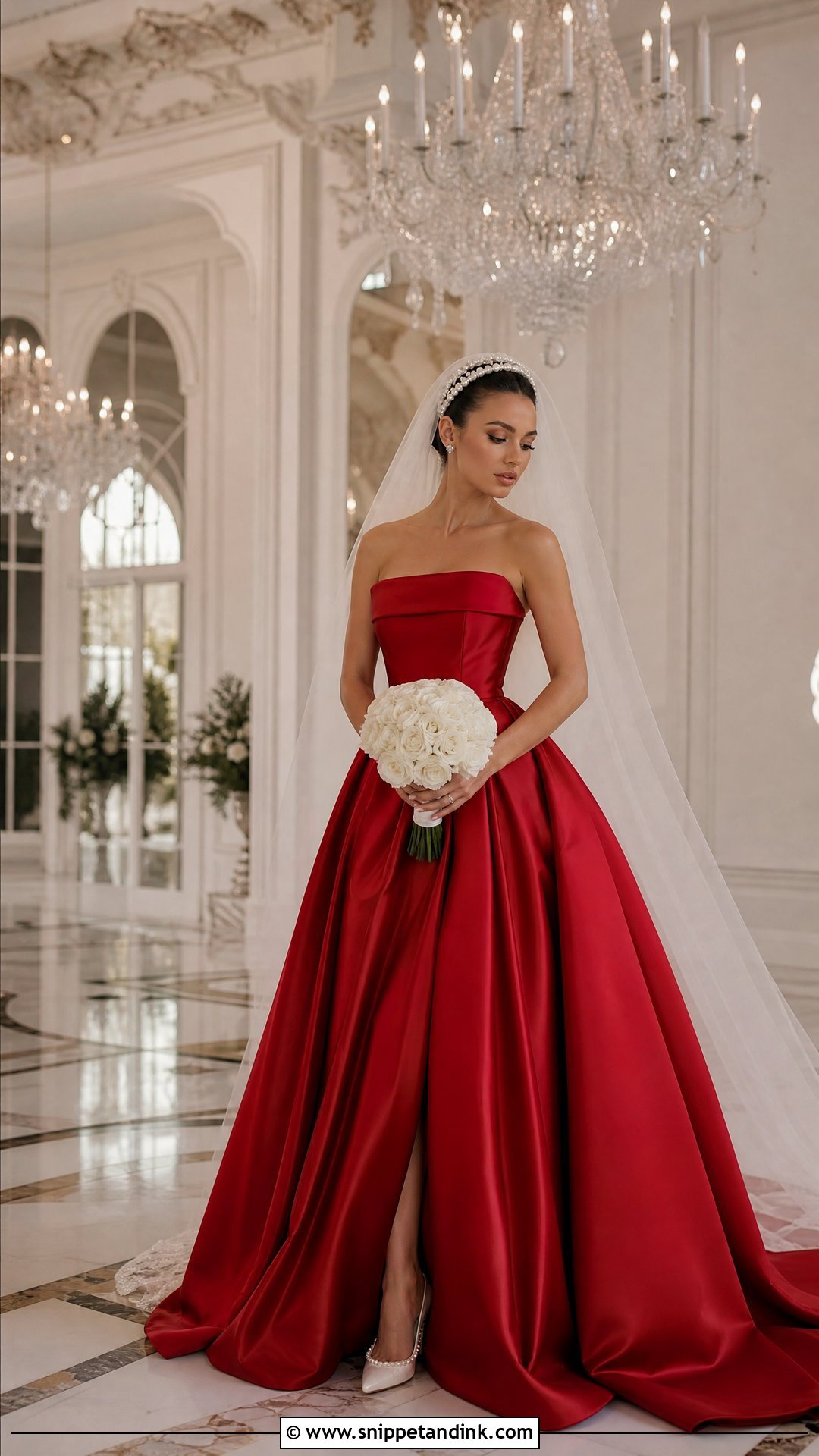
Satin is the least forgiving fabric on this list, and that is exactly why a red satin ball gown looks so expensive when it is done well. I look for a structured bodice, a defined waist and deep pleats in the skirt, because red satin shows every ripple at the hip. Ivory pointed pumps, a pearl or crystal headband and small drop earrings are enough, with a compact bouquet of white roses or callas for contrast. Add a cathedral veil with a plain cut edge if you want more ceremony. For a fuller bust I’d ask for wider straps or an internal corset, and petite brides usually need some skirt volume taken out. Pay for a good hem: satin turns an uneven edge into a wavering line of light.
2. Red Lace A-Line Bridal Gown
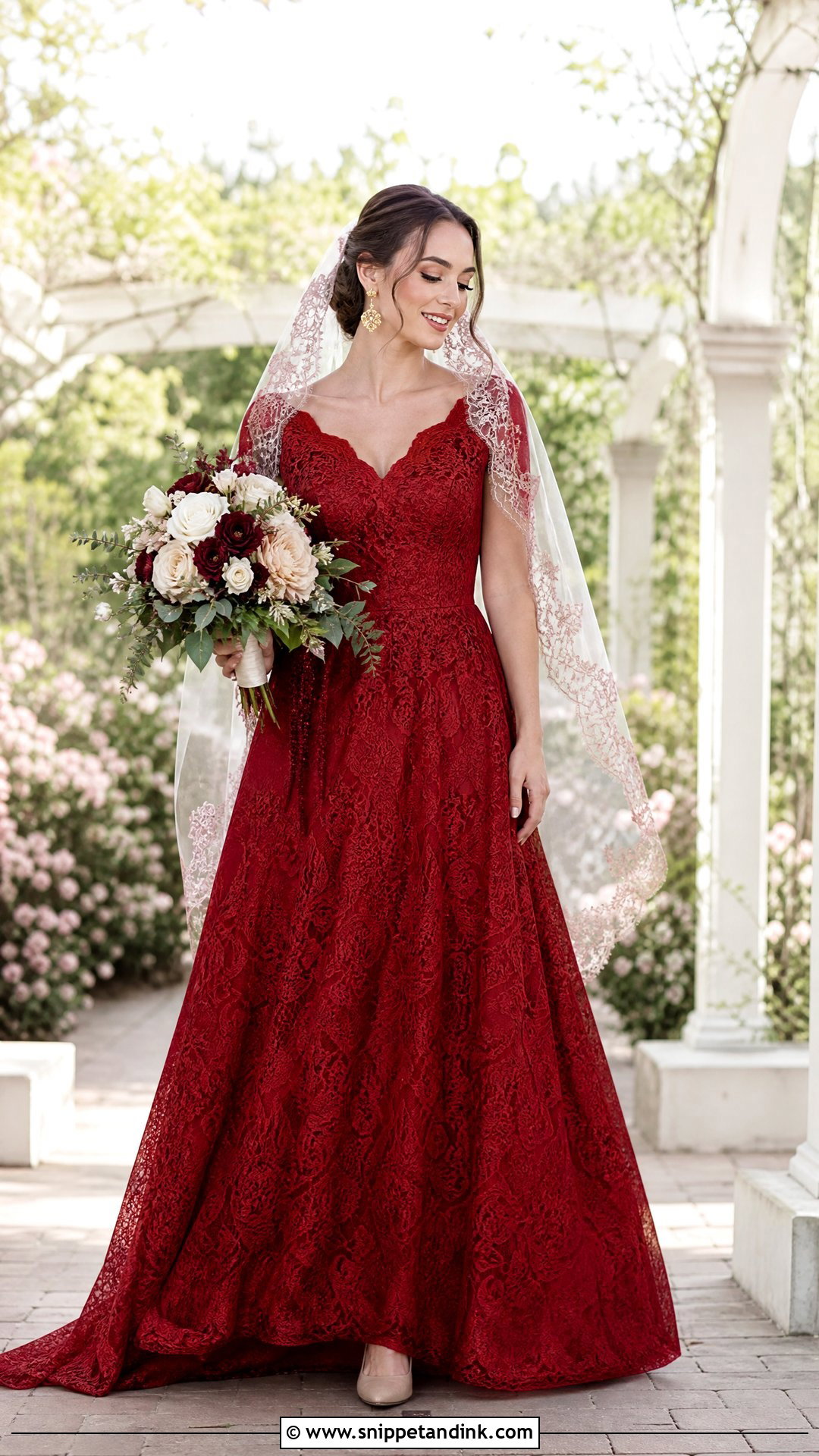
Lace softens red more than any other surface here, because the pattern breaks up the block of colour. I’d pick tonal floral lace over a red lining. Over a nude or ivory lining the same lace turns pinkish from a few steps away, which some brides love and others never expected. The A-line defines the bodice and then skims the hips, so it suits almost every figure I fit. Nude closed-toe heels, fine gold earrings and a slim bracelet keep things quiet, and a fingertip veil with a narrow lace edge ties back to the dress. Carry ivory flowers with a few burgundy stems rather than an all-red bouquet, which simply vanishes against the skirt in photographs.
3. Burgundy Velvet Bridal Gown
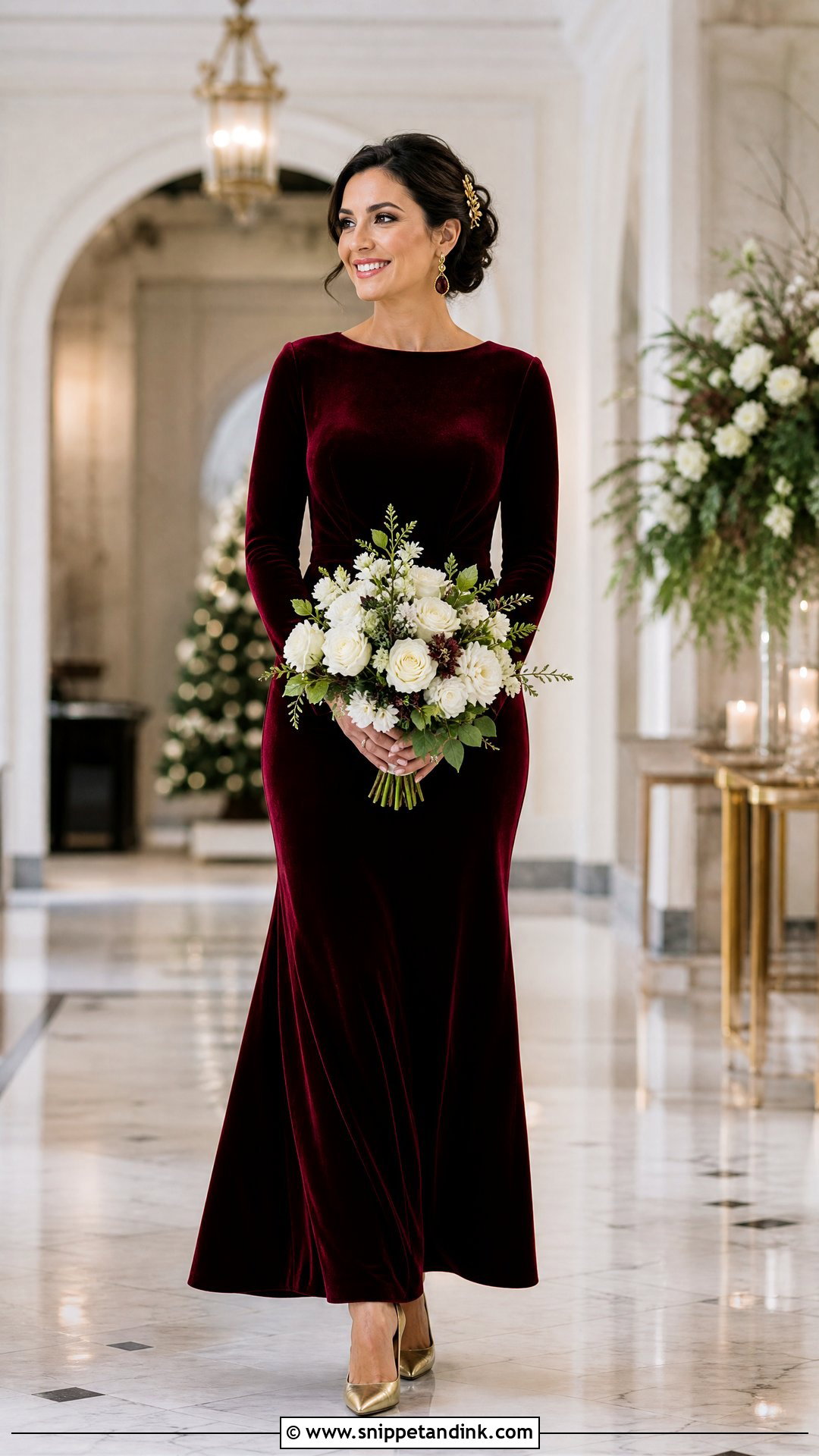
Velvet is a cold-weather fabric, and I wouldn’t put a bride in it for an outdoor summer ceremony. In a polished indoor setting, though, deep burgundy velvet absorbs light and looks richer on camera than flat satin. Go floor-length with long sleeves, a fitted waist and a softly flared skirt, and keep the neckline to a moderate V or square so the weight doesn’t swamp your frame. Velvet crushes wherever it is pressed, so it gets steamed from the inside and never ironed on the pile, and you’ll want to sit carefully in the car. Gold pumps, garnet earrings and a structured ivory bouquet finish it. Skip the long veil for a gold comb or a short tulle piece, and consider a slit so the skirt doesn’t cling as you walk.
4. Scarlet Off-Shoulder Mermaid Bridal Gown
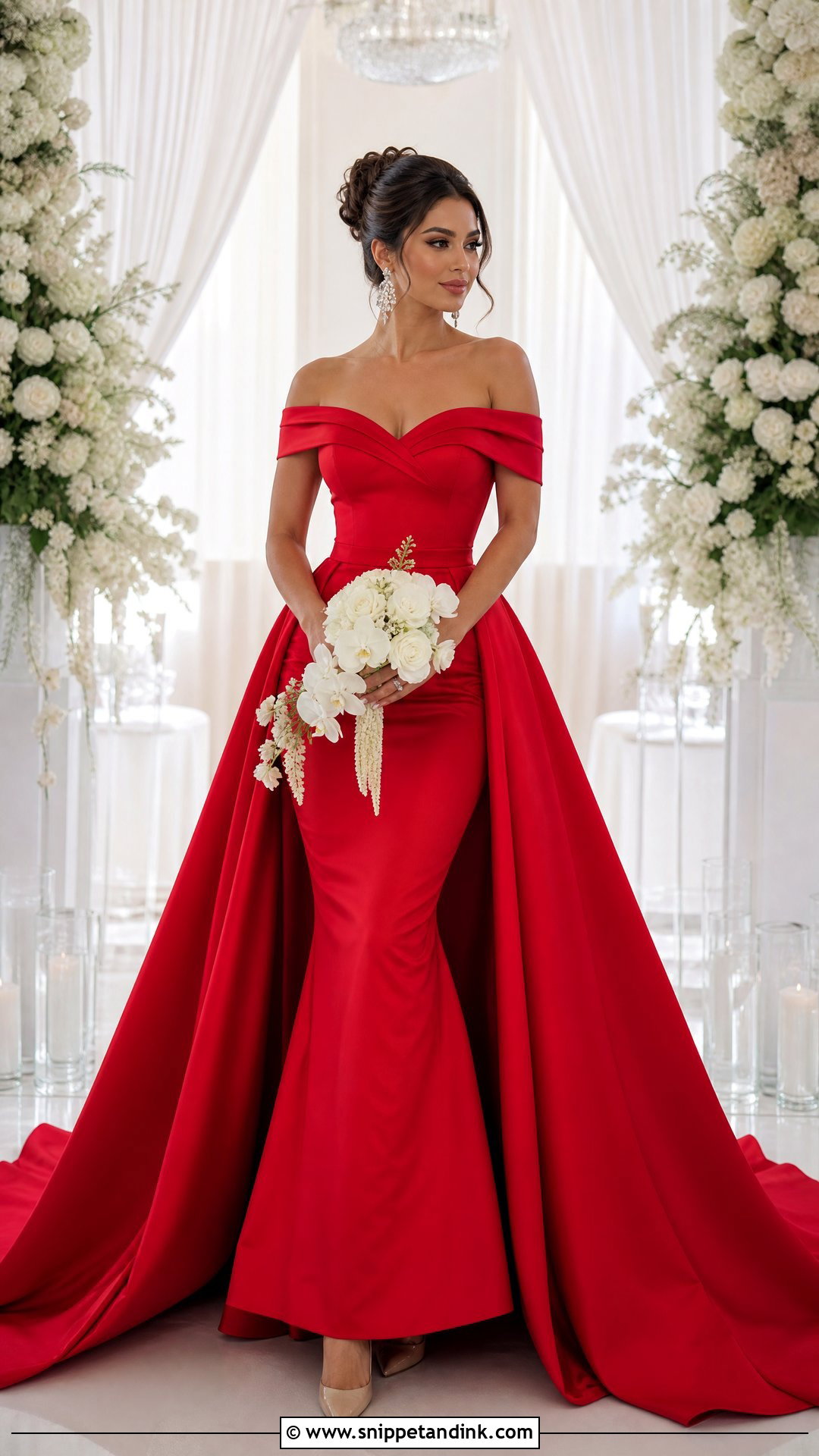
Mermaid is the silhouette brides most often regret, and usually not because it looks wrong but because they never practised moving in it. Scarlet makes the fitted shape sharper still, and a folded off-shoulder neckline frames the collarbones cleanly. Ask for internal boning and a little stretch through the hips, then walk, sit and climb a step at every fitting. Red or neutral pointed heels keep the leg line long, and crystal drops with a polished updo and a sleek white bouquet complete it. A detachable overskirt gives you ceremony volume you can take off later. If the fabric pulls into horizontal lines across the thighs, it is too tight, and it will only feel tighter after dinner.
5. Crimson Tulle Corset Bridal Gown
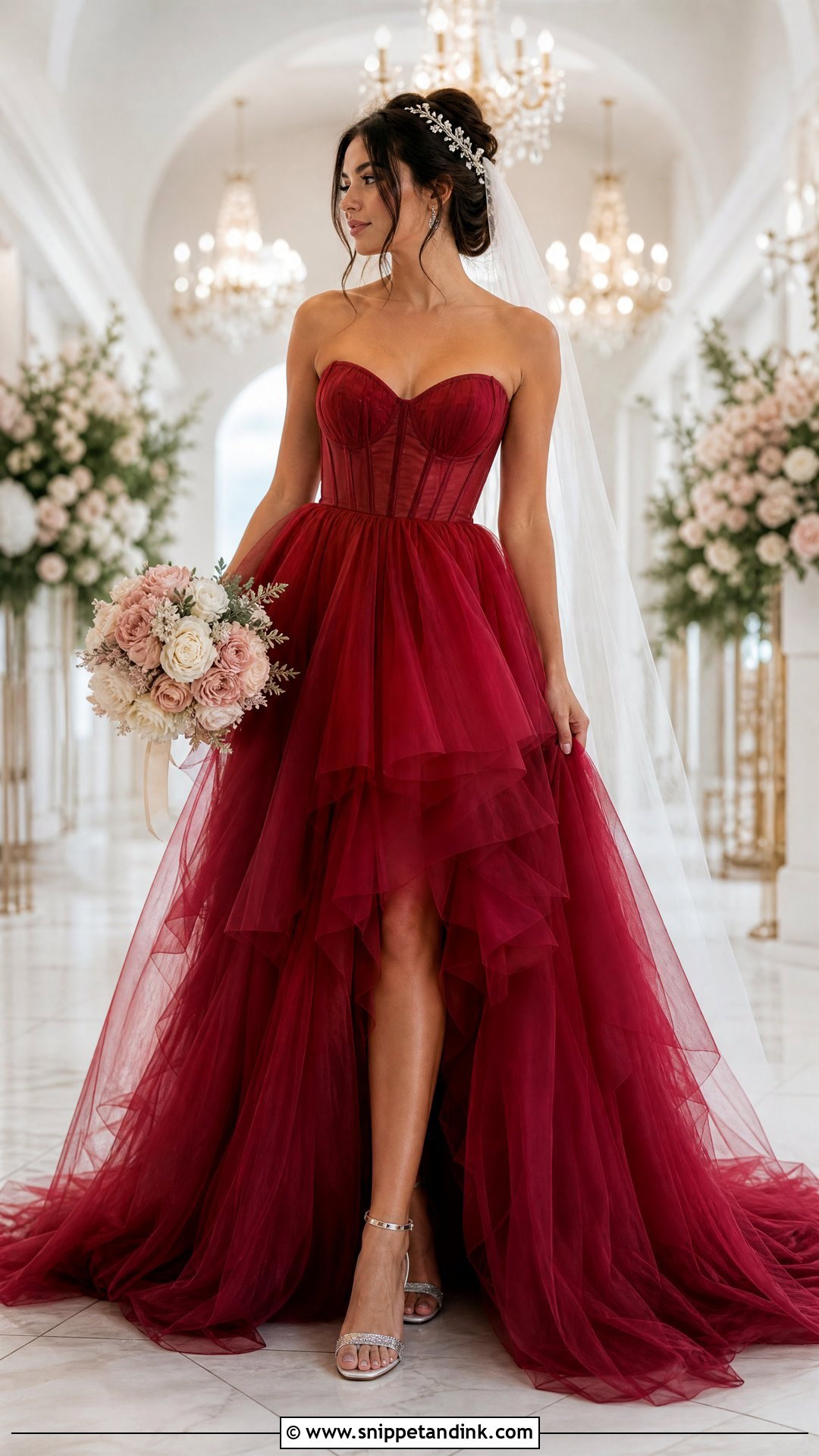
Crimson tulle behaves differently from white tulle: every layer deepens the colour, so a full skirt will look darker than the single-layer swatch you were shown. A corset bodice gives that soft skirt something to hang from. Visible boning reads modern, covered boning more traditional. With a strapless top I have the bride raise both arms above her head at the fitting, and if the neckline drops, it needs more grip at the side seams. Silver slingbacks, crystal studs and a fine tiara or jewelled vine suit it, and blush, ivory and red flowers take the edge off the colour. Check that any beading is smooth, because tulle snags on rough stones. A chapel-length veil adds movement without covering the skirt.
6. Red Cape Sleeve Bridal Gown
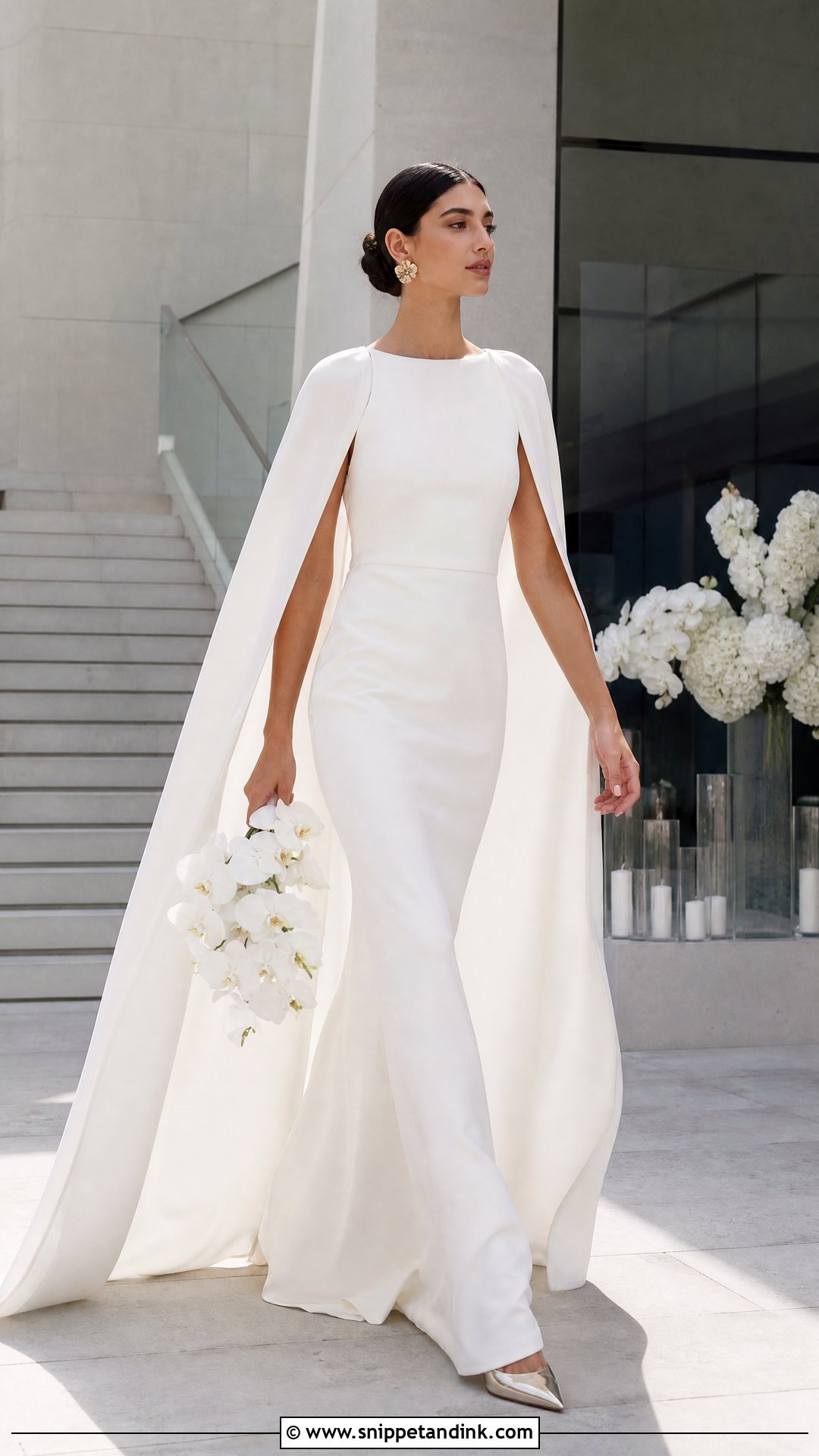
Cape sleeves give you coverage without the restriction of a fitted long sleeve, which matters if you plan to hug half the room. Look for a streamlined red crepe or satin dress with the cape attached at the shoulders or neckline. The back view is where this one earns its place, so ask your photographer for a shot as you walk away. Keep the rest clean with pointed metallic heels, sculptural earrings, a sleek bun and white orchids or roses. With a heavily beaded cape I’d drop the necklace entirely. A removable cape leaves you a plain sleeveless gown for the evening. Lay the cape and train out together at a fitting, because when the two are close in length they tangle on every turn.
7. Red Square Neck Bridal Gown
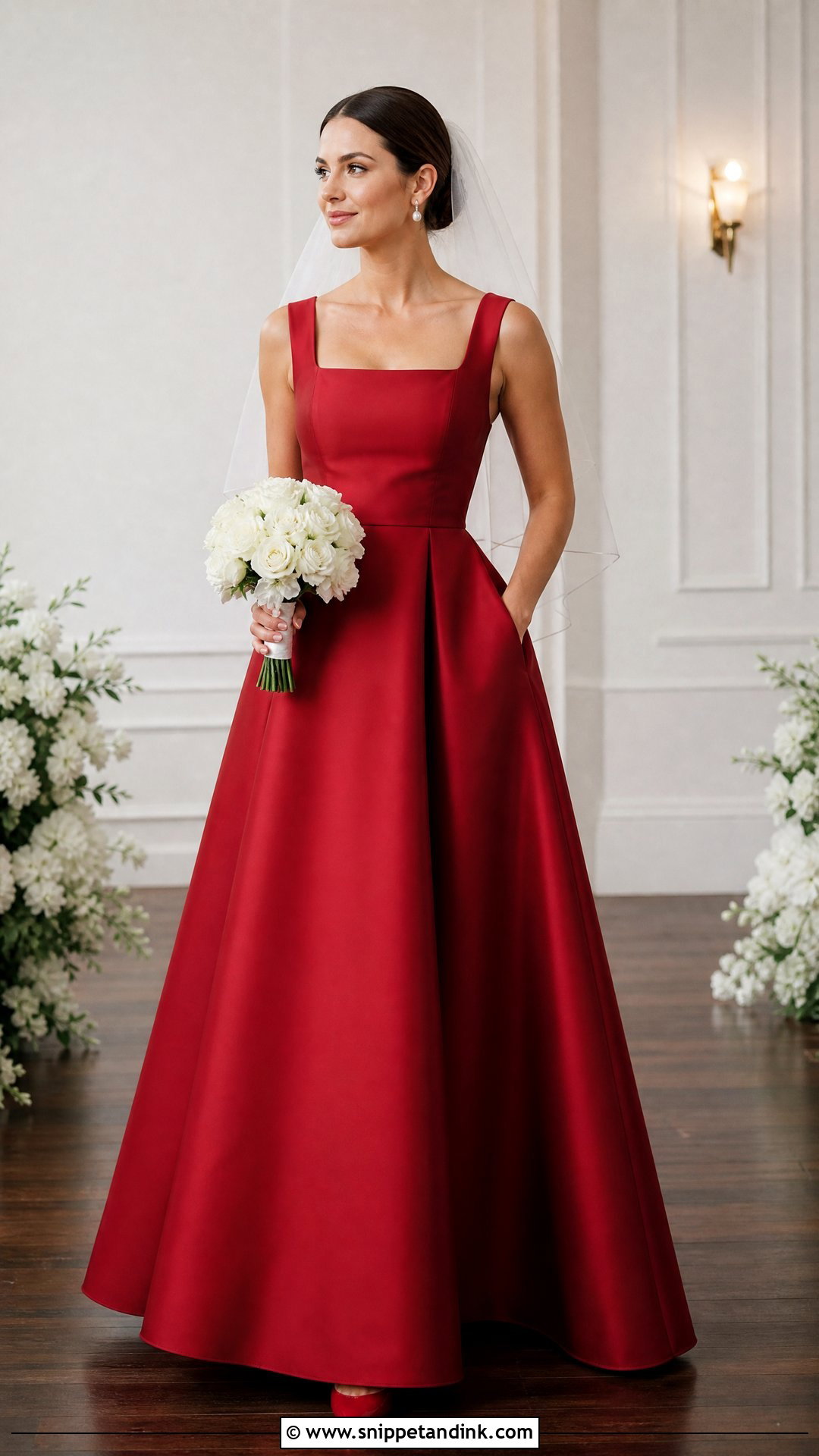
A square neckline needs fabric with body to hold its corners, which is why I steer brides toward Mikado, faille or heavy satin here rather than soft crepe. Wide straps carry the bust, and a fitted waist into a gentle A-line keeps the shape balanced. Pearl earrings, an ivory clutch and closed-toe red pumps are plenty. A neat chignon and an elbow-length veil leave the neckline on show. The square frames jewellery well, but one delicate pendant is usually enough. Hidden pockets won’t spoil the line in a structured fabric. The fitting problem I watch for is gaping at the top corners when you lean forward, so test that before the final pins go in.
8. Red One-Shoulder Draped Bridal Gown
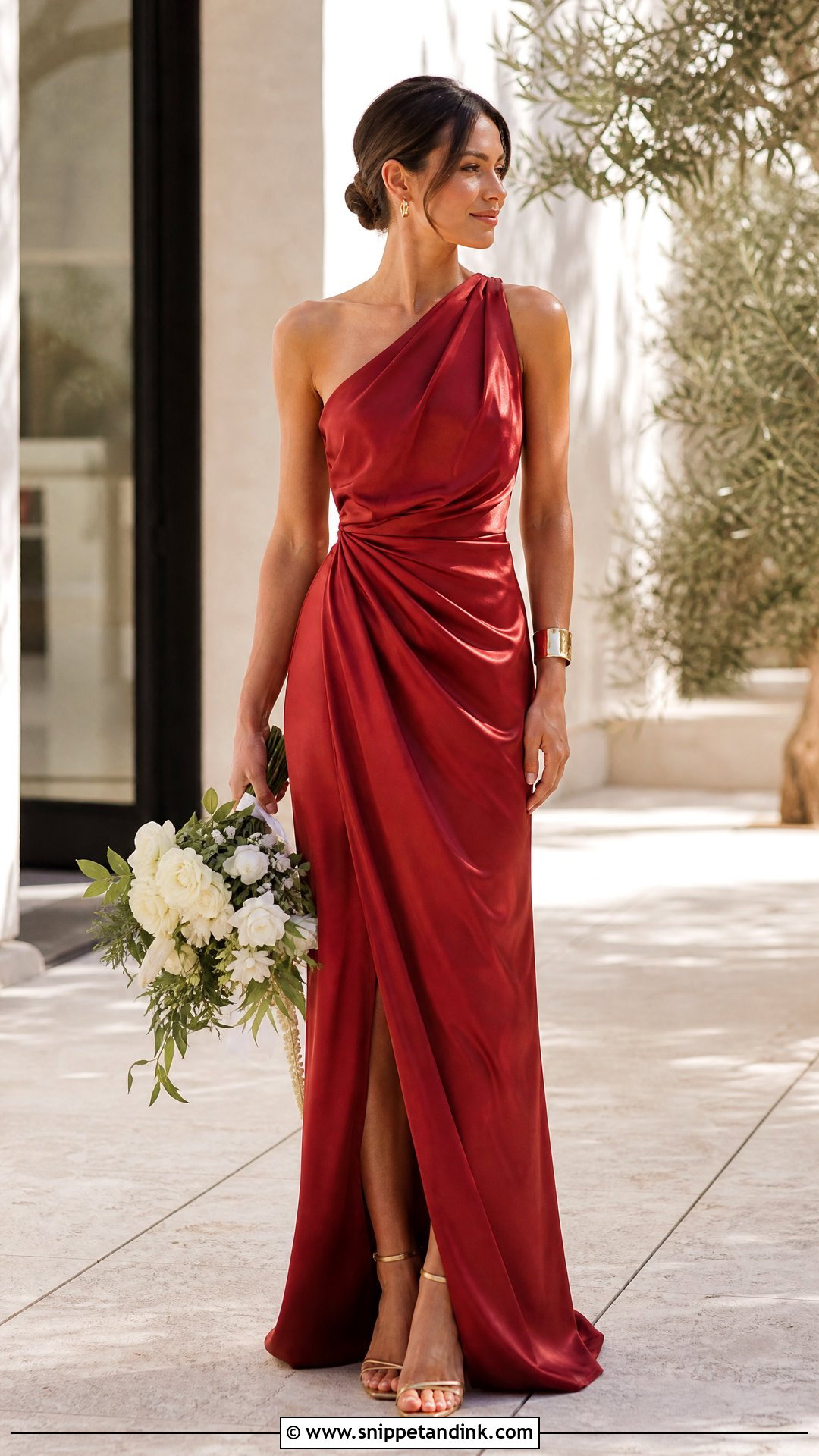
Everything about a one-shoulder gown depends on how well that single strap grips. In fluid satin or crepe, diagonal draping across the bodice defines the waist and softens the middle. A long skirt with a subtle side slit balances coverage and shape. Slim gold sandals, a gold cuff and small earrings are enough. Leave out the necklace, since the neckline is already the focal point. Sweep the hair toward the bare shoulder or keep a centred low bun. I always ask a bride to sit down at the fitting, because drape that falls cleanly while standing can bunch at the hip once seated, and to wave as if greeting guests so we can see the strap hold. Ivory flowers with trailing greenery keep it fresh.
9. Red Sequin Column Bridal Gown
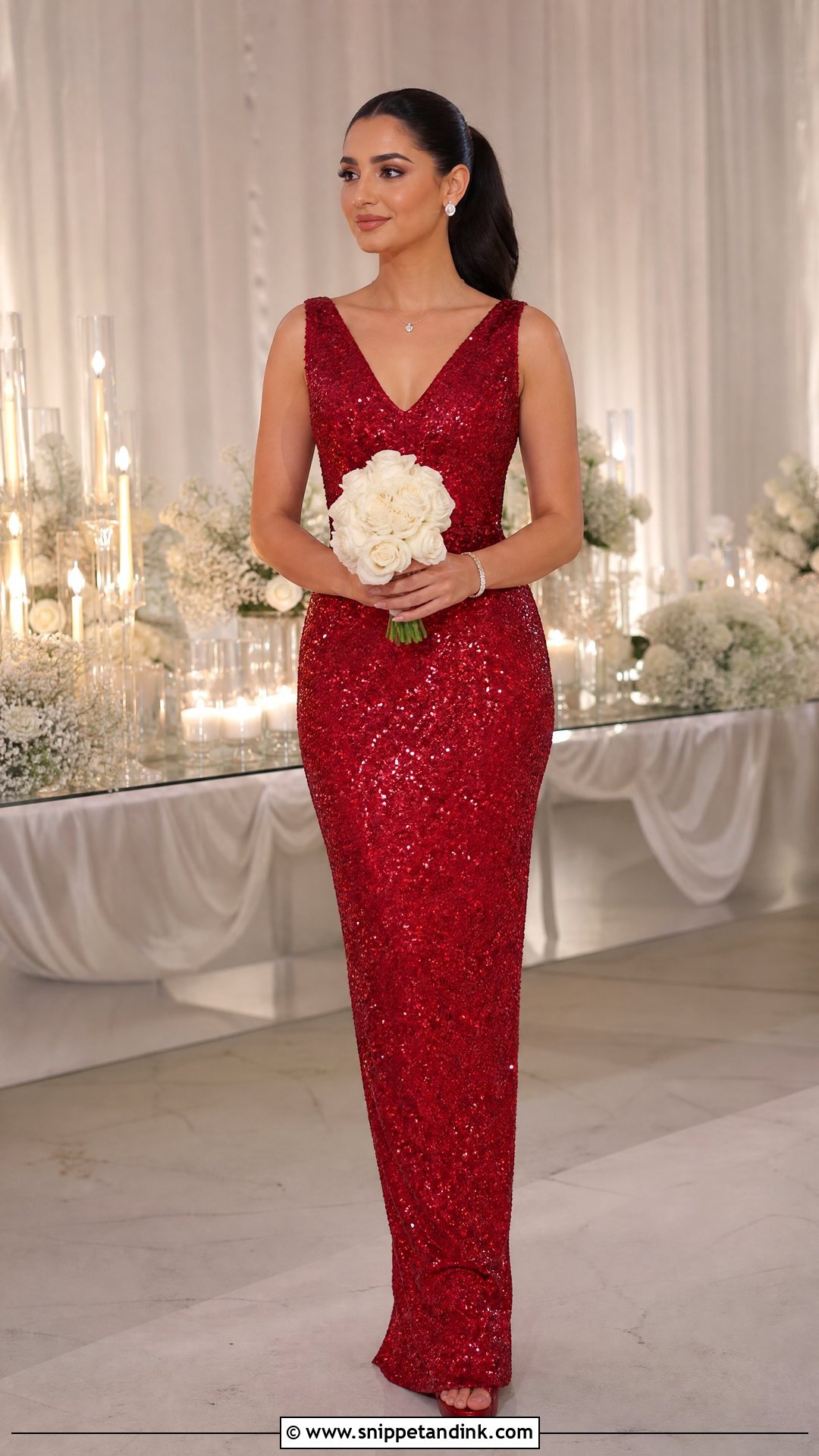
Sequins are hard on skin. Before anything else I check the inside of the armholes, because a sequinned seam rubbing the inner arm all evening leaves raw patches, and a soft lining or chiffon binding fixes it. For an evening reception, a red column covered in small tonal sequins looks smoother and costlier than large contrasting ones, and a bateau, scoop or modest V suits the reflective surface. Plain red heels, crystal studs, a satin clutch and a sleek ponytail or low bun are all it needs. Wear a light fingertip veil for the ceremony and take it off before the dancing. The straight shape also takes a detachable train well if you want more length for the aisle.
10. Red Tea-Length Bridal Gown
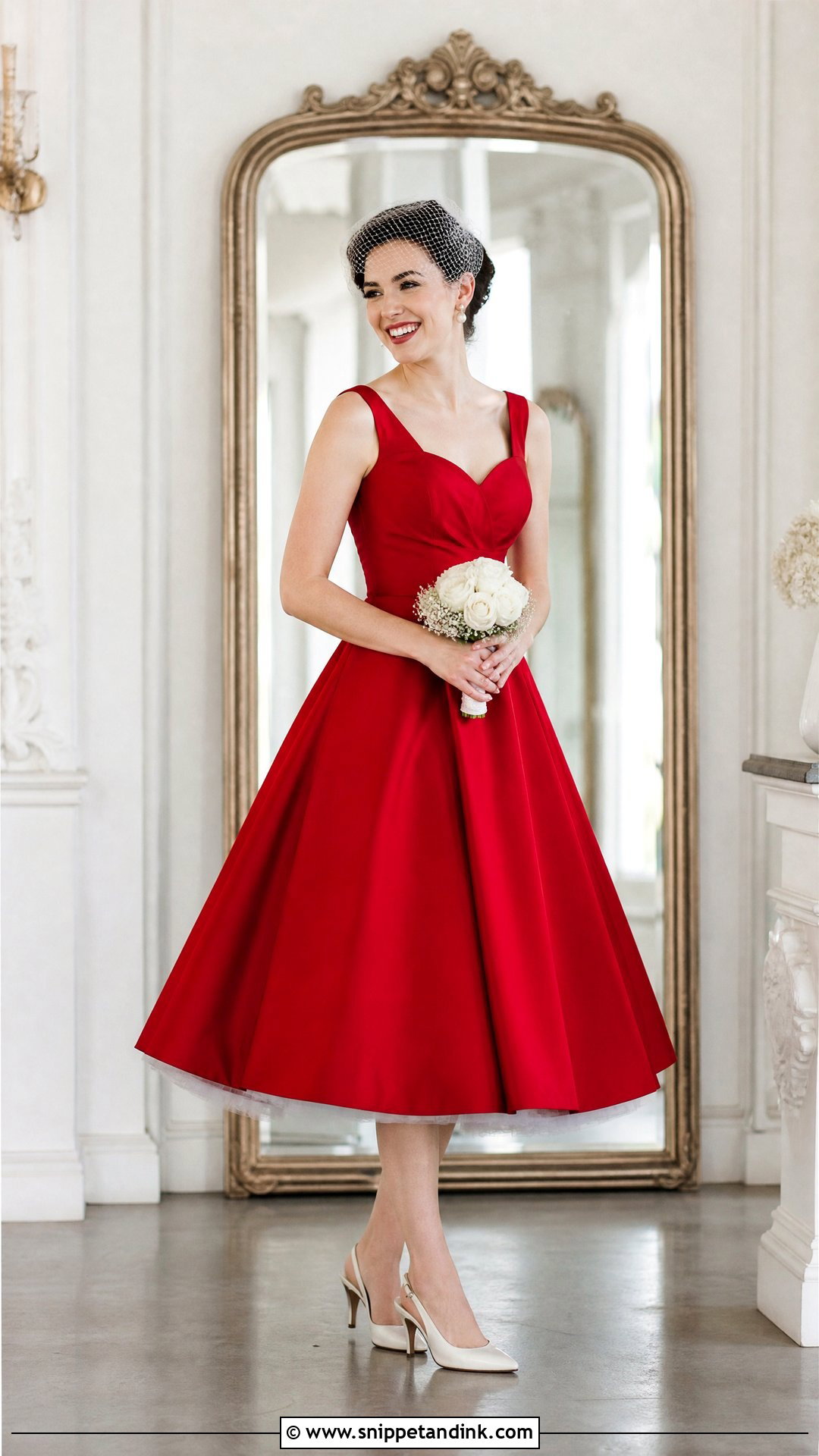
Tea length puts your shoes in every photograph, so buy them before you book alterations. Look for a fitted bodice and full skirt ending between knee and ankle; satin, lace and structured tulle all hold the shape. Ivory slingbacks, pearl earrings and a short birdcage veil give it the vintage note, and an ivory bouquet tied with red ribbon keeps it clearly bridal. One light petticoat is usually enough. A second adds bulk without much more swing. I mark this hem with the bride standing in her actual shoes and aim for just below the widest part of the calf, where the leg looks longest.
11. Red Floral Embroidered Bridal Gown
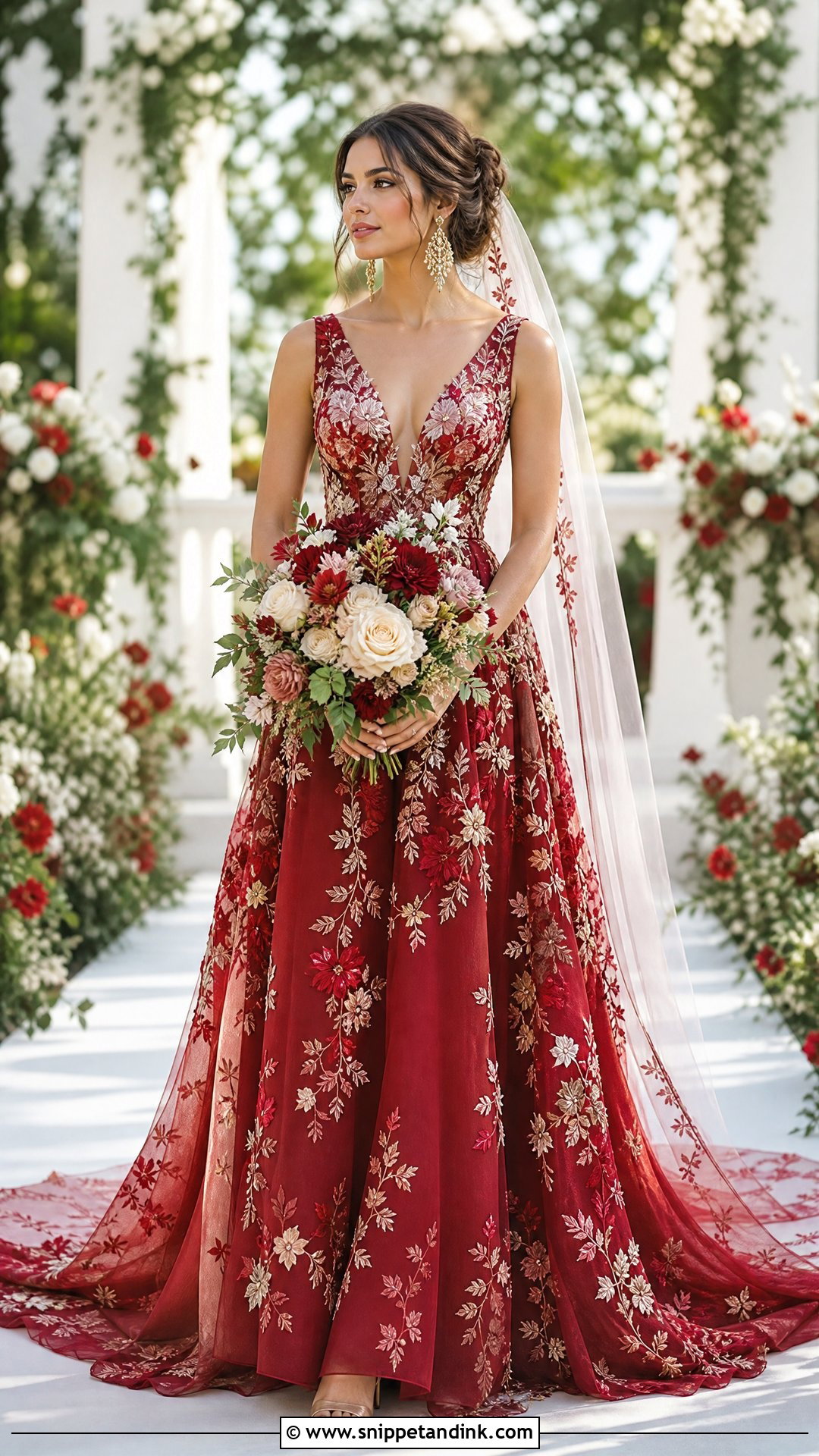
Embroidery is where I spend the most time looking at the inside of a dress. Tonal crimson, gold, blush or ivory threadwork adds depth, but loose knots and long floating threads catch on bracelets and bouquet wire. An embroidered bodice over a flowing A-line skirt stays comfortable through a long day. Pair it with understated gold heels, small chandelier earrings and a plain tulle veil, and take your bouquet colours straight from the thread. On a heavily worked dress, leave out the jewelled belt and the big necklace. A soft updo keeps the shoulders clear. If you want a lighter result, ask for embroidery only at the bodice and hem, and have any loose beads stitched down at the final fitting.
12. Red And Gold Bridal Gown
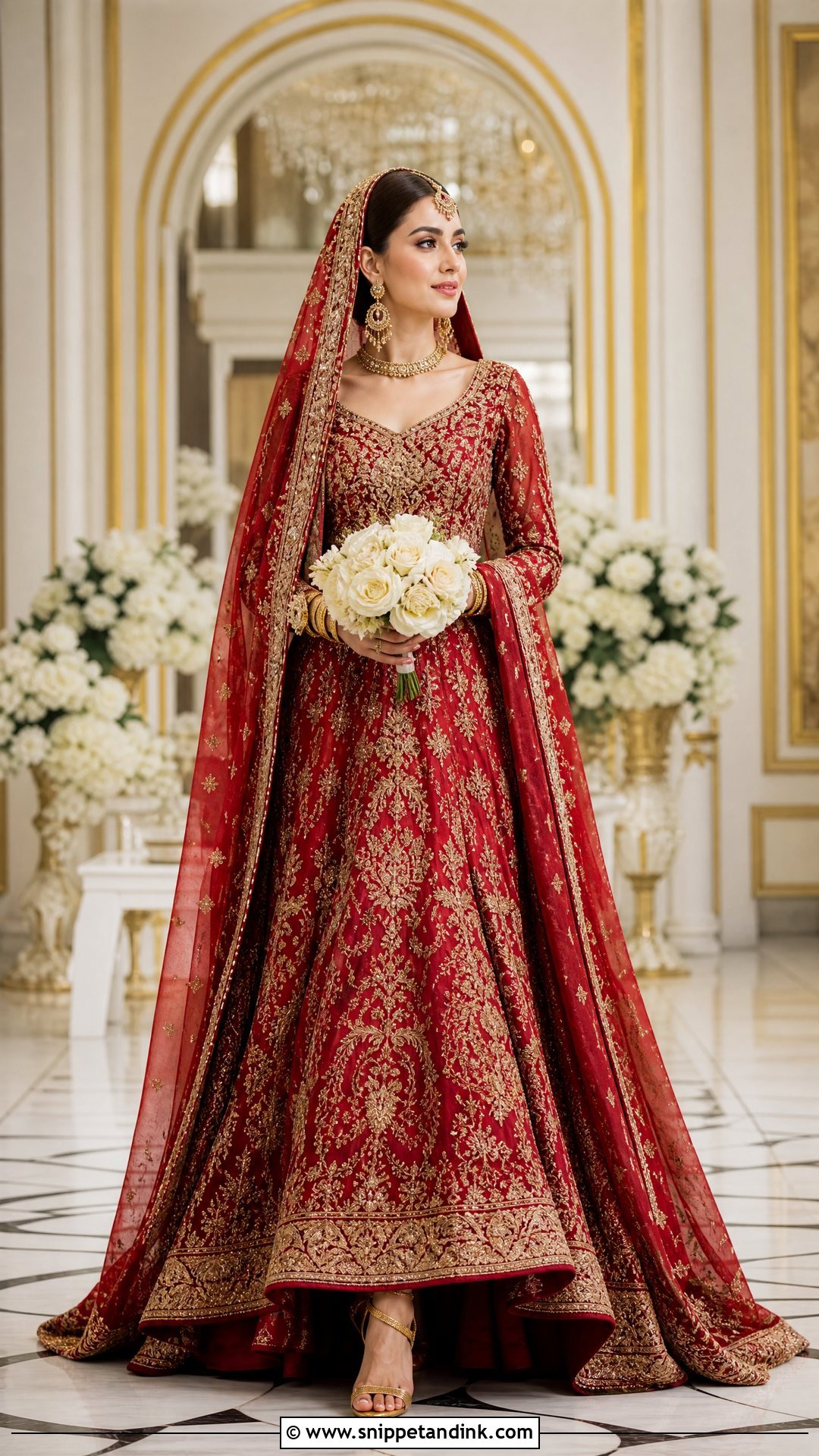
Gold thread changes with the light more than any other part of a dress. Under warm bulbs it can go brassy and in shade it can look flat, so I take a red-and-gold gown to a window and then under a lamp before a bride commits. Placed embroidery at the neckline, waist, cuffs and hem reads richer than allover work, and a fitted bodice with a flowing skirt stops heavy decoration fighting heavy volume. Gold heels, matching earrings and a red veil or dupatta-style drape suit it. Scale any bangles to the embroidery. Cream flowers give the eye somewhere to rest. Ask for a full lining under the beaded areas so the metal can’t scratch through a long ceremony.
13. Red And White Ombre Bridal Gown
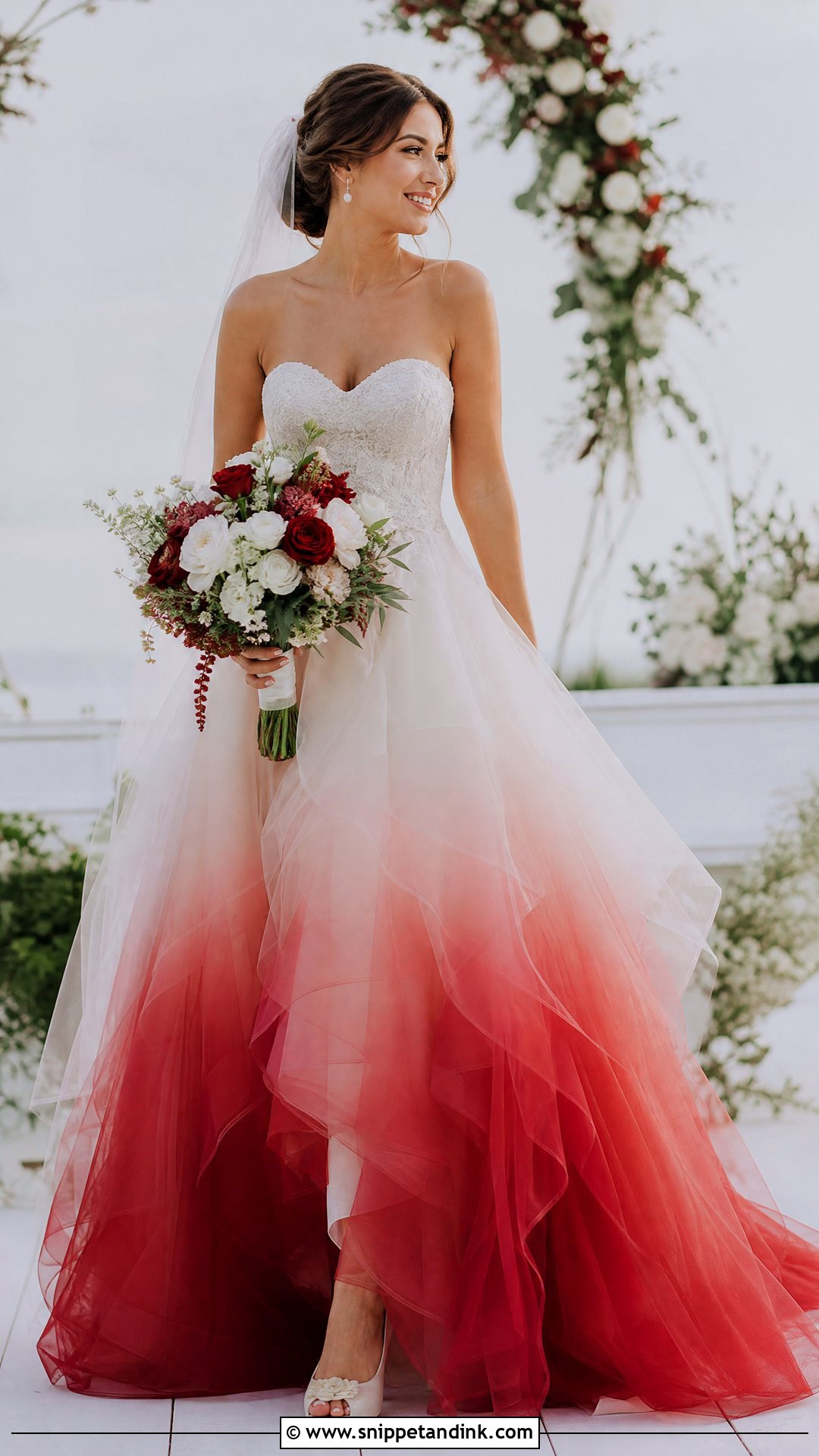
Can’t decide between white and red? An ombre gown moves gradually from one to the other instead of blocking them. Ivory at the bodice keeps light near your face while the red gathers in the skirt. Chiffon and layered tulle give the smoothest gradient because the colour blends through sheer layers; ombre on solid satin can look banded. Ivory heels, pearl earrings and a sheer white veil suit it, with a bouquet of white blooms and a few red stems to link the two shades. Order physical swatches, since a screen rarely shows the real transition. I like the deepest red to start below the hip, which keeps the waist light and leaves the bustle points in the paler fabric.
14. Black And Red Bridal Gown
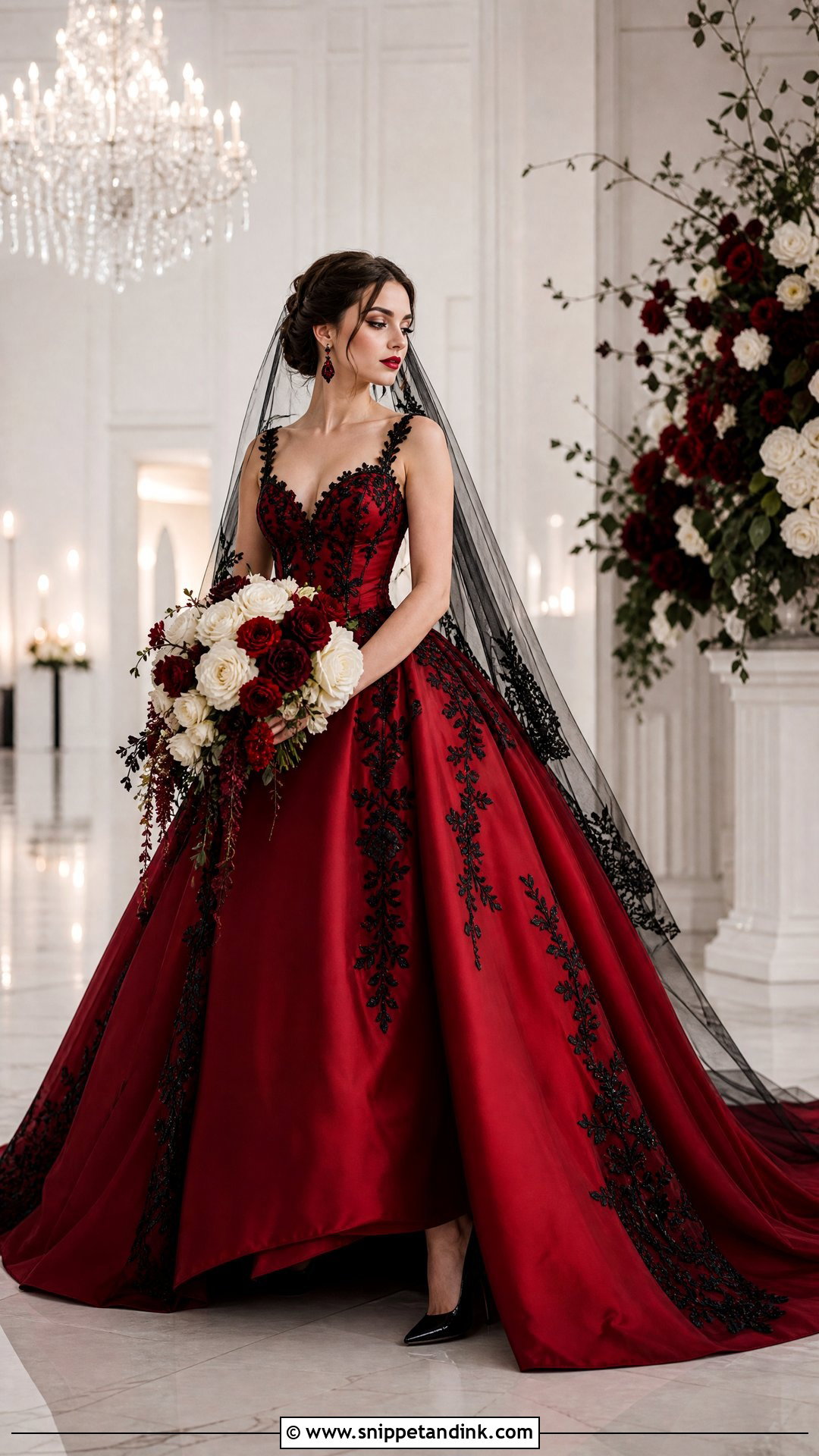
Black and red only reads as bridal when one colour clearly leads. A red ball gown with black lace appliqués feels romantic, while a black fitted bodice over a red skirt is more graphic. Black pointed heels, red stone earrings and a simple black or red comb are enough, and an ivory and deep red bouquet puts some light at the centre of the outfit. If you wear a veil, choose sheer black tulle with a plain edge. Dense tulle turns the back of the dress into one dark block in photos. Pick defined eyes or a red lip, not both. I also use the black pieces to shape the figure, since black panels at the side seams make the waist look narrower.
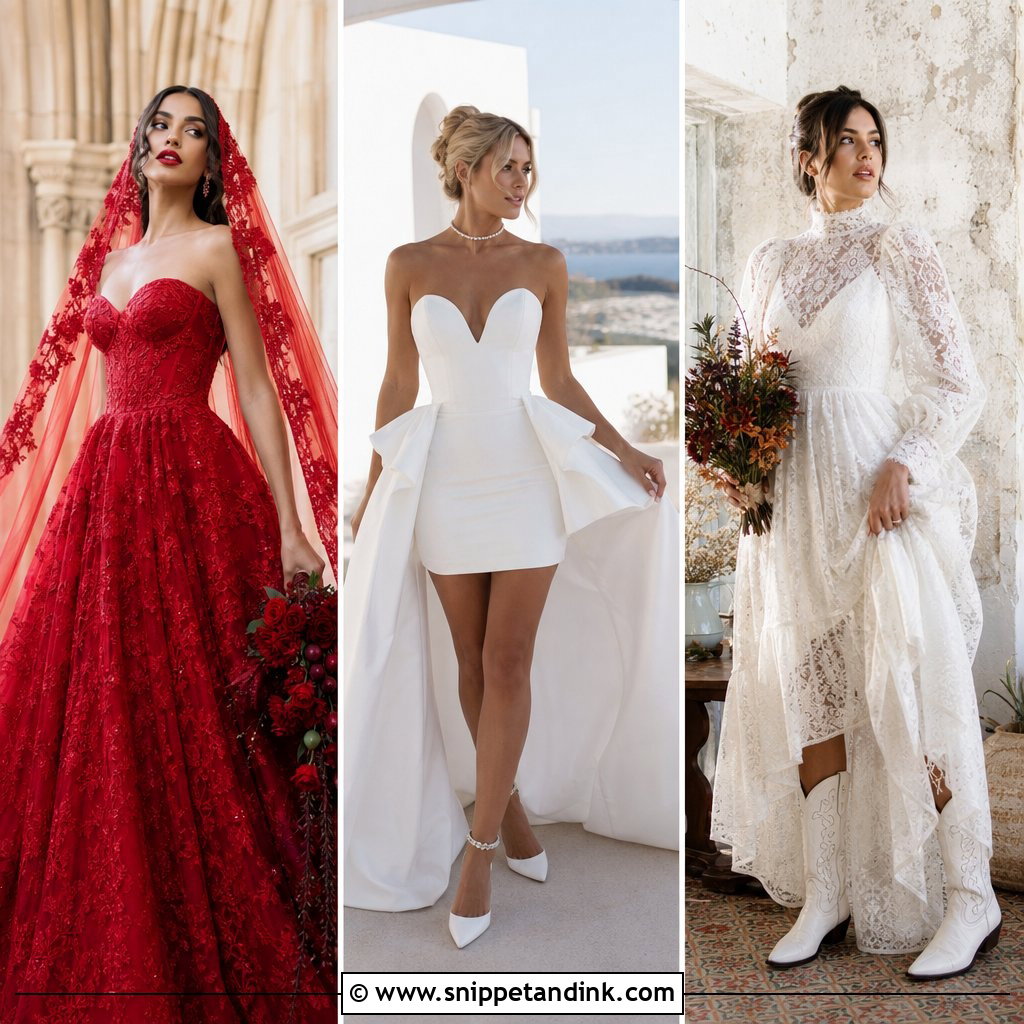


15. Plus Size Red Empire Waist Bridal Gown
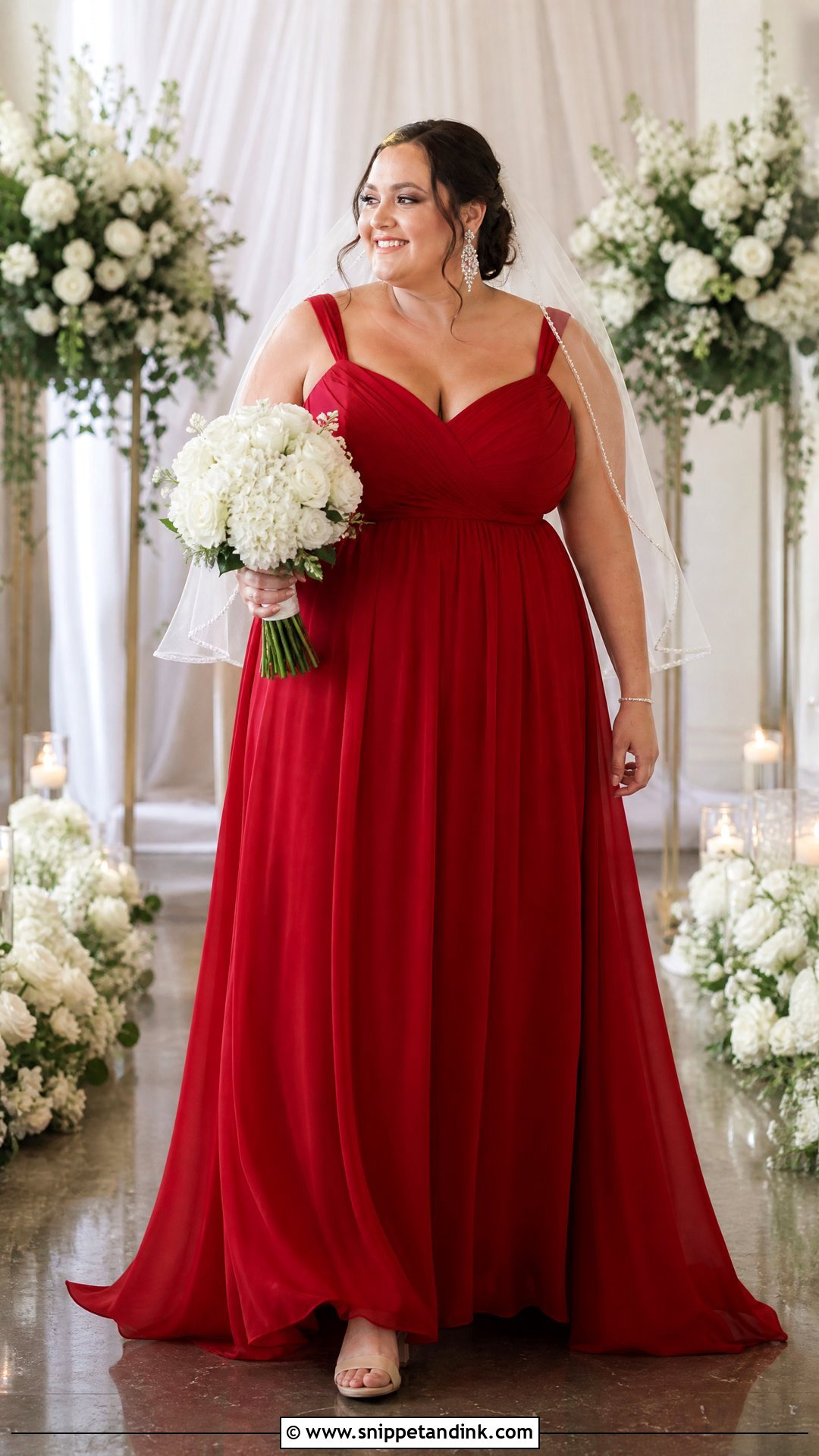
The empire waist depends on the bust fitting perfectly, because everything below hangs from that one seam. In a plus-size empire fitting I spend most of the time on the bra structure and straps before I touch the skirt. Red chiffon or soft crepe gathered just under the bust moves well without adding volume. Low block heels, drop earrings and a light fingertip veil suit it, and a structured bouquet contrasts with the fluid fabric. Petite brides tend to look better with a narrower skirt and a slightly higher heel; taller brides can carry more fullness and a longer train. Ask for a breathable lining and flat seams under the arms so it stays comfortable on the dance floor.
16. Minimalist Red Slip Bridal Gown
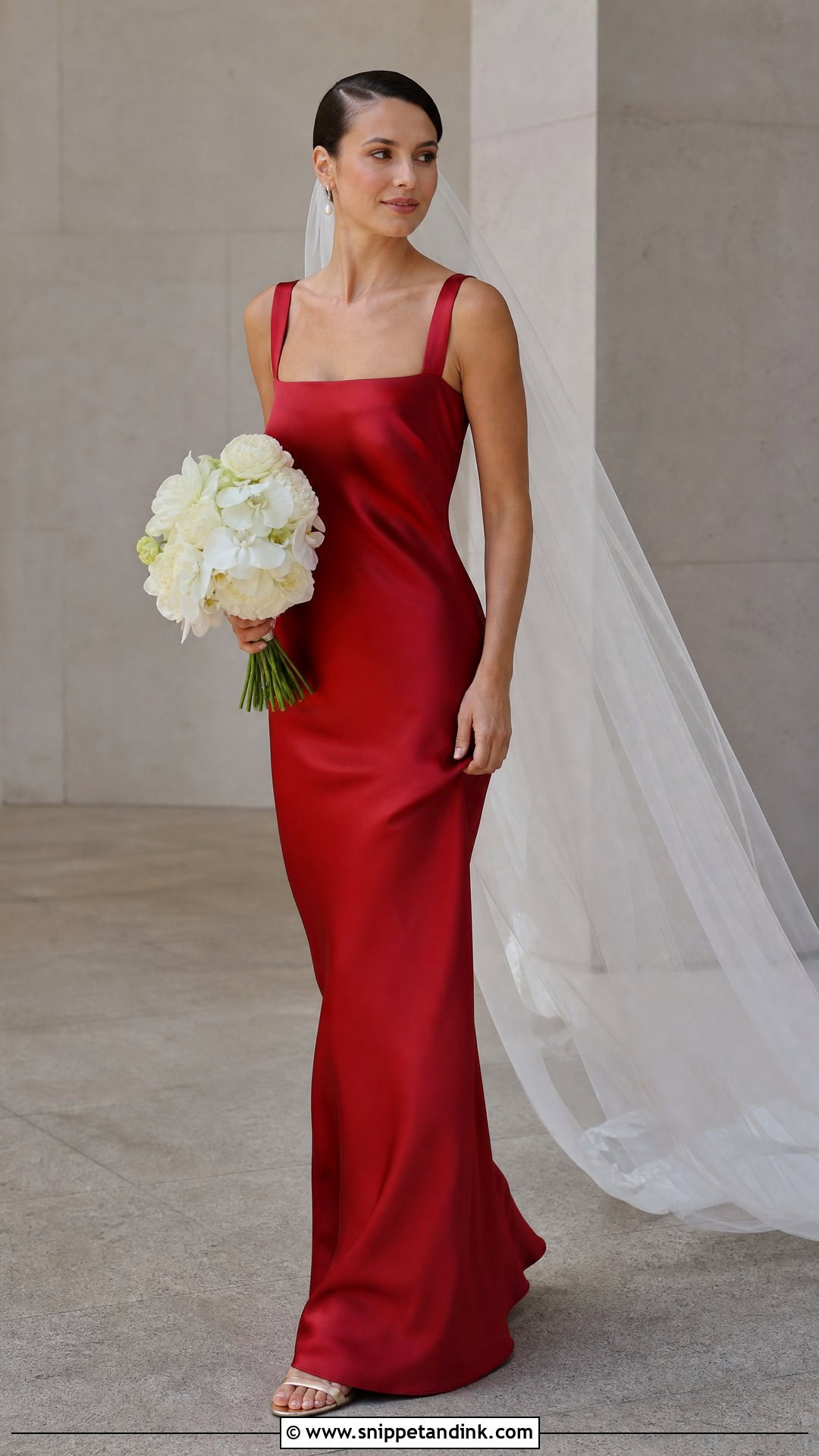
A bias-cut slip shows everything underneath it. That is why I insist on weighty silk or satin rather than thin charmeuse, and on a fitting in the exact underwear you’ll wear on the day. The fabric should skim the body, never cling. Delicate metallic sandals, modern pearl earrings and a structured white bouquet suit its simplicity, and a long sheer veil makes it ceremonial. At the reception, swap the veil for a sculptural hair piece. Bias-cut hems keep dropping after the dress is made, so the final hem should be done as late as your seamstress allows. If spaghetti straps worry you, wider satin straps or internal support are easy additions. It suits small venues and city weddings best.
17. Red Puff Sleeve Bridal Gown
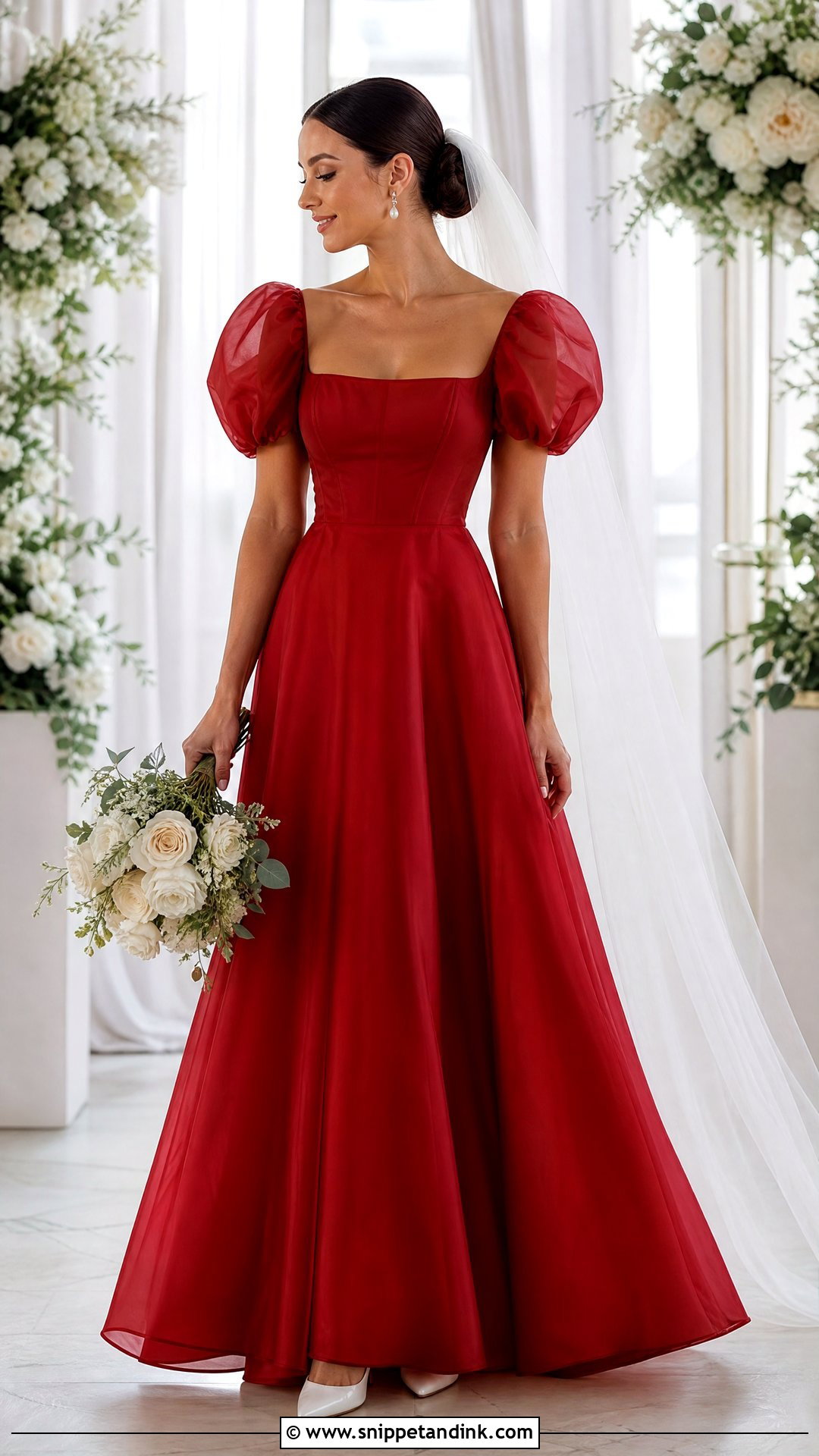
Puff sleeves change the shoulder line more than people expect. Sheer organza gives volume without weight, while structured satin holds a bigger shape but adds width, which I’d avoid on broad shoulders. A fitted bodice and a controlled A-line skirt stop the outfit tipping into costume. Closed-toe pumps, pearl drops and a smooth low bun keep it calm, and a plain tulle veil works better than a decorated one here. Detachable sleeves give you a sleeveless gown for the evening. At fittings, lift your arms and hug someone. The elastic should hold without leaving red marks on your upper arm.
18. Red Bridal Gown With Detachable Overskirt
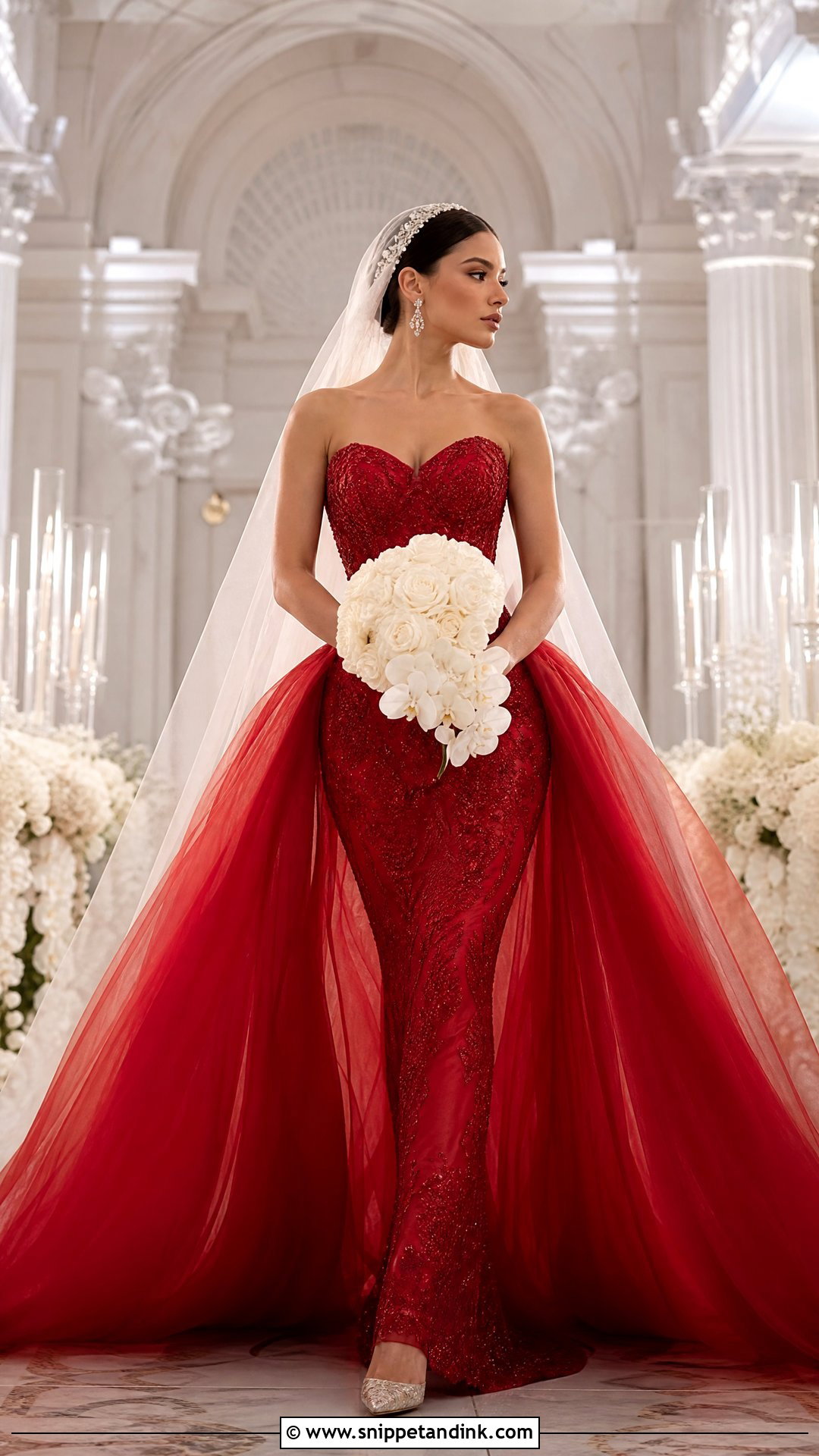
You get two outfits from one gown with a detachable overskirt, and it is one of the most practical choices here. Start with a fitted red column, sheath or mermaid base, then add a full satin or tulle overskirt with a train for the ceremony. A cathedral veil, crystal earrings and pointed heels carry the aisle look, and you lose the skirt and veil for the reception. The weak point is the attachment. Hooks or snaps should lie flat, and I prefer a concealed waistband that carries the skirt’s weight so it doesn’t drag on the base gown. Red is hard to match across two fabrics or two dye lots, so see both pieces together under flash before you sign off.
19. Red Bow Back Bridal Gown
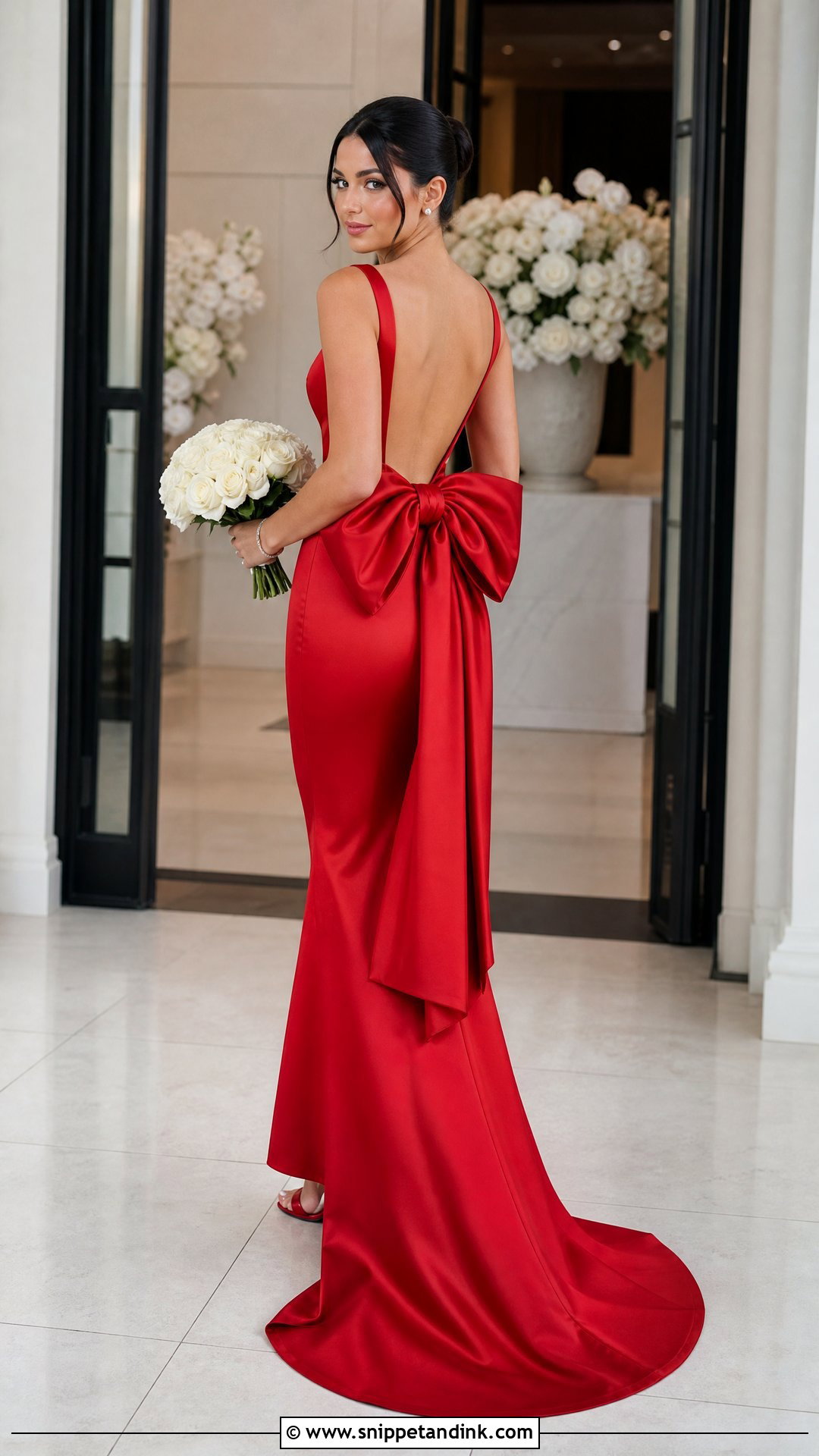
The bow carries this dress, so its size has to suit your back, not the sample model’s. A fitted satin or Mikado gown with a clean front and an oversized bow above the train gives you all the drama from behind. Structured bows look architectural; softly draped ones are gentler. Keep the front quiet with red heels, pearl studs and a sleek updo that leaves the back visible. A sheer veil can sit over the bow for the ceremony and come off for portraits. Sit on a hard-backed chair at your fitting. A large structured bow can push you to the front edge of the seat, and a detachable one solves that for dinner.
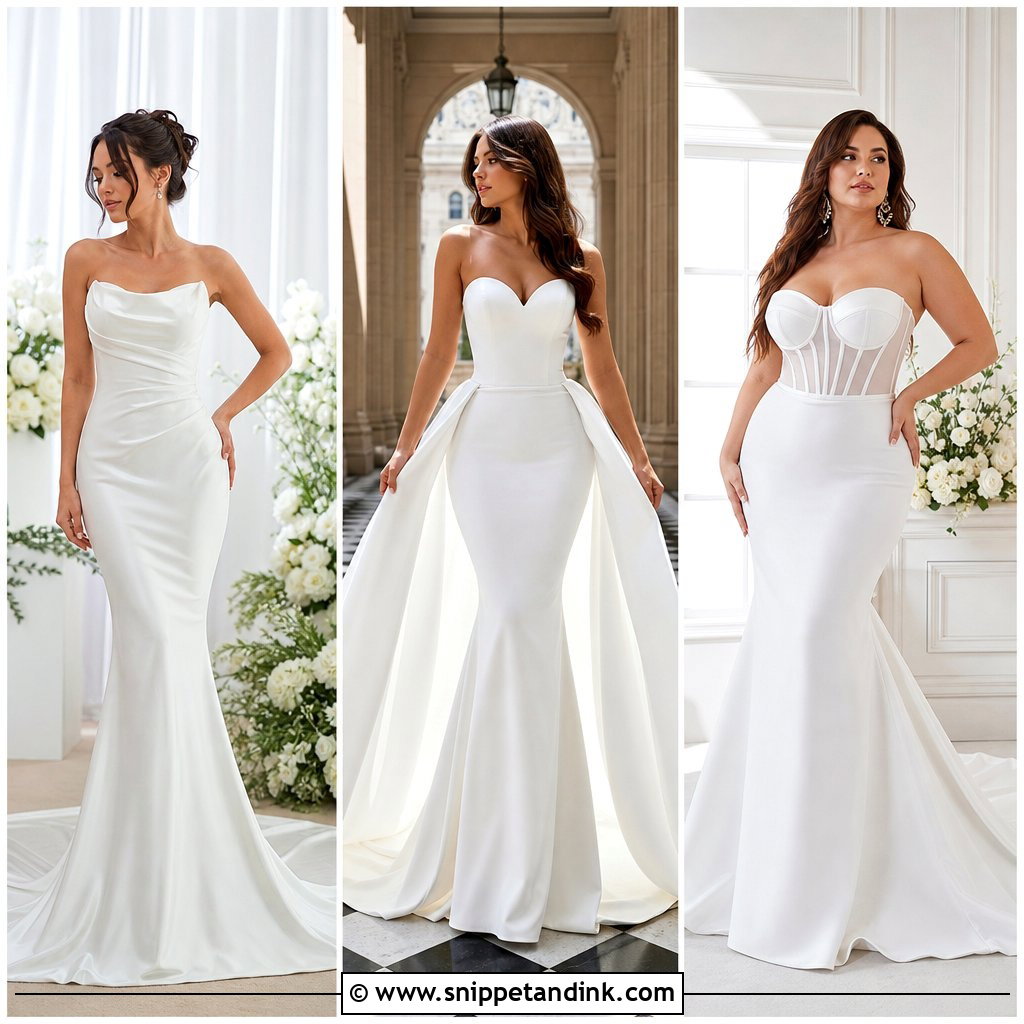
20. Red Bridal Gown With Cathedral Train
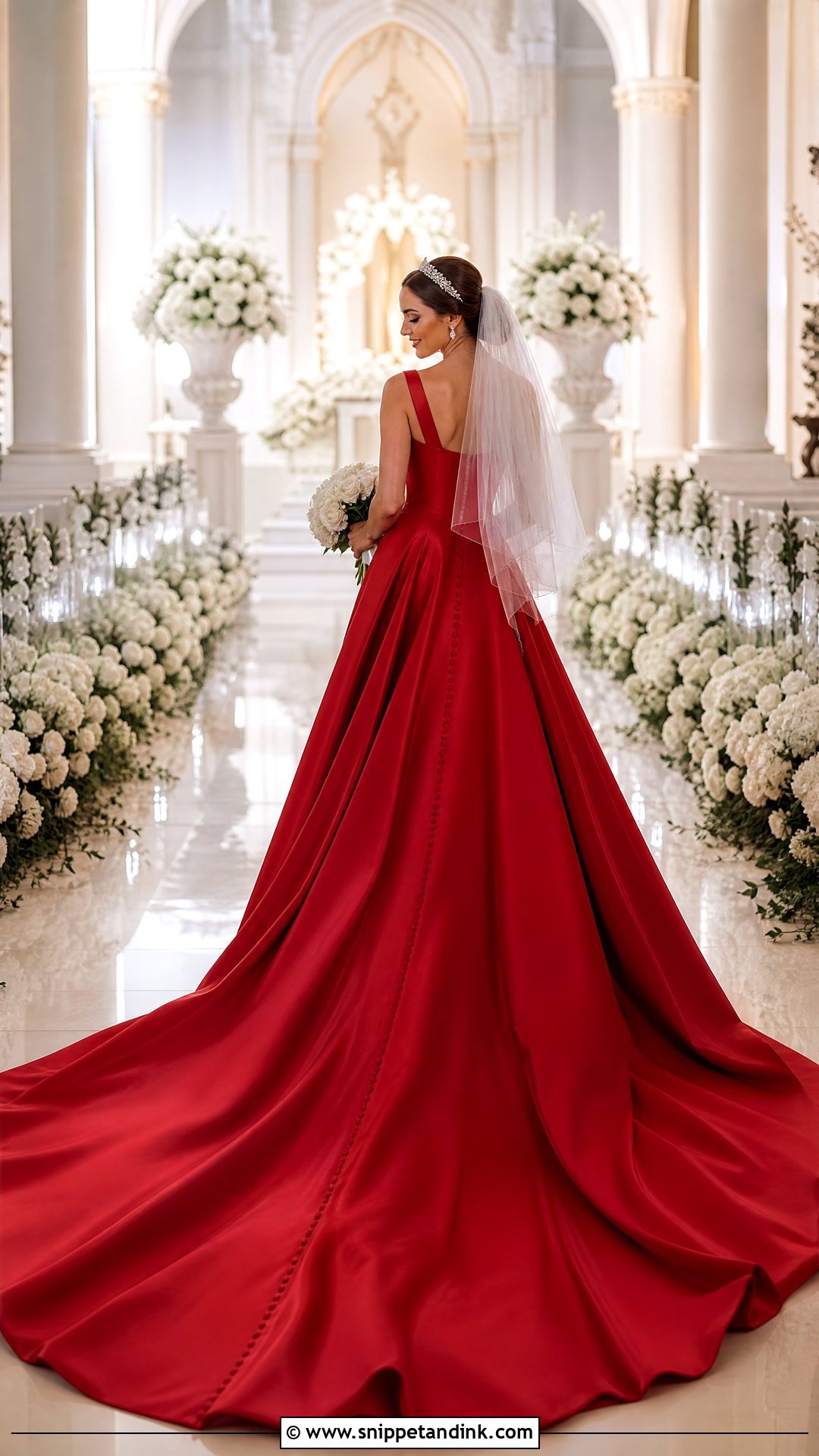
A cathedral train needs a long aisle and a smooth floor to do its job. On grass or gravel it collects debris, and in a short aisle it never fully extends. A fitted trumpet, an A-line or a structured ball gown can all carry the length. Satin gives the cleanest formality, lace adds texture and tulle is the lightest to drag. A shorter veil lets the red train show, while a matching cathedral veil doubles the impact. Have a bustle sewn in and get whoever will fasten it on the day to practise at your last fitting, because the loops on a long red train are hard to find in a hurry. Test the bustled hem in your exact shoes so nothing drags or twists.
Red Dye Can Rub Off on Everything Pale
Deeply dyed fabric sometimes transfers colour when it is rubbed, especially when it is damp. On a red gown that means a pink tinge on an ivory lining, a veil, a groom’s white shirt or your own inner arms on a hot day. I test every red gown by rubbing a damp white cloth hard against an inside seam. If any colour comes off, I tell the bride before the fittings go any further.
- Ask whether the fabric has been colour-fixed, and avoid an ivory lining against a red that bleeds.
- Skip fake tan and heavy body oil in the days before; both help dye migrate onto skin.
- Have your partner wear a darker shirt, or save the long hugs until after the portraits.
- Pack a white cloth and a clear stain pen, not a coloured wipe that adds its own dye.
Light Fades a Red Gown Faster Than a White One
Red dyes are sensitive to sunlight, and a gown left near a window for a season can come out of storage paler along every fold. Get it cleaned within a few weeks of the wedding, and tell the cleaner it is a deep red that may bleed so they test before treating it. Sugary spills like champagne and cake can be invisible on red at first and darken later, so mention them even if you can’t see them.
Store it flat in acid-free tissue inside a breathable box, in a dark cupboard, never in the plastic bag it came home in. Pad every fold with rolled tissue so it doesn’t set a permanent crease. A heavy ball gown should never hang from its shoulder straps for months. If it has to hang, use the inner hanging loops so the bodice isn’t pulled out of shape.
Red Looks Different at Noon Than by Candlelight
The right red gown is one you can move, sit and celebrate in, in a shade that suits your skin and the light at your venue. Hold scarlet, ruby, crimson, wine, and burgundy swatches against your face by a window and then under warm indoor bulbs before you look at a single silhouette. After that, judge each gown on support, weight and how much it can be altered. Shoes, jewellery, veil and flowers are there to make the red read as bridal, not to compete with it. Bring them all to your last fitting and look at the whole outfit at once in a full-length mirror.
You'll Like These Ideas:



Leave a Reply