
Vintage bridal style borrows the details that made older gowns special: real lacework, careful sleeves, sculpted waists and satin cut to drape rather than cling. What I try to do at a fitting is keep those details while giving the bride a dress she can actually sit, eat and dance in. Each decade offers something different, from Victorian refinement and 1920s beading to Old Hollywood bias satin and the soft lace of the 1970s. The risk with any era is tipping into costume, so the shoes, veil, hair and jewelry should nod to the period rather than recreate it head to toe. Keep your venue, season, proportions and how much you plan to move in mind as you look through the twenty gowns below.
Original or Reproduction? What I Check Inside an Old Dress
Some brides want a gown inspired by an era; others want one that actually lived through it. True vintage is wonderful, but it needs a different kind of inspection before you fall in love.
- Ignore the size label. Older sizing runs much smaller than modern sizing, so go by bust, waist and hip measurements taken with a tape.
- Turn it inside out and look at the seam allowances. Wide seams can be let out; narrow, overlocked ones can only be taken in.
- Hold silk up to the light and gently flex it. Old silk that has started splitting along the weave, called shattering, can’t be repaired, only replaced or covered.
- Check the underarms, the hem and the back of the skirt for yellowing and stains. Some lift with specialist cleaning, some never will.
- Count on restoration and alterations as part of the budget, and give them time: a fragile gown can’t be rushed.
A reproduction gives you the look with modern fabric, real stretch in the lining and a fresh guarantee. If you want the history without the risk, you can also wear one true vintage piece, like a veil, a pair of gloves or a family brooch, with a new dress.
1. Victorian High Neck Lace Wedding Dress
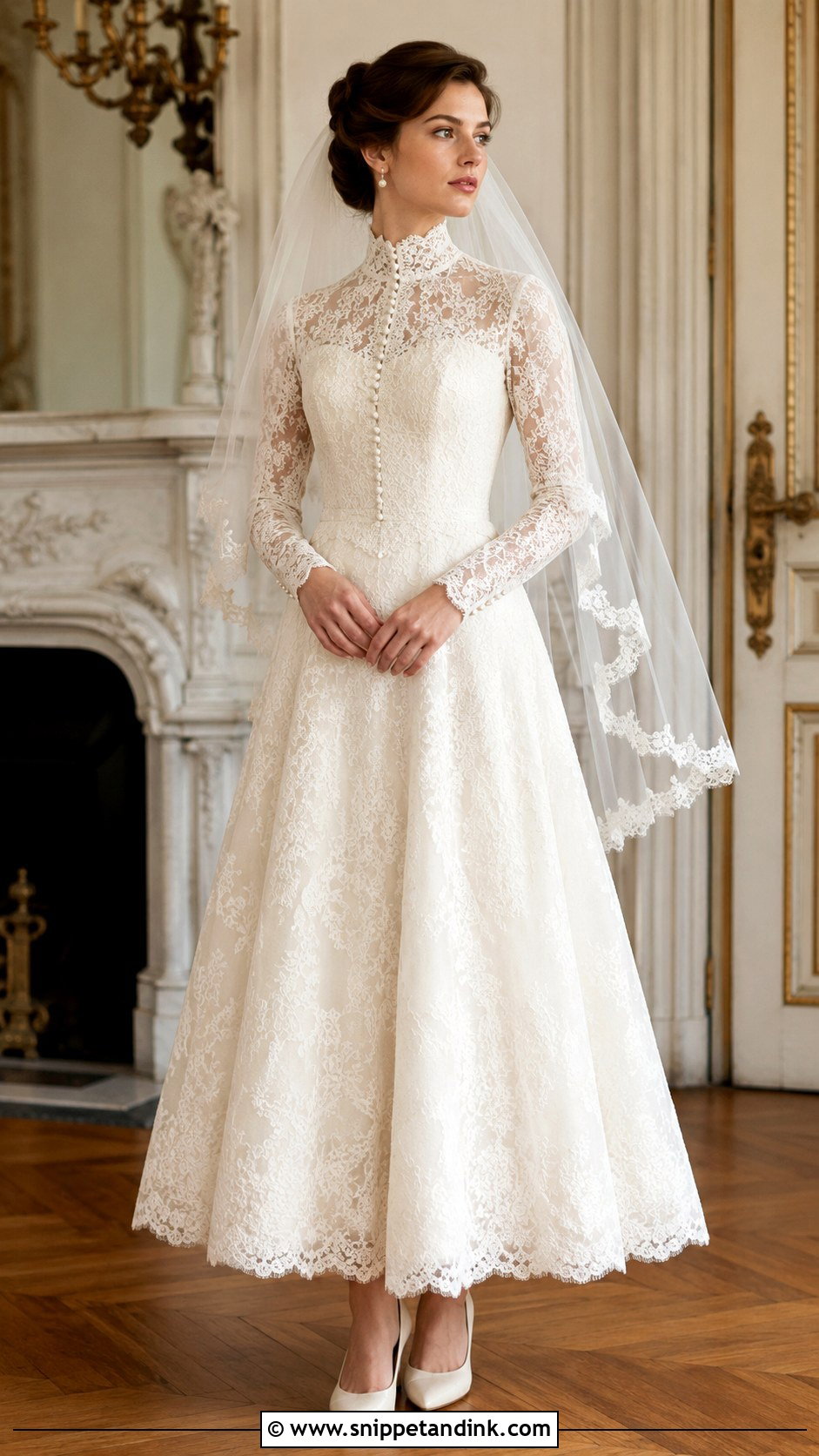
The Victorian high neck is all about the lace near the face, so the quality of that lace matters more here than anywhere else in the dress. A fitted bodice with fine floral lace, covered buttons and sheer long sleeves over an A-line or softly flared skirt keeps the shape romantic without weight. Antique ivory suits the era; bright white makes it read modern. I check the collar with the bride turning her head fully both ways, since a stiff lace collar that scratches the jaw will be all she notices by noon. Pearl drops, a low chignon and a fingertip veil pinned beneath it suit it, with ivory pointed pumps and garden roses. Skip the necklace; the neckline is already the jewelry.
2. Edwardian Puff Sleeve Wedding Dress
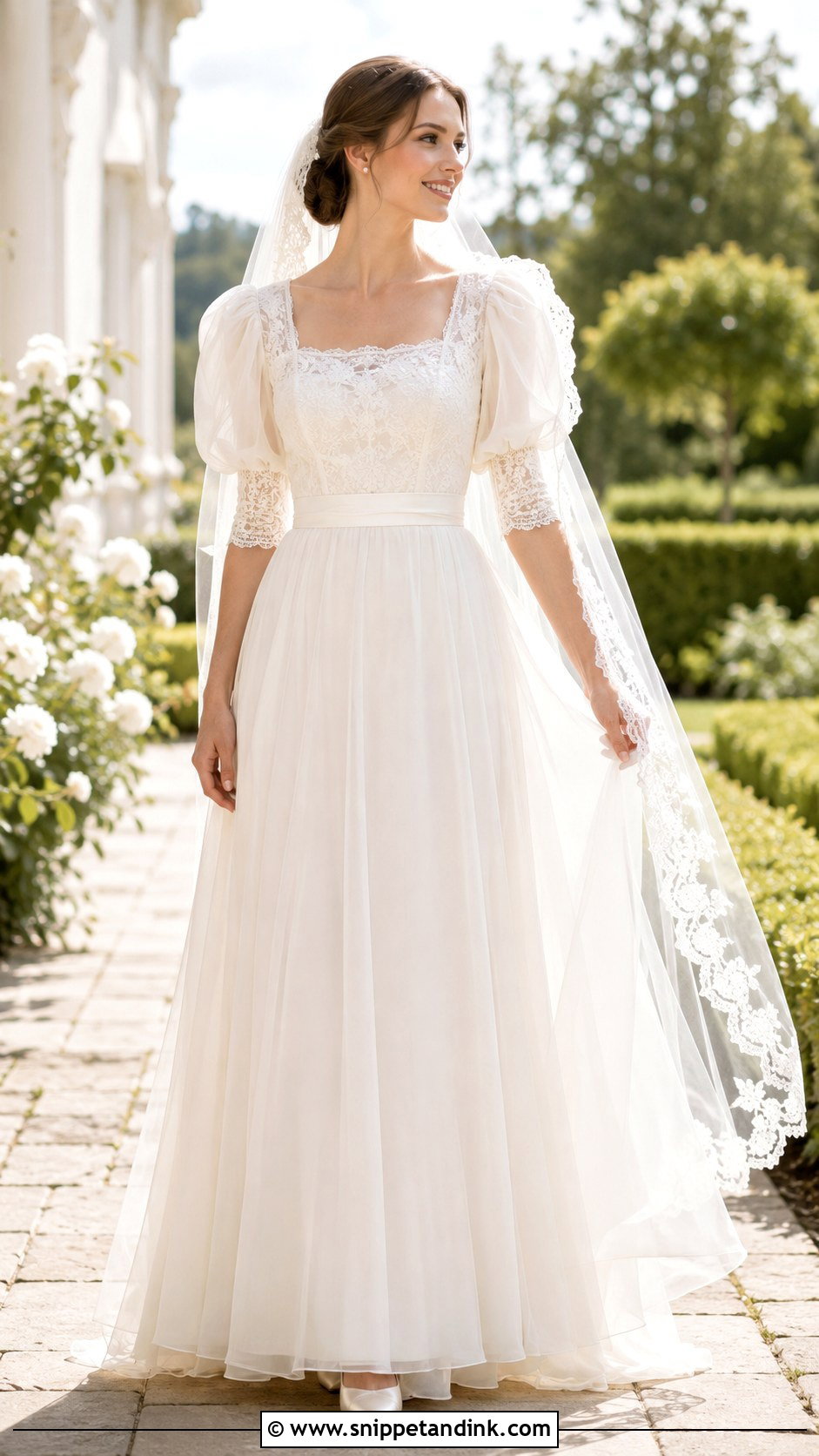
Puff sleeves are what make an Edwardian-style gown feel distinctive, and the fabric decides whether they look sweet or stiff. Chiffon, silk organza or fine lace hold a soft gather at the shoulder; heavy satin puffs can look borrowed from a costume rail. A lightly structured bodice with a square or modest scoop neckline, a fitted waist and an A-line skirt with a narrow ribbon belt keep it balanced. Sleeve volume is also a proportion tool I use often: brides with broad shoulders do better with a small puff, while a fuller sleeve can balance wider hips. A lace-edged veil, pearl studs, cream satin shoes and a loose low bun with a few face-framing pieces suit a garden or historic estate.
3. 1920s Beaded Column Wedding Dress
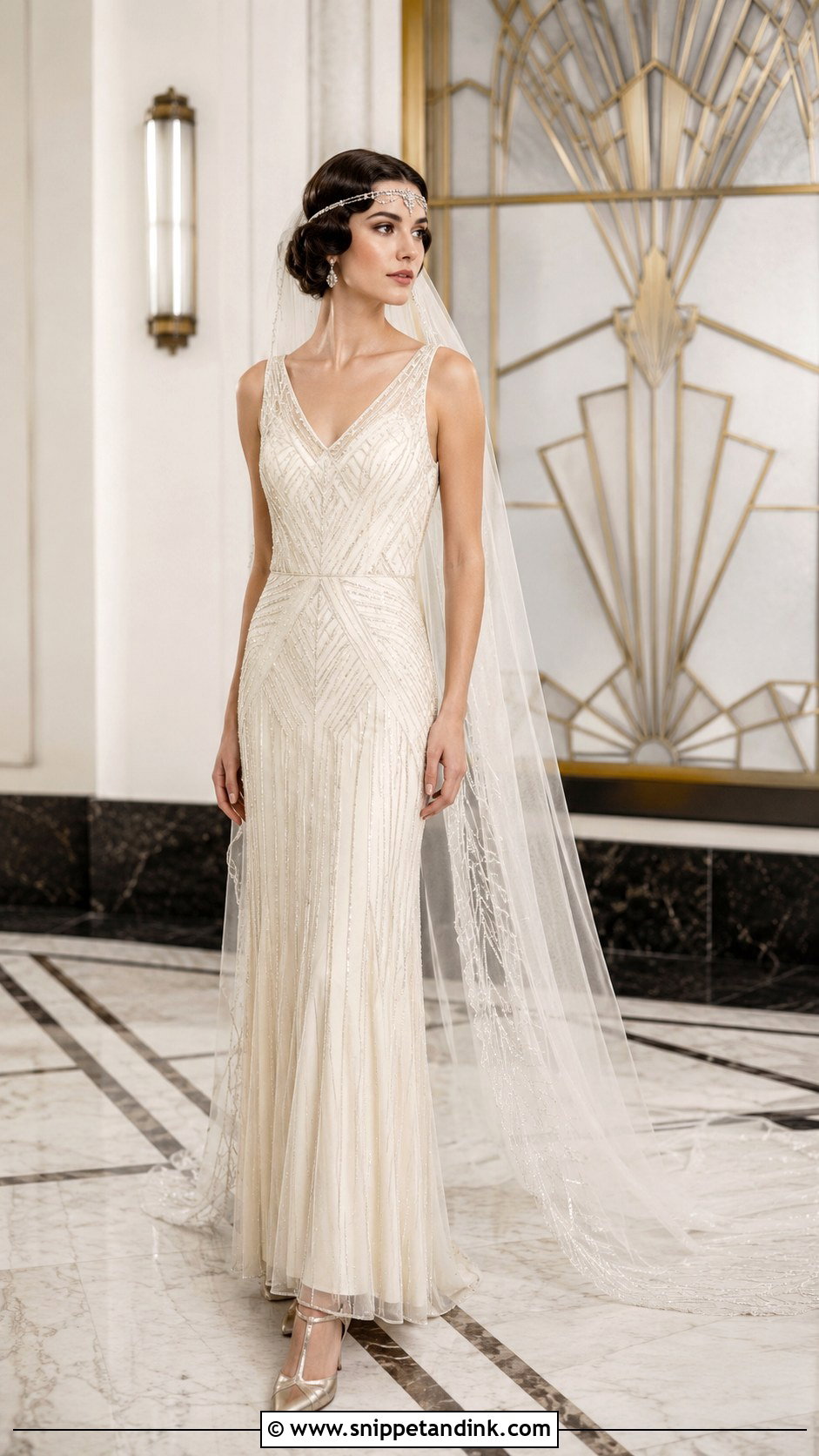
The 1920s column gets its glamour from beadwork, not from shape. Geometric embellishment on a long, straight silhouette with a soft V-neck and a fluid skirt is the classic version, in champagne, pale ivory or silver-white so the pattern shows. Beaded gowns are heavy, though, often far heavier than brides expect, and the weight hangs from the shoulders; try it on for a good twenty minutes before deciding. Low metallic heels or beaded T-strap shoes are made for dancing in it. A slim crystal headband, small drops and a plain cathedral veil are plenty; stacking more sparkle competes with the dress. A sleek bob, a finger-wave updo or a low bun suits evening receptions and art deco rooms.
4. 1930s Bias Cut Satin Wedding Dress
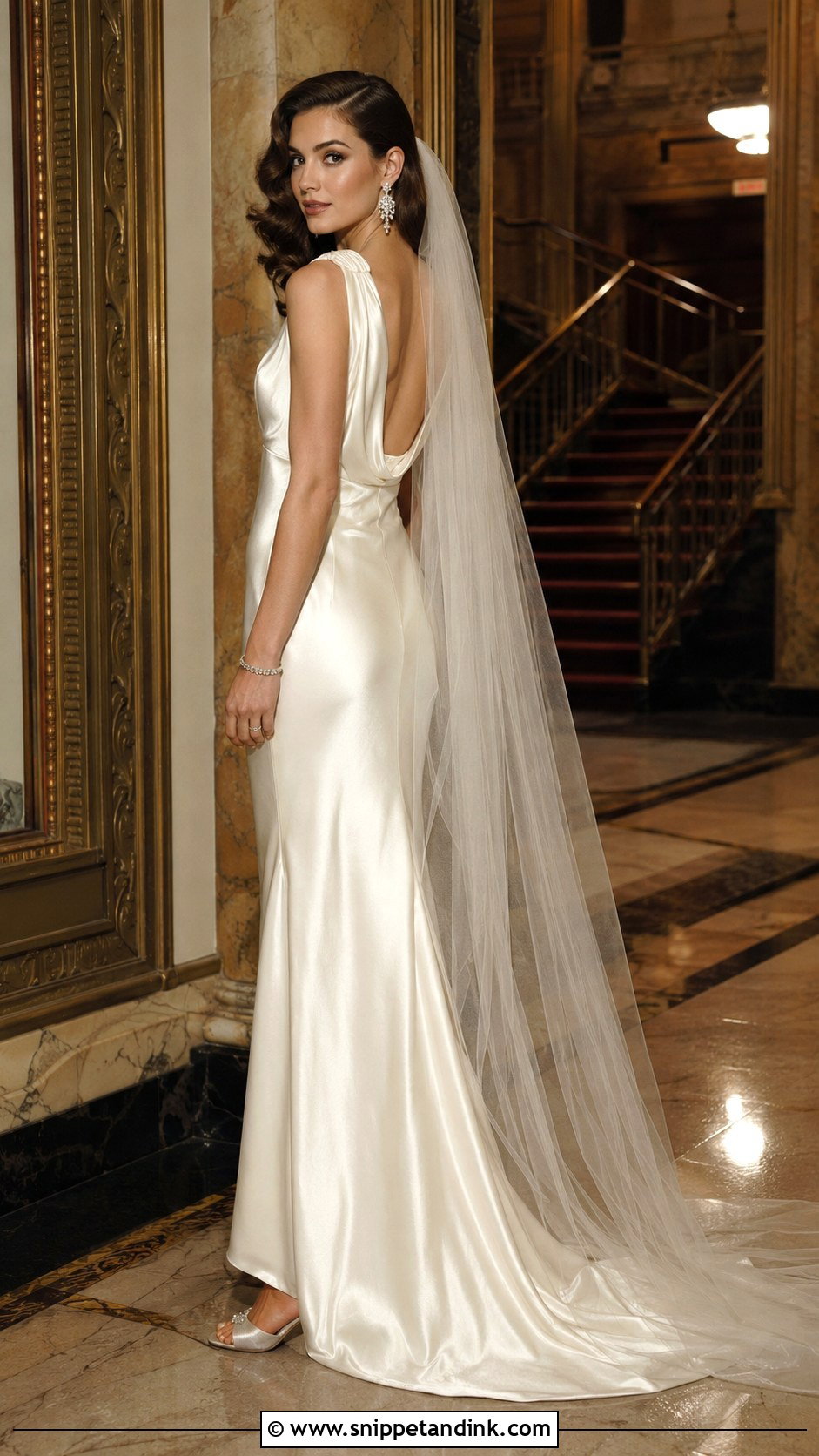
A 1930s bias cut satin wedding dress moves like liquid because the fabric is cut diagonally across the grain. That same cut makes it show everything underneath, so I fit these only with the bride’s final smooth, edge-free underwear and shapewear on. Silk satin or satin-backed crepe gives the smoothest drape; a softly gathered bust and low back add quiet drama. Look for a gown that skims rather than clings, and have the hem and straps adjusted so it stays secure as you move. Ivory peep-toe heels, a narrow bracelet and pearl or crystal earrings suit it, with a long sheer veil and sculpted side waves or a sleek low bun. Hotels, old theaters and evening ceremonies suit it best.
5. 1940s Long Sleeve Crepe Wedding Dress
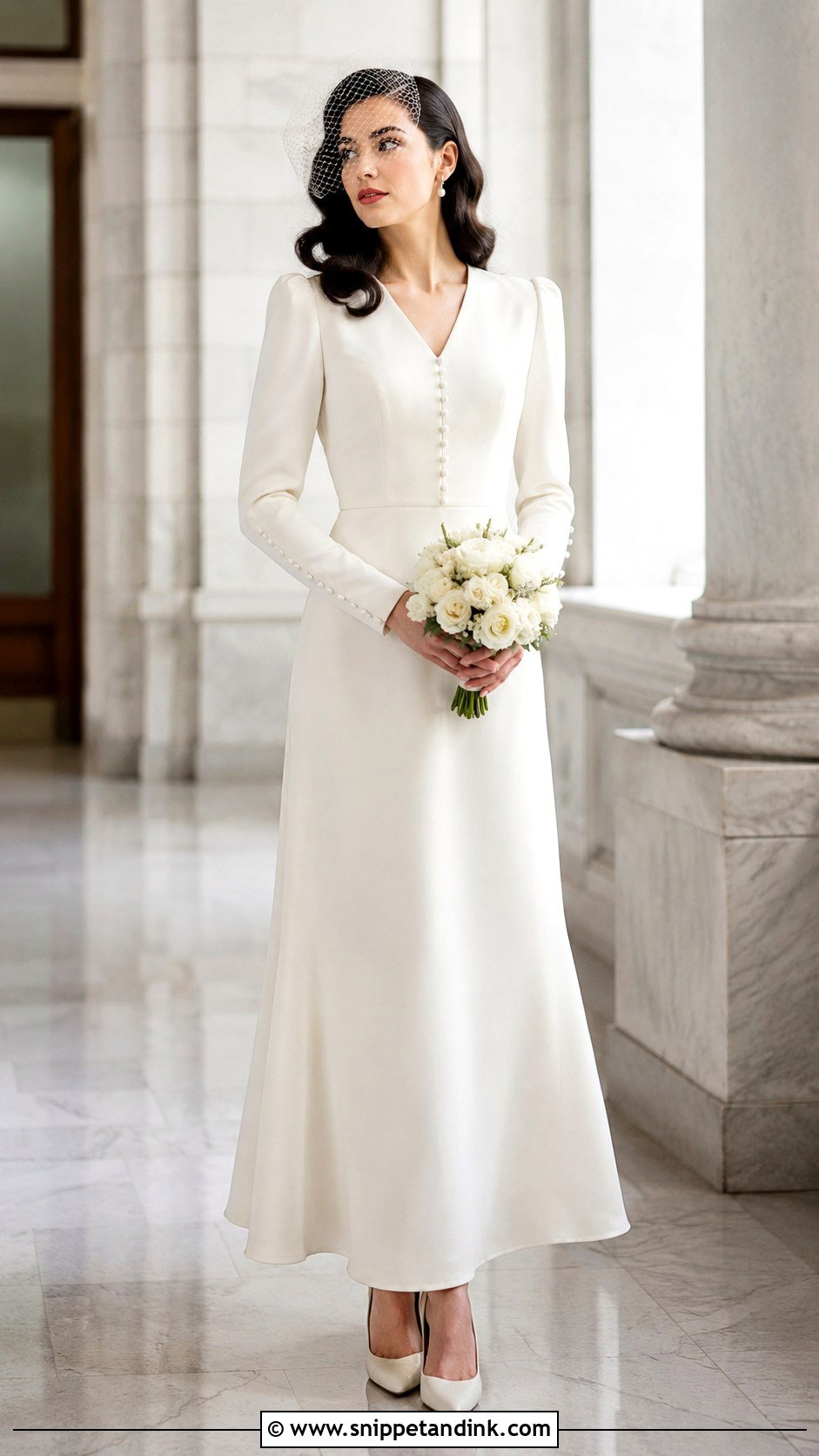
Wartime and postwar dresses were cut with real economy, and the 1940s look still reads as tailored rather than decorated. A softly structured shoulder, narrow waist and gently flared skirt, with covered buttons, a few waist pleats and a V-neck or small collar, give definition and modest coverage. Matte ivory crepe photographs with depth and no glare. The sleeves need room: crepe has little give, so ask for a slightly higher armhole or a small gusset if you plan to raise your arms much. Almond-toe pumps, pearl earrings and a compact bouquet tied with silk ribbon suit it, with a shoulder-length or birdcage veil and smooth side waves or a rolled updo. Courthouse ceremonies and cooler months suit it.
6. 1950s Tea Length Wedding Dress
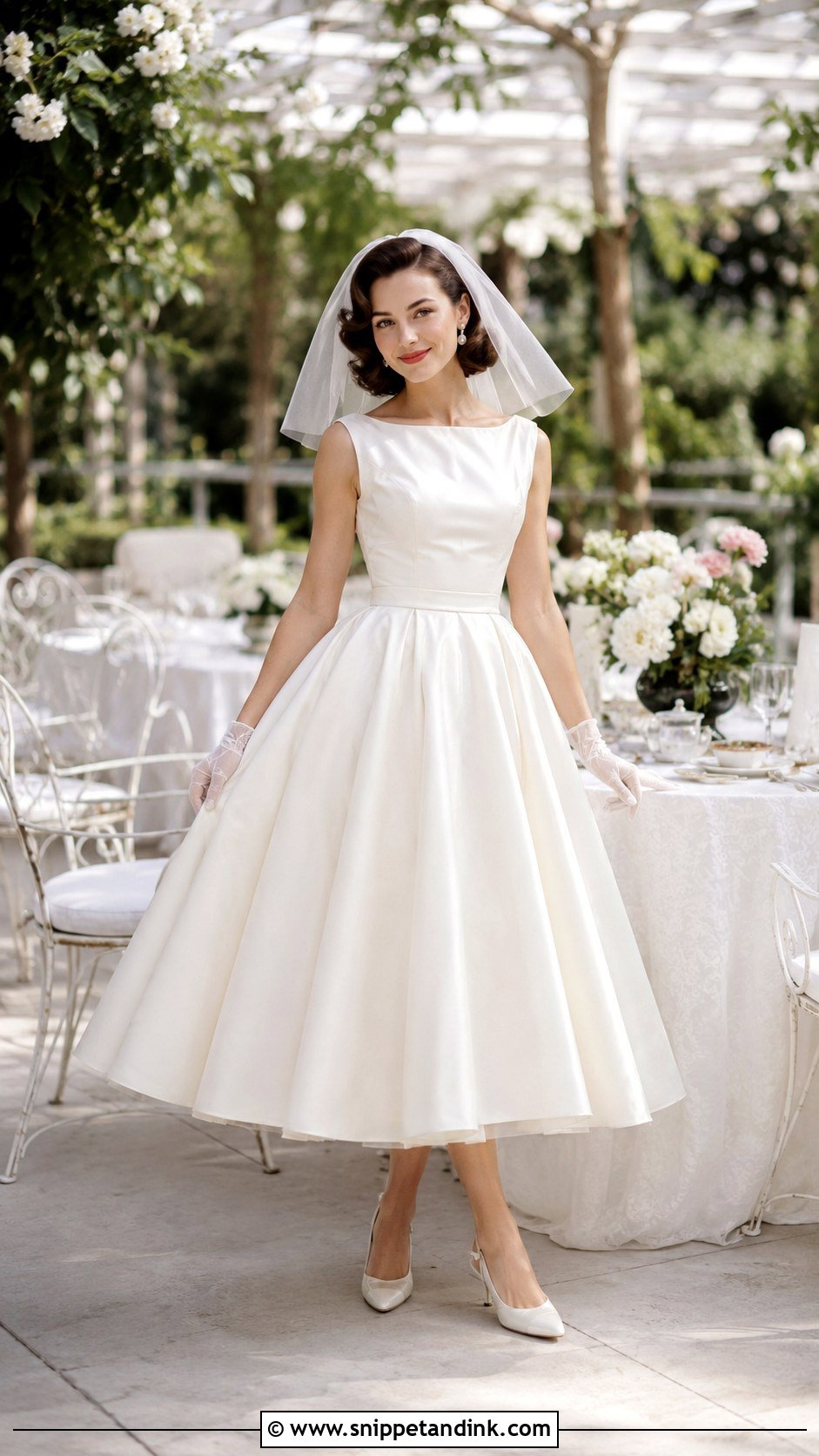
A 1950s tea length wedding dress is made for dancing: a fitted bodice with a bateau, sweetheart or scoop neckline and a full skirt ending between knee and ankle. The petticoat gives it the shape, so bring it to every fitting or the hem will be set wrong; I’d choose one layer of soft net over three of stiff crinoline unless volume matters more to you than comfort. Ivory slingbacks, short gloves, pearl studs and a small structured bag finish it, with a birdcage or shoulder-length veil instead of anything long. Petite brides often look better with the hem an inch or two shorter. Brunch weddings, city halls and garden receptions suit it.
7. 1960s Bateau Neck A-Line Wedding Dress
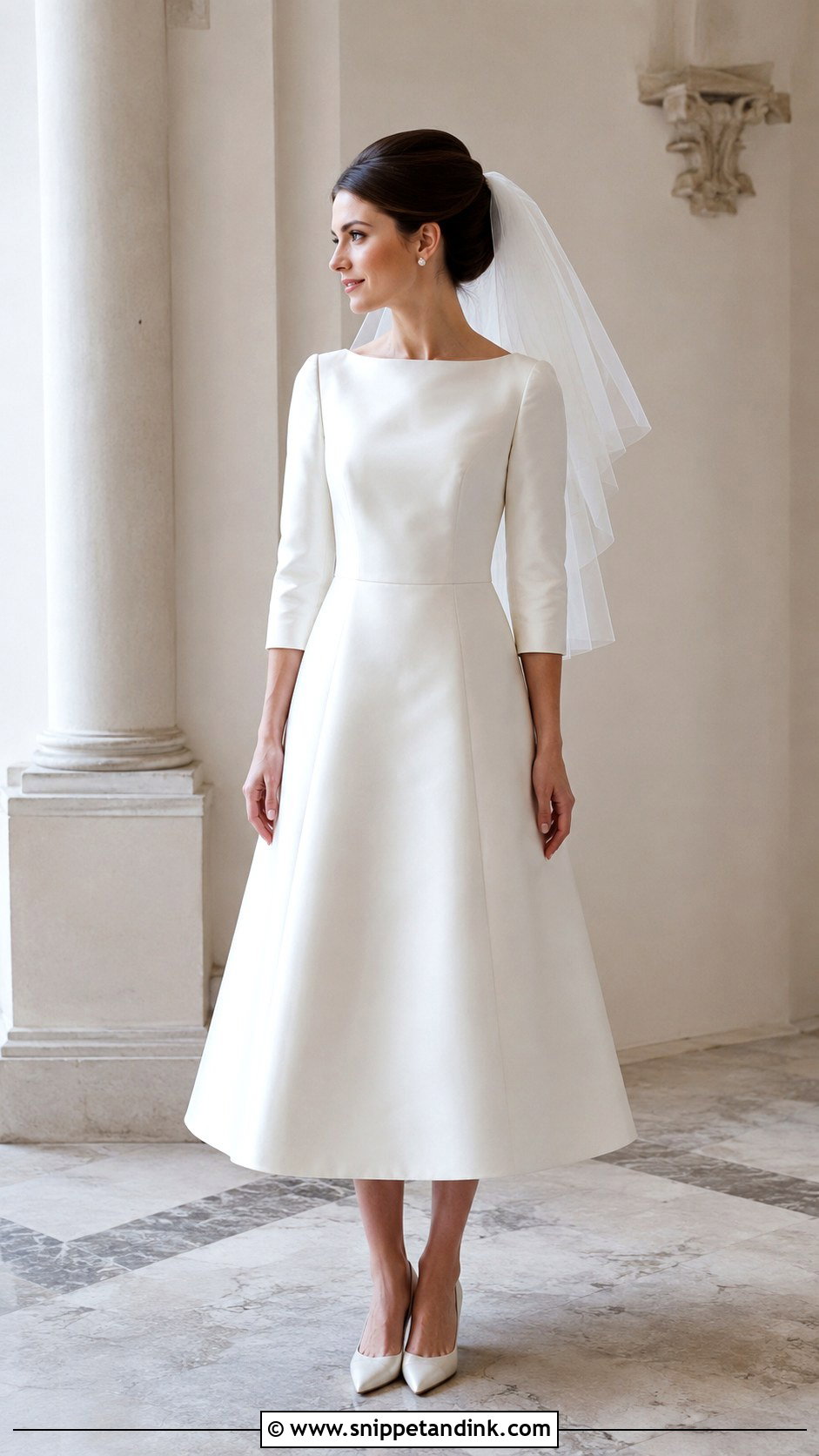
Polished simplicity is what the 1960s bateau A-line does best. The wide neckline frames the collarbones, and the clean flared skirt falls straight from a fitted bodice. Silk Mikado, satin or structured crepe holds the crisp shape. Three-quarter sleeves give coverage, though sleeveless works in warm weather. It suits a wide range of figures because the open neckline draws the eye upward and the skirt skims the hips. Pointed pumps, pearl button earrings and a structured bow or short veil at the crown keep the period feel. A smooth French twist or rounded low bun suits it, and a detachable train adds ceremony drama you can remove later.
8. 1960s Mod Mini Wedding Dress
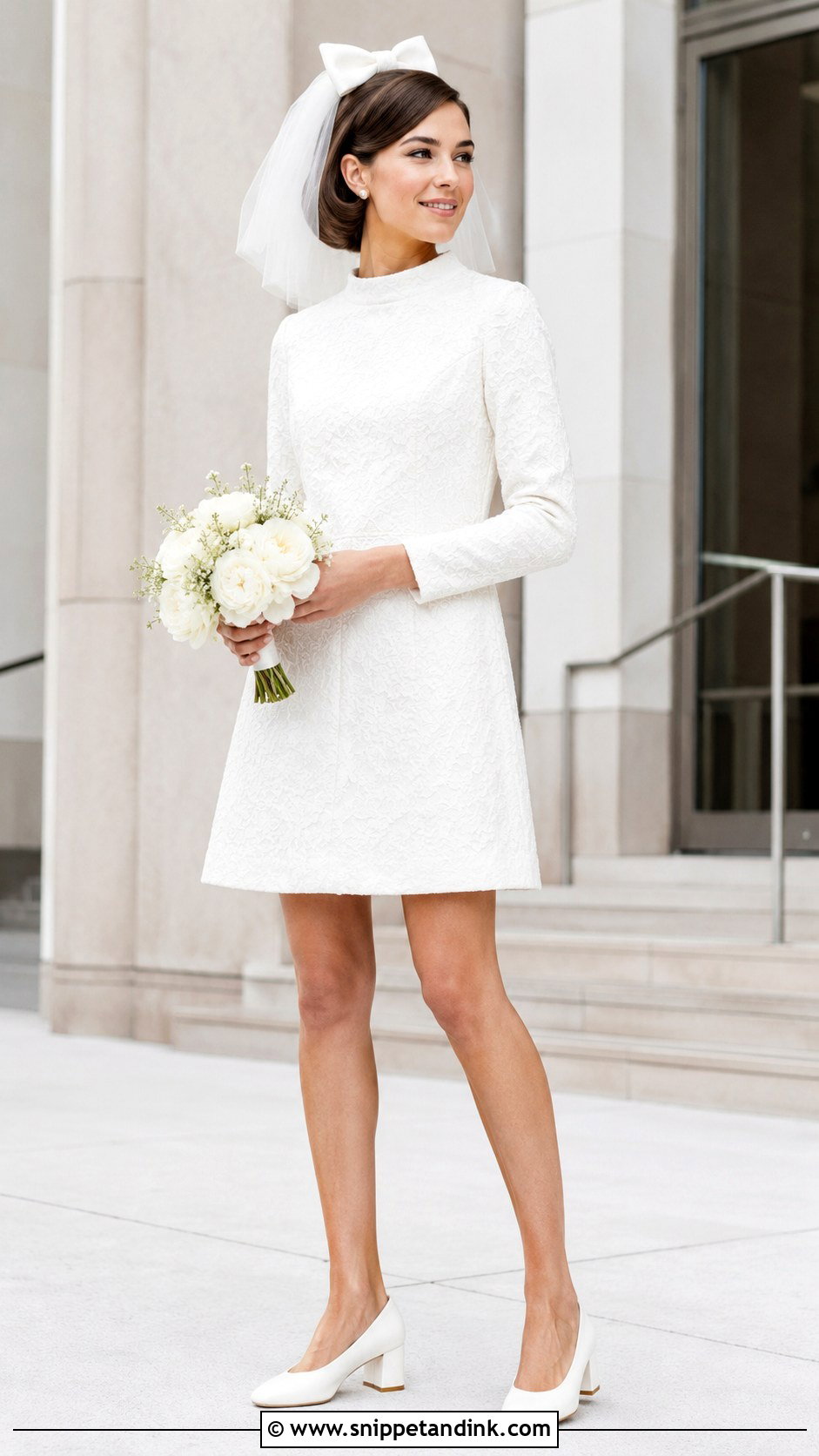
The mod mini is for a bride who wants something less traditional and a lot of fun. A simple shift or fitted A-line with long sleeves and a high neck keeps it bridal, in white crepe, textured jacquard or a subtle floral lace. Sit down in front of a mirror at the fitting before you settle on the length; a hem that looks right standing can ride up a long way on a chair. Block-heel pumps, sheer tights in cool weather and pearl or crystal studs suit it, with a short veil, a padded headband or a structured bow. Carry a compact bouquet so the dress stays visible. Courthouse weddings, receptions and rehearsal dinners suit it, and a knee-skimming hem keeps the shape with more coverage.
9. 1970s Boho Lace Wedding Dress
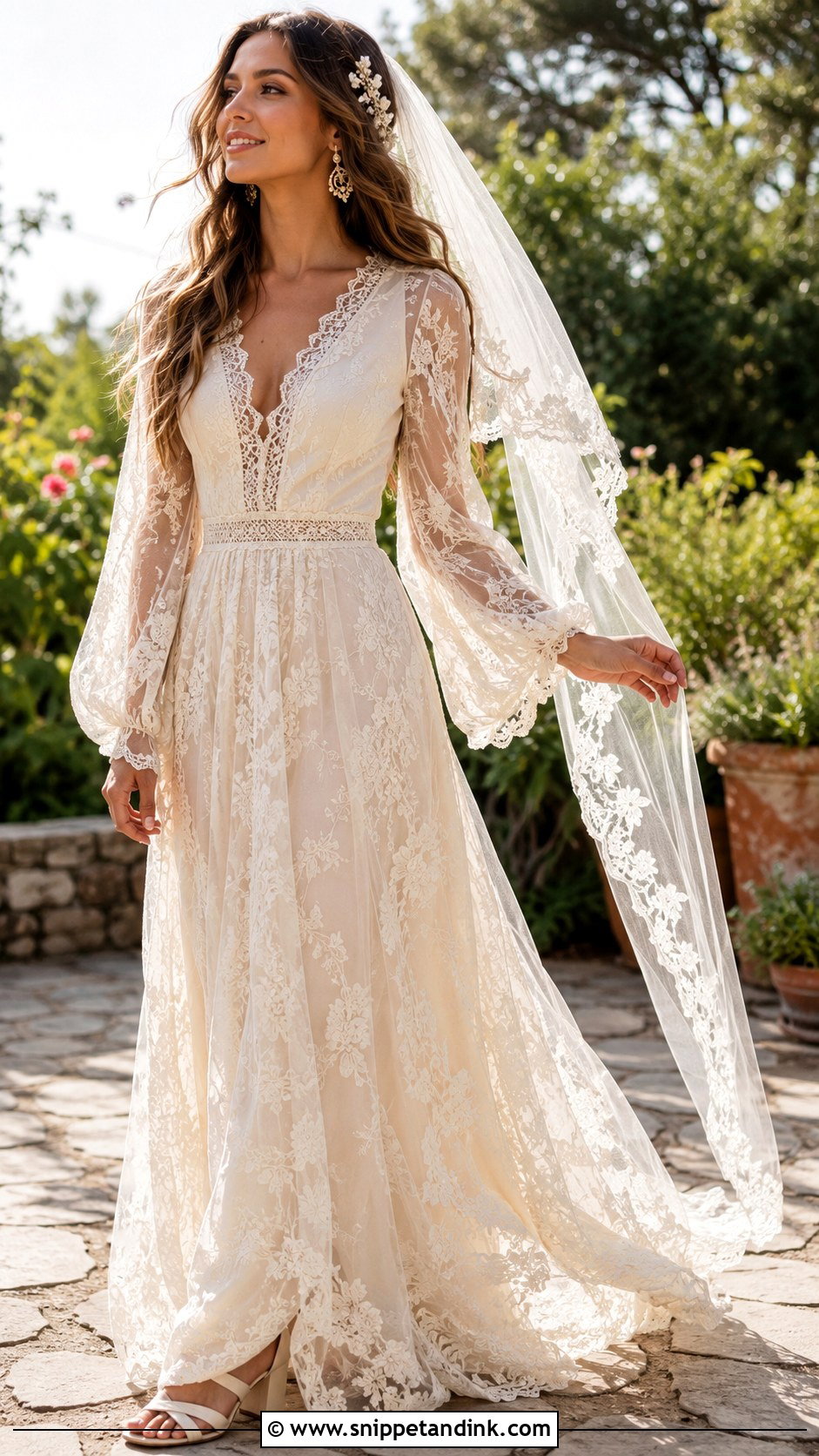
A 1970s boho lace wedding dress moves freely, with a defined waist, a flowing skirt and sheer bell or bishop sleeves. Crochet-style lace, floral embroidery and light chiffon carry the era without feeling formal. Bishop sleeves gather at the wrist, which is lovely in photos but catches on bouquet ribbon and cake knives, so I suggest a small elastic loop at the cuff. Ivory block-heel sandals, delicate gold earrings and a floral comb suit it, with a lace-edged chapel veil if you want ceremony drama and loose waves or a soft braided updo. Keep the bouquet natural but tidy. If you need more support, ask for a lined, structured bodice under the lace.
10. Old Hollywood Cowl Neck Wedding Dress
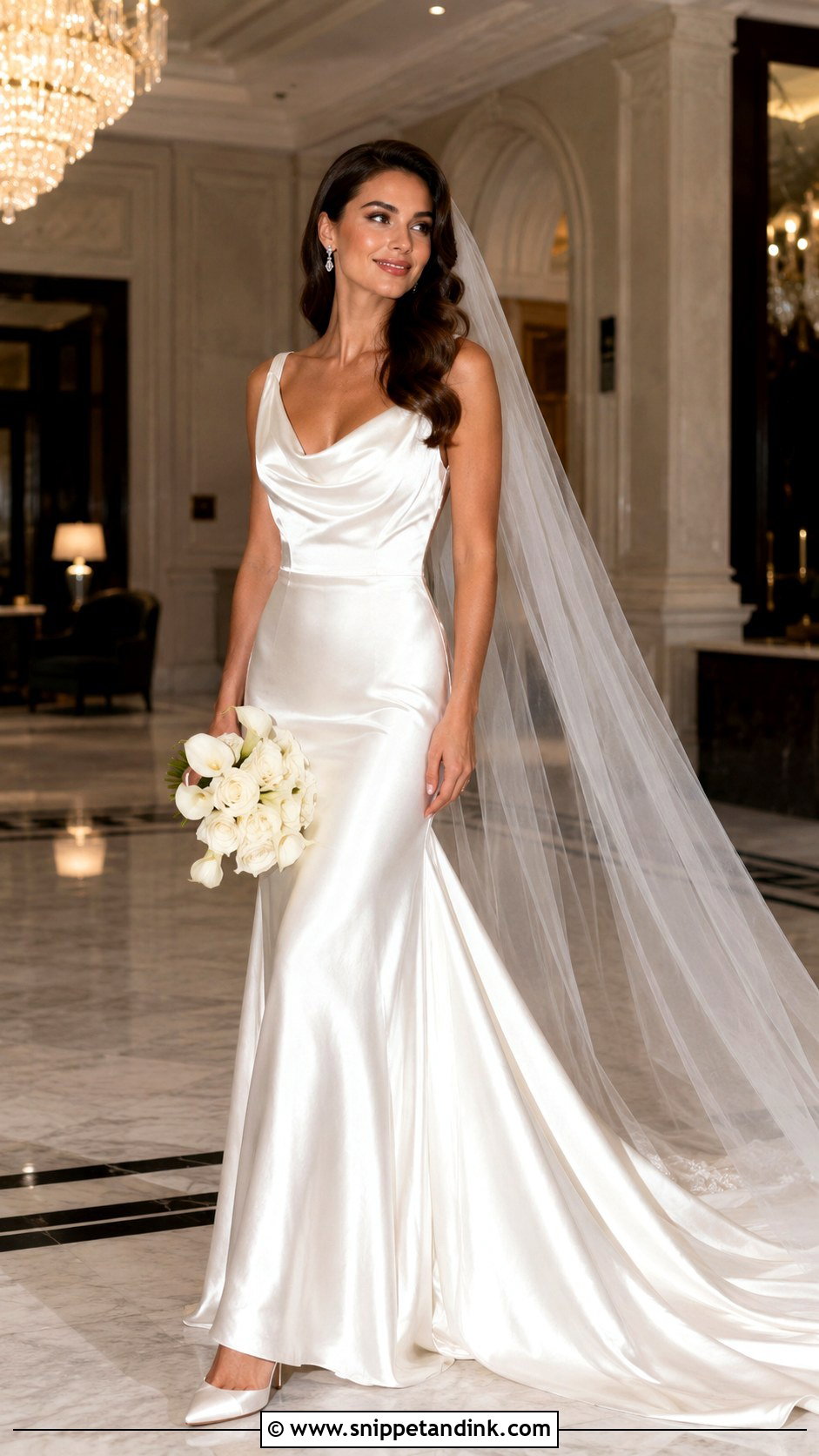
Liquid satin with a draped cowl neck is pure Old Hollywood, and it moves well from every angle. A fitted waist and sweeping skirt complete the shape. Cowls fall forward when you lean, so ask for wider straps, a small weight sewn into the drape, or an internal support panel before the wedding rather than discovering it in the first-dance photos. Satin pumps, crystal drops and a small metallic clutch suit it, and a faux-fur wrap or tailored cape covers you on cold evenings. Wear glossy side-swept waves and a long plain veil for the ceremony. The satin already reflects light, so keep the jewelry minimal. Hotels, ballrooms and museums suit it.
11. Basque Waist Ball Gown Wedding Dress
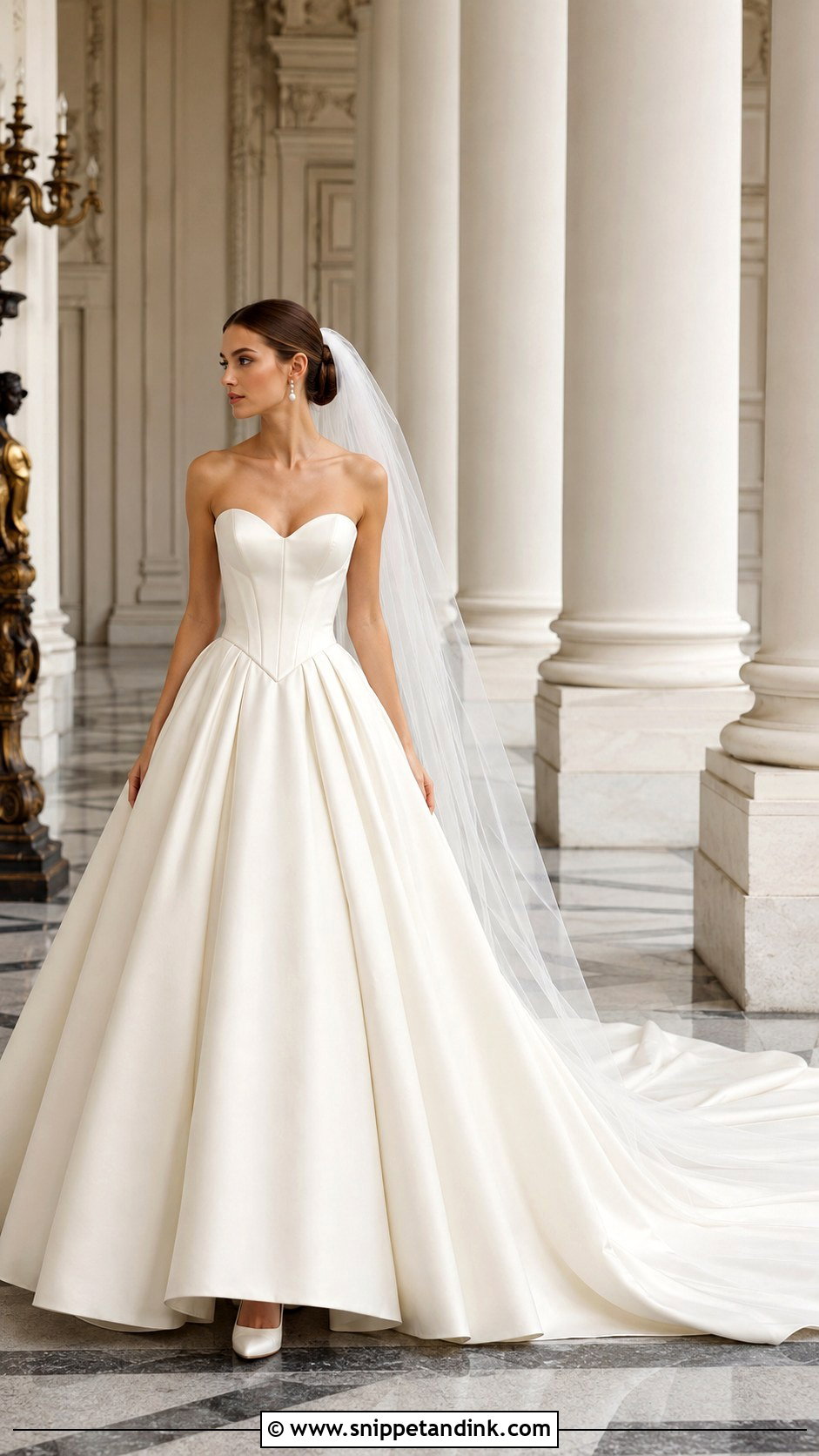
The Basque waist dips to a point at the front, lengthening the torso before it meets a full skirt, and it has a strongly historical feel. Satin, Mikado or brocade gives architectural volume, and the internal boning should support you without digging in when you sit. Waist depth is adjustable: short-waisted brides do better with a shallow point, while tall brides can carry a dramatic long bodice and a fuller train. A cathedral veil, pearl drops and closed-toe ivory heels suit it, with a neat chignon so the neckline and waist stay visible. Keep the bouquet medium and rounded so it doesn’t hide the bodice in photos, and choose a venue with space for the skirt.
12. Square Neck Corset Wedding Dress
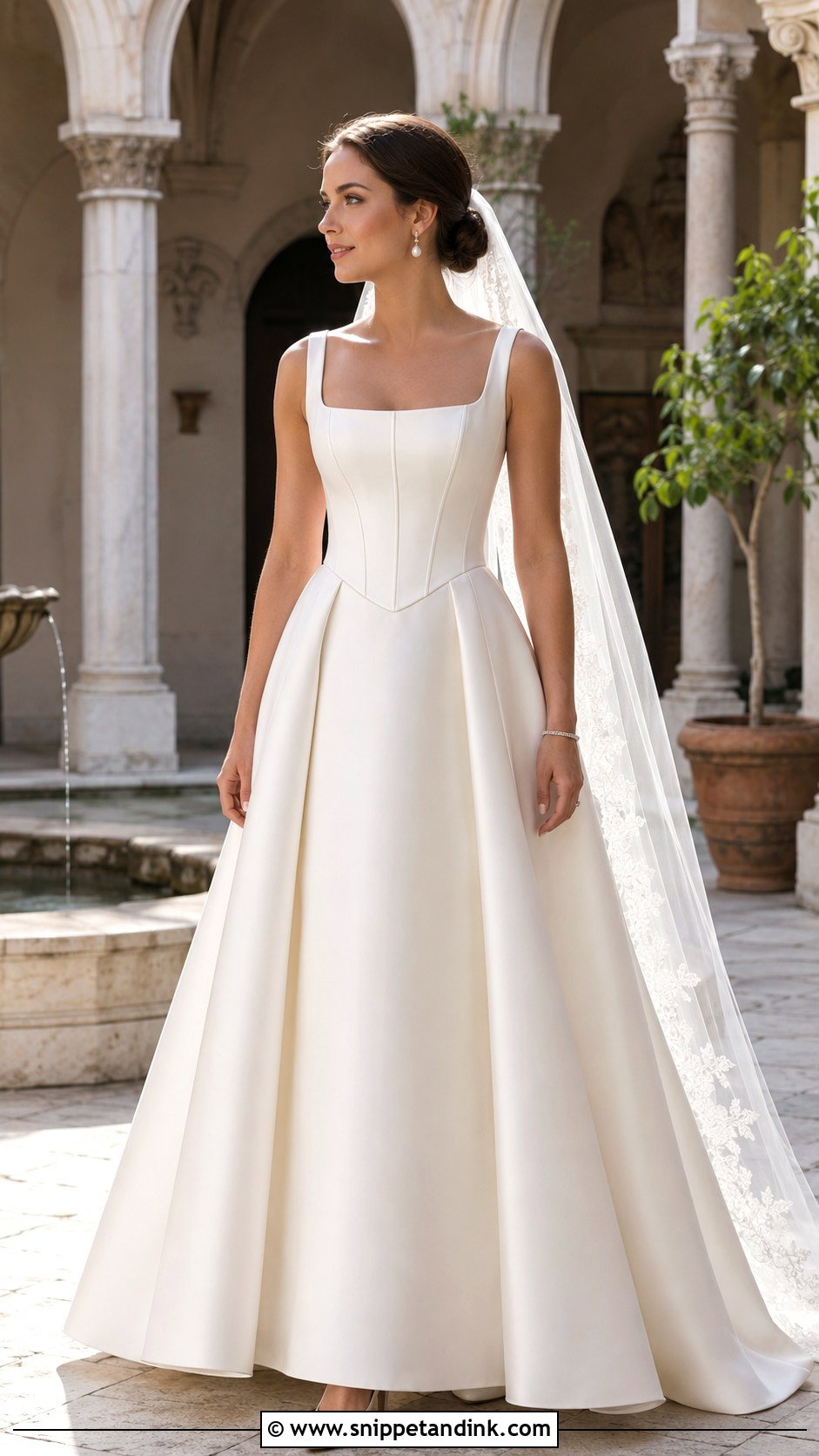
A square neck with a corset bodice has a Renaissance flavor, kept modern by clean styling. The open neckline frames the collarbones and the boning shapes and supports the bodice; I’d choose covered construction over exposed corset panels if you want it to age well in photos. A full A-line skirt in satin or silk is classic, a slimmer skirt more current. It can be very flattering on a fuller bust when it’s fitted with proper cups, supportive straps or extra inner reinforcement. Pearl earrings, a fine bracelet and ivory block or kitten heels suit it, plus a long veil with a narrow lace edge and a low bun or smooth half-up style.
13. Drop Waist Jacquard Wedding Dress
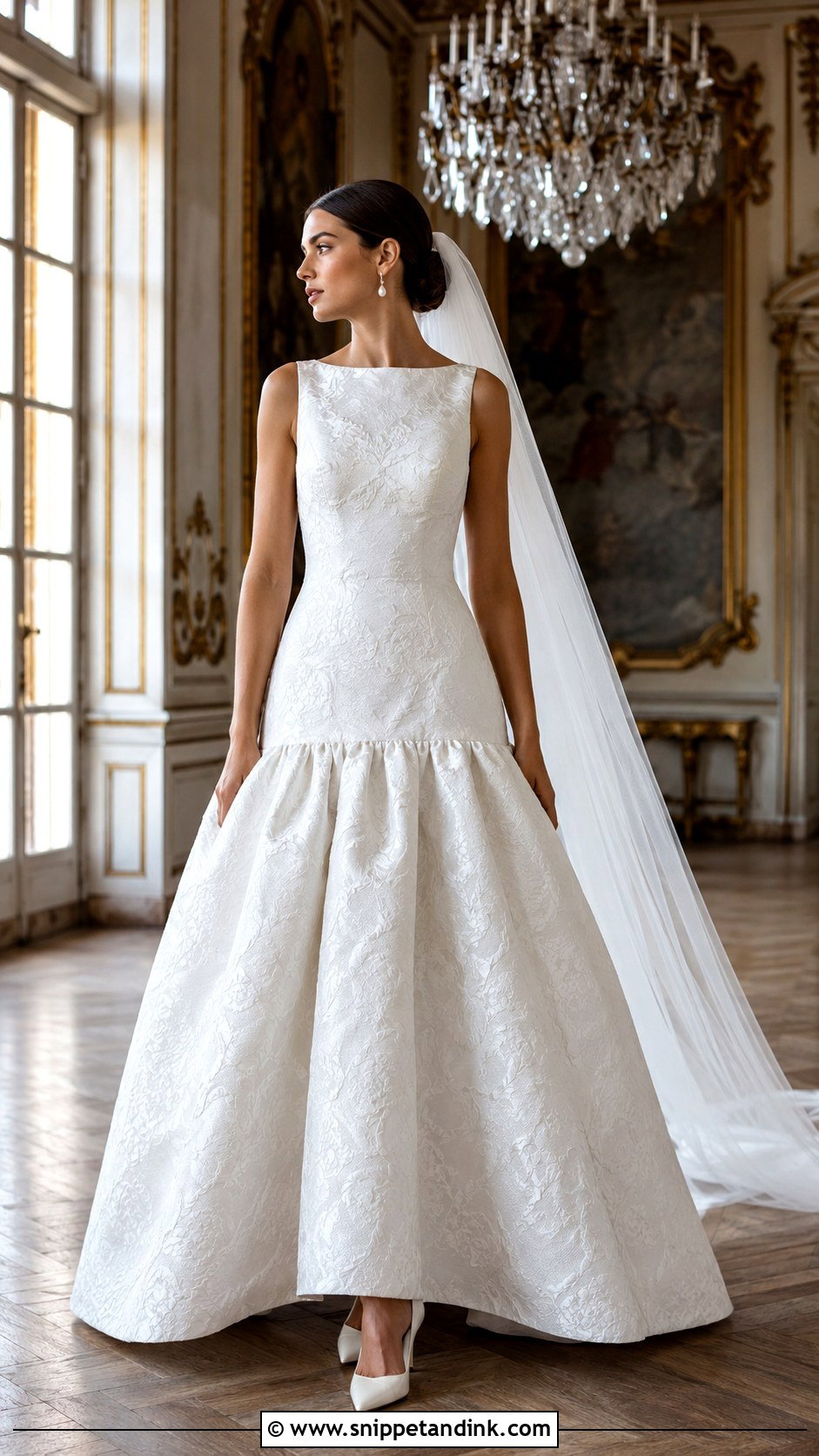
The drop waist sits close through the natural waist and upper hips before opening into a fuller skirt, and jacquard gives it a rich, woven texture that photographs well. A subtle floral pattern in ivory or soft cream adds vintage depth without beading. Proportion is the deciding factor: long torsos carry a deep drop easily, while petite brides usually look better with a shorter drop that sits just below the hip bone. A scoop, straight or off-the-shoulder neckline balances the long bodice. Pearl earrings, pointed satin pumps and a long plain veil suit it, with a sleek bun or smooth side part. Ballrooms and historic homes suit it best.
14. Lace Trumpet Wedding Dress With Cap Sleeves
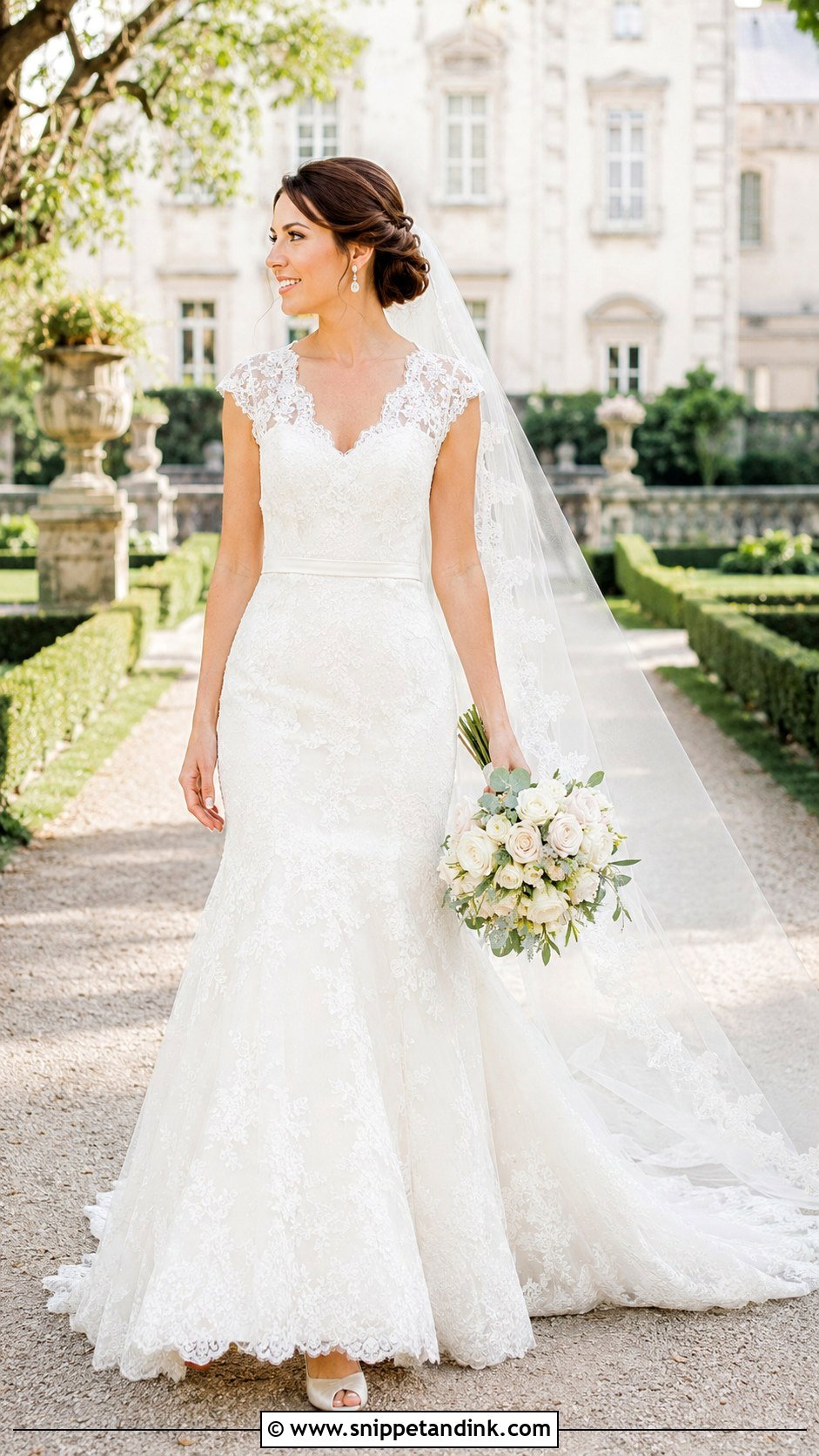
A lace trumpet wedding dress with cap sleeves follows the torso and hips before flaring around the knee, giving shape without heavy structure. Floral lace over a supportive lining with a sweetheart or soft V-neck under the cap sleeves keeps it romantic. Cap sleeves sit on the very edge of the shoulder, so they need to be anchored to the bodice or they slide when you hug. Make sure the flare starts high enough to walk and sit comfortably. Ivory heels, pearl drops and a narrow belt if you want more waist definition suit it, along with a chapel veil edged in matching lace and a low textured bun. Formal gardens and traditional venues suit it.

15. Pearl Embellished Sheath Wedding Dress
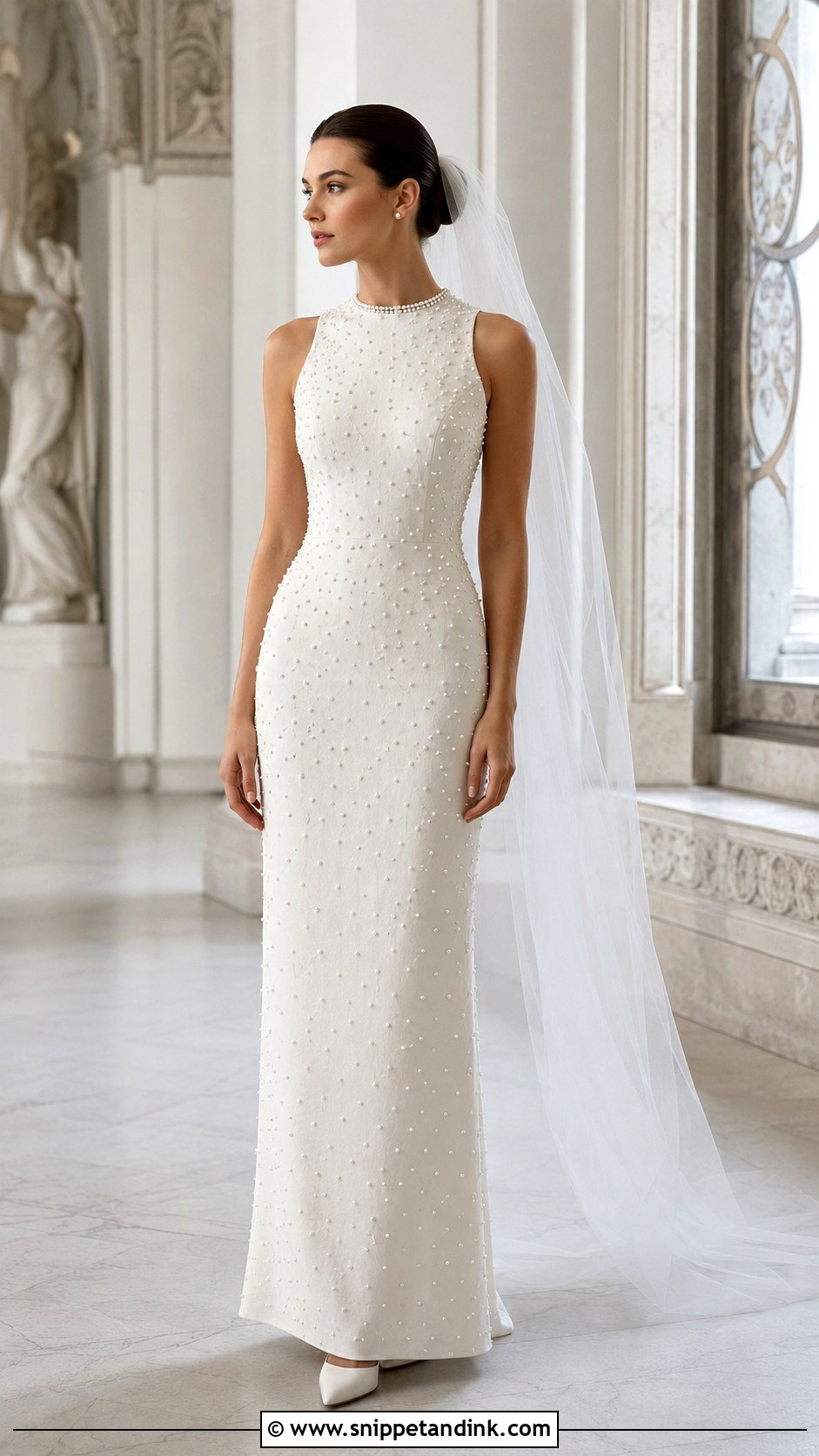
Small pearls give a sheath a quiet vintage richness without the glare of crystals. I look for evenly spaced pearls on a streamlined gown with a lightly fitted waist and a high neck or simple V. The lining matters more than you’d think, since pearl stitching on the inside of unlined fabric scratches; a smooth lining also helps the dress hang correctly. Plain ivory pumps, pearl studs and a clean tulle veil are enough, and skip a pearl necklace if the bodice is already busy. A sleek bun, soft ponytail or short waves keep it fresh. Sheer pearl sleeves add coverage; sleeveless suits spring and summer. Museums and restored hotels suit it.
16. Off Shoulder Brocade Wedding Dress
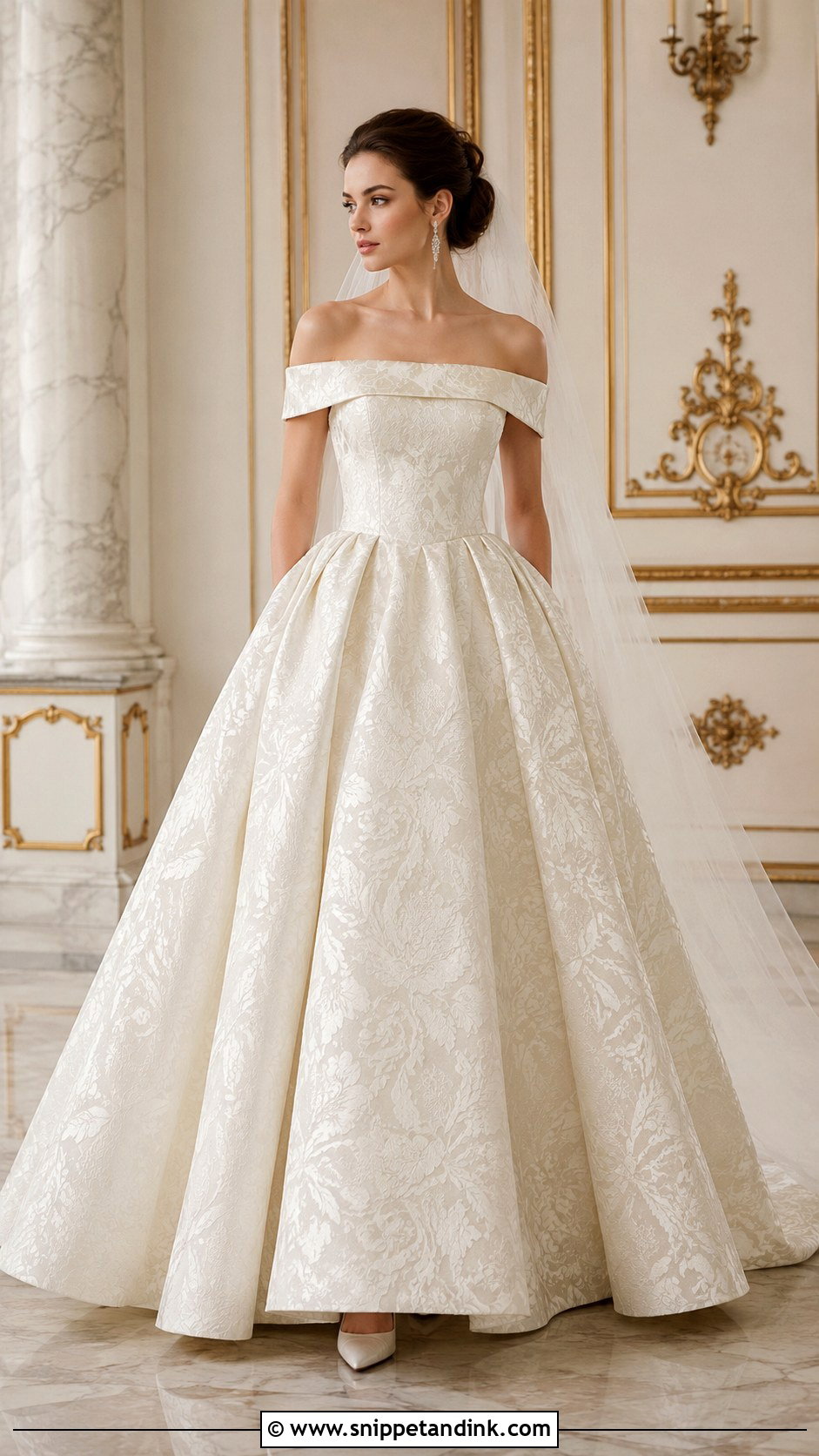
Brocade is woven with a raised pattern and has a lot of body, which makes an off-the-shoulder gown look formal and sculptural. The bodice needs a secure inner corset, and the neckline should rest without trapping your arms. I steam brocade gently from inside only; pressing on the face flattens the raised pattern. Floral brocade holds an A-line or full ball gown shape well. An updo, drop earrings and a long veil pinned under the bun suit it, with ivory satin pumps and a small bouquet. Skip a necklace unless the neckline is very plain. On cold days, add a fitted cape or opera gloves rather than a casual wrap. Winter weddings and grand rooms suit it.
17. Long Sleeve Satin Wedding Dress With Buttons
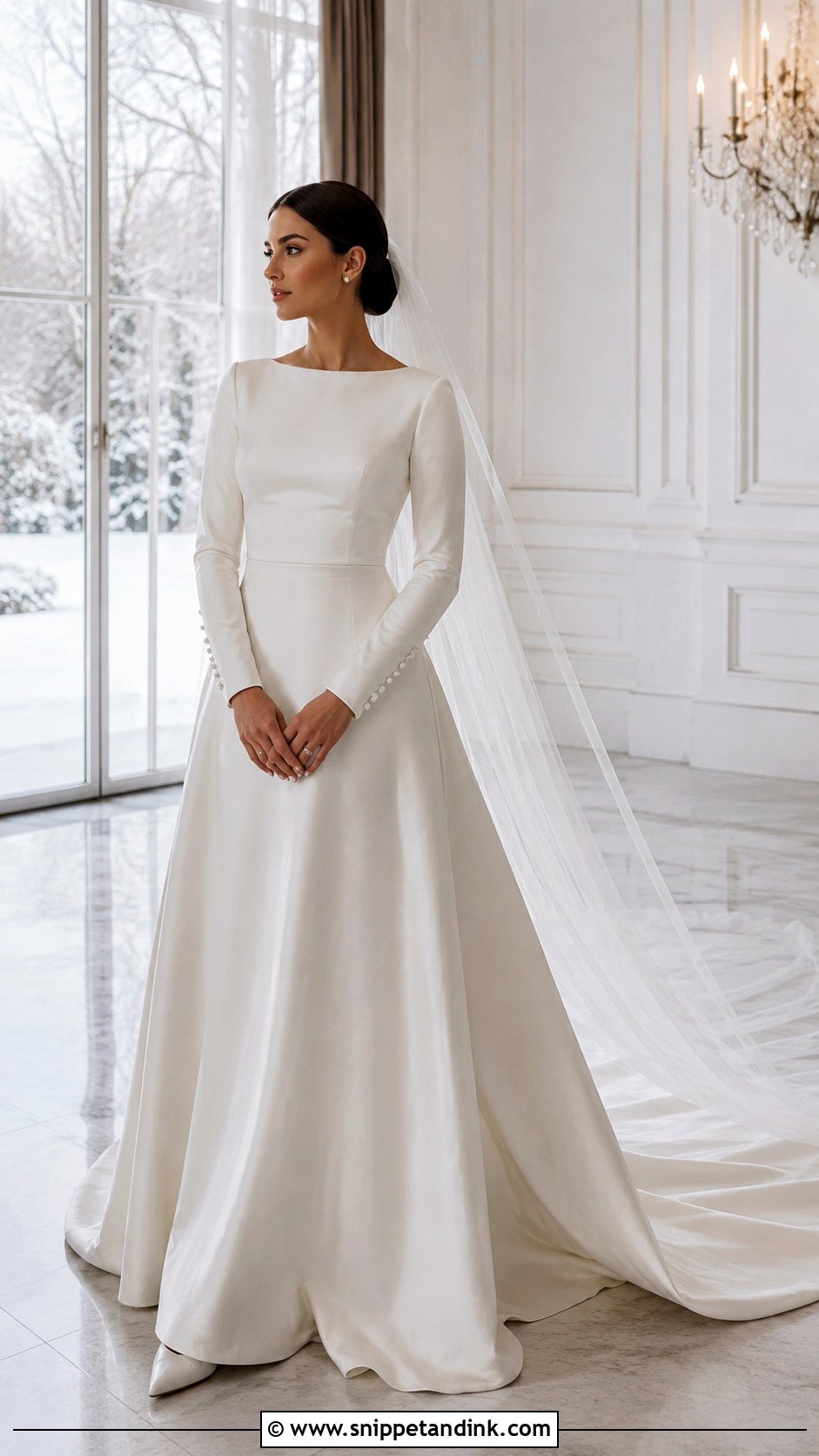
Covered buttons running down the back of a long-sleeve satin gown are a detail I always point out to photographers, because guests watch the back during the ceremony. Look for a tailored bodice, fitted cuffs and buttons down the back or along the train, with a bateau, high or soft V-neckline. Thirty or forty satin loops take a long time to fasten, so ask for a hidden zip under them and save everyone ten minutes. Matte satin looks restrained; bright silk satin gives stronger highlights in photos. Pearl studs, ivory pointed pumps and a plain cathedral veil suit it, with a polished low bun. Stretch panels, underarm gussets or flexible lining make the sleeves comfortable in autumn and winter.
18. Vintage Two Piece Bridal Suit
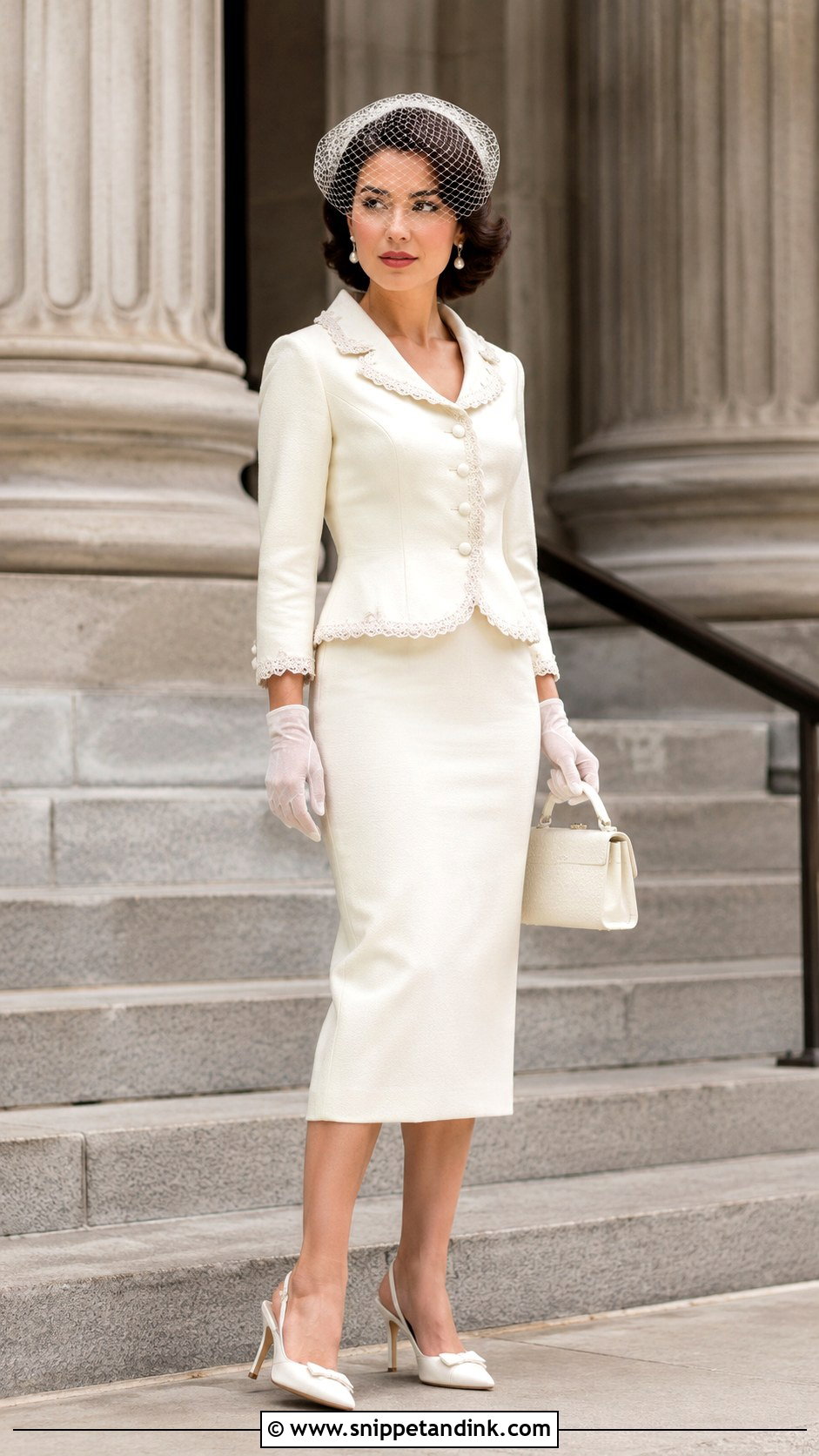
A two-piece bridal suit is an unexpected alternative to a gown. Pair a fitted ivory jacket with a defined waist and a matching midi pencil skirt or a gently flared tea-length skirt. Lace cuffs, covered buttons or a subtle peplum add bridal detail. Choose a jacket with a little stretch and a skirt with a back vent, because a pencil skirt with neither makes stairs and car seats awkward. Slingback pumps, pearl earrings, short gloves and a small birdcage veil complete the period feel, with a structured handbag for essentials. Smooth waves or a neat chignon suit it, for courthouse ceremonies, second weddings and intimate gatherings.
19. Floral Embroidered A-Line Wedding Dress
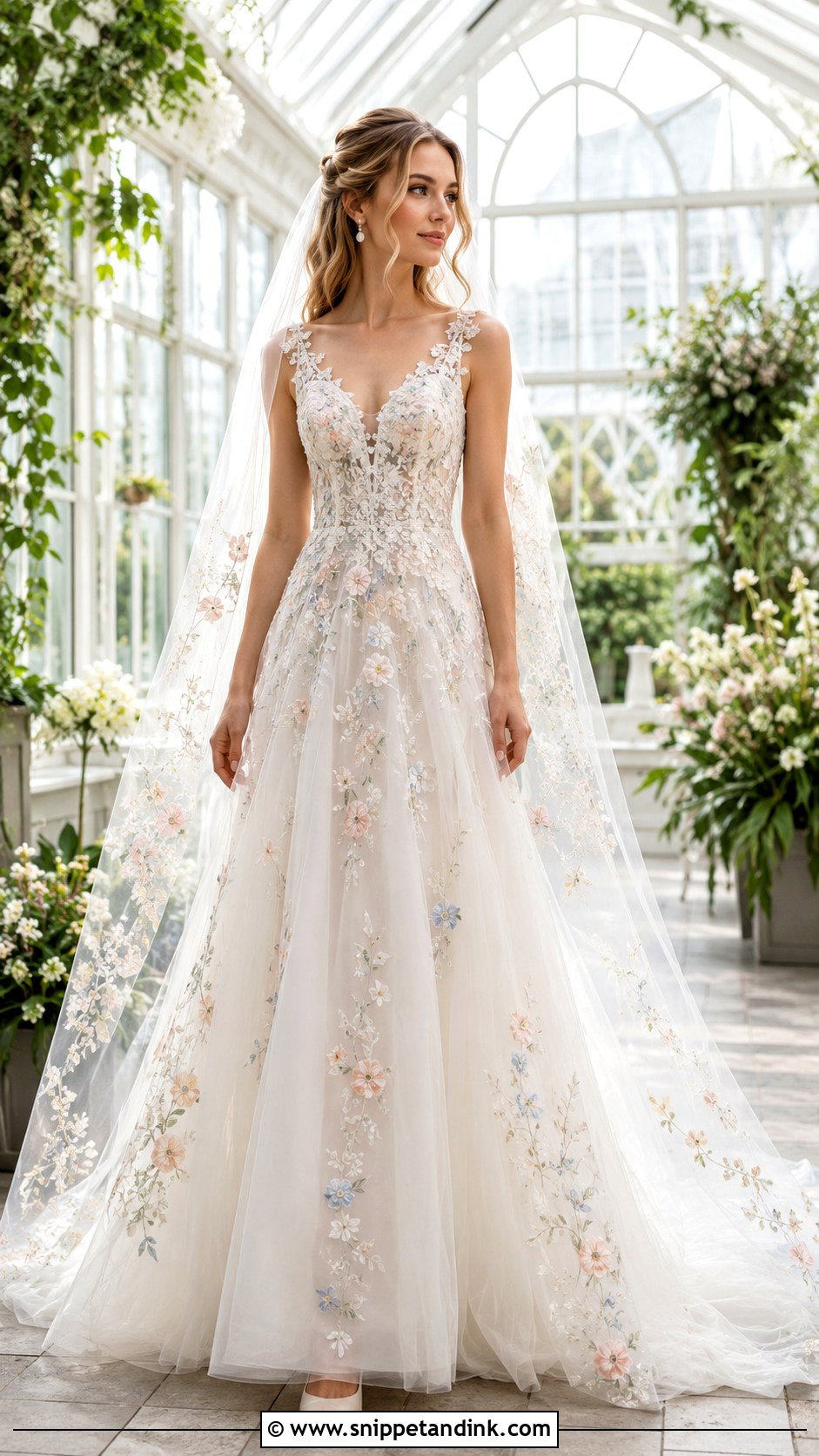
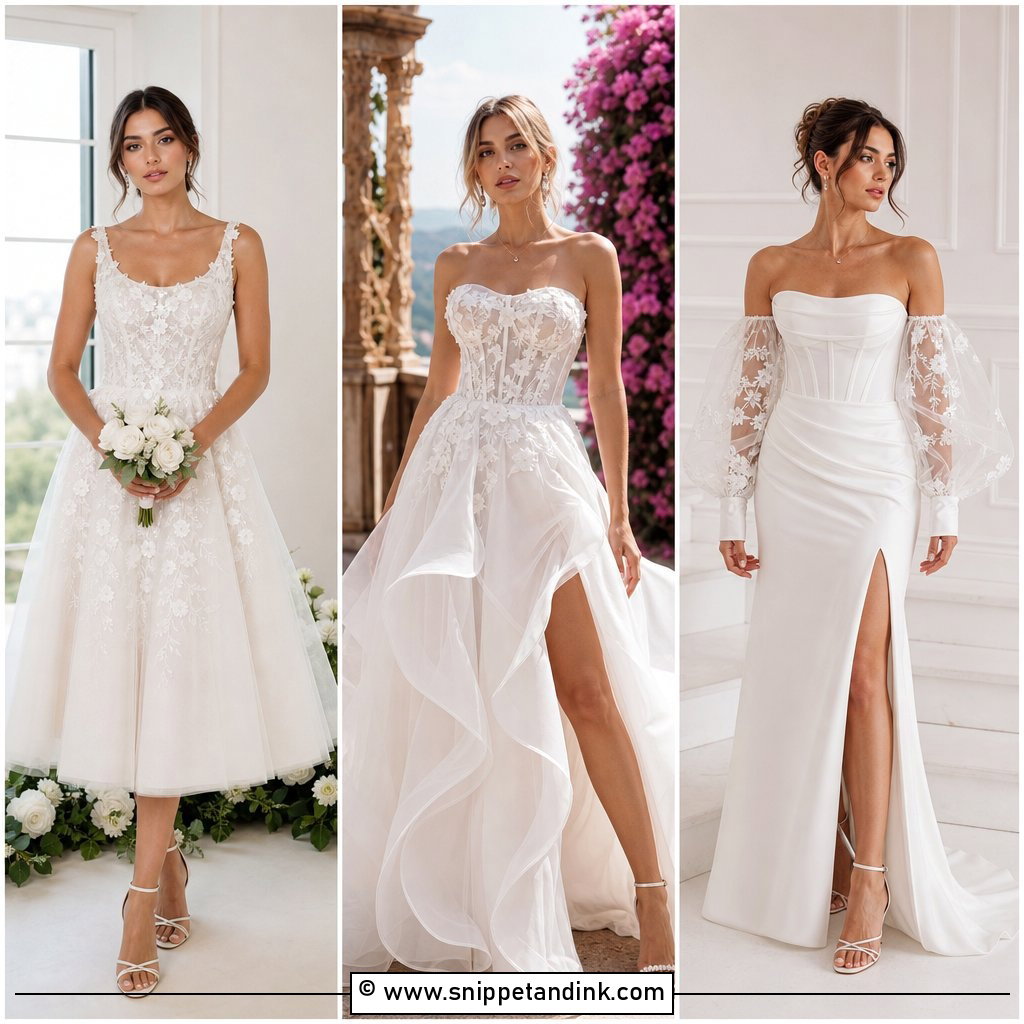
Embroidered flowers in soft color give an A-line an heirloom feel. Ivory tulle with white, champagne, blush or pale blue flowers works well, as long as the bodice shape stays simple so the embroidery doesn’t look busy. Check the back of the embroidery when you try it on; loose threads and knots under sheer tulle show in close-ups. A fitted waist and flowing skirt suit many figures. Plain ivory heels, small pearl earrings and a sheer veil with just a few matching flowers suit it, with a soft half-up style or low bun. Repeat one or two embroidery colors in the bouquet, no more. Tonal ivory embroidery is the subtler option, and gardens and conservatories suit it.

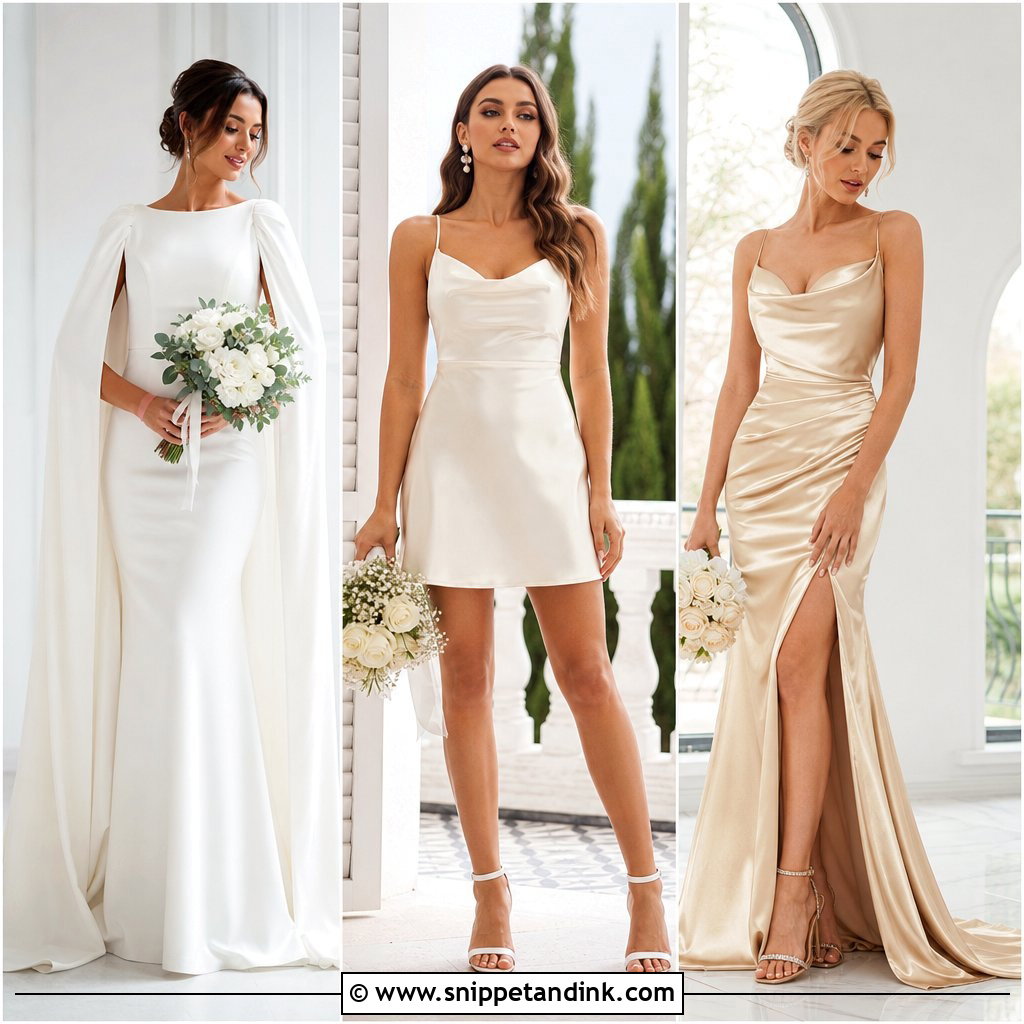

20. Antique Ivory Chapel Train Wedding Dress
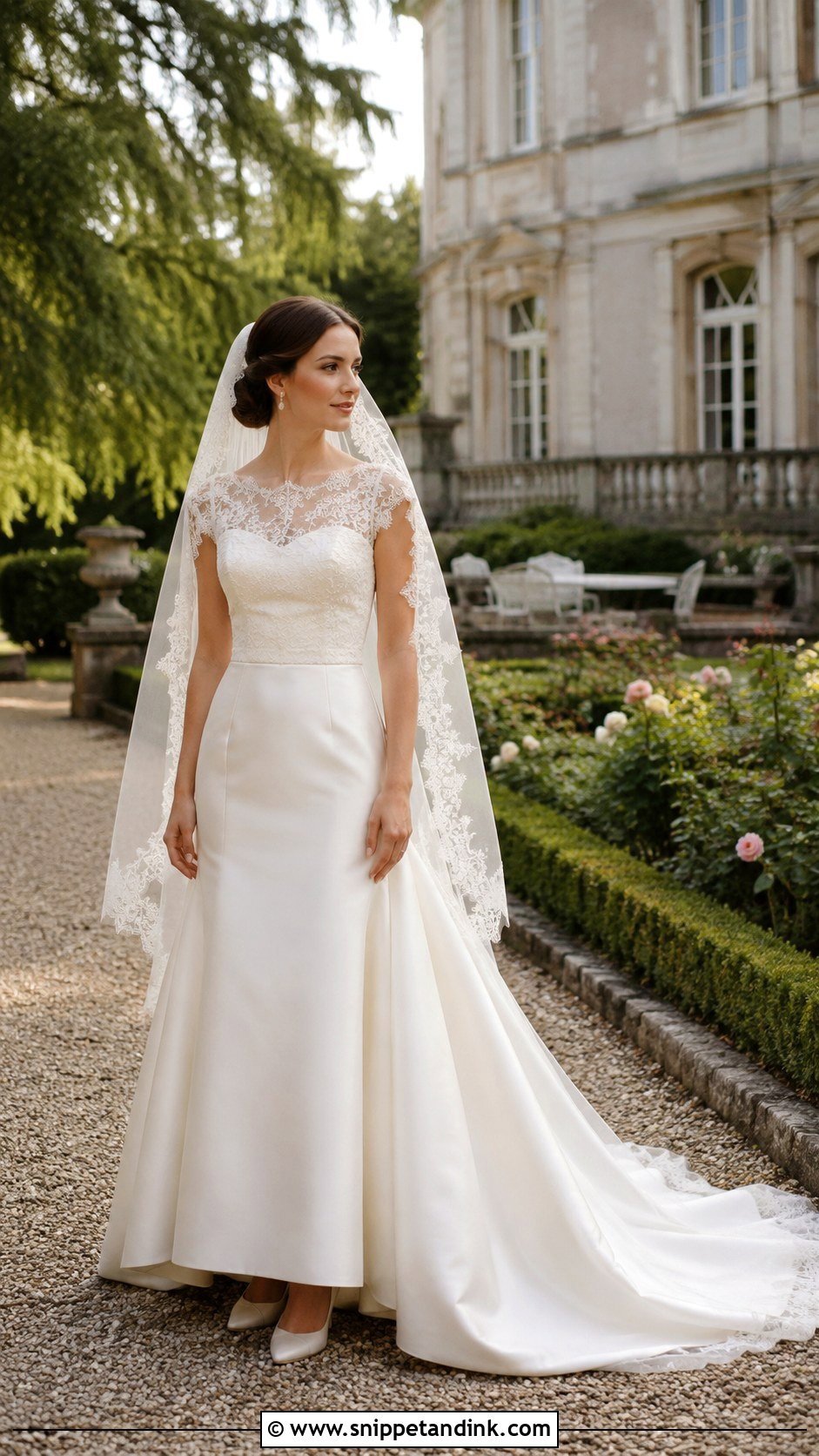
Antique ivory gives a chapel-train gown its vintage character through color alone, and it flatters many skin tones by photographing warmer than bright white. A fitted lace or satin bodice, a defined waist and a manageable chapel train keep it classic. A lace-edged fingertip veil, pearl earrings and matching ivory pumps keep it cohesive, with a classic chignon or brushed waves. If the dress is genuinely old, take it to an alteration specialist before cleaning, resizing or adding support, because aged silk and lace can split under stitching. Ask for a bustle for the reception. Historic venues and formal gardens suit it.
Slips, Petticoats and Longline Bras by Decade
Vintage shapes were built on the underwear of their day, and a dress cut for those foundations won’t look right over a modern T-shirt bra. Sort this out before your first fitting, since the dress will be altered around it.
Bias satin and 1930s columns
A smooth slip or laser-cut underwear with no visible edges. Bias satin shows every line, so test it under bright light.
1940s through 1960s tailored bodices
A longline bra or light corselet smooths from bust to waist and gives the neat, defined middle these patterns were drafted for.
1950s full skirts
A petticoat is not optional; it’s part of the design. Soft tulle petticoats are lighter and quieter than stiff crinoline, and a shorter one stops the hem from flaring higher than you meant.
For 1920s and 1970s styles, less is better: a simple slip under the beading or lace keeps the easy line those decades were known for.
Wearing an Era Without Looking Like a Costume
A good vintage bridal look feels connected to the past without being theatrical. Start with the silhouette you feel confident in, then add shoes, jewelry, a veil and hair that belong to the same period, choosing a few deliberate nods rather than a full reenactment. Tailoring matters most on structured bodices, bias satin, fitted sleeves and genuinely old garments. At fittings, walk, sit, lift your arms and handle the train. Victorian lace, 1920s beading, a 1950s tea-length skirt or Old Hollywood satin all work when the dress is comfortable and feels like your own.
You'll Like These Ideas:










Leave a Reply