
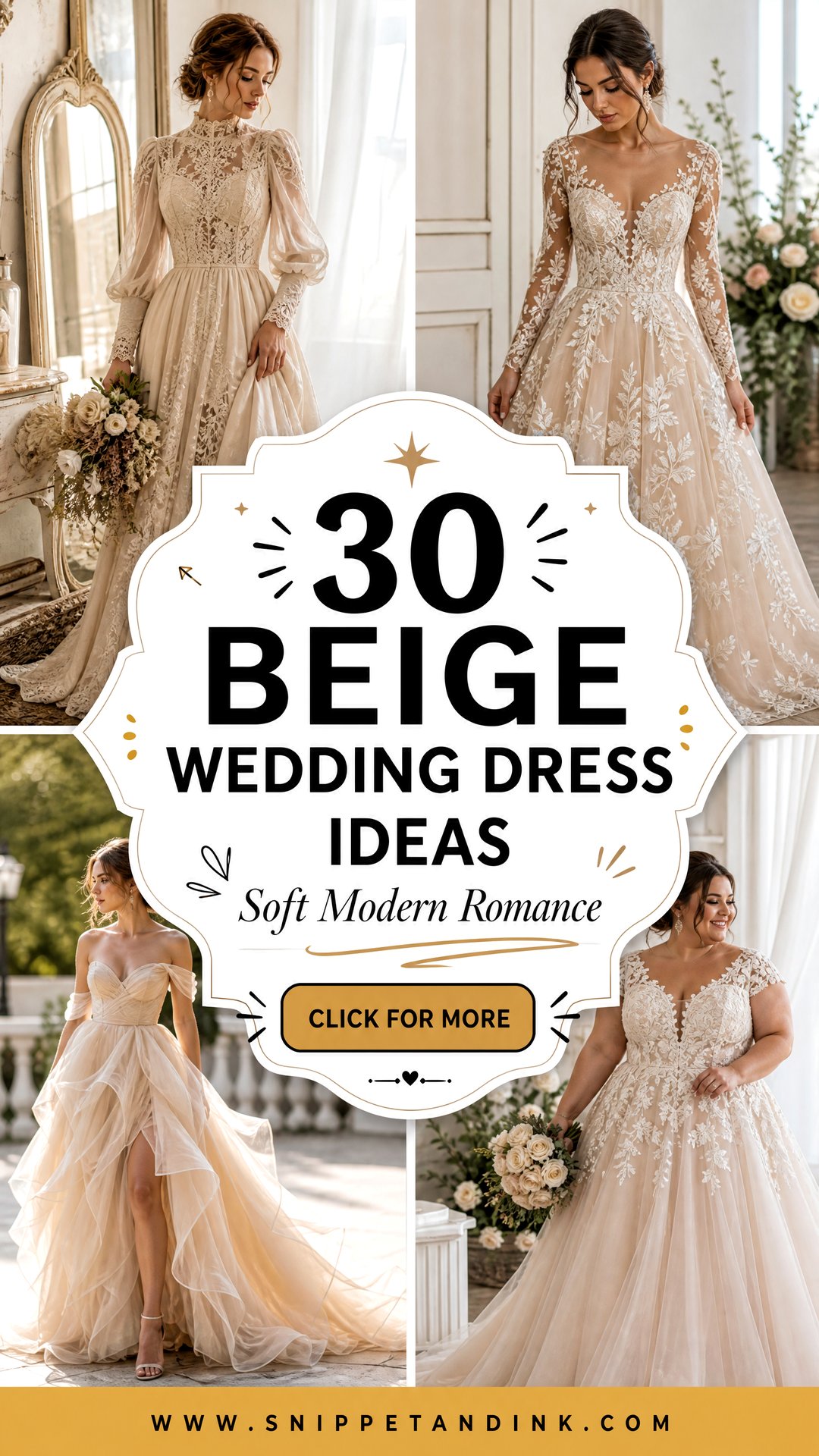
Beige covers a surprising range of colour in a bridal salon: champagne, warm ivory, sand, nude, taupe, honey, oatmeal and soft mocha all get called beige by someone. What they share is a warm base that makes lace, beading, pearls and tulle look richer than they do on bright white. In my fittings, a bride who looks washed out in white often lights up a shade or two warmer, but the reverse happens too, which is why I never pick the gown before we’ve held a few swatches against her face. Below are thirty beige gowns, with notes on the fabrics, fits and styling choices that make each one work.
Testing Beige Against Your Skin Before Falling for a Gown
Beige is close to skin colour by design, so the wrong shade can make you look washed out or, at a distance, as if you’re wearing nothing at all. At an appointment, I hold fabric swatches right up under the chin, ideally next to a window, and watch the face rather than the fabric.
- Cool or pink-toned skin usually looks best in champagne, oyster or a greyish taupe. Yellow-heavy beige can make it look sallow.
- Warm or golden skin suits honey, sand and warm ivory, which echo its own warmth.
- Deep skin tones often carry darker mocha, caramel and rich champagne beautifully; very pale nude can read chalky against them.
- If a shade almost matches your skin, ask for a contrasting lining or lace layer so the gown doesn’t vanish in photos.
Shop lighting is usually warm and flattering, so ask to step near natural light before deciding. A beige that looks creamy under spotlights can look grey or pink outdoors.
1. Beige Satin Slip Wedding Dress
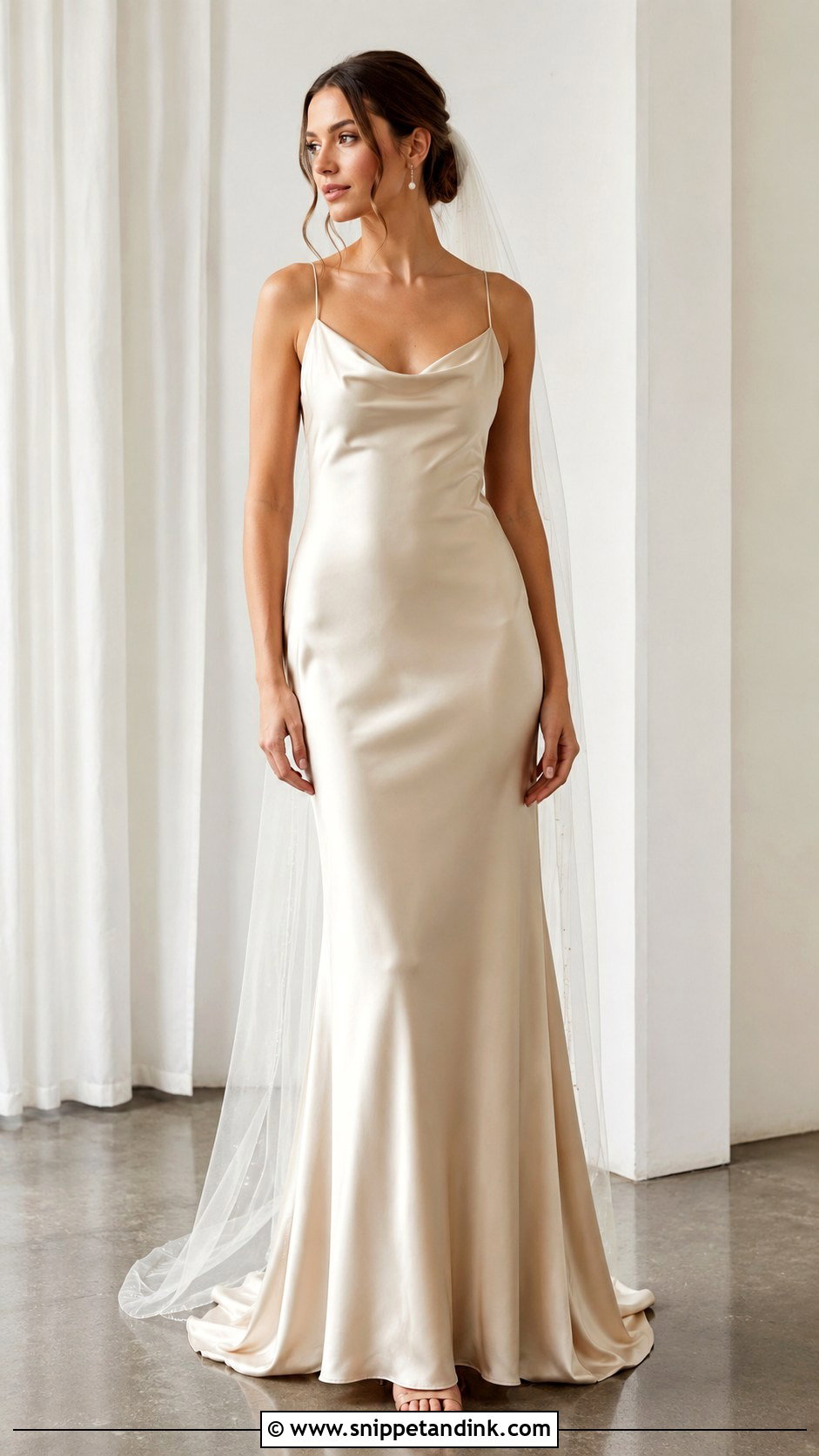
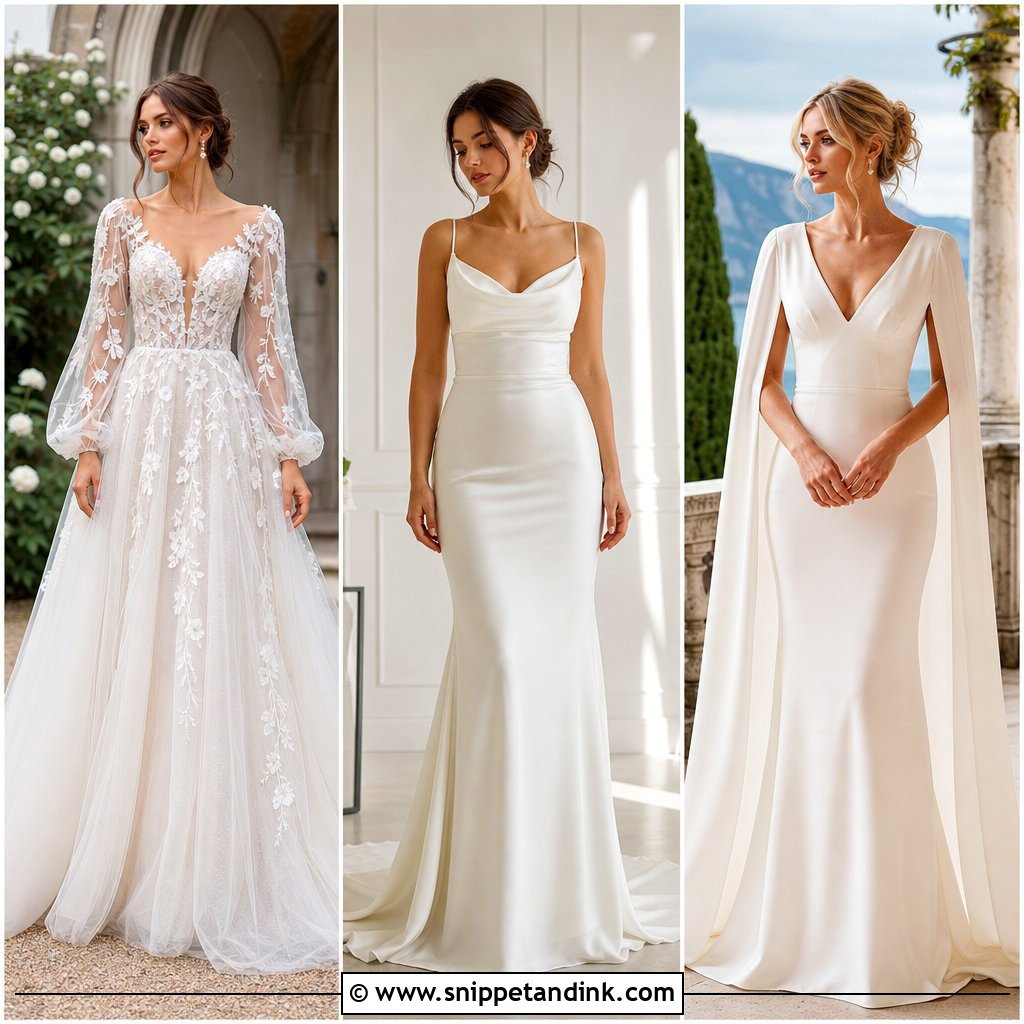
Satin slips in beige rely on two things: the sheen of the fabric and the precision of the cut. A true bias cut drapes over the hip instead of pulling across it, and I check that by having the bride walk a few steps, since a badly cut slip twists toward one side as she moves. Thin straps, a cowl or softly draped neckline and a floor-length hem keep the line clean. Pearl drops, barely-there sandals and a fingertip veil are enough. The honest caveat is that satin shows every seam underneath, so plan for smooth, no-line underwear or a built-in cup before the first fitting.
2. Champagne Beige Ball Gown Wedding Dress
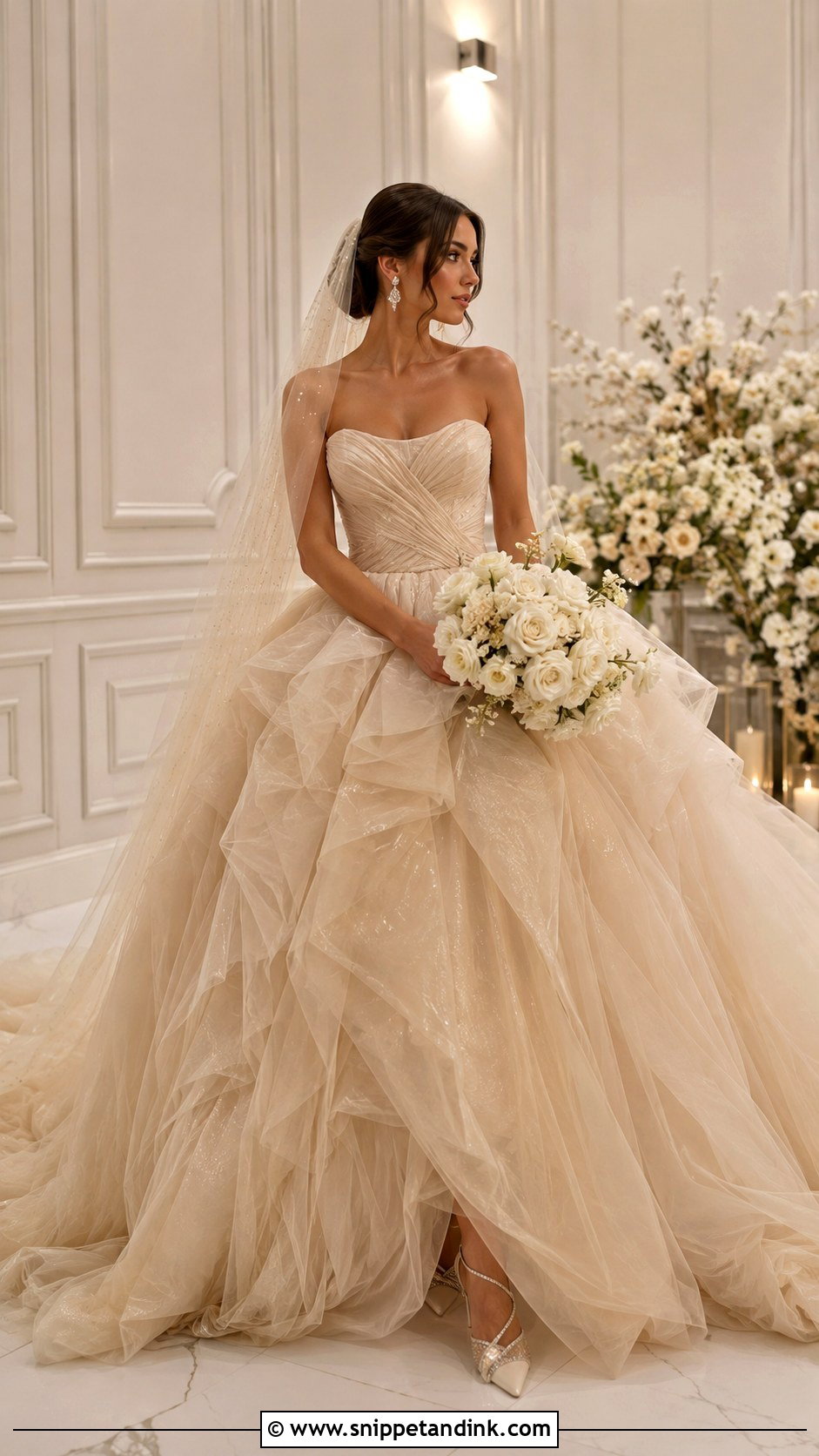
Champagne-toned ball gowns soften the formality of a full skirt; the same shape in stark white can feel very traditional. Layers of tulle over a structured bodice give the volume, and a little shimmer woven into the top layer catches candlelight. A cathedral veil, crystal earrings and pointed satin heels finish it, and a bouquet of cream roses with pale peach blooms carries the warmth through. Ball gowns are heavy, though, often several kilos once the layers and boning are counted, so I’d book a bustle at the final fitting and plan where you’ll sit between photos.
3. Beige Lace Mermaid Wedding Dress
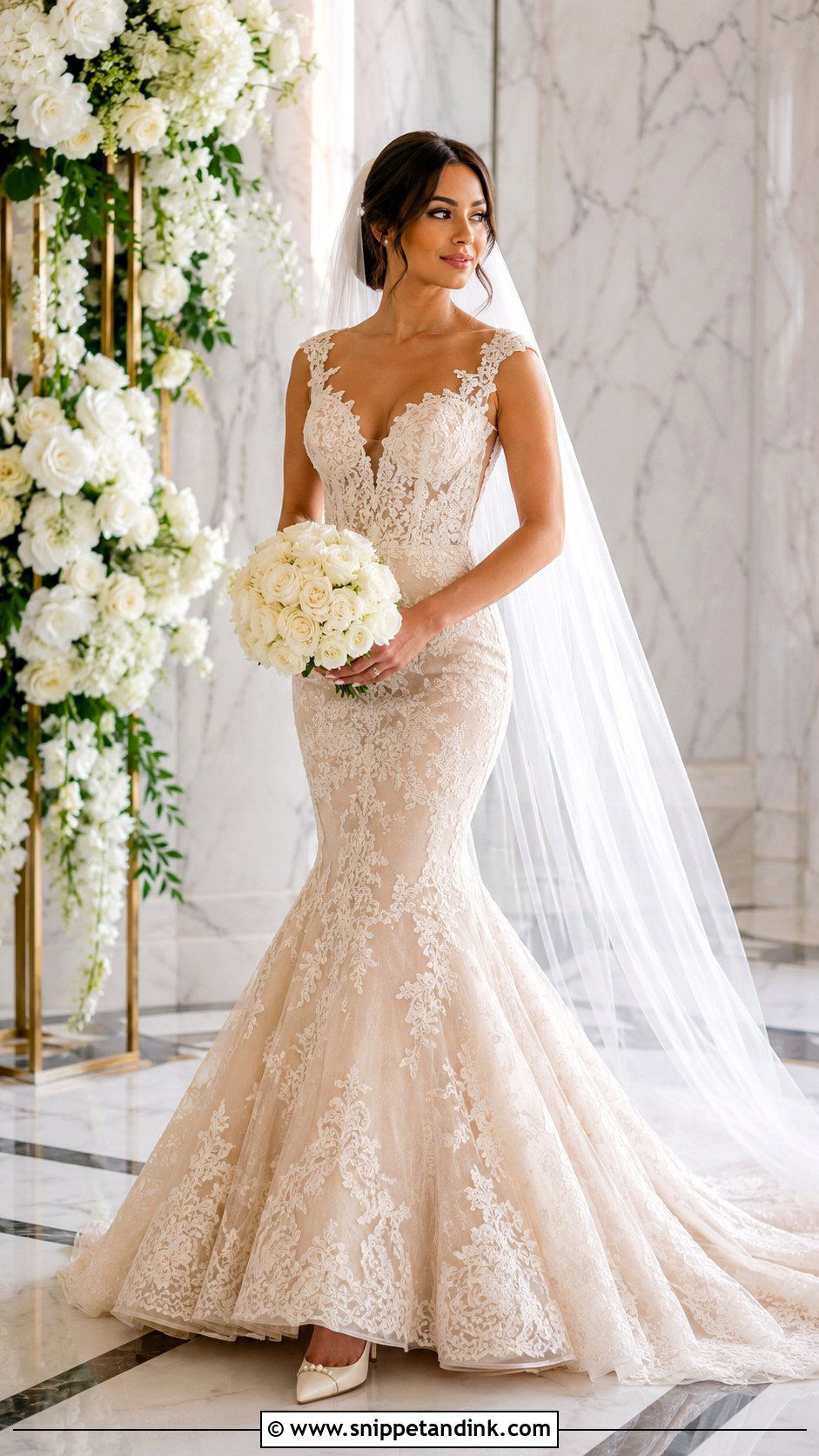
With a lace mermaid, a beige lining lets ivory or cream lace stand out clearly, so the pattern reads in photos instead of disappearing into one white mass. The fit is everything here. The flare should start around the knee for most brides; set too high it looks like a trumpet, set too low you’ll shuffle rather than walk. I always have a bride sit, climb a step and dance in a mermaid at the fitting before signing off on the hem. Pair it with a long veil with a plain edge so it doesn’t compete with the lace, pearl studs and pointed heels.
4. Beige A Line Wedding Dress
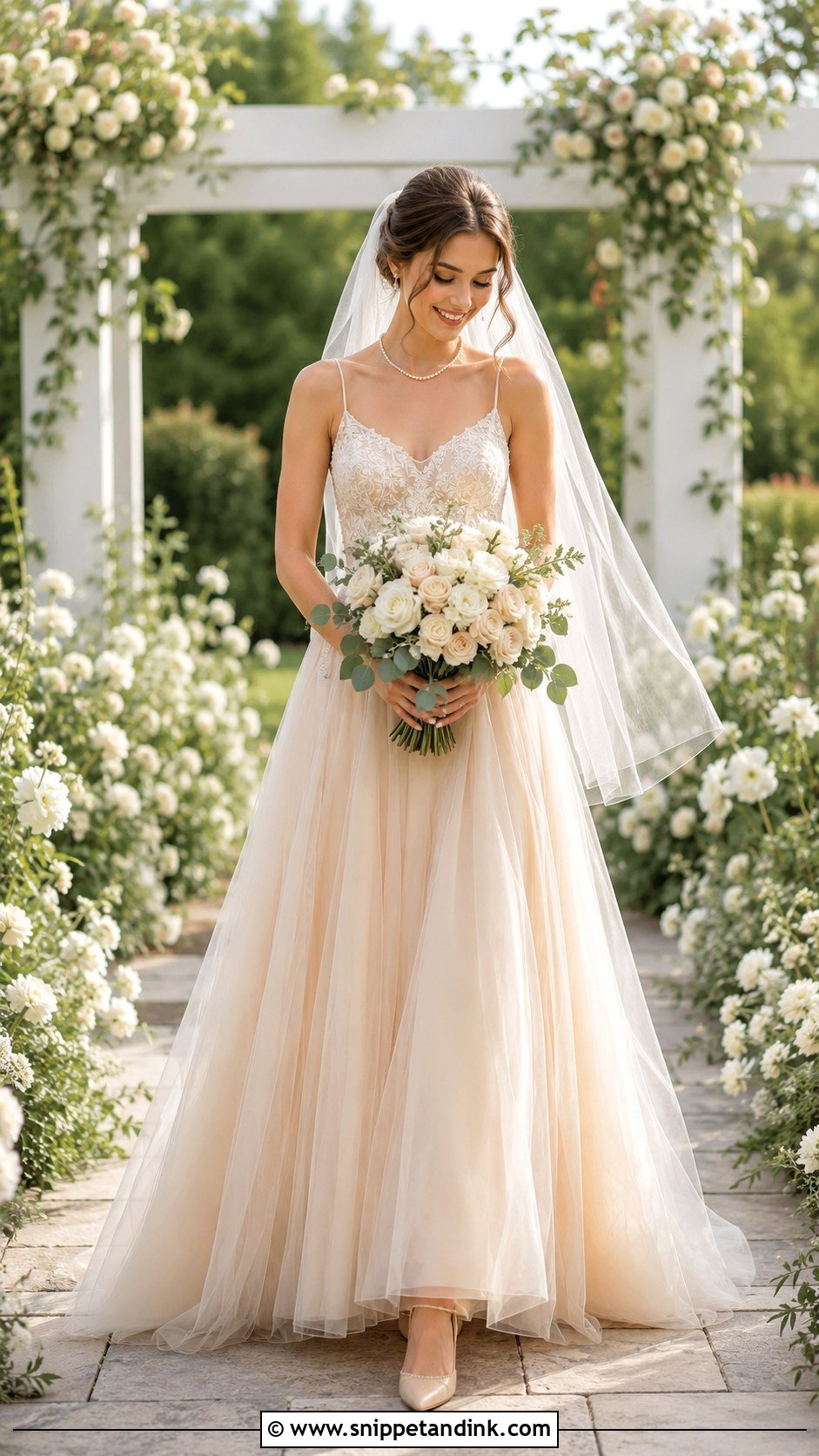
A-lines are the shape I suggest first to a bride who isn’t sure what she wants, because a fitted bodice and a gradually widening skirt suit most body types and allow normal movement all day. In warm beige, tulle, organza, lace and matte satin all look soft rather than stark. A delicate veil, classic pumps and simple gold or pearl jewellery are plenty. If the gown is very plain, a thin satin or beaded belt sharpens the waist. It holds up in gardens, vineyards and ballrooms alike.
5. Beige Long Sleeve Wedding Dress
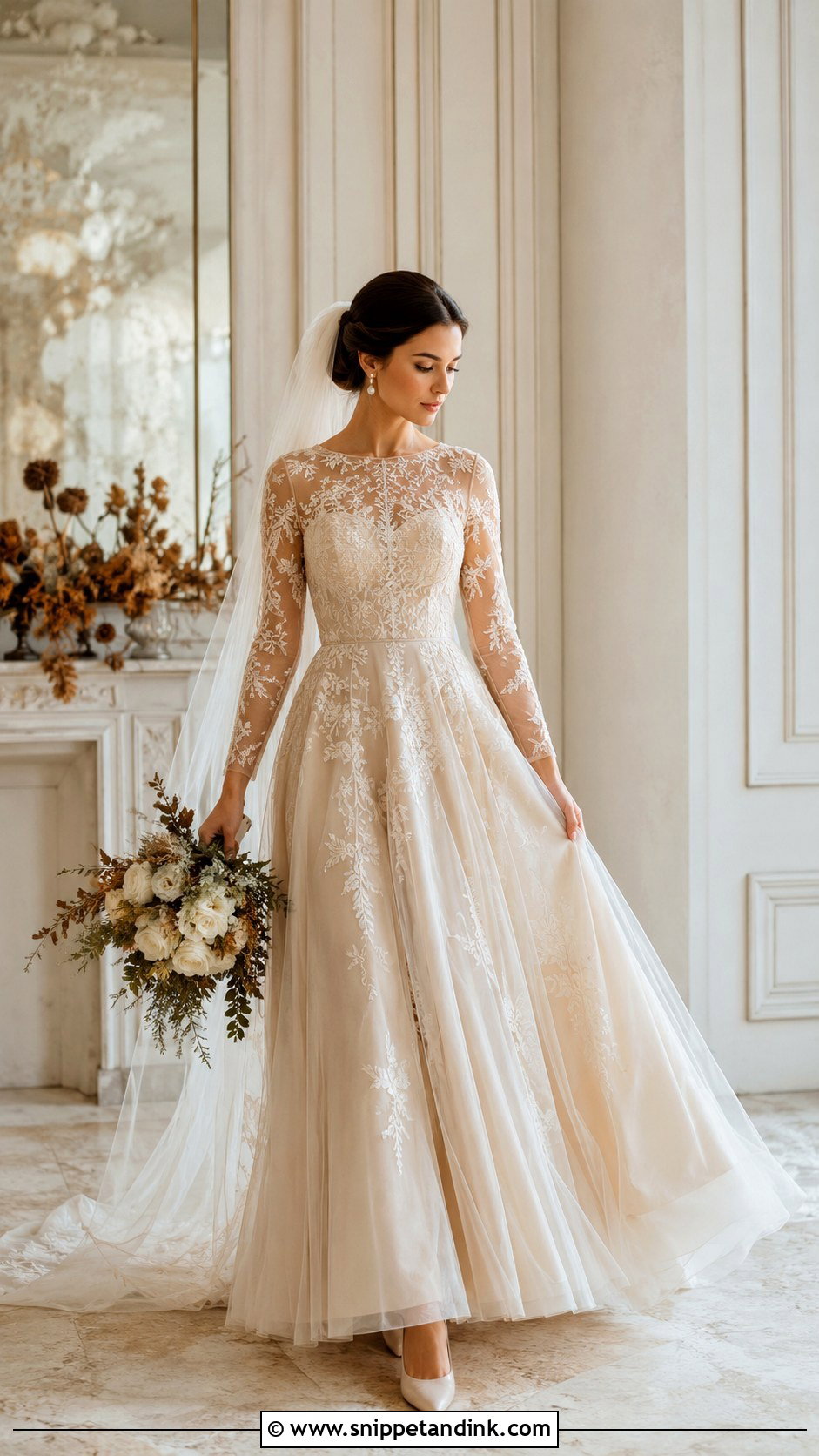
Long sleeves change how a beige gown looks more than any other detail. Sheer lace sleeves over a beige base make the pattern float against the skin, while crepe or satin sleeves give a much cleaner line. The fitting point I’m strictest about is the armhole: if it’s cut too low, the bodice lifts every time you raise your arm, and you’ll feel it during the first hug. Pearl earrings, closed-toe heels and a sleek bun or half-up style keep the neckline visible. It’s an easy choice for autumn, winter and formal indoor weddings.
6. Beige Tulle Wedding Dress
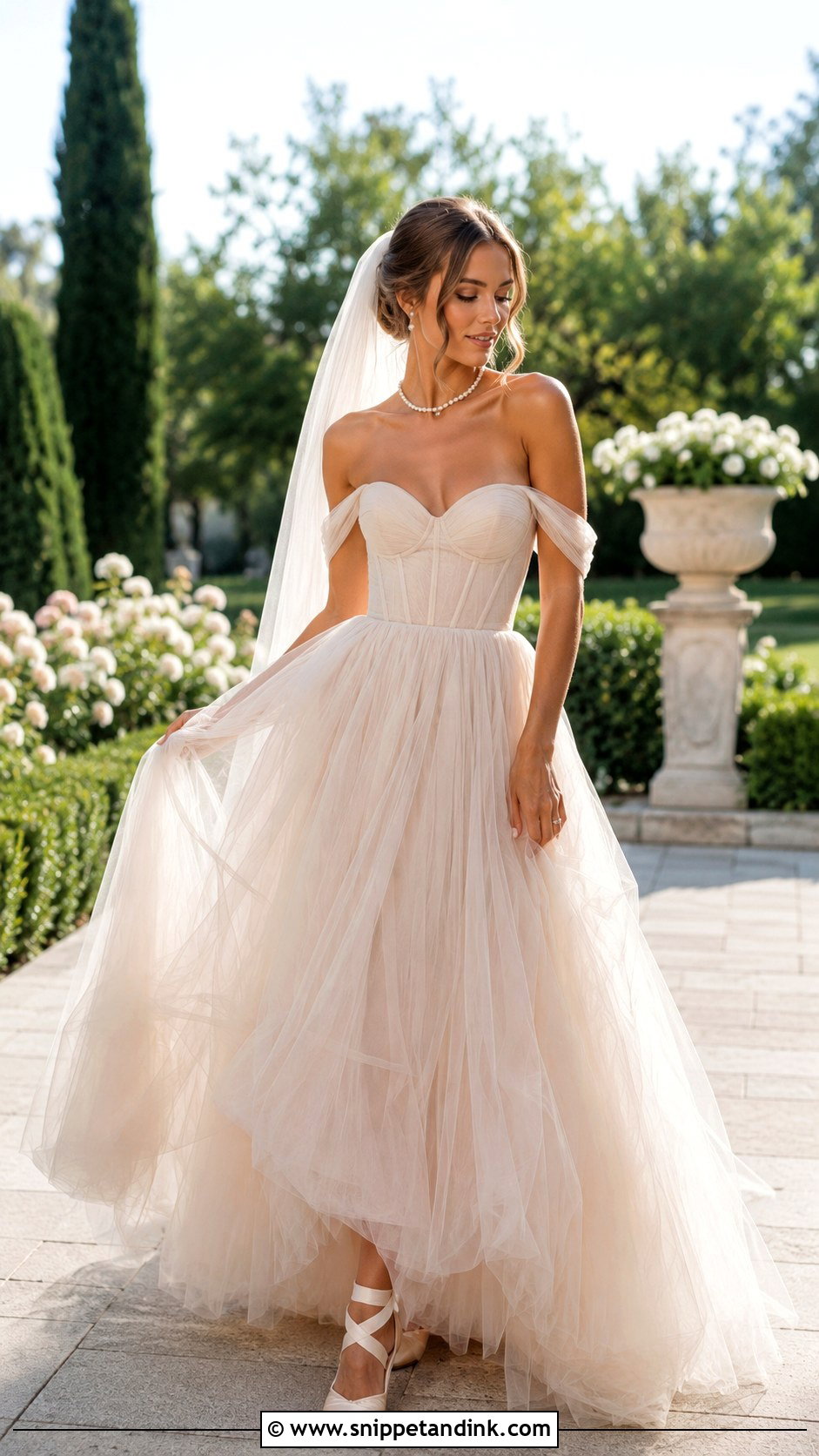
Tulle gives a beige gown softness and movement, and the warm colour makes the layers look deeper than white tulle does. A fitted bodice, an airy skirt and optional off-shoulder straps keep it romantic rather than sugary. One thing brides rarely hear before buying: soft tulle snags on rough surfaces, including stone steps, bark, beaded clutches and even a groom’s cufflinks. I’d keep jewellery smooth and pick a venue path that won’t catch the hem. Ballet-style heels and a loose updo suit it, especially at garden ceremonies in daylight.
7. Beige Off Shoulder Wedding Dress
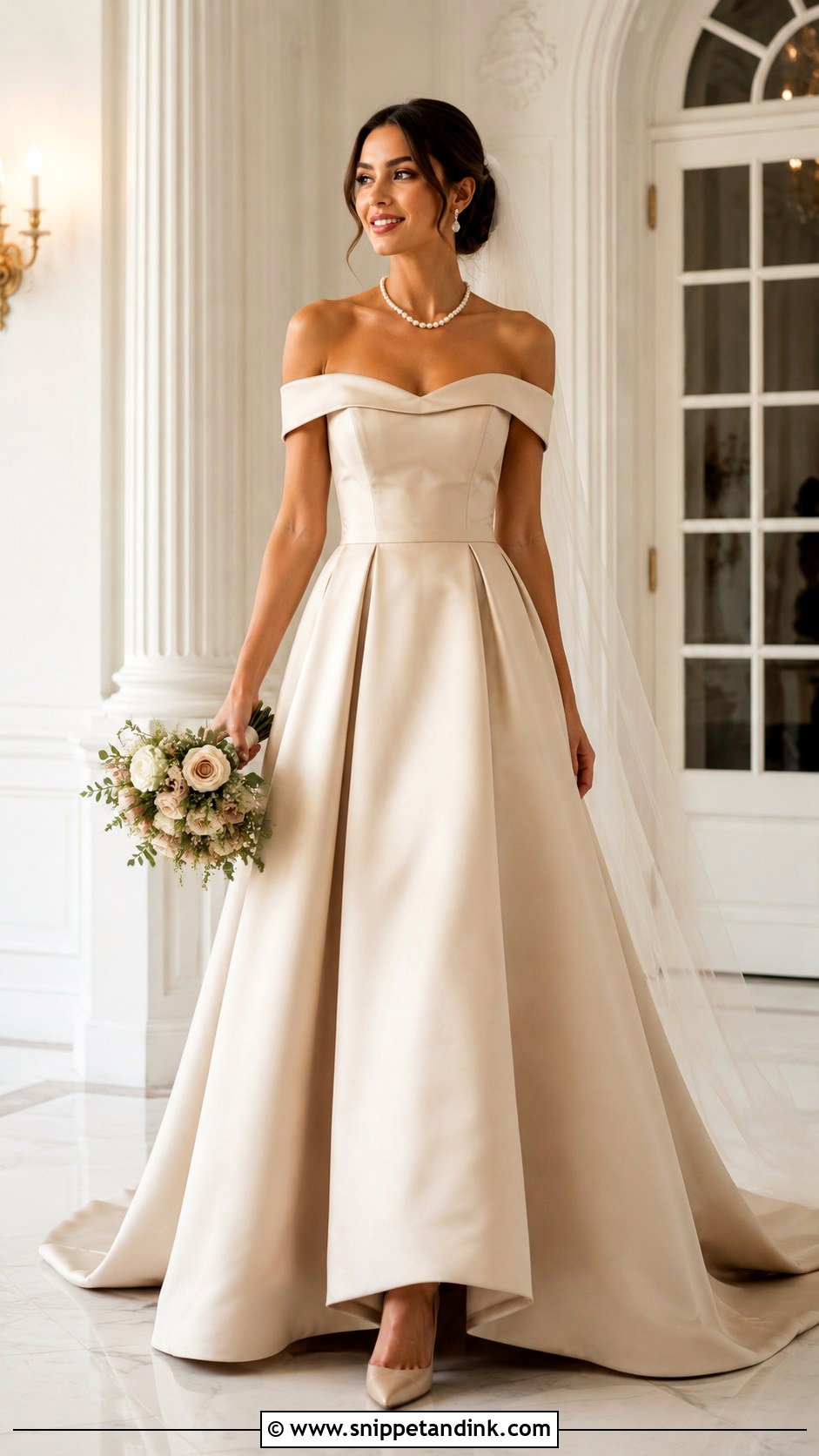
Off-shoulder necklines frame the collarbone, and a structured bodice is what stops them from slipping. Satin gives the cleanest formal line, lace the most romantic, tulle the softest. When I fit these, I have the bride lift both arms as if hugging someone taller, because that’s the move that drags the neckline up. A short pearl necklace or drop earrings, neutral heels and a low chignon show off the shoulders. It suits classic venues, garden ceremonies and elegant receptions.
8. Beige Corset Wedding Dress
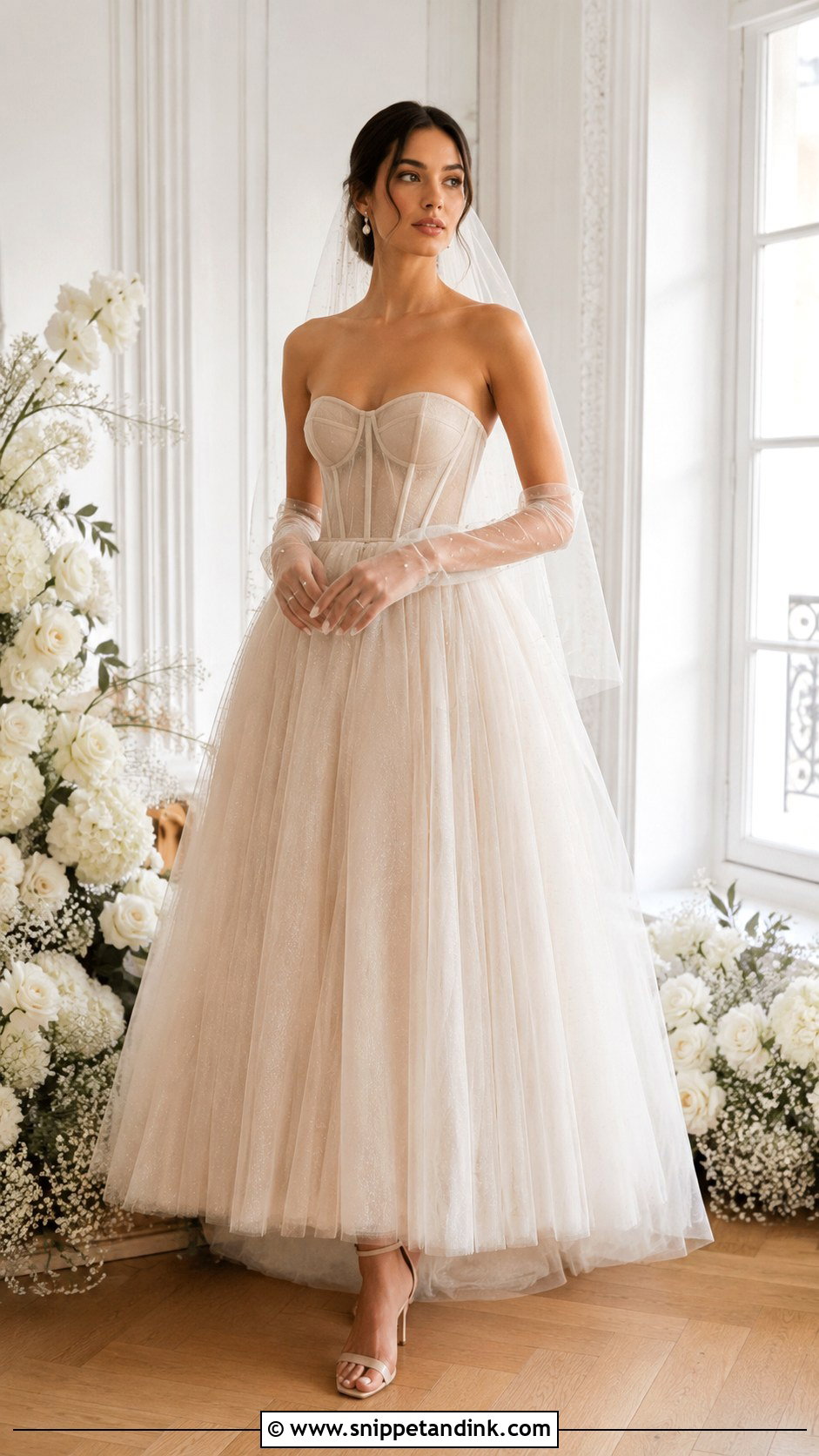
Structured bodices and beige work well together; the warmer colour makes a corset bodice look less severe than it does in bright white. Visible boning, a lace-up back or a sculpted bodice over a tulle, satin or organza skirt all fit this idea. The lace-up back is my favourite for brides whose size may shift between fittings, since it adjusts on the day by a centimetre or two. Small pearl earrings, sheer gloves and a simple veil keep it refined, with nude or ivory heels. The defined waist gives a clear shape in photos from any angle.
9. Beige Pearl Wedding Dress
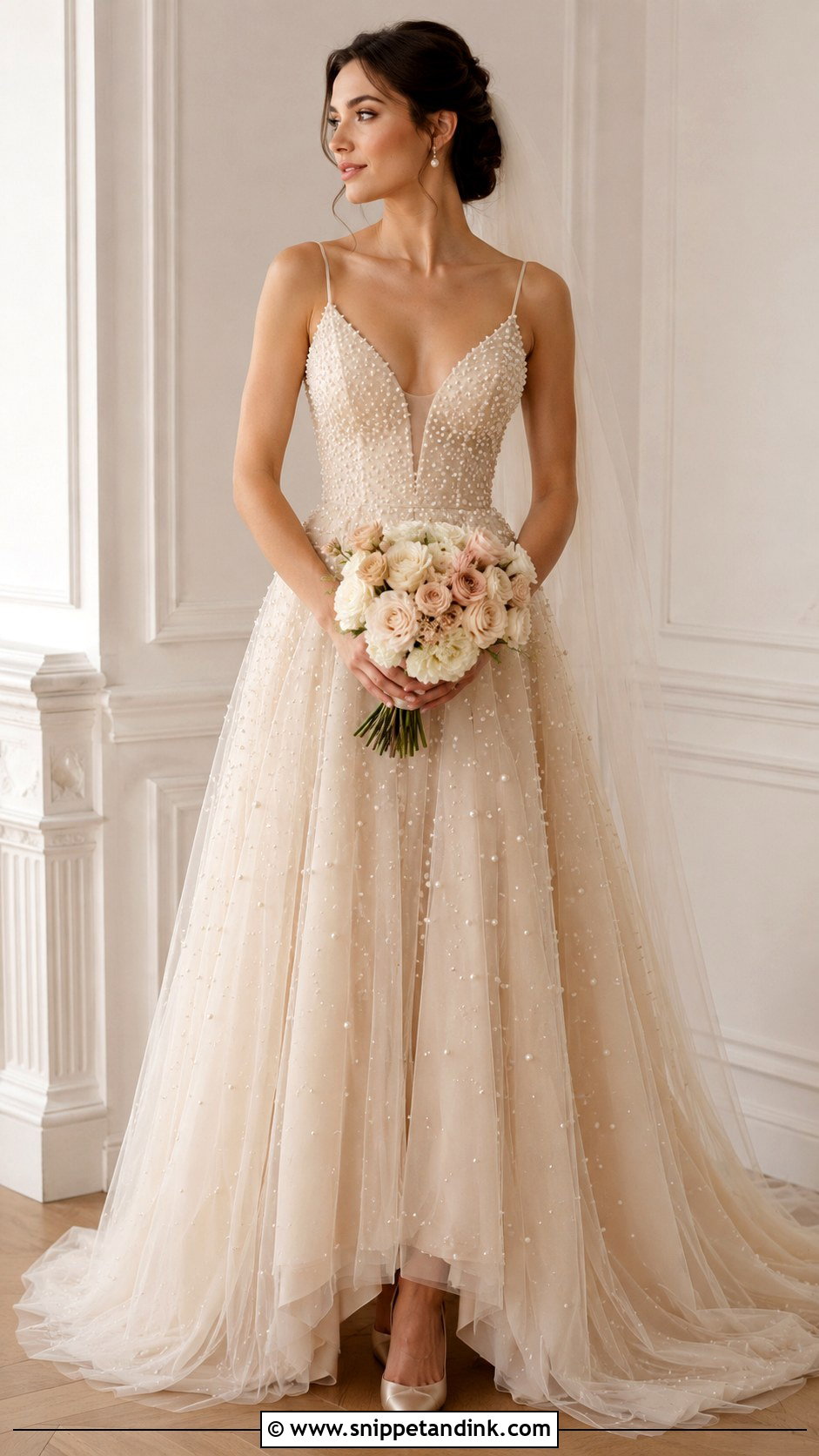
Pearls on beige fabric look warmer and softer than on white, where they can almost disappear. Scattered pearl tulle, a pearl-trimmed neckline or a fully embellished bodice give three very different levels of detail. I’d ask for the weight before ordering a heavily pearled bodice: pearls are heavier than sequins, and a dense bodice can pull straps down over a long day. Pearl earrings, satin heels, a veil with minimal trim and a cream and blush bouquet finish it. It suits formal ceremonies and brides who want embellishment that glows rather than sparkles.
10. Beige Beaded Wedding Dress
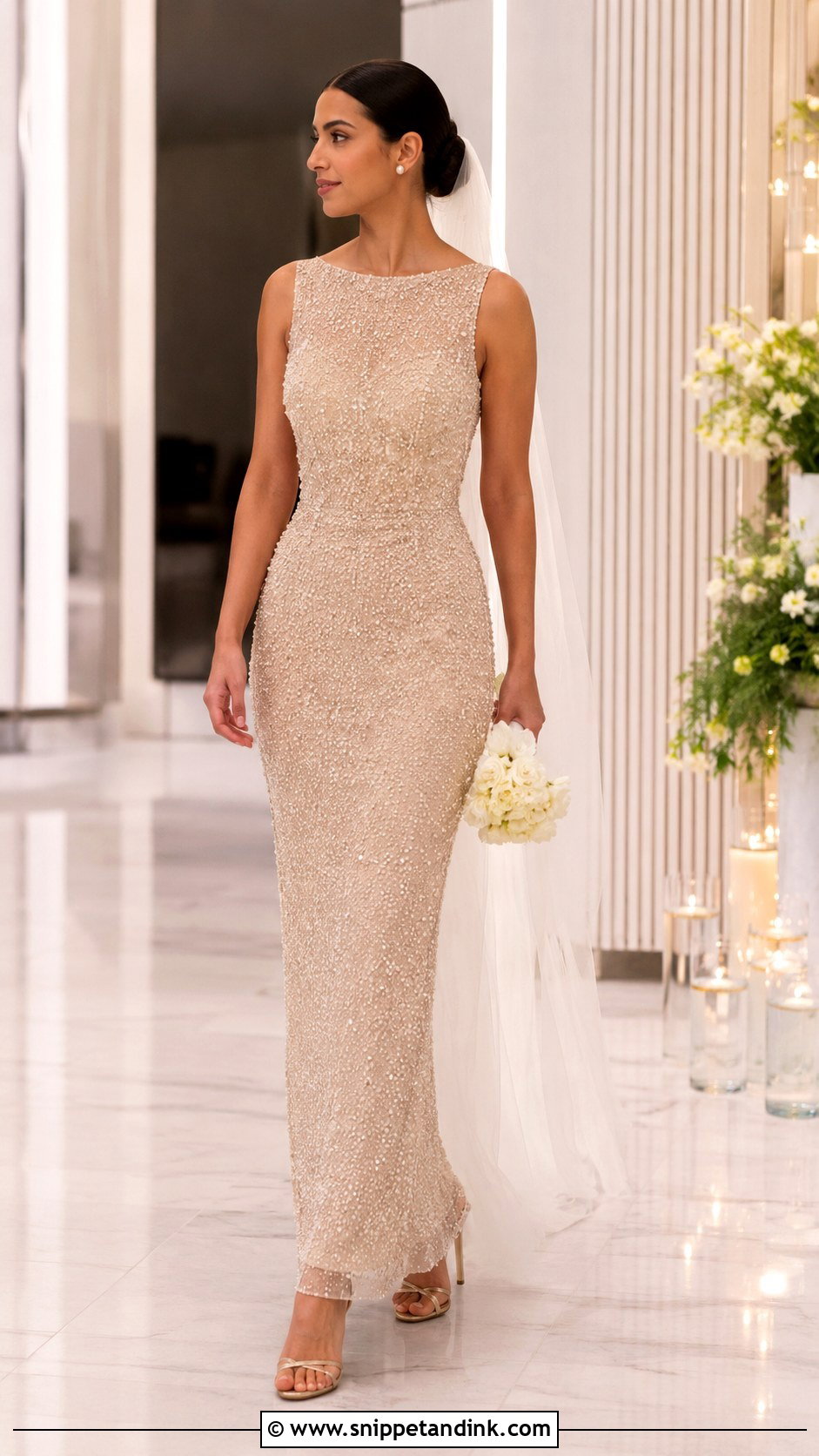
Beadwork on beige gives warm shimmer instead of the colder sparkle beads have on white. A sheath, column or fit-and-flare suits it, because the beading already carries the interest and a big skirt on top can look heavy. Keep the rest quiet: simple earrings, sleek heels and a plain veil, or no veil at all. I check every beaded gown for loose threads on the inside before it leaves the salon, since one snapped thread can unravel a whole line of beads during dancing. A smooth bun or Hollywood waves suit evening receptions and formal venues.
11. Beige Boho Wedding Dress
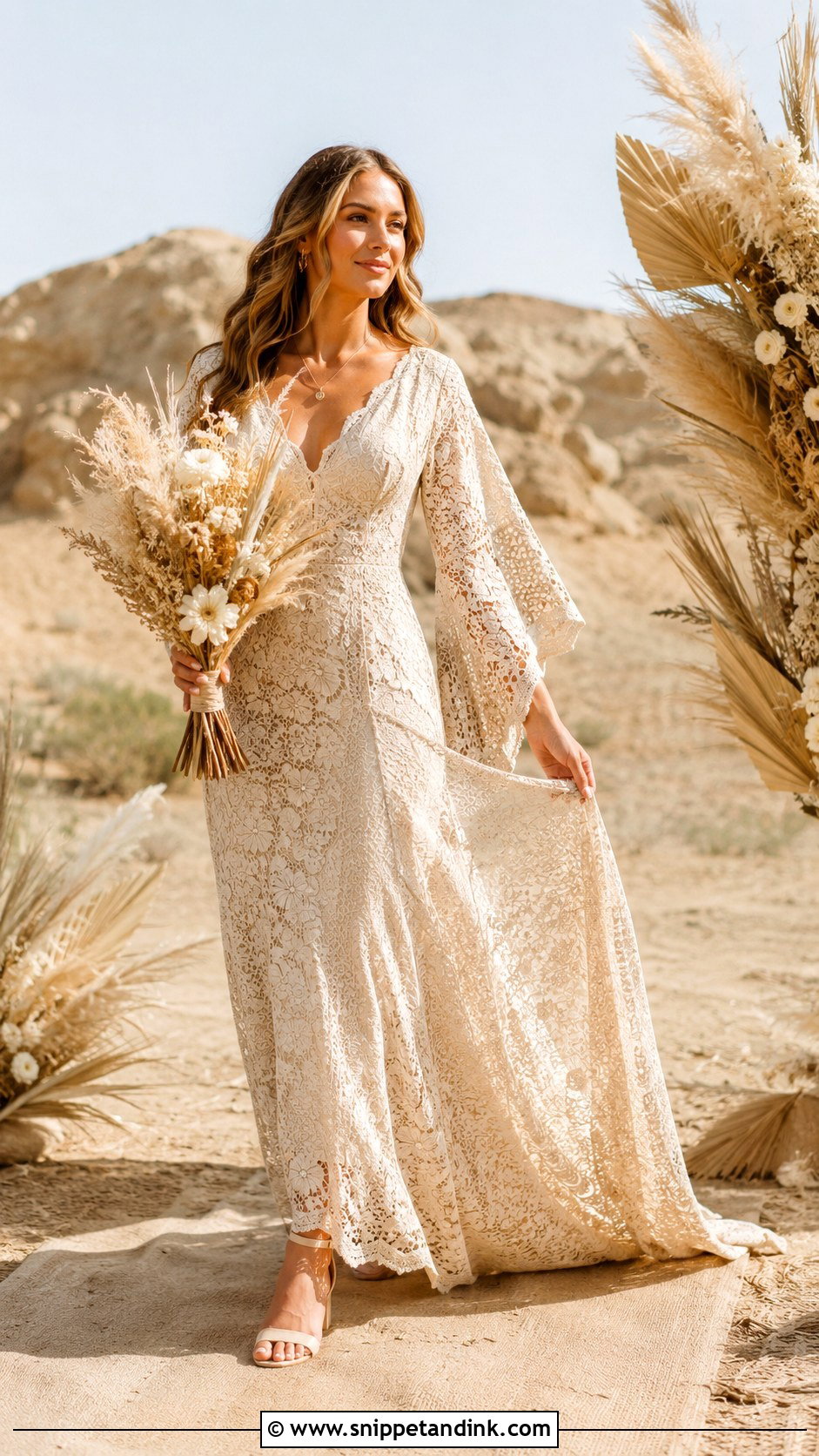
Boho gowns in beige have an earthy warmth that suits relaxed, outdoor weddings. Crochet lace, flowing sleeves, a light skirt and an empire waist are typical. I’d test crochet lace against the skin before committing, because the thicker cotton versions can feel scratchy on a hot day. Block-heel sandals, loose waves and simple gold jewellery suit the mood, and a dried bouquet in cream, tan and muted blush holds up in heat far better than fresh flowers. It works for outdoor ceremonies, desert settings, backyard weddings and rustic venues.
12. Beige Beach Wedding Dress
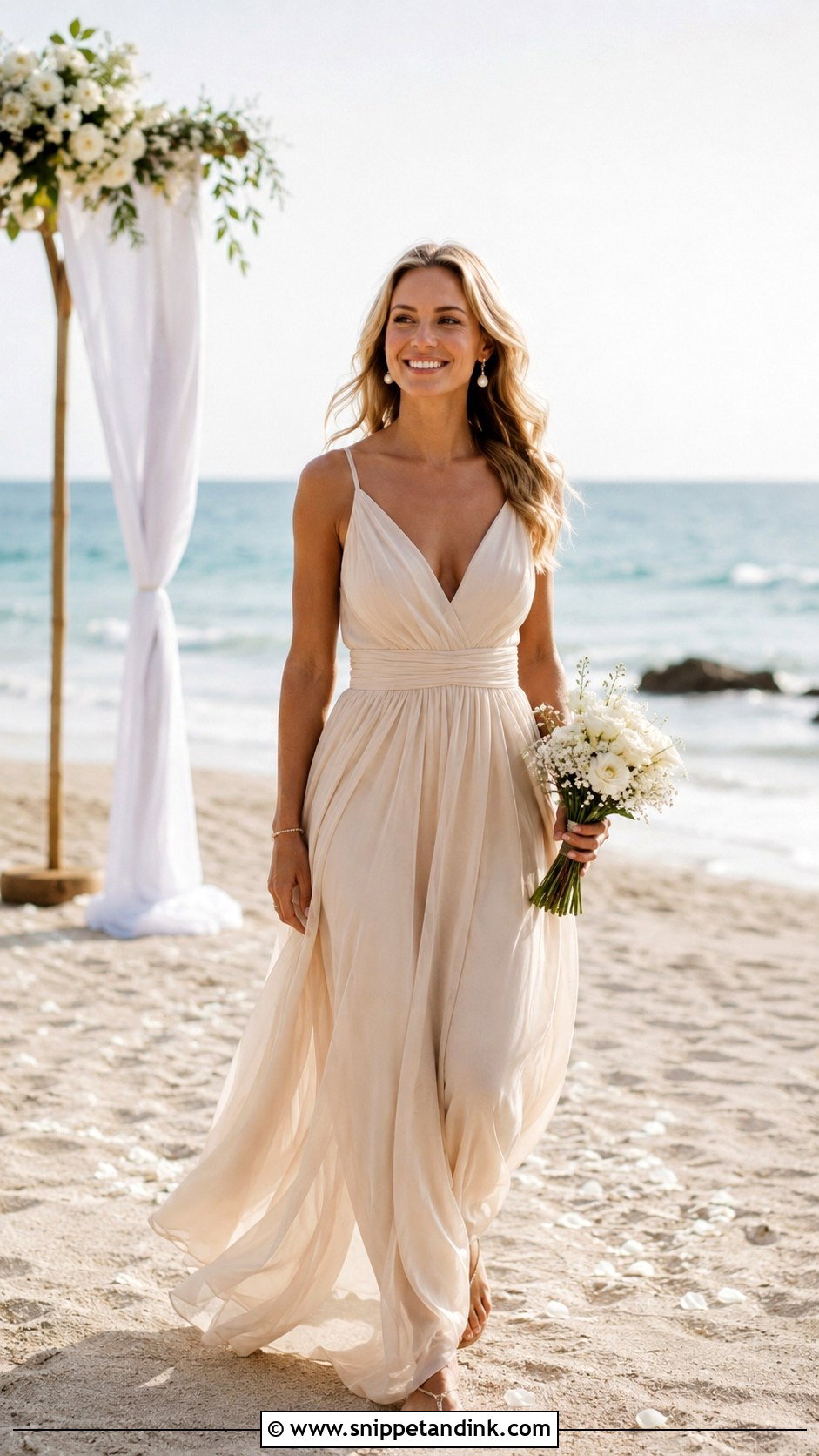
For the coast, a beige beach wedding dress should be light and breathable, in a sand or champagne tone that sits naturally with the setting. Chiffon, soft crepe or lightweight satin in a slip, a flowing A-line or a relaxed sheath moves with the breeze. Sand clings to the hem of any long dress, and on beige it shows less than on white, which is one quiet advantage here. Flat sandals, pearl earrings, a loose hairstyle and a small bouquet of white flowers and greenery finish it. A long veil looks romantic but tangles in wind, so I’d suggest a shorter veil or a hair piece near the water.
13. Beige Garden Wedding Dress
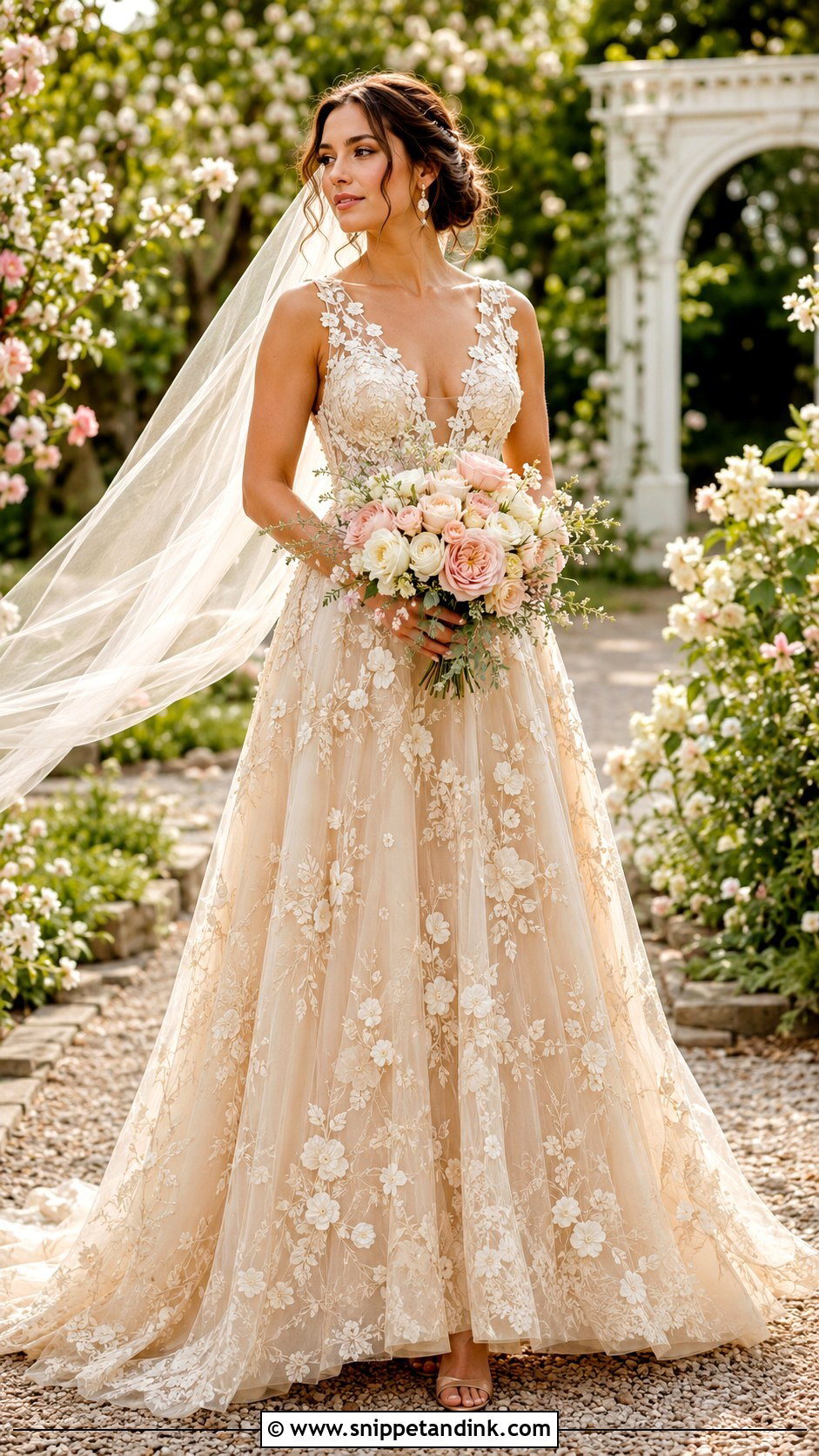
Garden gowns come alive with floral lace, 3D appliqués or embroidered tulle over a warm beige base, which lifts each flower so it looks dimensional instead of flat. Pearl earrings, low heels and a soft veil keep the attention on the detail. Bring a bouquet of cream, blush, lavender or pale peach to add colour without fighting the gown. I’d ask about the lawn before choosing heels; thin heels sink into wet grass, so a block heel or heel protectors make the walk easier. It suits spring and summer ceremonies and outdoor portraits.
14. Beige Minimalist Wedding Dress
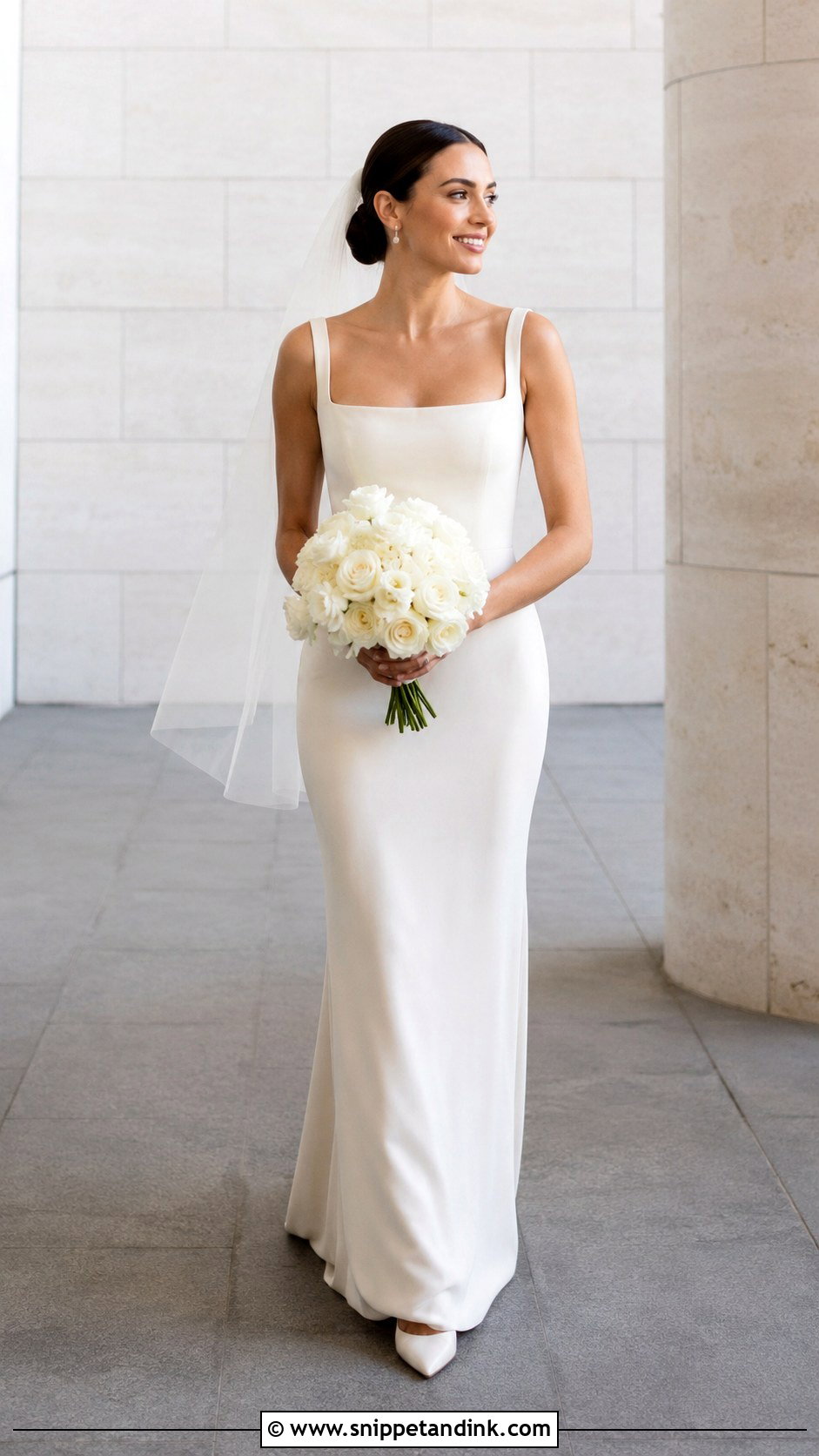
Minimalist gowns depend on fabric and fit, since nothing on the dress hides a wrinkle or a pull. Matte crepe, silk satin and smooth mikado in warm beige are the three I’d look at. A square neck, bateau neckline or simple strapless bodice gives the shape. Sleek pumps, small earrings, a plain veil and a structured cream bouquet keep it crisp. I’d budget for alterations here more than for any other style; a minimalist gown that fits perfectly looks expensive, and one that’s slightly loose just looks plain. It suits courthouse weddings, modern venues and gallery spaces.
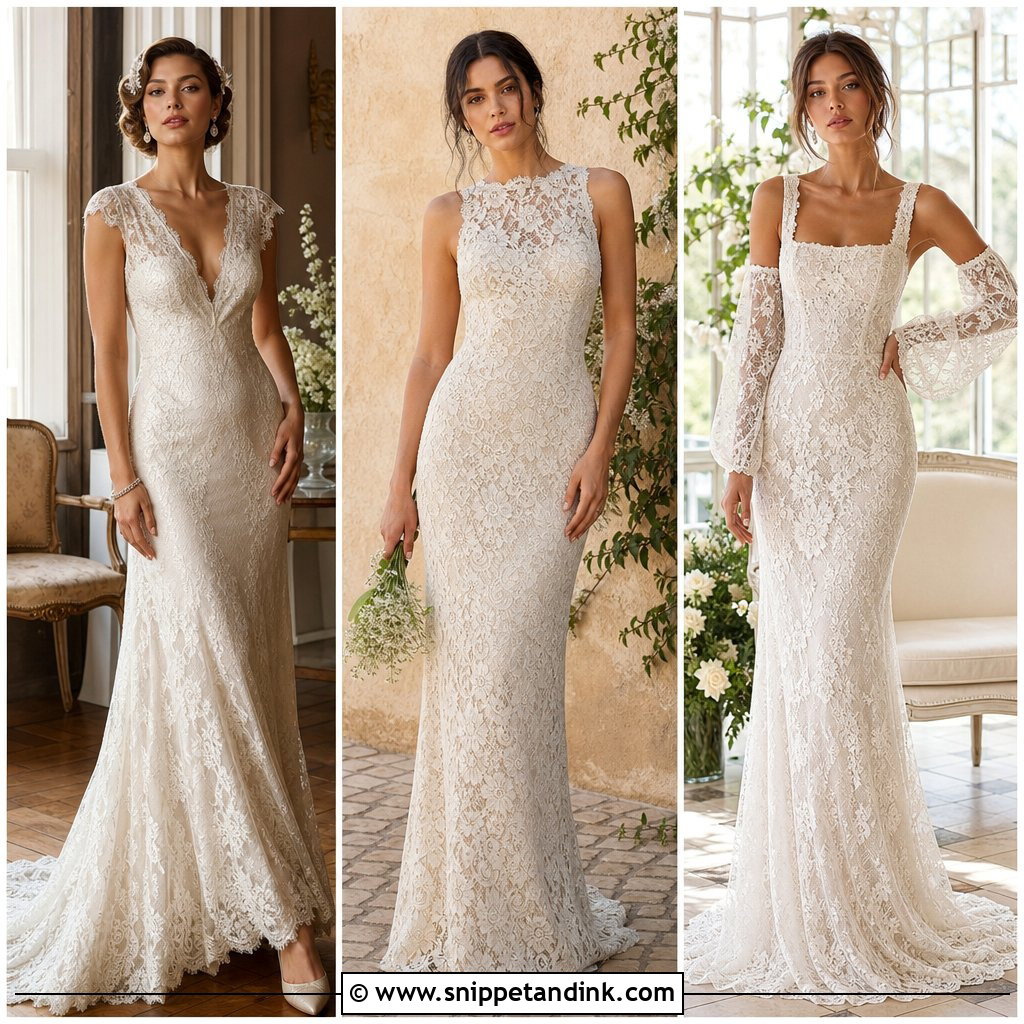
15. Beige Vintage Wedding Dress
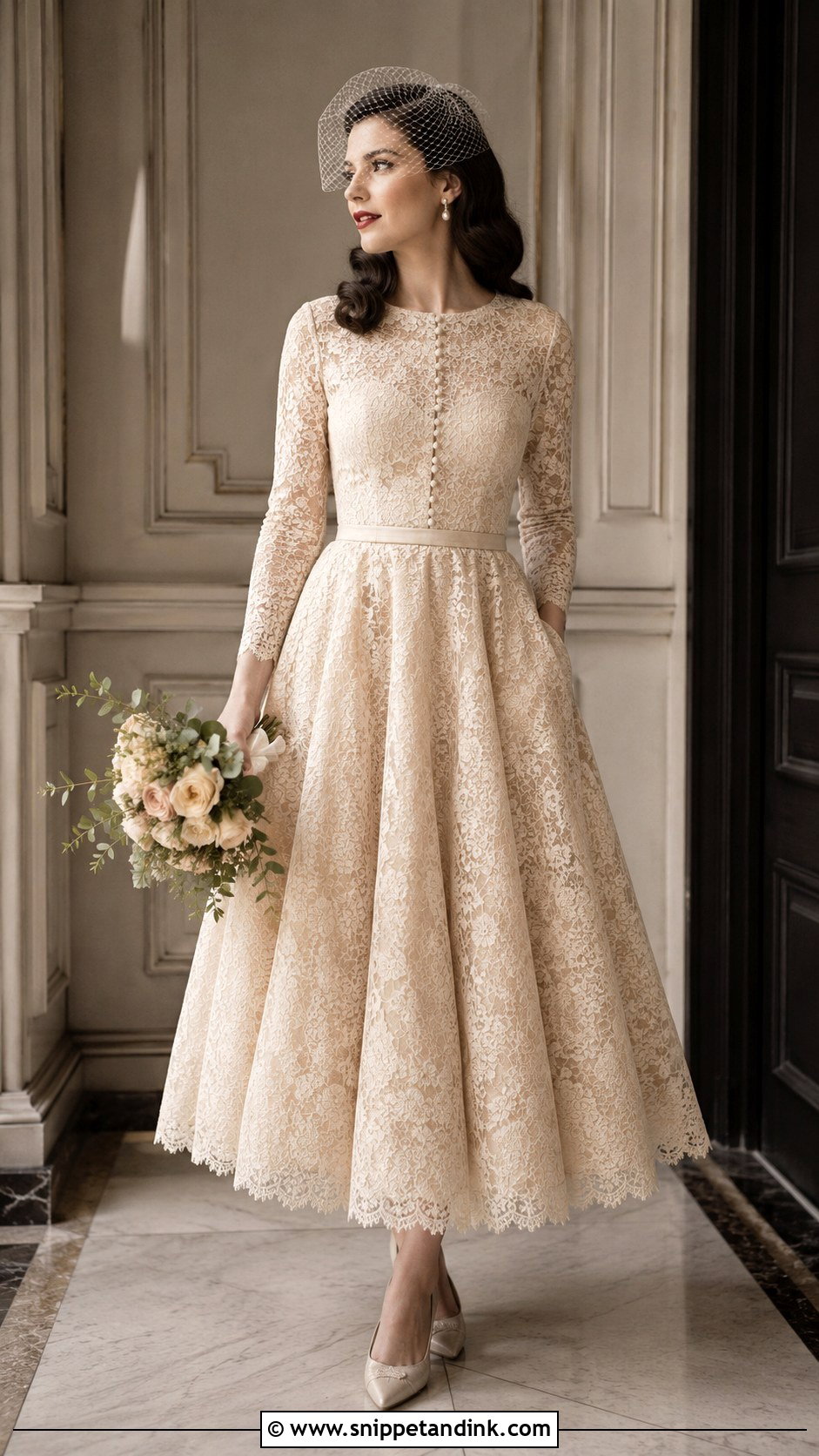
Vintage detail sits naturally on beige, because the colour already has the softness of aged lace. Tea-stained lace, champagne satin, puff sleeves, covered buttons or a high neckline all point in that direction. If you’re buying a true vintage gown, check the underarms and the hem under good light, since older fabrics yellow and stain in those spots and some marks won’t clean out. A birdcage veil, pearl earrings and closed-toe heels suit it, with a soft updo or brushed waves. Keep accessories thoughtful rather than costume-like for historic venues and small ceremonies.
16. Beige Tea Length Wedding Dress
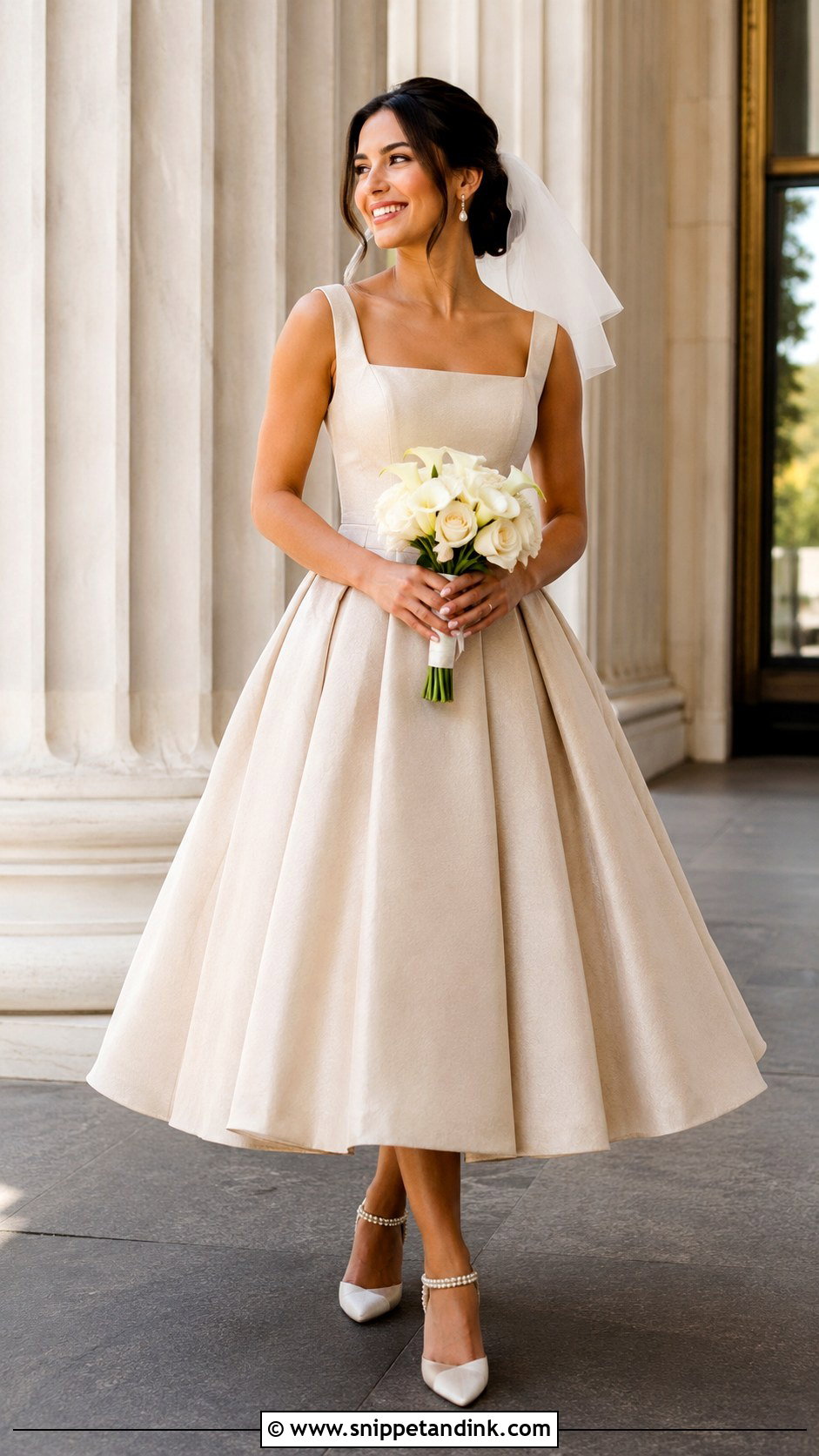
Tea-length gowns show your shoes, so this is the one place I’d spend more on footwear: pearl heels, satin pumps or ankle-strap sandals. A fitted bodice with a full skirt gives the classic 1950s shape, and beige makes it softer than white. A short veil, small gloves or a bow hair accessory lean into the vintage side. The length is practical for dancing and for venues with stairs, and it’s a natural second look. Get the hem right, though; tea length should fall mid-calf, and a hem that stops just below the knee reads as a cocktail dress instead.
17. Beige High Neck Wedding Dress
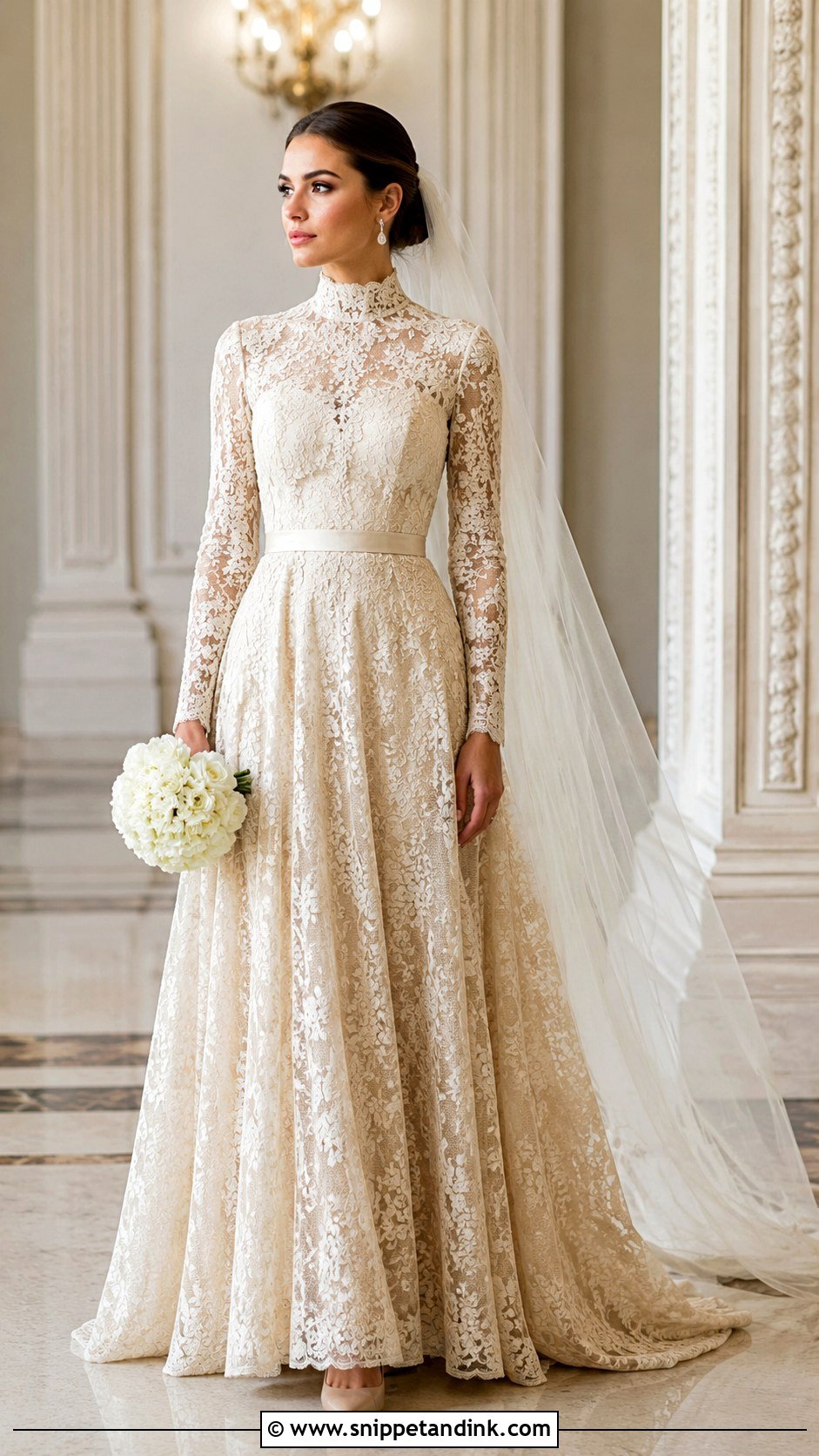
High necklines in lace, crepe or sheer tulle over warm beige look refined and covered without feeling stiff. I’d balance the closed neck with an open back, a defined waist or a softer skirt so the gown doesn’t feel buttoned-up from every angle. Skip the necklace and wear studs or small drops. Pointed heels and a smooth veil finish it. A tip from fittings: a high neck in non-stretch lace needs a little ease at the throat, so check you can swallow and turn your head comfortably, especially for a long ceremony.
18. Beige Strapless Wedding Dress
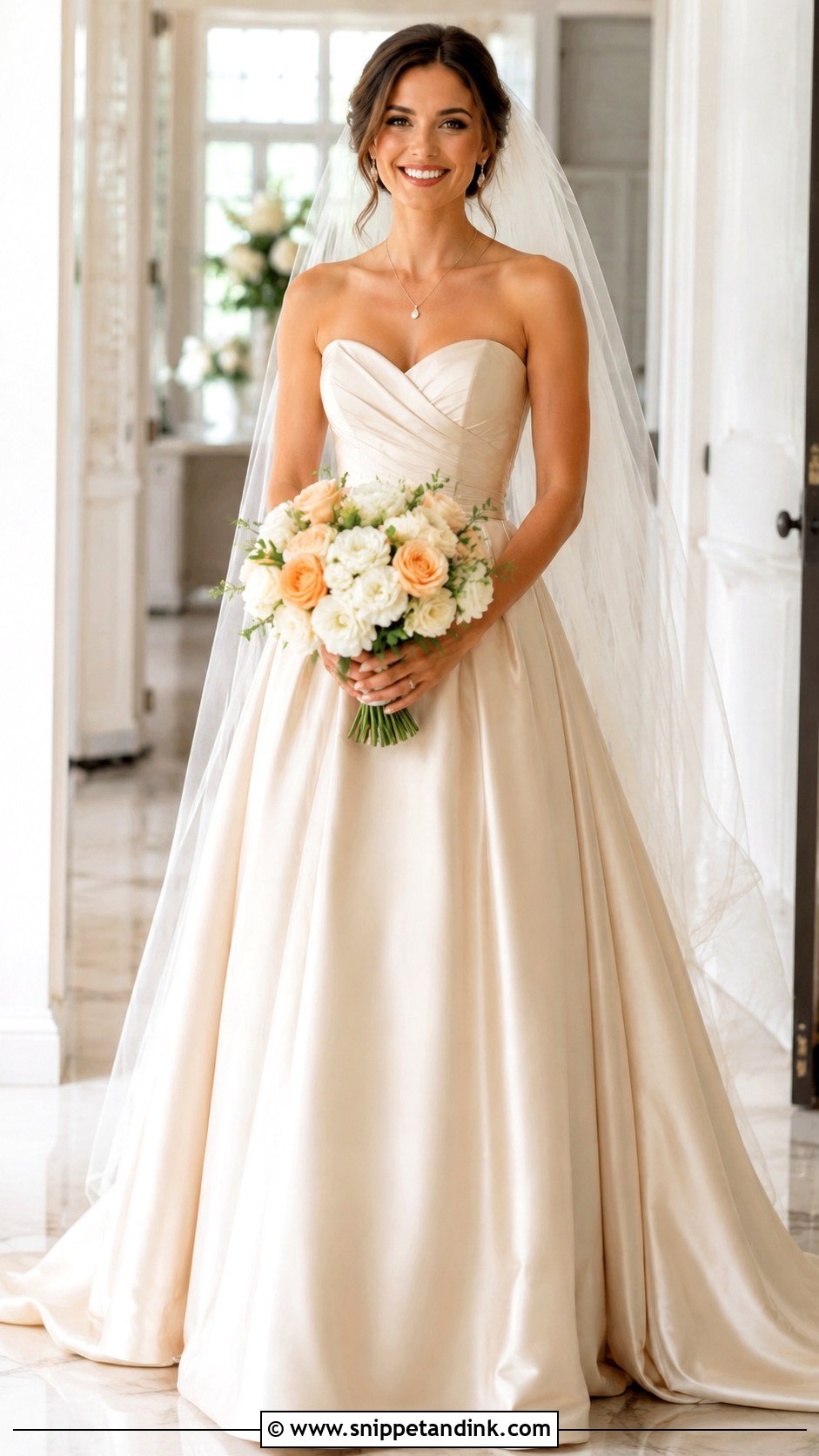
Strapless bodices hold up only as well as their internal structure. Before any bride commits, I have her bend forward and sit down in the gown, because a strapless bodice without proper boning and a grip strip inside the top edge will slip during the reception. A slim skirt, an A-line or a full ball gown all pair with it, in beige satin, mikado or tulle. A delicate necklace, drop earrings and a veil in the same warm tone finish it, with cream and pale peach flowers. It’s one of the most adaptable shapes across venues and seasons.
19. Beige Square Neck Wedding Dress
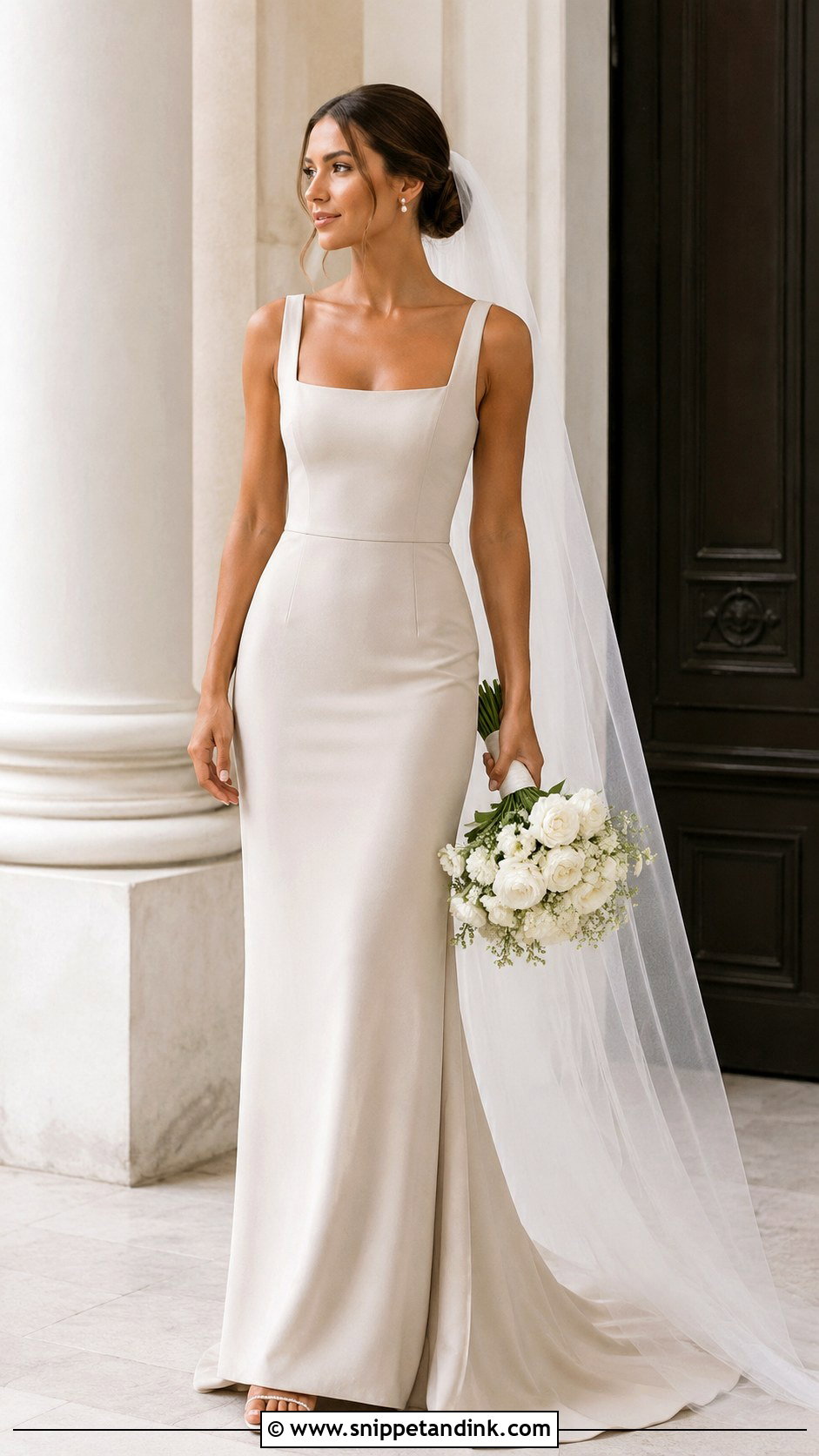
Square necklines frame the shoulders with a clean, structured line, and beige softens how sharp that line looks. A crepe sheath, satin A-line or lace gown with a square neck all work. Watch the width of the neckline: too wide and the straps slide off the shoulder, too narrow and it can make broad shoulders look broader. Pearl studs, a sleek low bun, simple heels and a plain veil keep it fresh. It suits modern ceremonies, gardens and elegant indoor venues.
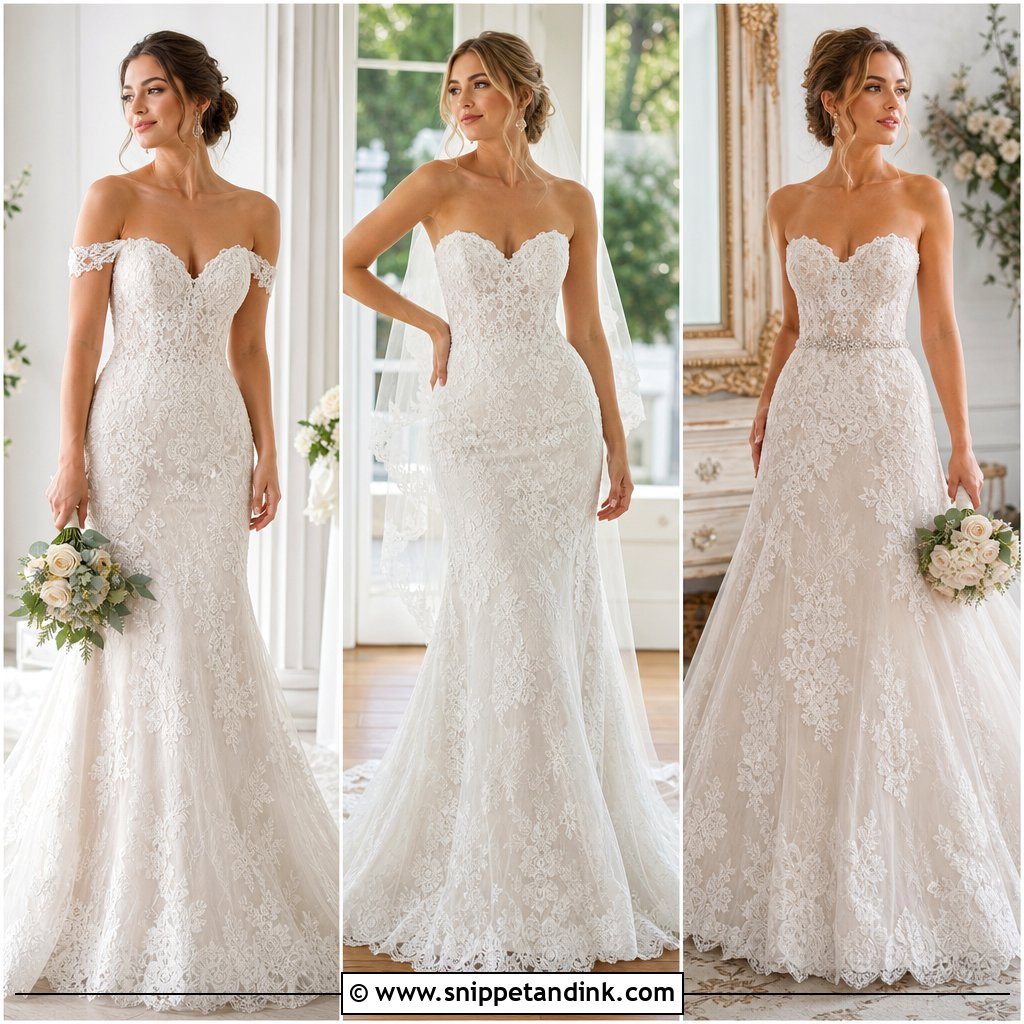

20. Beige Floral Applique Wedding Dress
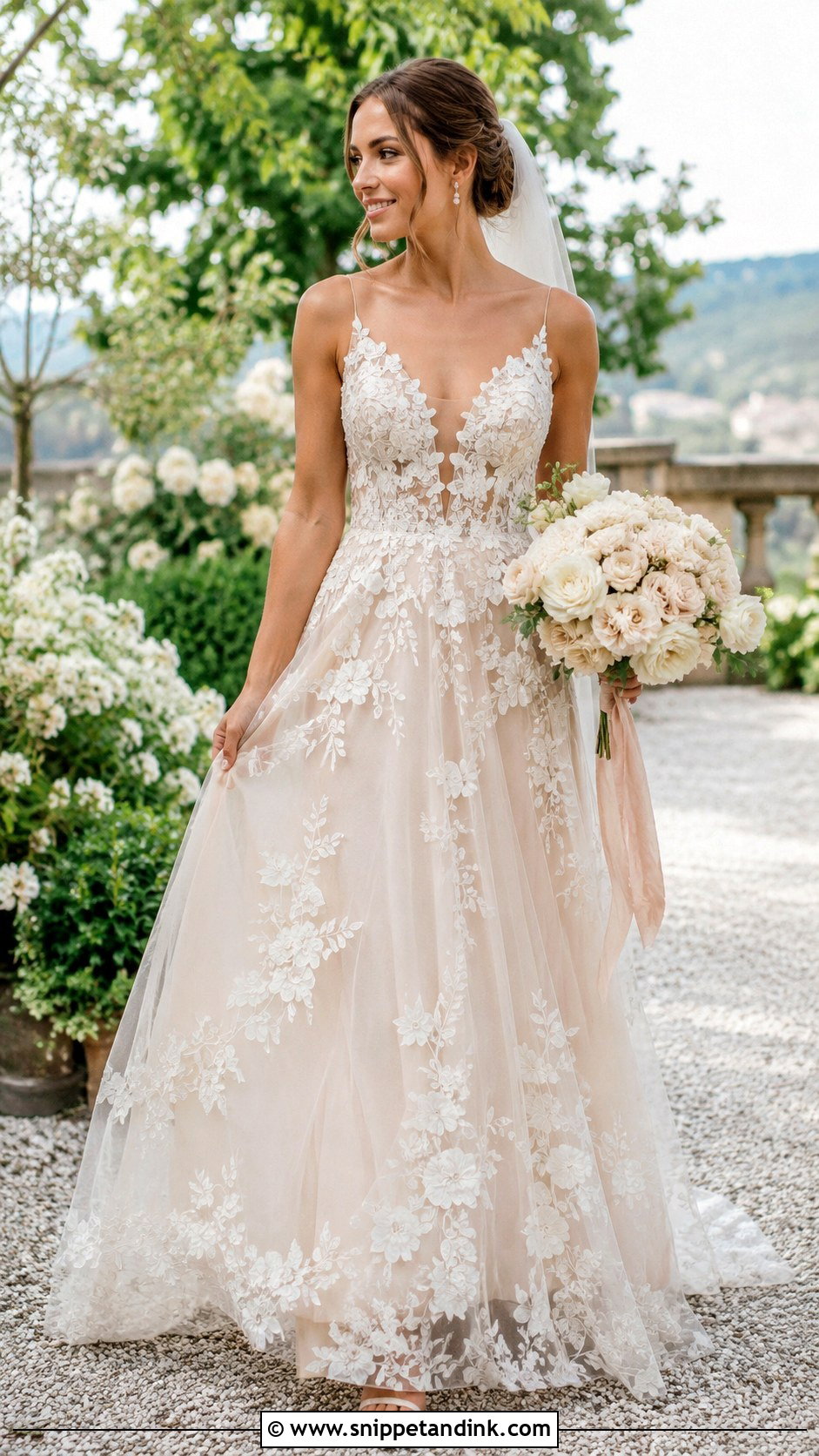
Floral appliqué on a beige base lets ivory, cream or champagne flowers stand out gently, without the hard contrast of white on white. I like the appliqués to trail from the bodice into the skirt, which looks more natural than a solid bodice with a plain skirt. Simple heels, delicate earrings and a veil that doesn’t compete are enough, with a bouquet of cream and blush. Check how the appliqués are attached at the fitting; hand-stitched pieces sit flatter and survive a long day better than glued ones. It suits gardens, outdoor ceremonies and romantic receptions.
21. Beige Sheath Wedding Dress
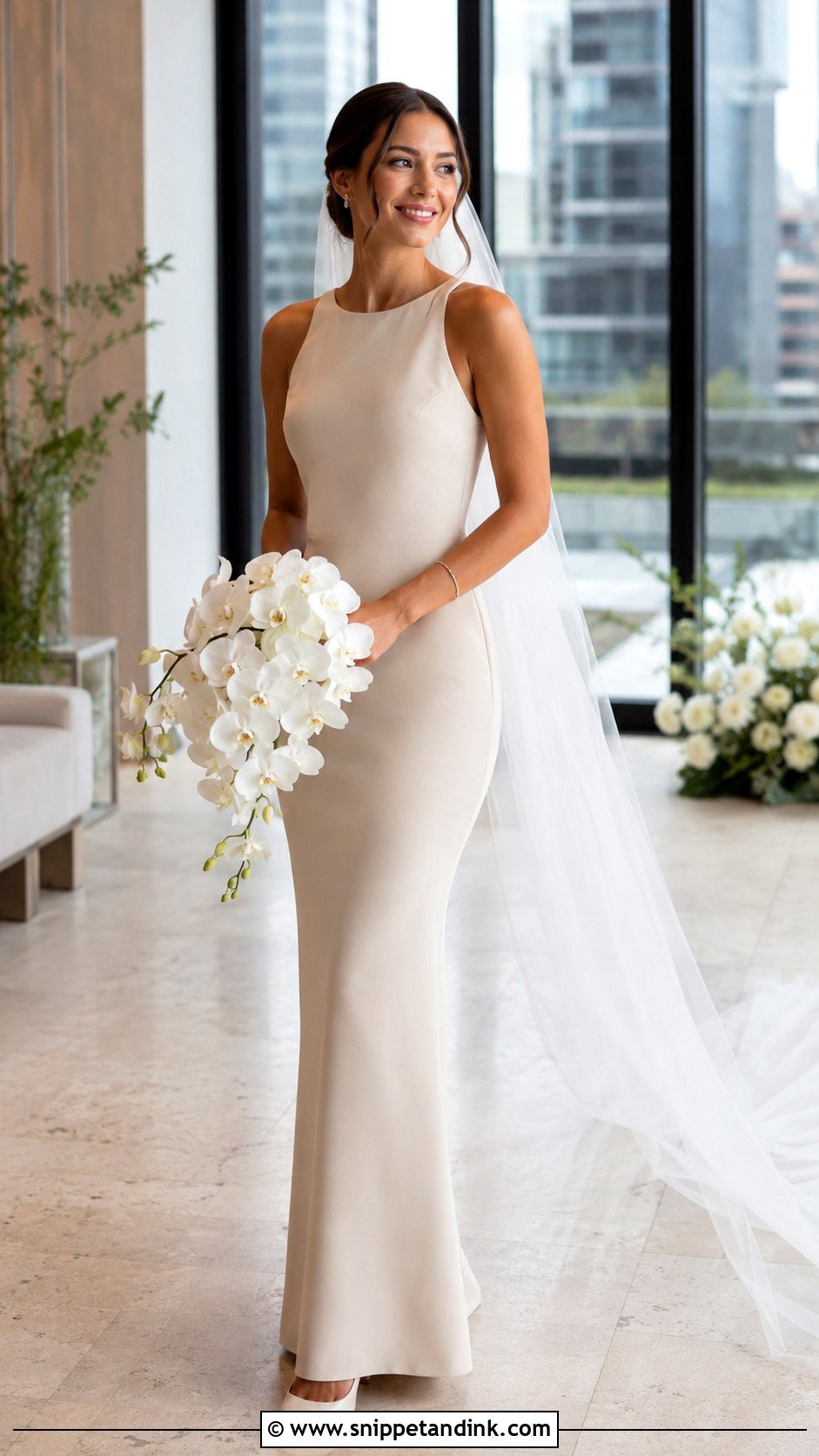
Sheath gowns follow the body without the volume of a ball gown or A-line. Crepe gives structure, satin shine, lace texture. Pointed heels, a slim bracelet and a long veil finish it, and a bouquet of white orchids or cream roses keeps the line sleek. Sheaths are light and easy to travel with, which is why I suggest them for courthouse weddings, city venues and destination ceremonies. The only thing to watch is the walking ease: make sure there’s a back slit or enough room at the knee for steps.
22. Beige Two Piece Wedding Dress
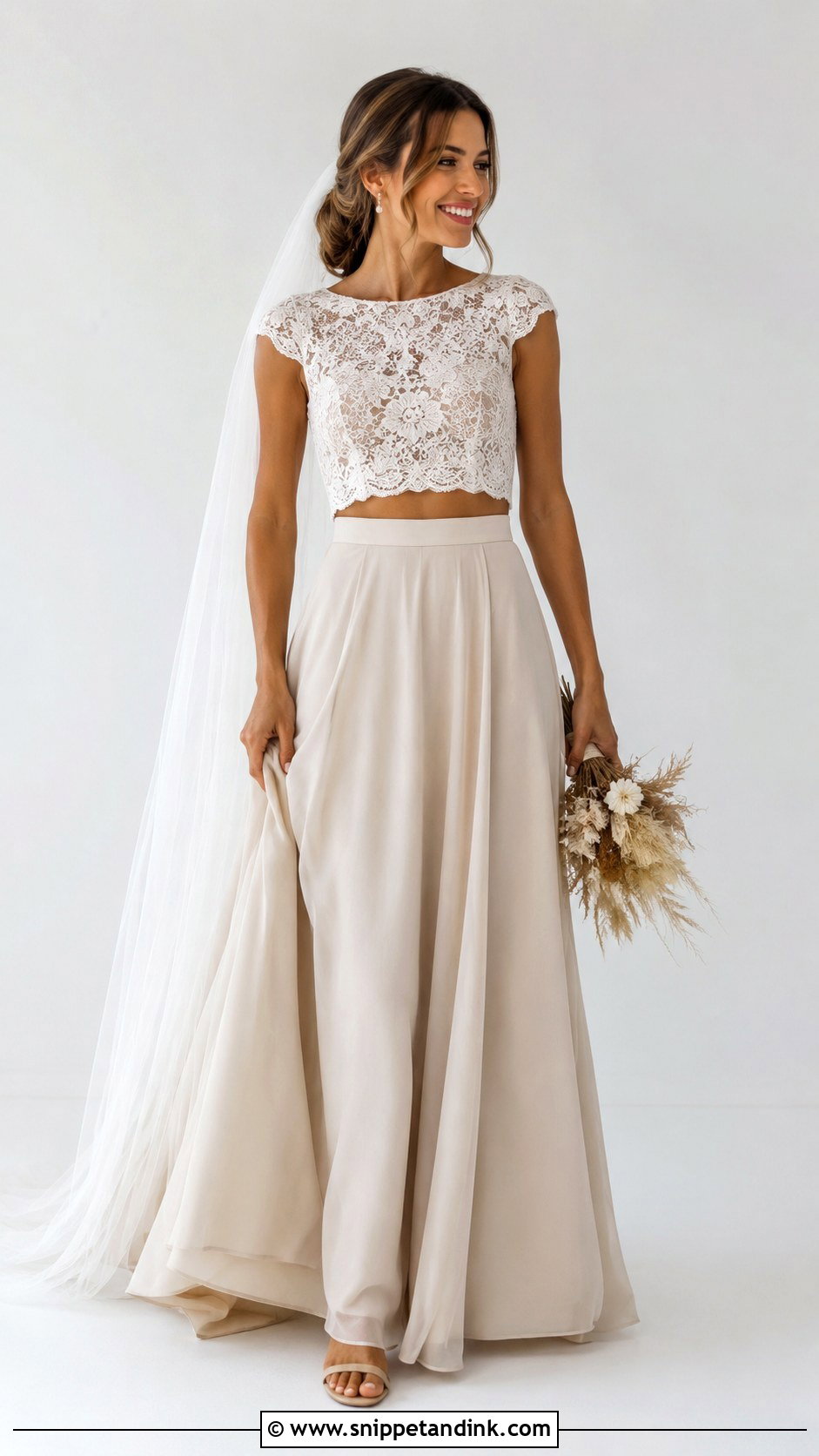
Two-piece gowns feel modern while still reading as bridal. A lace crop top with a high-waisted skirt is the romantic version; a satin top with a tailored skirt is sleeker. Keep both pieces in the same warm beige, champagne or ivory-beige, because two slightly different shades look like a mismatch in daylight. Simple heels, small earrings and a soft veil or hair bow finish it. I’d fit the gap between the pieces while the bride is seated; a crop top that shows a sliver of skin standing can show far more when she sits down.
23. Beige Halter Wedding Dress
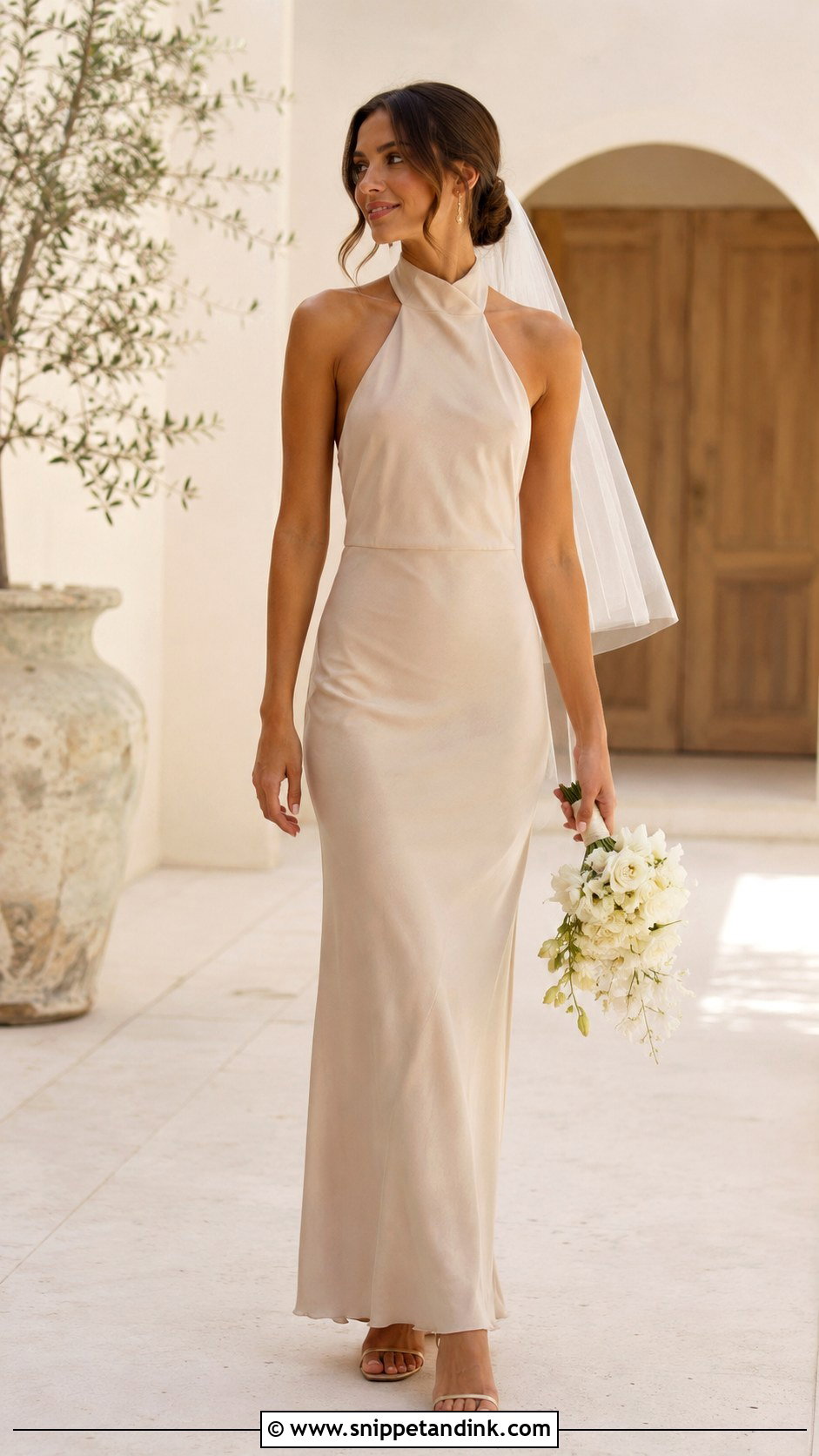
Halter necklines draw the eye upward and suit smooth satin, crepe or lightly beaded fabric. A fitted column skirt reads modern; a flowing A-line gives more movement. Skip the necklace and wear pearl, crystal or slim gold earrings, with heeled sandals and a clean veil. Halters suit strong shoulders and summer weddings, but I’d steer brides with a fuller bust toward a halter with a built-in structured cup, because thin halter straps alone put all the support on the neck.
24. Beige Plunging Neckline Wedding Dress
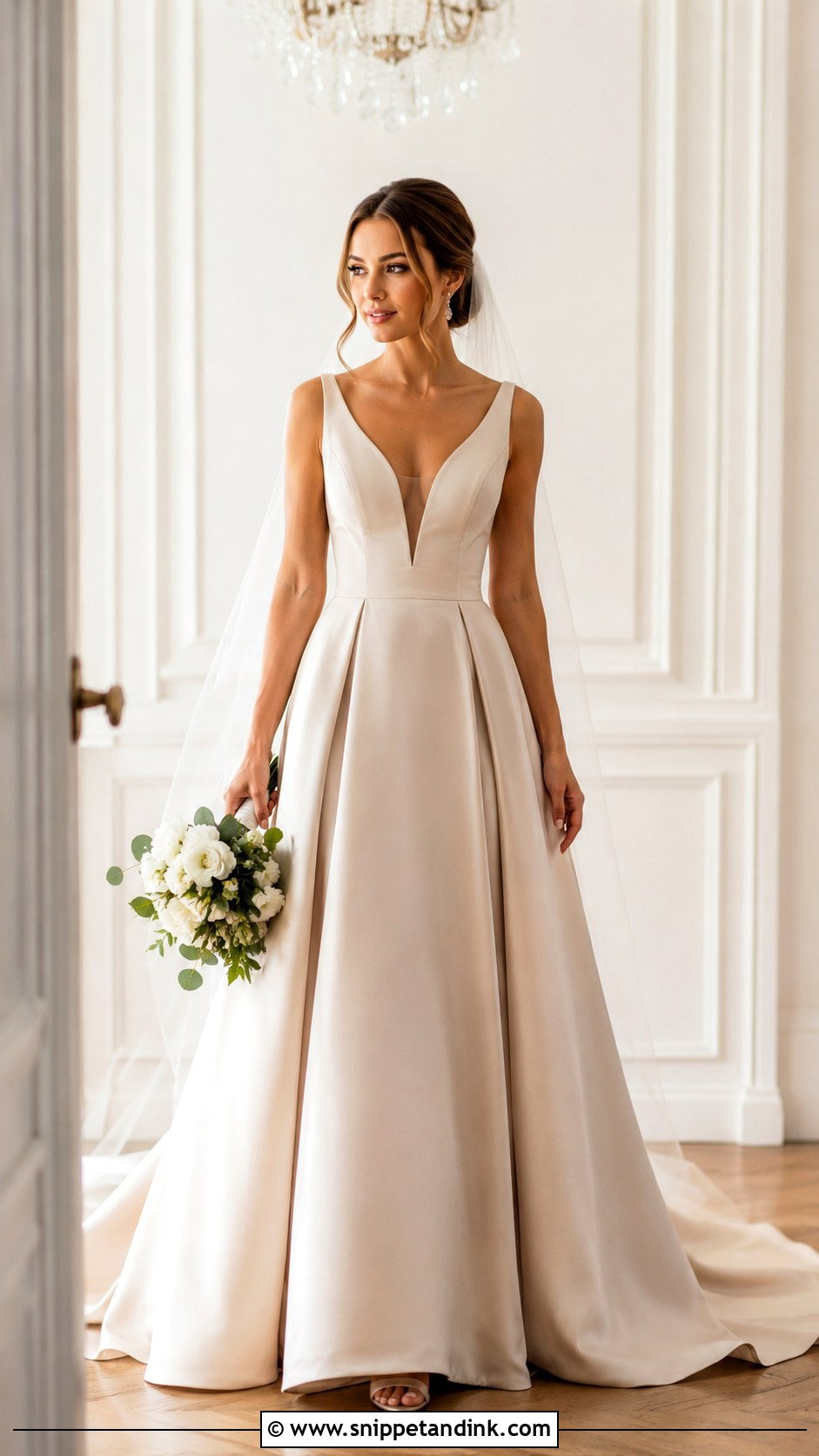
Plunging necklines need support built in, not added later. A structured bodice, an illusion panel or wide straps keep the neckline in place, and I always add fashion tape at the final fitting as a backup. Long sleeves or a flowing skirt balance the depth so the whole gown still reads bridal. Beige lace or satin adds warmth, and drop earrings, neutral heels and a plain veil keep the focus on the shape. Hug your mother, bend for a photo, sit at the table: if the neckline stays put through all three, it’ll last the night.
25. Beige One Shoulder Wedding Dress
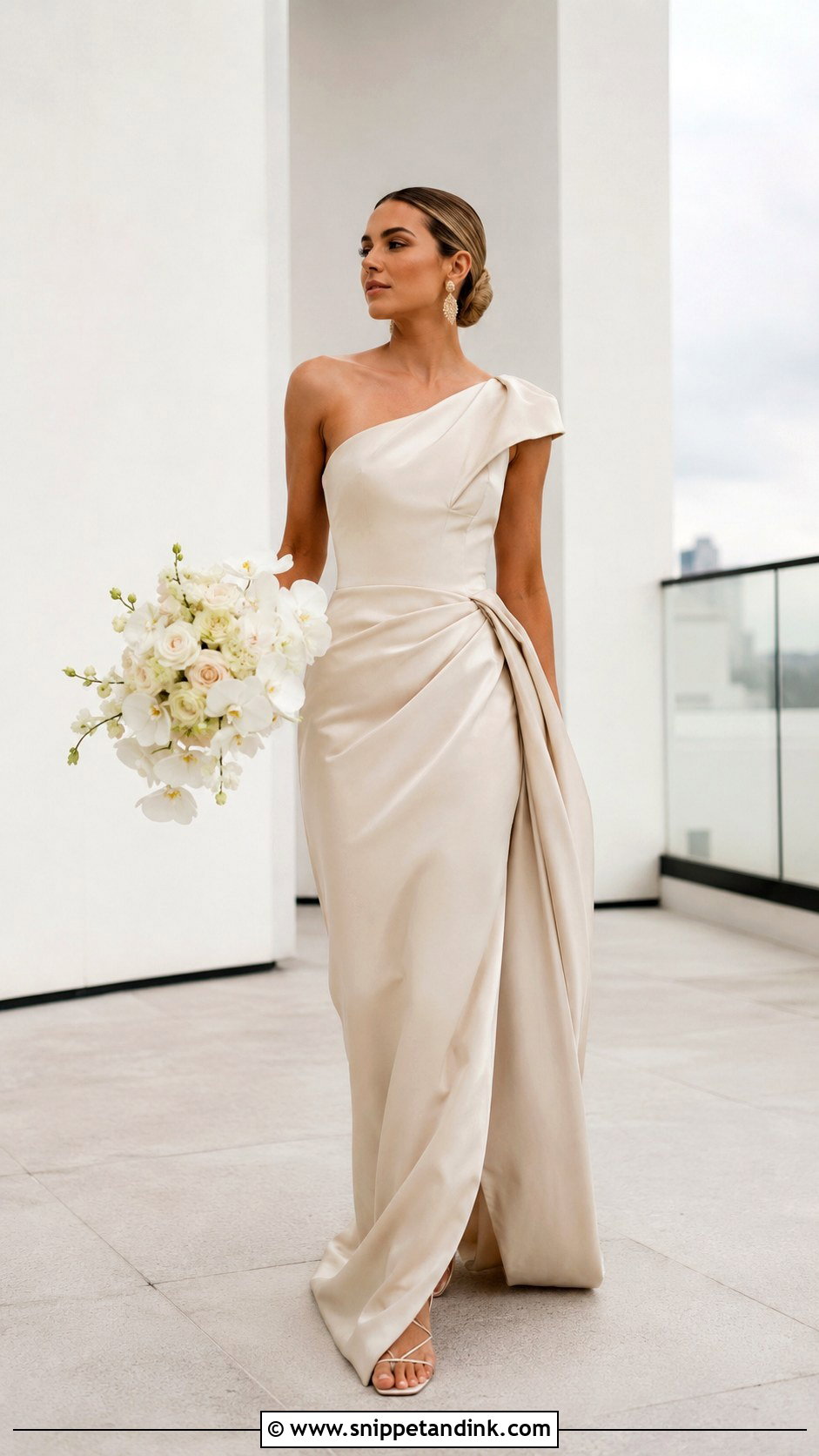
One-shoulder gowns make their statement through shape rather than beading. Satin, crepe or mikado holds the asymmetric line best, and a subtle side slit or draped detail adds movement. Statement earrings, sleek heels and no necklace, with a smooth bun or a side part, show the neckline clearly. For fit, the strap has to sit snugly on the shoulder without cutting in, so I usually add a small silicone strip inside the top edge on the bare side. It suits modern venues, rooftop ceremonies and gallery weddings.
26. Beige Embroidered Wedding Dress
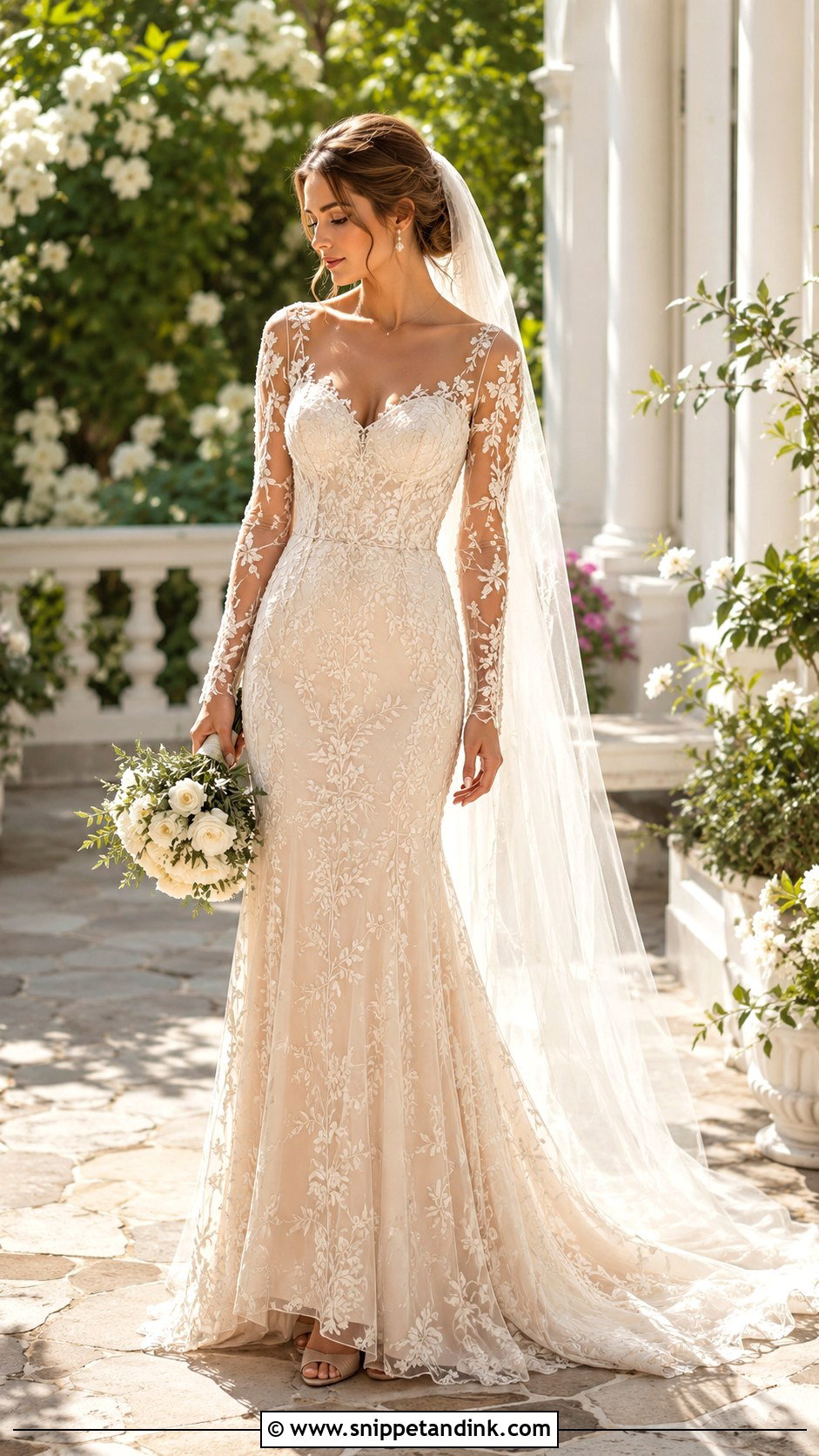
Embroidery reads with more depth on beige because the base makes the stitching cast a slight shadow. Floral, vine, pearl or tonal embroidery each set a different mood. A fitted bodice with a flowing skirt keeps it balanced, and embroidered sleeves add softness. Choose a veil that matches the gown’s undertone rather than plain white. Simple earrings, neutral heels and a bouquet of cream flowers with soft greenery finish it. Embroidered gowns are hard to alter around the stitched areas, so get the bodice size as close as possible when you order.
27. Beige Crepe Wedding Dress
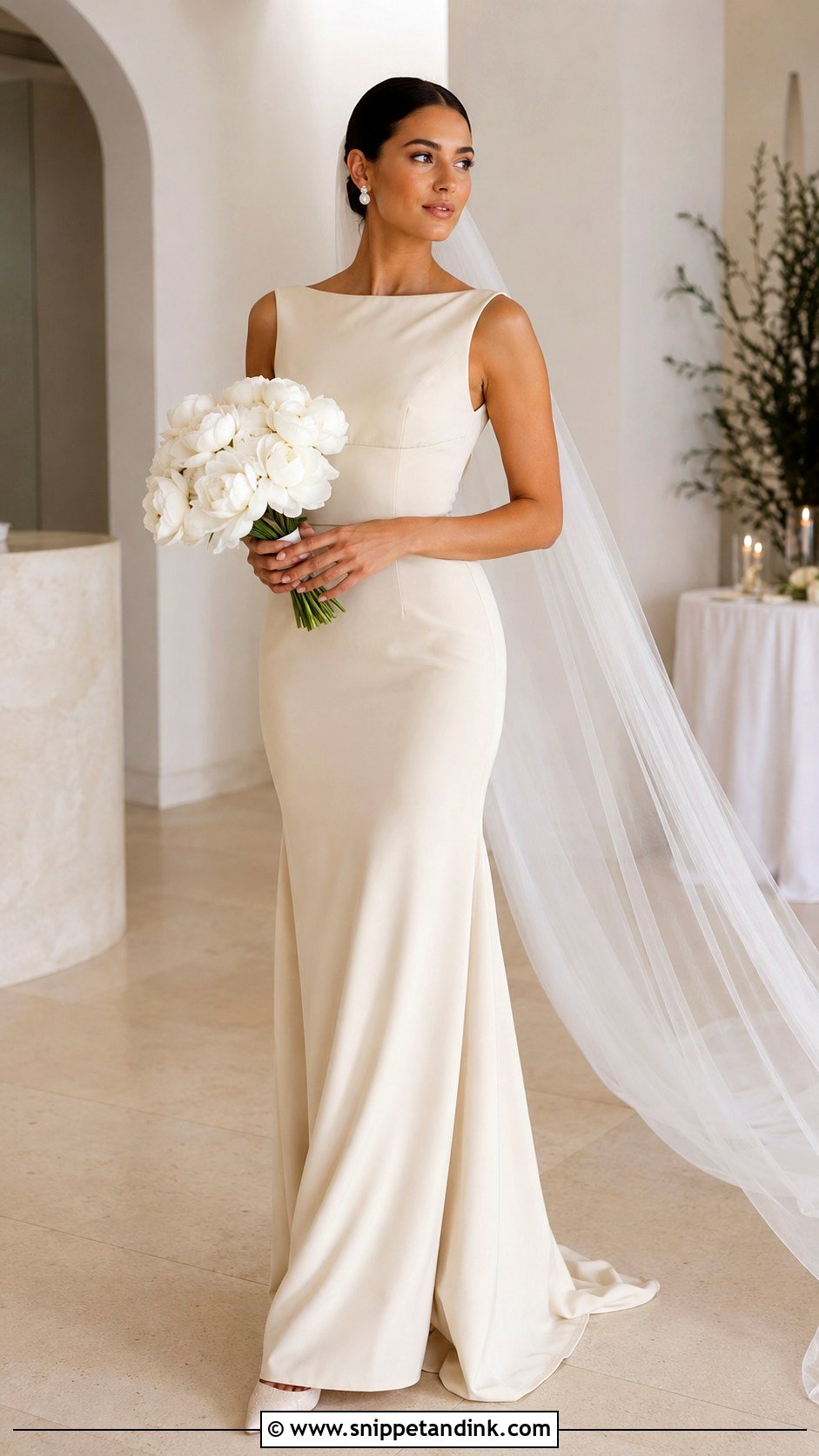
Crepe has enough weight to skim the body without clinging, which is why brides often find it more comfortable than satin. In beige it looks warmer than stark white crepe. A sheath, fit-and-flare or long-sleeve shape all suit it. Pointed heels, pearl earrings, a clean veil and a structured white bouquet finish the look. Crepe also forgives a long day of sitting, since it creases less than satin or silk. The catch is that it shows bumps and lines clearly, so the fit and the right underwear matter more than any decoration.
28. Beige Organza Wedding Dress
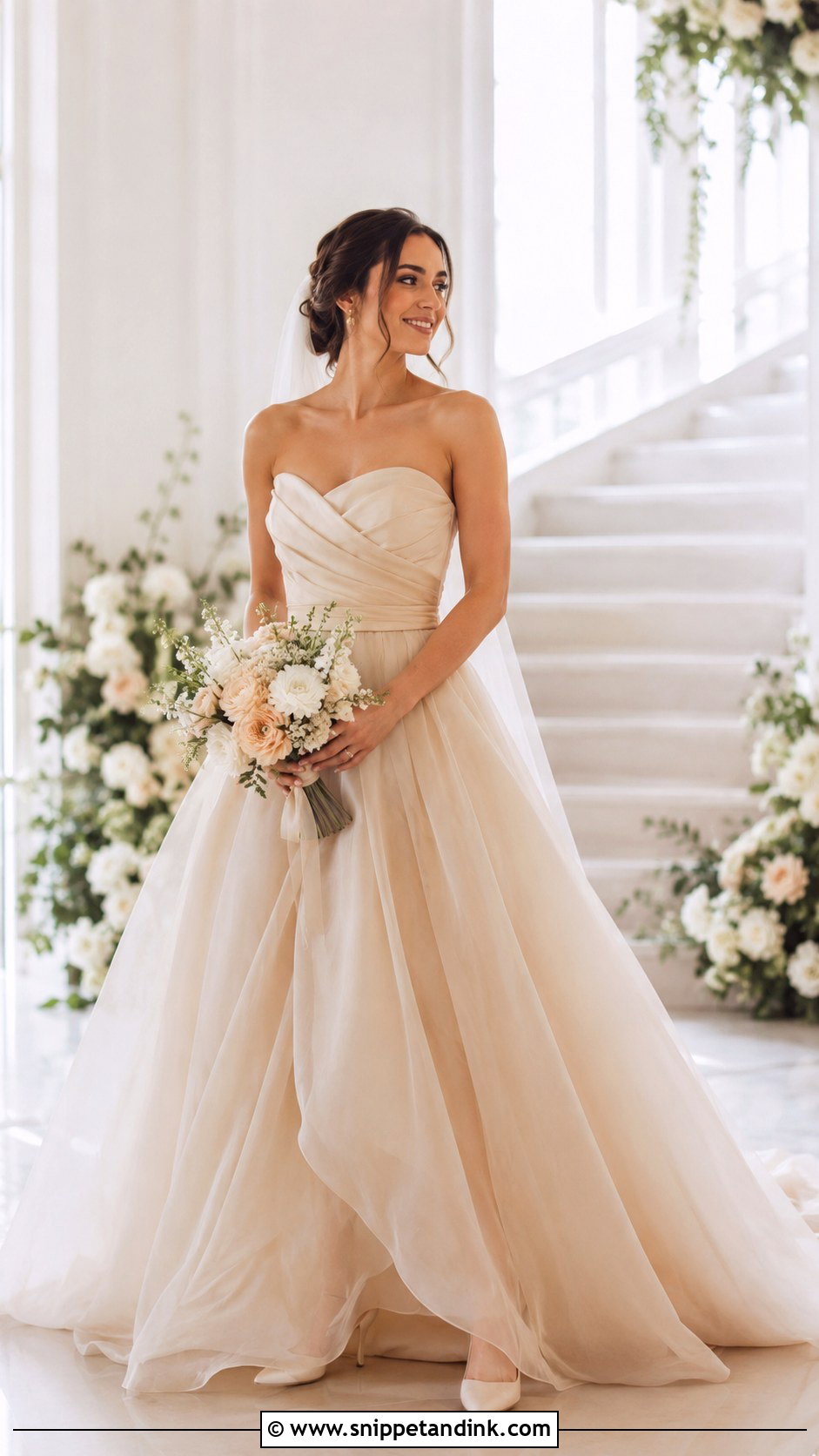
Organza holds a shape better than chiffon but still looks delicate, which gives a light, airy volume without heavy layers. A full skirt, puff sleeves or a draped bodice in warm beige or champagne all suit it. Satin heels, small earrings and a simple veil keep it clean, and cream and peach flowers add gentle contrast. Organza is crisp, though, and it creases sharply if crushed in a car, so I’d bring a handheld steamer to the getting-ready room. It suits spring weddings, gardens and bright indoor spaces.
29. Beige Reception Wedding Dress
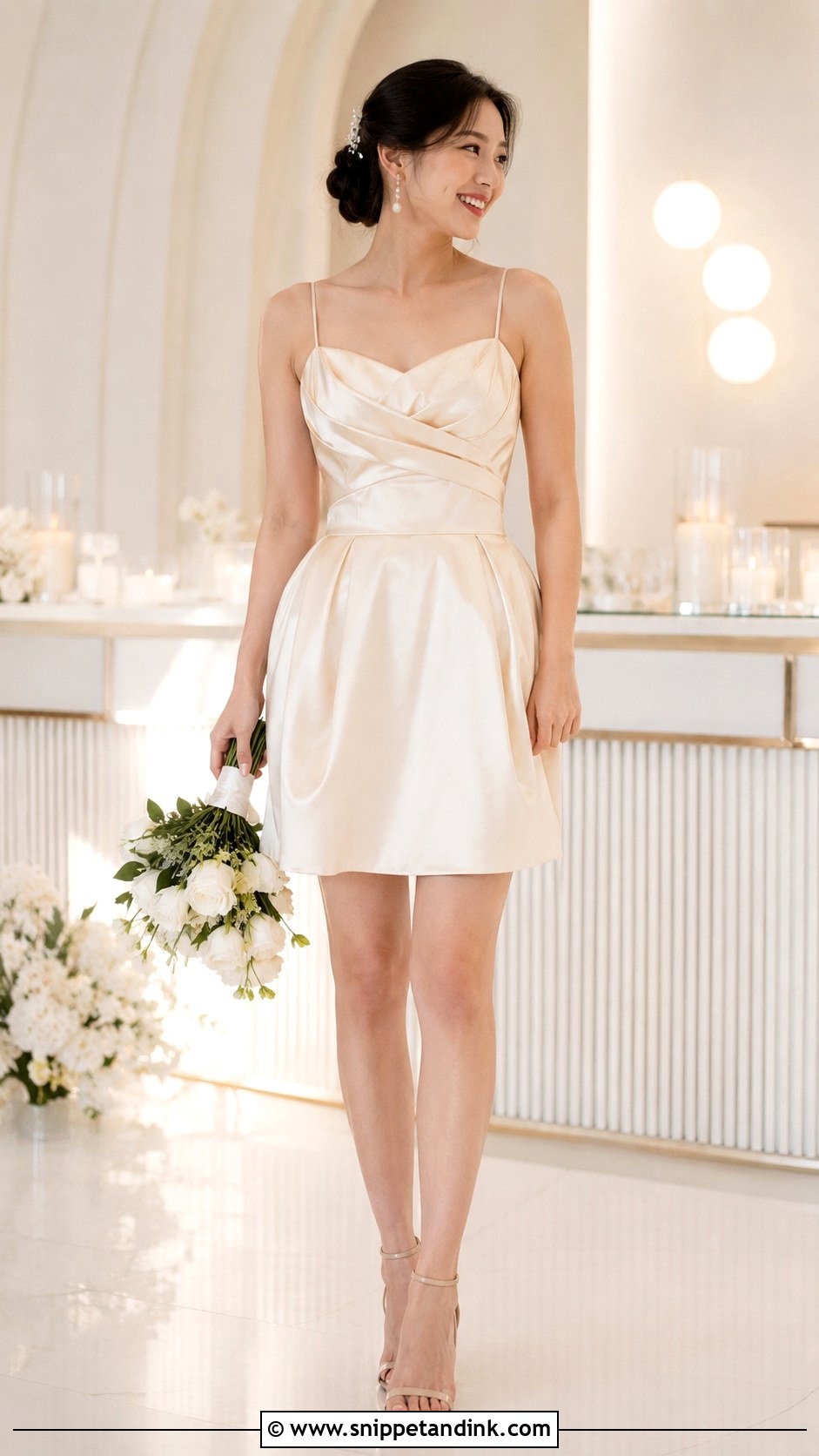
Reception dresses should be easier to move in than the ceremony gown, but still look bridal. A shorter satin dress, a slim beaded sheath, a tea-length gown or a simple beige mini all work. Fabric, fit and one special detail keep it from looking like a guest outfit. Comfortable heels, pearl earrings and a small hair accessory, with a short veil or none, make dancing easy. Plan the change: a second dress needs a room, about fifteen minutes and someone to help with the fastenings.
30. Beige Plus Size Wedding Dress
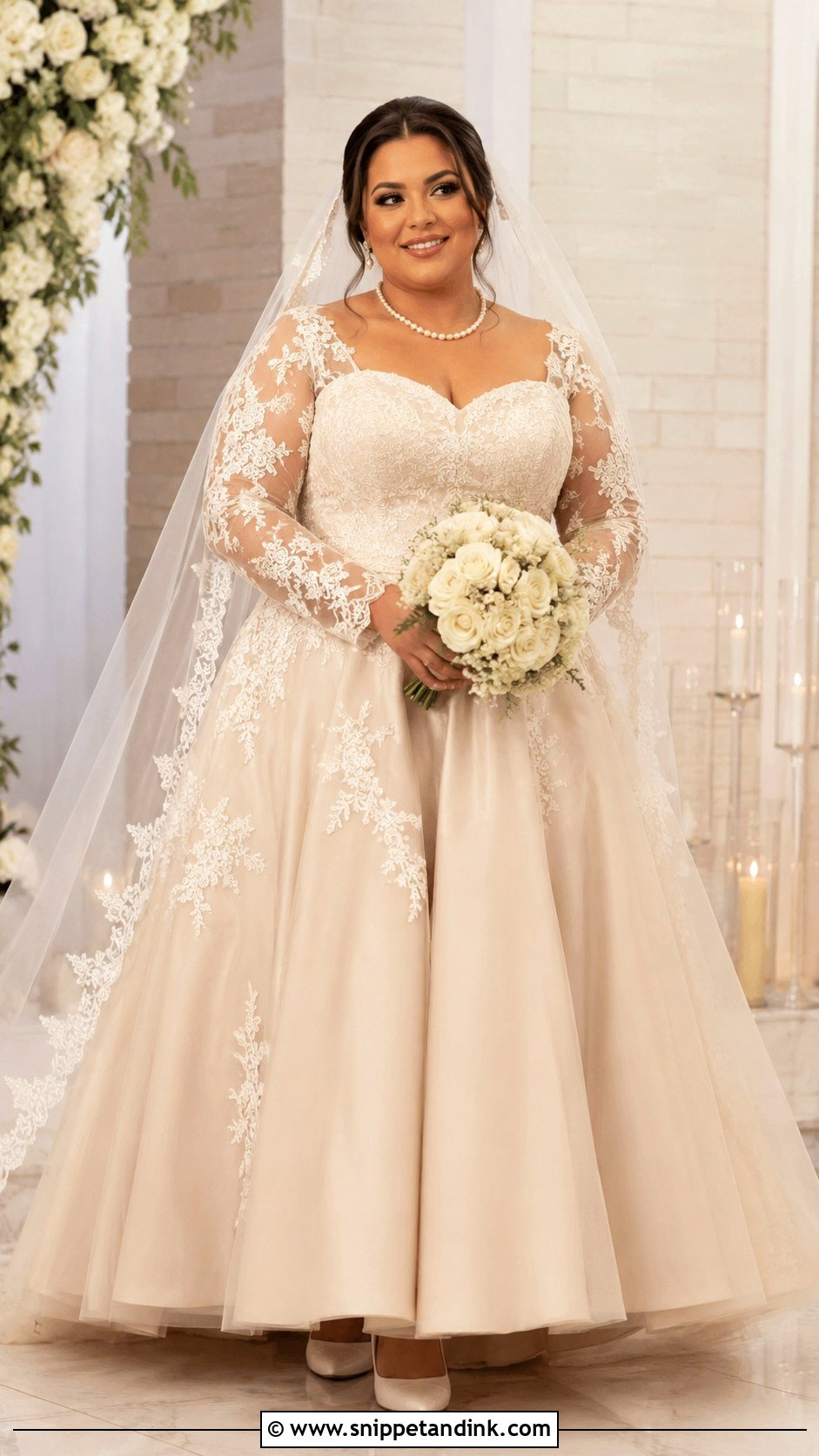
For plus size brides, support and structure come first, and the shade of beige is the fun part. A-line gowns, corset bodices, wrap-inspired shapes and structured crepe gowns all suit beige. I look for a quality lining, strong bust support built into the bodice and enough ease at the hip to sit comfortably. Lace sleeves, a defined waist or a flowing skirt add balance without hiding the body. Comfortable heels, pearl or gold jewellery and a veil that matches the gown’s warmth finish it. Because beige comes in so many undertones, you can test several until one makes your skin look its best.
Getting the Veil, Shoes and Underwear to Agree With a Beige Gown
The most common styling mistake with a beige gown is a pure white veil. Next to bright white, the dress looks dingy rather than warm. Veil tulle is sold in several shades, usually white, diamond white, ivory and champagne or light gold, and I’d always hold the veil sample against the gown itself rather than a swatch.
Shoes and accessories
Satin shoes in ivory or nude sit better with beige than bright white leather. Pearls come in white, cream and rosé tones, and cream pearls usually look most natural against a warm gown. Metallics should lean warm too: gold or rose gold rather than cold silver, unless the beige is a cool, greyish taupe.
What goes underneath
Under a pale gown, white underwear shows more than skin-tone pieces do. Choose a shade close to your own skin rather than to the dress, and bring it to every fitting, because a different bra changes how the bodice sits and the seamstress needs to fit over the real thing.
How Beige Changes Under Reception Lighting and Flash
Warm indoor light pushes beige toward gold or peach, while shade and overcast sky pull it cooler. Neither is wrong, but it surprises brides who only saw the dress in a bright salon. Tell your photographer the gown is beige, not white, so they can set white balance from a neutral reference instead of the dress; otherwise the camera may try to correct the gown to white and throw your skin off. Take a few phone photos in the dress under different light at your final fitting so you know what to expect.
The Shade of Beige Matters More Than the Silhouette
Every gown above can work in beige; the difference between a beige that looks deliberate and one that looks faded is the undertone. Champagne satin slips, lace mermaids, tulle skirts, pearl details and clean minimalist shapes all take on a softer glow in warm colour. Test the shade against your skin in daylight, check it against the venue and season, then build the veil, shoes, jewellery and bouquet around that exact tone. Warm ivory, sand, champagne, nude, taupe and mocha can all look bridal when the whole outfit agrees with it.
You'll Like These Ideas:




Leave a Reply