
A tropical wedding dress has a harder job than most gowns. It has to look bridal while you stand in direct sun, sweat through the vows and walk on sand, grass or a resort boardwalk. For a beach, garden, resort or island ceremony, I start every fitting by asking about the ground underfoot and the time of day, because those two answers rule out more dresses than any mood board does. Chiffon, soft lace, silk crepe, organza and linen blends all appear below, along with open backs, detachable skirts and a few dresses with real color. Each idea comes with the styling notes I’d give a bride packing for heat.
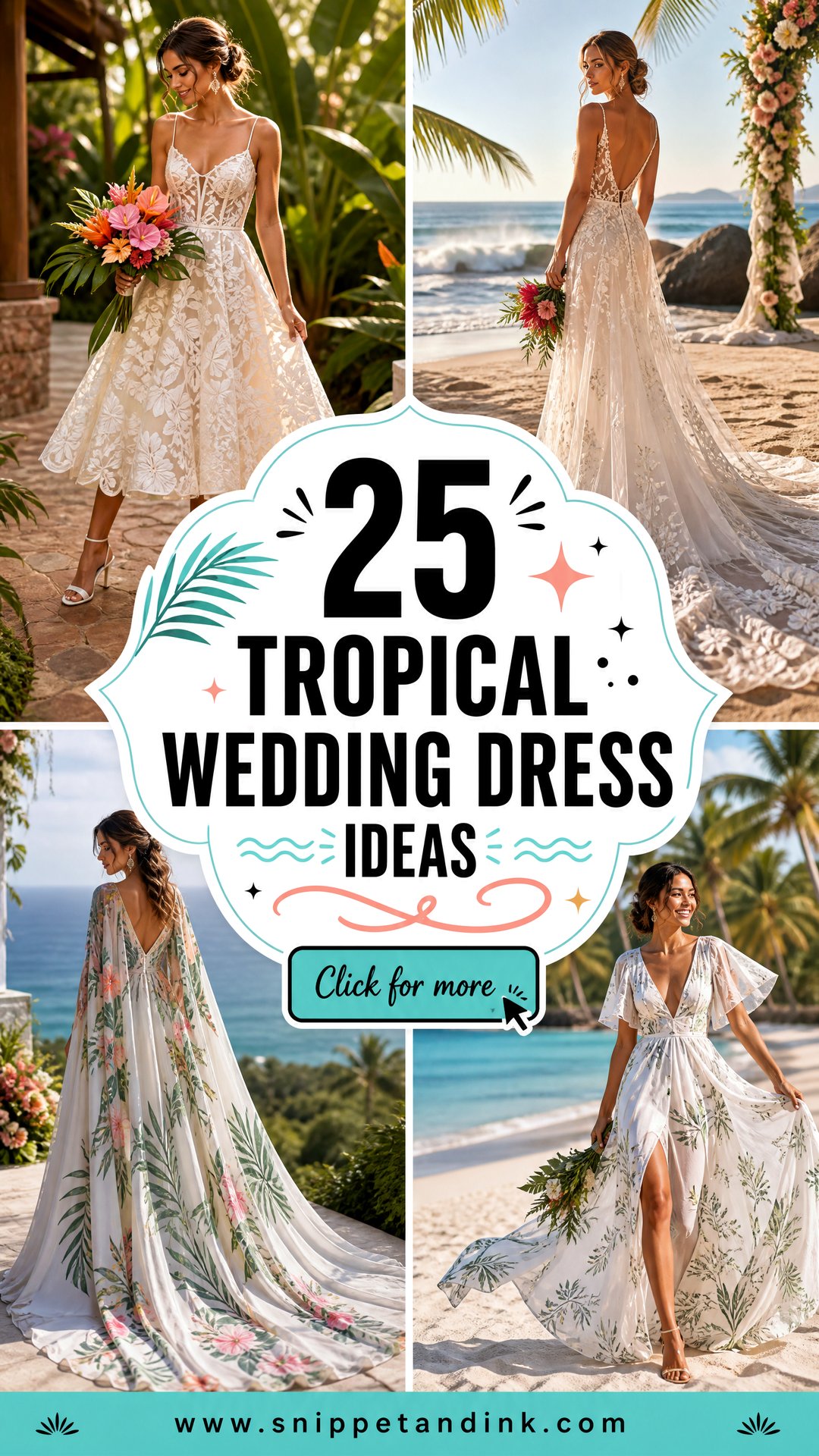
Fabric Matters More Than Silhouette in Real Humidity
Before the shapes, a word on fabric, because it decides how you feel six hours in. When I pull gowns for a hot destination, I sort fabrics by how they breathe, how they crease and how they show sweat.
- Chiffon and georgette: the lightest and most forgiving. Silk versions breathe best; polyester versions look almost identical in photos but hold more heat.
- Silk crepe: cool against the skin and drapes well, but it creases wherever you sit, so expect lap wrinkles by the reception.
- Satin: smooth and photogenic, though shine shows damp patches at the underarms and lower back. Matte satin hides them better.
- Linen blends: very breathable and very honest about wrinkles. Choose them only if you like a relaxed, lived-in look.
- Lace: open floral and cotton lace breathe; heavily beaded or corded lace adds weight and warmth.
Linings matter just as much as the outer layer. Ask what the lining is made of, because a cotton or silk lining under a polyester shell feels very different from polyester on polyester. If your gown has a lot of boning, try it on in a warm room at least once, not only in the shop’s air conditioning.
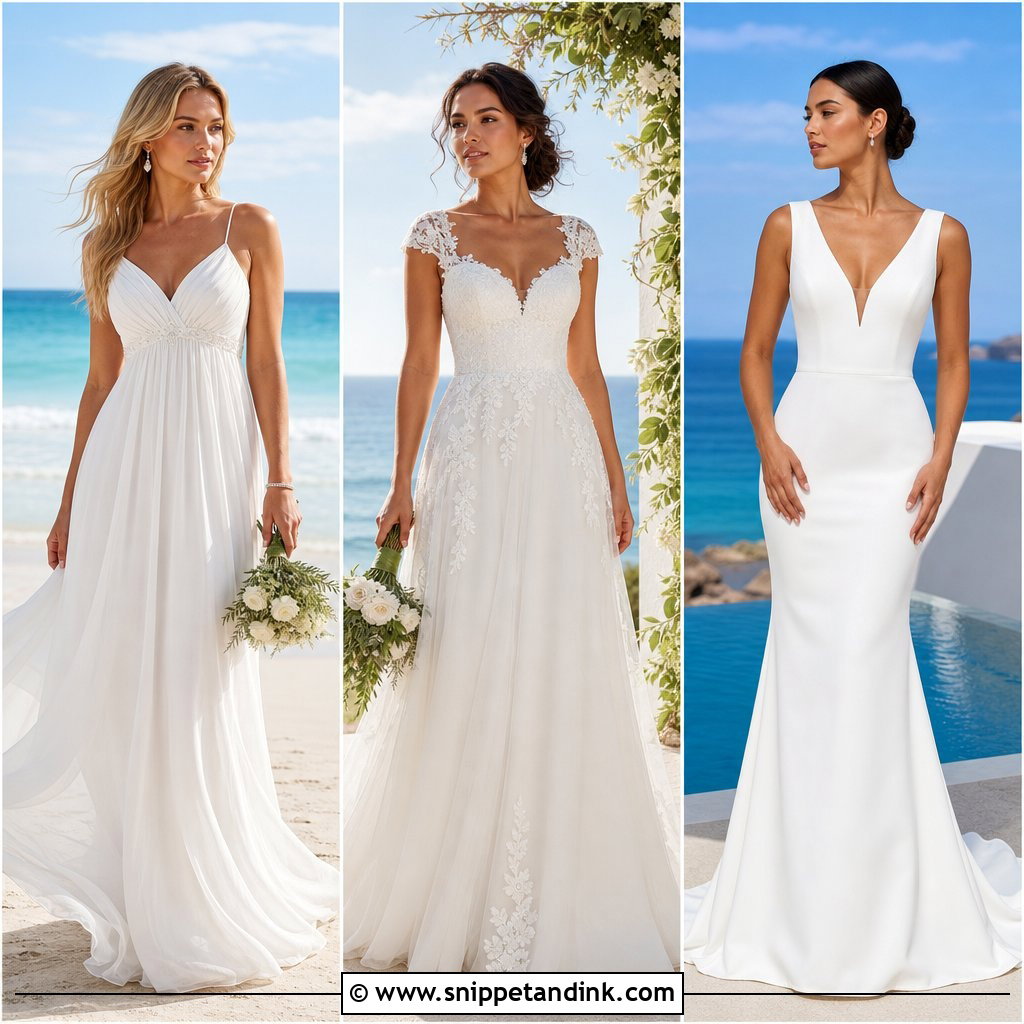
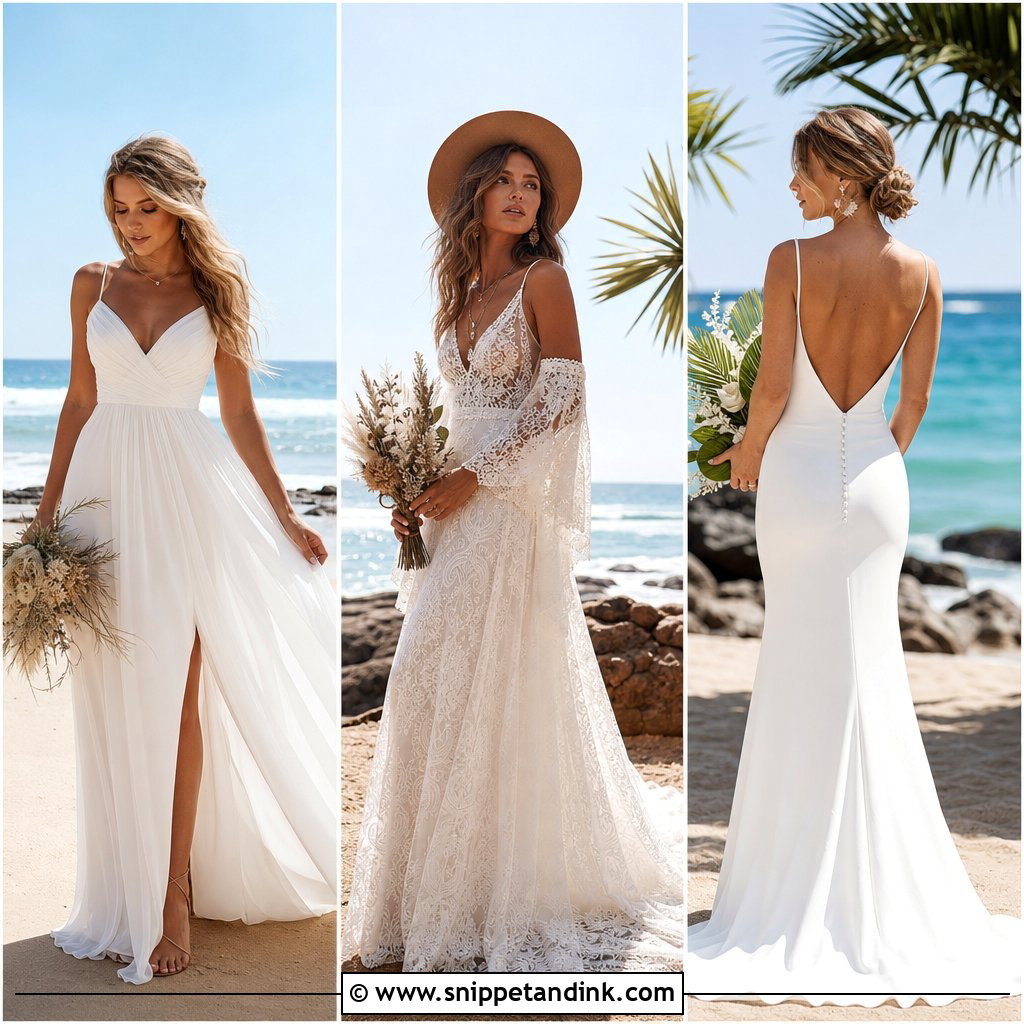
1. Beach Wedding Dress With Chiffon Skirt
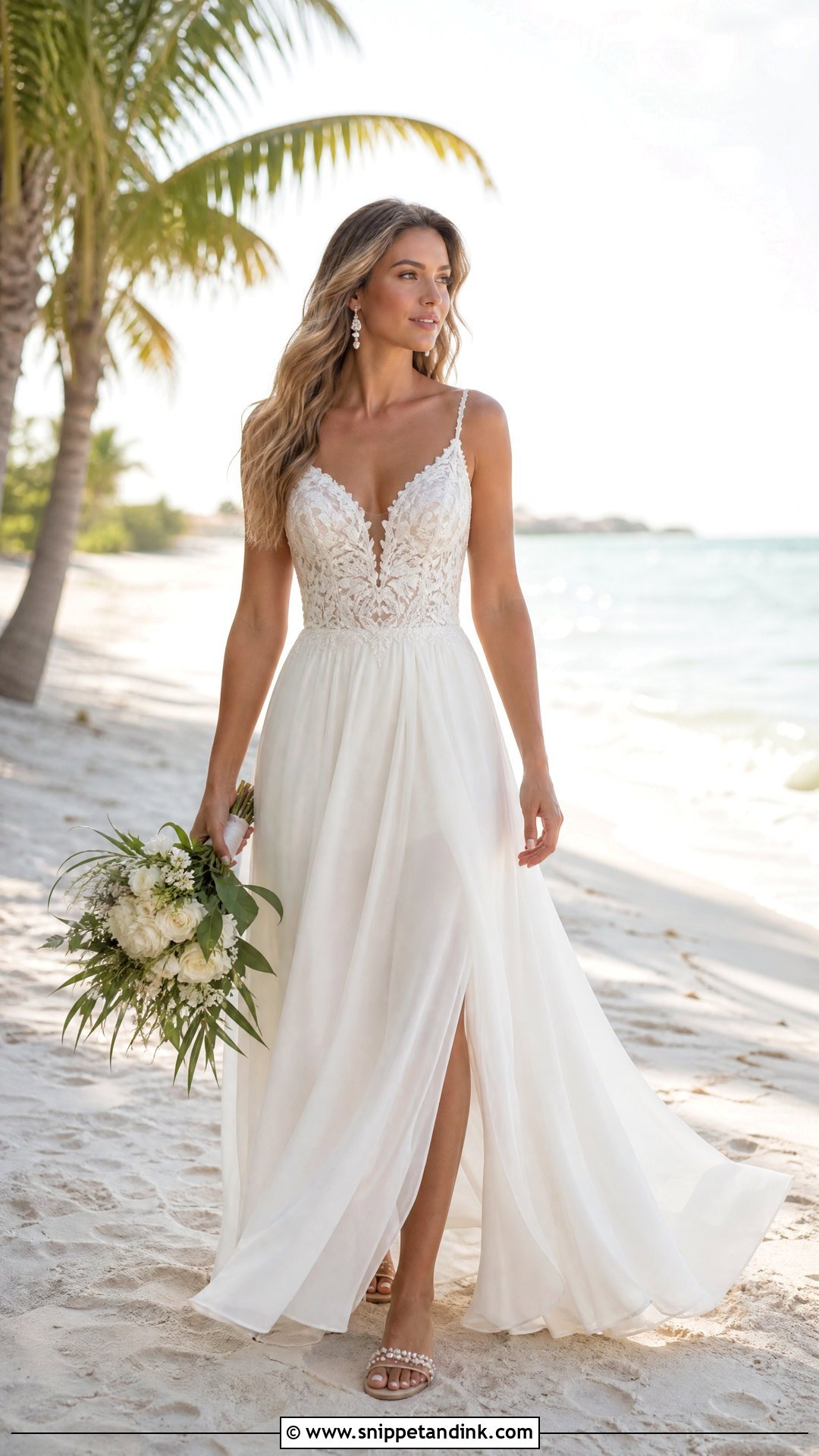
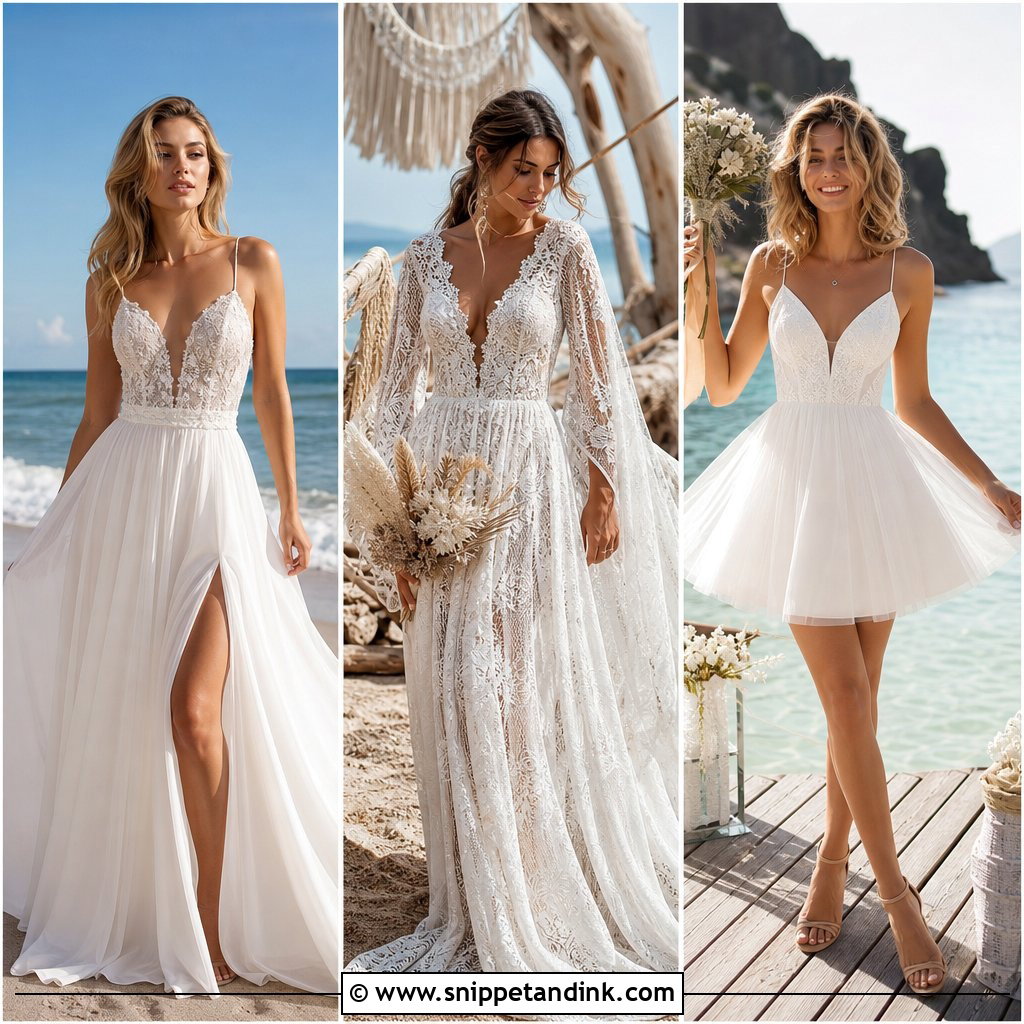
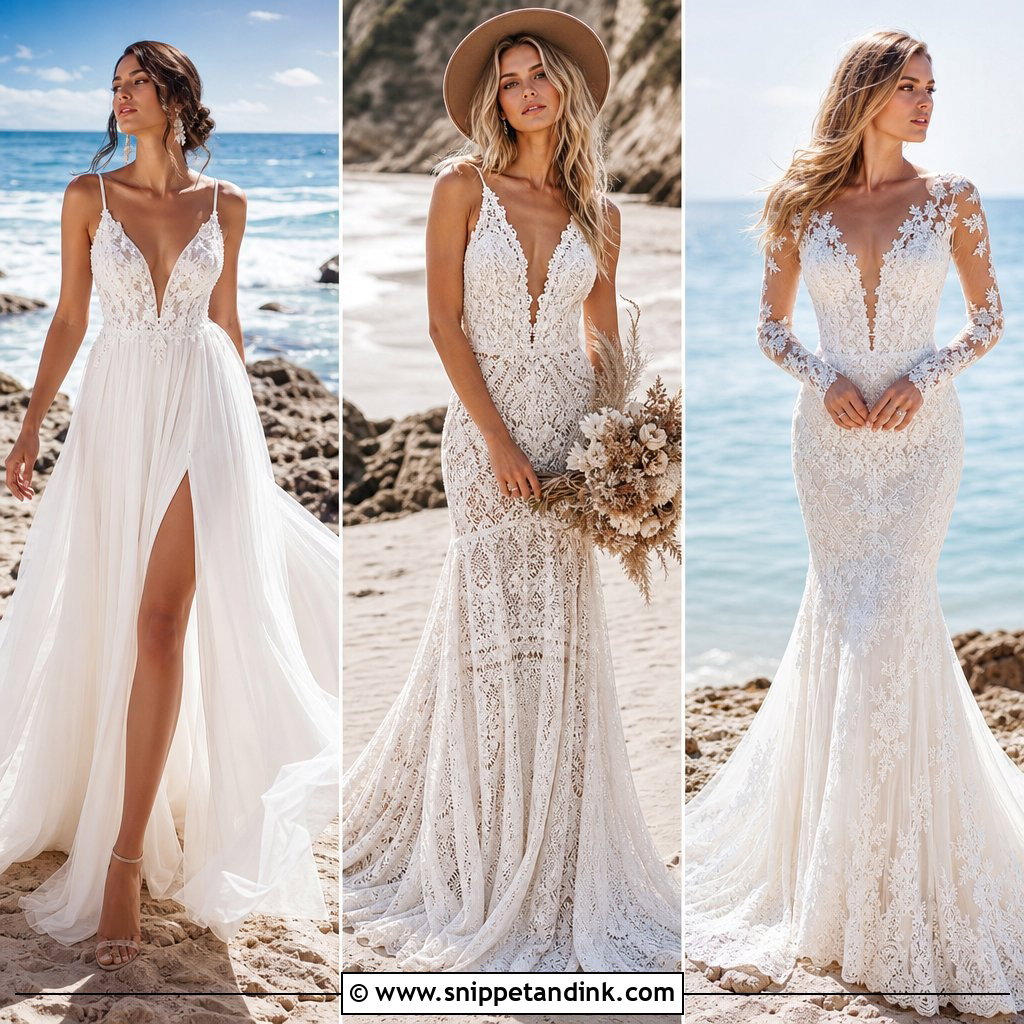
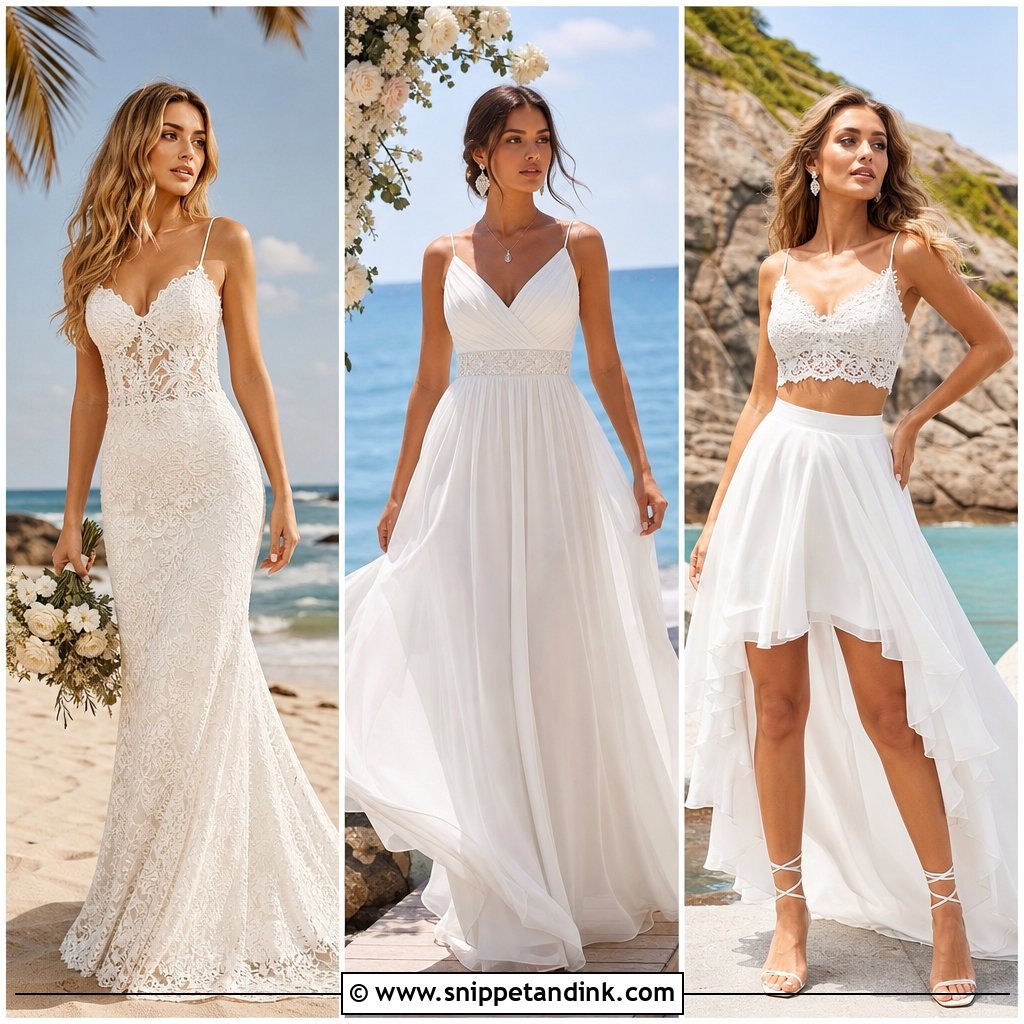
Chiffon is the fabric I reach for first on a sand ceremony. It weighs almost nothing, dries fast if a wave catches the hem, and moves the moment there’s any breeze. Pair the flowy A-line skirt with a fitted bodice, a sweetheart or soft V-neck and thin straps, so the top stays put while the skirt does the moving. Flat pearl sandals sink less than heels, and loose waves tucked behind one ear survive humidity better than a set curl. One honest warning: on a windy beach a long veil wraps around your face in every photo. A short veil or a floral hair pin is the safer call.
2. Tropical Lace Wedding Dress
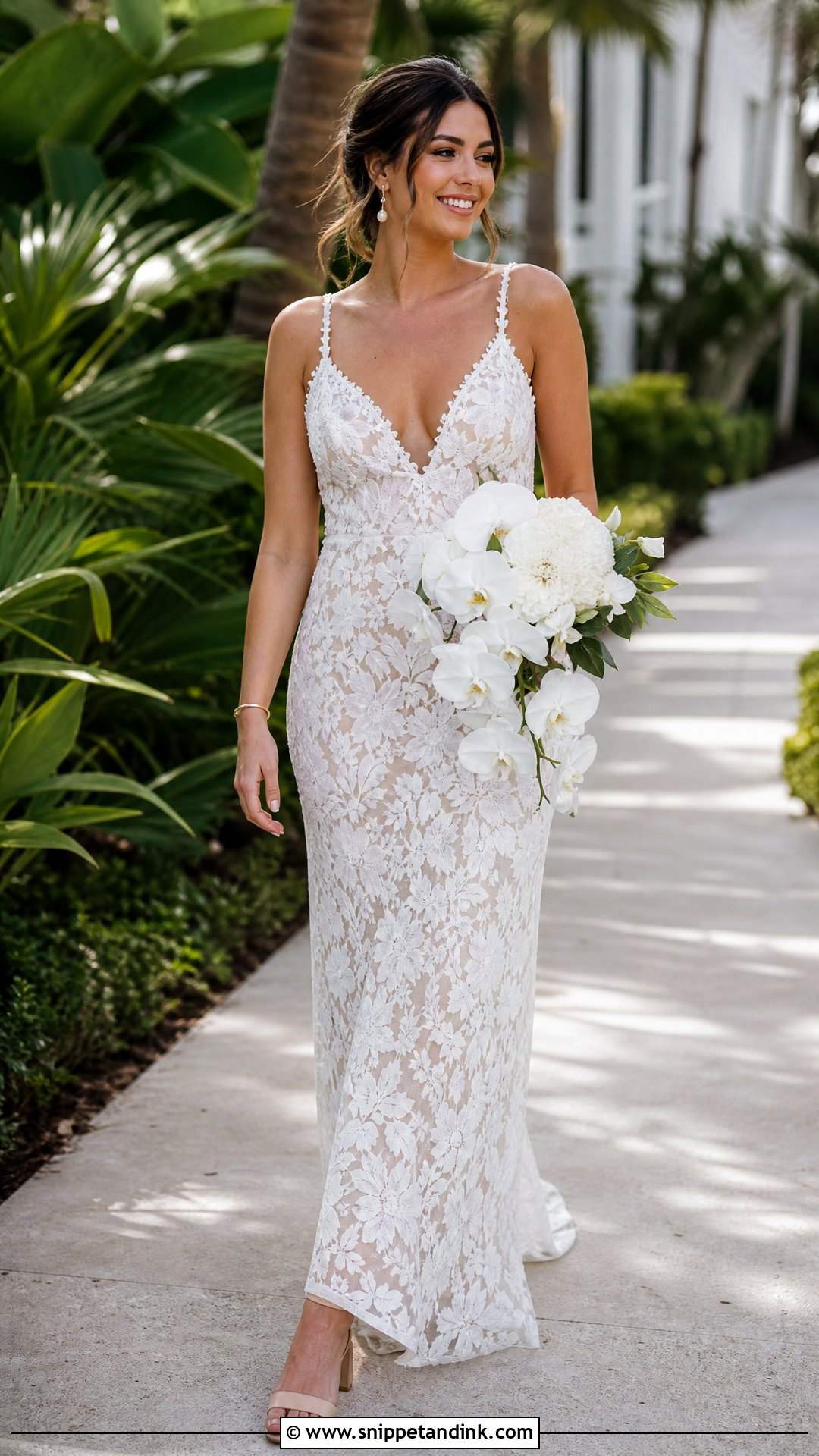
Not all lace belongs in the tropics. Heavy corded or beaded lace traps heat against the skin and turns stiff once it’s damp, so I steer brides toward open floral lace, cotton lace or light embroidered tulle where you can see daylight through the motif. A slim A-line or sheath keeps the volume down. Block-heel sandals, a simple bracelet and a small bouquet of orchids and greenery finish it. Wear your hair in a low bun or a loose braid to keep your neck clear, because lace resting on a damp neck starts to itch long before the reception.
3. Open Back Wedding Dress For Beach
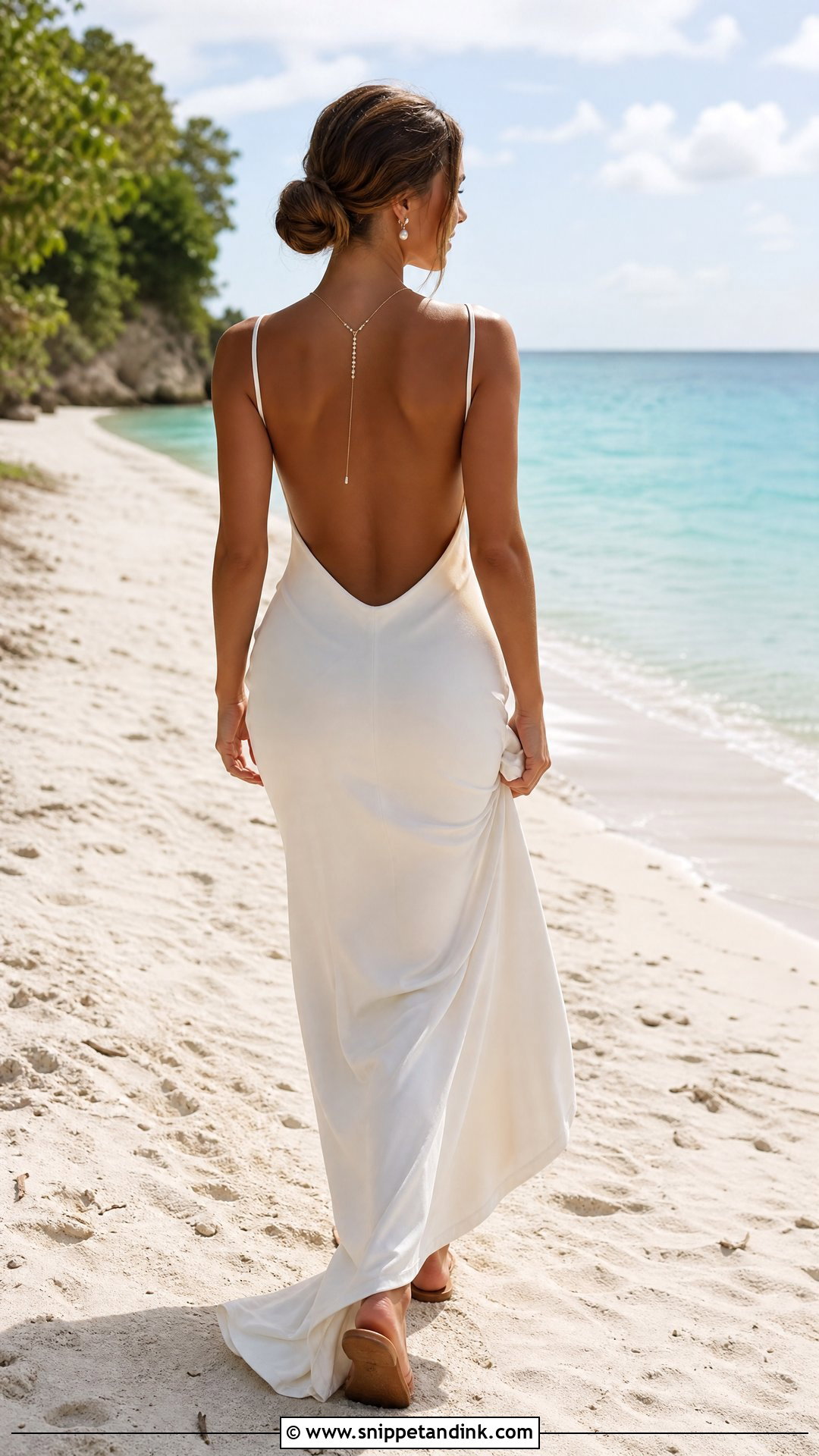
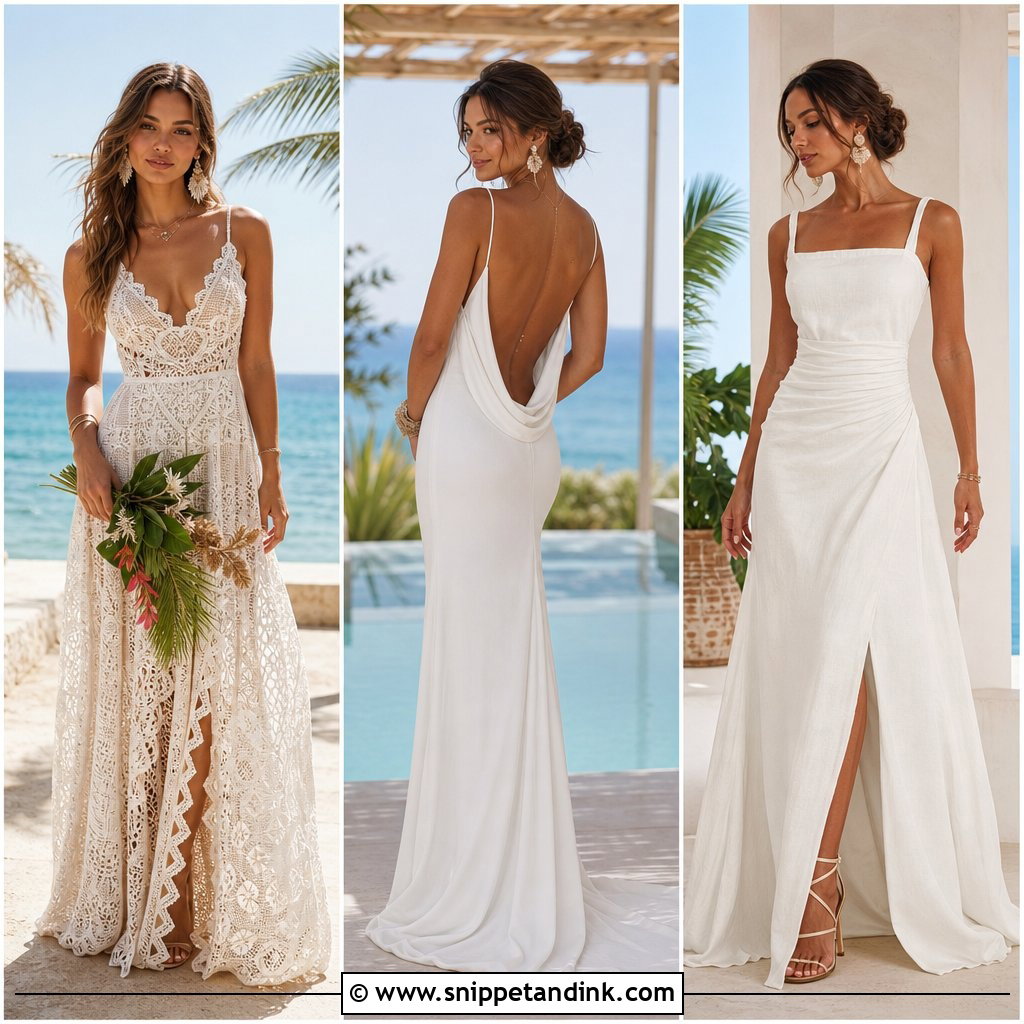
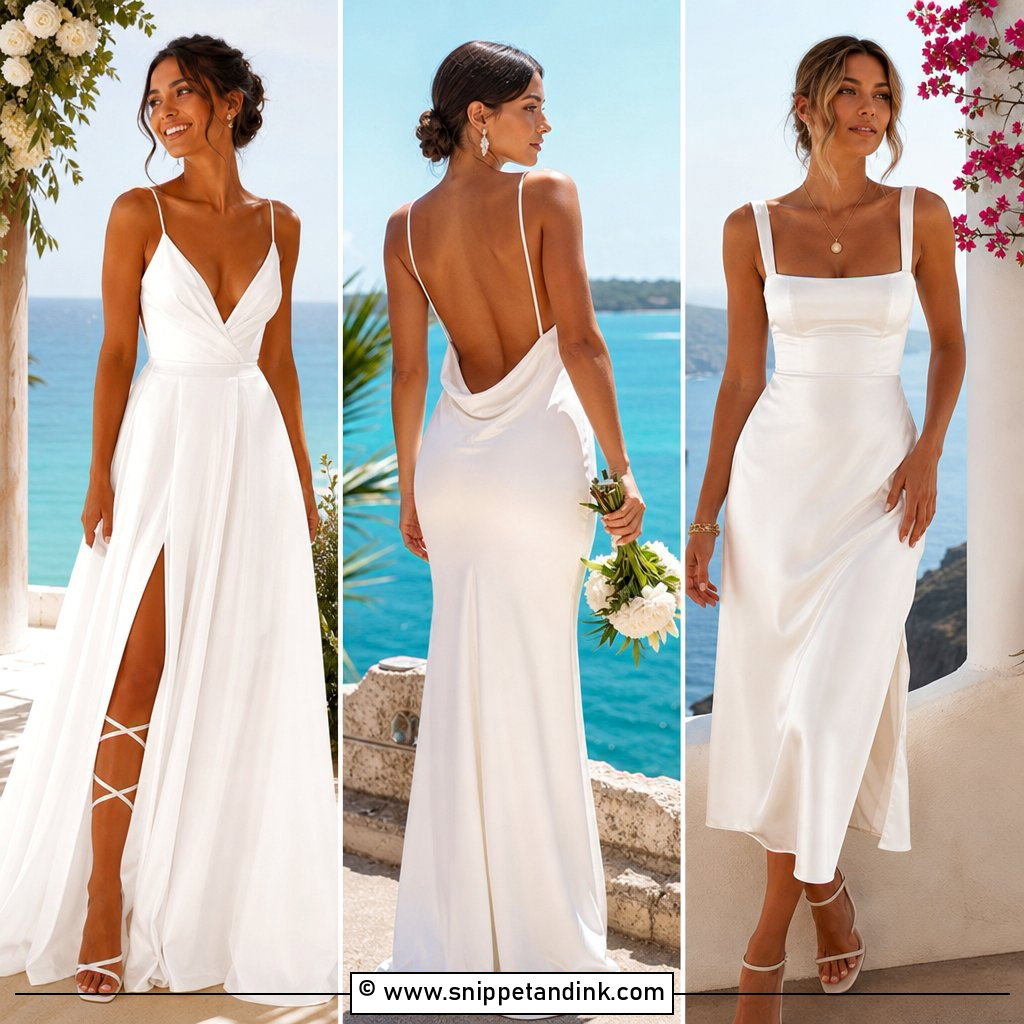
The back of this dress is what guests look at during the vows, so it earns its place at an ocean or palm-lined aisle. Keep the front quiet with a scoop, a halter or thin straps, and choose crepe, chiffon or a light satin that lies flat along the spine. At fittings I always check the back edge while the bride sits and raises her arms; if it gapes, it needs a small dart or a clear elastic stay before the wedding, not on the morning of it. A low updo, a back necklace and pearl studs suit it. Plan your sun in the weeks before, too: swimsuit strap lines across an open back show in every aisle photo. If you want a veil, attach it low, under the bun, so it frames the back instead of hiding it.
4. Boho Tropical Wedding Dress
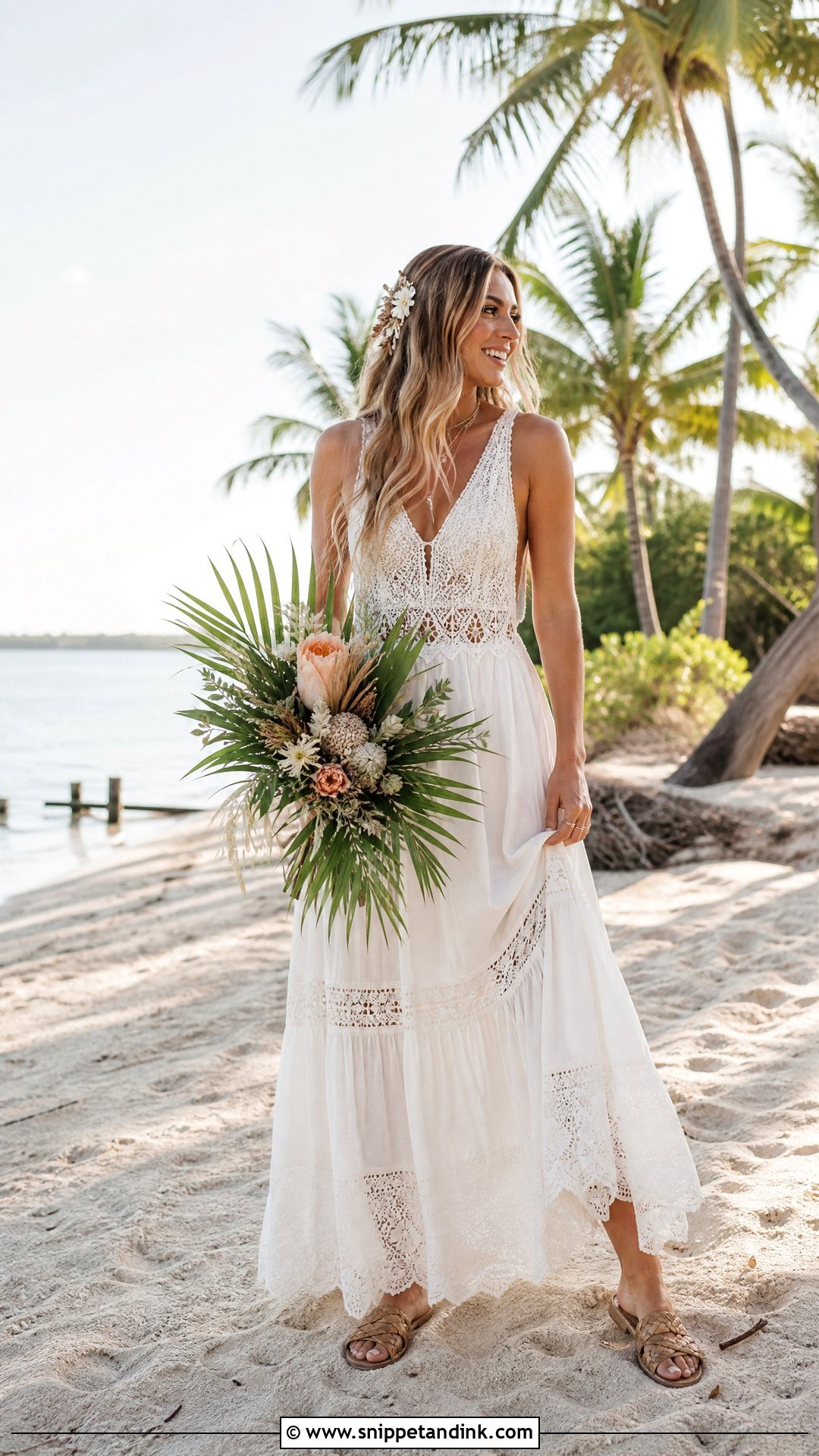
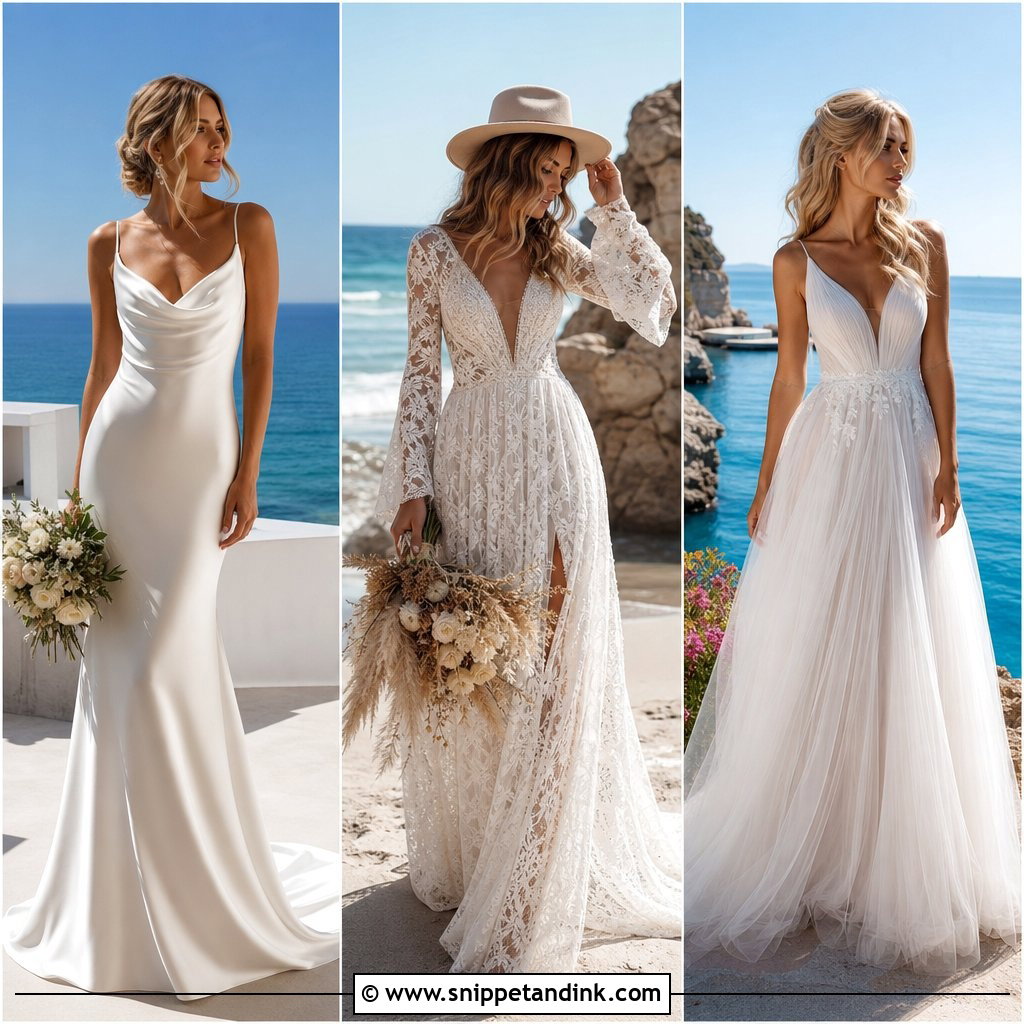
Boho dresses sound casual, but the good ones still have a defined waist. Without it, crochet and flutter sleeves read as a beach cover-up on camera. Look for a dress with crochet lace, a deep V-neck or a loose skirt, then make sure the waist seam sits right on your natural waist. Crochet snags easily on wicker chairs and rough bark, so watch where you sit for portraits. Woven sandals, a floral comb, stacked fine rings and a bouquet of pampas and palm leaves keep it grounded, and glowy skin works better here than heavy makeup.
5. Halter Neck Tropical Wedding Dress
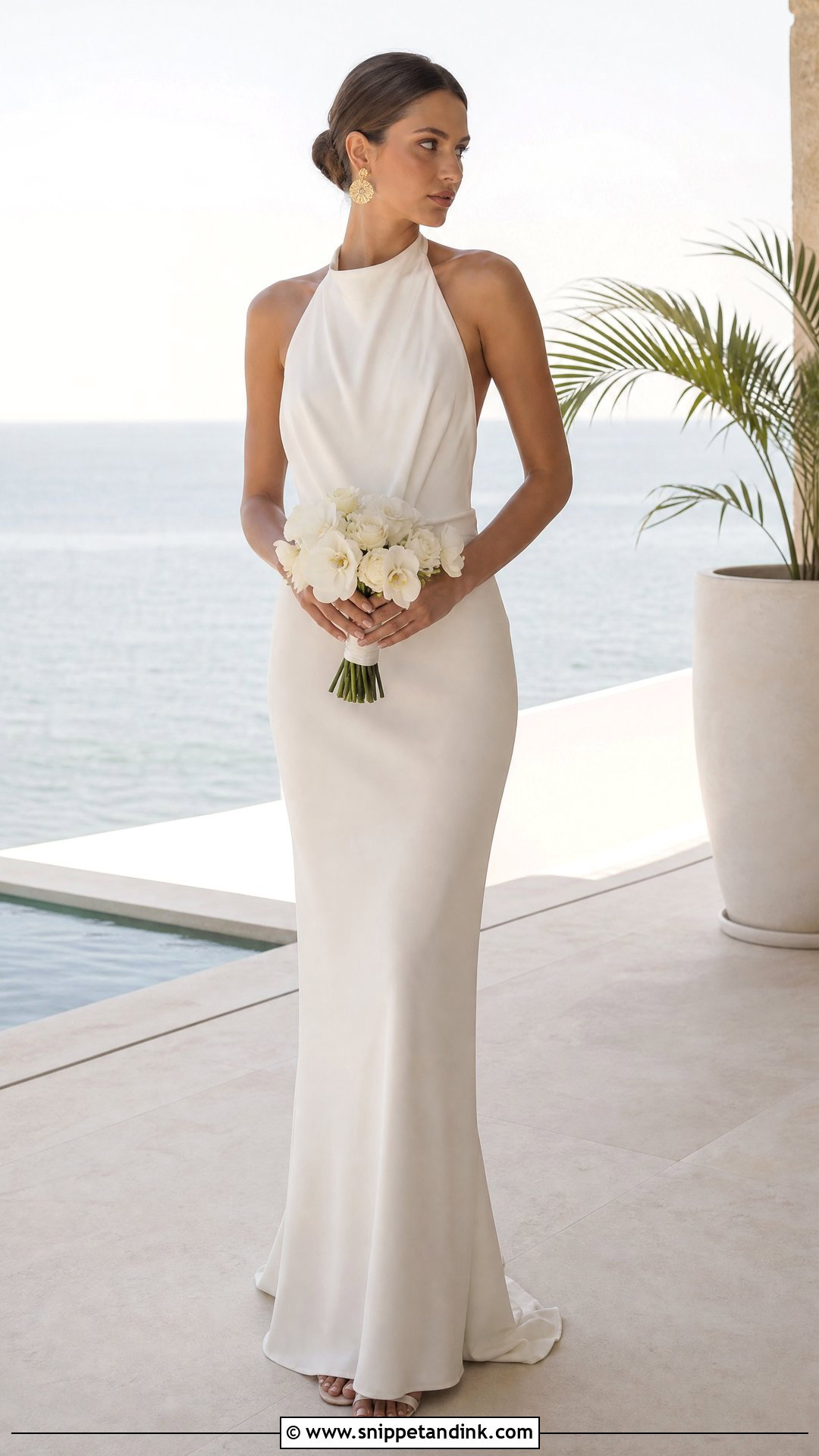
A halter neck tropical wedding dress stays put in wind better than almost any other neckline, because the support comes from the strap around your neck rather than from a tight bodice. That usually means less boning against hot skin. Silk crepe, chiffon and soft satin all suit it; a clean sheath reads modern, while a halter A-line moves more. The catch is that the strap carries the dress, so a heavy skirt can leave your neck sore by the end of a long day. I ask brides to wear the gown for a full hour at the final fitting to test it. Sleek sandals, gold earrings and a low bun keep the neckline on show.
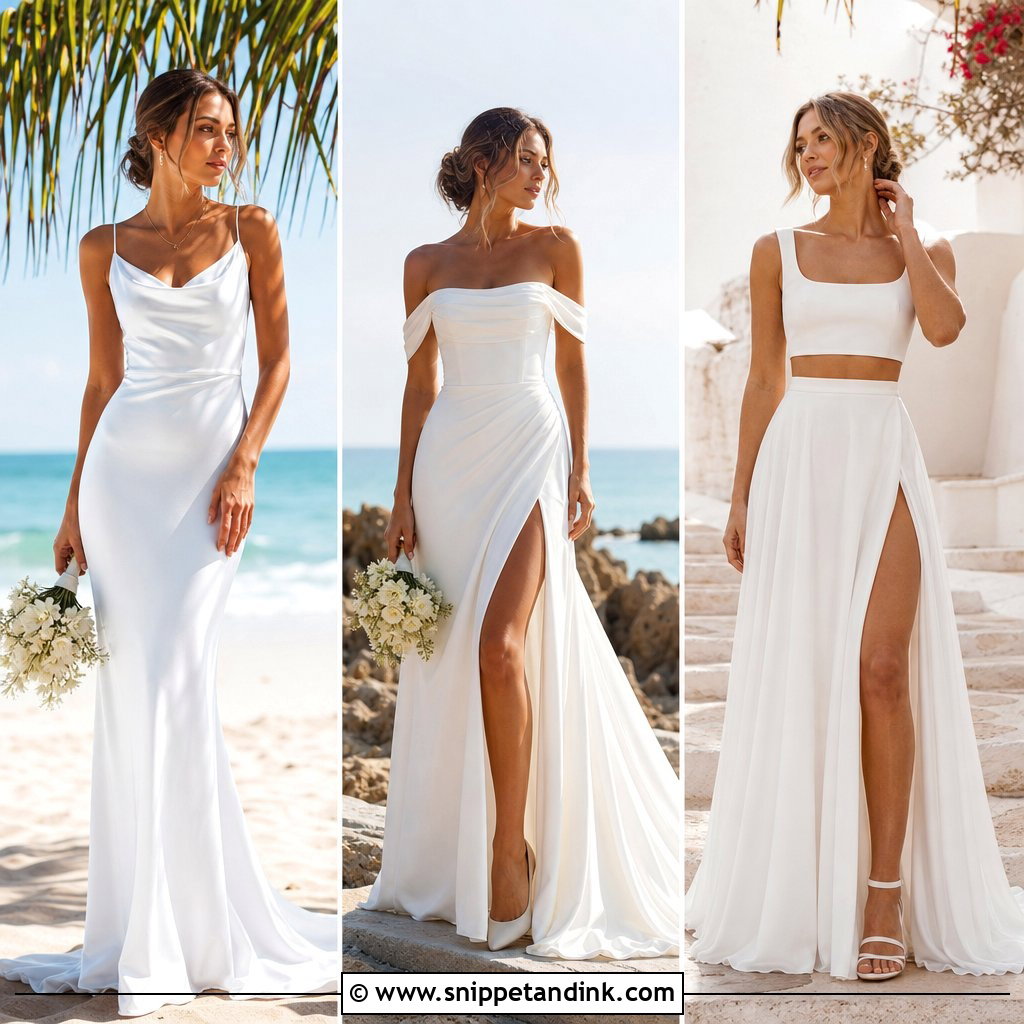
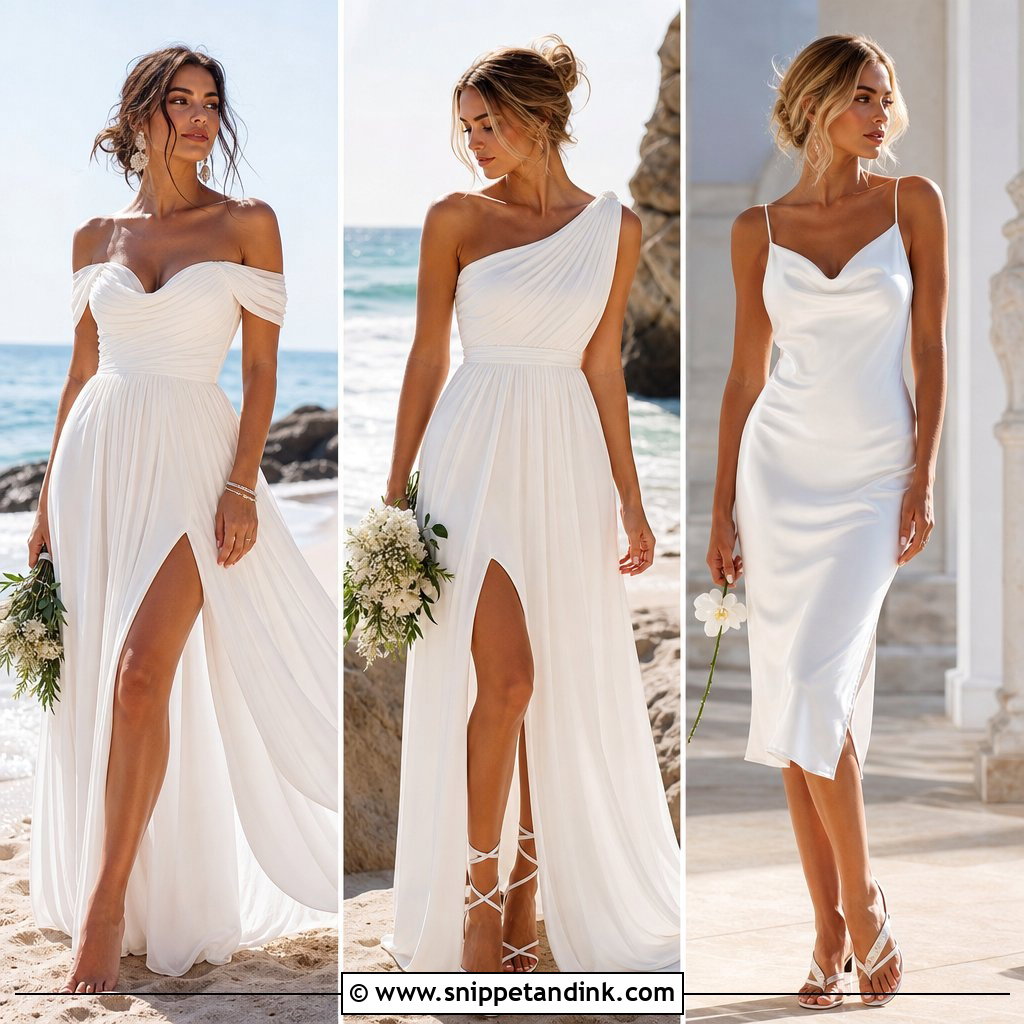
6. Slip Wedding Dress For Tropical Wedding
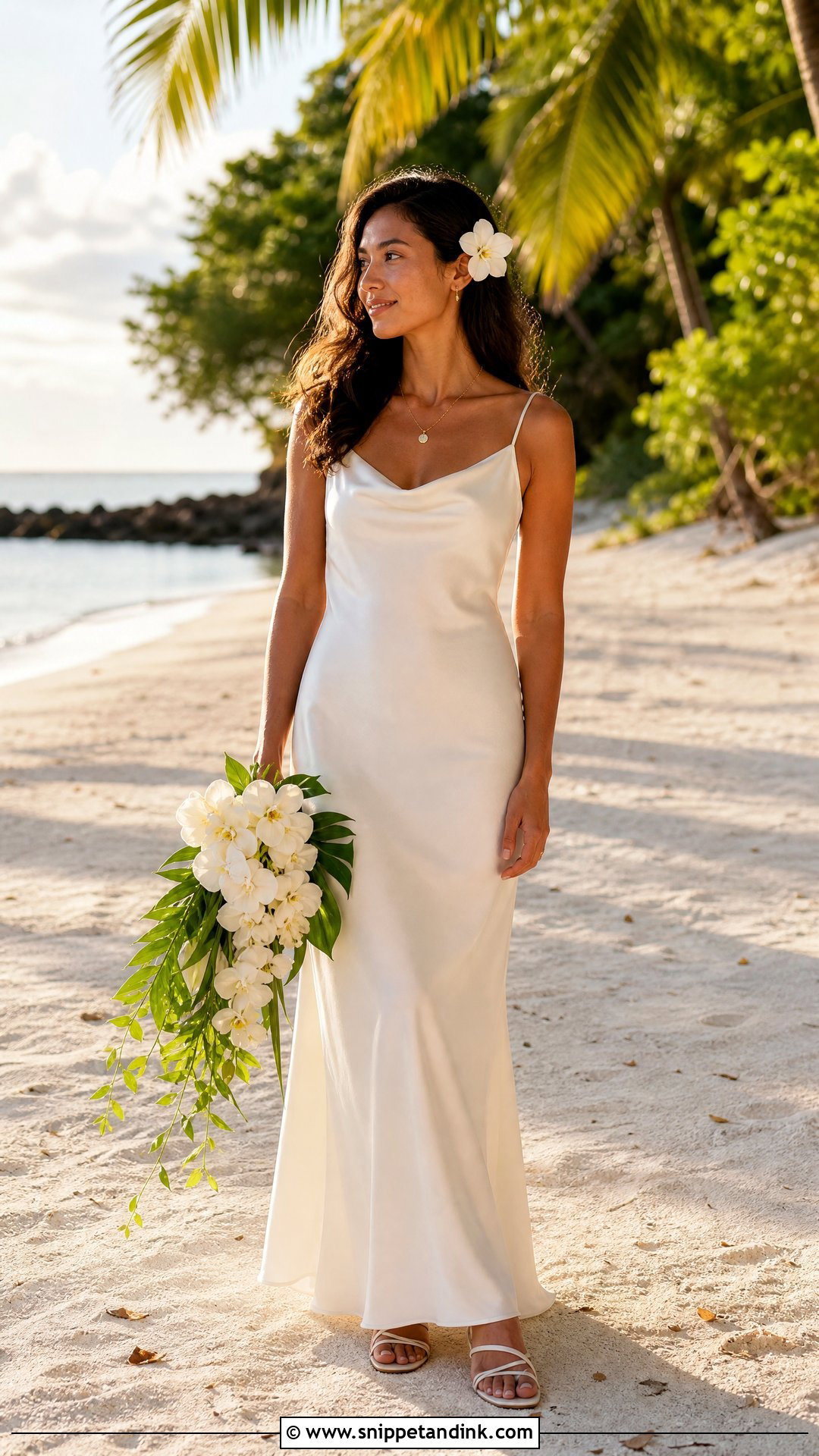
A bias-cut slip is the coolest dress here to wear and the least forgiving to fit. Because the fabric is cut on the diagonal, it skims and stretches over the body, so it shows every underwear seam and every damp patch. I always fit a slip with the exact undergarments the bride will wear on the day, and in humid places I push for a breathable lining. Silk is the most comfortable; satin and crepe recover better from a suitcase. Strappy low heels or flat sandals, a small pendant and a single orchid in glossy waves keep it tropical without fuss.
7. Floral Embroidered Tropical Wedding Dress
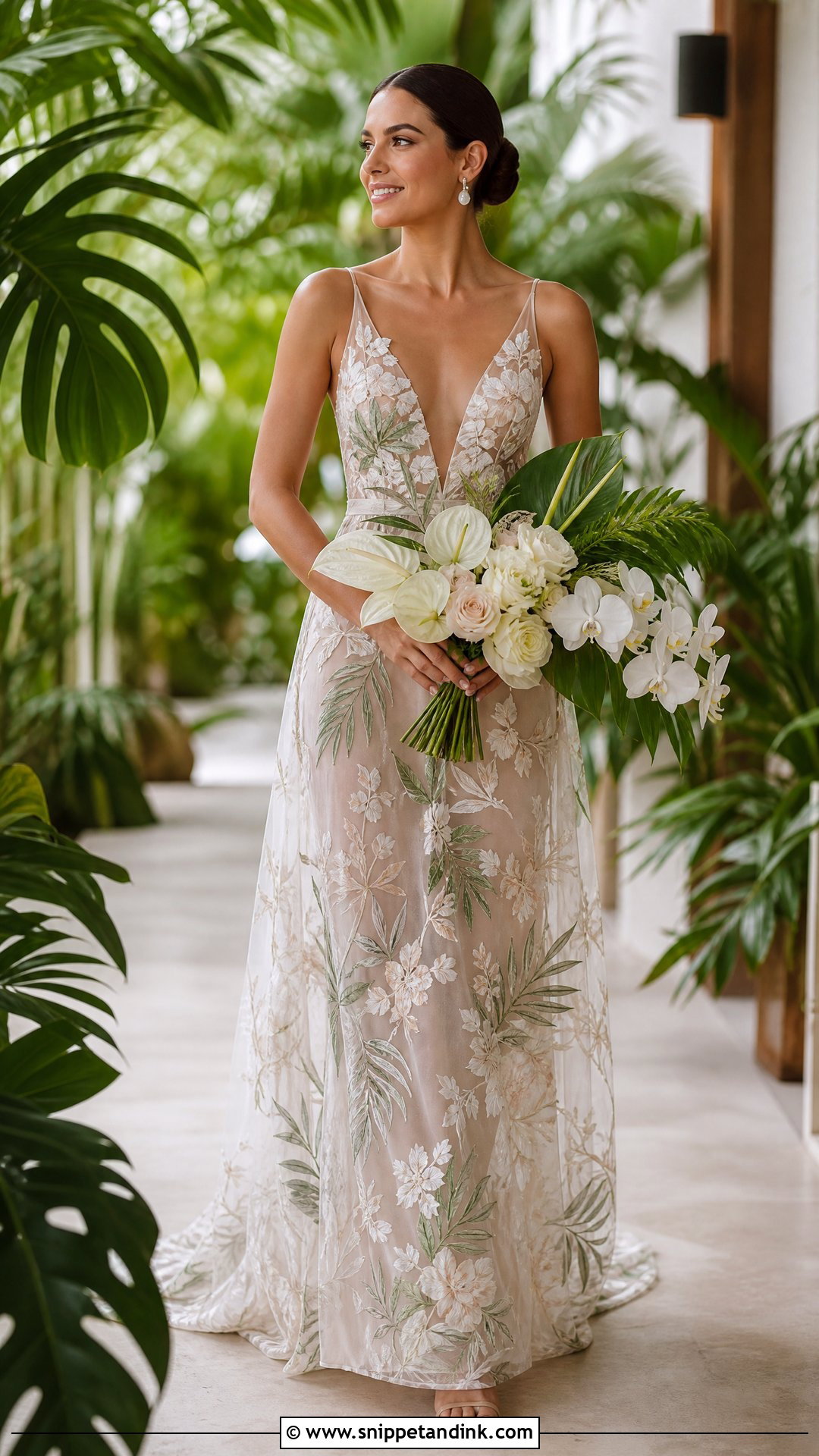
Embroidery is the quietest way to bring the destination into the dress: palm fronds, vines or hibiscus-shaped flowers worked in thread rather than printed. On a sheer overlay it reads soft from a distance and detailed up close, which suits a garden ceremony with lush planting nearby. Check the inside of the embroidery when you try it on. Scratchy knots against bare arms are hard to ignore in heat, and a good bridal seamstress can back them with fine mesh. Keep accessories plain, with nude sandals, pearl earrings and a smooth bun, so the stitching gets the attention.
8. Off Shoulder Tropical Wedding Dress
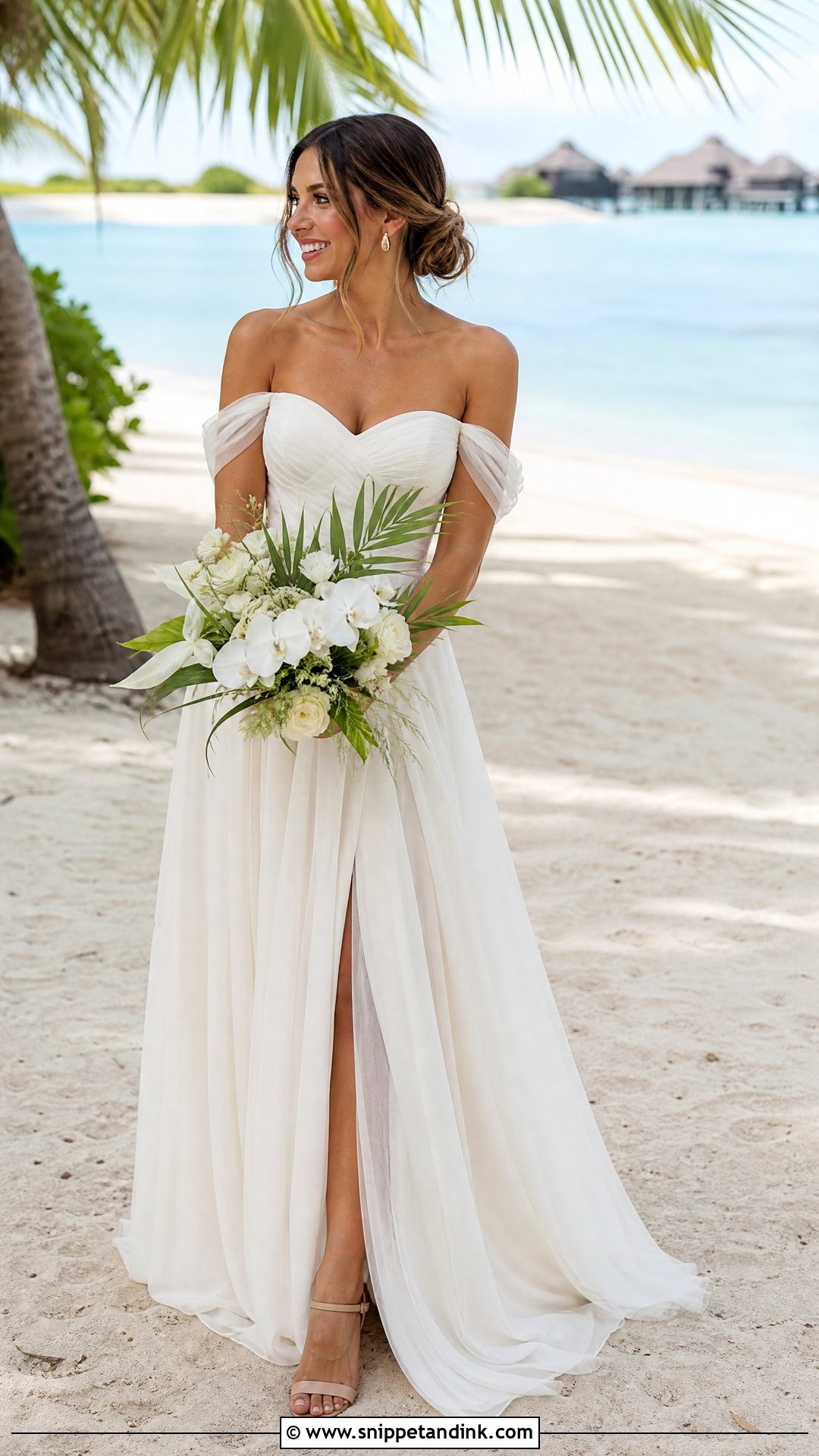
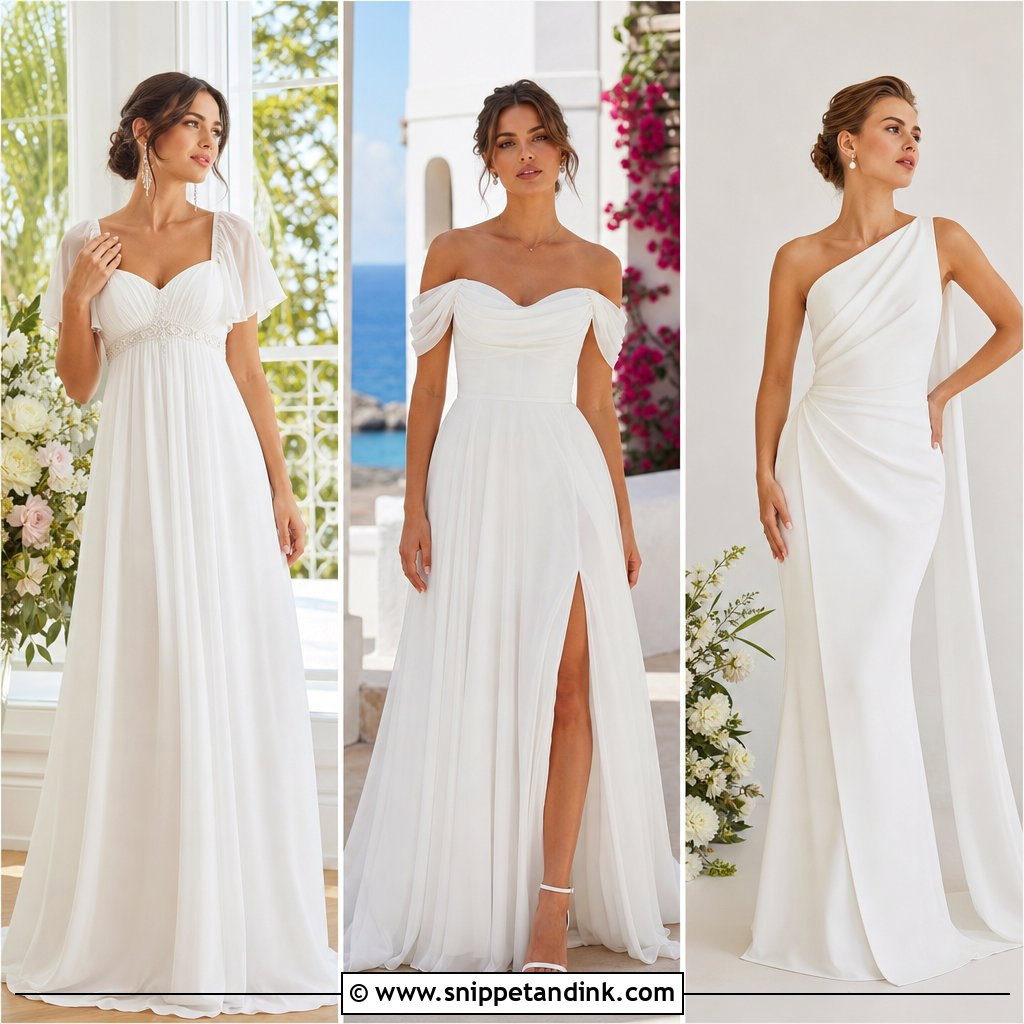
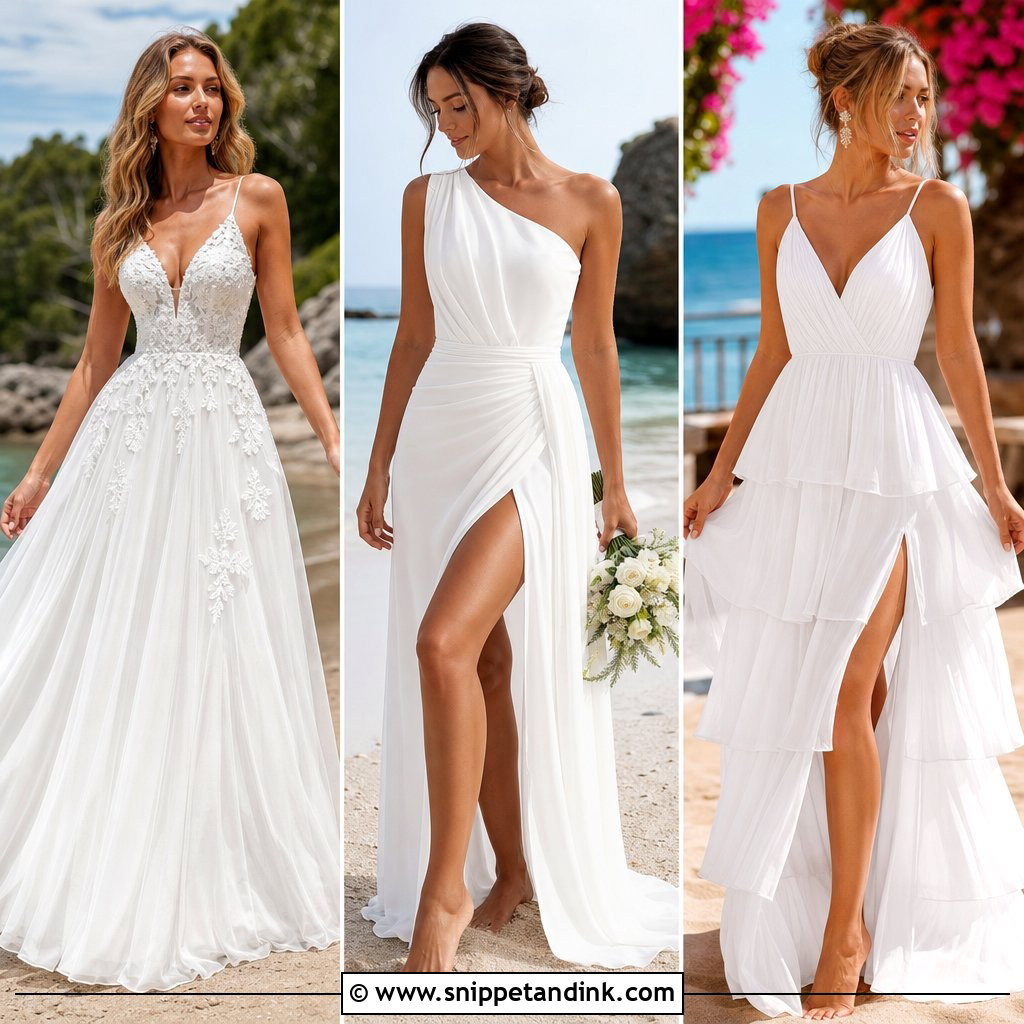
Off-shoulder sleeves are where hot-weather dresses go wrong most often. A stiff sleeve band pins your arms to your sides, and you’ll feel it the first time you hug someone or lift your bouquet. I have brides raise both arms over their head in the fitting room; if the bodice rides up, it’s the wrong cut for a dance-heavy beach reception. Draped fabric or light lace with a little stretch moves far better. A side slit or relaxed train helps on sand, block-heel sandals keep you steady, and a loose low bun with small hoops leaves the shoulders as the focus.
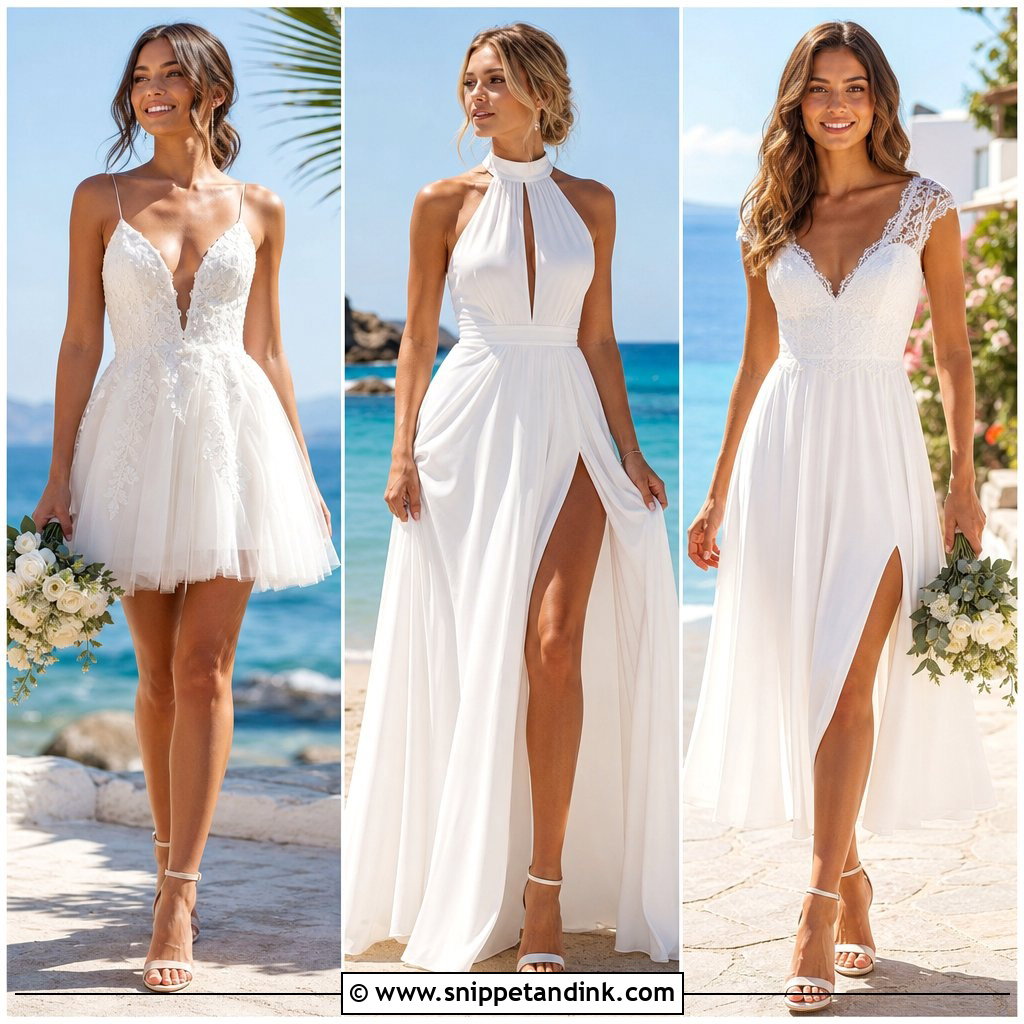
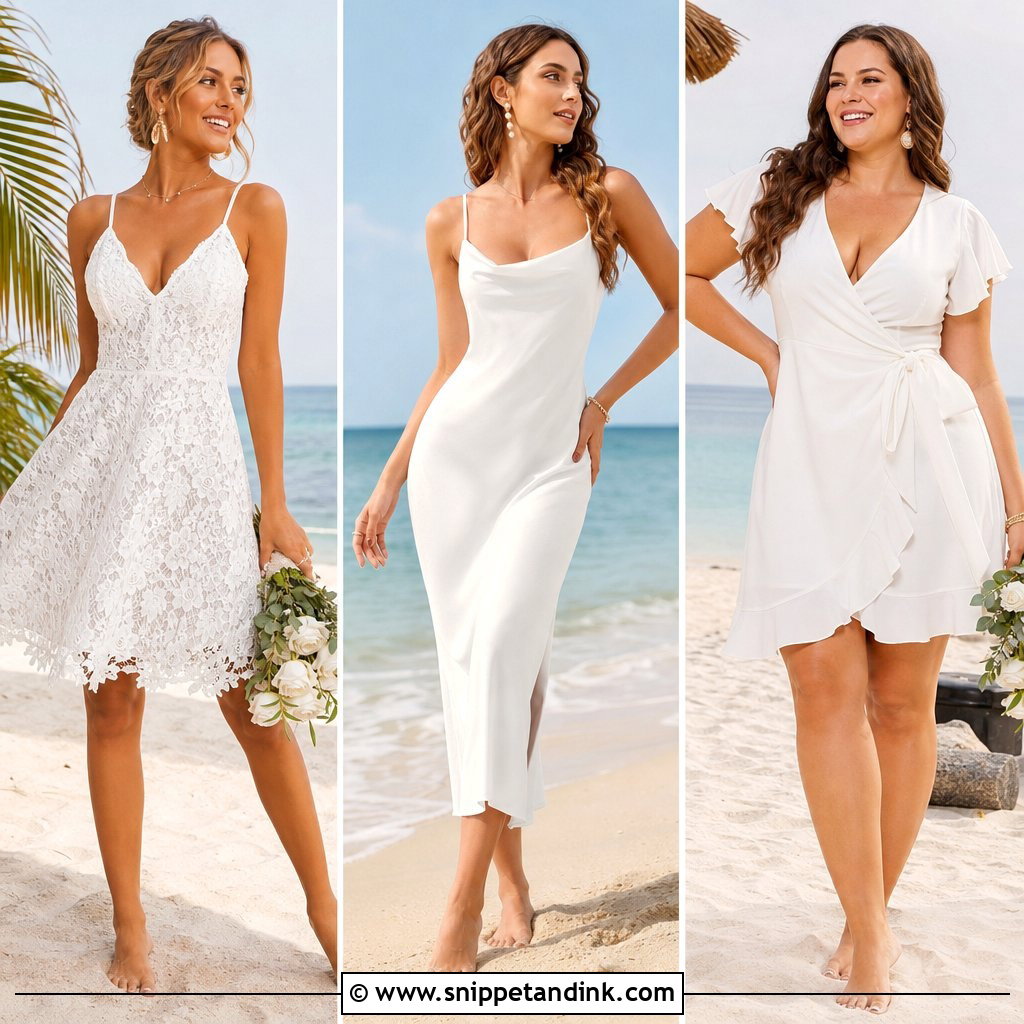
9. Short Tropical Wedding Dress
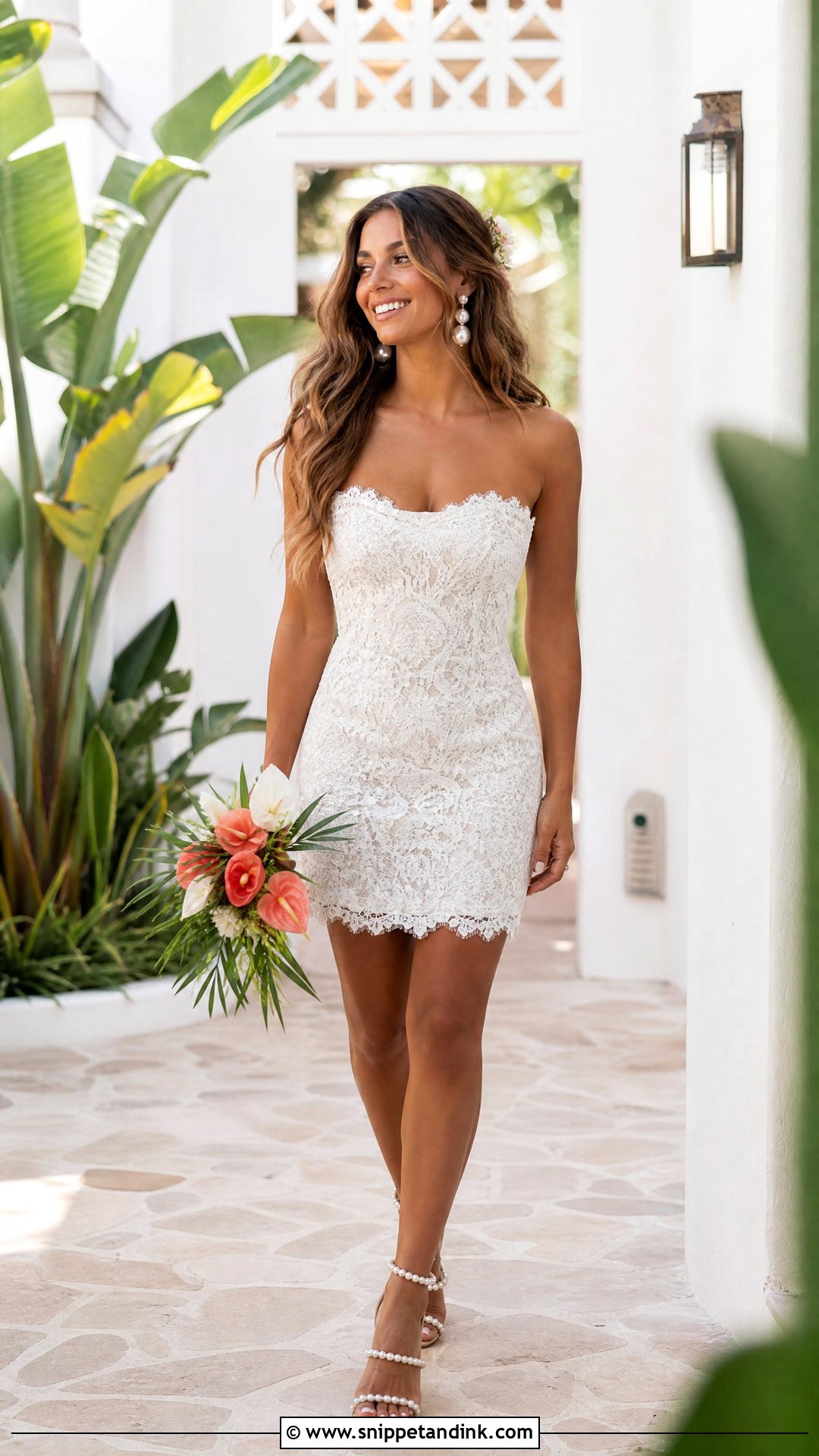
A short dress is my favorite answer for a casual beach ceremony, a courthouse-to-island elopement or a reception change. Mini, knee or tea length keeps you cool and keeps the hem out of the sand. The risk is that short can read as a party dress, so it needs at least one clearly bridal detail, such as lace, feathers, a bow, floral appliqué or a structured bodice. Pearl sandals, slingbacks or embellished flats suit the shorter line, and statement earrings carry more weight when there’s less fabric. Petite brides often find a short hem sits in proportion in a way a long train never quite does.
10. Tea Length Tropical Wedding Dress
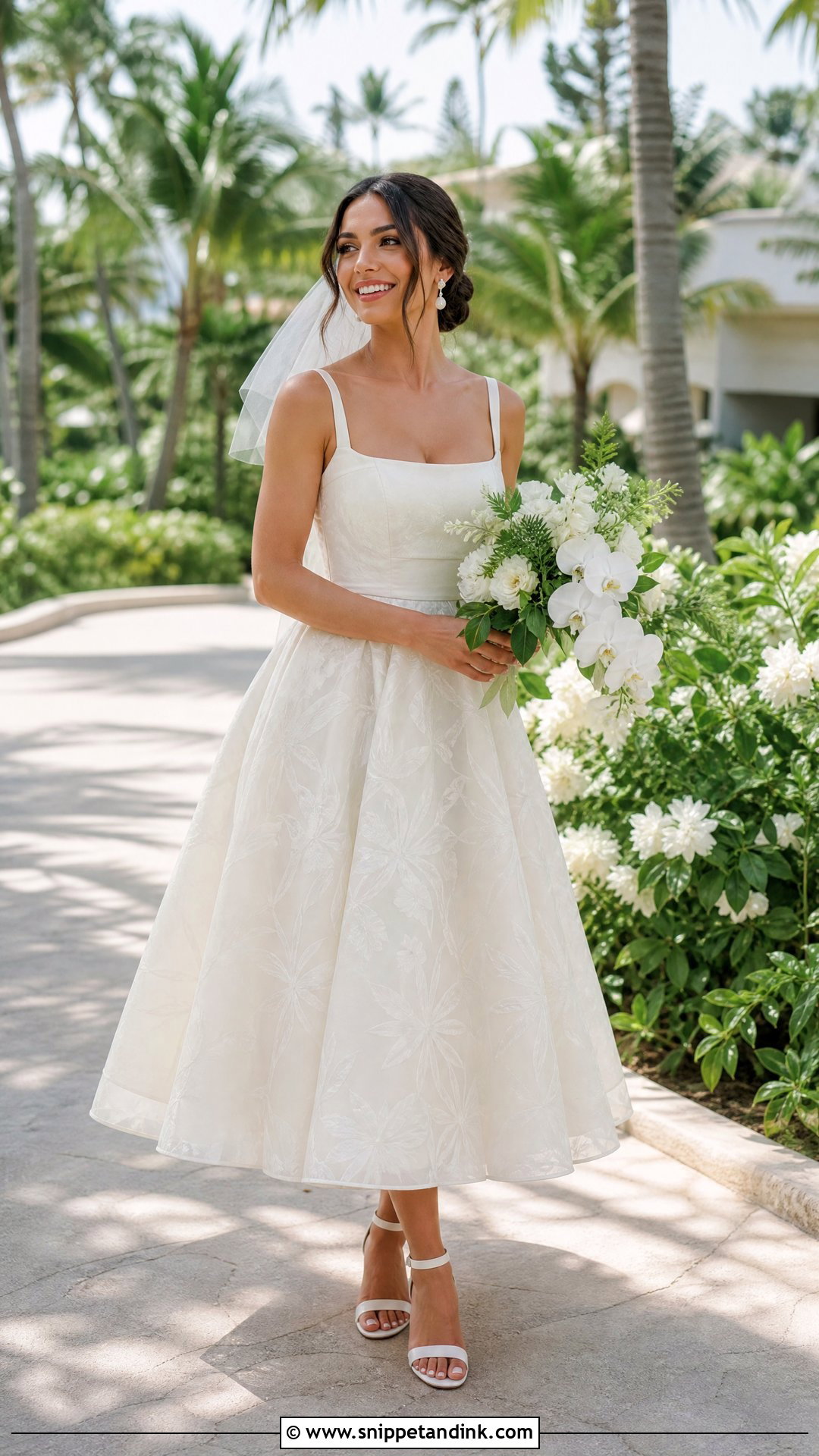
Tea length falls between the knee and the ankle, which is exactly the zone that stays clean on a garden lawn and still shows off the shoes. Organza, tulle, cotton lace or a light mikado give it vintage shape without much weight. Mikado is the one I’d watch: it’s crisp and holds structure, but it wears warmer than it looks, so I save it for shaded or evening ceremonies. Ankle-strap sandals, pearl earrings and a short veil or bow complete it, and on the dance floor the skirt swings without anyone stepping on it.
11. Tropical Wedding Dress With Slit
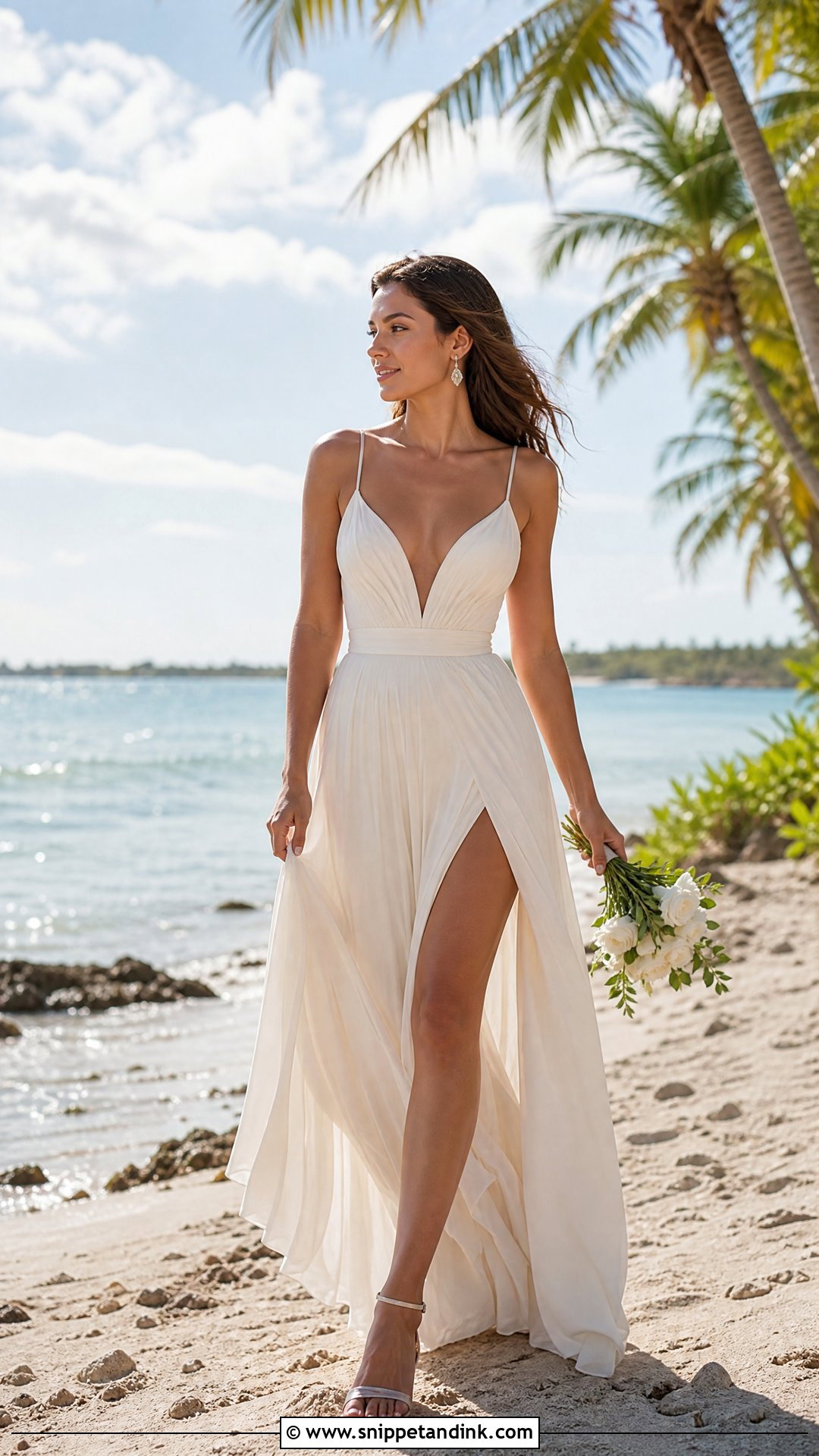
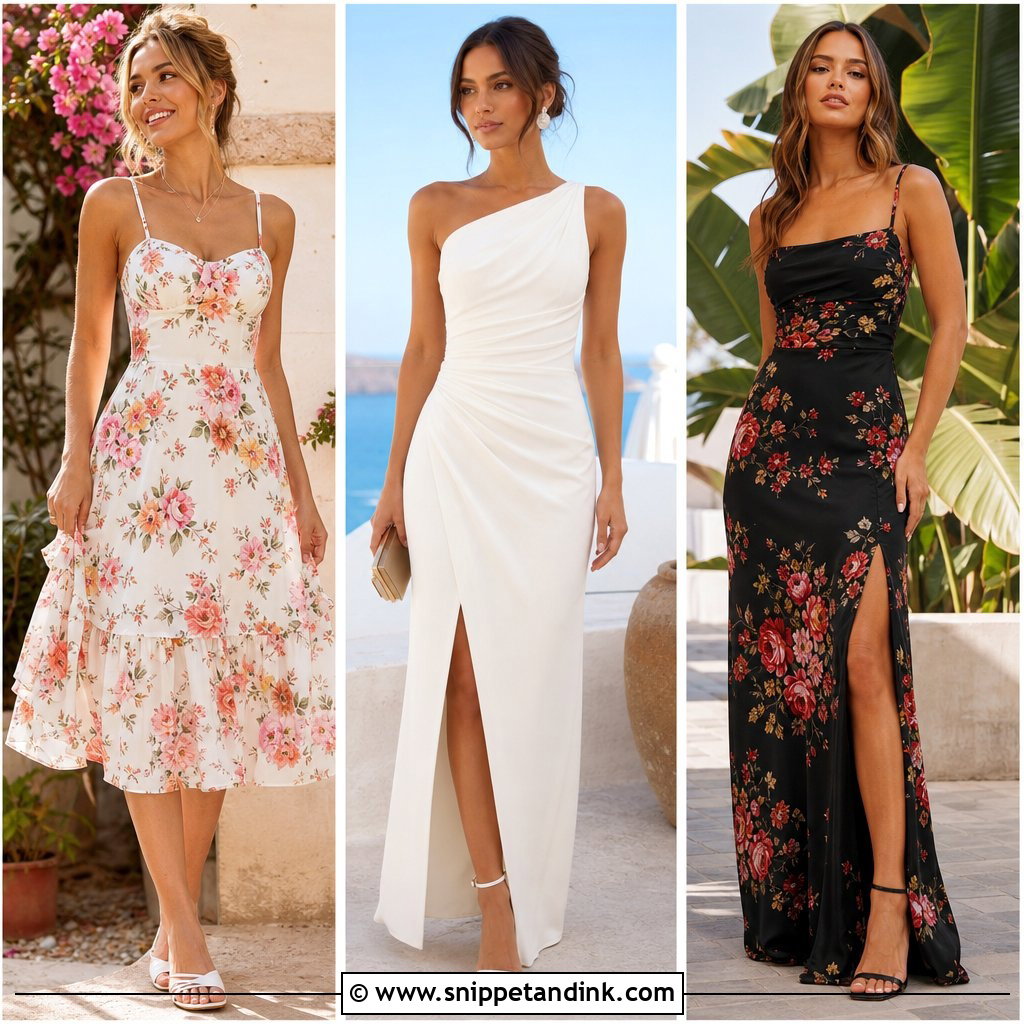
A slit lets a straight or soft skirt open as you walk, and that’s what turns sunset beach photos into movement rather than a still pose. Decide the height standing, then sit down and climb a step in the fitting room; a slit that looks modest upright can open to the hip when you’re seated. Chiffon, crepe and satin all drape well around one, and a fitted bodice balances it. Strappy sandals, a light glow on the leg and simple jewelry are all it needs.
12. Tropical Mermaid Wedding Dress
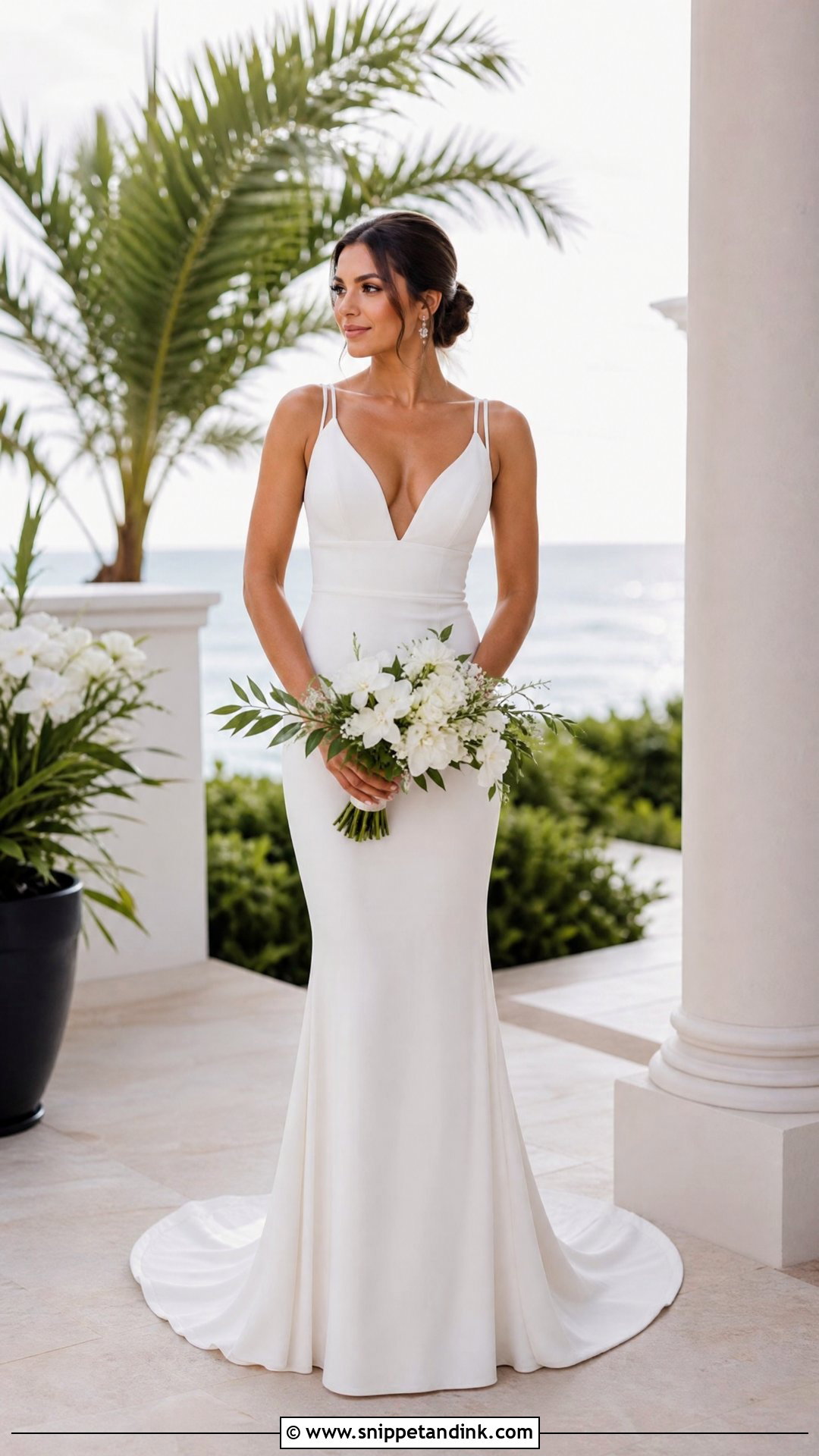
Mermaid and tropical can coexist, but only if the fabric gives. A stiff mermaid in heavy satin with a low flare turns sand into a shuffle and makes steps awkward. I’d look at stretch crepe, soft lace or light satin with the flare starting at or just below the knee, and I’d have you walk in your sandals at every fitting. Keep the train short, since on a beach it collects grit and drags. Low heels, sleek earrings and a smooth updo suit the formal line, and the shape is happiest on resort decks and oceanfront terraces rather than on the sand itself.
13. Tropical A Line Wedding Dress
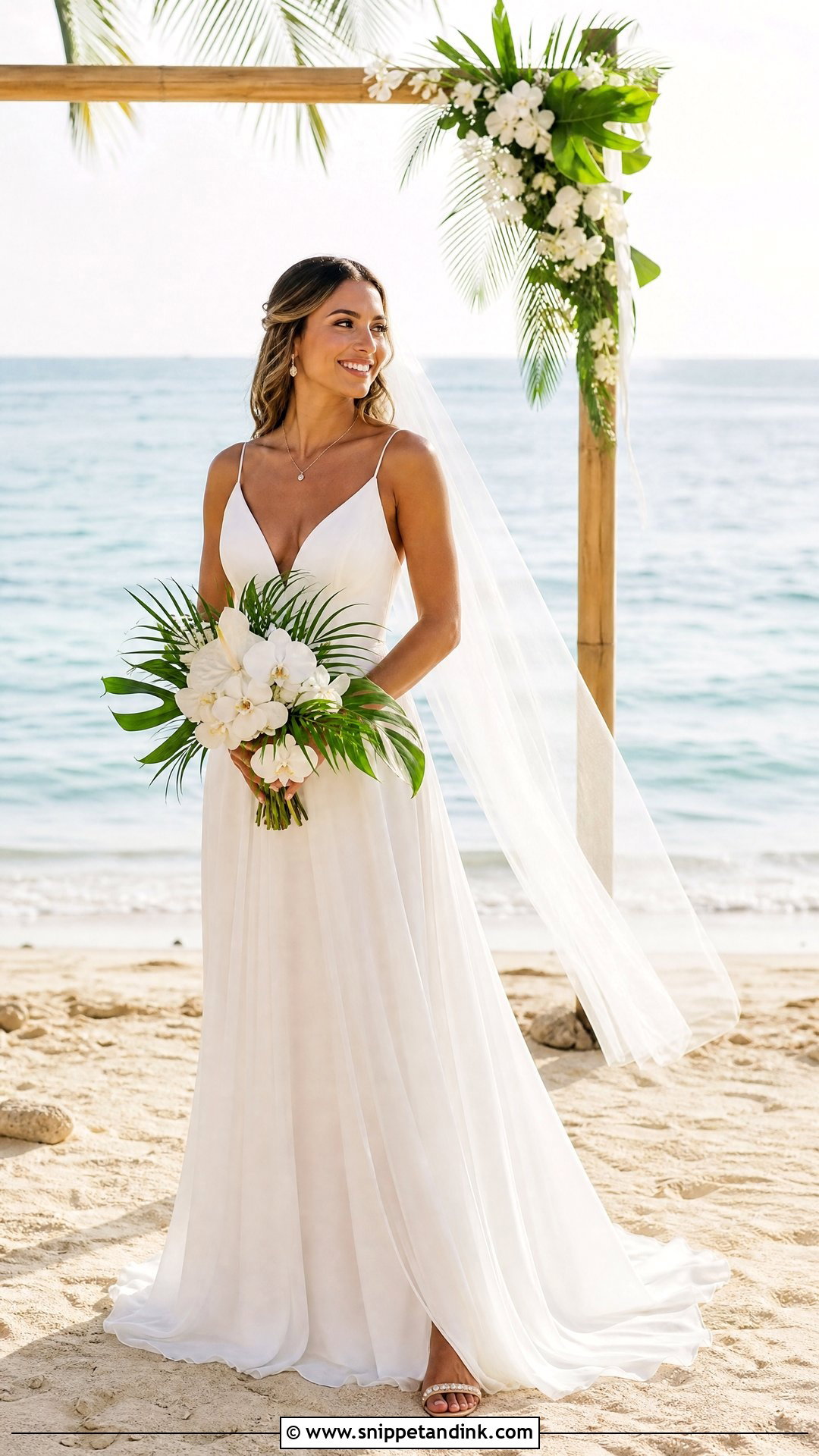
An A-line is the dress I’d put on the widest range of brides for heat. The bodice holds the shape and the skirt floats off the hips, so air actually reaches your legs. Chiffon, organza, tulle or lace over a soft lining all breathe. Pick the neckline by support: strapless works when the bodice is properly boned and fitted, while a V-neck or scoop gives more freedom for a fuller bust. A fingertip veil, sandals and a bouquet of white flowers with tropical greenery round it out. It’s the low-risk pick of the list, and there’s nothing wrong with low risk on a hot day.
14. Tropical Wedding Dress With Train
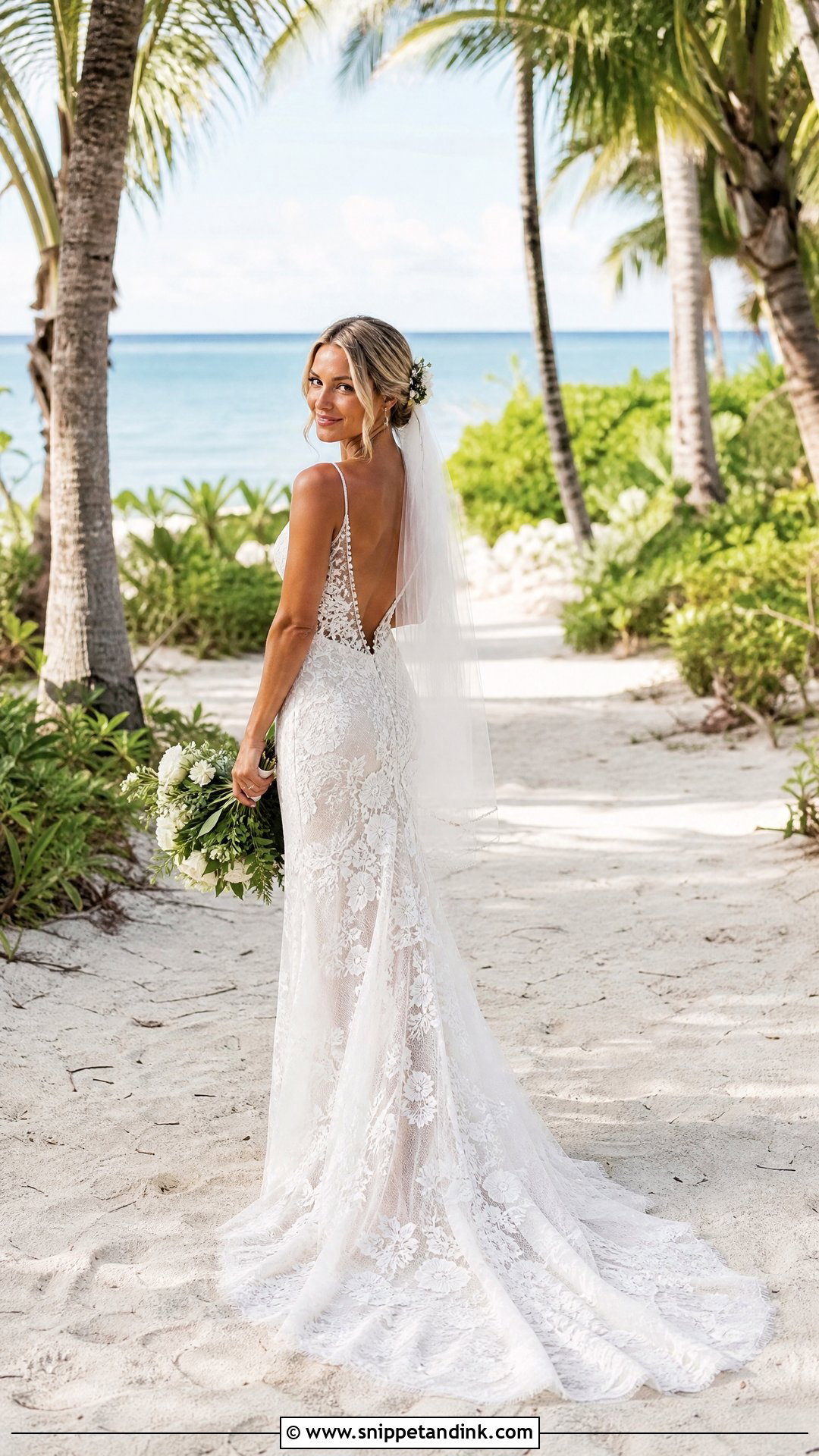
A train looks dramatic in a wide shot, but only if it’s light enough to manage. Stick to a sweep or chapel length; a cathedral train on a beach turns into a sail in the wind and a dustpan on the ground. Lace, chiffon and crepe drag less than satin. Ask for a bustle at the first fitting, and have your seamstress show your maid of honor how to fasten it, because the hooks and loops are surprisingly fiddly with guests waiting. Secure sandals, a low veil and a simple hair accessory keep everything else calm.
15. Tropical Wedding Dress With Detachable Skirt
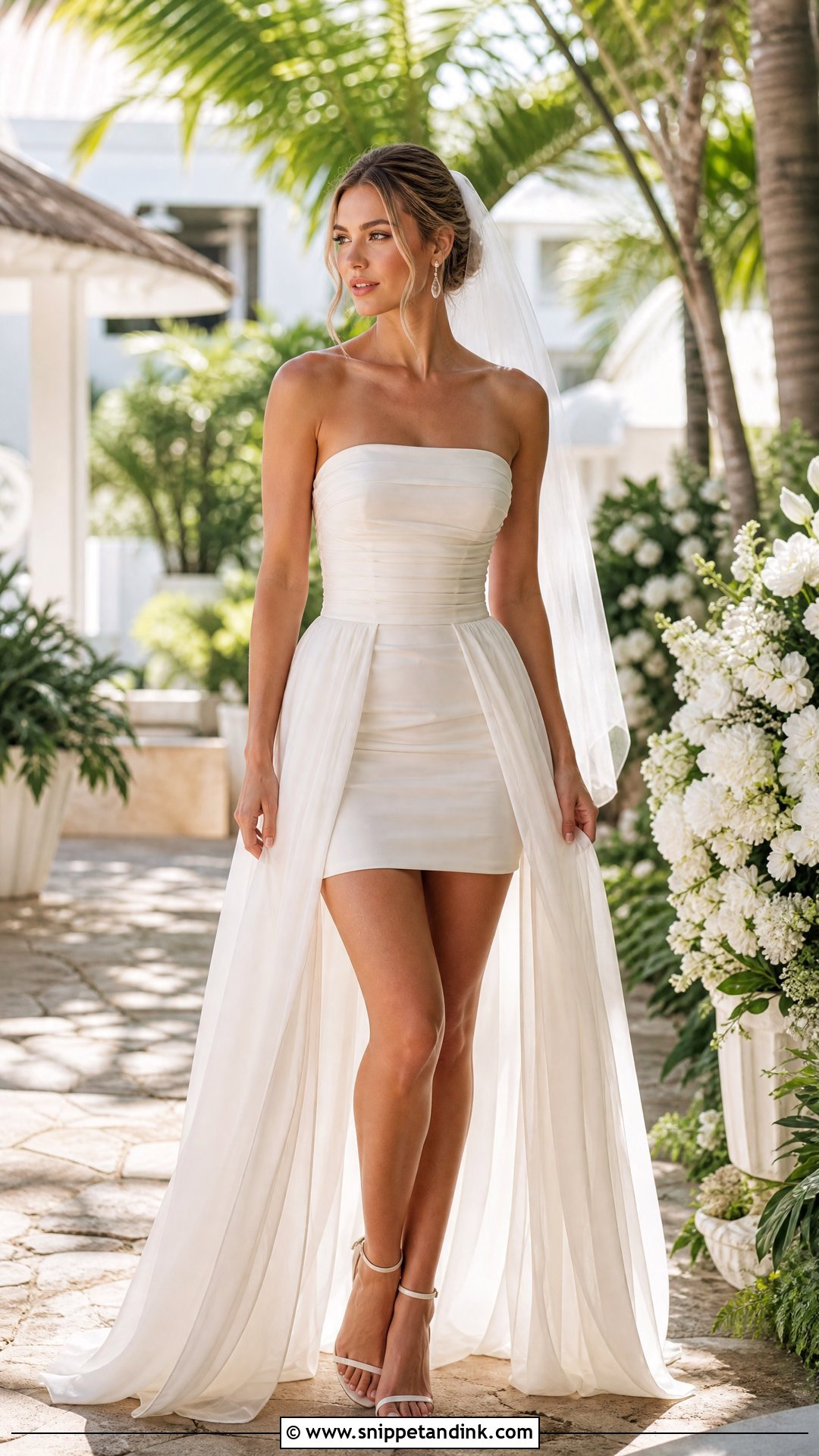
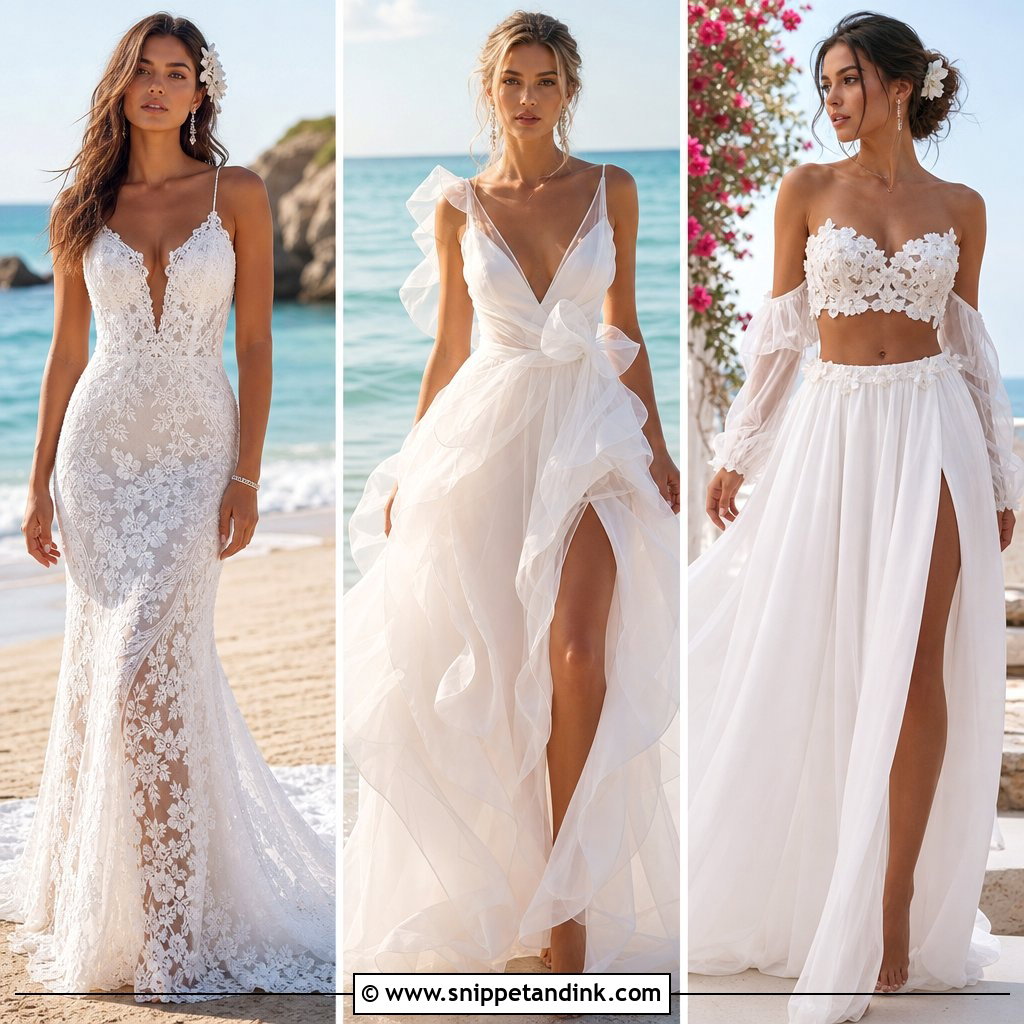
A detachable overskirt gives you a ceremony dress and a party dress in one suitcase. Wear the full tulle, organza or chiffon skirt for the vows, then unhook it to reveal a fitted mini, sheath or slip for dancing. What I check most is the attachment: hooks and snaps at the waist need to sit flat so the base dress doesn’t show a ridge once the skirt comes off. Practice the removal with whoever will help you on the day. Swap the veil for statement earrings or a hair comb at the change and the second look feels planned rather than stripped back.
16. Tropical Wedding Jumpsuit
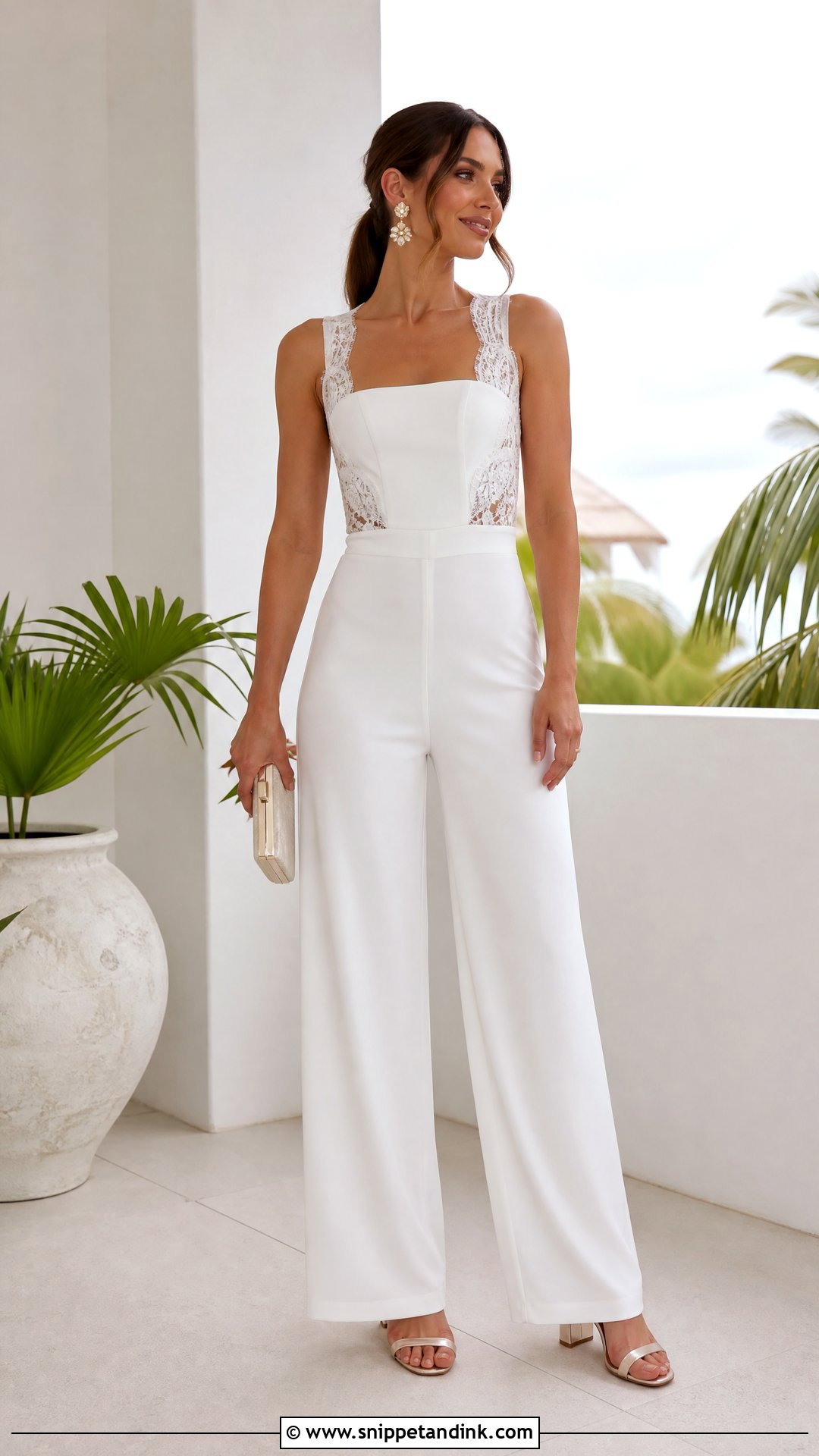
A tropical wedding jumpsuit suits the bride who has never felt like herself in a gown. Wide legs in crepe or light satin catch the breeze like a skirt, and bridal details such as lace panels, a cape, pearl buttons or a halter neck keep it from looking like office wear. Fit the rise and the inseam carefully. A wide leg hemmed for heels drags on sand in flats, so settle your shoes before the final hem. Think about bathroom trips too, since a back zip on a one-piece needs a helper. Block heels, statement earrings and a sleek low ponytail finish it.
17. Two Piece Tropical Wedding Dress
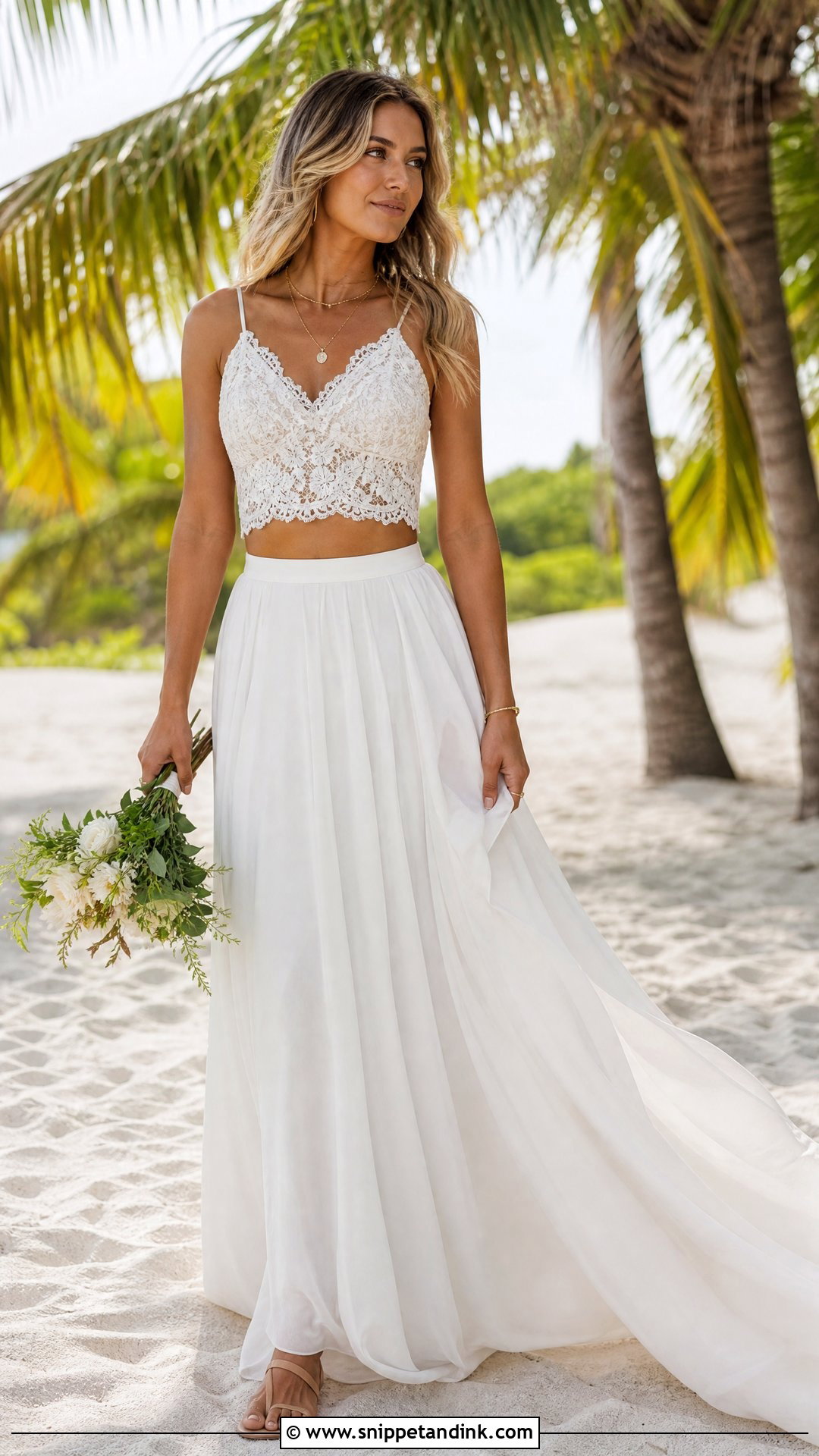
A two piece tropical wedding dress breathes better than most gowns because nothing fitted runs from the bust down to the hips. A crop top with a high-waisted skirt shows only a narrow band of skin, and lace, off-shoulder, halter or plain satin tops all sit well over chiffon or crepe. I’d have the top’s hem and the skirt’s waistband fitted at the same appointment, so the gap stays even when you raise your arms. Two separate pieces also fold flatter in luggage than a one-piece gown. Flat sandals, layered fine jewelry and soft waves keep it relaxed.
18. Tropical Wedding Dress With Cape
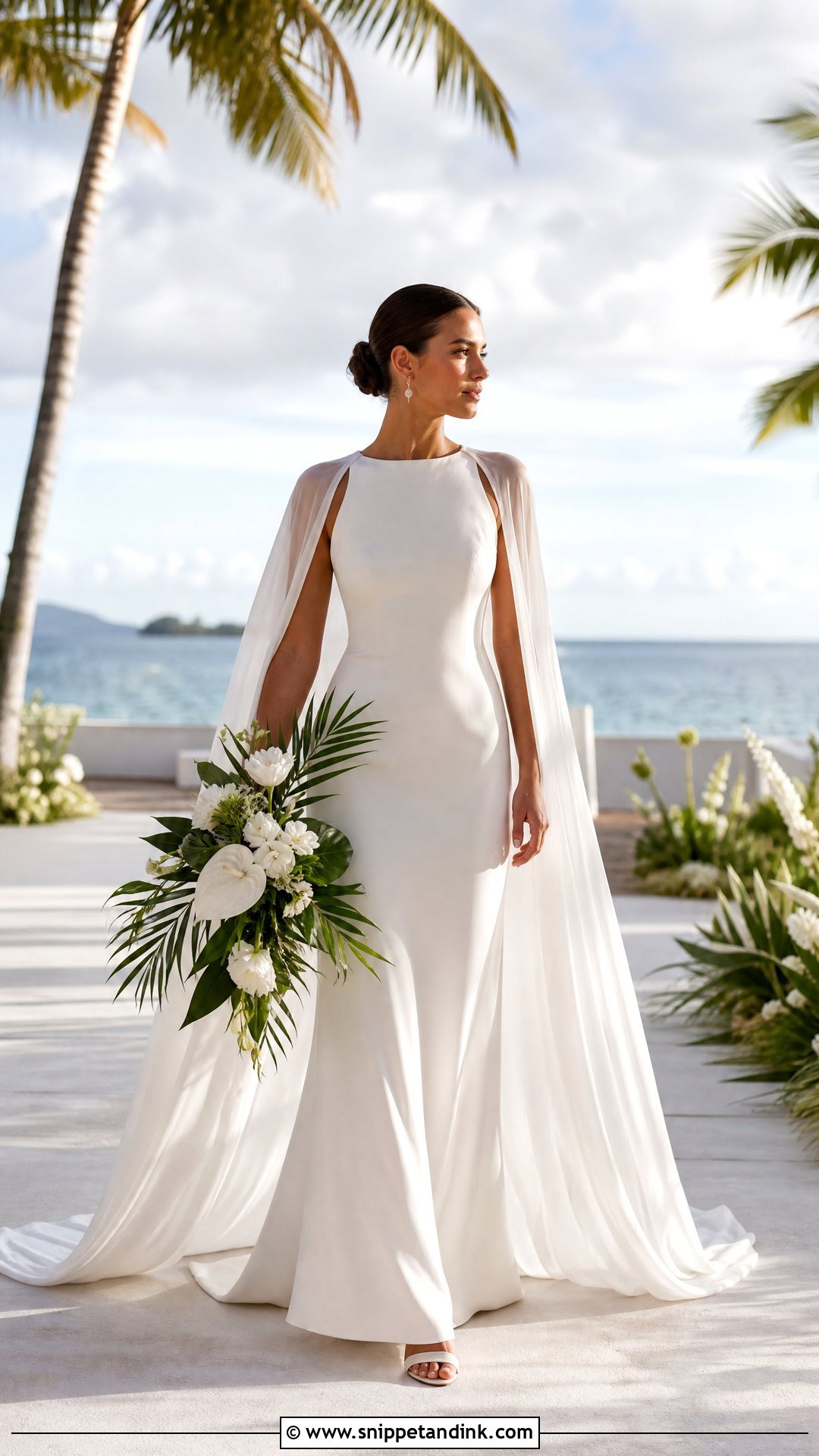
A cape gives you veil-style drama that won’t tangle in your hair. A sheer chiffon or lace capelet lifts in the breeze and frames a simple column, slip or sheath from behind. It’s also the easiest way to add coverage for a religious ceremony and take it off for the reception. Check how it fastens: a cape clipped at the shoulders can tug the neckline backward when the wind fills it, so ask for small hidden snaps along the shoulder seams. Minimal earrings, smooth sandals and a sleek bun stop the outfit from getting busy.
19. Tropical Wedding Dress With Flutter Sleeves
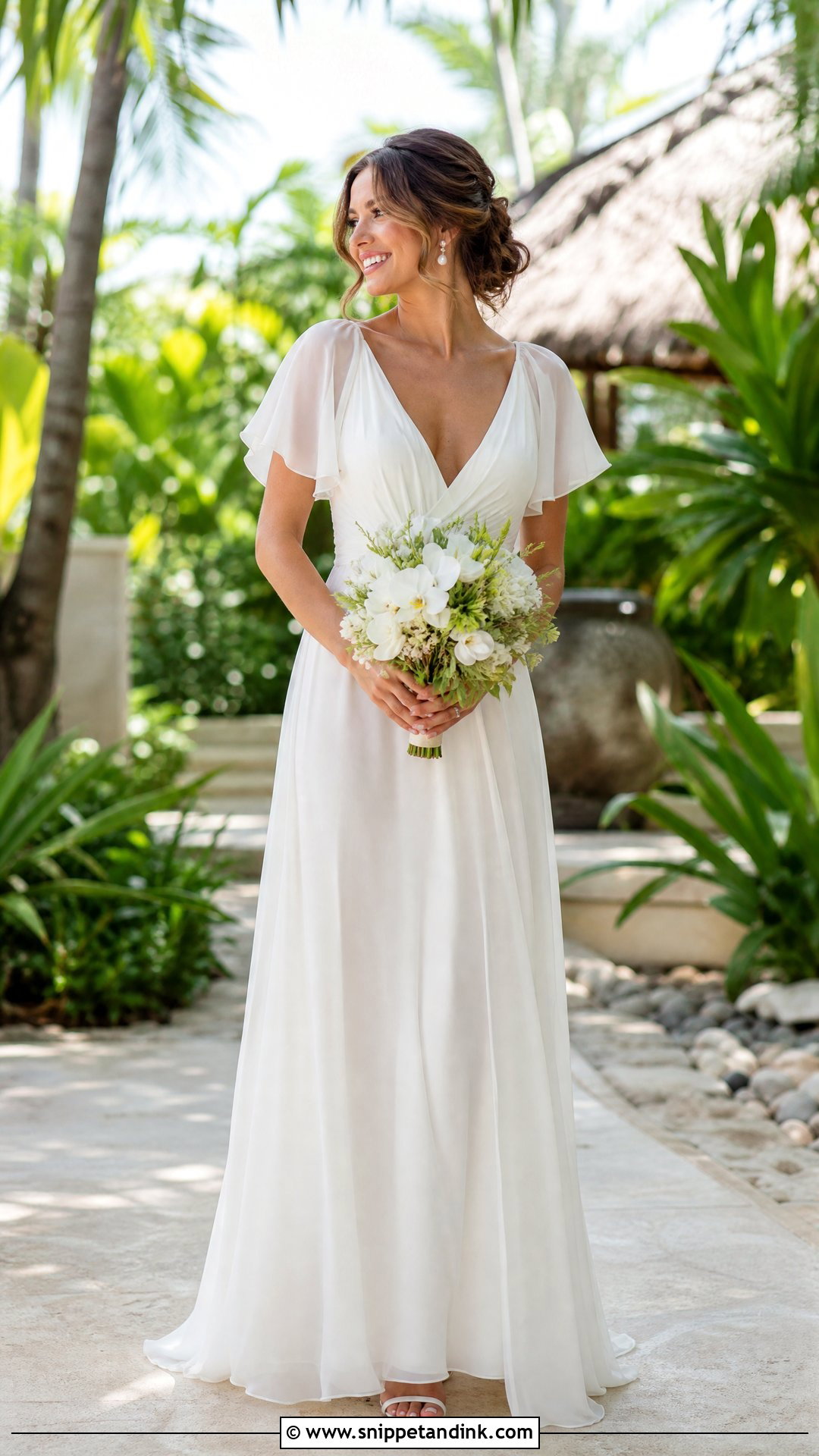
Flutter sleeves give light arm coverage without trapping heat, because they hang loose instead of wrapping the arm. They’re my usual suggestion for brides who don’t want strapless but find cap sleeves too warm. Chiffon, lace or soft tulle sleeves move best; anything stiffer sticks out like wings. A V-neck or wrap bodice suits the shape. Low sandals, pearl earrings and a loose updo keep it gentle enough for a garden, and it stays cool through an afternoon beach service.
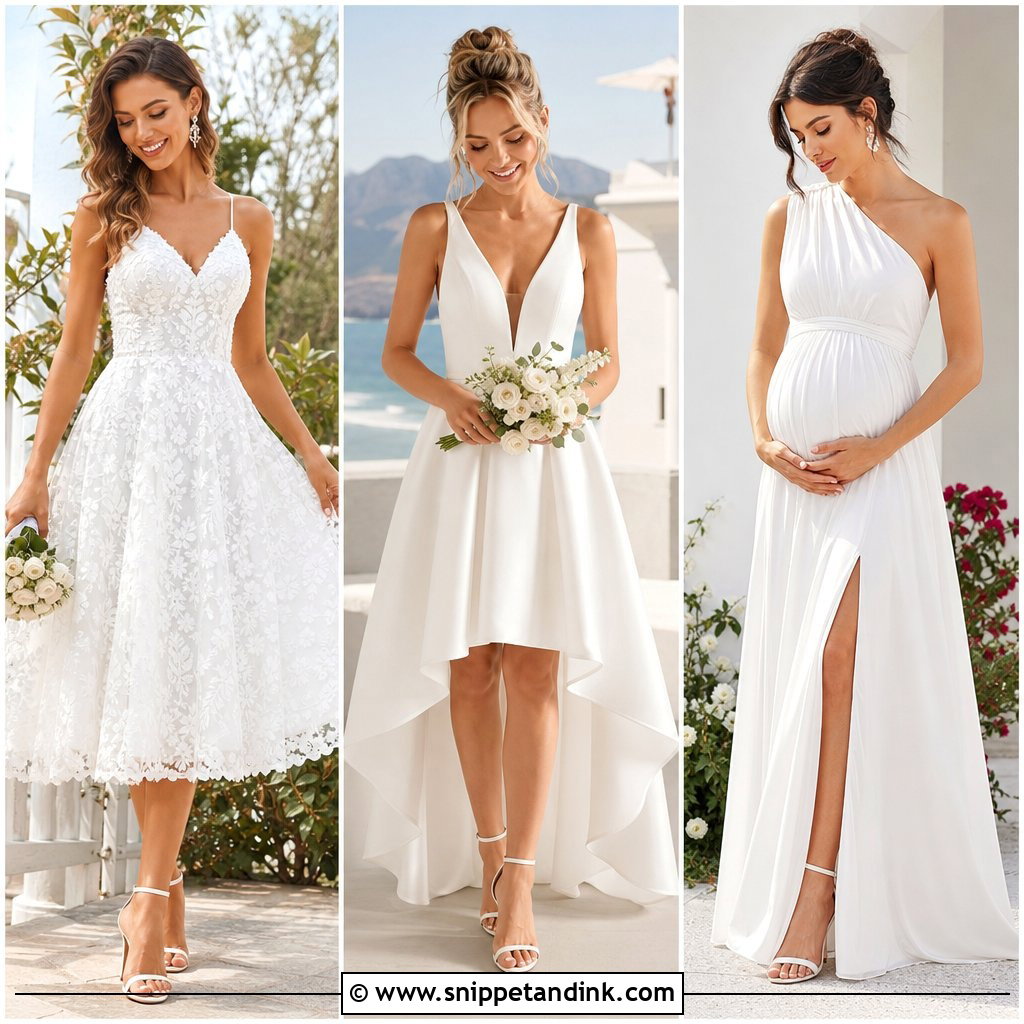
20. Tropical Wedding Dress With Spaghetti Straps
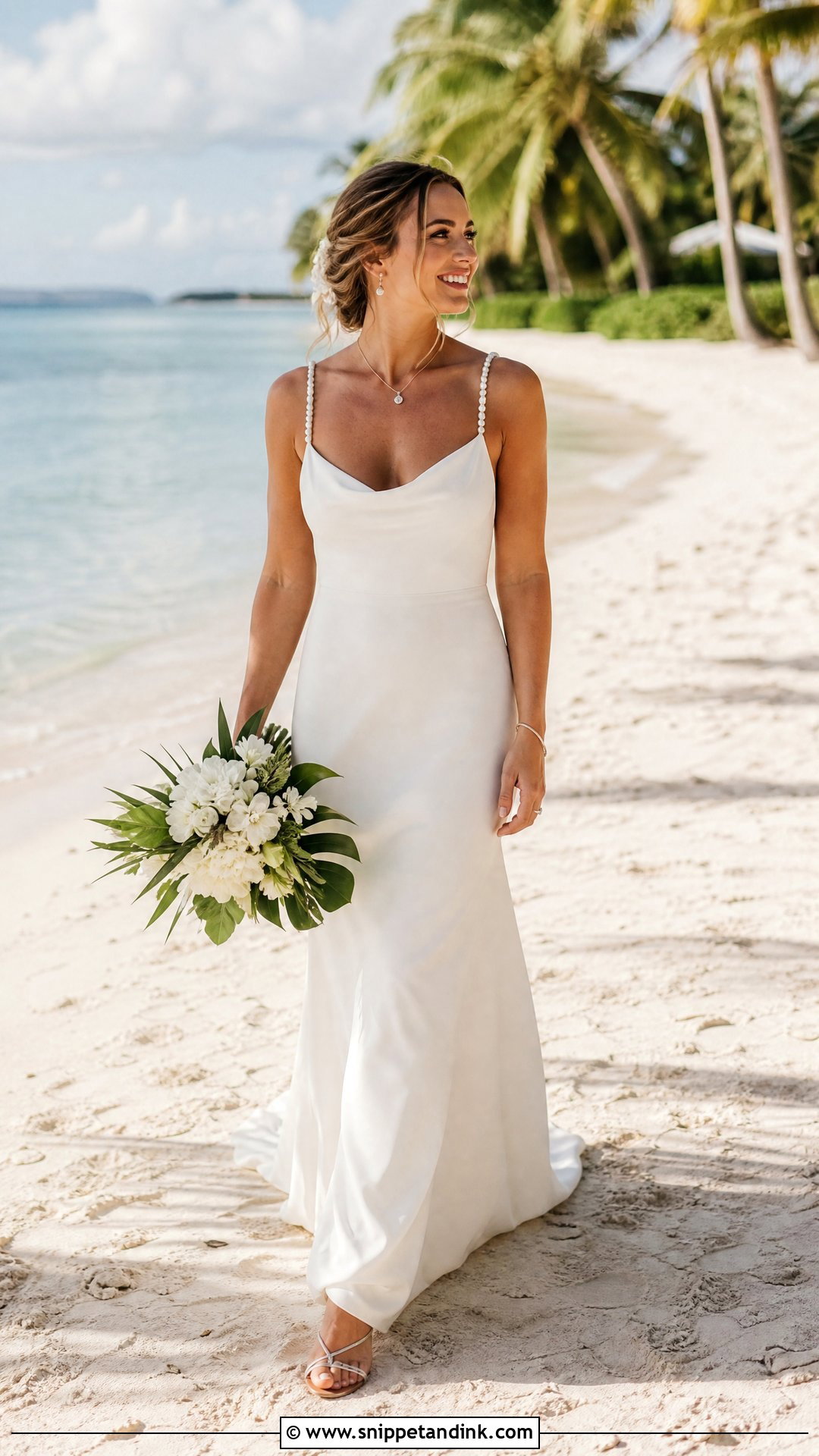
Thin straps keep the neckline open and still hold more securely than strapless, which matters when you’re hugging people for hours. A slip, A-line or soft sheath all take them, in crepe, chiffon, silk or satin with a light lining. The practical issue is the bra. Very thin straps rule out most bridal bras, so I’d have cups sewn into the bodice during alterations. Pearl or beaded straps add interest to a plain dress. A fine necklace, small earrings and strappy sandals finish it, and the bare shoulder line looks clean in natural sunlight.
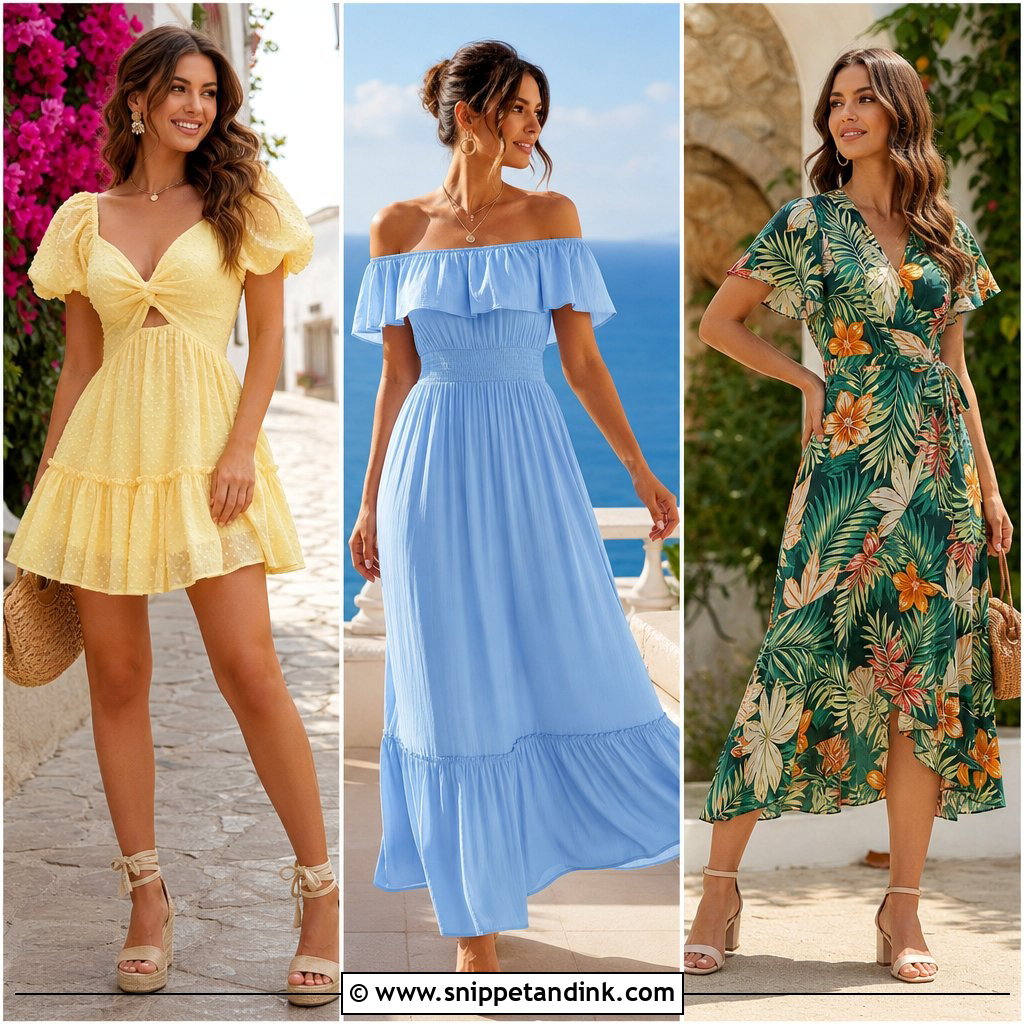
21. Tropical Wedding Dress With Floral Print
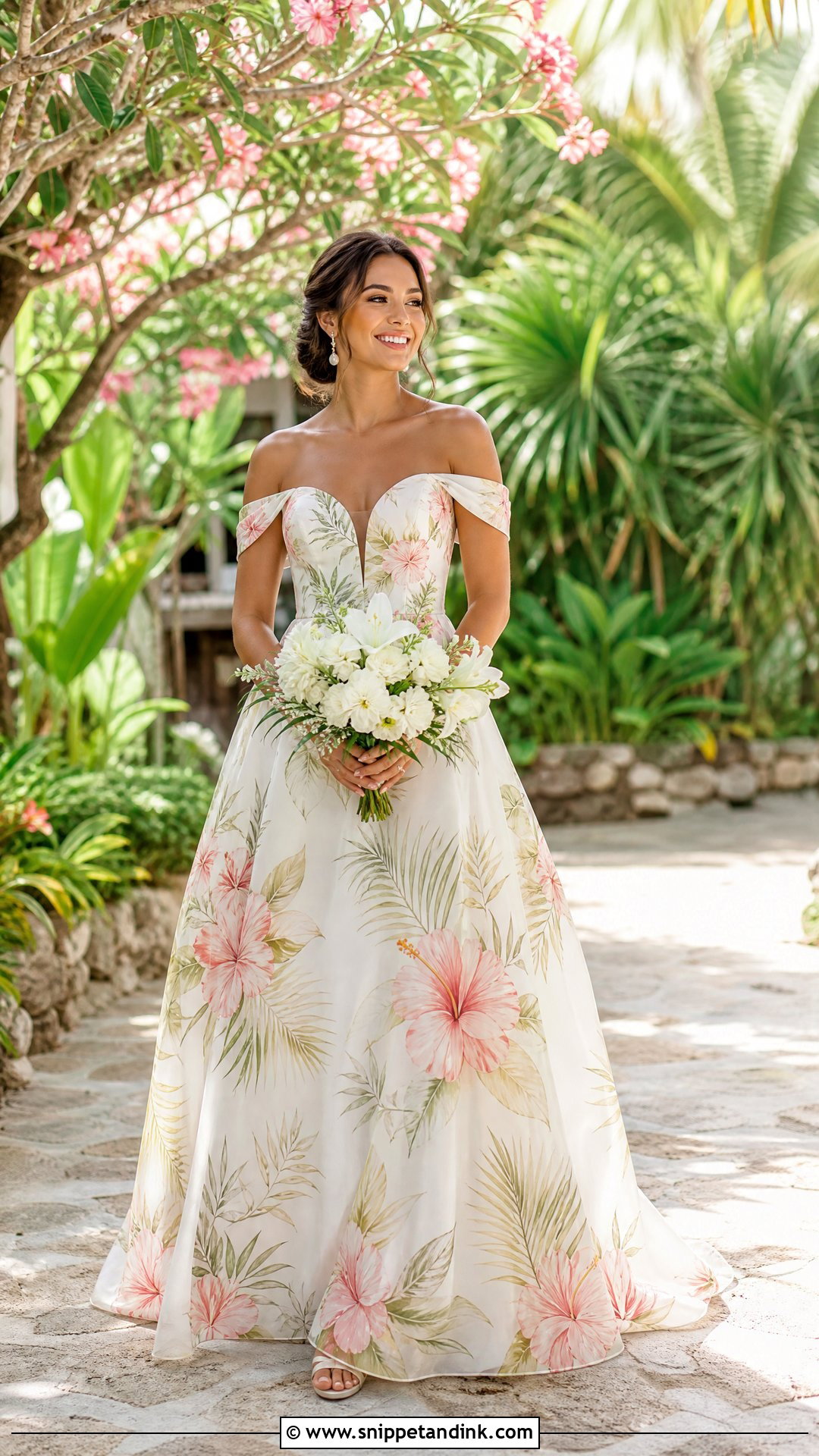
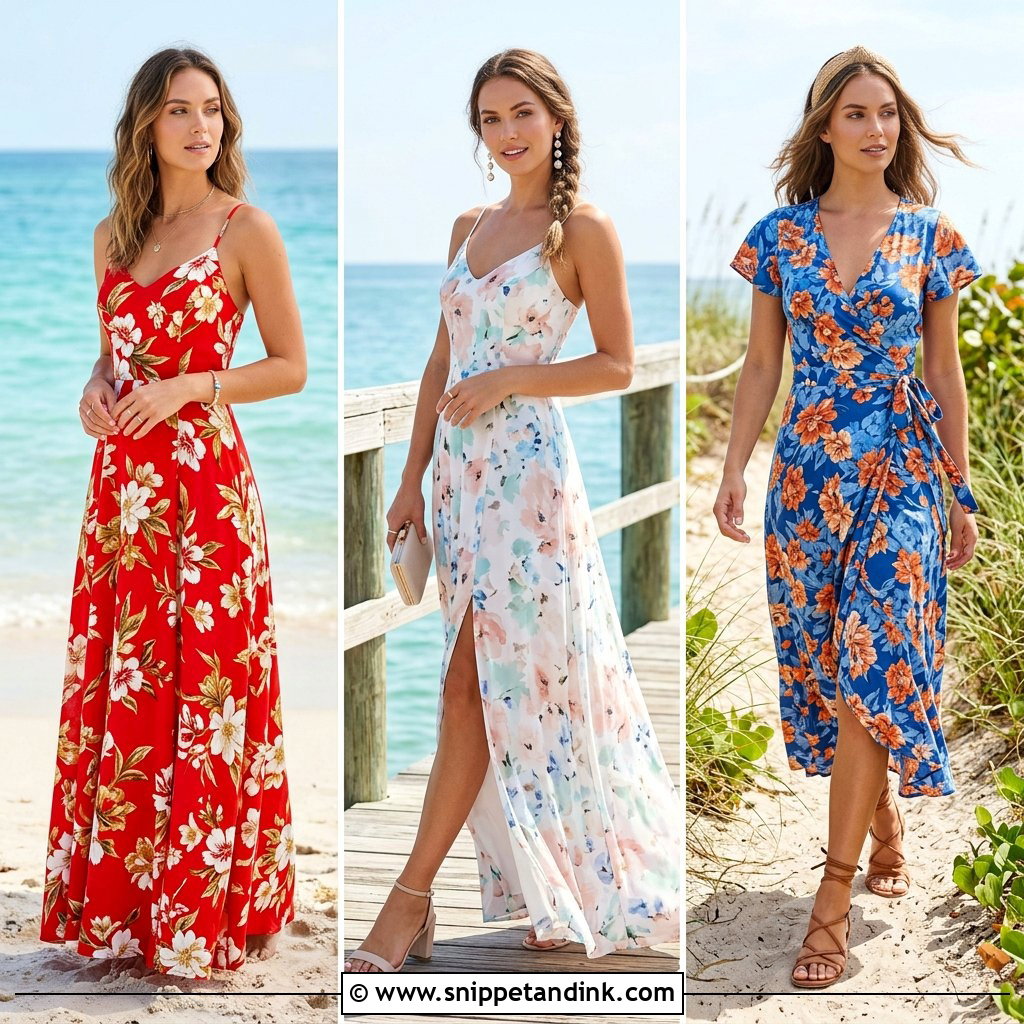
A tropical wedding dress with floral print is for the bride who wants color in the dress itself, not just the bouquet. Pastel and watercolor blooms stay soft, hibiscus and orchid prints bring the setting in more literally, and white-on-ivory florals are the quietest version. Keep the shape simple, such as a strapless A-line, a slip or tea length, so the print isn’t fighting seams and ruching. One thing to know before you fall for a pattern: printed fabrics in bridal weights are often polyester, so feel the hand and ask about breathability. Neutral sandals and simple earrings let the print lead.
22. Tropical Wedding Dress With Color
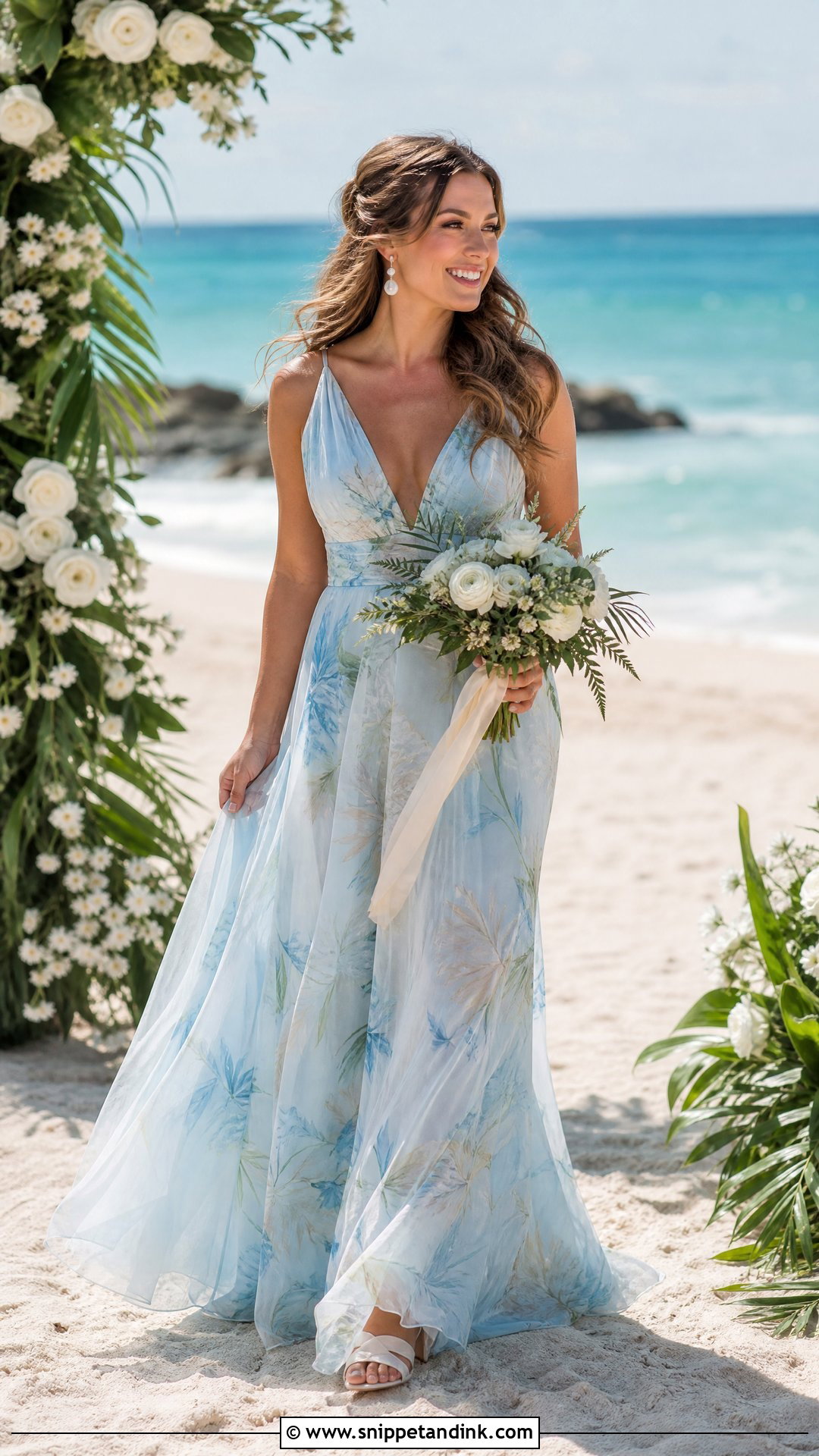
Color reads very differently outdoors than it does in a bridal shop. Blush, champagne, pale blue, butter yellow and light seafoam can all still look bridal, but under strong tropical sun the palest shades wash toward white and warm ones can pick up a cast from the sand. I always ask to see a swatch outside in daylight before anyone orders. Tulle, chiffon and satin catch color well. Ivory sandals, pearl jewelry and a bouquet that complements the shade rather than matching it complete the look, and a soft color does stand out against blue water and green palms.
23. Tropical Wedding Dress With Sheer Overlay
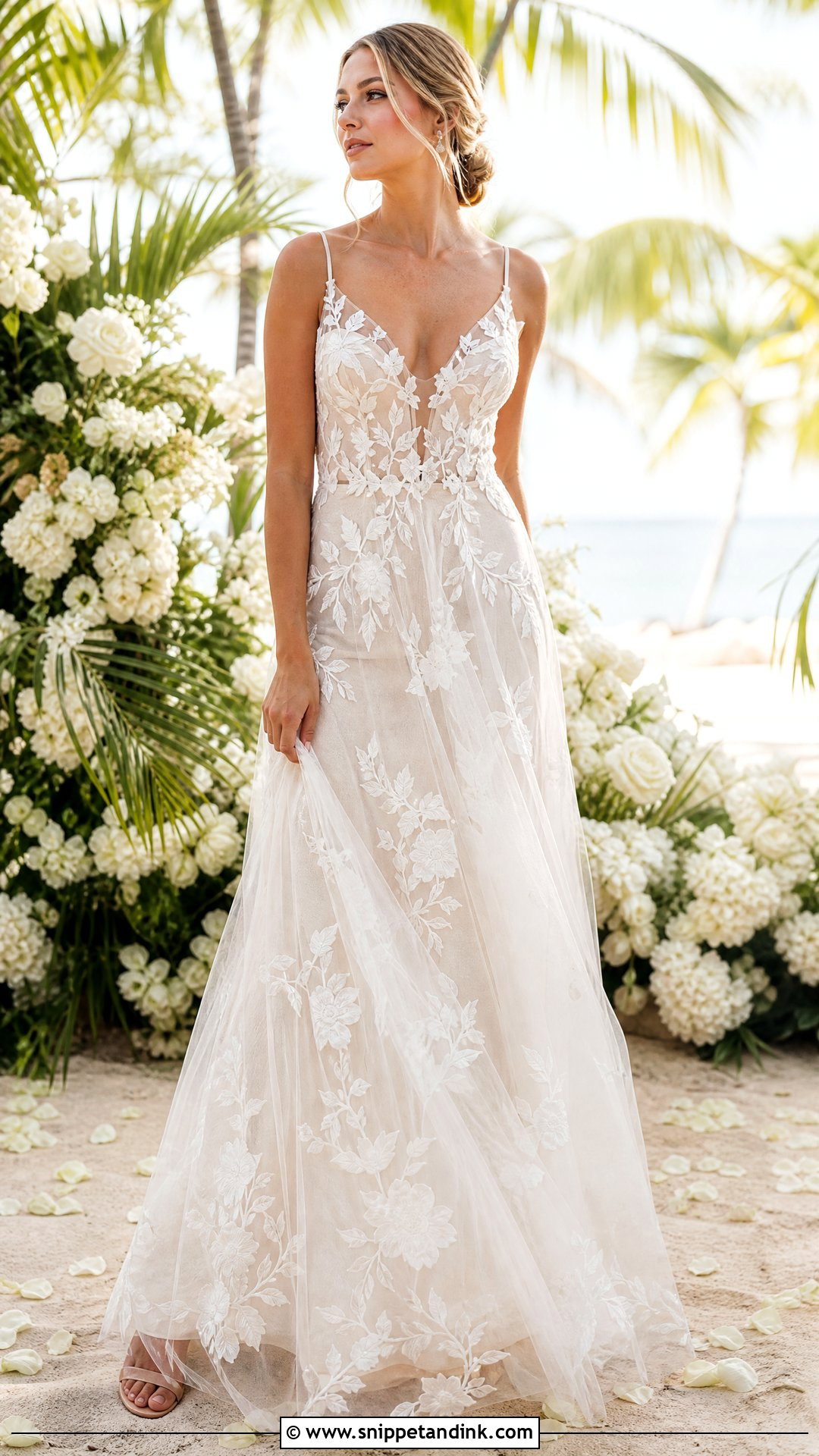
A sheer overlay of tulle, organza or embroidered mesh floats over a simple lining, so you get depth without a heavy layer. Floral appliqué, leaf embroidery or a little sparkle adds texture. Two layers do hold slightly more warmth than one, so the base dress should be the lightest fabric you can find. Organza is also crisper than it looks and catches on rattan furniture. Delicate sandals, a low bun and minimal jewelry let the overlay show at a garden ceremony or a romantic beach wedding.
24. Tropical Wedding Dress With Corset Bodice
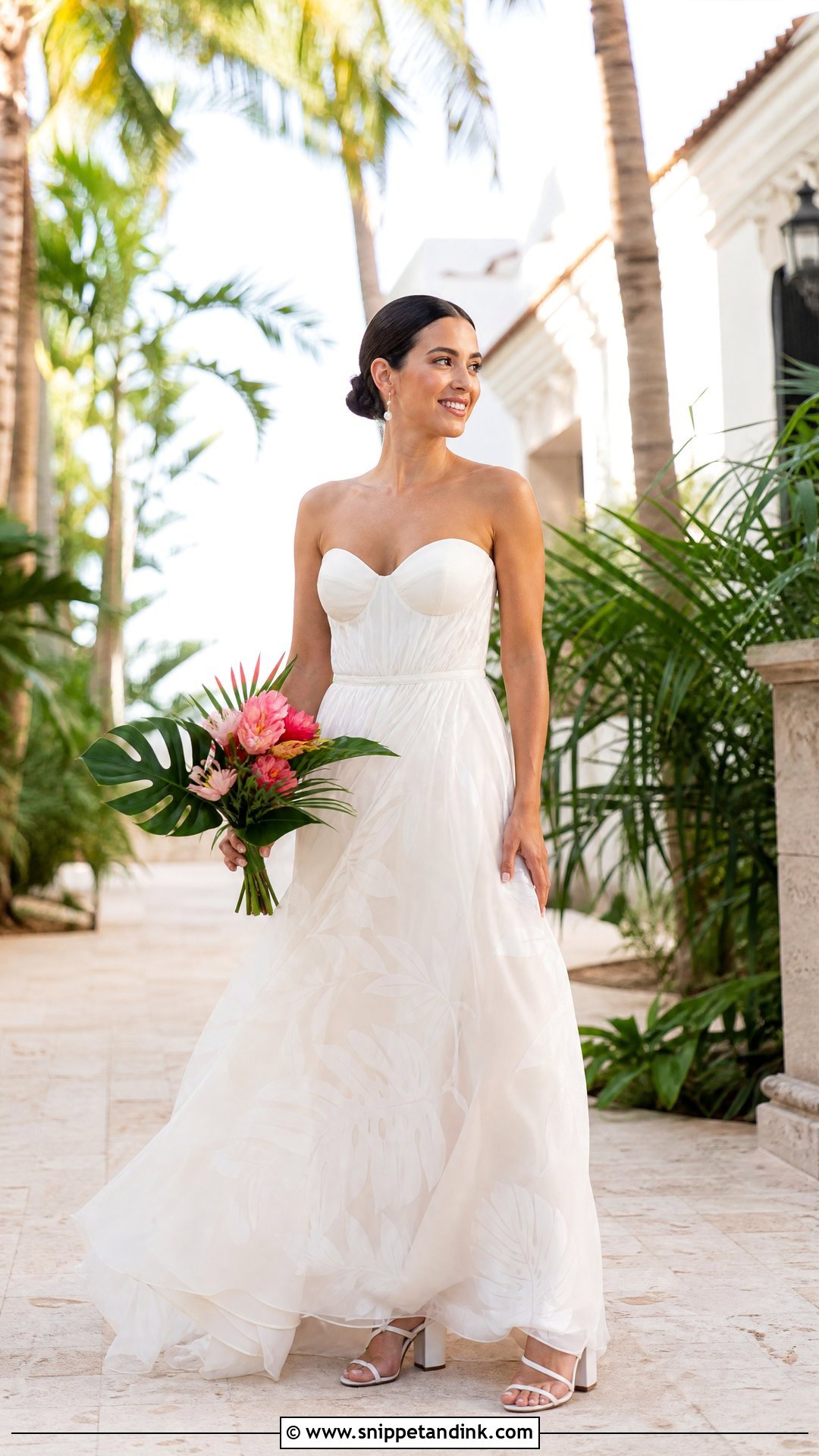
A corset bodice gives shape and support on top while a light chiffon, tulle or organza skirt keeps the lower half cool. Soft corsetry, exposed boning or a structured strapless bodice all sit well over a soft A-line skirt. In heat, fit matters more than looks: bodies swell a little in humid weather, so a corset that’s snug in an air-conditioned fitting room will feel tighter on the beach. I’d leave a touch of ease at the final appointment. Skip heavy beading if the forecast is very hot, and keep to pearl drops, block-heel sandals and a clean bun.
25. Simple Tropical Wedding Dress
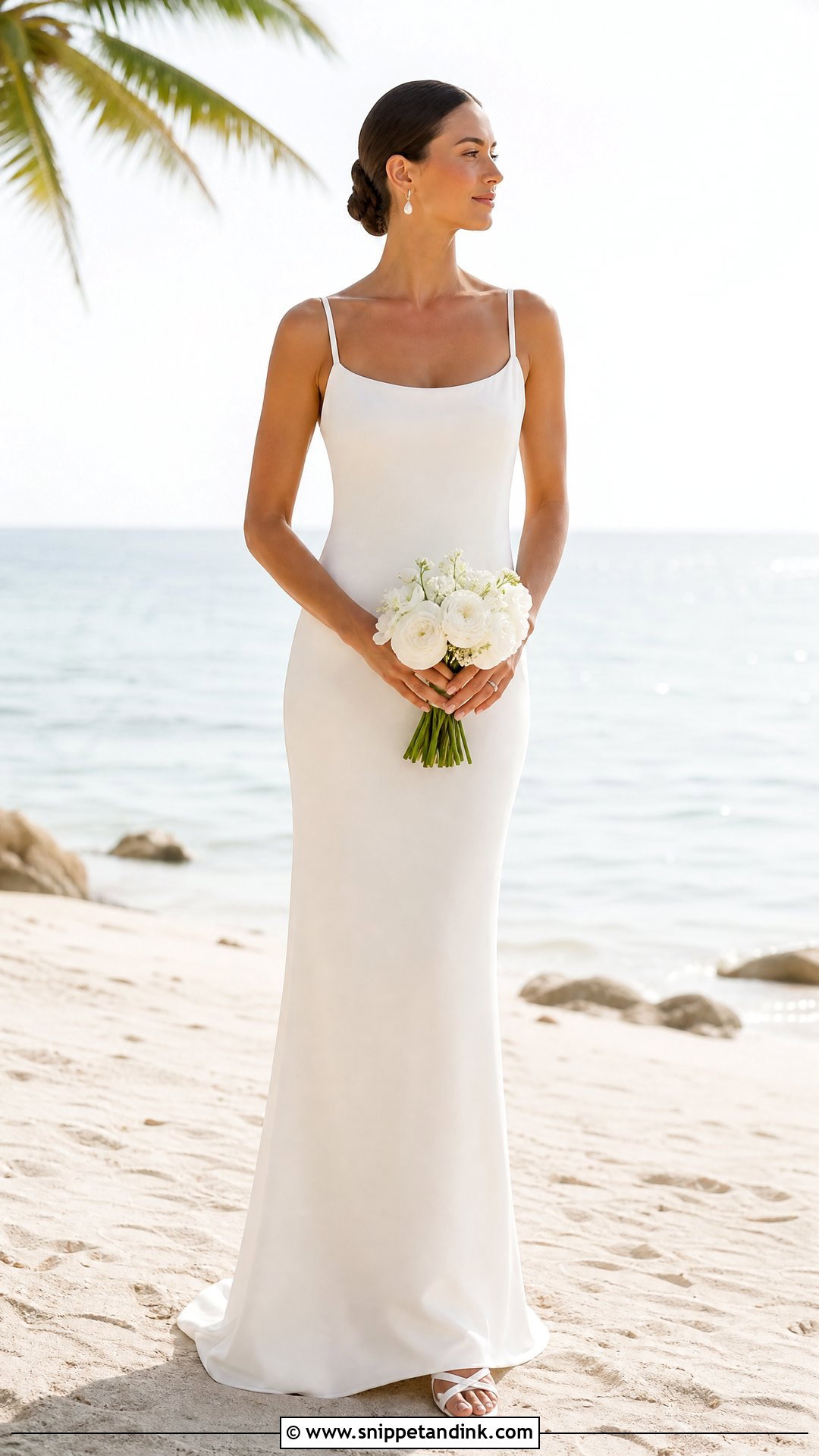
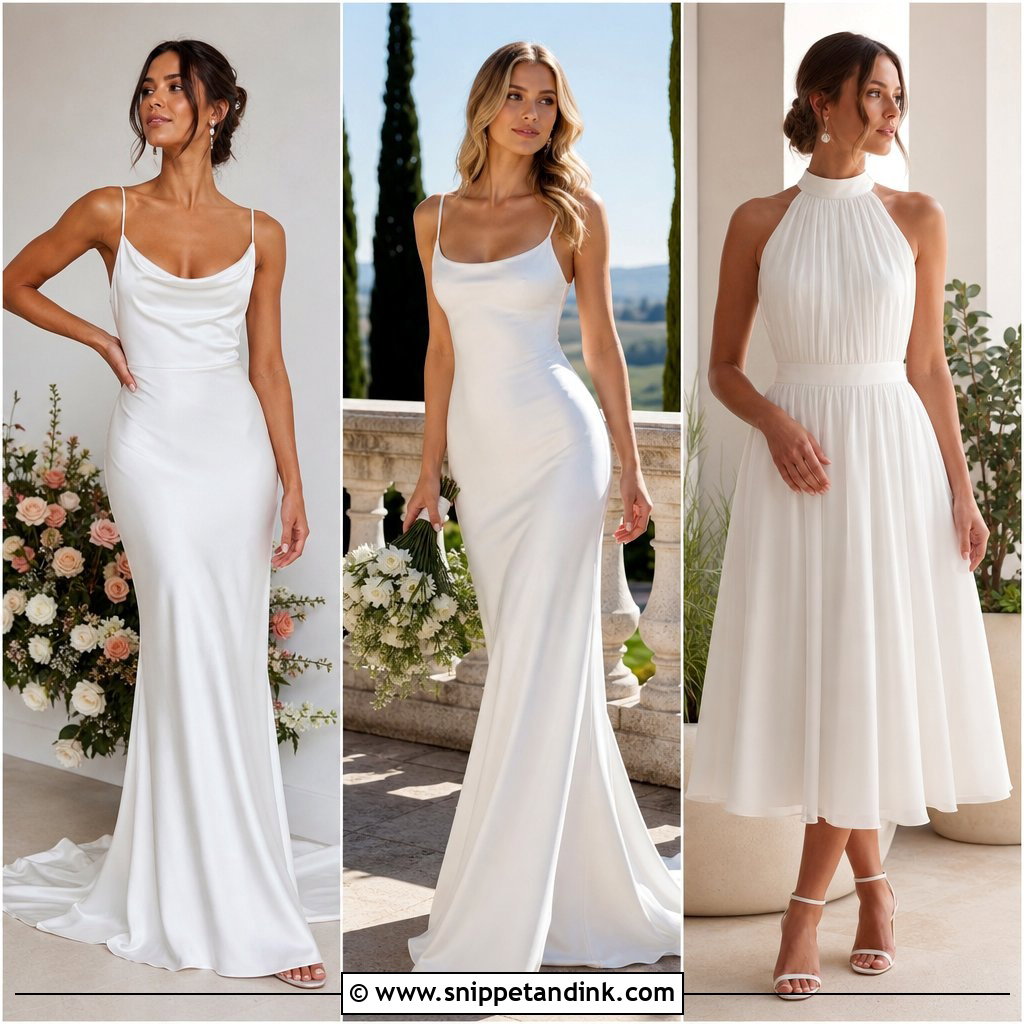
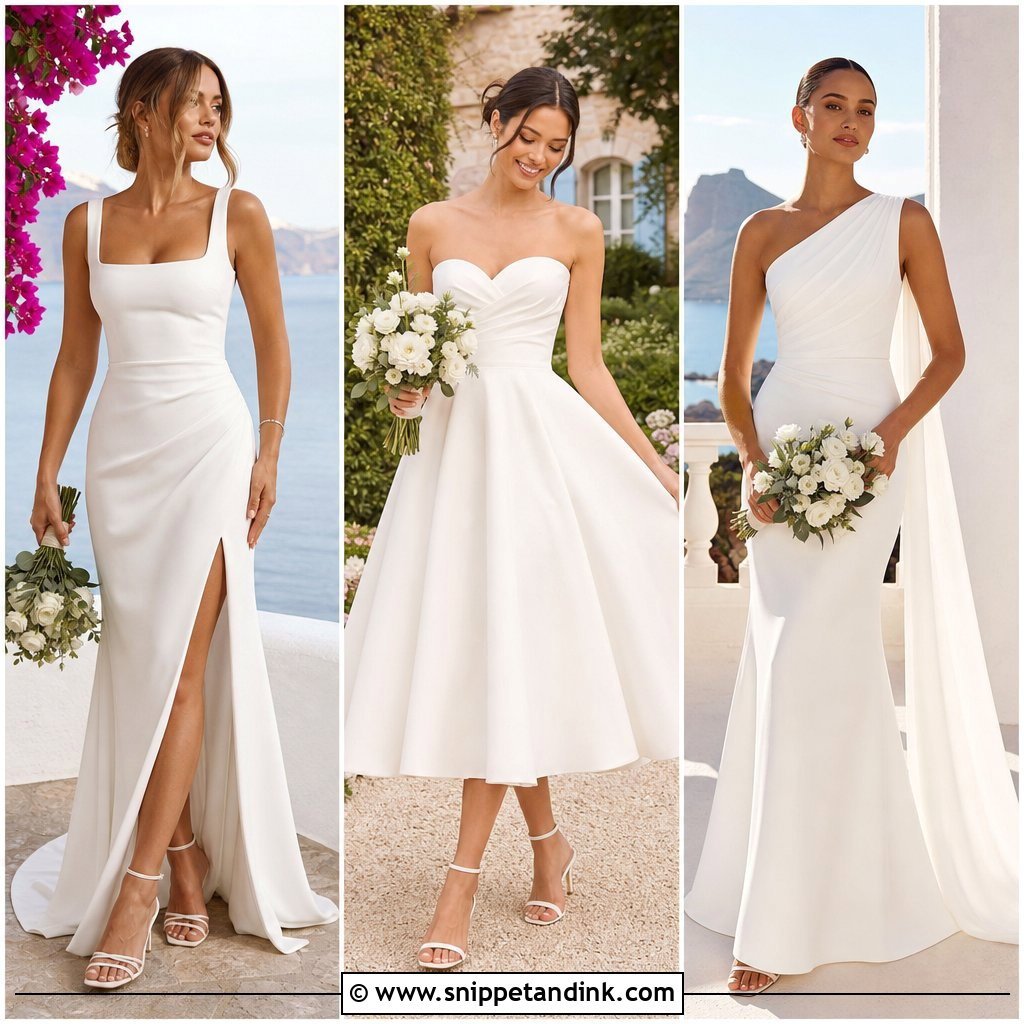
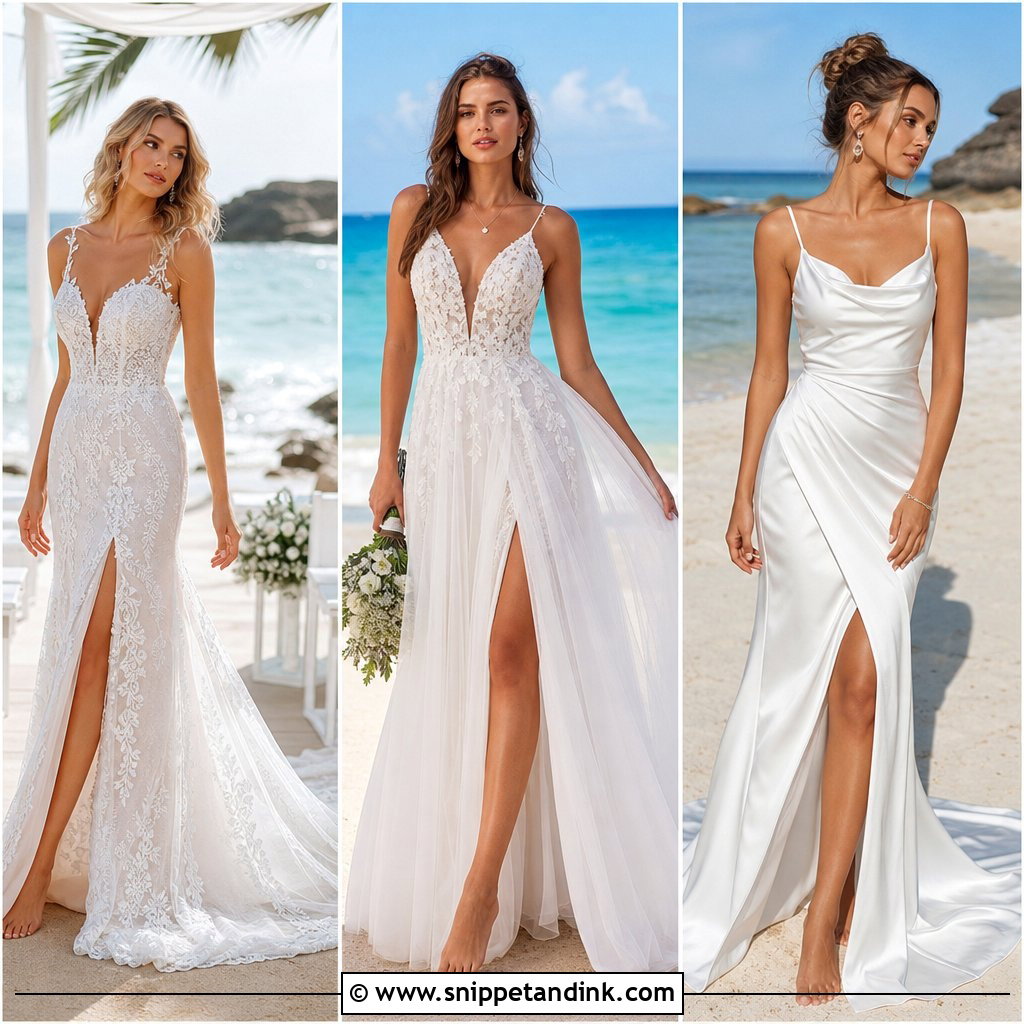
A simple dress depends on fit and fabric more than anything, because there’s no lace or beading to distract from a pulling seam. A white crepe sheath, a silk slip, a chiffon A-line or a strapless column all qualify, and I’d spend whatever you save on decoration on good alterations. Pearl earrings, fresh sandals, a sleek bouquet and polished hair finish it. It travels well, steams quickly and suits a private beach as easily as a resort terrace. Simple doesn’t mean plain when the setting already does so much of the work.
Carrying a Gown Onto a Plane and Steaming It at the Resort
Many airlines will let a wedding dress travel in the cabin, but policies differ, so call yours well before you fly and ask whether it can hang in a closet or has to fit an overhead bin. I would never check a gown in the hold.
- Have the shop pack it in a breathable garment bag with tissue in the bodice and between skirt layers.
- Fold the skirt in loose thirds rather than tight creases; soft fabrics forgive a loose fold.
- Unpack it as soon as you arrive and hang it from a high hook or door frame so the skirt can drop.
- Steam, don’t iron. Hold the steamer a hand’s width away from chiffon and silk, and never steam straight onto beading, glued crystals or lace appliqué.
- Ask the resort ahead of time whether they offer pressing, and be there when it’s done.
Humid air works in your favor here. A lightly creased chiffon skirt often relaxes overnight just by hanging in the bathroom after a hot shower.
Sand, Hems and the Shoe Question
Hem length is the decision brides most often leave too late. Your seamstress hems to whatever shoe you wear at the fitting, so bring the actual pair. If you’ll be barefoot on the sand, hem it barefoot and accept that the dress may hover a little once you change into heels for the reception. A hem that drags in sand darkens by the end of the ceremony, while one a finger’s width off the ground stays clean. I also ask for a small wrist loop on any train so you can lift it on paths and steps.
Heat Decides More Than the Mood Board Does
Tropical weddings reward dresses that cope with heat, wind and uneven ground, not only the ones that look good standing still. Lightweight fabric, a breathable shape, secure shoes and accessories that don’t fight humidity matter as much as the design. A beach bride may love chiffon, lace or a slip, while a resort bride may lean toward a halter, a corset, a cape or a sleek jumpsuit, and color, floral prints and detachable skirts all have a place. Start with your venue and forecast, then pick the style. If you can sit, walk and lift your arms comfortably at your last fitting, you’ll enjoy every hour in it.
You'll Like These Ideas:


Leave a Reply