
More brides ask me about black now than ever, and very few of them are planning a gothic wedding. They want a dress that feels like theirs. A black gown can be romantic, minimal, glamorous or fairytale, and the deciding factors are the same ones I look at with any bridal dress: silhouette, fabric, structure and how it’s styled. What changes with black is how the fabric handles light, how much detail survives in a photograph and how you balance it with flowers and accessories. The thirty gowns below each come with the things I’d actually check at a fitting.
Ordering in Black When Every Sample in the Shop Is Ivory
Most bridal shops carry their samples in ivory or white, so you’ll often try a gown in one colour and order it in another. That gap catches people out. Black changes how a silhouette reads: it slims the outline, hides seams, and flattens lace that looked richly detailed in ivory.
- Ask for a fabric swatch in the actual black. Hold it to your face by a window and under warm indoor light.
- Check whether the lining comes in black, nude or champagne, and whether you can choose.
- Confirm the lead time in writing. Many designer gowns are made to order and take several months, and a non-standard colour can add weeks.
- Allow time for alterations after delivery. A seamstress usually wants two or three fittings spread over the final couple of months.
If timing is tight, look for designers who list black as a regular colourway, or consider an evening-wear line, where black is the default and stock moves faster.
1. Black Ball Gown Wedding Dress
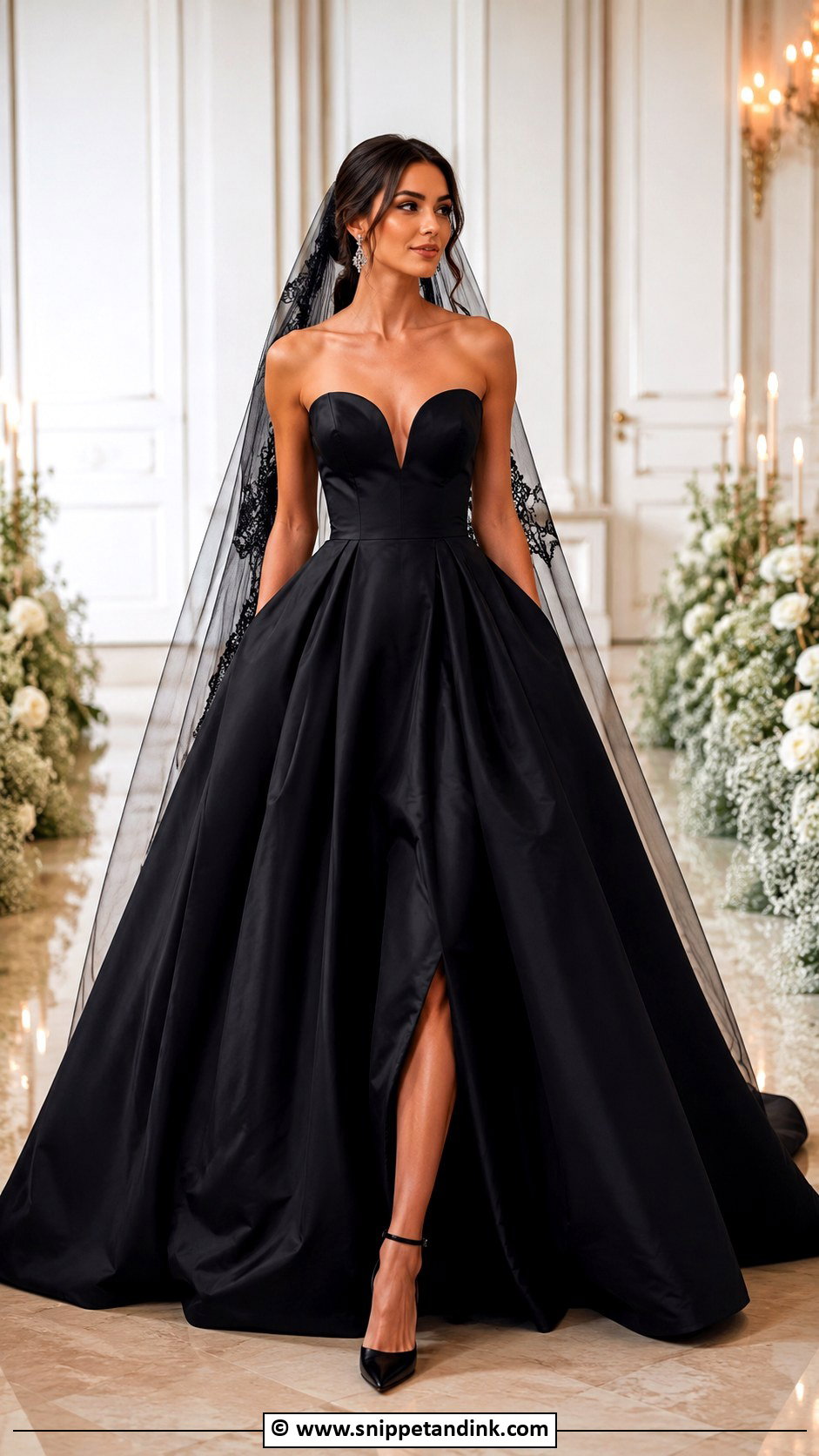
A black ball gown makes the strongest entrance of any shape here, and it needs room to do it. In a narrow aisle or a small registry office the skirt simply swallows the space. Fabric decides the mood: Mikado or heavy satin holds a crisp, sculpted skirt, while layered tulle gives softer volume that sways when you walk. Under a full skirt I always ask brides to try a hoop or a petticoat at the fitting, because it changes the hem length. Keep the extras quiet, maybe a plain veil and drop earrings, so the shape does the talking.
2. Black Lace Wedding Gown
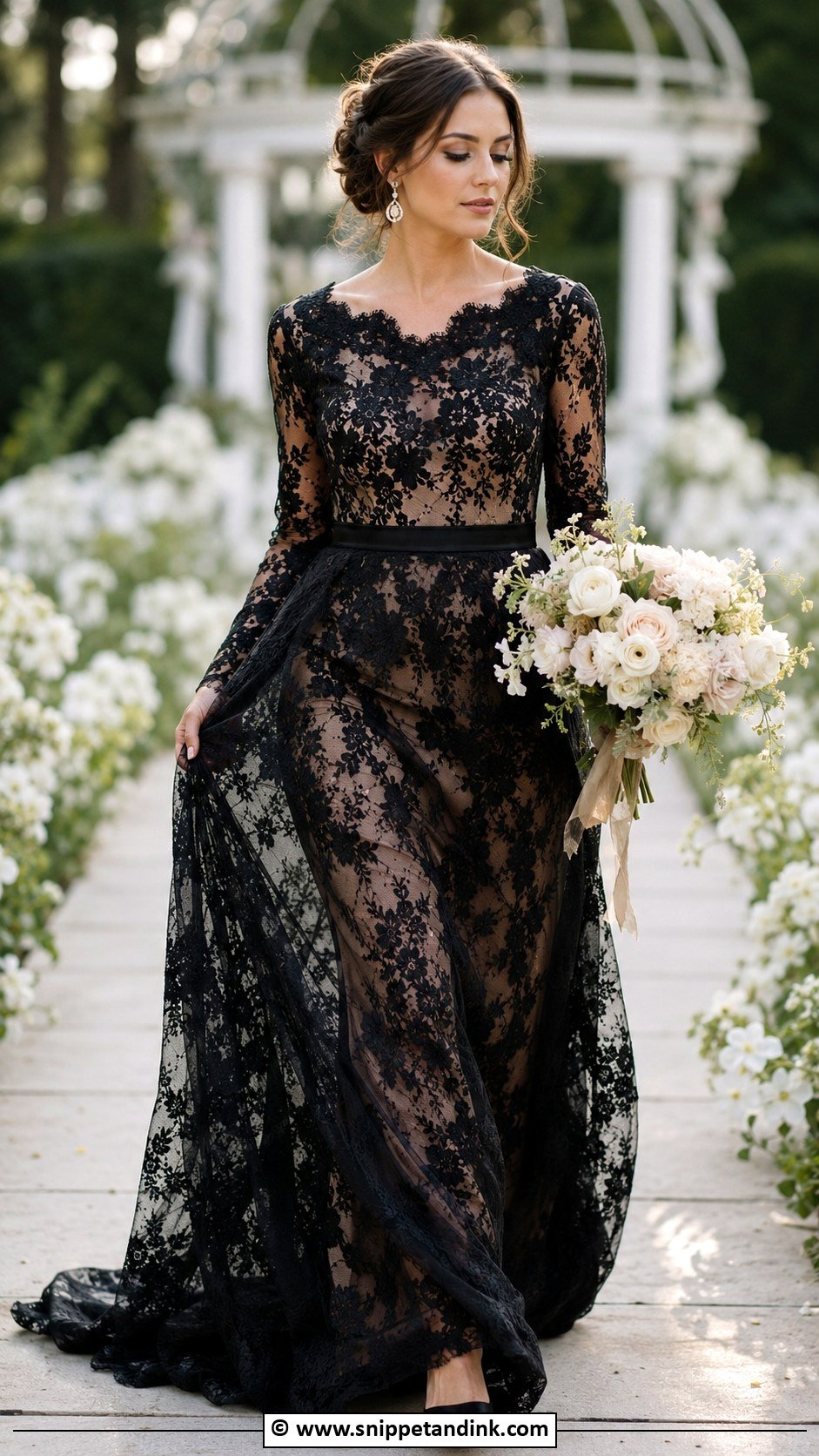
Lace is the fabric that makes black read as bridal rather than severe. The lining underneath is the choice that matters most: a nude or champagne lining lets the floral pattern show clearly, while a black lining turns the lace into texture you only see up close. I usually pin both options at a fitting and step back three metres, because that’s roughly where guests will see it. Long sleeves suit a winter or evening ceremony; strapless or off-shoulder keeps it modern. A sheer veil and pearl earrings give it contrast.
3. Black Mermaid Wedding Dress
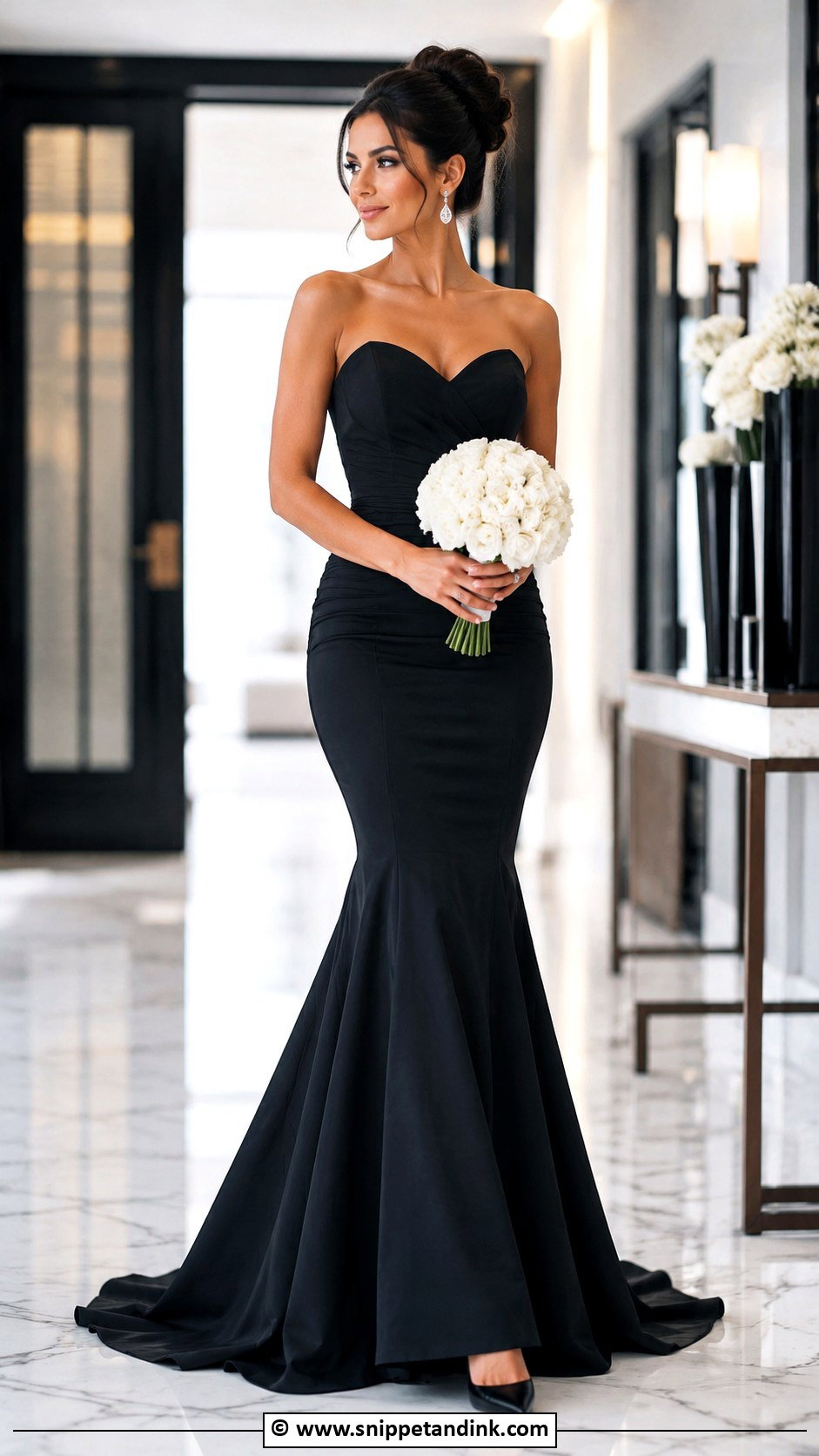
Mermaid gowns flare at or just below the knee, and that flare point is where I spend most of the fitting. Too high and it reads as a trumpet; too low and you’ll shuffle down the aisle. Satin and crepe show the sculpted line most clearly, and beading adds weight that helps the skirt hang straight. Sit, walk and climb a step in it before you commit. A low bun, statement earrings and pointed heels lengthen the line further.
4. Black A Line Wedding Dress
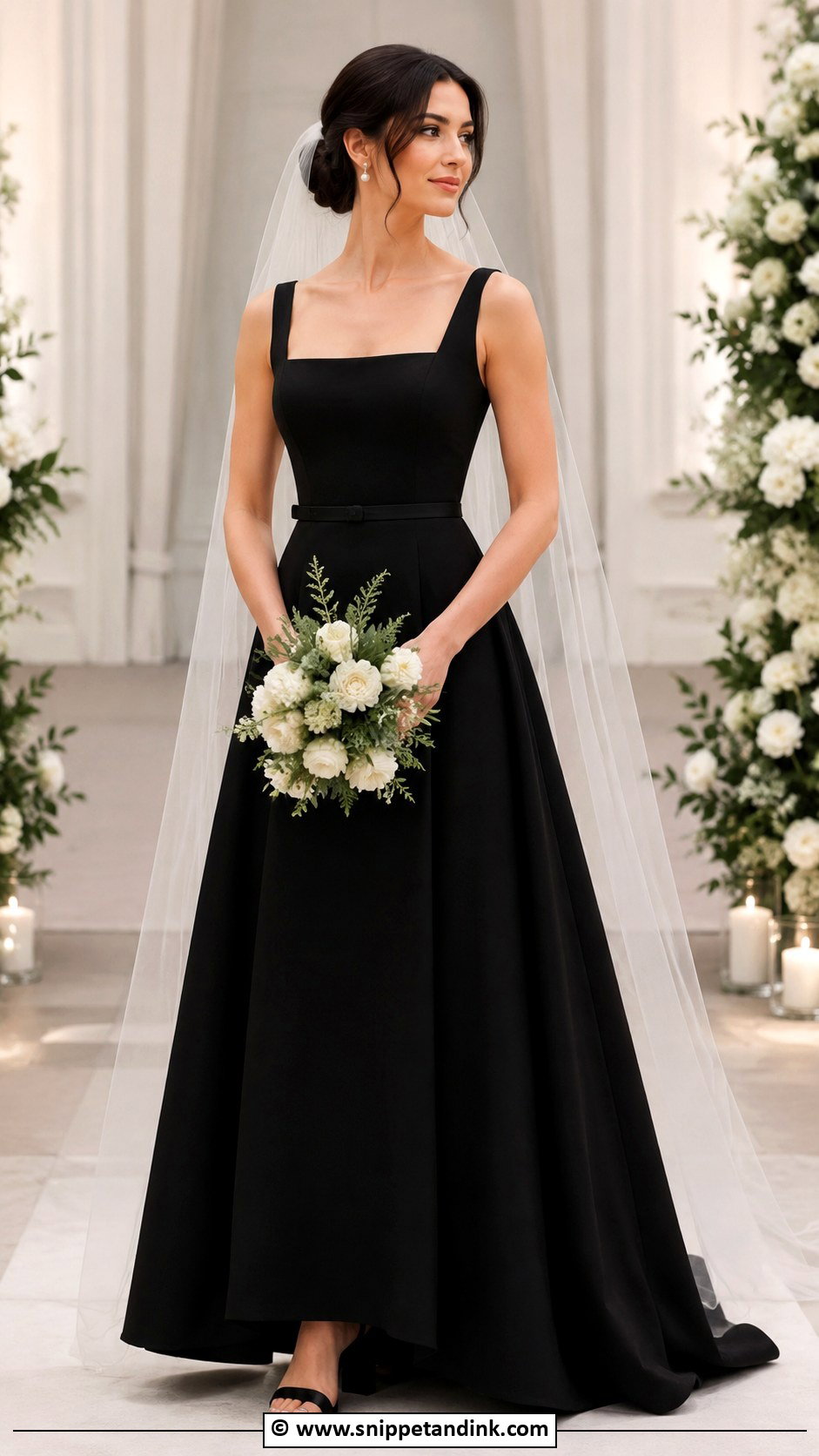
If a bride is unsure about black, I usually start her in an A-line. The fitted top and gently flared skirt define the waist without clinging, so it suits most figures and doesn’t feel like a costume. Satin makes it classic, tulle makes it soft, matte crepe makes it modern. A slim belt adds definition if the waist seam sits a little low on you. Block heels and a soft veil keep it wearable from ceremony to last dance.
5. Black Satin Wedding Gown
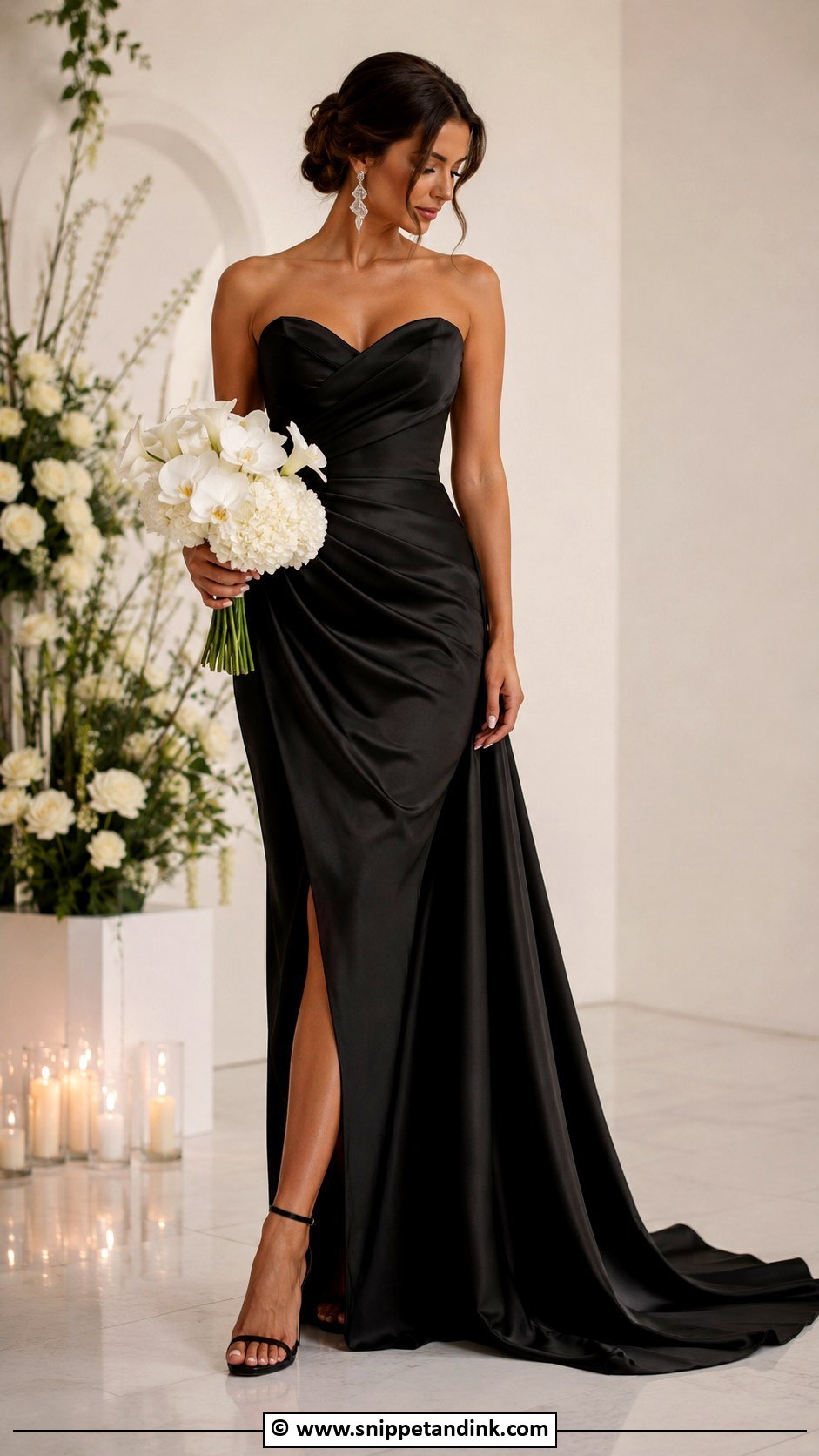
Black satin catches light along every fold, so it shows the shape of the dress far better than a matte fabric. That’s also its weakness: it creases where you sit and shows every pull from a poorly placed seam. I prefer a heavier duchess or crepe-back satin to a thin, shiny polyester one, which can look plasticky under flash. Choose a clean silhouette (slip, column or ball gown) and keep styling sleek: smooth hair, sculptural earrings, a structured bouquet.
6. Black Tulle Wedding Dress
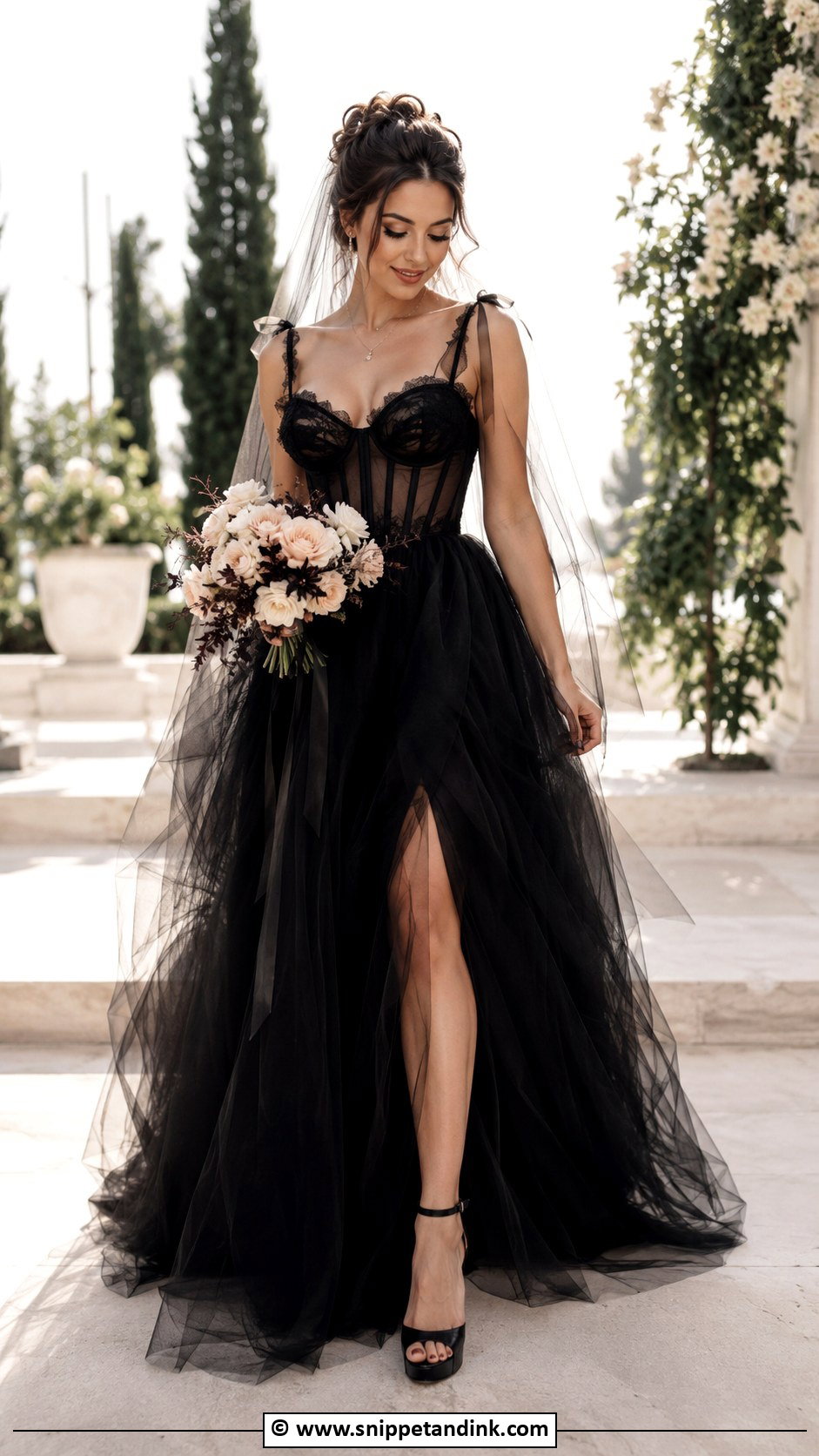
Black tulle is lighter than it looks on the hanger. Layered, it builds volume without the weight of satin, which is a relief at a summer wedding. Soft tulle gives a hazy, dreamy effect; stiffer tulle holds a more dramatic shape. It snags on stone, Velcro and bouquet wire, so I warn brides with outdoor ceremonies to watch where they walk. A corset bodice, sweetheart neckline or fine straps give it a modern top half. Simple heels and soft makeup are all it needs.
7. Black Off The Shoulder Wedding Gown
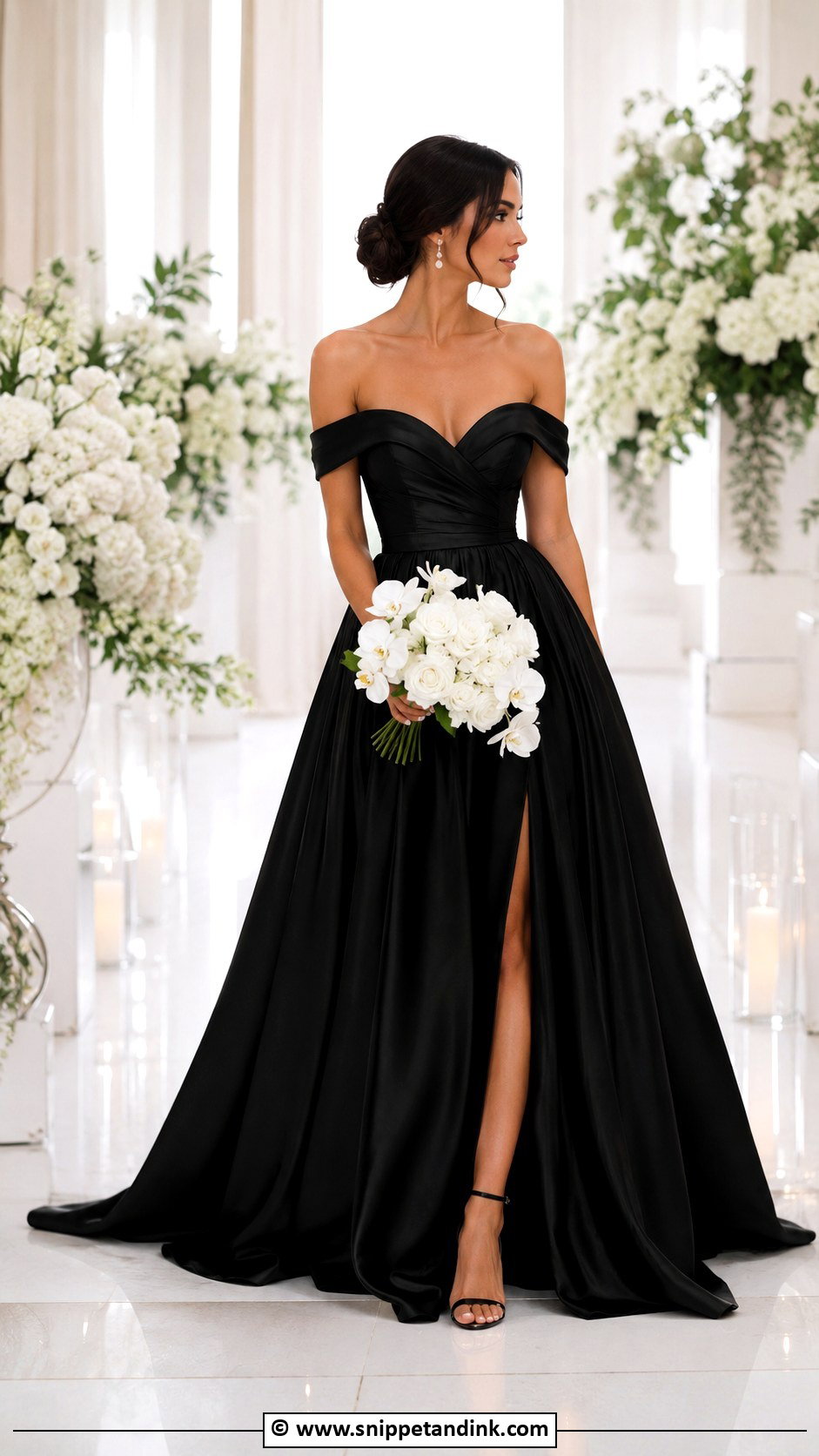
An off-the-shoulder neckline frames the collarbones and shoulders, and on black it creates a strong contrast line against the skin. The fit has to be close. If the band sits loose, it creeps up every time you lift your arms, so I check it with the bride hugging, waving and raising a glass. Lace, satin, crepe and tulle all work. Skip the necklace; earrings and a low chignon or soft curls finish the shape cleanly.
8. Black Strapless Wedding Dress
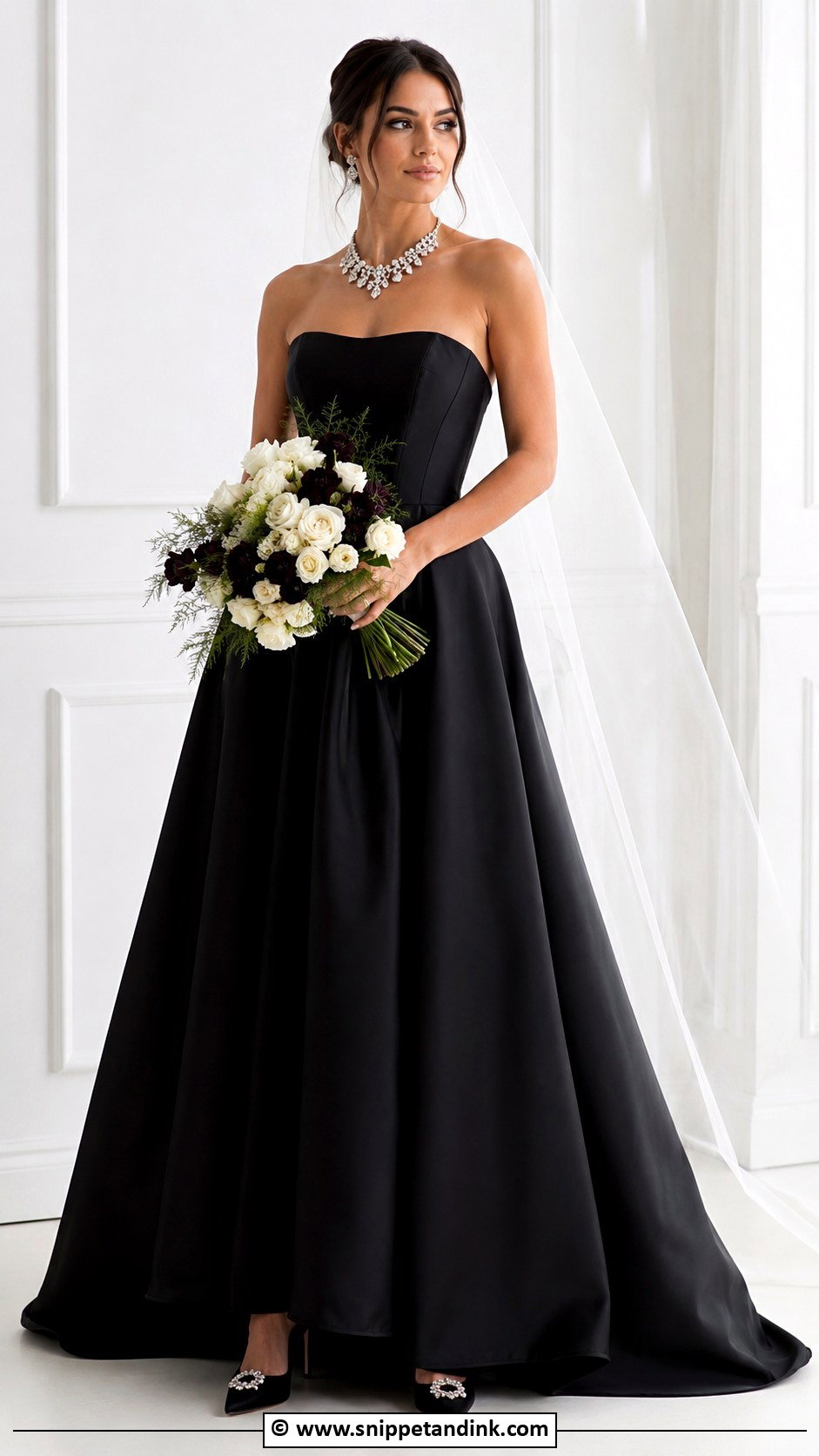
Strapless gowns rely completely on the bodice. With heavier fabrics like satin or Mikado, I look for an internal corset or boning and a waist stay that anchors the dress so it doesn’t slide down as the day goes on. Fit the bodice in the bra or shapewear you’ll actually wear. Once that’s secure, the open neckline is a blank canvas for a statement necklace, gloves or a cape, or you can go minimal with studs and a sleek bun.
9. Black Long Sleeve Wedding Gown
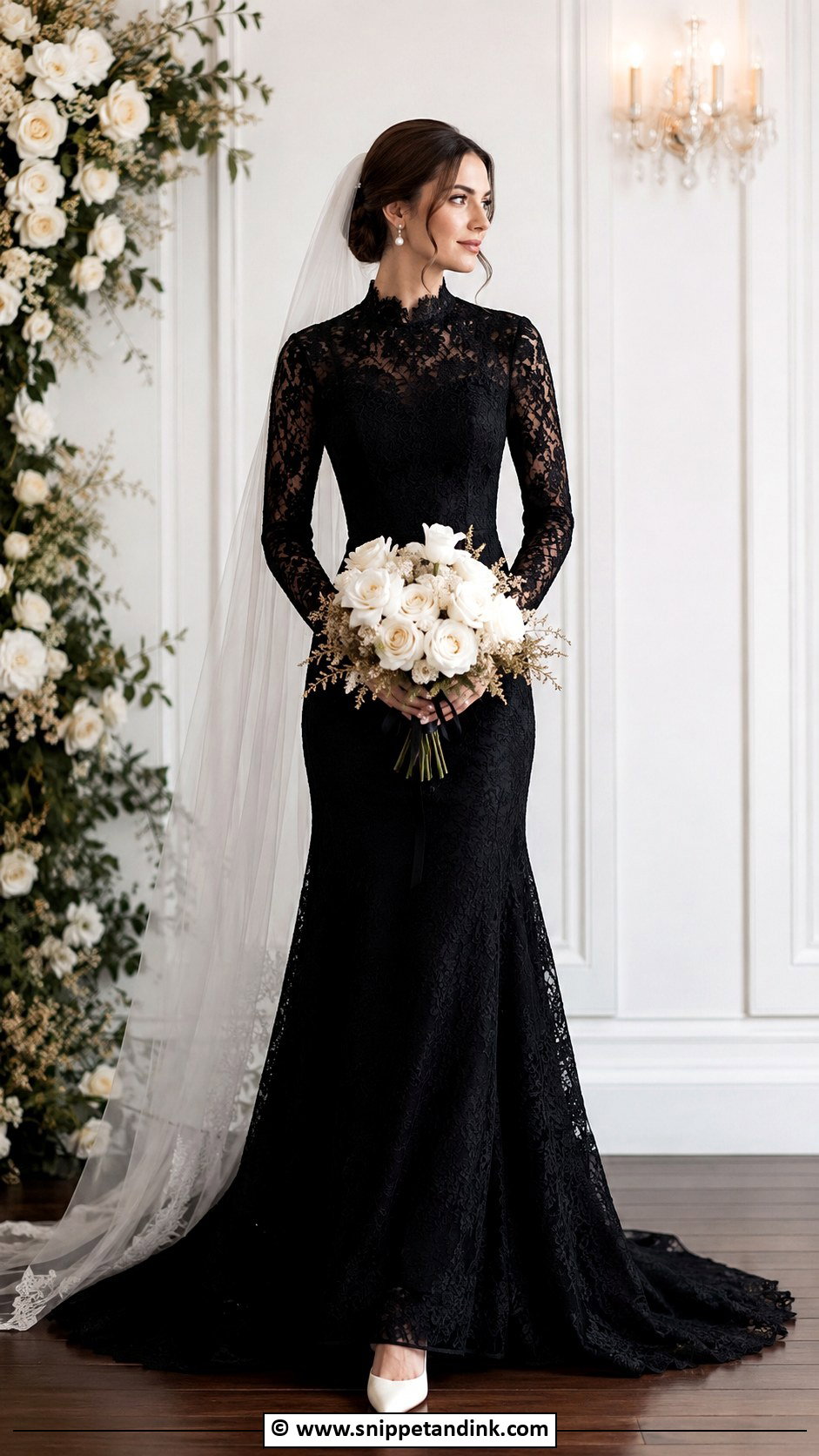
Long sleeves suit autumn, winter and evening weddings, but sheer lace sleeves are light enough for warmer months. The sleeve fitting is all about movement: I ask brides to reach forward as if hugging someone, because a fitted crepe sleeve set too tight across the back will tear or restrict your arms. Sleeve style sets the mood: illusion sleeves feel soft, crepe feels minimal, and lace feels vintage. If the sleeves are heavily detailed, I’d keep bracelets off entirely.
10. Black Corset Wedding Dress
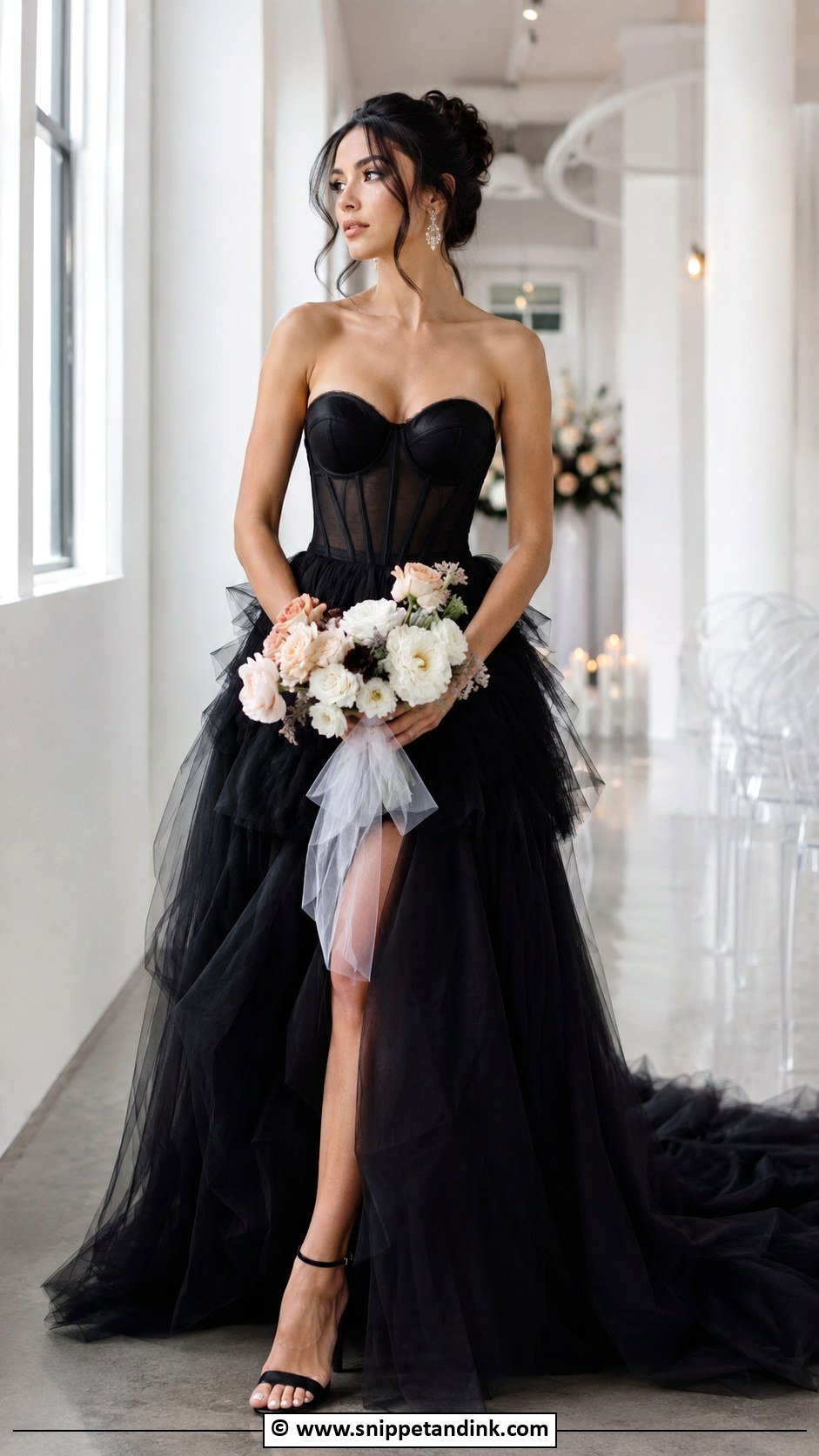
A corset bodice shapes the waist and supports the bust at the same time, provided it’s fitted to you rather than straight off the rail. Exposed boning gives a fashion edge; hidden structure gives a smoother line. I always have brides sit and eat a little at the final fitting, because a corset laced tight for standing photos can be miserable at a three-course dinner. Pair it with a full tulle skirt for romance or a fitted satin one for something sleek.
11. Black Beaded Wedding Gown
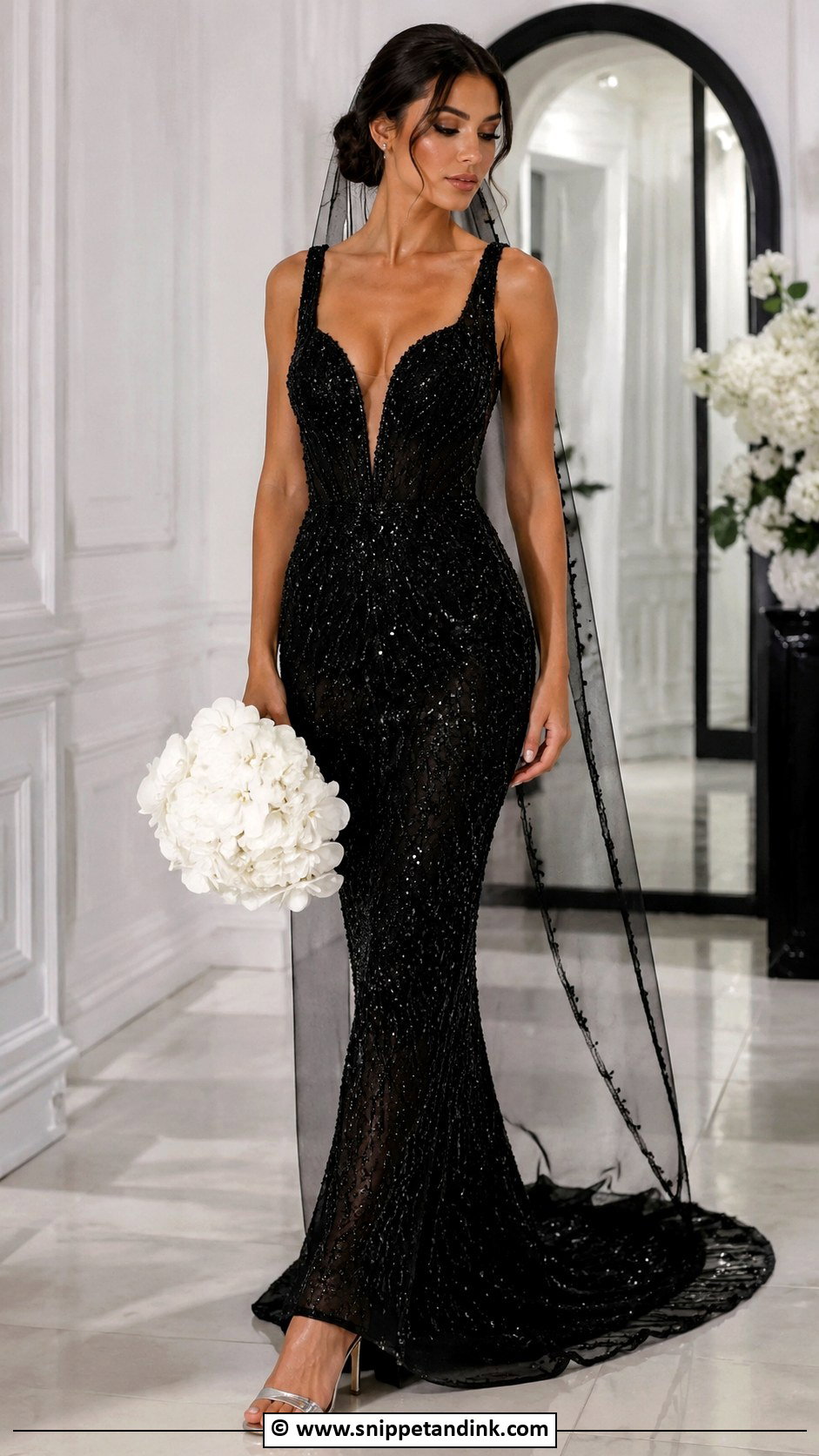
Beading shows up more on black than on ivory because the light hits it against a dark ground. Crystal, sequin and bugle beads each sparkle differently, and bugle beads in particular can catch on lace veils and hair. Heavy beading also adds real weight, so a fully beaded gown needs strong straps or a well-built bodice. Keep the bouquet and veil simple, and choose earrings that echo the bead tone rather than compete with it.
12. Black Floral Wedding Dress
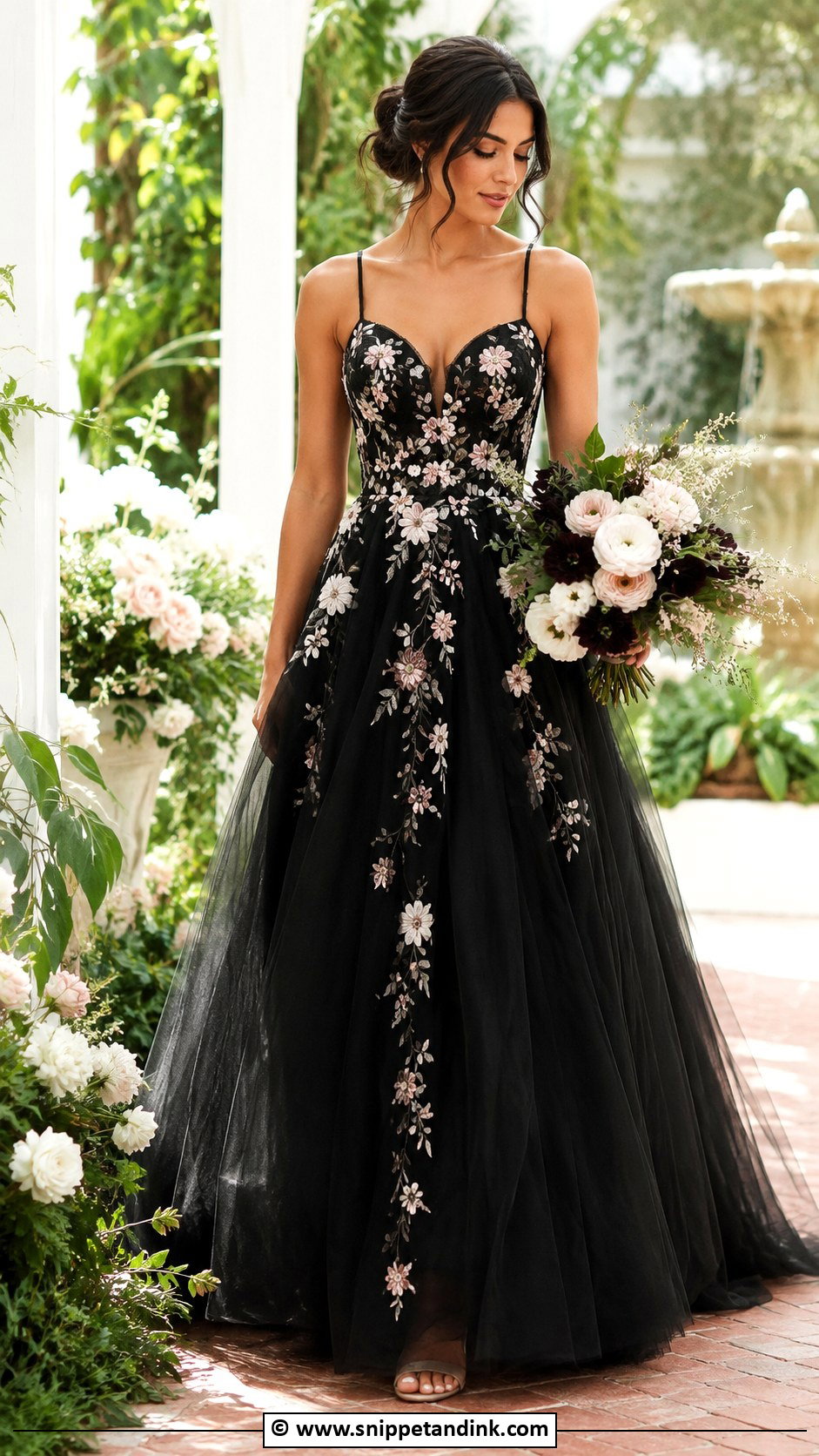
Floral detail softens black quickly. Black-on-black embroidery gives subtle texture you notice up close; coloured flowers in red, blush, ivory or muted green give more contrast from a distance. Appliqué that is stitched on rather than printed photographs with real depth because each petal throws a small shadow. Pick up one of the flower colours in the bouquet so the two talk to each other, and keep the jewellery quiet.
13. Black Sheer Wedding Gown
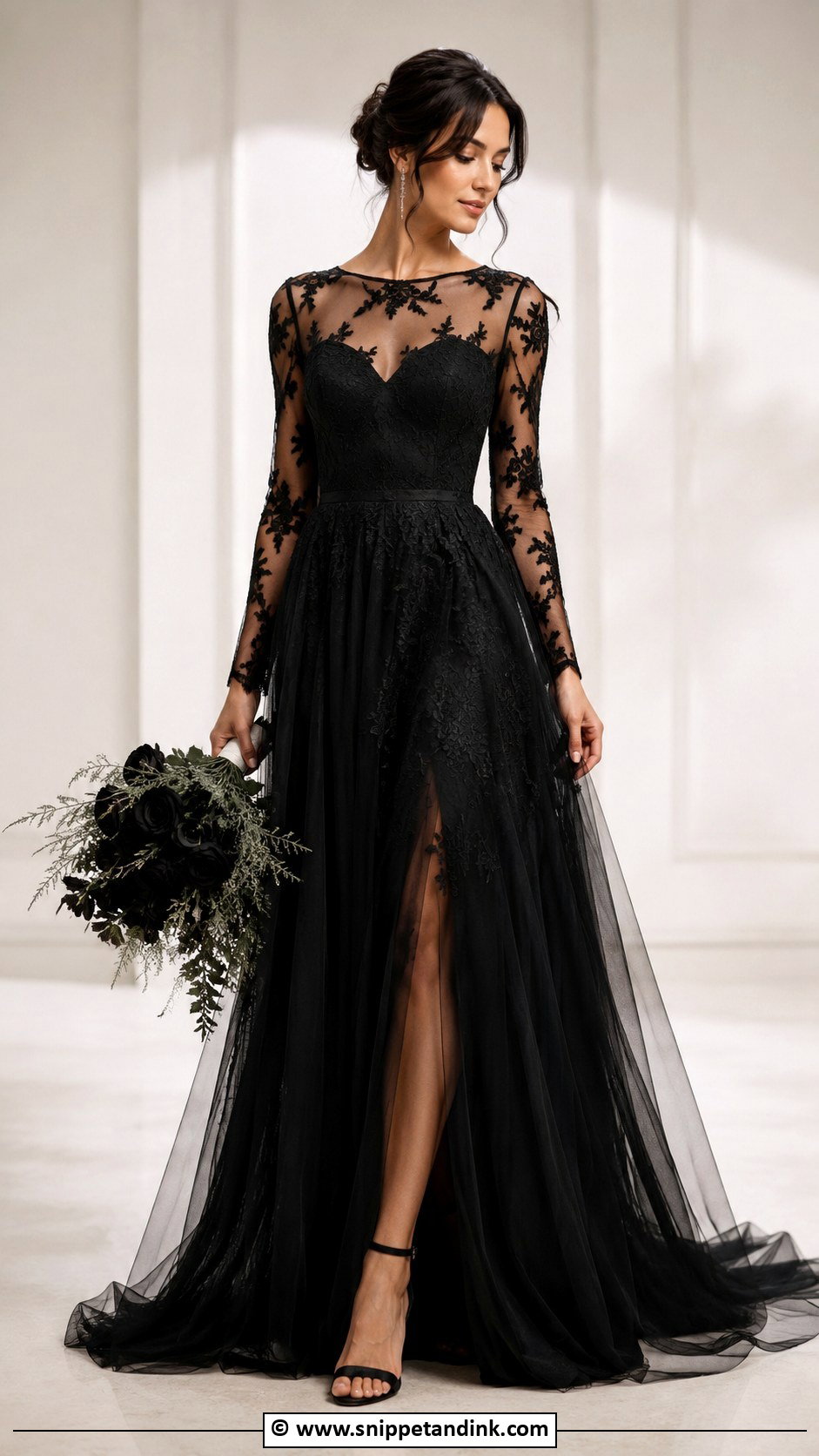
Sheer panels and illusion necklines make a black gown feel light, but the effect depends on lining placement. I check sheer designs under bright light and flash, which can see through layers the mirror in the shop doesn’t. Black lace over a nude lining is the version I’d recommend first; it shows the pattern while keeping coverage where you want it. Fine earrings and barely-there heels let the transparency do its work.
14. Black High Neck Wedding Dress
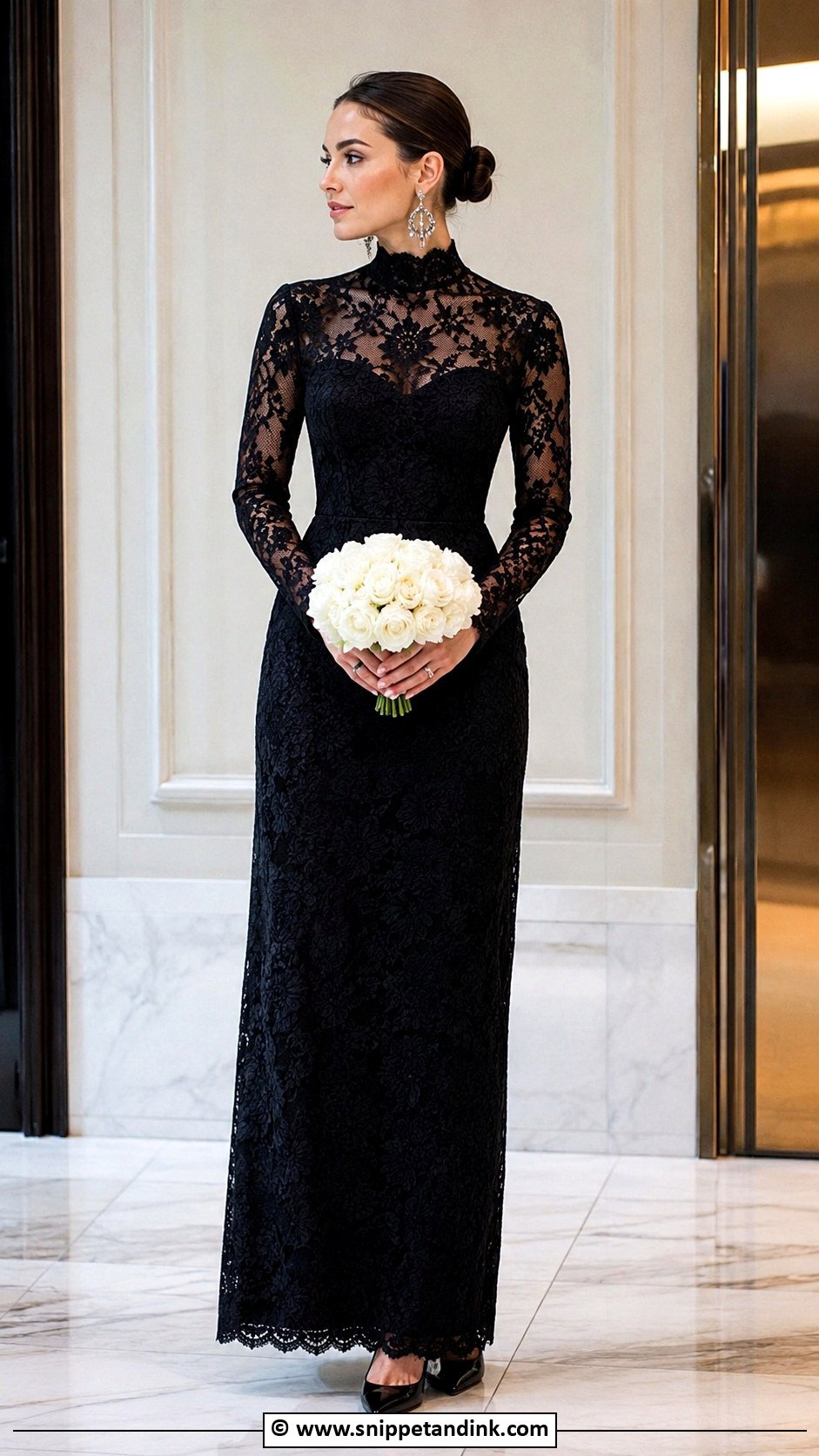
A high neck frames the face and shoulders and gives a black gown a regal line. It suits brides who want coverage at the front, and it often comes with an open back so the drama moves behind you. Skip a necklace; earrings, a sleek updo or a long veil do more. The one fit point I watch is the neckline itself, which should sit close without pressing on the throat when you turn your head or look down at your vows.
15. Black V Neck Wedding Gown
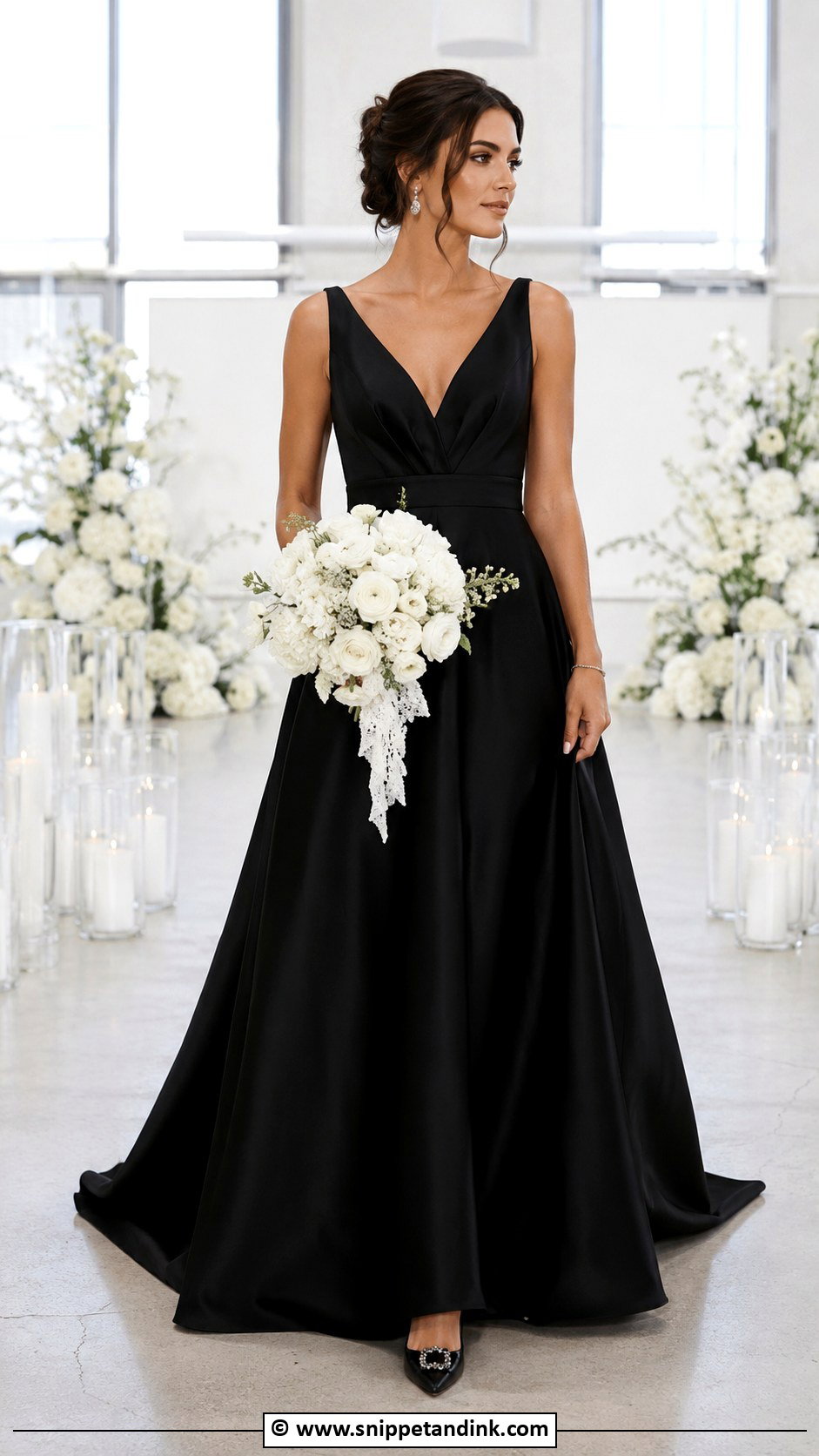
A V-neck draws the eye downward and lengthens the torso, which flatters shorter brides especially. Depth sets the mood: a modest V in lace reads romantic, while a deep plunge in satin reads editorial and needs clear tape or a mesh panel to stay put. I’d only add a pendant if the gown is very plain. Otherwise earrings and a bracelet are plenty.
16. Black Square Neck Wedding Dress
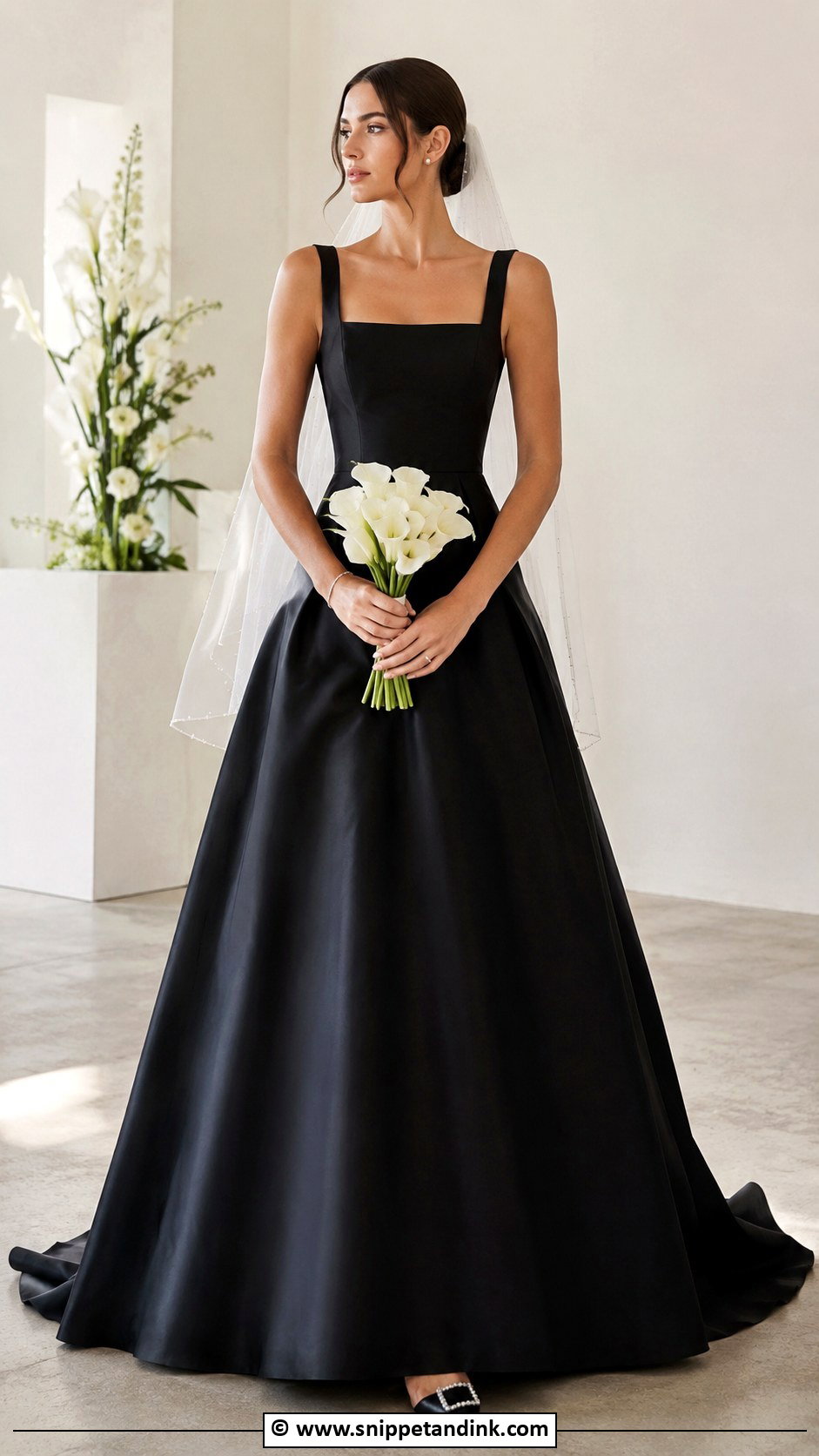
The straight line of a square neck gives the bodice structure and frames the collarbones neatly. It pairs best with wide straps and a fitted bodice, and the corners need to sit flat; if they gape when you breathe in, the bodice needs taking in at the side seams. Satin looks polished, crepe looks minimal. Pearl studs or small hoops balance the strong geometry better than a big necklace would.
17. Black Open Back Wedding Gown
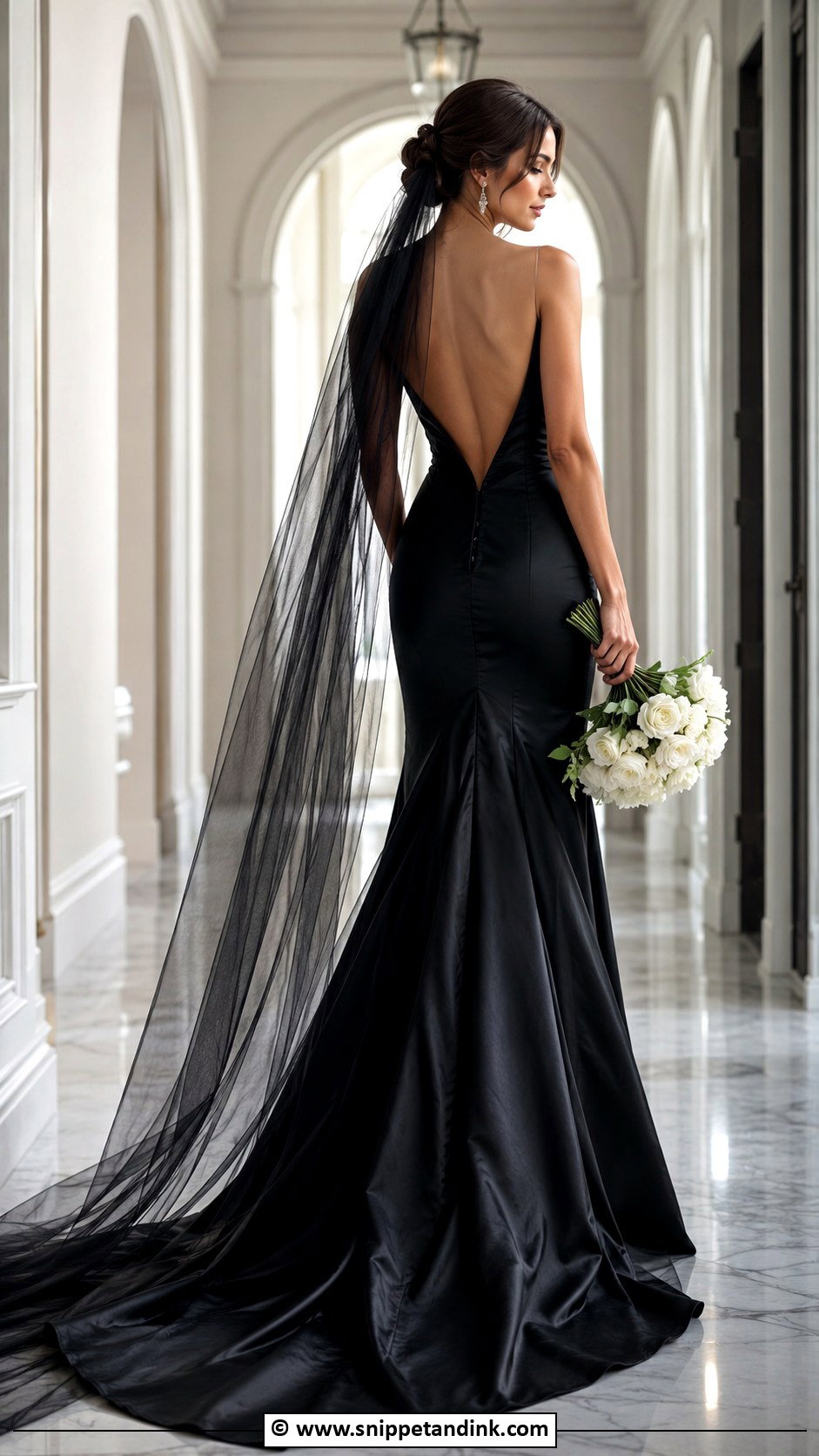
An open back puts the drama behind you, which is exactly where guests are looking for most of the ceremony. A low scoop is glamorous; a keyhole feels more secure. The bra question comes up at every fitting: most open-back gowns need cups sewn into the bodice, so bring that up early. Wear your hair up so the back stays visible, and if you wear a long veil, plan to remove it for reception photos.
18. Black Cape Wedding Dress
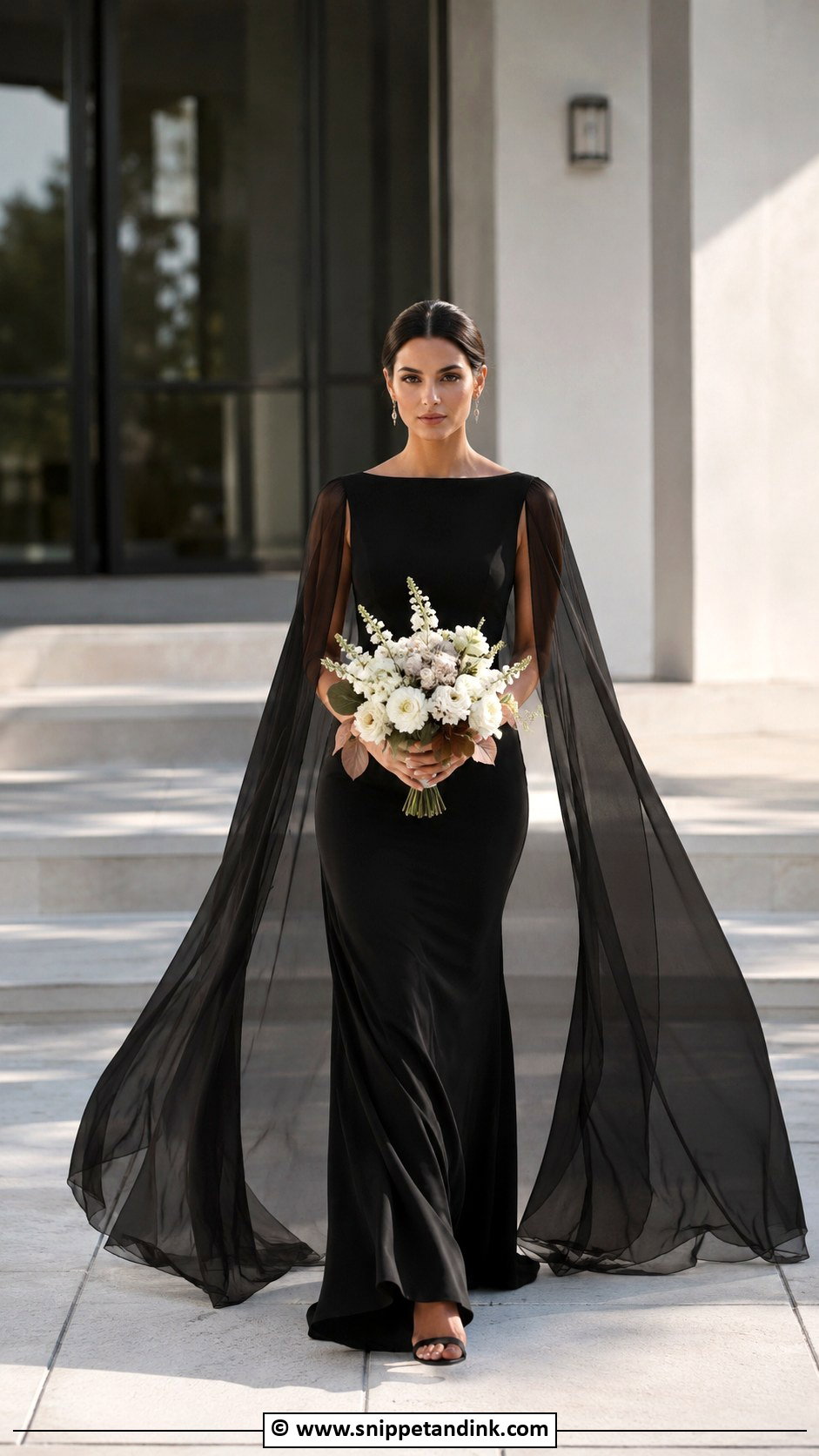
A black cape wedding dress replaces the veil as the ceremony statement. Sheer capes float, satin ones hang heavy and structured, beaded ones sparkle as you turn. A detachable cape that fastens with hooks or a clip at the shoulder is the practical choice, because you can take it off for dancing. Pair it with a simple column, fitted or strapless gown and keep other accessories minimal.
19. Black Wedding Dress With Train
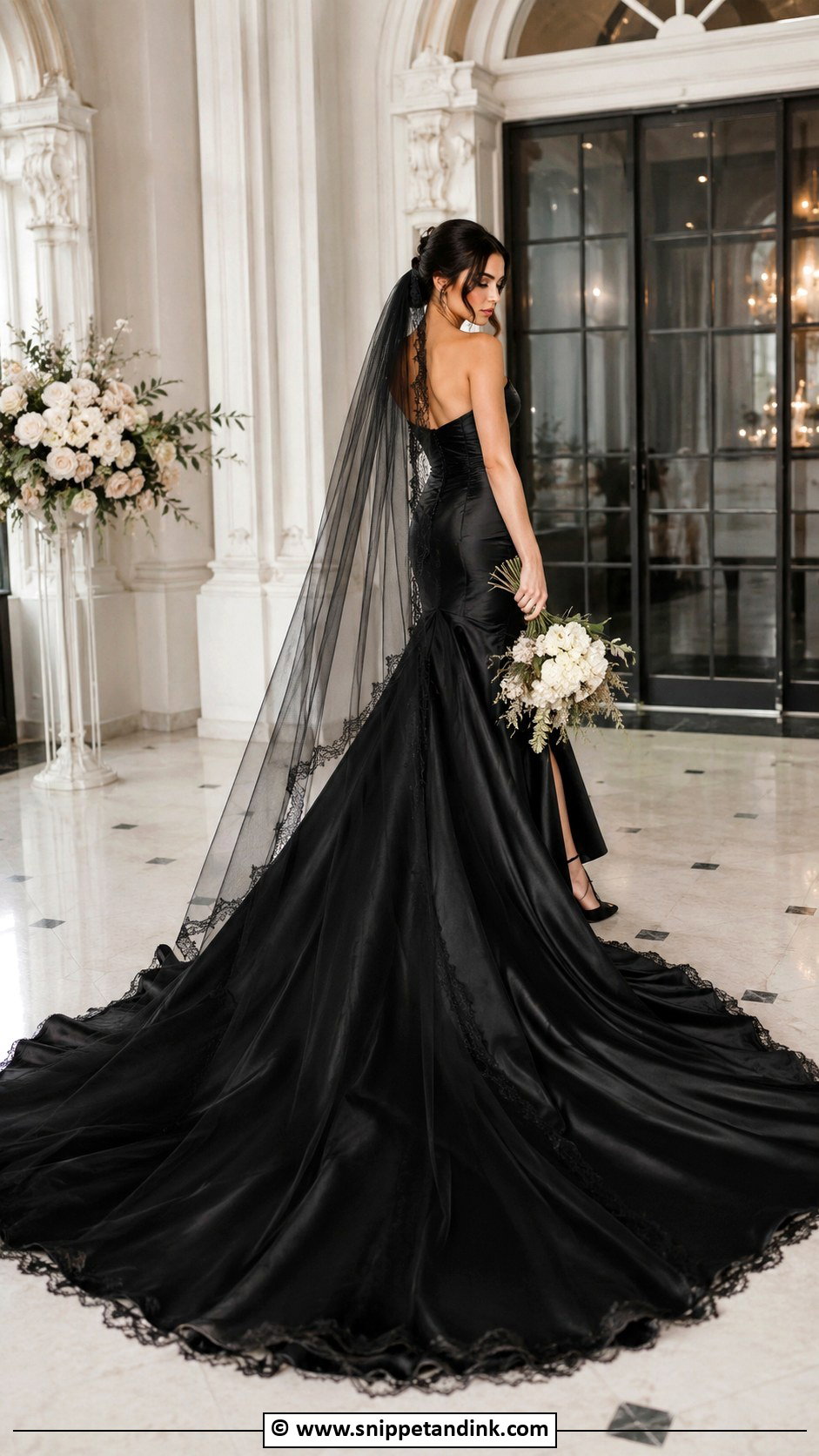
A chapel train trails roughly a metre or so behind you; a cathedral train is longer and needs real aisle space. With black, think about the floor: a pale stone aisle makes the train look graphic in photos, but black also shows dust and grass marks less than ivory, which is one quiet advantage. Satin and Mikado trains hold a sculpted shape, tulle trains float. Ask your seamstress about a bustle early; the type and number of attachment points takes time to work out.




20. Black Minimalist Wedding Gown
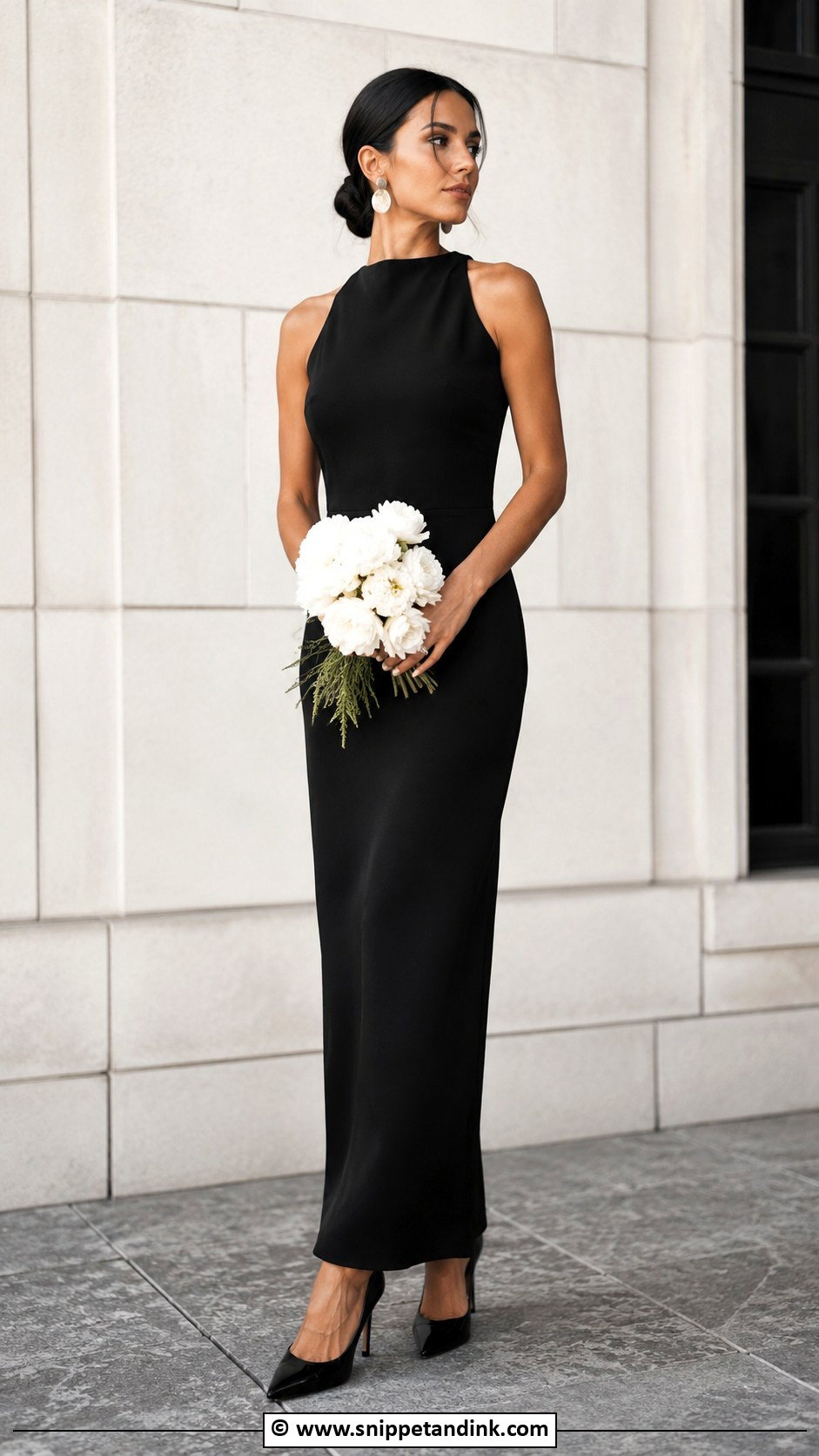
Minimal means the fit carries the whole dress. With no lace or beading to distract, every pucker at the waist, every uneven hem and every strap that won’t lie flat shows. Crepe, silk, satin or matte Mikado give the best result. A column gown, slip or sheath works best for this. Sculptural earrings, sleek heels and a small bouquet are enough; it suits courthouse ceremonies and rooftops.
21. Black Vintage Wedding Dress
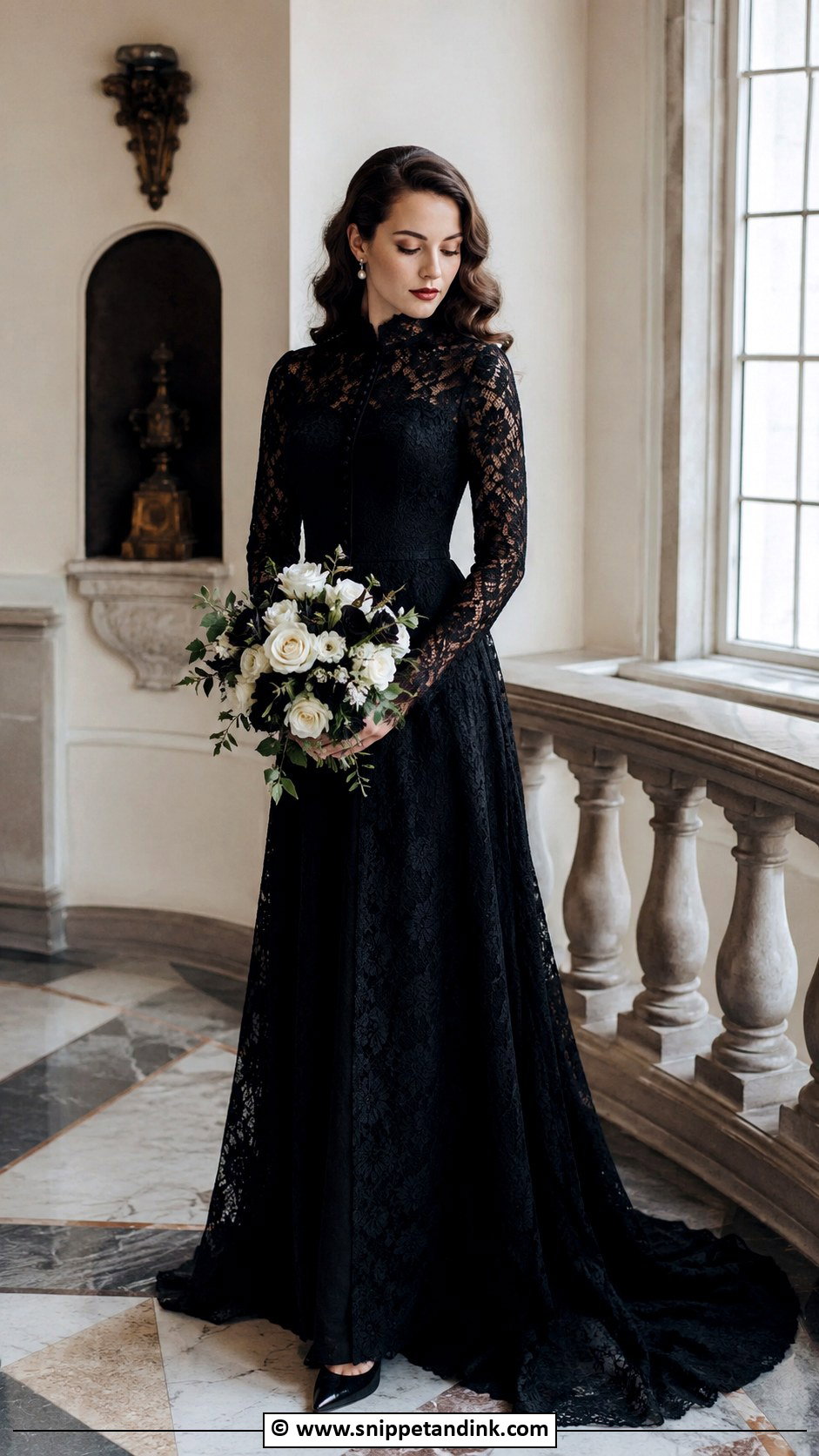
Vintage styling makes black look romantic instead of edgy. The details I look for are lace sleeves, a high neck, covered buttons down the back, a basque waist or a tea-length skirt. Genuine vintage black gowns are often fragile and sized very small, so budget for a seamstress who works with older fabrics. Soft waves, classic earrings and maybe gloves or a birdcage veil finish the period feel.
22. Black Gothic Wedding Gown
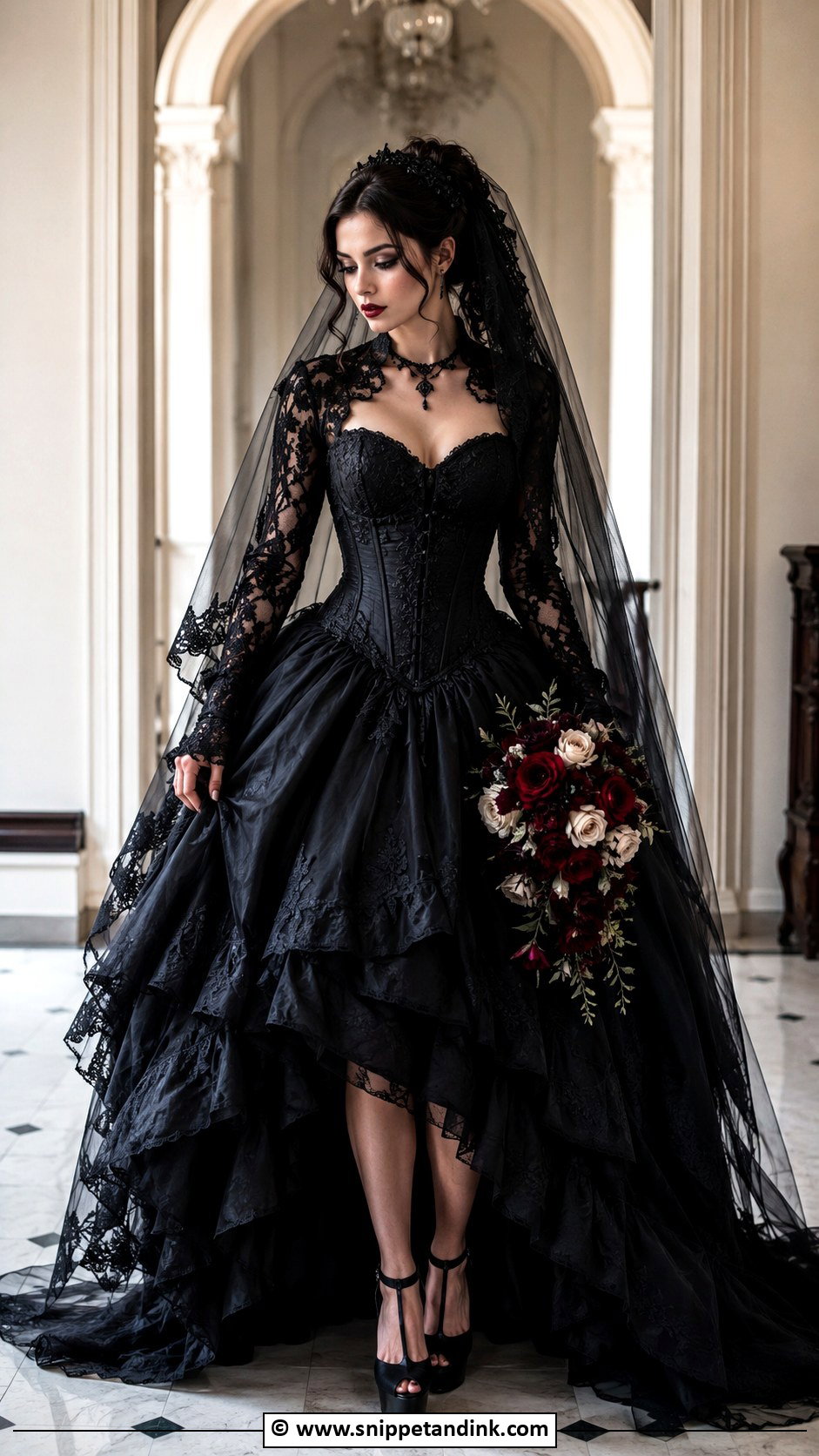
The line between gothic and costume is restraint. Lace overlays, a corset bodice, long sleeves, layered skirts and a high neck can all appear, but I’d pick two or three of those, not all at once. This gown belongs in candlelit, historic and autumn settings. Deep red, ivory or muted purple flowers give it contrast, and a veil with polished heels keeps it bridal rather than theatrical.
23. Black Boho Wedding Dress
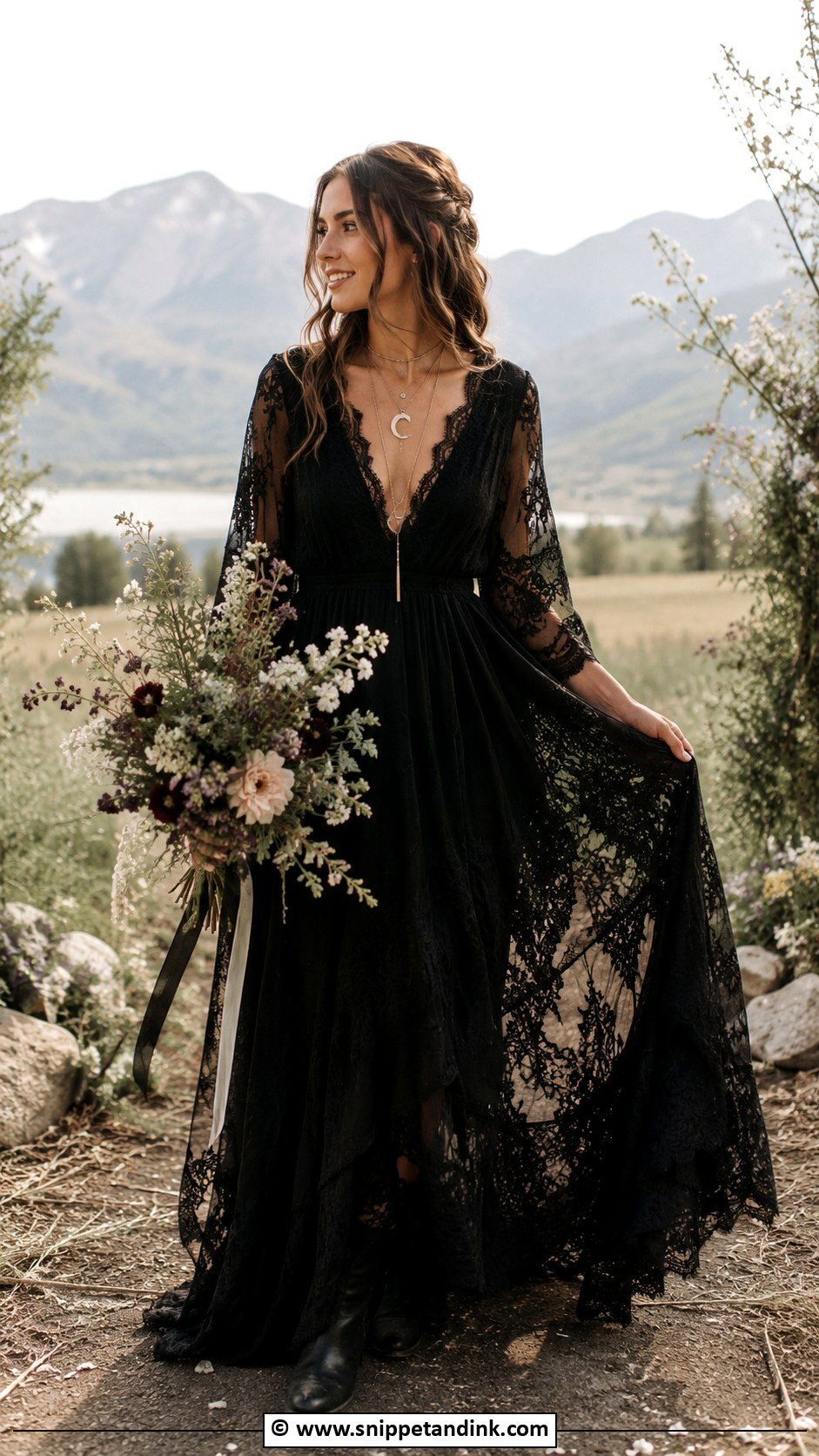
Black boho relies on movement: soft lace, flowing sleeves, light skirts and maybe a little fringe or embroidery. It suits outdoor and desert ceremonies and backyard weddings. The practical concern is the hem. Light black fabric picks up dust and grass seed outside, so have it hemmed to just clear the ground in the shoes you’ll wear. Loose waves, natural makeup, layered fine jewellery and a wildflower bouquet complete it. Ankle boots or sandals are fine here.
24. Black Plus Size Wedding Gown
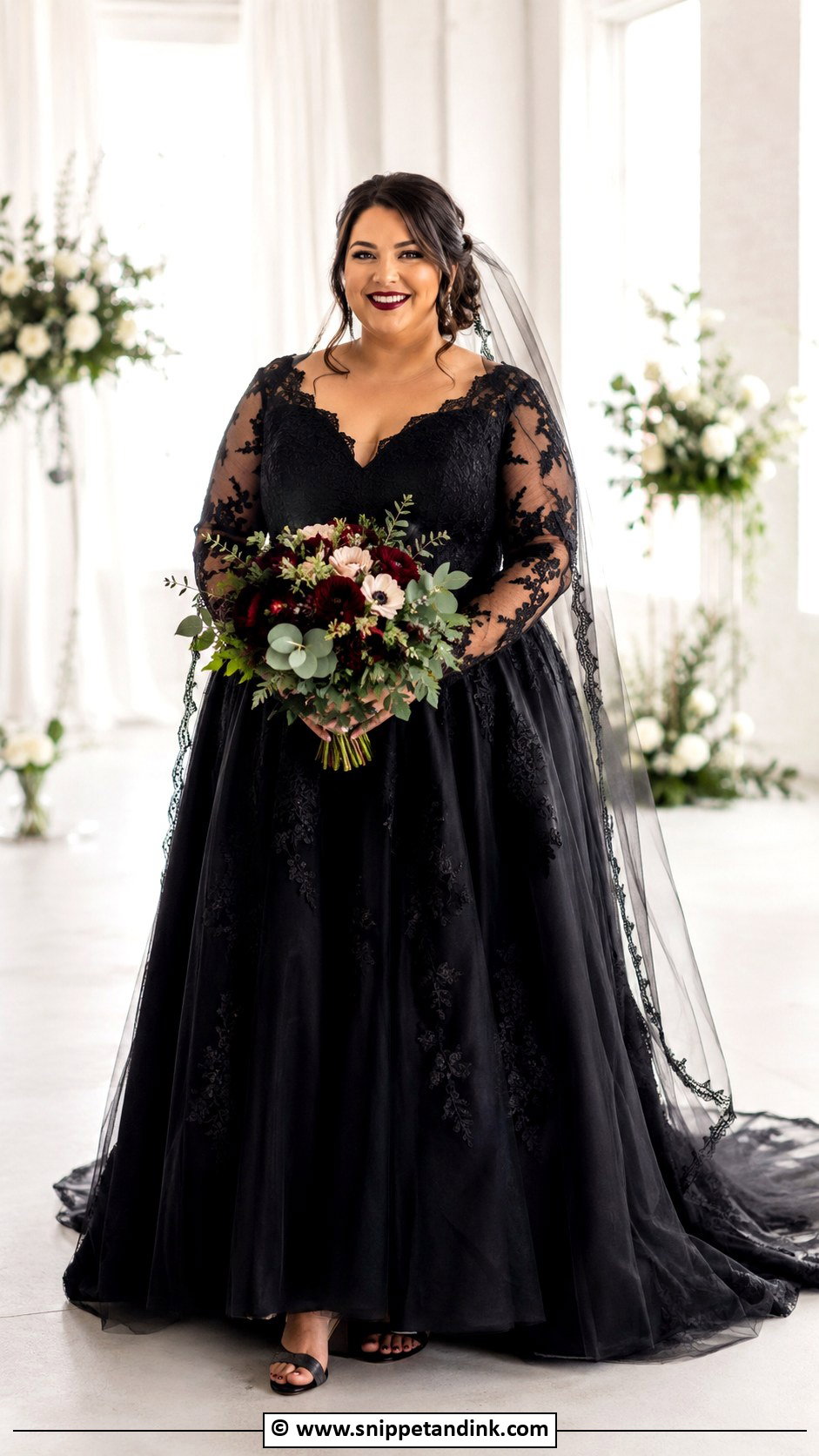
A black plus size wedding gown should be about support first. The silhouette is personal (A-line, ball gown, mermaid, empire or fit-and-flare all work), but in every case I look at the internal structure: boning, a strong waist stay, wide or secure straps and a lining that doesn’t ride up. Black lace, satin, tulle and crepe all perform well. A properly placed waist seam and a tailored hem make more difference than any styling trick.

25. Black Wedding Dress With Sleeves
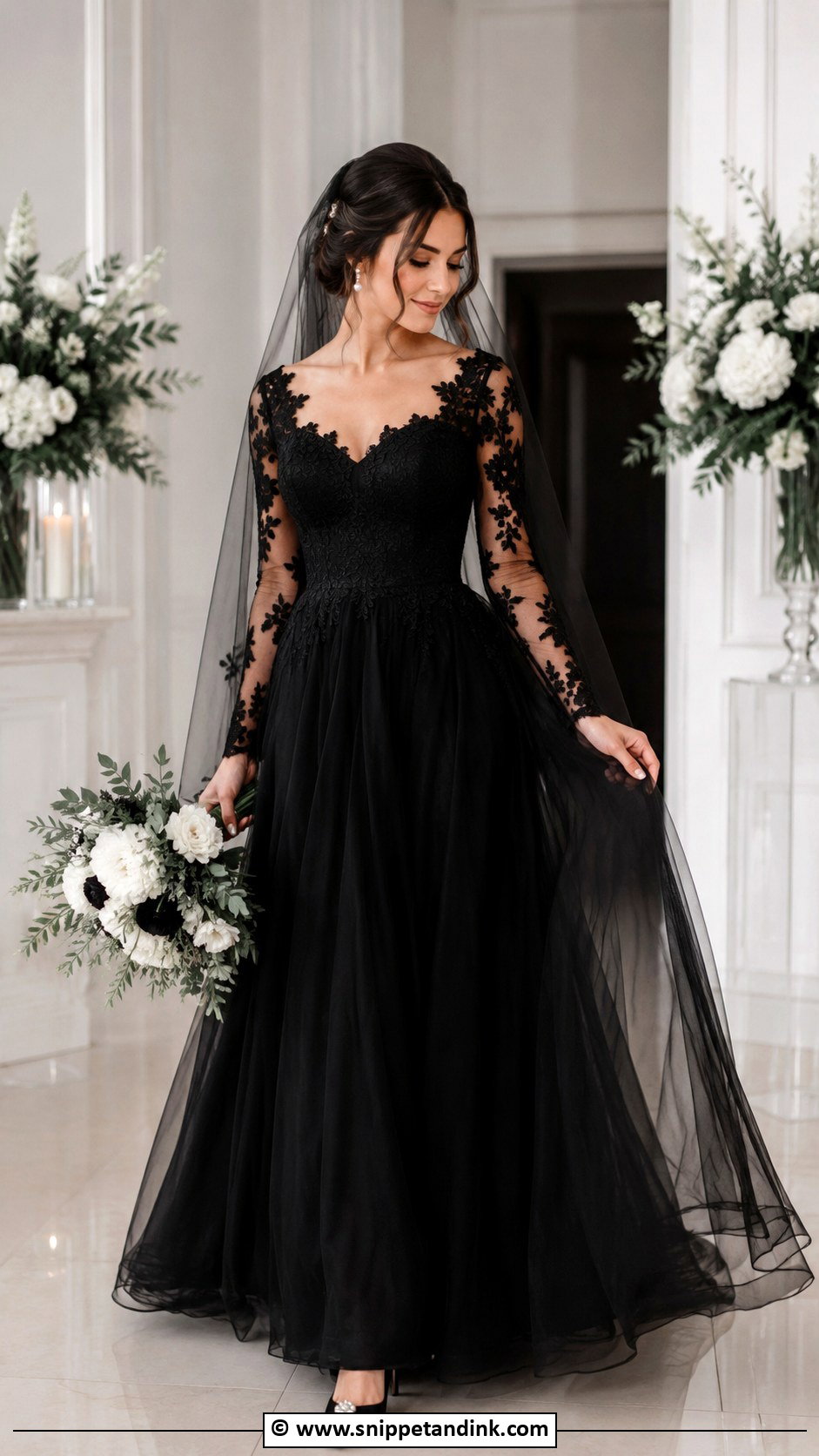
Sleeves change the character of a gown more than any other single detail. Sheer lace reads romantic, puff sleeves vintage, fitted crepe minimal, bishop sleeves soft and loose at the wrist. They suit cooler seasons and formal venues. My one practical test: raise both arms and hug someone at the fitting. If the bodice lifts with the sleeves, the armhole is cut too low and needs adjusting. With detailed sleeves, skip bracelets.
26. Black Tea Length Wedding Dress
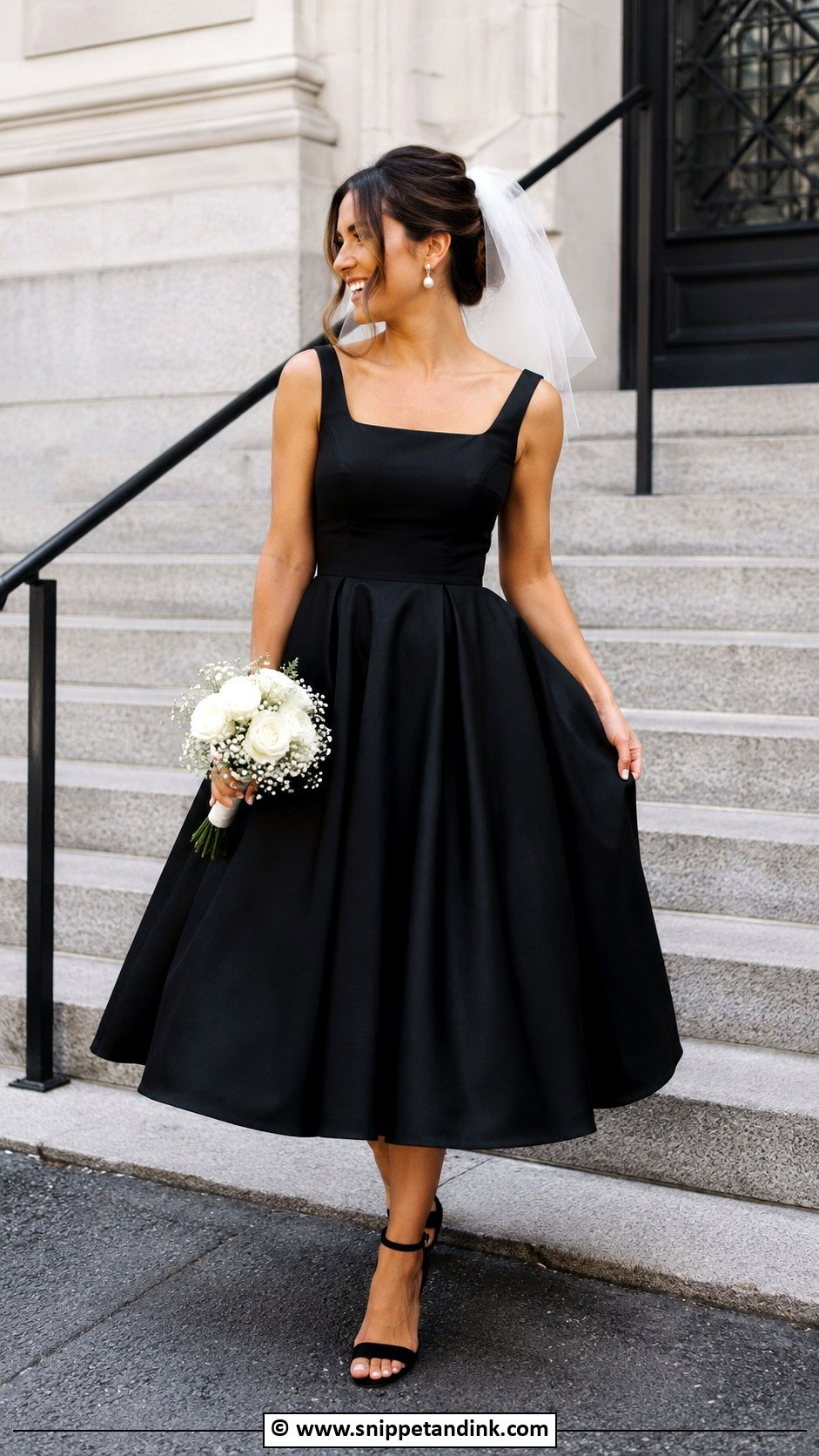
Tea length falls between the knee and the ankle, so the shoes become part of the dress. Pointed heels or ankle-strap pumps look sharp; embellished flats look playful. A fitted bodice with a full skirt reads retro, a slim cut reads modern. It suits courthouse and city weddings well, and it’s the easiest black gown to move, dance and travel in. A short veil and pearl earrings give it a bridal note.
27. Black Slip Wedding Dress
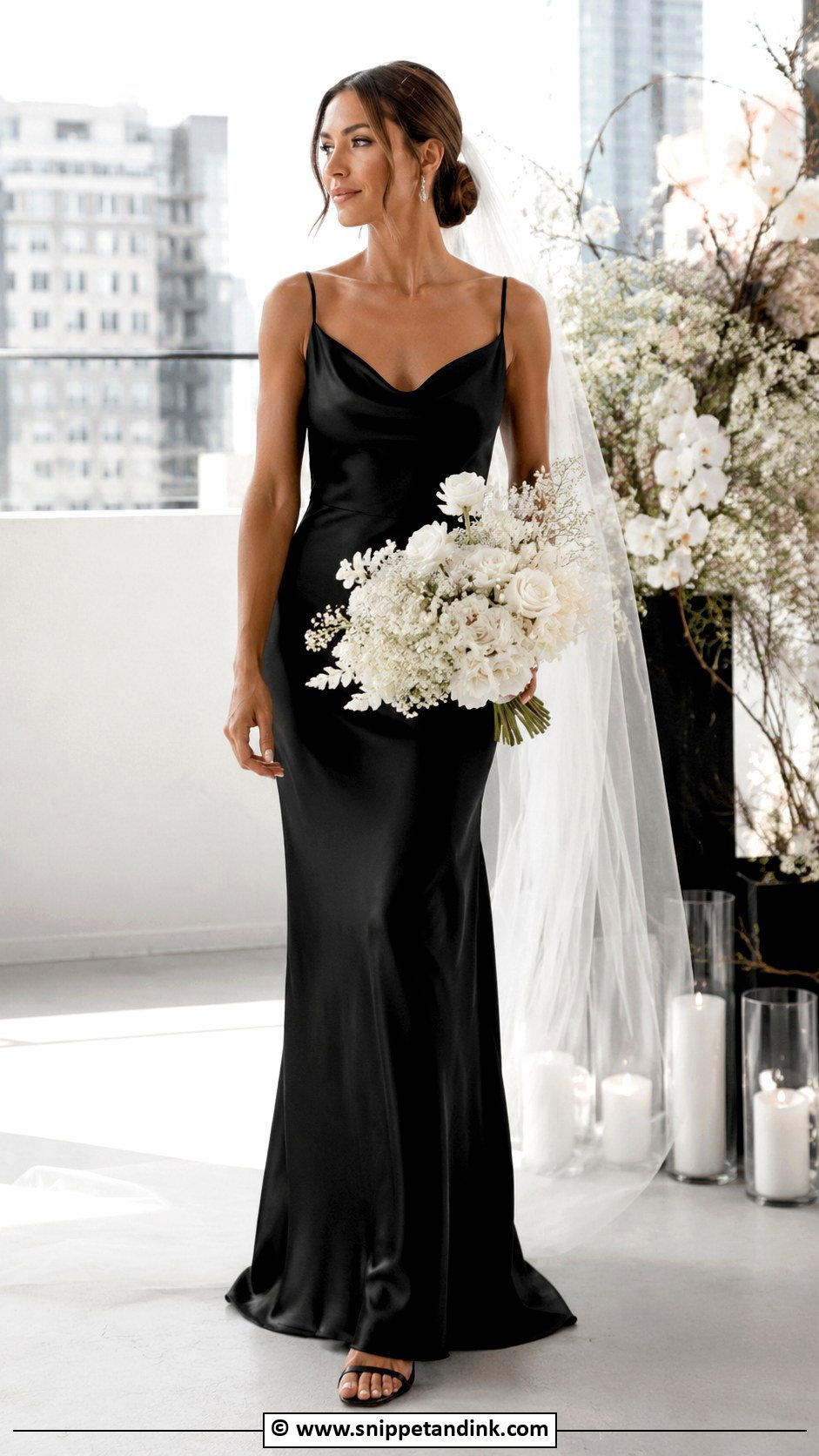
A bias-cut slip skims the body, which is why it looks so fluid and why it shows everything underneath. Smooth, unlined underwear and smooth shapewear are not optional here. Silk or a good satin drapes best; thin polyester clings and creases where you sit. I often add a lace trim or a cowl neck so it reads as bridal rather than evening wear. A veil, fine jewellery and a textured bouquet finish it for a courthouse, destination or rooftop wedding.
28. Black Sequin Wedding Gown
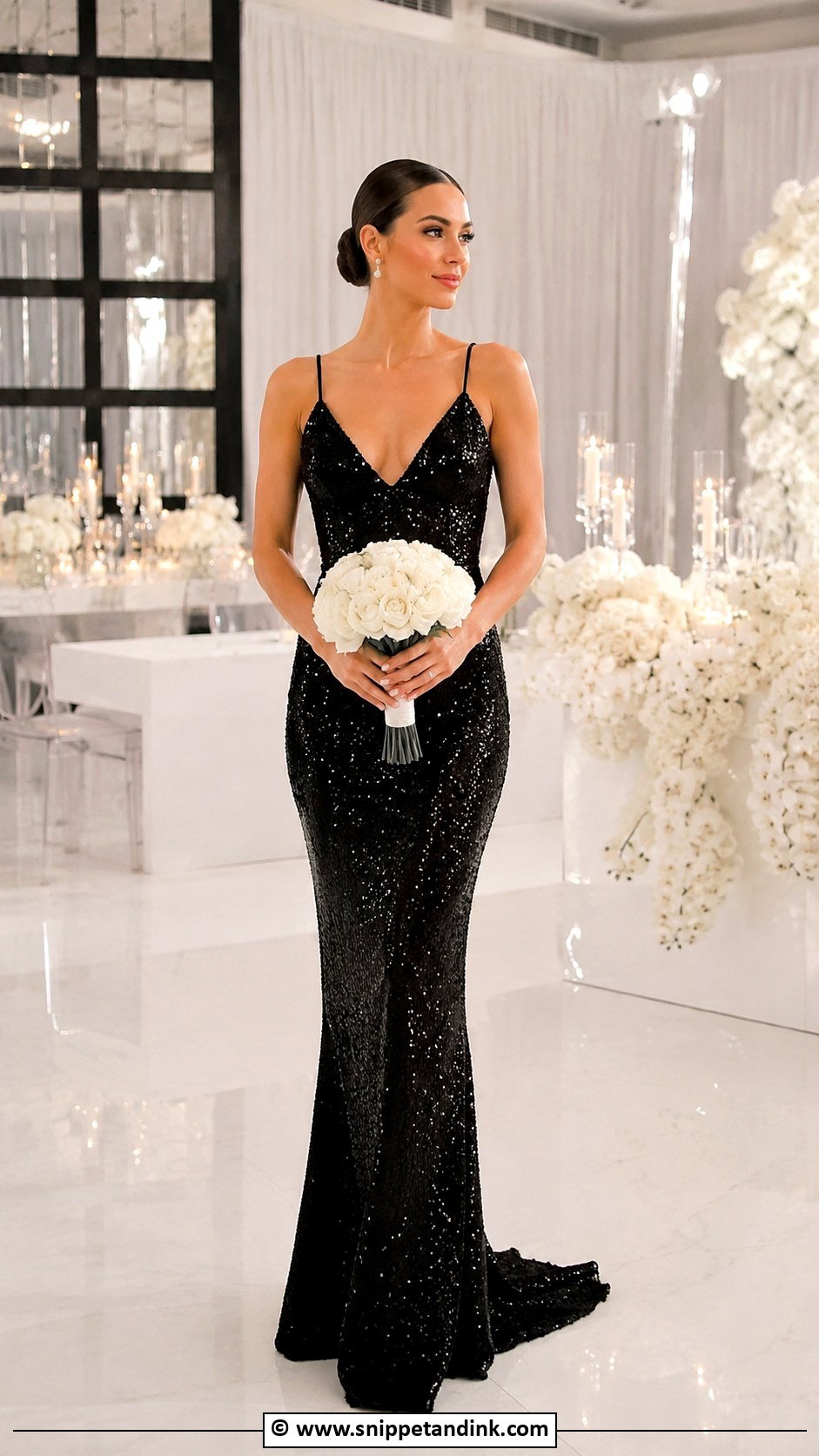
Sequins on black give the most sparkle of any gown here, and they’re made for evening light, ballrooms and receptions where the dancing matters. A fitted cut is glamorous; an A-line is softer. Two warnings from fittings: sequins scratch the inside of the arms if the bodice seams aren’t lined, and they can’t be steamed directly. With this much shine, keep the hair simple, the heels plain and the jewellery small.
29. Black Wedding Gown With White Details
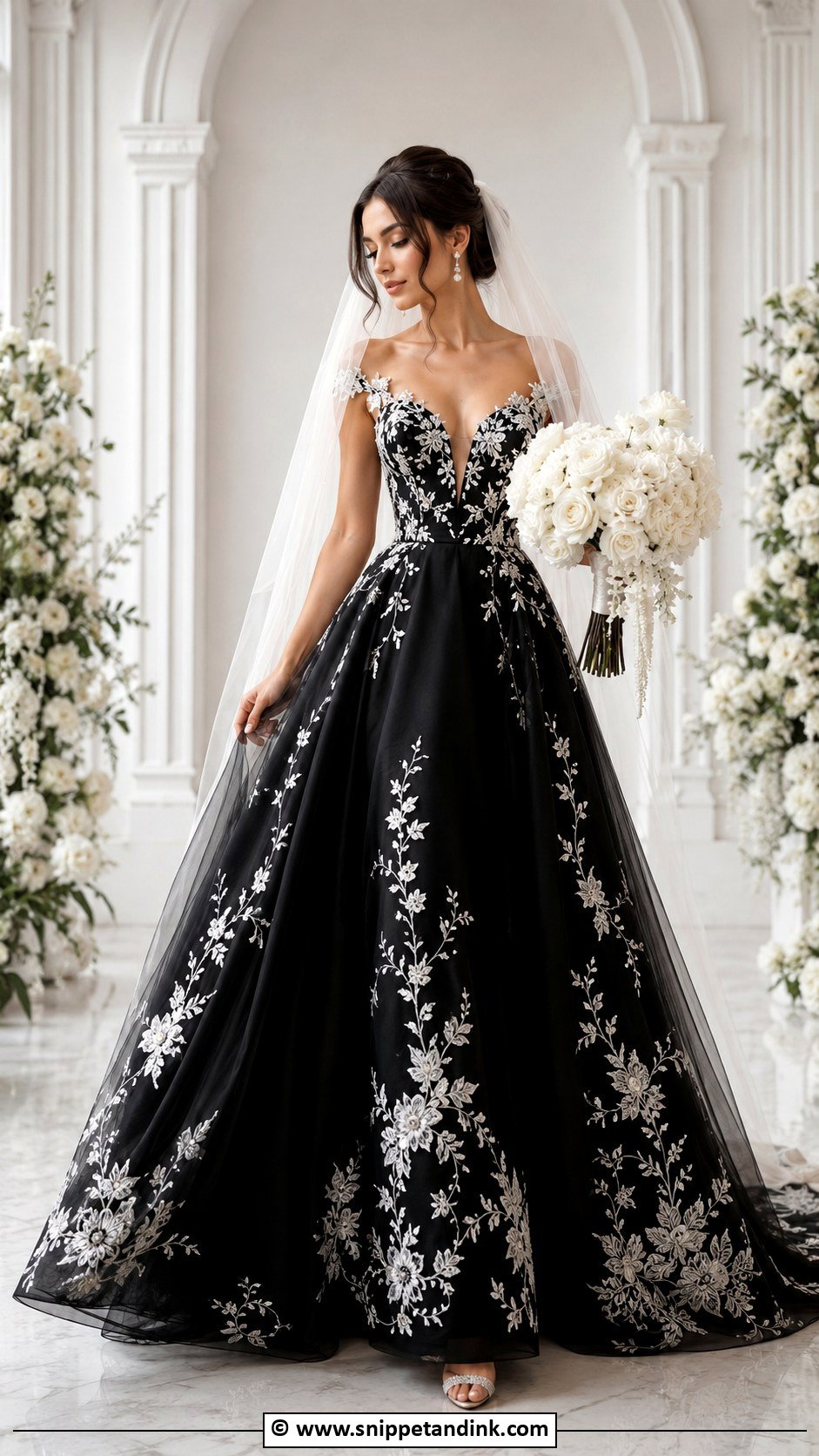
White details on black give you graphic contrast while still nodding to tradition, which often helps when family members are uneasy about a black dress. White embroidery, lace appliqué, bows or piping all work. Match the white to the bouquet, veil or pearls so the accents feel planned. Ask whether the white trim is colourfast before any spot cleaning, because black dye can bleed into white when the fabric gets damp.
30. Black Wedding Gown With Detachable Skirt
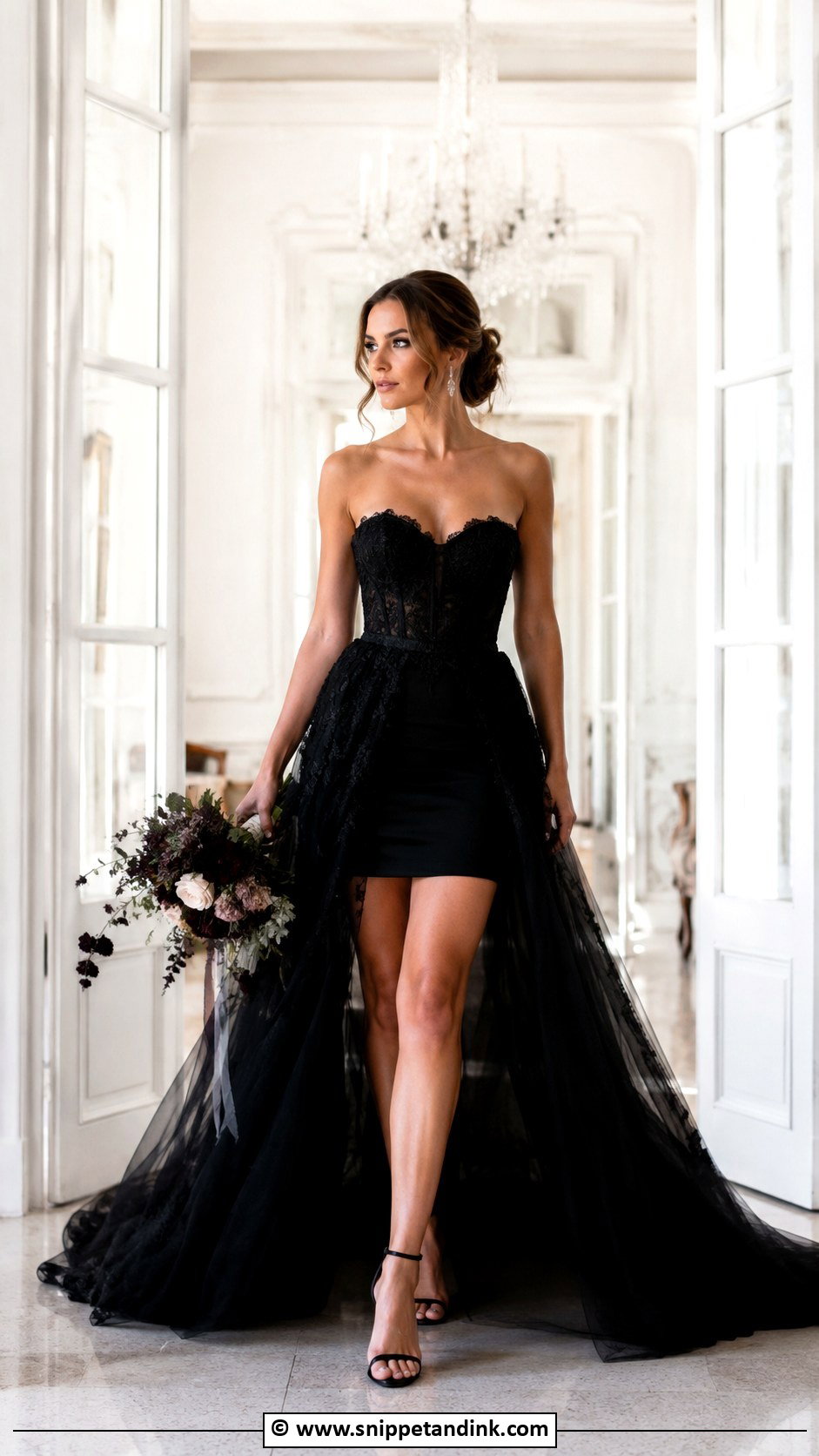
A gown with a detachable skirt gives you a grand ceremony and an easier reception without a second dress. A tulle overskirt is soft, a satin one structured. The join is what I check most: the overskirt should sit flat at the waist without a visible ridge, and the fastening (usually hooks, snaps or a hidden button band) needs practising with whoever will help you change. Veil for the ceremony, statement earrings for the party.
What the Camera Does to Black Lace and Satin
Black absorbs light, and a camera exposing for your face can turn a detailed bodice into a flat silhouette. I always tell brides in black to send their photographer a picture of the gown ahead of time so they can plan for it. Side light and window light bring texture back; harsh overhead light and flash on a matte fabric lose it.
Fabric choice helps here too. Satin and sequins reflect light, so their shape shows even in dim rooms. Matte crepe needs good light to read as anything but black. Lace over a nude lining keeps its pattern in almost any photo, which is one reason I suggest it so often.
Caring for It Before and After the Day
- Black shows deodorant and makeup marks instantly. Dress before your final powder, and put a scarf over your face as the gown goes on.
- Steam from the inside of the gown and keep the steamer moving; a hot iron leaves a shine on black satin.
- Pack a lint roller. Black tulle collects white fluff, petals and pet hair.
- Afterwards, have it professionally cleaned and store it away from daylight in a breathable bag. Light fades black dye over the years, and plastic traps moisture.
Wearing Black and Still Looking Like the Bride
A black gown works when it’s chosen for you rather than for the shock. Lace, satin, tulle, minimal or gothic, each one can read bridal once the fit, fabric and accessories pull together. Think about where you’ll stand, what light you’ll be photographed in, the flowers you’ll carry and how you want to move at the reception. Then pick the shape that suits that day, not the one that looks best on a hanger.
You'll Like These Ideas:










Leave a Reply