
A violet wedding dress is a real commitment, and a rewarding one. The same color family can look airy in lavender tulle, regal in saturated satin, or moody in deep amethyst lace, so the shade you pick sets the tone of the whole wedding before a single flower arrives. Purple also travels across seasons better than most bridal colors. What I watch most closely with clients is the pairing of shade and fabric, since violet behaves differently on shiny satin than on matte crepe. Metals matter too: silver keeps cool violets crisp, while pearls and gold warm them up. Below are twenty complete looks, from ball gowns to courthouse dresses, with the accessories and flowers I’d put beside each.
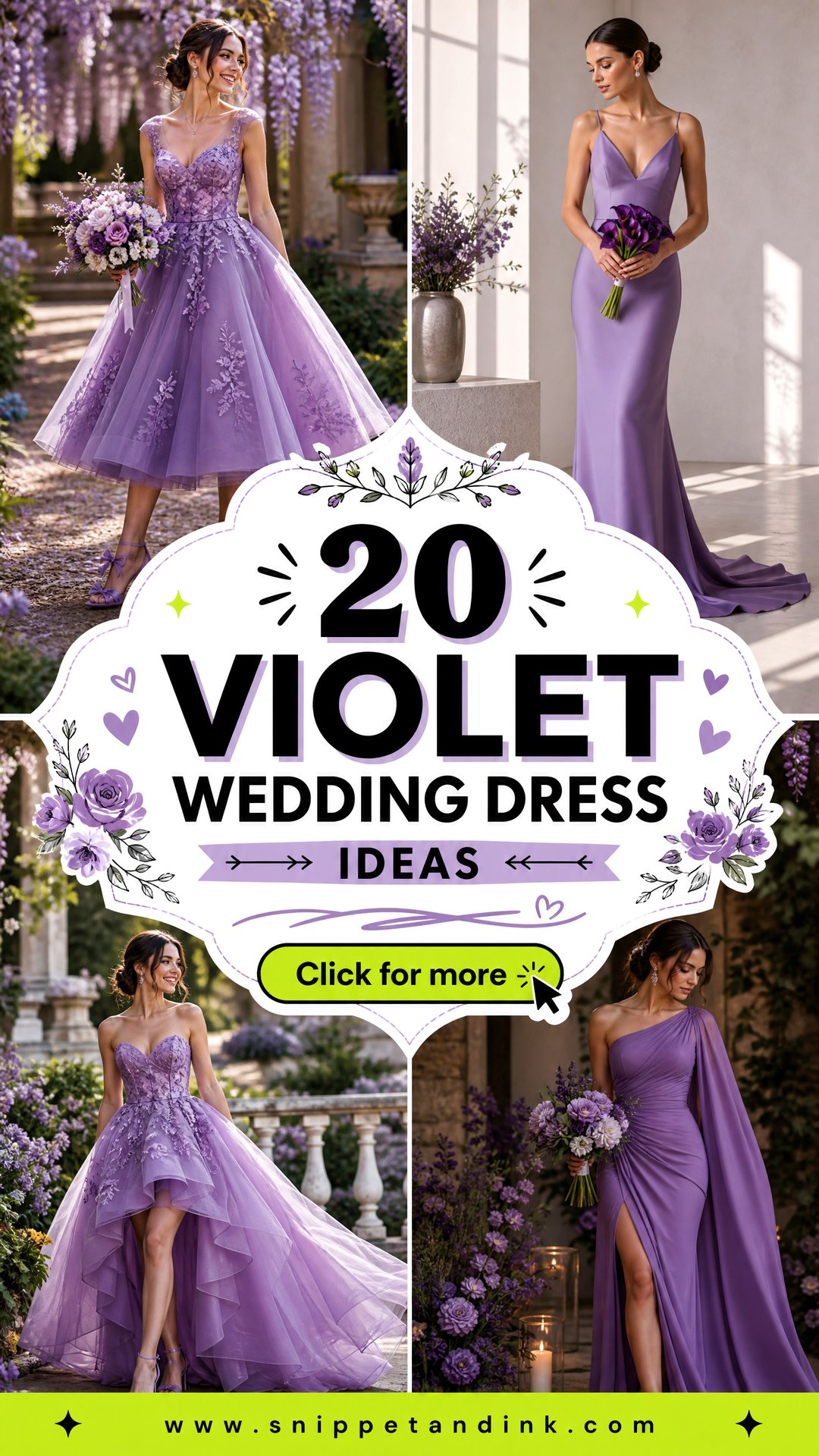
Why Violet Changes Color Between the Fitting Room and the Photos
Purple is the trickiest bridal color I work with, because it shifts more than almost any other under different light. A violet that looks balanced in a salon can lean blue in shade, pink under warm bulbs, and grey on an overcast day. Cameras add another twist: many digital sensors struggle with violet and record it bluer or flatter than your eye sees it.
Test the shade where you’ll wear it
- Ask for a fabric swatch and look at it at the same time of day as your ceremony, ideally at the venue.
- Take phone photos of it in daylight, in shade and under indoor bulbs. If it turns muddy in two of the three, choose a clearer shade.
- Show a swatch to your photographer. A good one will tell you how they handle purples in editing.
- Compare the swatch against your skin and your bouquet flowers, since purple flowers rarely match dyed fabric exactly.
Ordering a colored gown
Many colored wedding dresses are dyed to order, which can add weeks to the lead time and often means no returns once production starts. Dye lots vary as well, so if you’re ordering a matching cape, veil or overskirt, order it with the dress so everything comes from the same batch. Ask your seamstress to match thread to the actual fabric, not to a color name.
1. Violet Tulle Ball Gown Wedding Dress
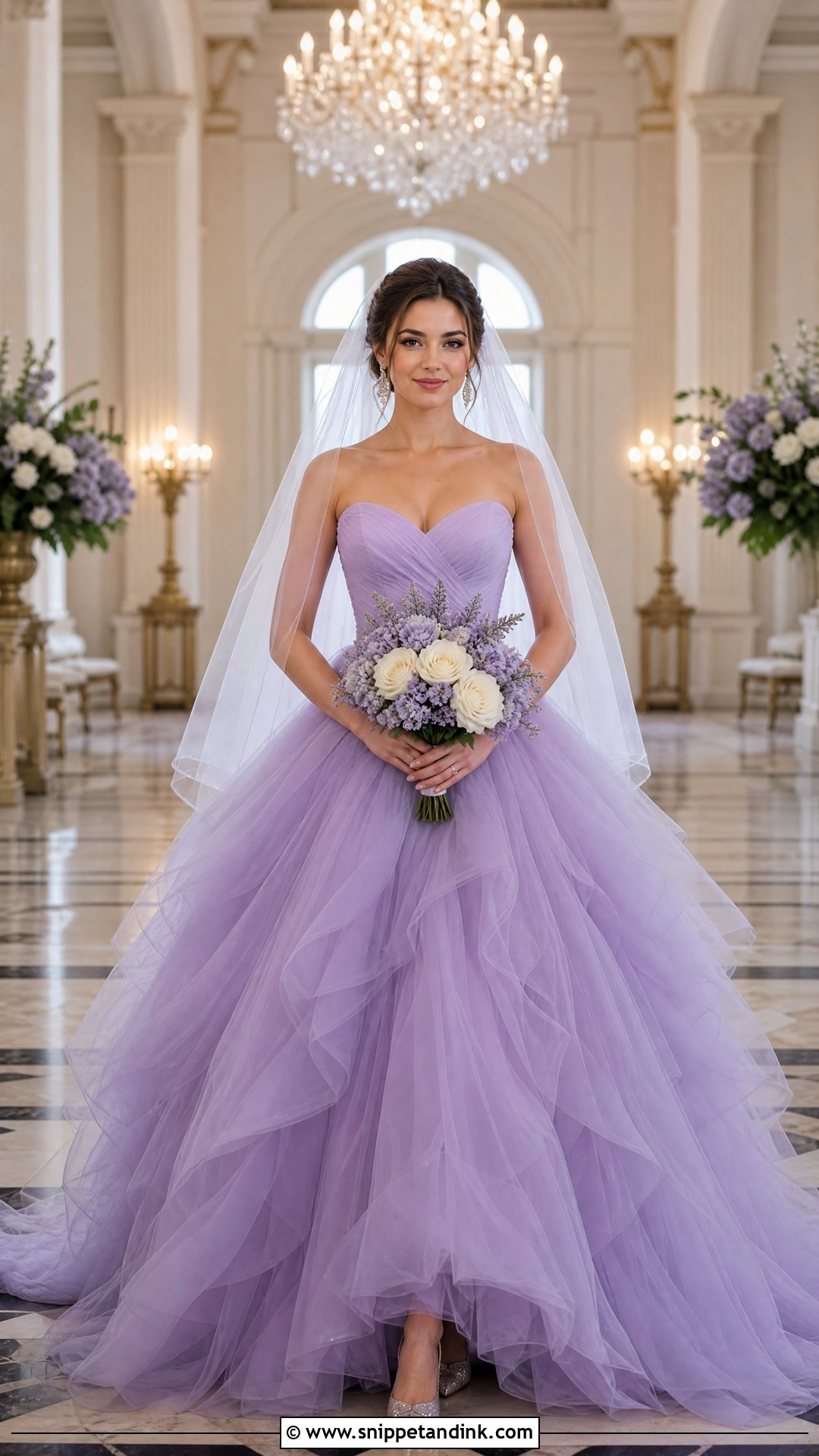
Tulle is the kindest fabric for a first-time color bride. Several layers of violet tulle stacked together read softer than a single sheet of satin in the same shade, because light passes through and mixes with the layers below. Build it on a supportive fitted bodice with a defined waist and a gathered skirt, with a sweetheart or square neckline to anchor the volume. A fingertip veil in matching violet, crystal drops and silver pointed pumps. White roses, lavender and pale greenery keep the palette fresh. If the gown already sparkles, one or two delicate pieces of jewelry are plenty. Have the hem set a touch off the floor in your shoes; tulle catches heels easily. Ballrooms and estates give the skirt room.
2. Lavender Lace A-Line Wedding Dress
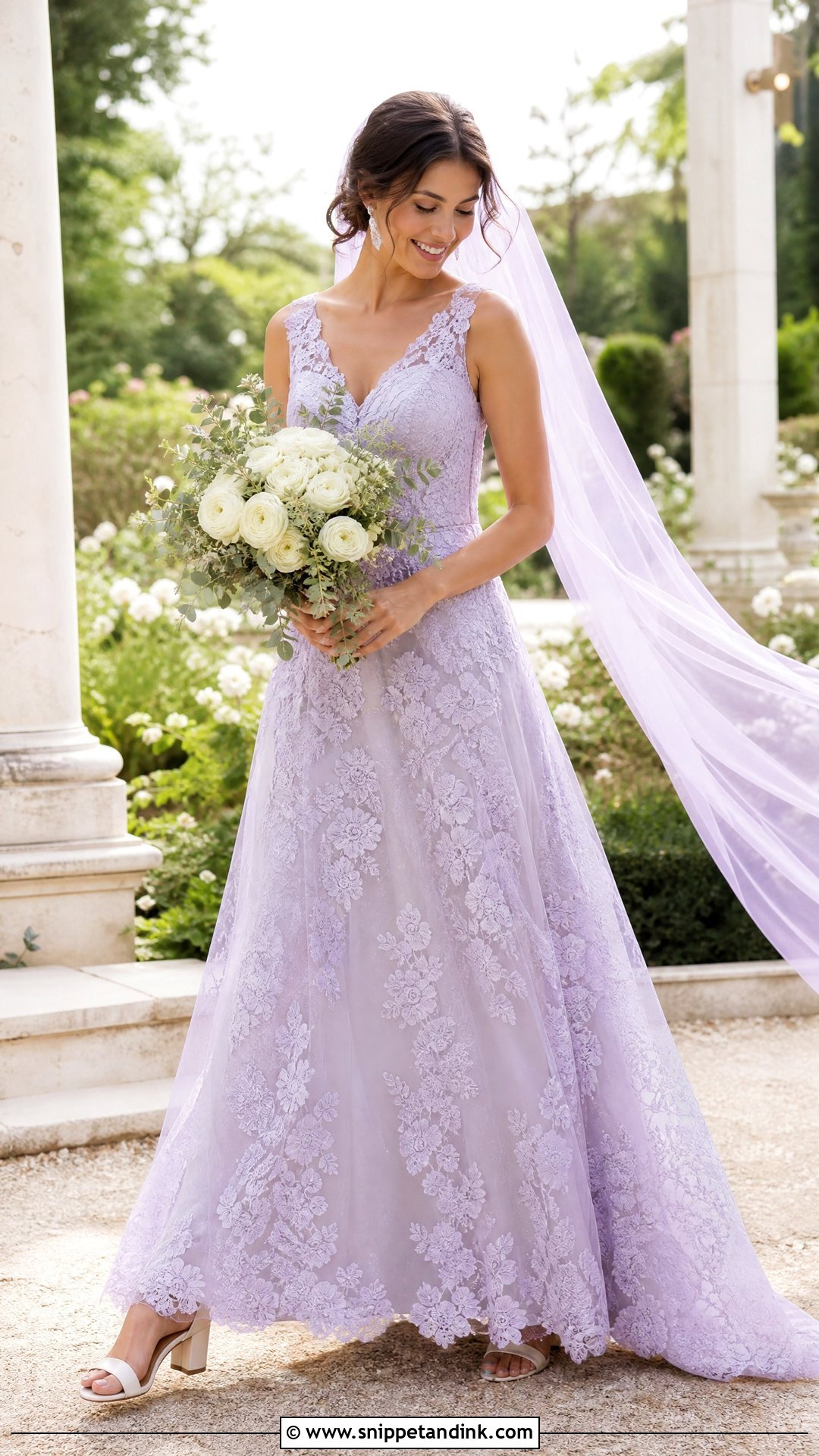
Lace on a lavender lining shows more detail than lace on ivory, since the color gives each motif an edge. I’d go A-line here for an easy shape through ceremony and reception, with floral lace, a natural waist, and a soft V or illusion neckline. Pearl earrings, a plain lavender veil and ivory block-heel sandals. A loose low bun and fresh, light makeup suit it; a heavy evening face fights the pale color. White ranunculus, lilac-toned blooms and eucalyptus in your hands. Gardens, conservatories and country venues are its home. Add sheer lace sleeves for more coverage, or leave the bodice sleeveless for a spring or summer date.
3. Violet Satin Slip Wedding Dress
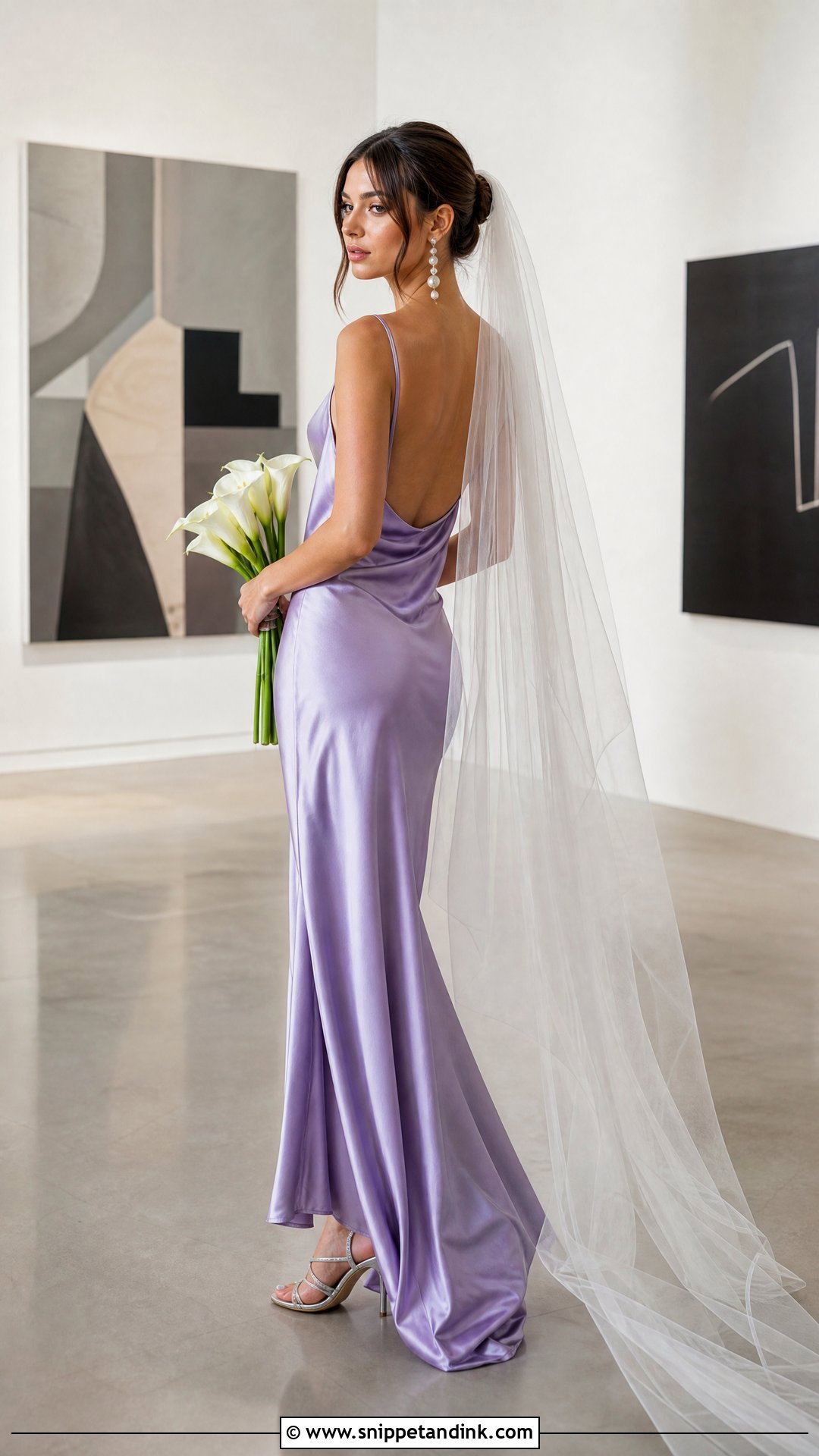
Violet satin cut on the bias looks simple and is anything but. The bias cut lets the fabric skim the body; cut on the straight grain, the same slip dress pulls across the hips. A draped neckline, narrow straps and a low back keep the lines clean so the color carries it. Add a sheer cathedral veil, silver strappy heels and sculptural pearl earrings, with a sleek bun or glossy waves. White callas or orchids in a compact bouquet suit a gallery, a rooftop or a modern hotel. Satin shows every fold and every line under it, so wear smooth, edge-free underwear and have it professionally steamed on the day. Try it in daylight and indoor light, since satin’s sheen shifts violet quite a bit between the two.
4. Deep Violet Mermaid Wedding Dress
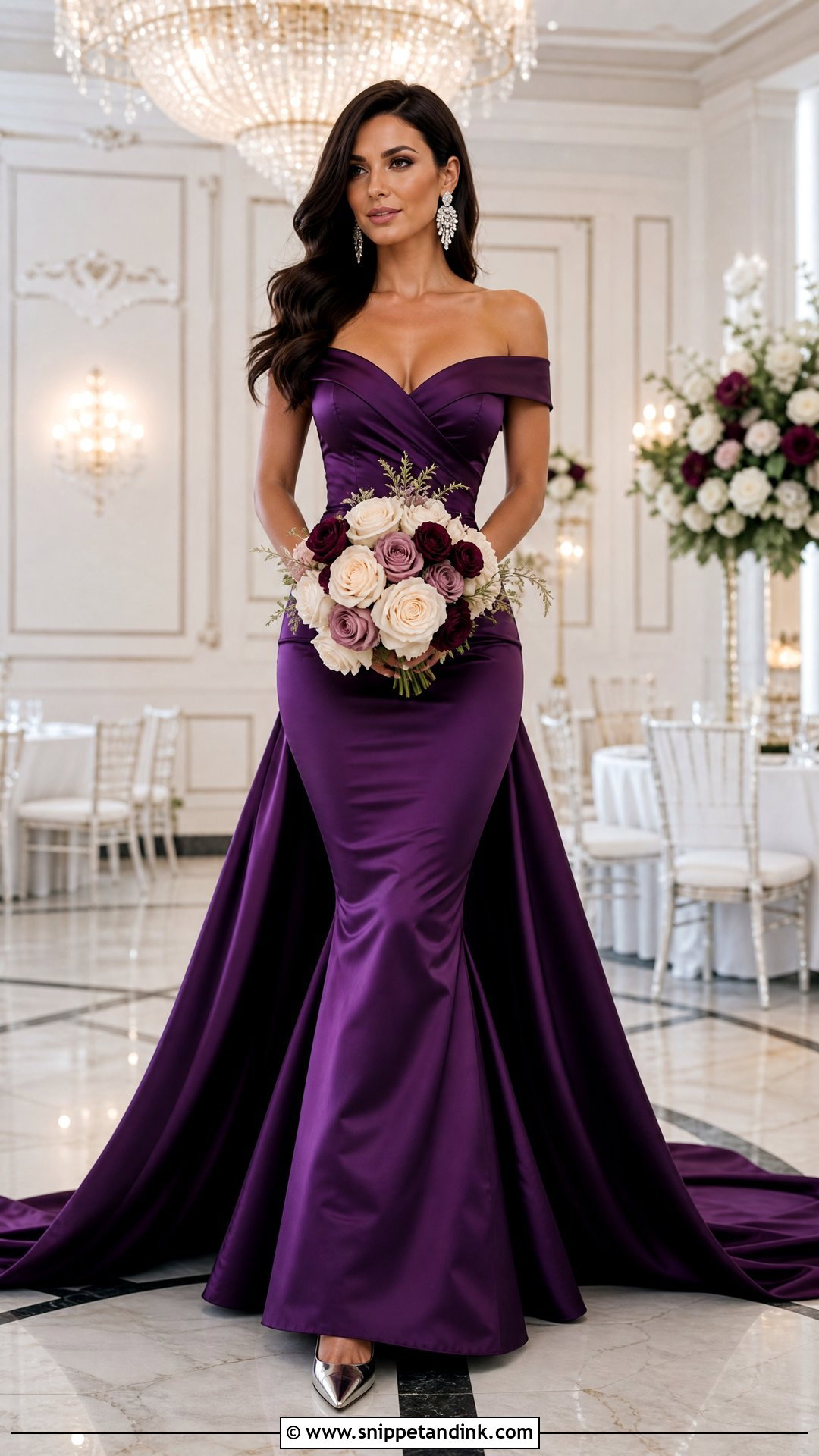
Deep violet and a mermaid line make one of the most confident outfits on the list, and also one of the least forgiving to sit in. The bodice follows the waist and hips and flares at or just above the knee; the higher the flare, the easier the stride. Stretch crepe, satin or lined lace hold the shape while letting you move. Add a detachable train for the ceremony, crystal earrings, pointed metallic heels and a sleek side part. Ivory roses with plum flowers keep the bouquet from vanishing against the dark dress. I’d practice sitting and walking at an early fitting, before the final alterations lock in the knee line, and ask for a hidden bustle for the reception.
5. Violet Off The Shoulder Wedding Dress
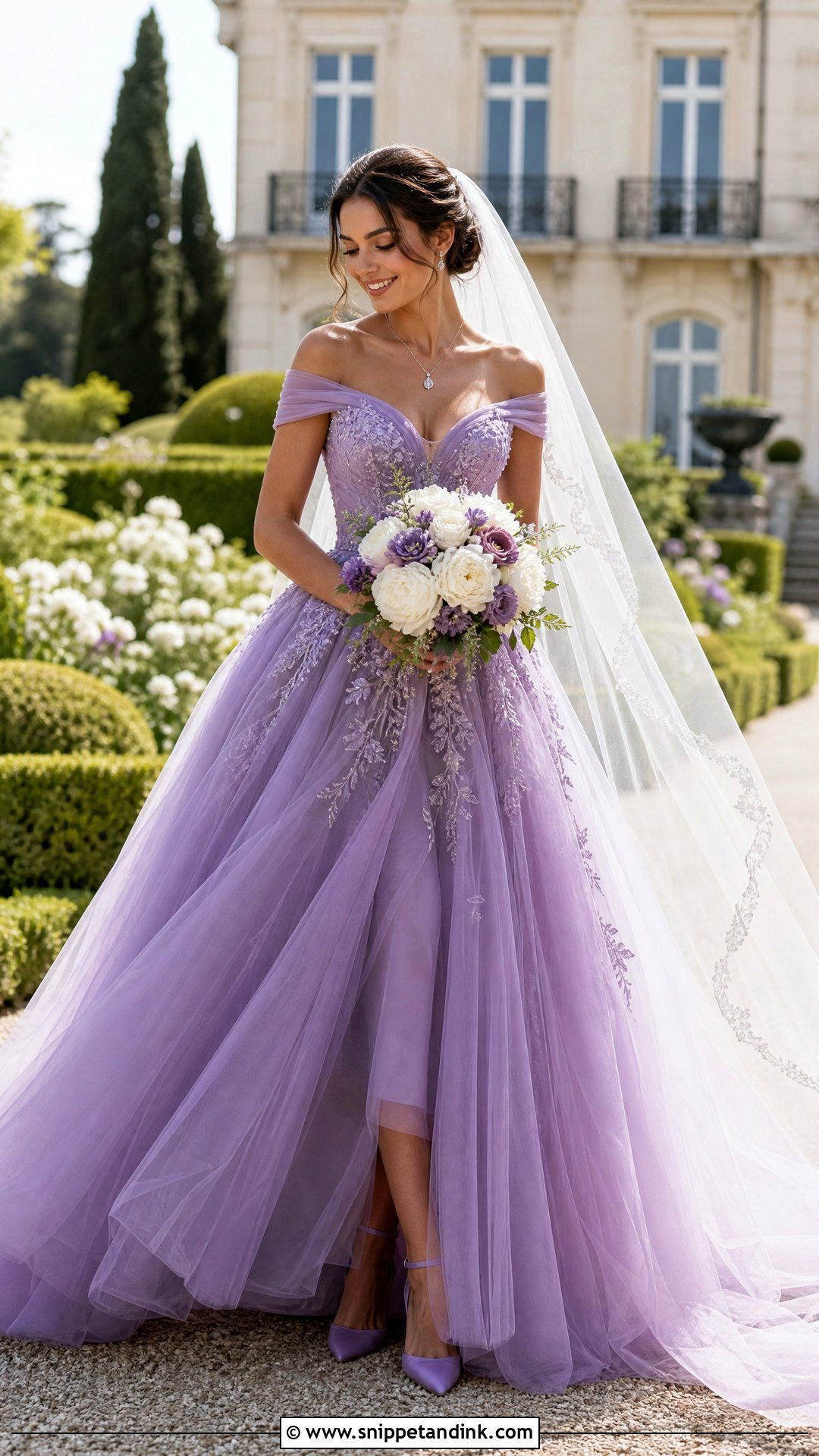
The off-shoulder line frames the collarbones, which is exactly where a violet neckline sits closest to your face, so check the shade against your skin in a mirror before anything else. Choose a structured bodice with secure inner support so the sleeves rest on the arms without trapping them. Flowing chiffon, satin or layered tulle for the skirt, depending on how formal you want it. A delicate pendant, matching studs, lavender heels, a soft updo and a chapel veil. Peonies, lavender roses and small violet blooms in a rounded bouquet. During alterations, hug someone and raise your arms; off-shoulder sleeves that ride up stay up. Spring gardens and refined indoor ceremonies suit it.
6. Violet Long Sleeve Wedding Dress
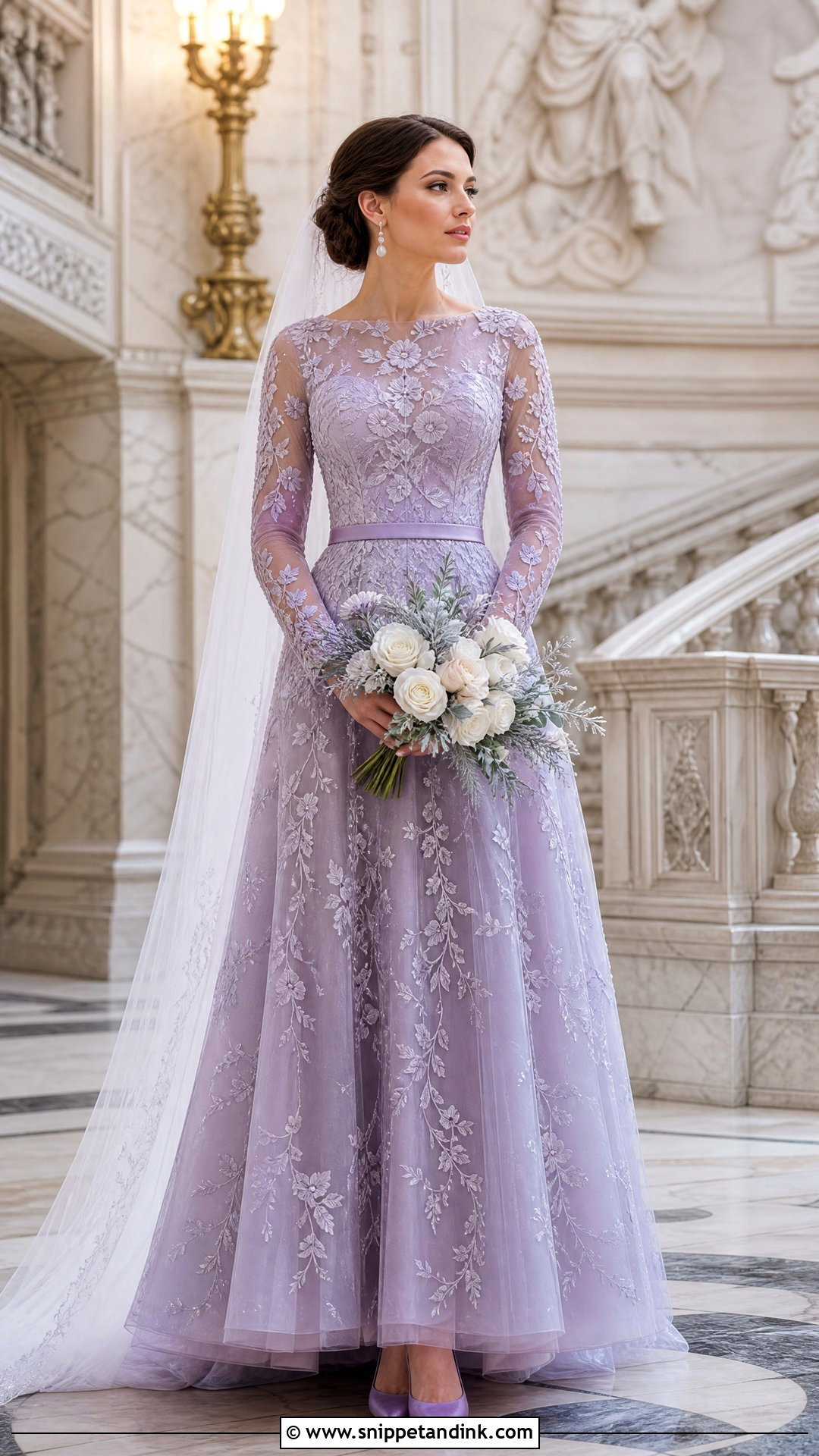
Long sleeves on a rich violet gown add a lot of color near the face, which can be a good thing in winter light. Sheer embroidered sleeves keep it light; fitted crepe sleeves look more modern. An A-line or softly fitted shape with a defined waist and a modest open back balances the coverage. Pearl drops, closed-toe satin pumps and a long veil under a low bun. White roses, dusty lavender and silver-green foliage soften the deeper dress. I’d choose this for fall and winter in a historic or formal indoor space. Check that cuffs and shoulders let you reach and hug, and if the fabric is heavily embellished, skip the necklace.
7. Violet Floral Embroidered Wedding Dress
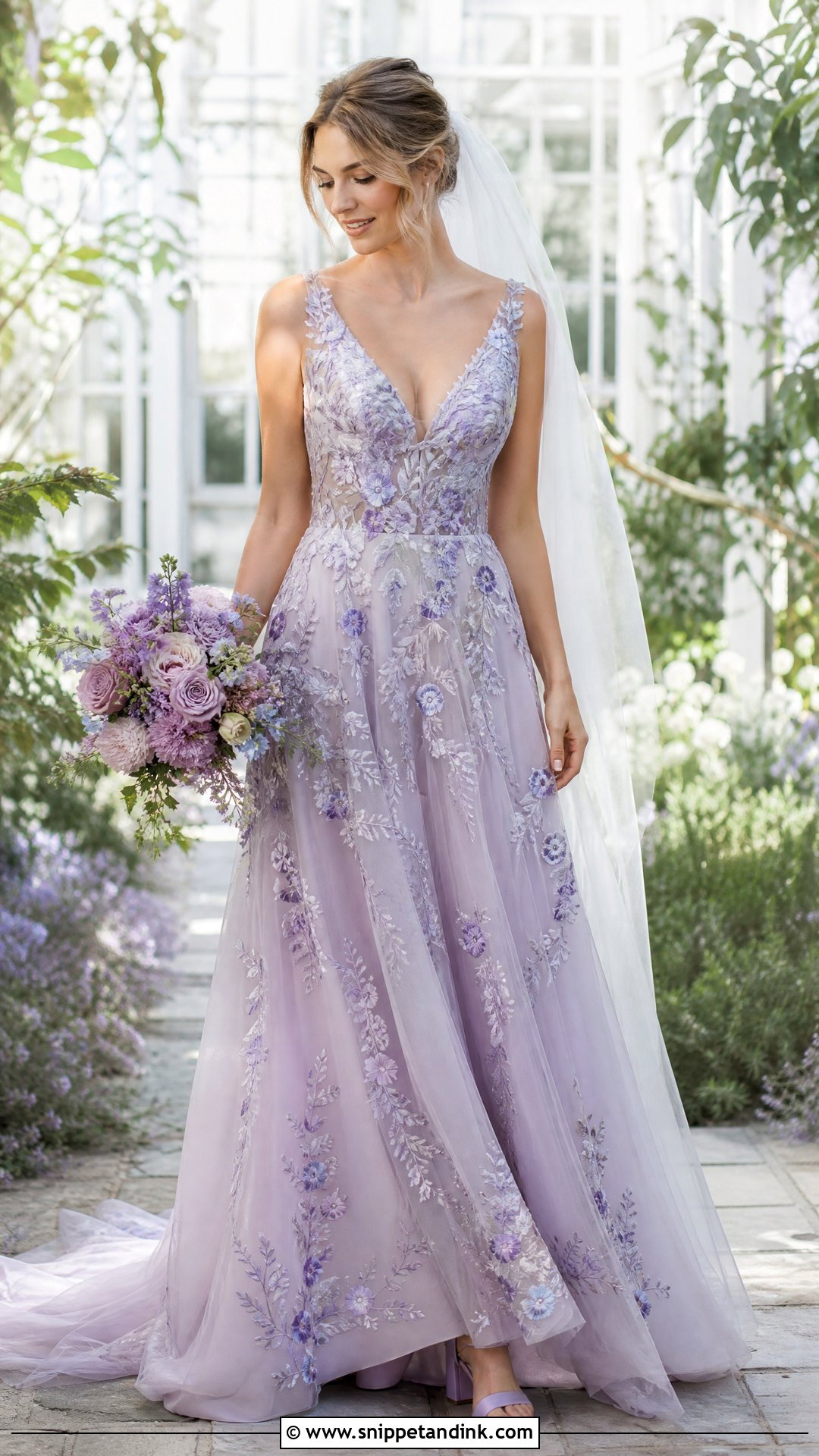
Embroidery decides whether this dress looks tailored or cluttered, and placement is what I study first. Flowers clustered at the hip add width there; flowers running down from the waist lengthen you. Look for tonal purple blossoms, pale blue accents or ivory appliqués across a tulle bodice and flowing skirt, with a fitted waist holding it all in. A plain sheer veil, small crystal studs and pale lavender block heels. Pull only two or three colors from the embroidery into the bouquet; matching all of them looks forced. Soft waves or a textured low bun. Botanical gardens, outdoor estates and woodland weddings suit it. Look at the gown from the side and back before buying, not only head-on.
8. Violet Ombre Wedding Dress
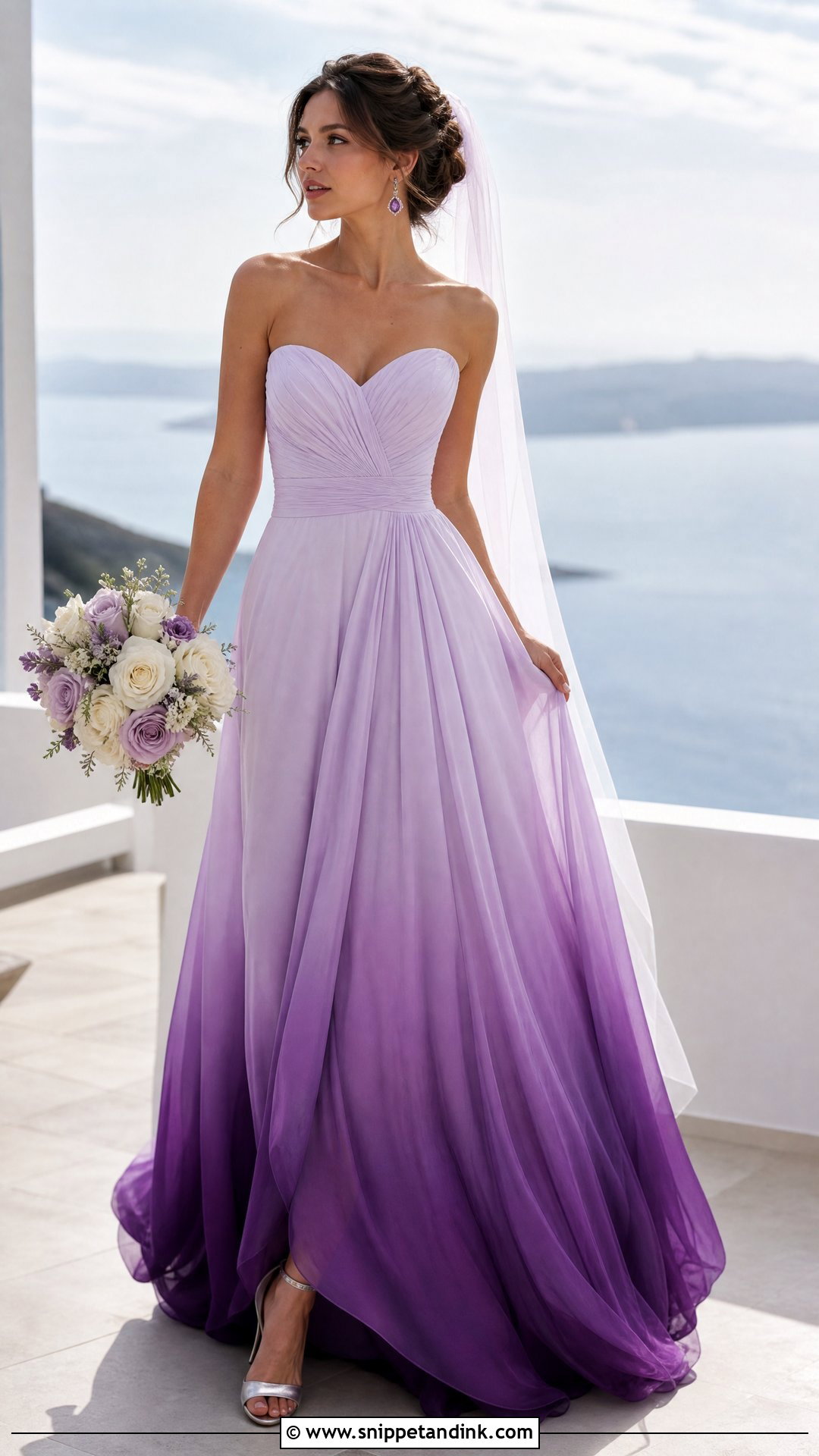
Ombre is the gentlest way to wear strong violet from top to bottom. The color might start as pale lilac around the bodice and deepen toward the hem, or run from ivory into saturated purple. Keep the shape simple so the gradient does the work: a fitted sleeveless bodice, a clean neckline and an A-line tulle skirt. Silver heels, small amethyst earrings and a sheer veil with minimal edging; white and lavender flowers bridge the light and dark ends. The flaw I look for is banding. Hand-dyed gradients sometimes show uneven horizontal stripes, so turn slowly in front of a mirror and check the transition from every side. Bright venues outdoors show it off best.
9. Violet Chiffon Empire Waist Wedding Dress
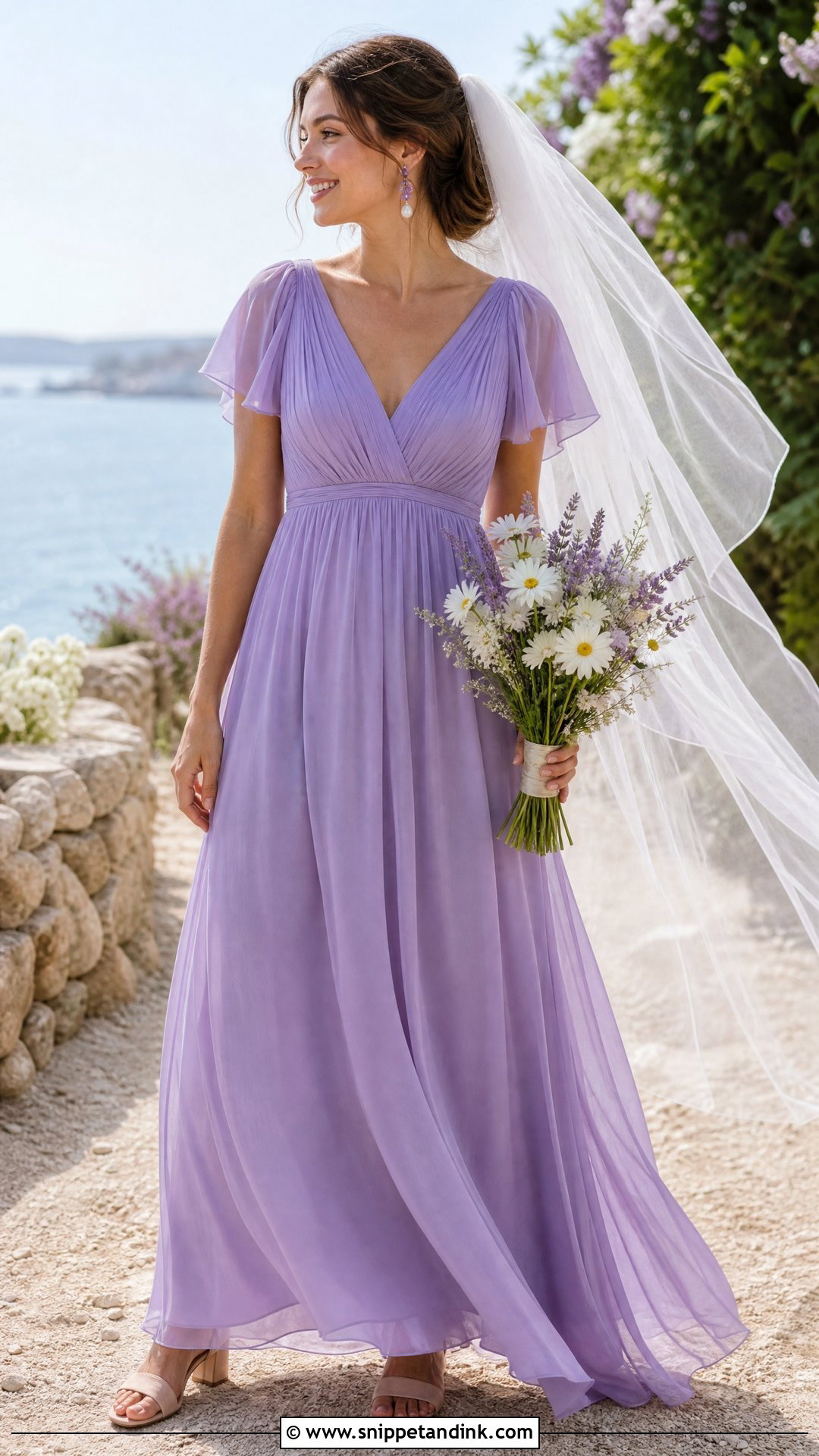
Violet chiffon in a breeze looks easy, and it’s the fabric I’d pick for a beach or destination wedding. An empire-waist gown defines the line just under the bust and lets the skirt fall long and loose, which is comfortable in heat and lengthens the body. Flutter sleeves, narrow straps or a gathered V-neck bodice all work. Low block-heel sandals, pearl-and-amethyst earrings and a light chapel veil. Loosely gathered cosmos, lavender and greenery keep it relaxed. Chiffon packs and travels better than heavier fabric, but it can be sheer and clingy in wind, so check that the lining is smooth, opaque and weighted enough to hang properly.
10. Violet Corset Wedding Dress
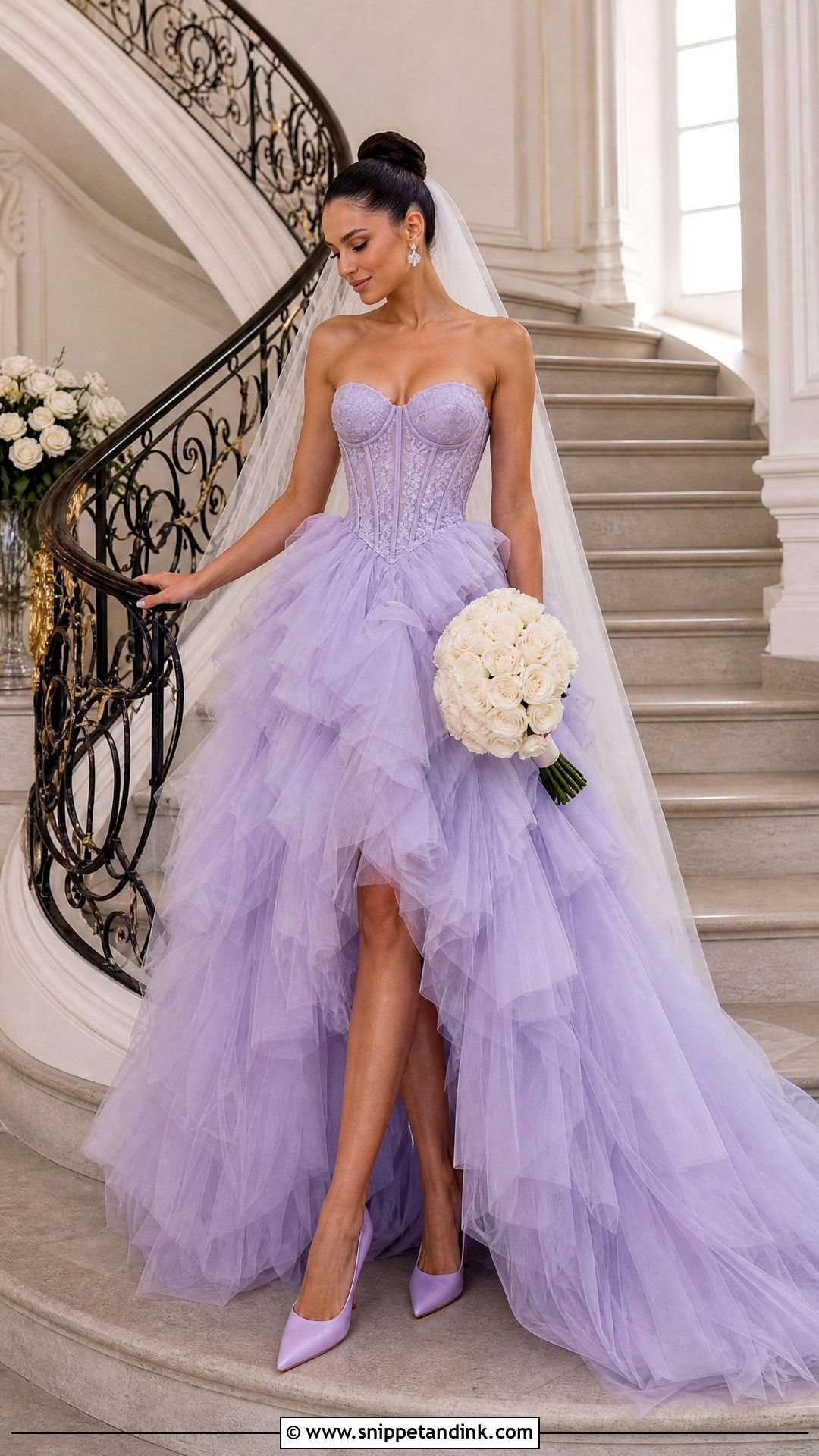
Visible structure and romantic color make an interesting pair. The corset needs proper boning and neat seams whether the construction is hidden or partly shown, and it should support you without pinching or limiting your breath. That’s the test I run before anything else: a deep breath, then sitting down. Pair it with a full tulle skirt for drama or a sleek satin one for contrast. A plain cathedral veil, crystal earrings and pointed lavender pumps, with a polished bun. Ivory roses and violet sweet peas soften the bodice. Bodies change in the last weeks before a wedding, so schedule the final fitting close to the date, and sit in the gown before approving it.
11. Violet Tea Length Wedding Dress
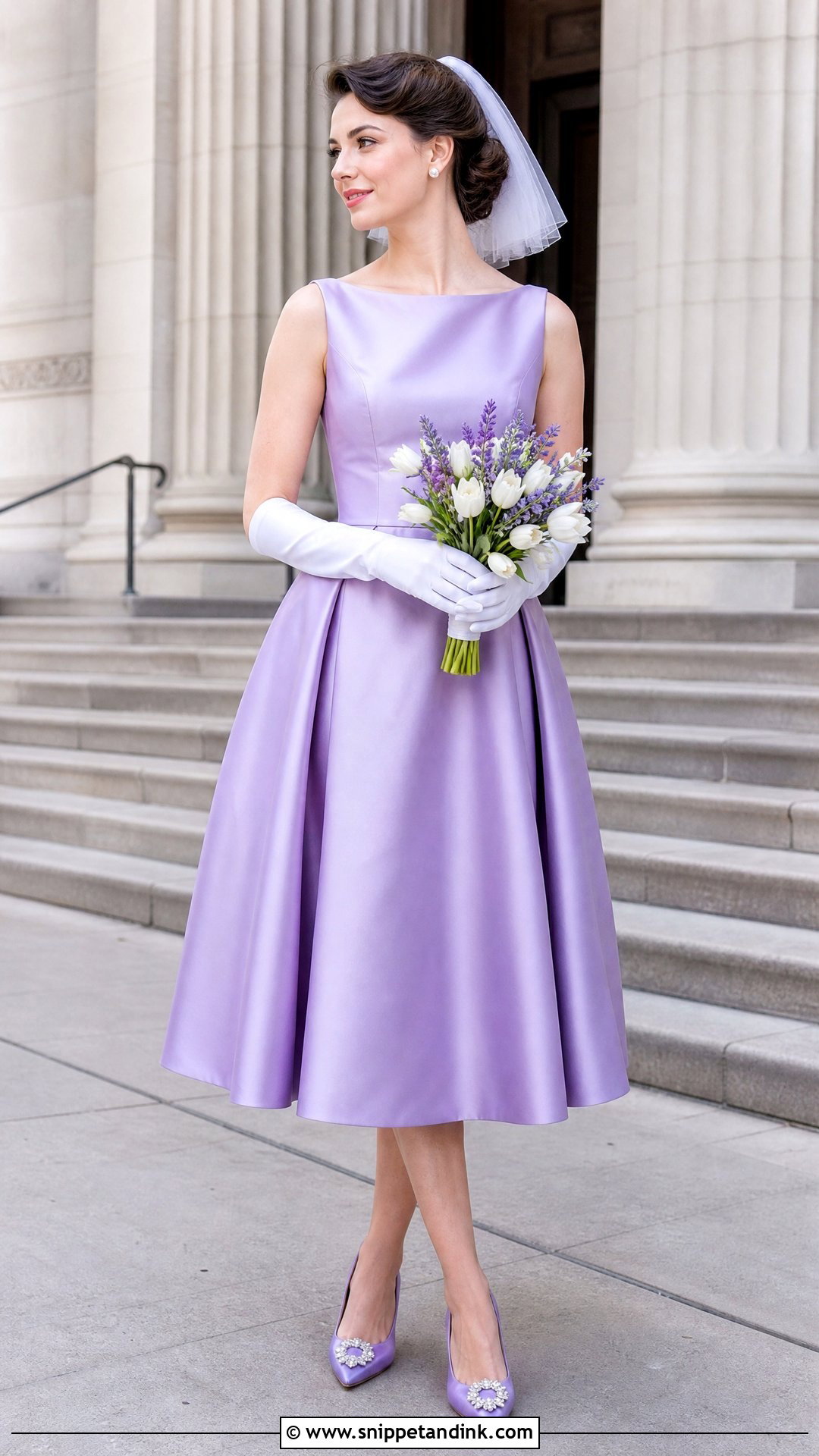
Courthouse, restaurant, daytime ceremony: a tea-length violet dress is playful but still polished. A fitted bodice and a full skirt finishing between knee and ankle, in satin, mikado or layered tulle so the skirt holds itself out. The hem puts your shoes on show, so crystal-buckled pumps, silver slingbacks or ivory heels. A short veil, pearl studs and wrist gloves give it a classic finish. White tulips and lavender in a compact bouquet keep the proportions neat. I always test the hem with the exact shoes. The right length shows the narrowest part of the lower leg, just above or below the swell of the calf, never right across it.
12. Violet Boho Wedding Dress
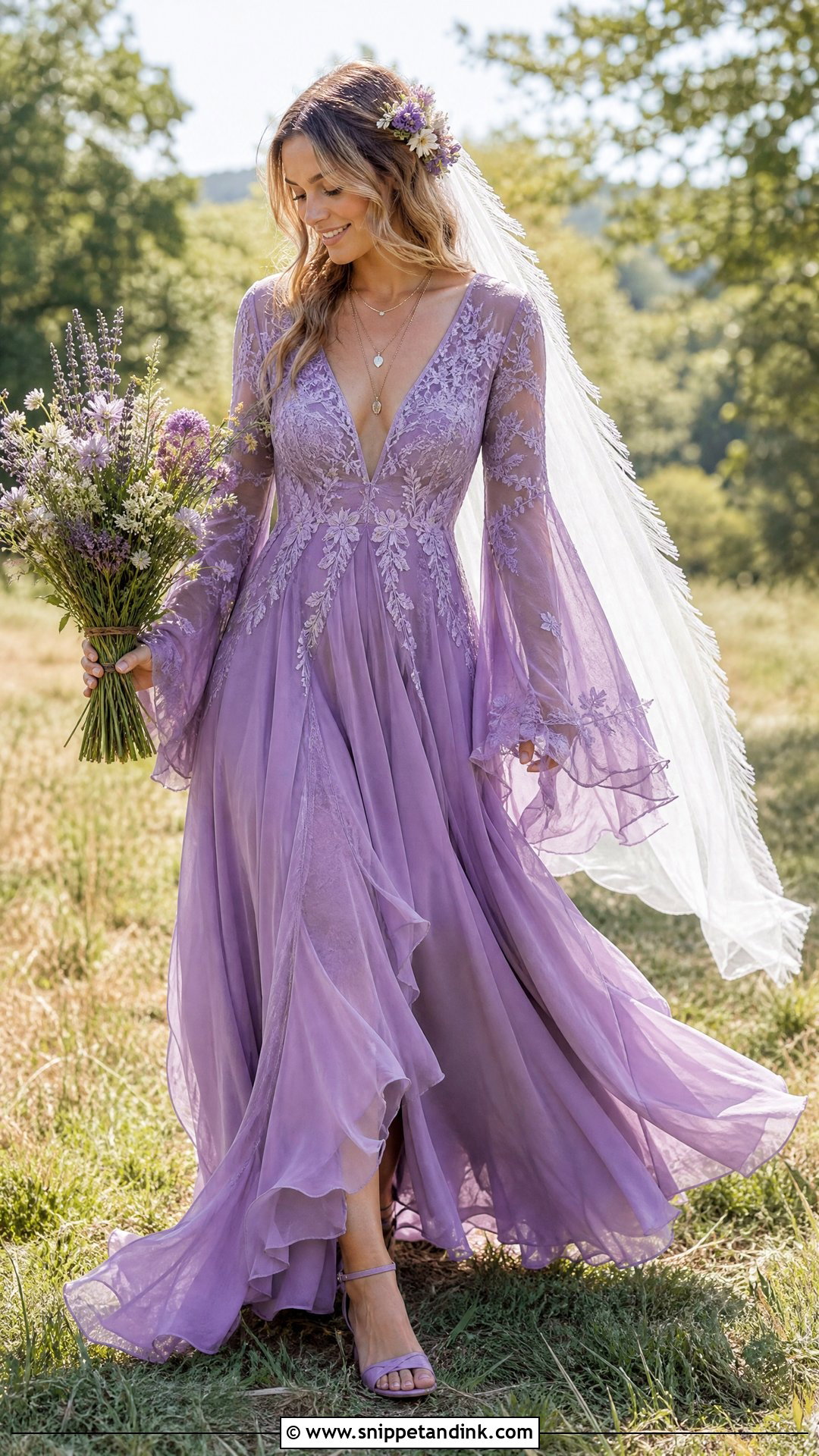
Dusty violet sits more naturally outdoors than bright violet does, because the grey in it echoes stone, dry grass and sky. Choose flowing chiffon, botanical lace, bell sleeves or a lightly gathered skirt, nothing rigid and no heavy train. A simple flower comb, delicate layered necklaces and suede or leather block-heel sandals. A raw-edge veil moves well without looking formal. Lavender, white wildflowers and olive-toned greenery in a loose bouquet. This is the look for meadow, desert, woodland, or backyard ceremonies, provided the accessories stay refined. On uneven ground, keep the hem manageable and the shoes stable, and add a removable overskirt if you’d like extra drama for the vows.
13. Violet Minimalist Column Wedding Dress
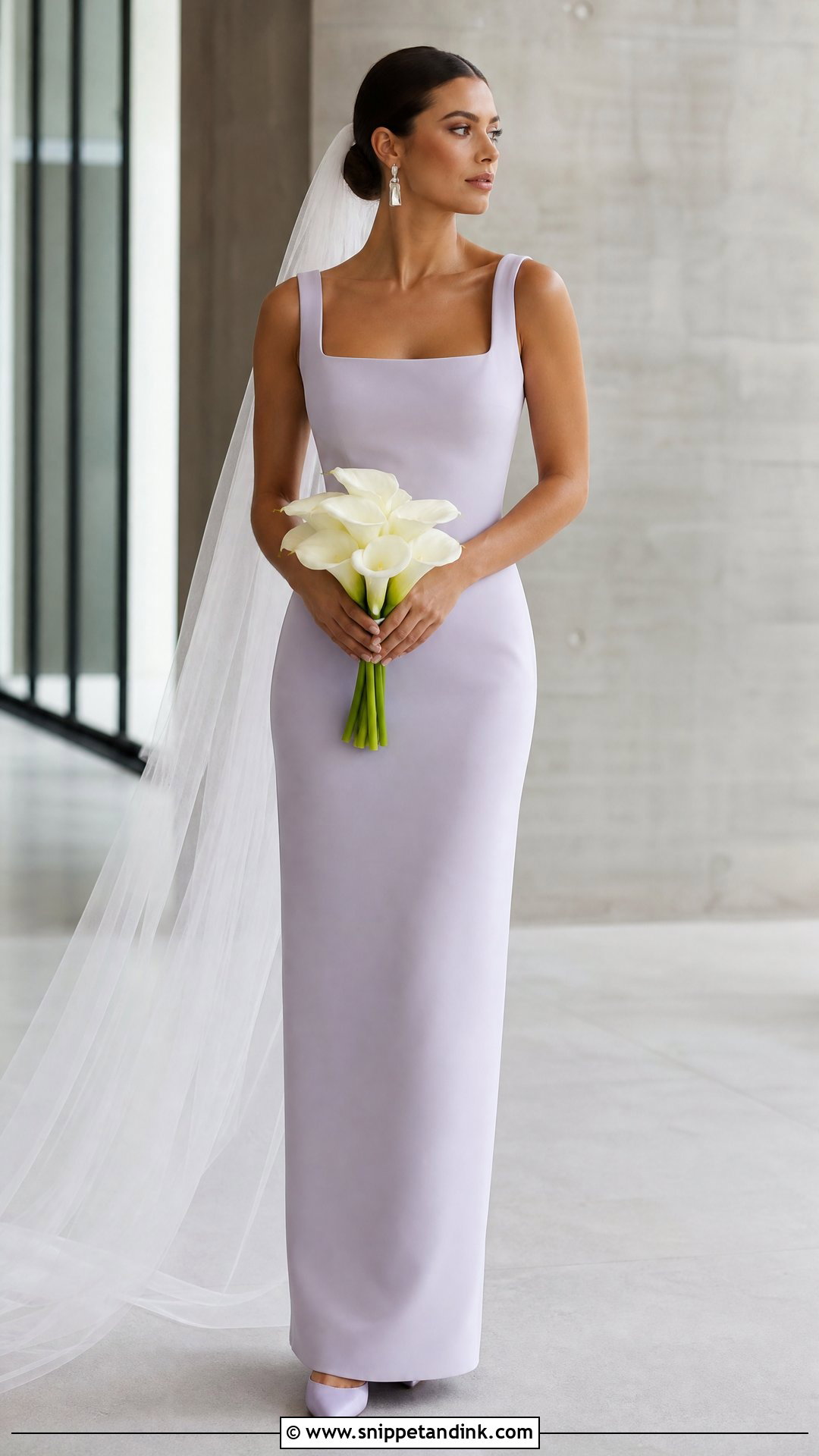
On a column gown, the tailoring is the decoration, so this is the dress where I’d put most of the alteration budget. A straight shape in matte crepe, smooth satin or structured jersey, with a square, bateau or high neckline, lets a saturated violet speak for itself. Sleek silver pumps, geometric earrings and a plain sheer veil. One kind of flower, white callas for example, keeps it uncluttered. A low bun and natural makeup. Architectural venues, city ceremonies and small formal weddings suit it. Column skirts restrict the stride, so walk the length of a room at the fitting and make sure the slit or stretch gives you a full step, including up stairs.
14. Violet Ruffle Wedding Dress
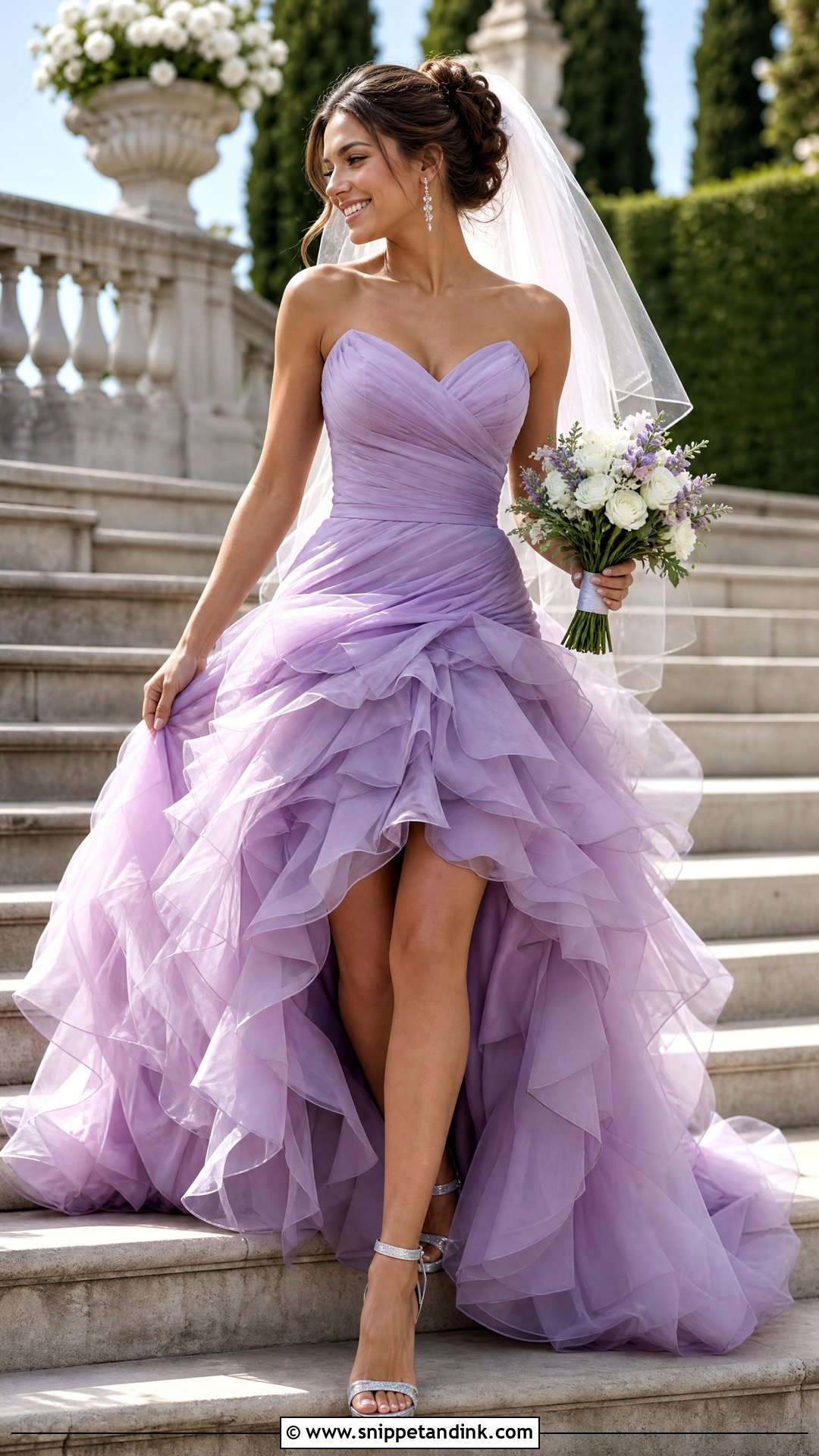
Ruffles add movement, and also bulk, so where they sit is everything. Cascading chiffon ruffles stay light; structured organza tiers add real volume. Either way, I’d keep the bodice plain and fitted so the waist stays visible. Minimal drop earrings, silver ankle-strap heels and a plain fingertip veil, with a smooth low ponytail or polished bun so the hair isn’t another layer of texture. A small white-and-lavender bouquet. Walk and sit in it at a fitting. Ruffles that look pretty standing can crush flat on one side after an hour at a table, and organza creases more readily than chiffon. Lively receptions and staircase entrances are where it shines.

15. Violet Square Neck Wedding Dress
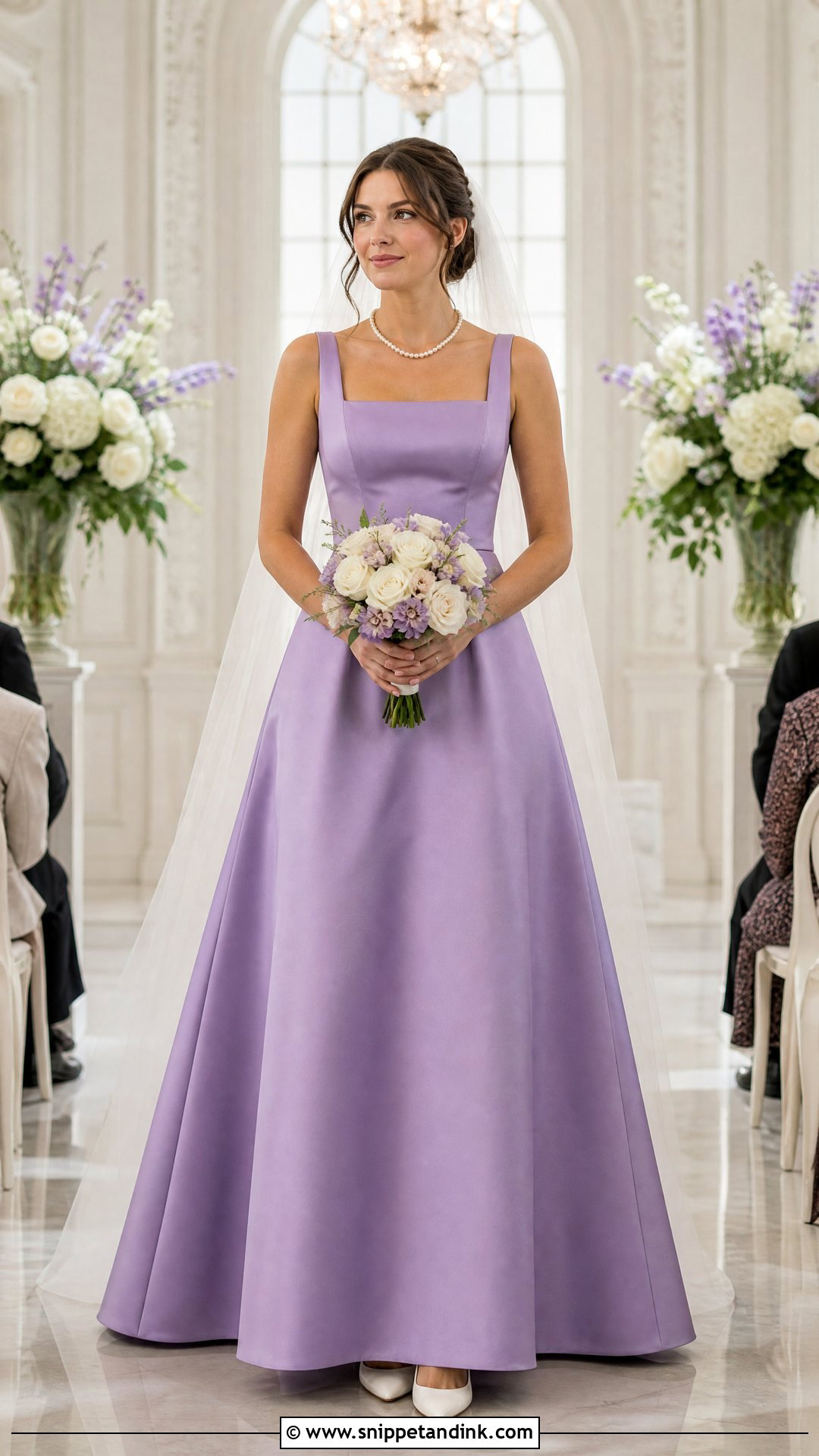
Of all the necklines here, a square one is the easiest to fit badly. If the bodice is cut a touch too wide, the corners gape forward every time you lean, so ask your tailor to check that it lies flat across the chest while you move. The shape itself is crisp and balanced. Pair it with wide straps, short sleeves or long fitted ones depending on the season, over a structured A-line skirt in satin or mikado, or tulle for something softer. A fine pearl necklace, matching earrings and closed-toe ivory pumps, with a chapel veil set under a neat chignon. White roses with a few lavender accents. Formal gardens and traditional ceremony spaces suit it.
16. Violet High Low Wedding Dress
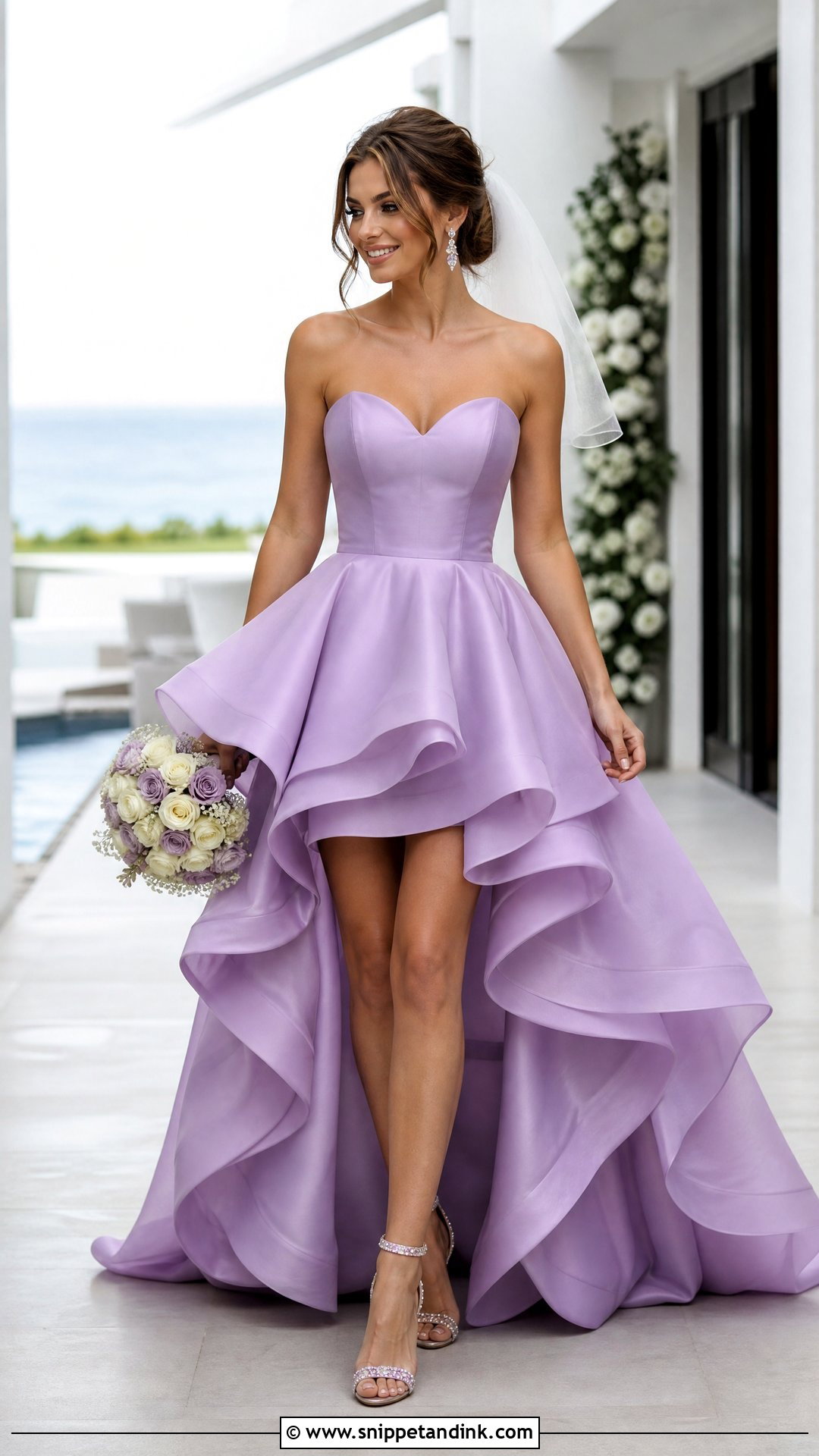
A high-low hem lets you show your shoes without giving up the movement of a long skirt. Keep the front rise gentle; a very short front reads as a party dress rather than a bridal one. Structured organza, satin or tulle hold the asymmetric line. Crystal heels, a short sheer veil and delicate drop earrings, with a fitted bodice above. A clean ponytail or soft bun, and a small bouquet of ivory flowers with violet accents. Courthouse weddings, modern outdoor ceremonies and reception changes all suit it. The front hem should be long enough to sit in comfortably and short enough to show the shoes, so I’d walk on grass, stone and stairs before setting it.
17. Violet One Shoulder Wedding Dress
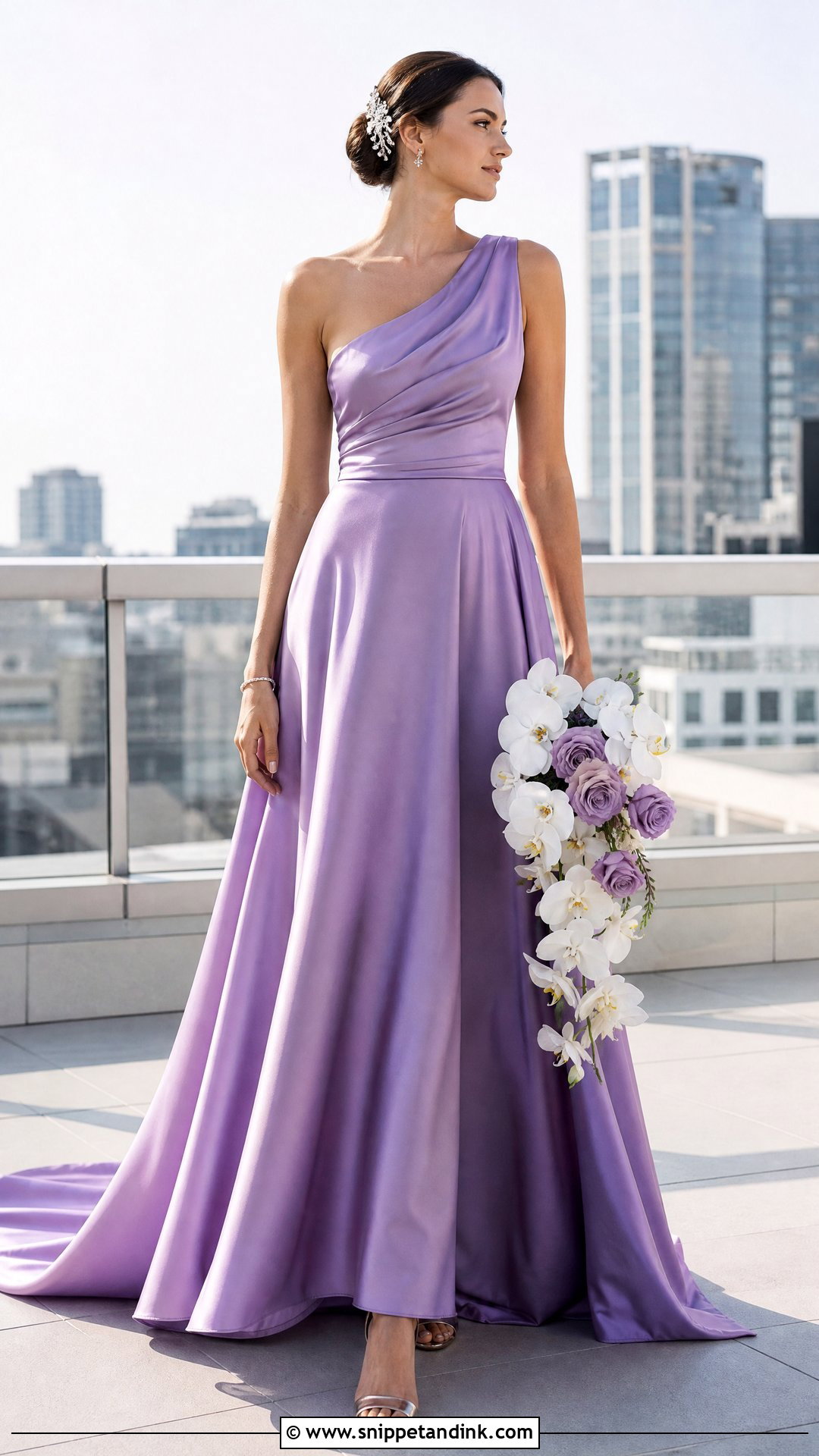
One shoulder, nothing else needed: the asymmetry is decoration enough. Soft draping across the bodice works with an A-line, column or gently fitted skirt. Chiffon moves gracefully; satin sharpens the line. A slim bracelet, small earrings and metallic heels, and no necklace. A sleek low bun shows off the shoulder. Attach the veil at the back of the hair, or swap it for a simple jeweled comb. White orchids and lavender roses. Modern hotels, rooftops and evening receptions suit it. The strap is what I check: it should feel secure without dragging the neckline off-center, and a soft silicone grip inside the strap helps on a long night.
18. Violet Cape Wedding Dress
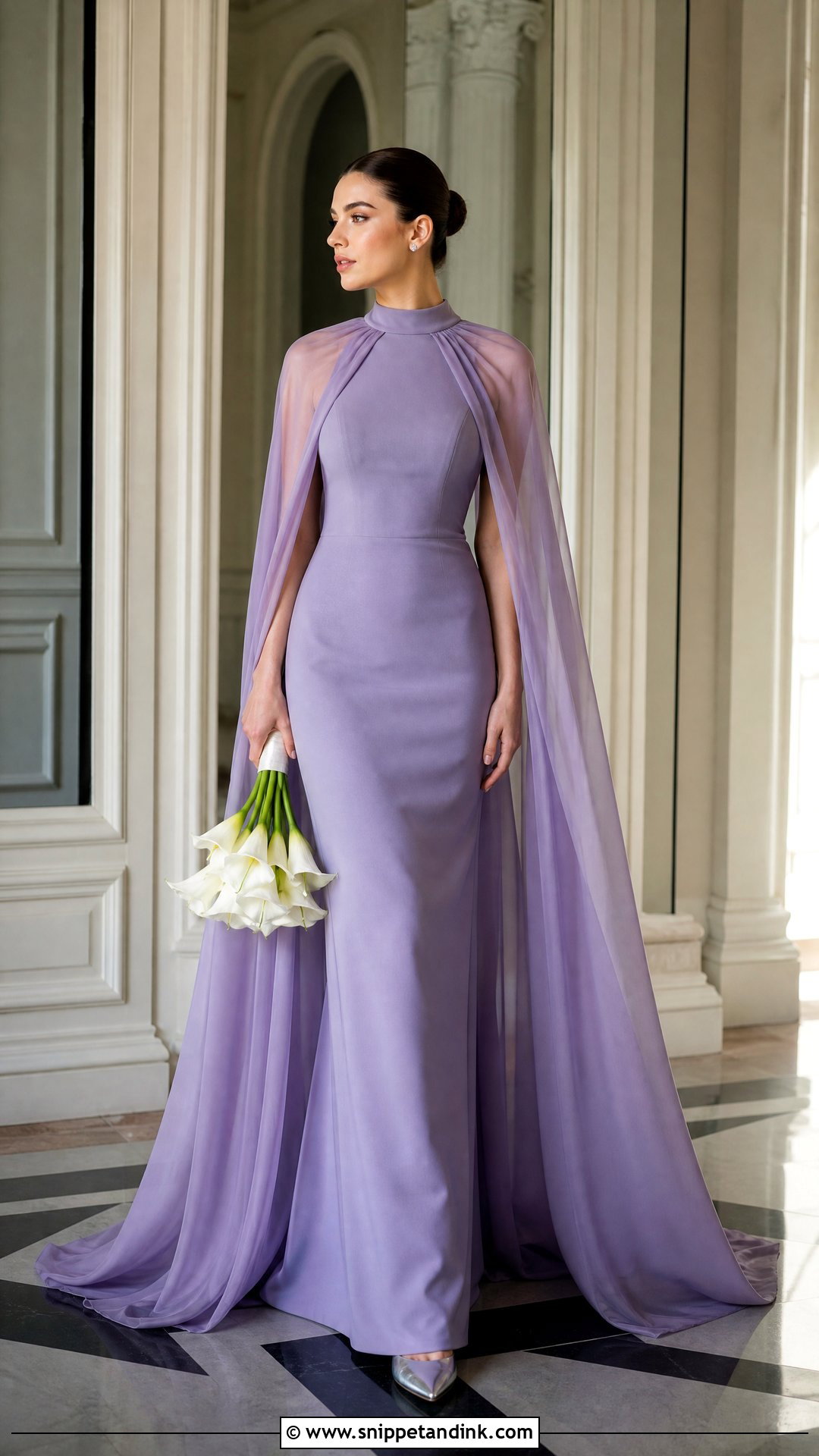
A floor-length cape makes an entrance a veil can’t. Start with a clean violet column, A-line or softly fitted gown, then add a sheer matching cape attached at the shoulders. Crystal studs and one ring or bracelet, pointed silver pumps, white callas in a structured bouquet, and a smooth bun so the cape’s neckline isn’t crowded. Grand indoor venues, evening ceremonies and cooler months suit it. The cape should come off for the reception. Sheer violet layered over violet deepens the shade where the two overlap, so look at them together, and check that the length works with any train and the attachments don’t pull the dress backward.
19. Plus Size Violet A-Line Wedding Dress
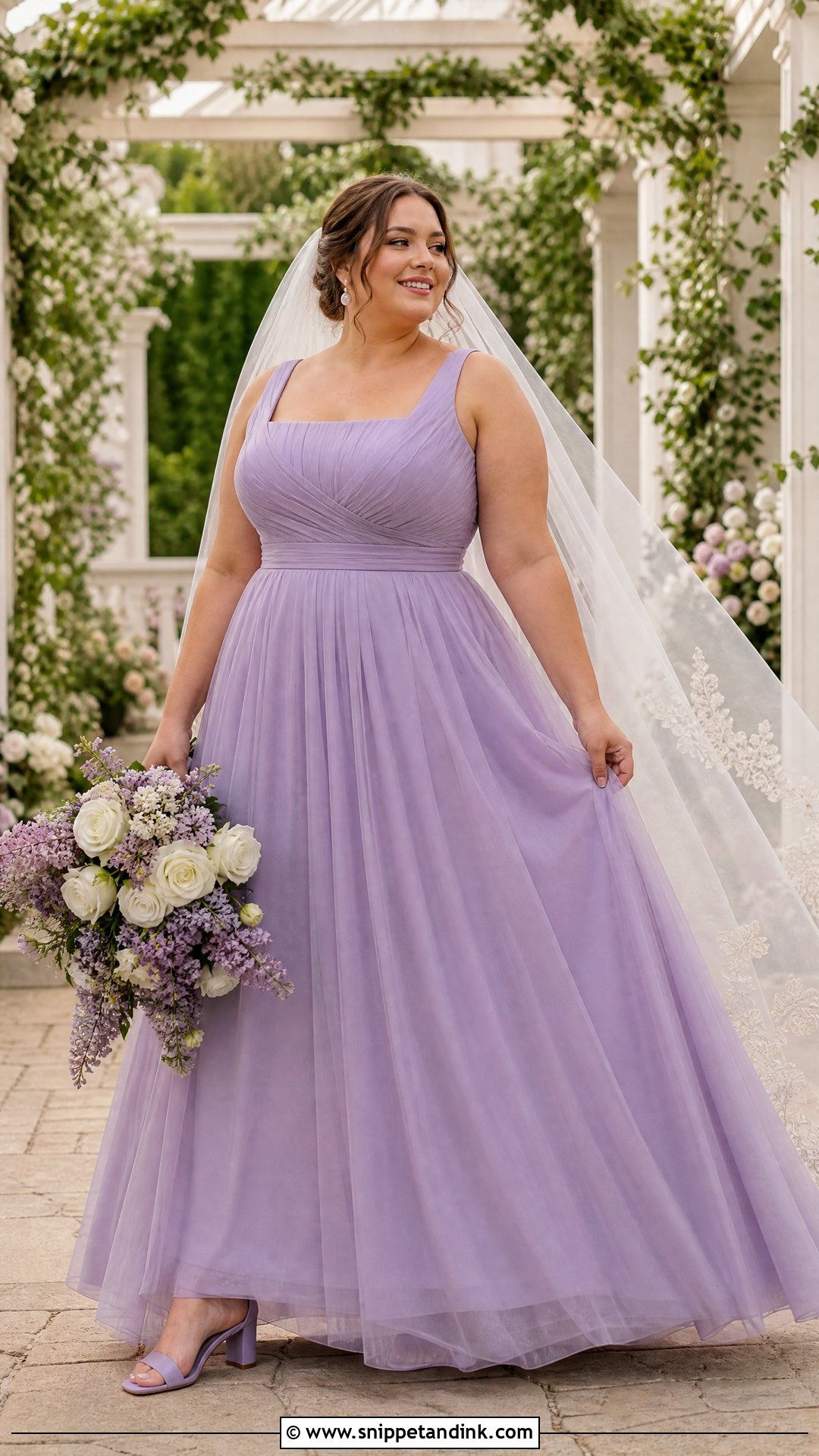
Fit matters far more than any rule about which shapes flatter. A well-built A-line gives a supportive, comfortable violet look across a wide range of sizes: a structured bodice, a waist placed where yours actually is, and a skirt that flows from it. V-neck, square or off-the-shoulder, choose by comfort. Supportive block heels, pearl drops and a light chapel veil, with white roses, lilac flowers and greenery bringing brightness near the face. Colored gowns are often carried in fewer sample sizes, so I’d call the salon before visiting to ask what they can show you and whether the design can be customized. Good alterations refine the fit without changing the design. Sit, walk, hug and dance in it.

20. Violet And White Wedding Dress
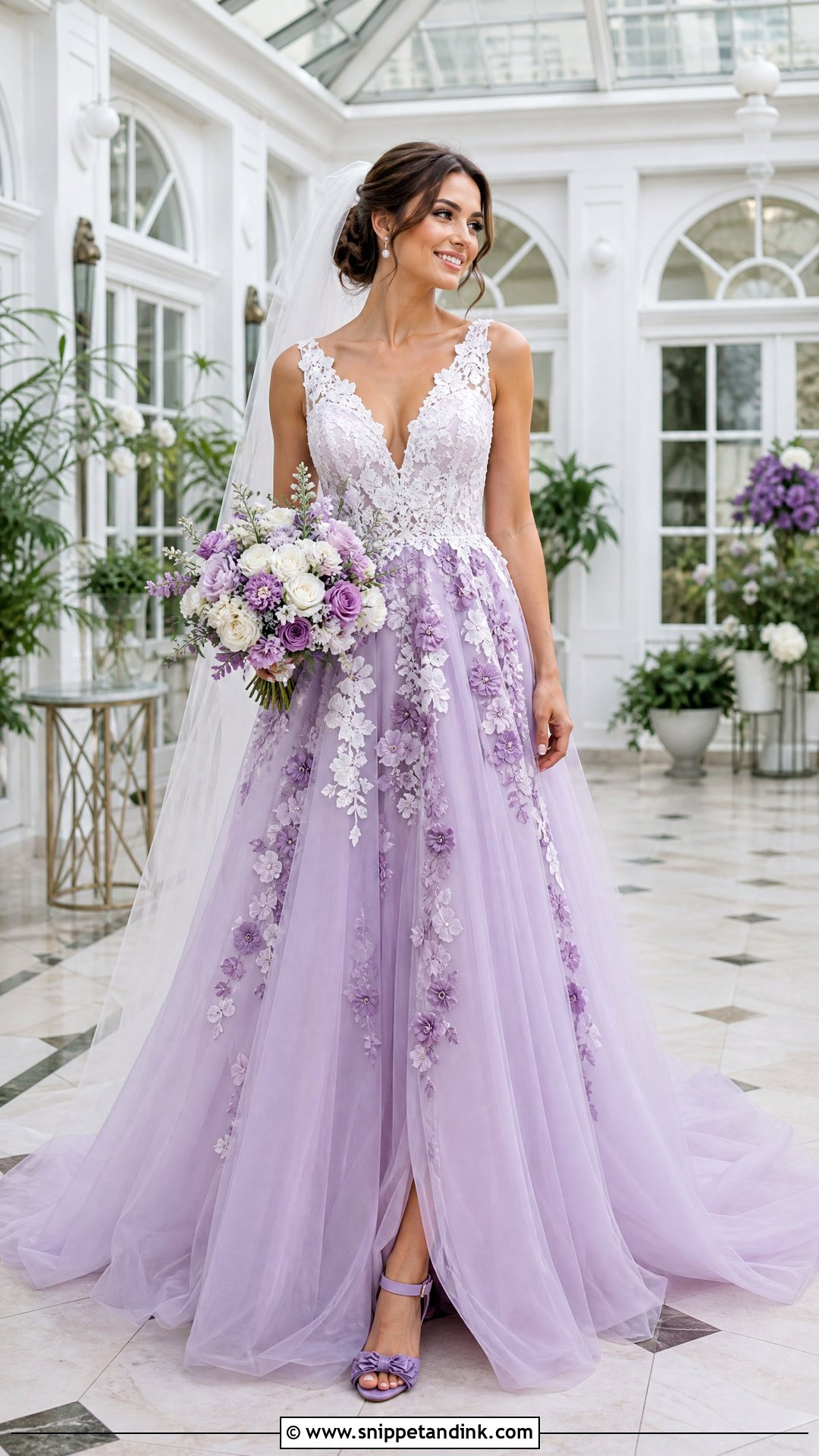
Violet and white together give you color while keeping a clearly bridal outline. Picture a white lace overlay on violet lining, a white bodice over a violet tulle skirt, or purple floral appliqués on an ivory gown. Repeat both colors elsewhere: a white veil, violet heels, silver or pearl jewelry, and a mixed bouquet of white and purple. If the color placement is busy, keep the silhouette simple. The balance is easy to tune, which is why this one suits most seasons and venues. One caution from fittings: pale violet linings under white lace can look grey or almost white in photographs, so look at the gown in daylight and take a test photo on your phone.
Bridesmaids, Suits and Flowers Next to a Purple Bride
When the bride wears color, everyone else’s color changes job. In white weddings the bridesmaids often carry the palette; with a violet gown, they need to frame you instead of competing. These are the combinations I’d suggest.
- Bridesmaids in soft neutrals such as dove grey, champagne or sage make violet look richer. Put them in the same purple and you lose your outline in group photos.
- If you’d like them in purple, go several shades lighter or darker than your dress, so the difference is obvious.
- For the groom, charcoal, navy and mid-grey suits sit well beside violet. A black suit next to deep plum can look heavy; a tie or pocket square in a paler lilac ties the two of you together.
- Keep your bouquet lighter than your dress. White, cream and pale lavender flowers stand out against violet, while deep purple blooms disappear into it.
Expect a few questions too. Some relatives assume a wedding dress means white, and it can help to show them a photo of the gown beforehand, so the first time they see you in color isn’t at the aisle.
Lavender, Bright Violet or Deep Plum on the Day
Start with the shade. Pale lavender is soft and romantic, bright violet is confident, and deep purple brings formal drama. Then let the silhouette, the fabric, the venue and the season follow from it. Shoes you can stand in, jewelry in one metal, a veil or cape that suits the shape, and flowers that frame the dress rather than hide it. The step I’d never skip is seeing the gown in several kinds of light and moving in it before the final alterations. Purple can be as bridal as white, and it lets the dress feel like nobody else’s.
You'll Like These Ideas:



Leave a Reply