
Red is the oldest bridal color in a large part of the world, and in plenty of places it never stopped being the default. For a bride raised on white, it can feel like a leap; in practice it’s one of the most flattering colors I put on people, as long as the shade is right for your skin. It shows up in ball gowns, sleek satin, lehengas, minis and capes. Scarlet is bright and warm, burgundy is deep, ruby leans jewel-toned, and red with gold reads ceremonial. Below are 25 ways to wear it, with the fit and fabric notes I’d give you in a fitting.

Matching the Red to Your Skin, Not to a Screen
Every red has an undertone, and it either agrees with your skin or quietly fights it. Blue-based reds (crimson, cherry, raspberry, wine) tend to flatter cool and pink-toned skin. Orange-based reds (tomato, scarlet, brick, coral-red) warm up golden and olive skin. Deep skin tones usually carry both well, and often look best in the most saturated versions.
I never judge a red from a phone photo. Screens shift reds more than any other color. Instead I drape the actual fabric under the bride’s chin, near a window, and then again under warm indoor light. If your face looks grey or flushed next to it, the shade is wrong for you, however good it looks on the hanger.
Lips, flowers and the camera
- Match your lipstick undertone to the dress, not the exact shade. A blue-red lip with an orange-red gown looks like a near miss.
- Choose bouquet reds a shade deeper or lighter than the dress so the flowers don’t vanish against it.
- Mention the color to your photographer. Saturated red can lose fabric detail on camera, and they may want to adjust exposure for your portraits.
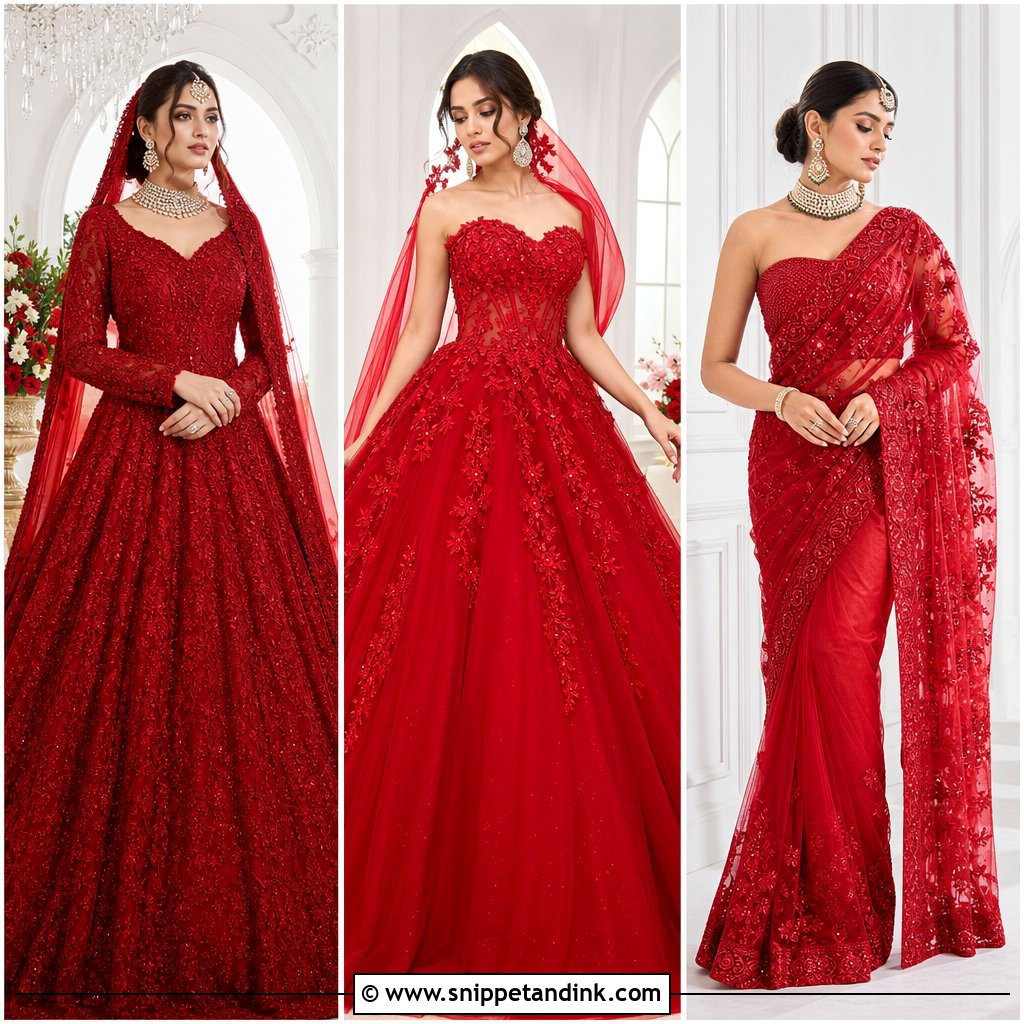
1. Red Ball Gown Wedding Dress
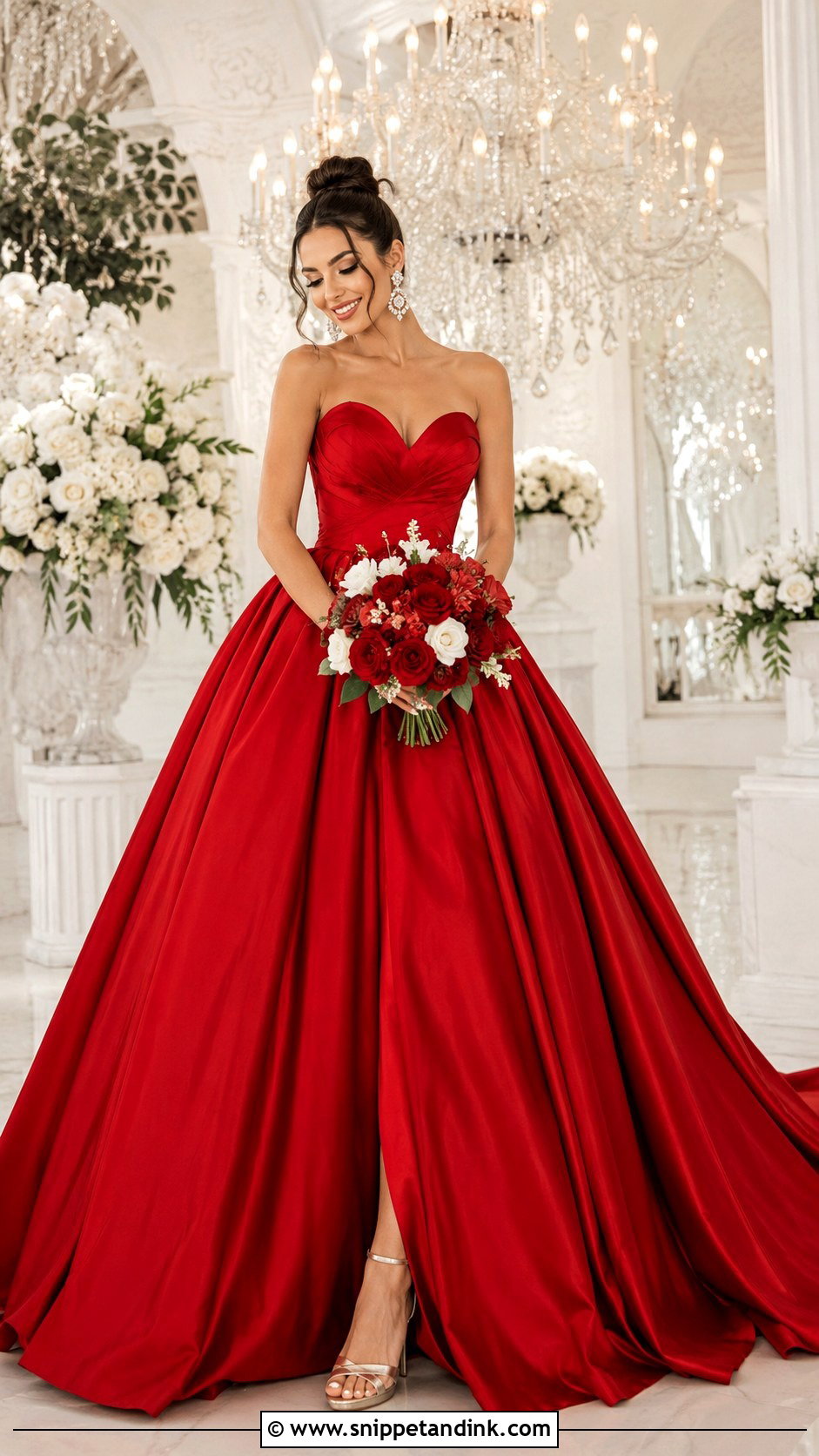
Volume needs a big room. A full skirt brings classic princess energy, and in red it fills the frame in a way white simply doesn’t. Satin, tulle and organza all hold that shape; satin gives the deepest color, tulle the softest. The bodice has to be fitted firmly to balance the width, and I check that it doesn’t gape when the bride bends to pick up her skirt. Crystal earrings, a slim tiara, metallic heels and a structured bouquet. If the gown has heavy beading at the neckline, leave the necklace at home.
2. Red Mermaid Wedding Dress
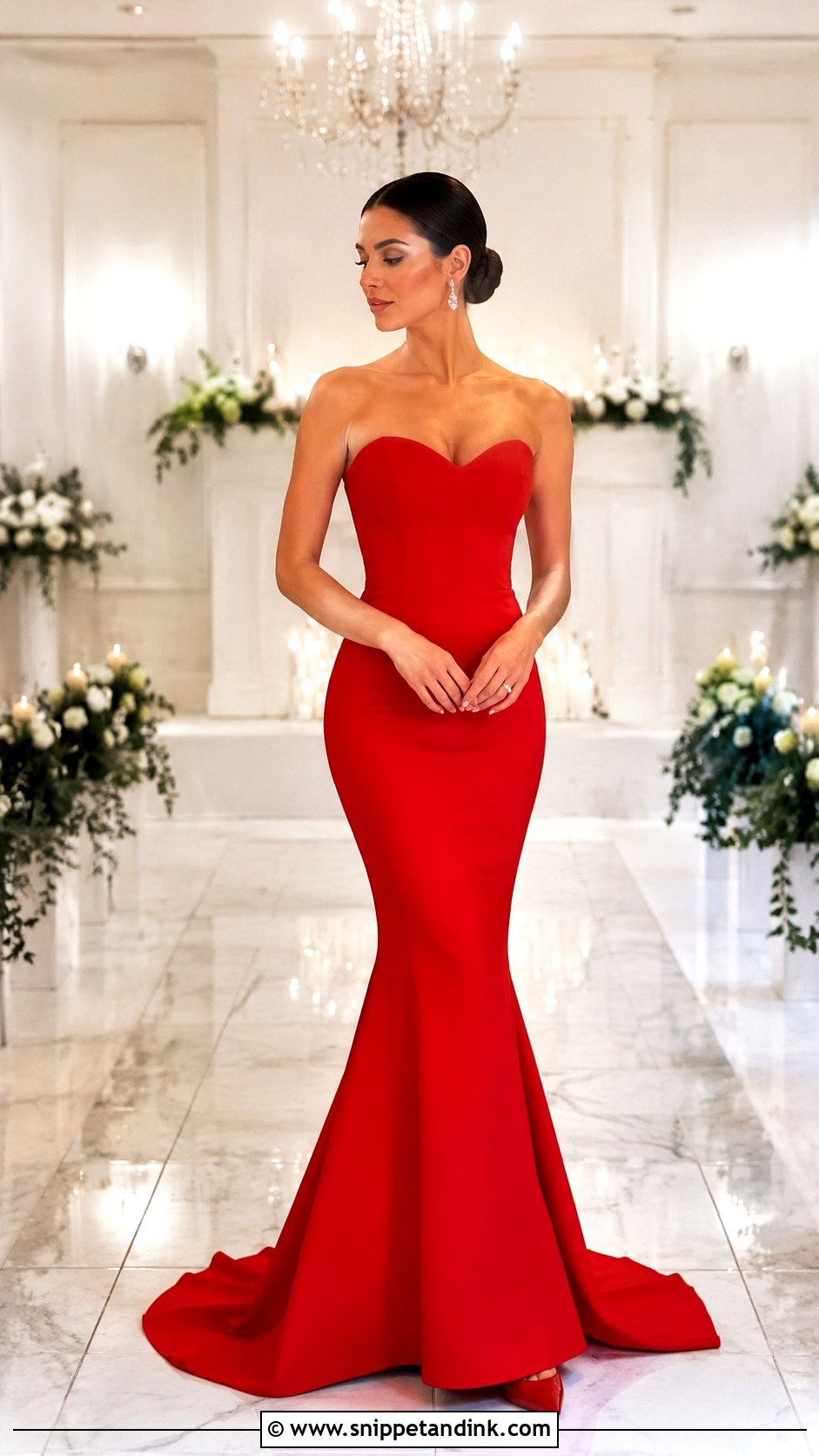
A red mermaid wedding dress is all line, so the fabric has to hold its shape on its own. Stretch crepe, satin, lace and mikado do that best. The flare position is my main fitting concern: set too high, it shortens your legs; set too low, you’ll shuffle. A sweetheart neckline softens it, off-shoulder adds romance. Pointed heels, drop earrings and a sleek low bun, plus a detachable overskirt if you want more drama for the ceremony.
3. Red A Line Wedding Dress
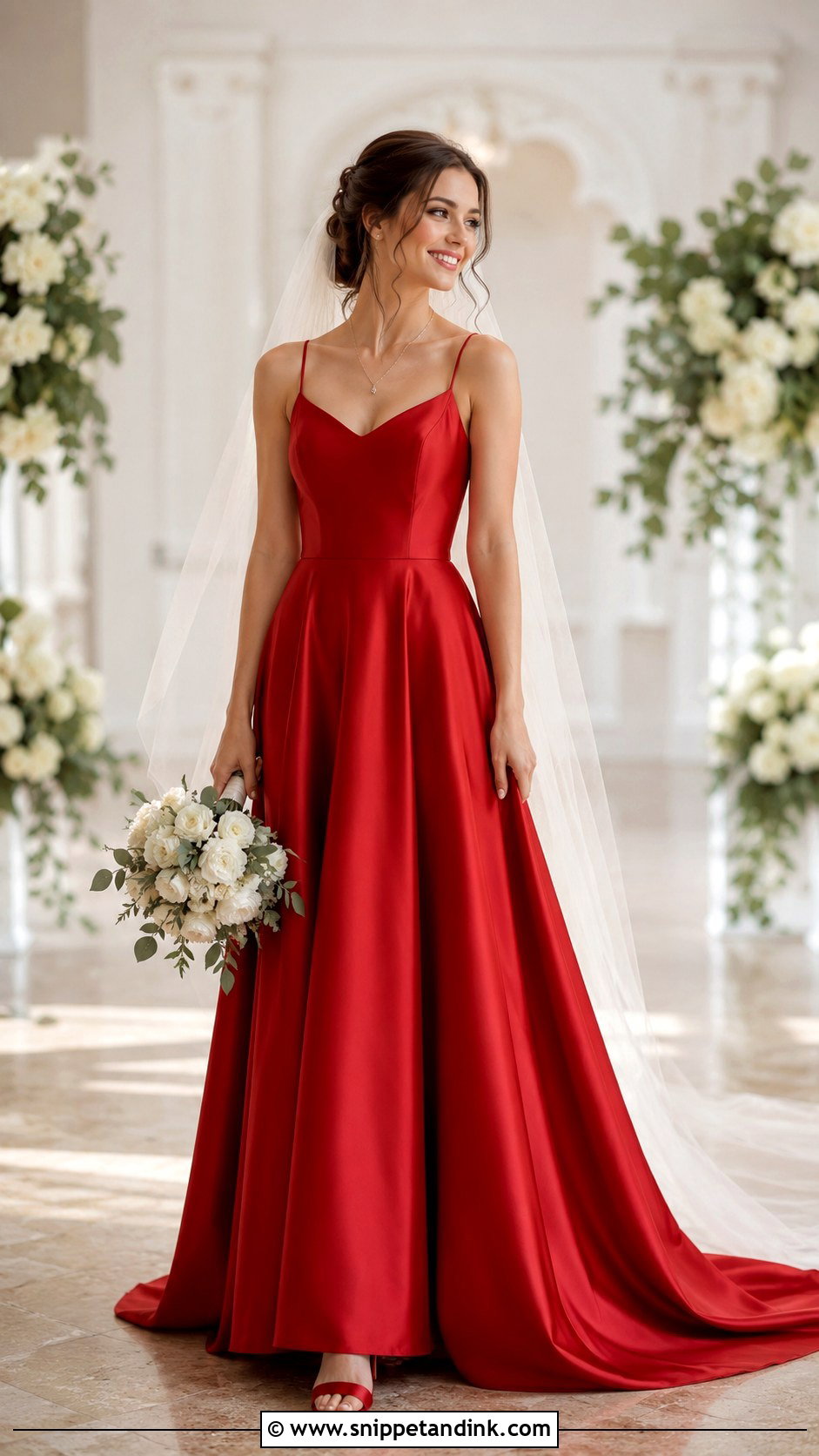
Most bodies look good in an A-line, and in red that ease matters, because a strong color makes any pulling seam more obvious. The fitted top and gently widening skirt let you walk, sit and dance all day. Satin reads polished; tulle softer. A square neckline or clean strapless bodice brings it up to date, while a classic veil, block heels and a fine necklace keep it bridal. Of all the shapes here, this is the one I’d suggest if you’re nervous about wearing color at all.
4. Red Lace Wedding Dress
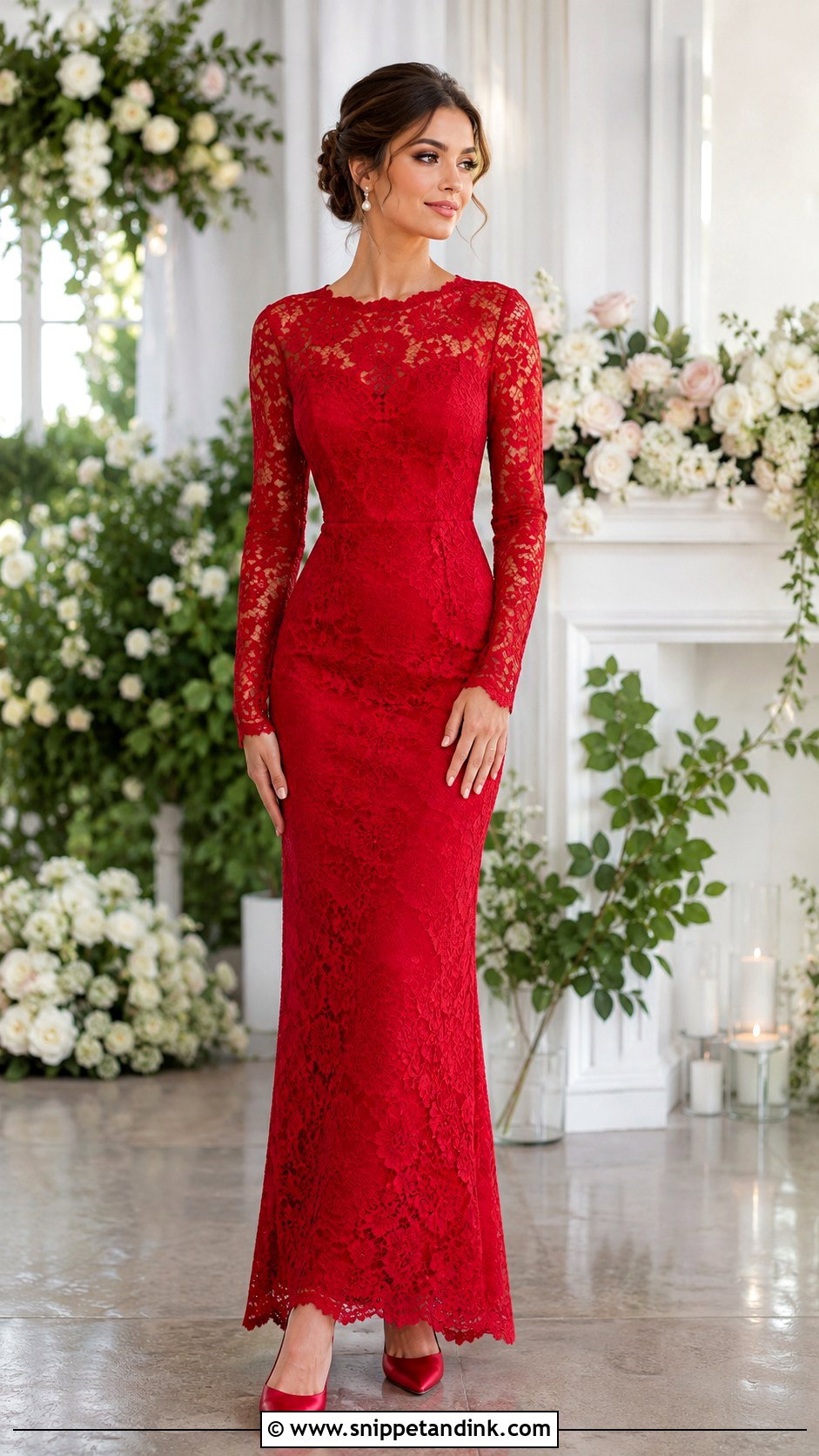
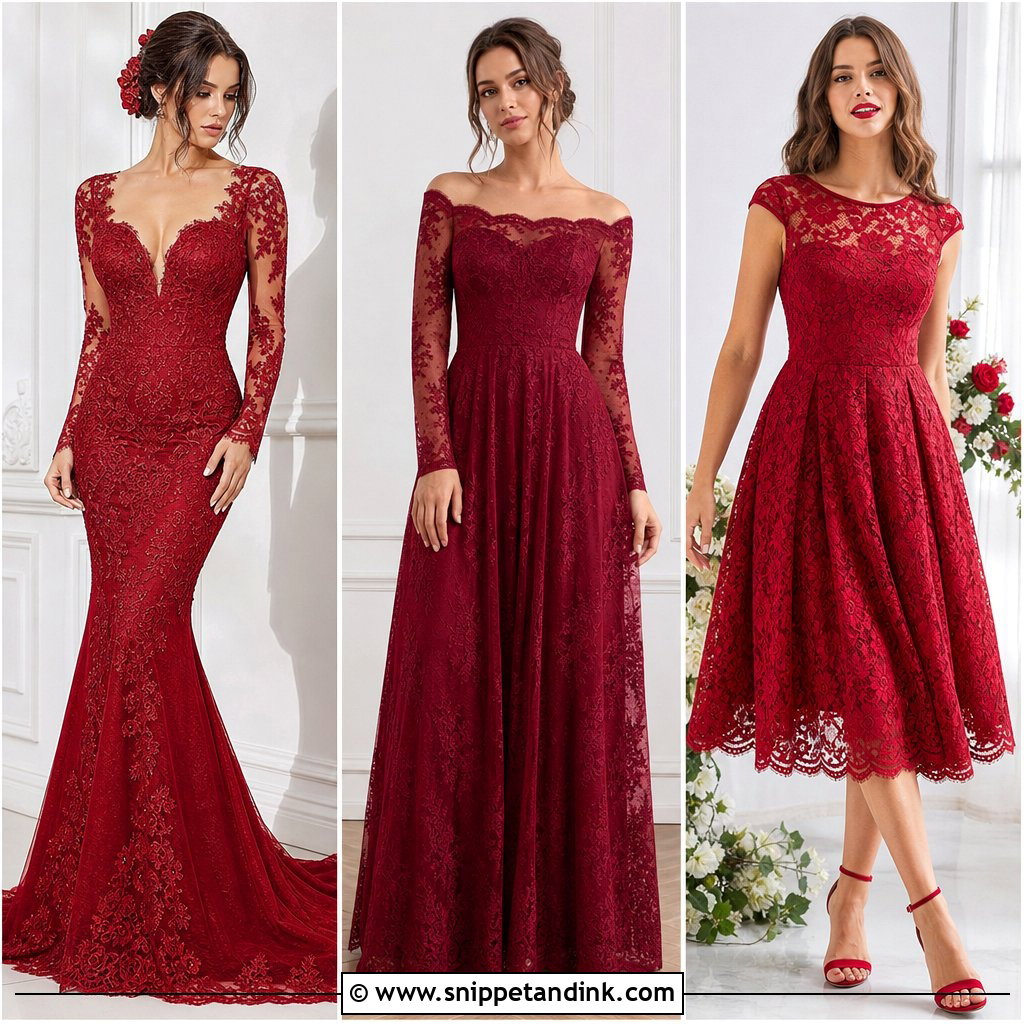
Red lace changes completely with the lining under it. Nude lining makes the pattern look like it’s floating on skin; a matching red lining gives a solid, richer color; blush sits somewhere between. Hold each lining behind the lace in daylight before deciding. Long lace sleeves suit cooler months, and a sleeveless version stays lighter for summer. I keep accessories to pearl earrings, satin heels and a soft updo, because the lace is already the detail.
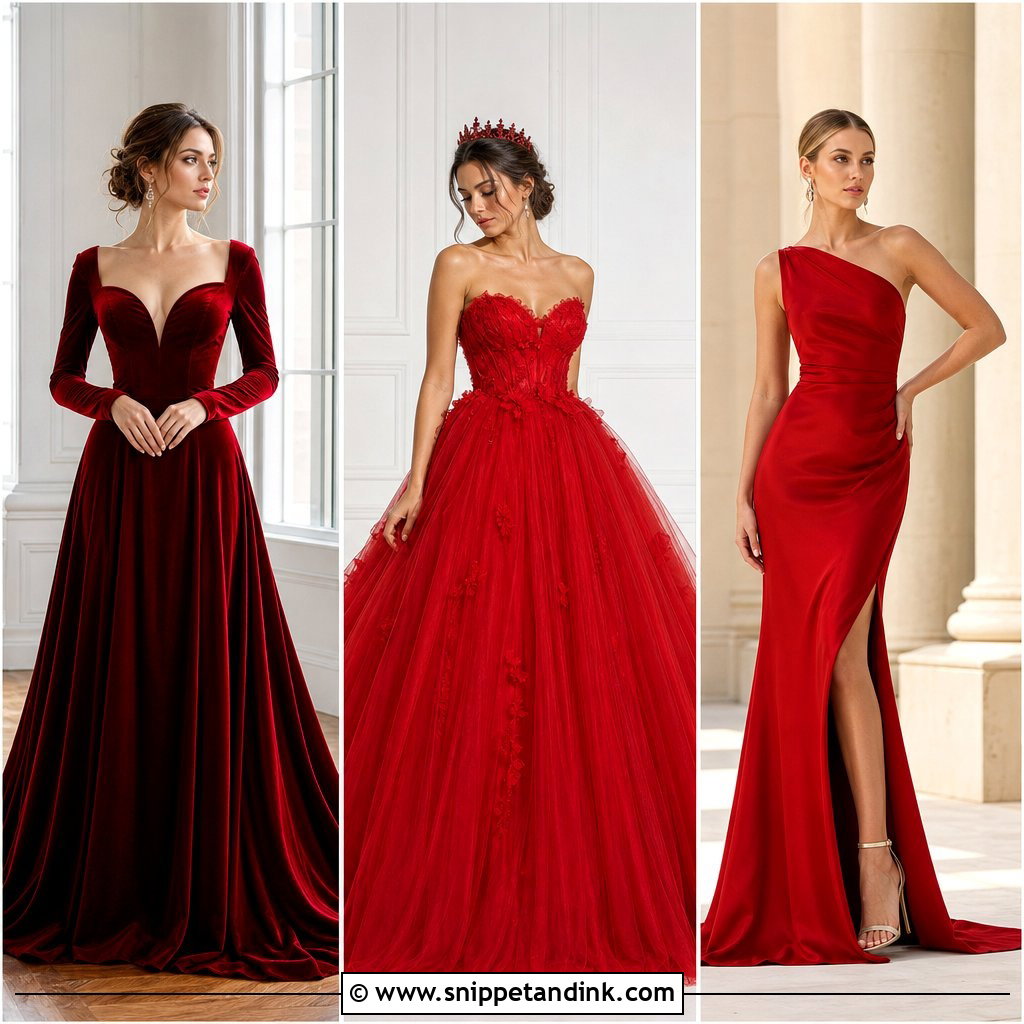
5. Burgundy Wedding Dress
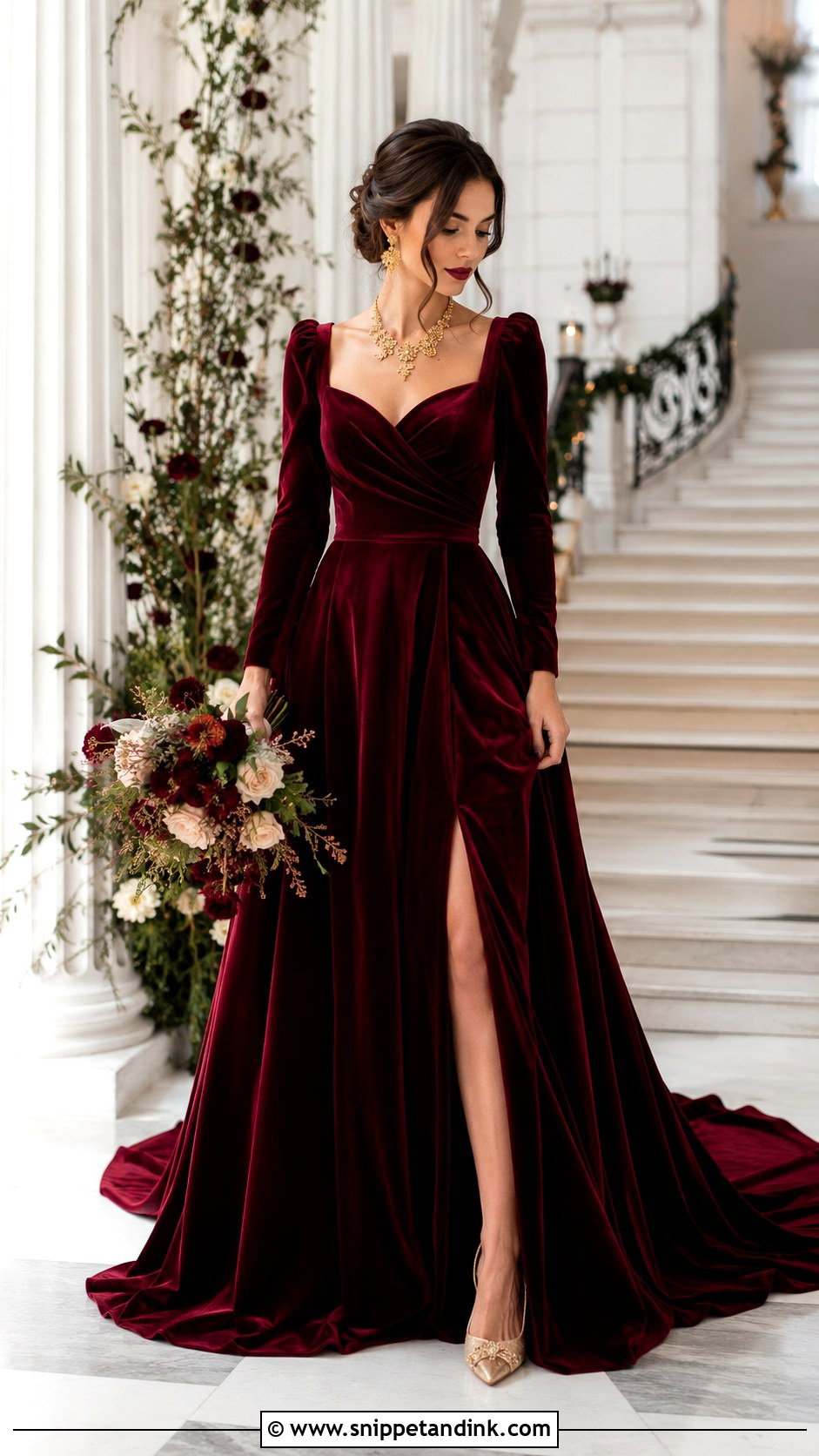
Burgundy is the shade I suggest to brides who love red but worry about feeling loud. It’s deep, a little moody, and it looks most at home in velvet, satin, chiffon or lace for autumn and winter. Long sleeves make it regal; strapless satin keeps it modern. Gold jewelry warms it, silver cools it, so match the metal to your skin’s undertone rather than the dress. Dark burgundy shoes can make the whole look heavy; nude, champagne or metallic heels lift it.
6. Red Satin Wedding Dress
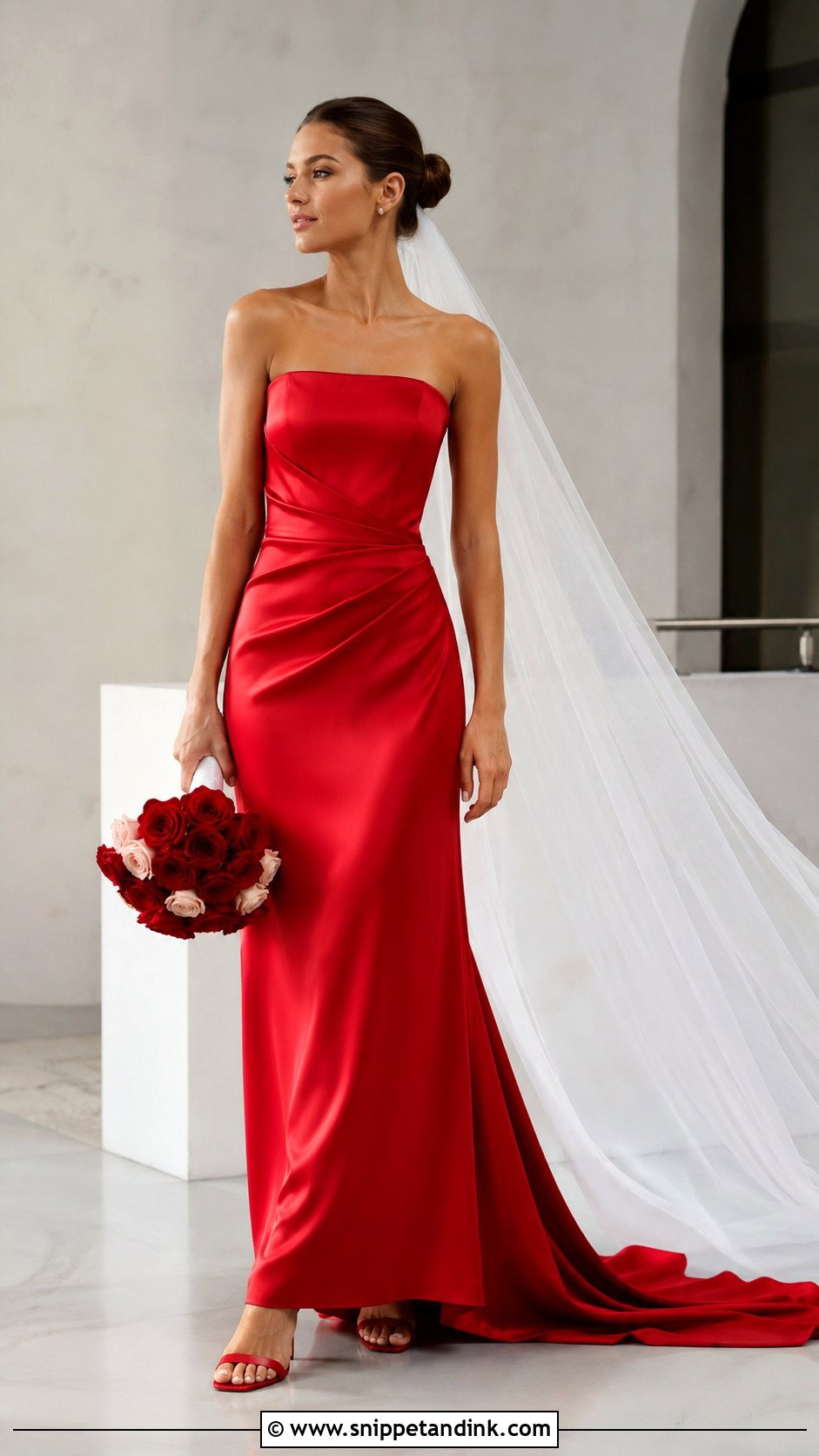
Satin shows every fold, every pulling seam, every place the fit isn’t quite right. That’s the honest drawback. In return it makes red look rich and catches light along every curve. Choose a clean silhouette (slip, A-line or structured strapless) and spend your alteration budget on fit, so the fabric skims rather than strains. Satin also creases where you sit, so plan a few minutes standing before portraits. A neat bun, minimal jewelry and a long veil to soften the shine.
7. Red Tulle Wedding Dress
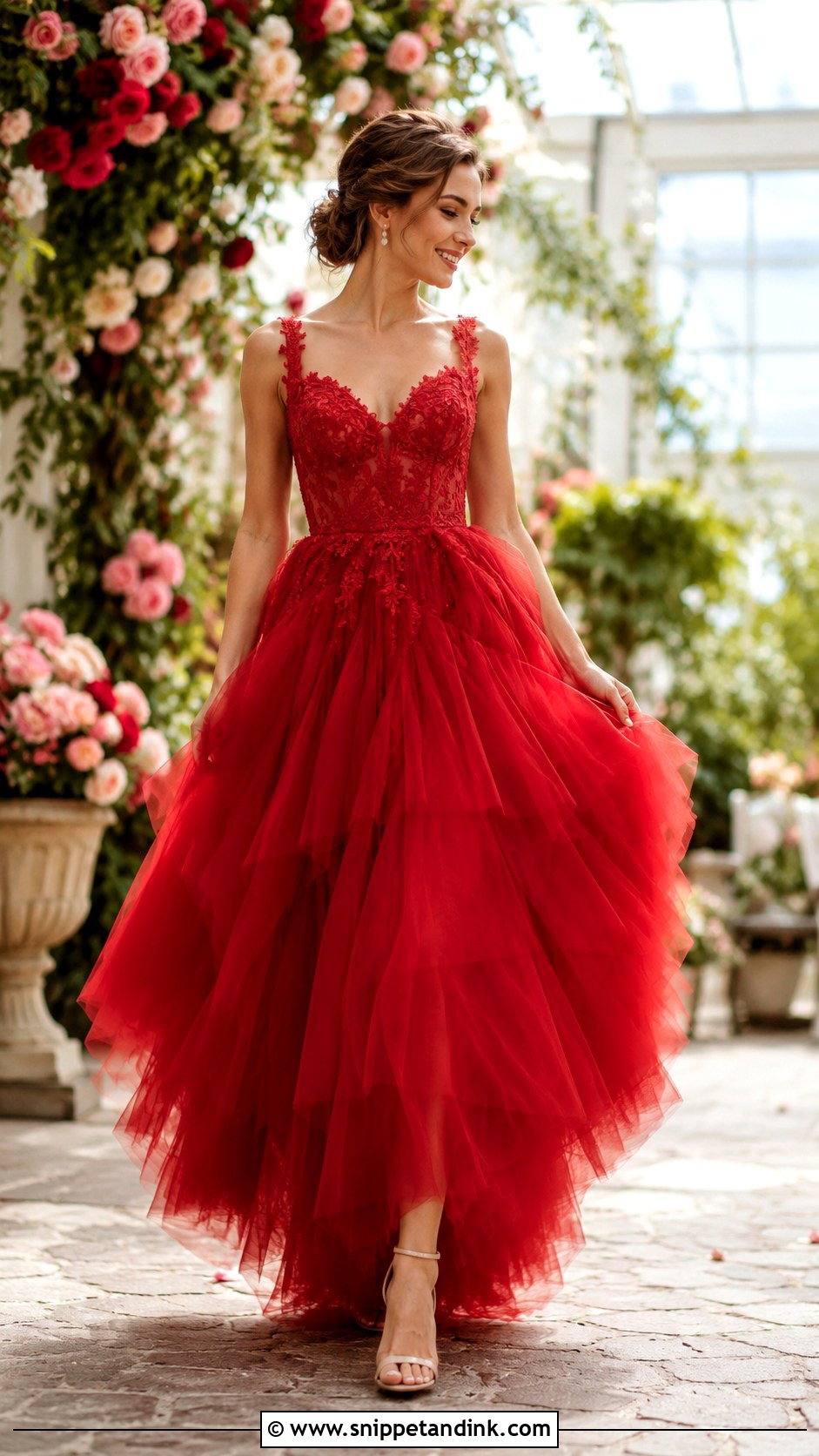
Bright red tulle can look whimsical; deep red tulle looks editorial. The difference between either of those and a costume is the bodice, which needs real shaping and boning. Tulle layers also deepen the color as they stack, so a skirt with many layers will read darker than the swatch you see in the shop. I keep the earrings simple, the heels delicate and the hair clean. Outdoors, walking and turning shots show the movement best.
8. Red Velvet Wedding Dress
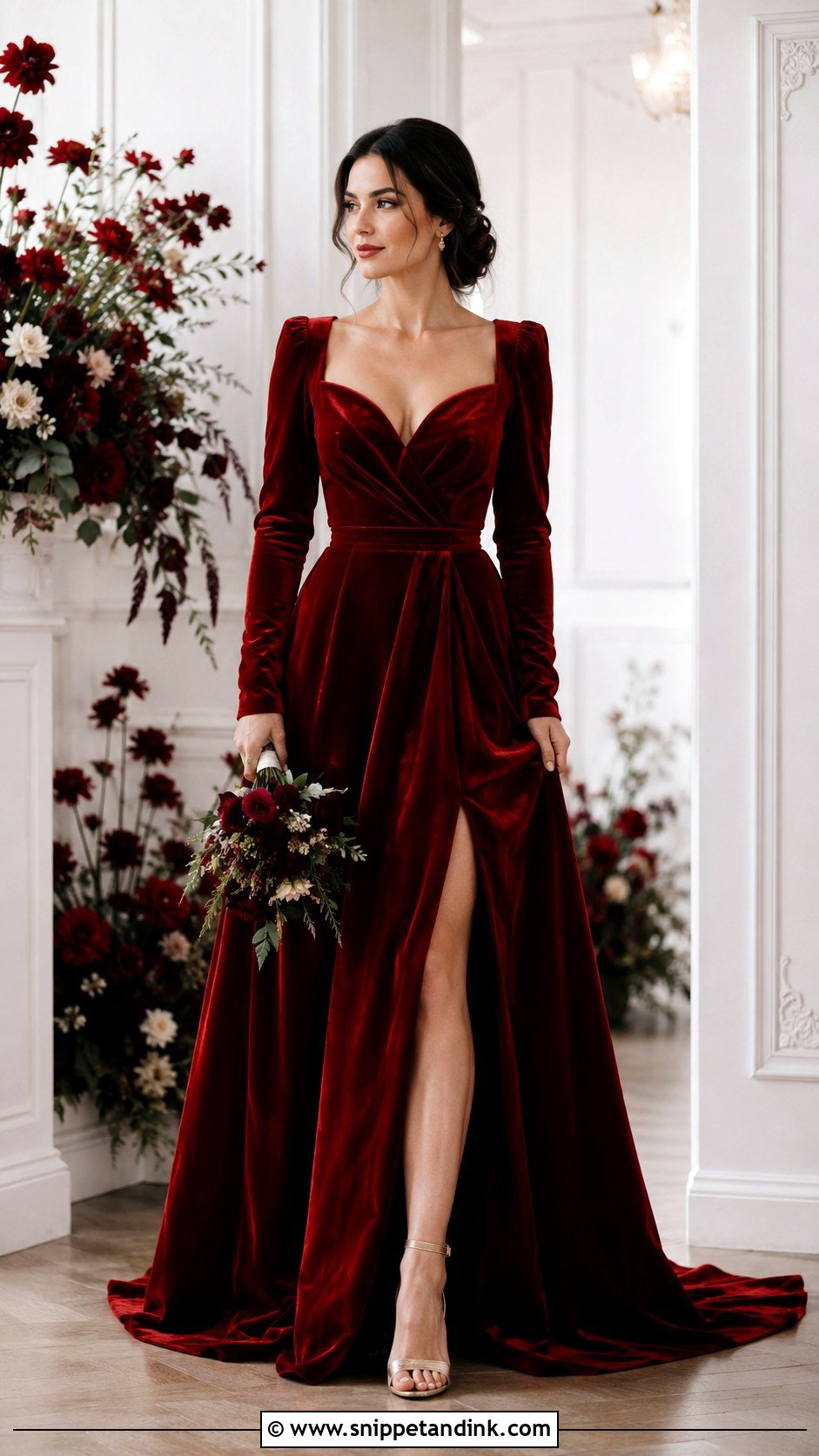
Velvet absorbs light, so it makes darker reds like cranberry, ruby and burgundy look almost glowing. It’s warm, which is lovely in December and miserable in a heated room in July, so I only suggest it for cold-season weddings. One fitting detail matters here: velvet has a nap, and every panel must be cut in the same direction or the color looks patchy in photos. Long sleeves with a fitted waist feel regal; a velvet slip is more modern. Small diamonds, pearls or gold hoops, and plain heels.
9. Red Off Shoulder Wedding Dress
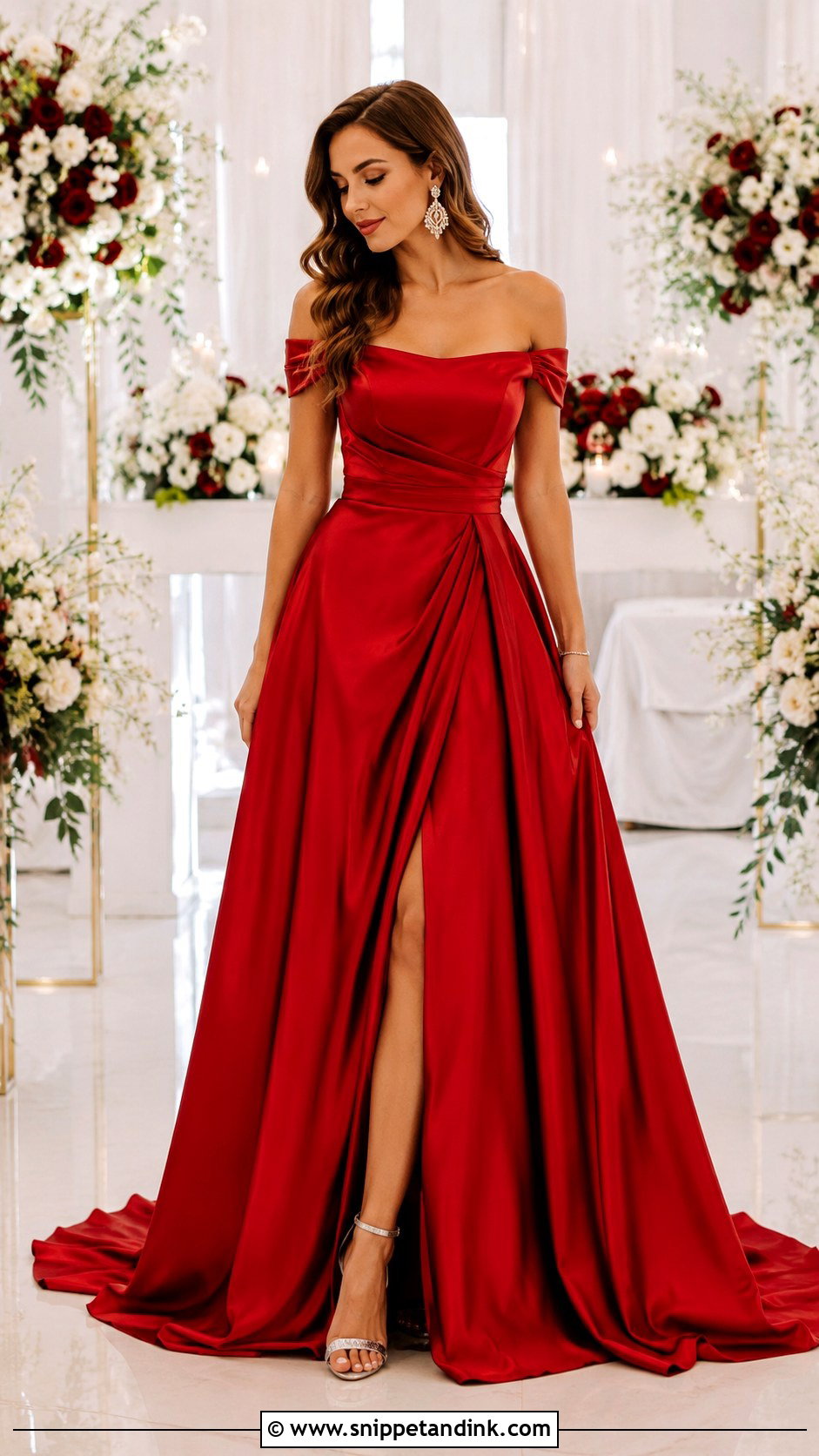
Bare shoulders and a red neckline frame the face strongly, which is exactly why I skip the necklace and go straight to statement earrings. The style works on ball gowns, mermaids and A-lines. Draped sleeves or folded satin soften it; a boned bodice keeps it structured. My one check: lift your arms in the fitting room. If the band rides up toward your neck, it needs taking in across the back. A low bun or soft waves suit formal ceremonies and evening receptions.
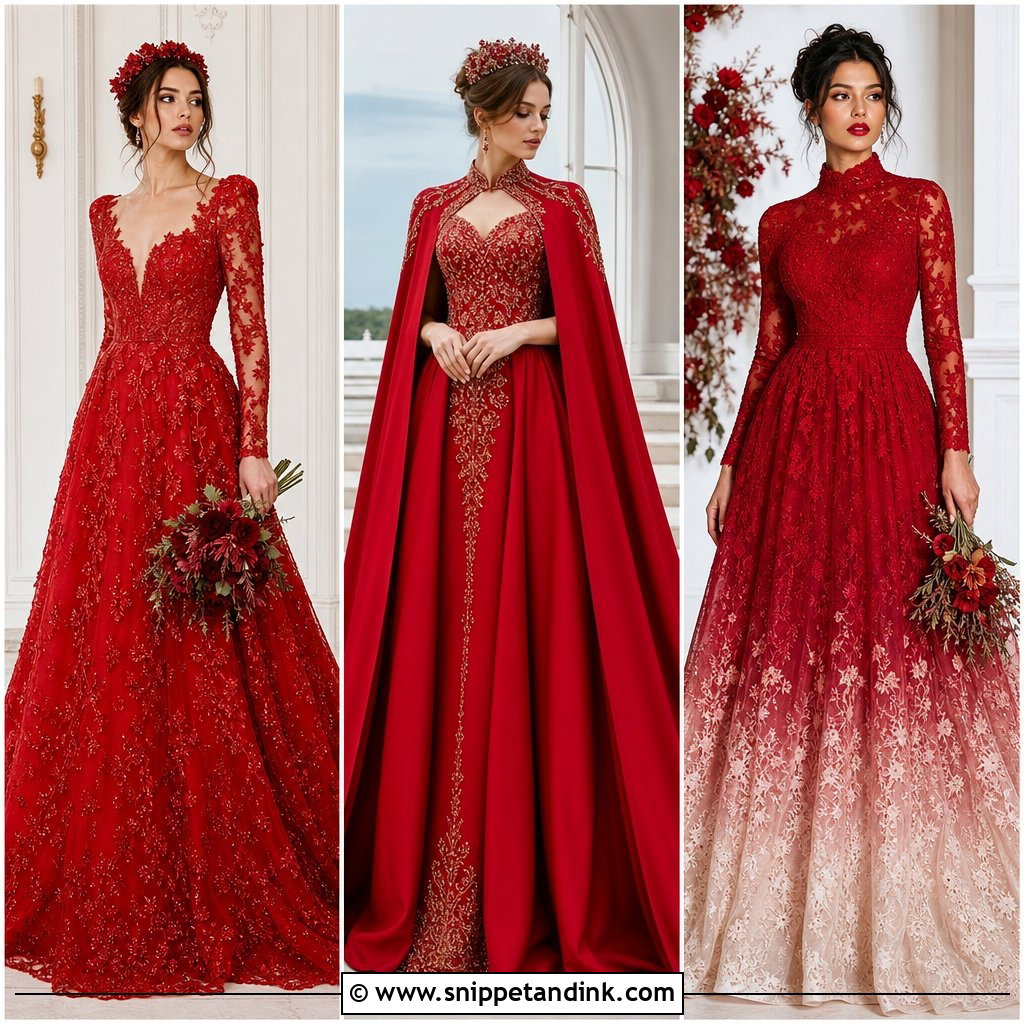
10. Red Long Sleeve Wedding Dress
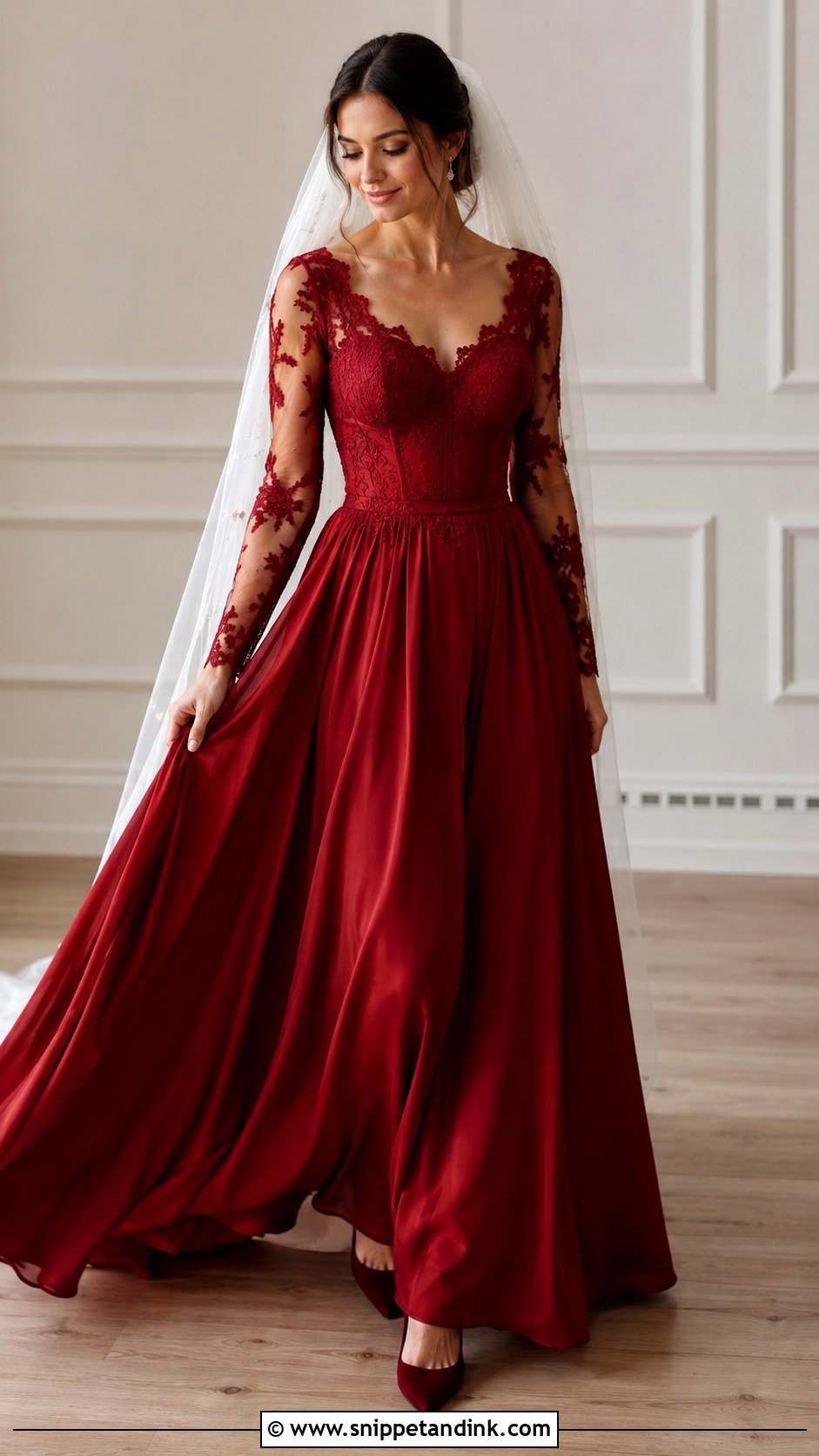
Sleeves add a formality that suits red very well. The fabric decides the mood: sheer lace is soft, fitted satin is formal, flowing chiffon is airy, structured crepe is sharp. Balance the coverage with a defined waist or an open neckline so you don’t disappear into the color. If the sleeves are beaded or embroidered, they’re the main detail and everything else stays quiet. I’d steer you to this for cooler weather and grand indoor venues.
11. Red Strapless Wedding Dress
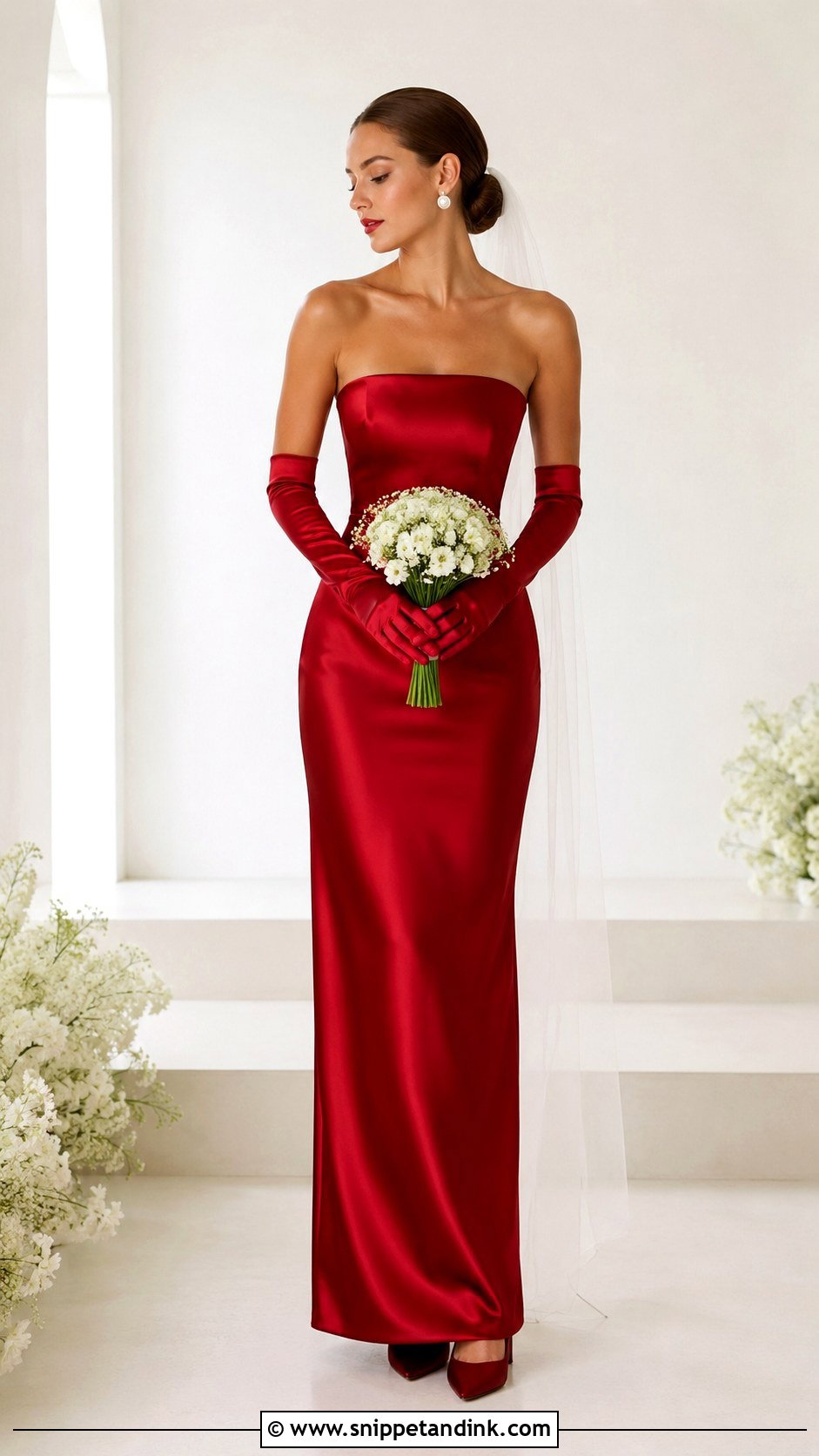
A strapless bodice stands or falls on its internal structure. If you catch yourself hitching it up in the fitting room, it needs more boning or a waist stay, not tape. Red makes the shoulders the frame, so a very plain neckline can take a necklace, while ruching, beading or lace usually can’t. A ball gown version reads dramatic, a column sleeker. Long gloves turn it formal. Hold the bouquet low at the hip or it covers the bodice in every photo.
12. Red Corset Wedding Dress
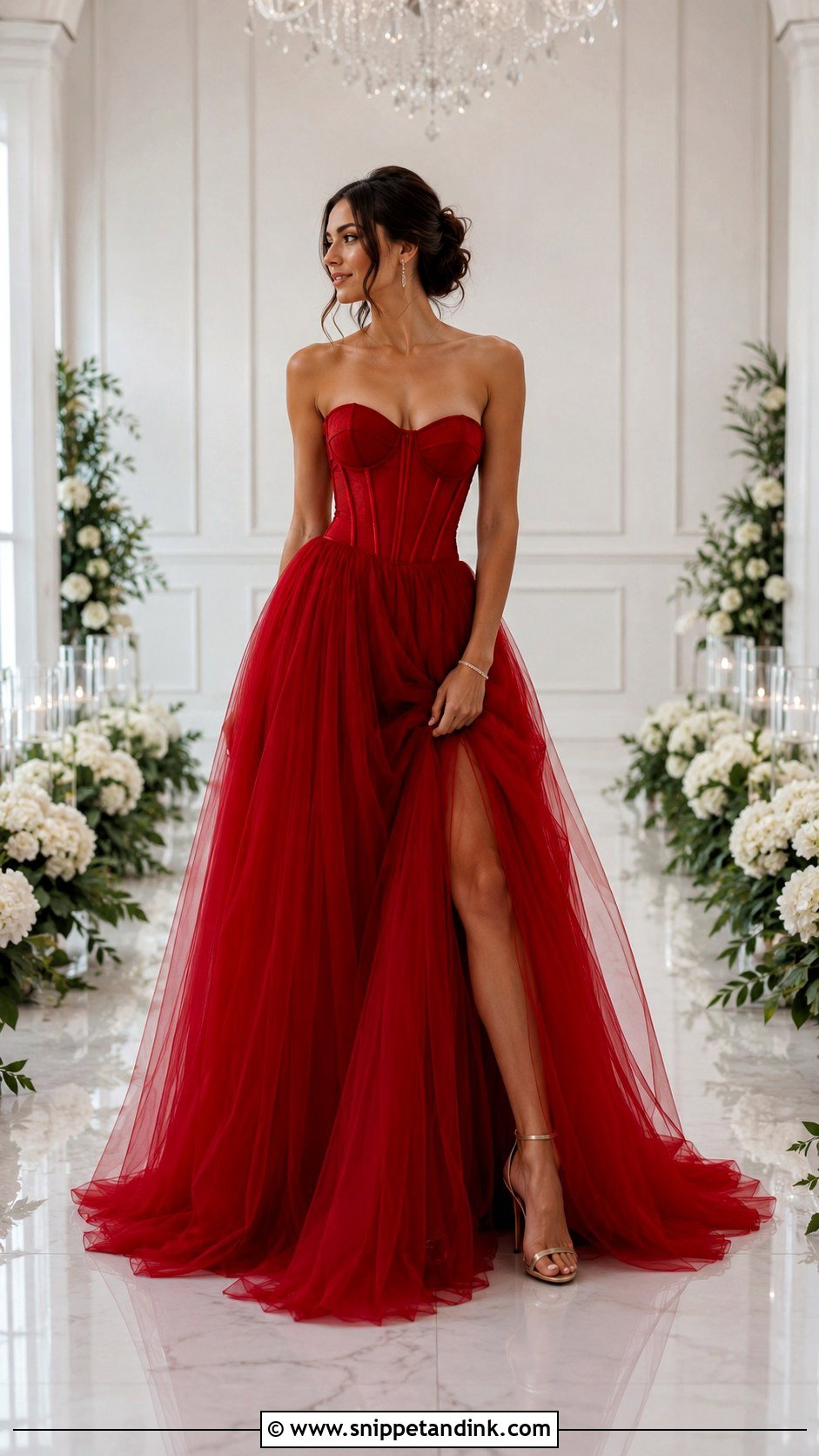
The corset bodice does the shaping, so the rest of the dress can stay simple. It pairs with full tulle, sleek satin or a fitted mermaid skirt. Lace overlays and sheer panels soften it; smooth satin with visible seams looks more fashion-led. I always ask the bride to sit and eat at the final fitting, since a corset laced for the mirror is too tight for dinner. A long veil keeps red corsetry from reading as eveningwear.
13. Red Wedding Dress With Train
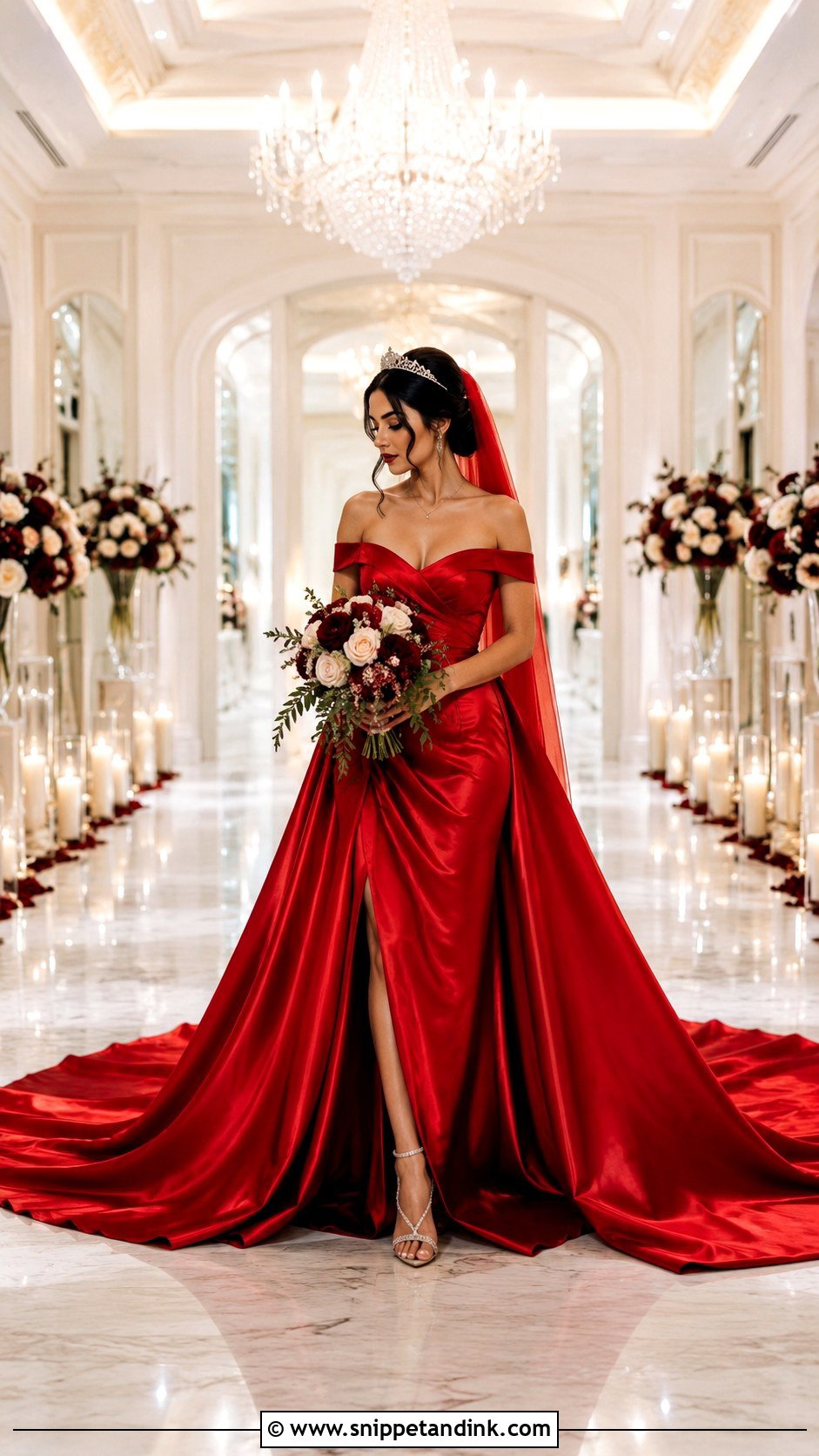
Trains give the aisle walk its drama, and in red the trail of color behind you is what people remember. A chapel length suits most venues; cathedral length needs a grand space and a long aisle. Satin trains look sleek, tulle trains softer. Ask for a bustle and have someone practice it with the seamstress, because a red train being stepped on all evening shows dirt fast. Elegant but comfortable shoes, and a simple veil that doesn’t compete.
14. Red Wedding Dress With Cape
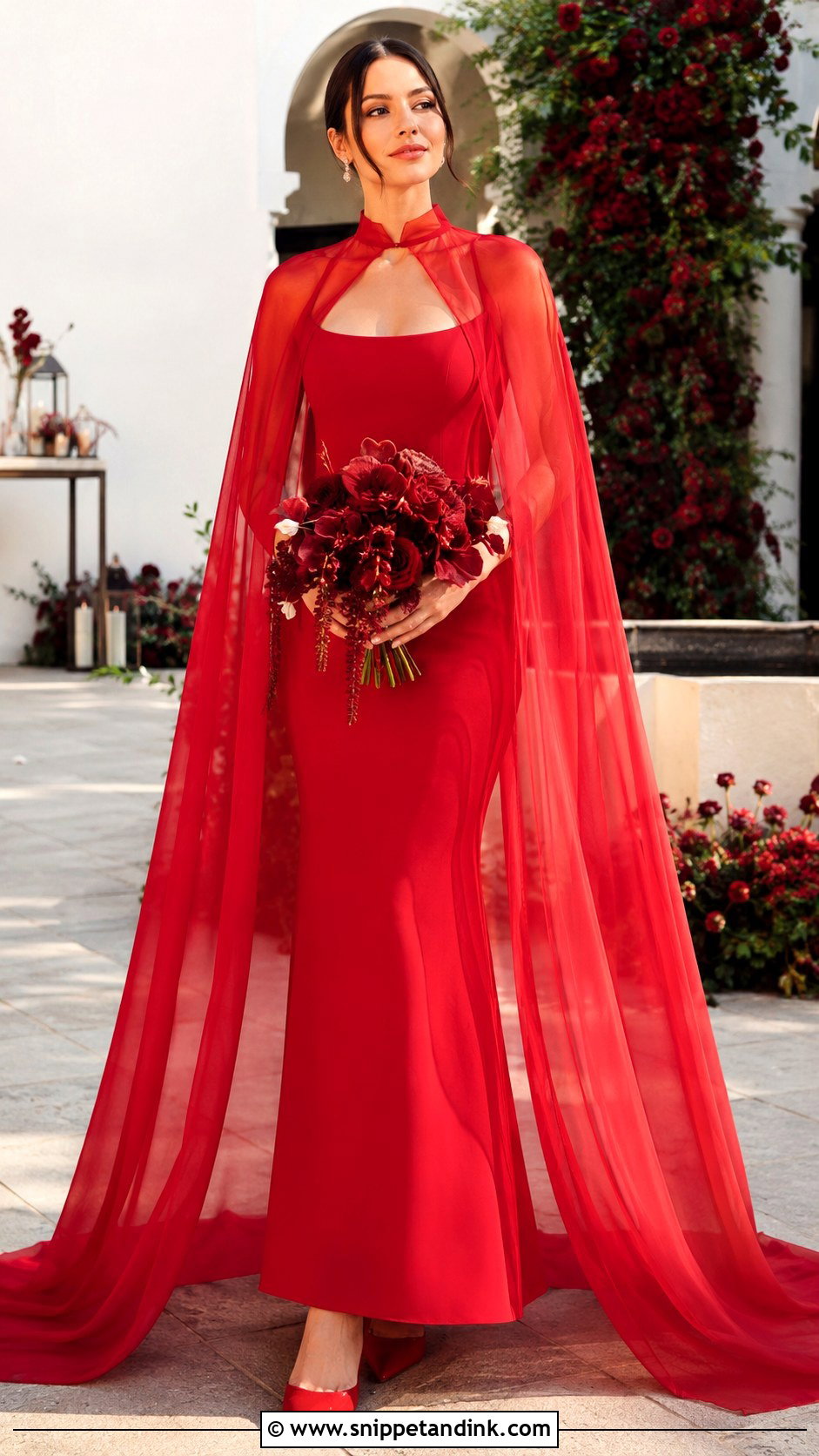
A cape gives you the movement of a veil with a more modern edge. Sheer red capes soften the look; satin or velvet ones read regal. Over a fitted dress, a bridal jumpsuit or a plain A-line, it adds coverage without committing to sleeves. Outdoors, check the wind: a long sheer cape blows across your face, so I add small weights at the hem. Keep the jewelry minimal and let the cape carry the entrance.
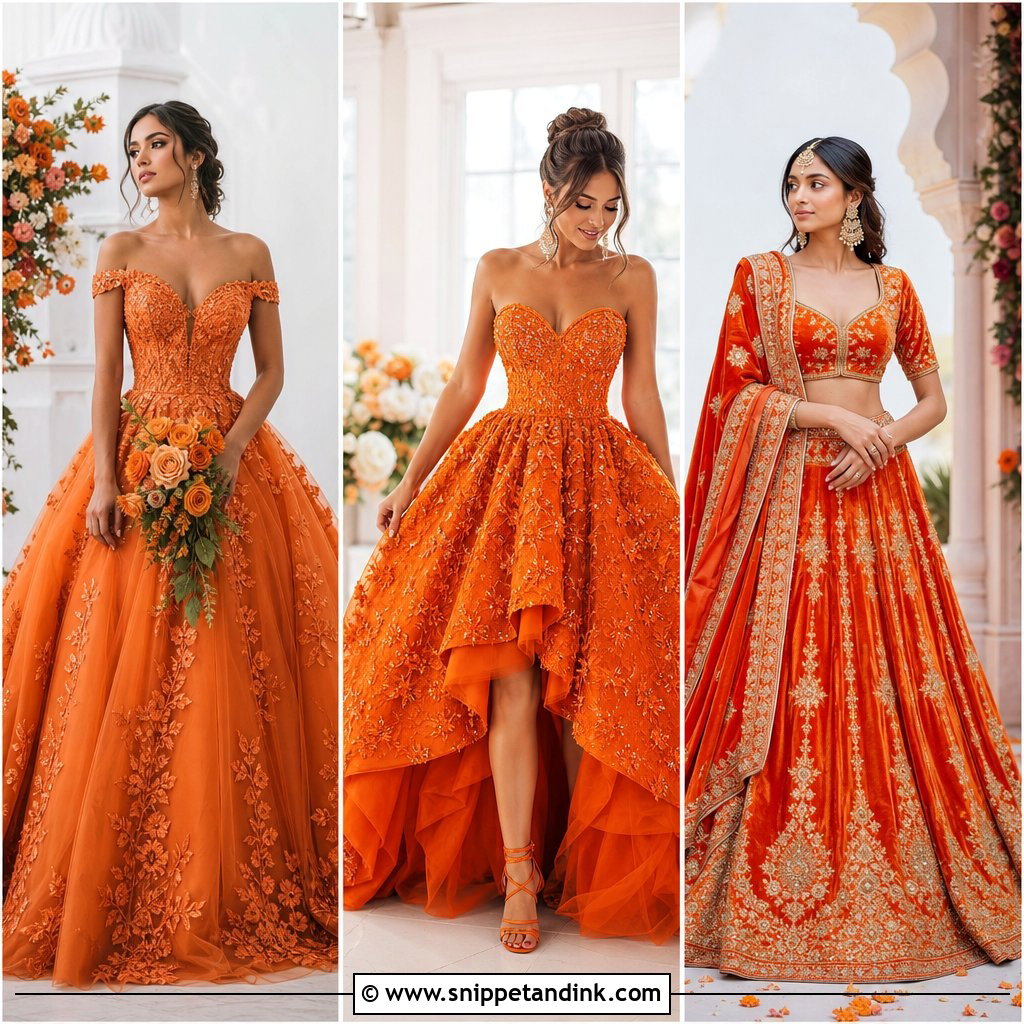
15. Red And Gold Wedding Dress
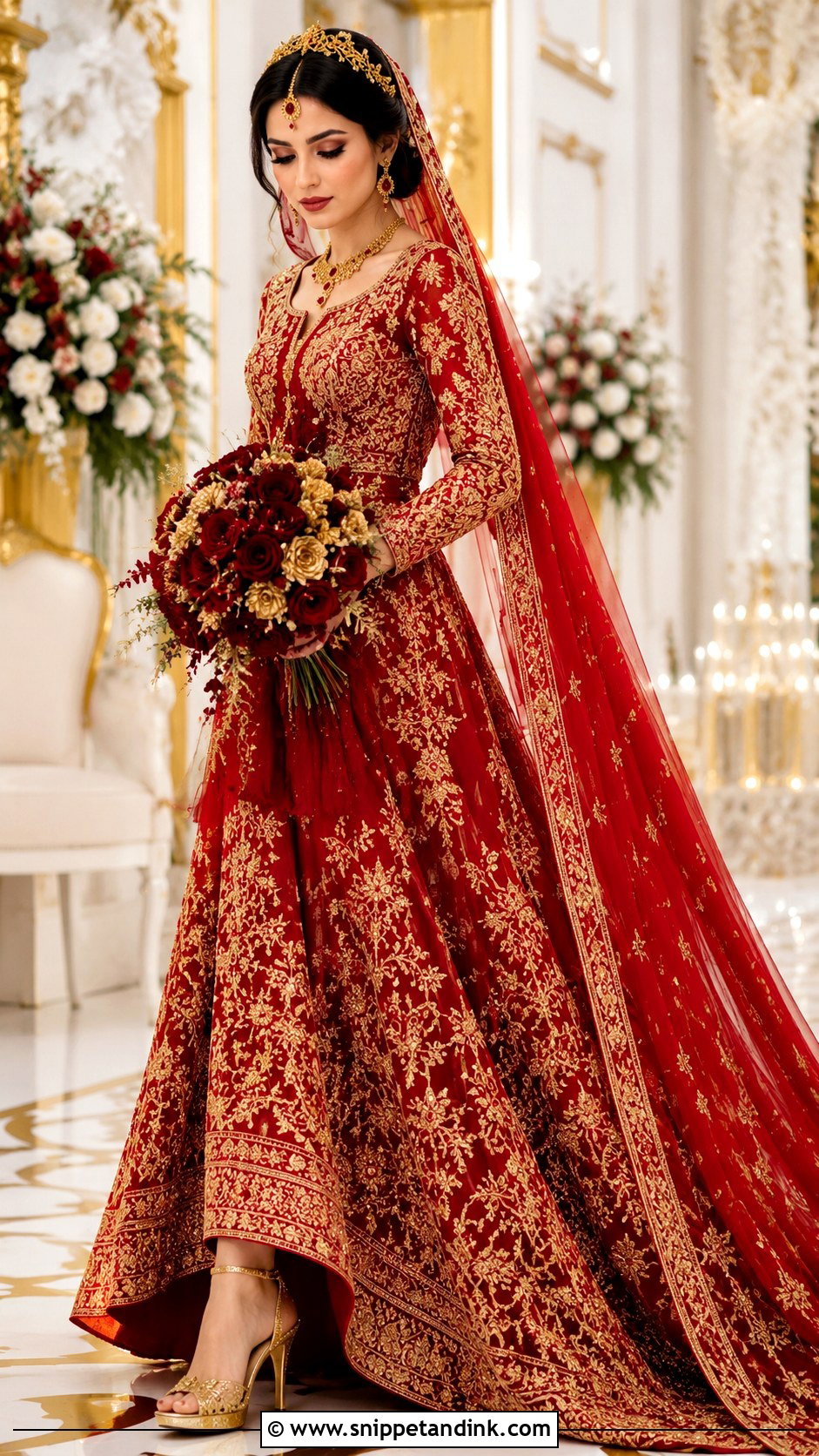
Gold embroidery, beading or threadwork warms red and gives it a ceremonial weight, which is why the pairing sits at the heart of many cultural celebrations. With heavy gold detail on the gown, I keep the jewelry in the same metal tone and slightly smaller in scale, otherwise everything fights. Gold heels, a gold hairpiece and a structured bouquet pull it together. Heavily embroidered fabric is weighty, so try a full ball gown version for at least ten minutes before deciding.
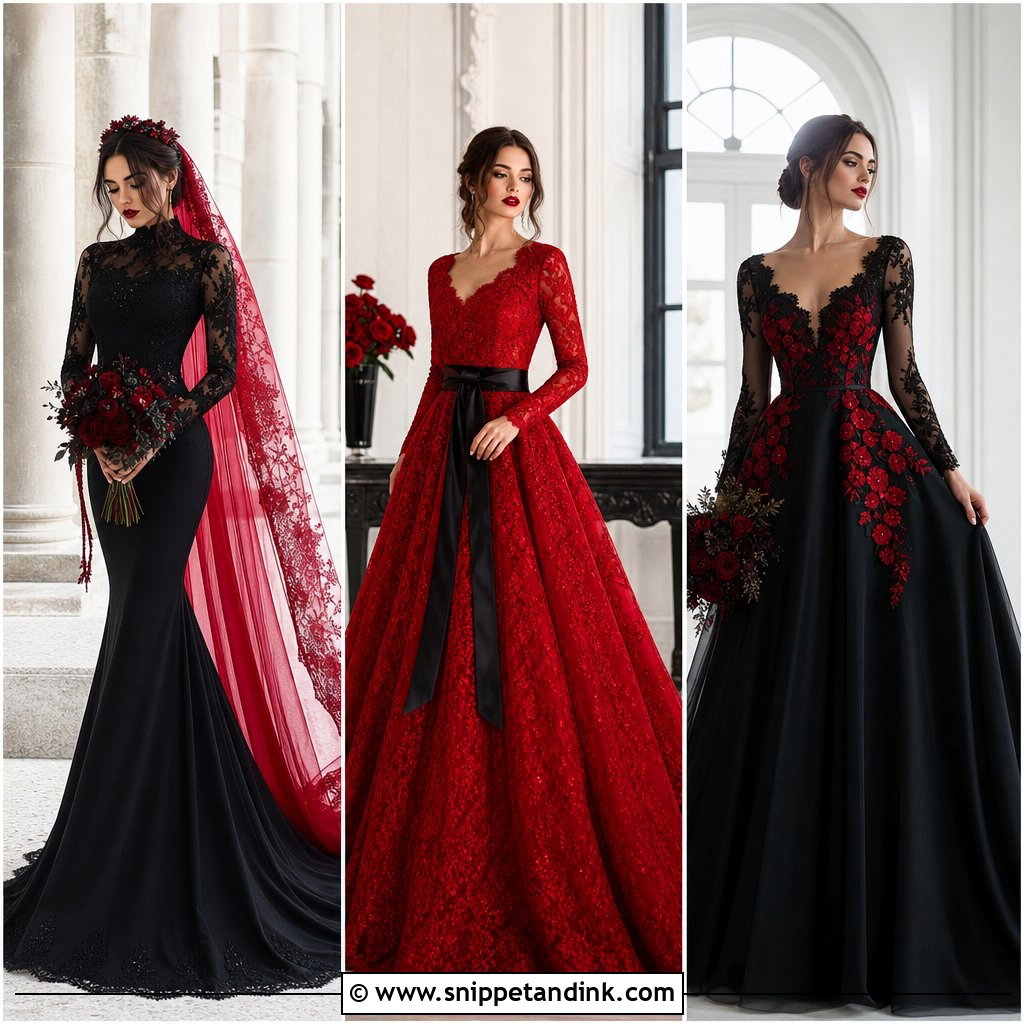
16. Red And White Wedding Dress
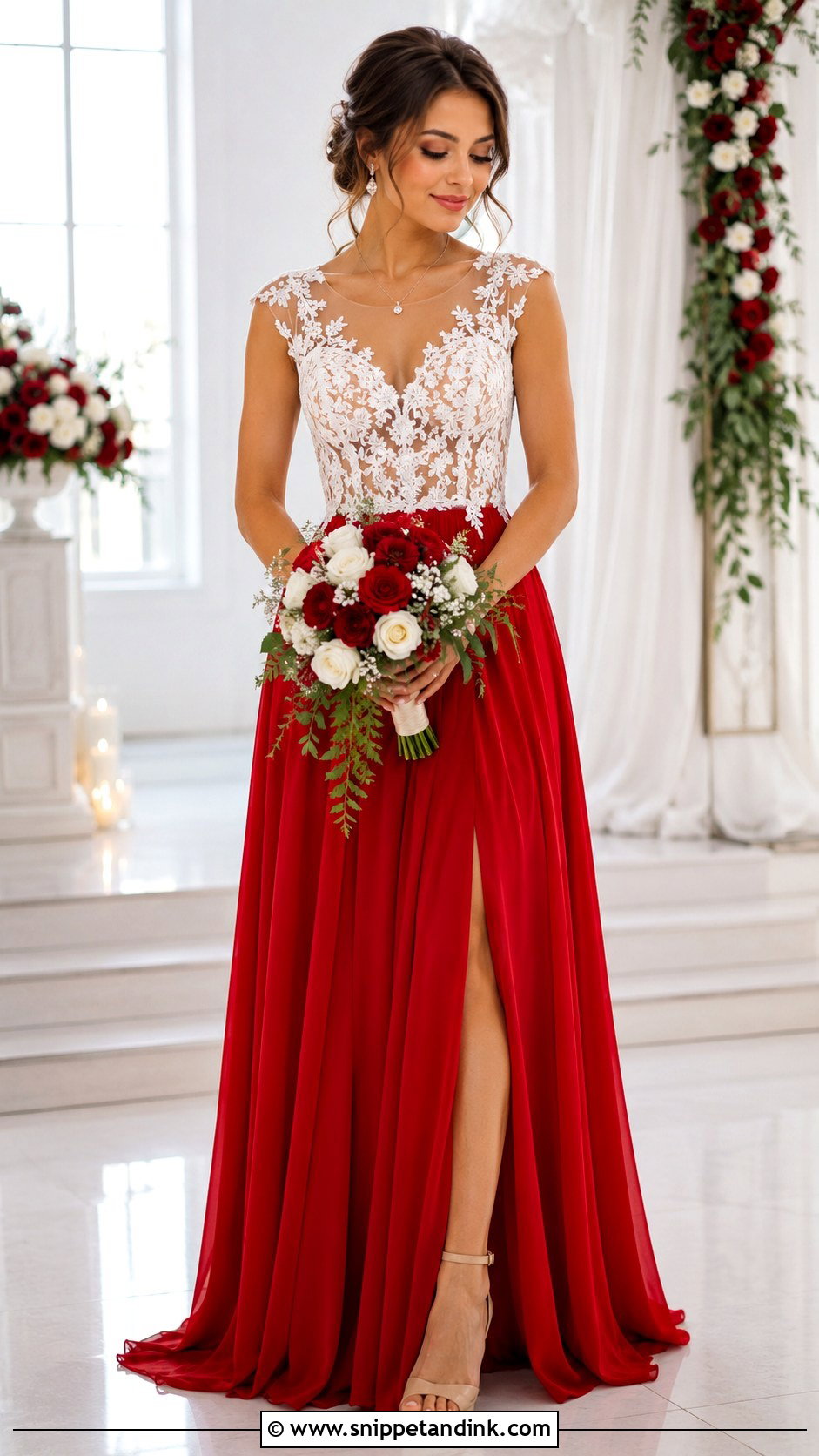
Two colors let you test red without going all in. White lace over a red lining gives contrast; a white gown with red floral embroidery is subtler; a white bodice with a red skirt splits the difference. I’d suggest this route to anyone who isn’t ready for a fully red gown, or whose family expects white. White or nude heels, fine jewelry, and a bouquet that repeats both colors.
17. Red Floral Wedding Dress
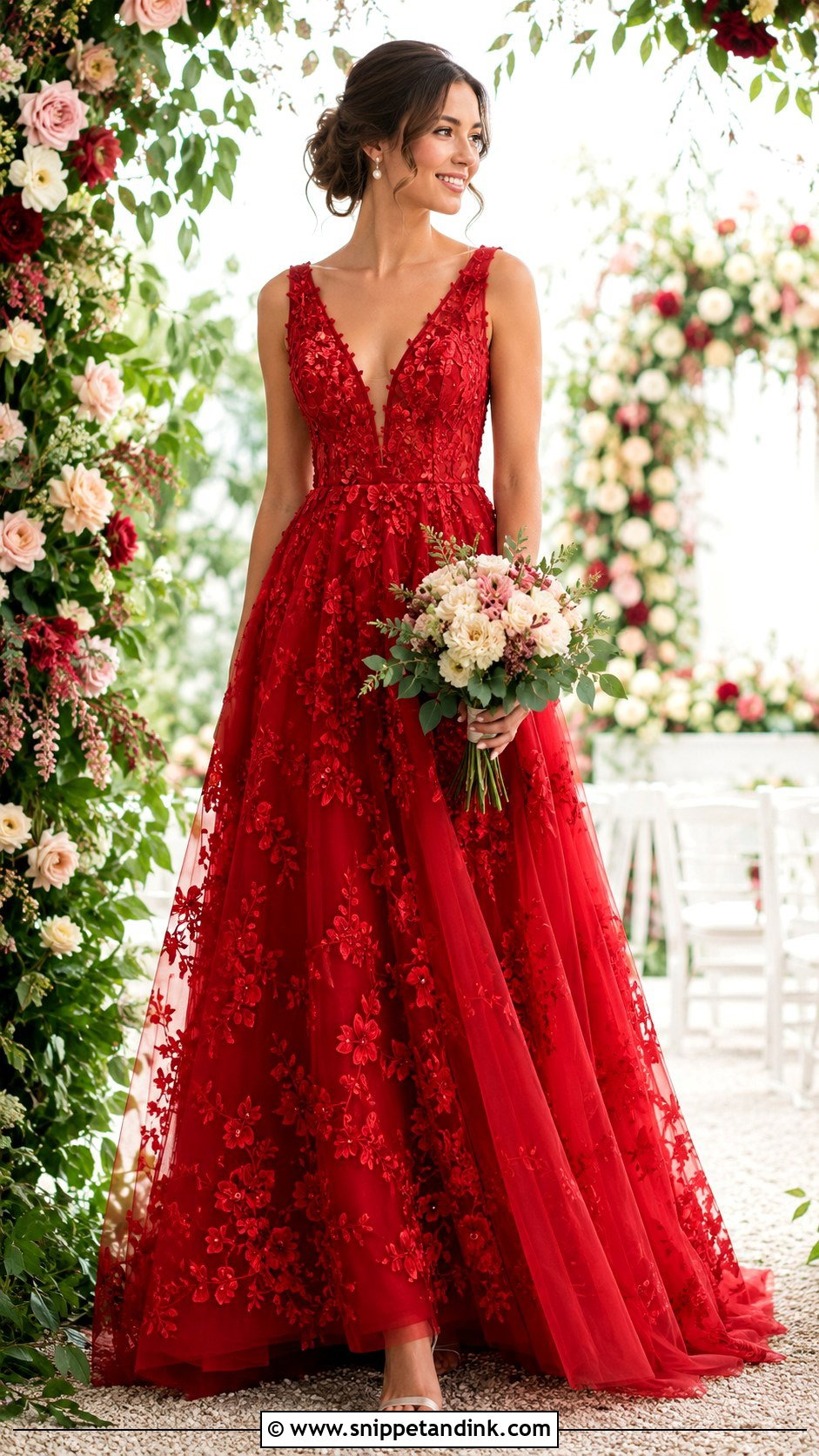
Tonal red flowers on a red dress are subtle and grown-up; multicolor florals feel playful. Embroidery, appliqué and printed organza all add dimension. If the appliqué is raised, check that it doesn’t catch on your bouquet or a hug. I keep the rest simple: soft waves, pearl earrings, light heels and a bouquet in one or two shades when the gown is busy. It suits garden ceremonies and spring weddings.
18. Red Tea Length Wedding Dress
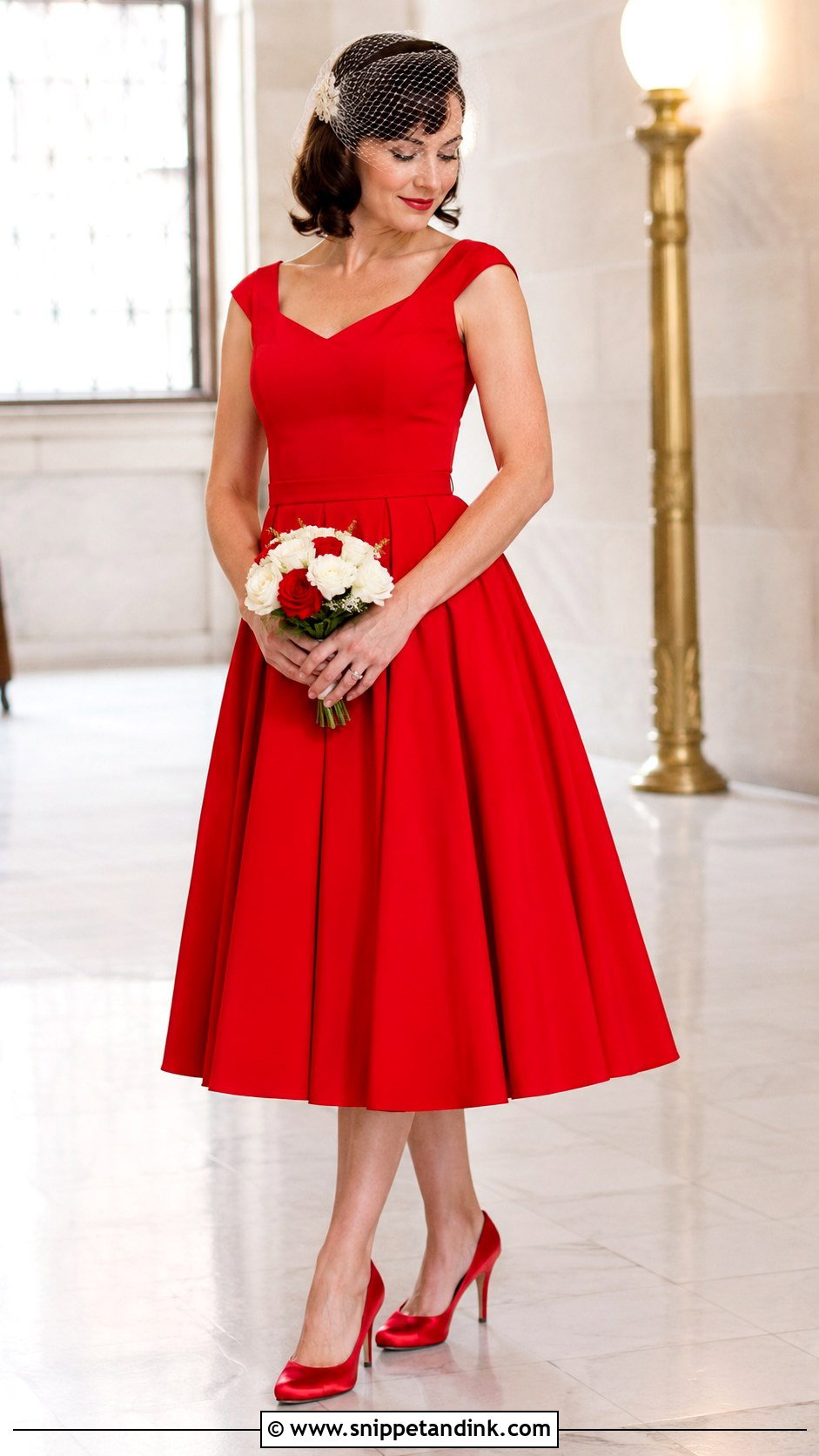
Shorter hems put your shoes on show. A red tea length wedding dress falls between knee and ankle, so pick the satin pumps or pointed flats before the hem is set. A full skirt reads retro and needs a petticoat fitting; a fitted version is sleeker. Add a short veil, headband or small bow to mark it as bridal. Courthouse ceremonies, casual receptions and dance-heavy evenings are where it shines.
19. Red Mini Wedding Dress
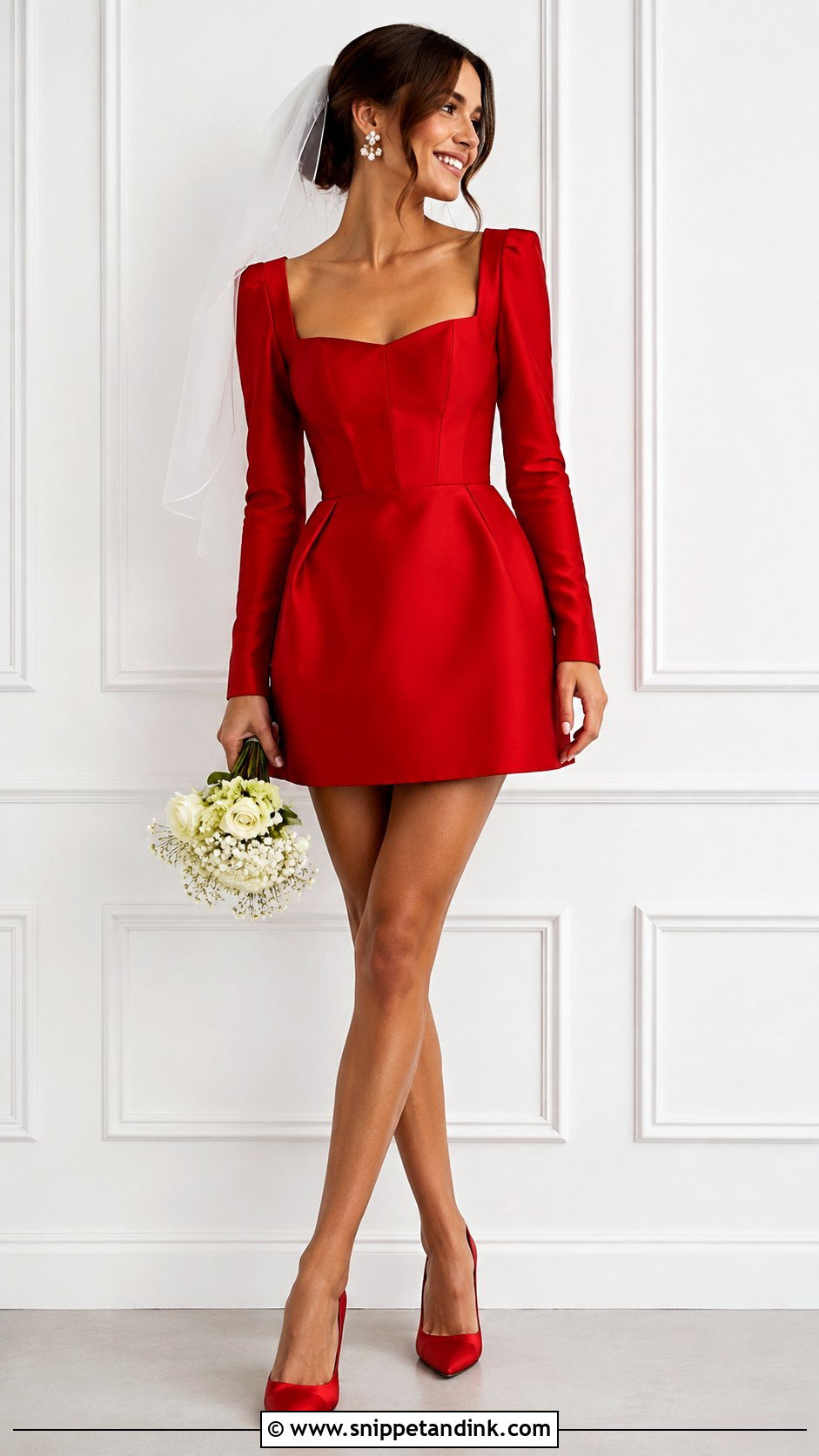
A mini works for a courthouse, an elopement, an after-party or a second look. The fabric is what keeps it from reading as a cocktail dress, so I look for satin, crepe, jacquard or mikado with some body. Long sleeves balance a short hem; strapless is bolder. Sit and bend in it before buying, since minis creep up. Pointed heels, a small bouquet and statement earrings, with a short veil or detachable overskirt for the ceremony if you want more.


20. Red Slip Wedding Dress
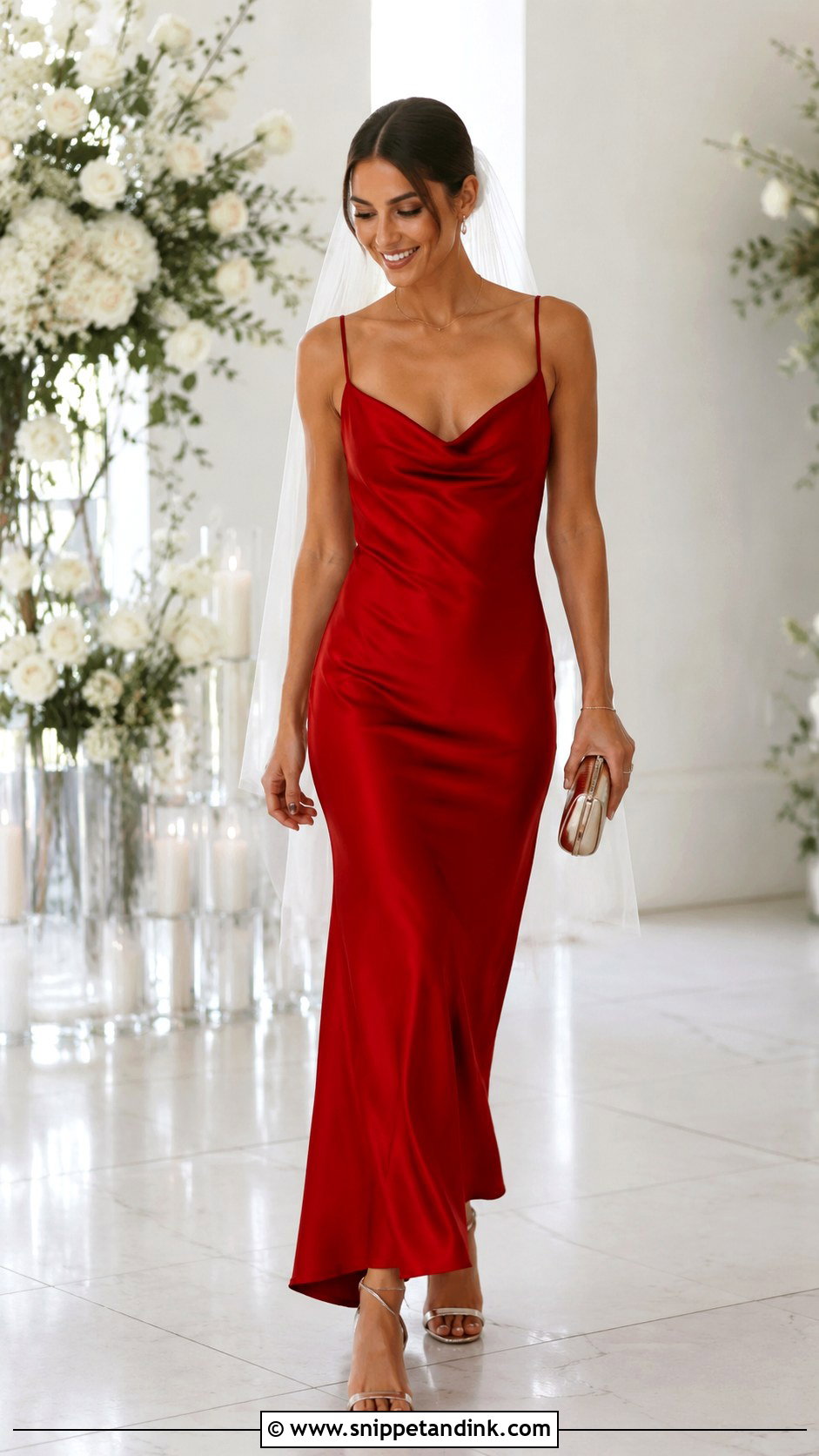
There’s nothing to hide behind in a slip, so fit and fabric quality are everything. Silk and satin move naturally and reflect light; a cowl neckline softens, a straight one is more modern. Silk shows underwear lines, so plan smooth, no-line shapewear or none. Delicate heels, a sleek clutch, fine jewelry and polished hair, and a sheer veil if you want softness. Small ceremonies and modern venues suit it.
21. Red Sequin Wedding Dress
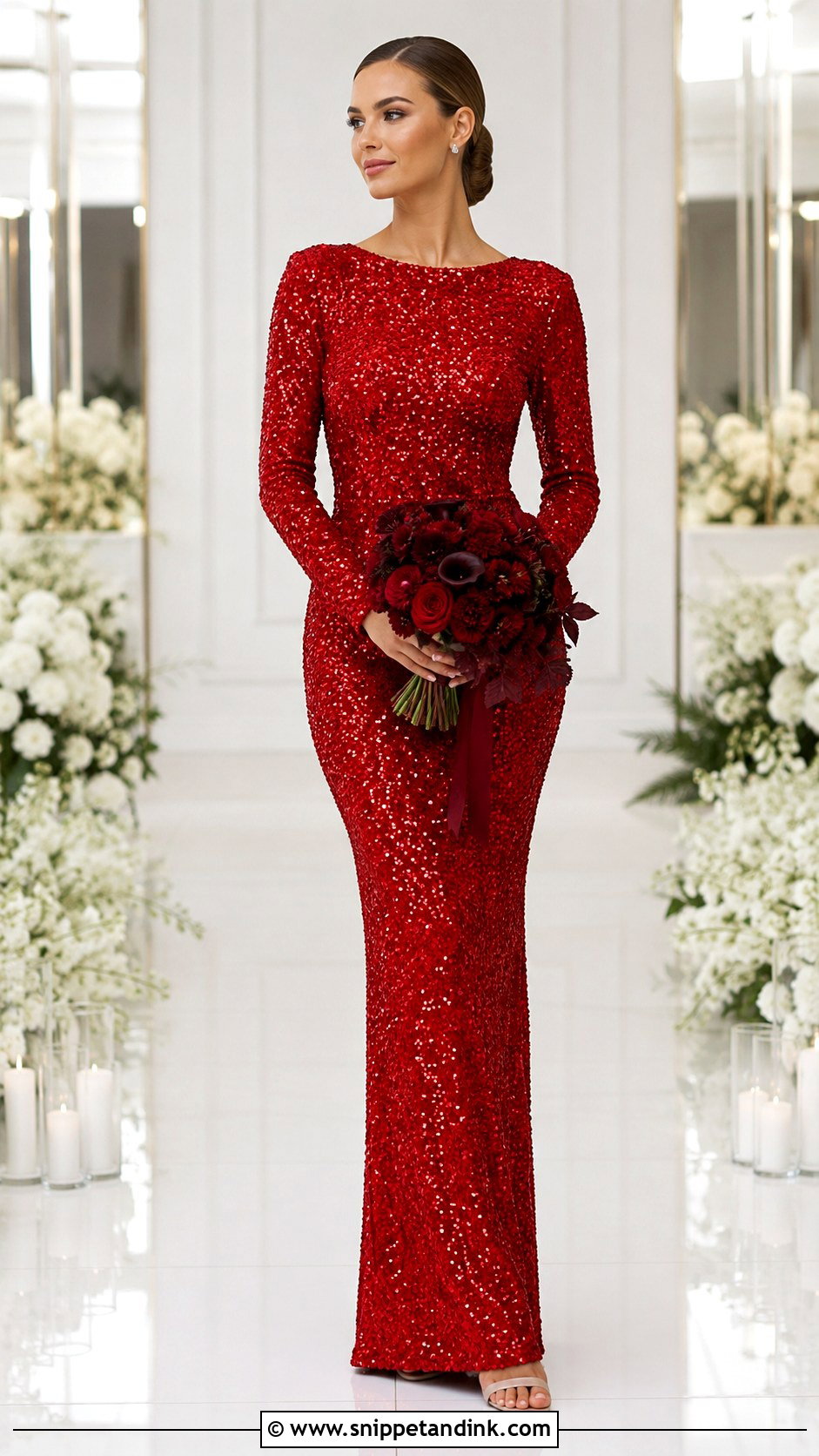
Sequins catch every light source, so they come alive in evening ceremonies and on the dance floor. A clean silhouette keeps them from looking like a costume: a column, long sleeves or a fitted midi. I check the underarm seam carefully because sequins scratch when you dance, and a smooth band there saves your skin. Simple heels, small earrings, smooth hair and a matte bouquet calm the shine. Less sparkle? Try red beaded embroidery or a touch of shine on the bodice.
22. Red Ruffle Wedding Dress
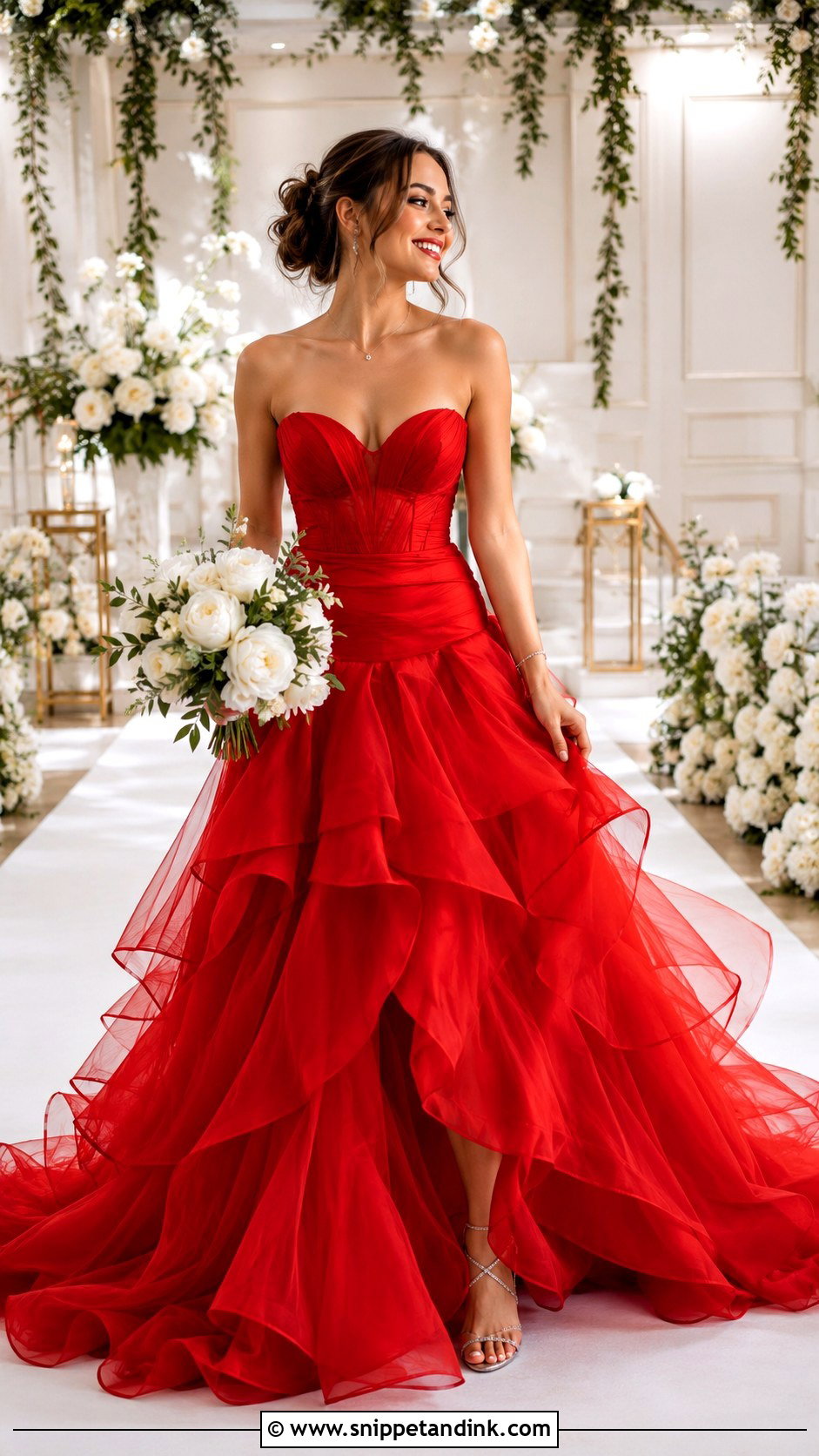
Ruffles bring movement, and red ruffles bring a lot of it, so restraint matters. Put them in one place: a tiered skirt, soft shoulder ruffles or a ruffled hem, not all three. Organza ruffles hold their shape; chiffon ones collapse slightly as the day goes on. Keep shoes and jewelry quiet and let the texture lead. When you walk or turn, the layers move, and that’s the shot to ask your photographer for.
23. Red High Low Wedding Dress
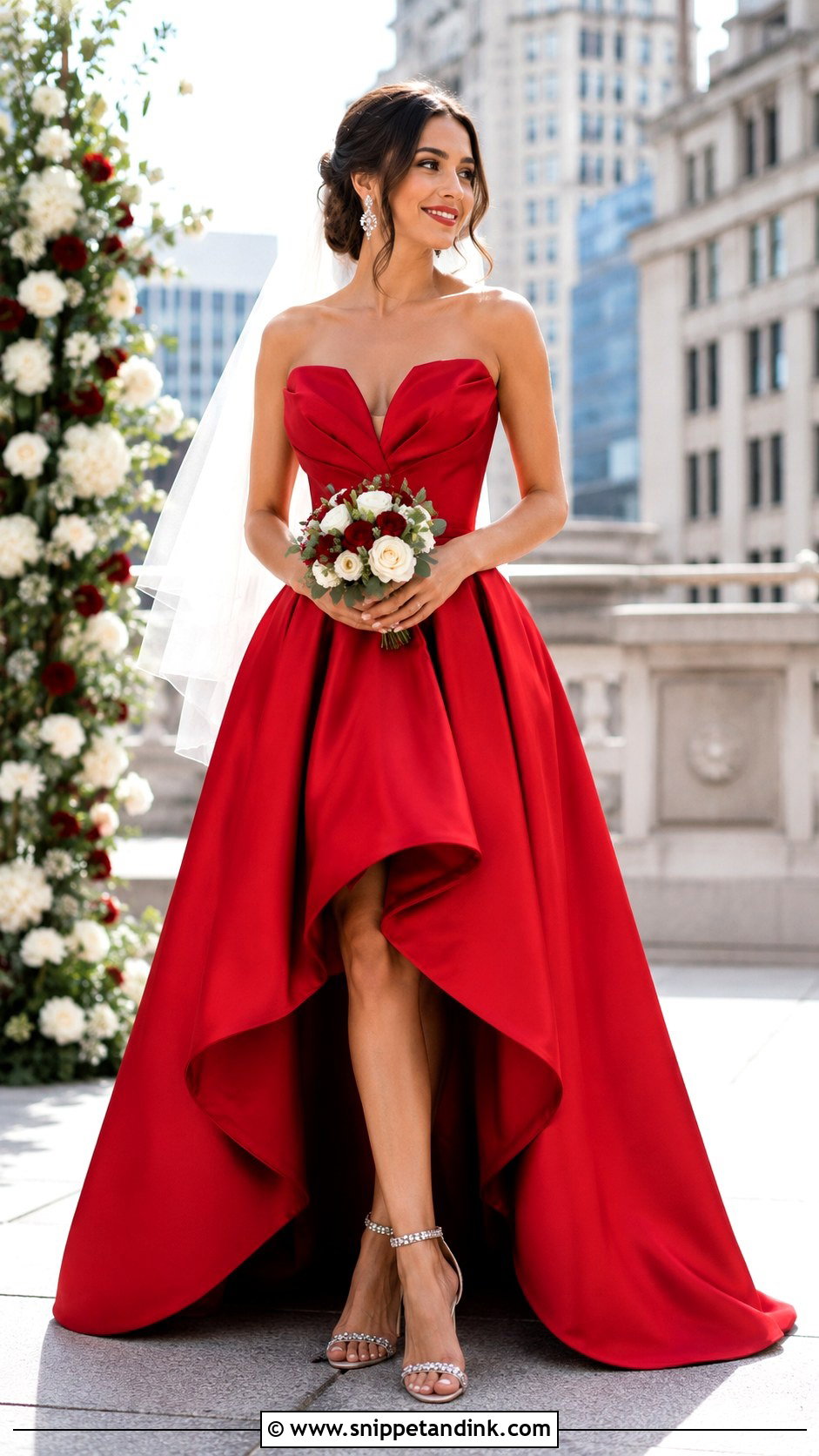
The short front shows your shoes and lets you move freely; the long back keeps the ceremony feeling. Satin looks clean and modern, tulle softer. Because the hemline is unusual, the shoes are part of the design, so choose something you can stand in for hours: ankle-strap heels, pointed pumps or embellished flats. Watch the back length on stairs. Outdoor venues, city ceremonies and dance-heavy receptions suit it.
24. Red Lehenga Wedding Dress
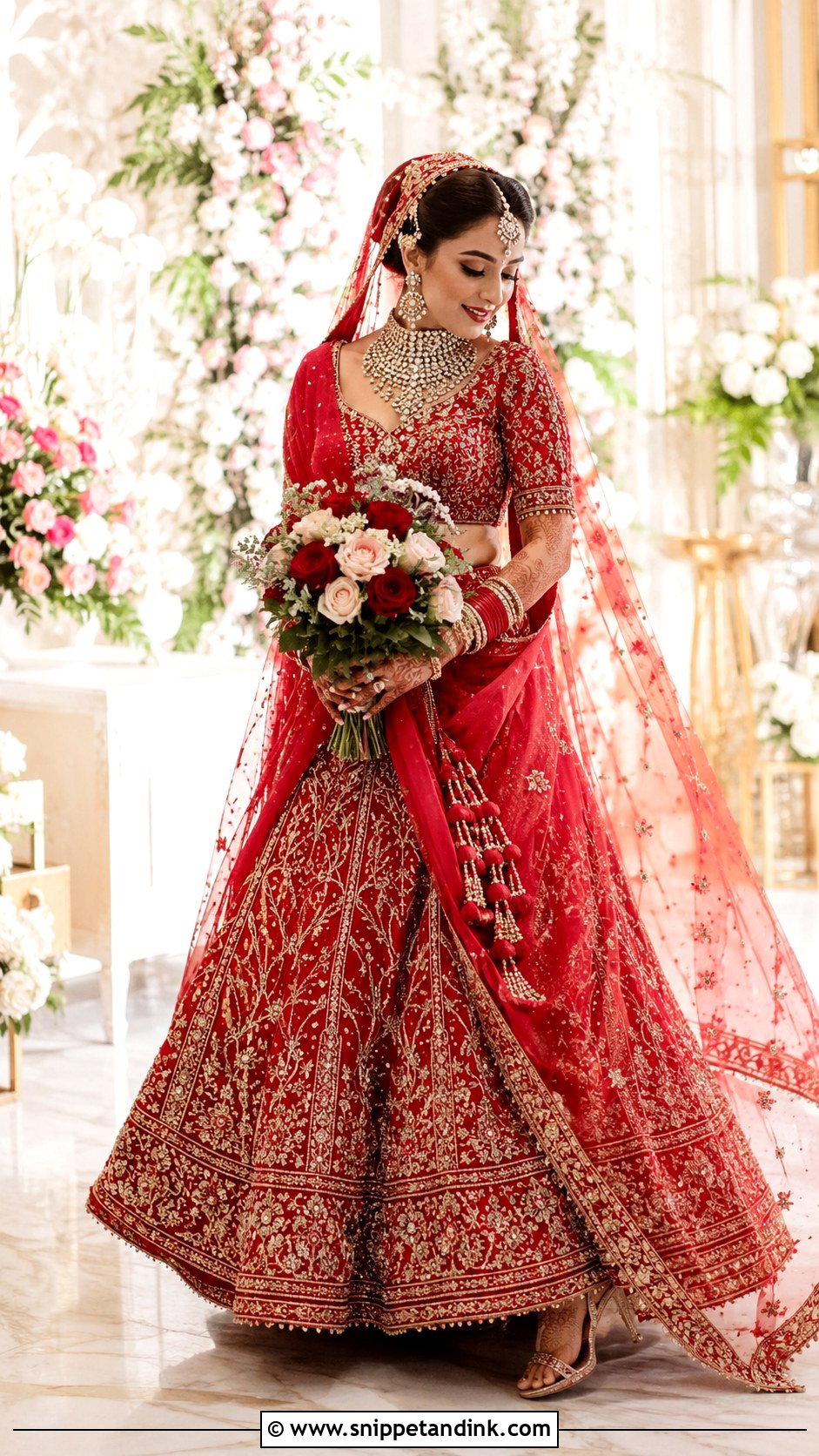
A lehenga combines a fitted blouse, a full skirt and a dupatta draped over the shoulder or head, and red remains the traditional bridal choice in many South Asian families. Embroidery, beadwork, mirror accents and gold thread make it rich, and they also make it heavy, sometimes very heavy. Try the full skirt on with the dupatta pinned before you commit, and practice the drape with whoever will dress you. Jewelry should match the level of embroidery, not exceed it.
25. Red Reception Wedding Dress
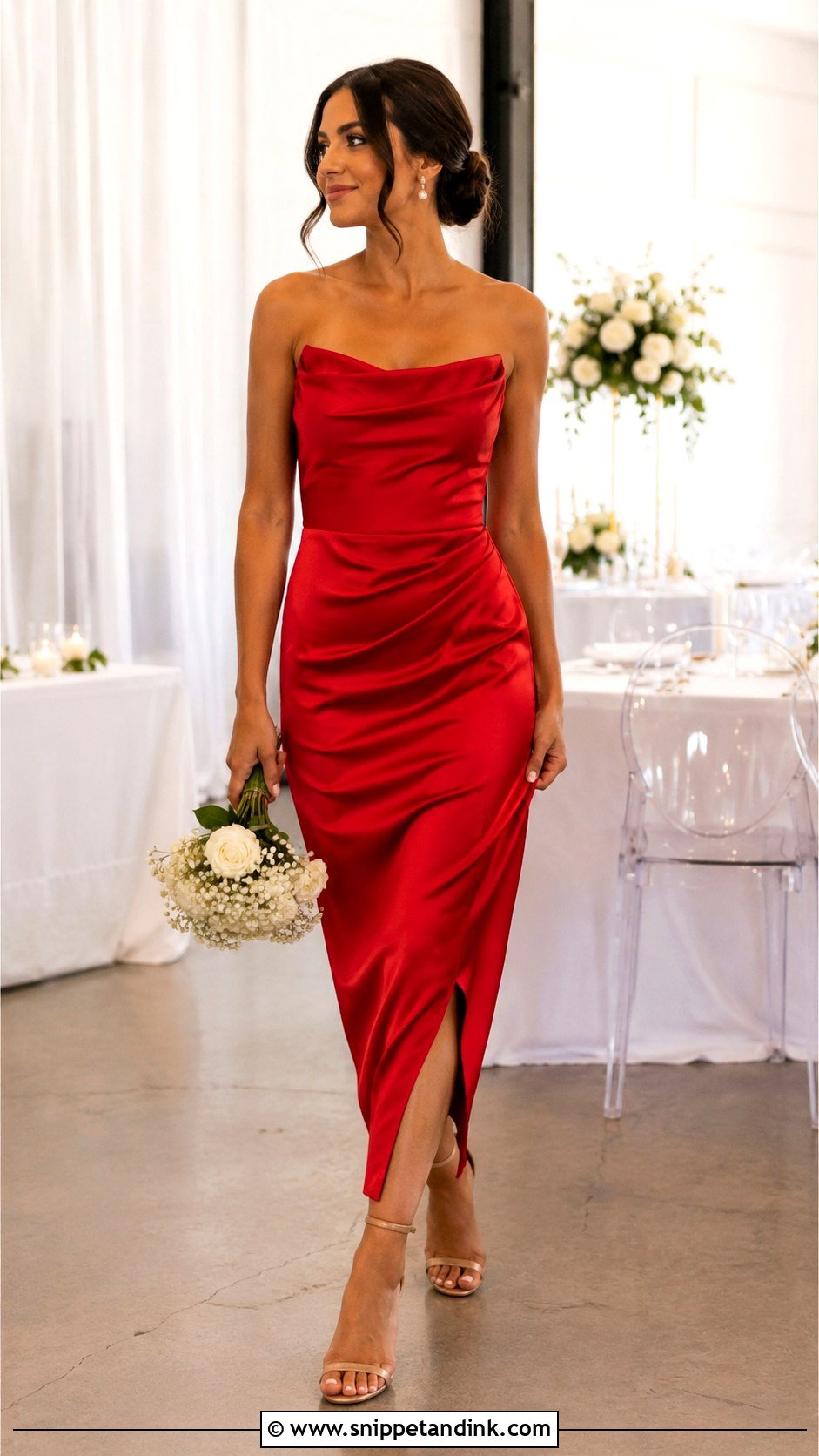
A reception change gives you something lighter to dance in. A satin midi, a sequin column or a sleek mini all work, and the dress can be shorter, sparklier or more fitted than the ceremony gown. Swap to simpler jewelry if your first look was heavily detailed, and wear shoes you can move in. Give the change fifteen to twenty minutes with a helper, after dinner rather than before. It’s also a chance to show a second side of your style.
Red Dye Can Rub Off, So Test It Early
Strong reds are among the dyes most likely to transfer, especially on cotton, velvet and some silks. In the fitting room I rub a damp white cloth on an inside seam. If any pink comes off, ask the maker about it before the wedding, not after. Warm skin and sweat make transfer worse over a long day.
- Wear red or nude underwear and shapewear; white pieces can come home pink.
- Ask for dress shields at the underarms on satin and silk bodices.
- Keep pale shoes and a white veil from rubbing against a damp red hem for hours.
- Bring a dark cloth, not a white napkin, for blotting spills during dinner.
After the wedding, tell your cleaner the dress is a strong red and ask them to test a hidden seam first. Store it away from light in acid-free tissue, with tissue between any red layers and white trim, so the color can’t migrate during the years it sits in a box.
Which Red Will Still Glow at Midnight?
Red works because it can be traditional, modern, glamorous or deeply personal, sometimes all at once. Your venue, comfort, culture and season decide the shape; your skin decides the shade. A ball gown brings drama, a satin slip is minimal, burgundy adds depth, and a lehenga carries centuries of ceremony. Let accessories support the dress rather than compete. Scarlet, ruby, crimson or burgundy, any red can be bold and still look like a bride.
You'll Like These Ideas:


Leave a Reply