
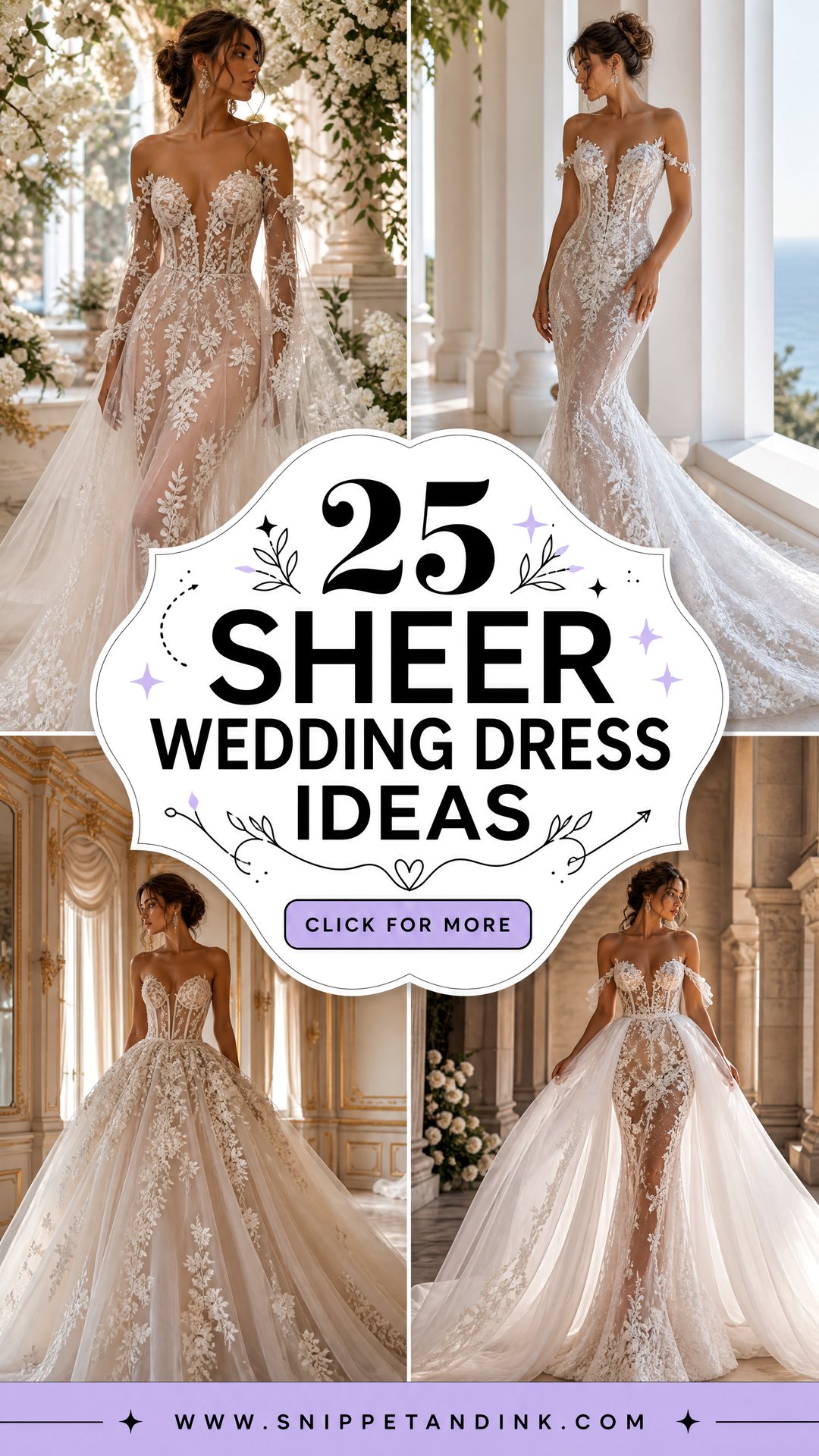
Sheer gowns are less about showing skin than most brides fear. In the fitting room, the illusion neckline, the lace sleeve or the tulle overskirt is usually doing quiet work: adding texture, lightness and a little air between the lace motifs. The current crop ranges from corset bodices and organza skirts to beaded panels and backs that only show when you turn around. How much you see through depends far more on the lining than on the outer fabric, and that’s the conversation I have with every bride before she falls for a picture. Below are 25 ways to wear sheer, from a hint of illusion fabric on a classic gown to a fully see-through skirt, with notes on venue, comfort and fit.
Matching the Illusion Mesh and Lining to Your Skin
The single detail that decides whether a sheer gown looks bridal or bare is the colour of the mesh and lining behind it. Many bridal houses offer illusion fabric in several shades, from ivory and champagne to a range of nude tones. Ask to see swatches against your inner arm in daylight.
- A mesh slightly darker than your skin disappears best on camera; a lighter one shows up as a pale band, especially on deeper skin tones.
- If you’ll tan or use self-tan before the wedding, match the mesh to that colour, not your winter skin.
- Look at the sample under phone flash. Flash can reveal more through a sheer skirt than the fitting-room mirror ever does.
Coverage is adjustable too. A seamstress can add a lining layer behind a bodice panel or extend a skirt lining down to the knee without changing the outside look. Sheer panels can also be backed with a second layer of mesh in the same shade, which softens what shows through while keeping the floating effect. It’s far easier to plan that at your first fitting than to add it later.
1. Sheer Lace Wedding Dress
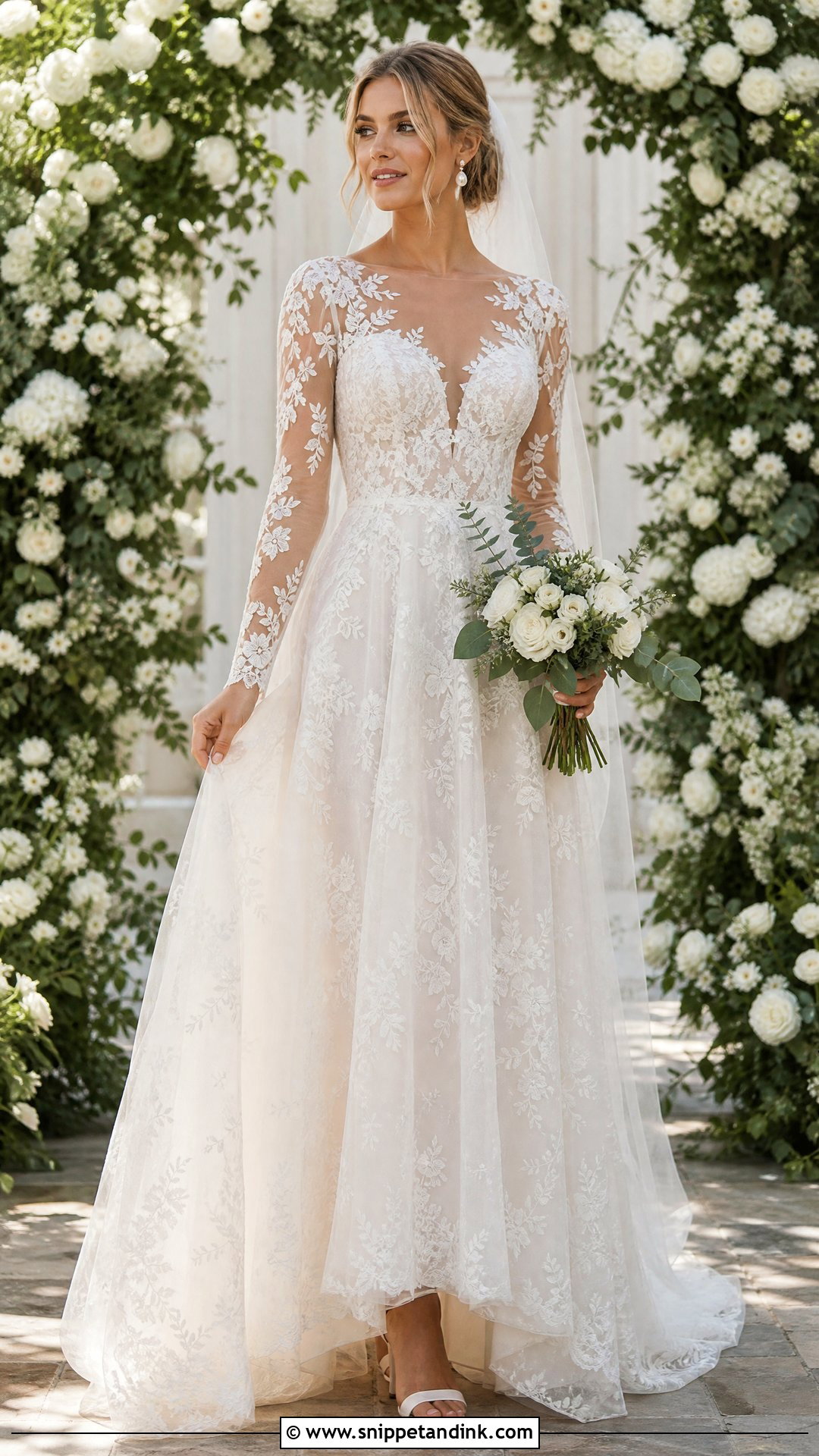
Lace over a lining is the gentlest way into sheer. The bodice is usually built on a nude or ivory base, with the lace laid over the neckline, sleeves, skirt or train so you see depth rather than skin. Fine floral lace reads classic; larger motifs, visible boning or a fitted column shape push it modern. When I fit a lace gown, I check that the motifs line up at the side seams and the zip, since a broken pattern at the back is the giveaway of rushed alterations. Pearl earrings, a plain veil and satin heels are all it needs.
2. Sheer Corset Wedding Dress
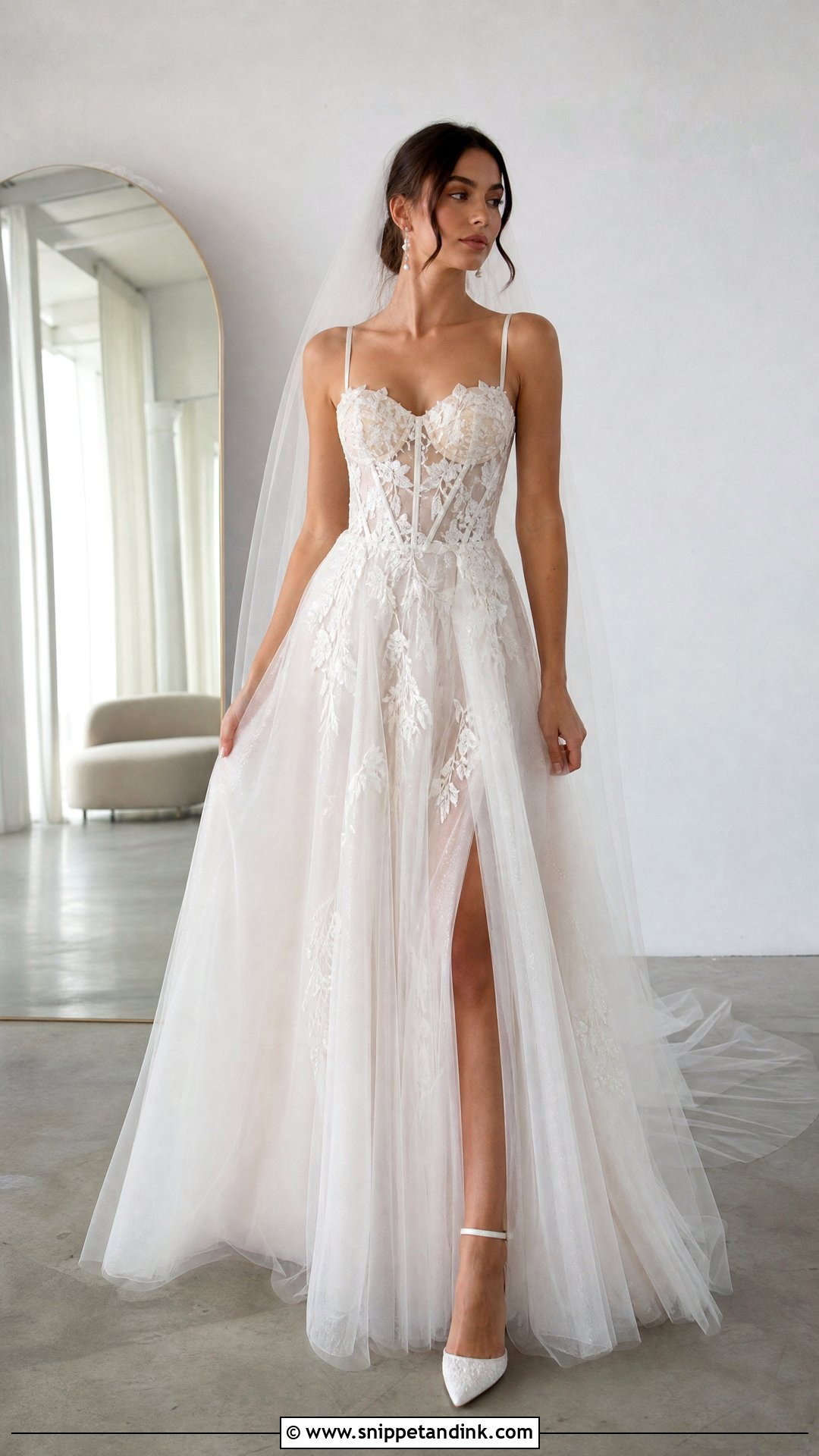
Corsets give the sheer trend its structure. The bodice combines visible boning, illusion mesh and lace or beading placed over the bust and waist, with a flowing tulle, chiffon or organza skirt to soften it. Boning only flatters when it’s fitted to you, not to a sample size; a corset that’s even slightly loose lets the bones buckle when you sit, and that shows straight through the mesh. If you want more coverage, ask for a lined bodice or custom cups. A clean bun and drop earrings suit the editorial mood.
3. Sheer Long Sleeve Wedding Dress
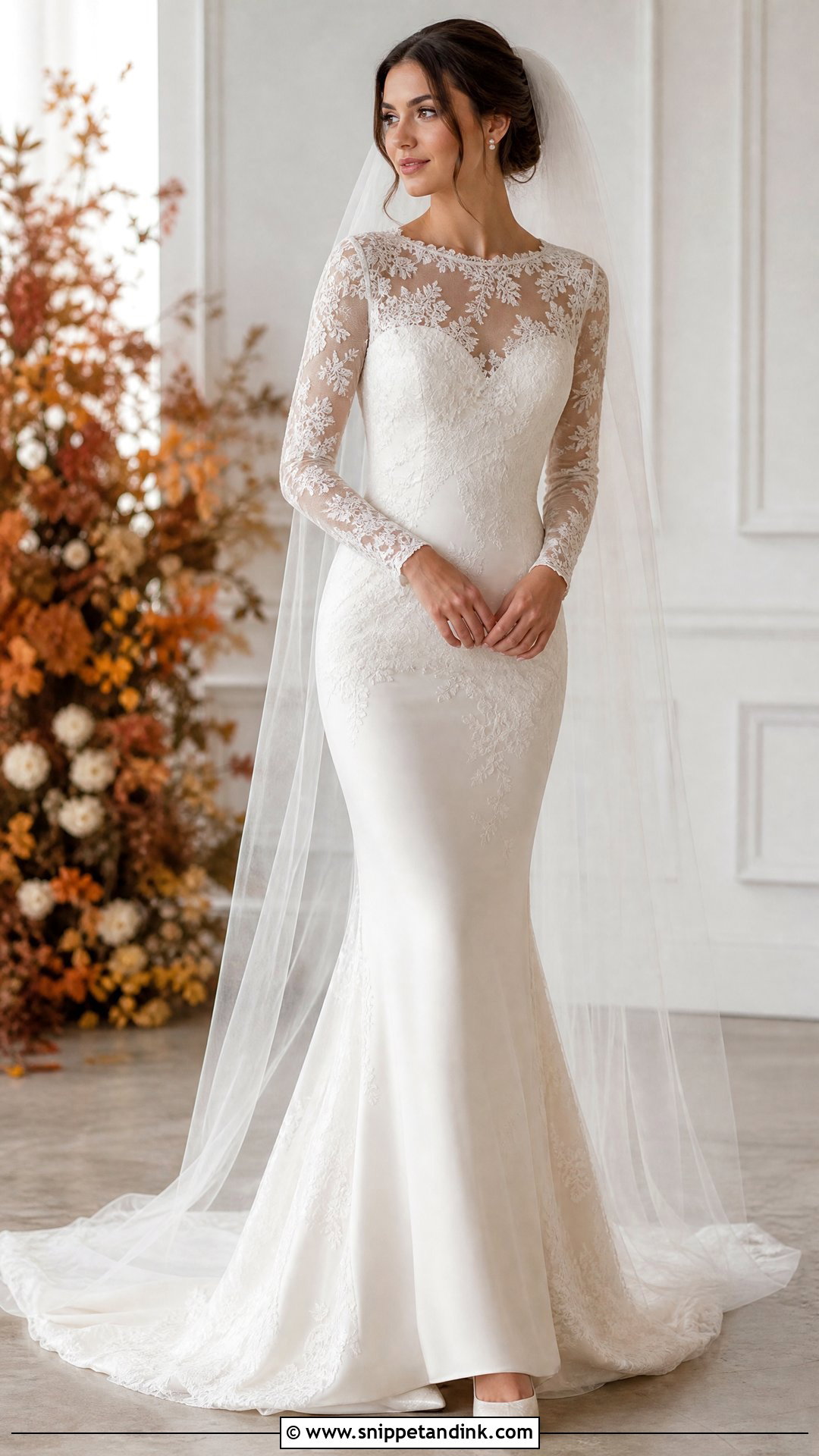
Sheer sleeves give coverage without weight. Lace sleeves are the romantic option, plain illusion tulle feels minimal, and beaded sleeves catch evening light. They soften fitted gowns, A-lines and ball gowns alike. The detail I’d test is movement: tight sheer sleeves can split at the elbow seam when you hug guests or raise a glass, so ask for a little ease there and lift your arms high at the fitting. A low chignon and small earrings keep the focus on the sleeves for a fall or winter wedding.
4. Sheer Back Wedding Dress
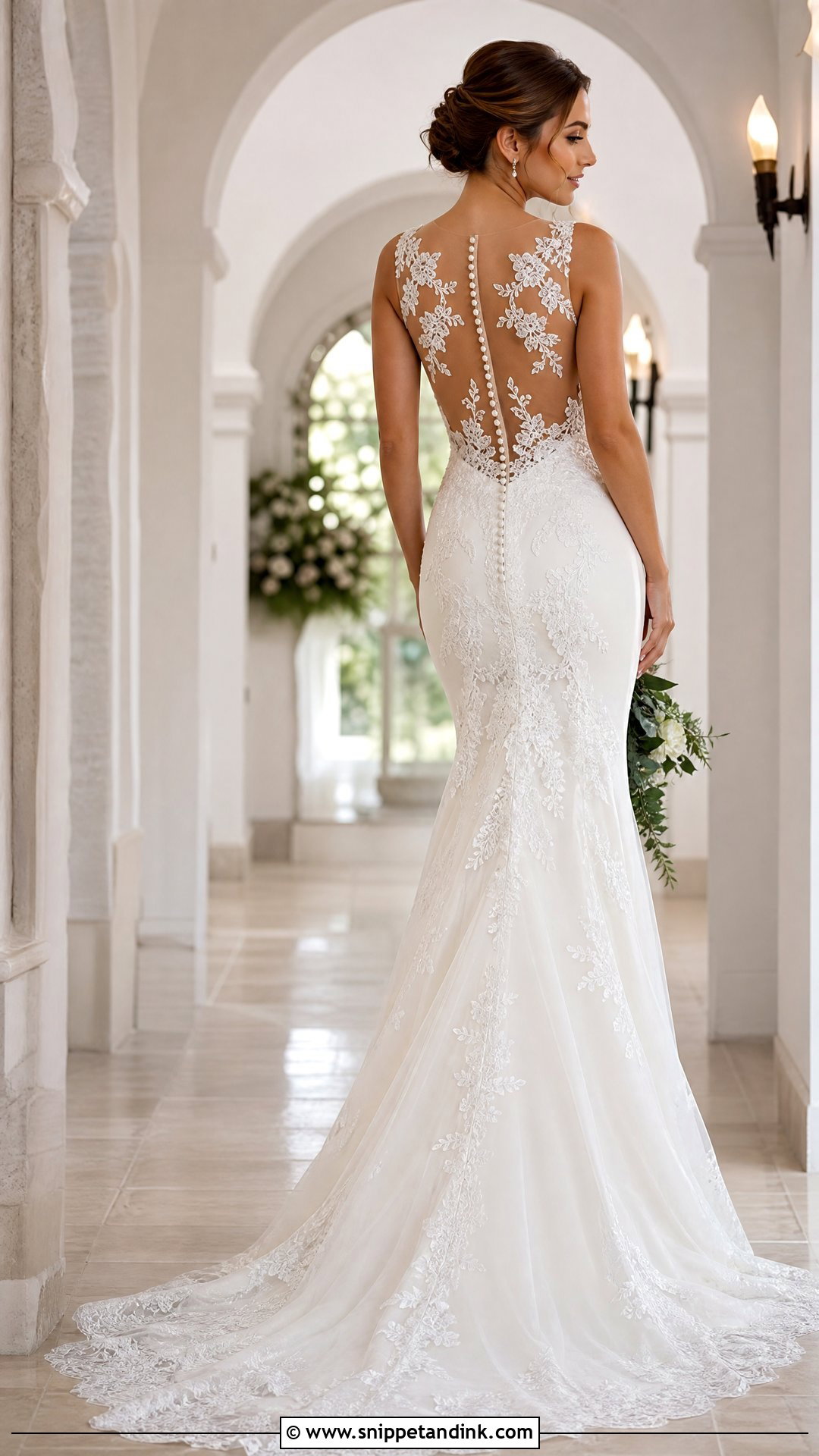
A sheer back is drama for the aisle, where guests spend most of the ceremony looking at you from behind. Illusion mesh, lace appliqués, pearl buttons, embroidery or crystals can all sit there. It pairs well with a high neckline or long sleeves because the contrast reads clearly. The undergarment question comes first: a low sheer back rules out most bras, so built-in cups or a low-back bodysuit needs to be decided before alterations start. Choose an updo so the back stays visible in photos.
5. Sheer Tulle Wedding Dress
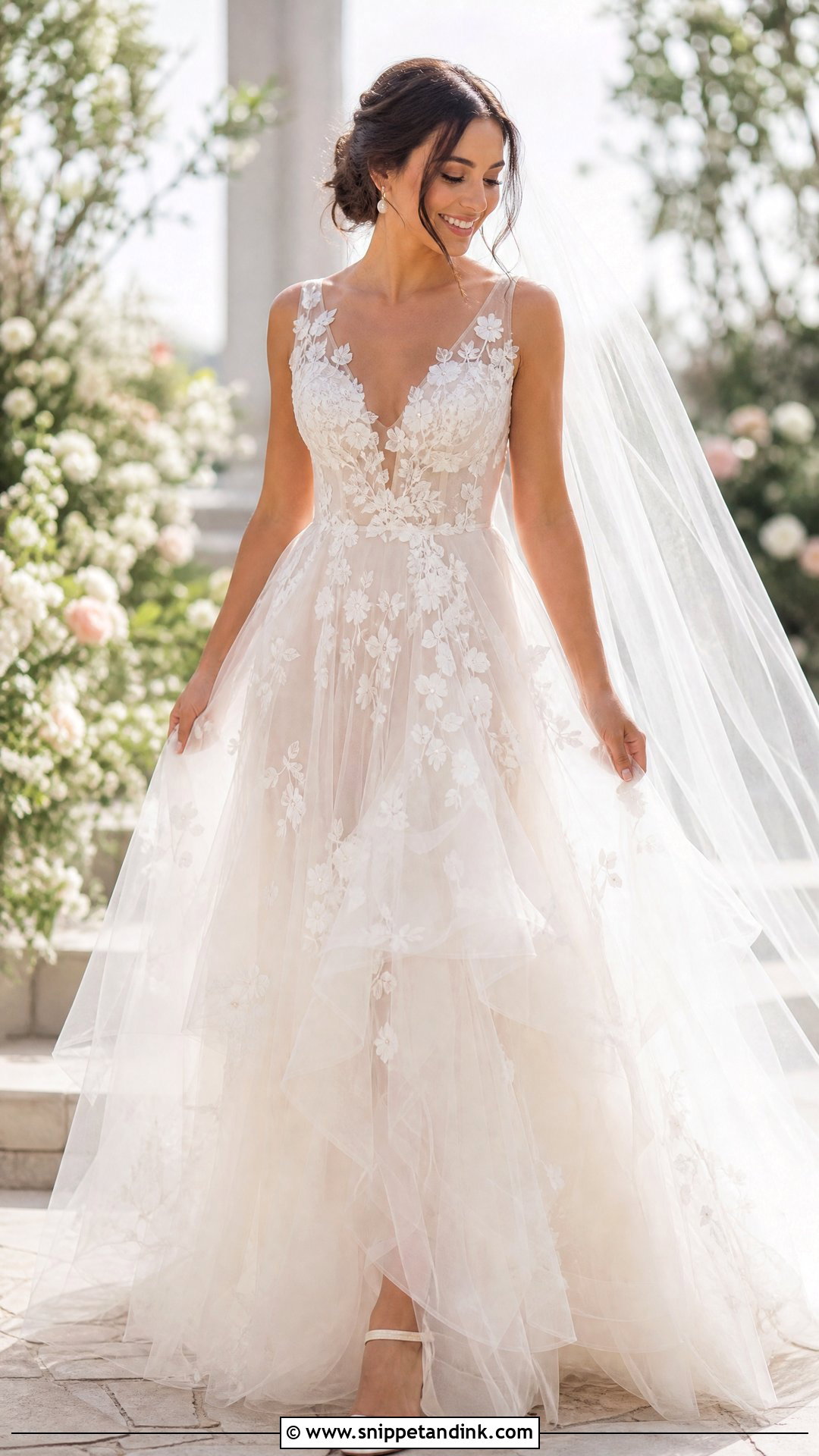
Tulle gives the floating effect most brides picture when they say “sheer”. It can be layered over a fitted lining, shaped into a soft A-line skirt or used as an airy overskirt on a sleek base gown. Fine ivory tulle with scattered appliqués stays soft; layered tulle with a long train is the dramatic version. Tulle is fragile on rough ground. I warn outdoor brides that a long tulle hem picks up grass seeds and can catch on decking, so a slightly shorter outer layer saves the dress.
6. Sheer Organza Wedding Dress
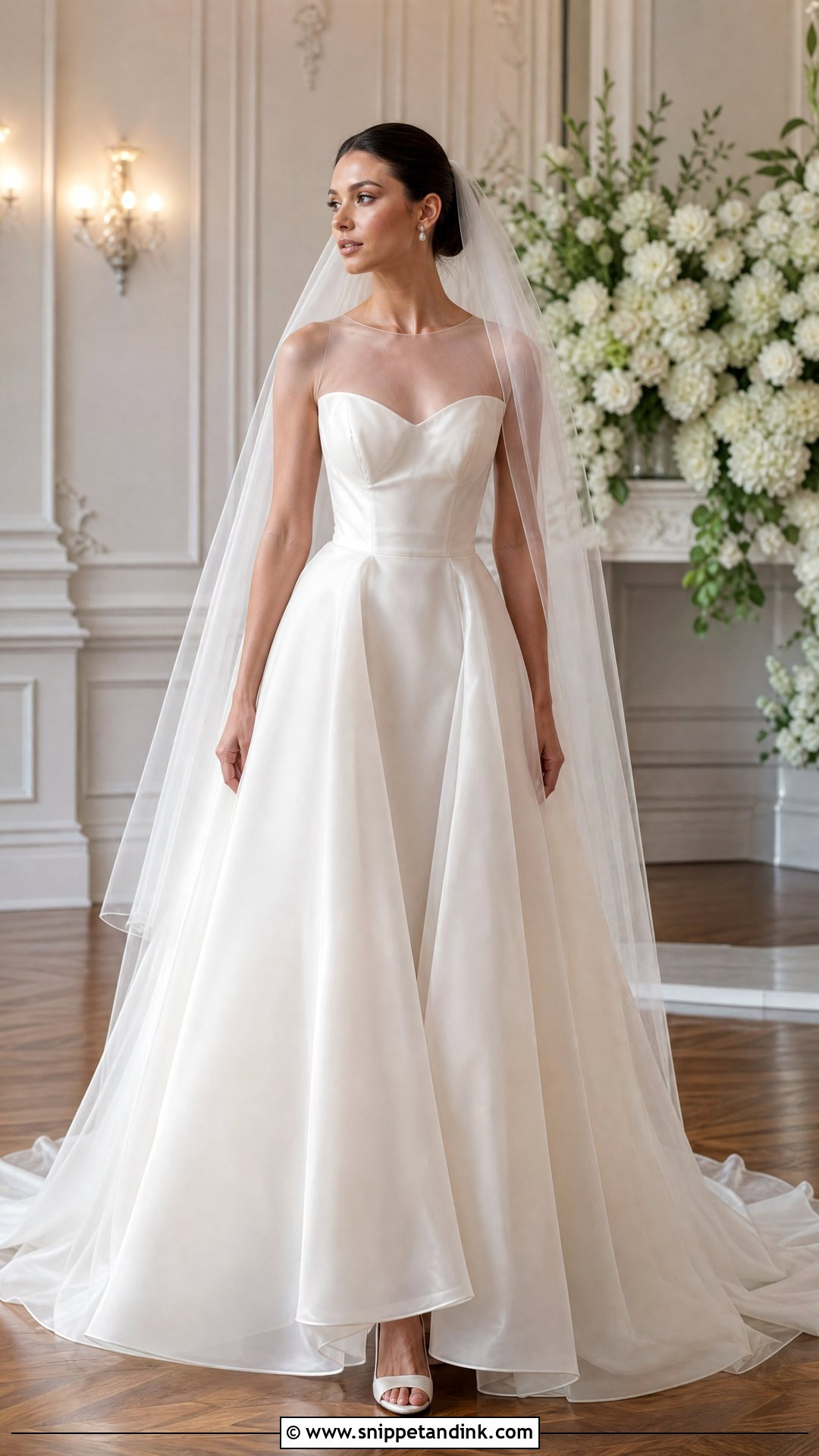
Organza is crisper than tulle and holds whatever shape you give it, which suits full skirts, sculpted sleeves and architectural details. A simple organza ball gown with a sheer neckline feels classic; a fitted gown with an organza overlay feels modern. Satin heels, a sleek veil and minimal jewellery let the fabric do the talking. The trade-off is creasing: organza wrinkles sharply when you sit, so I always advise steaming after the car ride and before the ceremony. It gives volume without the weight of satin layers.
7. Sheer Beaded Wedding Dress
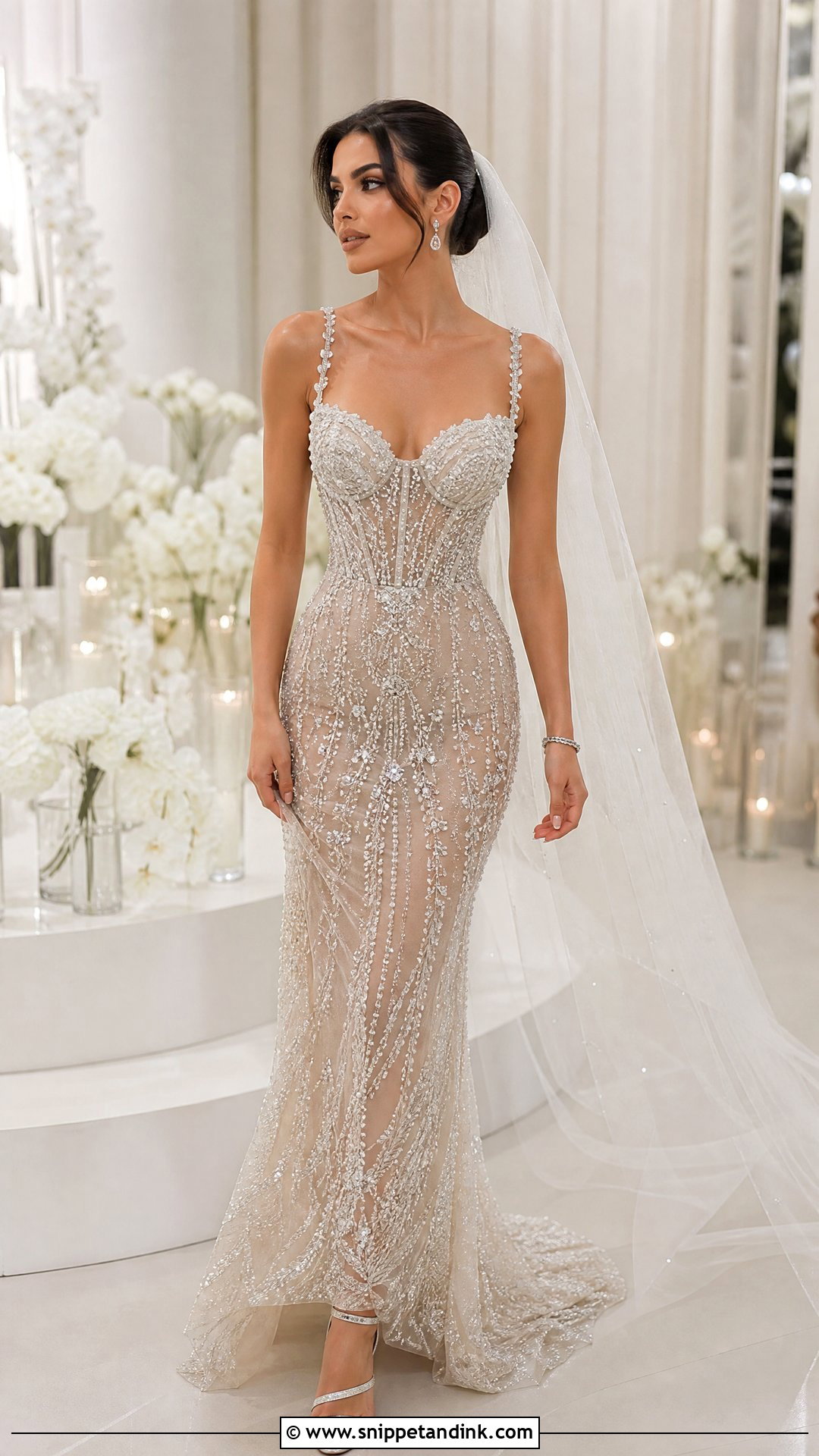
Beading on illusion fabric gives sparkle without a heavy silhouette. Tiny beads, pearls, sequins or crystals across the bodice, sleeves or skirt catch light every time you move, which is why it works so well at evening receptions. If the beading is dense, keep the veil plain; if it’s scattered, you can add statement earrings or a jewelled hairpiece. Beaded mesh is heavier than it looks, so check that the shoulders and straps are supported internally, or the neckline will drag down by the evening.
8. Sheer Floral Wedding Dress
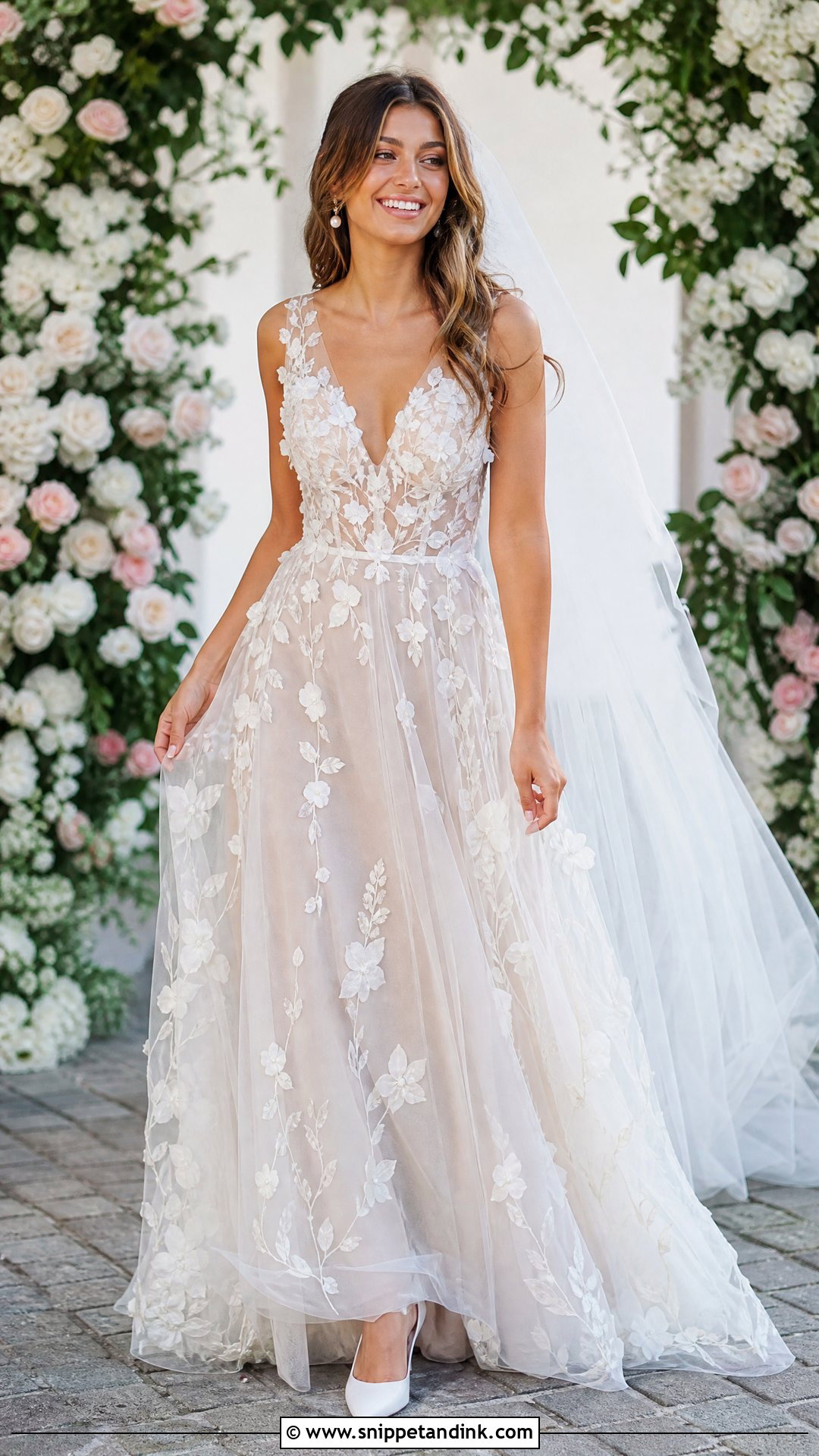
Florals on sheer fabric bring the garden onto the gown. Tiny embroidered flowers keep it delicate; larger 3D blooms are bolder and add real weight to the skirt. They suit A-line, sheath and fit-and-flare shapes. With 3D florals, I sit the bride down at the fitting to check that petals at the hip don’t crush or poke the arms of the chair. Loose waves and soft pearls keep the mood fresh for a spring wedding.
9. Sheer Mermaid Wedding Dress
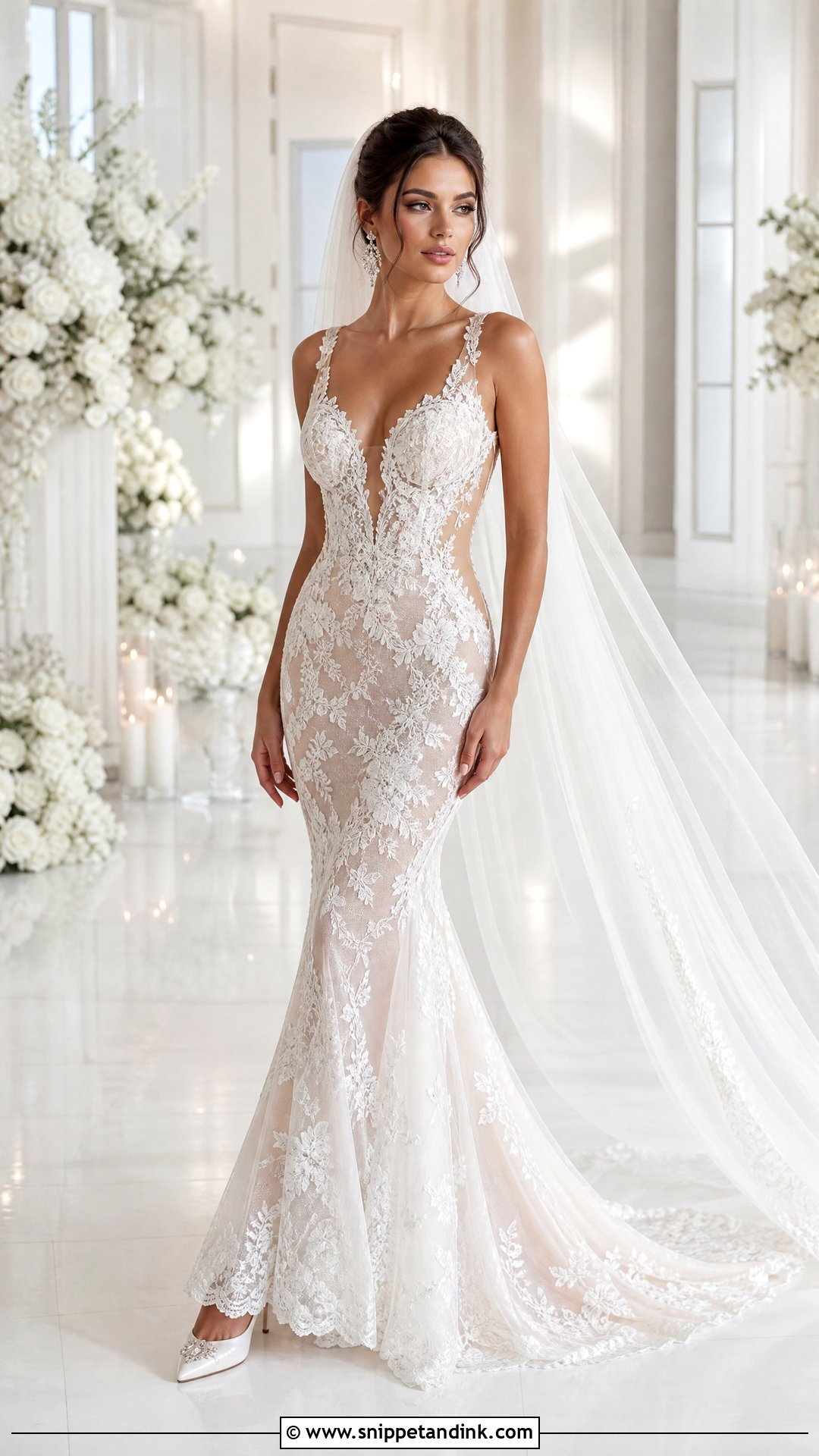
A mermaid gown is all about fit, and sheer panels make that fit even more visible. It hugs the bodice, waist and hips before flaring near the knee, with sheer lace or illusion panels softening it. Lined panels give more coverage; sheer side panels are bolder. Mermaids need the most alteration work of any shape, because every seam is on show. Practise walking and climbing steps in it, as the flare point controls your stride. A long veil balances the fitted line.
10. Sheer A Line Wedding Dress
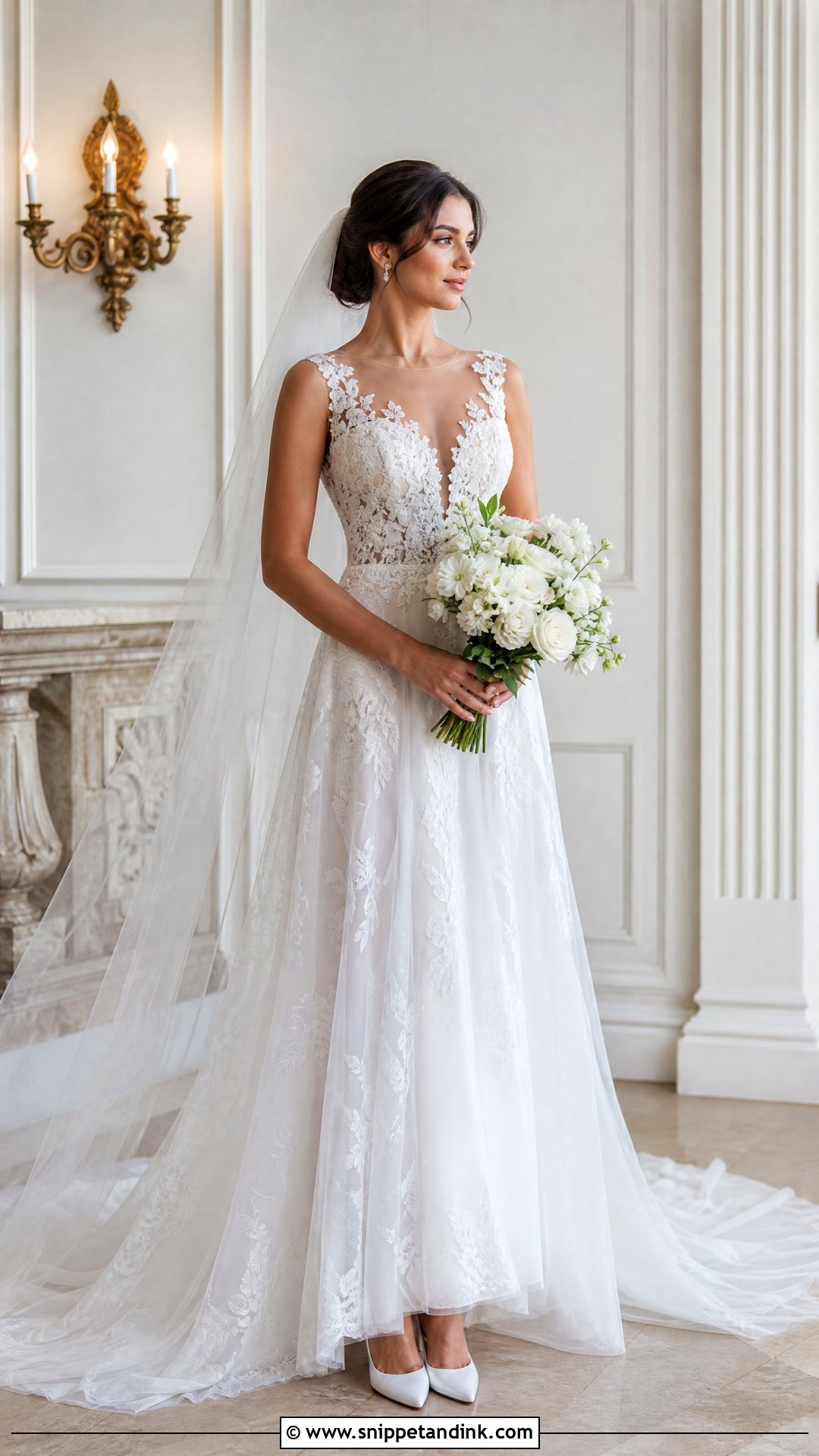
The sheer A-line is the most forgiving version of this trend. The fitted bodice and gently flared skirt suit most figures, and the sheer detail can sit on the neckline, sleeves, bodice or top layer of the skirt. Lace appliqués over sheer fabric feel romantic; plain illusion mesh with light embroidery looks cleaner. Pair it with a cathedral veil and classic pumps. I recommend this shape to brides who are trying sheer for the first time, because it lets them decide how much transparency they want without committing to a dramatic silhouette.
11. Sheer Ball Gown Wedding Dress
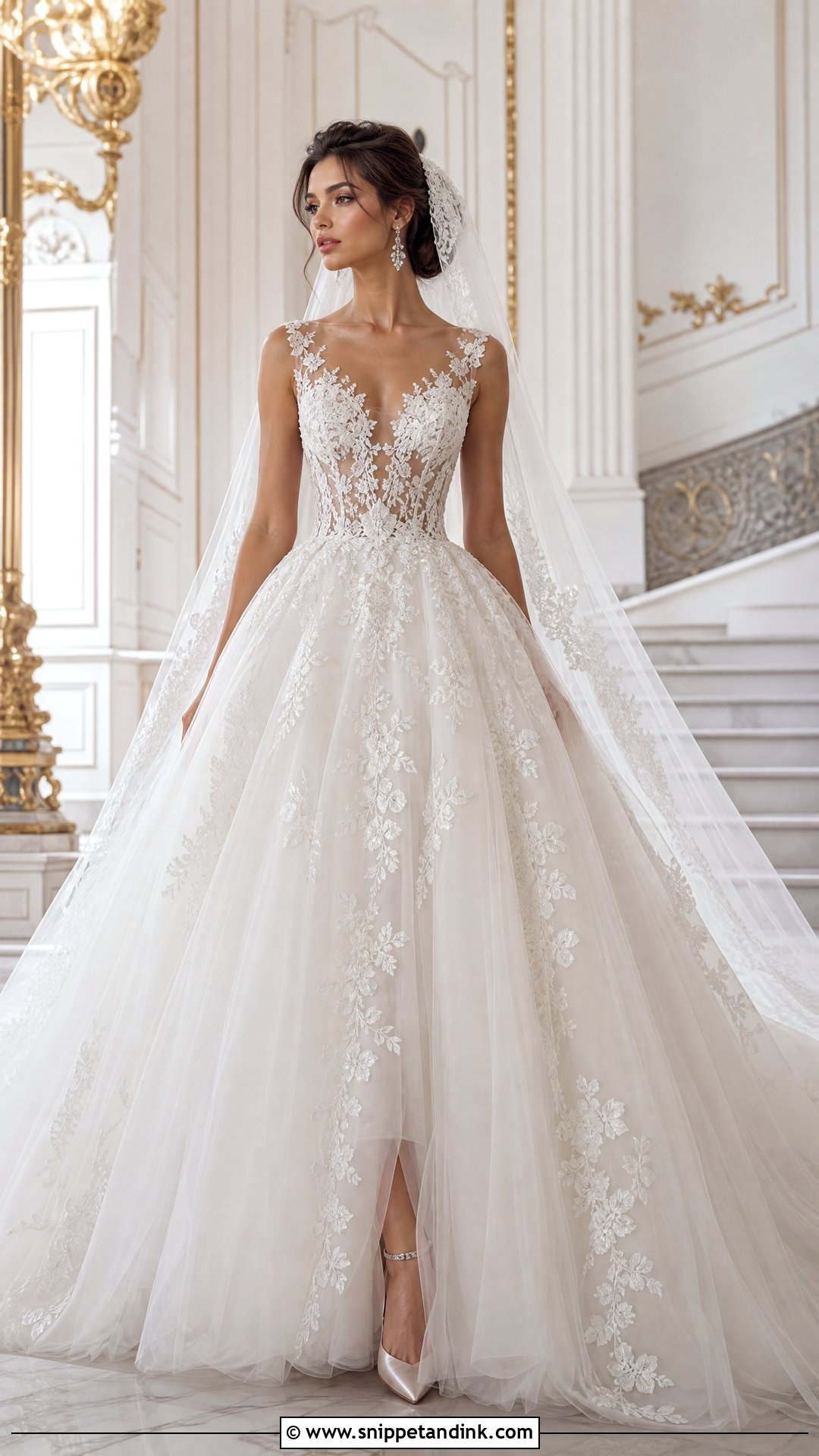
Volume without weight is the point of a sheer ball gown. Layers of tulle or organza look full but stay airy, and the bodice may have illusion lace, a transparent neckline or corset structure. The sheer details need a strong shape behind them, such as a defined waist or a sculpted bodice, or the gown can look unfinished. Keep jewellery polished and simple. A big tulle skirt needs a few hoops or a petticoat underneath to hold its line, so ask how the volume is built before you buy.
12. Sheer High Neck Wedding Dress
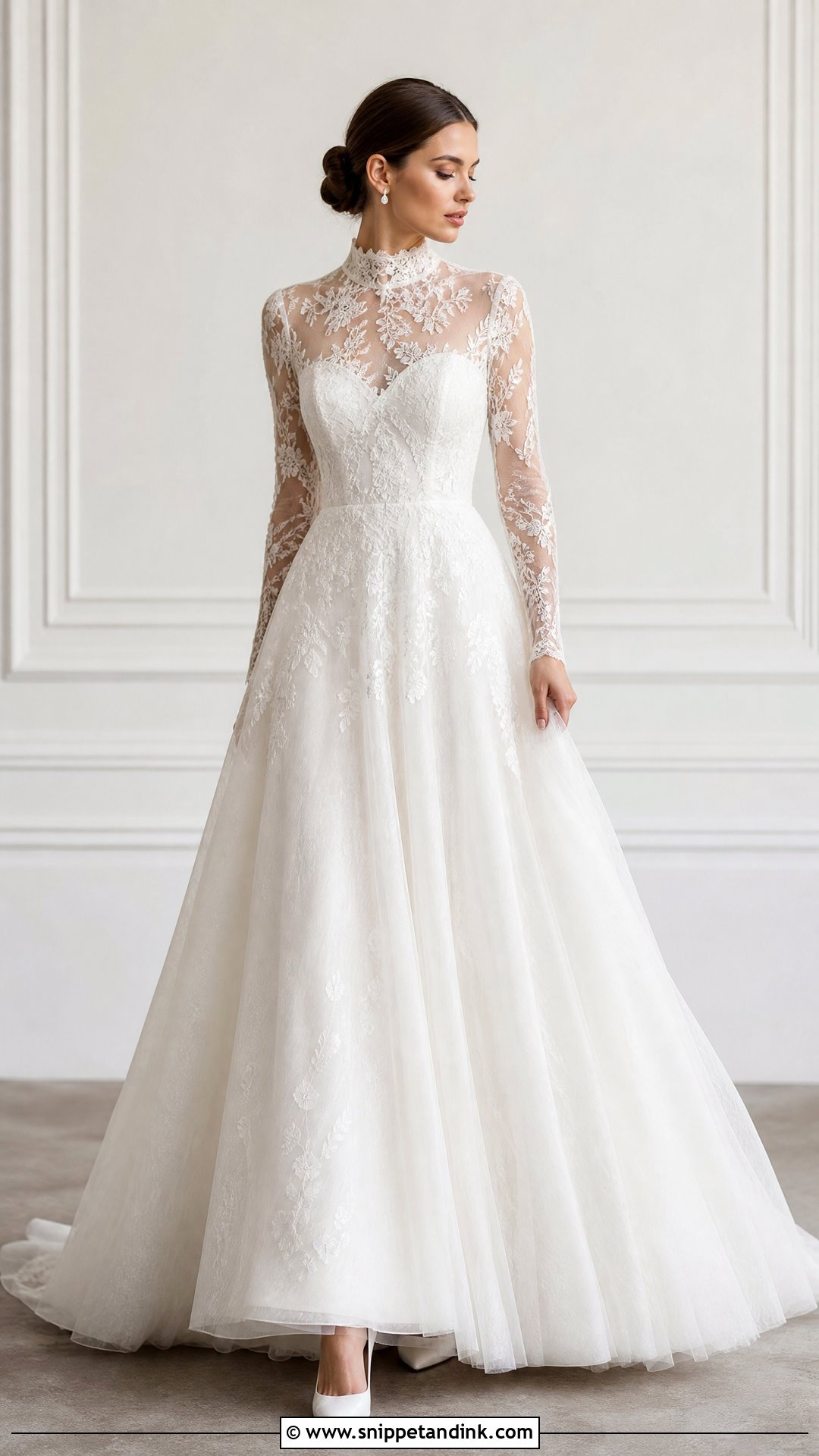
A high sheer neck looks refined and slightly vintage. The neckline covers you while the transparent fabric keeps it light; lace reads romantic, plain illusion reads modern. It pairs well with long sleeves, fitted skirts and open or illusion backs. Skip the necklace and wear earrings. High illusion necks can feel tight once you’re breathing nervously in a church, so I make sure there’s one finger of room at the collar.
13. Sheer Plunge Wedding Dress
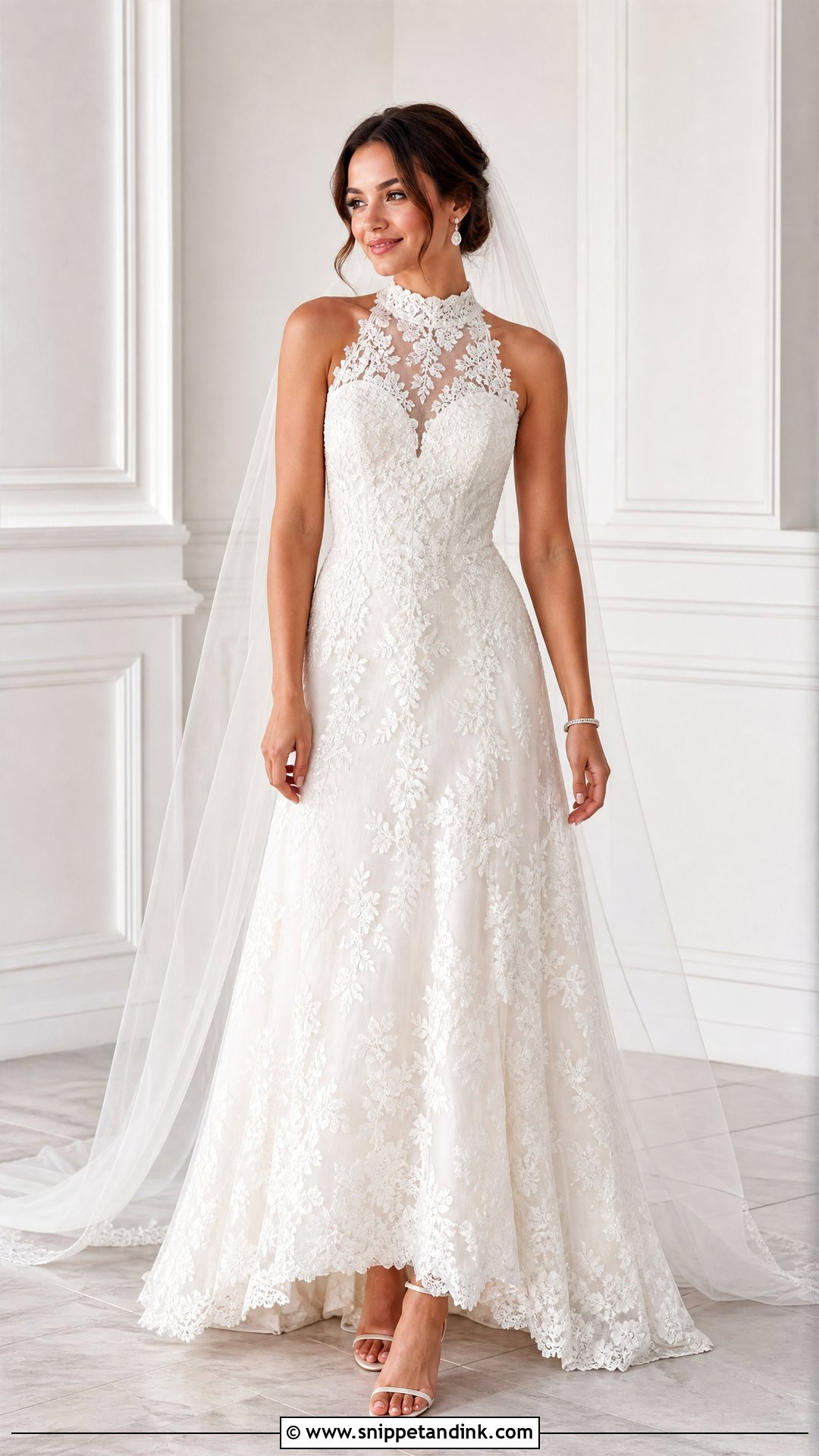
A sheer plunge wedding dress works when the illusion mesh filling the neckline is doing real support work, not only covering skin. Lace, beading or floral appliqués over the mesh soften the plunge and keep it bridal. The fit has to be close: built-in cups and a well-tailored bodice stop gaping when you bend forward to sign the register. Slim earrings, a smooth veil and strappy heels are enough. Try it on with the exact cups you’ll wear, since they change how the mesh lies.
14. Sheer Off Shoulder Wedding Dress
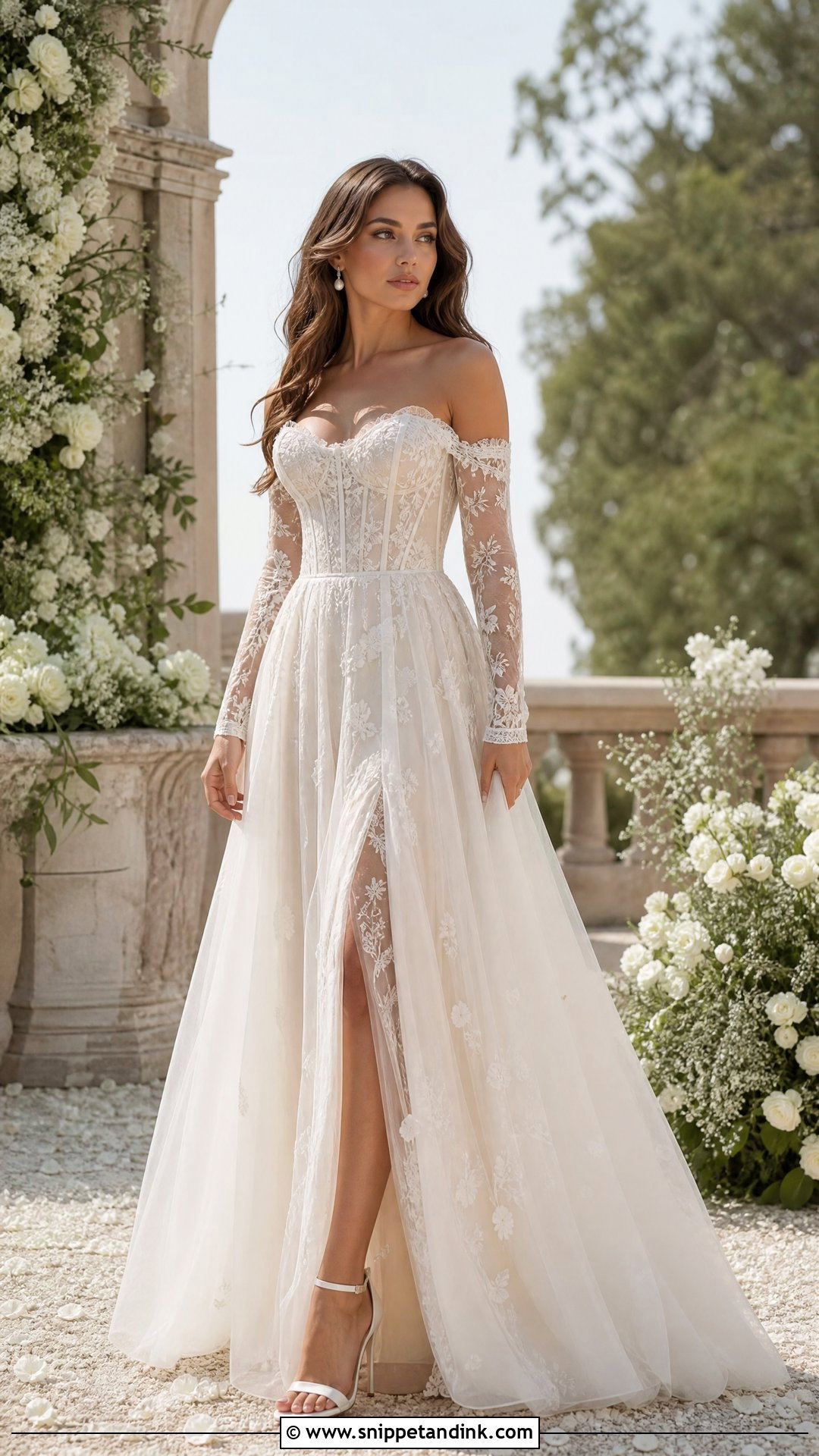
An off-shoulder neckline frames the collarbone, and in sheer lace, tulle or organza it feels soft rather than formal. It suits fitted bodices, corset gowns and full skirts. Low sleeves restrict your arm movement, so look for internal structure that holds the bodice up without relying on the sleeves. I’d skip the necklace and wear earrings; the neckline is already the detail. Soft waves or a low bun finish it.

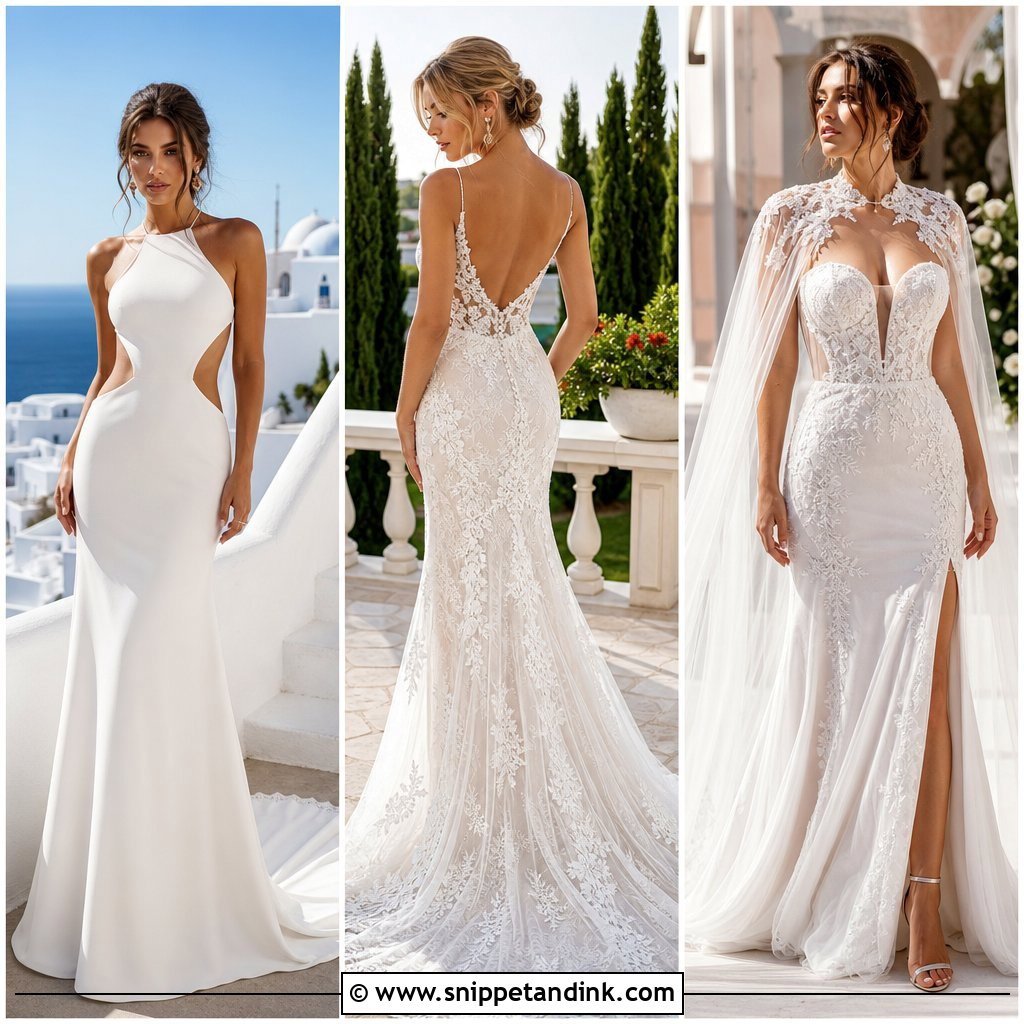
15. Sheer Strapless Wedding Dress
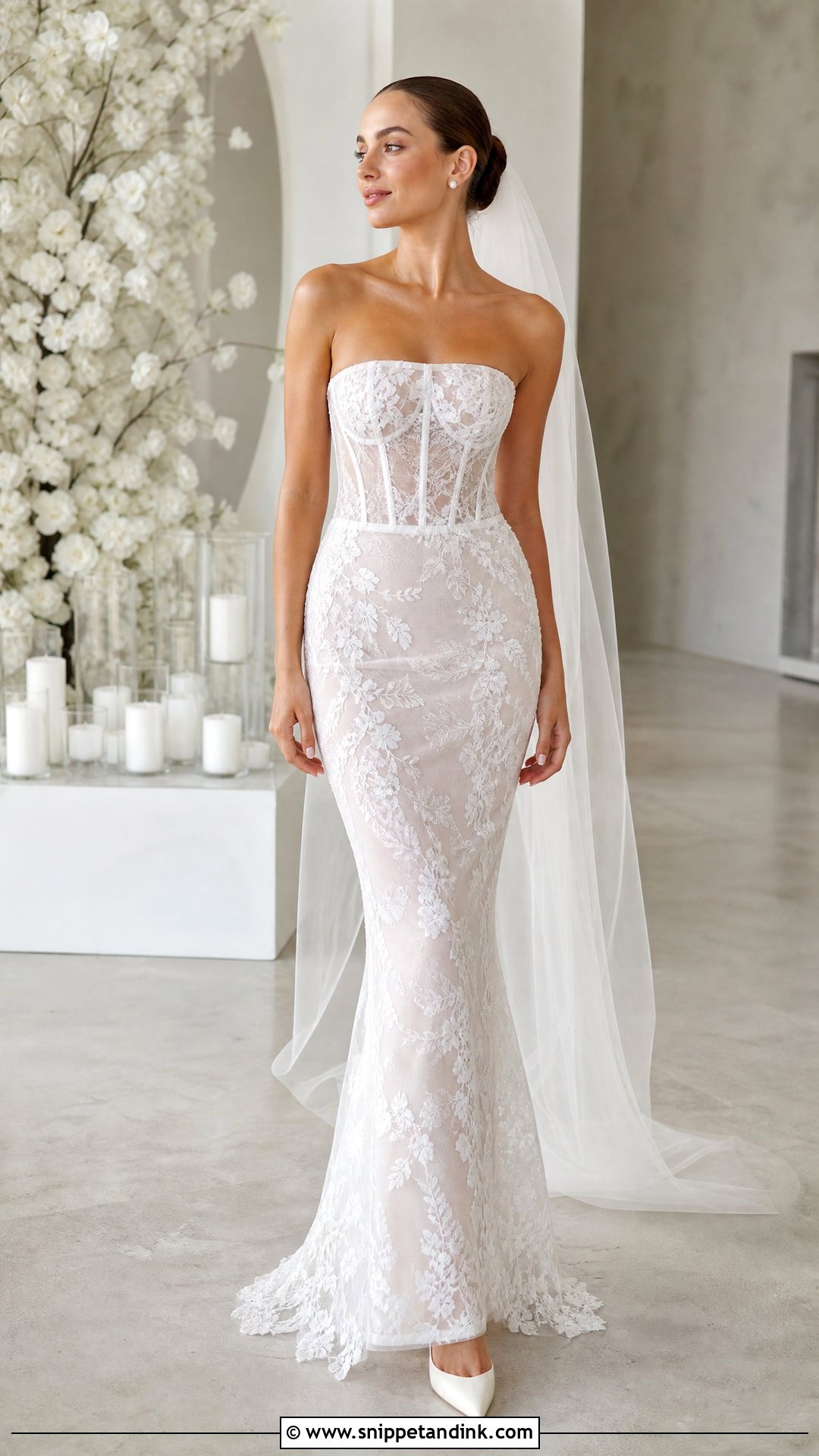
A strapless sheer bodice needs serious internal engineering. Illusion panels, exposed boning, lace overlays or a sheer corset effect add interest, but the dress has to stay up all evening without straps. For a classic finish, choose a softly lined bodice with lace appliqués; for something trendier, visible corsetry and a sleek skirt. I always add a silicone grip strip inside the top edge and check that you can dance with your arms up without tugging. Pearl studs and pointed heels finish it.
16. Sheer Cape Wedding Dress
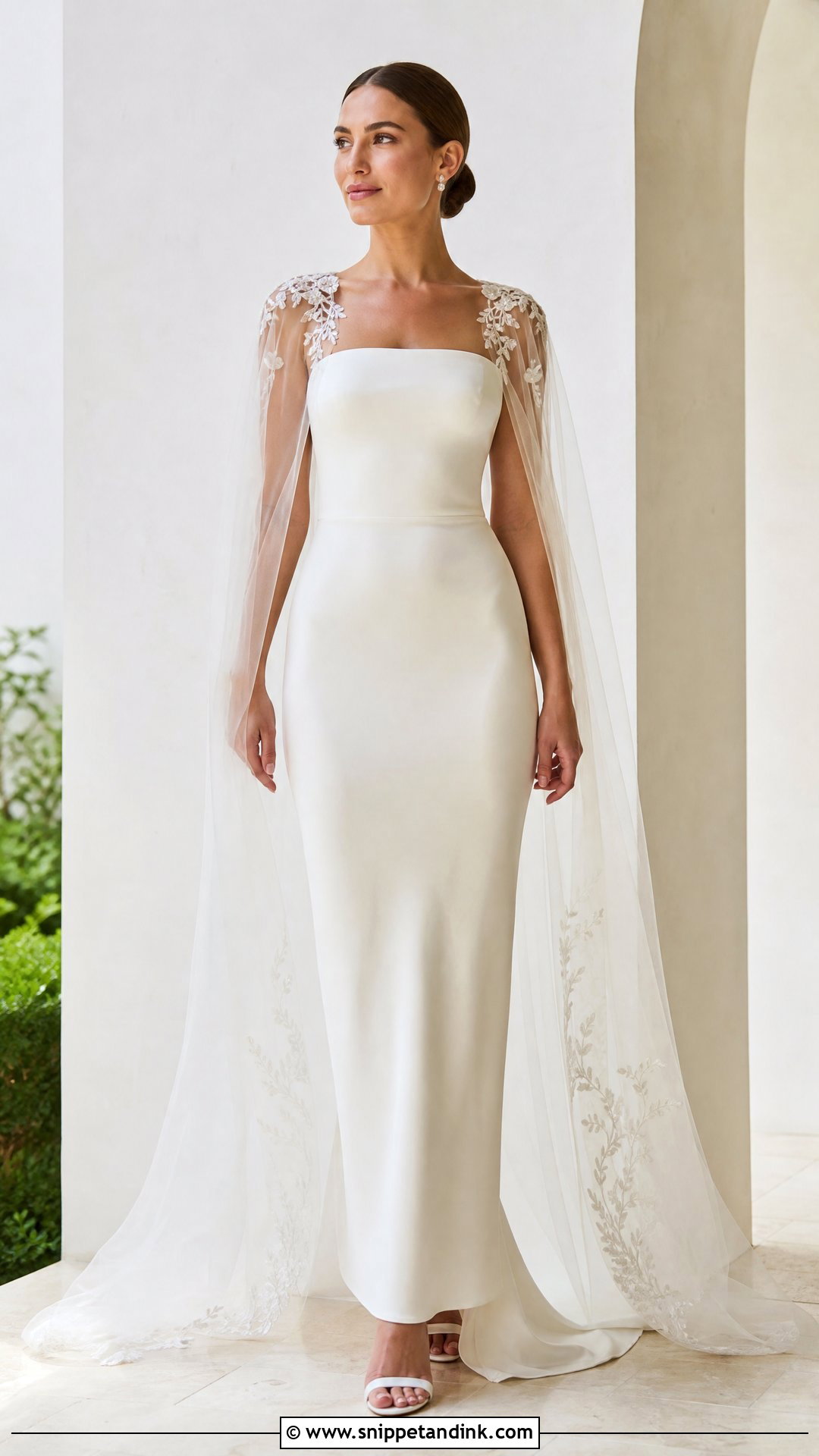
A cape replaces the veil and gives you a dramatic ceremony look. It can attach at the shoulders, neckline or back, in tulle, organza, lace or embroidered mesh, plain and airy or trimmed with pearls, appliqués or a long train. Take it off after the ceremony and you have an easier outfit for dancing. Ask how it fastens: hooks or small buttons at the shoulder are quicker for a helper to undo than a sewn-in cape. A sleek gown underneath keeps it looking deliberate.
17. Sheer Overskirt Wedding Dress
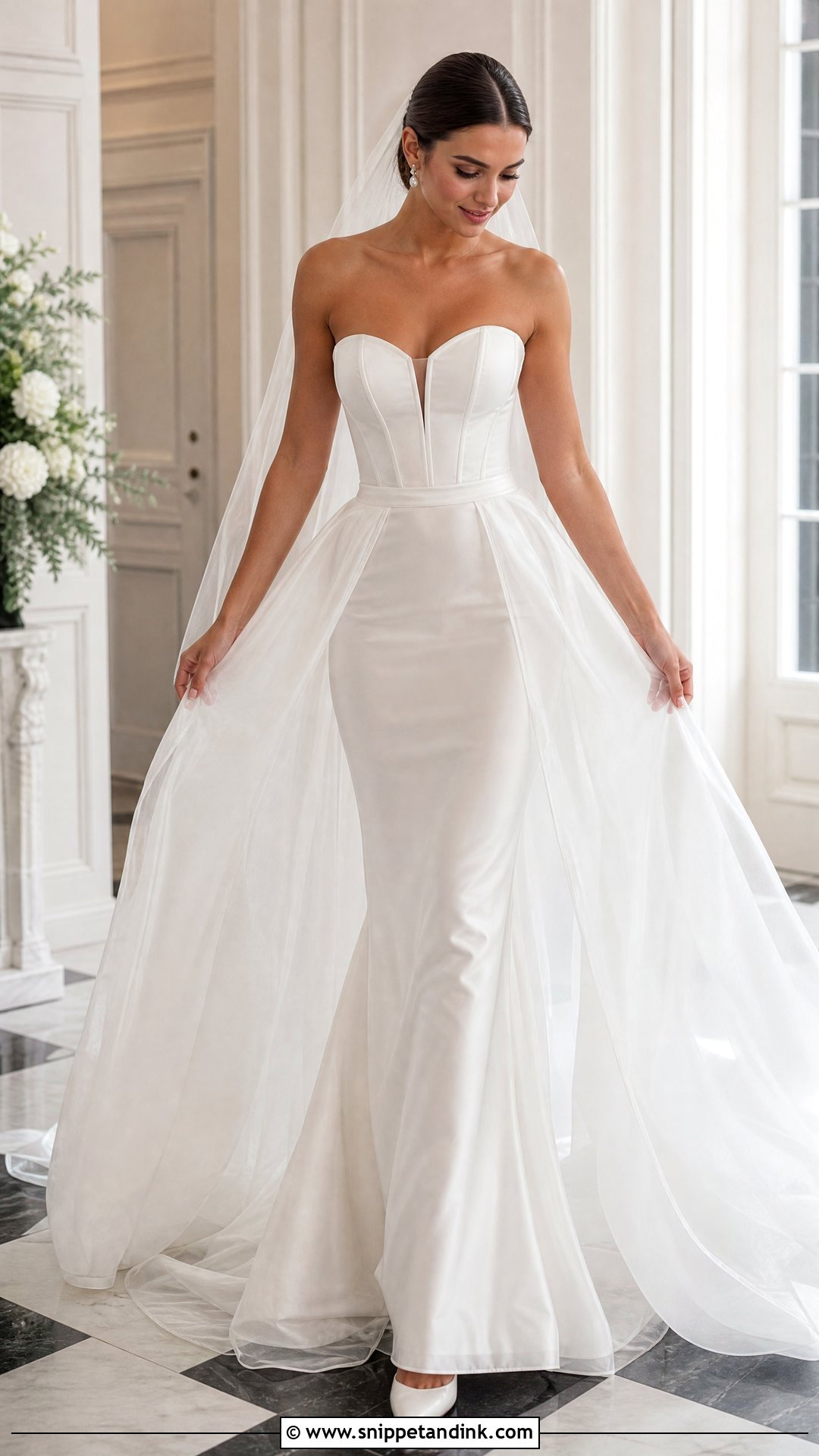
An overskirt gives you two looks without a full change. The base dress can be a fitted column, a mini or a simple sheath, with tulle or organza over it for ceremony volume. Remove it after the ceremony and you’re ready to dance. The waistband is the tricky part. A thick band adds bulk; a narrow hook-and-eye closure hidden under a belt lies flat. Practise taking it off and on before the day, ideally with the person who’ll help you.
18. Sheer Mini Wedding Dress
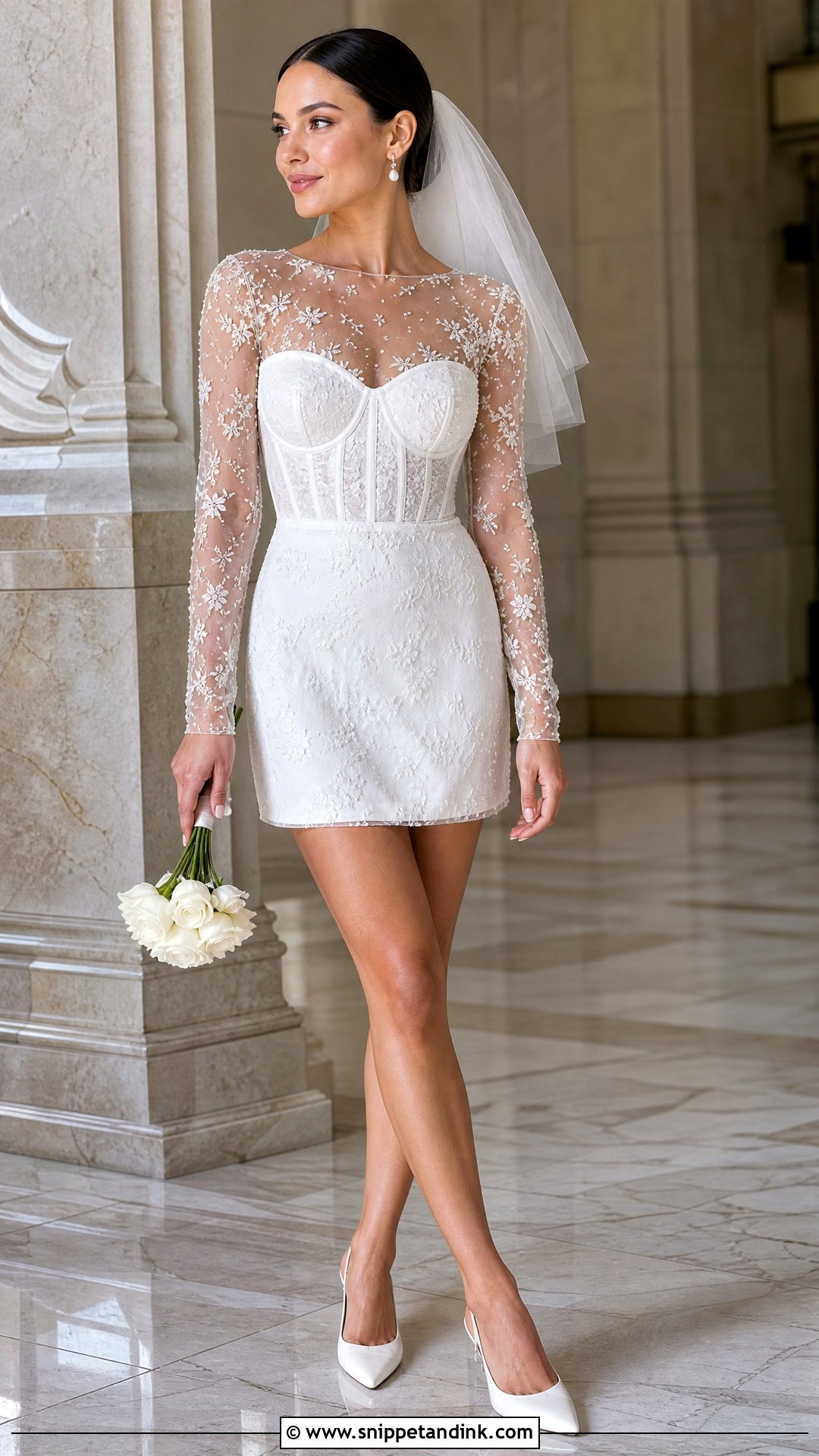
A sheer mini works for a civil ceremony, a reception change or an after-party. Long sheer sleeves, lace overlays, pearl beading or an organza layer over a structured mini lining keep it clearly bridal. Elegant shoes balance the short length: white pumps, slingbacks or strappy heels. Add a short veil or bow for a playful touch. Short sheer skirts show more in flash photos than in the mirror, so check the lining length with your phone camera.
19. Sheer Slip Wedding Dress
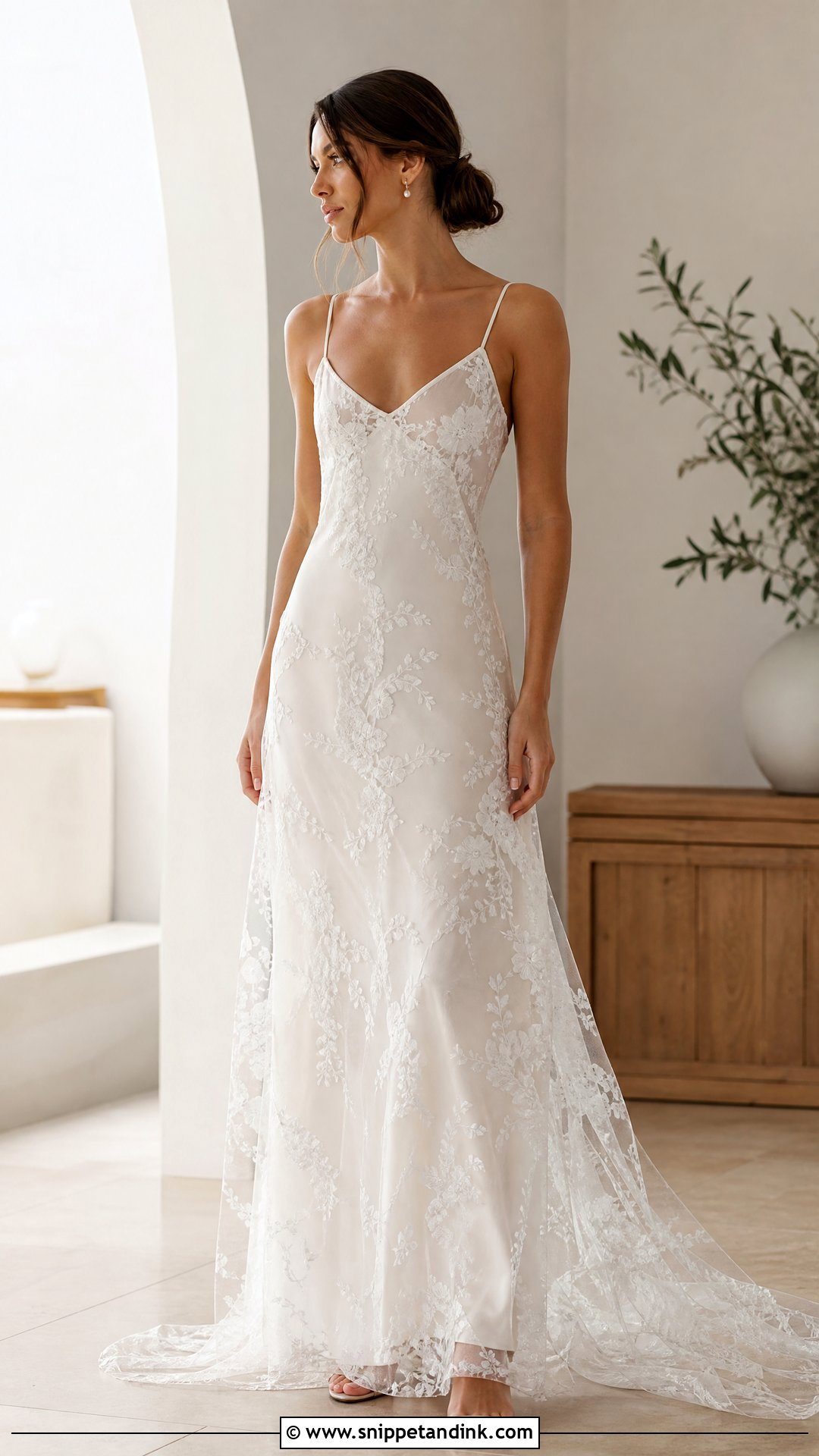
The sheer slip is sleek and quietly sensual. It starts with a smooth satin or crepe slip and lays a sheer lace, tulle or chiffon layer on top for softness without volume. Bias-cut slips follow the body closely, which is lovely but shows every line underneath, so choose smooth, no-show underwear and try it on in daylight. A straighter column cut is more forgiving. Barely-there sandals and a low bun suit an intimate wedding or destination ceremony.


20. Sheer Column Wedding Dress
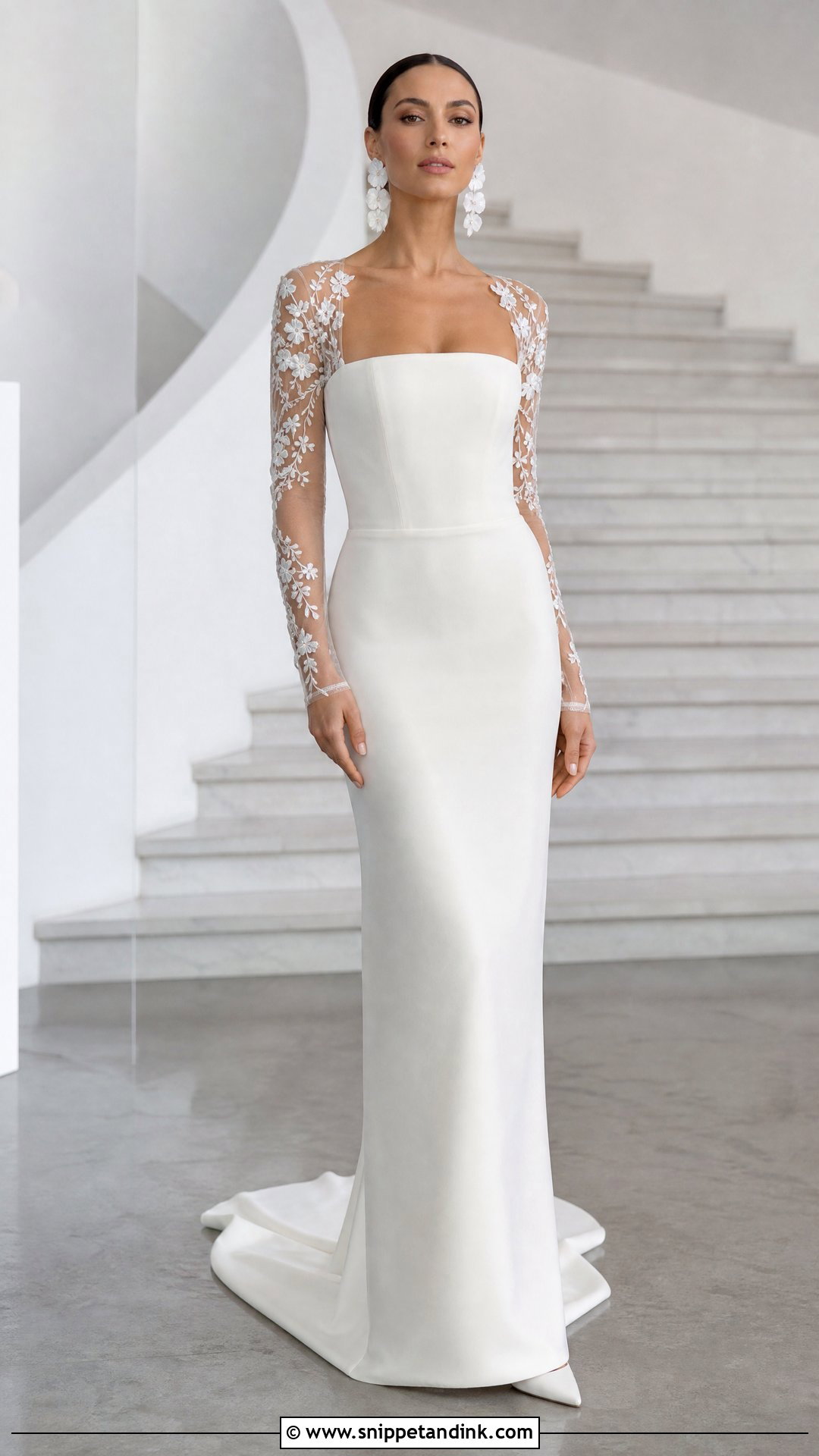
A sheer column is straight and modern. The narrow silhouette creates a long line, with sheer panels, lace overlays or embroidered mesh adding texture. It works well with high necklines, long sleeves and simple trains. If you want more shape, look for a defined waist or a light corset bodice. Columns limit your stride, so I check that there’s a slit or a little ease at the knee for steps and dancing. Minimal heels and sculptural earrings suit a city or gallery venue.
21. Sheer Chiffon Wedding Dress
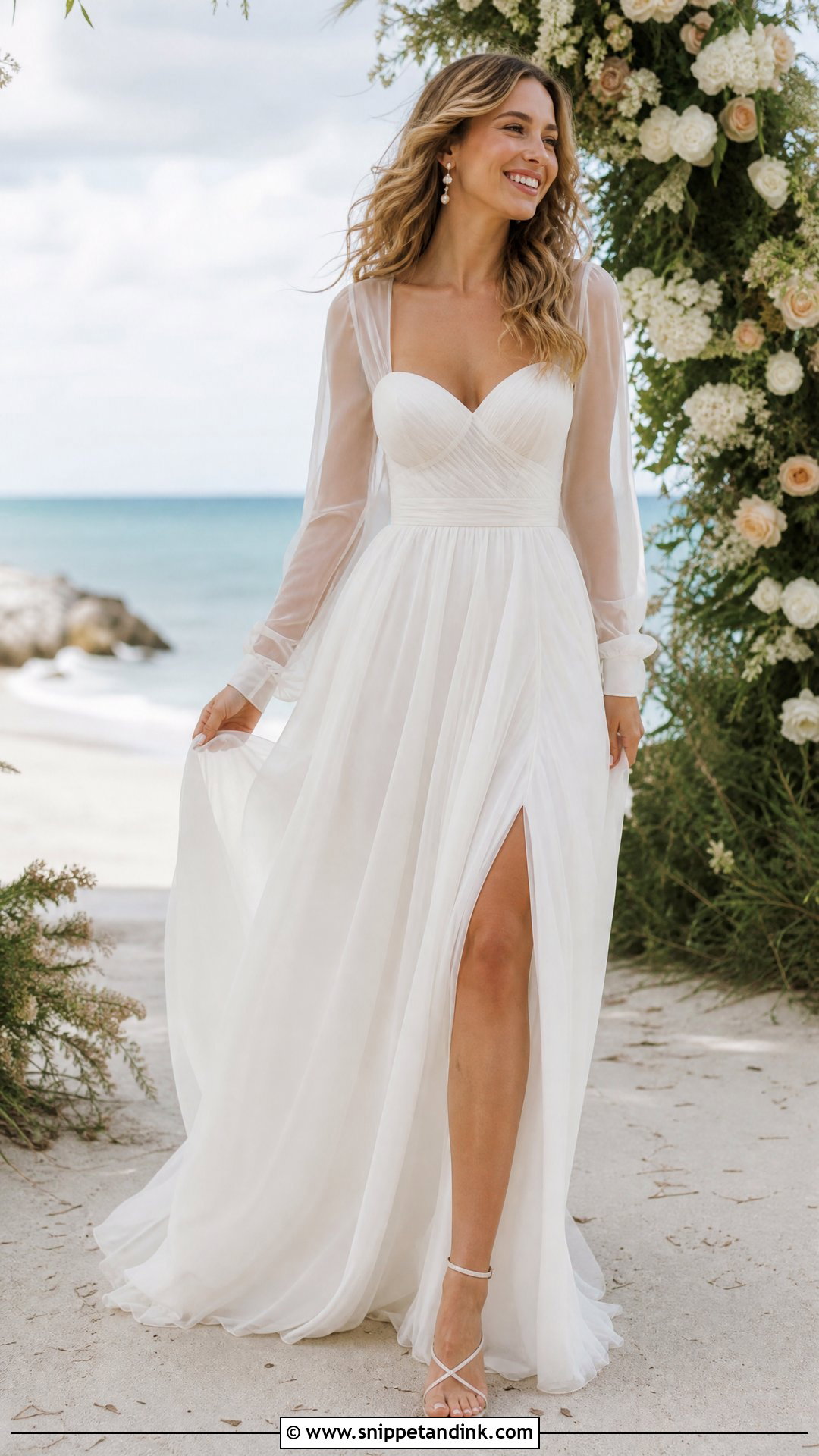
Chiffon is the lightest fabric here and moves with the slightest breeze. A sheer chiffon overlay can soften a slip dress, create loose sleeves or add a breezy skirt over a simple lining. It suits beach and garden weddings where comfort comes first. Chiffon frays and snags easily on sand and wooden boardwalks, so keep the hem slightly off the ground. Delicate sandals, loose waves and natural makeup finish it.
22. Sheer Pearl Wedding Dress
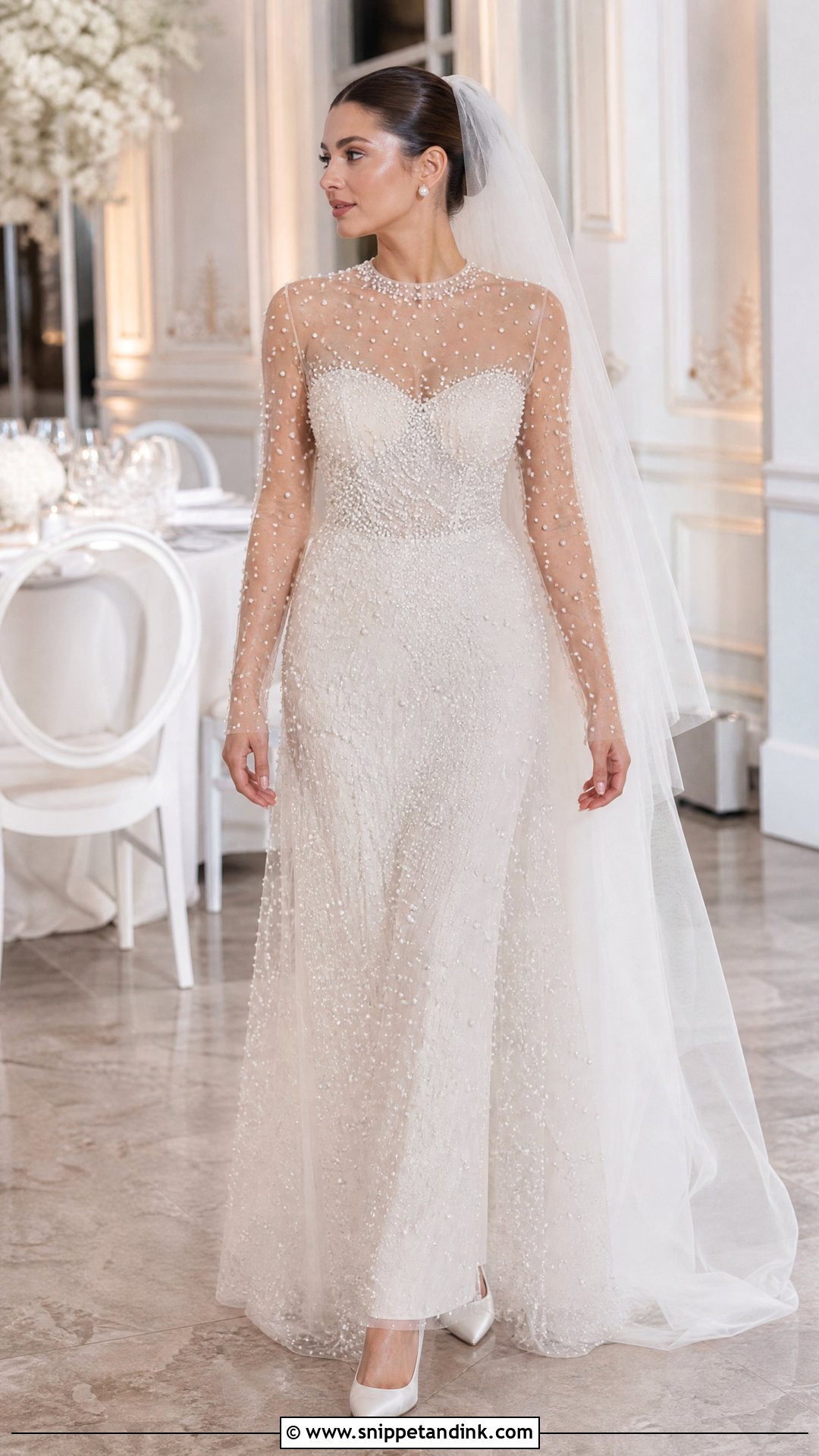
Pearls on illusion tulle give texture and a soft shine. They may be scattered, run along the sleeves or spread across bodice and skirt for a dotted effect. A fitted pearl gown looks sleek; an A-line feels more traditional. Don’t add many pearl accessories, because the dress already has plenty. Pearl studs, satin heels and a clean veil are usually enough. Check that pearls are individually stitched, not glued, as glued pearls drop off when the fabric flexes.
23. Sheer Embroidered Wedding Dress
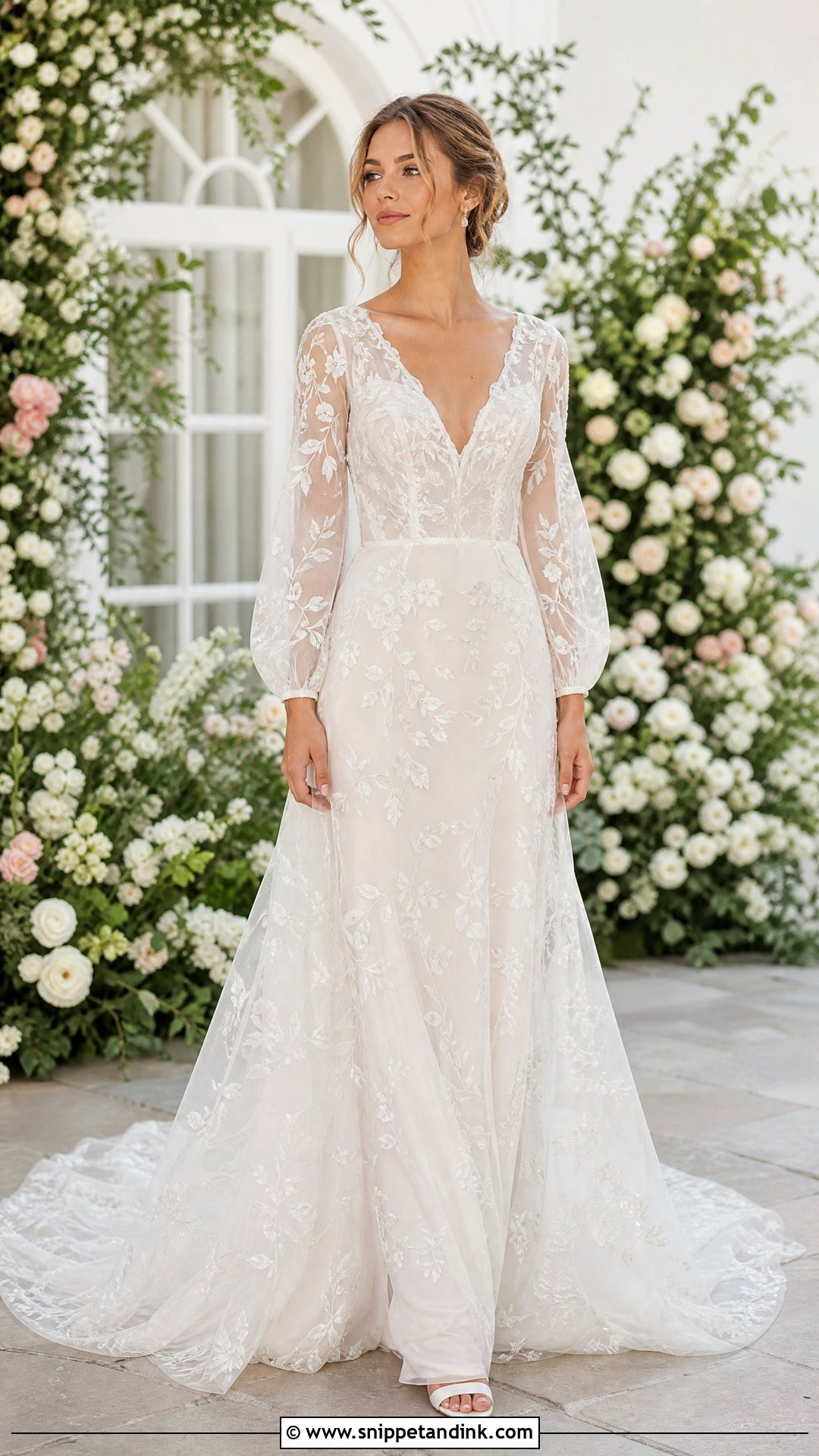
Embroidery on sheer fabric looks as if the design is floating over your skin. Florals, vines, abstract patterns or lace-like motifs can be stitched onto tulle or organza and placed on sleeves, bodices, overskirts and trains. Ivory on ivory is soft; raised appliqué or a touch of metallic thread gives more contrast. Keep hair and jewellery simple so the handwork stands out. Alterations on embroidered mesh take longer, because seamstresses have to unpick and re-place motifs, so start early.
24. Sheer Drop Waist Wedding Dress
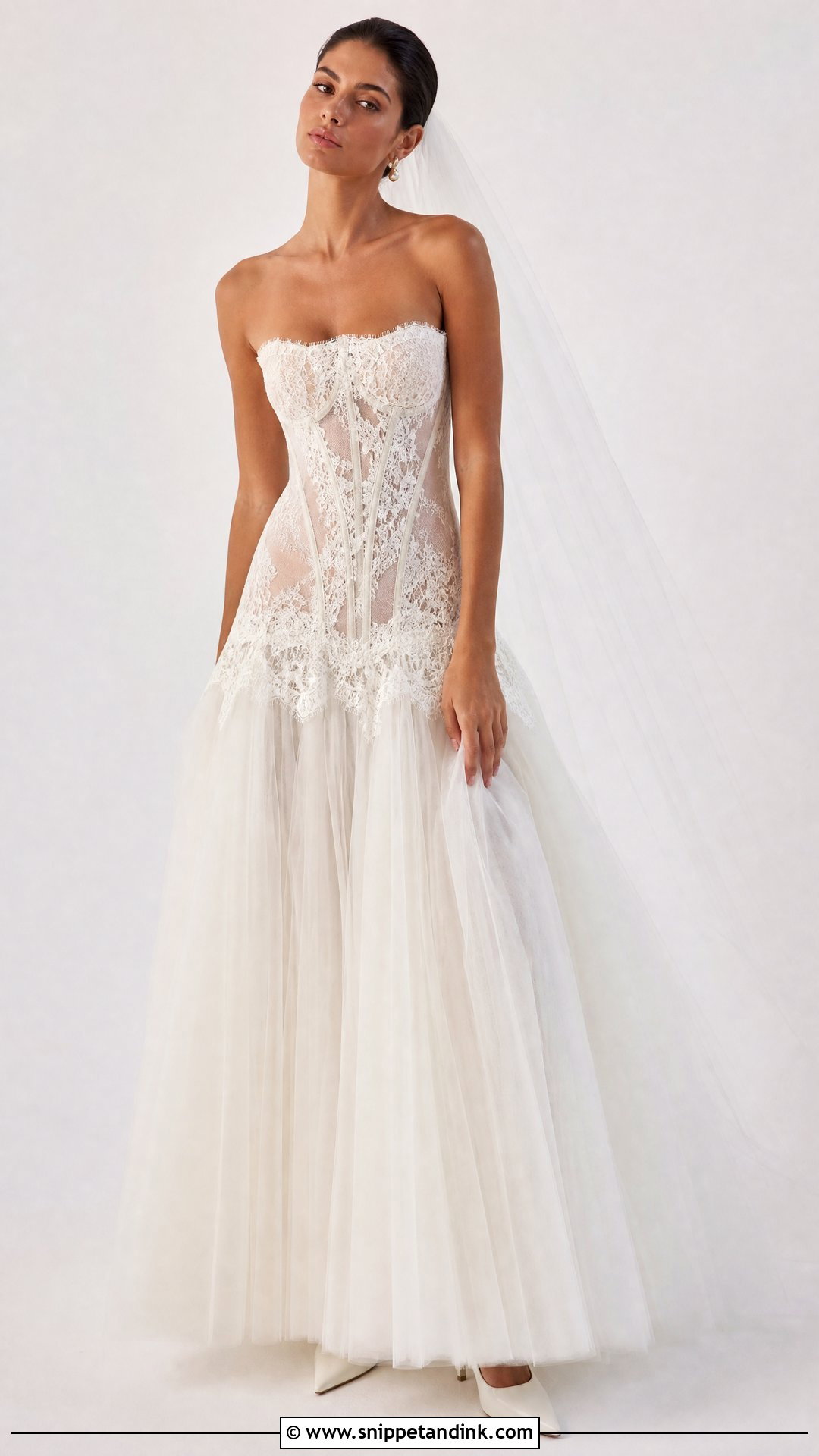
A drop waist starts the skirt below your natural waist, lengthening the torso. In sheer lace, tulle or organza, the shape softens and feels easier to wear, especially with a corset bodice or delicate straps. The proportions are unusual, so the waistline position needs careful tailoring; even two centimetres too low can shorten your legs in photos. Choose heels that add height and keep accessories simple.

25. Sheer Reception Wedding Dress
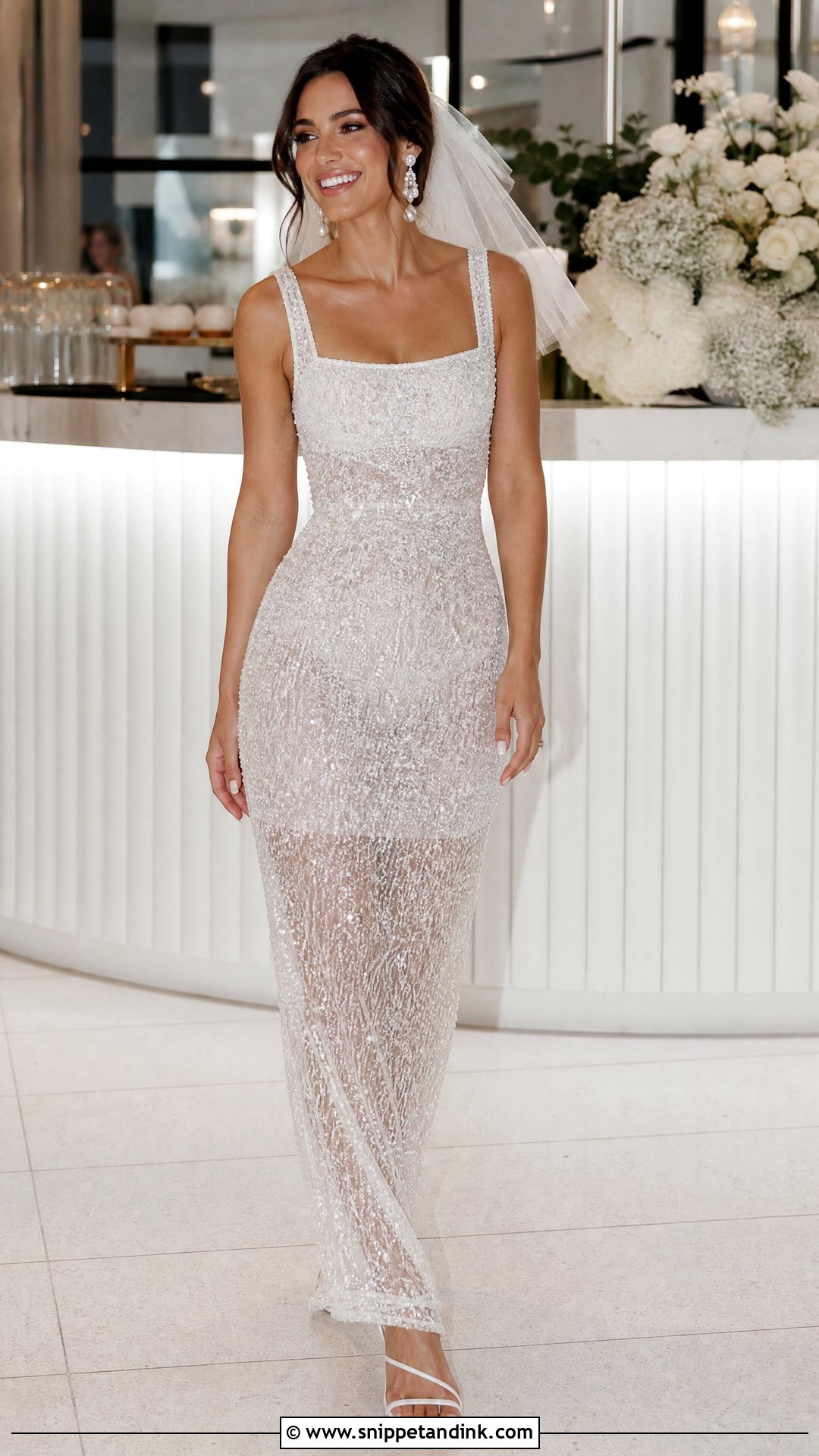
A sheer reception dress gives you room to move once the formal part is done. It could be a mini, a fitted lace gown, a beaded sheer column or a slip with an airy overlay. It should feel lighter than your ceremony gown while still looking bridal. Look for comfortable straps, a secure lining and shoes you can actually walk in. It’s a sensible plan if your main gown is heavy or has a long train, and a short veil or statement earrings keep the bridal mood.
Sheer Gowns and Strict Venues
Some places of worship ask for covered shoulders or a modest neckline during the ceremony. A sheer gown can still work there with a little planning. A detachable lace bolero, an illusion jacket with long sleeves or a long veil worn over the shoulders gives coverage for the service, then comes off for photos and the reception. Check the venue’s rules early, before you order, because adding sleeves to a finished gown is much harder than having a matching cover piece made from the same lace.
Planning fittings for delicate fabric
Mesh and lace need more fitting time than satin. Plan on two or three fittings, with the final one about two weeks before the wedding so the fit reflects your body as it is then. Bring your shoes and undergarments every time. And keep a few safety pins and a clear nail varnish in your emergency kit: a dab of varnish stops a small run in tulle from spreading.
How Much Sheer Is Right for You?
Sheer can be soft or bold depending on the fabric, the lining and the silhouette, and the balance between transparency and comfort is yours to set. A sheer sleeve, illusion back, lace bodice or tulle overskirt adds interest without feeling revealing. For drama, look at sheer corsets, beaded gowns and capes; for something quieter, chiffon, embroidered mesh or a gentle A-line. Get the lining colour and the fit right, and the rest of the look follows.
You'll Like These Ideas:




Leave a Reply