
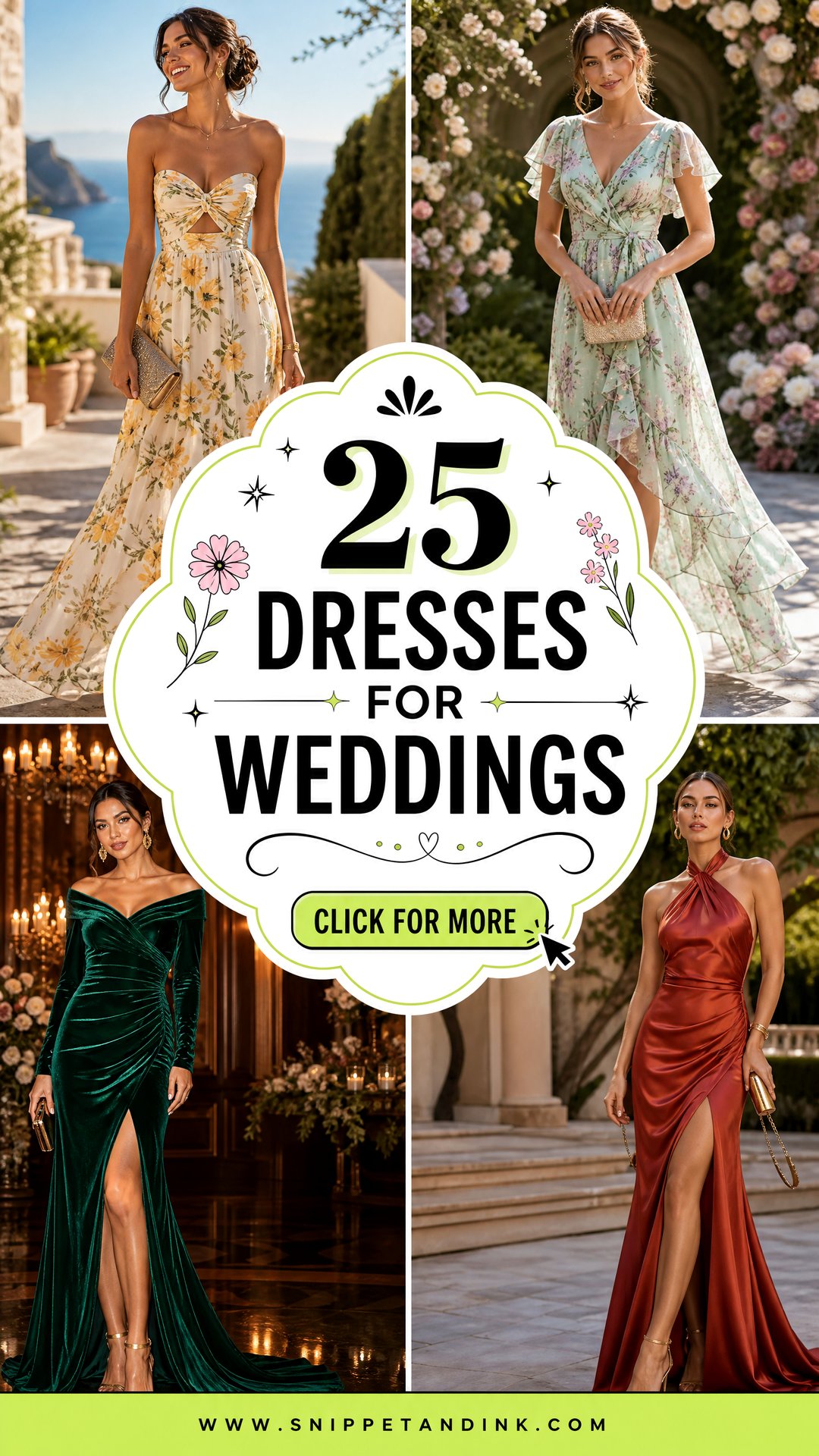
A good guest dress starts with the invitation and ends with your feet. The dress code, season and venue narrow the field; comfort decides the winner, because you’ll be sitting through vows, standing through drinks and, with luck, dancing past midnight. Satin, romantic florals, draped shapes, jewel tones, soft pastels, long maxis and crisp structured cuts are all in good standing right now. Plan the shoes, bag, jewelry and a layer at the same time as the dress, not the night before. The 25 ideas below are organised by style, season, body shape and colour, and cover formal, semi-formal, beach, garden and city weddings.
Why I Buy the Shoes Before the Dress
It sounds backward, but the shoes decide more than people realise. Heel height sets where the hem should land, the venue surface rules out whole categories of heel, and a pair you can’t stand in for six hours will ruin any dress.
- Grass and gravel: block heels, wedges or flats. Stilettos sink and scuff.
- Sand: flat sandals or slides. Many beach weddings end with guests barefoot anyway.
- Old stone, cobbles or stairs: a lower, wider heel and a sole with some grip.
- Ballrooms and polished floors: any heel, but scuff new leather soles first so they don’t slip.
Once the shoes are settled, every dress you try on can be judged at its true hem length. It also stops the classic last-minute problem of a maxi that fits in flats and floats above the ankle in heels.
1. Floral Midi Dress for Wedding
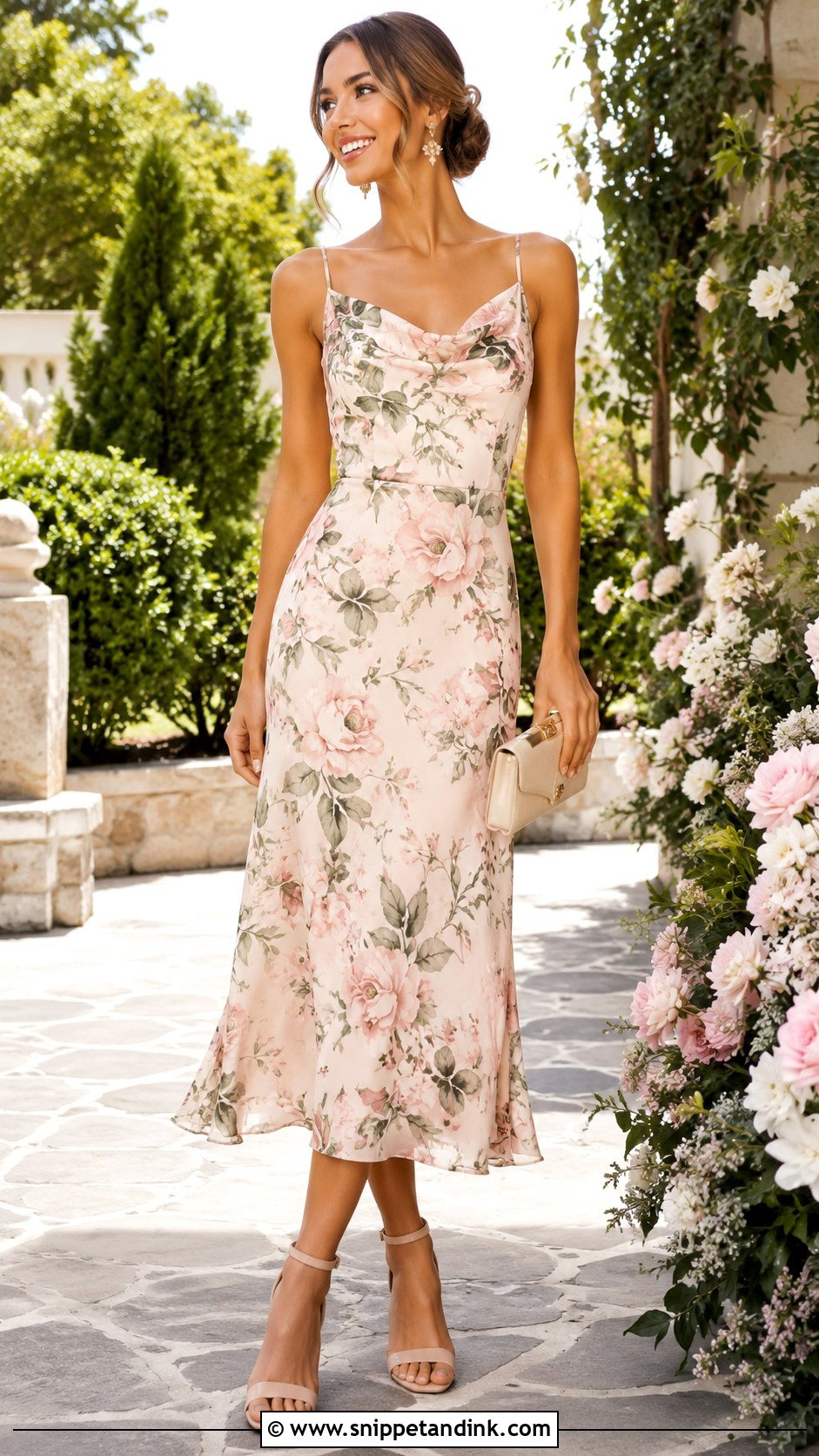
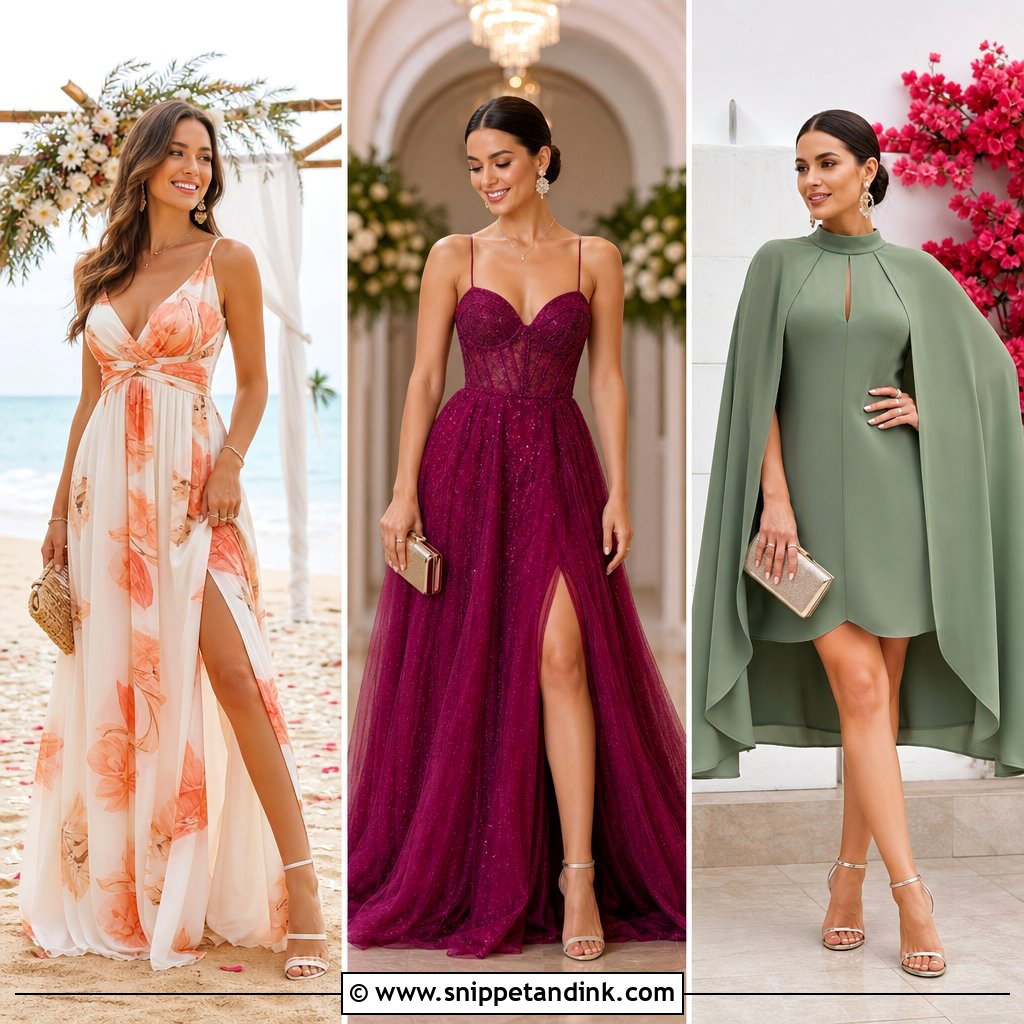
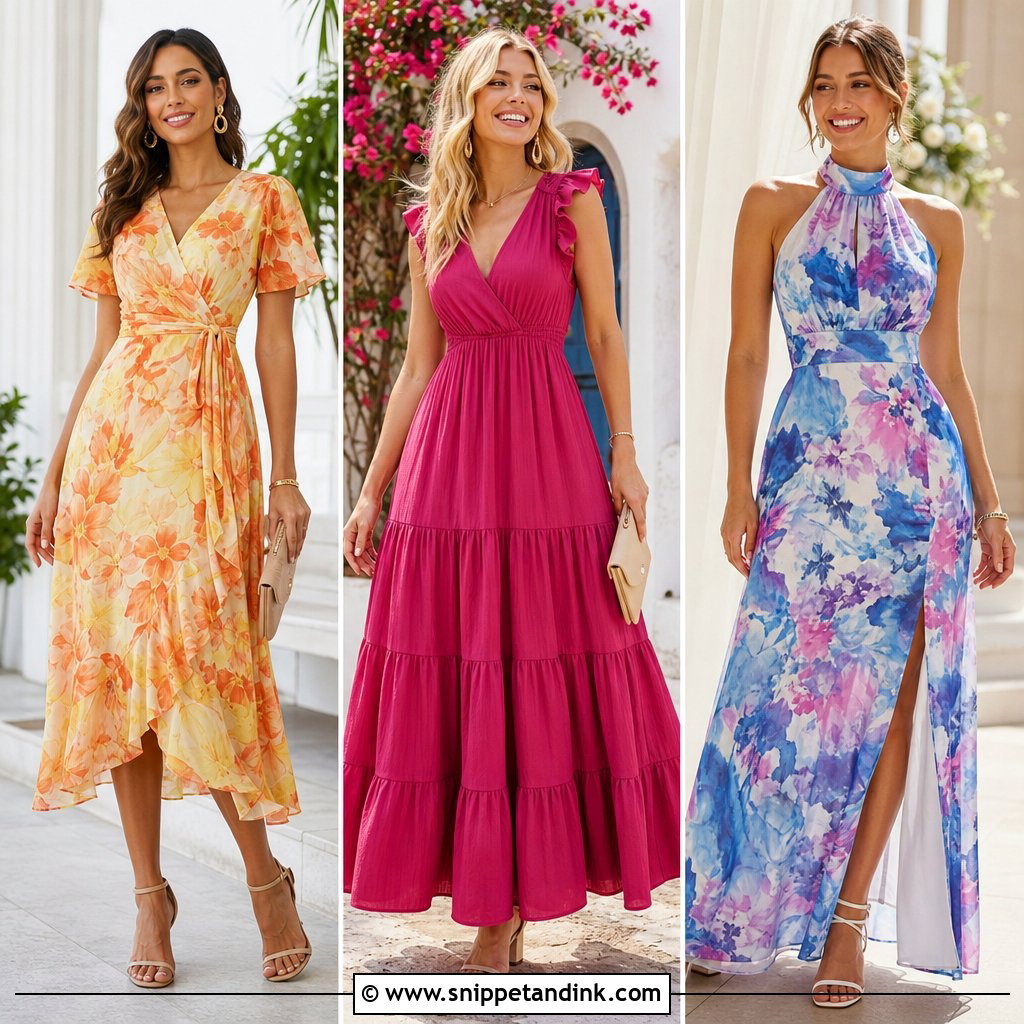
For a daytime or garden wedding, I’d start with a floral midi dress before anything else. It’s dressy without trying too hard, and the midi hem won’t drag on grass or sand. Soft prints in blush, sage, lavender, blue or peach suit spring and summer light. A defined waist, flutter sleeve, wrap front or A-line skirt adds movement. Check the print against the dress code: a small, tight floral on crepe looks dressier than a big tropical print on cotton. Nude block heels or fine strappy sandals, a small clutch and simple gold jewelry finish it.
2. Satin Slip Dress for Wedding
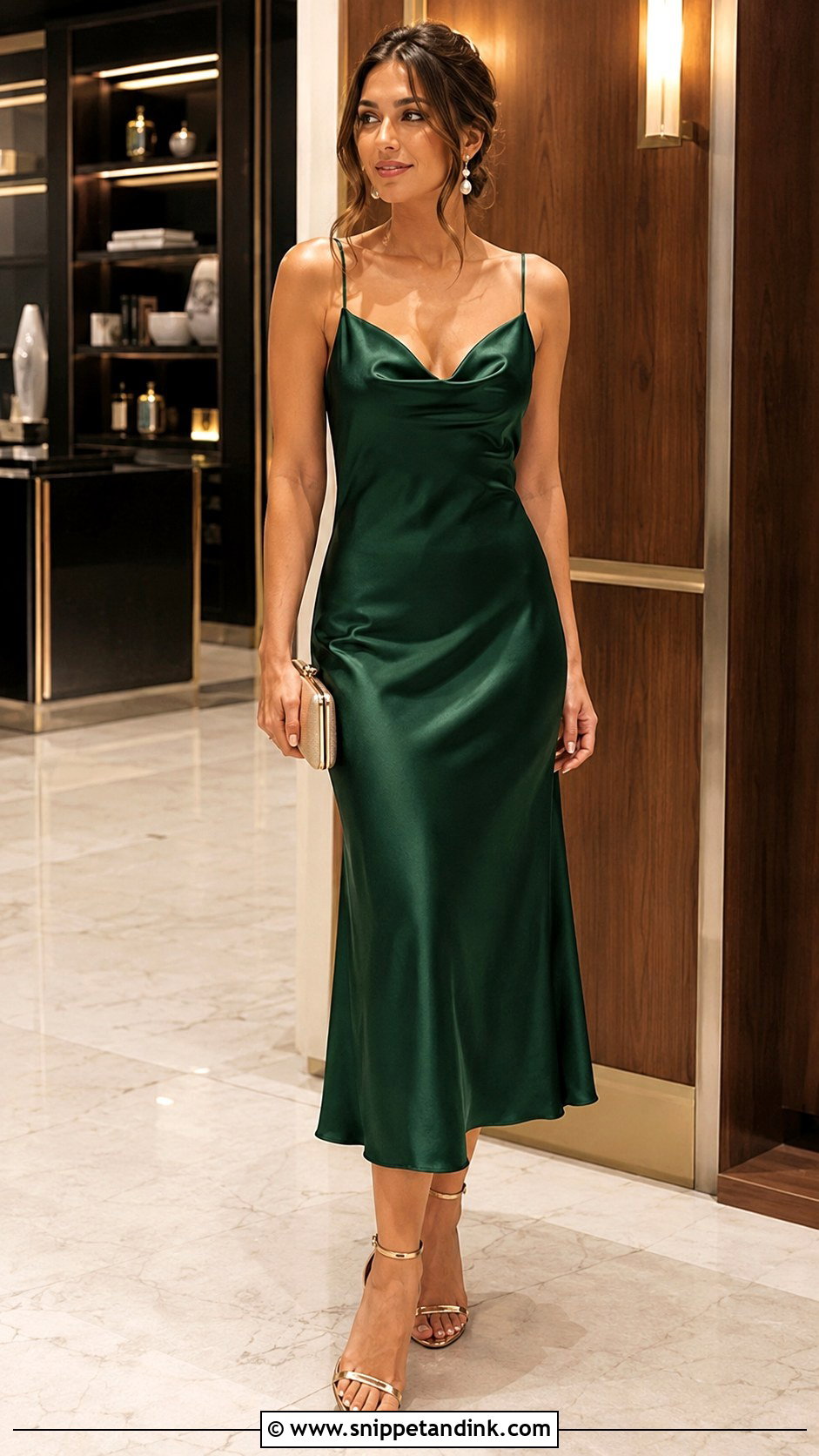
Satin slips belong at evening weddings, city venues and cocktail dress codes. The sheen does the work, so accessories can stay minimal: heeled sandals, a slim clutch and pearl or crystal earrings. Champagne, emerald, navy, rose and cocoa all look refined. Fit is the whole game here. A slip should skim, not cling, and bias-cut satin shows anything underneath, so smooth, no-line underwear is worth buying in advance. A cowl neck or side slit softens the line. Bring a tailored blazer or light shawl for coverage during the ceremony.
3. Black Tie Maxi Dress for Wedding
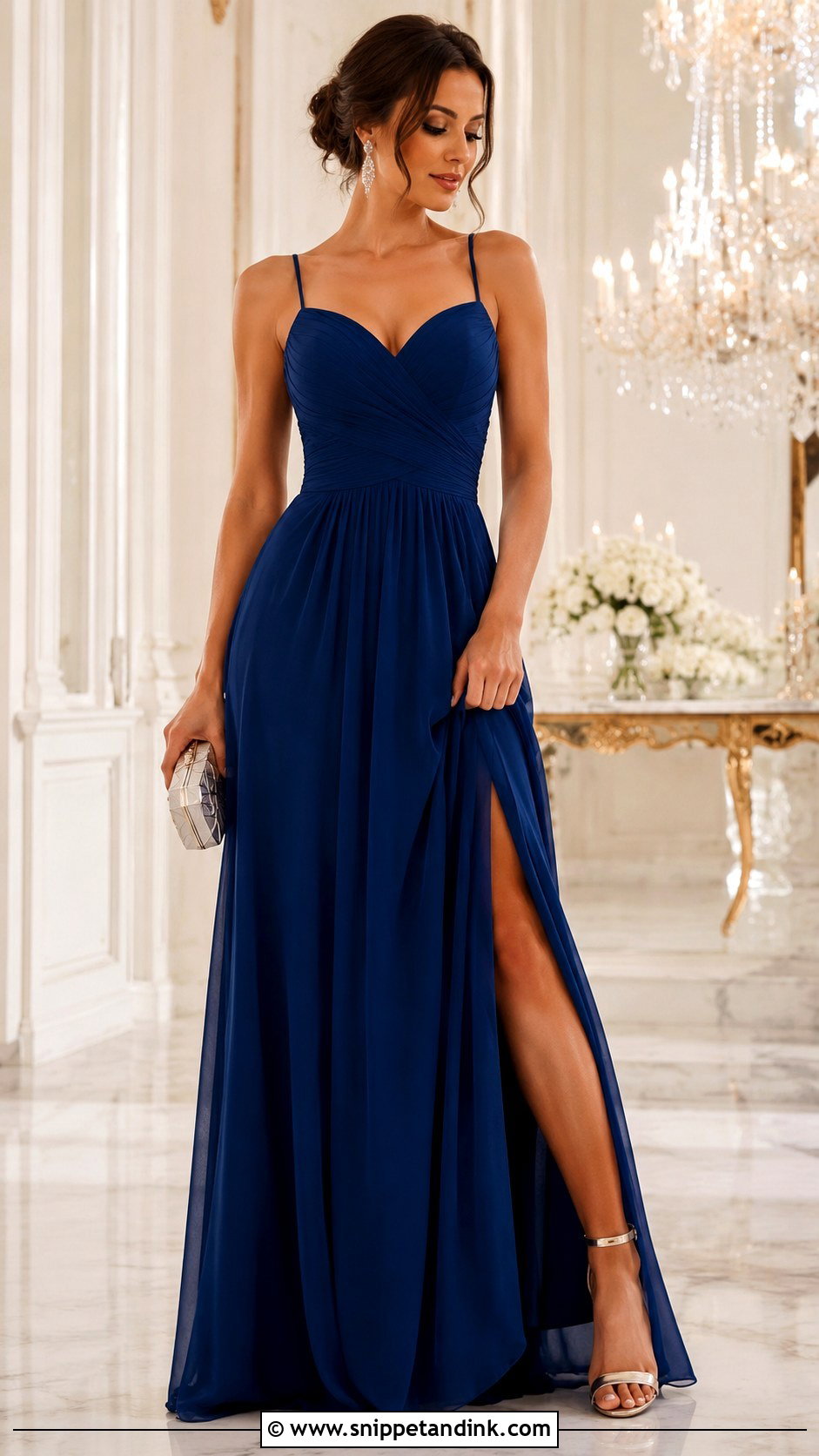
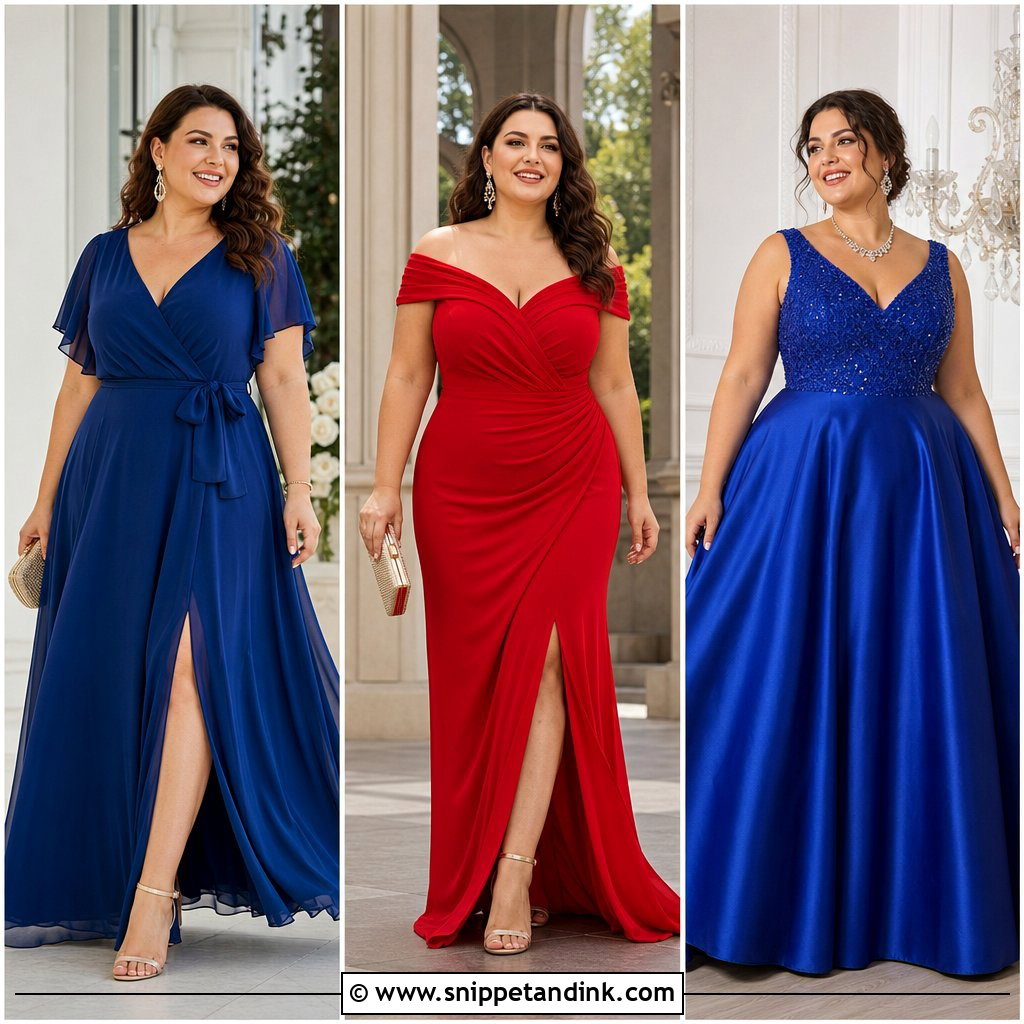
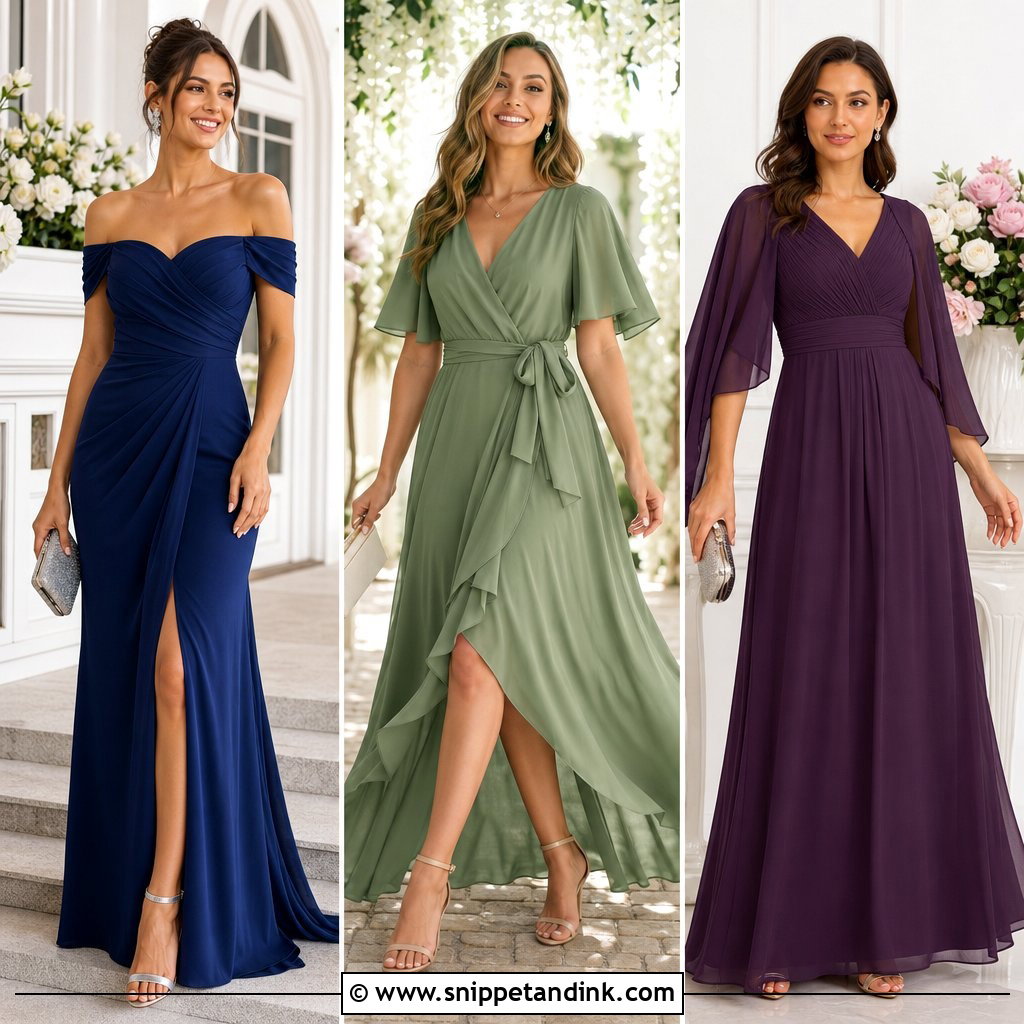
Black tie means floor length, with no exceptions worth risking. A maxi in chiffon, satin, crepe or tulle in emerald, sapphire, burgundy, plum or midnight blue looks formal without competing with the bridal party. A fitted bodice and flowing skirt suits many body types, giving shape while letting you move. Have the hem taken to clear the floor by a fraction in the exact shoes you’ll wear; a gown that’s an inch too long gets trodden on all night. Metallic heels, a structured evening bag and refined jewelry complete it for ballrooms and evening estates.
4. Cocktail Dress for Wedding
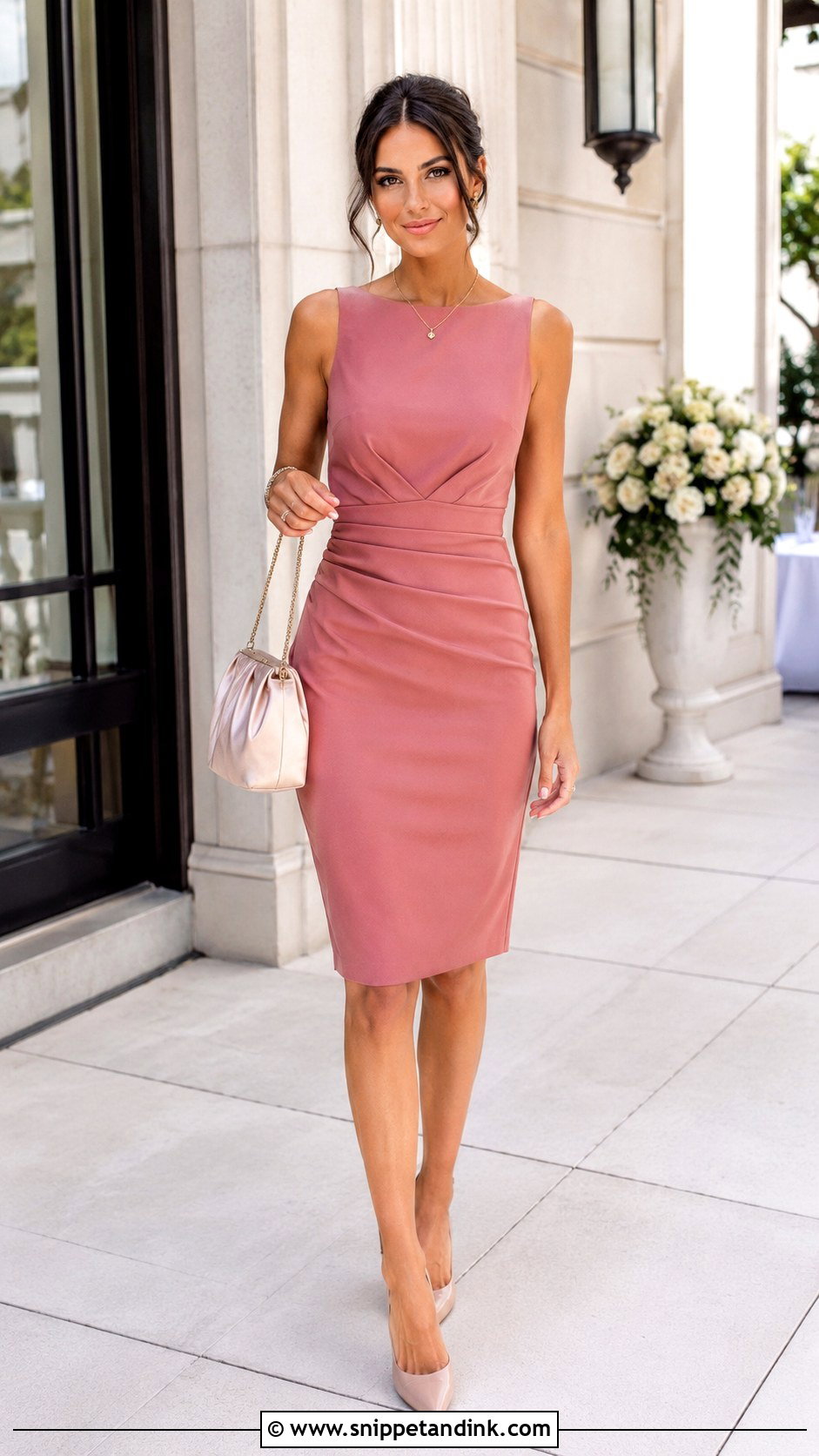
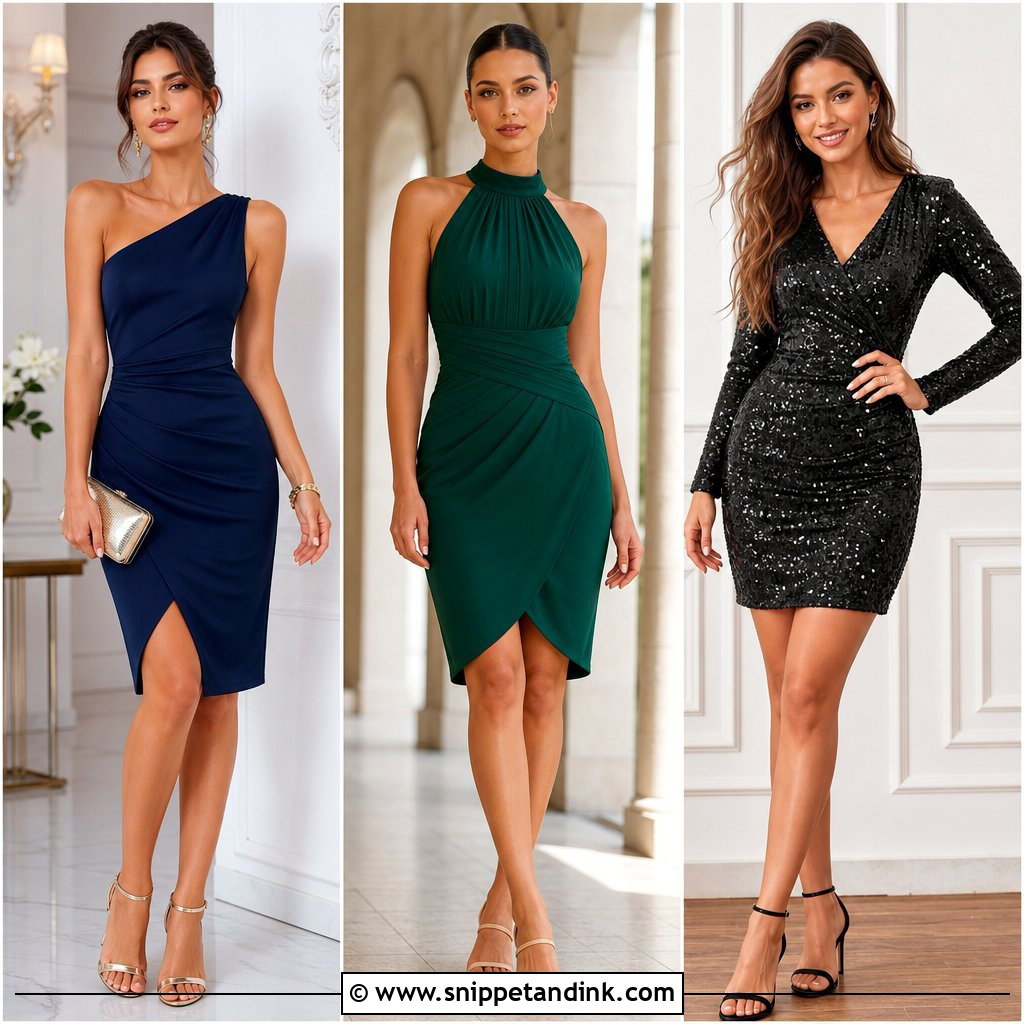
Semi-formal, cocktail and dressy casual all point to the same dress: knee or midi length, festive without drama. A sheath, wrap, fit-and-flare or one-shoulder design in a rich colour or subtle print fits the brief. Pointed heels, a small shoulder bag and clean jewelry suit it, plus a cropped jacket or tailored coat in cooler months. The best reason to buy one is rewear: a well-cut cocktail dress handles work events, parties and the next three invitations. Keep it comfortable enough to dance in, which mostly means a skirt that lets you take a full stride.
5. Garden Wedding Guest Dress
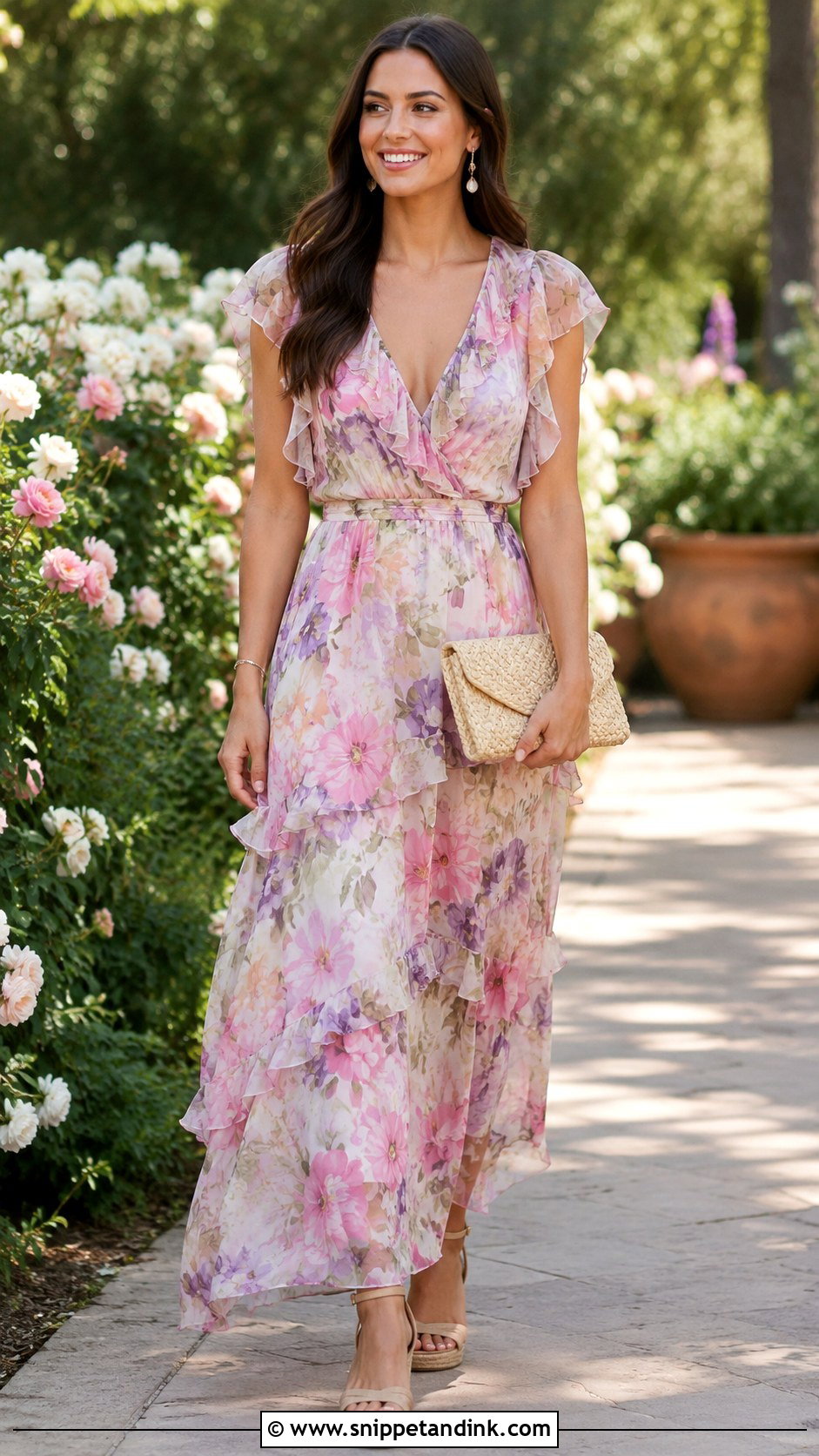
Grass is the enemy of heels, so I build a garden-wedding outfit from the shoes up: wedges, block heels or dressy flats that won’t sink. Then the dress, a floral chiffon maxi, pastel midi or tea-length piece in soft fabric that moves. Ruffles, puff sleeves, smocking or a wrap waist add charm, as long as the overall look stays refined. A woven clutch or light neutral bag feels seasonal without looking casual. Gardens go from sunny to breezy in an hour, so bring a light wrap or cropped cardigan in a matching shade.
6. Beach Wedding Guest Dress
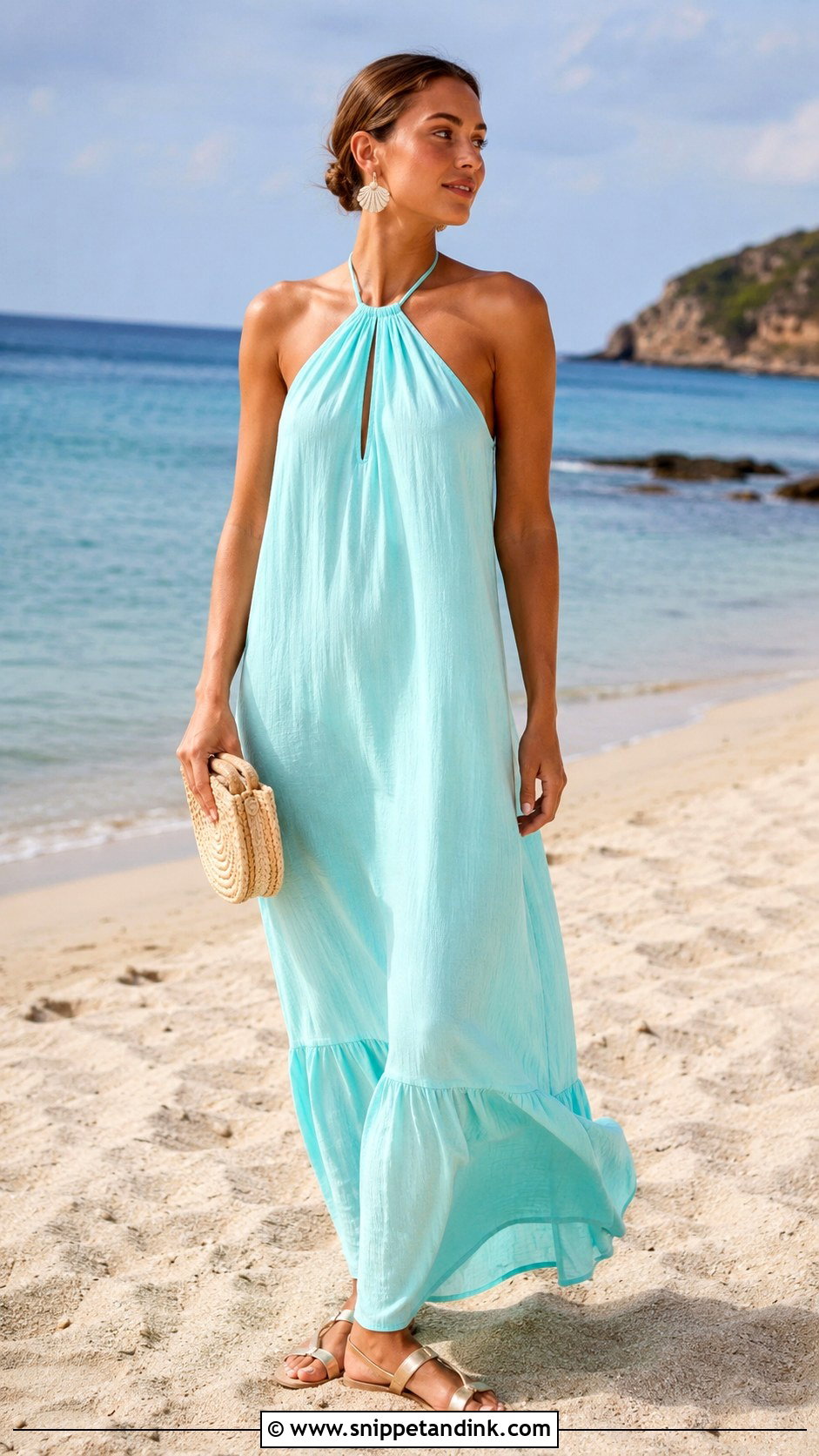
A beach wedding guest dress has two jobs: survive the wind and survive the sand. Lightweight chiffon, linen-blend, georgette or cotton voile breathes in warm air. A flowing maxi, halter or wrap dress in coral, aqua, butter yellow, soft blue or a tropical floral looks right. Be careful with very sheer chiffon in bright sunlight, since a backlit ceremony can make an unlined skirt see-through. Flat sandals, dressy slides or low wedges beat stilettos on sand. Keep jewelry simple, and skip anything heavy, dark or stiff.
7. Summer Wedding Guest Dress
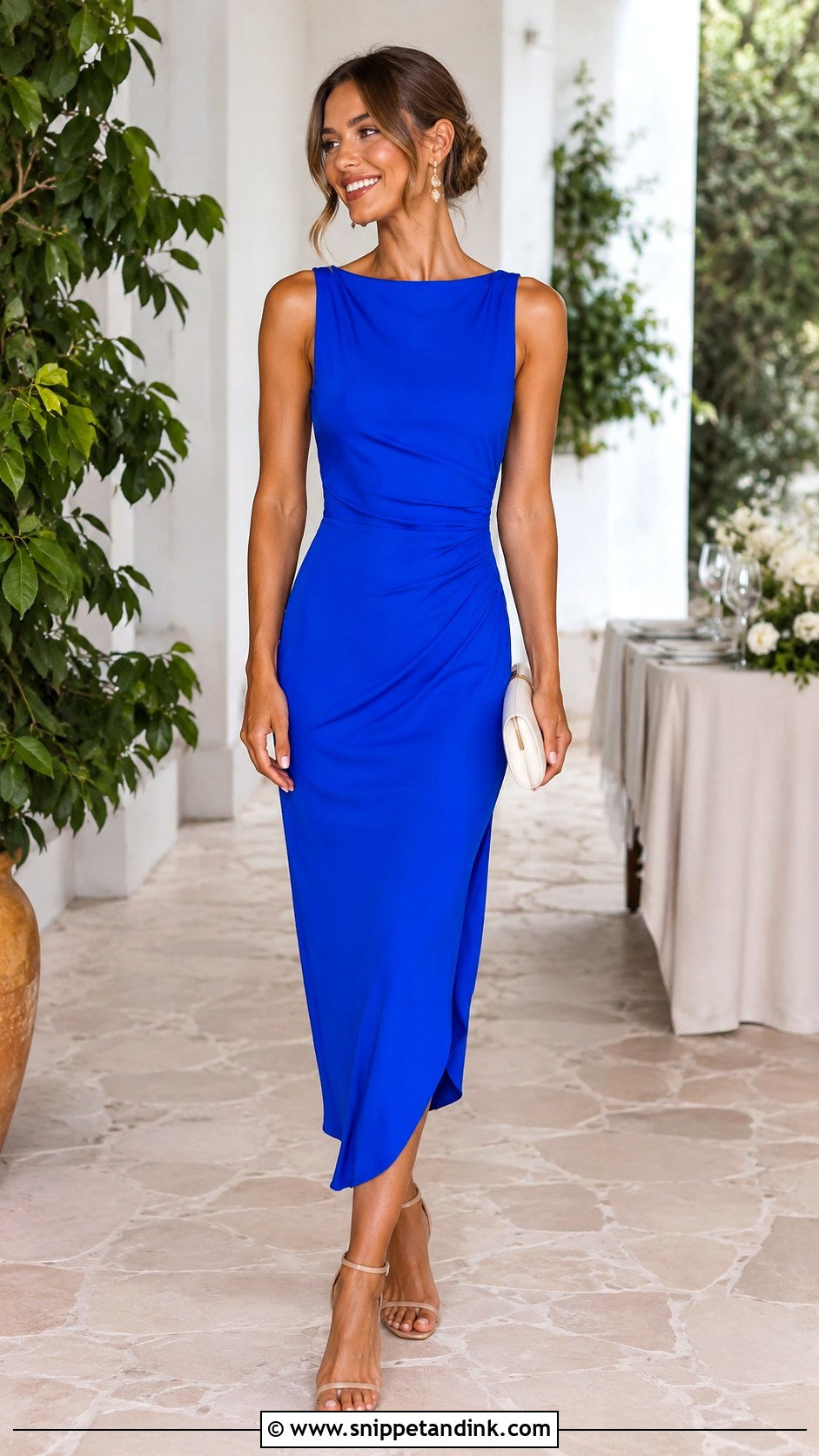
In summer heat, fabric matters more than style. Breathable fibres, lighter colours and shapes that don’t constrict are what keep you comfortable through a long outdoor ceremony. A sleeveless midi, halter maxi, floral wrap or colourful satin dress can all suit, depending on the dress code. I’d avoid fully synthetic linings in high heat; they trap warmth against the skin. Cobalt, fuchsia, citrus and turquoise feel current, and pastels never go out. Strappy sandals, a small clutch, light earrings, and a thin layer for the air-conditioned reception.
8. Fall Wedding Guest Dress
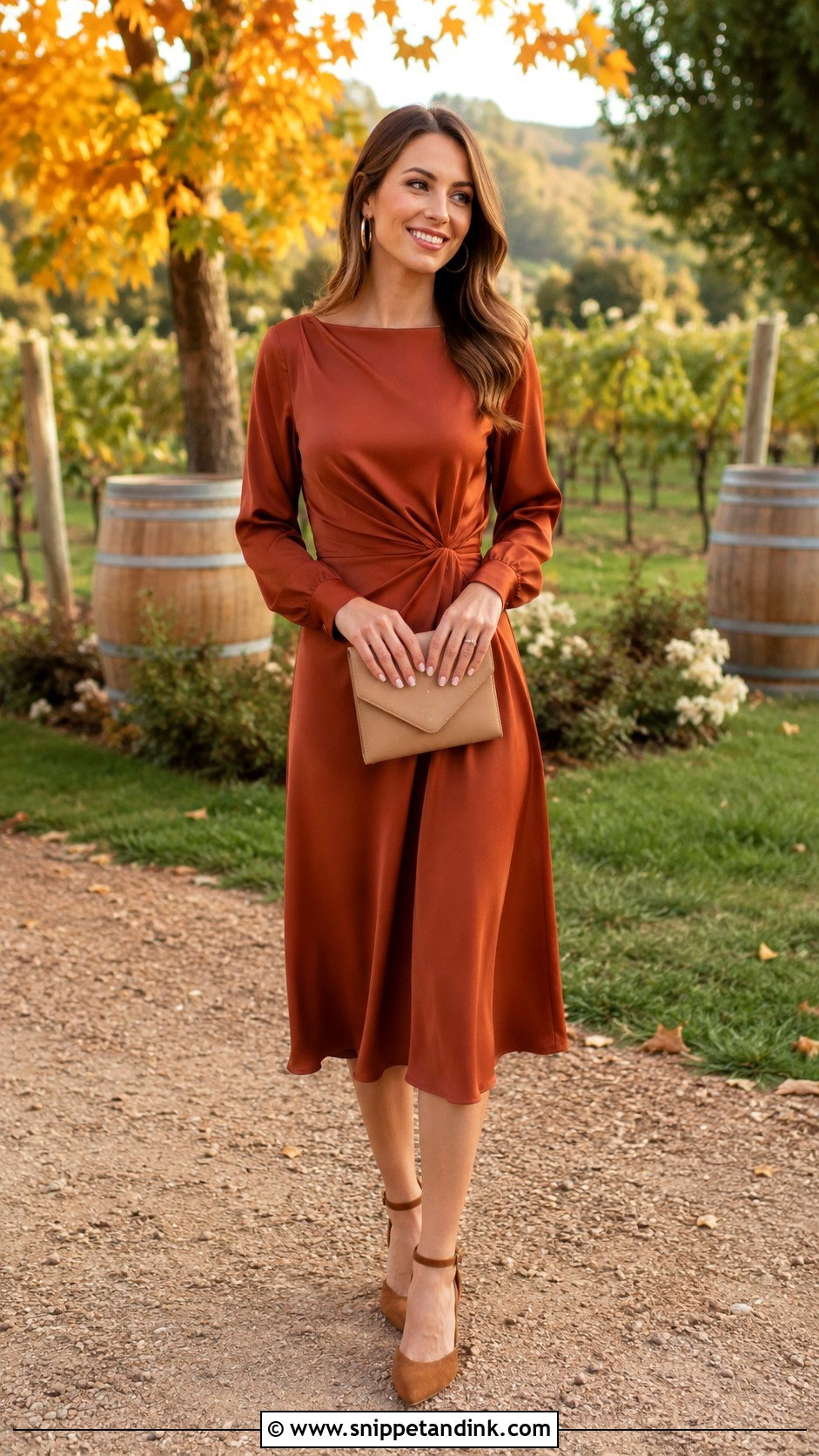
Autumn is when guest dressing gets richer. A long-sleeve midi dress in rust, olive, burgundy, navy, chocolate or a deep floral fits vineyards, barns, hotels and city venues. Suede pumps, velvet heels or ankle-strap sandals follow the weather; suede and rain don’t mix, so check the forecast. Gold jewelry and a structured clutch add warmth. A wrap dress, pleated midi or satin long-sleeve dress works, with a tailored coat or soft shawl for chilly evenings.
9. Winter Wedding Guest Dress
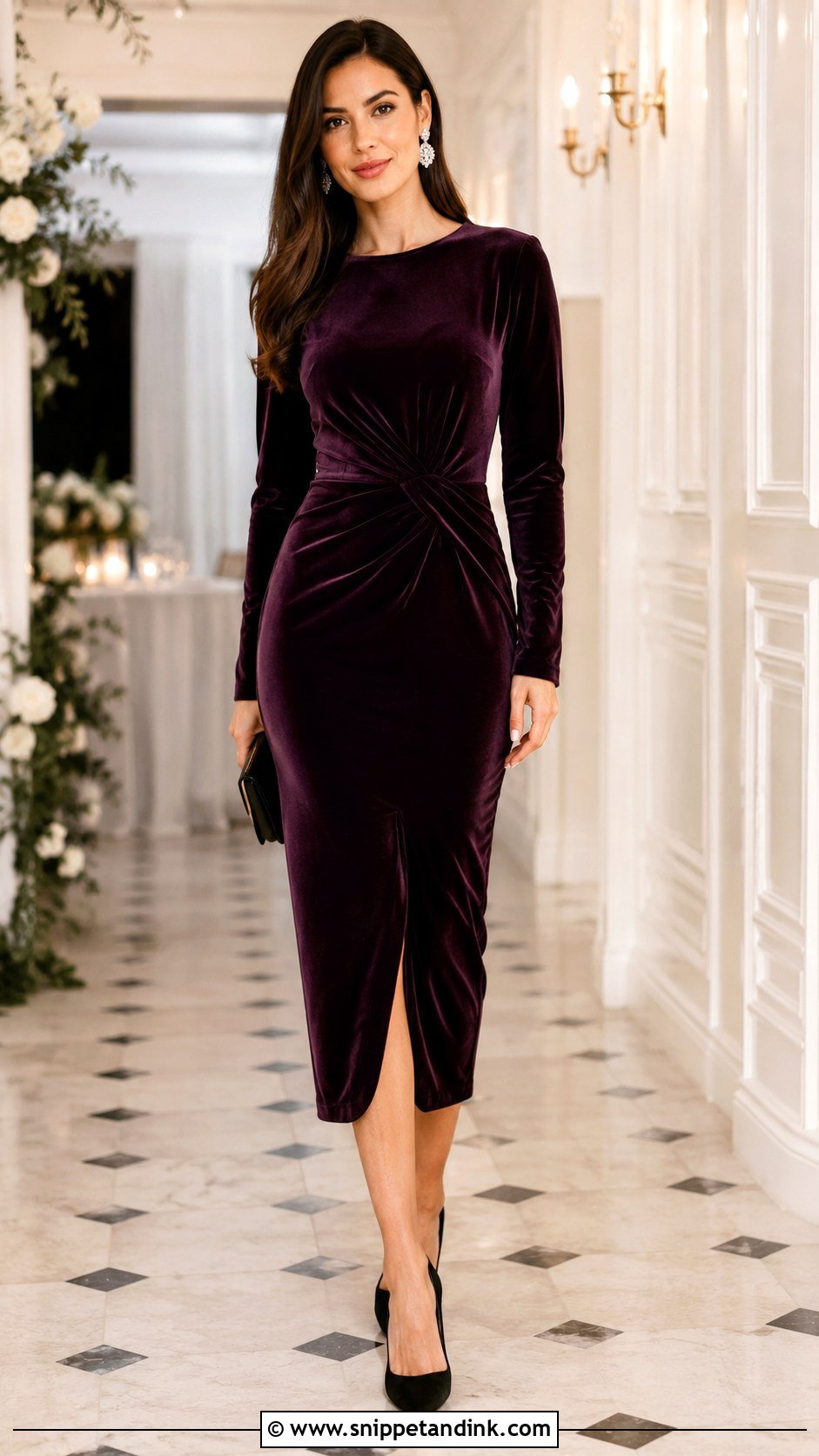
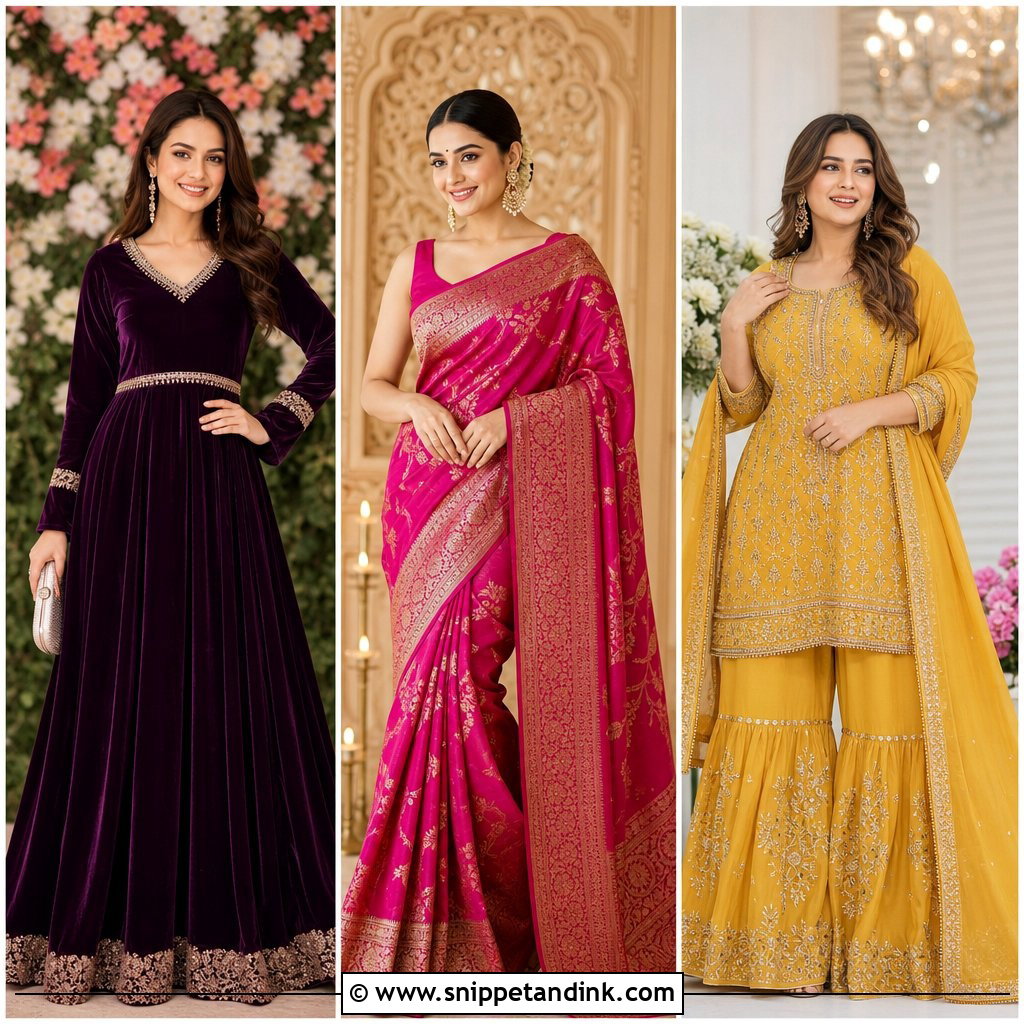
Winter weddings ask for warmth without costume. A winter wedding guest dress in velvet, satin, crepe or heavier chiffon, in emerald, wine, navy, black or plum, looks festive without leaning on anything themed. A long-sleeve maxi, velvet midi or jewel-tone wrap dress suits it. Closed-toe heels, a sleek clutch and statement earrings complete the look, with a wool coat or faux fur wrap for travelling between venues. Deeper tones also hold up better under warm indoor evening lighting than pale ones, which can look washed out.
10. Spring Wedding Guest Dress
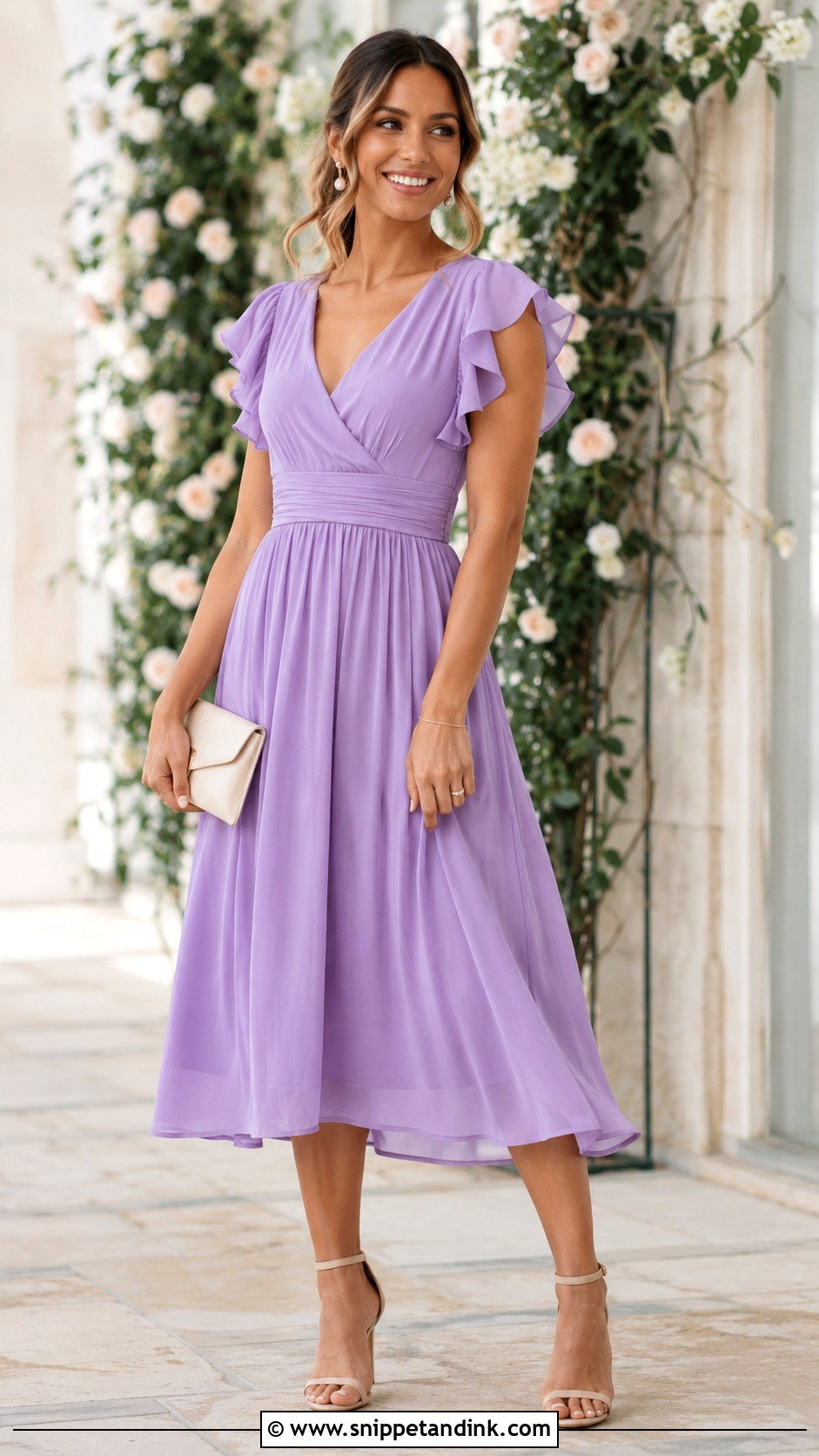
Spring is pastel season, but the weather isn’t reliable, so plan for a layer from the start. Lavender chiffon, sage satin, blush florals, powder blue lace and peach crepe all fit, in midi or maxi length for most venues. Nude heels, metallic sandals or low block heels suit damp lawns better than stilettos. Light accessories, pearl earrings, a cream clutch or a fine bracelet, keep it fresh. A cropped jacket or light wrap covers a cool evening. Keep the palest shades away from anything that could pass for bridal white.
11. Plus Size Wedding Guest Dress
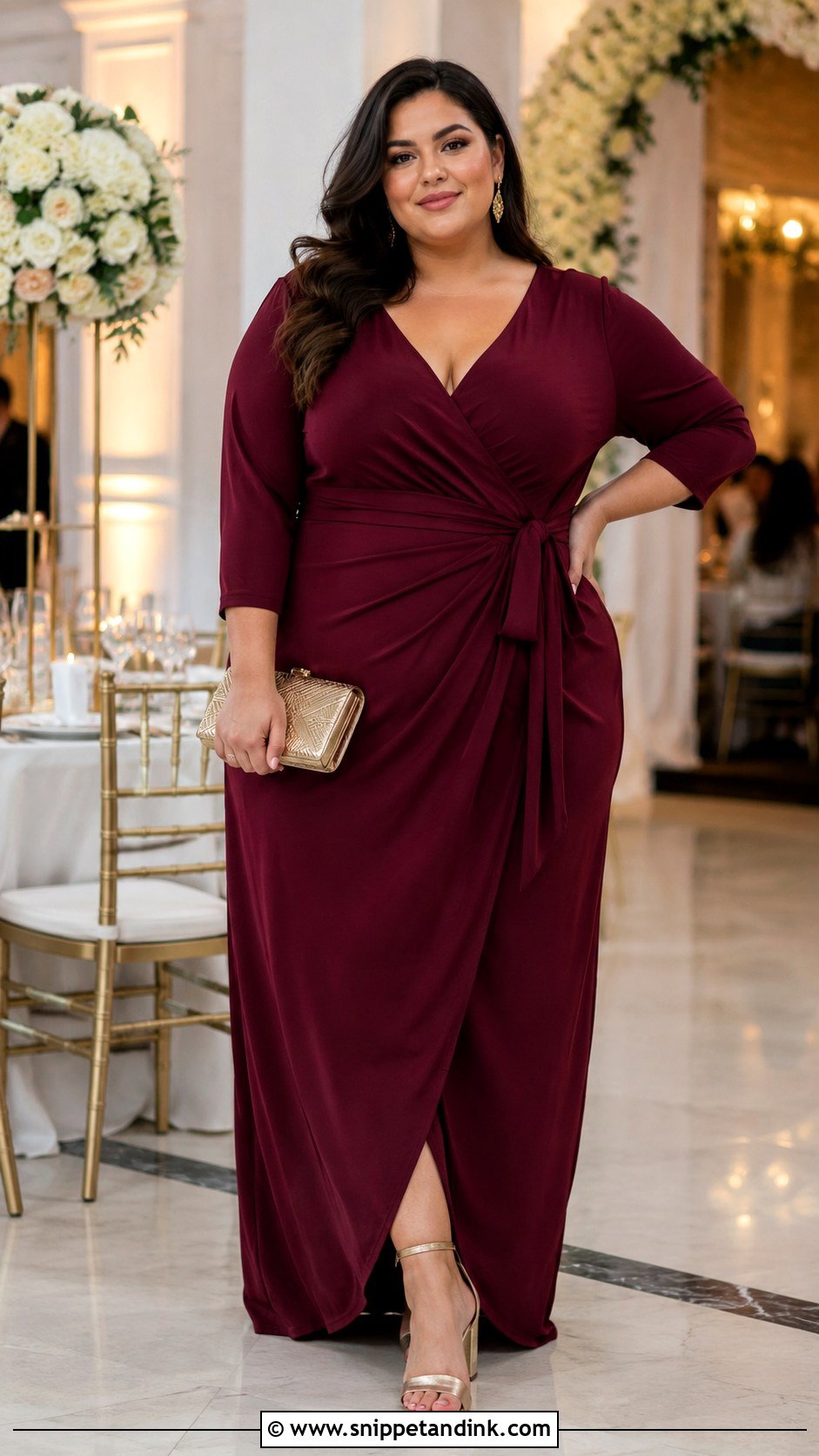
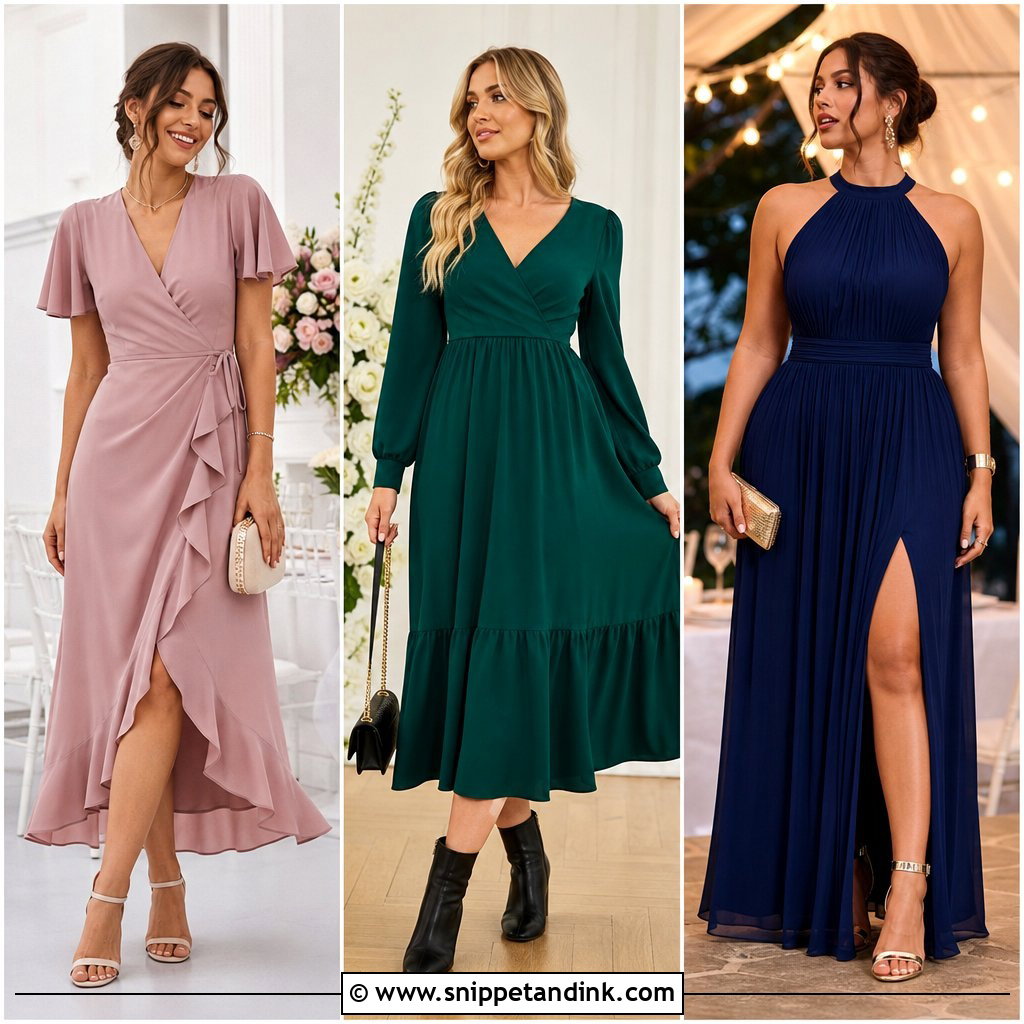
On a plus-size frame, structure and drape do more than any print. Wrap dresses, fit-and-flare midis, empire-waist maxis and ruched dresses define shape without stiffness. Fabric matters: chiffon, satin, jersey and crepe with real drape move well, while thin, clingy knits show every seam of shapewear. A V-neck, flutter sleeve, off-shoulder neckline or softly draped waist adds balance. The detail I check is the bust and arm fit, since many ready-to-wear dresses are sized for the hip, so you may need to size to the bust and take in the waist. Supportive heels, dressy flats or block sandals and a proportional clutch finish it.
12. Petite Wedding Guest Dress
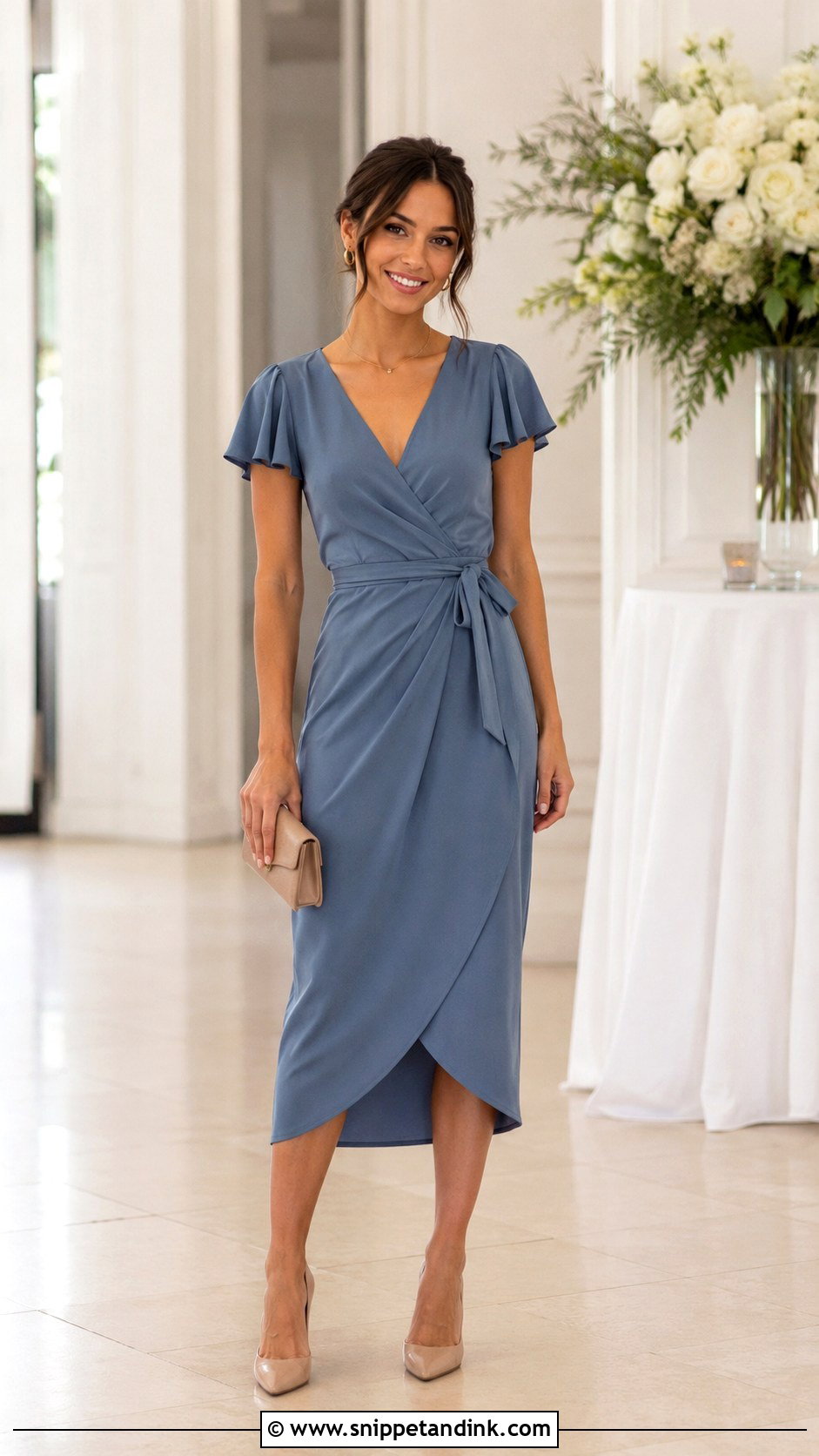
Petite guests do best with long, unbroken lines. Midis that land just below the knee, high-low hems, wrap dresses and slim maxis all lengthen. Vertical details like pleats, a V-neck, a centre slit or a defined waist help, and smaller prints usually sit better than oversized ones, though bold colour is fine. The common problem is hem position: a midi designed for average height can land mid-calf on a petite frame, which cuts the leg at its widest point, so have it shortened. Nude heels, pointed pumps or delicate sandals extend the line. Avoid bulky fabric.
13. Long Sleeve Dress for Wedding
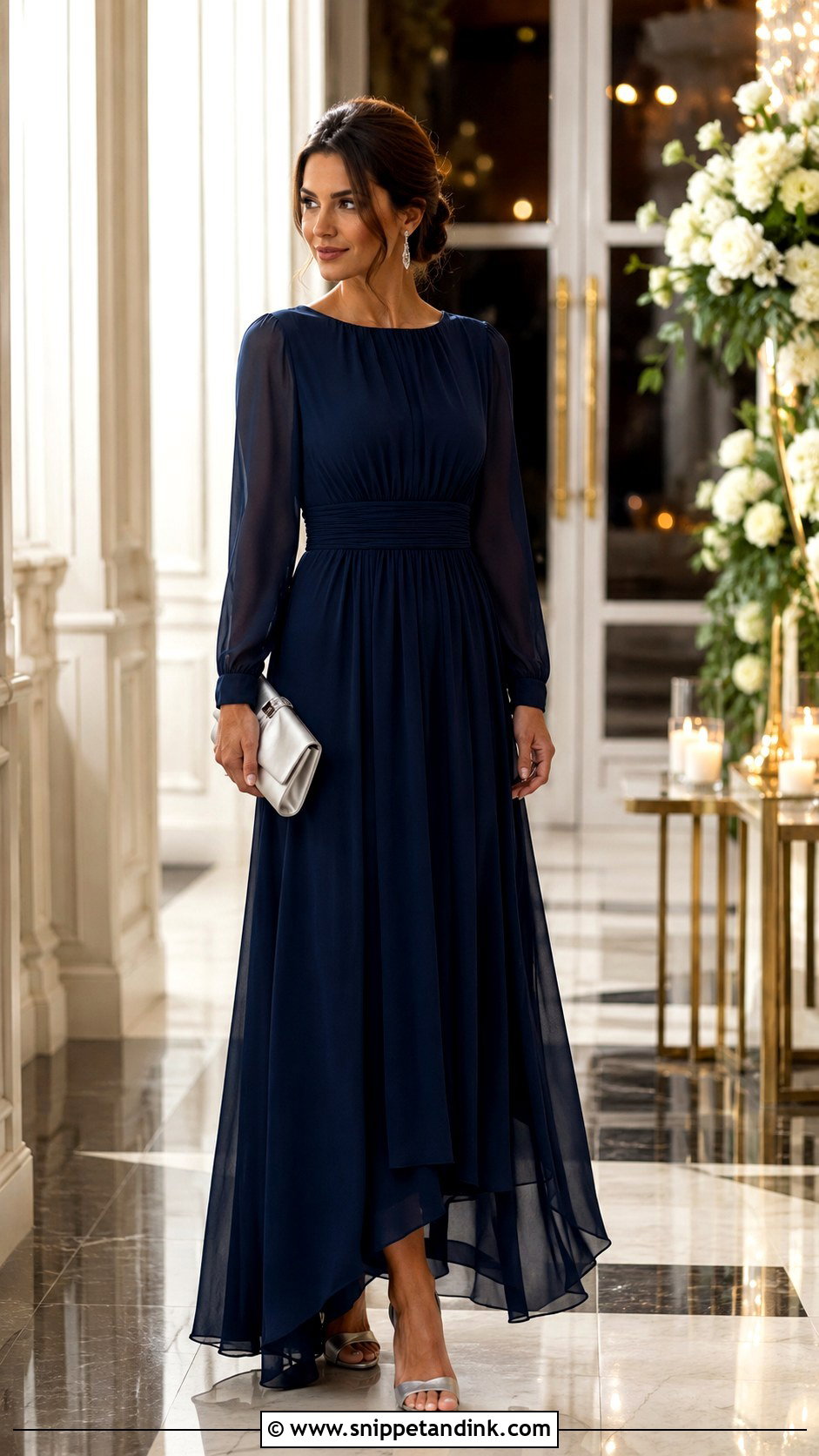
Sleeves solve three problems at once: cold weather, modest venues and evening chill. Sheer, satin, lace or fitted crepe sleeves all look formal. A midi or maxi length suits them best. Deep green, navy, burgundy, plum and black are classic; soft floral long sleeves work in spring. When trying it on, reach forward as if for a glass across the table; sleeves set too tight at the armhole pull the whole bodice. Closed-toe heels or sleek sandals and clean accessories finish it, without heavy bracelets over detailed cuffs.
14. Lace Dress for Wedding
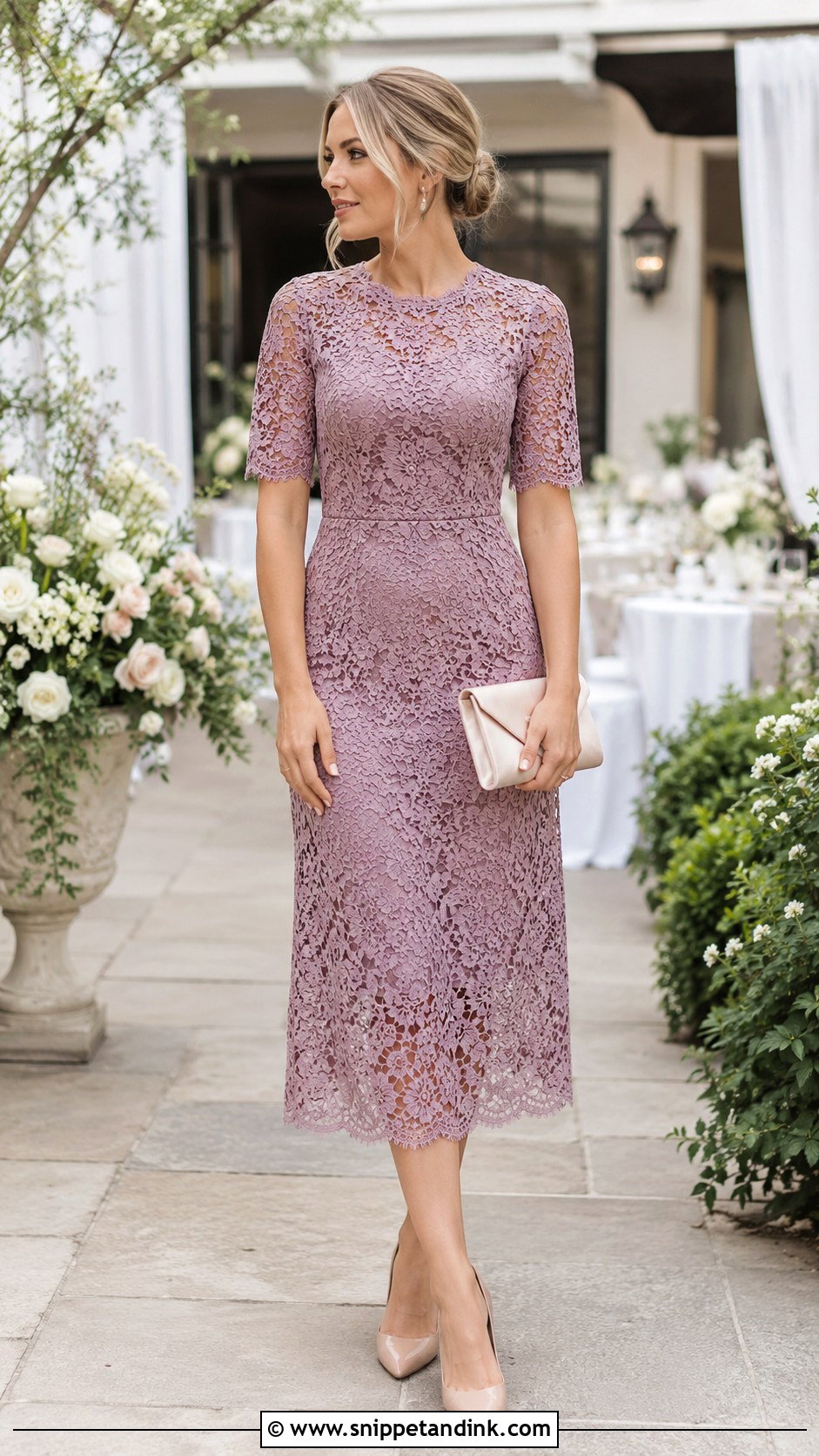
Coloured lace looks refined; white and ivory lace looks like you’re competing with the bride. Navy, blush, mauve, sage, burgundy or black lace in a midi with a lined bodice and skirt suits most dress codes. Lining is where cheap lace dresses give themselves away, with a short slip that ends above the lace hem, so check it in the mirror with light behind you. A fitted sheath, A-line midi or long-sleeve version all work. Simple heels, a satin clutch and understated jewelry let the texture lead at afternoon ceremonies and classic indoor receptions.
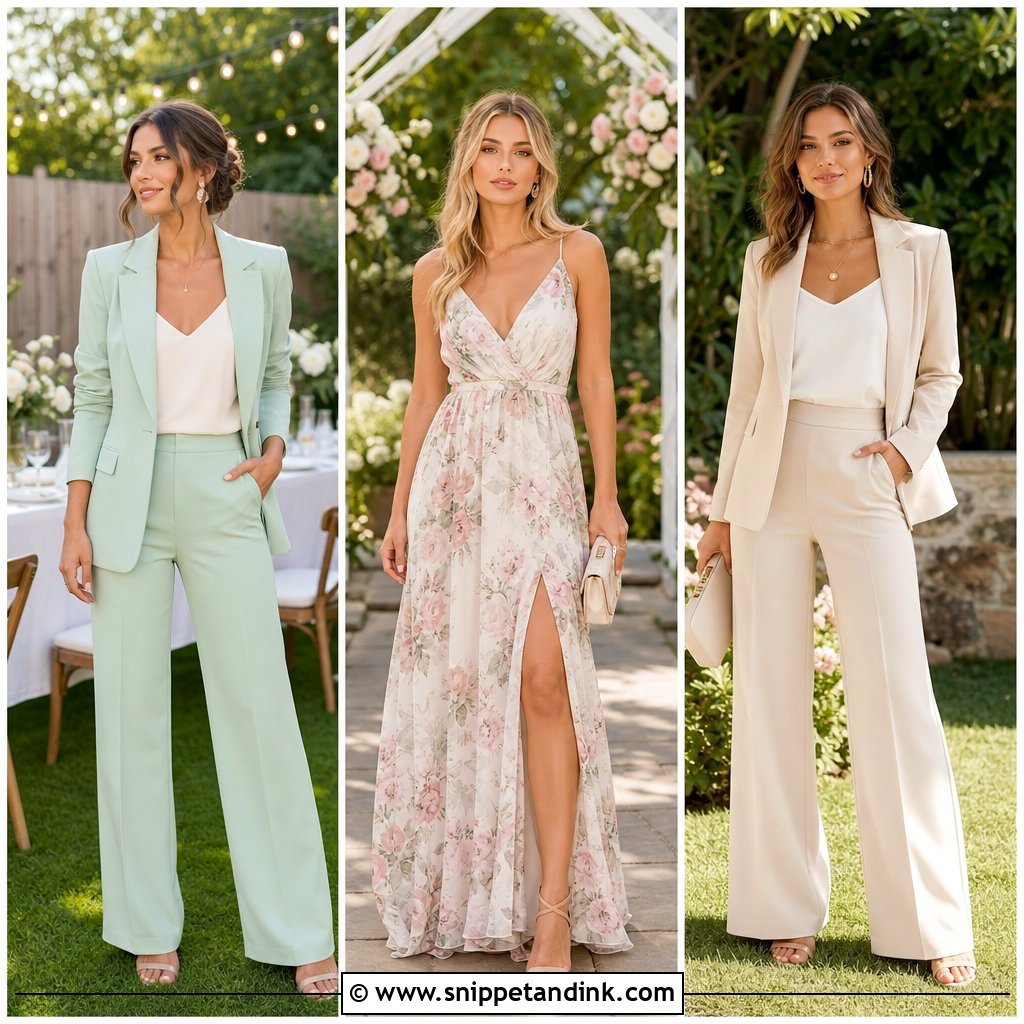
15. Velvet Dress for Wedding
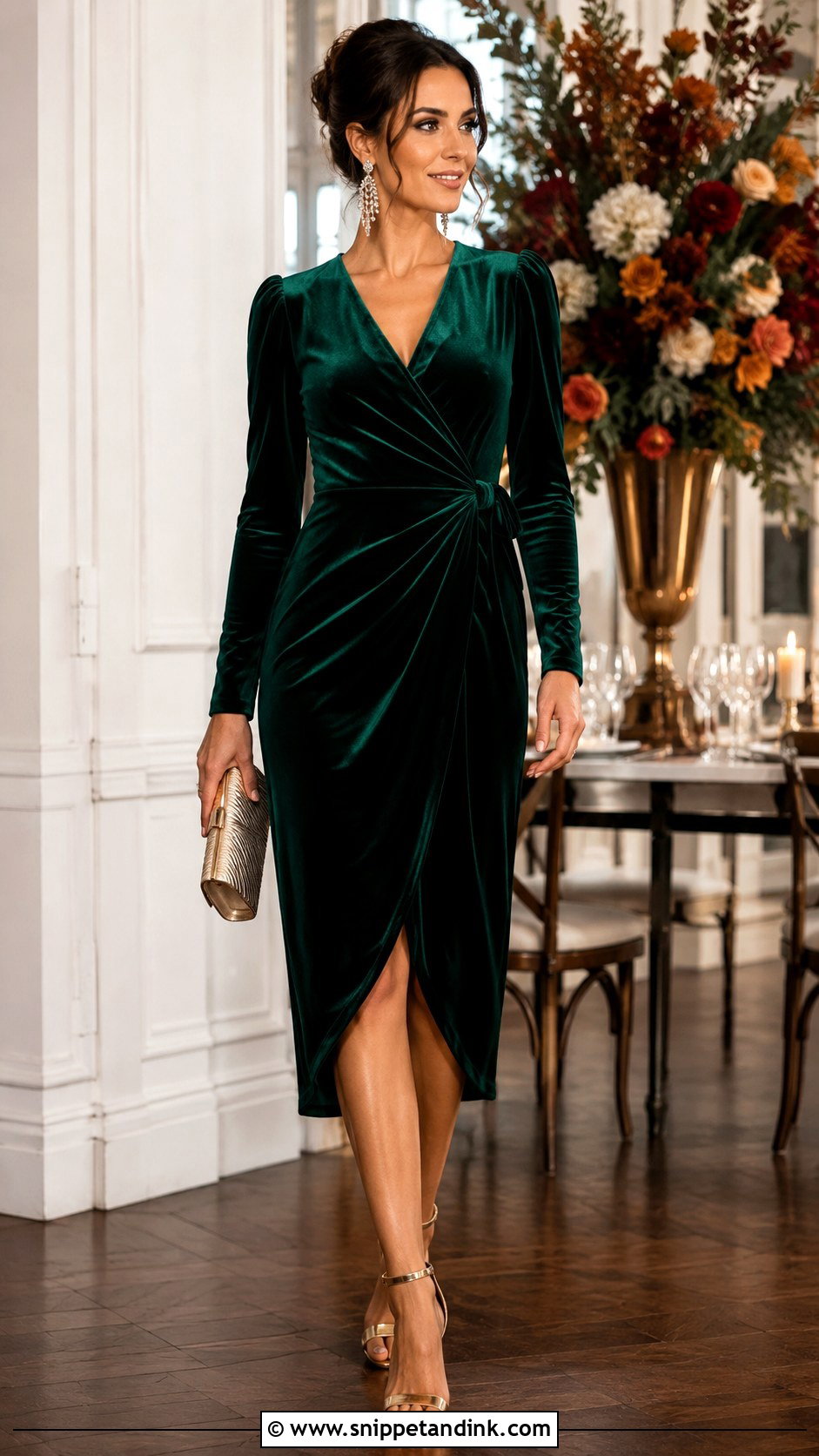
Velvet makes jewel tones look deeper than any other fabric does, which is why emerald, sapphire, burgundy, amethyst and midnight blue suit it. A velvet midi with long sleeves, a wrap waist or an off-shoulder neckline needs very little extra styling. Metallic heels, a small clutch and crystal earrings are enough. Velvet pile crushes where you sit and shows marks from a bag strap, so a light steam from the inside before you leave helps. Autumn and winter evening receptions are its natural setting.
16. One Shoulder Dress for Wedding
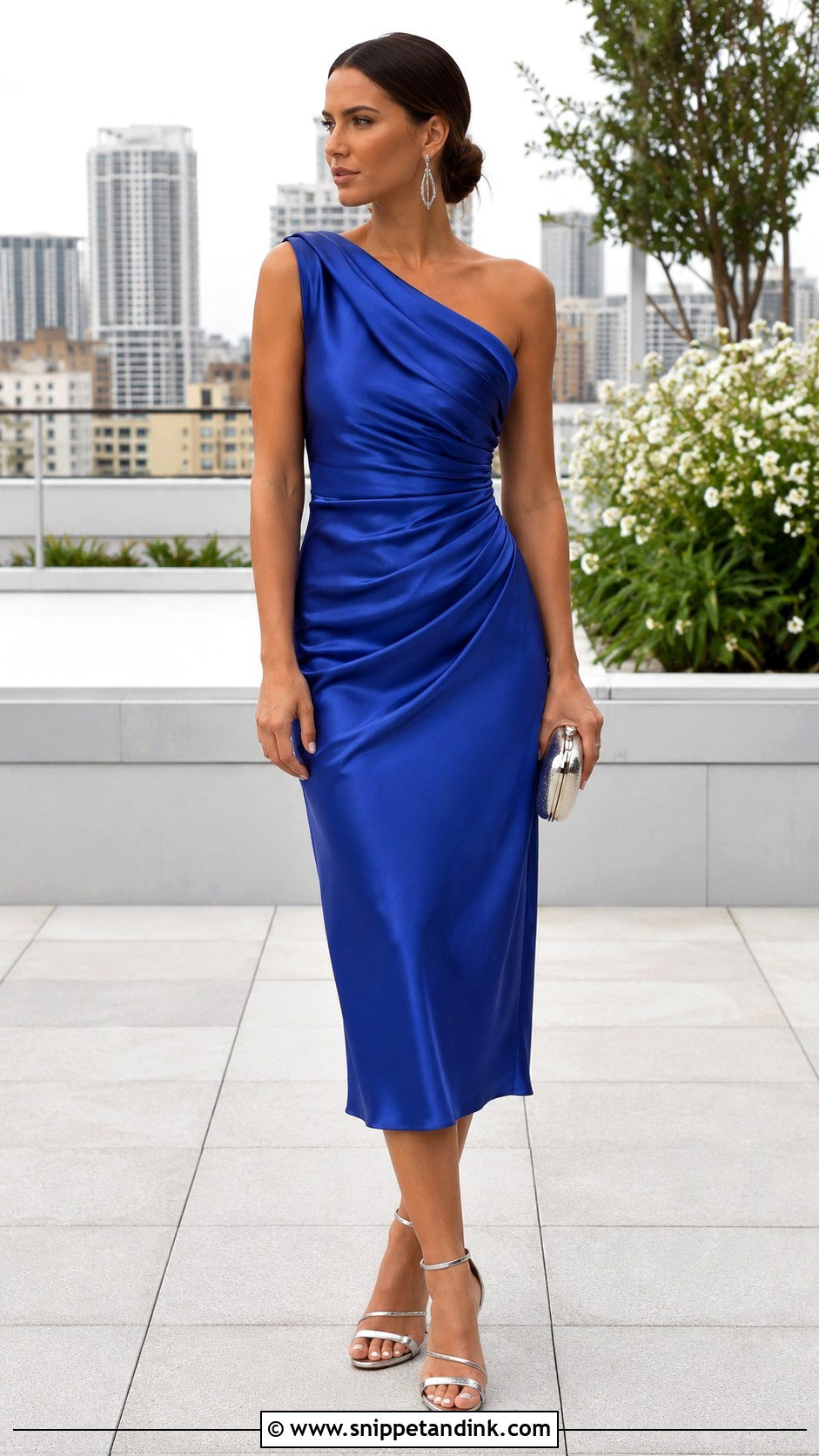
One-shoulder cuts look modern with almost no accessories. A midi or maxi in satin, crepe, chiffon or stretch knit, in cobalt, emerald, rose, mocha, navy or black, keeps the line clean. Wear drop earrings and skip the necklace. A one shoulder dress suits cocktail weddings, rooftop venues, hotel receptions and city celebrations. The bodice has to be secure: if it relies on grip alone, it’ll creep toward the bare side by dessert. Look for silicone tape inside the neckline or internal boning, and test it by dancing in the fitting room.
17. Wrap Dress for Wedding
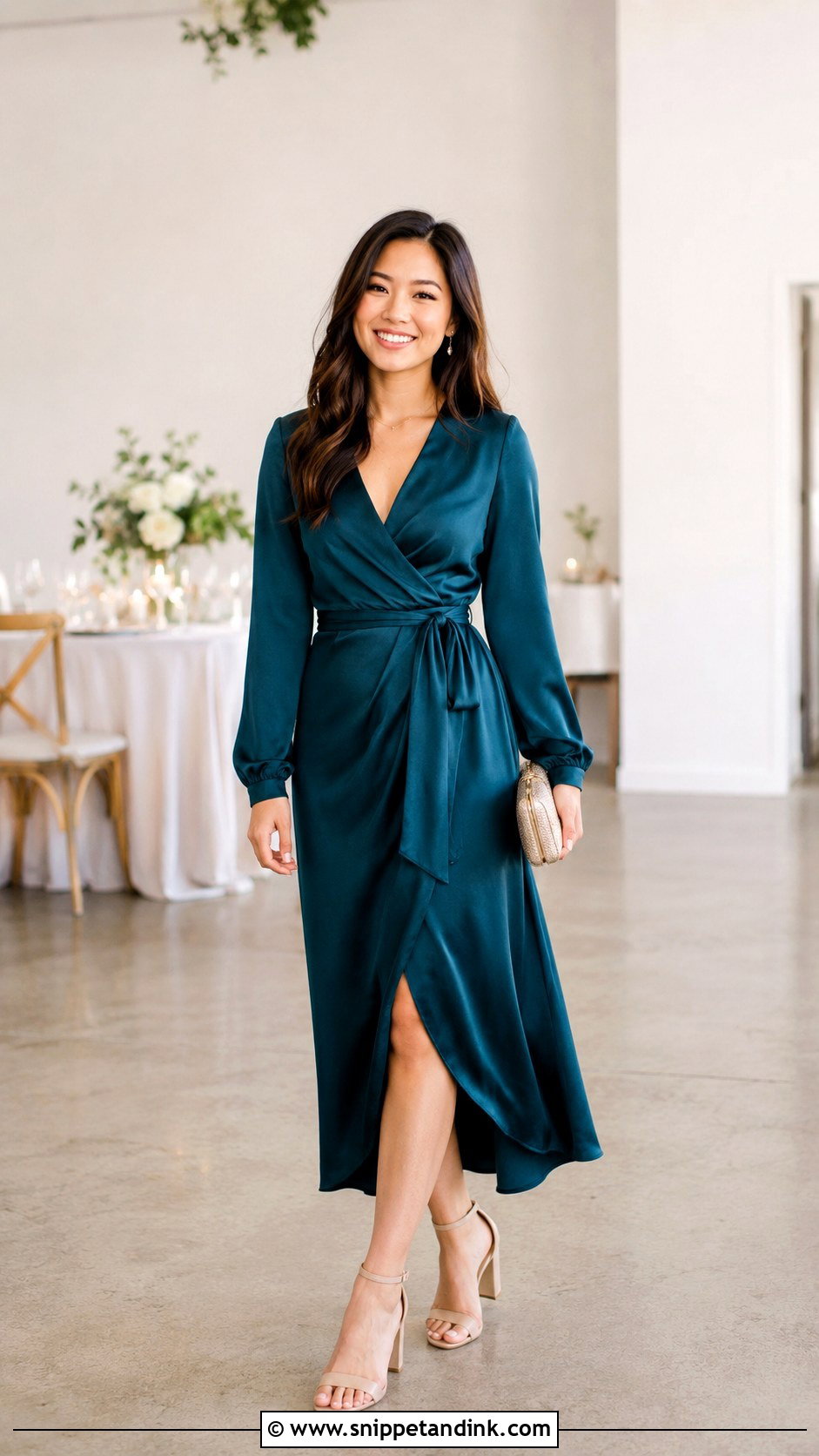
If I could only recommend one guest dress shape, it would be the wrap. It adjusts at the waist, flatters many body types and moves well in the skirt. Silk, satin, chiffon or crepe look dressier than jersey. Florals suit daytime; jewel tones or solids suit evening. A low V is the usual complaint, and fashion tape or a pretty camisole fixes it. Some wraps also open at the skirt when you sit or walk in wind, so check for a hidden snap at the hip. Block heels, a clutch and delicate earrings finish it.
18. Halter Dress for Wedding
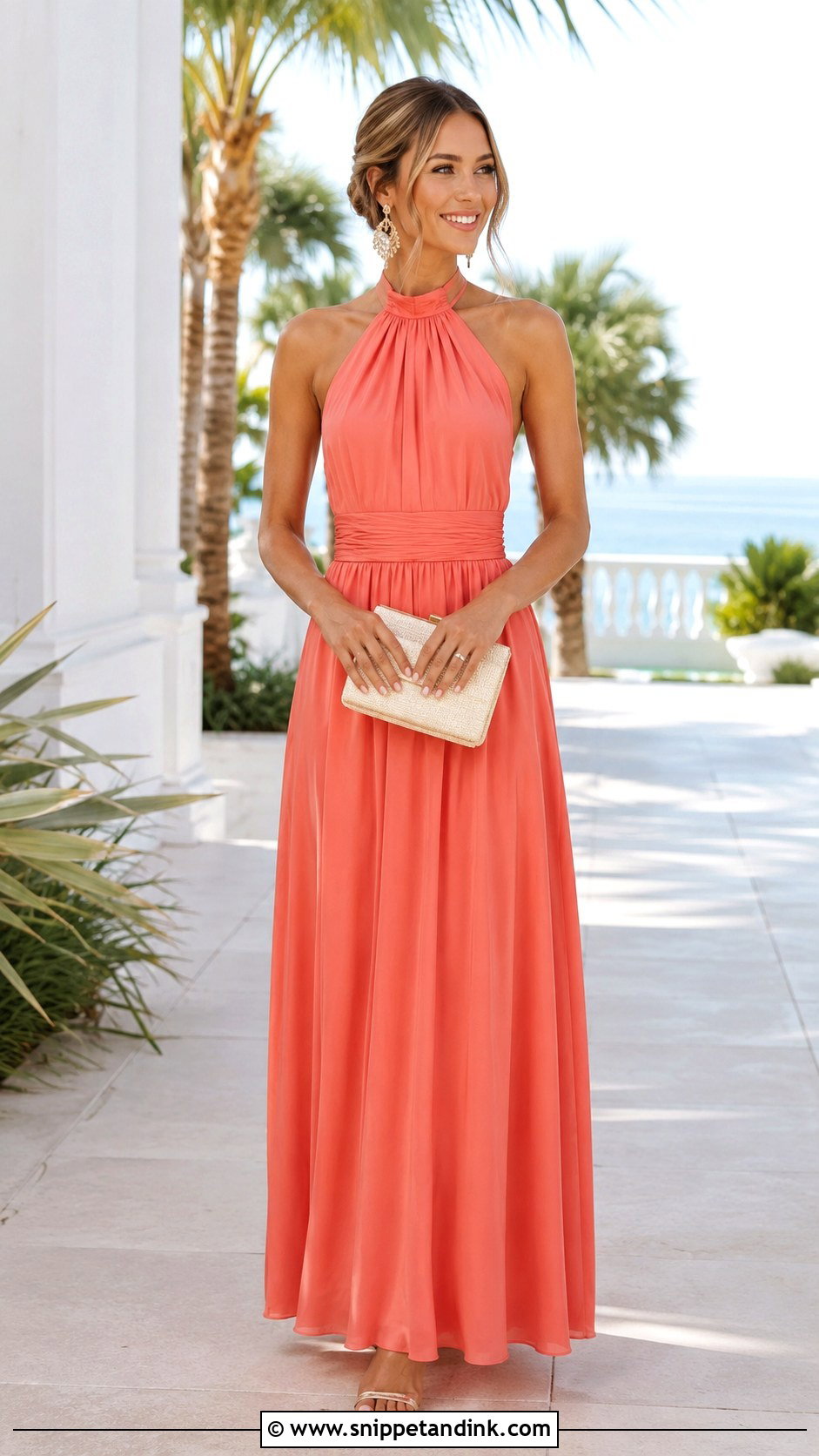
Halter necklines suit warm-weather weddings, beach venues and modern receptions, because the bare shoulders keep you cool. A flowing halter maxi suits beach and garden settings; a satin halter midi suits cocktail events. The tie or band at the neck takes the bodice’s weight, so a heavy fabric can tug after a few hours. Earrings that frame the face and no necklace keep it clean. A low bun or soft waves show off the cut. Strappy sandals and a small clutch complete it, and it’s an easy dress to dance in.
19. Pleated Dress for Wedding
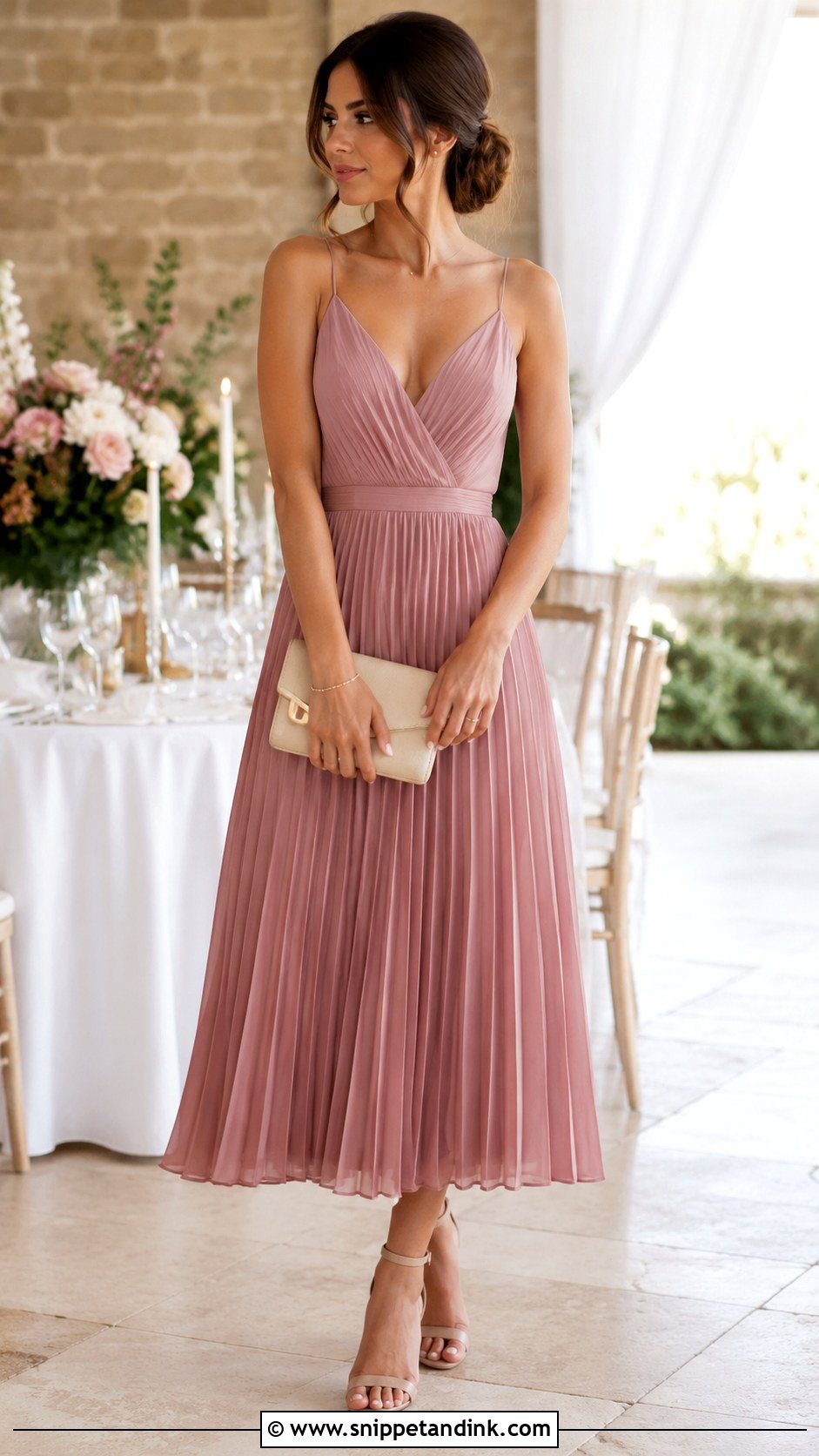
Pleats add movement and texture without tightness, which is why they’re good for guests who want comfort and coverage at once. Chiffon pleats feel romantic, satin pleats look sharper. A pleated midi or maxi works for daytime, evening and semi-formal weddings, in dusty blue, rose, sage, champagne gold, burgundy or navy. A defined waist is essential, since a pleated skirt without one can look shapeless. Fine pleats crush if you sit on them all through dinner; smooth the skirt under you as you sit. Simple heels, a structured clutch and minimal jewelry finish it.
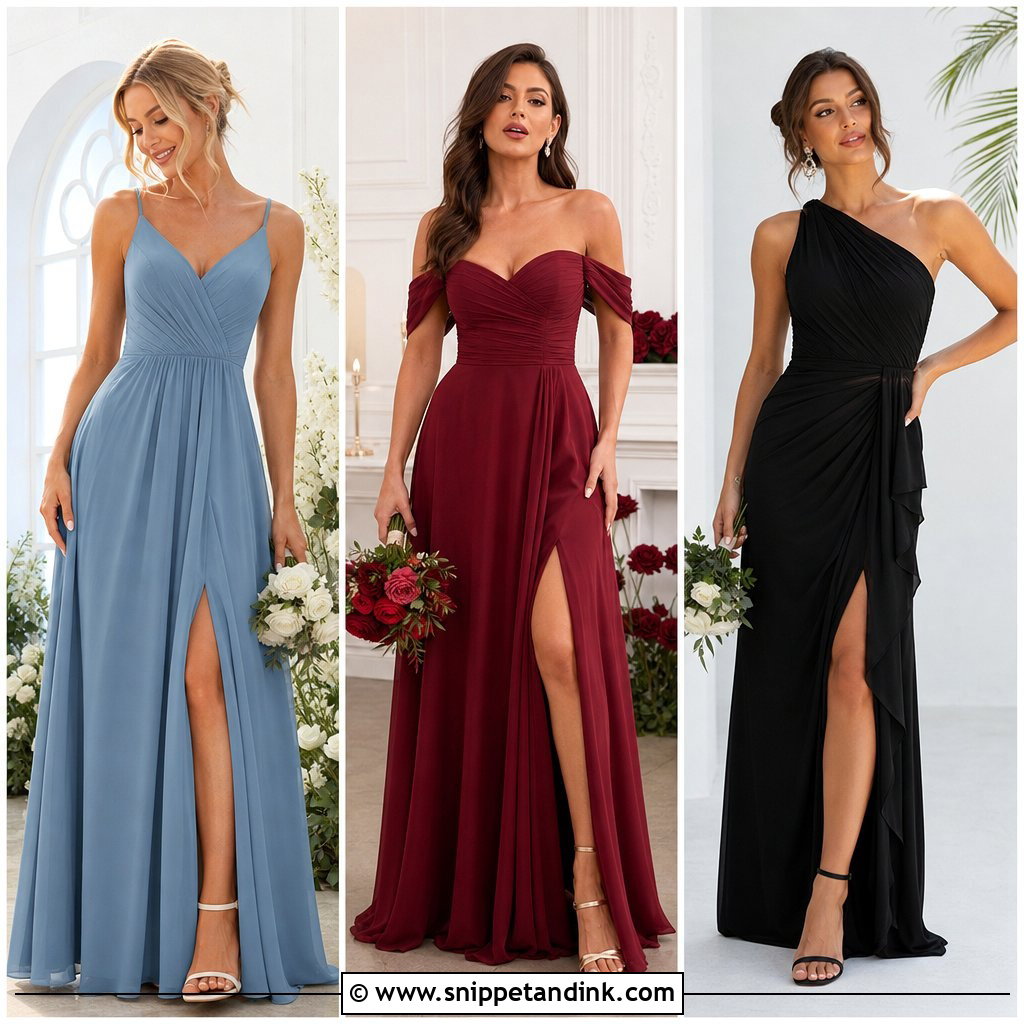

20. A Line Dress for Wedding
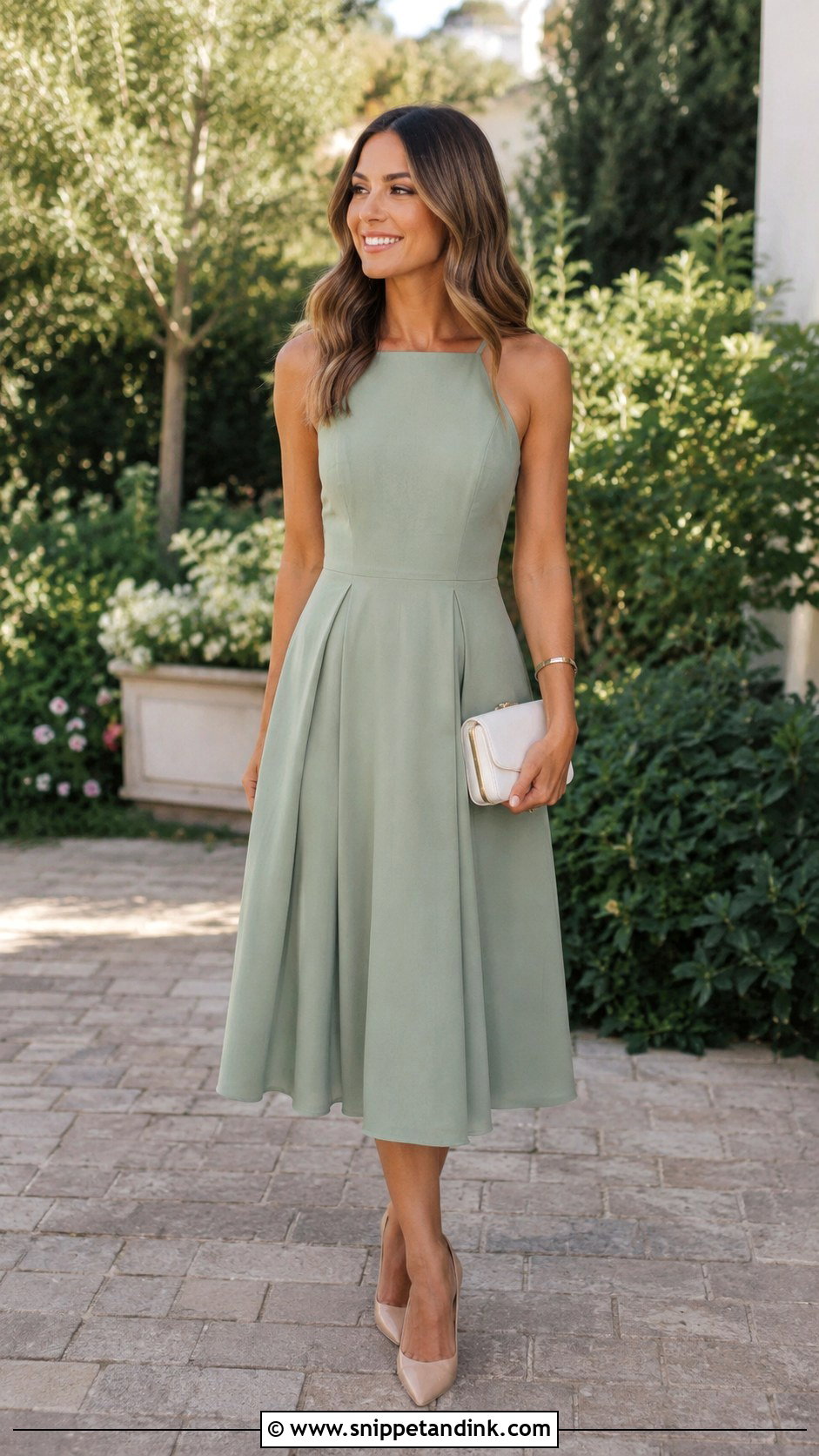
The A-line is the shape I suggest when someone has a dress code they can’t decode. It fits through the bodice and widens through the skirt, so it doesn’t cling at the hip and sits comfortably at a long dinner. A floral A-line midi suits spring and garden weddings; satin or crepe makes it formal. Pointed pumps, block heels or dressy sandals depend on the venue, with a small clutch and simple jewelry. It’s appropriate across nearly every dress code, which makes it a sensible first purchase.
21. Off Shoulder Dress for Wedding
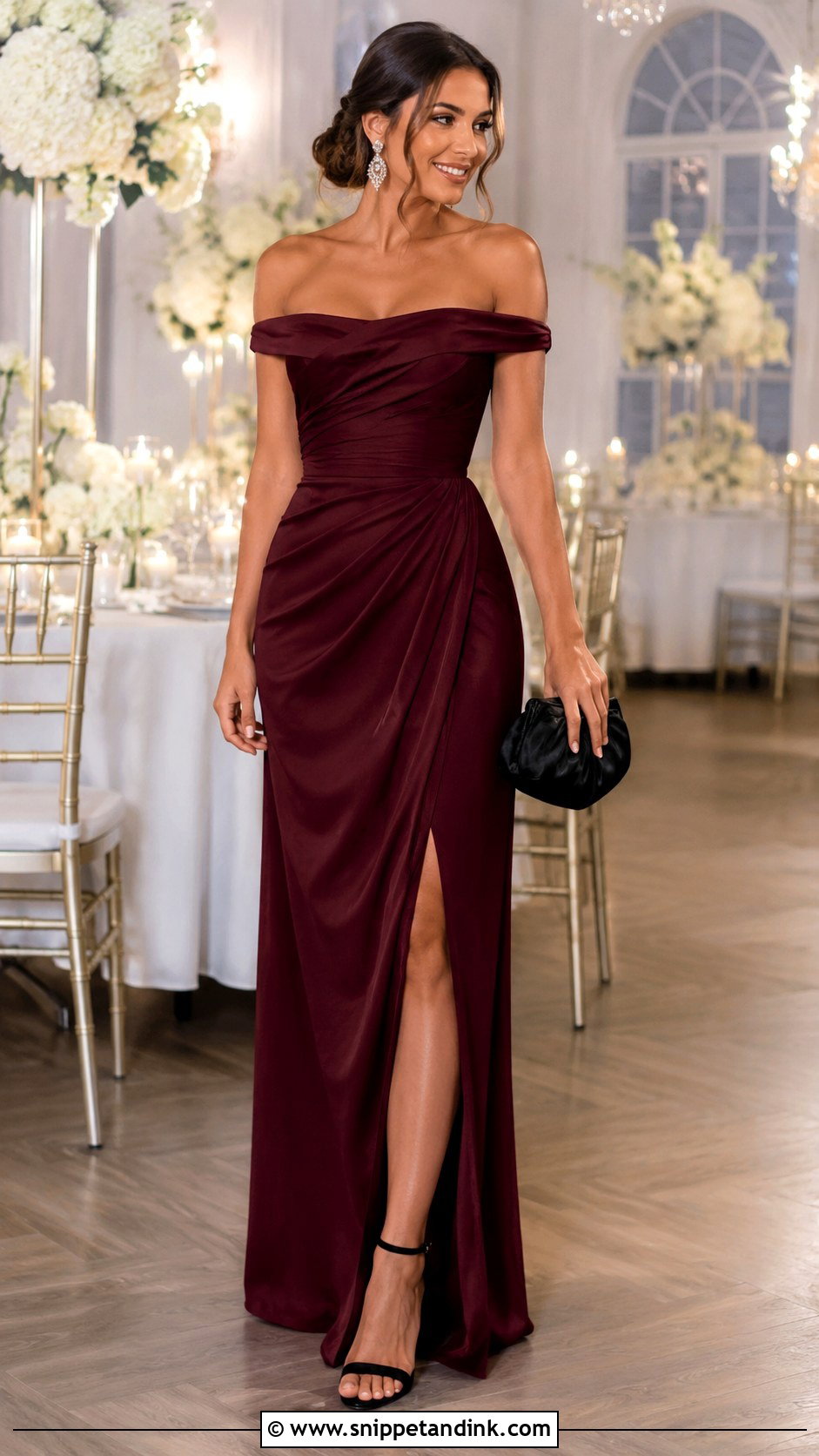
Off-shoulder necklines look romantic, but they need to let you move your arms. Before committing, raise your arms as if to hug someone and reach across as if for the bread basket; if the bands dig in or the bodice rises, it’s the wrong cut. In midi and maxi lengths, satin, chiffon or crepe work well. Rose for spring, cobalt for summer, burgundy for autumn and navy for winter all suit it. Statement earrings, a clutch and heeled sandals complete it, with a simple necklace or none. Cocktail, formal and evening weddings suit it.
22. Sequin Dress for Wedding
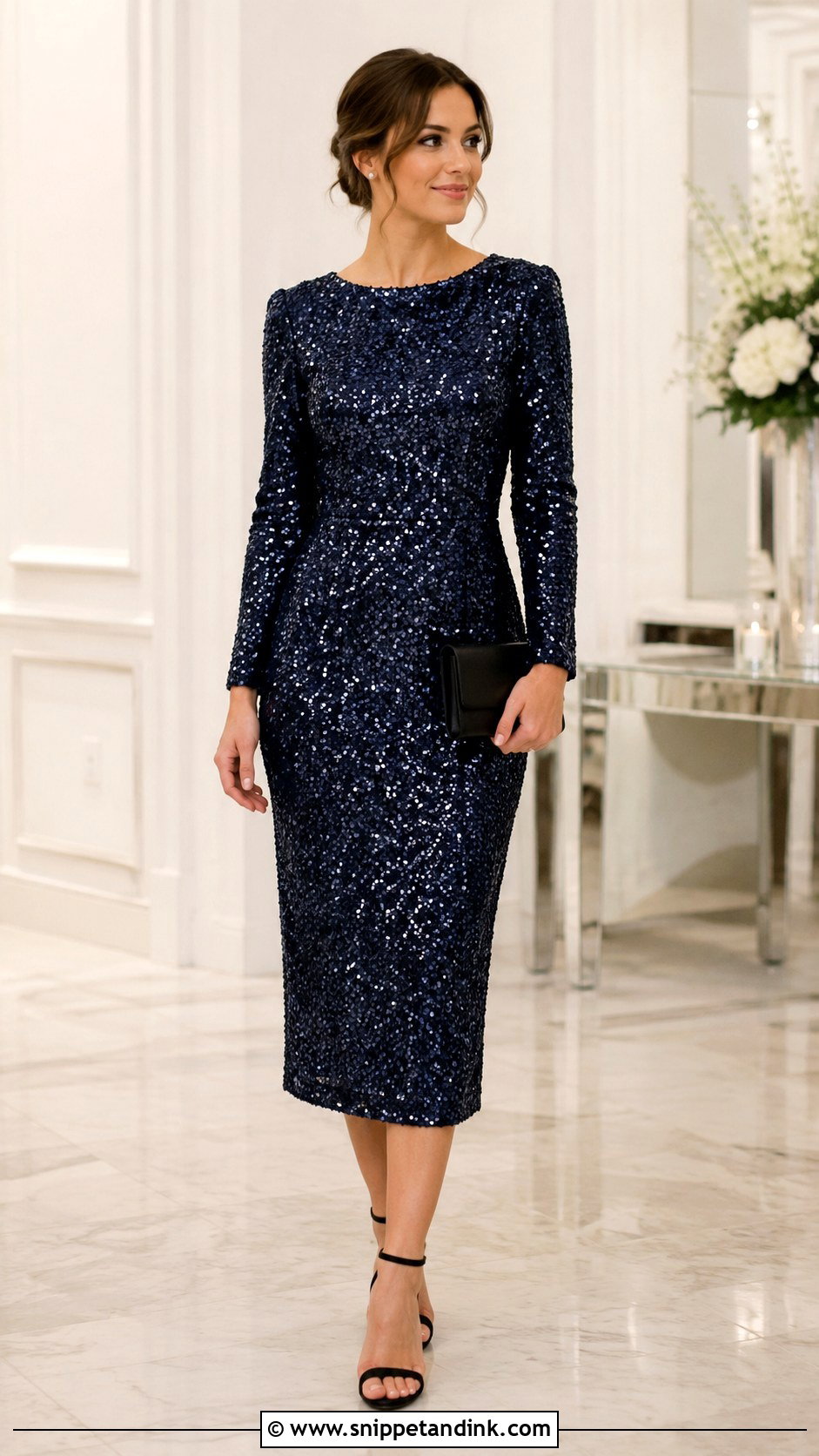
Sequins work at weddings when the length and shade stay tasteful. A midi or maxi in navy, champagne, rose gold, emerald, pewter or black looks festive; anything short or very flashy looks like a nightclub. Avoid white or silver-white sequins, which can read bridal. A sequin wrap, column or long-sleeve midi suits formal, black tie, holiday-season and city weddings. Simple heels, a plain clutch and minimal jewelry keep the sparkle balanced. Sequins scratch at the underarm over a long evening, so check that the inner sleeve and side seams are lined.
23. Pastel Dress for Wedding
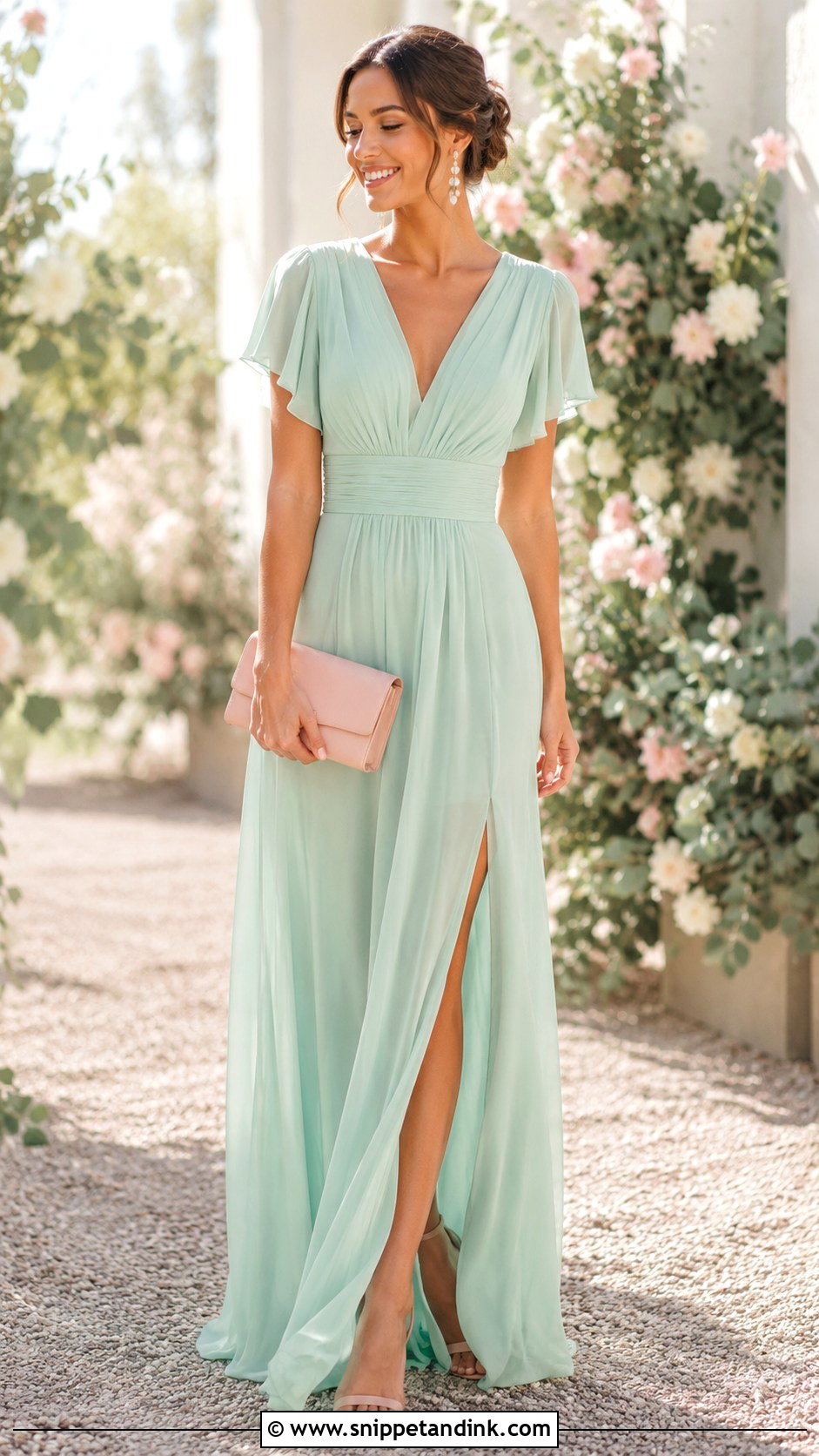
Pastels suit spring and summer, as long as they stay clear of white. Lavender, powder blue, mint, blush, peach and pale yellow all work in a floral midi, chiffon maxi, satin slip or pleated dress, depending on the dress code. Be careful pairing white-toned accessories with a very pale dress; the whole look drifts toward bridal. Delicate earrings, a small clutch and comfortable heels finish it. Garden, daytime and outdoor venues suit pastels best, where daylight keeps them from looking flat.
24. Jewel Tone Dress for Wedding
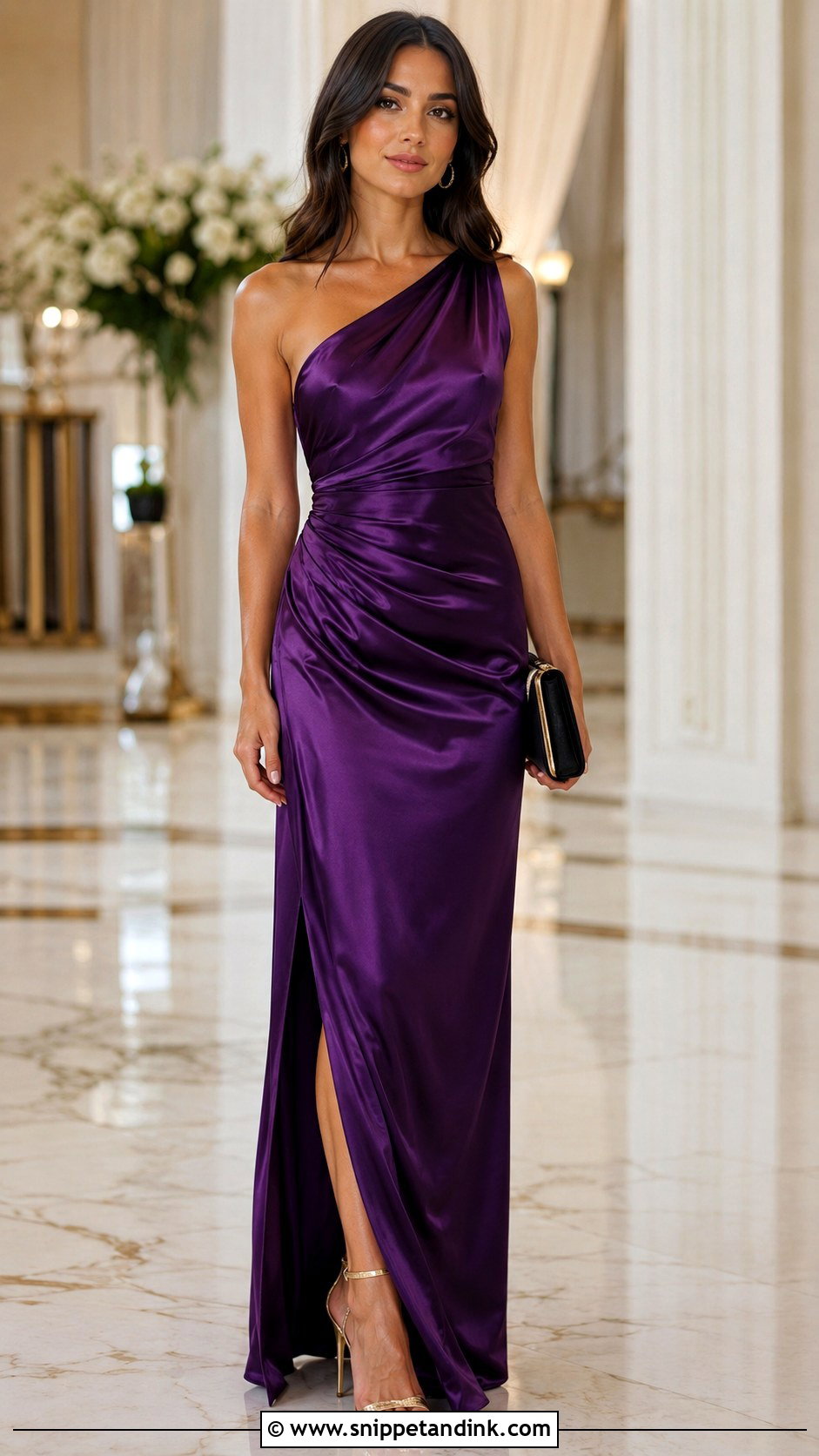
Jewel tones are the safest way to wear strong colour to a wedding. Emerald, sapphire, ruby, amethyst, teal and garnet read rich rather than bright, and they suit many skin tones and dress codes. A satin maxi, velvet midi, one-shoulder dress or structured cocktail dress all look striking in these shades. Metallic heels, a black or gold clutch and simple jewelry complete it. They’re especially good at evening weddings, where saturated colour holds up under low light. One caution: ruby can drift toward the bridal party’s red at some cultural weddings, so check first.
25. Formal Midi Dress for Wedding
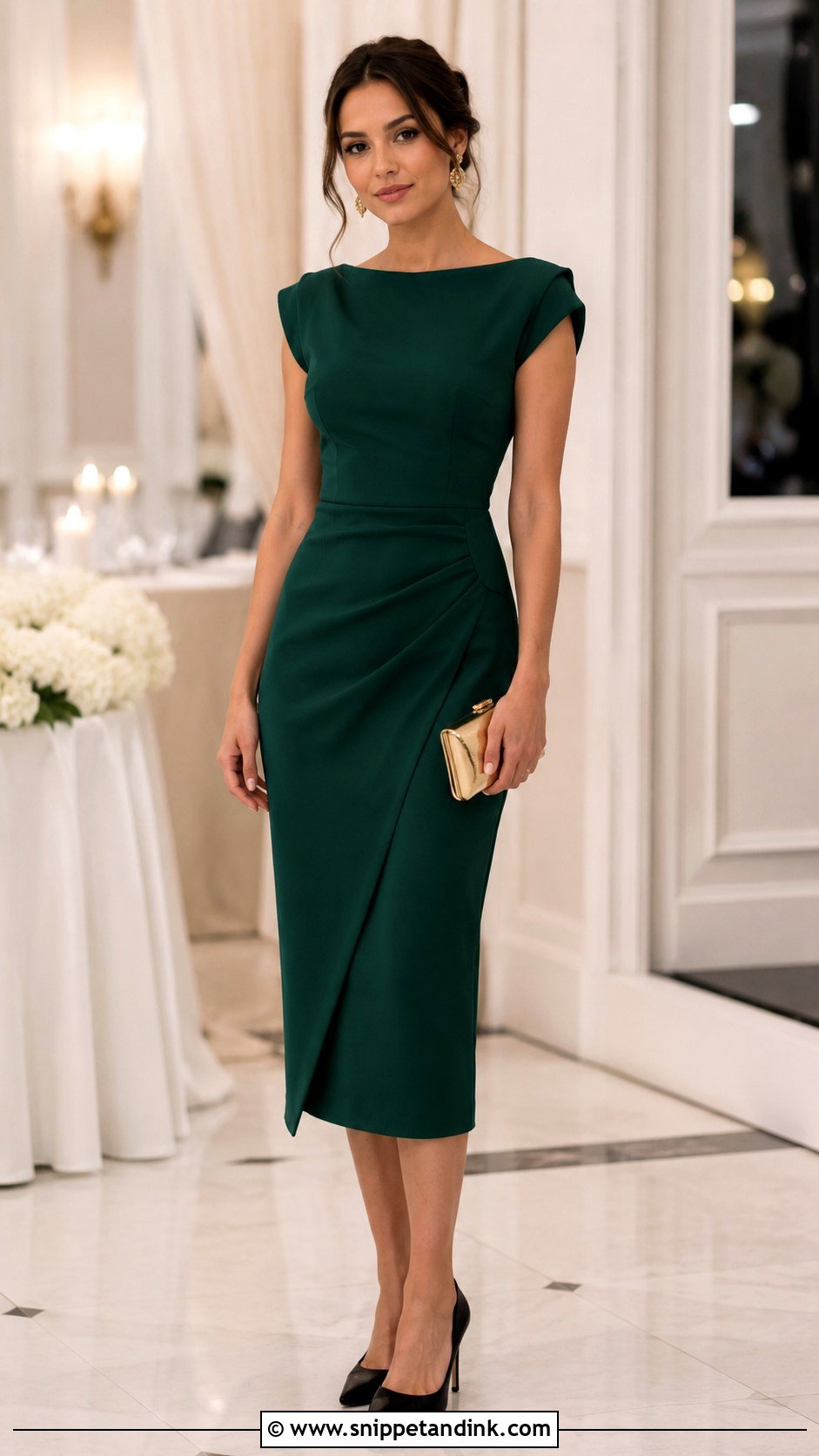
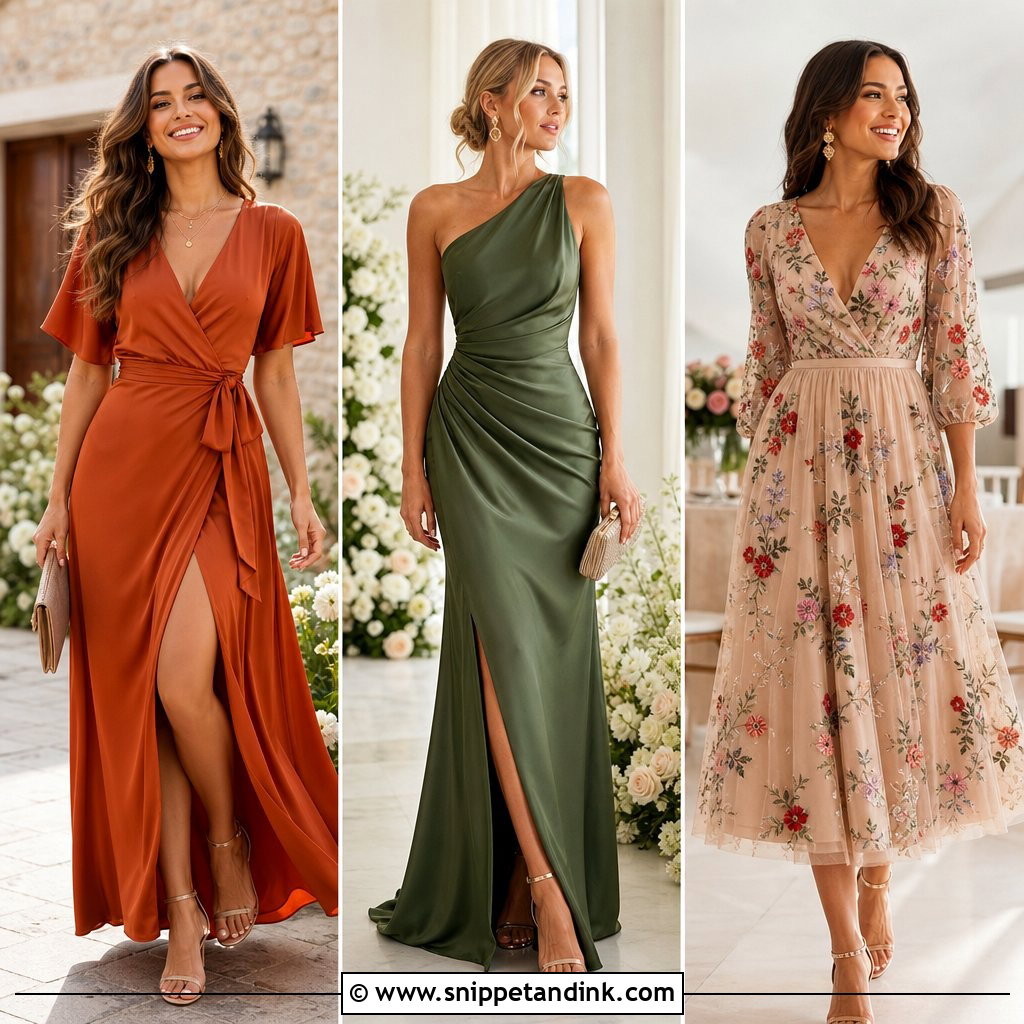
A formal midi dress is what I suggest when floor length feels like too much. It suits cocktail, semi-formal and many evening weddings. Structured crepe, satin, jacquard, lace or pleated chiffon keep it formal, and a square neckline, one-shoulder cut, wrap waist or fitted bodice adds interest. Pick jewelry for the neckline, not the dress. Navy, burgundy, emerald, rose and black get the most rewear. Midi length also lets you walk, sit and dance freely, which is half the point.
Spotting a Dress That Won’t Last the Night
Some guest dresses look fine in the changing room and tired by the reception. A few checks catch most of them before you pay:
- Scrunch a corner of the skirt in your fist for ten seconds. If it stays creased, it’ll look crumpled after the ceremony.
- Take a phone photo with flash. Thin fabric and short linings show straight through.
- Look at the zip. A puckered or wavy invisible zip on the hanger will be worse on the body.
- Sit down for a full minute, then stand. Watch for seams that strain and hems that ride up.
- Check the inside. Raw, fraying seams and unfinished beading shed through the evening.
None of these require an expensive dress to pass. Plenty of reasonably priced pieces do; plenty of pricey ones don’t.
Rent, Borrow or Buy for a Season of Invitations
With several weddings in one year, the maths changes. Renting suits black tie and very formal events, where you’d rarely rewear a gown. Buying makes sense for midis and cocktail dresses you’ll reach for again. Wearing the same dress twice is completely fine, especially when the guest lists don’t overlap, and a different layer, shoes and jewelry make it read as a new outfit. A navy or emerald midi with a blazer one month and a metallic heel and statement earrings the next has carried plenty of guests through a busy summer.
From the First Vow to the Last Song
The right dress answers the invitation, the venue and the season, and still lets you enjoy yourself. Floral midis, satin slips, velvet, jewel tones and formal maxis between them cover nearly every dress code. Read the wedding details first, then rule out white, very casual fabrics and anything that pulls focus from the couple. Finish with shoes you can genuinely wear for hours, a neat bag and simple accessories. A dress that fits the day makes everything easier, from the first vow to the last song.
You'll Like These Ideas:


Leave a Reply