
An Indian wedding is rarely one event. There may be a haldi in the morning, a mehndi or sangeet the evening before, the ceremony itself and then a reception, and each one asks something different of a guest’s outfit. Sarees, lehengas, Anarkali suits, sharara sets and fusion pieces all have a place; the trick is matching them to the function, the venue and whatever the couple has asked for. When I style a guest, I start with the practical questions: how long will you be standing, will you be sitting on the floor, and how much dancing is planned? The twenty outfits below run from heavy traditional silks to draped pantsuits, and for each one I’ve noted what makes it comfortable and what tends to go wrong.
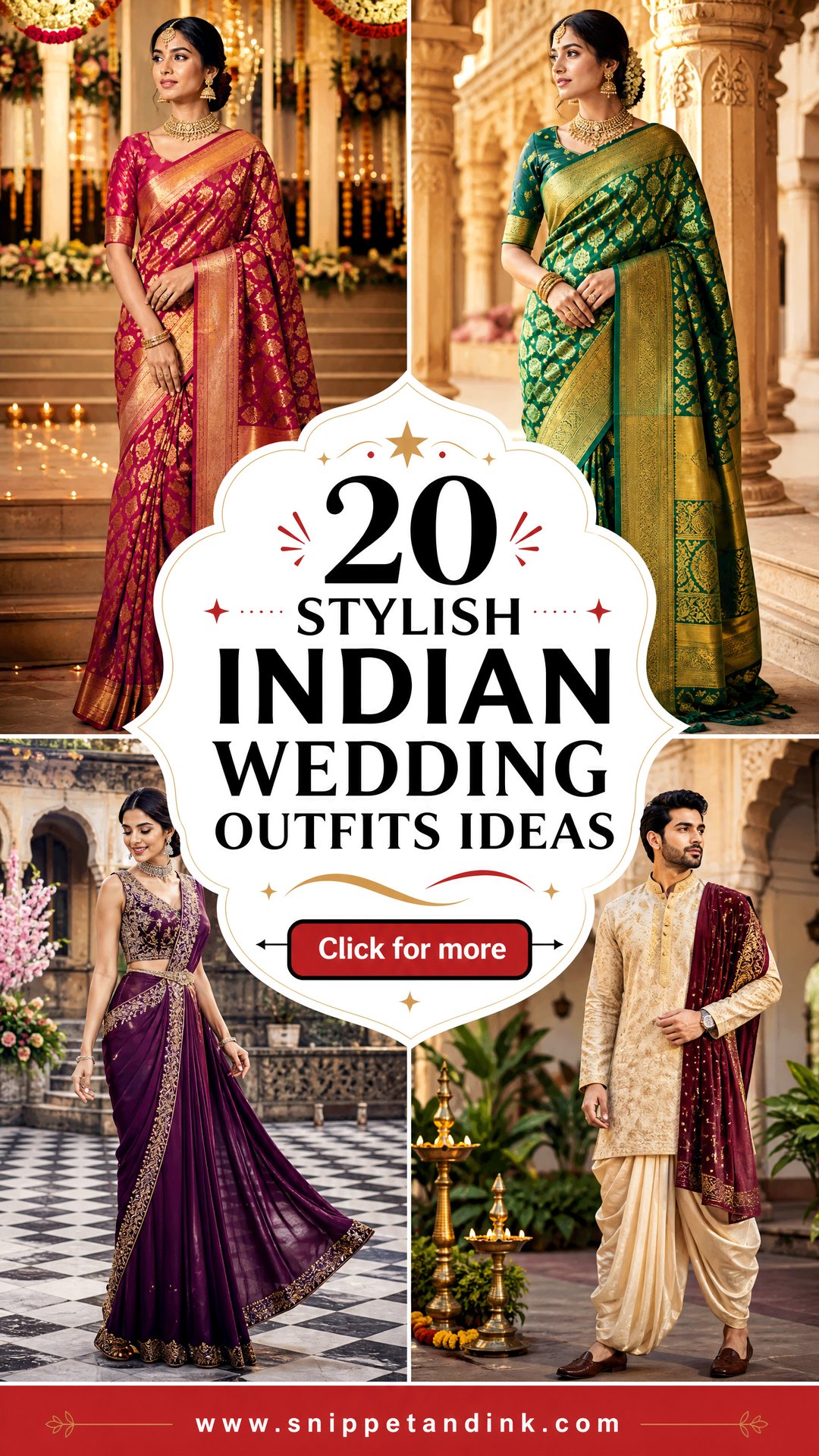
From Haldi Morning to Reception Night, One Outfit per Function
Many guests over-dress the day events and under-dress the ceremony. This is roughly how I split a wardrobe across a multi-day wedding, though families and regions differ, so the invitation always wins.
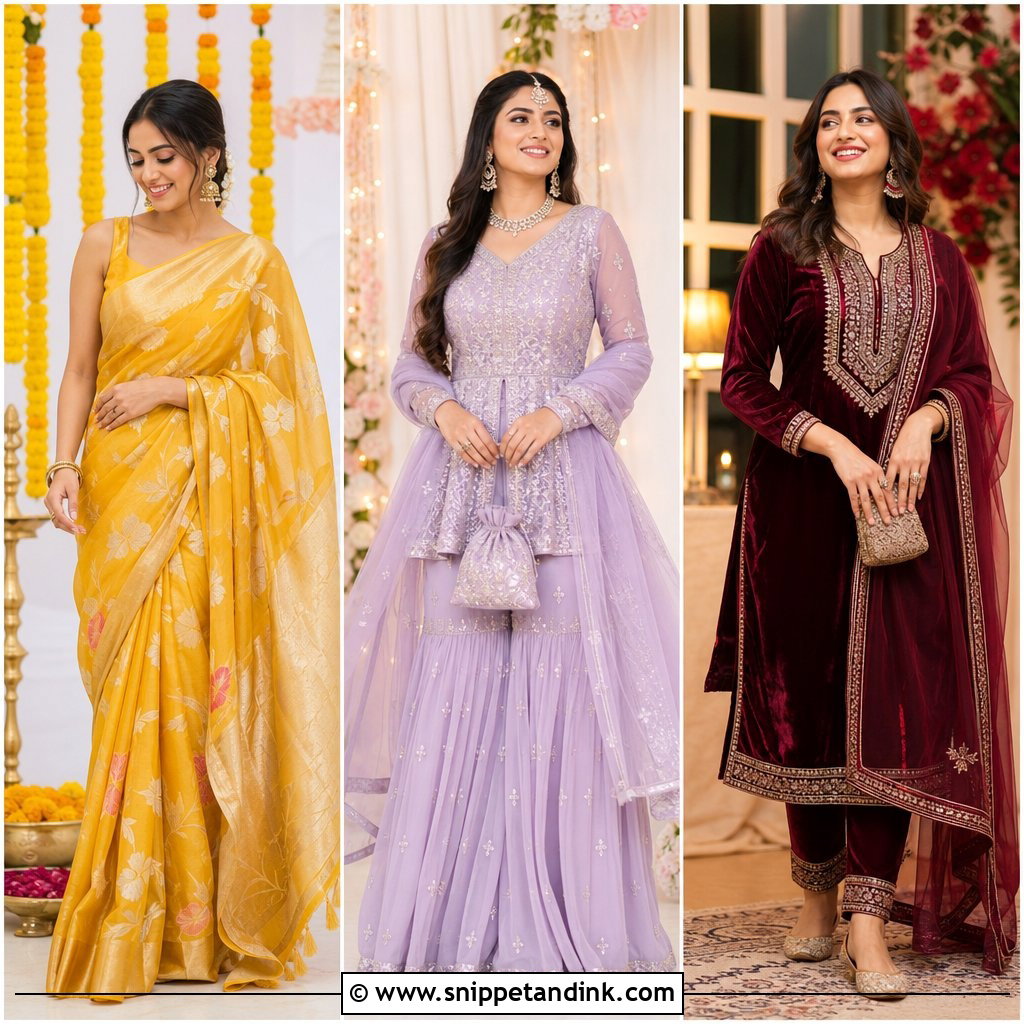
- Haldi: turmeric paste gets everywhere and it stains. Wear yellow or a light cotton you won’t mind marking, and keep silk at home.
- Mehndi: bright, light and comfortable for sitting on cushions for hours. Shararas, Bandhani and chikankari belong here.
- Sangeet: this is the dance night, so pick something you can move and spin in, with secure pins and flat or stable shoes.
- Ceremony: the most traditional outfit of the trip. Silk sarees, a full lehenga or a formal salwar kameez, with shoulders covered if it’s held in a temple or gurdwara.
- Reception: the room for fusion, pre-draped sarees, saree gowns and pantsuits.
Colour etiquette varies between communities. Red is traditionally the bride’s colour in many North Indian weddings, and some families treat all-white or all-black as mourning shades. If in doubt, ask someone close to the couple rather than guessing.
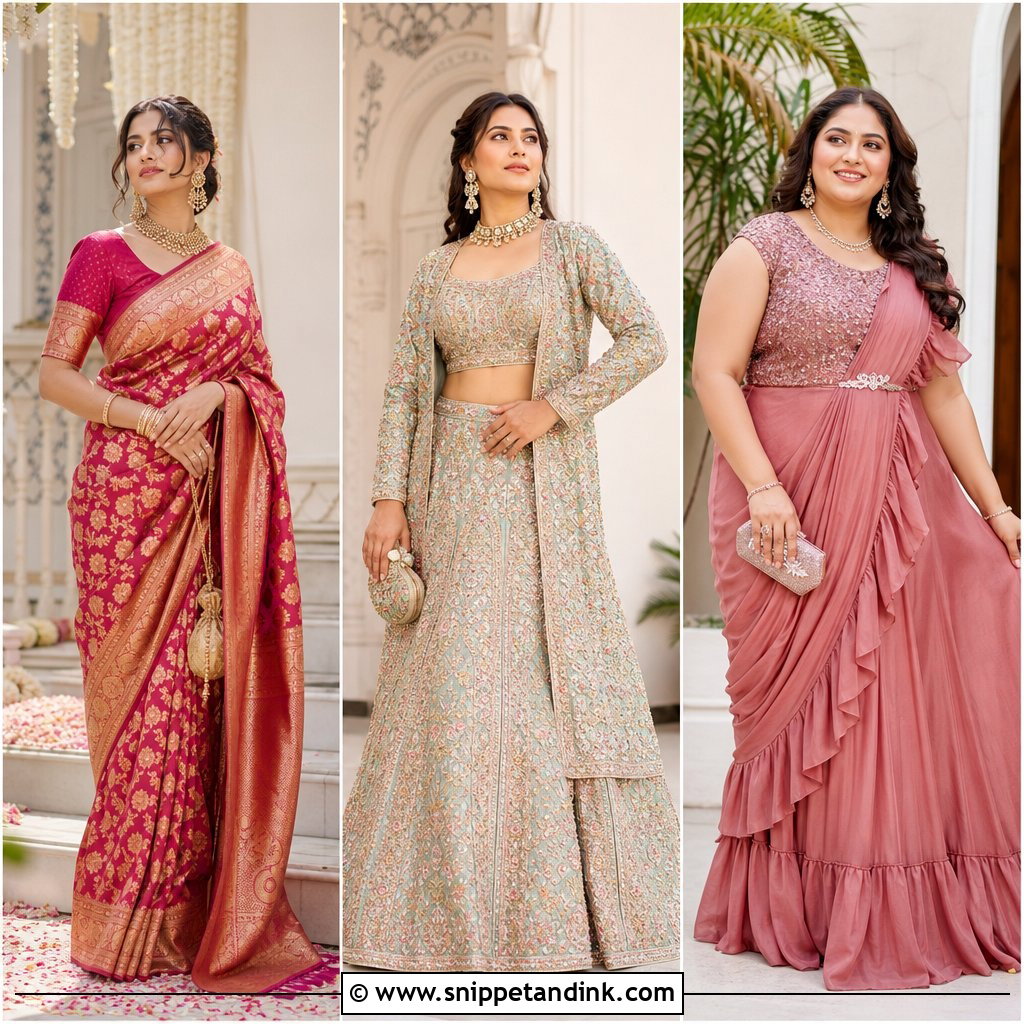
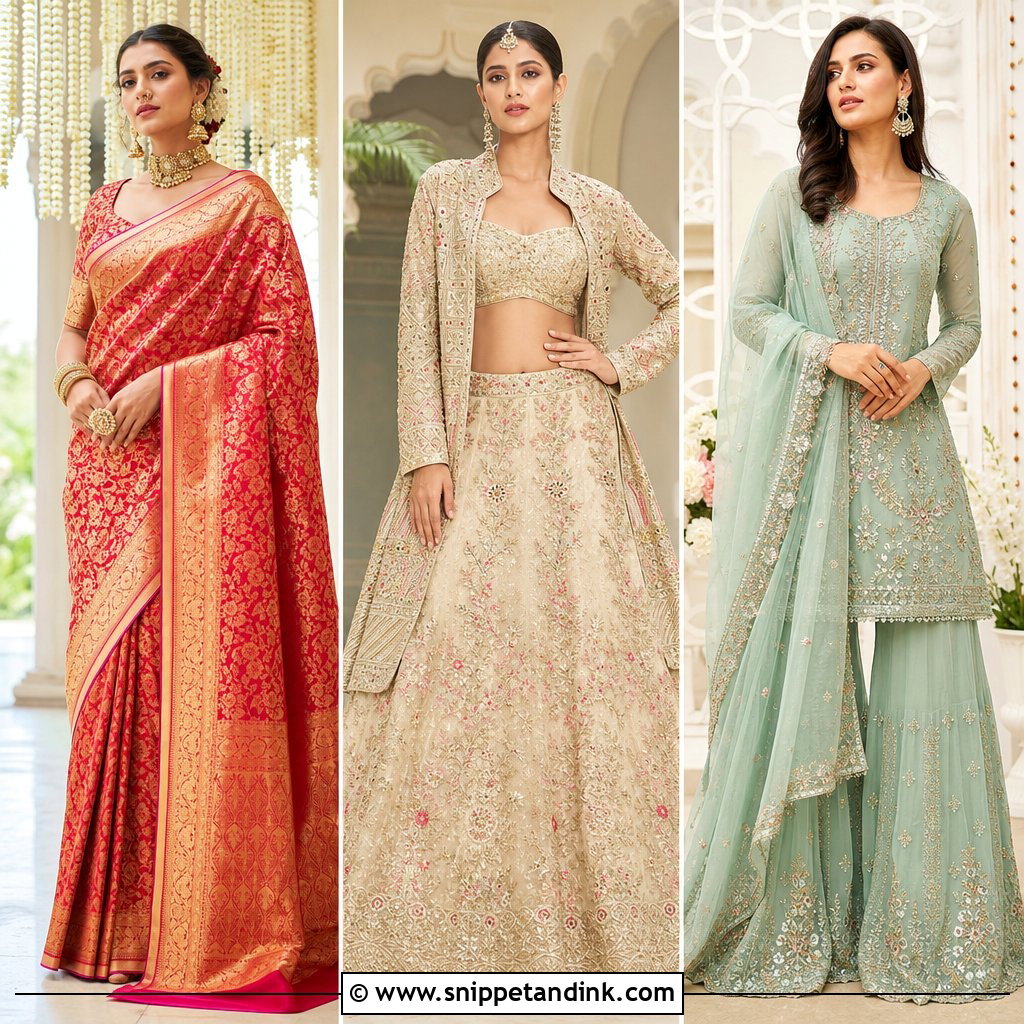
1. Banarasi Silk Saree Indian Wedding Outfit
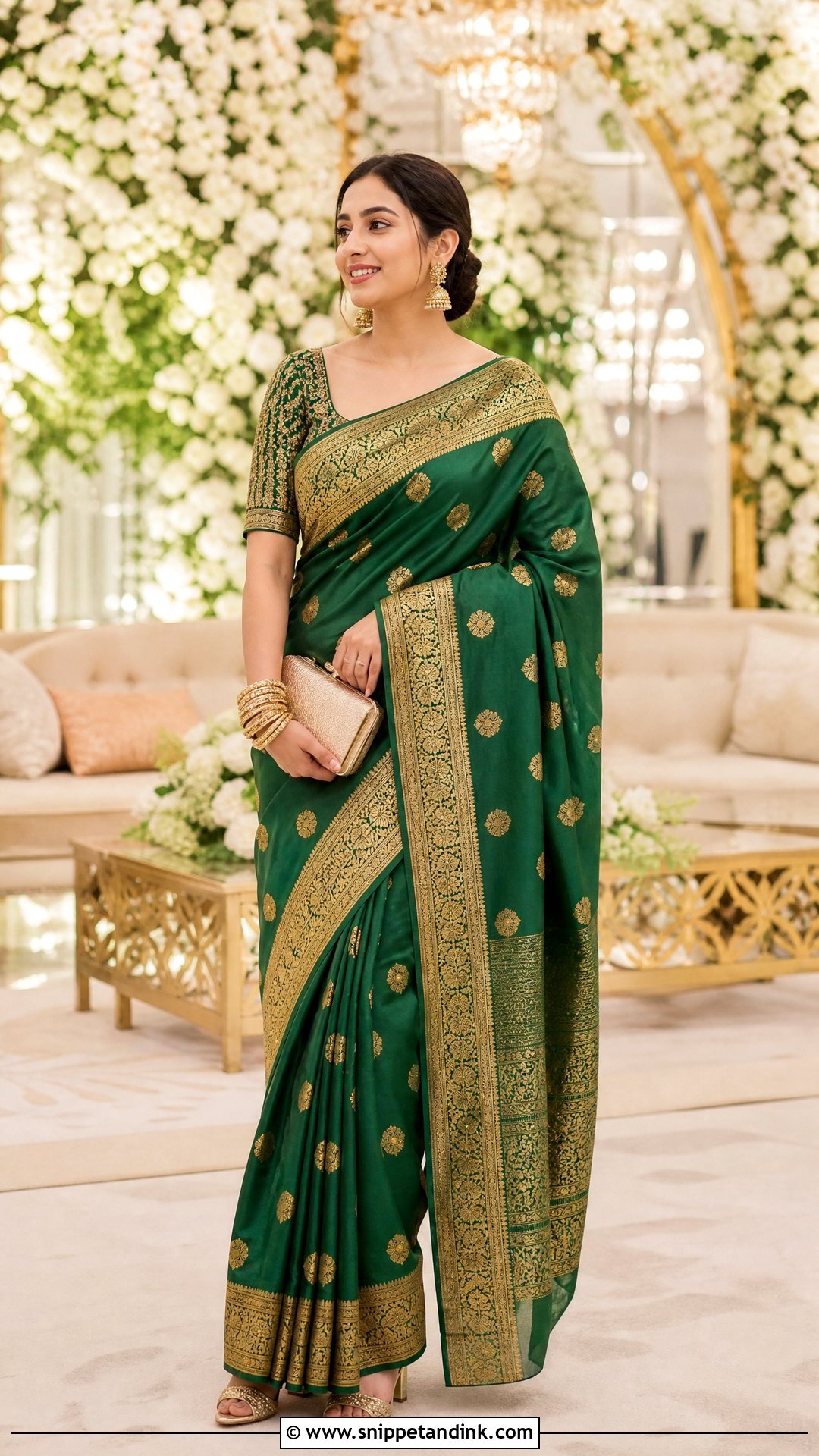
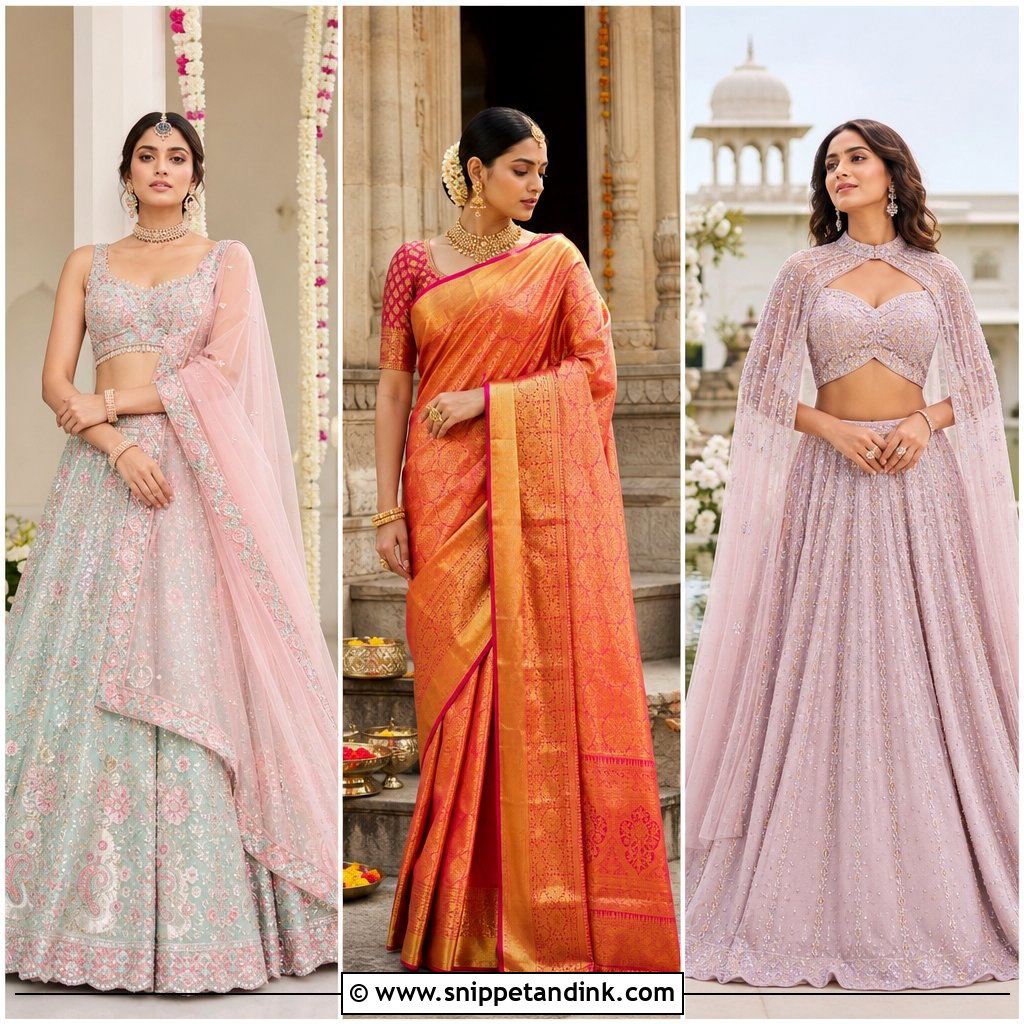
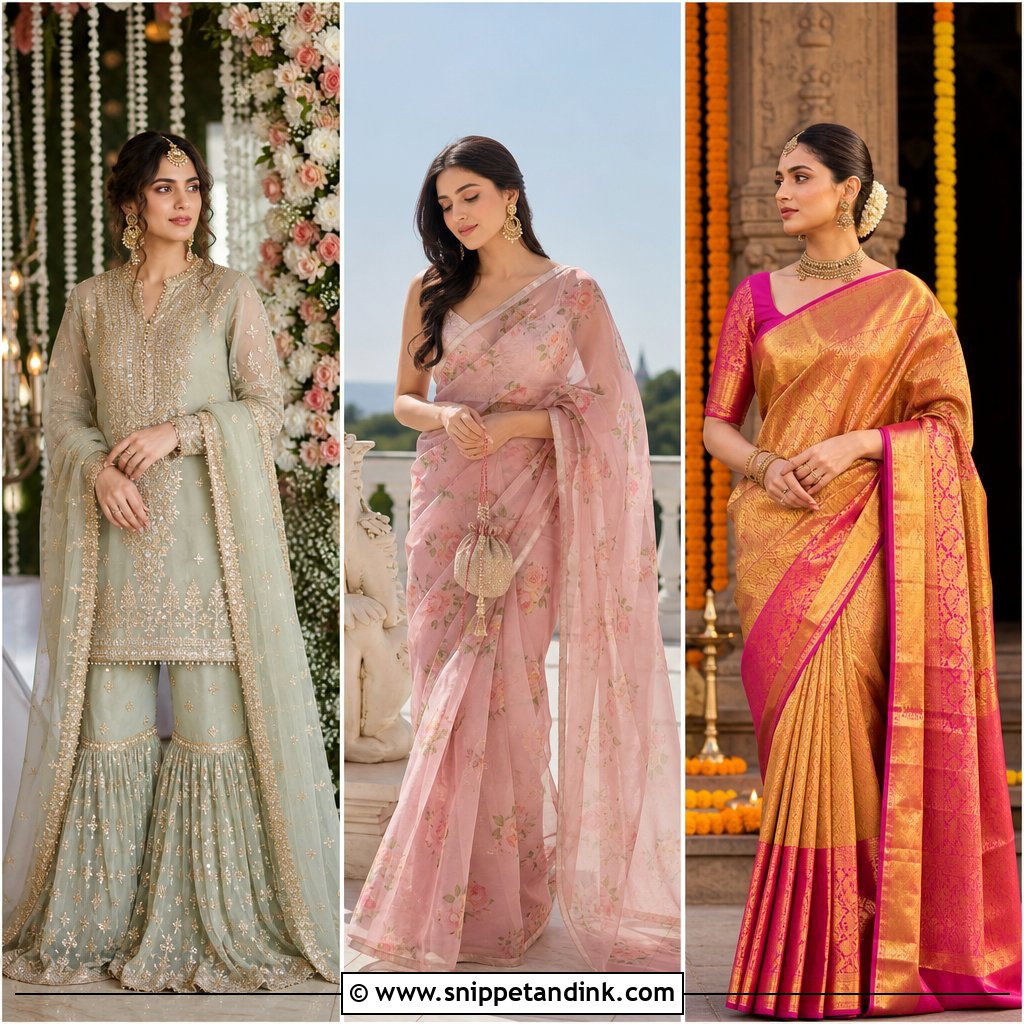
A Banarasi is woven with real weight in the zari, and that weight is exactly why it drapes so richly and why it slips if it isn’t pinned well. Emerald, royal blue, magenta or deep purple with a deep gold border suits a formal ceremony. A fitted elbow-sleeve blouse in matching silk or a contrasting brocade balances the heavy drape. Gold jhumkas, stacked bangles and a small clutch are enough; adding a heavy necklace on top of a heavy border is where it tips into costume. I’d wear embroidered block heels or cushioned wedges underneath, since stilettos catch in the pleats. A low bun with fresh flowers is the classic finish. Have it draped and pinned at the pleats and shoulder before you leave home, then sit down once to check nothing pulls.
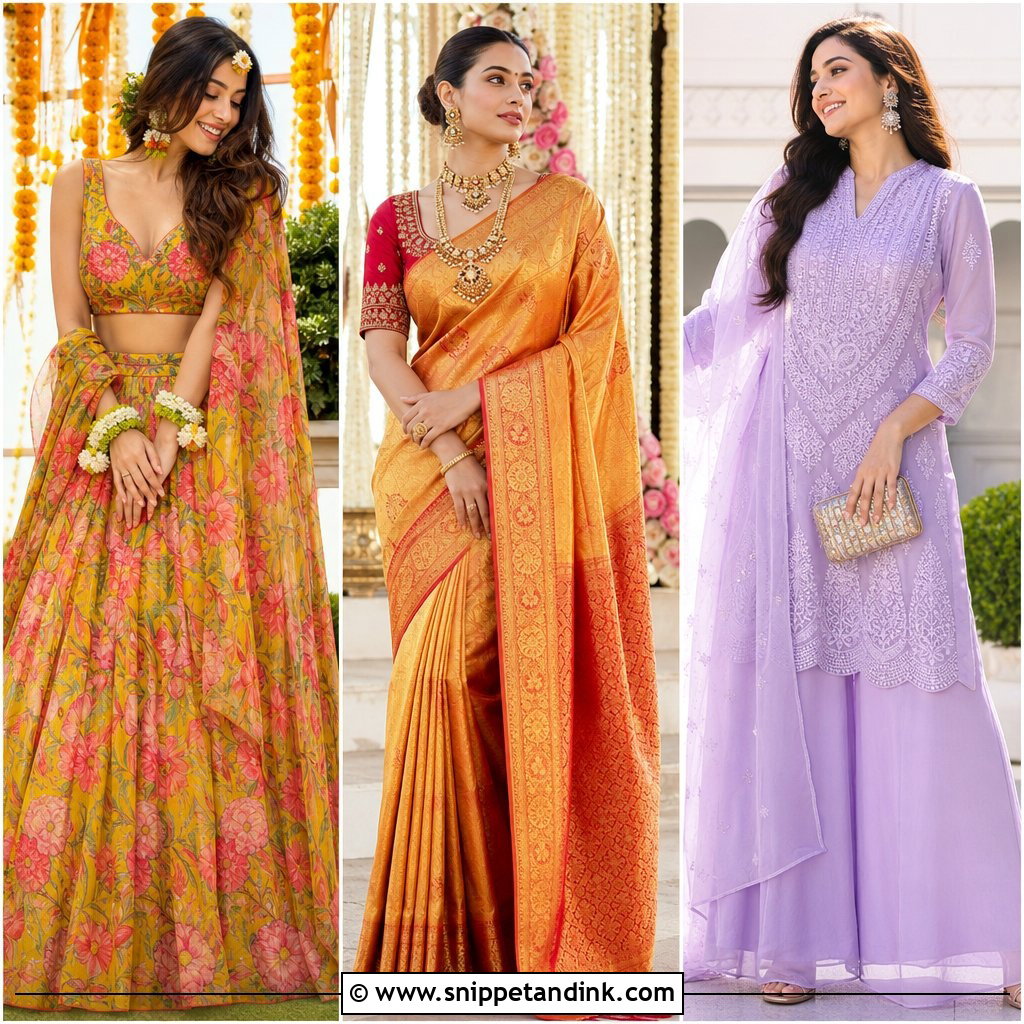
2. Kanjivaram Silk Saree Indian Wedding Outfit
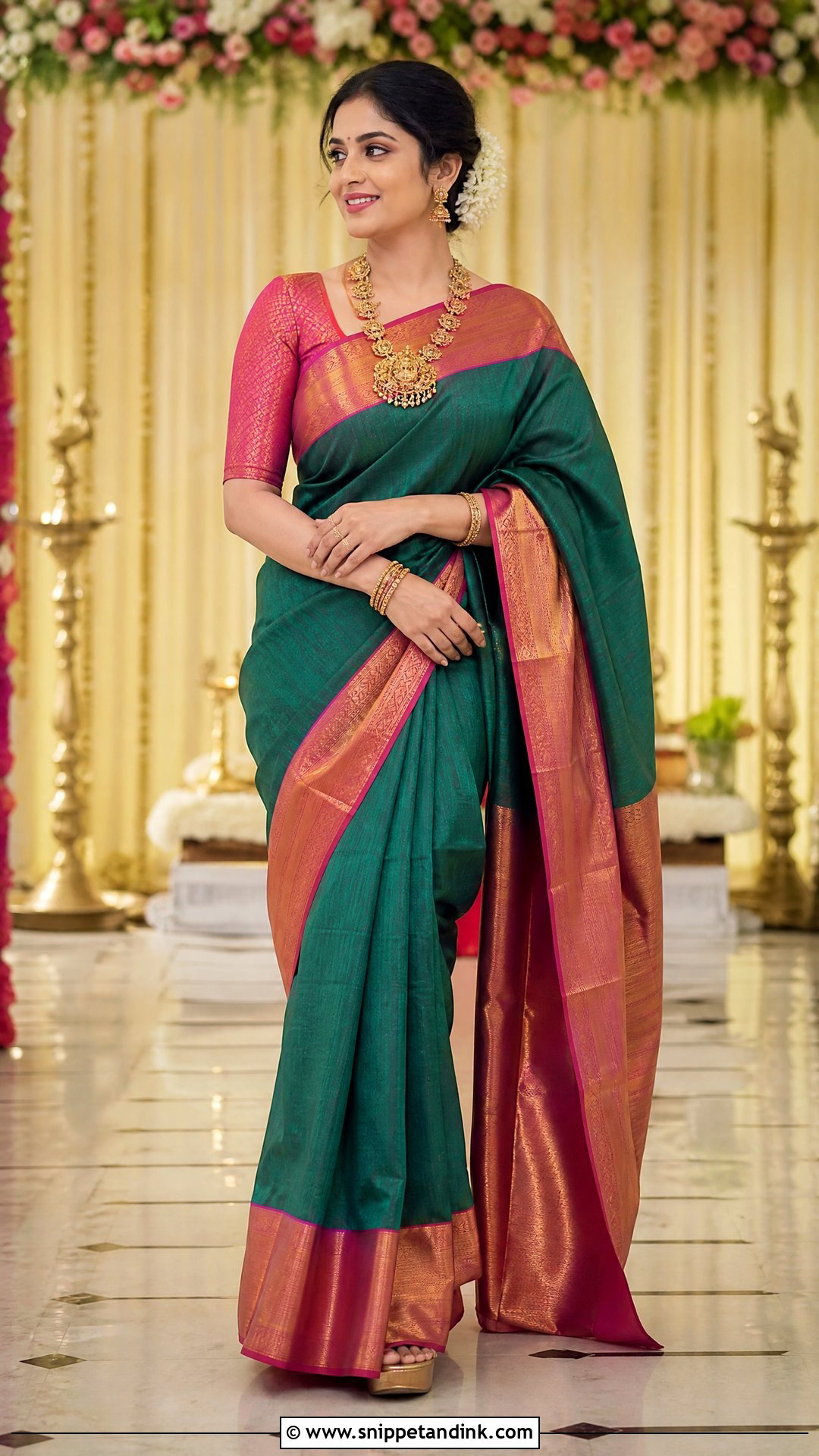
Kanjivaram silk is heavier and stiffer than most sarees, which gives it that structured fall but also means it fights back if the blouse doesn’t fit. Contrast borders are the signature: teal with pink, mustard with maroon, purple with gold. I always tell guests to get the blouse tailored first and the jewellery second, because a gaping back or tight armhole spoils the whole drape, however good the silk. A modest neckline and fitted sleeves suit the weave. Temple-style earrings, gold bangles and a coordinated necklace echo the motifs, and a small structured bag keeps out of the way. Gold platforms or low block heels give stability under the weight. A sleek braid or neat bun with flowers suits the formality.
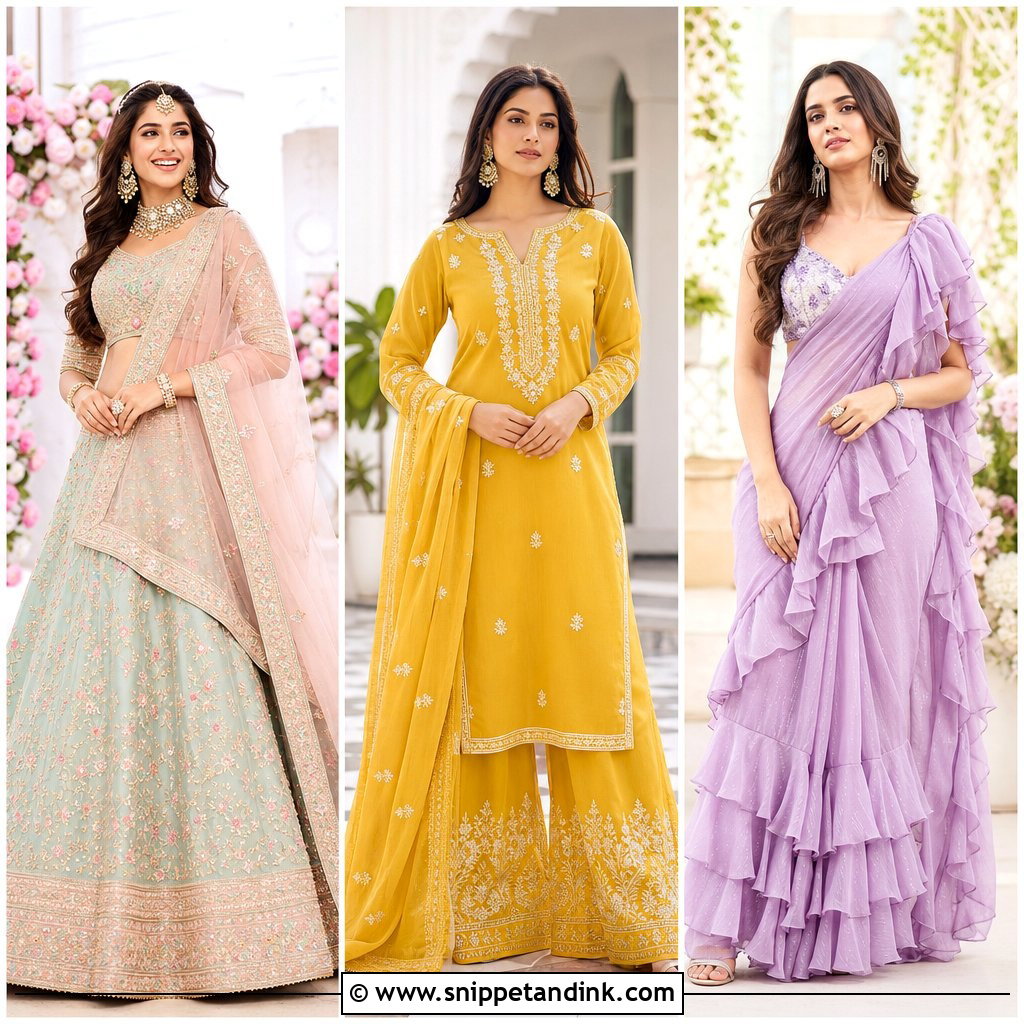
3. Pastel Floral Lehenga Indian Wedding Outfit
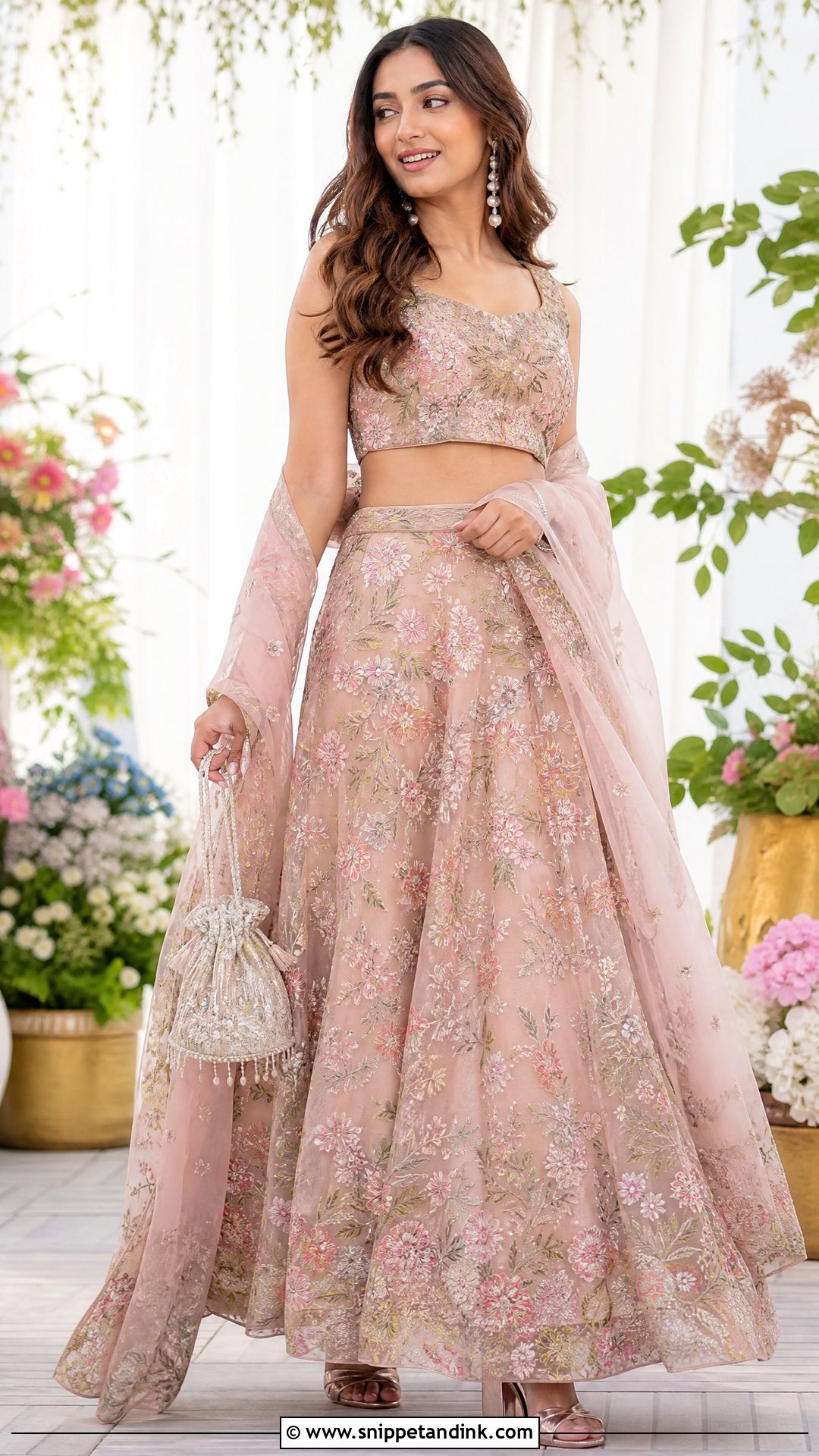
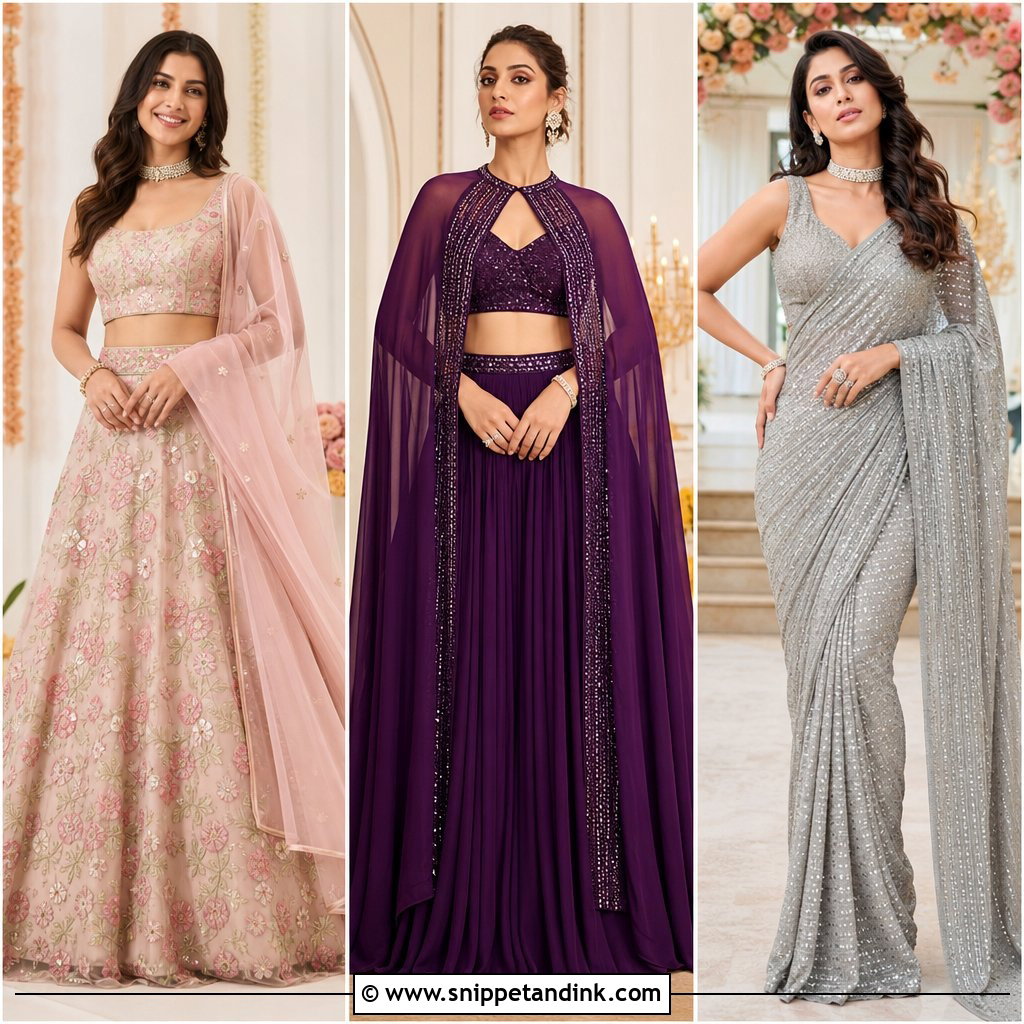
A pastel floral lehenga belongs to daylight: a garden ceremony, a morning function or an engagement. Blush, powder blue, mint, peach or lavender with embroidered or printed flowers reads fresh outdoors, while under warm evening lights pastels can look washed out. Style it with a fitted blouse and a light organza dupatta over one shoulder. Pearl drops, a fine bracelet and a small potli bag suit the palette. The choice between block heels and juttis depends on the hem: a skirt that brushes the floor needs heels so you don’t walk on it. Make sure the waistband sits at your natural waist and the blouse is supportive enough to forget about for several hours.
4. Velvet Lehenga Indian Wedding Outfit
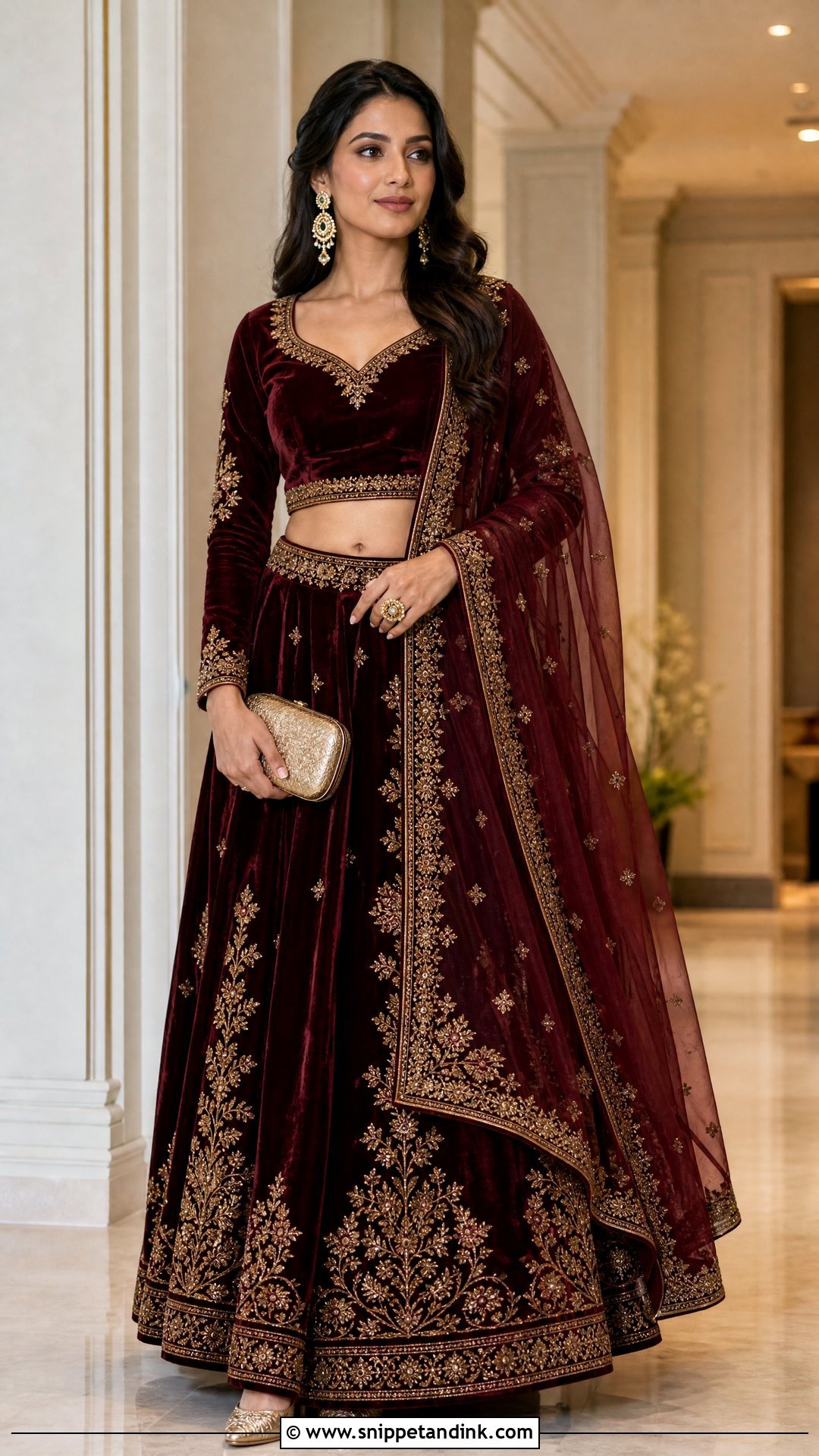
Velvet only makes sense for winter. In a cool hall it’s comfortable and rich; at a summer evening sangeet it becomes unbearable within the hour, and the pile shows every sweat mark. Burgundy, forest green, navy or plum with restrained zari at the hem and blouse is plenty, because velvet already absorbs and reflects light on its own. A matching velvet choli gives a continuous line and a sheer embroidered dupatta keeps the outfit from feeling heavy. Kundan earrings, a compact metallic clutch and one ring finish it. Closed-toe block heels suit winter venues. Ask for a breathable cotton lining inside the blouse and a waistband that sits flat; velvet seams add bulk wherever they cross.
5. Mirror Work Lehenga Indian Wedding Outfit
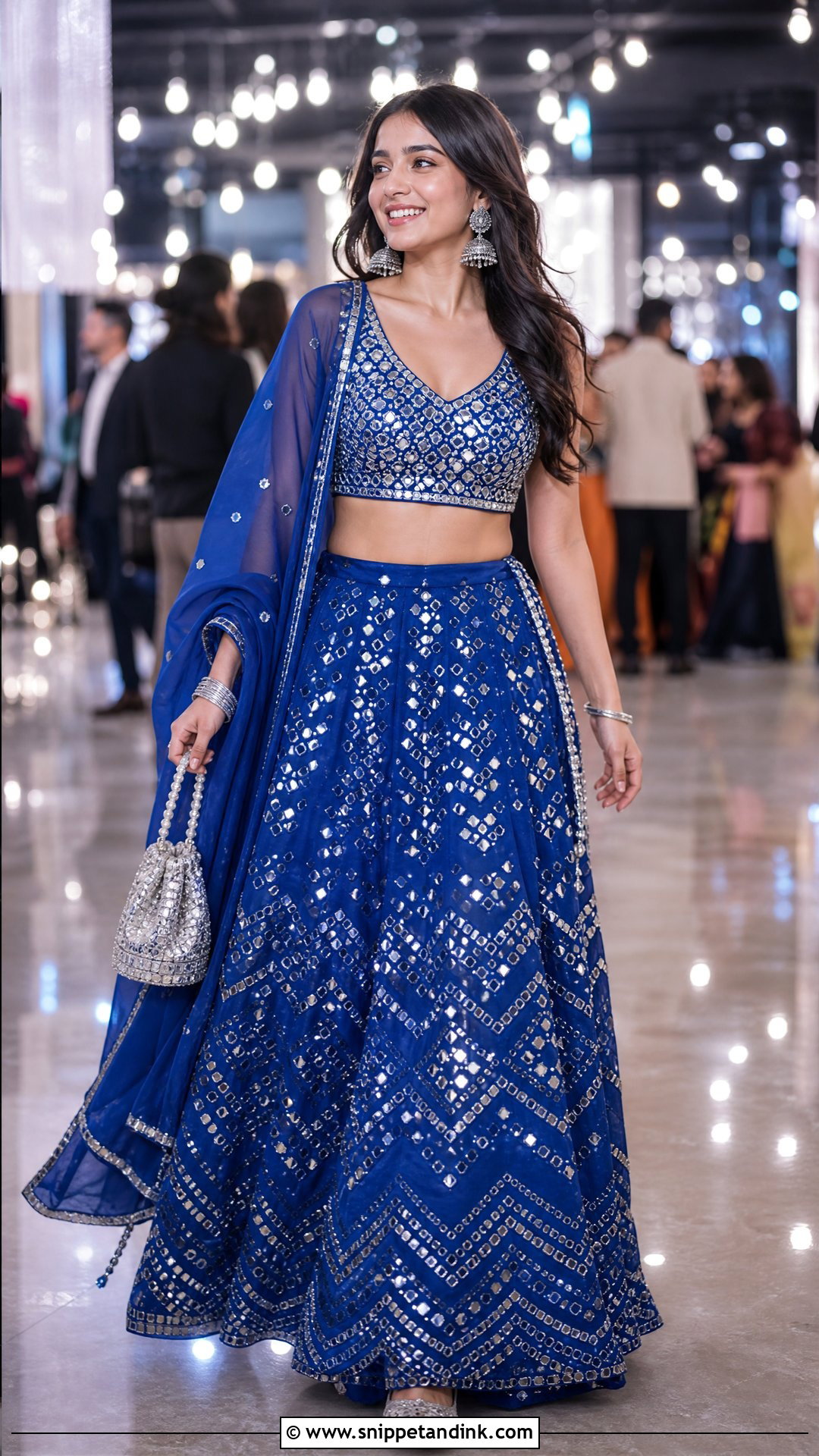
Mirror work belongs at a sangeet, where it throws light around a dance floor. Cobalt, fuchsia, turquoise or orange as a base colour makes the mirrors glow. The practical side matters more than the styling here: before the event, run your hand over every mirror and loose bead, because a single loose one snags the dupatta and can catch on someone else’s outfit while dancing. Pin the dupatta across one shoulder or loop it at the wrist so your hands stay free. Keep jewellery simple and silver-toned, with slim bangles and a small embroidered bag. Cushioned juttis or stable block heels beat stilettos for dancing. A high ponytail or loose braid stays out of the mirrors when you spin.
6. Floor Length Anarkali Indian Wedding Outfit
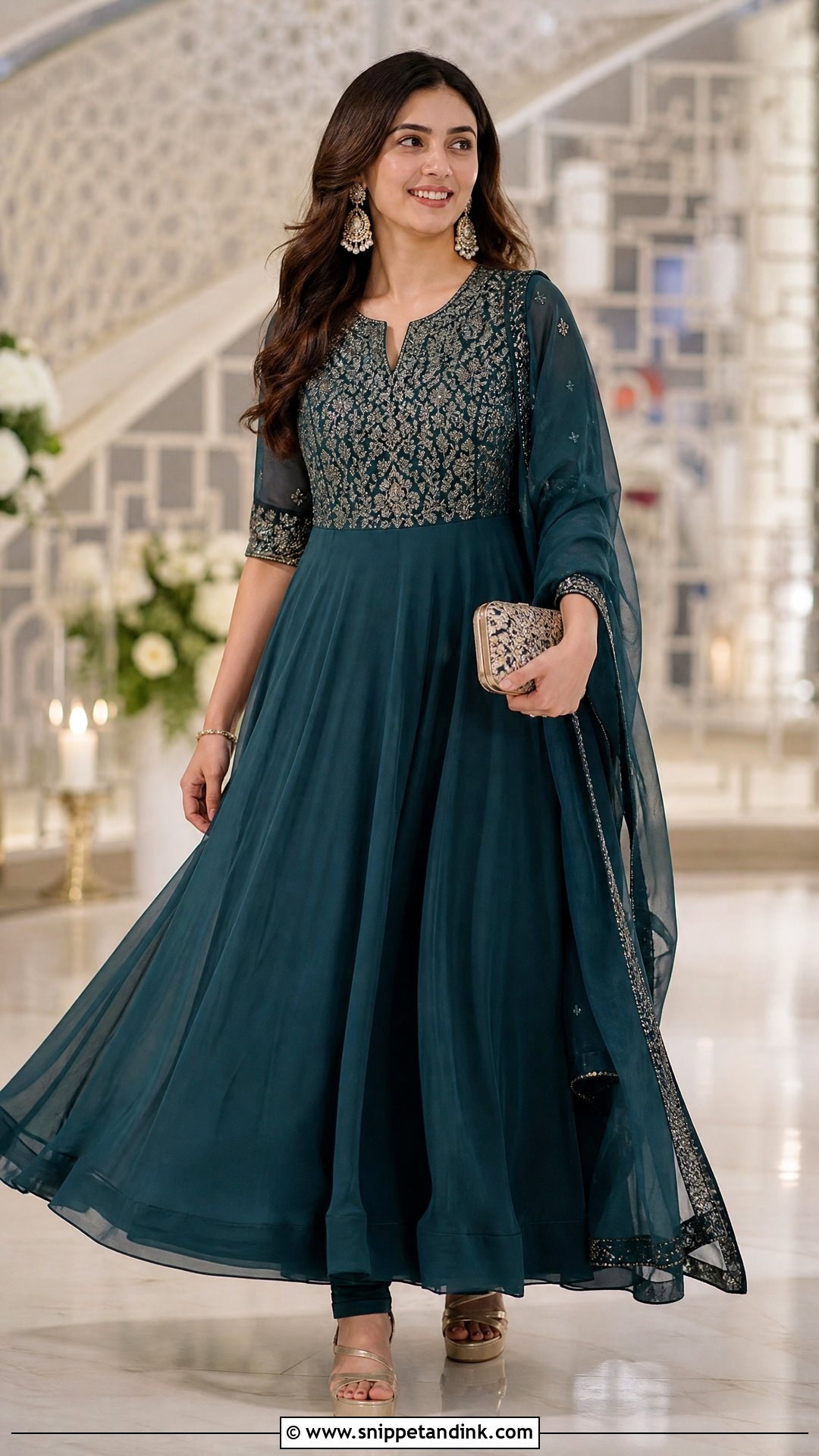
A floor-length Anarkali gives the sweep of a gown with the detail of traditional Indian tailoring, and it’s often the easiest choice for anyone who’s never worn a saree. Look for a fitted bodice and a flowing skirt in silk, georgette or light jacquard. Deep teal, berry, midnight blue and muted gold suit evening. Narrow churidar underneath and a soft dupatta over both arms or one shoulder complete it. Chandelier earrings, a slim bracelet and an embroidered clutch keep the long line intact. Hidden flats, platforms or block heels all work. The hem is the detail I check most: set it with your shoes on so it clears the floor by a finger’s width, otherwise every step and staircase becomes a hazard.
7. Embroidered Sharara Set Indian Wedding Outfit
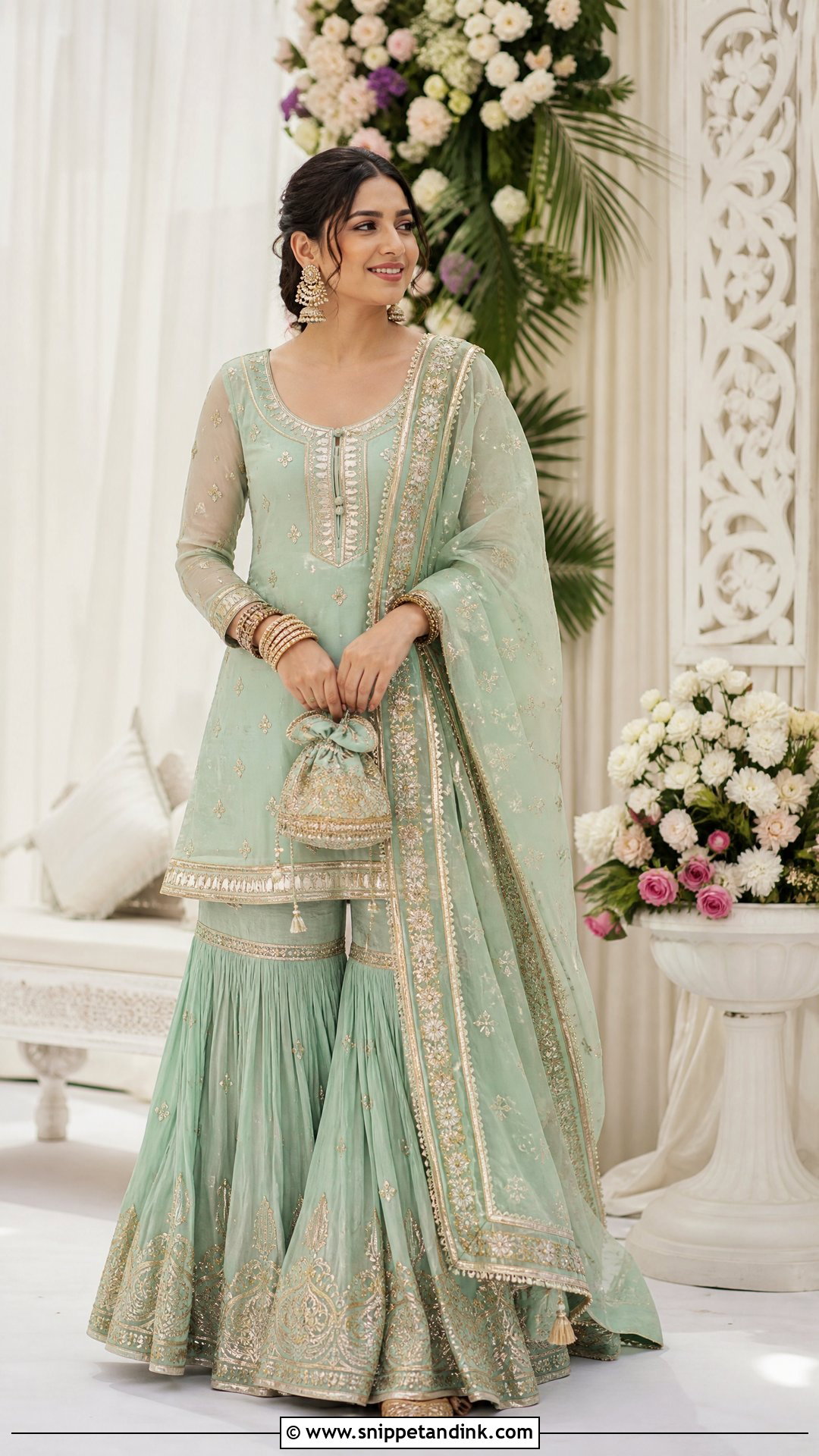
Sharara pants flare wide from the knee and give far more freedom than a lehenga skirt, which is why I suggest them for mehndi and sangeet celebrations. Build the outfit around a short embroidered kurta with a defined waist and matching flared pants in georgette, silk or crepe. Soft green, rose pink, royal blue or marigold all feel festive. Pin a light dupatta with a decorative border at the shoulder if you’ll be dancing. Statement jhumkas, slim bangles and an embellished potli finish it, with juttis or low platforms. The kurta should end high enough to show where the pants are fitted before they flare; too long a kurta hides the whole point of the shape.
8. Gharara Suit Indian Wedding Outfit
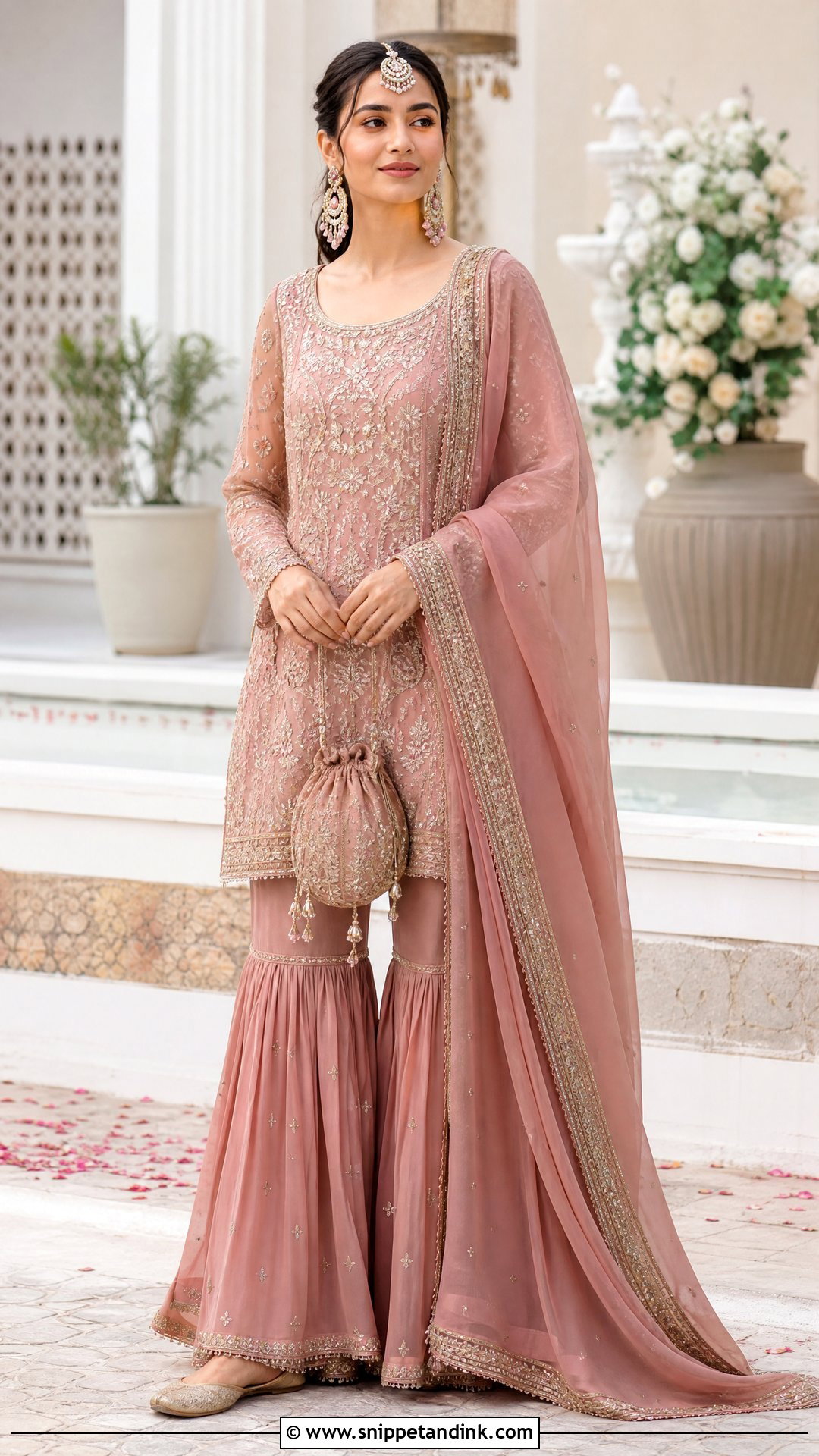
The gharara differs from the sharara in one place: it fits closely to the knee and then flares, usually with a decorative band at the joint. That knee seam has to sit exactly on the knee, so it is the measurement I check twice at fittings. A short straight kurti with gota, zari or fine thread embroidery sits on top. Champagne, sage, dusty rose or rich plum all suit wedding events. Drape a light dupatta over one shoulder so its border frames the front. A maang tikka, drop earrings and a drawstring bag complete it, with metallic juttis or low block heels that keep the flare visible. A polished low bun or side-swept curls suit the structured shape.
9. Chikankari Palazzo Suit Indian Wedding Outfit
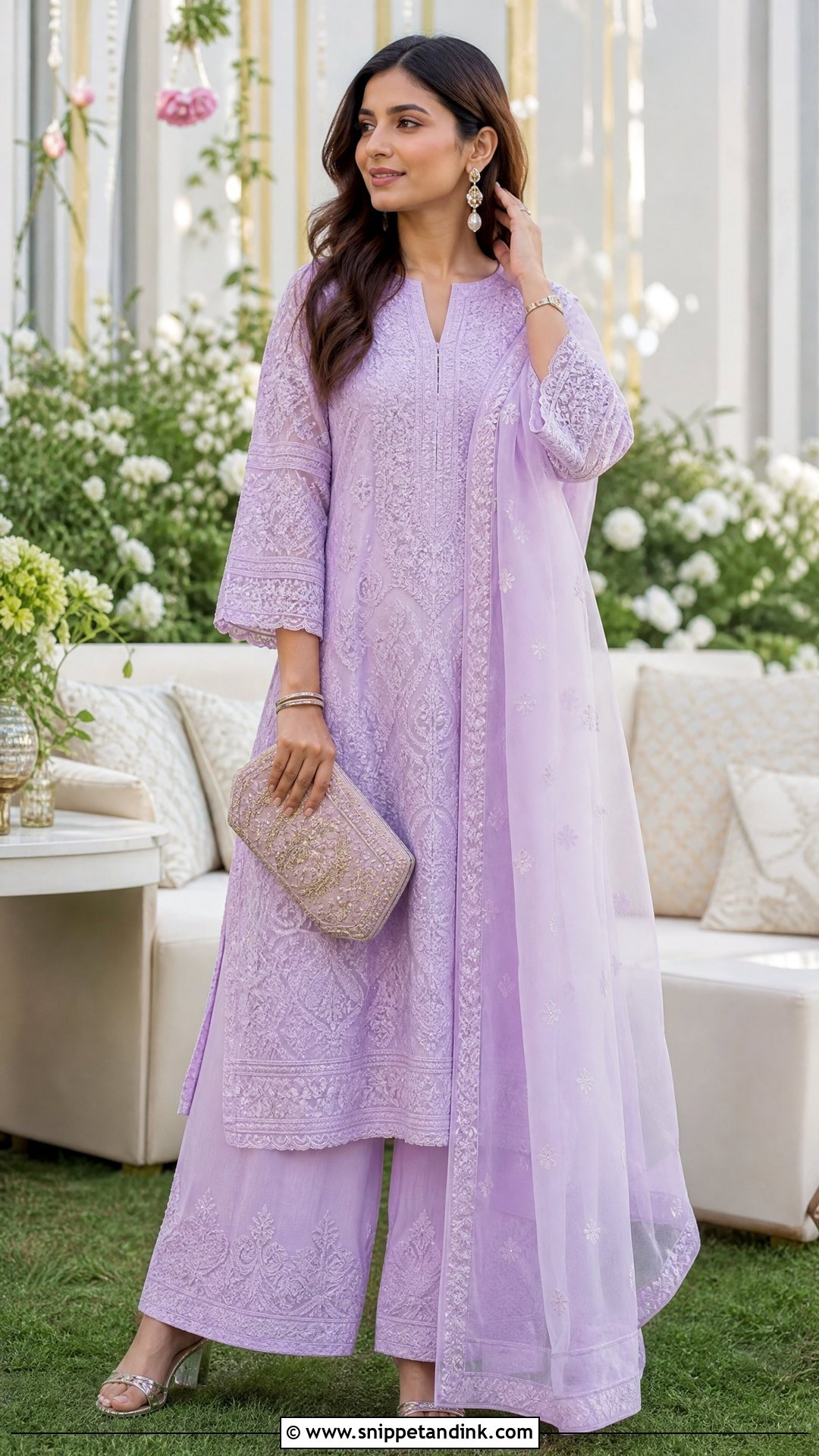
Chikankari is fine hand embroidery on light cotton or georgette, and for a summer day function nothing breathes better. A long kurta in lemon, mint, coral, lilac or powder blue with wide matching palazzos is cool and comfortable. A sheer dupatta with a subtle border makes it wedding-appropriate without adding weight. Pearl earrings, slim bangles and a woven or embroidered clutch suit the delicate threadwork. Since chikankari is often sheer, ask for a lining that matches the fabric shade exactly; a white slip under a lemon kurta shows as a line in daylight. A slightly shaped kurta stops the wide pants from swamping the frame. Metallic sandals or low wedges handle garden paths.
10. Pre Draped Saree Indian Wedding Outfit
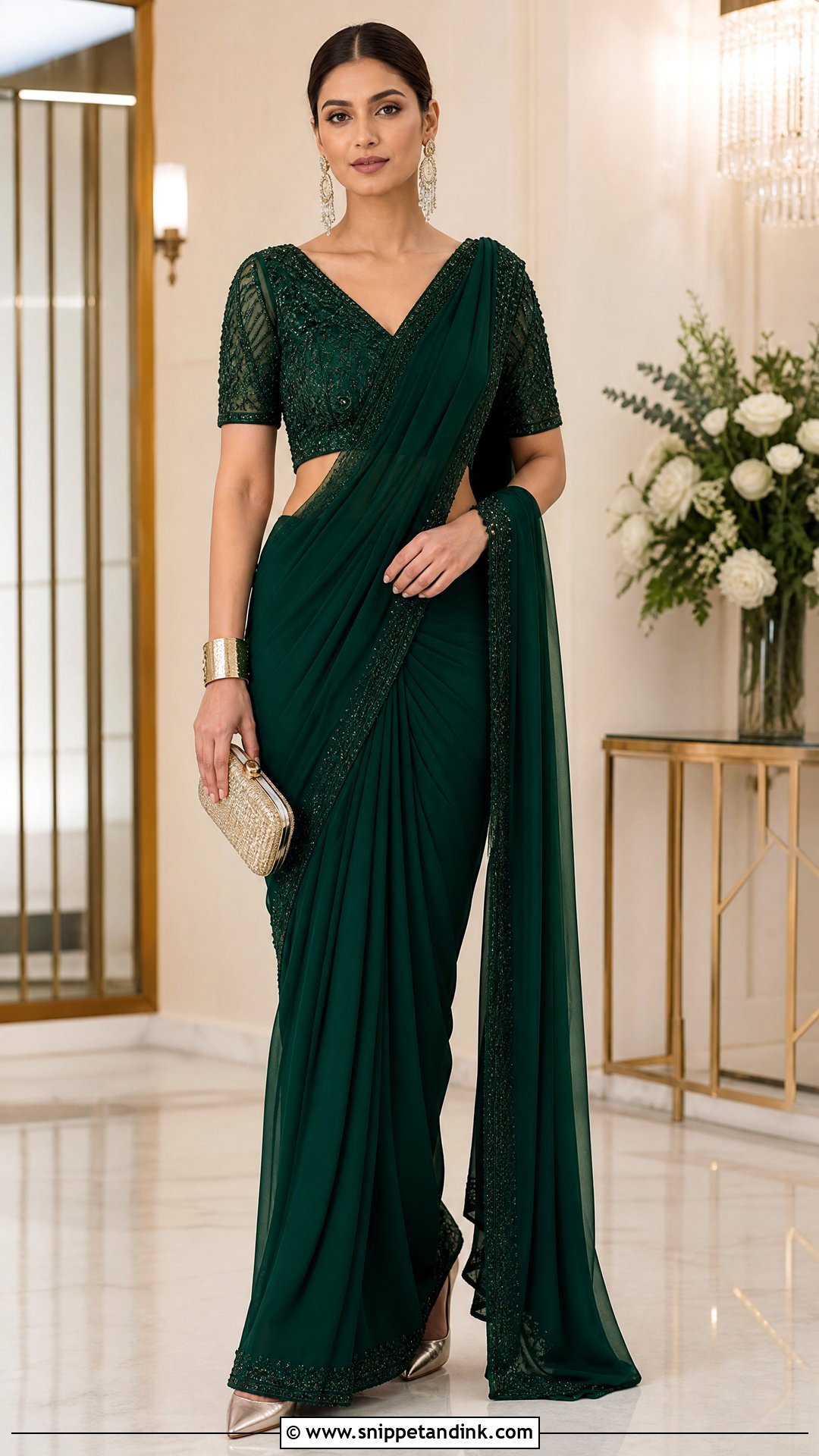
A pre-draped saree has the pleats and pallu stitched in place, so you zip it on in minutes instead of draping for half an hour. Georgette or crepe in emerald, sapphire, plum or metallic champagne suits receptions and cocktail functions. A structured blouse with tasteful embroidery, fitted sleeves or an asymmetric neckline matches its modern feel. Statement earrings and a sleek cuff are usually all the jewellery it needs, plus a hard-case clutch and comfortable pointed heels. Before the day, sit, walk and climb a step in it. The stitched pleats can pull across the waist if the sizing is even slightly small, and unlike a hand drape, you can’t loosen them on the spot.
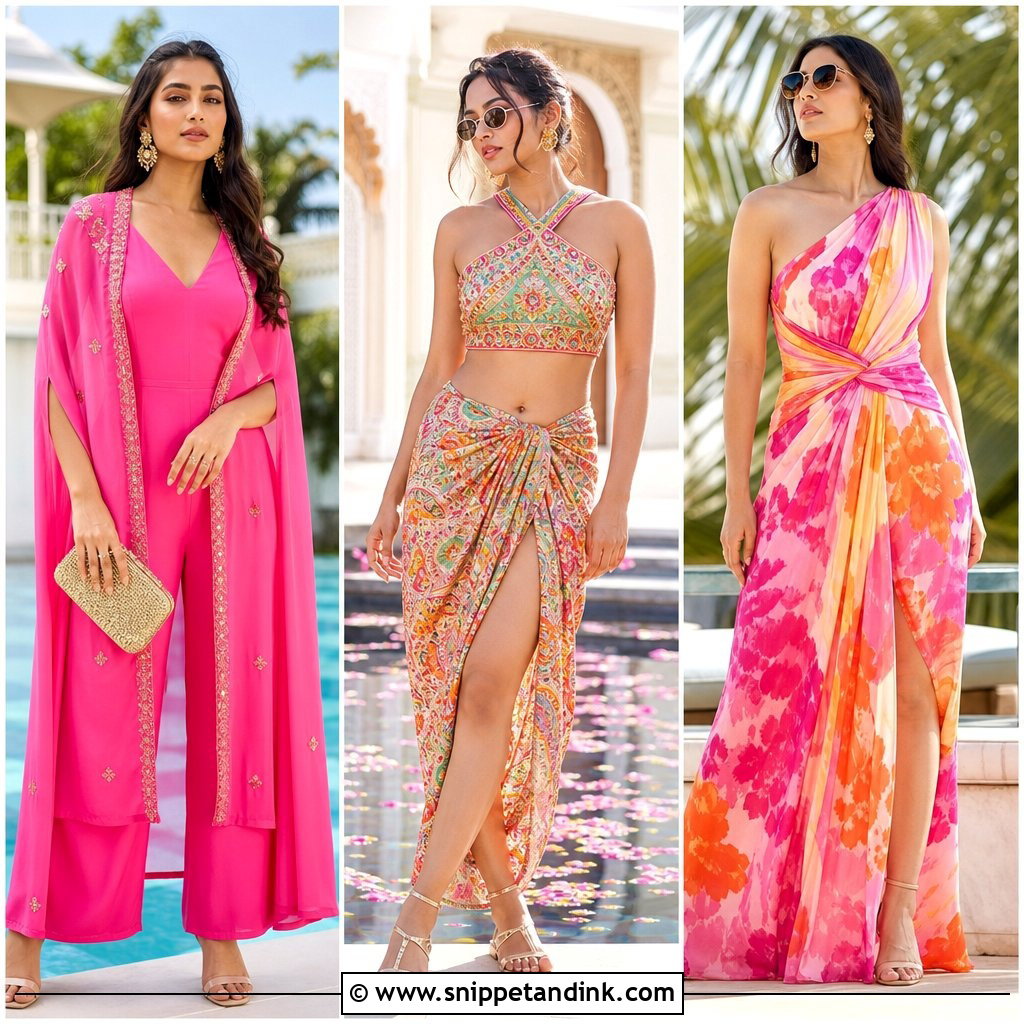
11. Saree Gown Indian Wedding Outfit
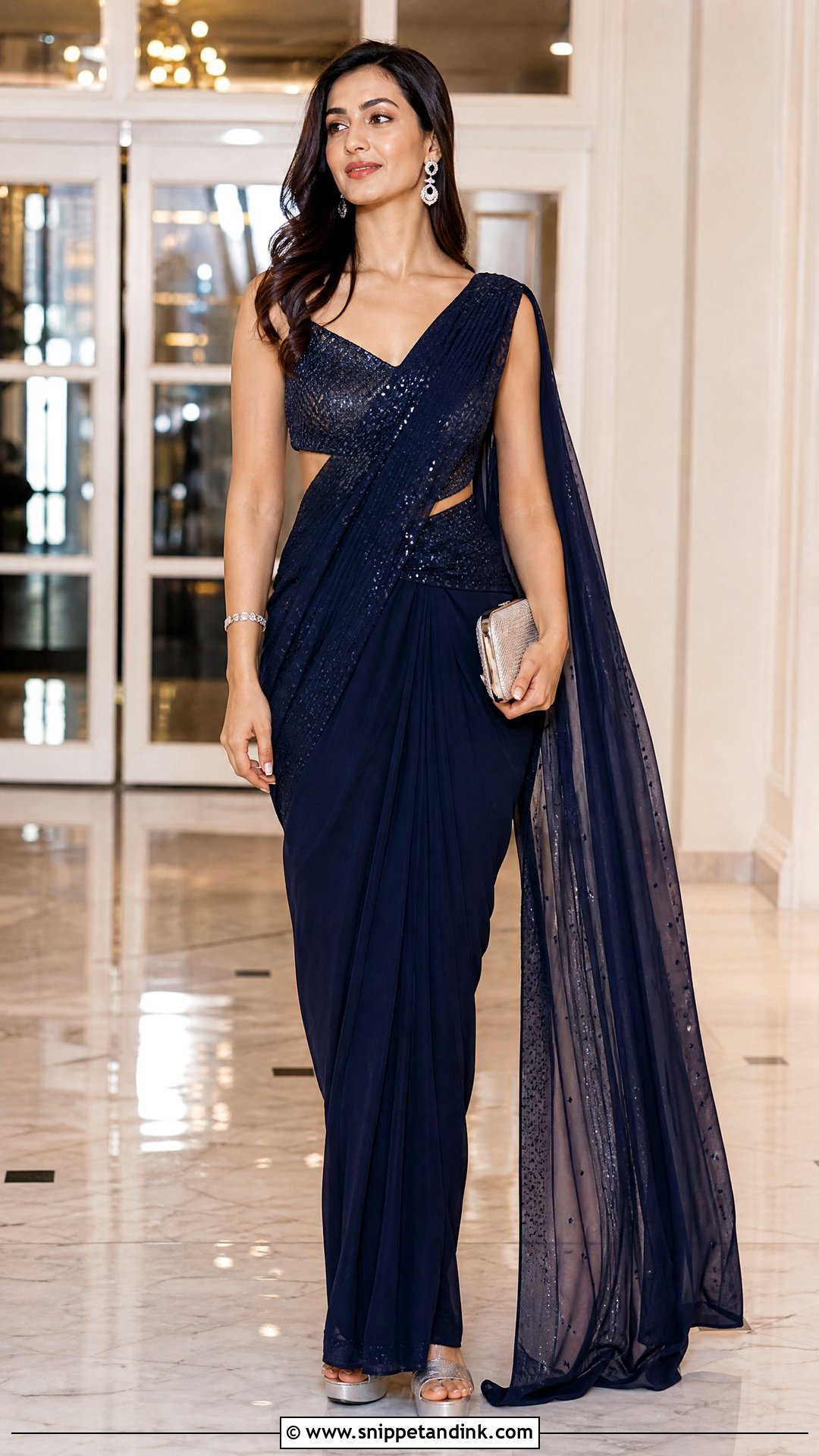
A saree gown is a one-piece dress with an attached pallu, and it suits anyone who loves the look of a saree but doesn’t want to manage pleats all night. Navy, deep green, mauve or silver with a defined waist all work well. I keep the jewellery to drop earrings, a slim metallic bracelet and a small clutch, because multiple necklaces fight with the gathered drape at the shoulder. Pointed heels or platforms lengthen the line. A sculpted ponytail or soft side waves show off the shoulder. Have it hemmed to the exact shoes you’ll wear, since the fabric gathered at the hip often makes the front hang lower than you’d expect.
12. Dhoti Pants And Kurta Indian Wedding Outfit
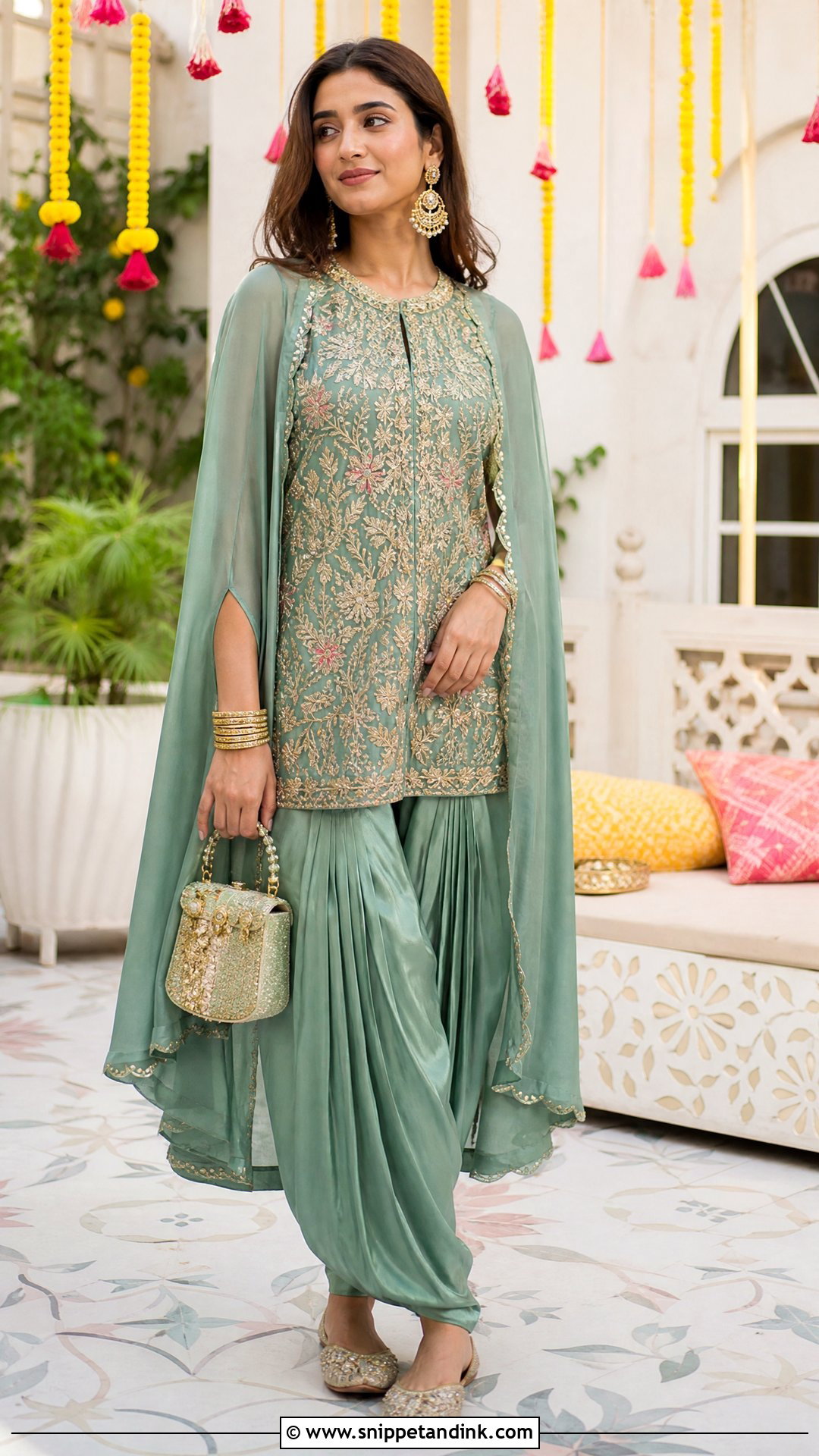
Dhoti pants with a short kurta is the outfit I’d pick for a haldi or mehndi where you’ll sit on cushions and move around a lot. Draped silk or crepe pants with a waist-defining embroidered kurta give an Indo-Western look. Mustard, coral, jade and raspberry carry the festive mood. A light cape, short jacket or narrow dupatta adds a layer if you want it. Sculptural earrings, stacked bangles and a structured mini bag complete it, with embellished flats, mules or low block heels at the tapered ankle. A high ponytail or textured braid keeps it lively. Keep the kurta short enough to end above the deepest folds, or the dhoti shape disappears.
13. Cape Lehenga Indian Wedding Outfit
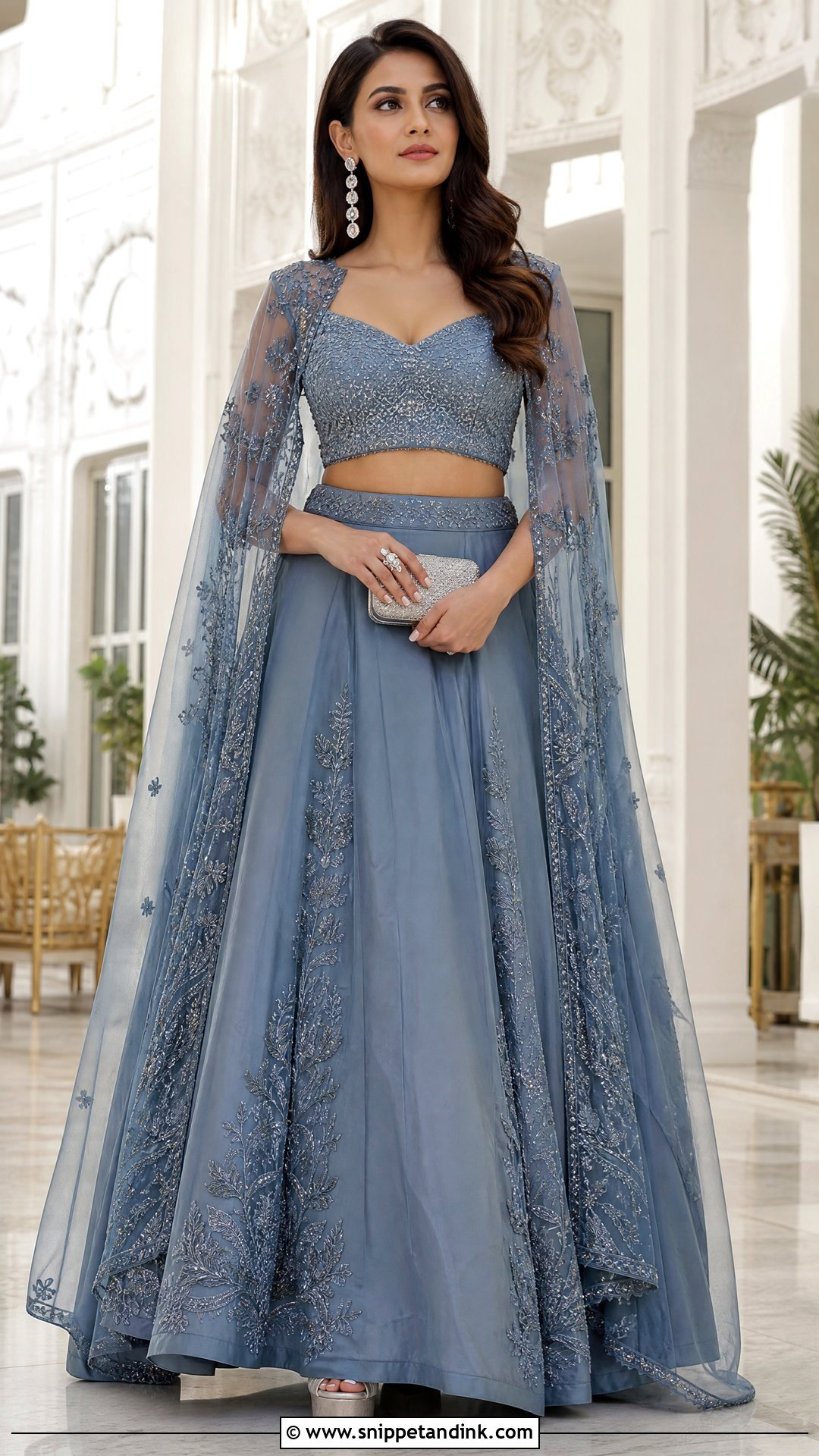
A cape replaces the dupatta on this lehenga, so there is no drape to manage and still plenty of movement when you walk. A monochrome skirt and fitted blouse in dusty blue, mauve, emerald or champagne, with a sheer floor-length cape scattered with embroidery, keeps the look modern. Long earrings, a cocktail ring and a slim clutch hold the vertical line. Block heels or platforms help keep the cape hem off the floor. A sleek bun or smooth waves keep focus on the neckline. The fitting check I always do is to have the guest raise both arms: a cape cut tight at the armholes catches on the blouse and drags it upward.
14. Peplum Sharara Indian Wedding Outfit
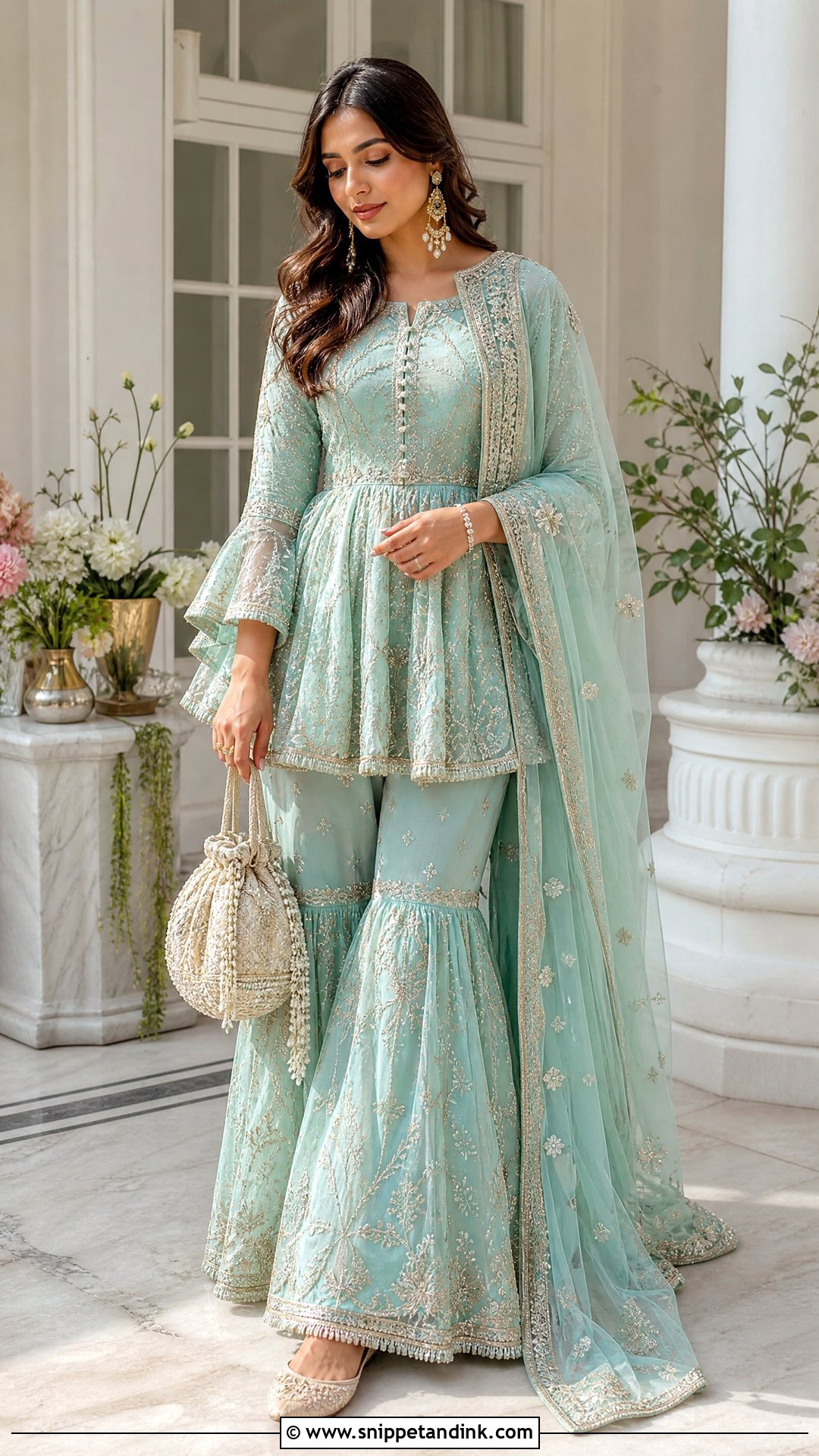
The peplum sharara balances a fitted top with volume through the hips and legs. A structured peplum with embroidery at the neckline and waist sits over fluid, deeply flared pants. Jewel tones suit an evening function; peach, aqua and soft yellow suit daytime. Add a sheer dupatta over one arm if you want a more traditional finish. Medium earrings, a bracelet and a beaded potli complete it, with platforms or pointed juttis. A half-up style or low ponytail keeps it relaxed. The peplum seam must sit at your natural waist. Even an inch lower and the flare adds width at the hip instead of defining the waist.
15. Long Jacket Lehenga Indian Wedding Outfit
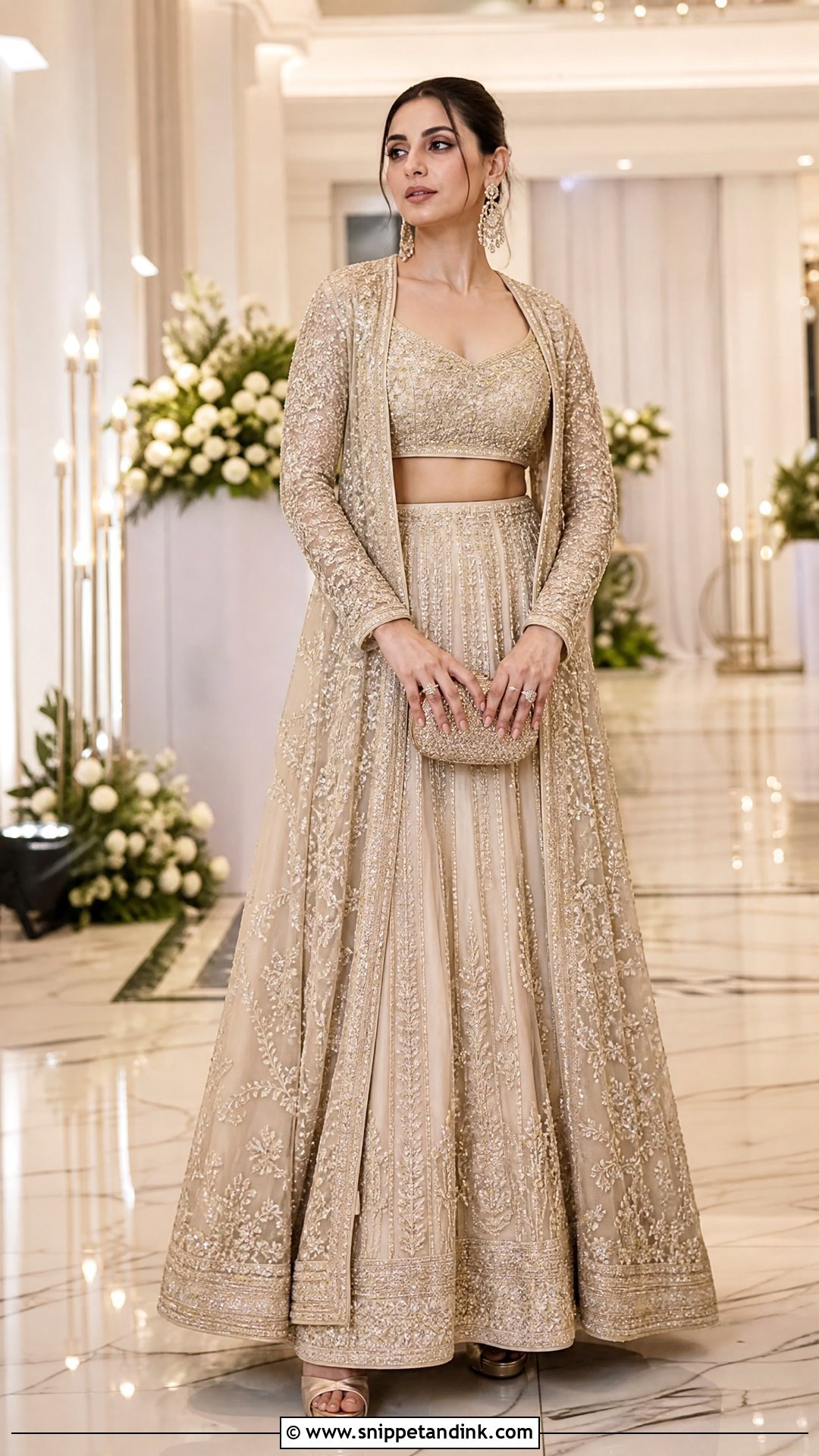
A long jacket over a lehenga gives coverage and structure, and it’s a smart choice for an outdoor evening that turns cool after sunset. Start with a fairly simple skirt and blouse, then add a richly embroidered open-front jacket to the calf or floor. Matching tones lengthen the silhouette; a contrasting jacket is bolder. Because the jacket carries the embroidery, I’d skip a heavy necklace and go for chandelier earrings, a small clutch and a few rings. Even if you wear it open, the jacket should close comfortably across the shoulders, or it pulls back and gapes all night. Comfortable heels keep the hems from gathering around the feet.
16. Silk Salwar Kameez Indian Wedding Outfit
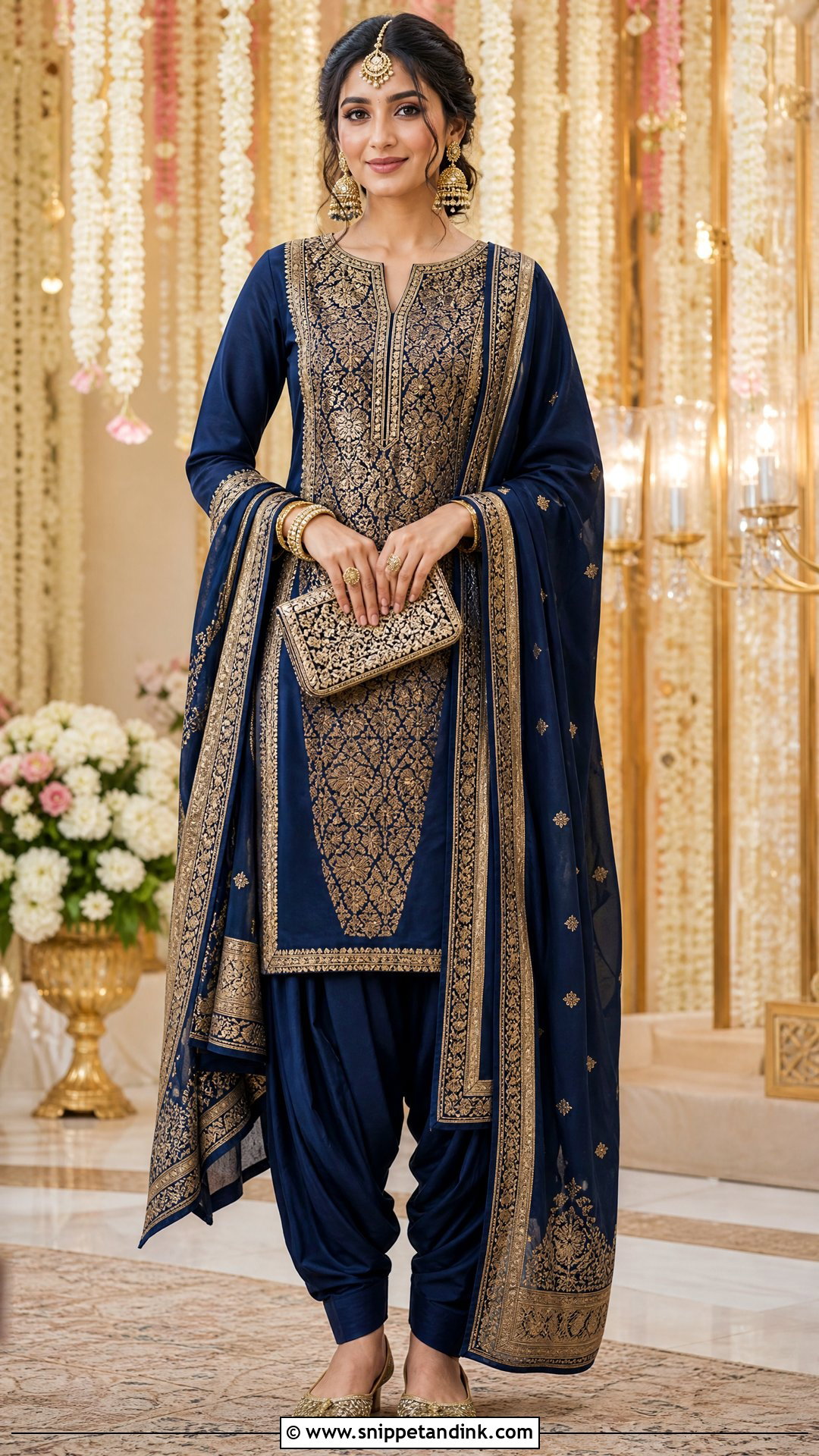
A silk salwar kameez is understated, comfortable and appropriate at nearly every function, which is why I suggest it to guests who’d rather not wear anything heavy. A knee- or calf-length kameez with zari borders, fine embroidery or brocade panels, neatly pleated salwar and a coordinated dupatta make the full set. Navy with gold, green with pink, or purple with copper feel festive but not loud. Classic jhumkas, gold bangles and an embroidered clutch are the right scale. Juttis are best for long ceremonies on your feet. The difference between everyday and wedding-ready here is fit at the shoulder, bust and sleeve, so spend the tailoring money there.
17. Bandhani Lehenga Indian Wedding Outfit
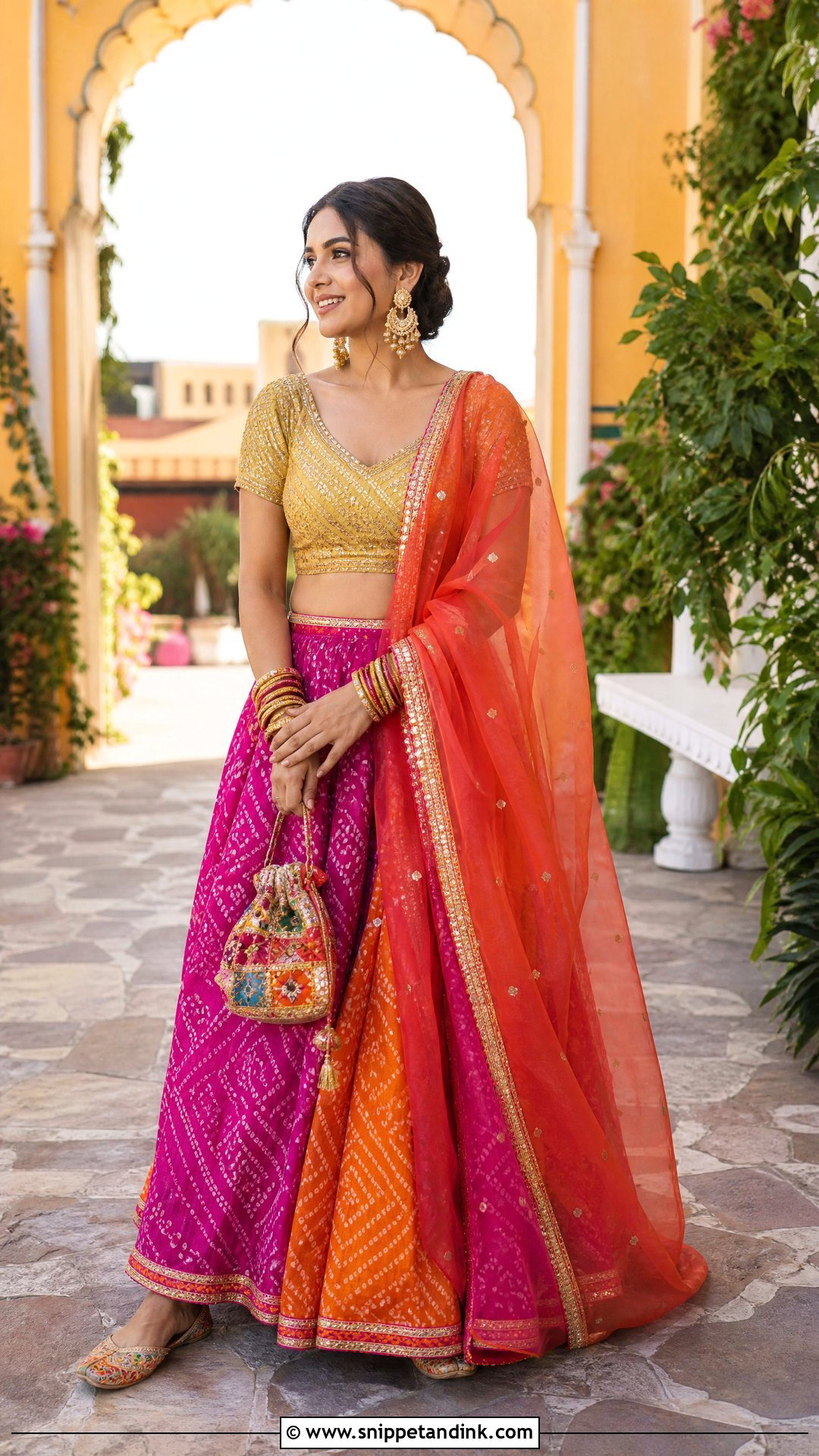
Bandhani is tie-dye made by pinching and binding tiny points of cloth before dyeing, which is what creates those dotted patterns. A Bandhani lehenga in fuchsia, orange, turquoise or green suits daytime functions like a mehndi. Pair it with a solid embroidered blouse so the pattern has somewhere to rest. A Bandhani dupatta makes it traditional; plain organza lightens it. Oxidised or gold-toned earrings, stacked bangles and a colourful potli suit the mood, with embroidered juttis. Real Bandhani can bleed if it gets wet, so keep it away from water play at a haldi and dry-clean it afterwards.
18. Organza Saree Indian Wedding Outfit
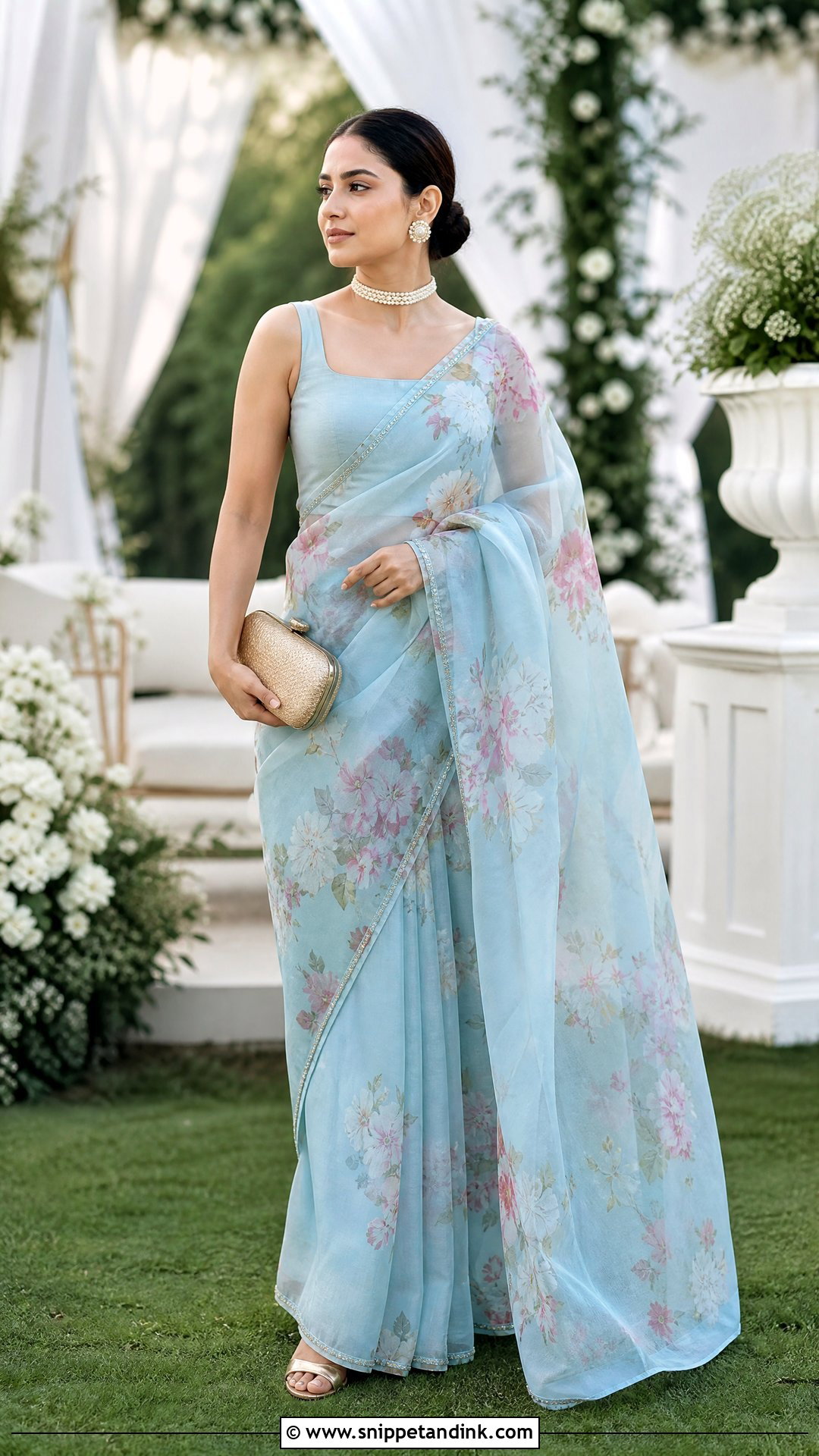
Organza is crisp and sheer, so it holds volume on its own. That’s what gives this saree its light silhouette, and also why it needs narrow, tightly controlled pleats or it puffs out at the front. A pastel floral works for daytime; a jewel tone with a slim embellished border suits evening. A fitted blouse in silk, raw silk or embroidered fabric adds structure under the transparent drape. Pearl earrings, a delicate choker and a sleek clutch keep it light, with low heels or metallic sandals. Pin the pallu discreetly at the shoulder, because organza is slippery and will slide off in a breeze.
19. Embroidered Kurta And Skirt Indian Wedding Outfit
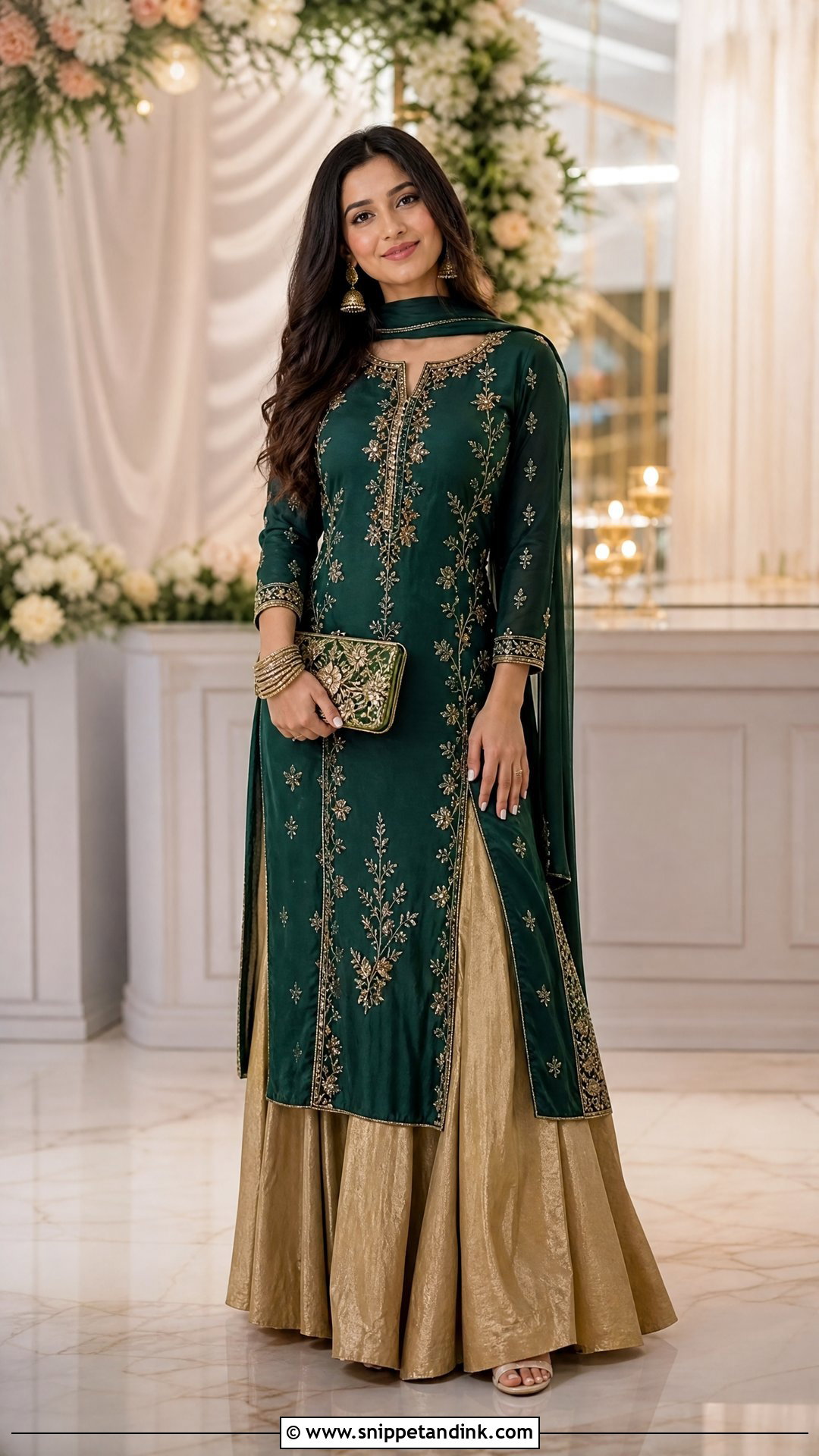
A long embroidered kurta over a flowing skirt gives the layered look of a lehenga with less weight and less fuss. A straight or lightly flared kurta with side slits lets the contrasting skirt show as you walk. Deep green with gold, plum with blush, or navy with pale blue all layer well. If the kurta has detailed sleeves and neckline, I’d skip the dupatta altogether. Jhumkas, a slim bangle stack and an embroidered clutch complete it, with low platforms or juttis. Keep the skirt soft and lightly embellished, as a heavily worked skirt bunches under the kurta and adds bulk at the hip.
20. Draped Indian Pantsuit Wedding Outfit
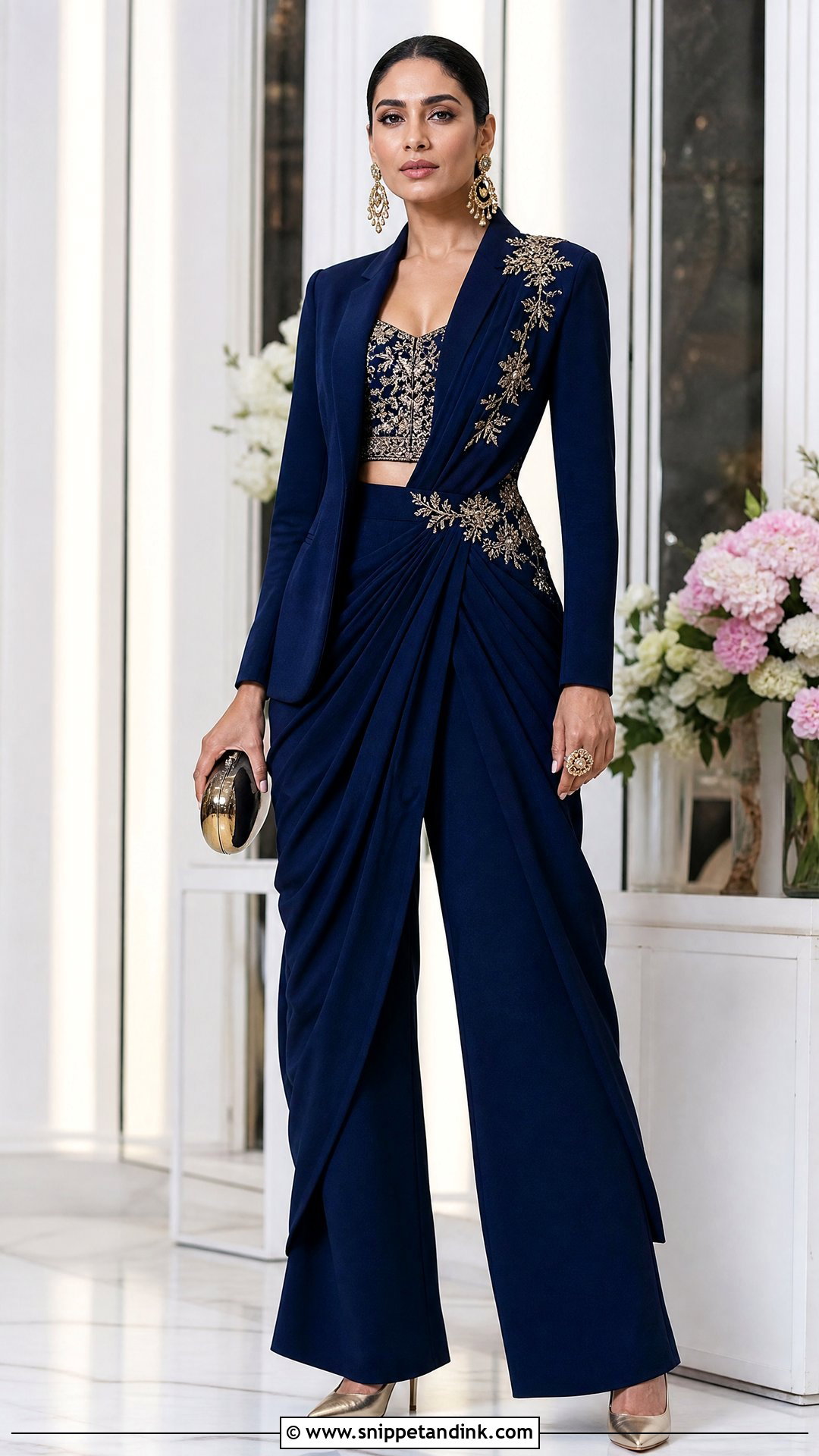
A draped pantsuit is the fusion option for a reception, engagement party or modern sangeet. Tailored wide-leg pants, an embroidered blouse and a structured blazer with an attached drape or saree-style panel give it the Indian reference. Midnight blue, forest green, deep plum or antique gold keep it sophisticated. Sculptural earrings, a metallic clutch and a single ring are enough. Pointed pumps or block-heel sandals sharpen the tailoring. Like any suit, it lives or dies on the shoulders: if the blazer pulls or the drape drags it to one side, everything looks off, so fit the jacket with the drape attached. The trousers should almost skim the floor without covering the shoes.
Your First Saree: Getting Draped, Pinned and Through the Night
Guests who haven’t worn a saree before often worry about it coming undone. With a bit of preparation, it won’t.
The underlayers do the real work
The petticoat is what holds the saree up, so tie its drawstring firmly at your waist, not your hips. The saree is tucked into it all the way around. Get the blouse stitched or altered in good time; tailors get busy before wedding season, and you want room for a second fitting if the first one is off.
Ask for help, then practise
- If a relative or a hired draper offers to help, accept. A practised hand drapes in a fraction of the time and pins where you can’t reach.
- Pin the pleats together at the waist and the pallu to the blouse at the shoulder with small safety pins. Hide them from view on the underside of the fabric.
- Walk up and down stairs and sit on a chair before you leave. If the pleats splay, re-tuck them. If the pallu slides, add a second pin.
- Pack a few spare pins in your clutch. They are the most useful thing you’ll carry all night.
If all of this sounds too much, choose a pre-draped saree or a saree gown and enjoy the evening. Nobody expects a guest to drape like a professional.
Which Function Are You Dressing For First?
Start with the invitation and the schedule, not the outfit. Sarees in Banarasi and Kanjivaram silk carry a formal ceremony; lehengas, shararas and Anarkalis bring colour and movement to the evening functions; and pre-draped sarees, cape sets, jacket lehengas and pantsuits give modern options for receptions. Check the venue, the weather and anything the family has asked of guests. Try the whole outfit with its shoes, jewellery and underlayers well before the day, pin anything that drapes, and choose footwear you can stand and dance in for hours. Comfort is what keeps you on the dance floor at midnight.
You'll Like These Ideas:


Leave a Reply