
When a bride tells me she wants French hair, she usually means hair that looks like it wasn’t fussed over. The irony is that this look takes as much planning as a lacquered updo, just aimed differently: grip hidden inside soft texture, pins you can’t see, pieces left out on purpose. It covers everything from sleek chignons to loose, tousled waves with a few strands around the face, and it sits comfortably under a veil, a few flowers or big earrings. A château, a city hall or a garden can all carry it. Below are 25 styles I’d do for a French-leaning bride, with notes on hair type and how each one holds through a long day.
Undone Styles Need the Most Grip
Soft, loose hair looks easy because the structure is hidden. Clean, silky hair is the hardest to work with, because pins slip and curls drop. That’s why I ask brides to wash the night before, not the morning of, and to skip conditioner on the roots.
- Fine hair: texture spray or dry shampoo at the roots gives pins something to hold.
- Thick hair: I section more and use stronger pins, because weight pulls a loose bun down.
- Curly hair: I work with your pattern rather than straightening it first, then shape the curls into the style.
- Layered hair: shorter layers often need a small clip-in piece to finish an updo cleanly.
Bring your veil, any hair accessories and a top with a similar neckline to your trial. I’ll build the style around those, not around a reference photo of someone else’s hair.
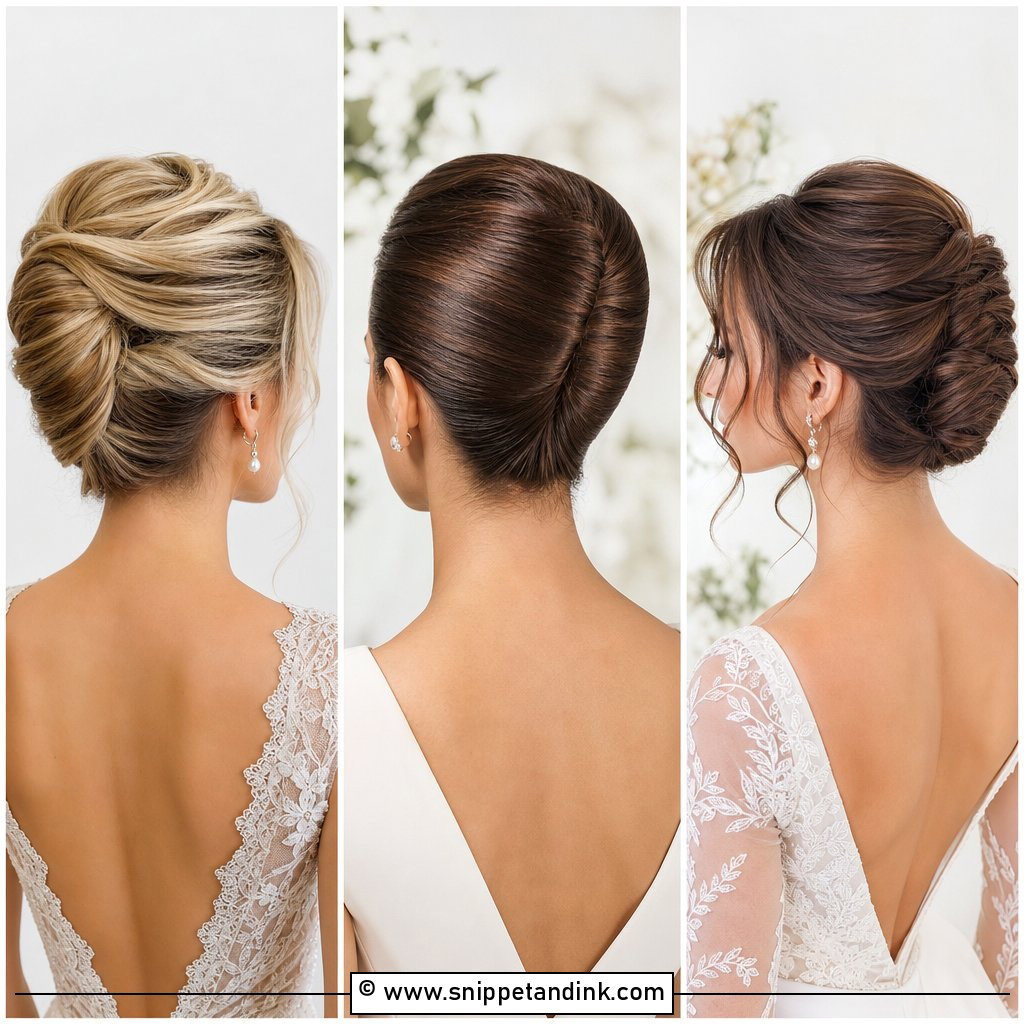
1. Classic French Twist Updo
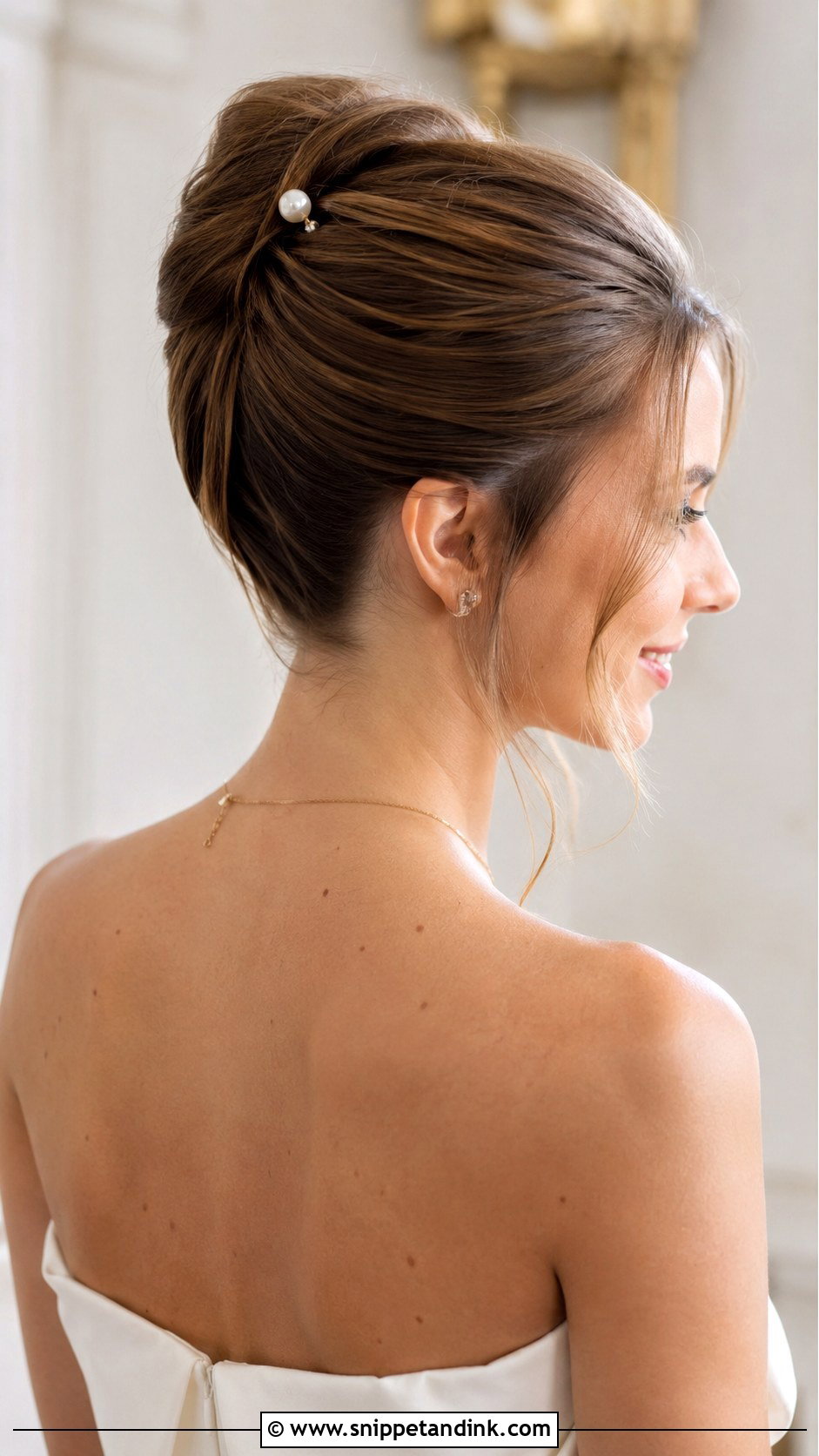
A French twist folds the hair up the back of the head into a sleek vertical roll, and it shows off a neckline and earrings better than almost anything. The secret is a hidden row of crossed bobby pins up the centre back before the hair is wrapped over them; the roll then has something to grip. Very fine, silky hair slides out of a twist, so I prep it with a texture spray first. Keep it glossy for a vintage feel, or pull out two soft pieces at the temples.
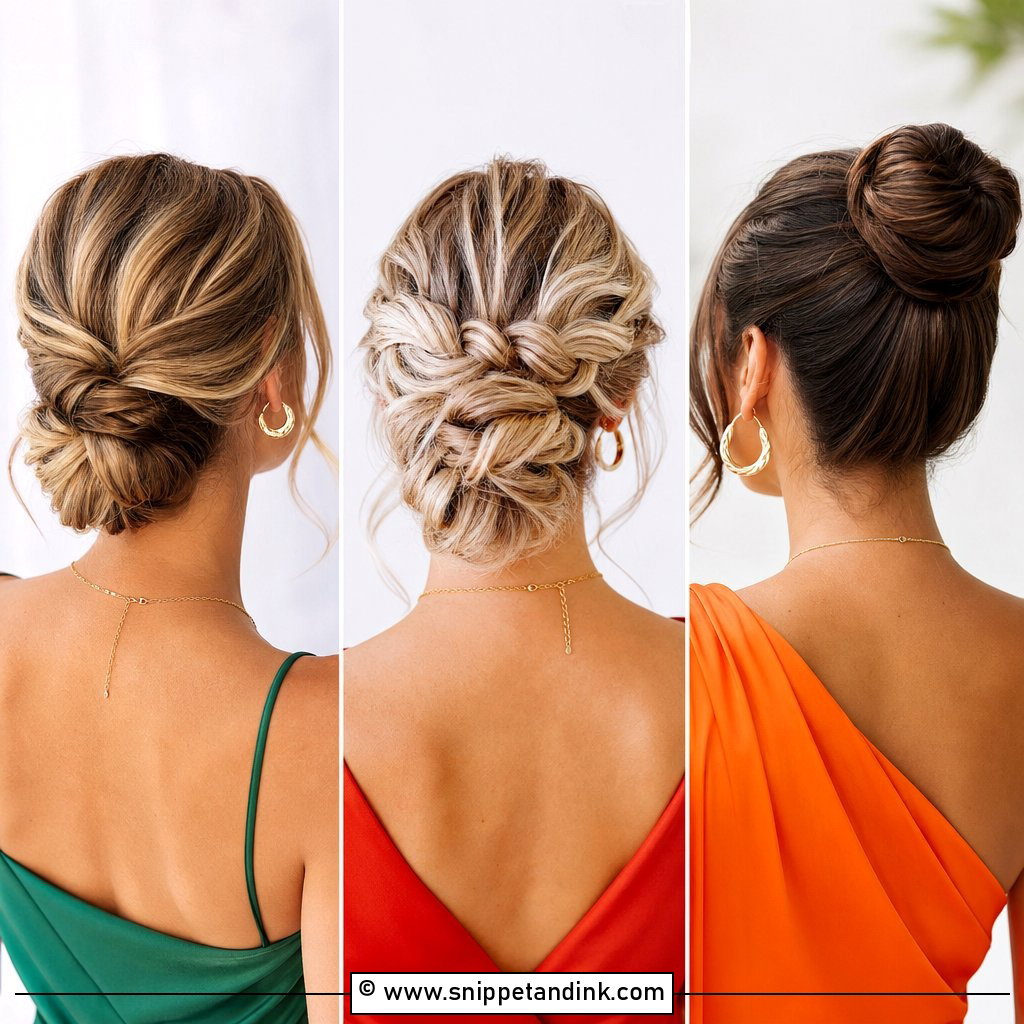
2. Soft Low Chignon
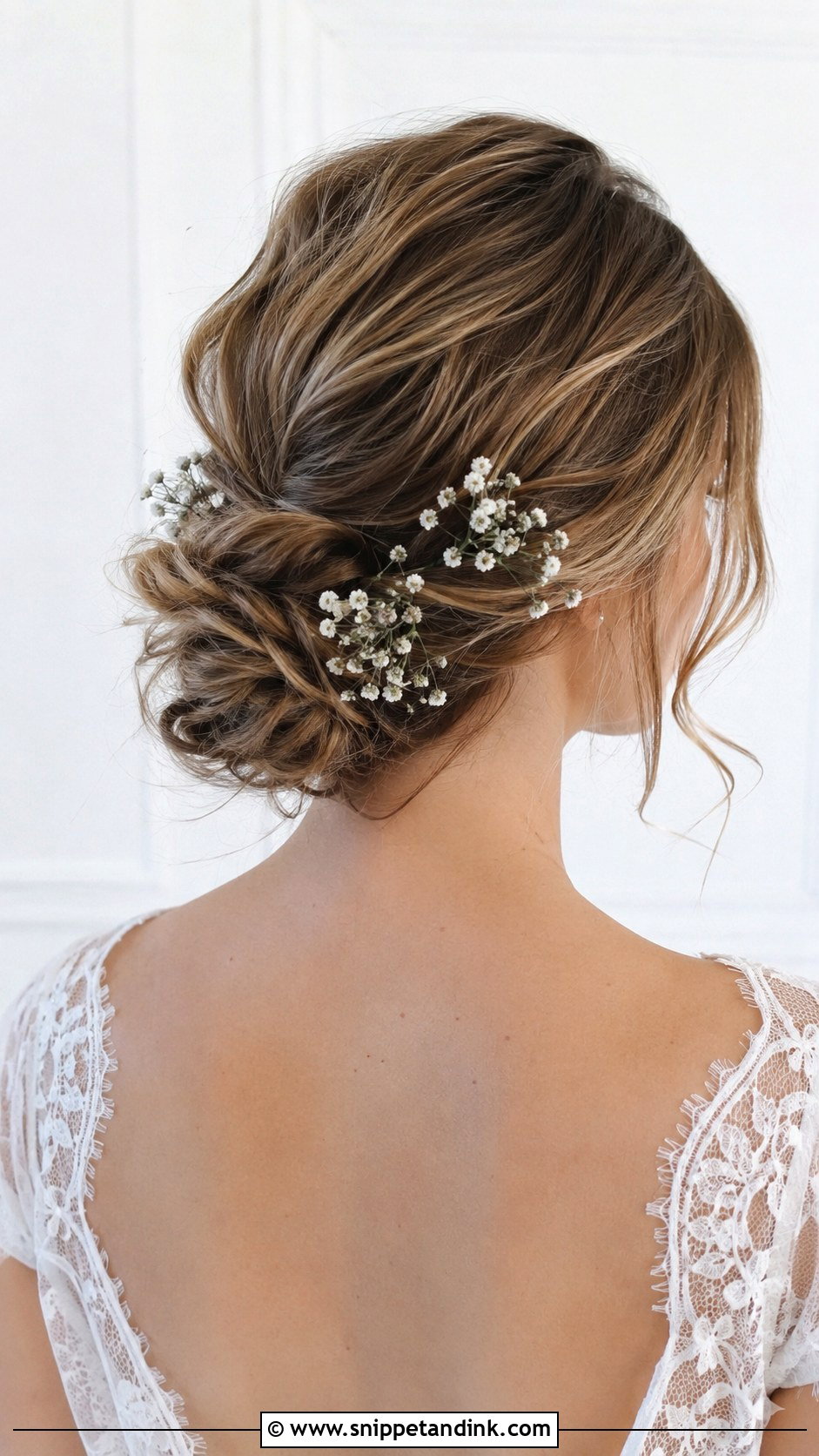
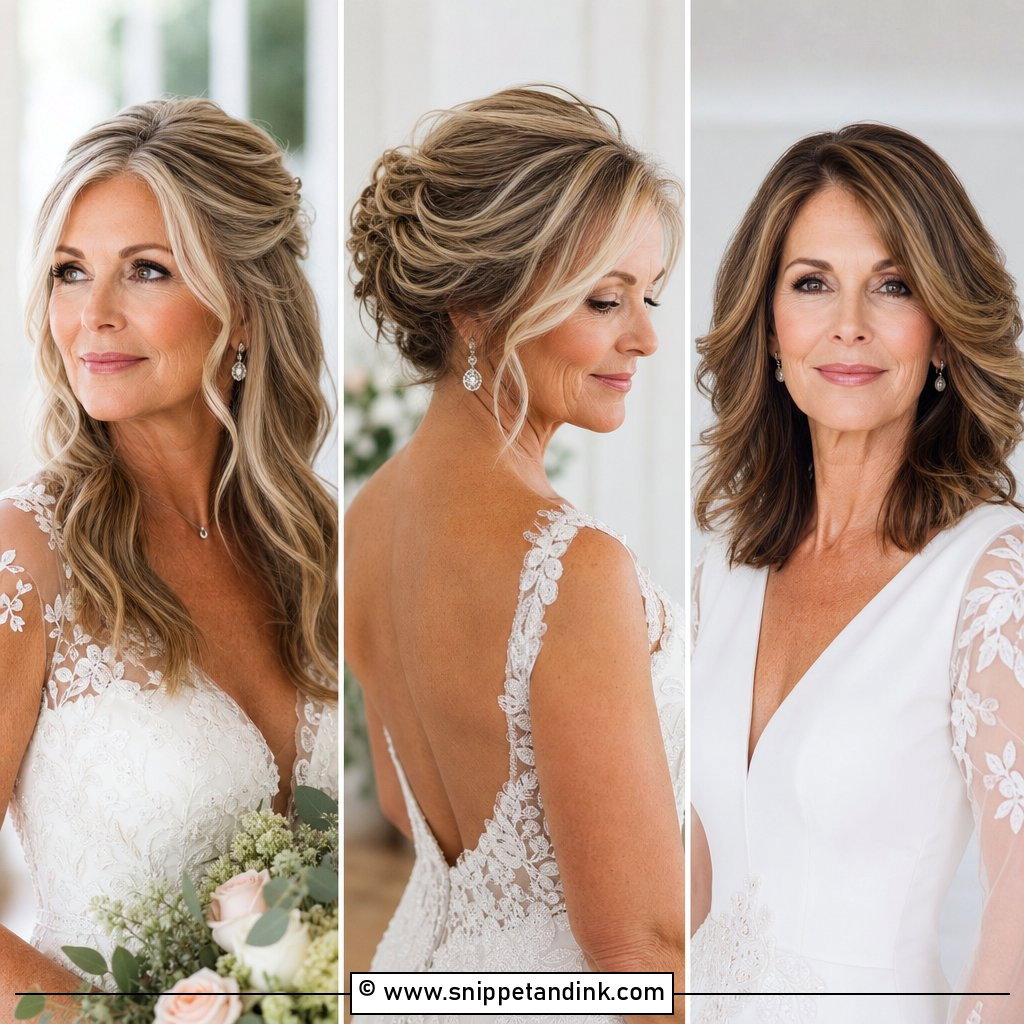
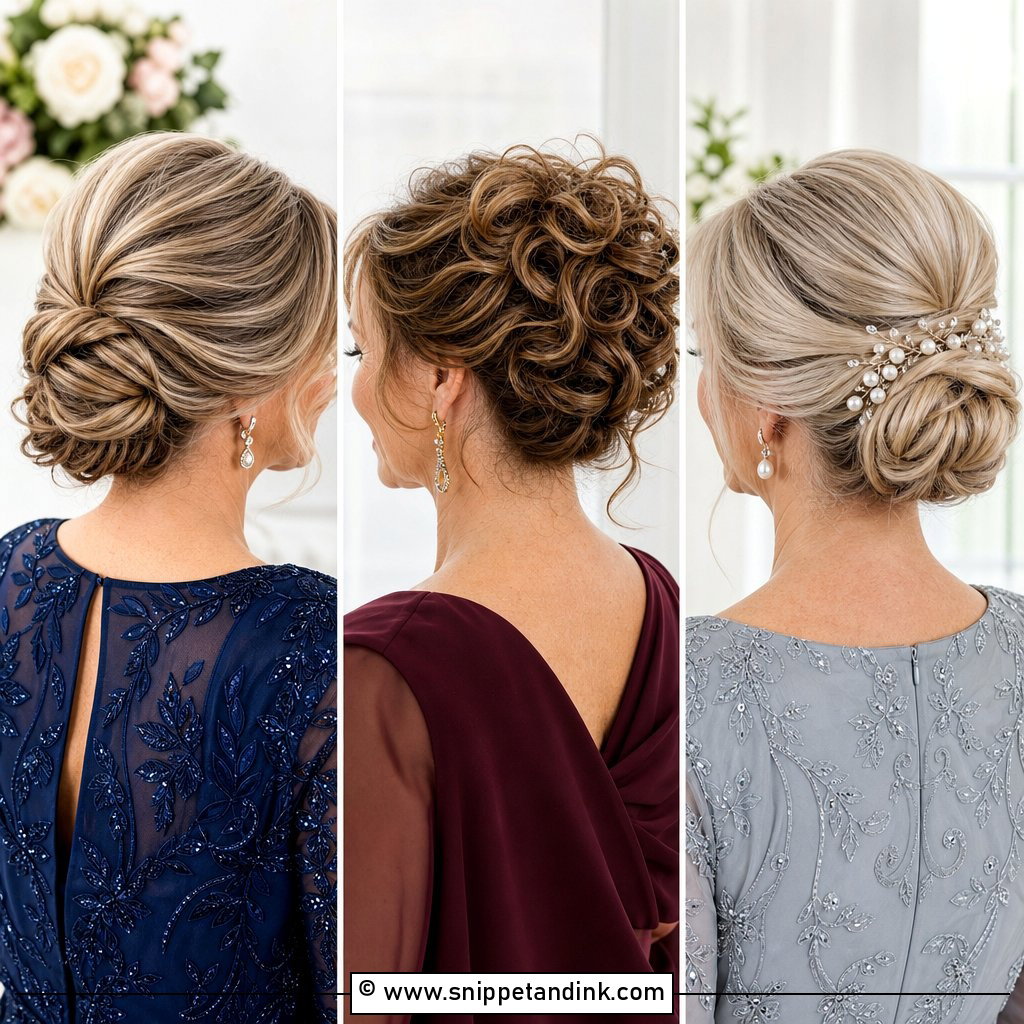
The soft low chignon is the style I’m asked for most by brides who want French without the formality. It sits at the nape and looks loosely gathered. To stop it collapsing by the speeches, I build a small hidden ponytail or a padded base first and pin the loose sections around it. A veil comb slots in just above it. Any gown works, from structured to floaty.
3. Loose Romantic Waves
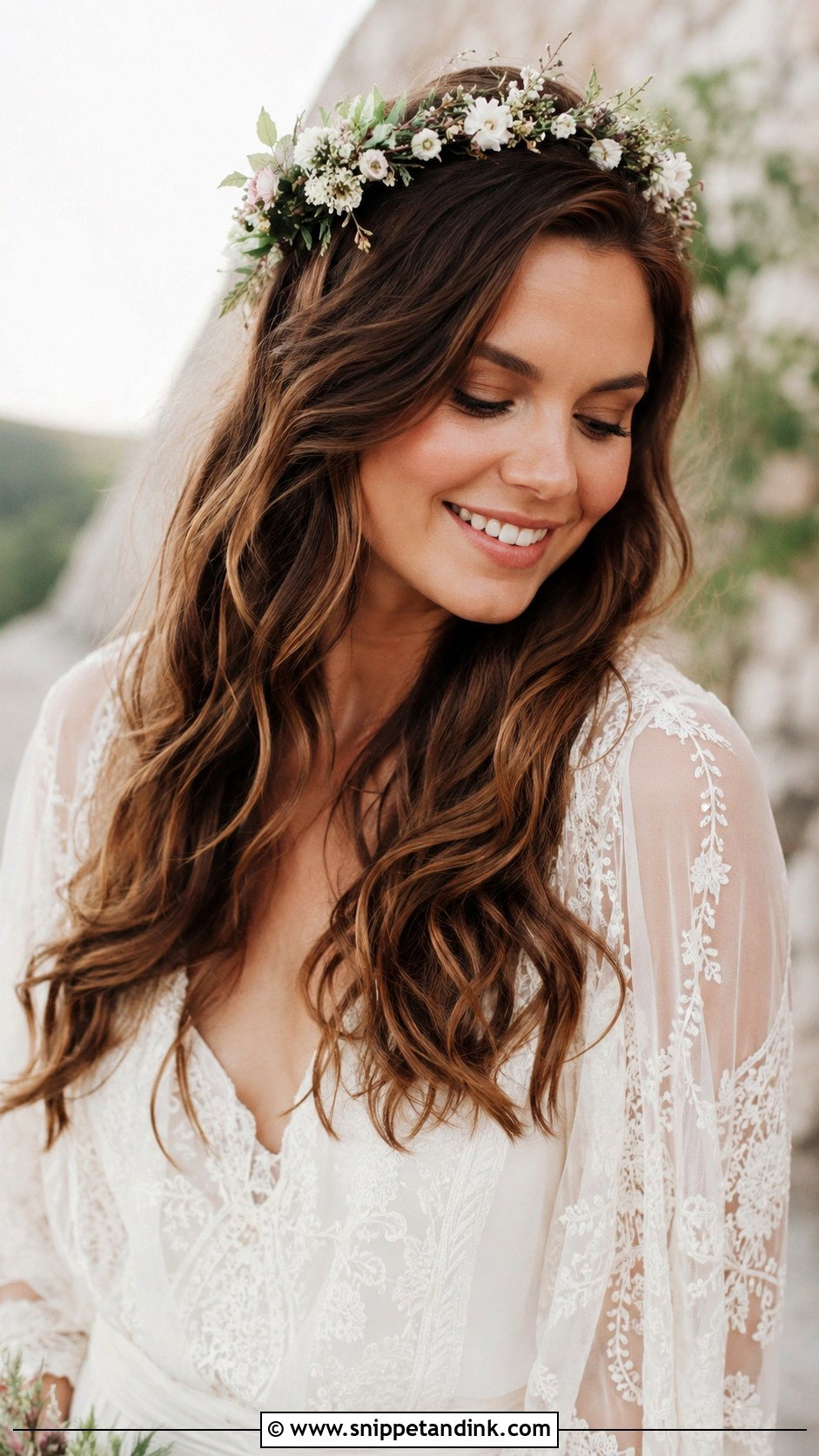
Waves worn down look the simplest and fail the fastest. Curled hair loses shape through the day, quicker in humid air, so I set each curl and let it cool fully in a pin before brushing it out, and I curl slightly tighter than the final look. Brush them into soft, lived-in bends rather than defined ringlets. A middle or side part keeps it modern. I’d talk a bride with very fine, straight hair out of a beach ceremony in this one, or at least plan a half-up backup.
4. Half-Up Half-Down With Curls
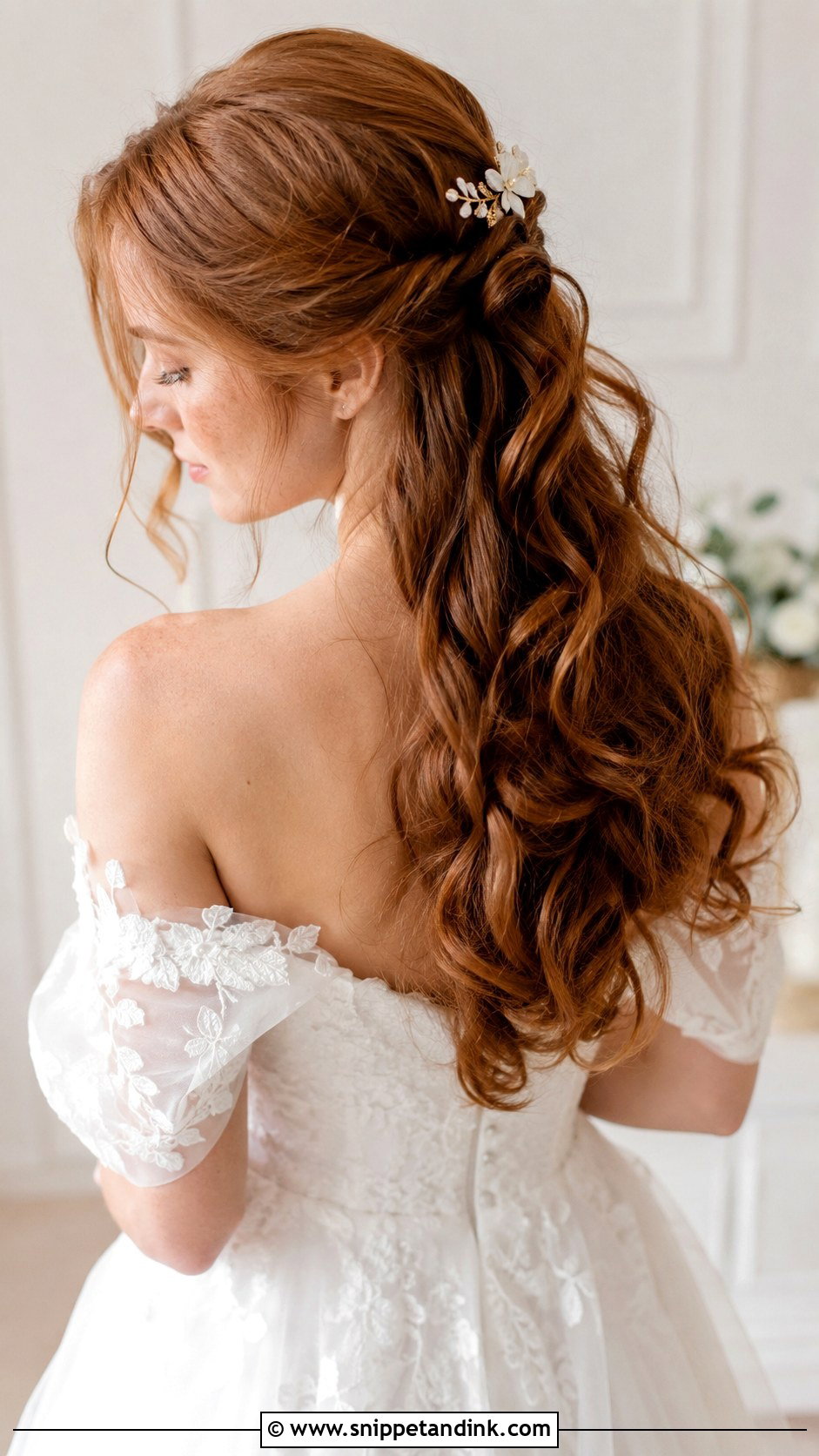
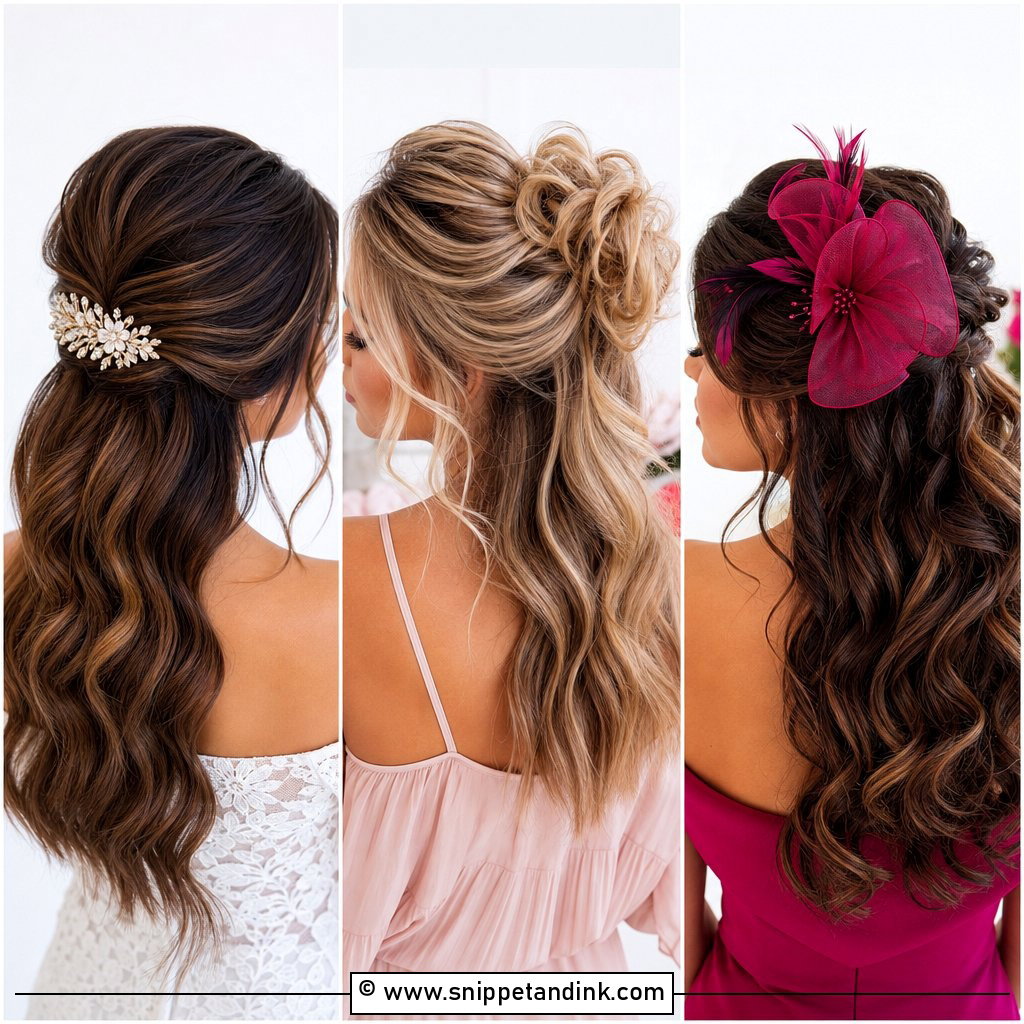
Half-up, half-down gives you some of the hold of an updo and some of the freedom of hair down. I secure the top section with two crossed pins under a small twist so it doesn’t slide when you hug people. Soft curls through the lengths add movement. It frames most face shapes, takes a pin, small tiara or a few flowers at the gathered point, and it’s a good compromise if you’ve never worn an updo and feel unlike yourself in one.
5. Croissant Chignon
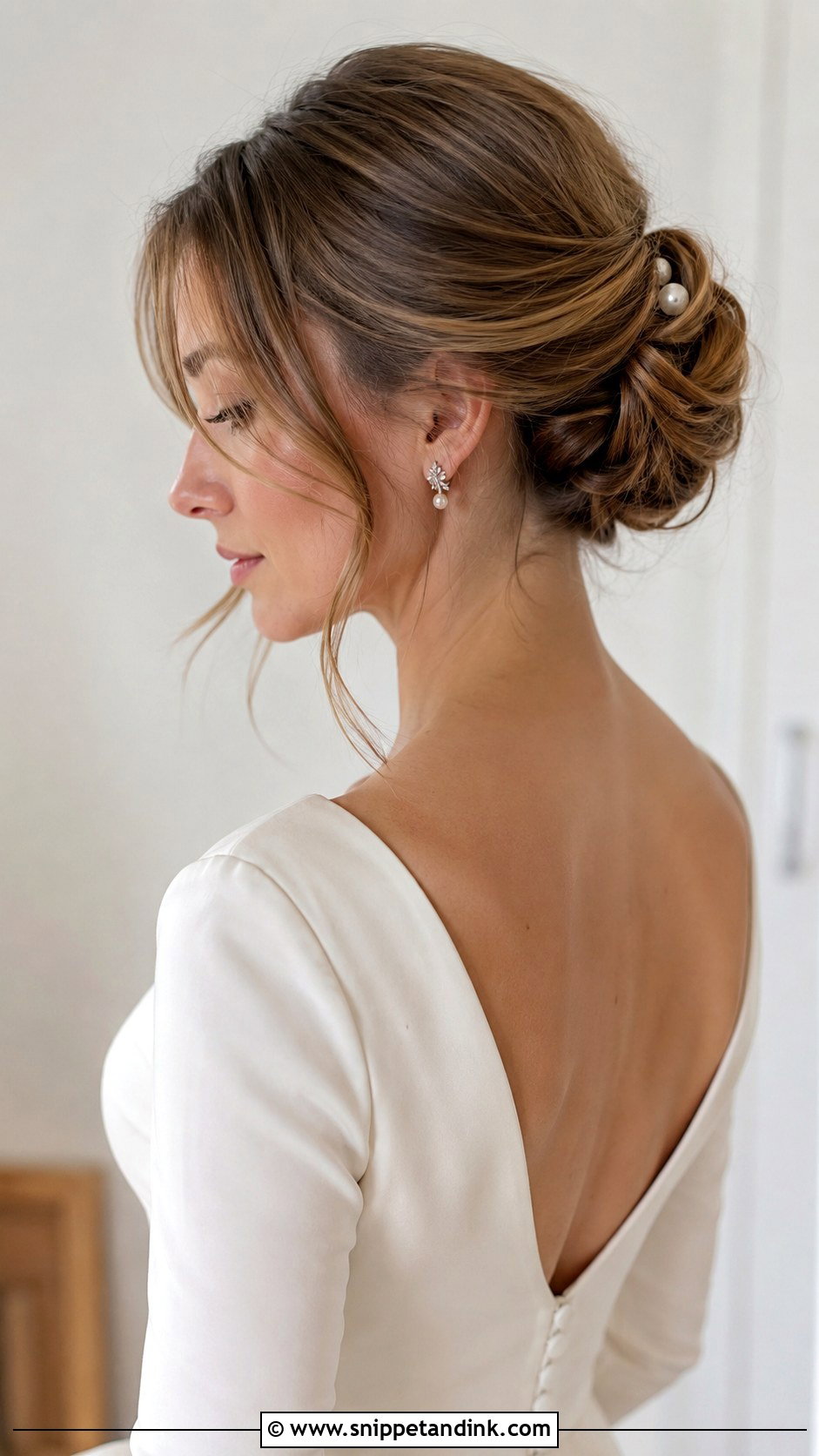
The croissant chignon folds hair into a curved crescent at the back of the head, half sculpture and half soft knot. It needs medium to long hair with some grip; very slippery hair will need a texture spray and a little backcombing at the base. I leave a couple of loose pieces at the front to stop it reading stiff. A few pearl pins along the curve suit it, and it works with modern and vintage gowns equally well.
6. Sleek Low Bun
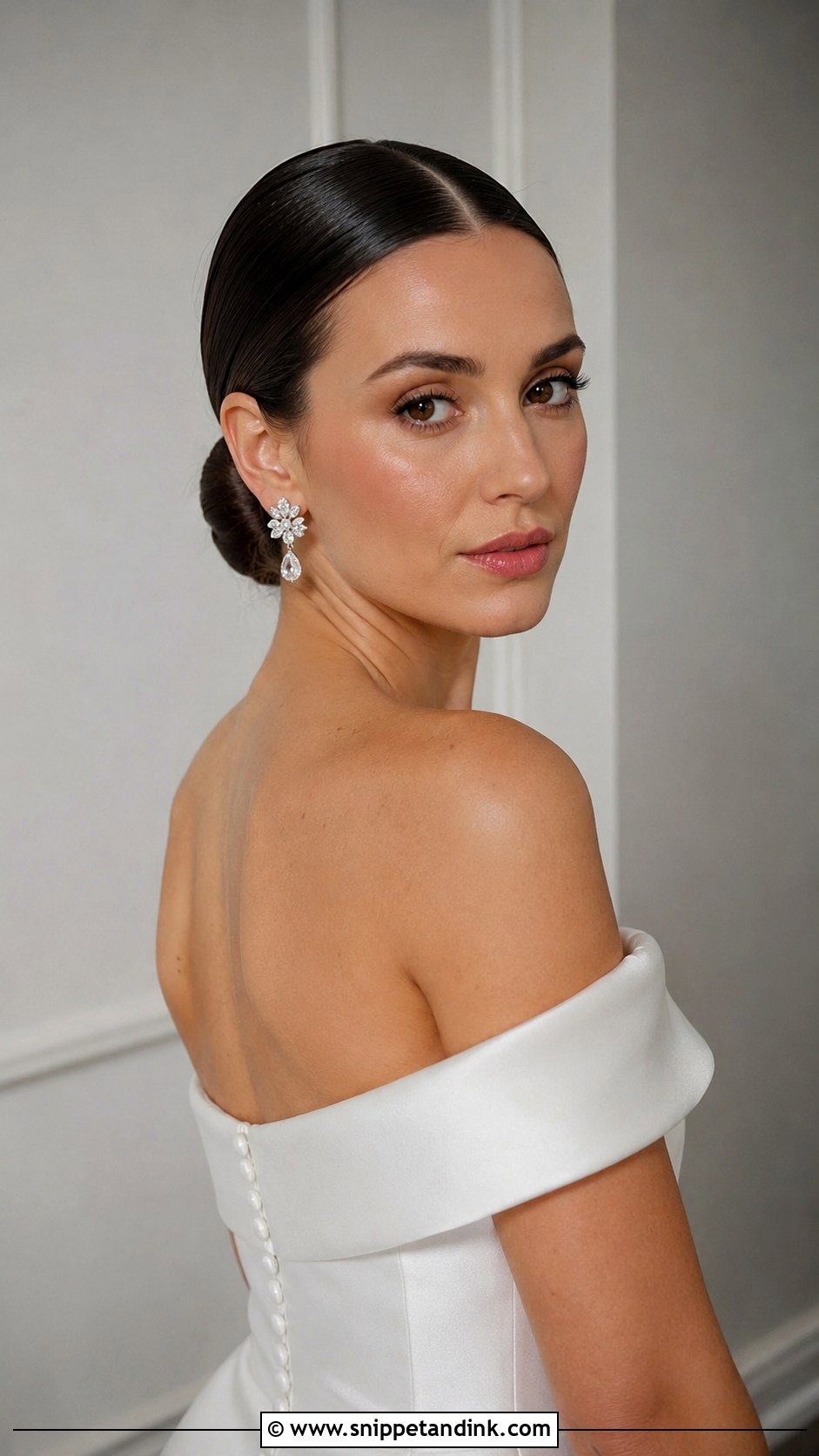
A sleek low bun is minimal and modern, but it shows everything: bumps, flyaways, an uneven parting. I smooth it with a boar bristle brush and a light gel, tie it with a thin elastic, then wrap the bun and pin it flat. A centre part gives symmetry. Strong earrings and structured gowns love it. Be aware that very tight sleek styles can pull at the hairline after hours, so I keep the tension firm but never painful.
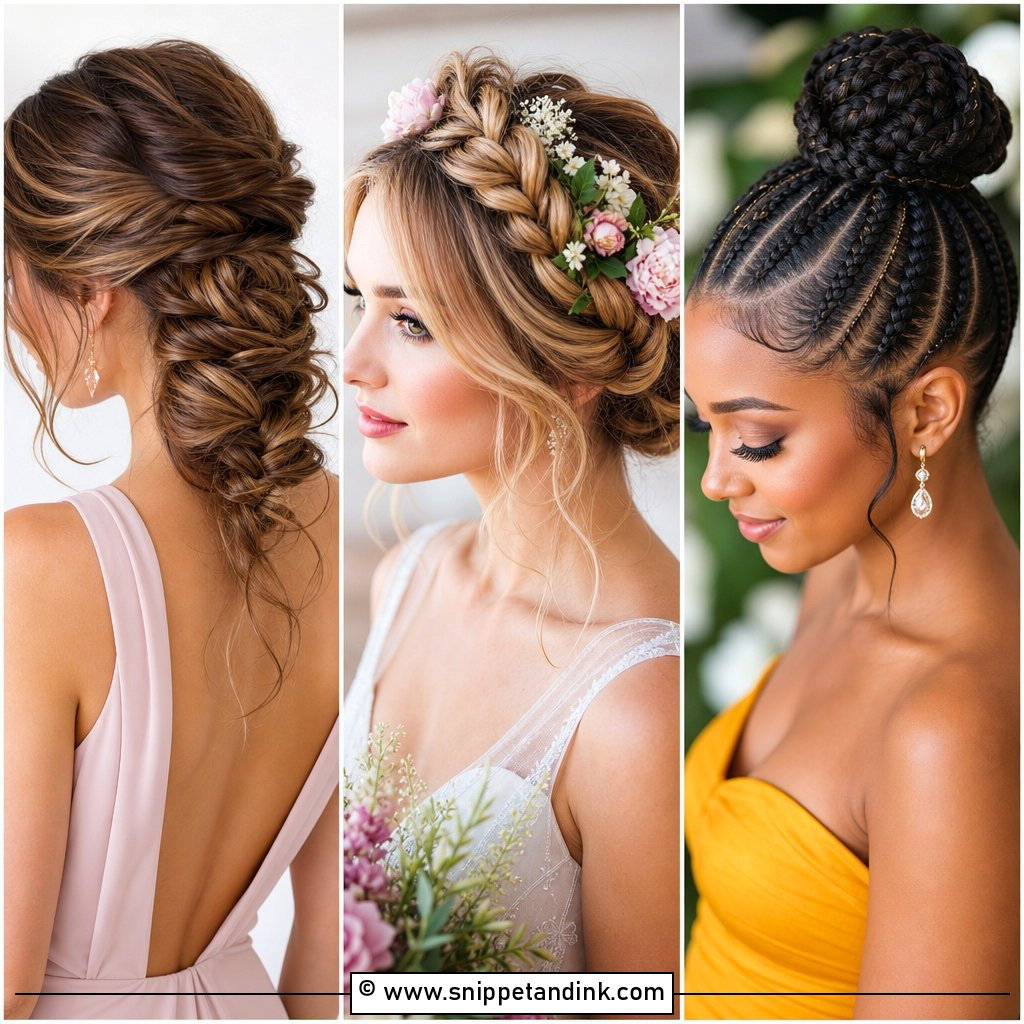
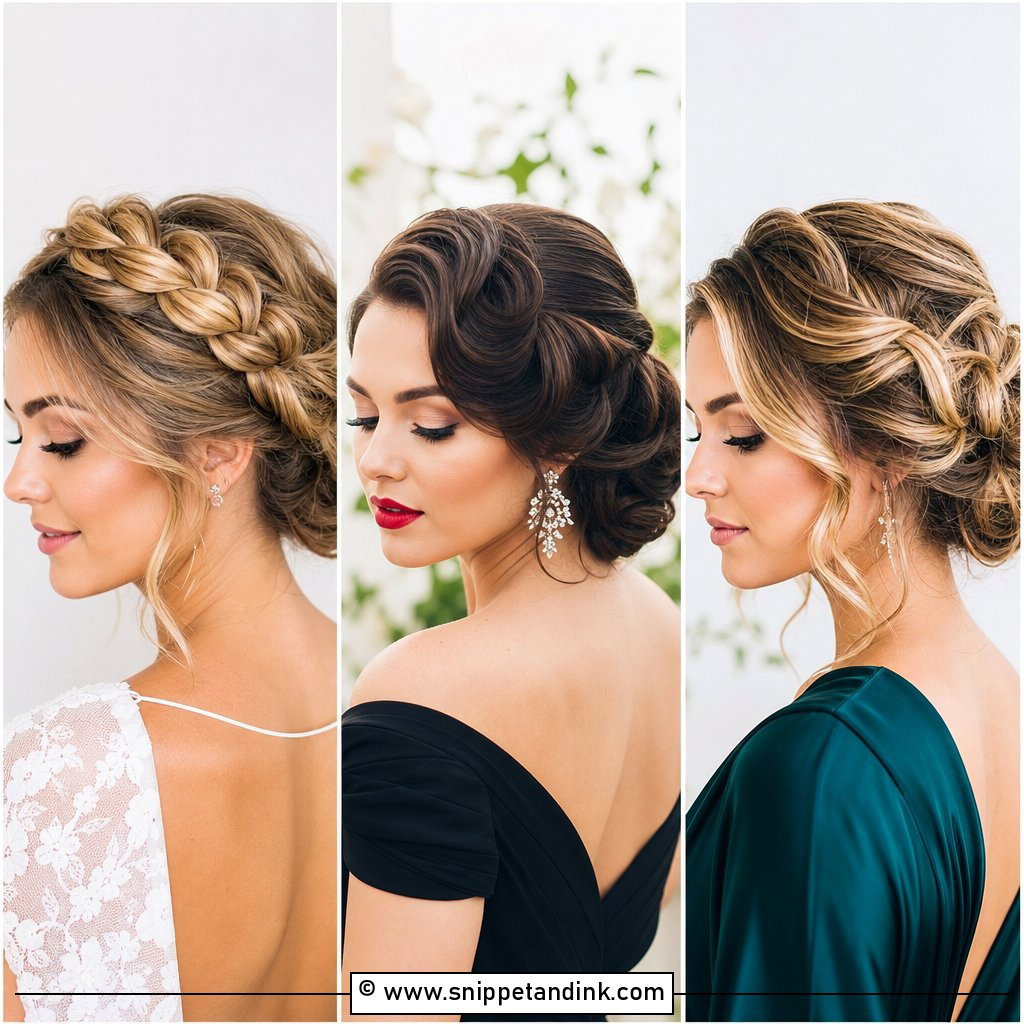
7. Braided Crown Updo
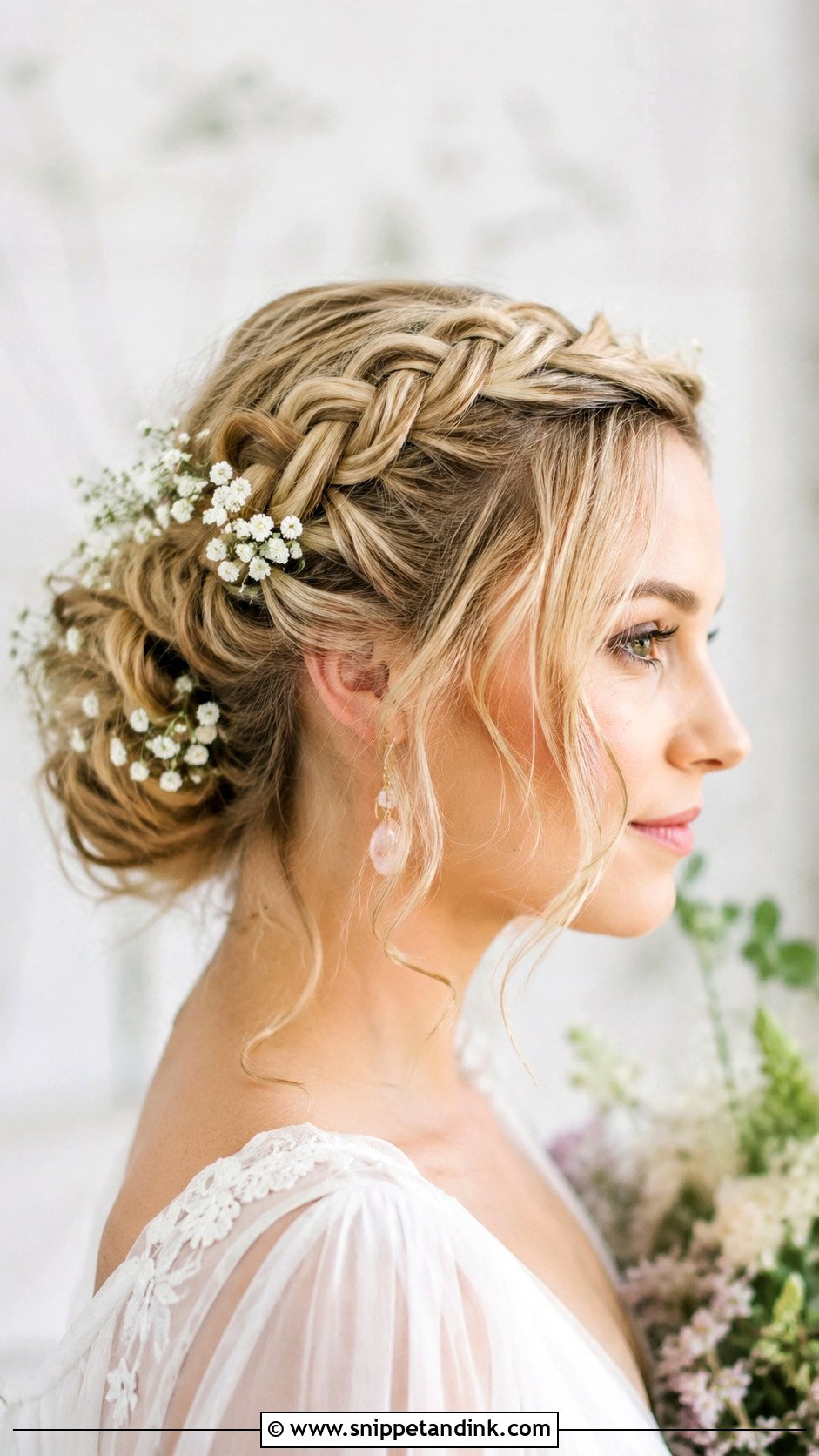
A braided crown circles the head like a halo, and it’s one of the most secure styles I do, which matters if you’ll be dancing outdoors. Dutch braids sit raised and look fuller; French braids lie flatter. Pancaking the braid by gently pulling the loops makes it look softer and hides thin patches. Short layers can poke out, so for shoulder-length hair I sometimes add a small clip-in braid. Baby’s breath tucked into the plaits suits a garden setting.
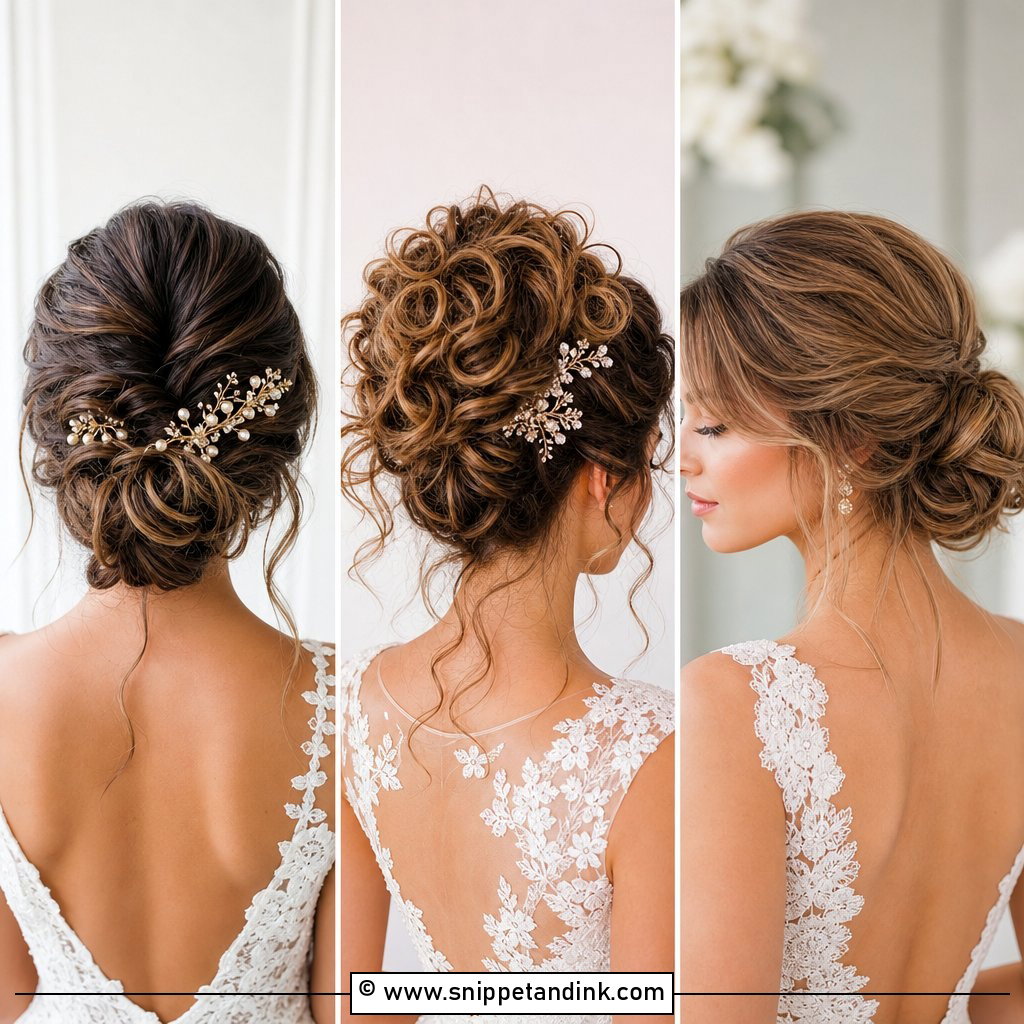
8. Tousled Updo With Tendrils
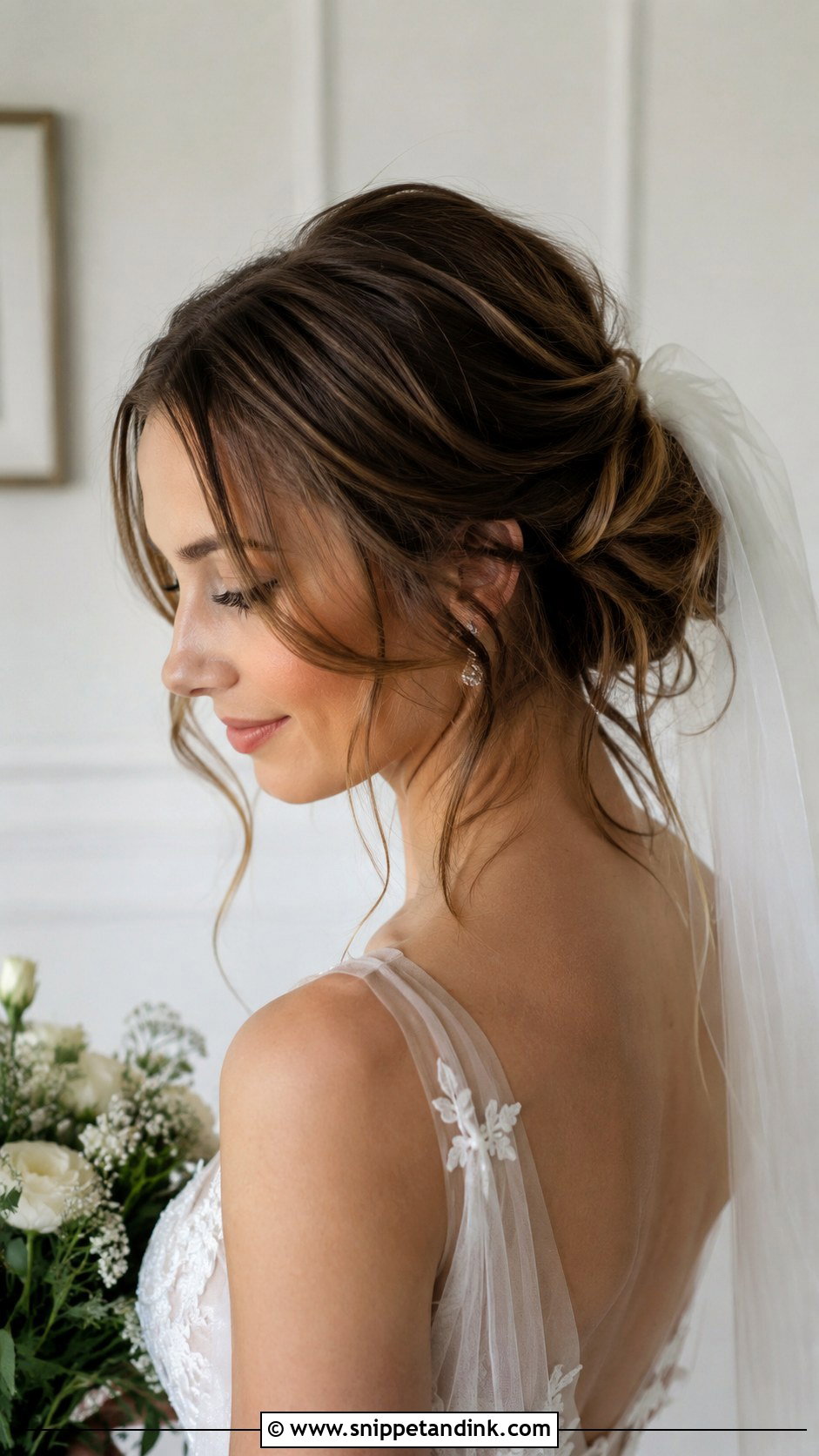
A tousled updo with tendrils is gathered loosely at the back with a few pieces falling around the face. Getting the tendrils right is fussier than the updo. I cut them from the hairline at the temples and behind the ears, curl them separately and leave them slightly longer than the jaw, because face-framing pieces always shrink as the day goes on. Too many and the style reads unfinished. It sits well with delicate veils and floaty gowns.
9. Classic Chignon With Veil
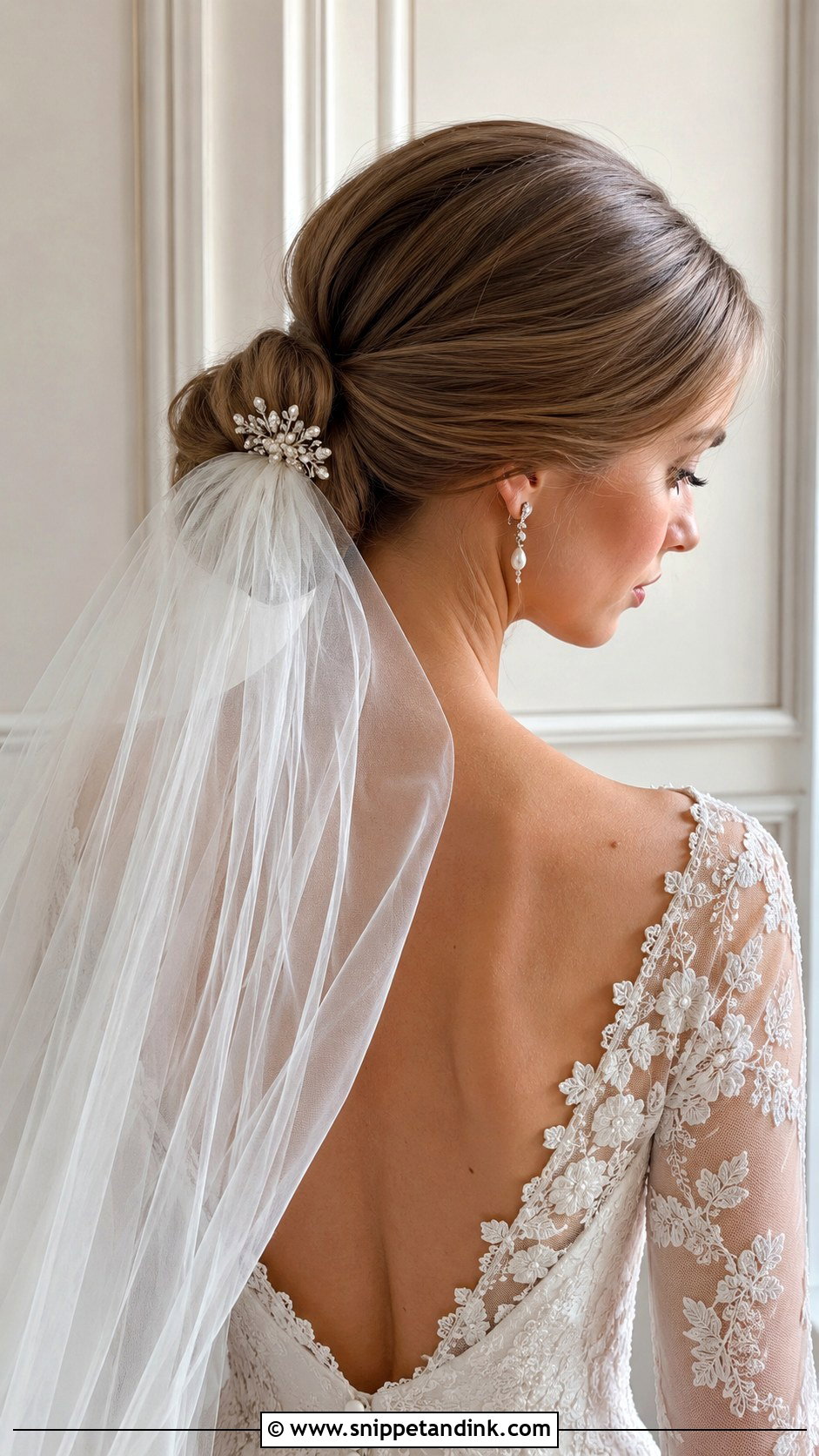
A classic chignon is still my favourite base for a veil. The bun gives the comb something solid to grip, so the veil doesn’t drag the style down. I place the bun so the comb can slide in just above or below it, depending on whether the veil sits high or low. When the veil comes off for the reception, the chignon still looks finished on its own. A pearl comb doubles as decoration for the evening.
10. Side-Swept Curls
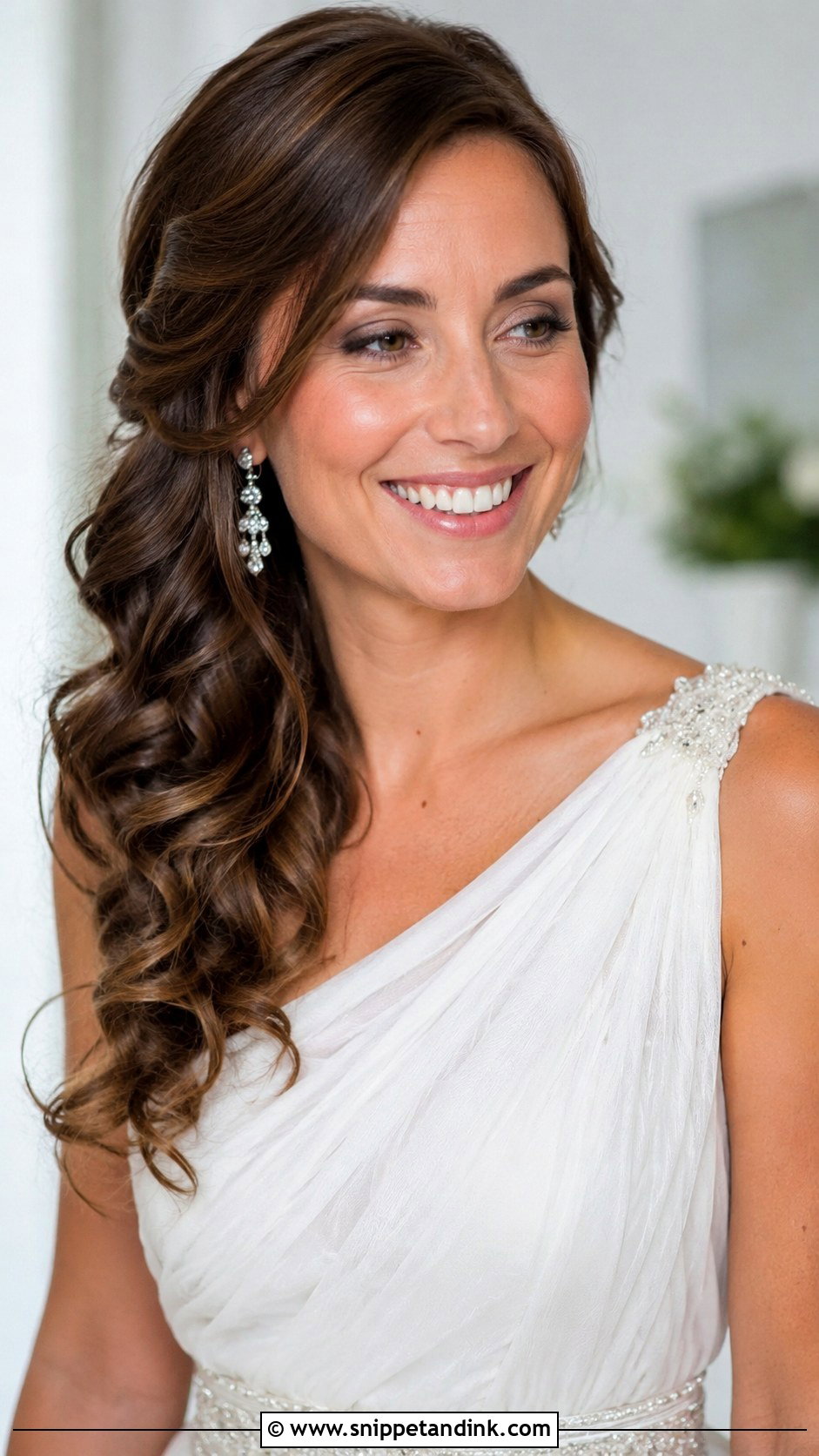
Side-swept curls gather the waves over one shoulder, which shows an earring on one side and the gown on the other. I anchor the sweep behind the ear with a small hidden twist and a couple of pins, otherwise it creeps back to the centre within an hour. Glossy curls lean towards Hollywood, brushed-out ones lean softer. One-shoulder and off-the-shoulder necklines suit it best. Heavy hair might need re-pinning before the first dance.
11. Low Ponytail With Soft Waves
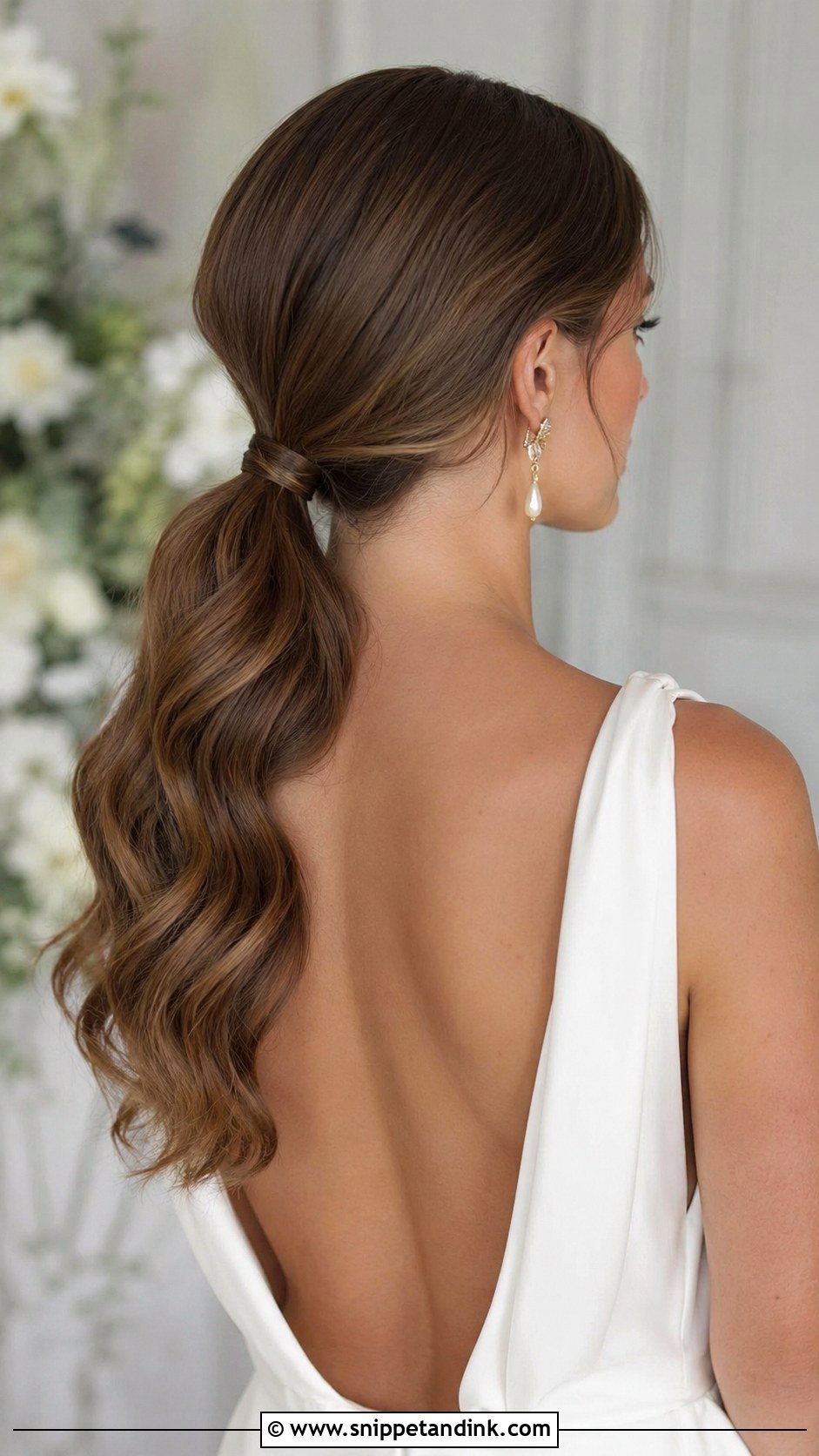
A low ponytail is the modern answer for a bride who doesn’t want an updo or hair down. The trick is hiding the elastic: I wrap a small strand round the base and pin it underneath. Soft waves through the length stop it looking like a gym ponytail. It’s quick, it moves well on the dance floor, and it’s a good choice for very thick hair that becomes heavy in a bun. Leave out one or two face-framing pieces.
12. Floral Accented Bun
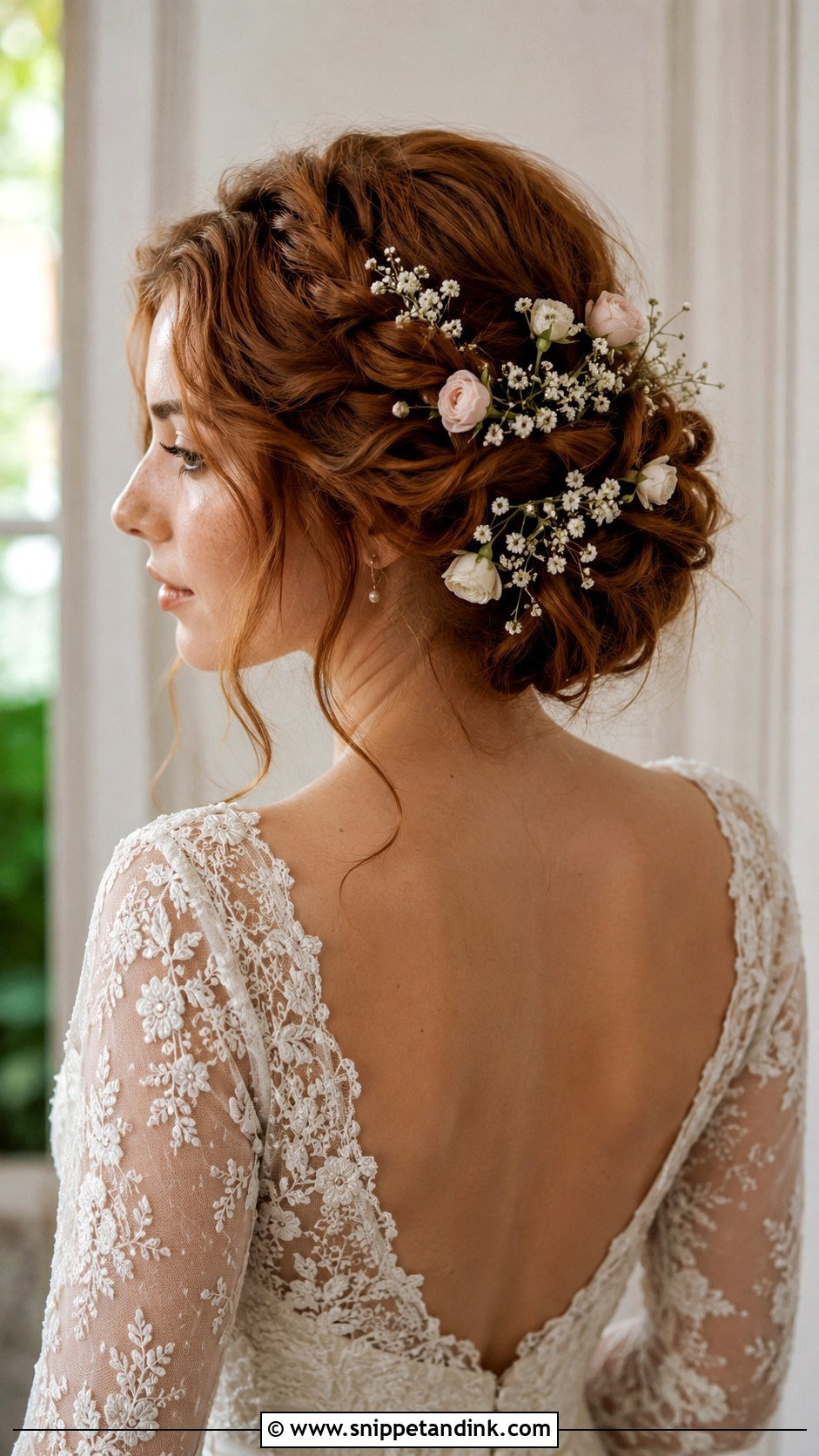
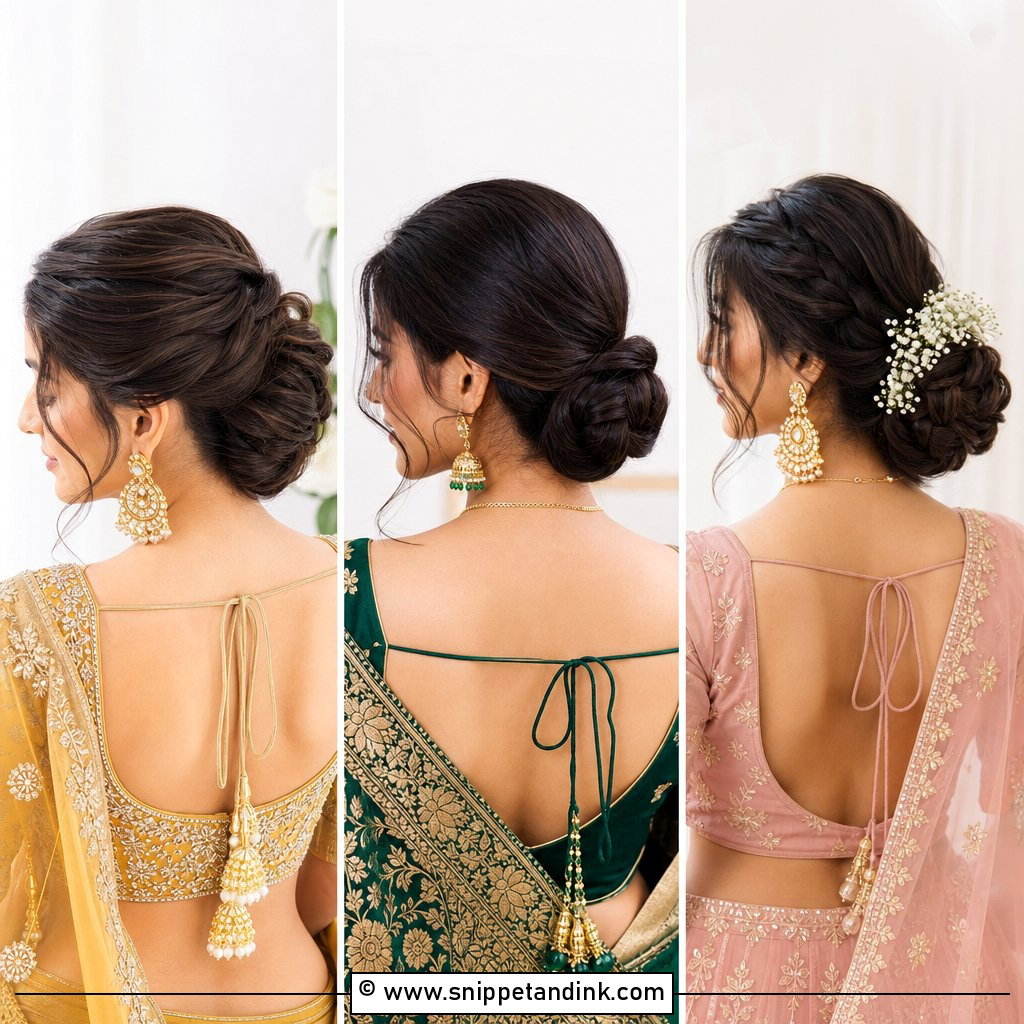
Fresh flowers in a soft bun are a garden-wedding favourite, and I always coordinate with the florist on which blooms. Baby’s breath, spray roses and waxflower last hours out of water; delicate wildflowers and gardenias can wilt or brown by the reception, especially in summer sun. I wire or pin each stem into the base of the bun, never just tuck it. Matching a bloom from the bouquet ties the look together, and a low or mid-height bun both carry it.
13. French Roll With Side Part
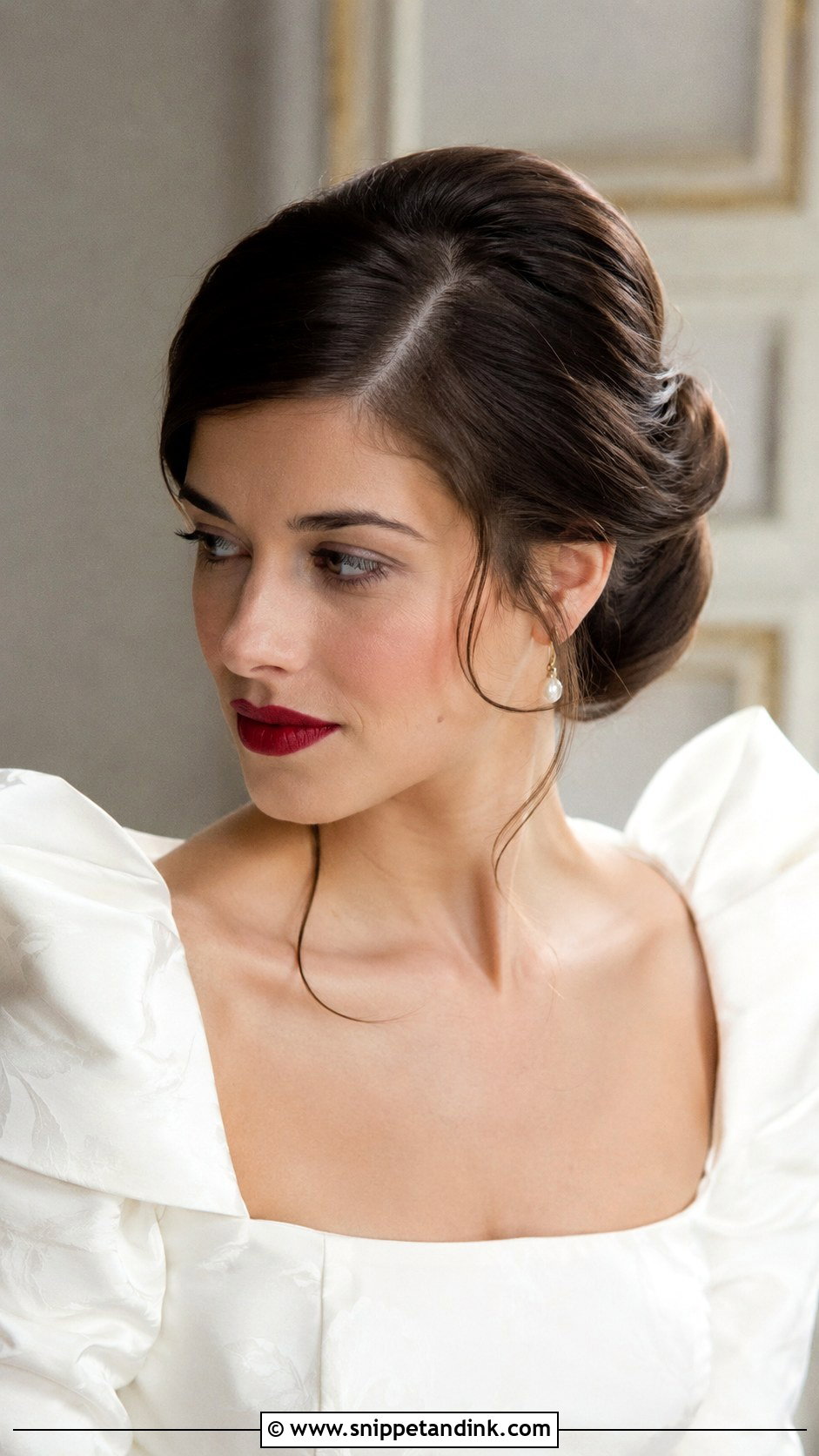
The French roll is the twist’s vintage cousin, and pairing it with a deep side part shifts it from prim to glamorous. The part has to be set early in the prep while the hair is still damp, or it will fight back. Smooth for formal evenings, or soften with a tendril or two. Classic earrings and a strong lip complete it. Fine, very straight hair holds the roll best after a little texture spray.
14. Messy Bun With Loose Strands
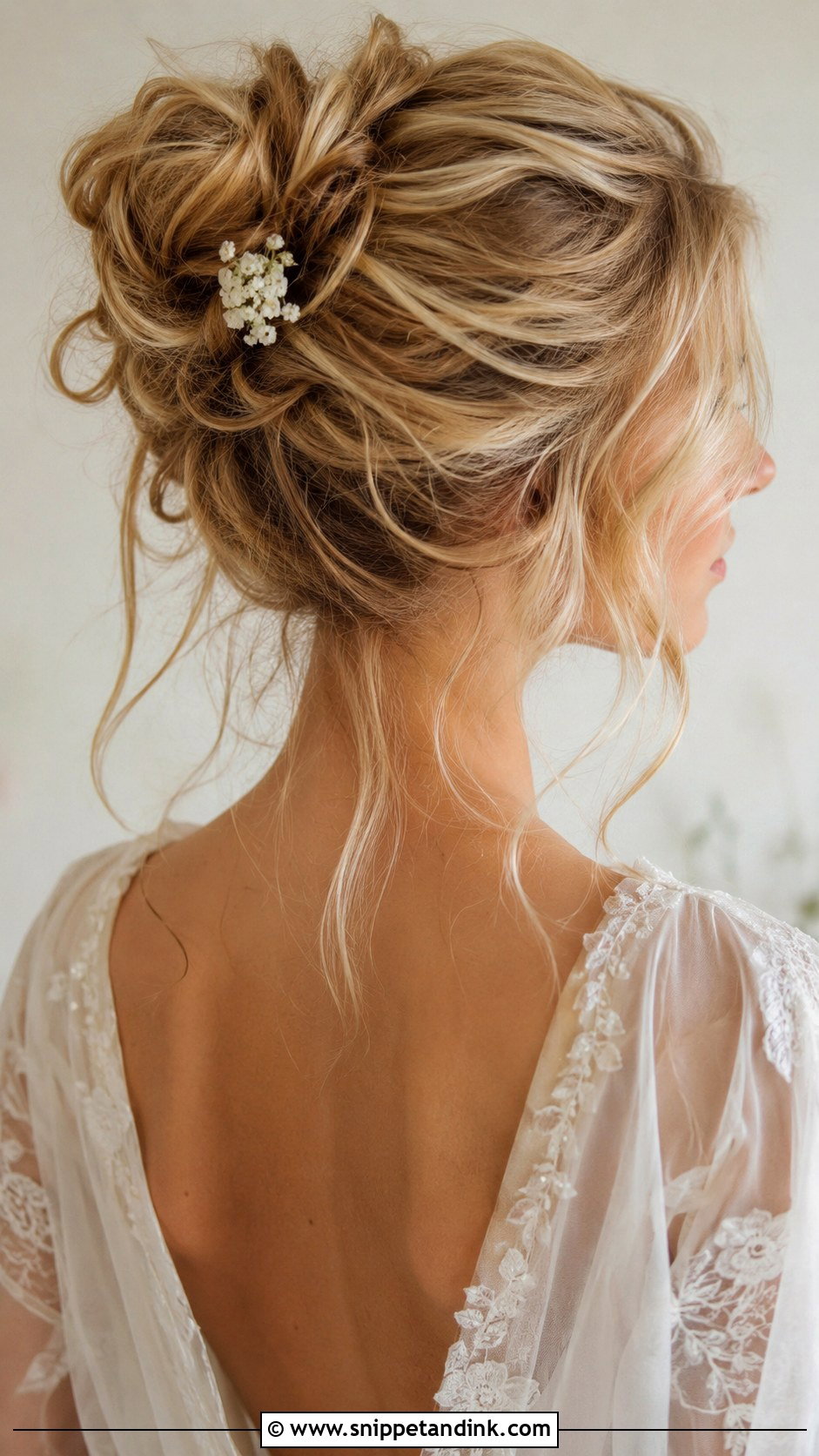
The messy bun looks careless and is anything but. I build it from loosely pinned sections over a small base, then pull pieces out where they look right in the mirror. Second-day hair helps it, because freshly washed hair is too slippery. Curly and wavy textures do this one naturally, often better than straight hair. It’s comfortable for long, relaxed days, and a few small flowers or one pin are all it needs.
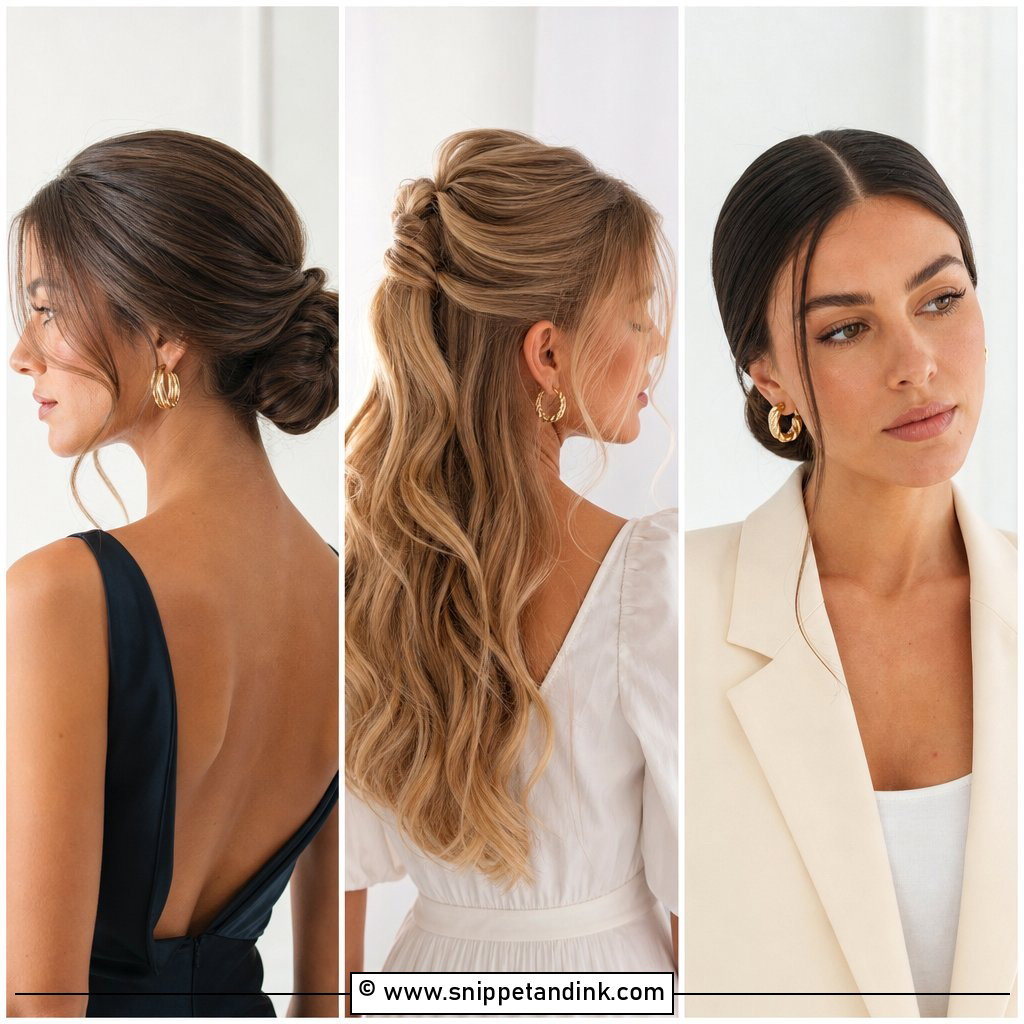
15. Braided Half-Up Style
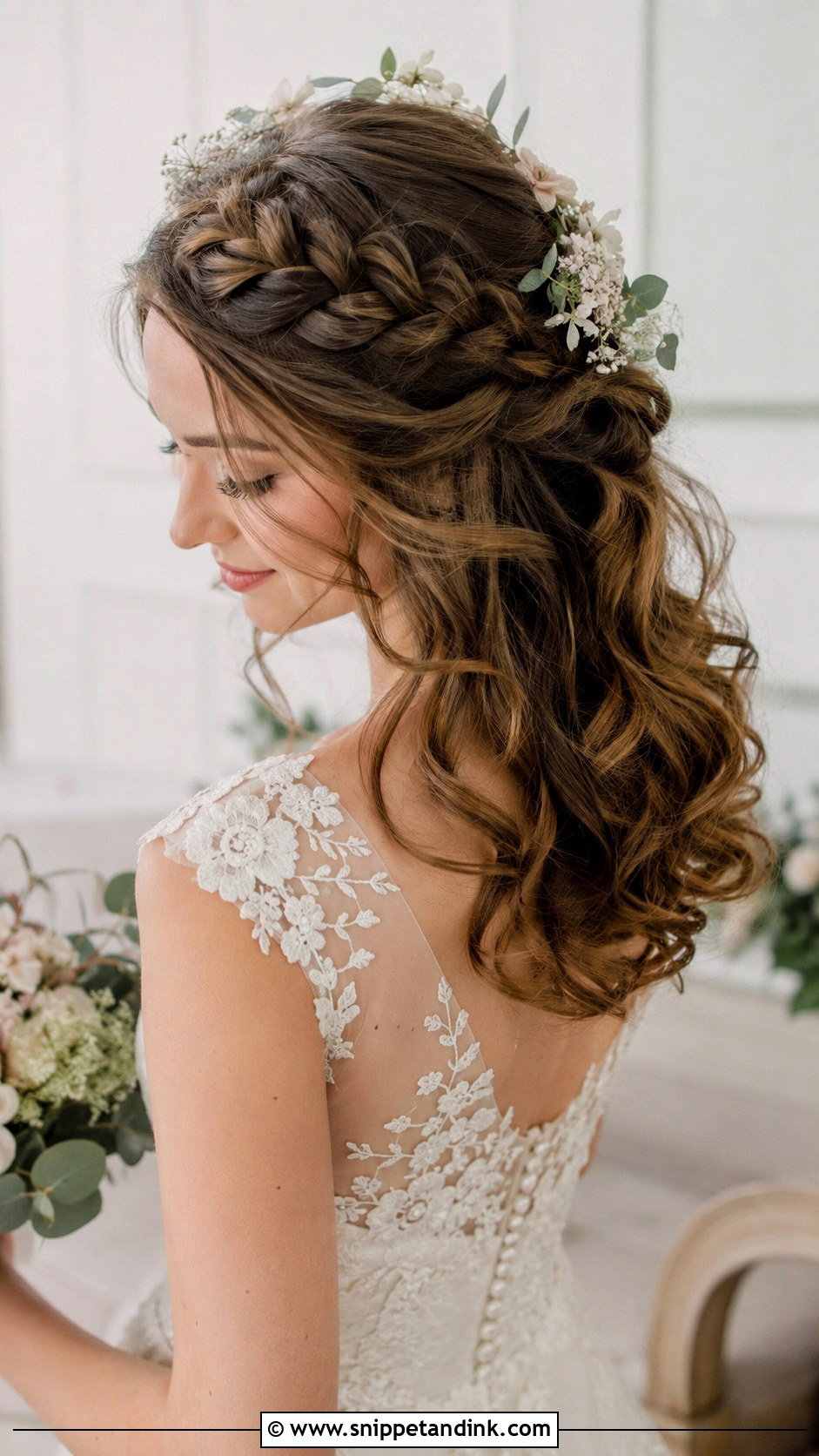
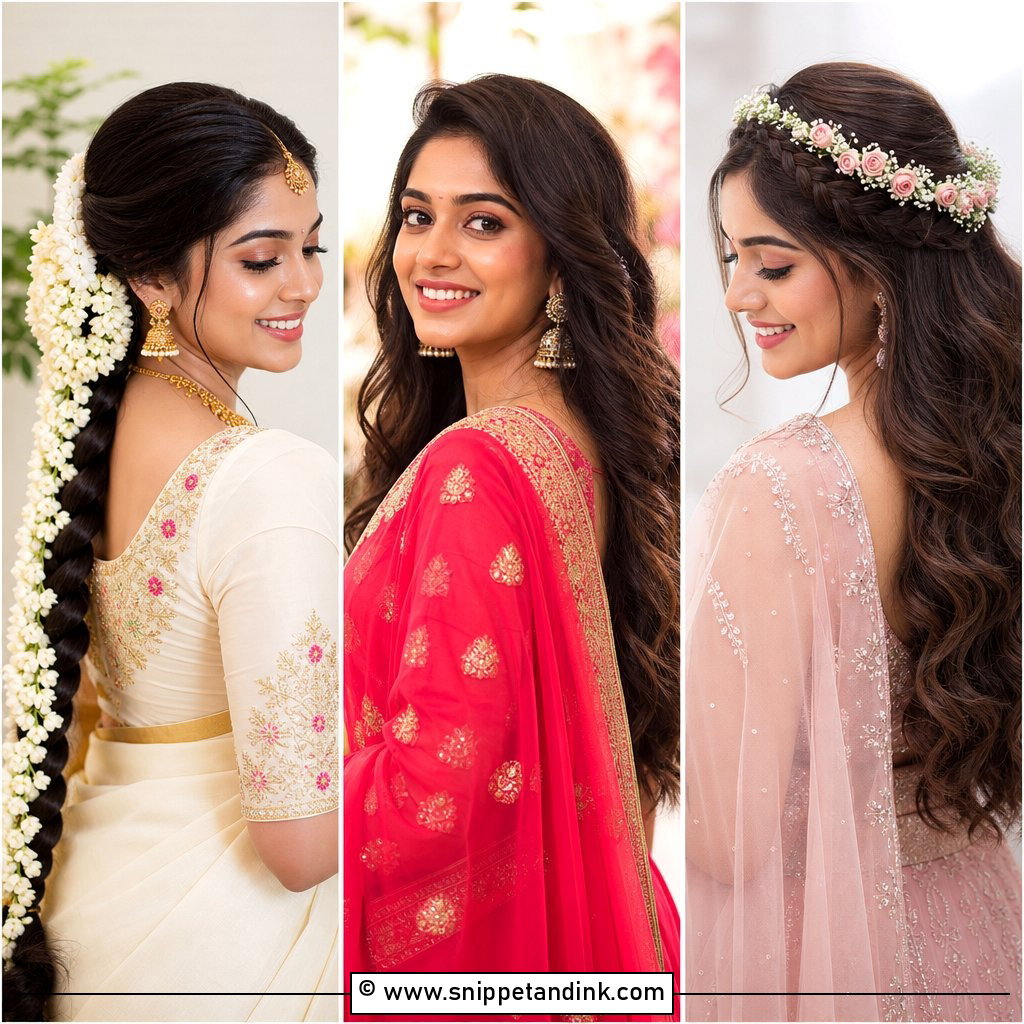
A braided half-up pulls the top sections back into soft braids that meet at the back, leaving the rest loose and curled. I make the braids slightly loose so they can be pancaked into a fuller shape. It’s practical: braids hold the top in place even when the curls below drop. Floral crowns, small pins or a veil all sit comfortably above the join. Any length from just past the shoulders works.
16. Vintage Finger Waves
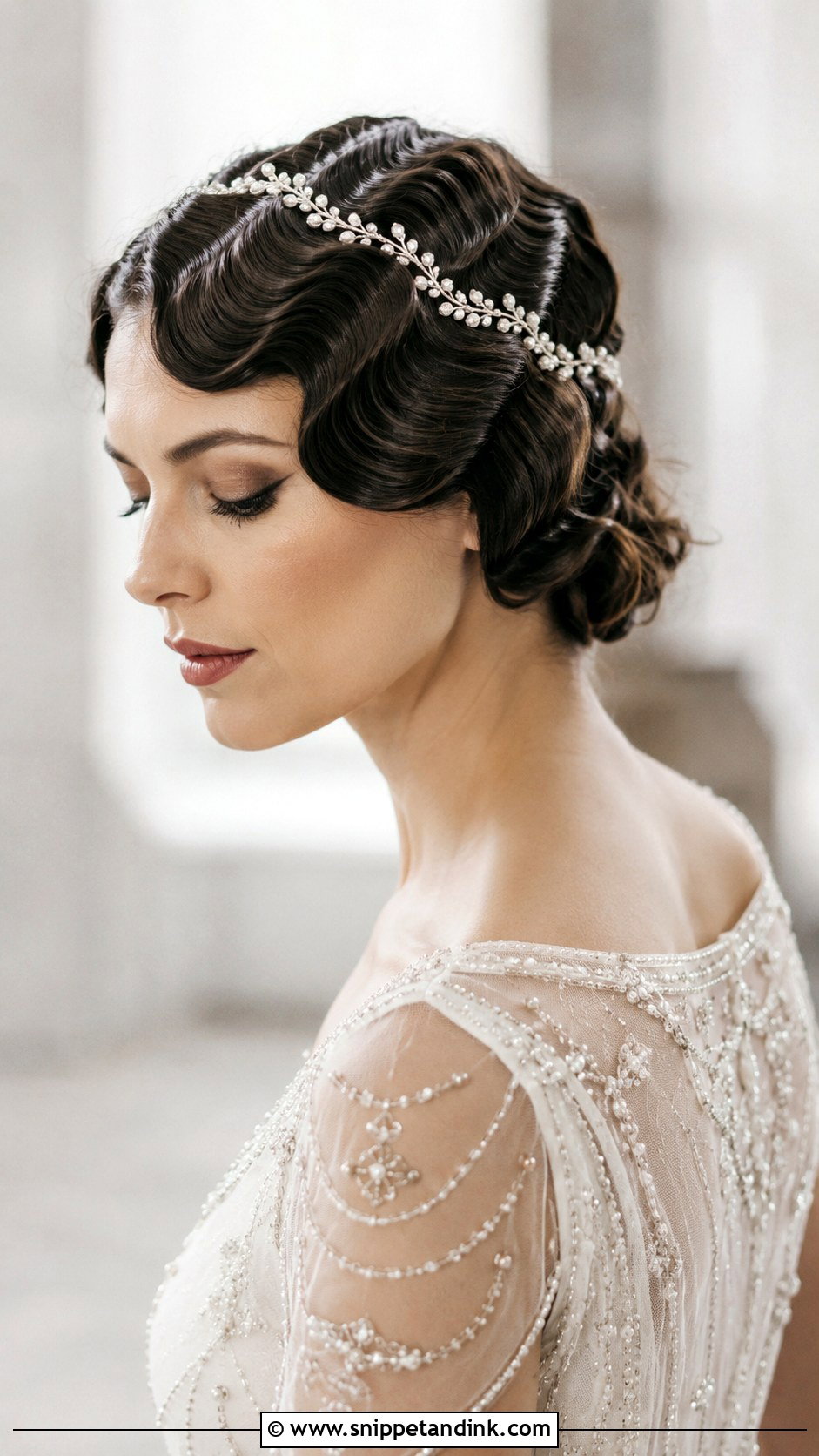
Finger waves sculpt the hair into flat S-shaped ridges close to the head, the 1920s look. It suits a bob or chin-length hair best. Traditionally they’re set wet with gel and clips and left to dry; I often use a flat iron or curling iron and then shape the waves, which is quicker on the day. It’s a demanding style for a beginner stylist, so ask to see their past finger waves. A beaded headpiece or vintage gown completes it.
17. Low Knotted Bun
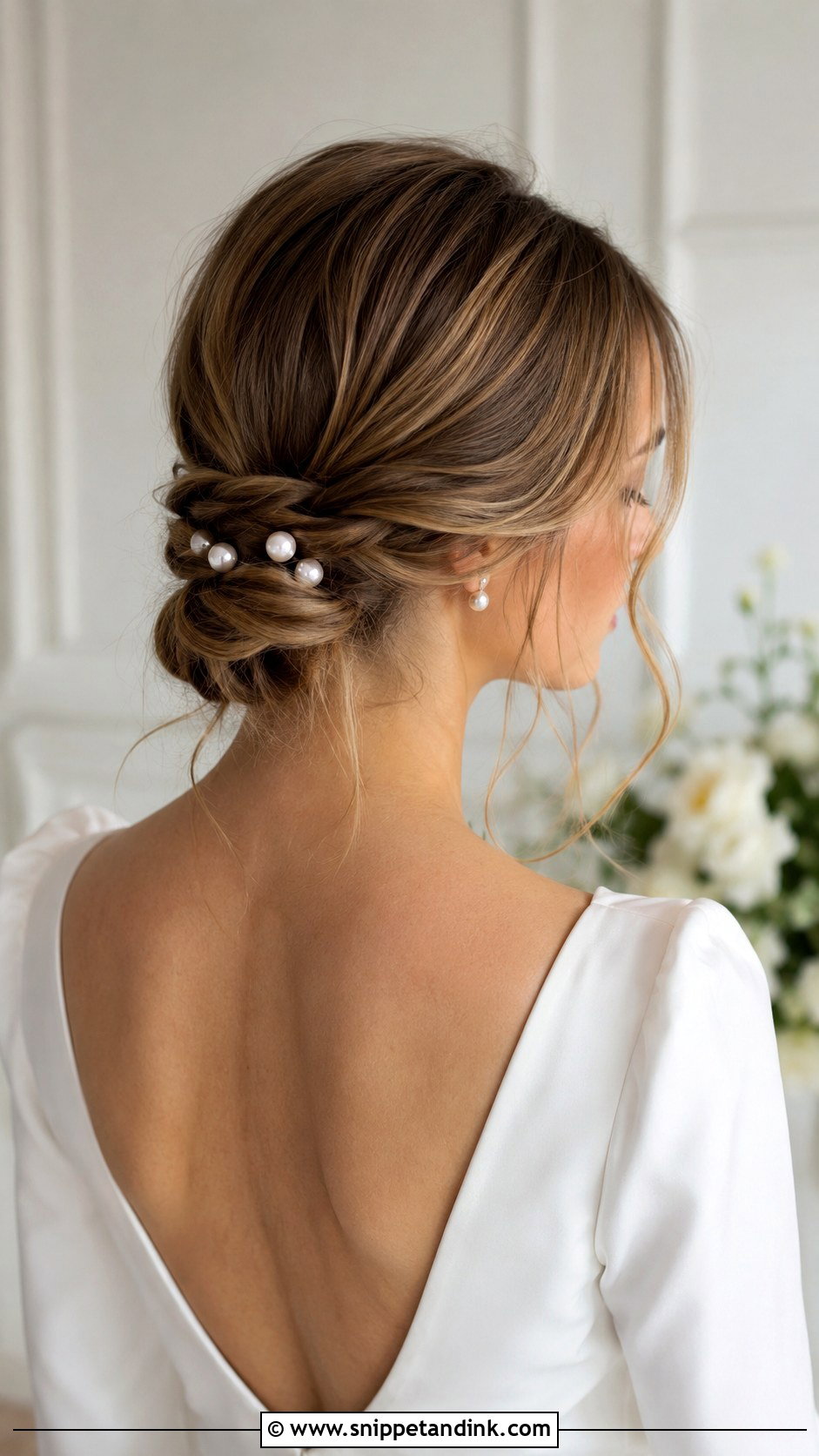
A low knotted bun ties sections of hair into knots at the nape and pins them together, which gives texture without curling. It’s my usual pick for brides who hate the feel of hairspray, since the knots hold themselves. It shows off a neckline and earrings well. Leave out a tendril or two, or keep it sleek. A pearl pin or a fine hair vine sits naturally between the knots.
18. Curtain Bangs With Updo
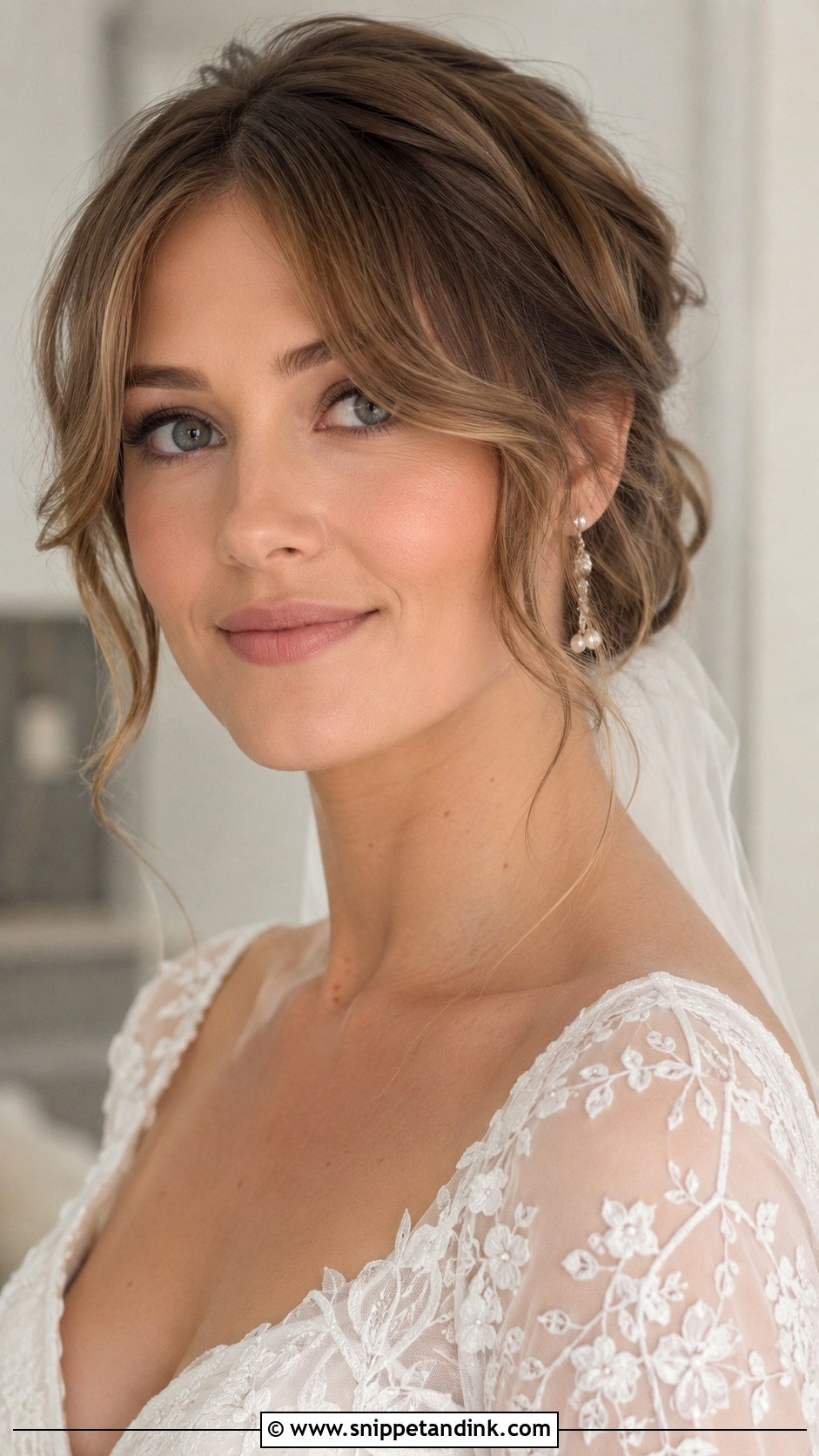
Curtain bangs with an updo soften the face and frame the eyes. The timing matters: if you’re cutting them for the wedding, do it four to six weeks before so they’ve relaxed and you know how they fall. Freshly cut bangs sit too short and stiff. On the day I set them with a round brush and a small amount of spray, not a curling iron. Chignons, buns and twists all pair with them.
19. Pearl Embellished Updo
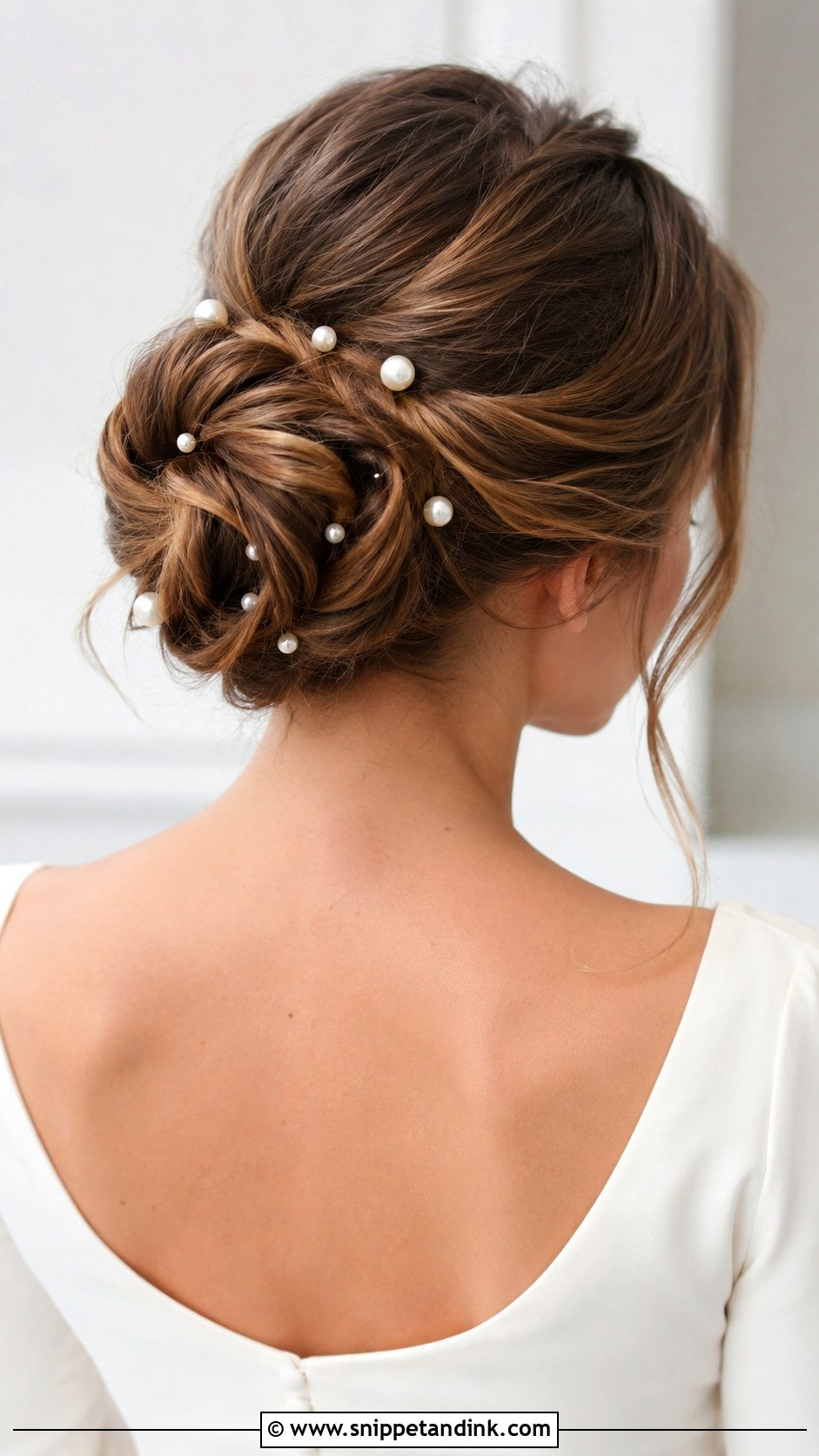
Scattered pearl pins in a soft bun or twist add detail without a heavy headpiece. I place them where the hair dips, in the folds of a twist or between sections of the bun, because pins on a flat surface look stuck on. Clusters read more formal, a random scatter more organic. Push each pin in at an angle so it grips; straight pins slide out with movement. It suits almost any gown.
20. Sleek Straight Hair Down
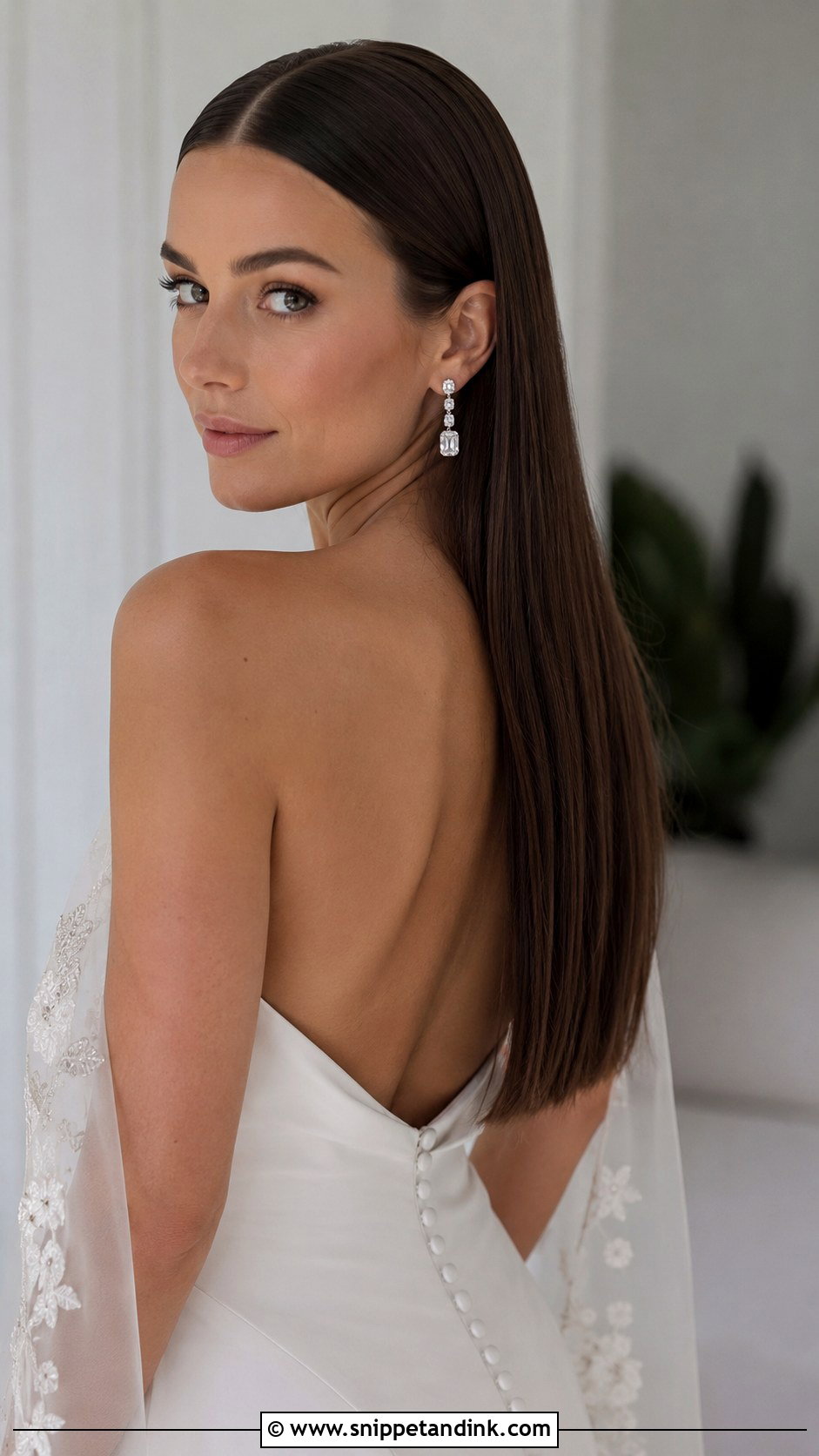
Sleek straight hair worn down is minimalism at its purest. It depends on healthy, glossy ends, so a trim a few weeks before helps more than any product. I smooth with a flat iron in small sections and finish with a shine serum on the lengths only. A centre part gives symmetry. The honest downside: straight hair shows frizz first in humid weather, so it’s riskier outdoors in summer.
21. Twisted Side Updo
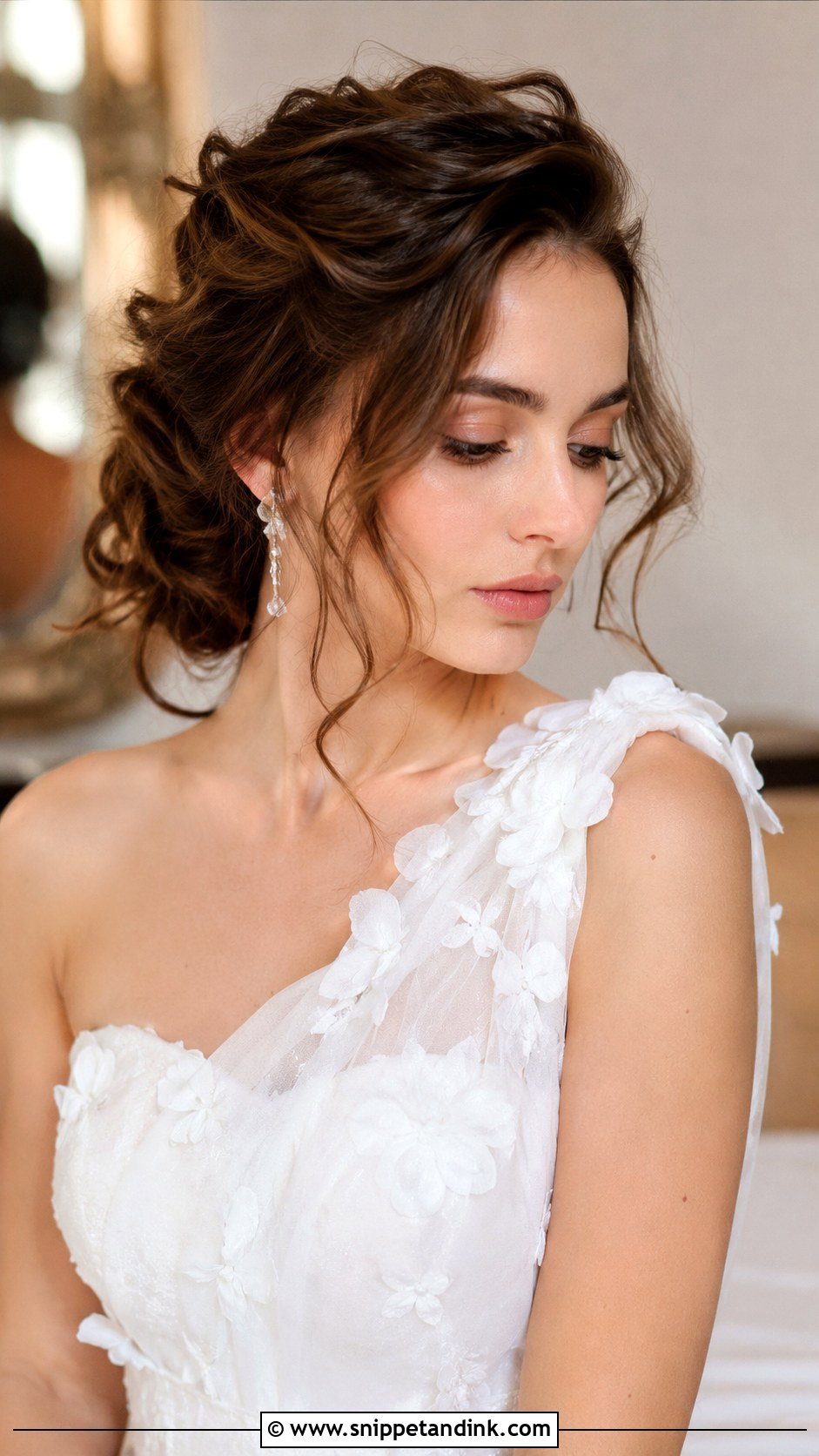
A twisted side updo gathers and twists the hair to one side, finishing in a soft, sculptural shape behind one ear. The off-centre weight shows an earring on the other side. I anchor it to a hidden ponytail placed off-centre, otherwise the twist drifts. Loose pieces around the face soften it. It’s a good match for one-shoulder necklines and small accessories.
22. Bohemian Loose Updo
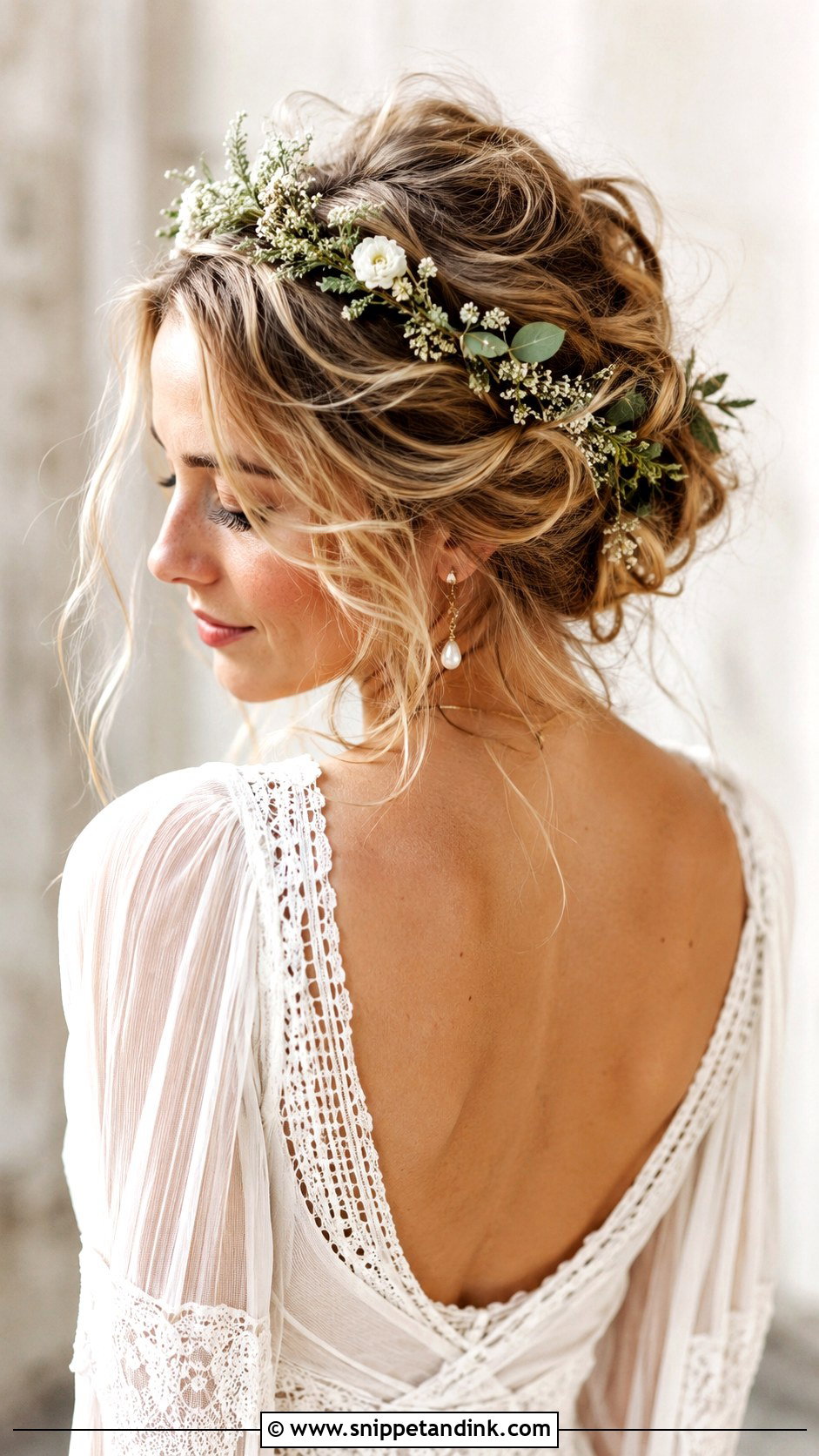
A bohemian loose updo mixes soft twists, small braids and tousled texture, gathered loosely. Natural texture is an asset here, so curly and wavy hair often needs less curling and more shaping. I pin it more securely than it looks, since a loose updo outdoors gets tugged by wind and hugs. A sprig of greenery or a few flowers tucked in suits a garden. Pair it with flowing gowns.
23. Slicked Back Bun
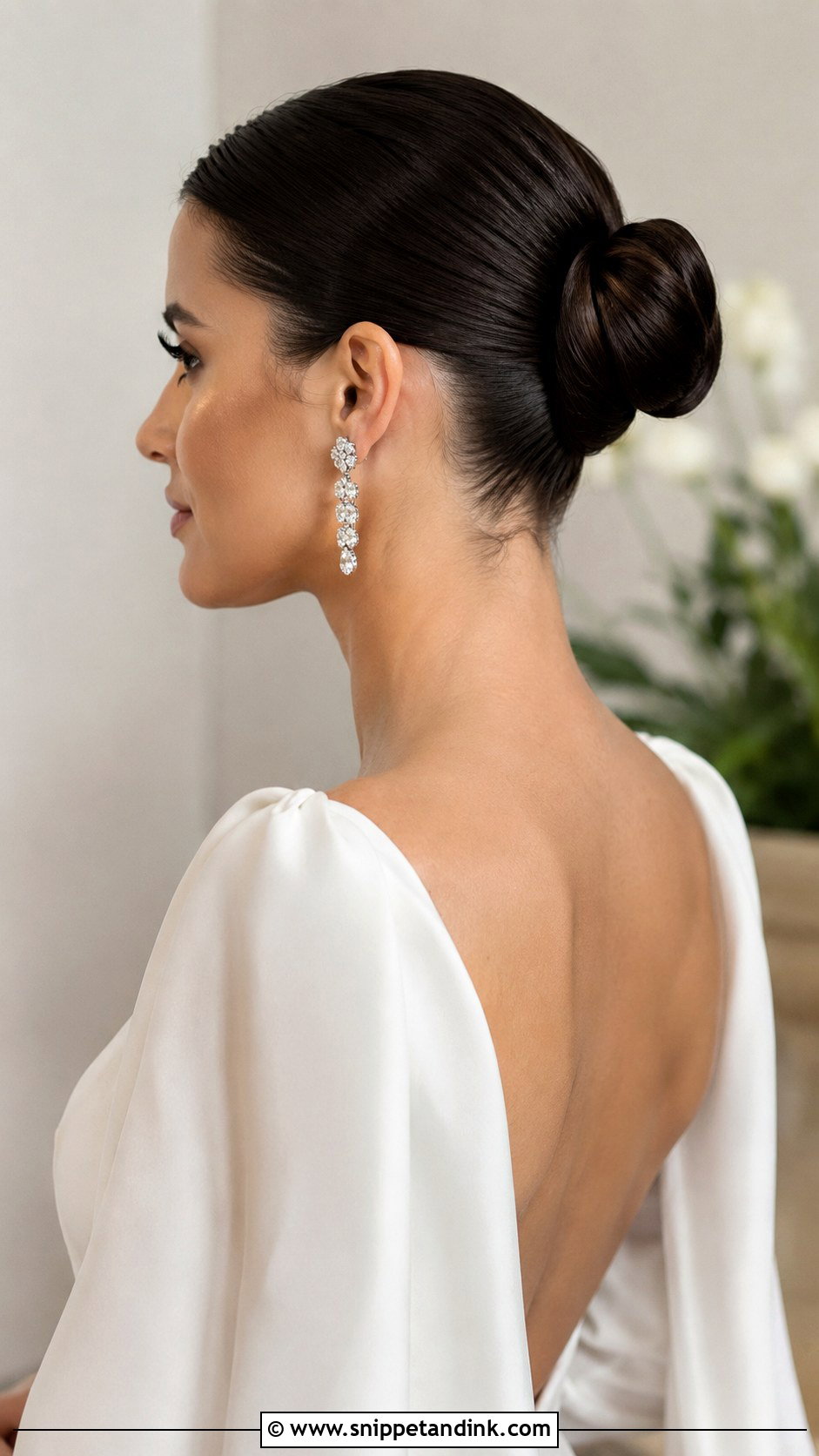
The slicked-back bun is the most editorial style on this list. Every strand goes back into a tight, glossy bun, which means the hairline is on display, so I check for baby hairs and decide early whether to lay them flat or leave them. A strong-hold gel and a fine-tooth comb do the work. Minimal gowns and bold makeup suit it. If you have a sensitive scalp or get tension headaches, I’d suggest a lower, softer version instead.
24. Wavy Lob With Soft Volume
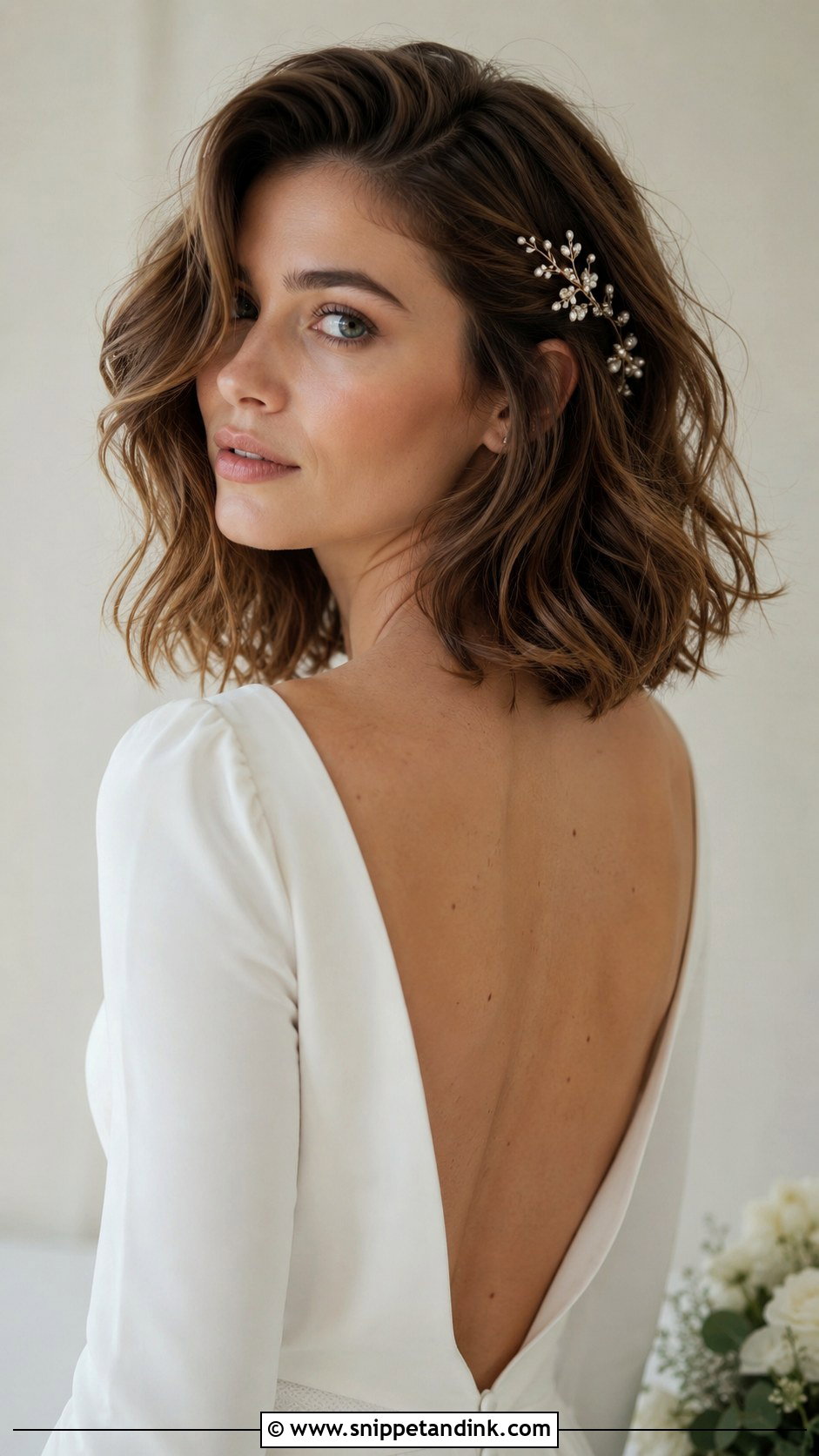
A wavy lob gives brides with shorter hair a romantic option without extensions. I curl in alternating directions and brush through so the waves look loose, and add a little root lift at the crown for volume. A side or centre part both work. A couple of pins or a small flower sit neatly behind one ear. Short hair can absolutely look bridal; it just needs a shape that suits it rather than a squeezed-in updo.
25. Accessorized Bridal Bun With Hair Vine
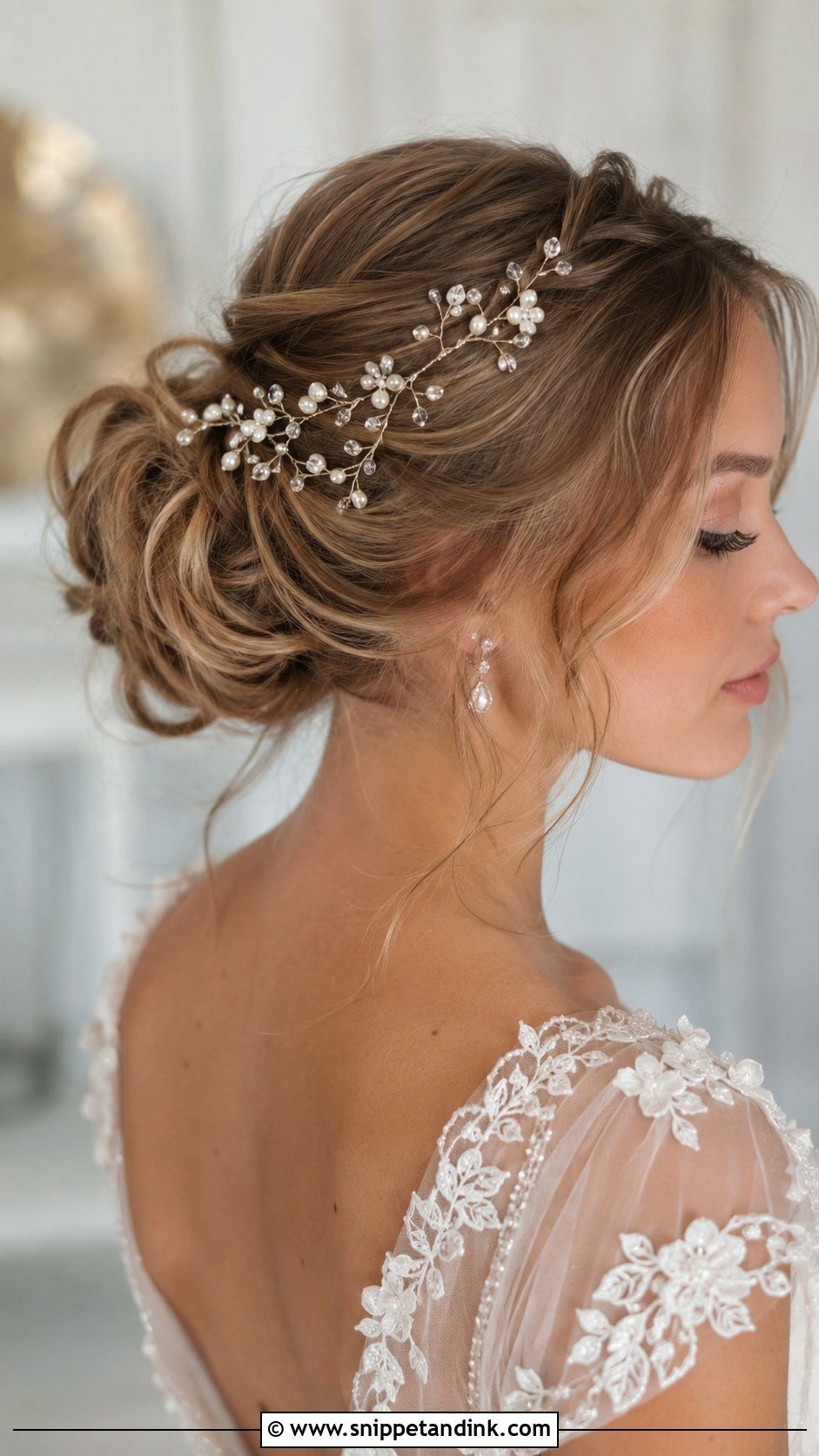
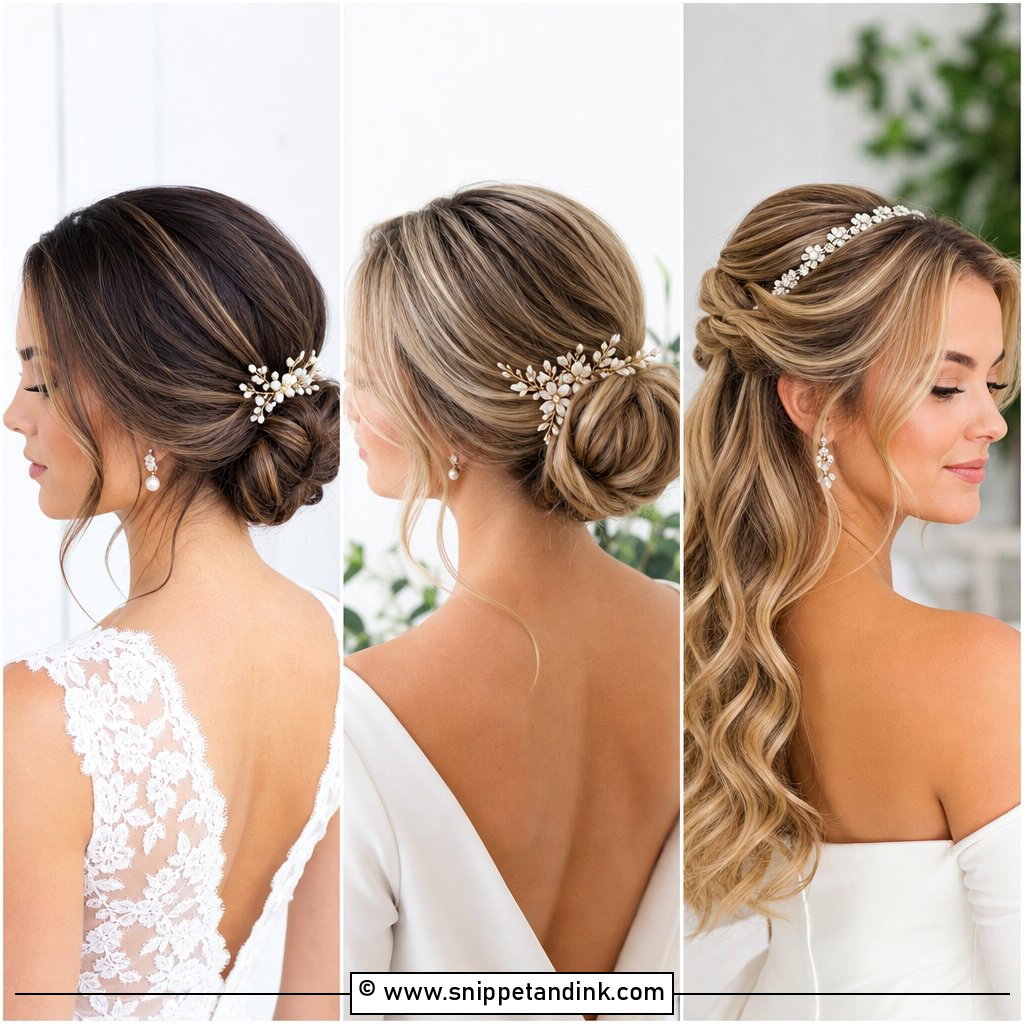
A delicate hair vine of pearls, crystals or tiny flowers wraps around a soft bun and catches the light. The wire is bendable, so I shape it to follow the bun’s curve and secure it with small pins through the loops at either end and the middle. Bring the vine to your trial; some are heavier than they look. Loose tendrils keep it soft, and it suits formal and relaxed weddings.
Tendrils at Midnight
Loose face-framing pieces are what make most of these styles look French, and they’re the first thing to change through the day. Humidity relaxes them, hands push them back and they get caught in lip gloss. Here’s how I keep them looking intentional until the last dance:
- Curl them slightly tighter than you’d like; they will drop.
- Leave them a little longer than the jaw so they don’t pull up and look short.
- Use a light flexible spray on them, not a strong hold, so they still move.
- Pack a small curling wand or a few pin curl clips in the bridal bag for a quick refresh before the evening photos.
If you’re getting married outdoors on a humid day, I’d keep the tendrils to two or three. More than that and they start to look like the style is falling apart.
Parisian Hair Is Mostly Good Prep
What makes these styles read as French isn’t a particular bun. It’s restraint: a little texture, a few loose pieces, one accessory. A sleek twist, loose waves or a tousled updo can all get there. Start with your neckline and your veil, then think about the venue’s weather and how much movement you’ll do. Book a trial, wear the style for a few hours afterwards, and see how it feels by evening. That tells you more than any photo.
You'll Like These Ideas:


Leave a Reply