
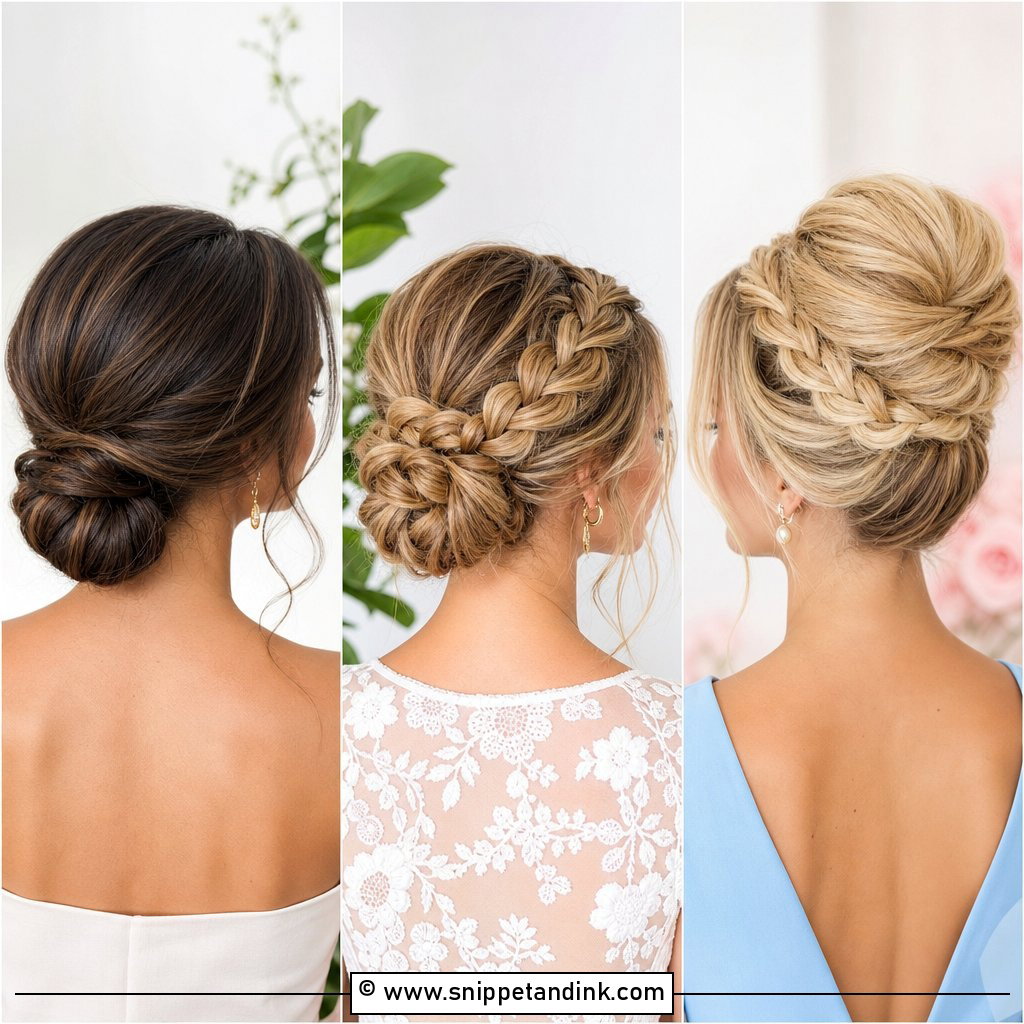
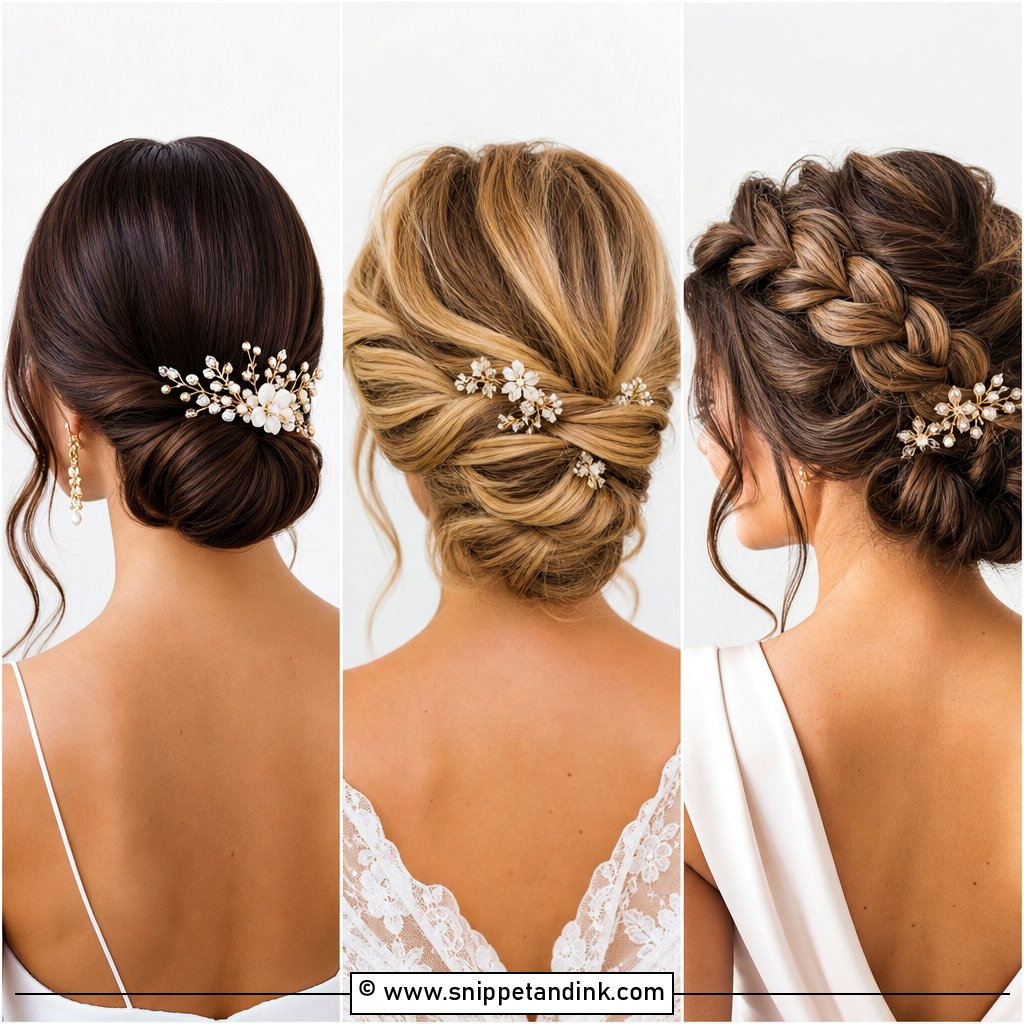
A French twist is the updo I point most brides toward when they want something polished that won’t unravel by the speeches. It’s one vertical roll pinned up the back of the head, and that simple shape adapts more than people expect: glossy for a ballroom, pulled loose for a garden, roughed up with texture for something more modern. It takes a veil comb well, carries pearl pins or a few small flowers, and leaves your neckline, earrings and the back of your dress on show. Fine, thick, straight, wavy and curly hair can all wear one, and even a long bob can manage a smaller version. Below are fifteen ways I’d build it, with notes on who each one suits and where each one tends to struggle.
Why Day-Old Hair Makes a Stronger Roll
I ask brides to wash the night before rather than the morning of, and a twist is the style where that matters most. Freshly conditioned hair is slippery, and the whole roll depends on hair gripping hair. Give it a day of natural oils, or let me add dry shampoo and texture spray at the roots, and the pins have something to bite into.
The structure is simpler than it looks. I gather the hair to one side at the back, cross a row of bobby pins up the centre of the head like a zip, then fold the hair back over that row and roll it inward to hide it. The ends get tucked into the roll and held with U-pins, which keep softer shapes without flattening them. That hidden line of crossed pins is what you’re paying for. Built properly, the roll can carry a comb and a veil without moving.
Sort these out before the morning
- Skip heavy conditioner and hair oil on the lengths for the last wash; a light detangler is plenty.
- Mention any face-framing layers, since short pieces near the nape are the first to pop out.
- If your hair is above the shoulder, ask whether a small clip-in weft would help the roll close. It hides completely inside the fold.
- Bring the actual veil comb or pins you plan to wear, not a photo, so they’re anchored into the crossed row and not just the surface.
1. Classic French Twist Wedding Hairstyle
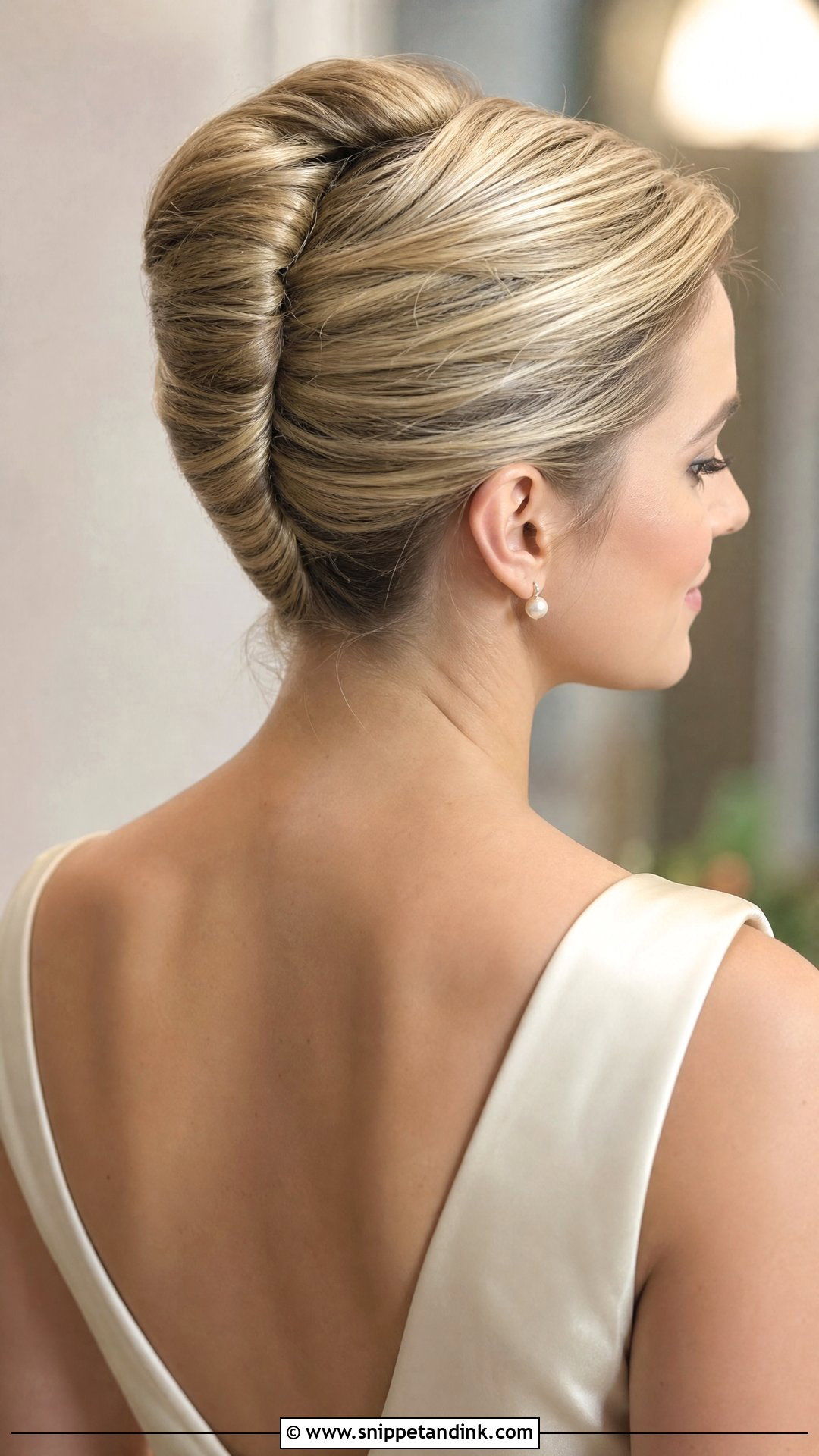
The classic version is the one I measure every other twist against. The hair is swept up and tucked into a neat vertical roll, leaving the neck, shoulders and gown neckline completely clear. Where it goes wrong is the crown: pull everything back flat and the roll looks like it’s stuck to the back of the head. I tease a small section at the crown first so the profile has a gentle curve before the twist starts. Satin, lace and a cathedral veil all sit happily with it, and a light shine spray is enough to keep the surface clean.
2. Low French Twist Wedding Hairstyle
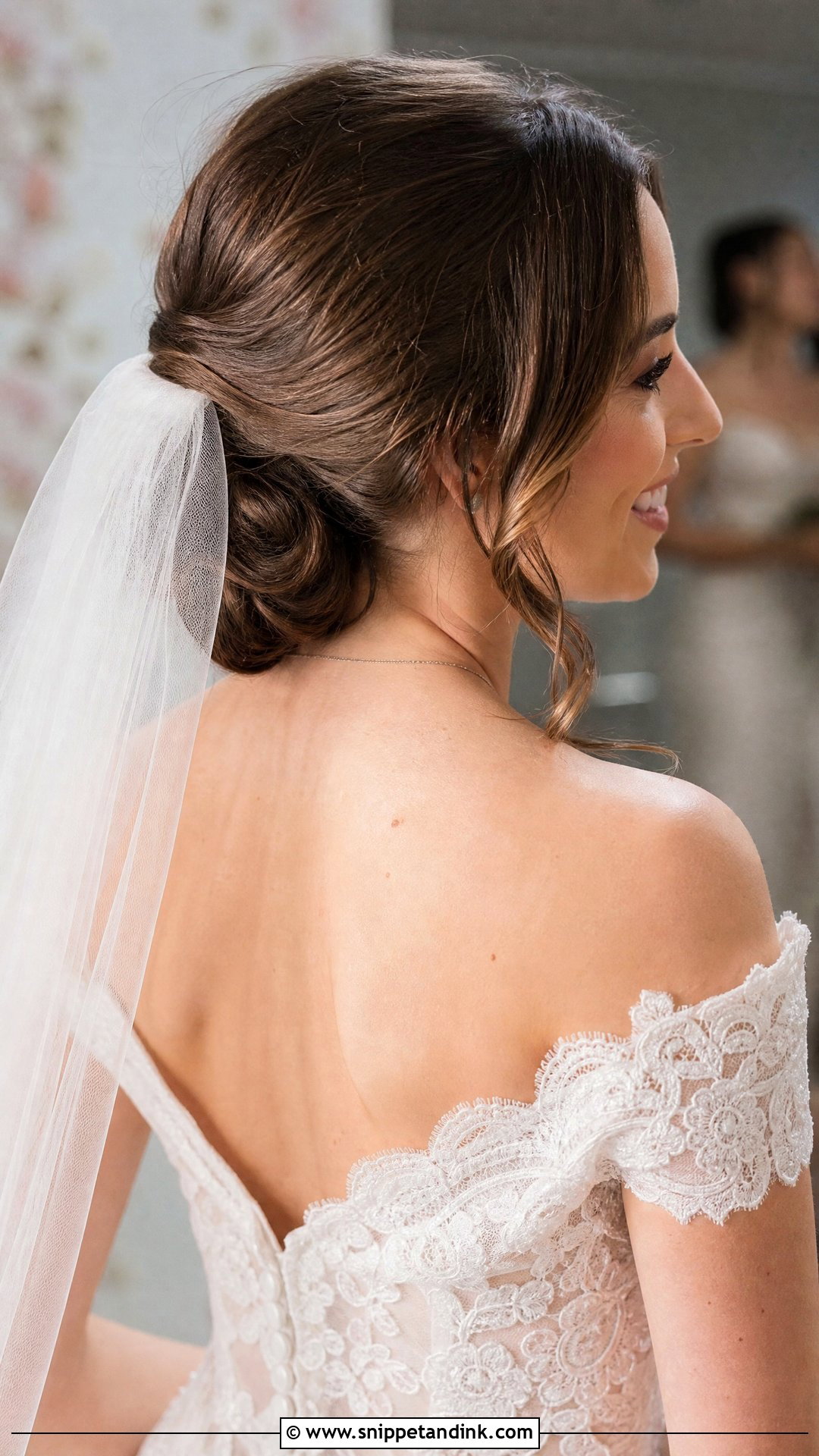
Setting the twist low, near the nape, softens it straight away. It’s my usual suggestion for medium-length hair, because a low roll needs far less length to close than a tall one. Open backs and off-the-shoulder necklines suit it, and a veil comb slides in above the roll rather than into it. The one thing I watch is collar contact. If your dress has a high back or a structured shoulder, a low twist can rub against the fabric all day and slowly loosen, so I check it with you sitting down, not standing.
3. Messy French Twist Wedding Hairstyle
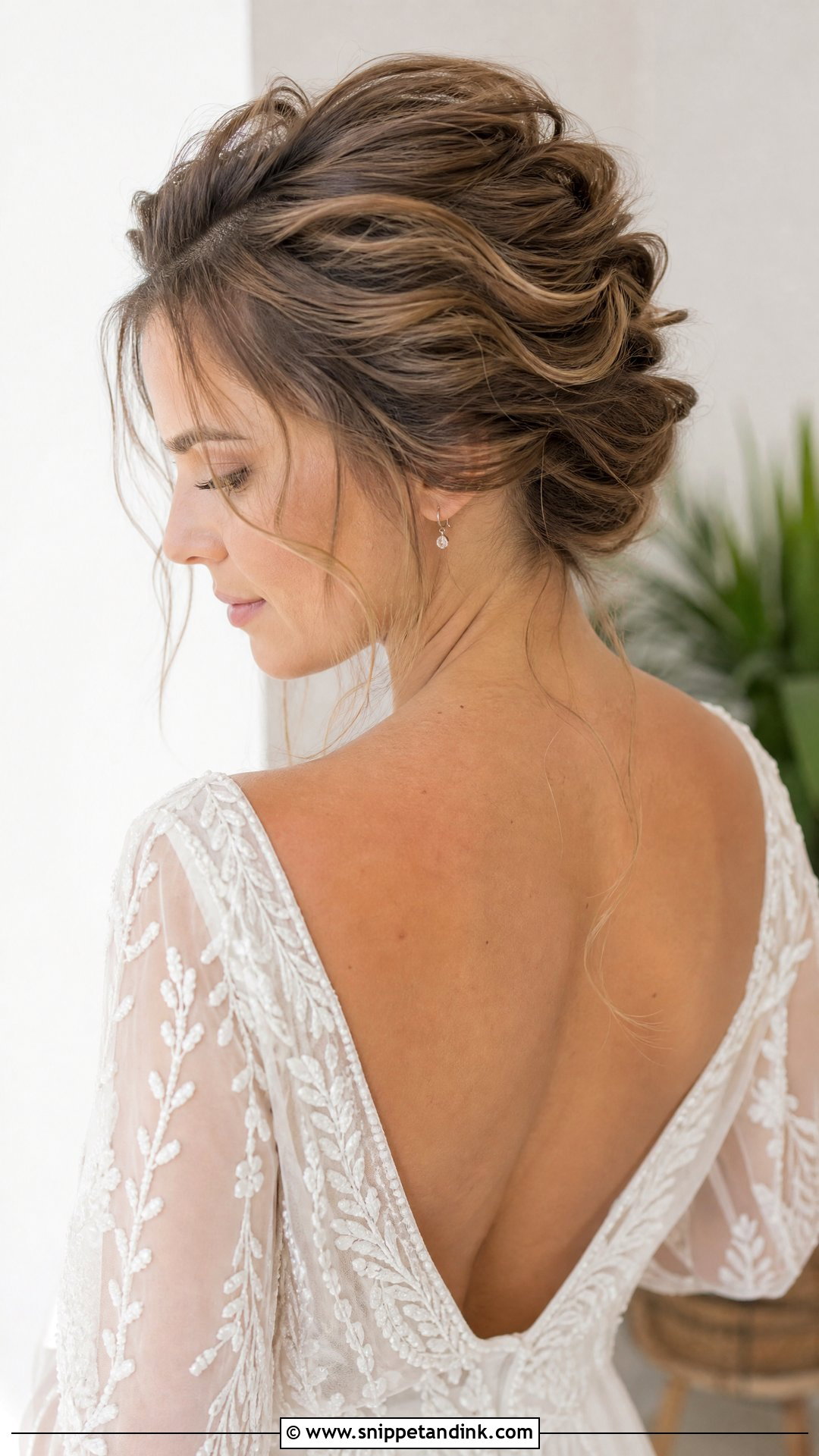
Messy only looks easy. Underneath every loose twist I’ve done there’s a tidy, firmly pinned base, and the softness is pulled out on top afterwards with my fingertips. Texture spray goes in before any pinning, because it gives the hair the grip the pins need. Pieces left at the face, crown and nape keep it relaxed, which suits gardens, beach ceremonies and boho gowns. If your hair is very silky and straight, expect those pieces to fall flat within an hour unless they’re curled first.
4. Sleek French Twist Wedding Hairstyle
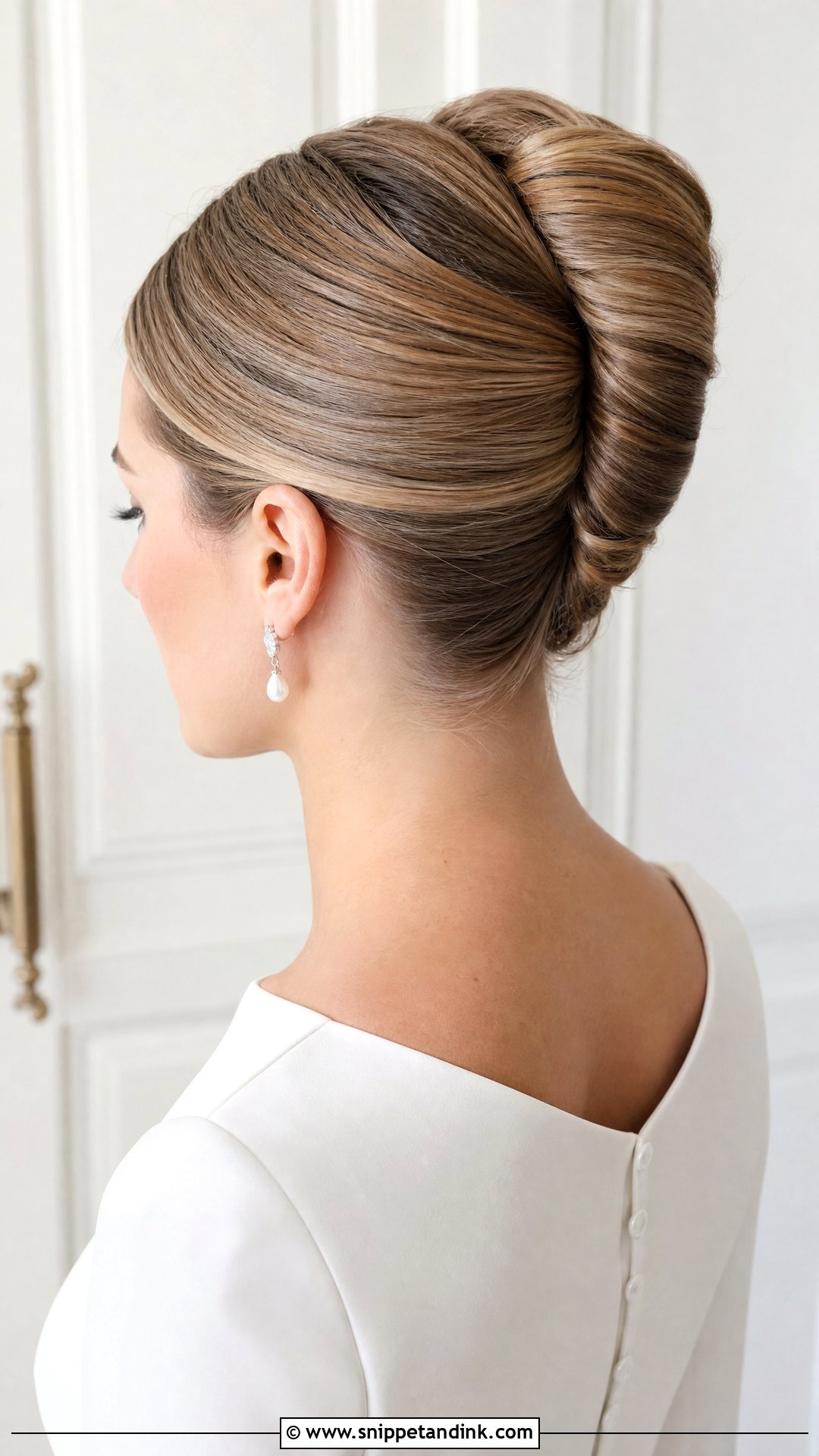
A sleek twist is the strictest version, and it suits minimalist dressing better than anything else here. The hair is smoothed back with controlled shine and pinned into a defined roll with almost no loose texture. Structured gowns, high necklines, dramatic earrings and a sharp middle part all look right with it. It also keeps every strand away from the face, which helps in warm weather or during a long ceremony. I ask for flexible hold rather than a firm spray, because hard hairspray shows as a stiff, matte shell in close-ups. Done well, the shape is simple and sculpted and reads clearly from the side.
5. French Twist Wedding Hairstyle With Veil
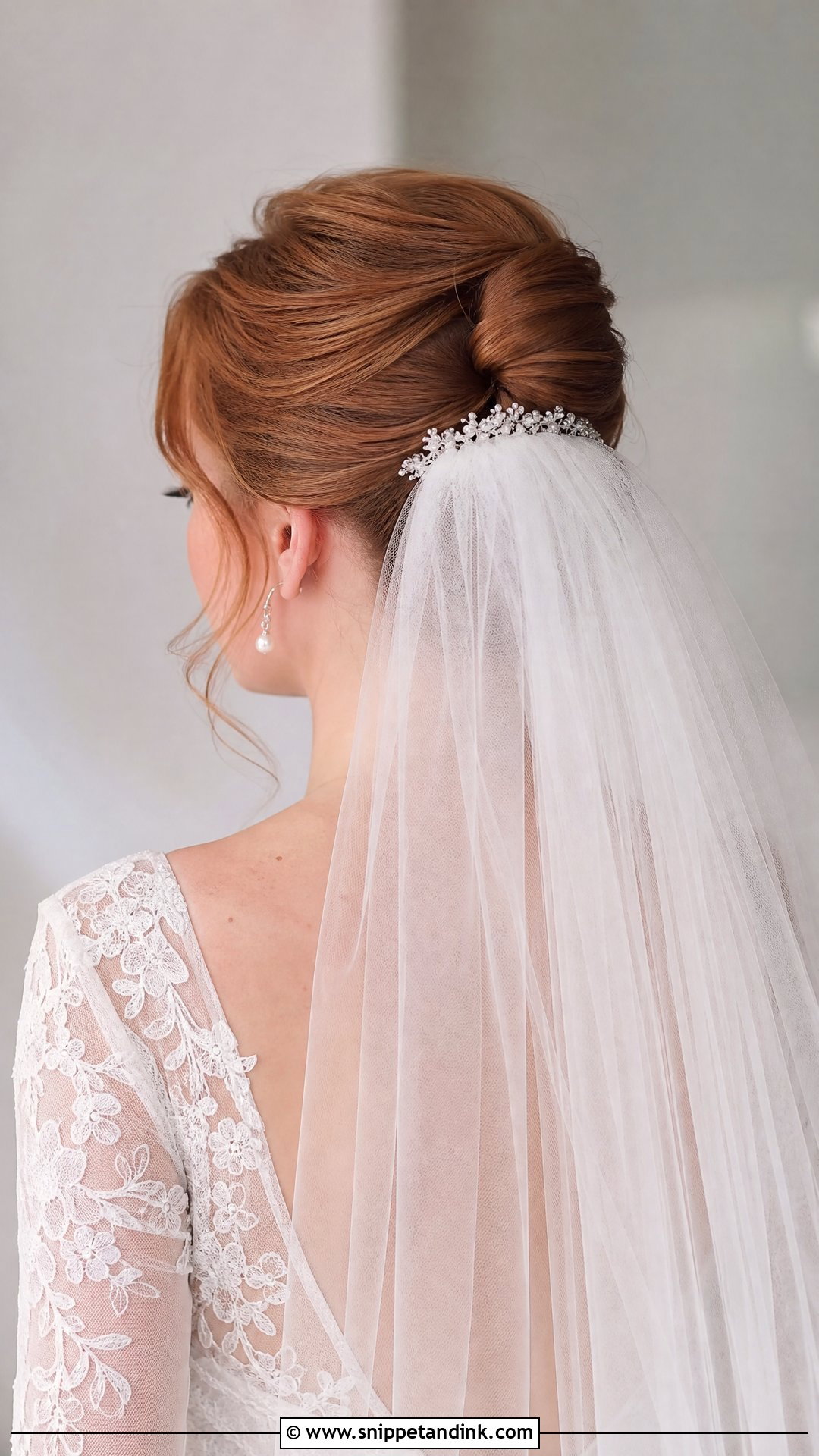
Twist plus veil is one of the most traditional pairings in bridal hair, and the twist earns its place by giving the comb something solid to anchor into. Above the roll feels traditional; tucked just underneath feels more current. A twist holds fingertip veils, chapel veils and cathedral lengths, but the heavier the veil, the more the comb needs to grip the crossed pins inside the twist, not just the surface hair. That’s why I always want the real veil at the trial. Turn your head both ways with it in. If you feel a pull at the temples, the comb needs moving.
6. French Twist Wedding Hairstyle With Pearl Pins
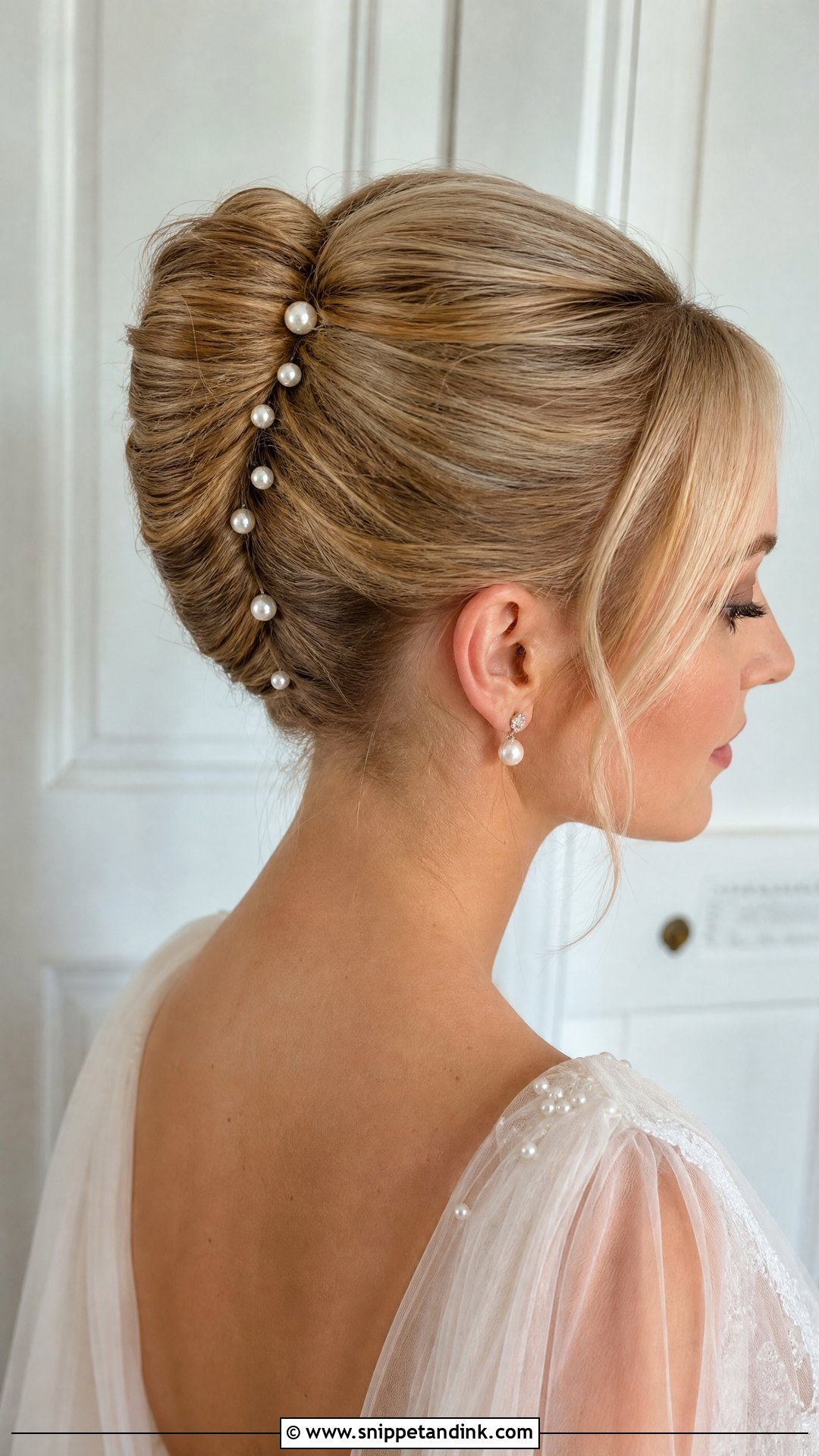
Pearl pins are the accessory I reach for when a bride wants detail without a headpiece. They can run along the opening of the roll, cluster on one side, or scatter loosely, and they suit lace, tulle and satin alike. This is also an easy way to tie in a coordinated but elevated bridal party style, giving each bridesmaid two or three of the same pins. My rule is odd numbers and space between them. Crowd the roll with pearls and they start to look like a pattern rather than a finishing touch.
7. French Twist Wedding Hairstyle With Crystal Comb
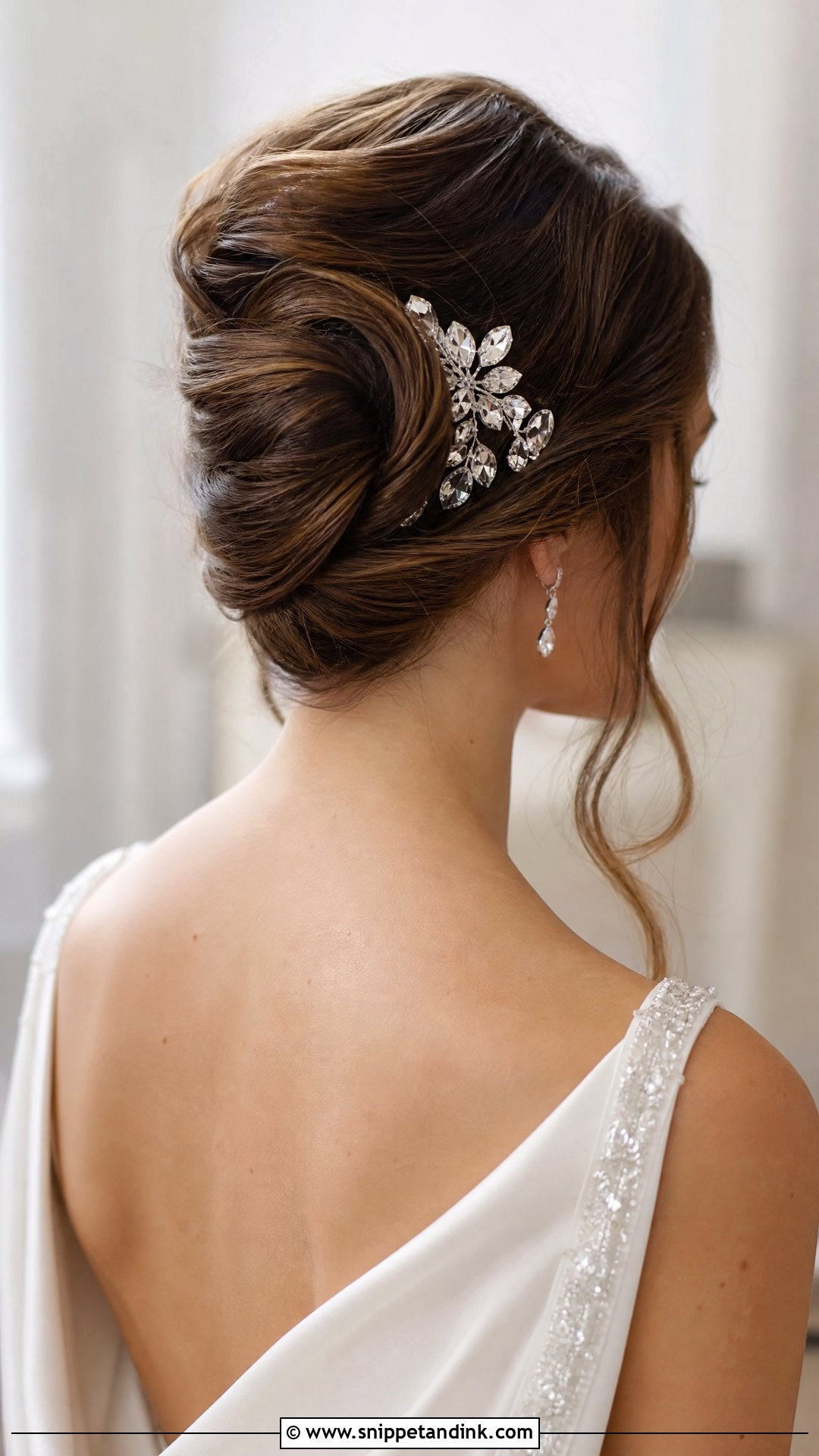
A crystal comb brings sparkle to an evening wedding, but it changes how I build the twist. The rest of the hair has to be controlled, because rhinestones sitting in loose texture just look lost. I slot the comb in at the side of the roll or slightly above it, then secure it with a bobby pin crossed through its teeth so it can’t work its way out during dancing. Heavily beaded gowns usually want a smaller comb; a plain crepe dress can take something bolder.
8. French Twist Wedding Hairstyle With Flowers
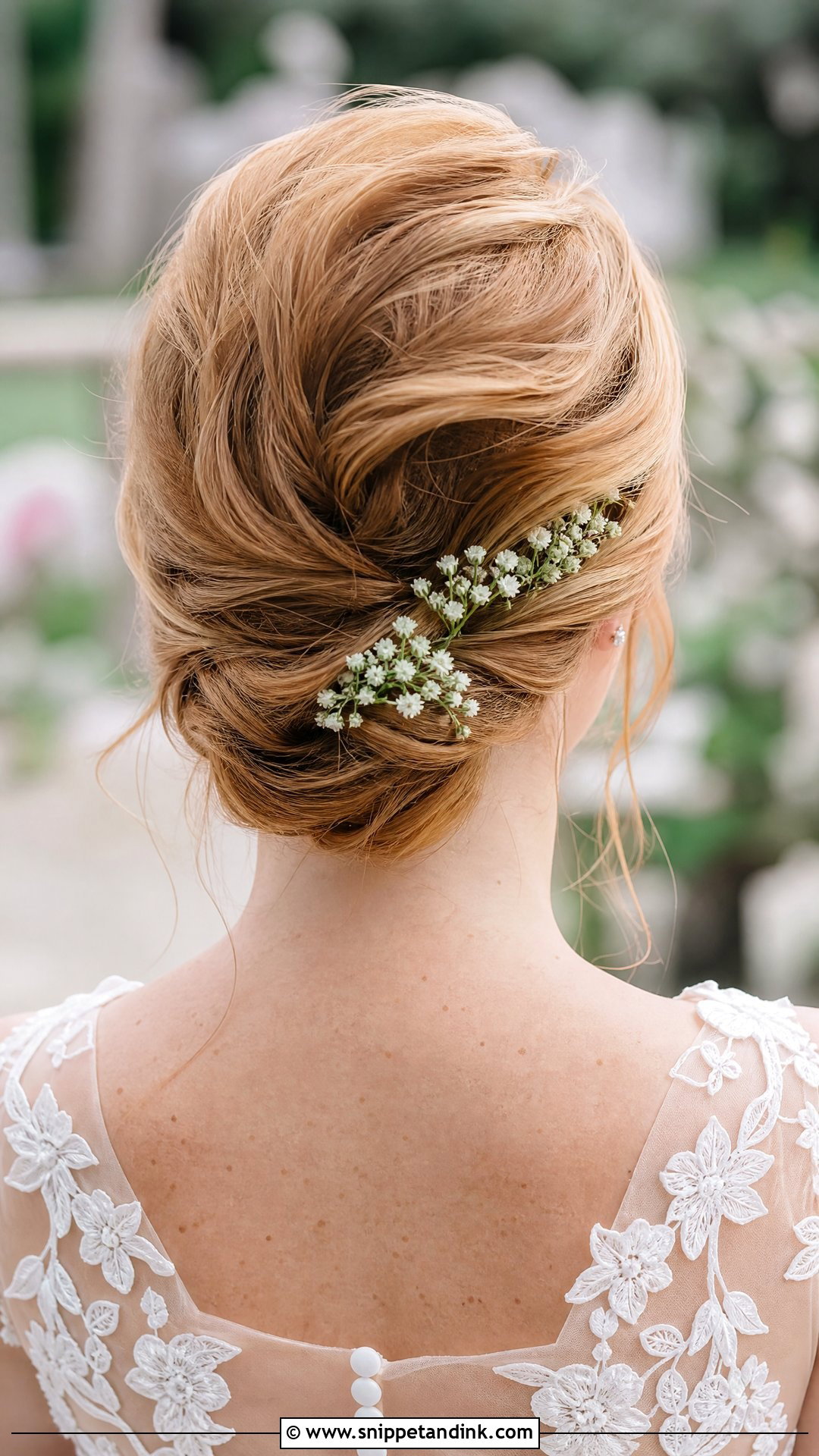
Flowers suit a garden or spring ceremony, tucked along the roll, at one side, or near the nape. Baby’s breath, tiny roses, orchids and wax flowers all hold up, especially when they echo the bouquet. Weight is the thing I’m careful about. A few wired stems are fine, but a heavy cluster pulls on the pins for hours, so I ask the florist for wired, lightweight pieces made for hair, not cut flowers from the bouquet. Fresh blooms also wilt in heat, so for an outdoor summer wedding I’d suggest silk or preserved ones.
9. French Twist Wedding Hairstyle With Face Framing Pieces
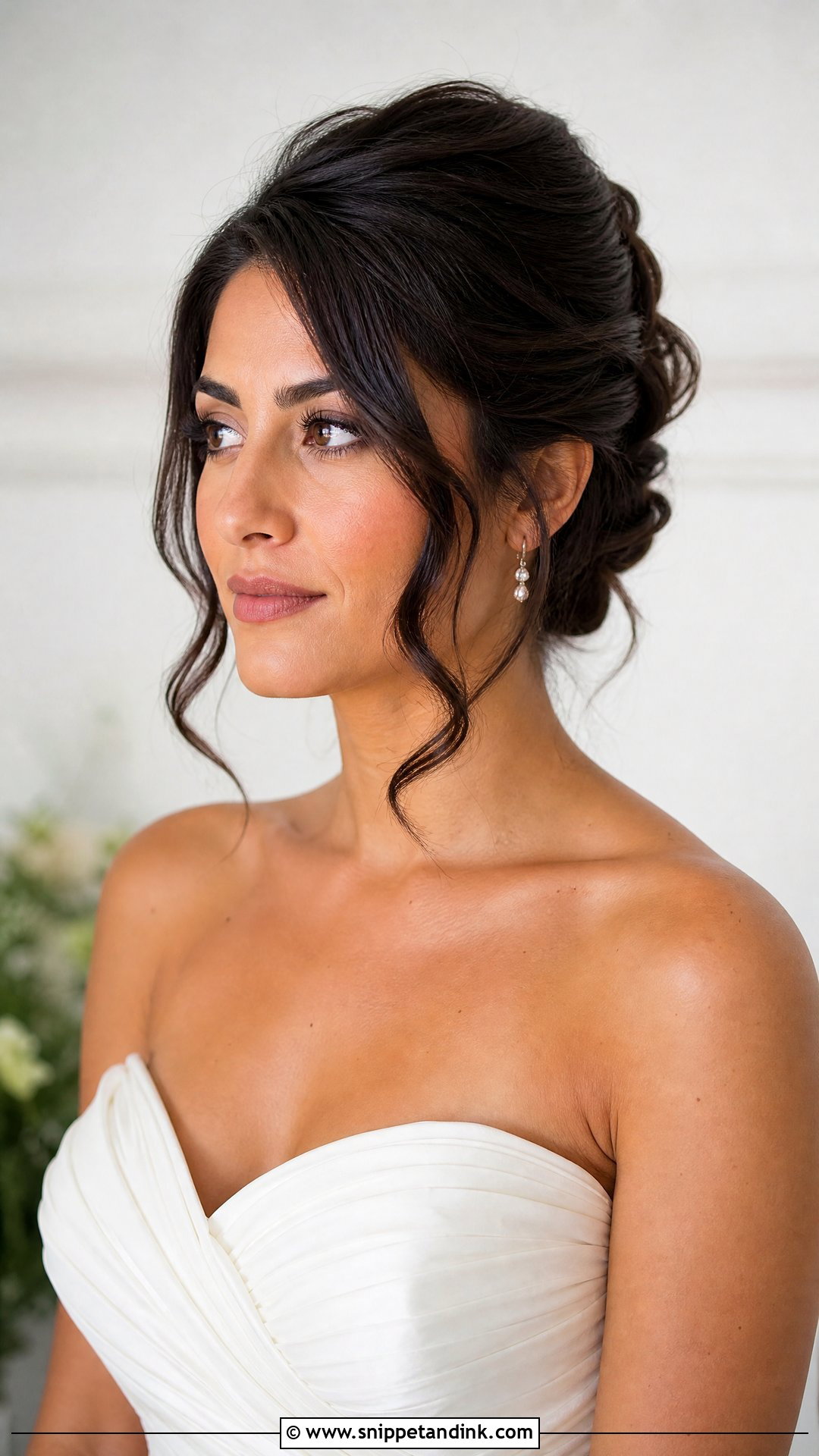
Some brides feel exposed with every strand pulled back, and face framing pieces are how I fix that. The twist stays lifted and secure while two loose sections near the cheekbones soften the front. They can be curled, waved or left straight. I cut nothing at the trial; I just test where the pieces fall, because a section that ends at the jawline flatters a very different face from one that ends at the chin. They sit well against strapless dresses, sweetheart necklines and soft makeup. Keep in mind they’re the first part to frizz in humidity.
10. Textured French Twist Wedding Hairstyle
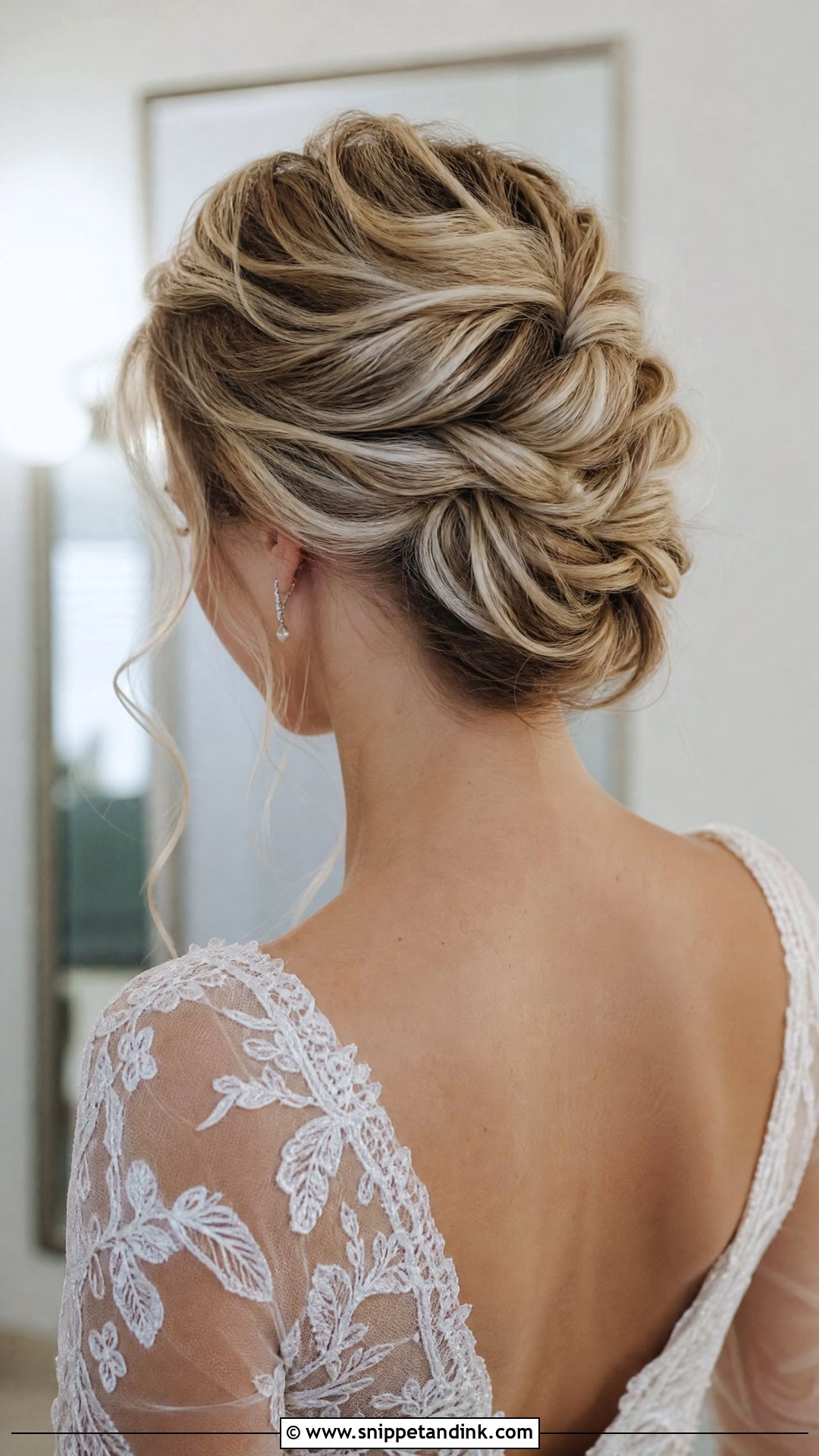
Texture is my answer for fine hair that looks thin in a smooth roll. Instead of a polished surface, the twist has waves and visible movement through it, which makes the whole shape look fuller. I prep with a curl, dry texture spray and light backcombing before pinning. Highlighted hair gets an extra benefit here because the colour contrast shows each fold. It reads relaxed enough for a rustic venue but still holds a clean line from behind.
11. Curly French Twist Wedding Hairstyle
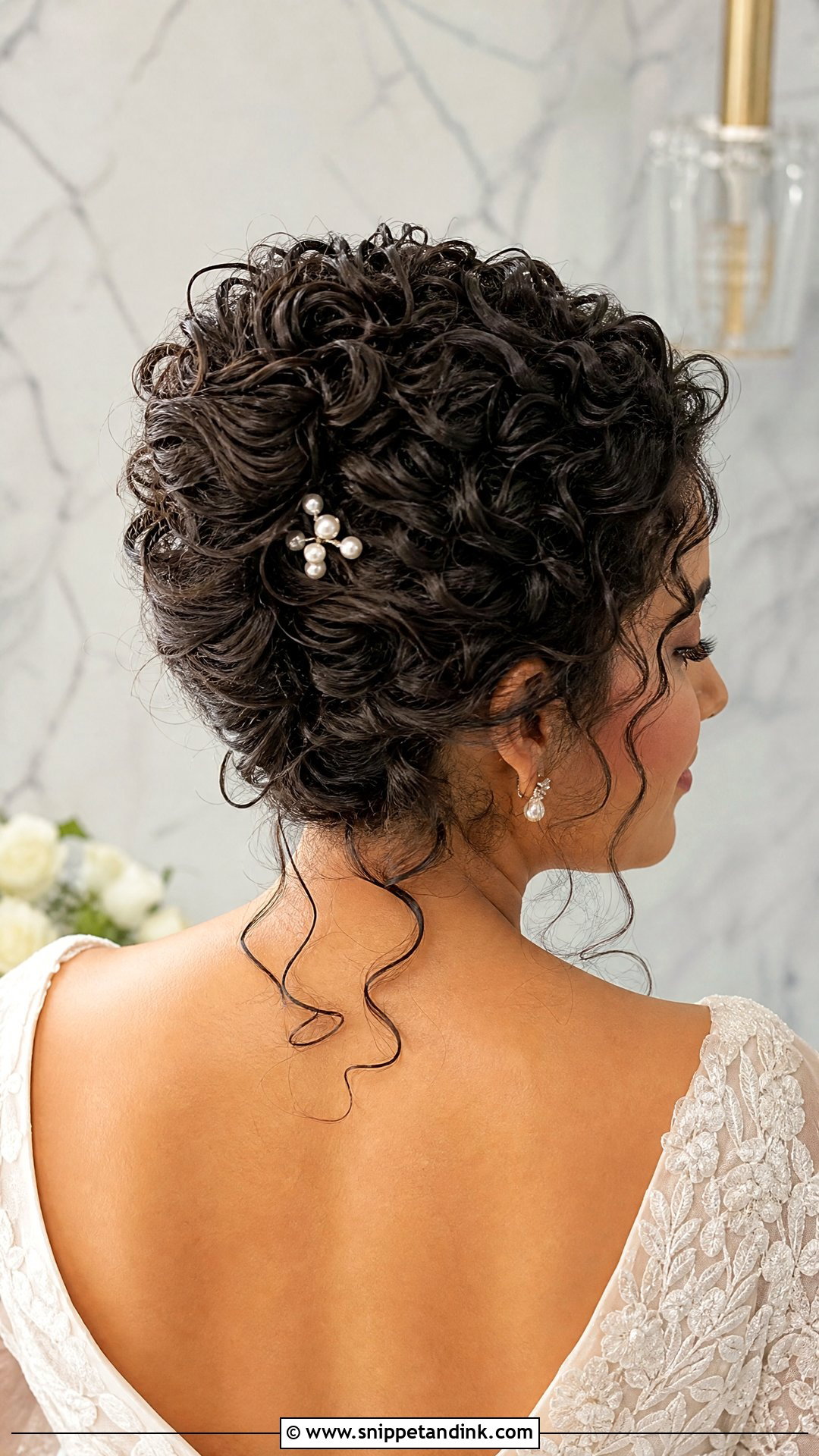
Curly hair often makes a better twist than straight hair, because curls lock into each other and hold pins far better. I don’t try to smooth the pattern flat. I shape the roll so the curl stays visible at the top and the nape, and I let a few spirals fall loose. Products matter: a curl cream or light gel to control frizz, never a heavy oil that makes pins slide. Dry the curls fully before the morning; damp curls collapse once they’re pinned and drying under the weight of a veil.
12. French Twist Wedding Hairstyle For Short Hair
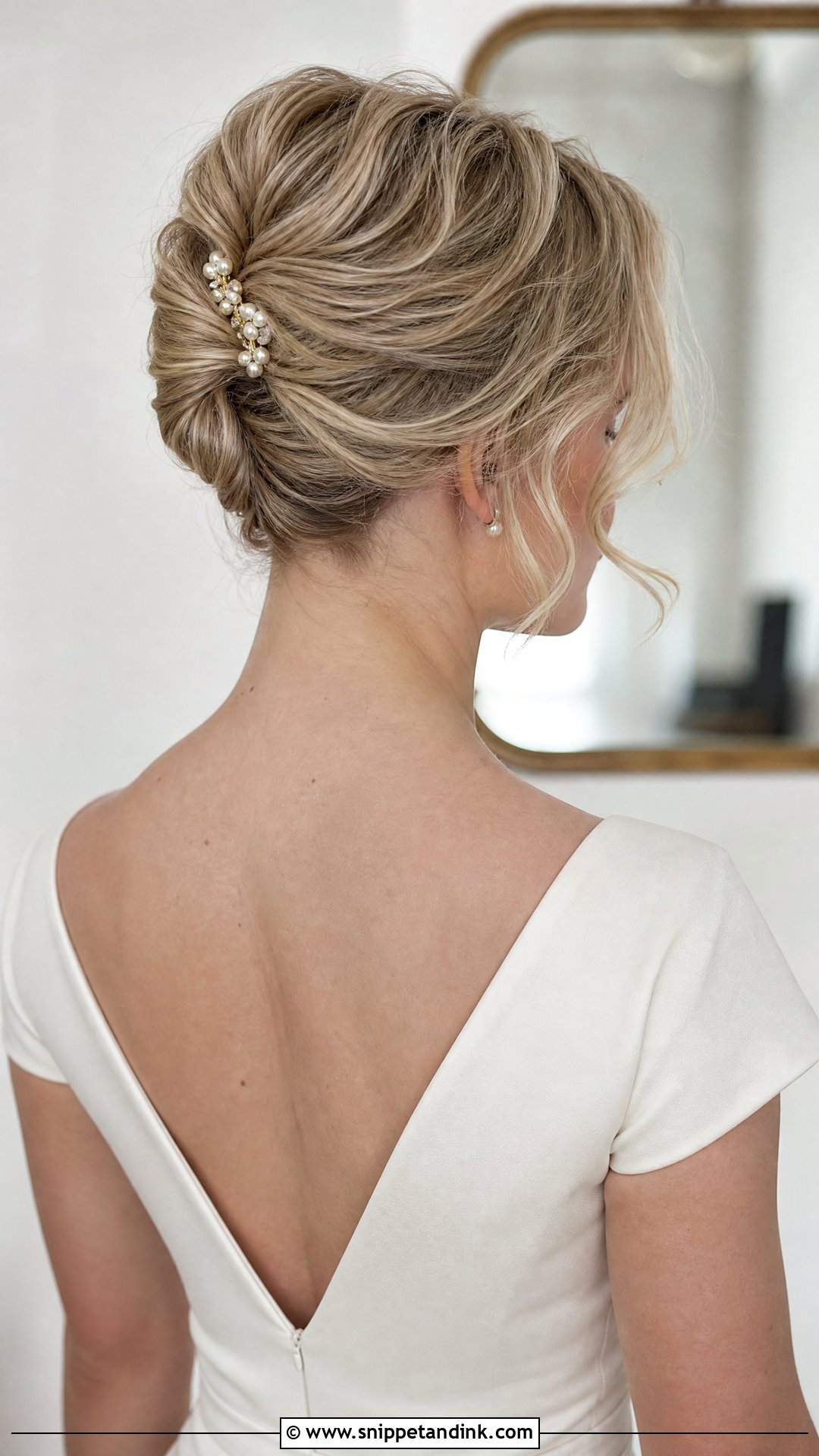
Short hair can wear a twist, though it’s a smaller one. Chin to shoulder length can be rolled and tucked at the back with careful pinning, plus soft teasing and a wave through the lengths to fill it out. The weak spot is the nape, where short layers love to escape. I use more pins there than anywhere else, sometimes a tiny clip-in weft hidden inside the fold. A pearl comb or a single floral pin finishes it off for bobs and layered lobs where extensions aren’t wanted.
13. French Twist Wedding Hairstyle For Long Hair
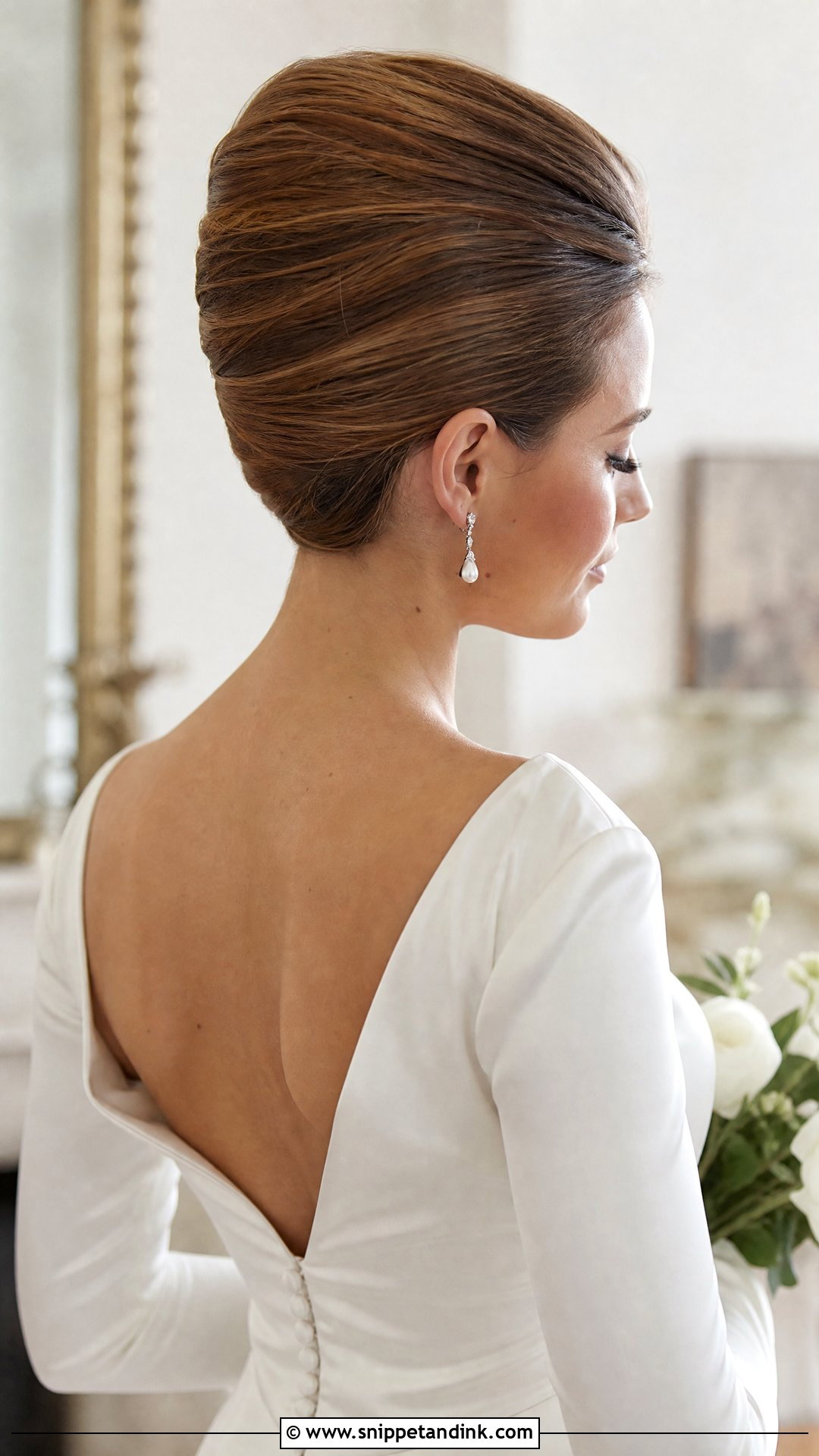
Long hair gives the fullest roll because there’s plenty to build with, but that length is also heavy. The weight drags the twist downward over the day, and the bride feels it as a headache by dinner. I anchor long hair with a firm row of crossed pins before folding, and I sometimes trim the amount tucked inside by wrapping the ends into a small hidden bun first. Tight and clean or with soft volume, it shows off a detailed back, a long veil or statement earrings.
14. Side French Twist Wedding Hairstyle
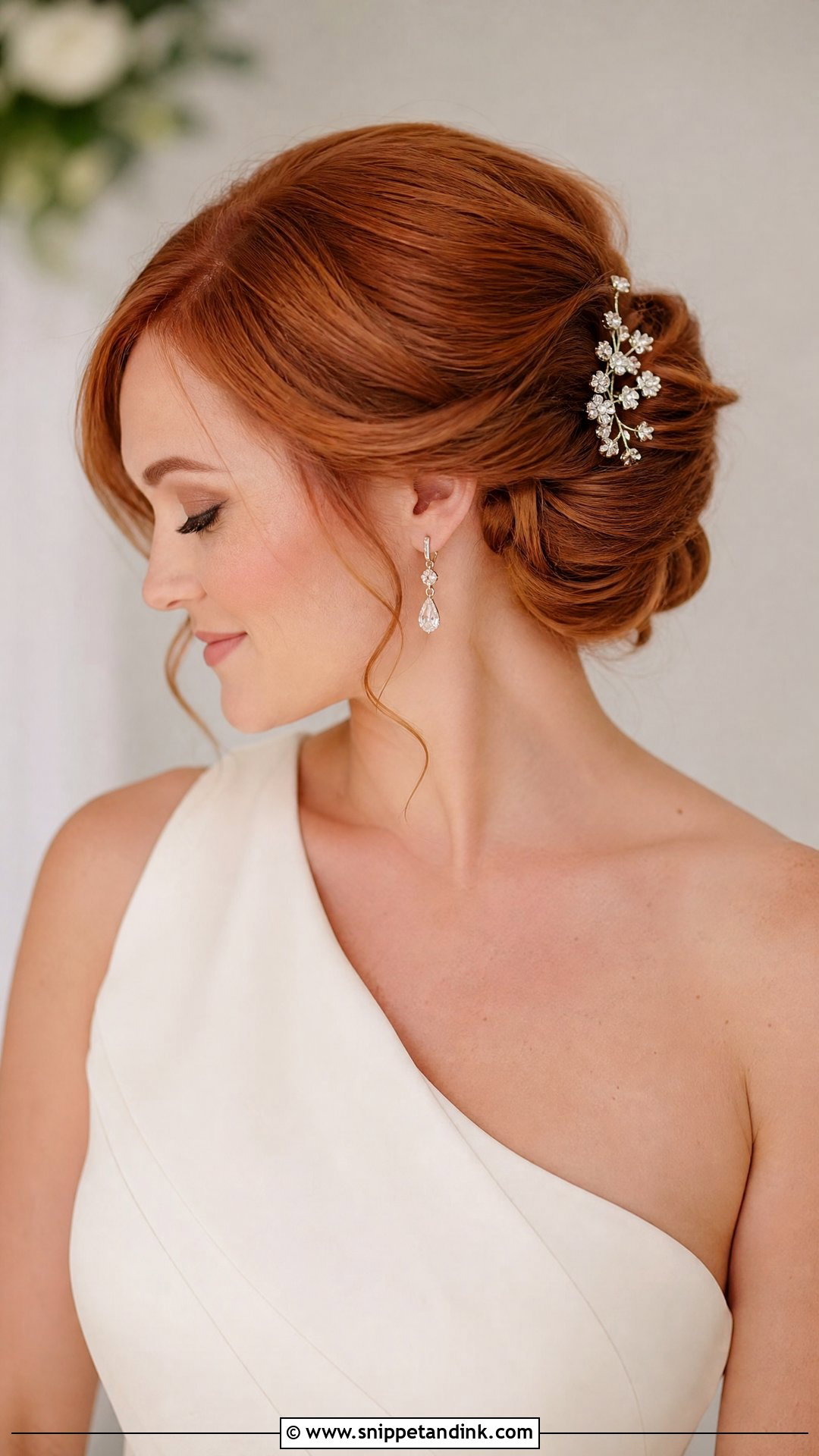
Placing the roll slightly off-centre gives the twist a more modern profile and a lot more interest from the back. It follows a side part naturally and lines up with asymmetrical and one-shoulder dresses. I start the twist on the opposite side to the part, which keeps the swept side smooth and leaves one earring fully on show. Sleek suits a formal room; textured suits a softer venue. If you have a strong cowlick at the crown, mention it early, because it decides which side the roll can go.
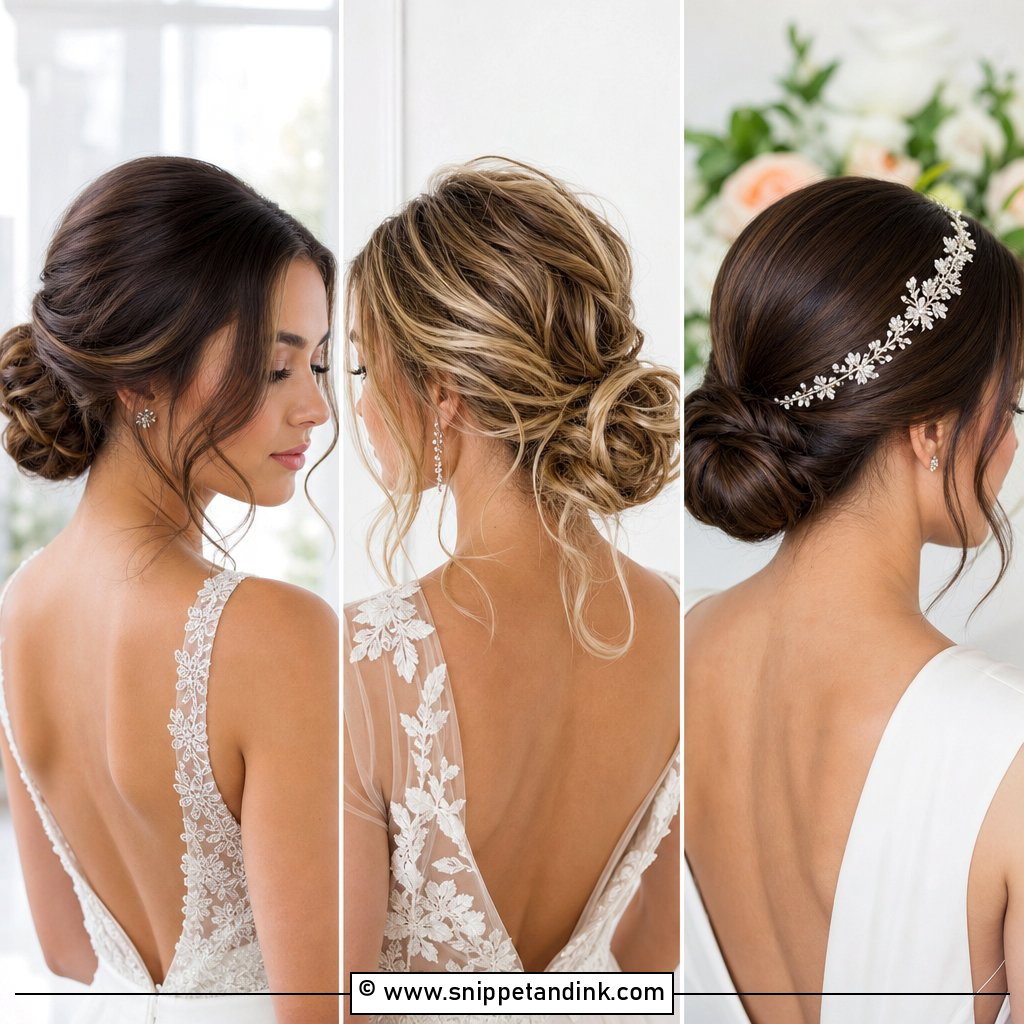
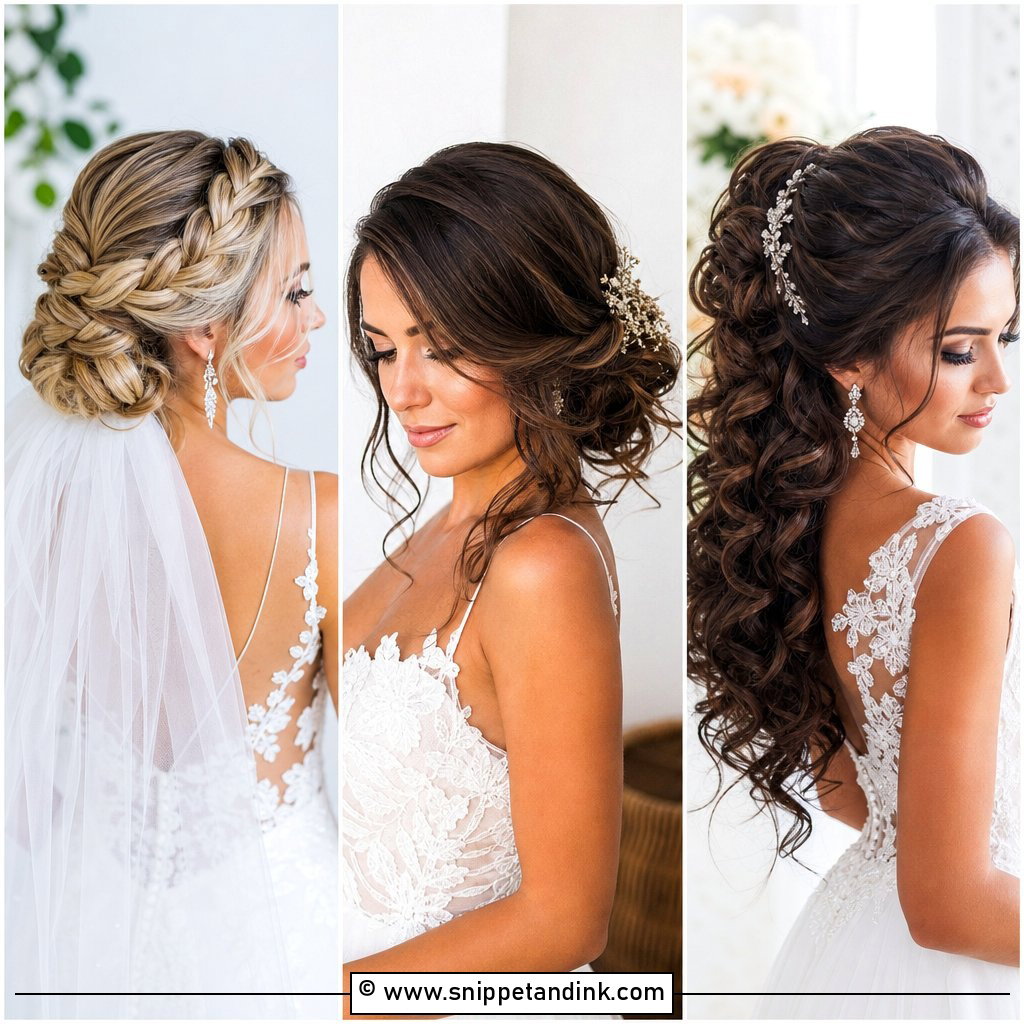
15. Braided French Twist Wedding Hairstyle
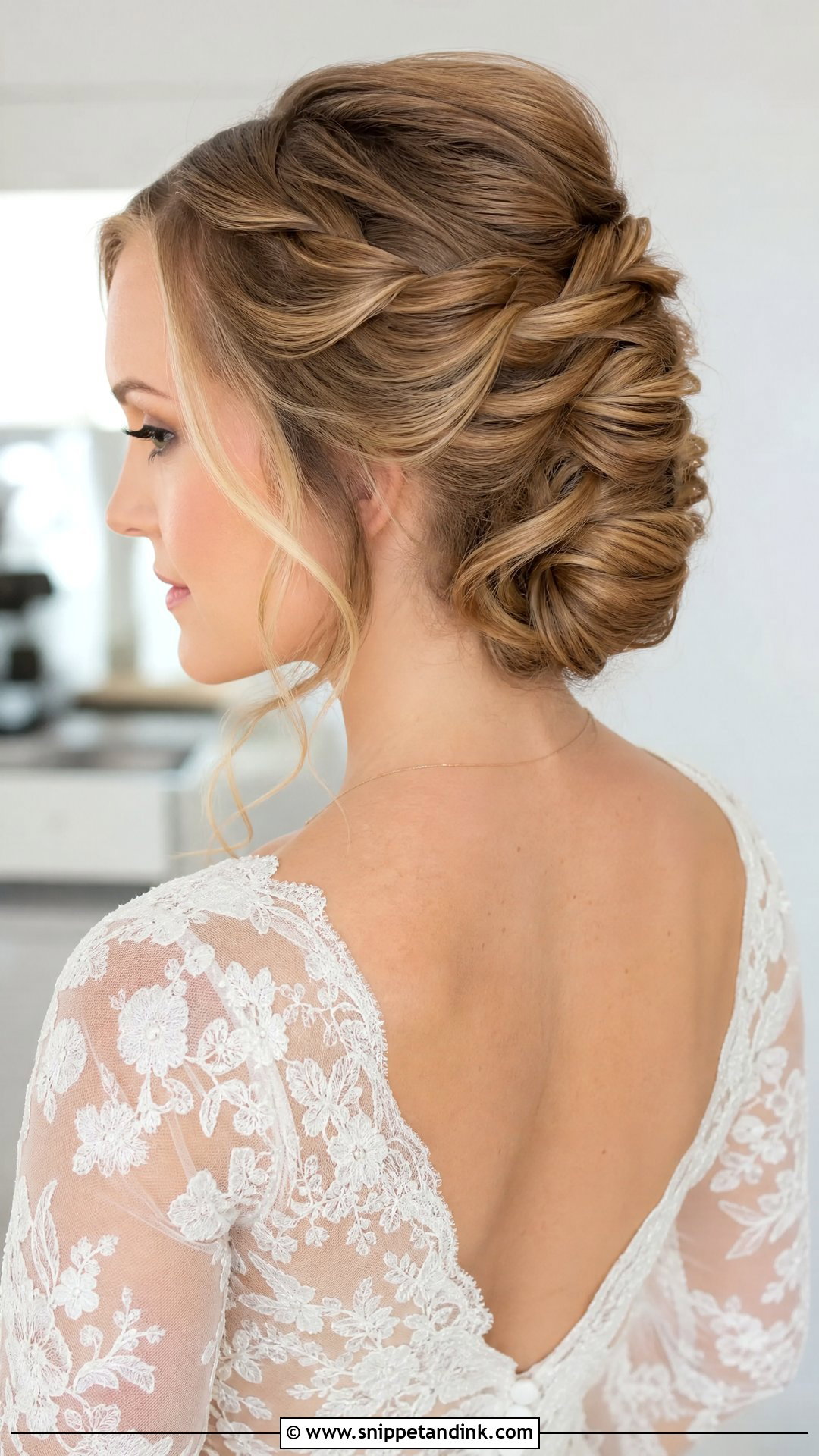
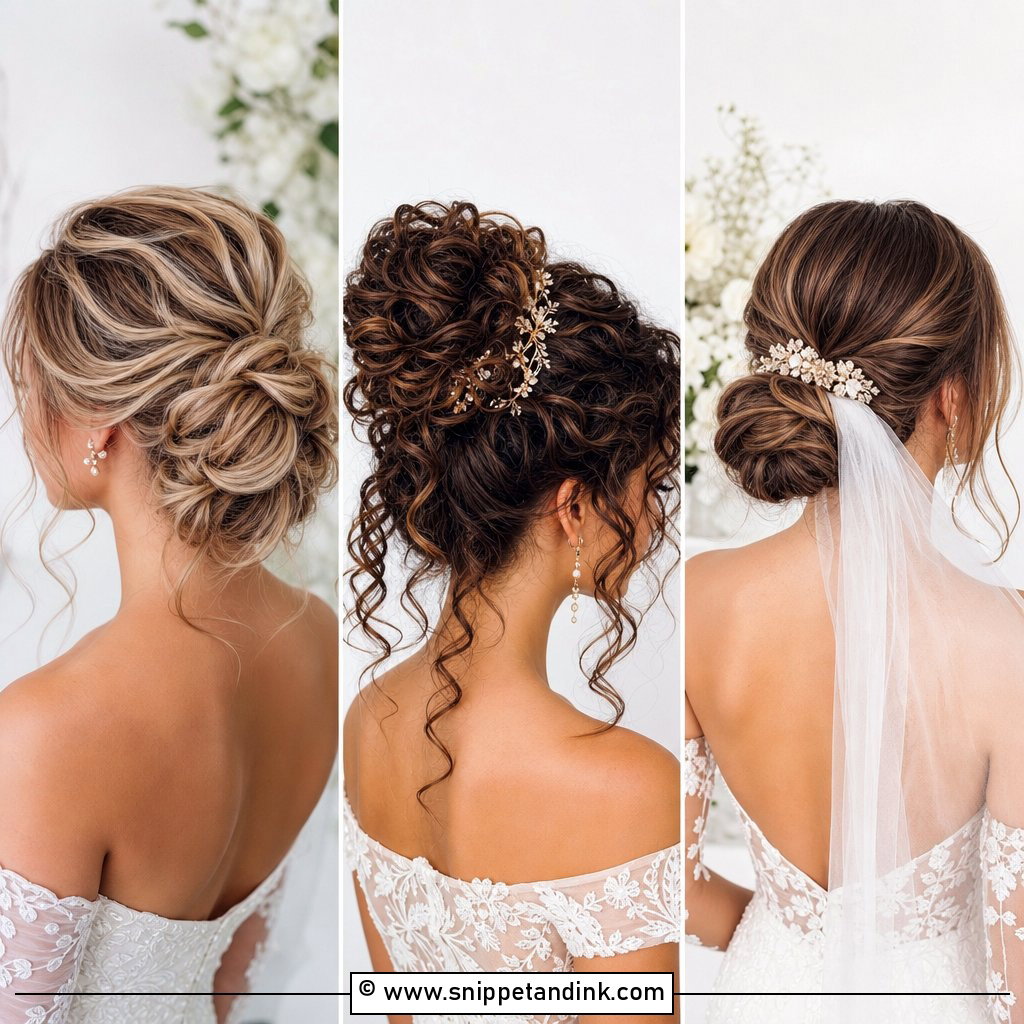
A braid can wrap into the roll, frame one side, or lead in from the crown, and it adds structure without needing accessories. I like this version for layered cuts, because the braid catches shorter pieces that would otherwise poke out of a plain twist. Braiding also holds texture better outdoors, where wind pulls at loose hair. The trick is to braid fairly tight, pin the braid in place, and only then loosen the edges with your fingers. Loosen it first and it slips out of shape before the roll is finished.
How the Roll Behaves Over a Long Wedding Day
A well-built twist is one of the more durable updos, but it does change over the hours. Sleek versions keep their shape and just lose a little shine, so a tiny amount of serum on a fingertip fixes them. Textured and messy versions relax, which usually looks better by evening, as long as the pins underneath were set firmly. Humidity is the real problem. On a hot outdoor day smooth styles frizz along the fold line, so I’d usually steer you toward a lower, softer twist.
When the veil comes out
Taking the veil out is the moment a twist is most likely to loosen, because the comb drags through hair it was woven into. Have your maid of honour or your stylist slide the comb up and away, never yank it downward. Then check the top of the roll and push one or two pins back in. It takes about thirty seconds and saves the shape for dancing.
A small pouch for the reception
- Six to eight bobby pins and a few U-pins in your hair colour
- A travel-size flexible hairspray, not a firm-hold one
- A little smoothing balm for flyaways along the fold
- A small mirror, so whoever helps you can show you the back
If the twist starts to slip, don’t try to re-roll it in a restroom. Push the loose section up into the fold, cross two pins over it, and leave it a little softer than it was. Nobody at the party will notice the shape relaxed, but they will notice you fussing with it.
Turn Your Head Before You Approve It
Sleek, low, messy, curled, braided or dressed with pearls, crystals or flowers, the twist bends to fit your dress, venue and season without losing its basic shape. That’s its real strength. What matters more than the version you pick is that it feels secure and still looks like you in the mirror. At your trial, bring two or three saved photos, put the veil in, and spend a few minutes turning your head, hugging someone and sitting down before you approve it. If it passes that, I’d expect it to still be sitting neatly when the music starts at the reception.
You'll Like These Ideas:



Leave a Reply