
Matching a couple head to toe went out a long time ago, and I’m glad. When I style two people for one wedding, I’m looking for a single thread that runs between them: a shared shade, a fabric that answers another fabric, or one small detail repeated on both. Often the gown hands the groom his tie colour or his boutonniere. Sometimes it goes the other way and his suit decides her veil length or the ribbon on her bouquet. Below are thirty pairings I’d genuinely put together, from black tie and ballroom to beach, garden, courthouse and several cultural ceremonies, with notes on what makes each one work when the two of you stand side by side.
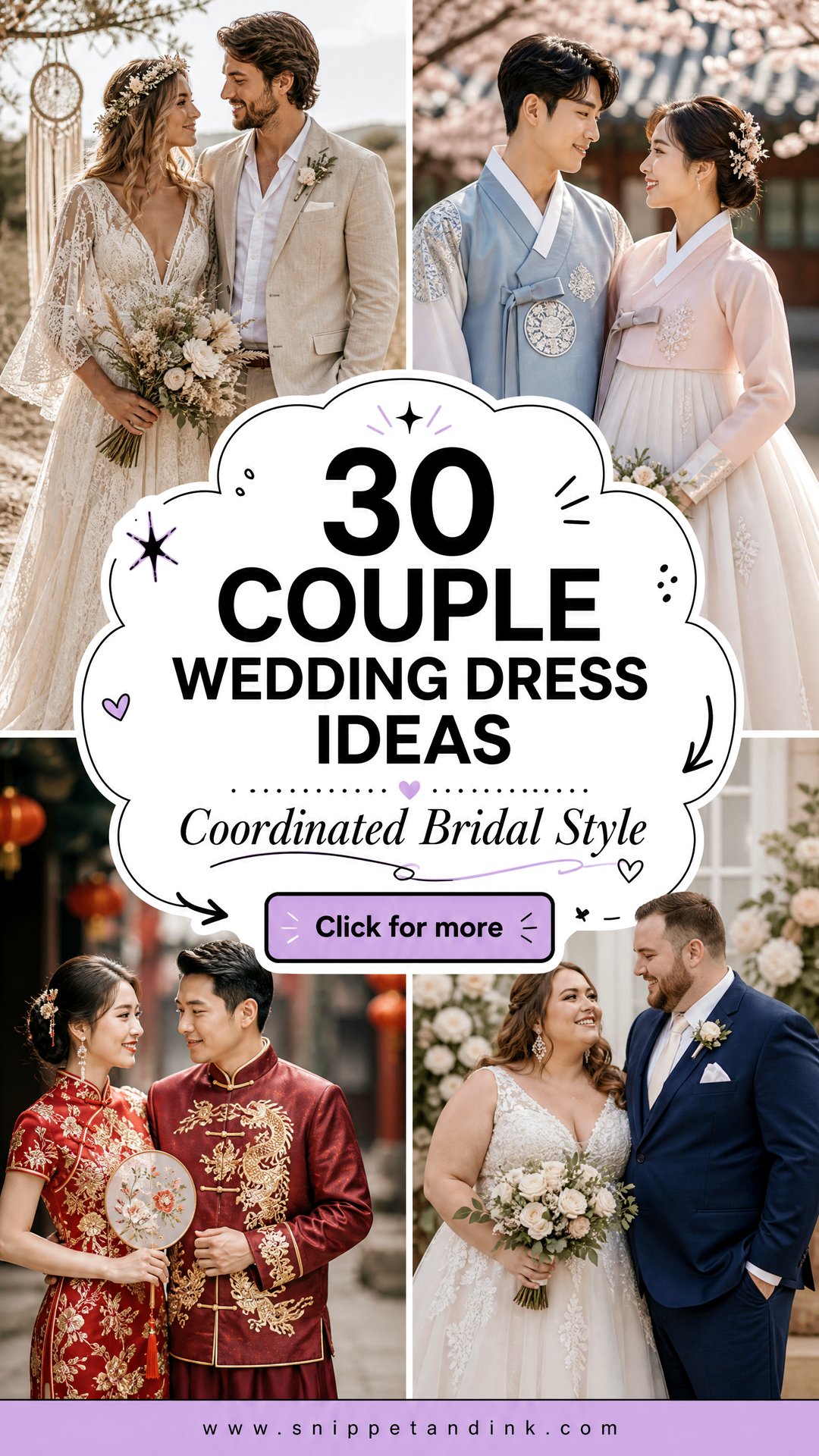
Let the Gown Lead, Then Build His Look Around It
In nearly every couple I style, the bridal gown is ordered first and has the longest lead time. Many made-to-order gowns take several months to arrive and then need alterations on top, while a groom’s suit can usually be rented or tailored in a matter of weeks. That’s why I let the dress set the palette and the formality, and treat his outfit as the response.
- Ask the bridal shop for a fabric swatch, or at least a clear daylight photo of the gown fabric beside a sheet of plain white paper. That shows whether it’s true white, soft white, ivory or champagne.
- Take that swatch to his suit appointment. Hold ties, shirts and pocket squares against it at the window, not under the shop lights.
- Pick one link and stop there. A shared shade, a fabric echo such as satin lapels with a satin gown, or one repeated detail is plenty.
- Match formality before colour. A black tie gown next to a linen suit looks wrong however well the colours agree.
If the groom’s outfit is cultural or custom made, like a sherwani or a hanbok, reverse the order of urgency. Embroidered garments can take as long as a gown, so place those orders at the same time as the dress.
1. Classic White Wedding Dress And Black Tuxedo
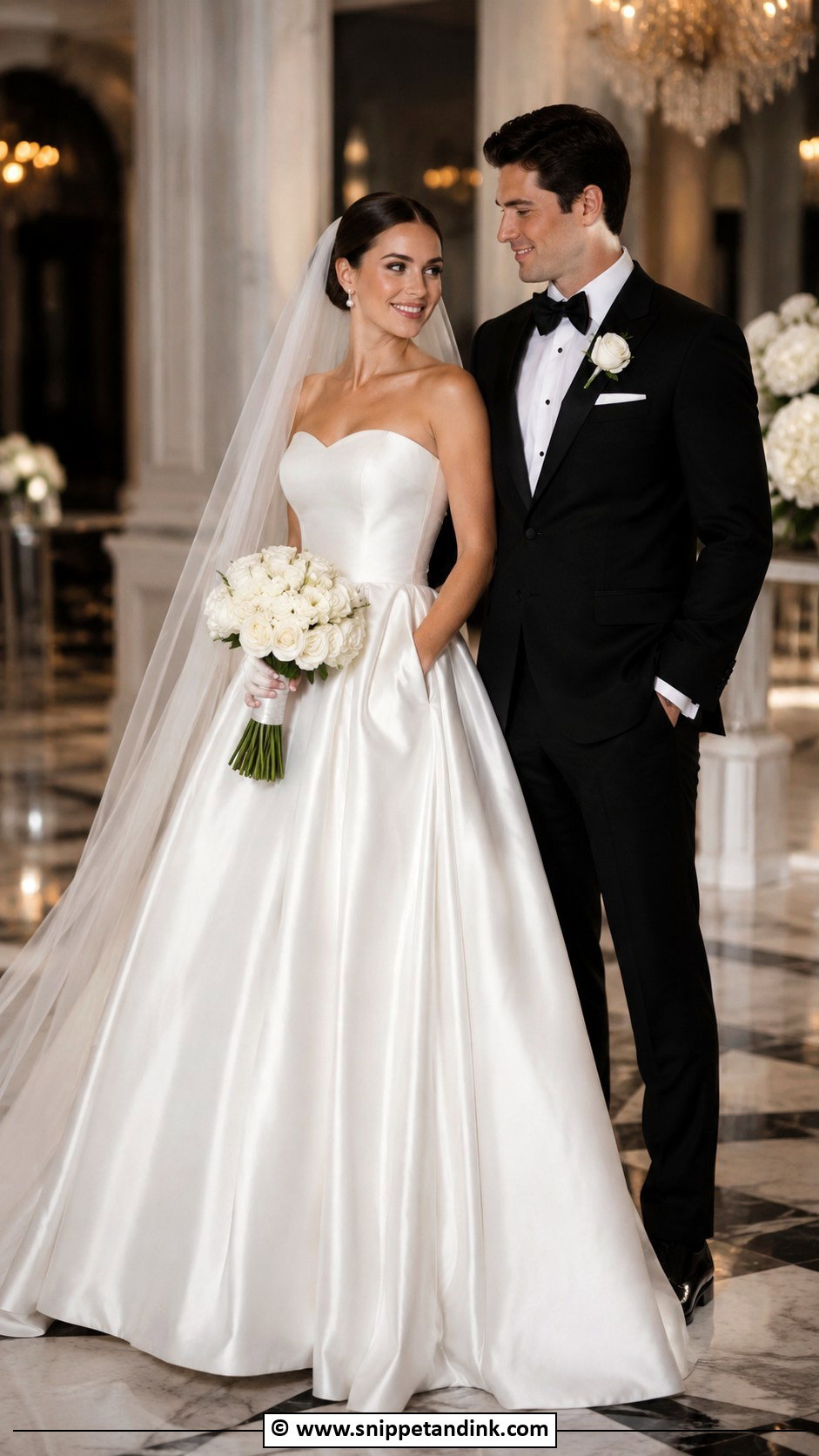
There’s a reason I still reach for this pairing for evening and ballroom weddings: it never fights the room. Satin ball gown, lace A-line or a fitted crepe all sit comfortably next to a black tux with a white shirt and black bow tie. The one thing I check is the shirt. A brilliant optical-white shirt beside an ivory gown makes the gown read slightly yellow in photos, so if her dress isn’t pure white, I ask the groom for a soft white shirt instead. Tie the two together with a black velvet ribbon on her bouquet.
2. Ivory Wedding Dress And Navy Suit
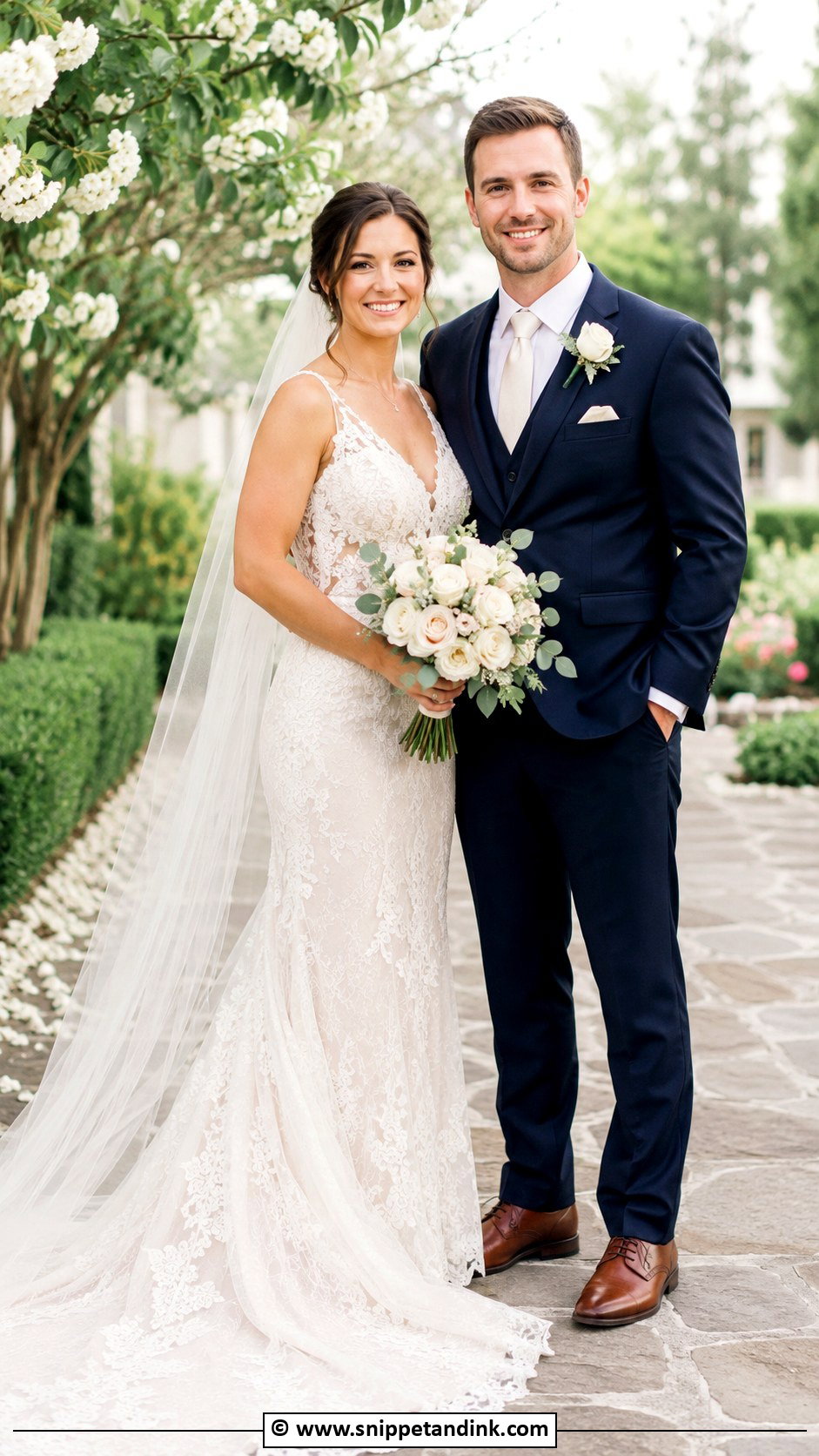
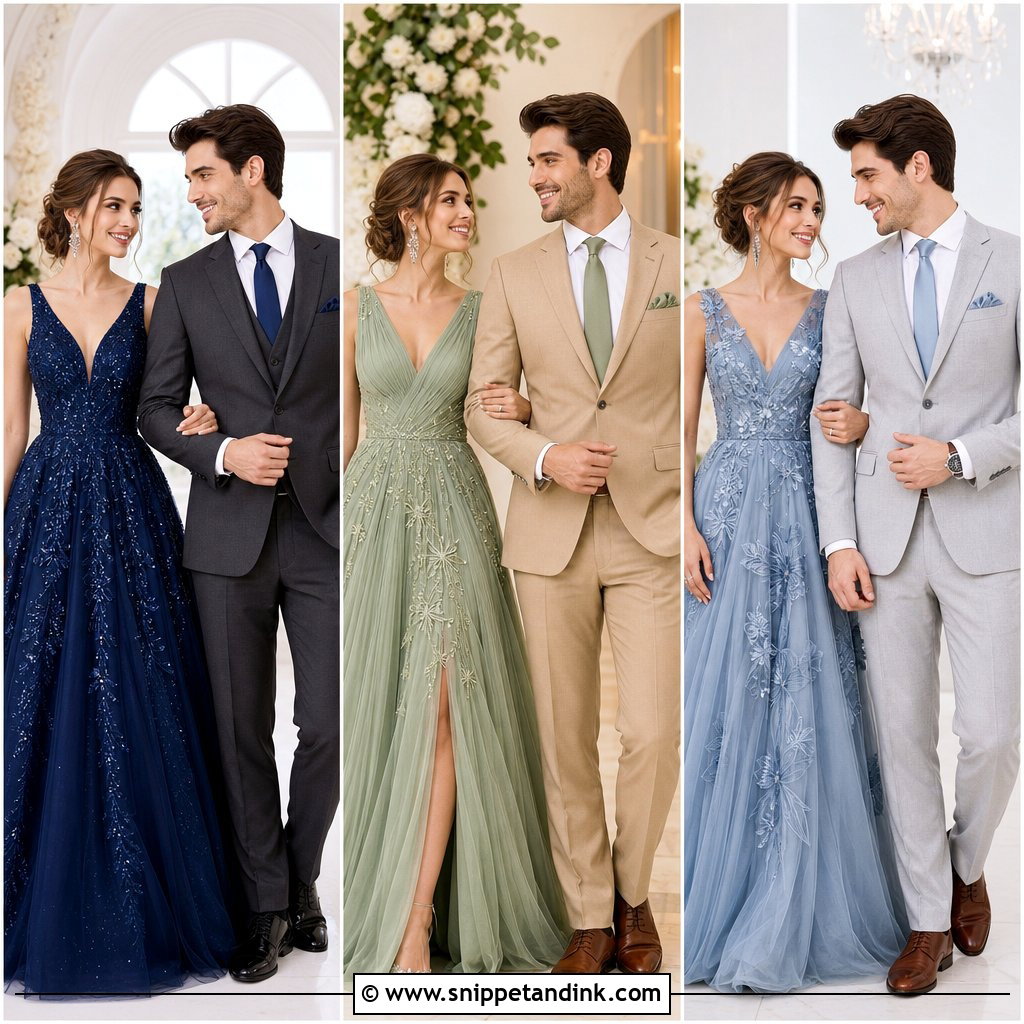
Navy is my usual answer when a couple wants something less severe than black. Ivory is warm on most skin tones, and navy gives it depth without that funeral-formal edge, which suits spring and summer and anything outdoors. For him: a tailored navy suit, white shirt, brown shoes, and an ivory tie or pocket square cut from a fabric that sits close to her gown. I bring a swatch of her dress to his fitting so the ivory tones really agree, because ivory varies far more between makers than people expect.
3. Lace Wedding Dress And Gray Suit
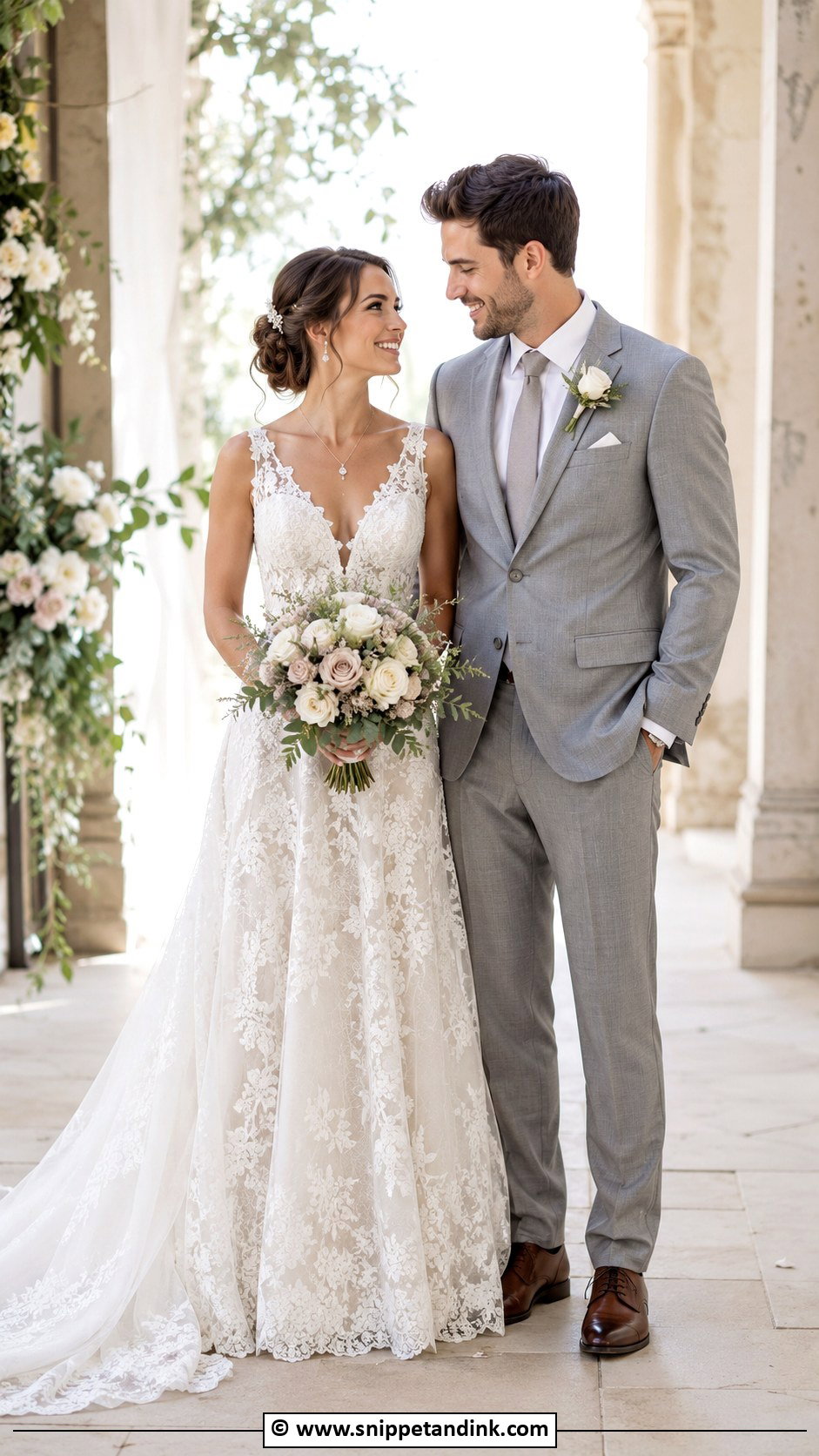
Grey is the quiet partner lace needs. A busy lace bodice next to a patterned or strongly coloured suit gets noisy fast, while grey lets the lace texture carry the picture. I go light grey for daytime and charcoal for evening, keep his shirt white and his tie muted, and leave the boutonniere small. For the link between them, try silver jewellery, grey silk ribbon on her bouquet, or flowers in ivory, blush, and sage. One fitting note: a fitted lace gown with long sleeves needs room at the armhole, so do a full arm lift at the final fitting.
4. Satin Wedding Dress And Black Suit
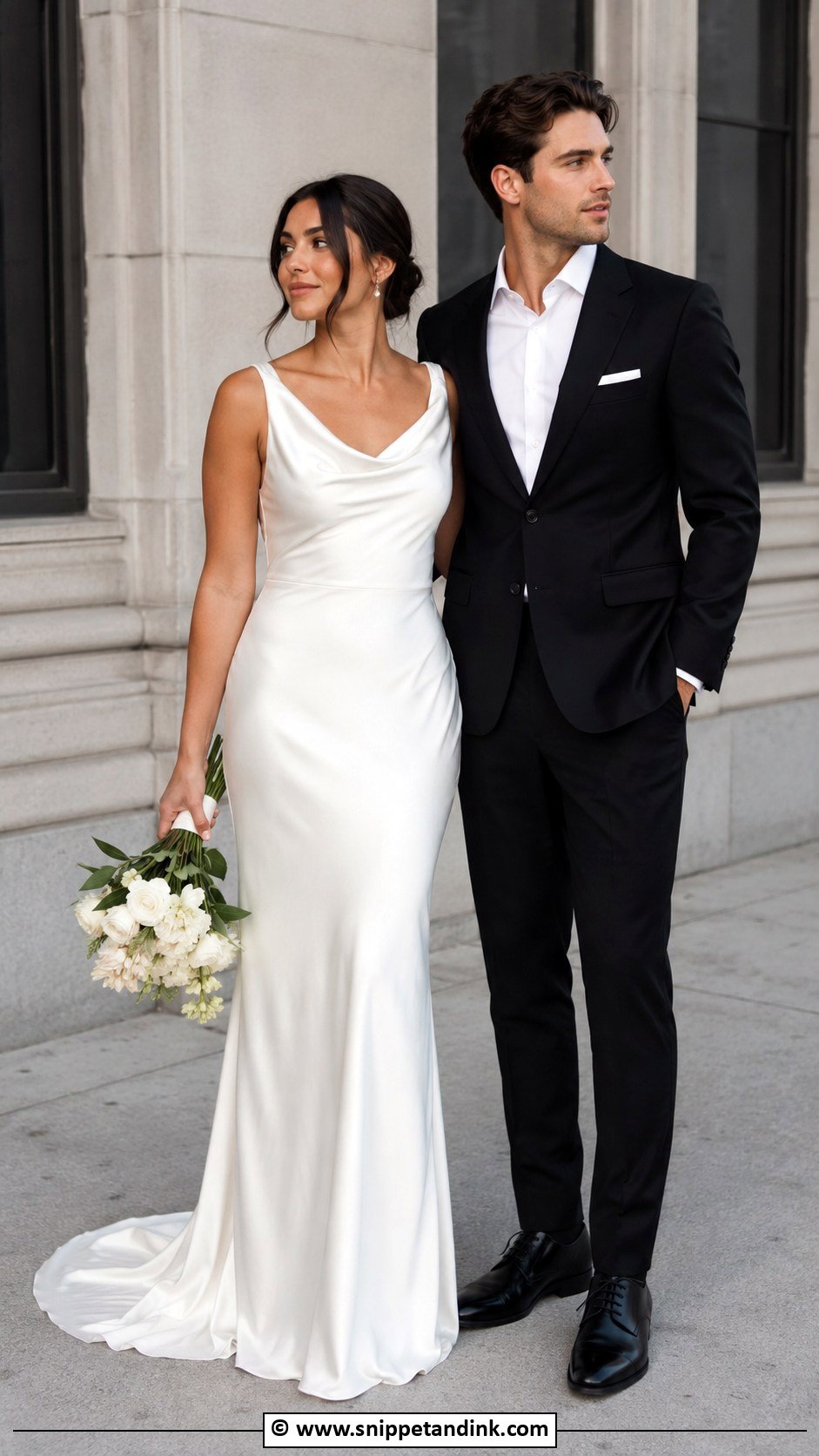
Satin shows everything, which is the point and the risk. It reflects light beautifully in a slip, a column or a structured ball gown, but it also shows every crease from sitting in the car, so I steam it on site rather than at home. His black suit has to be sharp to stand next to that much polish: properly hemmed trousers with no break, and either a black tie or an open collar if the venue is a gallery or a city loft. Pearl studs, a sleek bun and a simple bouquet are all she needs.
5. Blush Wedding Dress And Beige Suit
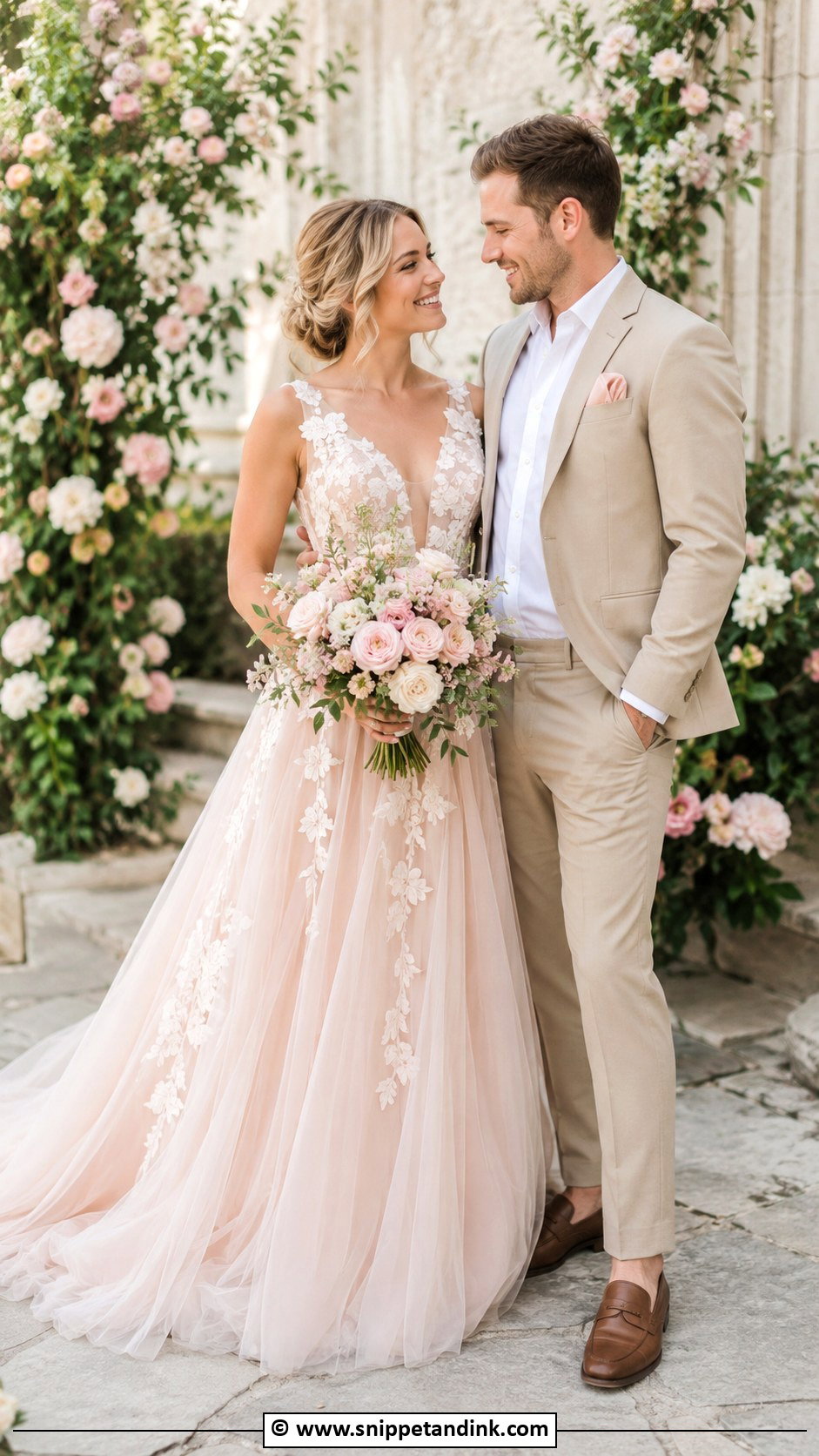
Blush and beige can go muddy if the undertones disagree. A cool, pinkish blush next to a yellow-leaning beige suit looks off in daylight, so I hold the suit fabric against her tulle or appliqué before anyone orders. When they agree, the pair reads warm and relaxed. A light tan suit works too if beige feels too pale on him. White shirt, brown loafers and a blush pocket square cover the coordination; the flowers in blush, peach and soft green do the rest.
6. Champagne Wedding Dress And Brown Suit
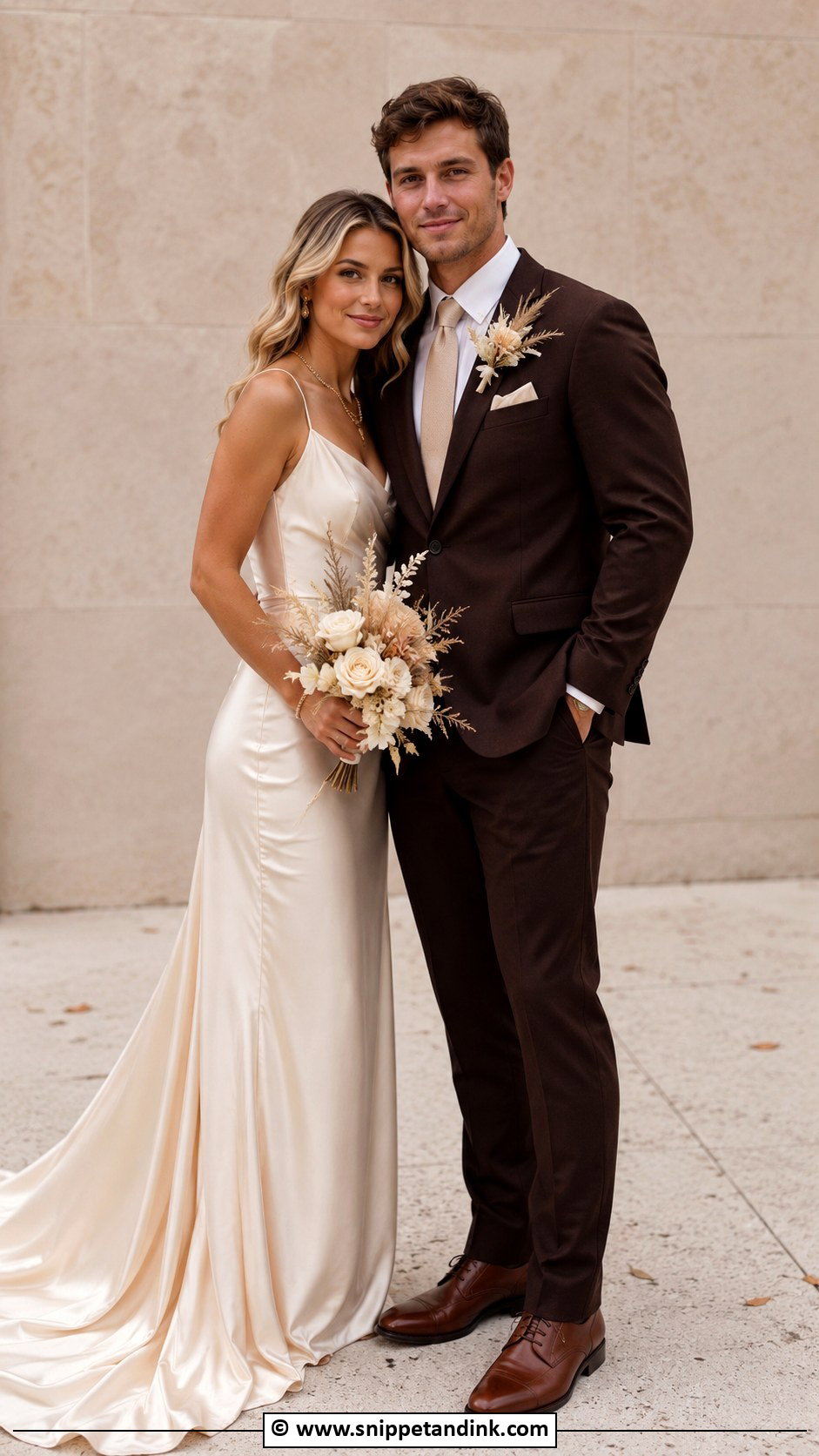
Champagne fabric has a gold cast that brown wool pulls forward, so this pairing photographs warmer than almost anything else on this list. It suits autumn and rustic venues and outdoor ceremonies with wood and stone around them. I put him in a cream shirt rather than bright white, with a tan tie and brown leather shoes. Gold jewellery on her, and a bouquet in ivory and caramel with greenery. Who shouldn’t do it? Couples whose venue is all cool grey and chrome; the warmth looks out of place there.
7. Floral Wedding Dress And Tan Suit
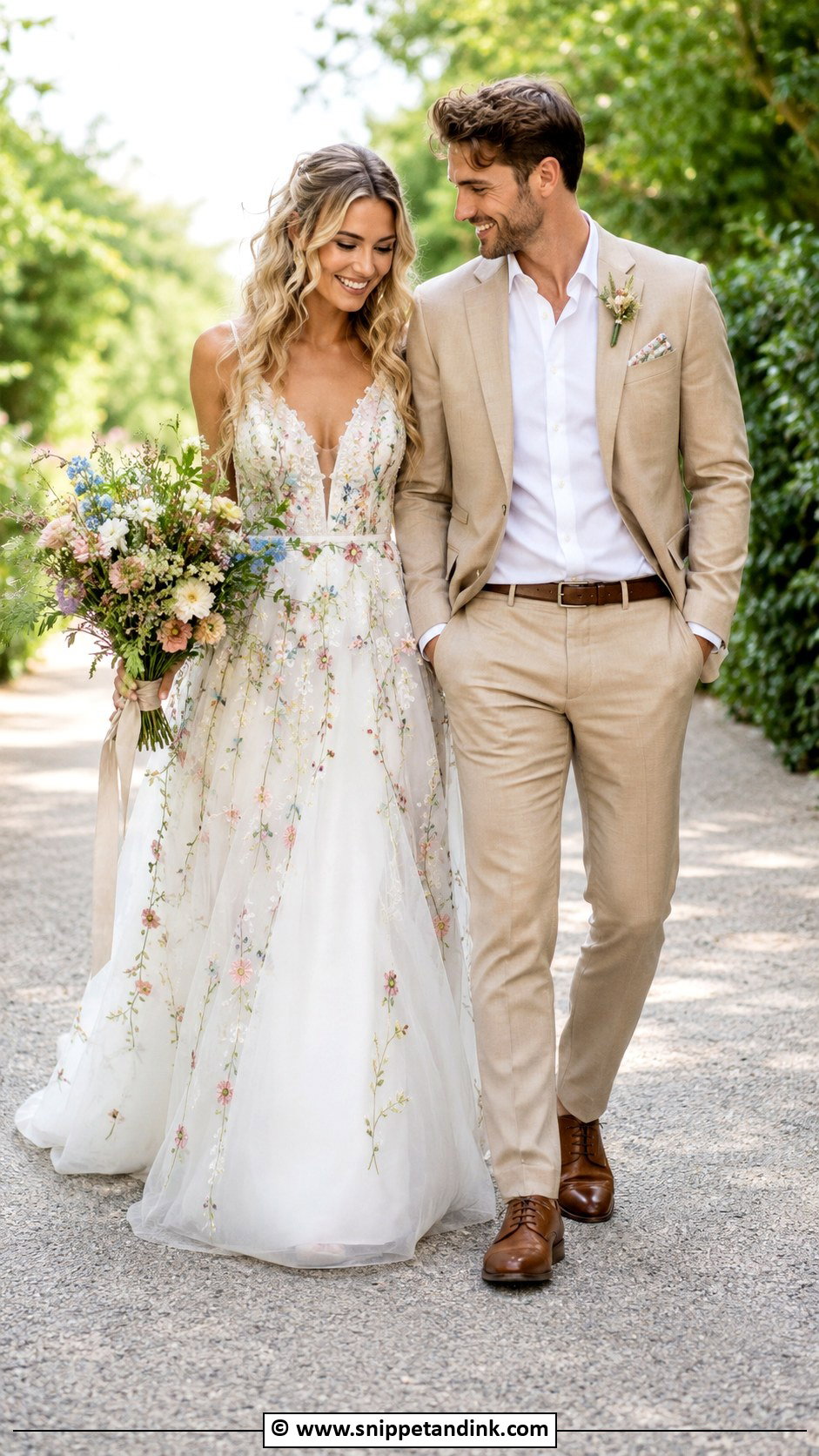
With a floral gown, the groom’s job is to stay calm. Embroidered flowers, painted motifs or appliqué on a white or blush base already give the photographer plenty, so a tan suit that stays plain is the right foil. The trick I use is to pick exactly one colour out of her dress for his tie or pocket square, never two. Brown shoes, loose curls for her, and a wildflower-style bouquet keep it garden-appropriate rather than costume.
8. Boho Wedding Dress And Linen Suit
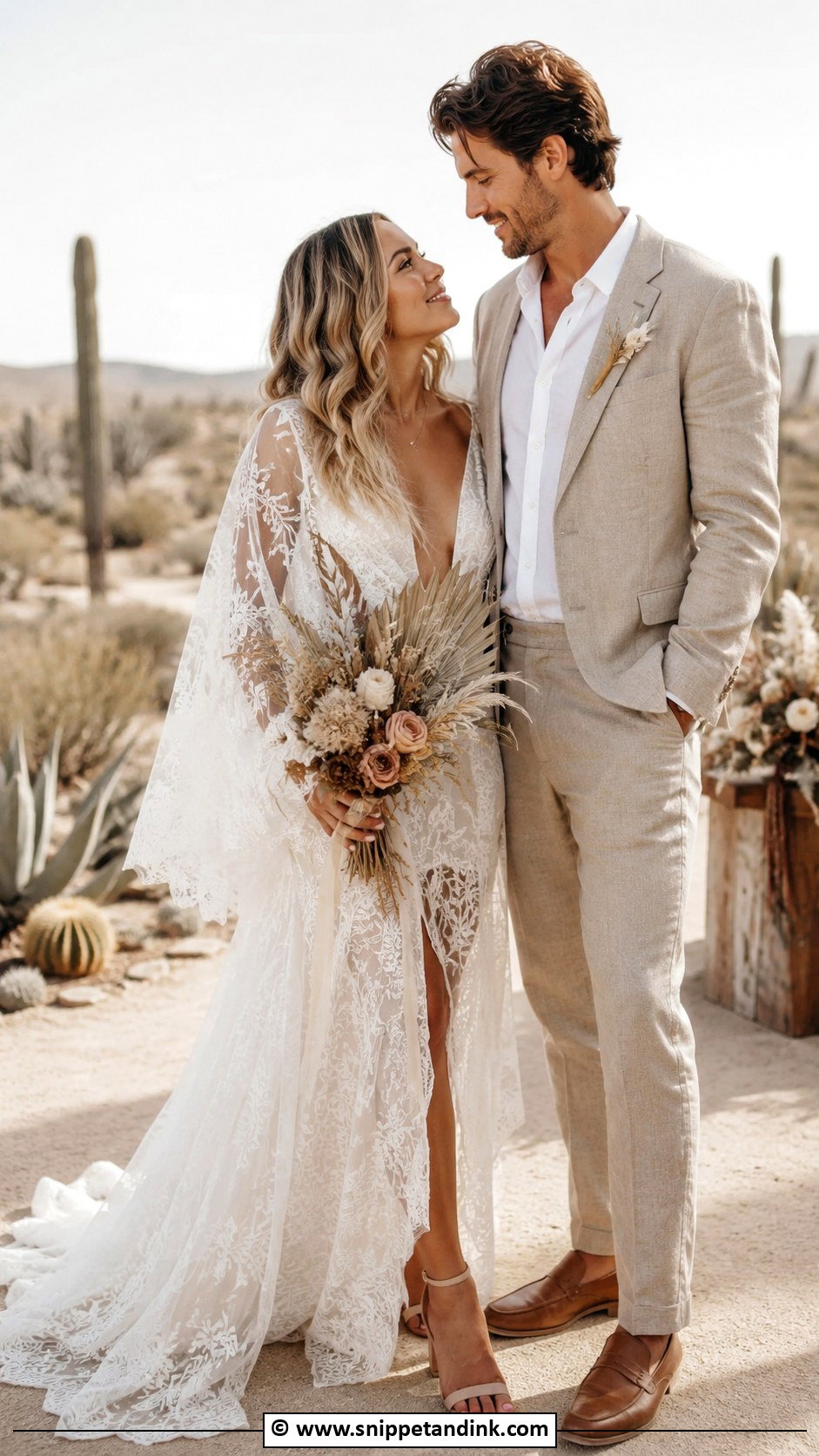
Linen creases within minutes of putting it on. I tell every groom this before he buys, because some people find the rumpled look relaxed and some find it sloppy in photos. If he’s in the first group, a linen suit in stone, beige or soft grey sits easily next to a bell-sleeved lace gown or a crochet-style dress. Beach, desert and backyard weddings suit it best. Let her dress carry the texture and keep his look plain: white shirt, loafers, no tie.
9. Beach Wedding Dress And White Linen Suit
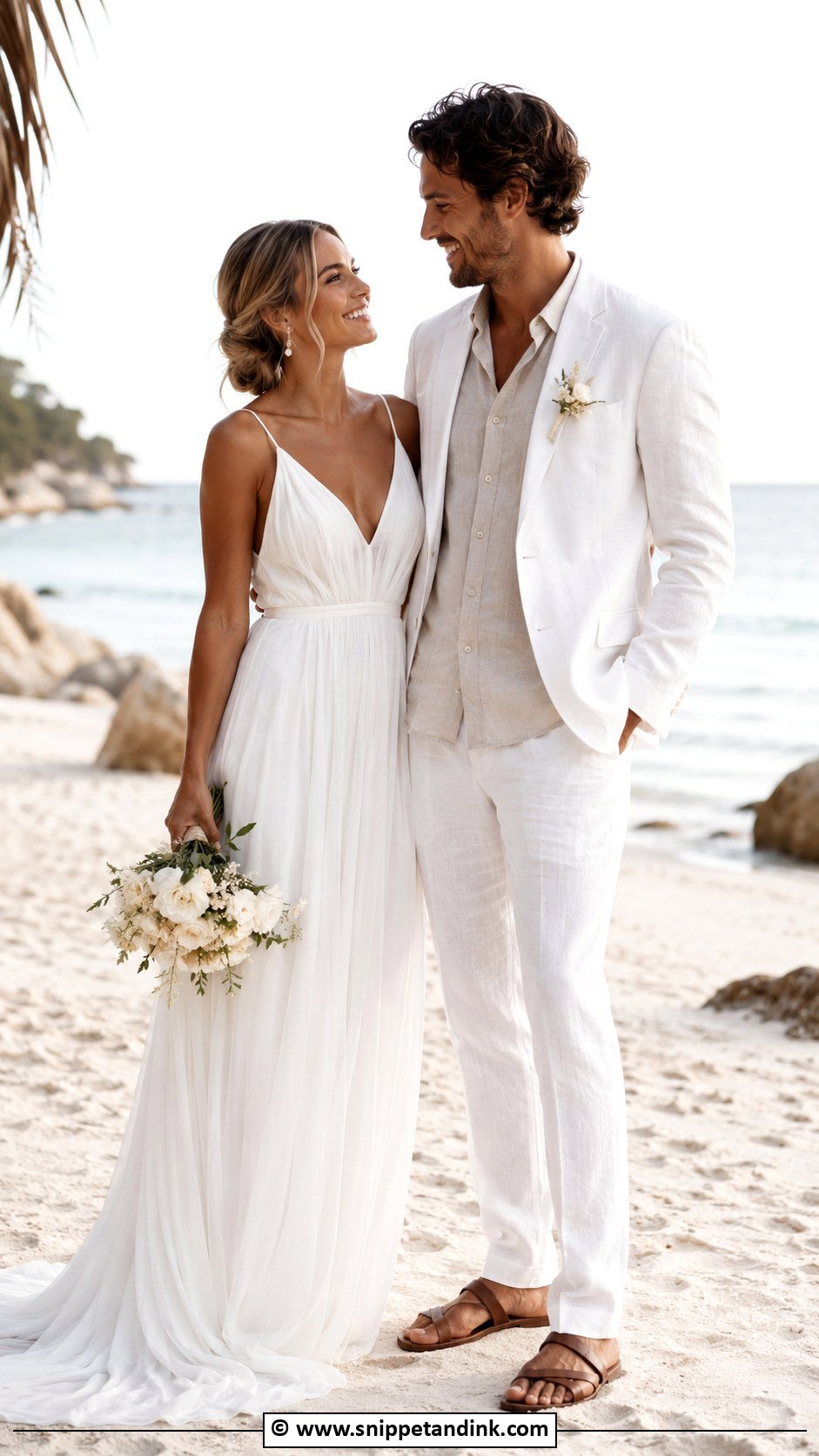
Sand and wind change how clothes behave. A lightweight chiffon gown or a halter slip moves well in a breeze, while anything with a long train collects sand and drags. White linen on the groom keeps things airy; I usually suggest a beige shirt underneath so he isn’t a single block of white in bright sun, which tends to blow out in photos. Loafers or dress sandals depending on how formal the invite was, beach waves for her, small earrings, and a bouquet that won’t shed petals in the wind.
10. Garden Wedding Dress And Sage Green Suit
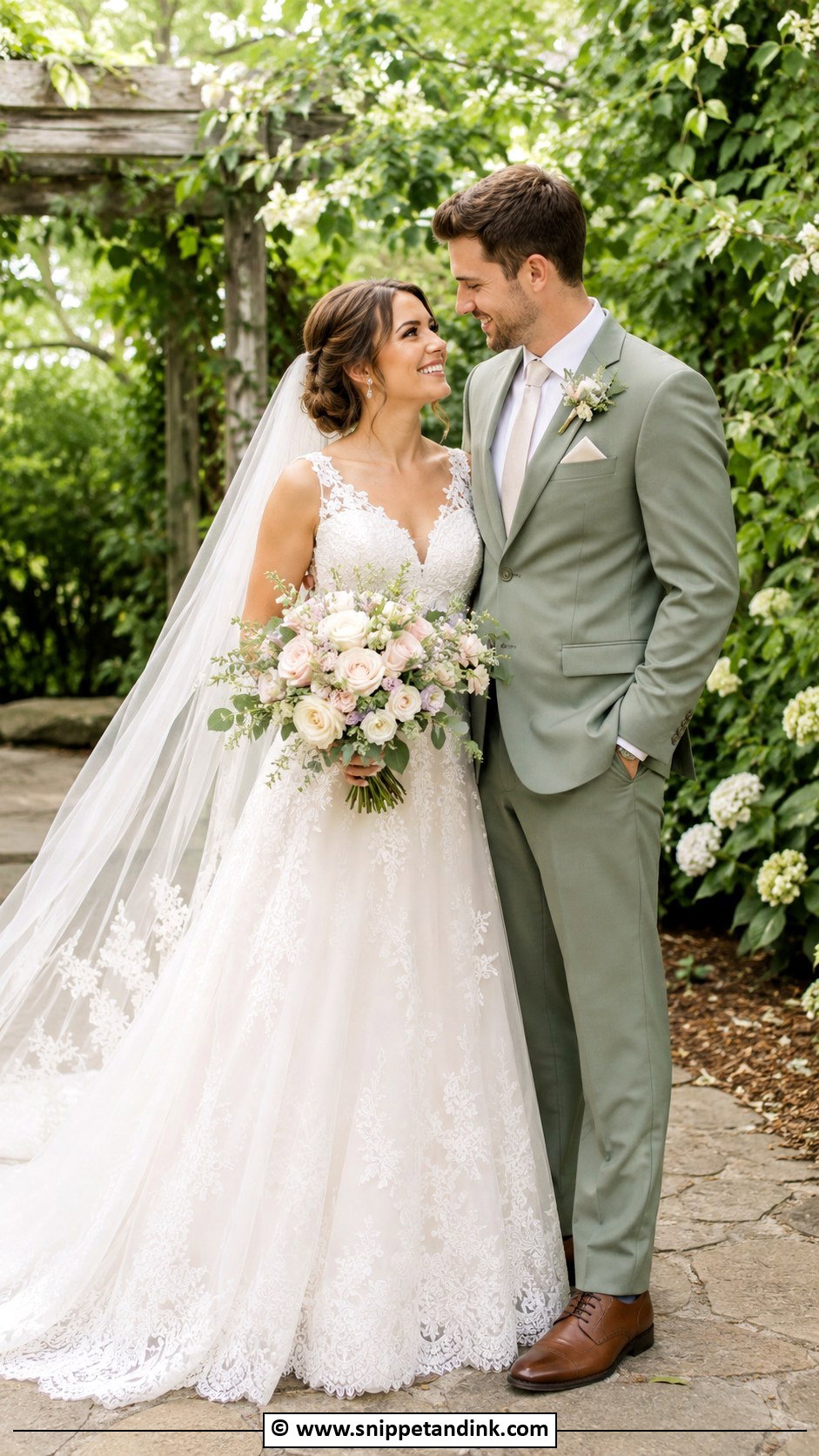
Sage is the colour I suggest to couples who want colour on the groom but are nervous about it. It looks soft against greenery and doesn’t shout in the family photos. Pair it with a lace A-line or a floral embroidered gown, a white shirt, a cream tie and brown shoes. A bouquet in ivory, blush and lavender ties them together. The caution: sage varies hugely between tailors, and the grey-leaning ones can look drab under a cloudy sky, so ask for a swatch and look at it outdoors.
11. Modern Wedding Dress And White Dinner Jacket
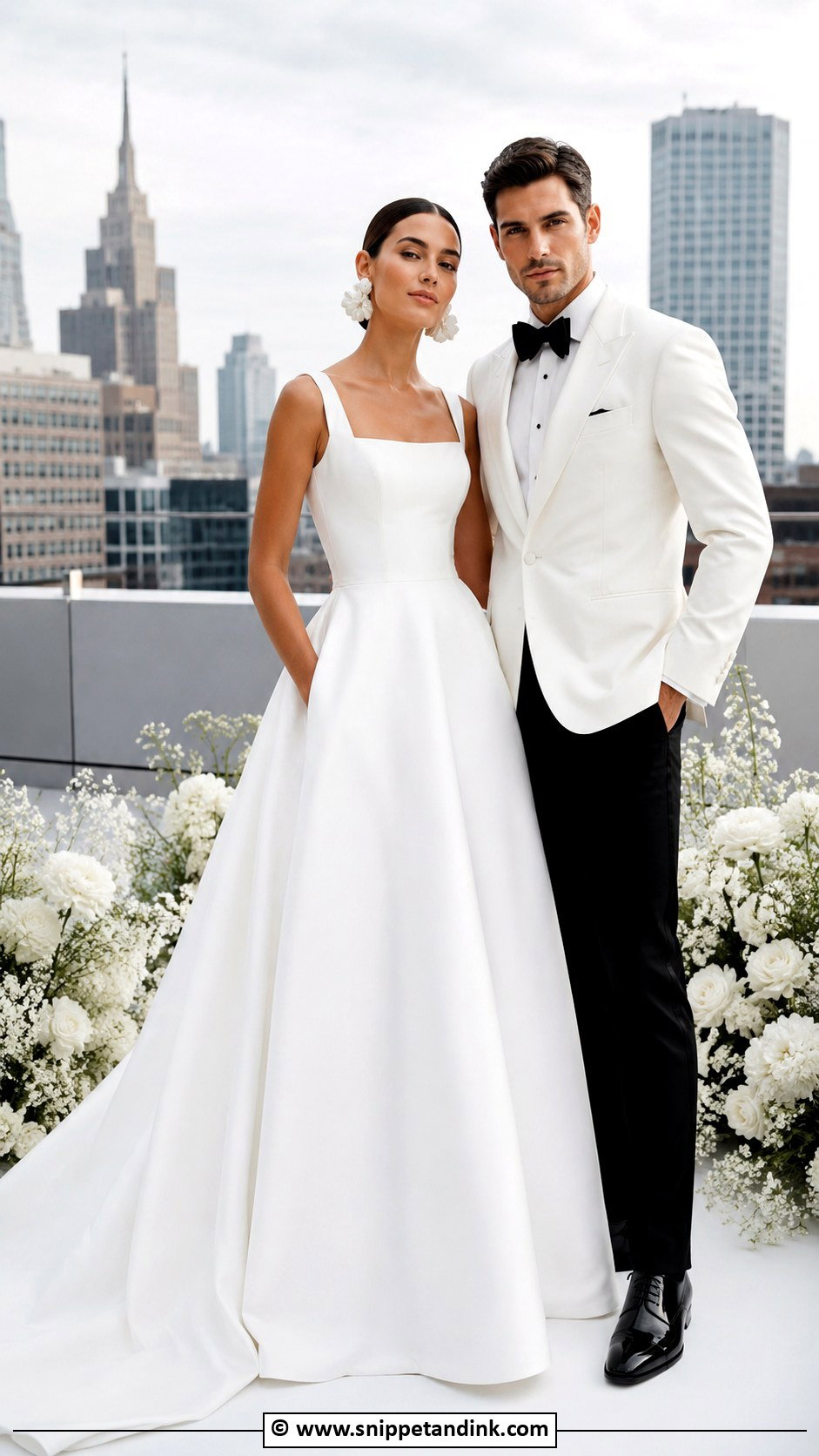
A white dinner jacket asks for a clean, structured gown beside it: square neck, sculpted column, or a high slit if she wants drama. He wears it with black trousers, a black bow tie and polished shoes. I keep the palette strict here, black and white and ivory with one metal, because extra colours make the formality look confused. It suits rooftops and hotel ballrooms in warm months. Sleek hair and sculptural earrings finish her side.
12. Minimalist Wedding Dress And Charcoal Suit
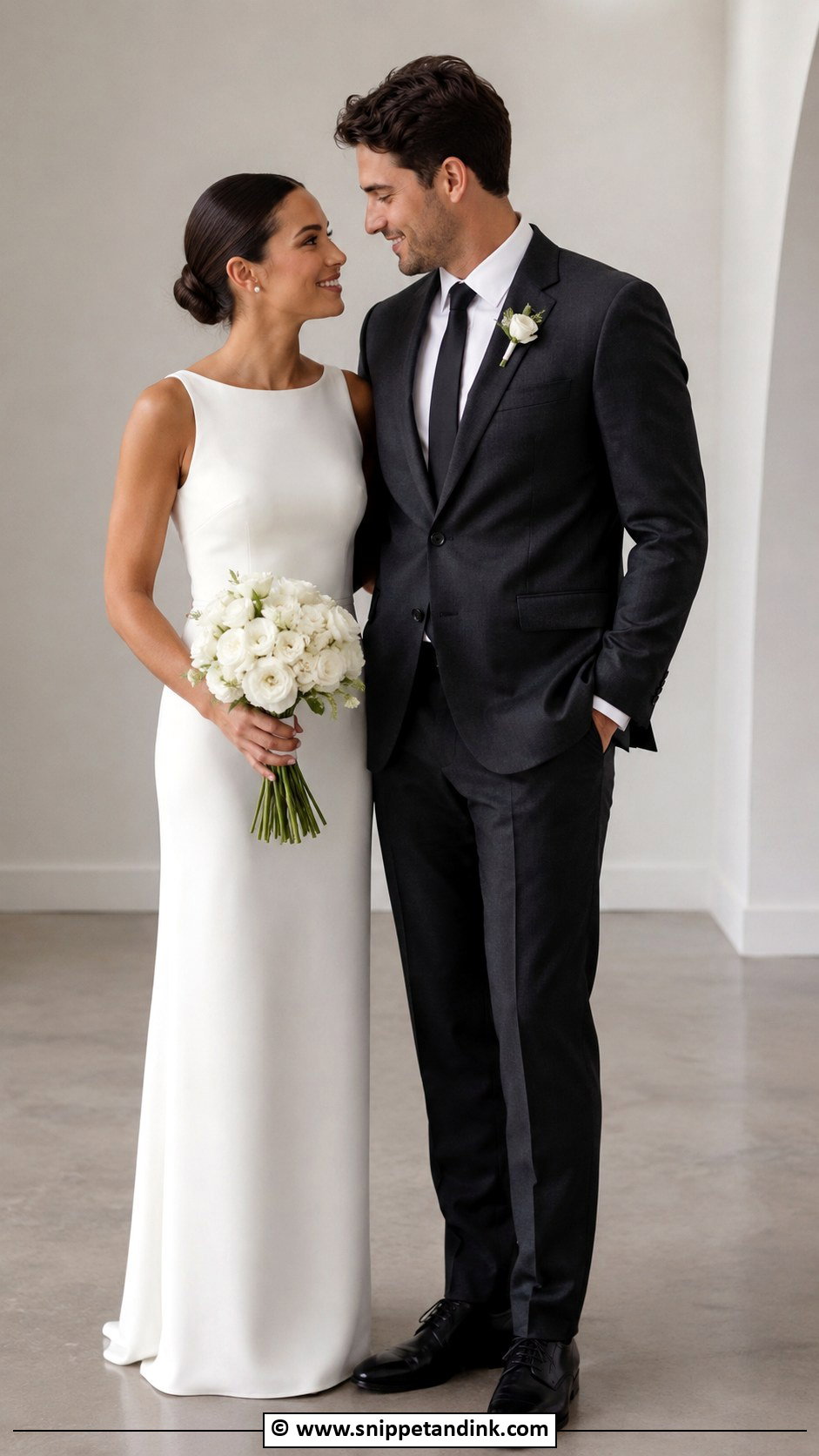
Minimal dresses are less forgiving than they look. With no beading or lace to distract, the fit has to be exact, and a plain crepe or satin slip will show the line of the wrong underwear. Charcoal on him adds structure without competing. White shirt, slim tie, black shoes. I like this for courthouse ceremonies and small modern weddings. A smooth bun, small earrings and an all-white bouquet keep her look as disciplined as the dress.
13. Ball Gown Wedding Dress And Formal Tuxedo
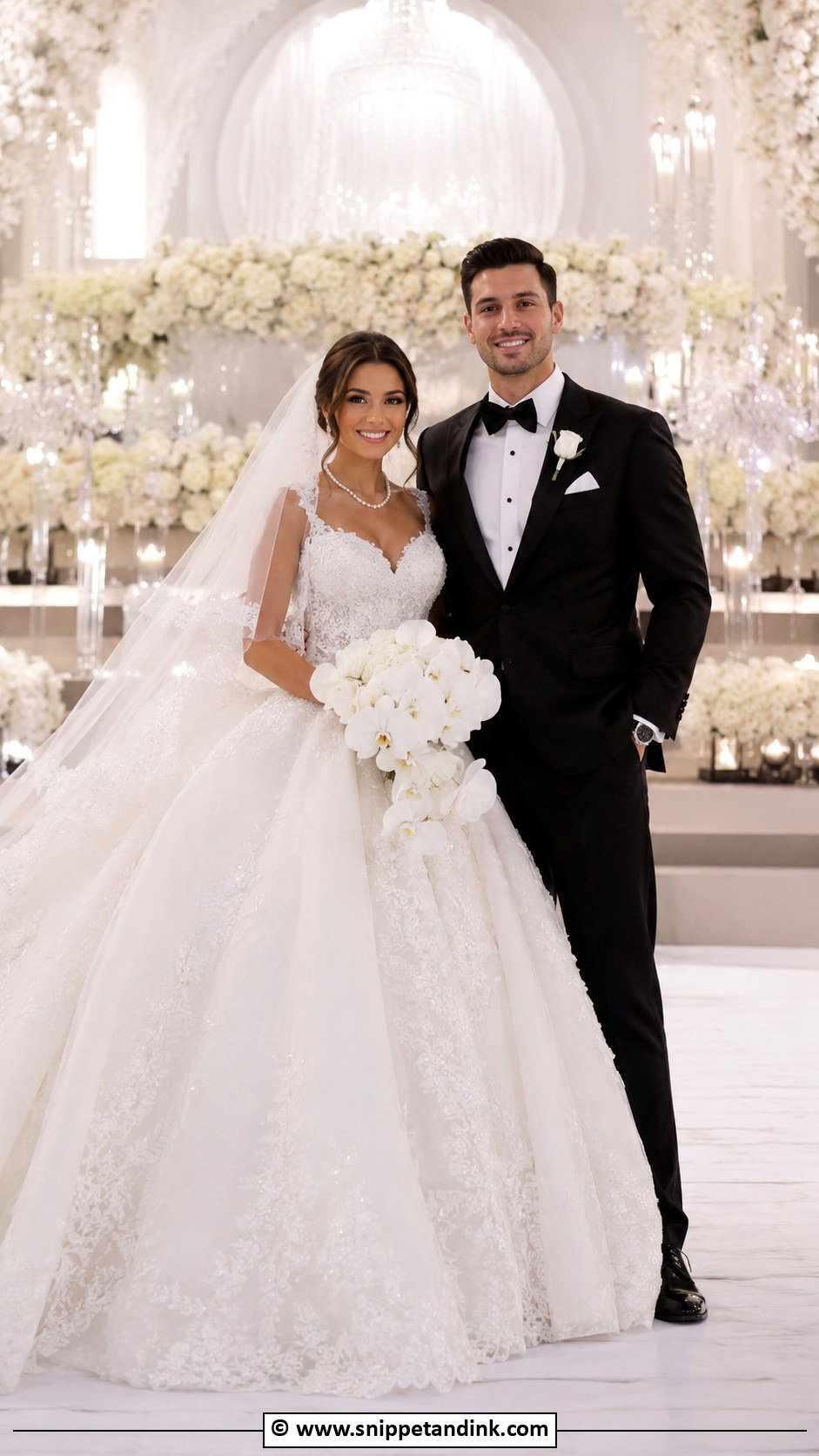
A full ball gown takes up real space, and the groom needs enough formality to hold his ground next to it. Black tux is the classic; midnight blue looks richer under evening light and is my quiet favourite. He keeps a bow tie, cufflinks and polished shoes. She can carry a tiara or pearl earrings and a structured bouquet. Practically, check the venue: narrow aisles, tight car doors and small dance floors are hard work in a gown this wide.
14. Mermaid Wedding Dress And Slim Fit Suit
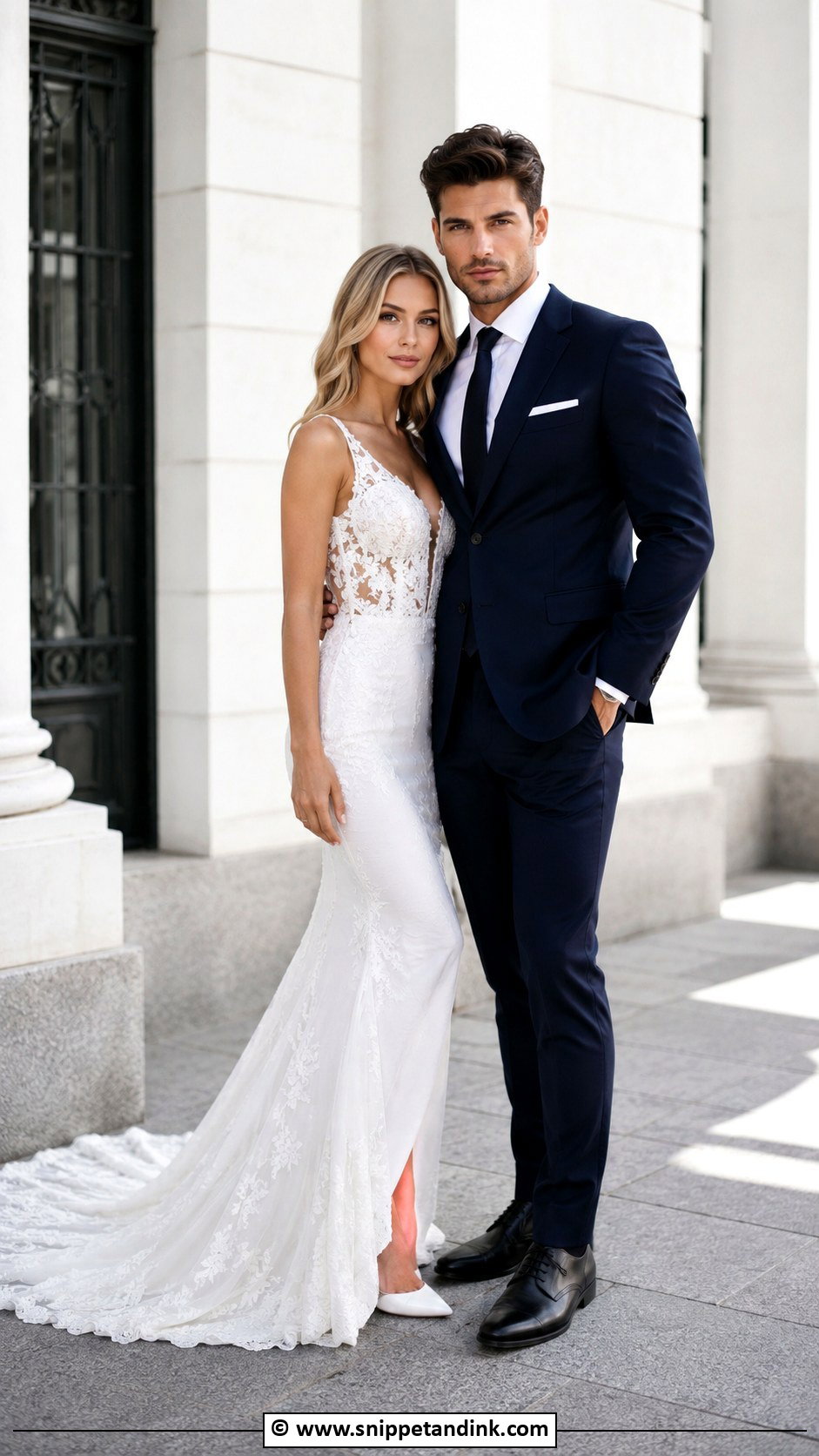
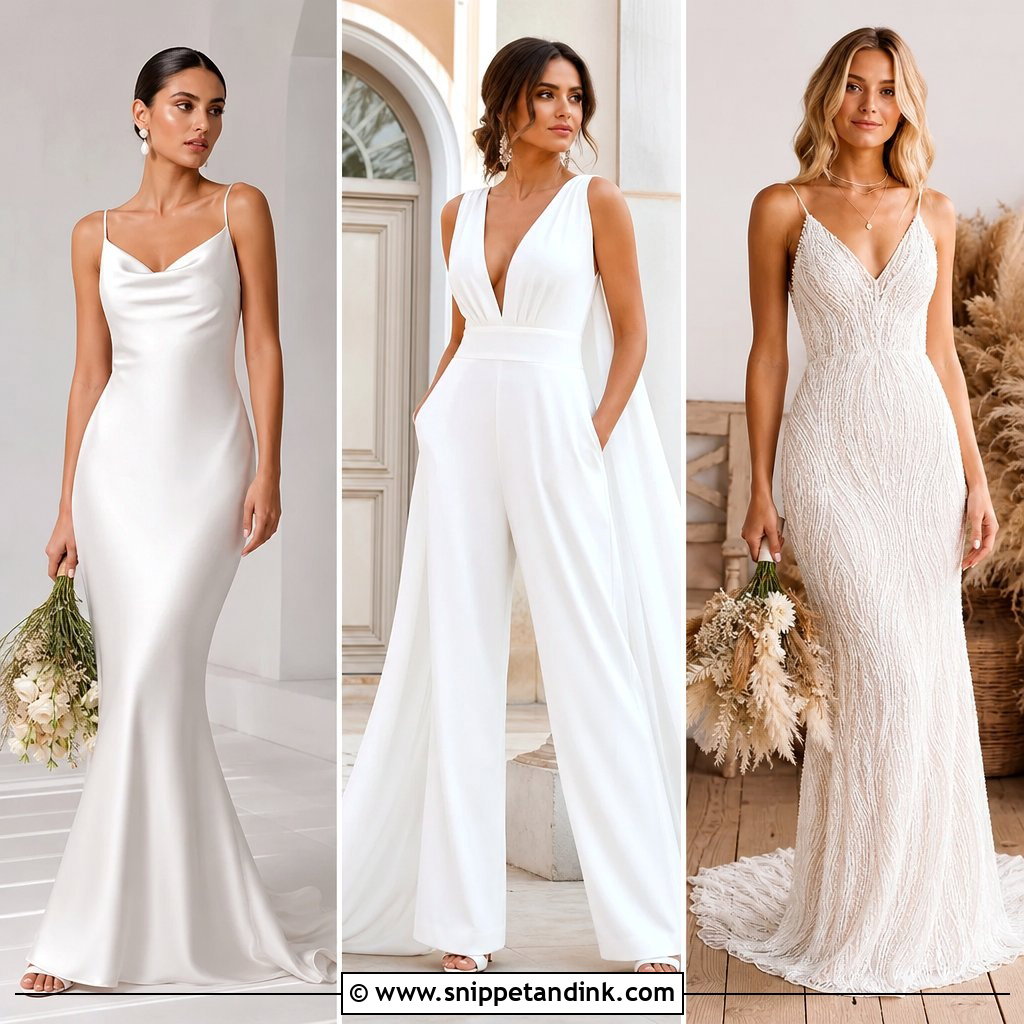
Mermaid gowns are built to show shape, flaring at or below the knee, and I like the groom’s suit to echo that clean line without looking shrink-wrapped. A slim cut in black, navy, charcoal or deep green works. The thing I always test at a fitting is sitting and stairs. A fitted mermaid restricts stride, so she should walk the actual distance she’ll walk on the day, in her shoes, before the last alteration. Keep accessories streamlined so the silhouettes do the talking.
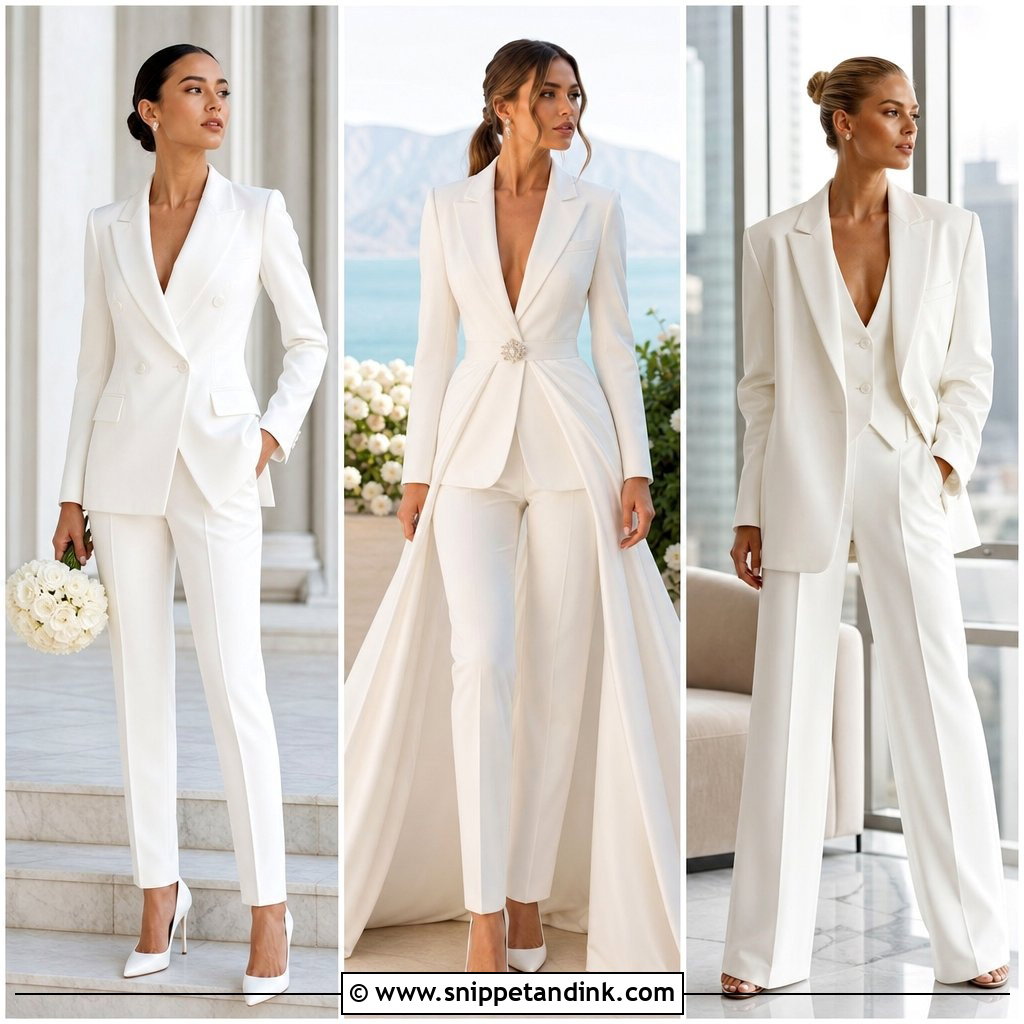
15. A Line Wedding Dress And Blue Suit
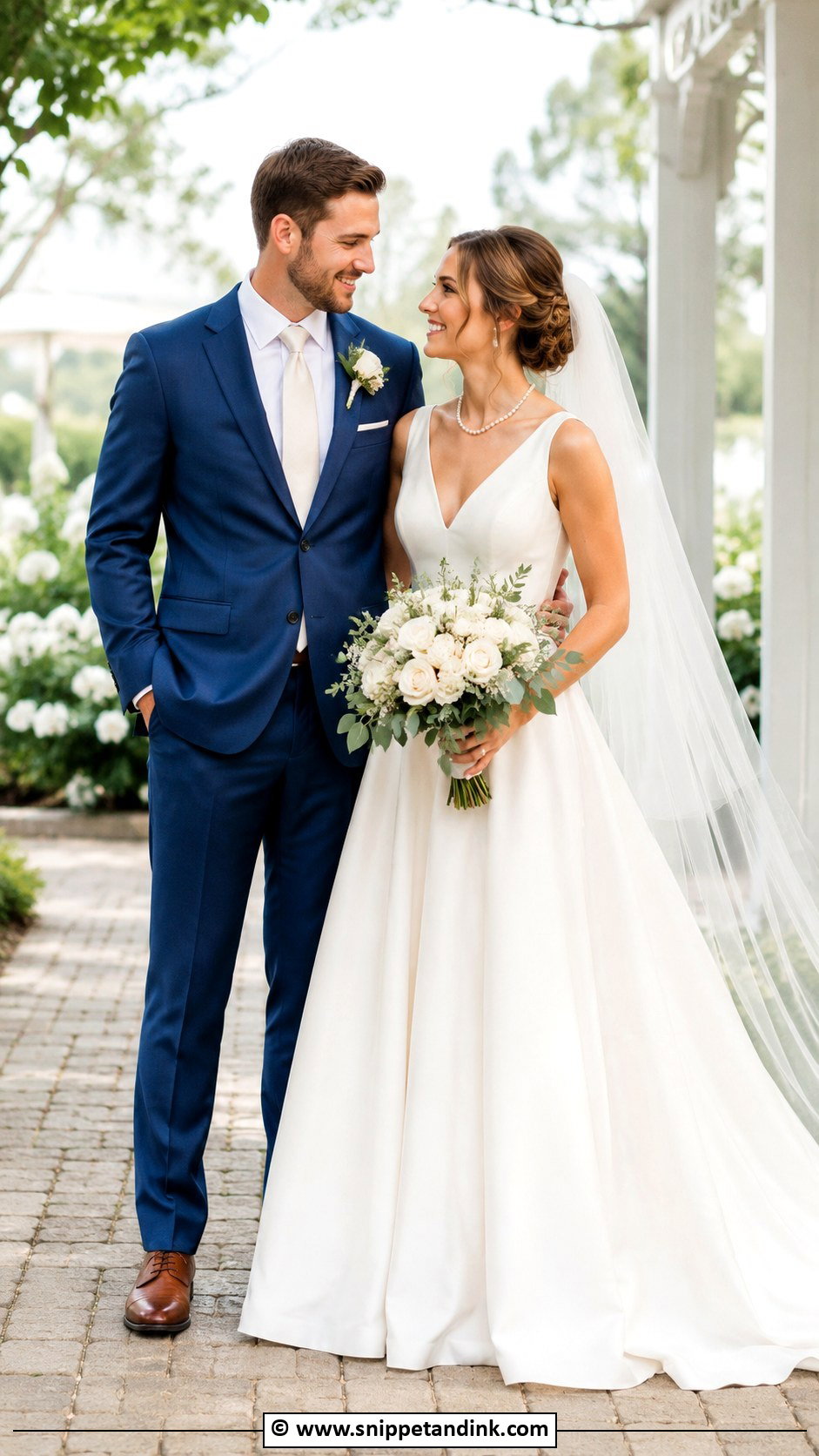
A-line is the shape I recommend most often when a bride isn’t sure, because it marks the waist and skims the hips on most body types. A blue suit next to it is easy to get right. Light blue for spring and summer, a deeper blue any time of year. I coordinate through an ivory tie, brown shoes and a boutonniere cut from the same stems as her bouquet. Soft waves, pearls and a medium veil keep her side of the picture approachable.
16. Short Wedding Dress And Casual Suit
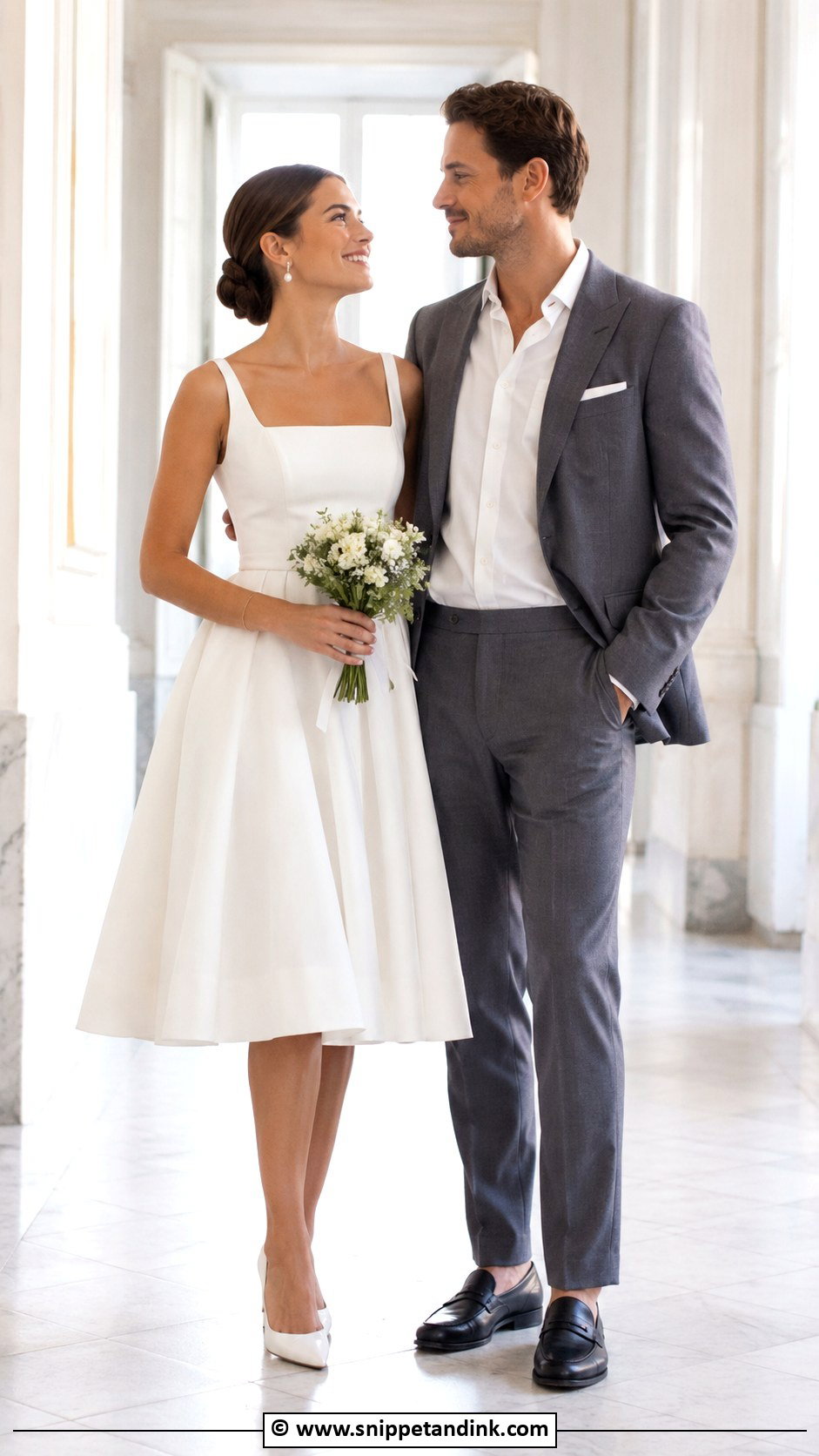
Short dresses are honest about shoes, so shoes become part of the plan. A knee-length, sleeved mini or tea-length dress looks right with block heels or pointed pumps, and the groom’s suit can relax to grey, navy, beige or soft blue. A tie is optional for a civil ceremony. My favourite small link: his pocket square in the colour of her shoes. Short dresses also work well as a reception change for brides who wore a long gown for the ceremony.
17. Reception Wedding Dress And Velvet Blazer
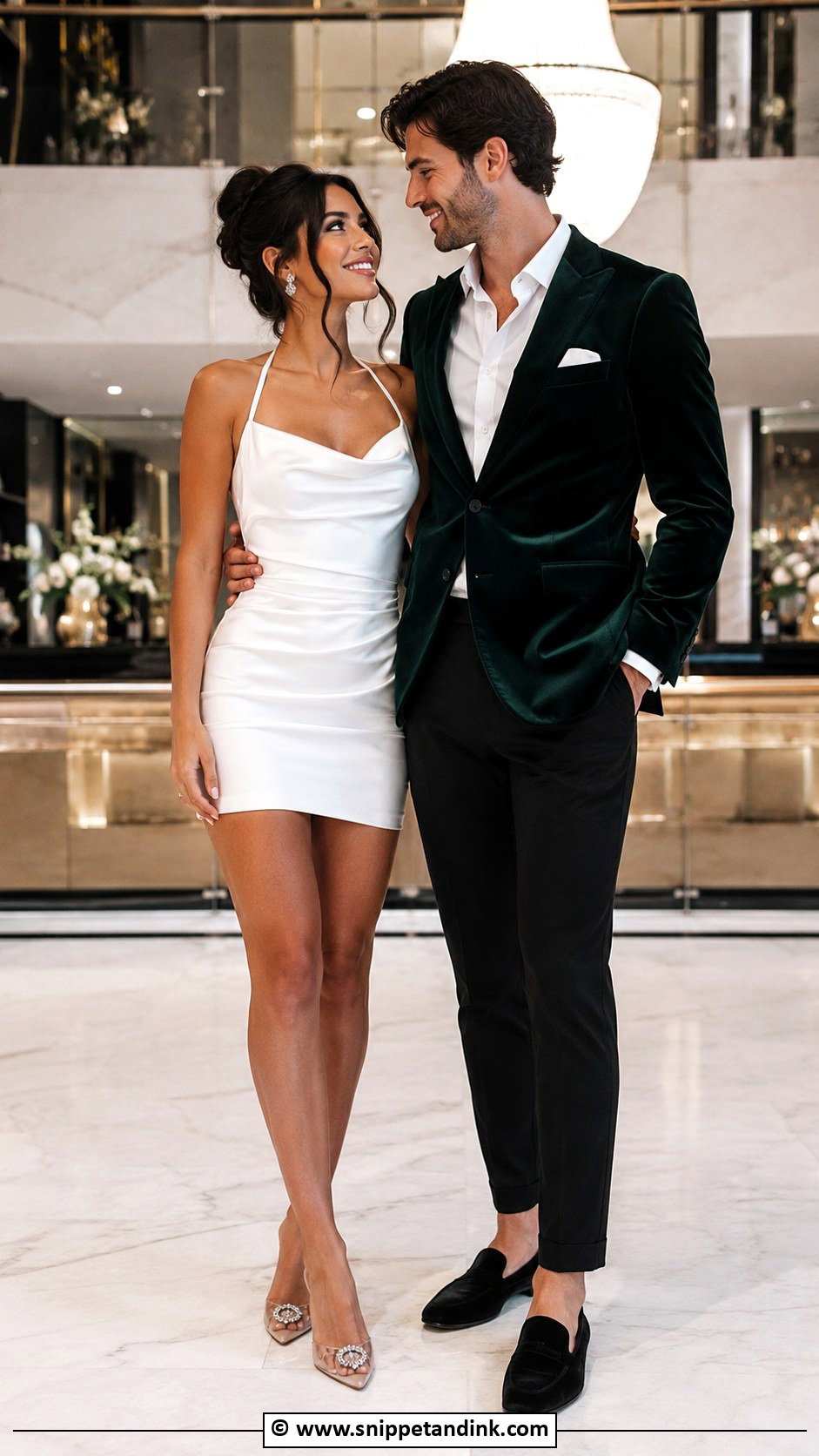
The outfit change is where couples can have fun. She steps out of the ceremony gown into a sleek midi, a feather-trimmed mini dress, or a satin slip she can dance in. He swaps his jacket for velvet in black, emerald, navy or burgundy. Velvet is heavy and warm, so I only suggest it for cooler months or air-conditioned rooms. Her shoes should be ones she has actually danced in before. Plan where the change happens and who helps with the buttons; it takes longer than couples expect.
18. Gold Wedding Dress And Black Tuxedo
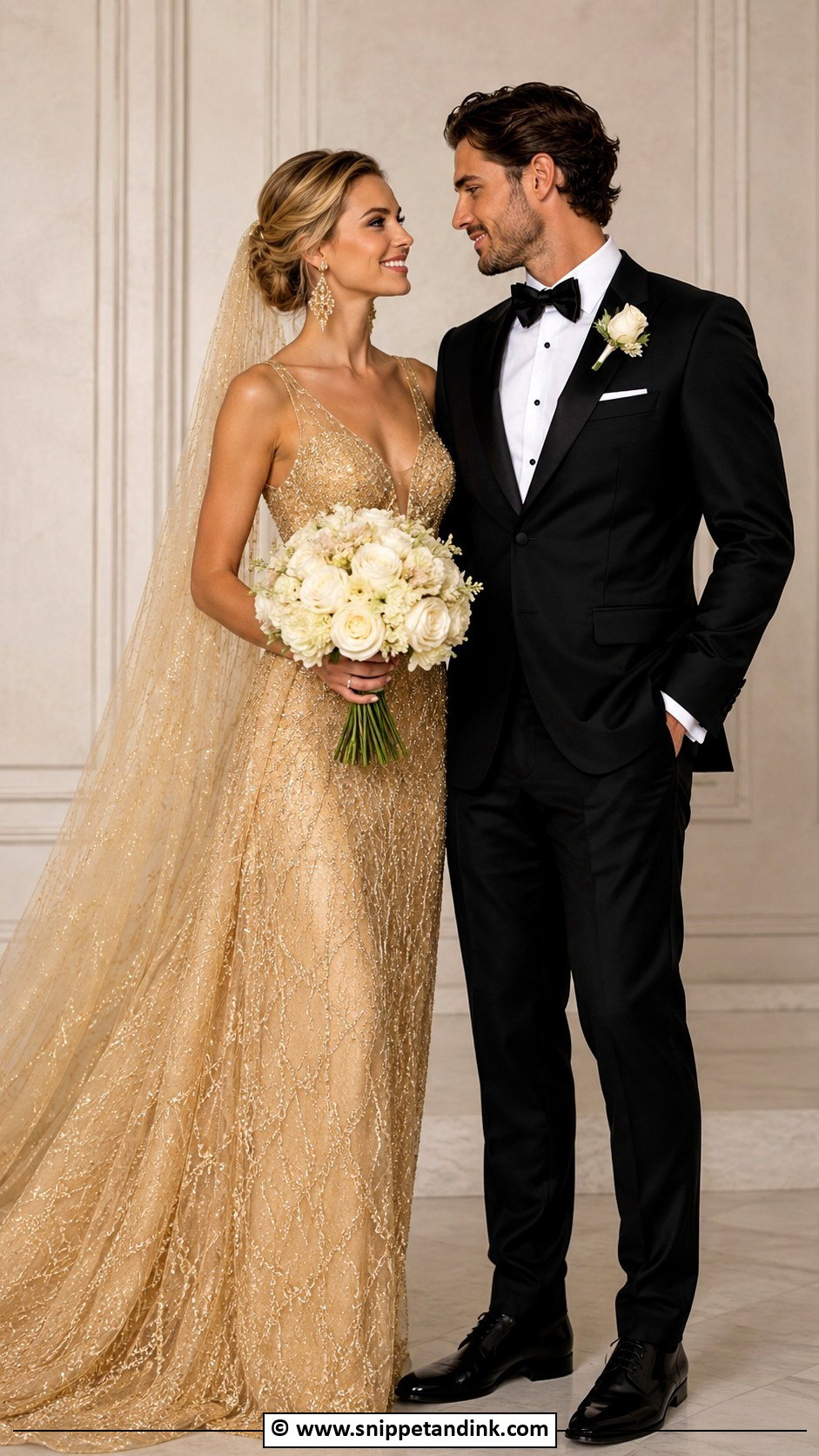
When the gown is gold, the tux should be plain. Gold embroidery, metallic beading or champagne-gold satin already carry a lot of visual weight, so a black tuxedo with a white shirt and black bow tie is all he needs. I’d skip gold on his side entirely; two metallics fighting for the light looks busy. Gold earrings and a bouquet in ivory or cream on her. Watch the lighting: metallic fabric can flare under direct flash, so mention the dress to your photographer.
19. Silver Wedding Dress And Midnight Blue Suit
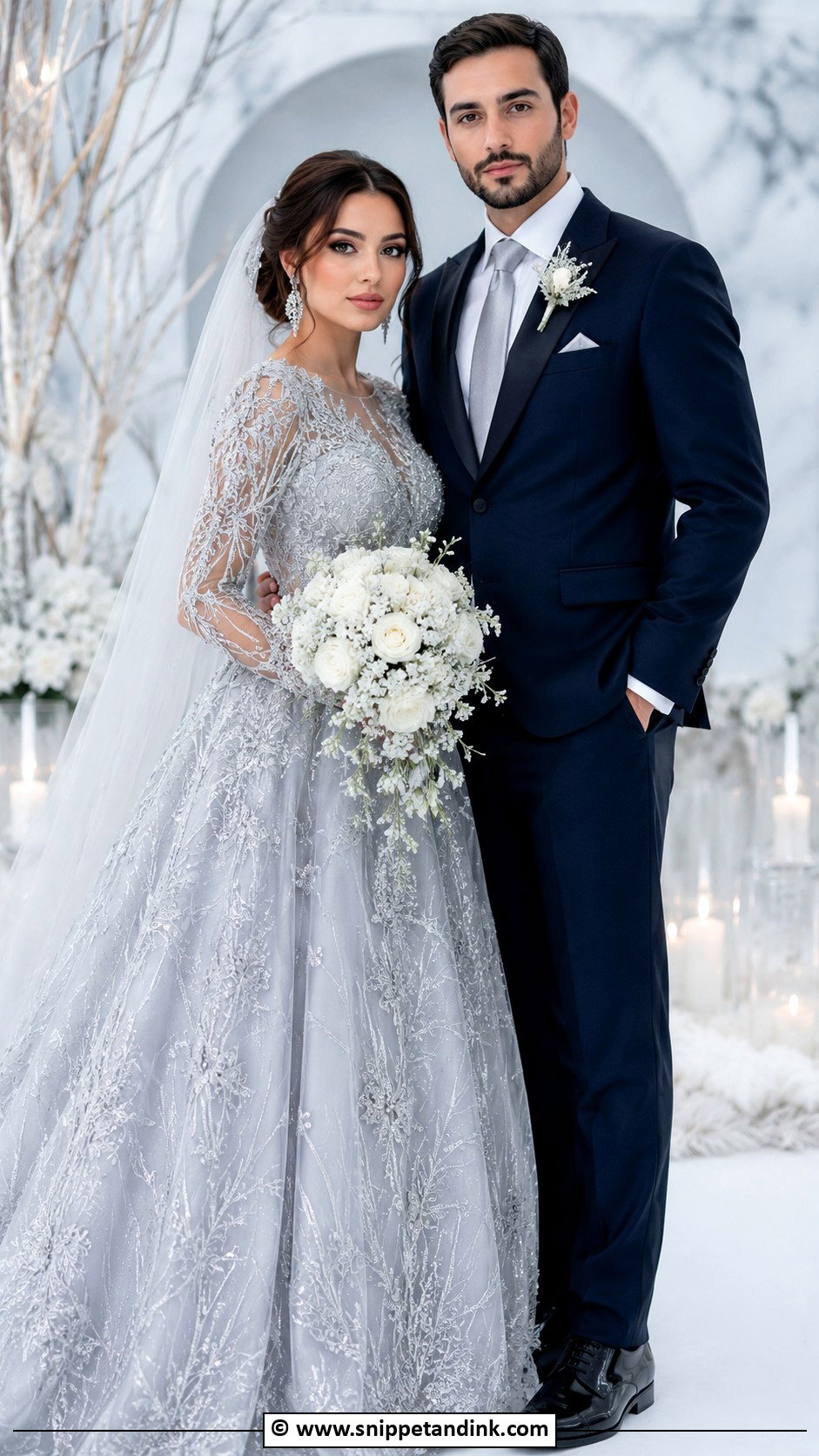
Silver and midnight blue are a cool-toned pair that come into their own after dark. She might wear silver beading, metallic embroidery, a soft grey gown or white with silver detail; he wears midnight blue, which reads almost black indoors and a true deep blue outside. White shirt, a silver tie and black shoes keep him cohesive. This is a winter combination for me, with crystal earrings, a sleek veil and white flowers with blue-grey eucalyptus.
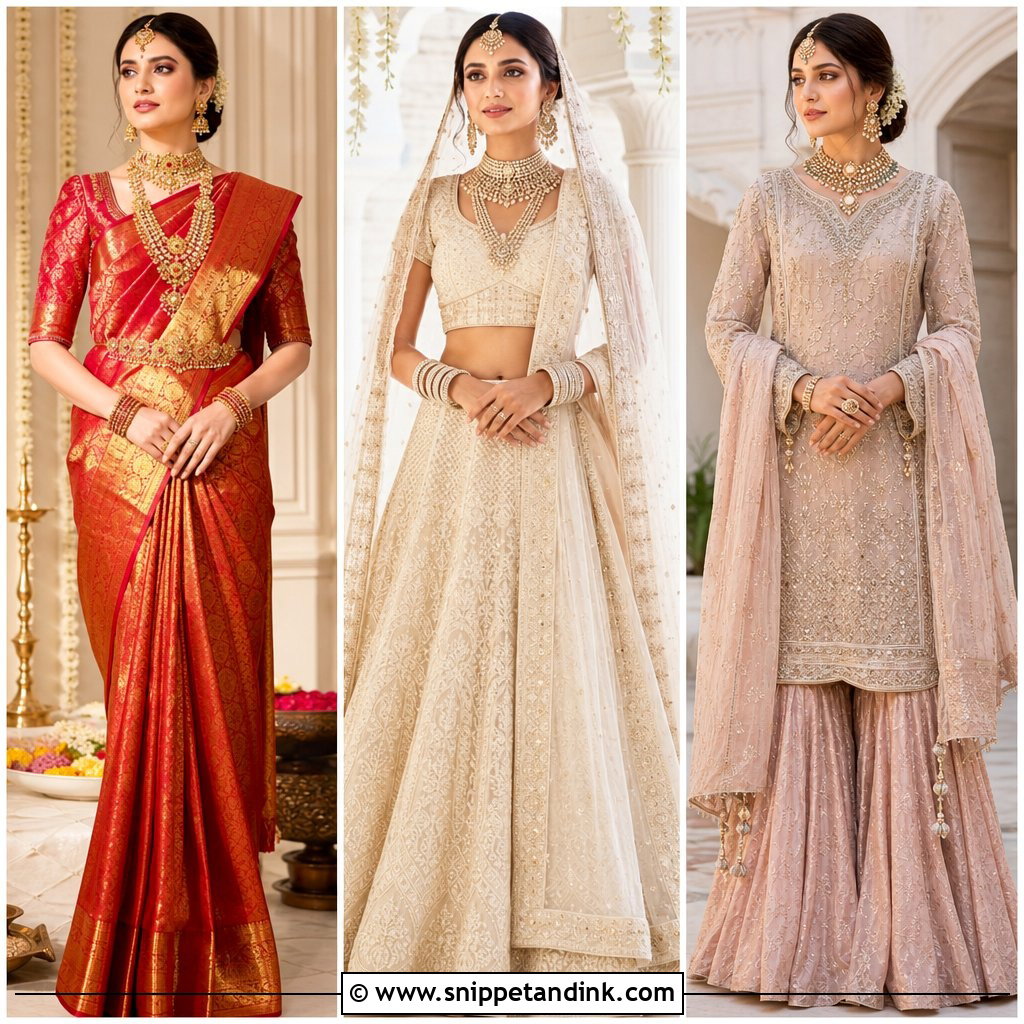
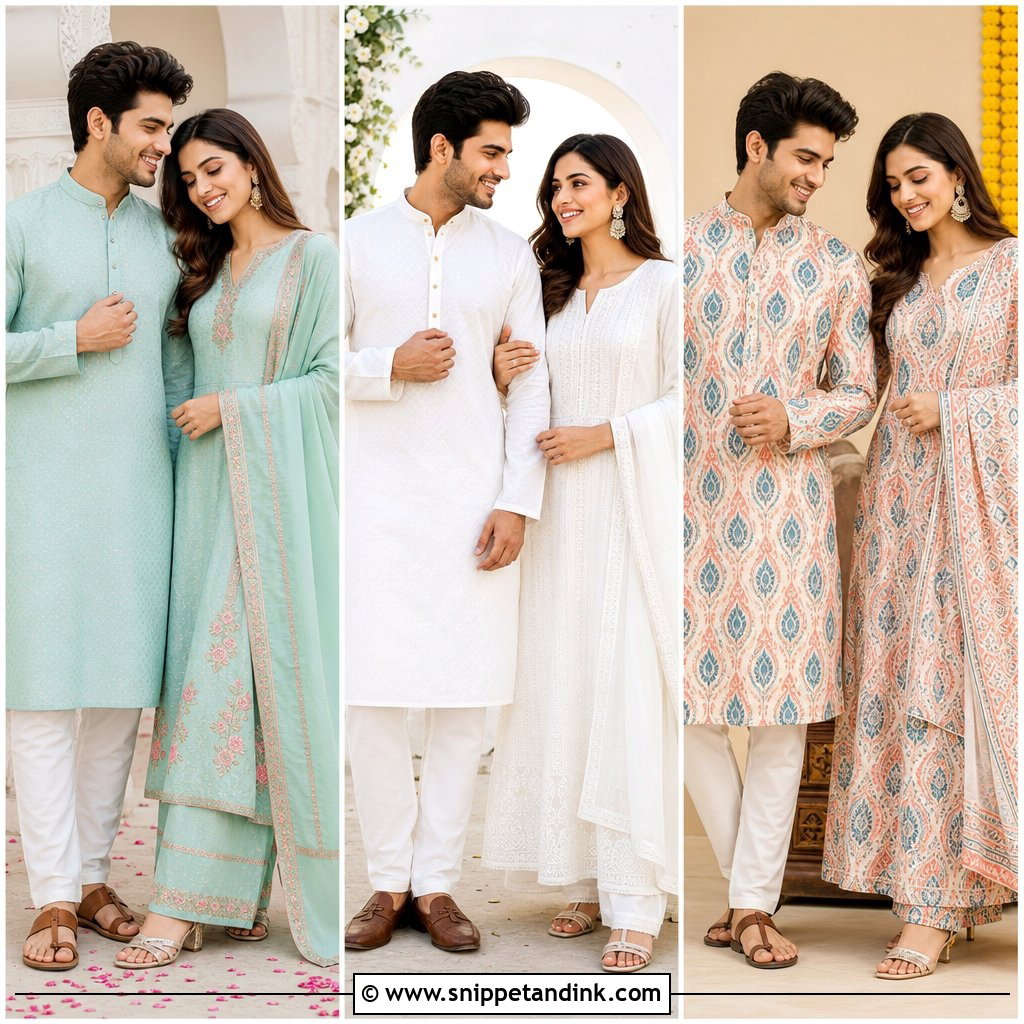
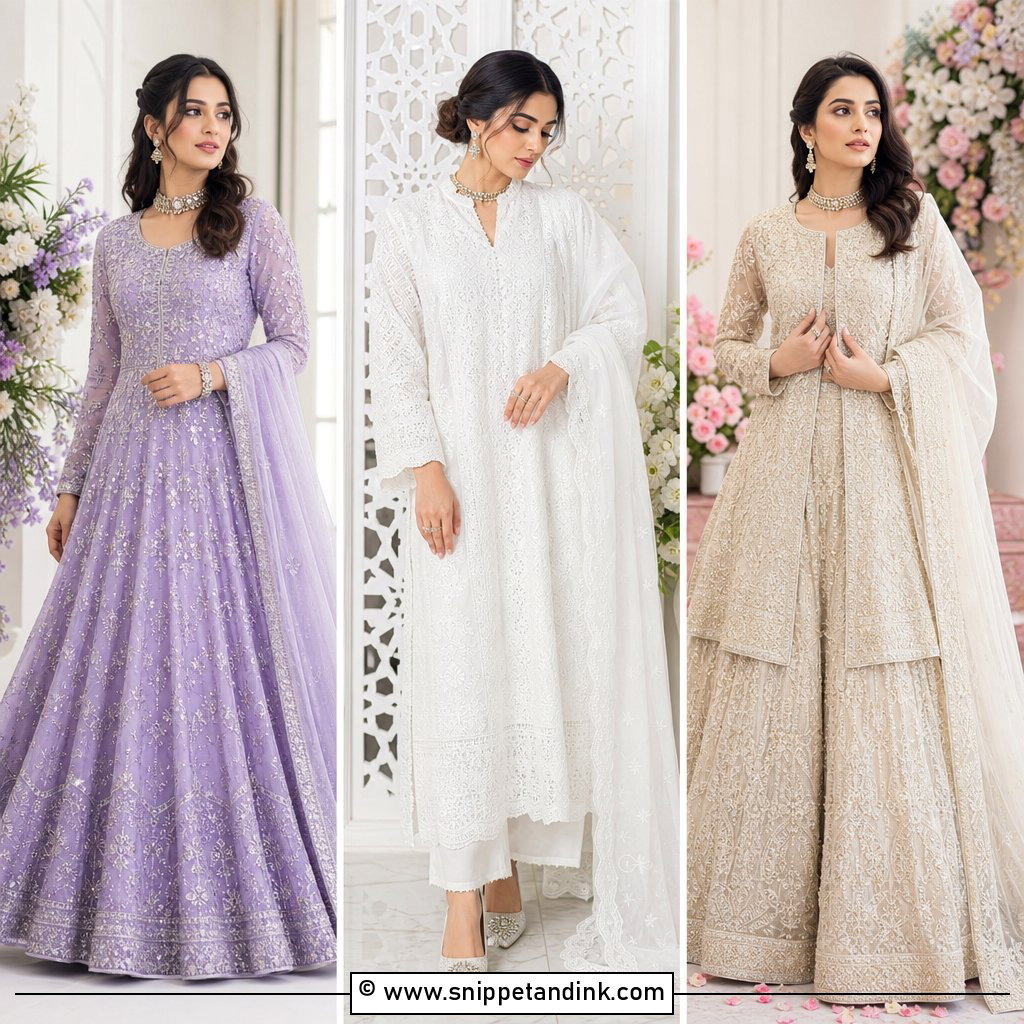
20. Red Bridal Lehenga And Cream Sherwani
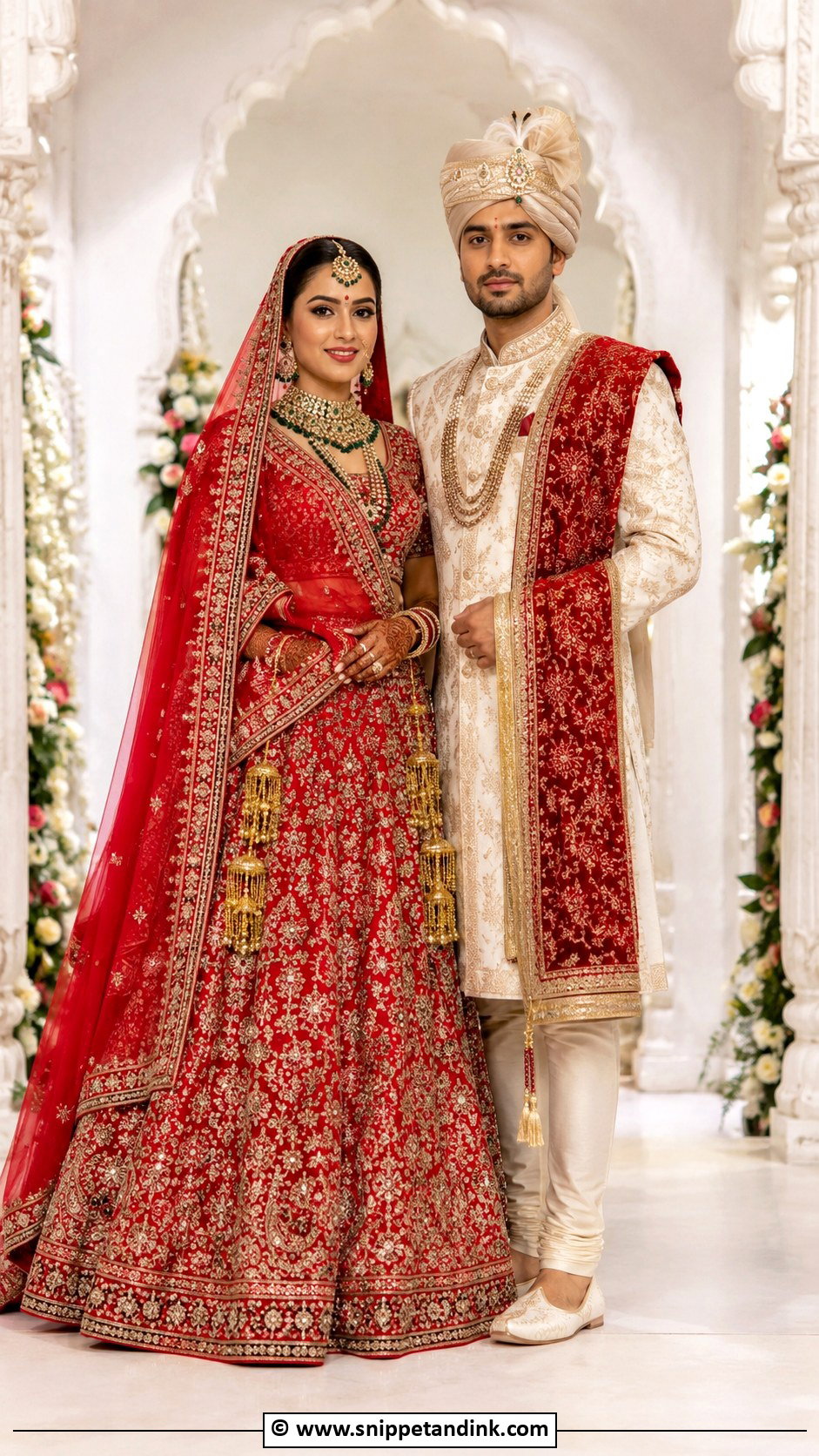
A red bridal lehenga carries the colour, gold embroidery and layered jewellery, so the groom’s cream sherwani is there to frame it. I like his sherwani to carry red or gold in the buttons or the embroidery so the link is visible up close. A coordinating stole, traditional footwear and a brooch that picks up her palette finish him. Practical note from fittings: heavily embroidered lehengas are genuinely heavy, so make sure the waistband sits on the natural waist and is adjusted with the jewellery and dupatta on.
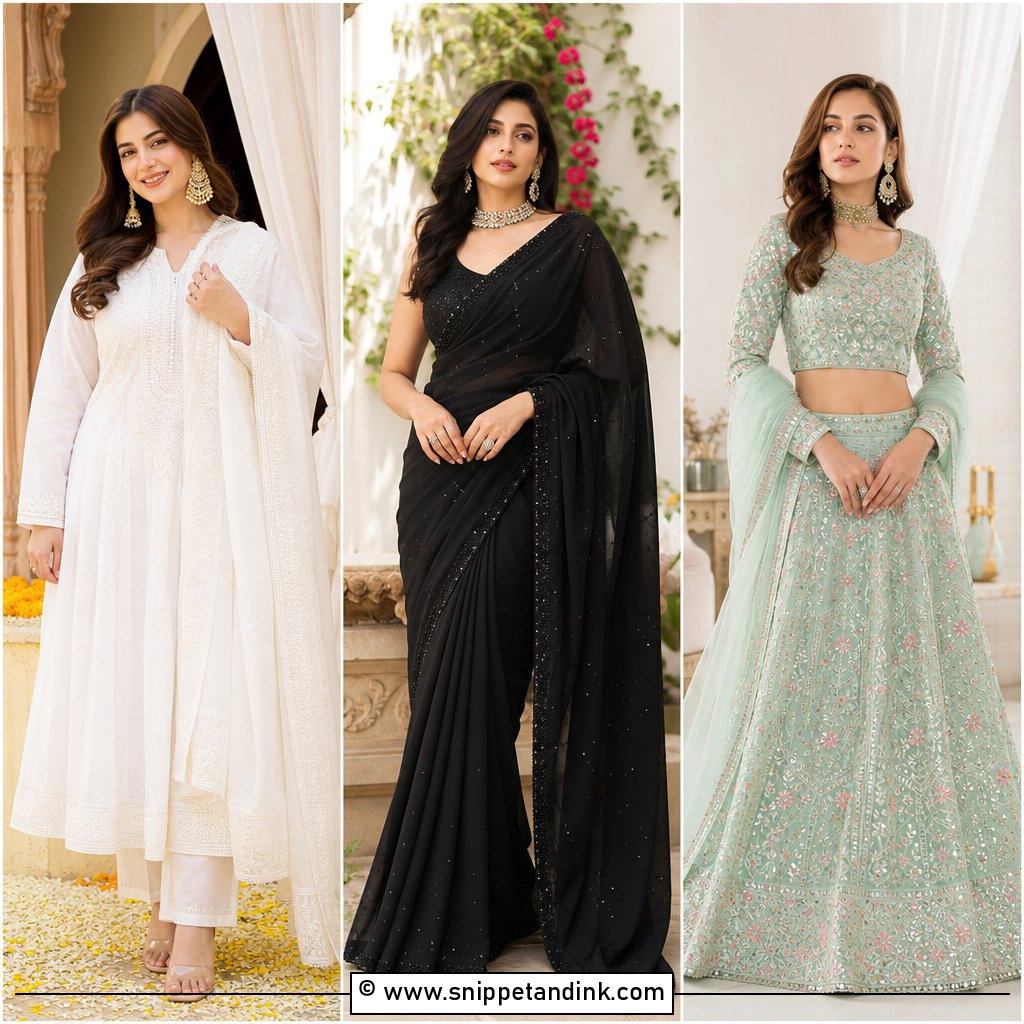
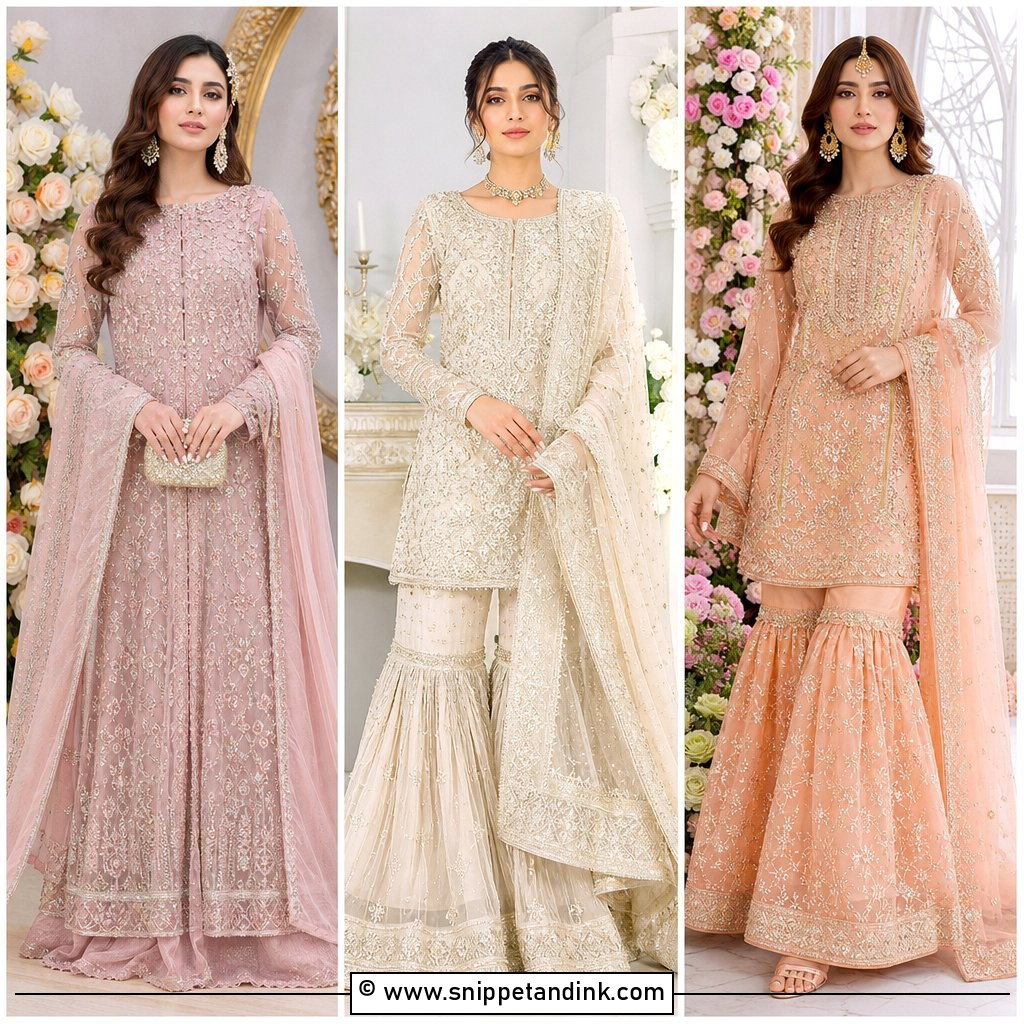
21. Pastel Lehenga And Pastel Sherwani
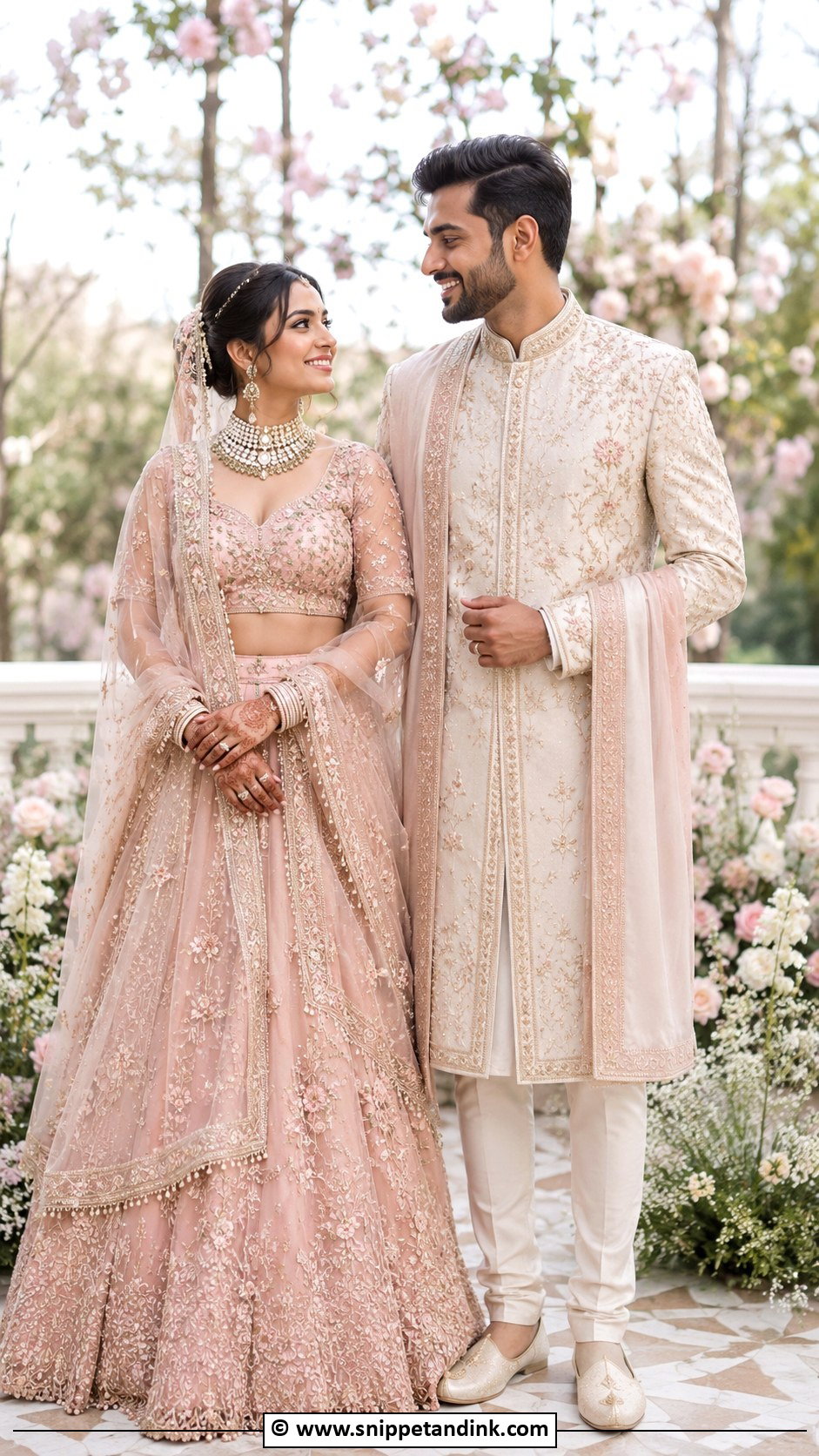
Pastel on pastel can tip into looking like a matched set, so I keep the two shades related but not identical. Mint, blush, powder blue, peach or lavender for her lehenga; for him, a related pastel or a cream base with embroidery in her shade. Blush lehenga with an ivory sherwani picked out in blush thread is the version I come back to. Daylight ceremonies flatter these colours; under warm evening lights some pastels wash out, so check the venue lighting before committing. Pearls and fresh flowers suit it.
22. White Bridal Saree And Ivory Sherwani
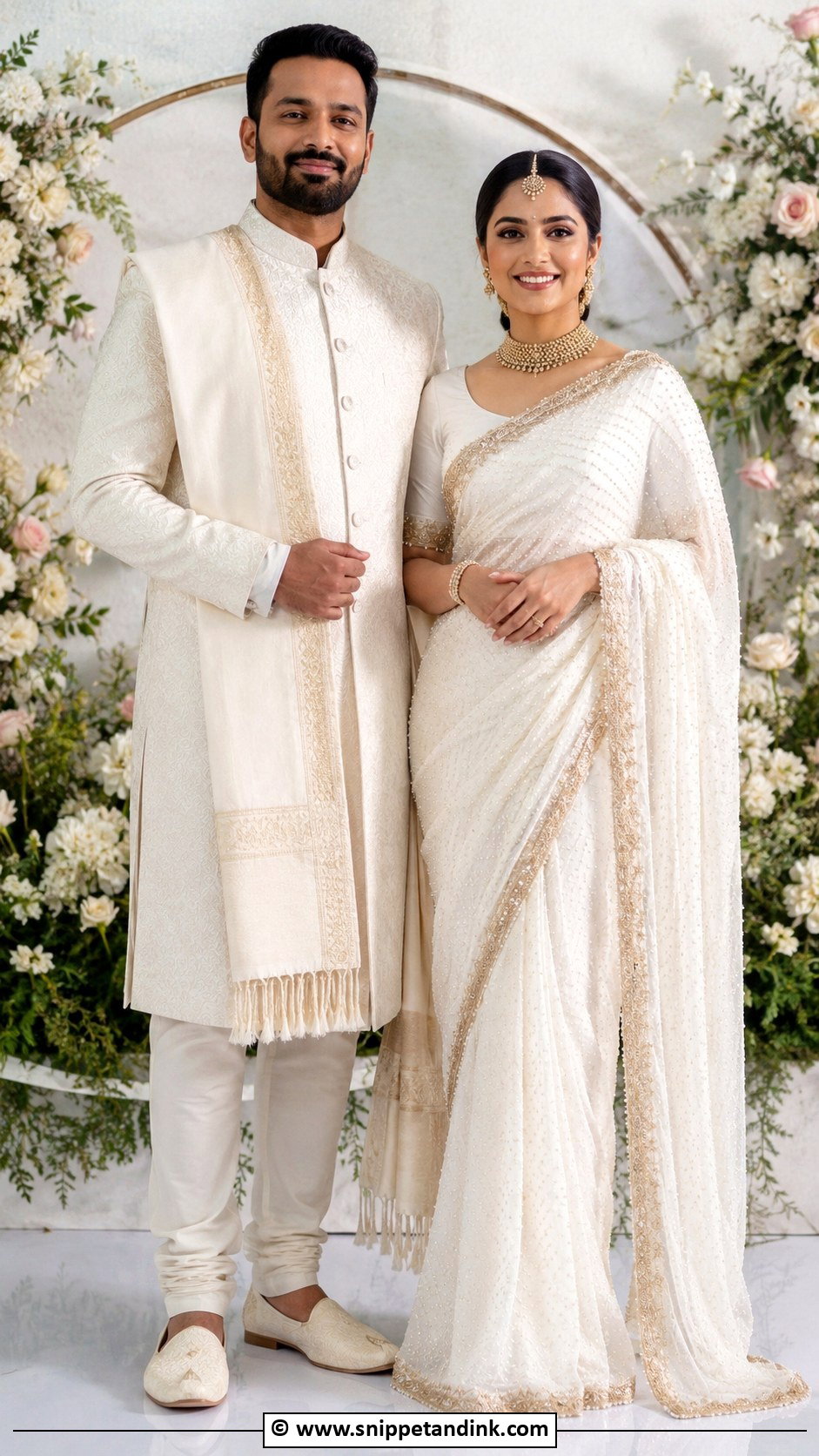
A white bridal saree with pearl work, gold or silver borders, or soft lace sits gracefully next to an ivory sherwani. I avoid matching every motif; a cream stole and subtle metallic buttons on his side are enough to tie them together. One thing I check is the drape: white sarees show pleat lines and pinning more than coloured ones, so whoever drapes her should pin from the inside and have spare safety pins on hand for the evening. Gold or pearl jewellery and a neat hairstyle complete her.
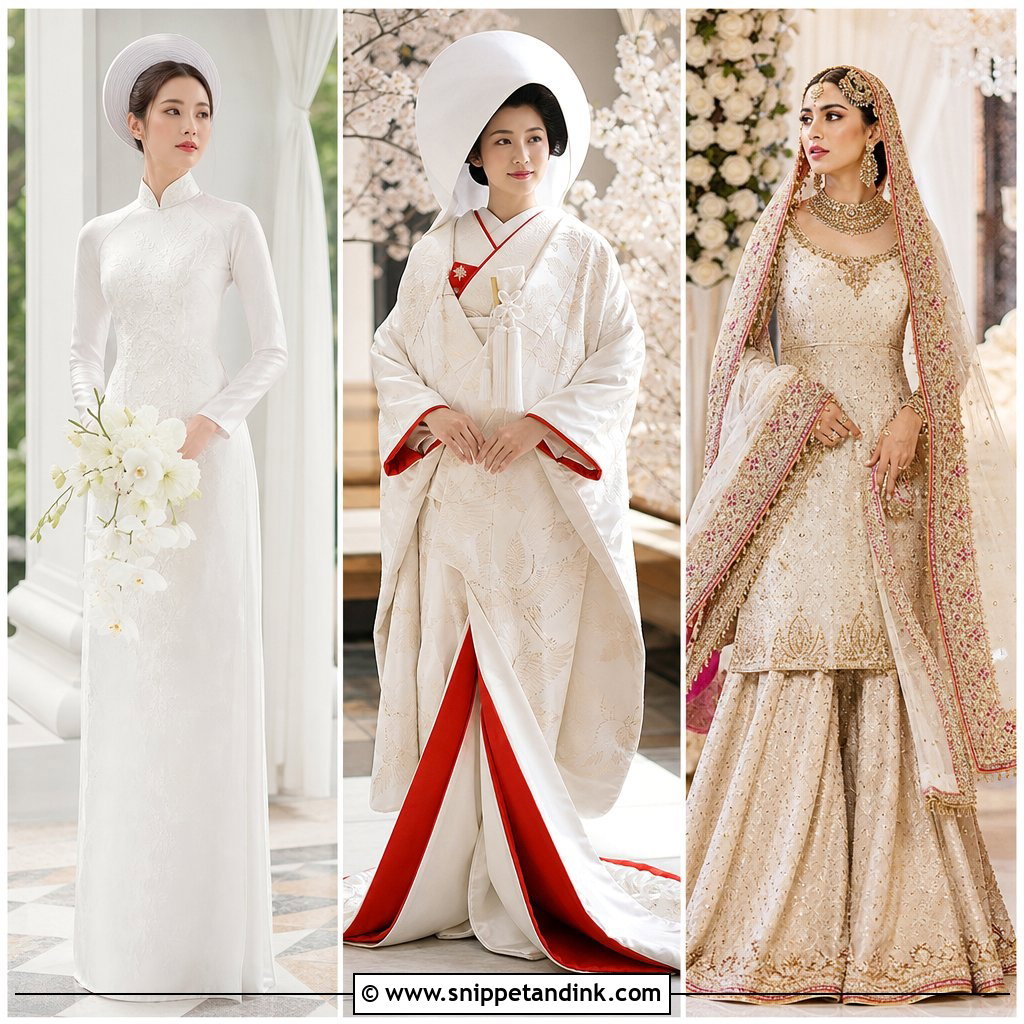
23. Korean Hanbok Wedding Outfit
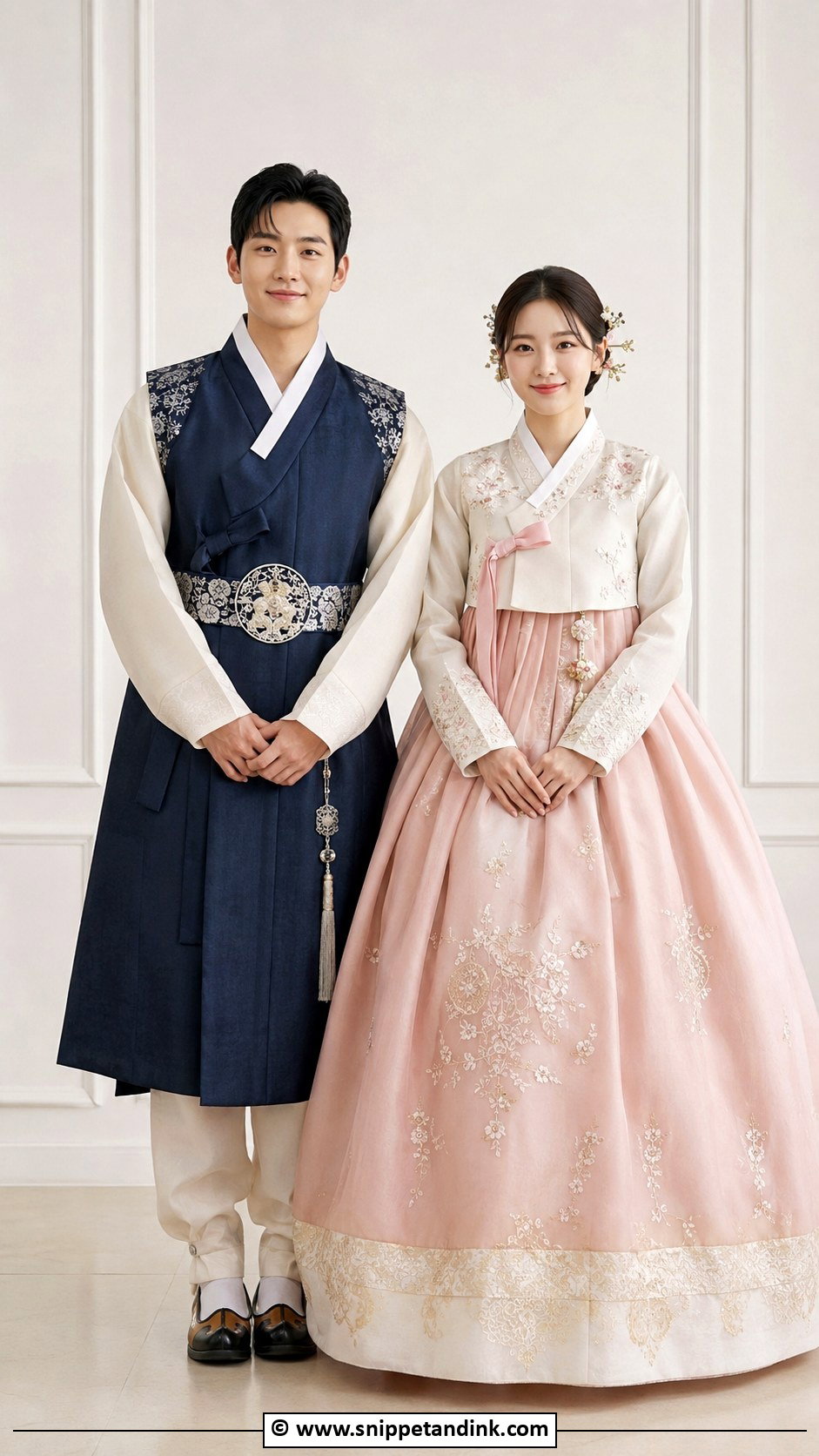
A Korean hanbok wedding outfit is about colour relationships rather than sameness. Her hanbok has a full skirt, short jacket and embroidery, often in pink, cream or red; his can be navy, cream, burgundy or pale blue. I look for one shared colour in the trim or the ribbon. Many couples wear hanbok for family portraits or as a second outfit, and I’d keep modern accessories to a minimum and ask family elders about anything symbolic before choosing.
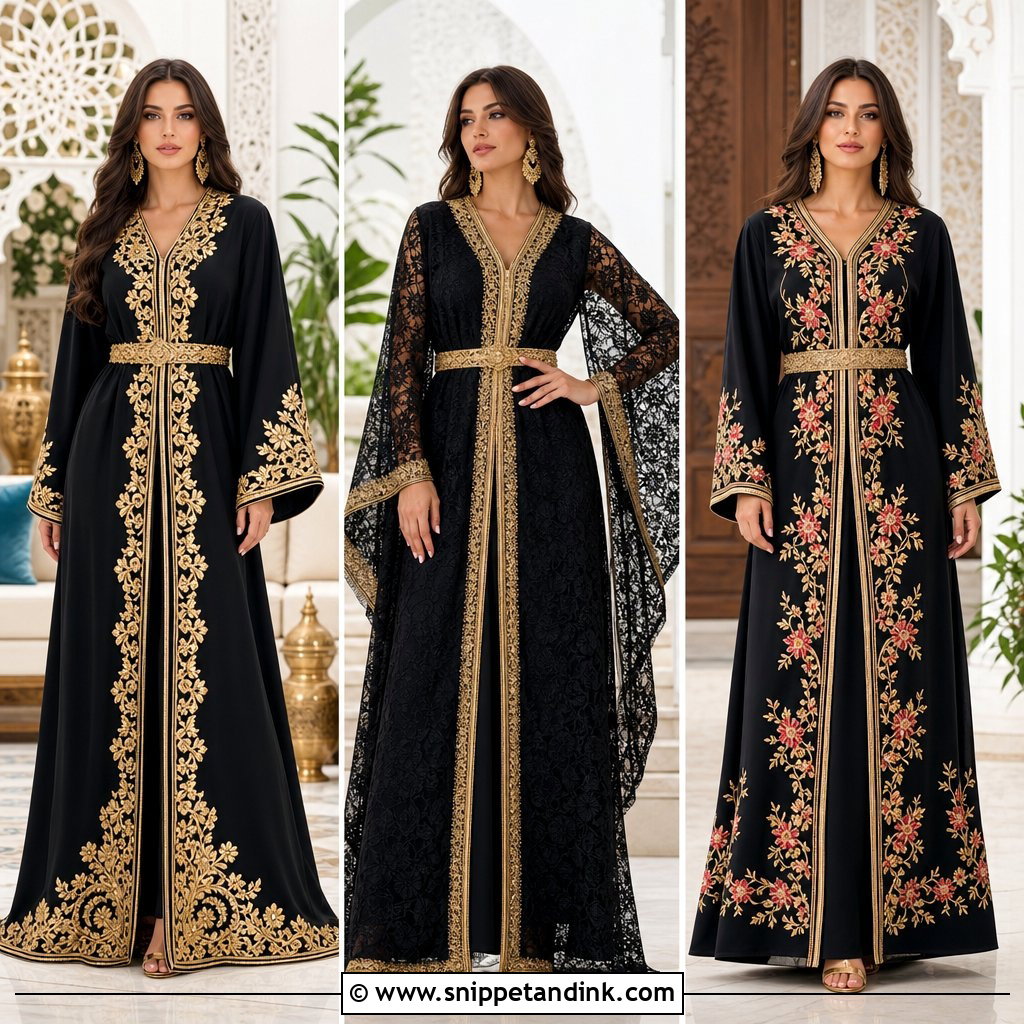
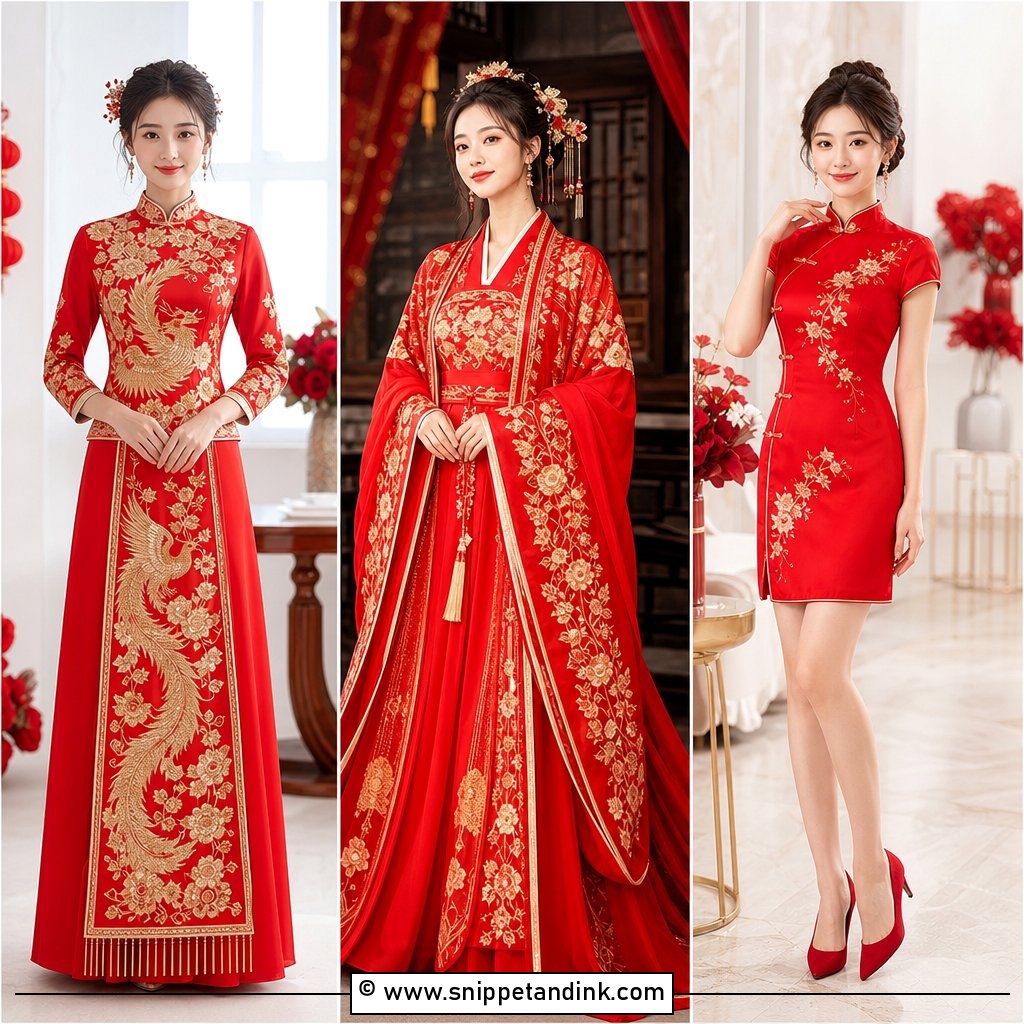
24. Chinese Qipao And Mandarin Collar Suit
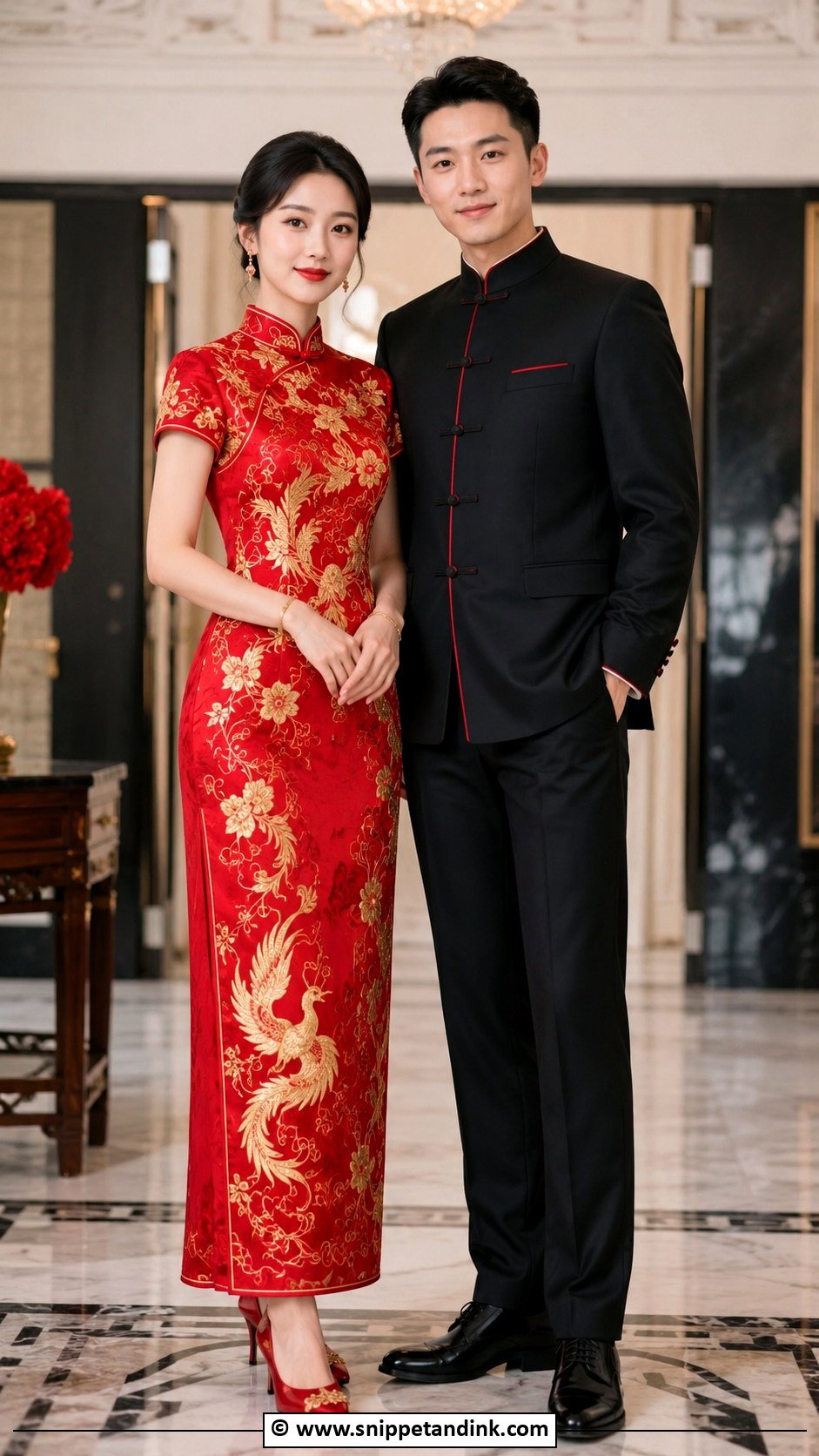
Fit matters most with a Chinese qipao. The high collar and close body mean a few centimetres off at the waist or bust shows immediately, so I always build in an alteration appointment. Red and gold are traditional, though softer ivory and embroidered pastels are common now. His mandarin-collar suit in black, navy or cream can pick up her embroidery or her frog buttons. It suits a tea ceremony or a reception entrance, and she should practise sitting in it; a tight qipao rides up on low chairs.
25. Traditional Kimono Wedding Outfit
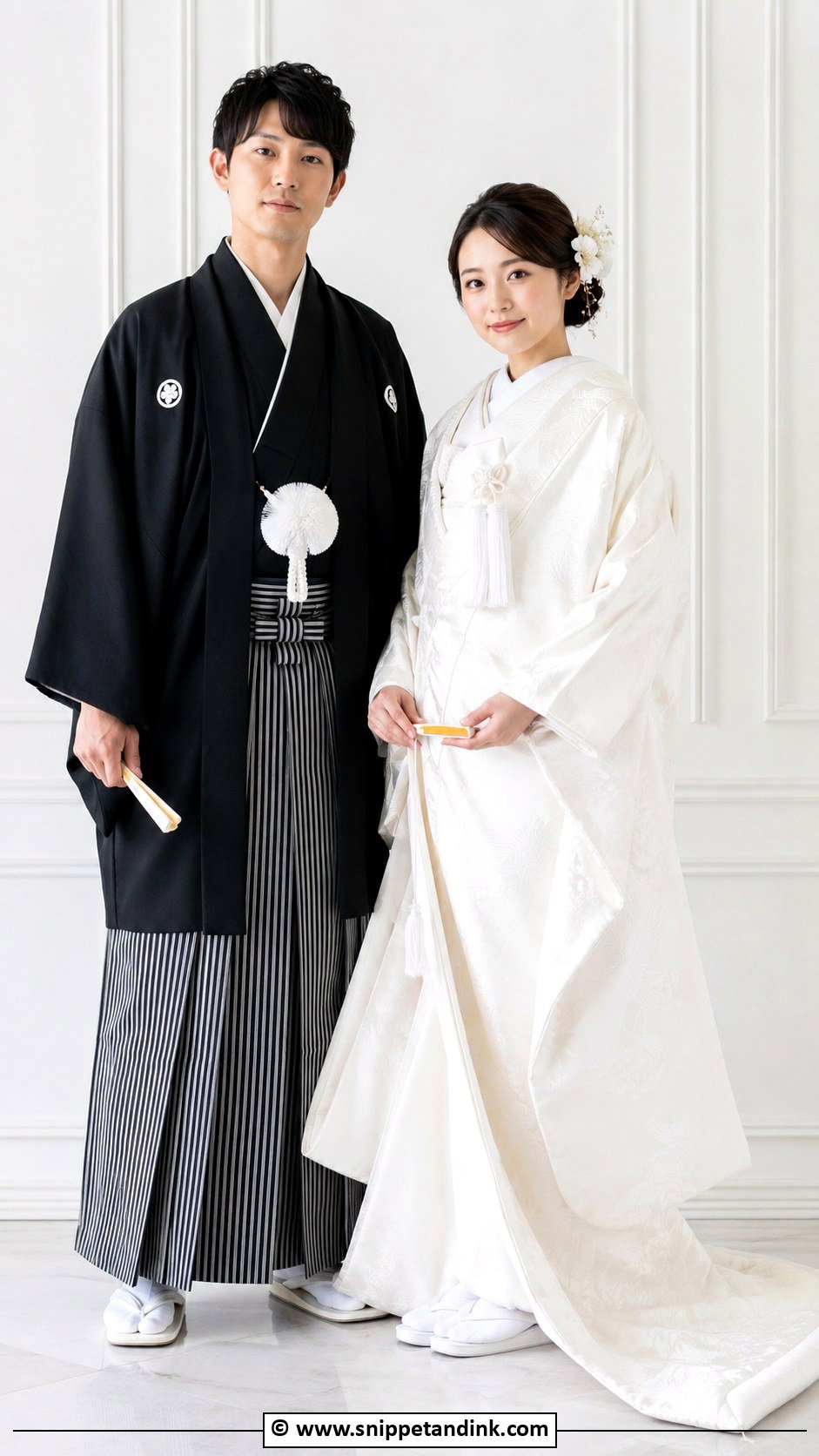
Kimono dressing is a specialist job, and I’d always hire a professional dresser rather than improvise. The bride might wear a white shiromuku or a colourful embroidered uchikake with traditional hair ornaments; the groom wears a formal dark kimono with hakama. The garments already carry strong visual weight, so accessories stay intentional and traditional. Coordination comes through fabric tone and the black-and-white contrast. Plan time: being dressed properly can take an hour or more, and moving and sitting are restricted once it’s done.
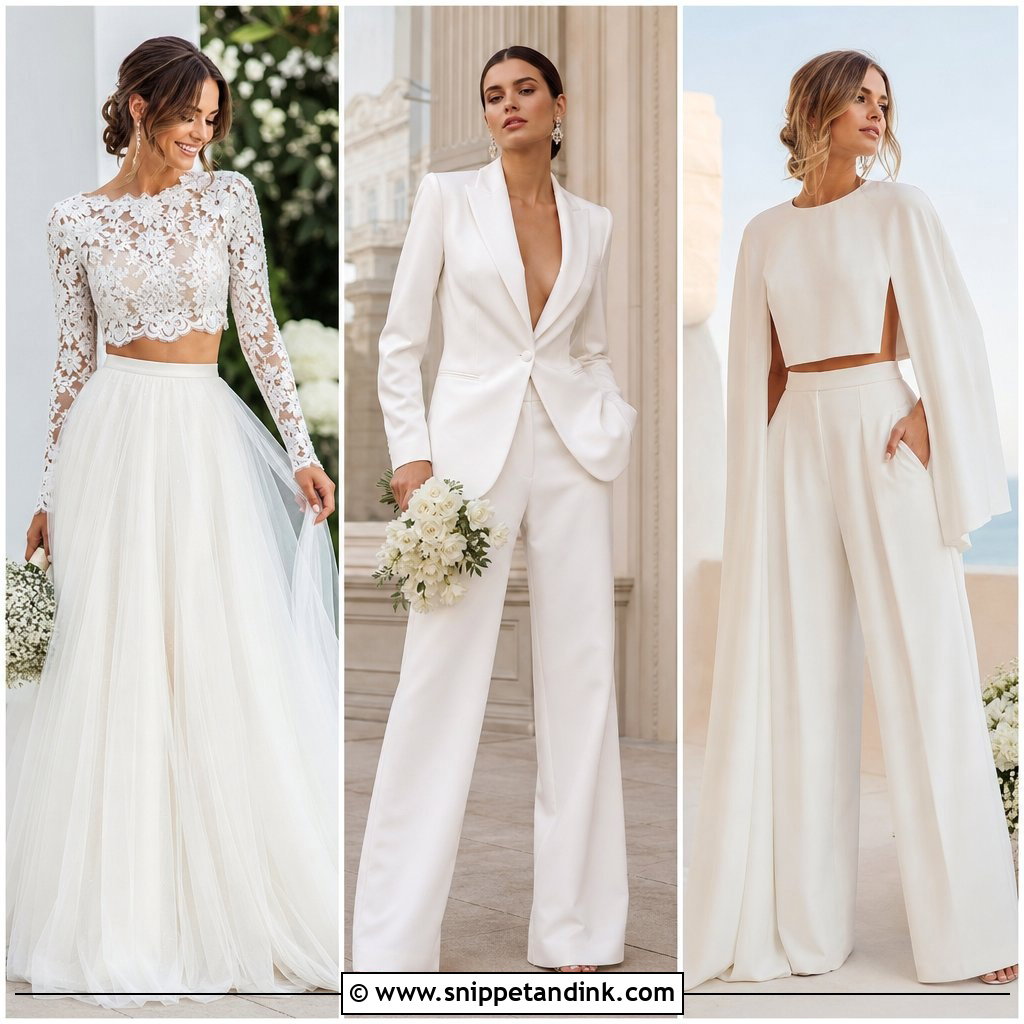
26. Two Bride Wedding Dresses
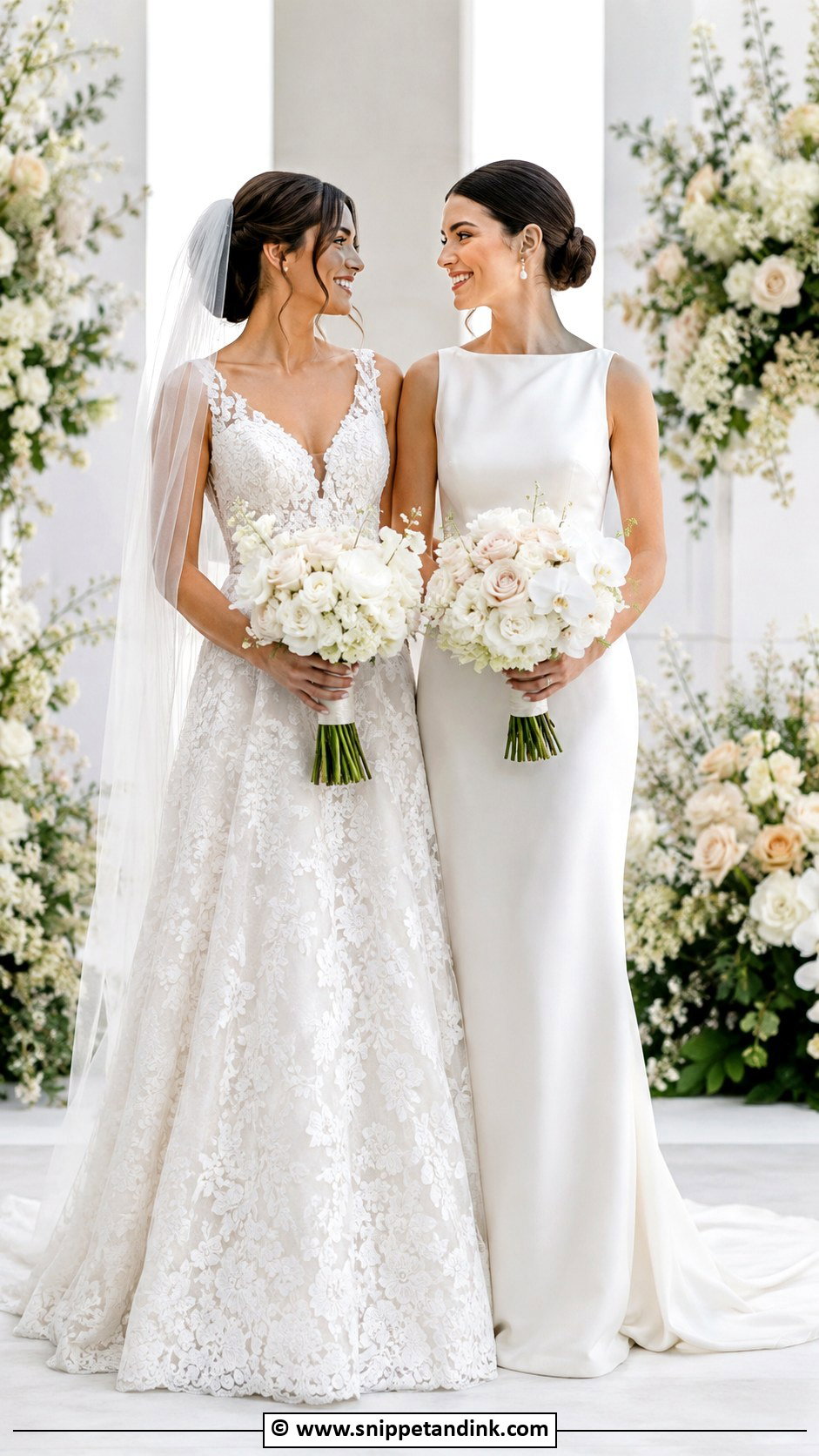
With two brides, I treat the dresses as a conversation rather than a pair. One lace A-line beside one satin column works well, as does a structured bridal suit next to a flowing gown. The rule I use is detail balance: if one dress is heavily embellished, the other stays simpler. Then repeat something shared, such as the same shade of ivory, a similar fabric weight, or bouquets from the same stems. Shop on separate days if you want to keep the reveal, and give your stylist photos of both so the shades can be checked against each other.
27. Two Groom Wedding Suits
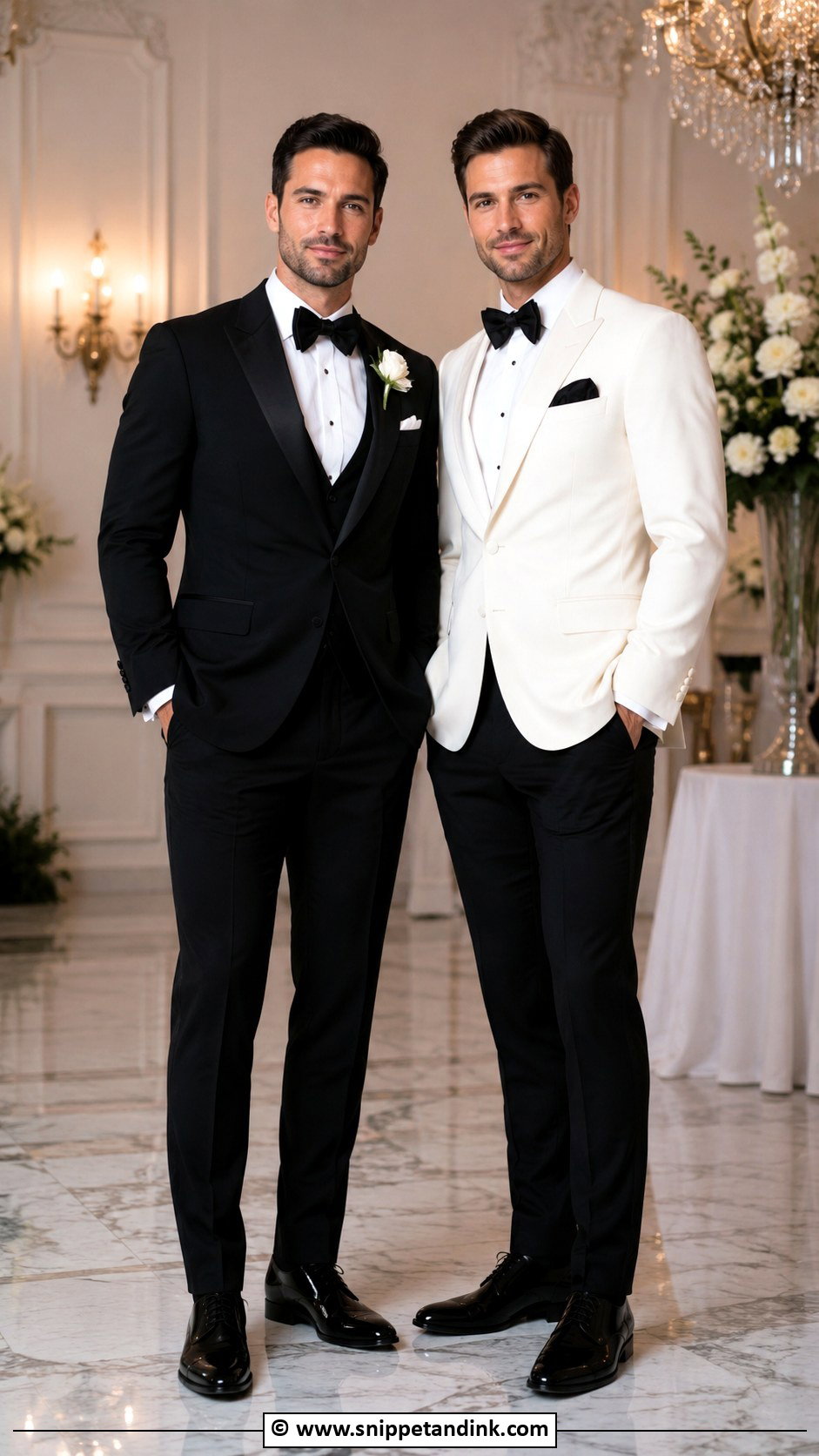
Two grooms can wear matching tuxedos for a clean formal look, but I more often see two suits that work together: navy and grey, black and ivory, tan and cream. The link usually comes from matching ties, pocket squares or boutonnieres. If one partner wants a velvet jacket, the other wears a simpler suit in a related shade so the photos stay balanced. Book fittings close together with the same tailor if you can; trouser breaks and sleeve lengths that agree make a bigger difference than people think.
28. Plus Size Wedding Dress And Tailored Suit
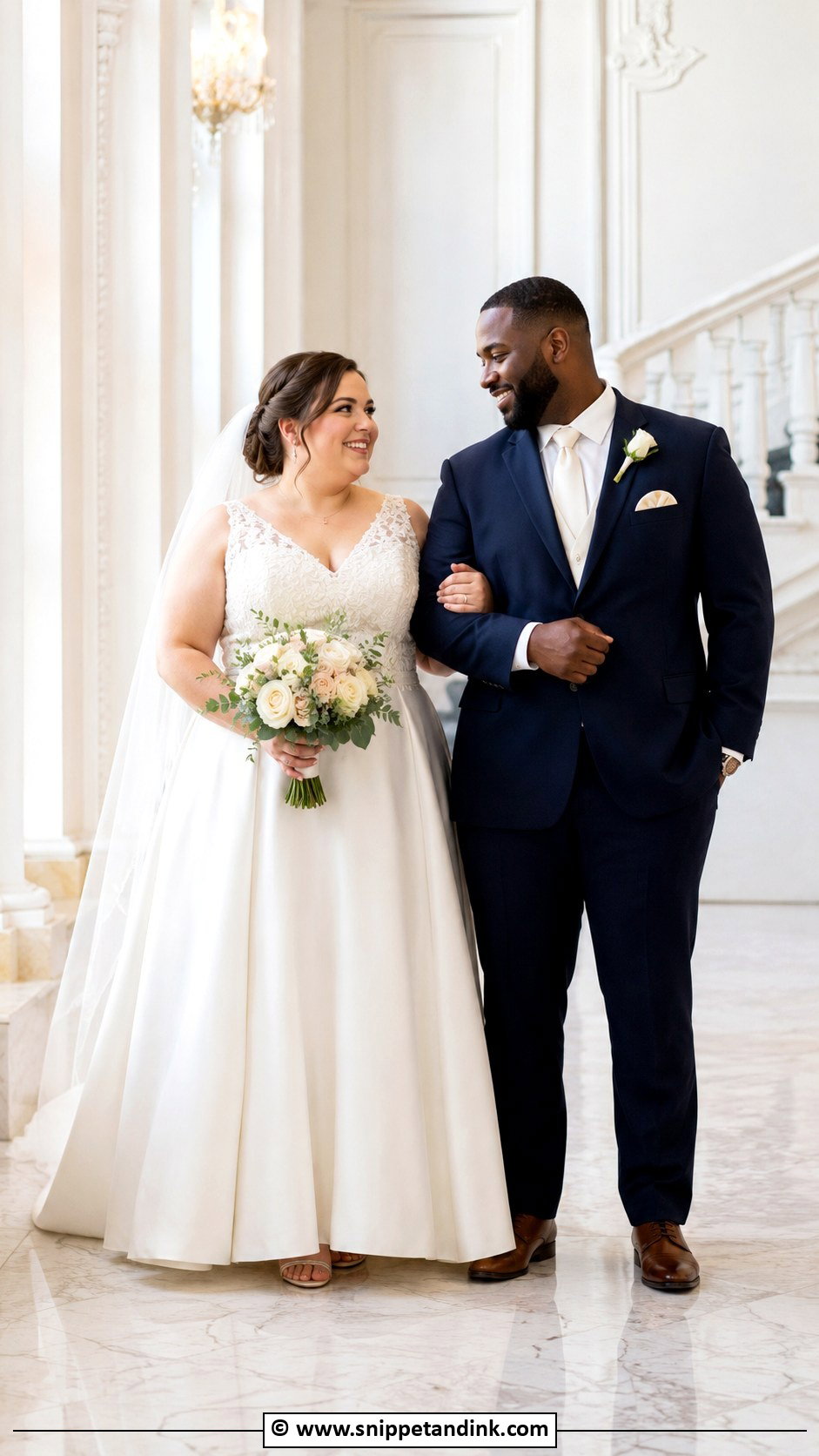
For plus size brides, I start with structure, not size labels. A corset back, built-in boning or an A-line with a supportive bodice will feel better at hour nine than something that only looks right standing still. Empire waists and wrap silhouettes are worth trying too. The groom should be tailored to his body rather than to a standard size. Coordinate through fabric pairings: lace gown with a matte tie, satin gown with a silk pocket square, ivory with a cream boutonniere. Comfort first, then the coordination.
29. Maternity Wedding Dress And Soft Suit
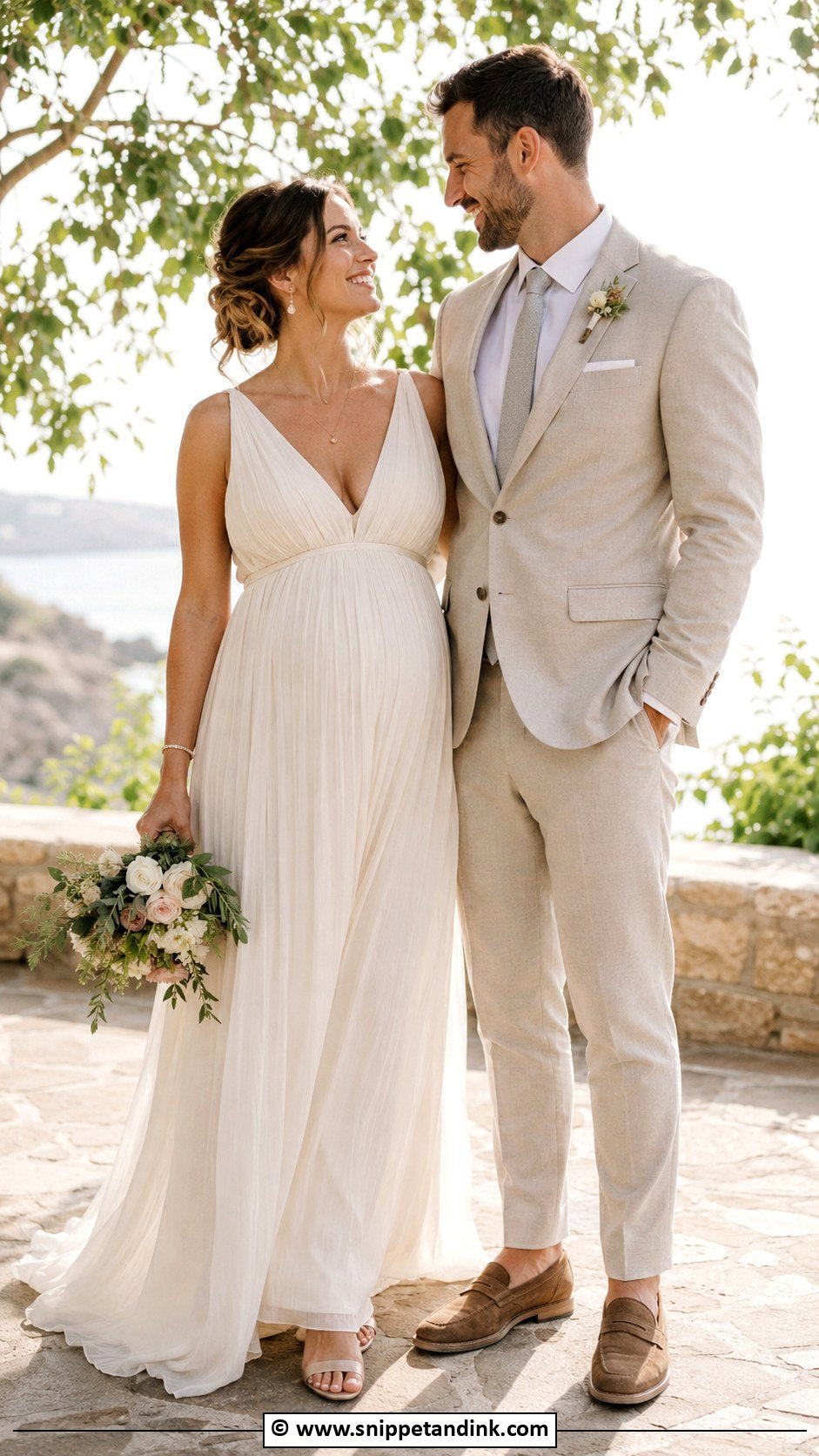
With a maternity gown, timing is my biggest worry. Bodies change week to week in pregnancy, so I leave the final fitting as close to the date as the seamstress allows and choose fabrics with give: stretch lace, jersey, soft chiffon, and empire or wrap shapes that leave room. The groom’s relaxed suit in navy, grey, beige or olive with a simple shirt keeps them matched in formality. Flat or low shoes for both, a seat available during photos, and a small bouquet that’s easy to hold.
30. Courthouse Wedding Dress And Groom Suit
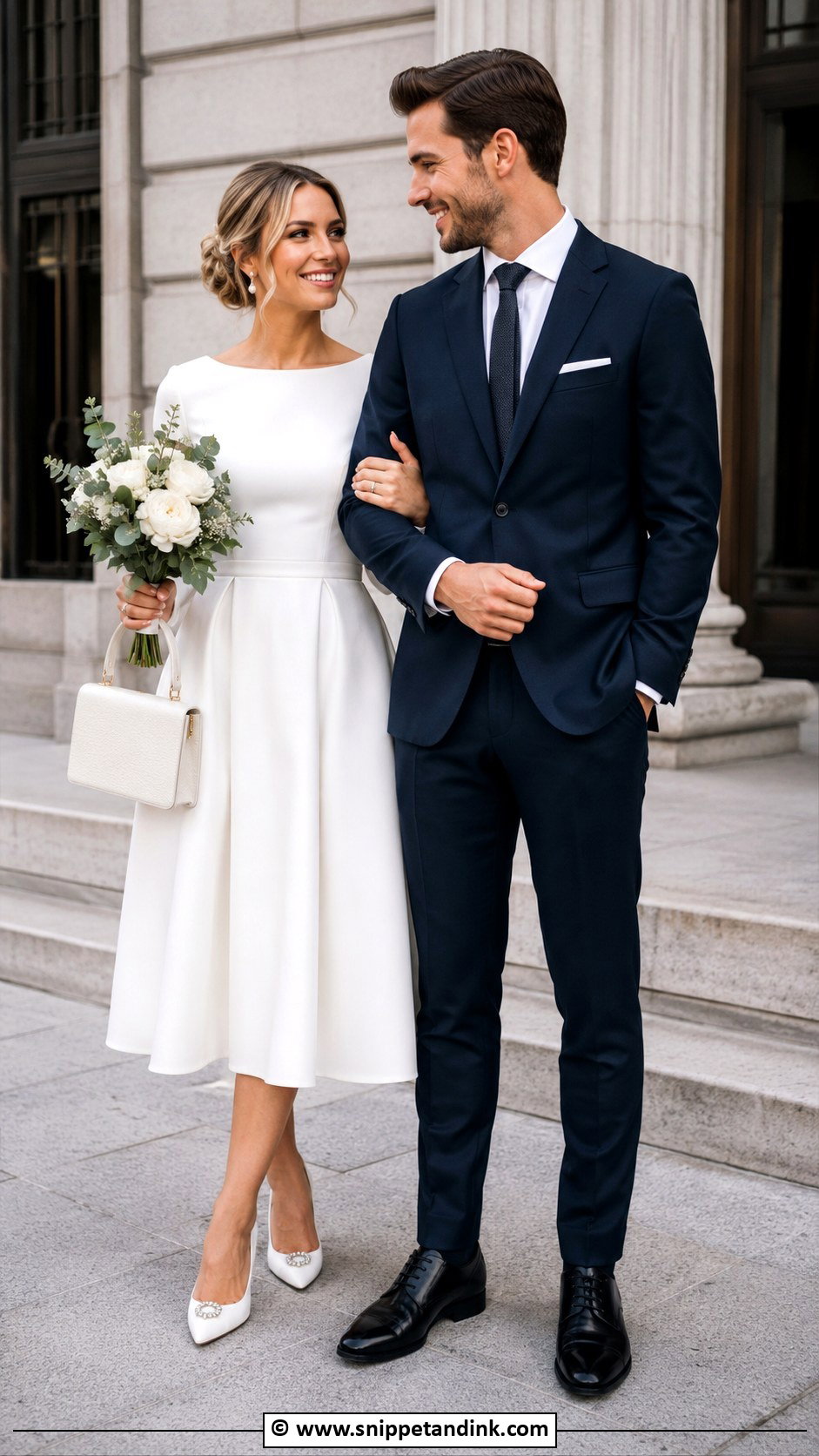
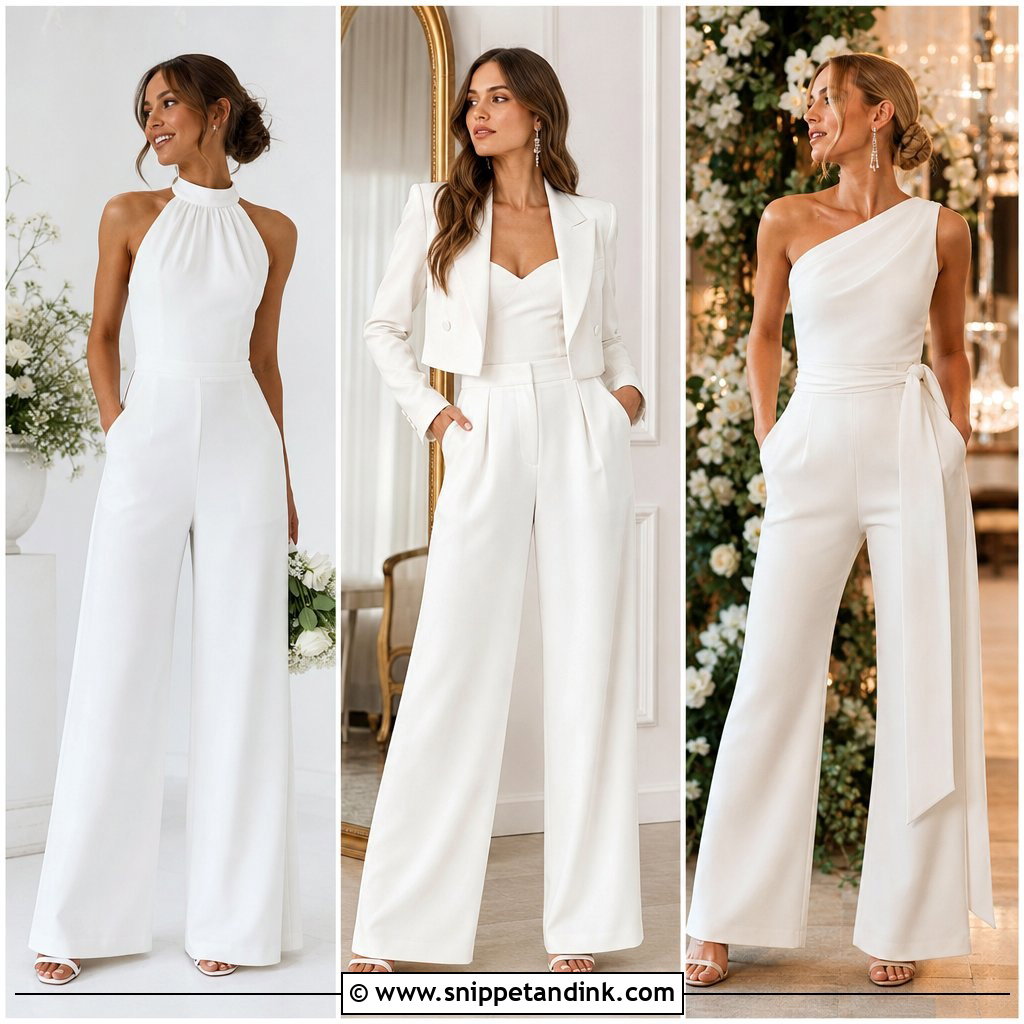
Courthouse weddings move fast, and the outfits should too. A white midi, a tailored blazer dress, a satin slip or a clean jumpsuit with heels or refined flats; for him, navy, grey, black or beige with a crisp shirt. Because there’s less around you, fit is everything here, so get both outfits tailored. Small things make it feel like a wedding: a hand-tied bouquet, pearl earrings, a structured bag, his pocket square in her flower colour. Check the building’s security line; long trains and big bouquets are awkward through the scanners.
Shades That Clash Only on Camera
The most common coordination problem I fix isn’t a bad colour choice. It’s two whites that disagree. Bright optical white is treated with brighteners that glow under flash, while ivory and silk tend toward cream. Put a crisp white shirt or a white boutonniere next to an ivory gown and the camera makes the gown look a shade yellower than it is.
- If her dress is ivory or champagne, ask for a soft white or ivory shirt for him.
- Hold flowers next to the gown before ordering; white roses and white gowns often turn out to be different whites.
- Pastel suits shift under warm reception lighting, so look at the swatch in the evening too.
- Black and midnight blue look almost the same indoors. If you want the blue to read, plan some outdoor portraits.
The day-before checks I do
Steam both outfits at the venue, not at home, because a car ride undoes it. Pack a small kit: safety pins, fabric tape, a lint roller for dark suits, and a stain pen that’s safe on silk. Then put both outfits on together once before the day and have someone take a quick phone photo in daylight. If anything looks off, there’s still time to swap a tie or a shirt.
One Shared Thread Is Enough
You don’t need matching outfits to look like a couple. What I look for is one connection two people can see from across a room: a shade, a fabric pairing, a detail repeated, or simply the same level of formality. Start from whichever outfit is hardest to change, usually the gown, and build outward. Check the colours together in daylight, get both outfits fitted, and make sure each of you can sit, walk and dance in what you’ve chosen. That’s what keeps you comfortable through the whole wedding day.
You'll Like These Ideas:





Leave a Reply