
Couture is less about price than about how a gown is built. The fabric is chosen for the shape, the structure is sewn inside rather than added on, and the fit is worked out on your body over several fittings. That’s why a plain silk column can feel more luxurious than a dress covered in sparkle. When I work with a bride on a couture or made-to-measure gown, we start from her venue, her proportions and how she wants to move, and only then talk about detail. The thirty gowns below run from sculpted ball gowns to pearl sheaths, capes and two-piece sets, with notes on how each one is made and how it behaves on the day.
From Sketch to Toile to the Last Fitting
Brides are often surprised by how many steps sit between falling for a gown and wearing it. Here’s how the process usually runs at an atelier, though every house works a little differently.
- Consultation: you talk through the venue, the shape you love and what you’d never wear, and the designer sketches or pulls samples.
- Measurements and fabric: the fabric is chosen to suit the silhouette, because a ball gown needs body and a column needs drape.
- The toile: a mock-up in plain cotton is fitted to you, and the lines are marked and adjusted before any silk is cut.
- Fittings in the real fabric: usually several, each one refining the waist, neckline, hem and any handwork.
- Final fitting: you wear the shoes, underwear and jewellery for the day, and whoever will bustle the train learns how.
True couture and heavily handworked gowns often take many months, so I tell brides to start the conversation as early as they can, even before the date is fixed. Made-to-measure gowns, which adapt an existing design to your measurements, usually move faster but still need fittings. Rush timelines are sometimes possible and generally cost extra.
1. Sculptural Ball Gown Wedding Dress
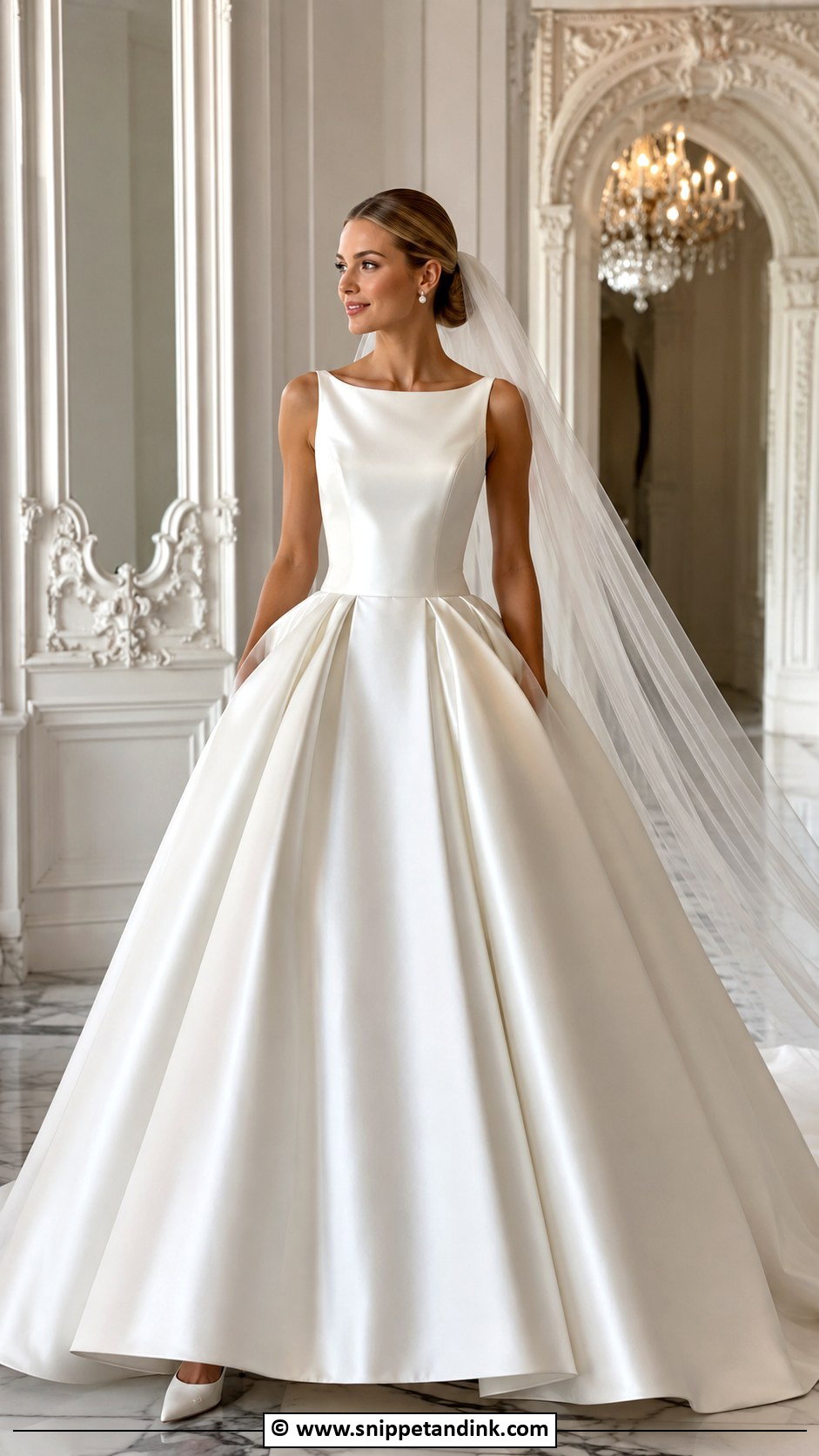
Shape is everything in a sculptural ball gown, and it comes from fabric with real body. Silk mikado and heavy satin hold folds and architectural pleats where you put them; organza and layered tulle give volume with less weight. The structure lives in a corseted bodice and stiff underlayers, so I always ask a bride to sit, climb a step and turn in a full circle at the first fitting. Keep accessories quiet: a smooth veil, pearl studs and satin pumps. Formal ballrooms, museums and estates give the silhouette room.
2. Pearl Beaded Wedding Gown
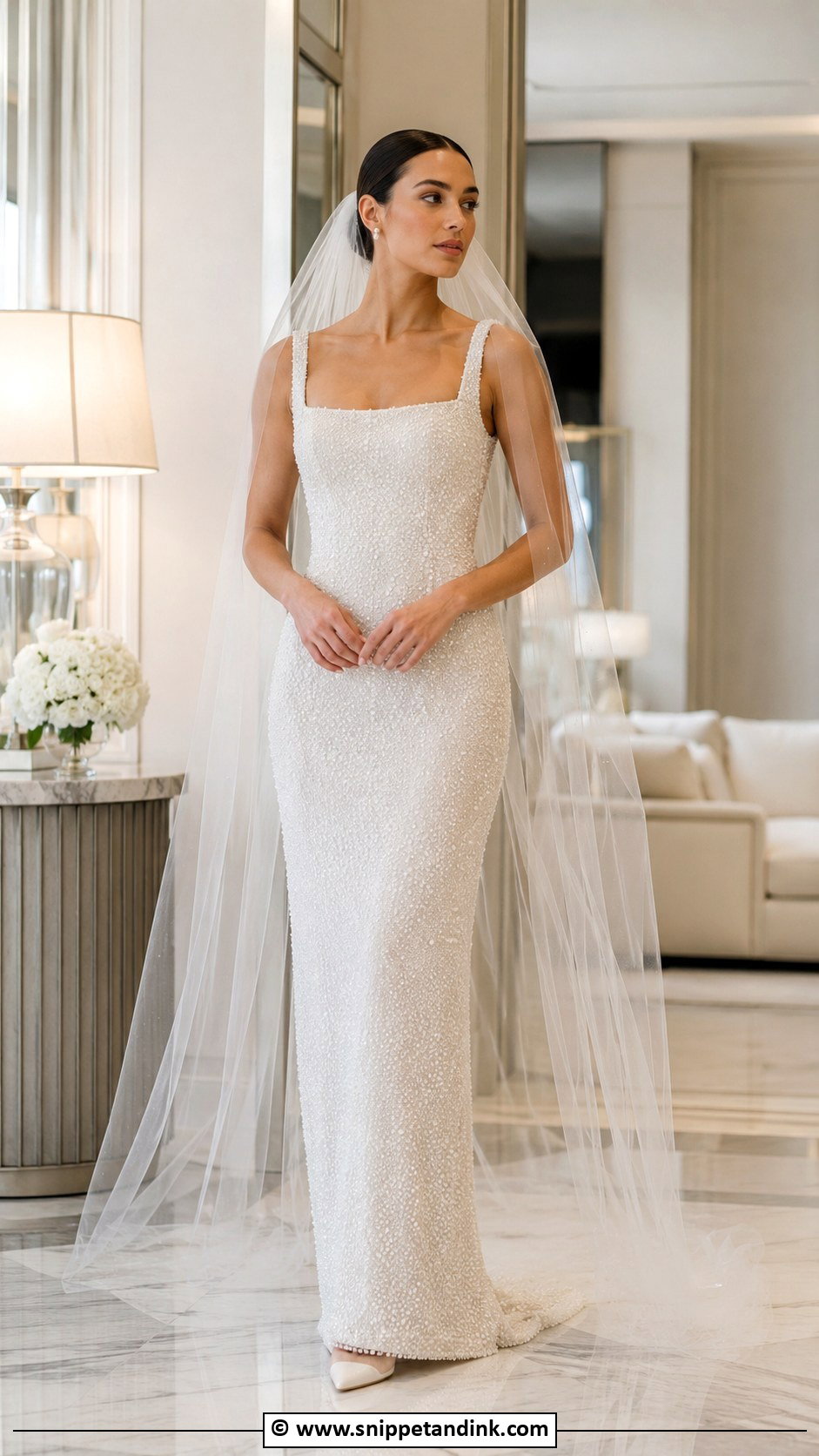
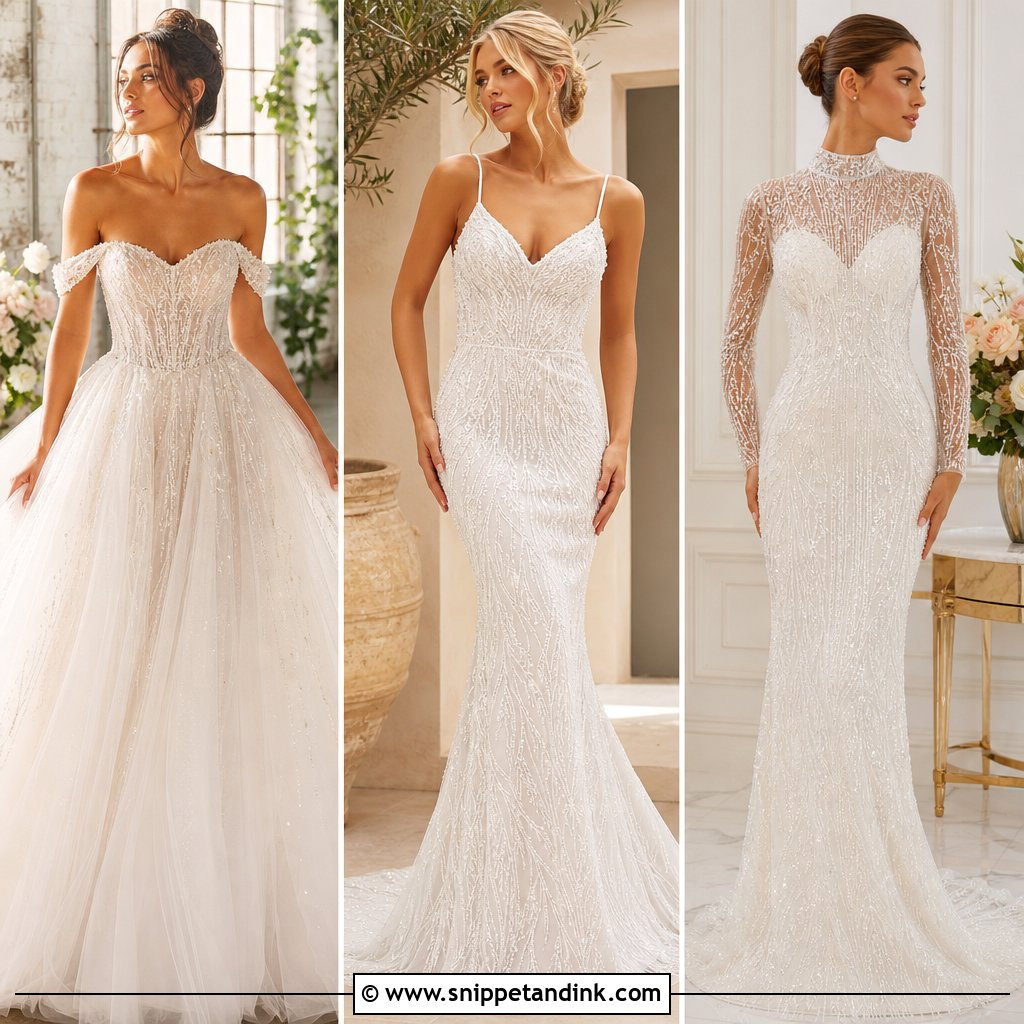
Pearls give a softer light than crystals. They glow rather than flash, which suits daylight ceremonies as well as evening ones. On a sheath, A-line or soft mermaid, scattered pearls feel delicate and full beading feels like a statement. The first thing I check is weight. A fully pearled bodice can be heavy enough to pull a thin silk skirt out of shape, so the base fabric needs to be strong. Simple earrings, a sheer veil and ivory heels balance it, in a garden, hotel or coastal venue.
3. Lace Couture Wedding Dress
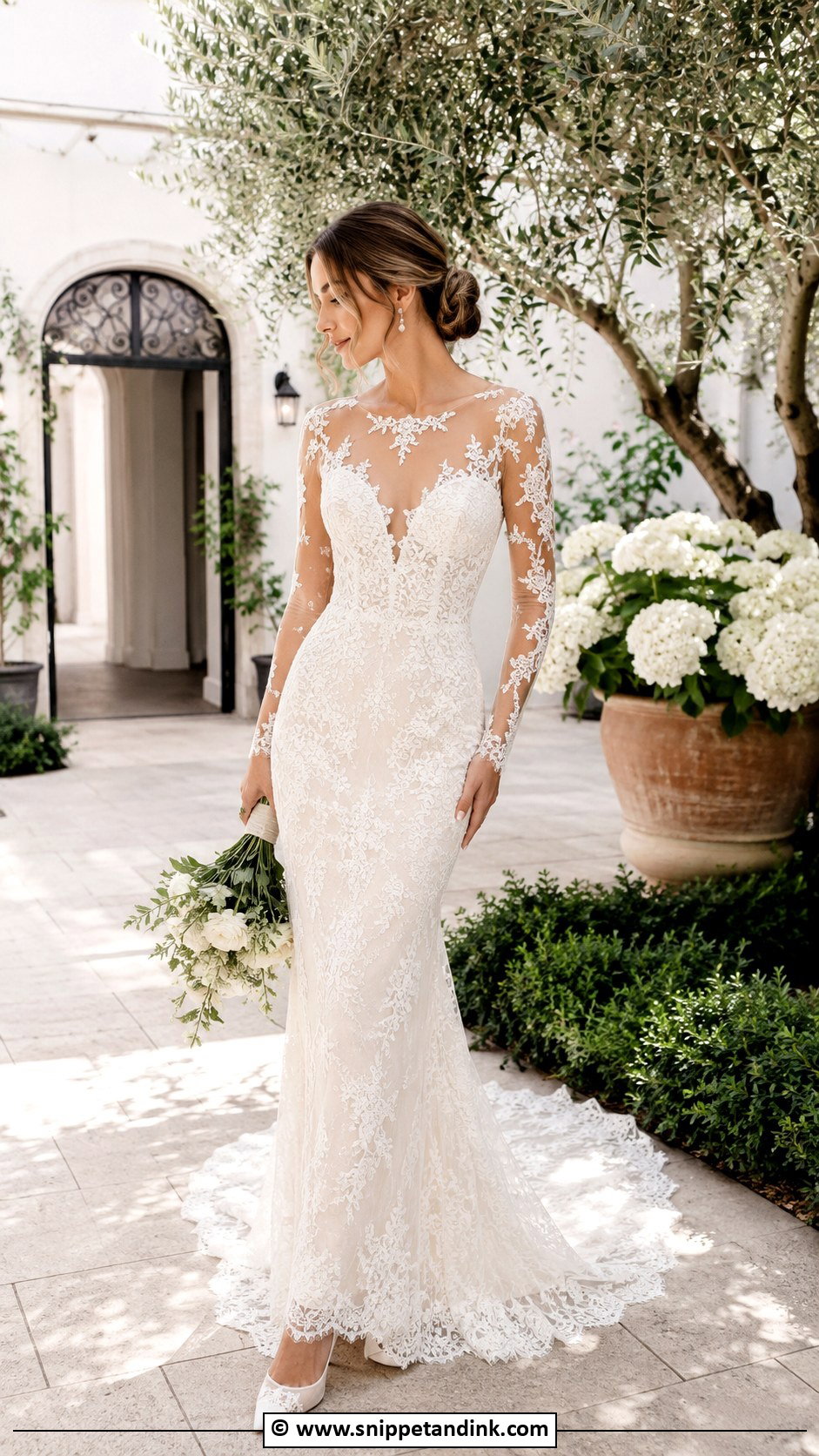
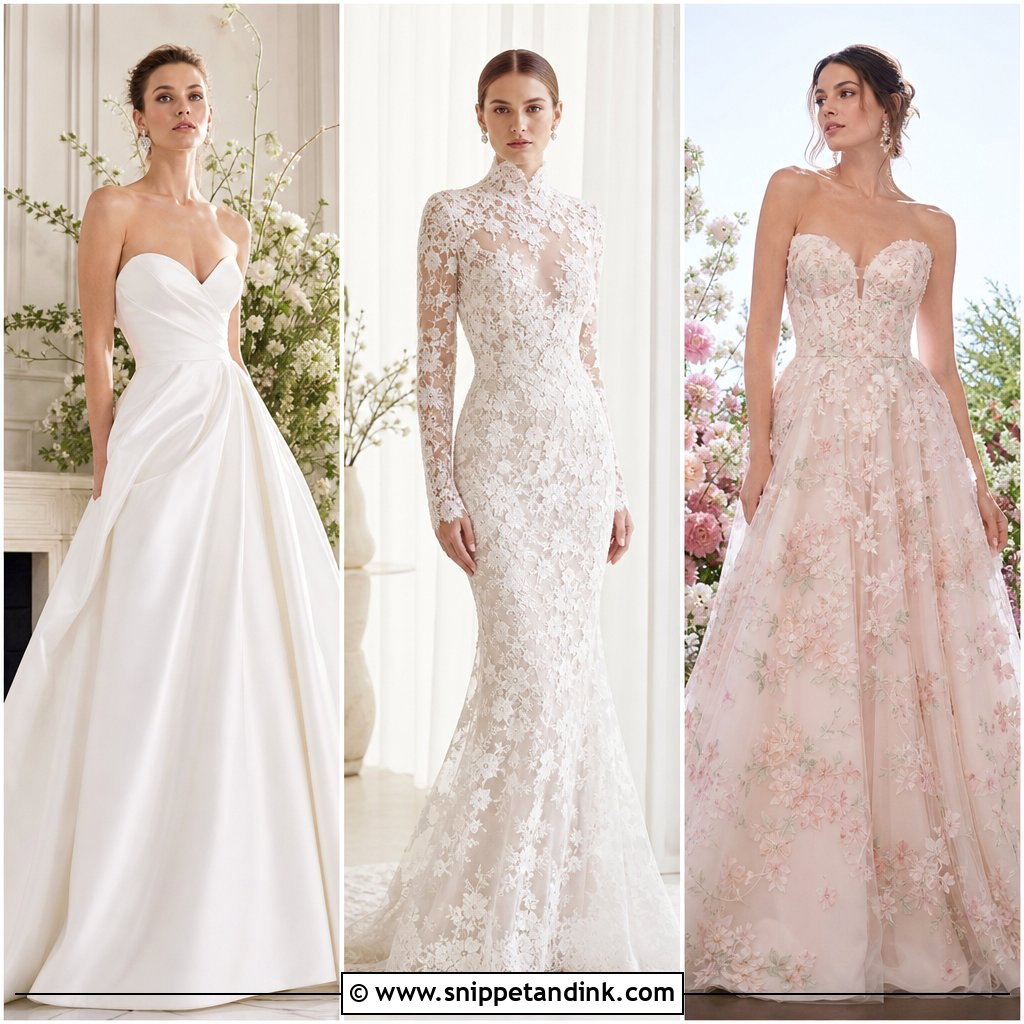
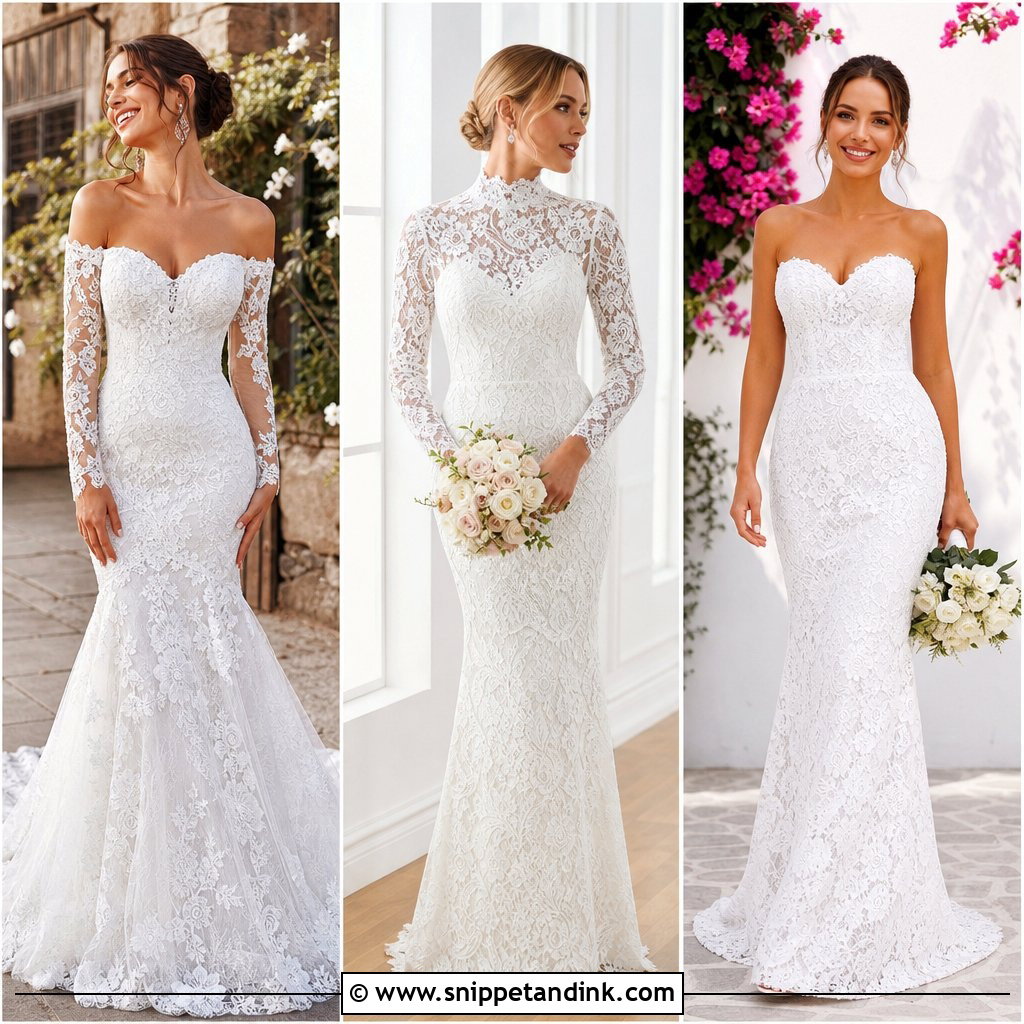
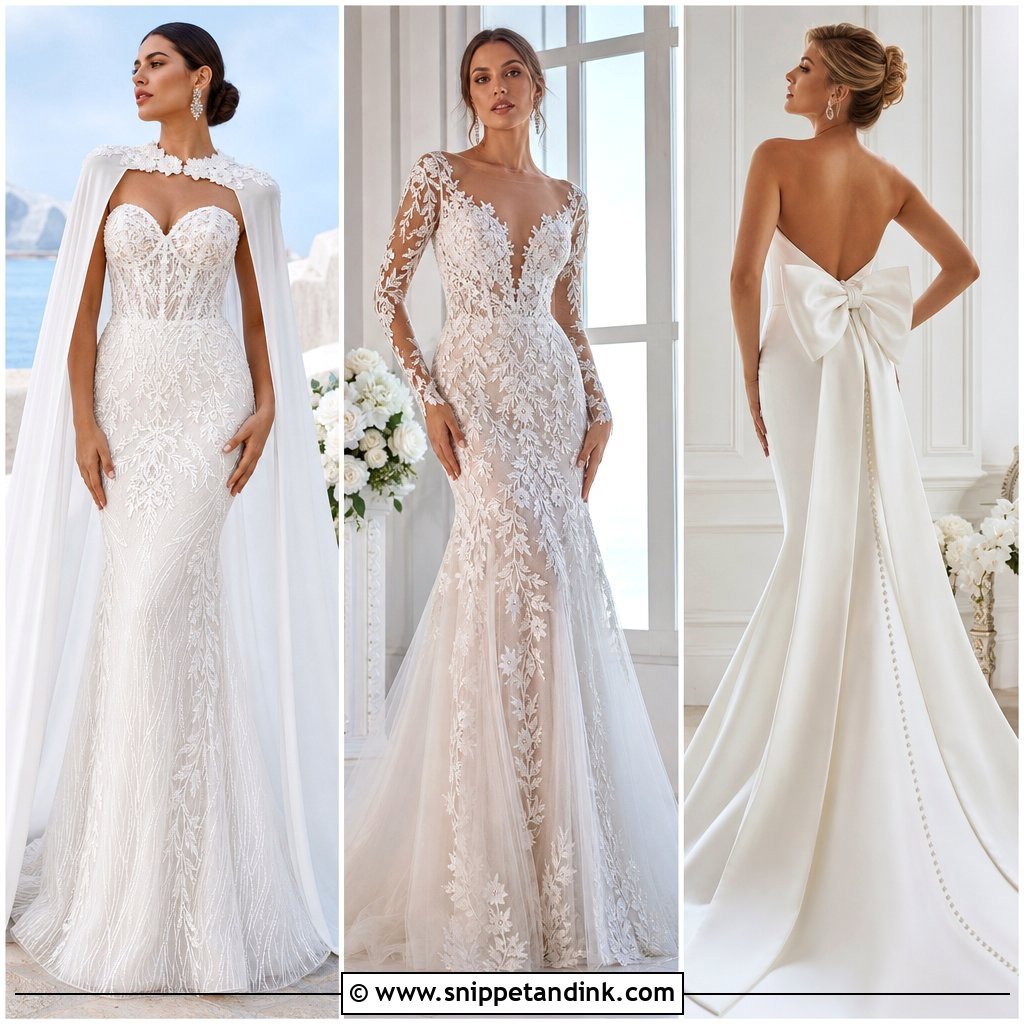
Modern couture lace looks lighter than the lace of a decade ago: dimensional florals, sheer sleeves, illusion necklines and appliqués cut out and placed by hand to follow the body. Good lace gowns have depth because the motifs sit over transparent tulle rather than a solid lining. I look at the seams. In well-made lace work you shouldn’t see a straight seam cutting through a flower; the lace is overlapped and hand-stitched around the motif. A low bun, minimal jewellery and a plain veil let it breathe.
4. Satin Off Shoulder Wedding Gown
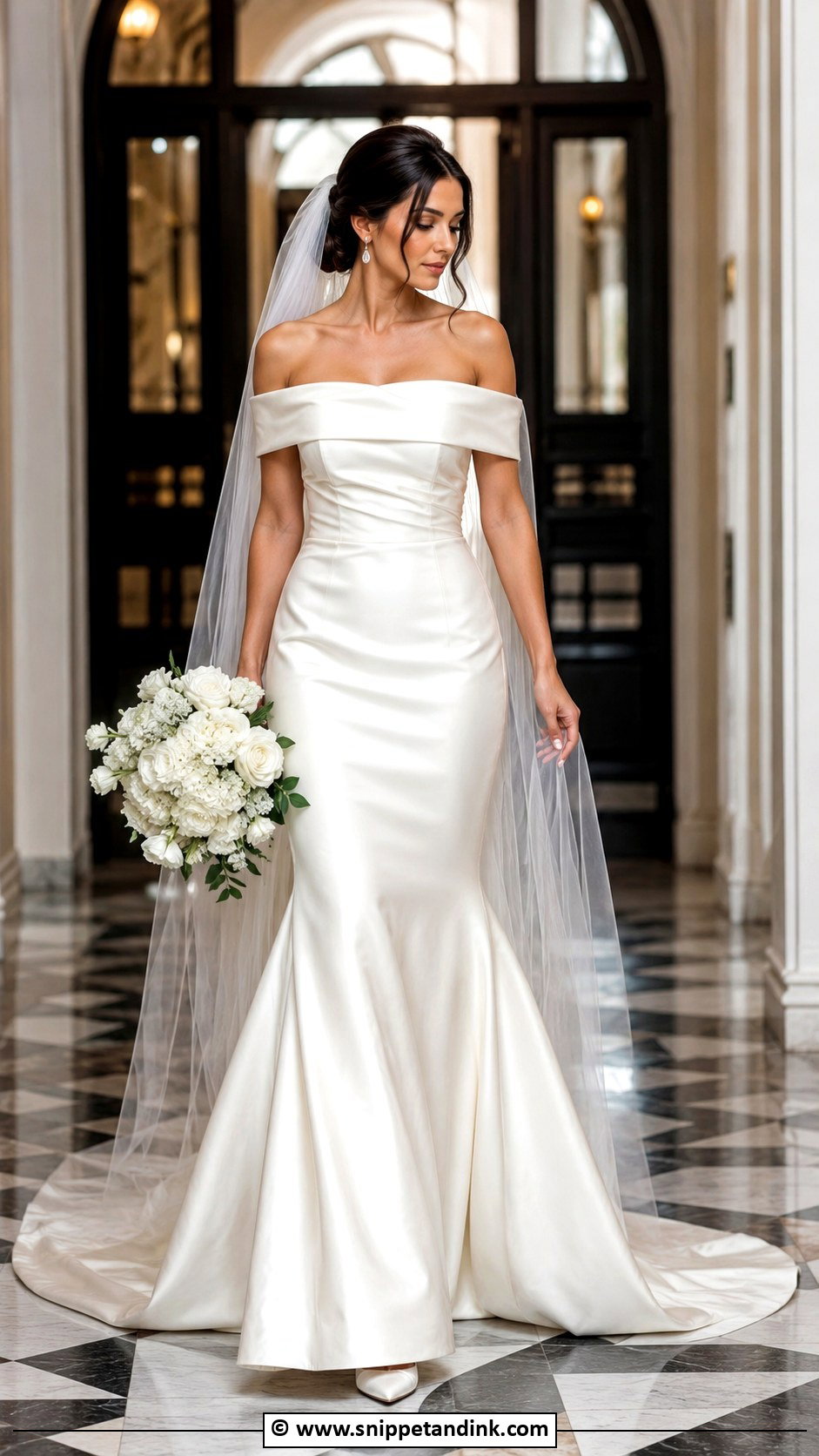
Satin off-shoulder gowns are clean and flattering on many figures. Satin’s smooth surface suits a column, trumpet or classic A-line, but it also shows every lump in the internal structure, so the corsetry has to be precise. Look for a foldover neckline anchored to that inner corset, which stops the band slipping when you raise your arms. Drop earrings, a sleek veil and satin or pearl heels are enough. It’s a strong gown for black-tie hotel weddings.
5. High Neck Wedding Gown
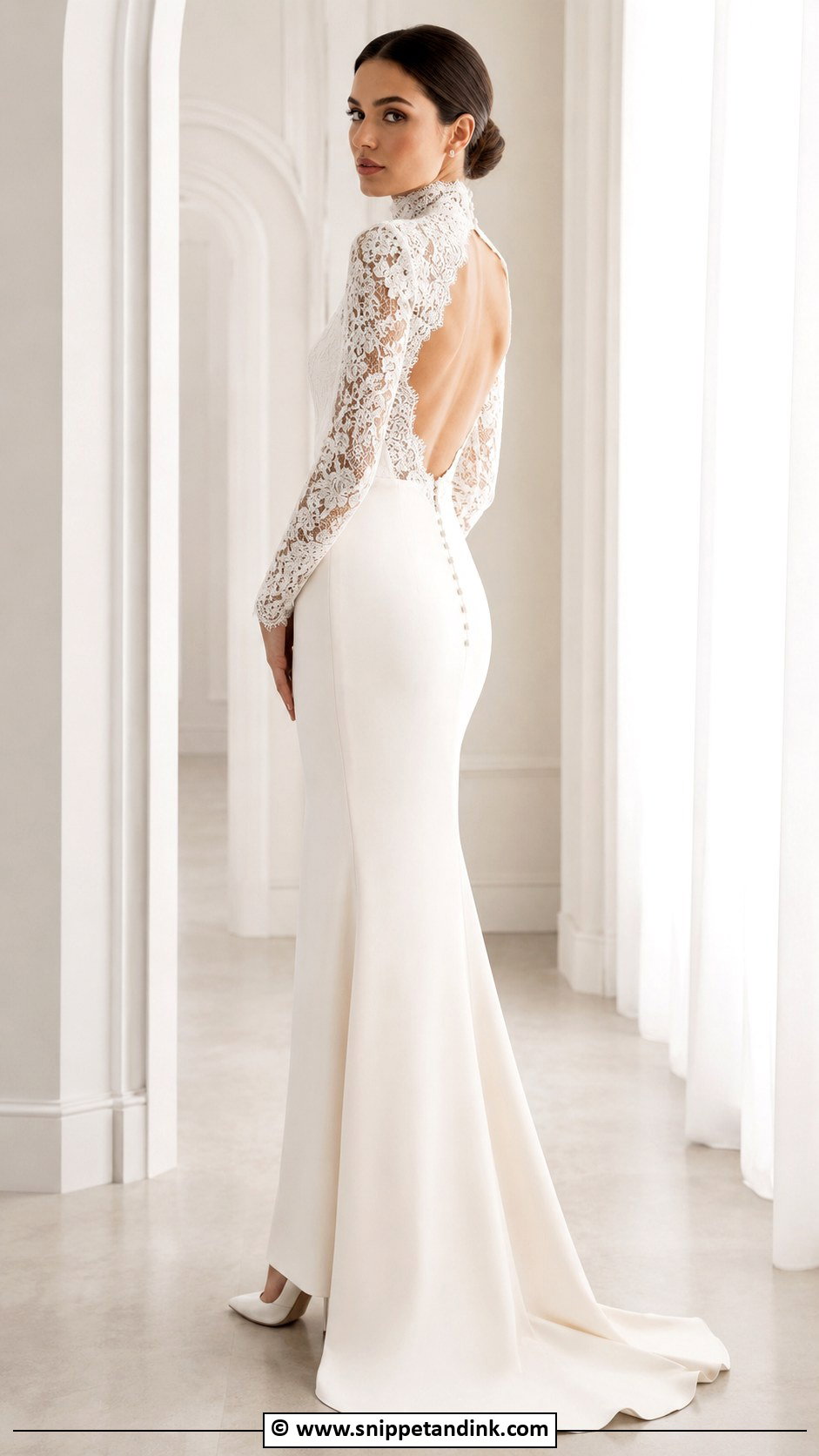
High necks are modest and strong at once. Lace, crepe, satin or sheer embroidered fabric all work; long sleeves make it regal, sleeveless makes it sleek. Balance is what I watch: with the neckline covered, an open back, a defined waist or a soft train gives the gown movement. The collar should allow you to turn your head fully, which sounds obvious but often needs adjusting. Swept-back hair, small earrings and clean pumps finish it, and it carries cooler seasons and formal rooms.
6. Basque Waist Wedding Dress
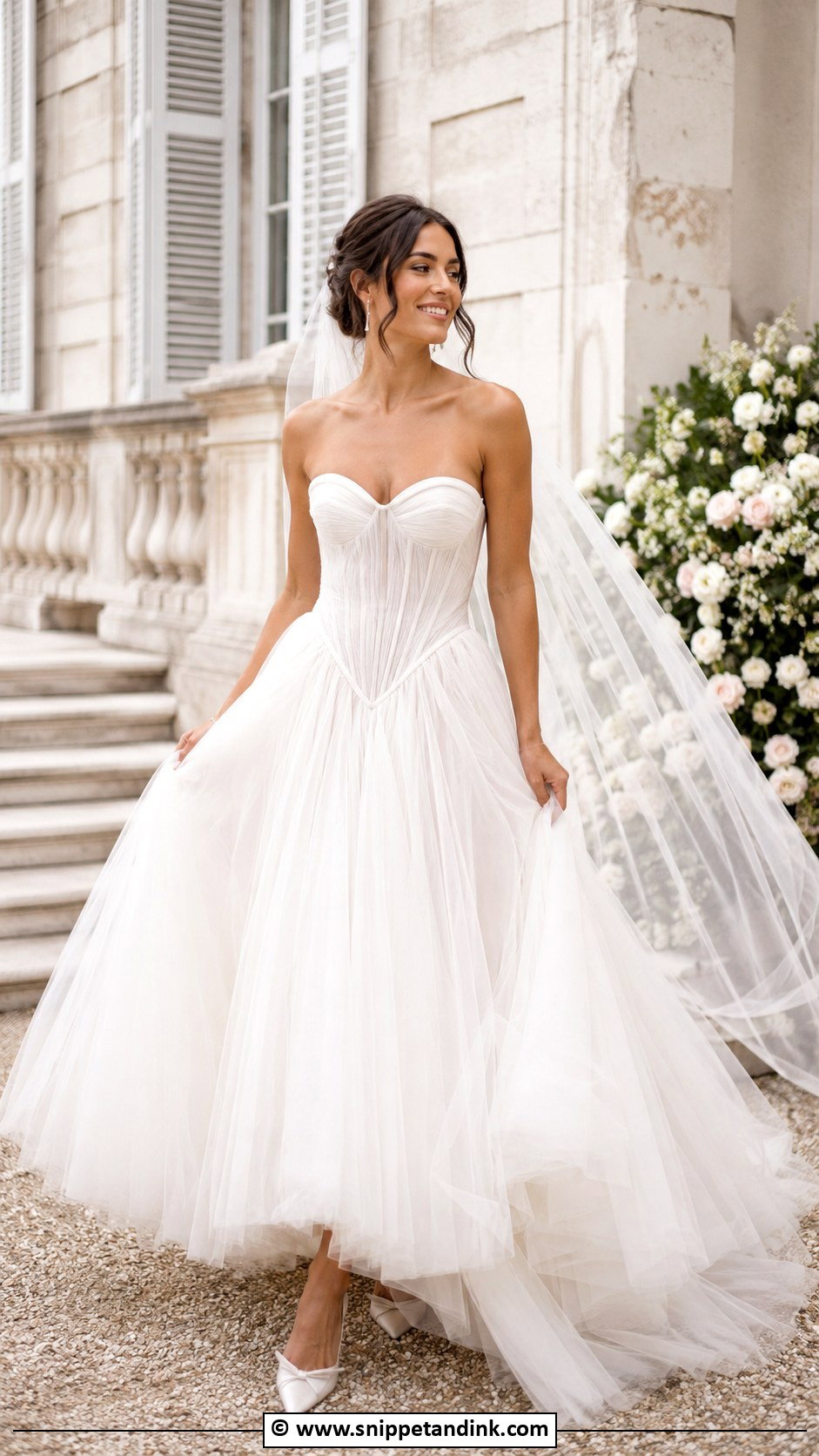
The basque waist dips into a V below the natural waist, which lengthens the torso and makes the skirt look fuller. A basque waist wedding dress looks most striking over a full tulle or structured satin skirt. A true corset bodice gives the sharpest point; a softer version is kinder for a long day. Where the point lands matters: too low, and it can shorten the legs on a petite bride. A long veil, delicate earrings and pointed heels suit it.
7. Corset Bodice Wedding Gown
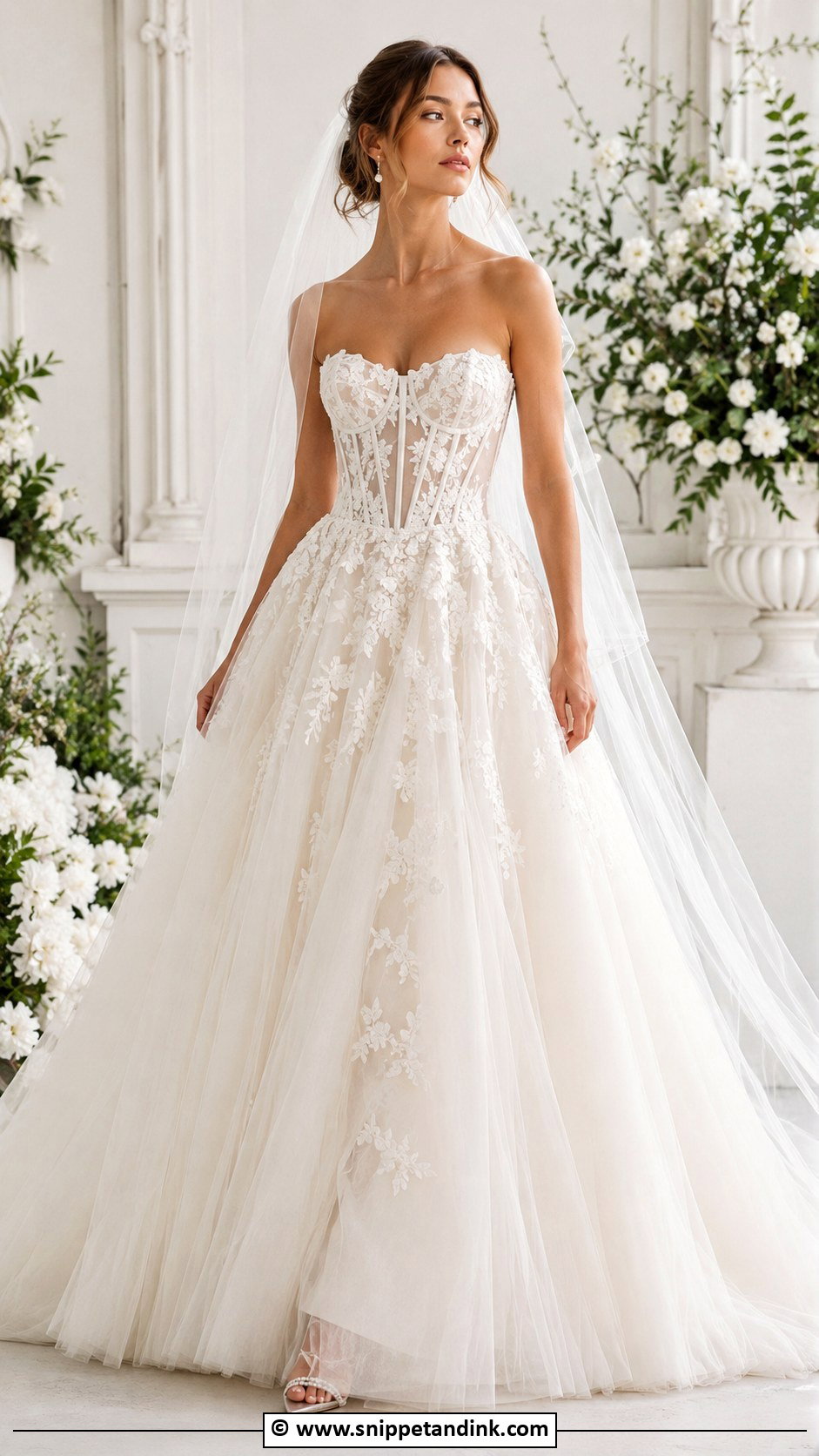
A corset bodice does two jobs: it shapes and it supports. Couture corsetry can be visible, with boning channels and sheer panels, or hidden under satin, lace or organza. Spiral steel bones flex as you breathe and sit, while cheaper plastic ones tend to bend and leave ridges after a few hours. Draped tulle or floral appliqué over the bodice softens it; clean satin with strong seams reads bolder. Simple jewellery is best, since the bodice already carries detail.
8. Long Sleeve Couture Wedding Dress
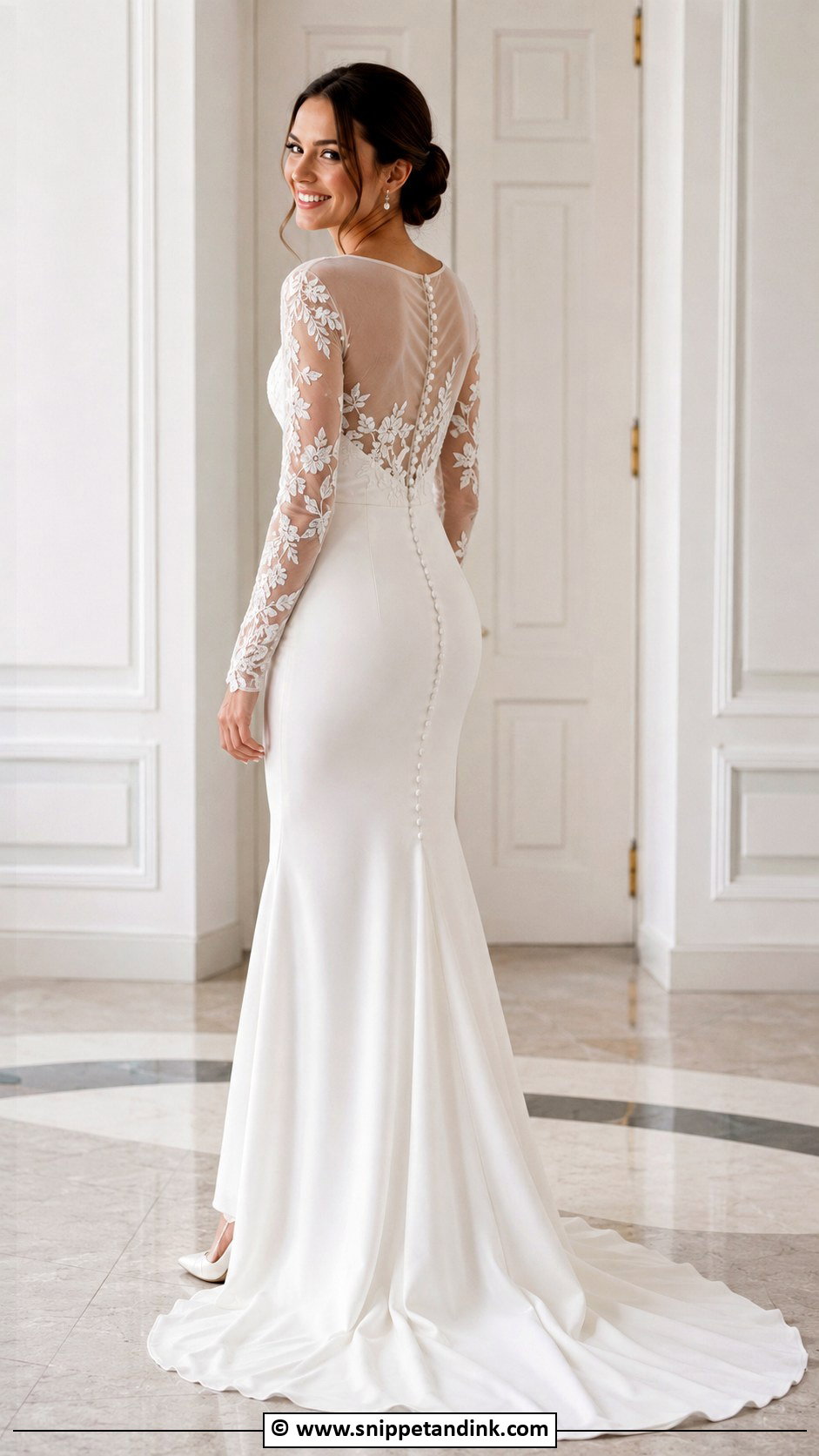
Sleeves change the whole silhouette, so the right one depends on the gown. Sheer embroidered sleeves suit a lace bodice, sleek crepe sleeves suit a minimal shape, and puffed organza is pure drama. A fitted long sleeve sheath reads clean, a long sleeve ball gown regal. In fittings I have the bride hug someone and lift a glass; if the sleeve pulls the bodice up, the armhole needs reworking. Covered buttons and tapered cuffs are lovely details. An updo shows the line.
9. Floral Applique Wedding Gown
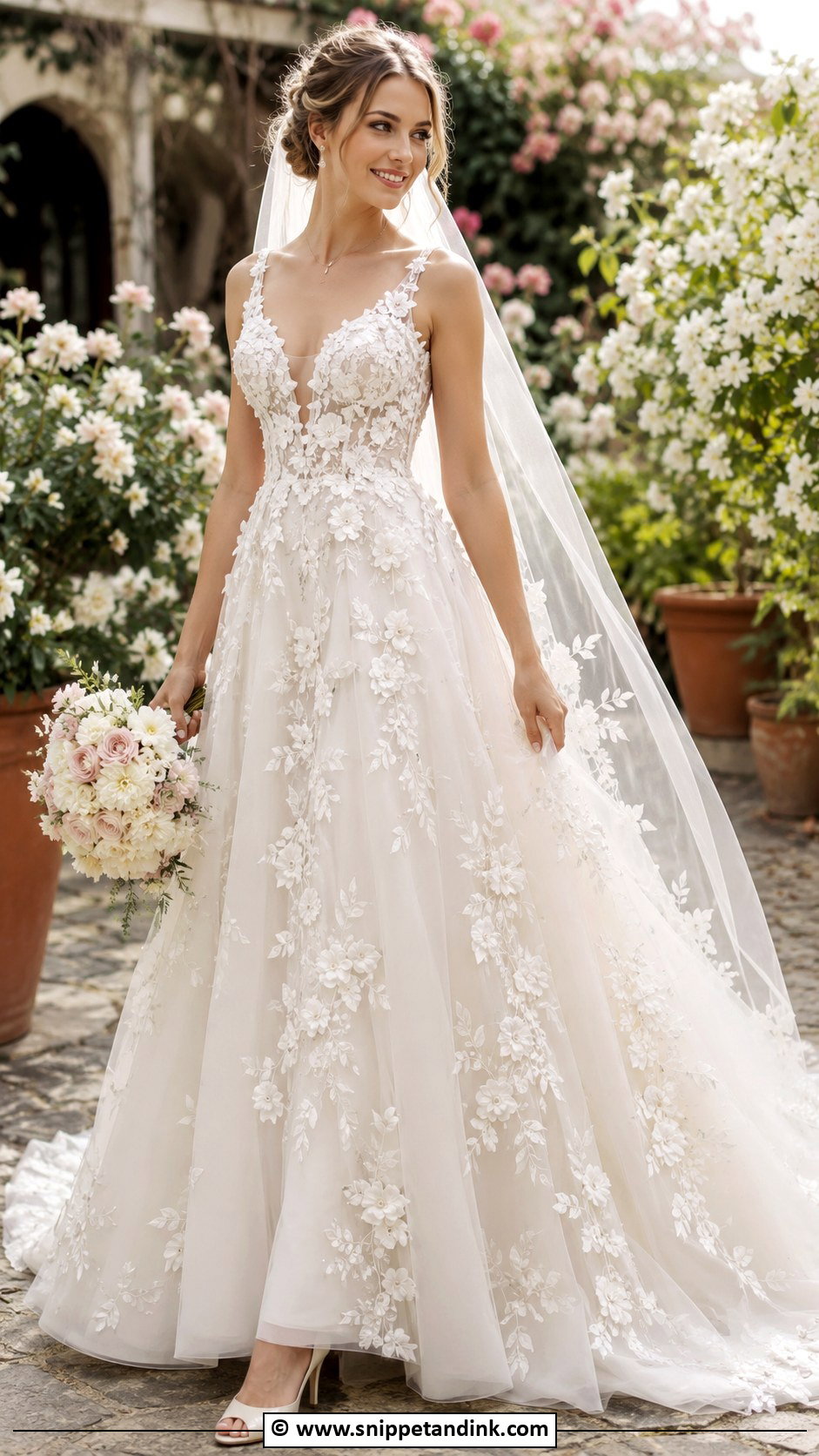
Raised flowers, 3D petals and trailing vines bring a garden into the gown. Placement is the craft: appliqués clustered at the bodice and falling down the skirt look intentional, while an even spread can look like wallpaper. On a sheer overlay the flowers seem to float. Three-dimensional petals do crush, so I’d suggest sitting carefully and asking your attendants to check the skirt before photos. Soft makeup, delicate earrings and simple heels suit outdoor spring and summer weddings.
10. Minimalist Silk Wedding Gown
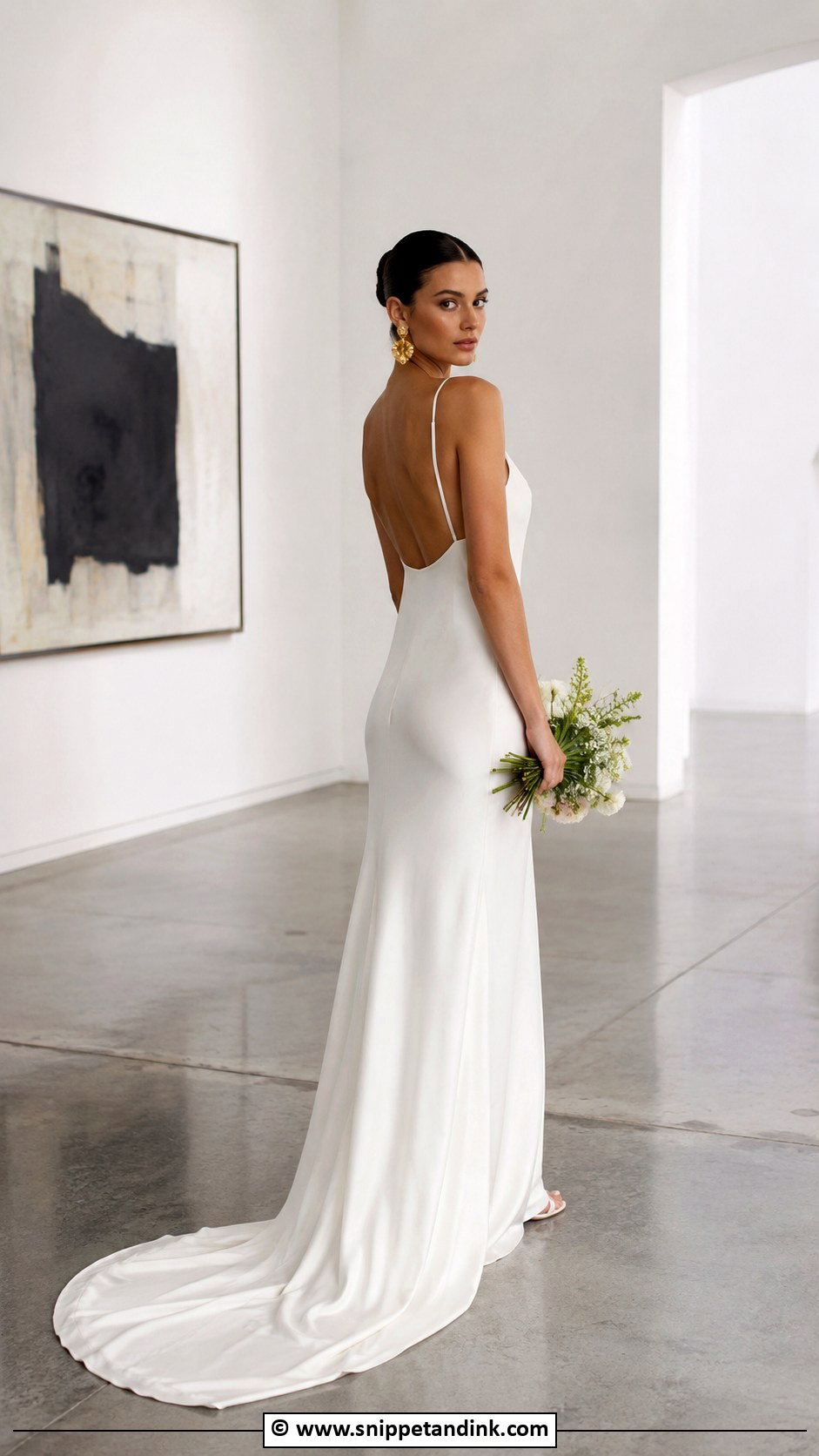
With a minimalist silk gown there’s nothing between you and the cut, so quality and tailoring are all you see. A silk column, slip or bias-cut gown skims the body. Bias cut stretches slightly as it hangs, which is why good ateliers let the fabric rest before hemming. Silk also water-marks, so keep drinks and rain away and carry a clean cloth. A clean neckline, fine straps or a low back are enough detail. Sculptural earrings and sleek hair finish it for modern venues and city weddings.
11. Dramatic Train Wedding Dress
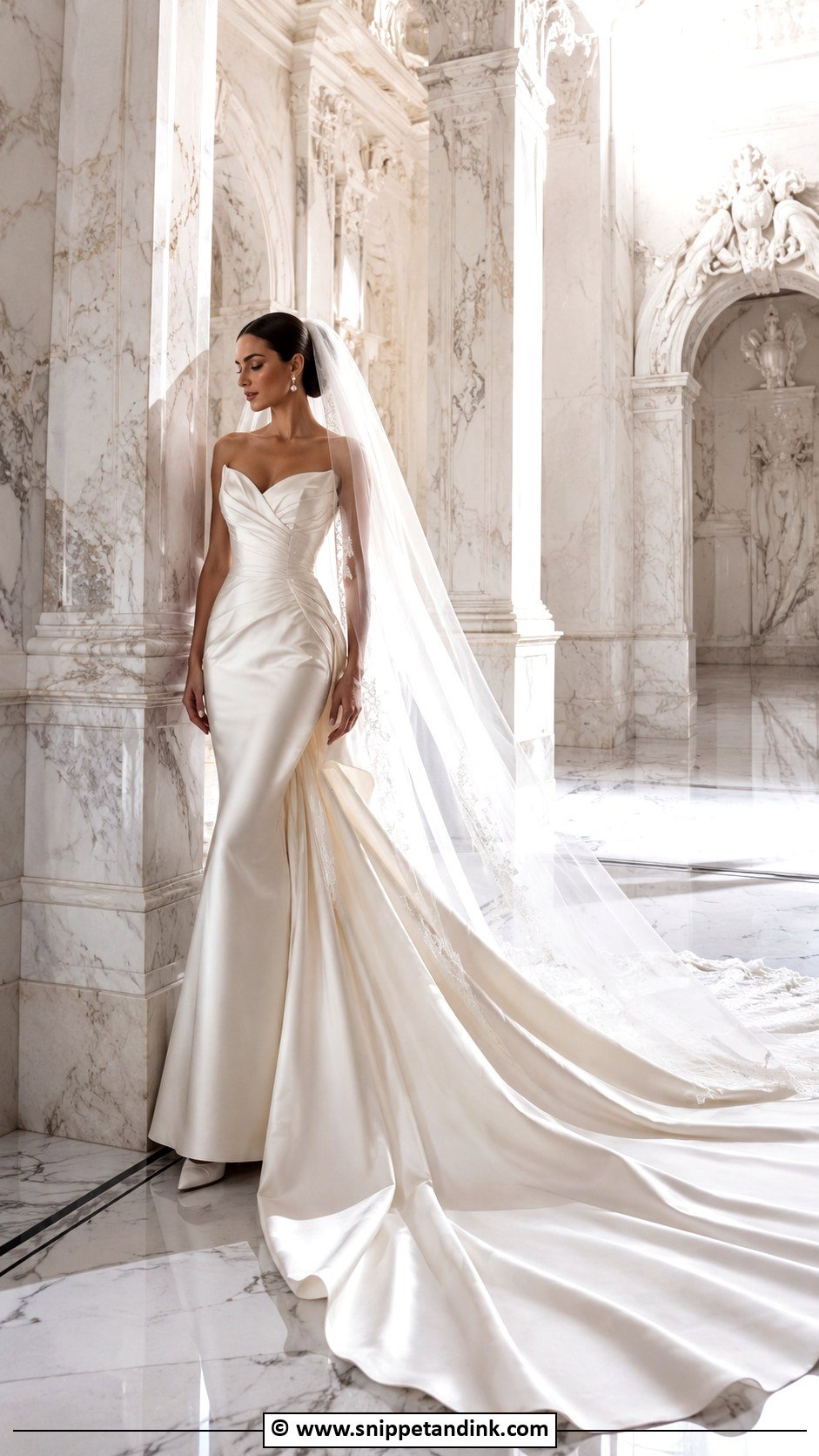
Trains are about the walk and the photos. Cathedral length, detachable, lace-edged, embroidered or crisp satin all sweep differently. The front of the gown still has to feel wearable, so a fitted bodice with a long train or a simple column with a statement train both work. Plan the bustle early. I have the bride’s helper practise it at the final fitting, because a bustle with fifteen hidden loops is not something to learn at the reception door. Choose a veil that complements the train.
12. Feather Trim Wedding Gown
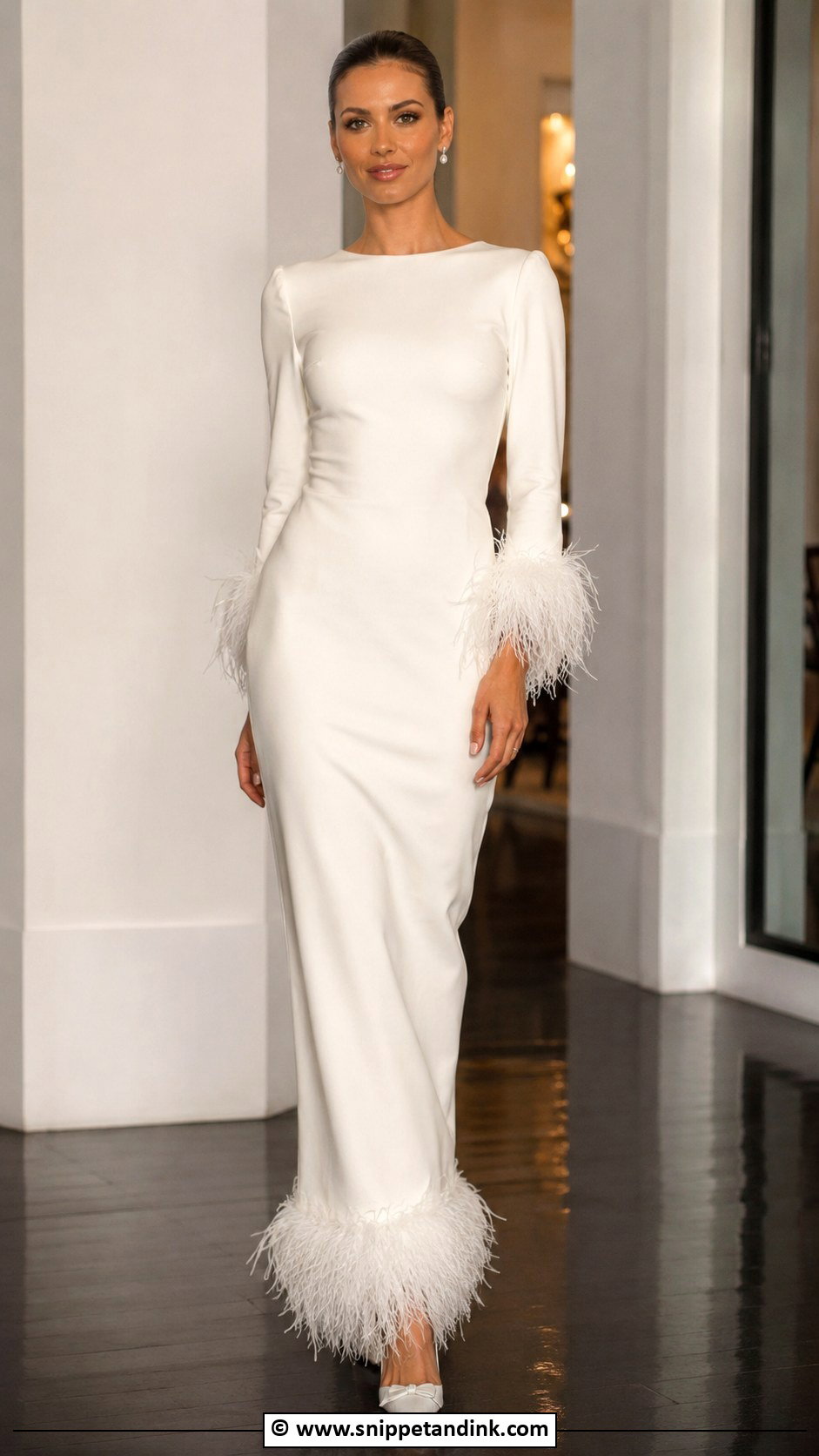
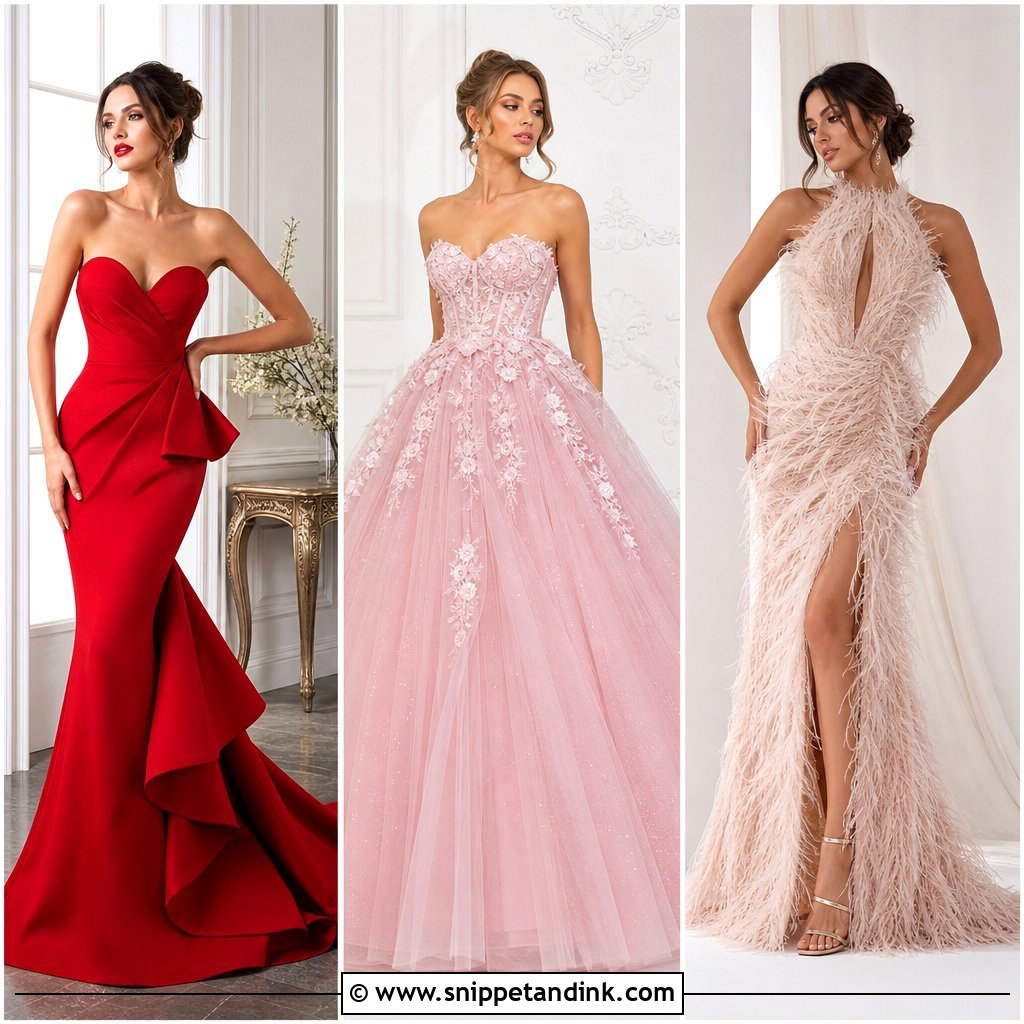
Feathers bring movement and a bit of fun, and they need restraint. They can trim the neckline, cuffs, hem, skirt or a detachable cape. Ostrich feathers droop in humidity and shed, so I’d keep them away from a lip and avoid them at a beach wedding. A sleek base gown with feather trim feels modern; a feathered skirt is a fashion moment. Simple earrings, smooth hair and elegant heels let the feathers stand out, at receptions and formal venues.
13. Embroidered Tulle Wedding Dress
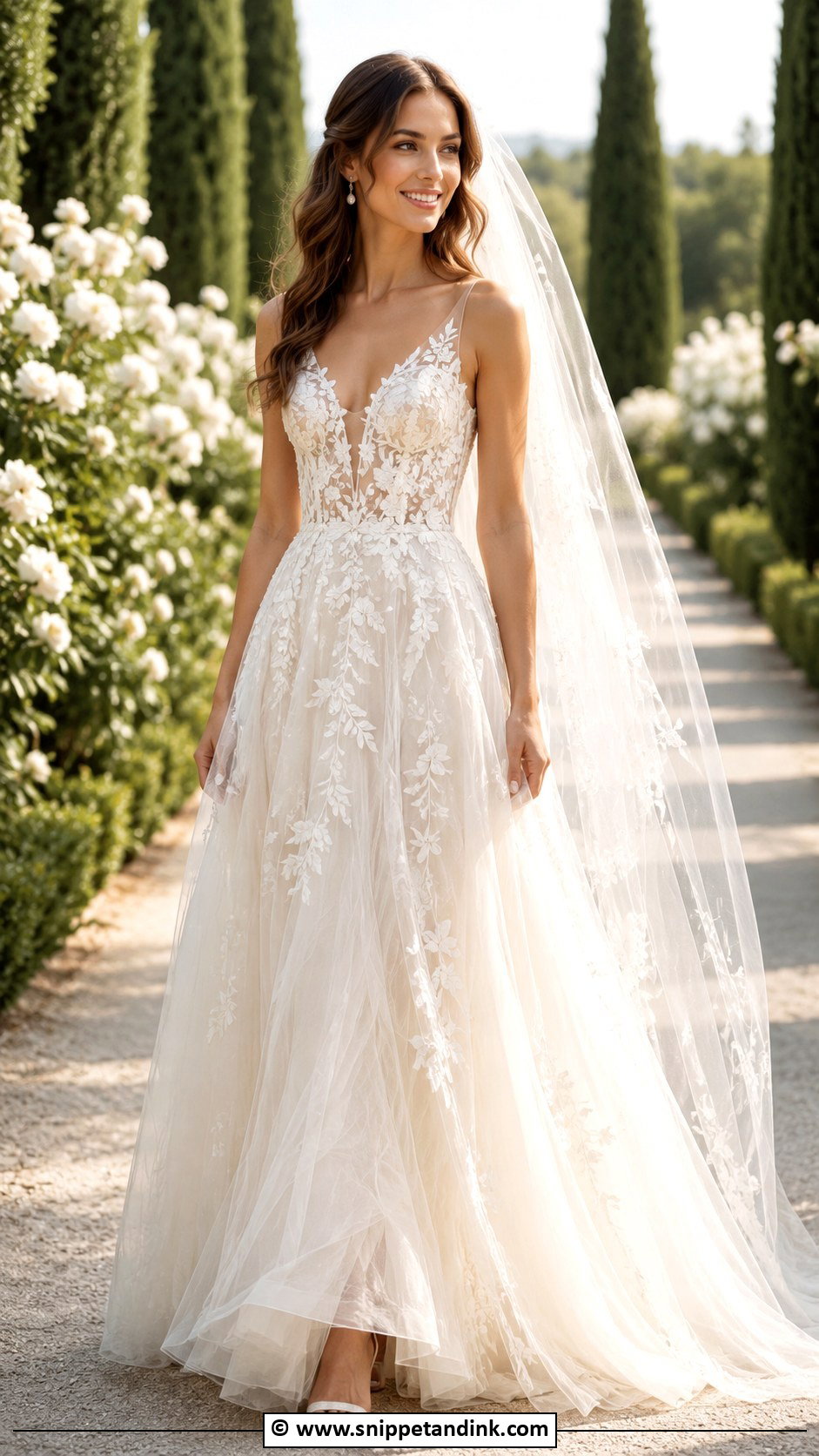
Embroidered tulle is light with the handwork on show. Florals, vines, pearls, crystals or abstract patterns all work on A-line, ball gown and soft layered shapes. Look for embroidery that follows the body, thickest at the waist and neckline and thinning down the skirt. Fine tulle snags on bracelets and rough fingernails, so I’d skip chunky jewellery. A sheer veil keeps the airy effect. Delicate heels and soft makeup suit it, and it stays breathable through a long day.
14. Overskirt Wedding Gown
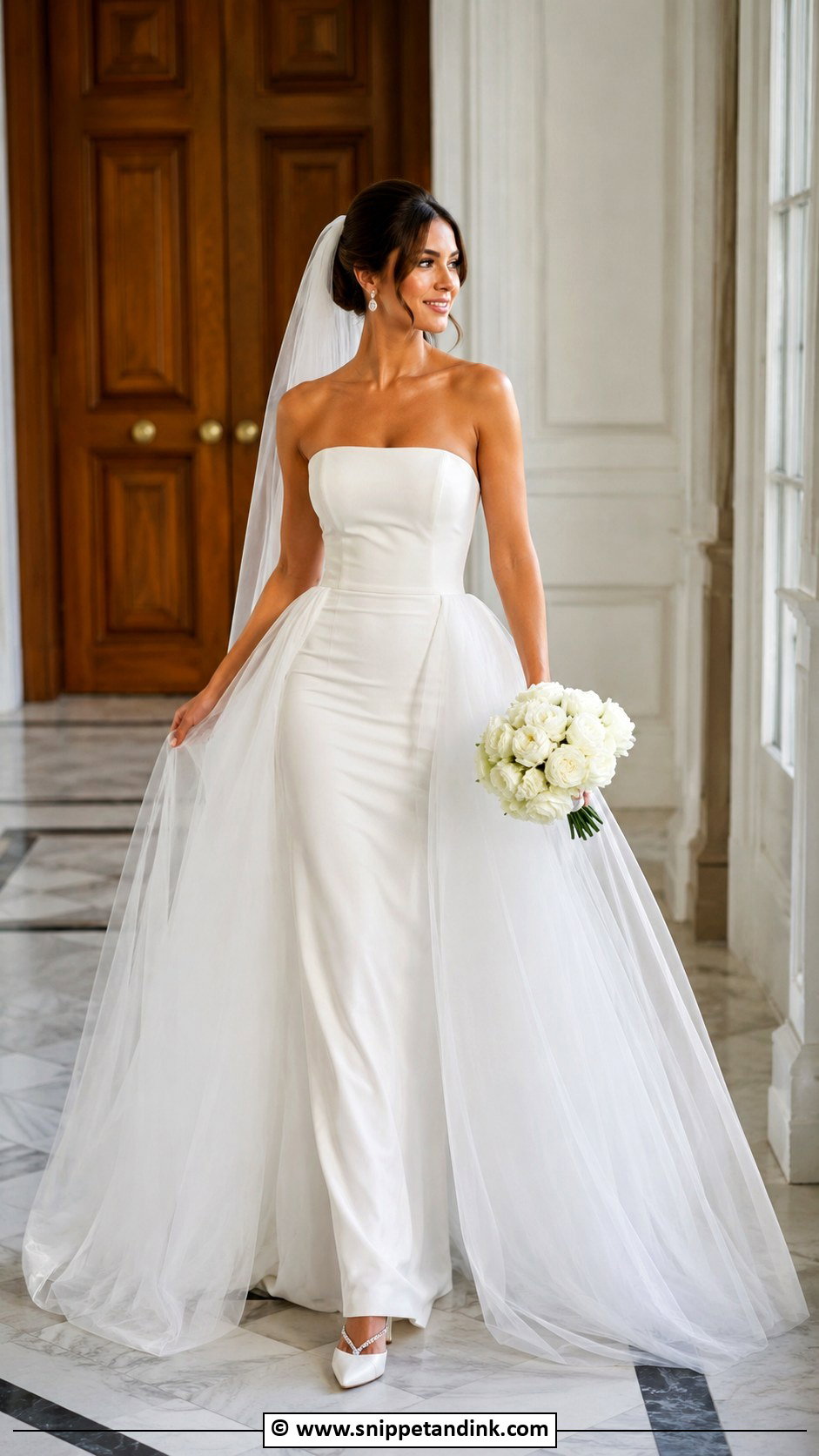
An overskirt wedding gown gives you two looks: volume for the ceremony, then a fitted sheath, mermaid or column underneath for dancing. Tulle is soft, satin structured, lace romantic. The attachment is what I scrutinise. Hooks or snaps should sit flat inside the waistband so there’s no ridge when the overskirt comes off. Practise removing it before the day. A veil for the ceremony and statement earrings for the reception mark the change.

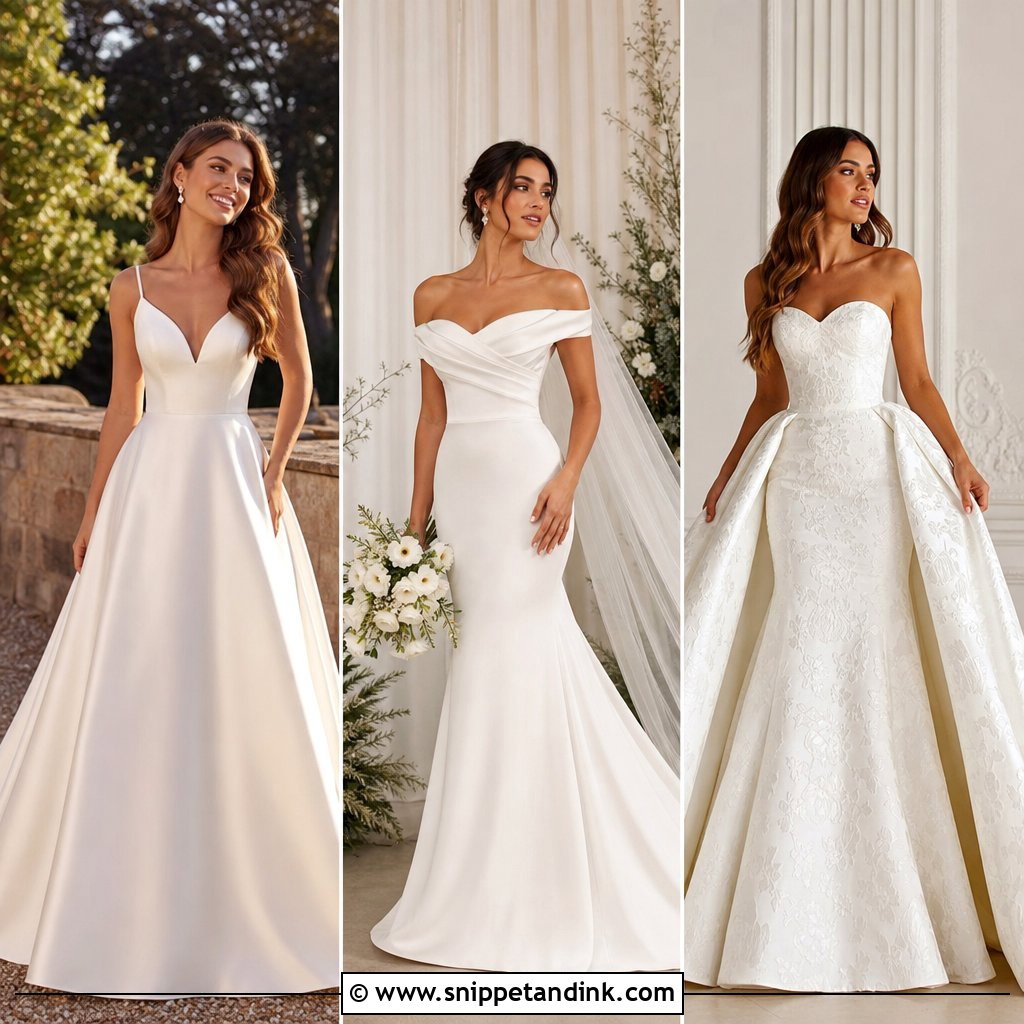

15. Bow Back Wedding Dress
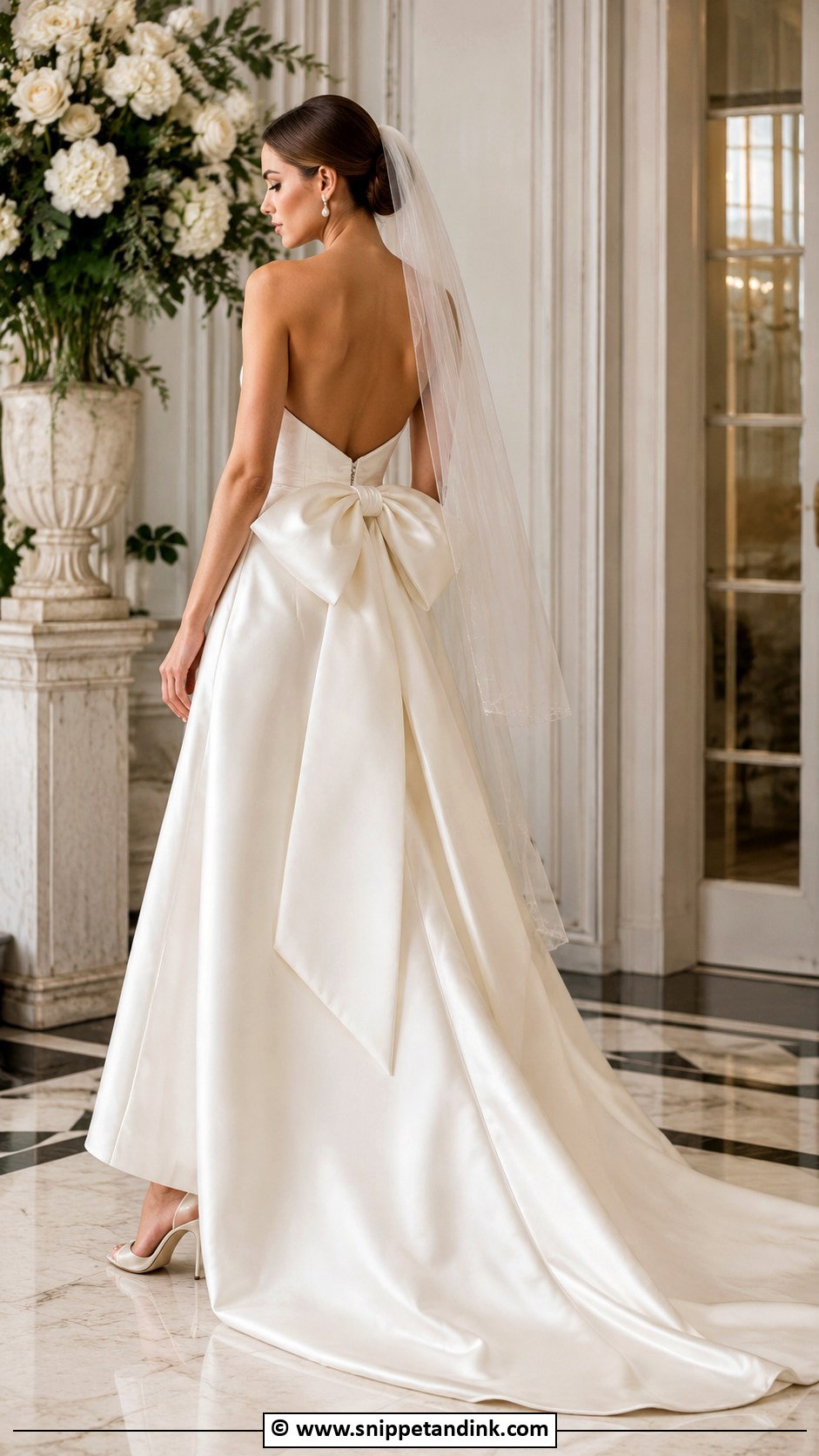
A back bow is the detail people see as you walk away, so it’s made for aisle shots and over-the-shoulder portraits. Oversized and sculptural, soft and trailing, or neatly tied at the waist are all options. A large bow on clean satin feels modern; a delicate bow on lace is more romantic. Big bows need interfacing or they’ll collapse after an hour of sitting. Placed at the lower back or natural waist, the bow lifts the silhouette. Keep the front of the gown simple.
16. Sheer Sleeve Wedding Gown
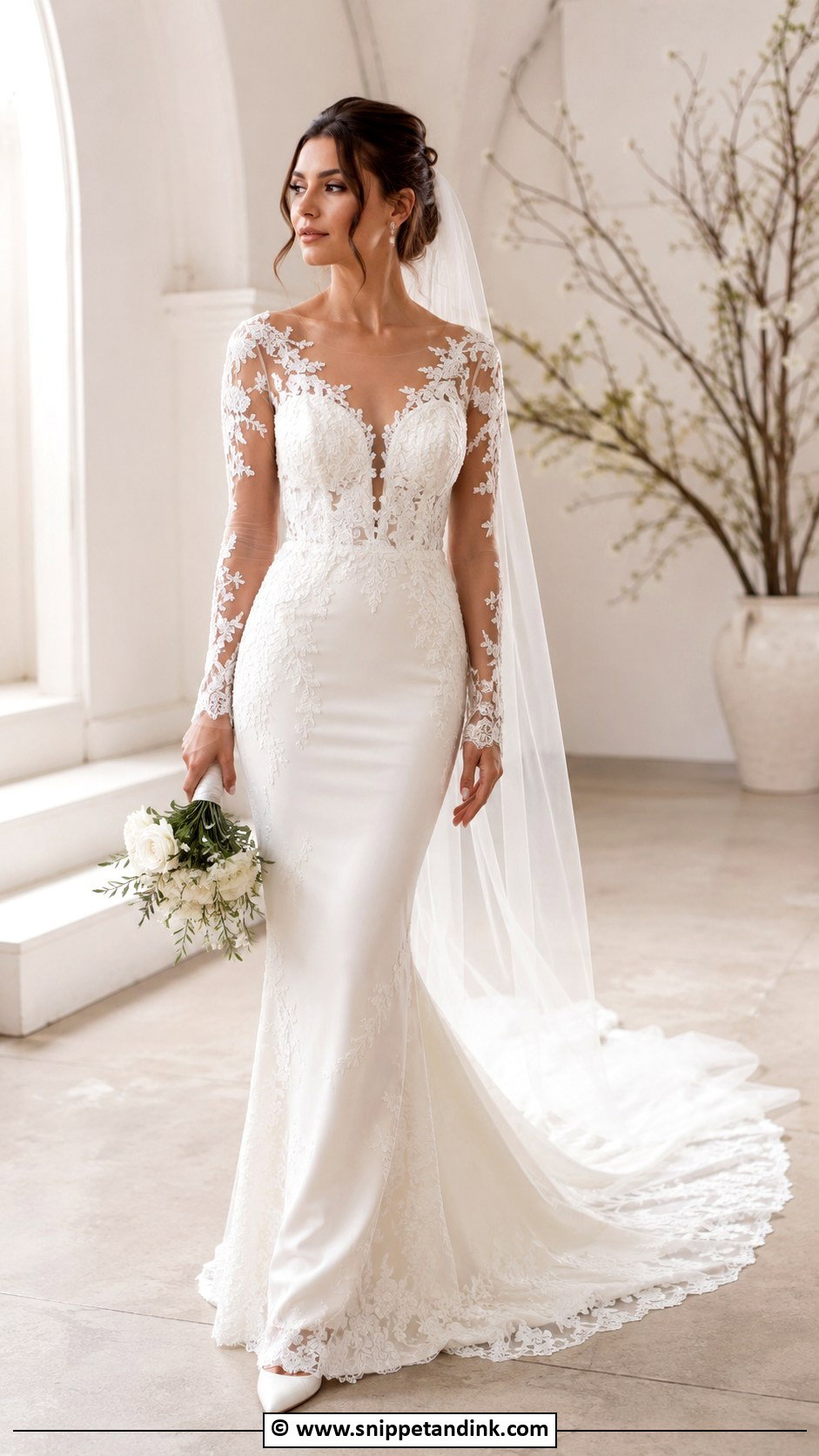
Sheer sleeves give coverage with very little weight. Tulle, lace, organza or illusion mesh with embroidery all work, ideally with the sleeve detail flowing on from the bodice. I match the illusion mesh to the bride’s skin rather than picking a standard nude, because the wrong tone shows clearly in close-up photos. A fitted gown with sheer sleeves feels sleek; an A-line softer. A soft updo, simple jewellery and a veil that doesn’t hide the sleeve work finish it.
17. Drop Waist Wedding Dress
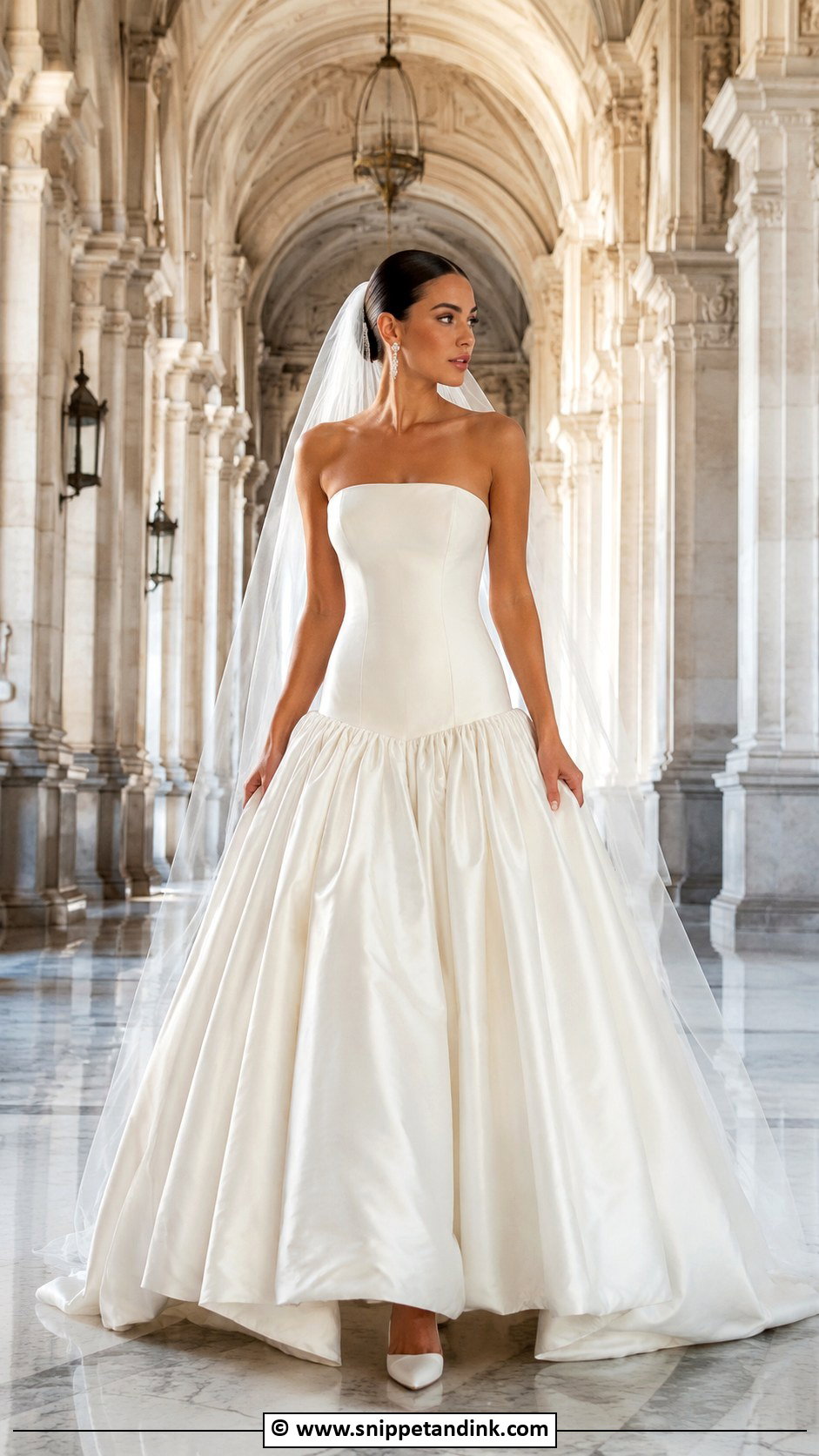
The drop waist wedding dress sets its seam near the hips, then releases into a fuller skirt, which creates a long, elegant line through the torso. It needs structure to work: corset seaming, firm fabric or carefully layered tulle. Sitting is the test I give it, as a low seam can dig into the hip bones on a long dinner. The silhouette suits a bride after a dramatic shape that isn’t a princess gown. A smooth veil and refined earrings suit formal weddings.
18. Cap Sleeve Wedding Gown
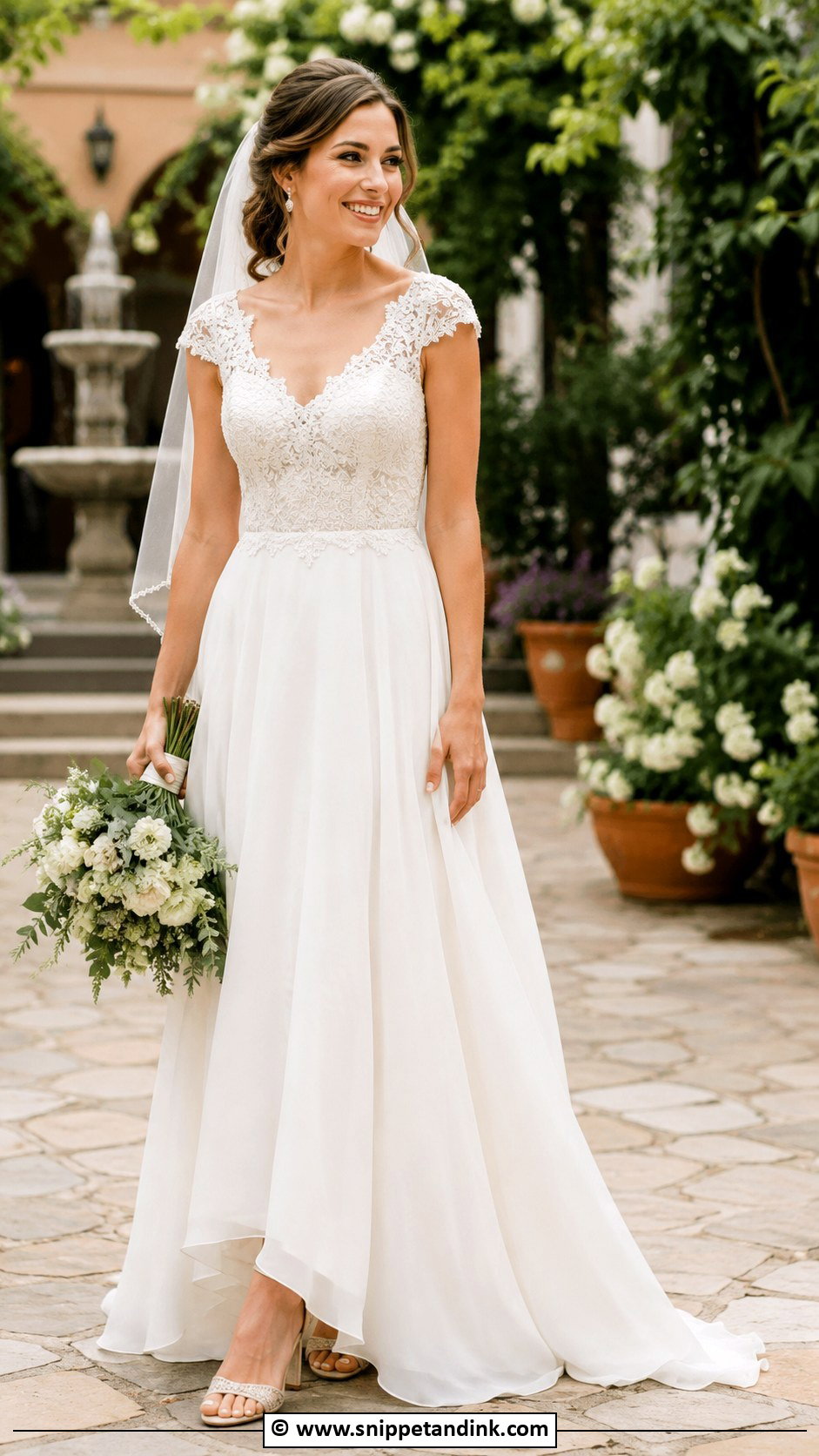
Cap sleeves give just a little shoulder coverage and keep the neckline open. Lace, beading, satin and crepe all work; with an A-line skirt it feels classic, with a fitted shape more modern. They also give a strapless-style neckline some support without full sleeves. One fitting point: a cap sleeve should end where it doesn’t cut across the widest part of the upper arm. Pearl earrings, a veil and comfortable heels finish it.
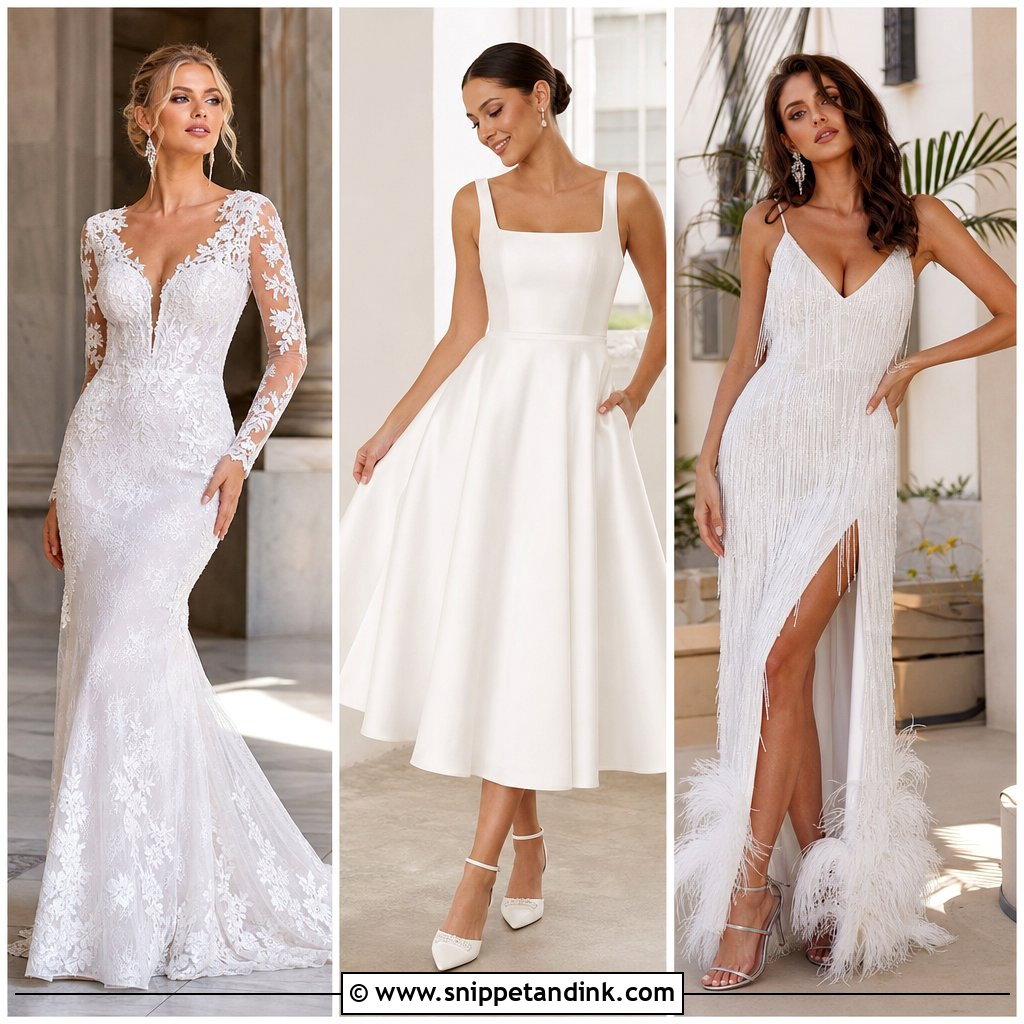
19. Square Neck Wedding Dress
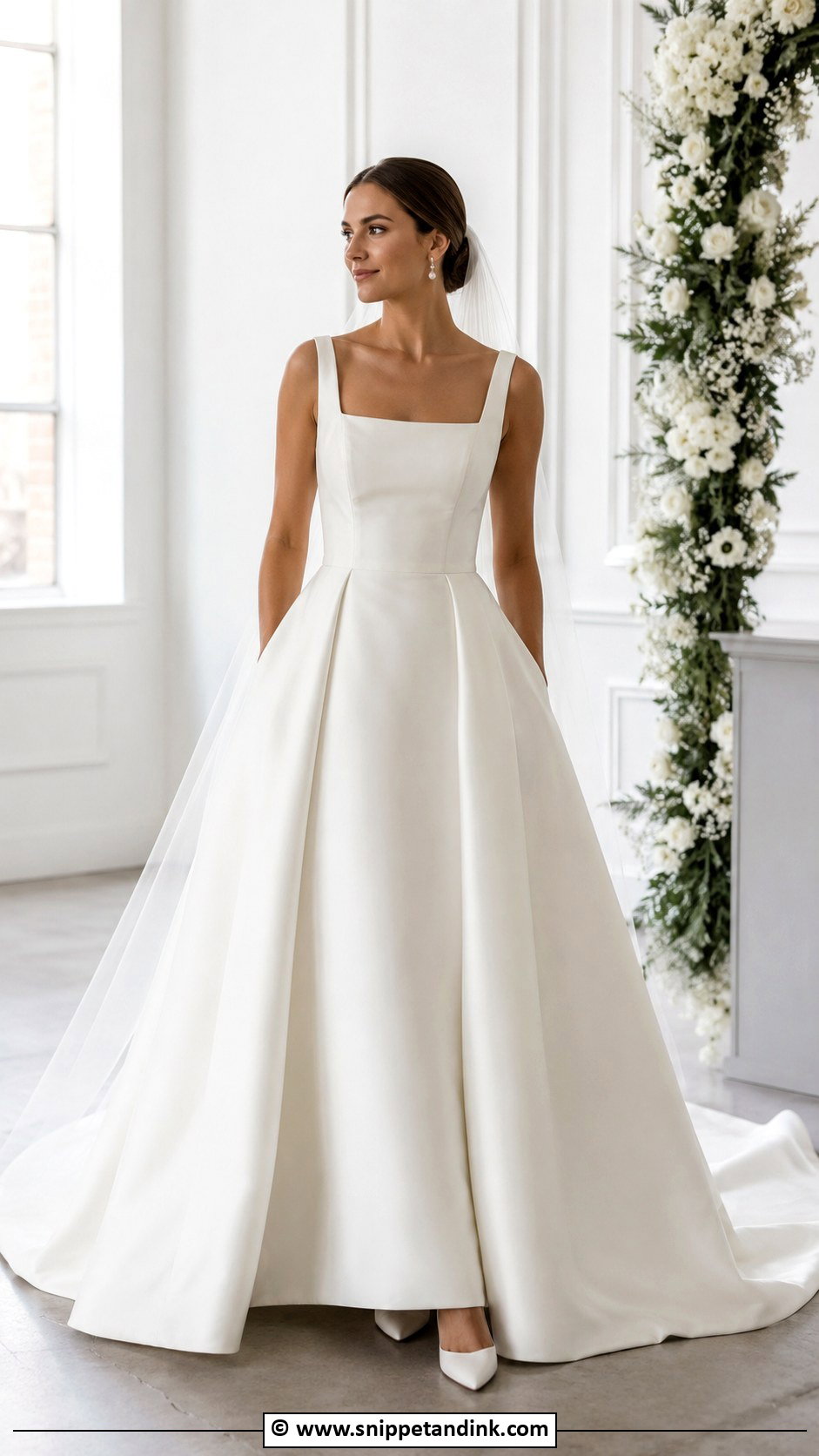
The square neck frames the collarbone with a straight line that reads modern and classic at once. Wide straps, a fitted bodice and a full skirt all suit it, in satin for minimal, lace for romantic or mikado for architectural. Corners are the tailoring point: they should sit flat, not gape when you lean forward. Most hairstyles work with it, from a low bun to waves. I’d add a necklace only if the neckline is very plain; otherwise earrings are enough.
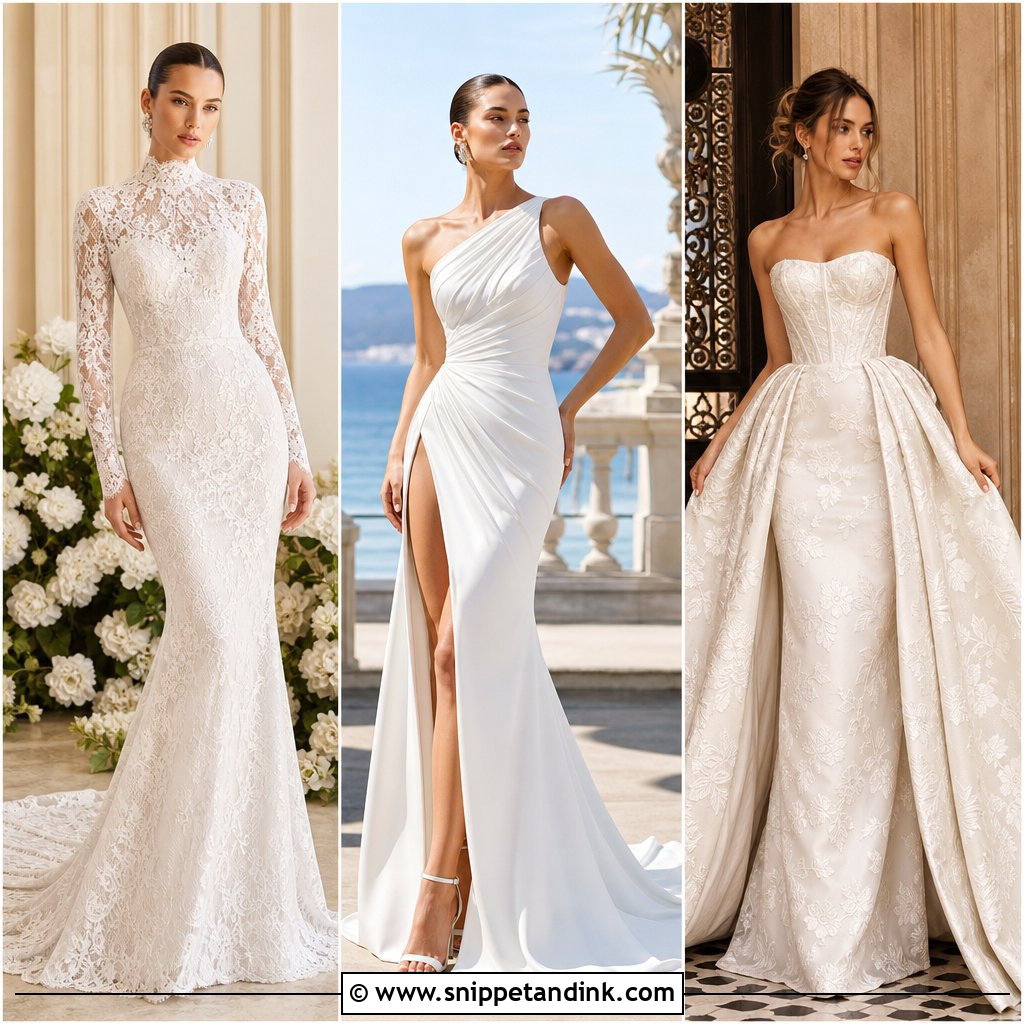
20. Halter Neck Wedding Gown
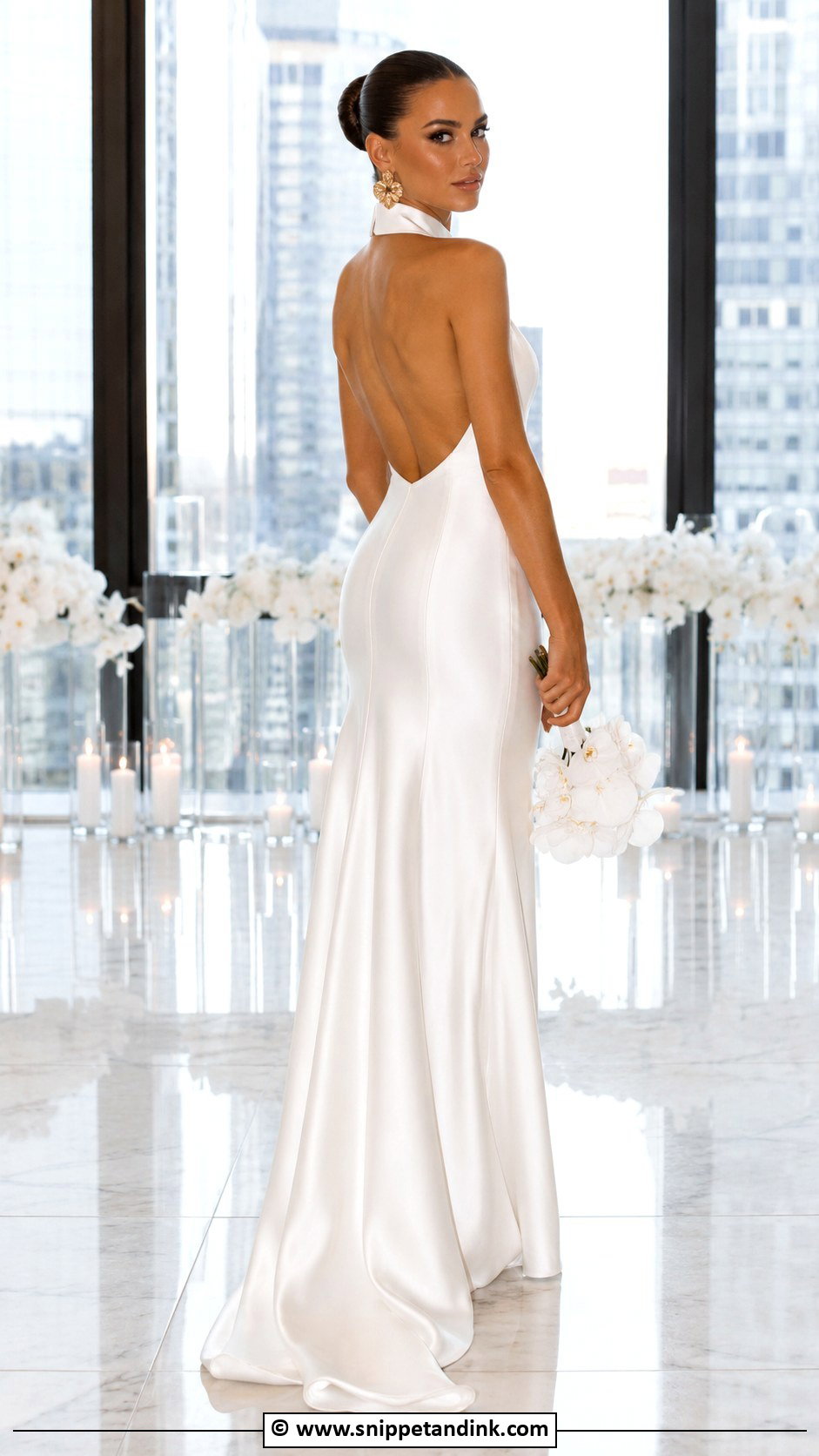
Halters frame the shoulders, neckline and face. In silk with an open back it feels modern; in lace, softer and more detailed. Column, sheath and fit-and-flare shapes all suit it. The neck strap carries weight, so on a heavy or beaded gown I’d make sure the support comes from an internal corset and not your neck alone, or you’ll feel it by the speeches. Skip the necklace, choose earrings, and wear your hair up or back to show the shape.
21. Tiered Tulle Wedding Dress
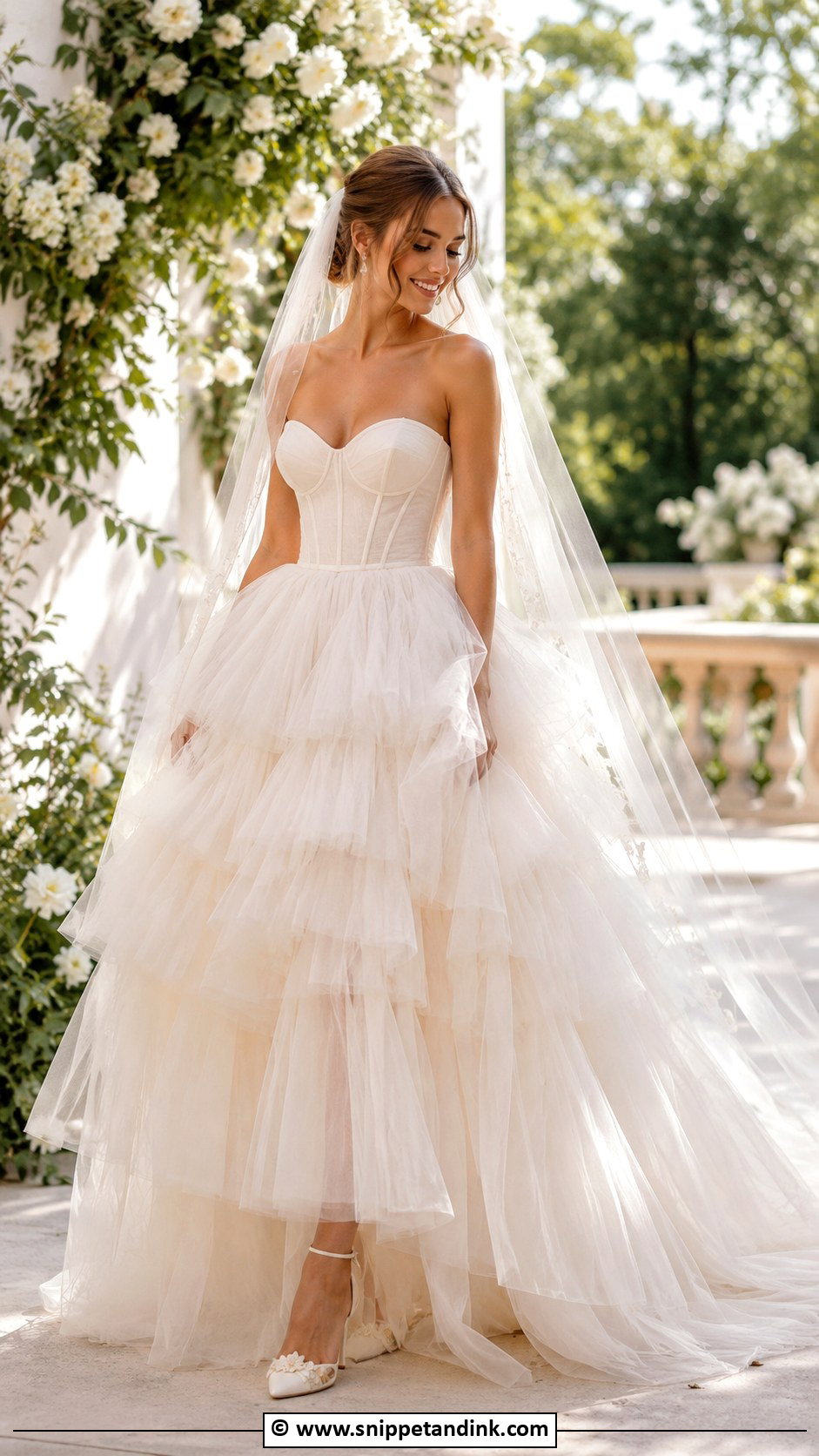
Tiered tulle gives movement and volume, from soft and floaty to bold and full. It needs a structured bodice as an anchor, such as a corset top, strapless neckline or fitted lace. Tulle tiers flatten when packed, so I’d have the gown steamed on site rather than relying on how it looked in the shop. A plain veil, soft earrings and delicate heels are all it needs. It moves well walking, turning and dancing.
22. Beaded Mermaid Wedding Gown
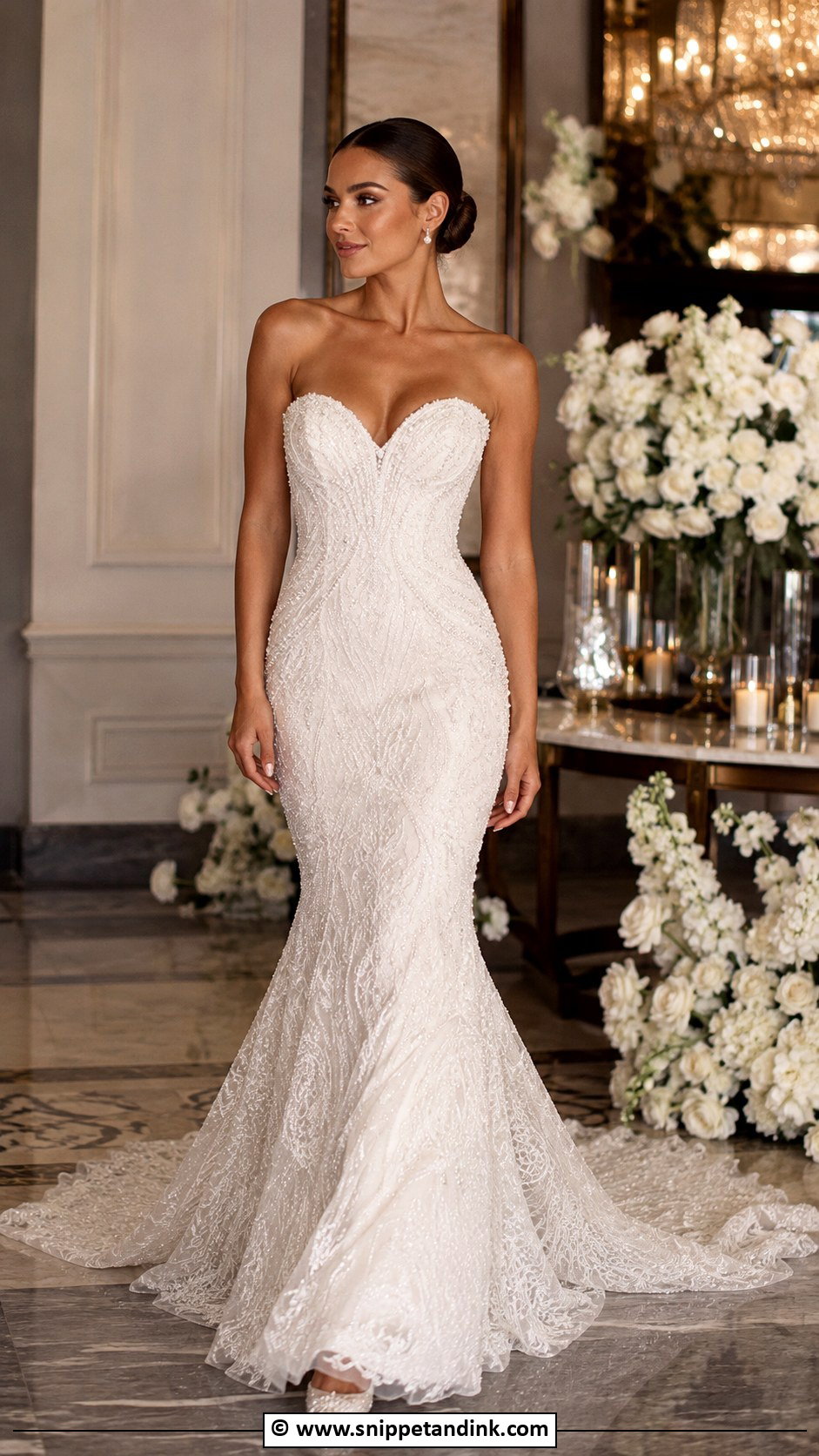
Mermaid gowns fit closely through the bodice, waist and hips before flaring near the knee, and beading can trace those curves. I keep beadwork refined, so it follows the line rather than covering everything. The flare point decides how you’ll walk: a low flare looks dramatic but shortens your stride, so check it on stairs. Sitting through dinner is harder in a mermaid too, and some brides plan a second dress. Simple heels, sleek hair and minimal jewellery suit formal evening venues.
23. Detachable Cape Wedding Gown
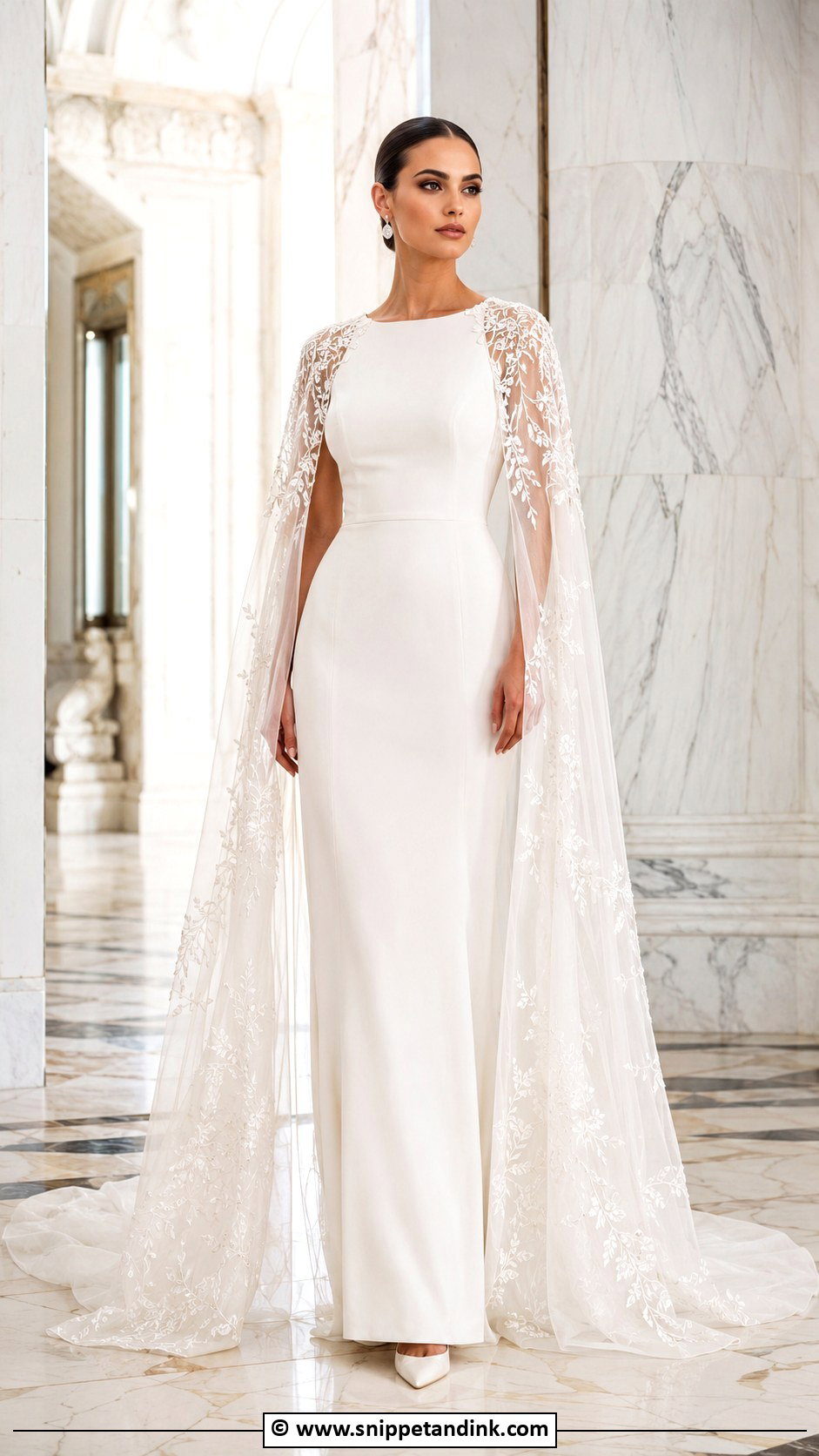
A detachable cape can replace the veil or add a layer for the ceremony, then come off for the reception. Sheer tulle, embroidered lace, satin or organza all work over a clean column, fitted crepe dress or strapless ball gown. Choose a cape length that suits the venue and the train. It should fasten with hidden hooks or a fine button loop at the shoulders so it hangs straight and doesn’t tug at the neck. Polished hair and simple earrings give a regal effect without a veil.
24. Strapless Satin Wedding Dress
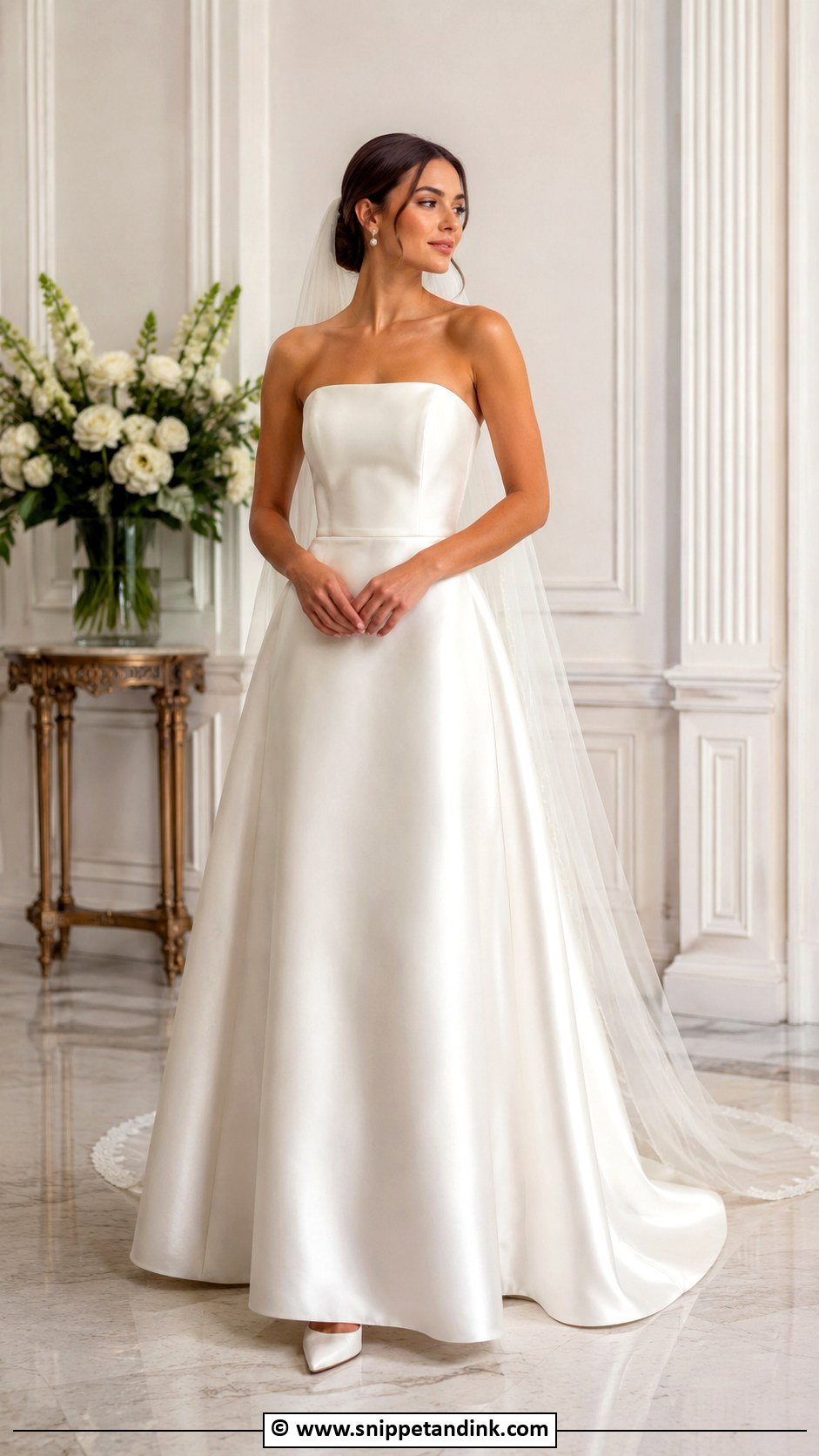
Strapless satin is classic, and it’s all about fit. A well-made strapless bodice should stay up with no hitching, which means a firm inner corset and a waist stay that grips. If you find yourself pulling it up in the fitting room, it isn’t fitted yet. Satin gives clean shine and structure in A-line, ball gown or fit-and-flare shapes, with draping, a pointed neckline or covered buttons as detail. A veil, pearl earrings and satin heels suit city venues and grand estates alike.

25. Vintage Inspired Wedding Gown
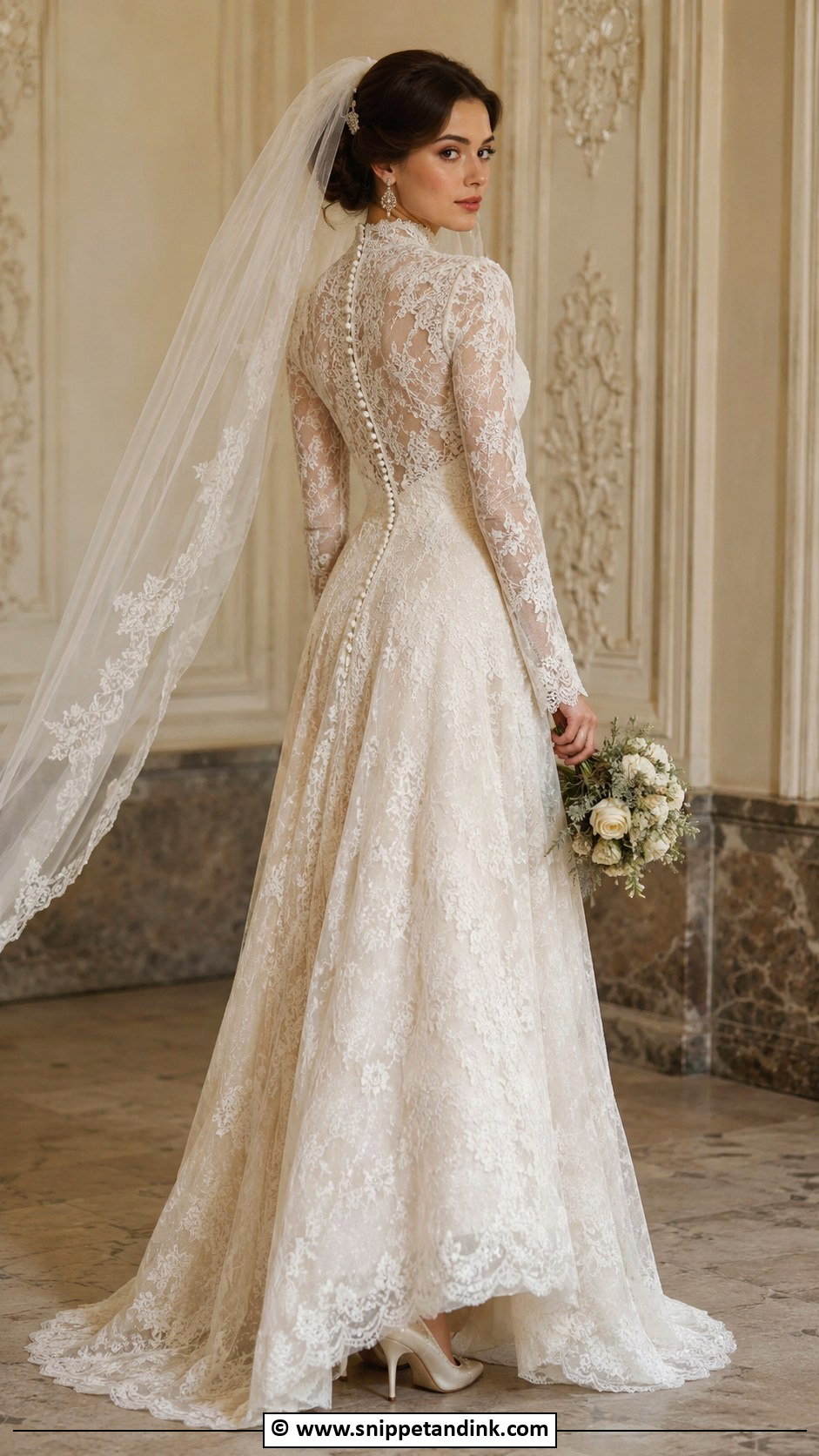
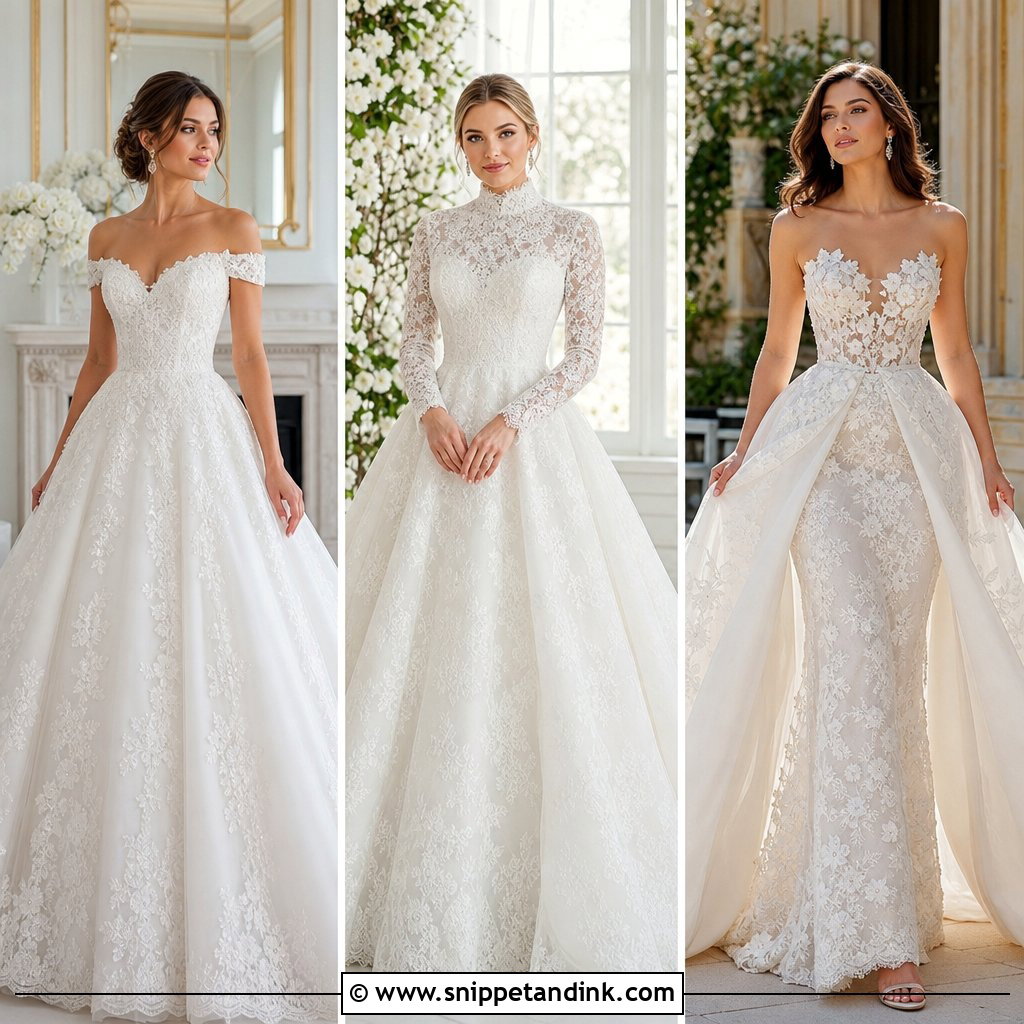
Vintage inspiration can mean lace sleeves, a high neck, a bias skirt, covered buttons, Art Deco beading or a basque waist. The trap is costume. I’d choose one strong period detail and keep everything else modern, so it reads as fashion. If you’re working an heirloom piece into the gown, bring it to the first appointment so the atelier can plan the fabric around it. A soft veil, heirloom-style earrings and elegant heels suit historic houses and estates.
26. Ruffled Organza Wedding Dress
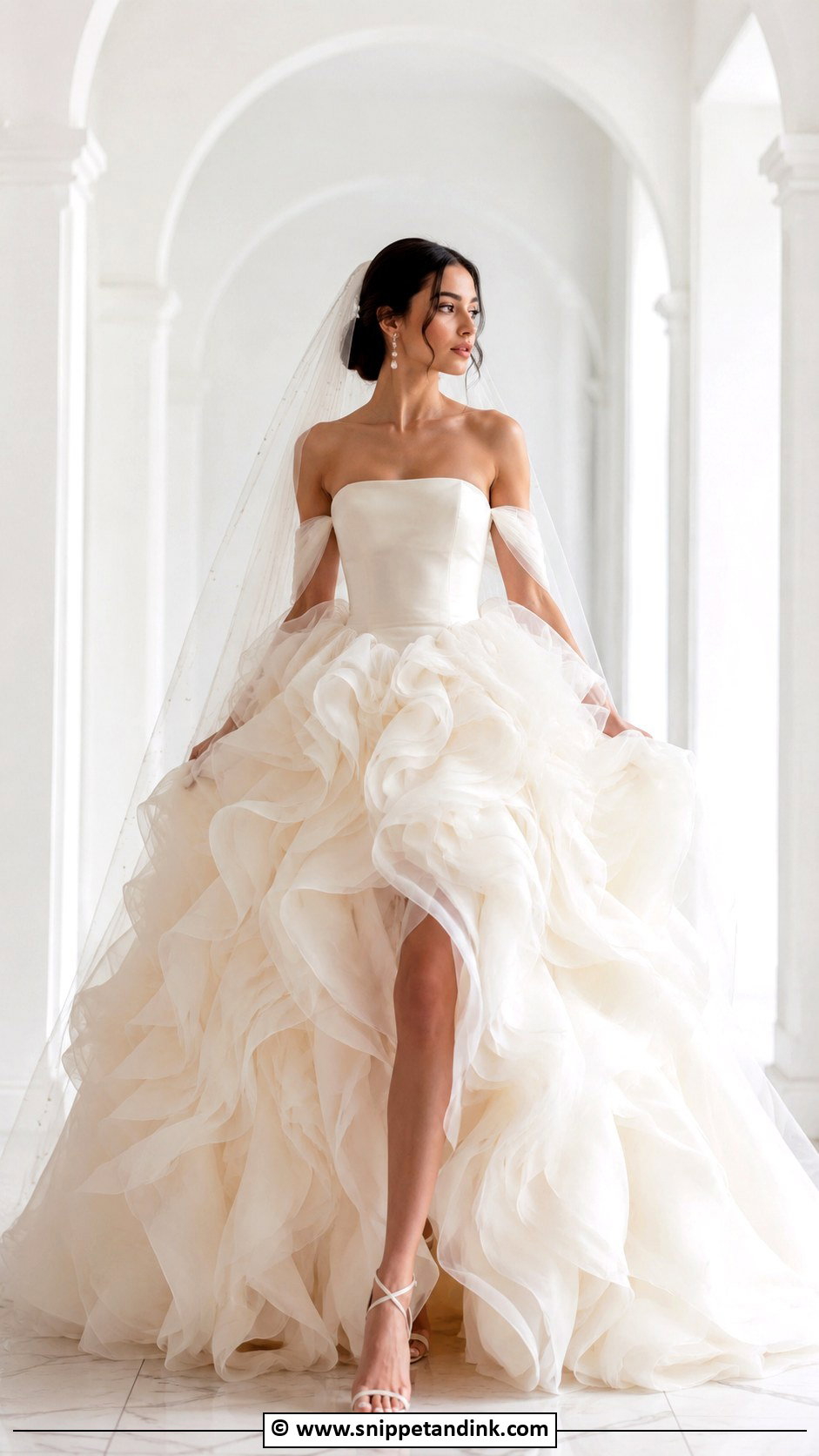
Organza holds its shape, so ruffles in it look airy and sculptural rather than limp. They can fall vertically, circle the hem or build a full skirt. Organza also creases sharply and can’t be pressed with a hot iron, so steaming on the day is part of the plan. A fitted bodice and simple neckline balance the texture. Small earrings, a sheer veil and delicate heels are enough. Bright venues and outdoor portraits show the movement best.
27. One Shoulder Wedding Gown
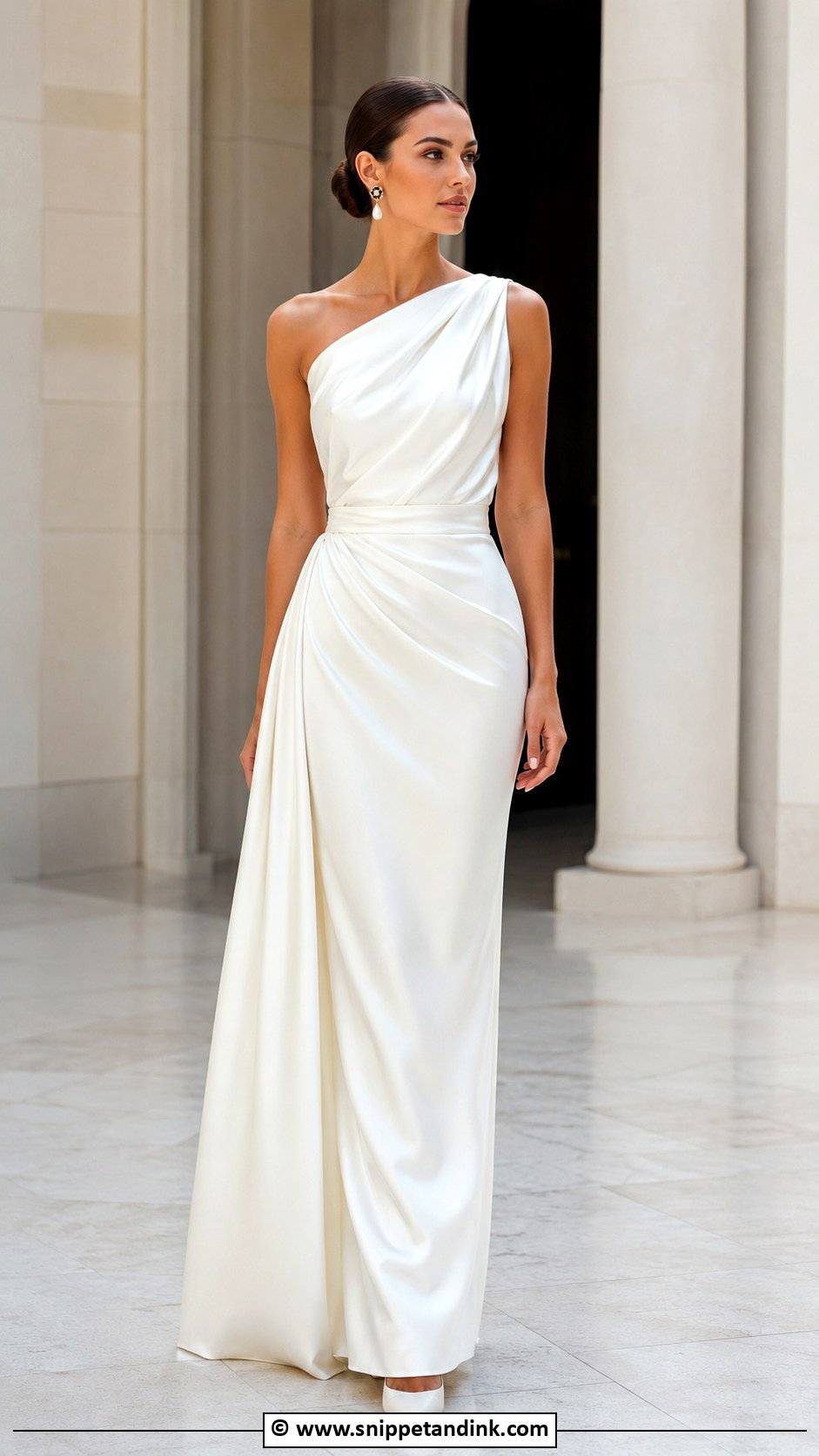
One shoulder gowns feel modern and a little unexpected. The asymmetric line adds interest without embellishment, in satin, crepe, silk or structured mikado. A fitted column is sleek; a one shoulder ball gown more dramatic. Some have a draped sleeve, bow or flower at the shoulder. The single strap needs internal support so the bodice doesn’t twist toward the strap side over the day. Choose earrings over a necklace and wear your hair back. Angled and side-view poses show it best.
28. Crystal Embellished Wedding Dress
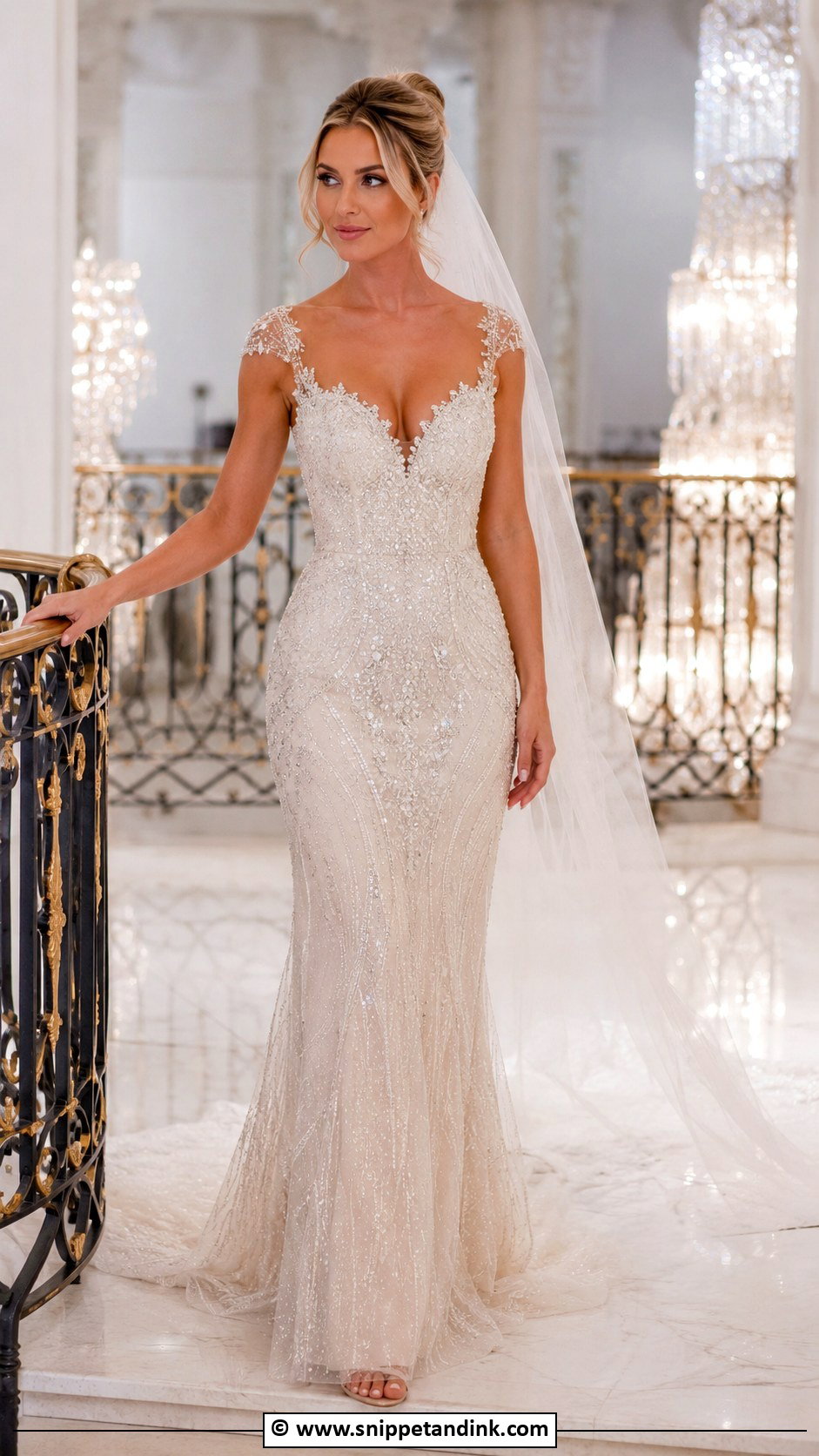
Crystals give dimension and sparkle, and the best gowns place them with intention: along the bodice, over lace appliqués or scattered across sheer tulle. A full crystal gown can be dazzling, but the cut must stay clean so the shine doesn’t take over. Heavy crystal on the inner arm and side seams can scratch, so I check that the beading stops short of where your arms rub. Simple heels, soft makeup and a plain veil balance it for evening receptions under warm light.
29. Modern Bridal Suit Gown
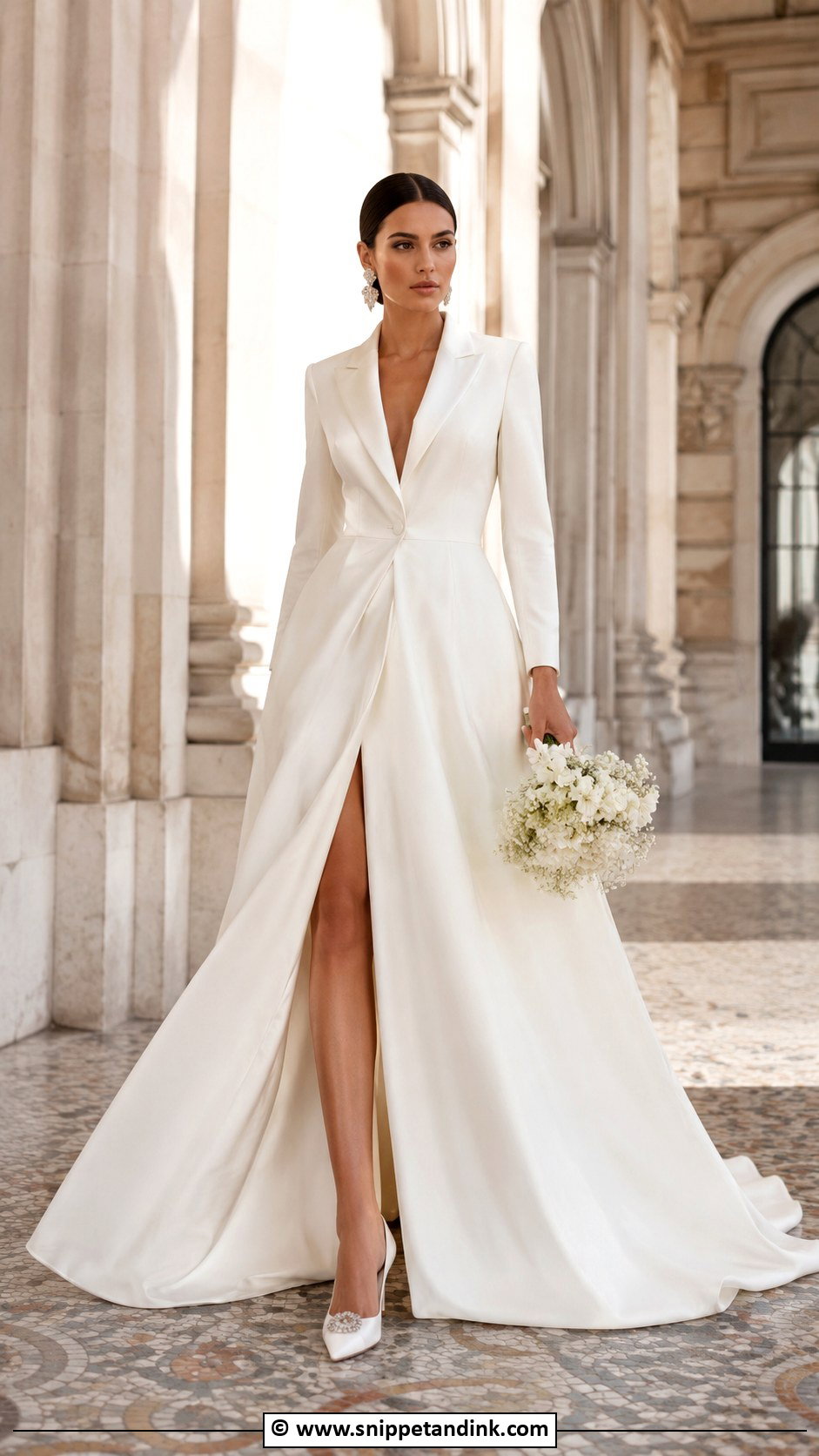
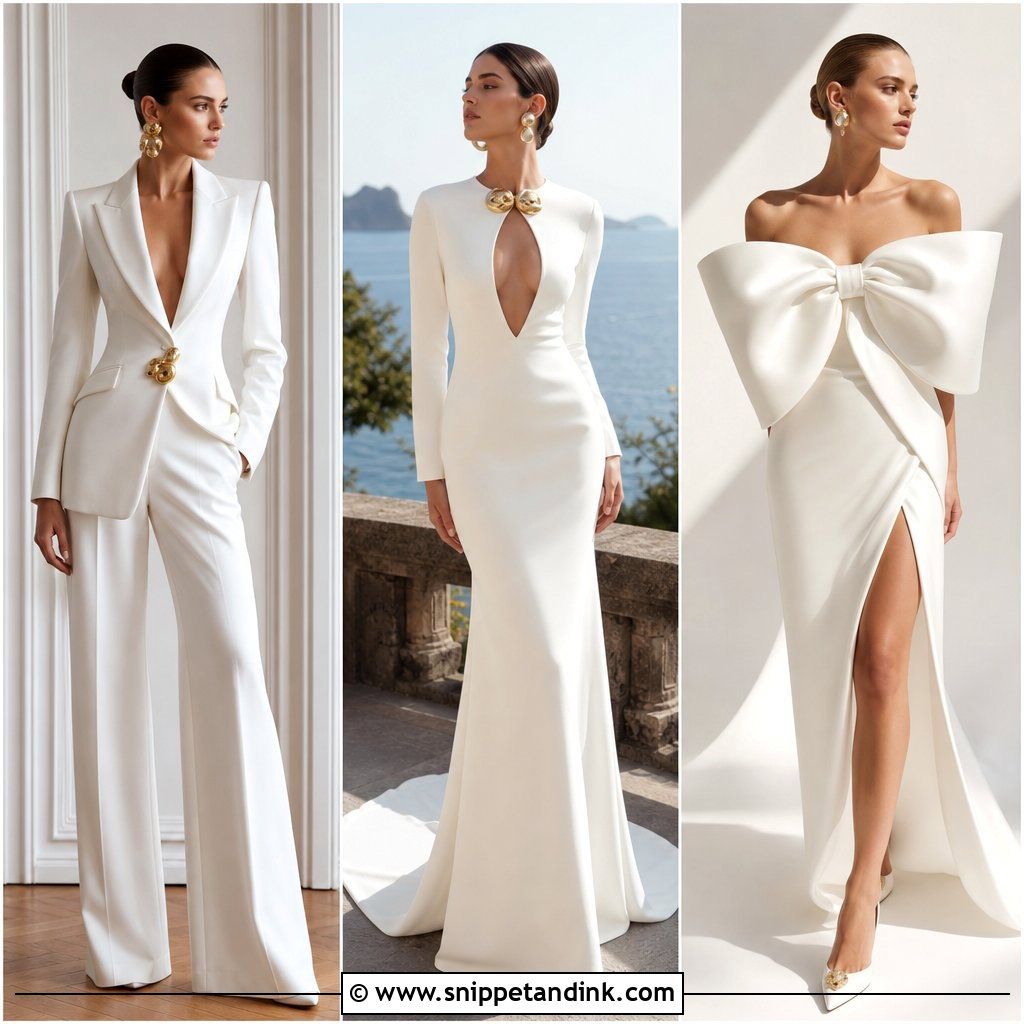
A suit-inspired gown blends tailoring with bridal shape: a structured blazer bodice over a flowing skirt, a tuxedo-style gown or a tailored jacket over a sleek dress. Ivory crepe, satin lapels, sharp shoulders and a clean waist make it polished. The shoulder pad needs to be fitted to you, as an oversized one looks borrowed in close photos. Pointed heels, sculptural earrings and smooth hair suit it, with a short veil or cape if you’d like it softer. City weddings and modern venues suit it well.
30. Two Piece Couture Wedding Gown
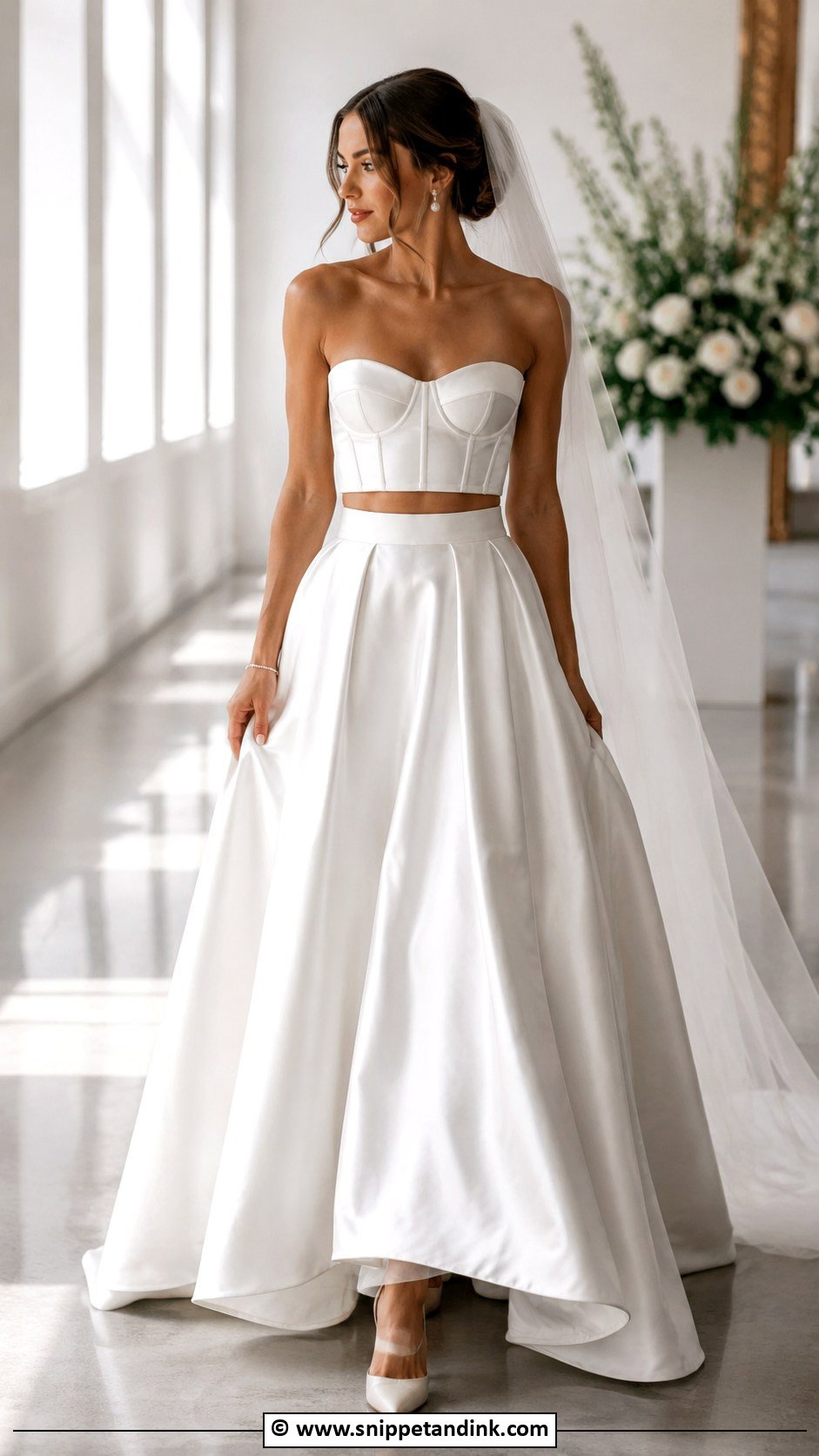
Two-piece couture lets you combine a corset with a full skirt, a lace top with a satin skirt or a cropped bodice with a high-waisted ball gown skirt. Matching fabrics give one continuous line; mixed textures add personality. The gap between top and skirt is my focus in fittings, so arms up and sitting down, nothing should show unless you want it to. It also lets you swap a top for the reception. Elegant heels, simple jewellery and a veil suited to the neckline complete it.
How a Heavy Gown Behaves After the Ceremony
Couture gowns are often heavier than brides expect, especially with beading, a full skirt or a long train. Weight that feels fine standing in a fitting can tire your shoulders by the speeches. Wear the gown for an hour at your last fitting, sitting and walking, and tell the atelier where you feel it. They can move support into the corset so it isn’t hanging from straps.
Restrooms, car journeys and dinner all need a plan. Choose one or two people to help with the skirt and bustle, and pack a small kit: a needle and thread in the gown’s colour, a few safety pins, a stain pen tested on a fabric offcut and a clean white cloth.
Afterward
Have the gown cleaned by a specialist soon after the wedding, since sugar from champagne and cake can turn invisible spots brown over time. Heavy gowns shouldn’t hang by their shoulders for long; the inner hanging loops at the waist are there to take the weight. For long-term storage, most specialists fold the gown flat in acid-free tissue inside a breathable box, kept somewhere cool and dark.
Fit First, Then Fabric, Then the Details
What makes a gown couture is the attention to shape, fabric and detail around one body. A sculptural ball gown, pearl sheath, lace dress, silk column or cape can all get there. Think about your venue, season, how much you’ll move and how the gown looks from the back as well as the front. Sleeves, trains, waistlines and textures each change the mood. Get the fit right and the rest follows.
You'll Like These Ideas:







Leave a Reply