
A bridal lehenga is three garments, the skirt, the blouse and the dupatta, and a fourth thing nobody shows in photos: how it feels at hour seven. When I style a lehenga bride, we decide colour quickly and then spend most of the time on weight, blouse fit and how the dupatta will be pinned. Brides today wear everything from classic red zardozi to sage, champagne, ivory, lavender and featherweight pastels. Below are thirty looks for ceremonies, daytime functions and receptions, each with the jewelry, shoes and hair I’d put with it and the practical catch to watch for.
How Heavy Is Too Heavy? Testing a Lehenga Before You Buy
Heavily worked bridal lehengas can weigh several kilograms, most of it hanging from your waist. That weight is why so many brides look tired by the reception. I ask every bride to do three things in the shop before deciding.
- Wear the skirt with the dupatta pinned on for at least twenty minutes, not two.
- Sit on a low stool or cushion the way you will during rituals, then stand up without help.
- Walk a few steps and turn. If the skirt swings late and pulls you, it is heavier than you think.
Ask how the weight is supported. A broad inner waistband, a can-can layer that holds the skirt away from your legs, and in some cases shoulder straps sewn into the blouse lining all spread the load. If the weight is mostly in the hem, it will feel heavier than the same total weight spread evenly.
Timing the blouse
Order the outfit four to six months ahead if it is being made or customised. The blouse decides how the whole look sits, so attend the blouse fitting wearing the bra you will wear on the day, and plan a final fitting two to three weeks before the wedding.
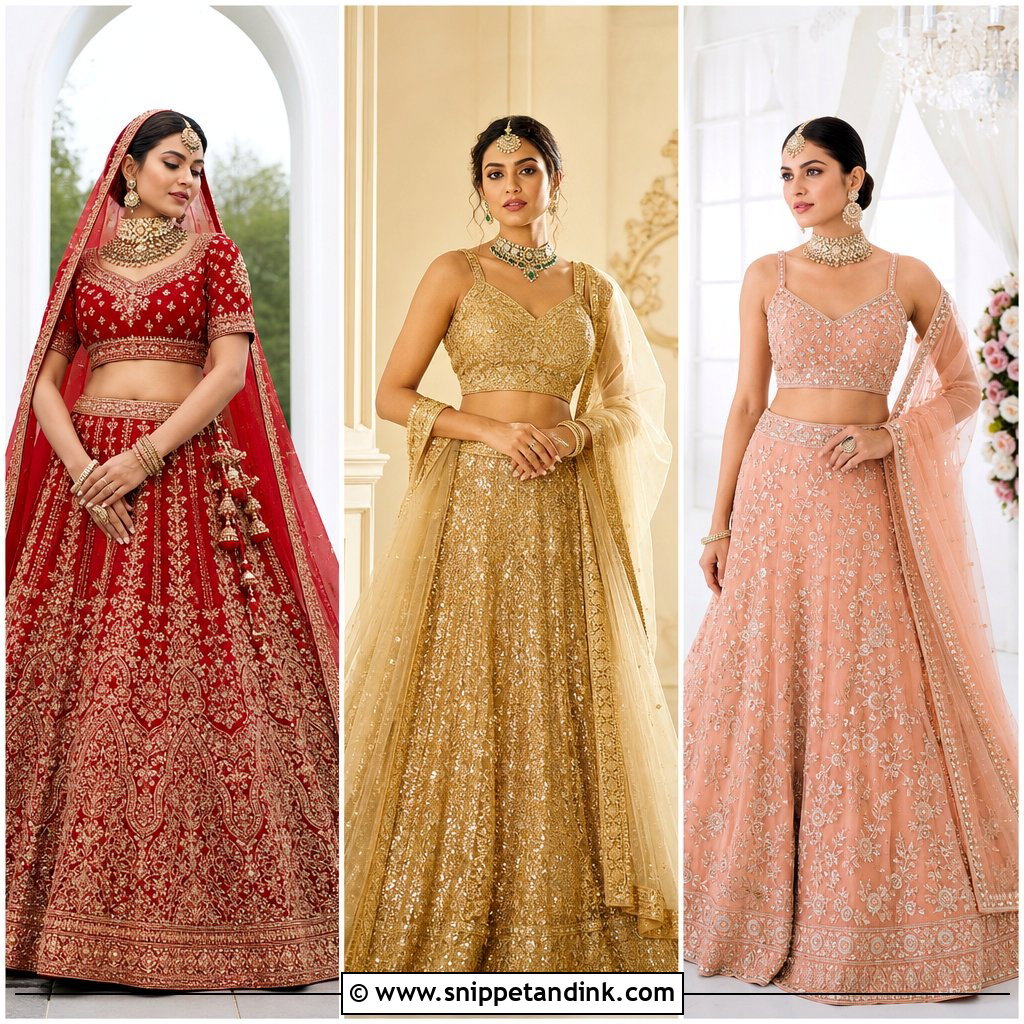
1. Red Bridal Lengha With Gold Jewelry
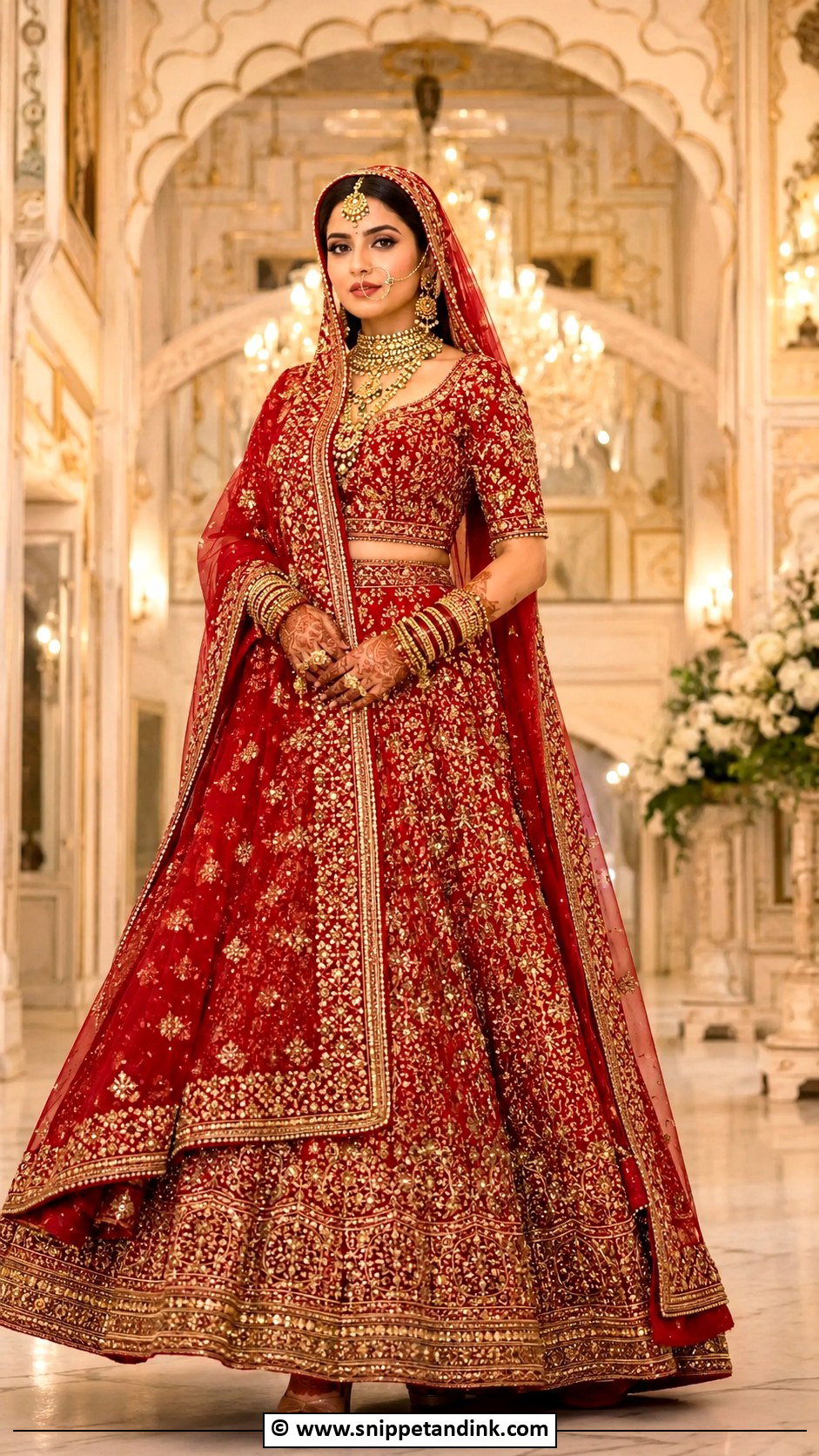
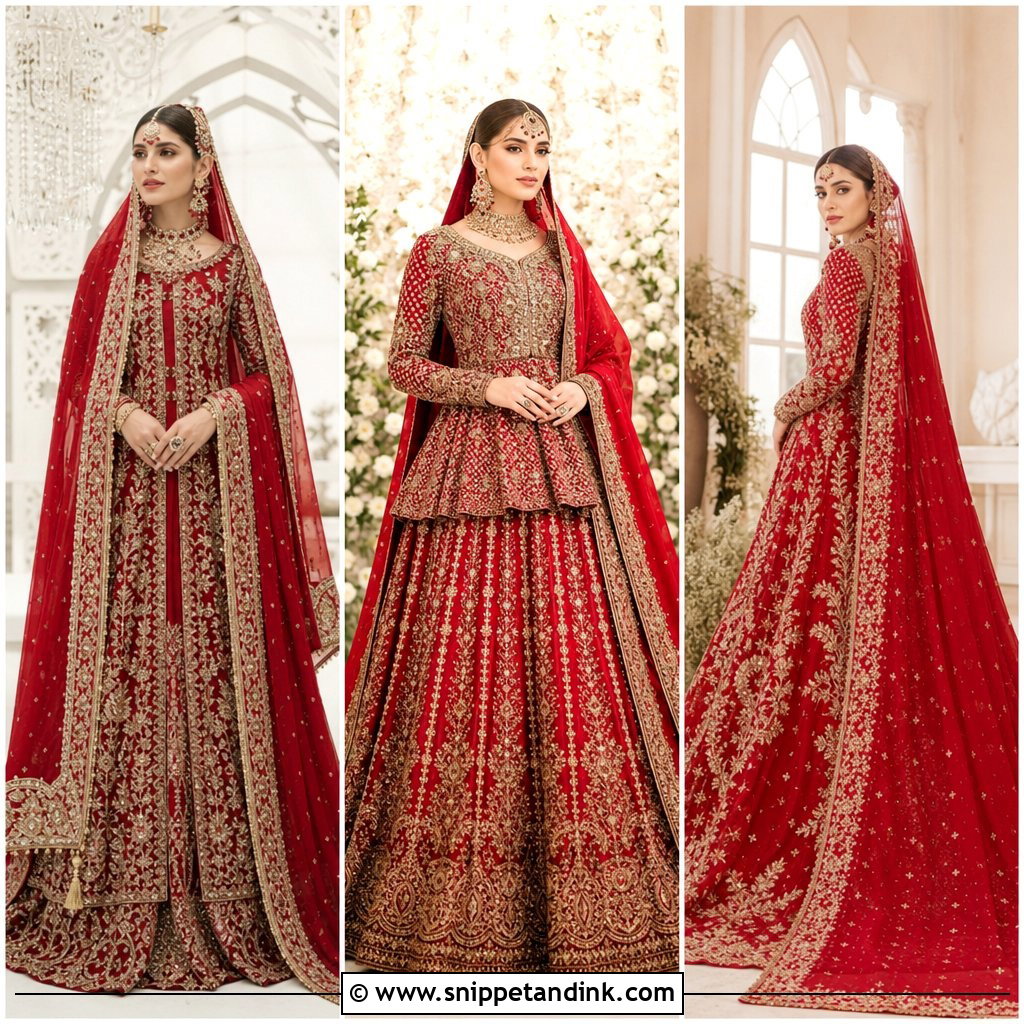
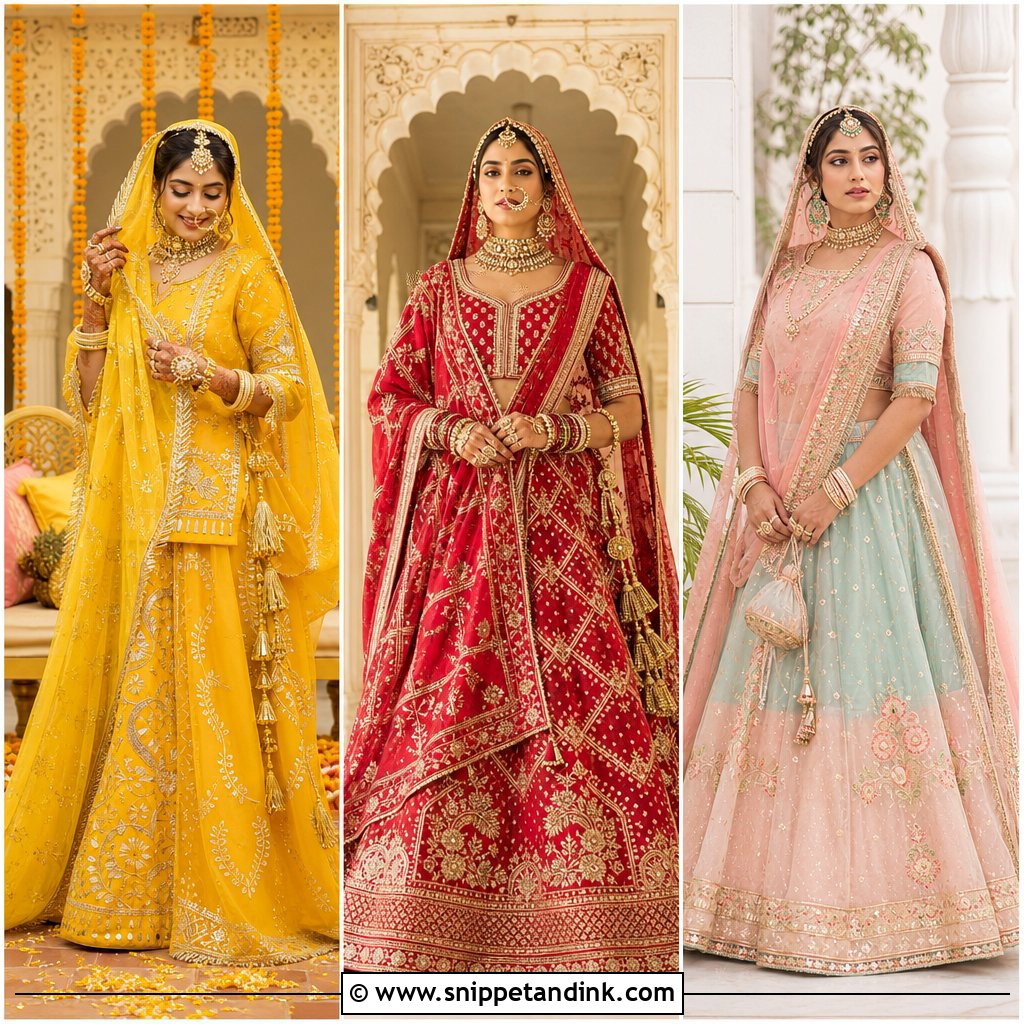
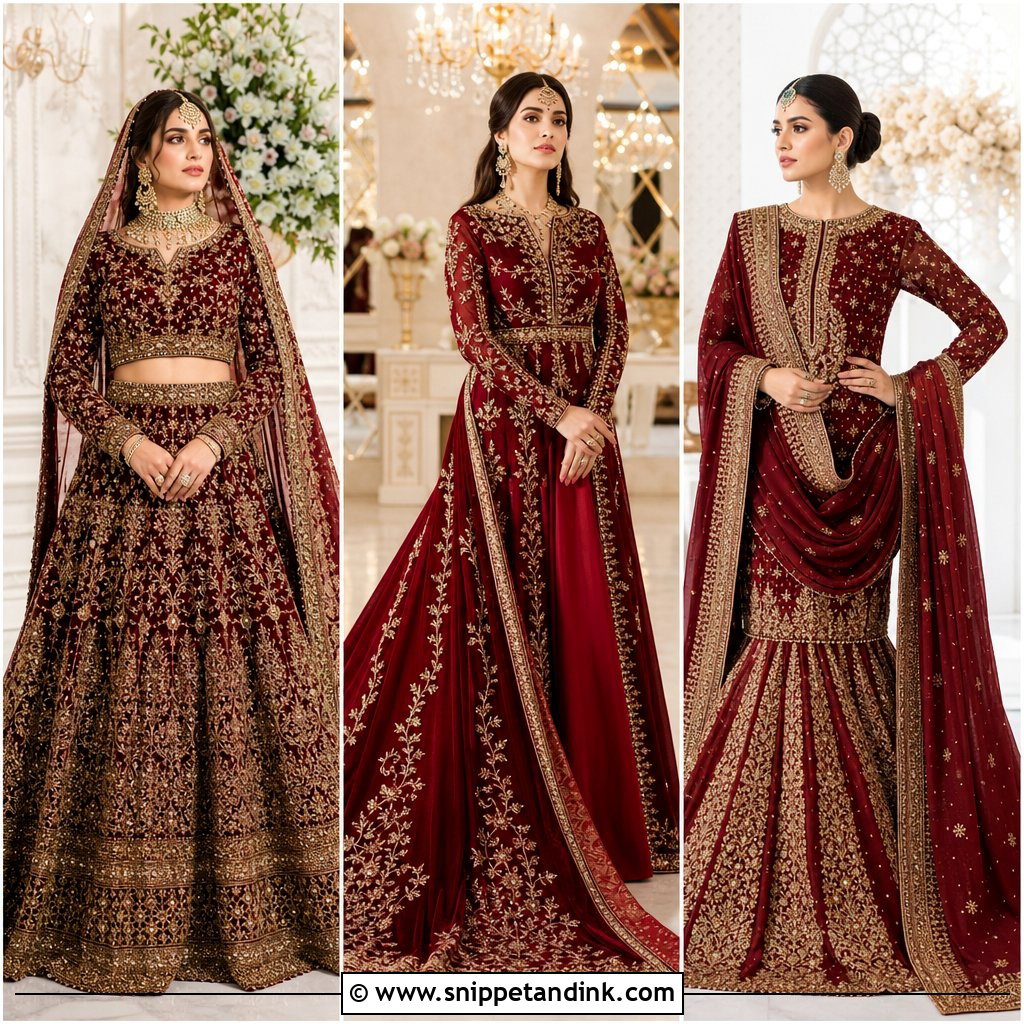
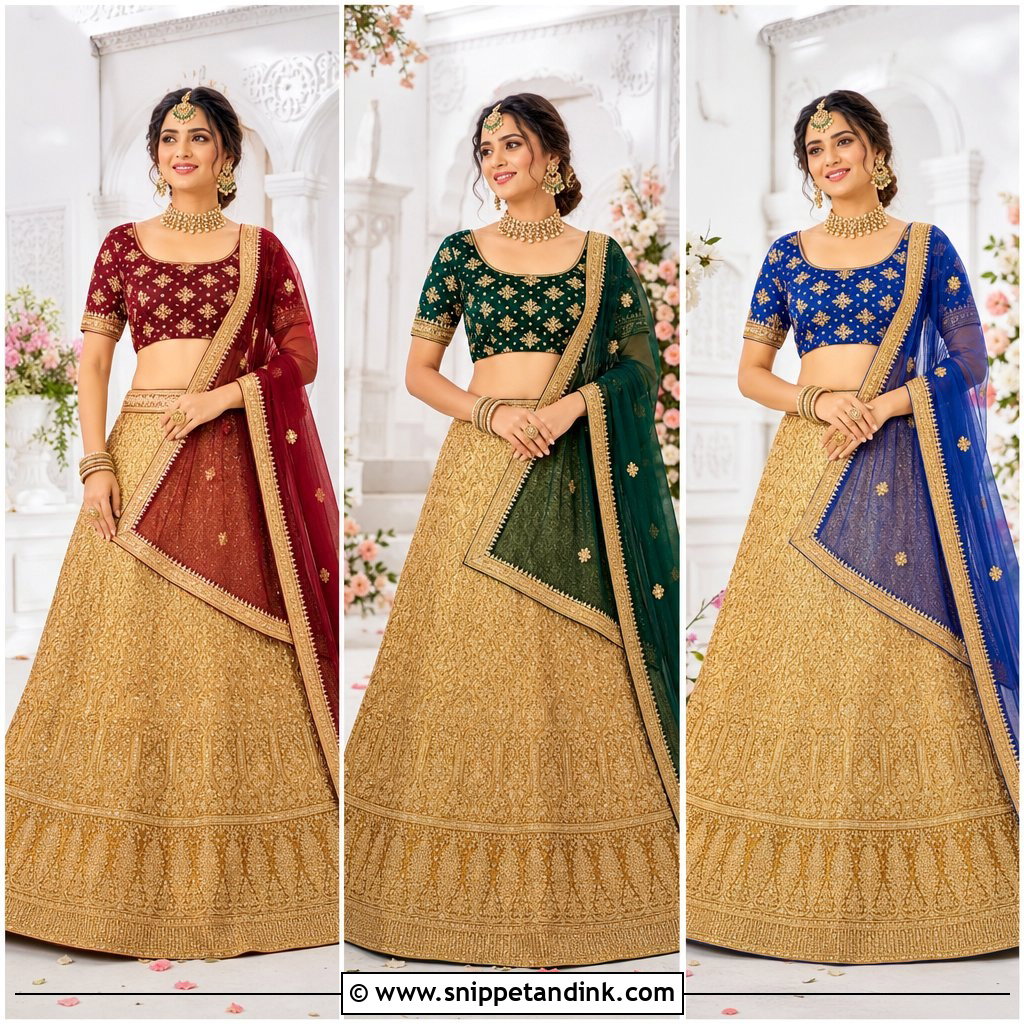
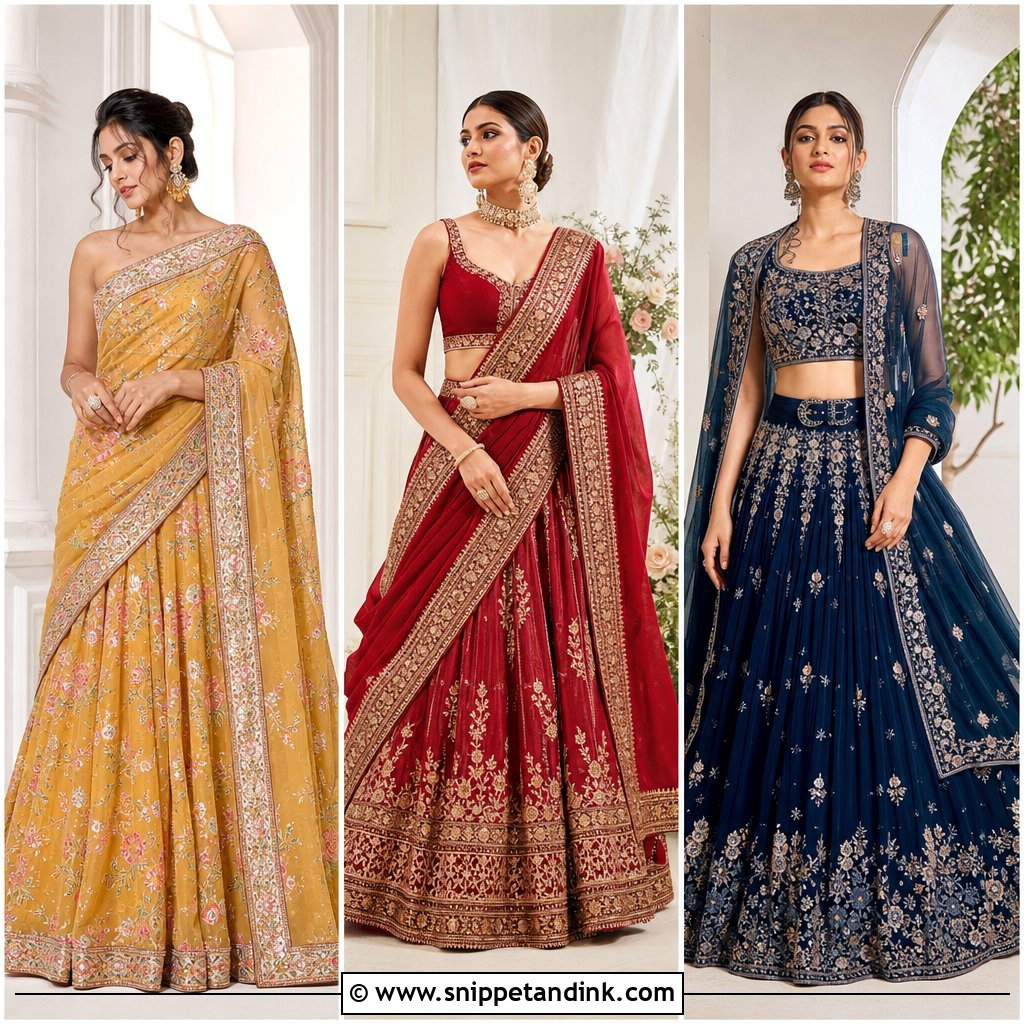
Red with zardozi, dabka or thread embroidery is still the look many families picture first, and it holds its colour well under both daylight and evening lights. A fitted blouse with elbow-length sleeves balances the skirt’s volume and is kinder to your arms than a sleeveless cut when the dupatta is heavy. Gold jewelry layers naturally: choker, long necklace, maang tikka, bangles and jhumkas. Pick shoes for comfort, since the hem covers them. A sleek bun with fresh flowers gives the dupatta a stable base to pin into.
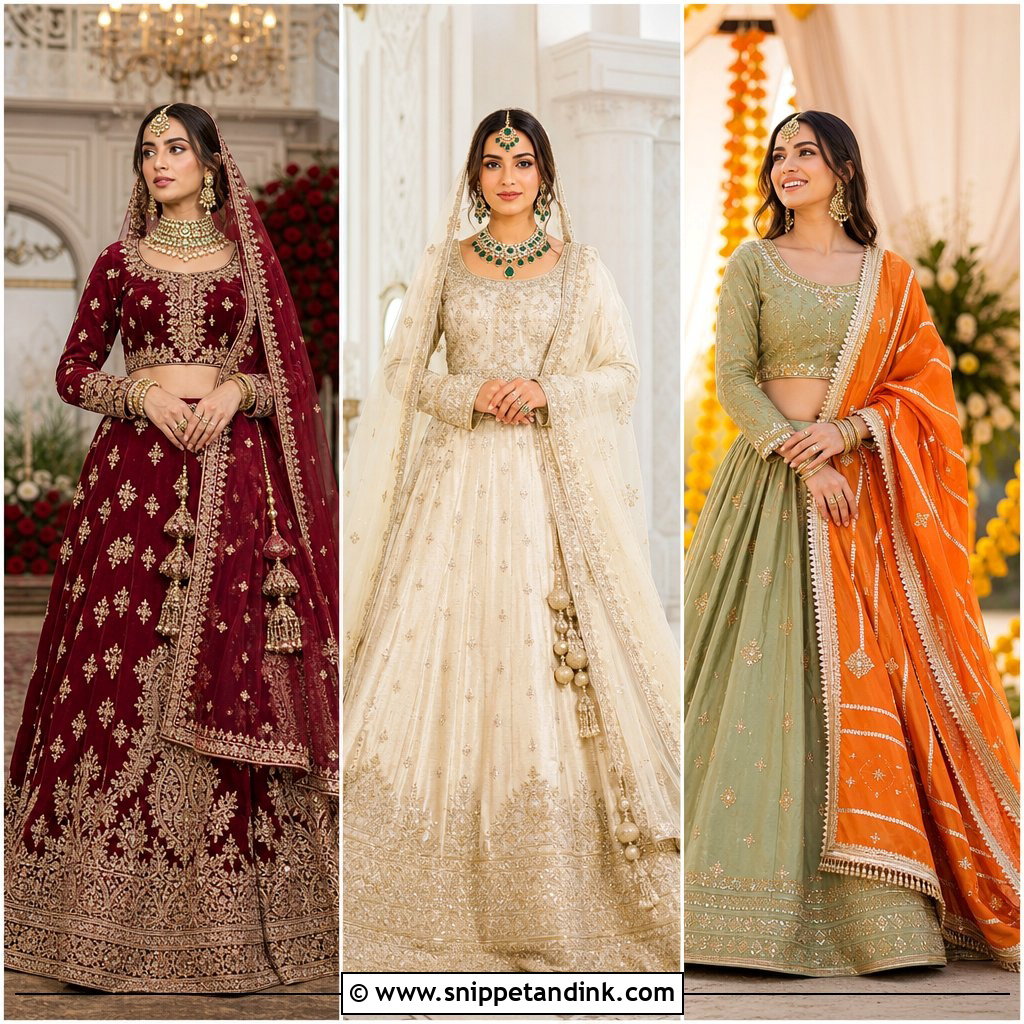
2. Maroon Bridal Lengha With Velvet Dupatta
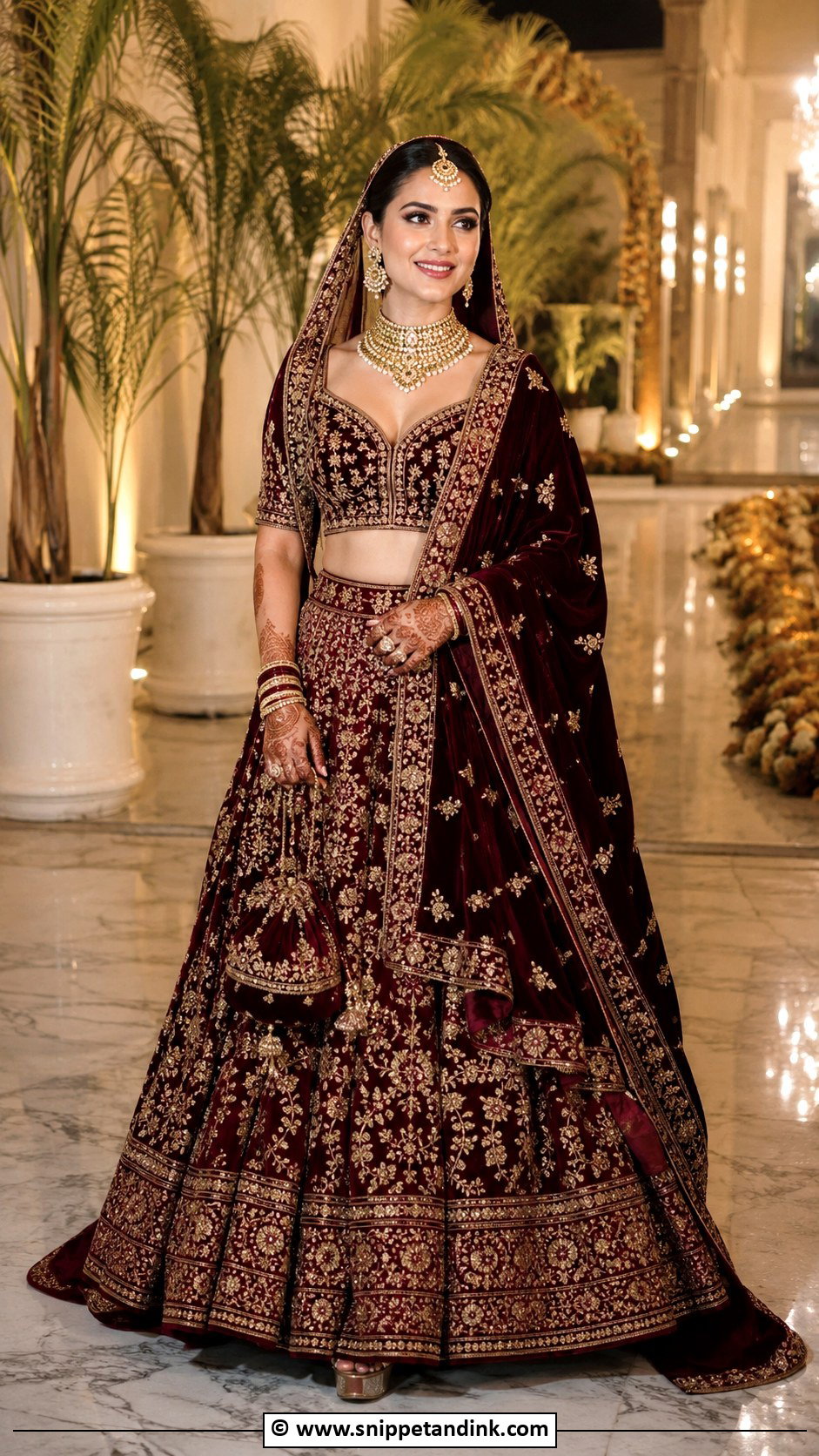
Maroon is red’s quieter sibling, and I find it suits evening ceremonies and winter dates better because it doesn’t flare orange under warm lights. Antique gold embroidery and a velvet dupatta add texture. Velvet is heavy, though, so if the skirt is already heavily worked I’d move the velvet to a shoulder drape and use a lighter net dupatta over the head. kundan or polki jewelry keeps it traditional. Matte makeup, defined eyes, a low bun, embellished heels and a potli bag finish it.
3. Blush Pink Bridal Lengha With Pearl Jewelry
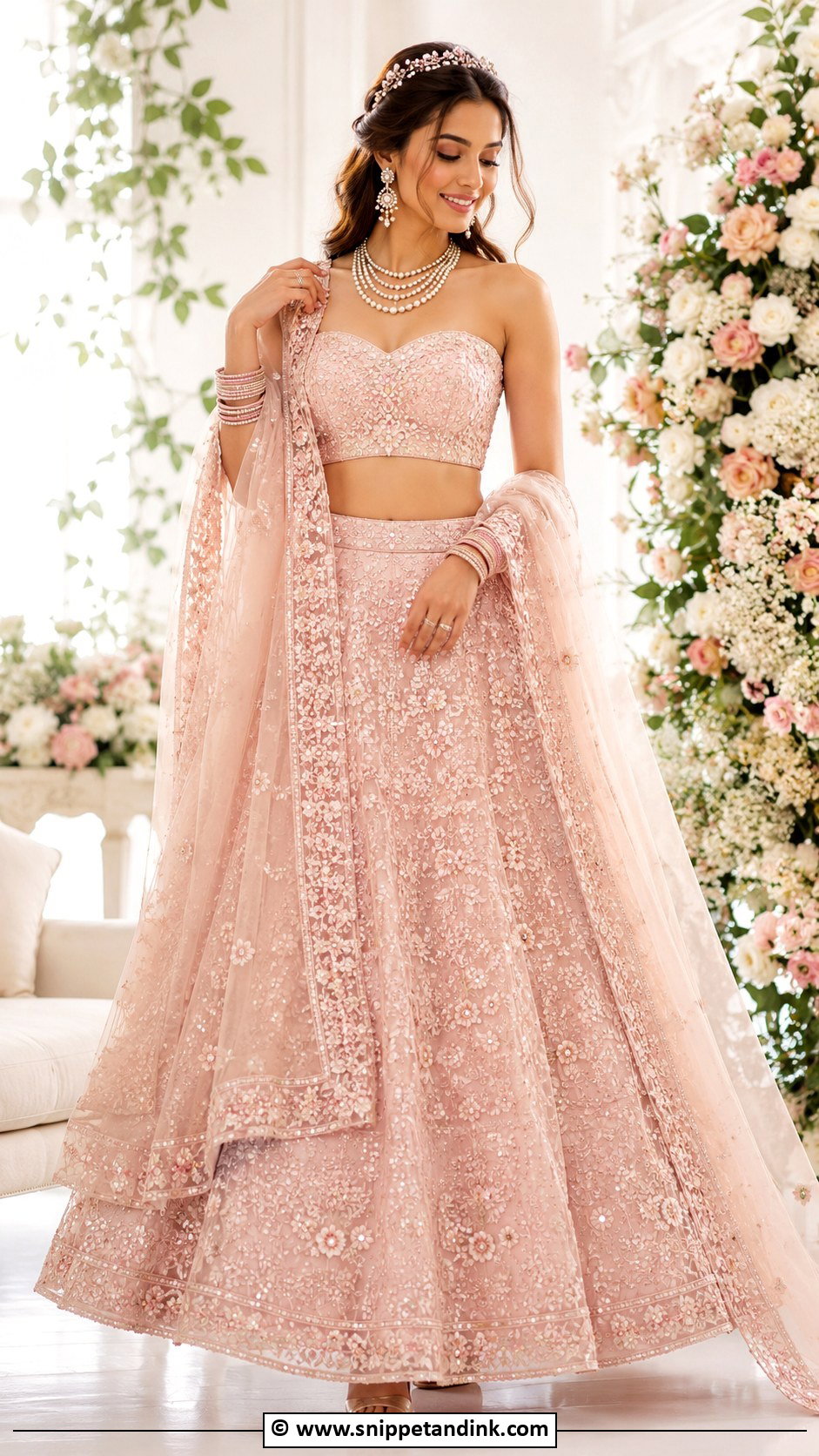
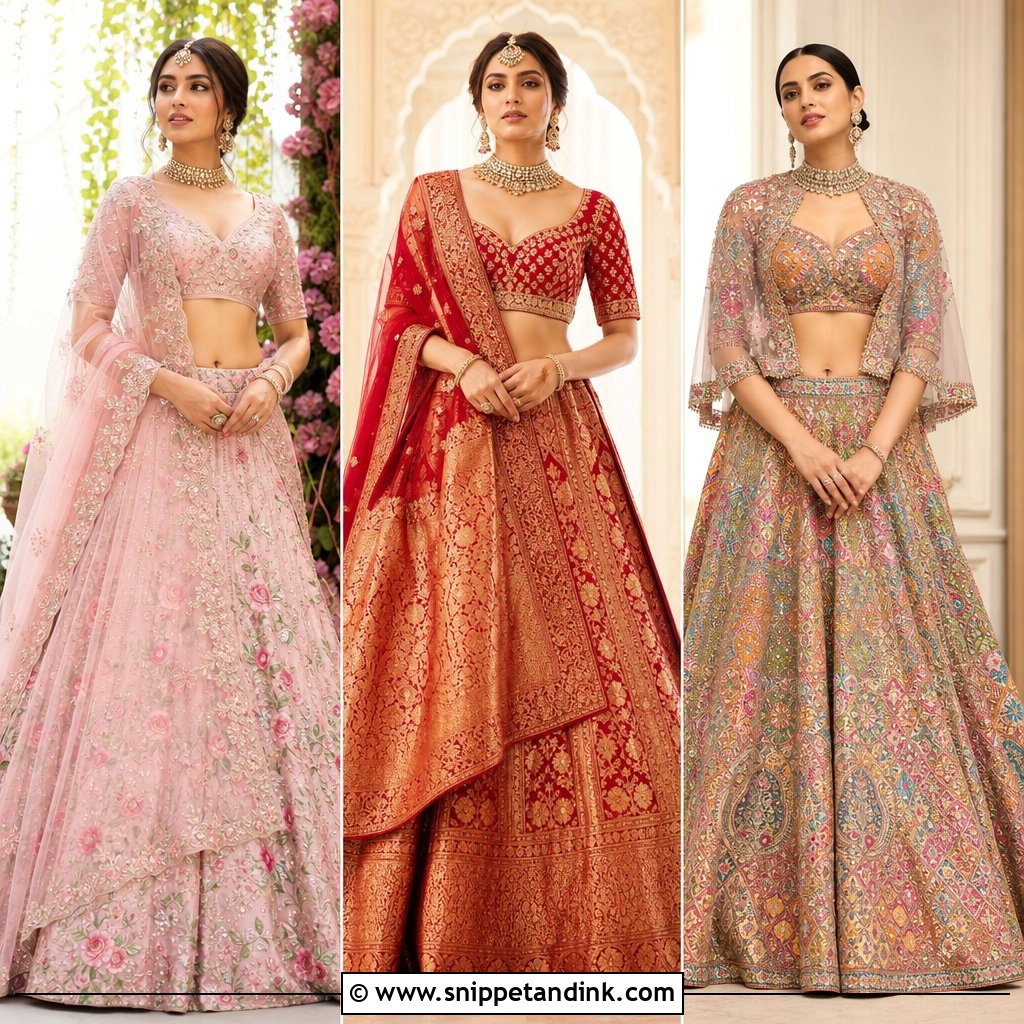
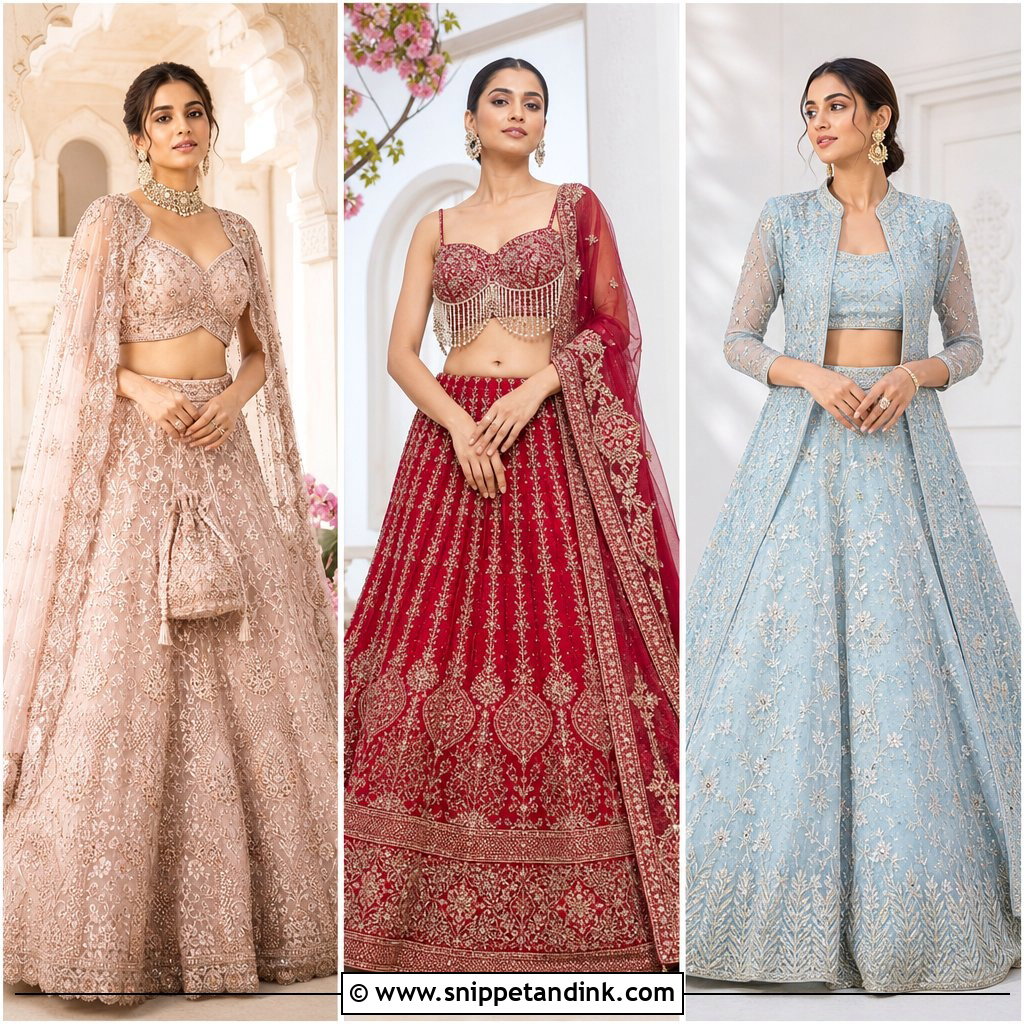
Blush pink feels fresh and gentle, and tone-on-tone sequin or pearl embroidery suits it better than heavy gold. A sweetheart or scoop-neck blouse softens the line, and a sheer dupatta keeps it light. Pearls are the natural jewelry here, layered necklaces, pearl drops and a small maang tikka. One thing I check in daylight: very pale blush can look like skin from a distance on fair brides, so a shade with a little more rose usually reads better in group photos.
4. Ivory Bridal Lengha With Polki Jewelry
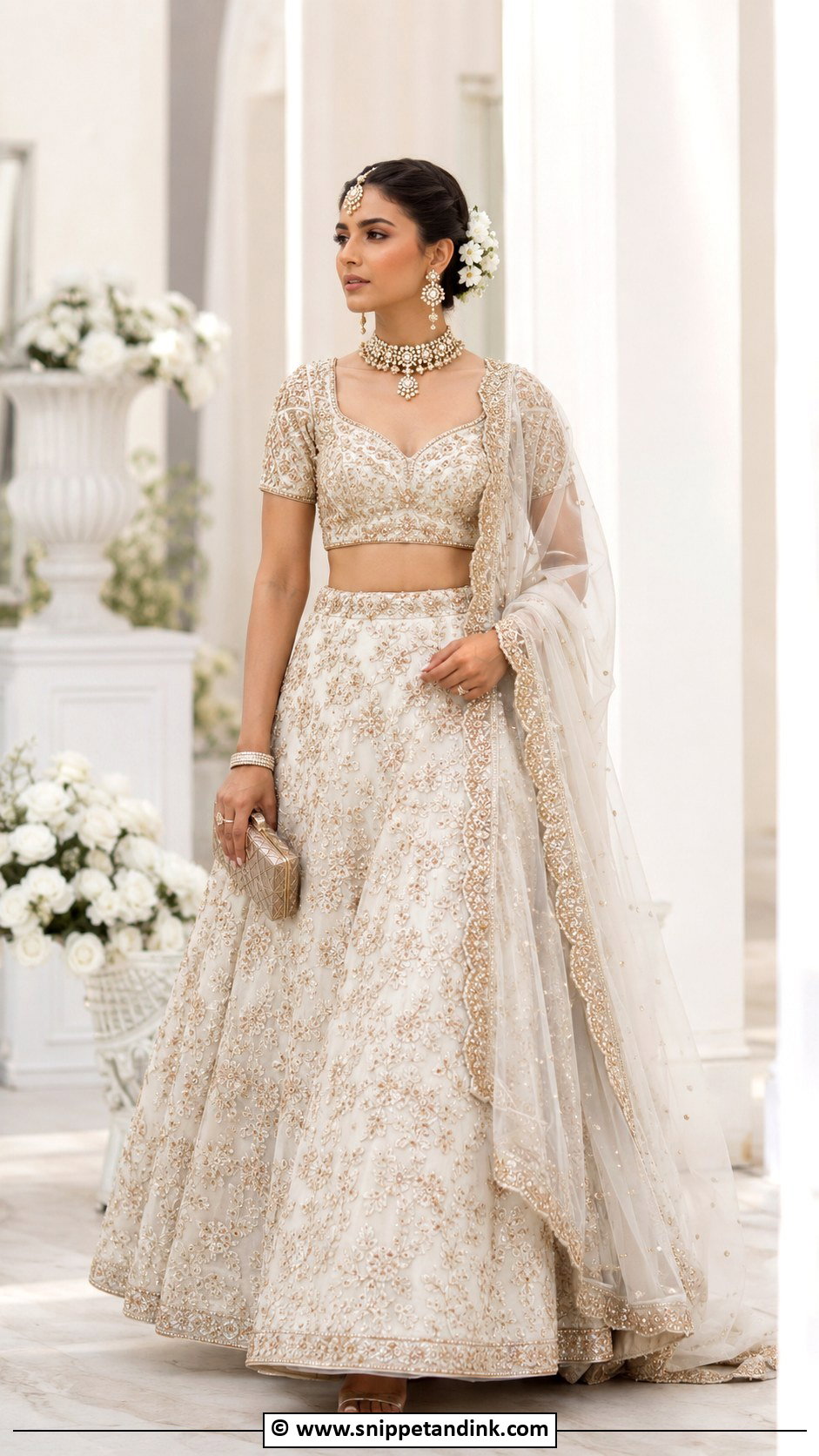
Ivory relies on fabric and embroidery rather than colour to make its impact. Silk, organza or raw silk with gold, pearl or resham work give it depth. Polki suits the pale palette without overpowering it, and green bangles or ruby-toned earrings add a hint of colour if your family expects some. Ivory shows every mark, so I keep a white chalk stick and a stain pen in the bridal bag. Metallic heels and a structured clutch complete it.
5. Champagne Gold Bridal Lengha With Sequin Work
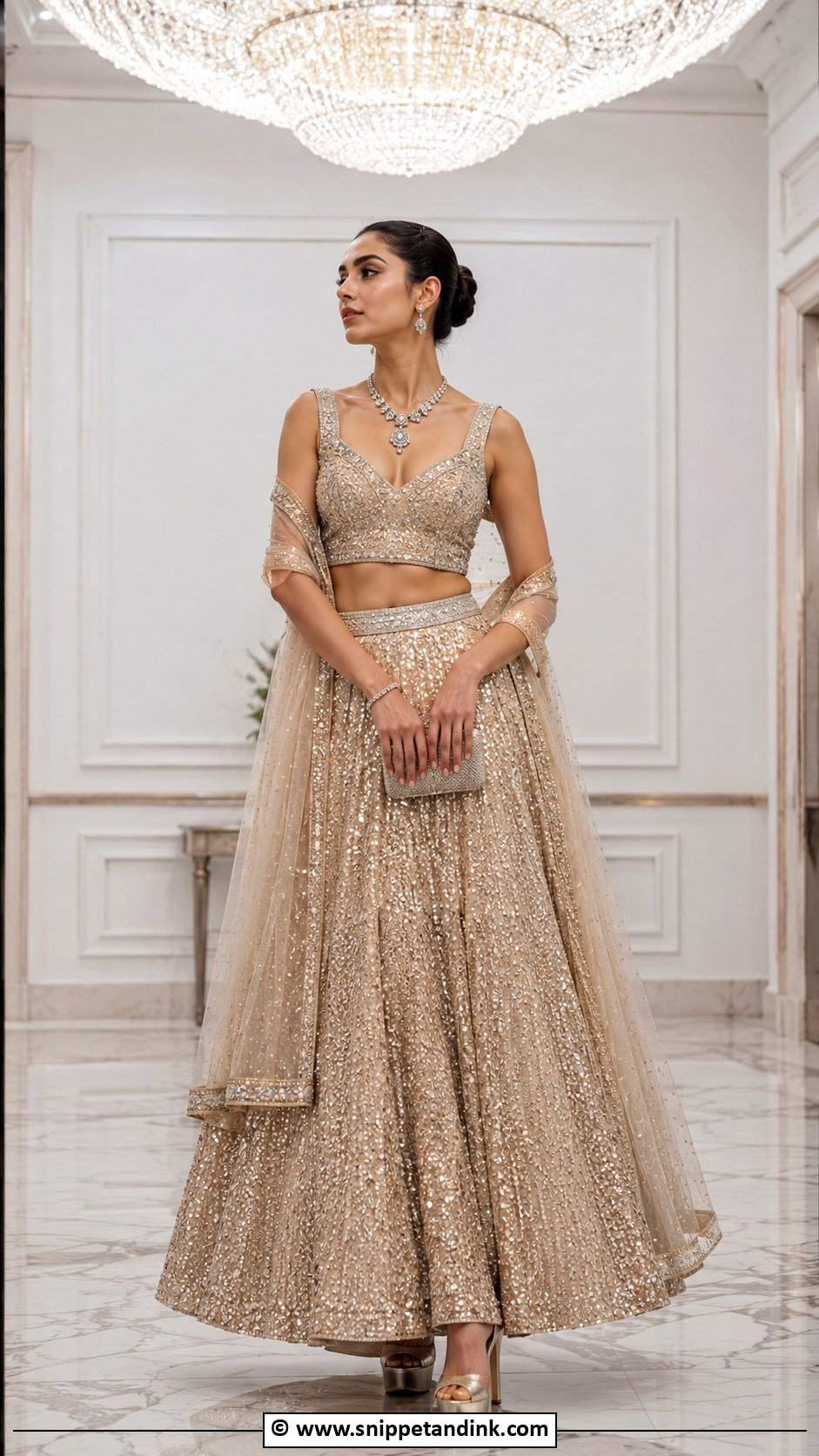
Champagne gold glows without loud colour, which suits receptions, engagements and evening vows under bright lights. Choose fine sequin, crystal accents or metallic thread so the shine stays refined; large sequins can flare white under camera flash. A matching blouse with full sleeves or a structured neckline gives it a more formal finish. Keep the dupatta sheer and neatly draped to avoid bulk. Diamond-style jewelry, crystal heels and a sleek bun.
6. Sage Green Bridal Lengha With Silver Embroidery
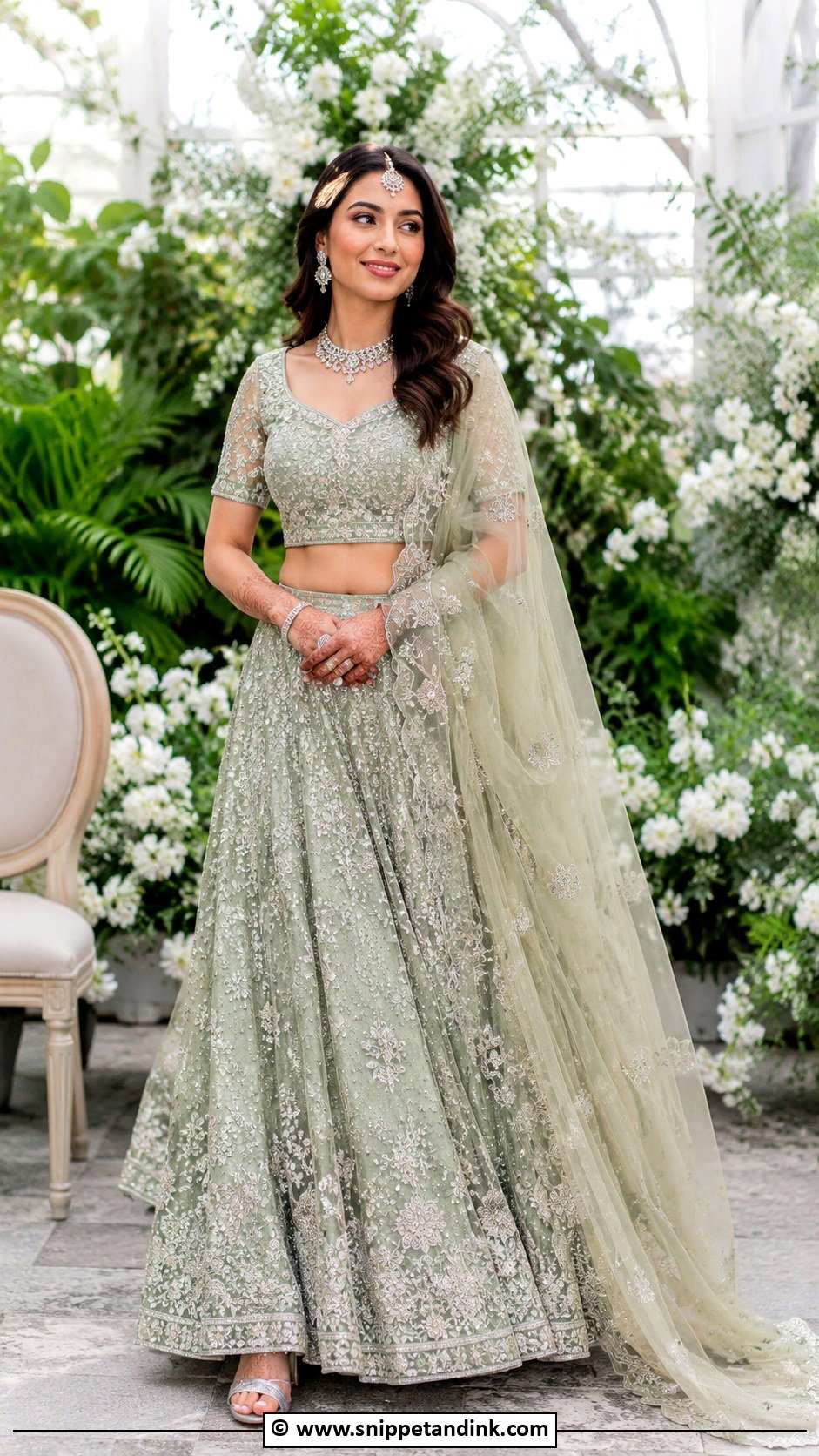
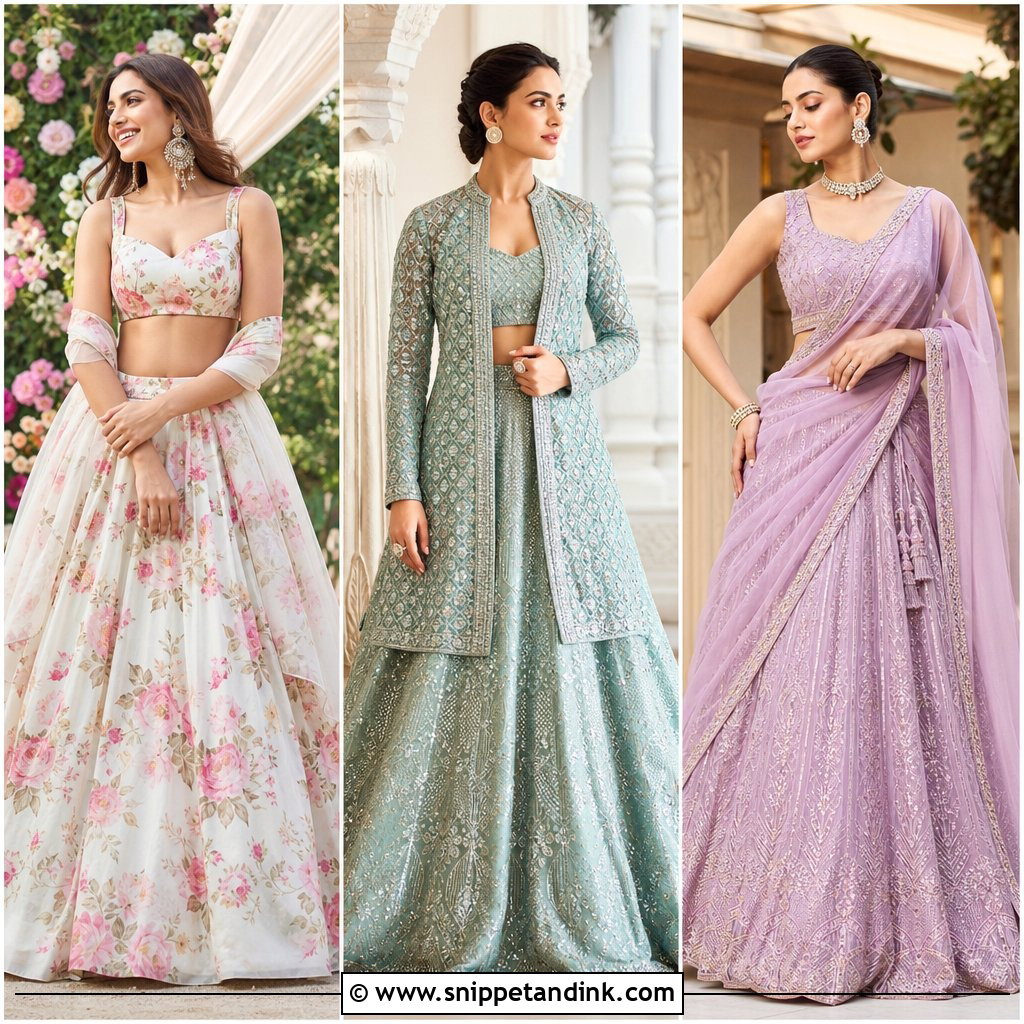
Sage with silver embroidery is calm and suits garden weddings and daytime ceremonies. Floral motifs on a full skirt, delicate sleeve detail on the blouse, and a sheer dupatta in the same shade keep it cohesive. Silver or diamond-style jewelry brightens it. I’d pair it with soft pink makeup rather than heavy bronze, which can make sage look muddy. Silver heels and a pearl-accented clutch finish it.
7. Pastel Blue Bridal Lengha With Diamond Jewelry
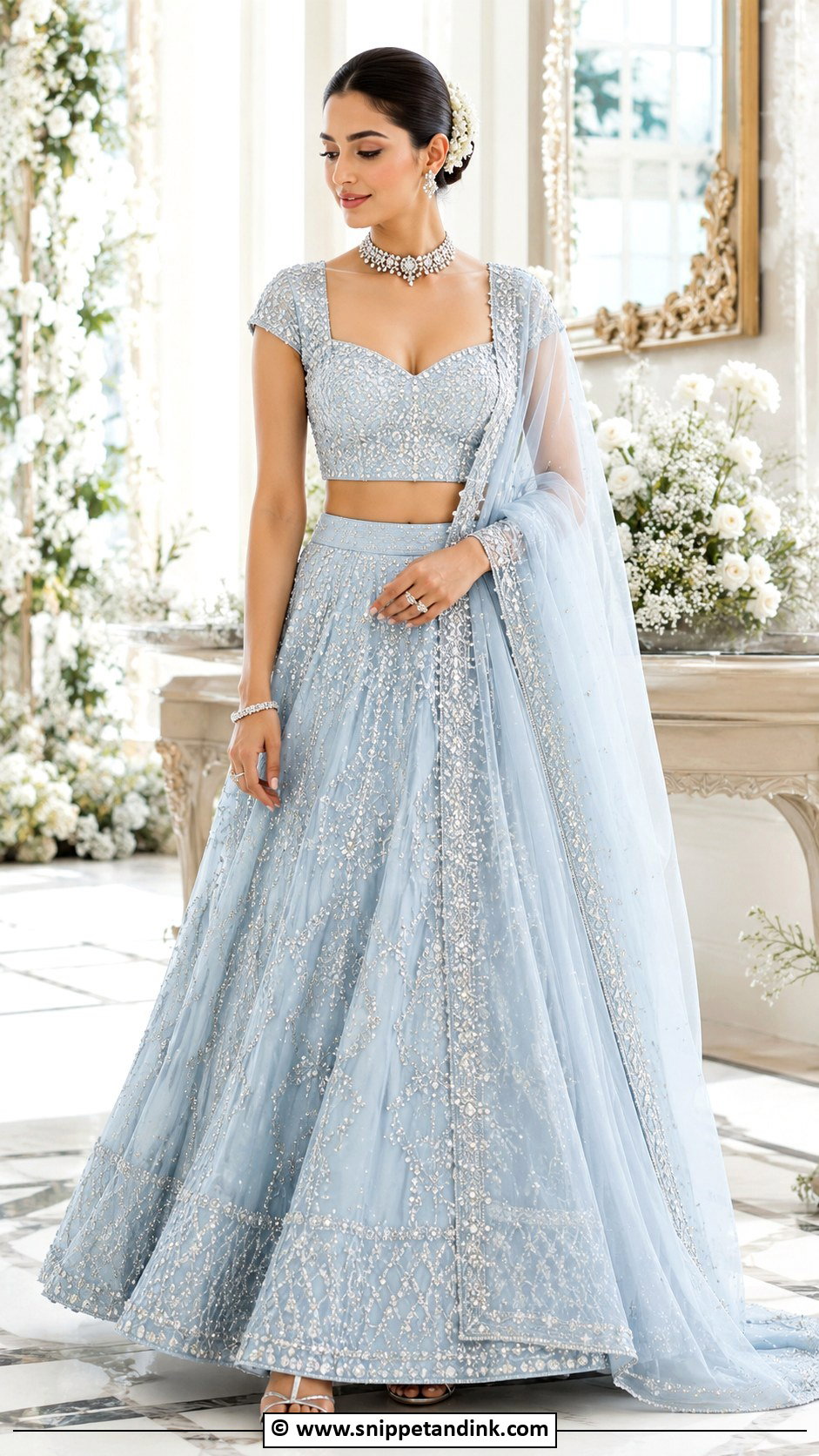
Pastel blue gives a cool, fresh look, and powder or icy blue with silver, pearl or crystal work keeps it airy. A delicately embroidered blouse and a soft net dupatta create the silhouette. Diamond-style jewelry catches the light best against blue. The thing to test is your skin tone in daylight; some icy blues pull warm skin slightly grey, and a blue with a touch of lavender often fixes it. Rosy cheeks, metallic sandals and a neat bun.
8. Lavender Bridal Lengha With Floral Embroidery
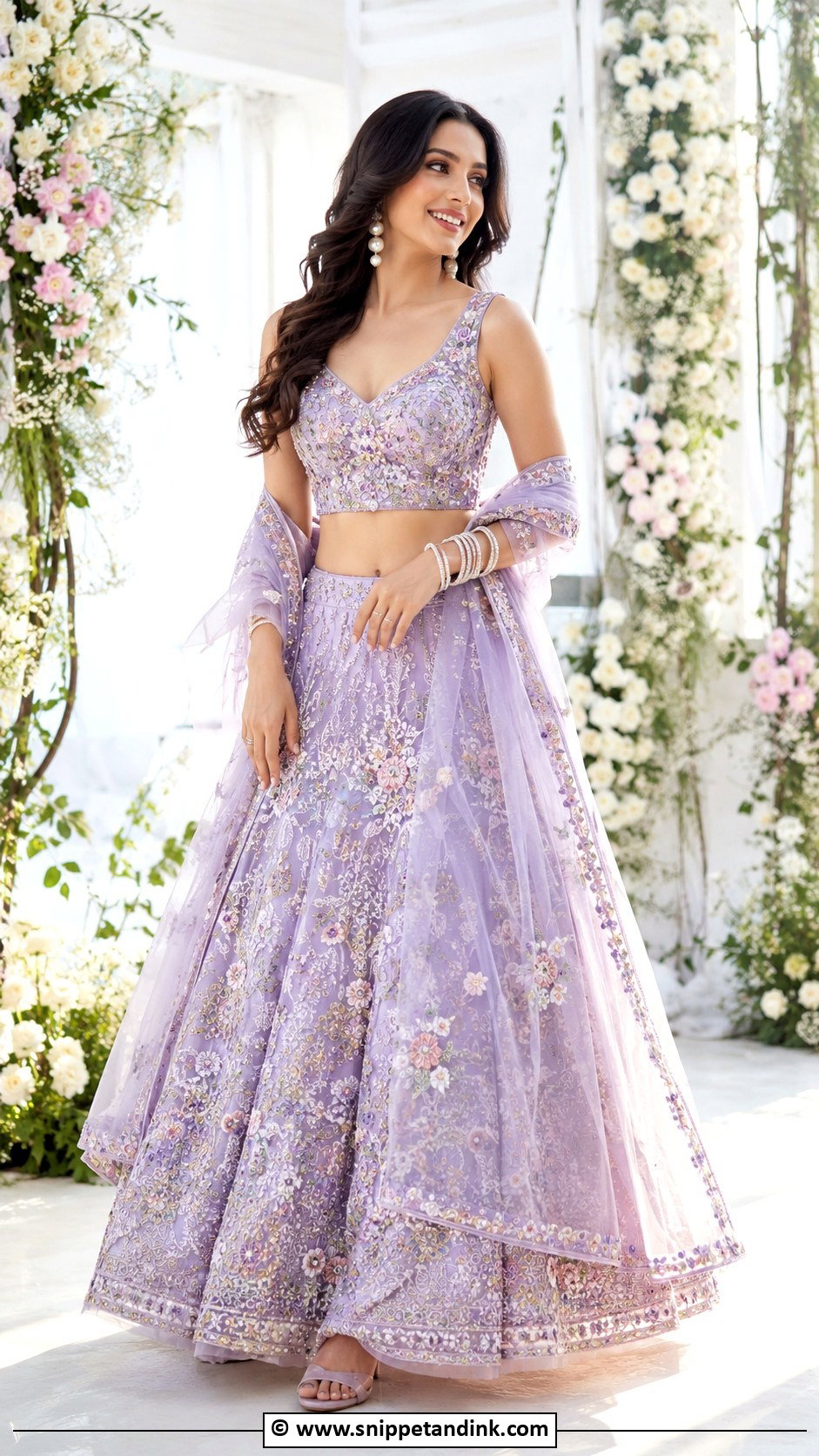
Lavender with floral embroidery in silver, blush, ivory or soft green feels pastel but still has personality. A flowing skirt, fitted blouse and lightweight dupatta that can sit over one shoulder or the head give you options through the day. Pearl, silver or diamond-style jewelry keeps it delicate. Daytime weddings and sangeet functions suit it best. Soft curls or a low floral bun complete the outfit.
9. Rani Pink Bridal Lengha With Kundan Jewelry
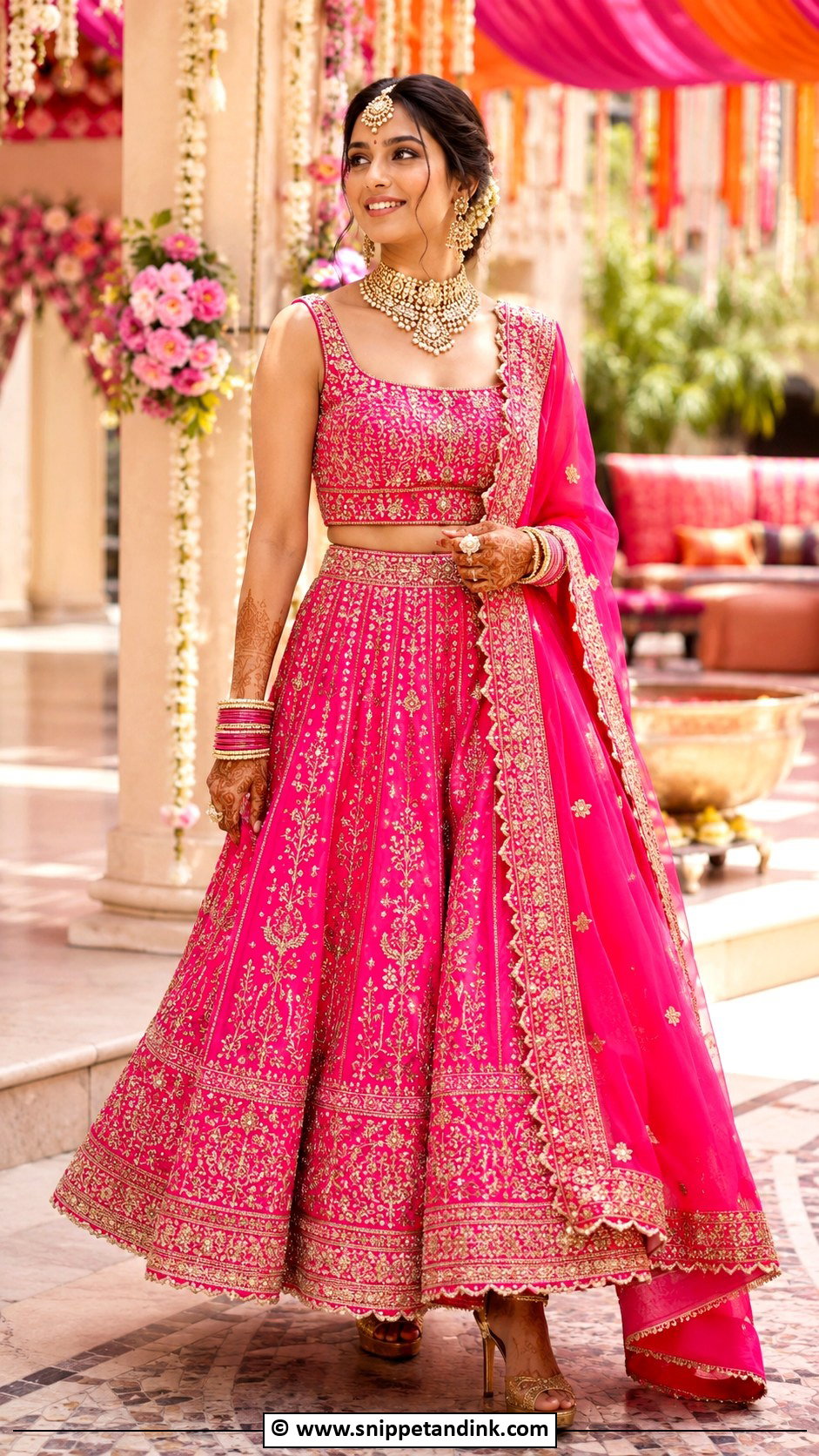
Rani pink is joyful and photographs vividly, and it gives brides who love colour an alternative to red. Gold embroidery, mirror accents or traditional motifs suit it. A square or sweetheart neckline on a fitted blouse. Kundan is my first pick with rani; the coloured stones pick up the pink. Balance the brightness with soft glam makeup rather than a bold lip, which competes with the outfit.
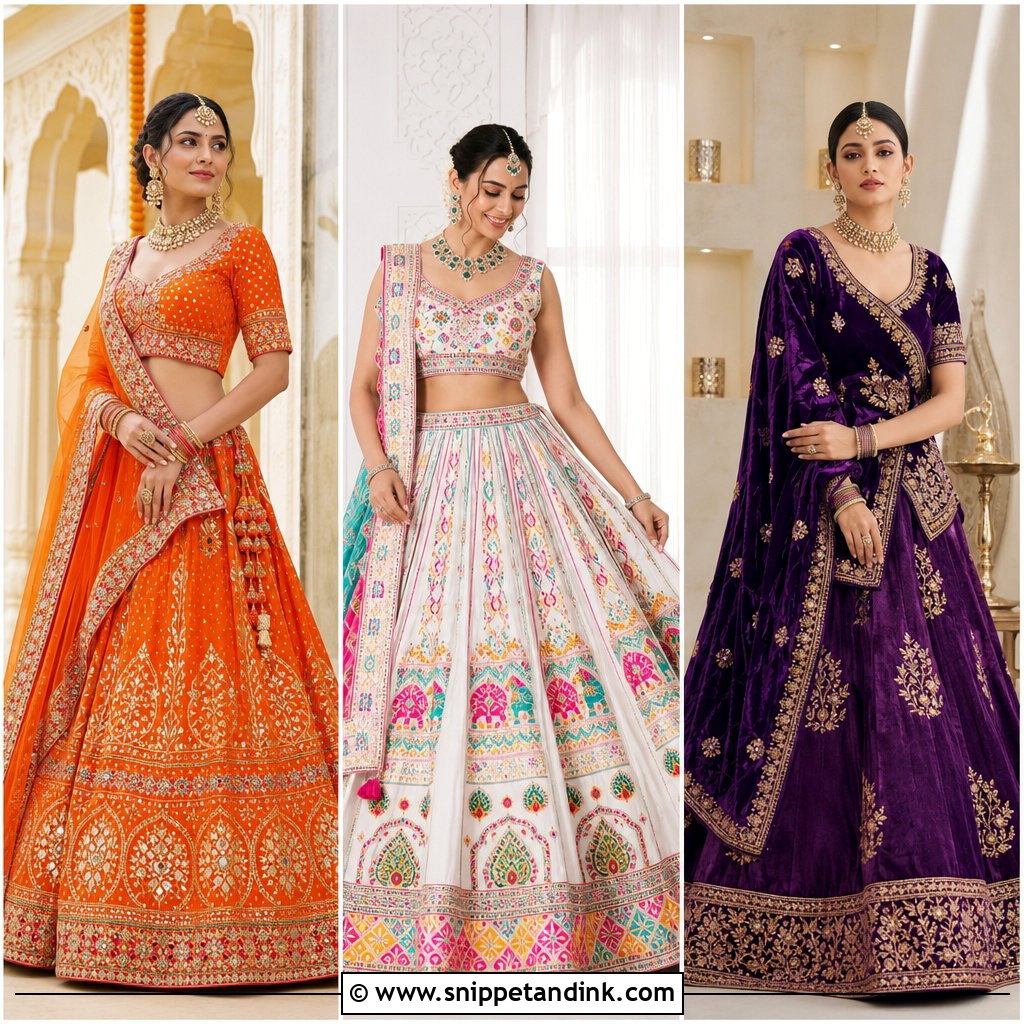
10. Orange Bridal Lengha With Temple Jewelry
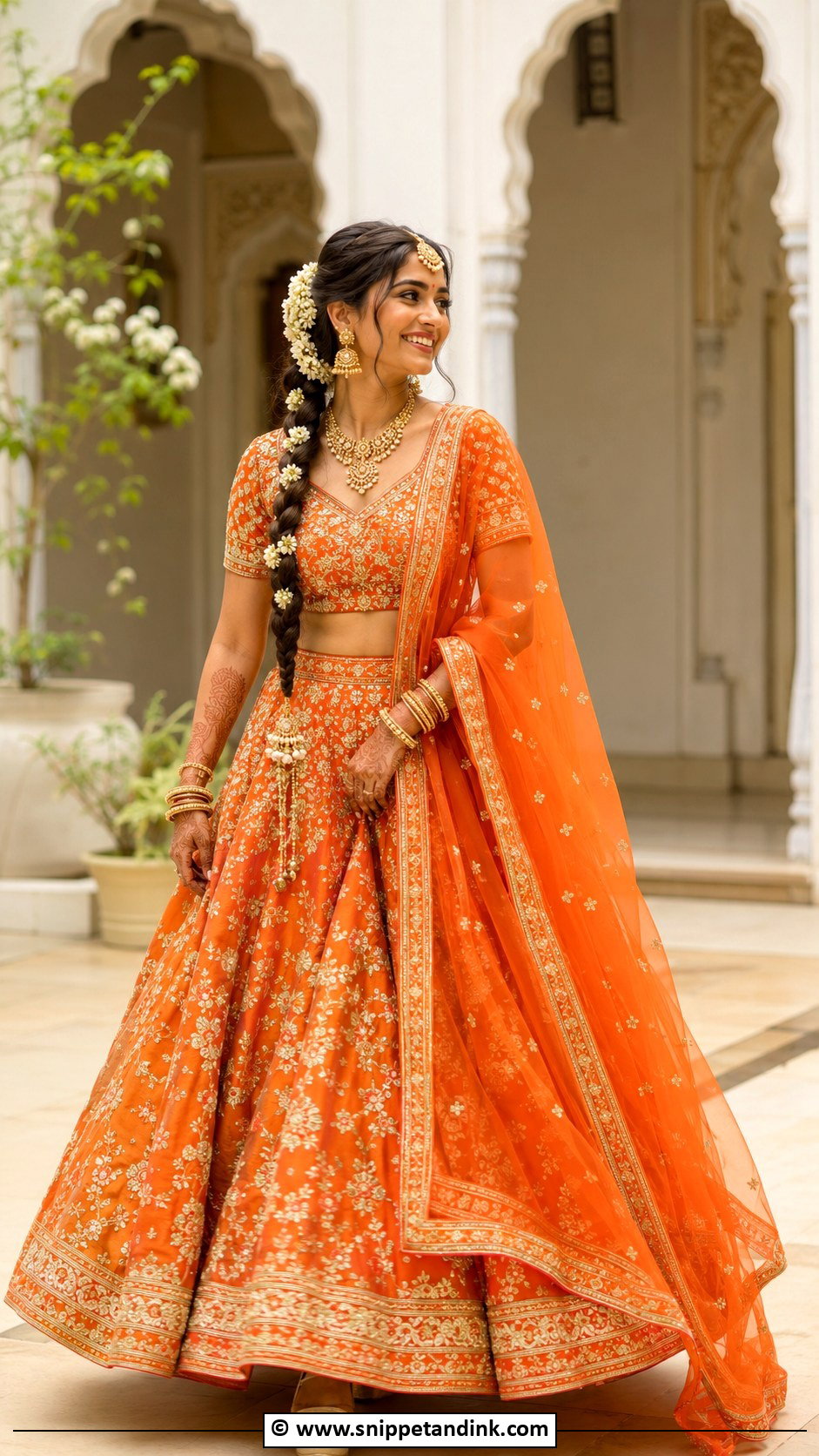
Orange brings real warmth, and burnt orange, saffron or coral-orange with gold embroidery looks rich in daylight. Temple jewelry suits it: a long necklace, statement earrings, bangles and a matha patti for a grand silhouette. Warm, bronzed makeup and soft lips. A braid with flowers is practical here, since it sits flat under a dupatta and won’t loosen during a long daytime ceremony.
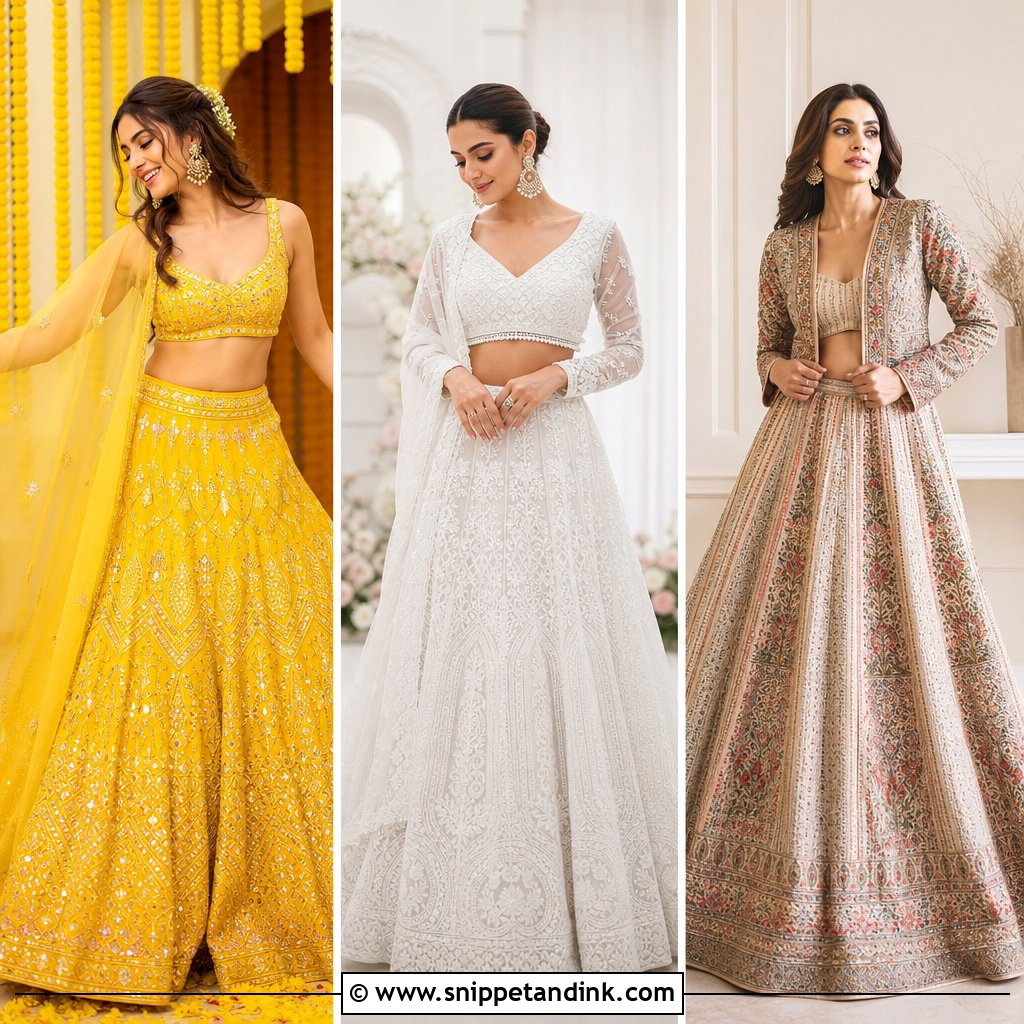
11. White Bridal Lengha With Gold Border
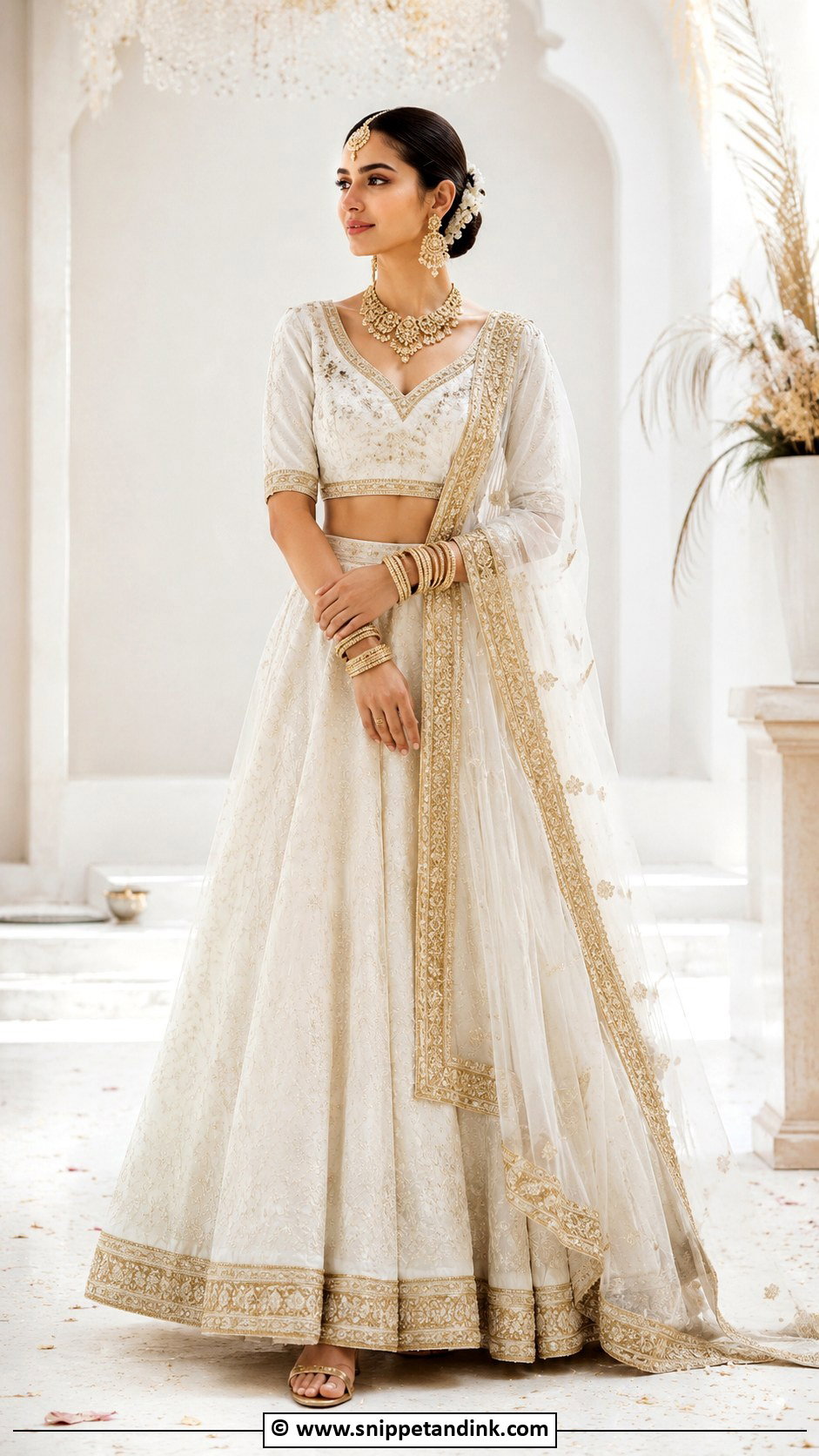
White with a broad gold border is clean and traditional at once, and in many South Asian communities it carries its own meaning, so check how your family feels about it before you fall for one. Choose an off-white with a little warmth; pure optical white can look blue in photos. A sheer dupatta with gold edging frames the face. Antique gold jewelry warms the palette, and pearls soften it. Natural daylight is where this outfit looks its best.
12. Floral Bridal Lengha With Sheer Dupatta
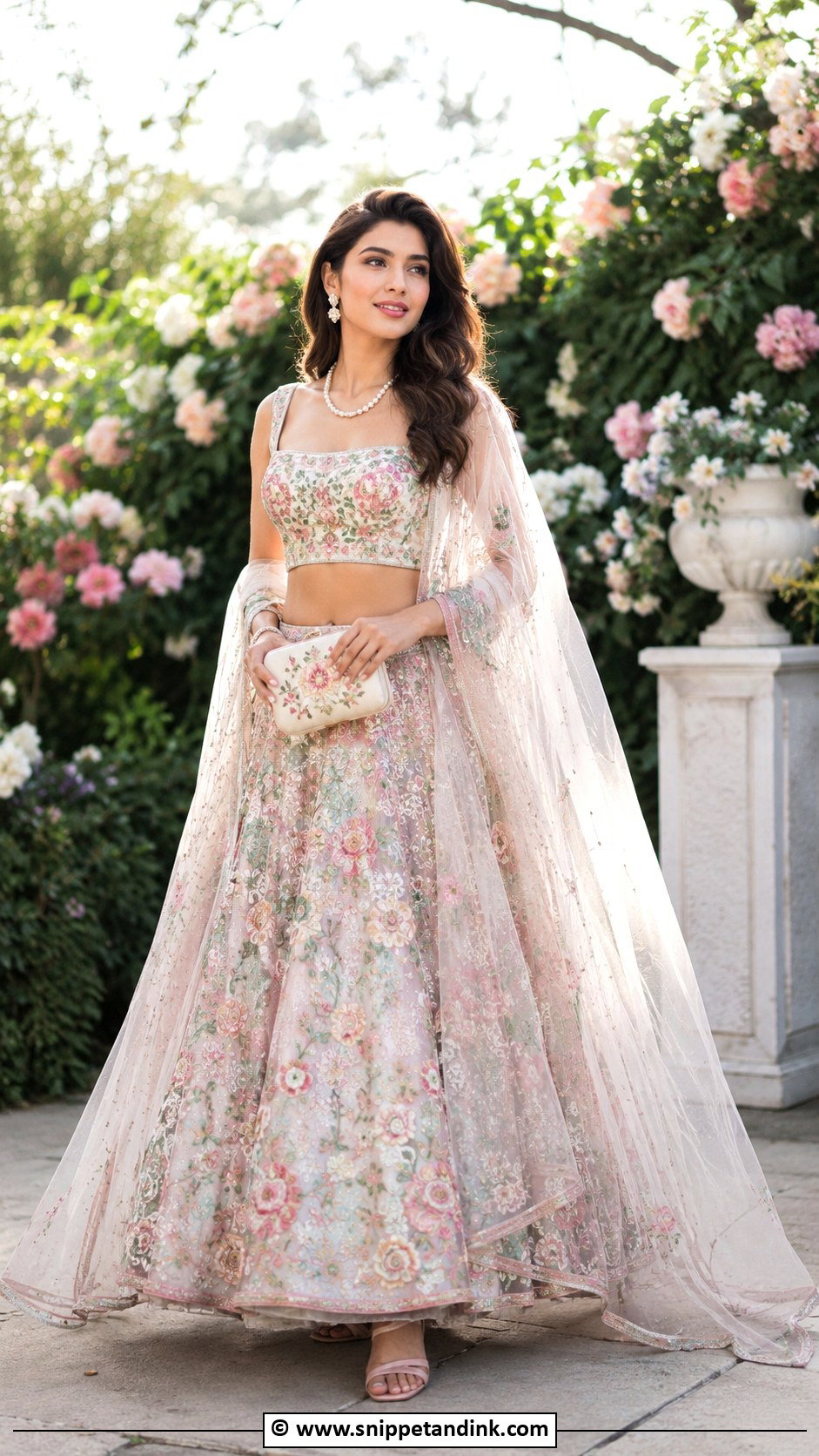
Floral threadwork, prints or appliqué give a romantic, lighter alternative to heavy all-over embroidery. Blush, ivory, mint, peach and lavender suit it. A delicately embroidered blouse keeps it bridal, and a sheer dupatta adds movement without covering the motifs. Pearl, polki or gemstone jewelry depending on the colours. Garden weddings and daytime events suit it, especially for a bride who will be on her feet greeting guests for hours.
13. Mirror Work Bridal Lengha With Statement Earrings
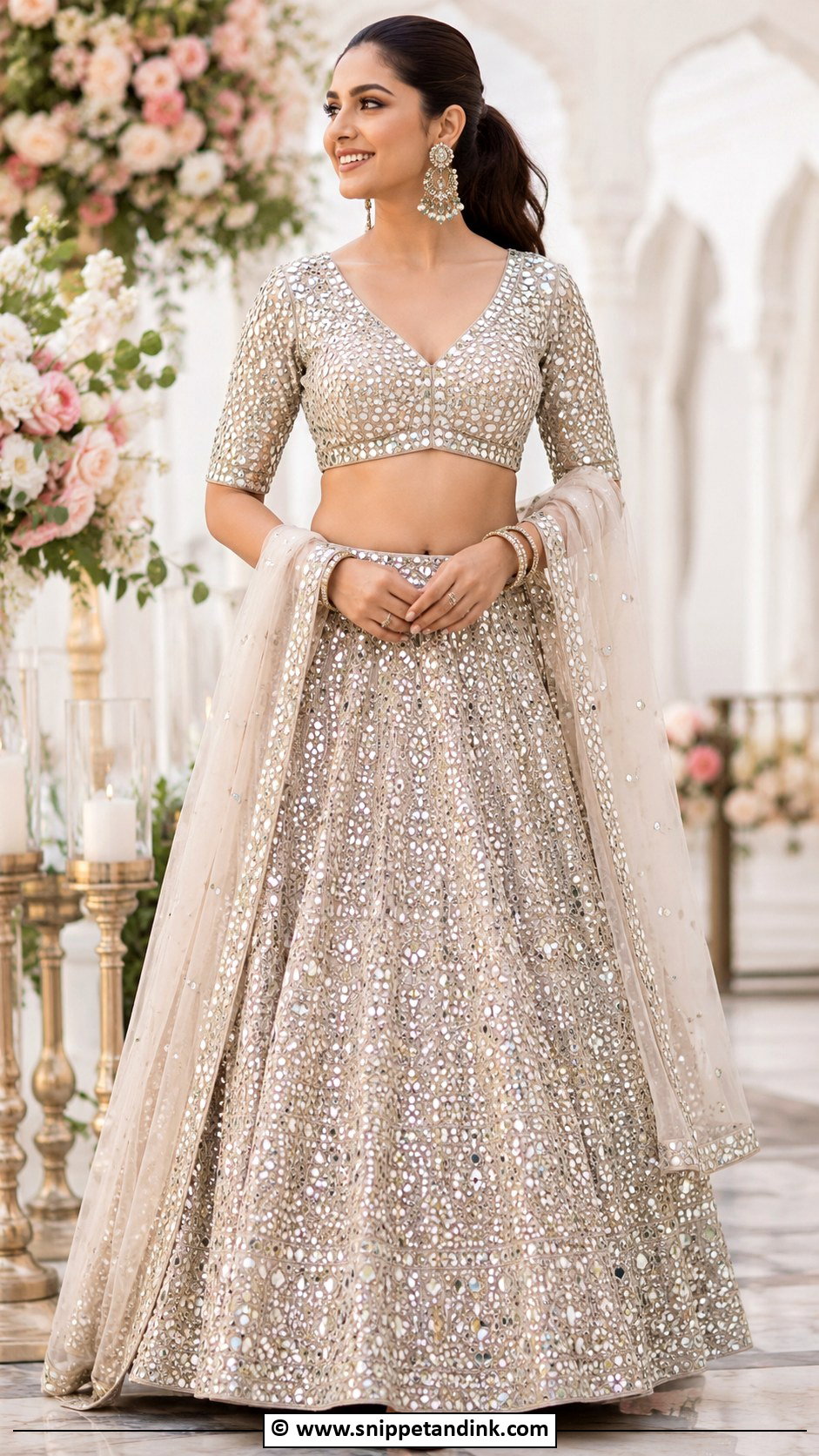
Mirror work catches light from every angle and reads as celebration without relying on sequins. Balance the mirrors with threadwork so the design doesn’t look loud. Mirror pieces are heavier than they look and can have sharp edges; check the inside lining at the waist and wrists. Since the skirt already sparkles, statement earrings may be enough jewelry. It suits sangeet functions and dance-heavy nights.
14. Heavy Zardozi Bridal Lengha With Double Dupatta
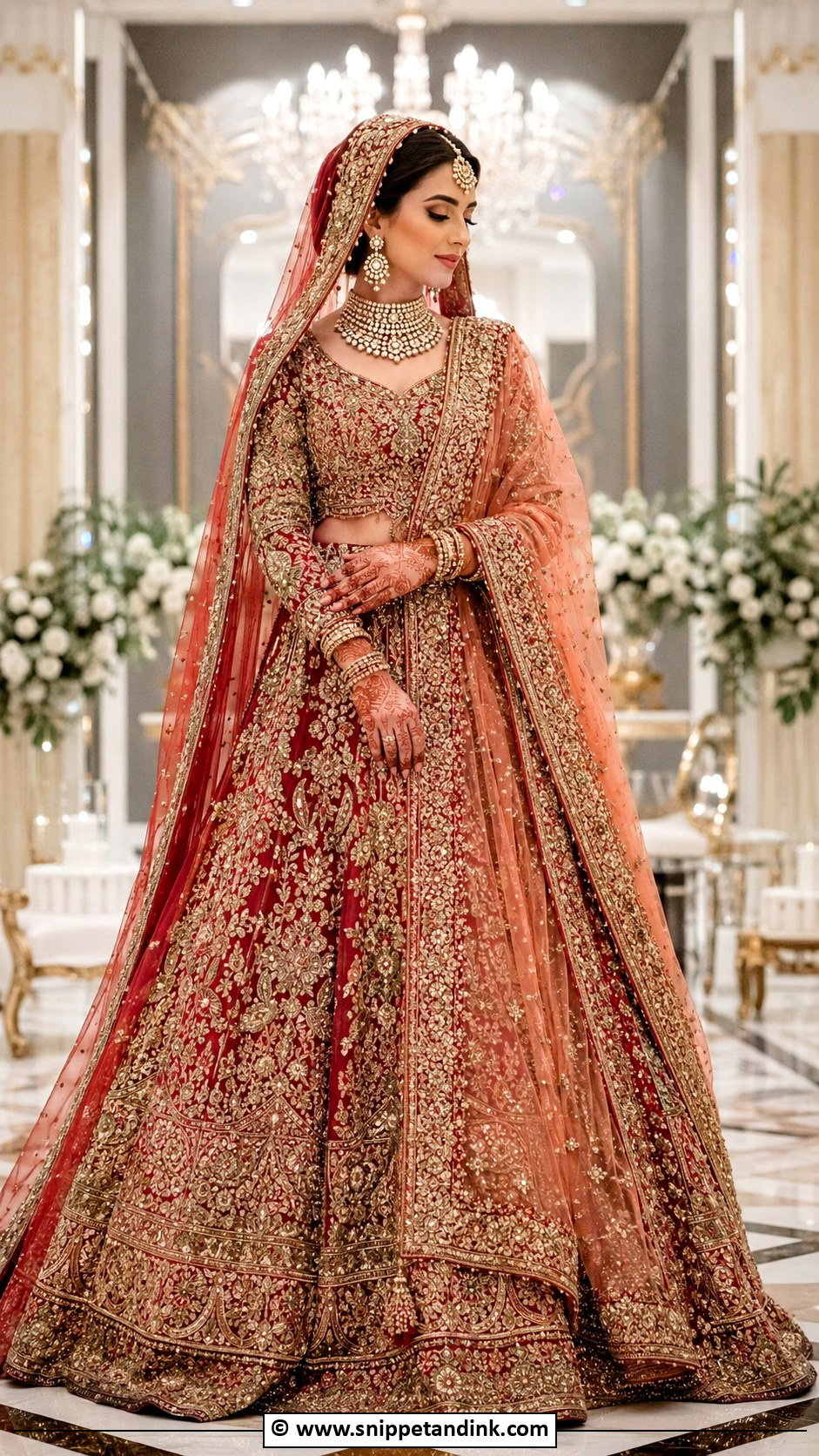
Heavy zardozi is made for a grand traditional entrance, and its metallic embroidery gives the skirt real weight. Rich red, maroon, deep pink, ivory or gold suit it. I style these with a double dupatta: a lighter one over the head and a second across the shoulder. The skirt waistband needs a wide, firm band and sometimes inner suspenders, because a heavy lehenga sitting on the hip bone becomes painful by evening. Cushioned heels, precise blouse fit and secure hair are essential.

15. Lightweight Bridal Lengha With Organza Dupatta
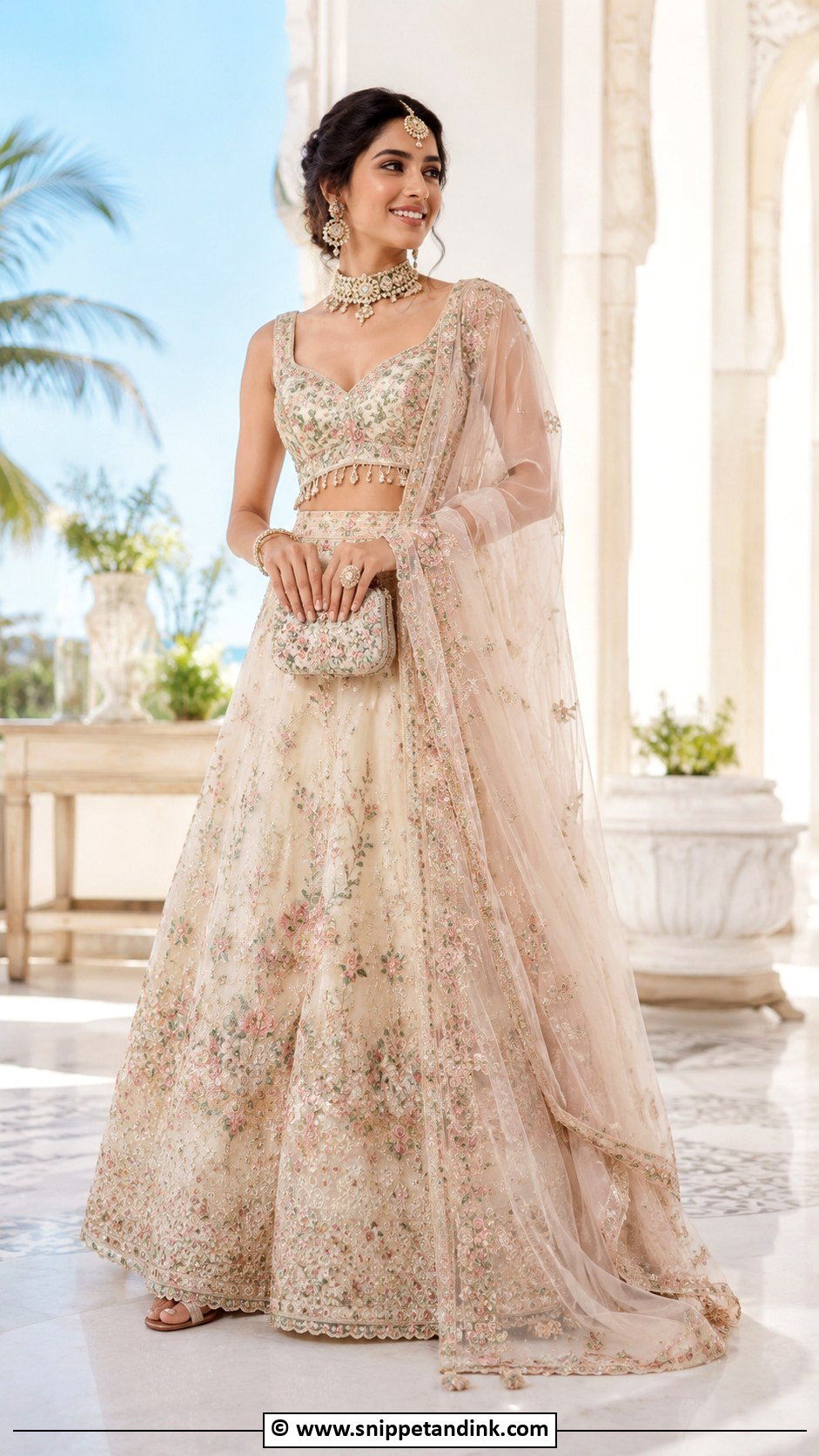
Not every bride wants several kilos of embroidery, and a lightweight lehenga can still feel bridal. Silk, georgette, organza or net with delicate embroidery moves easily, which suits destination weddings and summer ceremonies. An organza dupatta adds structure while staying airy. Put the bridal weight into the jewelry, hair and blouse design instead: pearls, kundan or diamond-style pieces make it look finished straight away. Comfortable heels and a small embroidered clutch complete it.
16. Banarasi Bridal Lengha With Silk Dupatta
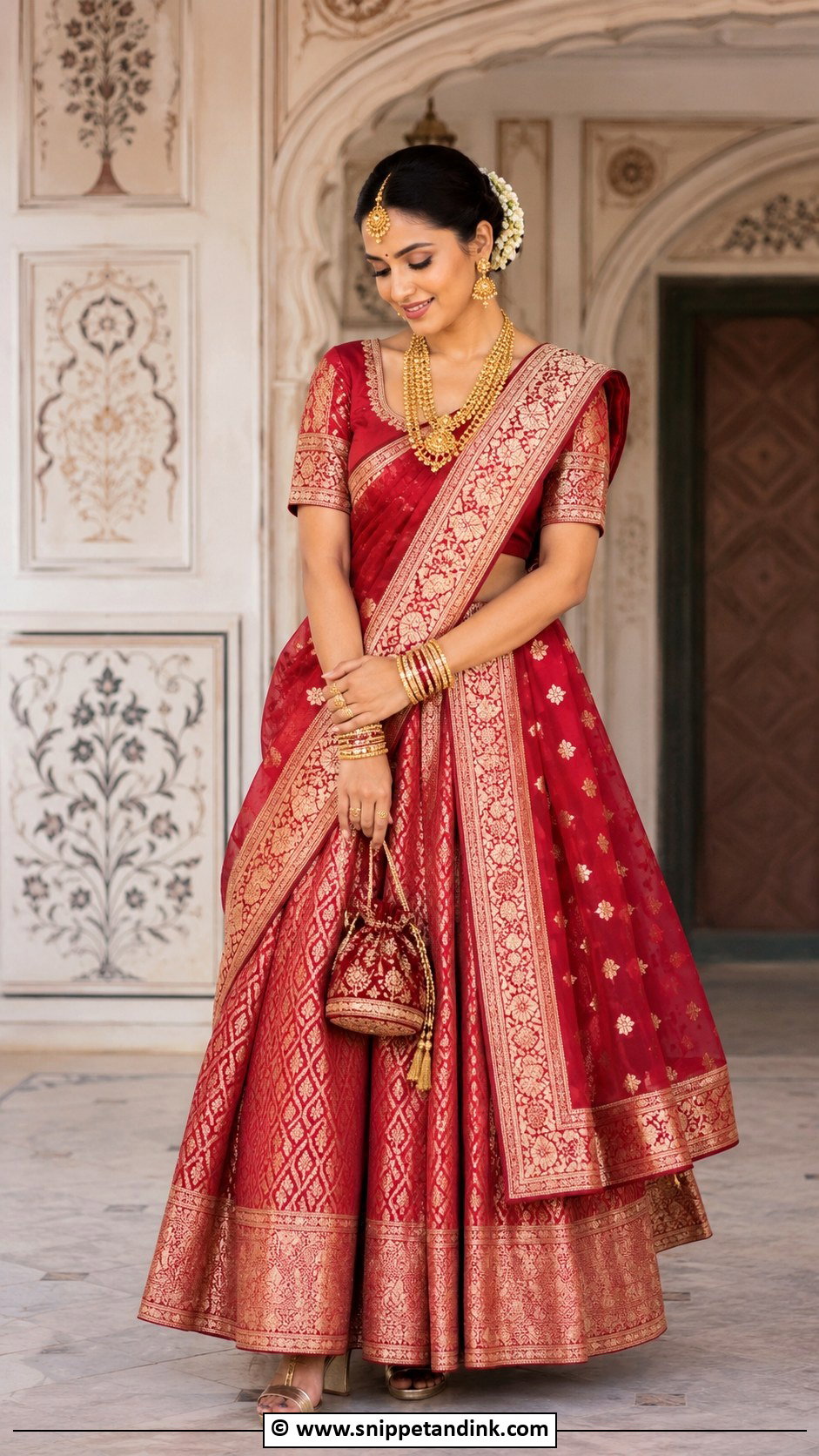
Banarasi weaving gives texture through the fabric itself, with brocade patterns and zari that need no surface embroidery. Red, pink, green, gold and ivory are the classic shades. Pair it with a silk blouse and a coordinated dupatta with a strong border. Temple-inspired gold jewelry looks natural with it. Real zari tarnishes if stored badly, so if this is a family piece, store it carefully afterward. A centre-parted bun with fresh flowers suits the heritage mood.
17. Velvet Bridal Lengha With Antique Gold Jewelry
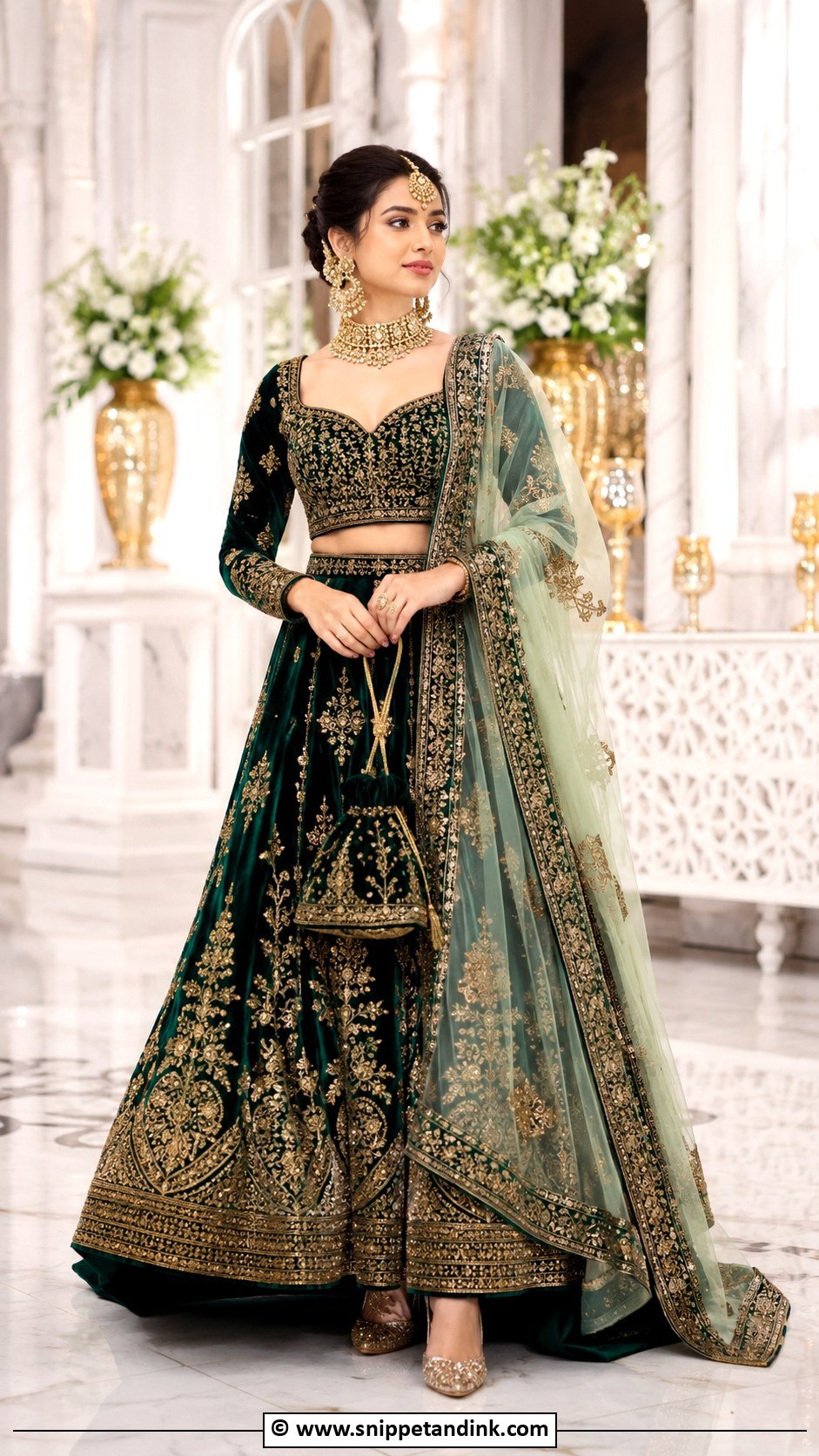
Velvet is warm, so I only suggest it for cooler weather and evening weddings. Maroon, emerald, navy, plum and red look richest. Choose antique gold or dull metallic embroidery so it doesn’t look too shiny. Velvet adds real weight, so a structured blouse and a lighter dupatta balance it. Keep the hairstyle secure because velvet outfits carry more volume. A choker, long necklace and bold earrings in antique gold.
18. Emerald Green Bridal Lengha With Gold Dupatta
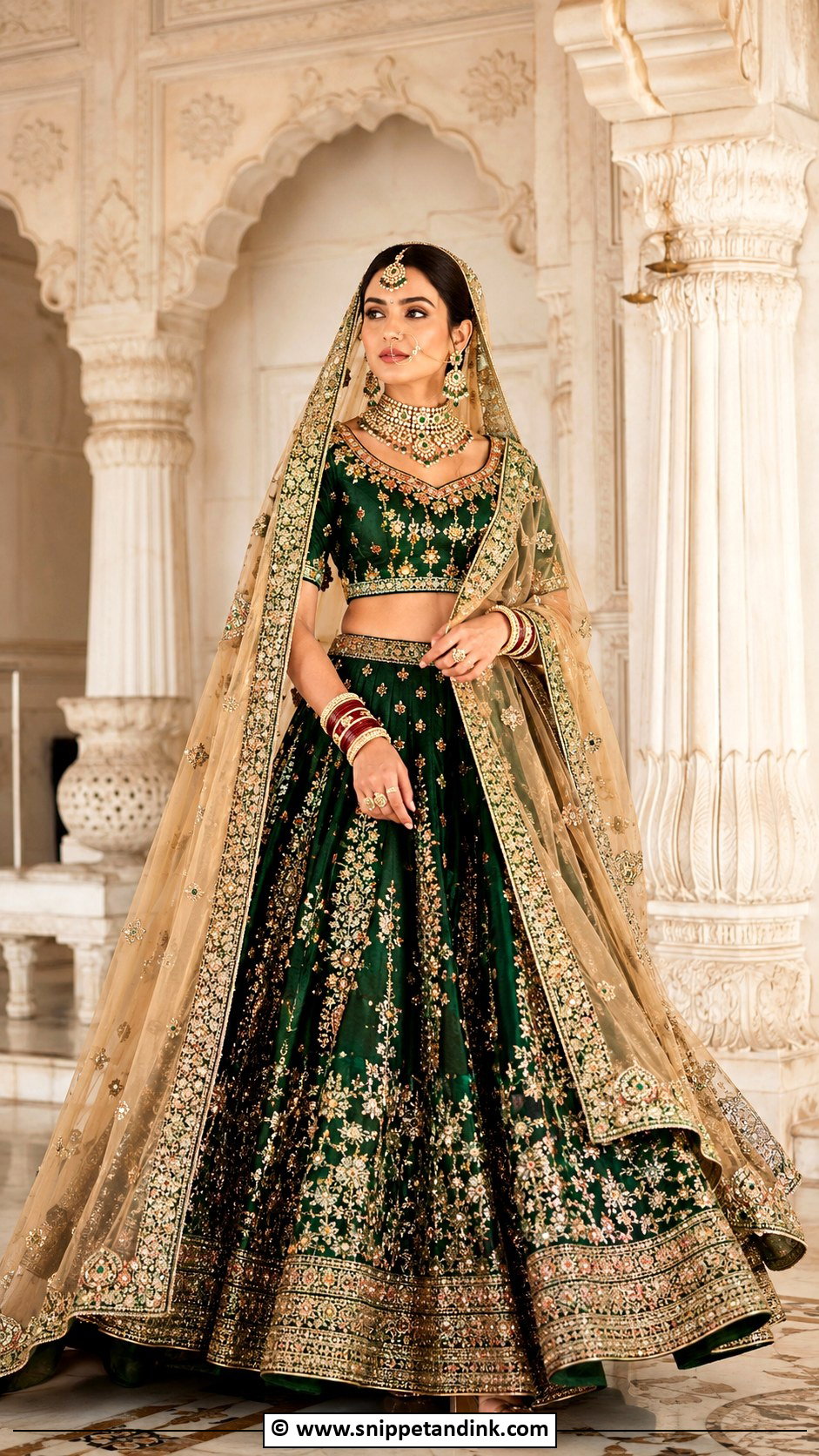
Emerald with gold embroidery is a regal alternative to red. Floral or paisley motifs on a full skirt with a matching blouse, then a gold dupatta for contrast around the face. Kundan, polki or emerald-accent jewelry makes the styling look intentional. I keep the makeup to defined eyes and a neutral lip here, since a strong lip next to strong green gets busy fast. Gold heels and a smooth bun.
19. Peach Bridal Lengha With Soft Glam Makeup
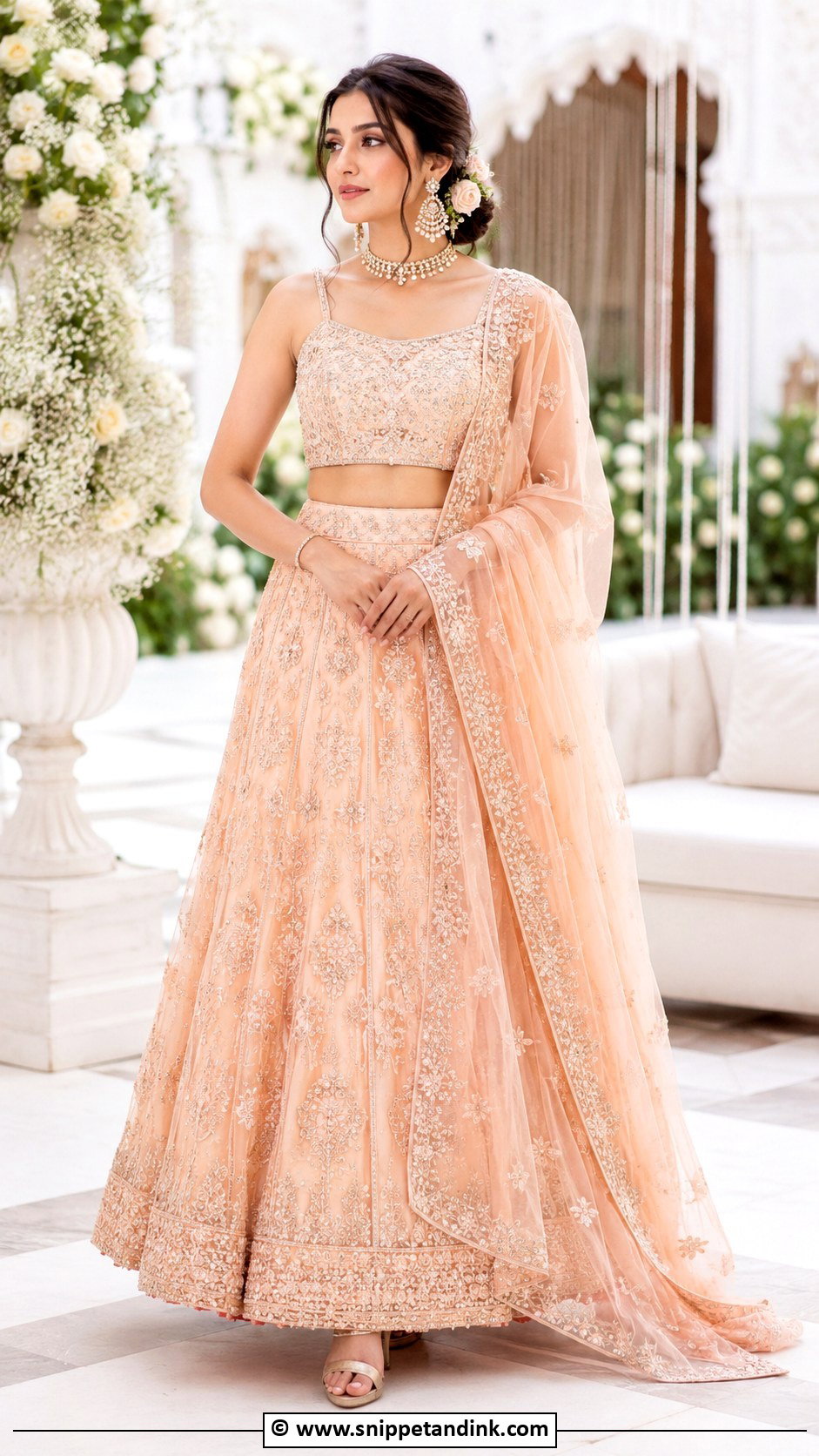
Peach is warm and suits a wide range of skin tones in daylight. Gold, ivory or pearl embroidery keeps it gentle. A blouse with delicate sleeves and a sheer dupatta keep it light. Soft glam suits peach well: glowing skin, defined lashes, a peachy-pink lip. Pearl, polki or soft gold jewelry depending on the embroidery. Loose waves or a low bun with small flowers.


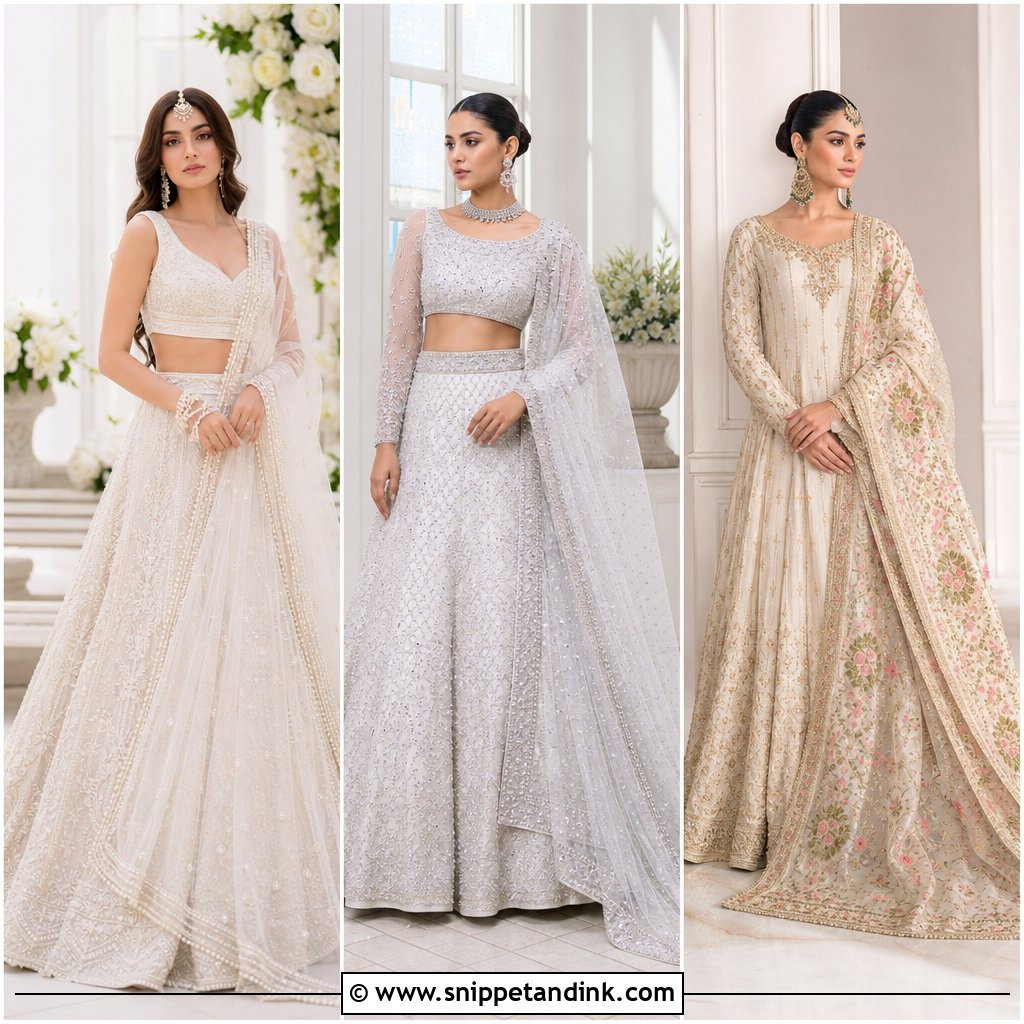

20. Yellow Bridal Lengha With Floral Jewelry
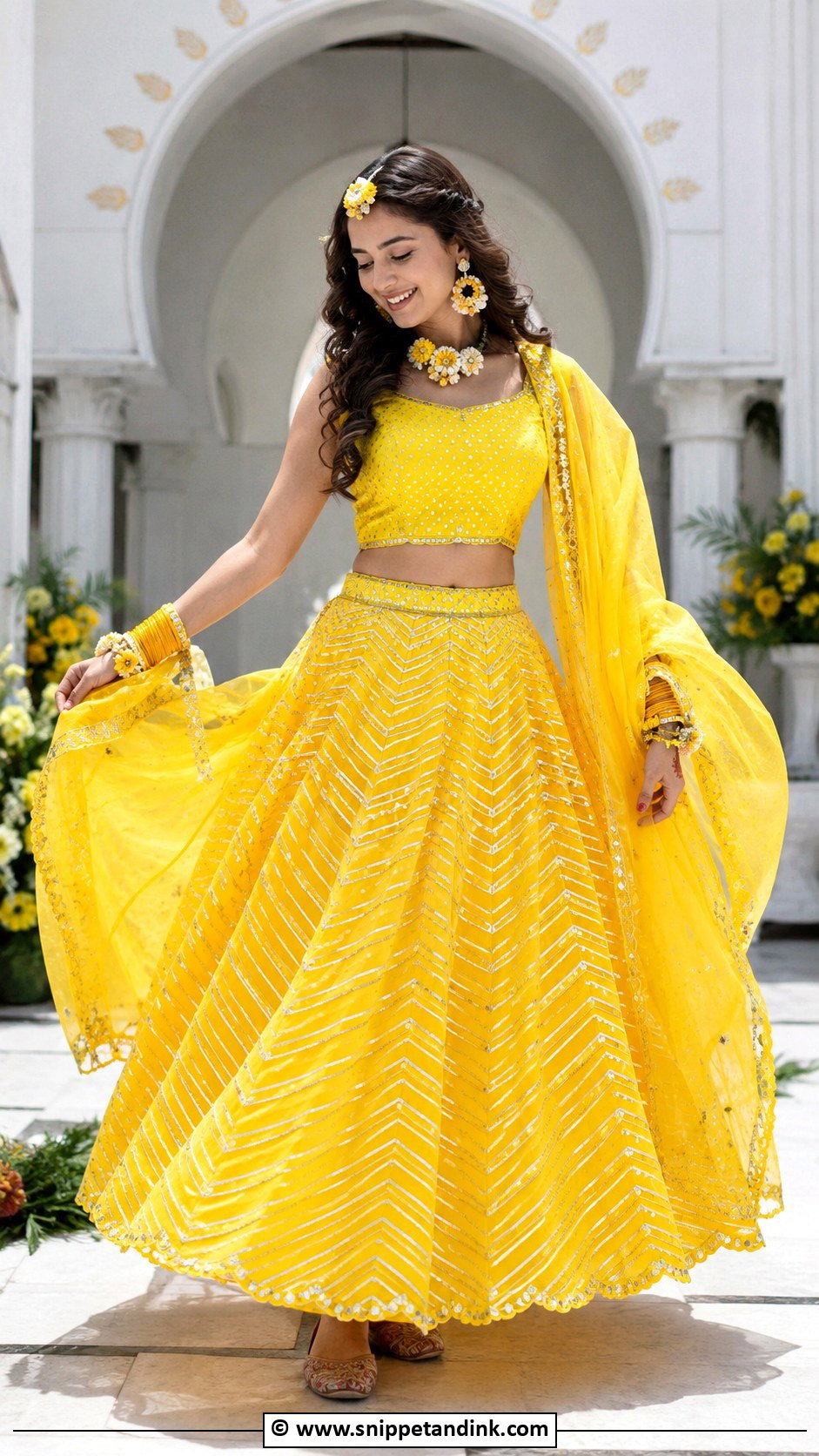
A yellow bridal lengha is cheerful and naturally suits pre-wedding functions, especially the haldi. Mustard, butter or golden yellow with mirror work, gota or floral embroidery. Haldi paste stains, so if you are wearing it to that ceremony, choose an outfit you don’t mind marking. Floral jewelry suits daytime; gold makes the same lehenga more formal. Gold sandals or embroidered juttis are practical for outdoor events.
21. Coral Bridal Lengha With Gota Patti Work
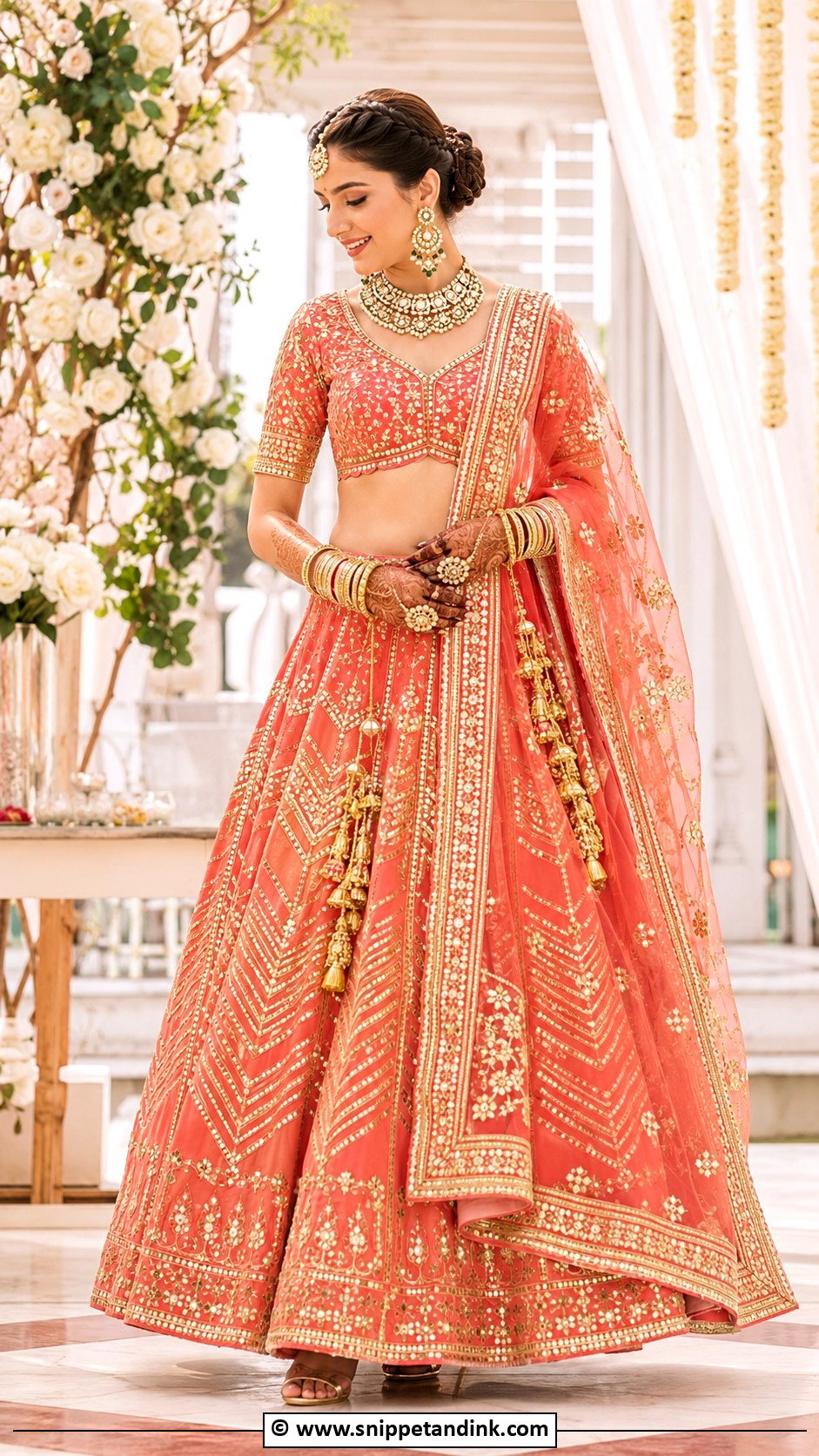
Coral sits between pink and orange, bright but soft. Gota patti, the traditional appliqué of gold ribbon, suits it and is lighter than zardozi, which makes it comfortable for daytime and warm-weather celebrations. A flared skirt, fitted blouse and dupatta with a detailed border. Gold or kundan jewelry, a braided bun and peach-toned makeup. Gold heels or embellished flats.
22. Mint Green Bridal Lengha With Pearl Dupatta
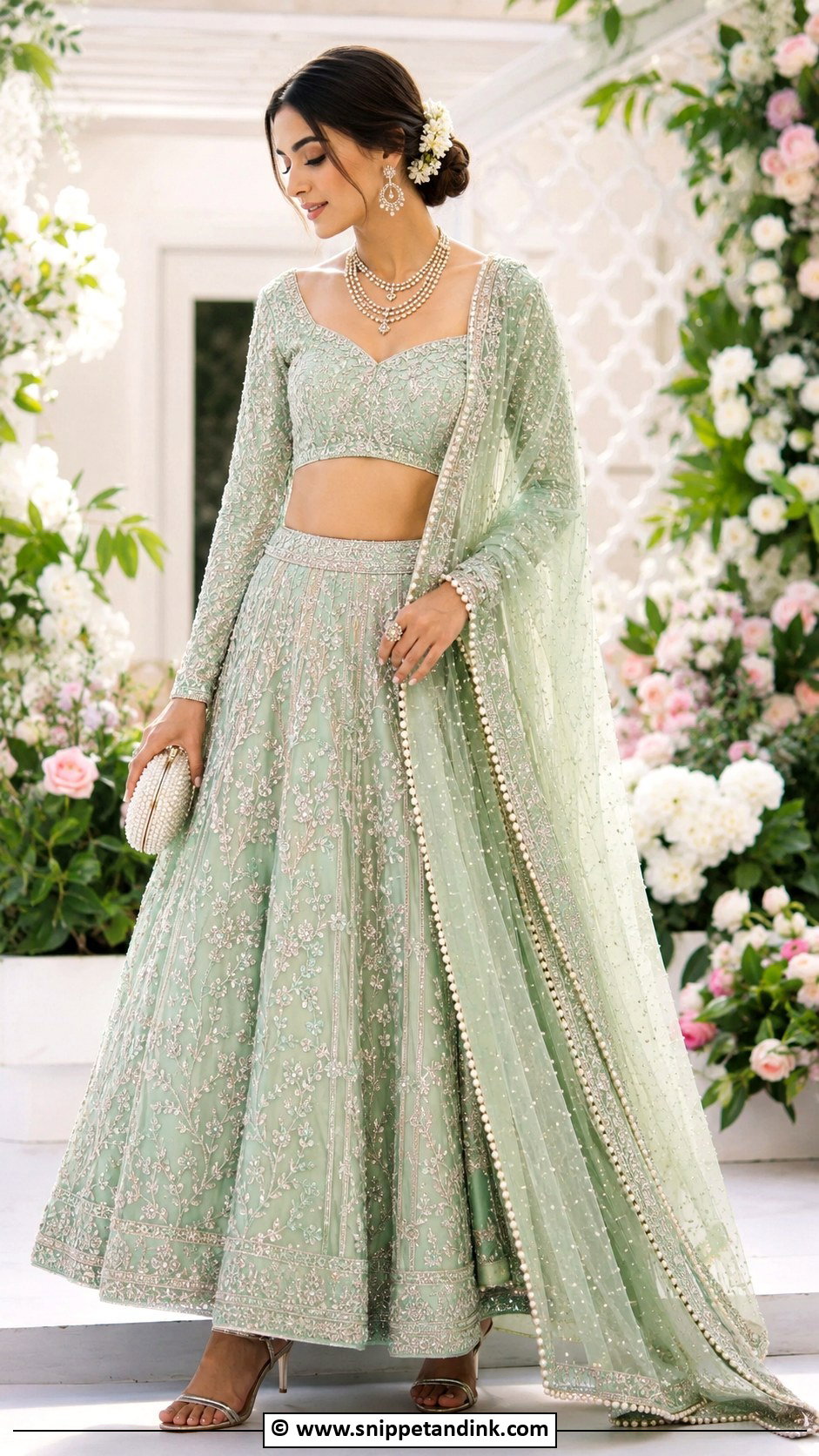
Mint green feels fresh and airy for spring, summer and destination weddings where dark colours feel heavy. Silver, pearl or white embroidery keeps it soft. A pearl-edged dupatta adds texture in close-ups, though pearls on a dupatta edge do add weight and pull it off the head, so pin it firmly. Keep the blouse simple if the skirt is heavily worked. Rosy makeup, silver heels and a low bun with flowers.
23. Navy Blue Bridal Lengha With Crystal Work
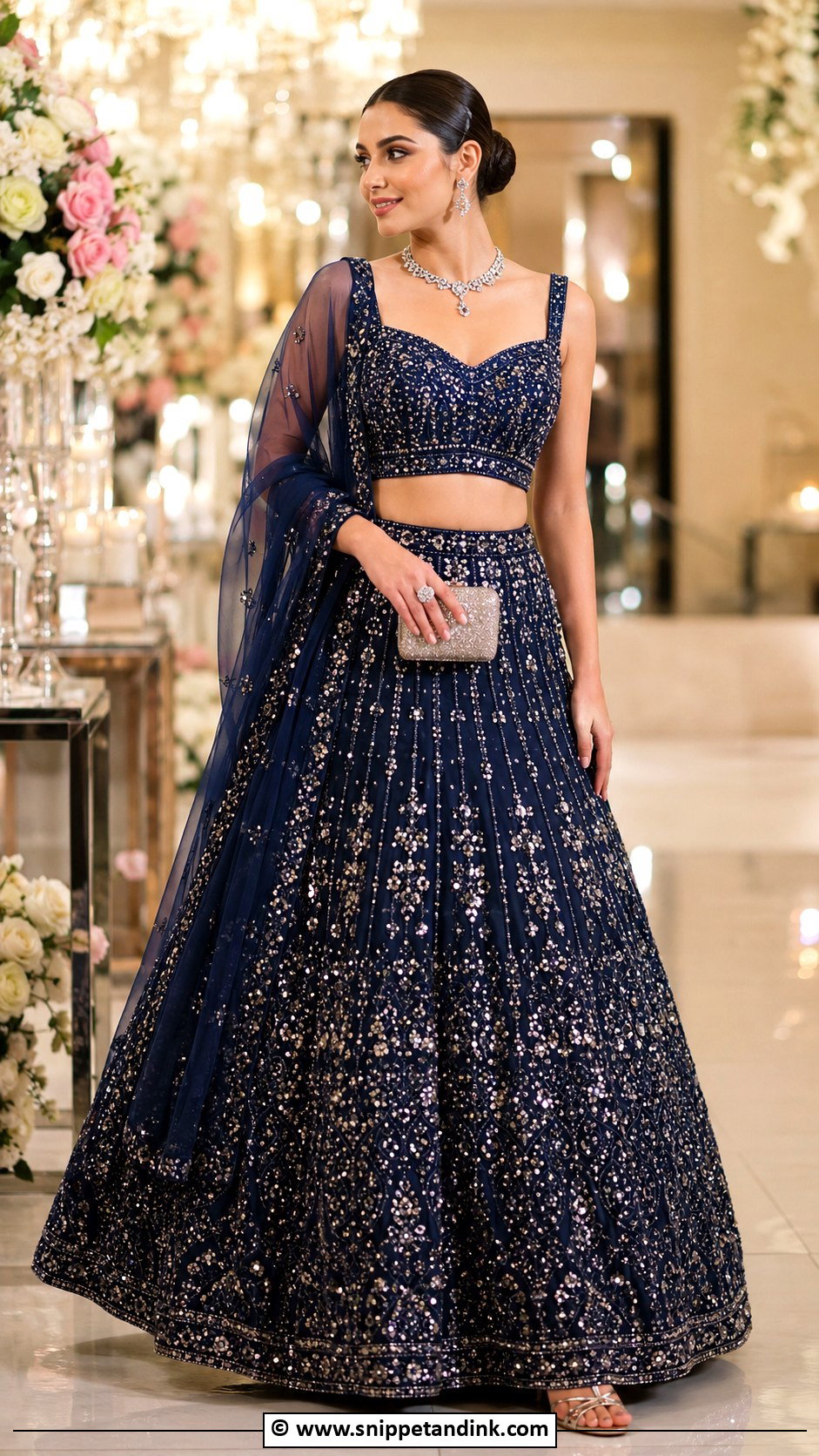
Navy with crystal, silver or metallic embroidery glows under evening lights. A structured skirt, fitted blouse and sheer dupatta keep it formal without weight. Crystal or diamond-style jewelry keeps the palette cool, and gold bangles add warmth if you want it. It is a strong pick for a reception. A sleek bun, defined eyes and silver or metallic heels.
24. Black Bridal Lengha With Gold Embroidery
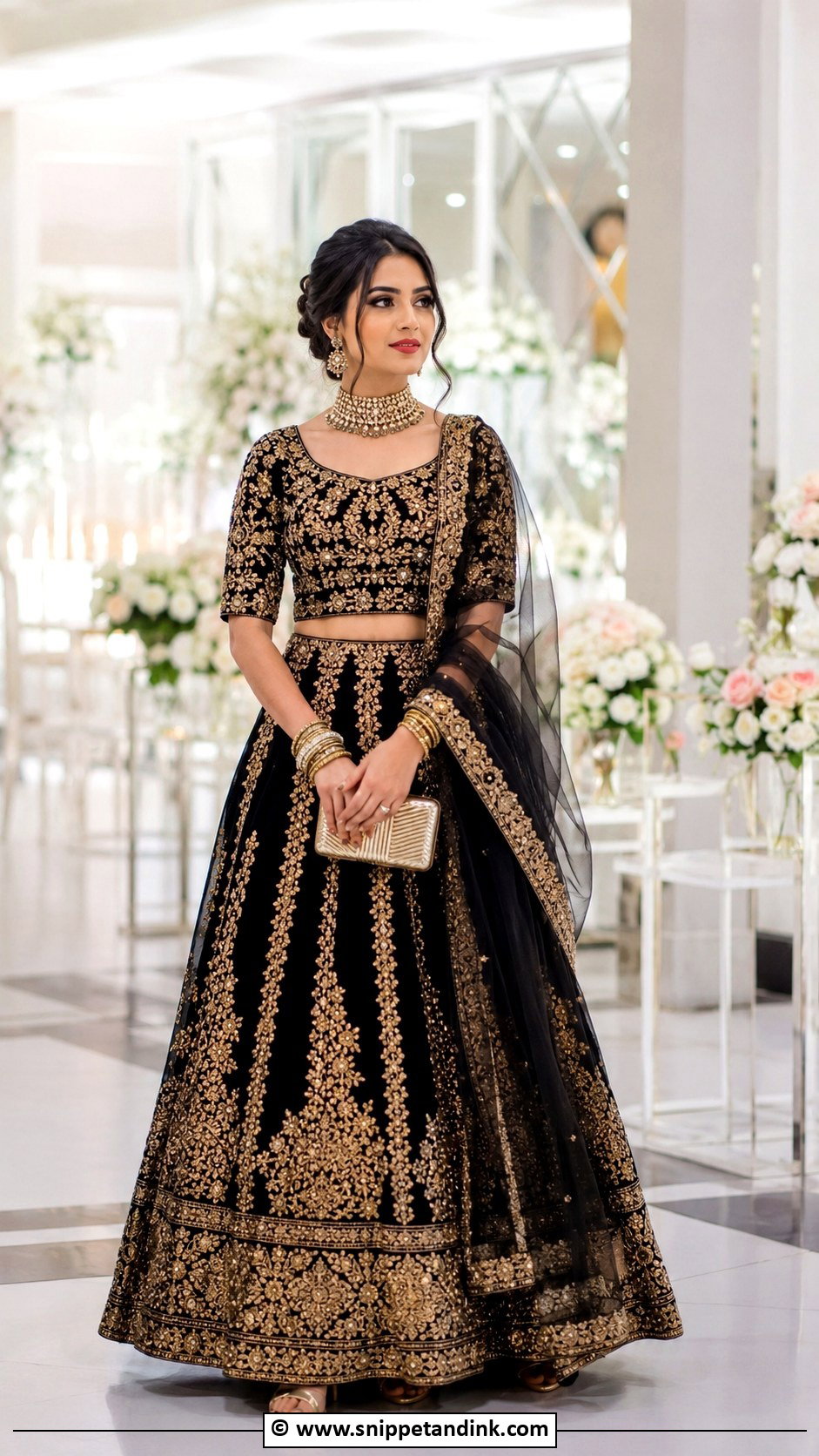
Black for a bridal event is a fashion-forward choice, usually for the reception or a cocktail night, and some families will have views on it, so it is worth asking first. Detailed gold embroidery and rich fabric keep it bridal. A full skirt with a fitted blouse makes a strong silhouette, and a sheer dupatta softens it. Gold jewelry is the best match. Evening functions with good lighting show the embroidery best.



25. Printed Bridal Lengha With Embroidered Blouse
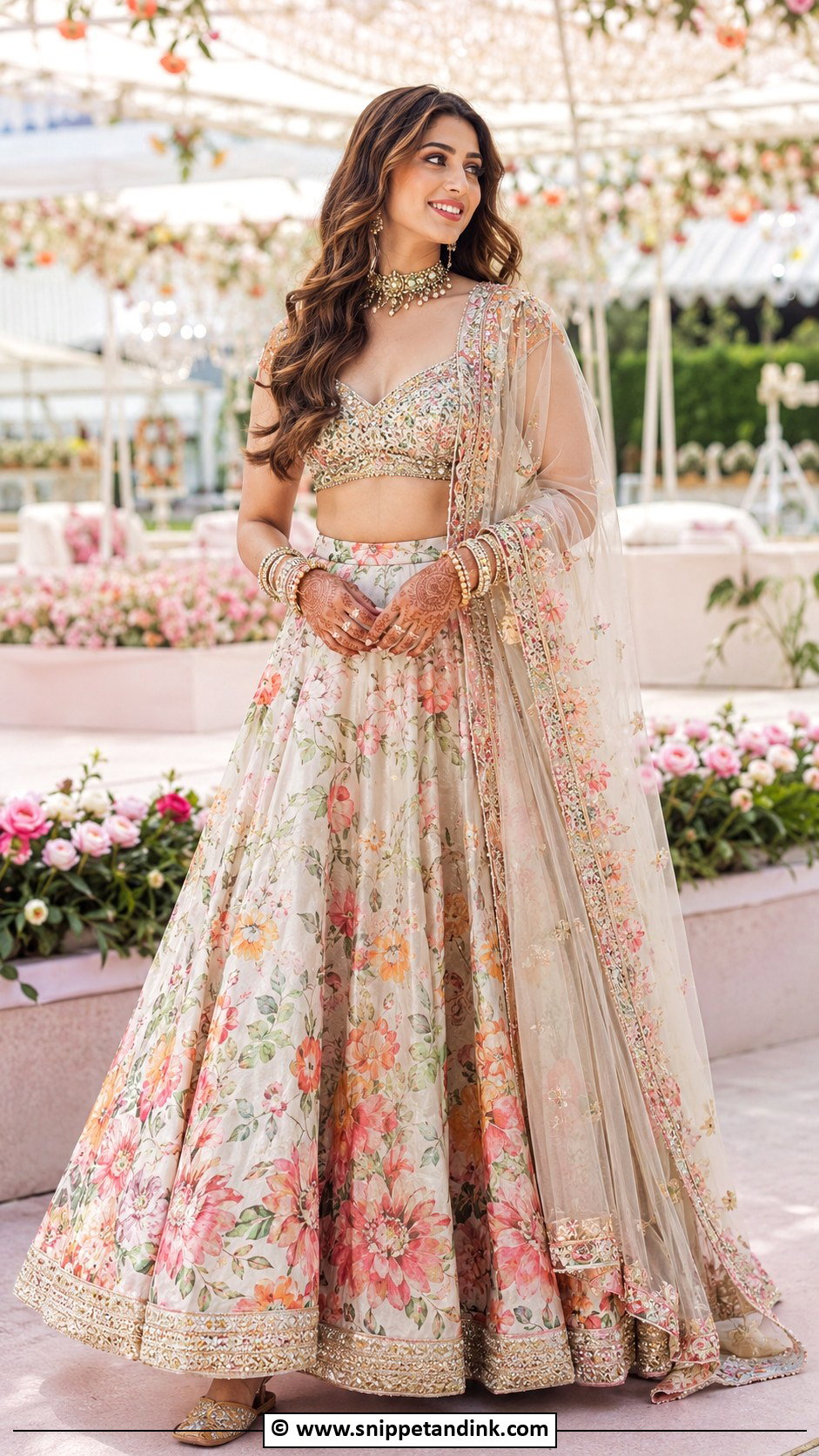
A printed bridal lengha is lighter and easier for roka, mehndi or daytime ceremonies. Floral, paisley or heritage prints on silk, organza or georgette. Pair the print with a heavily embroidered blouse and a dupatta with a detailed border, so the outfit still has a focal point. Pick shoes that repeat one colour from the print. Soft curls, a choker and bangles complete it.
26. Cape Bridal Lengha With Minimal Jewelry
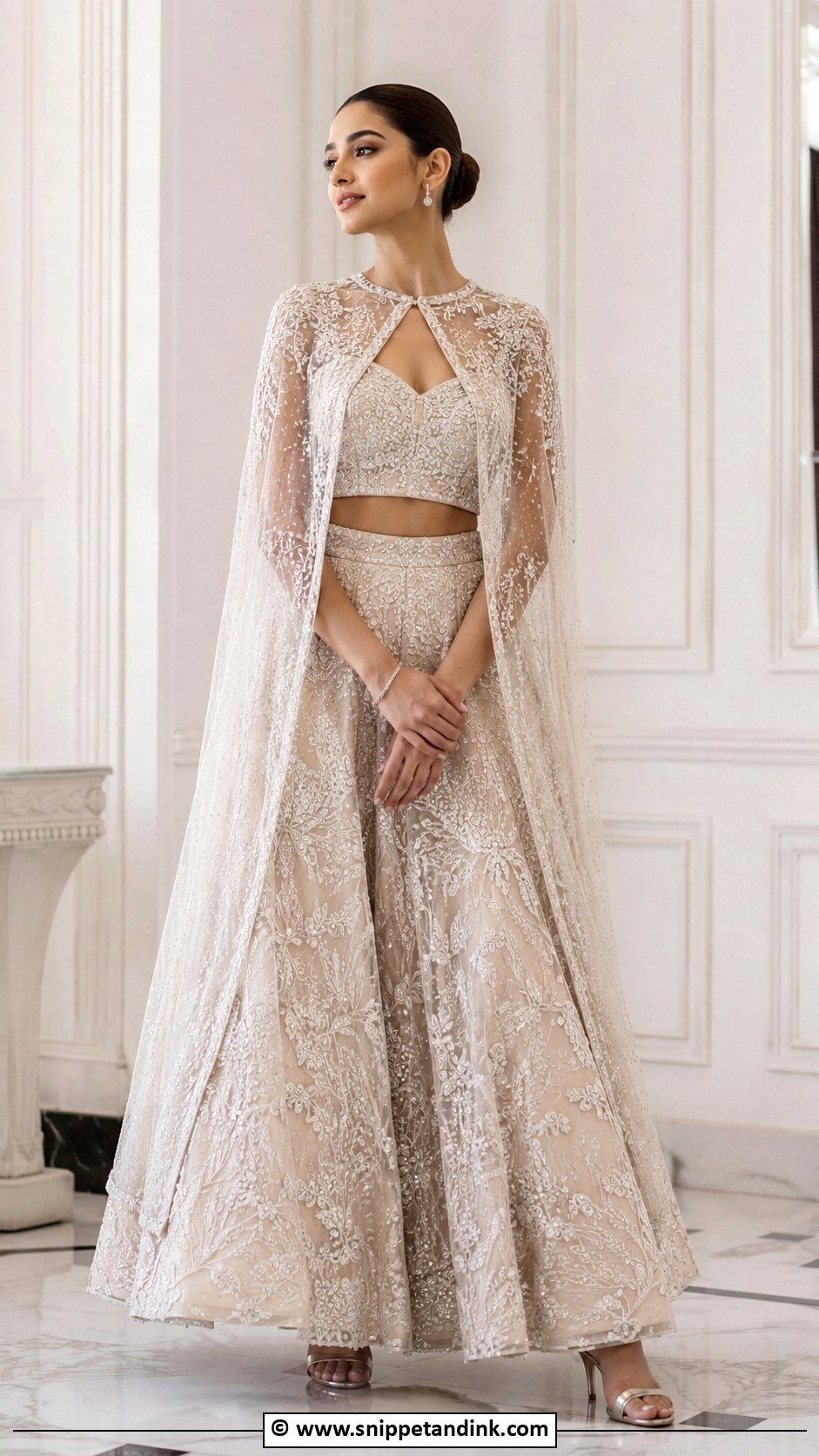
A cape replaces the dupatta and frees your hands, which is why I suggest it for receptions and engagement events where you will be greeting guests all night. It flows from the shoulders over an embroidered skirt and structured blouse. Since the cape is the statement, jewelry should be minimal, earrings, a bracelet and maybe a small maang tikka. Sleek hair keeps the line clean.
27. Jacket Bridal Lengha With Straight Hair
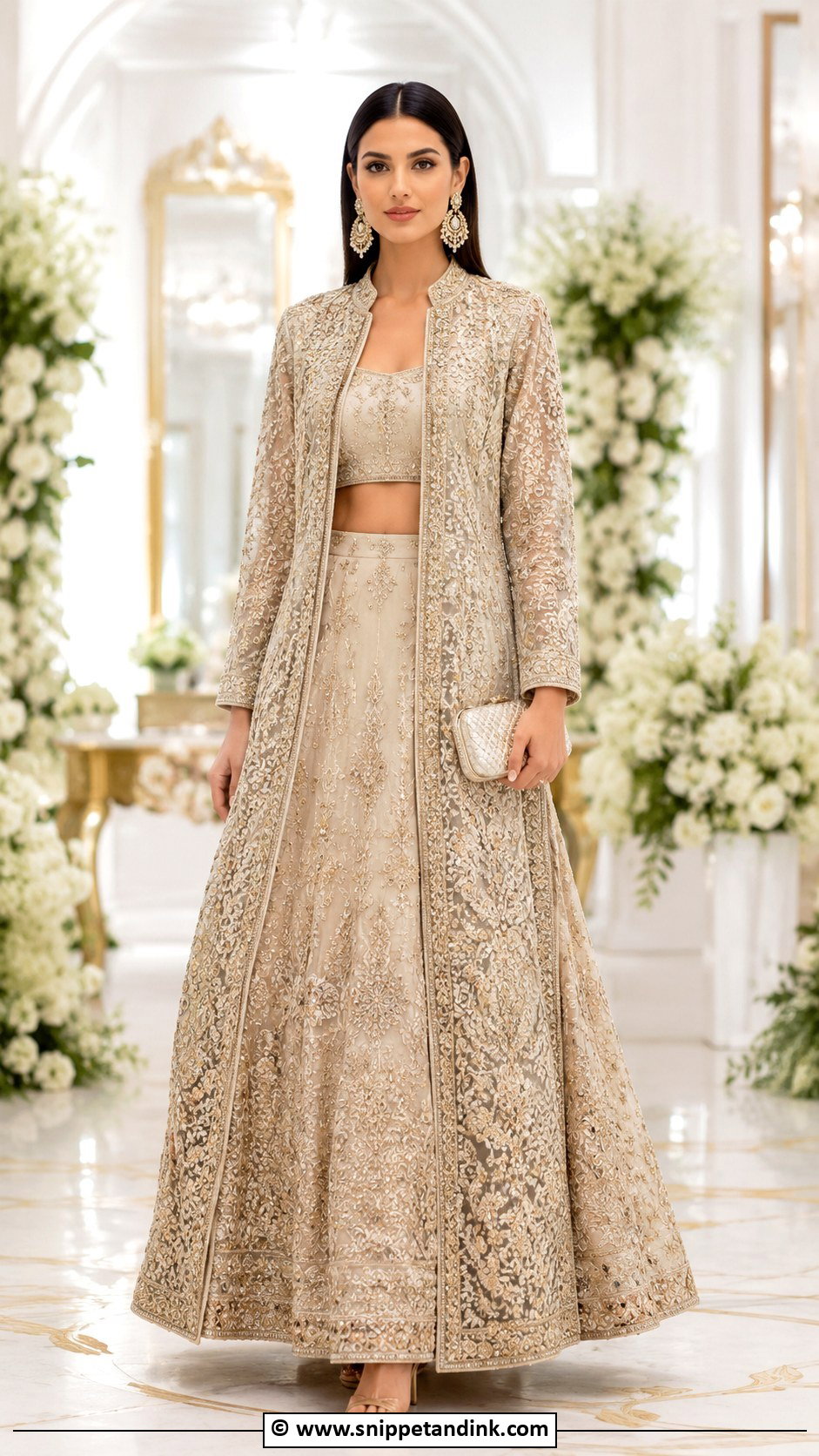
A long embroidered jacket either replaces the dupatta or layers over the blouse, adding coverage and structure. Keep the inner blouse simple so the outfit doesn’t feel crowded. Ivory, gold, red, green and blush suit it. Jewelry should follow the jacket neckline, statement earrings or a shorter necklace. Jackets get warm under lights, so check the lining is breathable and plan a cooler spot between photos.
28. Sharara Bridal Lengha With Long Dupatta
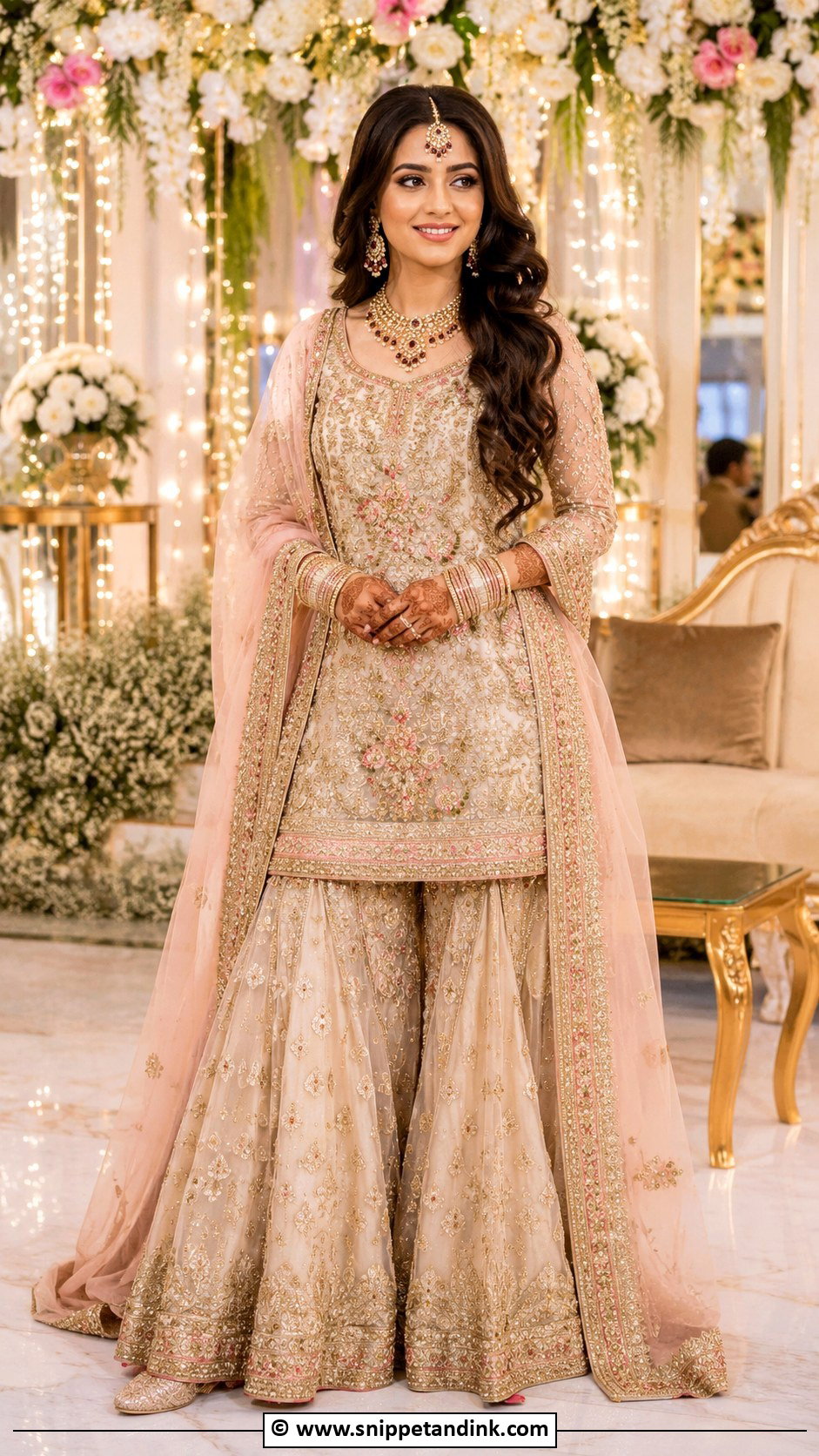
A sharara gives movement and comfort while keeping a traditional mood. The flared sharara bottom swings easily when you dance. Pair an embroidered blouse or short kurti with a long dupatta over the head or across the shoulder. Ivory, blush, red, mint or gold suit it. Check the hem with your shoes on; sharara legs that are a little too long catch under the heel on stairs. Kundan or pearl jewelry, juttis and a potli.
29. Mermaid Bridal Lengha With Sleek Bun
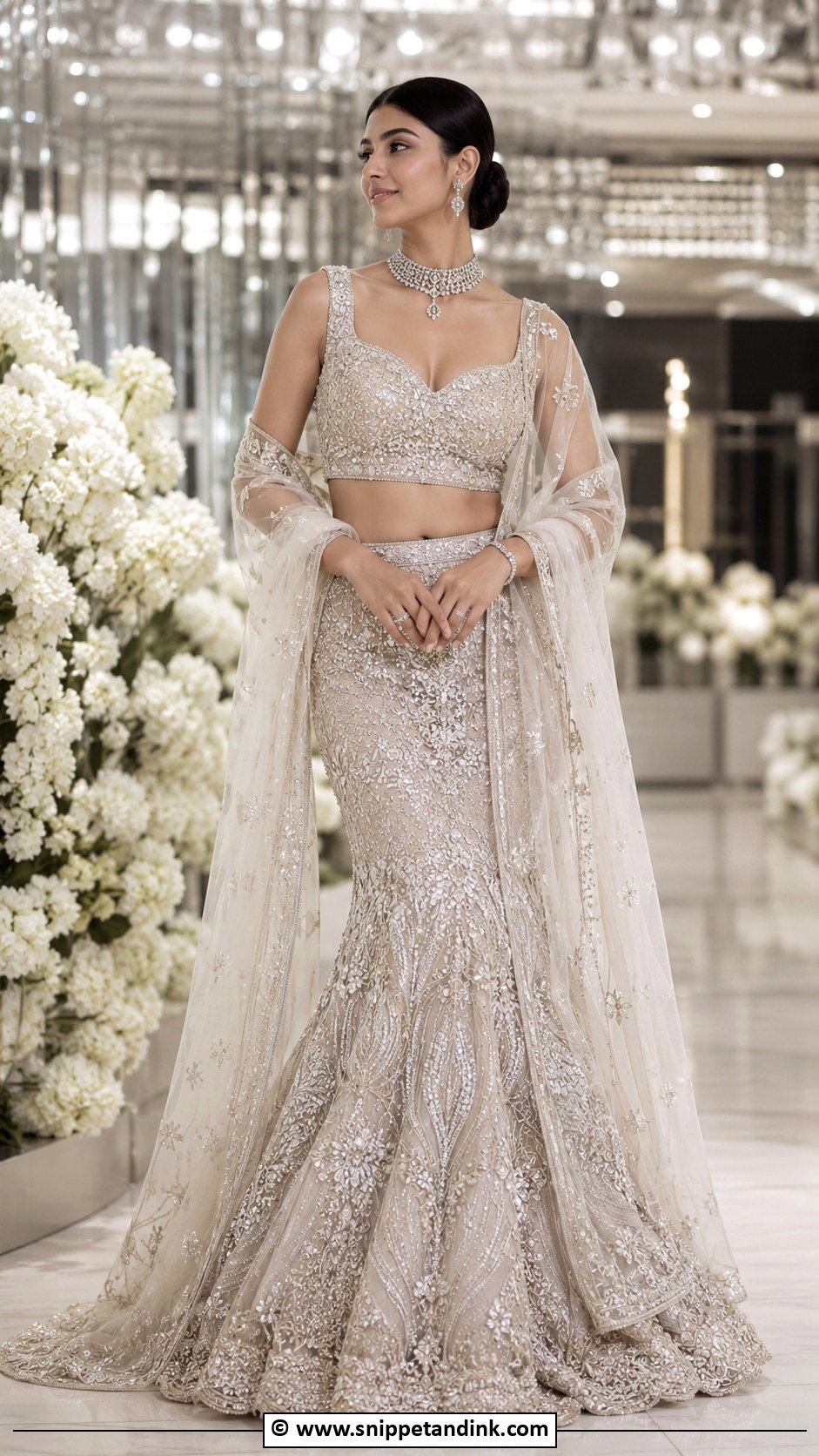
A mermaid lehenga fits close through the hips and flares low, a modern and glamorous shape for receptions. Embroidery placement matters more here than anywhere, around the waist, hips and hem. The honest trade-off is movement: sitting cross-legged for rituals is very hard in a fitted skirt, so I’d keep this for a reception rather than the ceremony itself. A sleek bun balances it, and heels give height and support.
30. Trail Bridal Lengha With Veil Dupatta
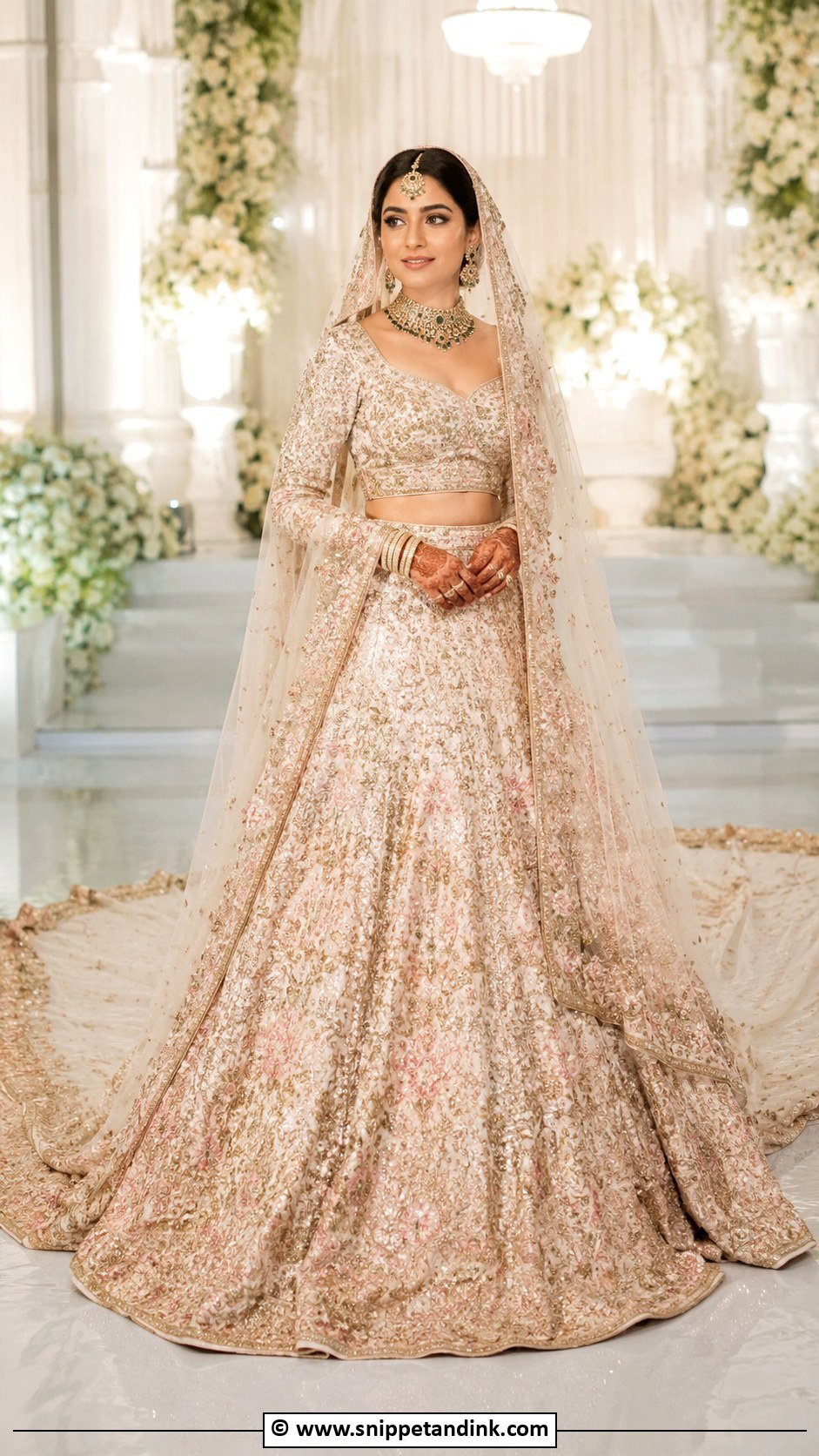
A trail adds drama behind you as you walk, whether it is built into the skirt or detaches. Rich fabric with detailed embroidery, and a trail fitted properly during alterations. Ask for a wrist loop or detachable section, because trails gather dust and petals and someone will step on it during the pheras. A veil-style dupatta over the head frames the face. A choker, earrings, maang tikka and bangles are enough.
Pinning the Dupatta So It Survives the Ceremony
A dupatta over the head slips for one reason: it is pinned to hair that is moving. I build a firm base first, a bun or a flat-pinned section at the crown, and anchor the dupatta into that with U-pins and small safety pins hidden under the border. The second dupatta goes on the shoulder and is pinned through the blouse strap, not to skin-tight fabric that will tear.
- Heavy borders need more pins at the back of the head, not at the forehead.
- Use the maang tikka chain to hold the front edge, but never let it carry the dupatta weight.
- Leave a little slack at the elbows so you can raise your arms during rituals.
Storing Zari So It Doesn’t Tarnish
After the wedding, have the lehenga dry cleaned by someone who handles embroidered bridal wear, and tell them about any stains so they can treat them early. Then wrap it in plain cotton muslin, not plastic, which traps moisture and dulls metallic thread. Refold it along different lines every few months so the zari doesn’t crack at the creases, and keep it away from perfume and naphthalene balls, which can discolour embroidery.
A Lehenga Should Let You Sit Through the Pheras
Colour gets the attention, but the decisions that matter most are weight, fit and drape. Think about your venue, season and ceremony timing, and how many hours you will wear the outfit. A heavy zardozi lehenga suits a traditional ceremony; pastel organza or light florals feel better for a daytime event. Then tailor the blouse, the dupatta pinning, the jewelry and the shoes to you. If you can sit, stand and walk comfortably at the final fitting, you’ll enjoy wearing it all day.
You'll Like These Ideas:






Leave a Reply