
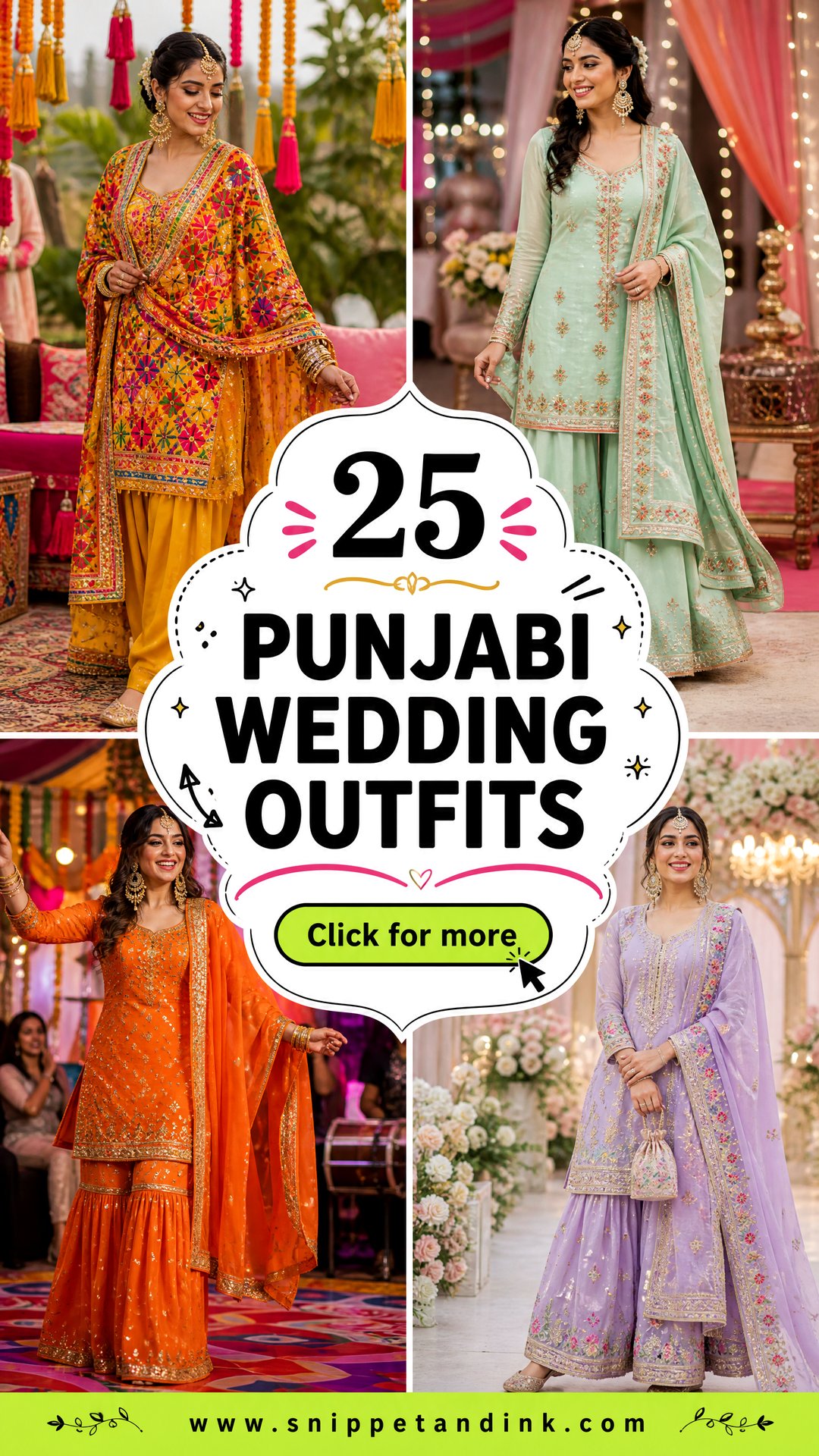
A Punjabi wedding rarely means one outfit. There’s the roka or chunni, a mehndi, a jaggo night that can run past midnight, the Anand Karaj or pheras, and then a reception, and each one asks something different of your clothes. When I dress a bride or her family for these functions, the first question isn’t color. It’s what you’ll be doing in it: sitting on a gurdwara floor, dancing in a circle with a lit gagar, or standing in a receiving line for two hours. Phulkari, Patiala salwars, shararas, ghararas and lehengas all have their place once you know that. Below are 25 complete looks, with notes on where each one works and where I’d hold back.
A Function-by-Function Wardrobe Plan for a Punjabi Wedding
Before I look at a single lehenga, I write out the functions in order with the venue, the time of day and what happens at each one. That list decides more than any mood board, because a gurdwara morning and a hotel ballroom reception need completely different clothes.
- Roka or chunni: a dressy suit or light lehenga. For the chunni ceremony, the groom’s family often brings the dupatta, so I keep the bride’s outfit plain enough to take whatever color arrives.
- Mehndi: short sleeves and side zips, because once the henna is on your hands you can’t dress yourself.
- Jaggo: a Patiala or sharara, fabric that breathes and juttis you can dance in on a street or lawn.
- Anand Karaj or pheras: the main outfit. In a gurdwara you’ll sit on the floor and walk the laavan barefoot with your head covered, so the skirt has to let you sit cross-legged and rise without help.
- Reception: the place for a second look, heavier fabrics, a saree or an Indo western piece.
Once the list is written, count the outfit changes honestly. Three heavy looks in one day means three sets of jewelry, three hair adjustments and a lot of time out of the room. Most brides I dress end up happiest with one heavy outfit and lighter ones around it.
1. Red Punjabi Bridal Lehenga Outfit
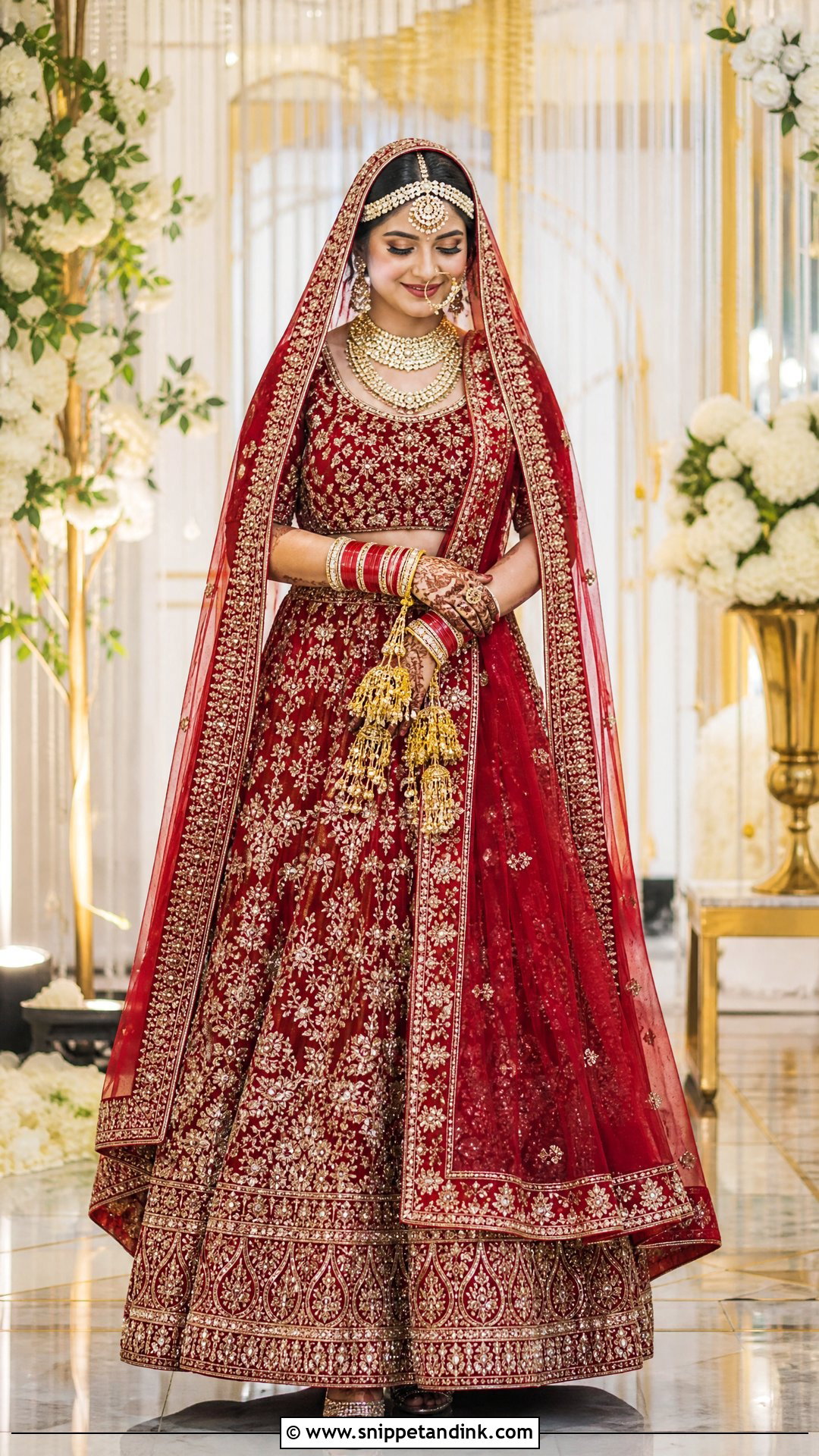
Red is still the color most Punjabi brides come back to, and for the main ceremony it rarely misjudges the room. I look at the red under daylight before anything else, because a sindoor red with an orange base reads warmer and younger than a deep maroon, and the choice changes which gold you wear. Zardozi and gota both suit it; zardozi is heavier, so I keep the skirt a little lighter if the bride has a long Anand Karaj sitting ahead of her. The head dupatta needs to be pinned in at least three places, at the crown and behind each ear, or it slides every time she bows. A second dupatta across the shoulder looks rich in photos but adds real weight, so try both together at your final fitting. Chooda, kaleere, matha patti and juttis finish it.
2. Pink Punjabi Lehenga Outfit
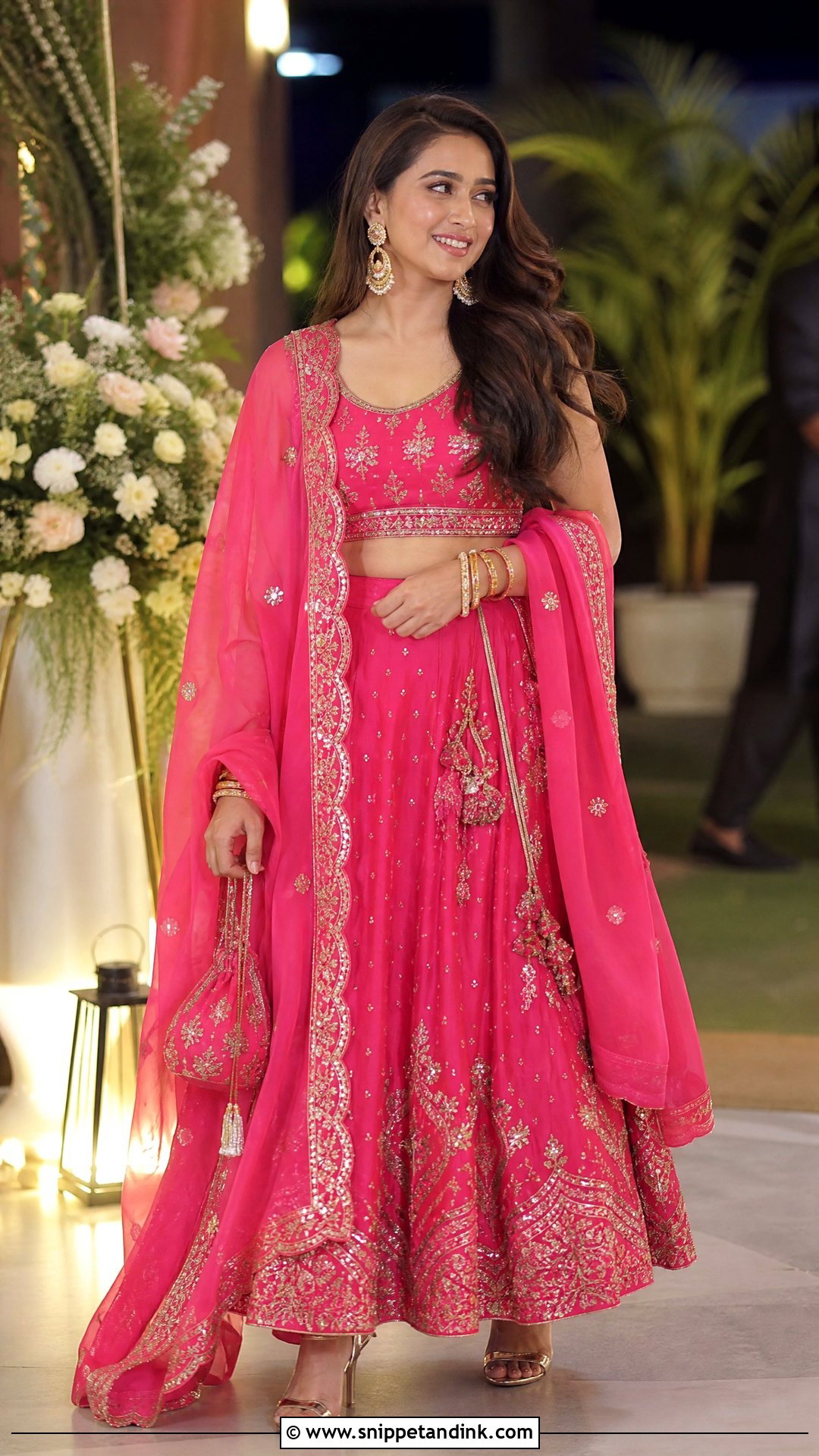
Pink has a wider range than people expect. Rani and fuchsia hold up under evening lights at a sangeet, while blush can wash out on deeper skin tones in harsh afternoon sun, which is why I always hold the fabric against the face outdoors before committing. Mirror work suits the brighter pinks; pearls and sequins sit better on blush. Kundan or delicate gold, a sleek blouse and a small potli keep the outfit from tipping into heavy, and it’s a safe pick for sisters and cousins who want color without competing with the bride’s red.
3. Phulkari Punjabi Suit Outfit
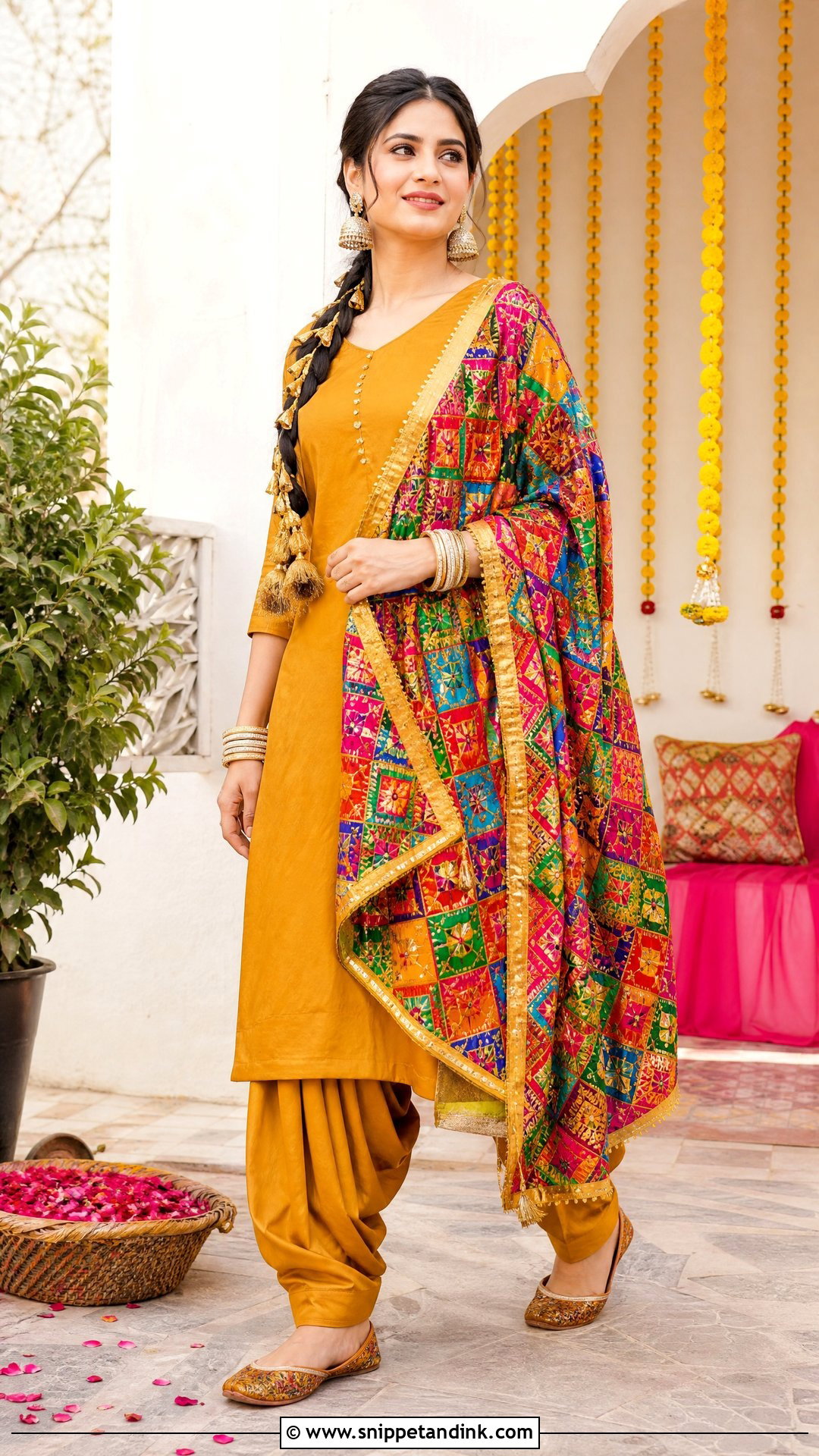
The phulkari dupatta is the whole point here, so I treat the suit underneath as a plain backdrop. Ivory, mustard, black or royal blue make the darning-stitch flowers stand out; a busy printed kurta fights them. A short kurta with a Patiala salwar gives the traditional line, and a straight kurta with pants looks more current. Hand-done phulkari is heavier than the machine versions and drapes differently, so if it’s a family piece, pin it at the shoulder rather than letting it slide off all evening. Jhumkas, a paranda in the braid and juttis complete a look I’d send to mehndi, haldi or any daytime function.
4. Patiala Suit Punjabi Wedding Outfit
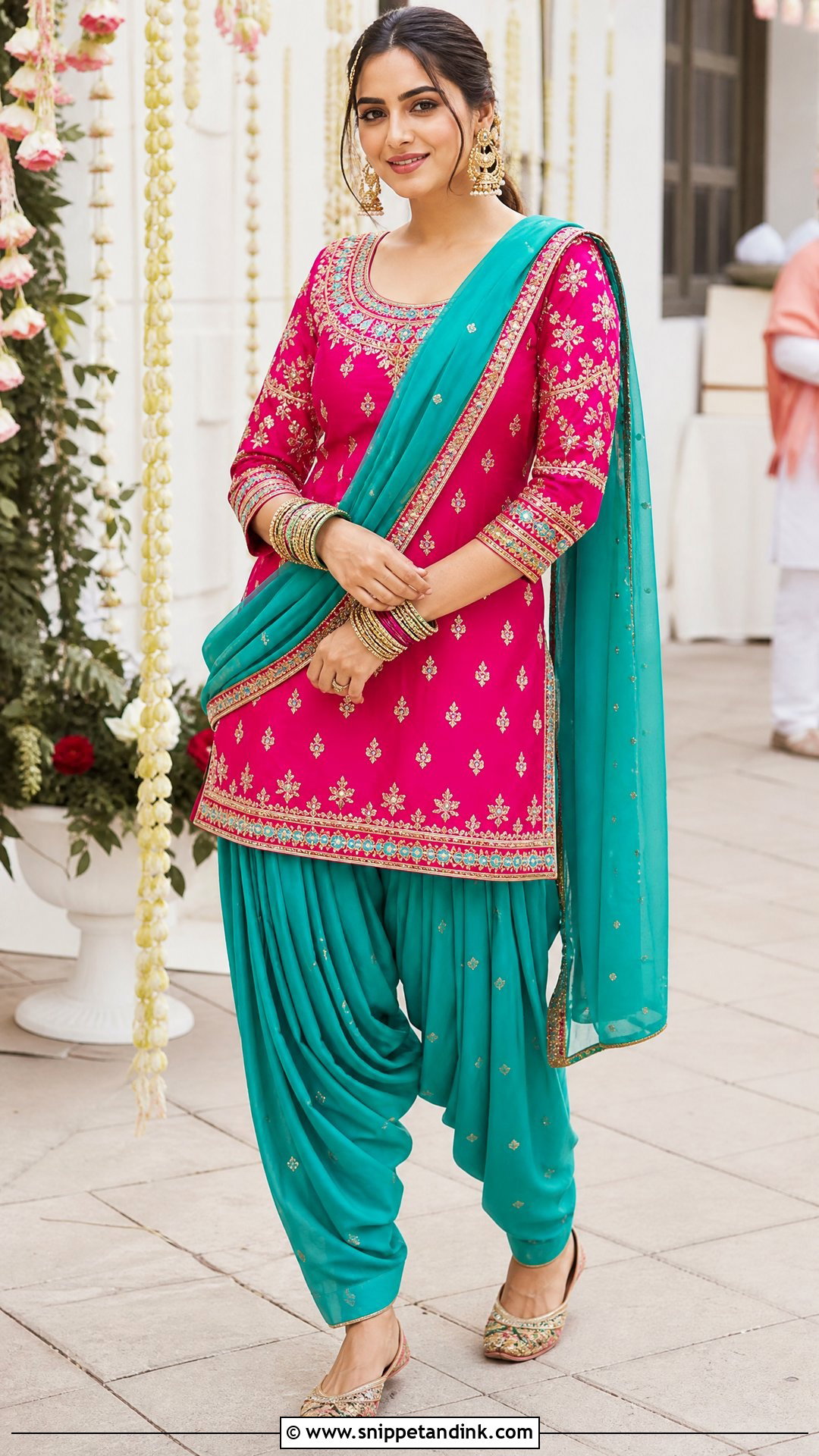
For dancing, nothing beats a Patiala suit Punjabi wedding outfit. The deep pleats of the salwar do the moving for you, and a short kameez keeps them visible. What I check at fittings is the fabric weight of the salwar: Patialas use a lot of cloth, so heavy silk can drag at the waistband by the end of a jaggo night, while cotton silk or crepe stays bouncy. Put the embroidery at the neckline, cuffs and hem, choose a strong color like magenta, emerald or turquoise, and add glass bangles and a braid. It is the most practical outfit on this list for a long night on your feet.
5. Punjabi Sharara Suit Outfit
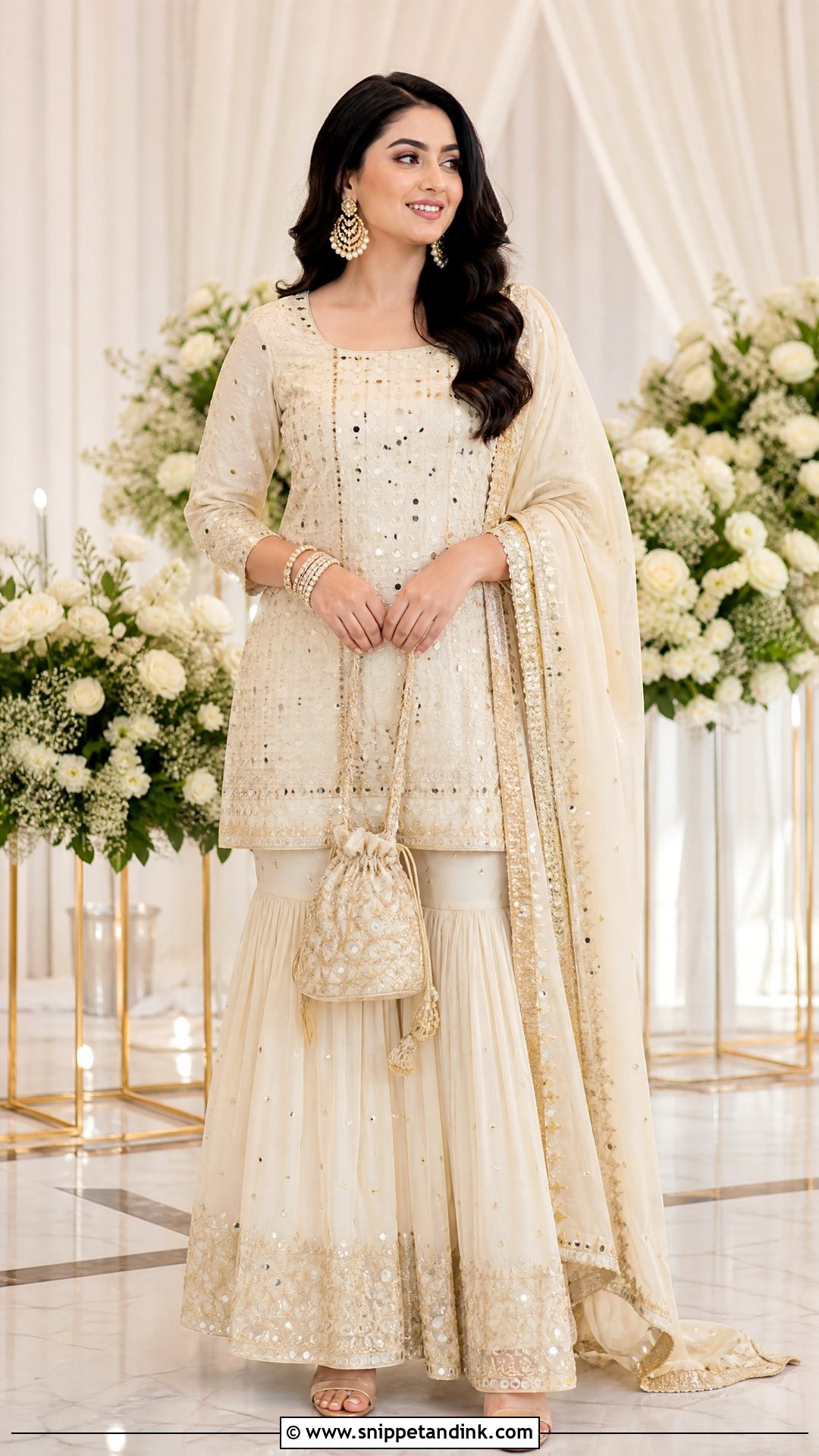
A sharara gives you the swing of a lehenga at a fraction of the weight, which is why I suggest it to brides changing outfits several times in one weekend. Mirror work, gota patti and zari all suit it. A peplum kurta pulls in the waist; a straight short kurta reads more classic. One fitting note: sharara pants are hemmed for a particular heel height, so bring the shoes you’ll actually wear, or the flare will either drag or sit too high. Chandbalis and soft curls finish it for a sangeet or a family cocktail evening.
6. Punjabi Gharara Suit Outfit
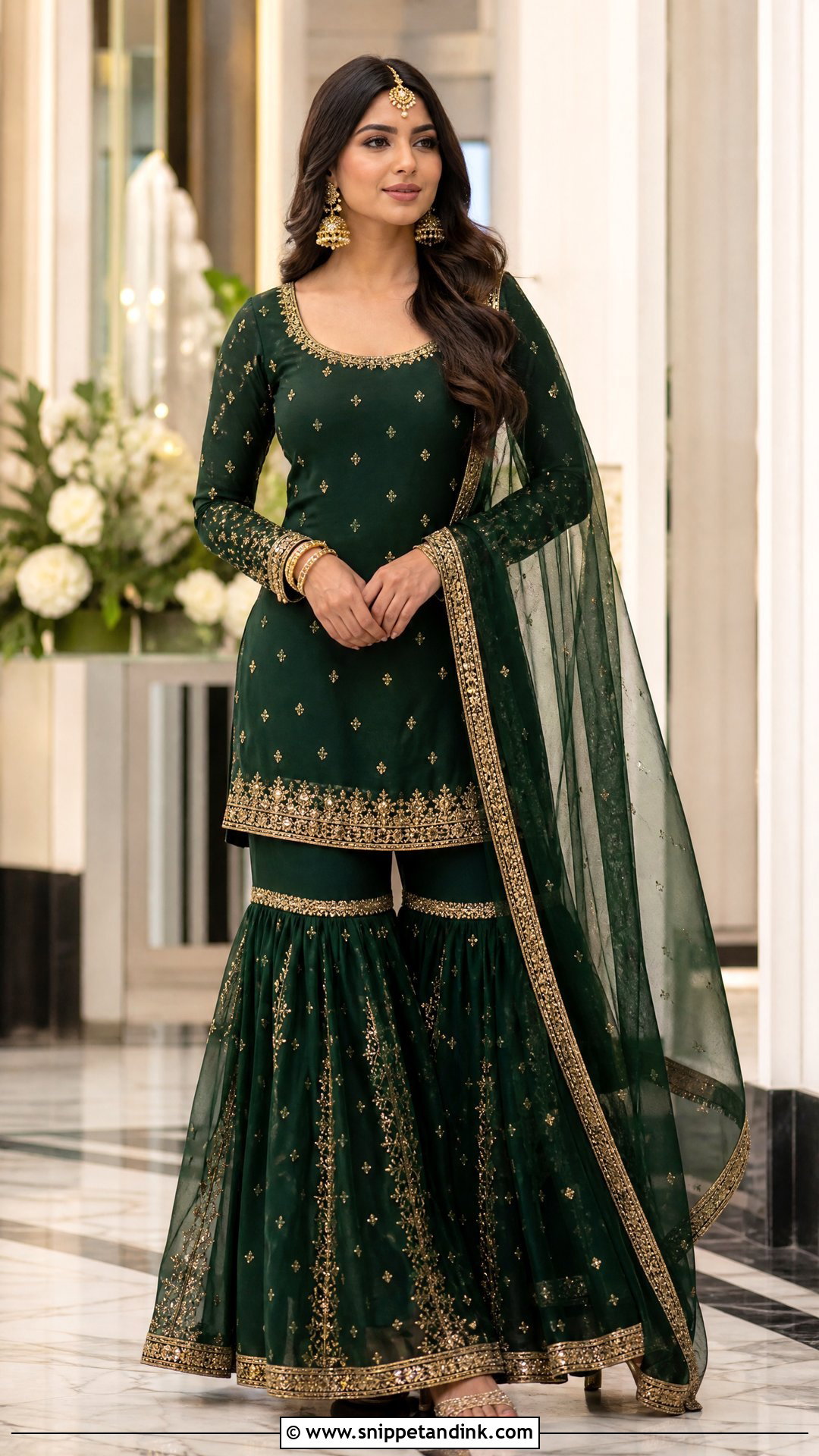
People mix up the gharara and the sharara all the time. The gharara is fitted to the knee and flares below a joined seam, usually trimmed with a gota band, and that seam has to land right at the knee or the whole shape looks off when you walk. Pair it with a short kurta and a matching dupatta. Bottle green, ivory, maroon and navy look rich in silk, brocade or organza. I like it for mothers and aunts who want something a little different from the usual suit, because it’s dressy without being bridal. Kundan earrings, a small tikka and stacked bangles are enough.
7. Punjabi Anarkali Suit Outfit
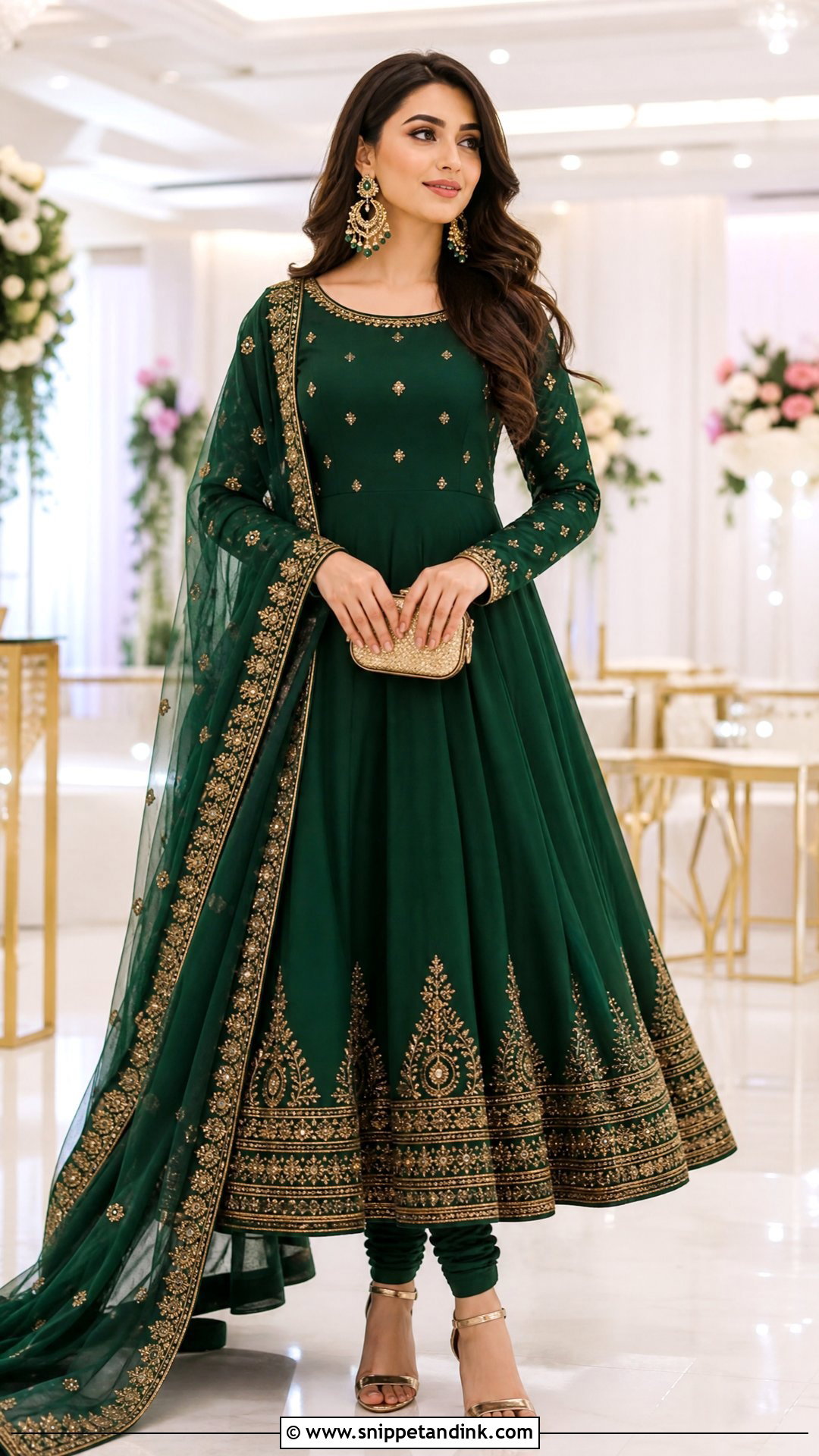
An Anarkali flatters almost every figure because the flare starts high and hides nothing awkwardly. The problem I see most is length: a floor-length Anarkali in heavy georgette catches under heels on stairs and stages, so I usually have it finished about an inch off the floor with the actual shoes on. Embroidery on the bodice and border is enough; you don’t need it everywhere. Emerald, ruby, plum and champagne all work at evening events. Keep the dupatta lightweight, add statement earrings and a clutch, and it carries through a reception or an engagement without fuss.
8. Punjabi Palazzo Suit Outfit
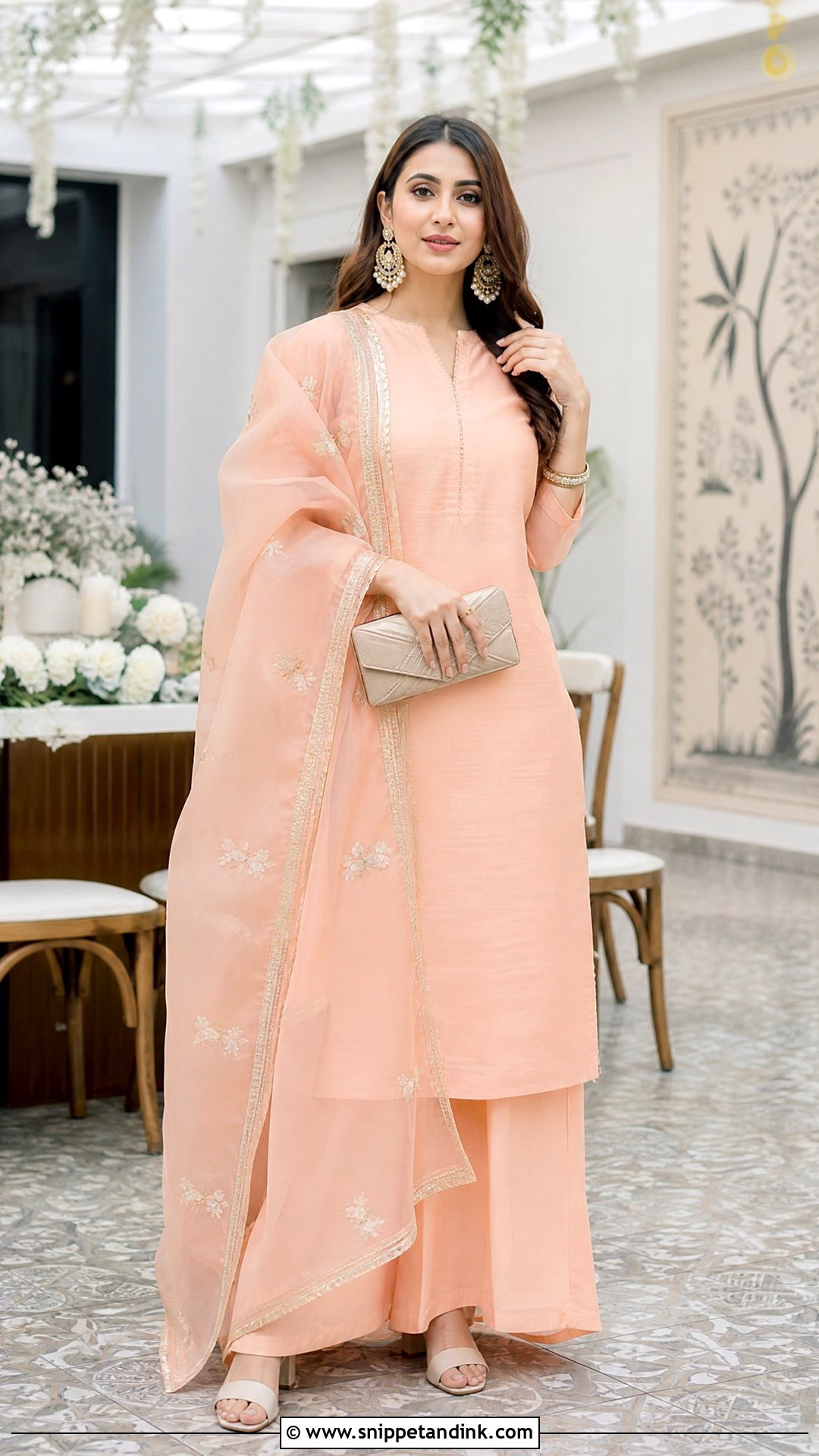
A palazzo suit is the outfit I hand to guests who have to sit through a long ceremony, eat at a crowded table and still dance later. A straight or A-line kurta over wide-leg pants is easy, but plain cotton can look underdressed at a wedding, so lean on an embroidered neckline, a lace border or a printed organza dupatta. Pastels belong to daytime; deeper colors suit night functions. Block heels are kinder than stilettos on lawns and marquee floors, and a structured potli keeps the look tidy.
9. Punjabi Palazzo Lehenga Outfit
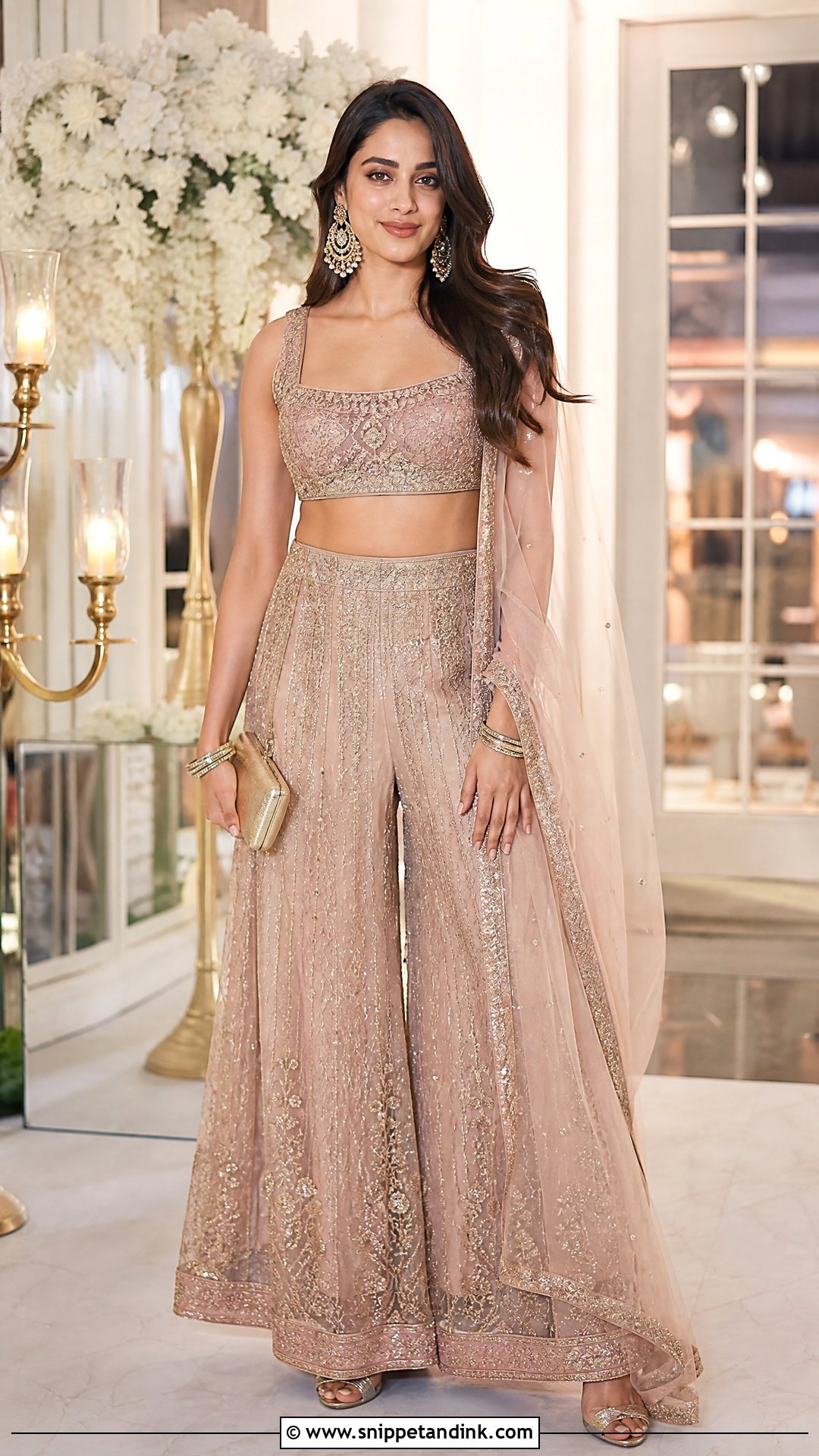
The palazzo lehenga suits anyone who loves the look of a lehenga but hates managing a skirt on a dance floor. The bottoms are cut wide enough to read as a skirt when you stand still and split apart when you move. Brocade, silk or embroidered net gives it the dressier finish. I’d avoid very stiff brocade if you’re short, because the volume swallows the leg line; georgette falls closer. Statement earrings, bangles, metallic heels and a sleek clutch, and it’s ready for a sangeet or a cousin’s reception.
10. Yellow Punjabi Haldi Outfit
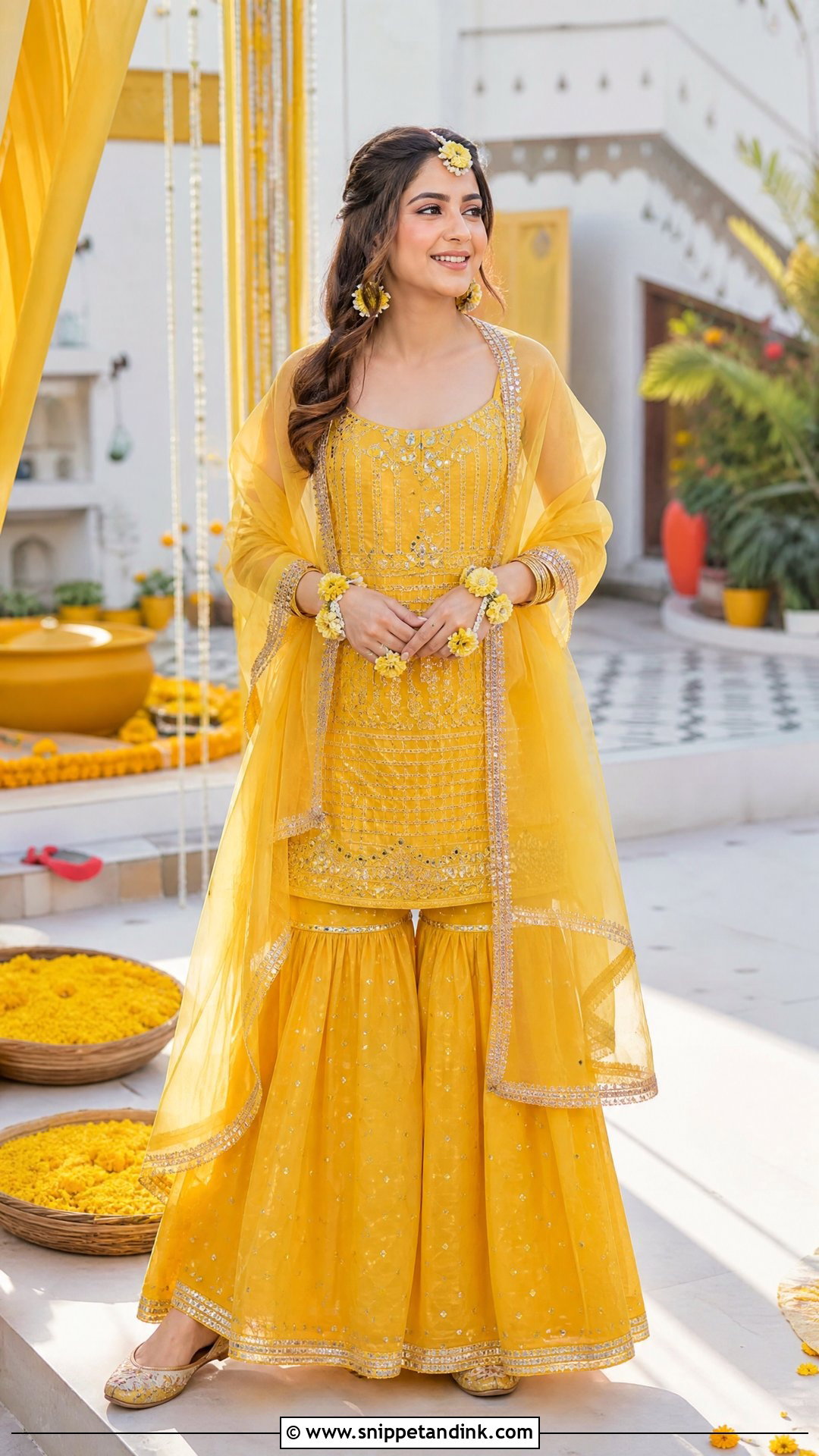
Assume your Punjabi haldi outfit will be stained, because turmeric paste marks silk permanently and is stubborn even on cotton. That’s why I keep haldi clothes light and inexpensive: a yellow salwar suit, a simple sharara or a soft cotton-silk lehenga with minimal embroidery. Mustard, marigold and lemon all suit the mood. Floral jewelry is ideal because nothing precious gets ruined, and juttis you don’t mind scuffing make sense on a wet floor. A phulkari dupatta adds the Punjabi touch, but don’t bring an heirloom piece to this one.
11. Green Punjabi Mehndi Outfit
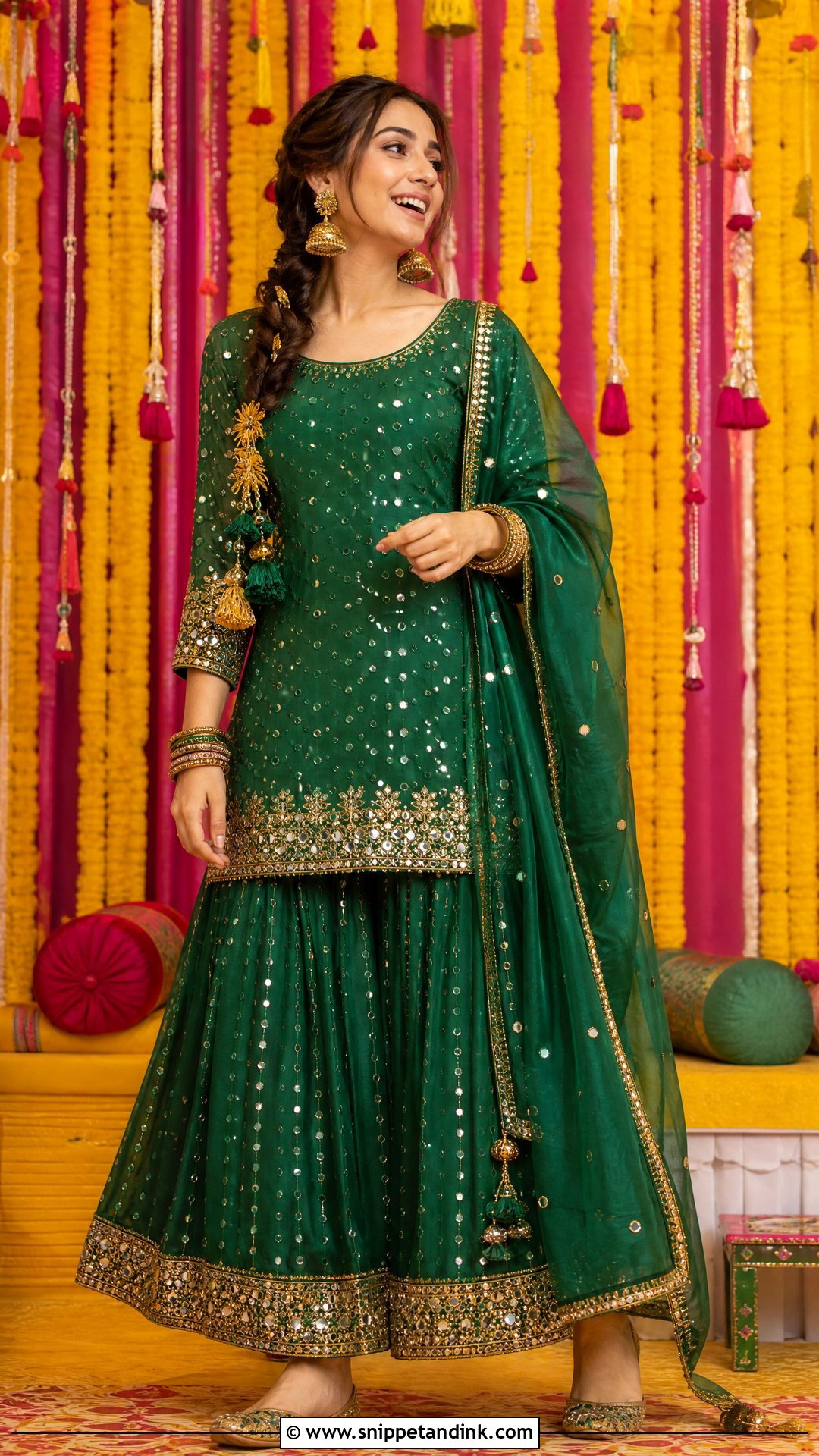
Green is the classic mehndi color, and the shade sets the mood: emerald for an evening function, parrot or lime for daytime. The thing to plan around is your own henna. Once your hands and feet are covered you can’t fasten hooks or pull up a fitted sleeve, so I dress mehndi brides in short or three-quarter sleeves and something that zips at the side or slips over the head. A green sharara, Patiala suit or Anarkali with mirror work and tassels all work. Add juttis, bangles, a potli and a braid with paranda.
12. Orange Punjabi Sangeet Outfit
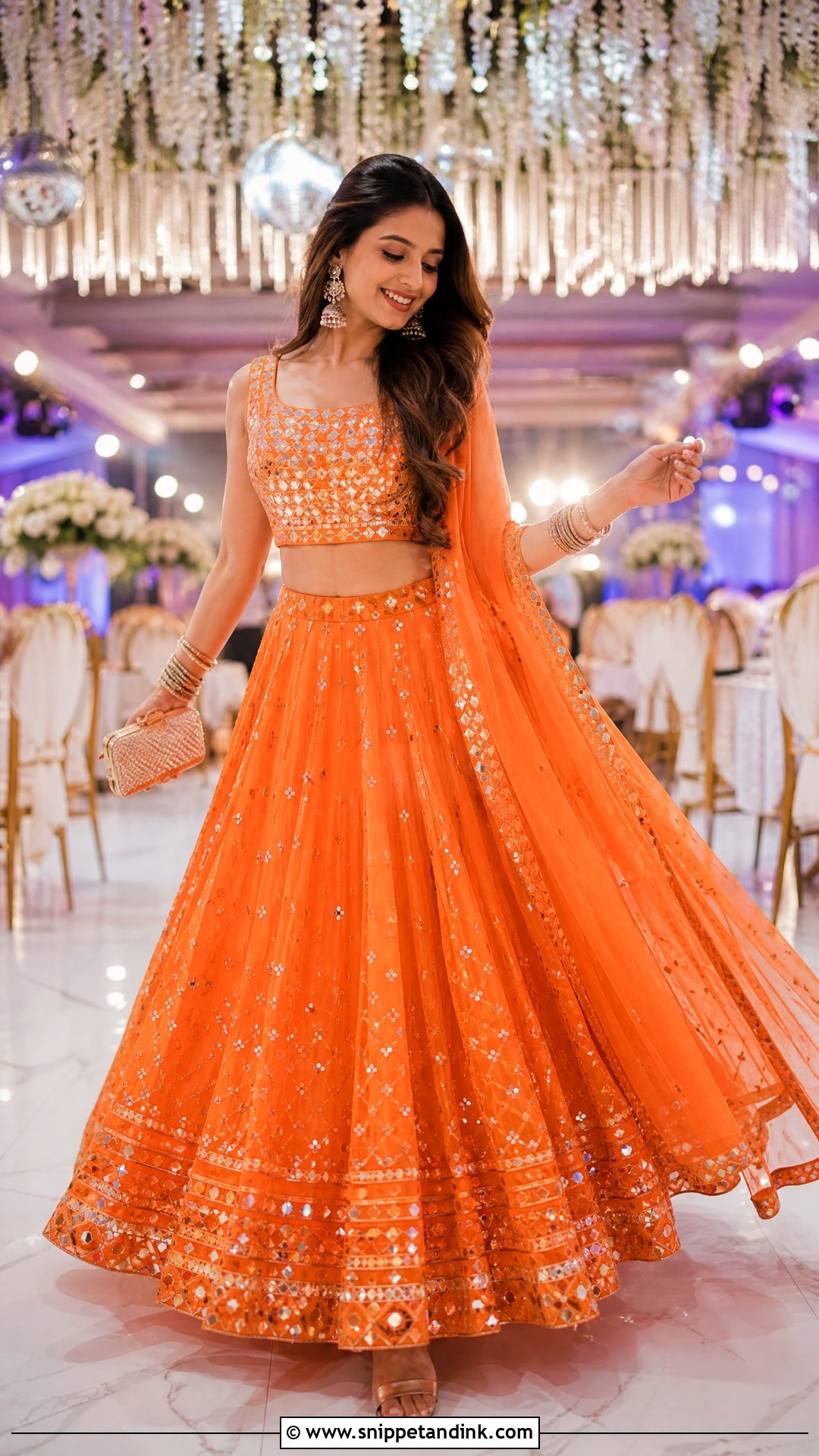
Sangeet is a performance night, and a Punjabi sangeet outfit has to survive choreography. I make brides rehearse their dance once in the actual outfit, because a stiff can-can underskirt or a dupatta pinned too tight shows up in the first spin. Georgette, chiffon and soft net move well; heavy raw silk doesn’t. Orange works with gold, pink, green and ivory accents, so a lehenga with a light dupatta, a mirror-work sharara or a peplum with flared bottoms all suit. Keep bangles to a stack that won’t fly off mid-routine.
13. Ivory Punjabi Reception Outfit
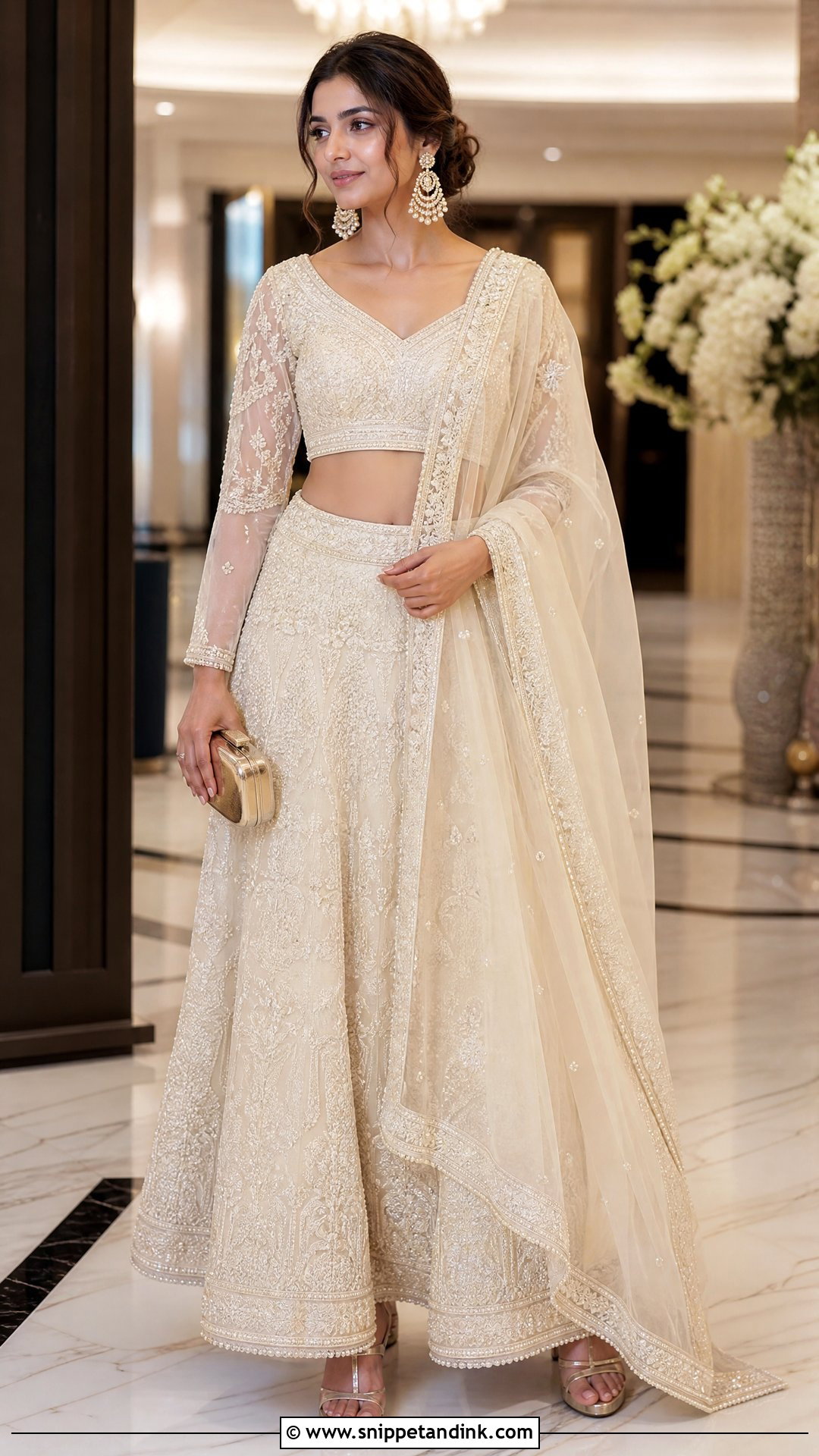
Ivory is the color I see under-styled most often. On its own it can look plain in a room full of jewel tones, so it needs either pearl, sequin or gold embroidery, or confident jewelry and a polished hairstyle. An ivory lehenga, Anarkali or pre-draped saree set all suit a reception. Champagne heels and kundan earrings help it feel formal. It’s a good second outfit for a bride, but for guests I’d keep it clearly lighter in embroidery, because ivory heavily worked in gold starts to look like a bridal choice.
14. Velvet Punjabi Wedding Suit Outfit
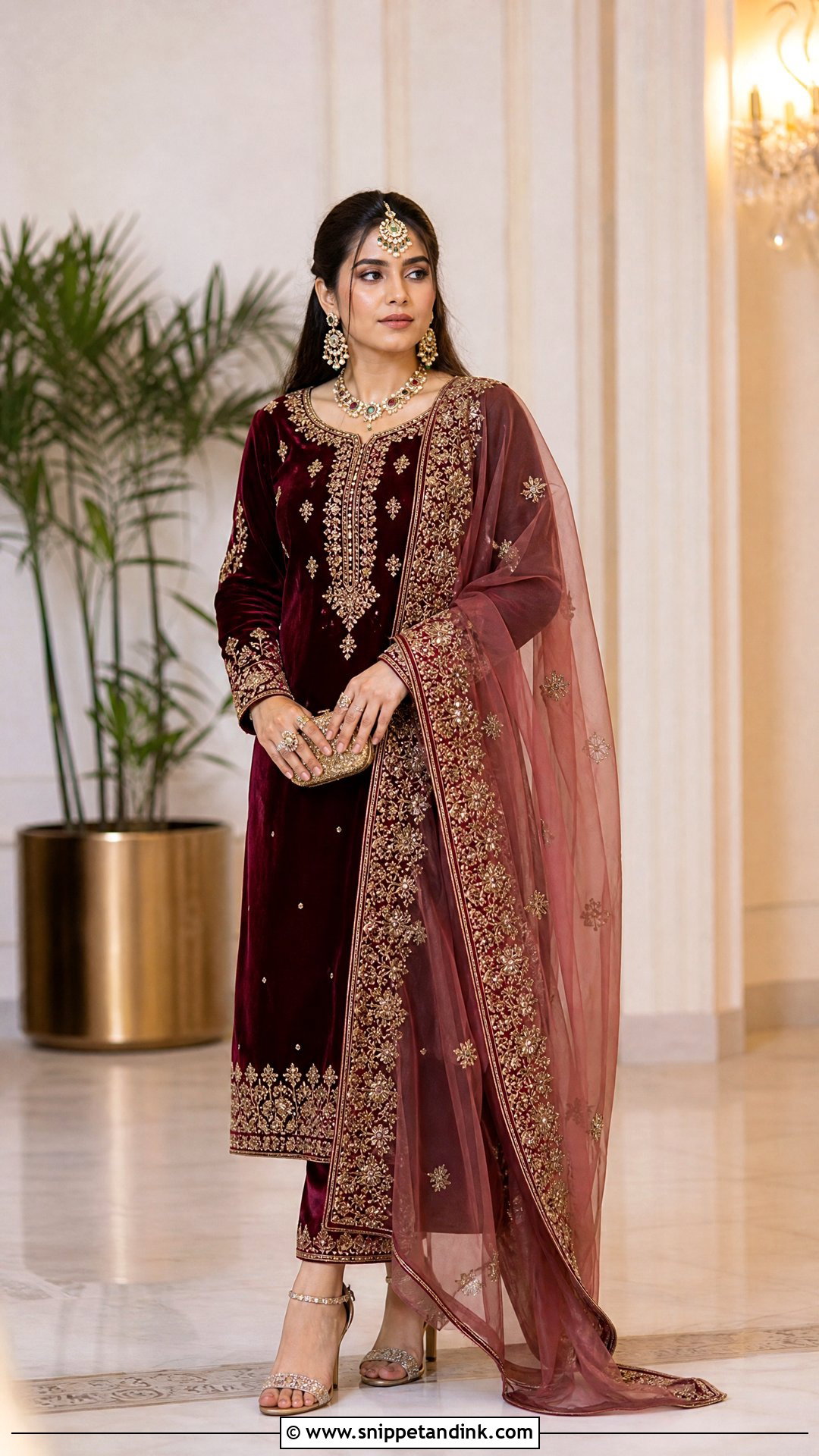
Velvet earns its place at winter and evening weddings. It holds its own shape, so even a plain straight suit looks formal, but it’s warm, and I’d never put a guest in velvet for an outdoor daytime event or a packed indoor sangeet. Maroon, navy, emerald and wine show the pile best. Pair it with an organza, net or chiffon dupatta to lighten the weight, and store it hanging rather than folded, because velvet crush marks are hard to steam out. Kundan jewelry and a small clutch finish it.
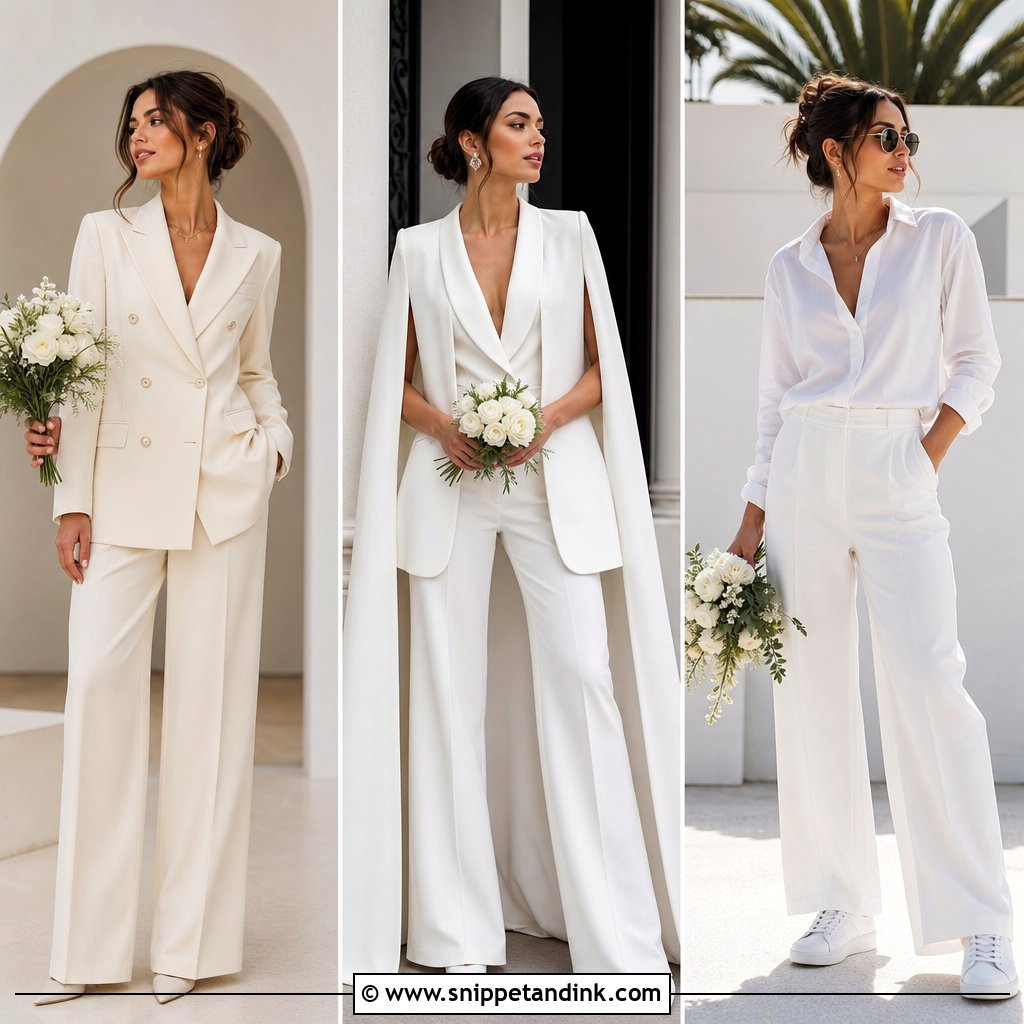
15. Pastel Punjabi Wedding Outfit
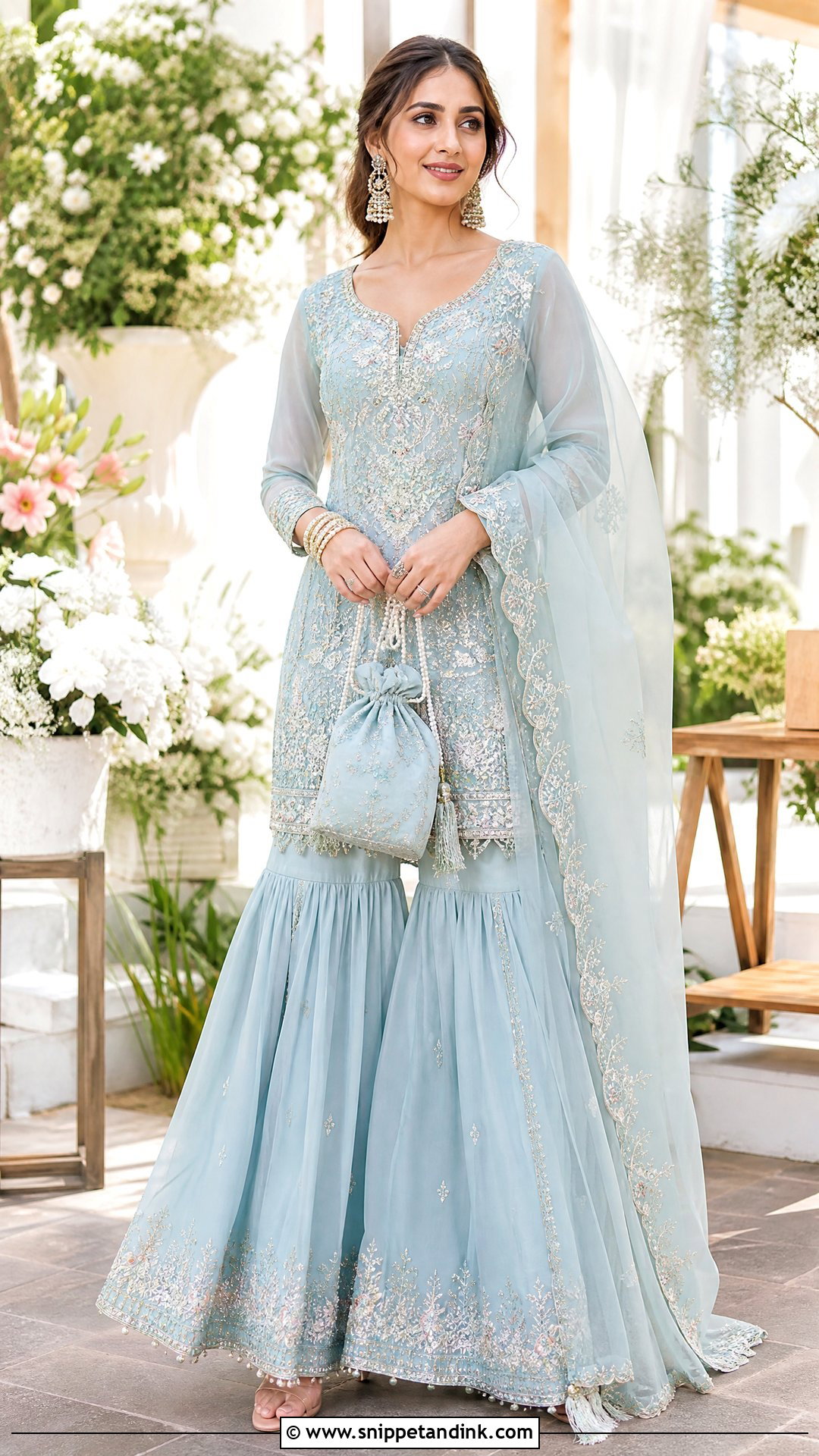
Pastels belong in daylight: garden venues, morning ceremonies and afternoon lunches. Powder blue, mint, lavender, peach and sage all read fresh outdoors, but under warm tungsten lighting at night they can turn muddy, which is the main reason I steer pastels toward daytime events. Look for delicate threadwork, pearls or sequins and a sheer dupatta. Light jewelry and soft makeup keep it in proportion. It’s a useful color family for bridesmaids who need to coordinate without everyone wearing the same shade.
16. Royal Blue Punjabi Lehenga Outfit
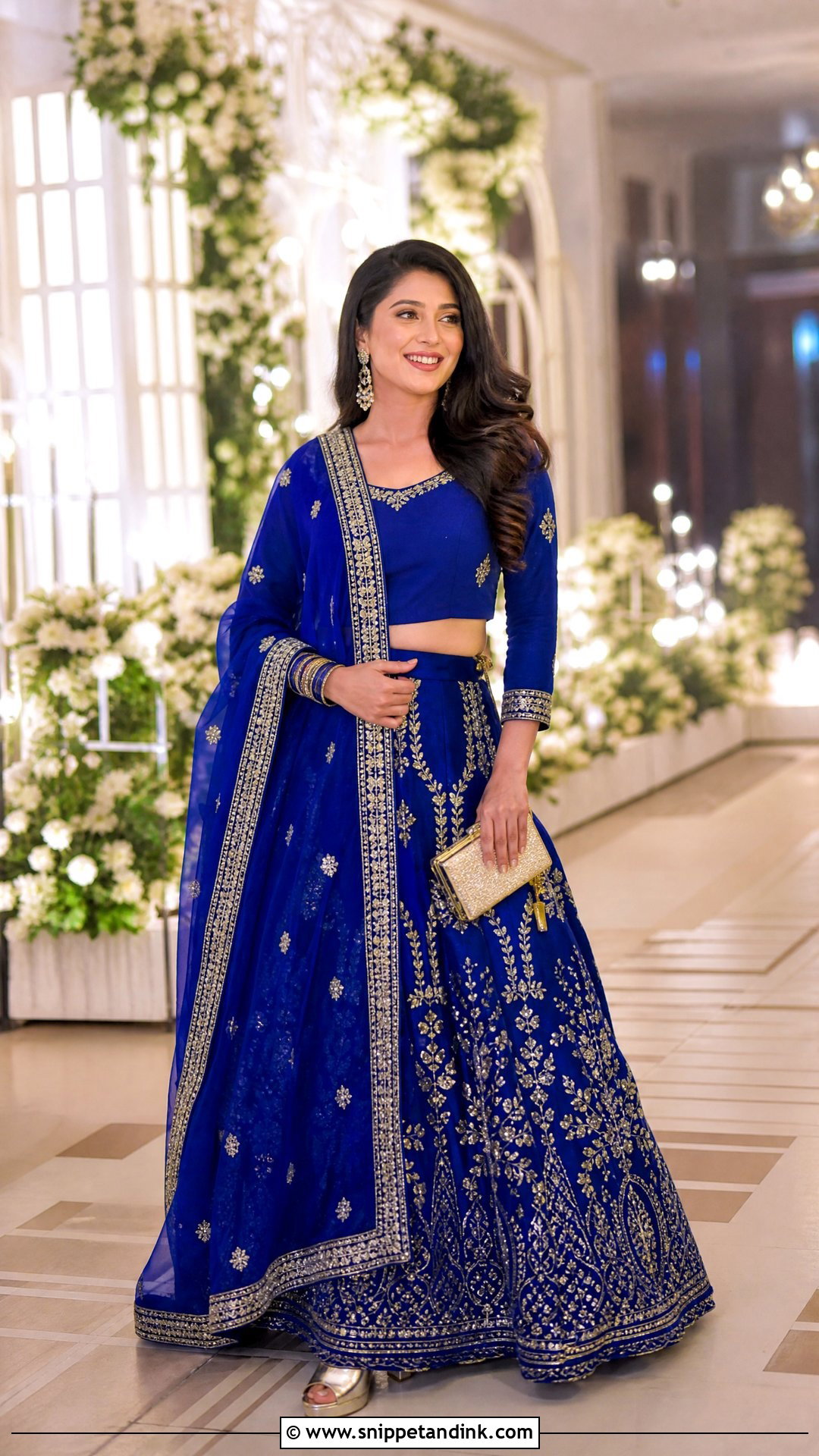
Royal blue is one of the few colors that sits well beside a red bride without competing. It takes silver, gold, mirror work and multicolor embroidery equally well. For a sangeet or reception, a sleeveless or elbow-sleeve blouse with loose waves looks relaxed; for a gurdwara ceremony, choose a modest neckline and keep the dupatta ready to cover your head. Metallic heels, bangles and a clutch complete it. Blue also holds its depth under bright event lighting, where lighter shades flatten.
17. Maroon Punjabi Wedding Outfit
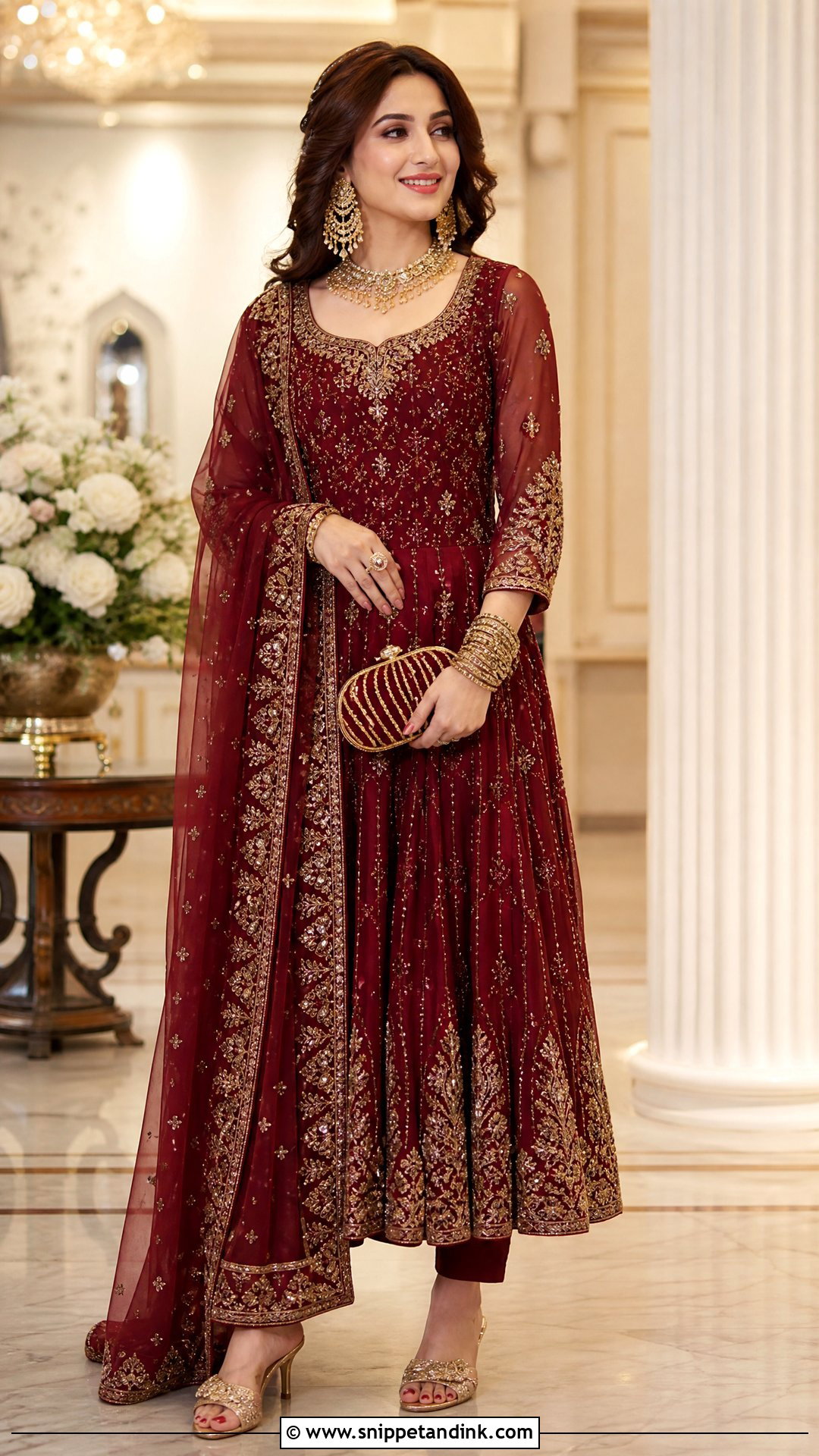
Maroon reads bridal in a heavily worked lehenga and quietly formal in a sharara or Anarkali, which makes it one of the most flexible colors for family members. Velvet, silk, brocade and georgette all hold it well. My rule with maroon is balance: if the outfit is dense with gold embroidery, keep the jewelry to earrings and bangles; if it’s plain, that’s when a statement necklace or tikka earns its place. It’s warm enough for winter functions and formal enough for evening receptions.
18. Punjabi Saree Outfit
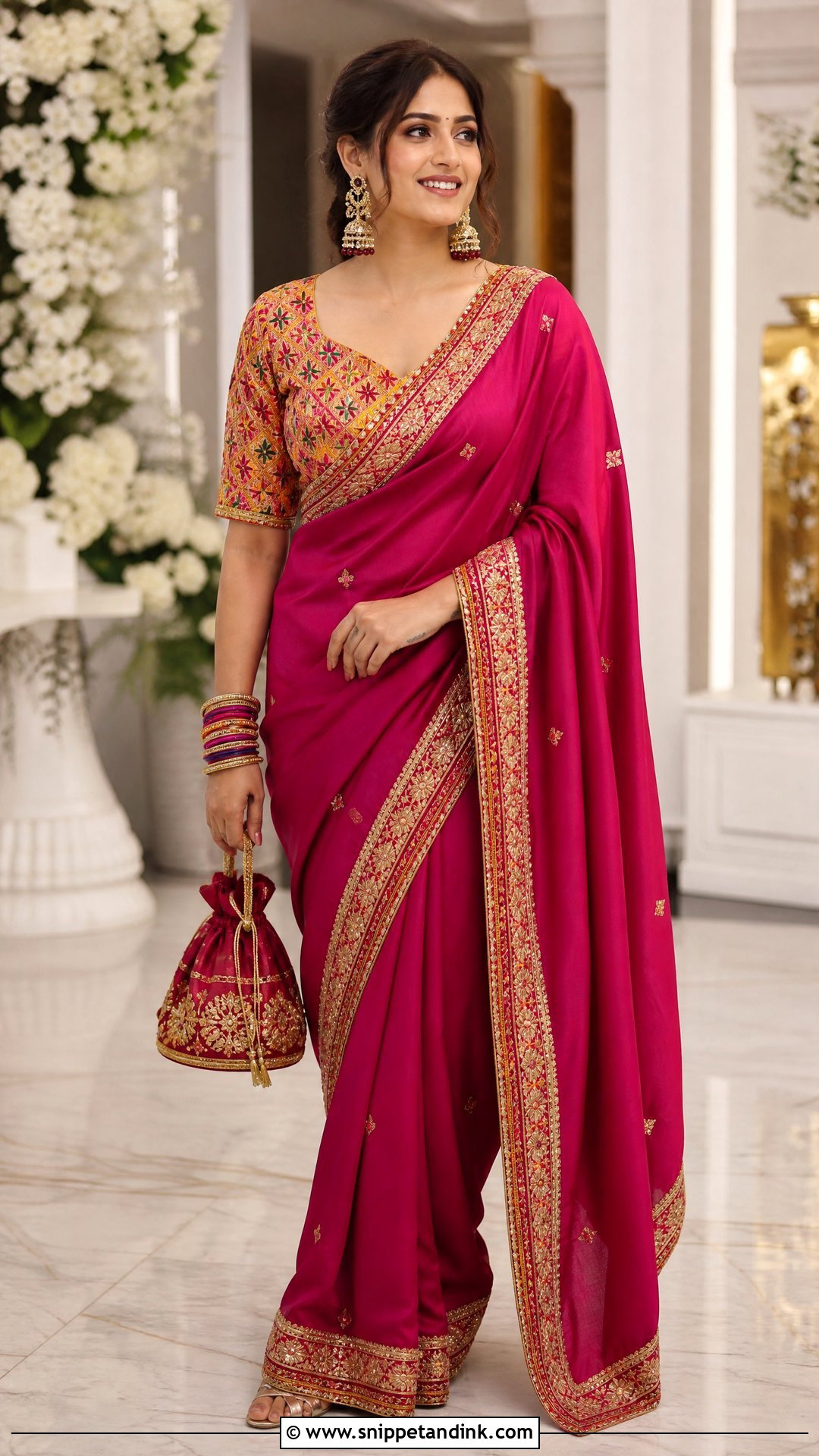
A saree at a Punjabi wedding is less common than a suit, which is exactly why it stands out at receptions and engagements. Silk, georgette and chiffon all drape well, and a pre-stitched saree solves the worry of the pleats coming loose during bhangra. To give it Punjabi character, I’d add a phulkari or embroidered blouse, bold jewelry, colorful bangles and a braid finished like a paranda. It suits mothers and sisters who want something more formal than a suit and less weighty than a lehenga.
19. Punjabi Jacket Lehenga Outfit
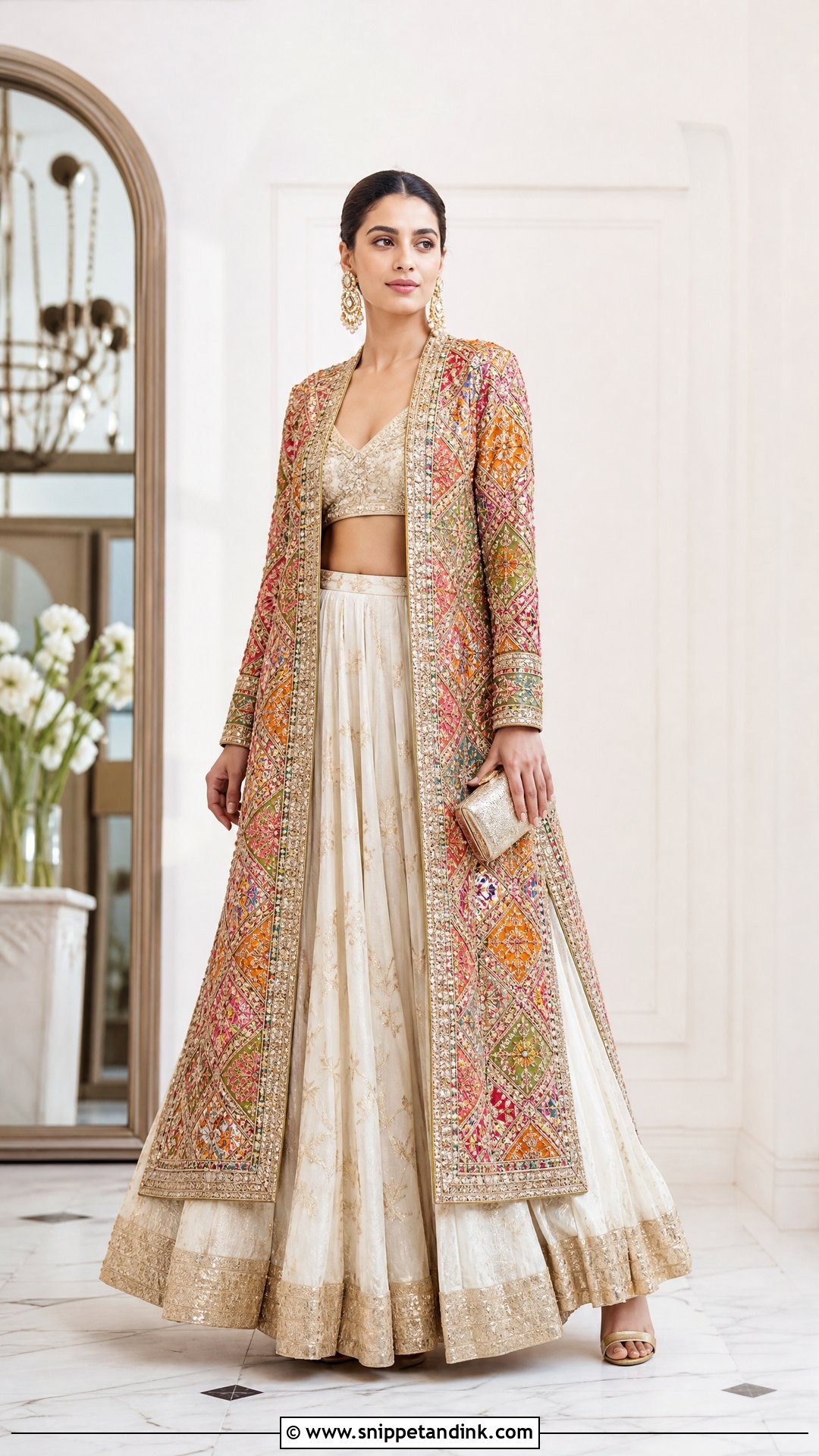
The jacket lehenga is my answer for anyone who finds a dupatta annoying. A long embroidered jacket over a blouse and skirt, or a short jacket over a crop top, gives coverage and structure with nothing to keep re-pinning. Phulkari, mirror work, brocade or gota can make the jacket the focus. Check the armholes at fitting, because a heavy embroidered jacket cut tight under the arm restricts every wave and hug. Statement earrings, sleek heels and a clutch, and it works for a sangeet, reception or engagement.
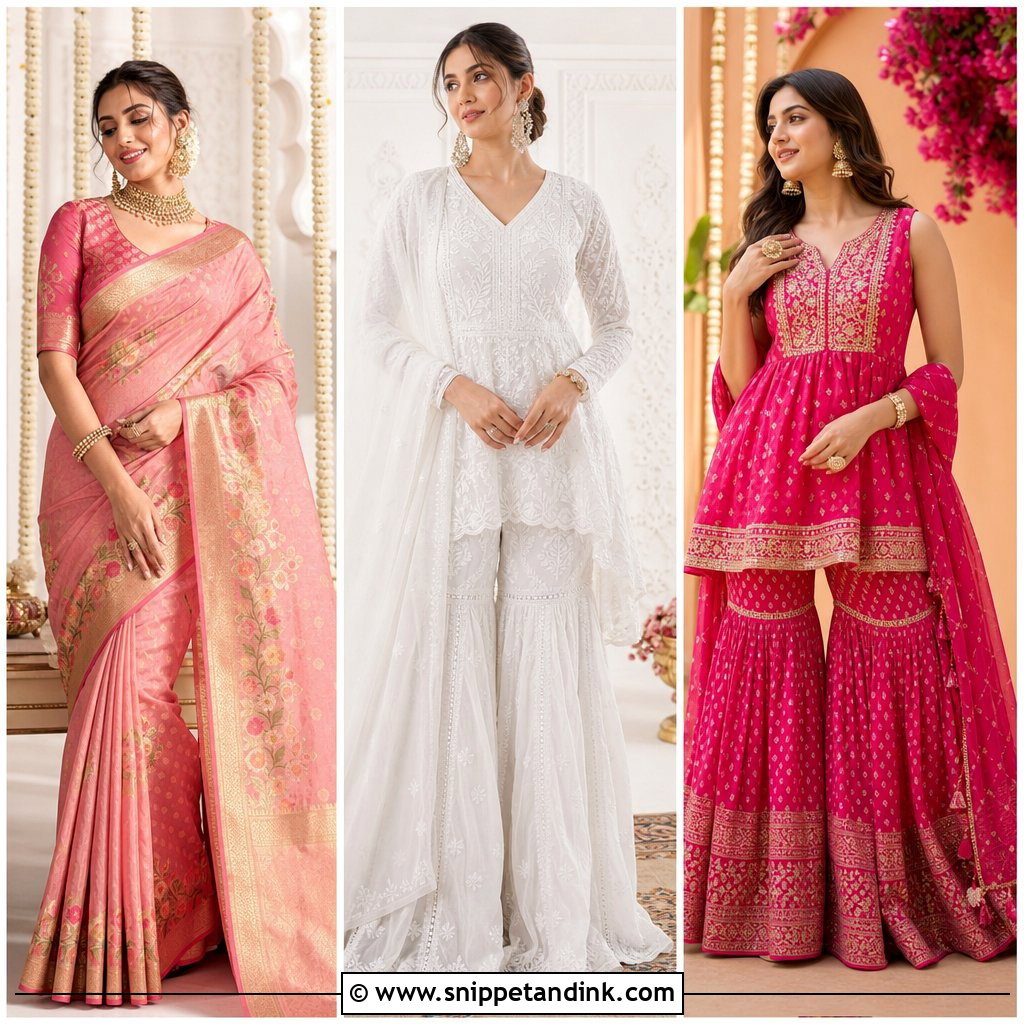

20. Punjabi Peplum Sharara Outfit
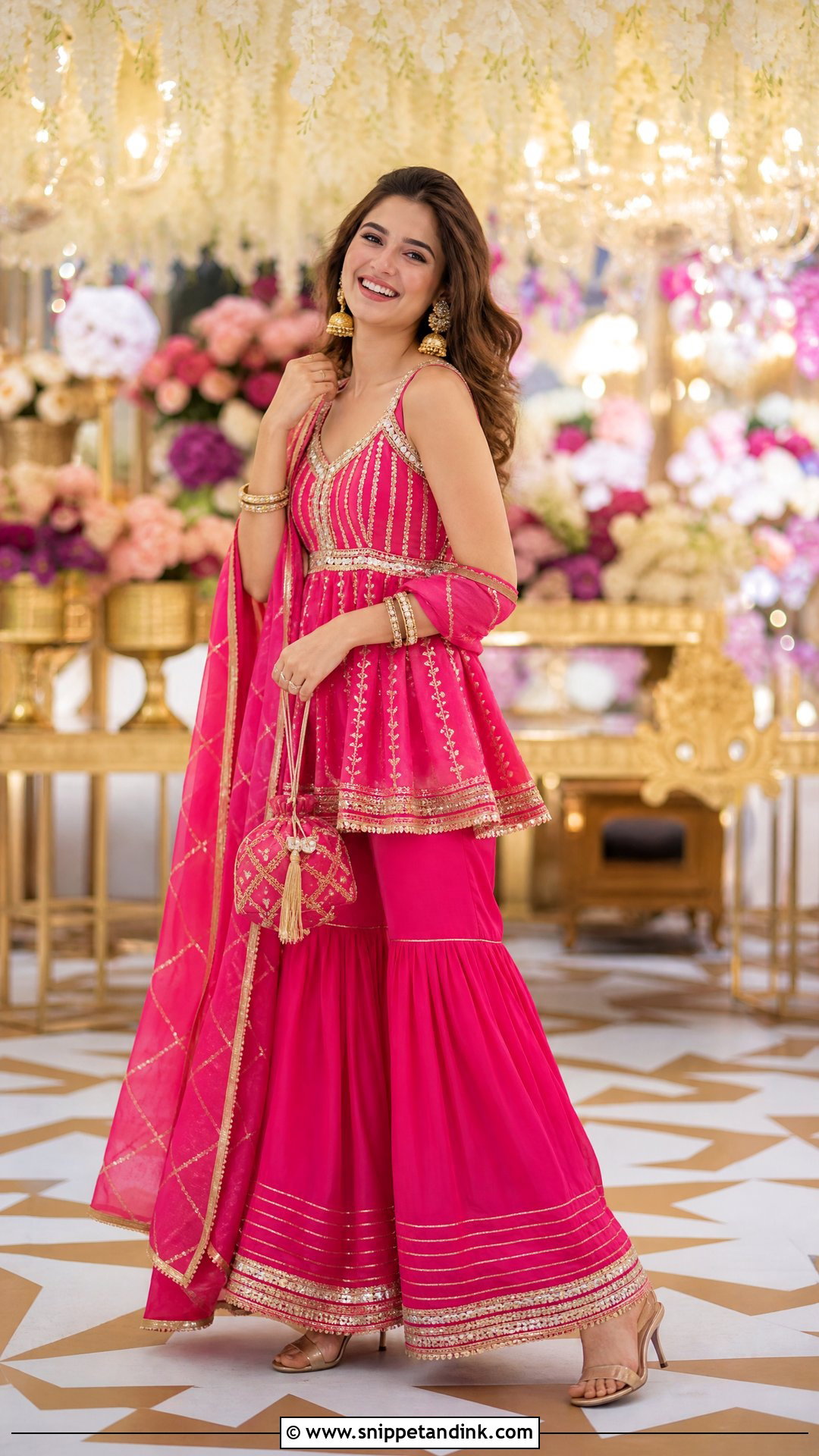
A peplum top defines the waist and the sharara adds volume below, so the outfit has shape without a corset-like blouse. That makes it one of the easier pieces to dance in. Bright colors suit mehndi and sangeet; jewel tones look right at evening functions. Put the embroidery at the hem, neckline and sleeves. The peplum should hit at the high hip; if it sits too low it shortens the legs, which is a common problem with ready-made sets. A soft dupatta, jhumkas and comfortable heels finish it, and it’s a natural fit for younger cousins and friends.
21. Punjabi Kurta With Skirt Outfit
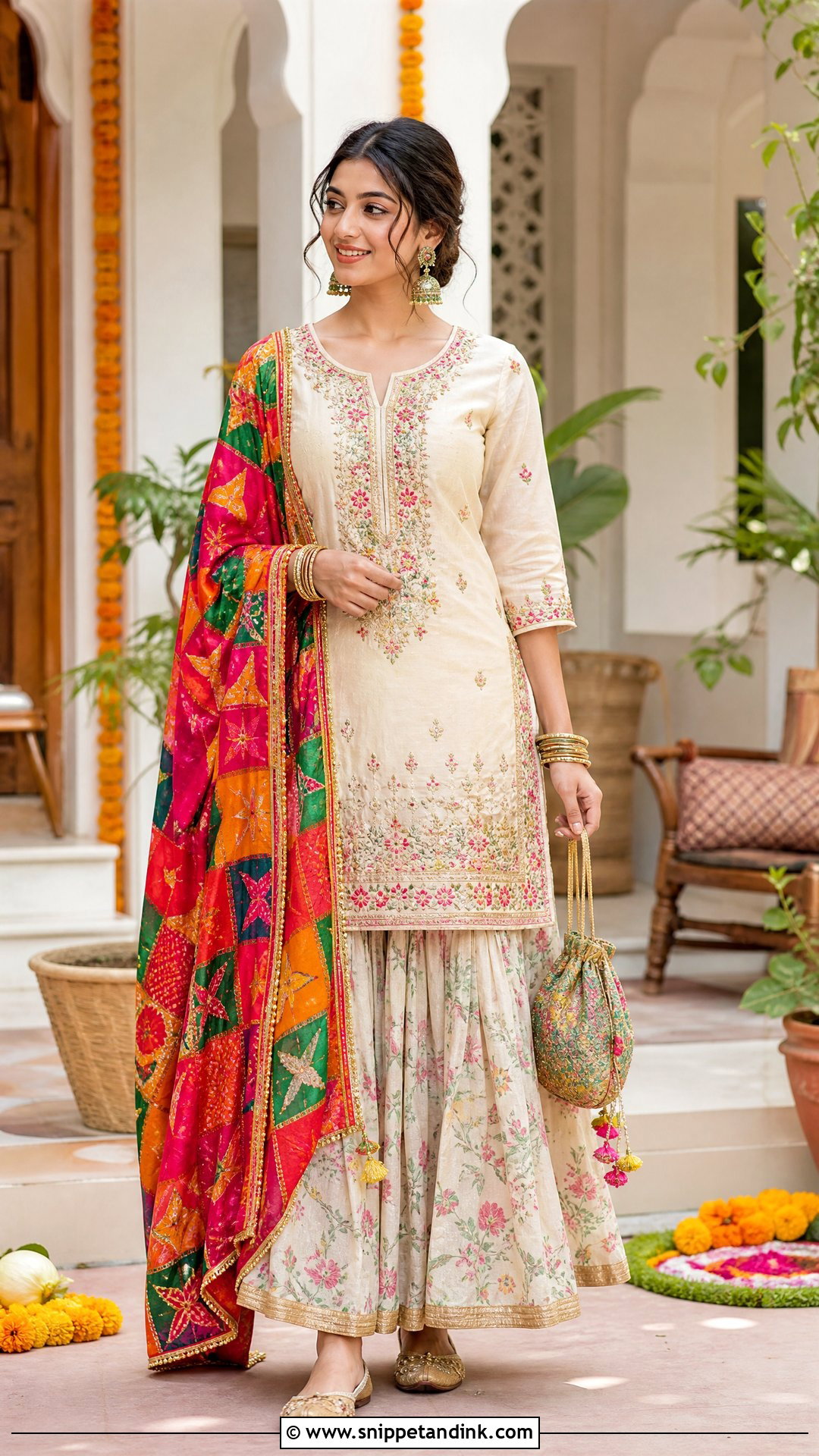
A kurta with a flared skirt is lighter than a lehenga and easier to sit in, which matters at daytime functions with long rituals. A phulkari dupatta or a mirror-work skirt brings it up to wedding level. Chanderi and cotton silk suit summer; brocade suits cooler months. I’d keep the kurta short to mid-thigh so the skirt’s flare still shows. Juttis, earrings, bangles and a potli bag are all it needs for a mehndi, haldi or welcome lunch.
22. Punjabi Straight Suit Wedding Outfit
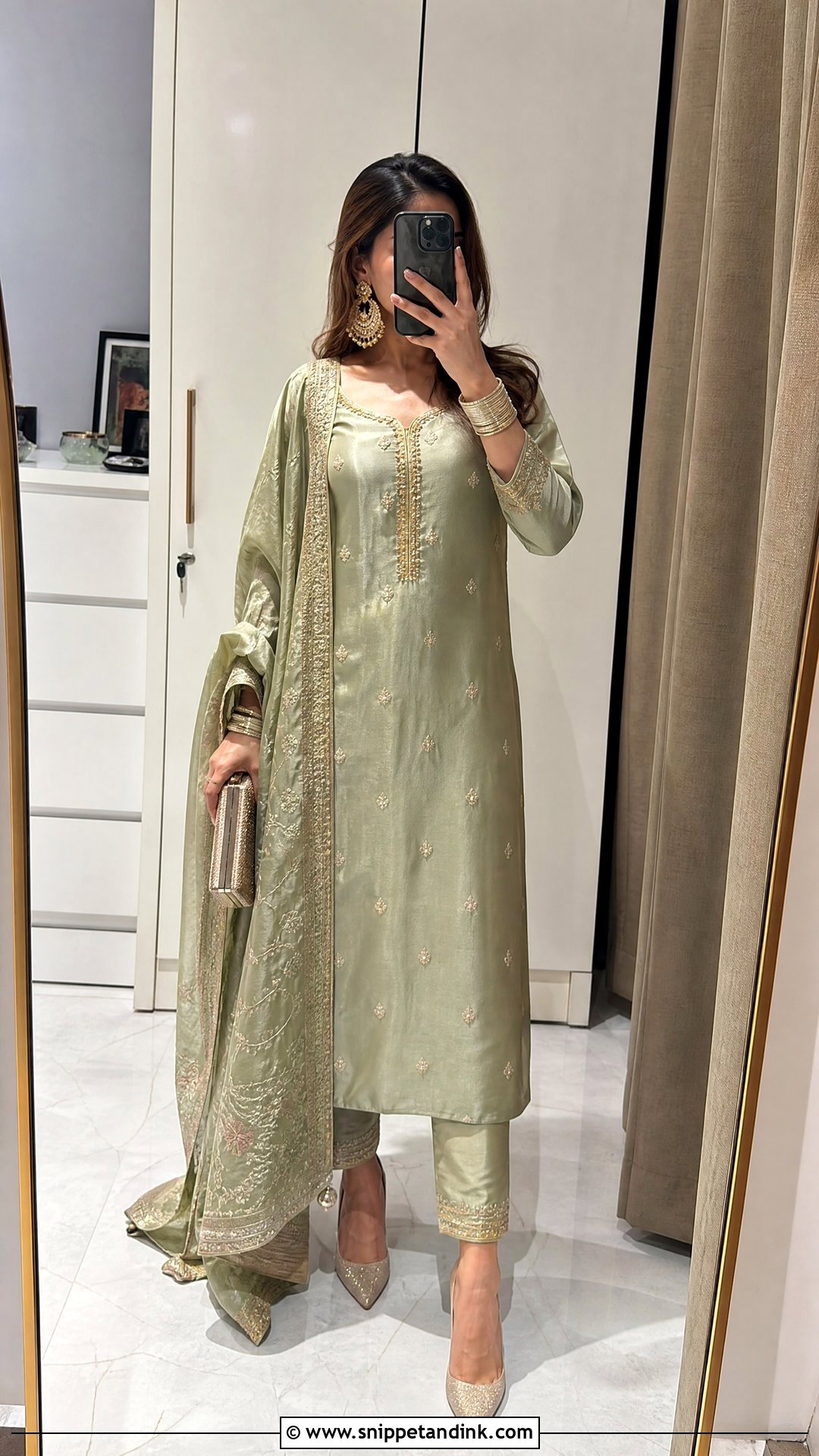
A straight suit is the cleanest silhouette here, and it relies entirely on fabric and dupatta. Silk, organza or georgette with a lace border or sequins makes it wedding-appropriate; a heavily embroidered dupatta does most of the dressing up. I recommend it to guests travelling for a destination wedding, because a straight suit packs flat and creases less than anything flared. Slim pants or cigarette trousers, heels, chandbalis and a sleek clutch are enough.
23. Punjabi Chikankari Suit Outfit
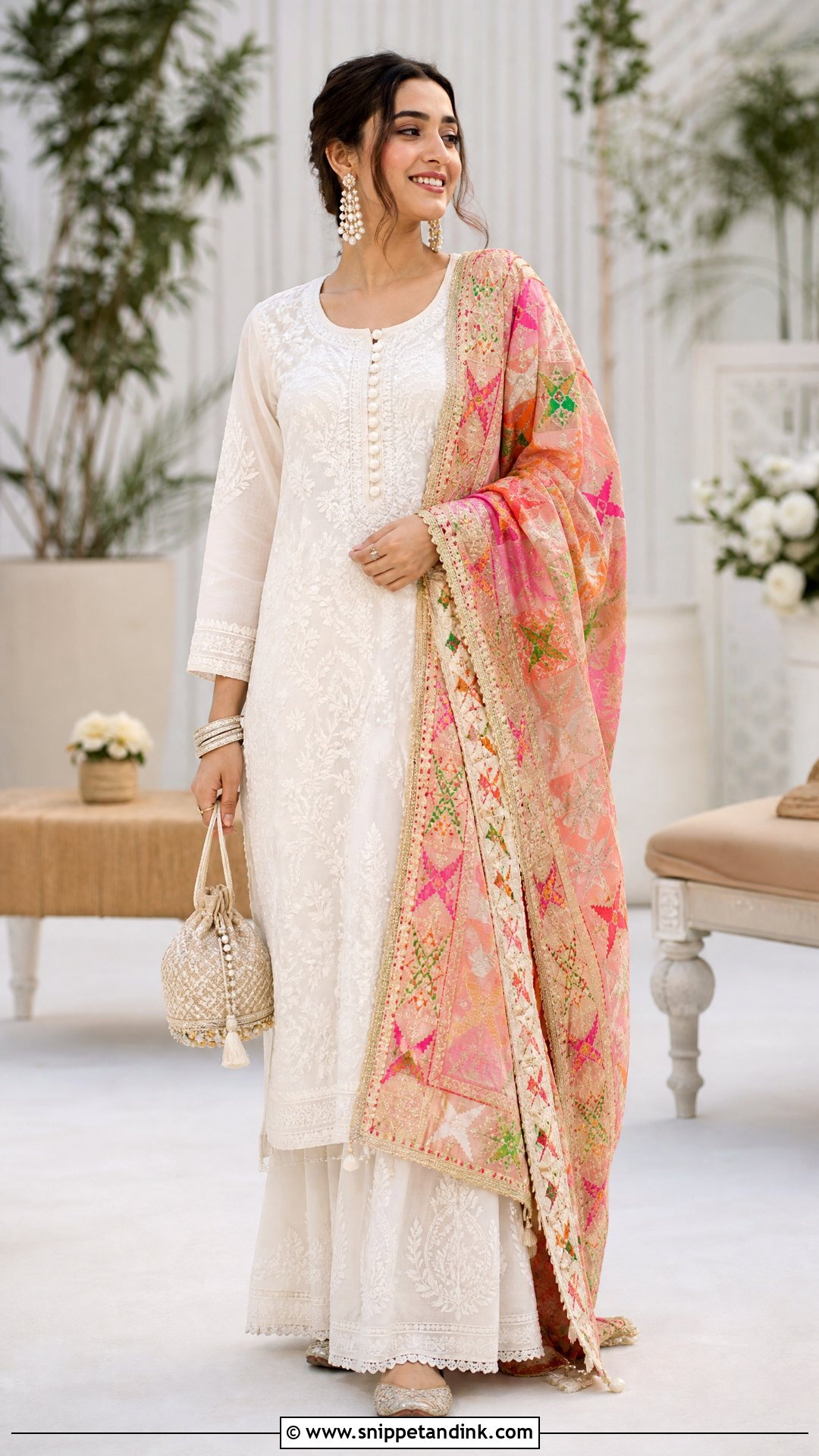
Chikankari is fine hand embroidery on light cotton or georgette, and a Punjabi chikankari suit outfit is one of the coolest things to wear at a summer daytime function. On its own it can look understated at a wedding, so I pair it with something louder: a colorful phulkari dupatta, a gota-border dupatta or an embellished organza one. Palazzo pants, sharara bottoms or a classic salwar all work underneath. Hand-wash it gently or dry clean it, because the threadwork snags easily, and add pearl earrings, juttis and a small potli.
24. Punjabi Indo Western Outfit
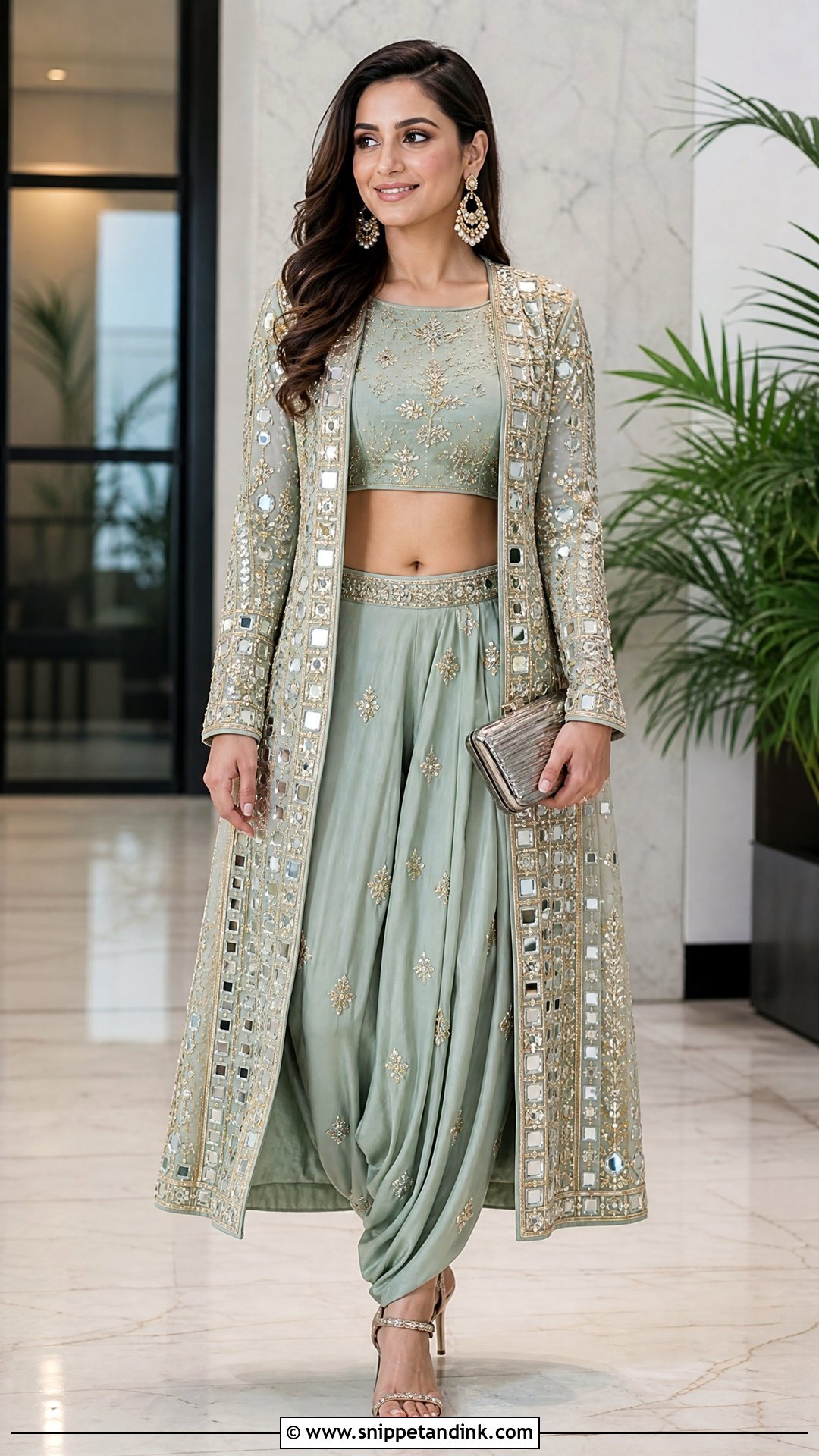
A Punjabi Indo western outfit works for receptions and modern sangeet nights, as long as one element stays clearly traditional. A cape lehenga, dhoti pants with an embroidered kurta, a draped skirt set or a crop top with palazzos and a jacket all qualify, but I’d add phulkari embroidery, mirror work or juttis so the outfit still belongs at a Punjabi function. Avoid fusion pieces for the gurdwara itself, where elders often expect covered arms and a head covering. Statement earrings, heels and a clutch finish it.

25. Punjabi Wedding Guest Lehenga Outfit
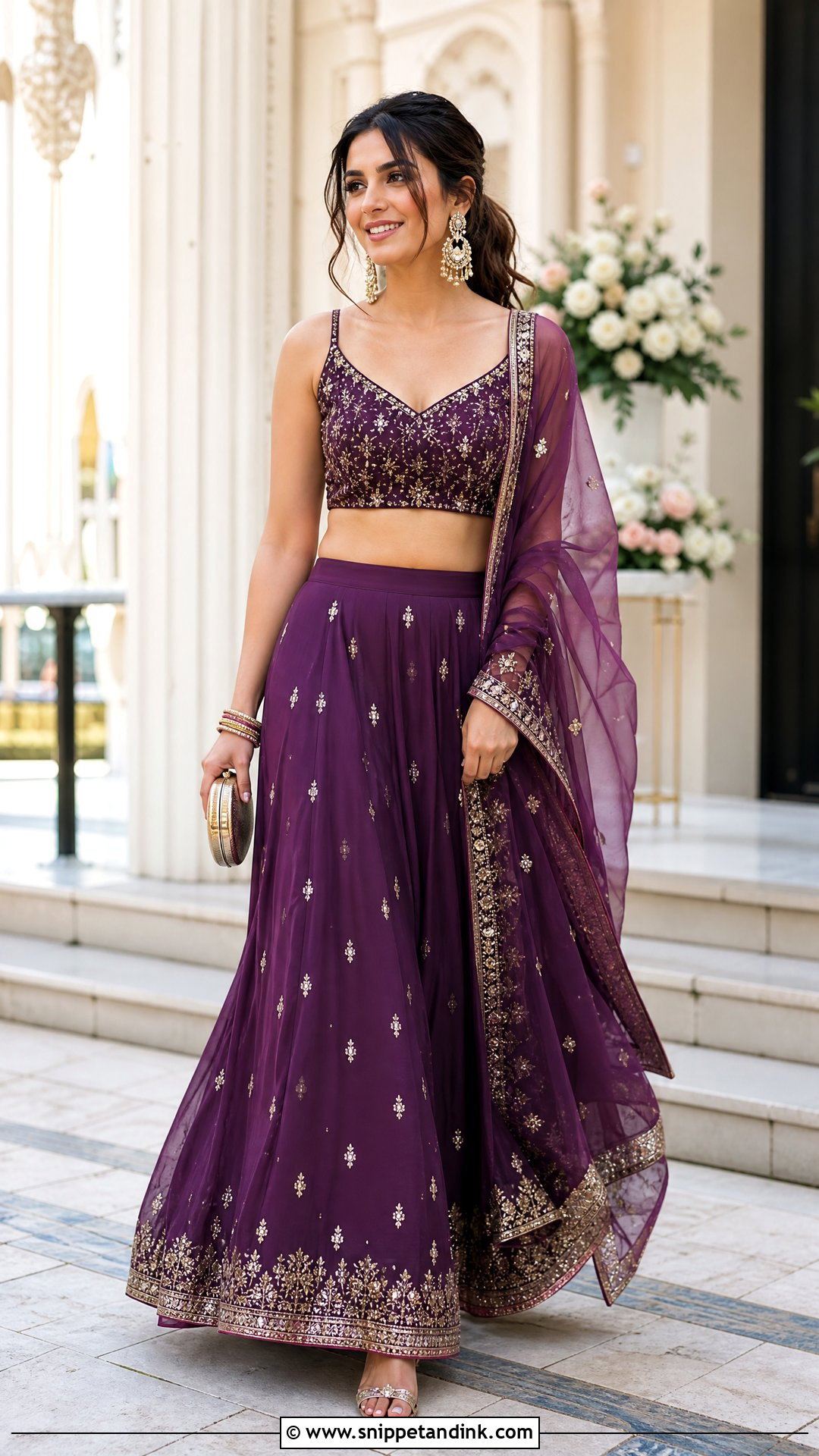
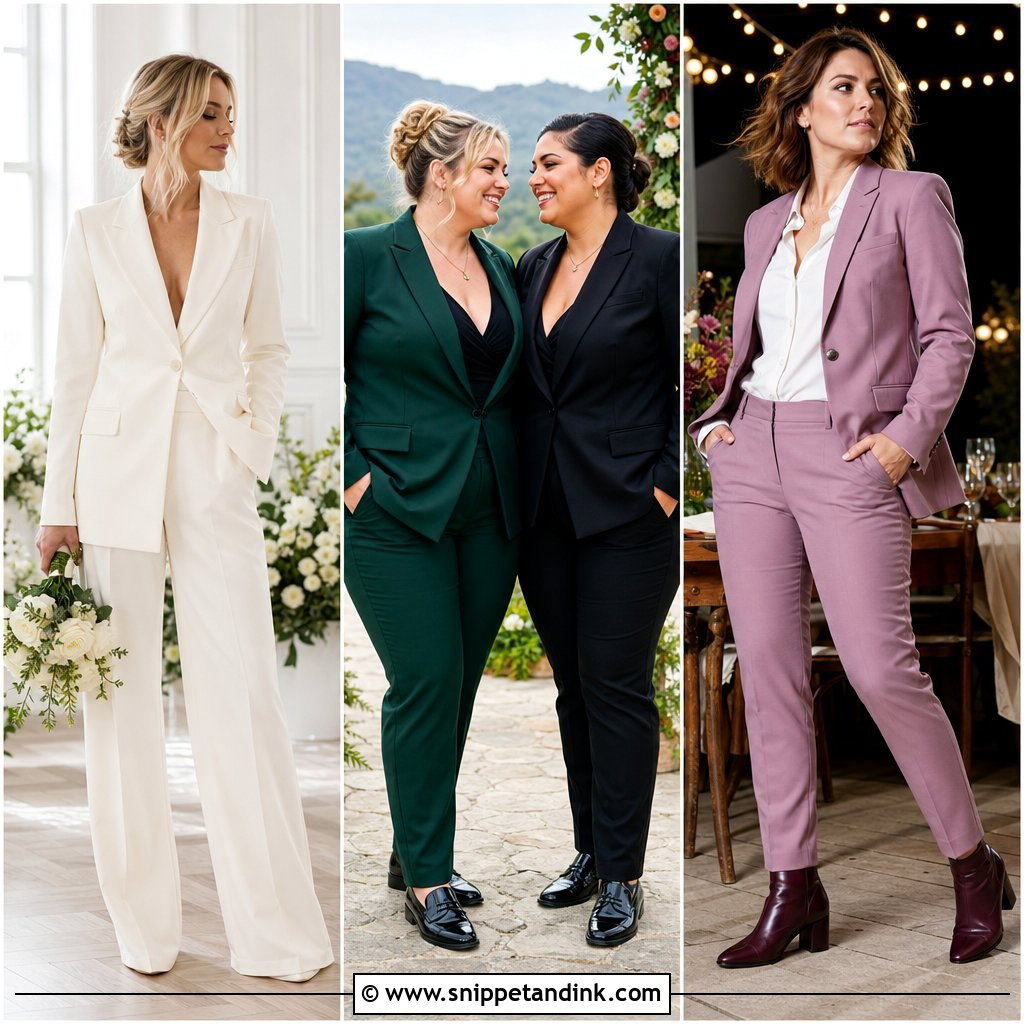
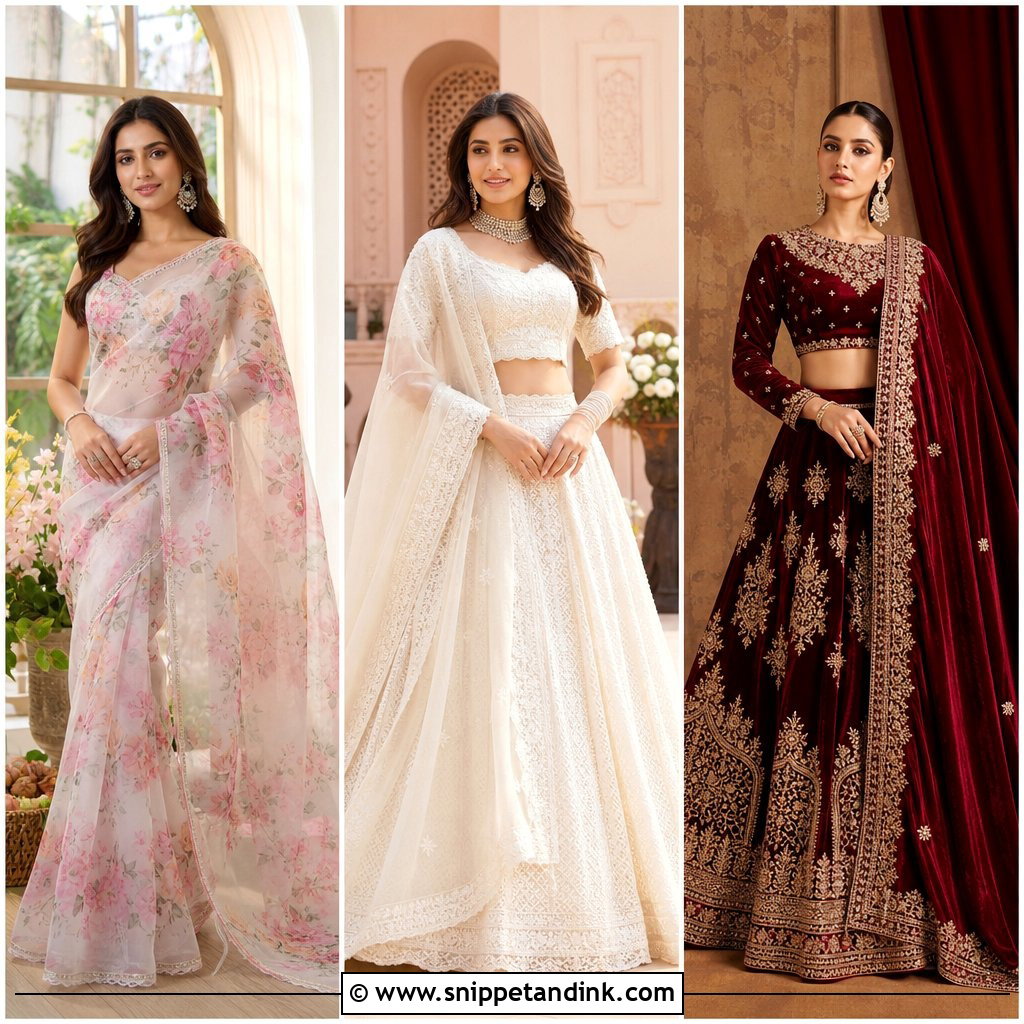
The guest lehenga is a balancing act: festive, but never close to bridal. In practice that means skipping heavy red and maroon with dense zari, and leaning toward lighter embroidery, softer colors or prints in daytime. At night, jewel tones, sequins and mirror work are fine. A comfortable blouse matters more than people think, since you’ll be hugging relatives and raising your arms during bhangra. Drape the dupatta neatly, add statement earrings, bangles and a small clutch, and pick heels or juttis you can stand in for hours.
How Heavy Is Too Heavy for a Lehenga You’ll Dance In?
Bridal lehengas with dense zardozi, a can-can layer and a double dupatta can weigh several kilos, and that weight sits on your waist for hours. I ask every bride to wear her outfit, with the dupattas pinned, for at least twenty minutes at the final fitting. Sit down, stand up, raise both arms, walk up a step. If the waistband digs in or the blouse pulls at the back, it will be worse by evening.
- Ask for the can-can to be attached separately, so it can come out for the reception.
- Have hooks or a side zip that someone else can work quickly, not a row of tiny buttons.
- Book the final fitting two to three weeks before the first function, which leaves time for one more alteration.
- Wear your actual shoes to every fitting, since the hem depends on them.
Packing and Caring for Several Outfits Over One Weekend
Every outfit should have its own labelled garment bag holding the dupatta, safety pins, blouse padding and the right jewelry pouch. Breathable cotton or muslin bags are better than plastic, which traps moisture and can dull zari. After each function, hang the lehenga by its inner loops, not the waistband, and air it before packing it away.
For long-term storage, I’d fold heavy embroidered pieces in muslin with the embroidery facing inward, and refold them along different lines every few months so the creases don’t crack the metallic threads. Spot cleaning at home is risky on zari and phulkari; take stains to a dry cleaner who handles bridal wear, and tell them exactly what the mark is.
Red for the Pheras, Something Lighter for the Jaggo
Work through the weekend function by function and the right pieces start to sort themselves out. The red lehenga belongs to the ceremony, Patialas and shararas belong to the dancing, and phulkari can travel across almost every event. Lighter fabrics and brighter or pastel colors carry daytime functions, while velvet, silk and jewel tones look right after dark. In my fittings, the outfit that wins is rarely the most embroidered one. It’s the one you can sit, dance, hug your family and eat in, without thinking about it once.
You'll Like These Ideas:



Leave a Reply