
A Gujarati wedding is not one outfit but five or six, and the hardest part of styling one is making each event feel distinct while the whole wardrobe still belongs to the same bride. Gujarati bridal fashion draws on Bandhani tie-dye, the gold grid of the Gharchola, Patola weaving, mirror work and the red-and-white Panetar. Many brides still wear the Panetar and Gharchola for the ceremony itself, and I see more of them reworking those textiles as lehengas, lighter sarees or double dupattas. The looks below cover the ceremony, garba, mehndi, pithi, engagement and reception, each with the jewelry, footwear and hair I’d put with it.

Panetar From Mama, Gharchola From the In-Laws
Before planning the ceremony looks, I ask each bride what her family actually does, because customs differ between communities and even between households. In many Gujarati families the Panetar is a gift from the bride’s maternal uncle, and she wears it as the ceremony begins. The Gharchola traditionally comes from the groom’s side, and in many families it is placed over the bride’s head, or she changes into it, partway through the rituals as a sign that she is joining the new household.
That has practical consequences. If you will change or re-drape mid-ceremony, plan it like a costume change:
- Ask the priest or elders when the Gharchola moment falls, so the draper is nearby rather than at the buffet.
- Keep a quiet room close to the mandap with a mirror, safety pins and the jewelry that has to come off and go back on.
- Wear one blouse that suits both textiles, usually red, so only the saree or dupatta changes.
- If the Gharchola is draped over the Panetar instead of replacing it, choose a lighter weave for one of them. Two heavy silks layered together are hot and slide against each other.
1. Gujarati Bride Panetar Saree
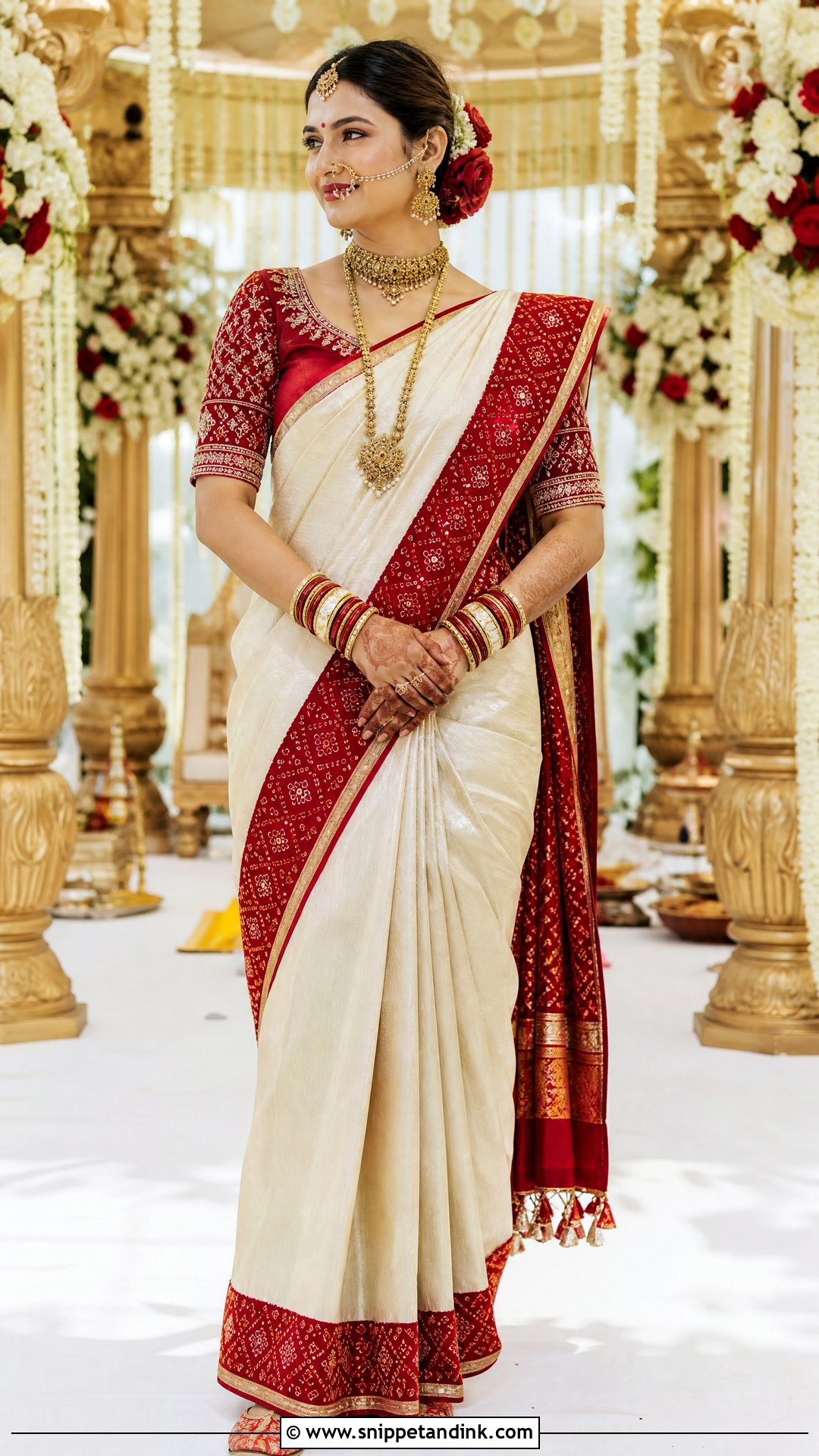
The Panetar is the outfit most families expect at the start of the ceremony, and its white or ivory body with a red Bandhani border is recognizable at a glance. I’d choose silk with gold zari detail and drape it seedha pallu, with the decorated end brought over the right shoulder to the front. A fitted red blouse with elbow sleeves and fine gold embroidery balances the pale saree. Gold choker, long necklace, nath, forehead jewelry, bangles and red embroidered juttis complete it. A white saree shows every crease, so I have the pleats steamed and pinned before the bride sits for makeup, not after. A smooth center-parted bun with white flowers keeps the face framed.
2. Gujarati Bride Gharchola Saree
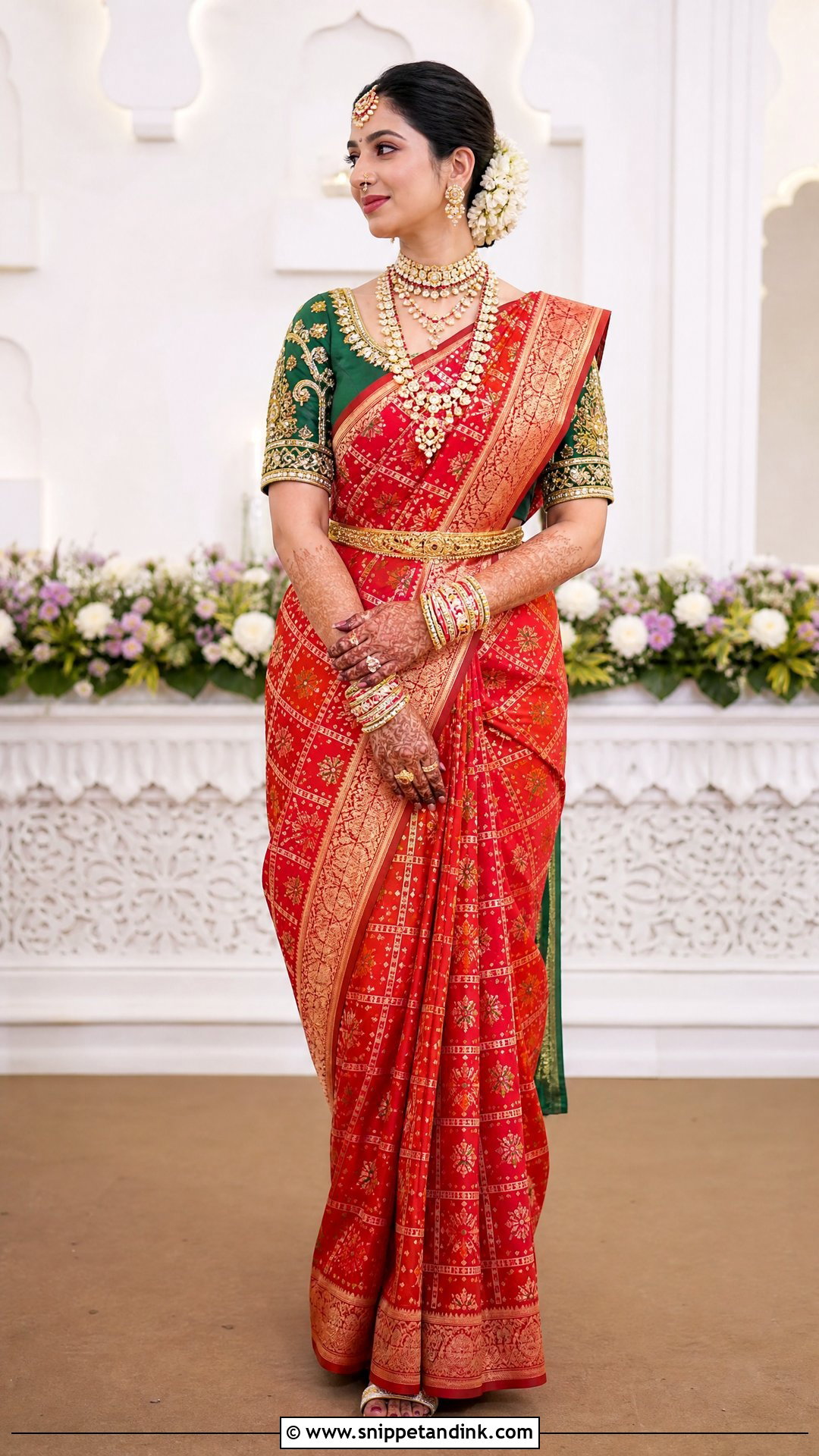
Red silk, a golden grid and tiny Bandhani dots inside each square: that’s a Gharchola, and the grid is the whole point of it. Wear it seedha pallu so the squares and motifs sit flat across the front instead of folding away under the arm. A heavy zari border makes it formal enough for the main ceremony. A red or green embroidered blouse adds contrast without fighting the pattern. Layer a kundan choker with a longer gold necklace, then jhumkas, bangles, a nath and a slim waist belt. Gold platform sandals help under a long saree. A neat bun with fresh flowers, defined eyes and a classic red lip finish the look.
3. Gujarati Bride Panetar Lehenga
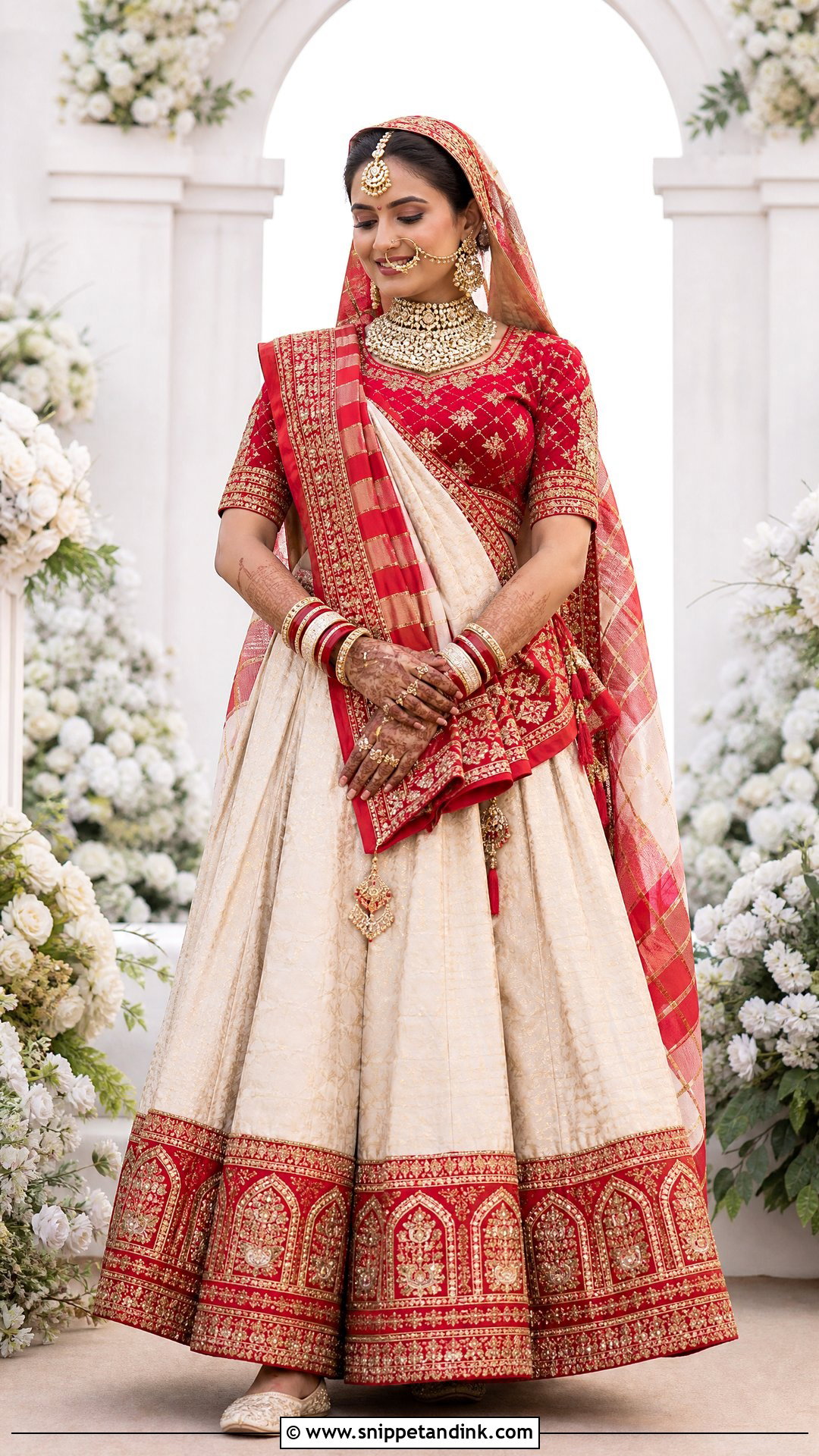
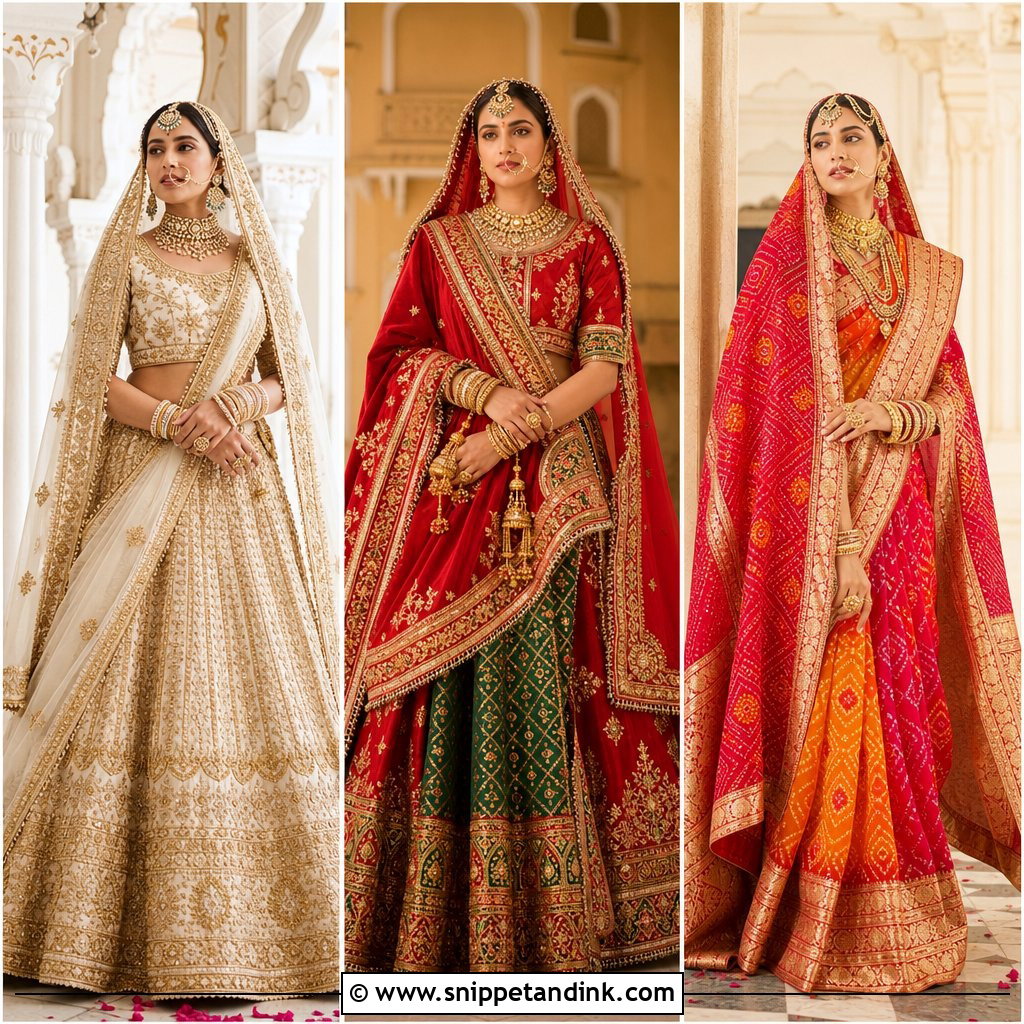
Plenty of brides love the Panetar colors but have never worn a saree for ten hours, and a Panetar lehenga is the answer I give them. An ivory silk skirt with wide red borders, fine gold embroidery and scattered Bandhani-style motifs keeps the palette. Pair it with a structured red blouse in a square or sweetheart neck. Drape a red-and-white dupatta across the torso and a lighter Gharchola-style veil over the head. The lehenga is far easier for sitting cross-legged at the mandap and walking the pheras. Kundan jewelry, a round nath, red-and-white bangles and ivory juttis complete it, with a low bun to anchor the veil.
4. Gujarati Bride Red Bandhani Lehenga
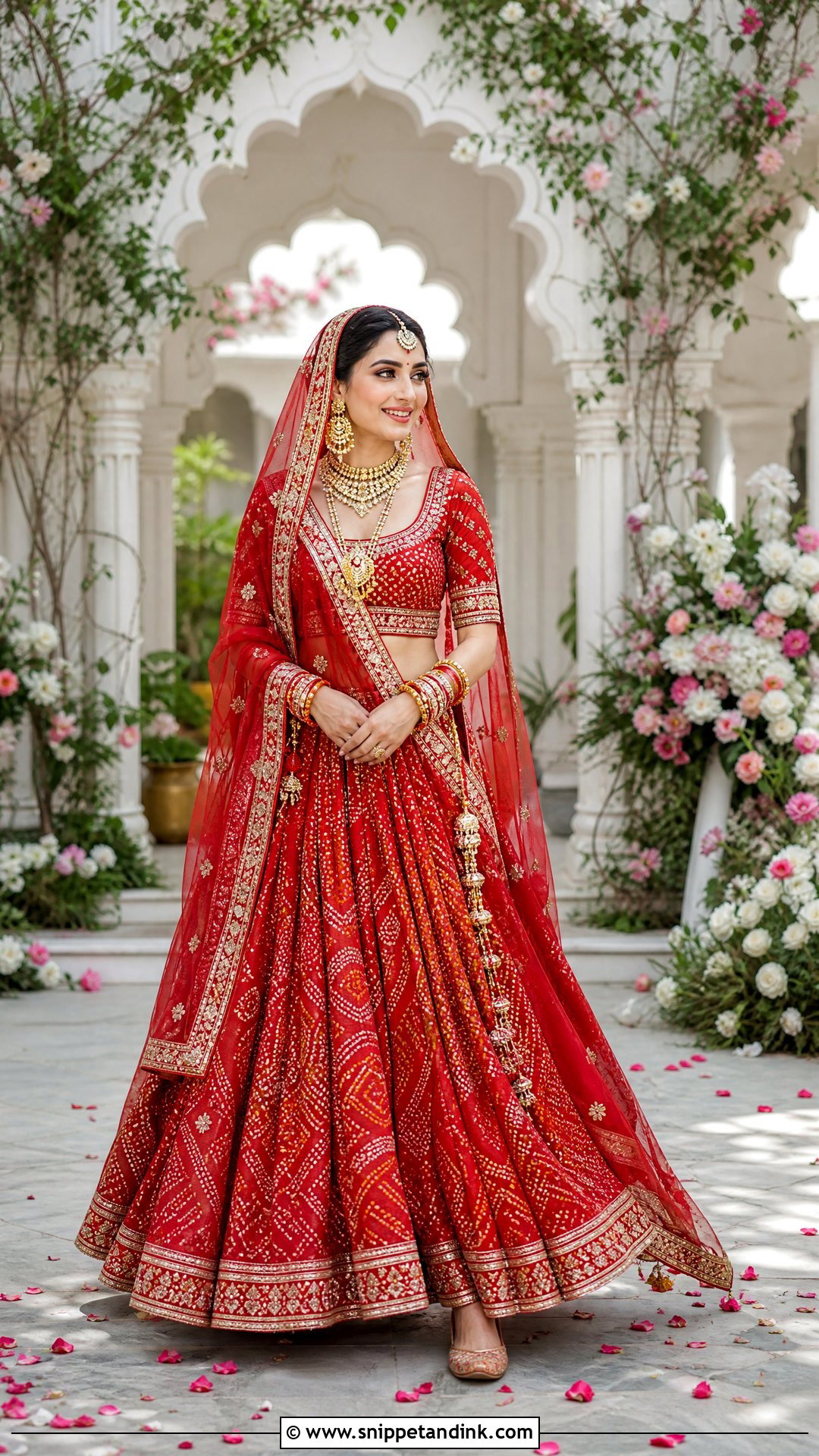
Real Bandhani is made by tying thousands of tiny knots before dyeing, and a red Bandhani lehenga puts that craft across the whole skirt. Choose a flowing skirt with a broad embroidered hem, then a fitted red raw-silk blouse with modest gold work so the eye has somewhere to rest. One light Bandhani dupatta over the shoulder and a sheer embroidered veil over the head. Gold kundan, a long rani haar, stacked bangles and a maang tikka. Cushioned gold juttis matter more than looks, since the skirt hides your feet. A braided or smooth low bun gives the veil pins something to grip.
5. Gujarati Bride Ivory Lehenga With Gharchola Dupatta
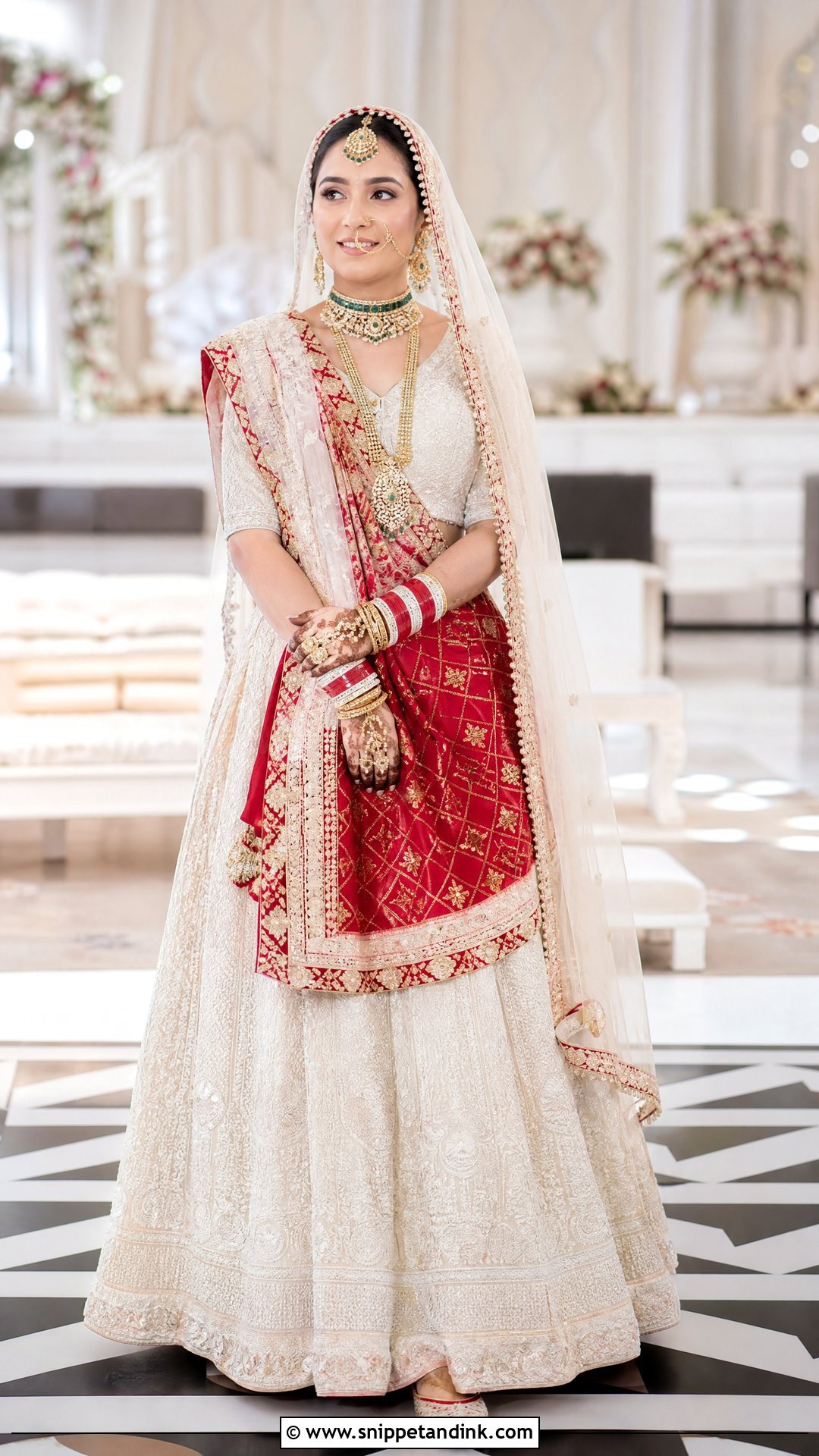
Pair an ivory lehenga with a red Gharchola dupatta and nobody will mistake the outfit for anything but Gujarati. The skirt should be softly flared with gold floral embroidery, with a matching blouse in supportive sleeves. Drape the Gharchola diagonally so its zari checks show, and add a sheer ivory dupatta over the head as a second veil. The double dupatta is heavy on one shoulder, so I pin it at three points rather than one: shoulder, back of the blouse and waistband. A green gemstone choker, long gold necklace, nath, bangles and hathphool complete the jewelry, with ivory juttis embroidered in red.
6. Gujarati Bride Patola Silk Saree
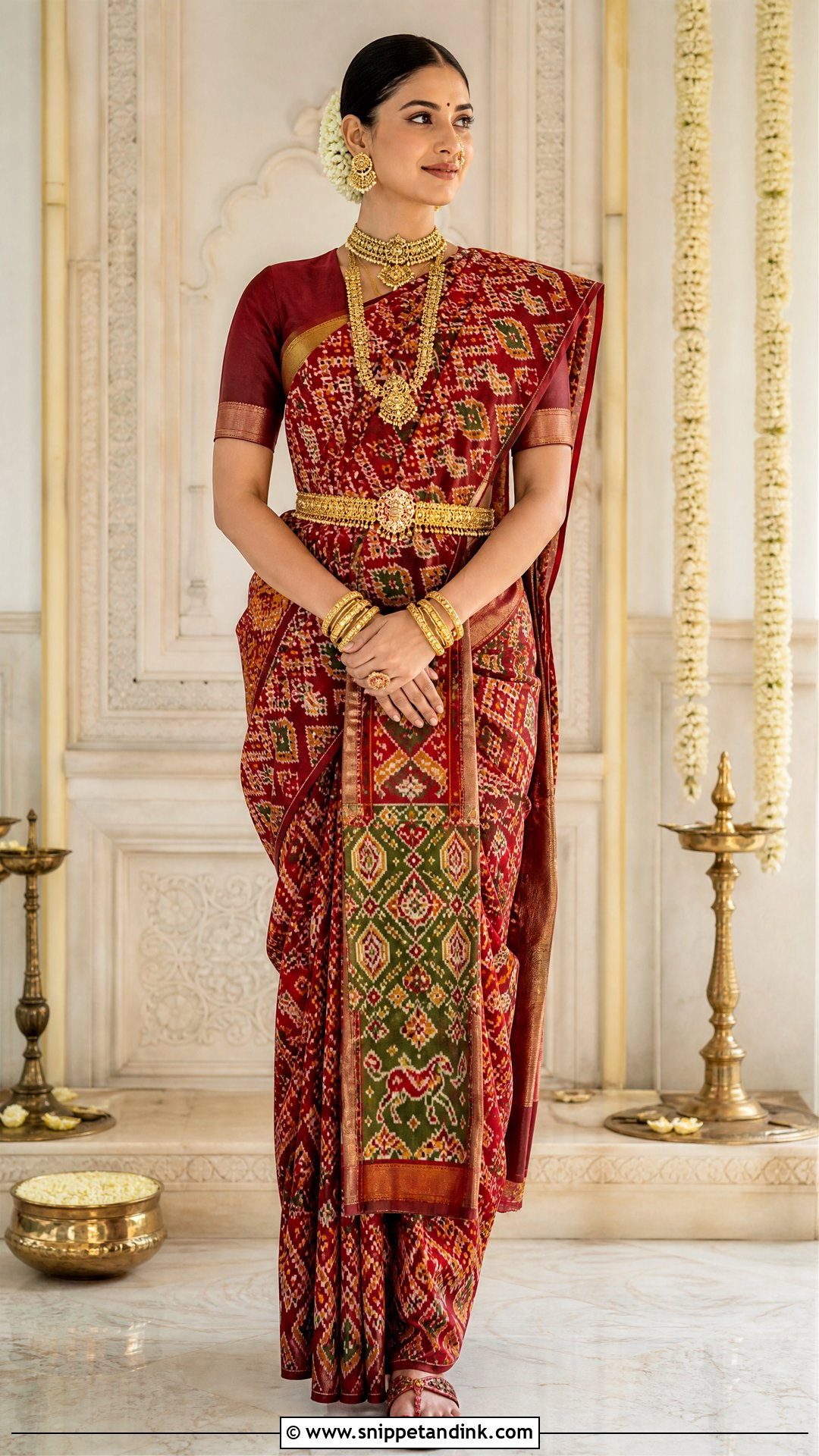
A Patola silk saree brings geometric pattern and the weight of an heirloom. Red, deep pink or crimson with green, ivory and gold motifs is the bridal range. Genuine Patola is double ikat, with both warp and weft dyed before weaving, so the pattern reads the same on both sides and the edges of each motif look slightly feathered. Keep the blouse plain silk with a matching border. A front pallu drape shows the pattern best. Antique gold choker, long necklace, jhumkas, bangles and a medium nath suit it, with a slim waist belt to hold pleats. Maroon or gold sandals, and a flower-wrapped center-parted bun.
7. Gujarati Bride Patola Lehenga
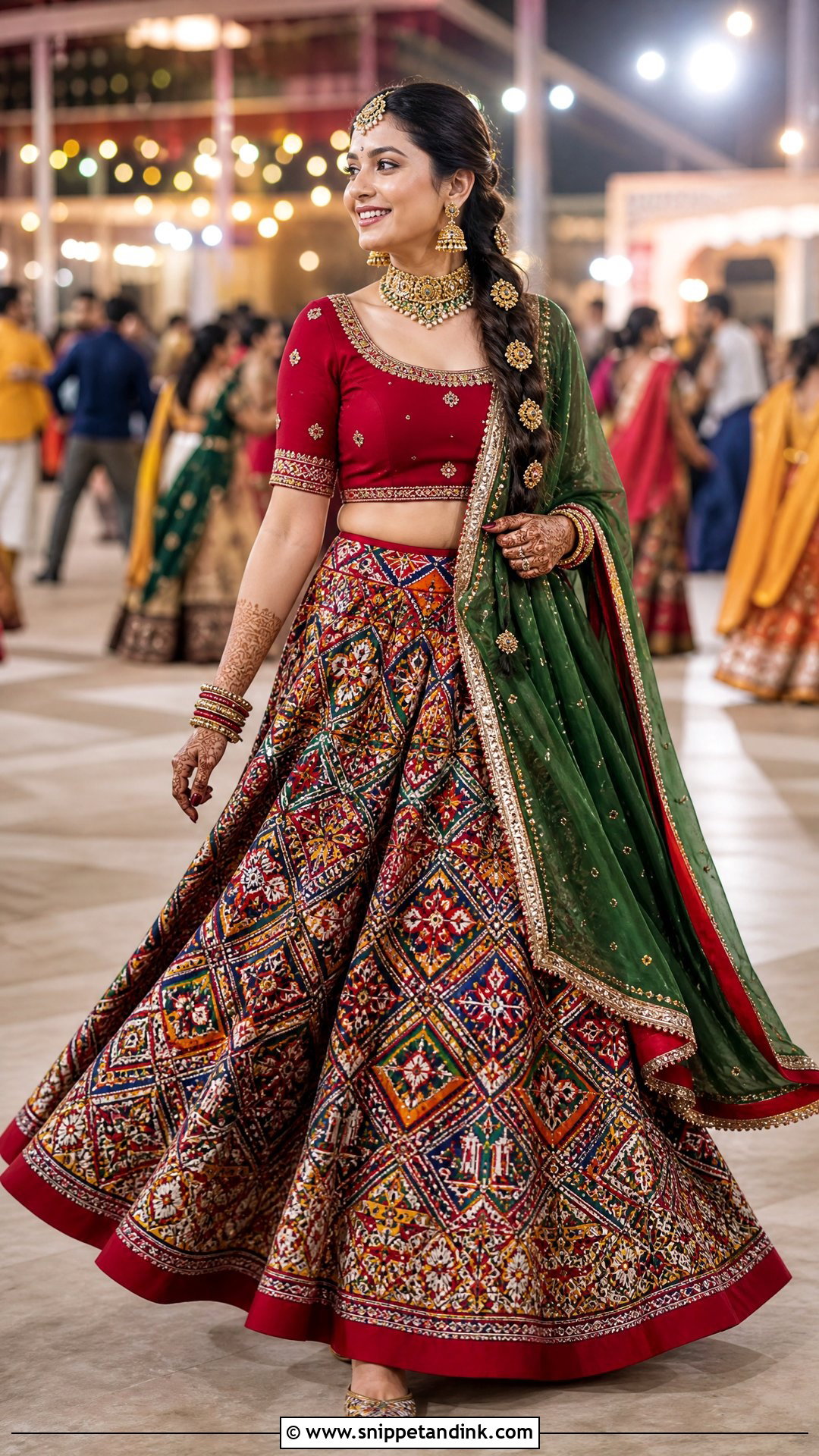
On a lehenga, Patola-style pattern reads as celebration rather than ceremony. Pair a red, green, pink and ivory patterned skirt with a solid deep-red silk blouse in a clean neckline, so the skirt stays the story. A light green or red dupatta over one shoulder is enough; add a sheer veil only if the event is ceremonial. Antique gold suits the woven look far better than bright crystal, which can make the outfit look costume-like. A choker, jhumkas, stacked bangles and a statement ring, with cushioned embroidered juttis. A long braid with gold hair ornaments finishes a look I’d save for garba or sangeet.
8. Gujarati Bride Gharchola Lehenga
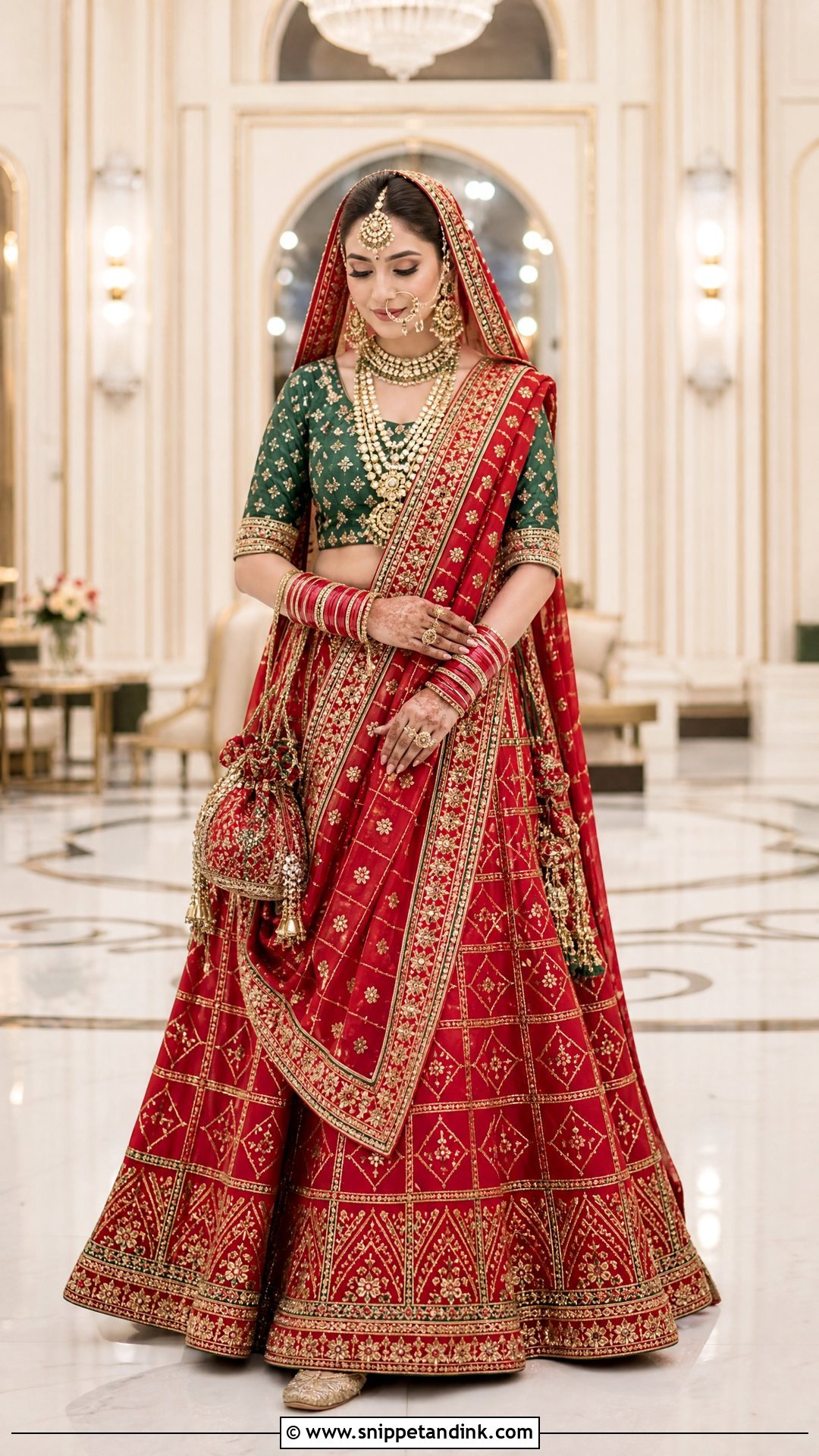
Think of a Gharchola lehenga as the ceremonial textile cut into something you can move in. Choose a red skirt with golden grid embroidery, small Bandhani motifs and a finished border. A matching short-sleeve blouse keeps it classic; a green silk blouse gives depth. Drape the dupatta front-style to show the pattern. Kundan choker with a long necklace, big earrings, a nath and red-and-gold bangles. Gold juttis and a small potli hold the practical bits. Embroidered grids are stiff, so I ask the tailor to check the skirt sits flat at the side seams where the squares meet; misaligned squares there look sloppy in photos. A low floral bun and balanced makeup.
9. Gujarati Bride Green Bandhani Lehenga
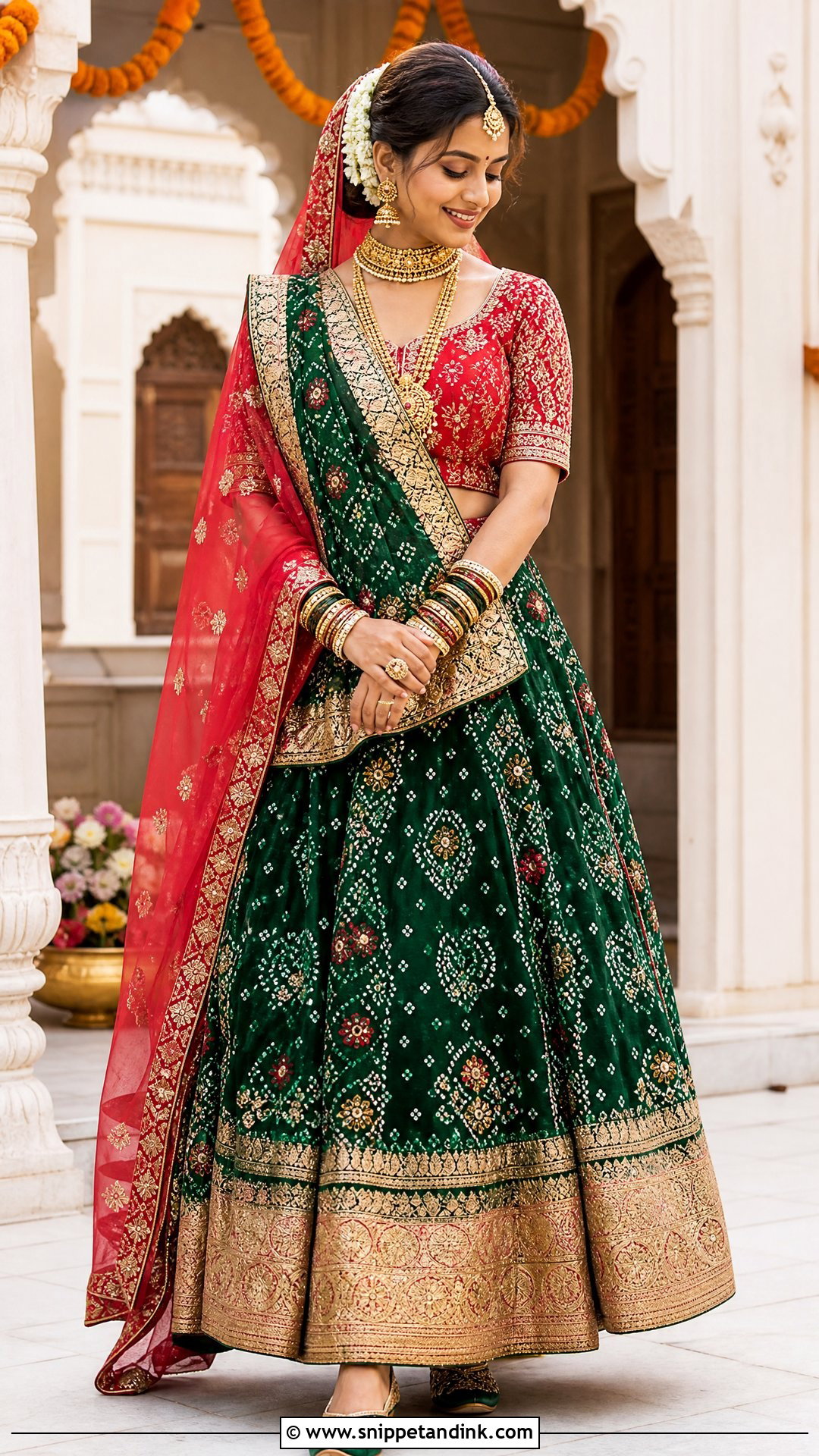
A bride wearing red at every function can feel the colors blur in the photo album, which is why I like a green Bandhani lehenga somewhere in the week. Emerald or bottle green with a broad gold border and touches of red at the hem keeps it festive. A red embroidered blouse holds onto the Gujarati palette. Let a green Bandhani dupatta fall from one shoulder and a light red veil frame the face. Gold temple jewelry or kundan with green stones, plus a maang tikka, jhumkas, layered necklaces, bangles and green juttis. With a head veil, choose a secure floral bun over loose waves. Embroidery weight decides the event: lighter for garba, heavier for the ceremony.
10. Gujarati Bride Yellow Pithi Chaniya Choli
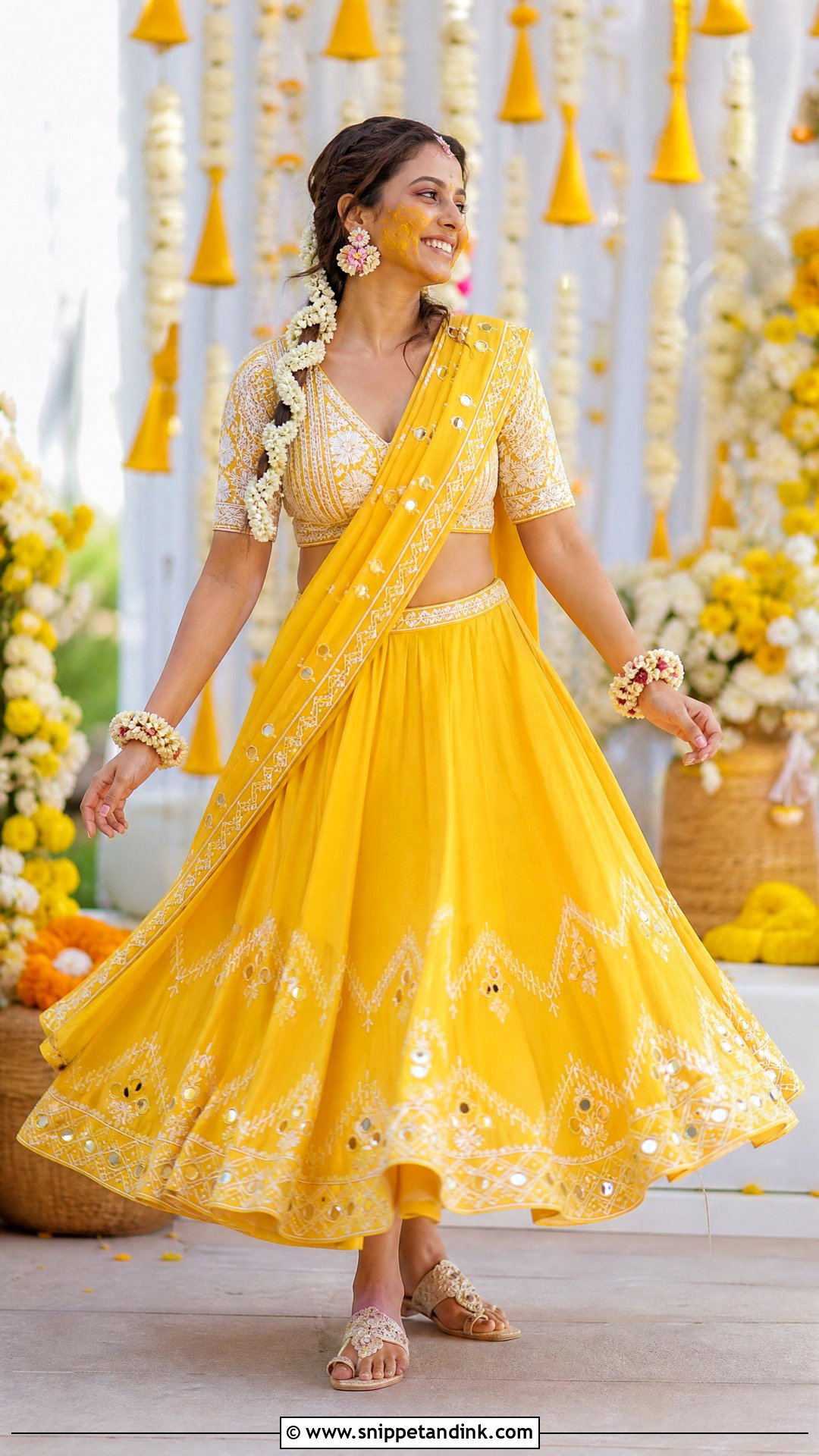
Turmeric stains, and a lively pithi celebration means you will be covered in it, so I never put a bride in anything precious for this one. A lightweight cotton-silk or georgette chaniya choli in bright yellow with white threadwork and small mirrors is ideal. A cropped short-sleeve blouse allows movement, and a yellow dupatta pinned across one shoulder stays put. Floral earrings, a light maang tikka, simple bangles and fresh flower bracelets are plenty. Flat juttis or kolhapuri-style sandals. A loose braid with tiny white flowers, minimal makeup and waterproof mascara keep it practical. Skip heavy embellishment; you want to be able to laugh, sit and get messy.
11. Gujarati Bride Mirror Work Garba Lehenga
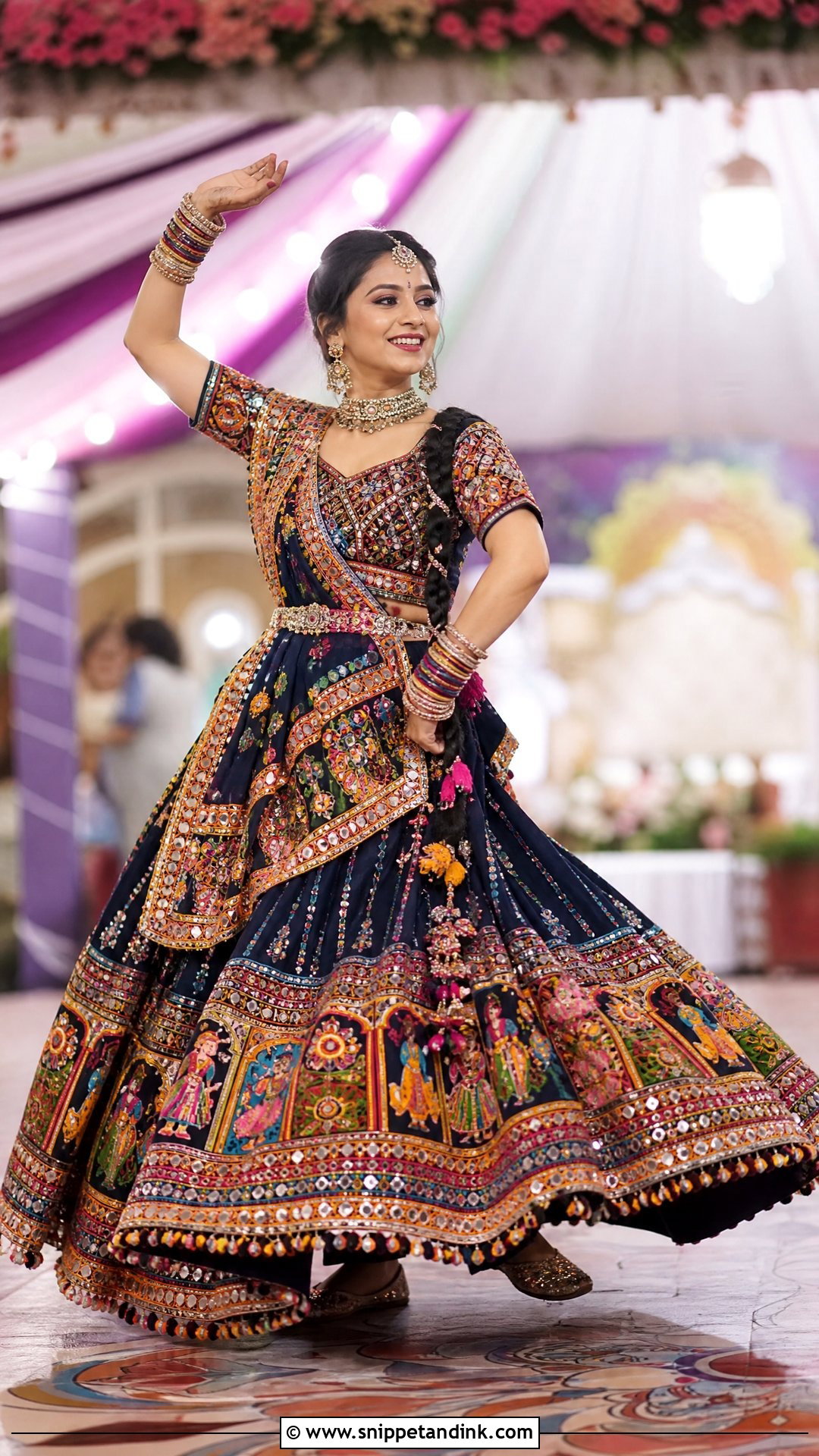
Garba is a workout, and a mirror work lehenga has to survive hours of turning. Choose a multicolored or jewel-toned chaniya choli with a wide skirt you can control and mirrors that are stitched down firmly; I tug a few at the fitting, because loose mirrors fly off mid-spin. A fitted blouse with proper straps or sleeves stays comfortable. Pin the dupatta at the shoulder and the waist. Oxidized silver feels traditional; kundan reads more bridal. Statement earrings, stacked bangles, an adjustable waist belt and cushioned juttis. A long braid with colorful tassels swings well, and a lighter hem saves your legs by midnight.
12. Gujarati Bride Pink Bandhani Mehndi Lehenga
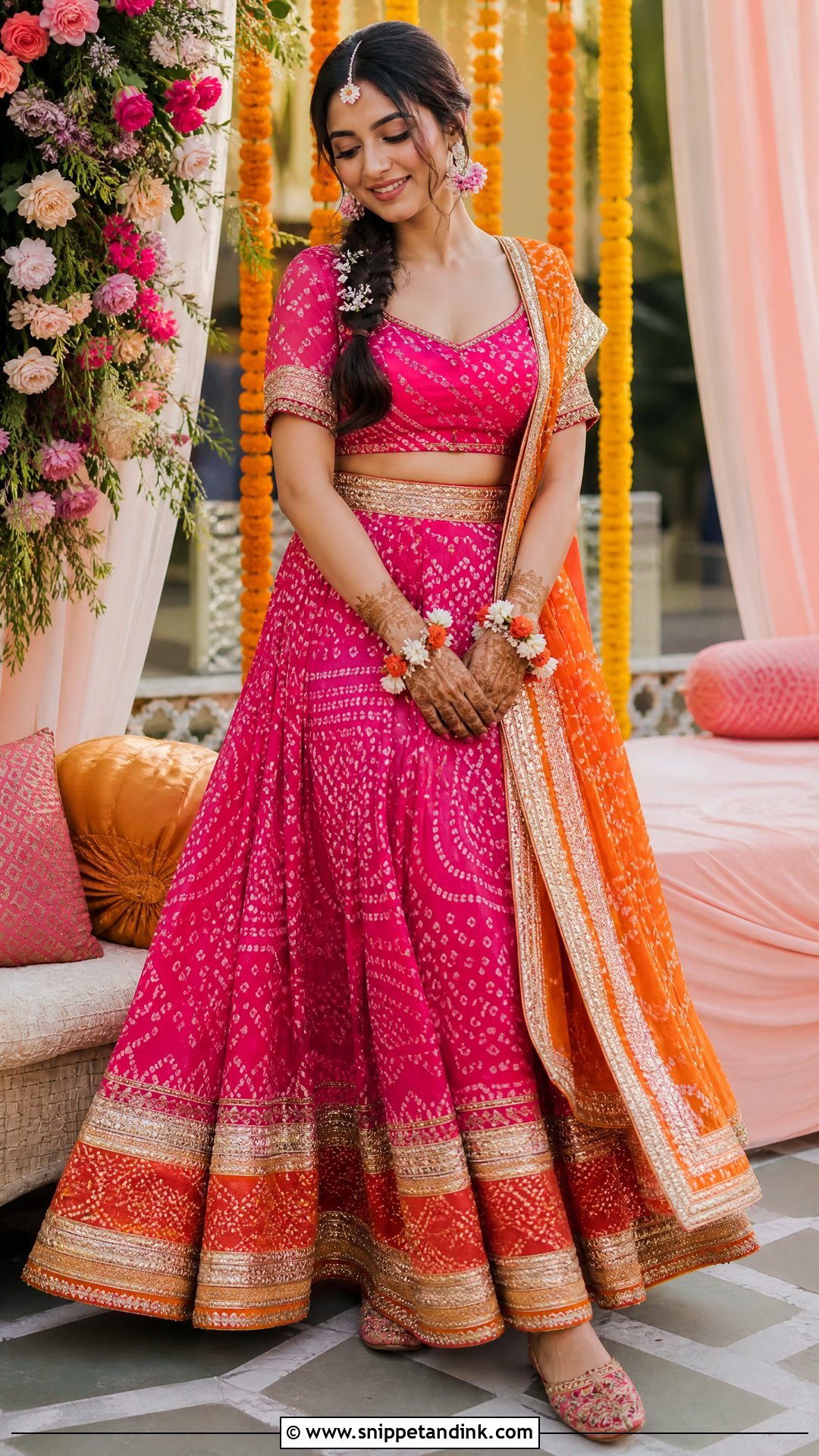
Mehndi day is about your hands, so the outfit should keep everything away from them. A pink Bandhani lehenga in fuchsia or rani pink with orange, red and gold borders is a bright change from yellow and green. Choose a sleeveless or short-sleeve blouse so the artist can reach your forearms. Drape a light orange Bandhani dupatta over one shoulder, never across both hands. Floral earrings, a small maang tikka, flower bangles and a simple necklace. Wear flat juttis you can step into without bending, and tie your hair in a side braid or low ponytail so it can’t touch wet henna. A transfer-resistant lip lets you drink through a straw without smudging.
13. Gujarati Bride Pastel Floral Engagement Lehenga
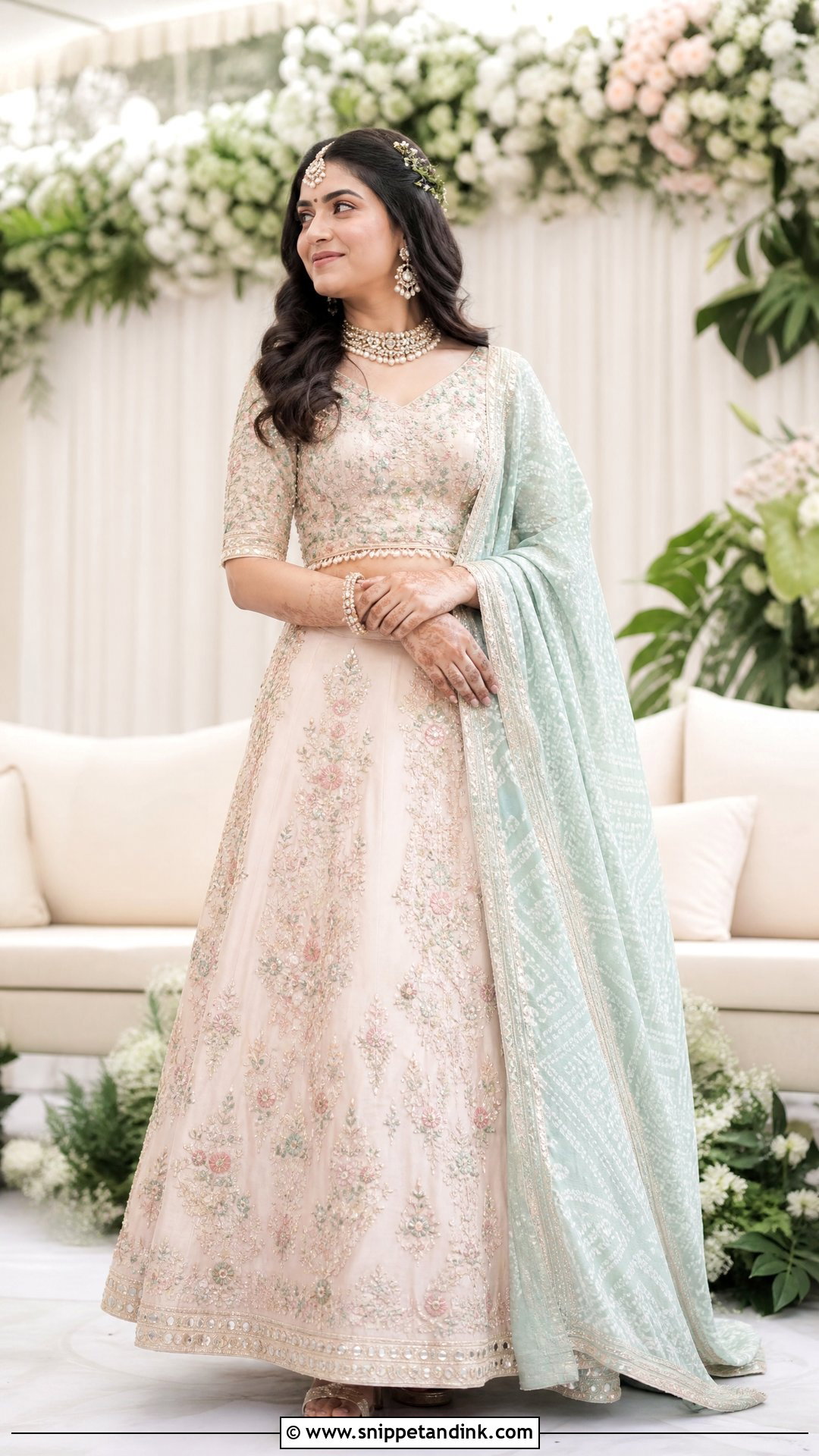
Pastels make sense at an engagement, where you want to look polished but not as though you’ve already arrived at the wedding. Blush, peach or pale mint with fine floral embroidery and small mirror accents works well. A fitted blouse with elbow sleeves and a graceful neckline. A light Bandhani dupatta in a matching pastel brings the regional thread into a modern palette. Pearl-and-kundan jewelry suits the softness: a compact choker, drop earrings and a delicate maang tikka. Metallic block heels steady you on a lawn. Loose waves or a half-up style with small floral pins for a daytime ring ceremony.
14. Gujarati Bride Ivory Gold Reception Lehenga
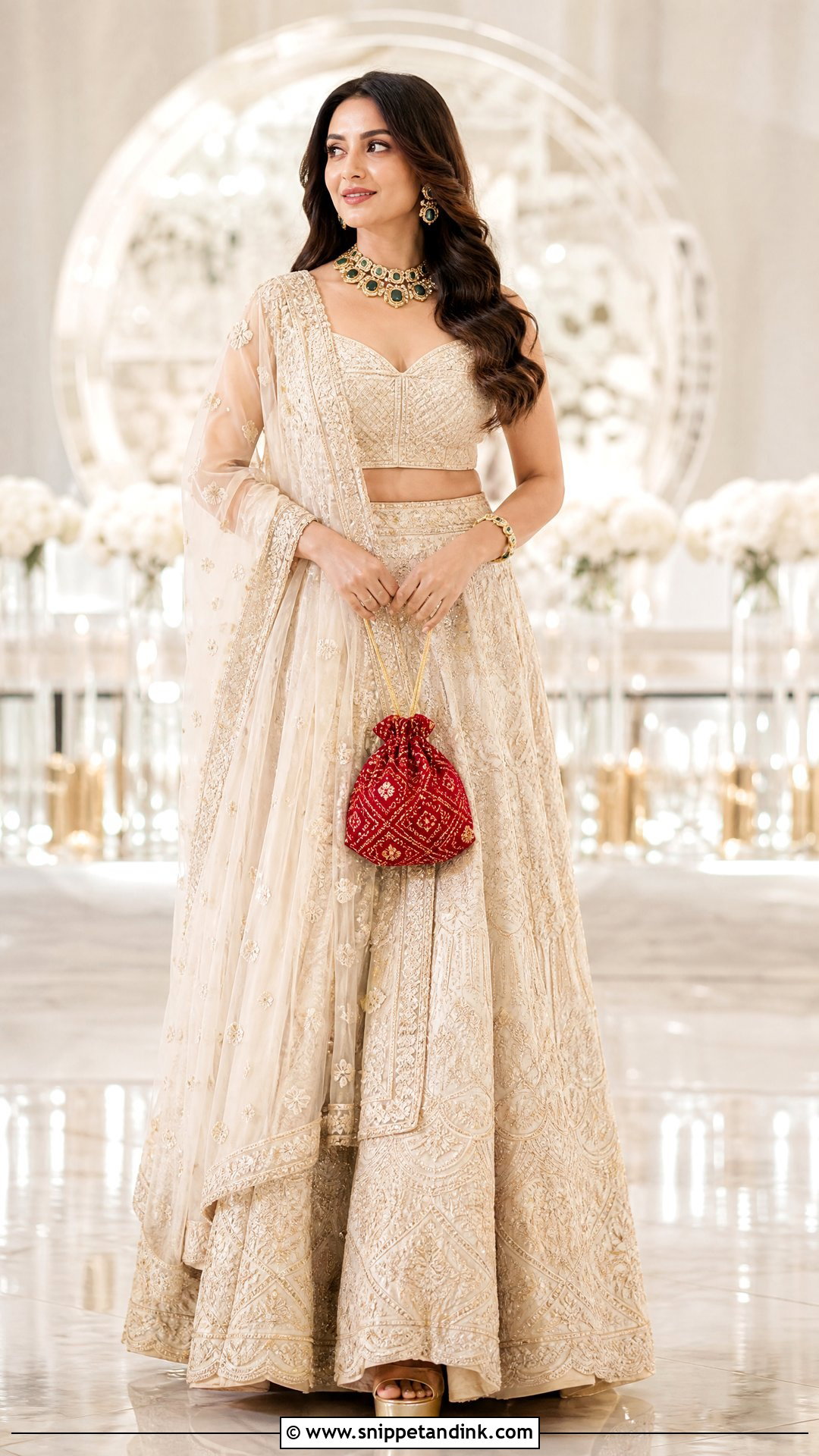
Ivory and gold glow under reception lighting in a way red doesn’t, which is why I suggest it after the ceremony. Choose a full skirt with tonal embroidery, sequins and fine metallic thread, a structured blouse and a sheer ivory dupatta over the arms or one shoulder. For a Gujarati touch, a narrow red Bandhani border or a small Gharchola potli is enough. Emerald jewelry contrasts sharply against the neutral base: a choker, earrings, a statement bracelet and a cocktail ring. Gold platform heels for height. Smooth waves, glowing skin and a muted berry lip.
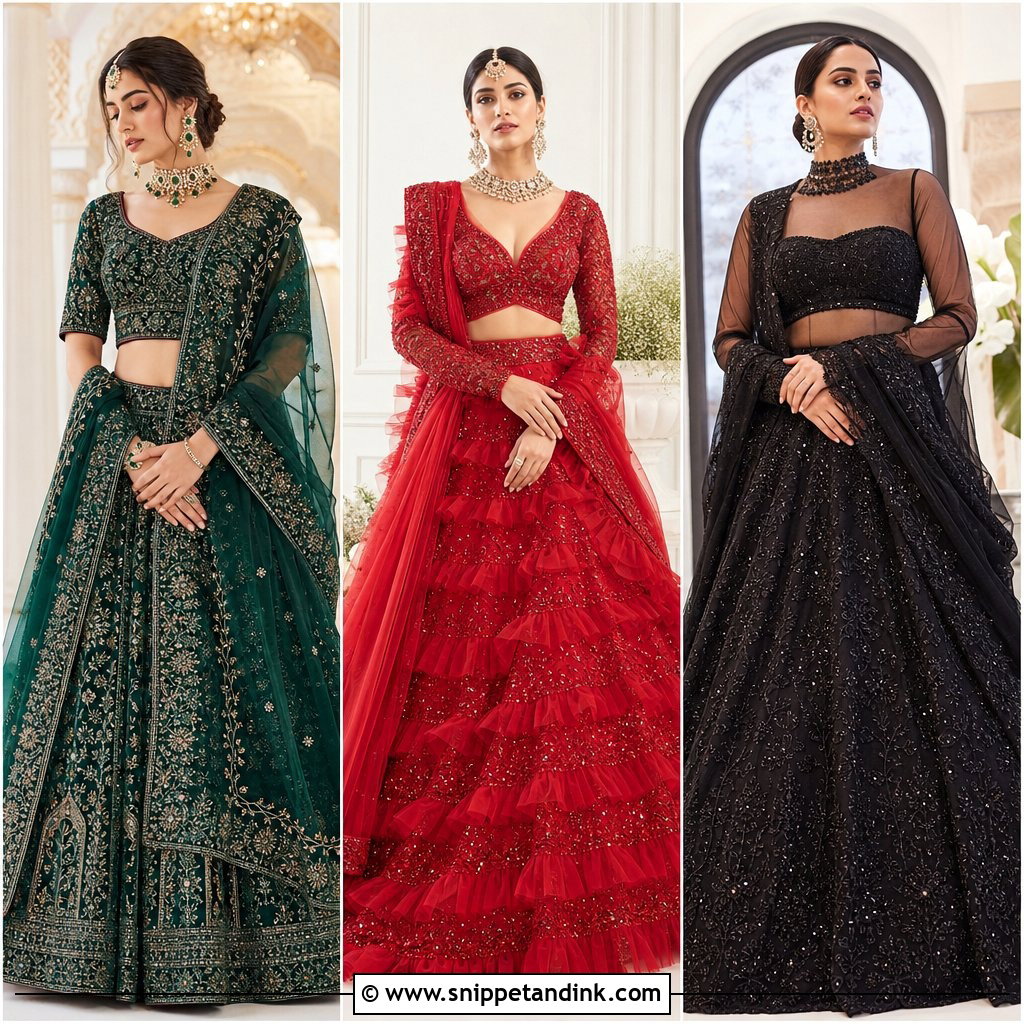


15. Gujarati Bride Red Banarasi Lehenga
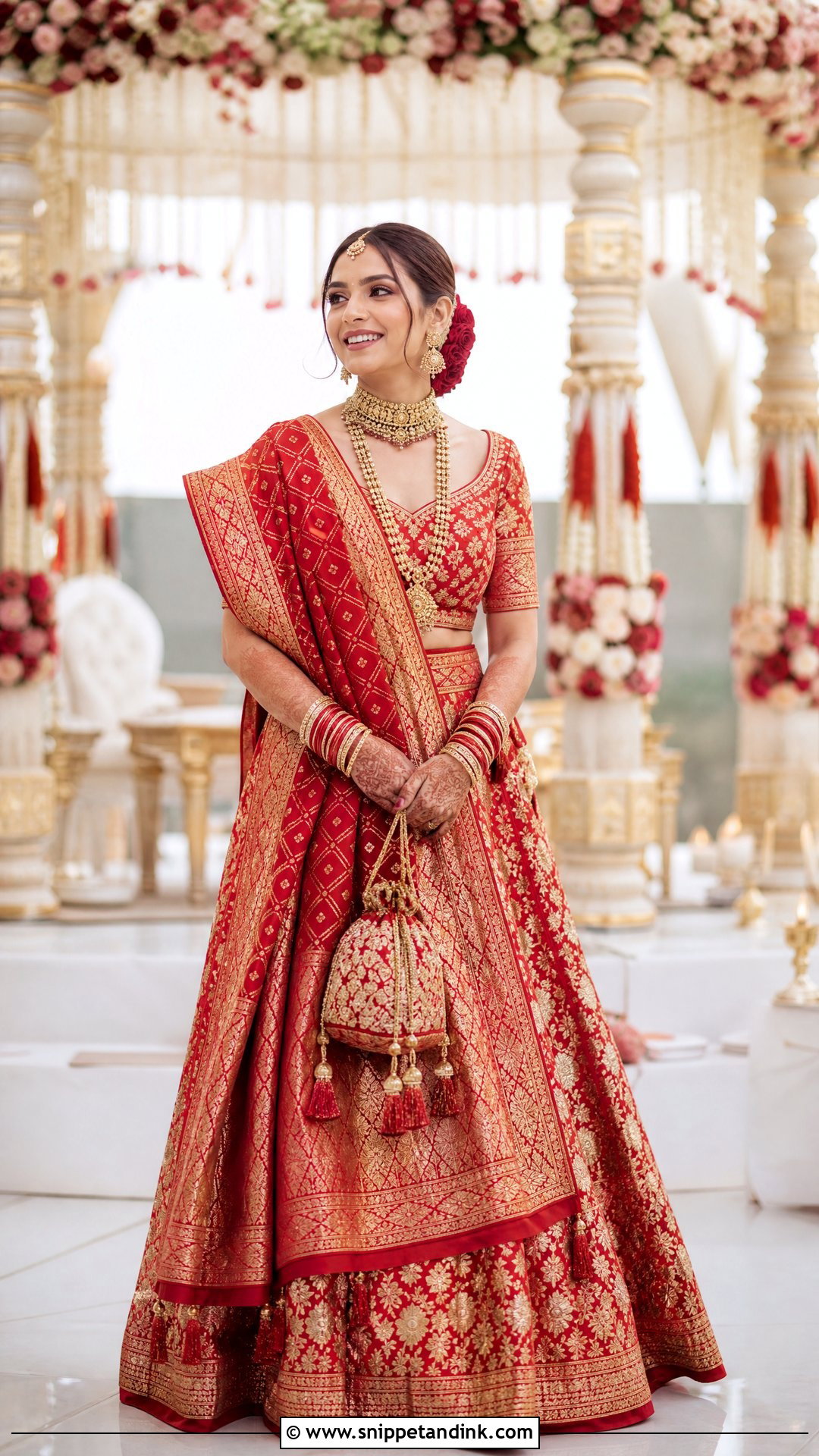
Woven rather than beaded, a red Banarasi lehenga carries its richness in the silk itself. Choose a woven skirt with gold floral motifs and a broad border, with a matching red blouse. A Gharchola or Bandhani dupatta adds the Gujarati identity. Drape one end across the torso and tuck it at the waist so the pattern stays visible. Antique gold suits Banarasi silk: a layered choker, long necklace, jhumkas and traditional bangles. Red juttis and a structured gold potli. A center-parted bun with roses. A Banarasi skirt is also worth keeping, since it can be restyled for family weddings for years.
16. Gujarati Bride Maroon Velvet Lehenga
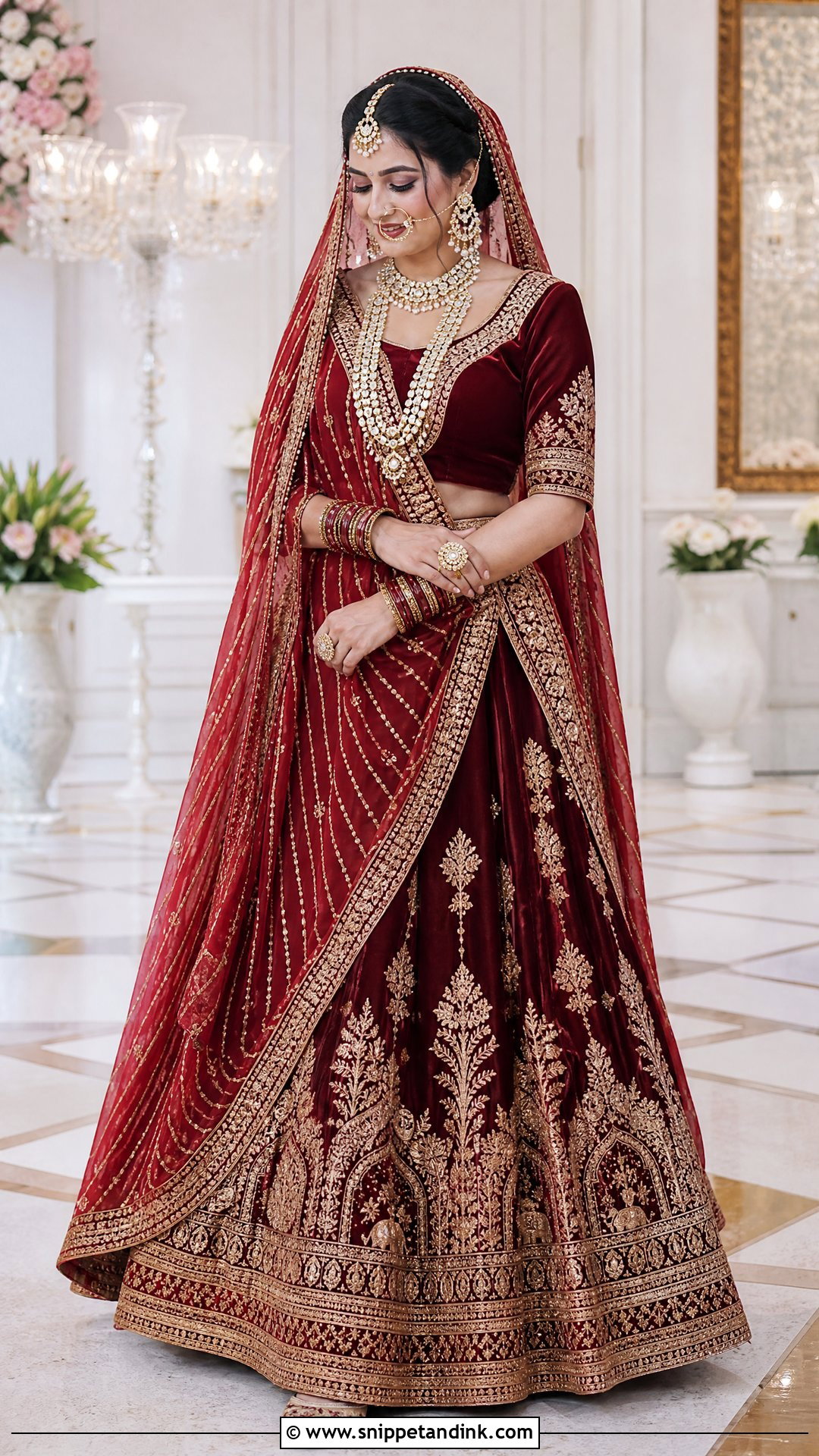
Velvet is the fabric I reach for when the wedding is in winter and the venue is open-air. A maroon velvet lehenga with moderately flared skirt and antique gold embroidery concentrated at the border gives warmth without bulk. A velvet blouse with elbow sleeves. Velvet is heavy, so the dupatta should be light silk or net Gharchola, worn over one shoulder or as a head veil. Antique kundan, a statement nath, a long necklace and maroon bangles. Closed embroidered juttis keep feet warm. Ask for the embroidery to be spaced out; dense work on velvet makes the skirt so heavy it drags at the waist by evening.
17. Gujarati Bride Orange Pink Bandhani Lehenga
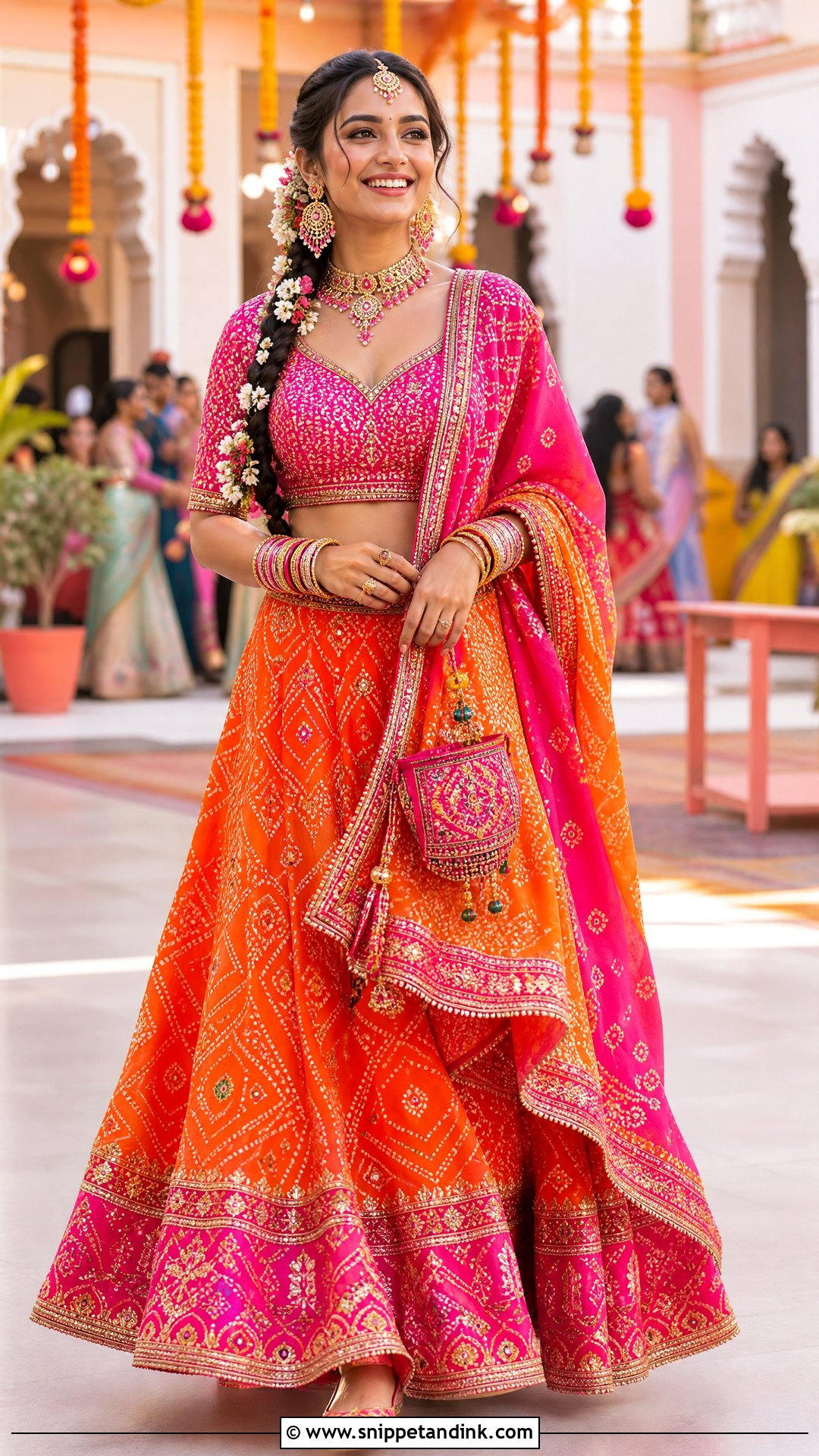
Orange and pink is an old Gujarati pairing, and it suits daytime events where you want color that photographs warmly. Begin with an orange Bandhani skirt bordered in rani pink and gold, then a pink embroidered blouse with short sleeves. A dual-tone dupatta draped across the front shows both colors. Gold jewelry with pink stones, from choker to maang tikka, keeps the palette tight. Gold or pink juttis and a compact potli. A loose braid with flowers and colorful tassels. It fits mehndi, garba or a daytime ceremony equally well.
18. Gujarati Bride Organza Panetar Saree
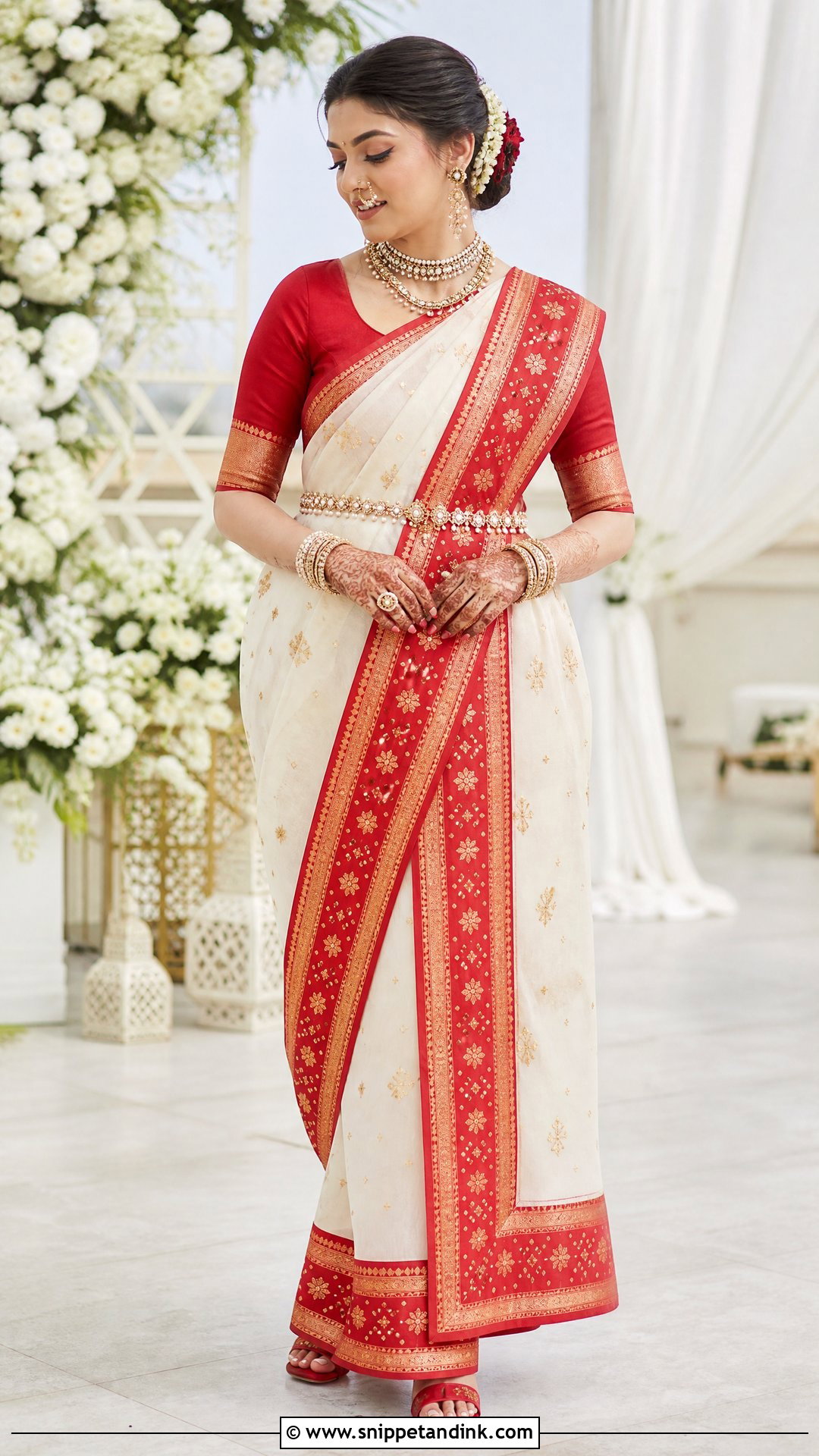
Organza is crisp and light, so an organza Panetar suits a daytime or intimate wedding where a heavy silk would feel like too much. Choose ivory with a wide red border, scattered gold motifs and a few Bandhani accents, worn with a cleanly tailored red raw-silk blouse. Organza holds pleats well but slips, so I pin each pleat at the waist and again at the knee for a front pallu drape. Pearl-and-kundan jewelry keeps it light, with a refined nath, bangles and a slim waist belt. Red block heels or padded juttis, and a low bun with white flowers.
19. Gujarati Bride Emerald Silk Lehenga
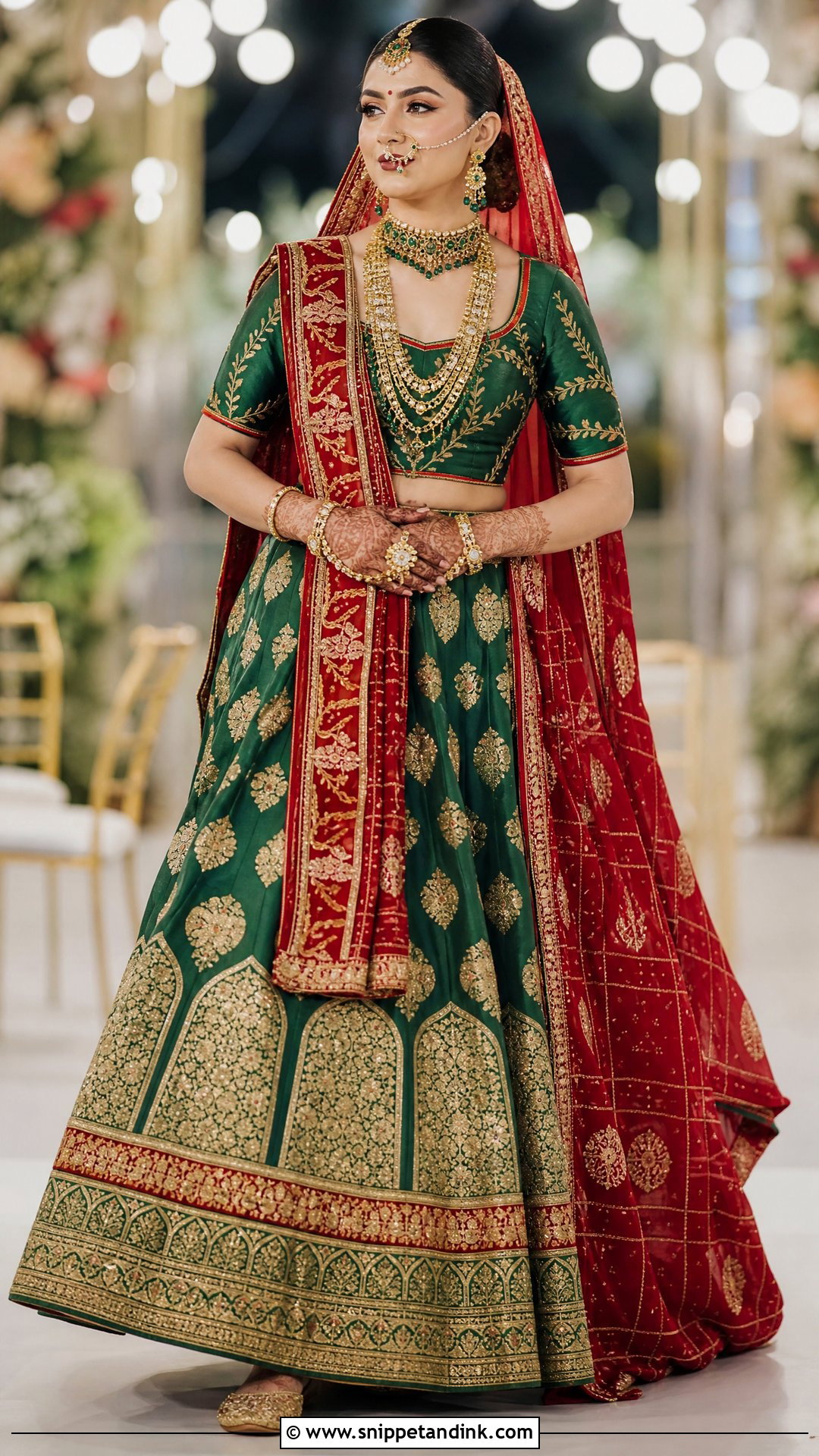
Emerald with red is a strong combination, and a red Gharchola dupatta over the head instantly ties a green lehenga back to Gujarati bridal dress. Choose a full skirt with traditional motifs, a broad embroidered border and enough body to keep its shape, plus a fitted green blouse with red piping or gold sleeves. Layer antique gold necklaces with a green-stone choker, then jhumkas, bangles, hathphool and a medium nath. Gold juttis under the skirt. A center-parted low bun gives the veil a stable base. This works for an evening ceremony, a formal garba or a reception with traditional decor.




20. Gujarati Bride Saree Gown With Bandhani Dupatta
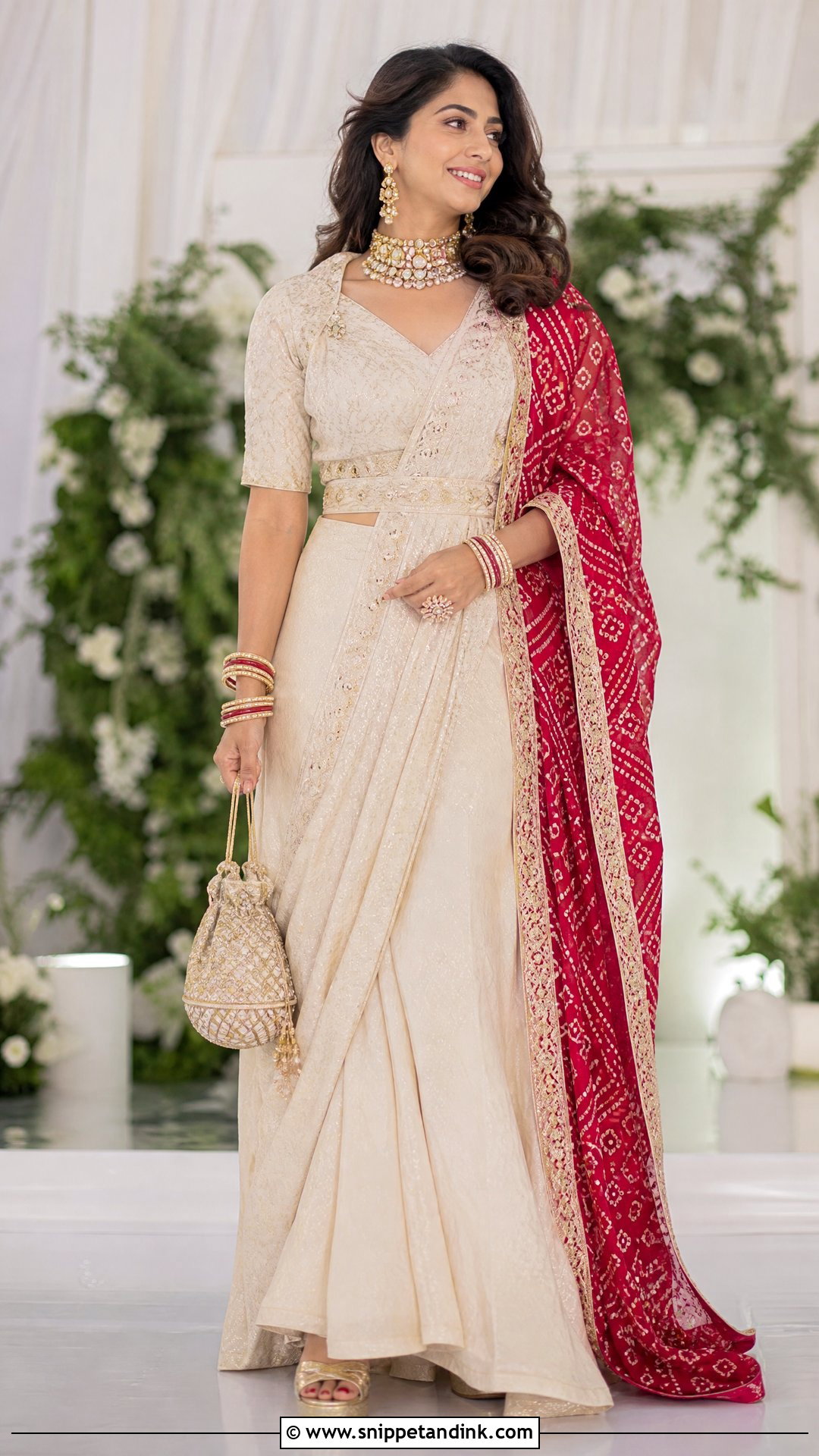
A saree gown is pre-stitched, so it gives the drape of a saree with no risk of pleats coming loose. I suggest it to brides who have never worn a saree and don’t want to learn on the day. Choose ivory or deep red with a defined waist and a flowing skirt, then add a contrasting Bandhani or Gharchola dupatta across one shoulder for a clear Gujarati link. A blouse-style bodice with elbow sleeves gives support. Kundan choker, long earrings, bangles and a statement ring. Block heels or platforms and a compact potli. Soft waves for a reception, a low bun for anything ceremonial.
Is It Real Bandhani or a Print?
Printed Bandhani is common and perfectly wearable, especially for pithi or garba, but it should be priced like a print. I check three things before a bride buys a ceremonial piece. Hand-tied Bandhani has slightly irregular dots, each with a tiny pale center where the knot held the dye back. Turn the fabric over: on genuine tie-dye the pattern shows almost as strongly on the back, while a print is faint or blank. New pieces are often sold with the knots still tied or the fabric crinkled from them, which is a good sign.
For Patola, the same flip test works even better. Double ikat shows the same pattern on both faces, and the motifs have soft, slightly blurred edges from the pre-dyed threads. Genuine double ikat takes a long time to weave, so a very cheap Patola lehenga is almost certainly printed or woven a different way.
Caring for them afterward
Hand-dyed Bandhani can bleed when wet, so dry clean only and keep it away from perfume sprays. Store silk sarees wrapped in plain cotton or muslin, not plastic, and refold them along different lines every few months; zari cracks where a fold sits for years. Keep mothballs from touching the zari, since they can tarnish metallic thread.
One Wedding, Many Outfits, One Bride
A Gujarati bridal wardrobe works best when meaningful textiles and comfortable silhouettes share the week. A Panetar or Gharchola saree honors family custom at the ceremony, while Bandhani, Patola, mirror work and Gharchola lehengas cover the events around it. Think about the venue, the weather, the rituals and how much you’ll move before choosing each look. Secure draping, supportive blouses, cushioned shoes and jewelry you can wear for hours matter more than any single trend. Lighter fabrics, new colors and double dupattas let you adapt tradition without losing it.
You'll Like These Ideas:





Leave a Reply