
The bride’s sister rarely gets to sit down. She’s in the family portraits, at the door greeting aunties, fixing a dupatta pin five minutes before the pheras and then first on the dance floor. When I dress a sister, I start from that job description, not from the prettiest outfit on the rail. It has to look special in photos, sit a clear step below the bride, and still let her walk, kneel and lift her arms all evening. Before we shop I want four things: the bride’s colors for each function, the venue, the season and any family rules about color or coverage. The looks below run from lehengas and sarees to jumpsuits and pantsuits, with notes on which event each one suits and what it asks of the person wearing it.
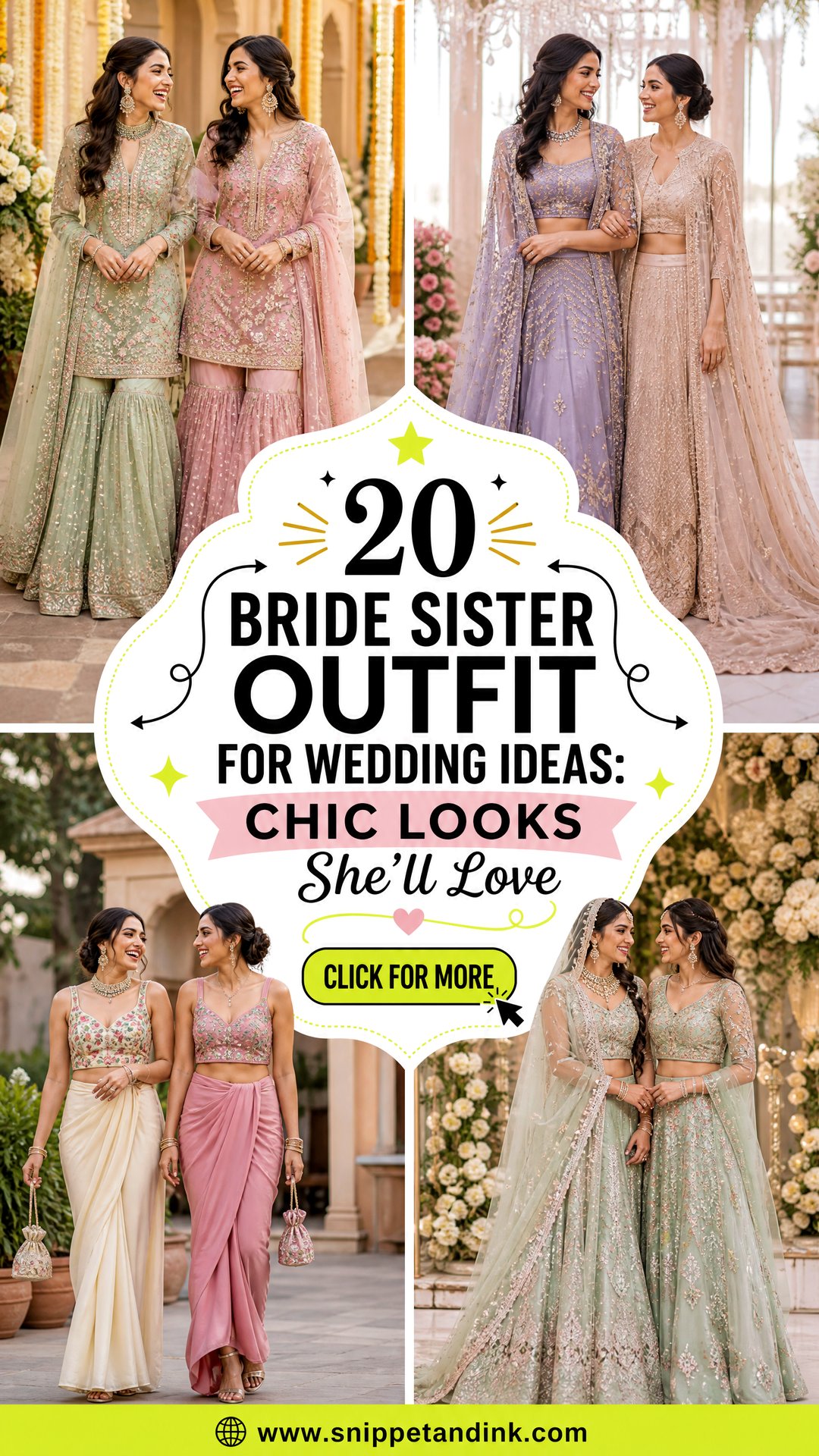
One Sister, Four Functions: Planning the Whole Wardrobe
A multi-day wedding can mean a different outfit for the mehndi, sangeet, ceremony and reception. I plan them together on one page before buying anything, because the weight and formality should rise toward the ceremony and then relax for the party.
- Mehndi: the lightest and brightest outfit, short or rolled sleeves, and something you can sit on the floor in. Henna stains fabric permanently, so nothing precious.
- Sangeet: built for dancing. Sharara, a draped skirt or a lehenga with controlled flare, and shoes broken in beforehand.
- Ceremony: your most traditional and most covered look, checked against the family’s color rules and anything the venue or officiant expects.
- Reception: the glamour slot. Sequins, a pre-draped saree, a jumpsuit, or a cape lehenga that keeps your hands free.
You don’t need four entirely new outfits. A good embroidered blouse can carry two sarees, and a statement dupatta can turn a plain palazzo suit into something ceremonial. Ask the bride early whether she wants her sister in the family color at any event; some families coordinate the bride’s side, and finding out late means rushing a tailor.
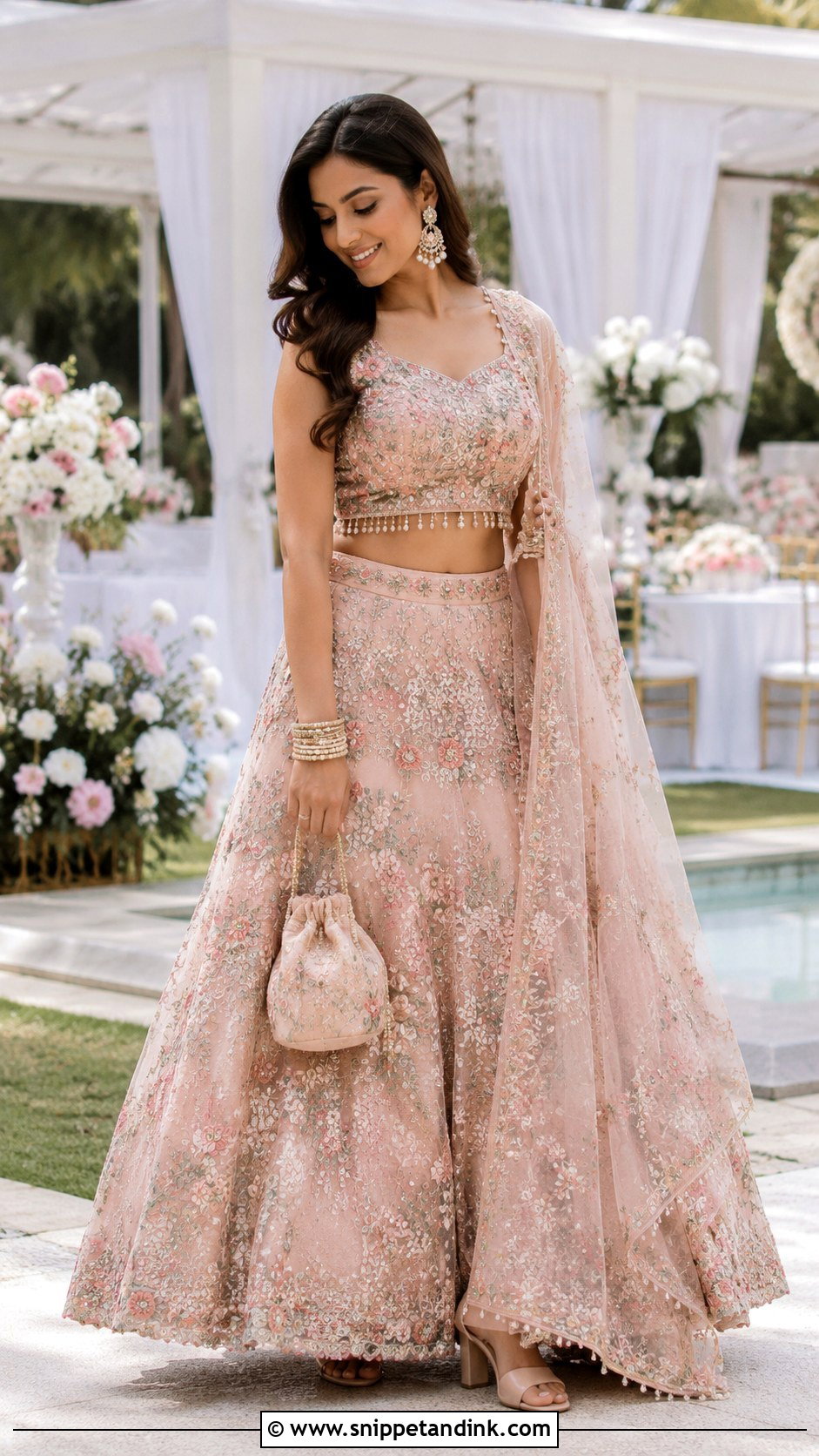
1. Pastel Embroidered Lehenga for Bride’s Sister
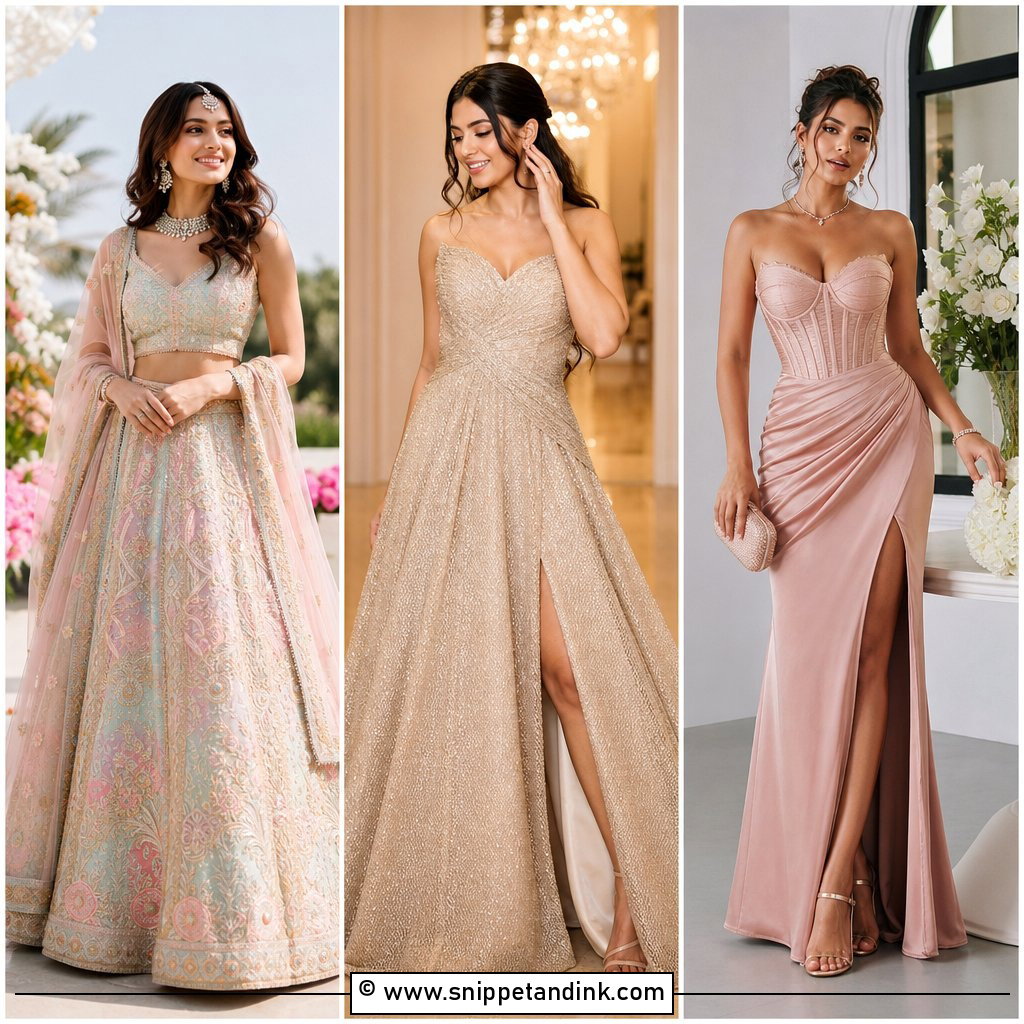
For a daytime ceremony or a garden venue, a pastel lehenga is the easiest win. Pick one shade that sits beside the bride’s palette without copying it; pistachio or powder blue next to a red bride looks considered, while blush next to a blush bride looks like a mistake. The embroidery should be threadwork, small sequins or pearls, never the dense zardozi the bride is wearing. A lightweight dupatta matters more than people think, because heavy net slides off the shoulder every time you hug someone. Block heels, a small potli, drop earrings and a few soft bangles are plenty. In daylight, keep makeup fresh and the lip soft.
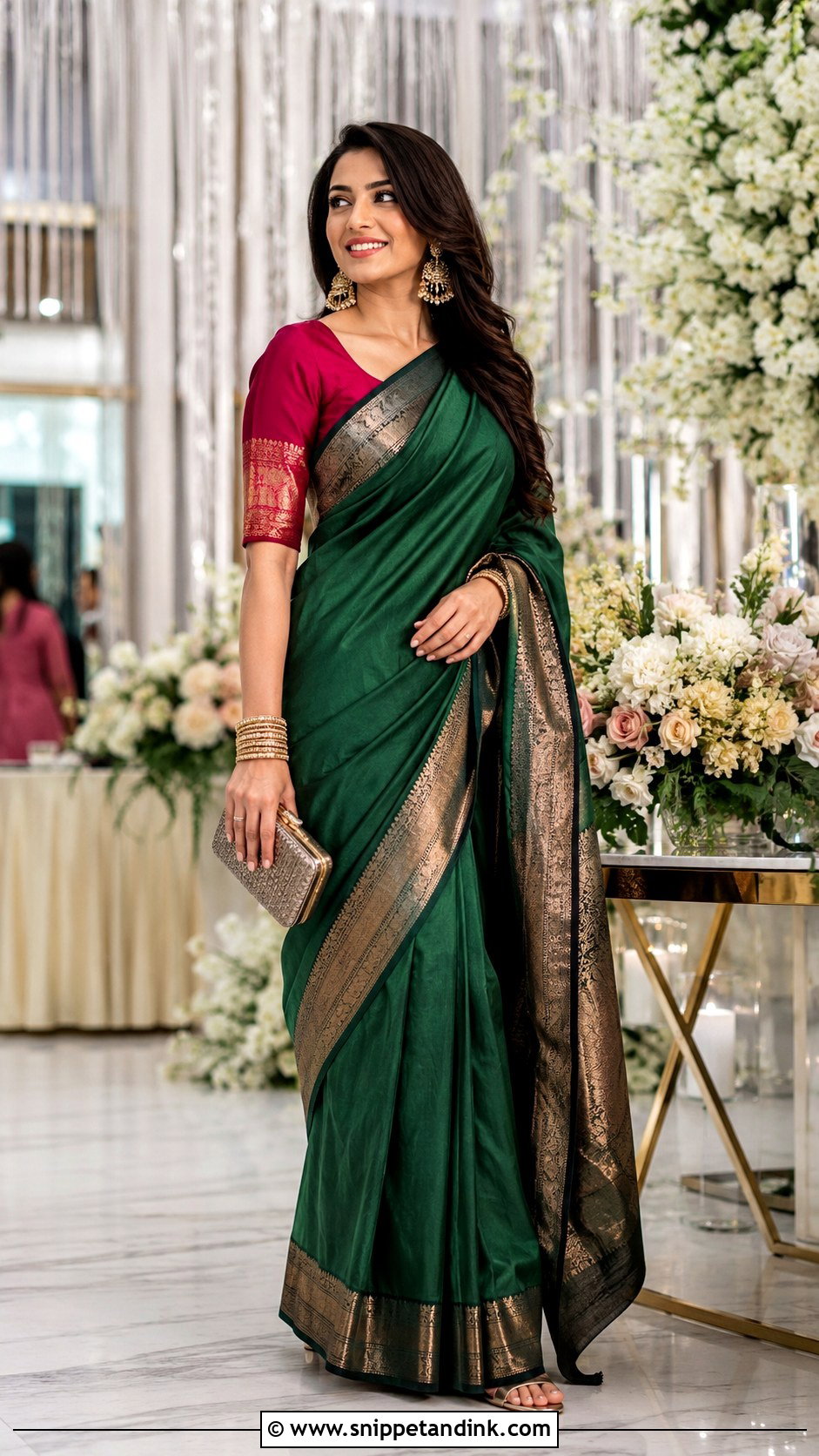
2. Silk Saree With Contrast Blouse for Bride’s Sister
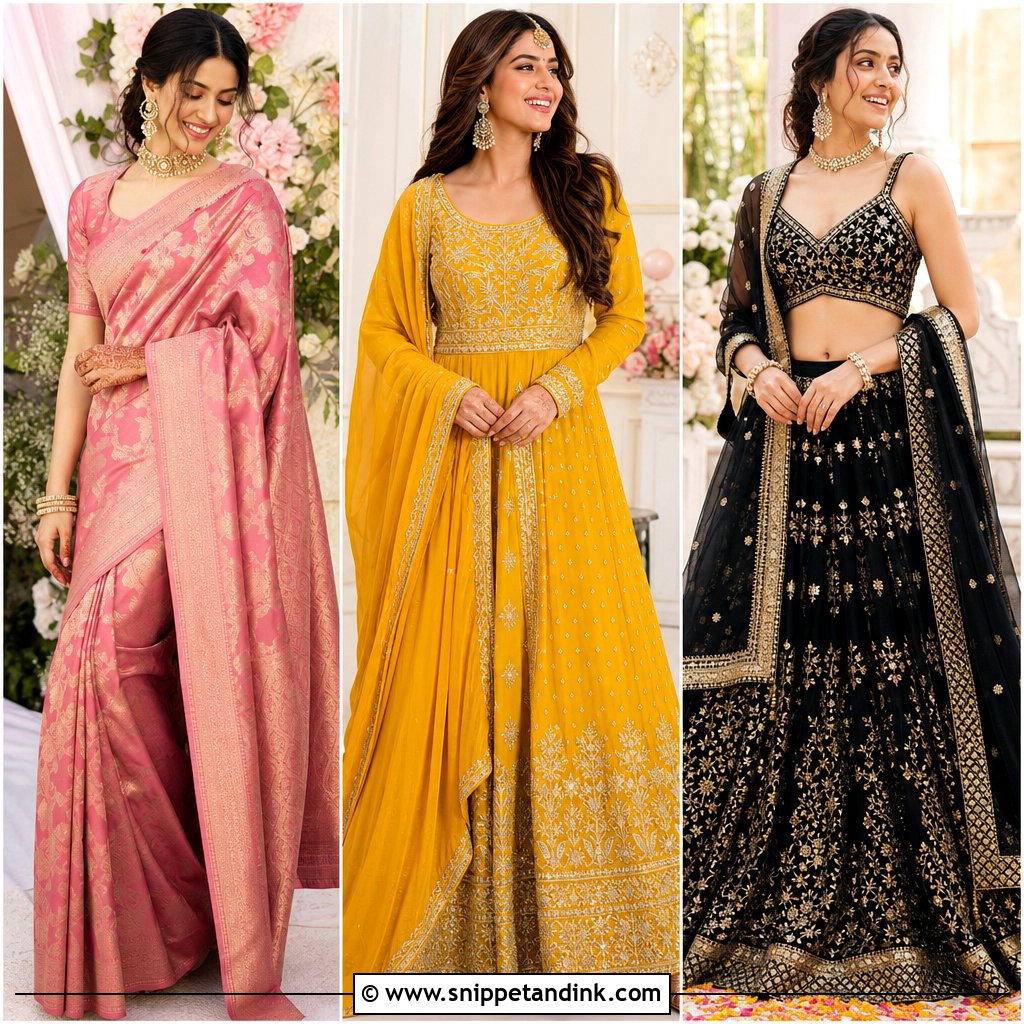
Silk sarees hold up through a long ceremony better than almost anything else, and a contrast blouse sharpens them in photos. A jewel-toned body with a gold border and a blouse in a second color, emerald with plum, say, reads clearly from the back of a hall. The blouse decides how modern it feels: sleeveless and square-necked looks current, elbow sleeves suit a more traditional family. I pin the pleats at the waist and the pallu at the shoulder with two or three safety pins hidden under the fold, because the sister will be running errands, not posing. Traditional earrings, stacked bangles, a structured clutch and comfortable metallic sandals finish it, with a braided or sleek low bun.
3. Sequin Saree for Bride’s Sister
For an evening reception, a sequin saree gives you all the sparkle without a neck full of jewelry. Champagne, emerald and navy hold their color under warm uplighting; very pale sequins can blow out to white under a photographer’s flash. A blouse in the same color keeps the line long. If you plan to dance, buy it pre-stitched, because sequinned georgette is slippery and loose pleats drift within the hour. One pair of crystal earrings, one bracelet and a compact clutch is the limit; anything more and the outfit gets busy. Sequins also scratch the inside of your arm, so ask the tailor to line the blouse sleeves.
4. Floor Length Anarkali for Bride’s Sister
An Anarkali moves like a gown and still reads as traditional, which makes it my go-to for the engagement or the welcome dinner. The fit is all in the bodice: it should be snug through the ribs with the flare starting at the natural waist, or the whole thing looks like a tent. Teal, berry and dusty rose feel festive without straying toward bridal reds. Pin a lightly embroidered dupatta over one shoulder so it doesn’t slide when you bend to touch elders’ feet. If the neckline is heavily worked, skip the necklace and let jhumkas, a few bangles and an embellished clutch carry it. Low heels, please; a floor-length hem and stilettos on a hotel carpet is how hems tear.
5. Embroidered Sharara Set for Bride’s Sister
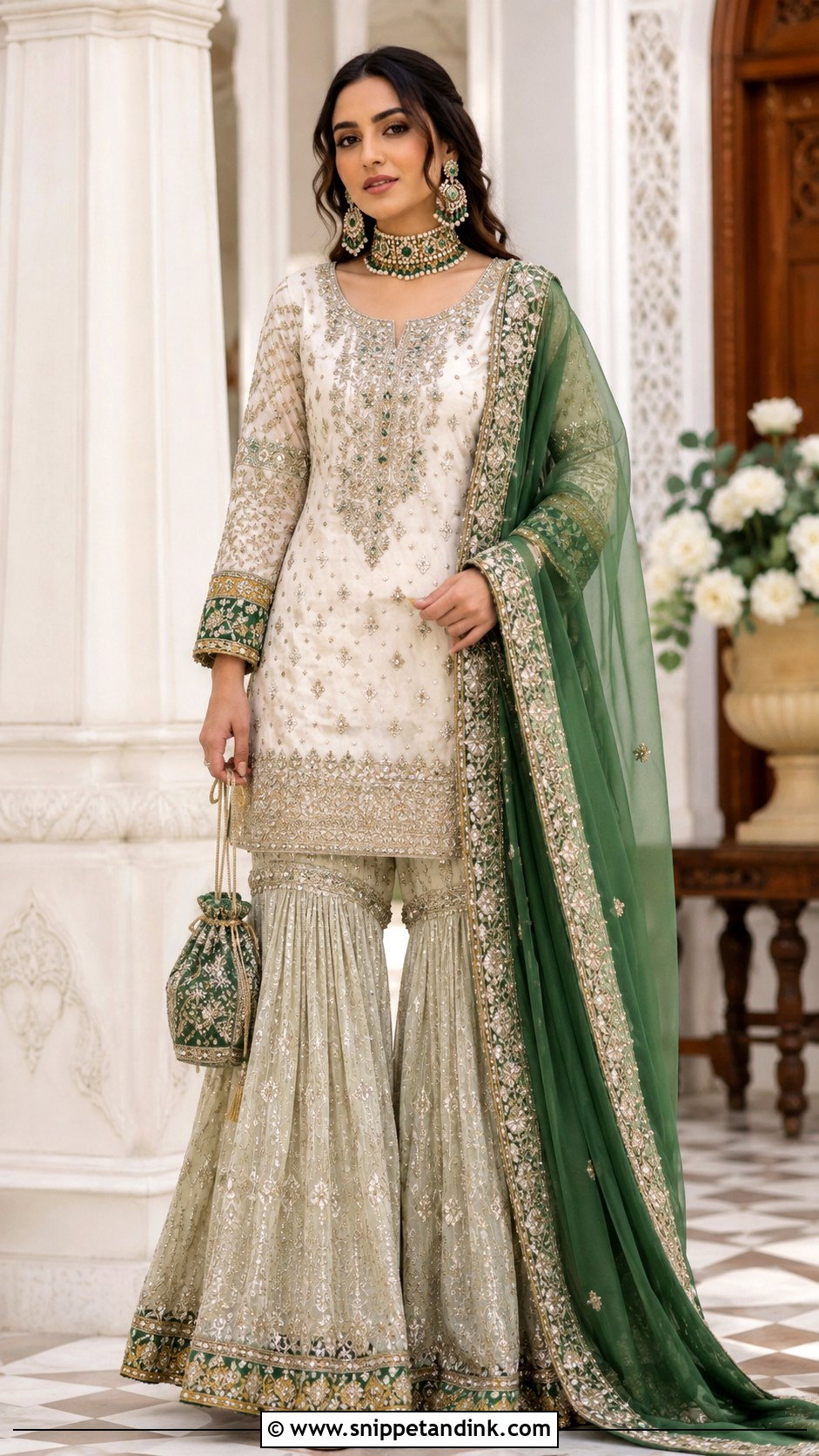
A sharara set is the outfit I’d want for a mehndi or sangeet, because you can sit cross-legged on a floor cushion, then get up and dance without gathering a skirt. Wide sharara pants with a short or mid-length kurta and a light dupatta is the classic combination. Turquoise, fuchsia and marigold suit the daytime color of these events. Mirror work, gota and thread embroidery add texture without much weight. Wear cushioned juttis, colorful bangles, statement earrings and a small potli. A half-up style keeps hair off your face during the dancing. One practical note: if your own hands are getting mehndi, choose short or three-quarter sleeves so the paste doesn’t smear onto the cuffs while it dries.
6. Gharara Suit for Bride’s Sister
A gharara suit stands apart from a room full of sarees and lehengas because of its shape: fitted to the knee, then a gathered flare joined at a decorated band. That knee joint is where I check the tailoring, since a band sitting too high makes you look shorter and too low makes walking awkward. Choose a short embroidered kurta with gharara pants in a family-approved pairing like rose and gold or teal and peach. Skip all-white unless the bride has asked for it. A bordered dupatta over one shoulder shows off the kurta, and a choker, medium earrings, a potli and juttis finish it with a neat braid or low bun.
7. Cape Lehenga for Bride’s Sister
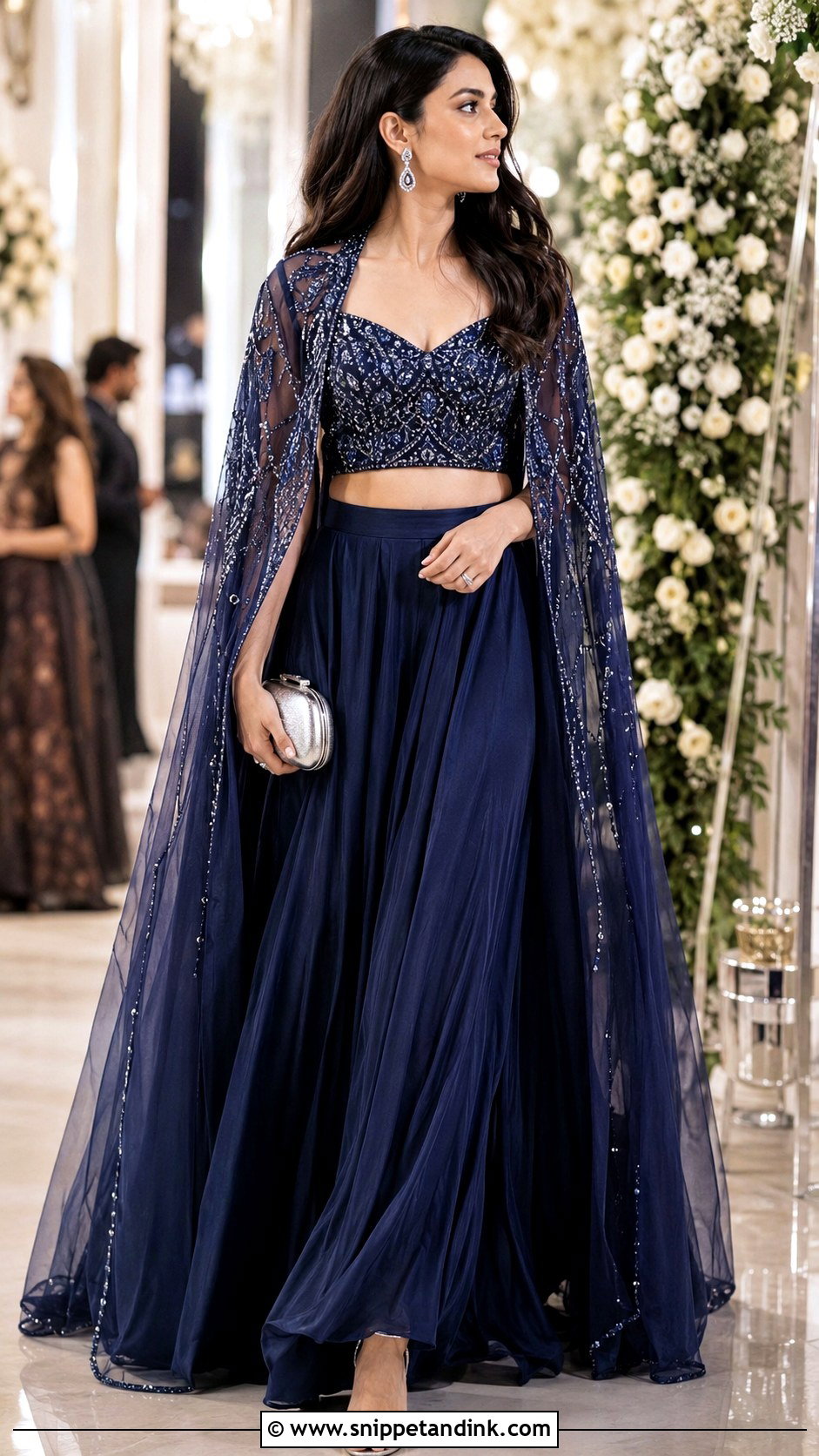
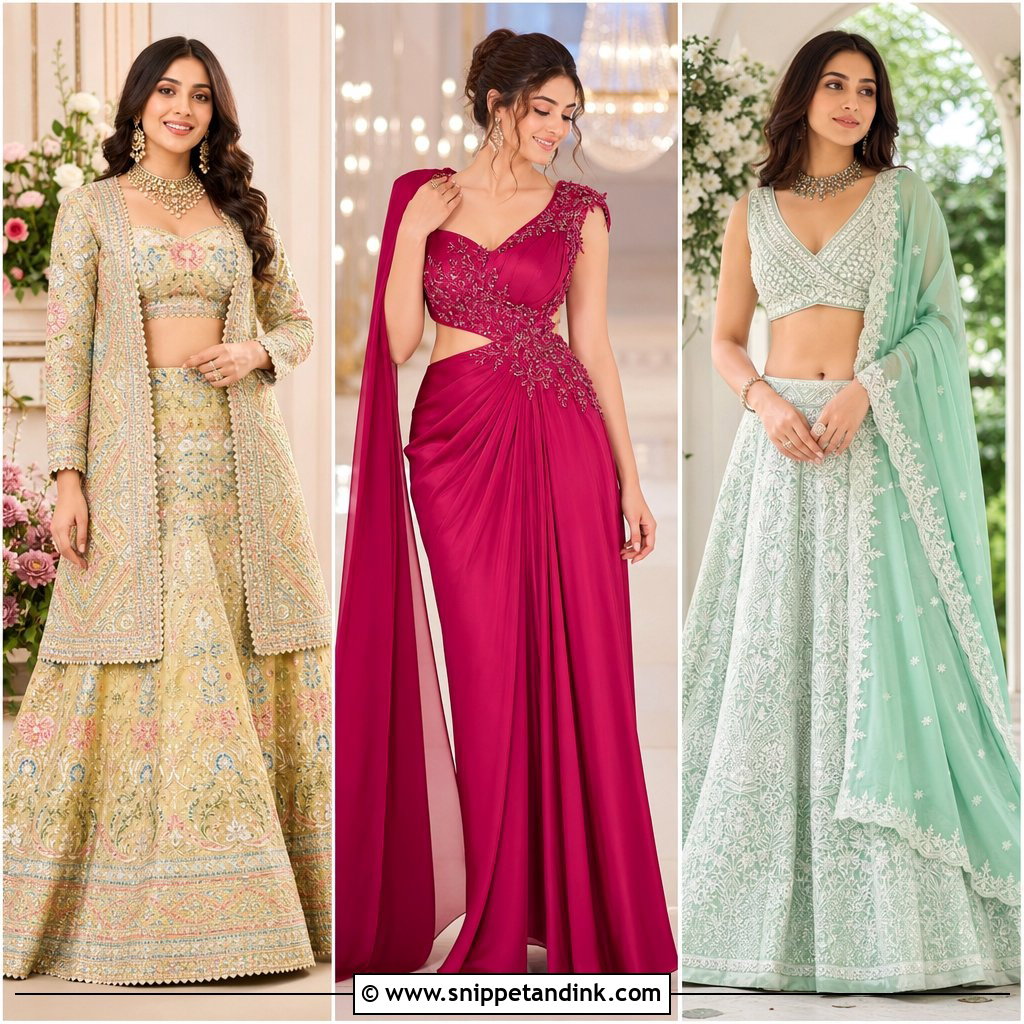
A cape lehenga solves the dupatta problem. You get the presence of a full lehenga, but nothing slides off your shoulders, and your hands stay free for greeting guests and holding the bride’s clutch. Pair a solid skirt with an embroidered blouse and sheer cape, or reverse it. Deep shades like sapphire and wine hold their richness under evening light. Keep accessories focused: drop earrings, one cocktail ring, a small clutch, sturdy heels. Soft waves or a sleek ponytail keeps the neckline visible. Have the cape hemmed so it ends clear of the floor, because a trailing cape catches under your own heel on every step.
8. Pre Draped Saree for Bride’s Sister
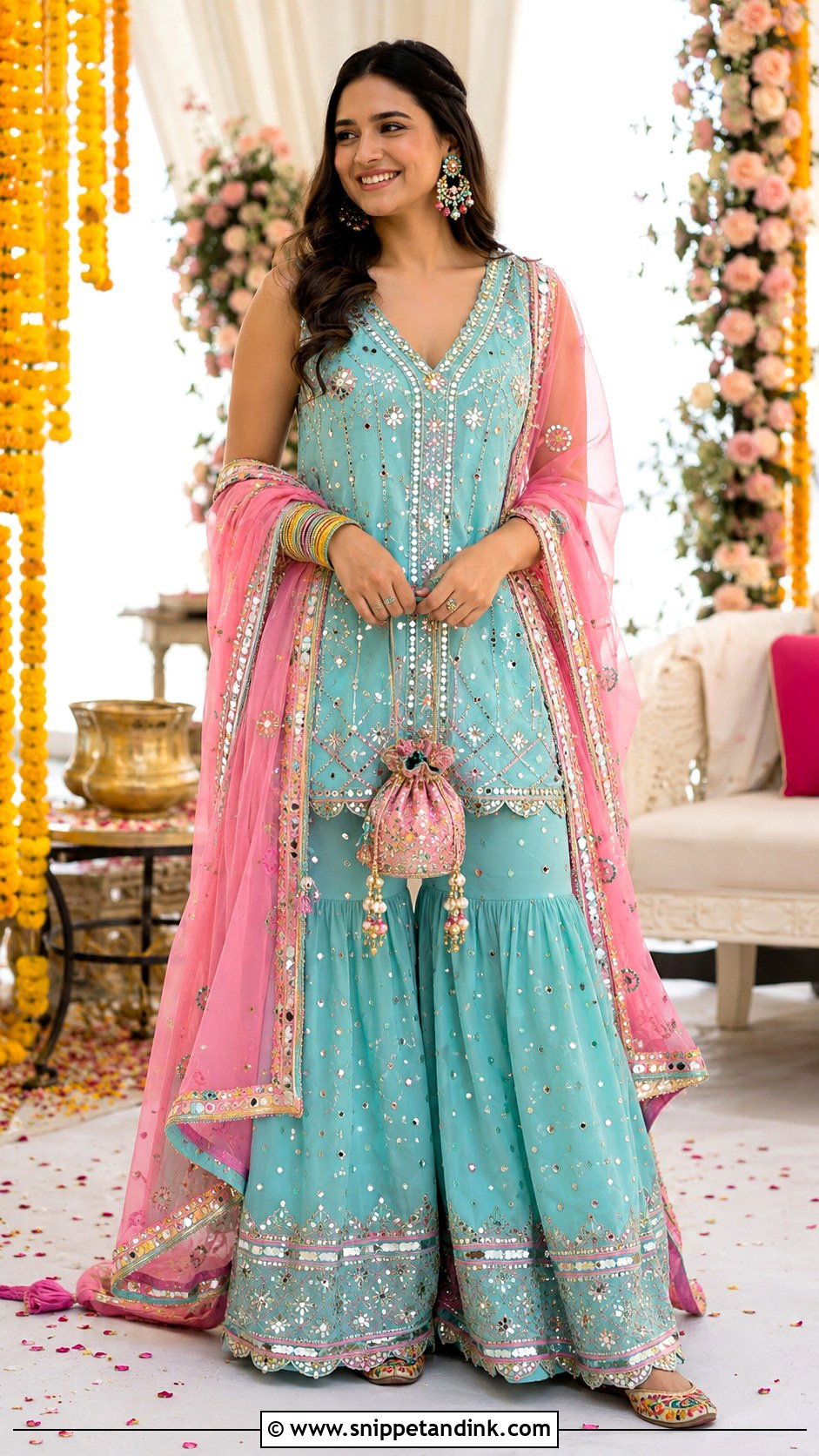
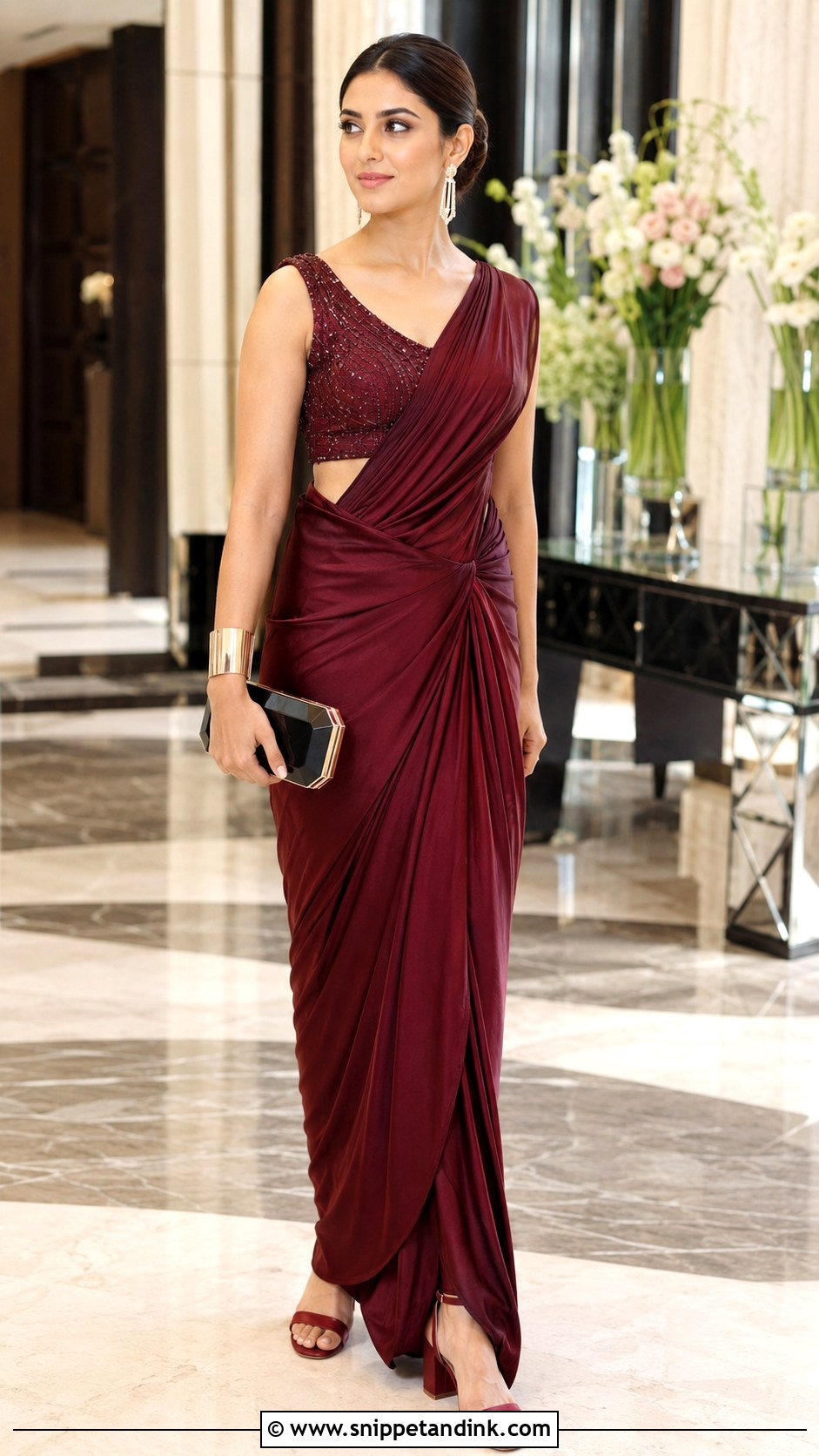
If you’ve never worn a saree for six hours, I’d put you in a pre-draped one. The pleats and pallu are stitched in place, so it zips on in two minutes and nothing comes undone during the dancing. Soft satin, crepe and georgette in burgundy, forest green or midnight blue drape well and don’t wrinkle badly when you sit. The blouse is where you can be playful, with subtle beadwork, structured sleeves or an asymmetrical neckline. Sleek earrings, a cuff, a hard-case clutch and comfortable heels finish it, with a polished bun or side-parted waves. Do one honest sit-down test before the day: some pre-stitched pleats pull at the hip when seated.
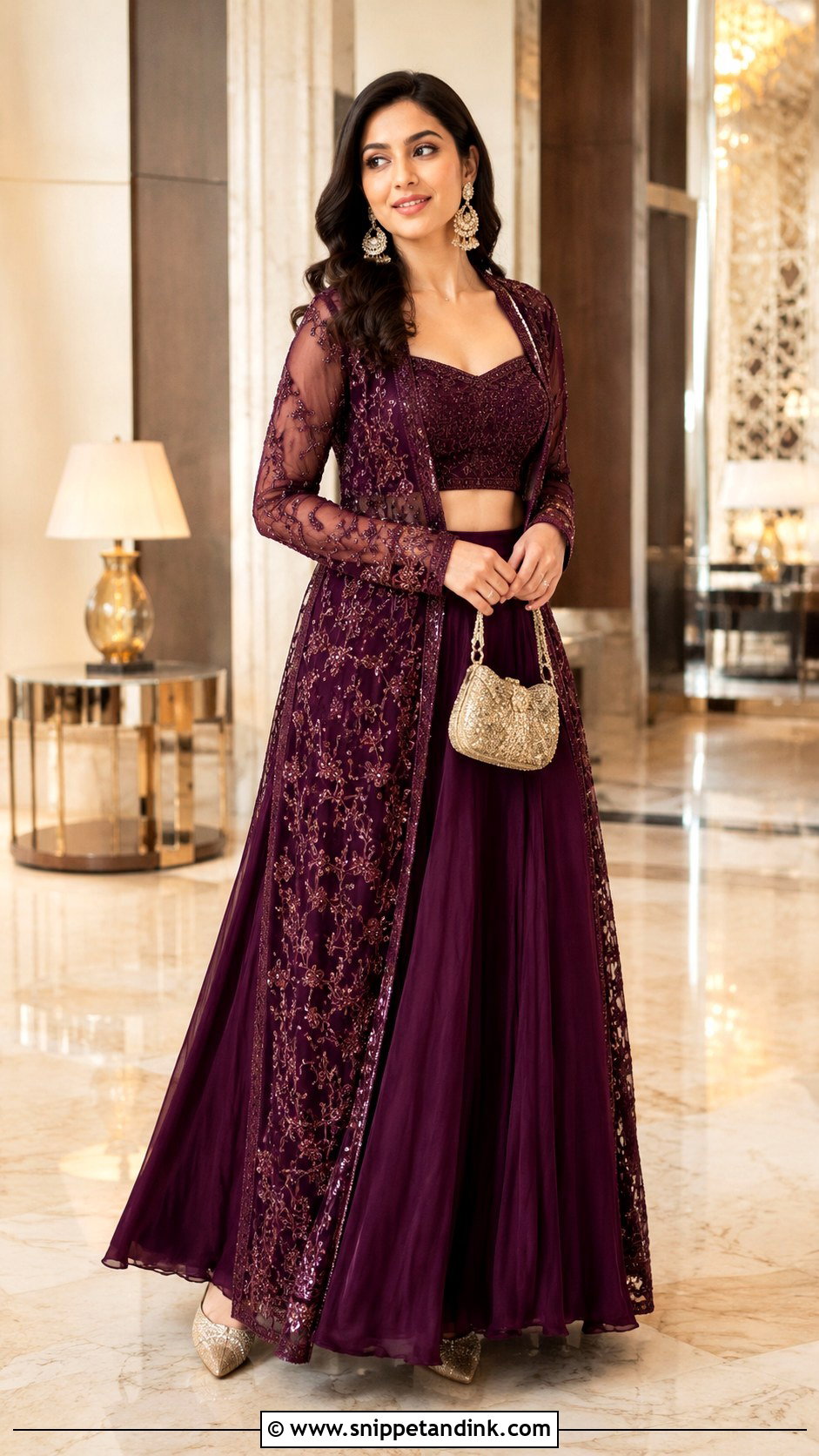
9. Jacket Lehenga for Bride’s Sister
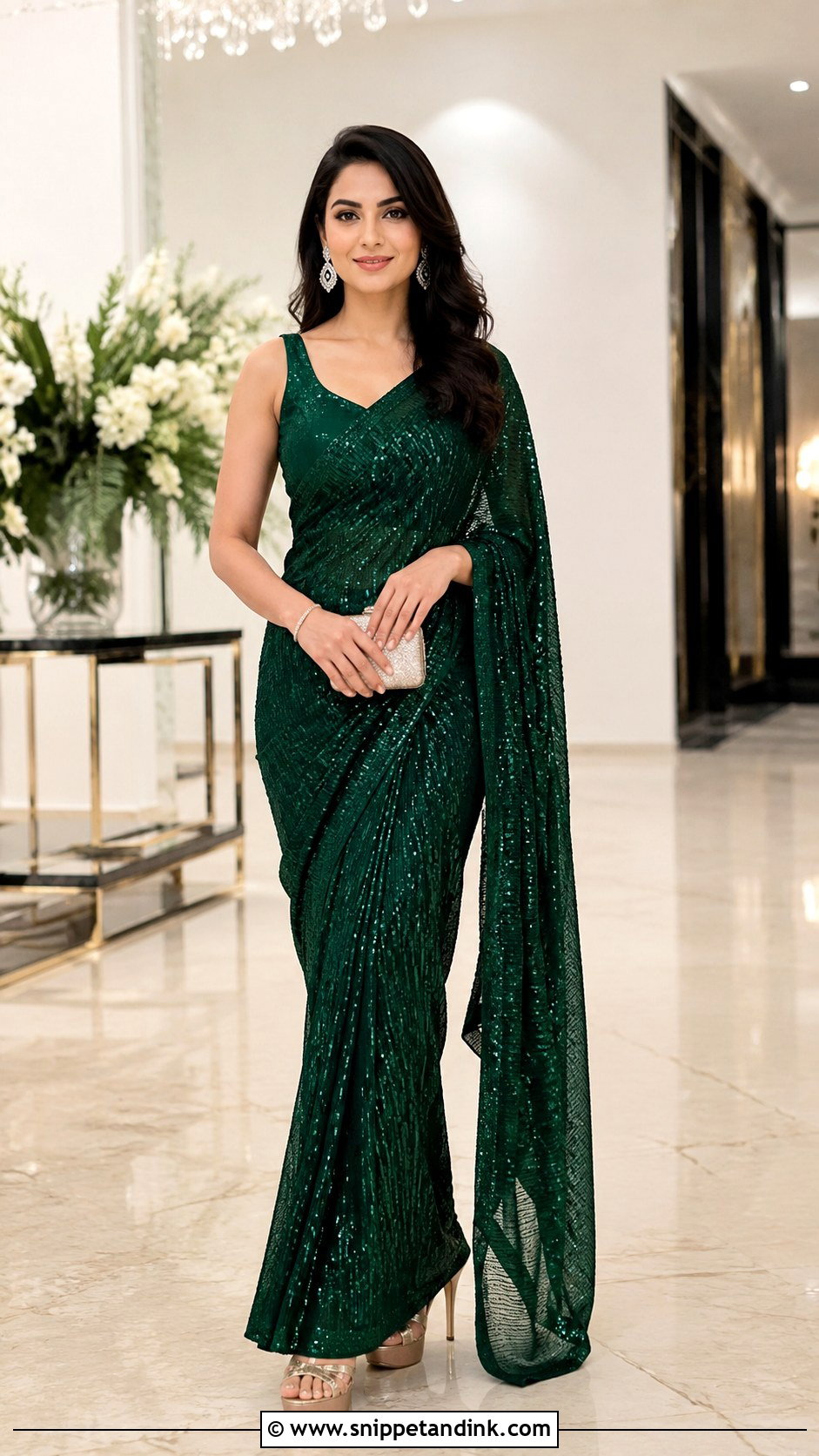
Cold weather and an indoor evening call for a jacket lehenga. The long embroidered jacket replaces the dupatta, gives you coverage for older relatives, and keeps you warm walking between a car and a marquee. A monochrome set in navy, plum or rust looks the most expensive; a lighter blouse adds contrast if you want it. Choose sheer embroidered net for a mild evening and a richer fabric for real winter. Chandbalis, a compact bag and closed-toe heels are enough, and I’d skip the necklace so the jacket’s neckline stays clean. Check the sleeves at the fitting by reaching both arms forward, because jacket armholes cut too tight restrict every hug.
10. Palazzo Suit for Bride’s Sister
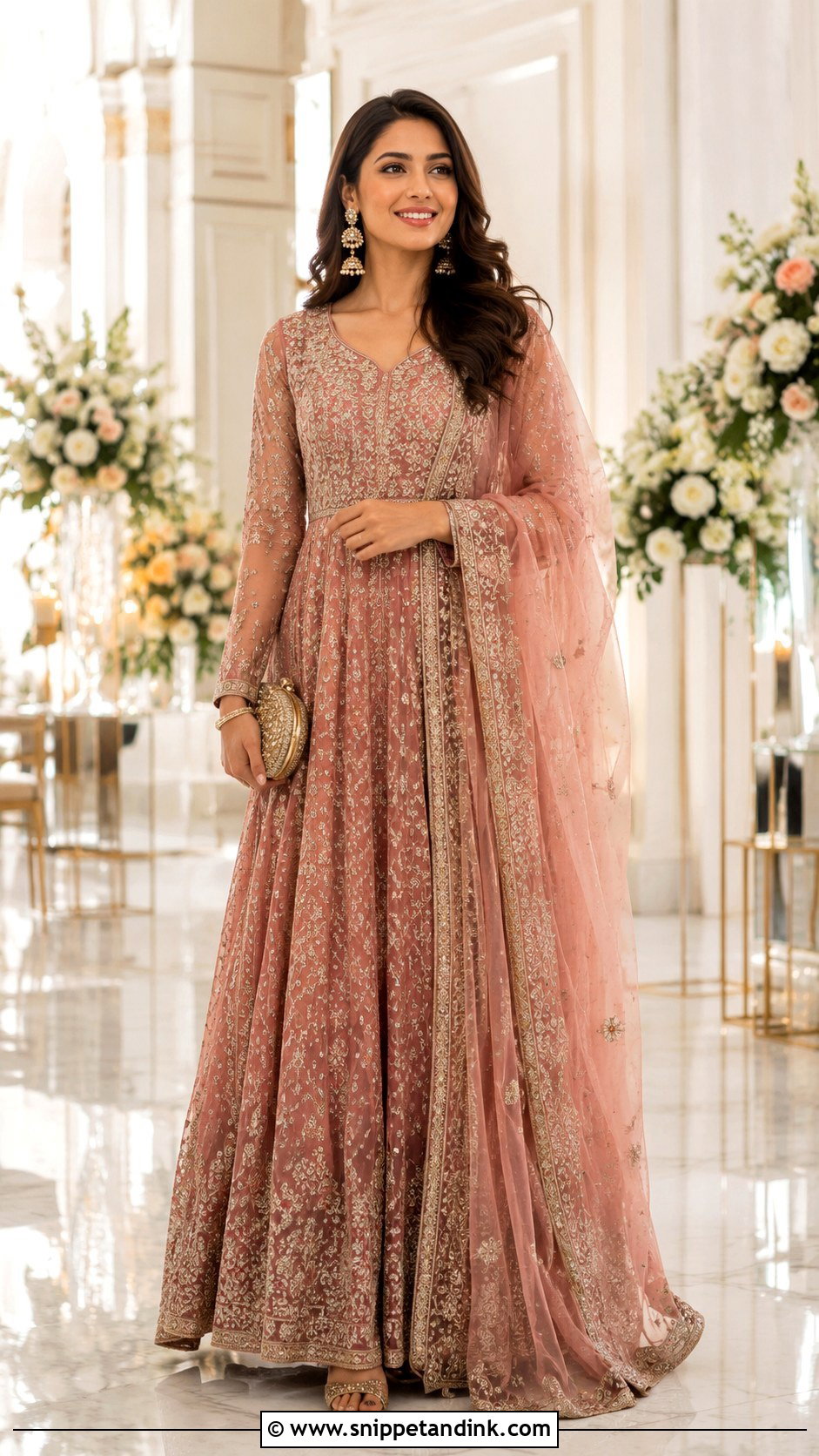
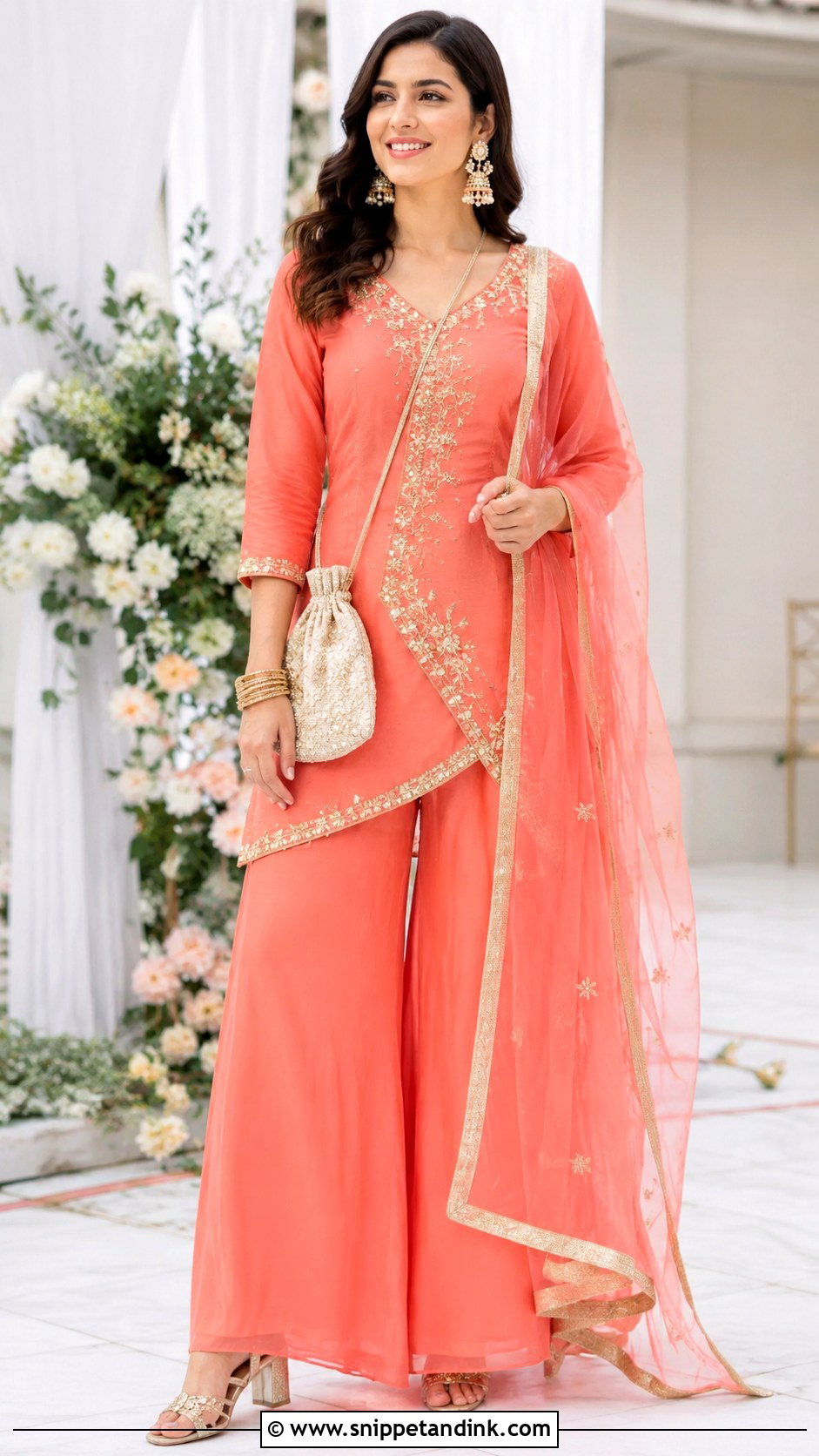
Palazzo suits are underrated for smaller ceremonies and daytime events. Wide legs let you sit, climb stairs and carry trays without managing a skirt, and the matching kurta keeps it polished. A straight kurta lengthens; an asymmetric hem feels more current. Coral, aqua and marigold suit a lively day function. The dupatta is what makes it formal, so choose a sheer one with a defined border. Jhumkas, slim bangles, a crossbody potli and block heels or embellished flats complete it, with a soft ponytail or loose braid outdoors. It’s the outfit I suggest to sisters who know they’ll be handling the logistics all day.
11. Draped Skirt and Crop Top for Bride’s Sister
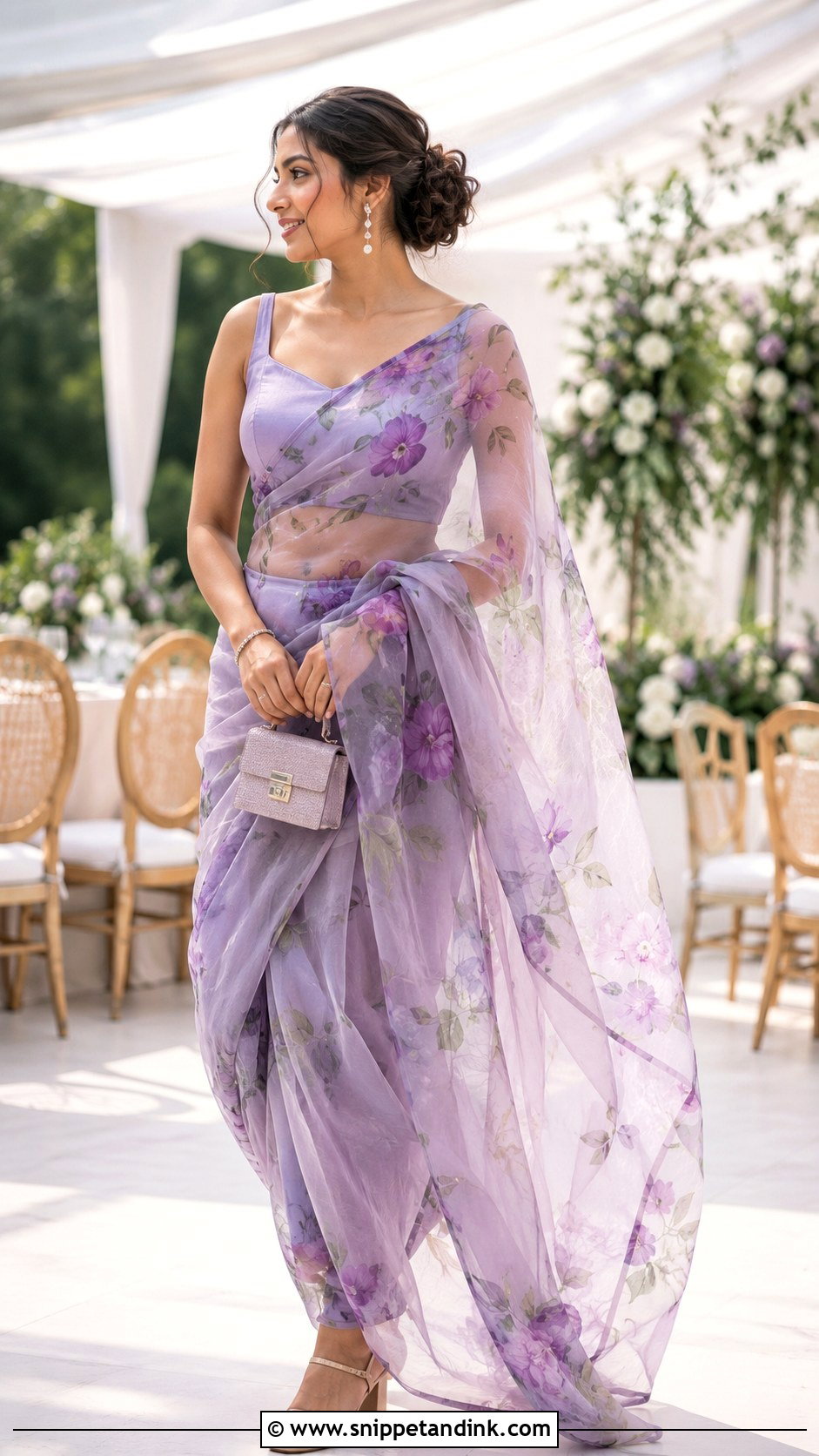
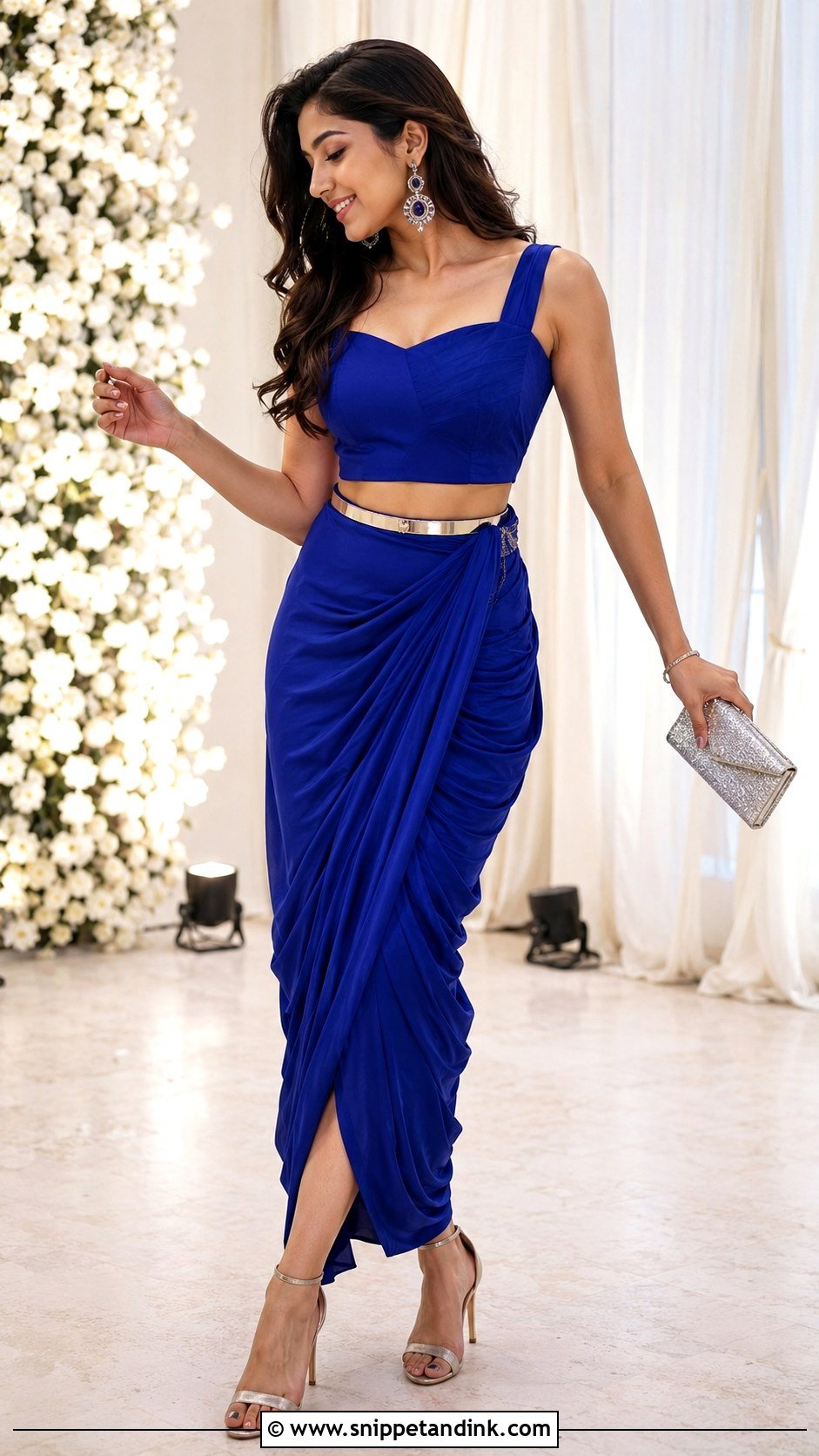
A draped skirt with a crop top gives you the outline of a saree with none of the re-pinning. The gathered drape is stitched into the skirt, so it stays put through a cocktail party and a long sangeet. The top decides how comfortable you’ll be. I look for proper support in the straps and a neckline that you won’t be adjusting all night, then let comfort set how much midriff shows. Plum, cobalt and copper look sophisticated in this cut. A slim belt can define the waist if it doesn’t fight the drape. Statement earrings, a metallic clutch and supportive heels, plus a sleek ponytail, keep the whole look sharp and dance-proof.
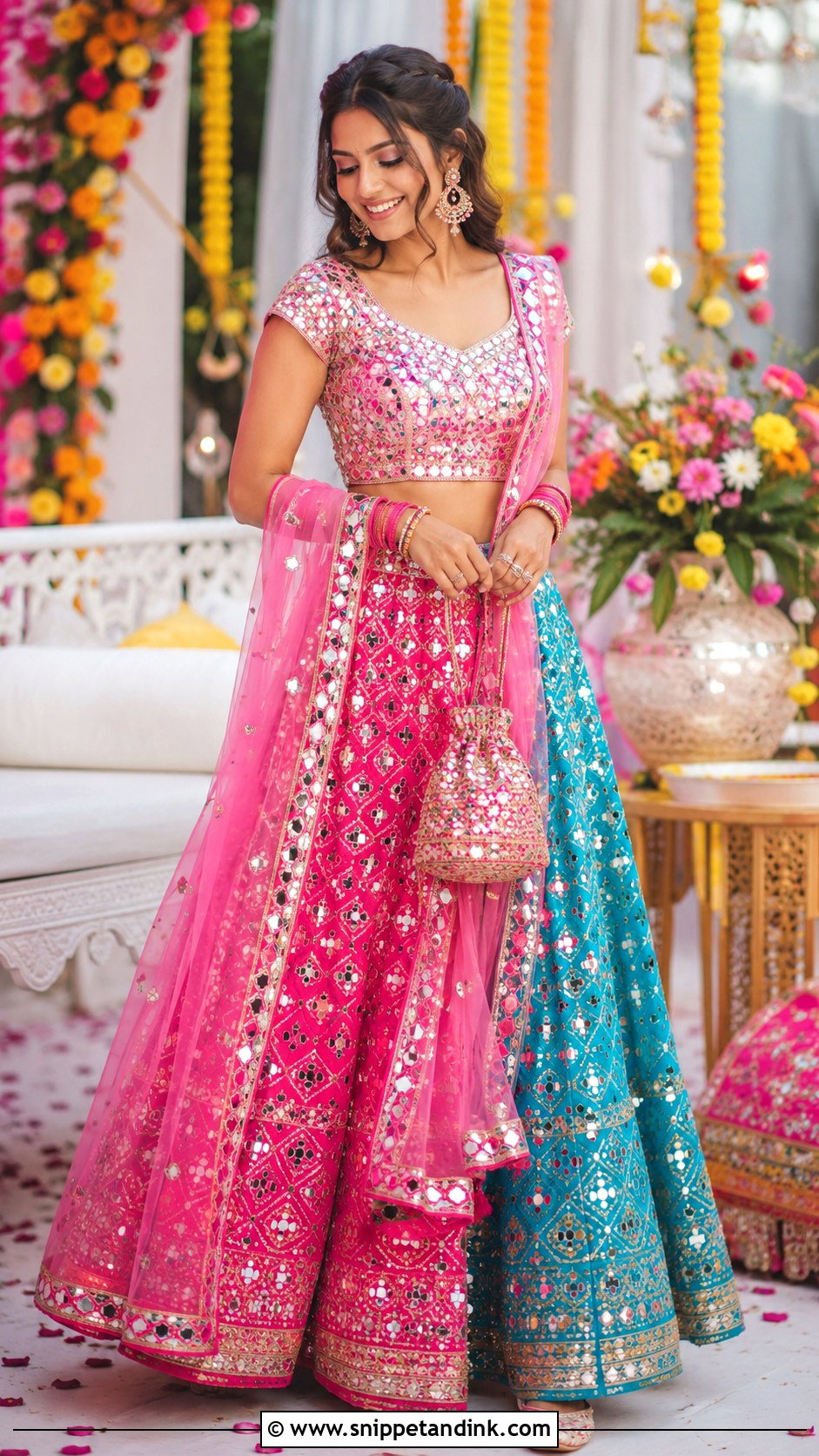
12. Mirror Work Lehenga for Bride’s Sister
Mirror work belongs at the colorful events. For a mehndi or sangeet outfit, bright pink, turquoise or a multicolor lehenga catches every flash and string light. Choose a skirt with controlled flare and a blouse with real structure, since dancing in a heavy mirrored skirt pulls the waistband down. Real mirror pieces are glass, so the skirt can weigh more than it looks; lift it at the shop before you fall for it. Wear a light dupatta draped around the arms or pinned at one shoulder. Medium earrings, simple bangles, one ring, a colorful potli and cushioned juttis are enough, because the mirrors already supply the sparkle.
13. Banarasi Saree for Bride’s Sister
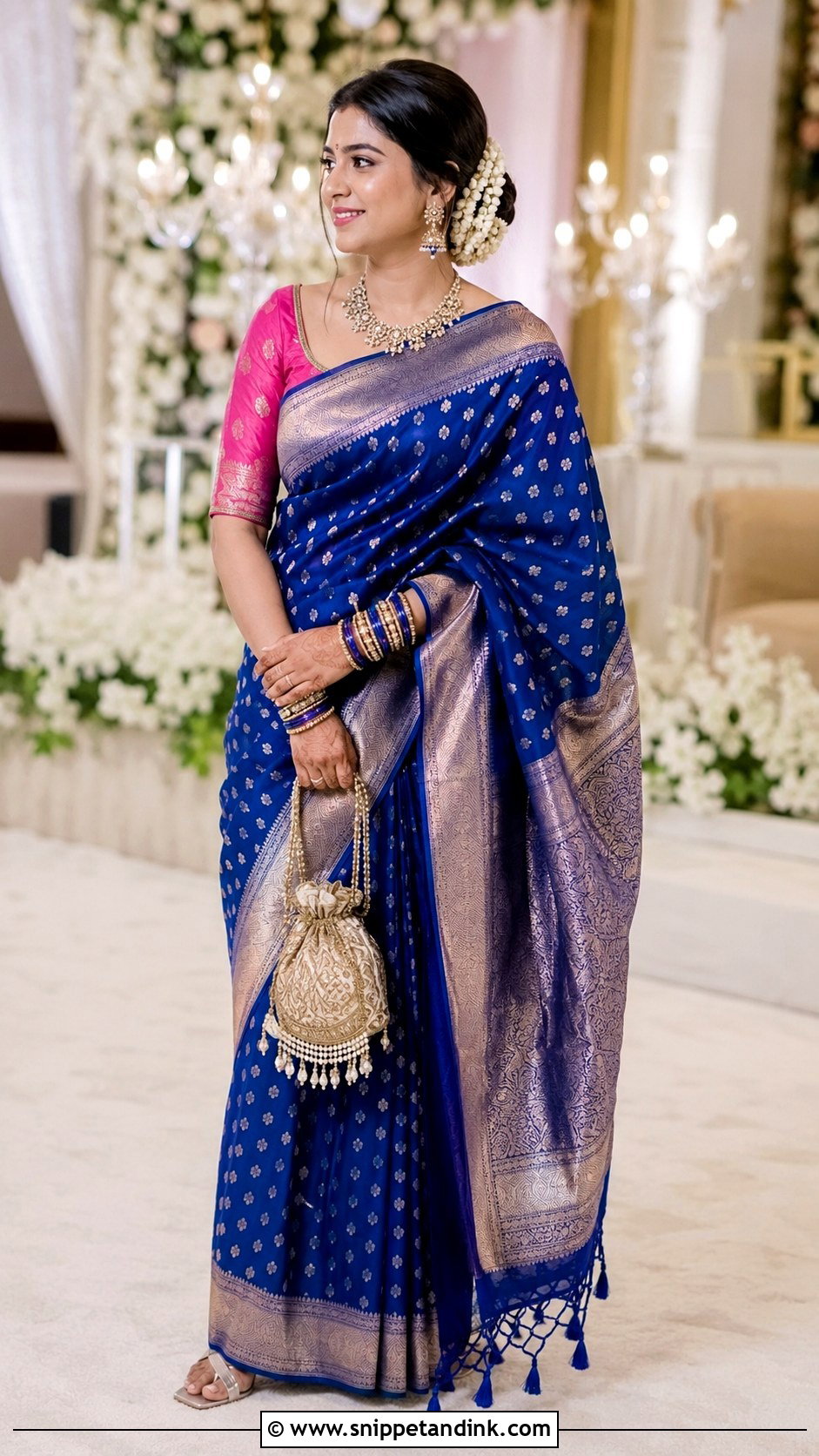
For the main ceremony, few things carry family meaning like a Banarasi. The woven zari reads as rich in photos, and the weight of the silk helps the drape hang cleanly through long rituals. Ruby, peacock green and royal blue with a metallic border look ceremonial without approaching bridal red-and-gold, which I’d avoid if the bride is in it. A contrast blouse makes it lively; a matched blouse makes it calm and unified. Elbow sleeves give the structure this fabric wants. A classic necklace, matching earrings, bangles, a potli and low block heels finish it. Real Banarasi silk is stiff when new, so wear it once at home to soften the pleats.
14. Organza Saree for Bride’s Sister
Organza is the fabric I’d put a sister in for a daytime wedding or a garden ceremony. It’s airy and holds its shape, which also means it can stand away from the body and look bulky if the blouse is loose. A fitted blouse that defines the waist fixes that. Mint, lavender and peach with floral print or scattered sequins keep it fresh. Organza creases sharply, so steam it on the morning and pin the pleats and shoulder firmly. Pearl earrings, a slim bracelet, a structured mini bag and neutral block heels are enough, with soft curls or a textured low bun. It looks lightest in natural daylight.
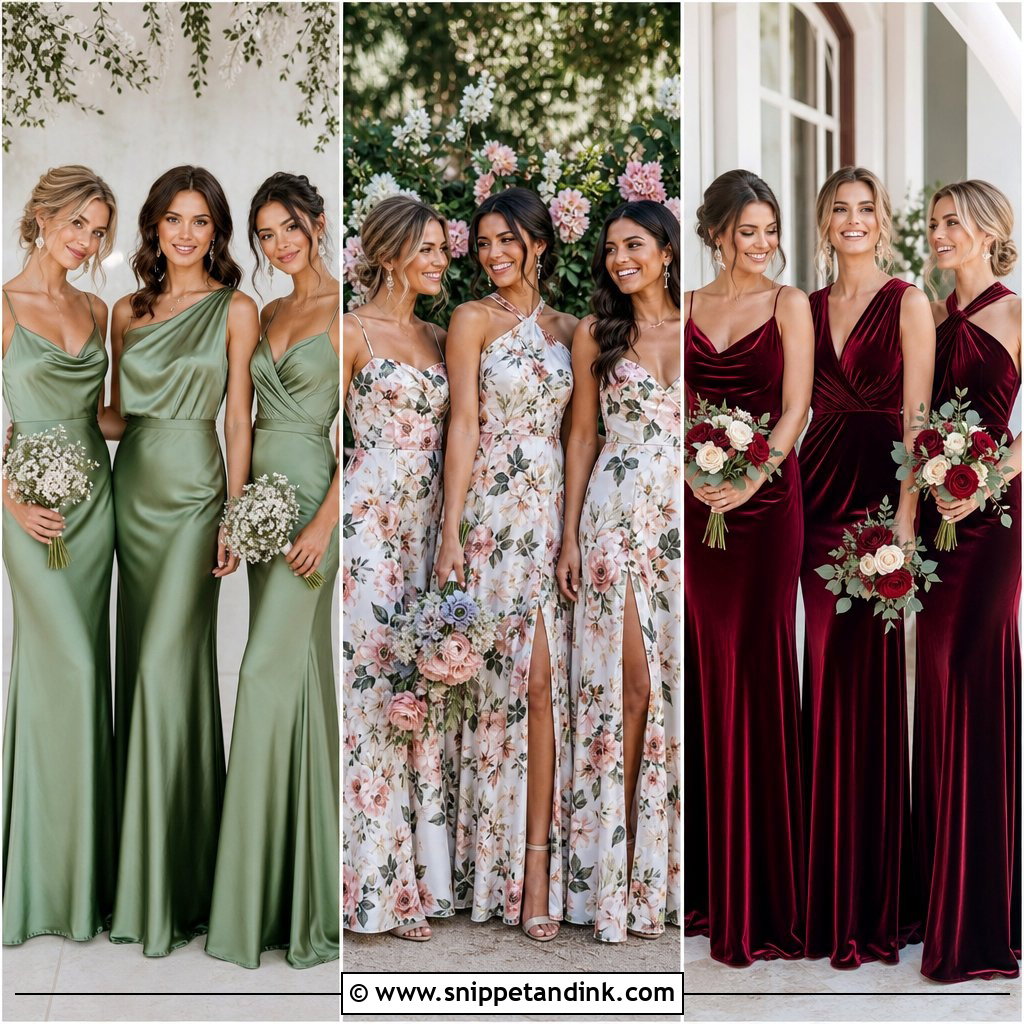
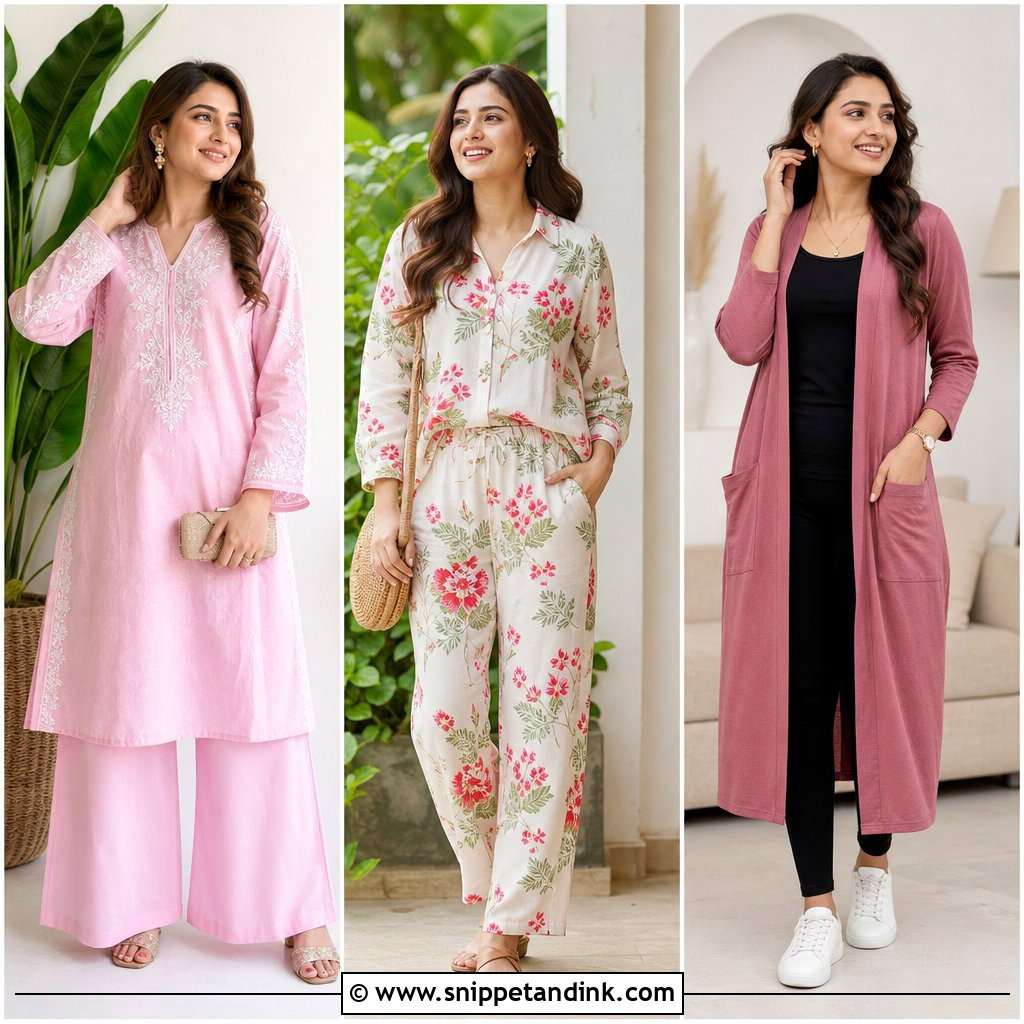
15. Velvet Lehenga for Bride’s Sister
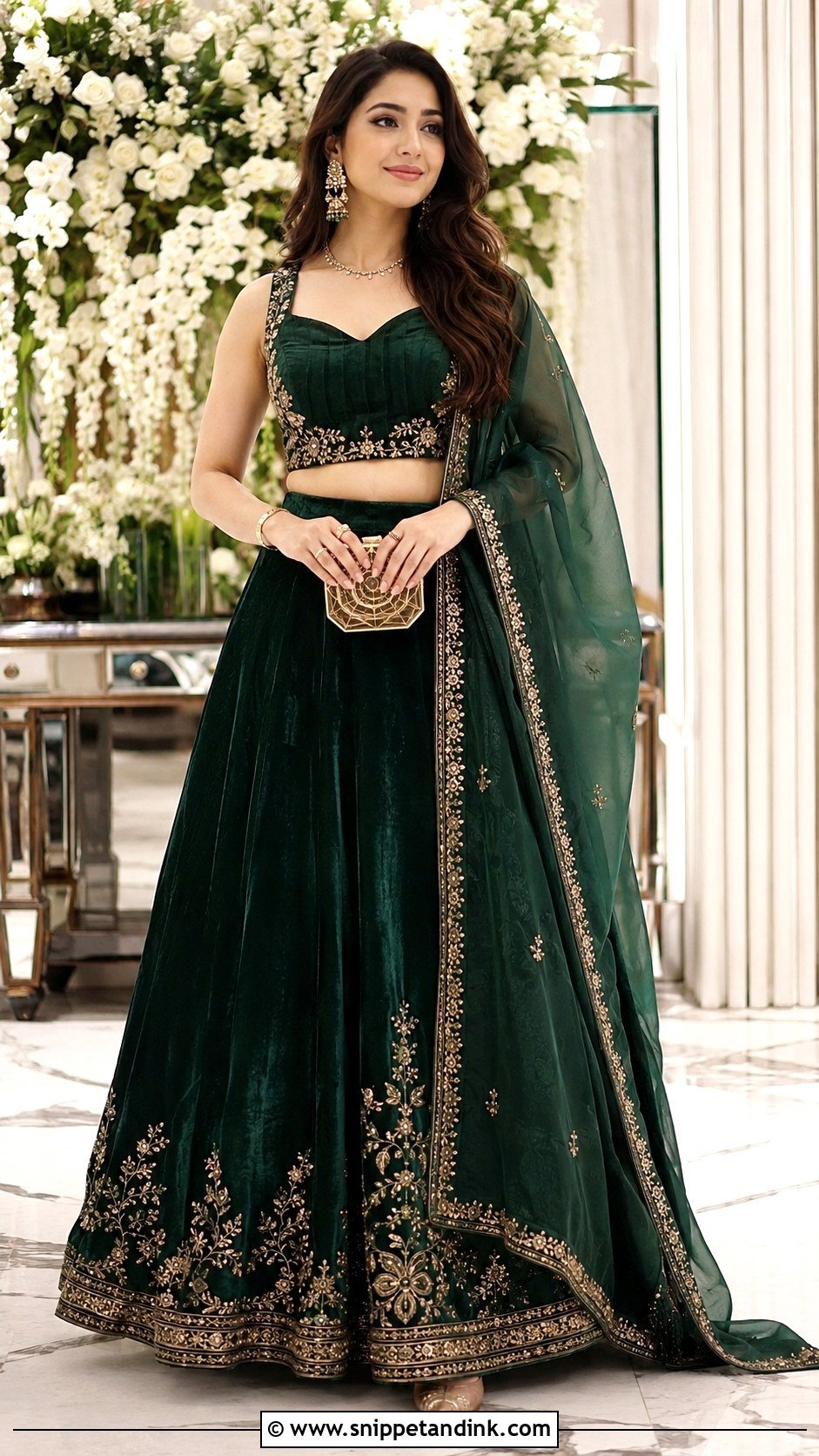
Velvet is a winter fabric, plain and simple. Maroon, bottle green and aubergine take on real depth in velvet that flat silk can’t match. Velvet does add visual volume, so precise tailoring is the whole game: the blouse must be close-fitting and the skirt’s flare should start low. I balance a velvet skirt with a net or organza dupatta rather than a velvet one, or the outfit gets heavy and hot. Antique-finish earrings, a small necklace, a structured clutch and closed-toe heels suit it. Skip extra bangles if the sleeves are worked. One warning for indoor events with heaters: velvet gets warm fast, so pick a lighter blouse fabric if you can.
16. Floral Lehenga for Bride’s Sister
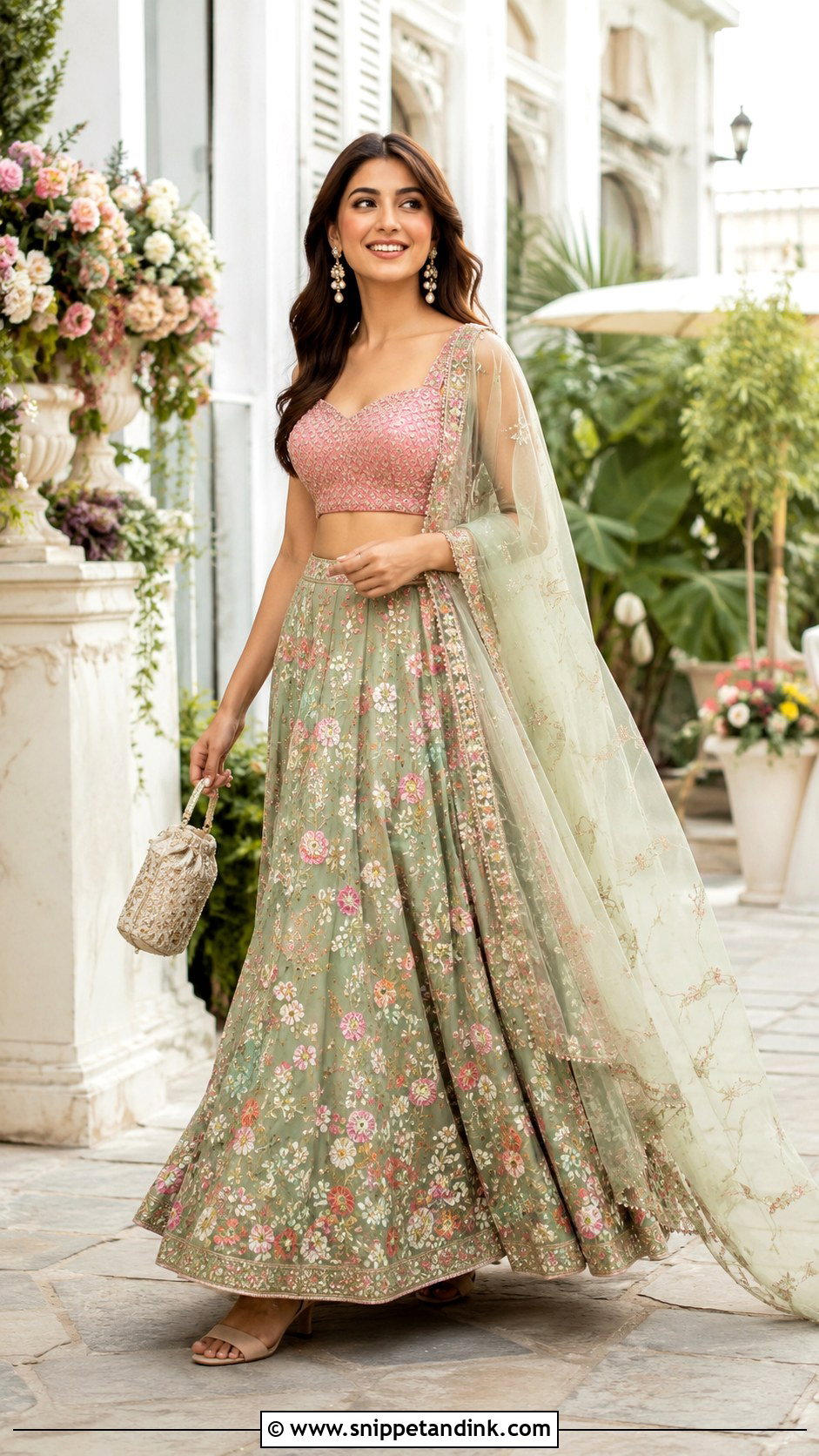
Florals feel natural at an outdoor or destination wedding, and they’re far lighter to wear than a heavily worked lehenga. Printed fabric suits a daytime brunch; embroidered or appliquéd blossoms dress it up for a ceremony. Choose a skirt with a clear base color, blue, peach or sage with flowers over it. If the base is close to white, ask the bride first; ivory-ground florals can look bridal from a distance. A solid fitted blouse and a simple sheer dupatta keep the pattern as the star. Pearl or gemstone earrings, a compact bag and comfortable block heels finish it, with loose waves or a side braid.
17. Embellished Jumpsuit for Bride’s Sister
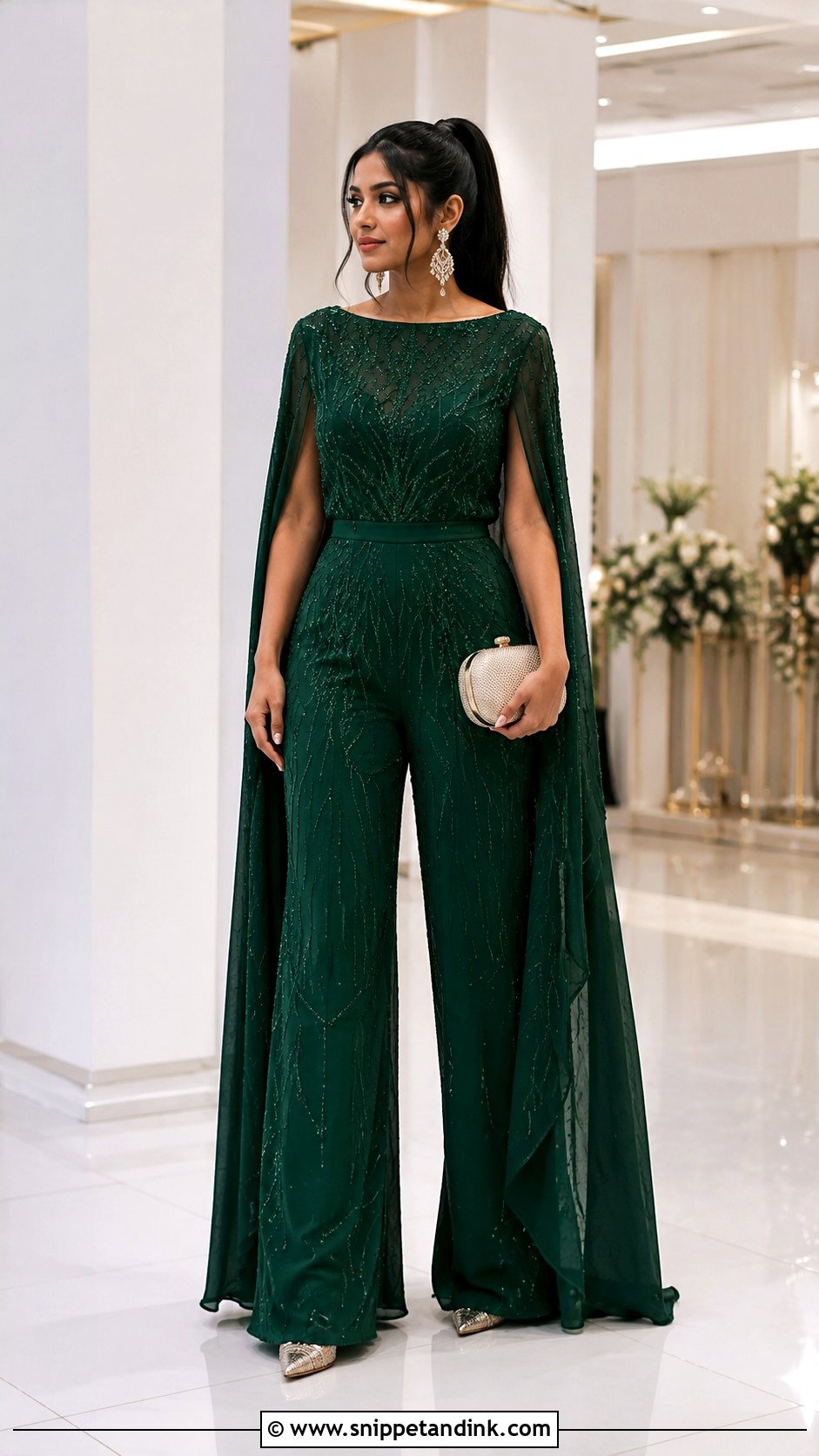
An embellished jumpsuit is my answer for a sister who never feels like herself in a skirt. For a modern reception, civil ceremony or cocktail night, wide-leg tailoring with a defined waist looks formal and moves well. Look for beadwork or a draped overlay in navy, burgundy or emerald; a cape sleeve or shoulder drape adds ceremony without a dupatta to manage. Statement earrings, a sleek clutch and pointed heels or supportive platforms complete it, with a high ponytail or smooth bun to show the neckline. Do the bathroom test at the fitting. A one-piece with a back zip is hard to manage alone in a venue restroom, so a side zip or a two-piece lookalike saves real trouble.
18. Wedding Pantsuit for Bride’s Sister
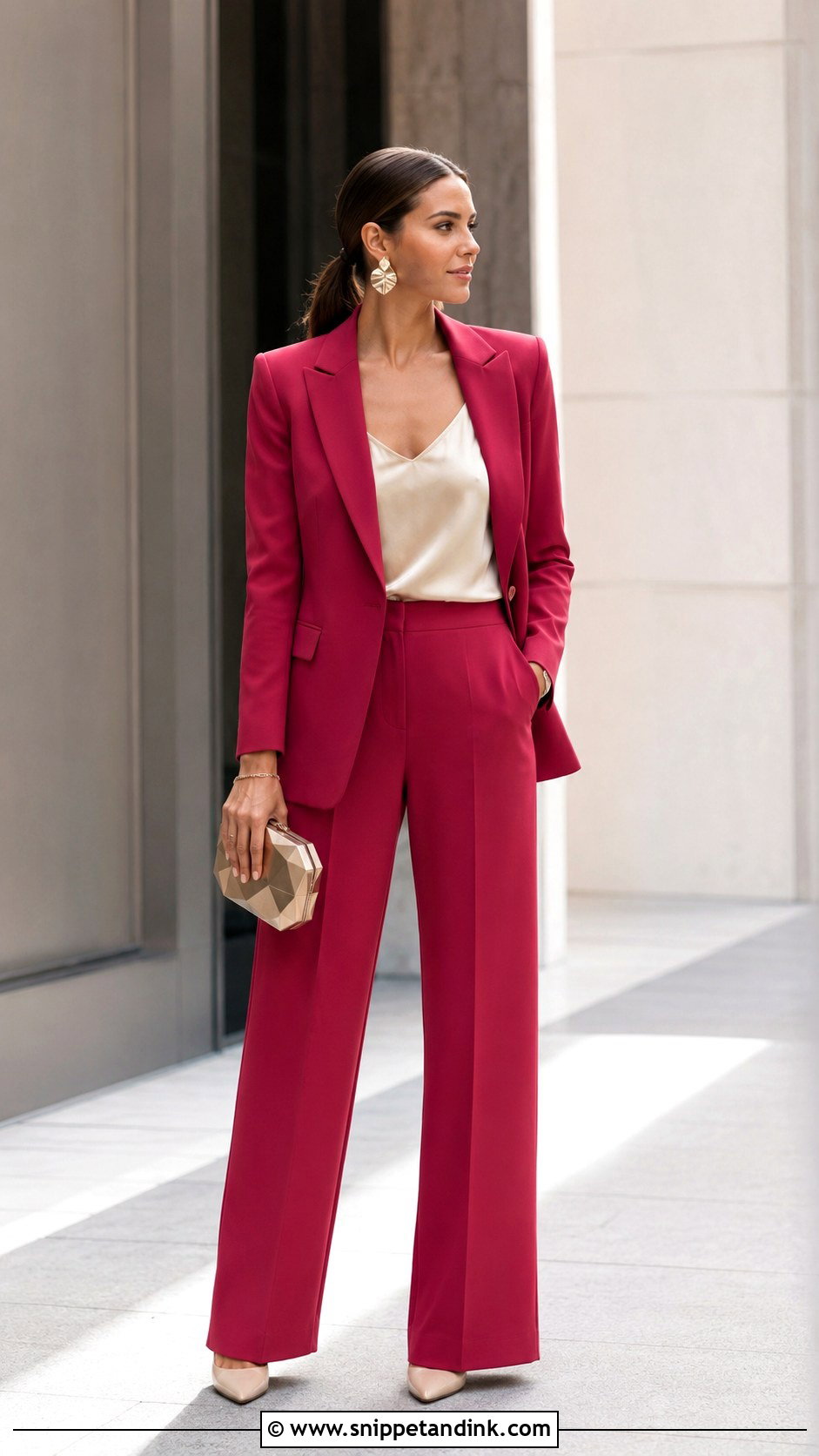
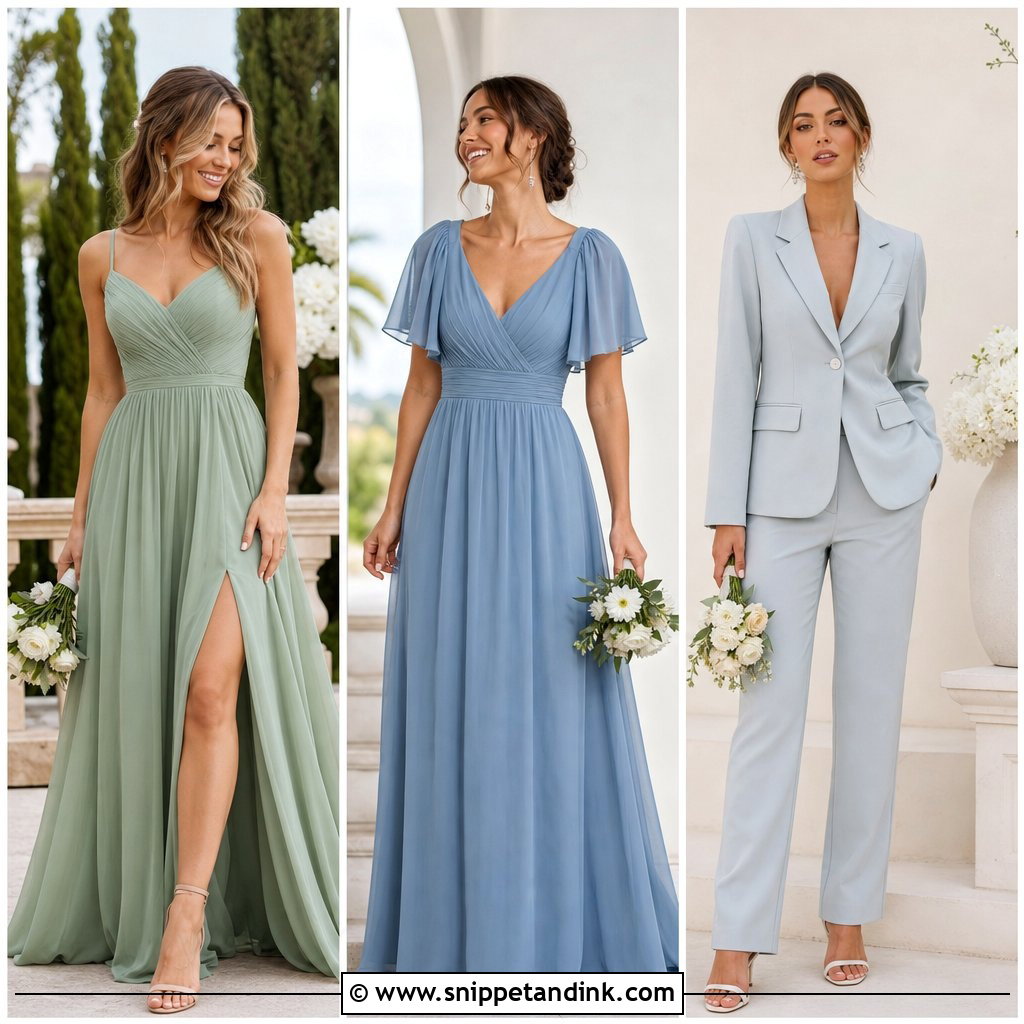
A tailored pantsuit works for a courthouse wedding, a contemporary ceremony or a formal reception, as long as the color is saturated. Raspberry, teal and cobalt look like a celebration; black or grey can look like the office. Wide-leg trousers and a shaped blazer balance each other, and a silk camisole or embellished top underneath softens the tailoring. Raise your arms at the fitting. A blazer cut tight across the back will pull every time you carry flowers or hug someone. Pointed pumps, a structured clutch, sculptural earrings and one bracelet finish it, with a sleek bob, ponytail or low bun to match the clean lines.
19. Embellished Midi Dress for Bride’s Sister
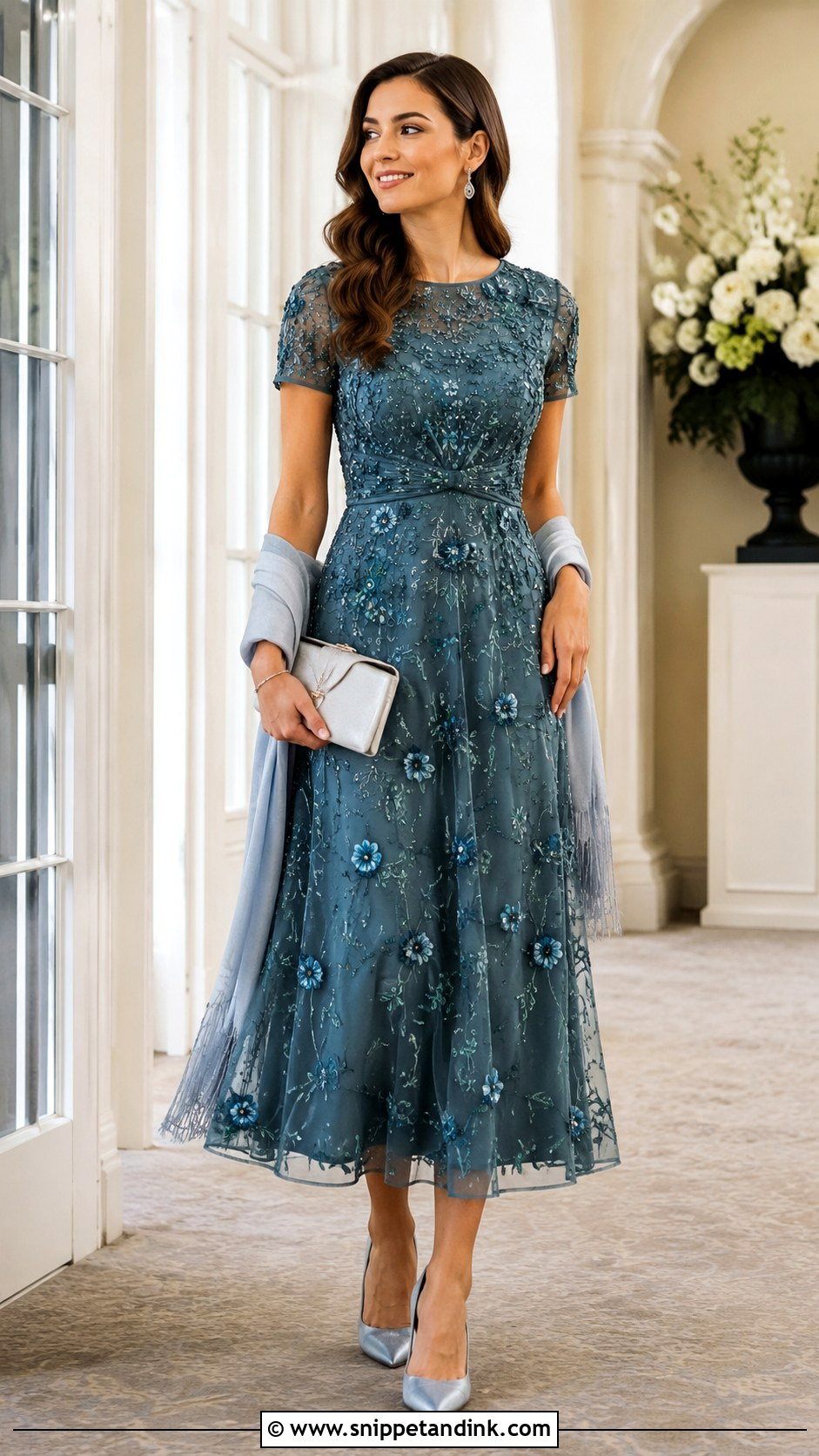
An embellished midi dress suits a smaller wedding, a daytime reception or a family dinner. I look for a defined waist and enough room in the skirt to walk briskly and sit without the hem riding up. Floral embroidery, fine beadwork or a textured fabric gives it weight without tipping into bridal territory. Avoid white, ivory and champagne if the bride is wearing anything near them. Elegant pumps, a compact clutch, drop earrings and a light wrap for the evening chill complete it, with a polished updo or side-parted waves. Check the hemline and neckline against the venue’s rules, because places of worship often expect covered knees and shoulders.
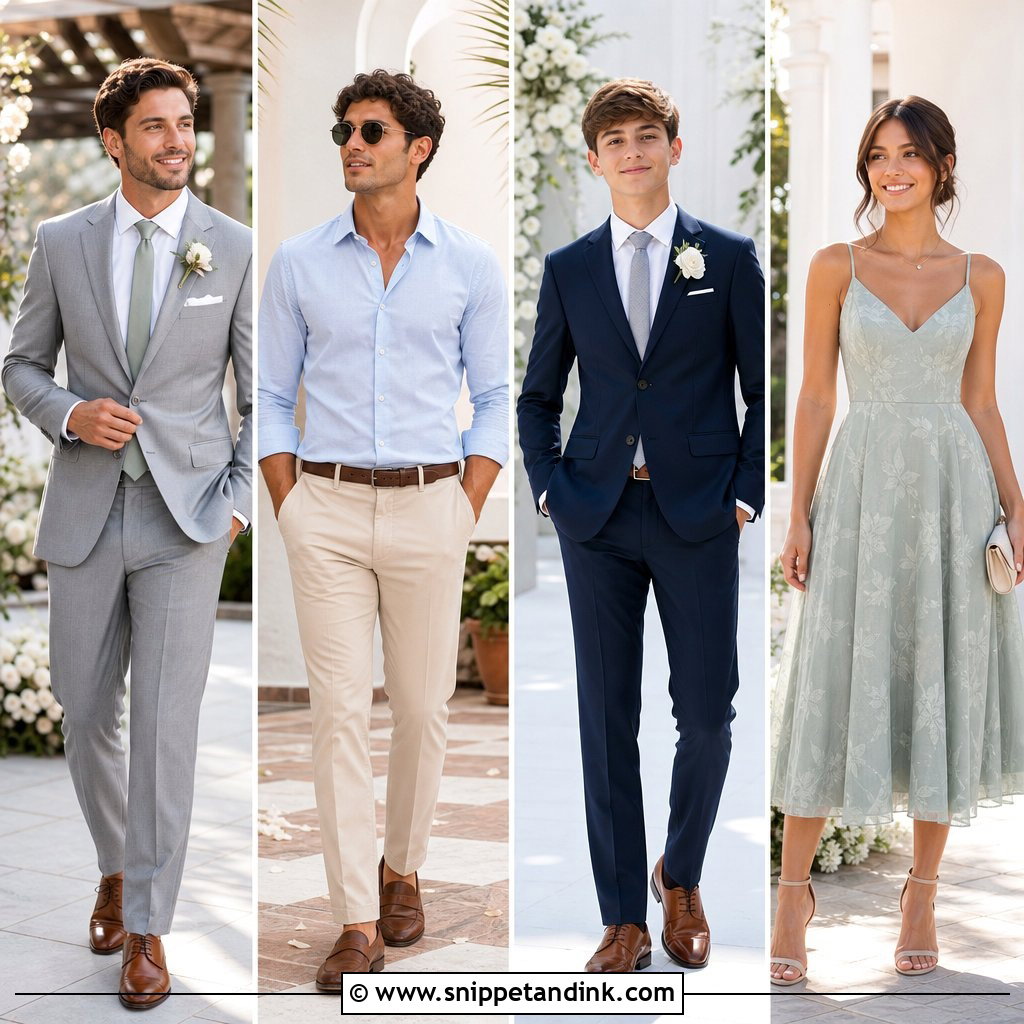
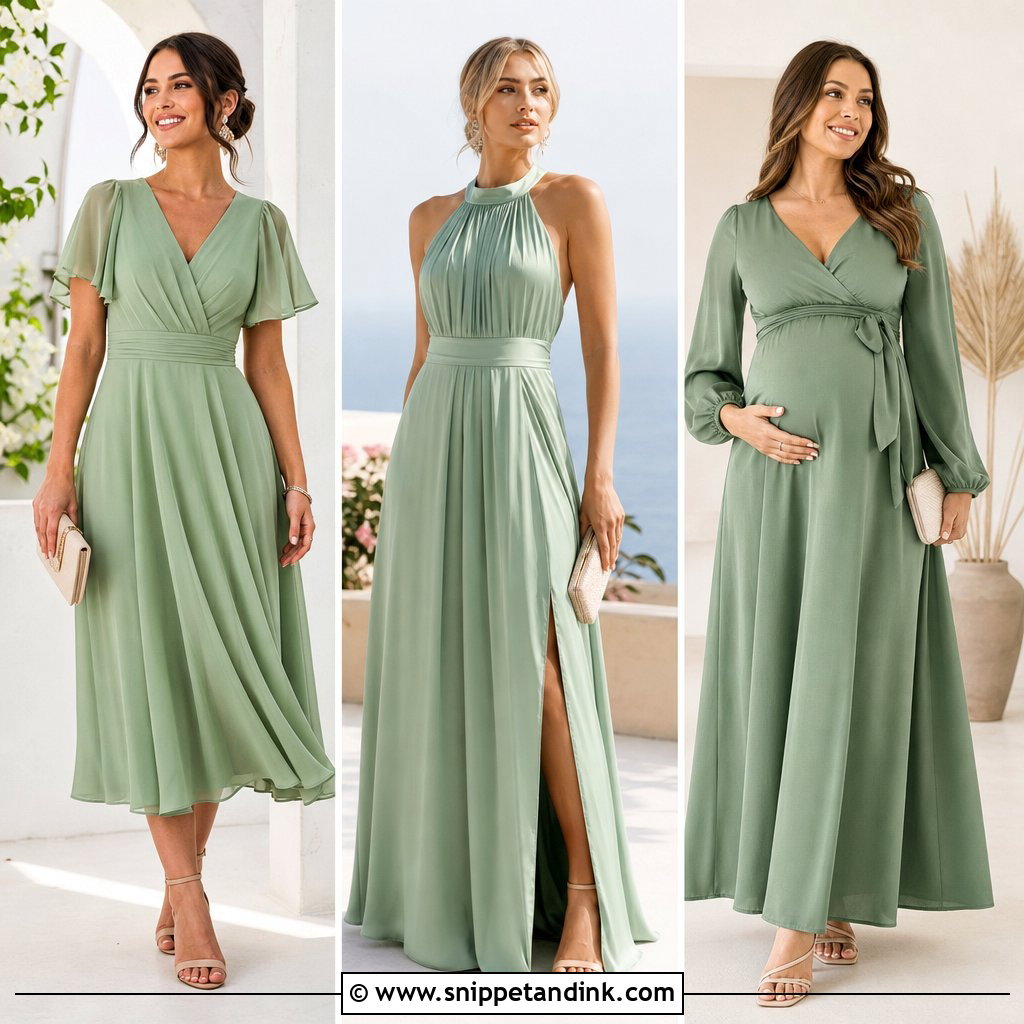
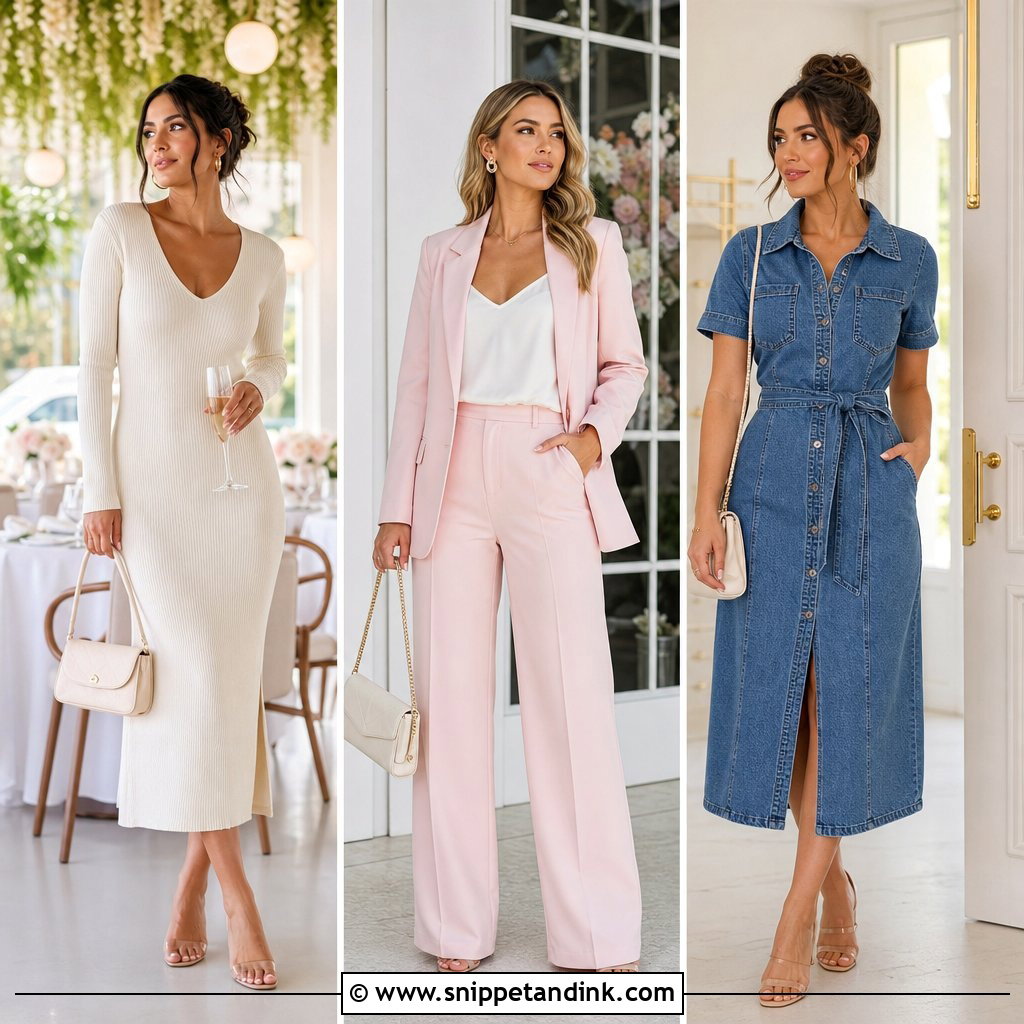
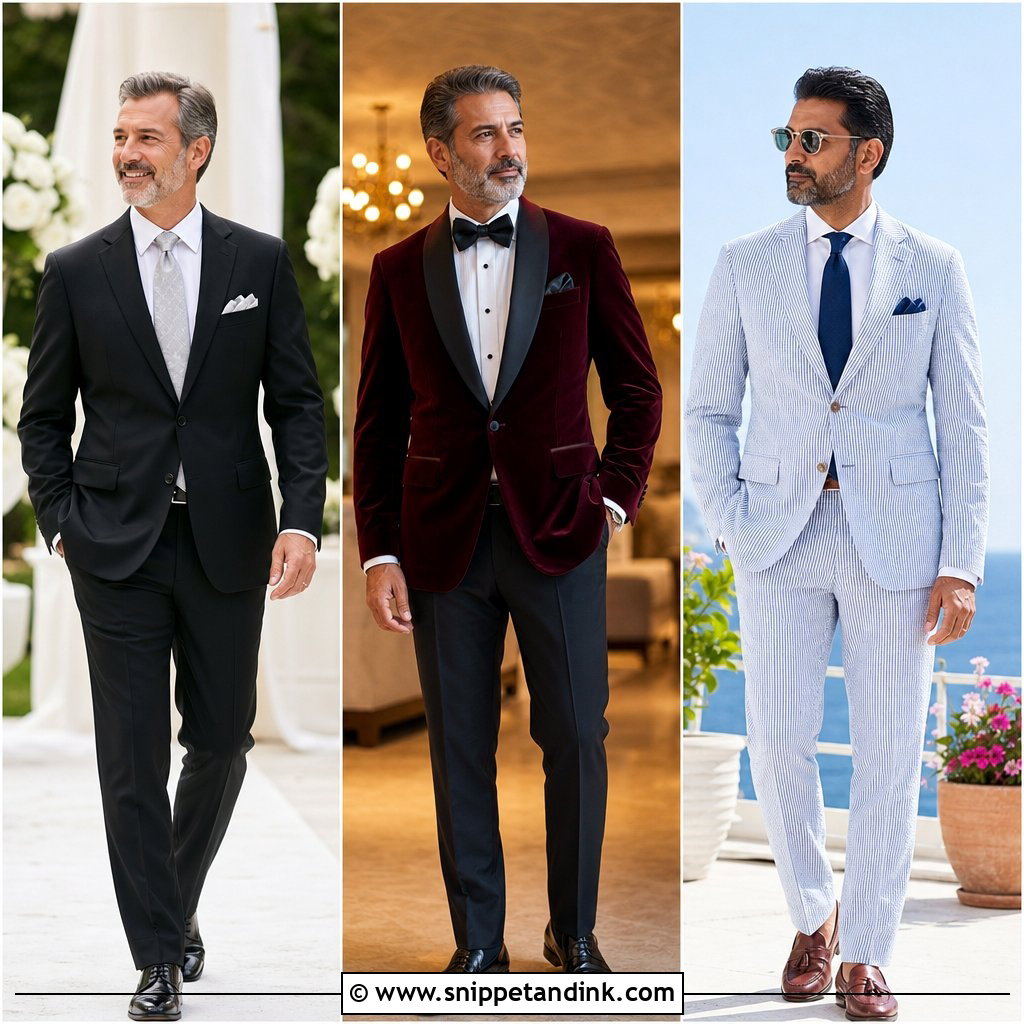
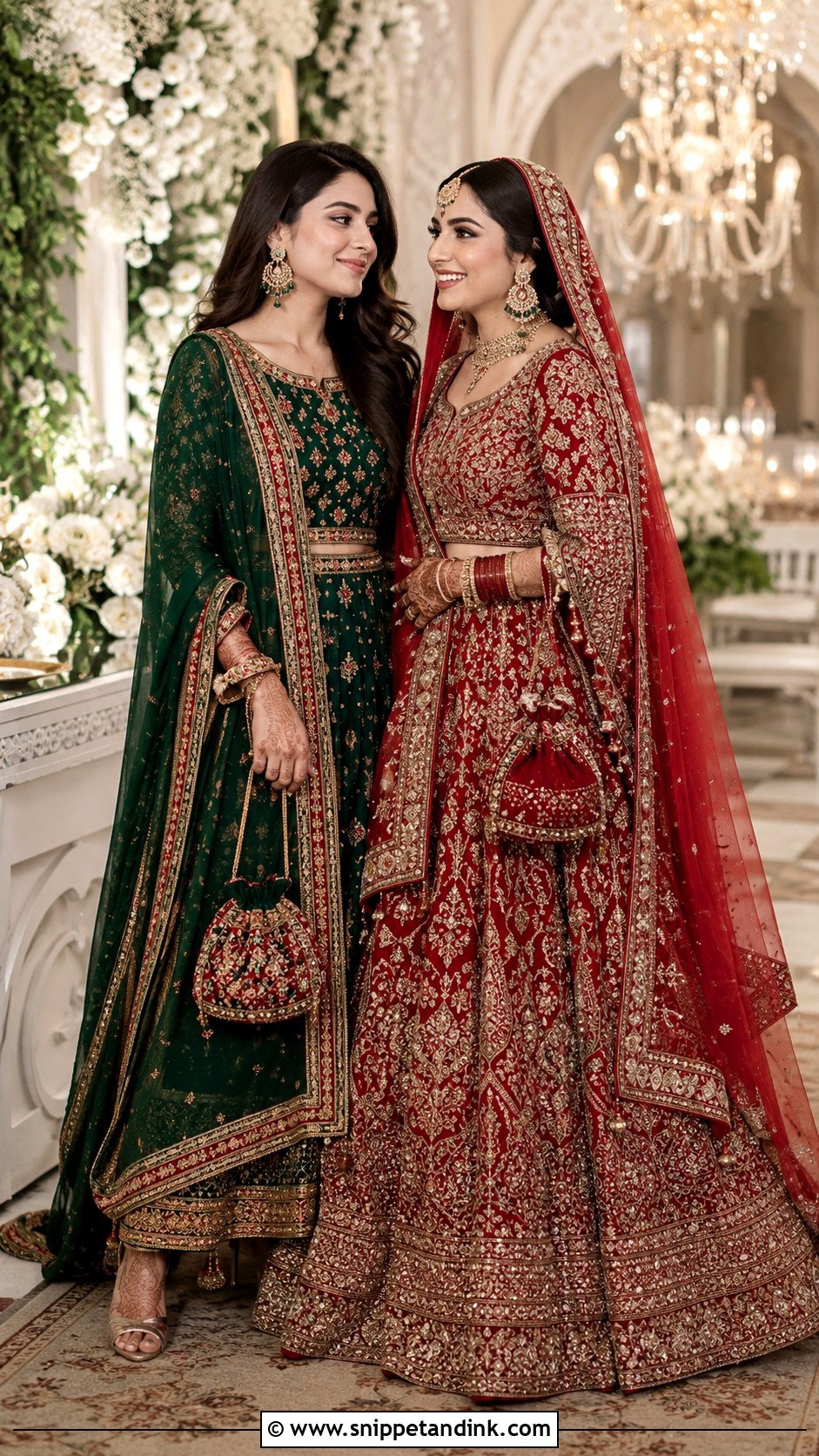
20. Coordinated Bride and Sister Outfits
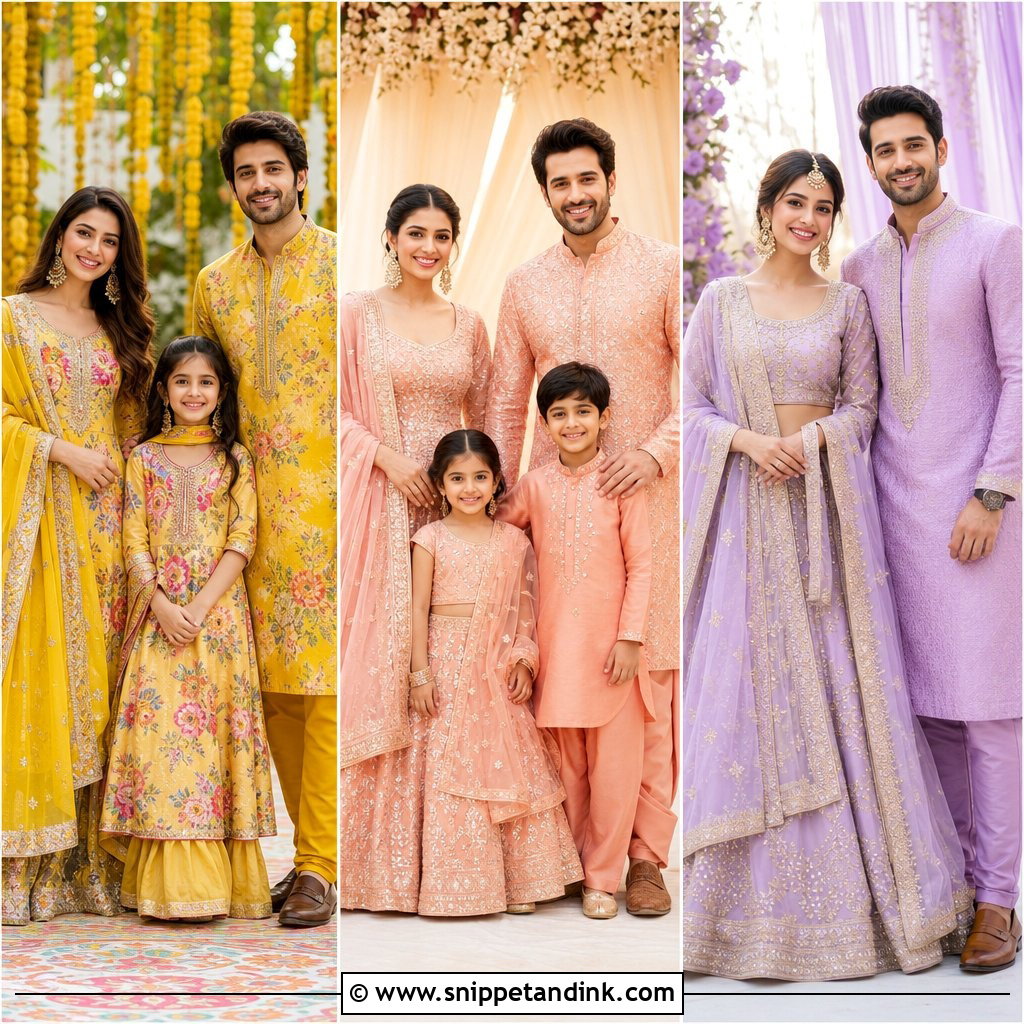
Coordinating with the bride works best when you repeat exactly one element. Pick her color, her fabric or her embroidery motif, and leave everything else your own. A bride in a red lehenga with her sister in emerald, finished with small red details, looks planned. Another route is a saree or Anarkali in a paler version of the wedding colors. Keep your silhouette and embellishment visibly lighter so she stays central. Talk the plan through together before either of you buys, and compare the two outfits side by side in the same light; shop lighting makes colors that clash look like a match.
The Tailor Schedule Most Sisters Leave Too Late
Blouses and fitted bodices are where these outfits succeed or fail, and good tailors are booked solid in wedding season. Custom stitching often takes several weeks, longer for heavy embroidery or imported fabric, and timelines vary a lot by tailor and time of year. Work backwards from the first function.
- Buy fabric or the ready outfit early enough to leave room for at least two fittings.
- First fitting in the shoes and the bra you’ll actually wear, since both change how a blouse and hem sit.
- Second fitting with a movement test: sit, kneel, raise your arms, dance a few steps.
- Collect everything a week before the first event, not the night before, so there’s time for a fix.
What Goes in the Sister’s Bag
You’ll be the person everyone turns to, so carry for two: safety pins in several sizes, bobby pins, double-sided fashion tape, a small sewing kit with ivory and black thread, blotting papers, a spare pair of flat sandals and a phone charger. For saree events, add a few extra pins for the bride’s pallu. A potli is pretty but small, so stash the bulk of the kit with a cousin or at the venue.
Dressed to Help, Dance and Stand Beside Her
The sister’s outfit should look like it belongs to the wedding, sit a step below the bride’s, and still let her do everything the day asks of her. Start with the bride’s outfits, the schedule of functions, the venue, the season and what the family expects. Then add the parts nobody sees in photos: shoes you can stand in for hours, pins that hold the drape, jewelry that won’t catch on a dupatta. A lehenga, a silk saree, a sharara, a jumpsuit or a pantsuit can each be the right call. The best one is the outfit you forget you’re wearing by the second hour, because you’re too busy celebrating your sister.
You'll Like These Ideas:


Leave a Reply