
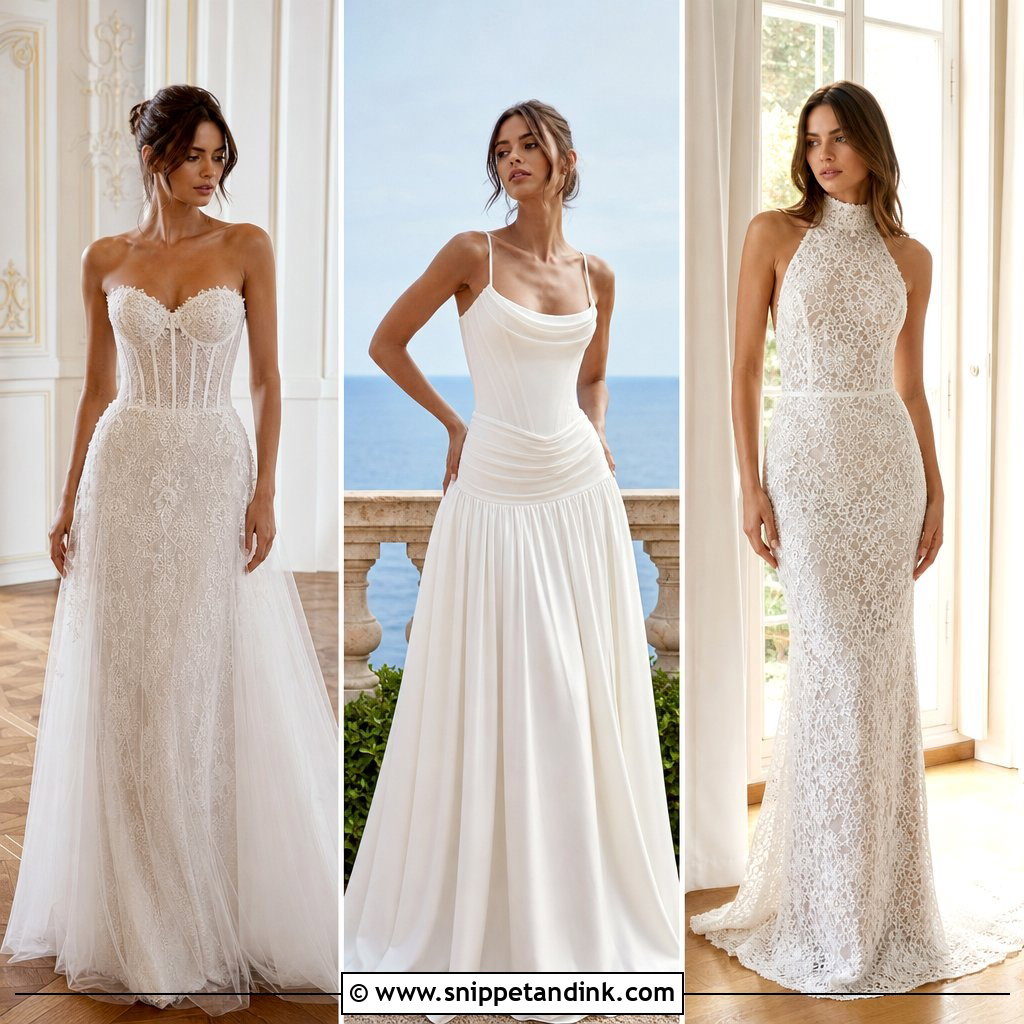
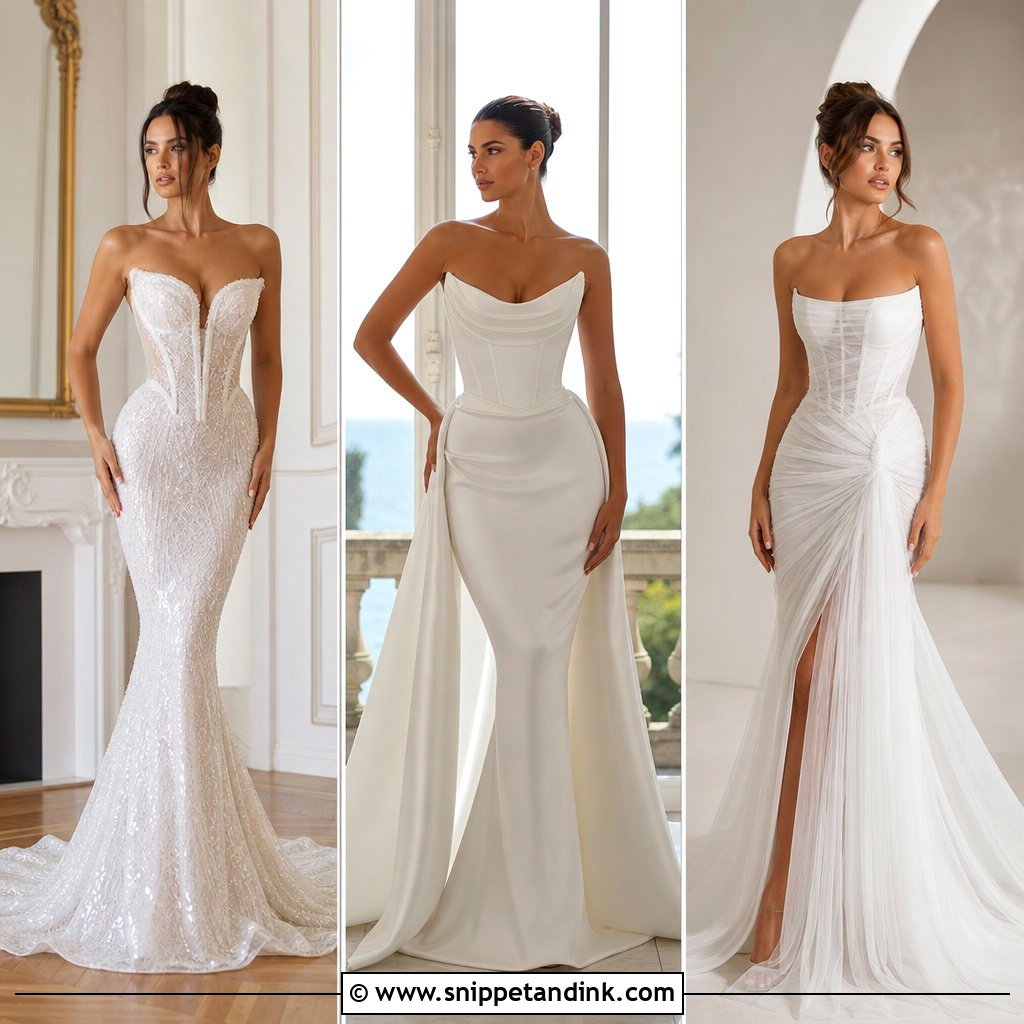
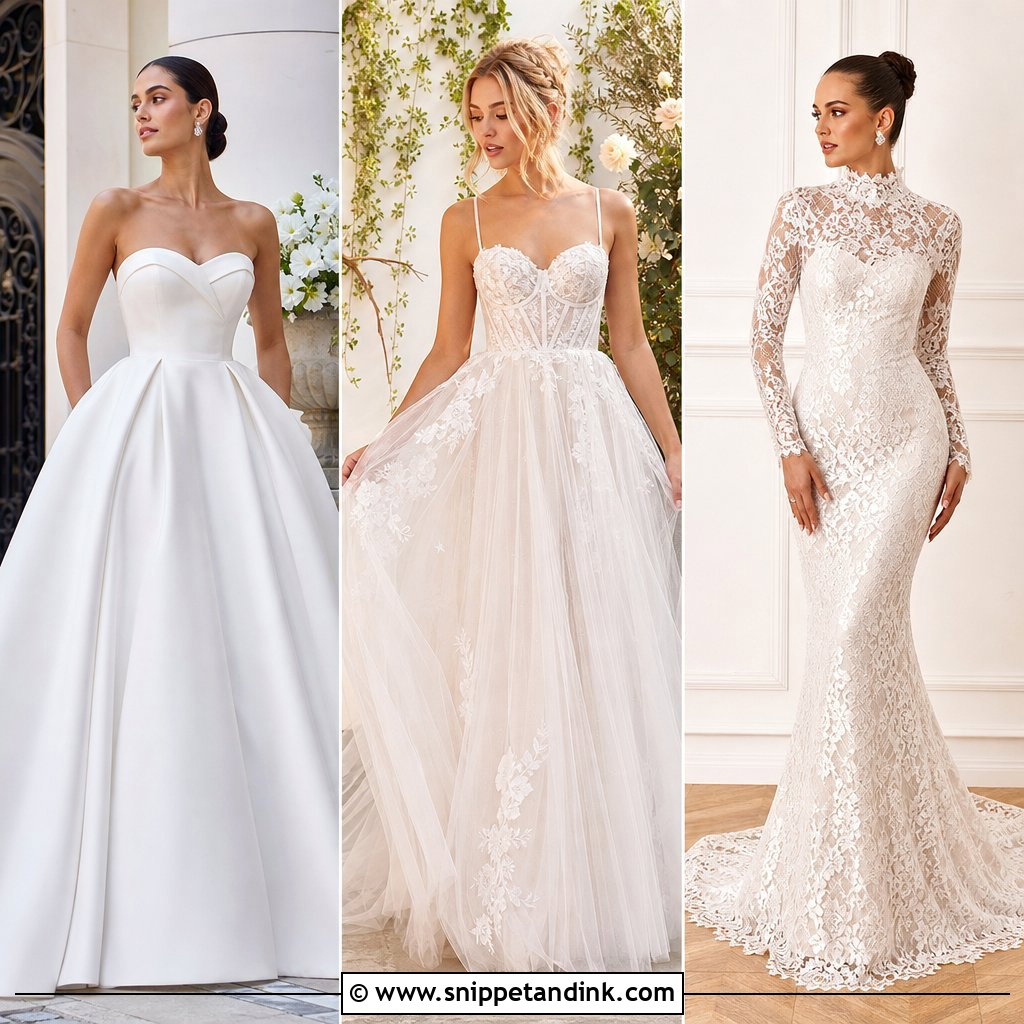
Justin Alexander gowns come up in a lot of my appointments because the label leans on fabrics and shapes that hold up in real wear: satin ball gowns, lace fit-and-flares, mikado A-lines, beaded bodices, basque waists, detachable straps and portrait collars. That range covers a ballroom as comfortably as a garden or a city loft. When I style a bride in one, I start from the dress and build outward, choosing the veil, shoes, jewelry, flowers and hair to suit how that particular fabric catches light. The twenty-five looks below are put together that way, head to toe.
Ordering a Designer Gown Through a Bridal Shop, Month by Month
Gowns from bridal labels are usually sold through authorized shops and made to order in your size after you choose a sample, so the clock starts the day you say yes. Production times differ by style and season, and your shop will give you an estimated arrival date. As a working rule, I like brides to order around eight to ten months out, which leaves room for delivery and alterations without paying for rush fees.
- Try on a range of silhouettes before falling for one. A fit-and-flare and a ball gown in the same fabric feel completely different to walk in.
- Order by your measurements on the shop’s size chart, not your everyday dress size. Bridal sizing often runs small, and it’s far easier to take a gown in than let it out.
- When the dress arrives, check the color, the beading and the length against your order before anything is cut.
- Book your first alteration fitting about two to three months before the wedding, with the final one a couple of weeks before.
Bring your actual shoes and underwear to every fitting. Heel height sets the hem, and a structured bodice is altered around whatever bra or shapewear is underneath it. Changing either one late means another fitting.
1. Justin Alexander Satin Ball Gown Wedding Dress
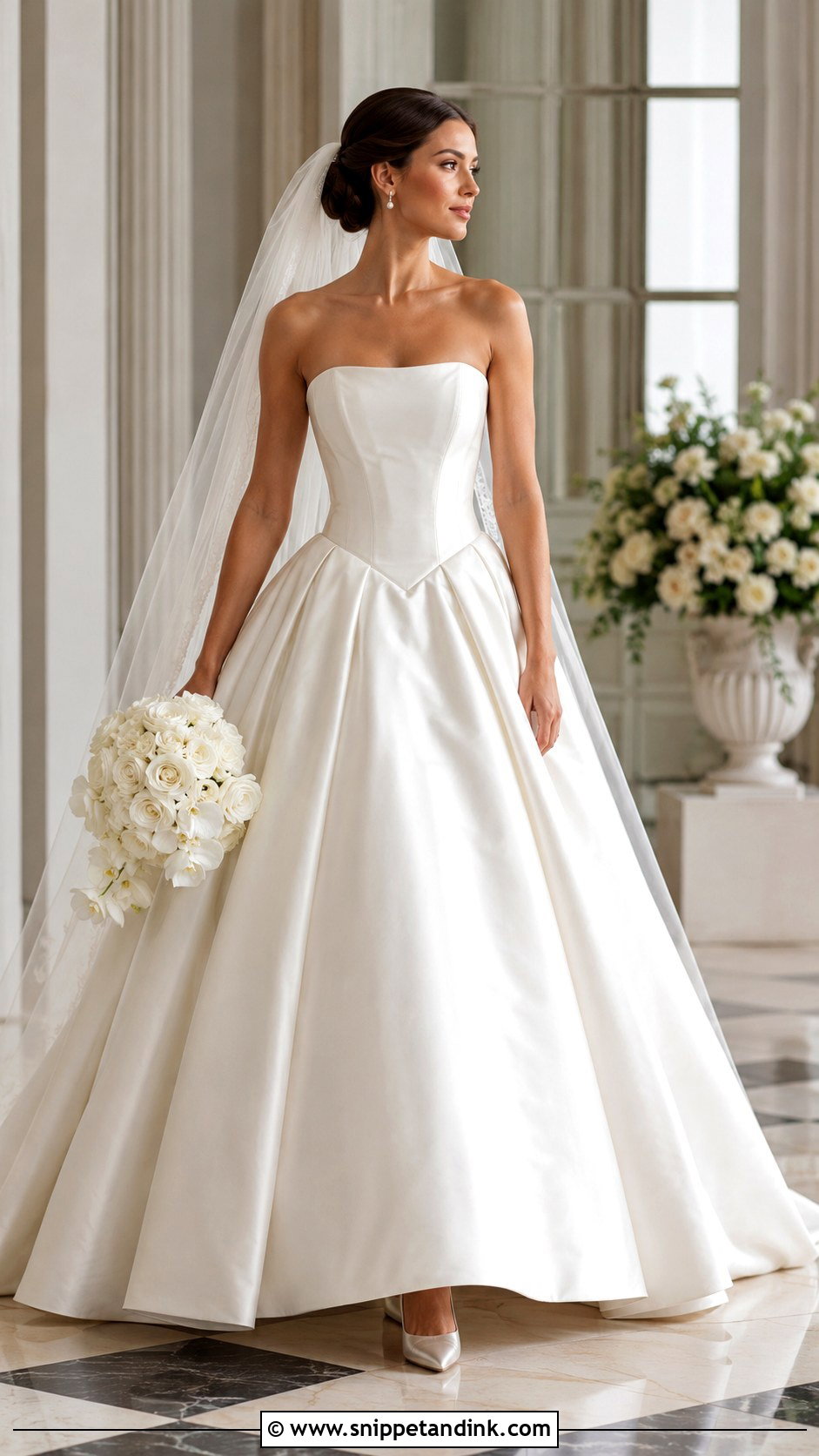
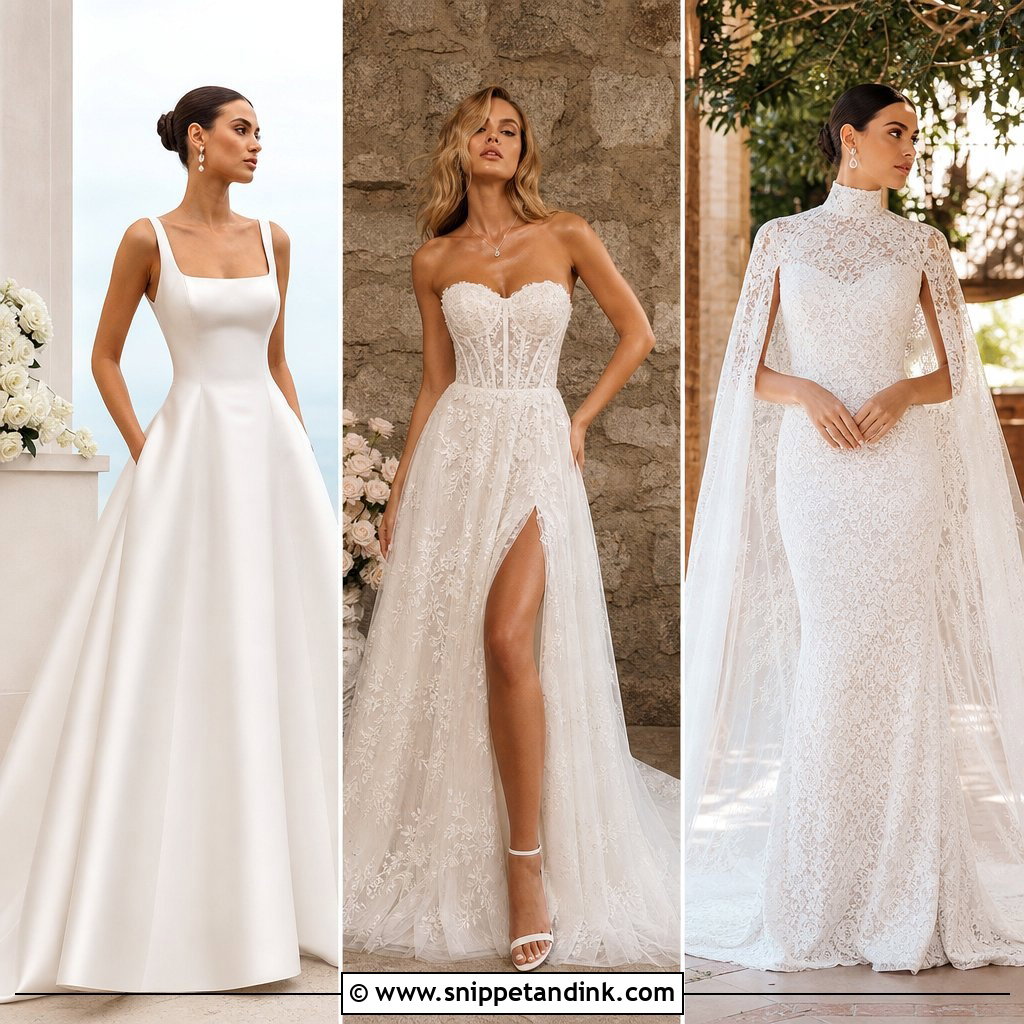
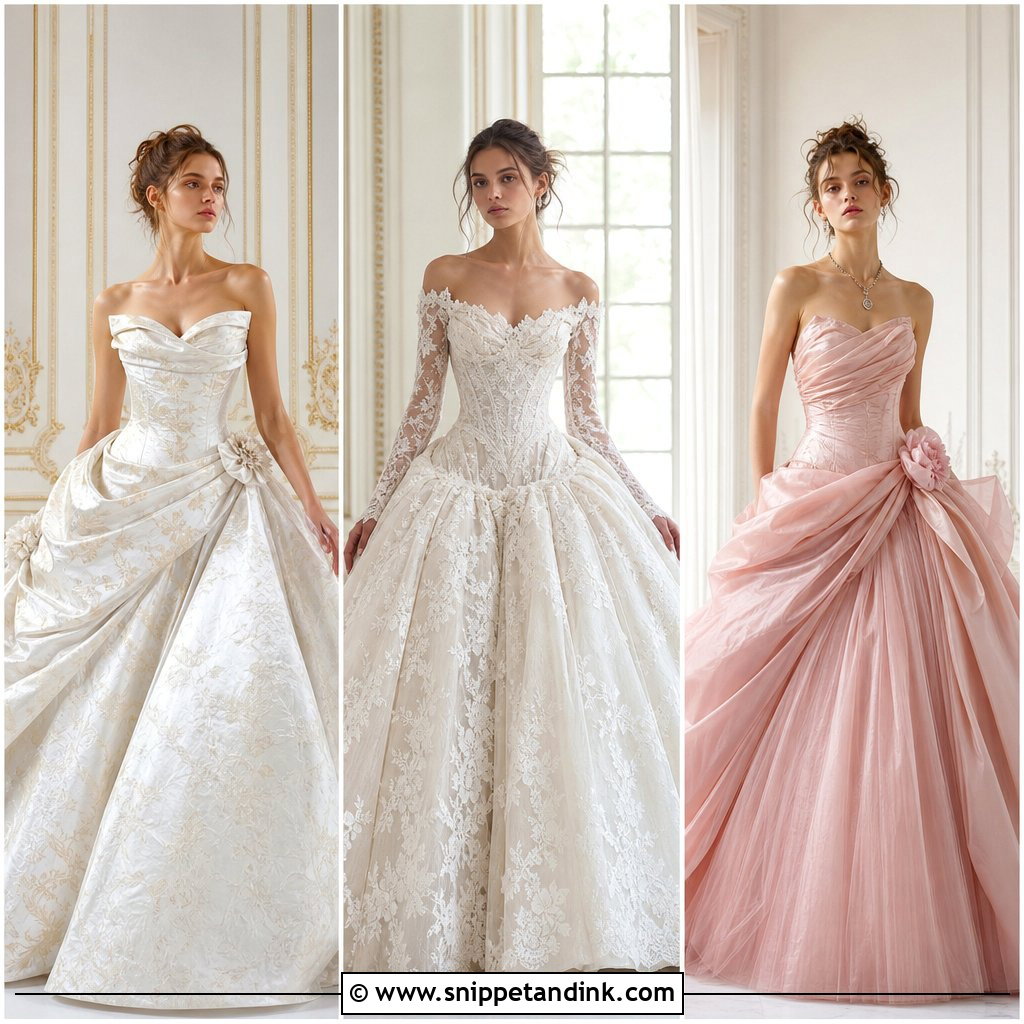
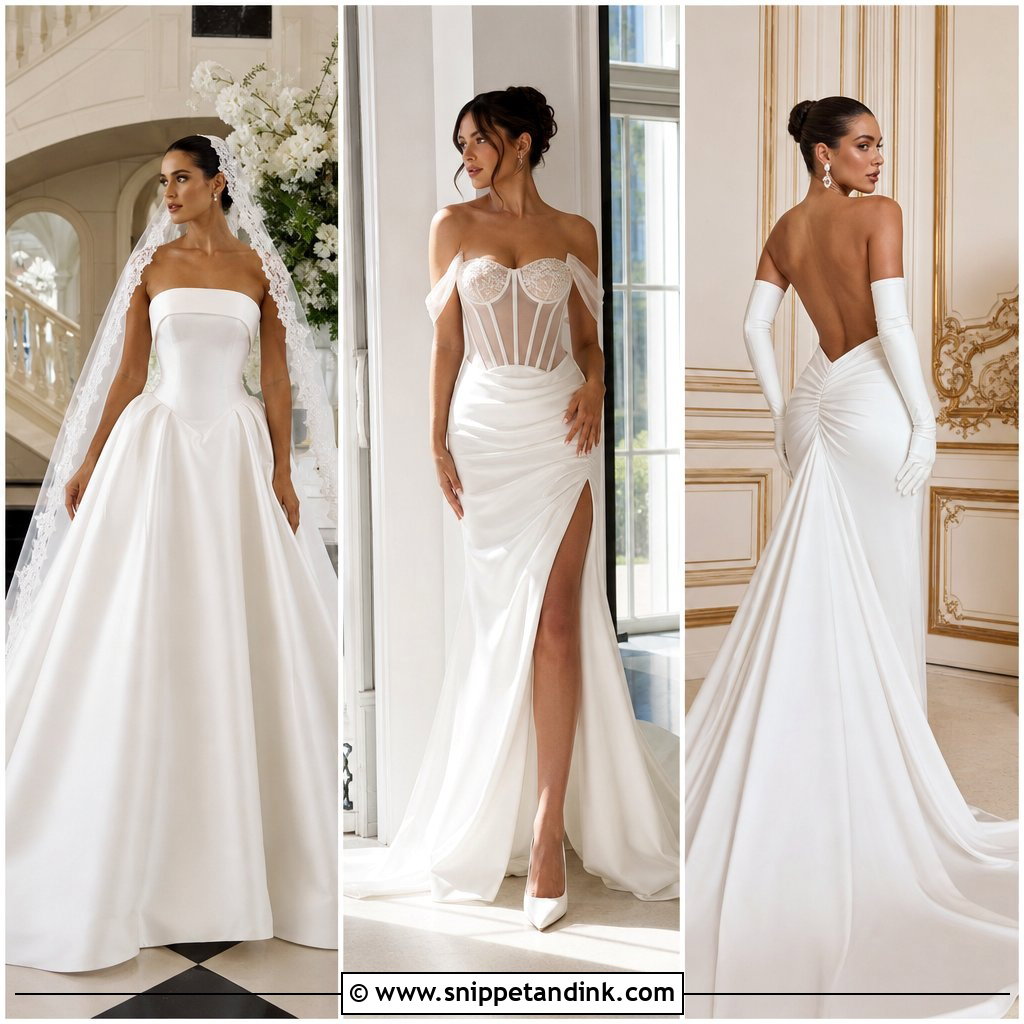
Satin ball gowns are the most formal silhouette in the collection, and the full skirt does the work on the aisle. Smooth satin has a clean, heavy sheen that reads expensive even from the back of a large room. I pair it with a cathedral veil, pearl drops, pointed ivory heels and a neat low bun, because anything fussier fights the structure. White roses or a mostly green bouquet sit quietly against it. One thing brides don’t expect: satin shows every crease from the car ride, so a quick steam before the ceremony is part of my timeline for this dress. Hotels, estates and black-tie receptions suit it.
2. Justin Alexander Lace Fit And Flare Wedding Dress
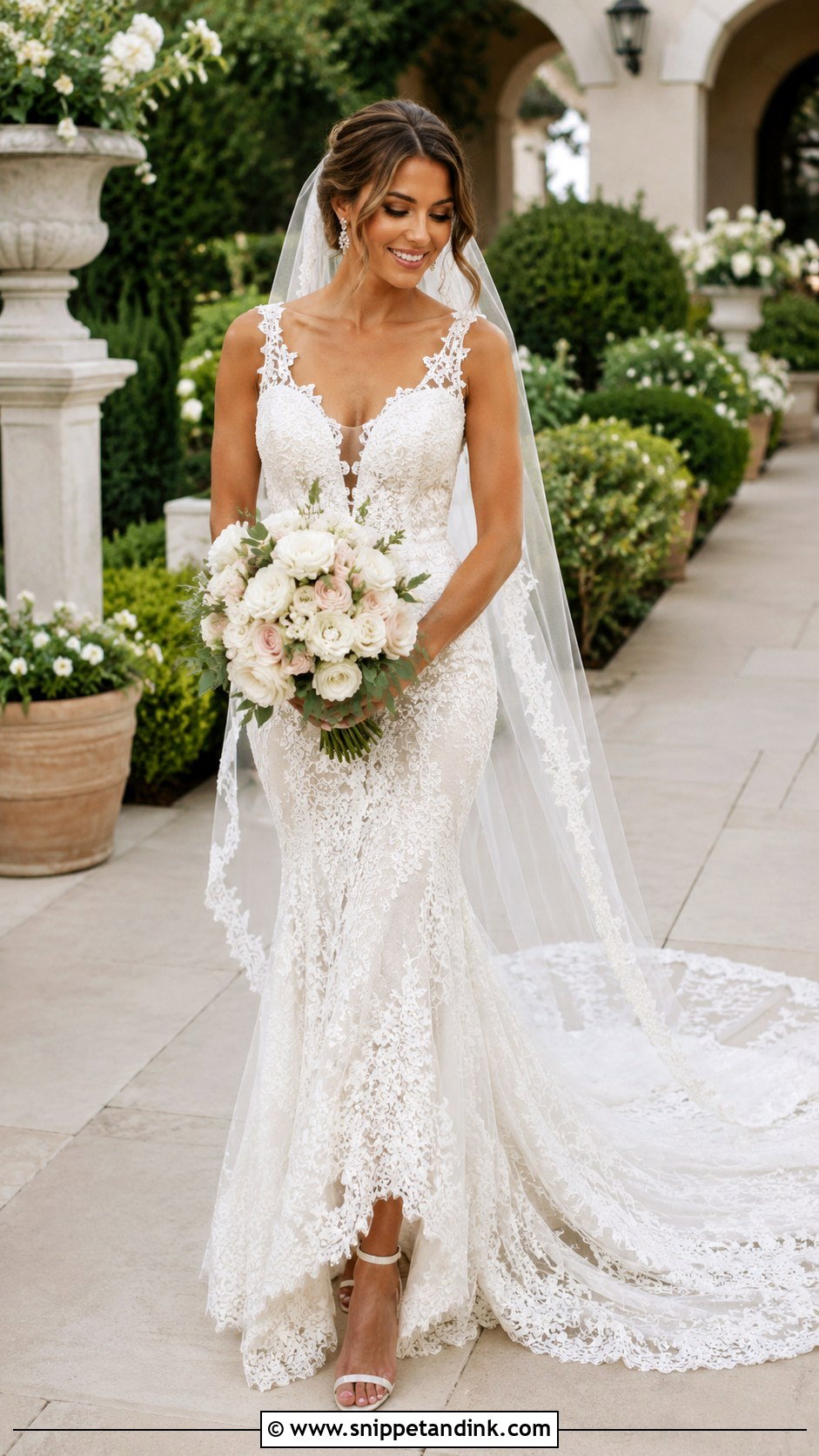
Lace on a fit-and-flare gives you texture and shape at once, and the brand’s lace tends to sit flat and refined rather than lumpy. The fit runs close through the waist and hips, so this is a gown where the alteration fitting matters most; a quarter inch at the hip changes how the flare breaks at the knee. I’d style it with a fingertip veil, small crystal earrings, ivory ankle-strap heels and a soft half-up style, plus a small bouquet in white with a little blush. Walk in it at the fitting. If the flare starts too low, dancing feels restricted.
3. Justin Alexander Mikado A Line Wedding Dress
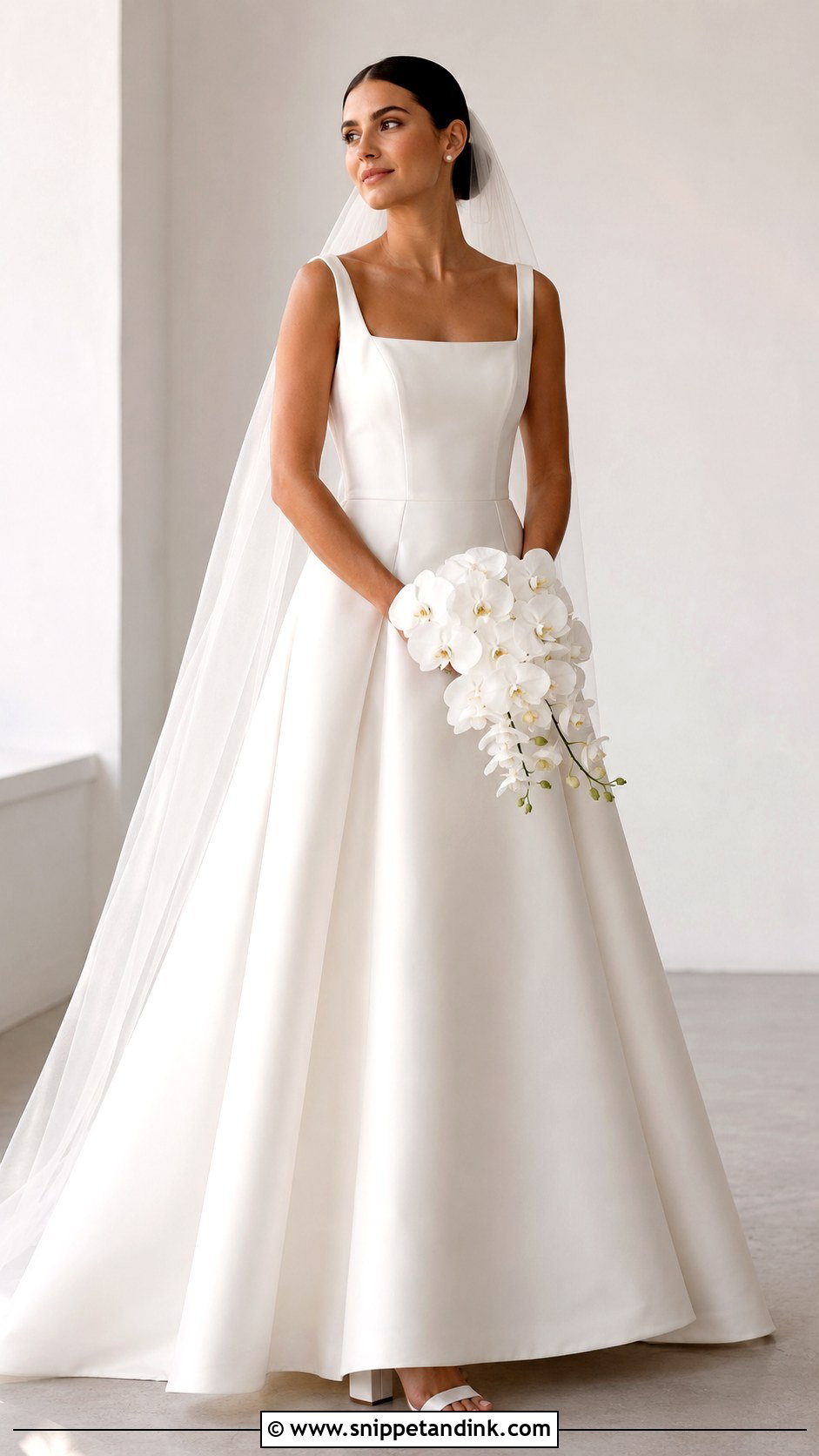
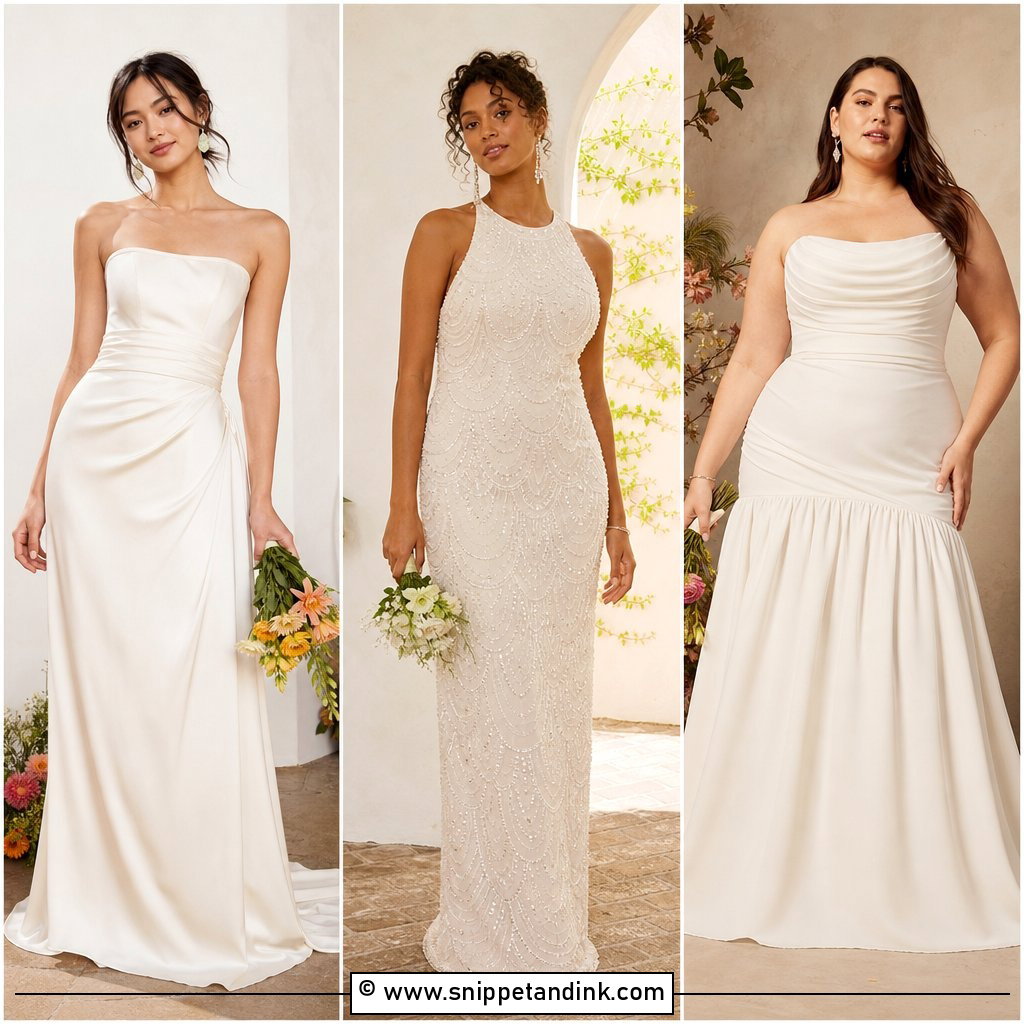
Mikado is my favorite fabric to dress a bride in when she wants clean lines. It has a slight sheen and enough body to hold an A-line away from the hips without a stiff crinoline underneath, which is why it suits so many figures. A simple long veil, pearl studs, satin block heels and a smooth chignon are all it asks for. A structured bouquet of white orchids, roses or ranunculus matches its crispness. The trade-off is weight: a long mikado skirt is warmer than tulle, so I’d think twice for a midsummer outdoor ceremony.
4. Justin Alexander Strapless Wedding Dress
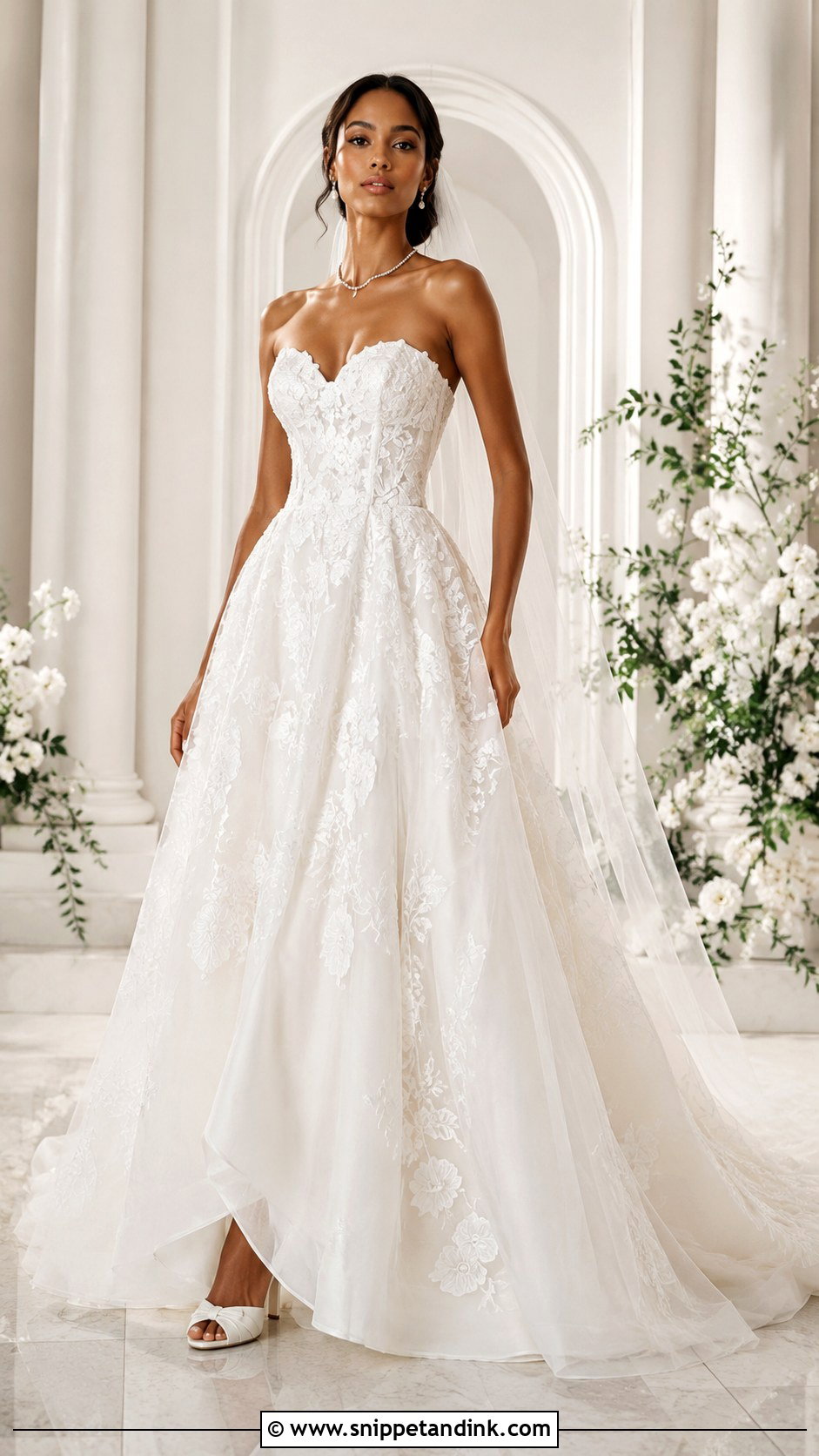
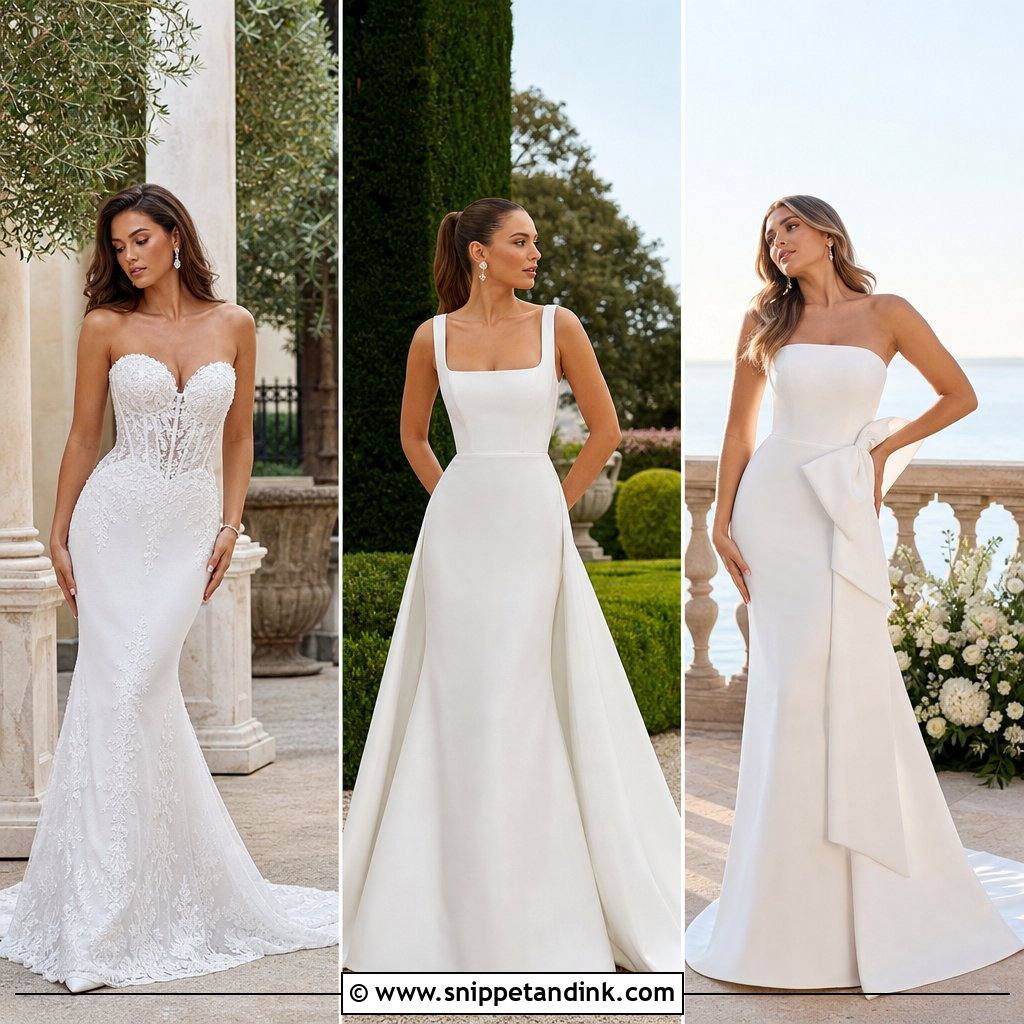
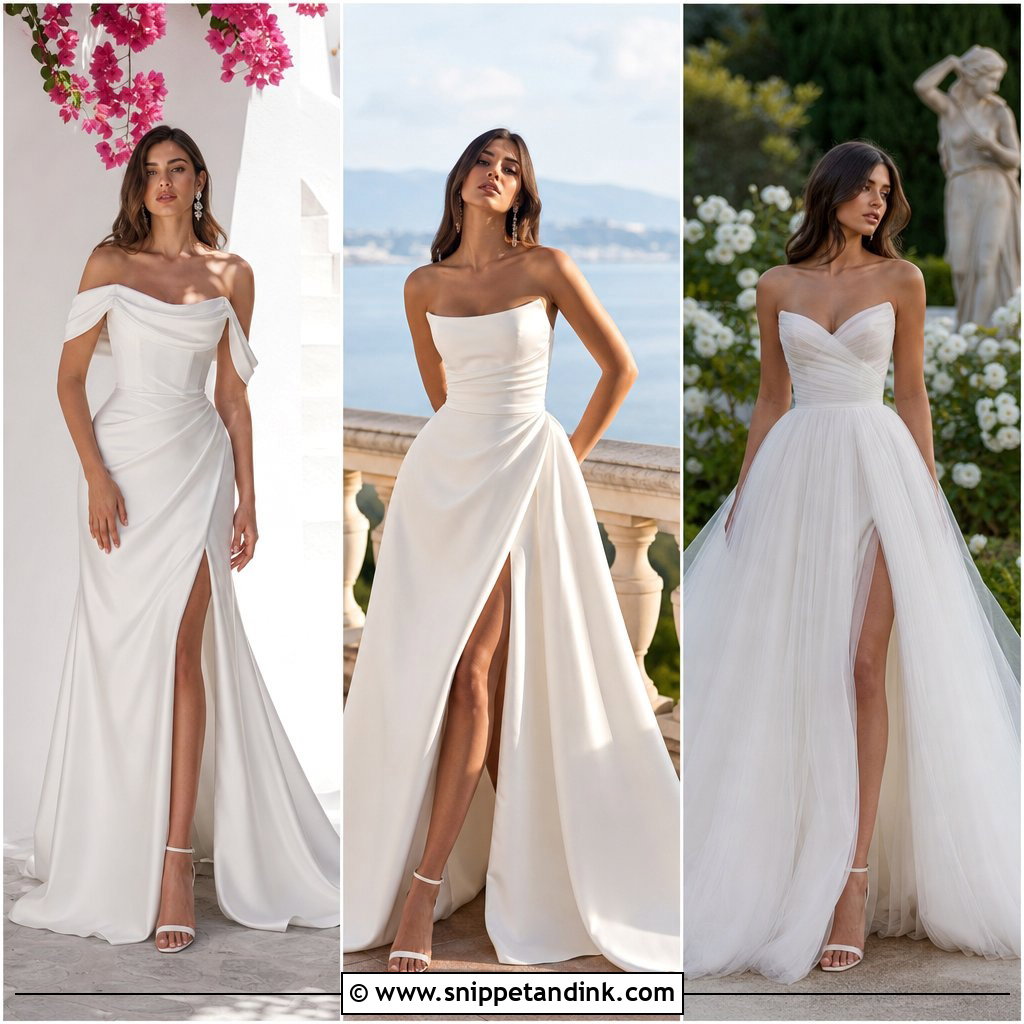
Strapless gives you the most freedom with accessories, and also the most ways to get it wrong. Before anything else I check that the bodice is fitted tightly enough to stay put without the bride hitching it up, which is the habit that ruins most strapless photos. Then style: a soft tulle veil, a fine tennis necklace, pearl or crystal earrings, ivory heels, and hair swept up or tucked behind the shoulders so the neckline stays open. With a full skirt, keep the bouquet small. With a fitted shape, a cascading bouquet can carry some drama.
5. Justin Alexander Long Sleeve Wedding Dress
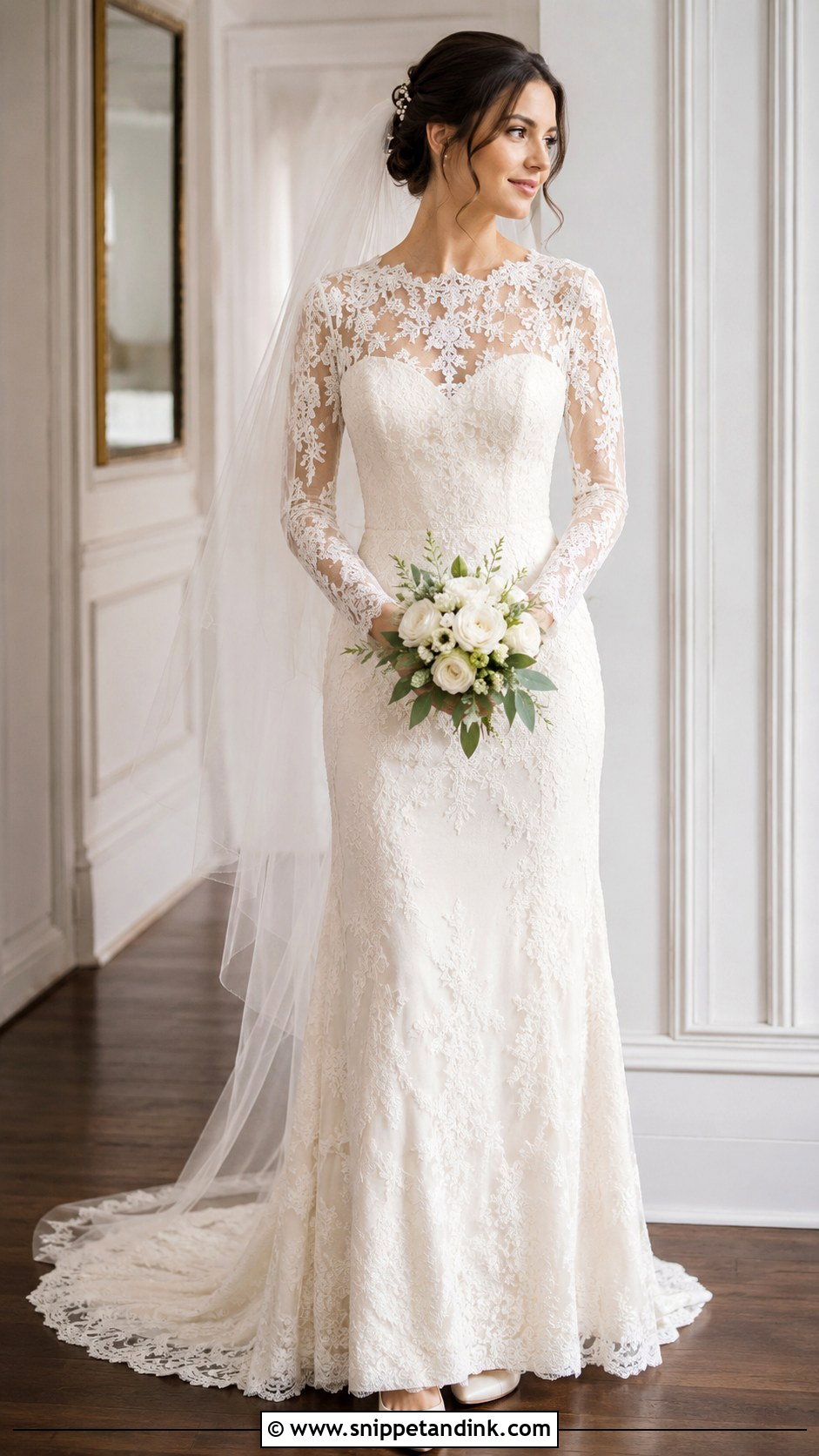
Sleeves change the whole mood depending on fabric. Lace sleeves soften the gown; satin or crepe sleeves look tailored. Because the sleeves are already the detail, I keep the jewelry very simple and add pearl hair pins, closed-toe ivory heels and a small bouquet of white flowers with greenery. A low bun or soft updo shows off the neckline. Raise your arms at the fitting, though. Fitted sleeves set too tight at the armhole make hugging and throwing a bouquet uncomfortable, and that’s an easy fix if caught early. I reach for this in fall, winter and formal indoor weddings, or for any bride who wants more coverage.
6. Justin Alexander Off The Shoulder Wedding Dress
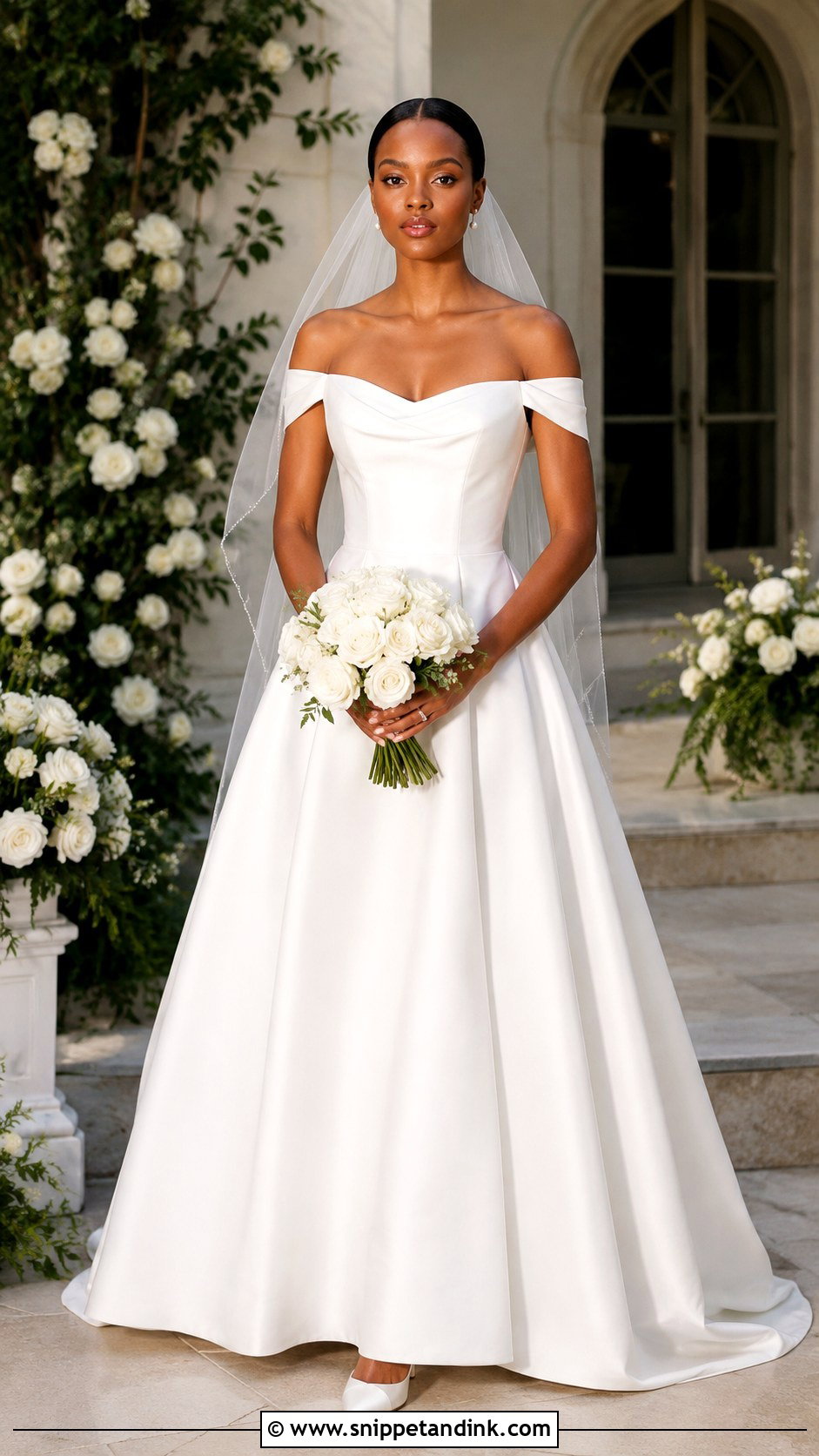
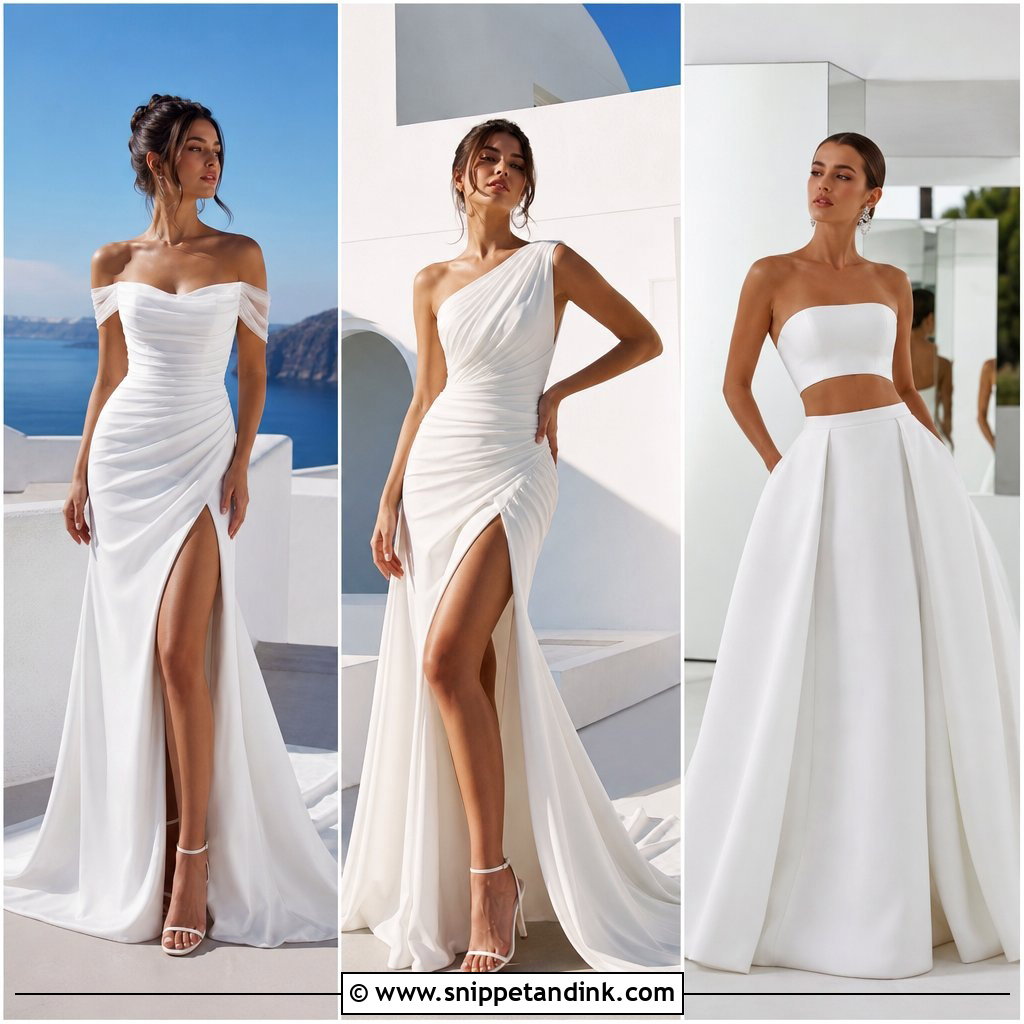
Off-the-shoulder necklines frame the collarbones, and they look best over a fitted bodice with an A-line or ball gown skirt. The detail I check is whether the bands let you lift your arms; some sit so low that the bride can’t hold her bouquet at waist height without straining. Style it with a veil that grazes the shoulders, pearl earrings, satin heels and a loose low bun with a few face-framing pieces. Leave the necklace off. Roses, peonies or lisianthus suit the soft neckline, and estates and gardens are its natural home.
7. Justin Alexander Basque Waist Wedding Dress
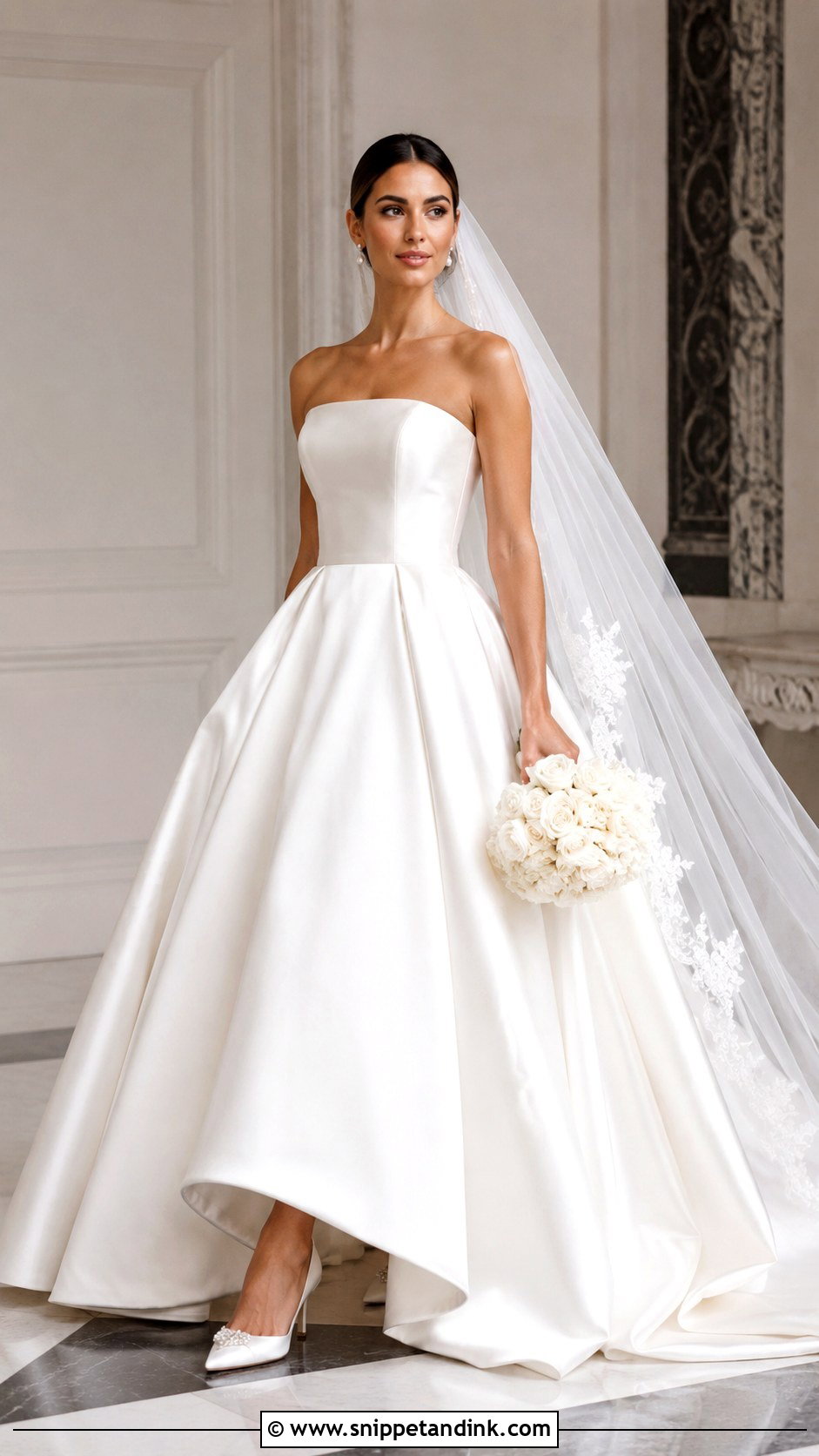
The dropped point of a basque waist lengthens the torso and lets the skirt fall into that princess shape. It’s flattering on most figures, but the point has to land in the right place, so expect it to be the main focus of your fittings. I keep everything else plain: a long veil, pearl earrings, satin pumps, a polished bun and a simple bouquet that doesn’t hide the waistline. It works with ball gowns, lace A-lines and structured mikado alike. A basque waist bridal outfit carries a bit of vintage influence while still looking current.
8. Justin Alexander Beaded Lace Wedding Dress
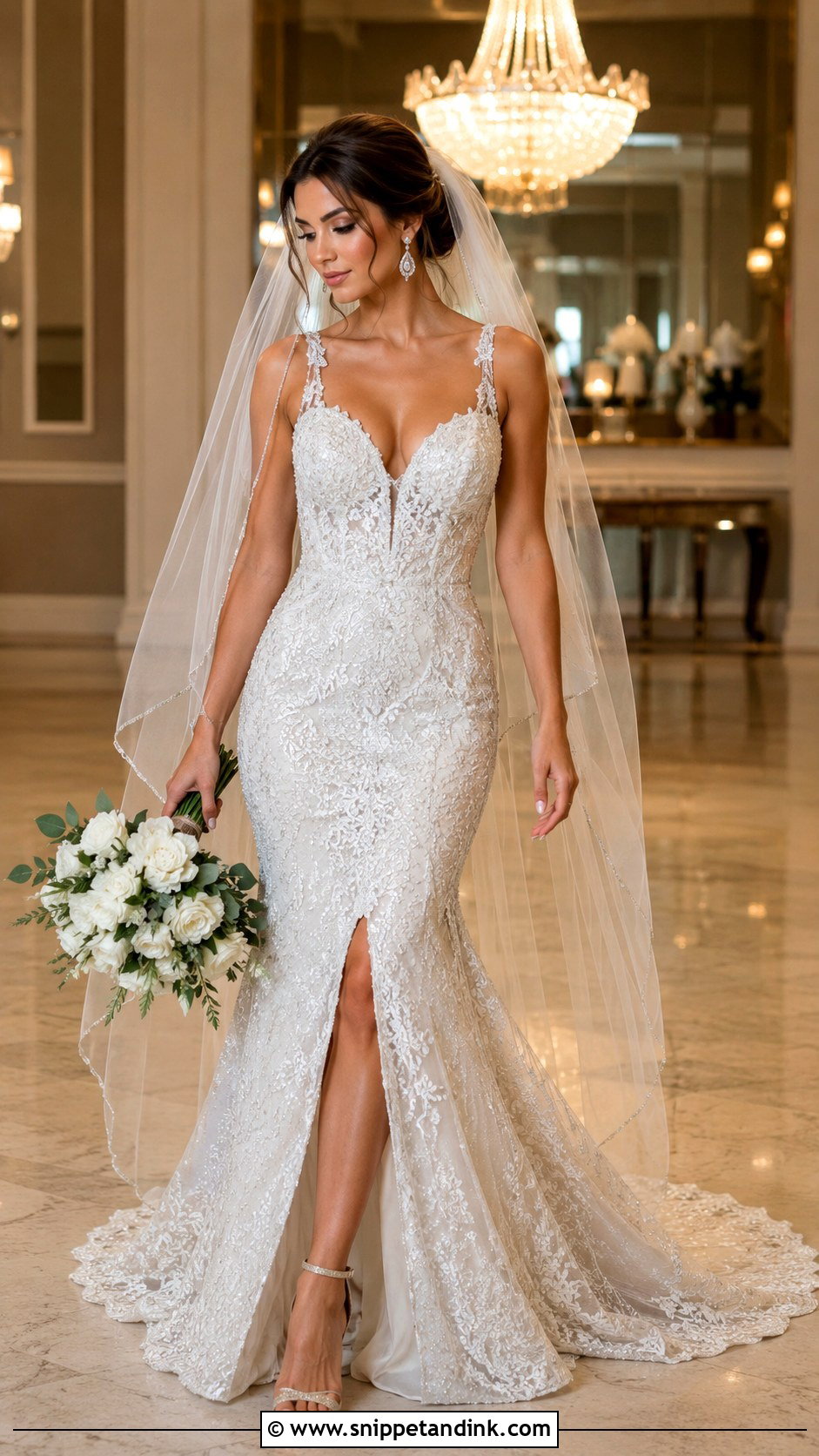
Beaded lace is for the bride who wants shimmer that moves. The beads catch light as you walk while the lace keeps things romantic, and it truly glows in candlelight or a softly lit ballroom. Style it with a sheer veil, crystal drops, metallic ivory heels and a loose updo, and keep the bouquet white and simple. With heavy embellishment, skip bold necklaces and big hairpieces. Also check the weight: heavily beaded bodices are heavier than they look on the hanger, and a long day in one is tiring if the straps aren’t built to carry it.
9. Justin Alexander Crepe Fit And Flare Wedding Dress
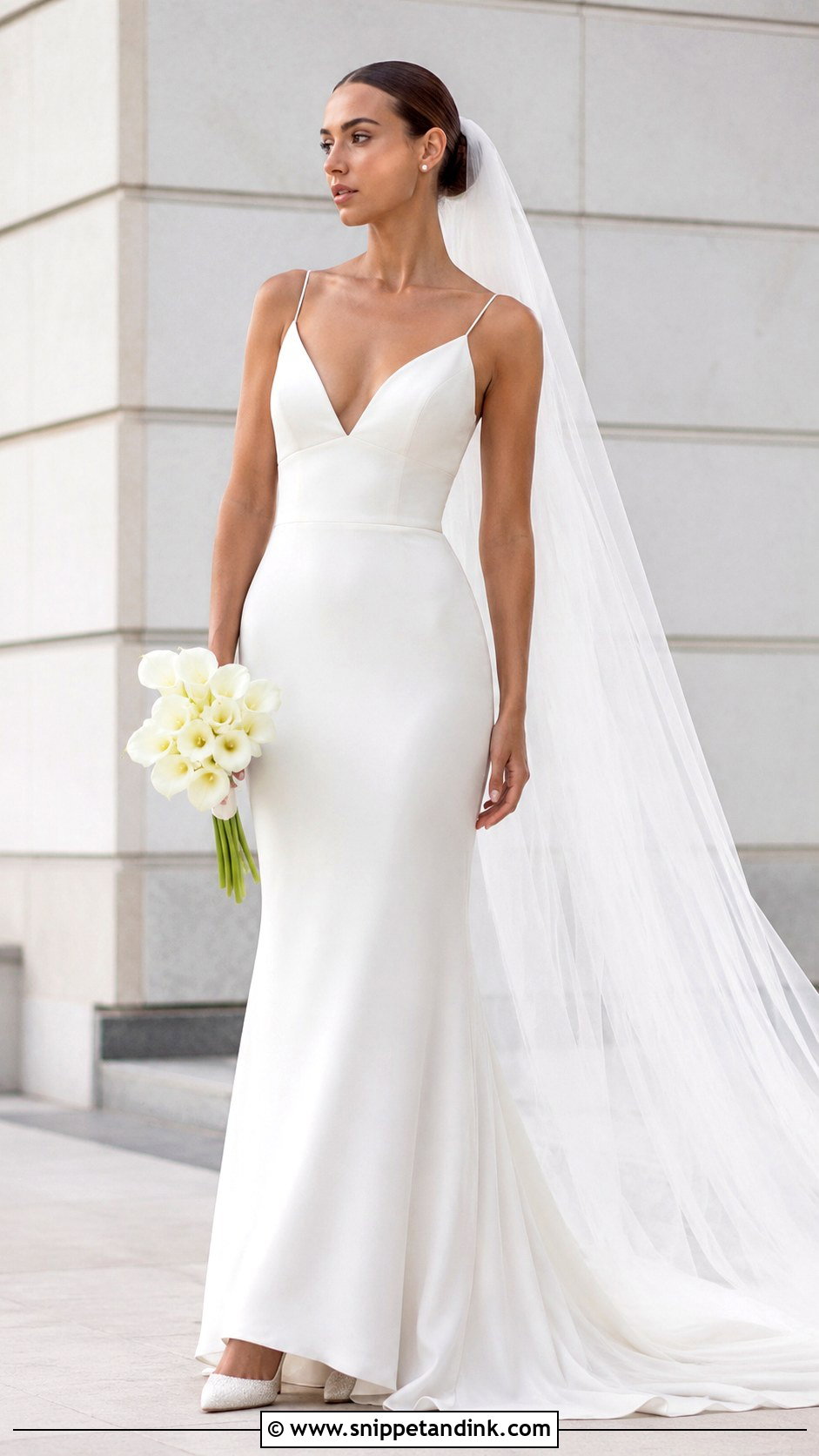
Crepe is the quietest fabric here and the one that shows tailoring most honestly. A crepe fit-and-flare has no lace or sheen to hide behind, so every seam has to sit flat, and I spend more time at the mirror with this dress than with almost any other. When it’s right, it looks sculpted. A long plain veil, pearl studs, pointed-toe heels and a sleek low bun keep it minimal, with calla lilies or simple roses in hand. City venues, rooftops and modern hotels suit it. Smooth, seam-free underwear is non-negotiable.
10. Justin Alexander Tulle Ball Gown Wedding Dress
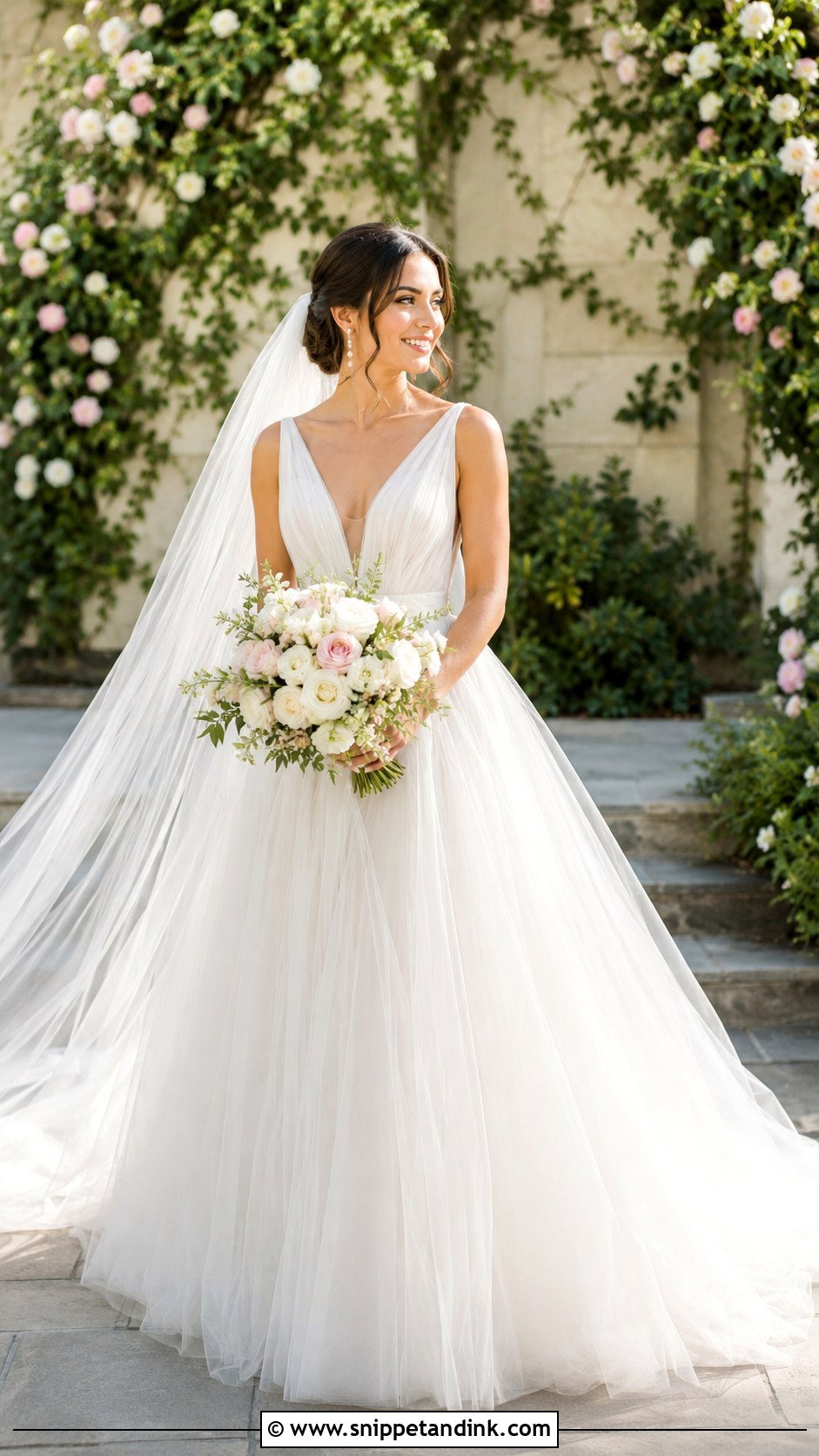
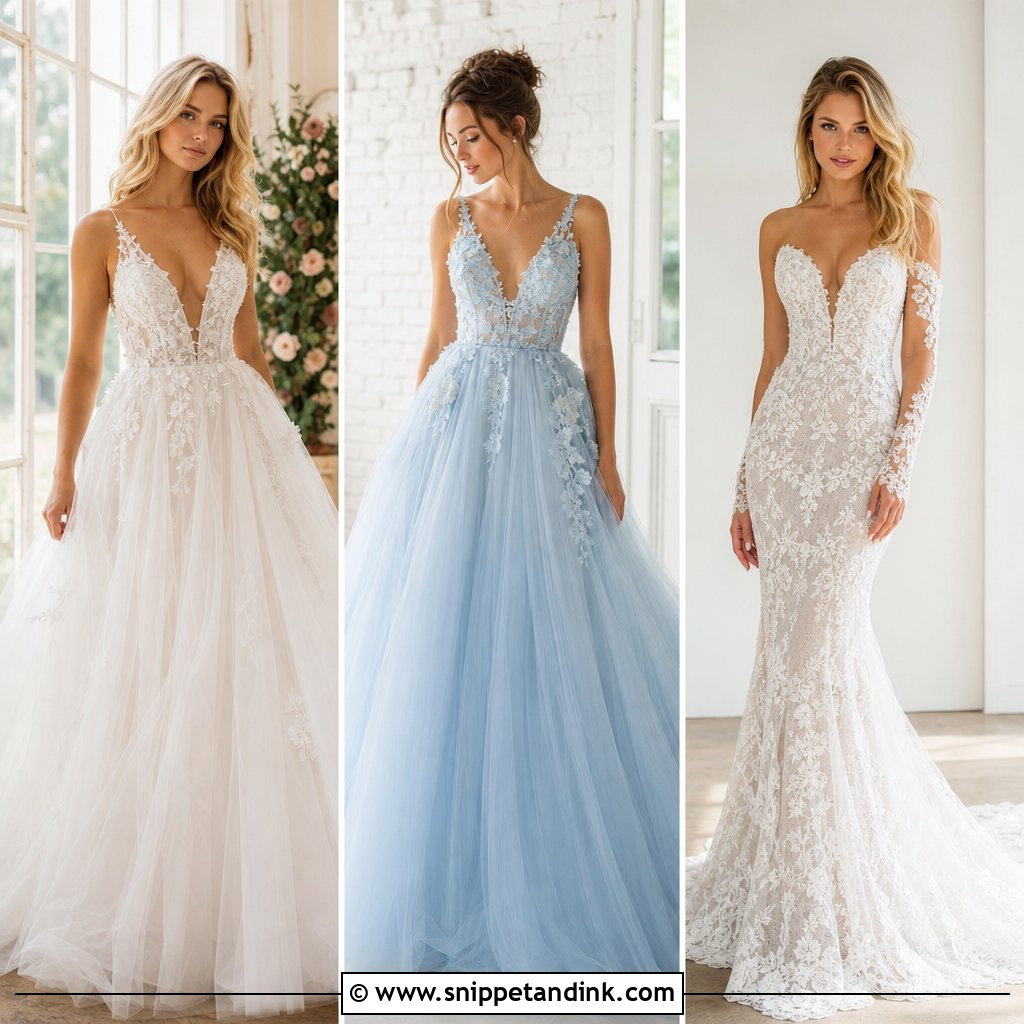
Tulle gives volume without weight, which is why a tulle ball gown feels so different from satin when you actually wear it. It floats and sways rather than swinging. A cathedral veil, dainty earrings, satin or mesh heels and a soft bun or loose waves suit it, with white and pale pink flowers. Choose simple accessories if the gown already has lace or sparkle. Be aware that tulle catches on rough surfaces like brick steps and bark, so look at your venue’s floors before falling for a long tulle train.
11. Justin Alexander Organza Wedding Dress
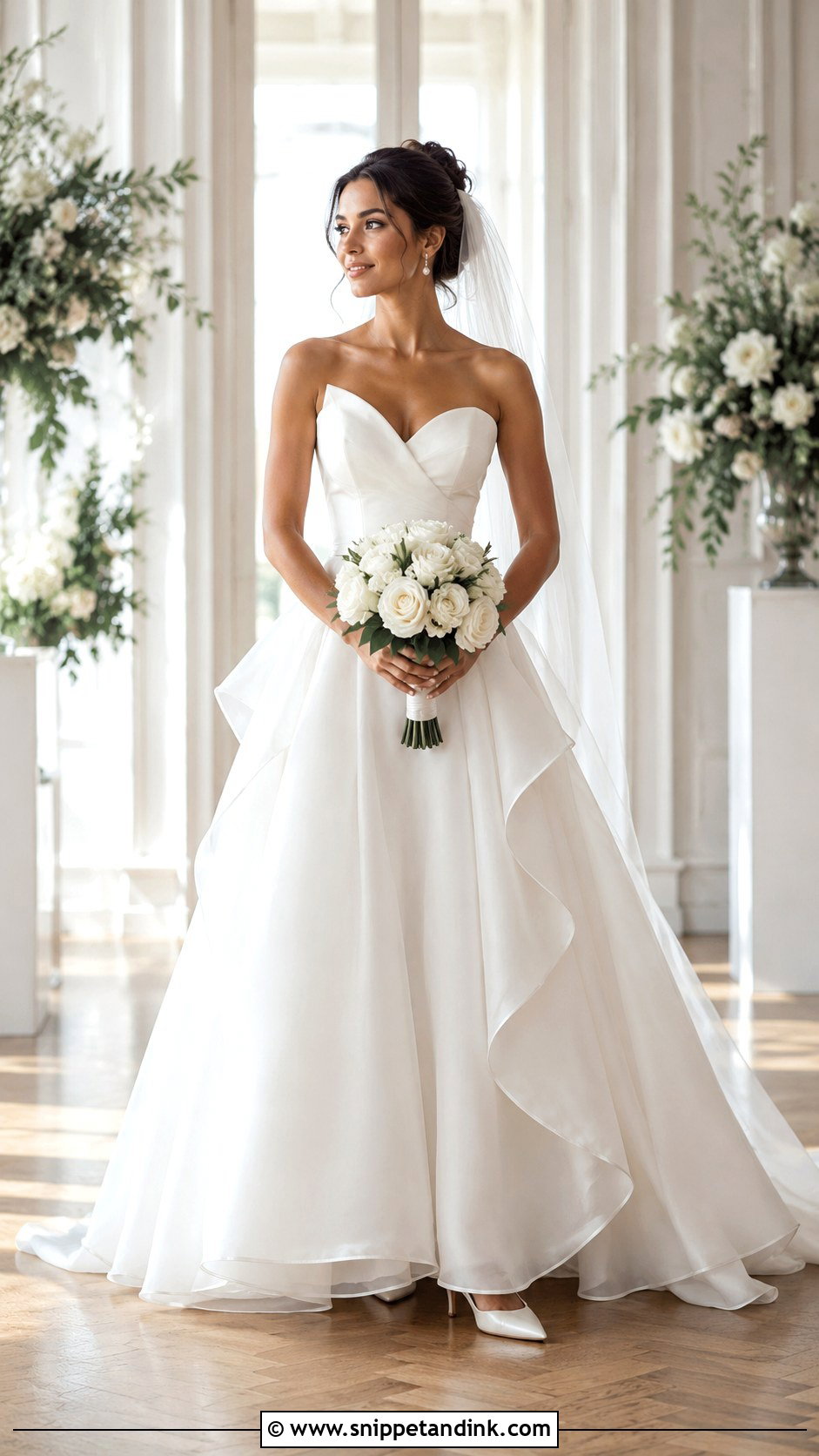
Organza sits between tulle and satin: crisp, light and good at holding volume in an A-line or ball gown skirt. You get movement without the heavy skirt. I style it with a simple veil, pearl earrings, ivory slingbacks and a polished hairstyle, and a structured bouquet of white roses or orchids. Spring and summer suit it best. Organza wrinkles more readily than people assume, so give it a steam on the morning and keep the train off the car floor on the way.
12. Justin Alexander High Low Wedding Dress
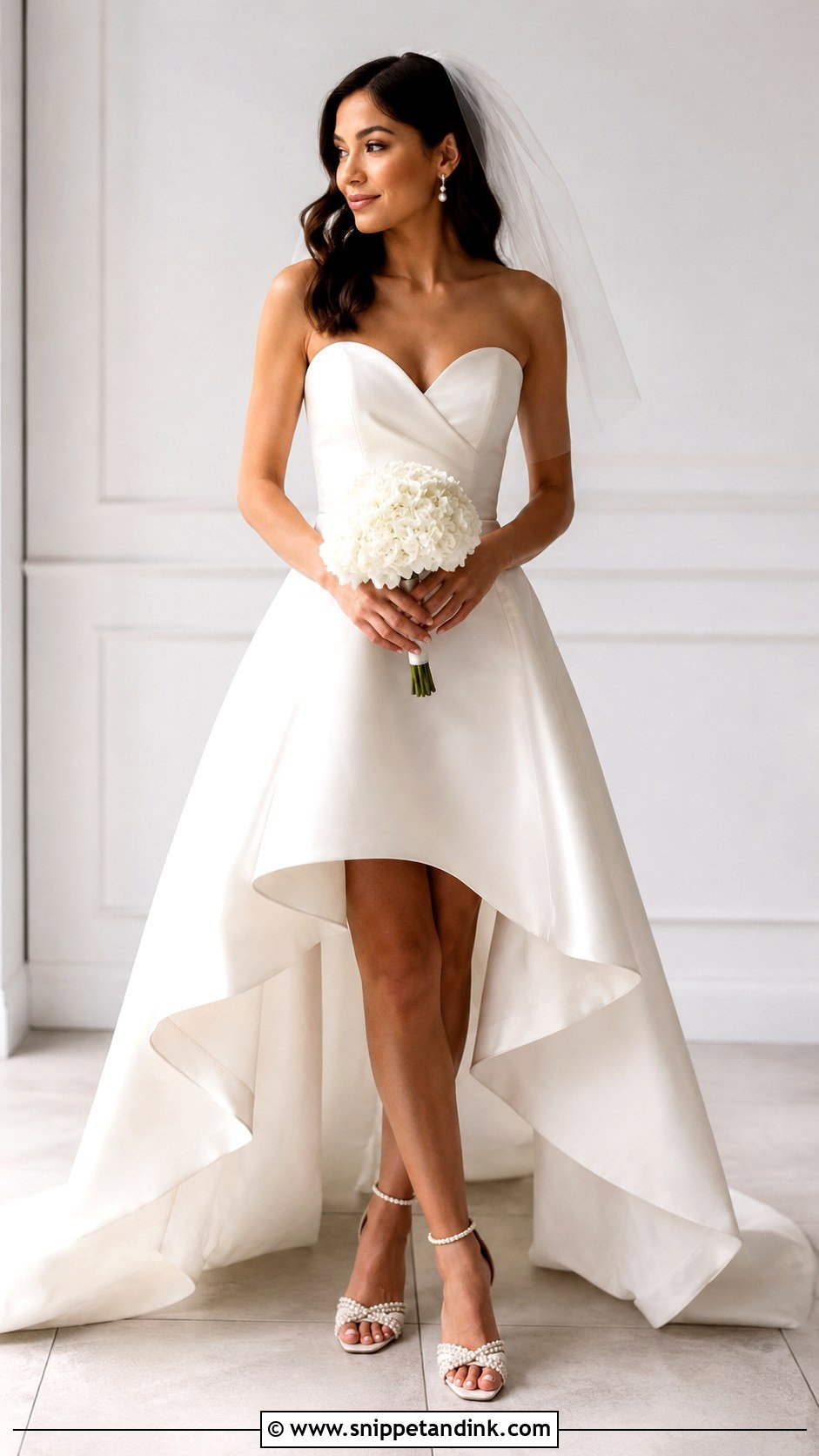
High-low hems are about the shoes, so choose them first and choose them well: ivory pumps, embellished heels or satin bows. A short veil, pearl earrings and a chic updo balance the shorter front, and a small bouquet keeps the proportions playful. It suits courthouse ceremonies, modern receptions and after-party changes. The hem needs a structured fabric to look formal; in a soft fabric a high-low can drift toward casual. Practice walking downstairs in it, since the longer back can catch behind your heel.
13. Justin Alexander Square Neck Wedding Dress
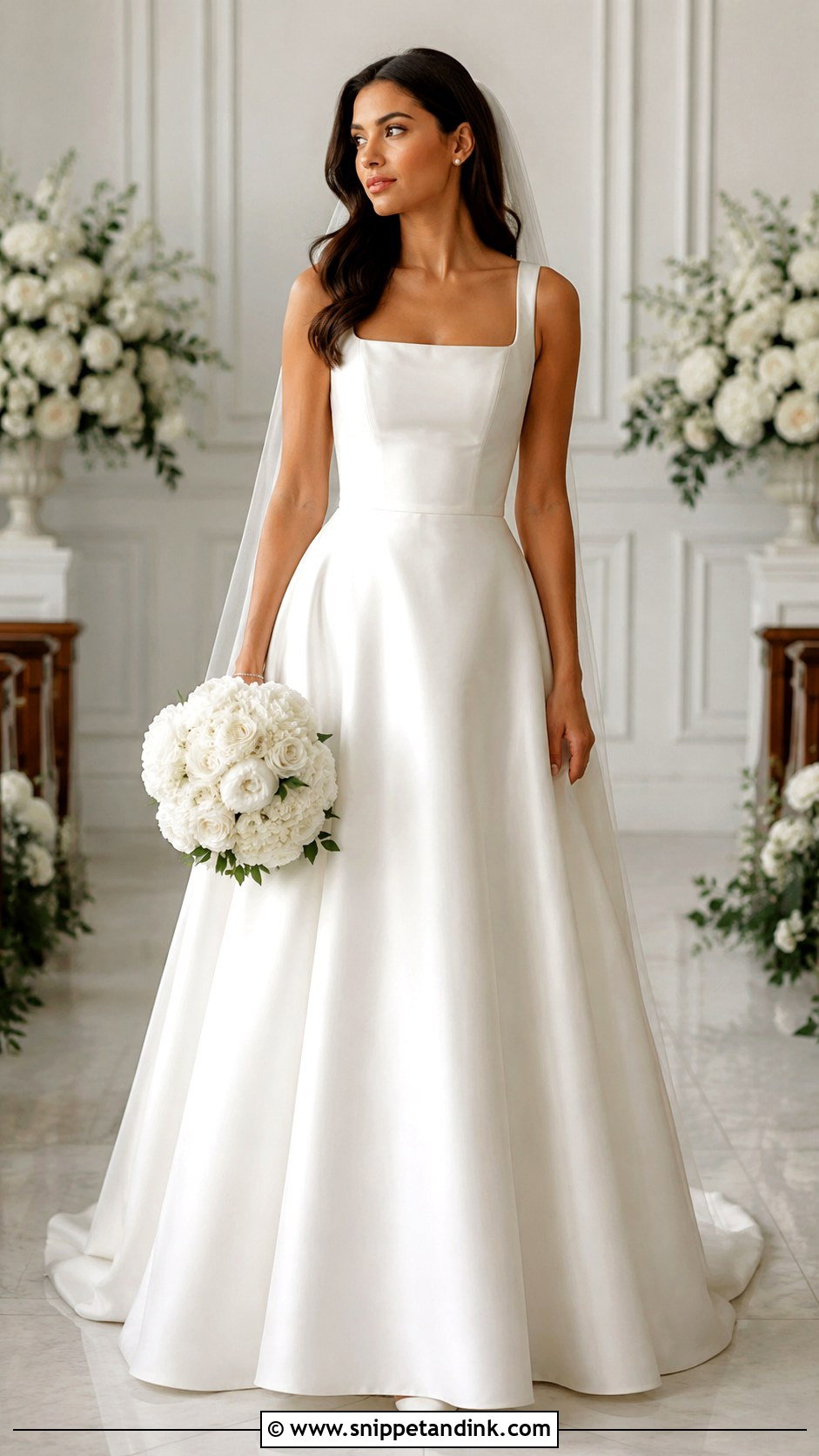
Square necklines frame the face cleanly and sit well in satin, crepe, mikado or lace. They suit brides who want structure without a plunge or strapless bodice. I check that the corners lie flat against the chest; if they gap when you lean forward, a dart at the fitting fixes it. Style with a simple veil, pearl studs, pointed heels and a low bun, adding a slim bracelet or a few fine rings rather than a necklace. Rounded white blooms echo the clean line, and the neckline holds up in close portraits as well as full-length shots.
14. Justin Alexander Plunging V Neck Wedding Dress
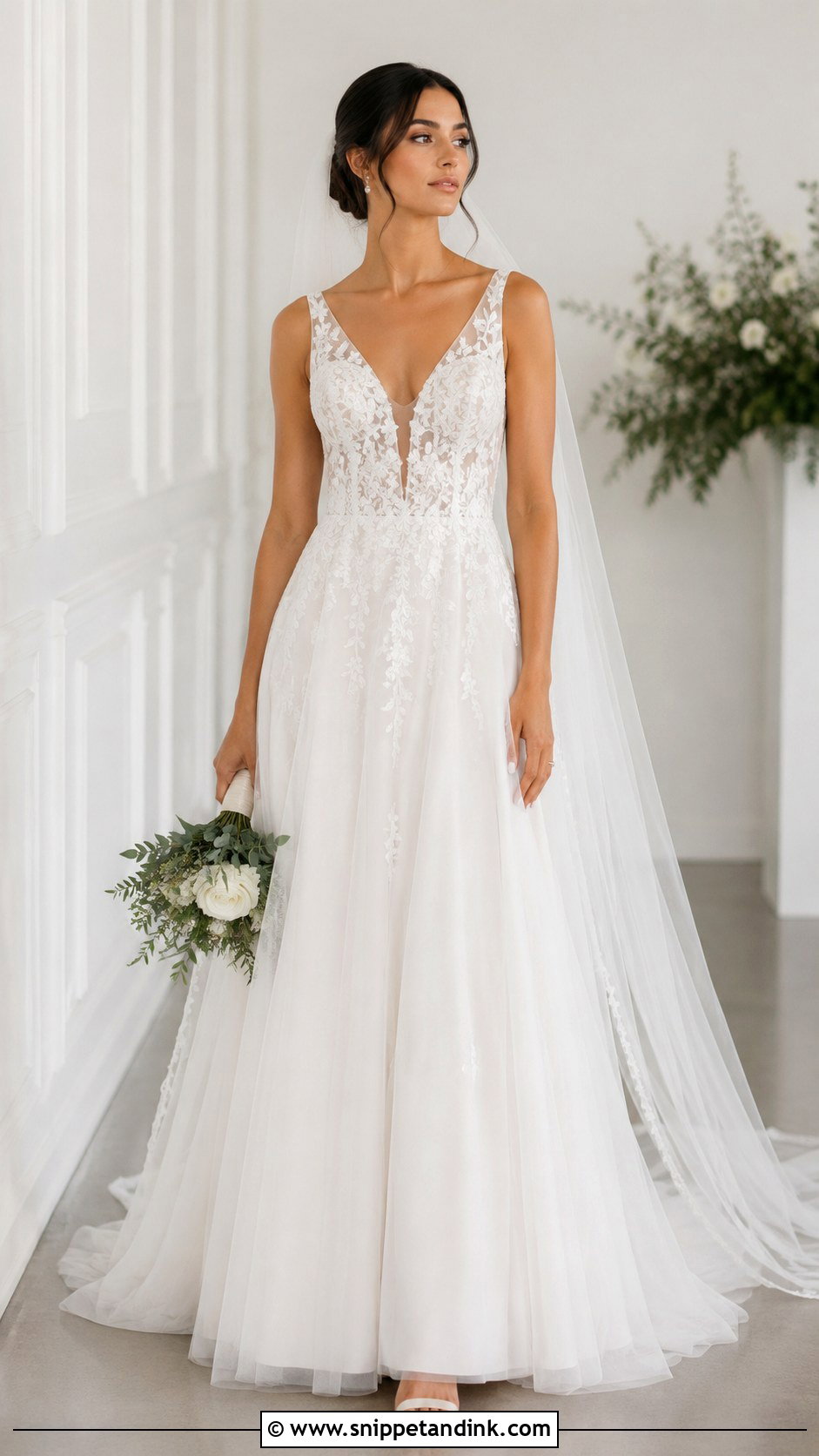
A plunging V only works if you feel secure in it, so look for built-in support, strategic lace placement or illusion mesh before thinking about style. Then keep it balanced: a long veil, small earrings, ivory heels and soft waves or a smooth bun. Skip the necklace. A narrow white bouquet with greenery lengthens the line further. It pairs well with A-line tulle or fitted crepe silhouettes that keep the overall look polished. Fashion tape in the bridal emergency kit is a sensible backup.
15. Justin Alexander Portrait Collar Wedding Dress
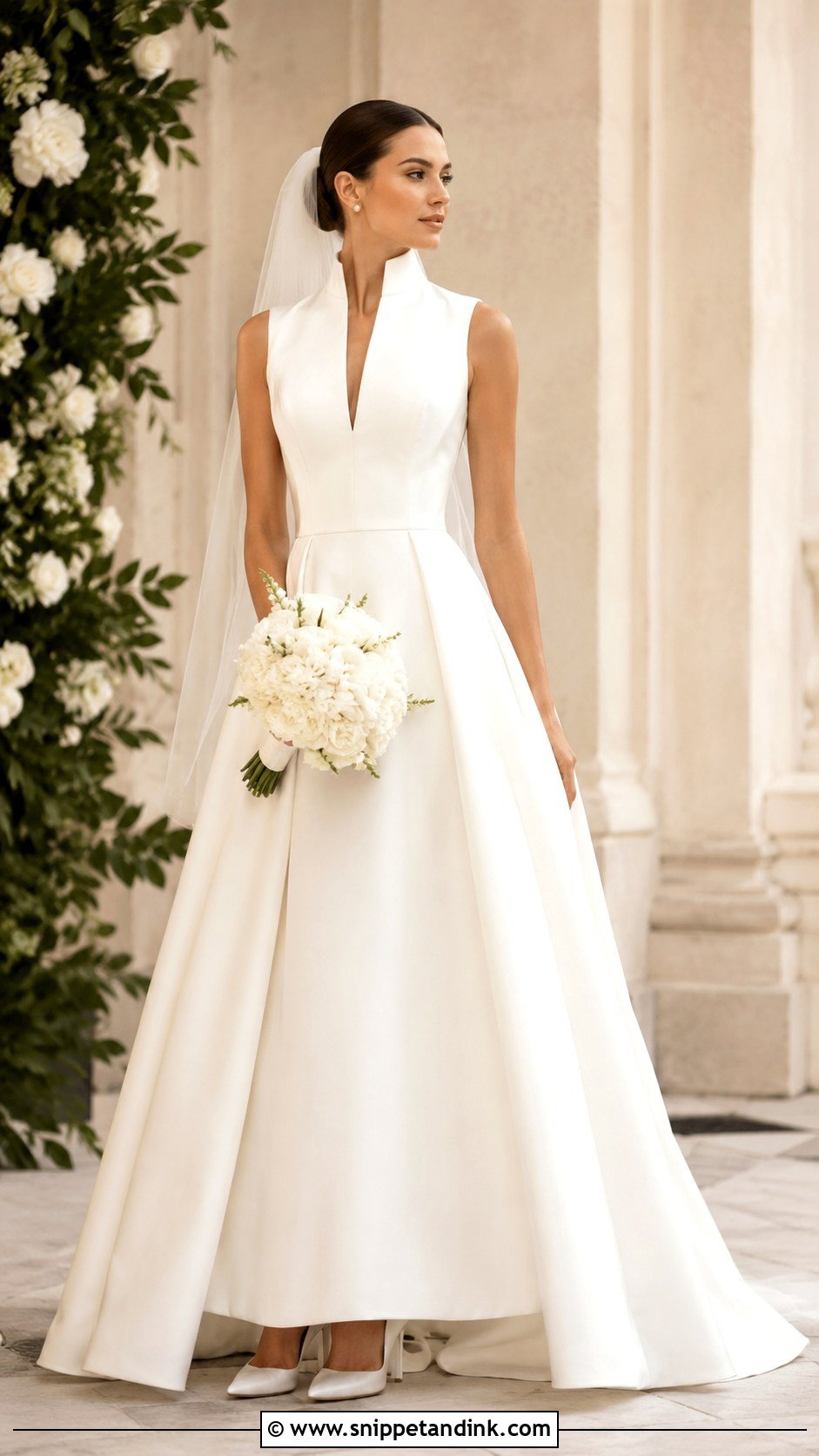
A portrait collar wraps the shoulders and gives a regal, slightly vintage line that needs very little help. Pearl studs, satin heels, a smooth updo and a veil set behind the hair are enough, with a mostly white bouquet. The collar is the feature, so avoid heavy necklaces and big earrings. I’d mention one fit point: portrait collars can restrict how high you lift your arms, so try reaching up at the fitting. Formal venues and estates suit it, and it’s a strong pick if you love old-Hollywood detail.
16. Justin Alexander Corset Bodice Wedding Dress
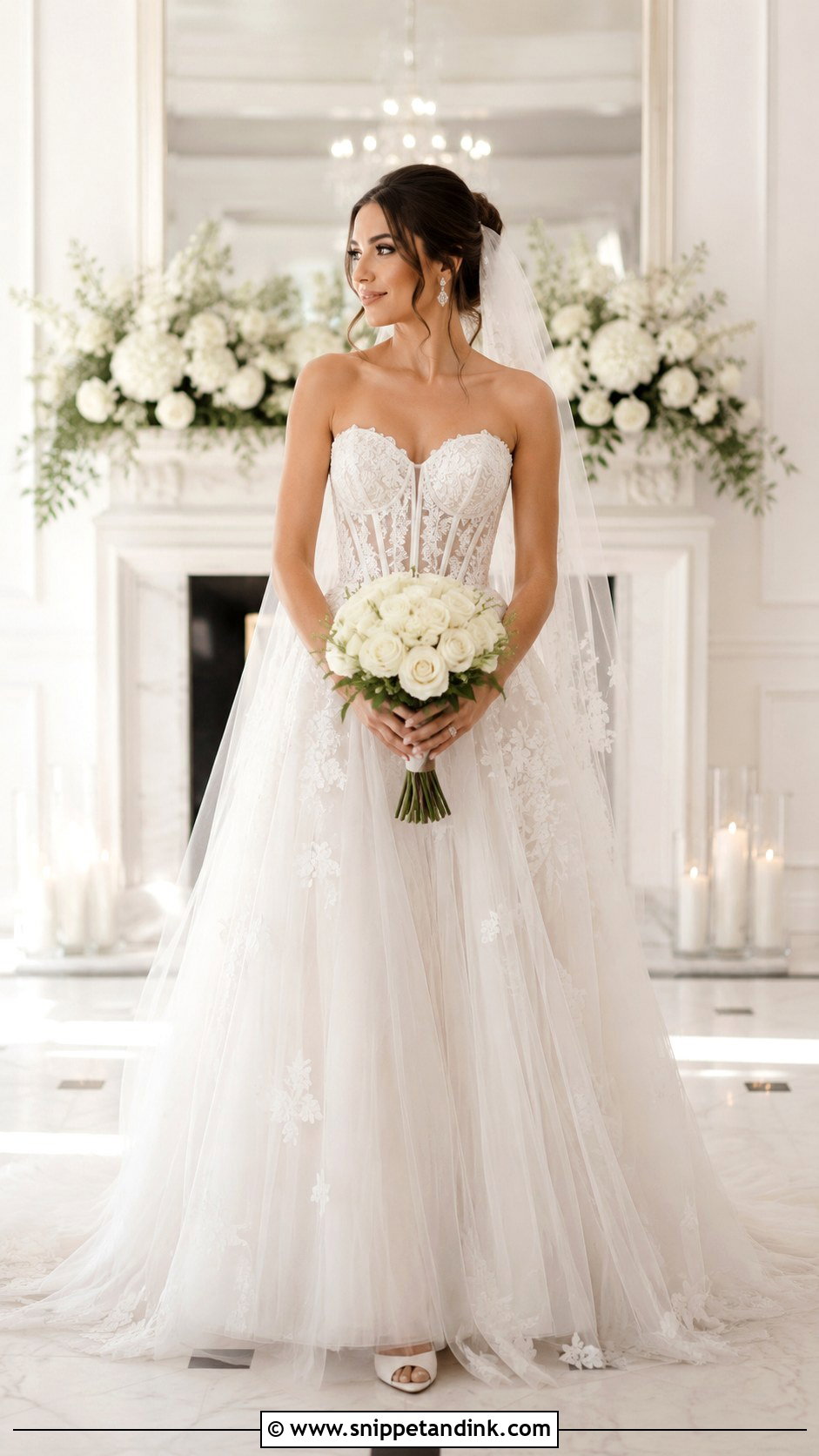
Corset bodices give real support and a defined waist, which brides with a fuller bust often find more comfortable over a long day than a softly structured top. The look shifts with fabric, romantic in lace or sharper in mikado or beading. Style with a soft veil, fine earrings, ivory heels and a low bun or polished waves, and a medium bouquet of white roses. If the boning is visible, keep accessories quiet. If the corsetry is hidden, you have more room to add sparkle. Have someone practice lacing it before the morning, because a rushed lace-up is uneven.
17. Justin Alexander Detachable Sleeve Wedding Dress
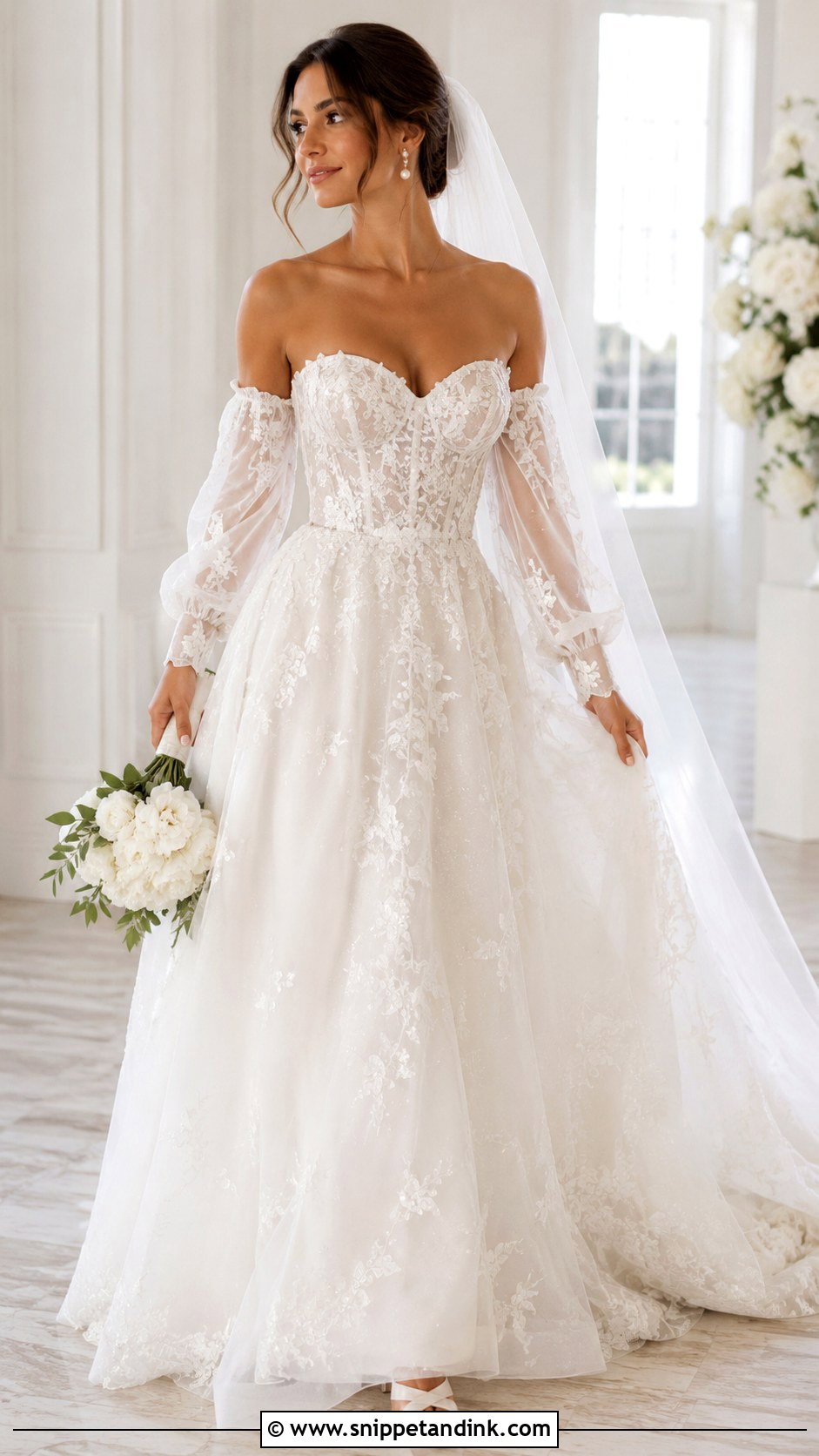
Detachable sleeves solve a common dilemma: you get a sleeved, formal look for the ceremony and a strapless or sleeveless one for dancing. Style with a long veil, pearl earrings, satin heels and a soft updo, and keep the bouquet simple so the change reads clean. Ask how the sleeves attach. Snaps and small hooks need a second pair of hands, so assign someone to the change and give them a practice run. The two looks also give your photos more variety without a second dress.
18. Justin Alexander Detachable Overskirt Wedding Dress
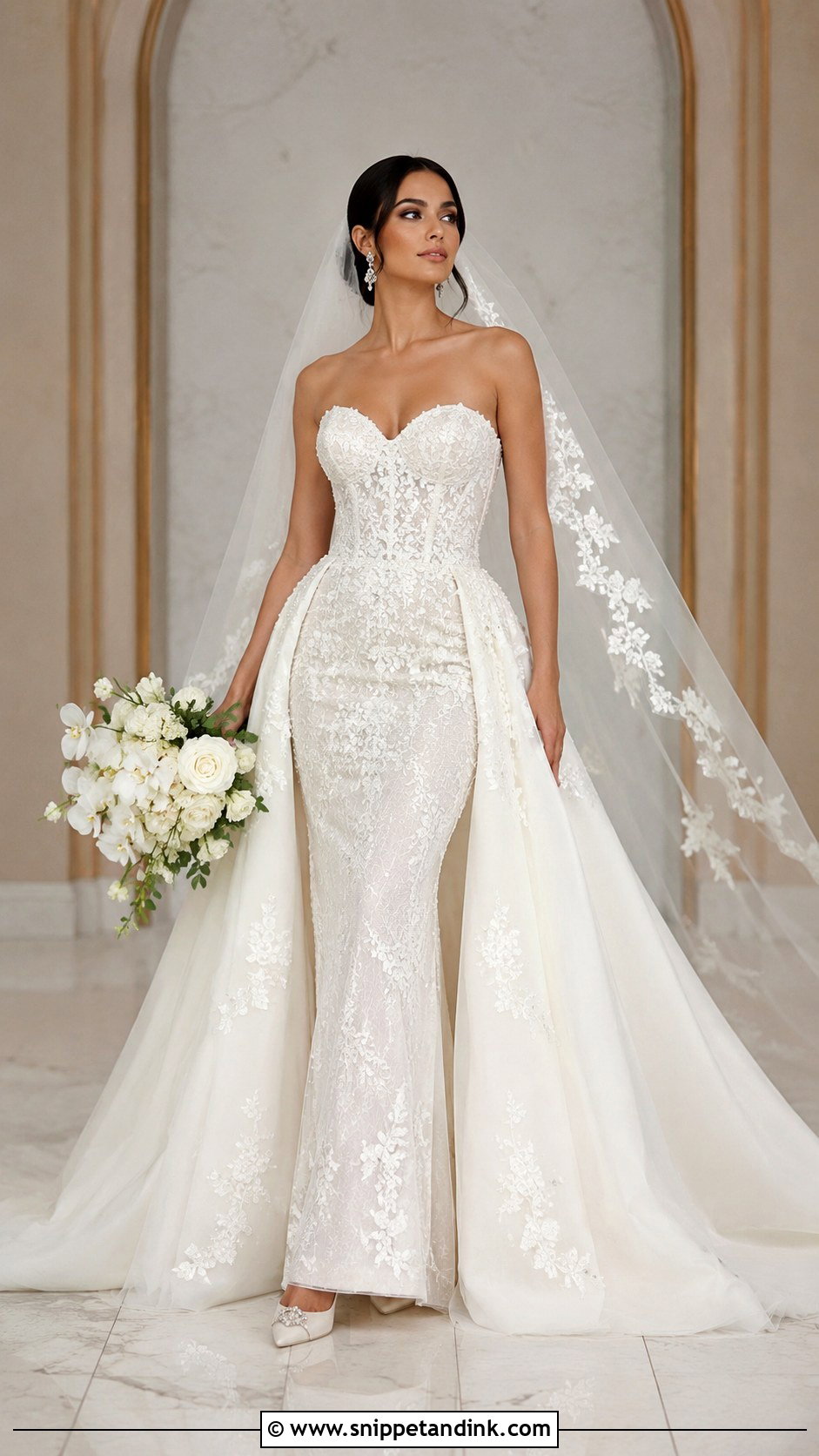
A detachable overskirt gives a grand entrance and then lets you dance in the fitted gown underneath. I’d style the ceremony version with a cathedral veil, pearl or crystal earrings, ivory heels, a sleek bun and a structured bouquet. Large venues and formal weddings suit it, and it settles the ball gown versus fitted debate. Plan where the change happens and who helps; an overskirt is a lot of fabric to step out of in a small restroom, and someone needs to carry it away carefully afterwards.
19. Justin Alexander Floral Lace Wedding Dress
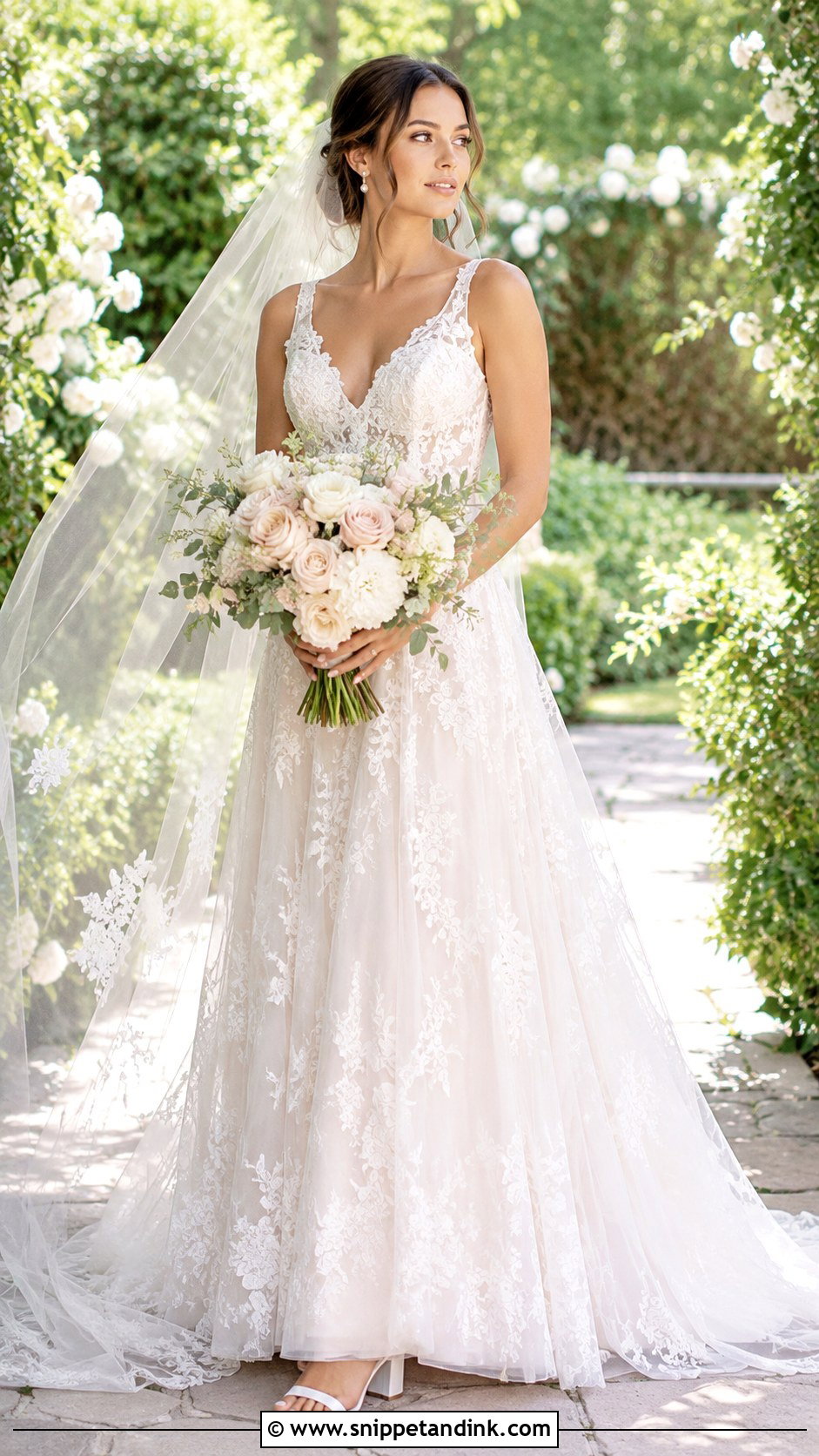
Floral lace can be fine and subtle or raised and dimensional, and how much texture it has decides how you accessorize. Over a detailed lace I keep jewelry minimal; with an open, simpler lace, a small hair comb is fine. A sheer veil, pearl earrings, ivory block heels and loose waves or a low bun suit it, with white blooms and a hint of blush. Gardens and outdoor ceremonies are where it feels most at home. If the lace has scalloped edges at the hem, keep the train off gravel paths; scallops snag.
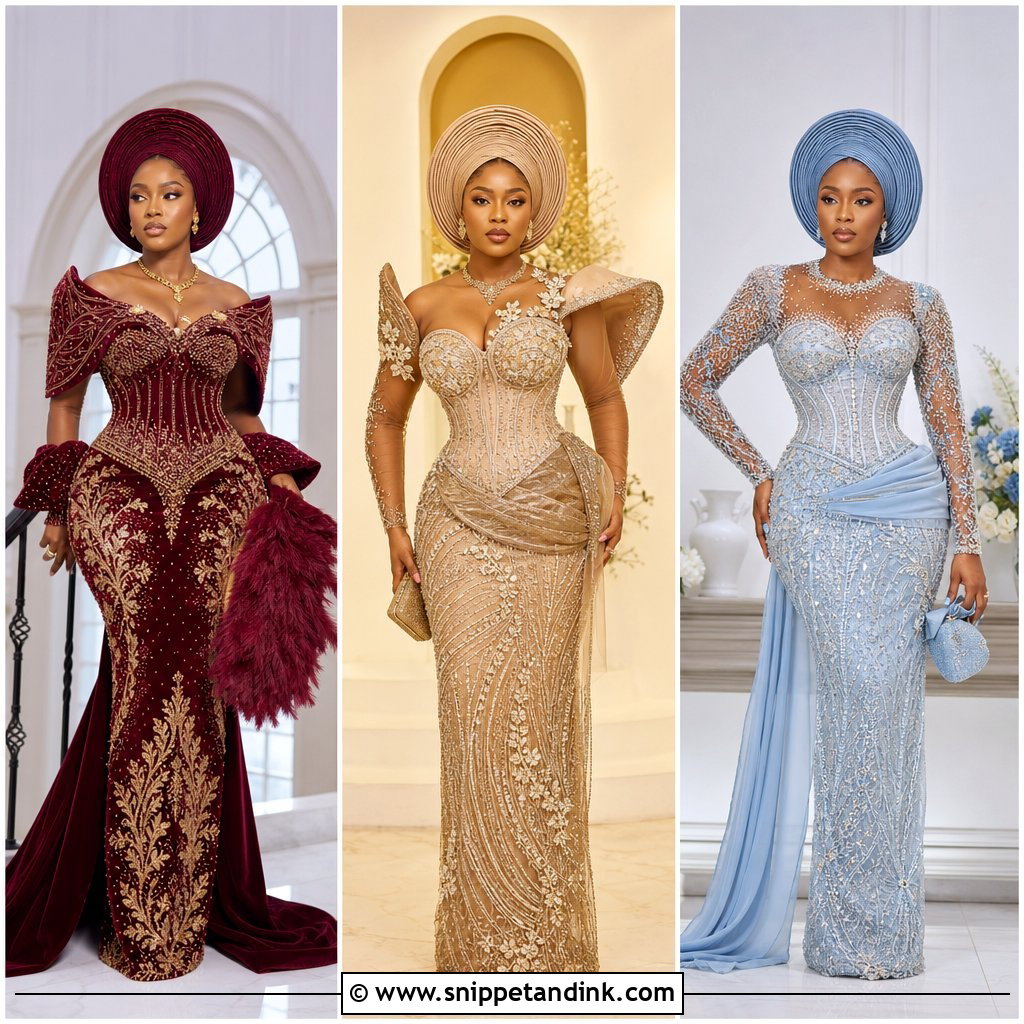
20. Justin Alexander Pearl Wedding Dress
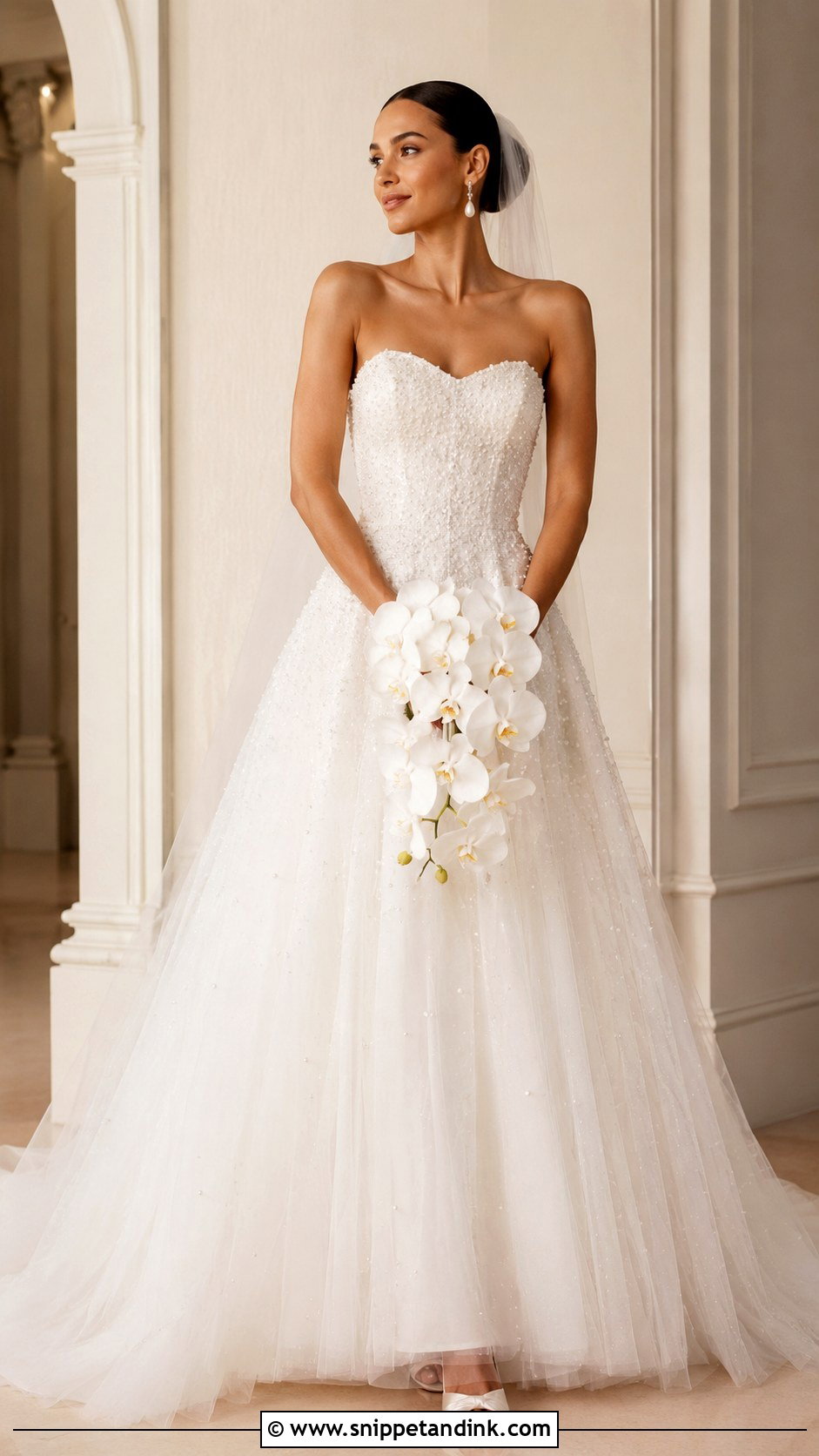
Pearls give texture without heavy sparkle, and they sit beautifully on tulle, lace or charmeuse. I style a pearl-detailed gown with pearl earrings, satin heels, a simple veil and a clean bun, and I stop there. Too many extra pearl accessories make the outfit look like a theme. White roses or orchids keep it refined. Pearls also show up as soft points of light in photos rather than flashes, so the overall picture stays calm. Formal weddings and classic venues suit it.
21. Justin Alexander Bow Wedding Dress
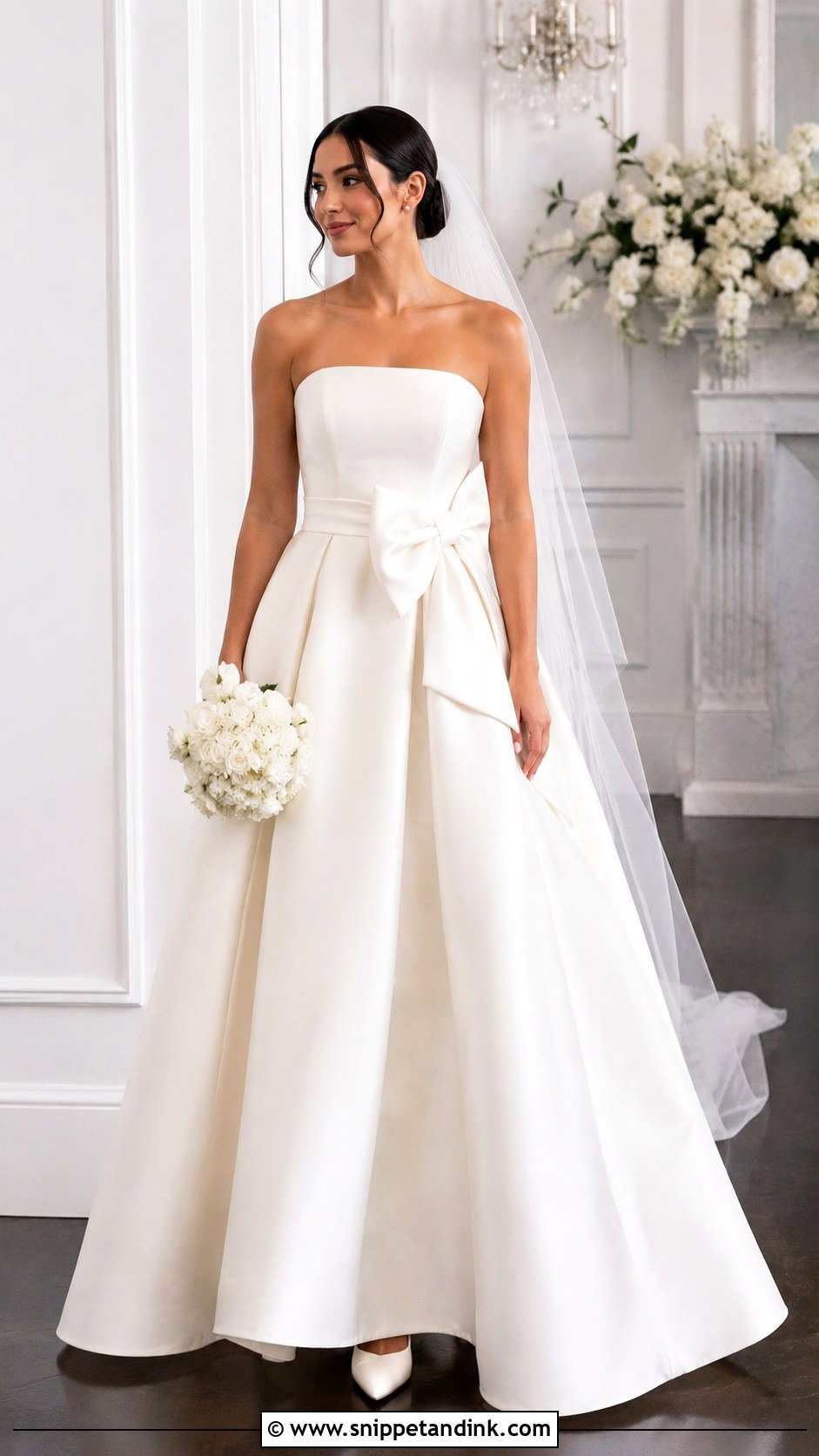
Bows can sit at the waist, back, shoulder or train, and wherever yours is, let it guide the accessories. If it’s at the back, wear your hair up so it isn’t hidden. A plain veil, pearl studs, satin pumps and a neat updo work, with a compact bouquet so nothing competes. Bow wedding dresses hold their shape best in satin, mikado and other structured fabrics. In softer fabrics a bow can wilt by the evening, so ask whether it’s interfaced.
22. Justin Alexander Plus Size Wedding Dress
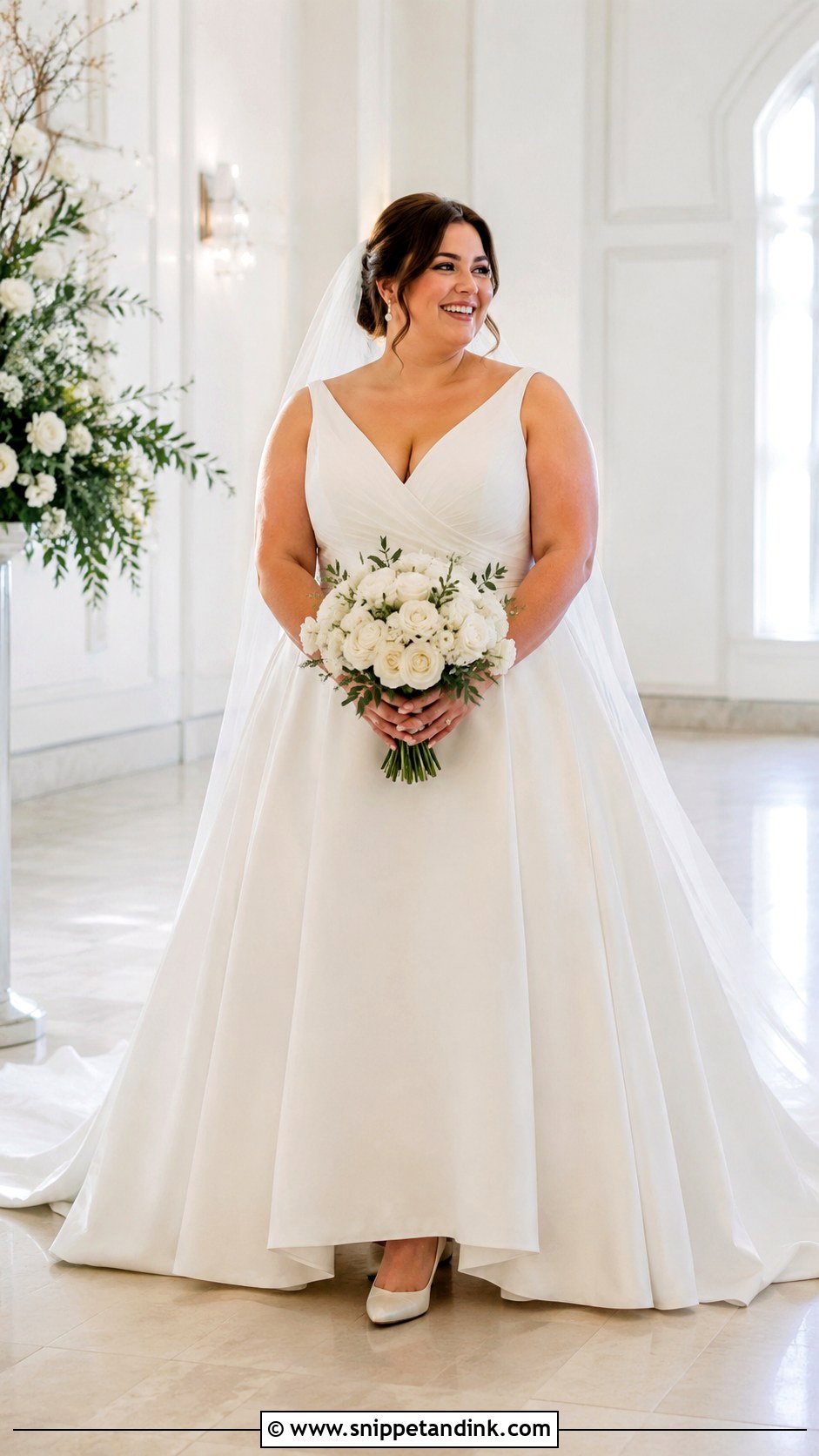
A Justin Alexander plus size wedding dress can be an A-line, ball gown, fit-and-flare or crepe column. What matters most is internal structure that supports you and a fabric you feel comfortable in after eight hours. A-lines are the easiest to wear, and corset bodices or off-the-shoulder necklines give definition. Choose a veil length that matches the dress, supportive heels or dressy flats, pearl earrings and a hairstyle you trust. Keep the bouquet balanced in size so it doesn’t hide the gown. And sit down at every fitting; that’s where a bodice that seems fine standing starts to dig.
23. Justin Alexander Simple Wedding Dress
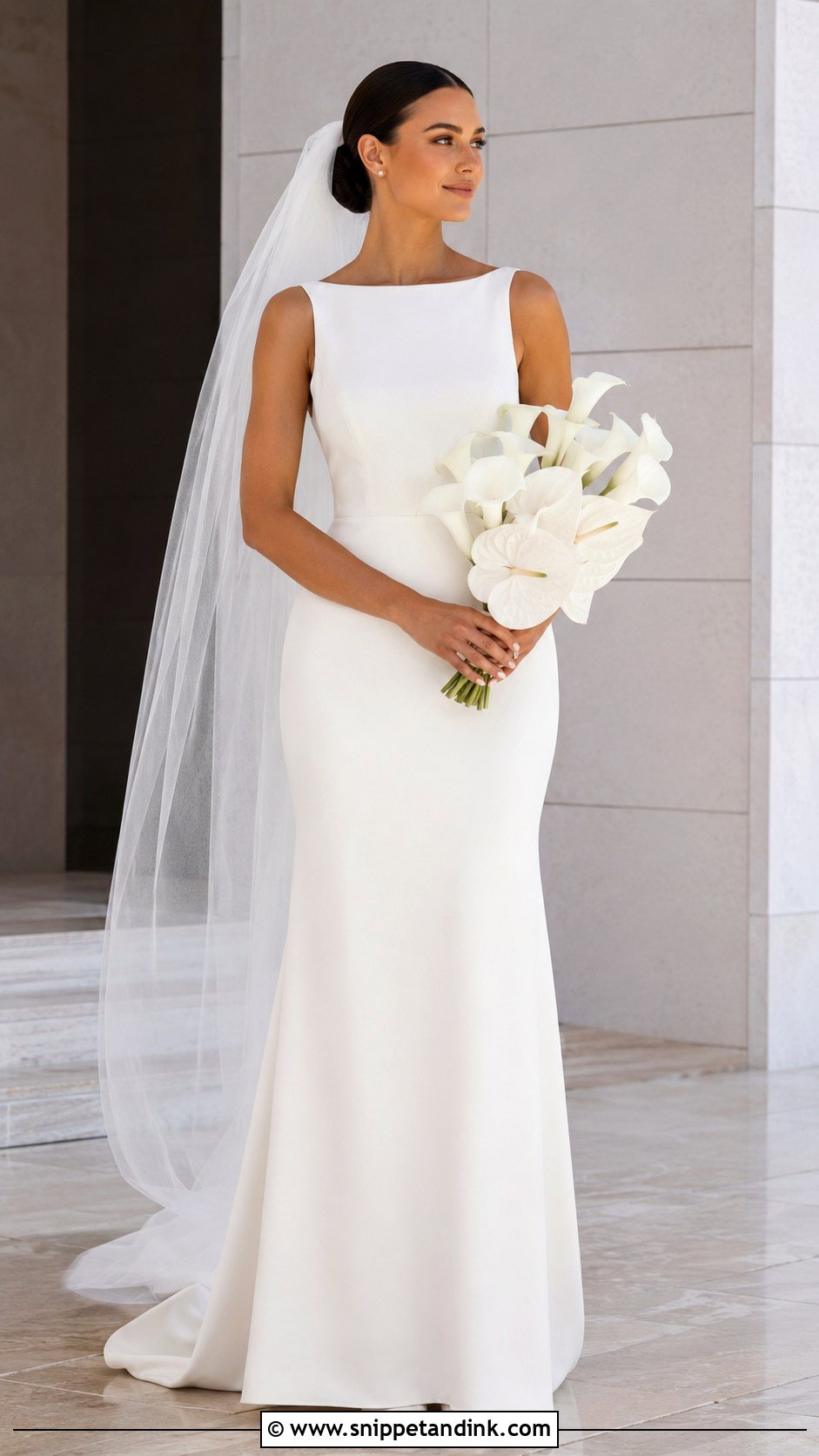
Simple gowns rely on fit, so this is where I’d spend your alterations budget. Satin, crepe, charmeuse, or mikado fabrics keep the focus on shape. A plain veil, pearl studs, pointed ivory heels and a sleek bun are the base, and then one point of interest, like a sculptural bouquet or a fine hair pin. It works for modern venues, courthouse ceremonies and beach resorts. Minimal is not plain when the tailoring is strong.
24. Justin Alexander Sparkle Tulle Wedding Dress
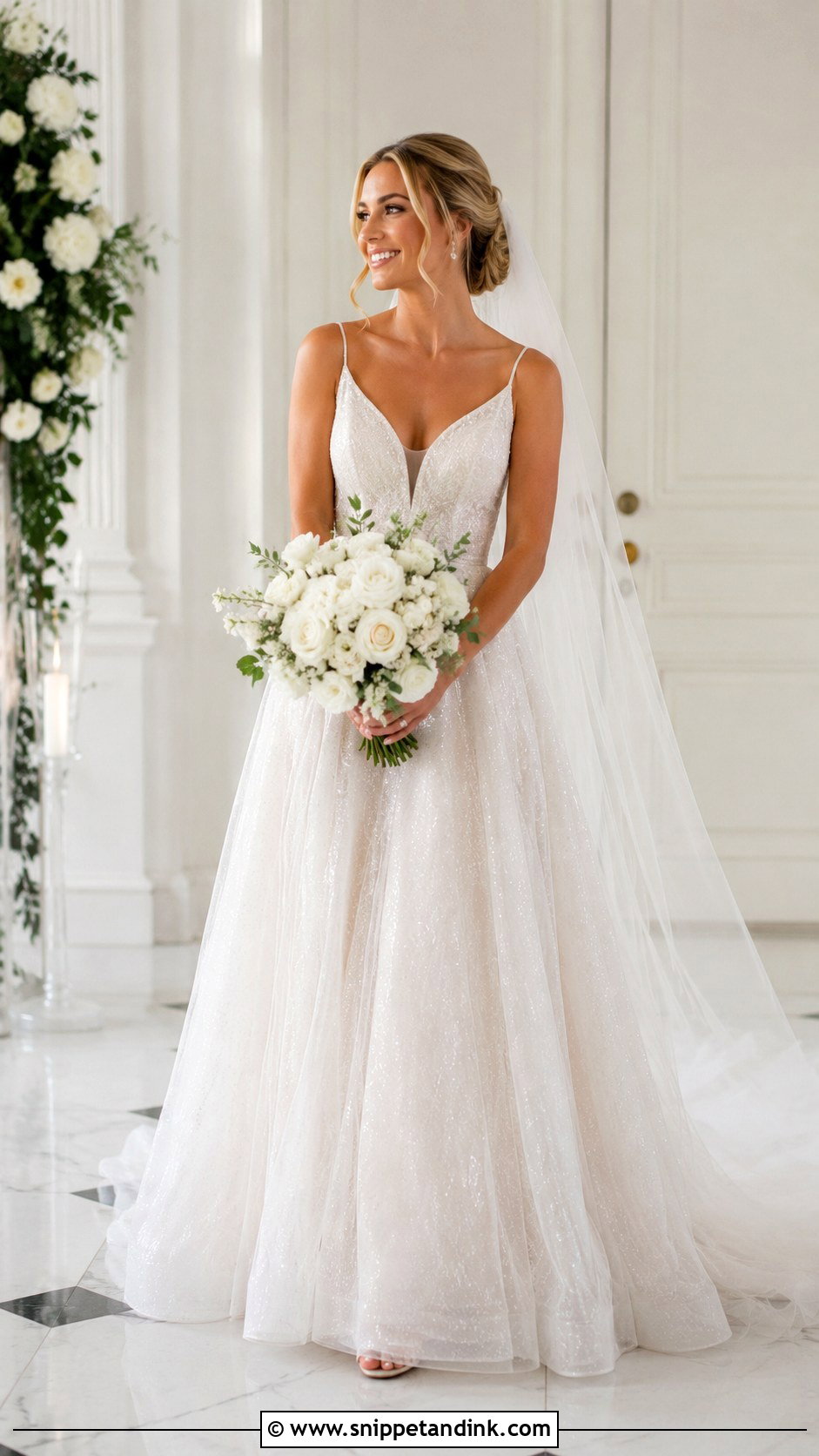
Sparkle tulle glows softly instead of glittering, and it really comes alive in motion, which is why it suits ball gowns and A-lines where the skirt sways. A sheer veil, small crystal earrings, ivory heels and soft waves or a romantic bun are enough. Keep the bouquet light, white with very little green. Don’t add oversized jewelry; the fabric is already bringing the light. Flash photography can make some glitter tulles look busier than they do in person, so ask your photographer to see a few frames during portraits.
25. Justin Alexander Reception Wedding Dress
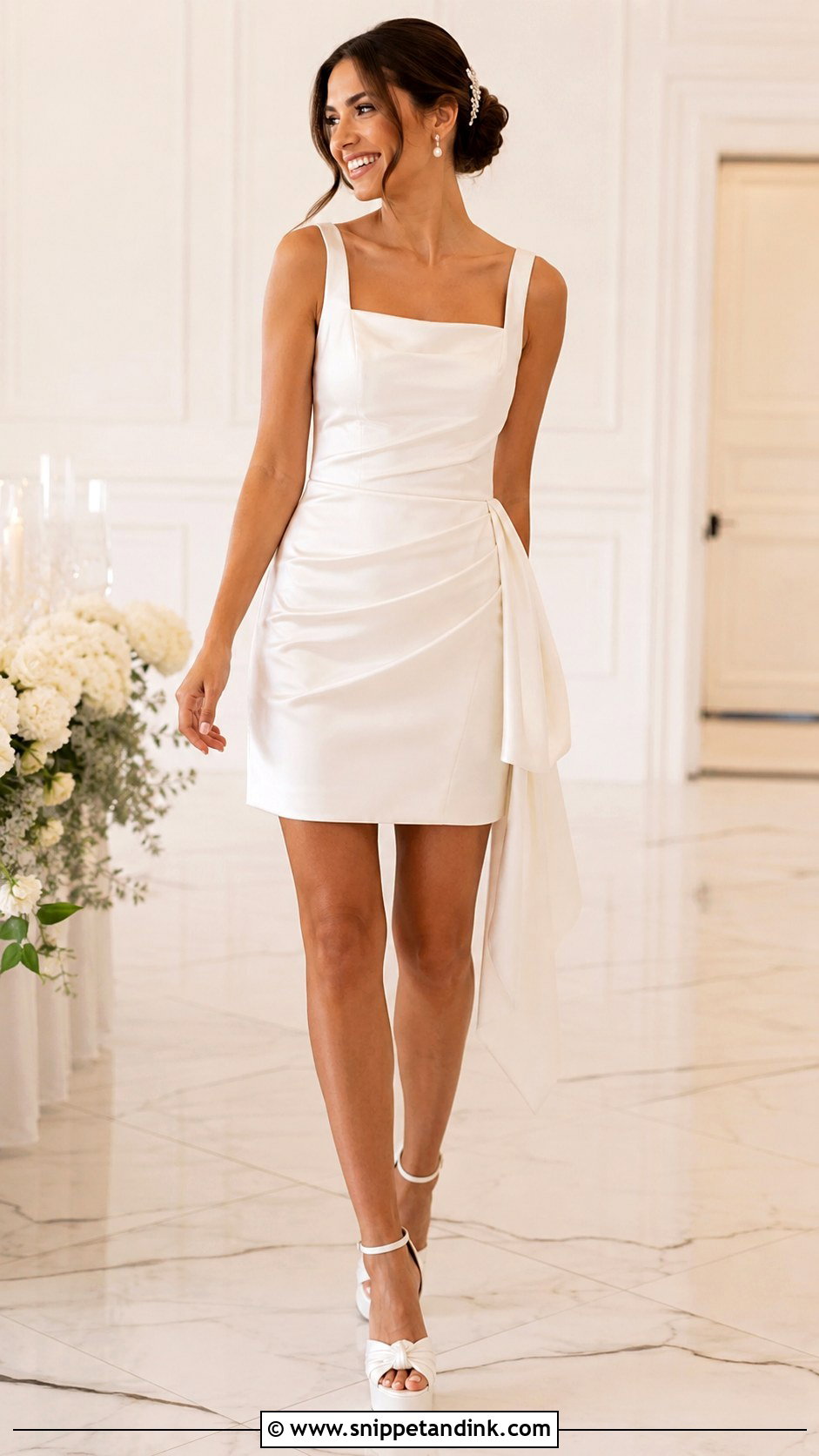
A reception dress is about movement. Think high-low hems, sleek crepe, simple satin or a fitted dress with no train. I’d style it with statement ivory heels, pearl earrings, a small hair bow or comb, and a mini bouquet or none at all. Keep it connected to the ceremony gown through fabric, accessories or silhouette so the photos still read as one wedding. Do a timed practice of the change; fifteen minutes away from your own reception goes faster than you’d think.
How Satin, Mikado and Tulle Behave Once the Ceremony Ends
A gown looks its best standing still in a fitting room. The wedding asks a lot more of it: a car ride, hours of sitting, stairs, a dance floor and someone stepping on the train. Each fabric in this collection reacts differently, and knowing that ahead of time saves panic on the day.
Creasing and the morning steam
Satin and organza crease where you sit, while mikado resists far better because of its weight. Crepe barely creases at all. Ask your shop whether they press the gown before pickup, and if you’ll steam it yourself, keep the steamer moving and away from beading and glued embellishment.
Bustling a long train
Any train longer than a sweep needs a bustle for the reception, and the style is chosen at your alterations fitting. An over-bustle hooks the train up onto the back of the skirt, while an under or French bustle folds it underneath with ribbon ties. Tulle and lace lift easily; heavy satin needs more attachment points so it doesn’t drop mid-dance. Teach the bustle to your maid of honor at the last fitting and take a phone video, because the ribbons are usually color-coded and easy to mix up after a glass of champagne.
After the wedding
Get the gown to a cleaner who handles bridal fabrics within a few weeks, before any spills or sugar marks oxidize and turn yellow. Store it flat or in a breathable box, never in the plastic bag it came home in.
Matching the Styling to the Fabric You Fell For
The real lesson across these looks is that fabric decides the styling. Satin and mikado want clean, structured accessories; tulle and lace can take softer hair and looser flowers; crepe needs almost nothing but perfect fit. Start with your venue, season and how much you want to move, then choose the veil, shoes, bouquet, hair and jewelry so they support the gown instead of competing with it. Bring those pieces to your final fitting and see them together in a mirror. That’s when a gown stops being a sample and becomes yours.
You'll Like These Ideas:


Leave a Reply