
A plain gown is harder to get right than a decorated one. With no lace or beading to draw the eye, the neckline, the fabric, the fit at the waist and the length of the train carry everything, and so do the veil, shoes and bouquet you put with it. The clean cuts brides ask me for most right now are minimalist satin, structured crepe, soft sleeves, high necks and simple A-lines, often with one considered detail such as a bow, a drape, a line of pearls or a detachable train. Below are thirty-five pared-back dresses for city, garden, courthouse, beach and formal weddings, each with the fitting point I’d watch.
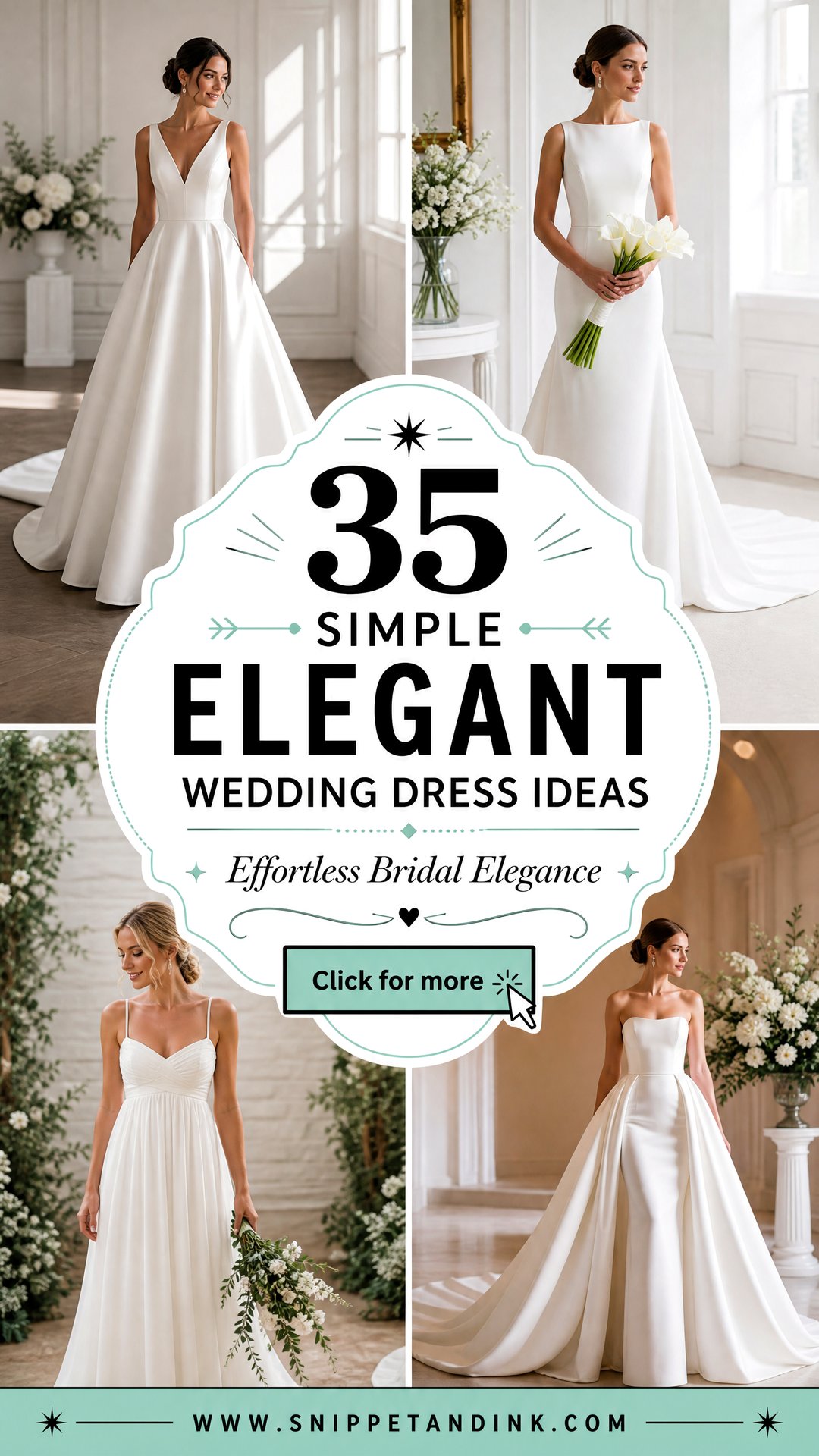
A Plain Dress Shows Every Fitting Flaw
On a lace or beaded gown, pattern hides a lot. On a bare satin or crepe dress, a seam pulling by a few millimeters is the first thing anyone sees. So with minimal gowns I spend less time on styling and more on fit.
- Bring your actual shoes and underwear to the first fitting. The hem and bust are set around them, and switching later means redoing work.
- Watch the side seams in a mirror while you breathe deeply. On plain fabric they should run straight down, not ripple or swing forward.
- Sit down for a full minute. Crepe and satin show pulling across the hips straight away, and a gown that’s fine standing can strain seated.
- Check the back as carefully as the front. Zips on minimal dresses are often invisible zips, and they pucker if the bodice is too tight.
Most bridal shops suggest starting alterations roughly two to three months before the wedding, with the final fitting a couple of weeks out. With a simple gown, I’d keep to that schedule even if the changes look small.
1. Simple Satin A Line Wedding Dress
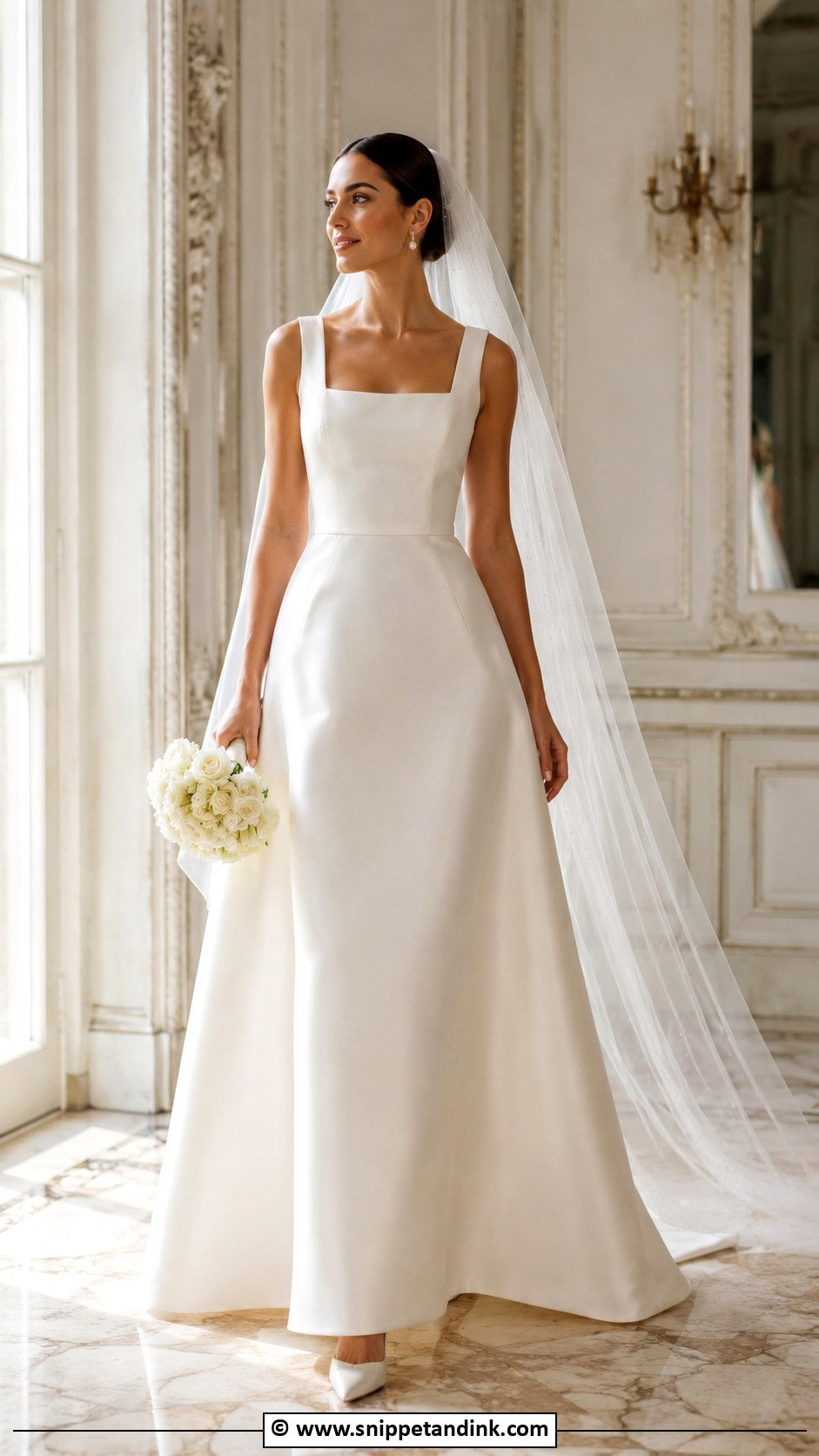
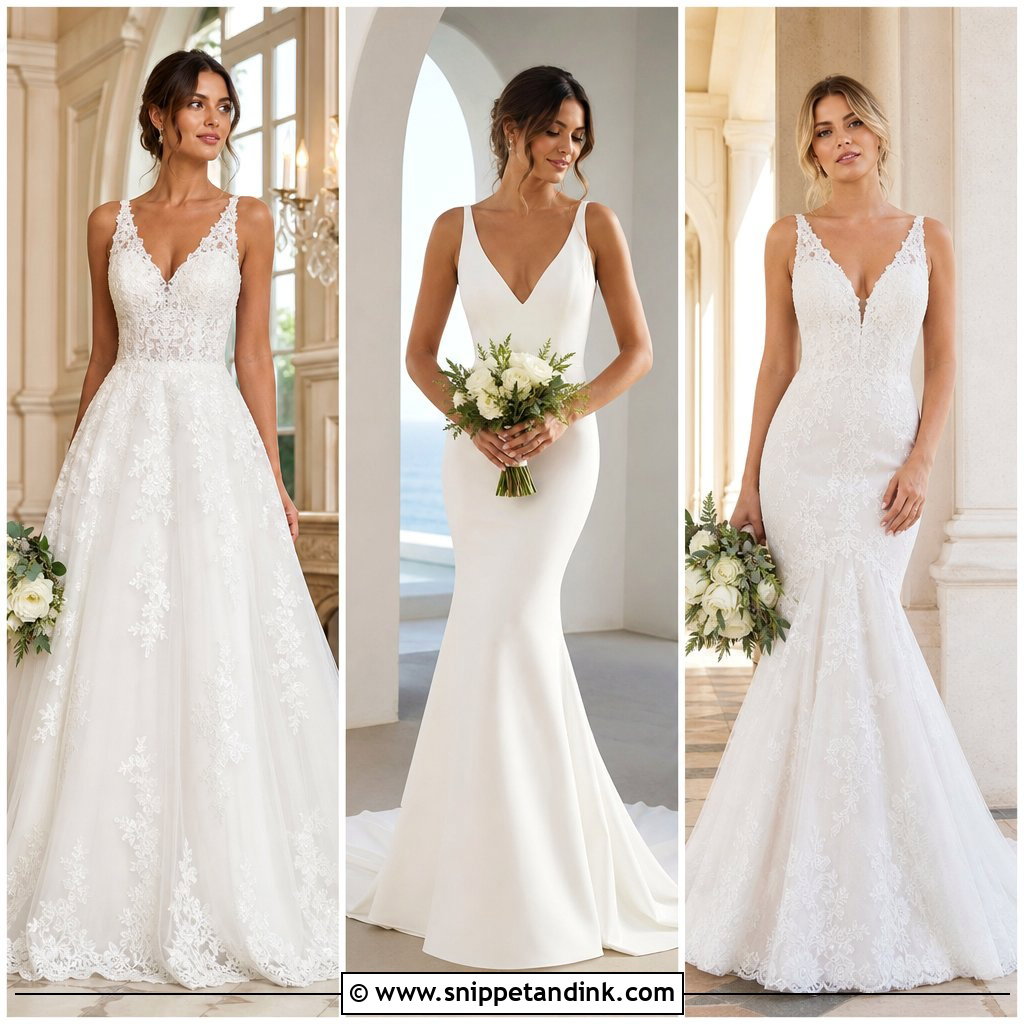
Satin A-lines are where I start most brides who say they want simple, because the shape forgives so much. The fitted bodice marks the waist and the skirt falls away without the weight of a ball gown. Ivory or soft white satin catches light well in photographs, and a square neck, thin straps or a gentle sweetheart keeps it classic. The thing to check is the waist seam: on plain satin, a seam that sits a fraction too high or low is obvious. Pearl drop earrings, pointed satin heels and a sheer chapel veil complete it for ballrooms, gardens, hotels and estates.
2. Minimalist Crepe Column Wedding Dress
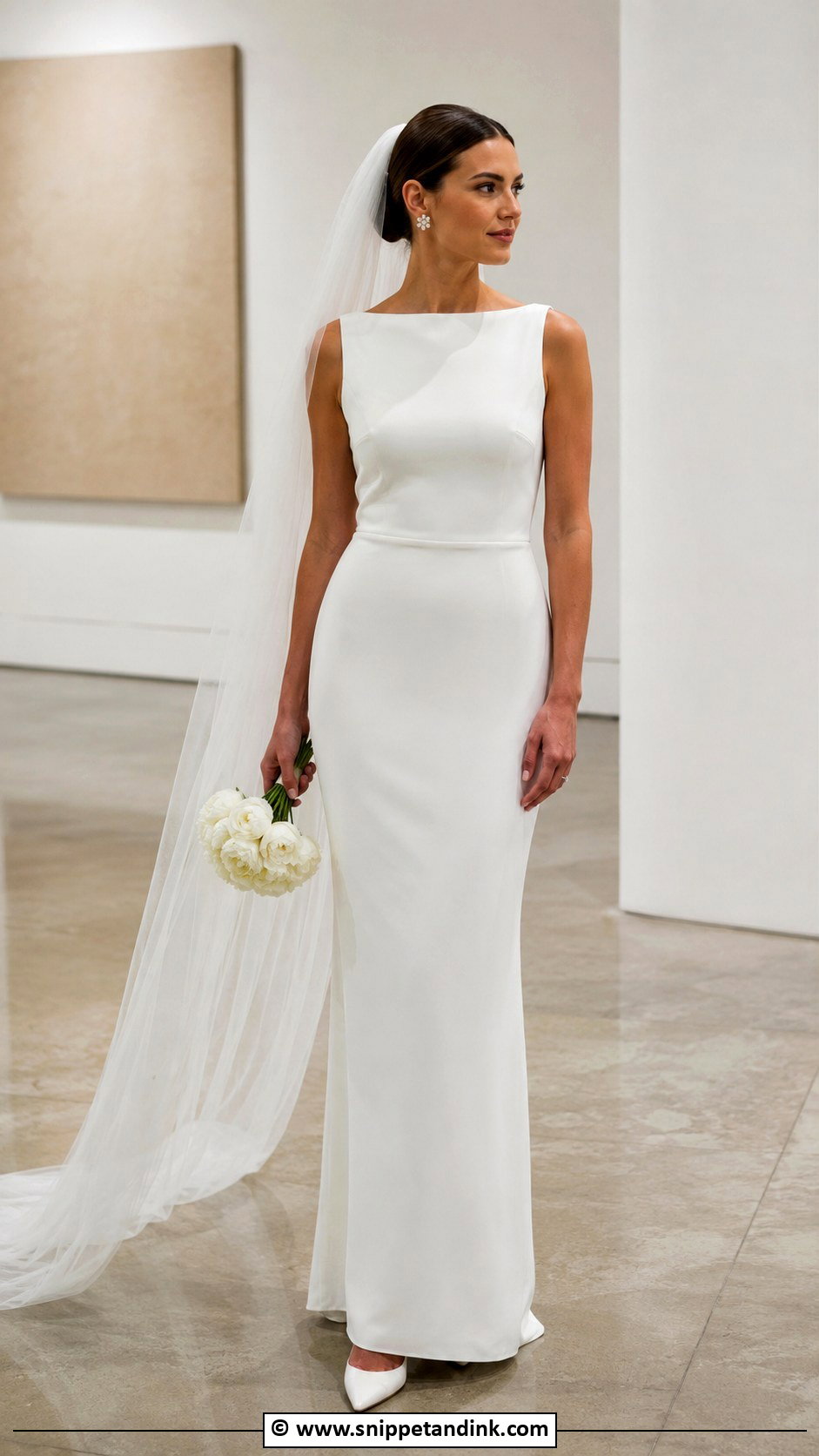
Crepe columns look effortless and are anything but. The fabric is matte and heavy, so the vertical line lengthens the body, but it also clings at the hip and seat if the pattern isn’t graded properly, and that’s where most of my alteration time goes. A straight, bateau or soft V neckline keeps it refined. A low bun, sculptural earrings, slim heels and a long plain veil suit gallery spaces, city venues and formal indoor ceremonies. It’s also one of the least likely dresses here to date in your photos.
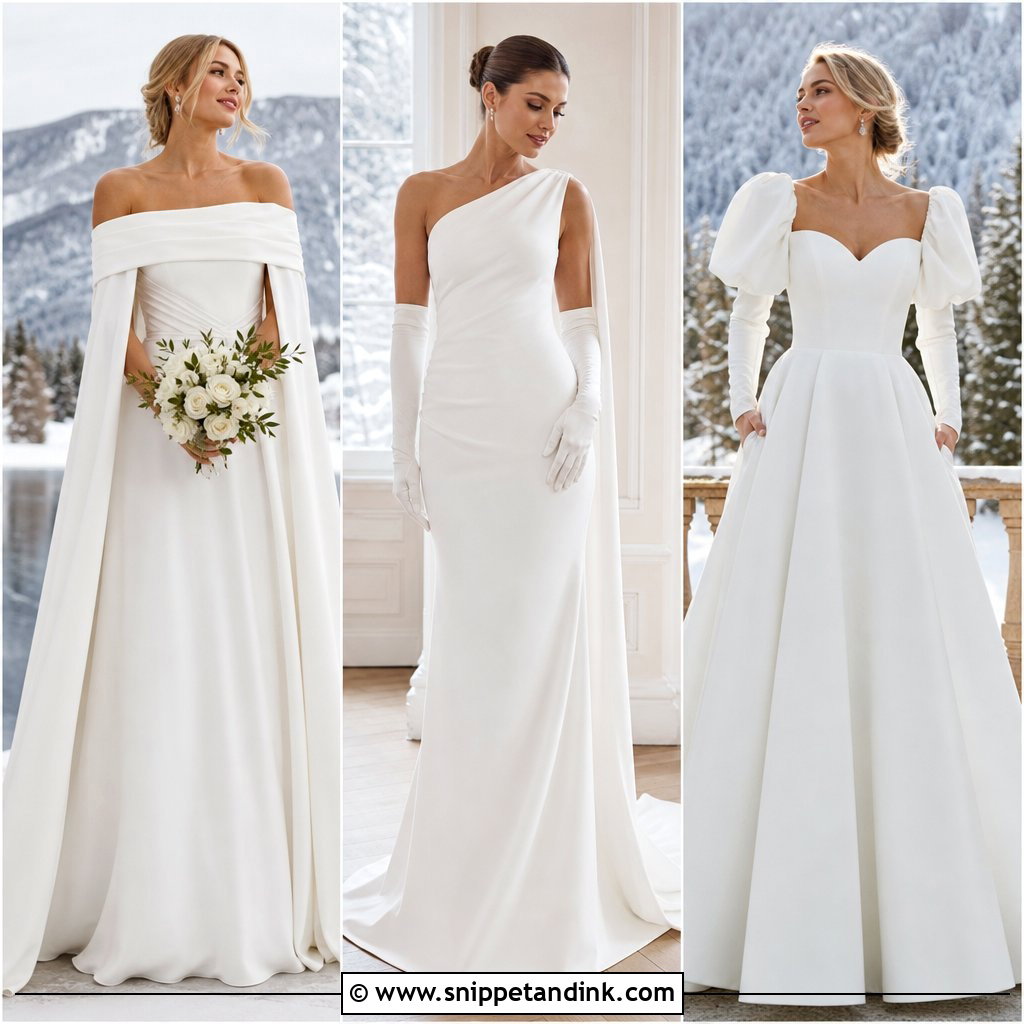
3. Elegant Long Sleeve Wedding Dress
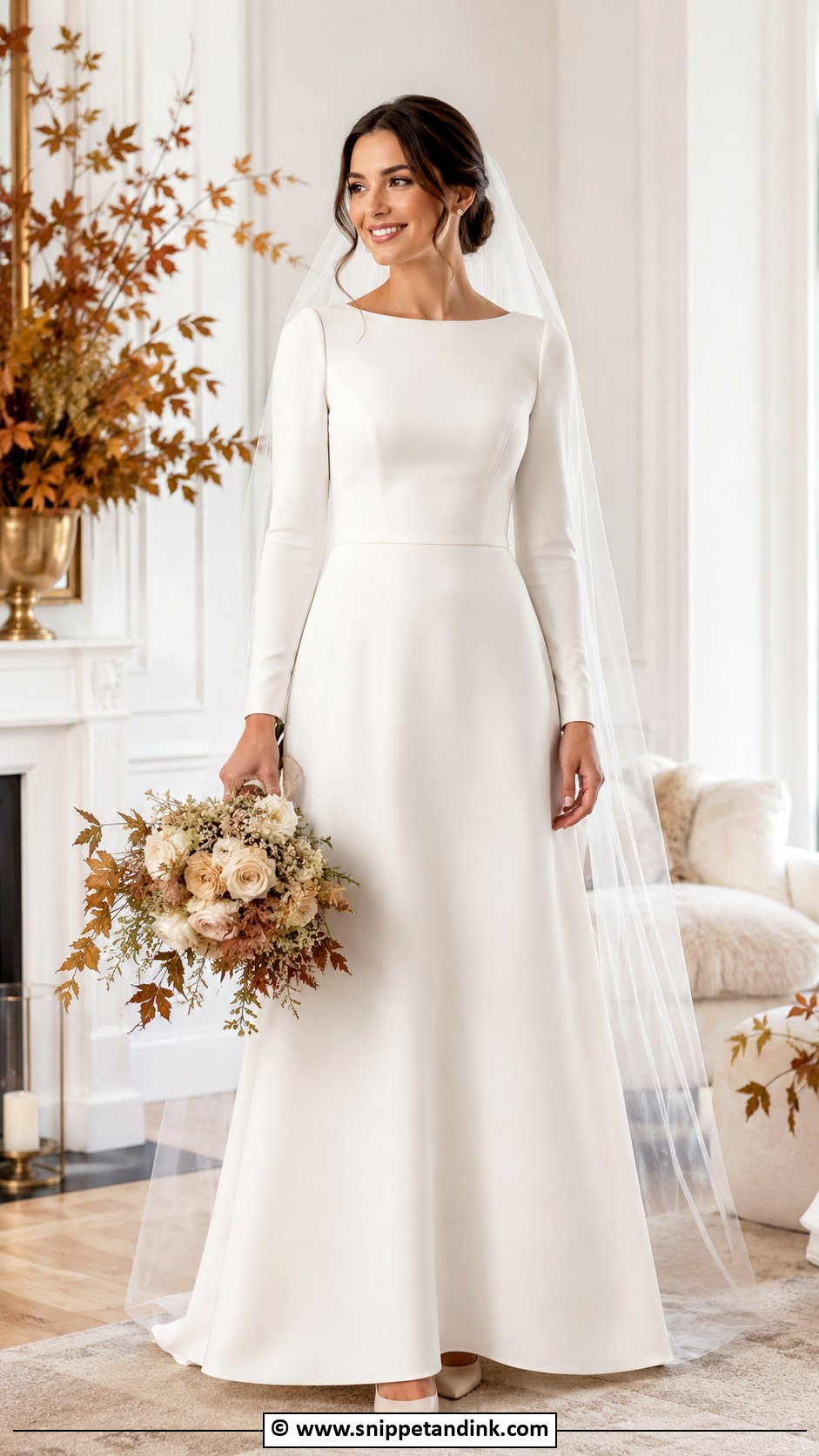
Sleeves change how a plain dress reads more than any other detail. In smooth crepe, satin or chiffon rather than beaded lace, they add coverage and balance while staying soft. A fitted bodice over a gentle A-line is the classic version; a high slit or low back makes it modern. Lift your arms at the fitting, since a tight sleeve head stops you hugging anyone. Pearl studs, ivory pumps and a clean veil that doesn’t compete with the sleeves suit fall, winter and evening weddings.
4. Simple Off Shoulder Wedding Dress
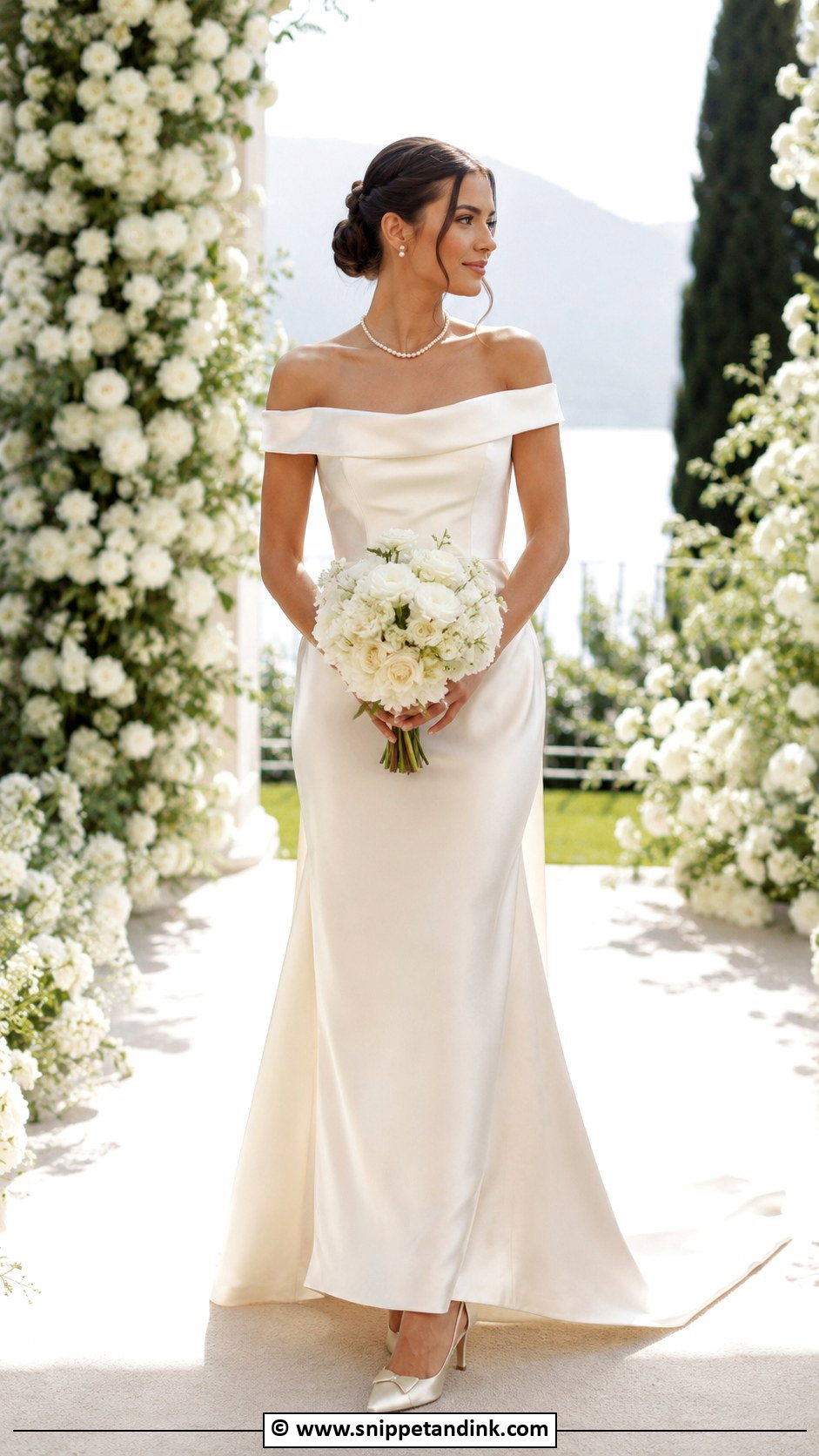
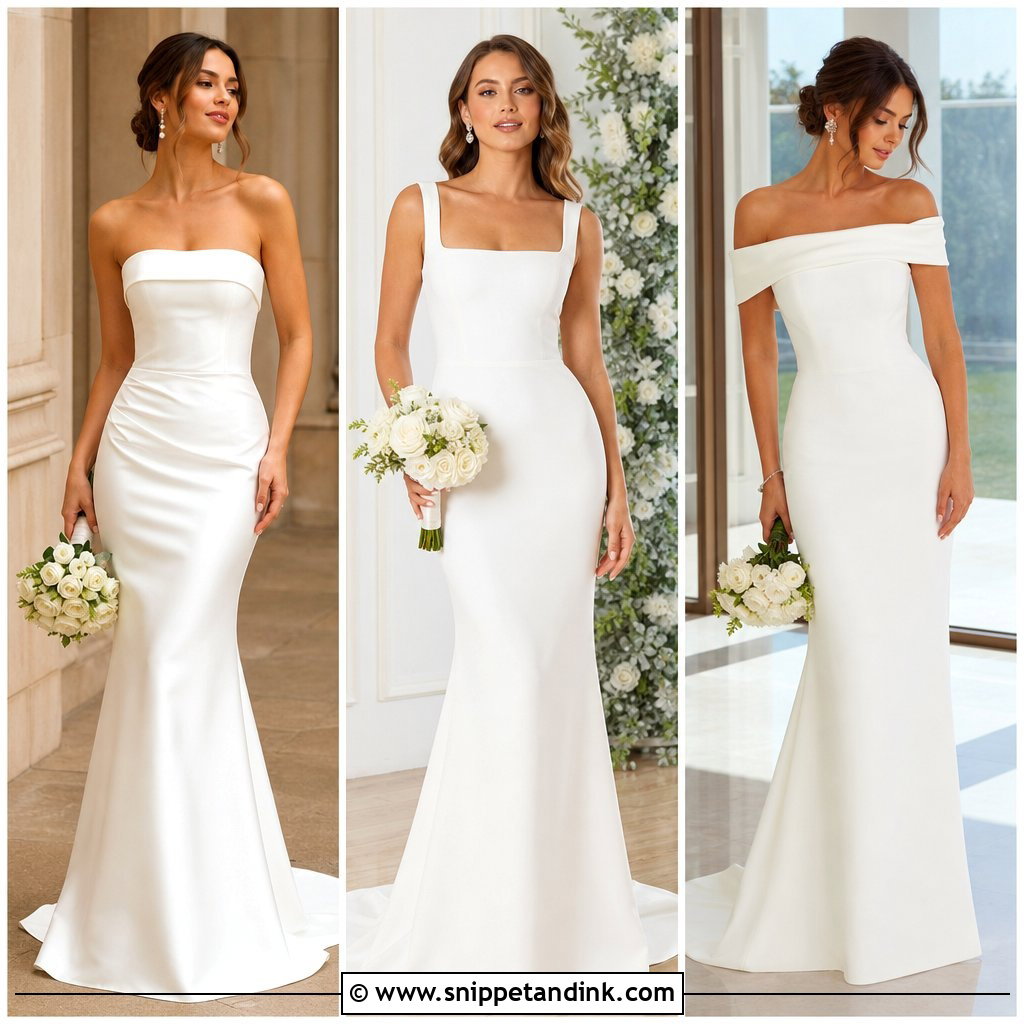
An off shoulder neckline frames the collarbone, so everything else on the gown should stay quiet. A fitted bodice with a smooth satin or crepe skirt is enough. Watch the band: it needs firm structure or gripper tape inside, or it will creep up your arms during the ceremony. A low chignon, pearl necklace and satin slingbacks give a classic finish, and a small bouquet of white blooms and greenery keeps it soft for receptions, outdoor ceremonies and destination weddings.
5. Square Neck Wedding Dress
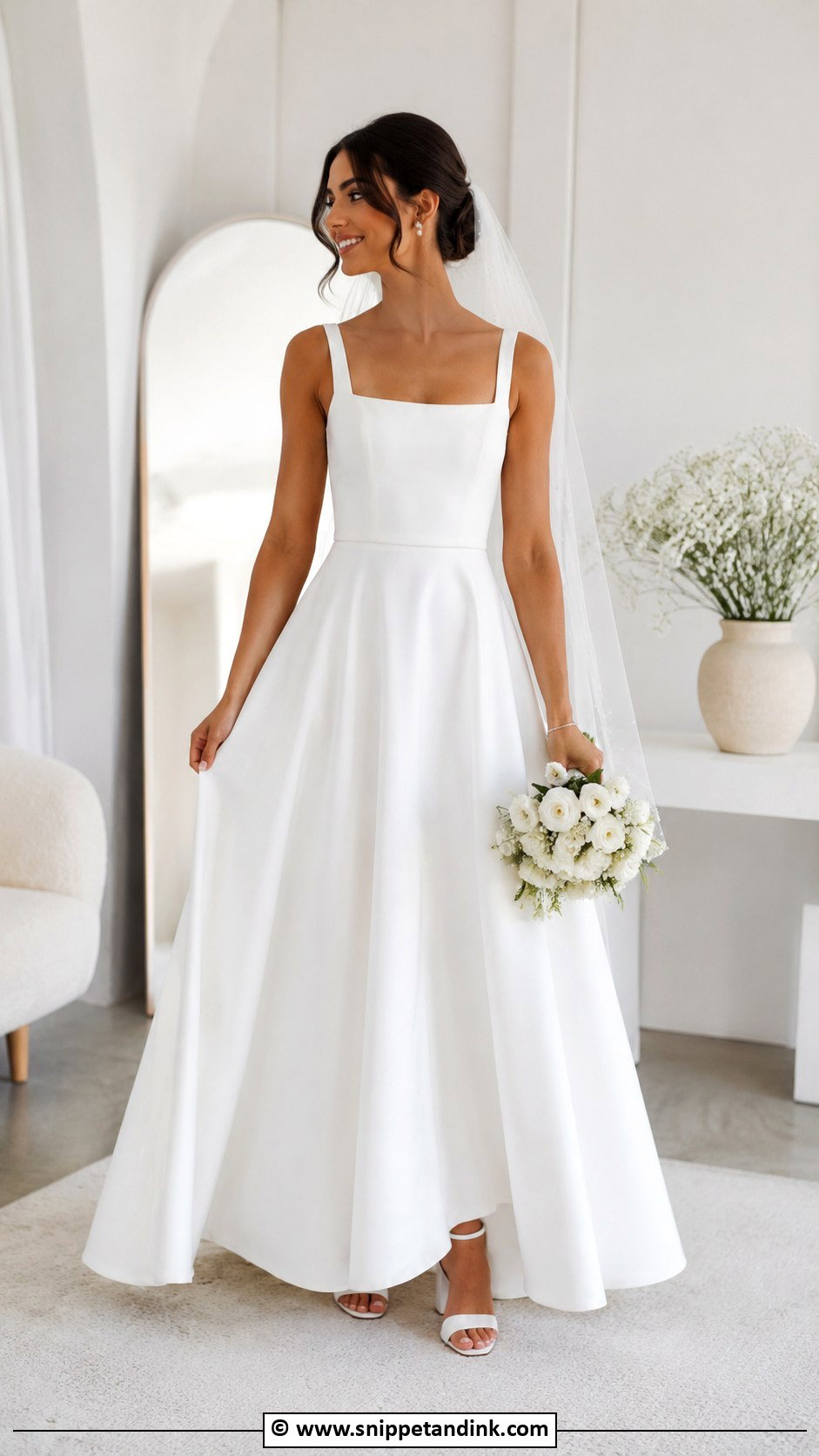
Square necklines sit flat against the chest, which is why they give support without the gaping a deep sweetheart can cause. Pair one with a fitted bodice, wide straps and a soft A-line or column skirt. Satin glows; crepe stays modern and matte. A fingertip veil, pearl studs, block heels and a simple bracelet are all it needs. It’s the neckline I suggest when a bride wants a simple gown that’s easy to accessorize.
6. High Neck Wedding Dress
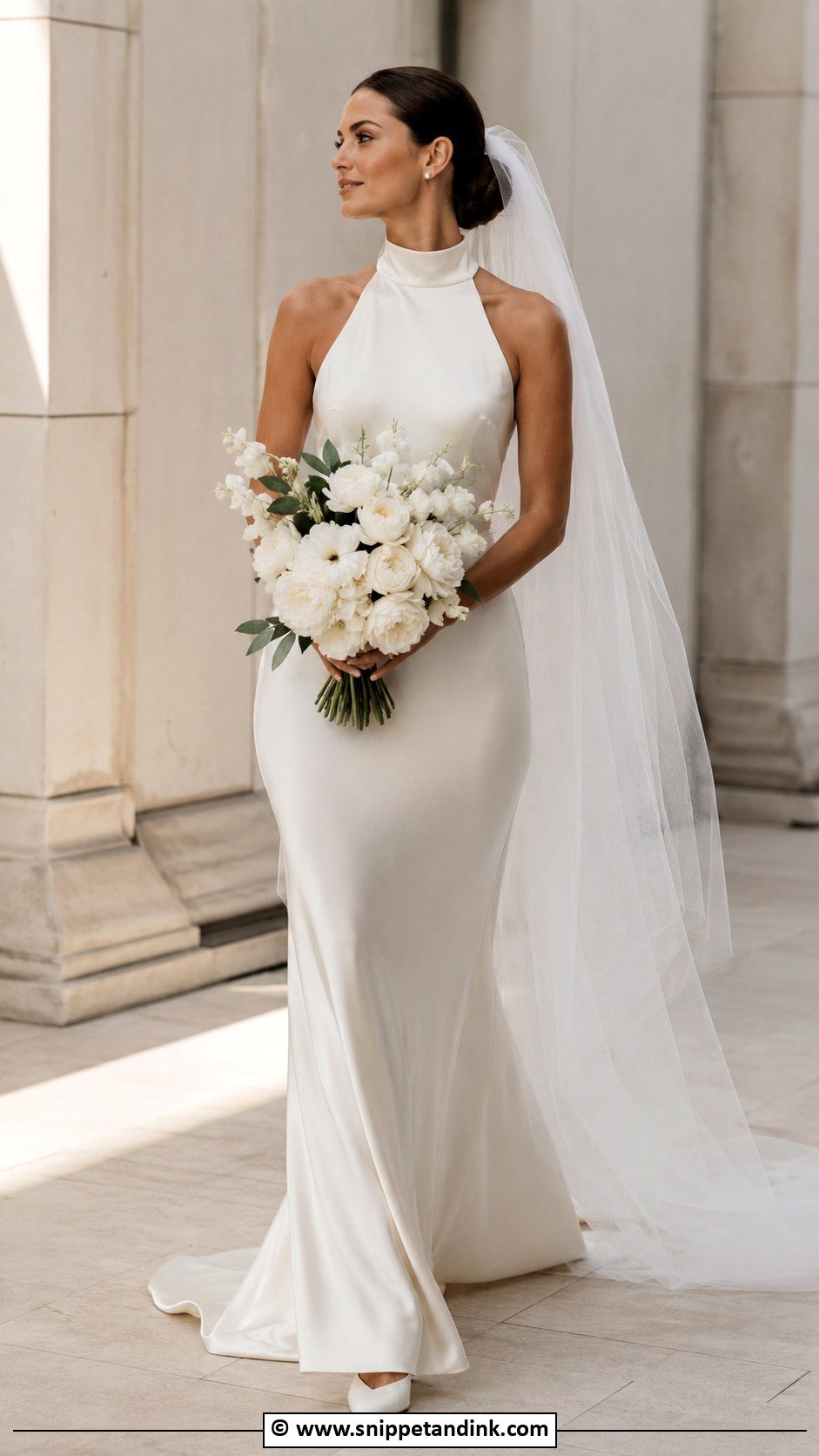
A high neck moves attention up to the face, so earrings, sleek hair and clean makeup suddenly matter more. Choose a satin column, crepe sheath or chiffon A-line and keep extra details off, so the neckline looks deliberate. Pin the veil at the back of the head, under a low bun, rather than on top, where it would crowd the collar. Pointed heels complete it for formal venues, museum weddings and cool weather. A collar that’s too snug gets tiring by the speeches, so check that you can turn your head freely.
7. Simple Slip Wedding Dress
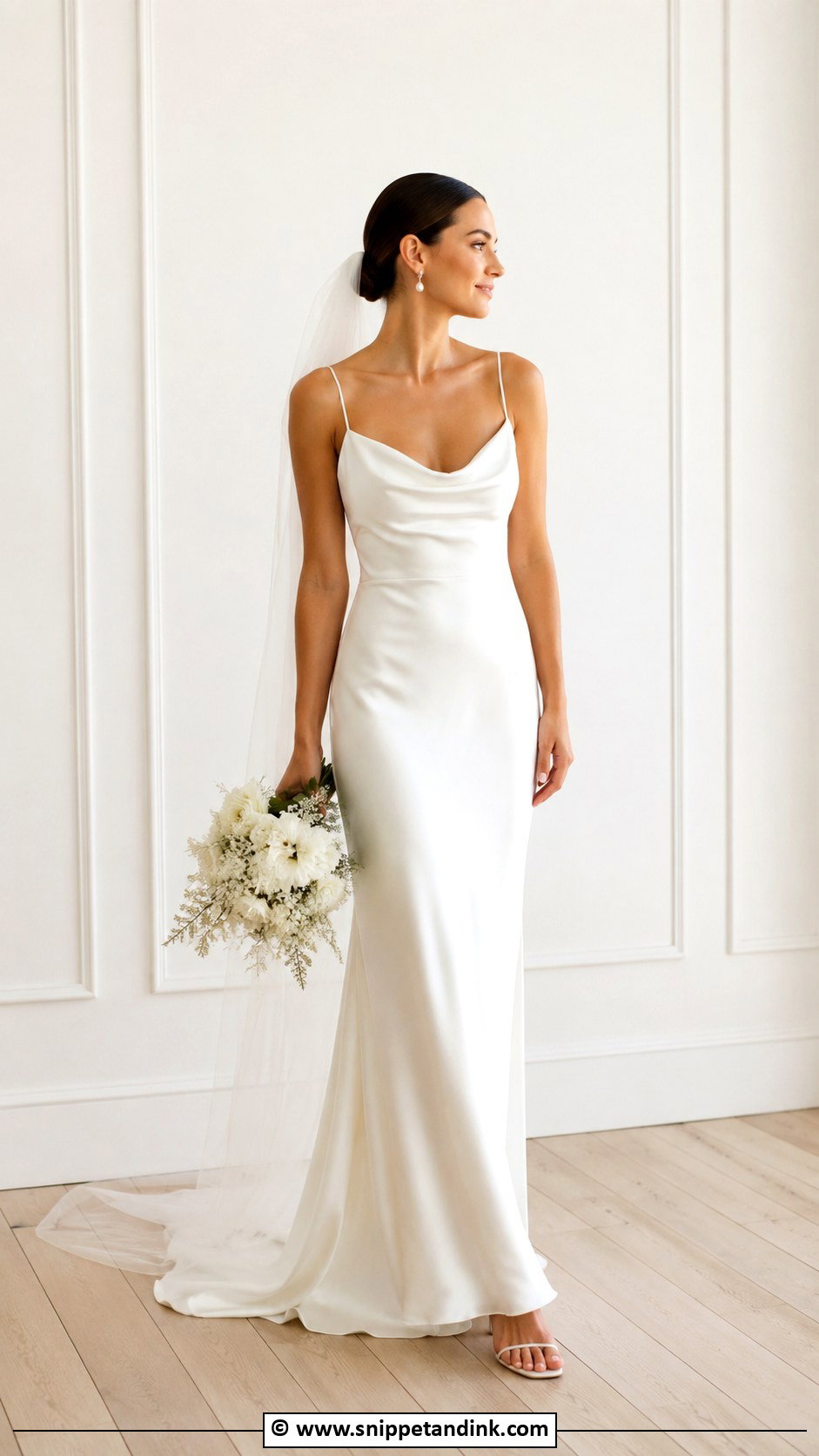
A simple slip wedding dress moves with you rather than holding you in, because the bias cut skims instead of clinging. Silk satin, charmeuse or a good liquid-look satin gives the fluid finish. It hides nothing, though, so plan smooth, edge-free underwear and test it under bright light before you buy. Barely there heels, a delicate veil, small pearl earrings and a sleek bouquet keep it clean, and a tailored cape or cropped jacket adds coverage for part of the day. Courthouses, beaches and city elopements suit it.
8. Elegant Boat Neck Wedding Dress
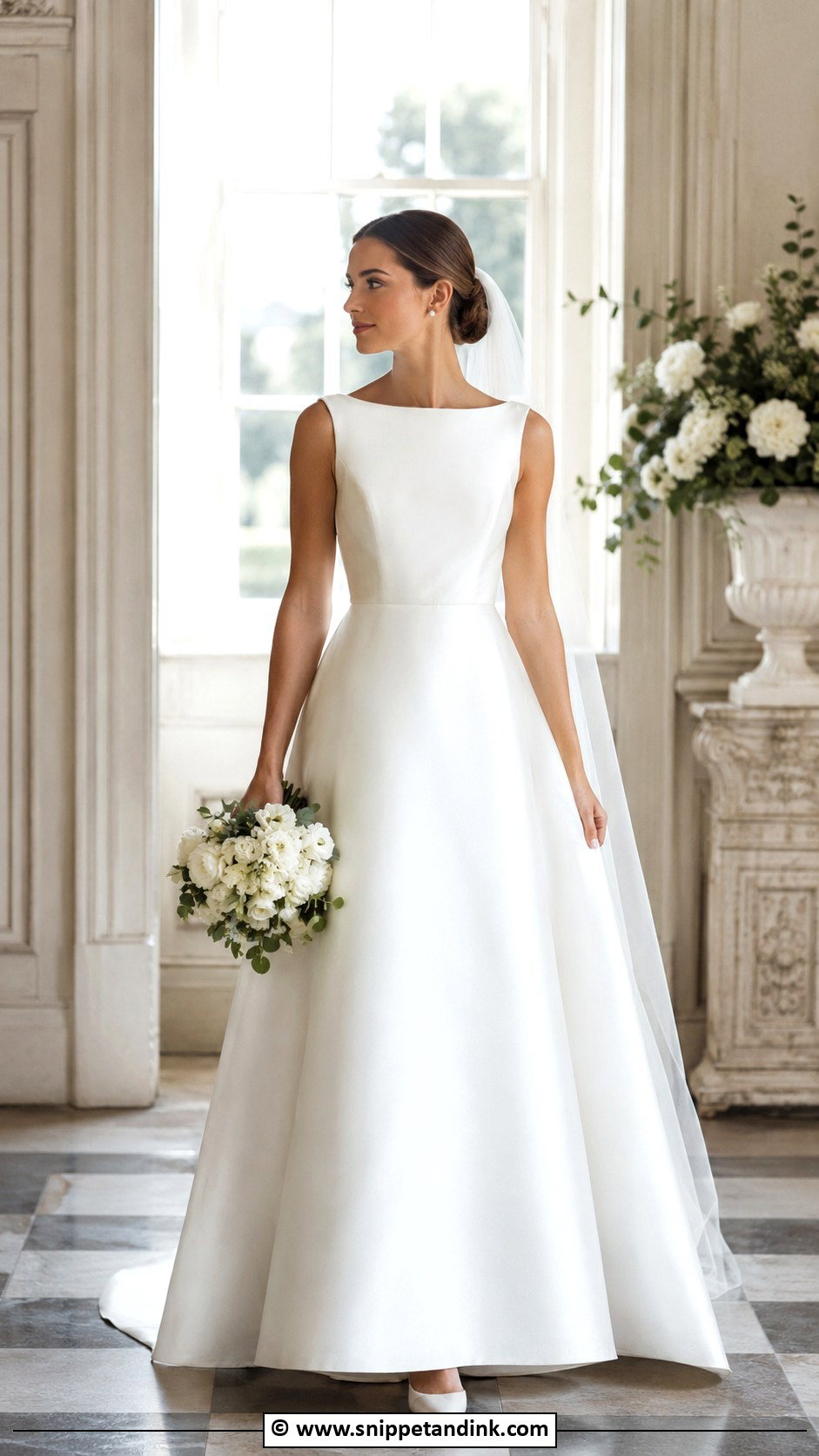
The boat neck runs almost straight from shoulder to shoulder and lifts the collarbone line, which gives even a very plain gown a slightly regal feel. It suits clean satin, mikado and crepe because the fabric holds that horizontal edge. A fitted waist with a smooth A-line is traditional; a slim column version feels newer. Pearl studs, satin pumps, a simple veil placed low under a bun and a small structured bouquet finish it. Brides with broad shoulders may prefer a softer scoop, since a bateau can widen them.
9. Simple Strapless Wedding Dress
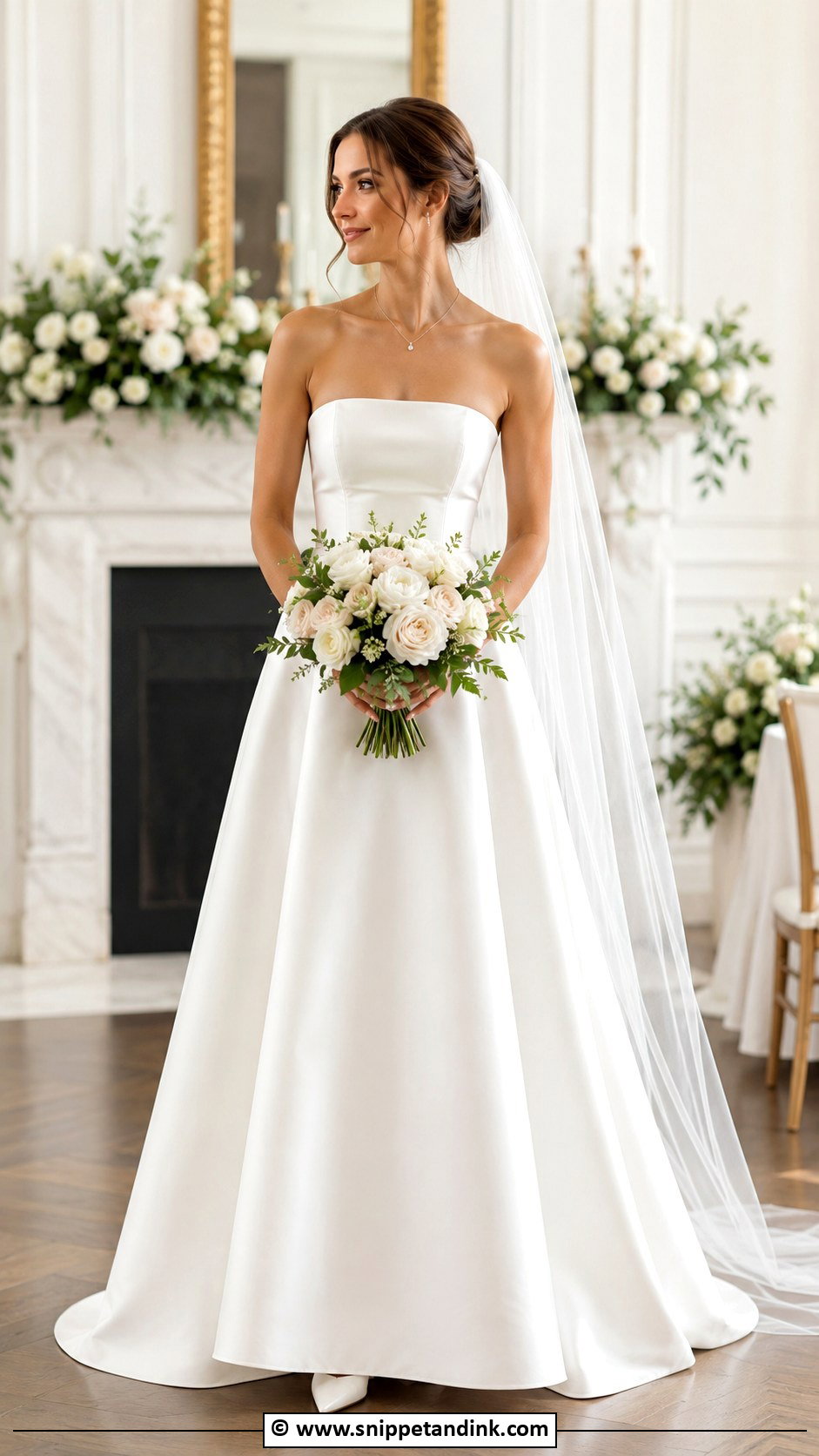
Strapless only looks simple when the fit is precise. Internal boning and a waist stay have to hold the bodice so you’re not tugging it up all evening, and that’s the first thing I test. A strapless satin A-line or a crepe fit-and-flare with minimal seams keeps it timeless. The open shoulders leave room for statement earrings, a fine necklace or a smooth updo. Add pointed heels, a chapel veil and a soft bouquet, then layer a sheer wrap or detachable bolero later if the evening turns cool.
10. Mikado Ball Gown Wedding Dress
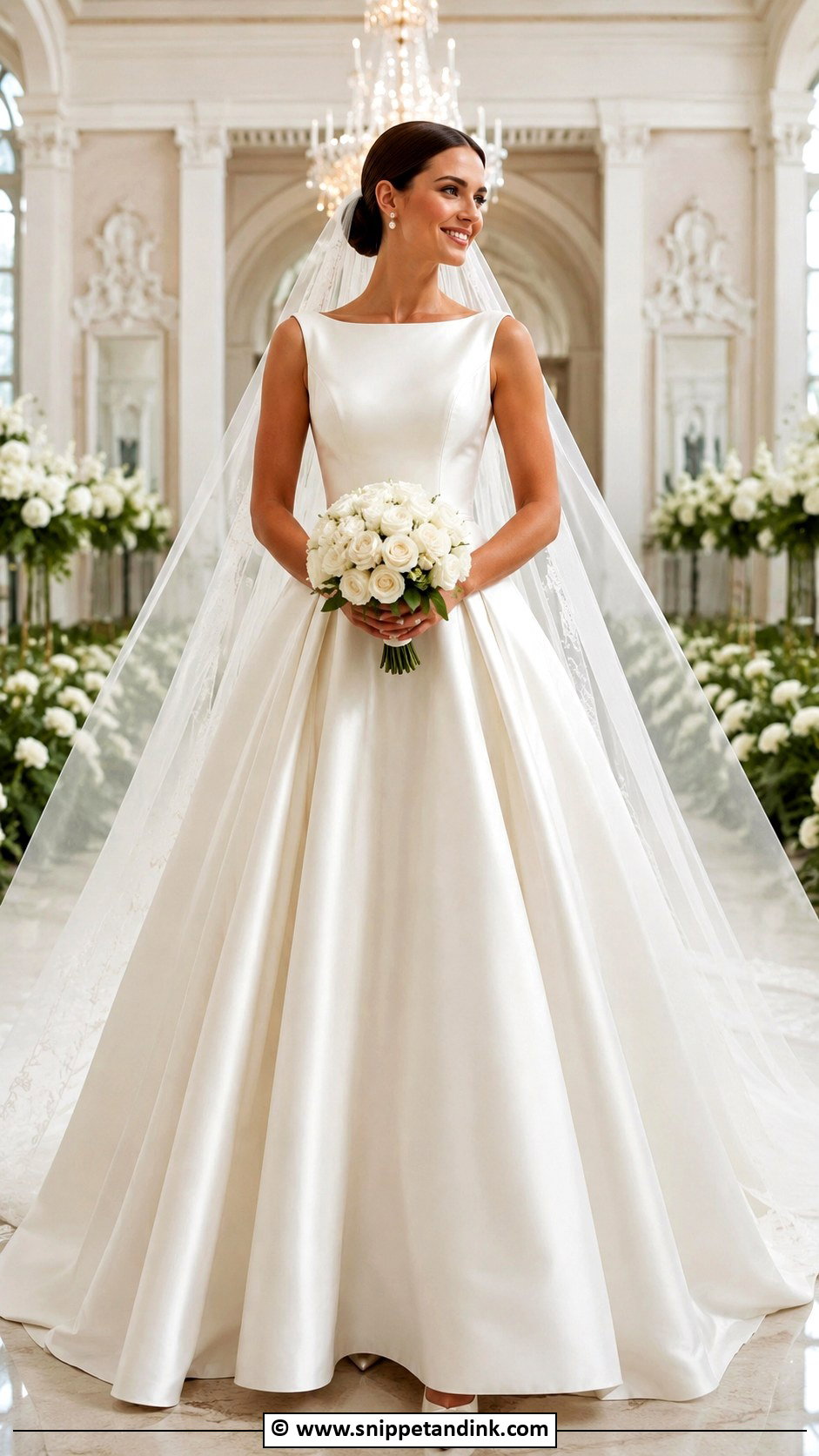
Mikado gives a plain ball gown its grandeur. The fabric is heavy and structured, so a clean bodice, defined waist and full skirt look rich without lace or beading. Be ready for the weight; a full mikado skirt is warm and takes some getting used to on stairs. A cathedral veil, pearl earrings and elegant closed-toe heels suit it, with a simple bouquet so the silhouette stays the focus. Large venues and black-tie receptions are its natural setting.
11. Simple Wedding Dress With Bow Back
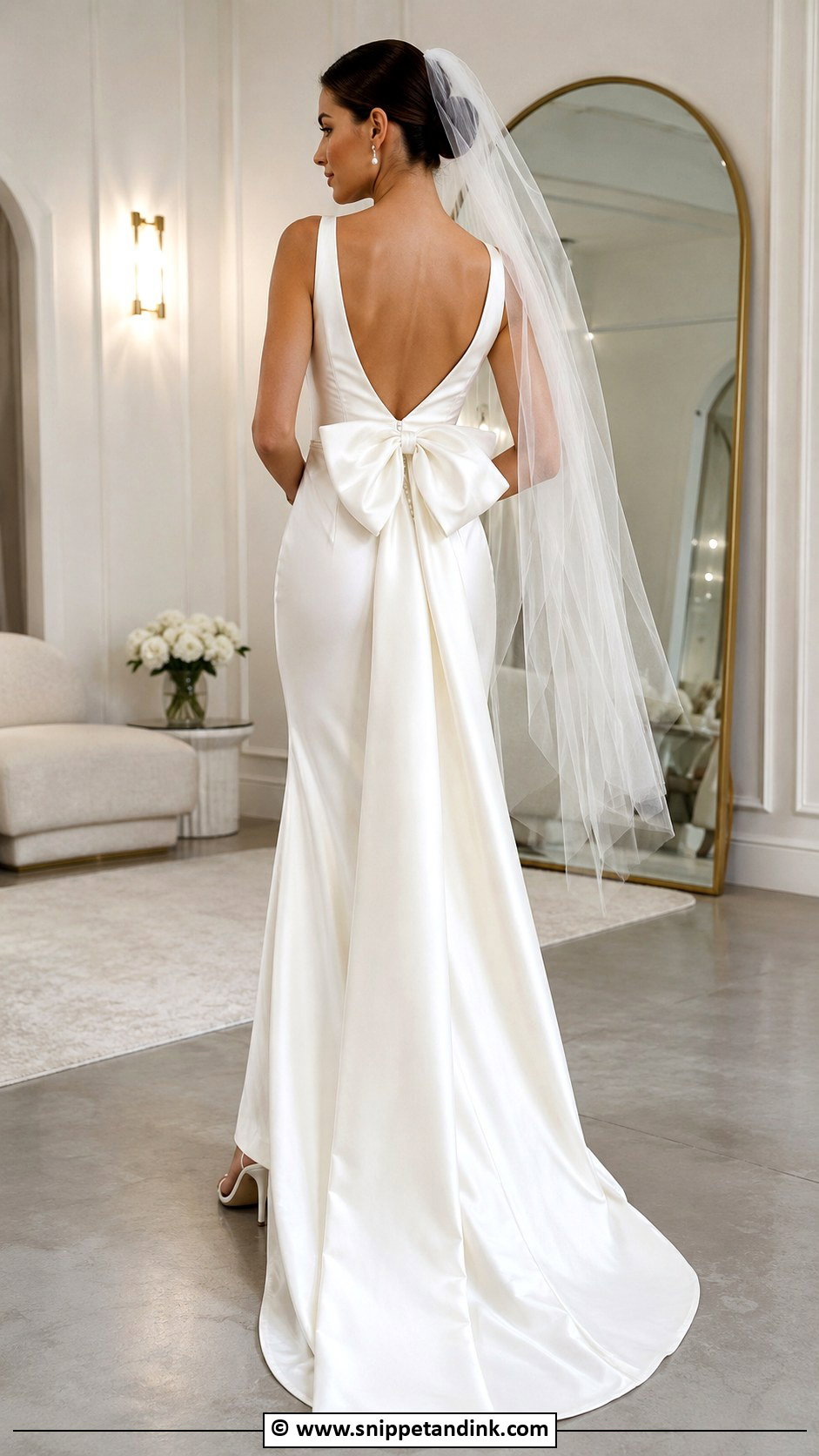
A bow at the back gives a clean front a reason to look twice as you walk away. Satin or mikado holds the bow’s shape; softer fabrics let it droop by the reception. The veil placement needs thought, so I set it to sit above or below the bow rather than flattening it. Low pearl earrings and simple heels keep it grown-up rather than sweet. Sit on a chair at your fitting to see how the bow behaves, because a large one gets crushed at dinner.
12. Elegant V Neck Wedding Dress
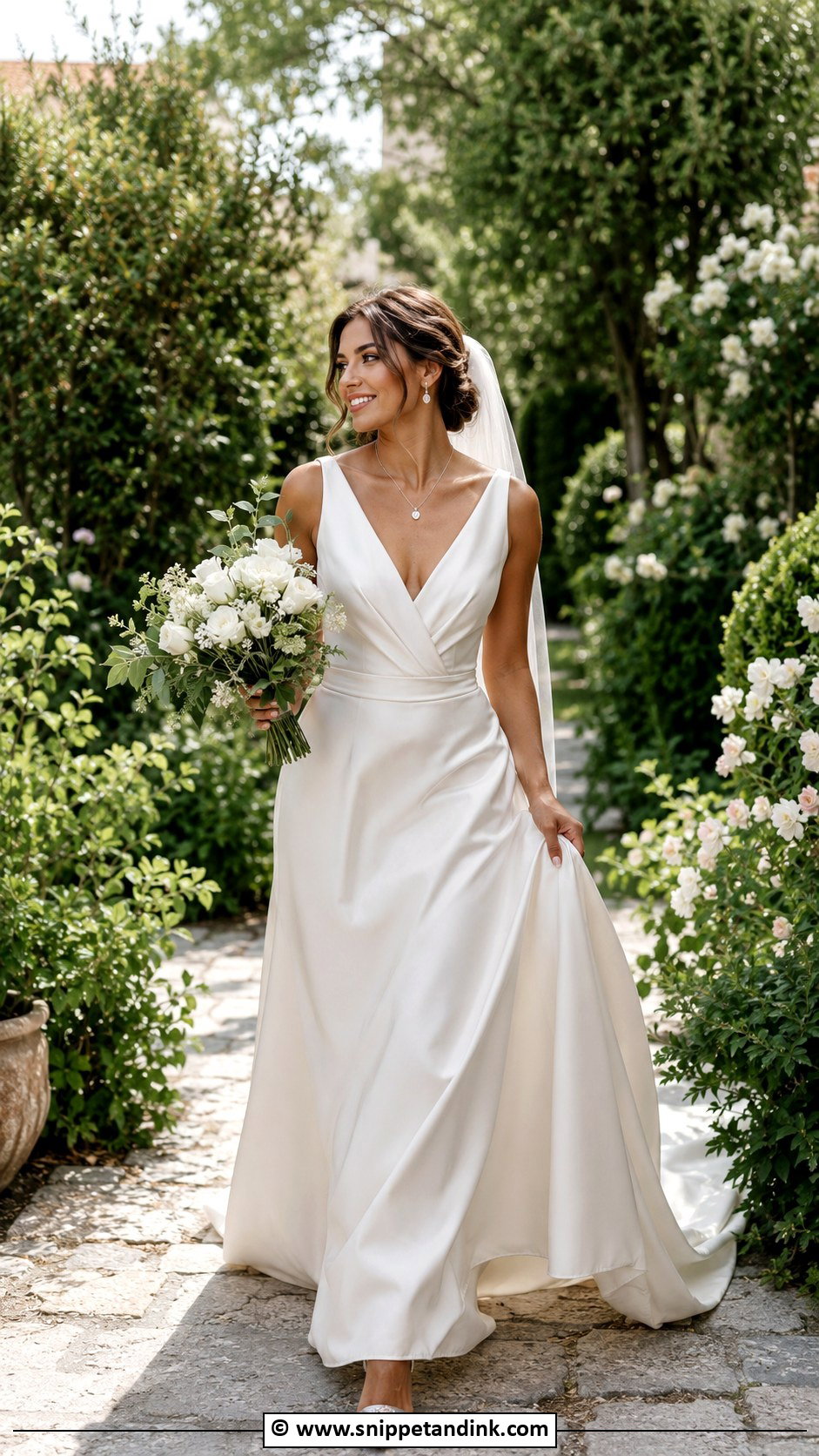
A soft V lengthens the upper body and works with fitted and flowing skirts alike. Choose smooth crepe, satin, chiffon or silk without heavy sparkle, then add a delicate pendant, pearl earrings and slim heels. A deeper V needs fashion tape or a fine mesh panel, and it balances best with a fuller skirt or a long veil. It’s one of the most adaptable necklines here, at home in a garden or a modern reception space.
13. Simple Lace Wedding Dress
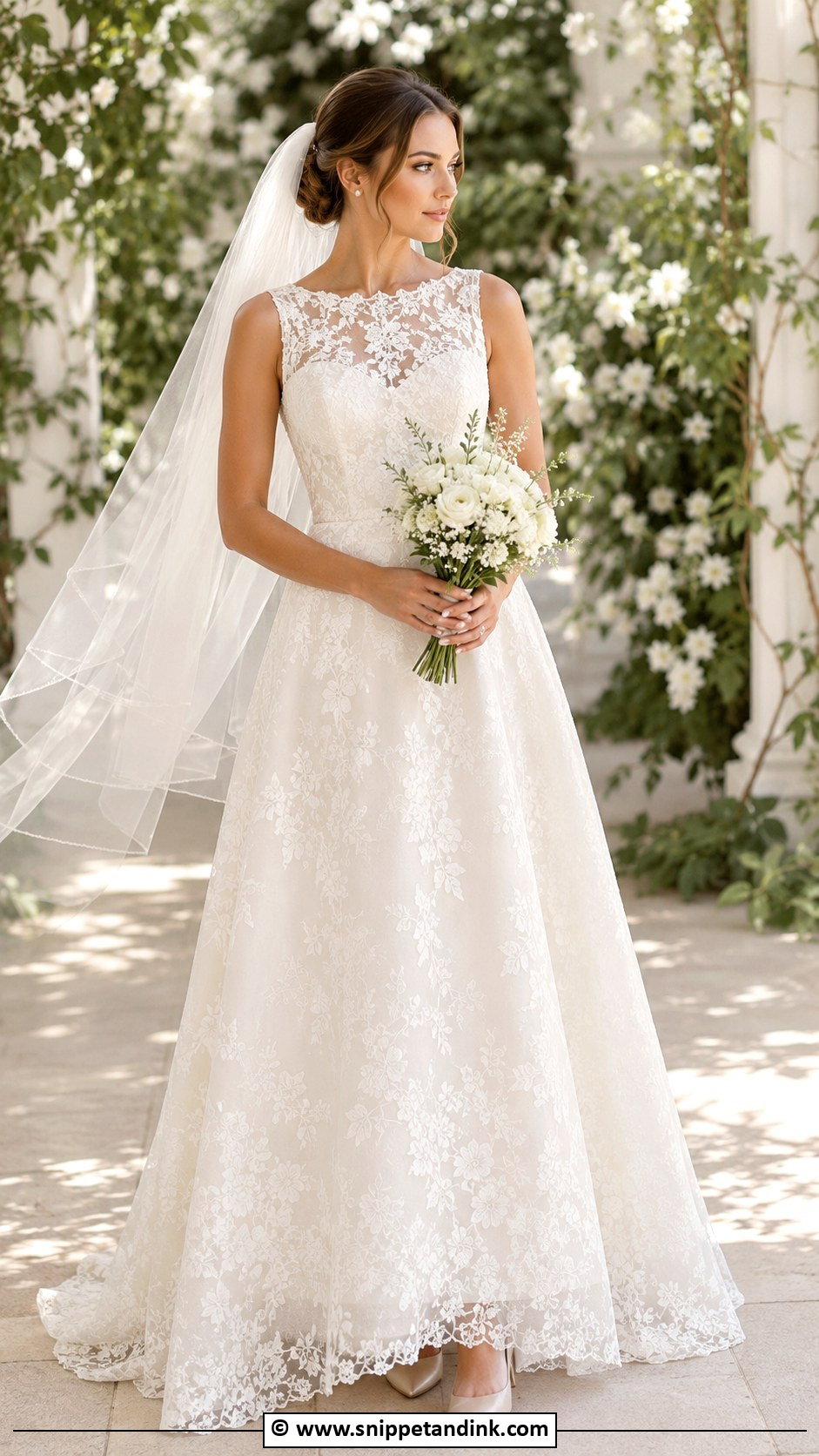
Lace and simple can live together if the lace is fine and the pattern is small. Delicate floral lace over a clean lining reads soft; bold, heavily corded lace reads ornate. A fitted bodice over an A-line is romantic, while a lace sheath feels more current. Check how the lace is finished at the hem and neckline, since a scalloped edge looks cleaner than a cut one. Pearl studs, nude or ivory heels, a sheer veil and a small white bouquet complete the outfit.
14. Elegant Chiffon Wedding Dress
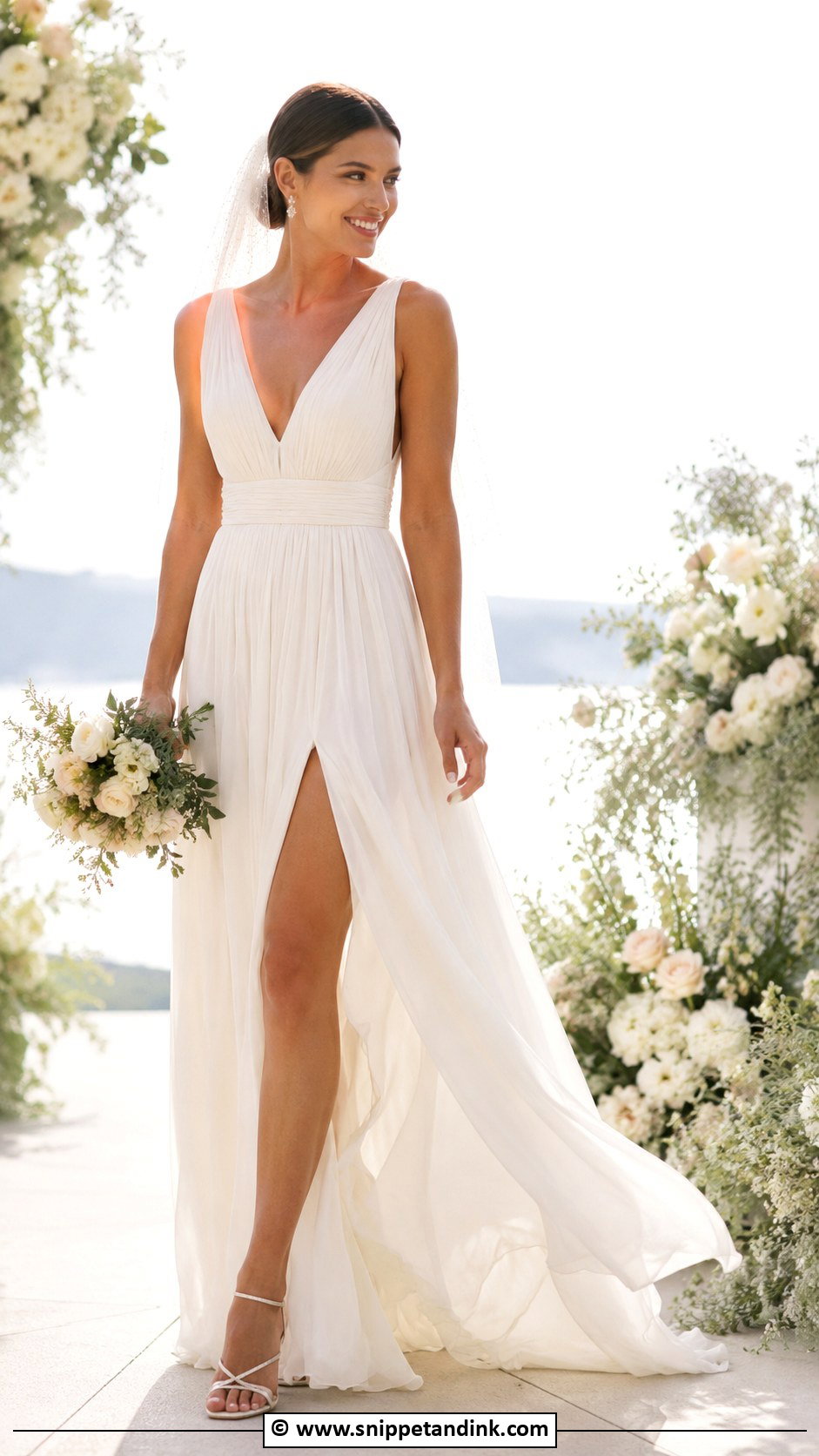
Chiffon is the lightest fabric on this list, and it moves with the slightest breeze. That’s its appeal for outdoor ceremonies, heat and destination weddings, and also its weakness, because it snags easily on rough stone and wooden chairs. A simple V-neck, gathered waist or wrap bodice gives it shape without stiffness. Strappy sandals, delicate earrings, a fingertip veil and a loose low bun or soft waves suit the relaxed fabric.

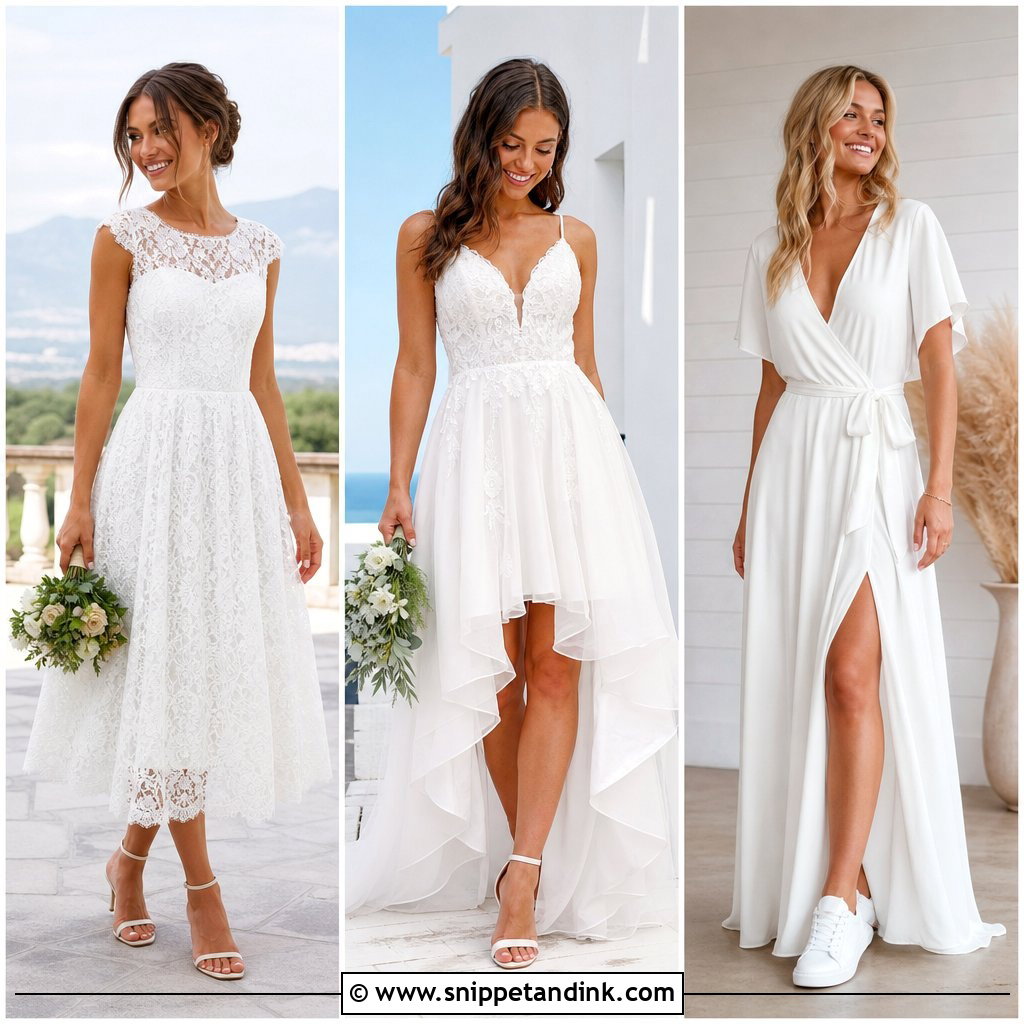
15. Simple Wedding Dress With Detachable Sleeves
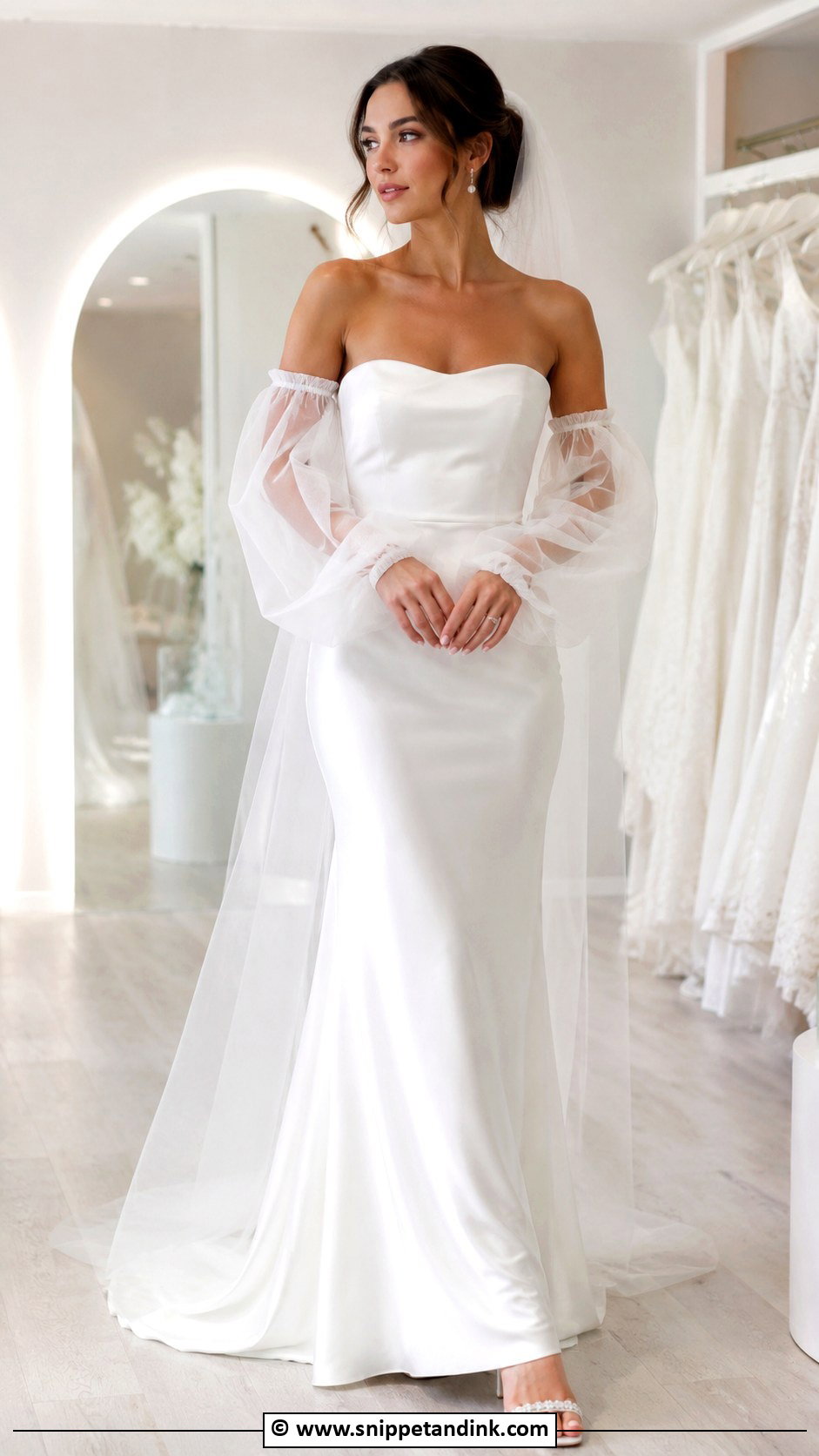
Detachable sleeves let one plain gown do two jobs: covered for the ceremony, bare for the dancing. A clean strapless or straight-neck base in satin or crepe works best. Sheer puff sleeves, fitted crepe sleeves or soft off-shoulder sleeves change the mood completely. They usually fasten with snaps or small hooks, so rehearse the change with whoever will help you. Pearl earrings, a smooth veil and comfortable heels finish it.
16. Elegant Mermaid Wedding Dress
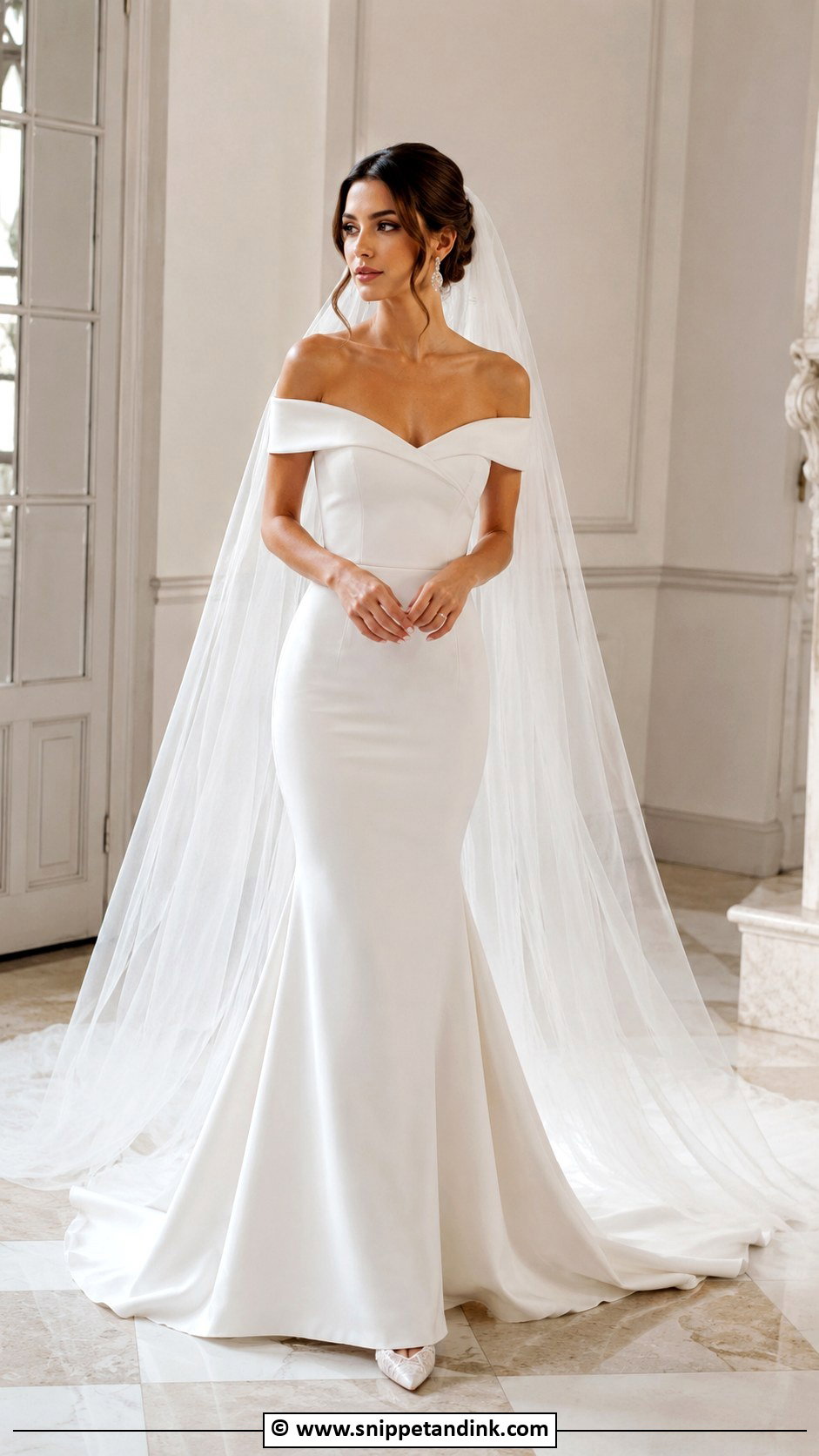
A plain mermaid relies entirely on tailoring. The gown hugs the bodice, waist and hips before flaring near the knee, and if that flare sits even slightly too low you’ll be taking tiny steps all night. Crepe or satin keeps it smooth and sophisticated, with an off-shoulder, square or strapless neckline. Sleek hair, drop earrings, pointed heels and a long veil complete it for formal venues. Walk, sit and climb a few stairs at every fitting.
17. Simple Wedding Dress With Low Back
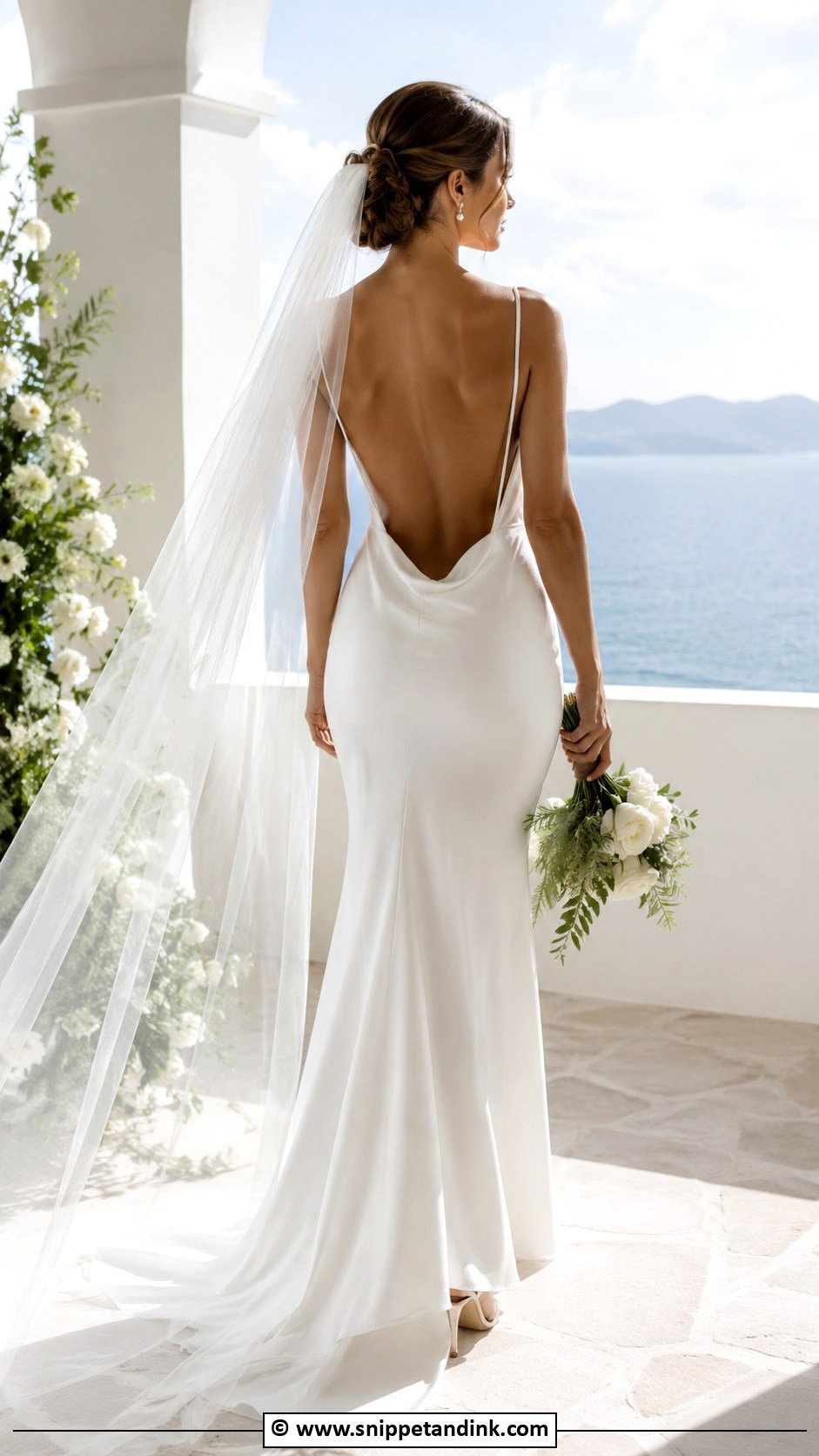
A low back gives a clean gown one strong feature without lace or sparkle. It works best on a plain satin slip, a crepe column or a soft A-line. Support is the practical issue, since a regular bra won’t work, so ask for cups sewn into the bodice. A simple updo shows the back, and a fine back necklace can add a little shine if you’d like. A sheer veil softens it for the ceremony. Choose heels that feel secure.
18. Elegant Cap Sleeve Wedding Dress
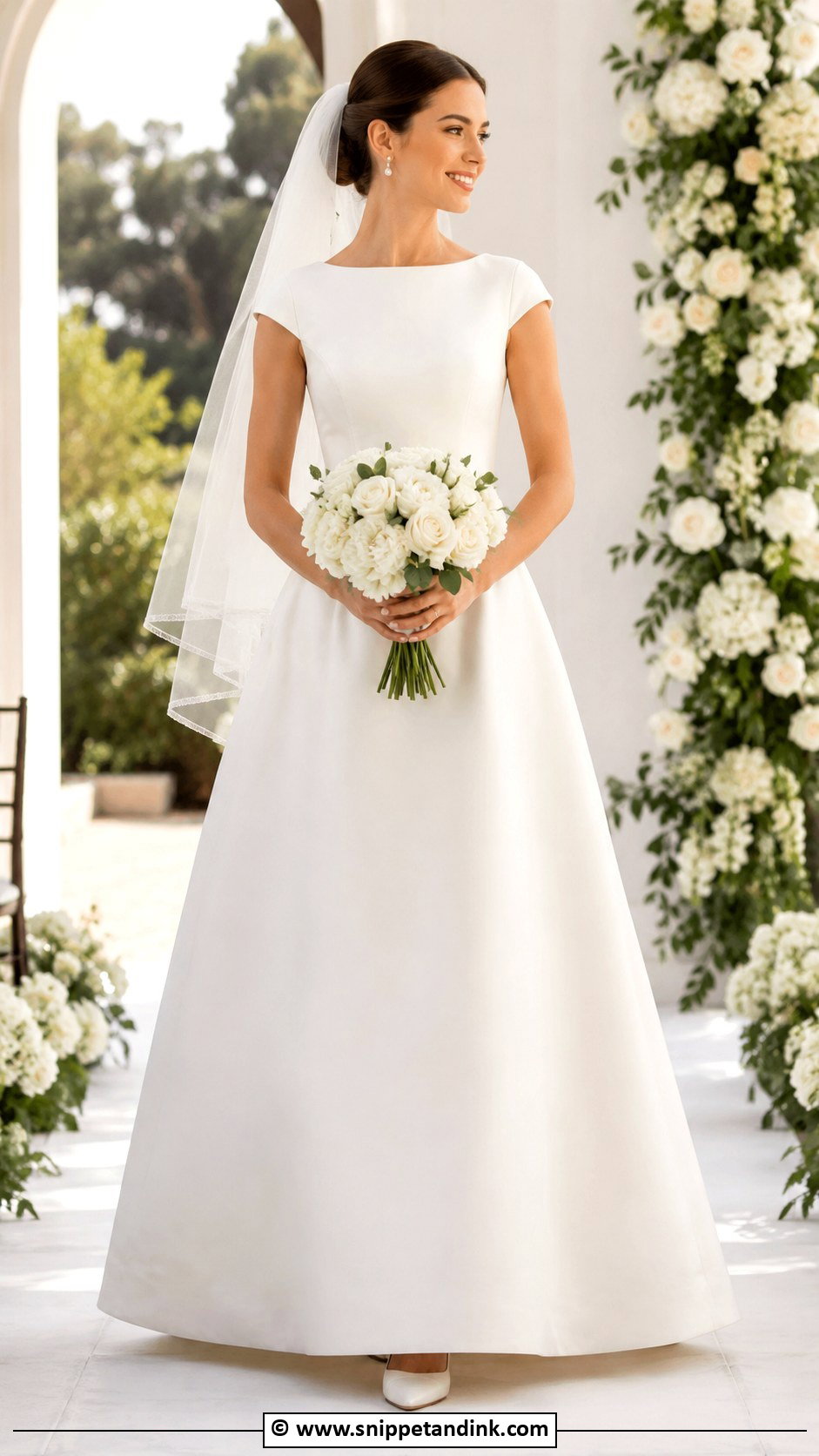
Cap sleeves cover the top of the shoulder lightly, which means you get some coverage without the warmth of a full sleeve. They pair with lace, crepe, satin or chiffon depending on how formal you want to go. An A-line skirt is traditional; a fitted skirt is more modern. I find they suit daytime ceremonies especially well, since the light coverage keeps you comfortable in the sun. Pearl earrings, low heels and a fingertip veil complete it.
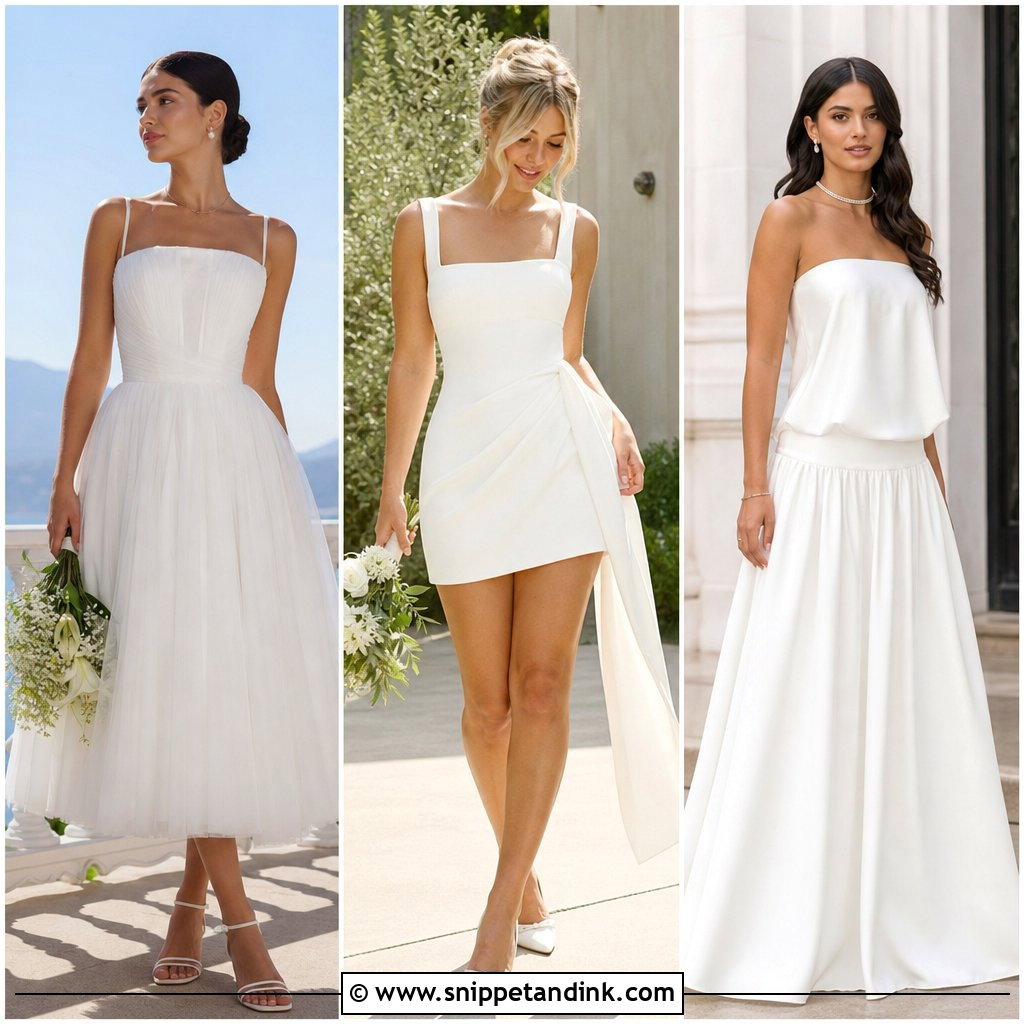
19. Simple Tea Length Wedding Dress
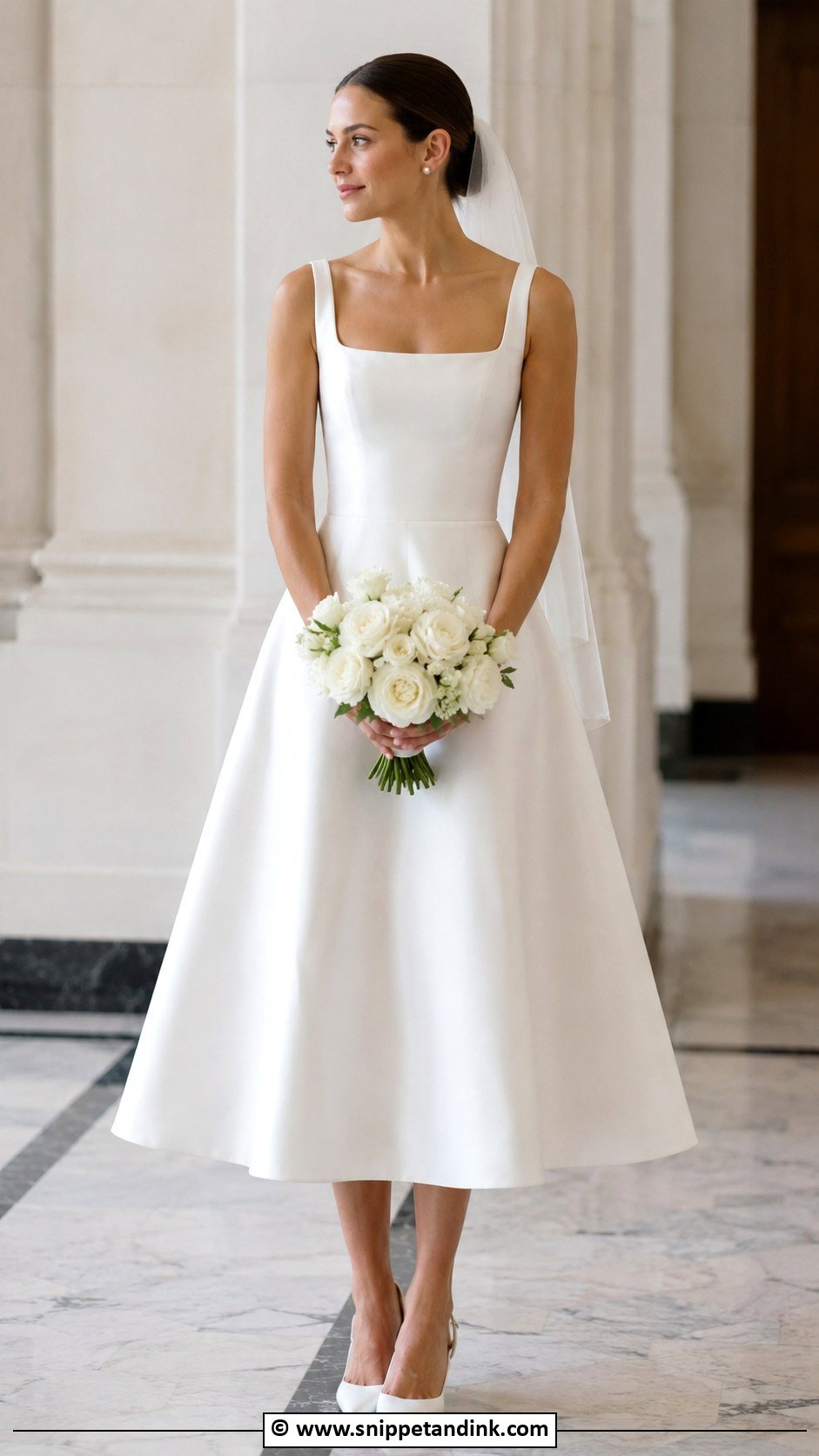
A simple tea length wedding dress puts your shoes in the picture, since the hem falls between the knee and ankle. Satin pumps, embellished flats or pointed slingbacks are worth choosing as carefully as the dress. A fitted bodice and clean A-line skirt keep it polished. Add a short veil, pearl studs and a structured bouquet. Courthouse weddings, garden parties and small receptions suit it, and you’ll never need a bustle.
20. Elegant Wedding Dress With Cape
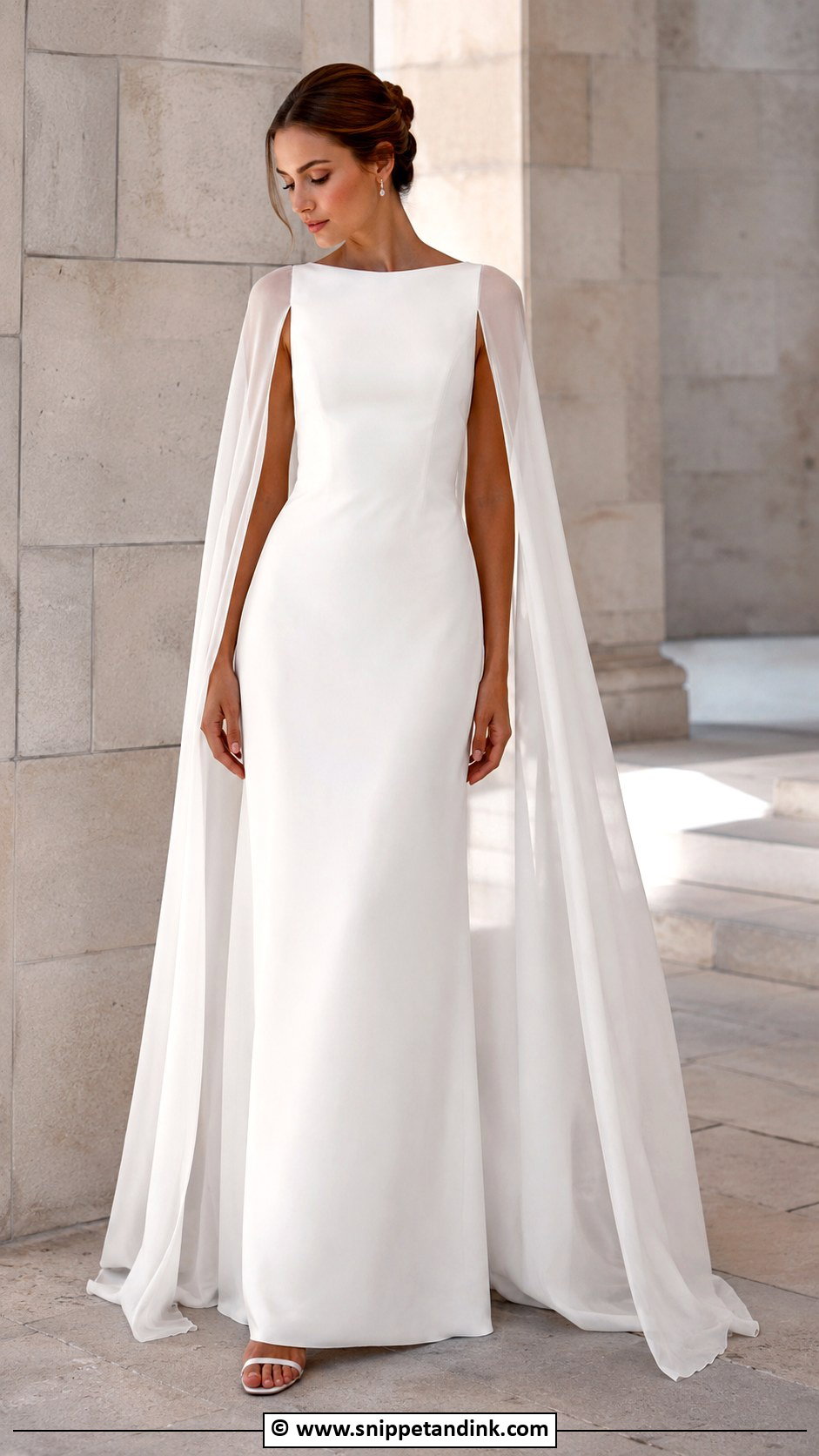
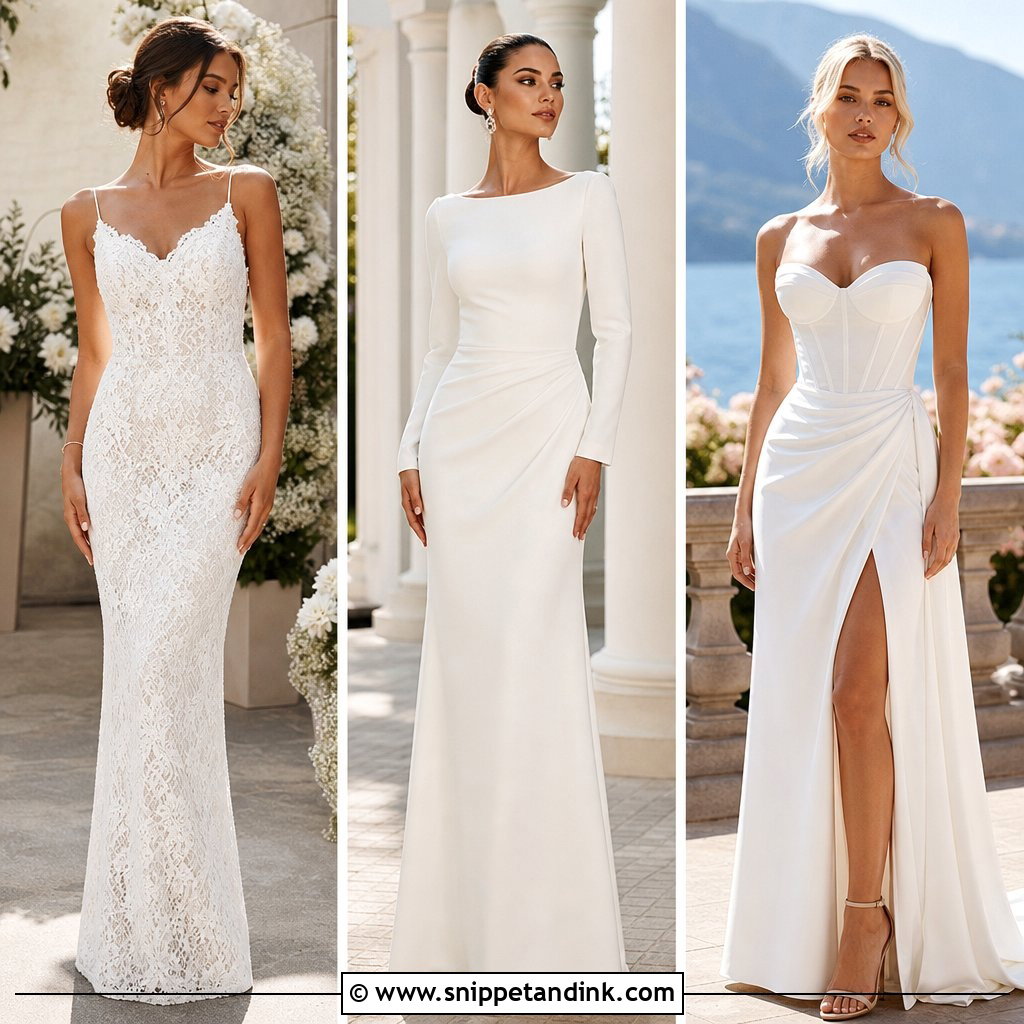
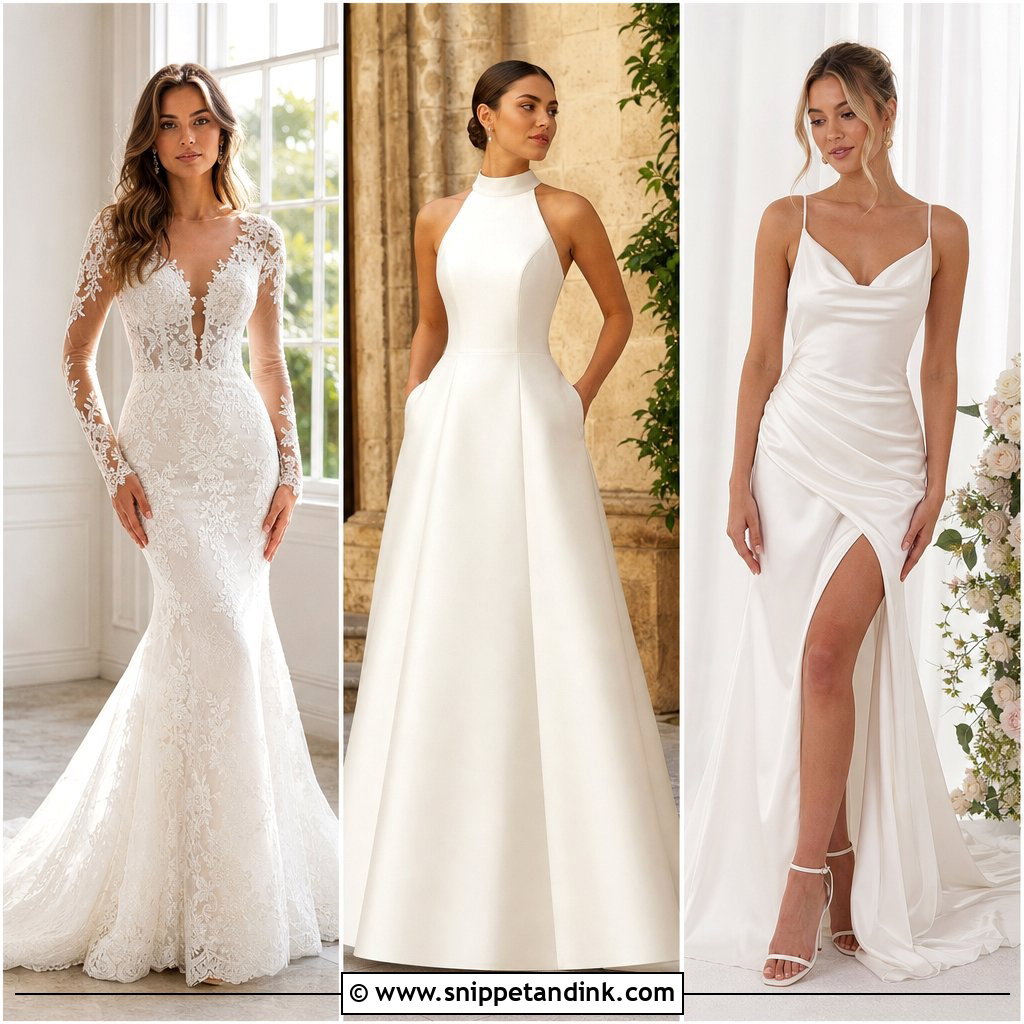
An elegant wedding dress with a cape keeps the gown plain and moves the drama to the shoulders. A crepe column, satin sheath or strapless A-line changes completely with a sheer cape, shoulder cape or long cape train. Many brides use a cape instead of a veil. Wind is the thing to plan for outdoors; a long sheer cape needs a calm day or a weighted hem. Keep jewelry minimal, with sleek heels, soft makeup and smooth hair.
21. Simple Halter Wedding Dress
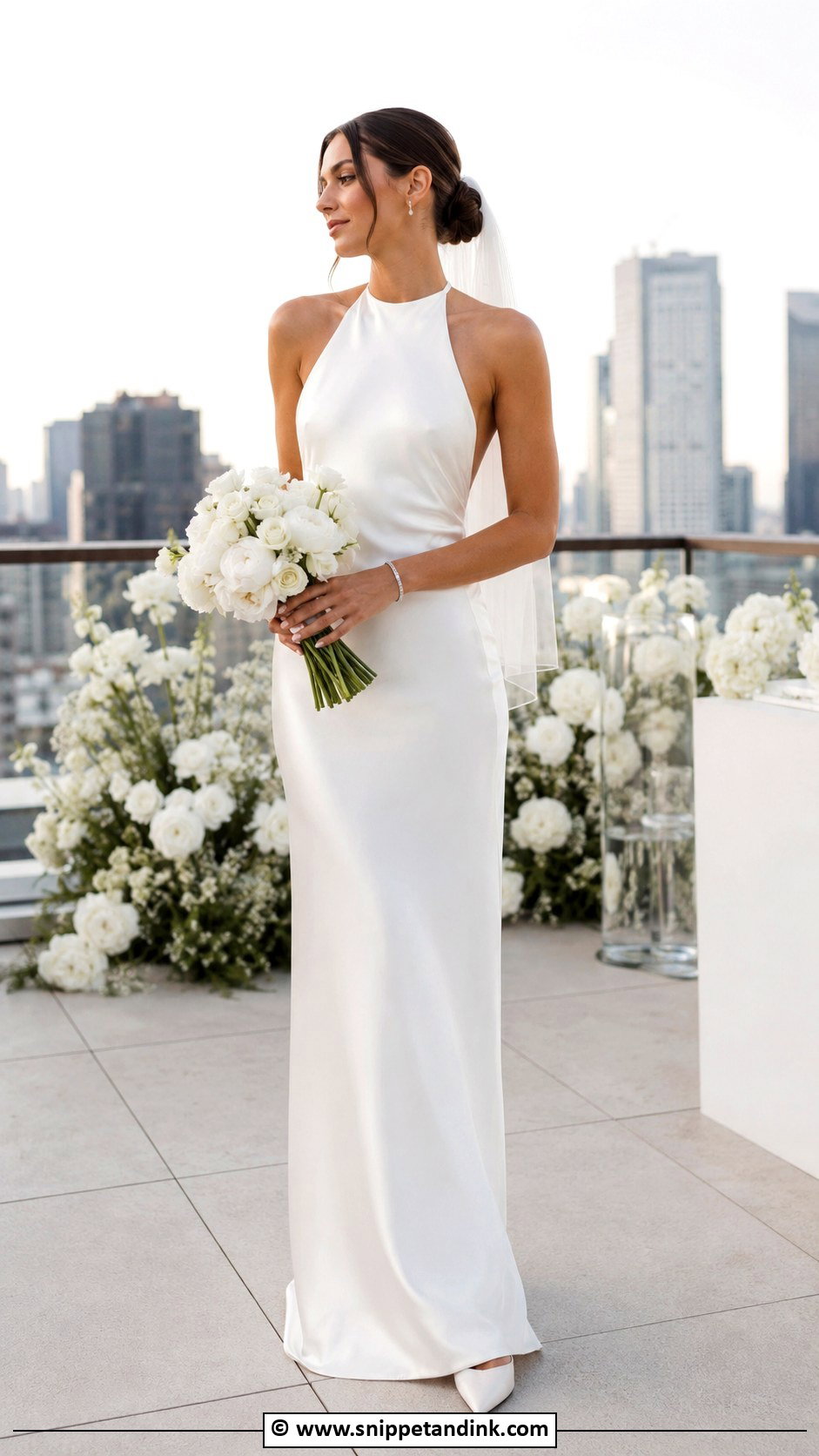
Halters show off the shoulders and give a gown a clean, athletic line. Satin or crepe with no detailing around the neck keeps the shape crisp, over a column, fit-and-flare or soft A-line skirt. The strap carries the bodice’s weight, so a wider band or built-in support makes a real difference by evening. A low bun with the veil attached underneath keeps the neckline visible. Small earrings, a bracelet and elegant heels suit city weddings and rooftops.
22. Elegant Wedding Dress With Pearl Details
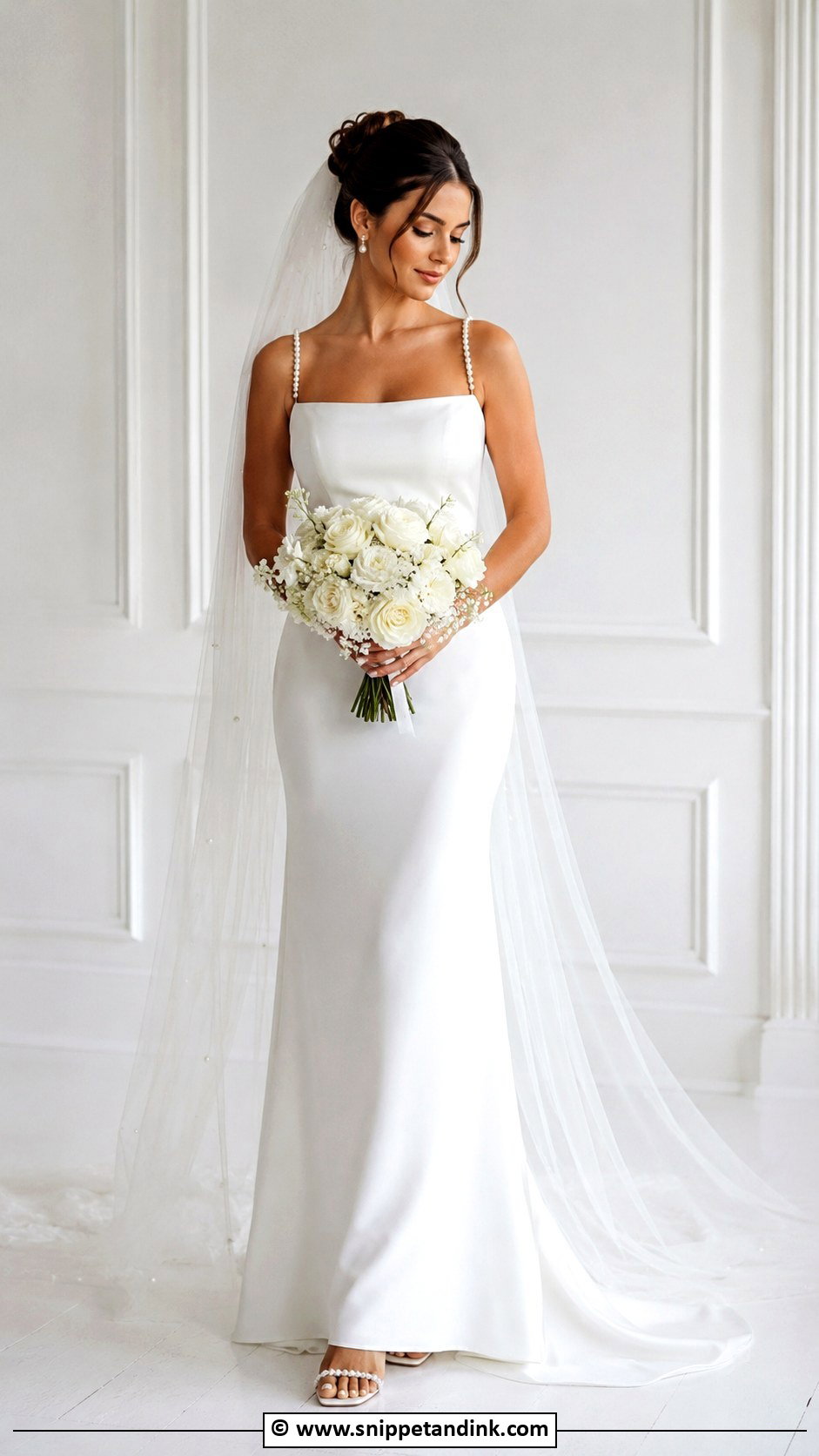
Pearls add texture with a soft glow, which suits a simple gown better than crystal. Tiny ones scattered along straps, sleeves, the neckline or the back are enough on a clean satin, crepe or tulle base. Pearl earrings, simple heels and a sheer veil tie it together. Keep the bouquet small. One fitting note: pearls along the neckline add weight, so make sure it still sits flat after you’ve moved around.
23. Simple Wrap Wedding Dress
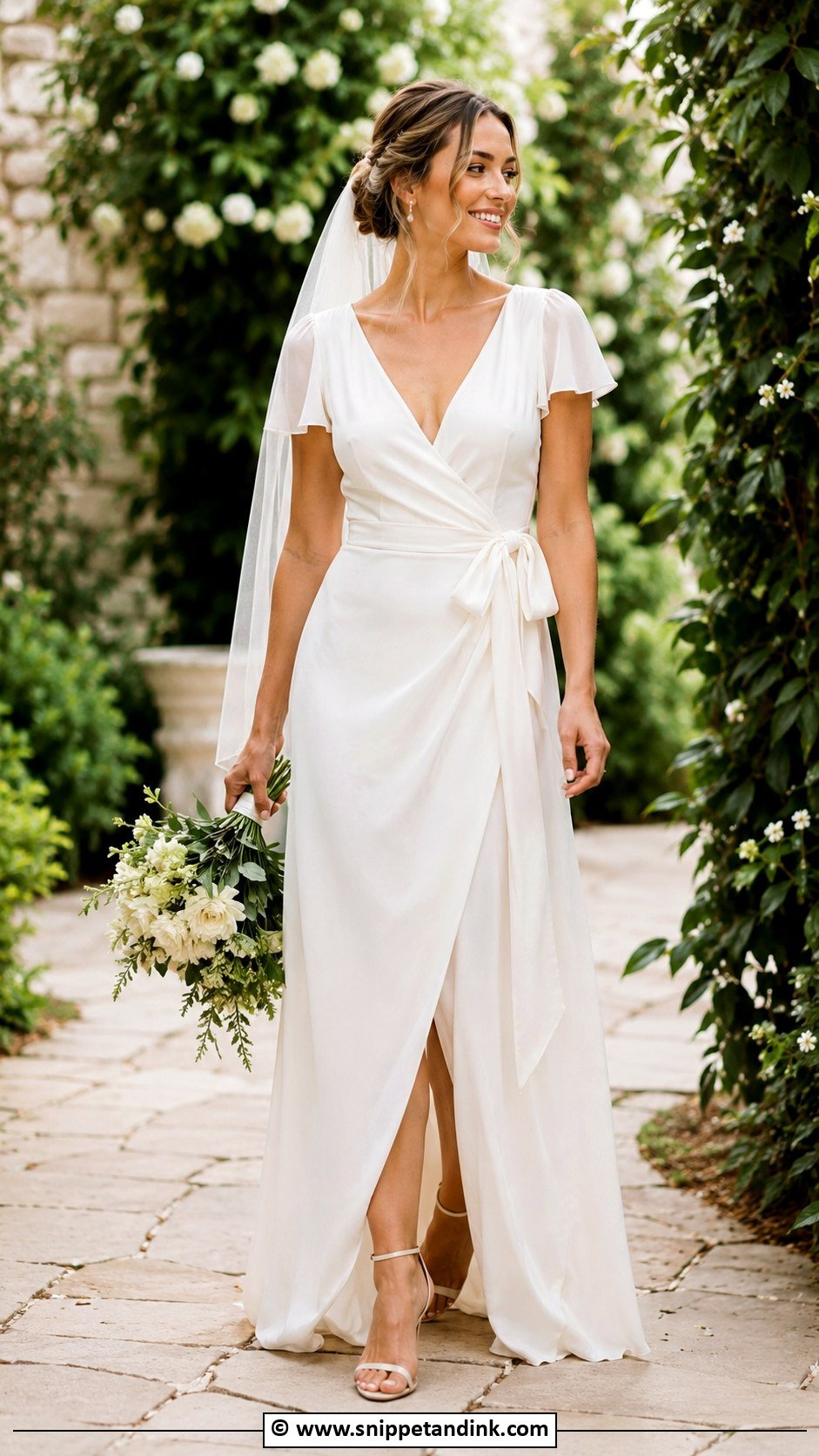
A bridal wrap dress looks relaxed because it is: the tie defines the waist, the V falls naturally, and nothing is boned. Silk, satin, crepe or chiffon sets the formality. A flowing version suits a beach or garden; a structured crepe wrap reads polished at a city ceremony. Insist on an inner fastening so it can’t open when you sit. Strappy heels, delicate earrings and a simple veil or hair comb complete it.
24. Elegant Empire Waist Wedding Dress
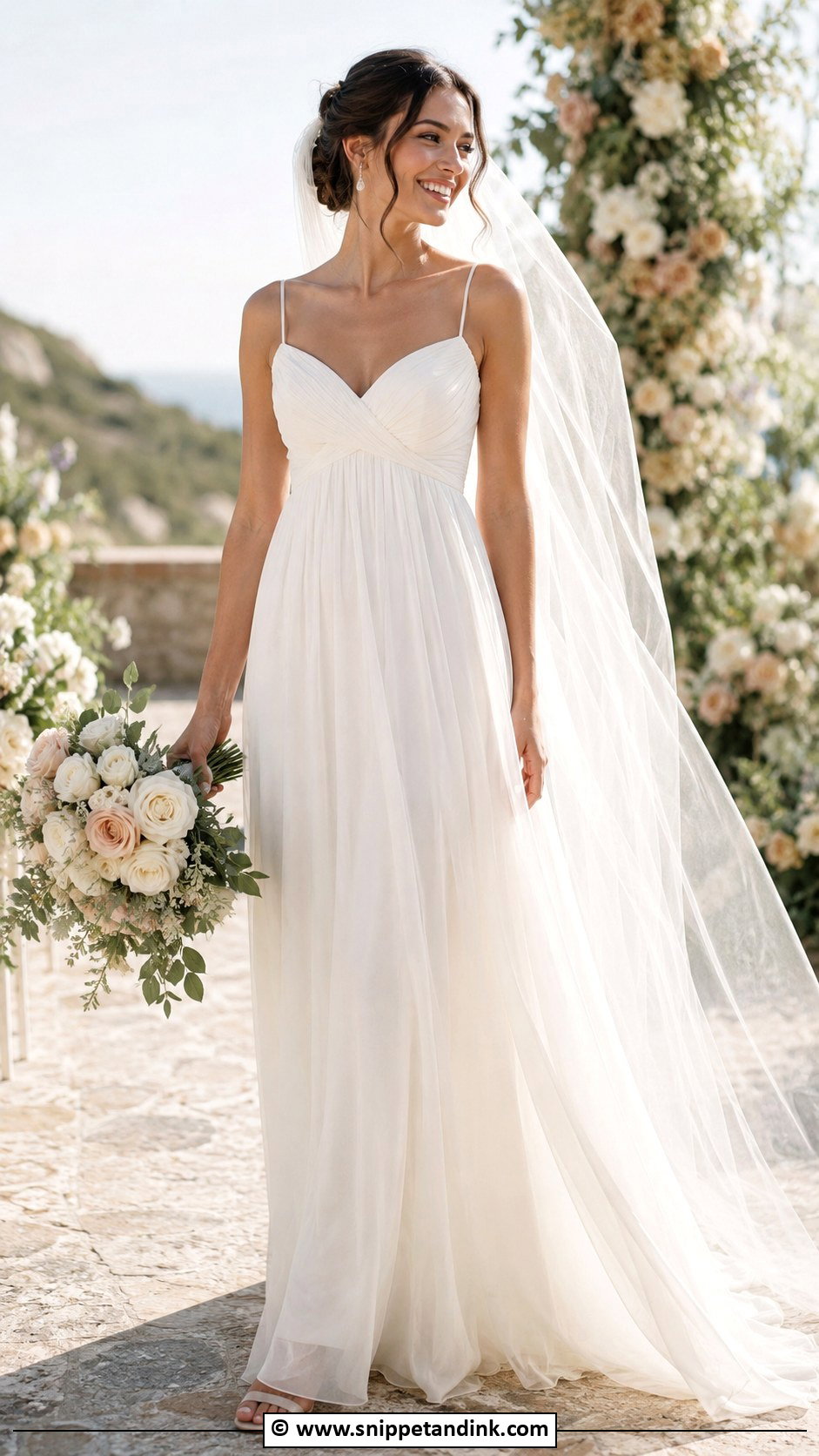
The empire waist sits just under the bust, and the skirt falls straight from there, so nothing grips the middle of the body. In chiffon, silk or lightweight crepe it’s one of the most comfortable gowns you can wear on a hot day. A square neckline, V-neck or delicate straps keep the bodice refined. Low heels, pearl earrings and a sheer veil suit outdoor ceremonies and warm-weather weddings.

25. Simple Wedding Dress With Slit
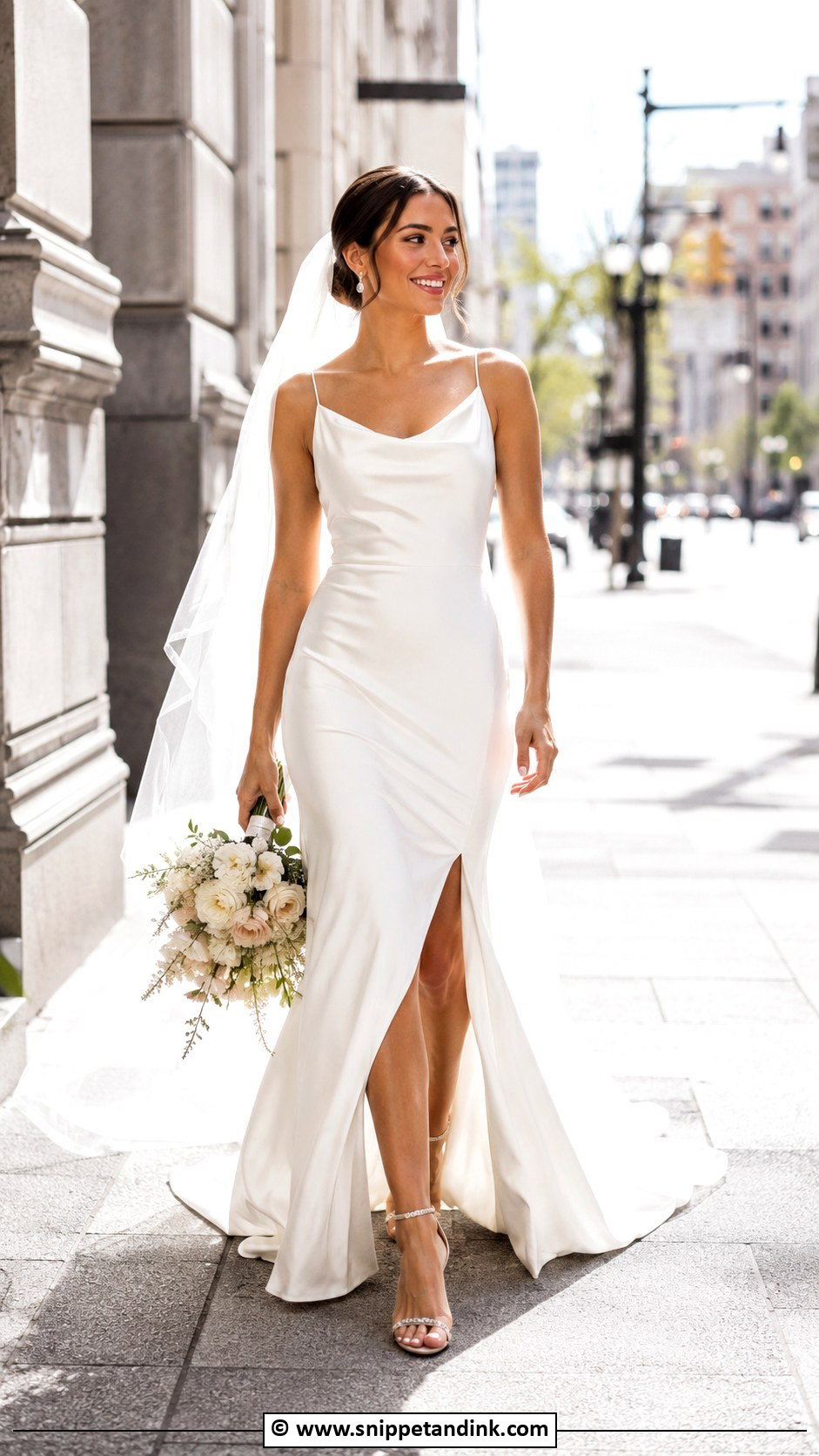
Slits are about balance. The higher the slit, the cleaner the neckline and the more refined the fabric should be. Satin, crepe and chiffon all move well when you walk. Practice sitting at the fitting, because a slit placed too far forward falls open in the chair. Standout bridal heels, delicate earrings and a long veil complete it, with a soft bouquet. Beach weddings, city ceremonies and receptions suit it.
26. Elegant Tulle A Line Wedding Dress
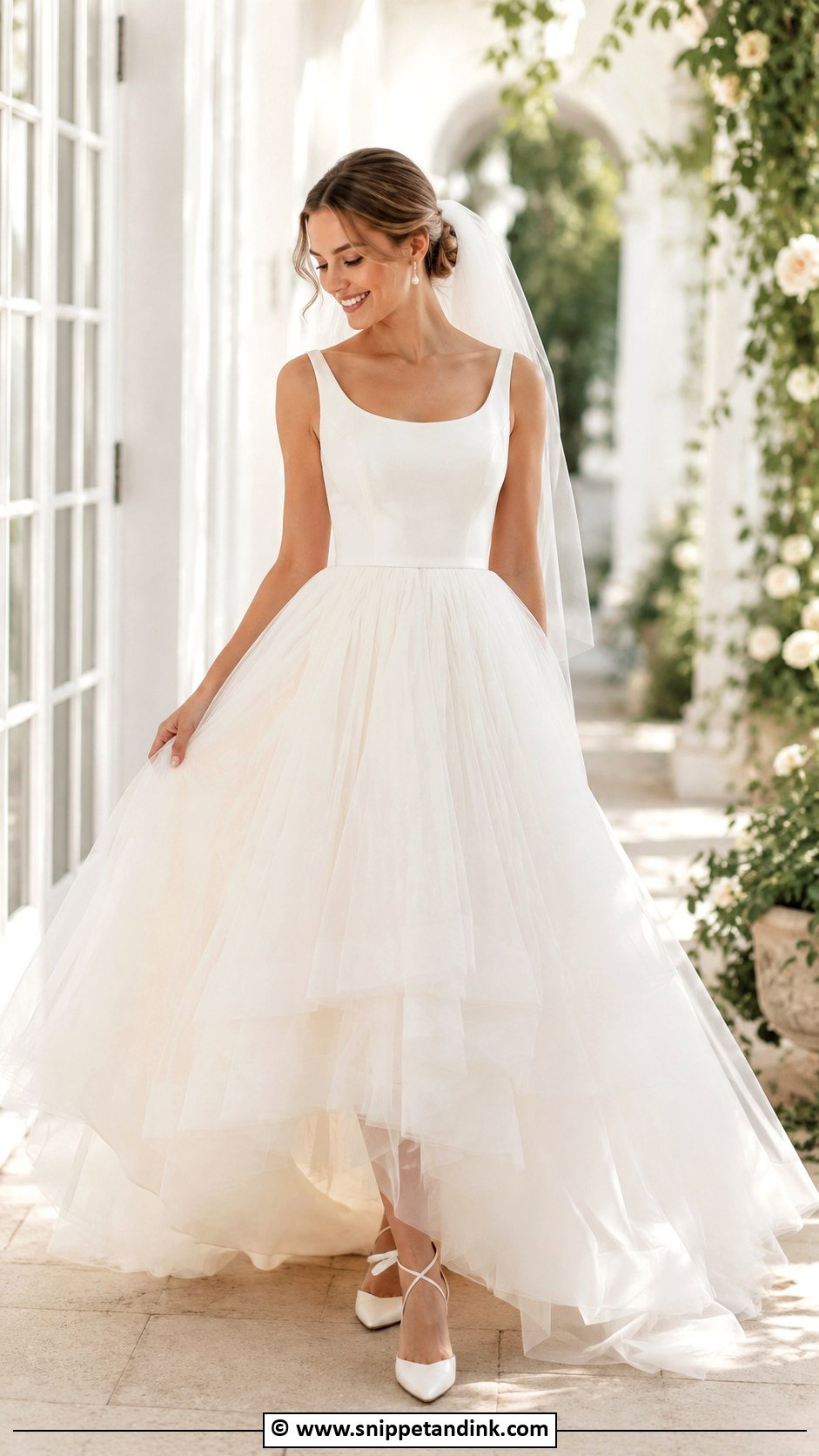
Tulle gives volume without much weight, so an A-line with fine layers moves softly and doesn’t drag. A plain satin or crepe bodice keeps it modern; a light lace bodice leans romantic. Tulle catches on rough surfaces and heel straps, so I’d choose shoes without buckles that can hook the hem. Ballet-inspired heels, pearl earrings, a soft veil that blends with the skirt and an airy bouquet suit it. It’s a lighter take on a traditional full gown.
27. Simple Wedding Dress With Square Back
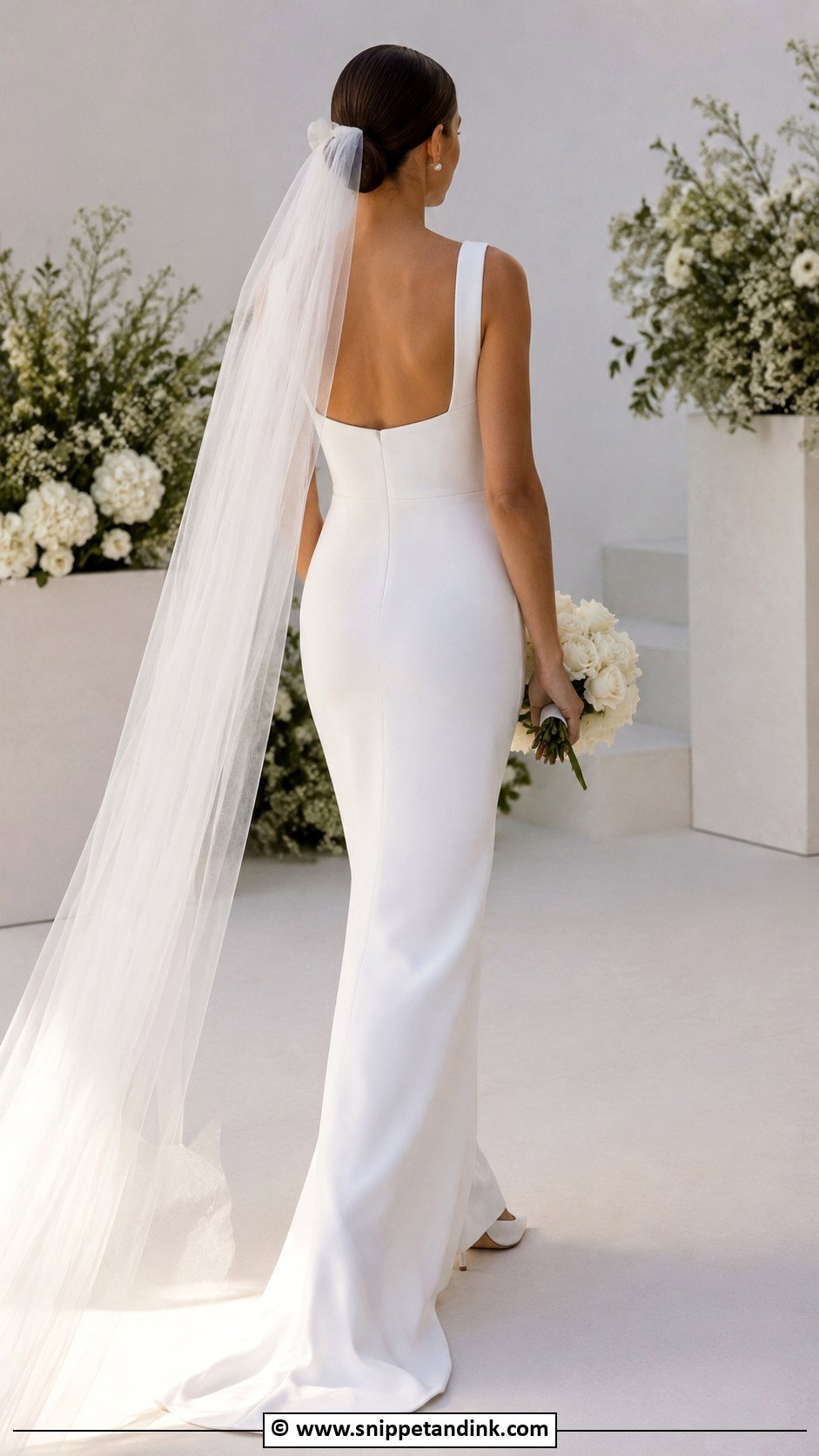
A square back puts a strong geometric line behind a modest front. Crepe, satin or mikado keeps the edges crisp; soft fabrics let the corners droop. Column, sheath or A-line skirts all work. The veil should sit low enough to show the back once the ceremony is over. A low bun, pearl studs and pointed heels finish it.
28. Elegant Satin Slip Wedding Dress
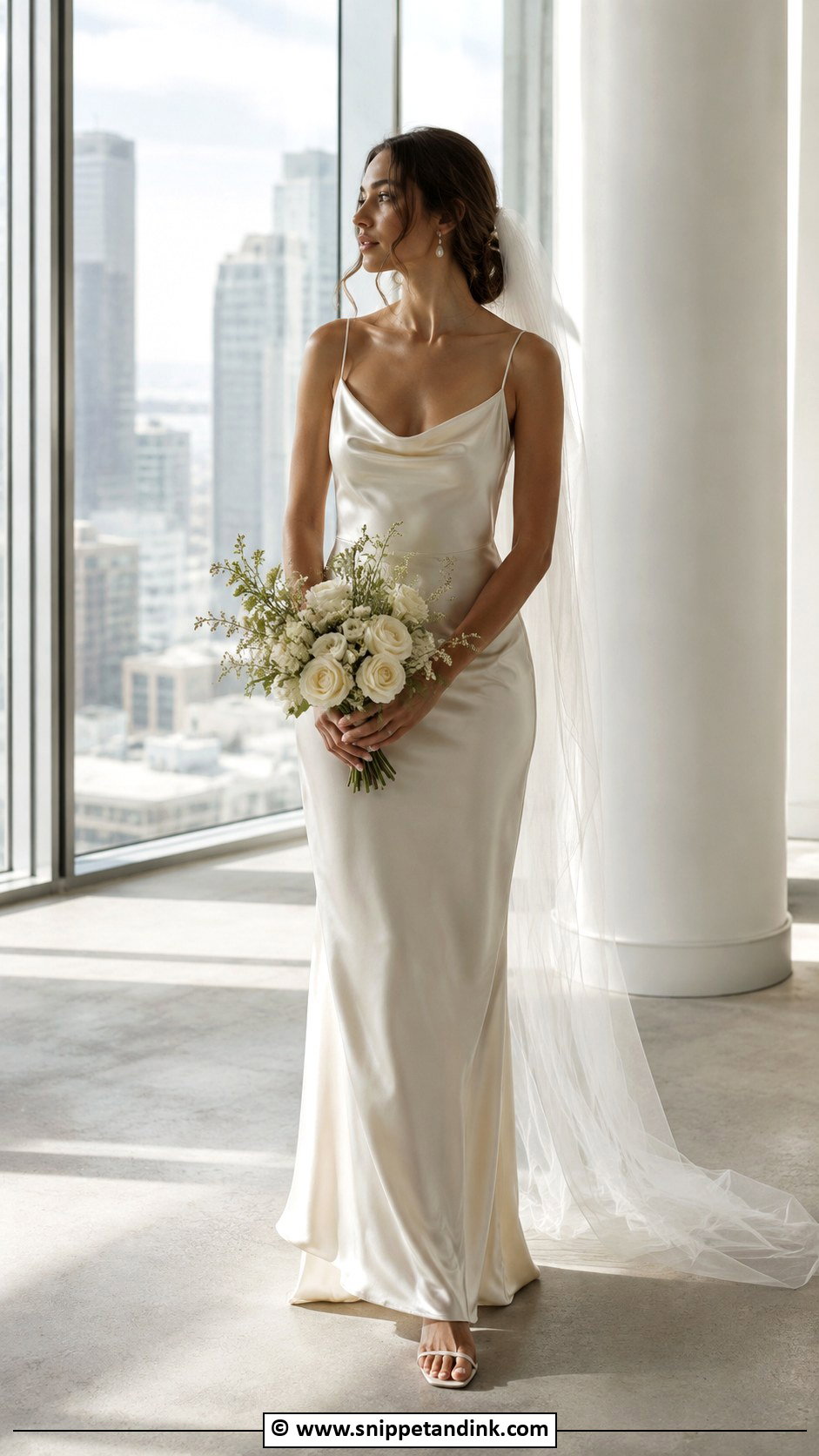
The difference between a bridal satin slip and a slip dress off the rail is the inside. Look for a full lining, careful tailoring at the bust and a hem allowed to settle before it’s marked, since bias-cut satin drops as it hangs. Thin straps, a cowl or a soft scoop all suit it. Delicate heels, a long sheer veil and small pearl earrings make it a classic minimalist outfit, and a tailored blazer adds structure for portraits or a reception entrance.
29. Simple Wedding Dress With Short Sleeves
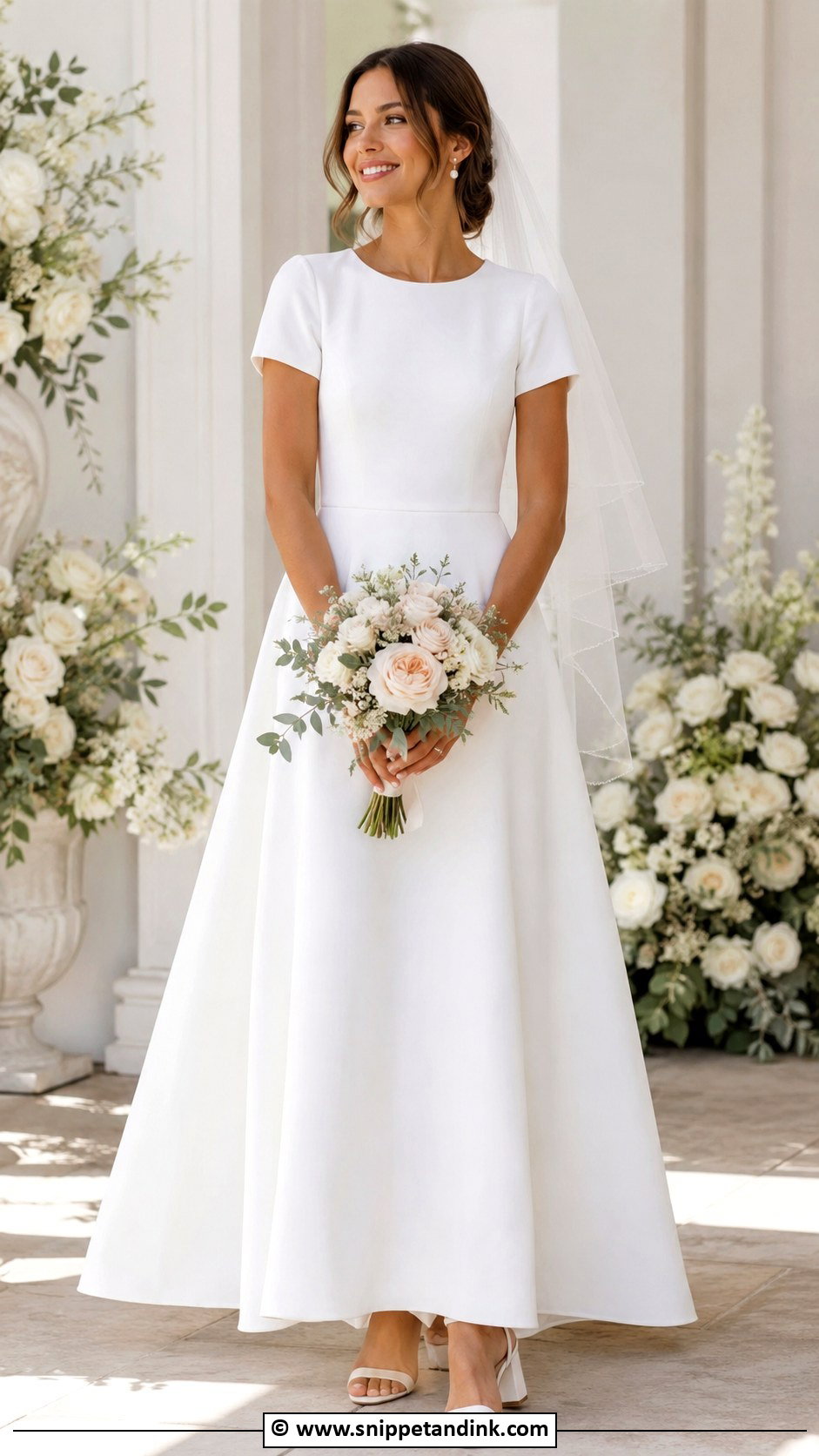
Short sleeves sit in a comfortable middle: a little coverage, still light enough for spring, summer and daytime ceremonies. They can be plain, softly puffed or made in fine lace. A fitted bodice with a clean A-line is timeless, and a crepe sheath feels more modern. It’s a good choice for a modest touch without committing to a high neck or full sleeves. Pearl earrings, block heels and a fingertip veil finish it.
30. Elegant Fit And Flare Wedding Dress
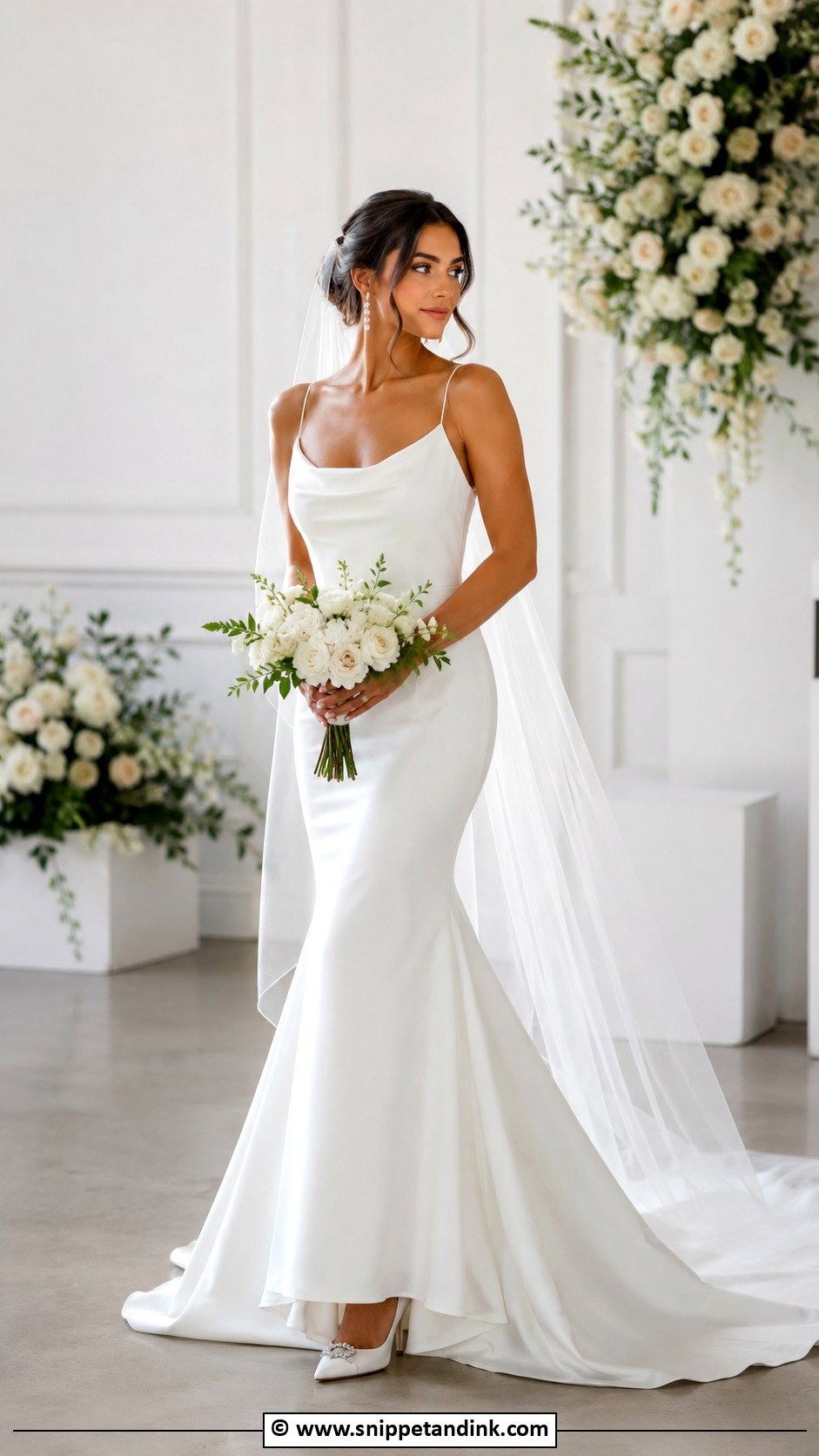
Fit and flare is the mermaid’s easier sister. It follows the body through the waist and hips, then opens gently below the thigh, so you can walk normally and sit without strain. Crepe gives a clean modern finish; satin adds bridal shine. Drop earrings, pointed heels and a long veil complete it, and a simple bouquet keeps the focus on the shape.
31. Simple Wedding Dress With Illusion Neckline
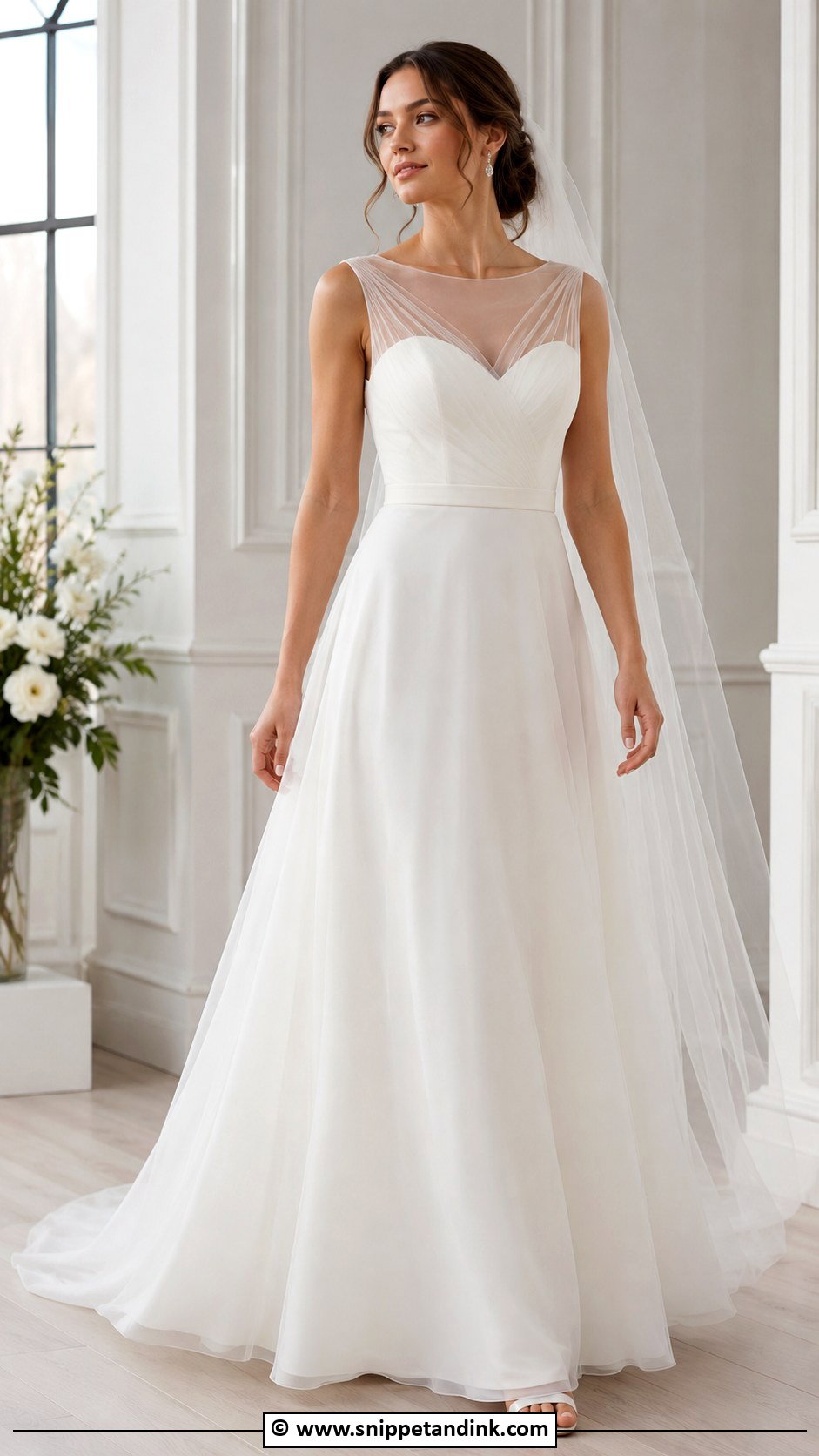
An illusion neckline uses sheer fabric across the chest or shoulders to hold up delicate straps, lace edges or a floating neckline. Smooth sheer tulle or minimal lace keeps it refined. The mesh should match your skin tone as closely as possible, or it shows as a visible band in photographs, so ask to see shade options. An A-line, sheath or fit-and-flare all suit it. Dainty earrings, comfortable heels and a veil that doesn’t hide the neckline complete the outfit.
32. Elegant Wedding Dress With Overskirt
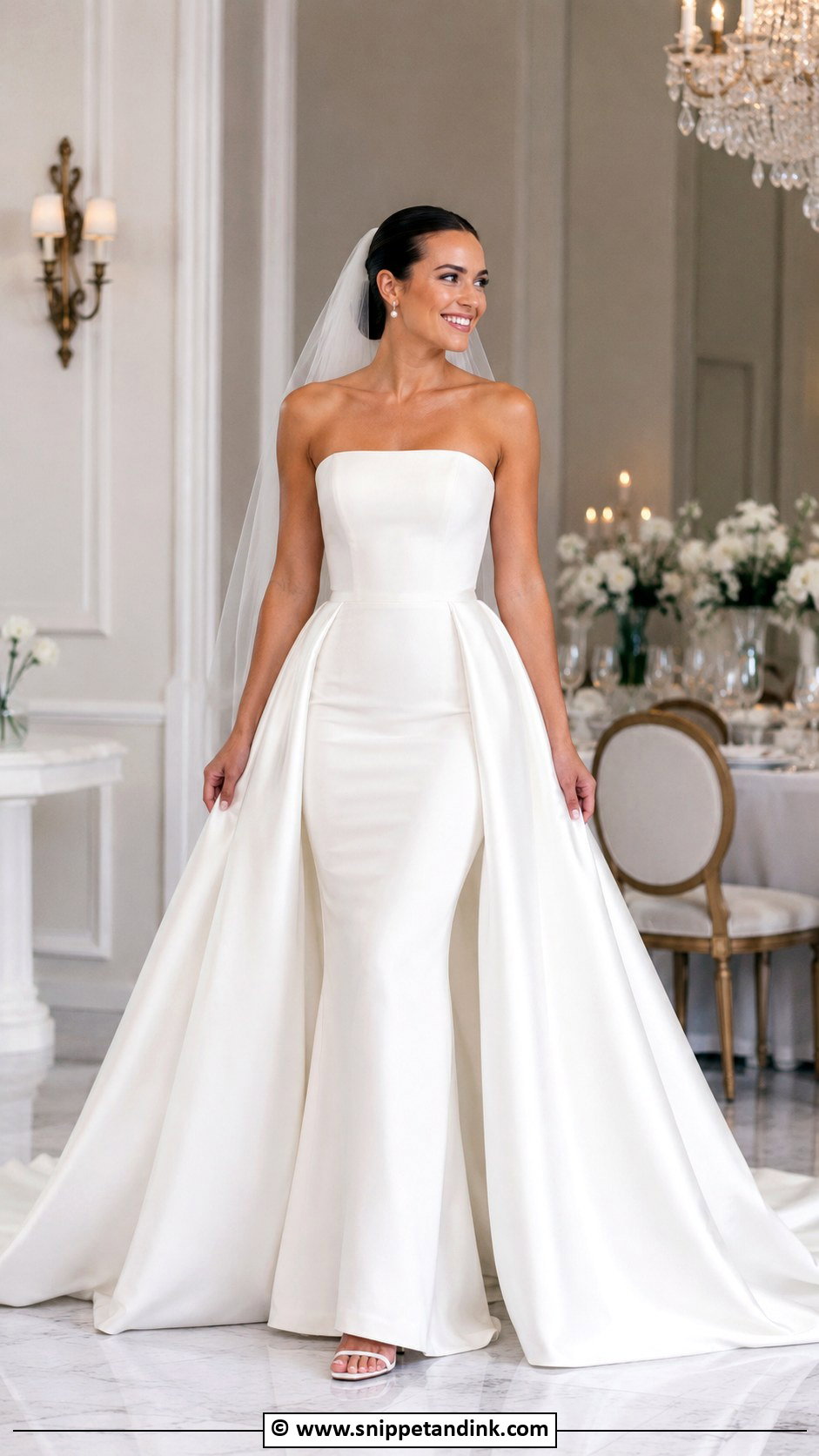
An overskirt gives you a ceremony gown and a reception dress without a full change. The base can be a simple column, fitted crepe gown or satin sheath, and the detachable overskirt adds volume for the aisle before coming off for dancing. It usually closes with hooks or snaps at the waist, so check that the join sits flat with the skirt removed. Pearl earrings, sleek heels and a simple veil keep it polished.
33. Simple Courthouse Wedding Dress
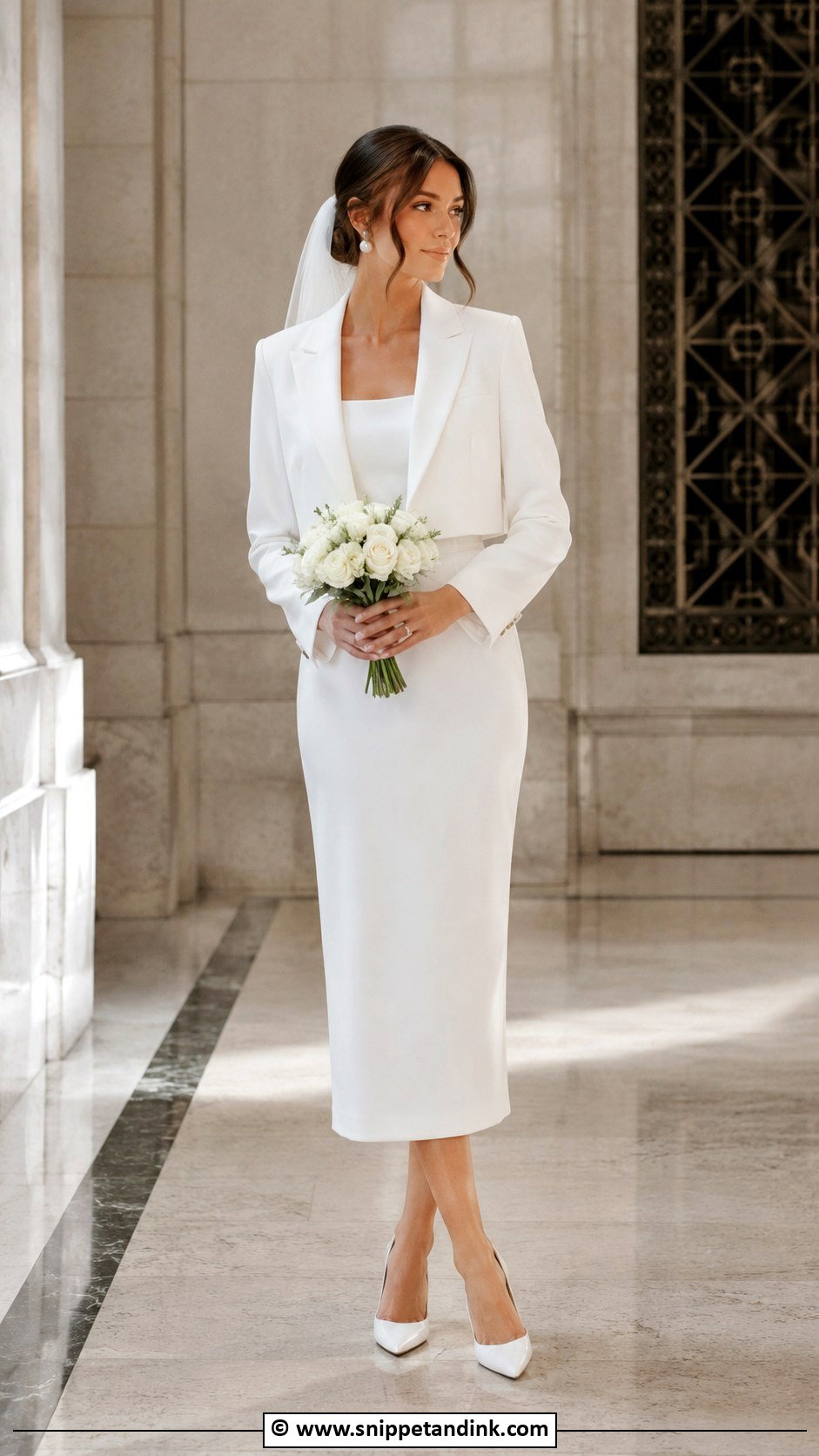
A simple courthouse wedding dress needs to look special in a small room and still be easy to move in. A white midi, sleek satin slip, crepe sheath or tailored mini all work. Pointed heels, a small bouquet, pearl earrings and a short veil or hair bow make it bridal; a cropped blazer or tailored coat adds structure. Courthouse corridors and stairs reward a hem you don’t have to lift. It suits civil ceremonies and elopements.
34. Elegant Beach Wedding Dress
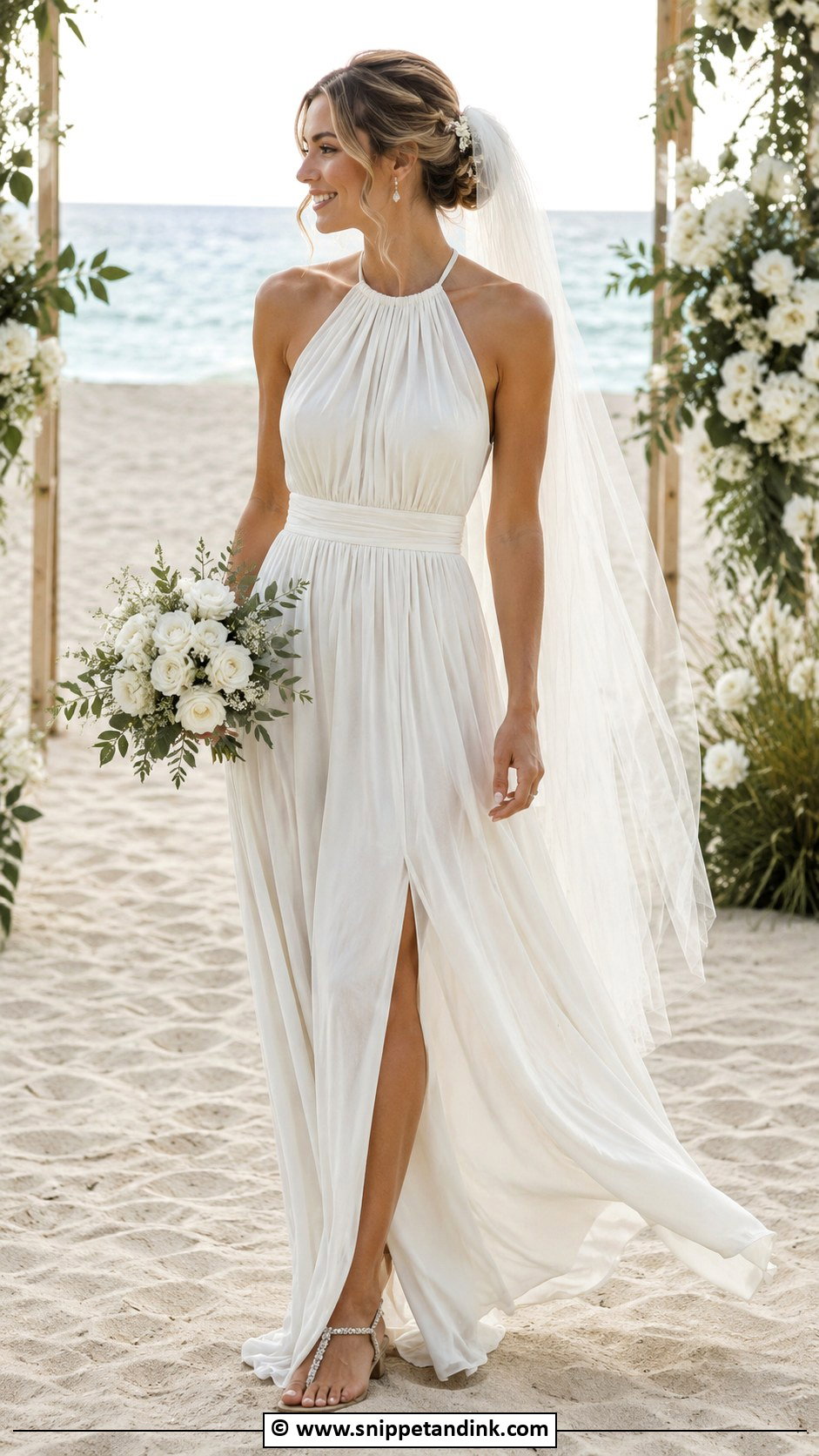
An elegant beach wedding dress has to breathe and walk on sand. Soft chiffon, silk, crepe or satin beats heavy layered fabrics, and a slip, empire waist, simple A-line or halter suits the setting. Flat sandals, low block heels or barefoot-style sandals depend on the ground. Sea breezes catch long veils, so choose a short one that can move or swap it for a hair comb. Keep jewelry minimal.
35. Simple Elegant Reception Wedding Dress
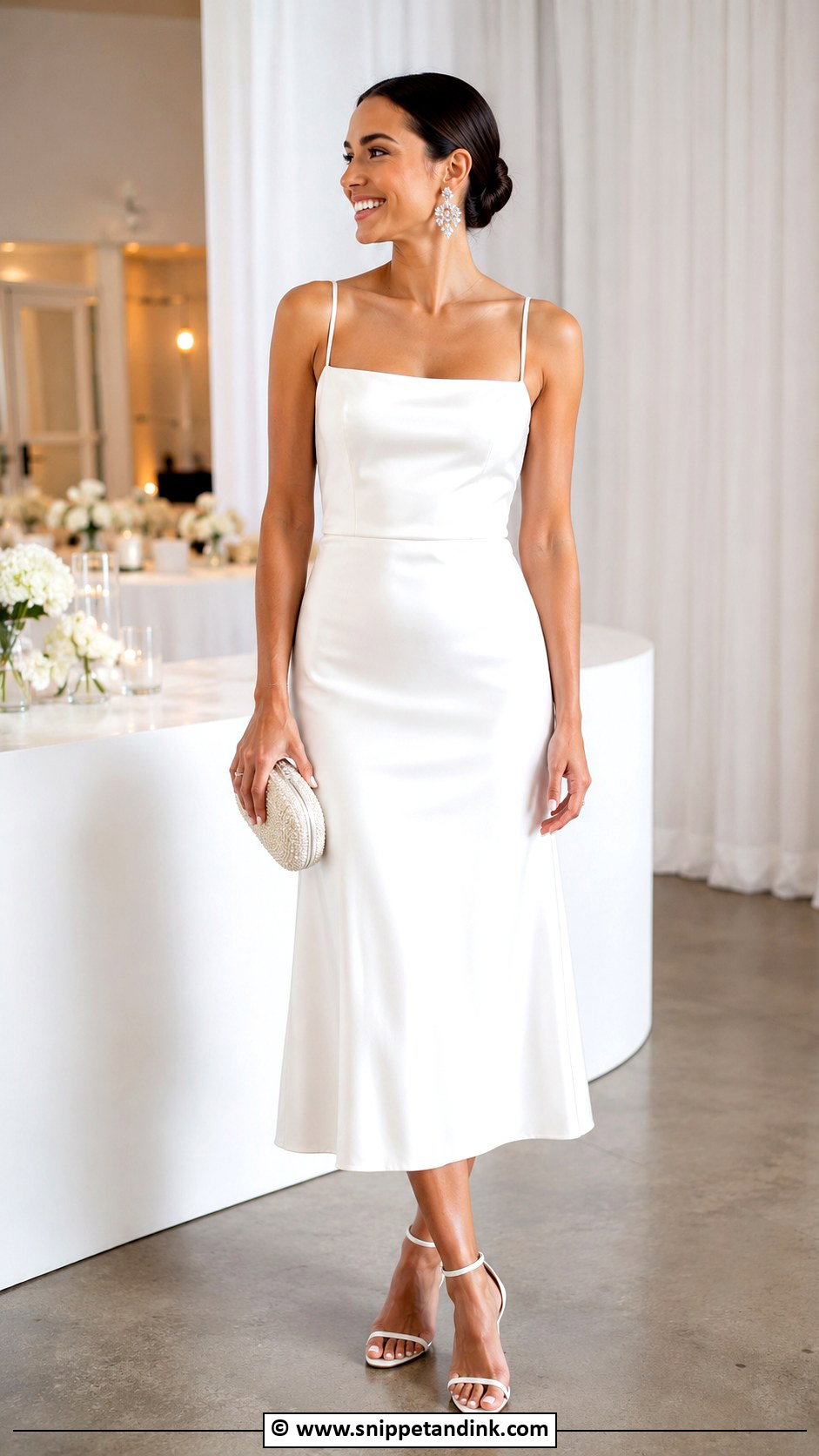
A reception dress lets you dance without managing a train. A satin midi, sleek mini, tea-length dress or plain crepe column all work after the ceremony, as long as the color, fabric and styling still say bride. Statement earrings, comfortable heels and a small clutch finish it. If the ceremony gown was formal, the second look can be more relaxed and still polished.
Where the Personality Comes From When the Gown Is Bare
A minimal dress gives you room to choose one place for character. I ask brides to pick a single focal point and let everything else support it.
The Veil
A raw-edge or long cathedral veil can be the whole statement. Match its length to the train, or go a little longer, so the two don’t end at awkwardly different points.
Earrings or Hair
Clean necklines leave the face as the focus, so a strong earring or a sculpted low bun carries more weight than it would with a busy bodice. Choose one, not both.
Shoes and the Bouquet
Colored or embellished shoes work well under tea-length and slit gowns, where they’re actually seen. A sculptural bouquet of a single flower variety also suits a plain dress better than a mixed arrangement.
Does a Simpler Gown Cost Less?
Not always, and it’s worth knowing before you shop. Removing lace and beading saves handwork, but plain designs depend on heavier, better fabric and very precise cutting, and both cost money. Alterations can also run higher, since every adjustment shows. If budget is tight, a good crepe or a quality synthetic satin with careful tailoring will look better than cheap silk that wrinkles and pulls.
Plain Never Has to Mean Unfinished
Simple isn’t the same as plain. A clean gown can lean romantic, modern, modest or dramatic depending on the neckline, sleeves, train, veil, shoes and accessories you choose with it. Satin, crepe, chiffon, mikado, fine lace and tulle can all look elegant when the design is deliberate. Spend your attention on fit and fabric, then judge the whole outfit by how it moves and how comfortable you’ll be at hour eight rather than minute one.
You'll Like These Ideas:










Leave a Reply