
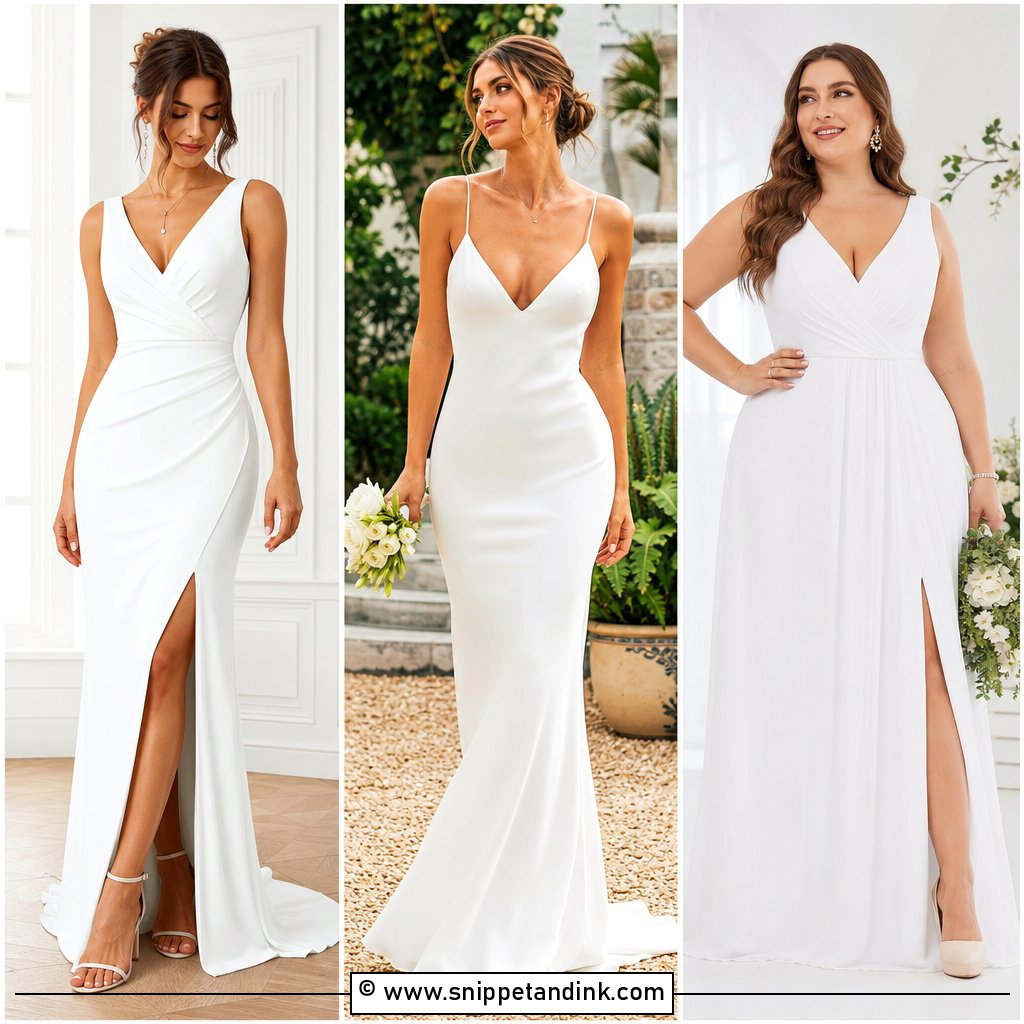
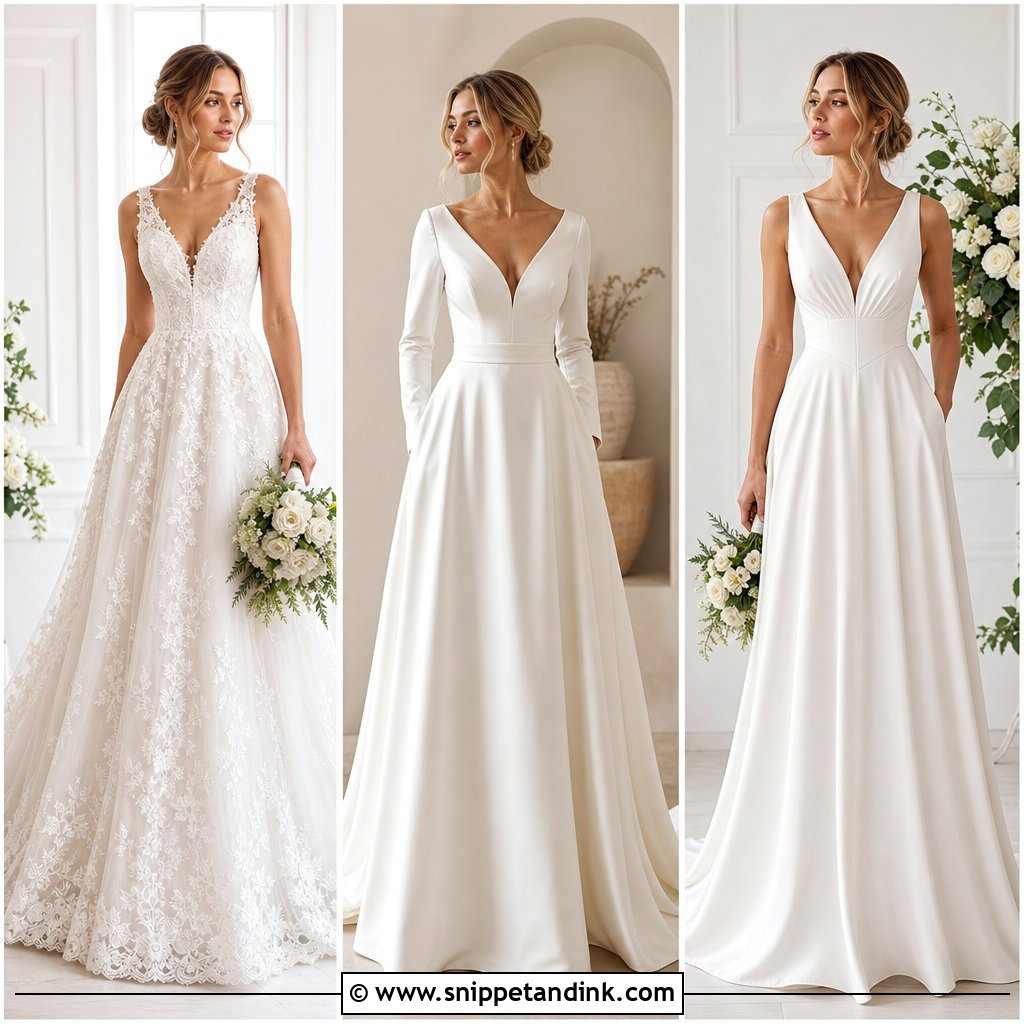
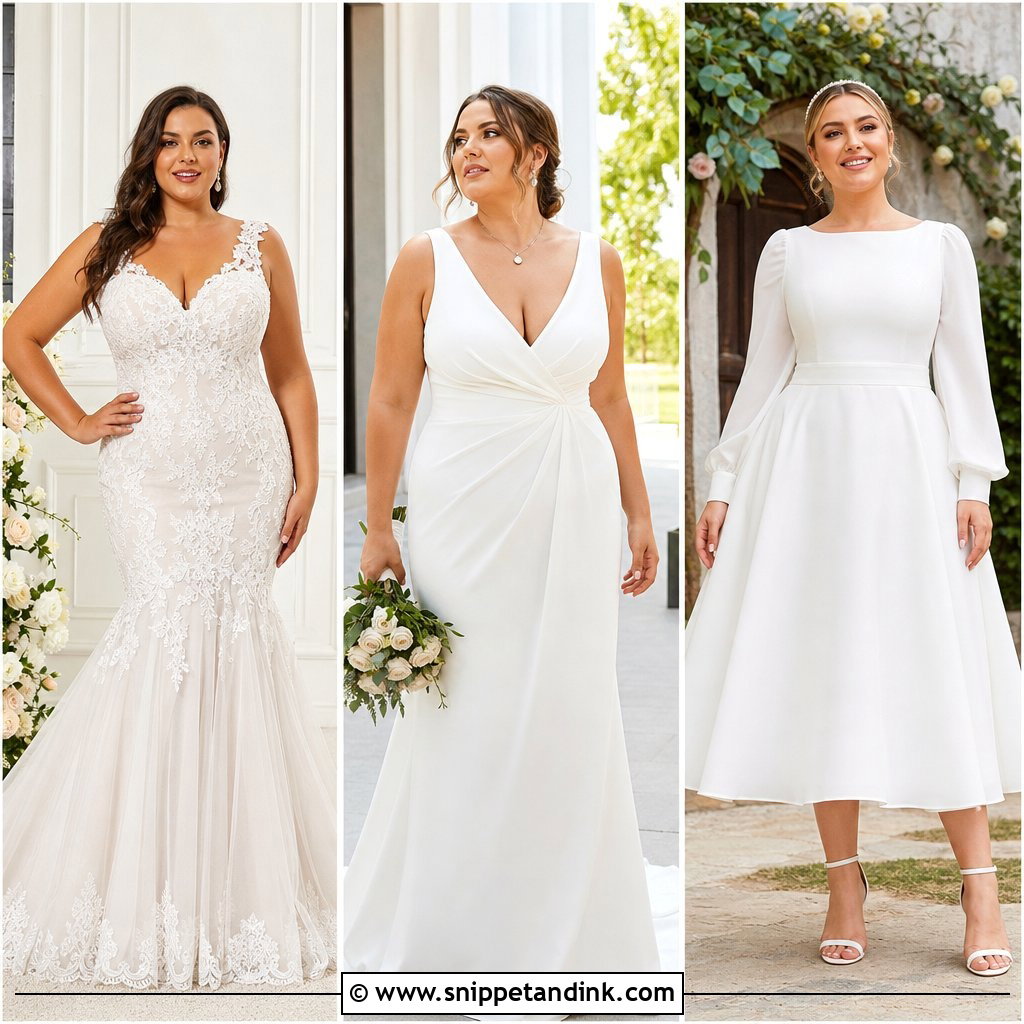
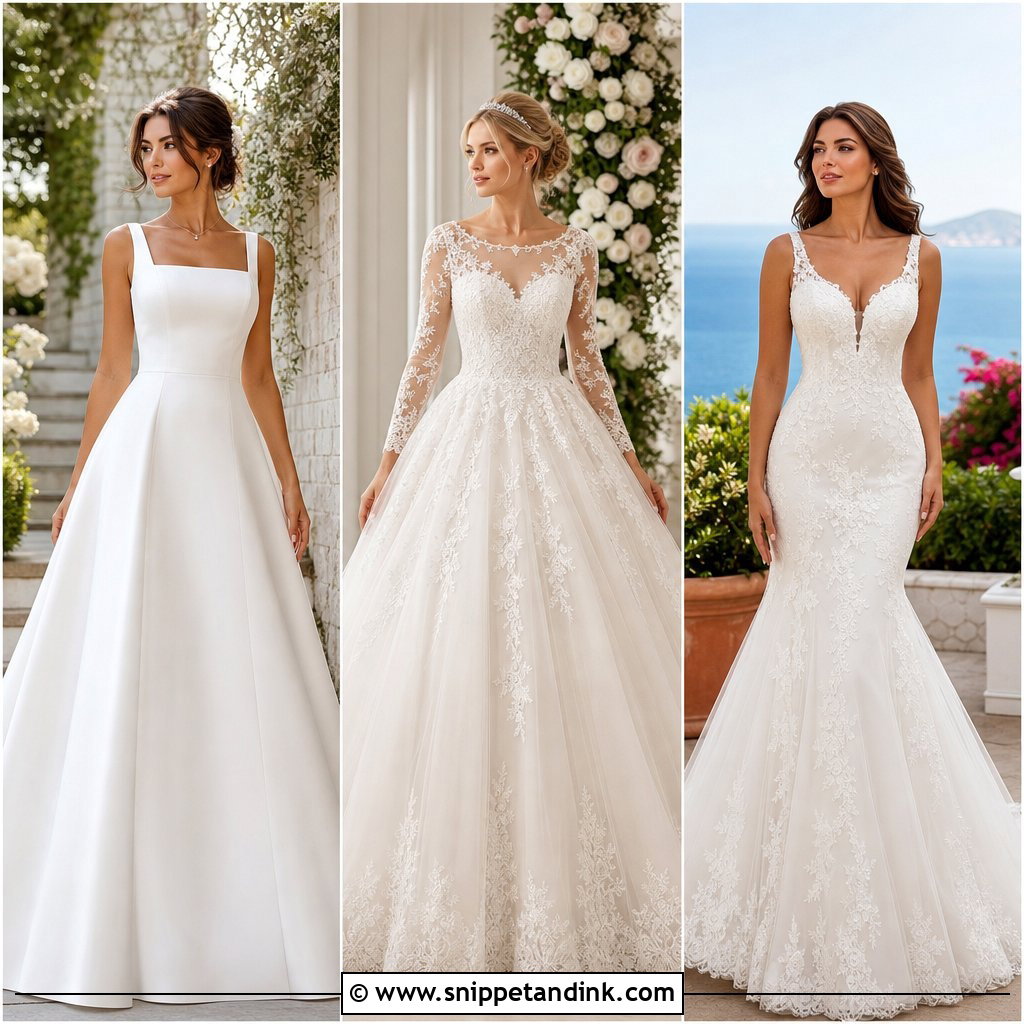
Fit and flare sits between two extremes. It follows the body through the bodice and hips like a mermaid would, then opens into a skirt much earlier, so you get shape without the knee-level squeeze or the width of a ball gown. In the fitting room it is the silhouette I see the most brides relax in, because they can sit, walk and dance in it. The ideas below cover clean crepe, strapless satin, lace sleeves, basque waists, overskirts, square necklines and corset bodices, with notes on the venues each one suits, from gardens and ballrooms to beaches and the courthouse.
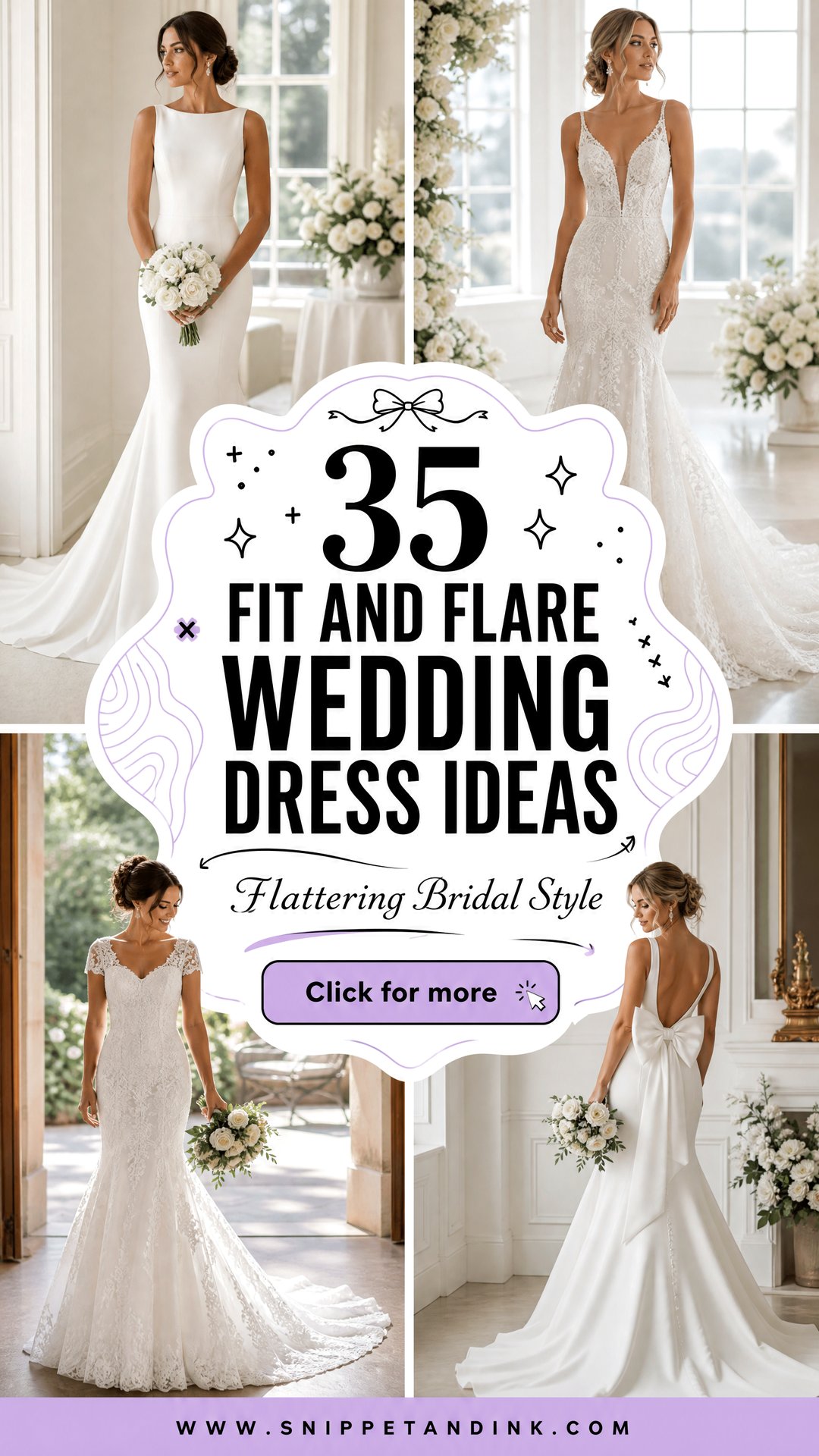
Where the Flare Starts Decides How the Dress Feels
Shop labels blur three silhouettes that behave very differently once you’re in them. The difference is the point where the skirt starts to open, and it changes how you walk, sit and dance.
- Fit and flare: fitted through the bodice and waist, opening at or just below the hip. The easiest of the three to move in.
- Trumpet: fitted past the hips, flaring around mid-thigh. More shape, slightly shorter stride.
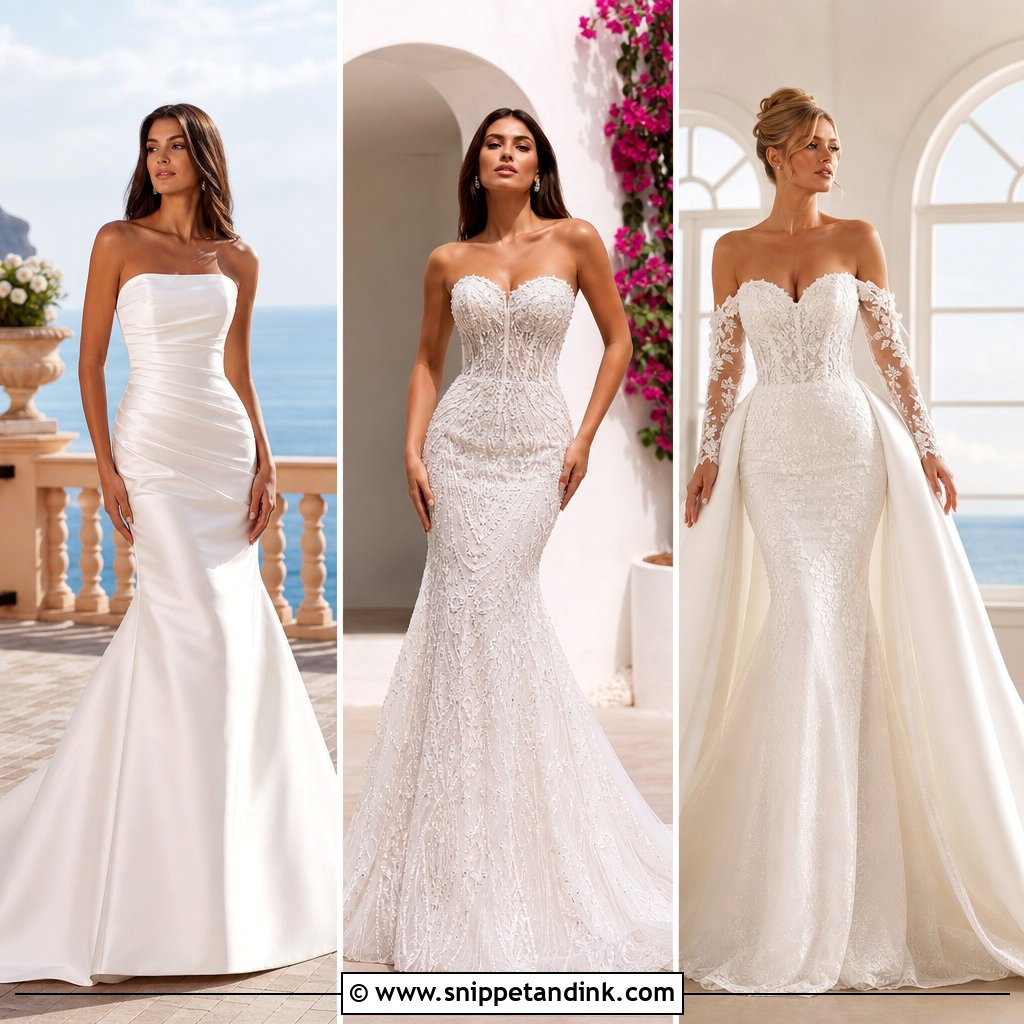
- Mermaid: fitted to the knee or just above it. The most dramatic and the most restrictive on stairs.
When a bride tells me she wants a mermaid but also wants to dance all night, I usually pull a fit and flare or a soft trumpet first. The difference in the mirror is smaller than people expect; the difference after six hours is not.
It also flatters in a specific way. Because the skirt opens near the hip, it shows the waist and skims the thighs, which suits hourglass and pear shapes especially well. If you’re very petite, a flare that starts a little higher keeps your legs from looking shortened. If you’re tall, you can carry a lower flare point with ease.
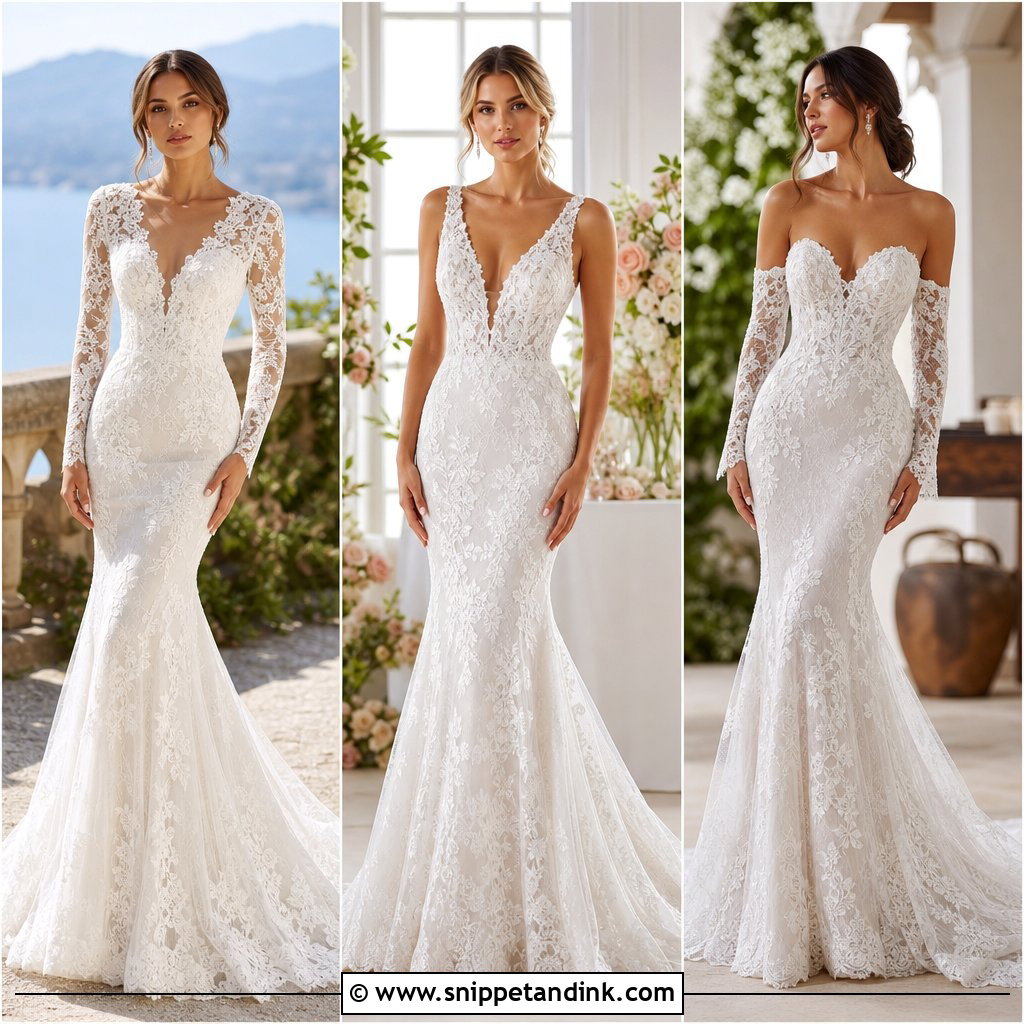
1. Lace Fit And Flare Wedding Dress
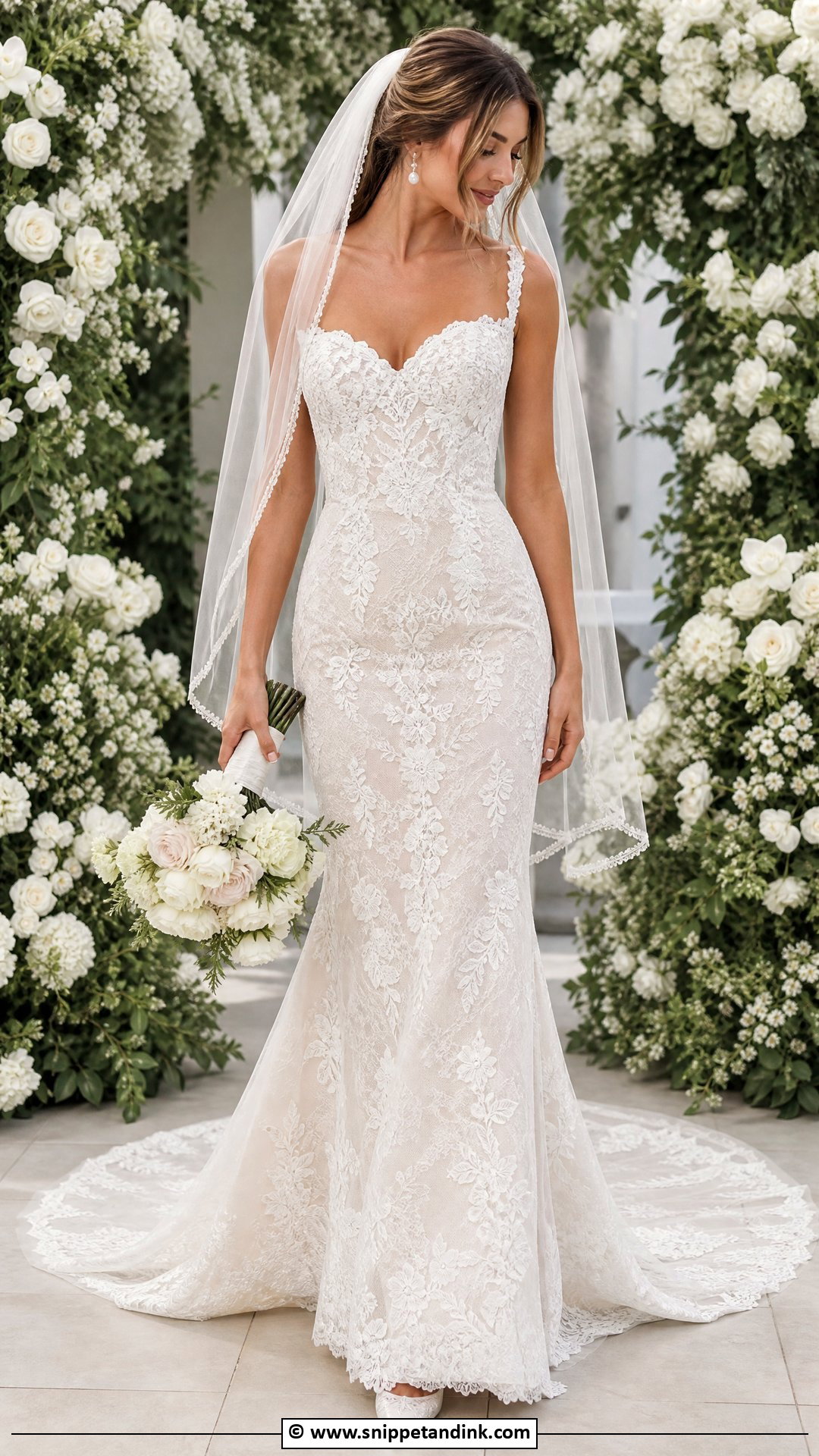
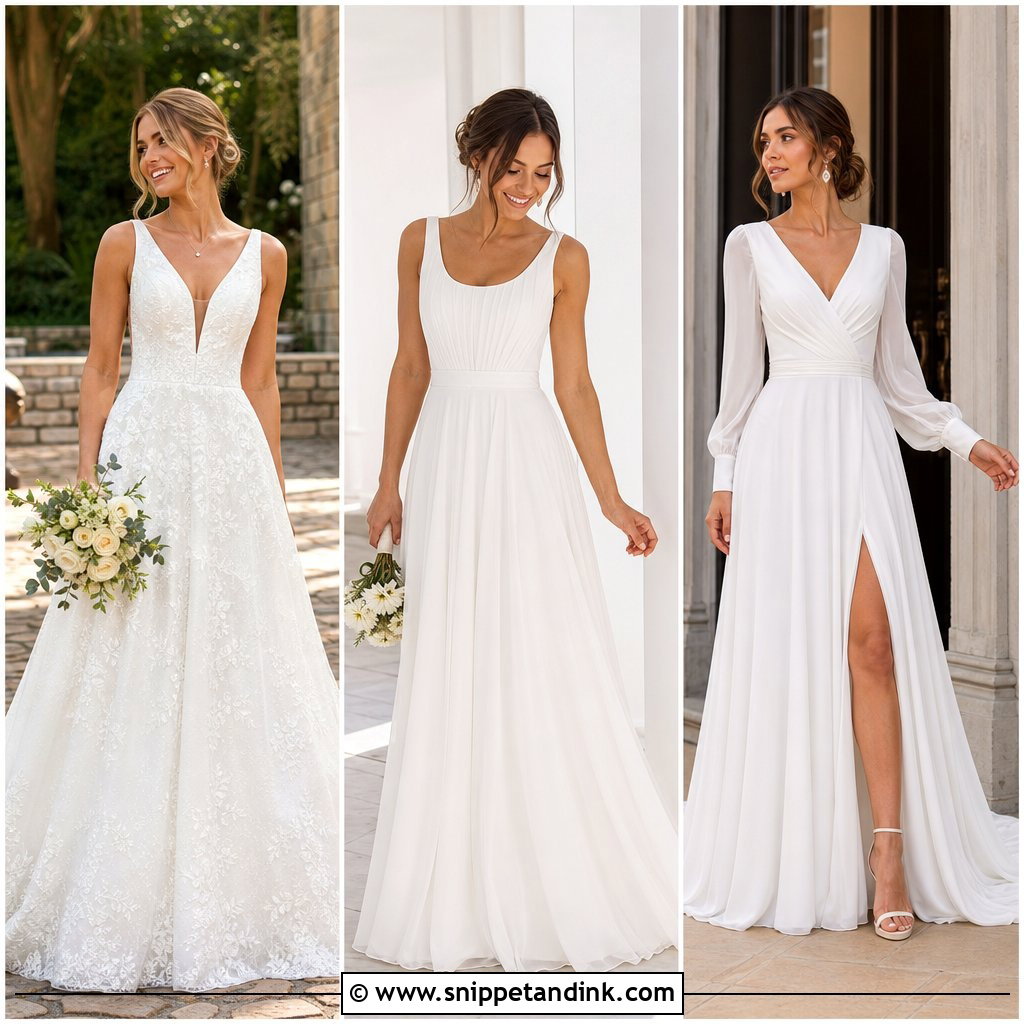
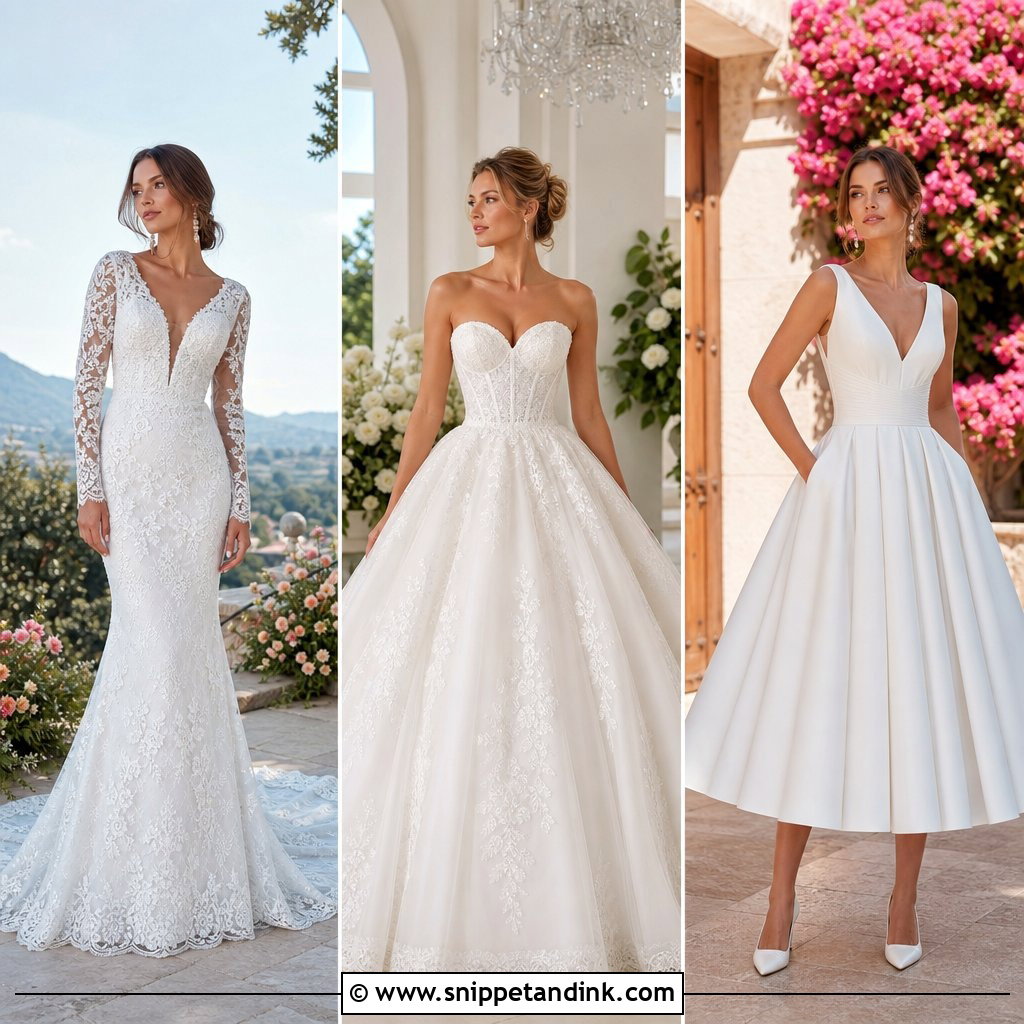
Lace is the classic version, romantic without much volume. The fitted bodice shows the waist and hips and the flare keeps it easy to wear. Lace type changes the mood: soft floral lace for a garden, fine Chantilly for something delicate, bolder corded motifs if you want texture to read in photos. On a fitted lace dress I check that the motifs have been matched across the side seams, because a pattern that breaks at the hip is the first thing your eye catches. Sweetheart, V or off-the-shoulder necklines all suit it, with pearl earrings, a sheer veil and pointed heels.
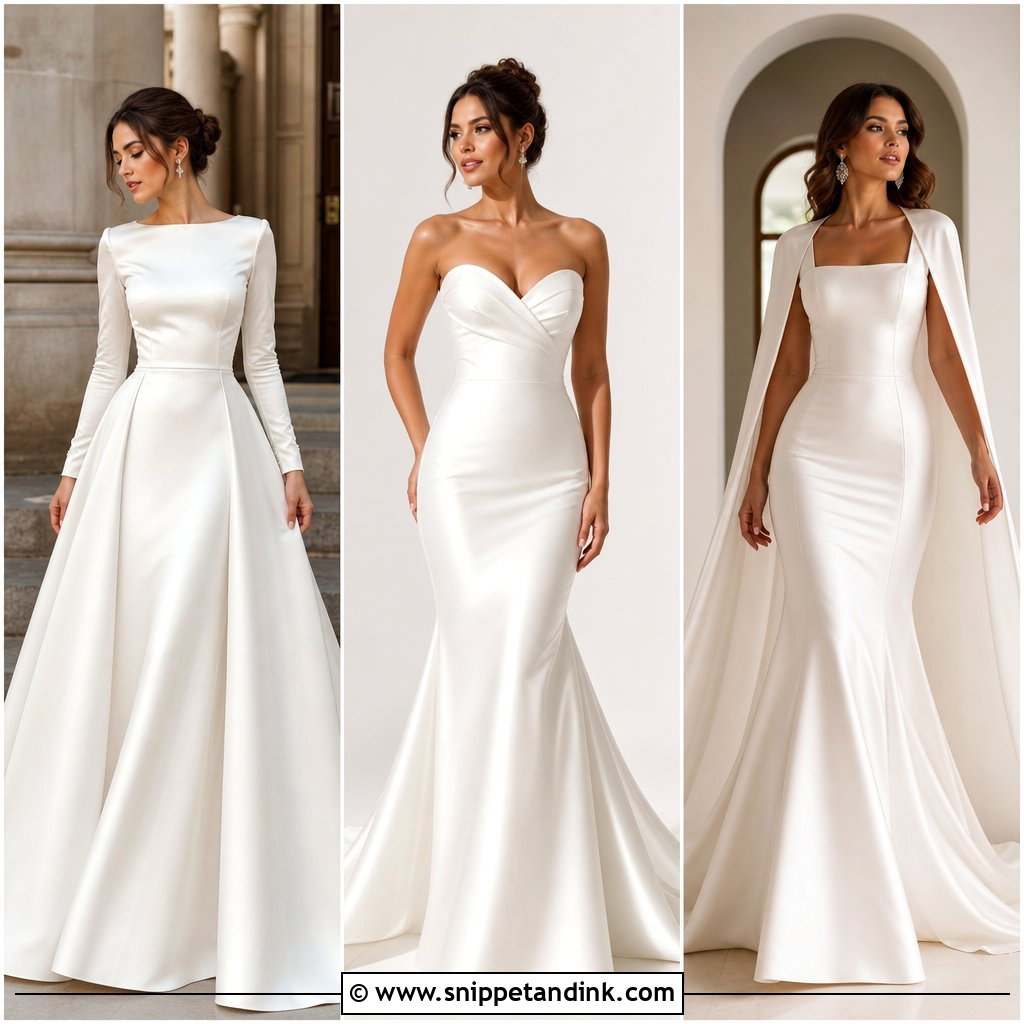
2. Satin Fit And Flare Wedding Dress
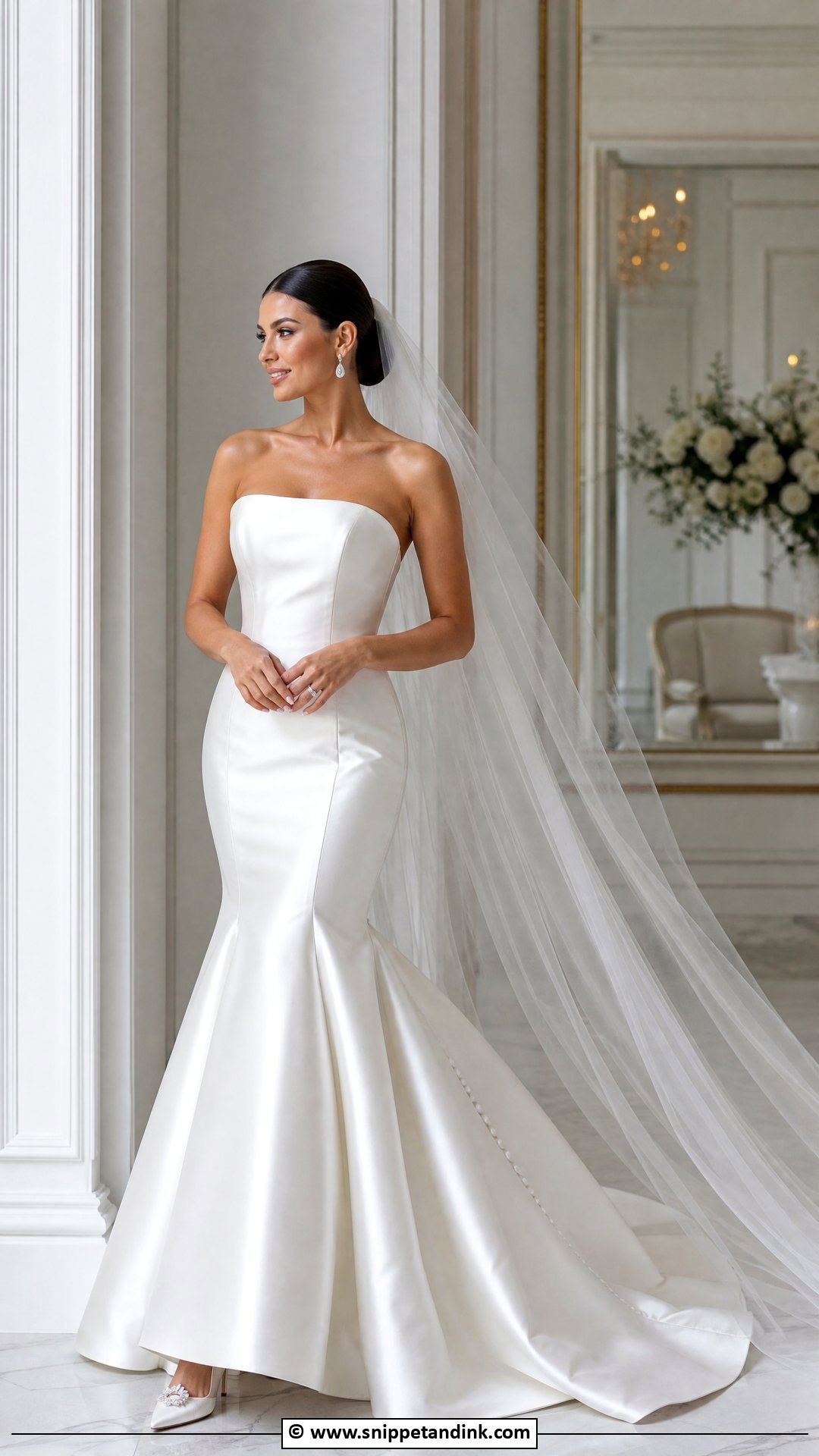
Satin has enough body to hold the shape on its own, so a satin fit and flare can stay completely plain and still look finished. A strapless or square neckline keeps it modern, and covered buttons down the back add a traditional note. Satin also shows every ripple where it’s too tight, so I spend the most fitting time on the hip line of these gowns. Ballrooms, hotels and evening ceremonies suit it, with sleek hair, crystal earrings and satin pumps. For more drama, add a cathedral veil or detachable train for the ceremony shots.
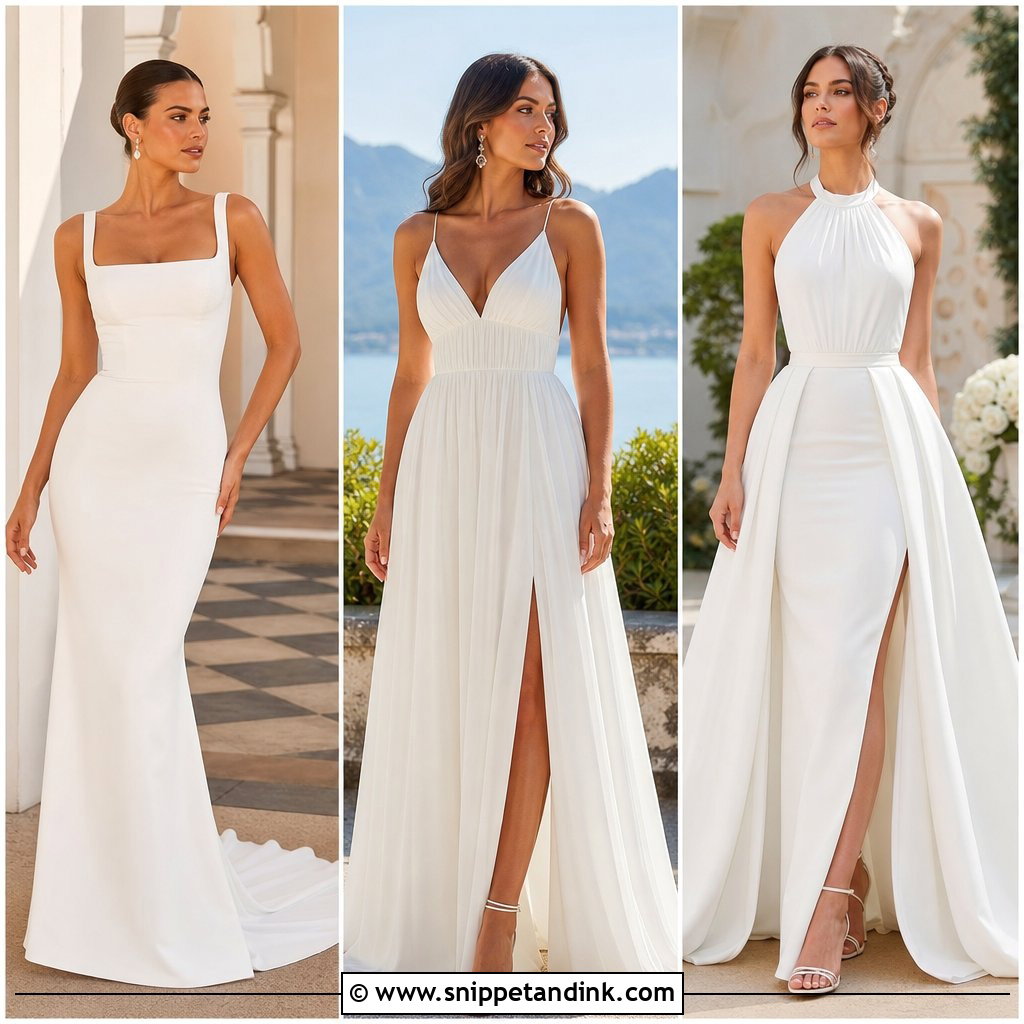
3. Crepe Fit And Flare Wedding Dress
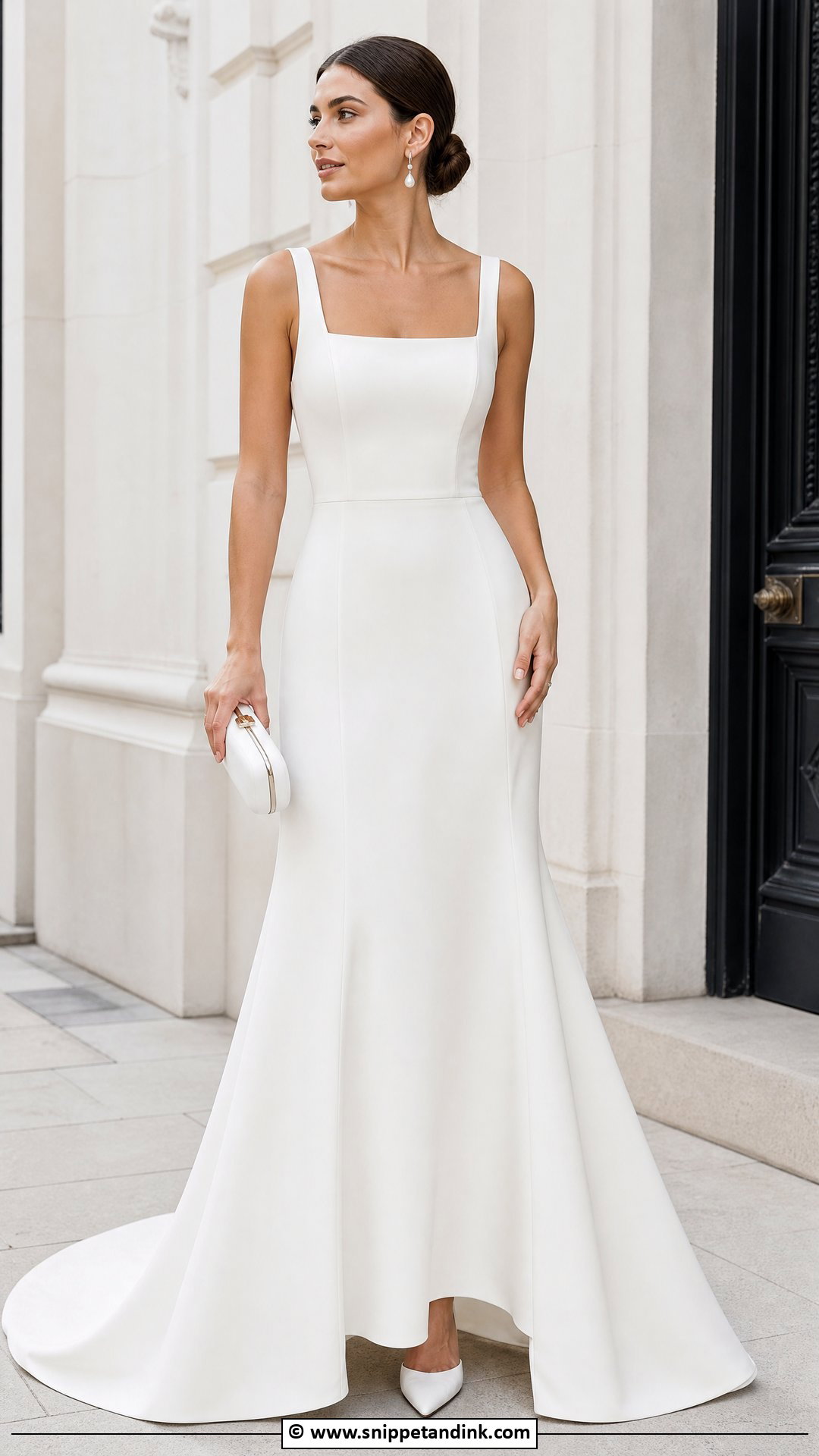
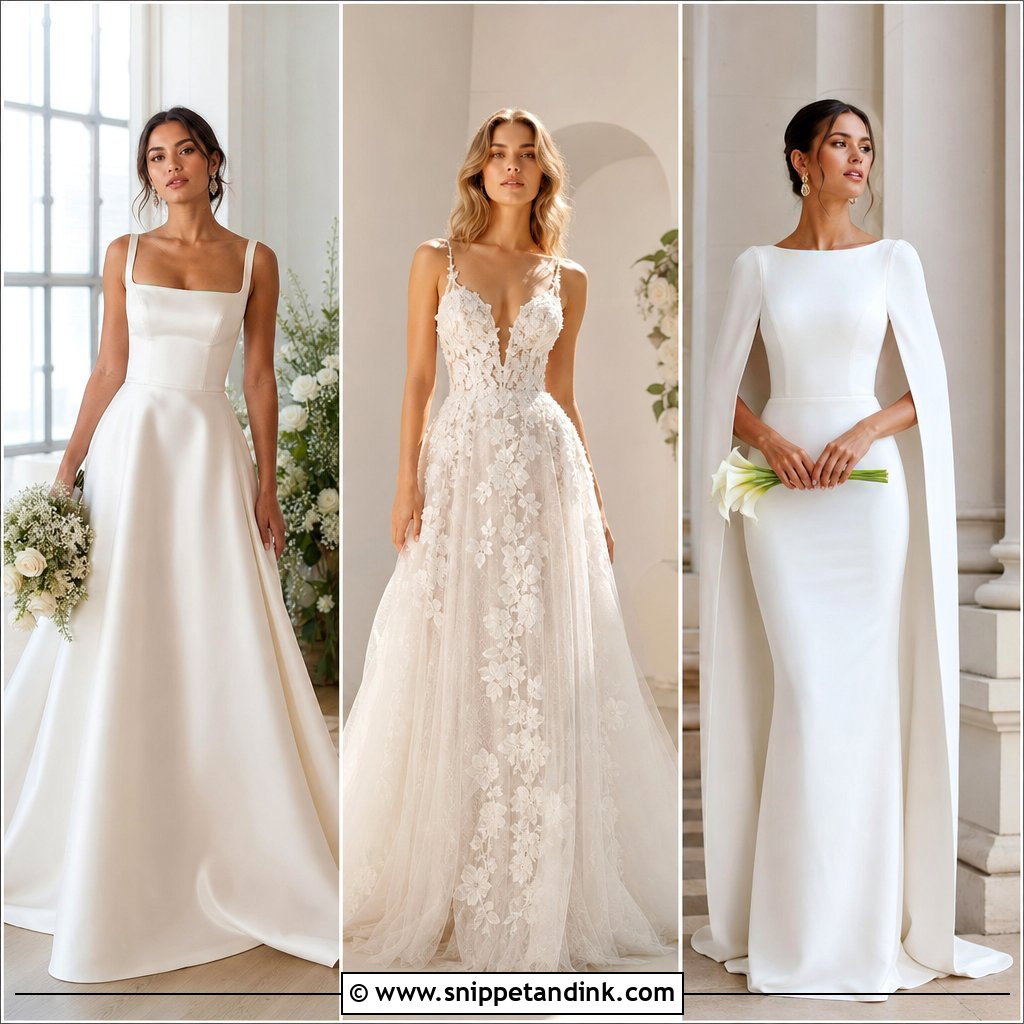
Crepe is matte, smooth and usually has a little stretch, so it moves with you and feels comfortable for hours. It looks sharpest with long seams, minimal detail and a clean bateau, square or plunging V neckline. Because the fabric is plain, accessories carry more of the look: pearl drops, a sleek low bun, white heels and a structured clutch. The honest downside is that crepe is unforgiving over lumpy underwear or a bulky zip, so the fit and what you wear underneath both need to be exact.
4. Off The Shoulder Fit And Flare Wedding Dress
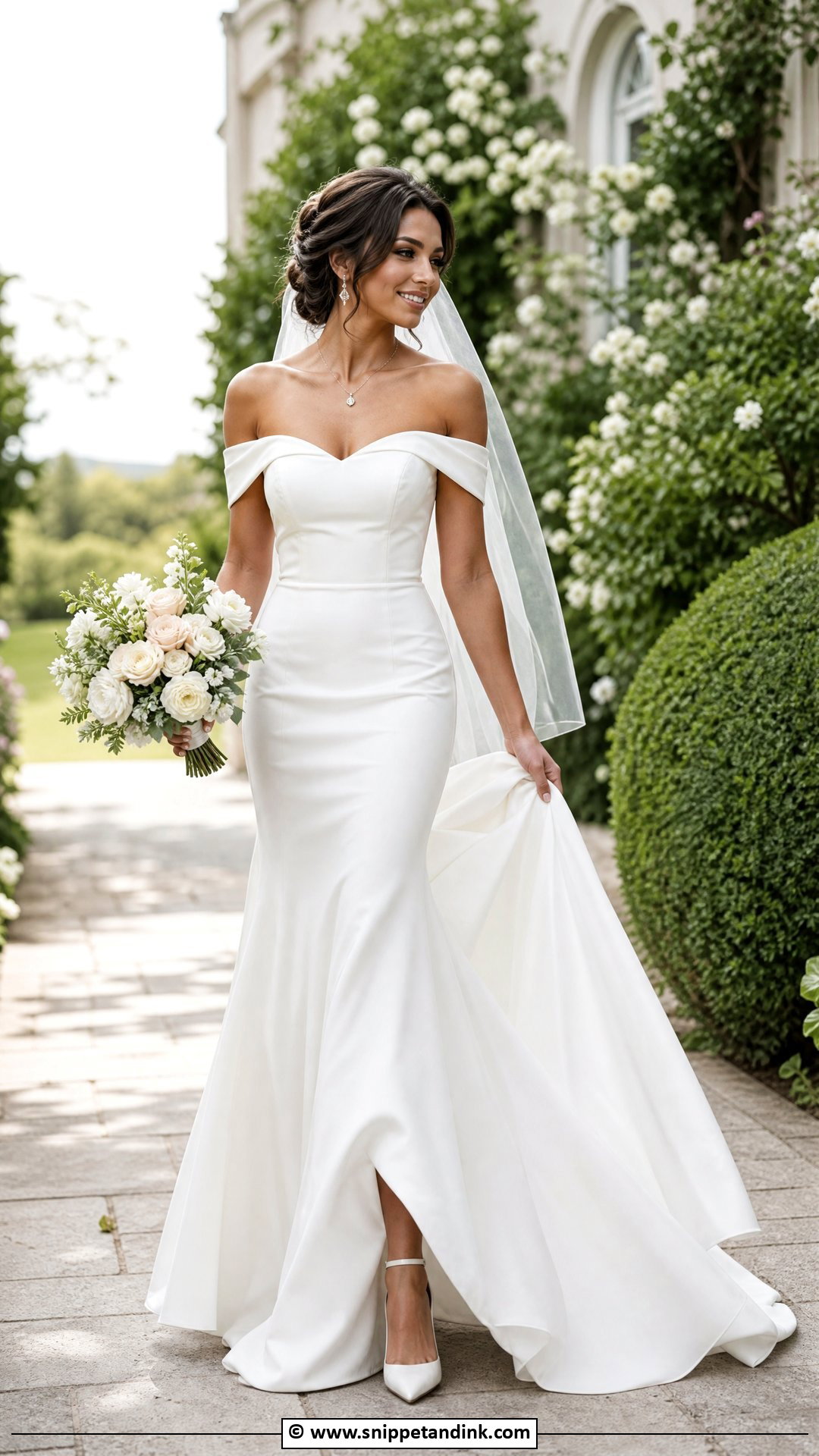
An off-the-shoulder neckline balances the fitted lower half by adding width at the top, which is why it flatters pear shapes so well. It reads classic in satin, boho in lace and modern in crepe. Support has to come from a structured bodice or hidden corsetry, since the sleeves themselves do nothing to hold the dress up. Spring, summer and garden weddings suit it, though it works indoors too. A fine necklace, drop earrings and a veil set low on the head finish a soft, photo-ready line.
5. Strapless Fit And Flare Wedding Dress
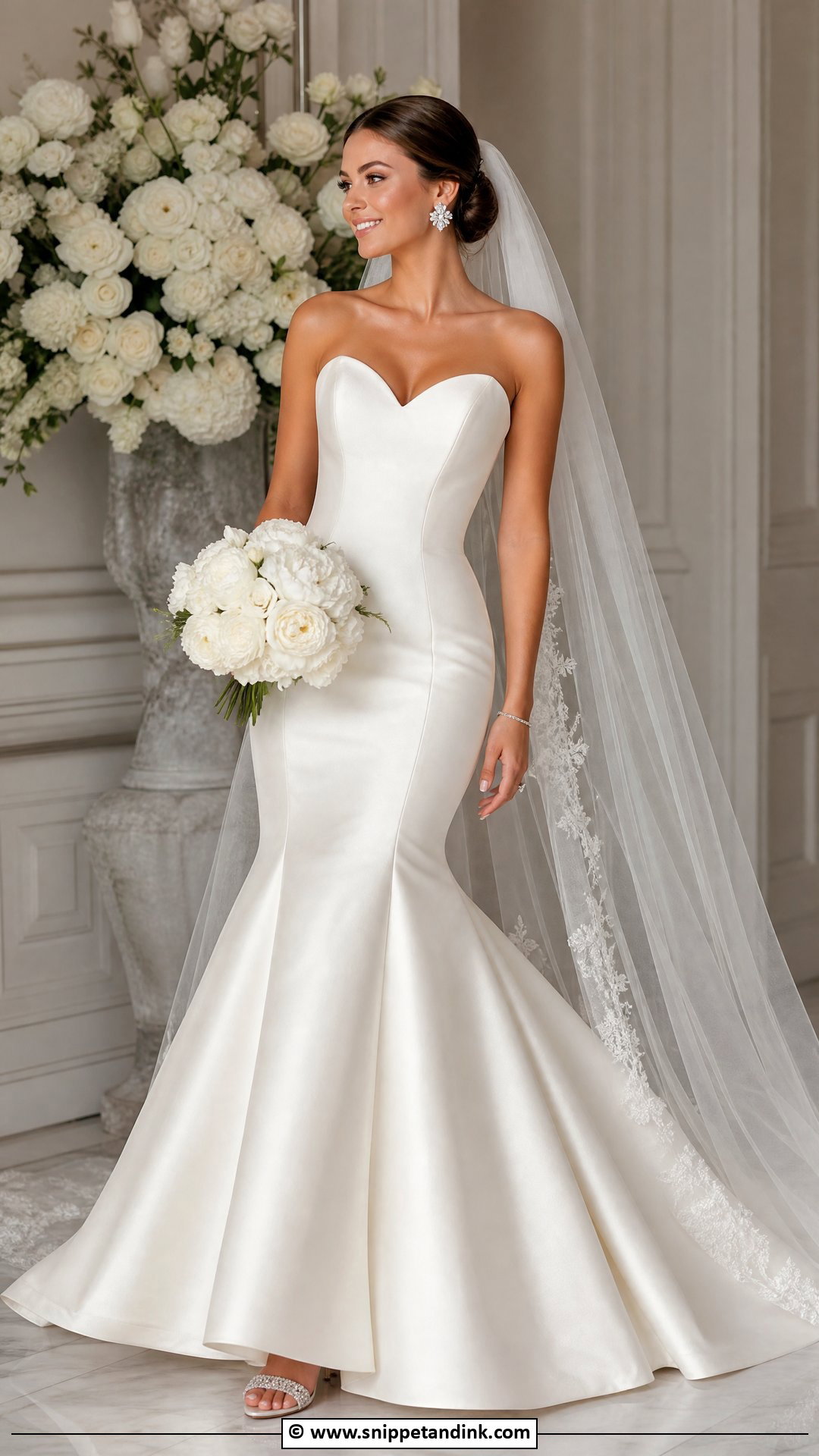
Strapless is the simplest starting point and the easiest to style in different directions. A straight-across neckline feels modern; a sweetheart softens it. With the shoulders bare you have room for statement earrings, a necklace or a big veil. Everything depends on the bodice fit. I have brides hug, lift their arms and bend to pick something up at fittings, because a strapless bodice that only fits when standing still will be tugged up all night. Satin is formal, lace adds texture, crepe keeps it minimal. Bridal heels, a smooth updo and a bouquet in your venue colors complete it.
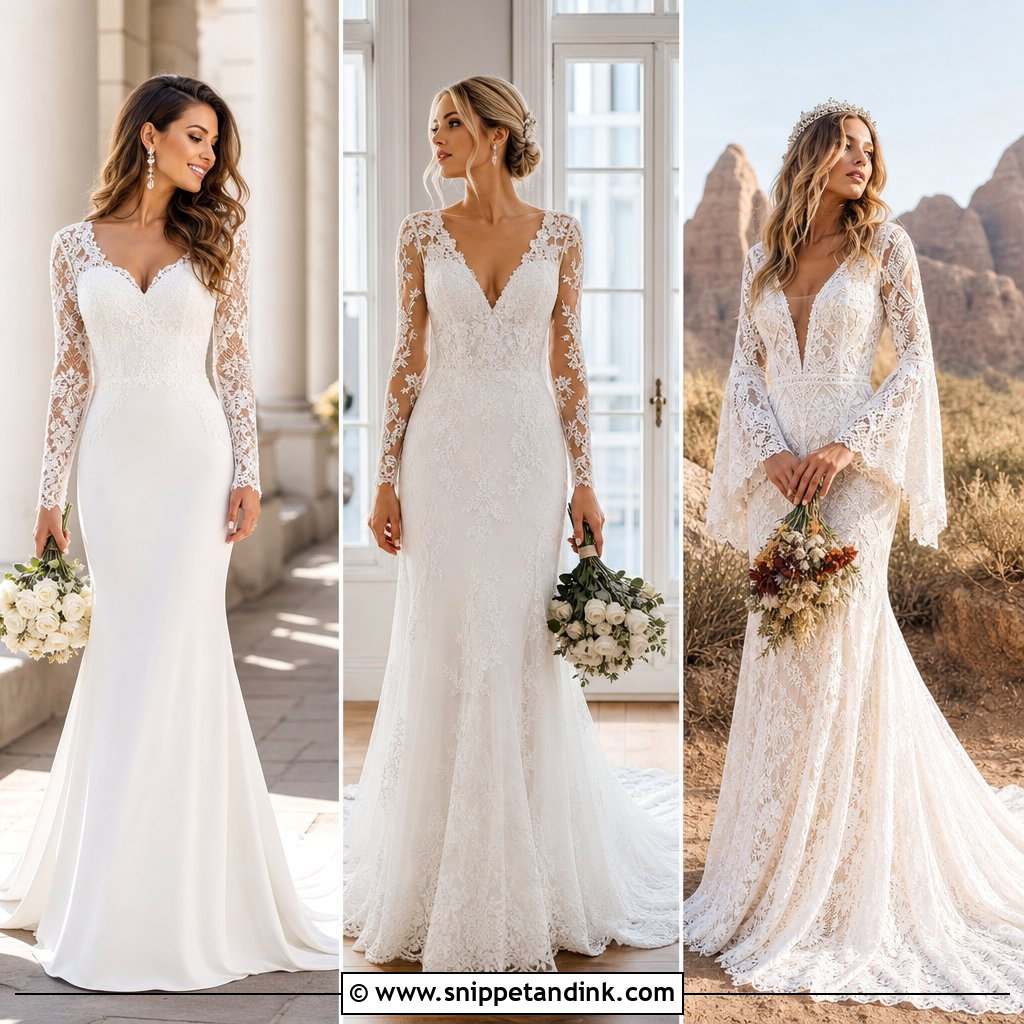
6. Long Sleeve Fit And Flare Wedding Dress
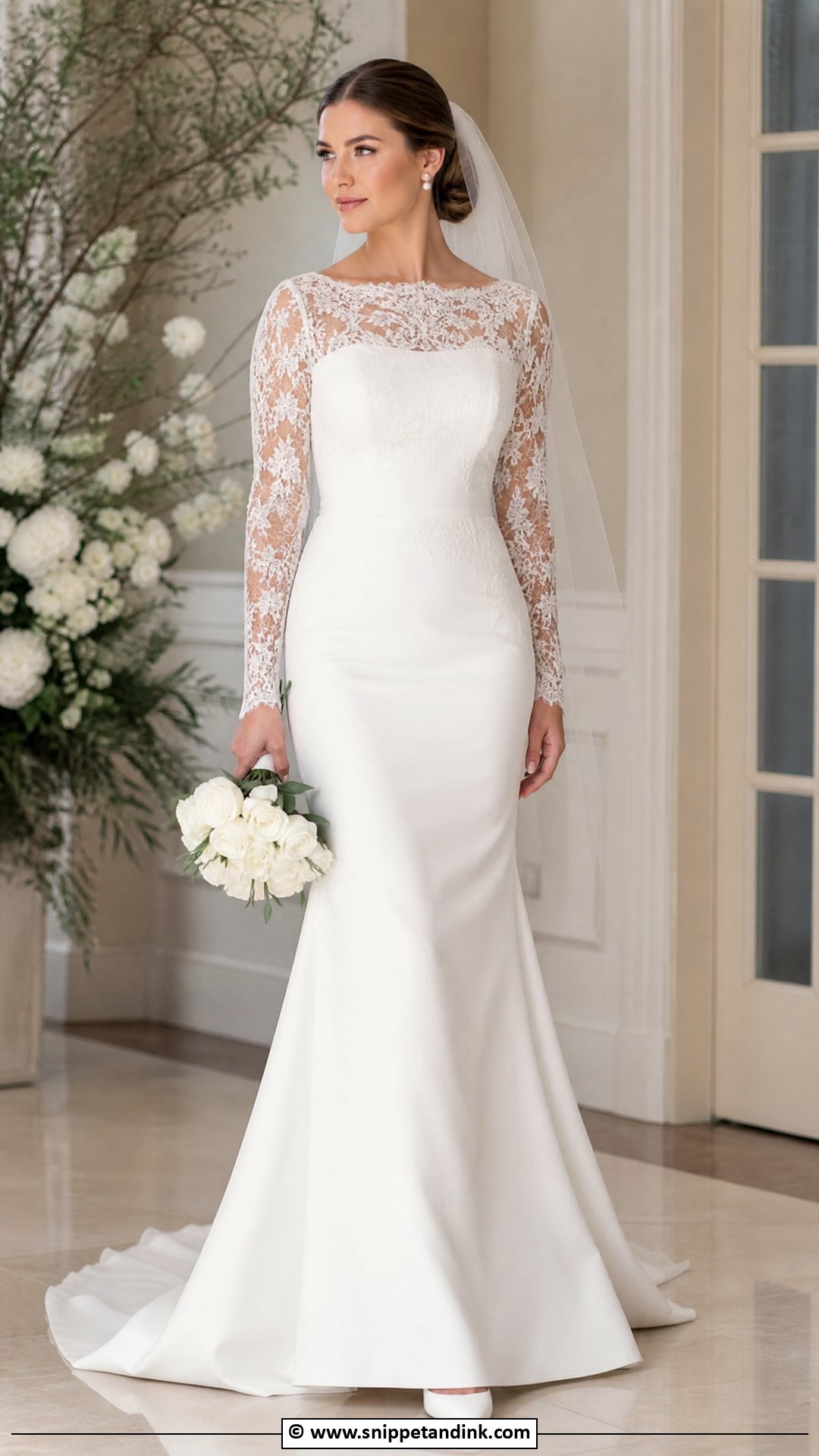
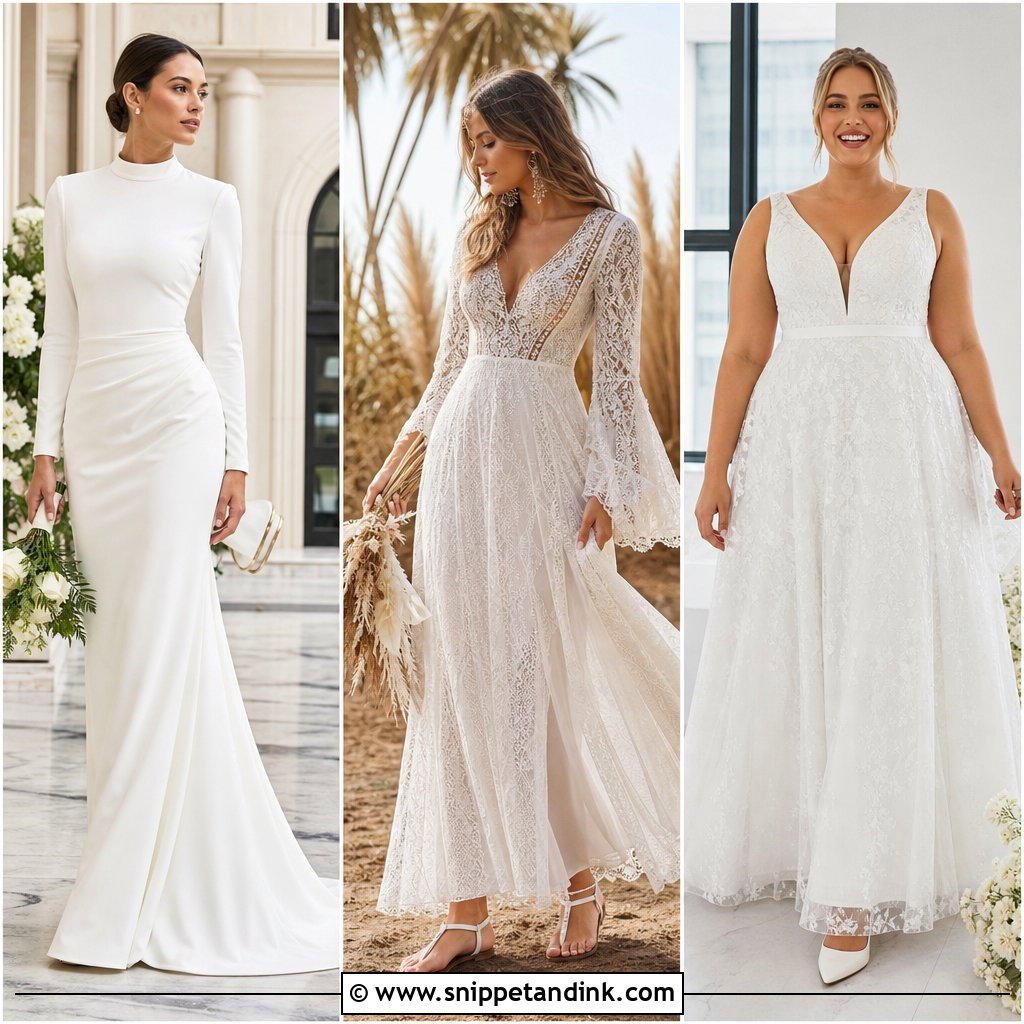
Long sleeves bring coverage and a strong bridal line. Sheer lace feels light; fitted crepe sleeves feel sleek. Fall, winter and formal weddings suit it, though light lace can do spring. A high neckline turns it regal, while a V or illusion neckline softens it. The fitted body is what keeps all that coverage from looking heavy. Sleeves need enough ease at the armhole for you to hug and dance, so I always ask for that movement test. Pearl studs, a low bun and closed-toe heels finish it.
7. Square Neck Fit And Flare Wedding Dress
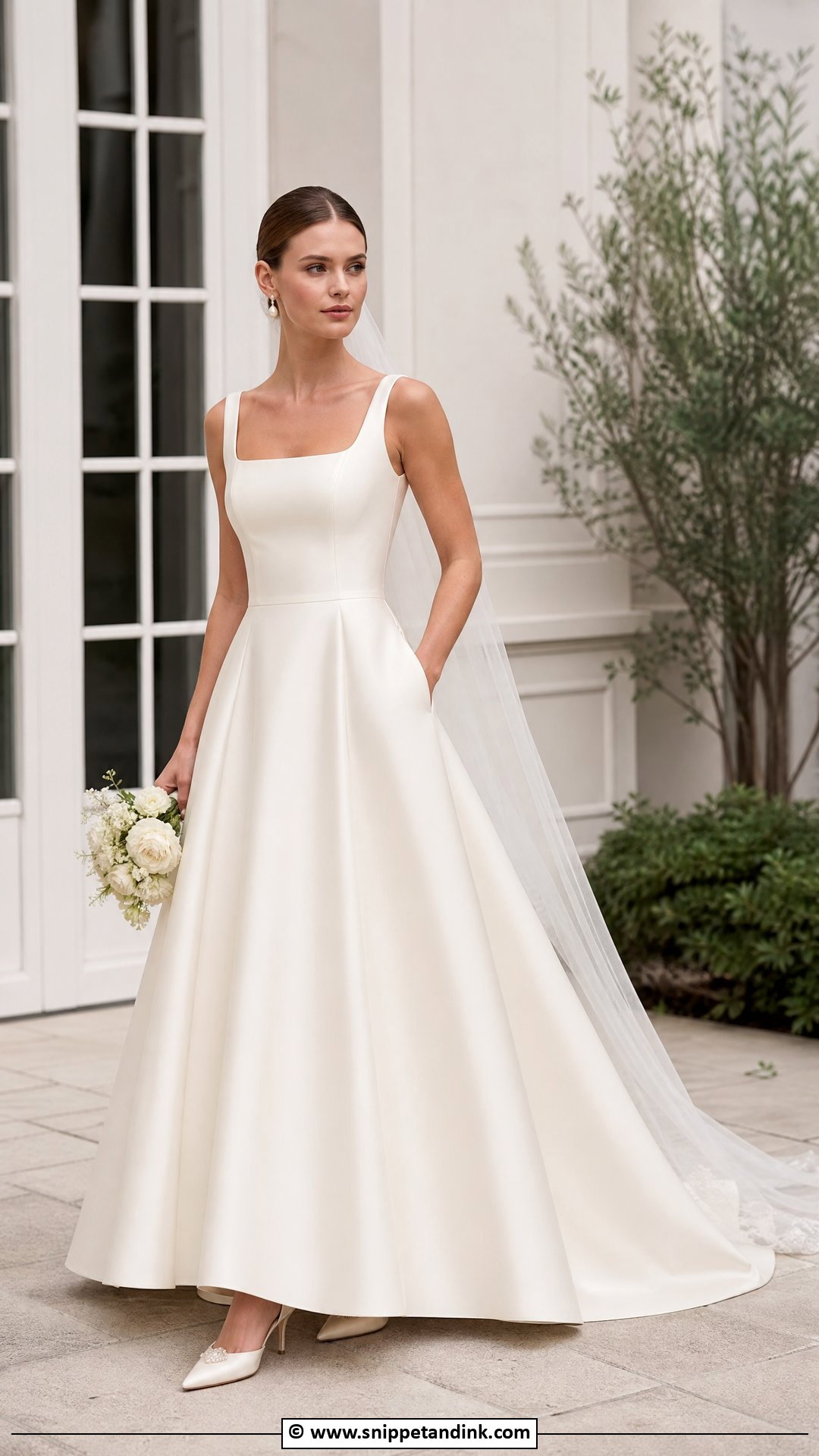
A square neckline frames the collarbone with a little architecture and feels modern without being severe. Satin, crepe, mikado and simple lace all hold the corners crisply. Wide straps give more support; thin ones look lighter. Square necks can gape at the corners when you lean forward, so the strap position needs fitting with you moving, not just standing. A sleek veil, small hoops or pearls and elegant heels suit a city loft, garden estate or modern ballroom.
8. Sweetheart Fit And Flare Wedding Dress
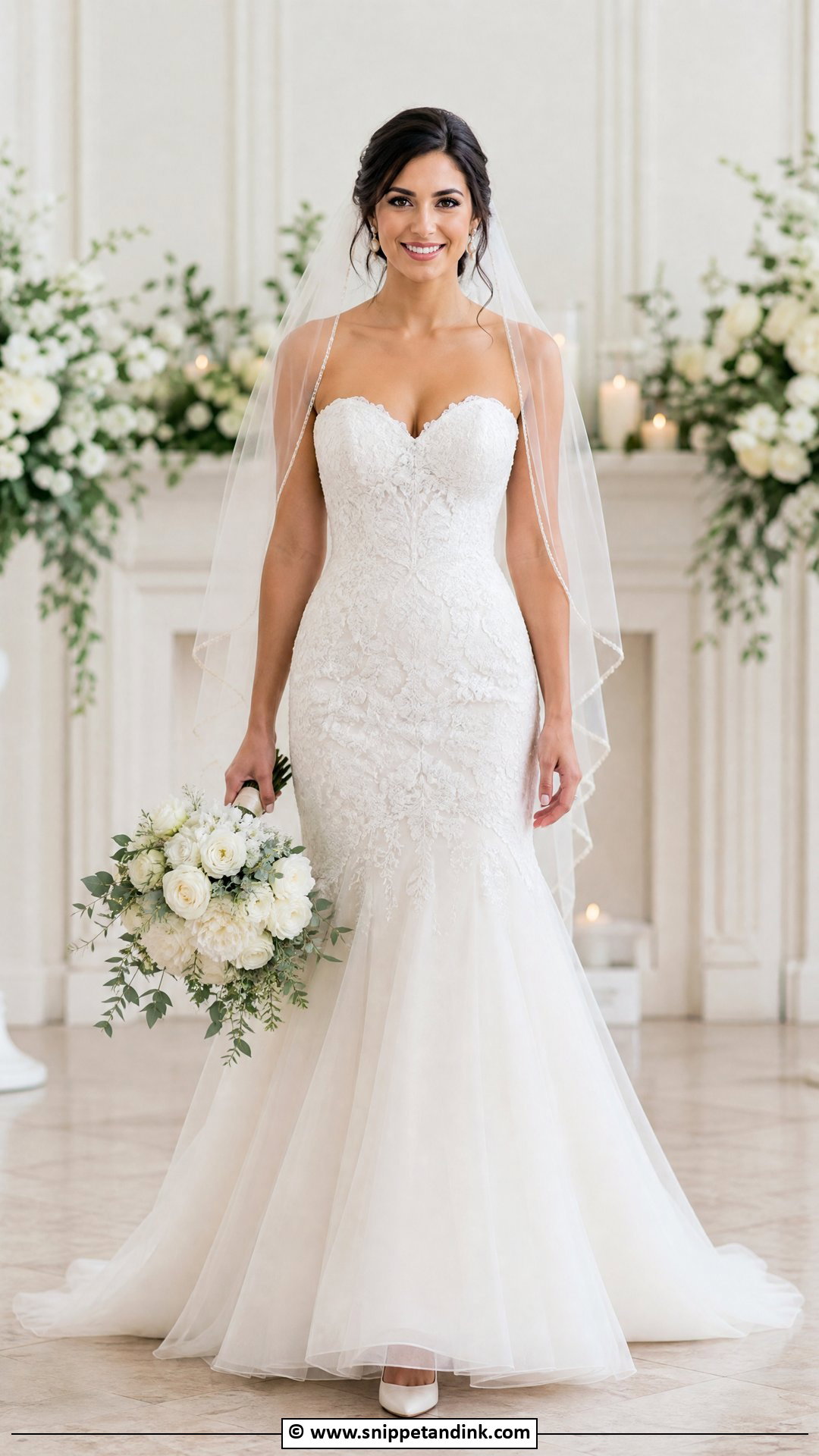
A sweetheart neckline brings curves to a fitted silhouette and flatters the bust, in lace, satin, tulle or beaded fabric. It’s classic without chasing trends. You can wear a strapless sweetheart gown or add off-the-shoulder sleeves for detail. If you’re fuller busted, I’d ask for boning that runs up into the cups so the curve holds its shape all day. A fingertip veil, pearl earrings and comfortable sandals or pumps suit it; pick a flared tulle skirt for fullness or satin and crepe for a sleek finish.
9. V Neck Fit And Flare Wedding Dress
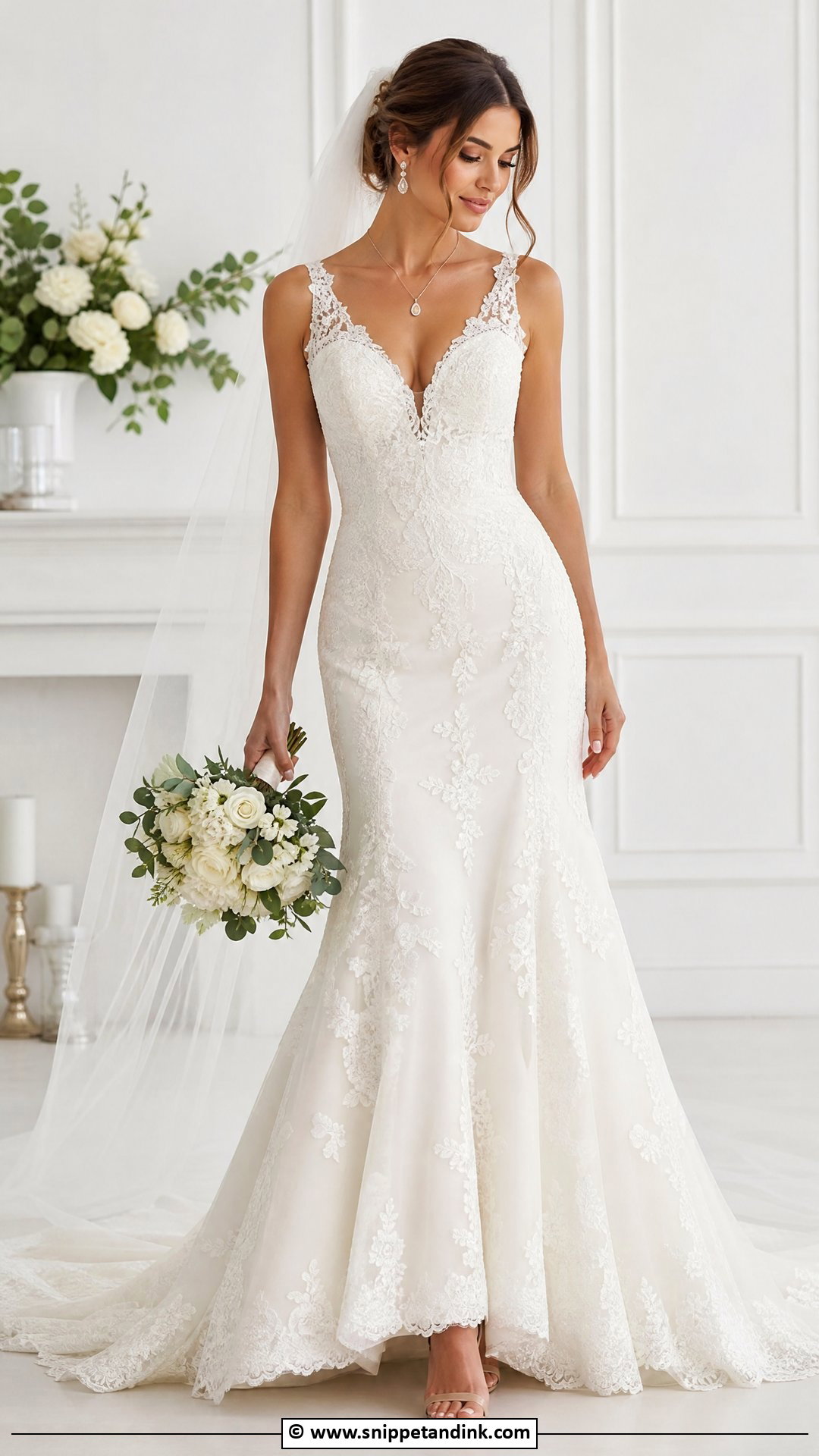
A V neckline draws the eye down the center, which lengthens the torso. A deep V reads bold and modern; a softer V gives more coverage. Lace appliqué along the edges softens it, and plain crepe keeps it clean. A pendant necklace, delicate earrings and a soft veil work, and a matching V at the back keeps the line going from every side. For deeper Vs I check whether the dress has a fine mesh panel or fashion tape points sewn in, since those decide whether you can dance without adjusting.
10. High Neck Fit And Flare Wedding Dress
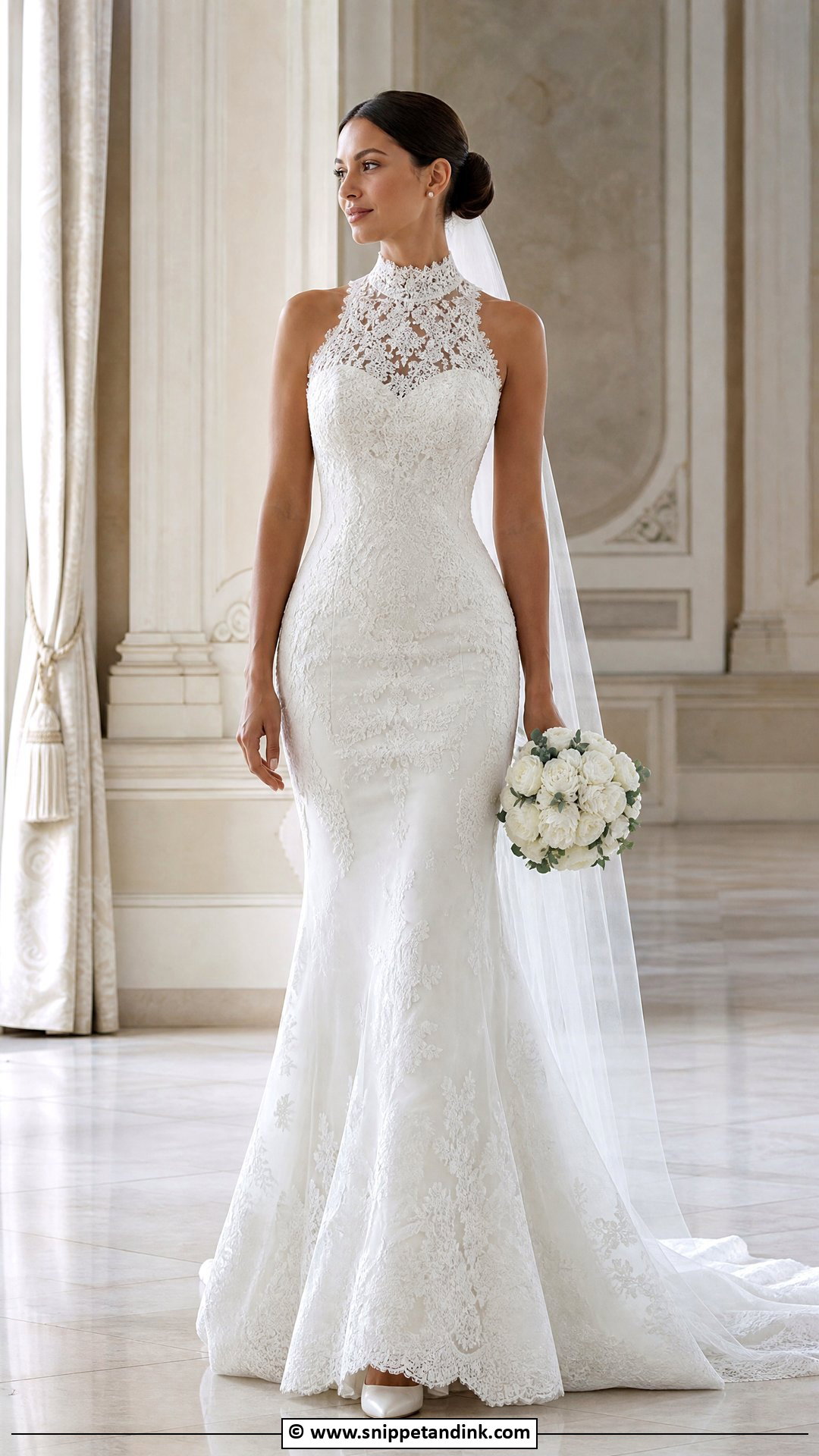
High necks draw attention upward and look polished above a fitted skirt and flared hem. Sheer lace feels romantic; satin or crepe feels sleek. You get coverage while keeping shape. With the neckline doing the work, I stop at small pearl earrings, a smooth bun and a simple veil attached at the crown or the back of the head. The fit at the throat matters most: a high neck should clear the neck by a finger’s width so it doesn’t press when you look down at your vows.
11. Illusion Fit And Flare Wedding Dress
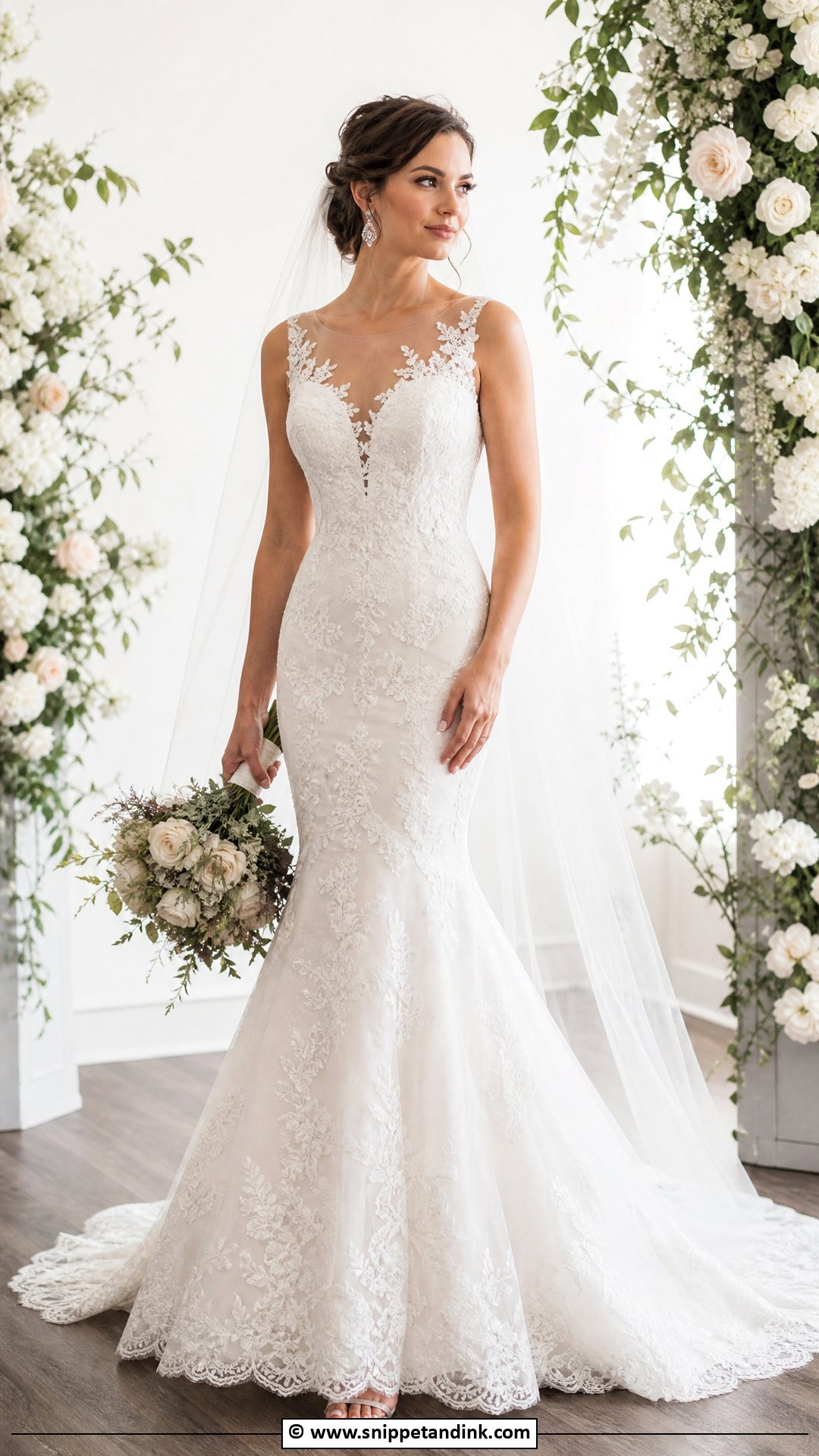
Illusion fabric is sheer tulle or mesh that carries lace, beading or embroidery across the neckline, sleeves, back or bodice, so the detail appears to sit on skin. It feels secure while looking light. Long illusion sleeves read elegant, an illusion neckline gives support, and an illusion back makes for a memorable exit. Mesh shade is the part I test most, in daylight against the skin, since the wrong tone shows up as a band. Crystal earrings, a soft veil and neutral heels complete it.
12. Beaded Fit And Flare Wedding Dress
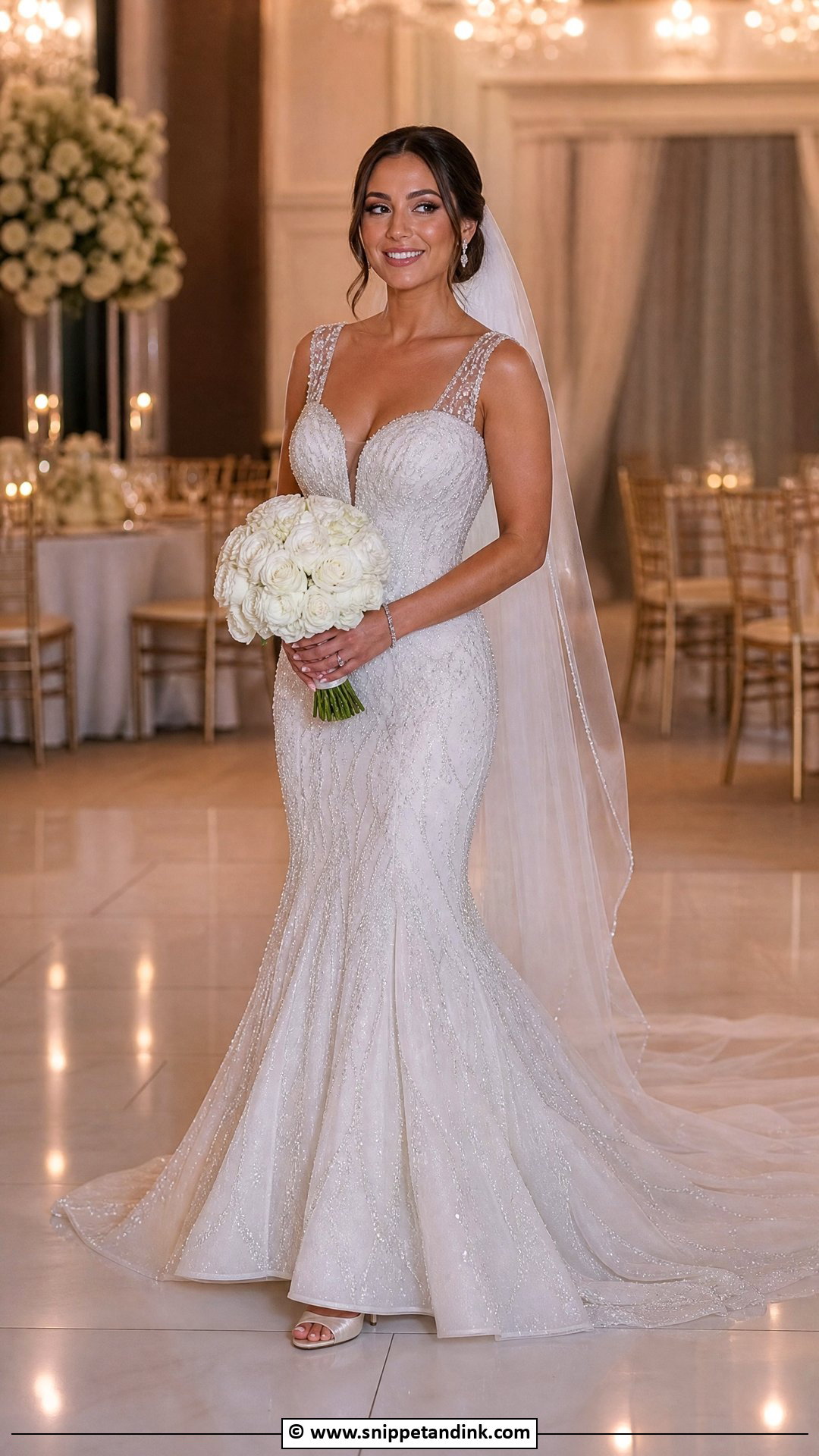
Beading brings sparkle while the silhouette stays sleek. It can cover the whole gown, sit on the bodice, trace the seams or shimmer over lace. Evening weddings, hotel ballrooms and glamorous receptions suit it, with simple earrings, a clean veil and heels that don’t compete. Fully beaded fit and flare gowns are heavy and have little give, so I ask brides to sit for several minutes at a fitting; beads at the hip can press when seated. Get that right and the dress glows under evening light.
13. Minimalist Fit And Flare Wedding Dress
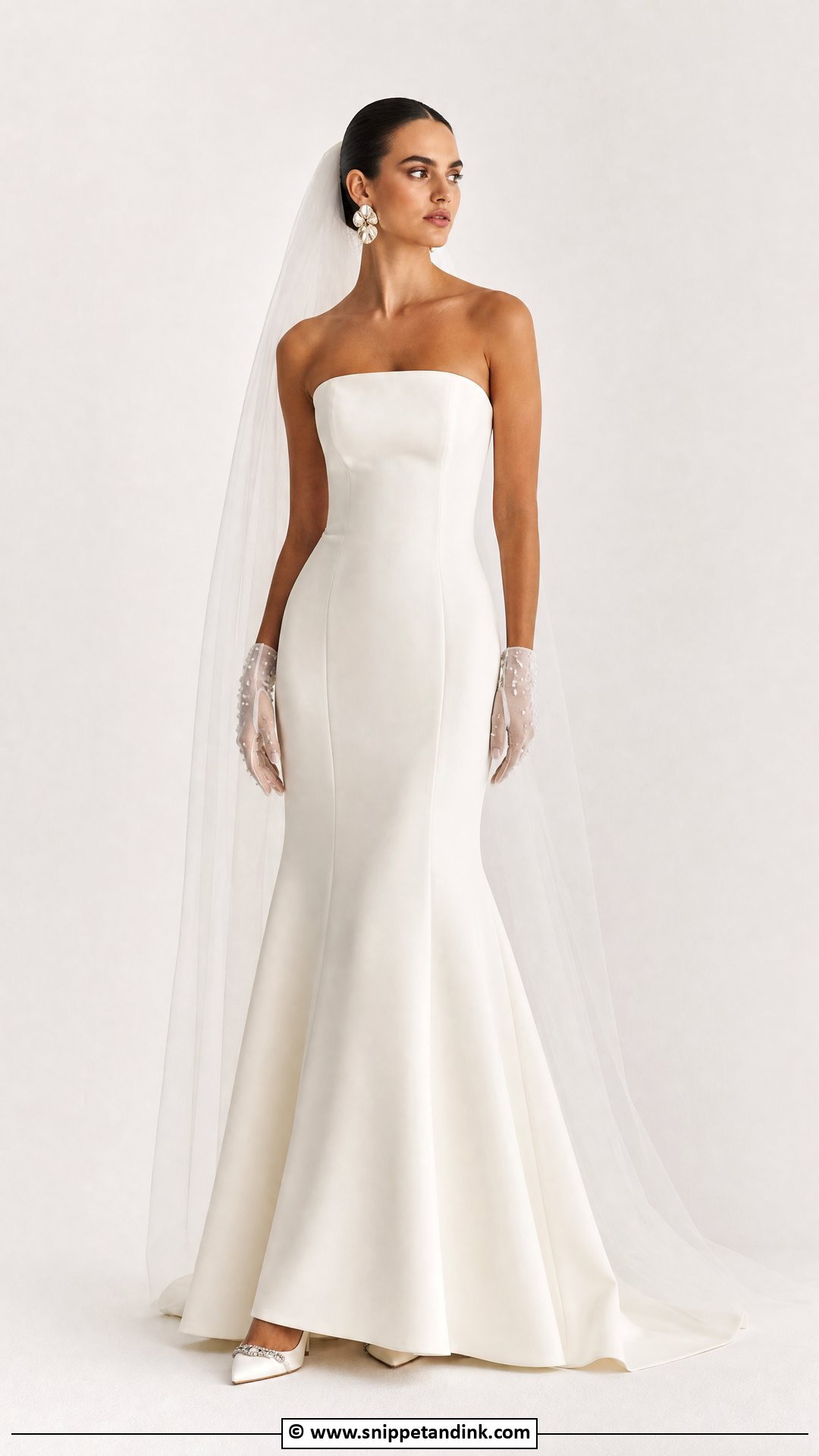
Minimalist doesn’t mean easy. With no lace or sparkle to distract, the fit has to be exact, and I take more care with hem and seam placement here than on anything embellished. Crepe, satin and mikado hold shape on their own, and a square, strapless or bateau neckline keeps it fresh. The upside is how easily it personalizes: pearl gloves, a sculptural veil, statement earrings or a sleek cape add as much drama as you want. It ages well in photos because nothing in it dates.
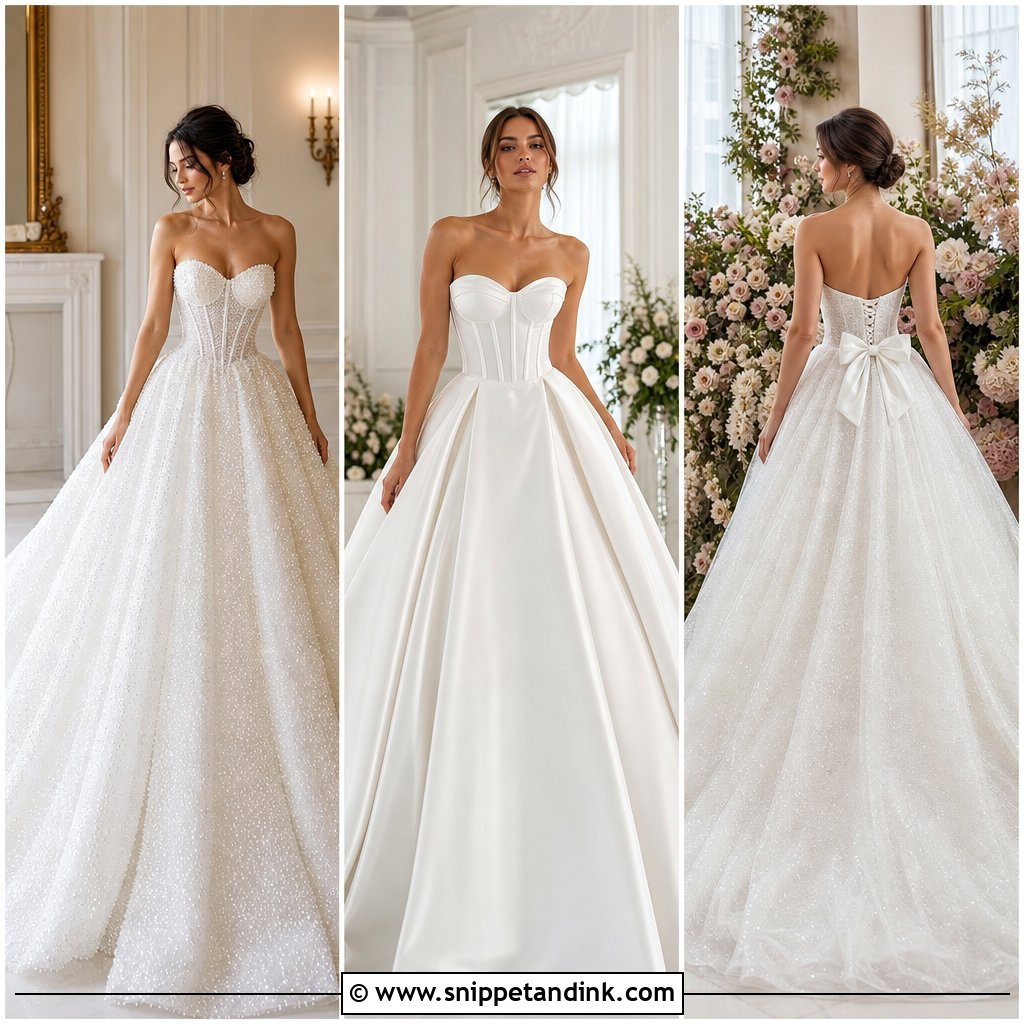
14. Corset Fit And Flare Wedding Dress
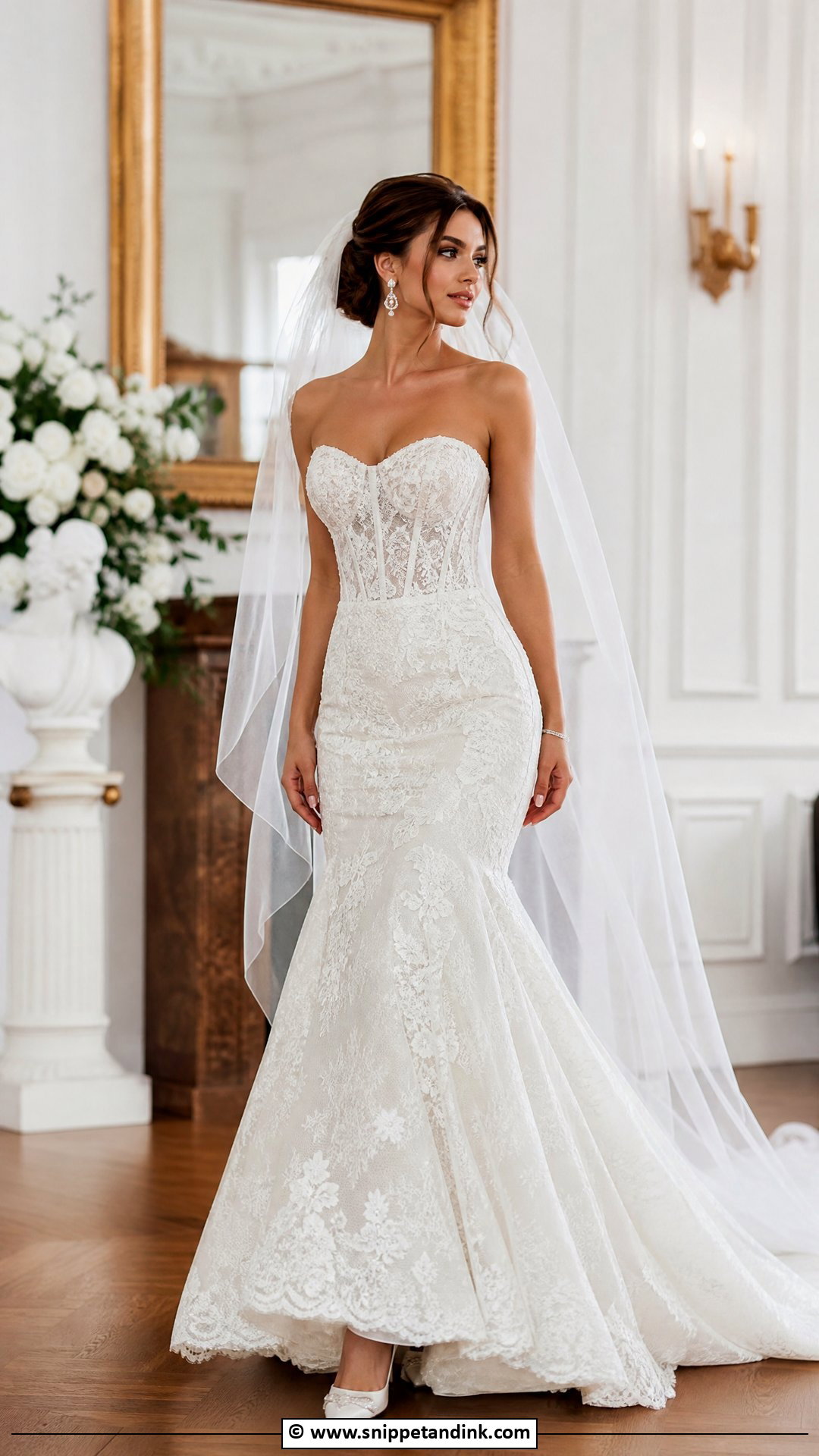
A corset bodice gives structure, support and a defined waist. Visible boning looks modern; a lace-covered corset feels softer. It suits many figures because the corset shapes the upper body while the skirt flares below the hips. Satin corsets read formal, lace ones romantic. I tell brides to try corset gowns after a meal, not first thing in the morning, because that’s closer to how it will feel at the reception. A delicate veil, drop earrings and heels in the dress tone finish it, and a corset fit and flare dress holds you in all night.
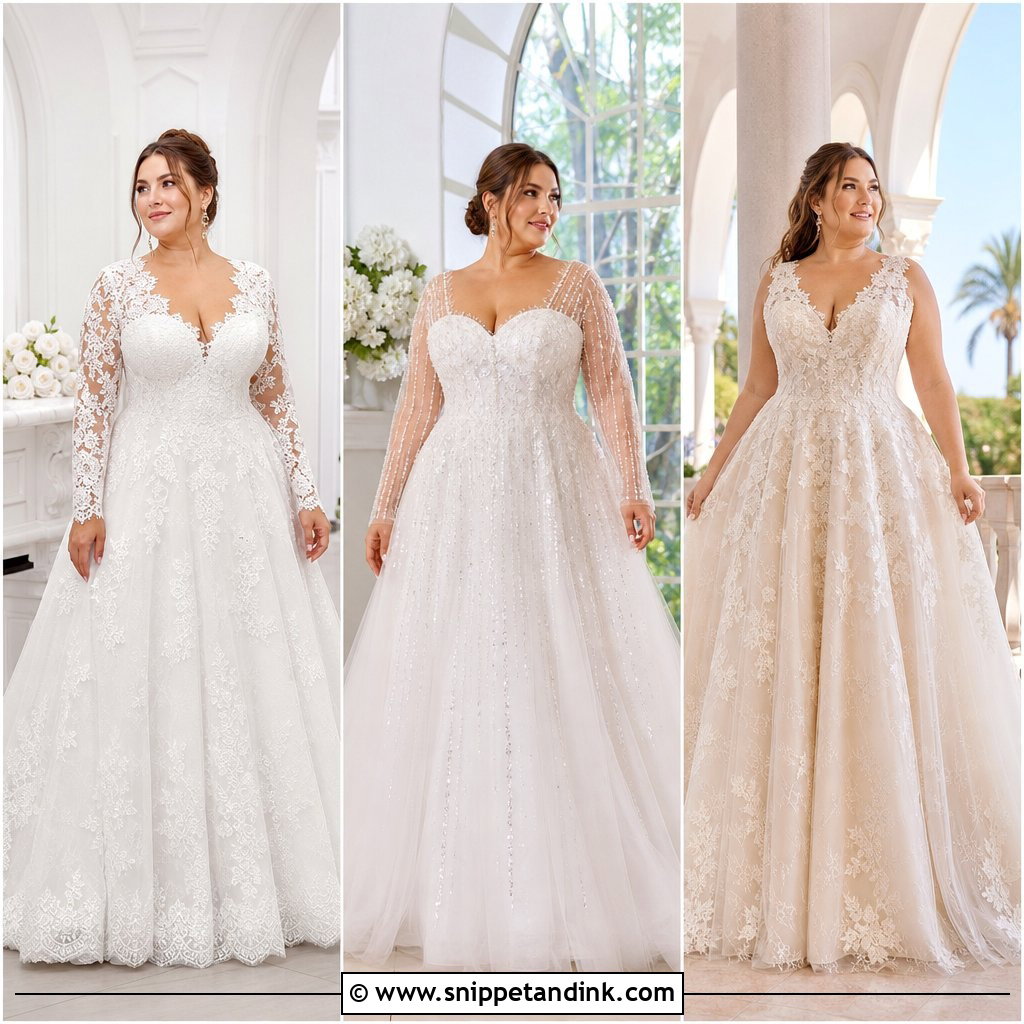
15. Basque Waist Fit And Flare Wedding Dress
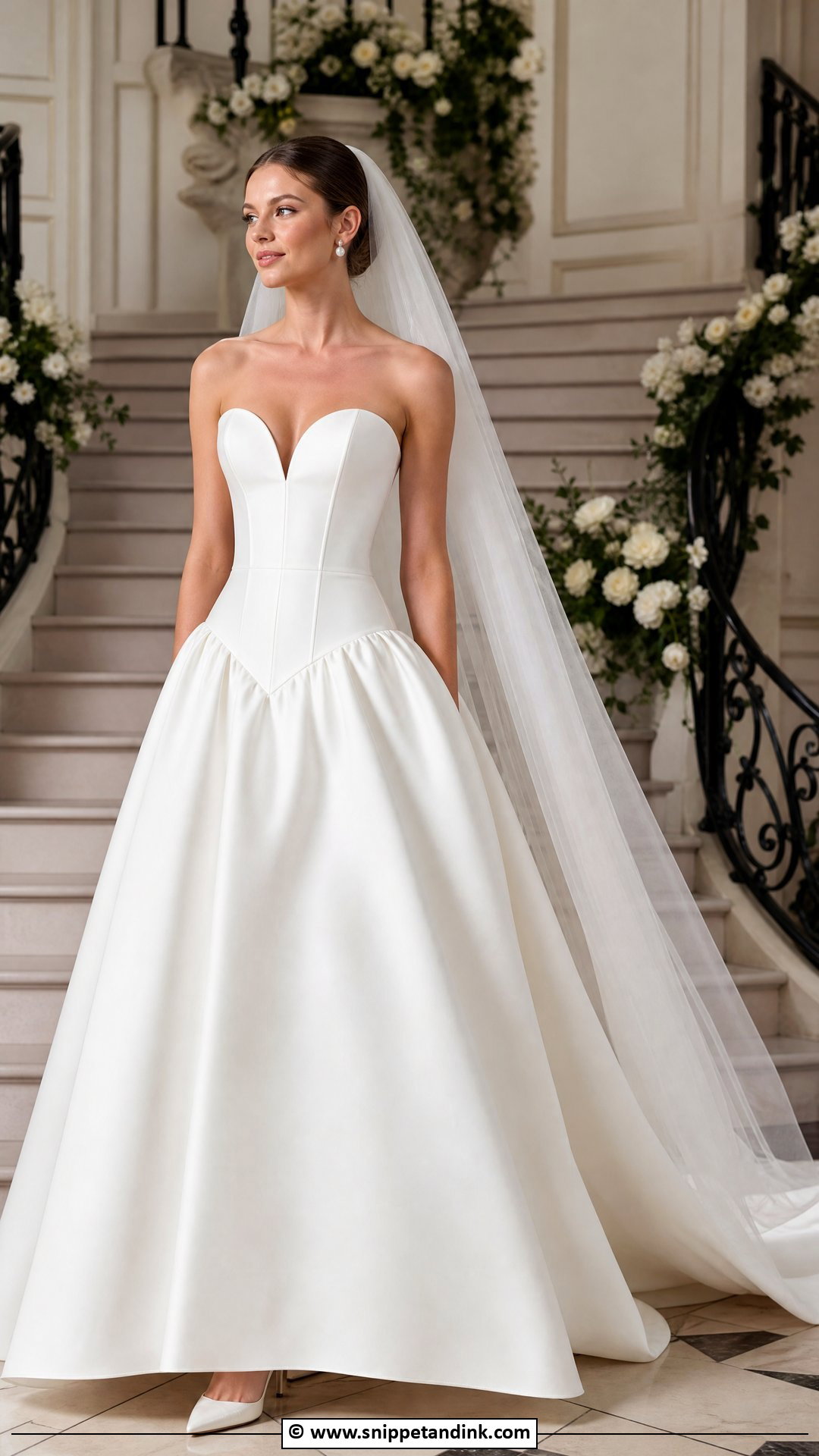
A basque waist fit and flare wedding dress has a waistline that dips to a point at the front, which lengthens the torso. It’s vintage in origin and very current. The point can be shallow or deep, and I generally suggest a shallower dip for shorter torsos, since a deep point can make the legs look shorter. Satin, mikado, lace or mixed fabrics all hold it, and a strapless or off-the-shoulder neckline balances the structure. A long veil, pearl earrings and elegant heels suit a grand entrance.
16. Detachable Overskirt Fit And Flare Wedding Dress
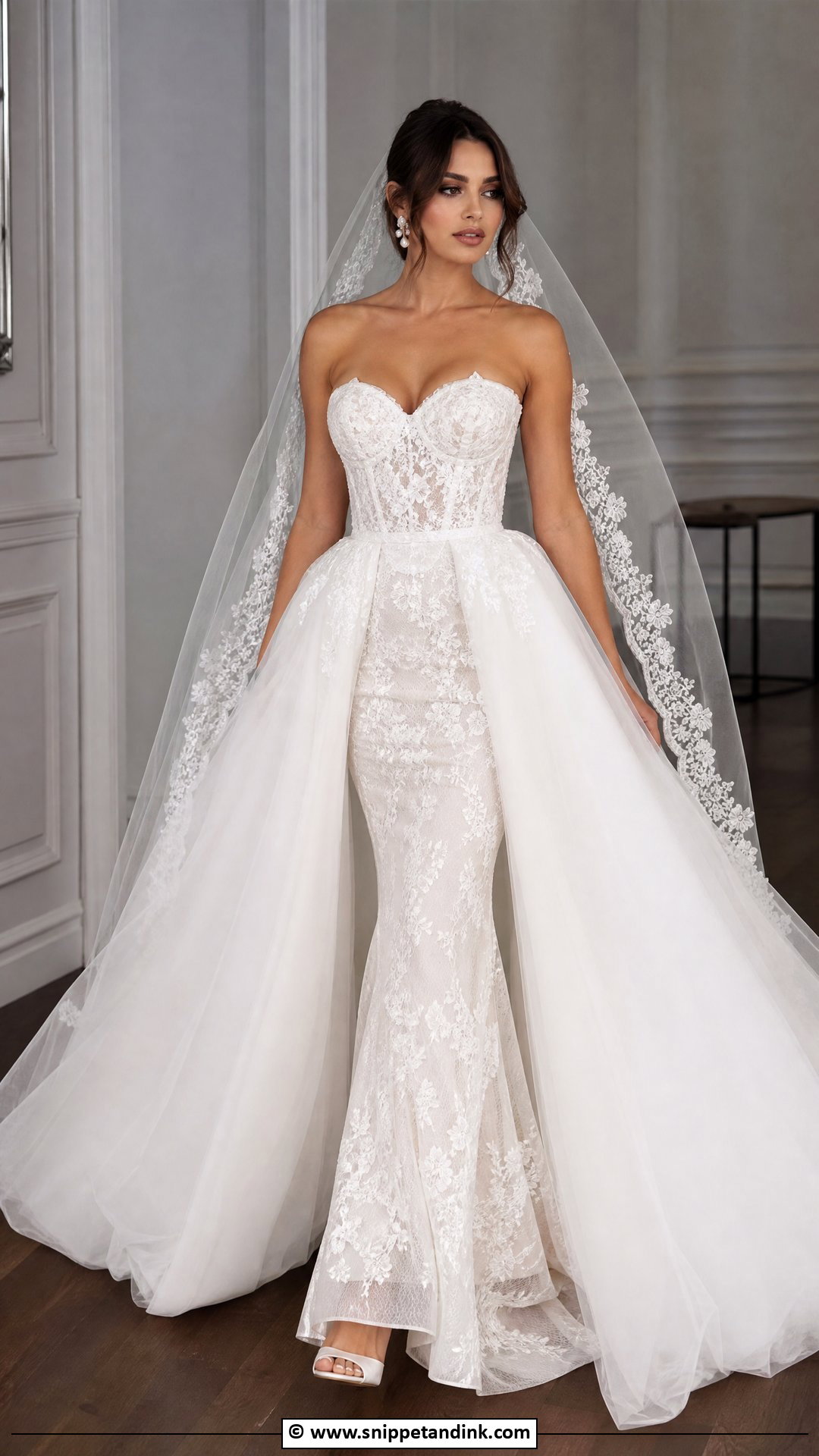
A detachable overskirt fit and flare wedding dress gives you two looks. The overskirt adds ball-gown volume for the ceremony; remove it for the reception and the fitted dress is underneath. Tulle overskirts feel soft, satin or mikado ones look formal. The join is what I check: the overskirt waistband must sit exactly on the dress seam or it creates a visible ridge. A statement veil for the ceremony, then earrings or a hair piece later, completes the switch.
17. Detachable Sleeve Fit And Flare Wedding Dress
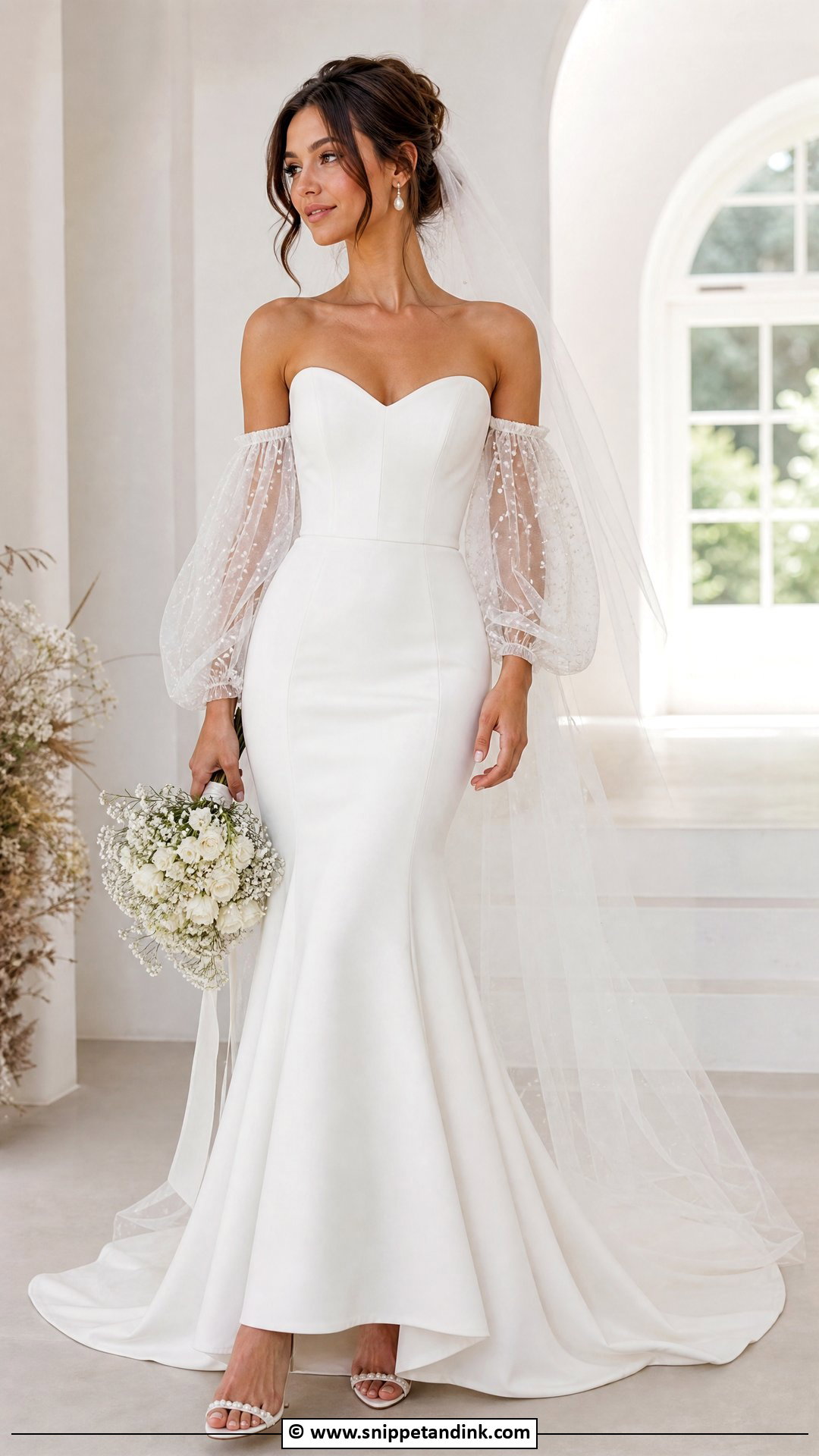
Detachable sleeves let one dress do two jobs: romantic sleeves for the ceremony, bare shoulders for dancing. They pair with strapless, sweetheart and off-the-shoulder bodices. Puff sleeves feel playful, lace ones classic, sheer tulle light and modern. For brides who can’t decide on sleeves, this is the answer I give most often. Ask whether they attach with snaps, hooks or elastic, since elastic bands can mark the upper arm by evening. Pearl earrings, soft waves and bridal heels complete it.
18. Floral Applique Fit And Flare Wedding Dress
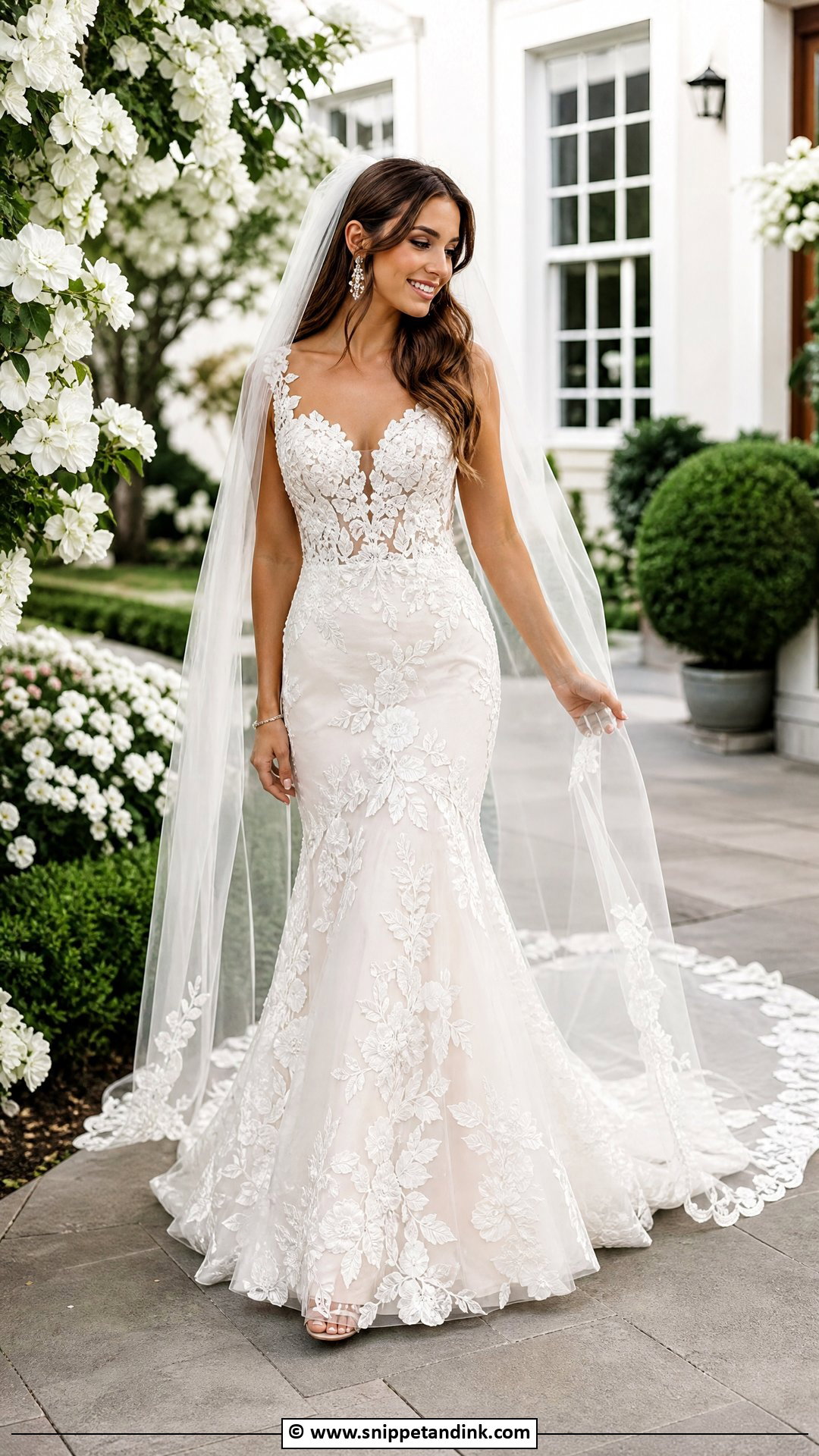
Floral appliqué gives texture and a garden note. The flowers can scatter lightly over the bodice, gather along the train or layer over sheer tulle for depth. Small flowers look delicate, larger ones dramatic. On a fit and flare, I like the appliqué thickest at the flare point, because it draws the eye to where the skirt opens and softens the transition. A soft veil, dainty earrings and ivory, nude or pale blush shoes suit outdoor ceremonies, spring weddings and estates.
19. 3D Floral Fit And Flare Wedding Dress
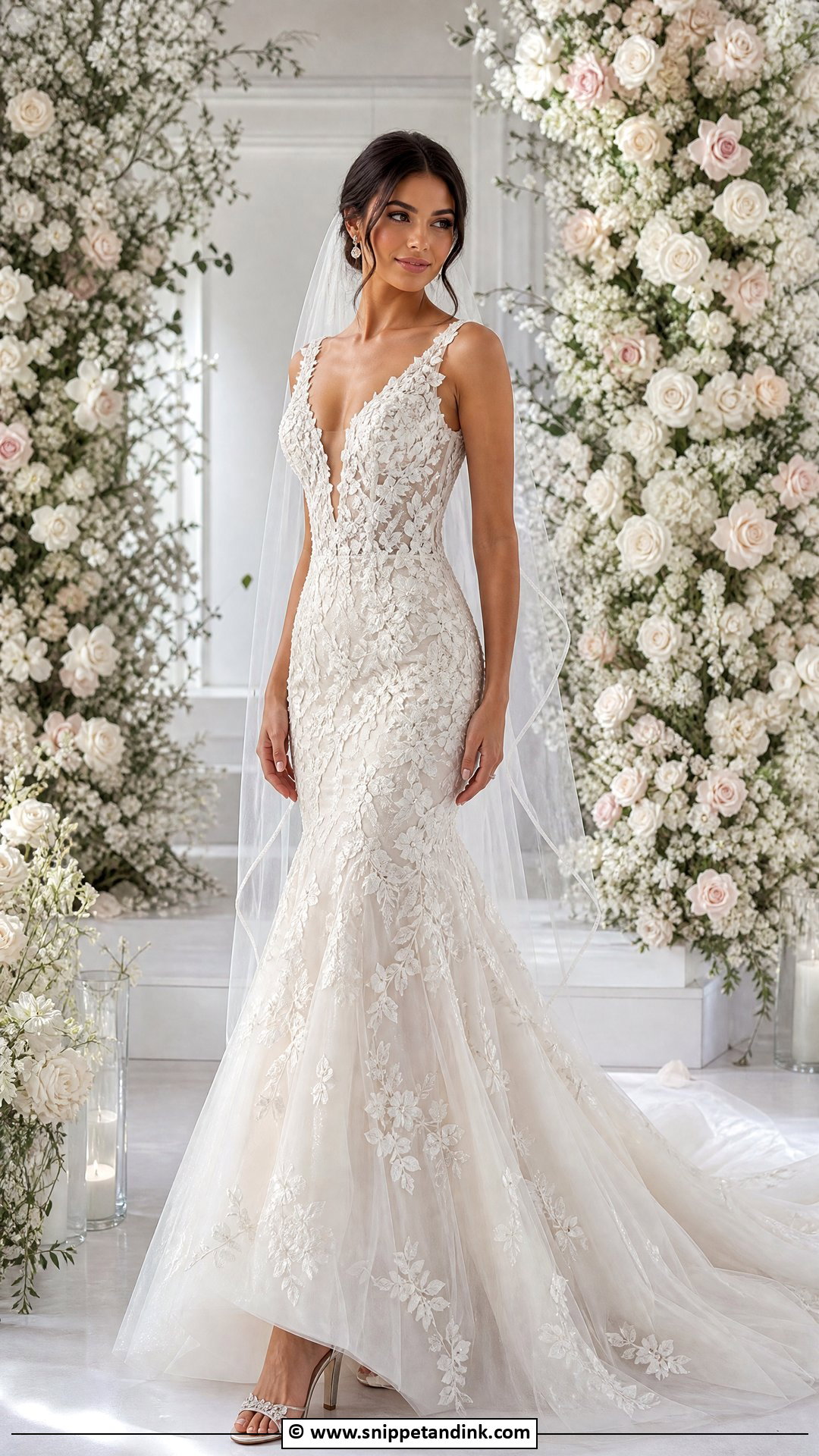
Three-dimensional flowers sit above the fabric and create a sculpted surface that flat lace can’t. Small blooms stay delicate; larger ones across bodice and skirt turn bold. The fitted cut keeps raised flowers from feeling sugary, and the flared hem balances them. Sitting crushes 3D petals on the back of the skirt, so I ask whether they’re placed mostly on the front and sides. Simple hair, small earrings and a sheer veil that leaves the detail visible finish it.
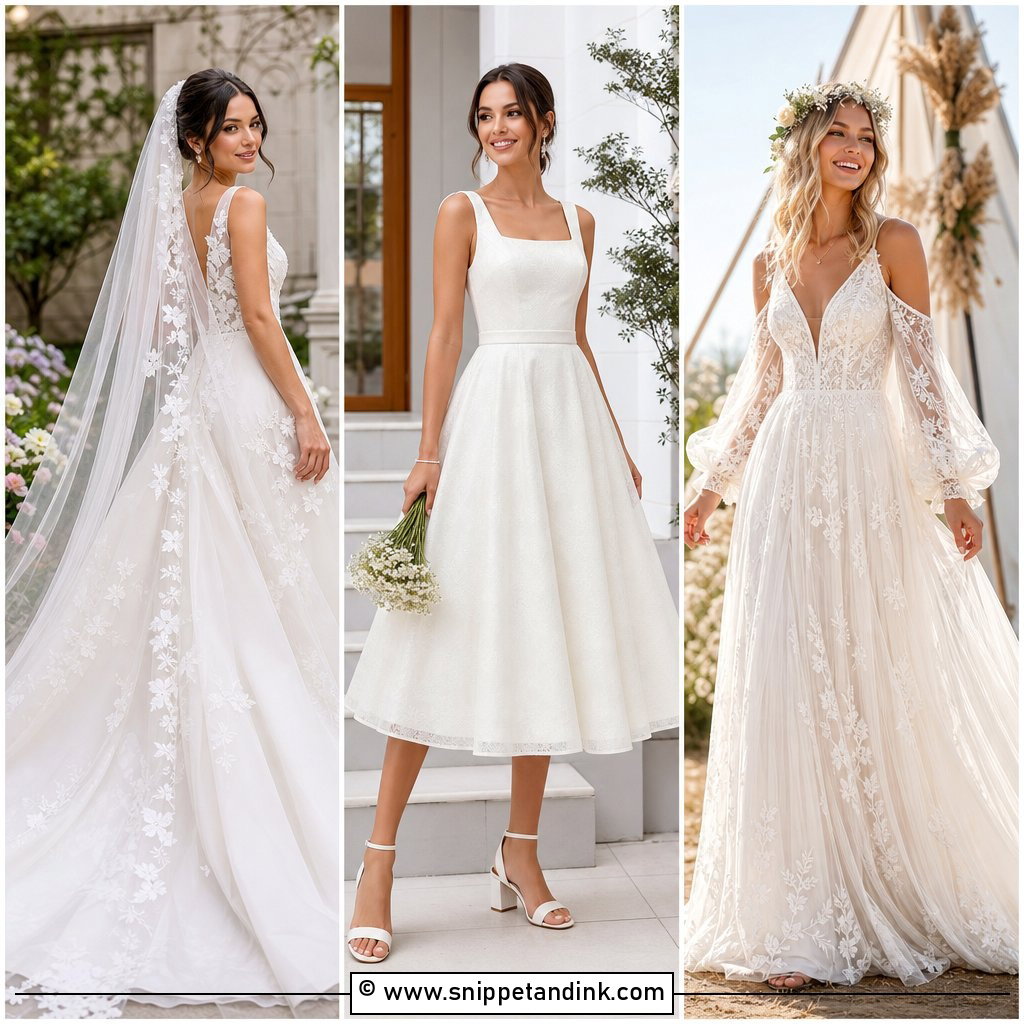
20. Tulle Fit And Flare Wedding Dress
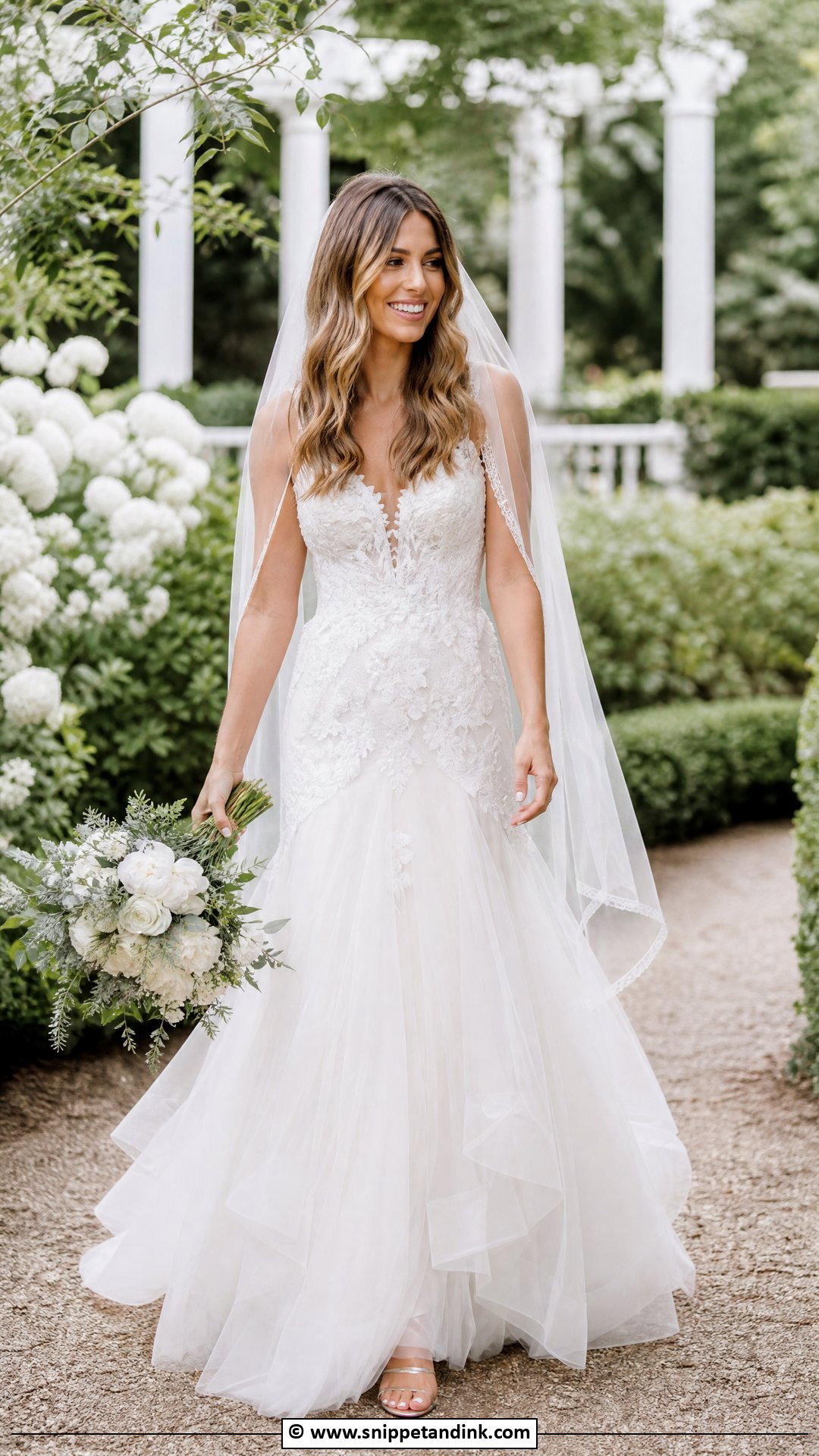
Tulle gives the fit and flare a softer feel than satin or crepe. The fitted bodice shapes you while layers of tulle lighten the skirt, so you get movement without a full ball gown. Lace appliqués, subtle sparkle or an illusion bodice add interest. Tulle over a fitted lining can ride up over the hips as you walk, and I ask for the layers to be tacked at the hip seam to stop it. Garden weddings, destination ceremonies and romantic indoor venues suit it, with airy waves, a fingertip veil and delicate sandals or pumps.
21. Mikado Fit And Flare Wedding Dress
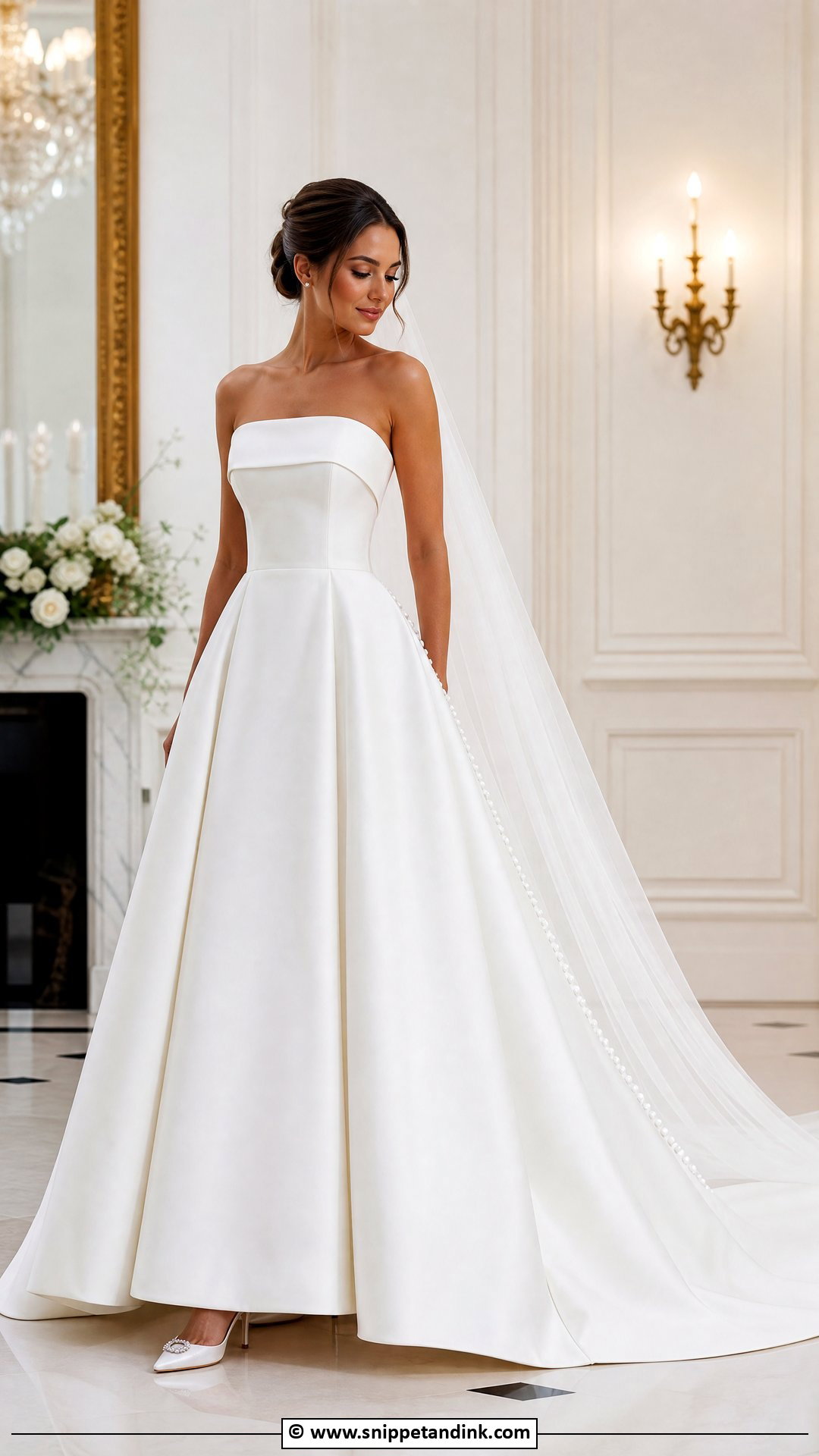
Mikado is a heavy, crisp silk or blend with a subtle sheen, and it holds shape so well that the gown looks sculpted. A strapless neckline, square neck or folded cuff all show it off. You don’t need embellishment: covered buttons, a bow or a structured train is enough. Mikado is warm, though, so for a midsummer outdoor wedding I’d think twice. A sleek veil, pearl studs and classic heels suit a ballroom or estate.
22. Organza Fit And Flare Wedding Dress
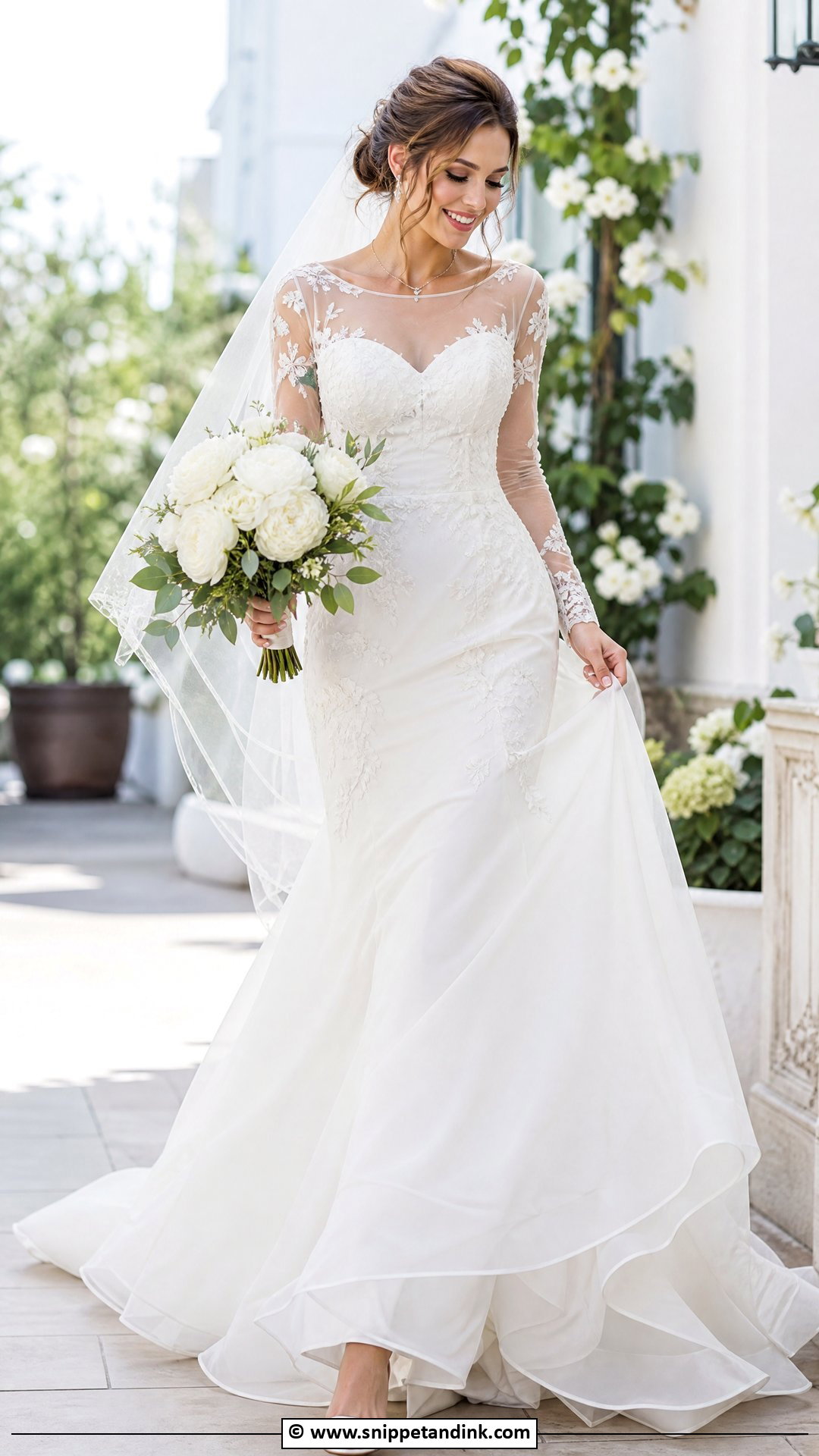
Organza is lighter than satin and gives movement in the skirt, sleeves or an overlay, so you get softness without weight. A fitted bodice over an organza flare feels romantic, and organza sleeves add air. It looks best in natural light, which makes it a spring and summer fabric. Organza crinkles where it’s sat on, so I plan a steamer in the getting-ready room and another quick press after the ceremony. Delicate jewelry, a soft veil and comfortable but elegant heels finish it.
23. Halter Fit And Flare Wedding Dress
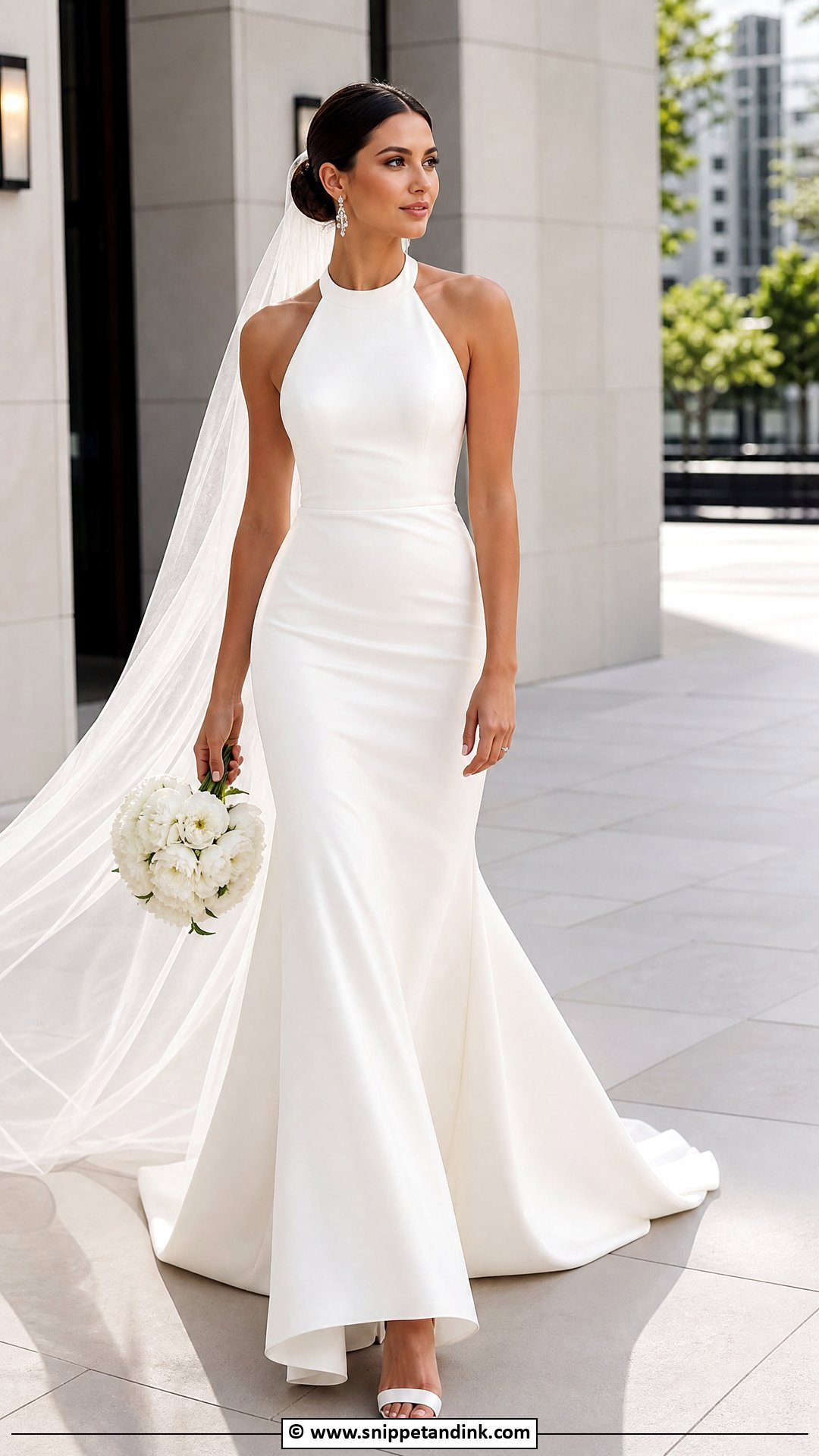
A halter draws attention to the shoulders and builds a long, clean line through the upper body. Crepe makes it minimal, satin glamorous, lace romantic. It gives support without regular straps, though all the weight hangs from the neck, so I check the clasp doesn’t pull after an hour of wear. Skip the necklace and choose earrings. A low bun or smooth ponytail keeps the shape visible, with simple heels and a clean veil for a modern setting.
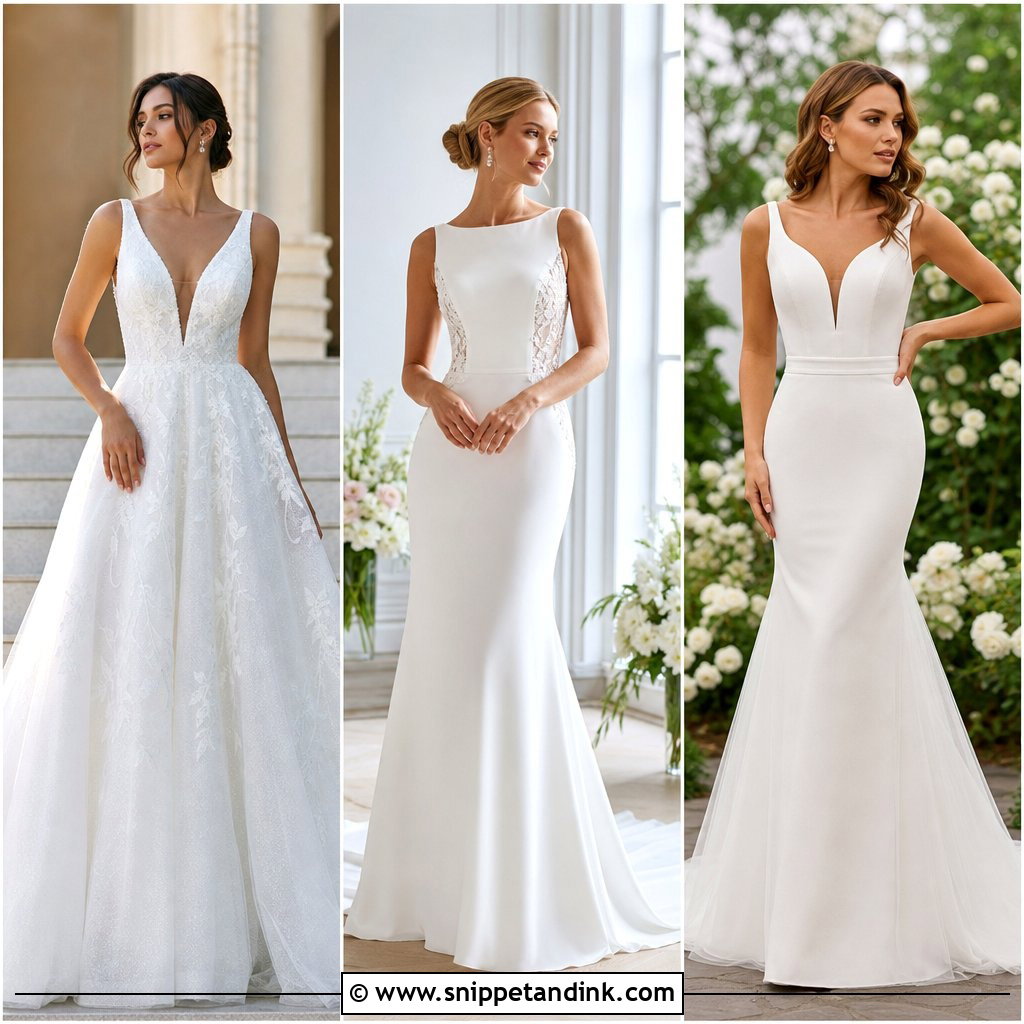
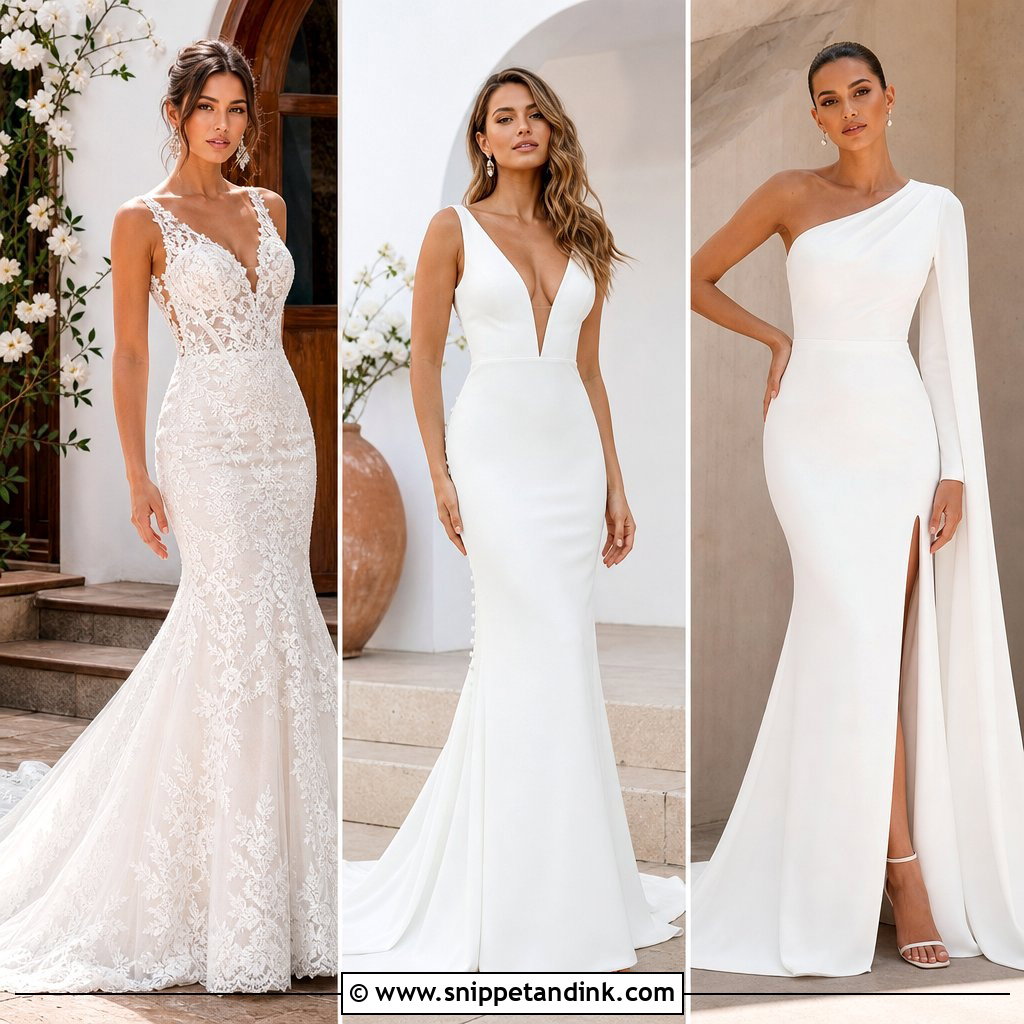
24. One Shoulder Fit And Flare Wedding Dress
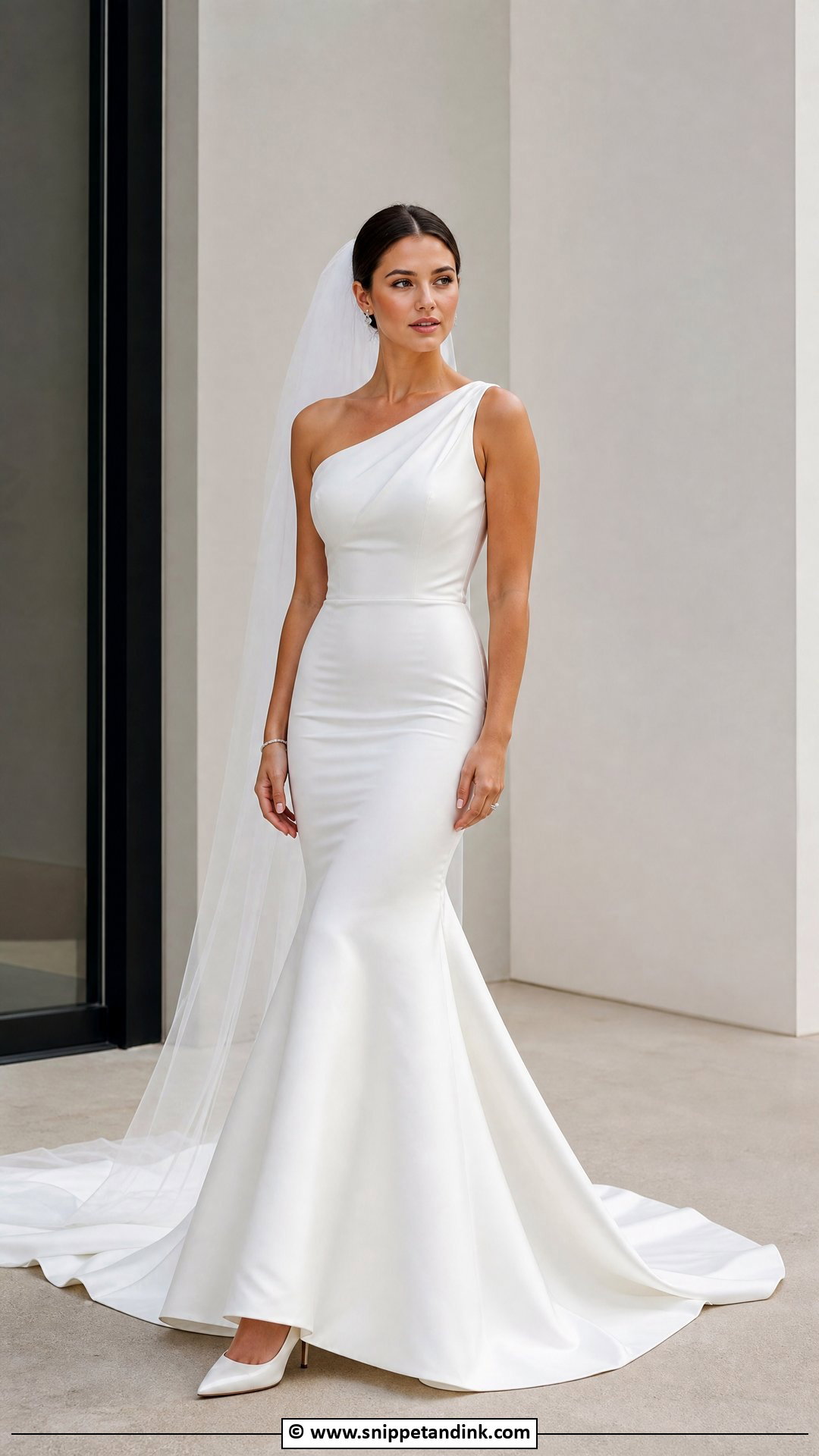
One shoulder is slightly unexpected and still elegant. The asymmetry adds interest without lace or beading, and it suits smooth, structured satin, crepe or mikado. A single draped strap, a bow or a floral accent personalizes it. Asymmetric bodices can slide toward the bare side, so I look for an inner grip strip or boning along that edge. Small studs or one earring style, no necklace, clean heels and a sleek veil keep it modern.
25. Backless Fit And Flare Wedding Dress
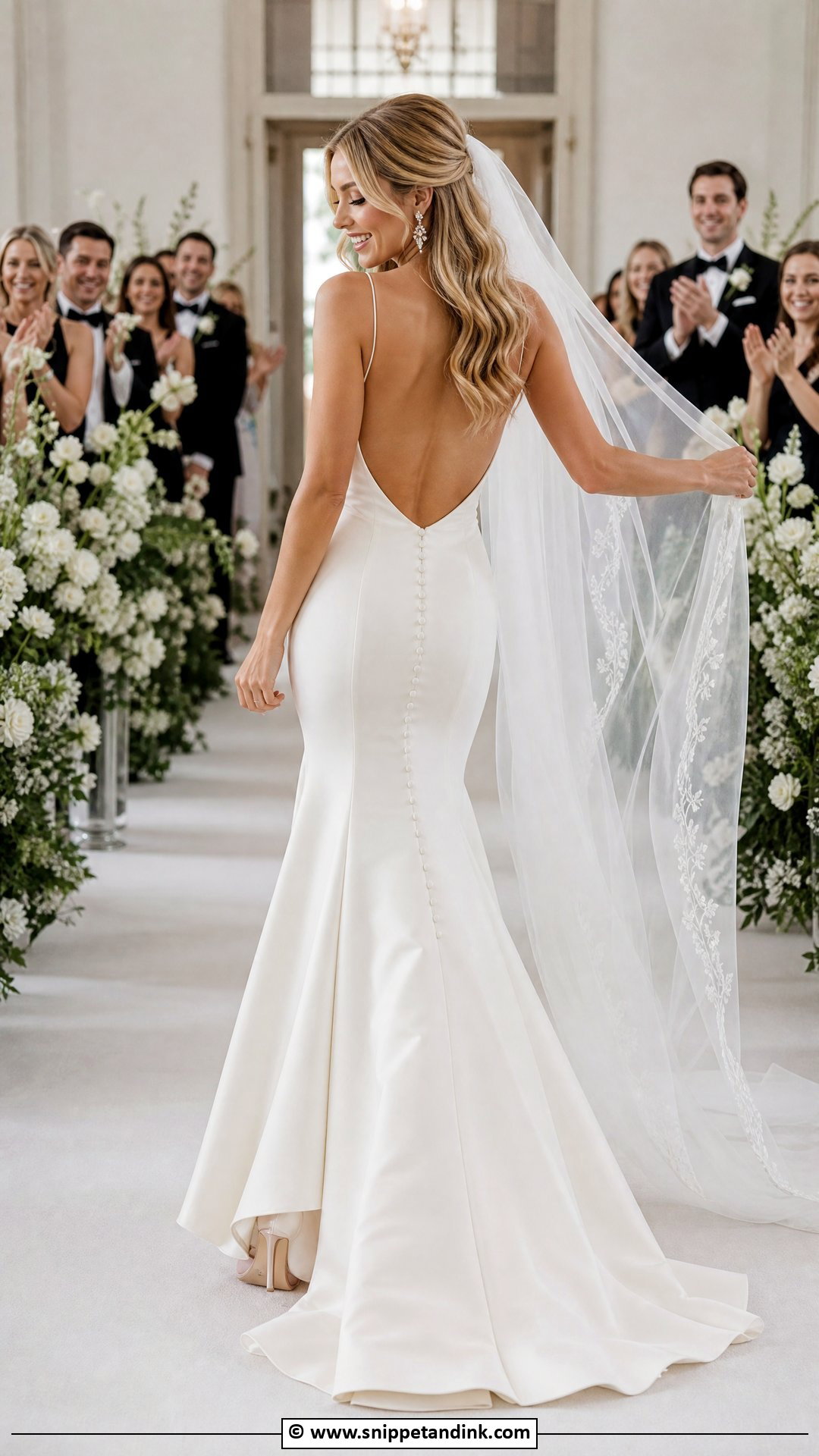
A backless gown makes its point as you walk away. The front can be simple, the back dramatic, in lace, illusion mesh or a low scoop depending on how much coverage and support you need. Support is the real question with no back at all; I ask whether cups are built in and whether the side seams are boned to hold the bodice flat. Choose a veil that comes off easily so the back shows in photos, plus drop earrings, soft waves and elegant heels.
26. Open Back Lace Fit And Flare Wedding Dress
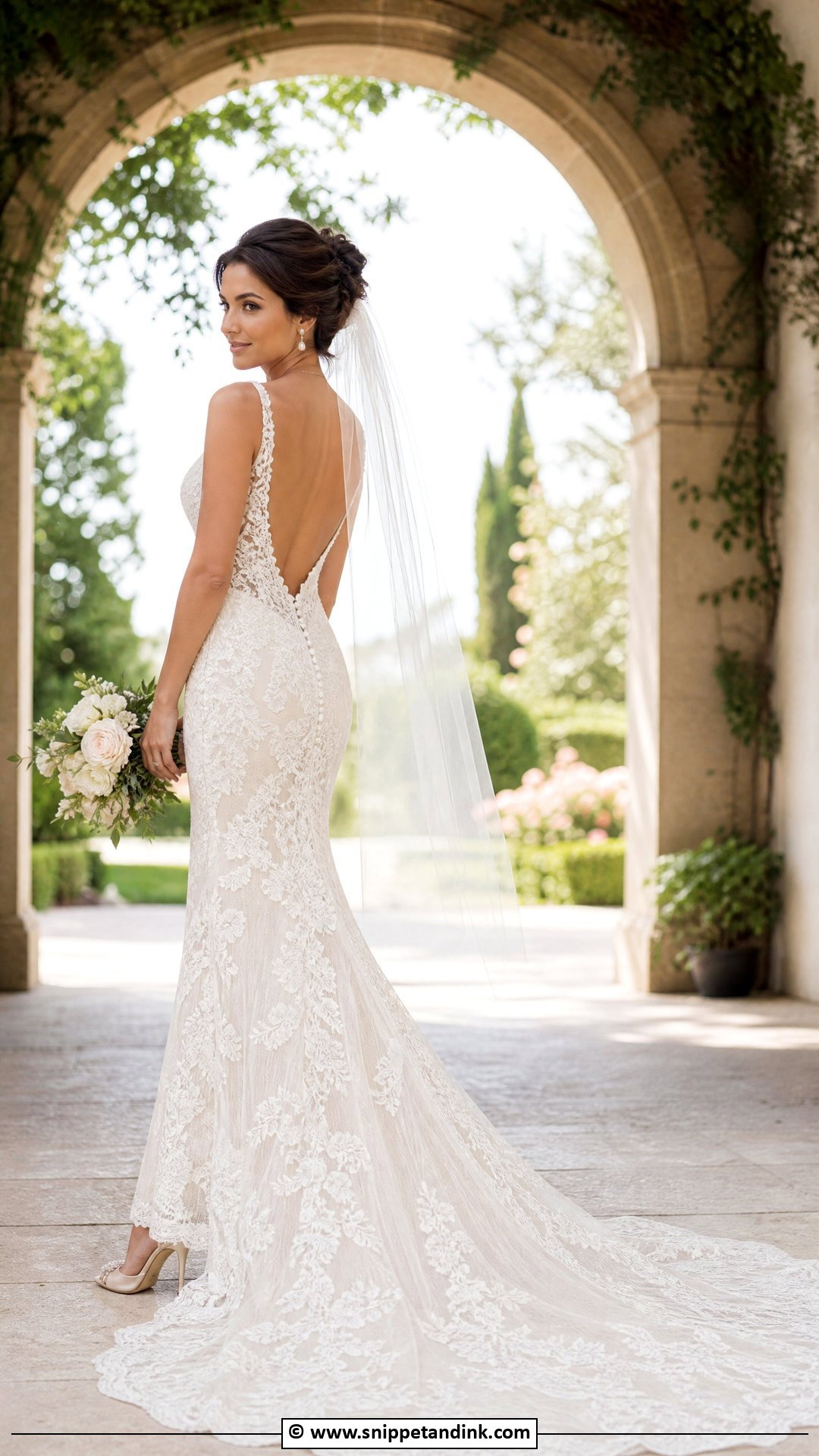
An open back lace fit and flare wedding dress pairs romantic lace with a memorable back view. Lace frames the shoulders, waist and train, while the opening keeps it fresh. A deep V, keyhole or illusion lace back gives different levels of support. Lace edges at an open back can curl after hours of wear, so I look for a narrow trim or binding along that edge. Wear your hair up or swept to one side, with a sheer veil, pearl earrings and ivory heels.
27. Plunging Neck Fit And Flare Wedding Dress
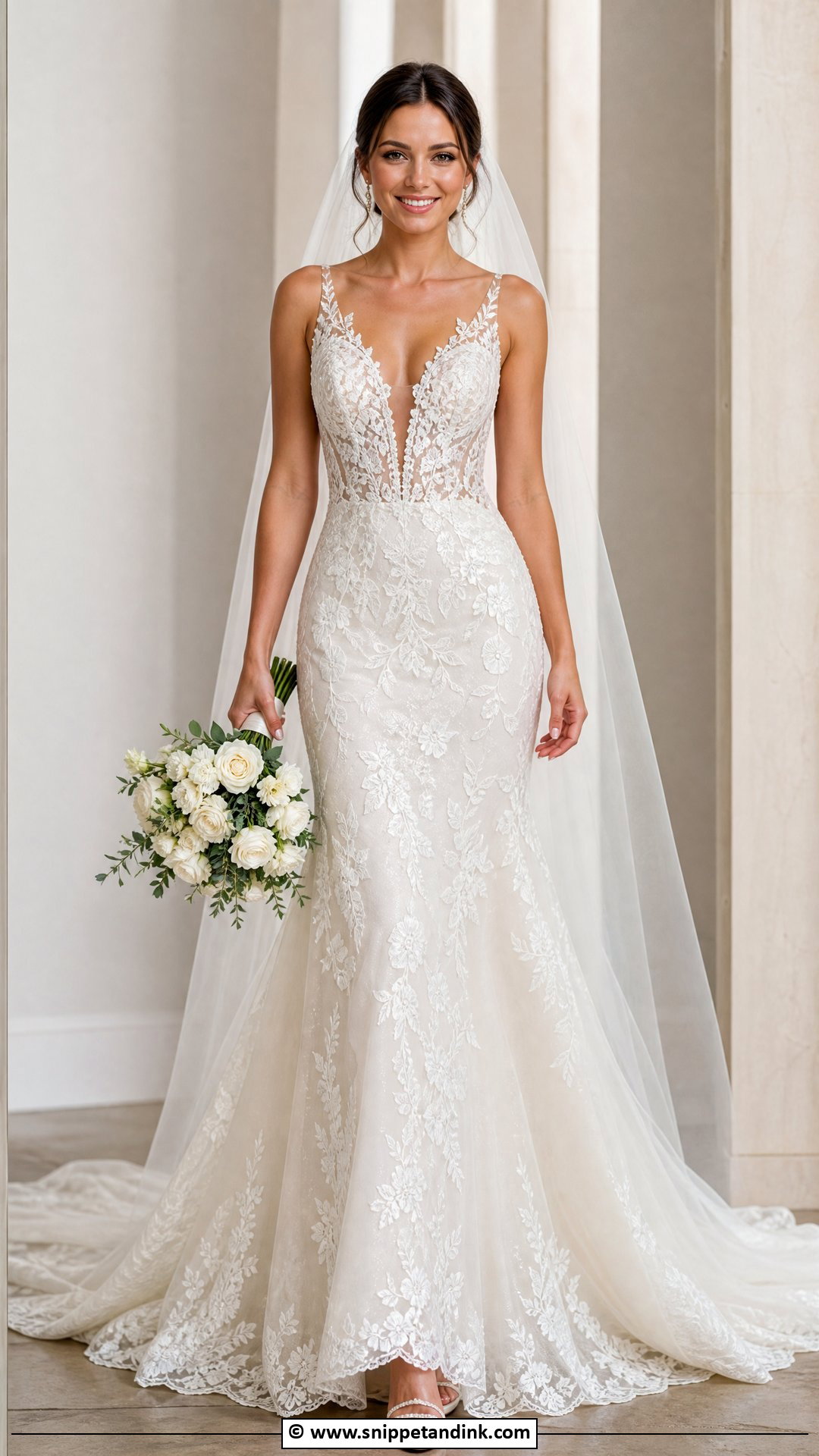
A plunging neckline pulls the eye vertically and makes the whole silhouette look taller. Most use illusion mesh behind the plunge for support so it stays put. Lace appliqué, crepe, satin and beading all suit it. For balance, a fuller flare or long sleeves help. I always do a sit-and-lean test with a plunge, since bending forward is when it shifts. Delicate earrings, no heavy necklace, a smooth veil and simple heels finish it.
28. Cap Sleeve Fit And Flare Wedding Dress
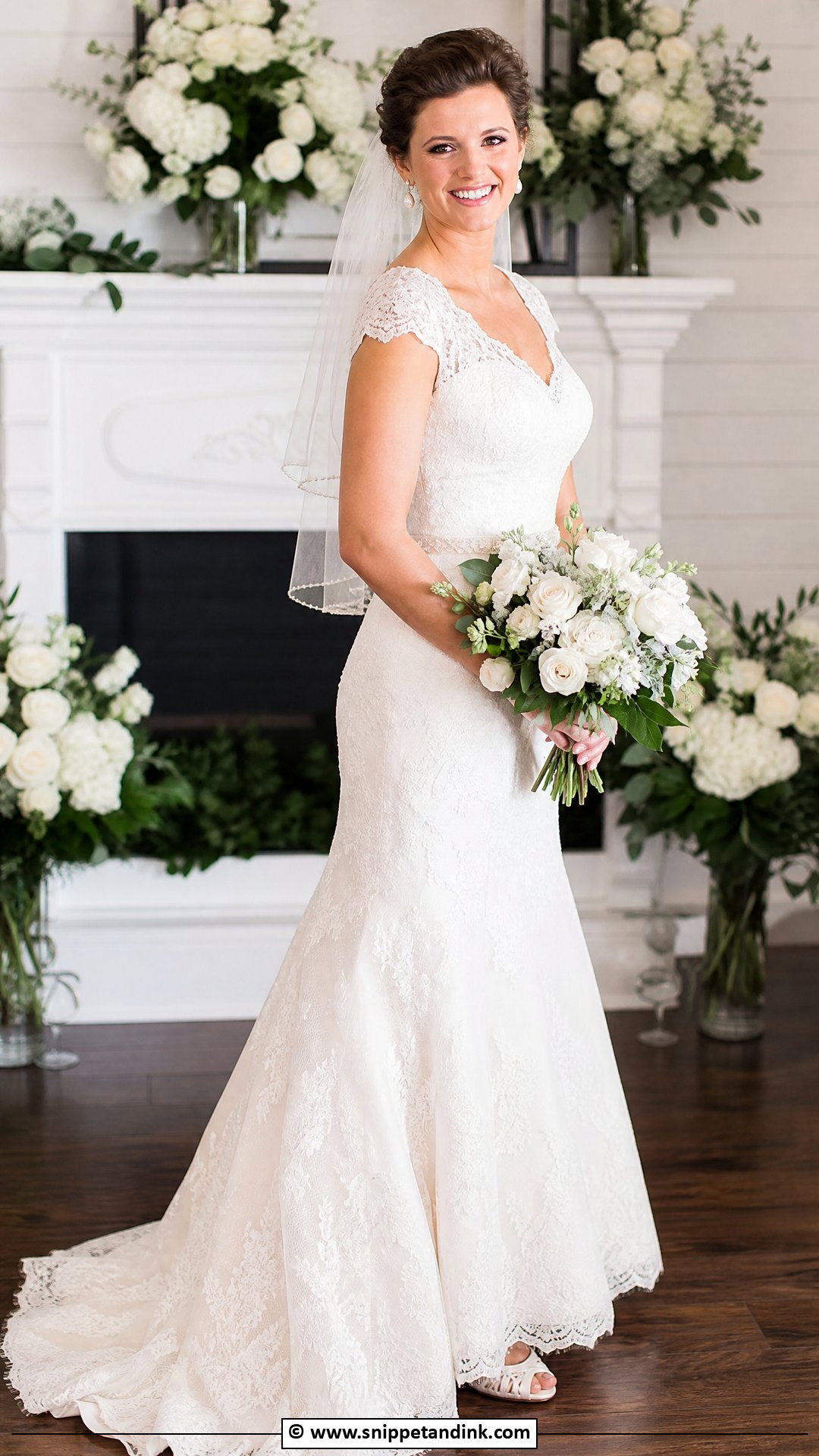
Cap sleeves give a little shoulder coverage while keeping the look light. They’re prettiest in lace, illusion tulle or fine beading, and they soften a fitted bodice next to a V, scoop or illusion neckline. Cap sleeves can restrict arm movement if they’re cut snug, so I check you can lift a glass and wrap your arms around someone. Pearl earrings, a soft updo and comfortable heels complete an easy all-day look for almost any season.
29. Short Sleeve Fit And Flare Wedding Dress
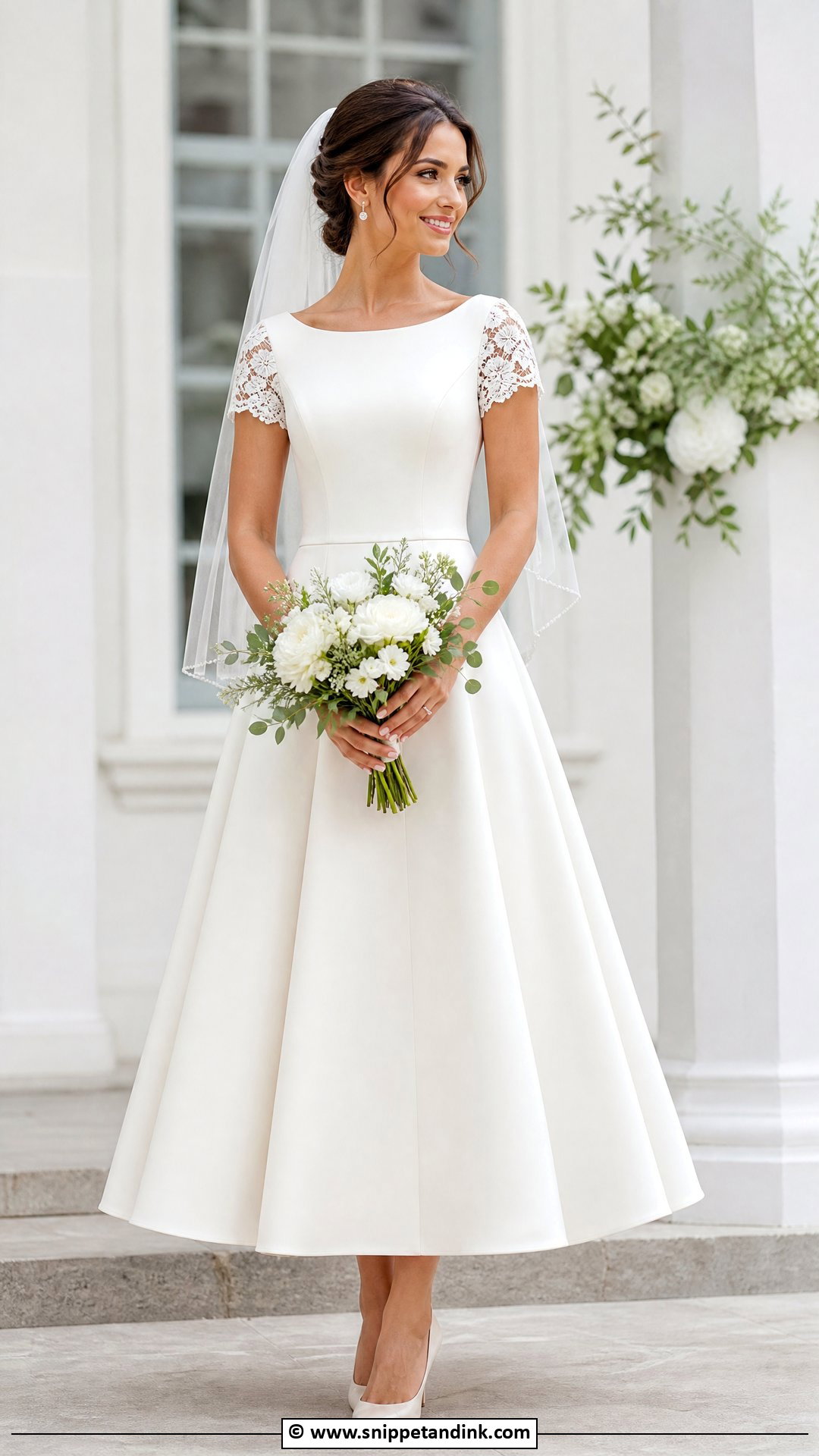
Short sleeves bring comfort with a traditional touch. They can be smooth, sheer and lacy, or softly puffed. Daytime weddings, gardens, courthouse ceremonies and classic indoor venues suit them, and the fitted body keeps them polished rather than casual. I’d match the sleeve fabric to the bodice exactly, since a slightly different white on the sleeve looks like an add-on. A fingertip veil, small earrings and pointed heels or bridal flats finish a modest, easy-moving gown.
30. Pearl Detail Fit And Flare Wedding Dress
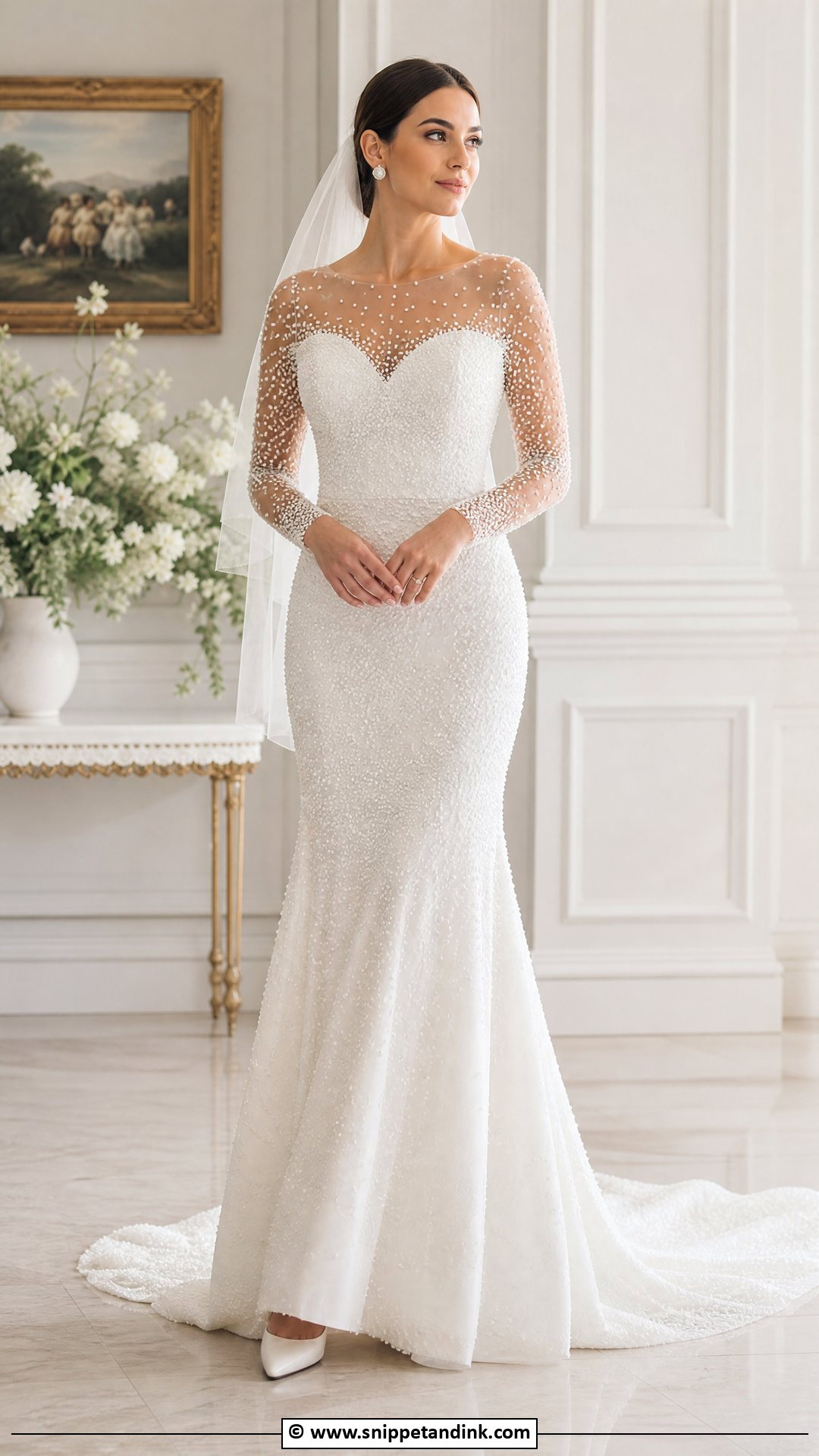
Pearls along the neckline, over sheer sleeves, on the bodice or scattered on the skirt give a soft glow rather than sparkle. They pair with satin, crepe, tulle or lace. Sewn pearls can pull fine fabric if they’re heavy and dense, so I check how they’re anchored. Pearl earrings, a simple veil and ivory heels keep it cohesive; skip more accessories since the dress already has texture. It’s a refined detail that feels a little more personal than crystals.
31. Bow Detail Fit And Flare Wedding Dress
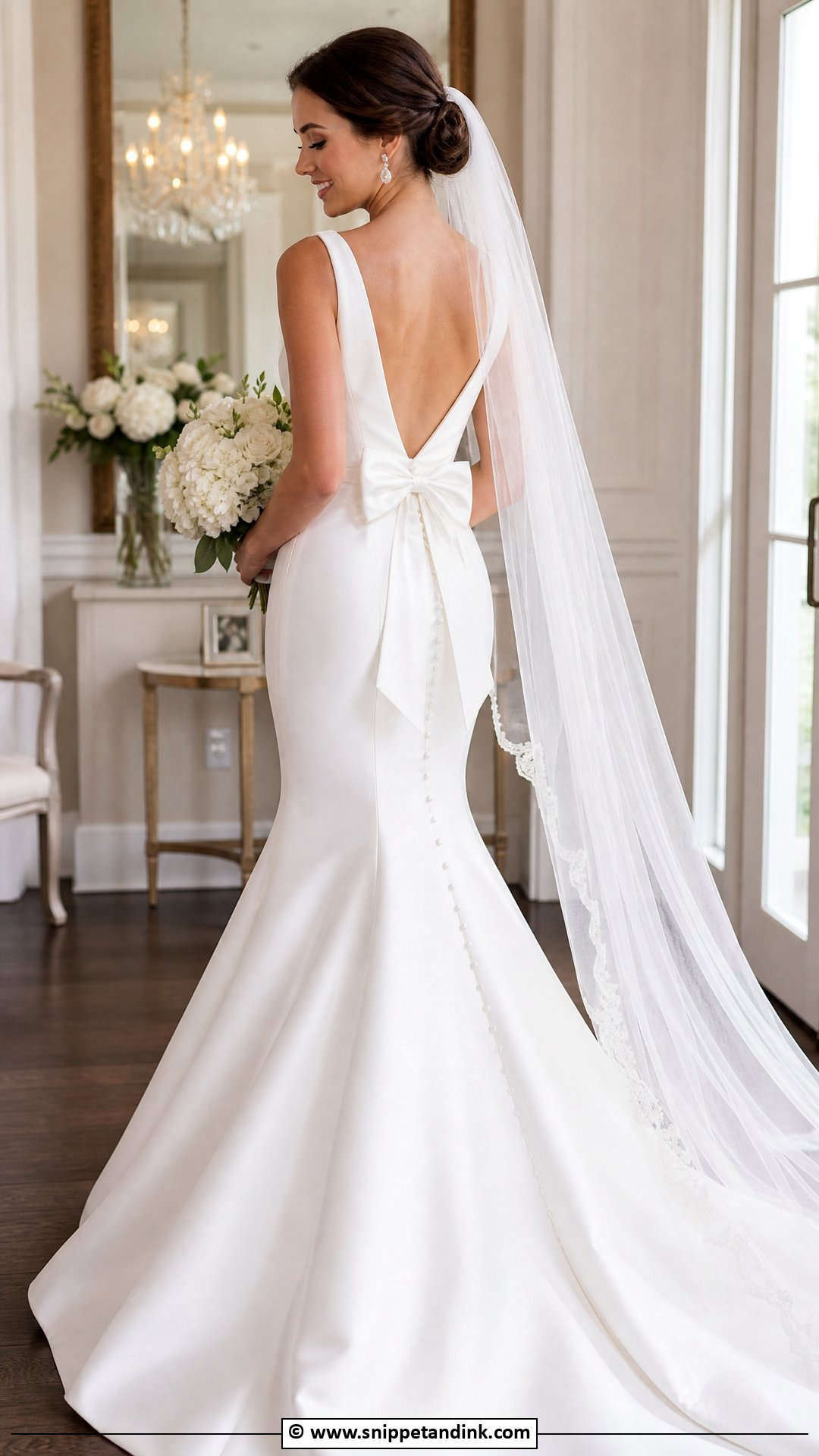
A bow gives a fitted gown a focal point. It can sit at the back waist, on a shoulder, along the neckline or on the train. A big satin bow is formal and dramatic; a small one stays subtle. Satin, mikado and minimalist crepe suit bows best because they hold shape. Large back bows get crushed if you sit back in a chair, so I suggest a detachable bow or one sitting lower on the skirt. Simple earrings, a smooth veil and classic heels complete it.
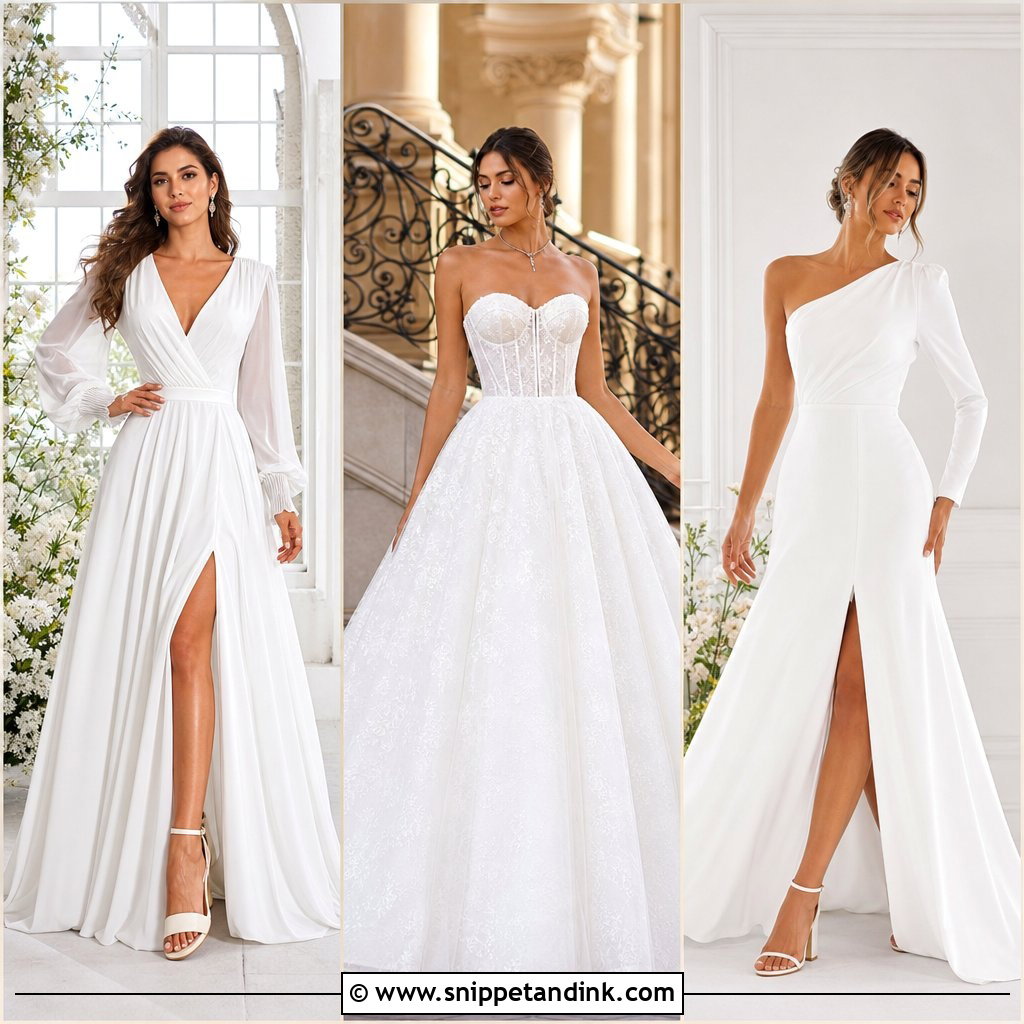
32. Slit Fit And Flare Wedding Dress
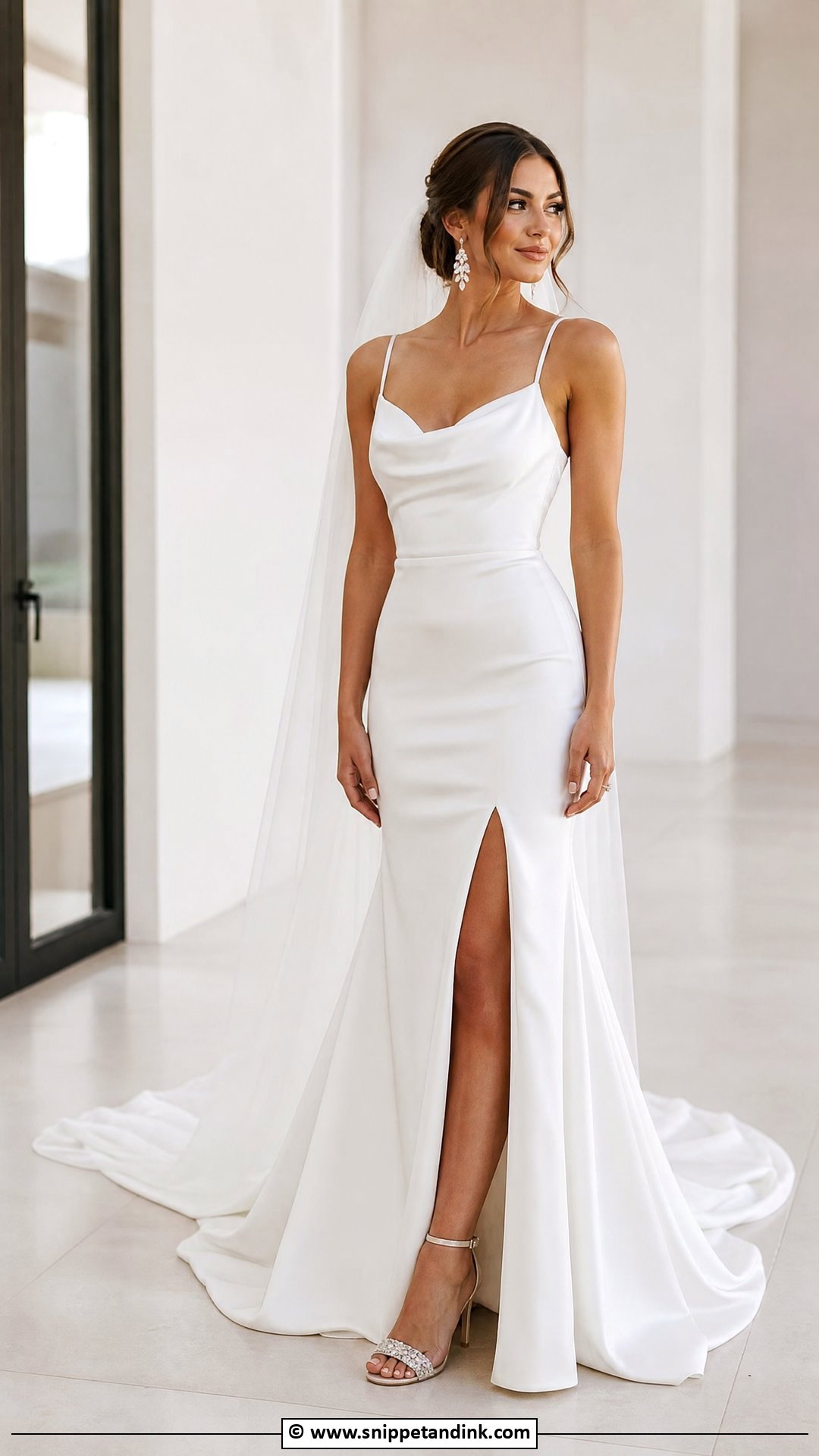
A slit adds movement and makes walking easier in a more structured skirt. It can be discreet or high, depending on comfort and venue. Satin, crepe and tulle all move well around it, and it shows off your shoes, so pick elegant heels, fine ankle straps or embellished sandals in the dress tone. I sit brides down with a slit to check where it falls, because a slit that looks modest standing can open much higher seated. Keep the bodice simple and it’s ready for the dance floor.
33. Colored Fit And Flare Wedding Dress
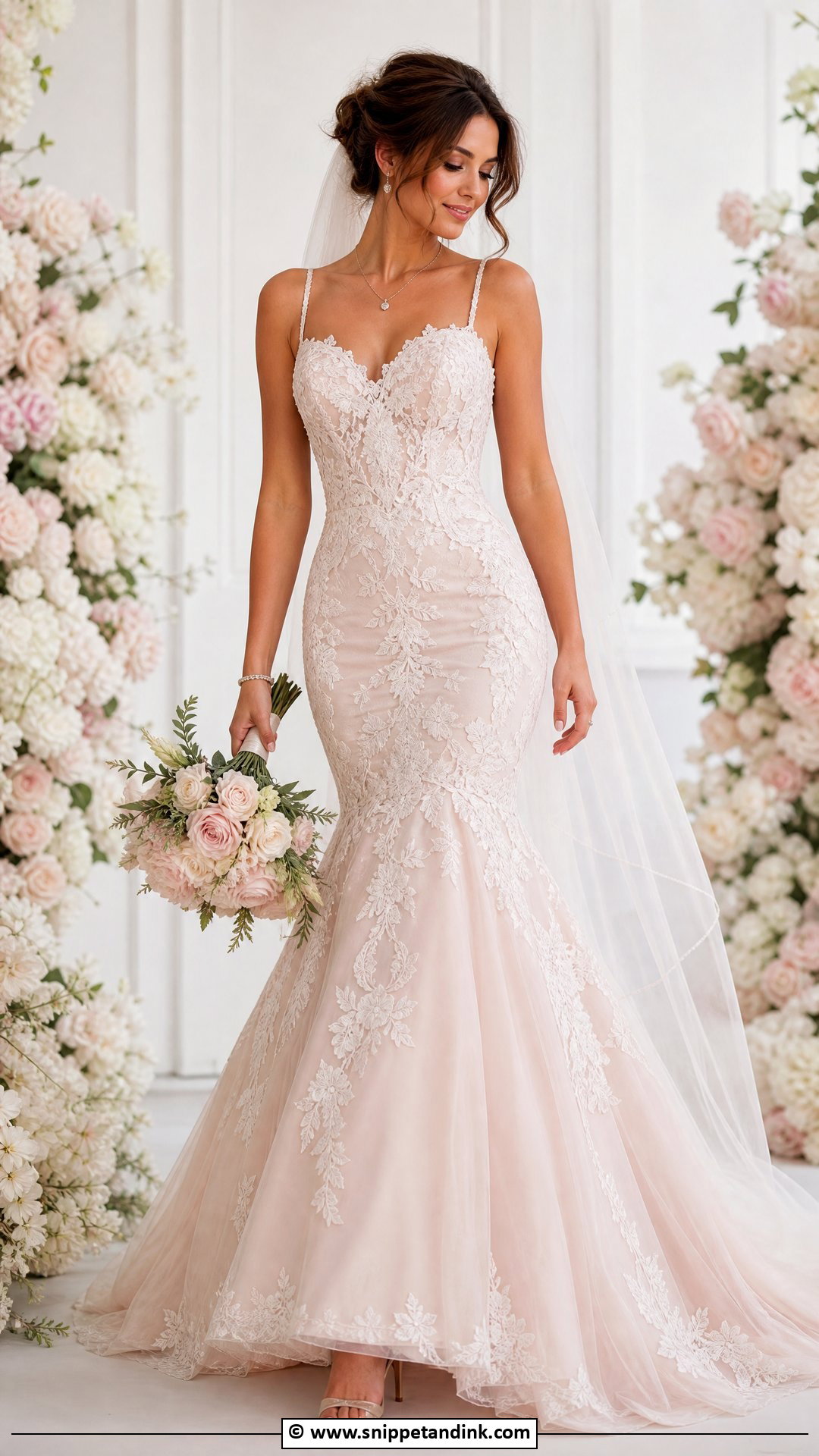
Color adds something personal while the dress stays bridal. Blush, champagne, nude, pale blue and light grey are common because they stay soft in photos. The fitted shape keeps it formal. Lace over a colored lining gives depth; soft-colored satin reads clean and modern. Nude and champagne linings should be close to your skin tone or they can look like bare skin from a distance, which surprises some brides. Neutral heels, delicate jewelry and a veil that matches or contrasts softly finish it.
34. Beach Fit And Flare Wedding Dress
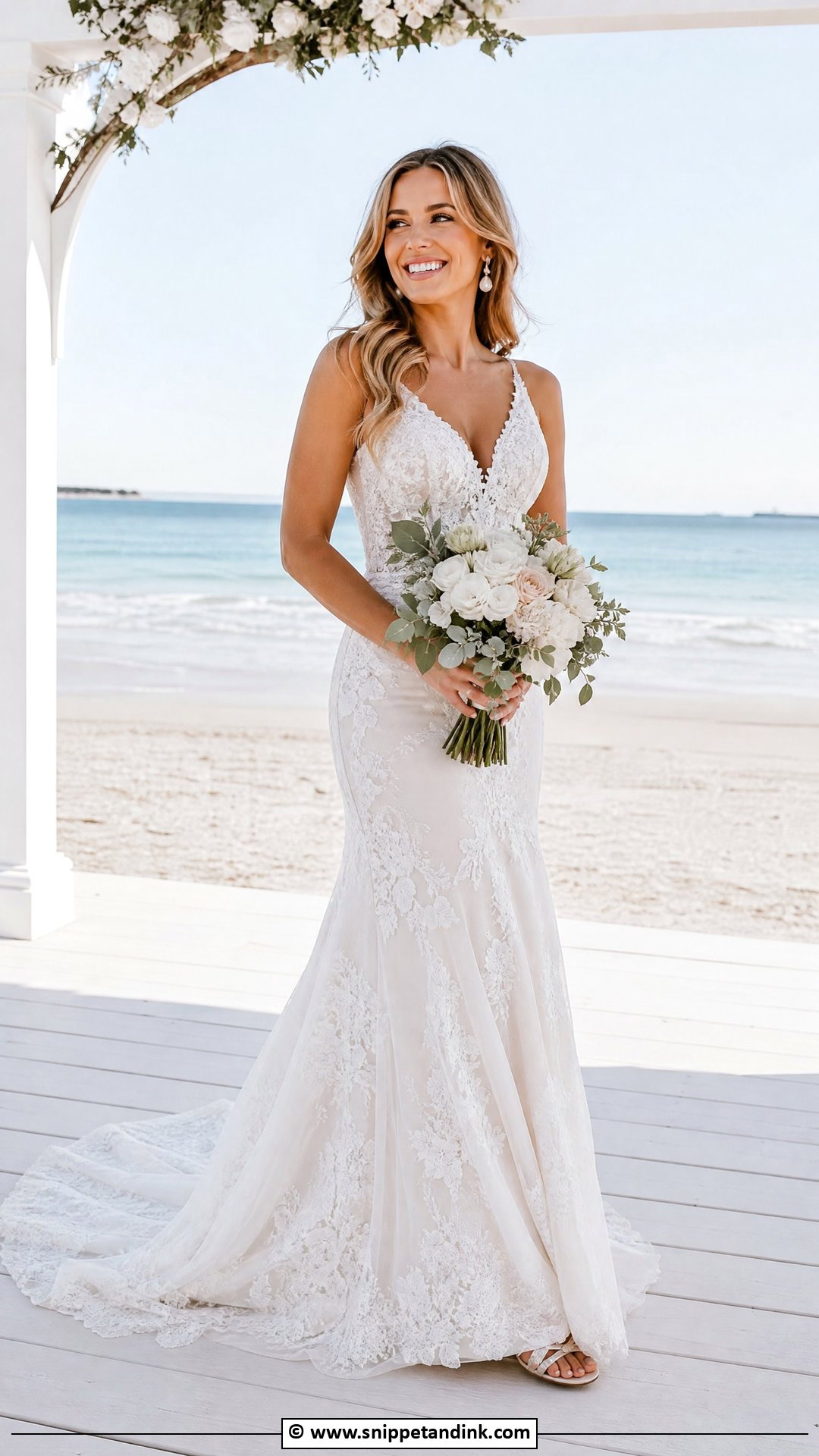
On a beach, the fit and flare needs to soften. Crepe, light lace, tulle or chiffon overlays work; heavy satin and bulky layers don’t. Simple straps, a V or off-the-shoulder neckline suit the breeze, and the flare should be soft enough to move rather than stand stiffly. A short or detachable train keeps sand out of the hem. Beach-friendly sandals, pearl earrings and loose waves or a relaxed updo complete it. Sea air makes fitted bodices feel sticky, so I prefer lined lace over plain crepe for the coast.
35. Courthouse Fit And Flare Wedding Dress
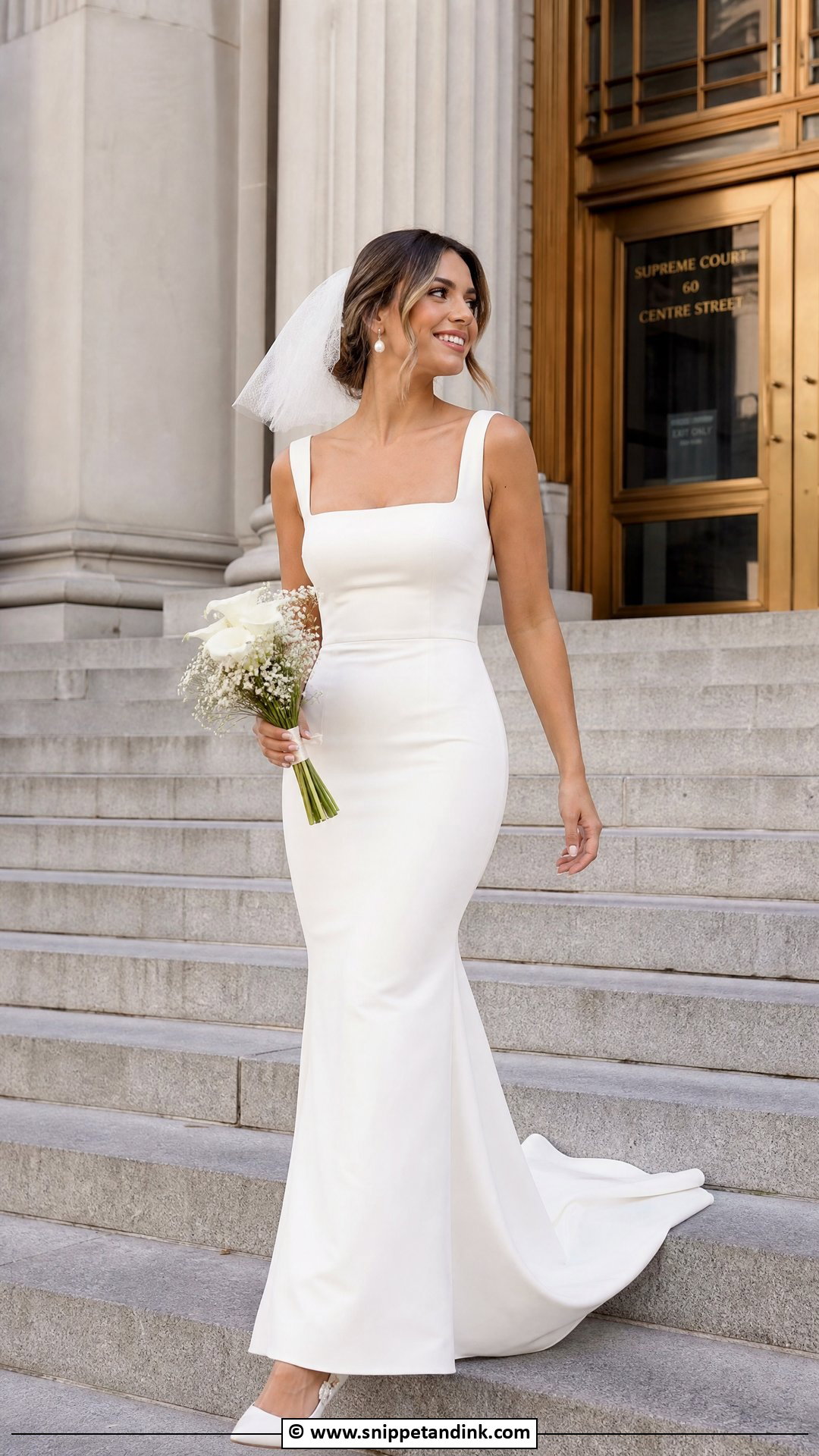
For the courthouse, a fit and flare can be simple and properly bridal without feeling overdressed. Clean crepe, satin, lace or a short train is easy to manage on city steps and in small rooms. A square neck, strapless or long-sleeve design all work. Courthouse days involve walking, waiting and photos on the street, so comfort counts. Chic heels, a small bouquet, pearl earrings and a structured mini veil or bow suit it, and for cooler weather I’d add a tailored coat or blazer you’ll actually wear again.
Underwear, Alterations and the Hem on a Fitted Gown
A fitted silhouette is less forgiving in the alterations room than a full skirt. The dress is meant to follow your body closely from bust to hip, so small changes show. This is roughly how I pace it.
- Buy the underwear and shoes before the first fitting and bring them to every one. Shapewear or a built-in cup changes the measurement through the waist and hip, and the hem is set to your heel height.
- Expect the first fitting to focus on the hip and side seams. That’s where a fit and flare either sits smoothly or ripples, and it often needs taking in or letting out more than the bust.
- Leave the hem until the body fits. A flared hem is usually stiffened with horsehair braid, and it has to be rebalanced if the waist or hip moves.
- Agree the bustle style at the last fitting. Many fitted gowns bustle underneath so the back stays sleek; bring the person who will do it on the day.
Timing varies by shop, but most seamstresses want two or three fittings across the last couple of months, with the final one close enough to the wedding that nothing changes after it. If your weight tends to shift with stress, tell them; a fitted gown with a little seam allowance left in is much easier to adjust at the last minute.
One more check I never skip: sit down for a full five minutes at the final fitting. Fit and flare gowns can bunch at the front of the hip when seated, and it’s far easier to release a few millimetres there than to spend the reception standing.
One Silhouette, Thirty-Five Very Different Dresses
A fit and flare should feel supportive and comfortable from the first look to the last photo. The silhouette gives shape without overwhelming the body, and it moves from classic lace to sleek crepe, beading, soft tulle or modern satin. Before you settle the details, think about venue, season, comfort and how much you want to move, then choose sleeves, trains, necklines and fabrics around those answers. Get the fit right through the hips and the rest of the dress follows.
You'll Like These Ideas:




Leave a Reply