
The Faith Kelly mood is romantic but polished, confident rather than fussy, and it covers a surprisingly wide range of shapes. I’ve pulled together twenty complete looks below, from full ball gowns to plain crepe columns, each with shoes, jewelry, veil and hair worked out. As you go through them, keep two questions in mind. First, does the gown suit the room and season you’re marrying in? Second, how does it behave when you sit, hug and dance, rather than when you stand still in a mirror? Sleeves, necklines, overskirts and the right shoes can change a dress completely, so treat each idea as adjustable.
Sample Gowns Rarely Fit You, and That’s Normal
Most bridal salons stock each design in one or two sample sizes, so the dress you try on will often be clipped at the back or left open over a slip. That’s how the system works, and it’s worth knowing before the first appointment so a loose sample doesn’t put you off a shape that would fit well once ordered.
Bridal sizing also tends to run smaller than high street sizing, so don’t be alarmed by the number on the order form. The shop orders by your largest measurement, usually bust, waist or hip, and the seamstress takes in the rest.
- Wear a strapless bra in a nude close to your skin tone, or the underwear you’d plan to wear, to the appointment.
- Bring shoes roughly the height you expect to wear, so hems and trains look right in the mirror.
- Bring one or two people whose taste you trust; a crowd of opinions tends to cancel out your own.
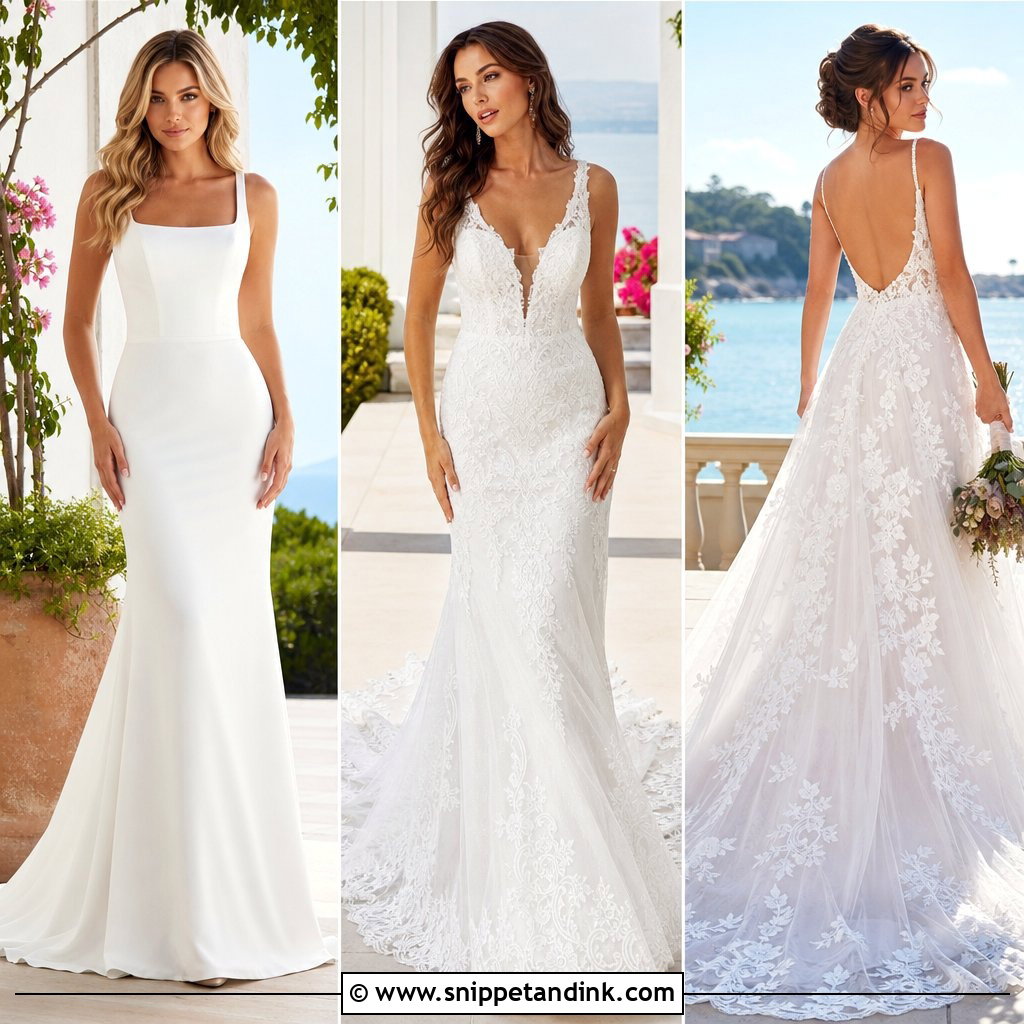
- Photograph the back as well as the front. Most of your guests see the back during the ceremony.
1. Lace Long Sleeve Wedding Dress
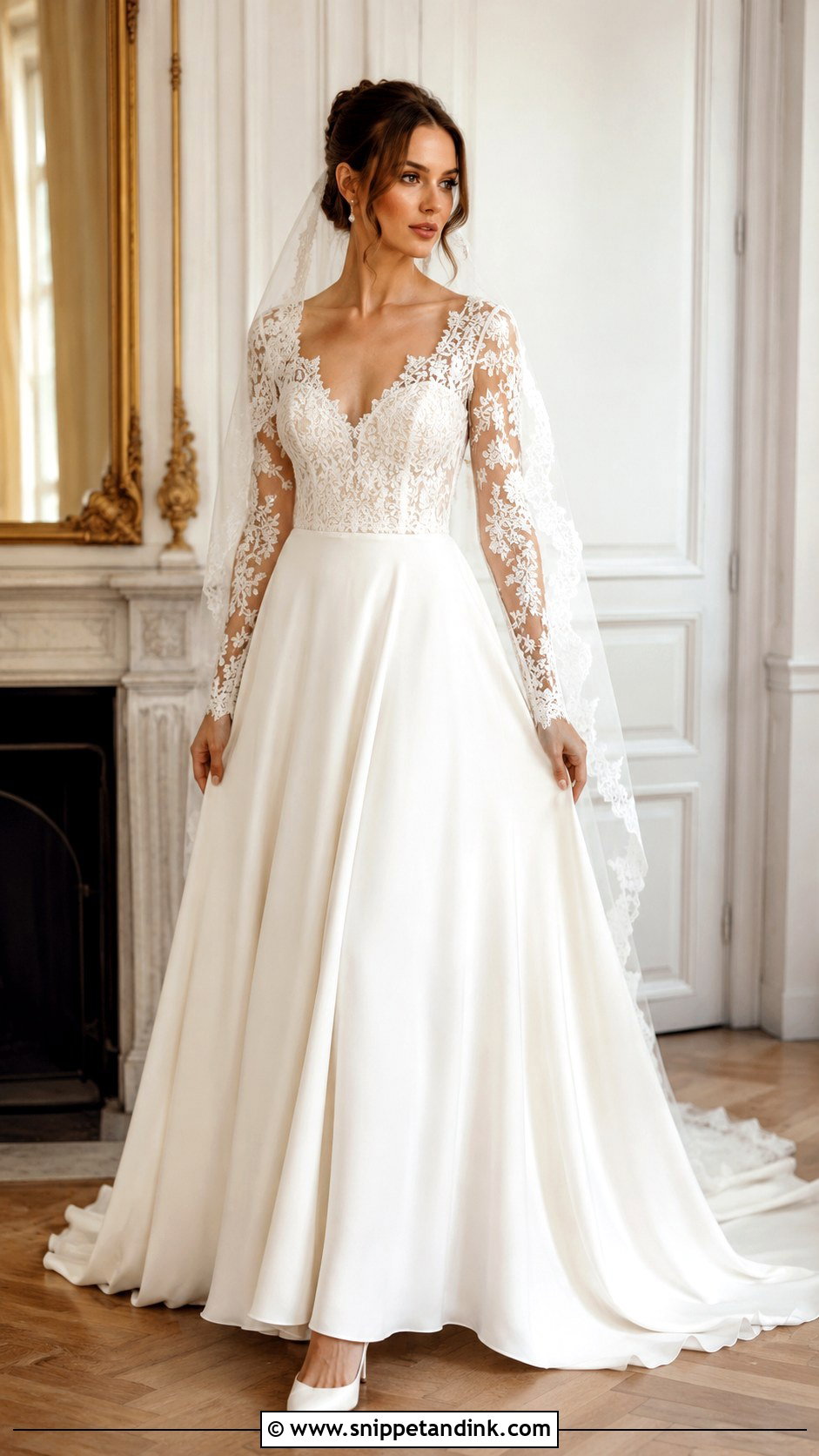
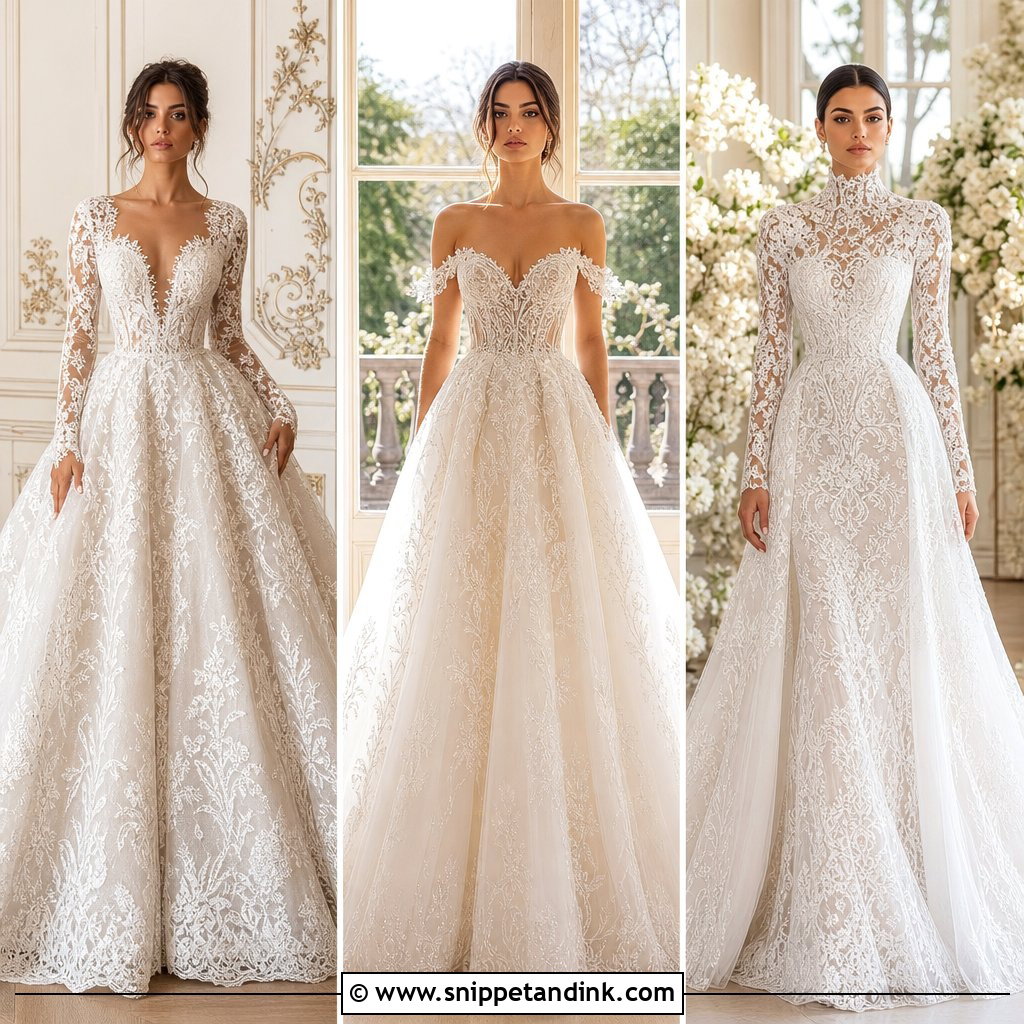
Lace sleeves are the romantic classic, and they look right from the front, the side and the back of the church. I’d go for a fitted lace bodice with a softly structured waist and an A-line skirt, with sheer floral sleeves that cover without weight. A modest V or soft scoop neckline keeps it open at the face. Ivory pointed pumps, pearl drops, a fingertip veil with a narrow lace edge and a loose low bun let the details show. The sleeve hem is my fussiest point here. Lace should finish exactly at the wrist bone, and if it needs shortening, the scalloped edge should be lifted and reattached rather than simply cut.
2. Satin A-Line Wedding Dress
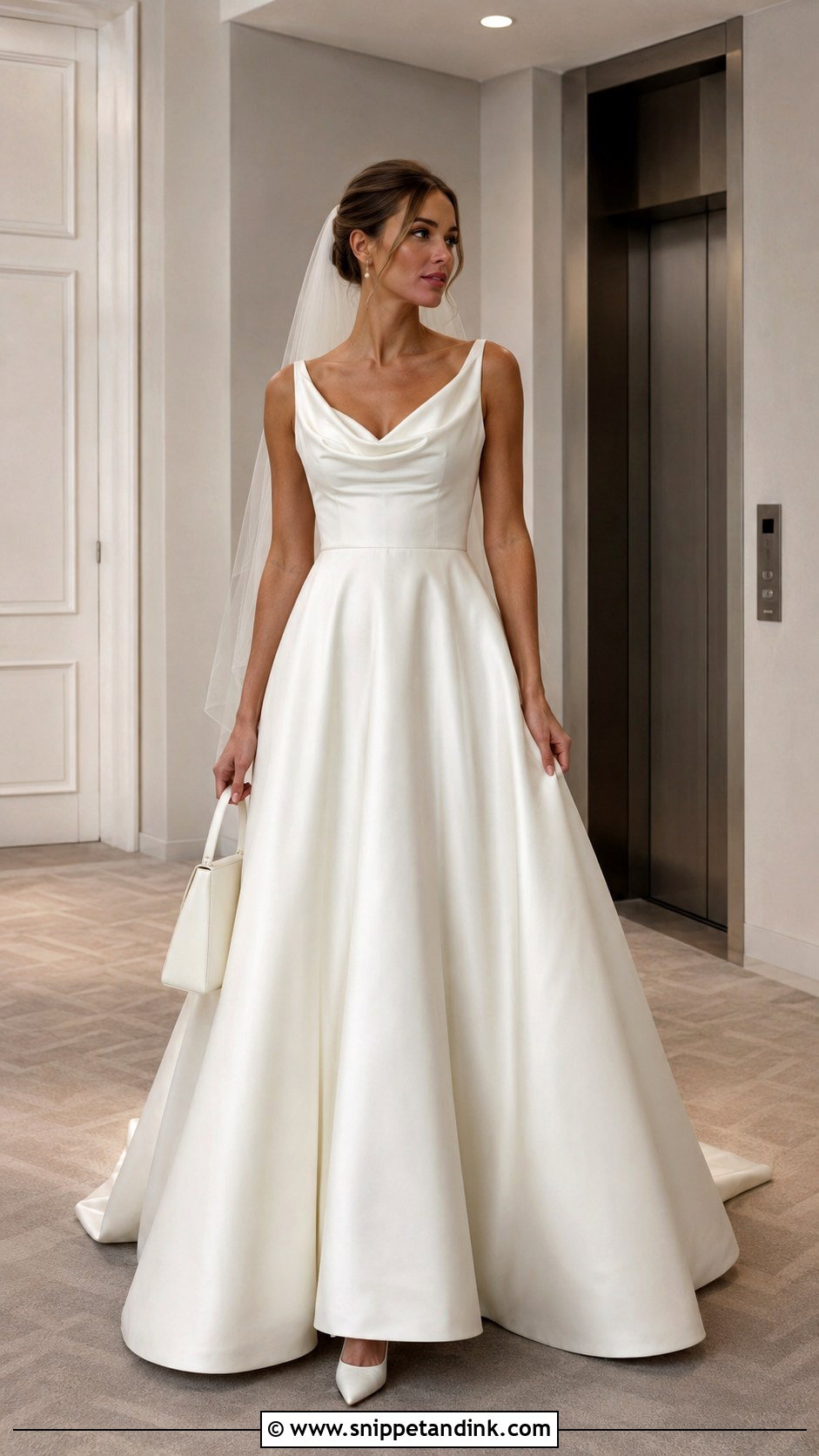
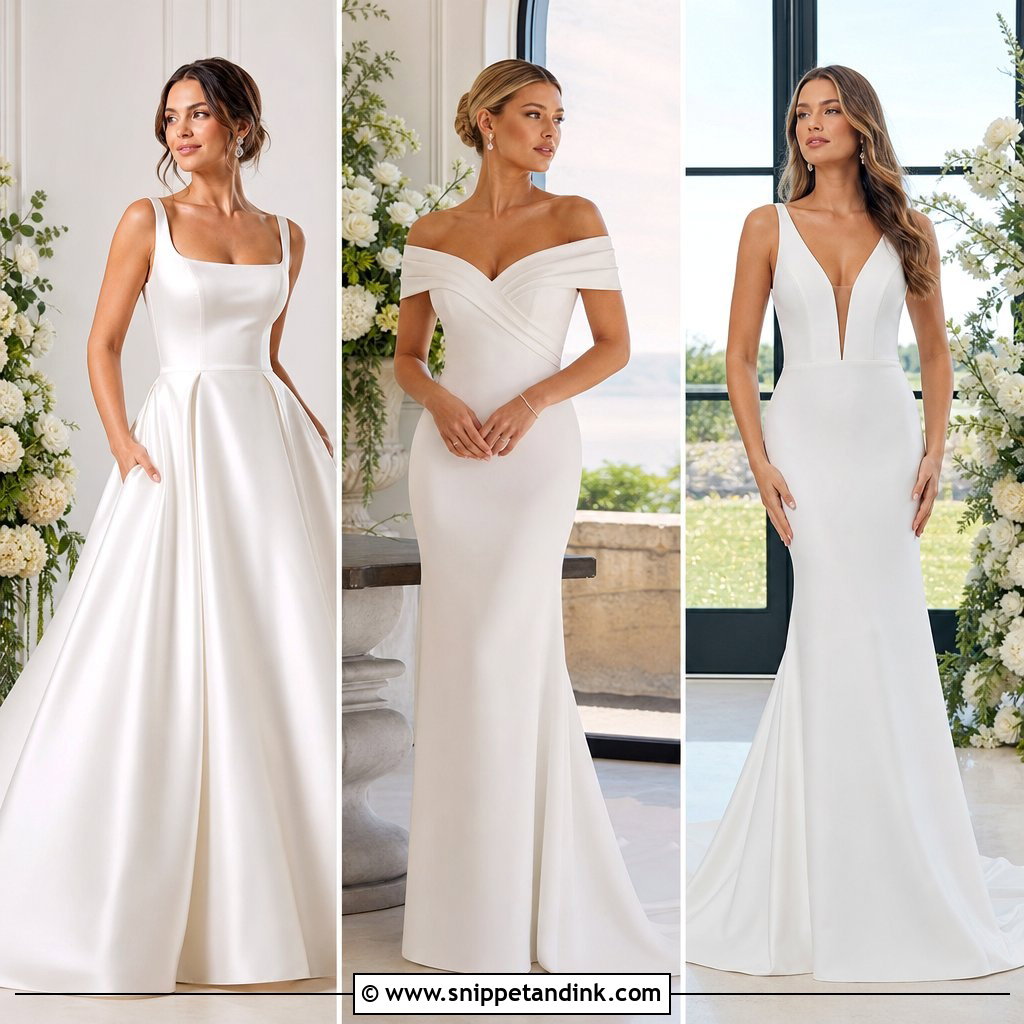
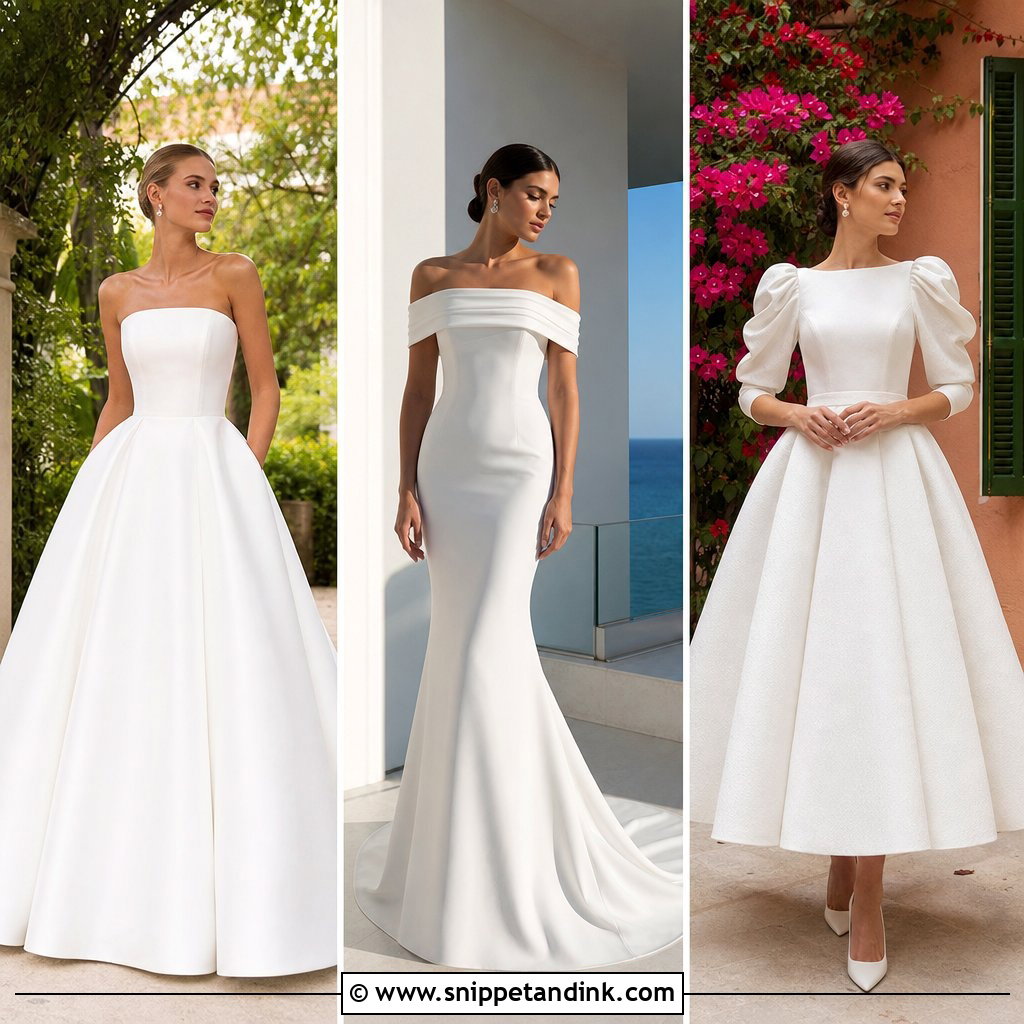
Satin has a quiet sheen and holds its shape, which makes an A-line look very clean. A soft draped neckline, fitted waist and full skirt without heavy petticoats is the version I’d reach for. Pearl earrings, a low bun, a mid-length plain veil, pointed satin heels and a small structured bag finish it. For more shape, look for fine pleating at the waist or covered buttons down the back. Satin creases where you sit, so a heavier duchess or mikado weave recovers better than a thin, slippery charmeuse. Fit the bodice close, but leave a little ease at the waist for dinner and dancing.
3. Strapless Ball Gown Wedding Dress
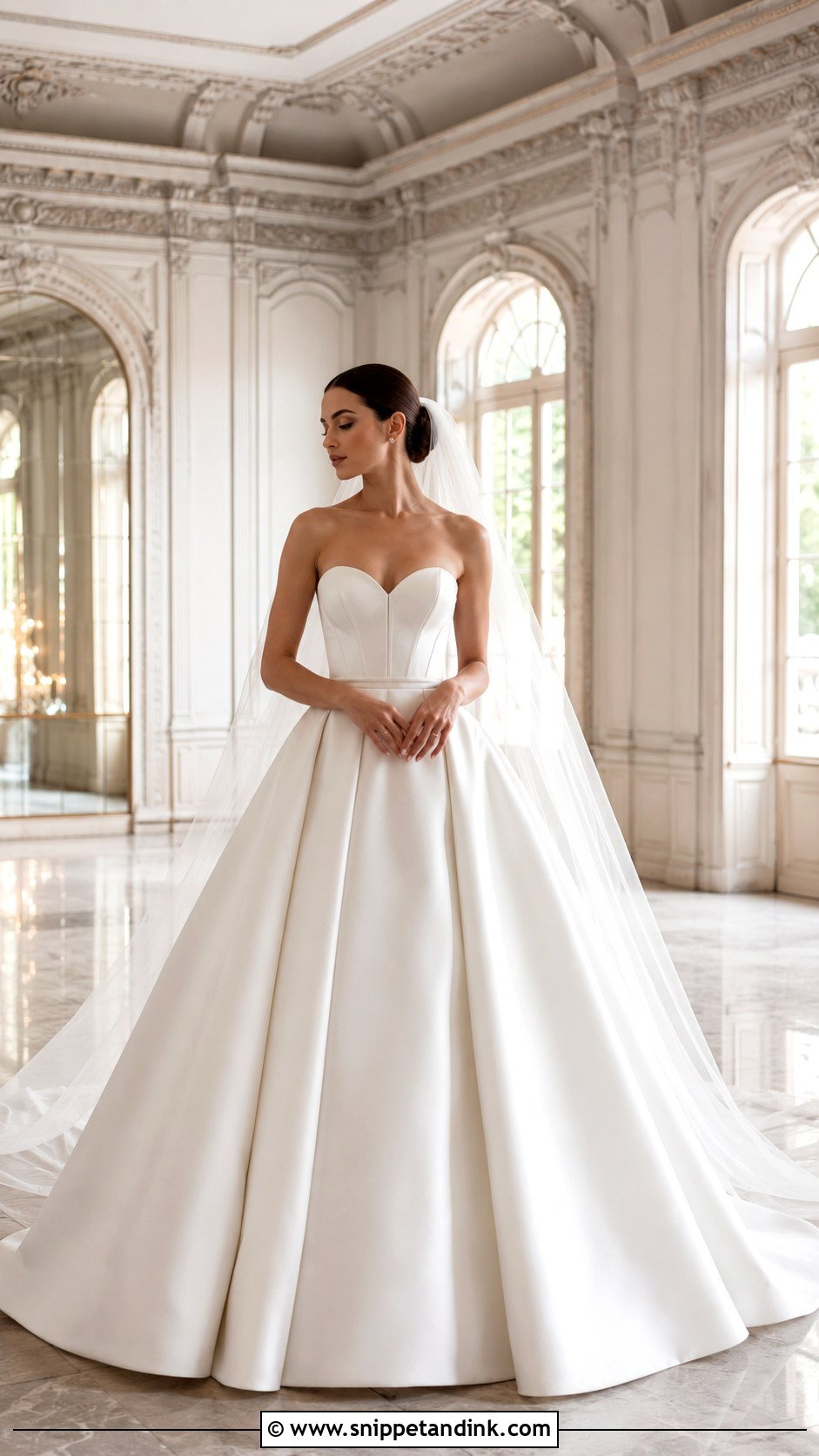
Nothing makes an entrance quite like a strapless ball gown. A proper corset bodice holds the bust and pulls in the waist, and the full skirt does the rest. Matte satin or mikado gives crisp structure; layered tulle moves more softly. A cathedral veil, crystal studs, closed-toe ivory heels and a sleek updo leave the shoulders clear, and the veil can swap for a pearl comb at the reception. The fit has to be secure without stopping you breathing. A well-built internal corset and well-placed boning are what stop you hitching it up all night. If you catch yourself tugging the top at the fitting, it isn’t finished yet. Ballrooms and grand estates suit it.
4. Off-the-Shoulder Wedding Dress
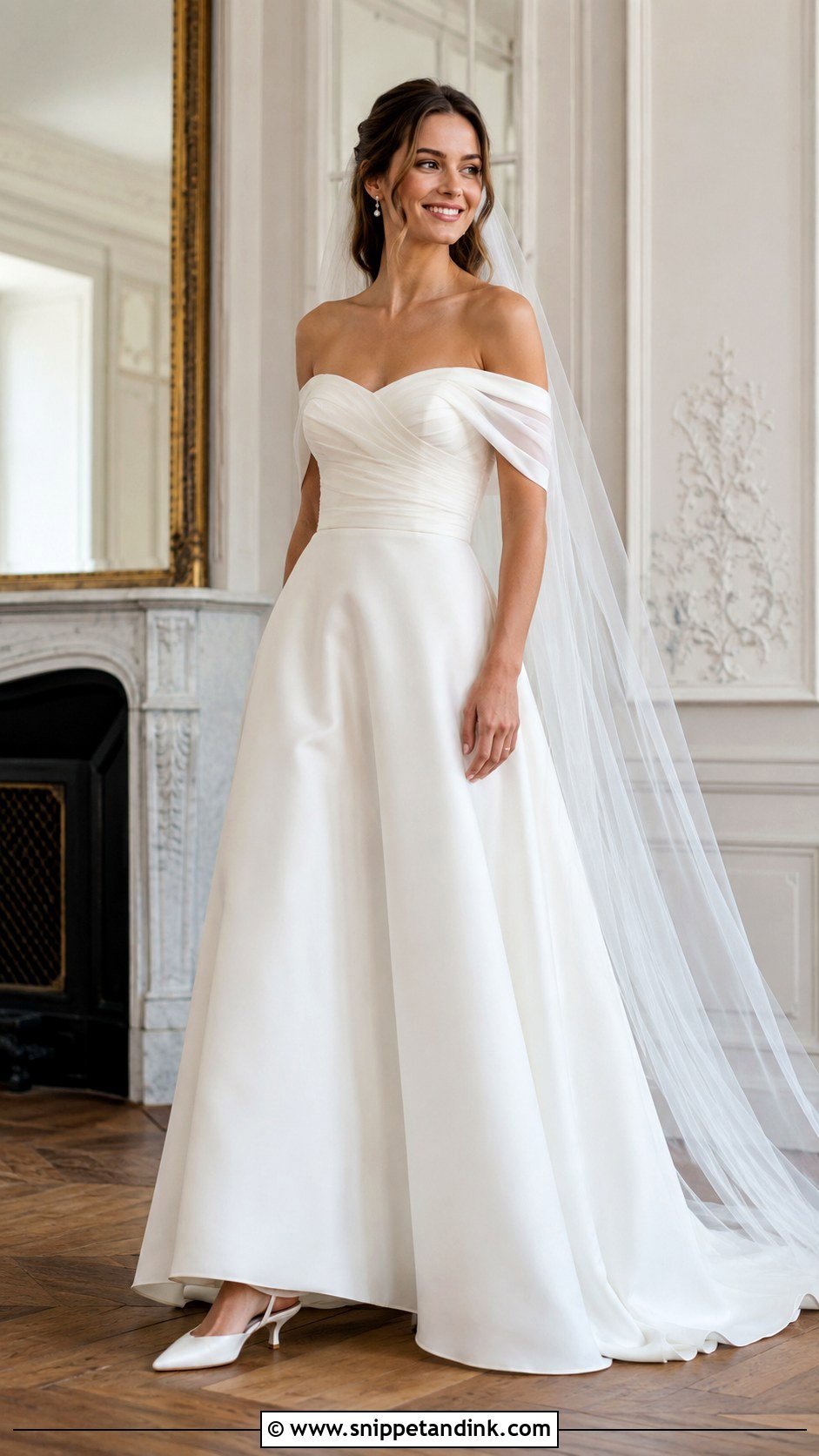
Off-shoulder sleeves frame the collarbones in a soft, flattering way. They need a supportive fitted bodice so the draped bands sit securely on the upper arm, over an A-line or subtle fit-and-flare skirt. Delicate drop earrings, not a necklace, keep the neckline clear, and ivory slingbacks, a sheer chapel veil and a compact bouquet avoid clutter. Soft waves tucked behind one ear finish it. Here is the honest catch: those bands limit how far you can lift your arms. Raise them and sit down in the shop. Hidden elastic in the band or small interior fastenings can buy you more movement.
5. Square Neck Wedding Dress
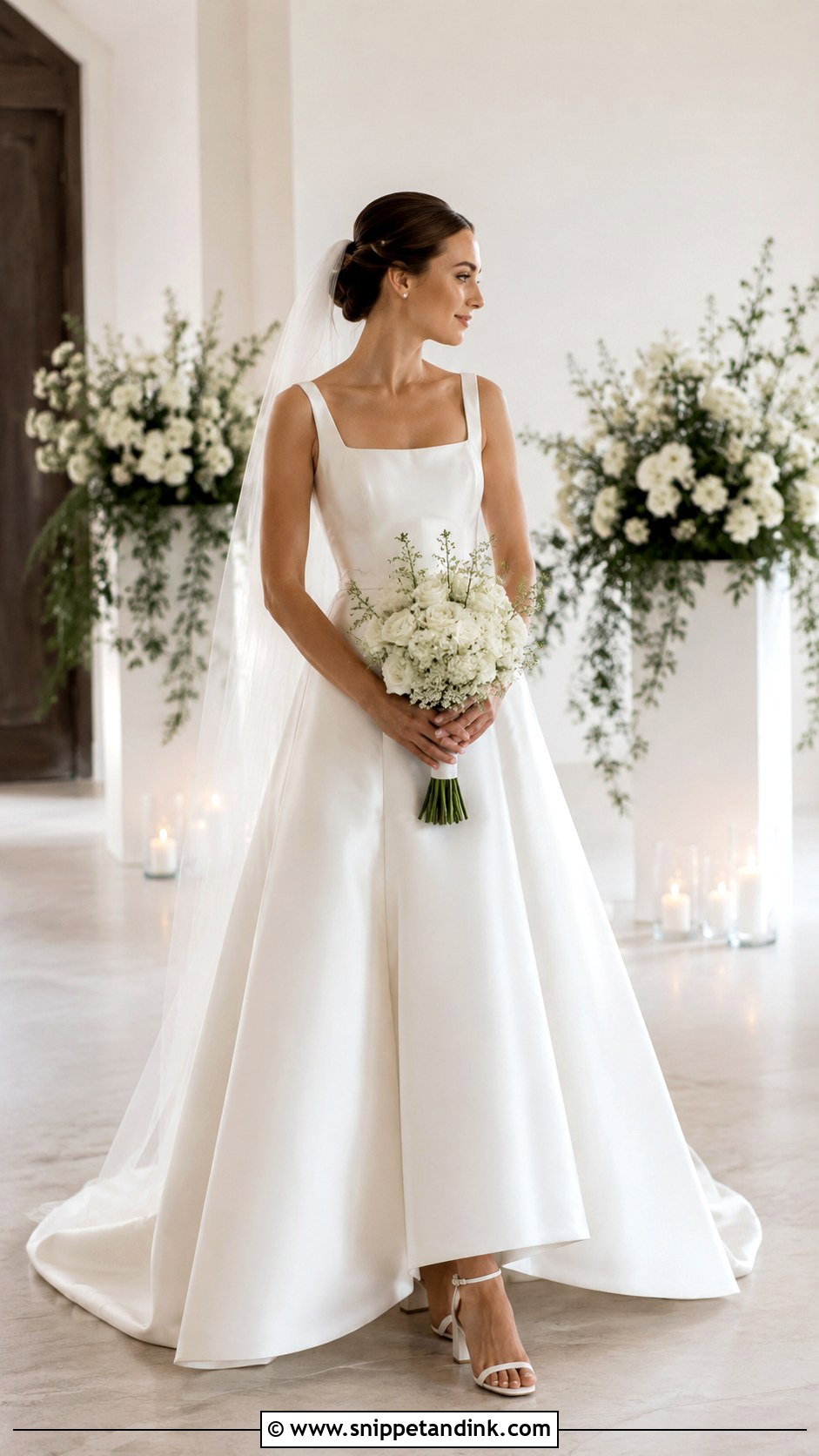
A square neck gives a clean, slightly vintage line across the collarbones, and it sits best with wide straps or fitted sleeves. A supportive bodice with an A-line skirt suits most figures. Satin keeps it minimal; floral jacquard adds texture without beading. I’d style it with a neat chignon, pearl studs and a plain tulle veil set under the hair, plus block heels for long periods of standing. A small pendant can work, though a bare neckline usually looks more current. The corners are where I spend fitting time. They have to lie flat when you lean forward, or the neckline gapes and the line is lost.
6. High Neck Lace Wedding Dress
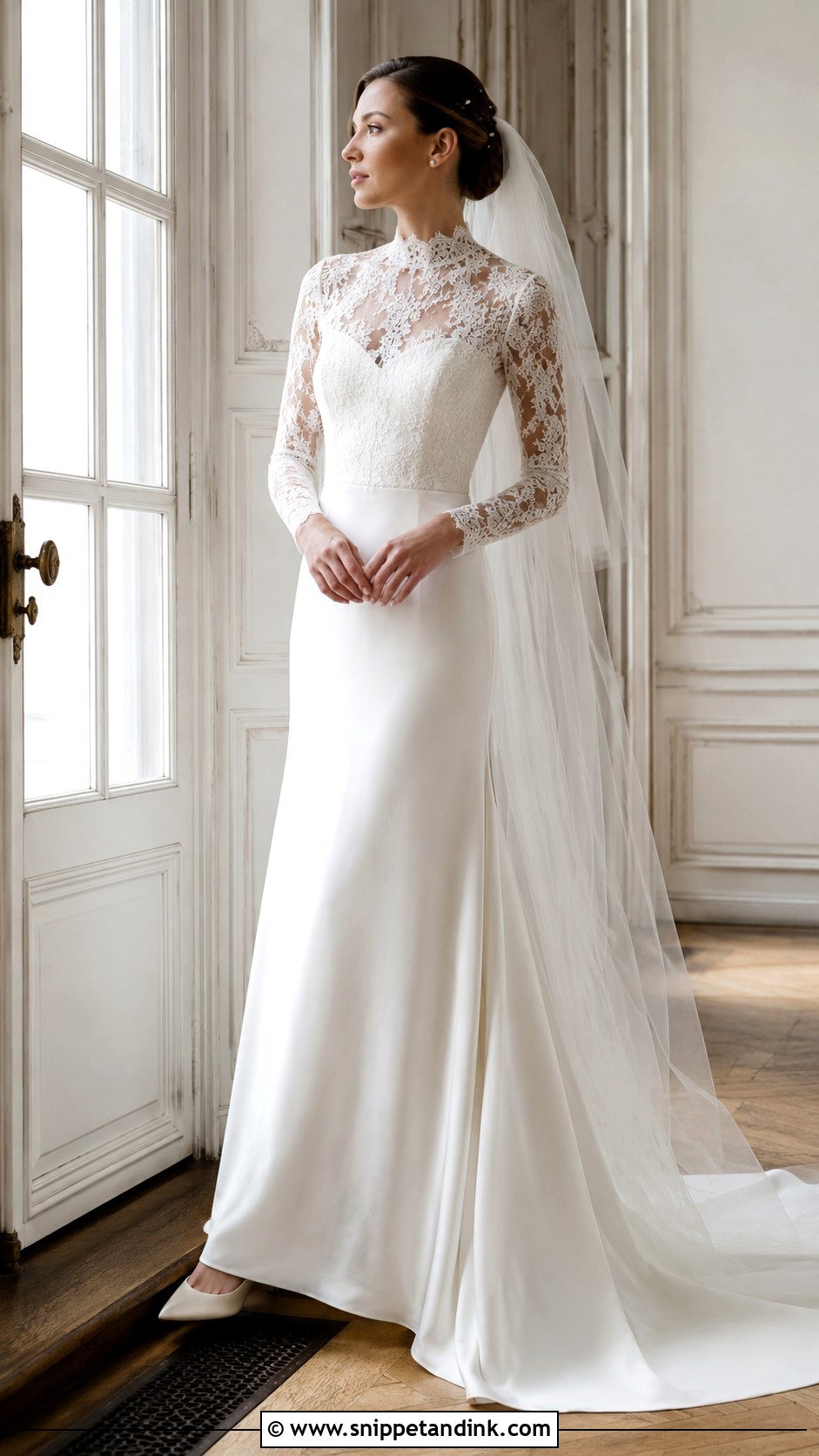
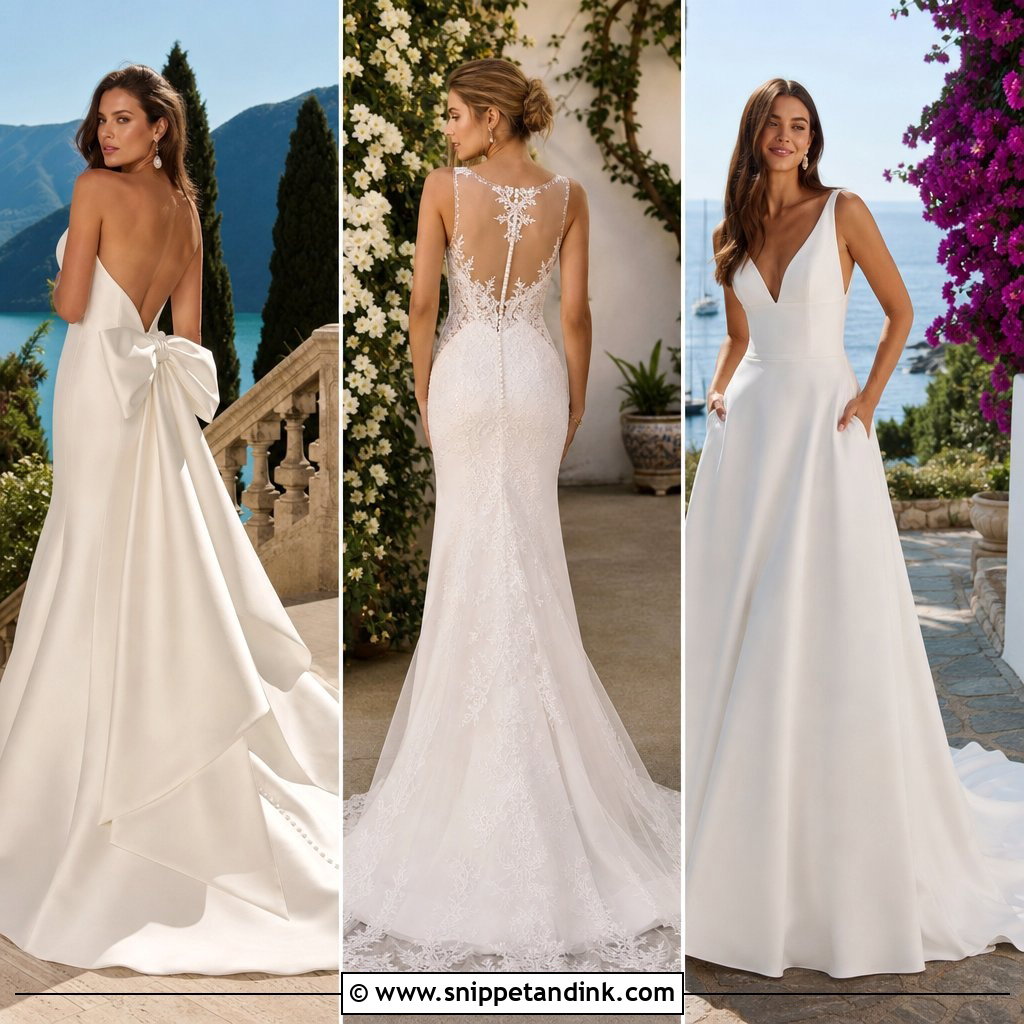
A high lace neck reads polished and composed, especially in profile. The best ones have a lined bodice under a sheer lace yoke, so the face still feels light, with fitted sleeves and a defined waist to balance the coverage. A smooth crepe or chiffon skirt keeps it from getting busy. Pearl hairpins, small studs, ivory pumps, a plain chapel veil and a low twisted bun keep the neck in view, and the lace means you don’t need a necklace. Run a finger inside the collar at your fitting. Lace edges can scratch, and a soft binding along the inside is a small fix that makes a long day much nicer.
7. Corset Bodice Wedding Dress
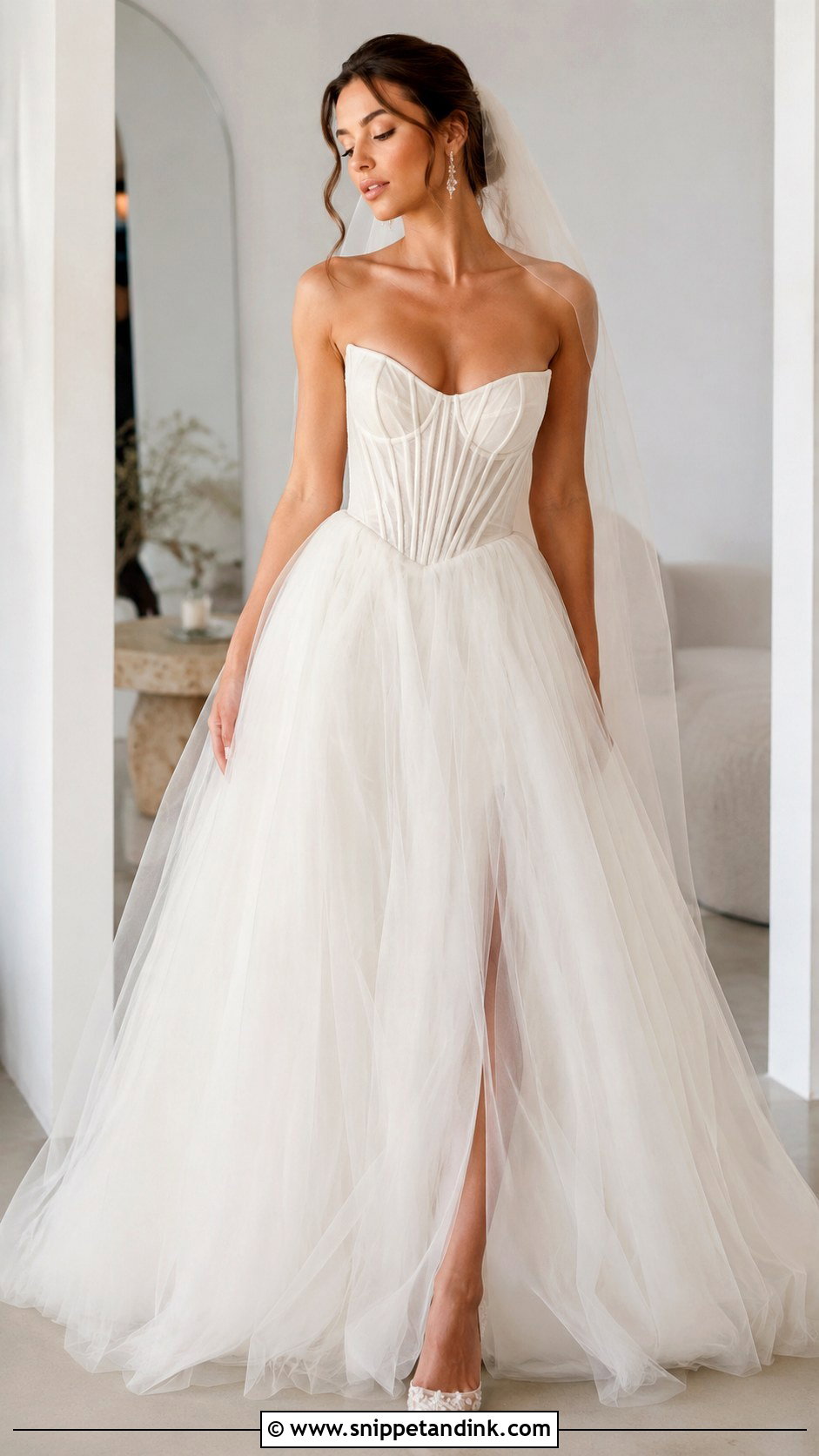
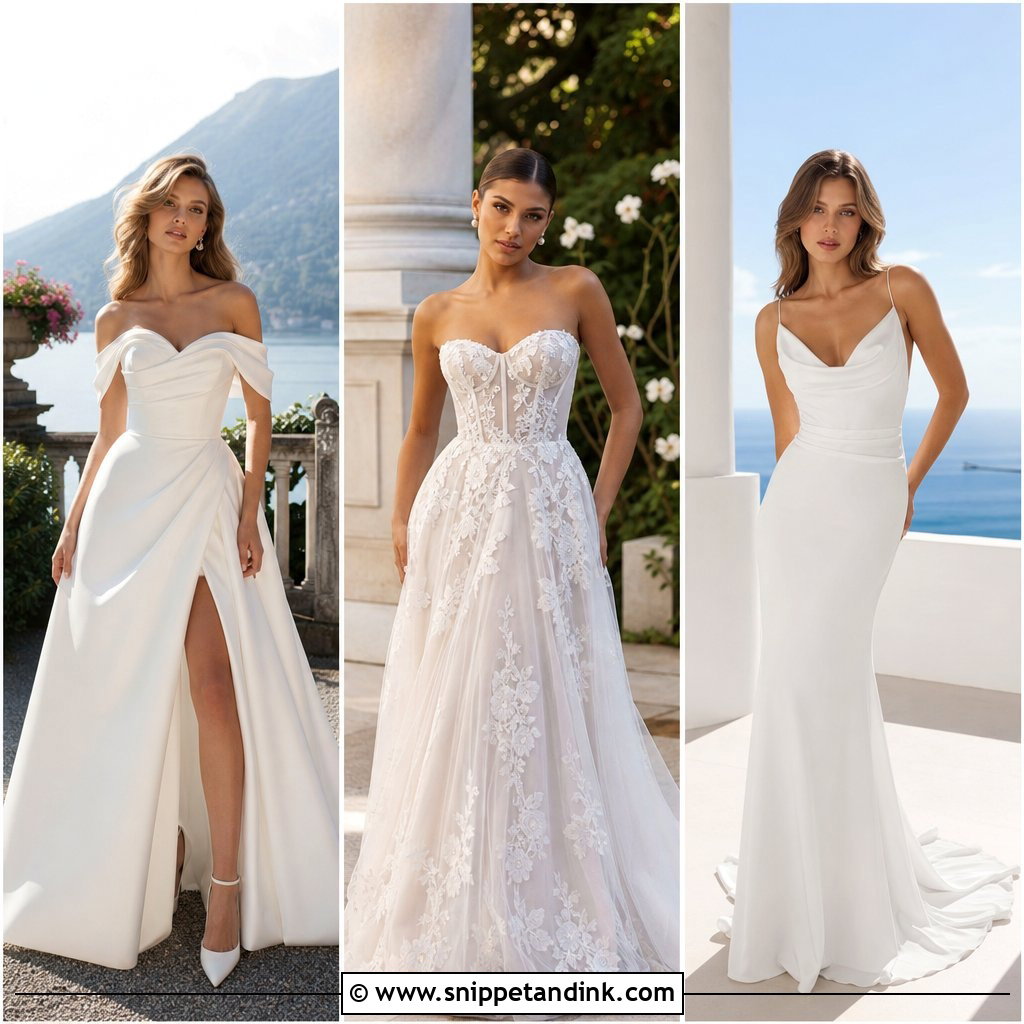
A corset bodice gives definition with a fashion edge. Look for proper boning, shaped cups and either subtle exposed seams or lace overlay, paired with a full tulle skirt for contrast and room to move. A straight or gently curved neckline keeps it elegant. Pointed ivory heels, crystal earrings, a sheer veil without heavy trim and softly swept-back hair let the structure show. Cup placement is the thing I check first, because if the cups sit even slightly high or low, the whole bodice looks wrong no matter how tight it’s laced. Sit, take deep breaths, and expect it to feel firm but never painful.
8. Floral Appliqué Wedding Dress
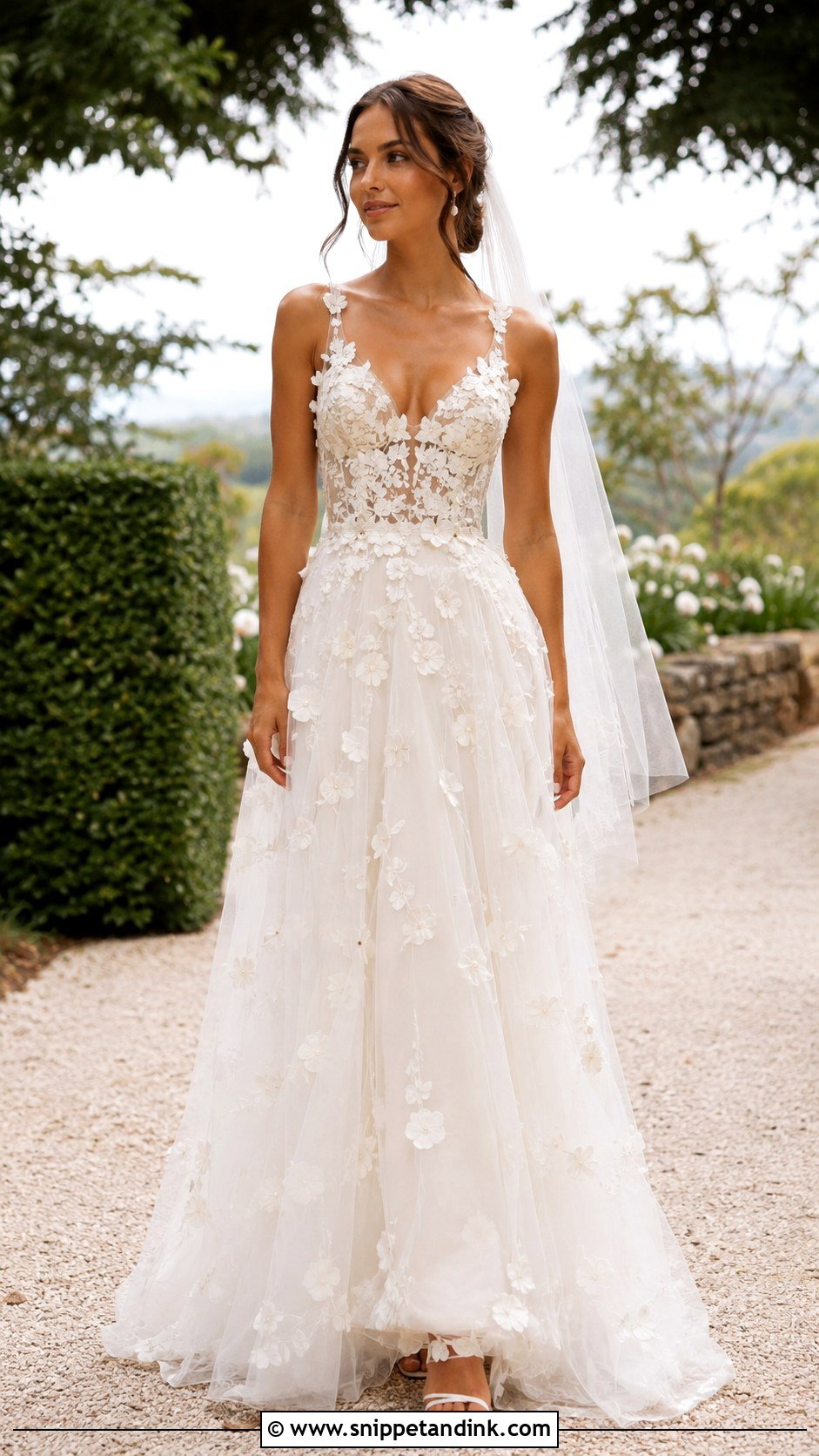
Appliqué flowers bring depth and a garden feel. I like them clustered on a fitted bodice and scattering lighter down an airy A-line skirt; raised 3D petals add depth, tonal lace stays traditional. Pearl drops, ivory sandals, a light fingertip veil and a loose braided bun or pinned waves keep everything else simple, and a heavy necklace would fight the bodice. Look hard at where the flowers fall around your waist and bust. A cluster in the wrong place adds bulk exactly where you don’t want it, and a seamstress can move a few during alterations. Ask her to secure any loose petals while she’s there. Gardens and conservatories suit it.
9. Minimalist Column Wedding Dress
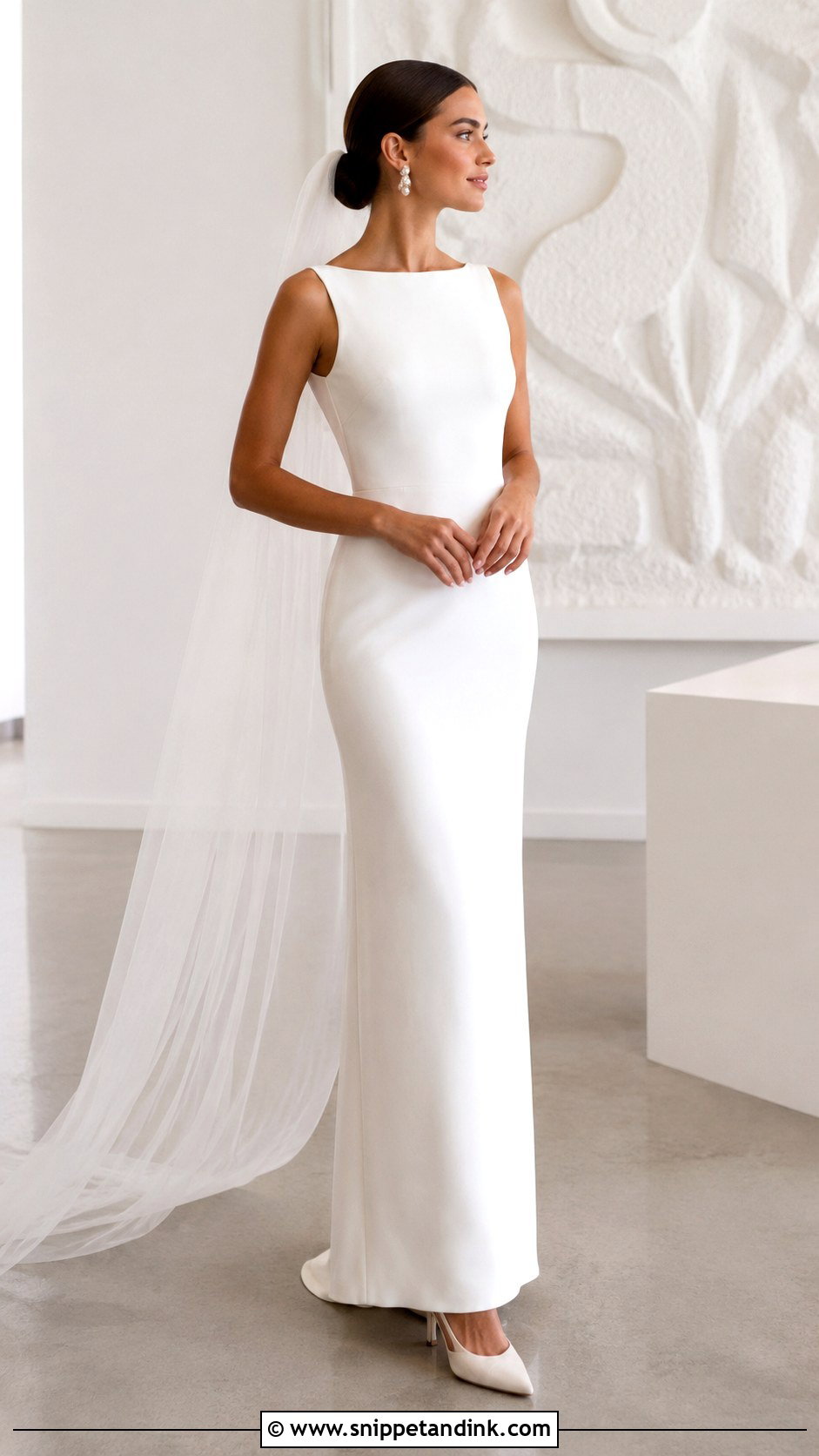
Clean lines and nothing to hide behind: a minimalist column wedding dress is the most honest shape in bridal. Fluid crepe or satin should follow the body without clinging. A bateau, square or softly draped neckline adds just enough interest. Sculptural pearl earrings, pointed slingbacks and a sleek low bun suit it, with a long plain veil for the ceremony that swaps for a small comb or satin bow later. Smooth fabric shows every line underneath, so plan your underwear at the same time as the dress, not the week before. Have the hem set in your actual shoes. Galleries, modern hotels and intimate weddings suit this one.
10. Fit-and-Flare Wedding Dress
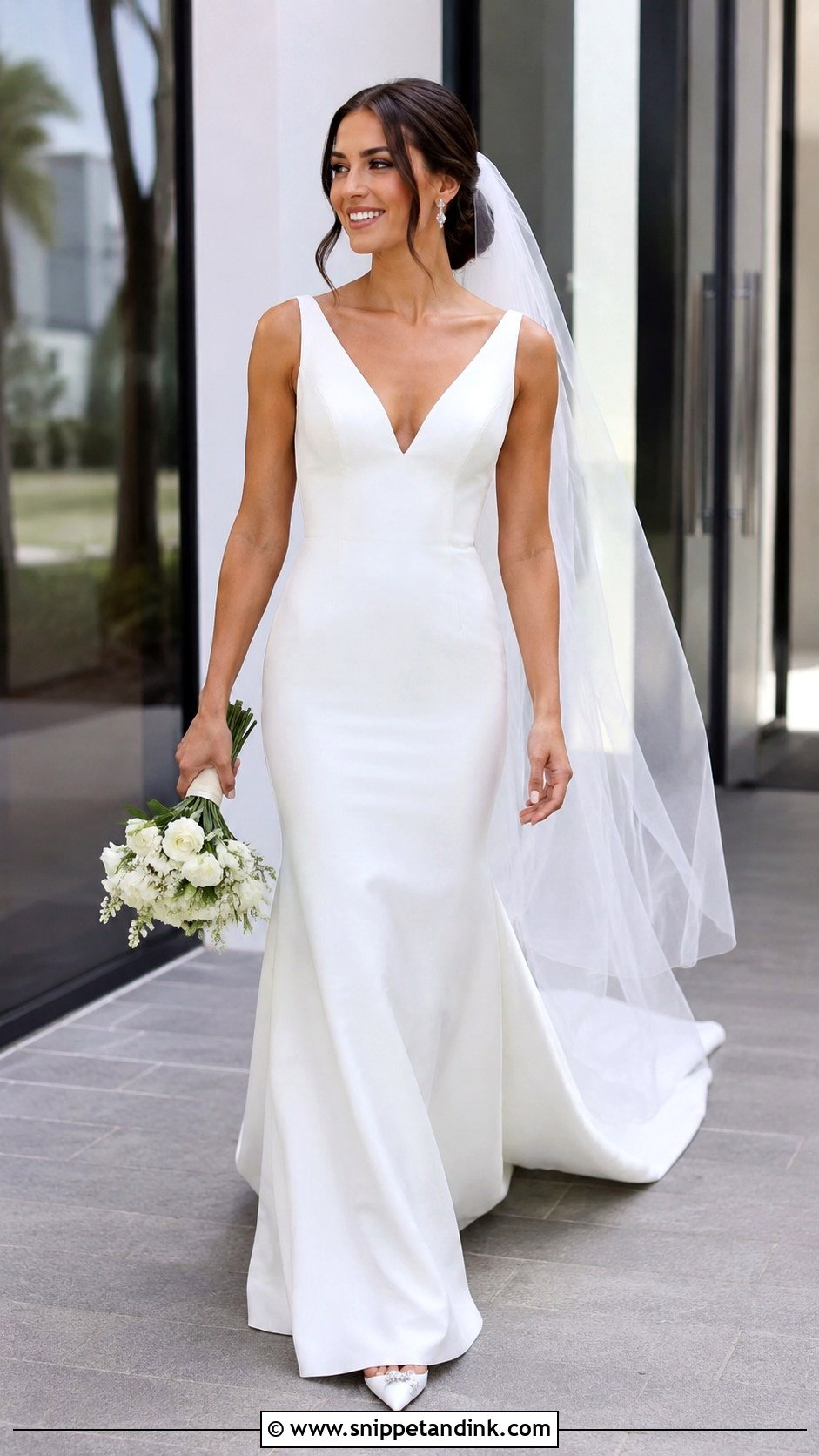
Fit-and-flare follows you through the waist and hips and then opens around the thigh or knee, which gives shape while leaving room to walk. Crepe looks sleek; lace softens it. A supportive V or scoop neck with wide straps keeps the top secure. Crystal earrings, a small bracelet, pointed ivory heels and a chapel veil carry the line, with soft waves or a low ponytail depending on the neckline. Take full strides in the shop and sit on a low chair. If the skirt pulls across the hips or the flare starts too low to step, it will annoy you all day. Ask for a bustle so you can dance once the portraits are done.
11. Tulle Princess Wedding Dress
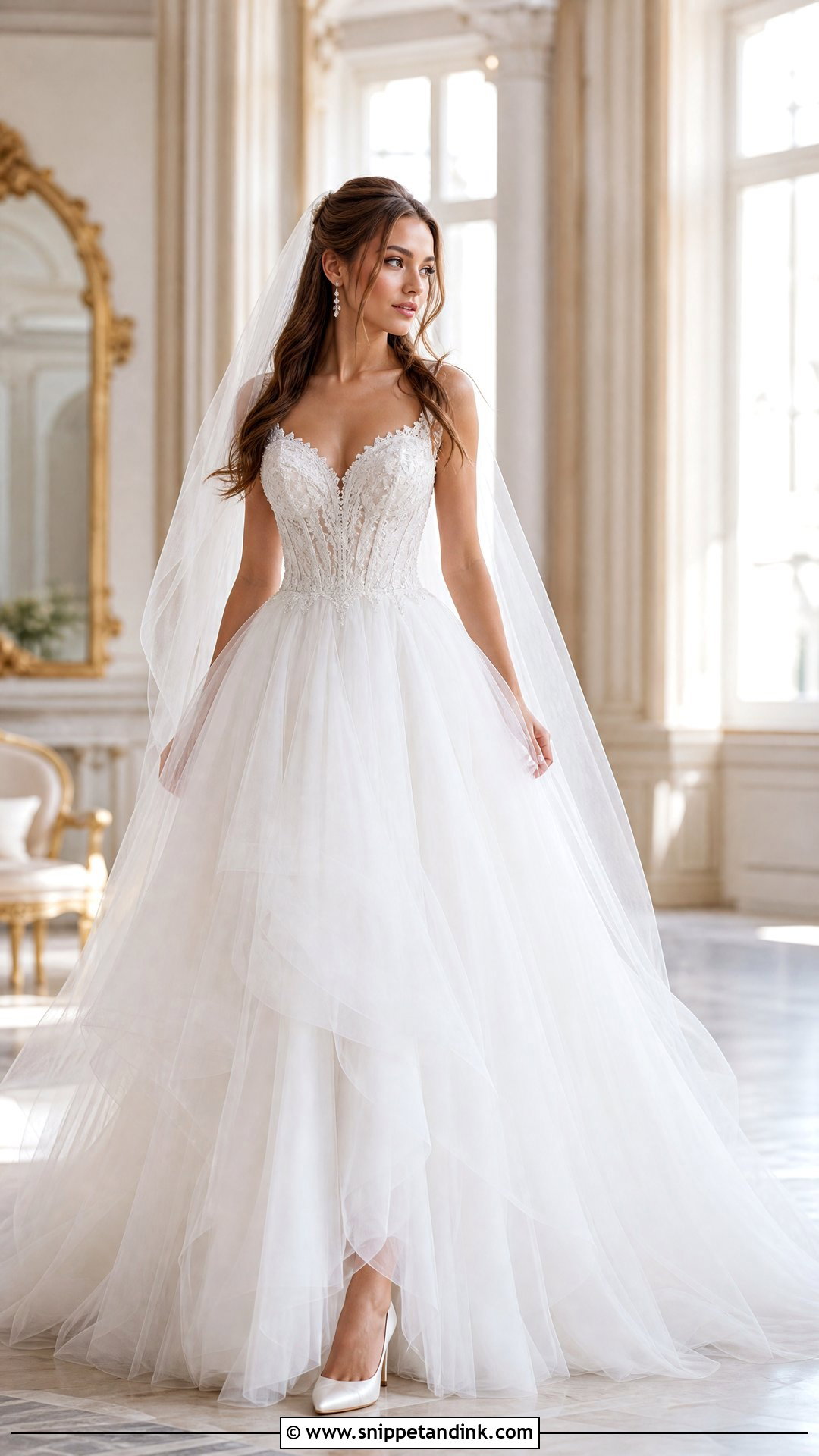
Soft tulle layers give a princess skirt volume without the stiffness of a hooped petticoat. Look for a fitted bodice with fine straps at the natural waist and a skirt built from several light layers, with tonal embroidery or scattered pearls for detail. Crystal studs, satin pumps, a light cathedral veil and a polished half-up style keep it youthful. The waistline matters more than it seems; a skirt starting too high or too low shortens you, so it should start right at your natural waist. Tulle snags on rough stone and decking, and a secure bustle that lifts the train off the floor for the reception will spare it.
12. Pearl Beaded Wedding Dress
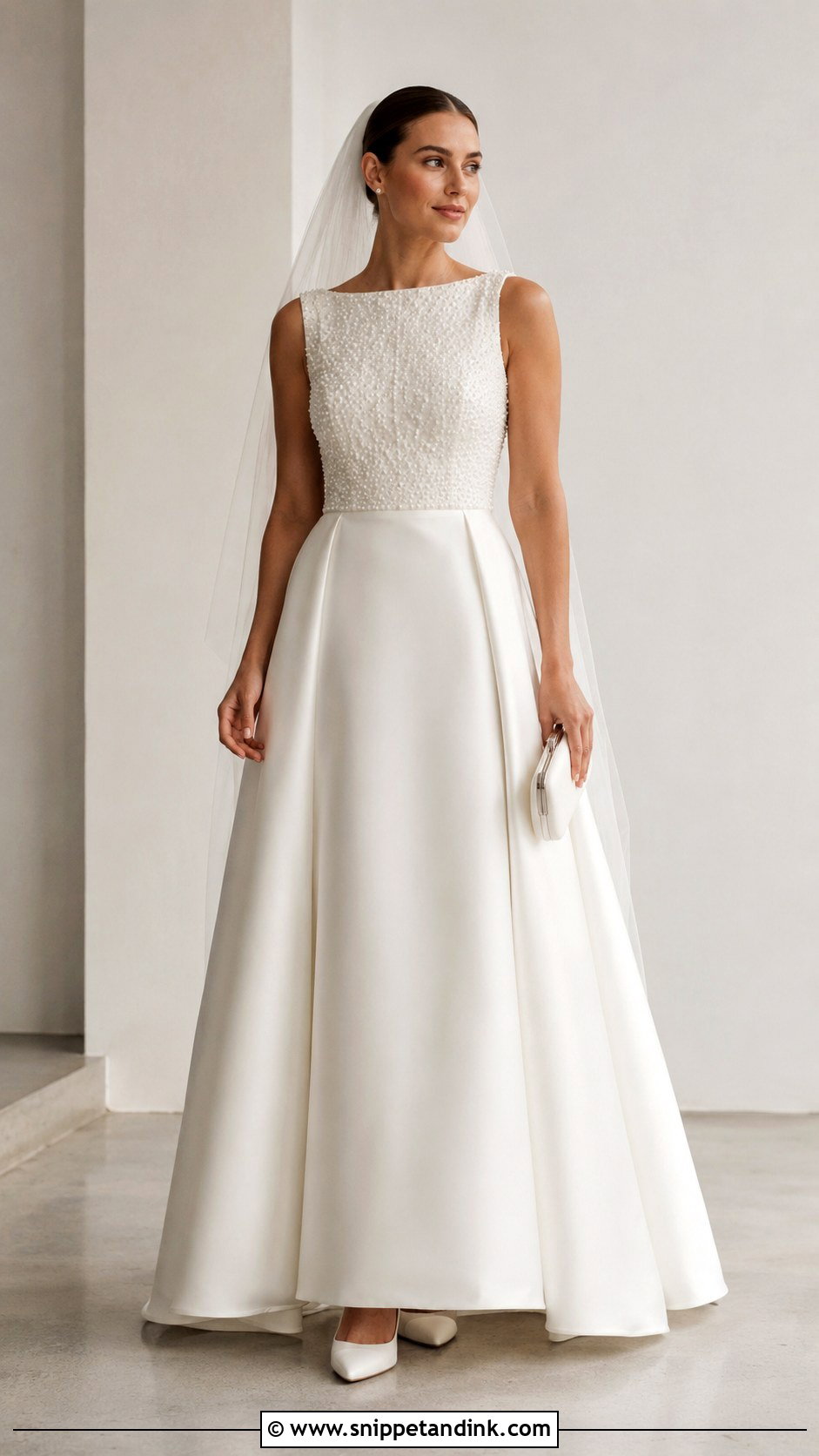
Pearl beading gives texture and a soft glow, gentler than crystals. I’d choose a fitted bodice with evenly spaced pearls over a smooth satin or tulle skirt; the contrast keeps it from feeling overdone. Pearl studs, an ivory clutch, low or mid-height closed-toe pumps, a plain veil and a clean bun suit it. Before alterations, run your hand over the beading and look for any that wobble, then have those reinforced, because loose pearls come off on the dance floor. Beaded side panels can also rub your inner arms all day, so a gown with softer sides is worth looking for.
13. One-Shoulder Wedding Dress
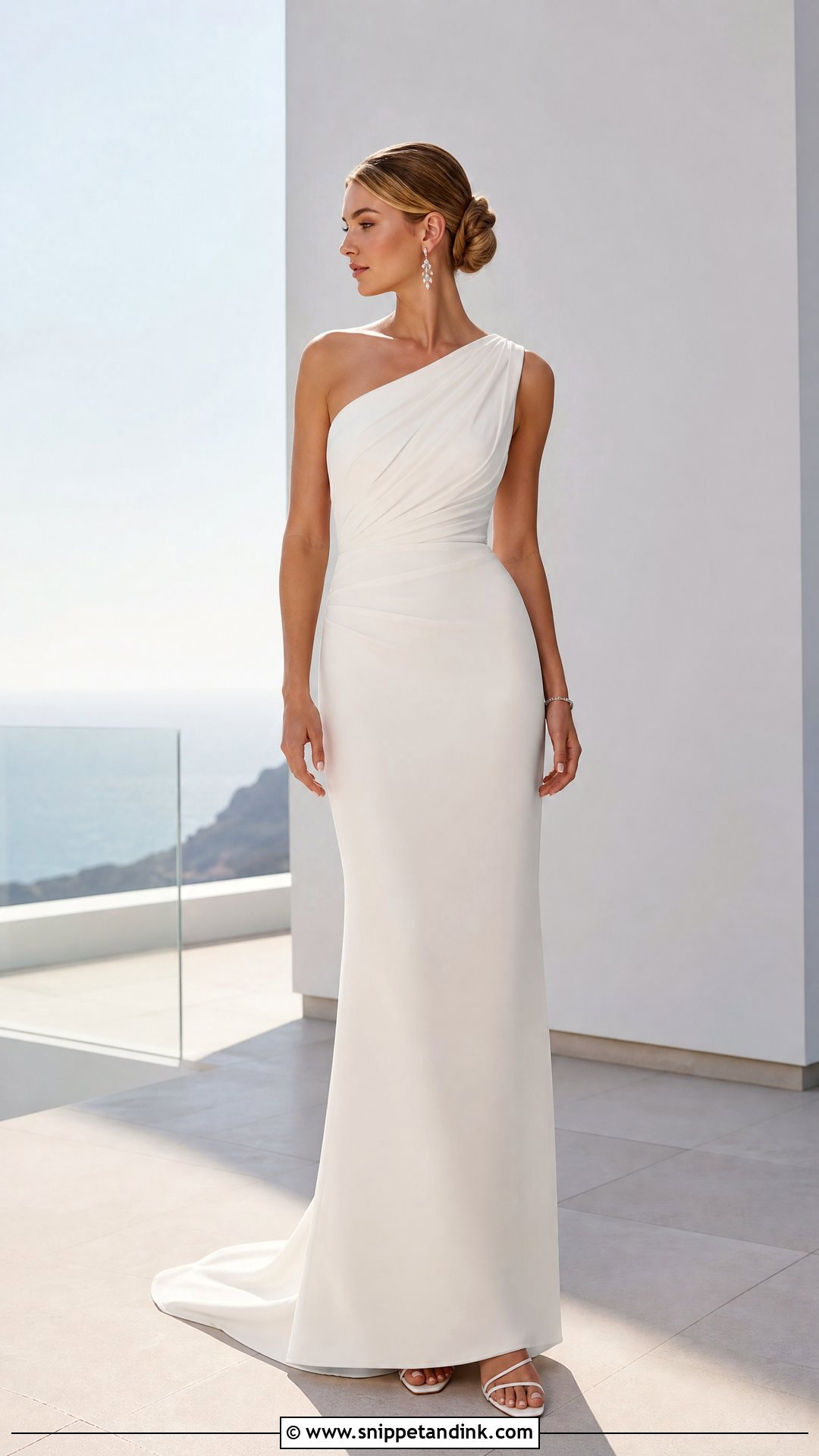
One shoulder gives a diagonal line that feels fresh and quite fashion-led. Look for soft draping across the bodice with enough inner structure to keep the neckline secure, then a column skirt for modern or an A-line for romance. A low side bun placed away from the covered shoulder balances the asymmetry. Small crystal earrings, a narrow bracelet and ivory sandals finish it, and no necklace, since it would cut across the diagonal. A veil under the bun or a pearl comb both work. One-shoulder bodices tend to slide toward the bare side as you move, so lift both arms and twist at the fitting; a hidden silicone strip inside the edge can help it grip.
14. Wedding Dress With Detachable Sleeves
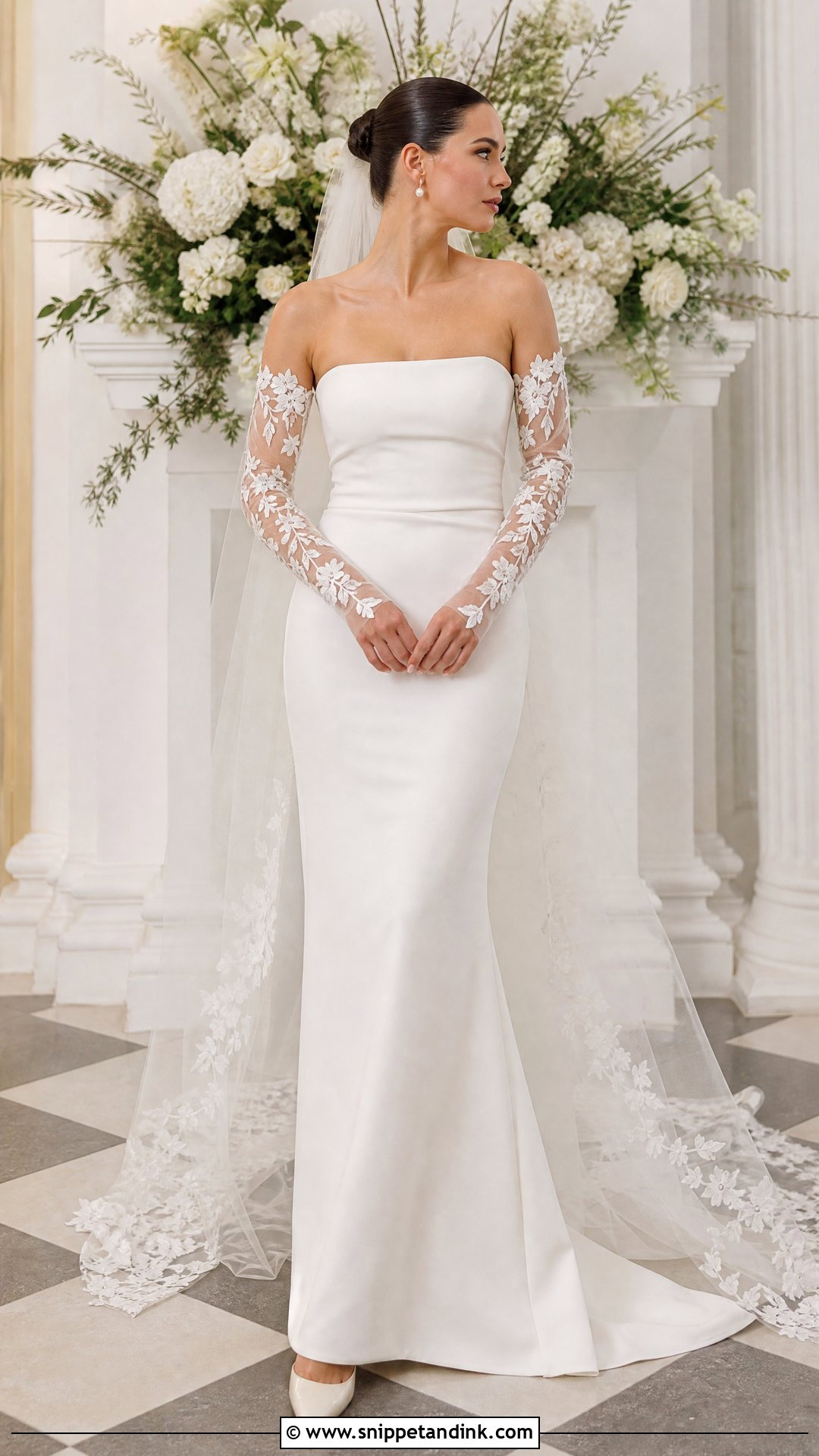
Detachable sleeves turn one dress into two looks. Start with a strapless or sleeveless fitted gown, add sheer lace sleeves for the ceremony, and take them off for the reception. Pearl earrings, pointed ivory heels and a chapel veil suit both versions, and a sleek bun makes removing the sleeves easier. Check how they attach, whether snaps, elastic or covered buttons, and that nothing shows when they’re on. Bring the sleeves to every alteration appointment. They change how the bodice sits, so fitting the dress without them often means refitting it later.
15. Wedding Dress With Detachable Overskirt
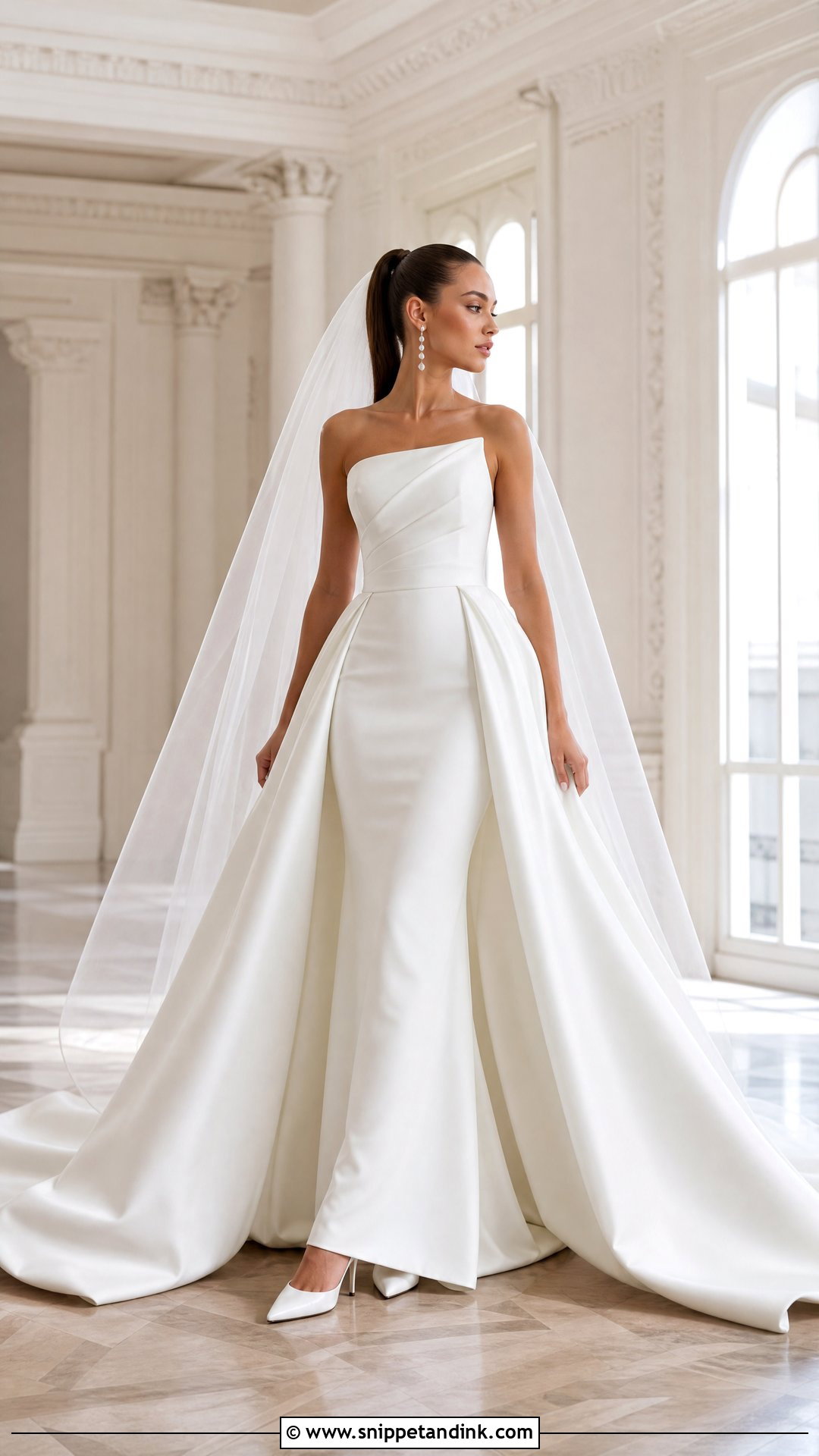
An overskirt gives you a ball gown for the ceremony and a sleek dress for the party. Start with a fitted crepe, lace or satin gown that looks finished alone, then add a full overskirt in matching fabric or tulle, attached at the natural waist without gaps or bulky fastenings. A long veil, drop earrings and pointed pumps complete the formal half; after photos, the veil and overskirt come off, and a sleek ponytail or low bun suits the second look. Practise the removal with your helper beforehand. Also look at the waistline of the gown underneath, since it becomes the focus once the extra layer is gone.
16. Tea-Length Wedding Dress
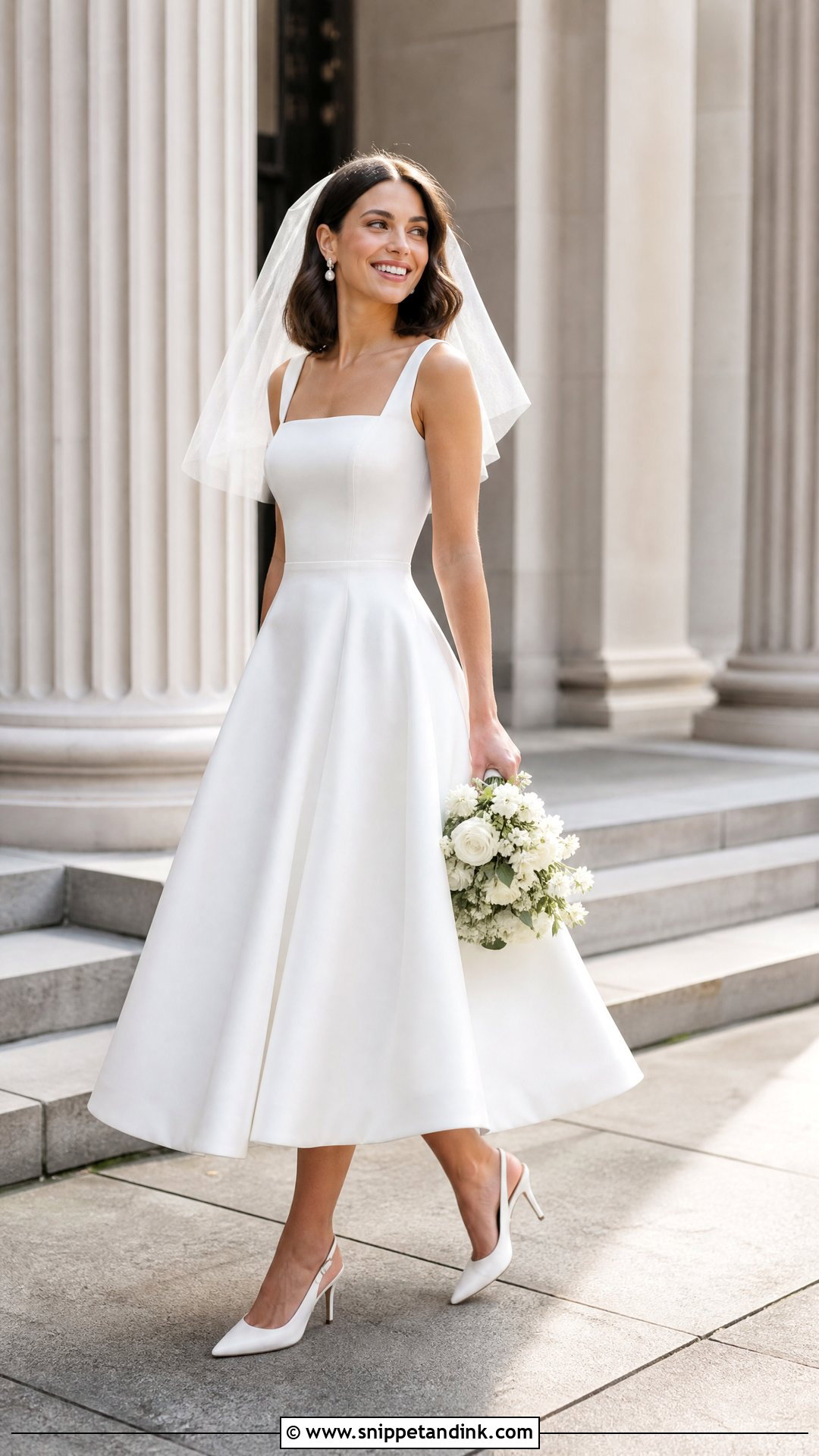
Tea length is the cheerful one, and it lets your shoes join the outfit. A fitted bodice with a defined waist and a skirt ending between knee and ankle is the shape; satin holds structure, lace or organza softens it. Pointed slingbacks, pearl earrings, a short tulle veil and a neat bun or shoulder-length waves balance it. Because everyone sees the hem, the length must be precise, and a skirt with a petticoat underneath hangs differently from one without, so wear both at the fitting with your exact shoes. A narrow belt in matching fabric can add definition. Courthouse ceremonies and daytime weddings suit it.
17. Cape Sleeve Wedding Dress
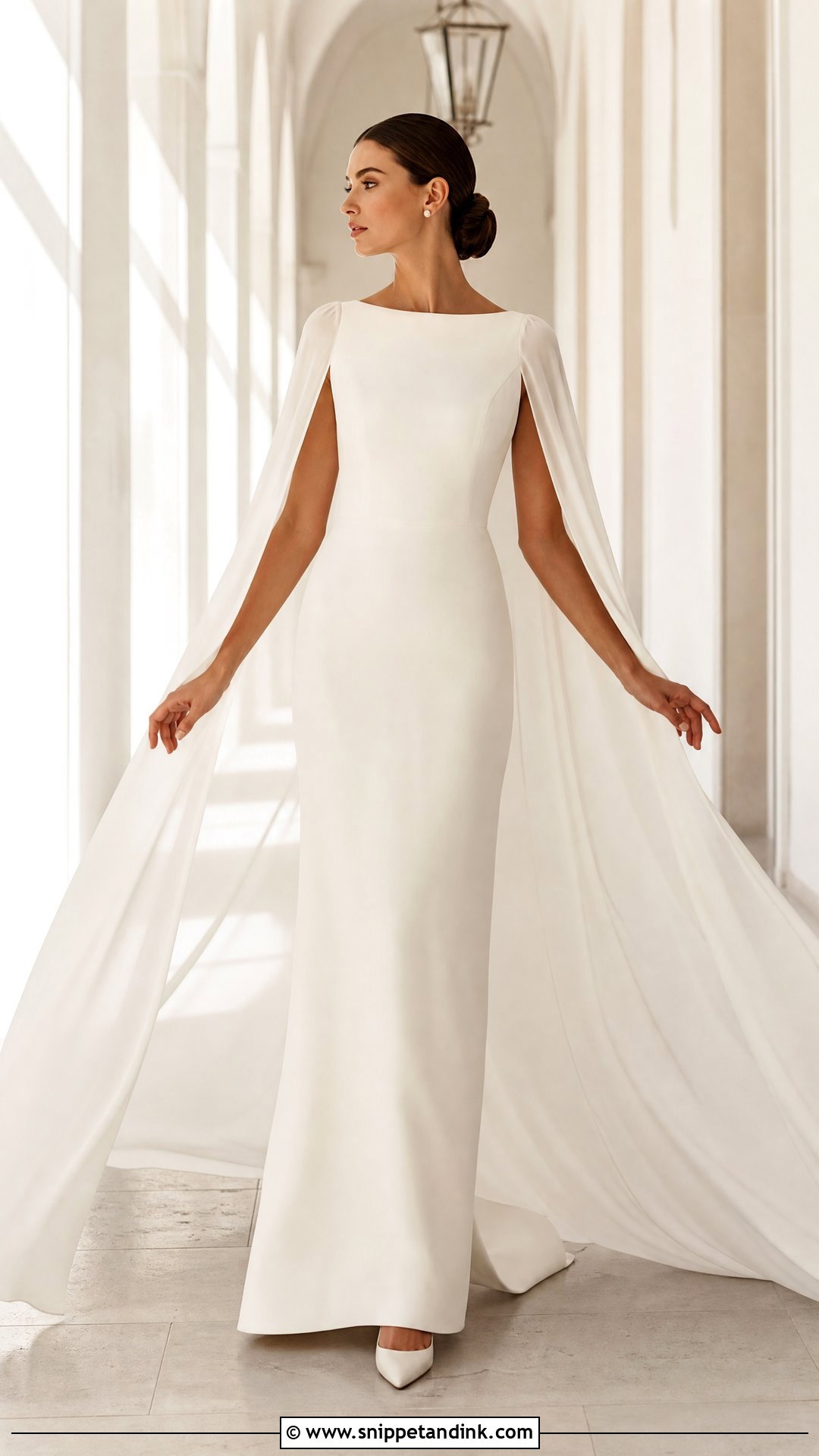
Cape sleeves give movement and can replace a veil entirely. A clean column or A-line with a sheer cape attached at the shoulders works best, chiffon for flow or lace-trimmed tulle for detail. Keep the neckline simple. Pearl studs, pointed pumps and a polished low bun finish it. Skip the veil with a long cape; a short cape can take a plain fingertip veil. Walk around and watch the back. A cape that’s attached a little unevenly pulls the shoulders backwards and drags the neckline. A removable cape lets you dance freely later.
18. Sweetheart Neckline Wedding Dress
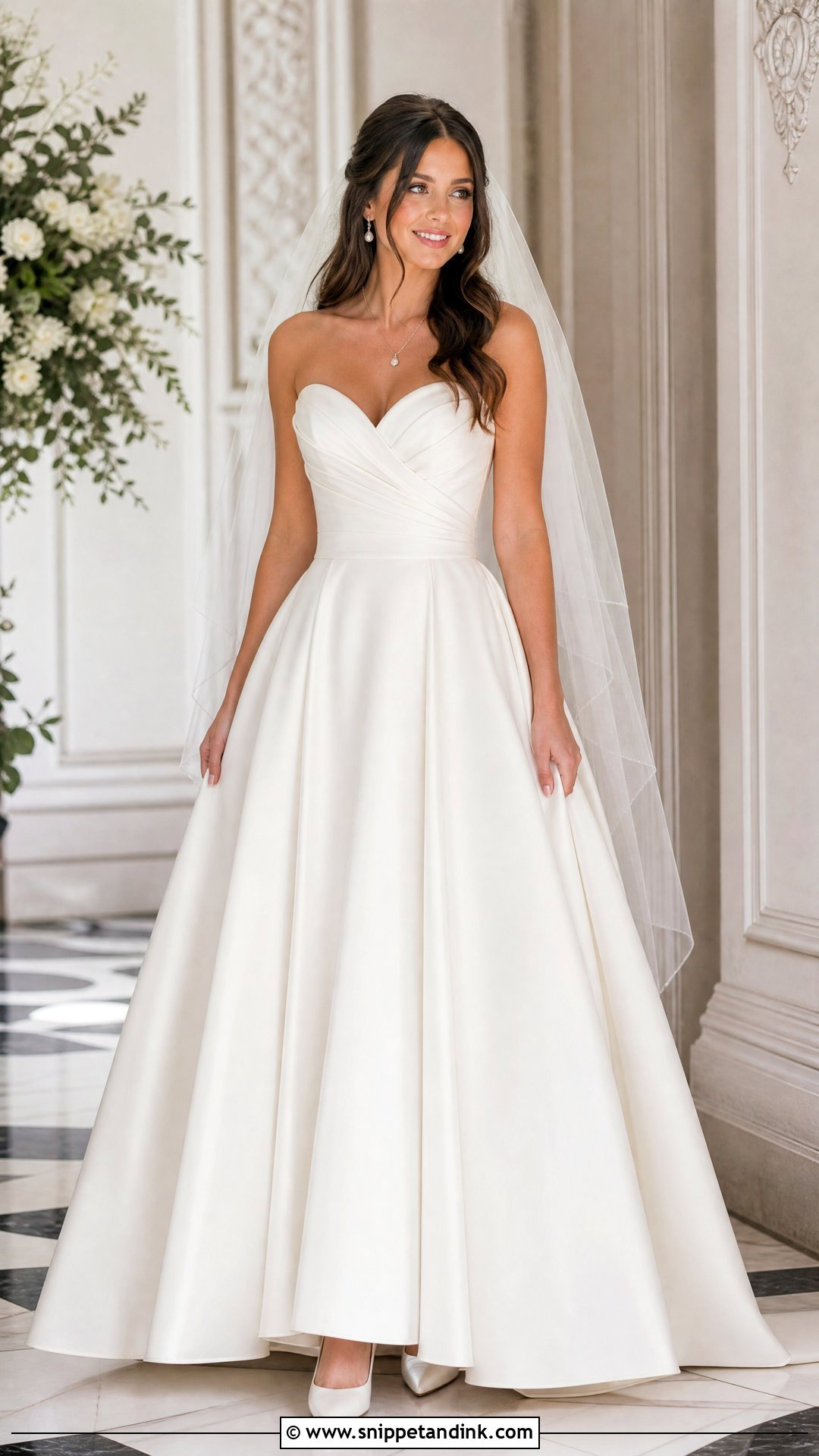
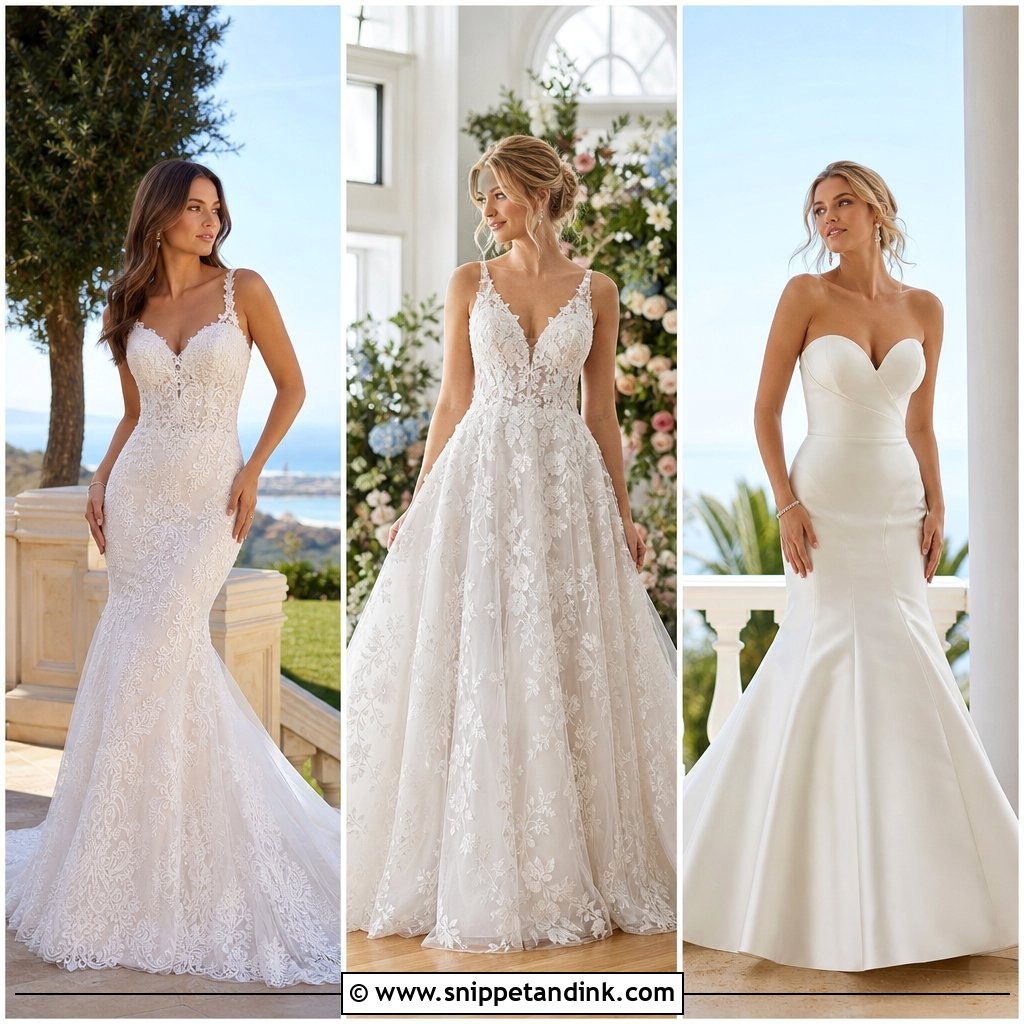
The curve of a sweetheart neckline follows the bust and softens any bodice. If the gown is strapless, it needs supportive cups and boning. A full satin skirt gives classic drama, a fitted lace one a more defined line. A delicate pendant, pearl earrings, an ivory veil, closed-toe heels and soft waves or a half-up style suit the open neckline. The centre dip should lie flat against you, neither gaping nor pressing in, and that comes down to cup placement during alterations. If you’d like more support, detachable straps or off-shoulder sleeves can be added without losing the shape.
19. Bow Back Wedding Dress
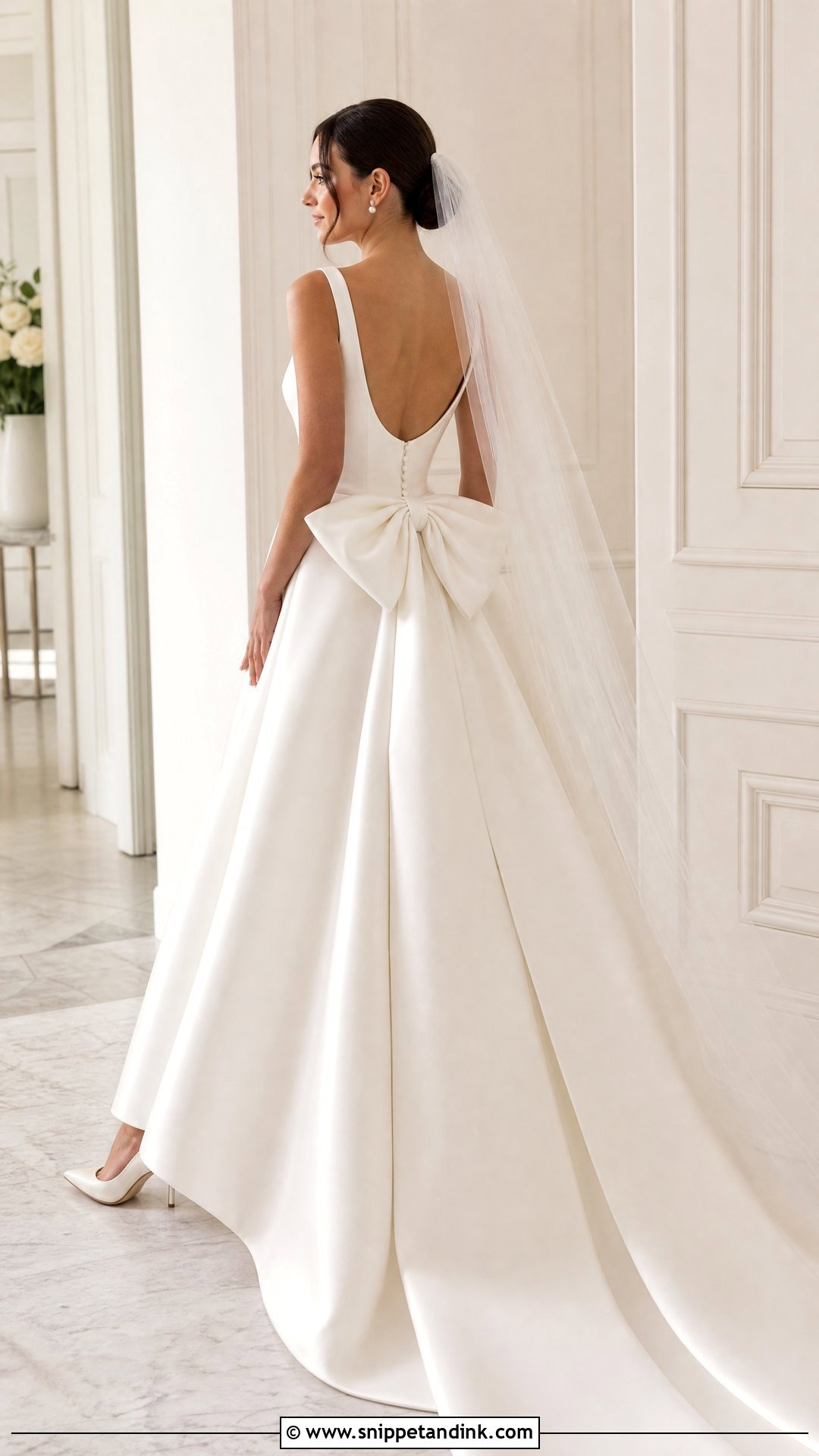
A bow at the back gives the guests something to look at during the vows. Clean satin or mikado with a structured bodice and full A-line holds the bow well. A large removable bow is dramatic, a flat one more understated, and covered buttons with a medium train add interest. Keep the front simple with pearl studs, pointed pumps and a smooth low bun, plus a sheer veil you can lift aside. Big bows collapse if they aren’t interfaced inside, so give it a shake at the fitting and see if it springs back. Make sure the back looks finished once a detachable bow comes off.
20. Vintage Lace Wedding Dress
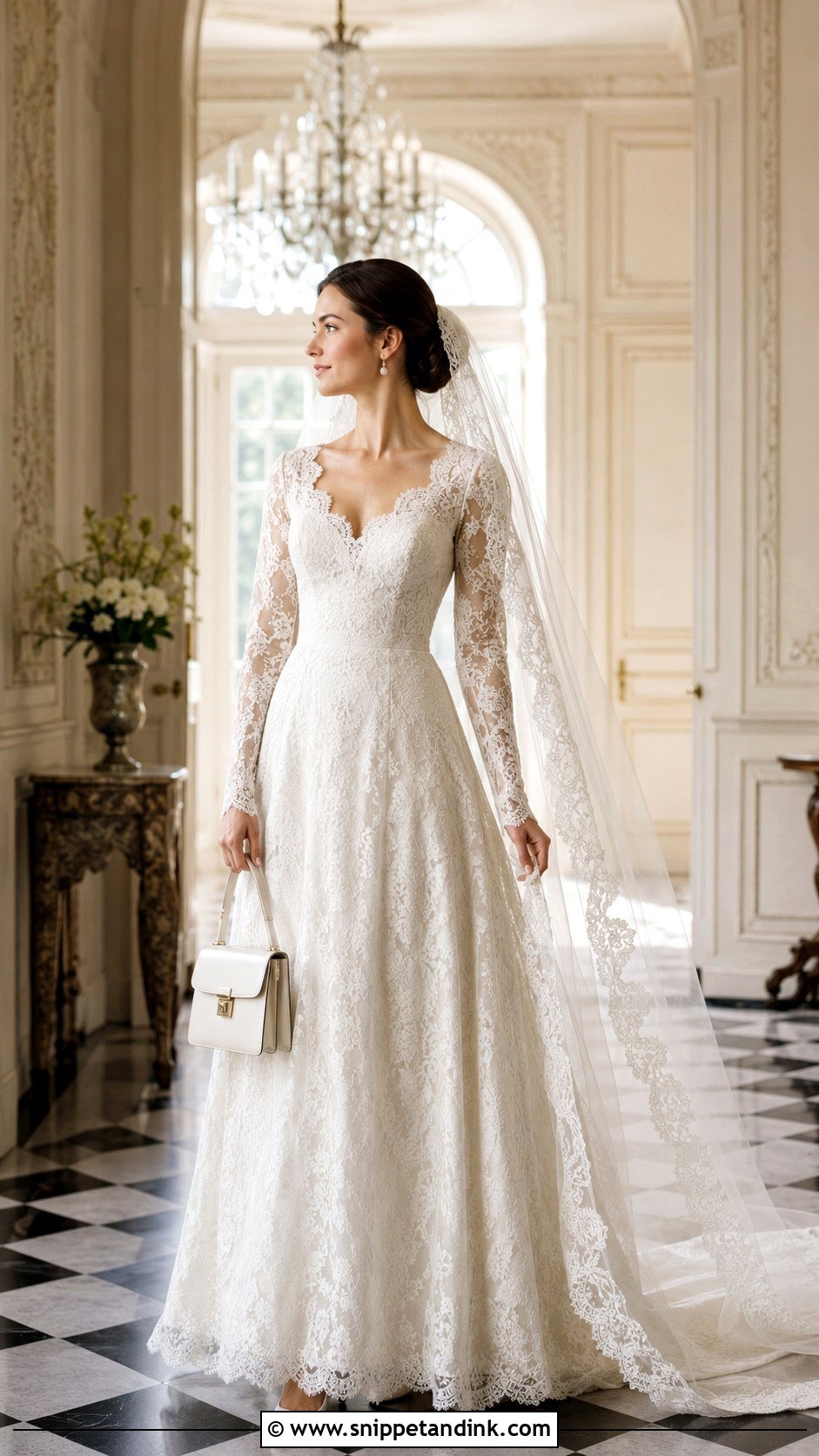
Vintage lace gives texture, gentle coverage and old-fashioned proportions. Look for a softly fitted bodice, natural waist and flowing A-line, with scalloped edges at the neck and cuffs and a light lining for comfort. Pearl drops, a lace-edged veil, ivory pumps, a small structured bag and a low chignon or waved bob carry the period feel without fancy dress. Stick to one lace pattern rather than mixing several. With older or sample gowns, check every seam for yellowing and broken threads in daylight. A specialist cleaner and a skilled seamstress can often restore old lace, but ask before you buy, not after.
The Underwear Each of These Necklines Needs
The foundation under a gown changes how it hangs as much as the alterations do, and plenty of brides leave it until the final week. Here’s how I match underwear to the shapes above.
Strapless, sweetheart and corset bodices
A well-built bodice usually needs no bra at all, because the boning and cups do the lifting. If you need more support, a seamstress can sew cups or a longline bra directly into the gown so nothing shifts.
Off-shoulder and one-shoulder
A strapless or multiway bra works, but check it doesn’t peek out under the arm where the neckline drops. For one-shoulder, a bra with a detachable strap worn on the covered side is often comfier than strapless.
Columns, satin and fit-and-flare
Smooth fabrics show edges, so choose laser-cut knickers and a skin-tone slip or light shaping slip rather than anything lacy. Try them on under the gown itself; something invisible in a fitting room mirror can show in a side-lit photo.
Lace backs and illusion panels
Low or sheer backs rule out most bras. Adhesive cups, a low-back converter, or cups sewn into the bodice are the usual answers. Choose whichever you’ve worn for a full day before the wedding, not one you’re trying for the first time.
Comfort, Fit and the Detail That Makes It Yours
The dress that works is the one that matches your taste and survives the practical tests: support, movement, tailoring and the venue. Lace sleeves and full skirts give classic romance; columns, detachable layers and asymmetric necklines feel more modern. Let accessories support the gown rather than compete with it. Take your shoes and underwear to every fitting, and walk, sit and lift your arms in every dress you’re considering. Appliqué, satin, vintage lace or plain crepe, choose the one you stop thinking about once it’s on.
You'll Like These Ideas:


Leave a Reply