
Classy rarely means plain. It means every detail on the dress has a reason to be there. The bridal shapes I see brides drawn to right now are lace, corset bodices, drop waists, sculptural lines, carefully placed bows, detachable layers and soft color, alongside very spare modern gowns. A dress also has to work off camera: on your venue’s floor, in its temperature and for as many hours as you’ll wear it. Below are 35 ideas, from a satin ball gown to a sleek crepe column dress, a lace A-line or a courthouse look, with the things I watch for when a bride tries each one on.
Bridal Sizing Runs Small, and That’s Normal
The size on a wedding dress label often comes as a shock. Many bridal designers use their own size charts, and those usually run smaller than everyday clothing, so a bride who wears a size 8 on the high street may be ordered a 10 or 12. It isn’t a judgment on your body; it’s just a different chart.
Shops order by your largest measurement among bust, waist and hips, then alter the other areas down. Taking in is far easier than letting out, because most gowns have very little spare seam allowance. I’d always rather order the size that fits the widest point and tailor the rest than gamble on losing weight before the wedding.
- Get measured in the bra and shapewear you plan to wear, not whatever you came in.
- Ask the shop which measurement drove the size choice, and keep a copy of the numbers.
- Remember that samples in the shop are often clipped to fit, so the dress you order will look different until it’s altered.
Alterations to take a gown in by a size or two are routine. Letting one out is a different story, and sometimes impossible on a fitted bodice, so if you are between sizes I order up and let the seamstress do the rest.
1. Elegant Lace Wedding Dress
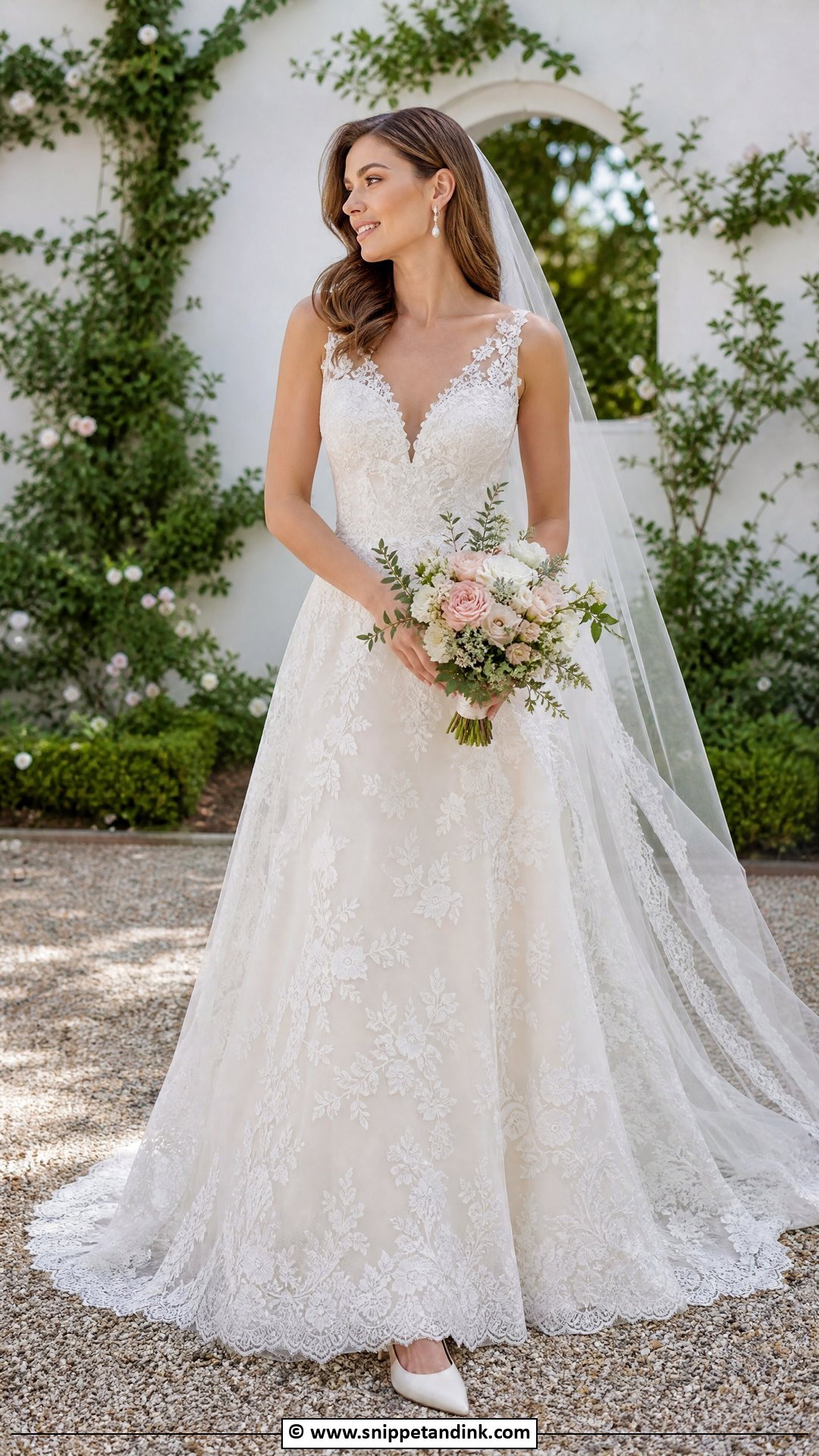
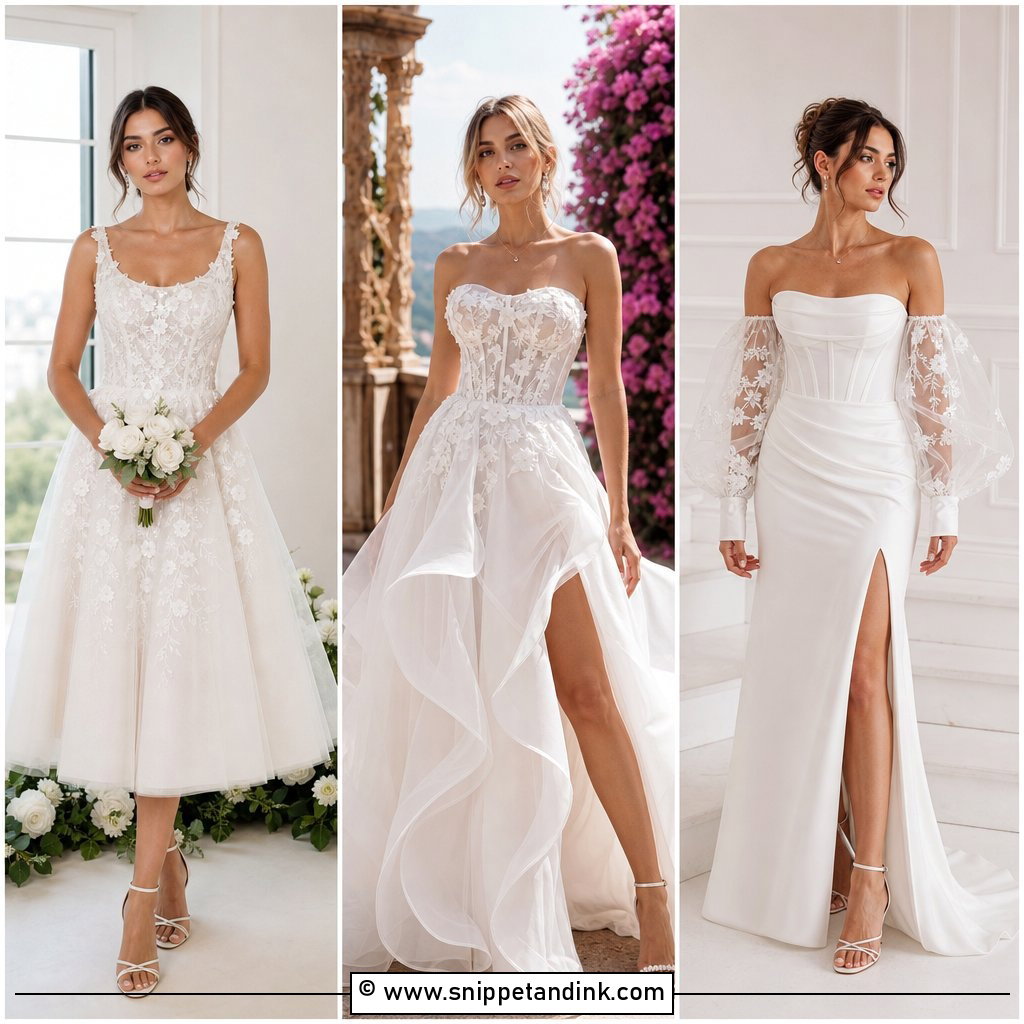
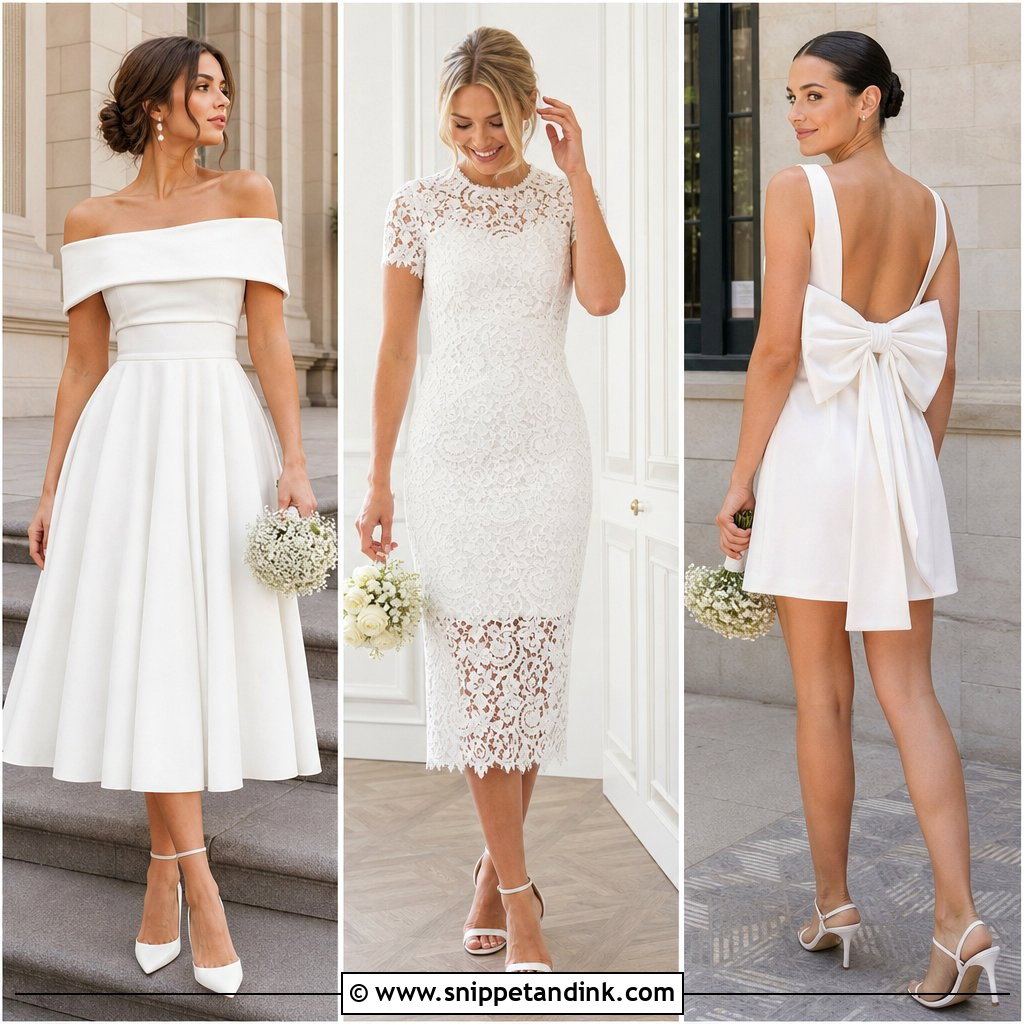
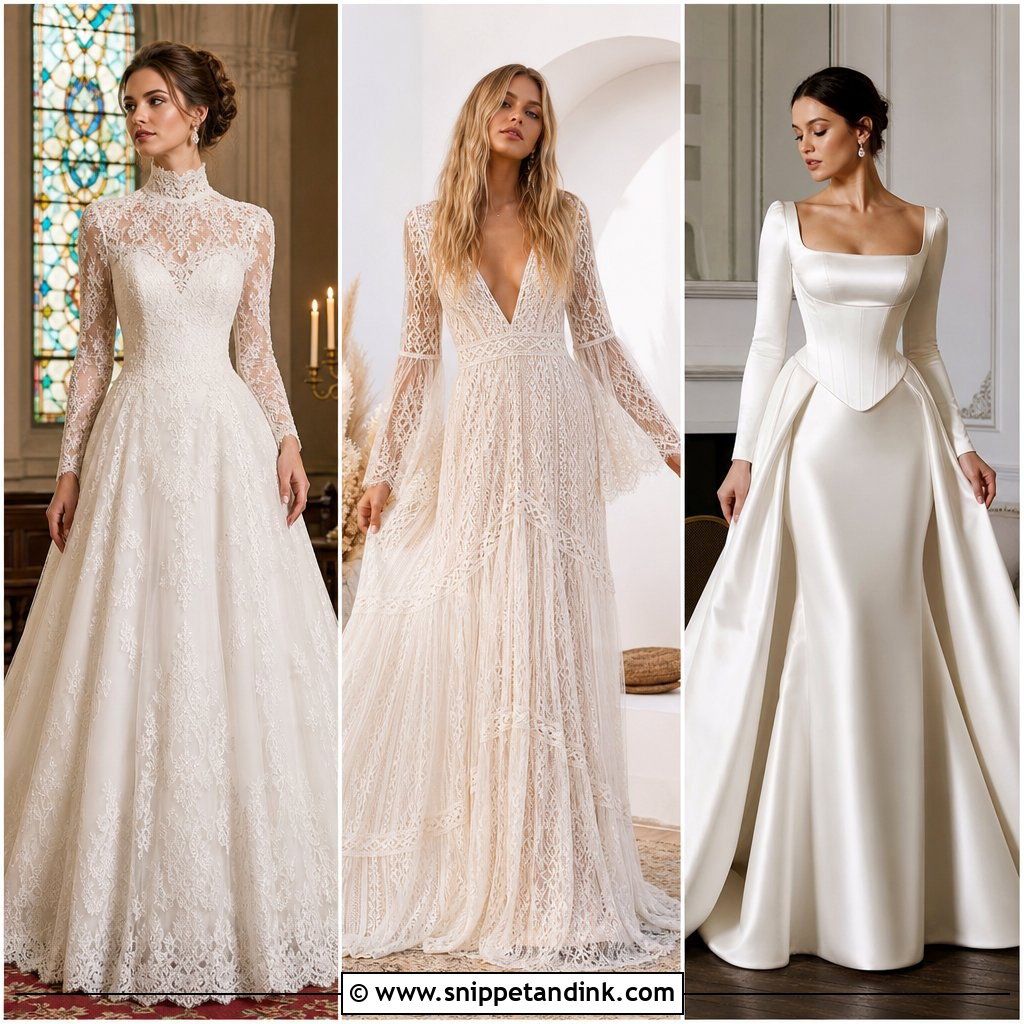
Lace is forgiving. It hides small creases and the odd mark from a long day better than any smooth fabric. Fine floral lace over ivory lining with a clean A-line keeps it polished rather than fussy. I’d choose the veil last with a lace gown: an untrimmed sheer veil lets the dress pattern show, while a lace-edged one can look busy against it. Pearl earrings, a low bun and pointed satin heels finish it.
2. Simple Satin Wedding Dress
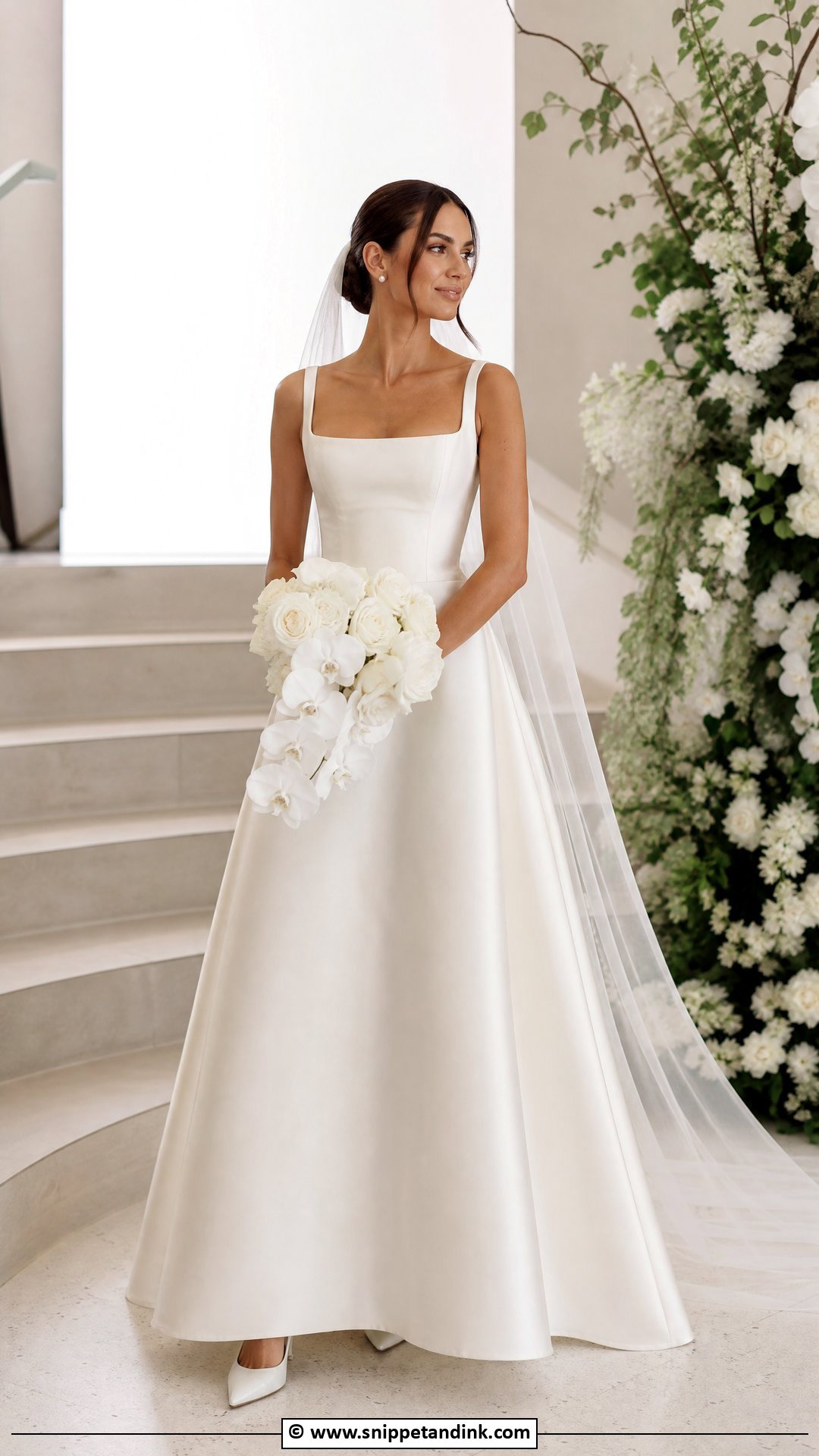
Satin shade matters more than brides expect. Bright white can look blue against warmer skin, ivory softens most complexions, and pale champagne satin glows in candlelight. I hold swatches under the bride’s chin by a window before we decide. A straight neckline, fitted bodice and gentle A-line skirt keep it classic. Because satin already catches the eye, one bouquet and small studs are plenty.
3. Long Sleeve Wedding Dress
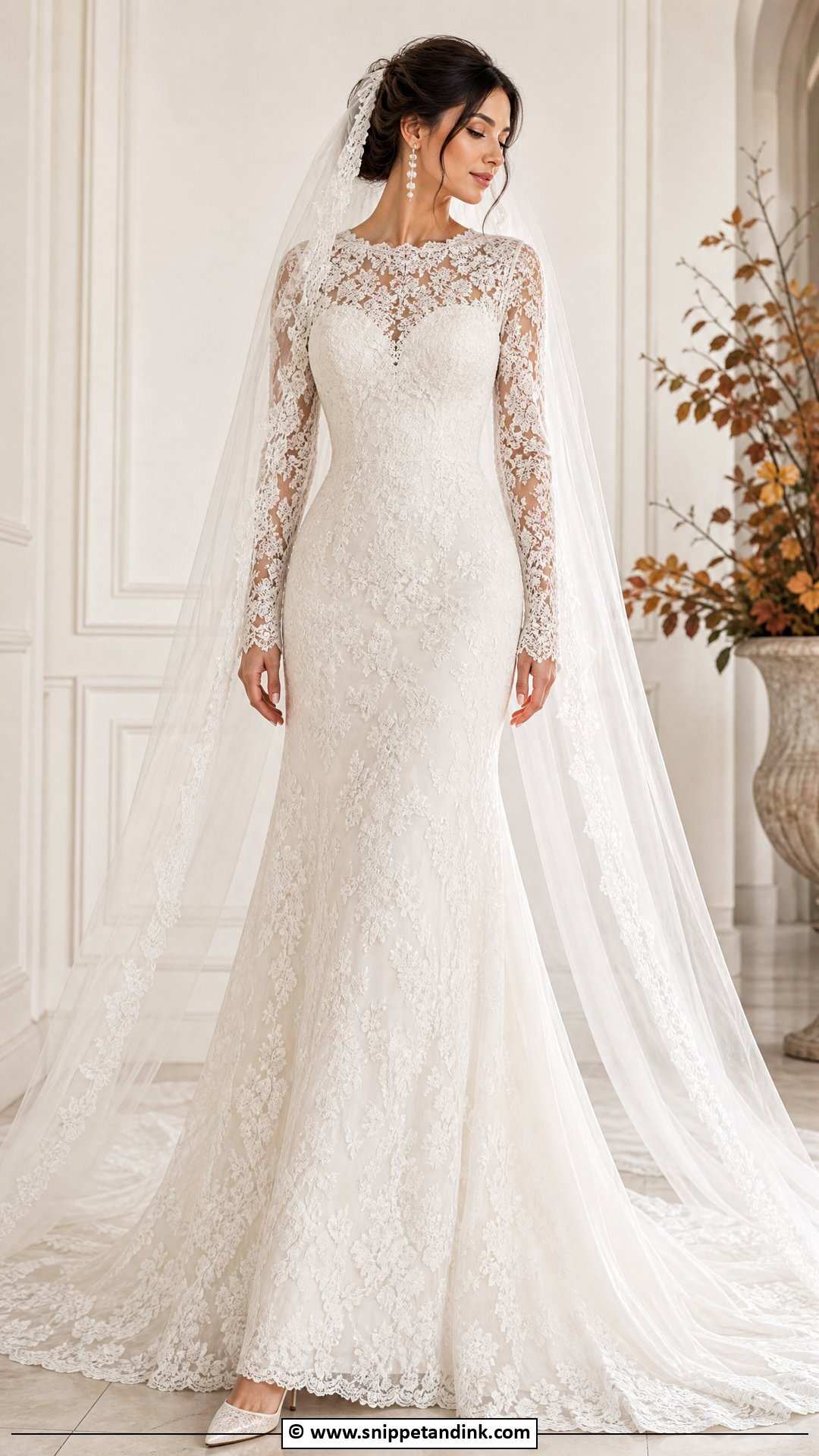
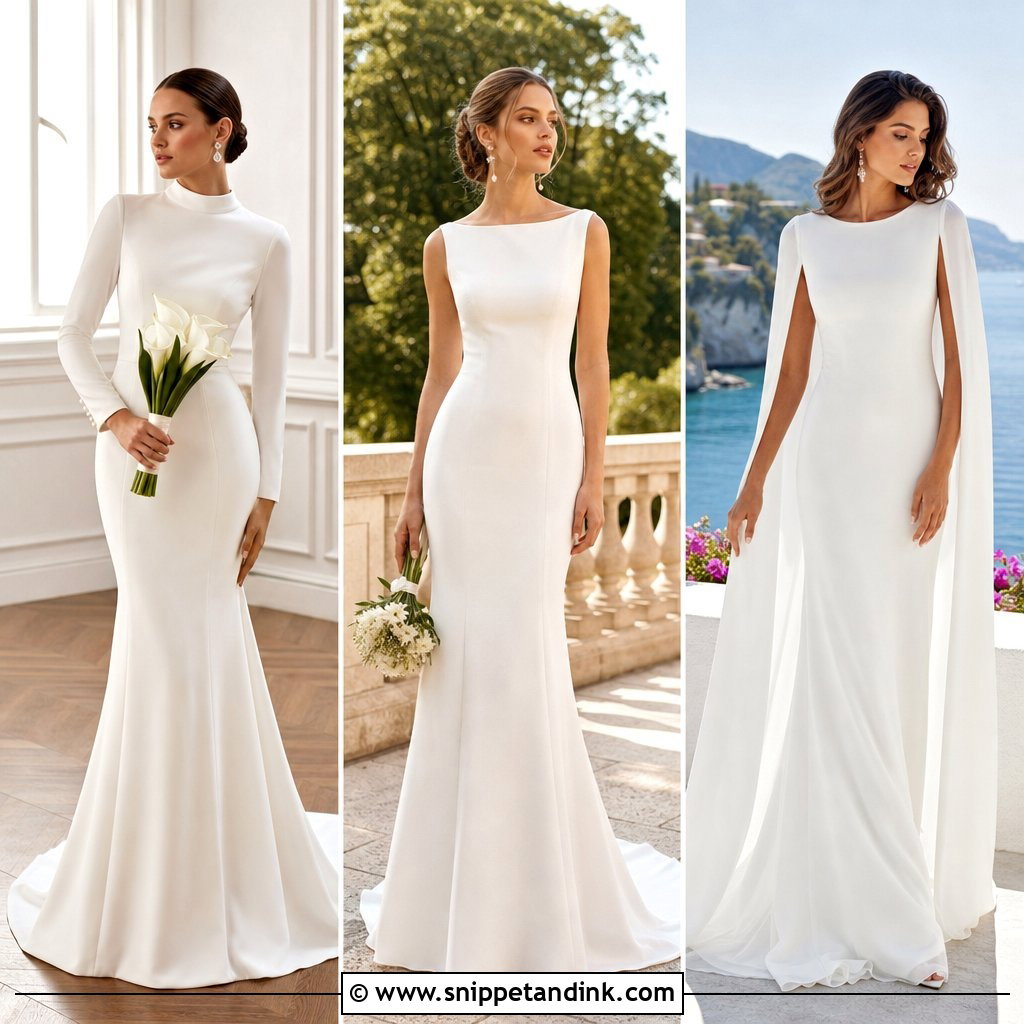
Long sleeves suit fall, winter and evening weddings. Sheer lace sleeves feel romantic; crepe or satin sleeves look cleaner. The thing I test is reach: I have the bride lift her arms as if holding a bouquet up or hugging her mother. If the bodice rises, the sleeve cap needs more room. Pearl drops, a cathedral veil and closed-toe heels make a full, regal outfit without much volume.
4. Off Shoulder Wedding Dress
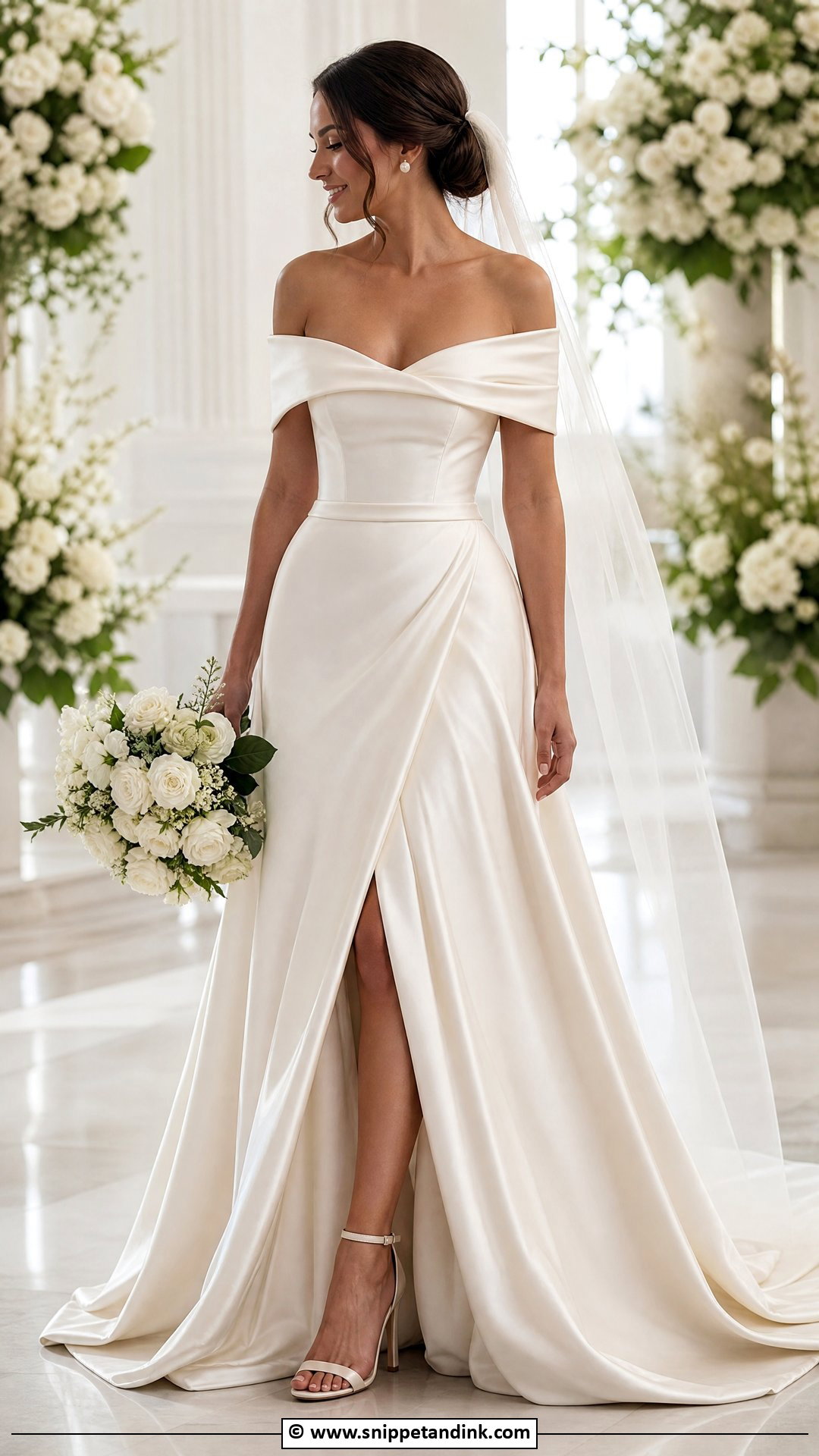
Off shoulder necklines show the collarbone while keeping a classic amount of coverage. The trade-off is arm movement: the band across the upper arm limits how high you can lift them, so throwing a bouquet or a big hug feels restricted. Some brides don’t mind; others hate it. Satin or crepe with a fitted waist and flowing skirt, a smooth updo and pearl studs are all it needs.
5. Strapless Ball Gown Wedding Dress
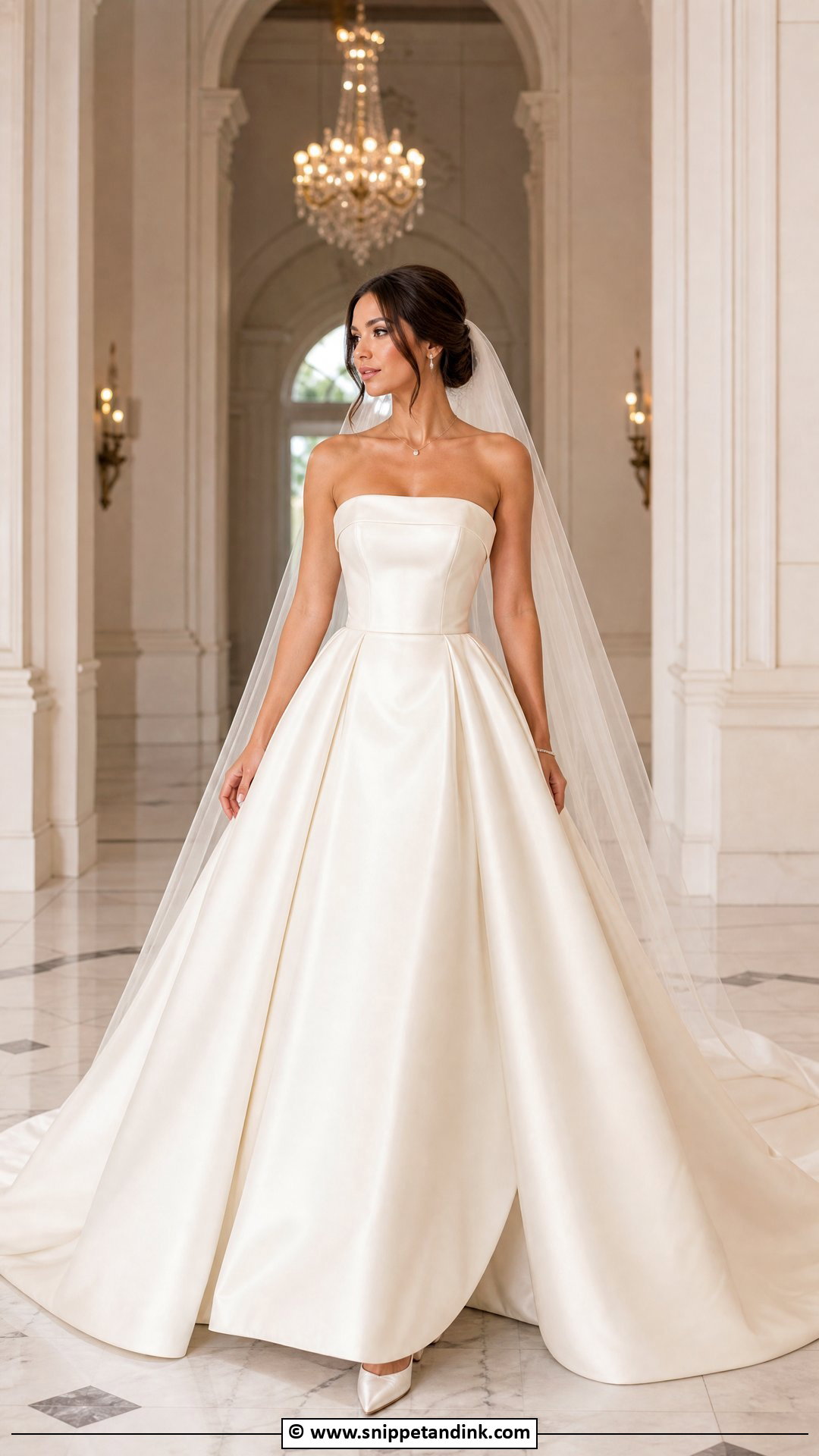
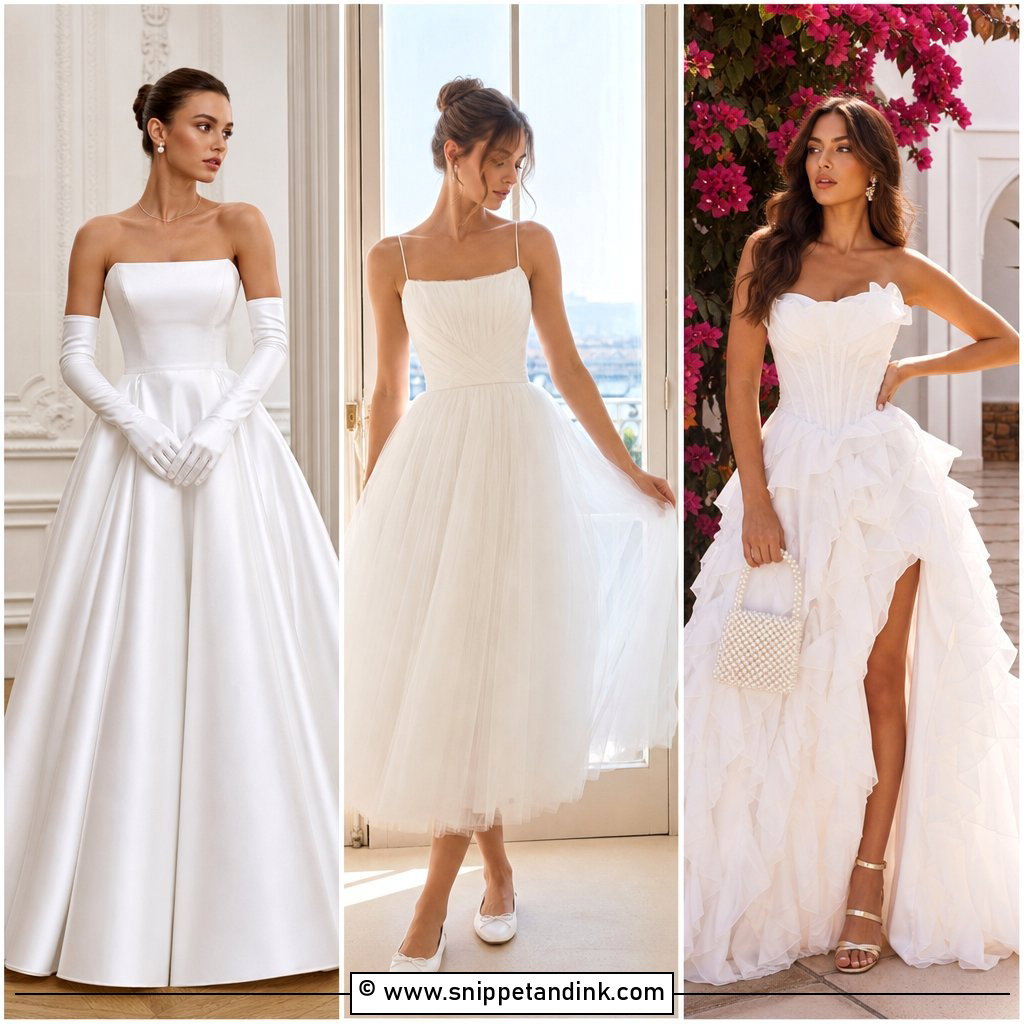
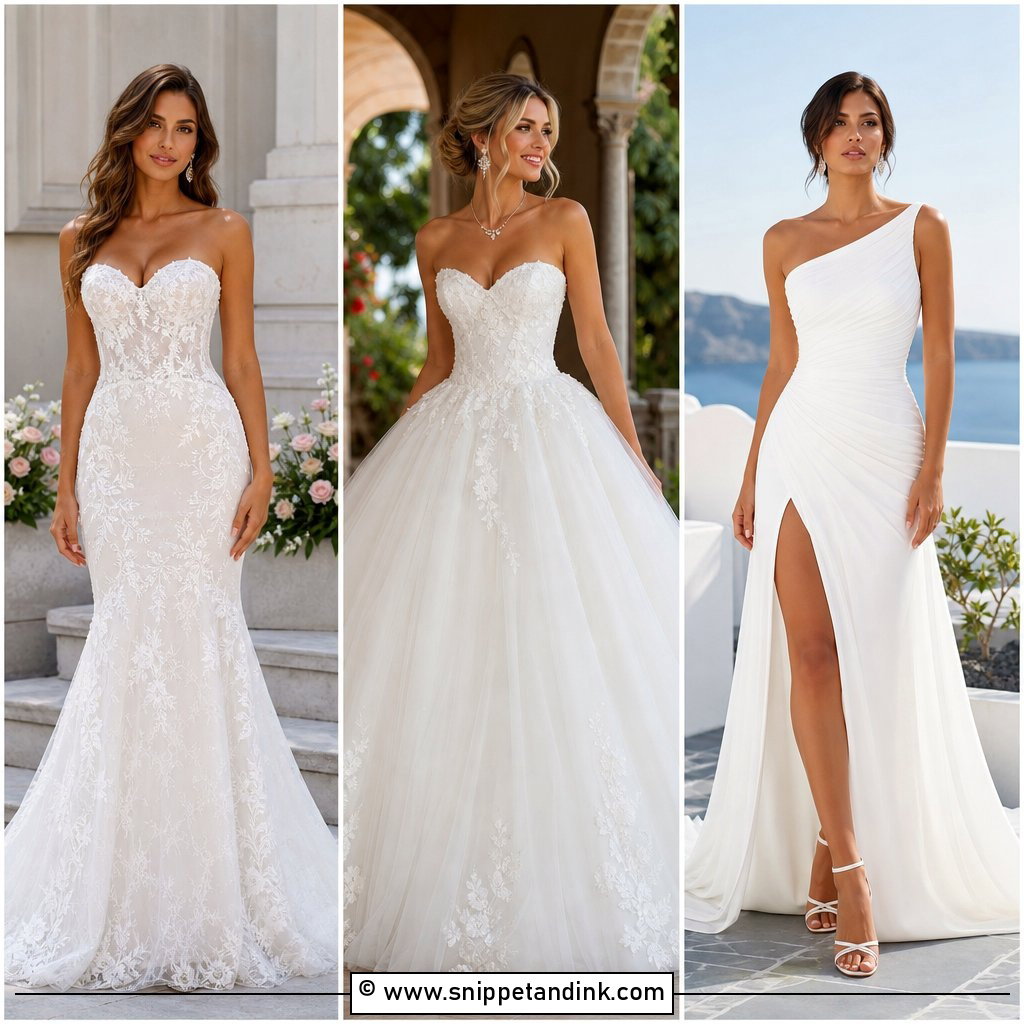
A strapless ball gown wedding dress makes an entrance before you say a word. Satin, mikado or organza hold the skirt’s shape without heaviness. Ball gowns are wide, so I ask brides to check the aisle width at their venue and the doorway of the car they’ll arrive in. A long veil, soft waves or an updo, and simple diamond or pearl jewelry keep focus on the silhouette.
6. Crepe Fit And Flare Wedding Dress
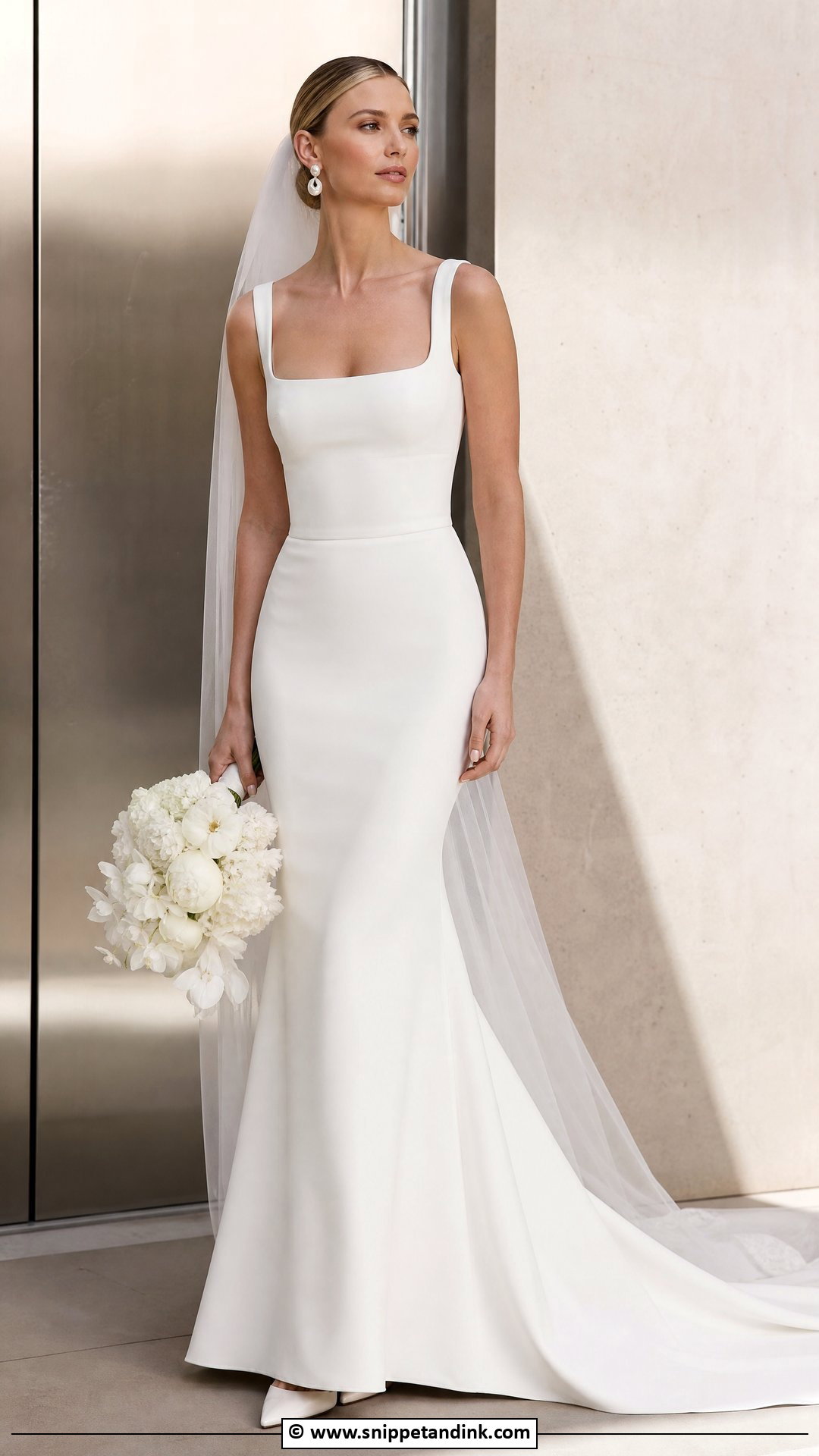
Crepe fit and flare is sleek and quiet. It follows the body without shine, so details like covered buttons, a square neckline or a soft train stand out. Crepe has a little stretch, which makes it more comfortable to sit in than many fitted fabrics. Sculptural earrings and a clean veil suit it. It looks right in galleries, city venues and modern hotels.
7. A Line Wedding Dress
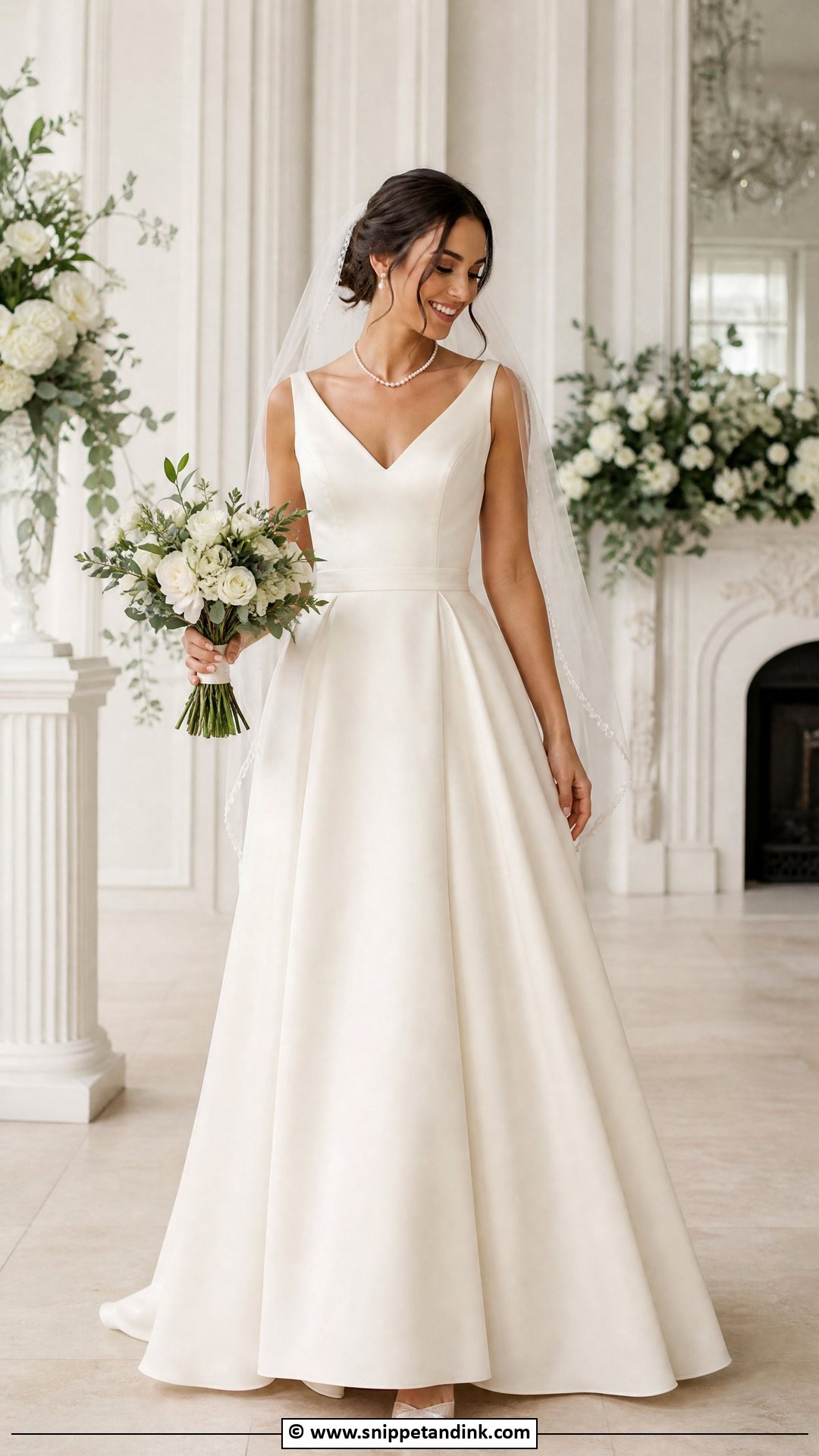
If a bride can’t settle on a shape, I put her in an A-line first. It defines the waist and then falls away, so it suits most bodies and lets you move. Satin looks polished, lace romantic, chiffon light. A fingertip veil and pearls finish it, and it works almost anywhere, from a lawn to a ballroom.
8. Square Neck Wedding Dress
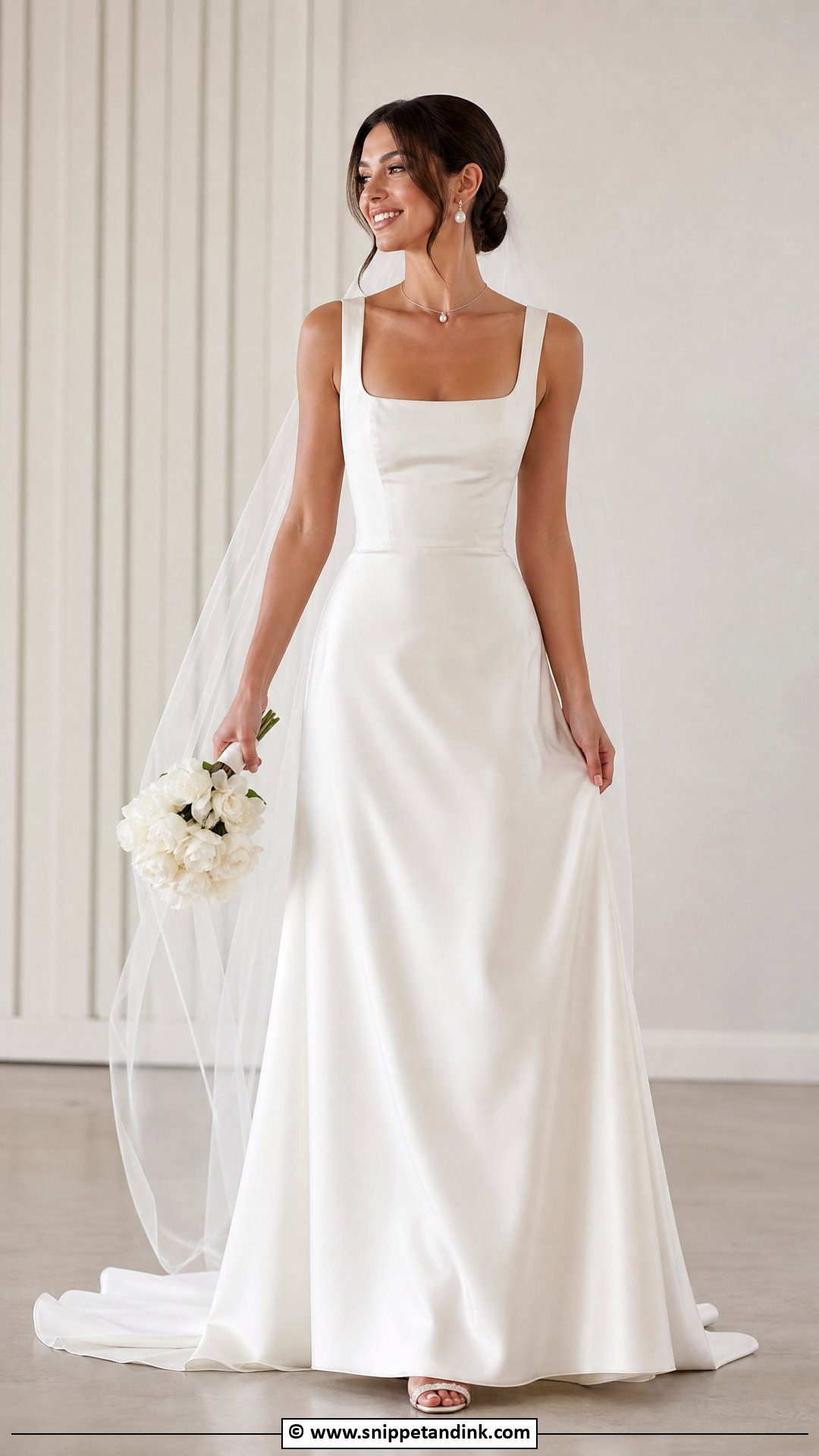
Square necks frame the face with a slightly sharper line than a sweetheart. Satin, crepe, lace or mikado all hold it. On a very minimal dress, the square leaves space for a fine necklace, which I’d skip on anything beaded. Watch strap width: narrow straps on a square neck can slide toward the shoulder edge, so I have them anchored to the bra loops inside.
9. High Neck Wedding Dress
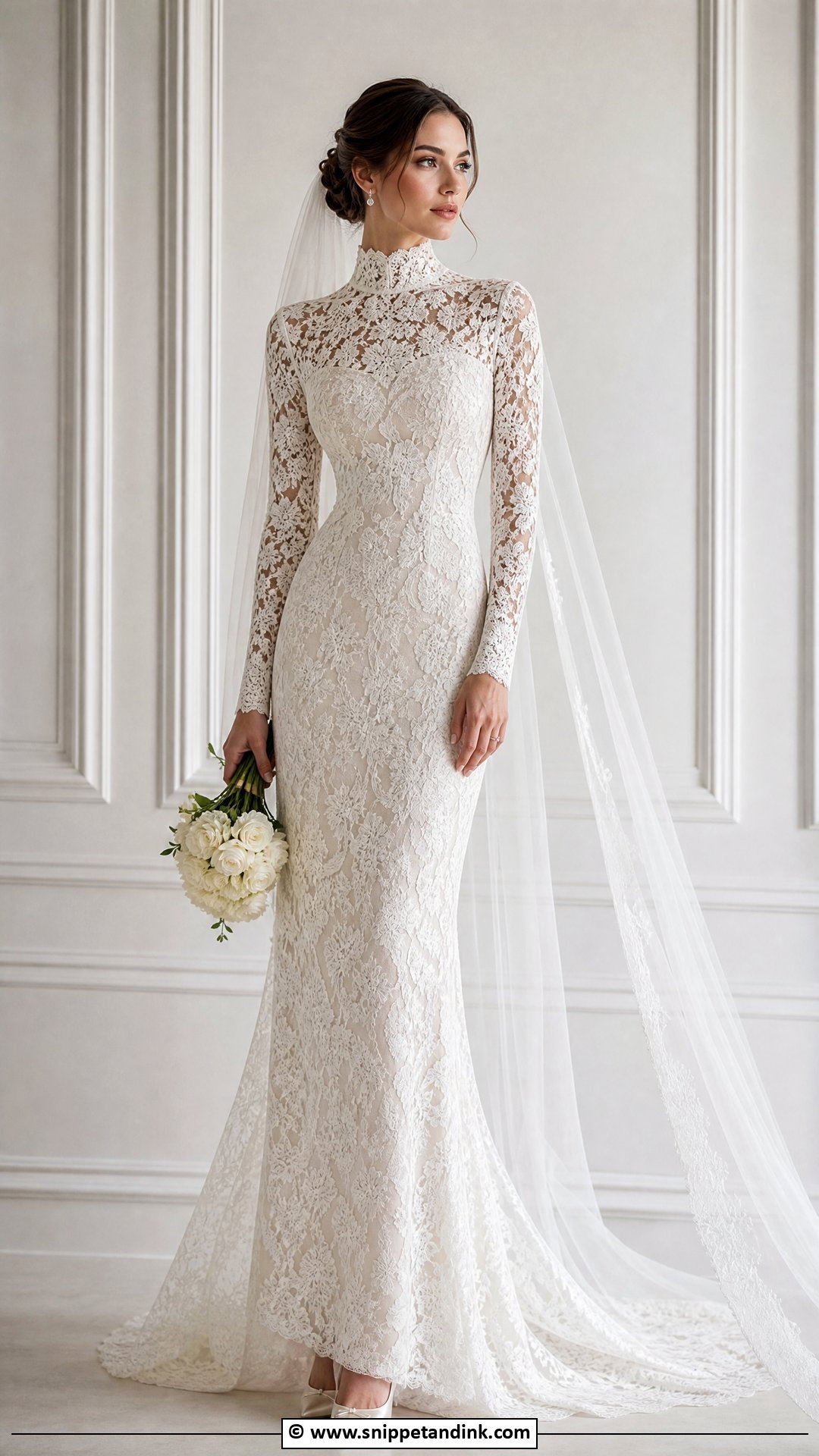
High necks feel composed and almost royal. Lace, satin or sheer embroidered fabric all suit it. A slim high-neck gown looks editorial; an A-line version softer. Place the veil low at the back of the head so it doesn’t sit on top of the neckline, and skip necklaces entirely. High necks get warm, so for summer I’d choose a sheer or lace yoke over solid satin.
10. Drop Waist Wedding Dress
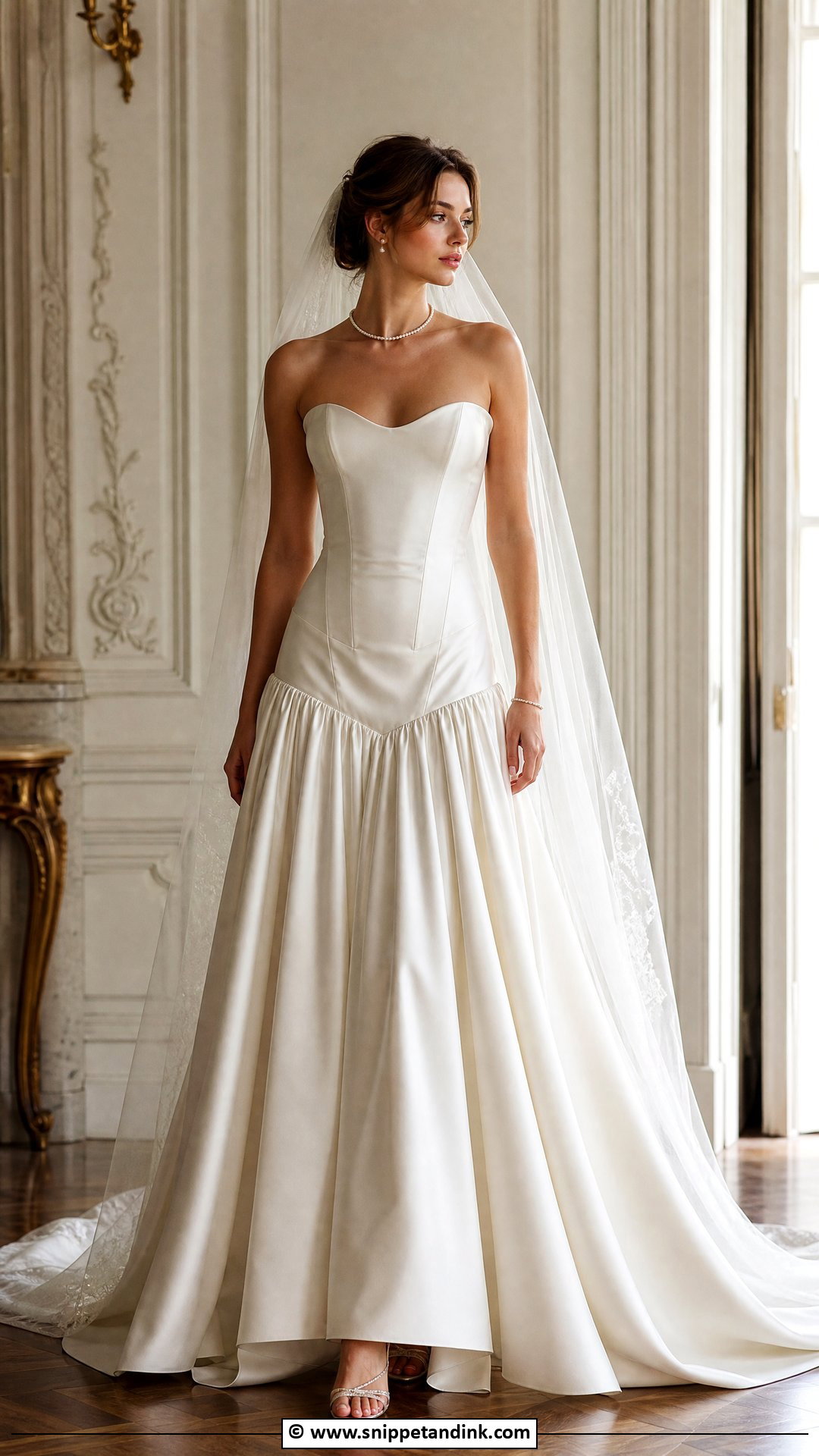
The drop waist has come back with a sculpted, longer bodice and a skirt starting at the hips. It looks best on brides with a longer torso. Satin, lace or tulle with restrained details keep it refined, and a skirt with gentle volume gives drama without a huge silhouette. Soft waves and a long veil balance the lengthened body line.
11. Corset Wedding Dress
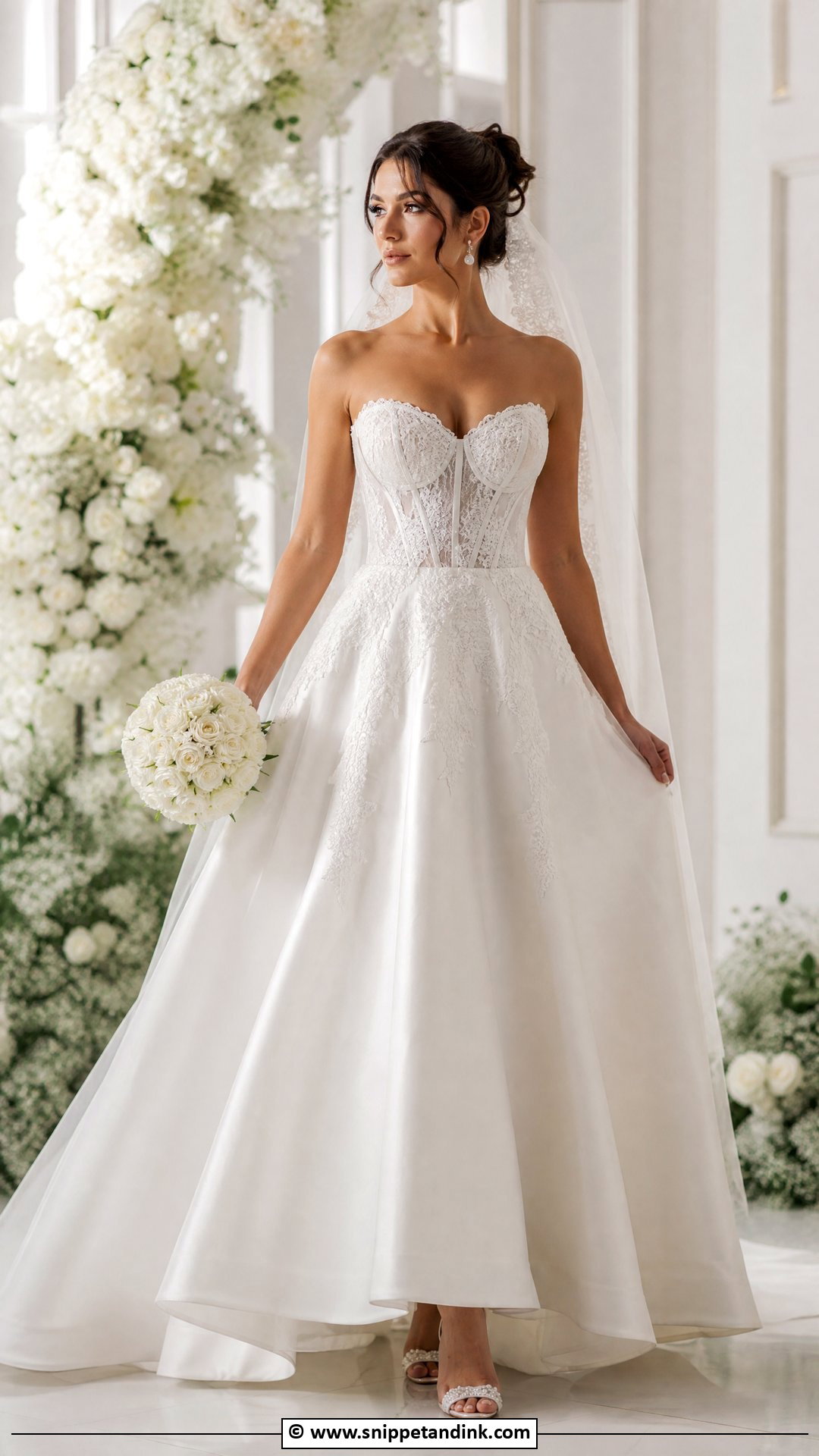
A corset wedding dress gives structure and support at the same time. Soft boning and smooth fabric keep it romantic rather than exposed. The fit should let you breathe and eat; I ask brides to sit down and take a deep breath at every fitting, because a corset that’s comfortable standing can bite at the ribs when seated. Pair it with an A-line skirt, lace overlay or satin ball gown.
12. Pearl Wedding Dress
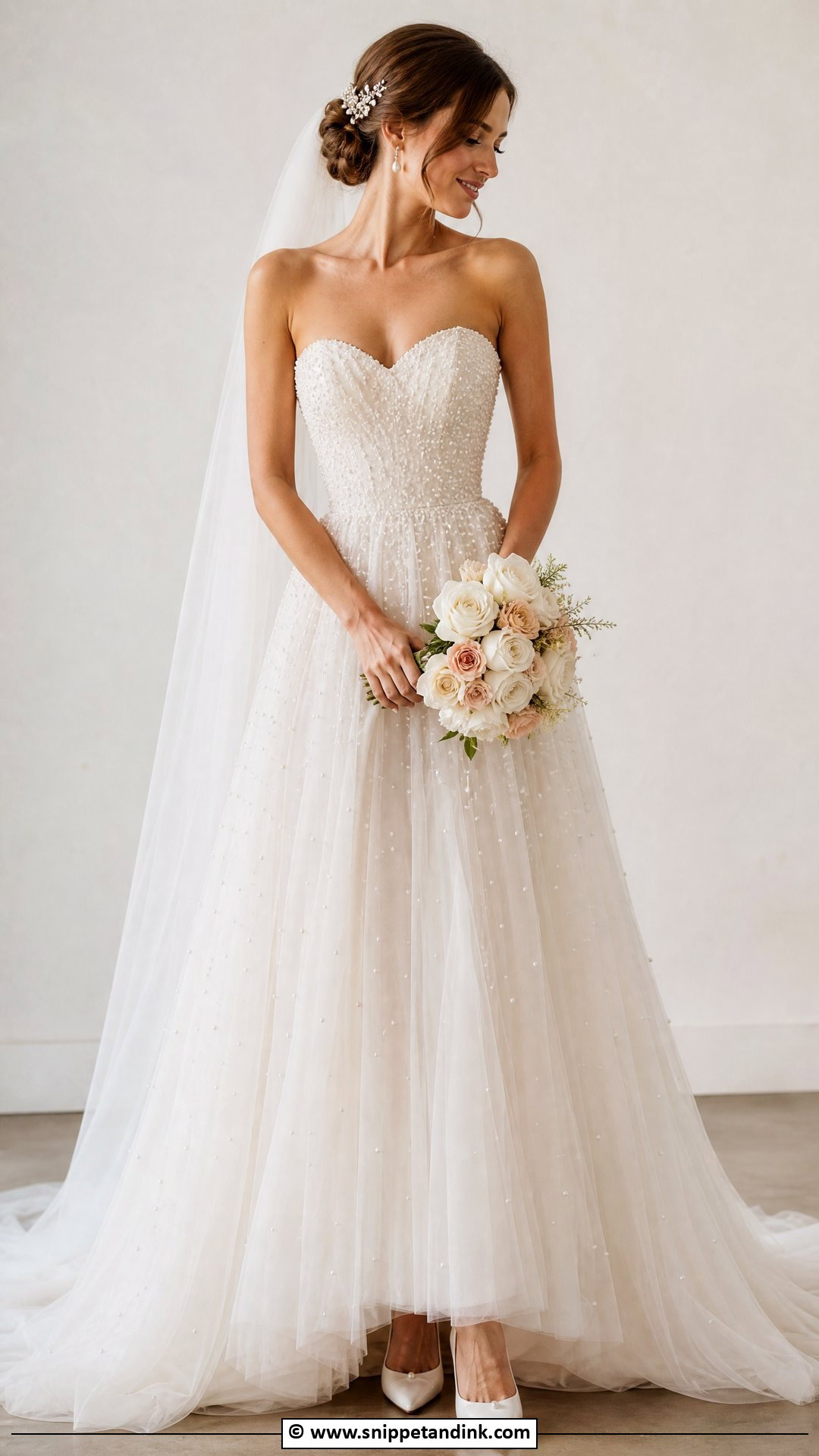
Pearls glow rather than sparkle, which reads soft in daylight. Scattered pearl beading on tulle, pearl-trimmed straps or a plain gown with pearl accessories all work. Choose where the pearls go: dress or accessories, rarely both at full strength. A pearl comb in the hair and pearl earrings are enough if the dress has pearls already. Bright venues with natural light suit it most.
13. Beaded Wedding Dress
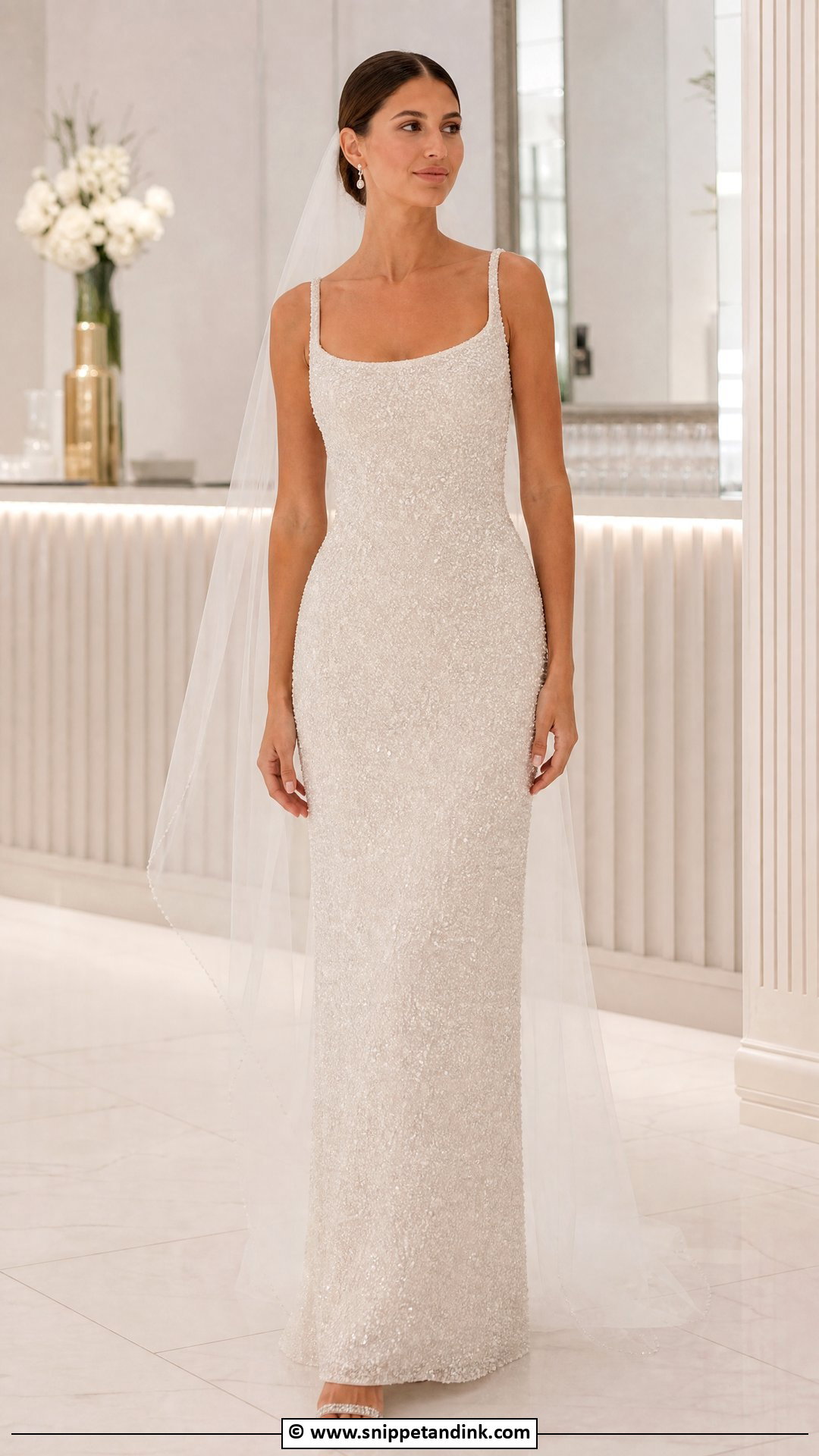
Fine beadwork gives sparkle without looking like a costume. A beaded sheath, fitted A-line or lightly embellished long sleeve gown all qualify. Beading is easy to snag on lace veils and hair accessories, so I check that the veil edge won’t catch on the shoulders. Keep hair smooth and earrings simple. Evening and black-tie receptions are where it shines.
14. Floral Embroidered Wedding Dress
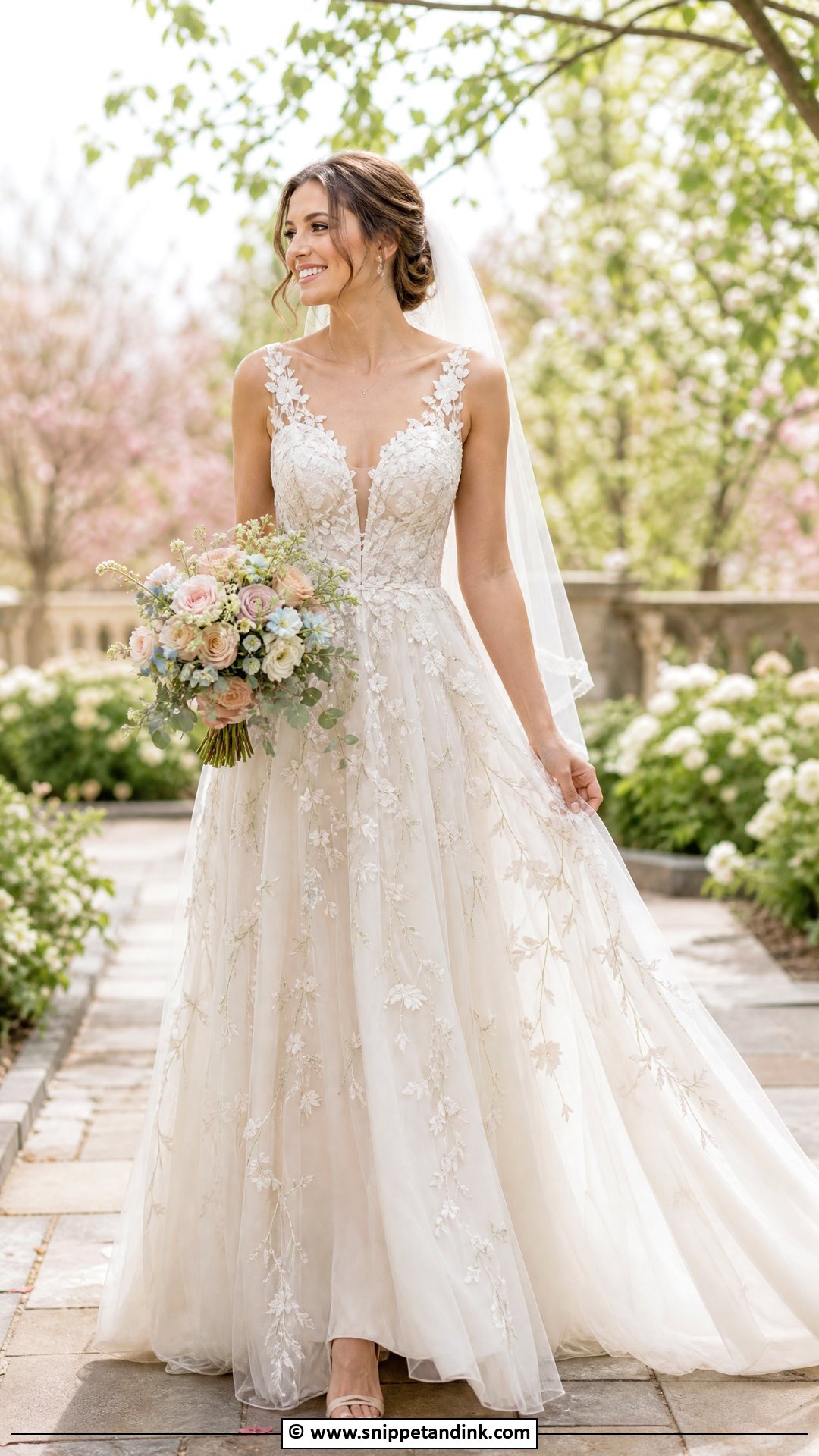
Floral embroidery adds personality: ivory thread, soft blush or delicate 3D appliqués on a clean tulle, organza or satin base. Embroidery is heavier than it looks, and on a sheer skirt it can make the hem drop unevenly, so the gown needs a sturdy underlayer. Keep the bouquet loose and soft so the flowers on the dress aren’t competing with real ones. Gardens and spring ceremonies suit it.

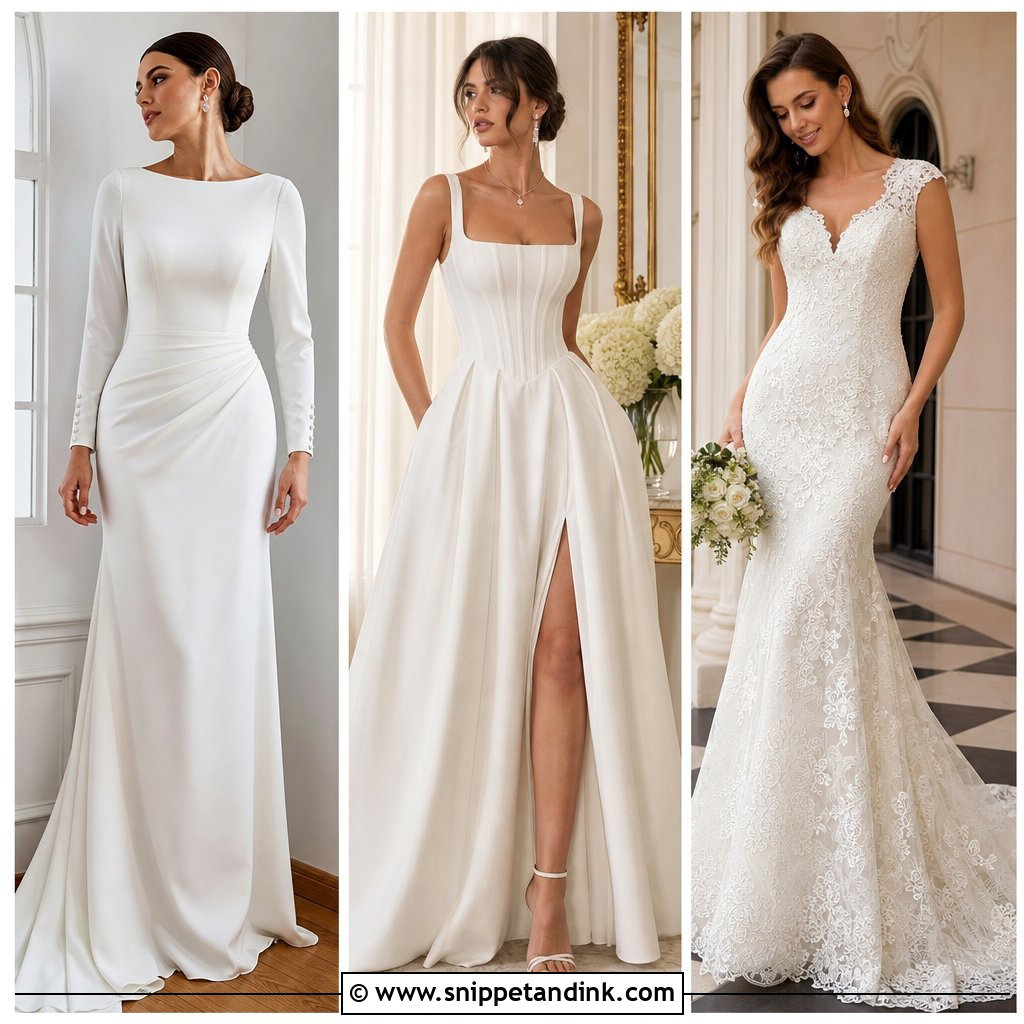
15. Minimalist Wedding Dress
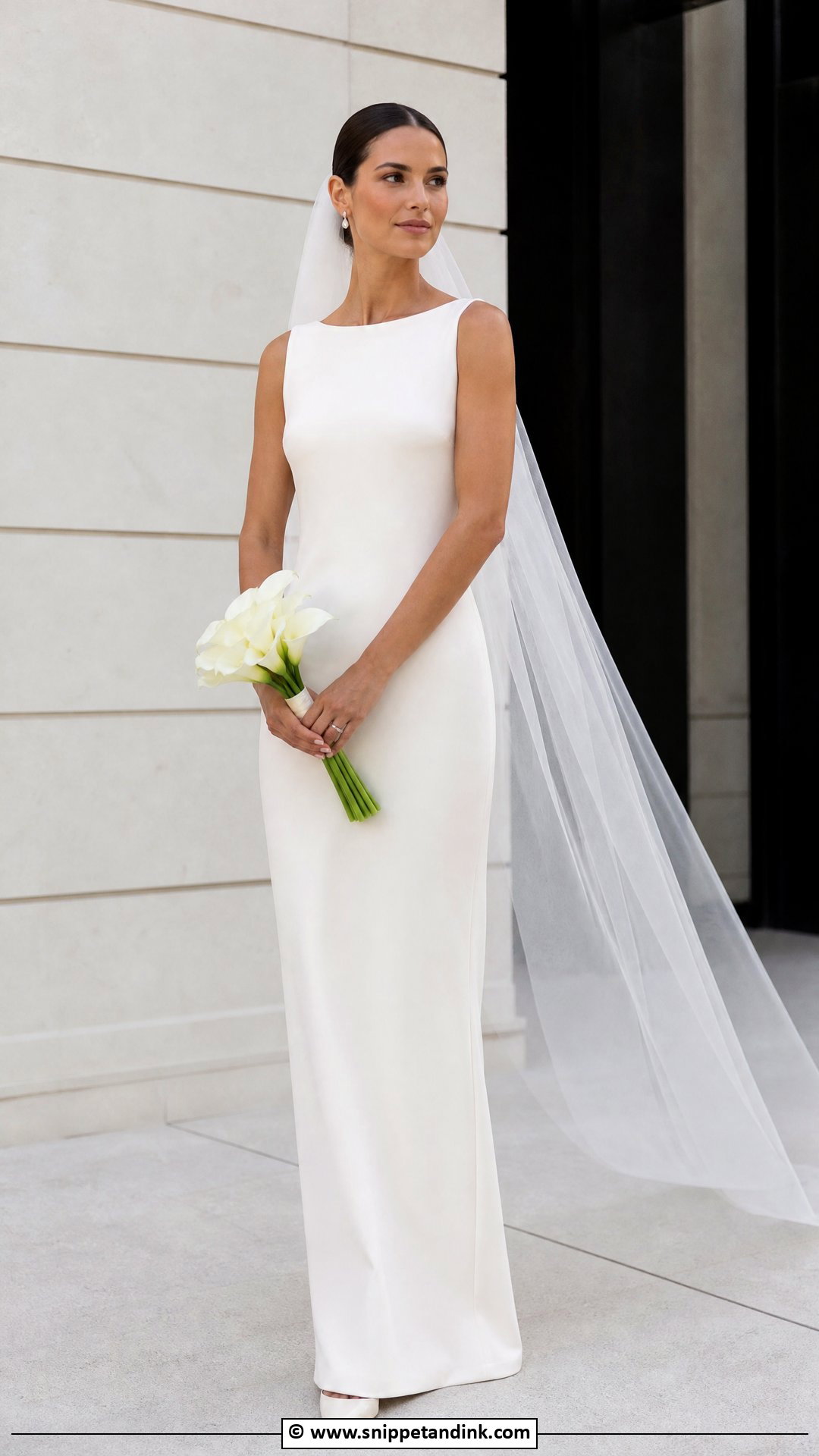
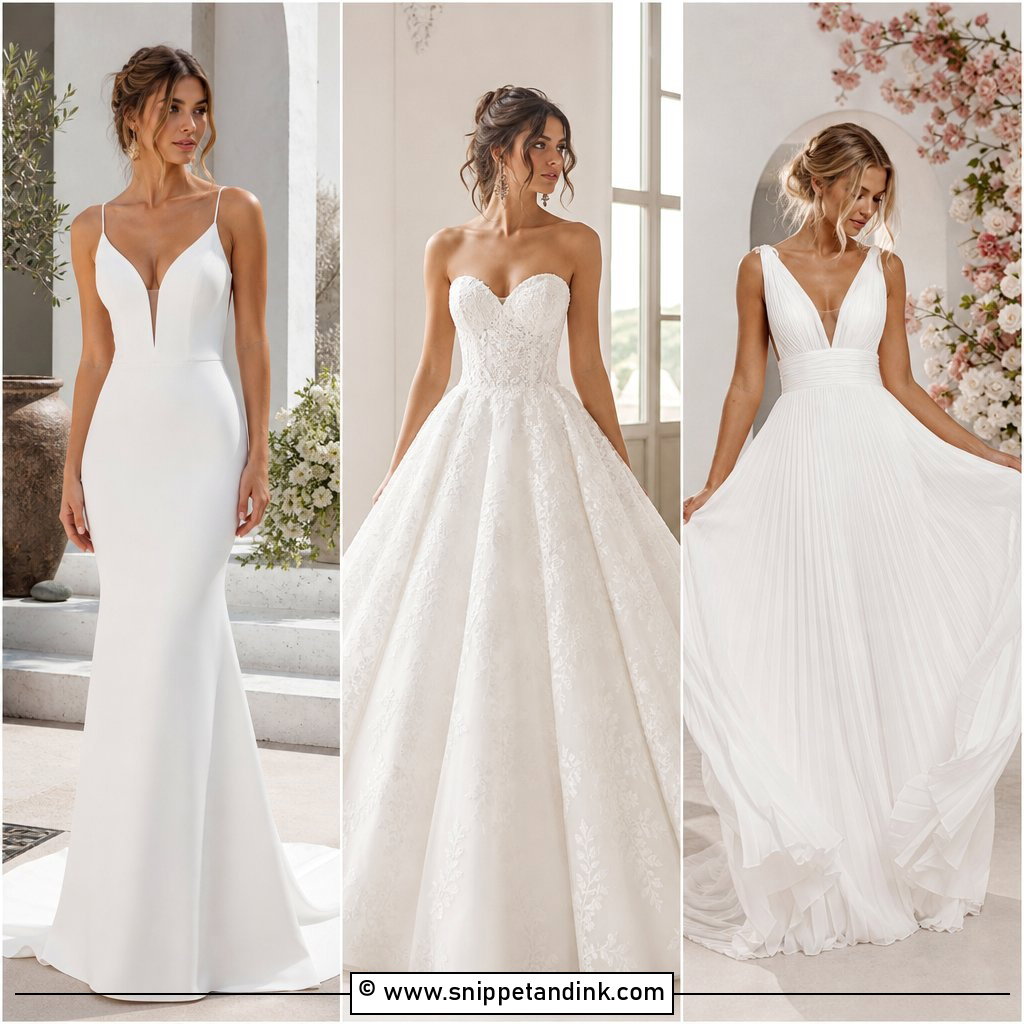
Minimalist dresses look luxurious only when the fit is exact, because there’s nothing to hide behind. A plain crepe column, satin slip or structured A-line can all be quietly expensive. I spend more fitting time on these than on embellished gowns: a pull line at the hip or a gap at the back of the neck is the first thing you’ll see in photos. Sleek hair and small earrings complete it.
16. Silk Slip Wedding Dress
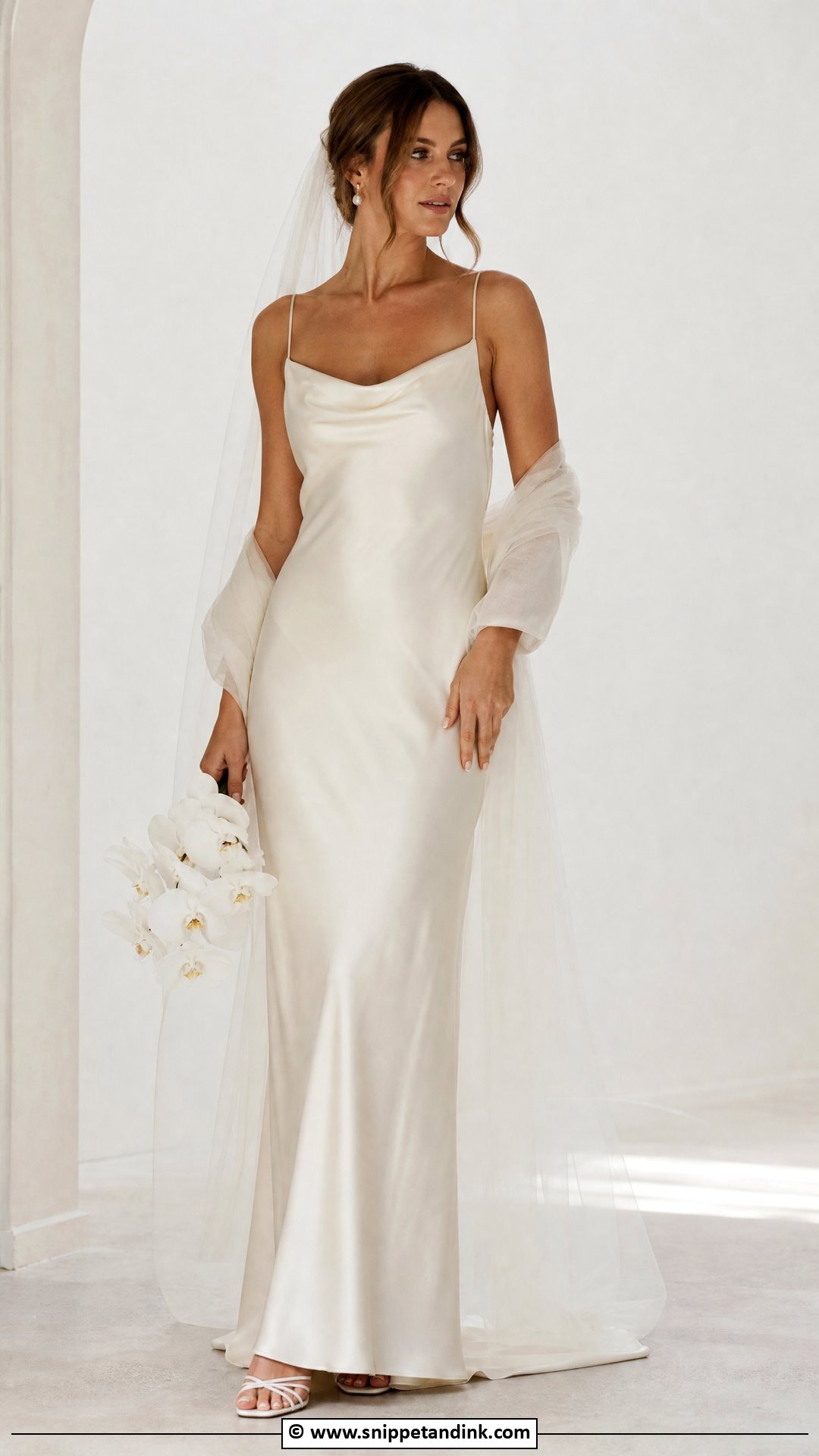
Silk slips move softly and look relaxed. A bias cut, a cowl neckline or delicate straps keep it timeless. Silk shows perspiration and water marks, so for hot destination weddings I’d suggest a silk-blend satin that’s more forgiving. Strappy heels, pearl earrings and a light wrap for the evening are enough. Fabric quality and fit decide everything here.
17. Tea Length Wedding Dress
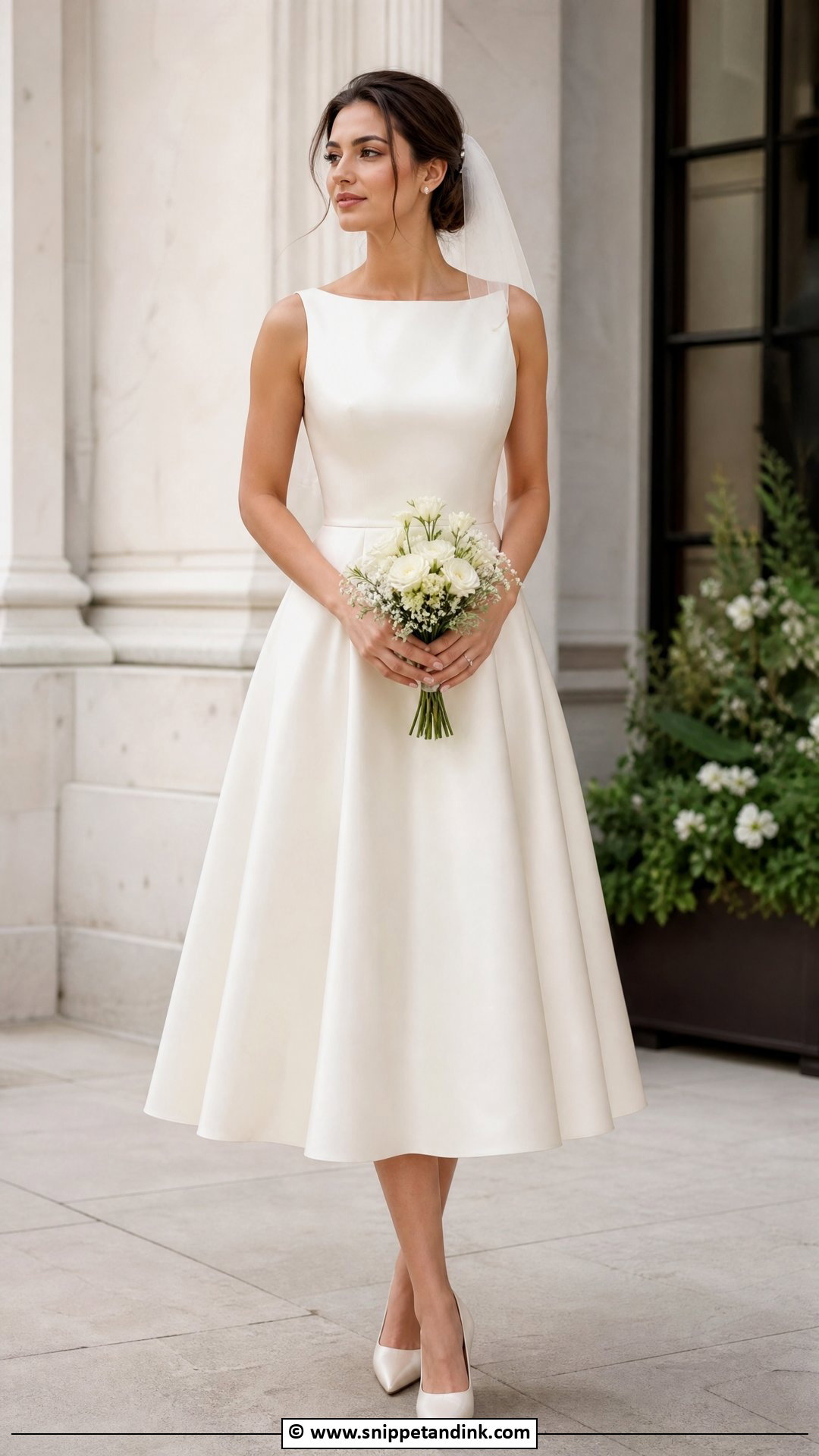
Tea length falls between knee and ankle, shows your shoes and keeps the hem out of grass and puddles. Satin, lace or structured tulle look polished. I usually suggest brides pick their shoes before the hem is set, because tea length makes the shoe part of the outfit. A short veil and small bouquet complete the vintage feel.
18. Bridal Mini Dress
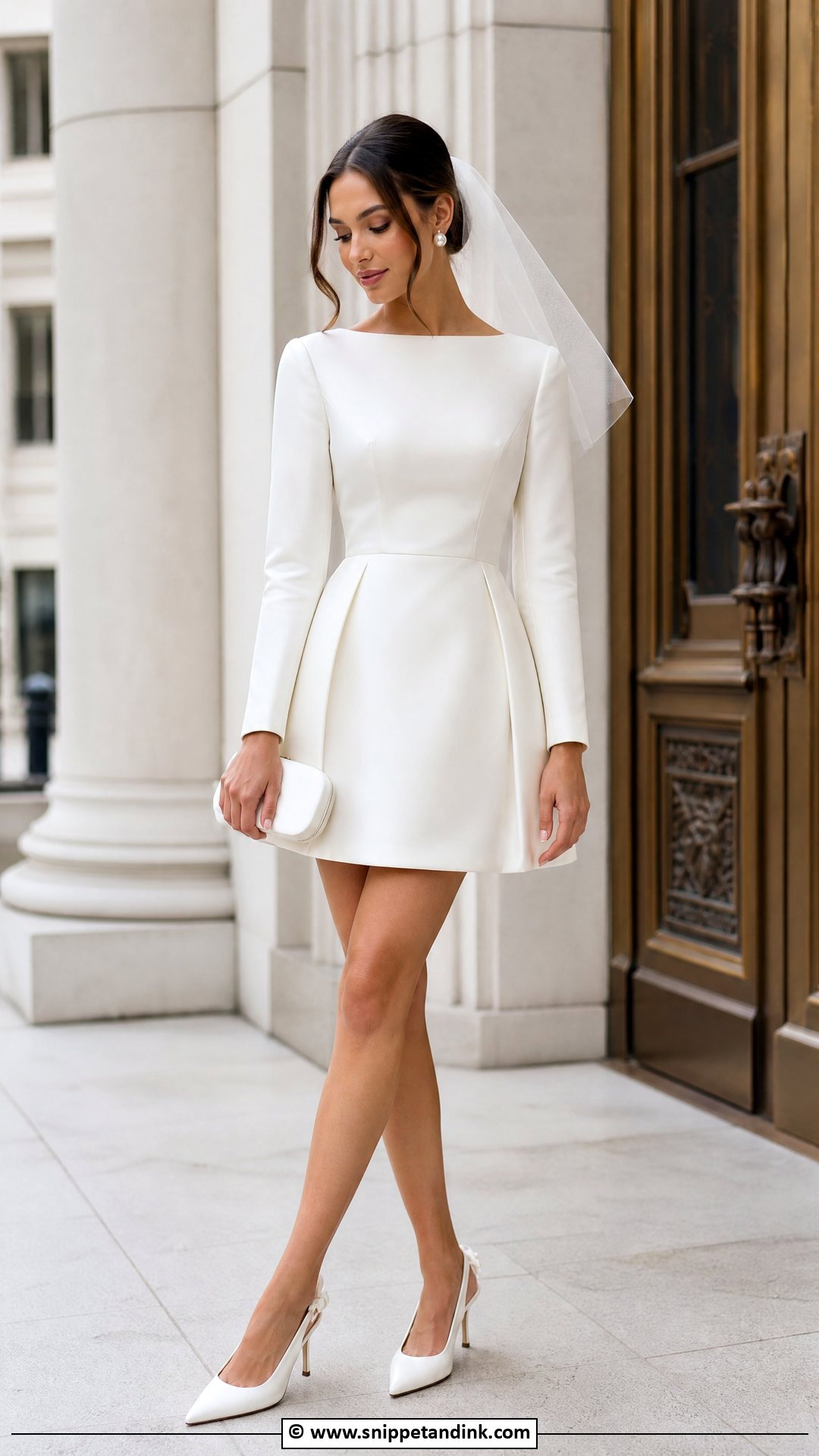
A mini can look entirely bridal if the fabric and tailoring are serious. Structured satin, crepe or lace with a clean neckline works; long sleeves, a high neck or a bow add polish. Check how high it rides when you sit, because minis creep up. Slingbacks, pearl earrings and a short veil suit courthouse weddings, reception changes and elopements.
19. Wedding Dress With Bow
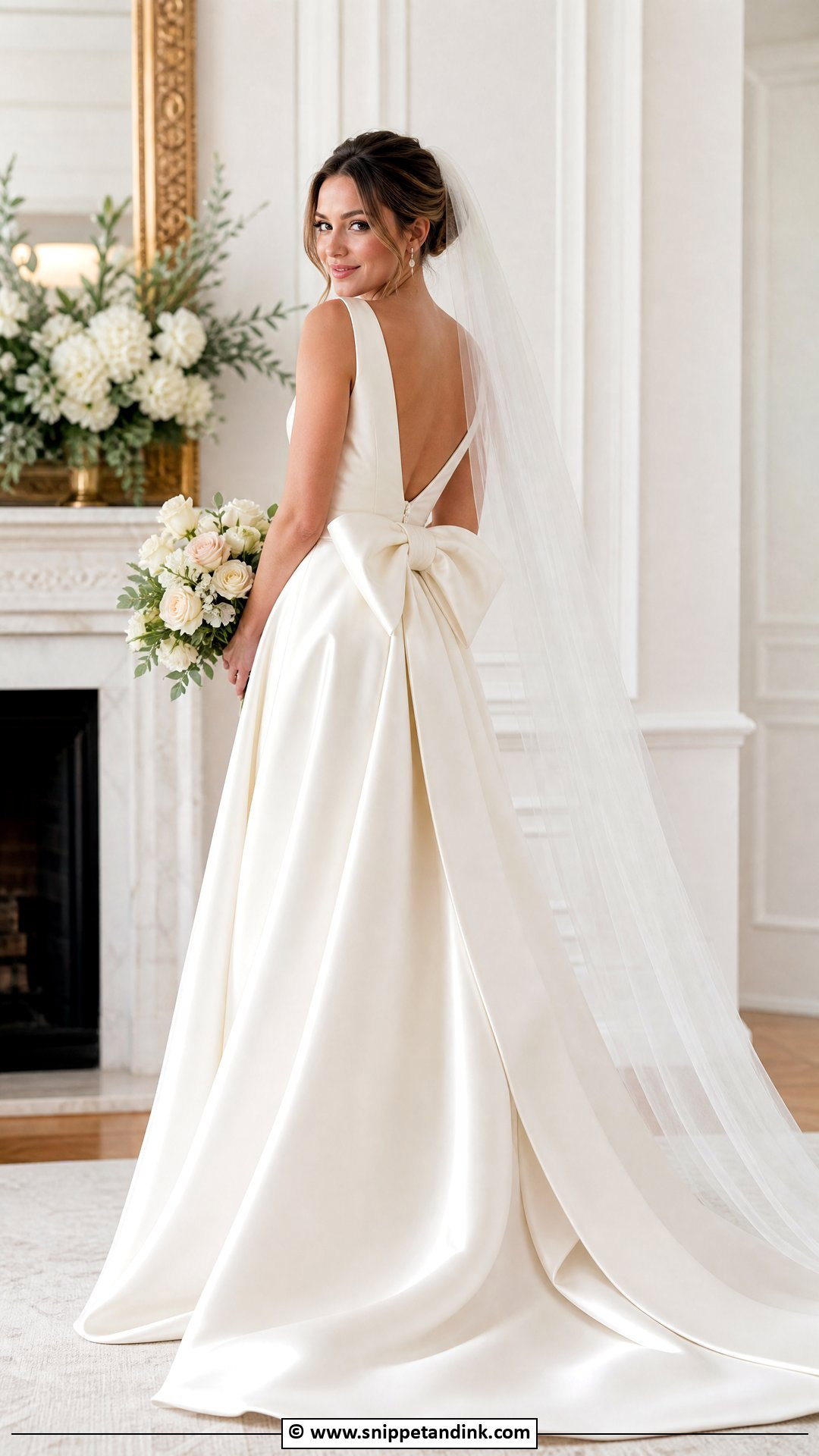
A bow can tip from charming to childish depending on scale and placement. Back bows read classic; shoulder bows modern; waist bows sweet. I prefer bows in crisp satin, mikado or organza that hold their loops, since soft bows flop by evening. Keep everything else smooth so the bow remains the single feature.


20. Wedding Dress With Detachable Train
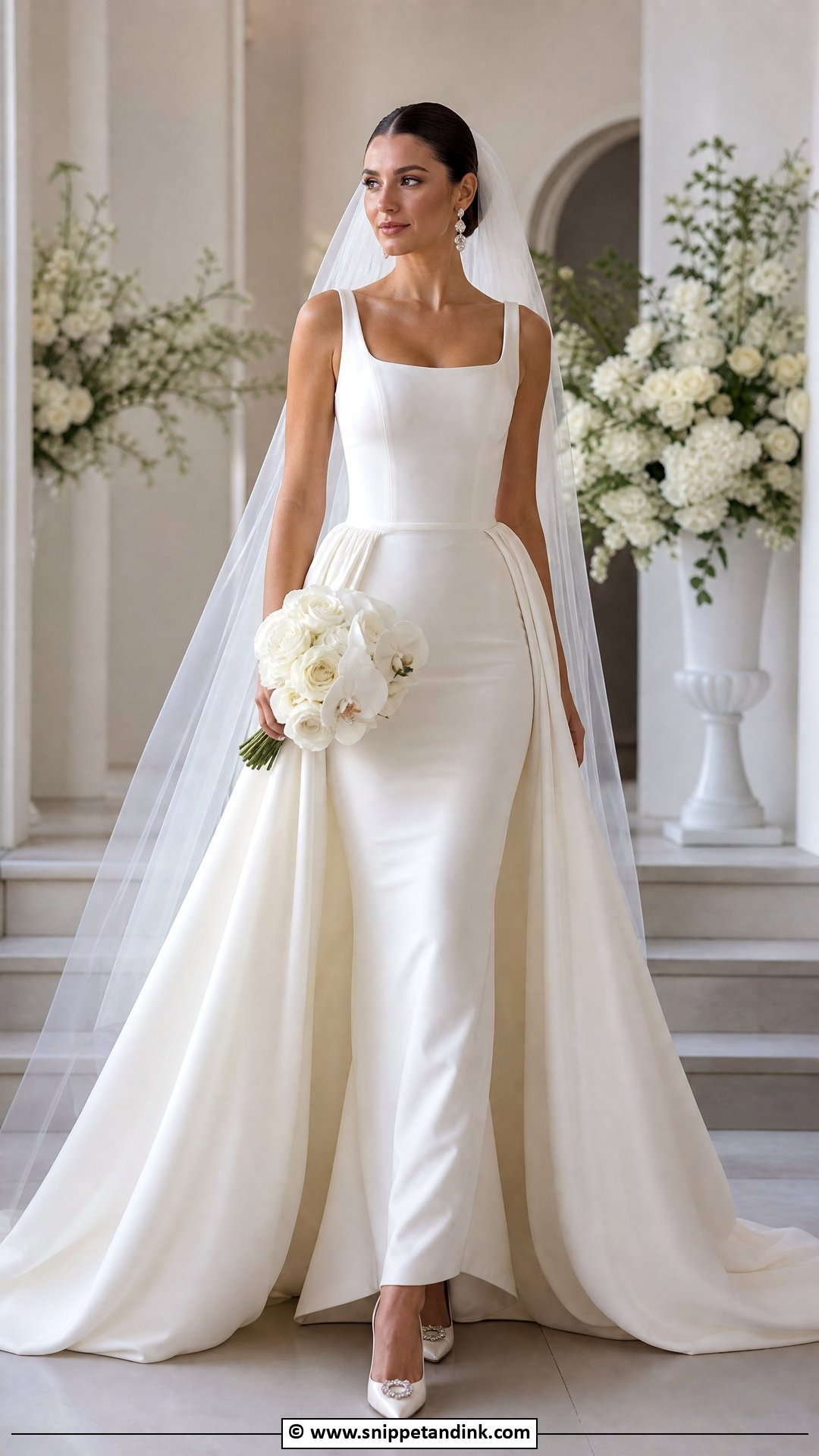
A detachable train gives you the entrance and the dance floor. A fitted gown with a removable train or overskirt looks clean once the extra layer comes off. The attachment matters: hidden hooks or snaps along the waist should be tested at fittings, and whoever helps you on the day needs to practice. Match fabric exactly so the piece reads as part of the gown.
21. Wedding Dress With Cape
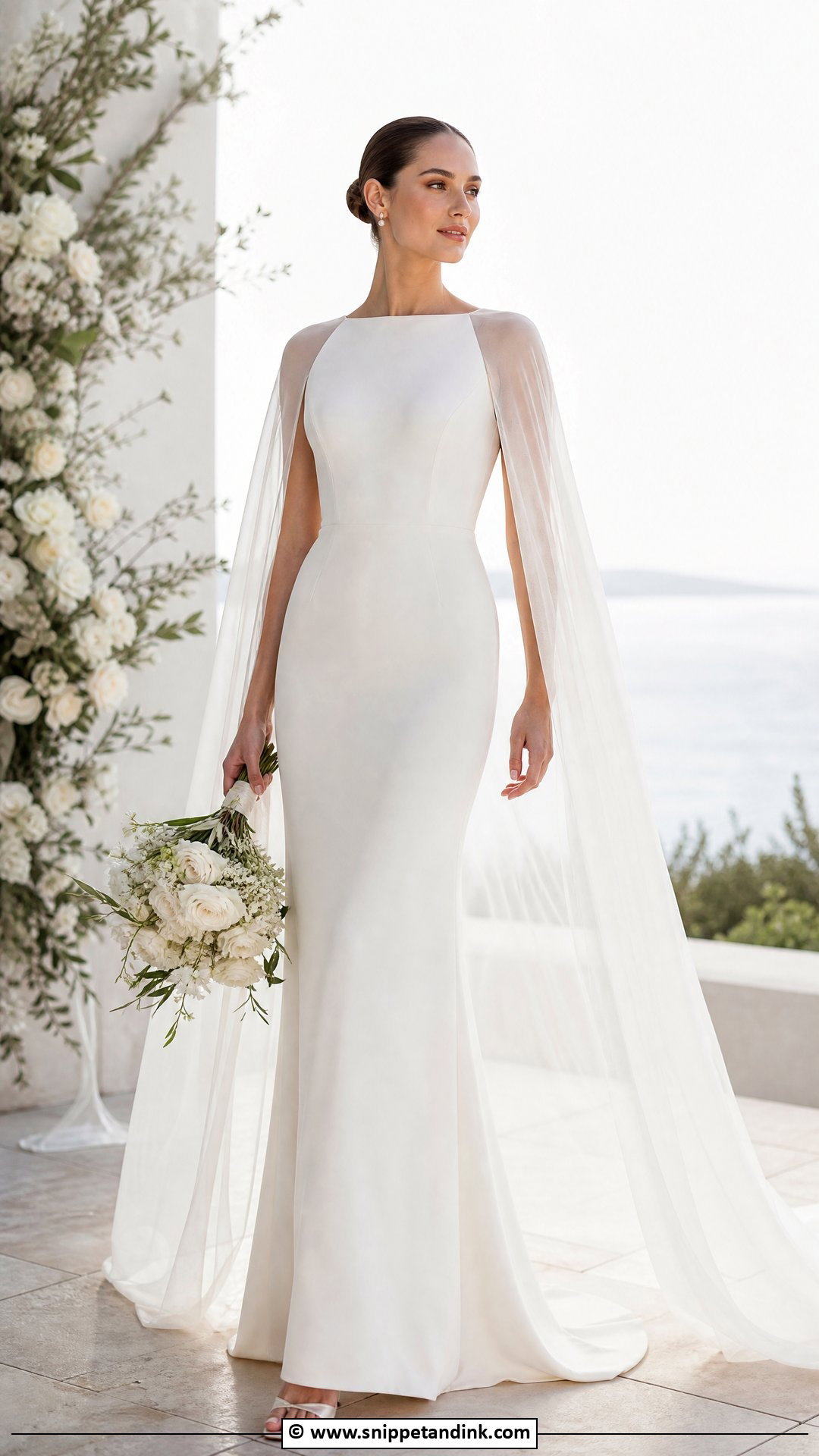
A wedding dress with a cape can stand in for a veil and still give movement. Sheer tulle, a lace capelet or flowing satin all work over a column, fitted crepe or clean satin gown. Capes are lovely in walking shots and processionals, though I attach them with hidden snaps at the shoulder so they don’t slide. Small earrings and sleek hair suit it.
22. Wedding Dress With Gloves
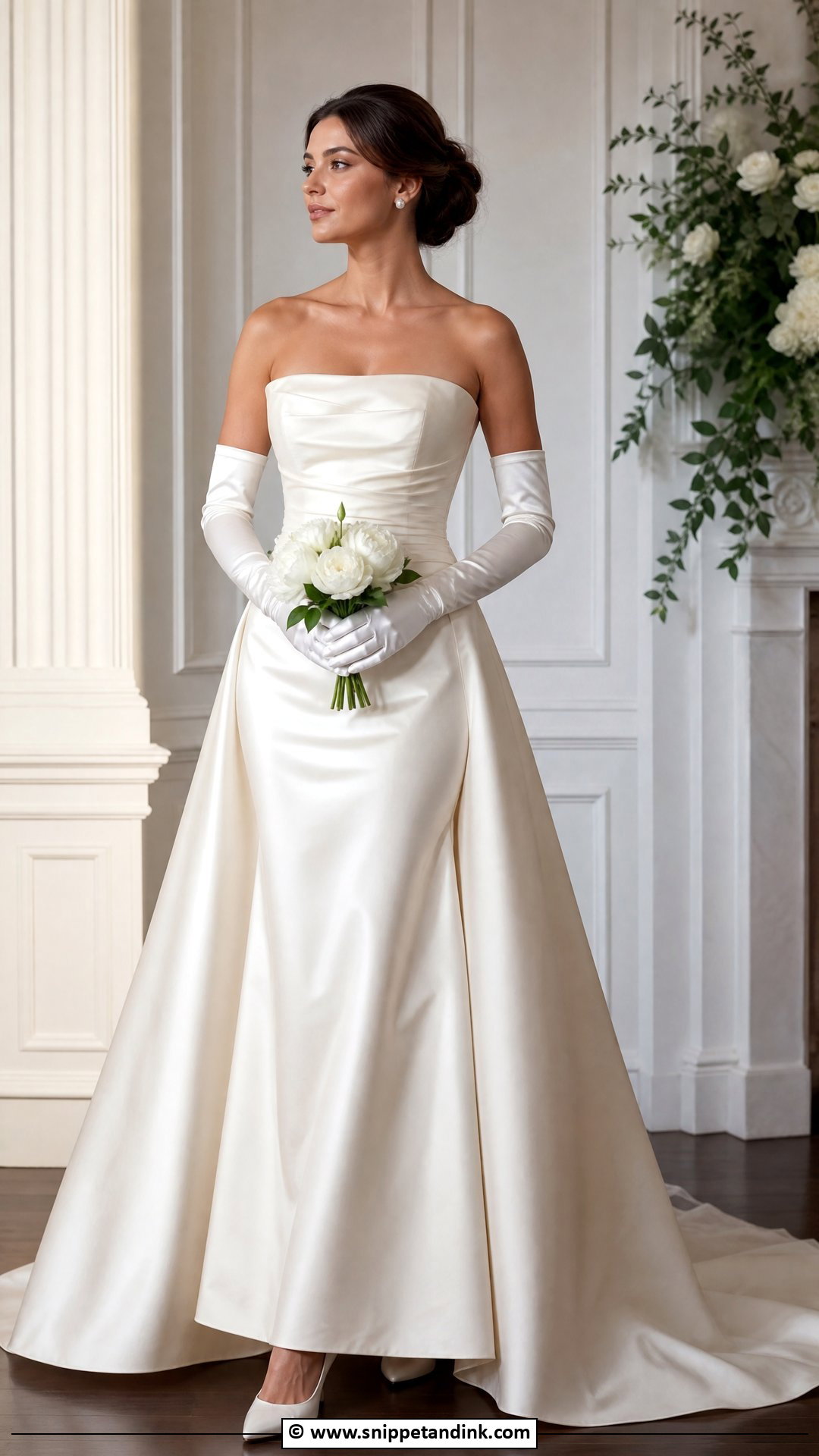
A wedding dress with gloves looks formal and polished. Opera gloves suit strapless gowns; short gloves suit tea length and courthouse dresses. Ring exchange is the practical issue, so I suggest gloves with a small slit at the ring finger or gloves you can slip off quickly. Satin, silk or sheer gloves should match the dress fabric.
23. Wedding Dress With Veil
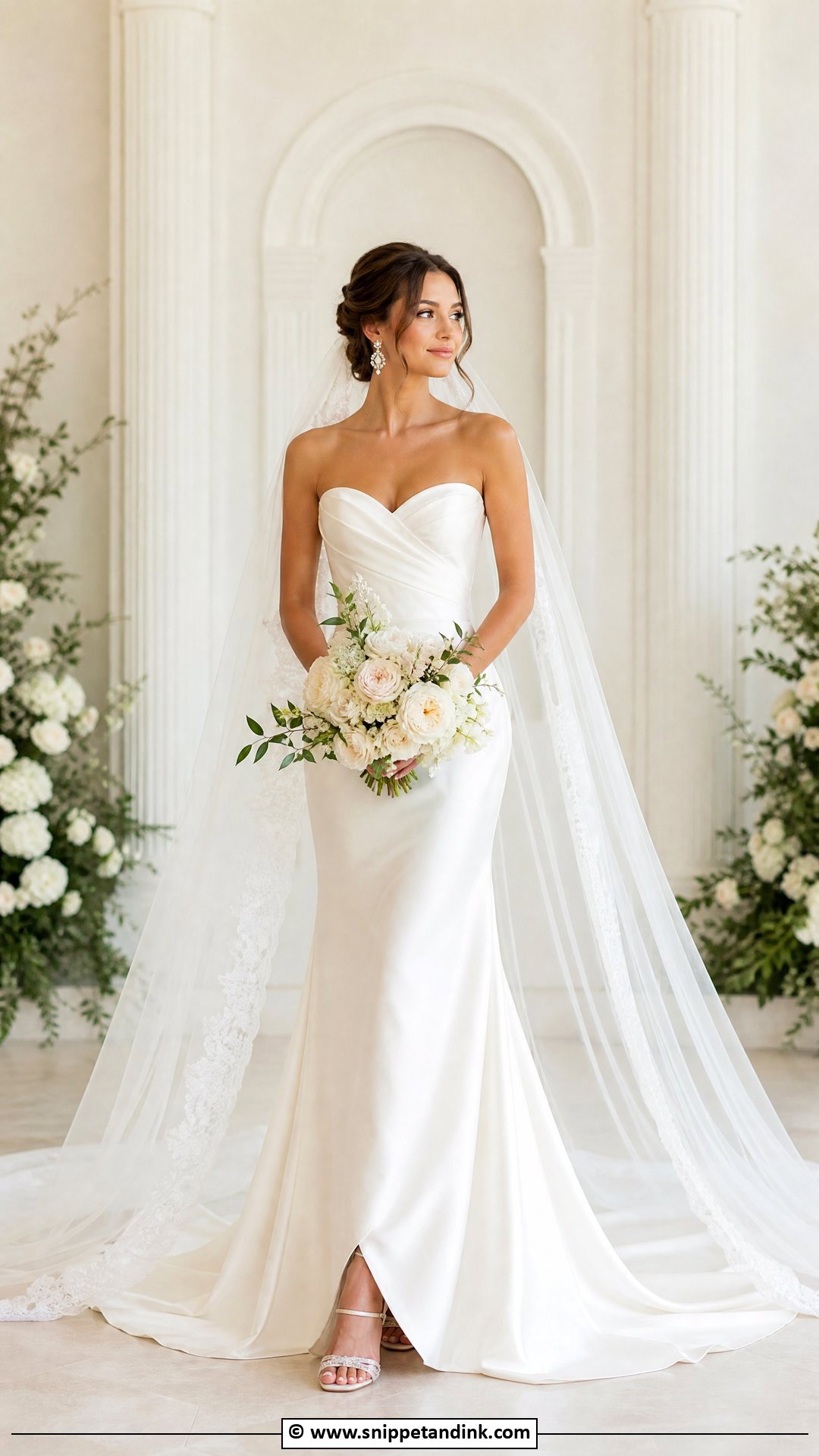
The veil changes a dress more than any other accessory. Cathedral length is grand, fingertip is classic, a short veil is charming. Match it to the gown rather than competing: plain veils on lace, trimmed veils on plain satin. I always bring two lengths to a final fitting so the bride can see both from behind. A veil comb set with the right grip stops it pulling the hair down by evening.
24. Wedding Dress With Overskirt
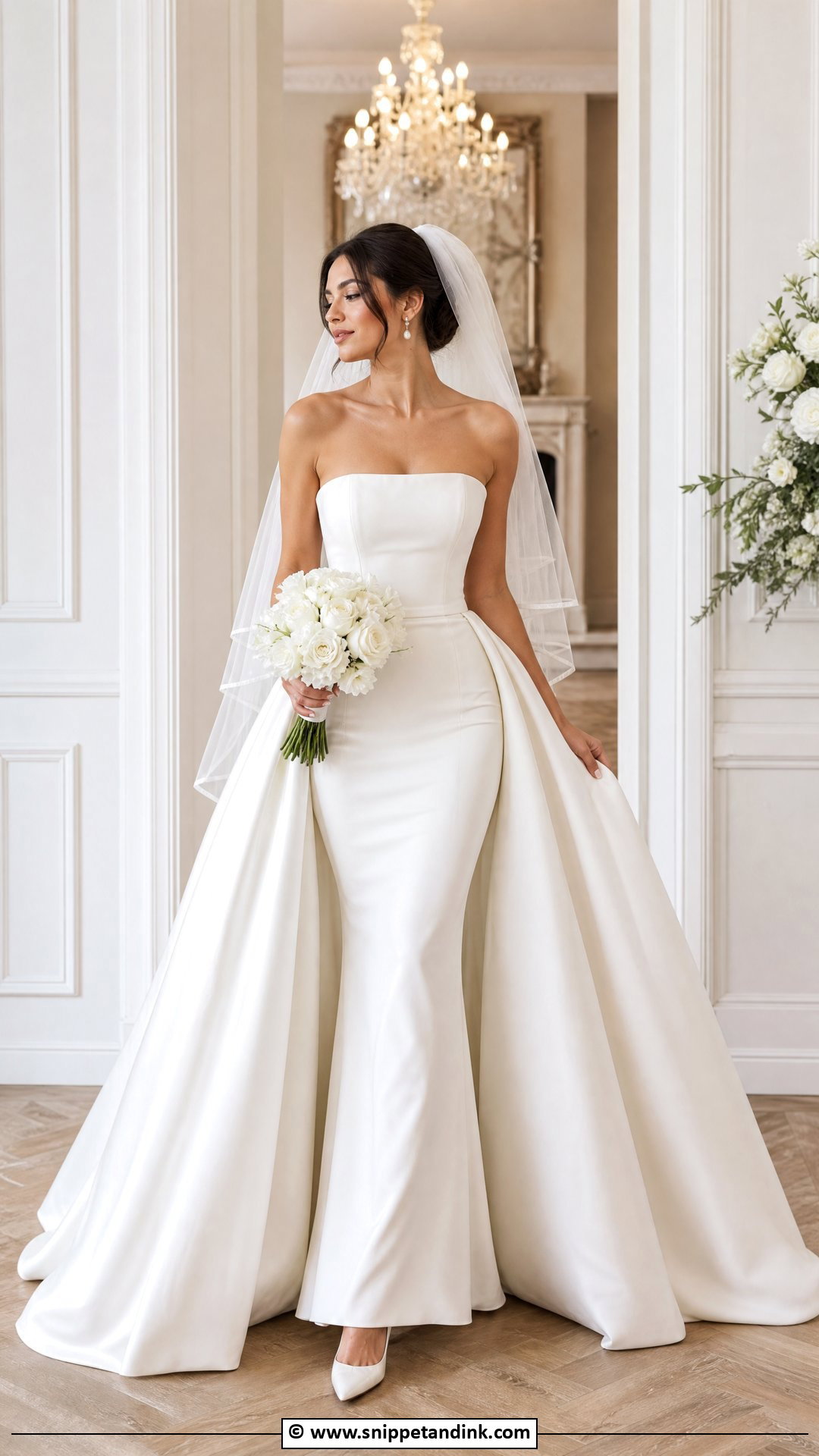
An overskirt adds ceremony volume over a slimmer gown, then comes off for the reception. Fitted crepe, lace or satin underneath works well. Overskirts usually attach at the waist with hooks or a hidden belt, which can add bulk; I check the waistline in profile before signing off. Choose an overskirt that matches the gown’s tone and texture so the two read as one.



25. Wedding Dress With Square Back
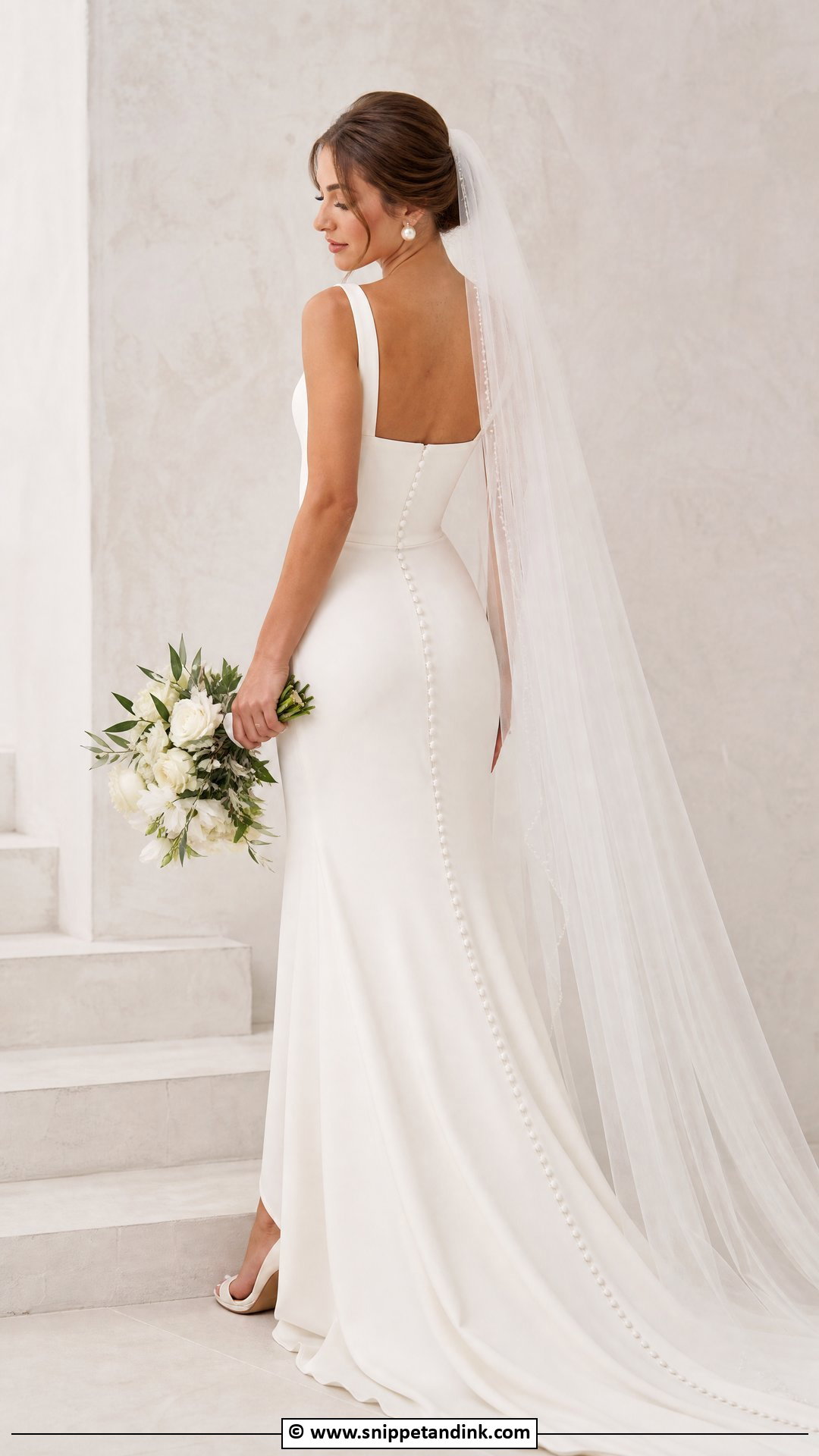
Square backs give interest from behind without going very low. They suit satin, crepe or lace gowns with simple lines. Bra choice is limited with open backs, so I suggest cups sewn into the bodice. A neat updo shows the shape, and covered buttons trailing down the train add a classic finish.
26. V Neck Wedding Dress
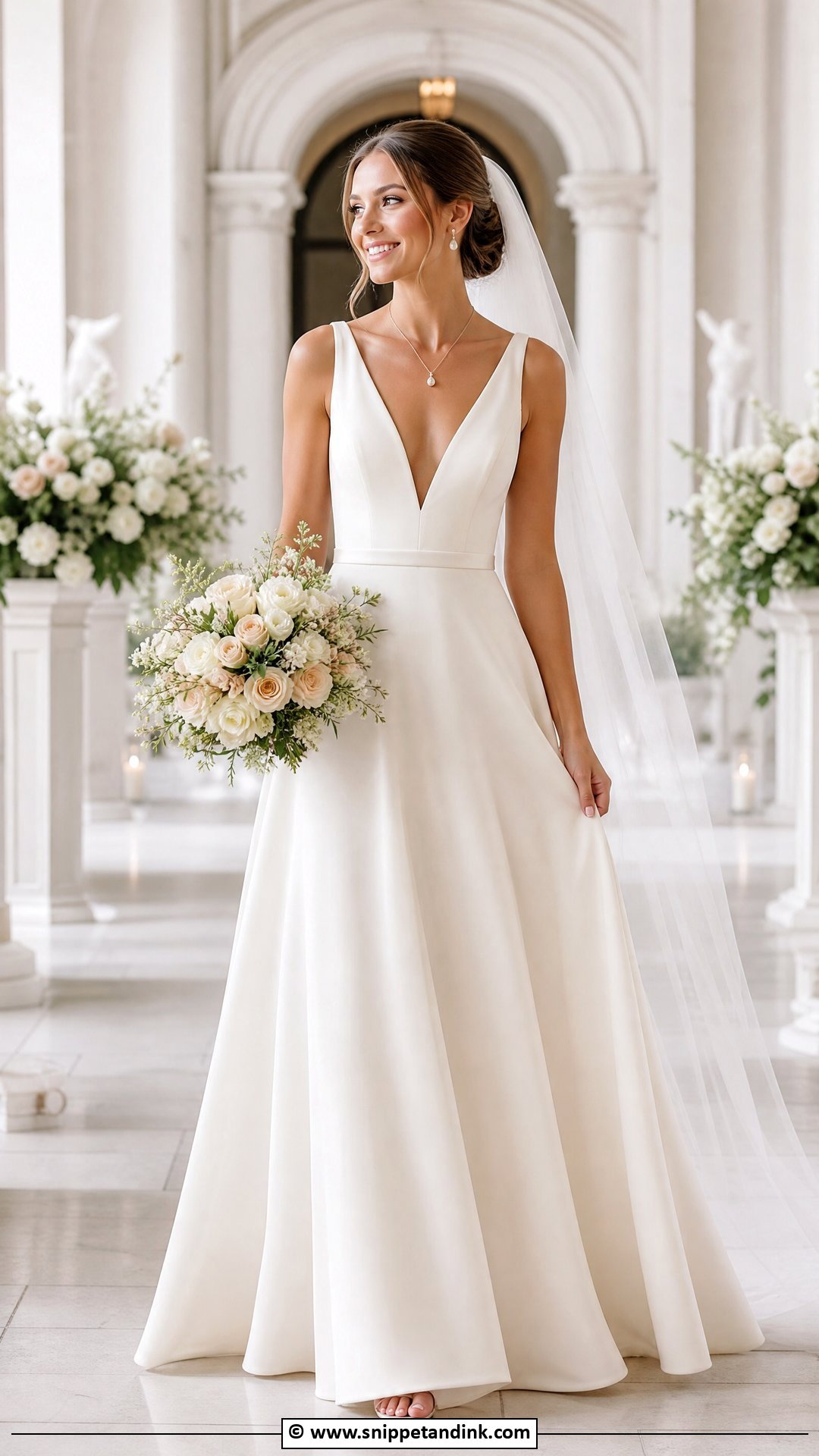
A soft V lengthens the torso and pairs well with A-line, sheath and fit-and-flare gowns. Lace, crepe or satin with internal support keeps the depth tasteful. I place a fine pendant at the right height for the V, never so long that it falls into the point. Pearl earrings and a sheer veil keep it soft.
27. Halter Wedding Dress
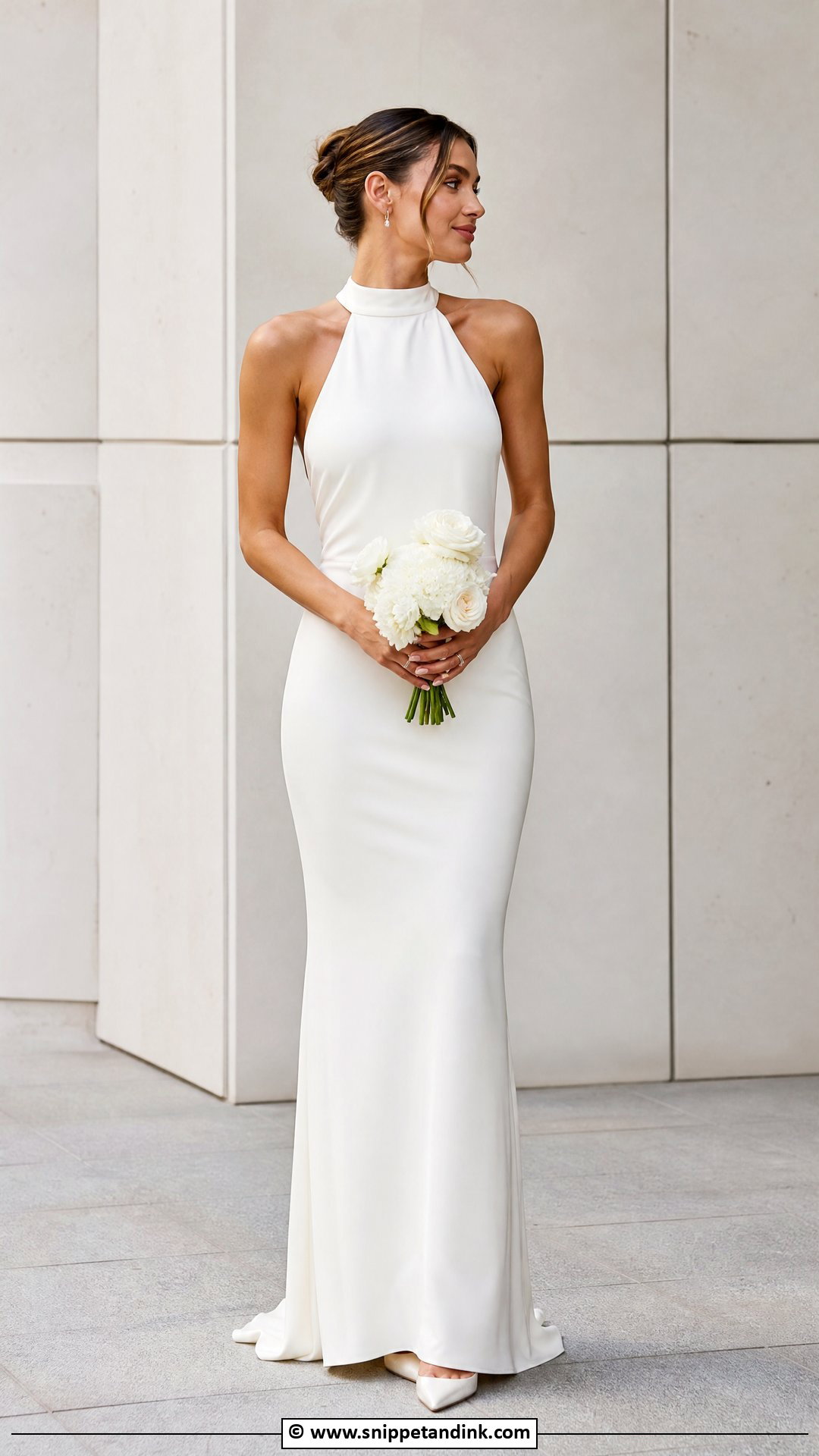
Halters show off the shoulders and look modern in satin, crepe or silk. A halter column feels city; a halter A-line feels romantic. The neck strap carries weight, so on heavier fabrics I ask for a wide strap or a hidden hook rather than a thin tie that can tug at the neck. An updo and no necklace keep the line clean.
28. One Shoulder Wedding Dress
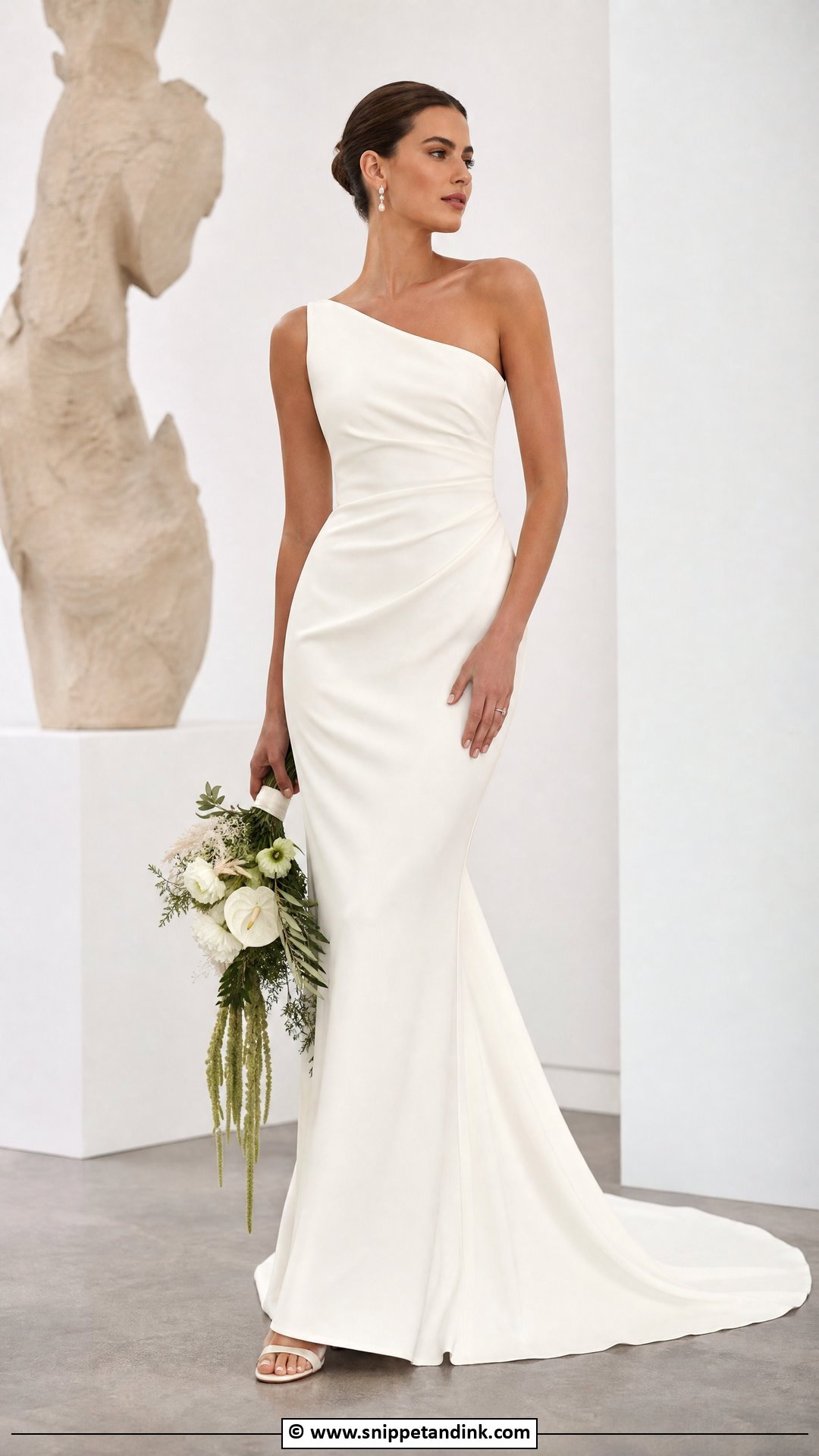
One shoulder adds a sculptural edge. Smooth crepe, satin or mikado keep it clean, in a fitted gown with a soft train or an A-line. Hair swept to the opposite side of the strap balances the asymmetry. Skip the necklace and keep earrings simple. It shows best in full-length portraits.
29. Chiffon Wedding Dress
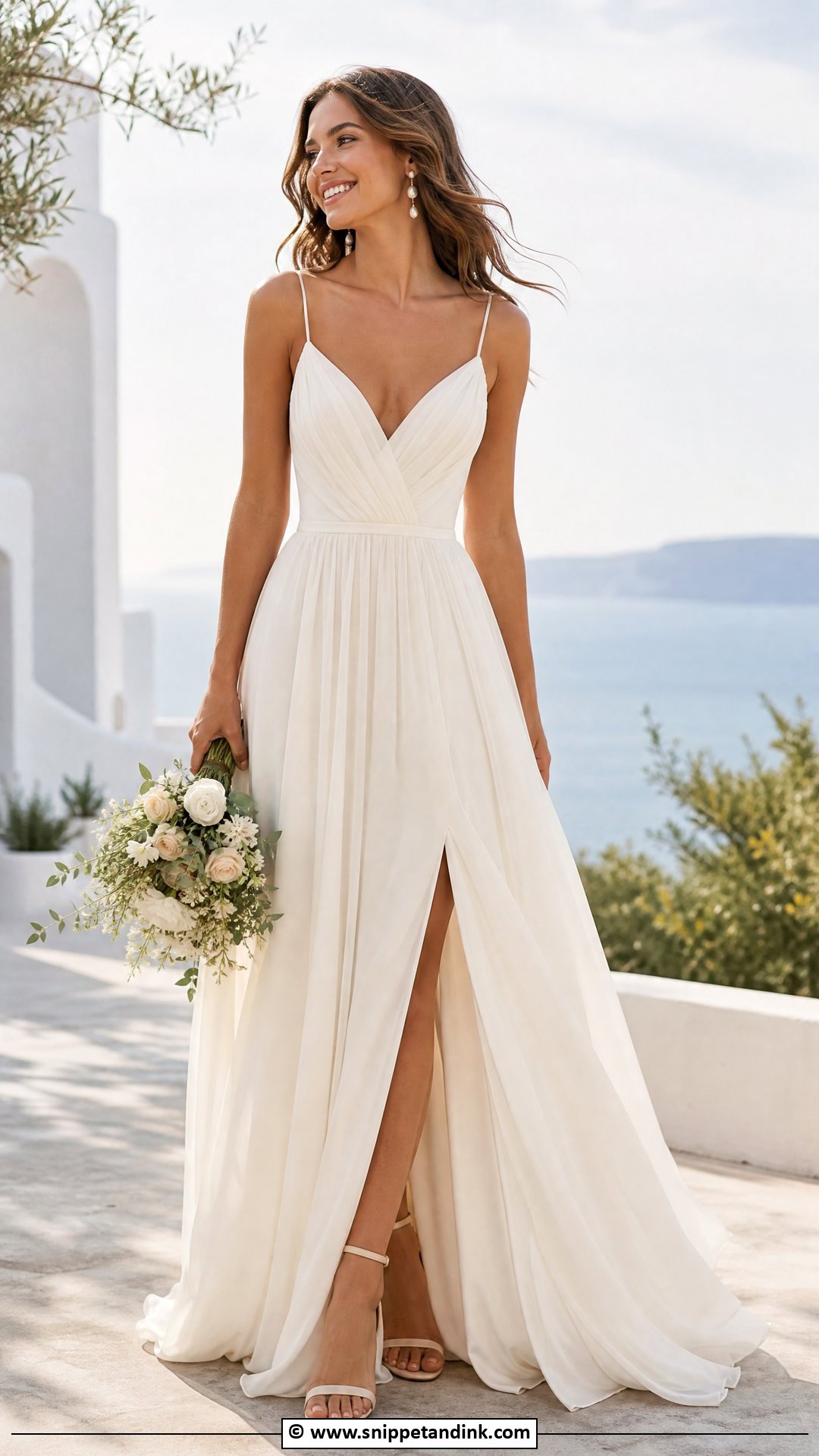
Chiffon is light and moves in any breeze, so it’s my default for warm, outdoor weddings. A-line, empire waist or a flowing sheath suit it, with delicate straps, soft sleeves or gentle pleating. Chiffon wrinkles less than satin but snags on rough benches and stone. Loose waves, pearl earrings and simple sandals keep it relaxed.
30. Organza Wedding Dress
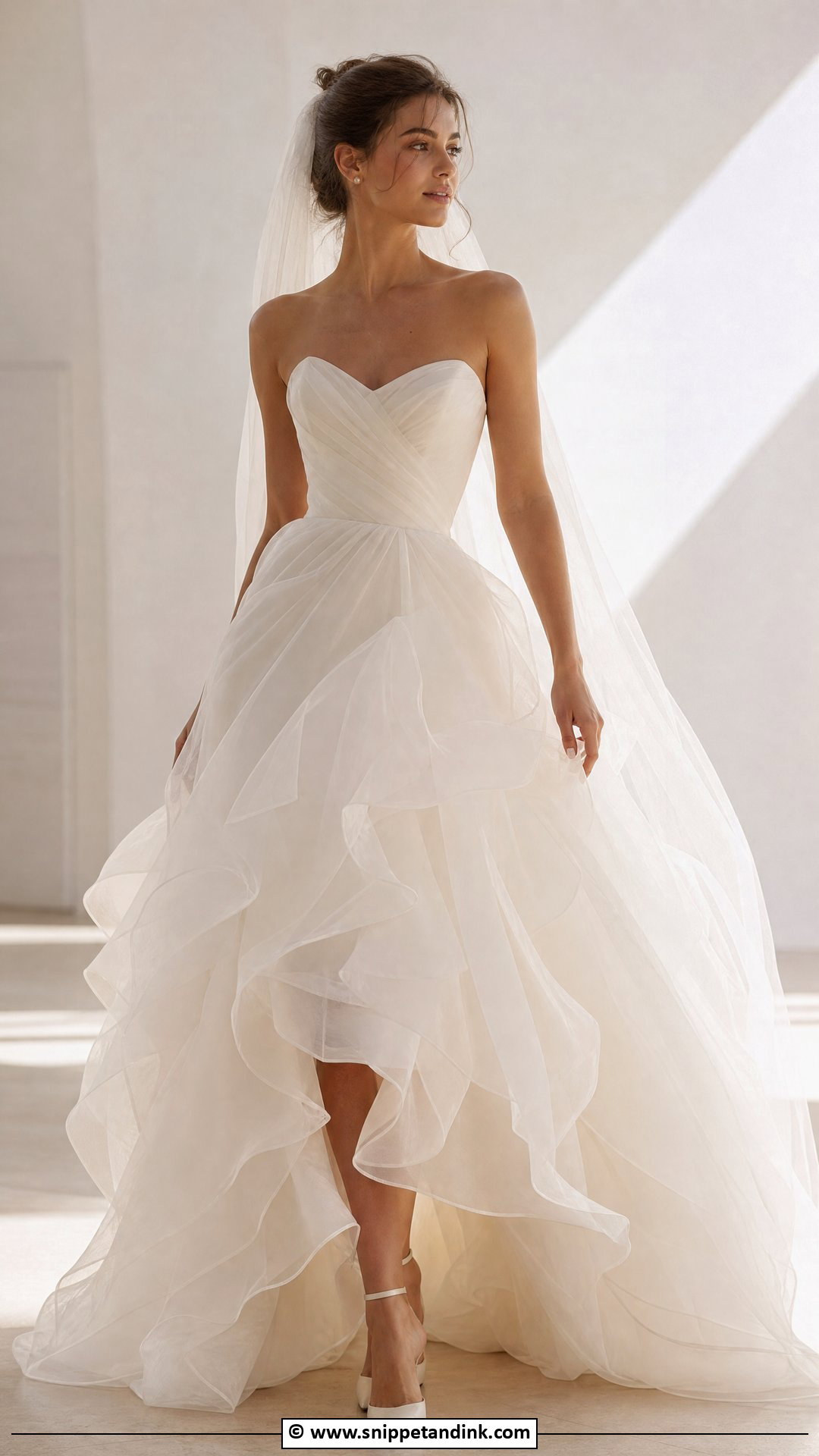
Organza gives volume and structure while still feeling light, because it’s crisp rather than heavy. A full organza skirt over a fitted bodice looks classic; layered organza on a slimmer silhouette looks modern. It crushes when sat on for a long time, so I tell brides to lift the back of the skirt when sitting at the ceremony. Spring and summer suit it.
31. Mikado Wedding Dress
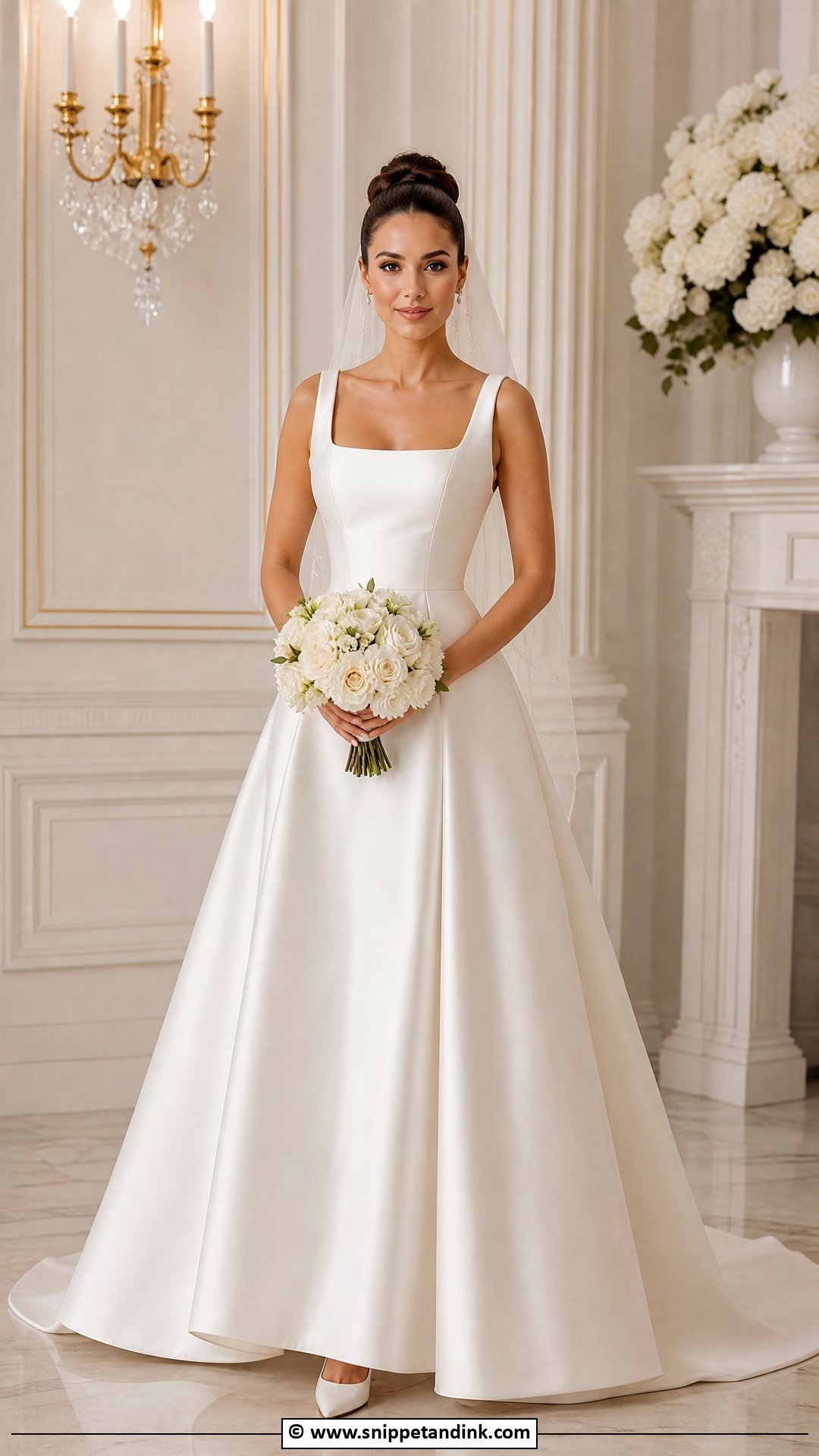
Mikado holds a shape without help, which makes it right for ball gowns, A-lines and architectural lines. A square, bateau or strapless bodice in mikado looks crisp. It’s heavier than it looks, so for a long day I’d keep the skirt moderate rather than enormous. A polished bun and simple veil suit it; there’s no need for beading.
32. Blush Wedding Dress
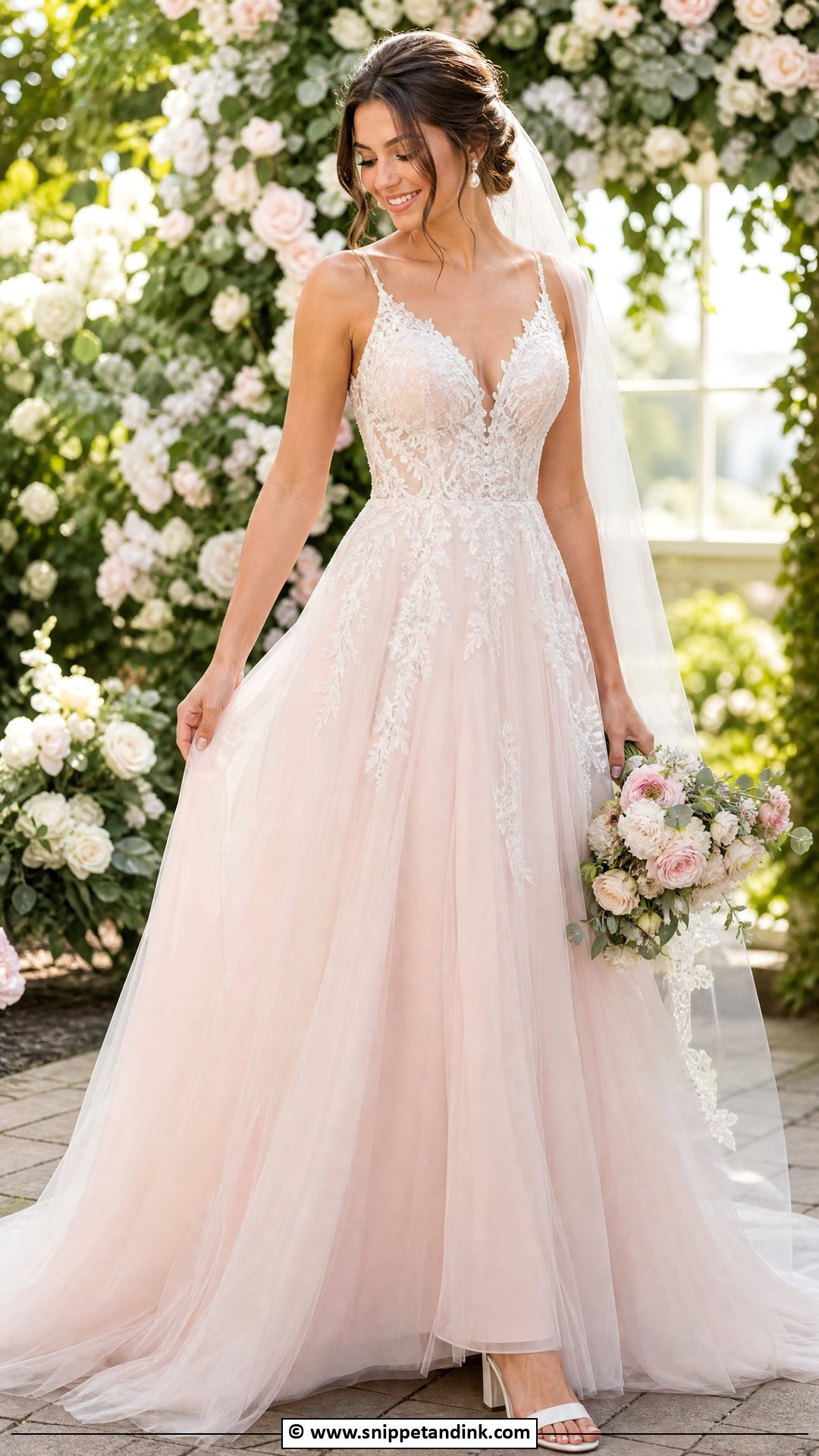
Blush works when the shade is pale enough to read as bridal. Pale blush, champagne blush or a barely-there rose all look soft in natural light, but I test them against the bride’s skin because some pinks wash out cooler complexions. Lace A-lines, tulle ball gowns or tinted satin all carry it. Ivory heels and a soft veil keep the tone gentle.
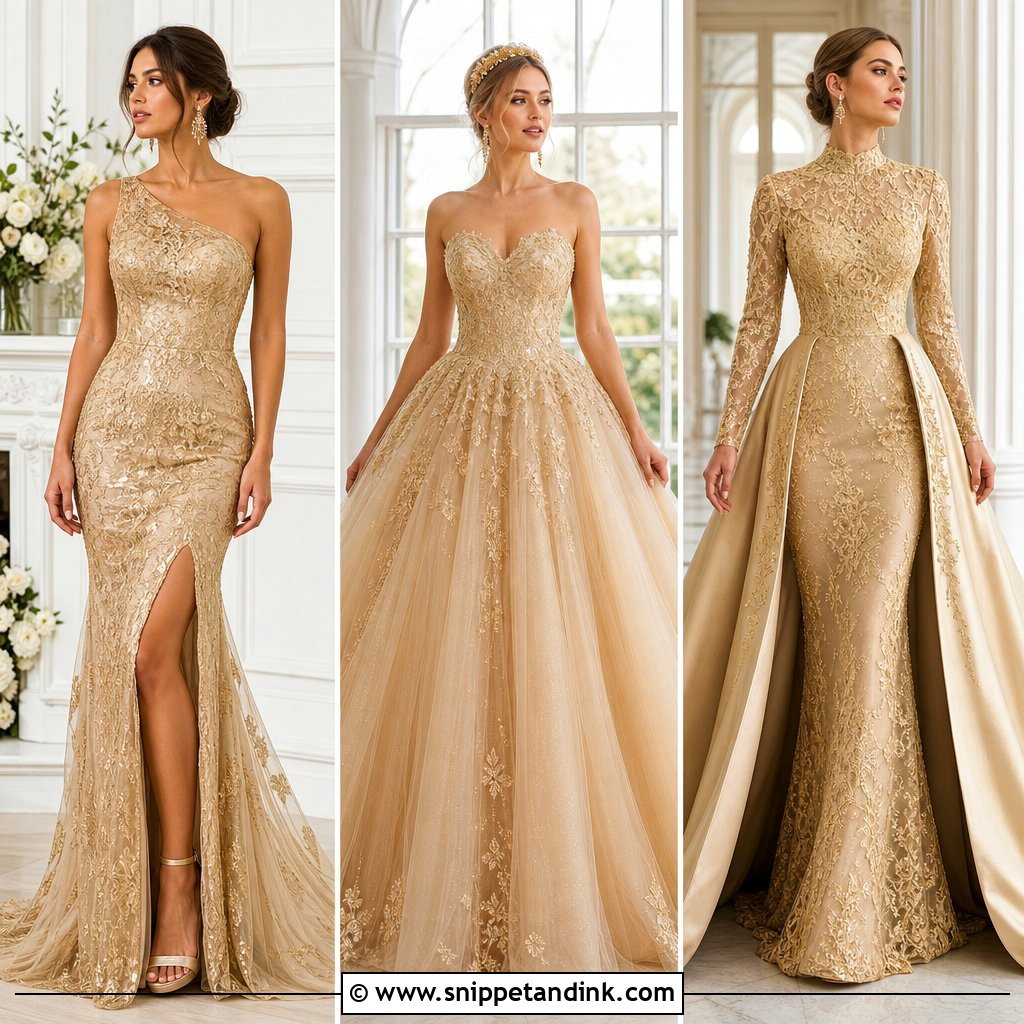
33. Champagne Wedding Dress
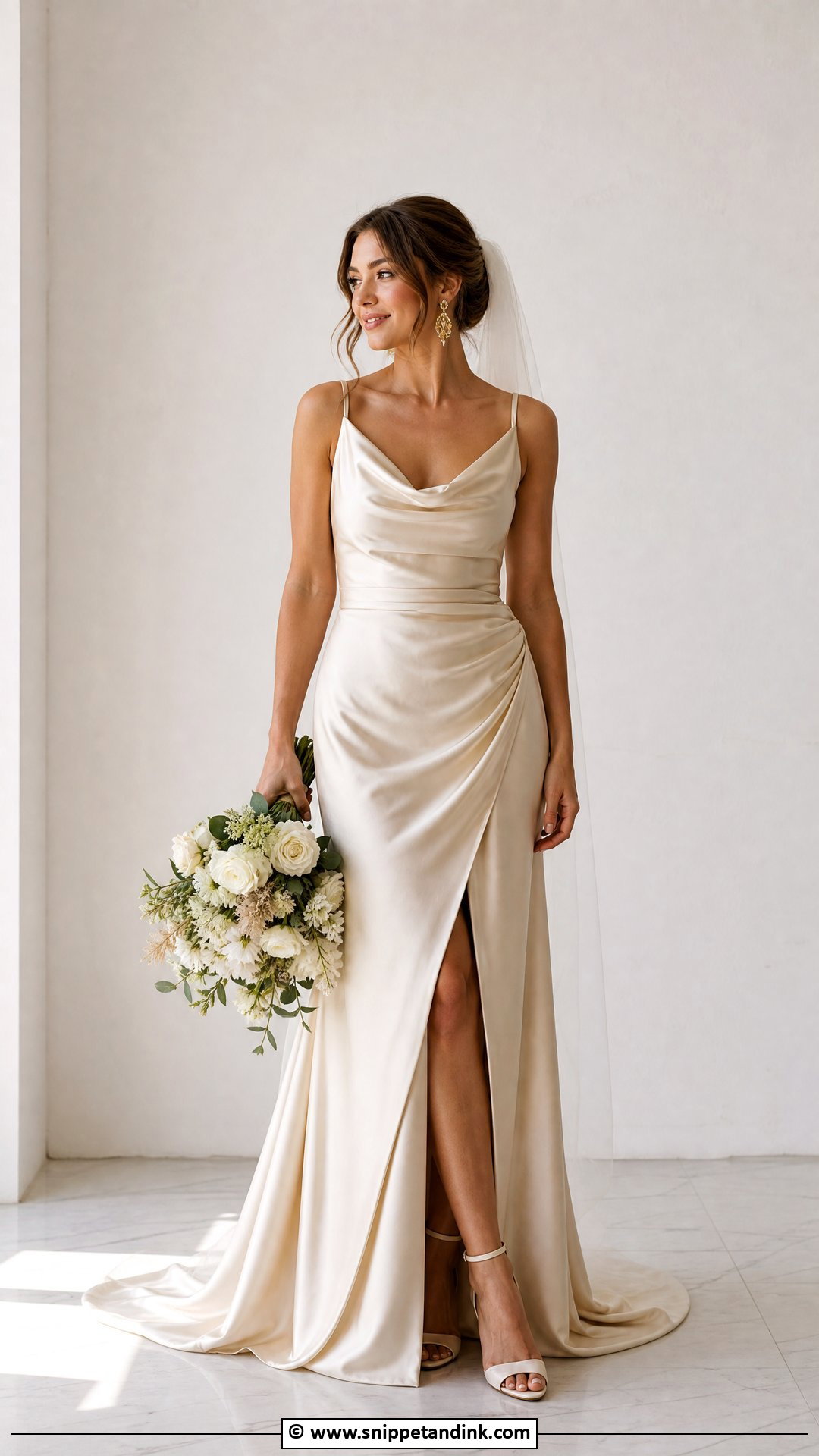
Champagne flatters brides who prefer warmth over bright white. Champagne satin, beaded tulle or lace over nude lining all glow. The veil must match the dress’s undertone, not standard white, or it will look grey beside it. Gold-toned jewelry and ivory heels suit it. Evening weddings and vintage-leaning celebrations are natural fits.
34. Courthouse Wedding Dress
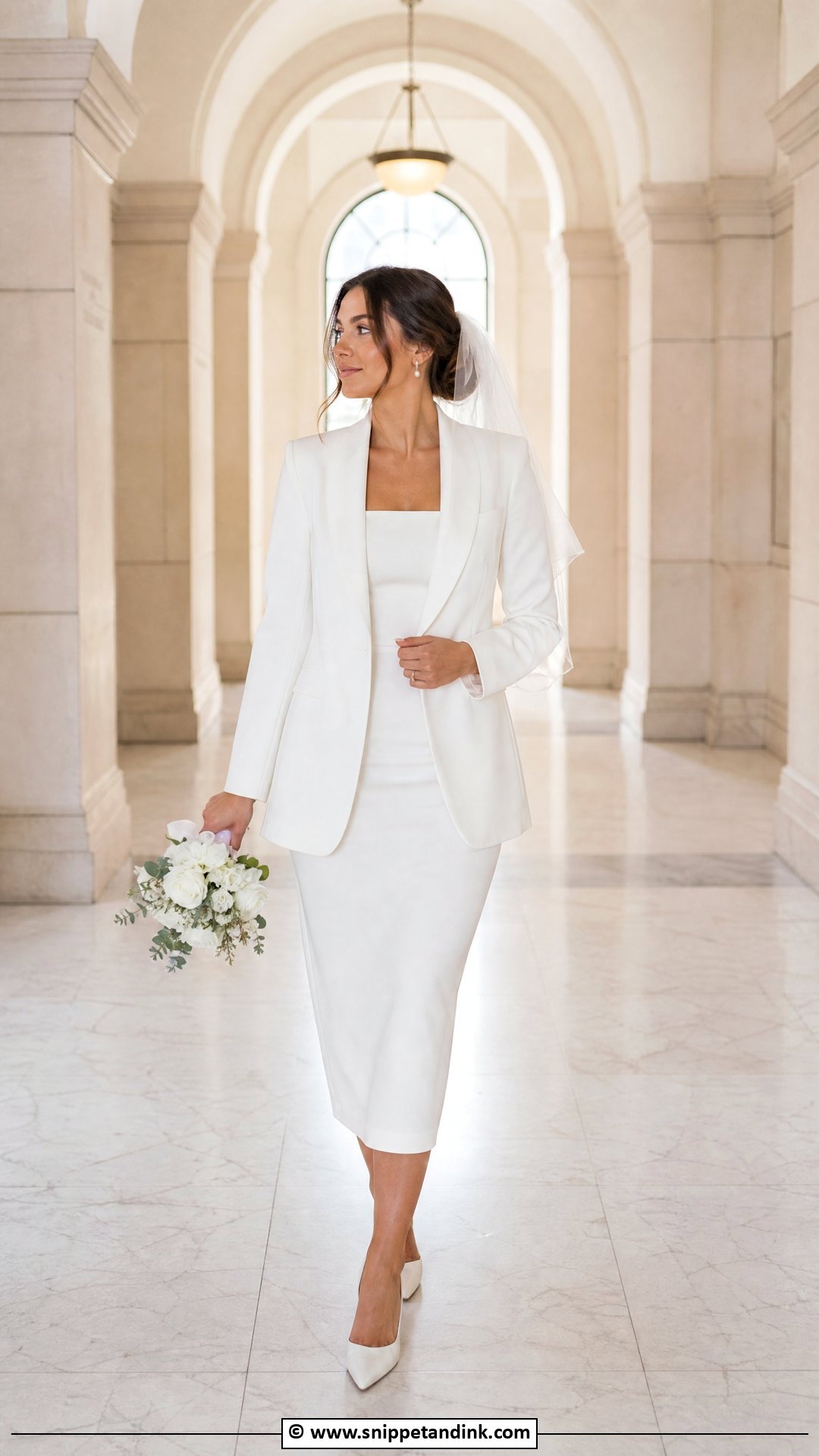
A courthouse wedding dress should be special but simple to wear: a white midi, structured mini, satin slip or tailored tea-length gown. A cropped blazer is useful for chilly city halls and photographs well. Courthouse ceremonies often involve queues and stairs, so comfortable heels matter. A short veil or hair bow marks it as bridal.
35. Reception Wedding Dress
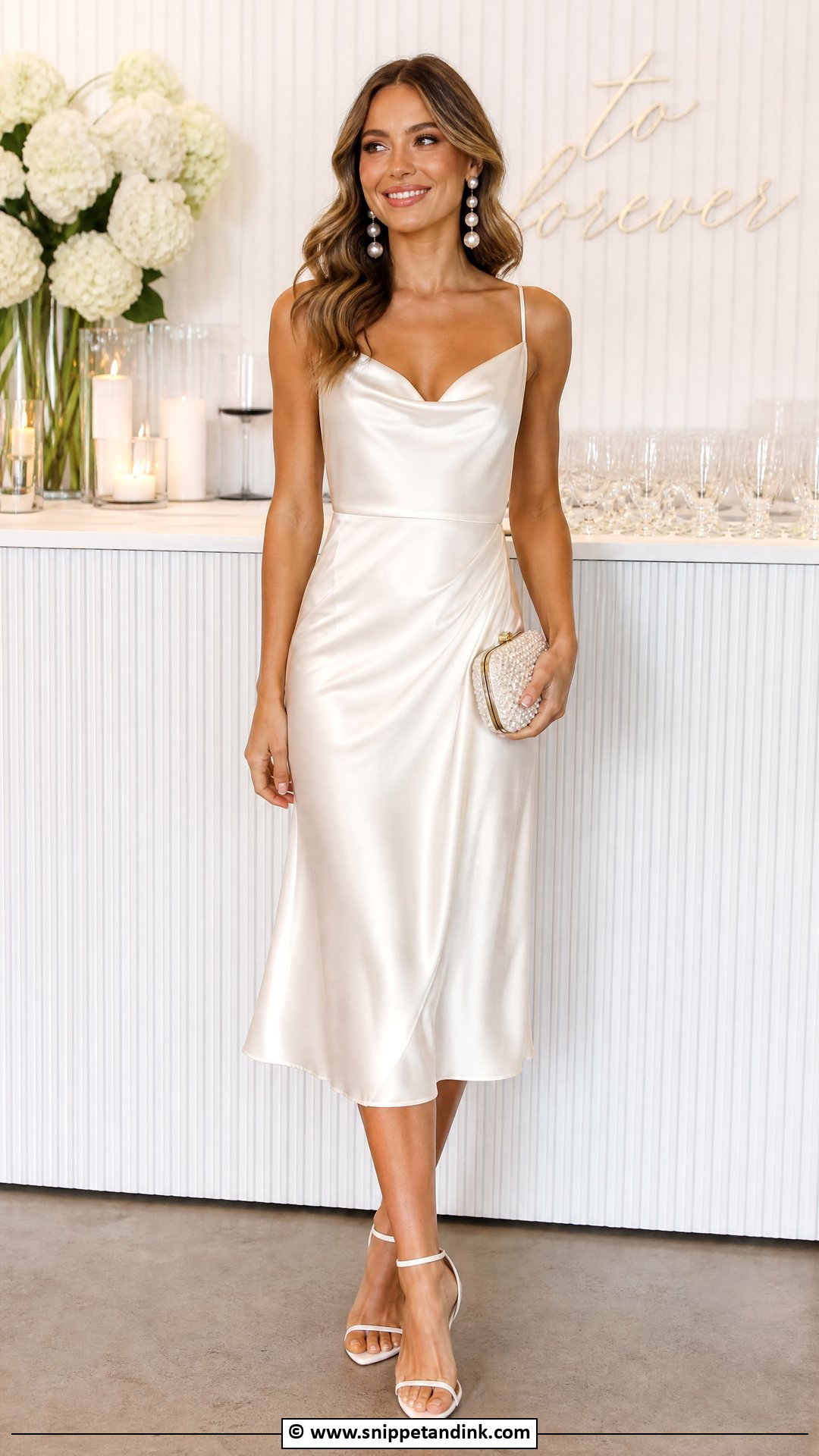
A reception dress lets you dance freely after the ceremony. A satin midi, beaded sheath, tea-length dress or refined mini all work. Link it to the ceremony gown through fabric, color or accessories so the change feels planned. Practice the changeover timing with your planner; a quick change usually needs a private room and a helper. Comfortable heels and statement earrings finish it.
What Your First Fitting Room Visit Actually Needs
A first appointment goes better with a little preparation. These are the things I wish every bride brought.
- Smooth nude underwear and a strapless bra, so you can judge necklines and fabric without lines showing.
- Heels of roughly the height you’ll wear on the day, even if they aren’t the final pair.
- Two or three photos of dresses you love and one you dislike. The dislike often tells me more.
- A small group. One or two people whose opinion you trust beats a crowd that disagrees.
Try at least one shape you think won’t suit you. Bodies surprise people on hangers and in mirrors, and I’ve watched brides walk out with a silhouette they had ruled out before they arrived. Move in each dress: sit, walk, raise your arms. If it only looks right standing still, it isn’t the one.
Let Fit and Fabric Decide Before Trends Do
Some brides feel most themselves in lace, long sleeves, pearls and full skirts; others in clean satin, crepe, silk or a short courthouse dress. In both cases, fit, fabric and how the dress moves matter more than whatever is trending this season. Veil, shoes, jewelry and hair shape the final picture too. Use these ideas to narrow your shapes, then try them on in your real shoes, and the right one will be obvious.
You'll Like These Ideas:









Leave a Reply