
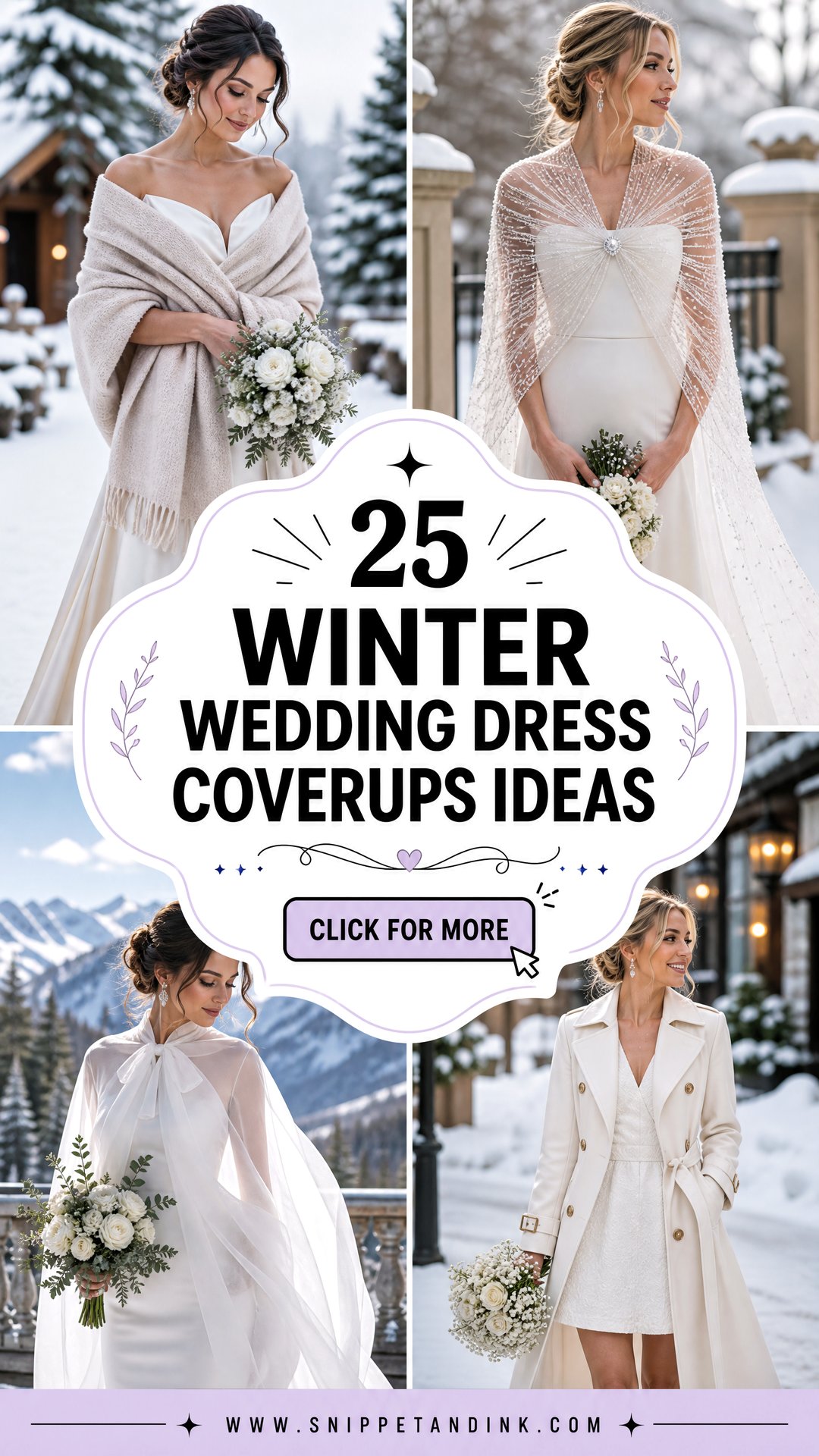
Your gown is the reason people turn around when the doors open, so whatever you wear over it in winter has one job: keep you warm without hiding the shape, the fabric or the details you chose the dress for. I start every coverup fitting by looking at three things on the gown itself: the neckline, the waist and how much the skirt needs to move. Those decide whether you need a fur stole, a long cape, a fitted lace bolero, a tailored coat or a soft knit wrap. The right layer should suit your undertone and still let you walk outdoors for portraits and between buildings without rushing. Below are the combinations I put together most, each worked out head to toe with shoes, jewelry, gloves or a small bag, so the whole look reads as one outfit instead of a dress with a coat thrown on.
Which of These Will Actually Keep You Warm?
Brides often choose a coverup from photos and only find out how warm it is on the day. Here’s how they rank in practice, from the fittings and cold outdoor portraits I’ve stood through.
- Real warmth for a long stretch outdoors: full-length wool or cashmere coats, lined cloaks and cropped puffers.
- Good for a twenty-minute portrait session: wool capes, faux fur stoles, alpaca shrugs, mohair cardigans and tailored blazers.
- Mostly for looks: lace and satin boleros, feather capelets, pearl toppers, organza capes and beaded tulle wraps.
If your favorite sits in the last group and your photos are outside, plan a second layer. A plain ivory coat worn between locations and taken off for the shots is easier than shivering through them, and cold shows in photos: tense shoulders, red hands and a forced smile.
Hands and feet matter as much as shoulders
Lined satin or leather gloves, fleece-lined tights under a long skirt and a pair of boots for walking between spots do more for comfort than any stole. A couple of hand warmers in your partner’s pocket are a quiet favorite of mine.
1. Faux Fur Stole With Strapless Winter Wedding Dress
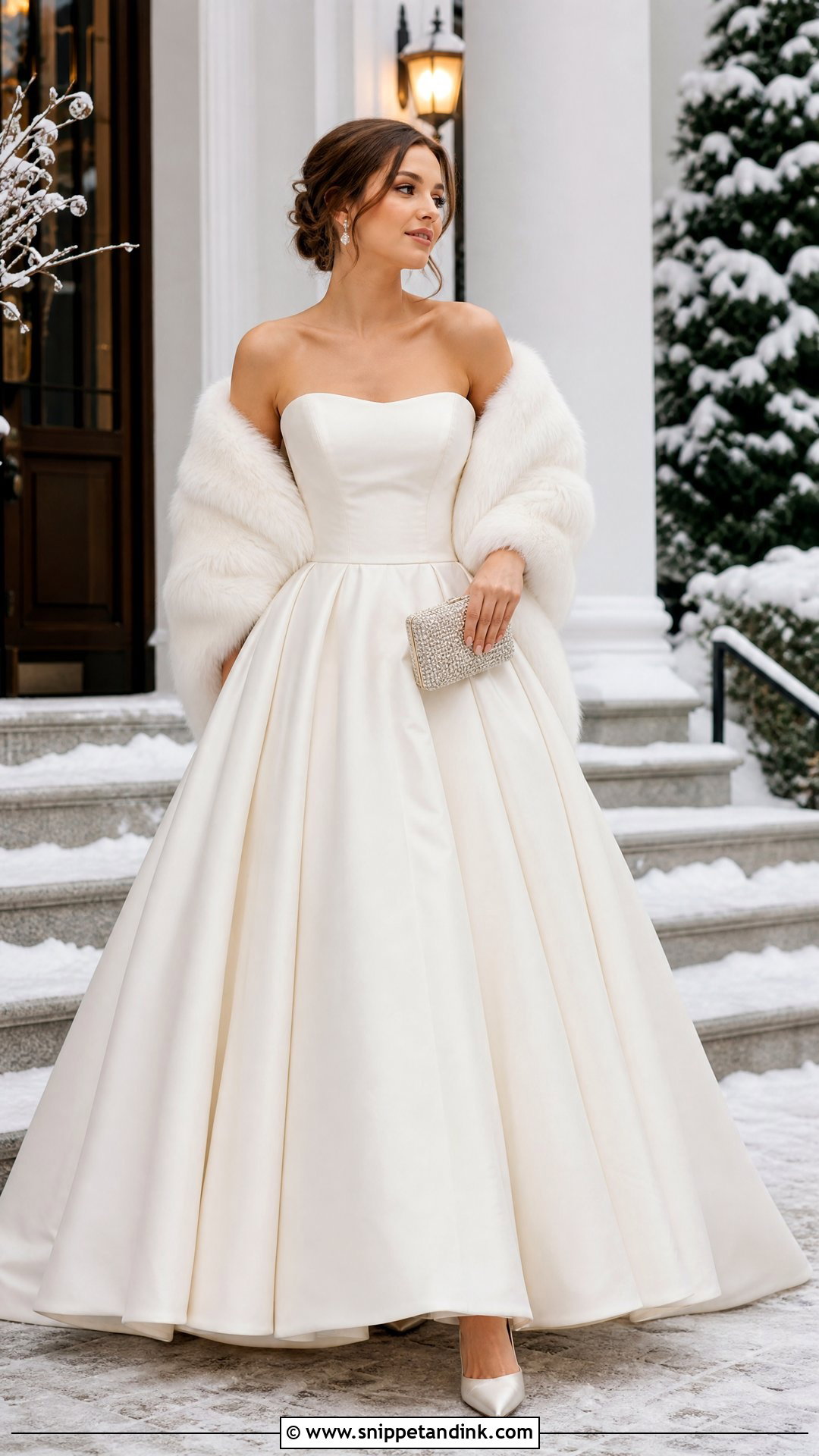
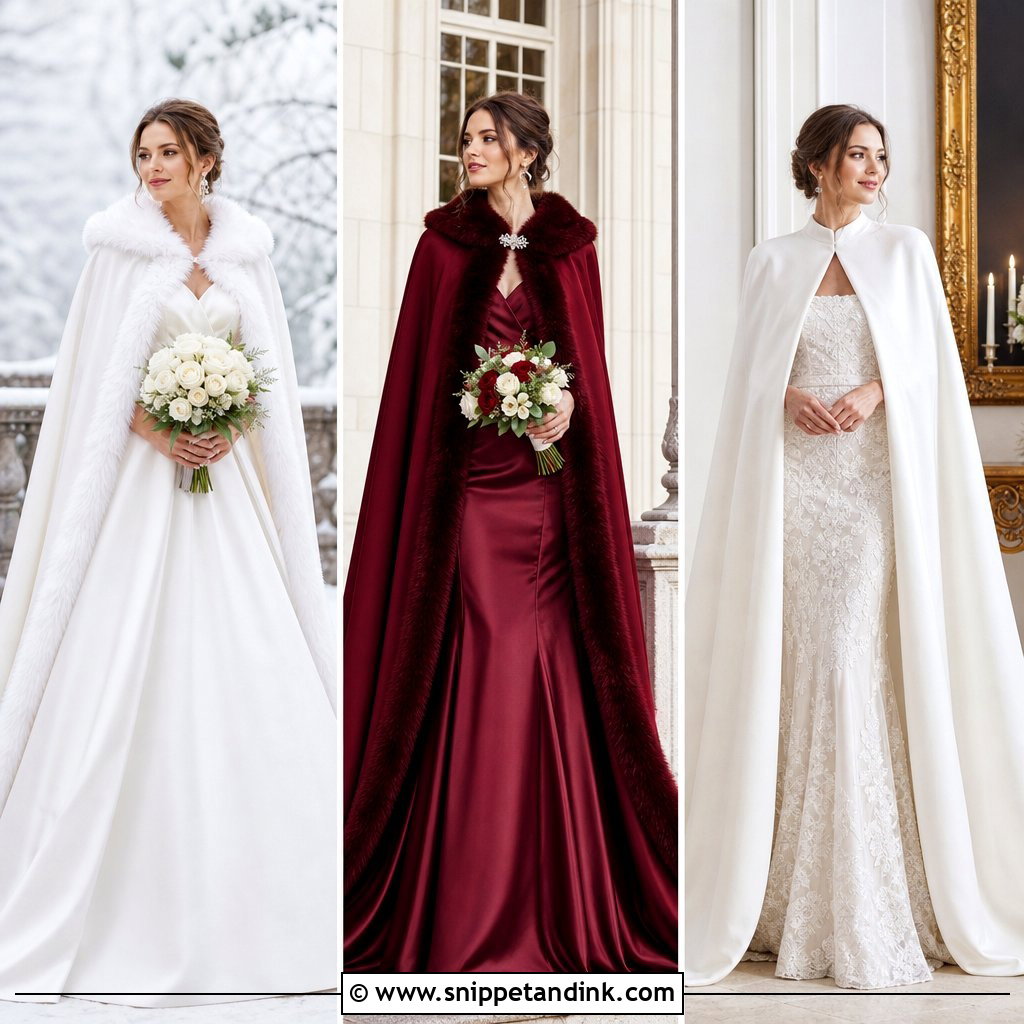
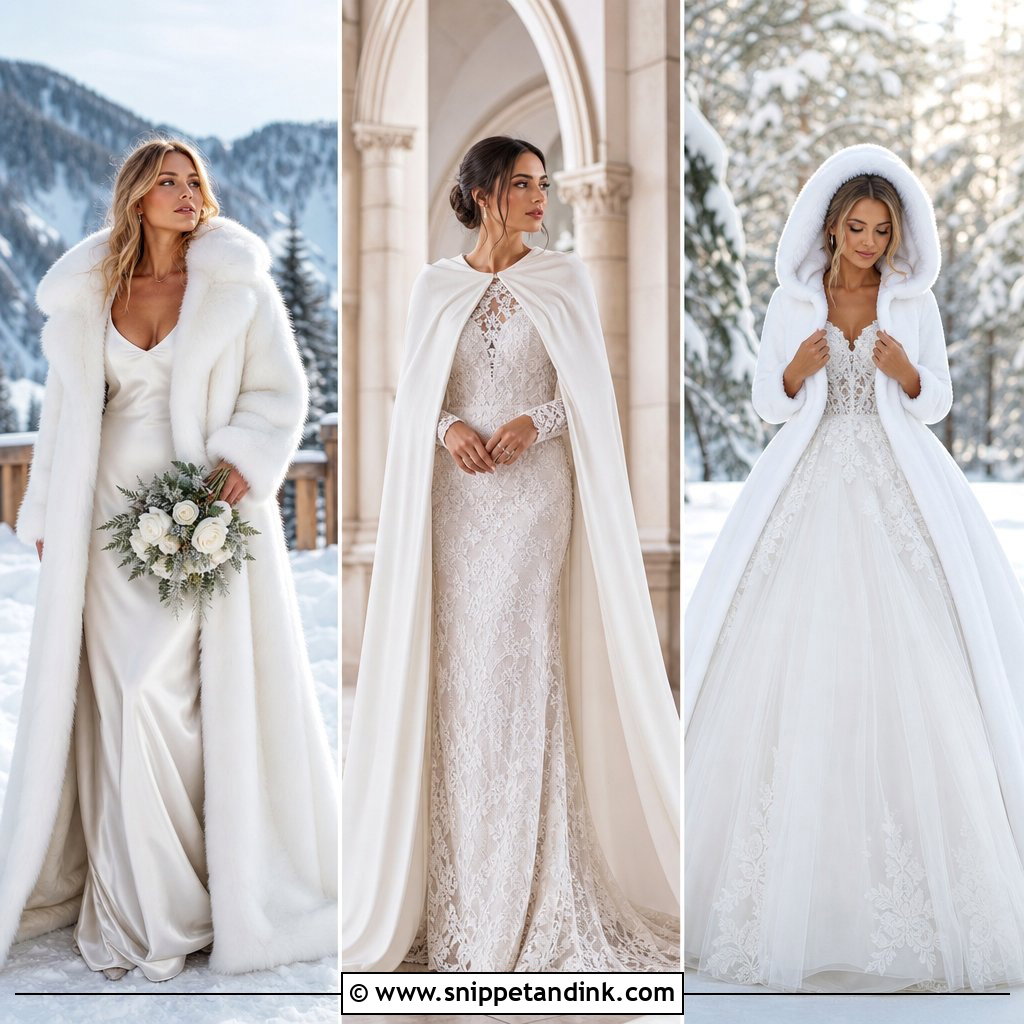
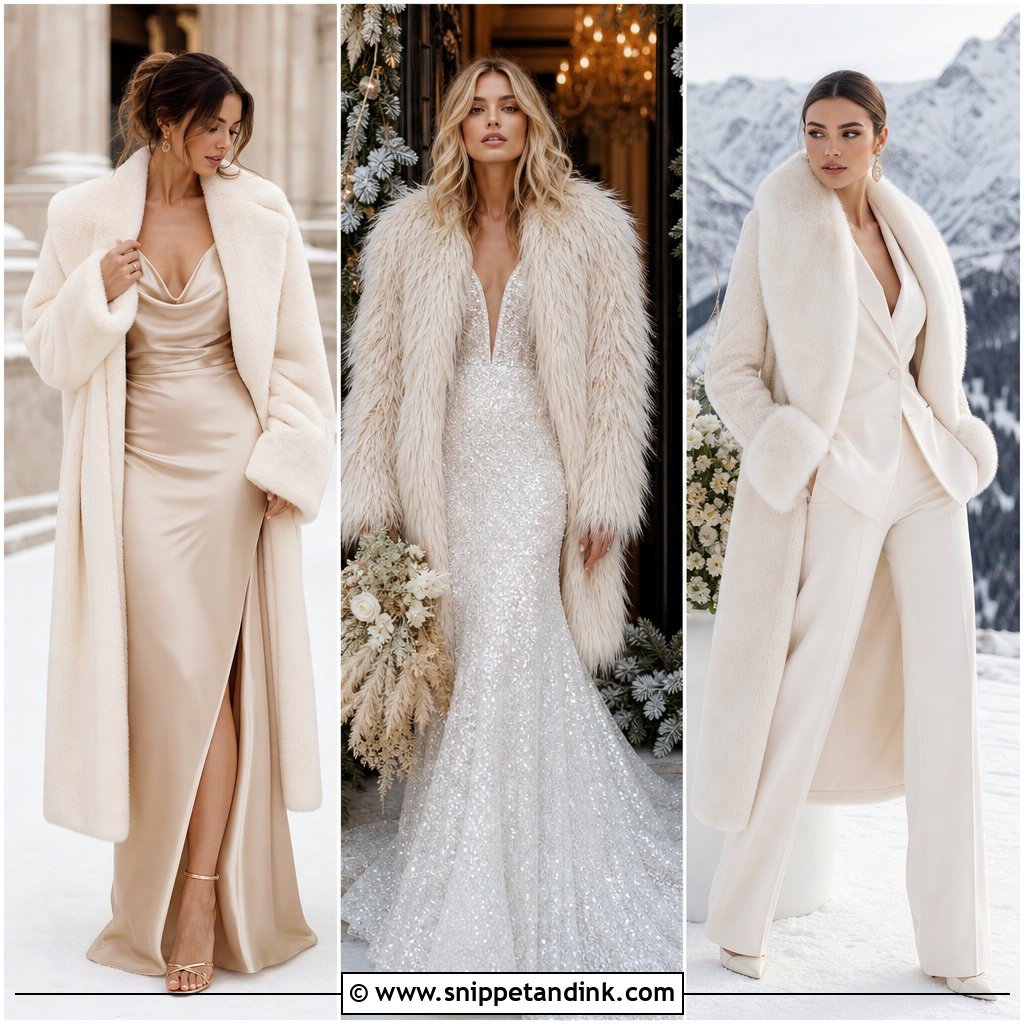
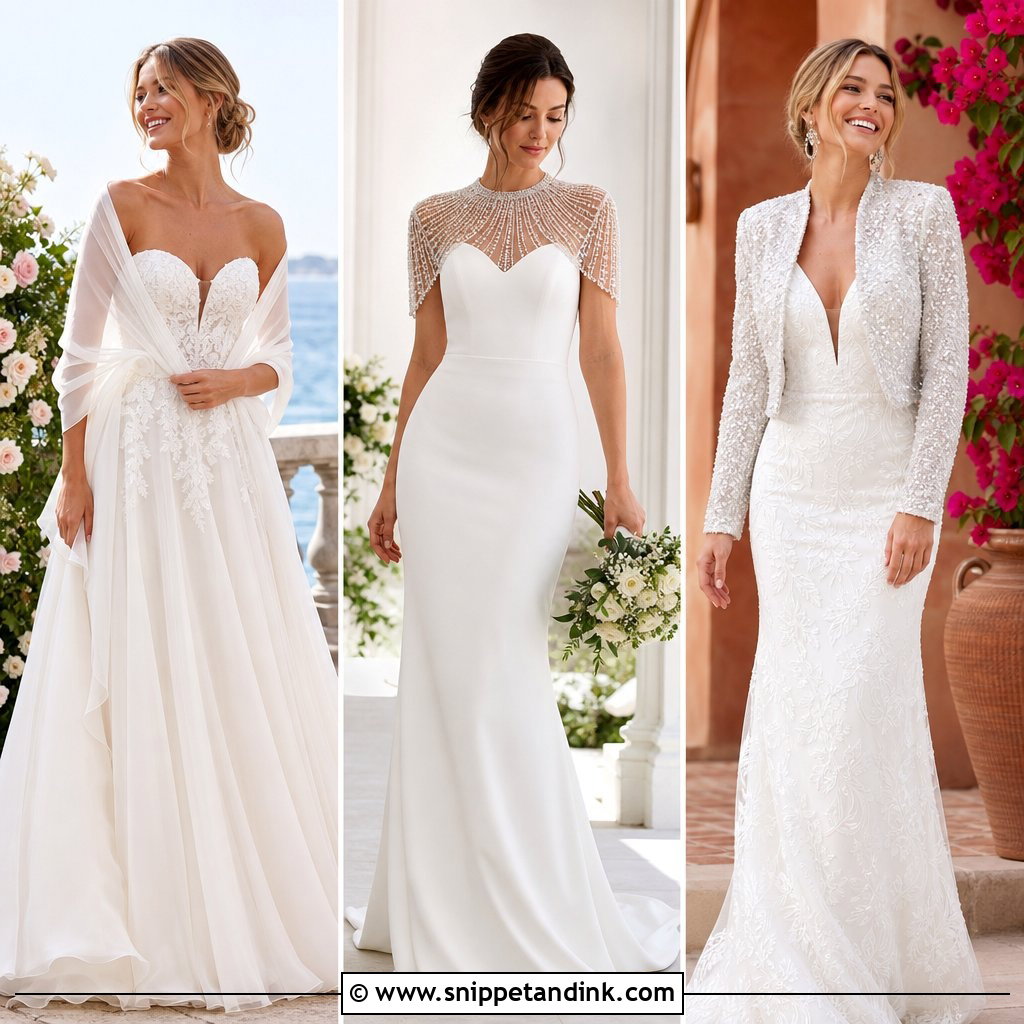
A faux fur stole over a strapless gown is the classic winter pairing because it covers the coldest part of you, your shoulders, and leaves the waist and skirt alone. Hold the stole against the dress in daylight before you buy; faux fur comes in a dozen whites and a cool white next to a warm ivory gown looks grubby in photos. A narrow stole suits a sheath or mermaid; a fuller one balances a ball gown. I always add a hidden hook so it stays put when your hands are busy with a bouquet. Pearl drops, a low bun, pointed satin pumps and a small crystal clutch keep it clean, and fleece-lined sheer tights under the skirt are an honest lifesaver outside. Take the stole off indoors and the original neckline becomes a second look.
2. Long Bridal Cape With A-Line Winter Wedding Dress
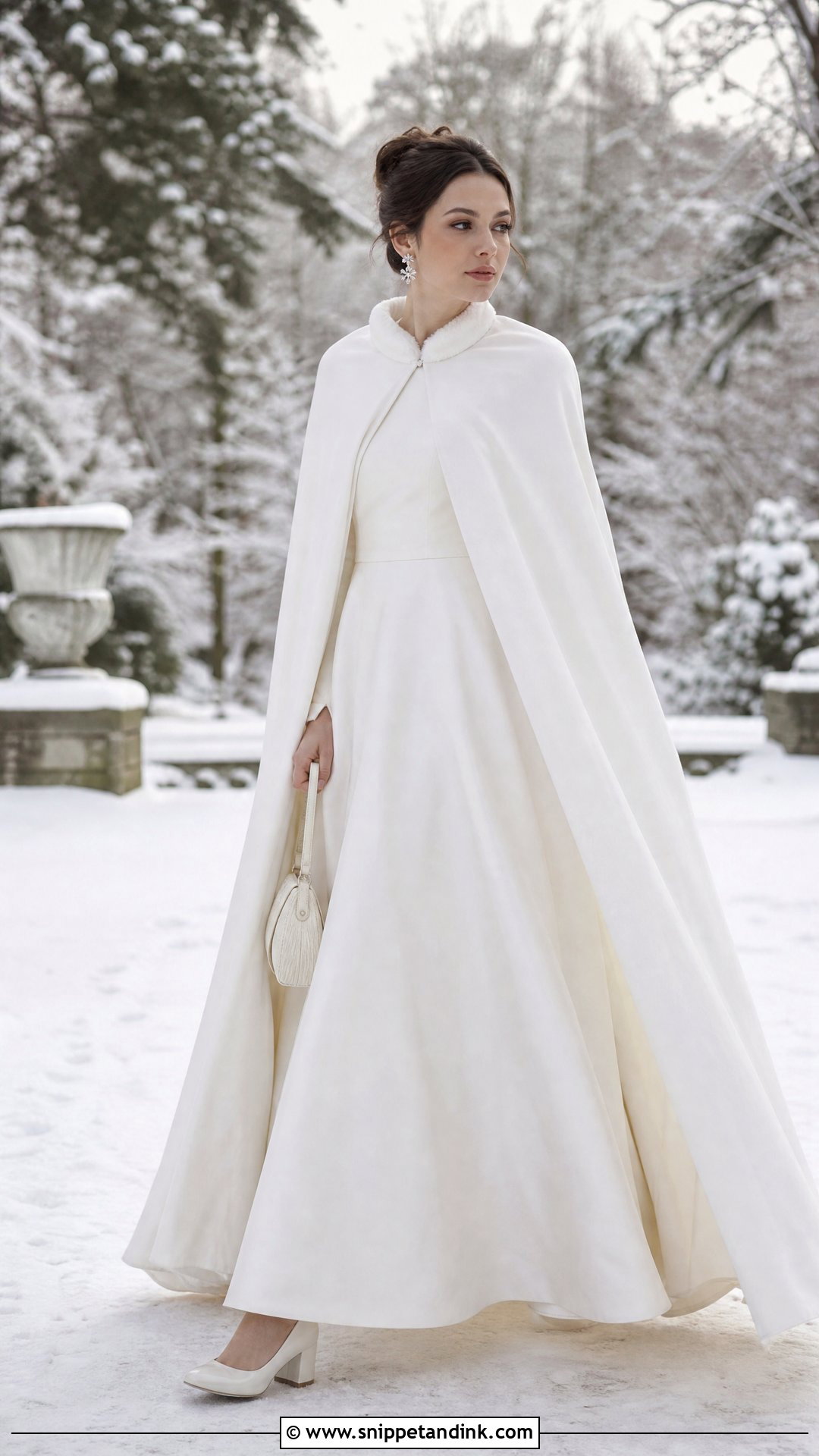
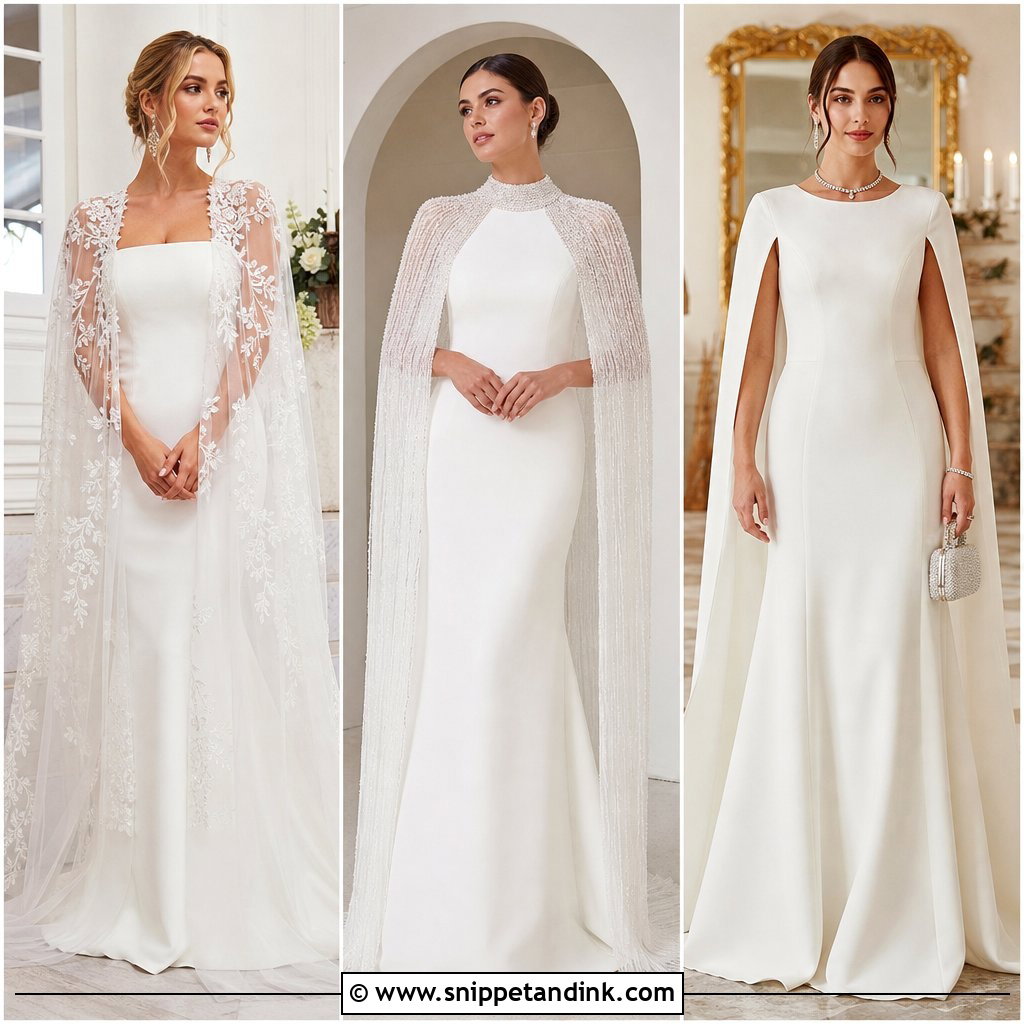
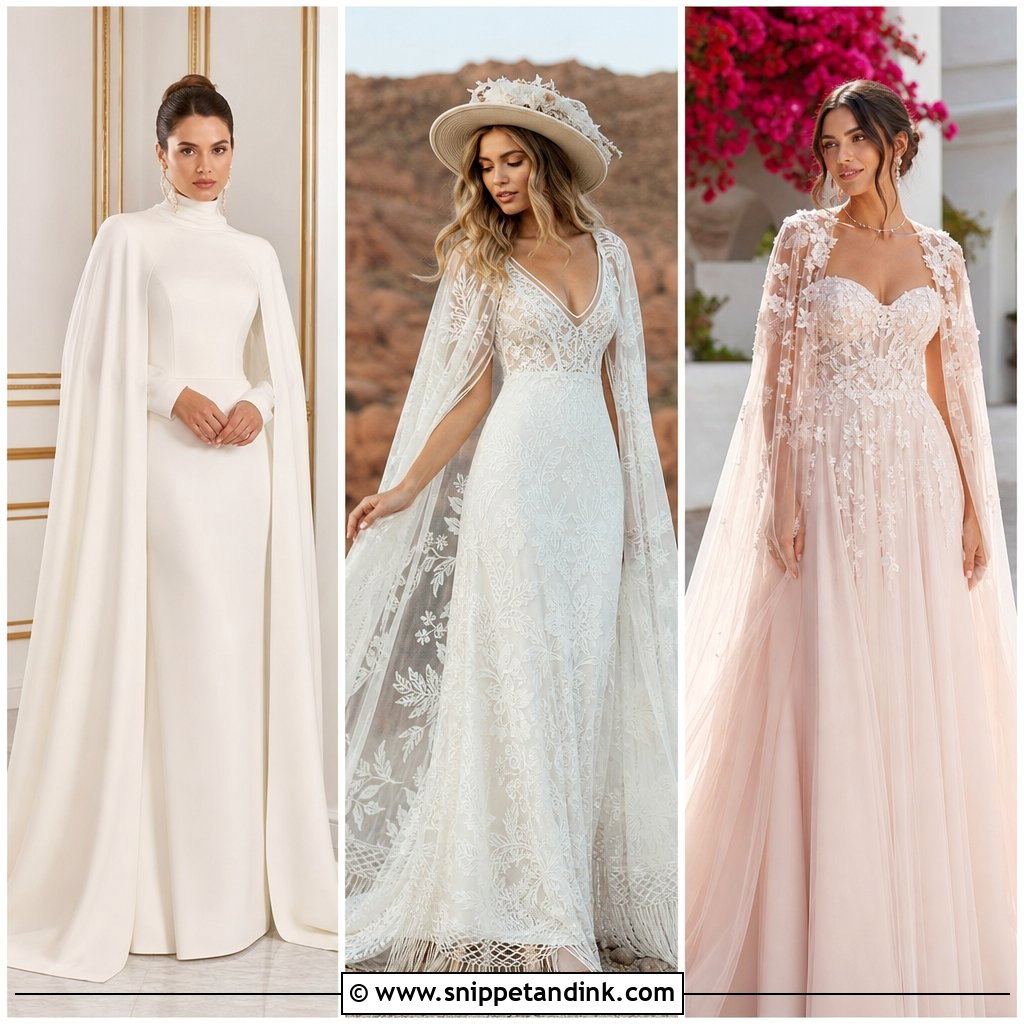
A long cape over an A-line gown gives full coverage without adding a single bit of bulk at the waist, which is why it’s my first suggestion for an outdoor winter ceremony. I like the cape to end near the gown’s hem so the line runs unbroken from shoulder to floor. Wool blend is the warmest; a satin lining lets it glide over lace and beading instead of dragging on them. A high-neck cape suits a clean sleeveless dress best. The detail people forget is the fastener: it sits right on your collarbone, so check it doesn’t press onto the gown’s neckline or snag beading every time you turn your head. Crystal earrings, an updo, closed block heels for steadier footing on cold ground and a small wristlet complete it.
3. Lace Bolero With Sweetheart Winter Wedding Dress
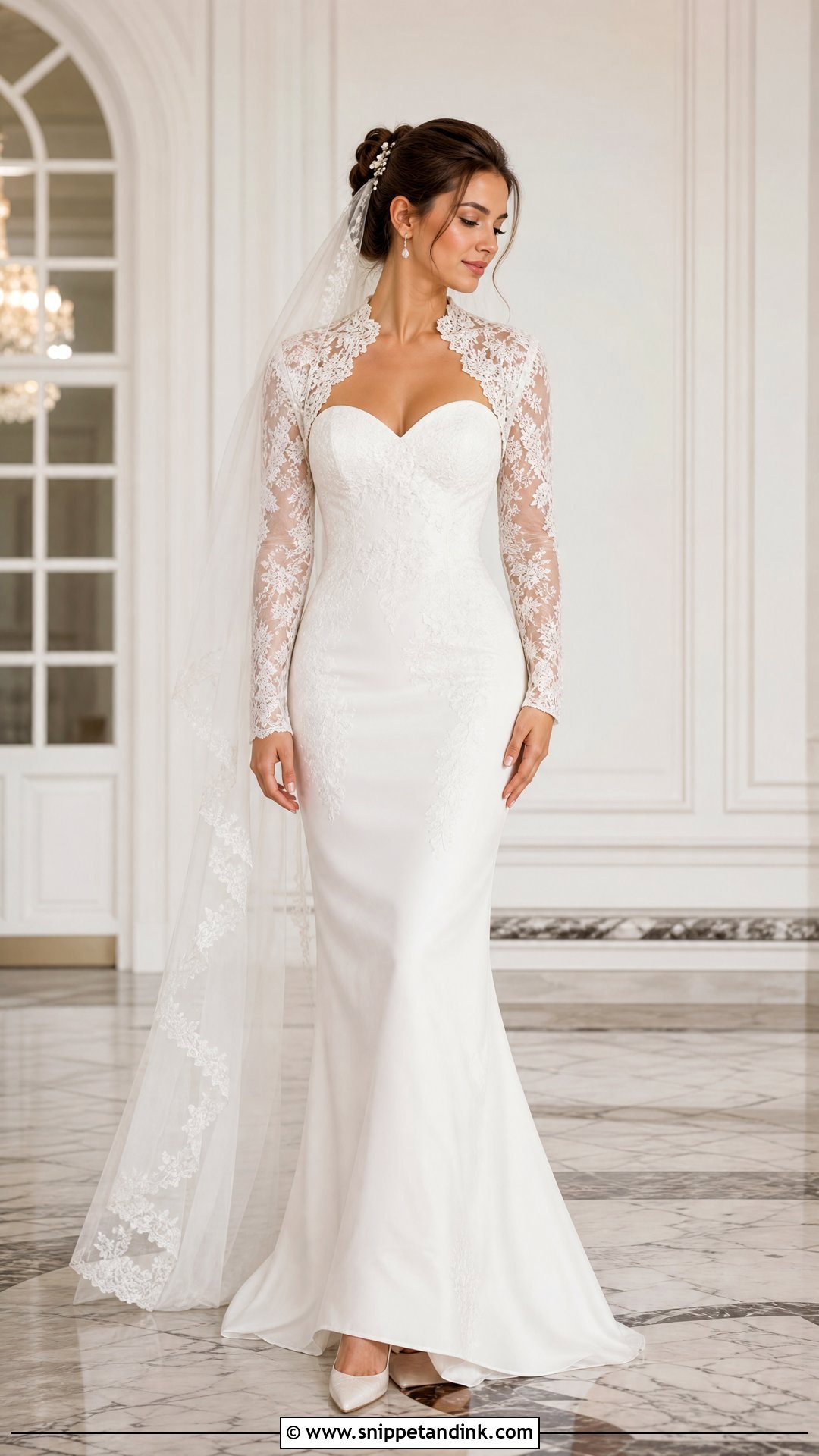
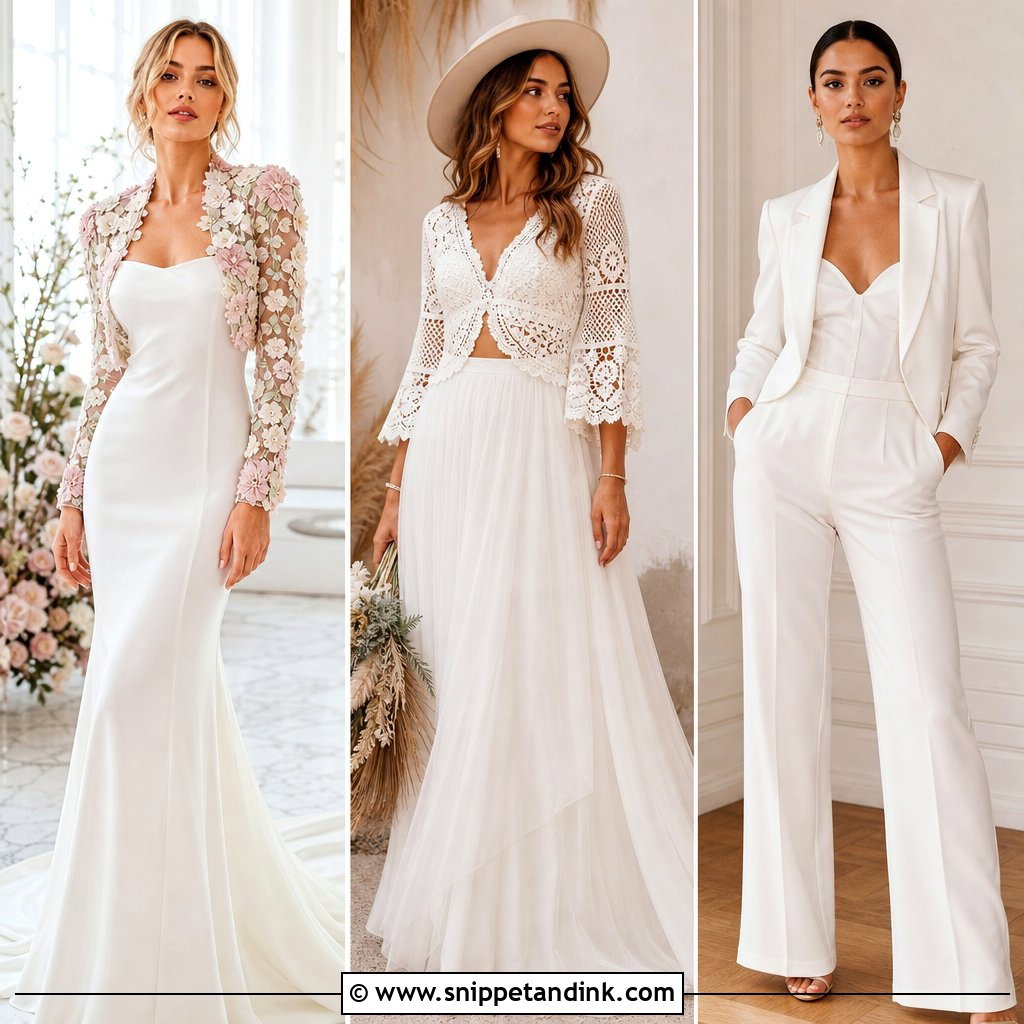
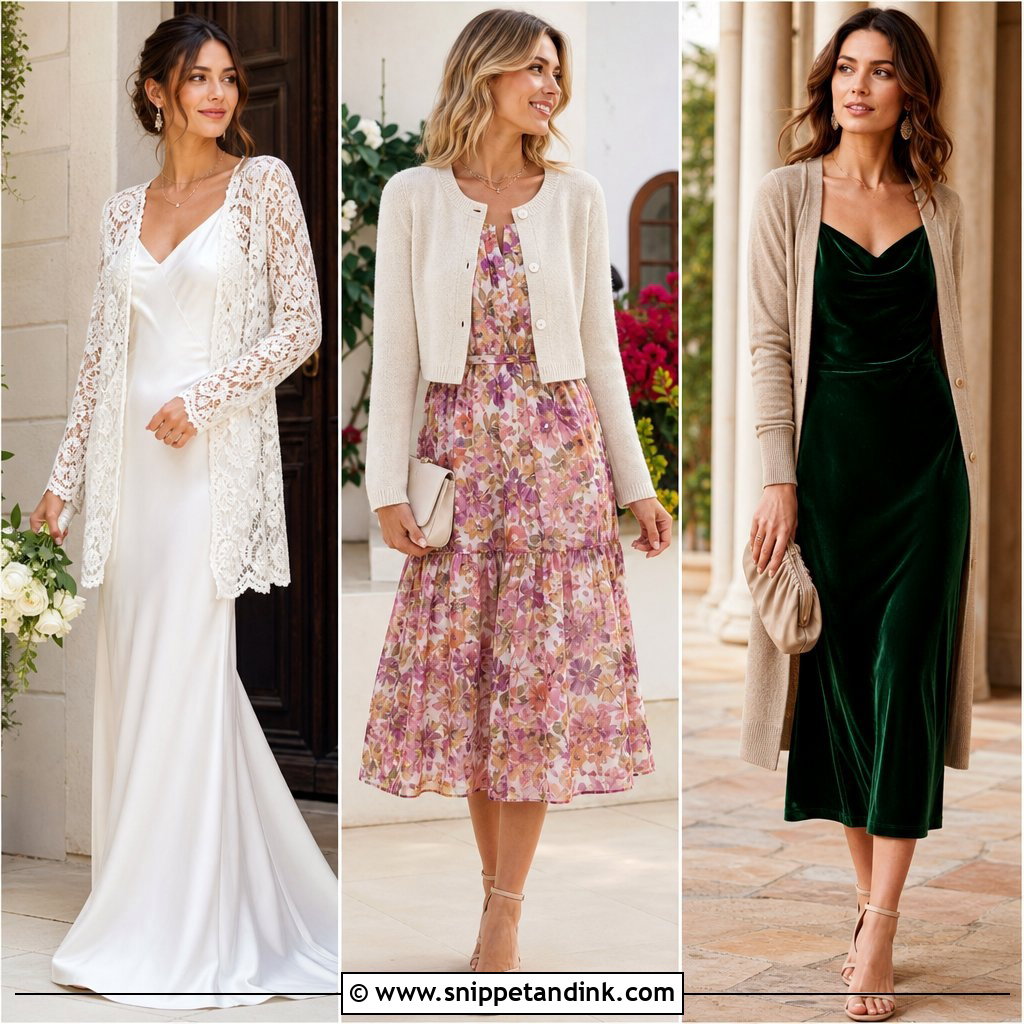
Want arm coverage without losing a sweetheart neckline? A fitted lace bolero does exactly that, and it makes a strapless gown feel properly wintry. Resist the urge to match the lace exactly. Two nearly identical laces placed side by side often look like a mistake; a clear, deliberate contrast reads as a choice. The bolero should stop near the natural waist so the dress keeps its proportions. I insist it’s altered with the gown and your actual bridal bra on, because a bolero fitted over a T-shirt will pull across the back once it’s over a structured bodice, and that wrinkle shows in every close-up. Pearl pins in the hair, delicate earrings and ivory pointed heels suit it, and a fingertip veil shows off the sleeves without burying them.
4. Cashmere Shawl With Silk Winter Wedding Dress
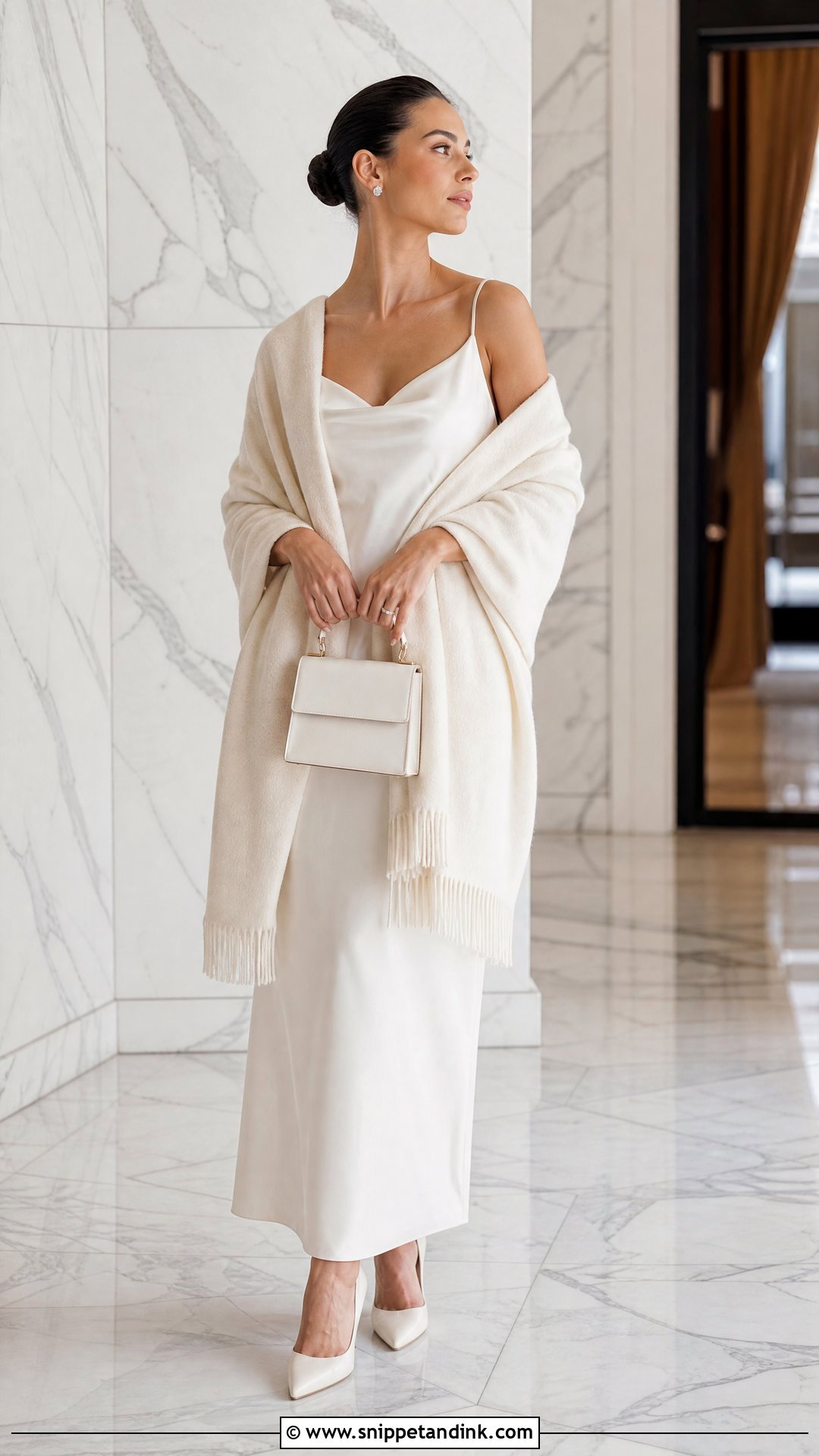
Cashmere over silk is a quiet, expensive-looking pairing for a city wedding or a small, minimal ceremony. Pick a generous ivory shawl: big enough to wrap both shoulders outside, then drape loose at the elbows once you’re in. Slip, column and bias-cut gowns suit it best because the soft wrap takes the edge off their clean lines. Silk is the fussy one here. Any pin pushed through it can leave a permanent hole, so if you want a brooch, pin it through the shawl only, at a fold well away from the dress, and test on a seam allowance first. Sleek hair, small diamond studs, pumps in the gown’s shade and a structured mini bag give the fluid fabrics some contrast.
5. Wool Wrap Coat With Ball Gown Winter Wedding Dress
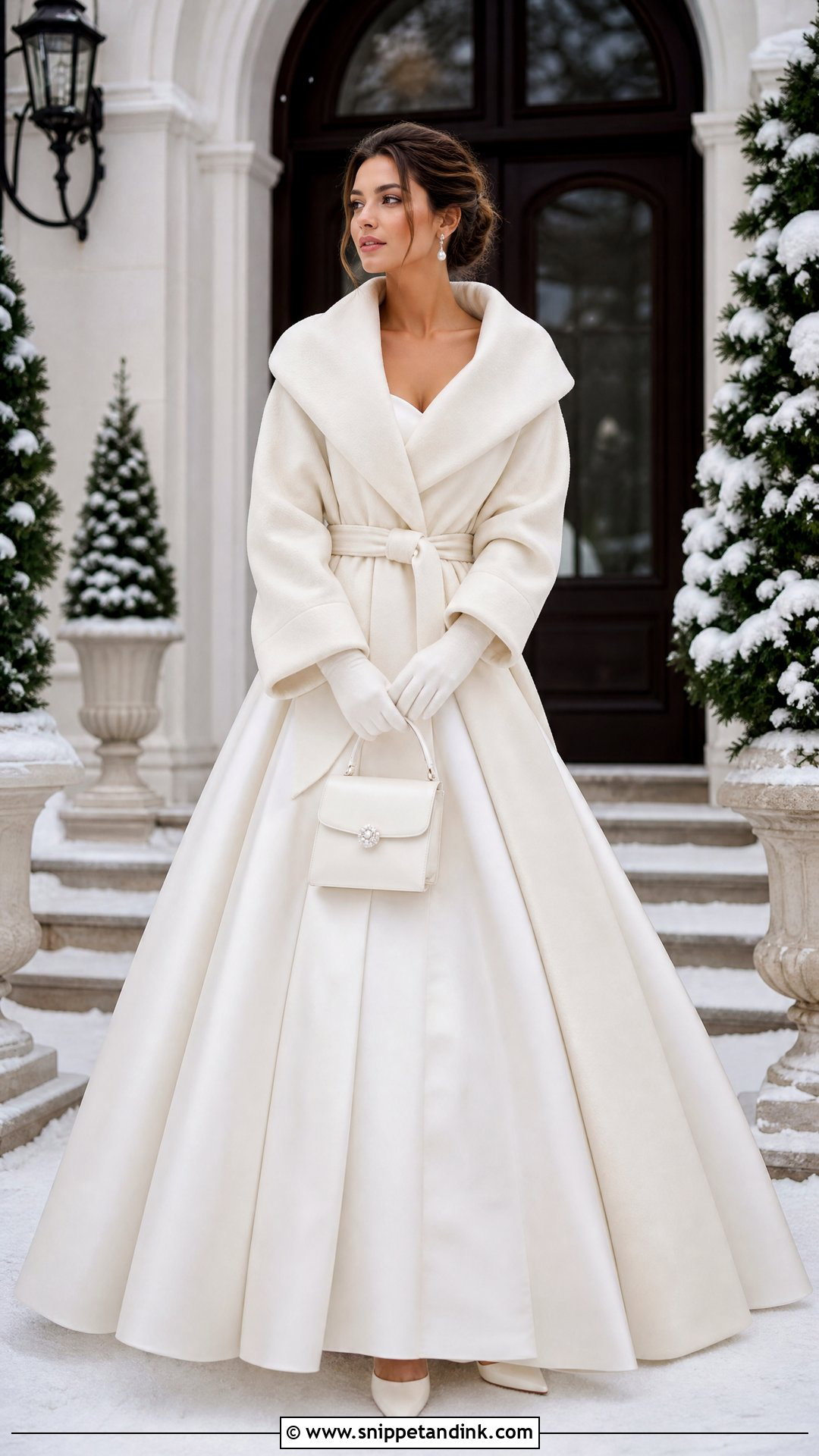
A ball gown fights most coats. The skirt needs room and the bodice can’t take pressure, so I reach for a wool wrap coat with a generous sweep, dropped shoulders and a smooth lining. The belt lets you define the waist without squeezing the boning. Tie it loosely; pulling a belt tight over beadwork can crack beads or leave a ridge in the bodice. Midi or full length both work. Ivory is traditional, pale gray or soft camel gives a sophisticated contrast. Closed pumps or heeled ankle boots, depending on how much the skirt shows, plus pearl earrings, lined gloves and a compact top-handle bag. Open the coat slightly for portraits so the gown is clearly visible.
6. Bridal Capelet With Mermaid Winter Wedding Dress
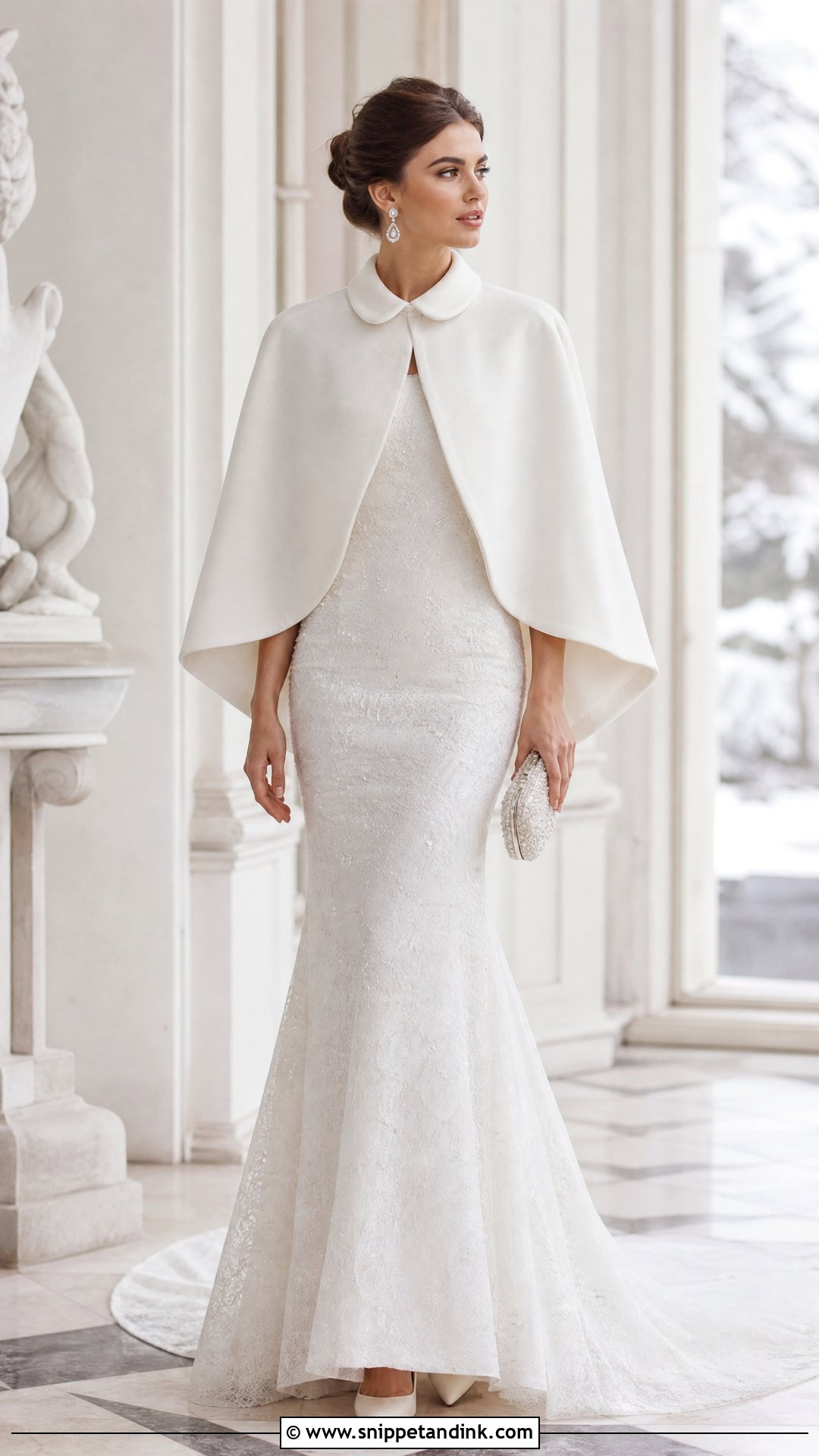
Mermaid gowns live or die on their line from waist to knee, so a cropped capelet is the coverup I trust with them: shoulders covered, fitted shape left completely alone. Faux fur, brushed wool or structured satin all work if it ends above the waist. A small collar frames the face; an open neckline lets statement earrings show. Look at it from the back in the fitting mirror, not just the front. Many mermaid gowns have rows of covered buttons or lace down the spine, and a capelet that’s slightly too long or lifts at the shoulders will hide them or ride up when you hug. A polished updo, crystal studs, sleek pointed heels and a compact beaded clutch finish it.
7. Velvet Bridal Jacket With Satin Winter Wedding Dress
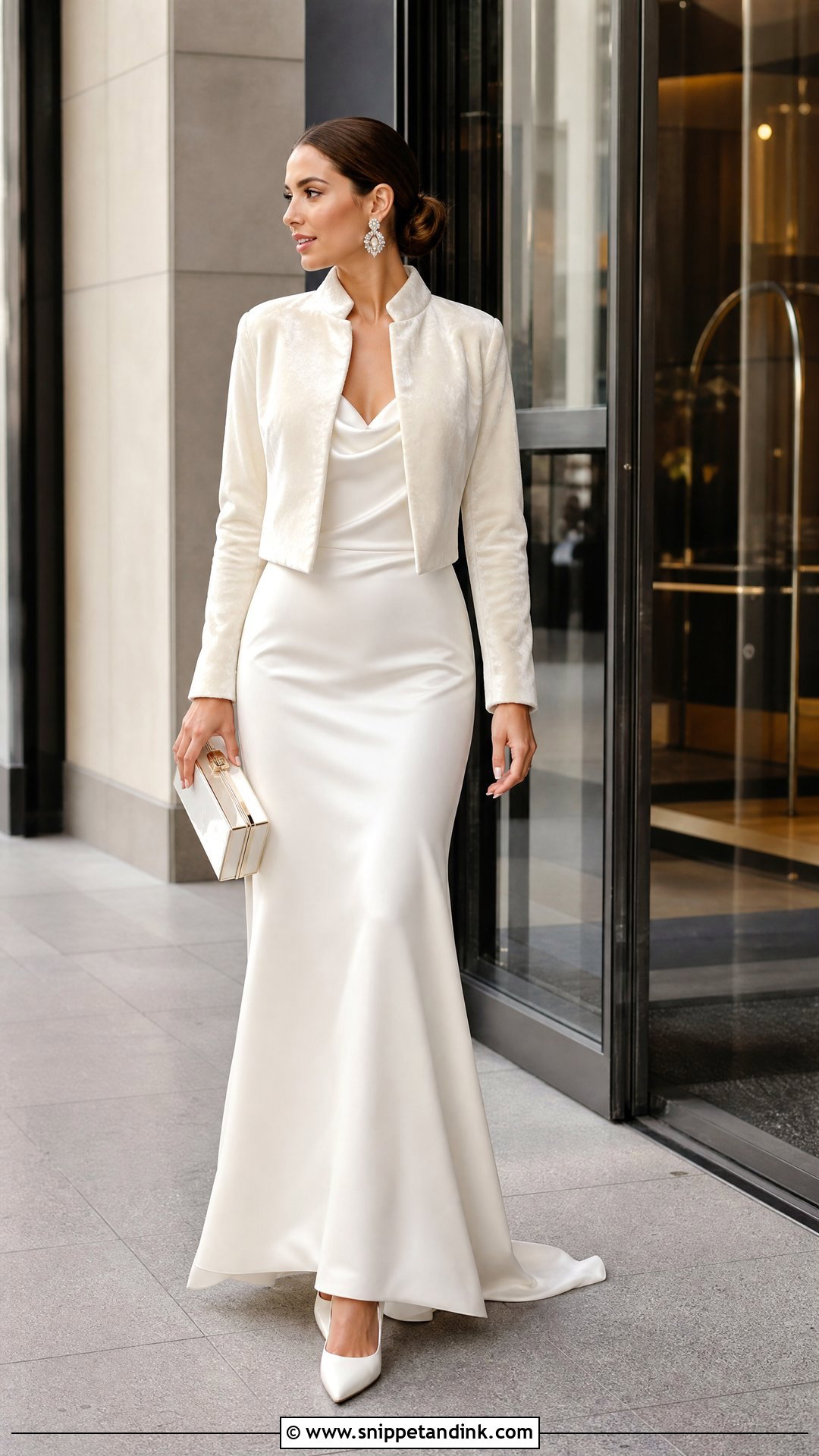
Velvet over satin is a contrast of textures that cameras pick up well: one absorbs light, the other reflects it. A cropped ivory velvet jacket keeps everything bridal, while navy, forest green or burgundy brings color to a modern wedding. Clean lapels and almost no hardware stop it looking like everyday outerwear. A satin column or understated A-line gives the jacket space to stand out. Straps are the thing I watch. A jacket with a narrow shoulder can push thin gown straps inward and make the neckline bunch, so try it on with arms forward, as if hugging. Metallic earrings, a sleek bun, satin pumps and a small box clutch keep it sharp.
8. Pearl Bridal Topper With Minimal Winter Wedding Dress
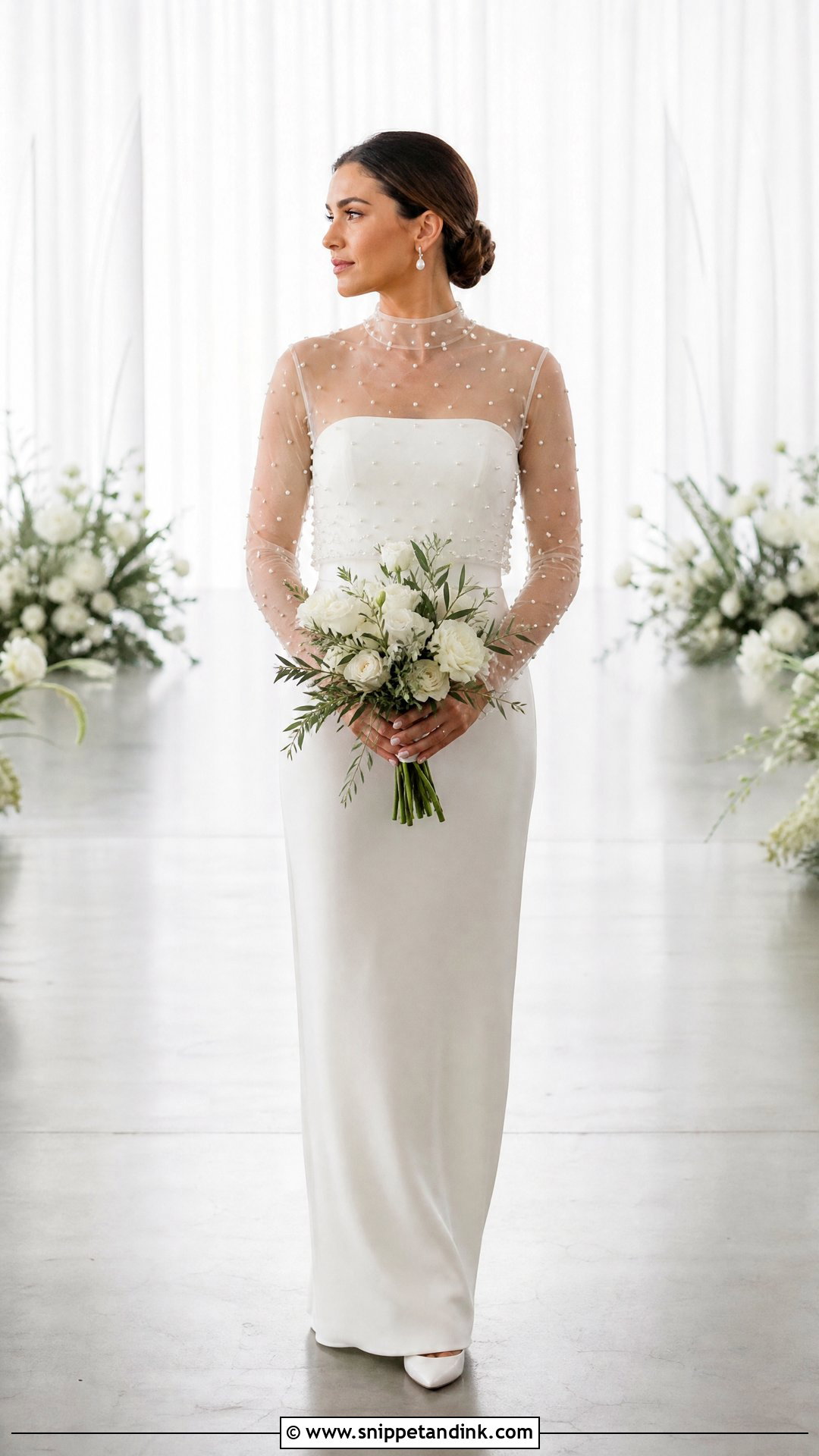
A pearl-covered topper turns a plain gown into something much more detailed, with light coverage over shoulders and arms. It needs a calm surface underneath: crepe, satin or plain tulle. Over beading or heavy lace it gets heavy fast. Pick evenly spaced pearls and a neckline that follows the gown’s. Pearl mesh catches on everything, earring backs, bracelet clasps, the edge of a lace veil, so wear every accessory together once before the day. I’d keep the veil plain or skip it. Store it flat in tissue, and put it on last, after makeup is set, because foundation on pale mesh is very hard to remove. Pearl earrings, a smooth low bun and plain closed heels are all it wants.
9. Feather Capelet With Fitted Winter Wedding Dress
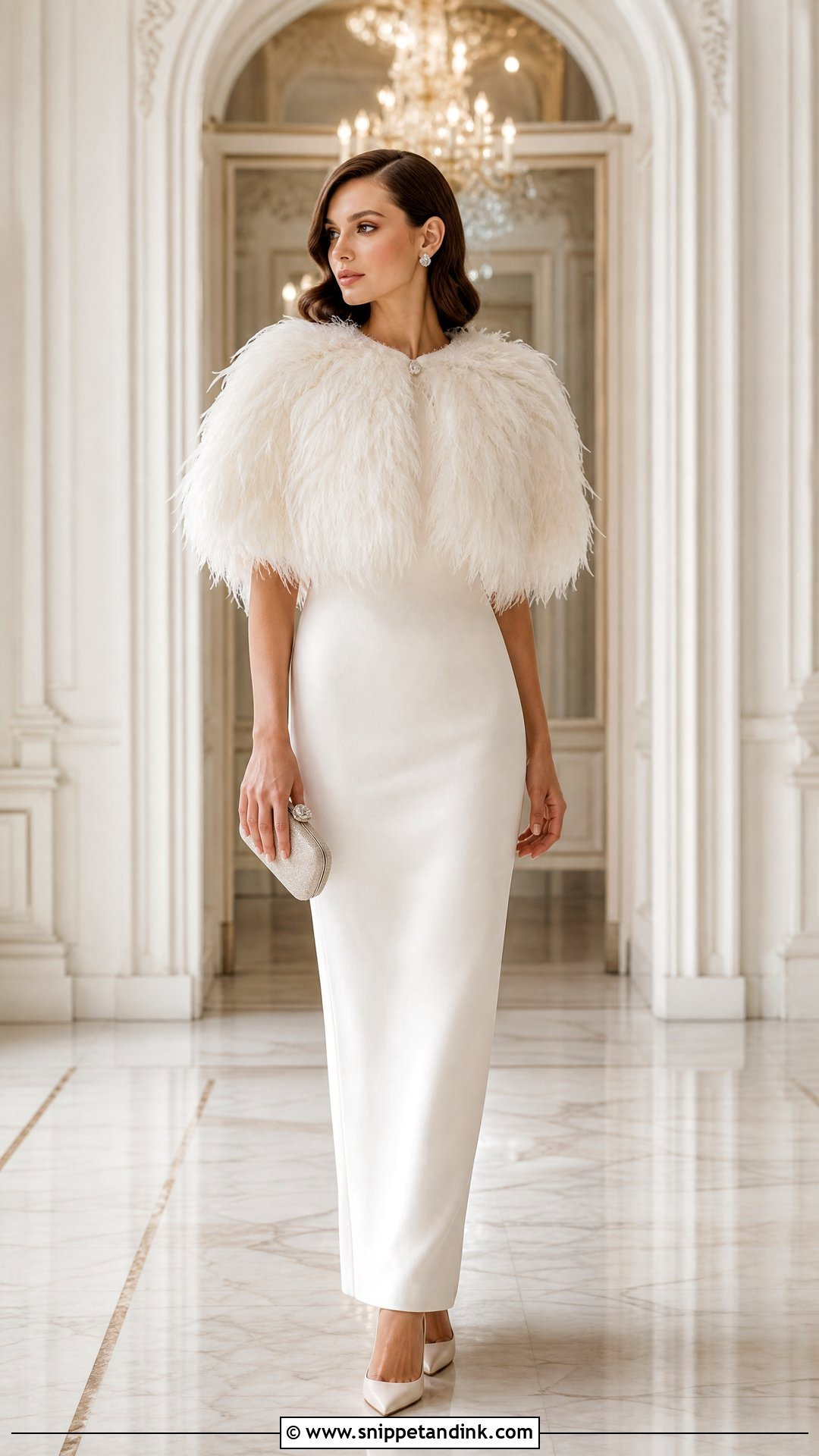
Feathers add movement and glamour to a fitted gown, but I’ll be honest: a feather capelet is a style choice, not a warm one. It covers the shoulders and that’s about it, so it belongs indoors, in mild weather or for a few minutes of outdoor portraits. Choose fine, soft white or ivory feathers rather than a big ruff that buries your neckline. The cropped shape suits sheath, column and mermaid gowns because it adds volume on top and leaves the waist clear. Shake it hard over a dark towel the week before; if feathers come loose, they will be all over your skirt and your partner’s suit by the first dance. Crystal studs, a satin clutch, plain pointed pumps and a neat bun or side-parted wave keep it in balance.
10. Hooded Bridal Cloak With Lace Winter Wedding Dress
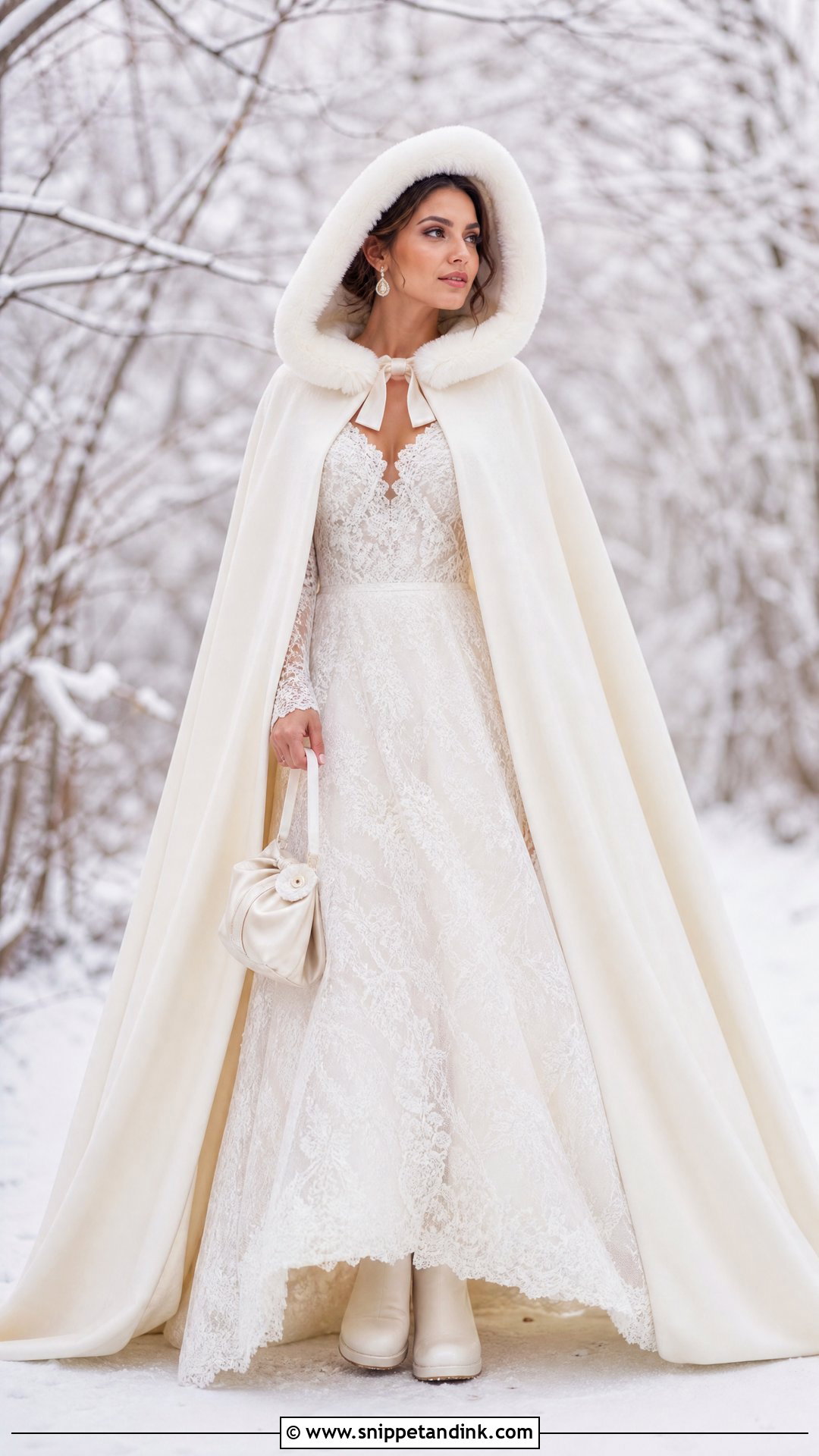
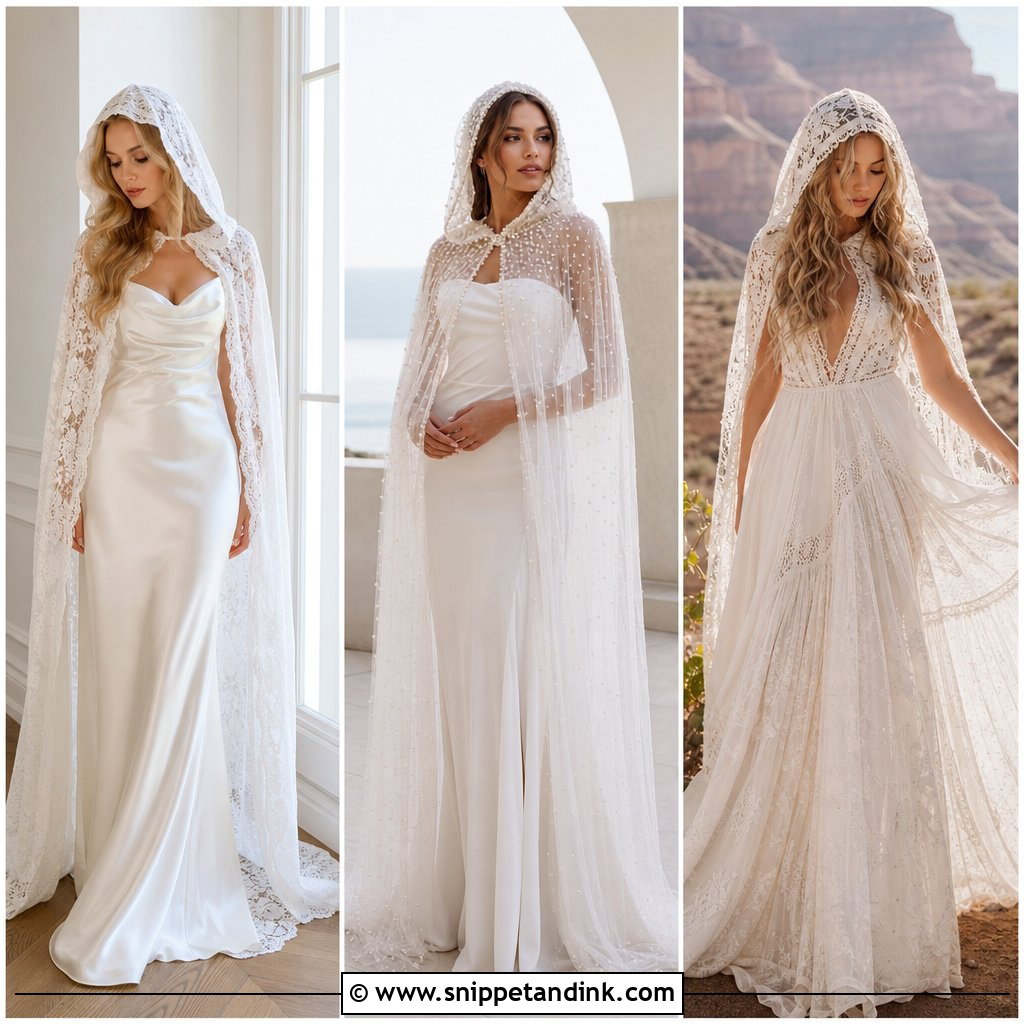
For a snowy, romantic setting, a hooded bridal cloak gives the most coverage and the most movement of anything here. A lace A-line or softly structured ball gown echoes its flowing shape. Velvet, wool blend or lined crepe are warm; sheer versions are for looks only. The hood is where I spend my time in fittings: it needs to be deep enough to sit behind an updo without crushing it, and the closure should land near the collarbone. Keep the cloak slightly shorter than the train so the two don’t tangle when you turn. Drop earrings, waterproof closed boots and a small satin wristlet suit it. For portraits, hold one side open to show the bodice and waist.
11. Satin Bolero With Off-Shoulder Winter Wedding Dress
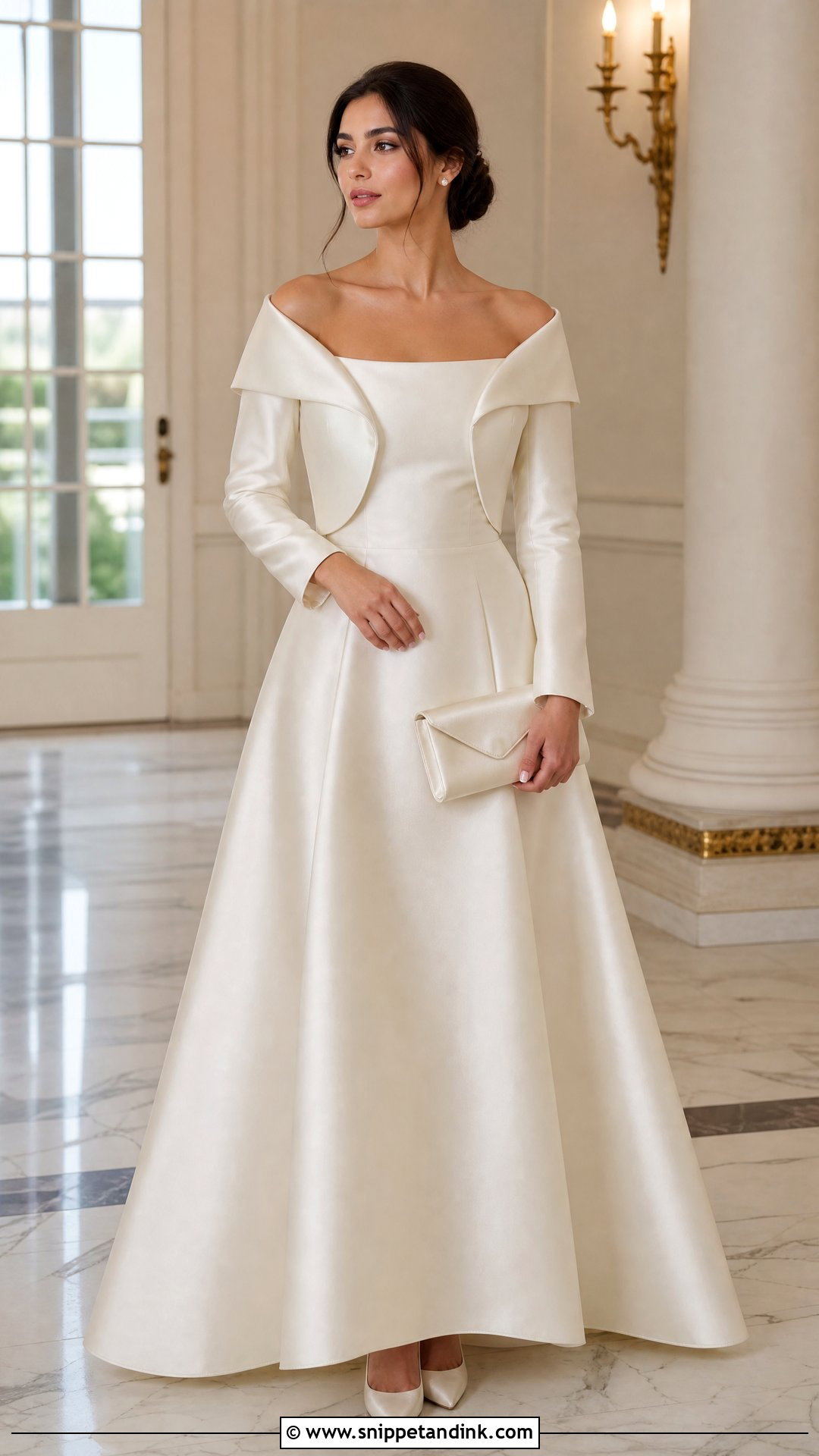
An off-shoulder neckline is the hardest one to cover without ruining it. A structured satin bolero with three-quarter or full sleeves and a cropped hem can do it, as long as the collar stays simple and open. Matching satin looks continuous; a slightly different sheen gives quiet depth. In the fitting, raise your arms as if holding a bouquet and reaching for a hug. If the bolero drags the off-shoulder band upward, it needs more ease across the back or a lower armhole. Satin also creases sharply at the elbow, so a fuller sleeve wears better over a long day. A low chignon, pearl studs, a slim bracelet, closed pumps and a satin envelope clutch keep it formal.
12. Mohair Cardigan With Slip Winter Wedding Dress
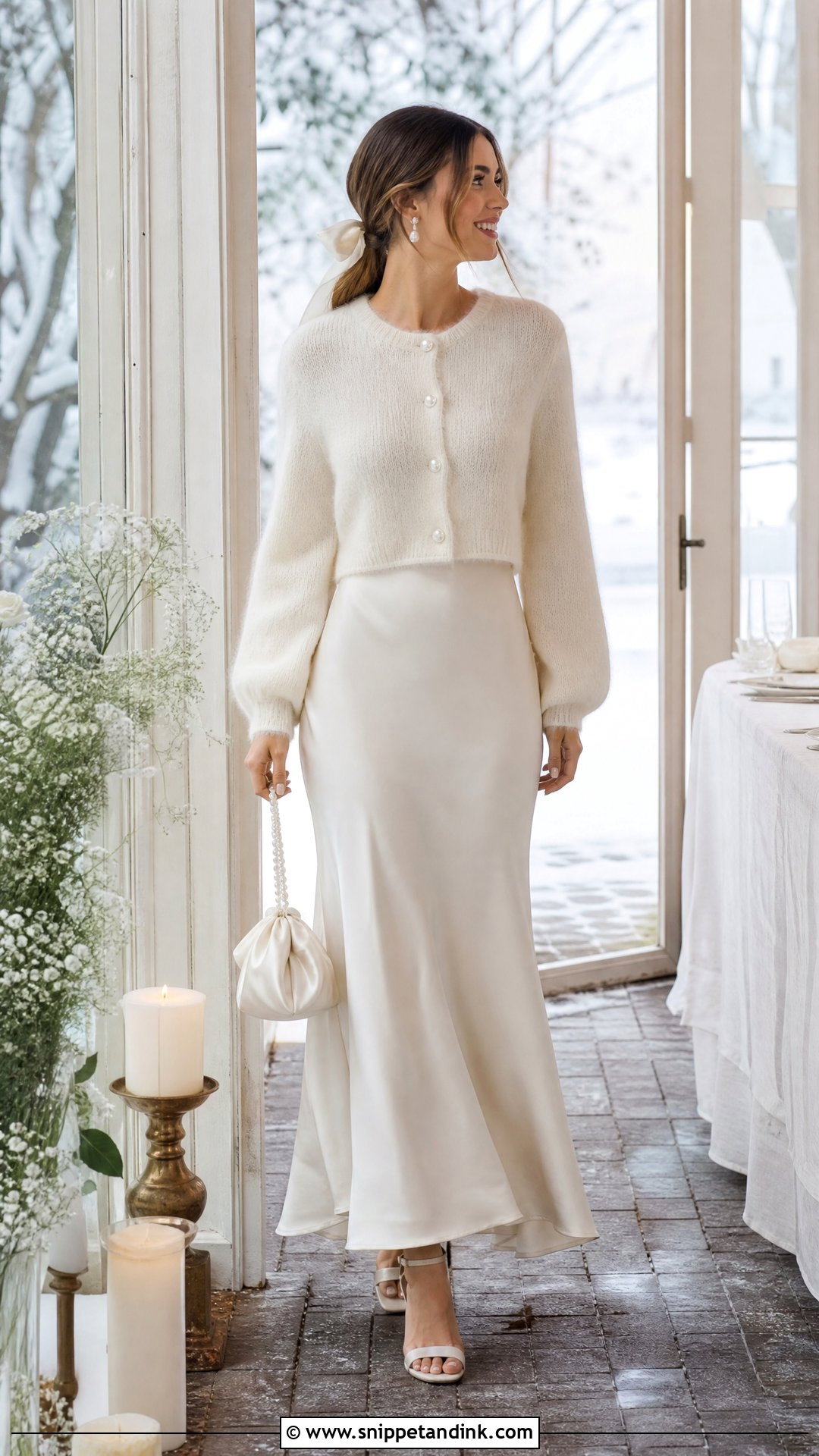
Mohair over a slip dress is my favorite pairing for small winter weddings: cozy, relaxed and still clearly bridal. Choose a cropped cardigan with fine fibers and a light fit; an oversized sweater swamps a slip. Pearl or fabric-covered buttons dress it up. Wear it buttoned outdoors, then drape it on your shoulders inside. Mohair sheds, and loose fibers on dark silk or ivory satin are very visible in flash photos. I test by rubbing the sleeve against a scrap of similar fabric. A lined cardigan or a tighter-spun knit sheds far less. Delicate earrings, a ribbon-tied ponytail or loose bun, ankle-strap heels and a small satin bag finish it.
13. Alpaca Shrug With Tea-Length Winter Wedding Dress
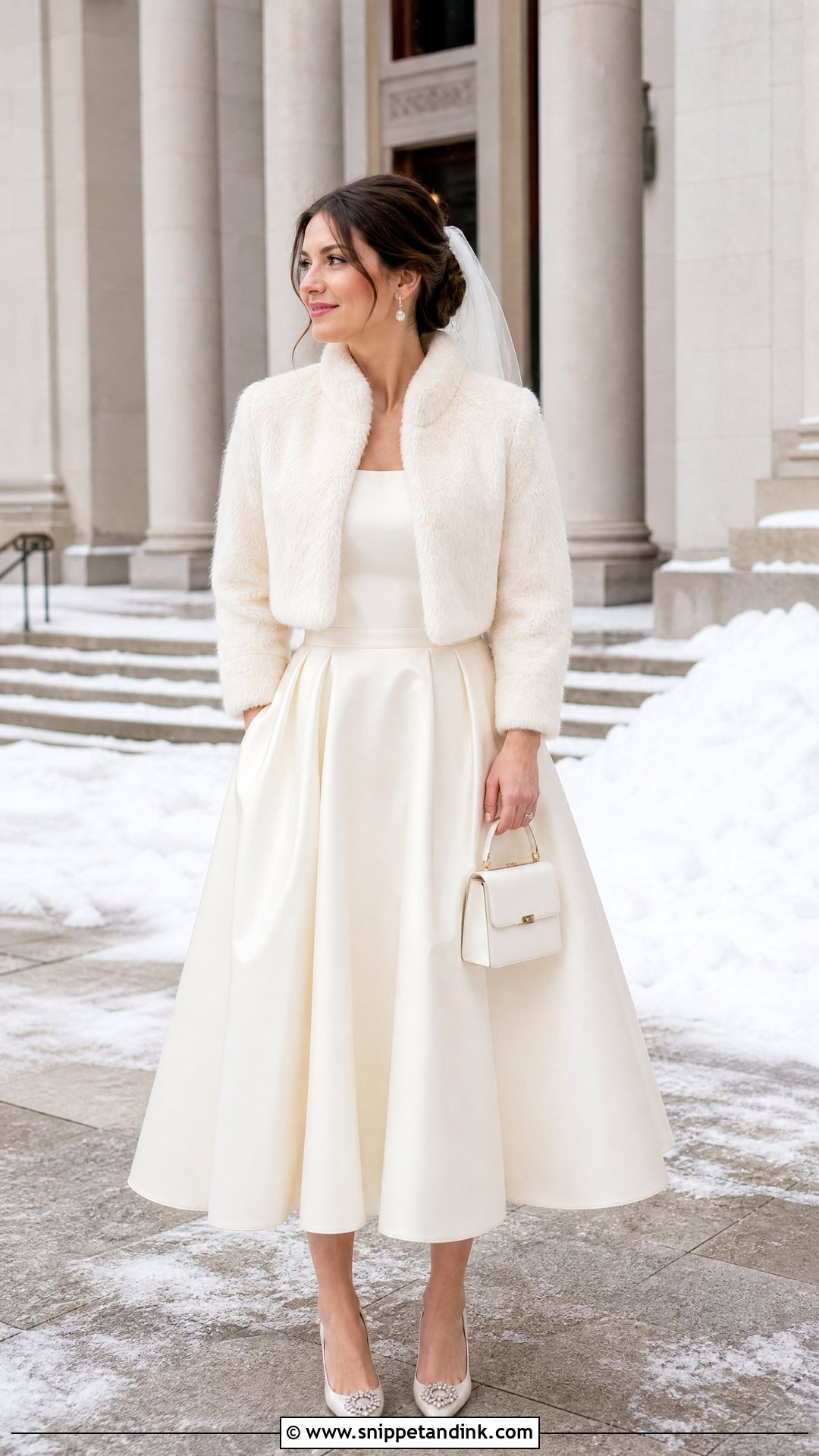
Tea length shows the shoes, which is half the fun. Embellished pumps, ankle boots or block heels with decorative buckles all become part of the look. An alpaca shrug is warm for its weight and keeps the waist visible while balancing the shorter skirt. Ivory coordinates; blush, dove gray or powder blue add a soft accent. Fit matters more than people expect: too loose and it slides off your shoulders all evening, too tight and it pushes into the bodice and flattens a sweetheart neckline. Pearl earrings, a birdcage veil and a structured mini bag suit the retro proportion. I’d suggest it for courthouse ceremonies and restaurant receptions where moving freely matters more than a train.
14. Tailored Bridal Blazer With Column Winter Wedding Dress
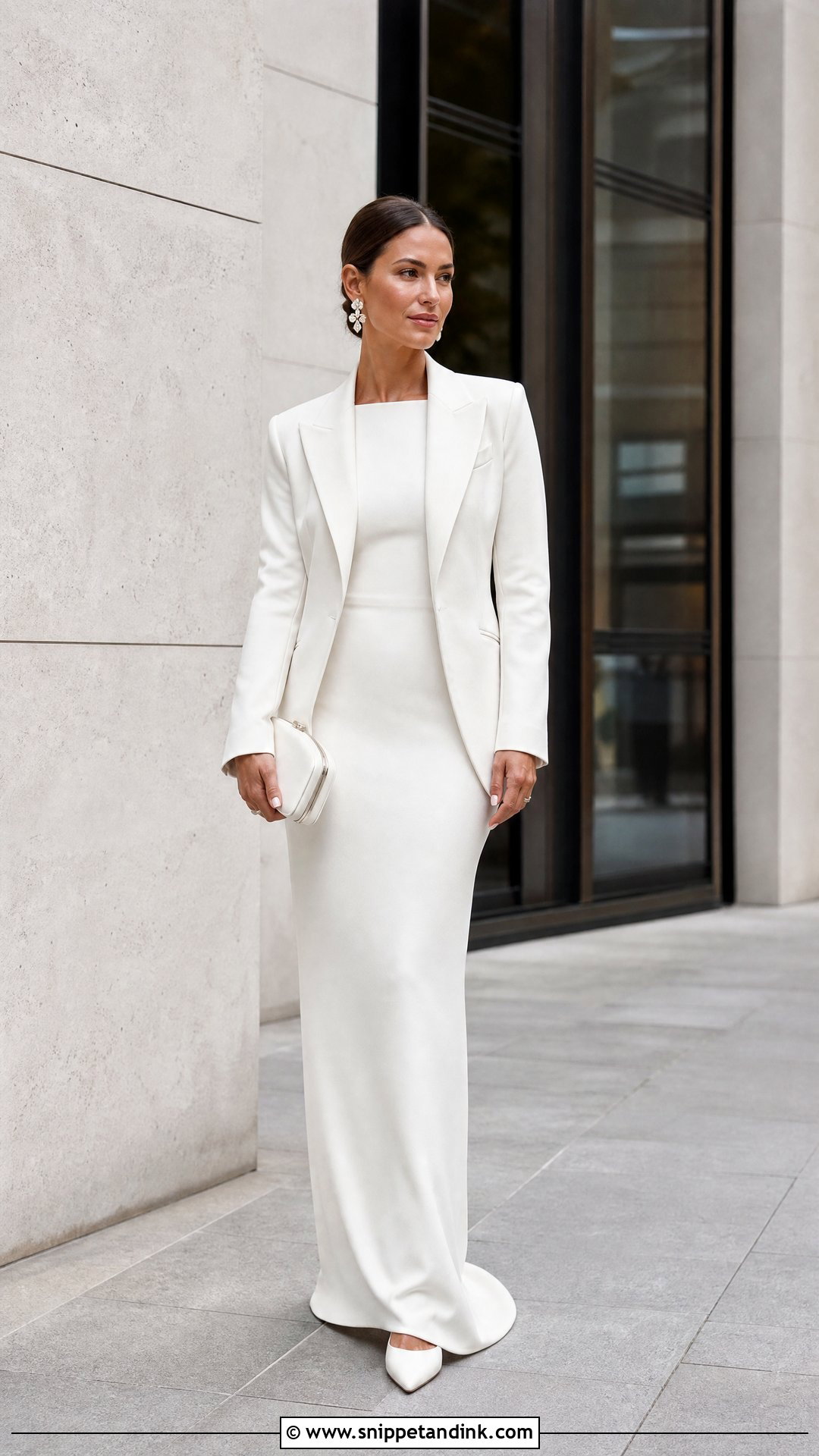
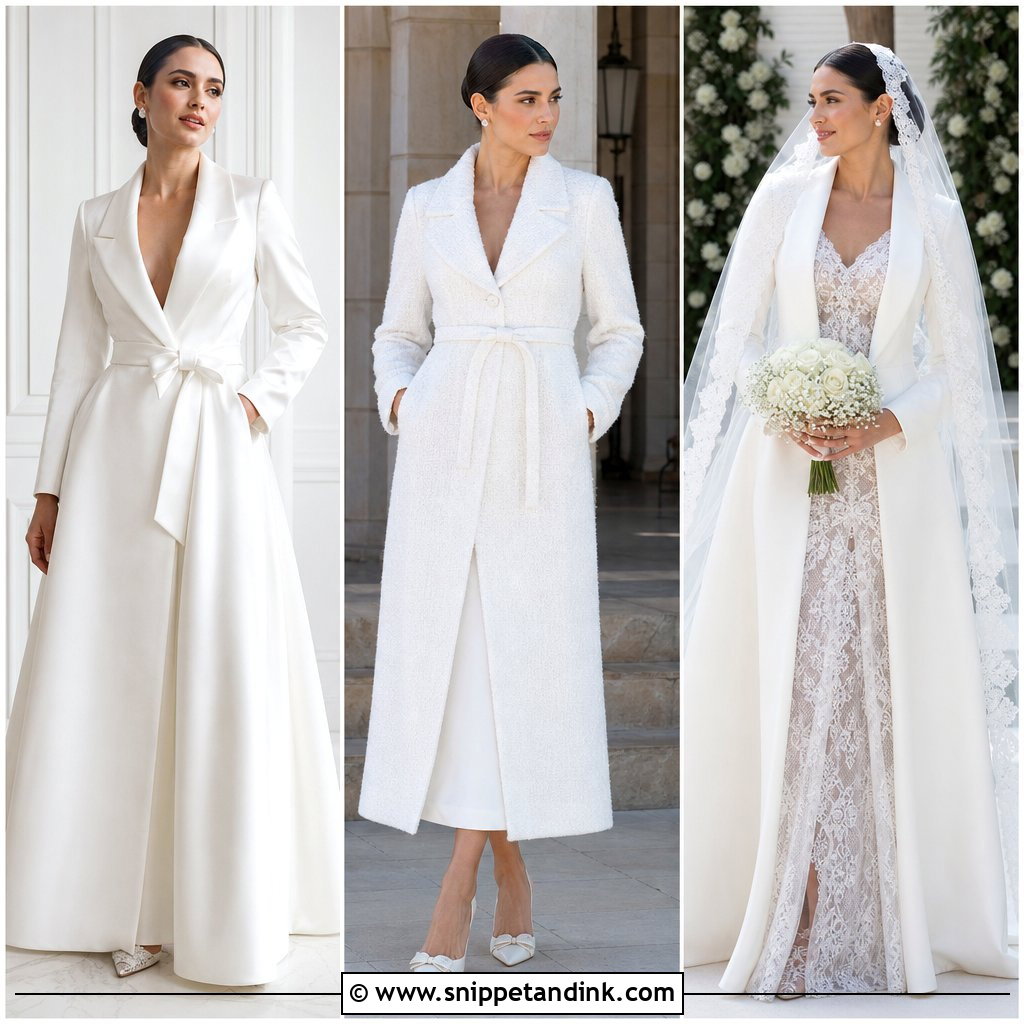
A tailored blazer gives a plain column gown a confident edge, and it’s the easiest coverup to wear all night without thinking about it. Ivory or white, with a defined shoulder and a single button, at a length that suits you: longer feels fashion-forward, cropped shows the waist. It works over satin, crepe or knit columns with little or no embellishment. Empty every pocket and check the inside: bulky pocket bags show through a slim gown and rough buttons can mark satin. Try it open and closed in the mirror, since it hangs very differently each way. Sculptural earrings, sleek hair, pointed pumps and a structured clutch. In a city it moves from street to ceremony to dinner without looking casual.
15. Boucle Jacket With Midi Winter Wedding Dress
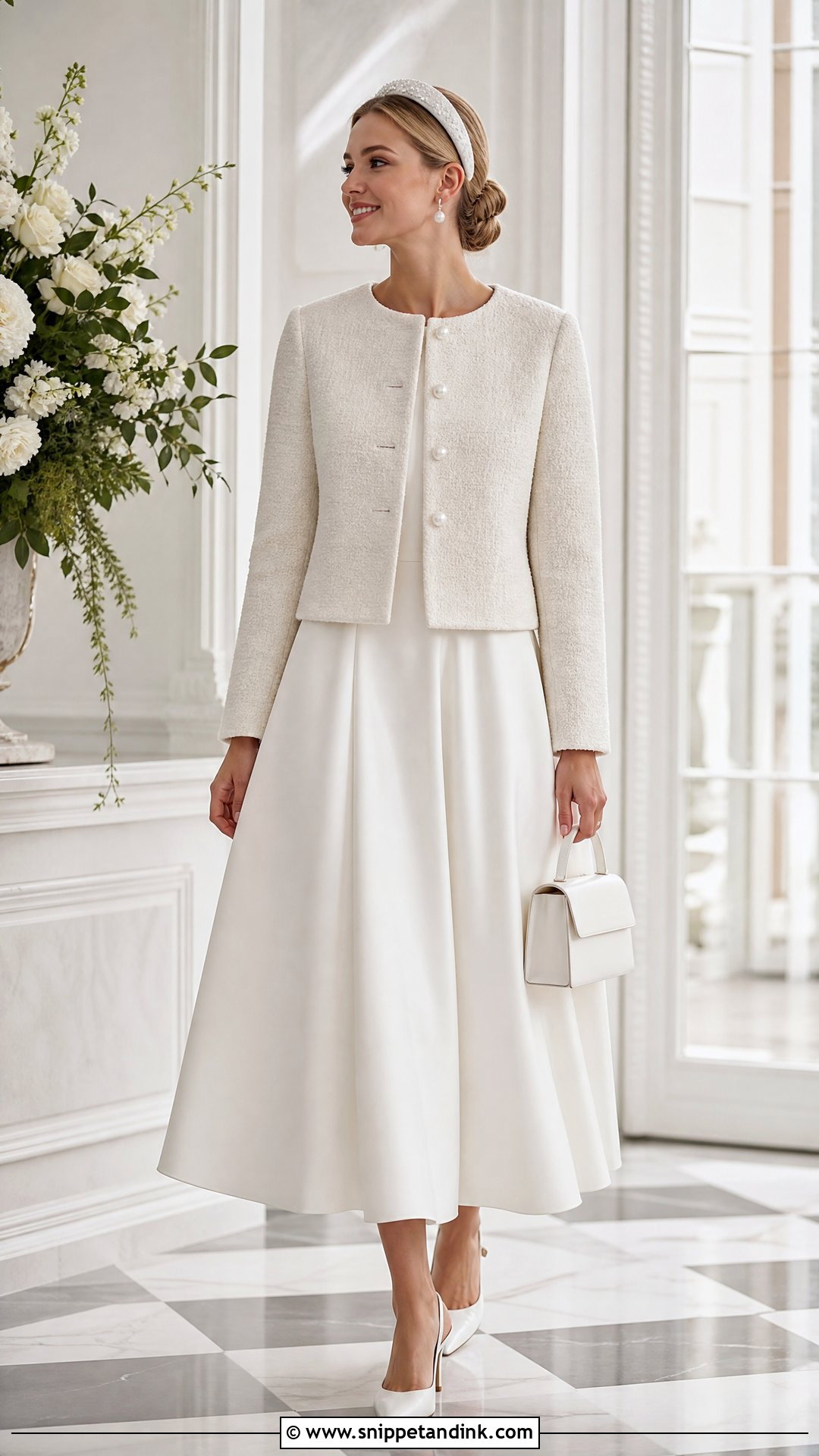
Boucle is texture that reads as polish, so a collarless boucle jacket over a midi dress looks deliberately put together. Pearl buttons, a fine metallic trim or clean bound edges keep it bridal. A fitted cut suits a full midi skirt; a boxier one goes better with a narrow sheath. Stay close to the gown’s shade, or choose pale blue or blush for a gentle contrast. Boucle loops are the risk: they catch lace, tulle and beading easily, so check the jacket’s inner edges and cuffs against your skirt. It should end above the fullest part of the skirt. Pointed slingbacks, pearl earrings, a structured top-handle bag and a headband or short veil complete it.
16. Beaded Tulle Wrap With Simple Winter Wedding Dress
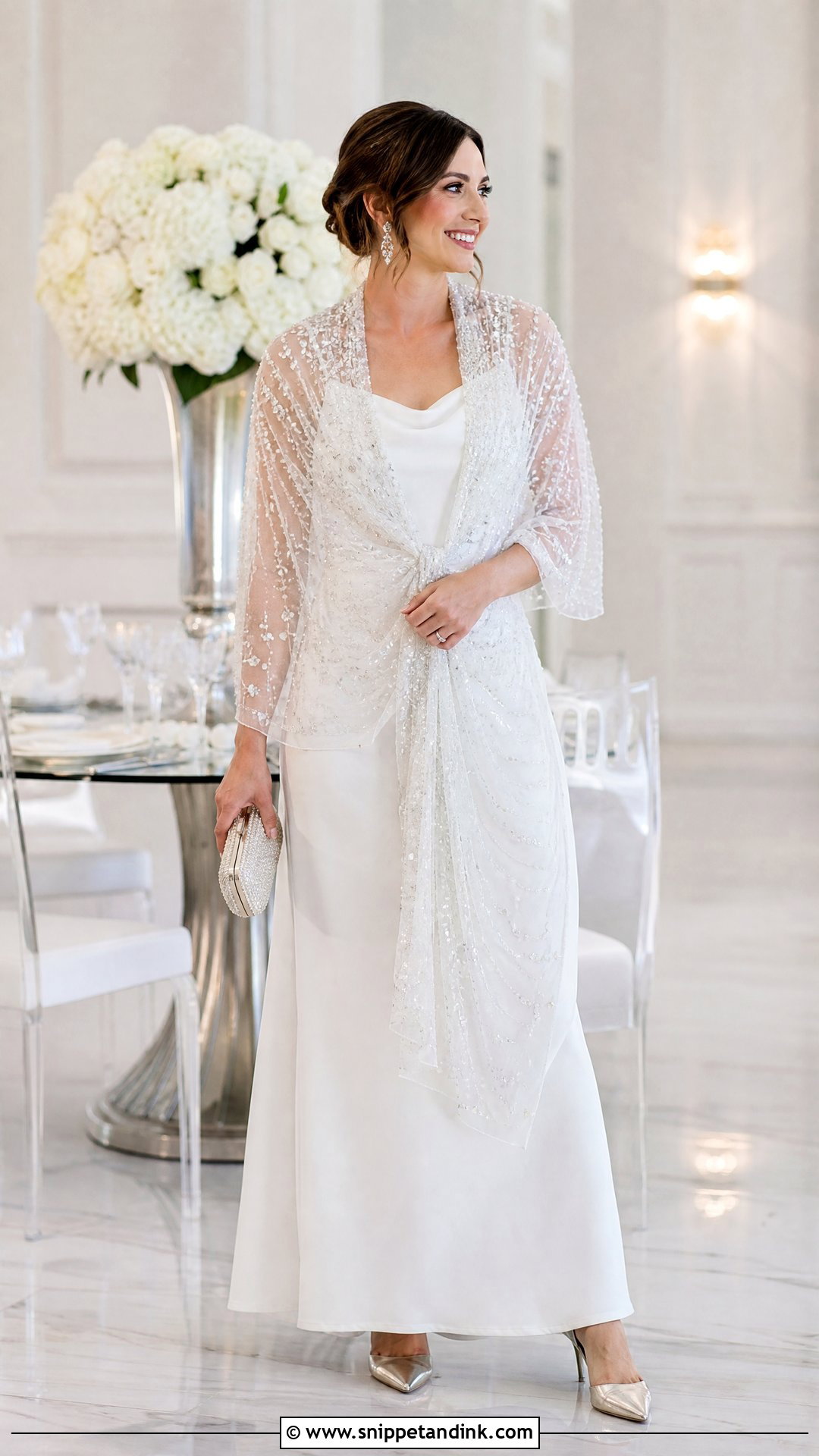
Beadwork on the coverup lets a simple gown stay simple. A beaded tulle wrap over plain satin, crepe or chiffon gives light shoulder coverage and catches candlelight in a way that’s genuinely beautiful. Drape it evenly across your back and close it at the front with a discreet clasp or slim ribbon. Pick clear crystals, pearls or silver beads that match your jewelry. Turn it inside out before the day: the knotted threads behind each bead are often rough enough to pull a satin skirt. It isn’t warm, so keep it for indoor ceremonies or quick portraits. Crystal earrings, softly pinned hair, metallic pumps and a small beaded clutch suit it, and it should be light enough to sit in without adjusting.
17. Organza Cape With Modern Winter Wedding Dress
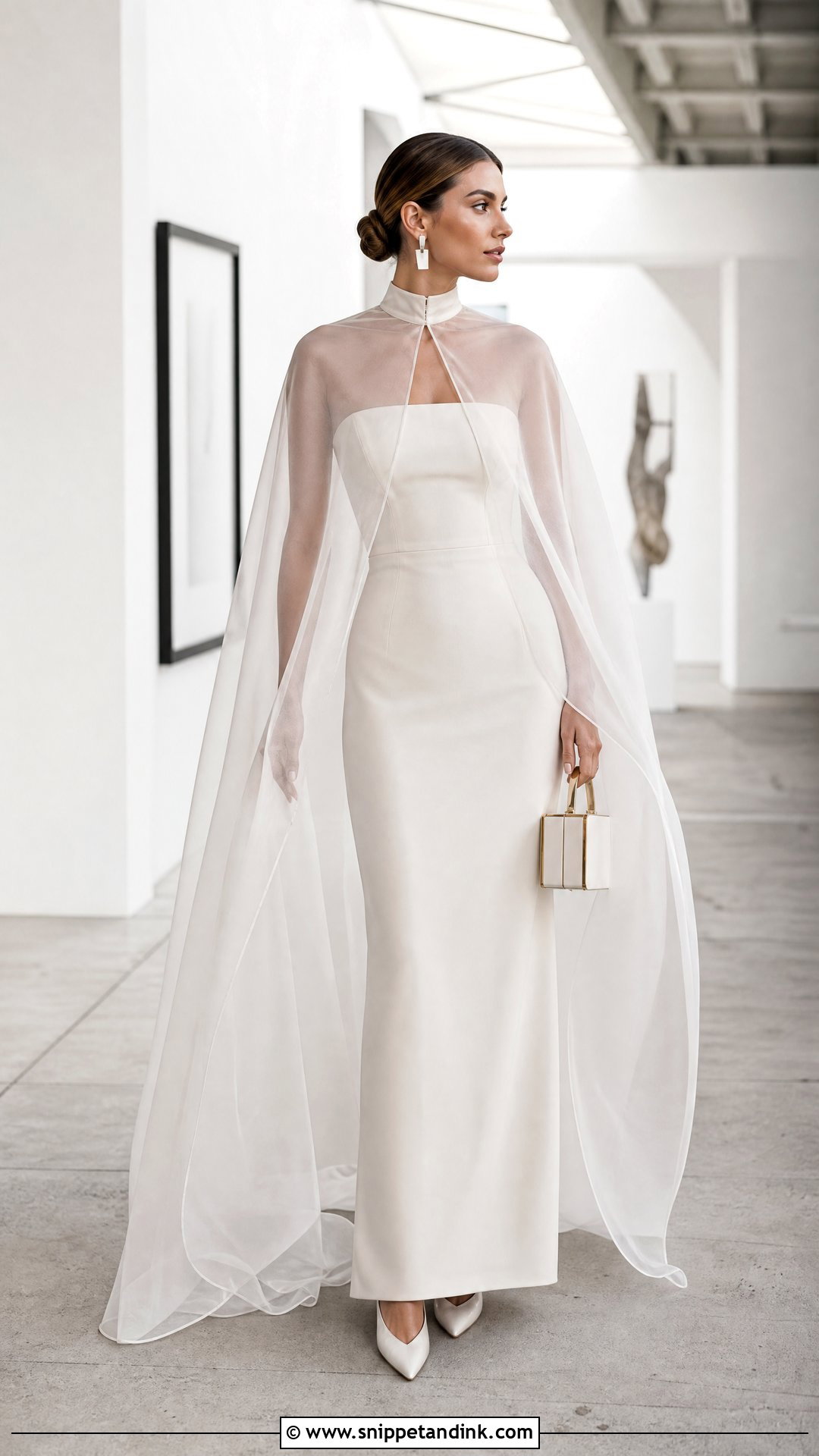
An organza cape adds architecture to a modern gown while staying light and airy. A minimal sheath, column or structured A-line pairs best. Hip length gives light coverage; floor length makes an entrance. Crisp white or ivory, minimal decoration. Organza is sheer and offers almost no warmth, so outdoors in real cold it needs a hidden layer, or a proper coat over the top for travel. It also creases if it’s crushed in a car, so lay it flat on the back seat. Ask the tailor to set the closure around the neckline carefully, so the fabric floats away from your body instead of bunching on the shoulders. Geometric earrings, a sleek bun, pointed pumps and a small structured bag finish it.
18. Bridal Trench Coat With Short Winter Wedding Dress
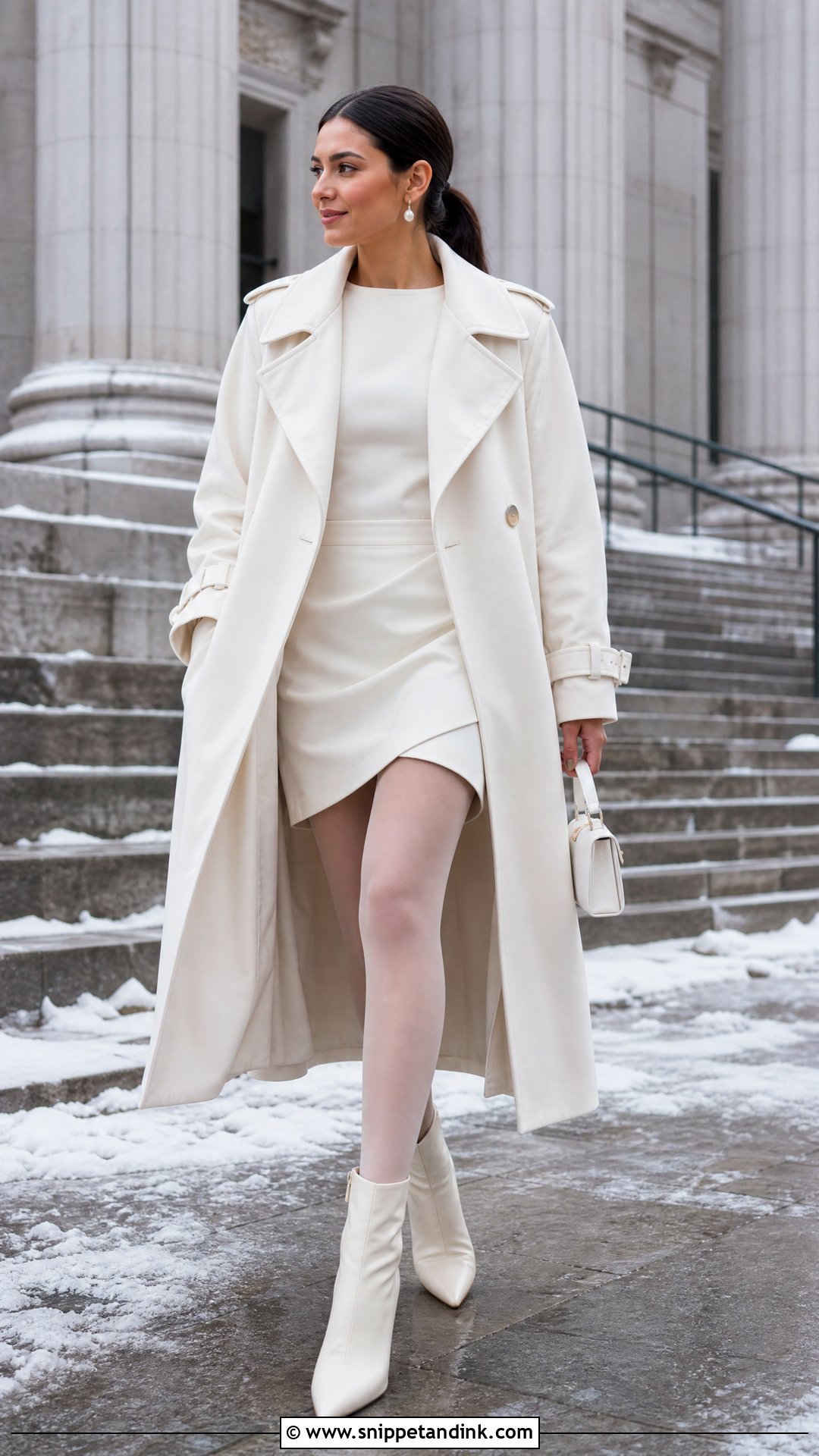
A short wedding dress plus an ivory trench is my answer for rainy winter weddings. Knee length, a fluid shape, a smooth lining and a removable belt. The coat should either cover the dress hem fully or end clearly above it; an inch of skirt peeking out below the coat looks accidental. A tailored mini or knee-length dress, sheer tights and pointed pumps go underneath, and on icy days I swap to ankle boots with stable heels. Tie the belt loosely behind you for photos that show the dress, then close it when you need the warmth. Water-resistant fabric earns its keep here. Pearl earrings, a compact handbag and a neat ponytail or bun finish it.
19. Cropped Leather Jacket With Tulle Winter Wedding Dress
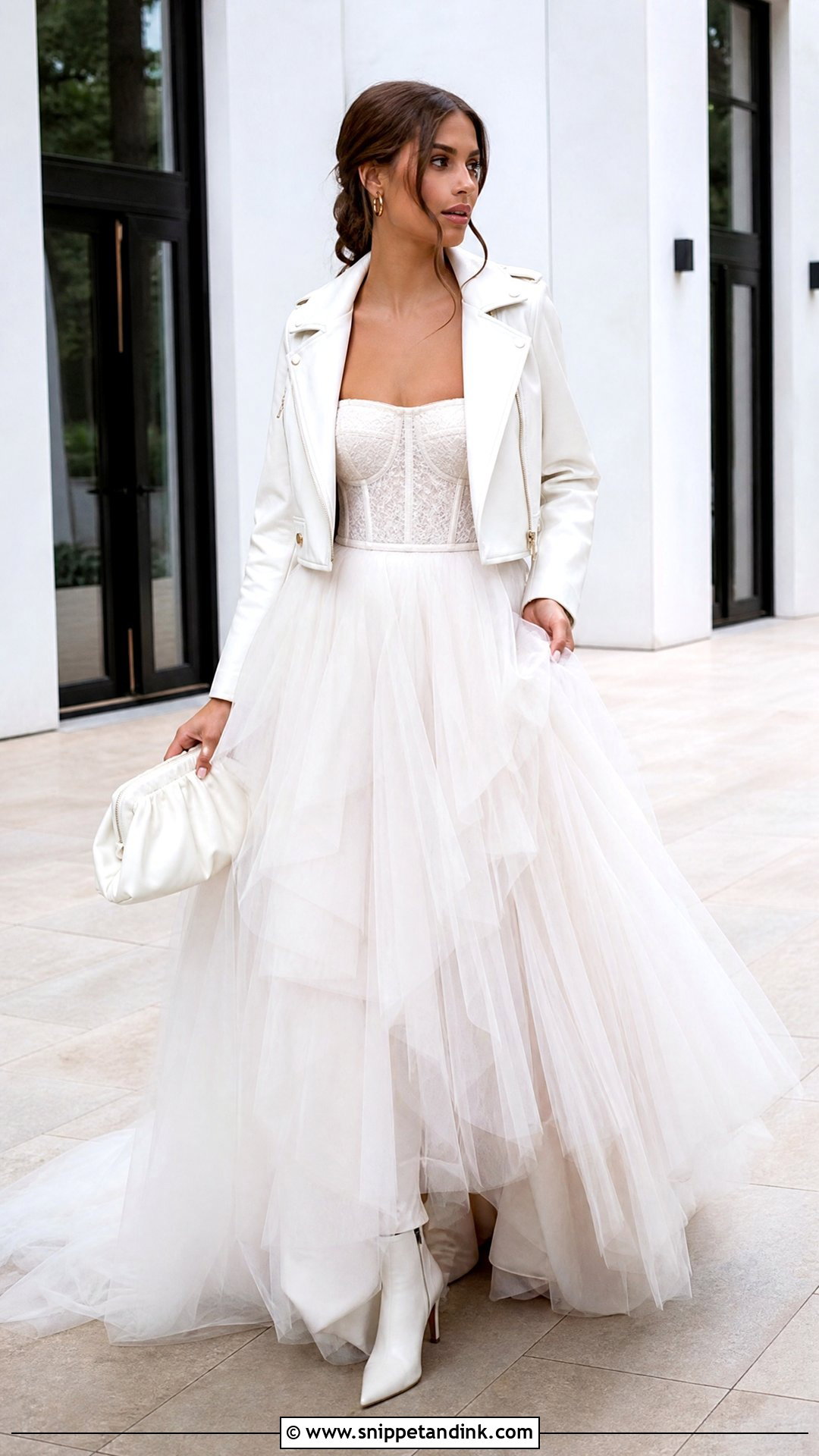
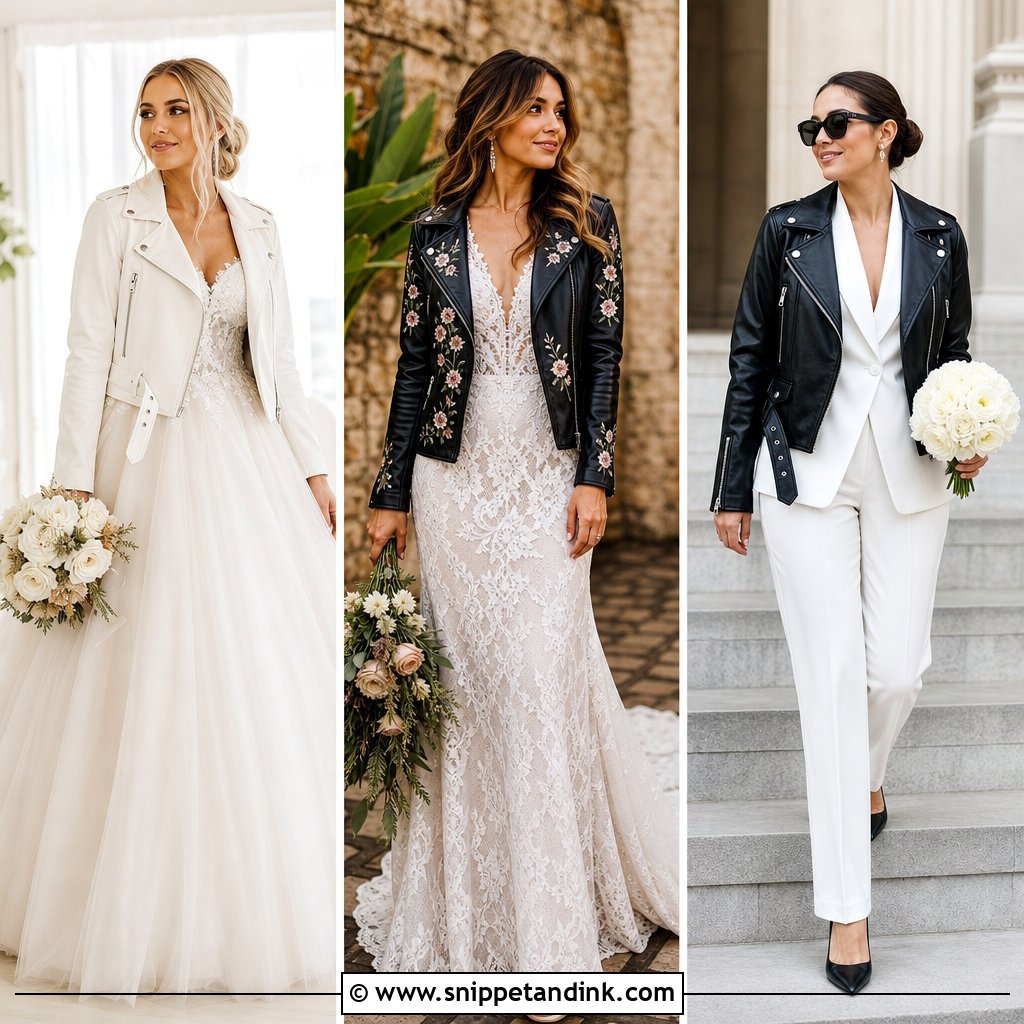
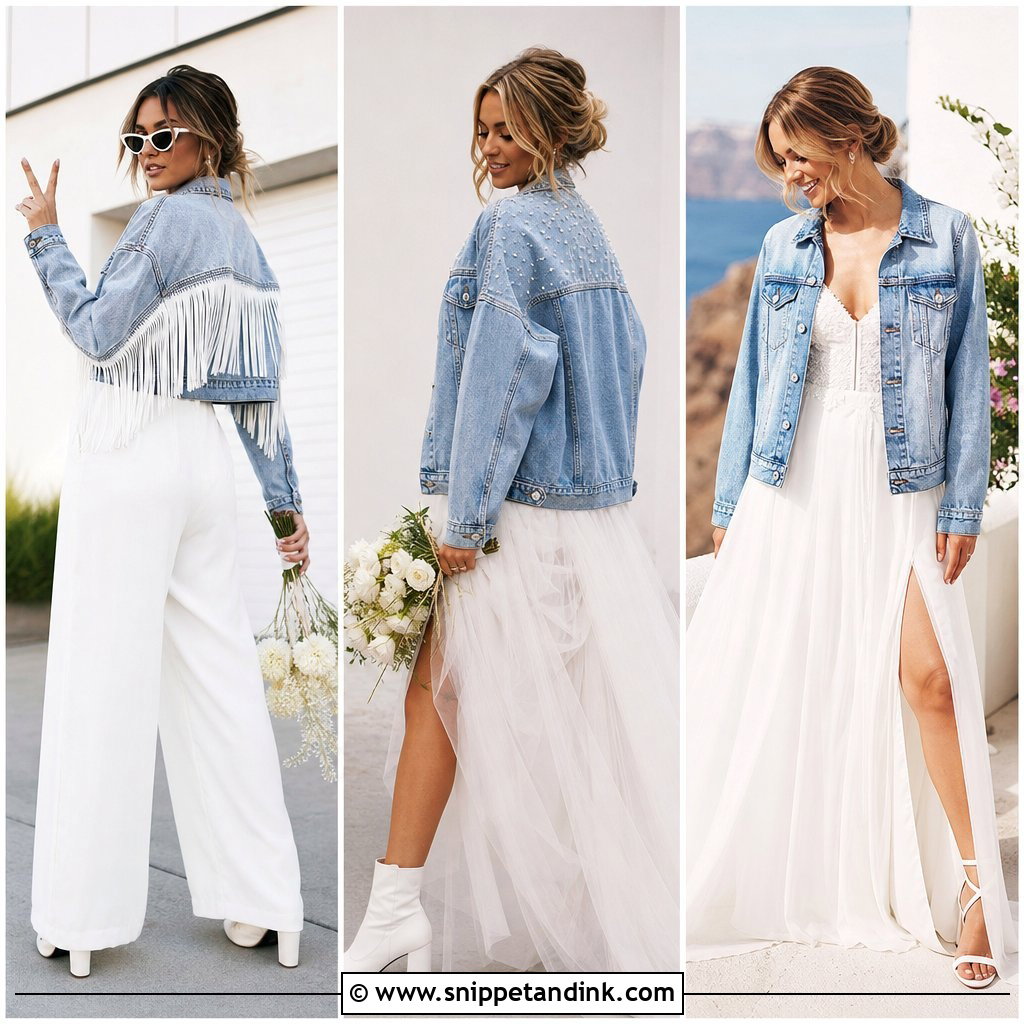
Leather over tulle is a bold contrast, soft volume against a hard edge, and it suits brides who’d never wear a traditional cover. White, ivory or pale taupe, with as few zips and studs as possible. It should end at the waist to define the bodice instead of flattening the skirt. Pale leather can transfer dye, so rub the inside of the cuffs with a damp white cloth before the day; if color comes off, don’t wear it over ivory. Tulle is the most snag-prone fabric there is, so cover or file any metal edges. A fitted bodice with a layered A-line skirt, pointed boots or sleek pumps, small hoops and a compact bridal bag. Keep the hair polished to balance the jacket.
20. White Denim Jacket With Casual Winter Wedding Dress
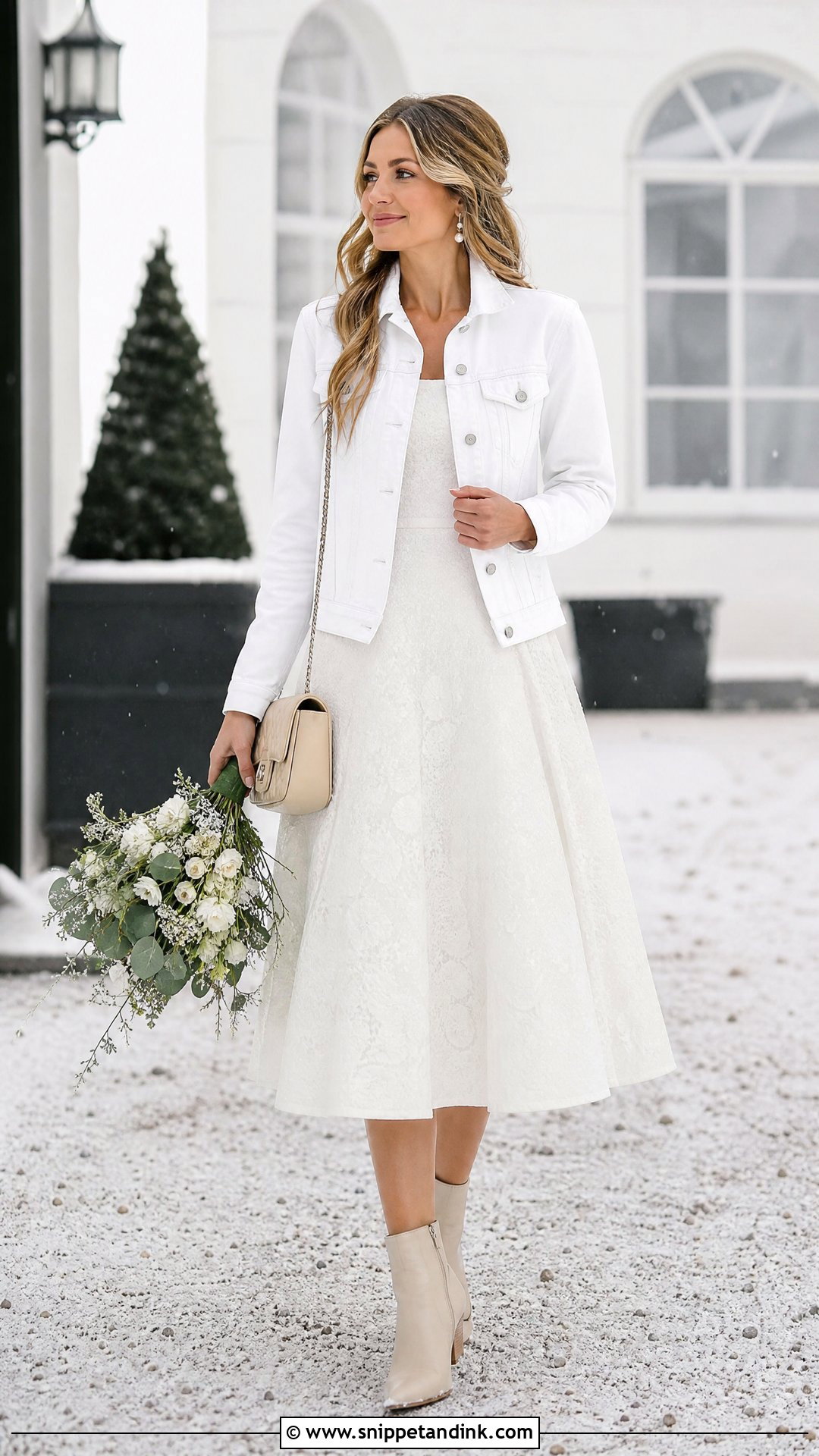
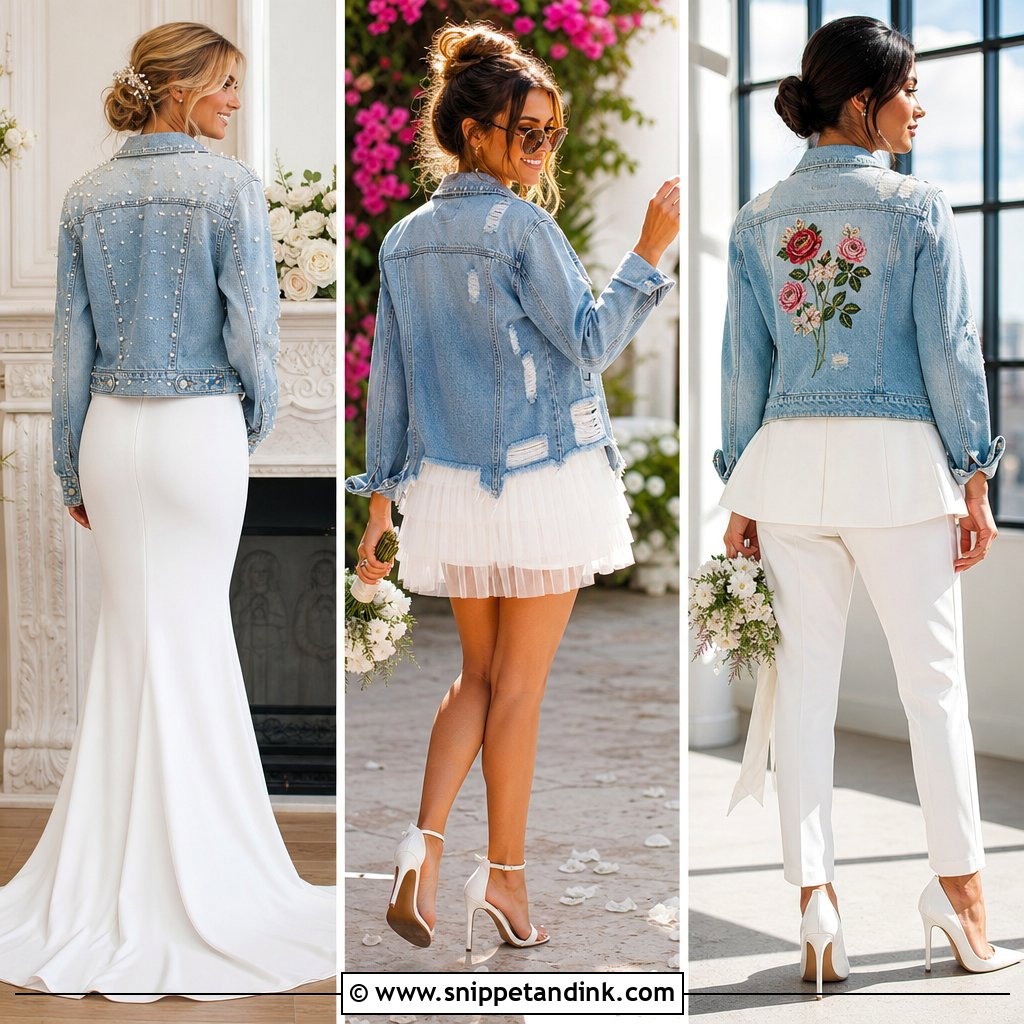
A white denim jacket belongs at a relaxed winter wedding with a simple midi, tea-length or understated A-line. Clean finish, no heavy distressing, logos or dark metal buttons. Cropped keeps the waist visible; slightly oversized looks easy for outdoor photos. New white denim can be stiff and occasionally sheds a blue cast at the seams from the thread, so wash it once before wearing it near your gown. A back embroidery with initials or a date is a personal touch that still looks tasteful. Denim only offers moderate warmth, so thermal tights underneath help. Ankle boots, small pearl earrings, a compact shoulder bag and a soft updo or loose waves suit the mood.
21. Bridal Puffer Jacket With Minimal Winter Wedding Dress
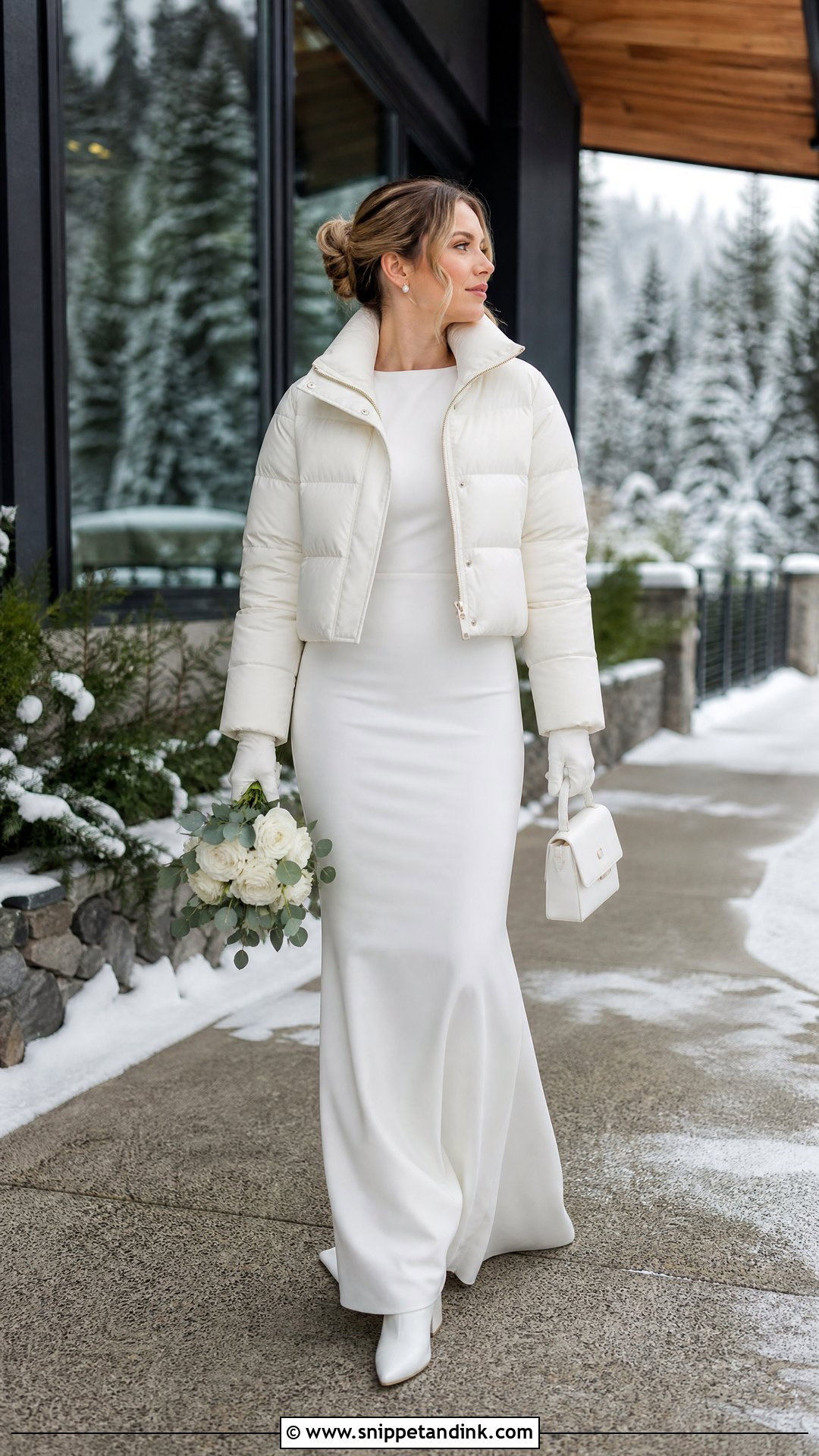
When it’s genuinely freezing, a puffer will keep you warmer than any wrap here, and a bridal one can look intentional. Cropped, ivory, matte, with minimal quilting and no sports branding. Pair it with a clean crepe column or simple satin A-line so the sporty texture reads as a contrast rather than a clash. The hem should sit near the natural waist. Wear it for travel, outdoor portraits and moving between buildings, then take it off inside. Check the interior: exposed zip teeth and shiny nylon linings can rub satin. Covered zips and a smooth lining fix that. Lined gloves, pearl studs, waterproof heeled boots and a structured mini bag finish it, and a detachable hood is useful on snowy days.
22. Knit Bridal Sweater With Satin Winter Wedding Skirt
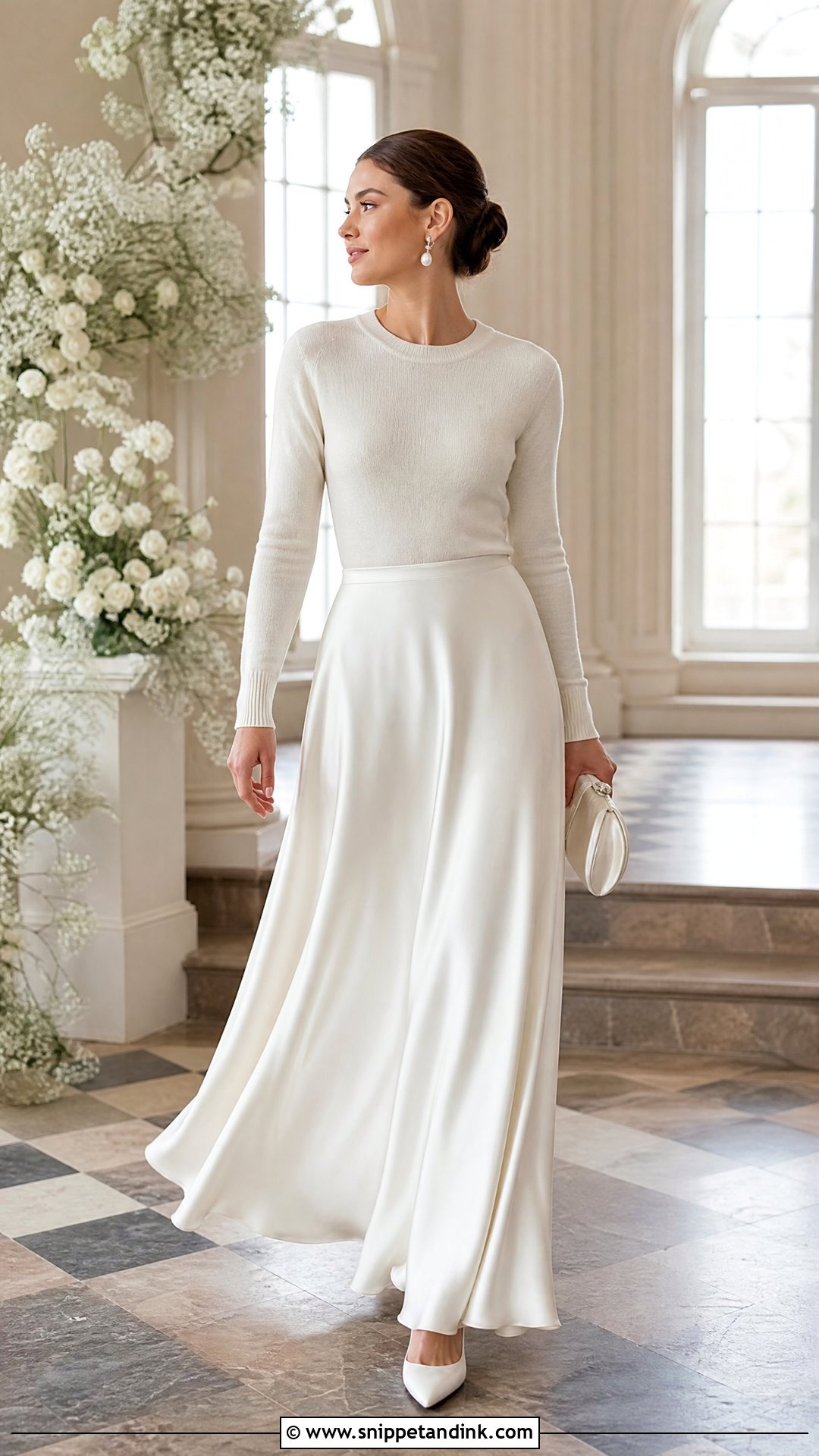
A fitted knit on top of a satin wedding skirt looks like a planned two-piece rather than a dress with a sweater over it. It’s also the only option here that keeps you warm all evening without a layer to take on and off. A fine-gauge ivory sweater with a crew, boat or mock neck, tucked smoothly into a high-waisted A-line or bias-cut satin skirt. Fine knits can be sheer, so a smooth nude camisole underneath helps. The tuck is the hard part: bias satin shows every ridge, so a bodysuit-style knit or a cropped sweater sitting at the waistband avoids bulk. Pearl drops, a low bun, pointed heels and a small satin clutch finish it, and the knit should still fit under a coat.
23. Embroidered Bomber Jacket With Tulle Winter Wedding Dress
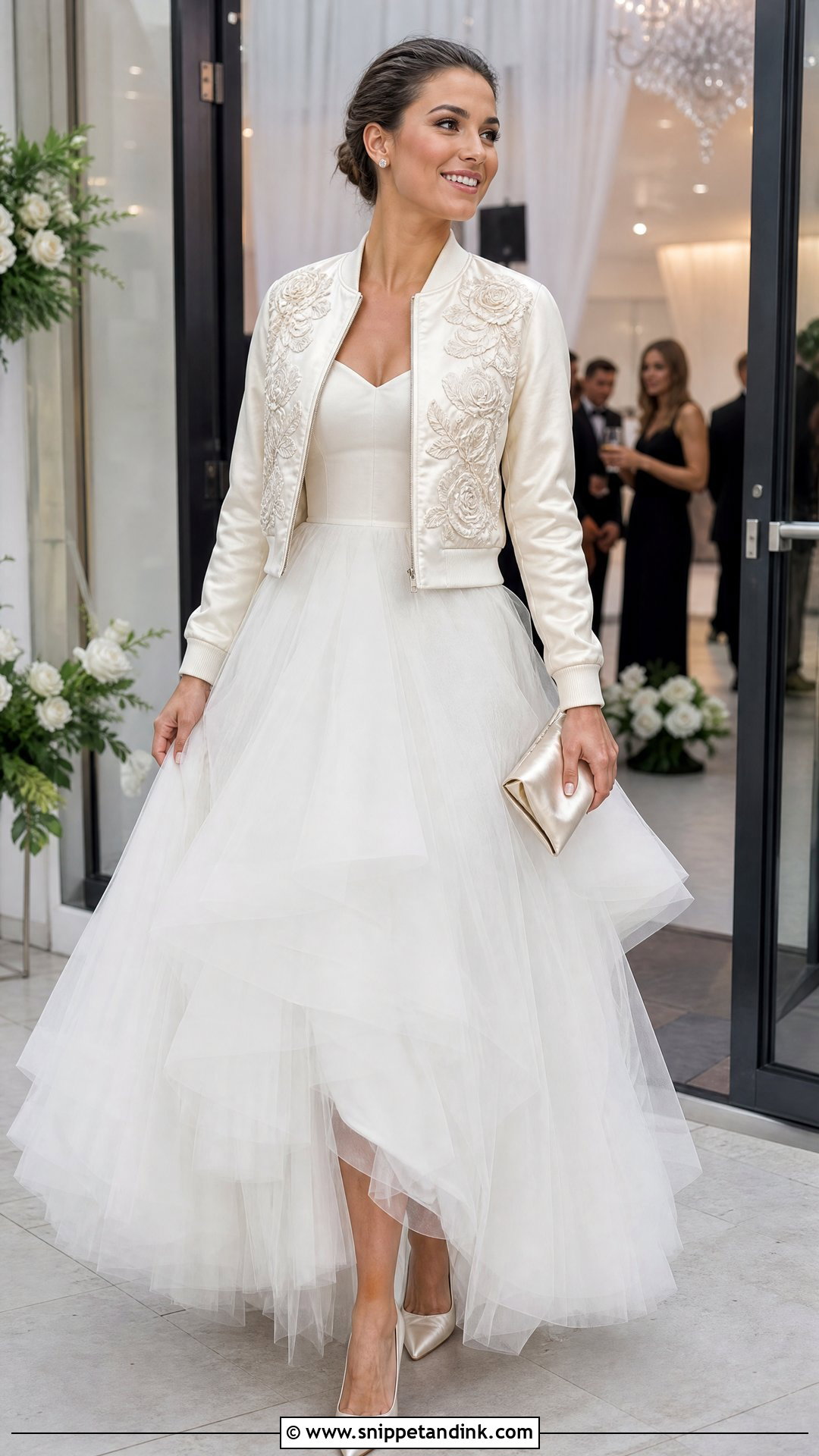
An embroidered bomber gives a tulle gown a playful finish without making it costume. White satin or a matte fabric with tonal florals, pearls or a small personal motif; skip large graphics. Cropped to the waist so the skirt’s volume stays visible. Bombers have a ribbed elastic hem, and on a fitted bodice that rib can bunch or creep up, so check it while seated as well as standing. A simple bodice, layered tulle skirt, ankle boots or pointed pumps, small studs and a clean satin clutch keep it cohesive. It’s useful for travel and the exit, and an embroidered back makes for a strong over-the-shoulder portrait.
24. Pashmina Wrap With Embellished Winter Wedding Dress
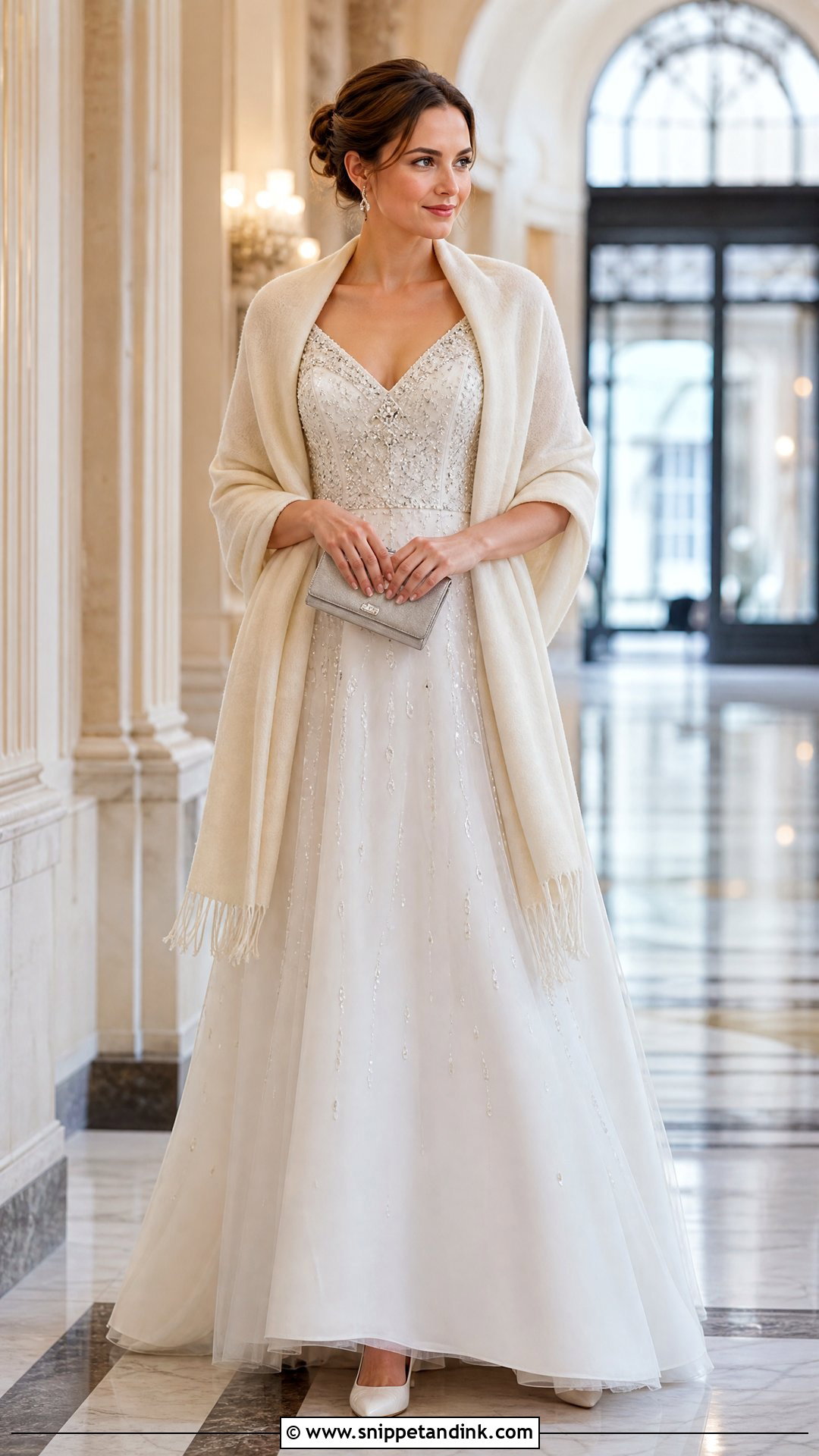
Heavily embellished gowns need a coverup that stays out of the way. A solid pashmina gives soft warmth and lets the beadwork or lace stay visible. Ivory, silver gray or blush, whichever sits closest to the gown’s undertone. Let it fall over the shoulders, or secure it with a plain hidden pin. No decorative brooch: on a sparkling bodice it competes, and the back of a brooch scratches beading. A pashmina should feel substantial without bulk at the bodice. Practice the drape in front of a mirror the week before, so you can do it in one move rather than fiddling during portraits. Small earrings, a neat updo, satin pumps and a streamlined clutch.
25. Full-Length Bridal Coat With Princess Winter Wedding Dress
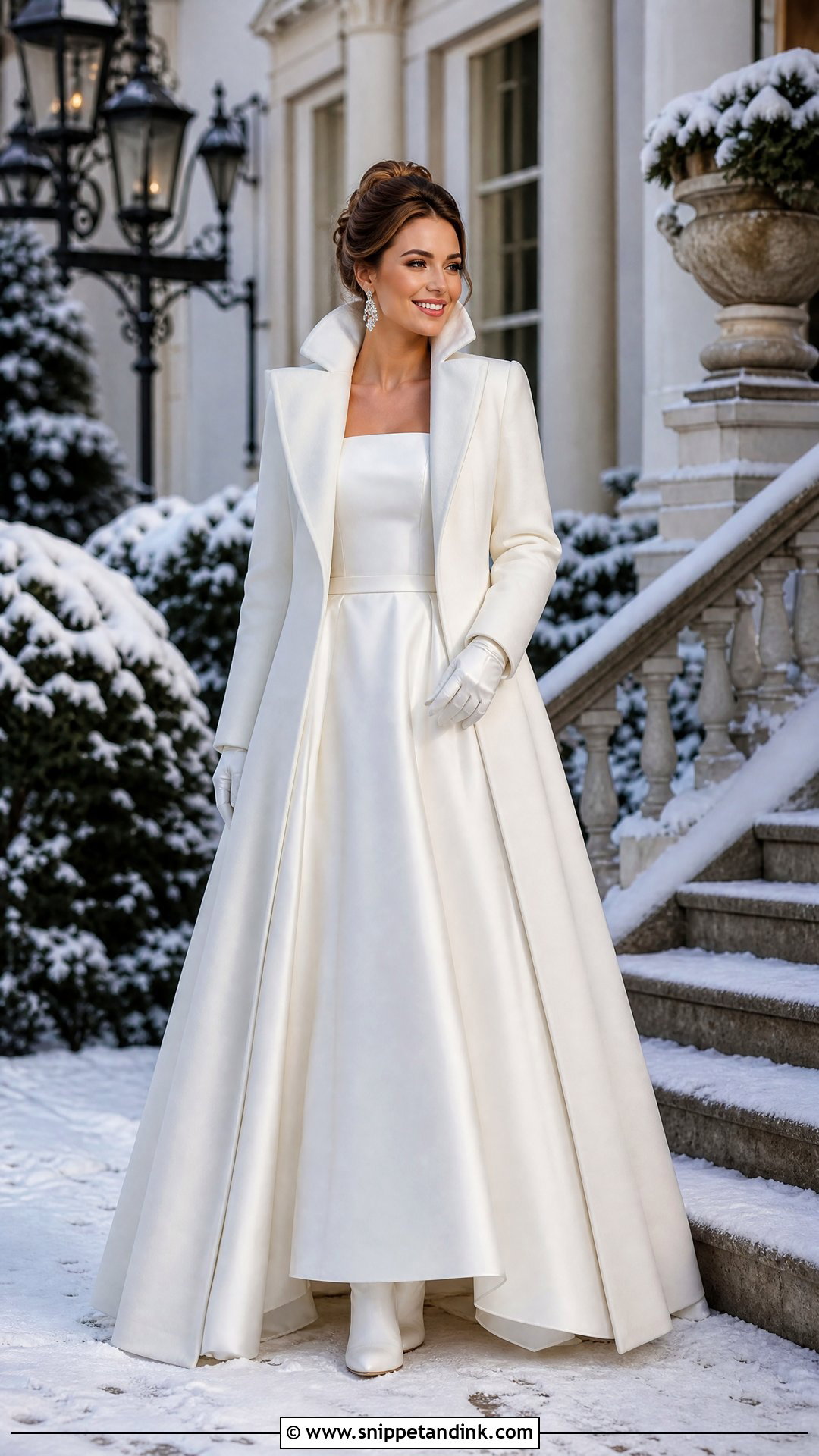
Nothing covers more than a full-length bridal coat over a princess gown. It needs a wide skirt, a fitted top and real room for layers of tulle or satin, which usually means a coat made for gowns rather than a regular winter coat in white. Wool crepe, cashmere blend or lined velvet give structure and warmth. A high collar feels dramatic; a clean V lets the bodice show. Measure the coat against the train: a coat that’s a little too long will pin the train down when you walk. Crystal earrings, a polished updo, lined gloves and closed boots hidden under the skirt finish it. Wear it open outdoors, and take it off inside for a second reveal.
Ivory Next to Ivory Rarely Matches
The most common coverup mistake I see isn’t shape, it’s color. Bridal whites range from bright optic white to warm ivory, champagne and nude-lined shades, and two fabrics with the same label can look completely different side by side. Shop lights are warm and forgiving; a camera flash and a snowy backdrop are not.
- Ask your bridal shop for a fabric swatch from the gown’s hem allowance and carry it when you shop.
- Compare by a window in daylight, then take a flash photo on your phone. If the coverup looks bluer or yellower on screen, it will in the album too.
- If you can’t match closely, contrast on purpose: a darker ivory, soft gray or champagne looks chosen, while a near-miss looks wrong.
- Texture changes how color reads. Fur and knits look lighter than satin of the same dye because they scatter light.
Who Holds the Stole During the Vows?
Decide before the morning what happens to the coverup at each point of the day. Will you wear it down the aisle or take it off at the door? Some religious venues expect covered shoulders during the ceremony, so check that, and keep the layer on until the recessional if so.
Then give one person the job. Usually it’s a bridesmaid or a parent who has it over their arm, a hanger in the car and a clear spot at the reception venue so it isn’t thrown on a chair where wine can find it. Order the coverup early enough to bring it to your final gown fitting, typically several weeks before the wedding, so the seamstress can check the two together and make tiny adjustments while there’s still time.
Try Every Layer With the Gown, Veil and Shoes Together
A coverup does more than keep you warm. It has to respect the gown’s shape, suit the venue and let you move through a long day without constant adjusting. Whatever your style, minimal or romantic, modern or very formal, there’s a layer on this list that works with it. Try it on with the dress, shoes, veil, jewelry and hairstyle before the wedding, and check the color in daylight by a window, not under shop lights. Make sure no closure, zipper or textured fabric can damage the gown. Many of my brides end up with two layers: something pretty for photos and a warm coat for the car. Chosen with care, the coverup becomes part of the outfit rather than something you’re hiding under.
You'll Like These Ideas:


Leave a Reply