
Velvet is the fabric I reach for when a bride tells me her wedding is in December, in the mountains, or after dark. It has a soft sheen that deepens in candlelight and gives even a plain silhouette real presence. It’s also moved a long way from the heavy vintage gowns people remember. These days you’ll find sleek columns, relaxed A-lines and colored velvet in jewel tones, styled with capes, bows, gloves, boots or pearls. Velvet is weighty, though, and it behaves differently from satin or crepe, so the shoes, outer layer, hair and accessories all have to be chosen with it in mind. Below are the looks I’d build around it, from ivory to emerald.
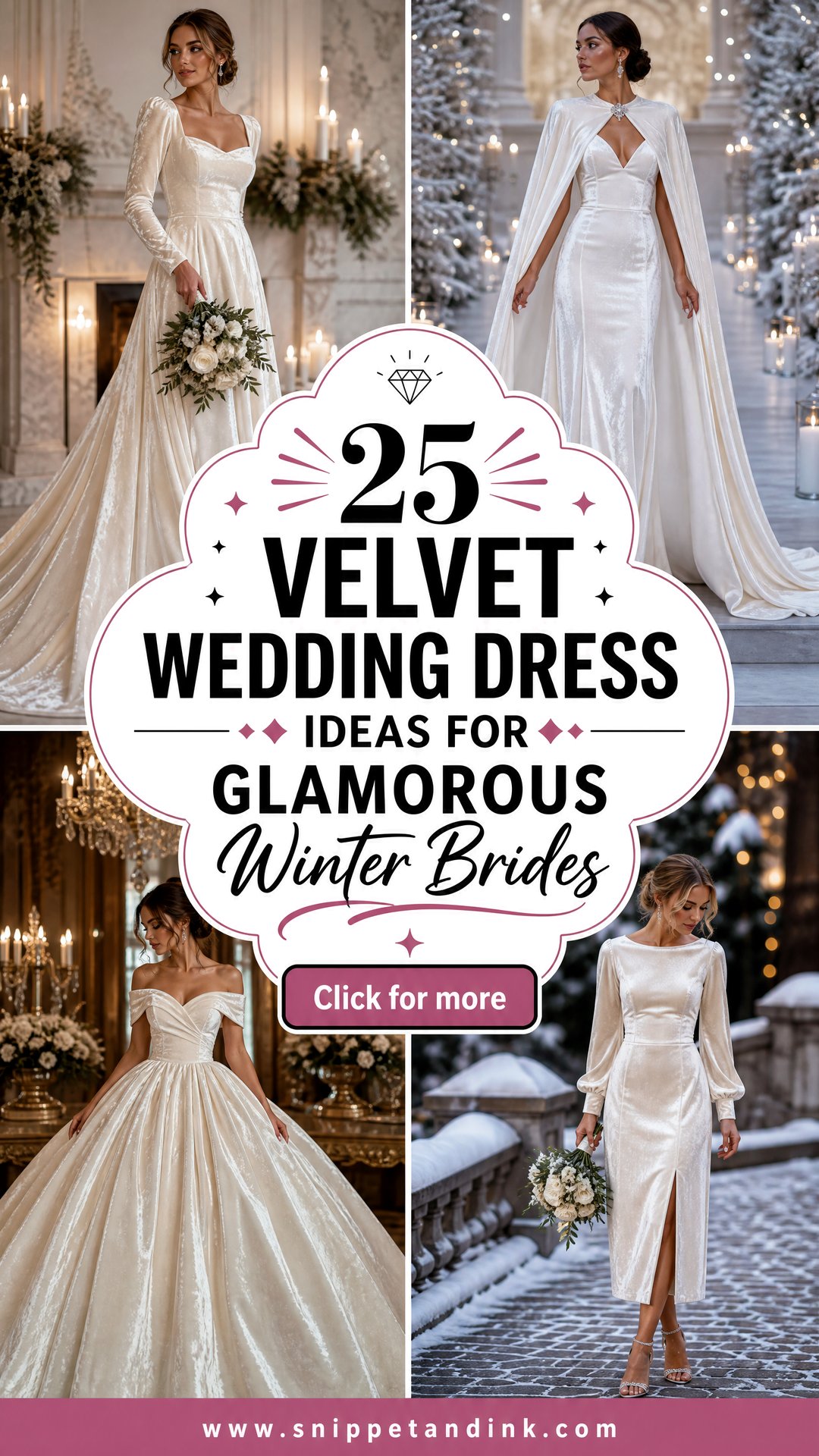
What Velvet Does That Satin Doesn’t
Velvet has a pile: thousands of short fibers standing up from the base fabric. That pile is what gives it depth, and it also explains most of its quirks. Run your hand one way and it’s smooth; run it the other way and it looks darker. A good dressmaker cuts every panel with the pile running the same direction, otherwise the bodice and skirt look like two shades of the same color.
The types you’ll come across
- Silk velvet drapes fluidly and feels light, but it marks easily and costs more.
- Polyester and blended velvets are sturdier, hold their shape and resist crushing better.
- Stretch velvet has some give, which helps with fitted shapes like mermaids and slips.
- Crushed velvet is deliberately creased for a shimmery, vintage texture, so it hides marks well.
Feel a sample before you choose. Heavier velvets look regal but get warm in a crowded room, and lighter ones move better if you plan to dance for hours.
1. Ivory Long Sleeve Velvet Wedding Dress
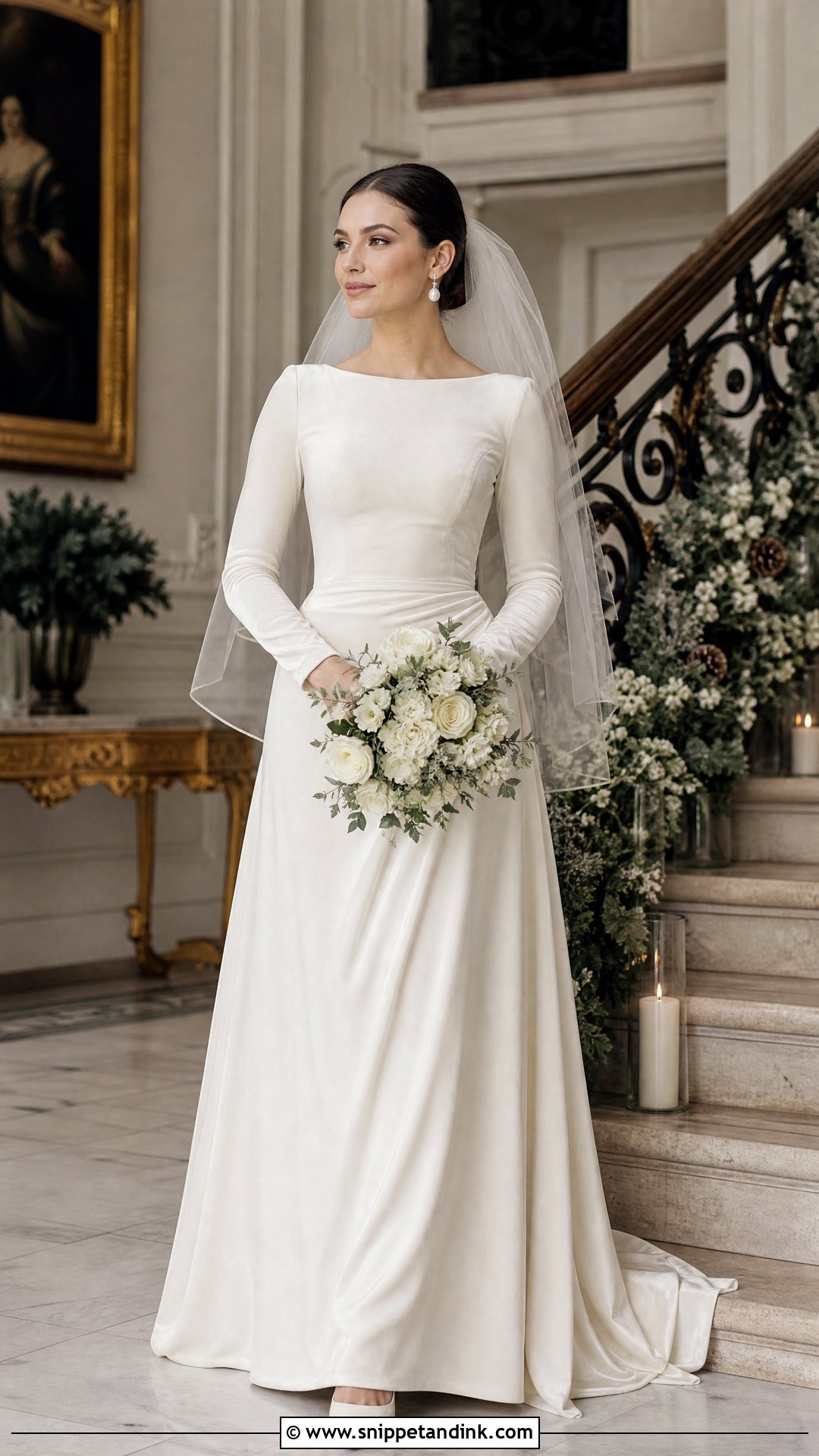
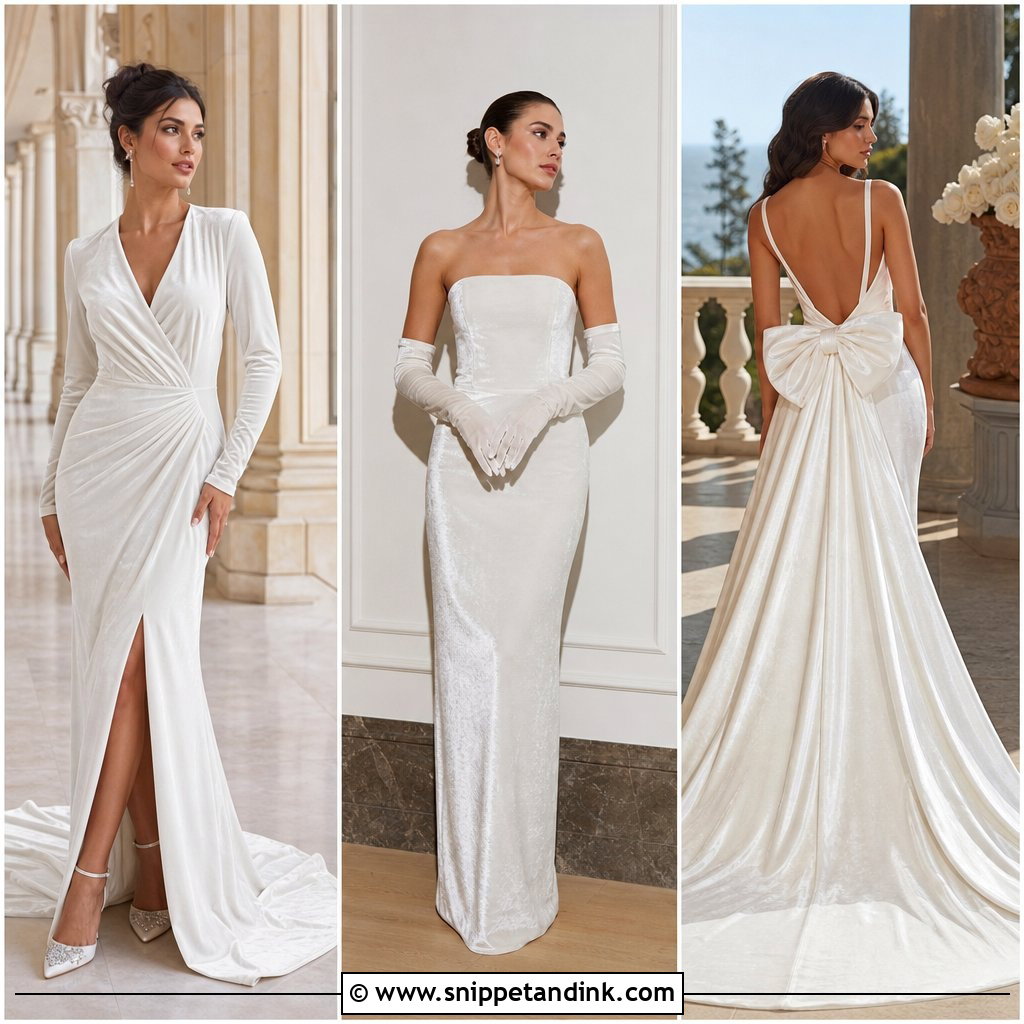
Ivory velvet with long sleeves is the version I’d call the safest bet for a cold-weather wedding. The sleeves give warmth and coverage, and the plush surface has enough depth that you don’t need beading. A fitted bodice over an A-line skirt moves easily. Pointed ivory heels, pearl drops, a low bun, a fingertip veil and a satin clutch keep it classic. One fitting note: velvet sleeves need a little more ease than chiffon ones, because the pile grips the lining and makes tight sleeves hard to bend in. It’s right at home at a winter estate or a formal evening ceremony.
2. White Velvet Wedding Dress With Cape
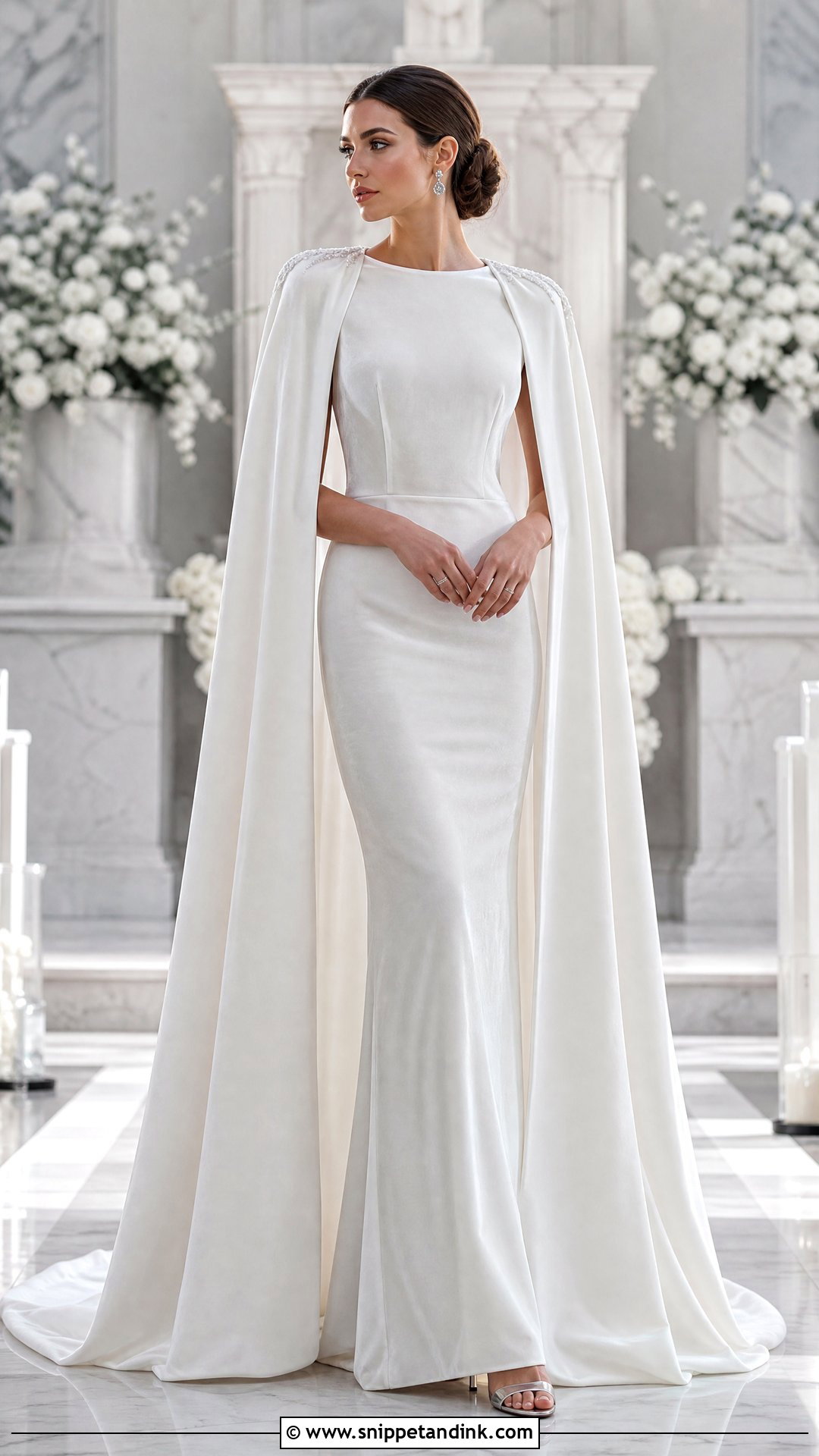
A cape turns a white velvet gown into a full entrance without any extra sparkle. It adds movement as you walk and covers your shoulders for chilly arrivals and outdoor photos. Keep the dress underneath a simple column or slim A-line so the cape stays the main event. Crystal studs, a sleek bracelet and white or silver heels are enough. A center-parted bun or soft waves let the cape sit flat at the neckline. I always check the cape’s weight at the fitting. Velvet capes are heavy, and if the fastening only grips at the throat, it pulls backward all day, so ask for small hidden loops at the shoulders. The back view is the reason to wear it.
3. Off Shoulder Velvet Wedding Dress
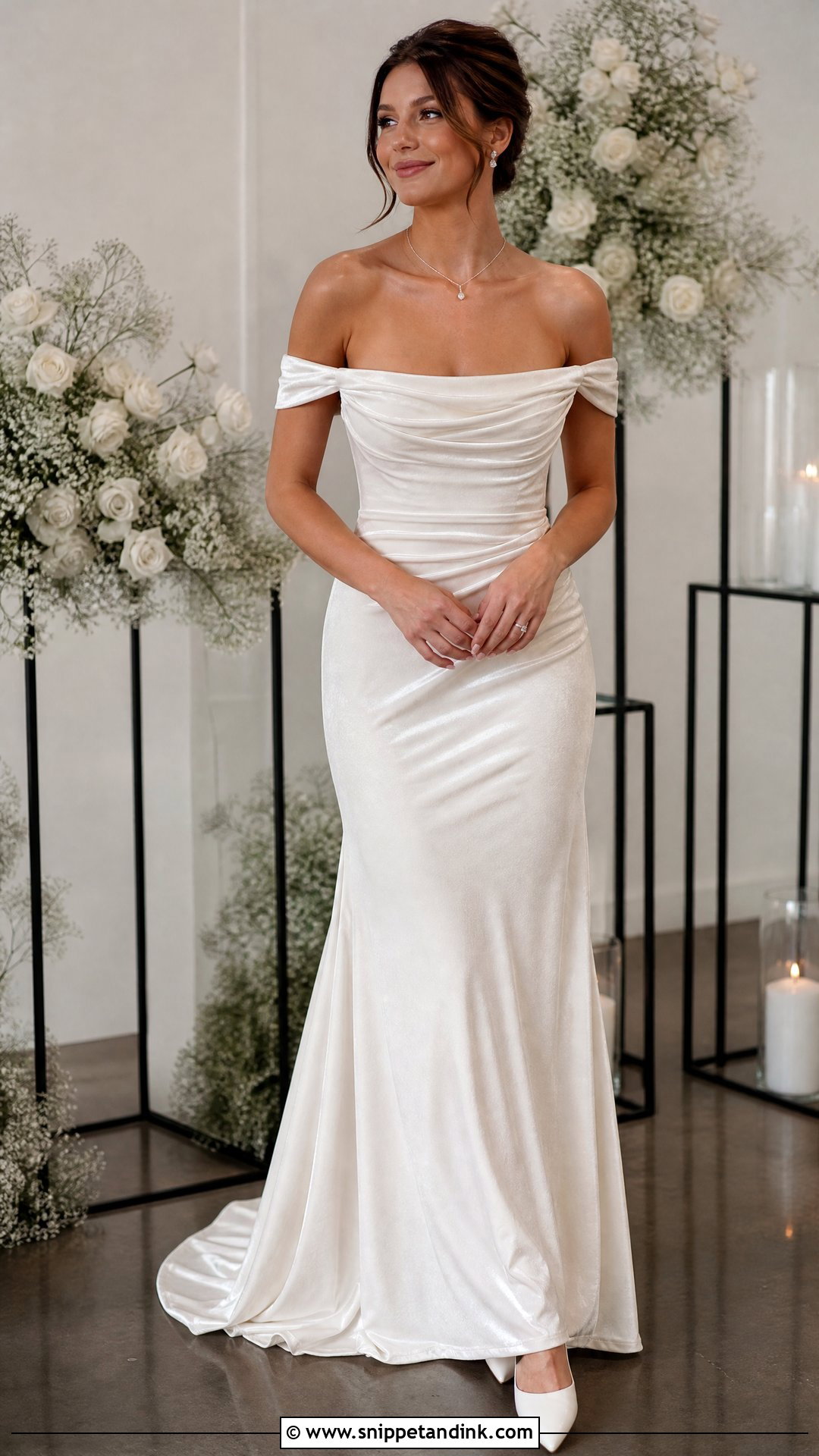
Off-shoulder velvet frames the collarbones without showing much more, and that’s why it suits brides who want some skin without feeling exposed. Velvet already carries strong visual weight, so a fitted bodice with a gentle mermaid or A-line skirt keeps the shape clean. A delicate necklace, pearl earrings and classic pumps are plenty. The catch with velvet off-shoulder straps is that they can slide, because the pile is slippery against the arm, so ask for silicone grip tape inside the band. Bring a faux fur wrap for photos and moving between buildings. Soft waves, a low chignon or a half-up style all suit it.
4. Burgundy Velvet Wedding Dress
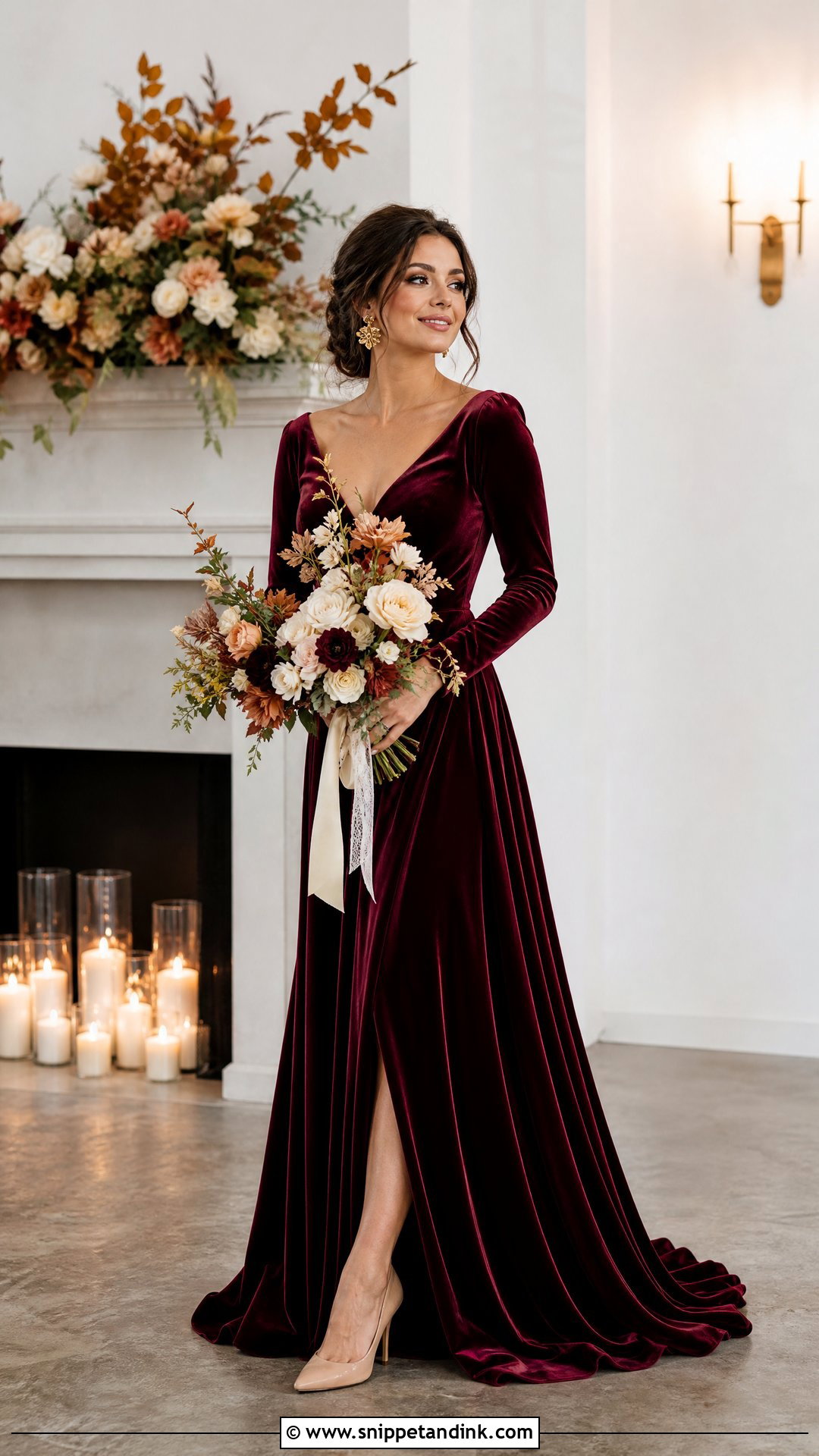
A burgundy velvet wedding dress gives you real color while still feeling formal. Deep red reads richest in velvet, and it takes gold, ivory or blush accessories well. Look at floor length with long sleeves, a wrap bodice or a structured square neckline. Nude, metallic or matching burgundy heels all work. Keep jewelry simple so the color stays the focus, and use a smooth bun and a small bouquet of cream flowers to pull it back toward bridal. Dark velvet photographs a shade deeper than it looks in the mirror, so a dress that feels bright red in the shop will read wine-dark on camera. It’s a natural match for autumn and evening weddings.
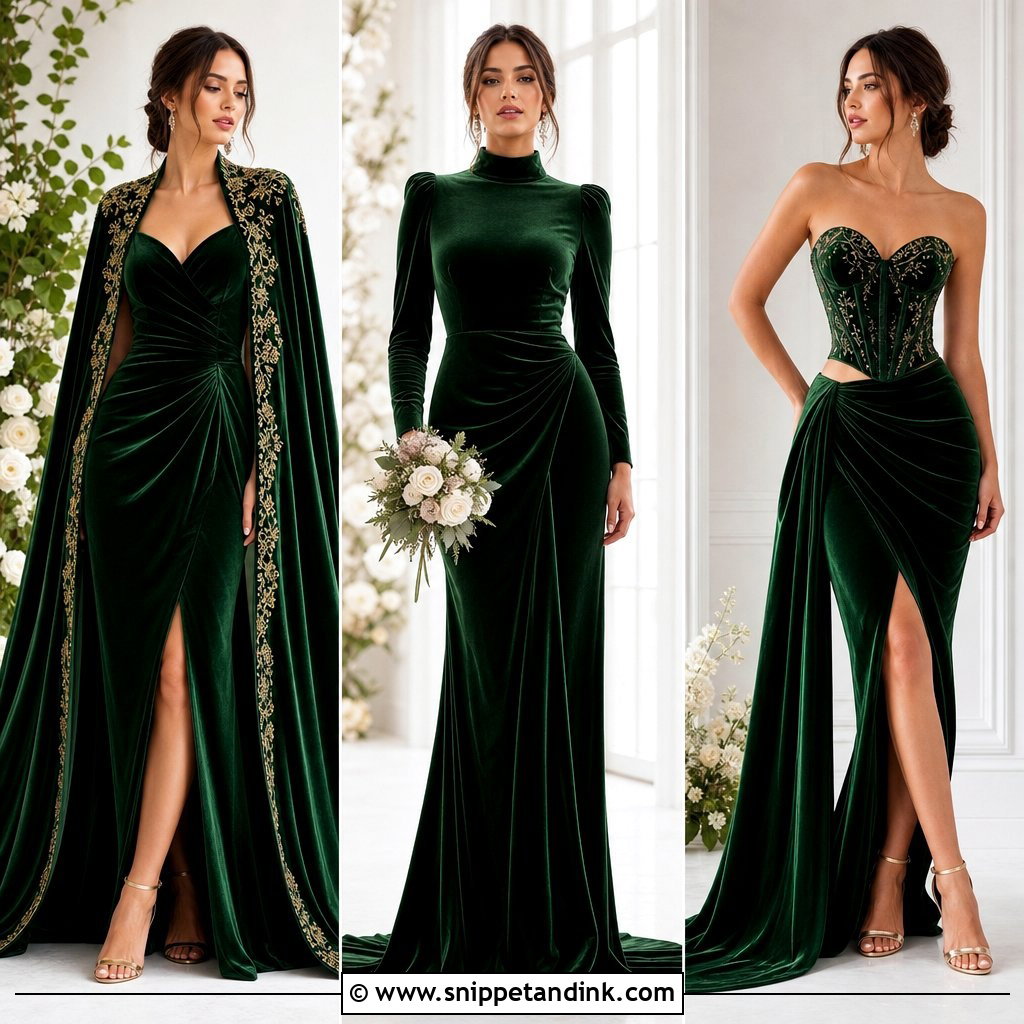
5. Emerald Velvet Wedding Dress
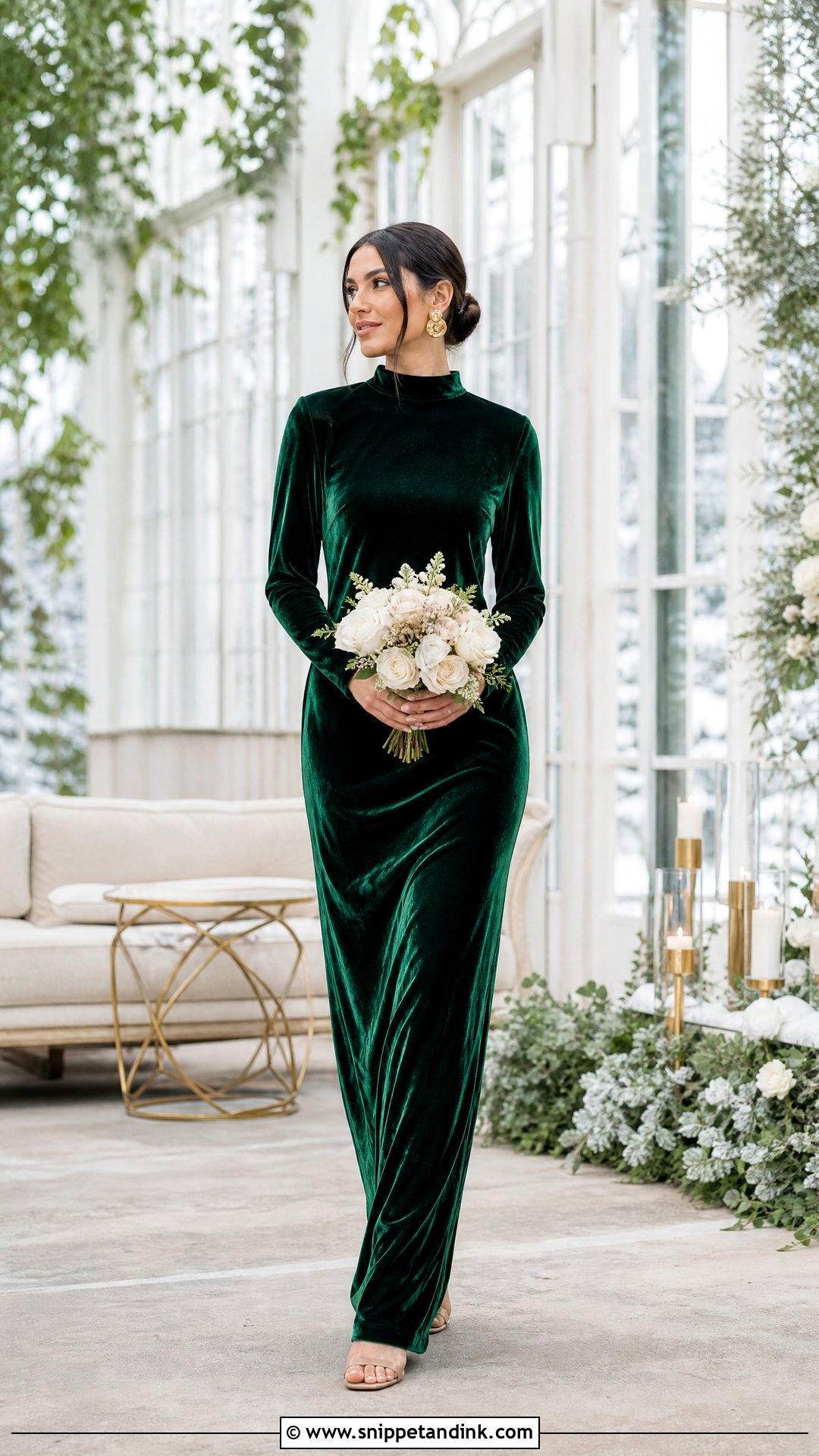
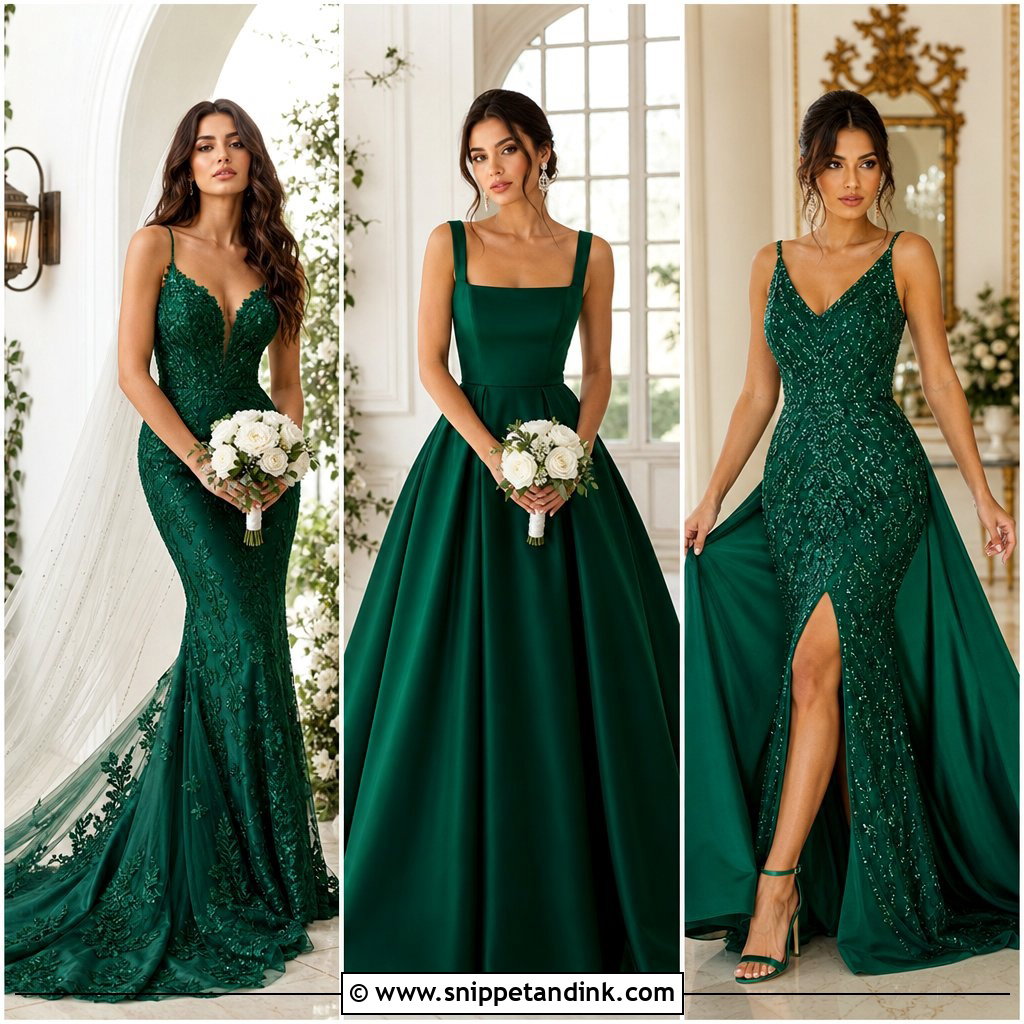
Emerald is the color that surprises guests most, and velvet makes it glow rather than shout. A long column with a high neckline or long sleeves keeps it refined. Pair it with gold earrings, neutral heels and a sleek clutch, and add a cream wrap for outdoor ceremonies so there’s a bridal contrast near your face. Green velvet sits naturally against foliage, old stone and winter scenery. Keep the hair simple with polished waves or a low bun. Ask to see the fabric in daylight before you order, because emerald velvet can shift toward teal or toward almost black depending on which way the pile runs.
6. Black Velvet Wedding Dress
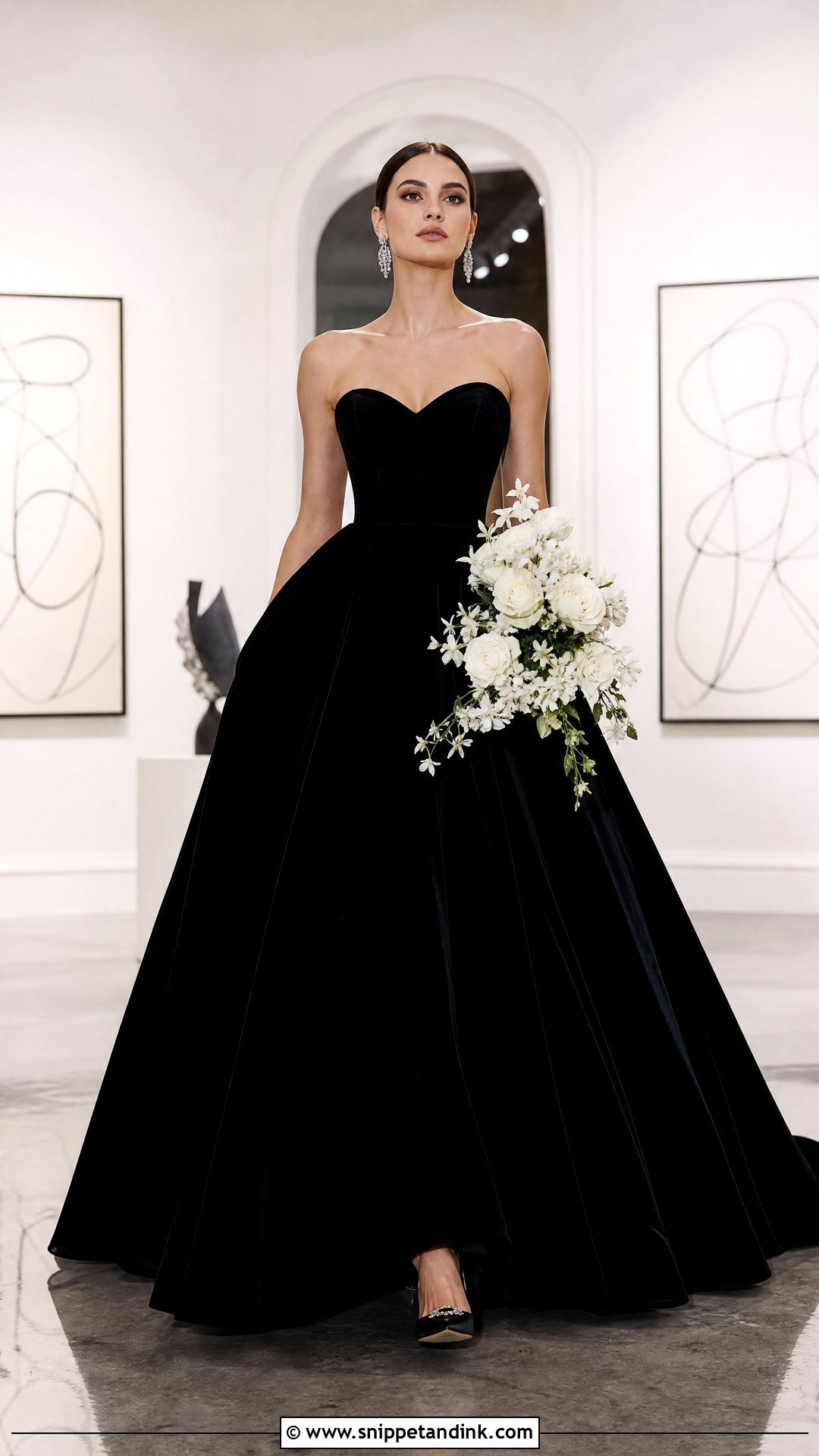
Black velvet is the most dramatic option here, and also the softest black you can wear, since the pile absorbs light instead of reflecting it harshly. A fitted long sleeve gown, a strapless ball gown or a sleek high neck all work, depending on how formal the venue is. Add crystal earrings, black satin heels and a structured bouquet of white flowers for contrast. A short veil, birdcage or clean hair accessory keeps it clearly bridal. The honest downside of black velvet is lint. Every pet hair and fleck of white petal shows, so pack a lint roller with the emergency kit and have someone sweep you down before portraits. It belongs in galleries, lofts and evening receptions.
7. Navy Velvet Wedding Dress
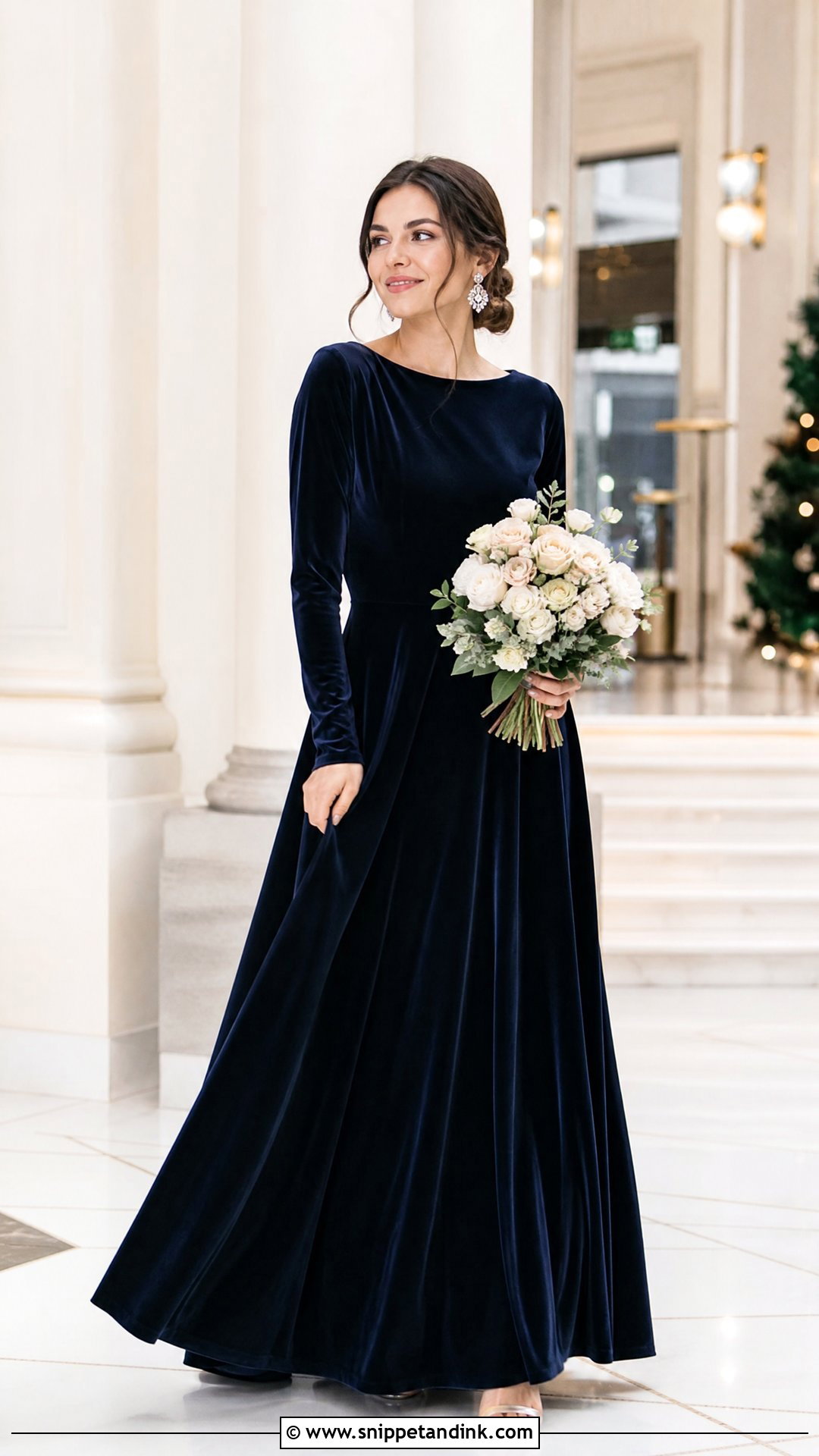
Navy gives you the depth of a dark gown without the full drama of black. A long sleeve navy velvet gown with a fitted waist and flowing skirt is graceful, and silver or pearl jewelry, navy or metallic heels and a soft ivory bouquet keep it light. A simple veil adds a traditional note if you want it. Navy is forgiving in photos, holding its color in both daylight and warm indoor lighting, where black can lose detail. I’d point you to it for winter weddings, coastal evening venues and hotels.
8. Velvet Wedding Dress With Lace Sleeves
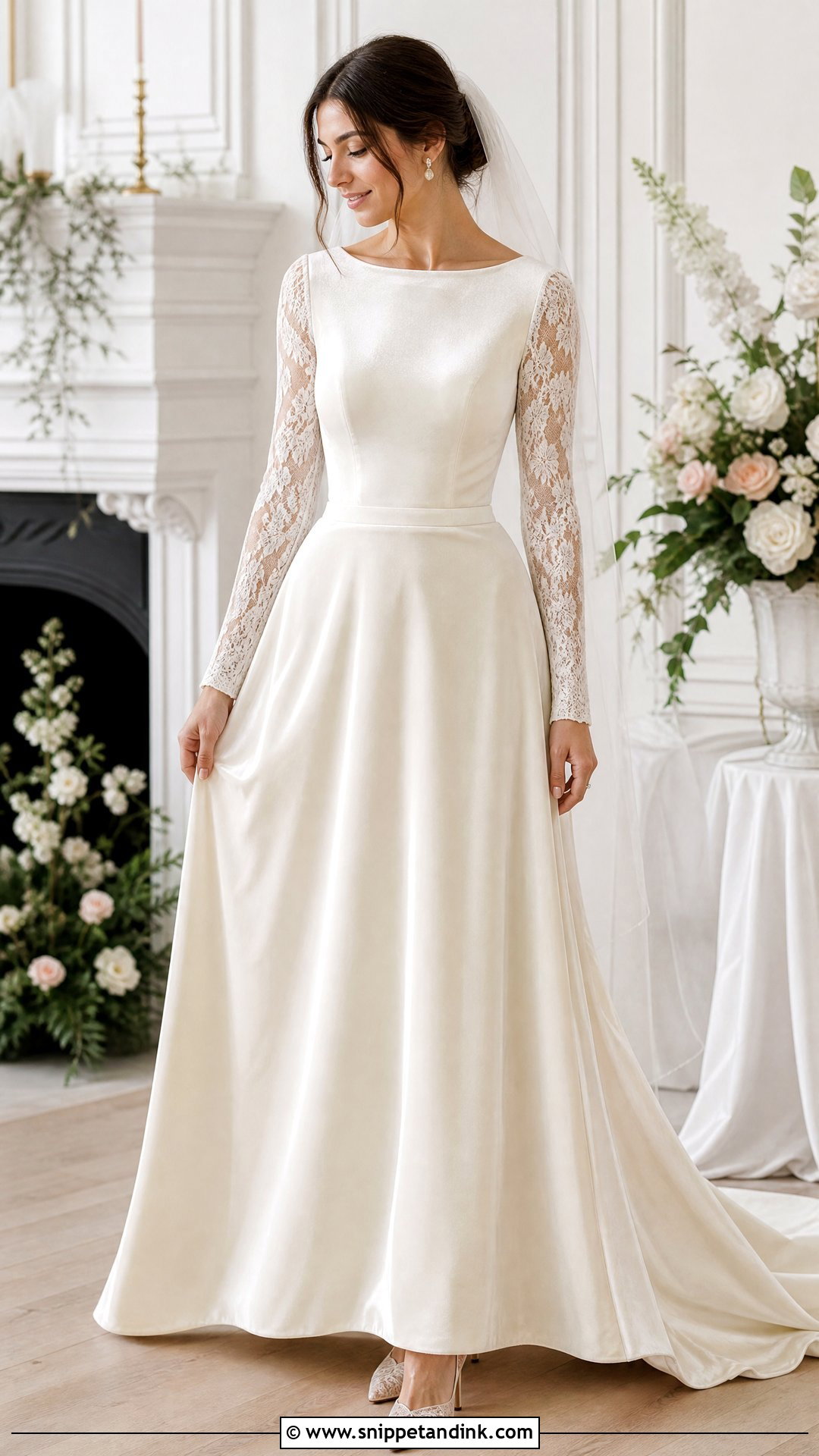
Velvet and lace together give two textures with two jobs. The velvet brings warmth and structure to the body, and the lace adds lightness at the arms and neckline. The combination works best on a clean shape like an A-line or fitted column. Lace-trimmed heels, pearl studs and a simple veil keep it cohesive, and I’d skip extra details since the fabric mix already has plenty going on. Pay attention to where the lace meets the velvet. A well-made dress finishes that join neatly, but a cheap one shows a ridge through the sleeve. A loose bun or soft braided updo suits the romantic feel.
9. Velvet Wedding Dress With Satin Skirt
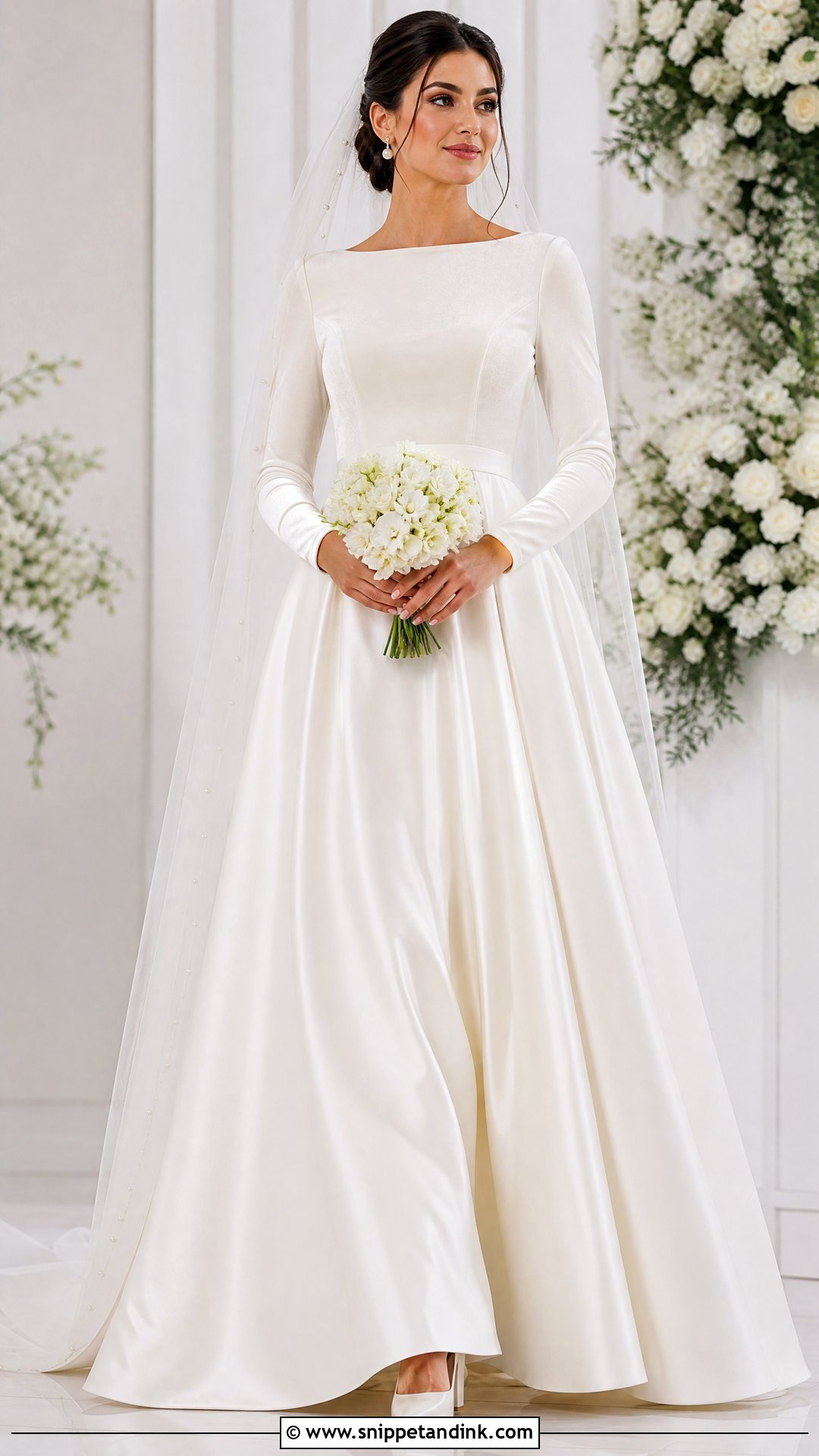
Putting velvet only on the bodice is the trick I suggest to brides who love the fabric but worry about weight. The plush top adds texture, and a satin skirt brings movement and a smooth finish. A fitted long sleeve velvet top over a flowing satin A-line skirt defines the waist and suits many body shapes. Satin pumps, pearl earrings and a classic veil complete it. Watch the color match between the two fabrics. Ivory velvet tends to look a touch warmer than ivory satin because of the pile, so view both together under the venue’s type of light. Ivory, white or soft cream gives the most traditional result.
10. Velvet Wedding Dress With Tulle Skirt
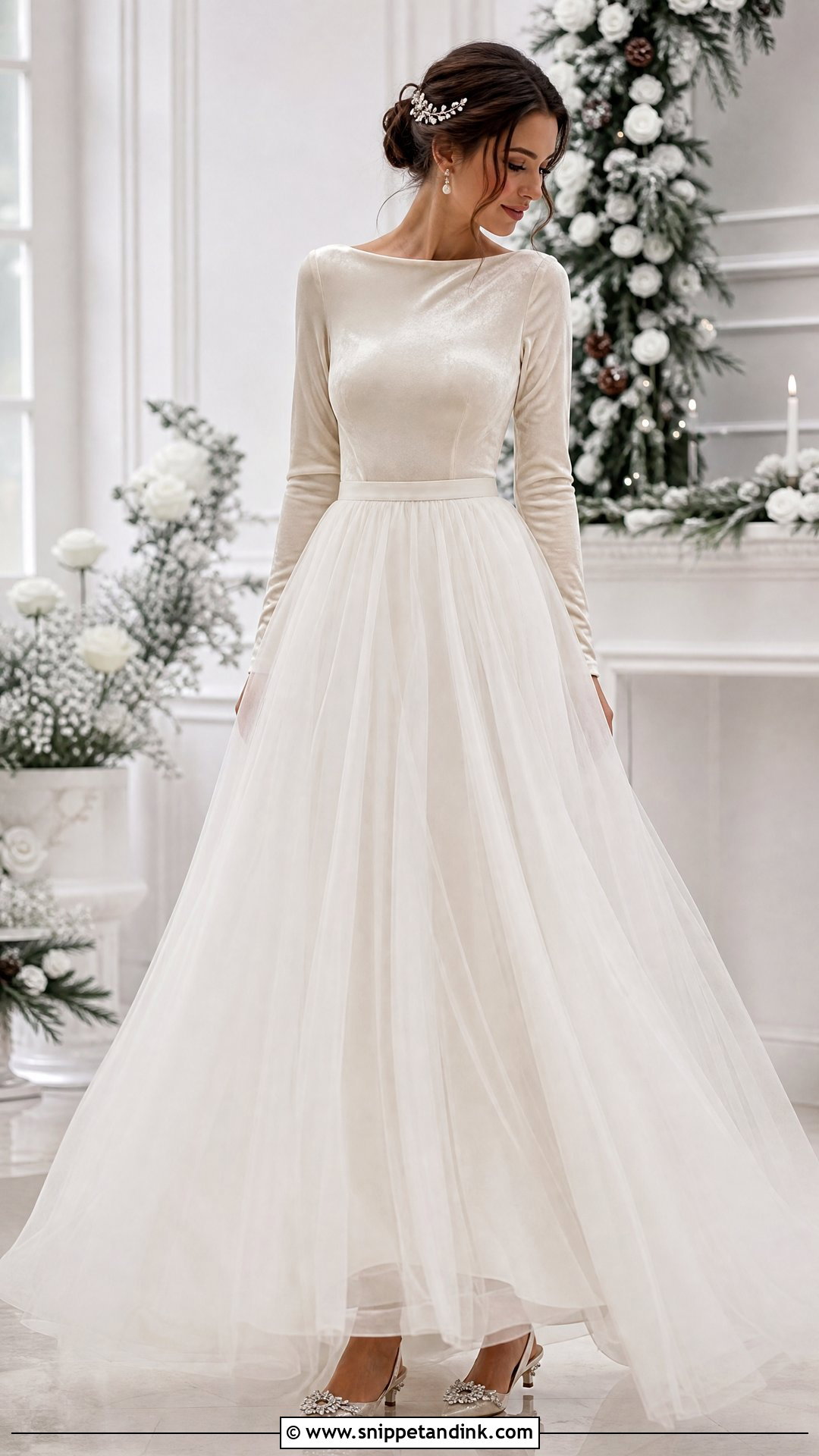
A velvet top with a full tulle skirt feels light even in December. The plush bodice holds the seasonal feel while the tulle keeps the volume airy. Long sleeves work especially well for winter or evening weddings. Pair it with embellished heels, pearl earrings and a delicate hair comb, and keep the veil simple since the skirt already brings movement. It gives you a fairytale shape without heavy beading. Tulle snags on velvet less than lace does, but static can make the skirt cling in dry winter air, so a light anti-static spray under the skirt helps when you’re walking or dancing outdoors.
11. Velvet Slip Wedding Dress
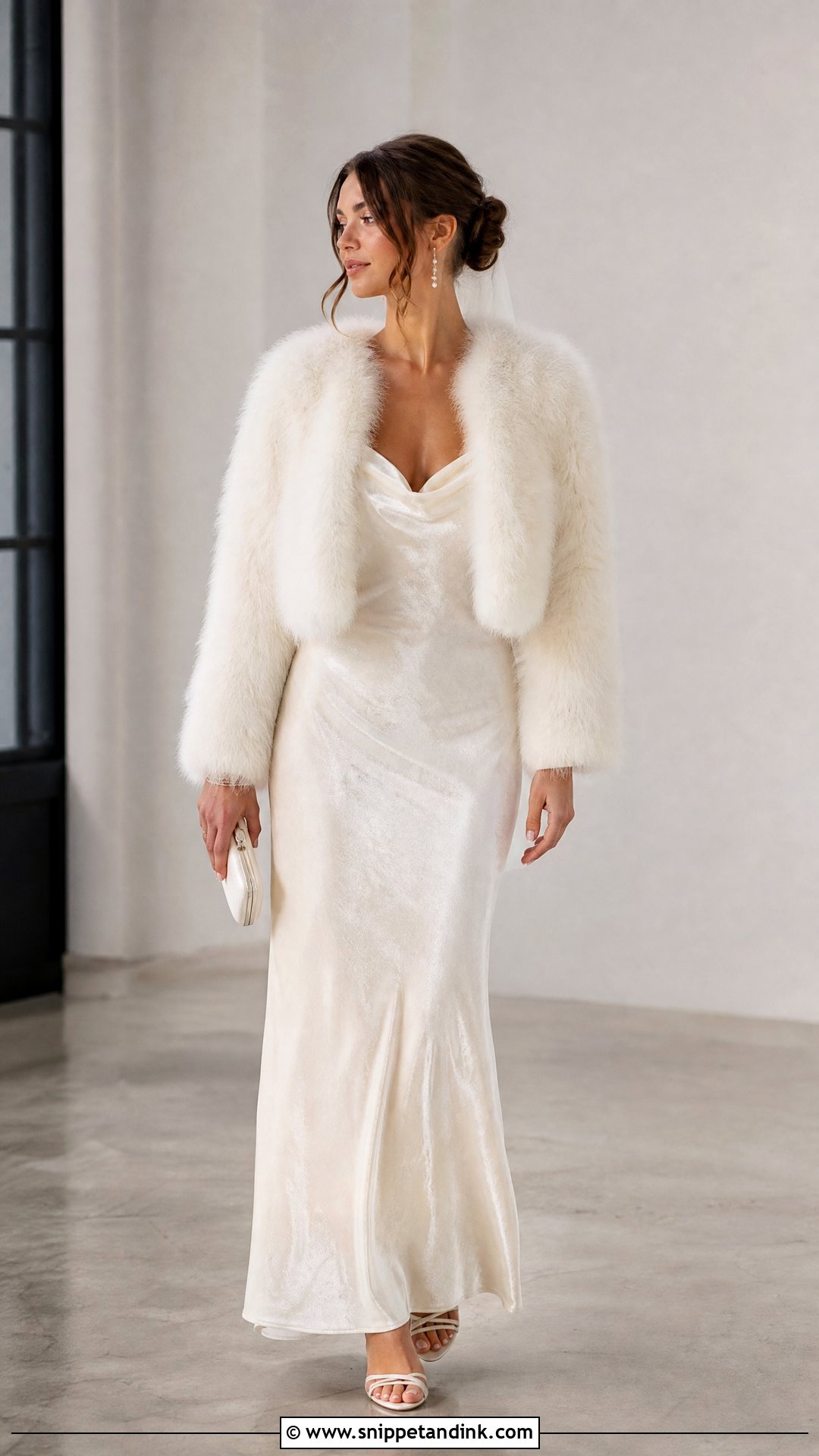
A velvet slip is the minimalist’s way into the fabric. The clean shape lets the sheen do the work. A bias-cut gown in ivory, pearl white or a muted shade, with strappy heels, a small clutch and delicate earrings, is the whole outfit. A long veil makes it more bridal, and a cropped faux fur jacket handles the cold. Bias-cut velvet is unforgiving. It clings and shows every line beneath, so tailoring and supportive, smooth undergarments matter more here than with any other dress in this list. It suits intimate ceremonies, city weddings and relaxed receptions.
12. Velvet Ball Gown Wedding Dress
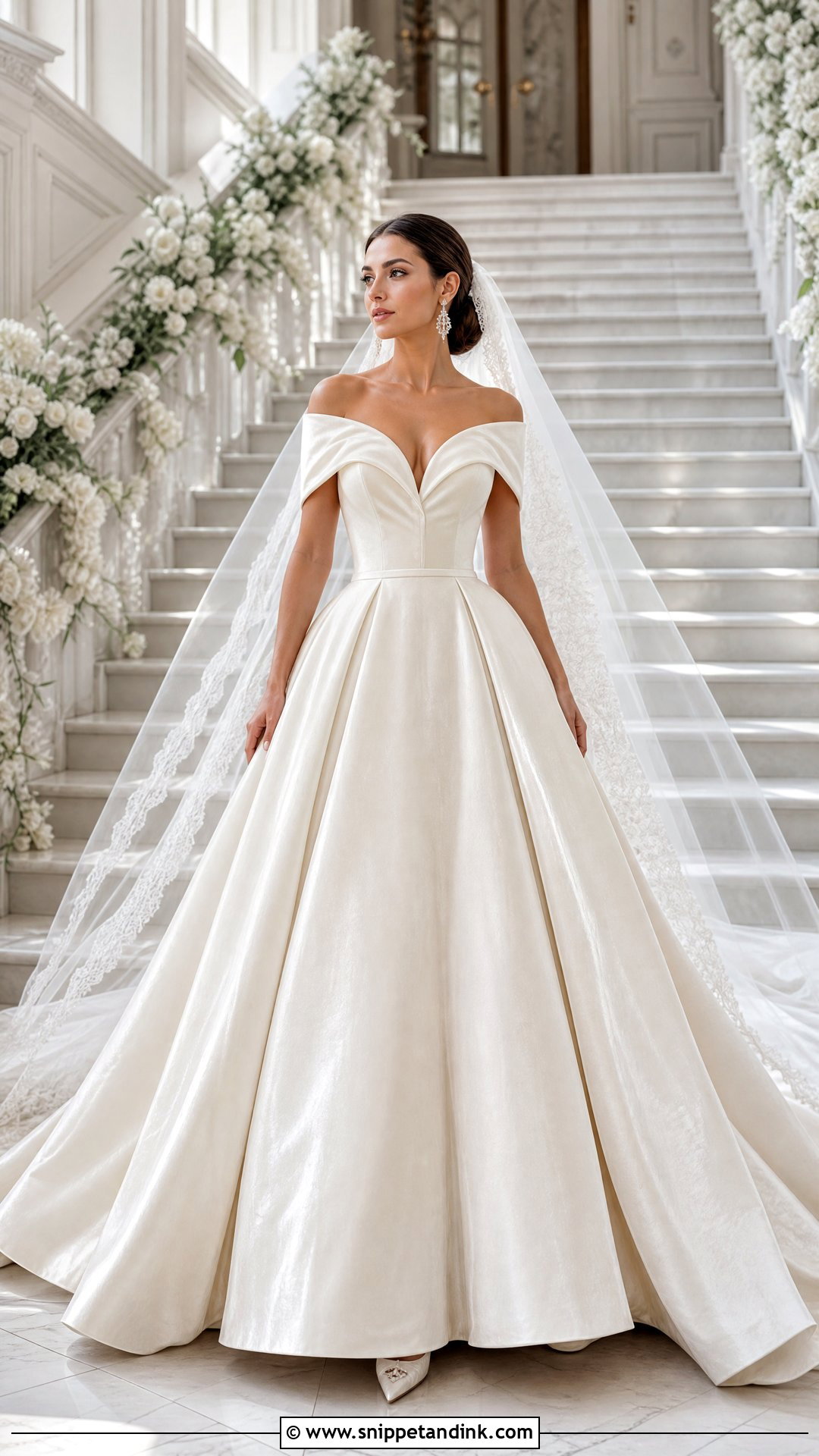
A velvet ball gown gives you sculptural volume that looks grand without a single crystal. The fabric’s weight makes the skirt hold a rich, full shape. A fitted bodice with a defined waist keeps that volume balanced. Add classic heels, a cathedral veil and elegant earrings. With long sleeves, keep jewelry minimal, and with a strapless cut, a pearl necklace or crystal choker can finish it. Be realistic about weight. A full velvet skirt is heavy, so ask for a waist stay and wear your shoes at every fitting. This one needs a high-ceilinged room, a grand staircase or a historic interior to make sense.
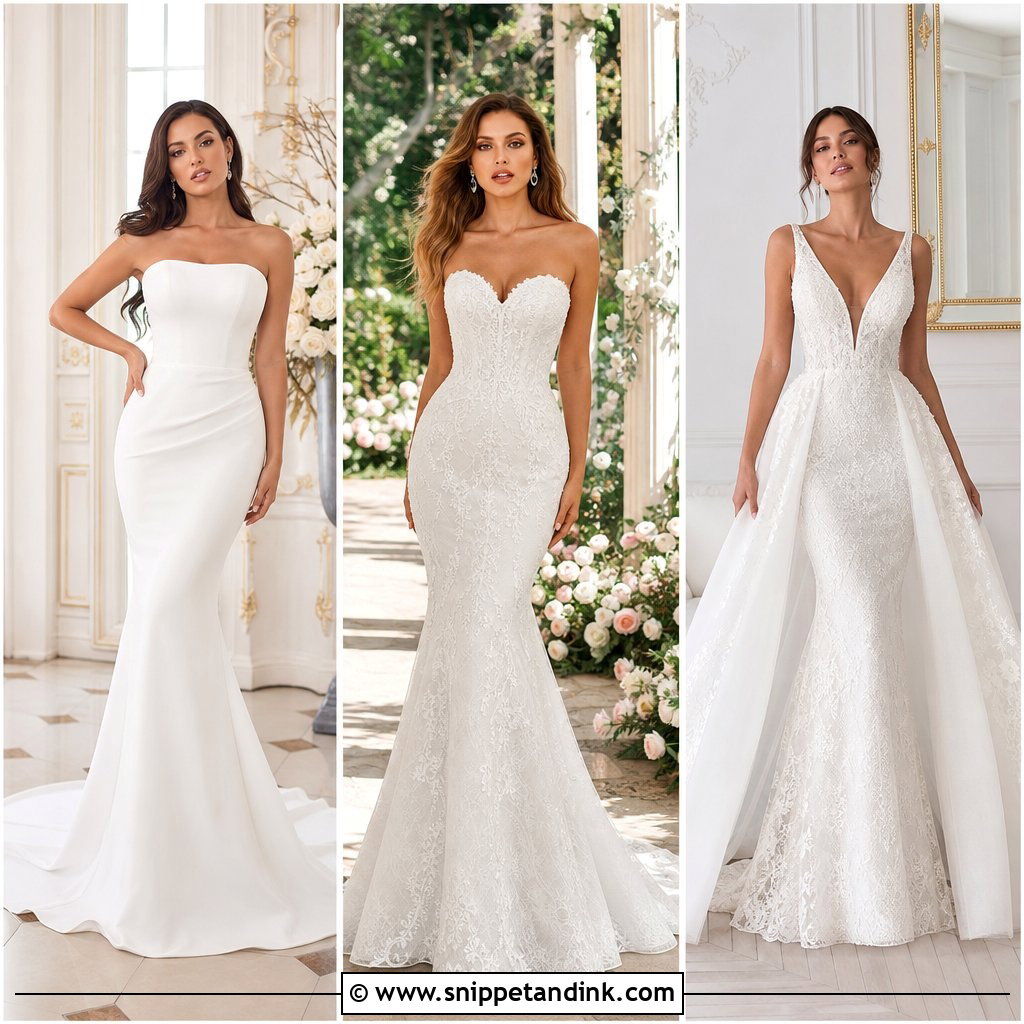
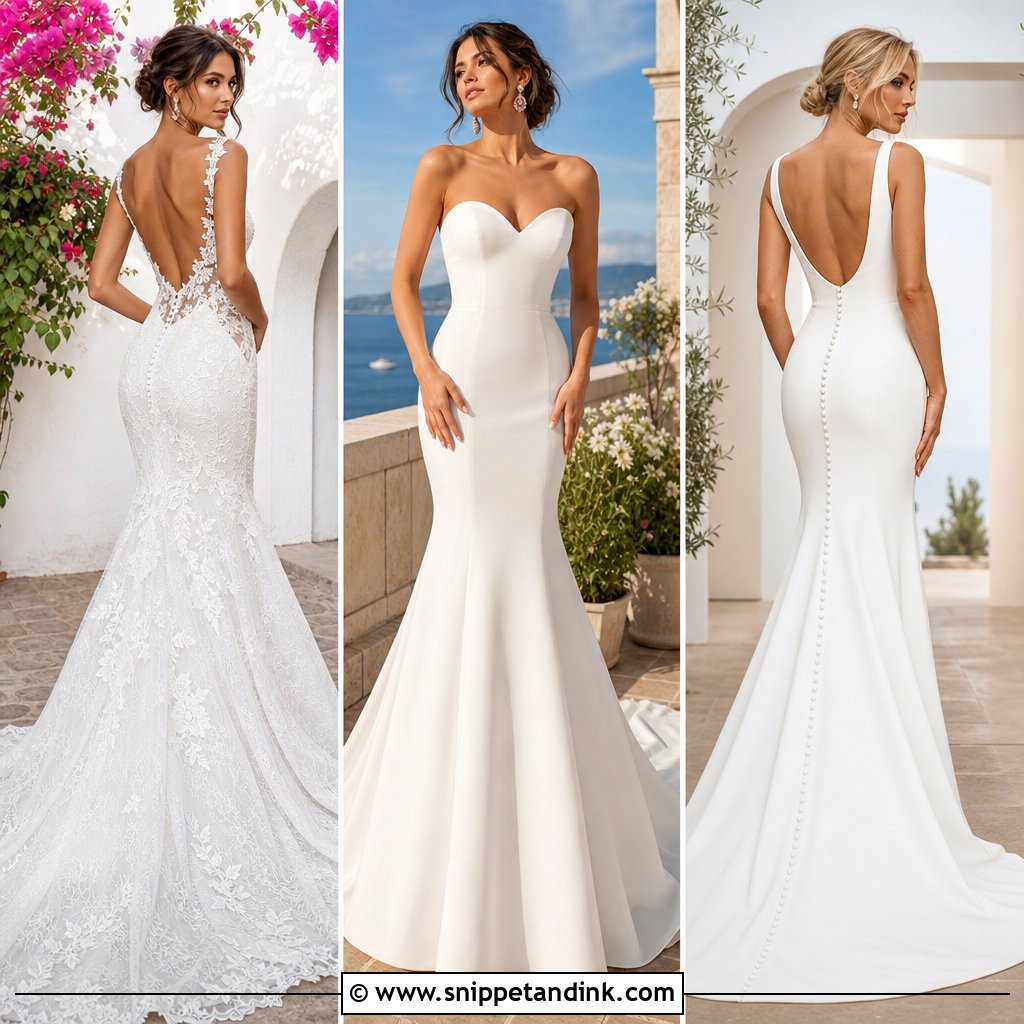
13. Velvet Mermaid Wedding Dress
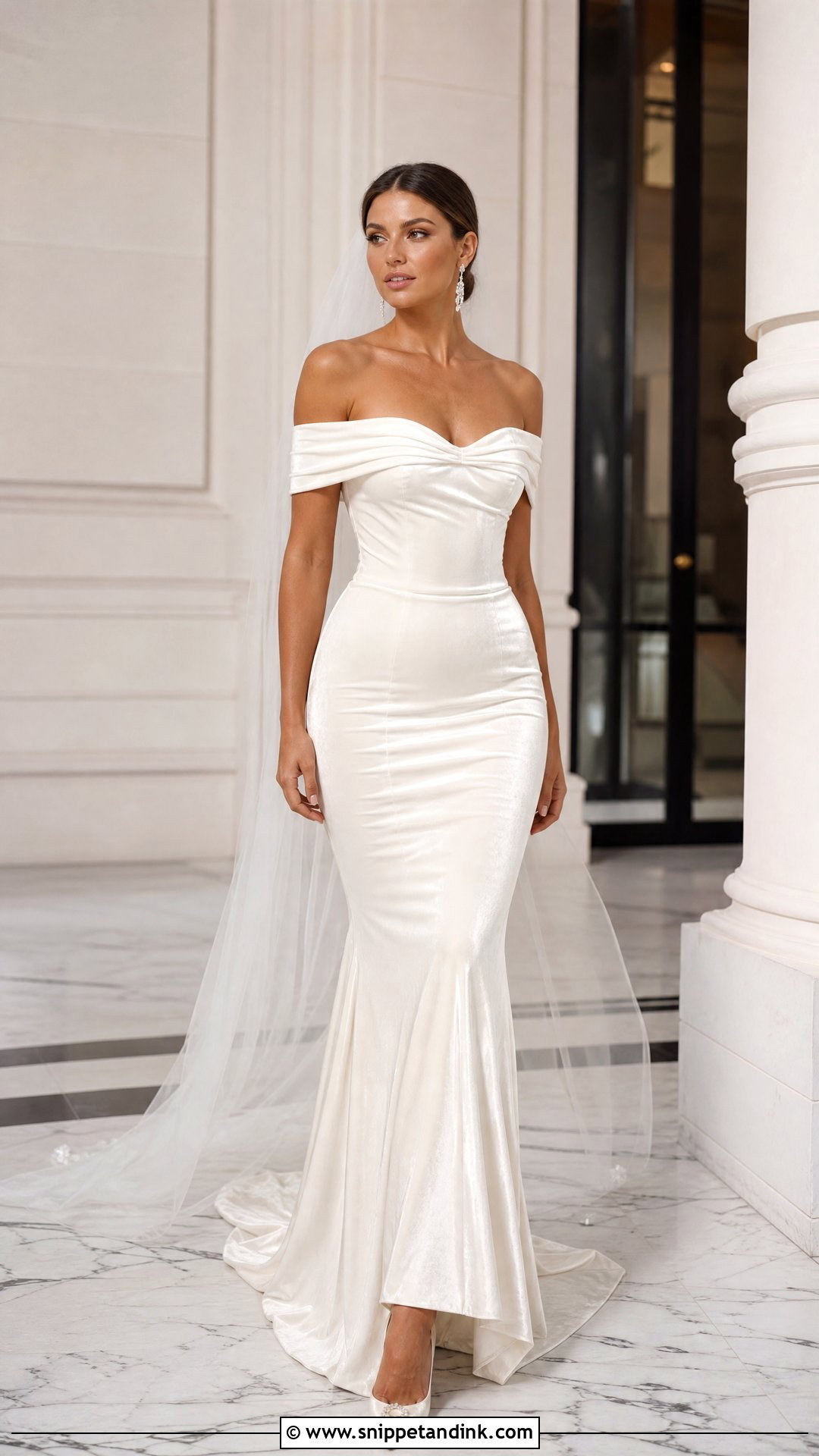
Velvet mermaid gowns are sleek and figure-defining. They follow the body to the knee and then flare, and the velvet softens what could otherwise feel severe. A simple neckline keeps it elegant, off shoulder, sweetheart or long sleeve. Pointed heels, drop earrings and a smooth updo complete it, and a long veil adds movement behind the fitted shape. Velvet has less give than stretch crepe unless it’s a stretch velvet, so sit down, climb a step and walk across the fitting room before you commit. It suits an evening ceremony or glamorous reception.
14. Velvet A Line Wedding Dress
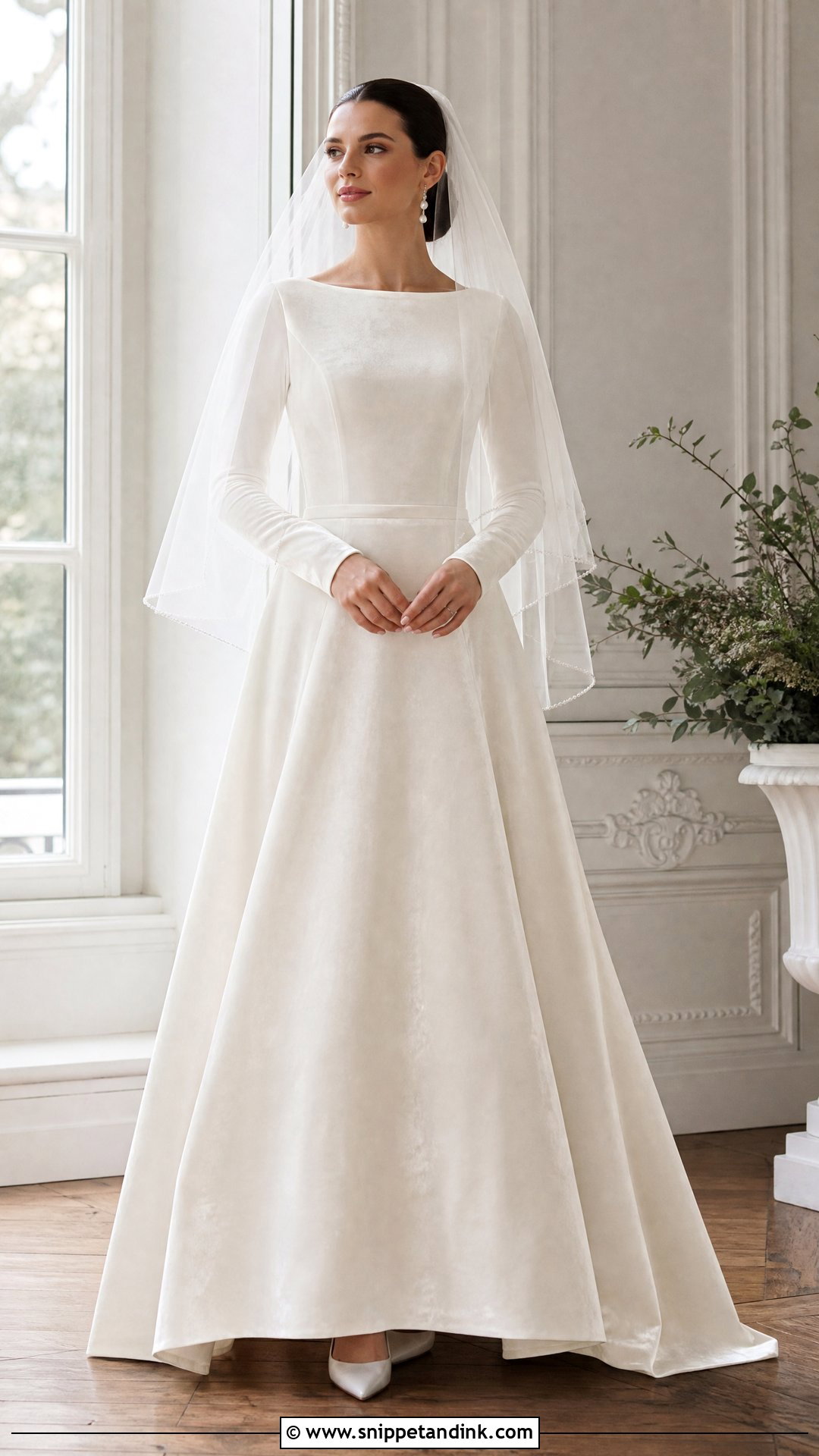
The A-line is the most wearable way to do velvet. The fitted top and gently widening skirt balance the fabric’s weight without adding drama. It works in ivory, white, blush, navy or deep green. Classic pumps, pearl earrings and a waist-length veil keep it clean, and a subtle belt or waist seam adds definition if you want it. You can sit through dinner and dance in it without fighting the skirt, which is why I recommend it to brides who want velvet texture without a costume change.
15. Velvet Wrap Wedding Dress
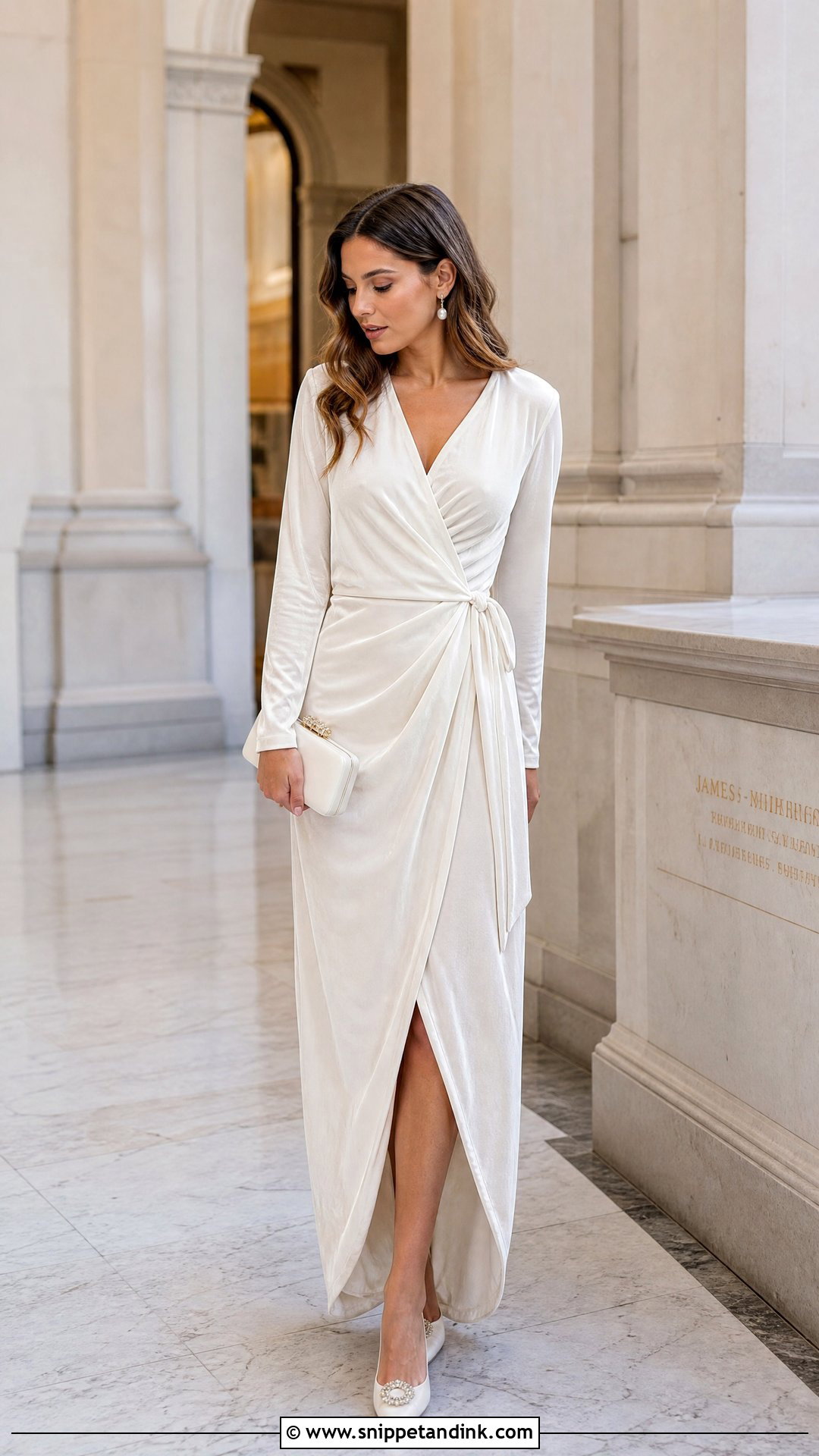
A wrap dress defines the waist and creates a V neckline that sits well with fine jewelry. Floor length is formal, and a midi length suits a courthouse or a small ceremony. Pair it with pointed heels, pearl earrings, a clean clutch and a soft updo or loose waves. The wrap is adjustable, which helps if your size might shift before the date. Velvet wrap fronts can gape when you sit or lean, so ask your seamstress for a hidden snap at the cross point. Ivory feels classic, while dusty pink, burgundy or navy is more personal. Add a simple veil for the ceremony.
16. Velvet High Neck Wedding Dress
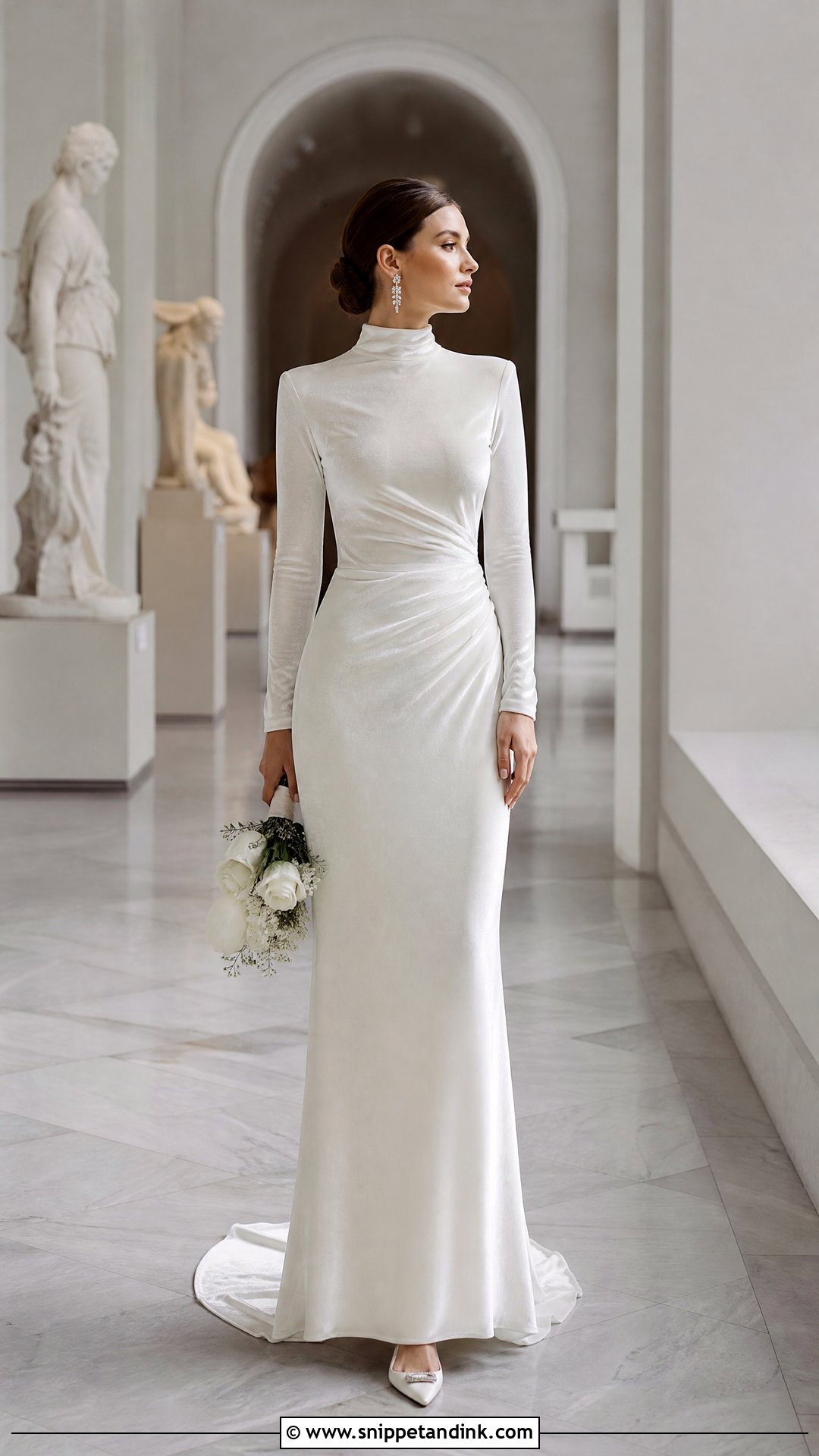
A high neck in velvet feels polished and modest without going stiff, because the pile softens the line. Long sleeves with a sleek column or A-line skirt balance it. Skip necklaces entirely and let earrings, a bracelet or a hair accessory do the work, with pointed heels and a neat clutch. A low bun keeps the neck visible. My caution here is heat. A high-neck, long-sleeve velvet gown is warm, and a crowded, heated reception room can get uncomfortable fast, so ask the venue to keep the room cool if you can. Ivory or white is the most classic version.
17. Velvet Square Neck Wedding Dress
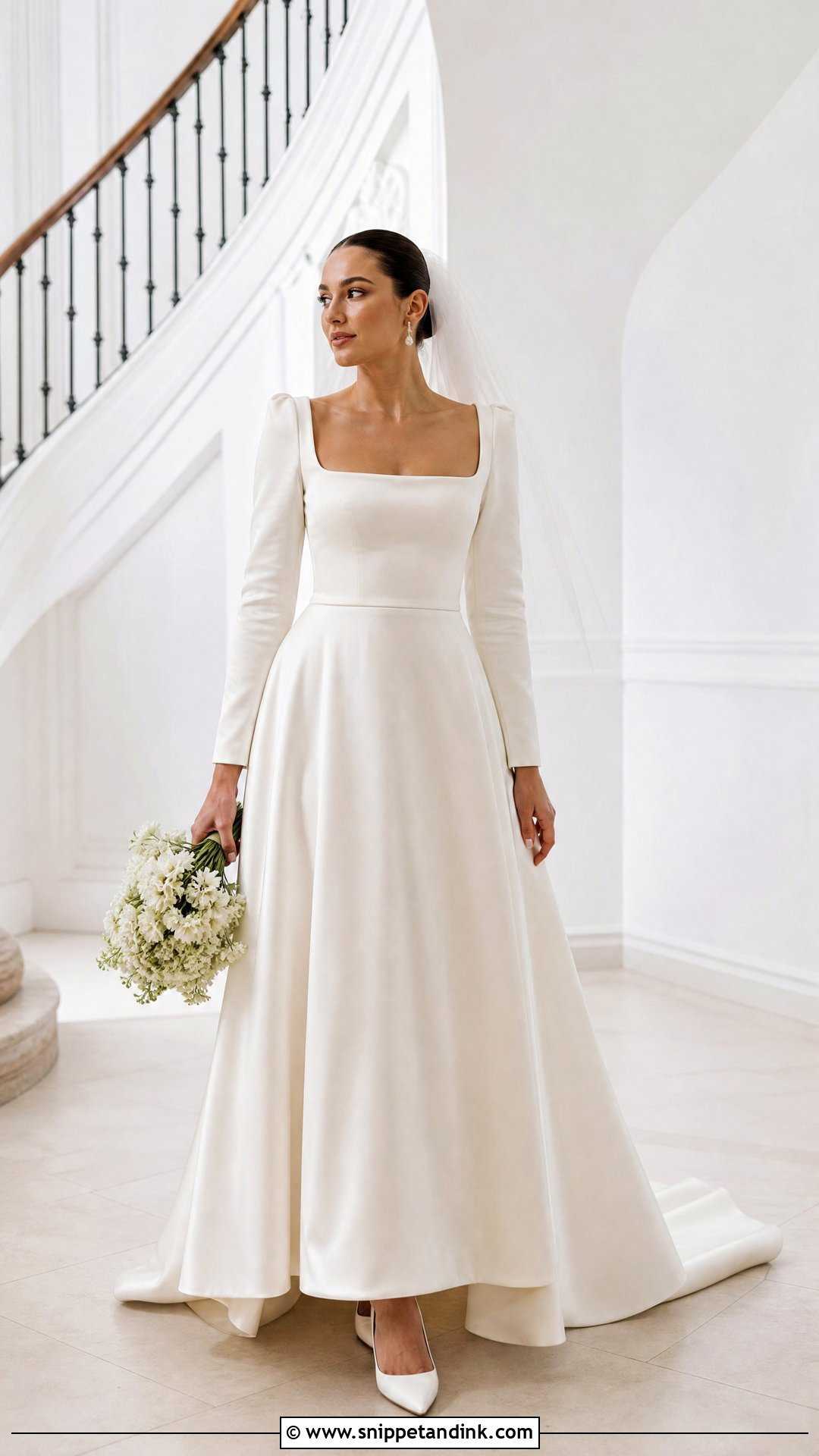
A square neckline adds structure to velvet and frames the chest and shoulders cleanly. Pair it with long sleeves and an A-line skirt for balance. Pearl drop earrings, sleek heels and a medium-length veil complete it, with a smooth bun or soft waves. A delicate pendant can sit inside the neckline if you want one small piece of jewelry. Velvet holds a square edge well because the pile adds a little body, so it keeps its line better than a soft chiffon would. It suits modern estates, city venues and refined indoor ceremonies.
18. Velvet Wedding Dress With Bow Back
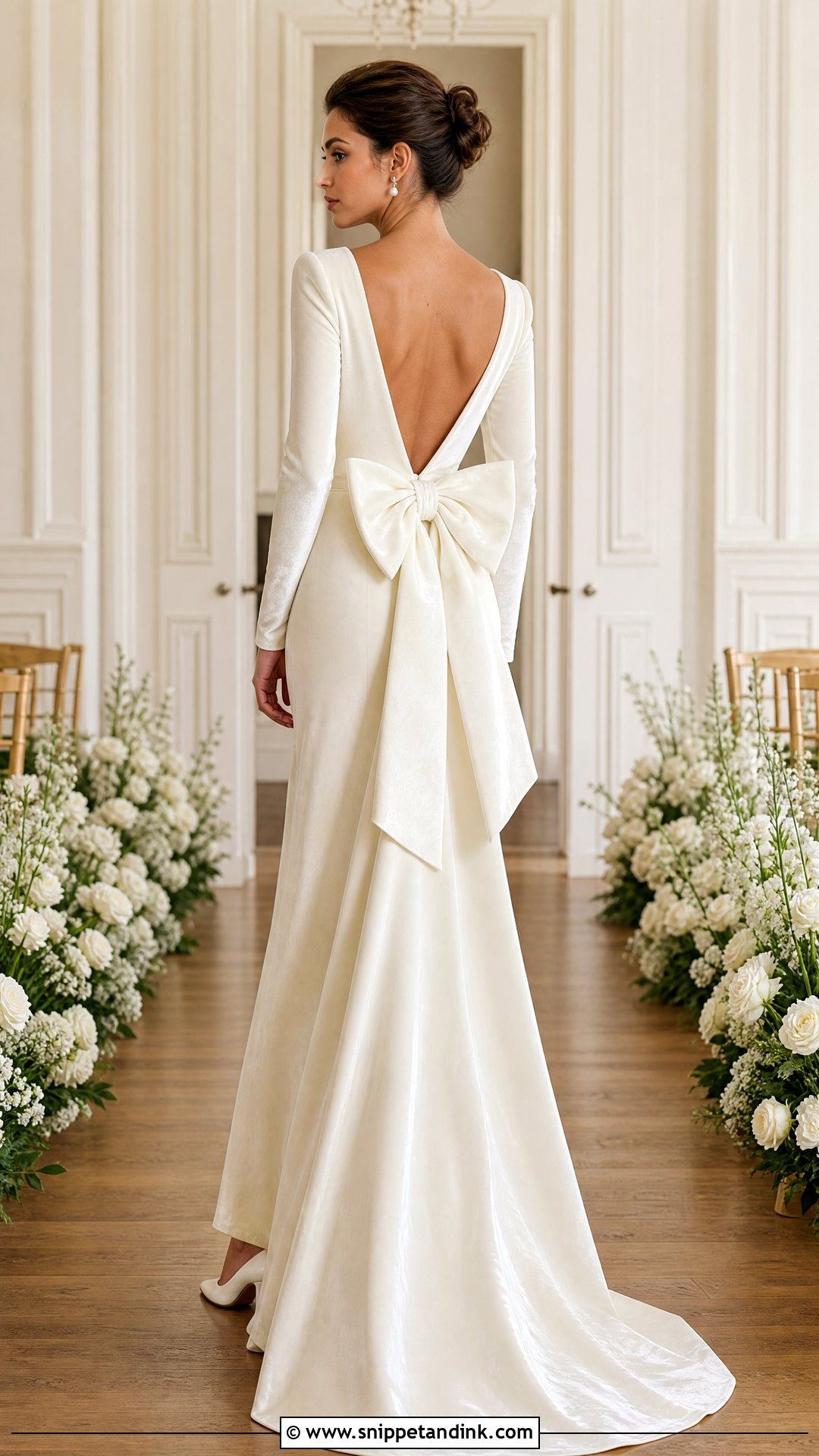
A bow at the back gives the outfit a second moment once you’ve walked past the guests. The front can stay plain while the back carries all the charm. Choose a fitted velvet bodice with a medium or oversized bow at the waist and a clean skirt, then add pointed heels, pearl earrings and a simple veil. The bow needs interfacing or a stiffened backing, or velvet’s weight makes it droop within an hour. Hair up or swept to one side keeps the bow on view for aisle photos and portraits from behind.
19. Velvet Wedding Dress With Detachable Train
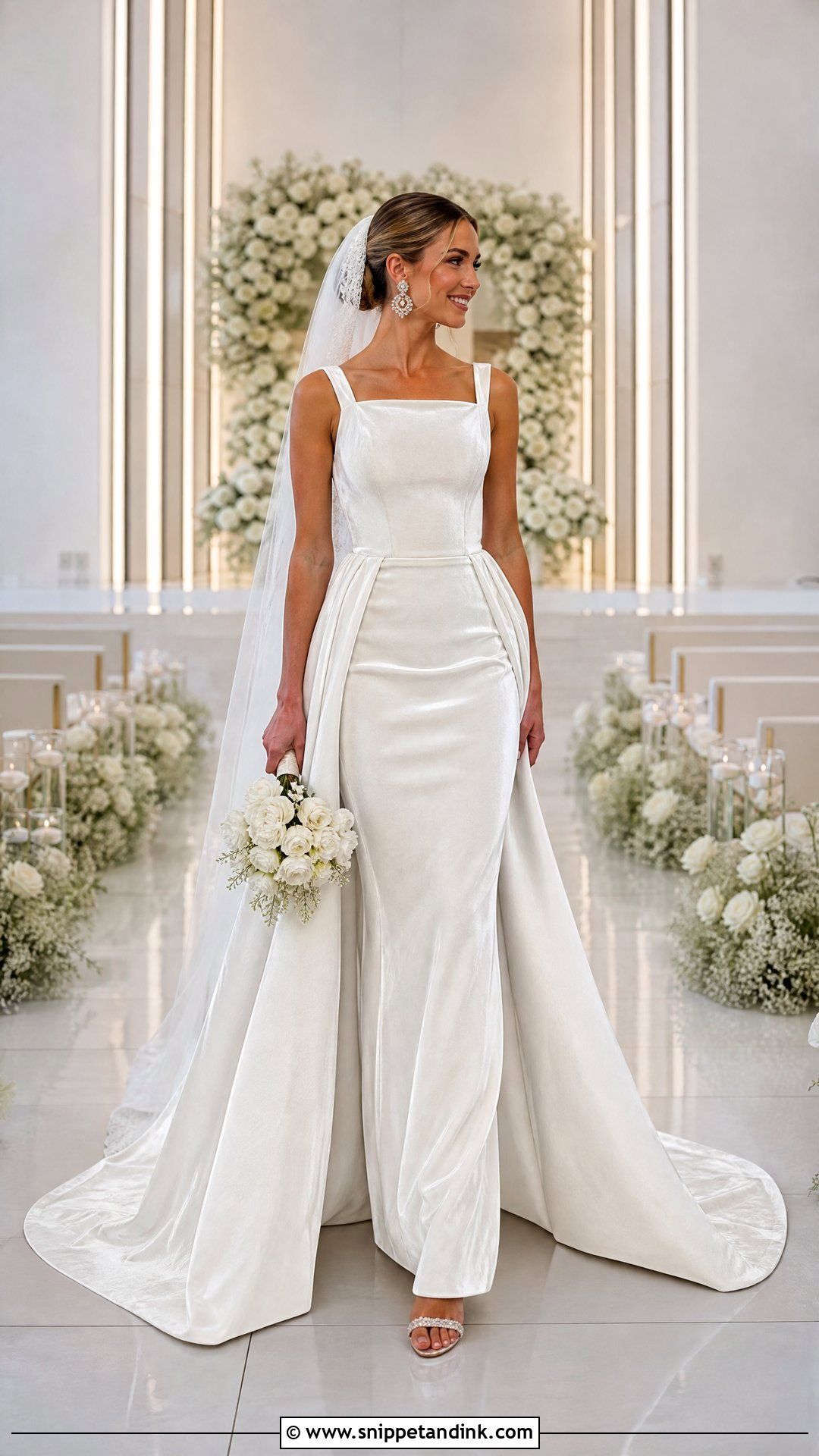
A detachable train solves velvet’s biggest problem, which is that a long heavy train gets tiring by the third hour. You get the formal entrance for the ceremony and freedom for the reception. Underneath, the gown can be a column, mermaid or fitted A-line, and the train comes off after photos. Choose secure heels, elegant earrings and a veil that suits the train’s length. Ask how the train attaches before you buy. Hidden hooks or snaps along the waist are easiest, and someone should practice removing it before the day so it comes off cleanly. It’s a smart way to get two looks from one dress.
20. Velvet Wedding Dress With Pearl Accessories
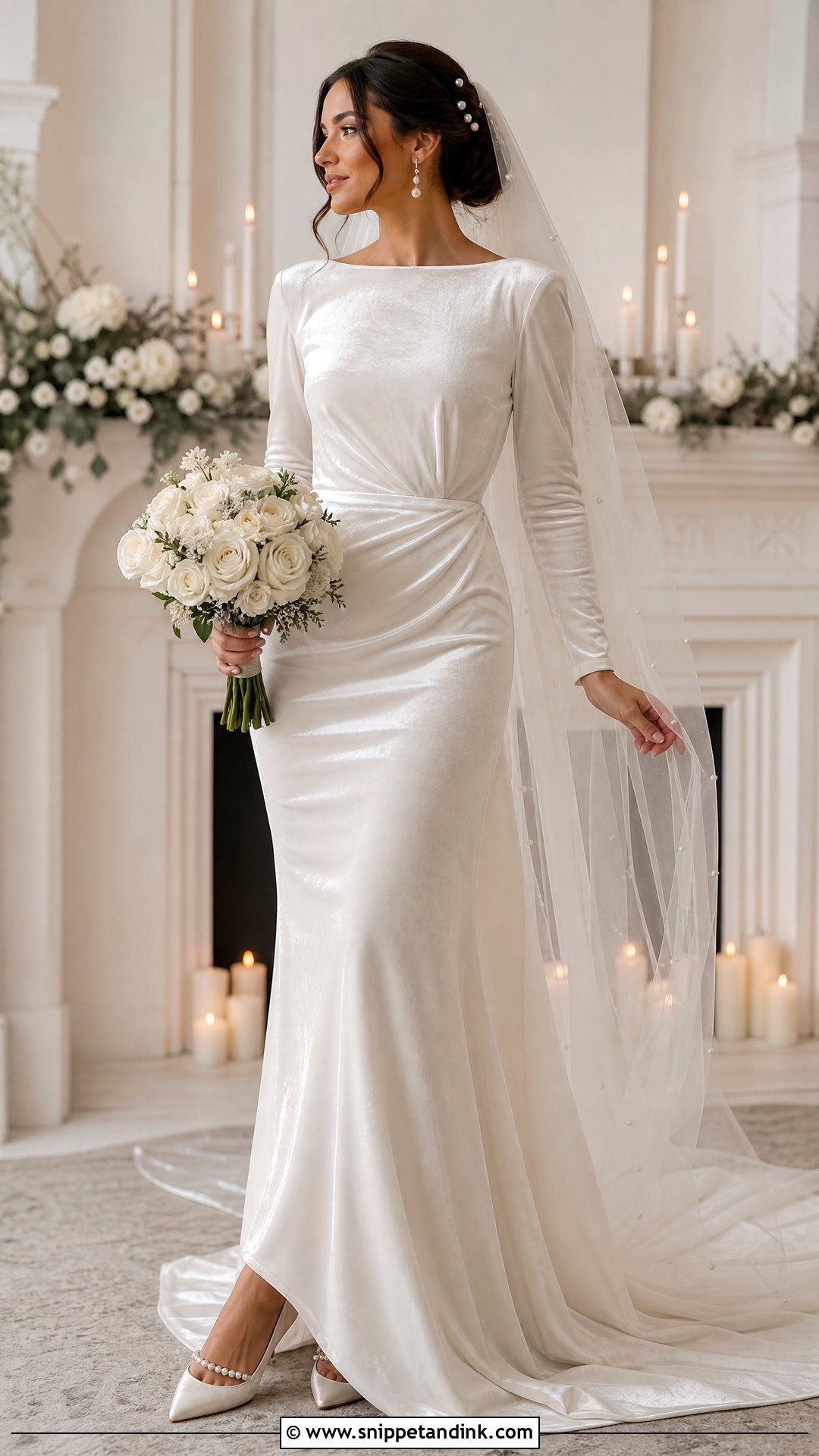
Pearls are velvet’s best friend. They bring a gentle glow that balances the fabric’s depth, especially on ivory, white, blush or navy. Try a simple gown with pearl drops, pearl hair pins and pearl-trimmed heels, and add a pearl veil if the dress is minimal. If the gown already has embellishment, choose two pearl pieces rather than all of them. A pearl necklace can catch on velvet’s pile and leave a faint crushed line, so I usually stick to earrings and hair. It suits winter ceremonies, hotels and indoor celebrations.
21. Velvet Wedding Dress With Bridal Boots
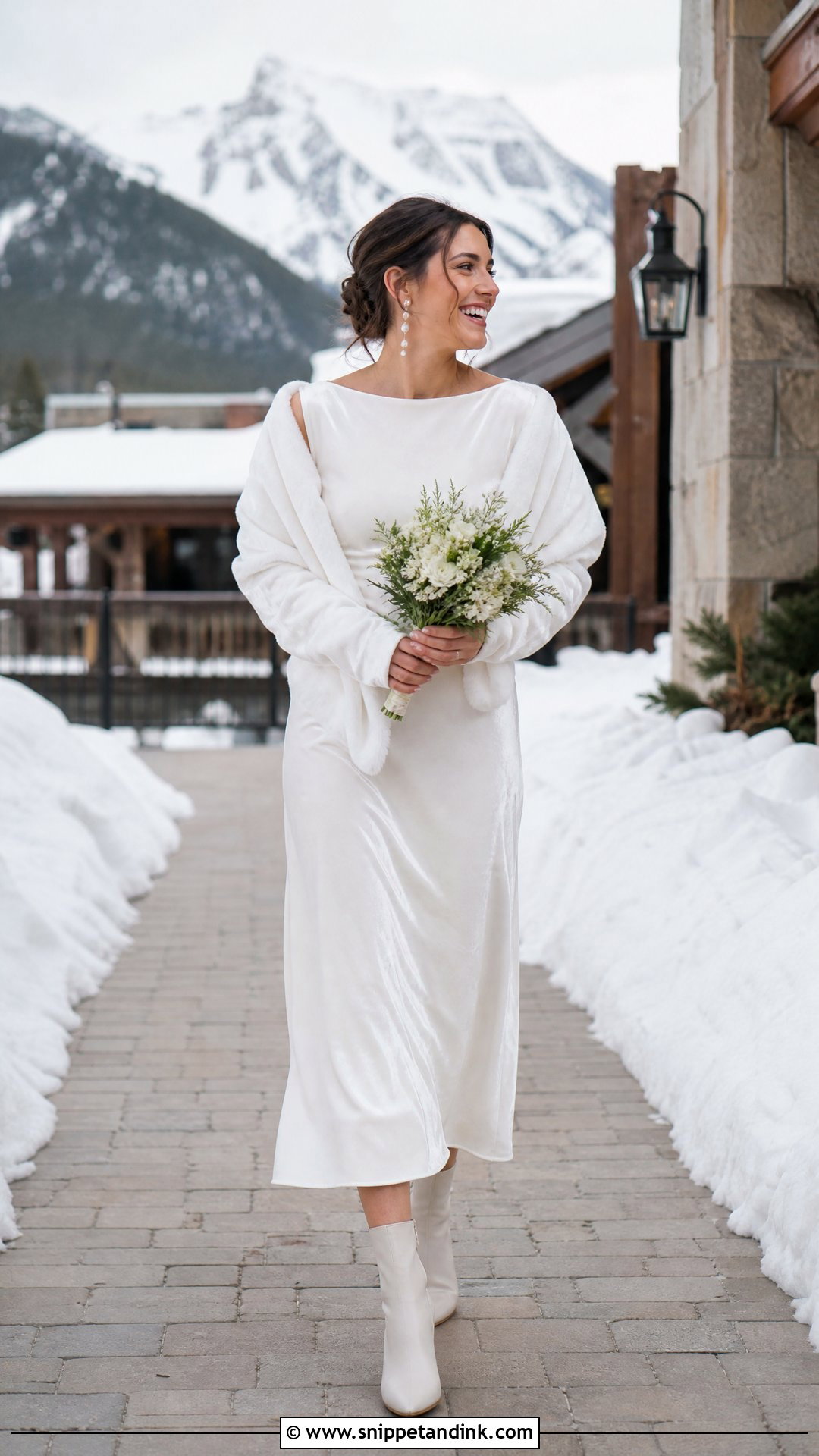
Boots are the practical answer to snow, mud and cold stone floors. They keep your feet warm and steady, and the velvet dress keeps the outfit polished. Choose white, ivory, silver or pale beige to match the gown. A midi dress shows them clearly, while a long gown only gives a glimpse as you walk. Add pearl earrings, a soft wrap and a simple bouquet. Wear them in well before the day and spray them with a water repellent if there’s snow in the forecast. They’re ideal for mountain venues, lodges and snowy portraits. Keep the boot slim, not bulky.
22. Velvet Midi Wedding Dress
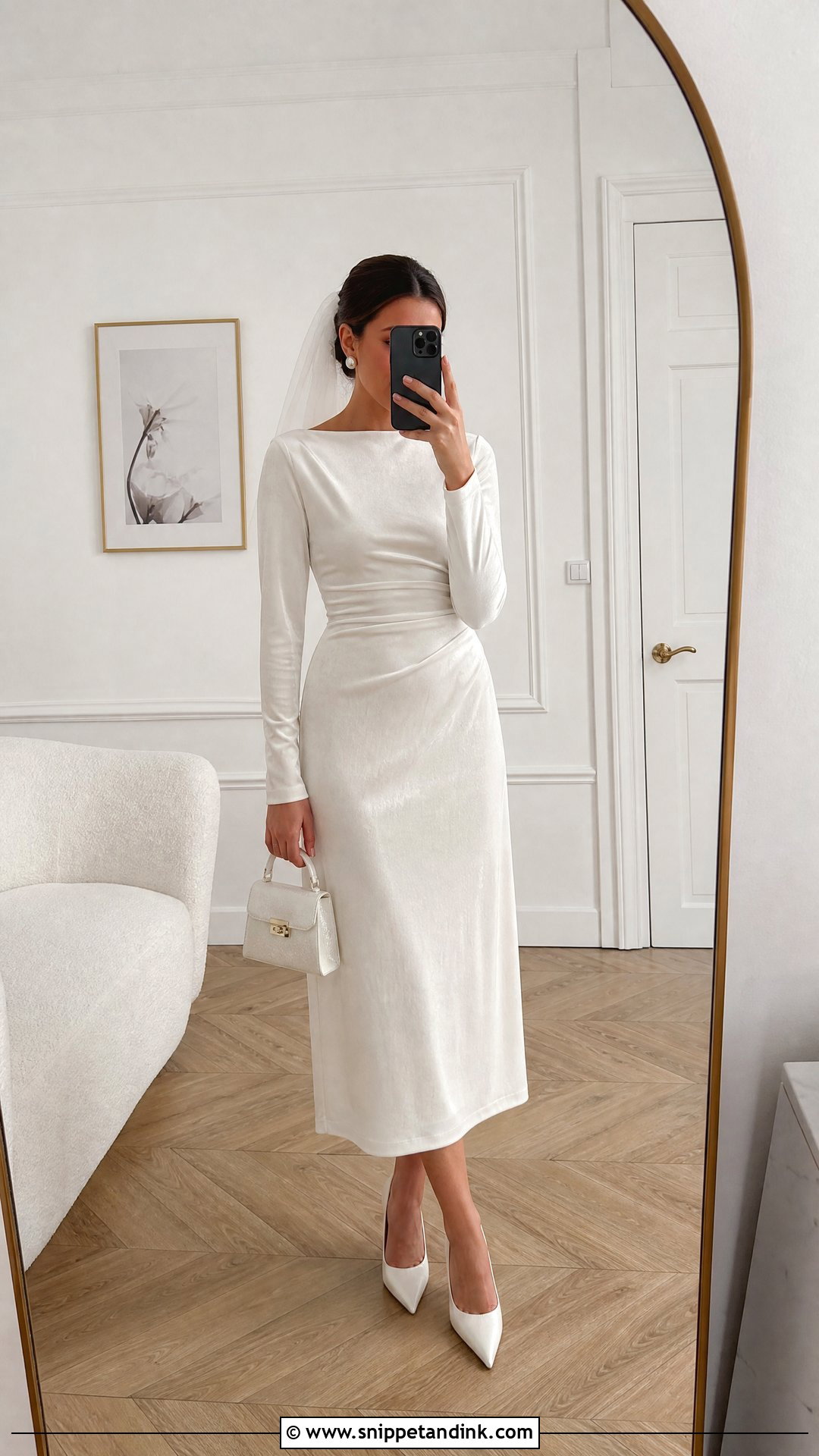
A velvet midi wedding dress suits courthouse ceremonies, small weddings and reception changes. The shorter length is easy to move in, and velvet keeps it special. A fitted waist, wrap shape, square neckline or long sleeves all work, with pointed pumps, slingbacks or sleek bridal boots. Add pearl studs, a short veil and a structured mini bag. Hemlines show more on a midi, so get the length checked in the exact shoes you’ll wear. Ivory feels most bridal, while blush, navy or burgundy is more personal, and it makes a good second look after a formal gown.
23. Velvet Wedding Dress With Faux Fur Wrap
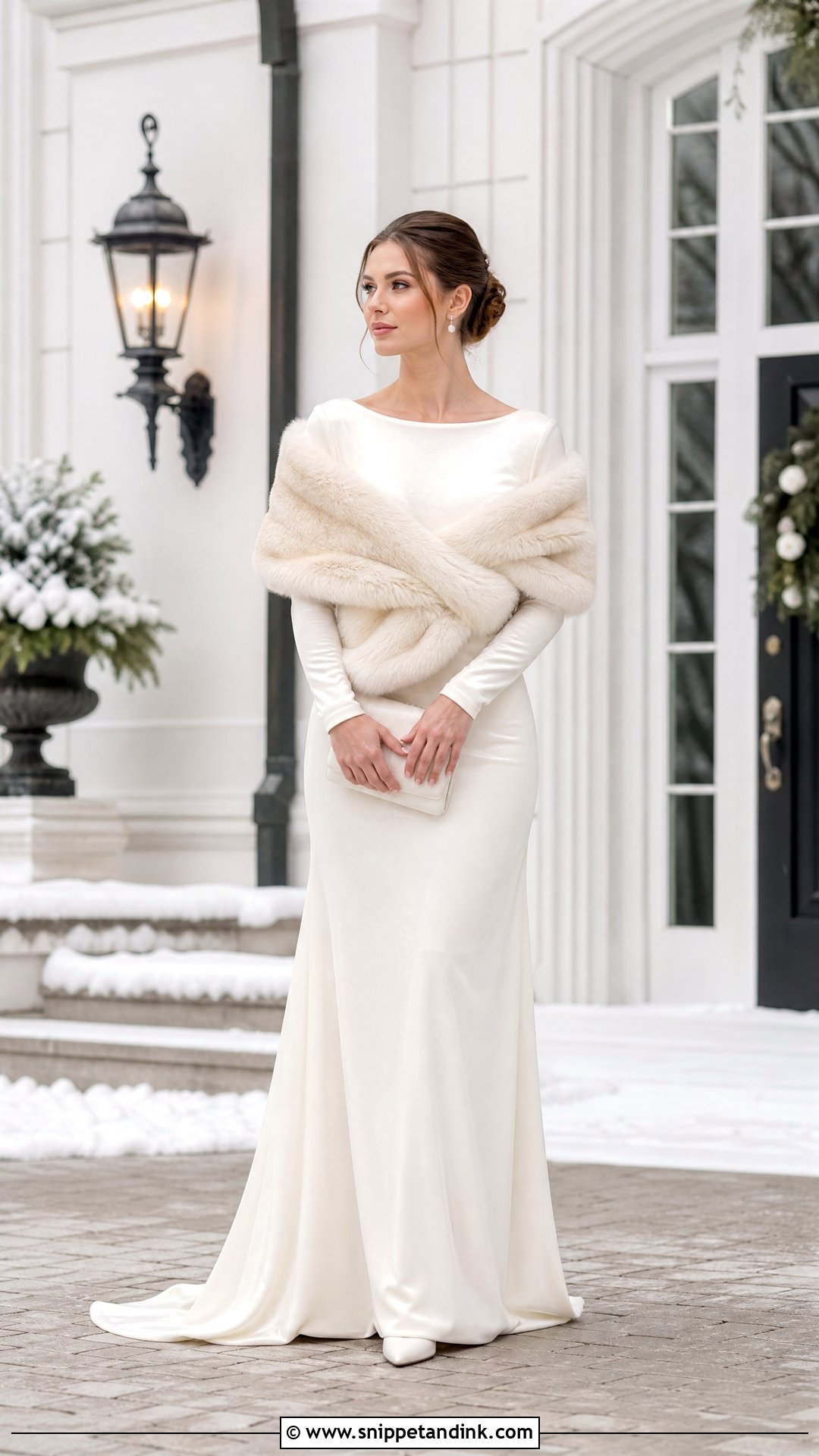
A faux fur wrap adds warmth without hiding the dress, and the two textures sit well together. White or ivory keeps it classic, and soft gray feels more modern. Closed-toe heels, pearl earrings and a simple clutch finish it, and a long sleeve velvet gown is the most cohesive match. Choose a wrap that fits close to the shoulders. A big, loose fur adds bulk to an already weighty fabric and swallows your shape in photos. It’s made for outdoor portraits, evening exits and venues with cold hallways or terraces.
24. Velvet Two Piece Wedding Dress
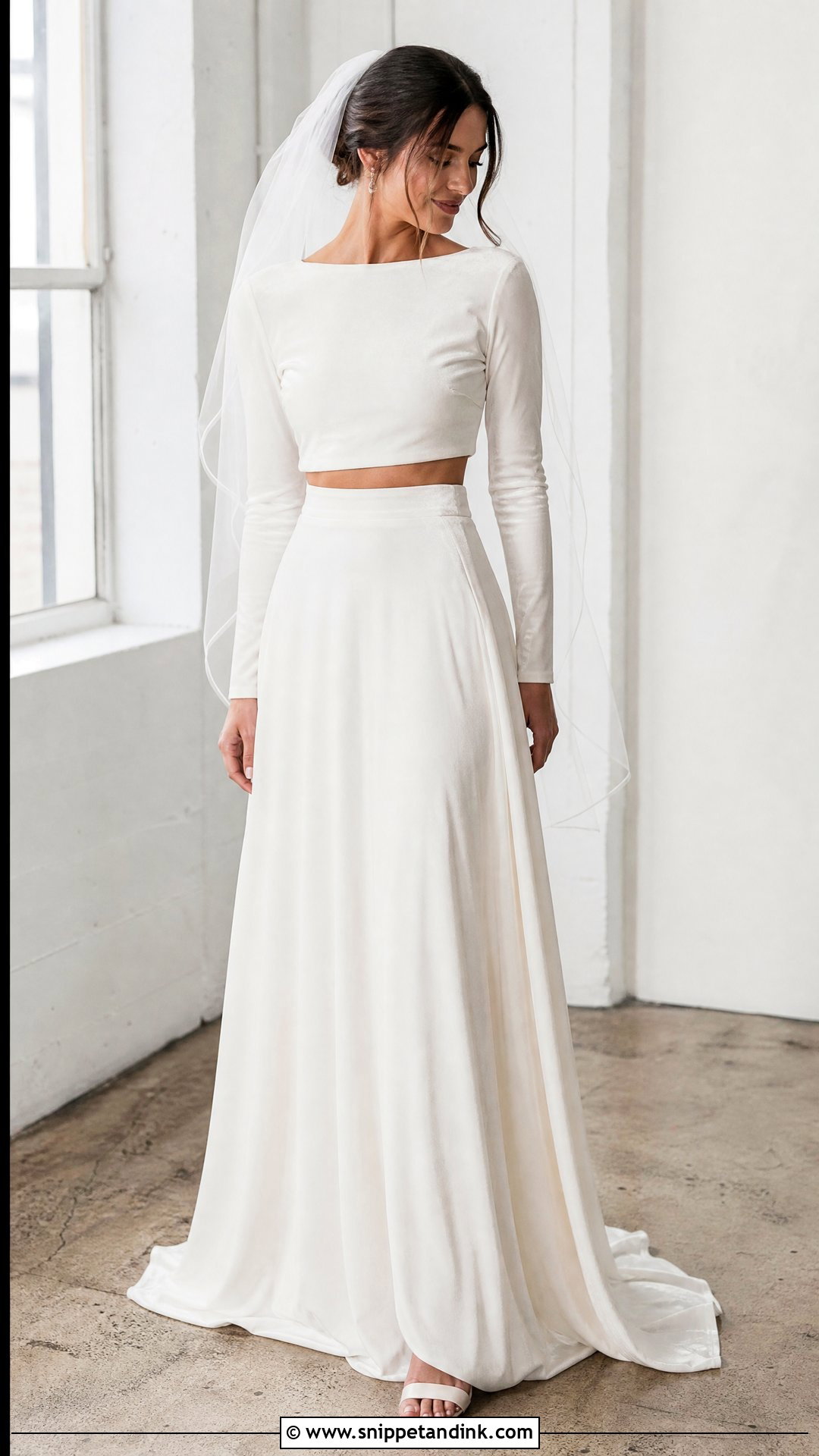
Velvet separates are flexible and modern. A velvet crop top or fitted long sleeve top with a high-waisted skirt looks elegant when the proportions are right. The skirt can be satin, tulle or more velvet, depending on how much texture you want. Simple heels, delicate earrings and a clean veil complete it. Separates can be altered or reworn later, which is a real plus. The waistline is the part to fuss over: make sure the top sits securely over the skirt when you raise your arms, because velvet tops tend to ride up. It suits creative venues and city weddings.
25. Blush Velvet Wedding Dress
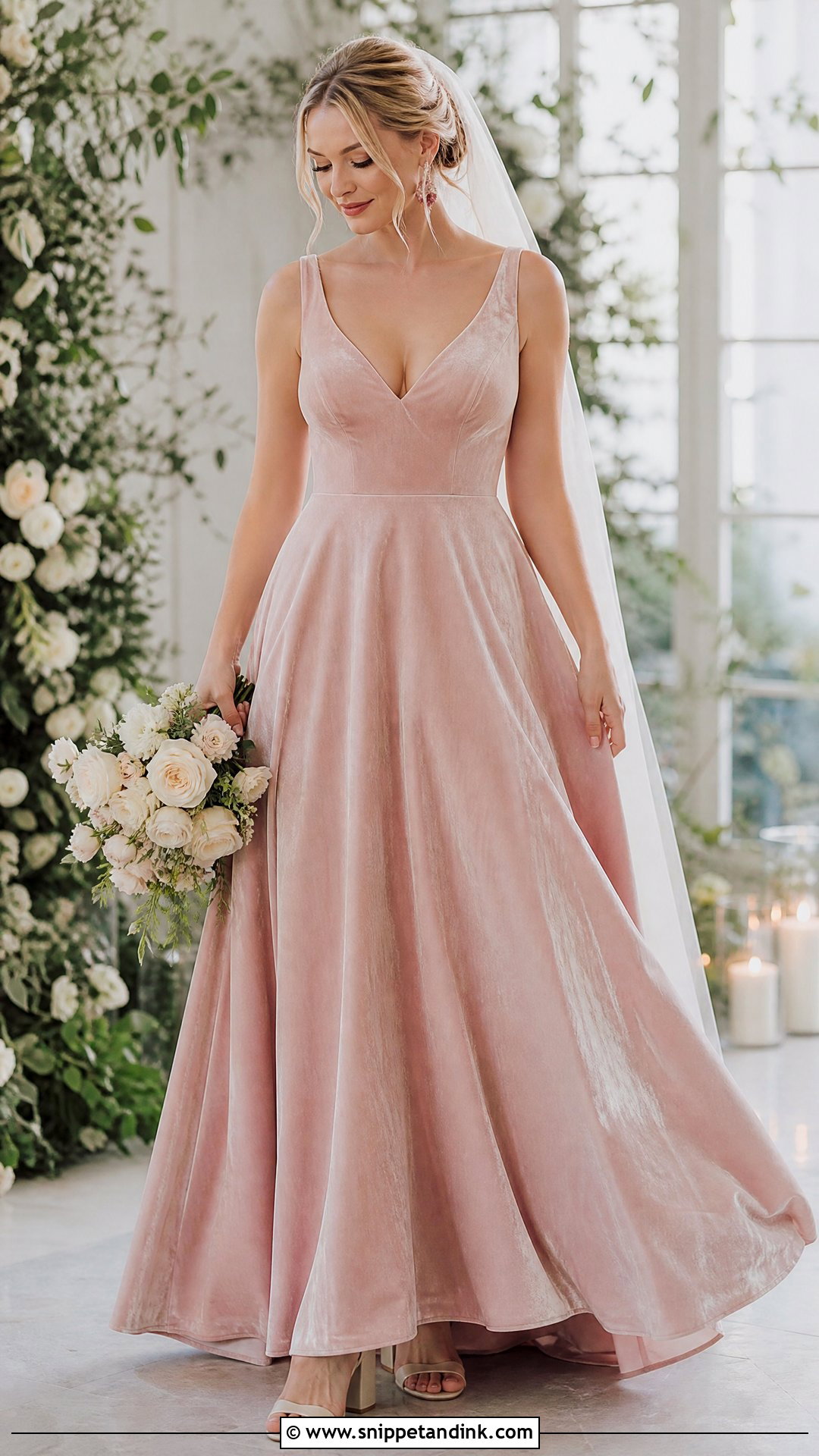
Blush gives you color without going bold, and velvet adds enough depth that pale pink doesn’t look sugary. An A-line, wrap or off-shoulder gown keeps it graceful. Pair it with ivory heels, rose-toned earrings and a soft veil, plus a bouquet of cream and pale pink flowers. Hold blush velvet up to your face in daylight at the shop. On some skin tones it can wash out near the face, and a slightly warmer or deeper pink solves that. It works for fall, winter or early spring, in historic homes and intimate ceremonies.
Why Velvet Alterations Need More Lead Time
Velvet is one of the trickier fabrics for a seamstress. Pins and needle holes can leave permanent marks in the pile, so fittings have to be precise from the start, and letting a seam out sometimes shows where the old stitching was. The layers also slip against each other while sewing, which slows the work down.
Start alterations a little earlier than you would for satin or chiffon and choose a seamstress who has handled velvet before. Ask her outright. Bring your shoes and undergarments to every fitting, since a hem taken up on velvet can’t easily be let down again.
Crushing, Heat and Lint on the Day
Sitting for a long car ride or a ceremony crushes the pile, leaving shiny patches across the back of the skirt. Steam from the inside of the dress, holding the steamer away from the surface, and never iron velvet face down. Brush the pile gently with your hand afterward to lift it.
Hang the gown on a padded hanger the night before rather than leaving it folded in a bag. Put a lint roller and a small handheld steamer in your emergency kit, and plan for heat. Velvet is warm, so have a cool spot to step into between the ceremony and the reception.
Velvet Rewards a Little Extra Care
Velvet combines texture, warmth and real presence in one fabric, which is why it’s so good for cooler seasons, evening ceremonies and formal rooms. Ivory long sleeves, burgundy, emerald, navy and black can each look classic, modern or dramatic depending on how you style them. Plan the shoes, accessories, veil, outer layer and hair around the fabric’s weight and warmth, and give yourself extra time for alterations and steaming. Do that, and the dress will feel like yours and hold up from the first photo to the last dance.
You'll Like These Ideas:



Leave a Reply