
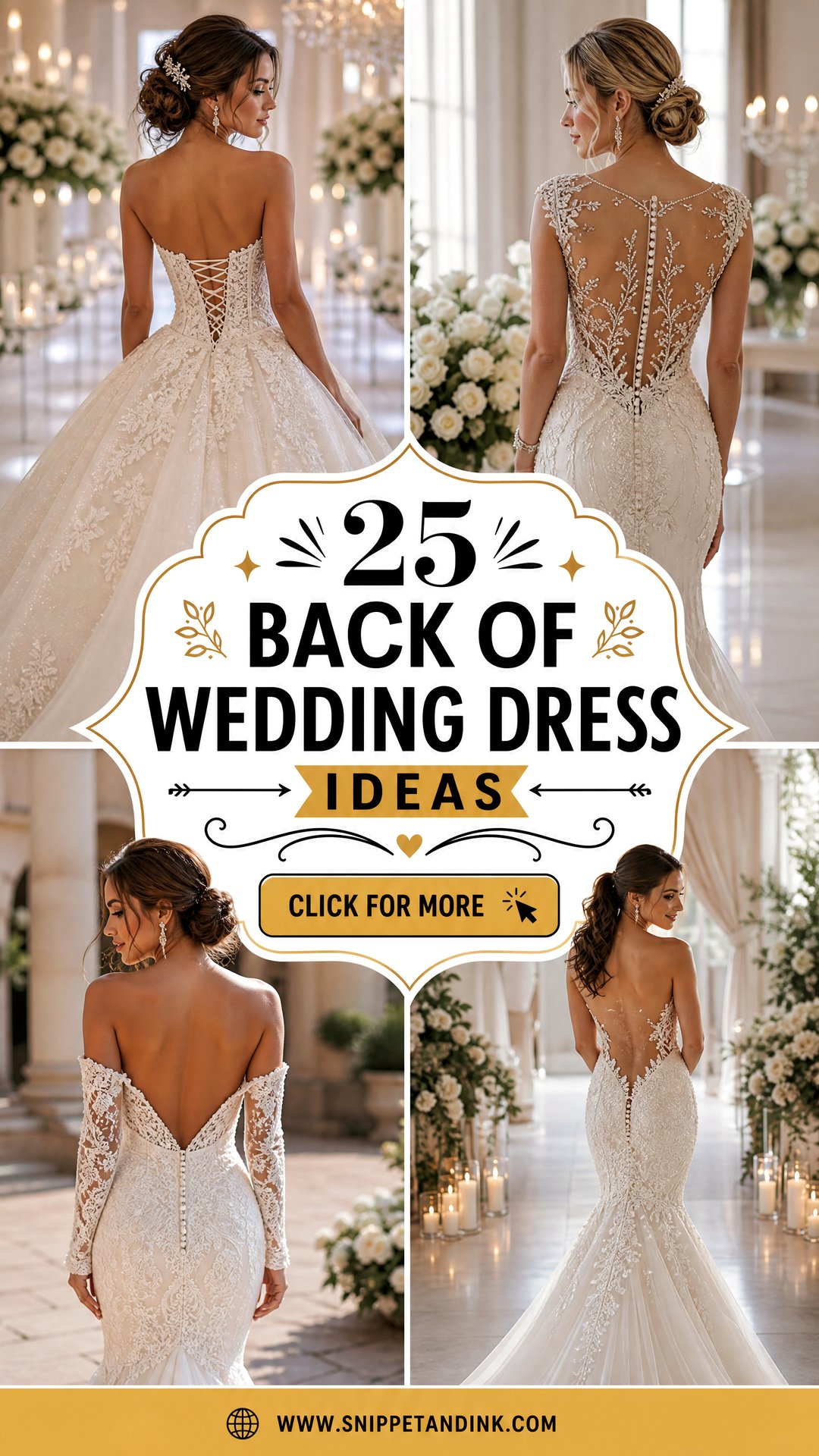
Guests spend most of the ceremony looking at your back. That’s the view from every row while you stand at the altar, and it’s the view in half your portraits and the whole walk out. When a bride comes to me for fittings, I always turn her around in front of the mirror before we discuss anything else. The options run from romantic illusion lace to clean square openings, deep V cuts, keyholes, halters, pearl draping, bows and long rows of covered buttons. Each idea below pairs the back with a silhouette, hairstyle, veil and shoes that suit it, plus the fitting checks I’d make before saying yes to the dress.
Support Comes First, Then the Back
The first question I ask about any open back isn’t how deep it goes. It’s what you’ll wear underneath. Your support decides how low a back can go on your body, so I sort that out before a bride falls in love with a style.
- Built-in cups and boning: the most reliable choice for low backs. A seamstress can sew cups into most gowns, and boning down the side seams does much of the work a bra band would.
- Low-back bra converters and plunge bras: fine for keyholes and mid-height scoops, but they show above any back cut near the waist.
- Adhesive cups: work for smaller busts and short days. They can loosen with heat and sweat, so I’d test one through a full afternoon before trusting it.
- Fashion tape: keeps edges flat against skin. It’s a finishing touch, not support.
Bring the exact undergarments you plan to wear to every fitting. A dress altered over one bra and worn over another will sit differently, and back openings show the difference immediately.
1. Low V-Back Lace Wedding Dress
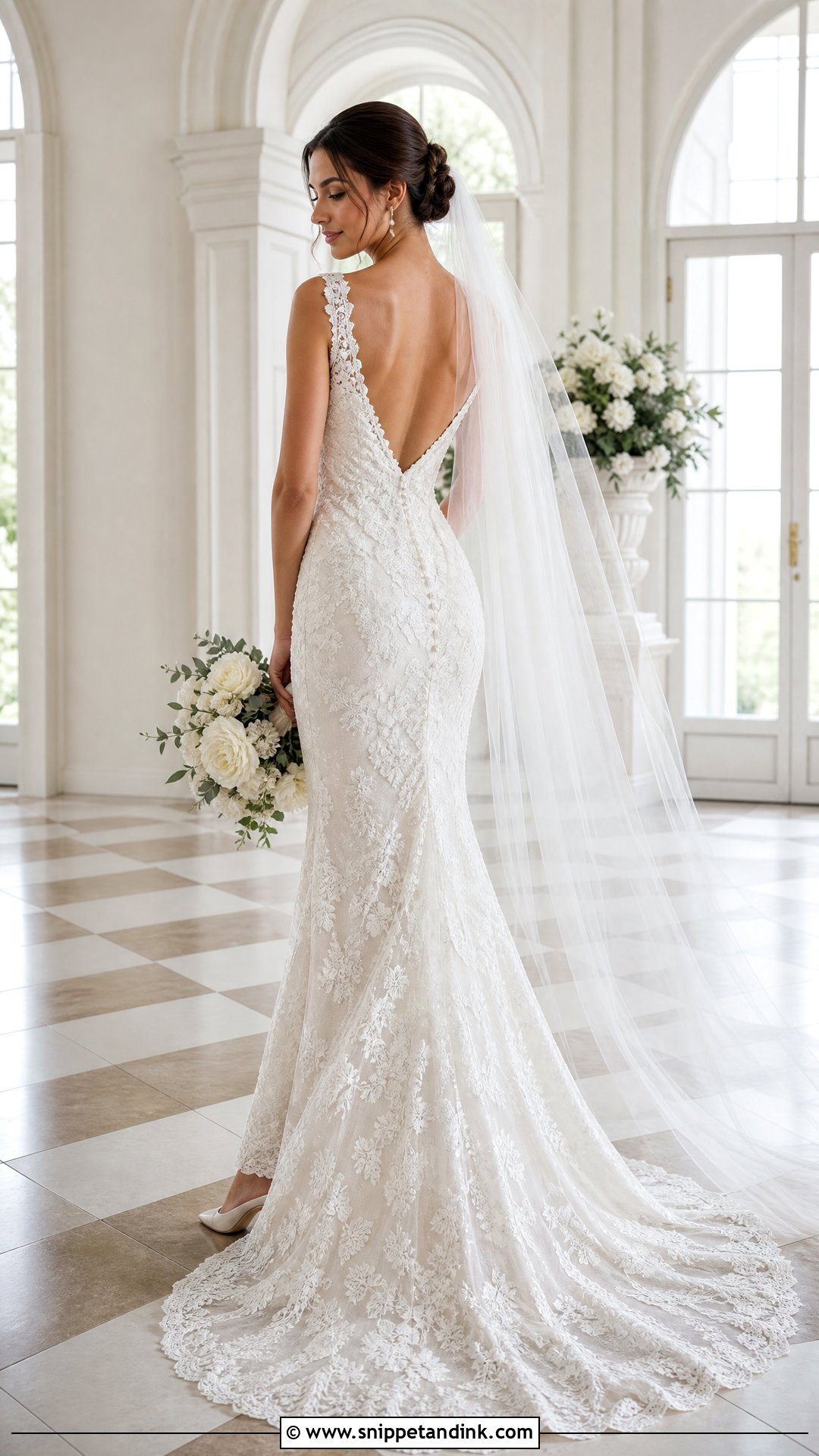
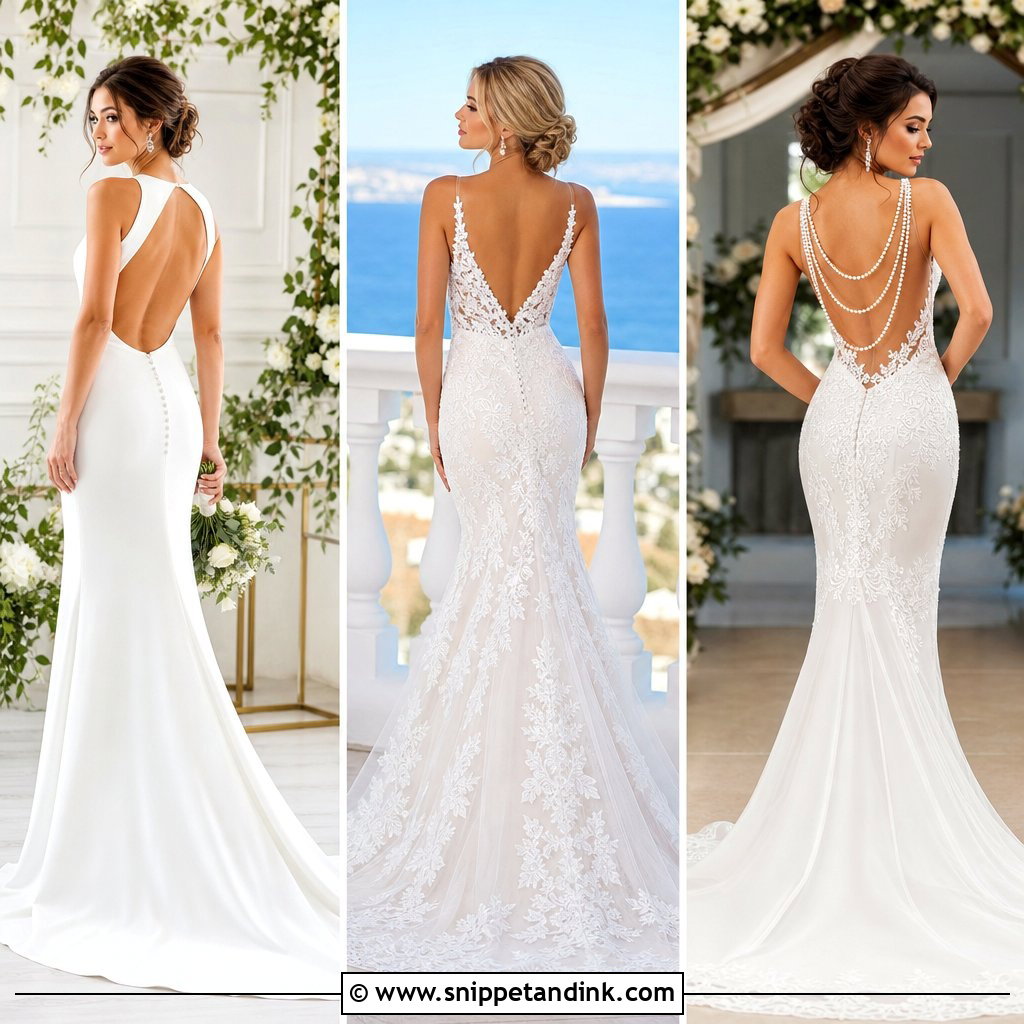
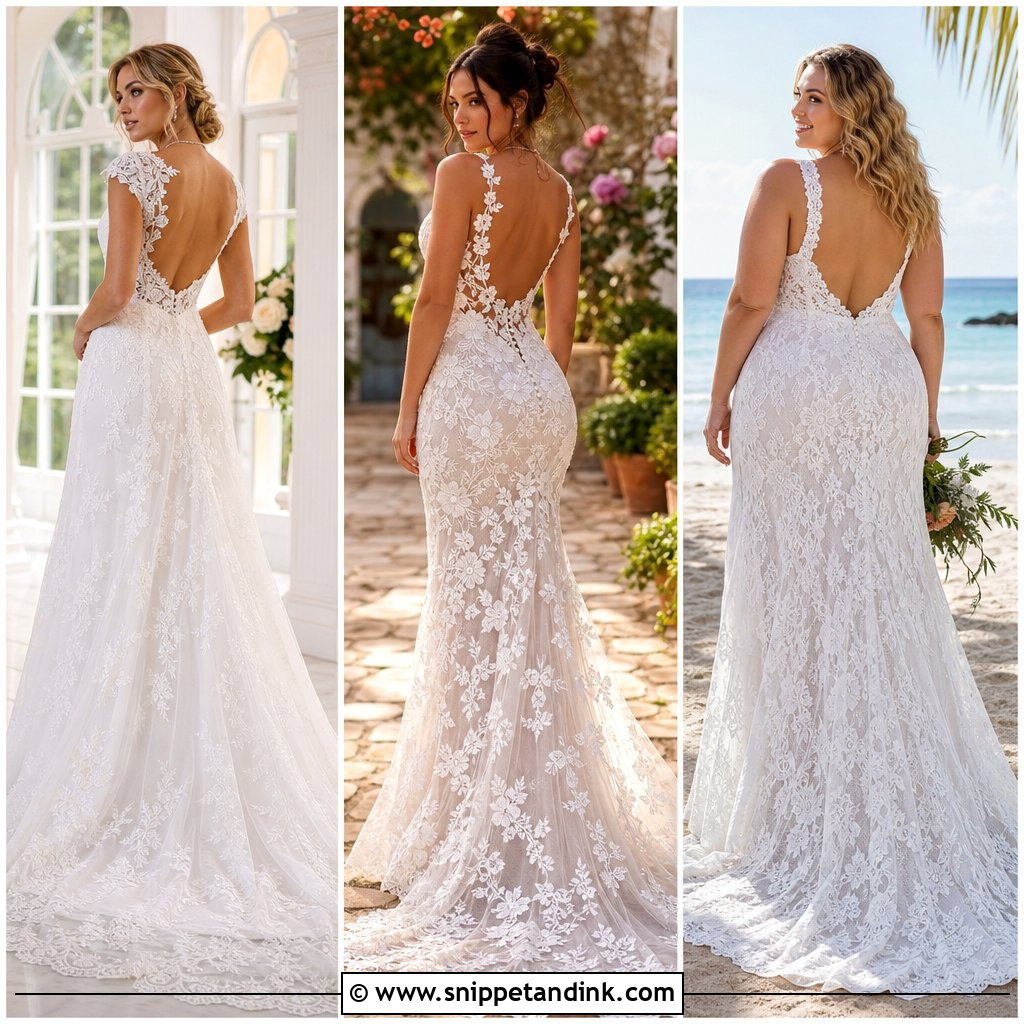
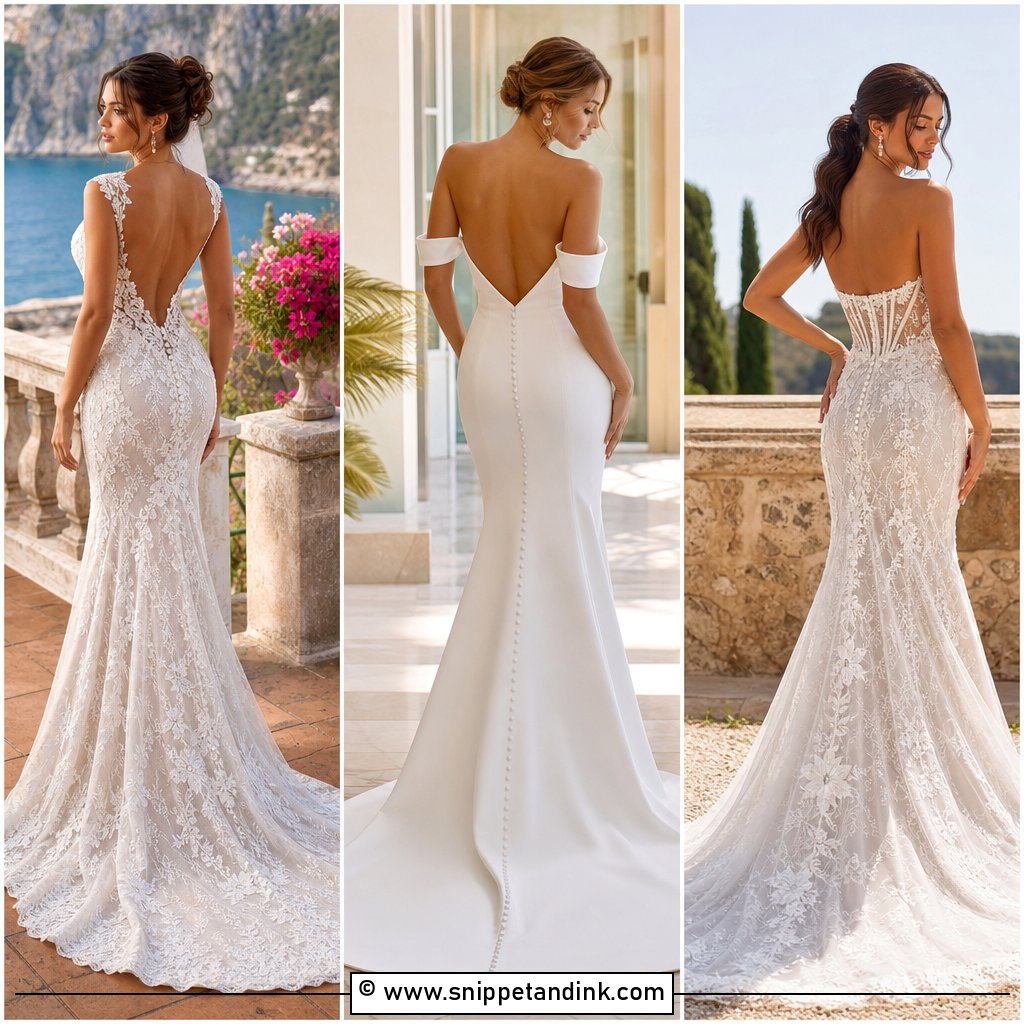
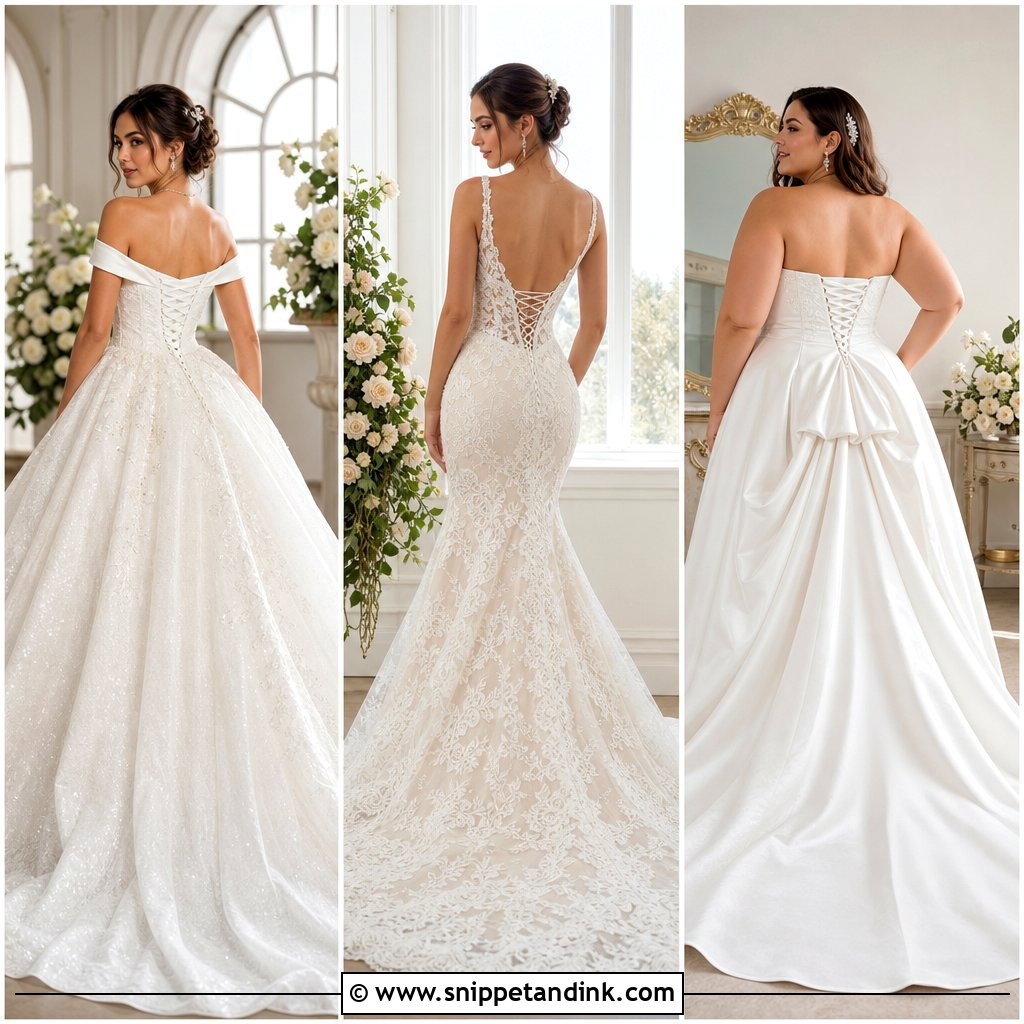
A low V in lace shows skin without feeling bare, because the lace edging softens the line. What holds it up is structure you never see: supportive side seams and, in most good gowns, boning that runs down from the underarm. I’d pair it with a fit-and-flare or soft A-line, a low chignon, pearl drops and ivory pointed pumps, then a sheer cathedral veil with minimal trim. At the fitting, sit down, walk, and raise both arms over your head. If the V lifts away from your skin, it needs taking in.
2. Illusion Lace Back Wedding Dress
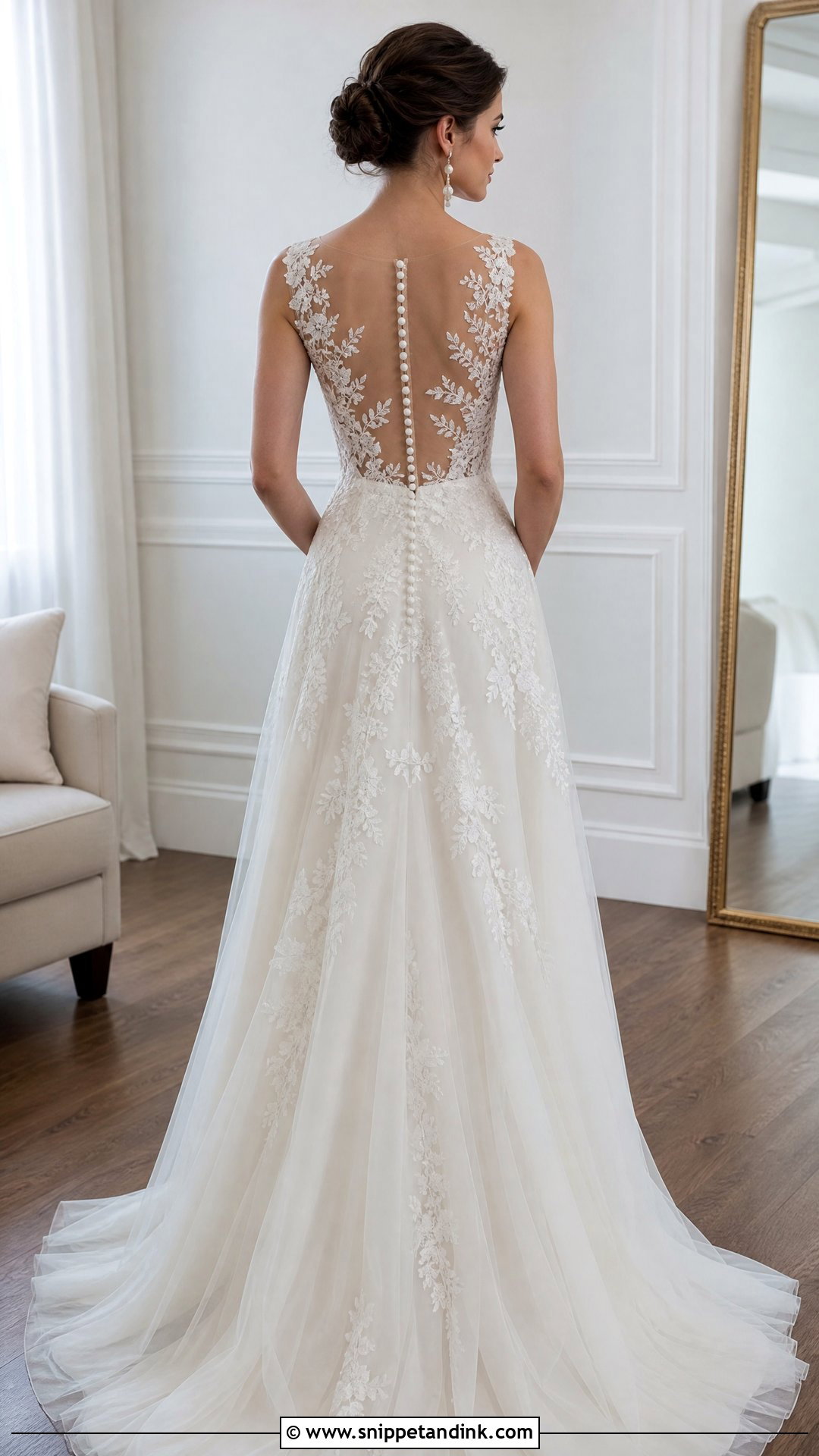
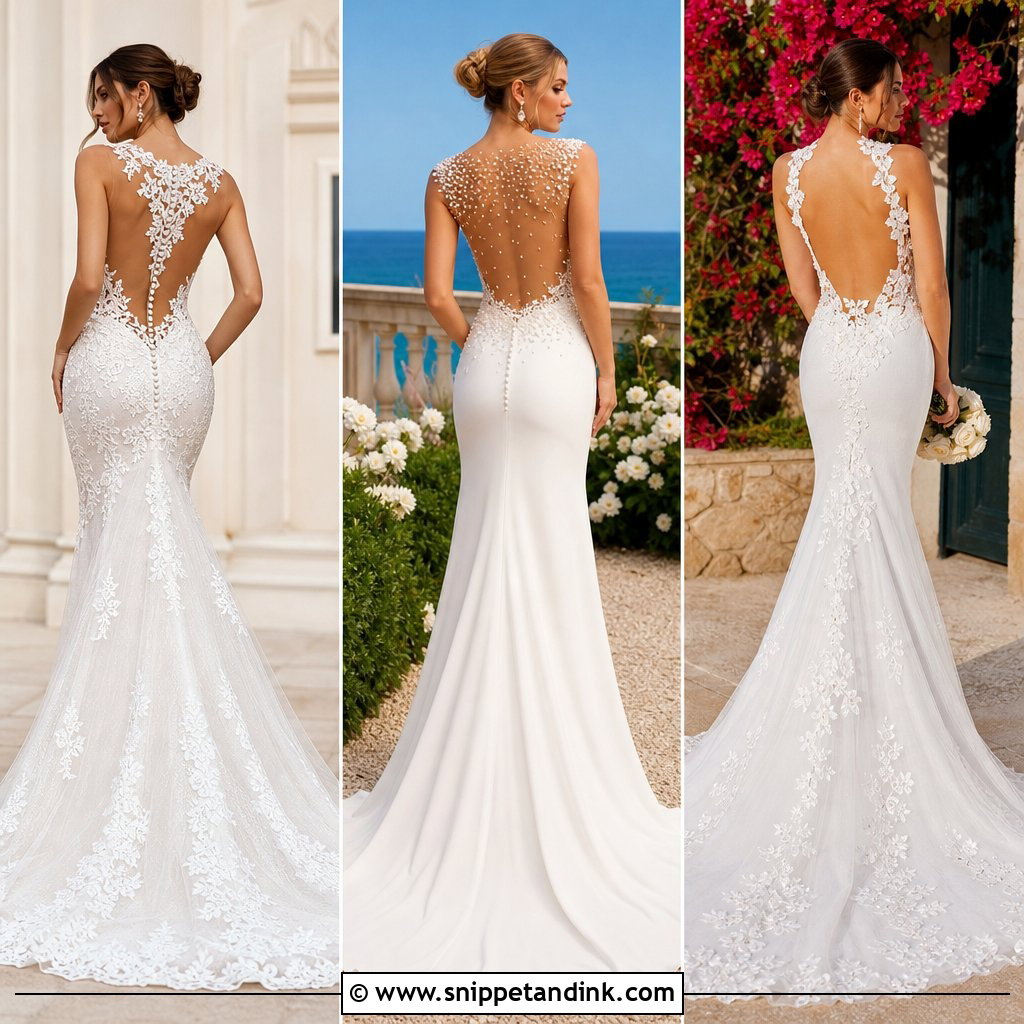
An illusion lace back gives you the look of appliqués resting on bare skin while actually covering most of it. Everything depends on the tulle matching your skin tone. I check it in daylight by a window, not under the boutique’s warm bulbs, because a tulle that blends indoors can look grey or pink outside. Pair it with an A-line skirt, covered buttons, a polished bun and a plain fingertip veil, since a lace veil on top makes two patterns fight. Ask your seamstress to look for rippling around the panel’s edges.
3. Corset Back Ball Gown Wedding Dress
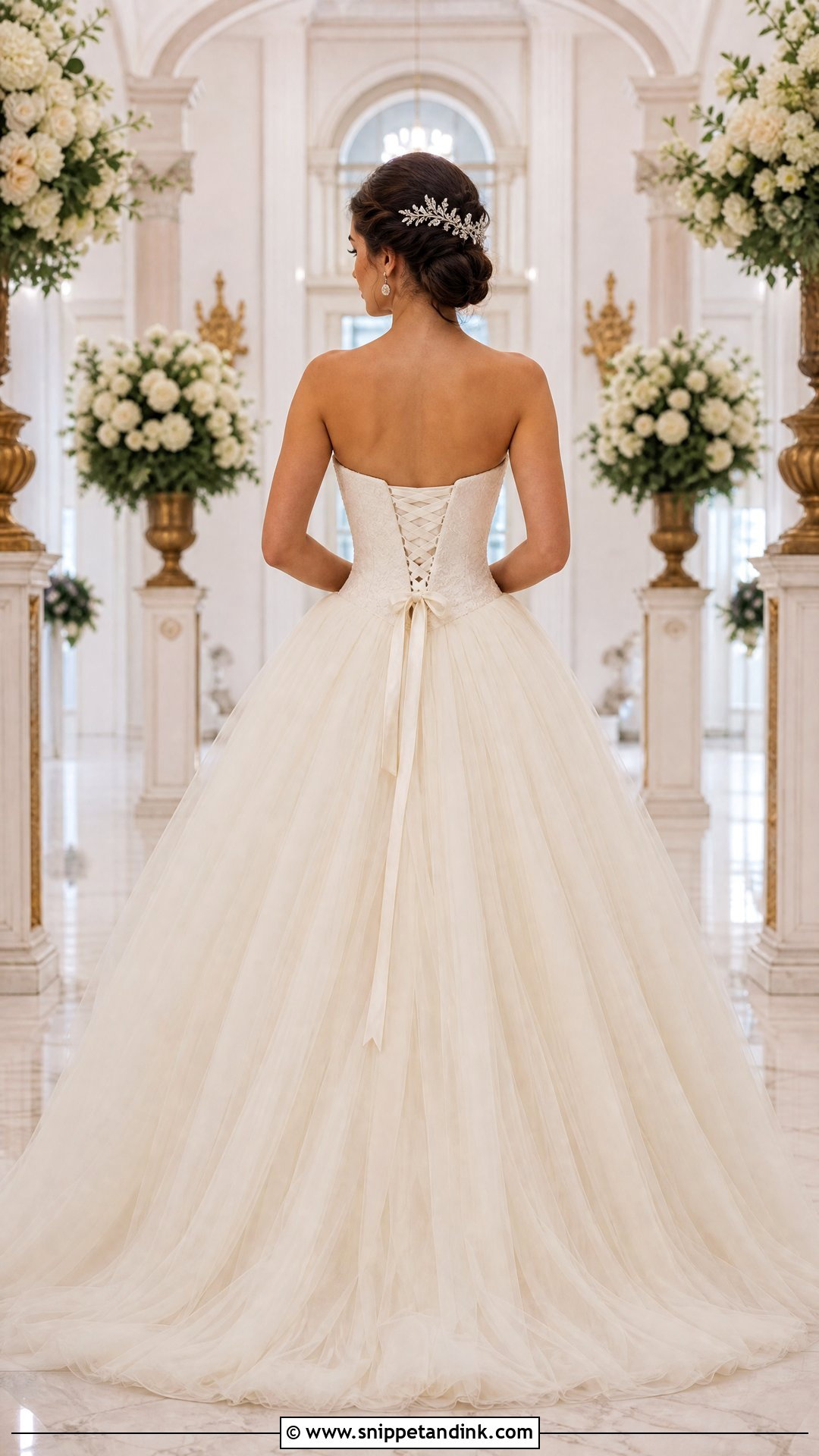
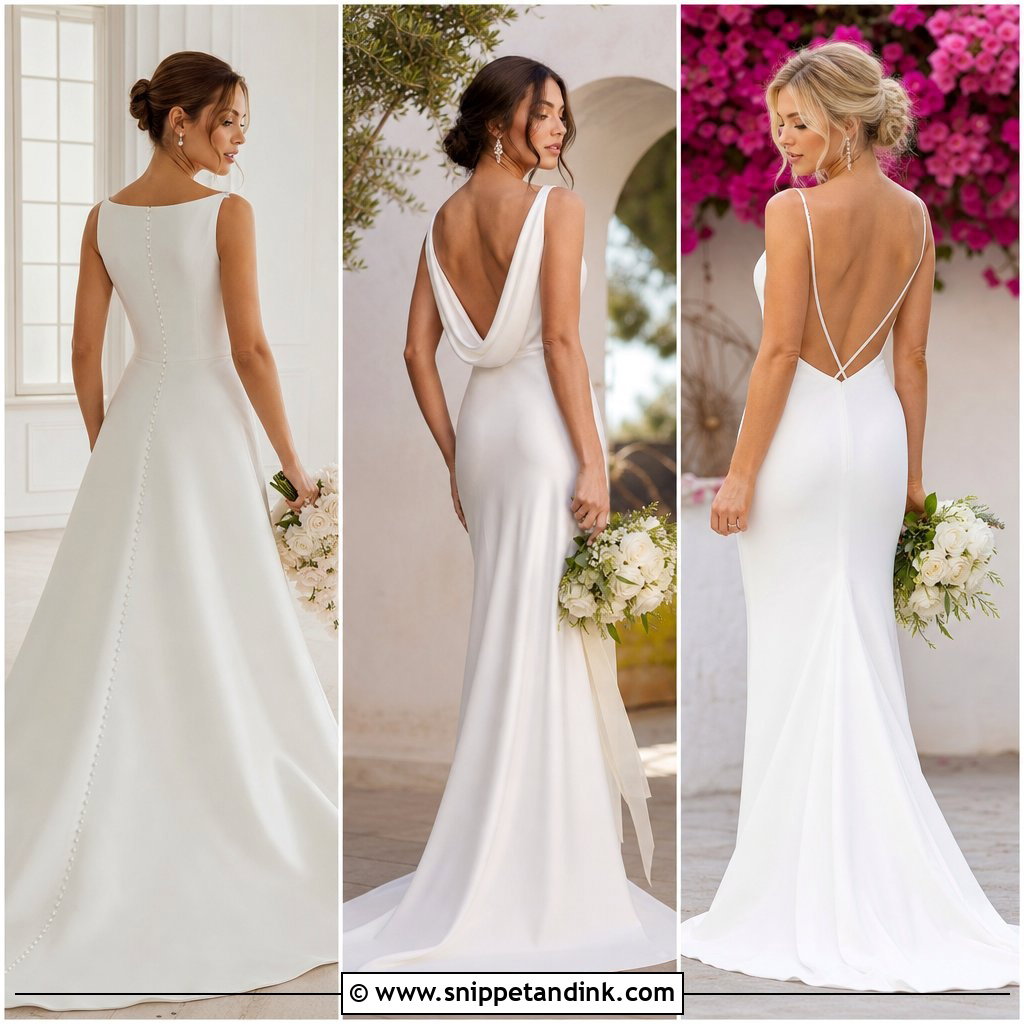
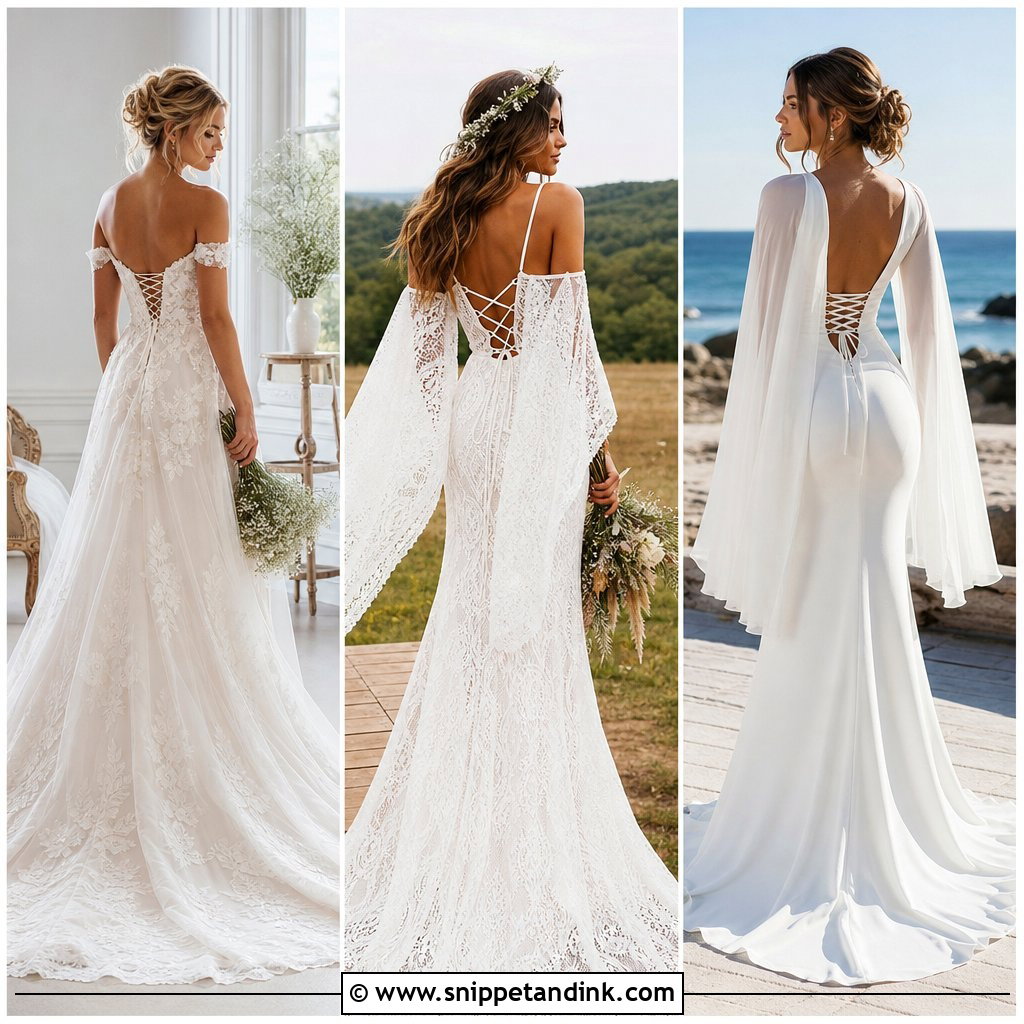
Corset backs are the most forgiving closure in bridal. Because the lacing adjusts, they absorb small changes in weight between the last fitting and the wedding, which a zip can’t do. Satin ribbon looks traditional and narrow organza ties look lighter; both suit a full satin, mikado or tulle ball gown with a sweetheart neckline. Lacing well takes practice. I teach one bridesmaid at the final fitting: start at the top, pull evenly from both sides, and tuck the tails flat so they don’t hang down in photos.
4. Square Open Back Satin Wedding Dress
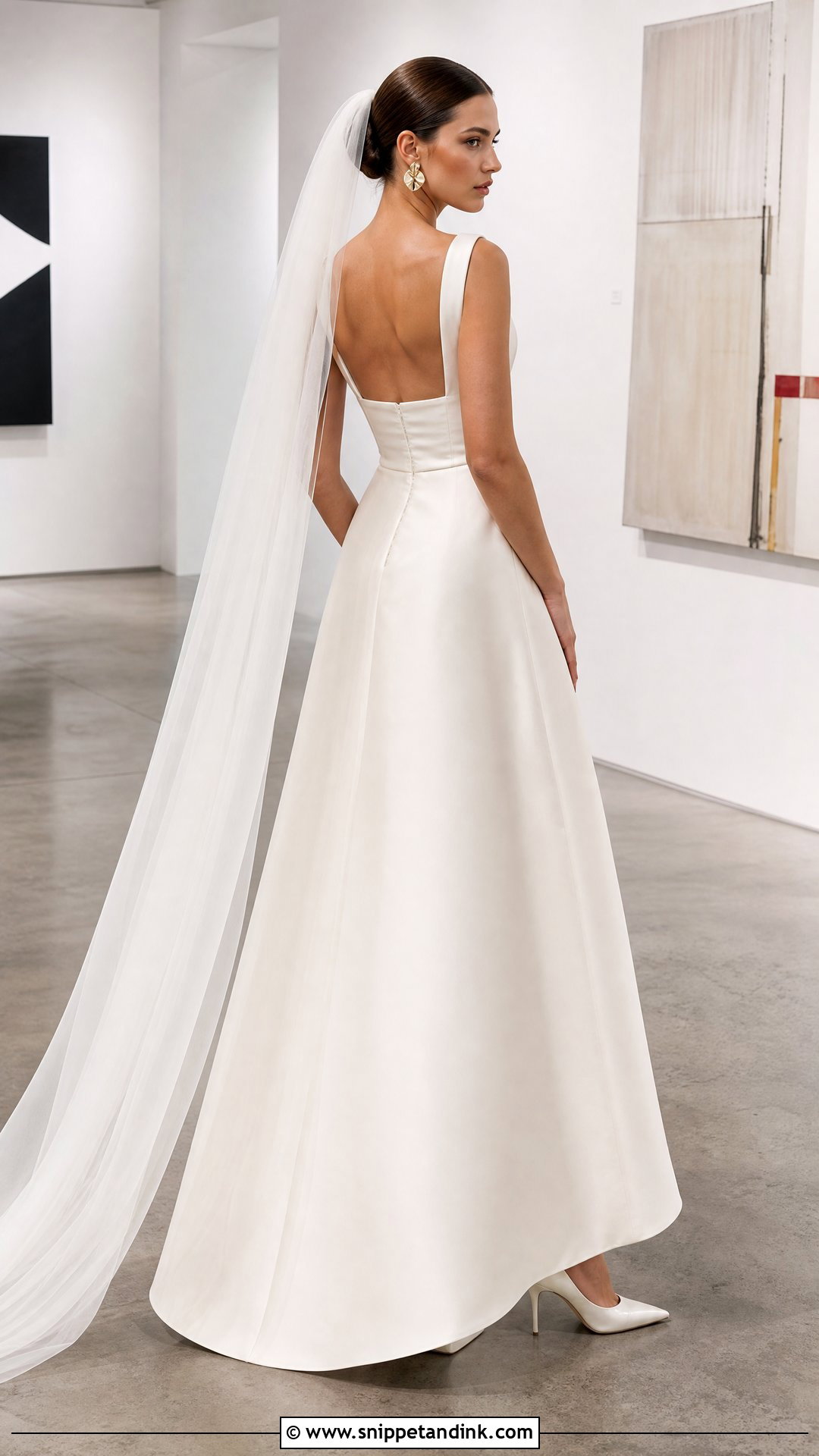
Square backs are all about straight lines, and satin is the least forgiving fabric to show them in. Every seam, every pull at the strap, every gap at the edge shows up in a flash photo. I’d only choose one if you’re committed to proper tailoring. Wide straps, a fitted waist and a column, A-line or soft flare skirt keep it modern; a sleek bun, sculptural earrings and a structured bouquet keep it clean. Test it by hugging someone. The back edge should stay flat against you rather than lifting off.
5. Keyhole Back Wedding Dress
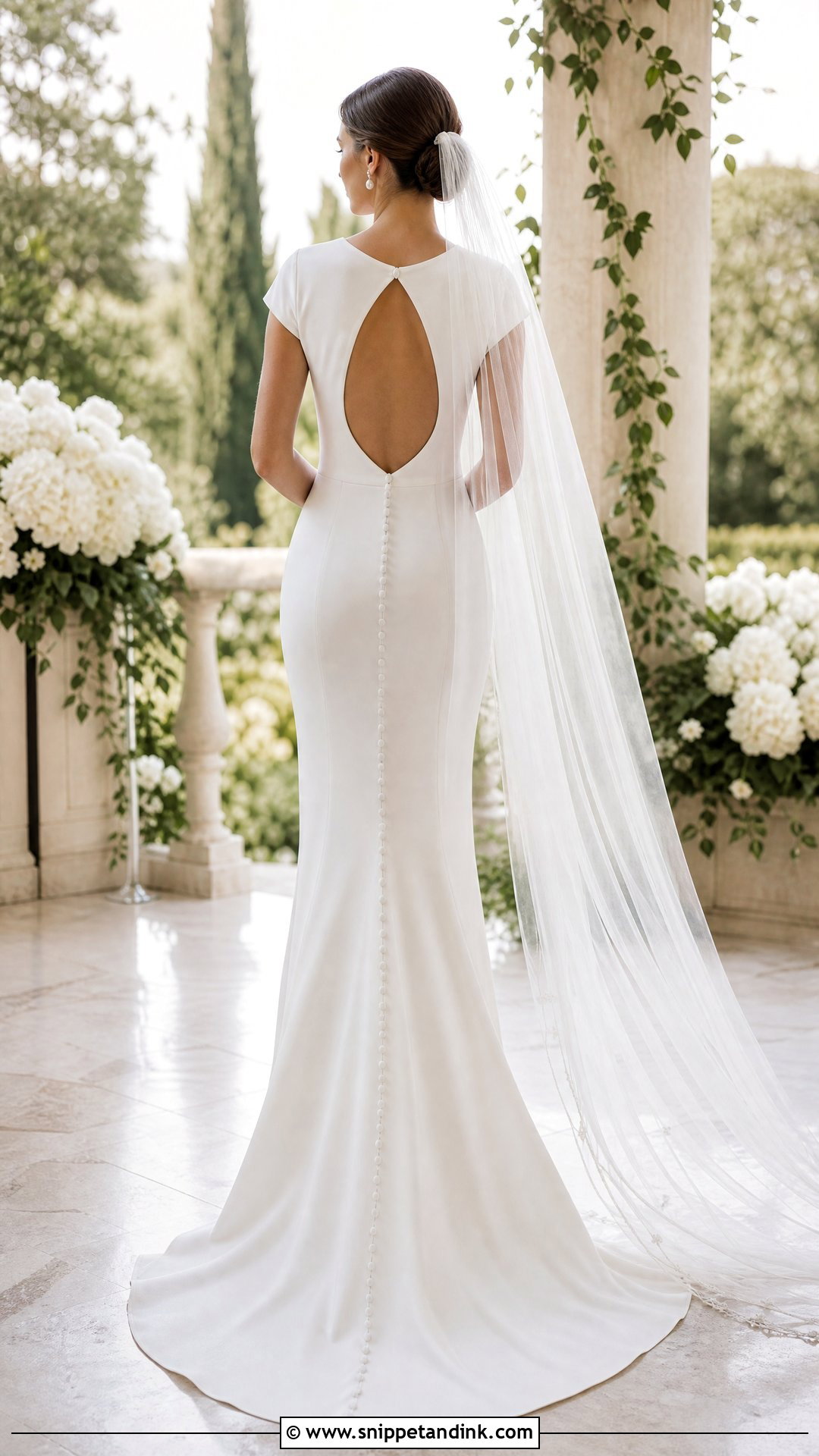
A keyhole is a good compromise if you want something to look at from behind but don’t want to worry about bra lines all day. The opening can be round, oval or teardrop, and it suits high necklines, cap sleeves and fitted crepe or lace. What I check first is the closure at the top. A button or hook sitting right on the spine at the nape gets uncomfortable by the reception, so it should be padded or set slightly flat. Keep hair low or to one side and add a light chapel veil.
6. Cowl Back Silk Wedding Dress
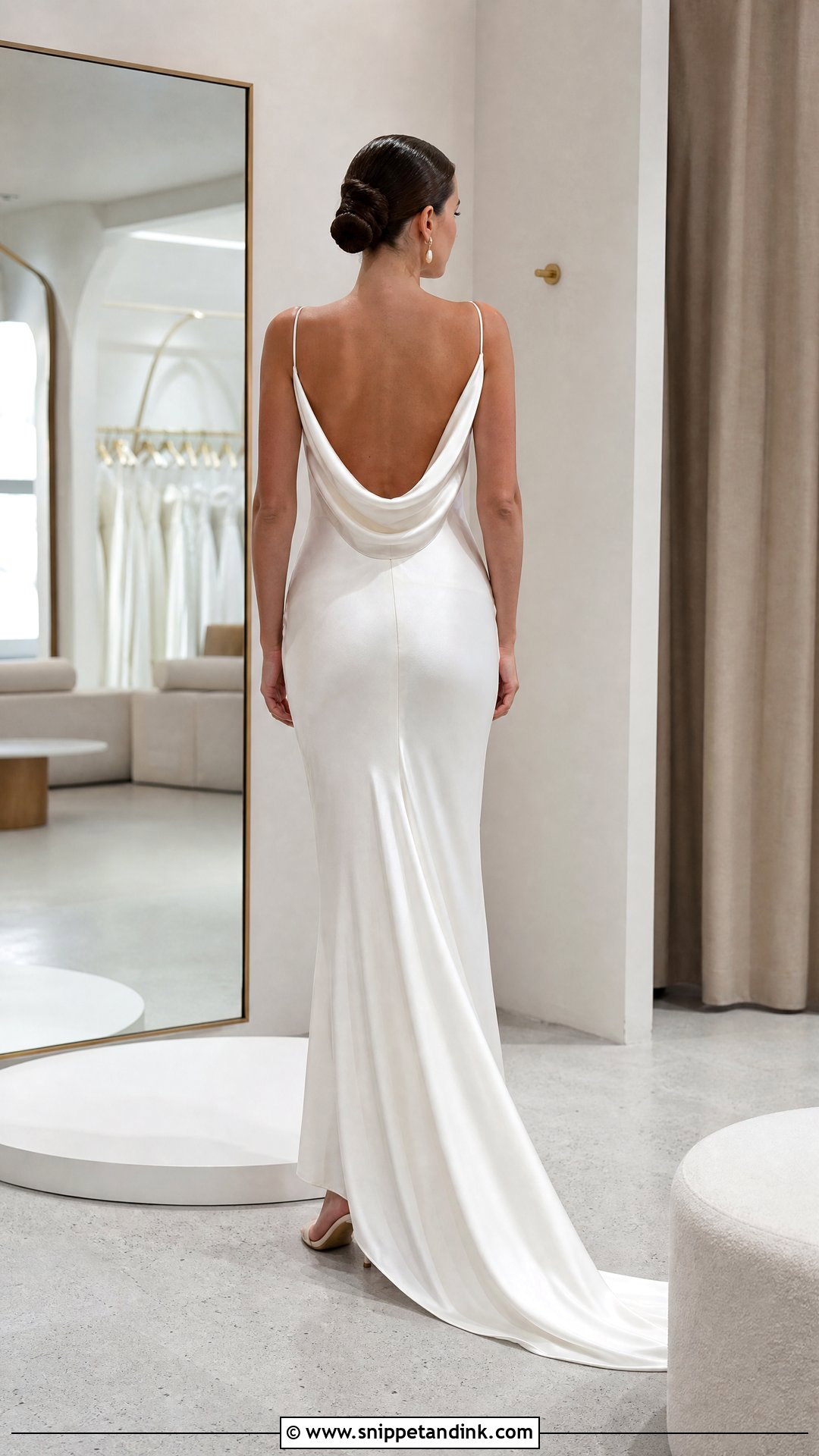
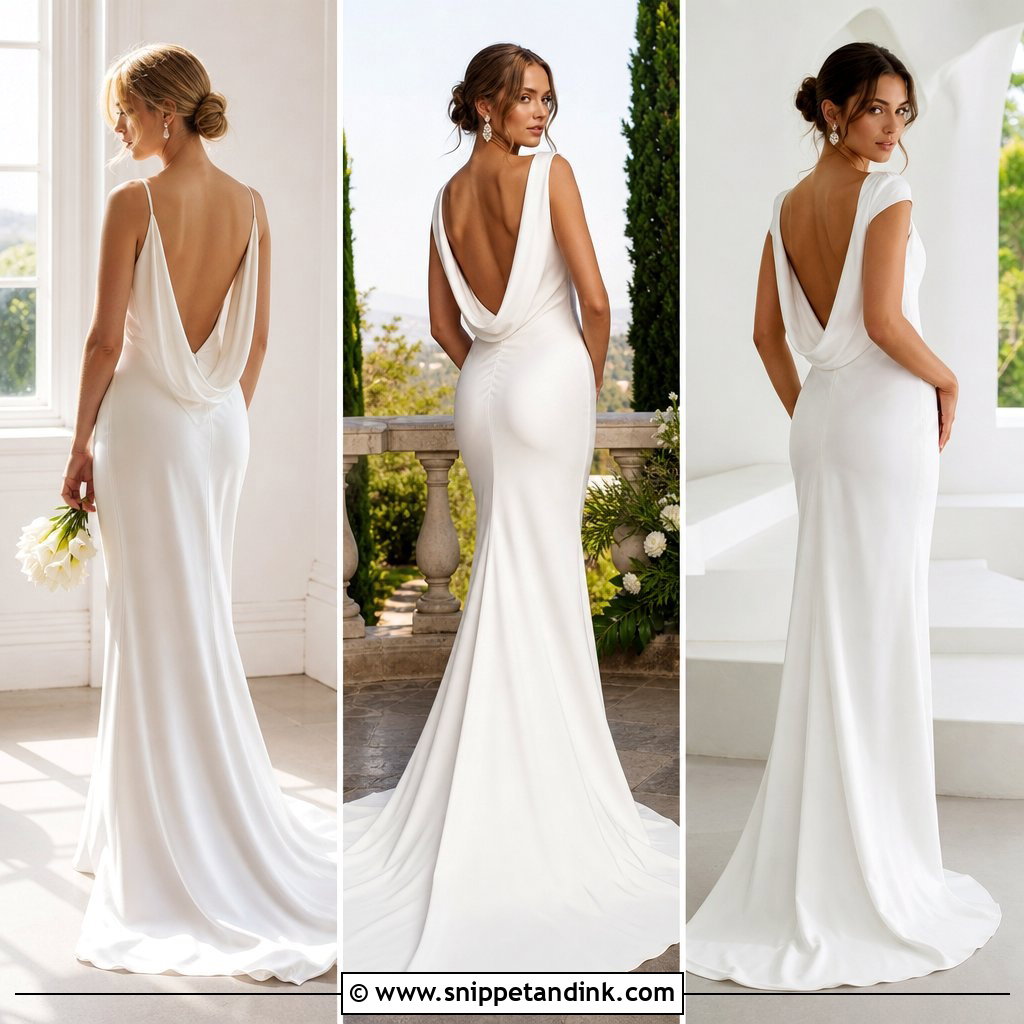
A cowl back drapes in soft folds across the shoulder blades, and it only works in fabric that falls: silk, satin or a heavy crepe, ideally cut on the bias. On a slip gown with fine straps it’s quietly glamorous. The honest drawback is movement. Silk shifts as you dance, and a deep cowl can swing open further than you’d planned. Ask for a slightly higher drape at alterations if coverage matters, and use fashion tape at the inner edges. A neat bun and a single-layer veil keep the line uncluttered.
7. Bow Back Wedding Dress
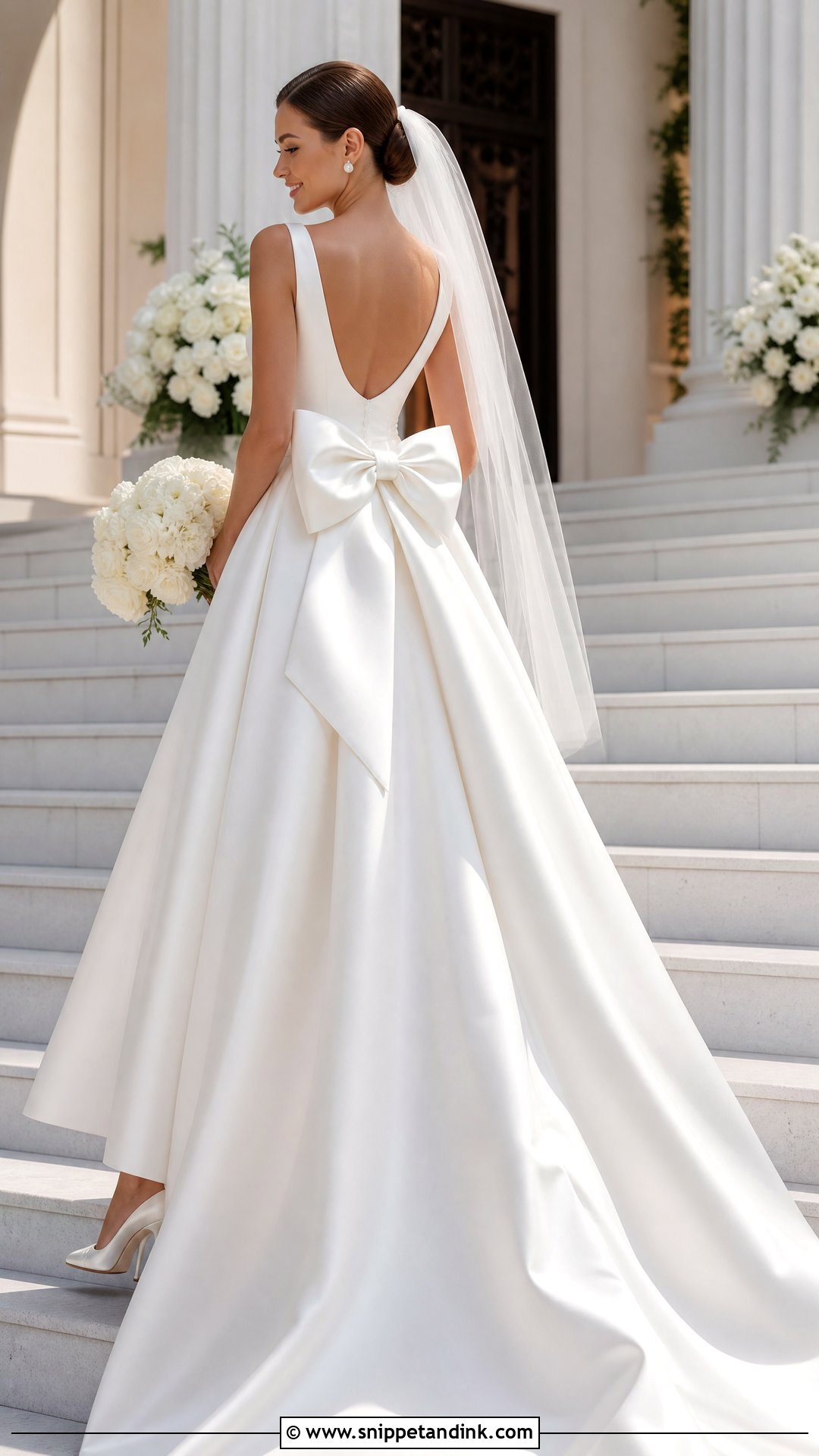
Bows divide brides, and placement decides whether they work. A bow at the waist draws the eye to the narrowest point; one at the shoulders draws it up toward the face and hair. A large structured bow suits a clean satin ball gown, a soft smaller bow suits an A-line. I always ask how it’s attached. Detachable bows give you two looks, but they need firm snaps or hooks; a sewn-in bow needs interfacing so it doesn’t wilt after hours of hugs. Wear the veil above it and take the veil off after the ceremony.
8. Pearl Draped Back Wedding Dress
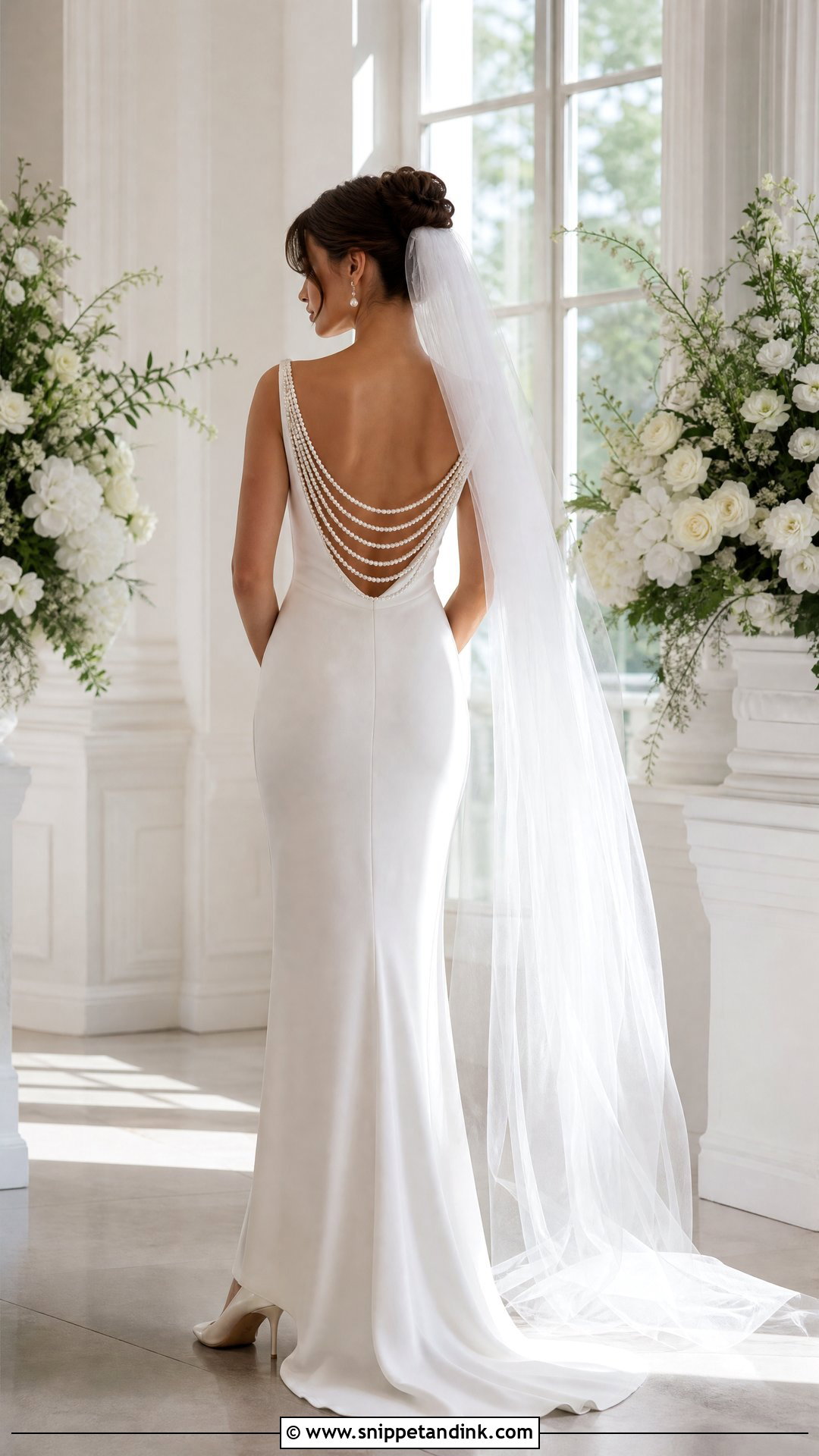
Pearl strands across an open back behave like jewelry, so treat them that way and skip the necklace. They look best on a quiet base: a simple crepe sheath, a satin column or a soft mermaid. Pearls carry real weight, and I’ve seen strands pull the edge of a back opening downward over a long day. Ask the seamstress to reinforce each attachment point and check the drape while you bend forward. A plain veil is essential here, because beaded veil edges catch on the strands.
9. Button Back Wedding Dress
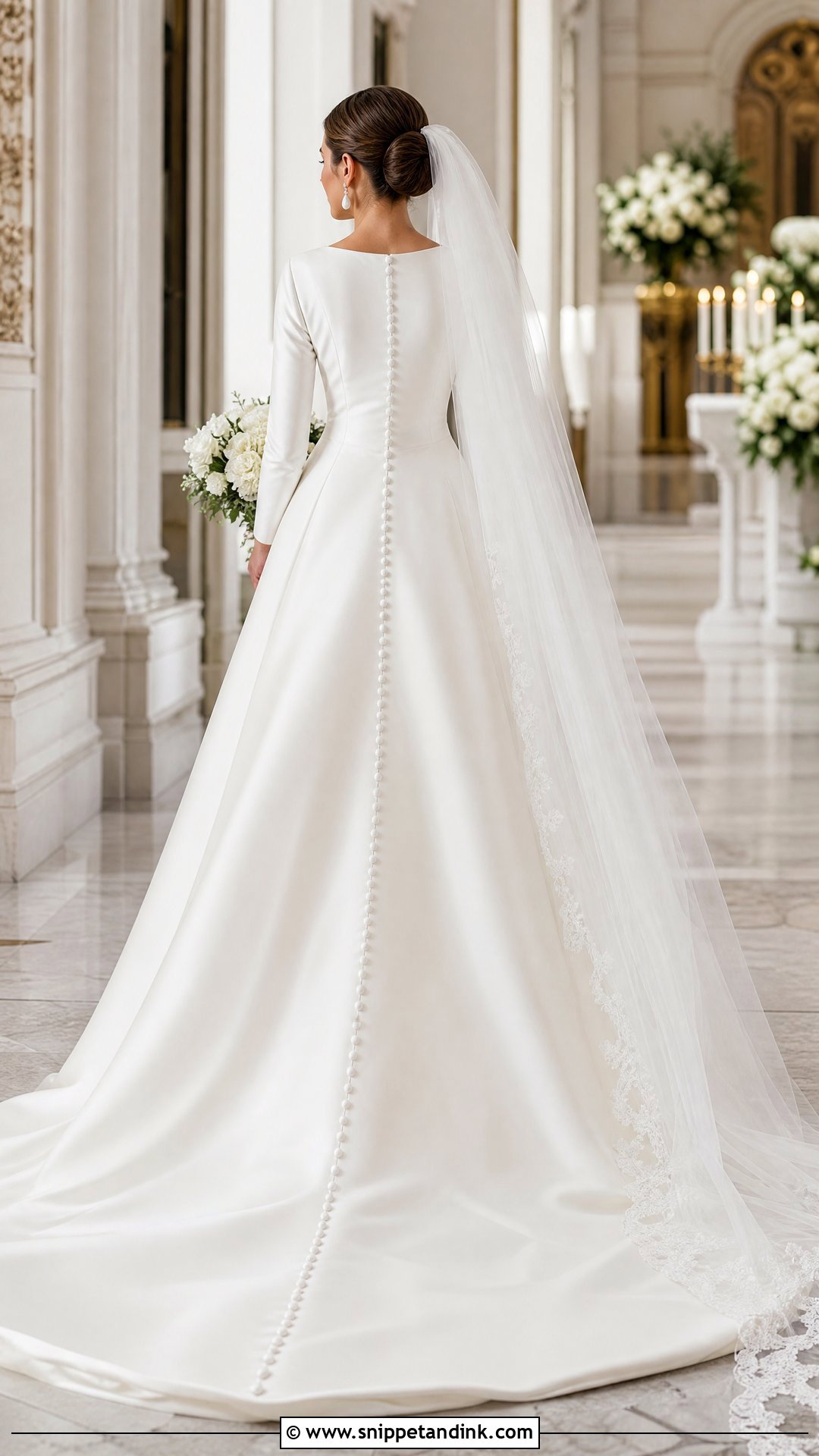
Covered buttons running from neckline to train never date, and they suit almost any skirt shape. Satin-covered buttons look clean, lace-covered ones look softer. My first question about any button back is whether there’s a zip underneath. Thirty loops take a long time to fasten on a wedding morning, and a hidden zip with decorative buttons over it saves real time. Check that the loops are evenly spaced around the waist and hips, where tension is highest and a gap shows up first.
10. Floral Appliqué Back Wedding Dress
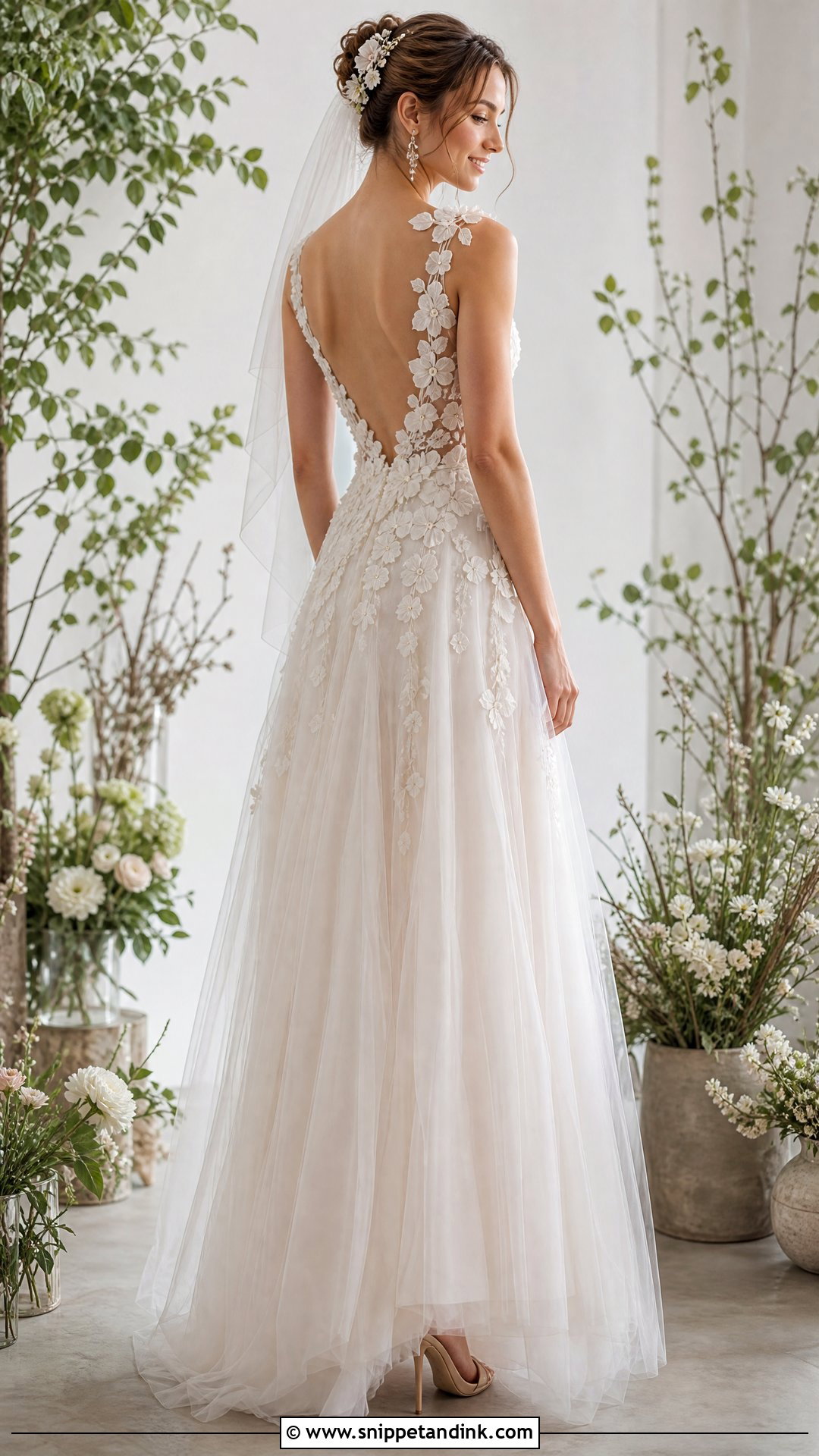
Raised floral appliqués turn a back into a small garden, climbing along sheer straps or spreading across an illusion panel. They suit a tulle A-line or a fitted lace gown, with floral hairpins and simple earrings rather than more jewelry. Dimensional petals catch on veils, bouquet ribbons and guests’ sleeves. I run my hand lightly over them at the fitting to see if any edges lift. Ask the bridal shop whether spare appliqués come with the dress; a single loose flower is easy to replace if you have one.
11. Beaded Illusion Back Wedding Dress
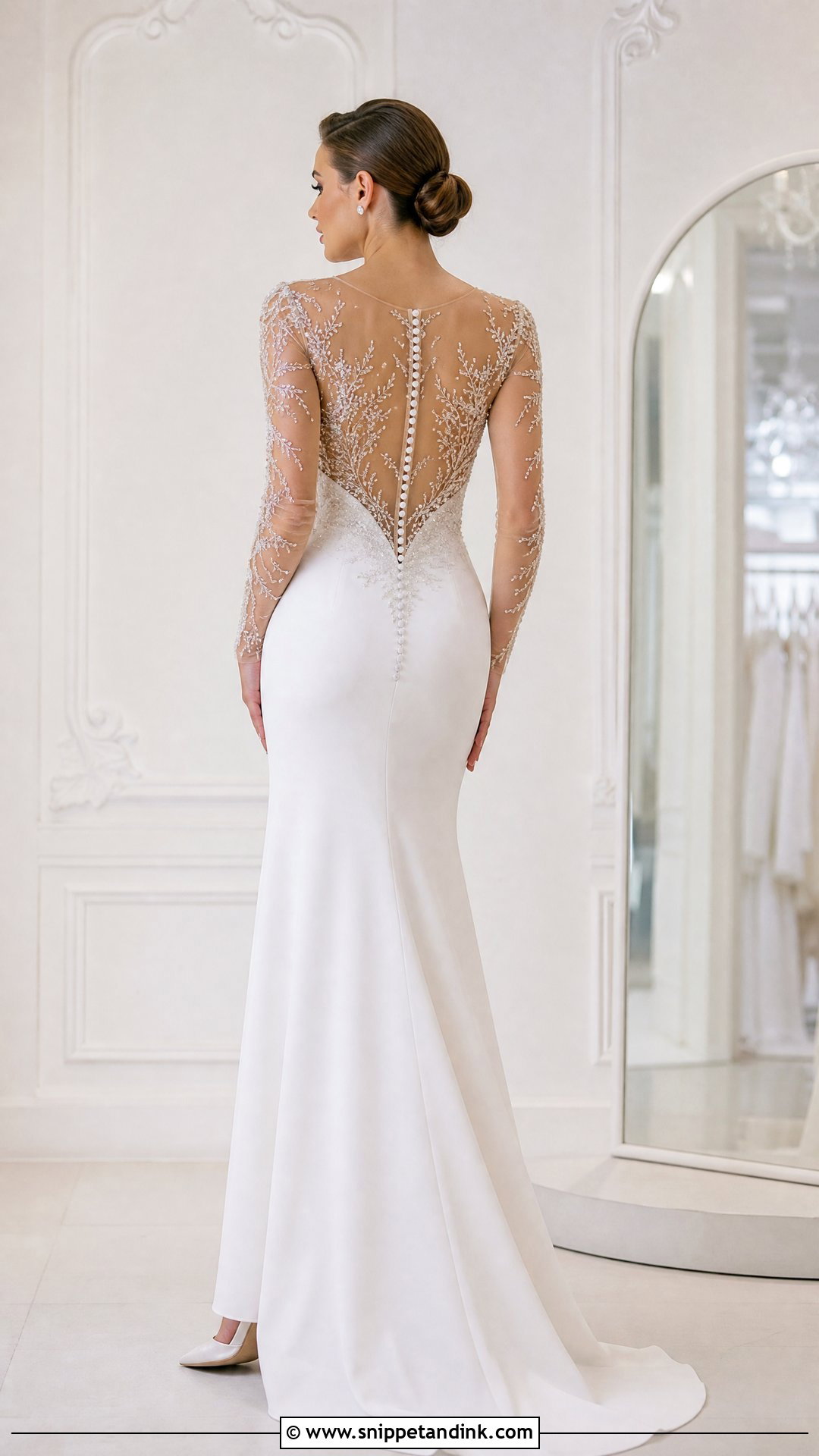
Beading on illusion tulle gives sparkle without weight, which is why it suits a streamlined crepe skirt or soft layered tulle. Keep hair smooth and earrings small so the back carries the shine. Friction is the enemy here. Beads near the armholes and closure rub every time you move, and loose threads start there first, so I look closely at those spots. If your skin is sensitive, ask for a soft lining behind the rough backs of the stitching.
12. Halter Open Back Wedding Dress
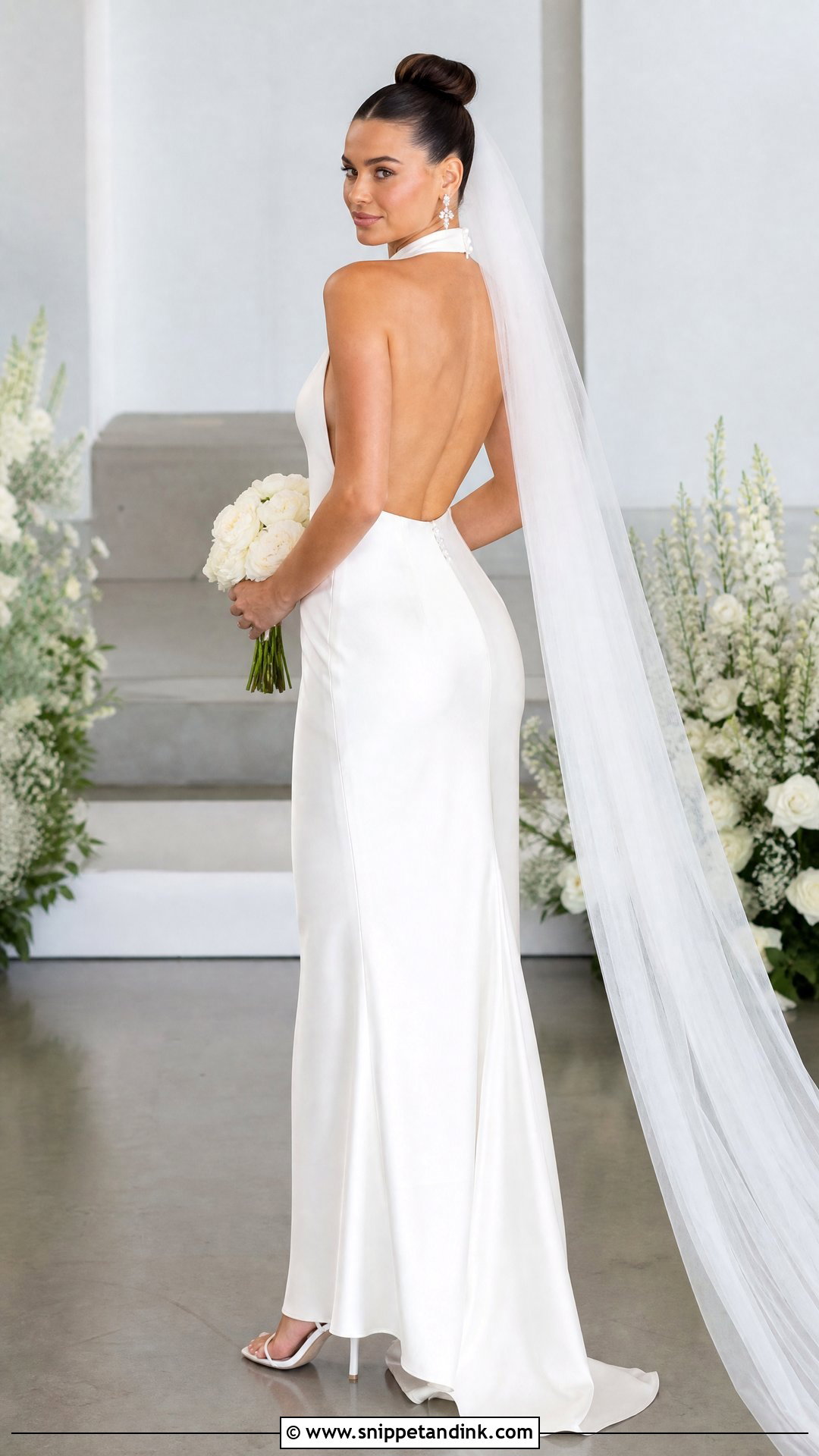
A halter leaves the shoulders and back open while the neck does the supporting, and that’s the trade-off I’d talk through first. All the weight of the bodice hangs from one fastening at the nape. If it’s not built well, you’ll feel it by evening as a headache or a sore neck. Look for interior cups, boning or a hidden strap that takes some of the load. In satin, crepe or silk with a column or fit-and-flare skirt, a high bun shows the shoulder line clearly; attach the veil beneath the bun.
13. Scoop Back Wedding Dress
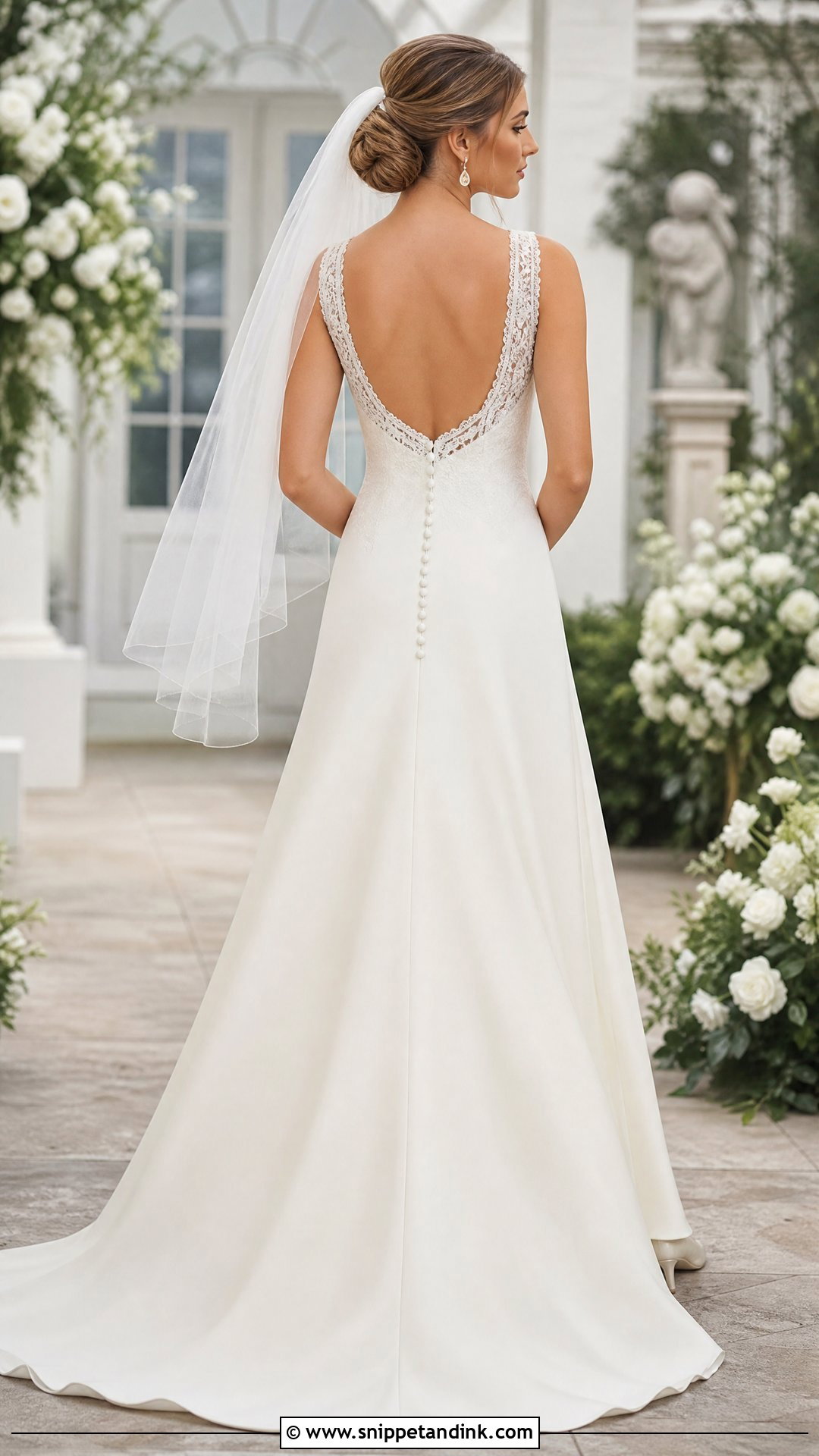
Scoop backs are easy to wear and easy to adjust, which makes them one of my favorite suggestions for a bride who’s unsure about open backs. The curve can stop at the shoulder blades or dip toward the waist. It pairs well with a bateau neckline, a fitted lace bodice or a plain satin A-line, and a curved row of buttons or narrow lace trim can underline the edge. At the fitting, check the curve is symmetrical from behind. It’s surprisingly common for one side to sit slightly higher.
14. Racerback Lace Wedding Dress
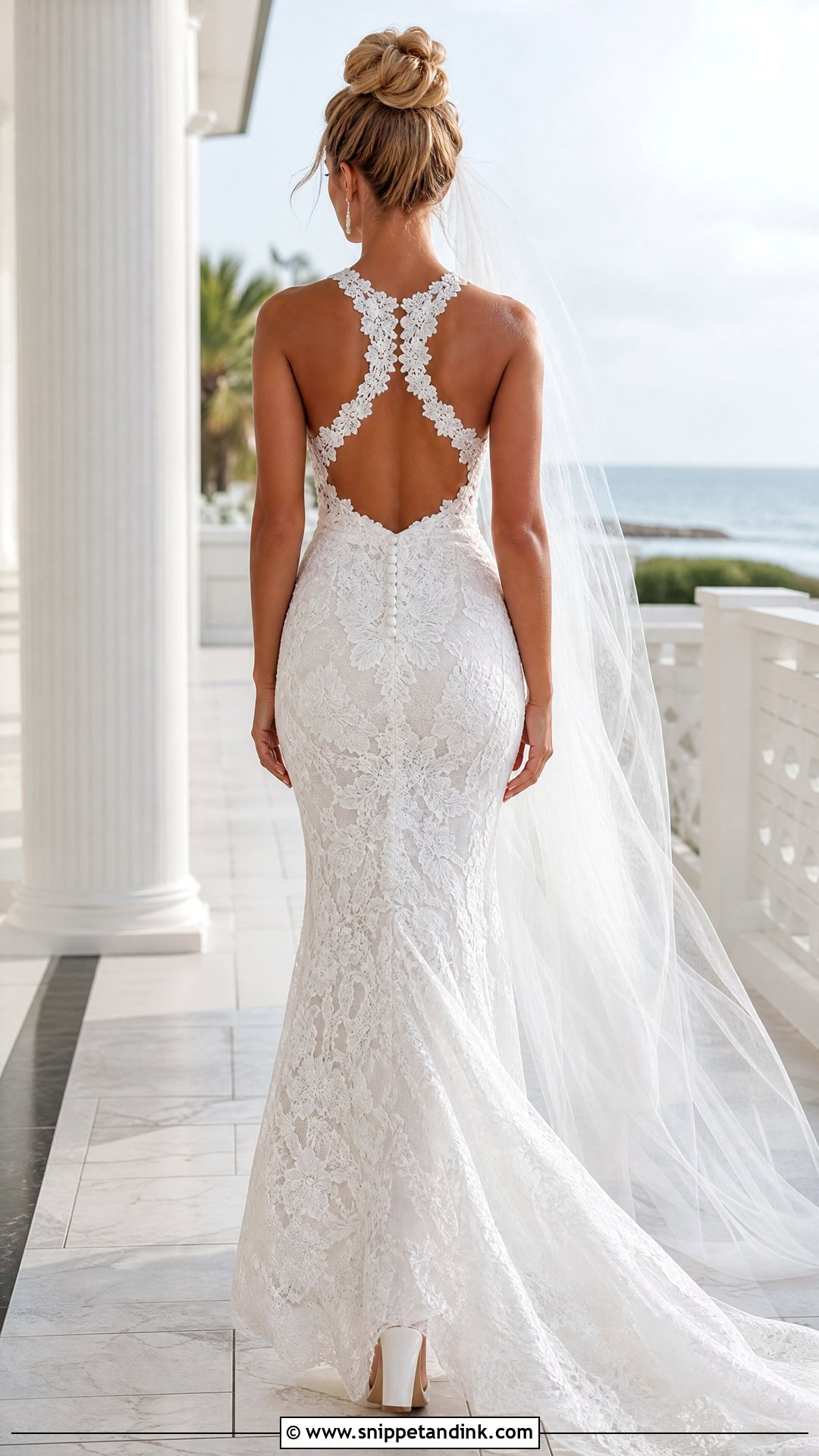
Racerbacks feel athletic and modern, with straps angling inward between the shoulder blades to leave the outer back bare. Floral lace softens it, geometric lace sharpens it. I’d match it with a trumpet, sheath or chiffon skirt and a high textured bun to keep the vertical line going. Dense lace with little stretch can pinch at the armholes. Raise your arms and reach forward during the fitting, as if picking up a bouquet or hugging a grandparent.
15. Cutout Back Wedding Dress
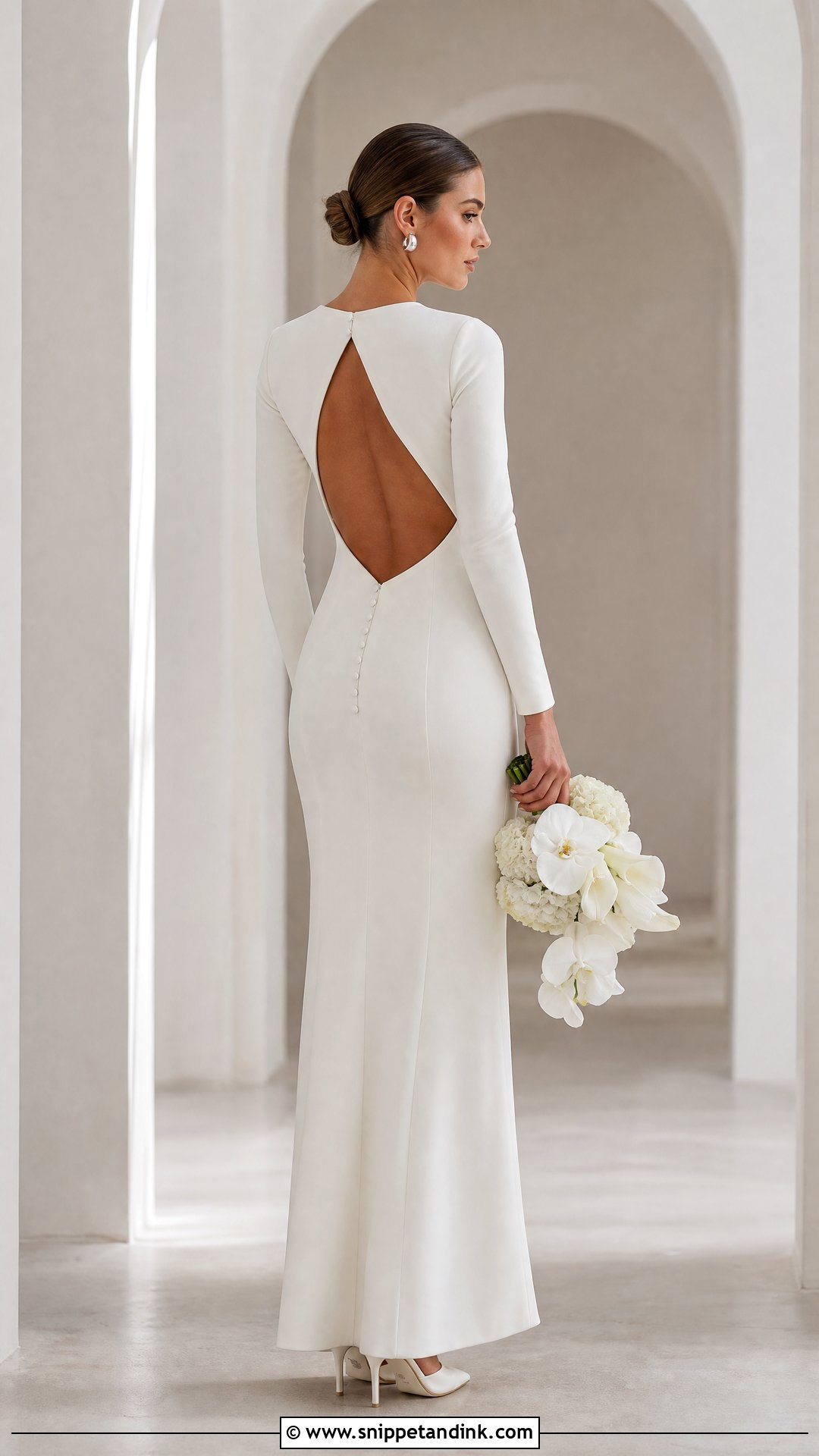
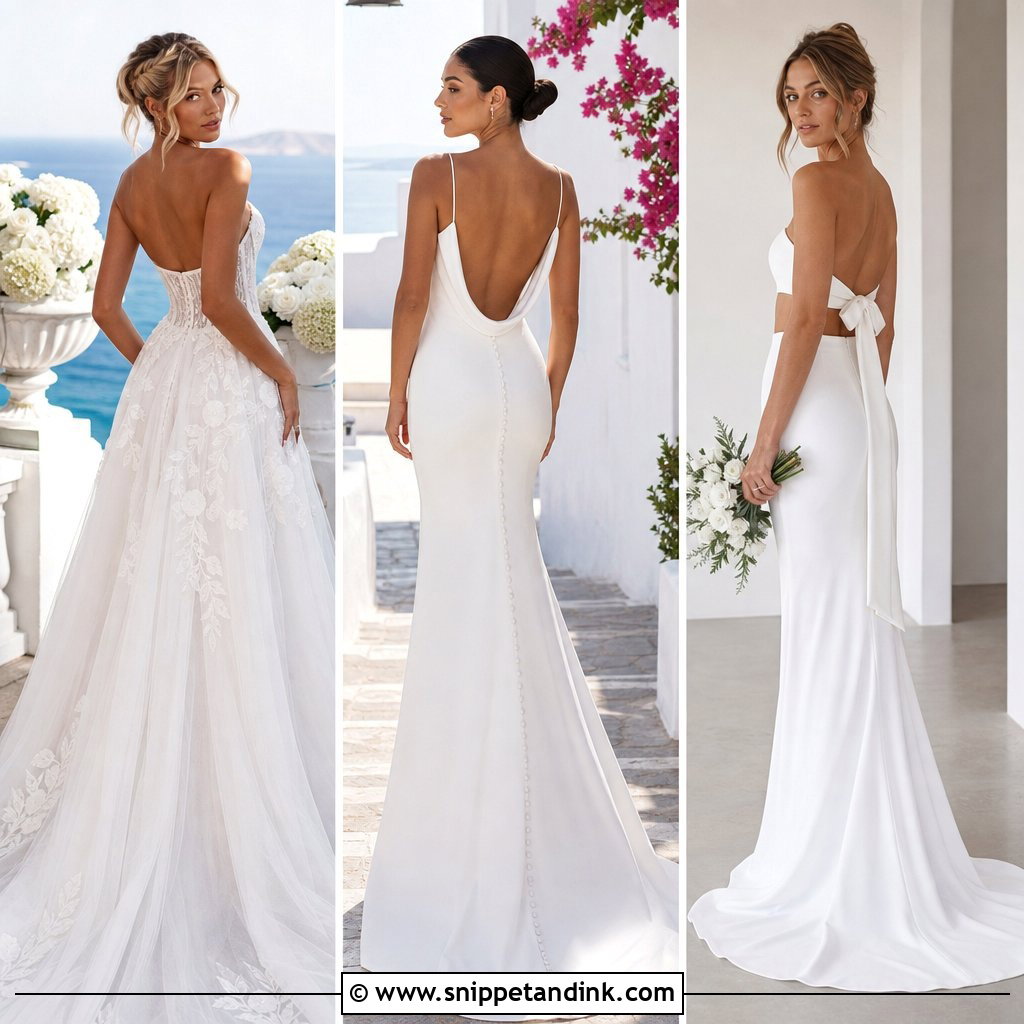
Cutouts are graphic, and they need a firm fabric to hold their shape. In crepe or structured satin a side cutout defines the waist and a centered diamond or oval gives a strong focal point. In thin fabric the edges curl. I always check cutouts while the bride is seated, because that’s when the edges gap and fold. Hidden mesh, boning or a little elastic support fixes it. Keep the styling streamlined, wear a plain veil for the ceremony and take it off for reception portraits.
16. Cape Back Wedding Dress
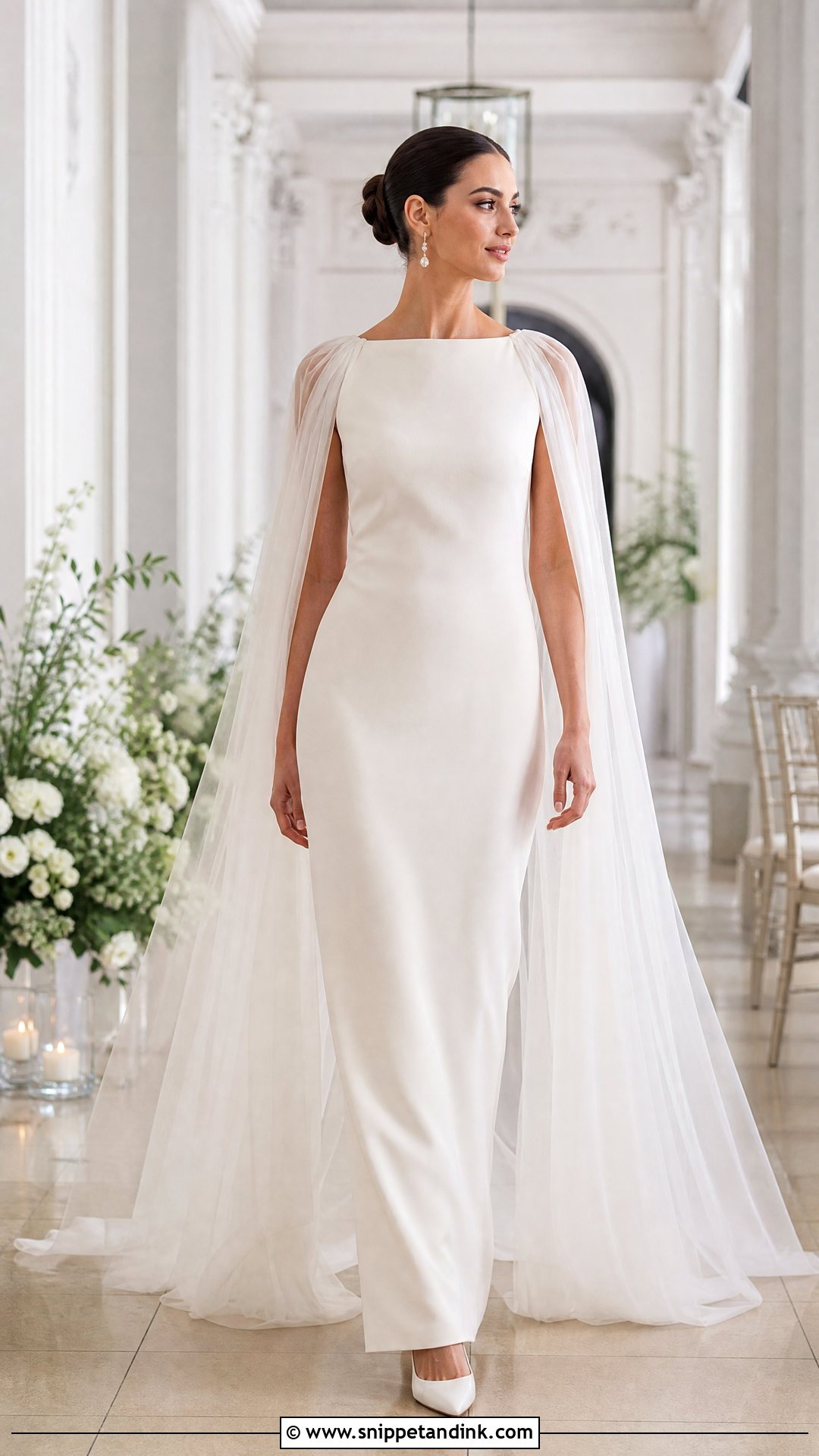
A cape covers more than an open gown but moves more than a veil, which is why I suggest it to brides who want drama without showing skin. Sheer tulle floats; crepe or satin feels architectural. Pair it with a plain column or minimalist A-line, and keep the hair in a polished bun. Capes are heavier than they look. Walk the length of the room, turn and sit at the fitting. If it attaches with buttons or clasps and can come off, you get a second, cleaner look for the reception.
17. Off-the-Shoulder Low Back Wedding Dress
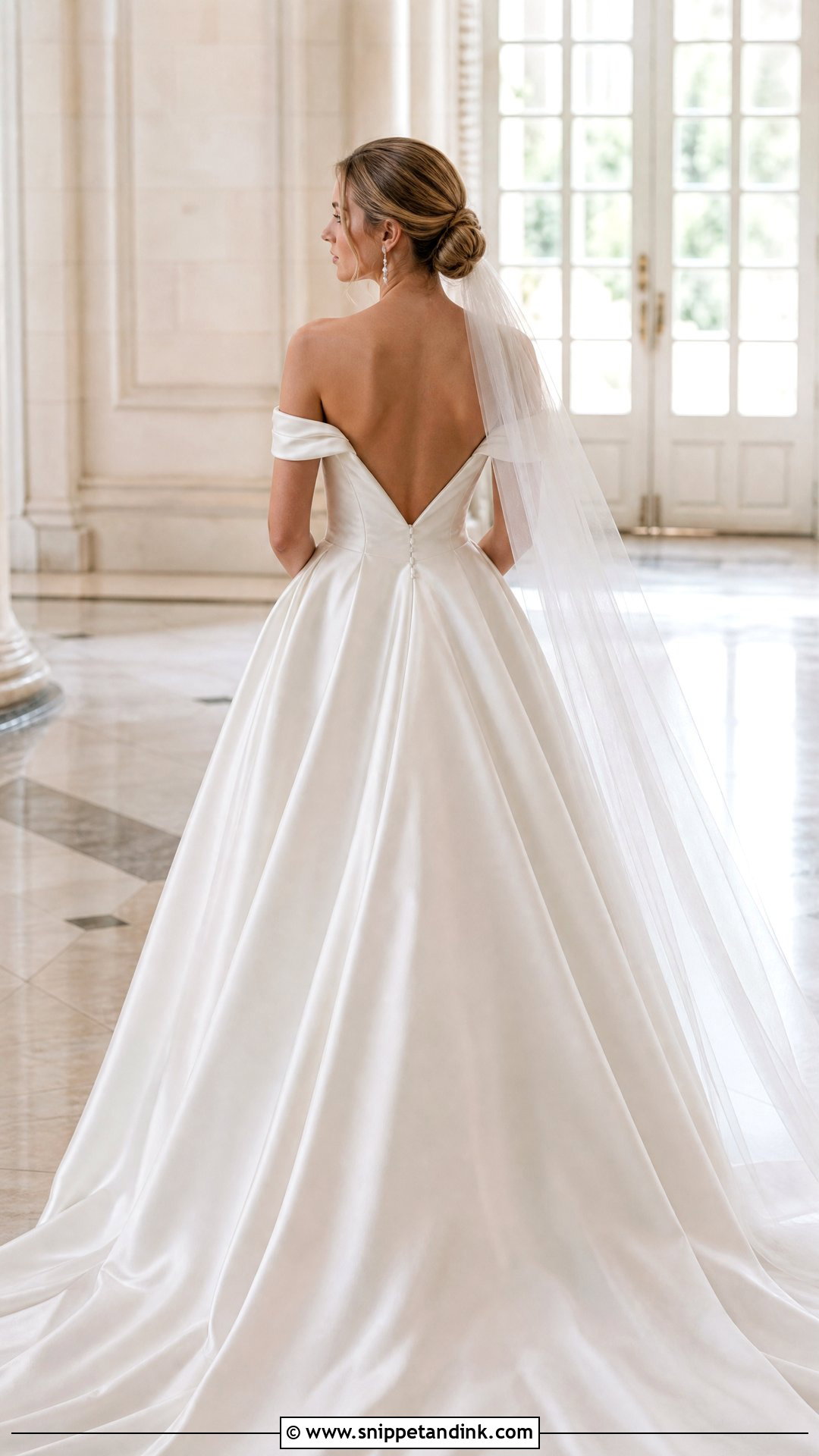
Off-the-shoulder necklines with a low back frame the collarbones and shoulder blades together. Draped sleeves suit a soft A-line; folded structured cuffs suit satin and fitted gowns. The sleeves are where problems hide. They limit how high you can raise your arms, so practice holding your bouquet and hugging at the fitting. Internal elastic or boning stops the sleeves sliding down. Wear the hair in a loose chignon and anchor the veil beneath it so the comb doesn’t crowd the shoulders.
18. Long Sleeve Open Back Wedding Dress
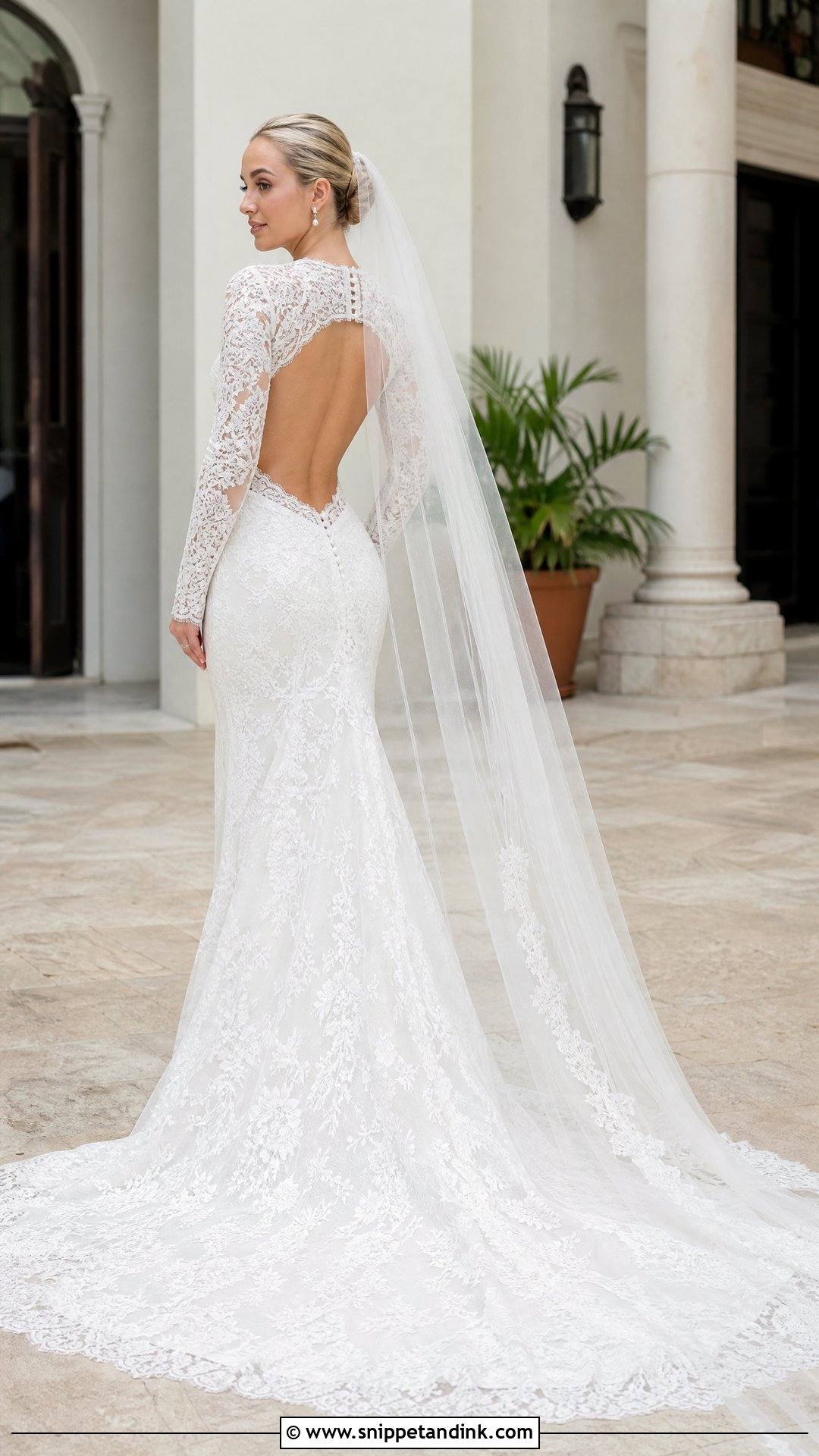
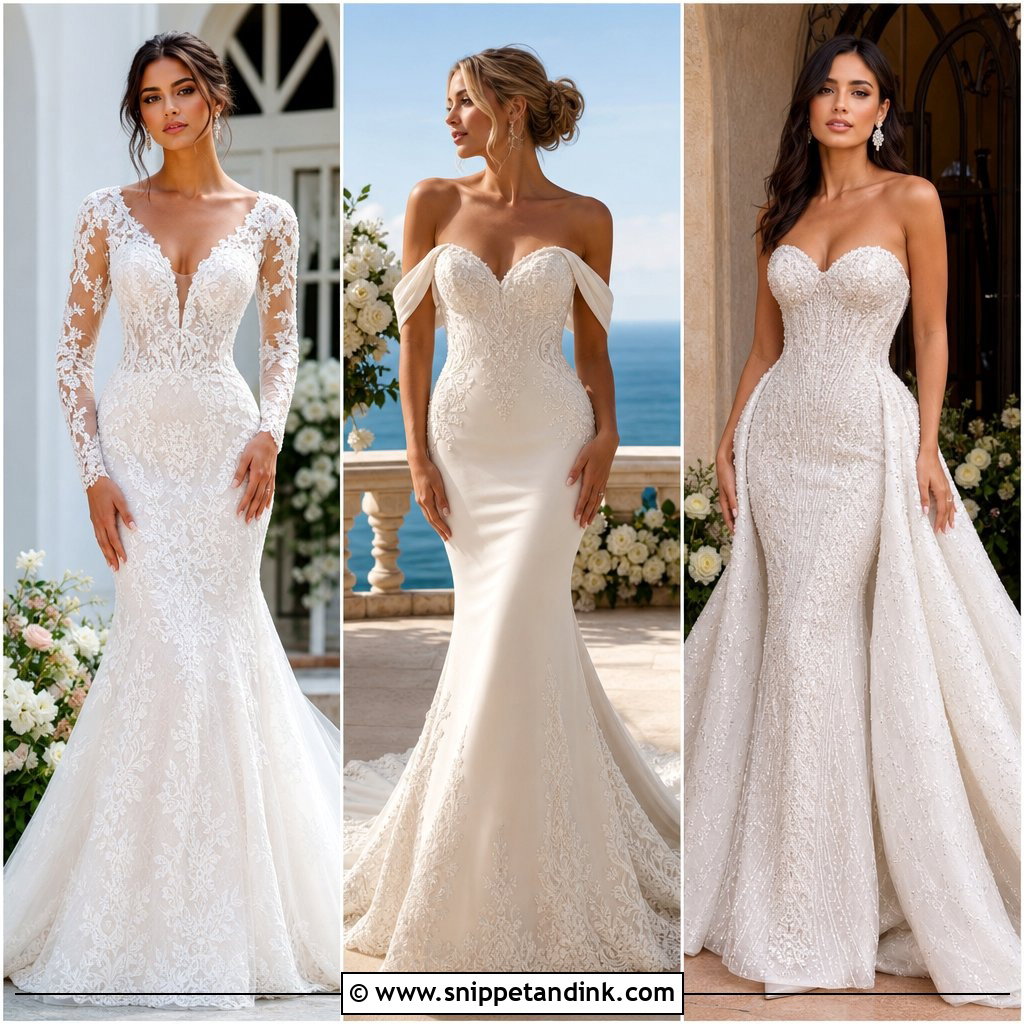
Long sleeves with an open back give you coverage in front and drama behind. Fitted lace sleeves feel romantic; crepe sleeves feel minimal. A circular, square or deep V opening works, usually held by a button at the neck. The thing I watch for is how the sleeves and back affect each other. Tight sleeves that restrict your arms will drag the shoulder seams forward, and the back opening gaps every time you reach. Bend and reach at every fitting until the shoulders stay put.
19. High Lace Back Wedding Dress
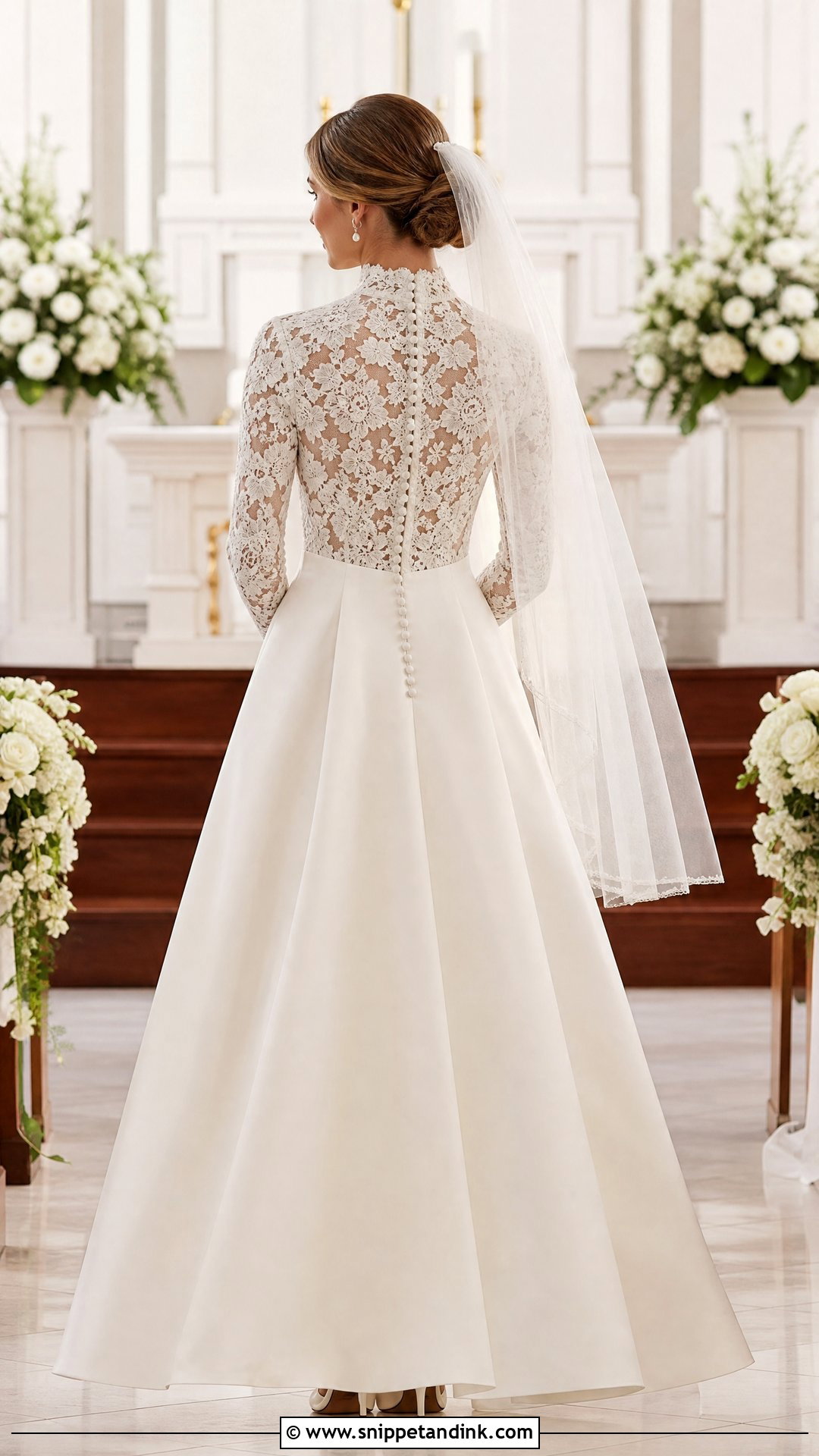
A high lace back suits the bride who wants coverage but not a plain gown. Botanical lace, eyelash trim or a fine pattern over skin-tone or matching lining gives the eye plenty to follow, and covered buttons down to the waist add tradition. Pair it with a satin A-line, a lace sheath or a full tulle skirt. Lace at the neckline can scratch over a long day. If it does at the fitting, it will be worse by the reception, so ask for a soft lining or trimmed edges before the final fitting.
20. Scalloped Lace Back Wedding Dress
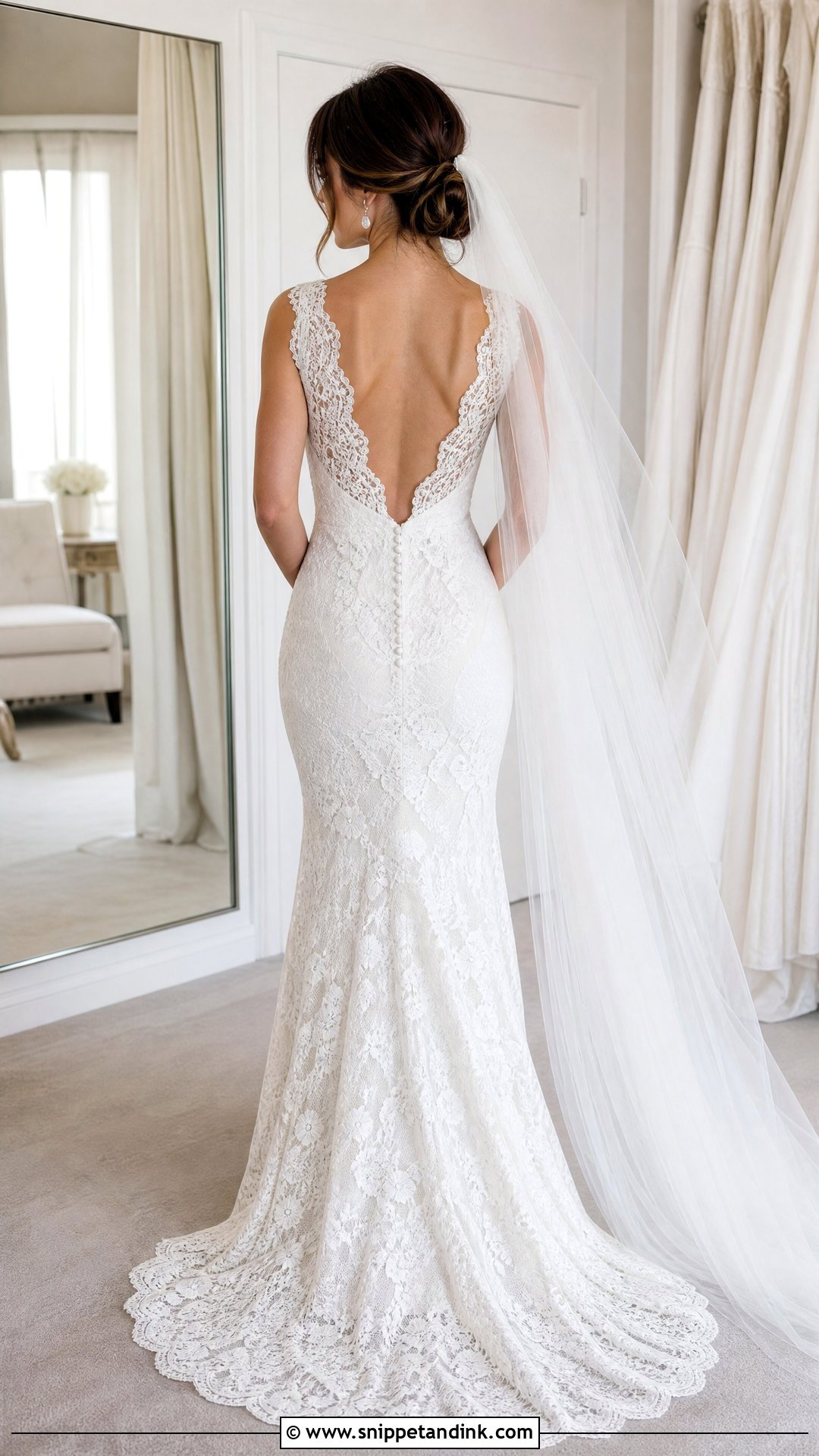
Scalloped lace edges trace the line of a V, scoop or illusion opening and make it look finished. I like it on a fitted lace gown or with a plain crepe skirt for contrast, plus a low twisted bun so the scallops are visible. Scallops love to fold inward where the lace curves around the shoulders. A good seamstress fixes this by hand, tacking each scallop flat, and that’s worth asking for. If your veil has a scalloped edge too, make sure the patterns actually match, or keep the veil plain.
21. Geometric Illusion Back Wedding Dress
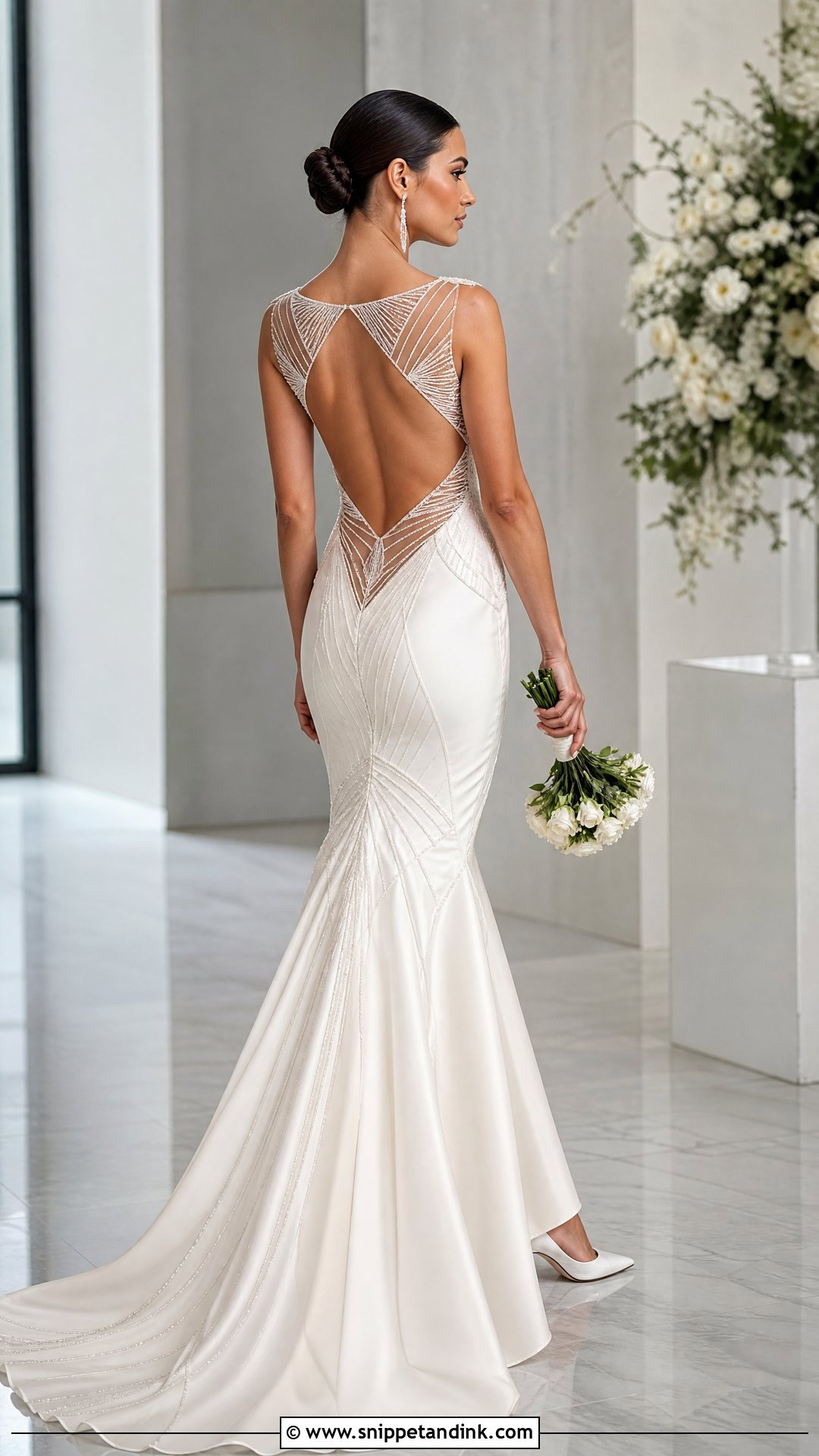
A geometric illusion back uses narrow bands of lace, beading or crepe to draw diamonds and angles over transparent tulle. It suits a clean sheath or trumpet shape with sleek hair and bar earrings. Straight lines show every imperfection. A small pull at one shoulder bends a diamond into a lopsided shape, so I’d ask the seamstress to check symmetry with you standing naturally, not posing. Compare the mesh against your skin in daylight and indoor light before you commit.
22. Cross Strap Back Wedding Dress
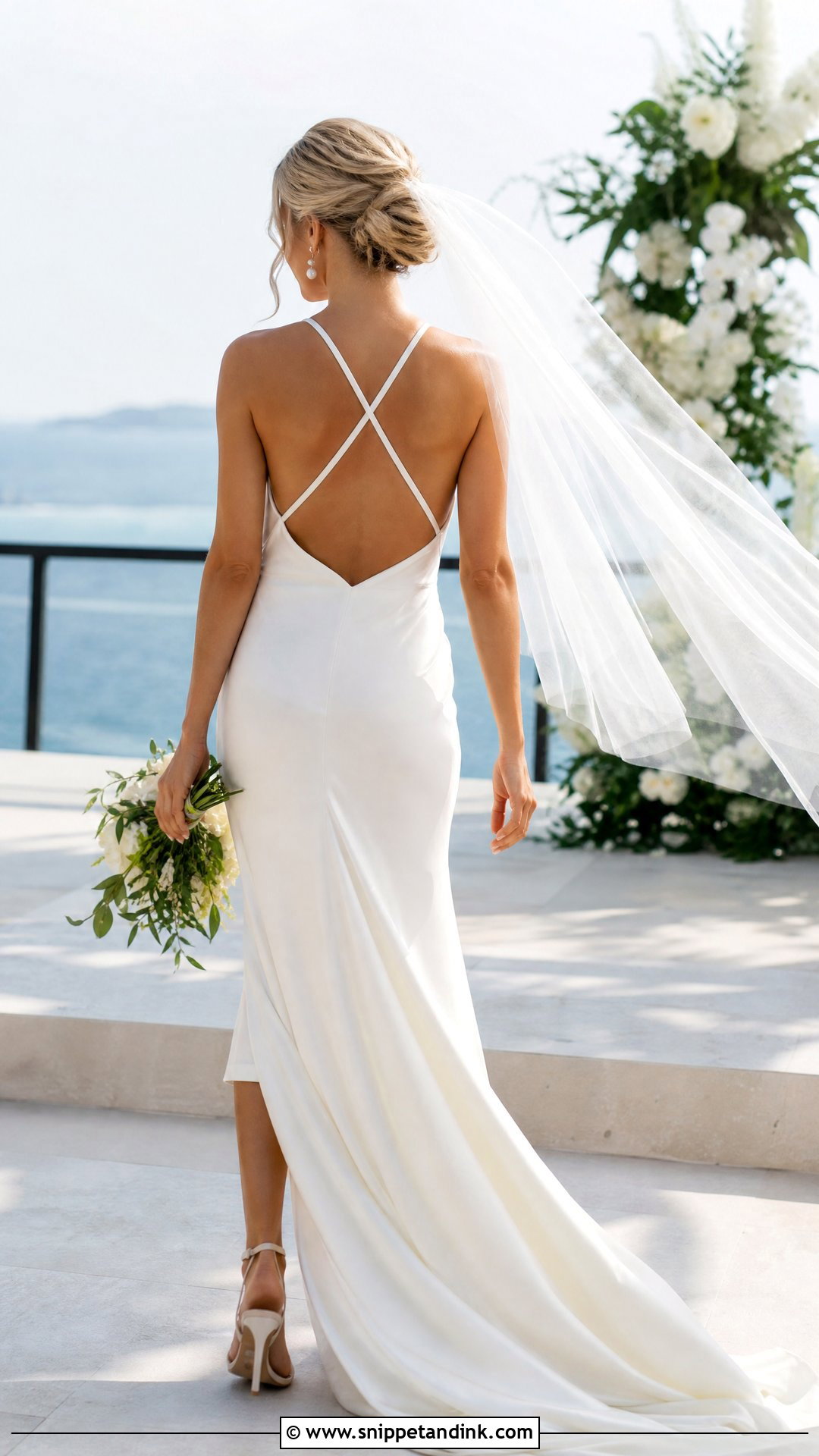
Crossed straps add support to an open back, and they suit slip gowns, sheaths and light A-line dresses for a beach or garden. Thin satin straps feel delicate; wider crepe or lace bands look more structured. One clean X usually reads better than a tangle of lines. Straps twist, especially thin ones, so I’d check at the fitting that they lie flat after you move your arms. Adjustable straps are worth having if your fittings span a few months. Choose a simple updo and slim heeled sandals.
23. Asymmetrical Back Wedding Dress
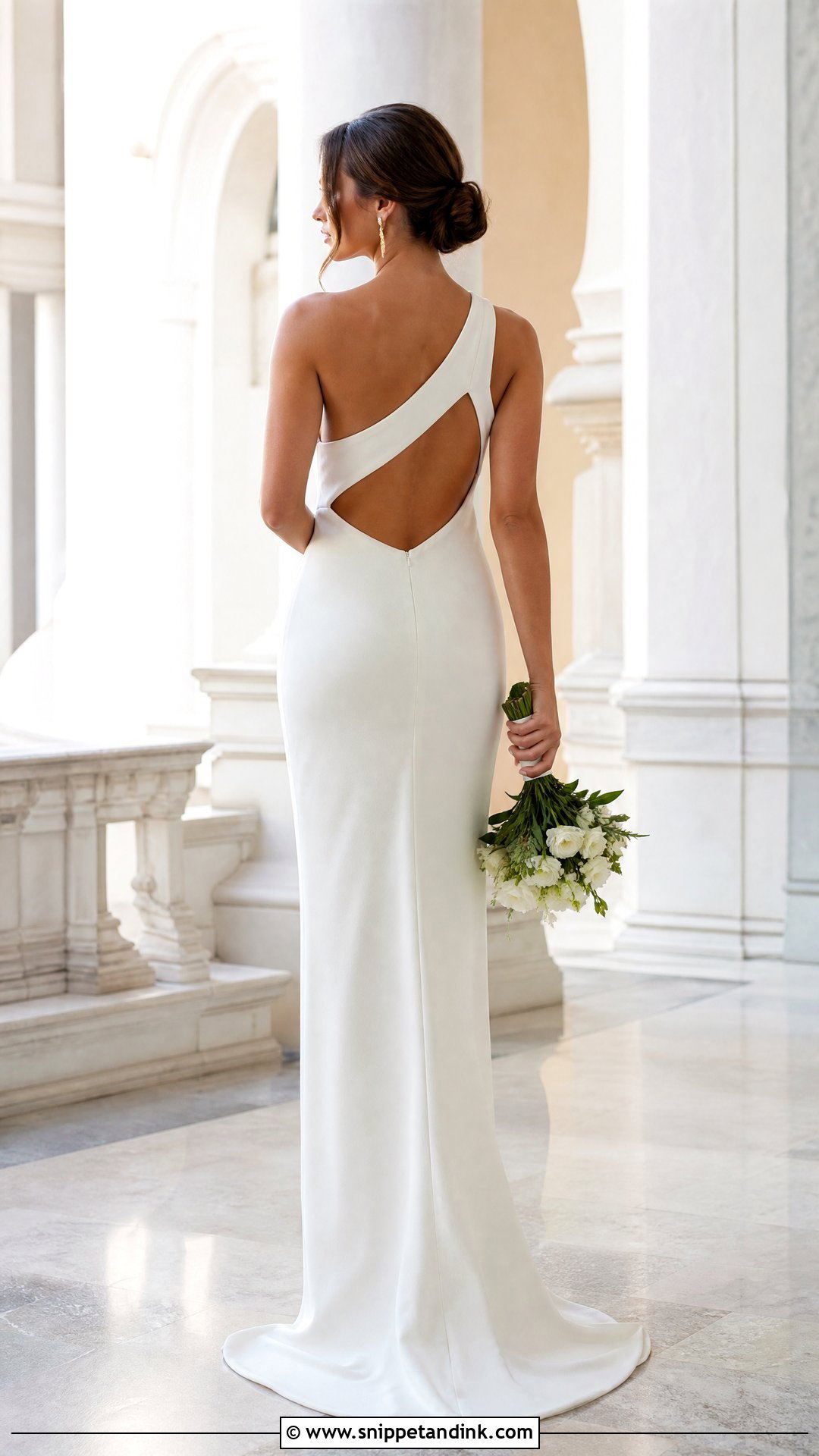
An asymmetrical back, with one diagonal strap, an offset cutout or lace sweeping from one shoulder, suits a bride who’d like something unexpected. Keep the rest of the dress simple: a crepe column, a one-shoulder A-line or sleek satin. Part the hair and set any updo on the side away from the detail so the two balance. The risk with asymmetry is that it can look like a mistake if the fabric pulls. I look at it from behind in a three-way mirror to make sure the line reads as deliberate.
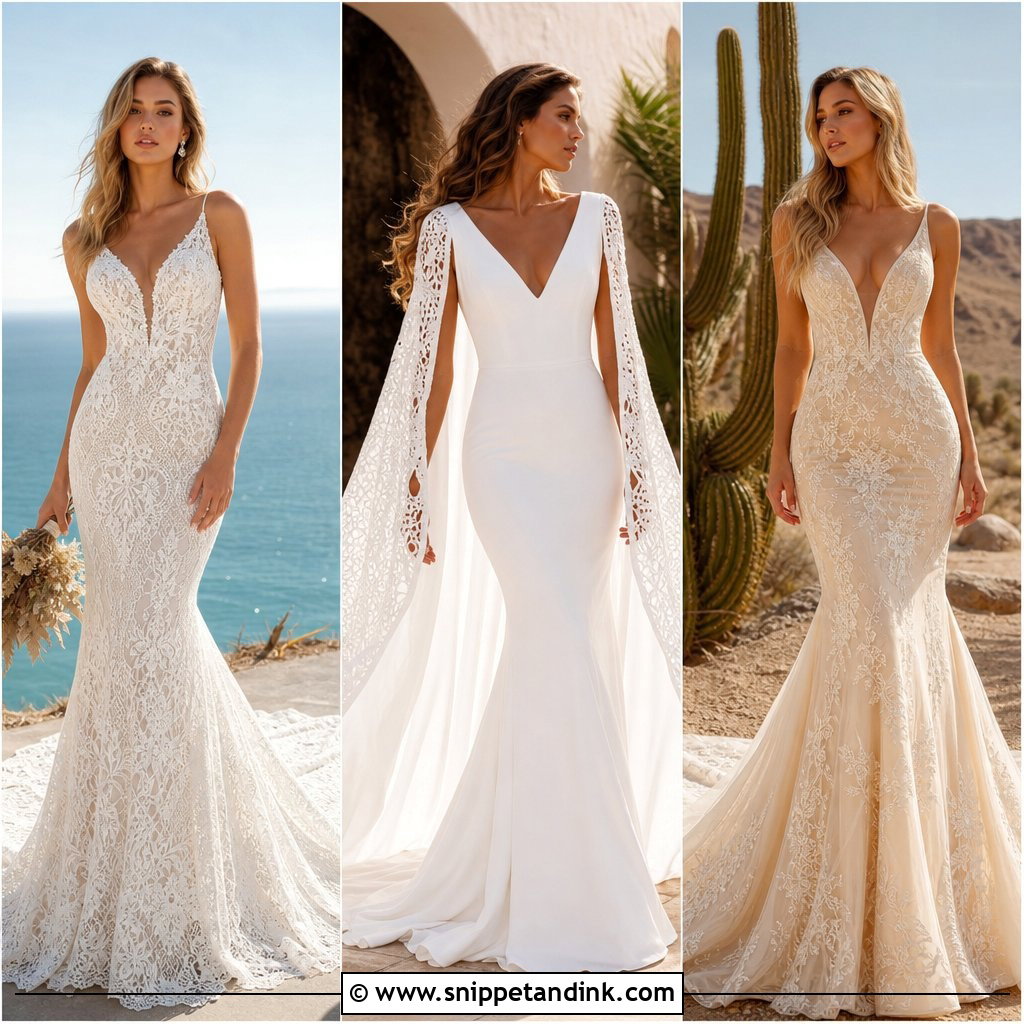
24. Backless Mermaid Wedding Dress
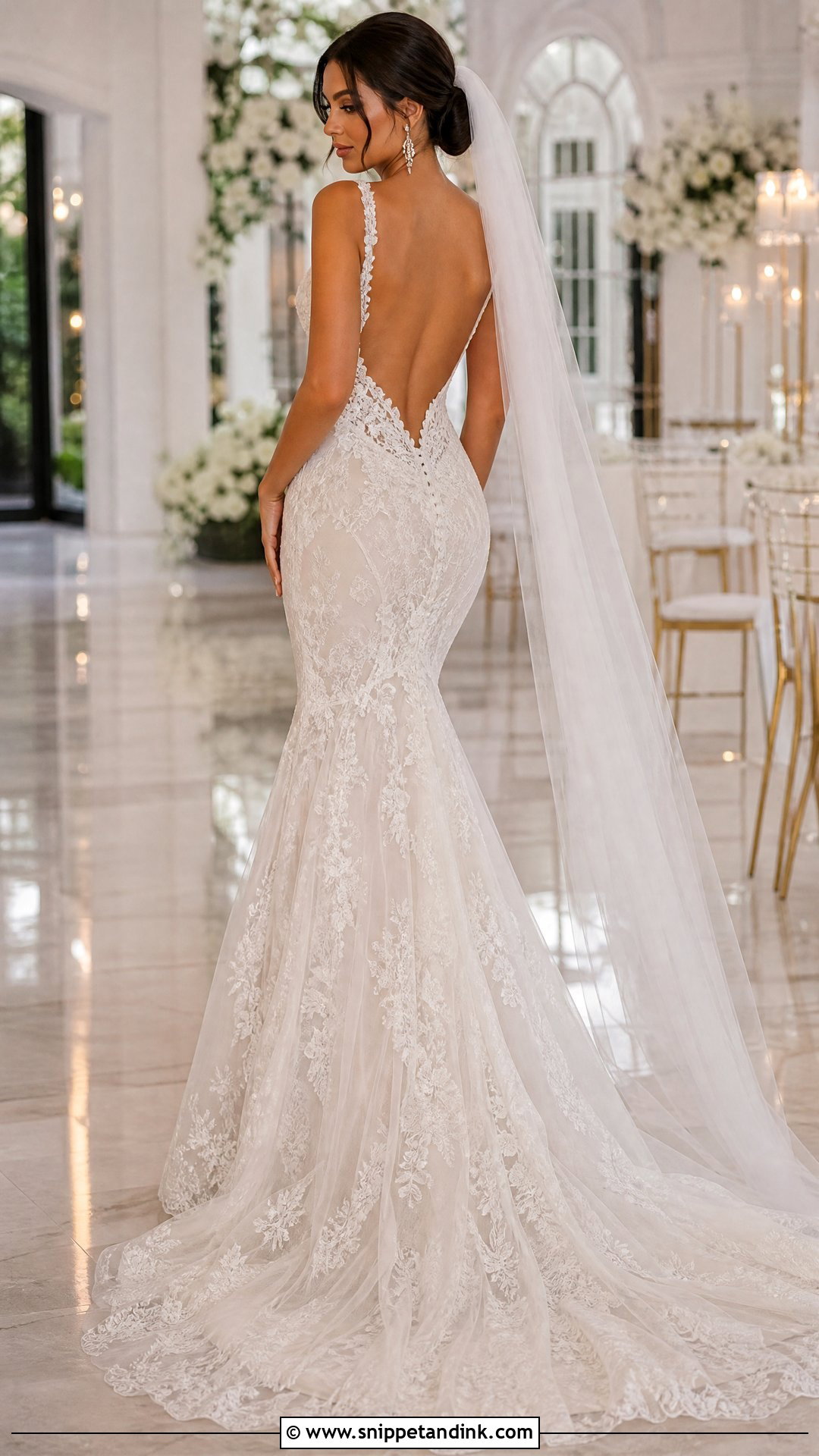
A backless mermaid gown is close-fitting through the waist and hips, flares near the knee, and leaves the upper half light. Because there’s no back to hold the bodice in, support has to come from elsewhere: straps, side boning or an illusion panel. Lace feels romantic, crepe or satin feels modern. Practice walking at a normal pace, sitting and climbing a step. A mermaid should feel fitted, not restrictive. Plan the bustle at the final fitting, since a heavy train pulls on an open back.
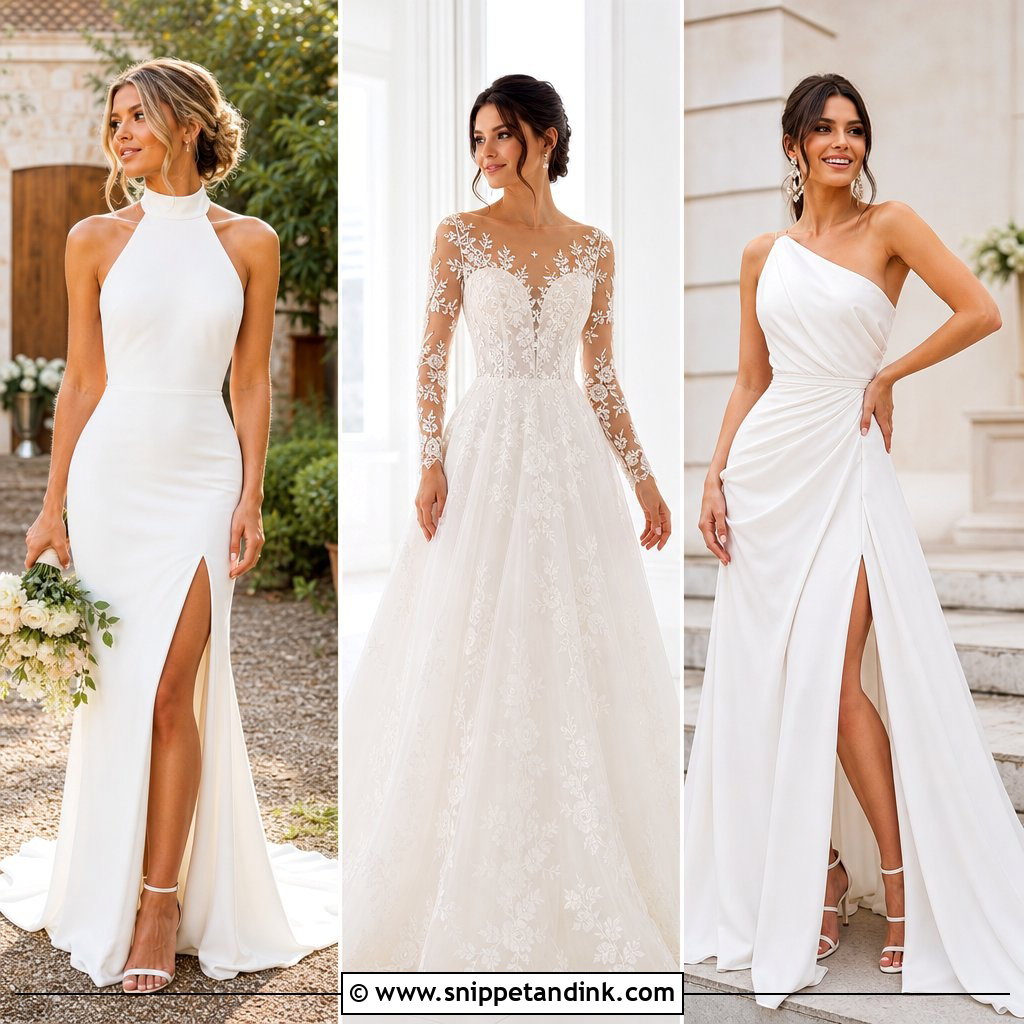
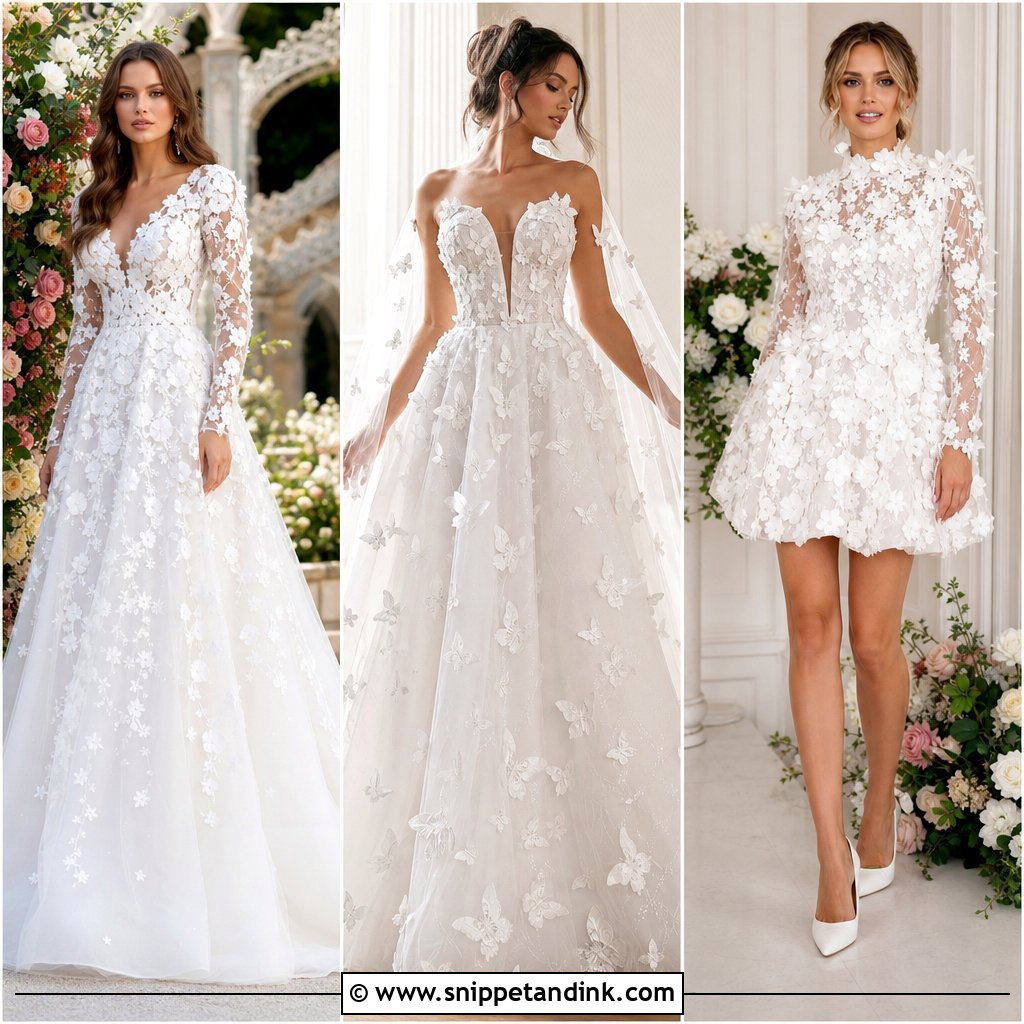
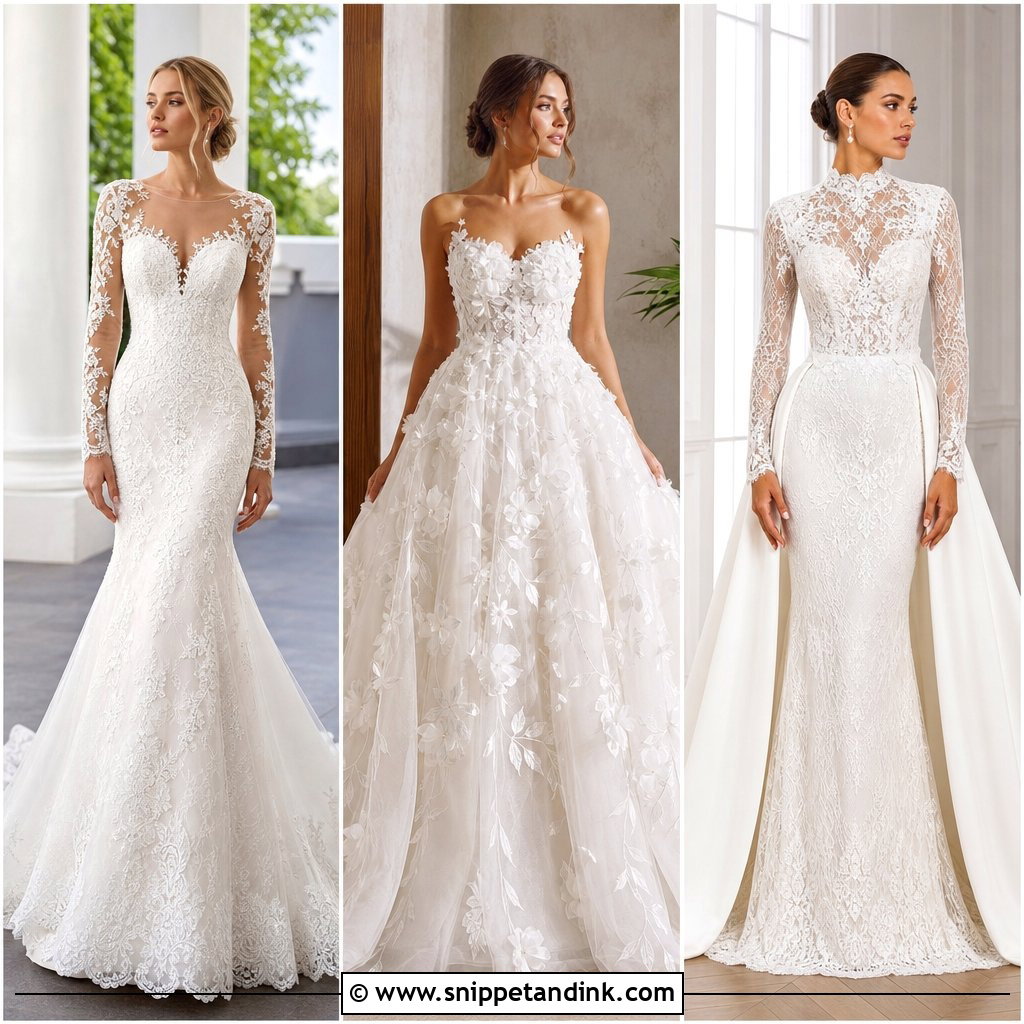
25. Draped Scarf Back Wedding Dress
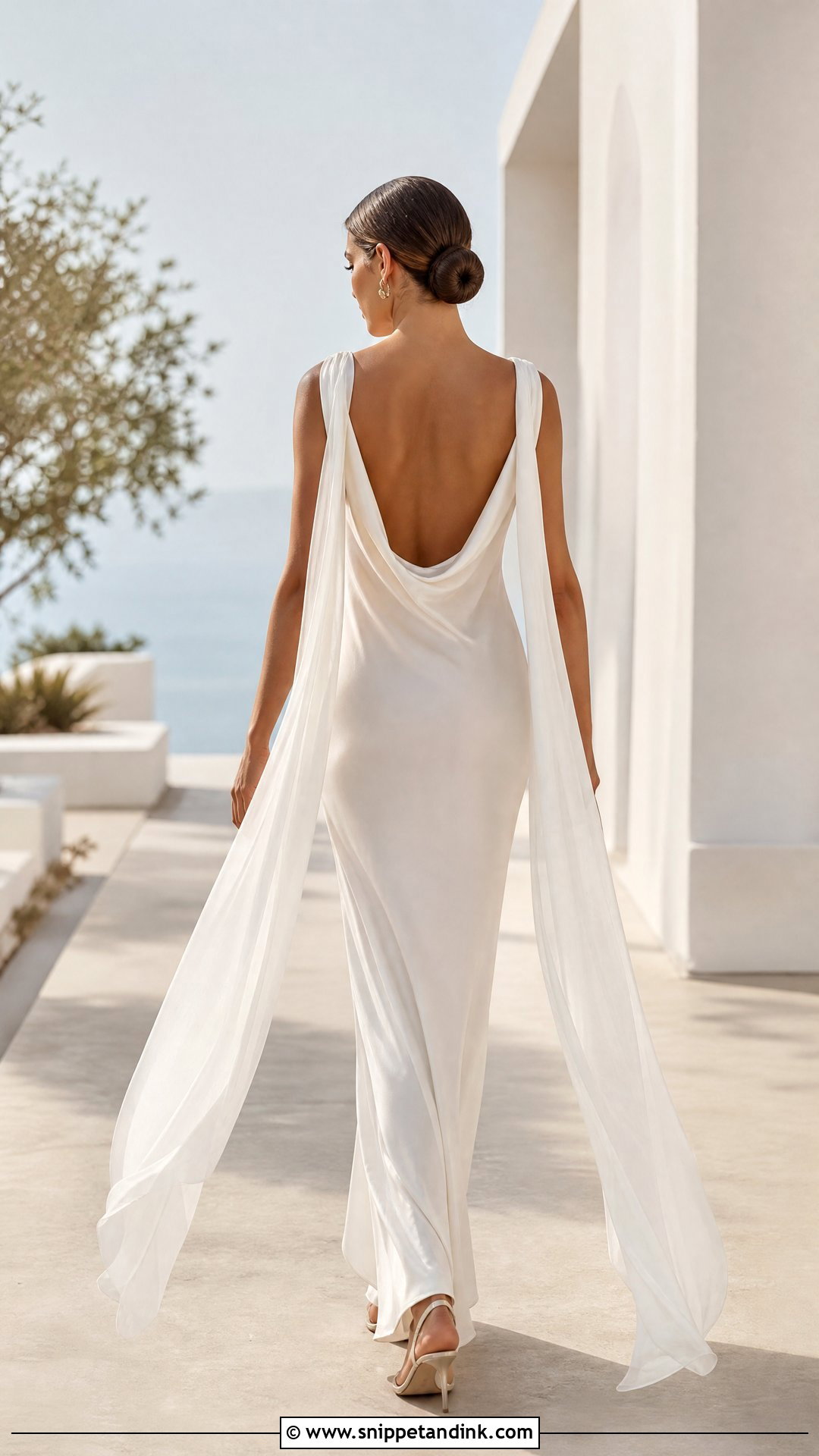
Scarf panels falling from the shoulders or neck give a simple gown motion, and they pair well with a sleek halter, a column or a bias-cut satin dress. Chiffon, silk and georgette drape best. I’d usually skip the veil if the panels already add length, or choose a short one that won’t tangle. Test them outside, ideally on a breezy day. Long panels wrap around arms, catch underfoot on steps and can hide the gown’s shape in photos if they blow forward.
Hair, Veil and Bustle Can Hide All of It
I’ve watched brides choose a back detail and then cover it three different ways on the day. Plan these together at your final fitting.
Hair
Long loose waves cover most of an open back. If you want the back seen, wear an updo or sweep the hair over one shoulder. Bring a photo of the back to your hair trial so your stylist knows what needs to stay visible.
Veil
A plain, sheer, single-layer veil lets a back show through. Heavy lace borders, beading and blusher layers hide it. Where the comb sits matters too: just below the crown, the veil falls clear of the back; tucked under a low bun, it lies right across it.
Bustle
A bustle lifts the train with hooks or ribbons, and some styles gather fabric right under a low back opening. Ask your seamstress to show you the bustle from behind. A French or under bustle usually keeps the back clean; a heavy over bustle can crowd it.
Turn Around in the Mirror Before You Say Yes
A gown’s back can carry a lot of personality on its own. An open back feels modern and confident, while lace, buttons, bows and illusion details lean romantic and traditional. Before you decide, weigh the silhouette, fabric, support, venue and how much coverage you want. Your hair and veil should reveal the back rather than hide it. Then move in the dress at every fitting: walk, sit, raise your arms, hug someone. The back you’ll be happy with is the one that stays put from the ceremony through the last dance.
You'll Like These Ideas:


Leave a Reply