
Wearing colour down the aisle sounds bolder than it looks in person. A pastel reads as bridal because the shade is so diluted that, from the back of a room, it often passes for a warm or cool ivory until you get close. Below I’ve gathered blush, lavender, powder blue, mint, peach, butter yellow and a few less expected tints, across ball gowns, sheaths and one short dress. Designers are also slipping colour in through tinted linings, floral appliqués, ribbon ties and faintly dyed veils, which is a gentler way in if a fully coloured skirt feels like too much. In fittings I spend as much time on fabric as on shade: satin bounces light and makes a pastel look brighter, chiffon softens it, and stacked tulle builds depth because each layer adds a little more pigment. Shoes, jewellery, veil and flowers should all sit one step quieter than the dress. If you want a wider spread to compare, I’ve also pulled together more Pastel Wedding Dresses to inspire your fitting appointments.
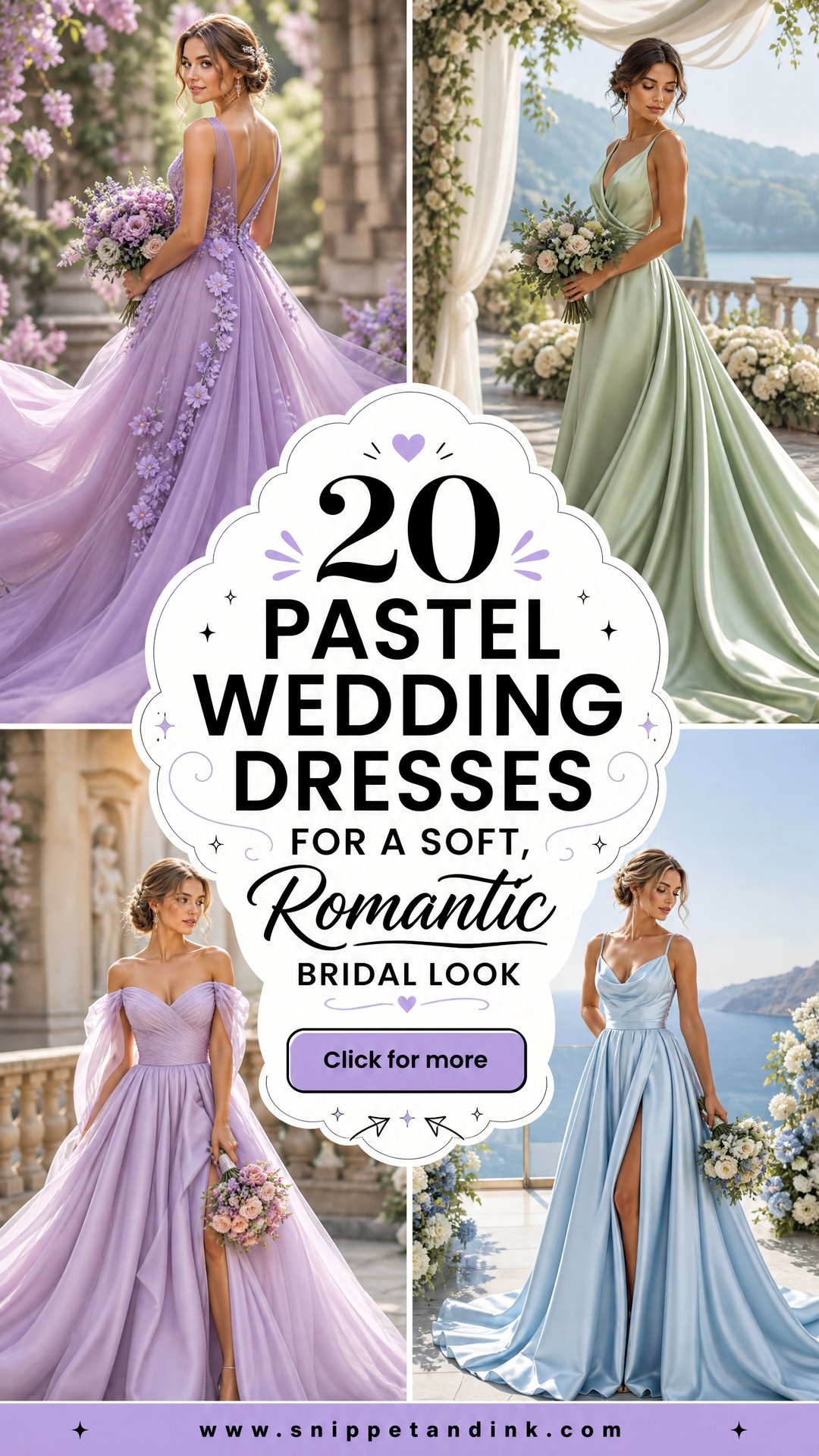
Holding a Swatch Against Your Jaw Before You Fall for a Shade
The fastest way I know to rule a pastel in or out is to stand by a north-facing window with no makeup on and hold the fabric under your jaw. Ignore the mirror for a second and look at your skin. If the shade suits you, your complexion looks clearer and your eyes look brighter. If it doesn’t, you’ll notice shadows under the eyes, redness around the nose or a greyish cast.
Undertone decides most of this. Warm skin usually loves peach, butter yellow, champagne pink and coral. Cool skin tends to glow in powder blue, lavender, periwinkle and icy pink. Sage, blush and dusty rose sit in the middle and suit more people than any other pastels. These are starting points, not rules, which is why the swatch test matters.
- Ask the salon for a fabric cutting in the actual fabric, because the same dye looks paler on tulle than on satin.
- Check the swatch beside your engagement ring and any family jewellery you plan to wear; yellow gold and icy blue can clash.
- Test it against the veil colour too. A diamond-white veil can make a soft pastel look dingy, so ivory or a tinted veil is often kinder.
Coloured gowns are often made to order, and dyeing adds time. Expect a longer wait than for a stock ivory gown, so place the order early and ask whether a later colour change is possible before you sign.
1. Blush Pink Ball Gown Wedding Dress
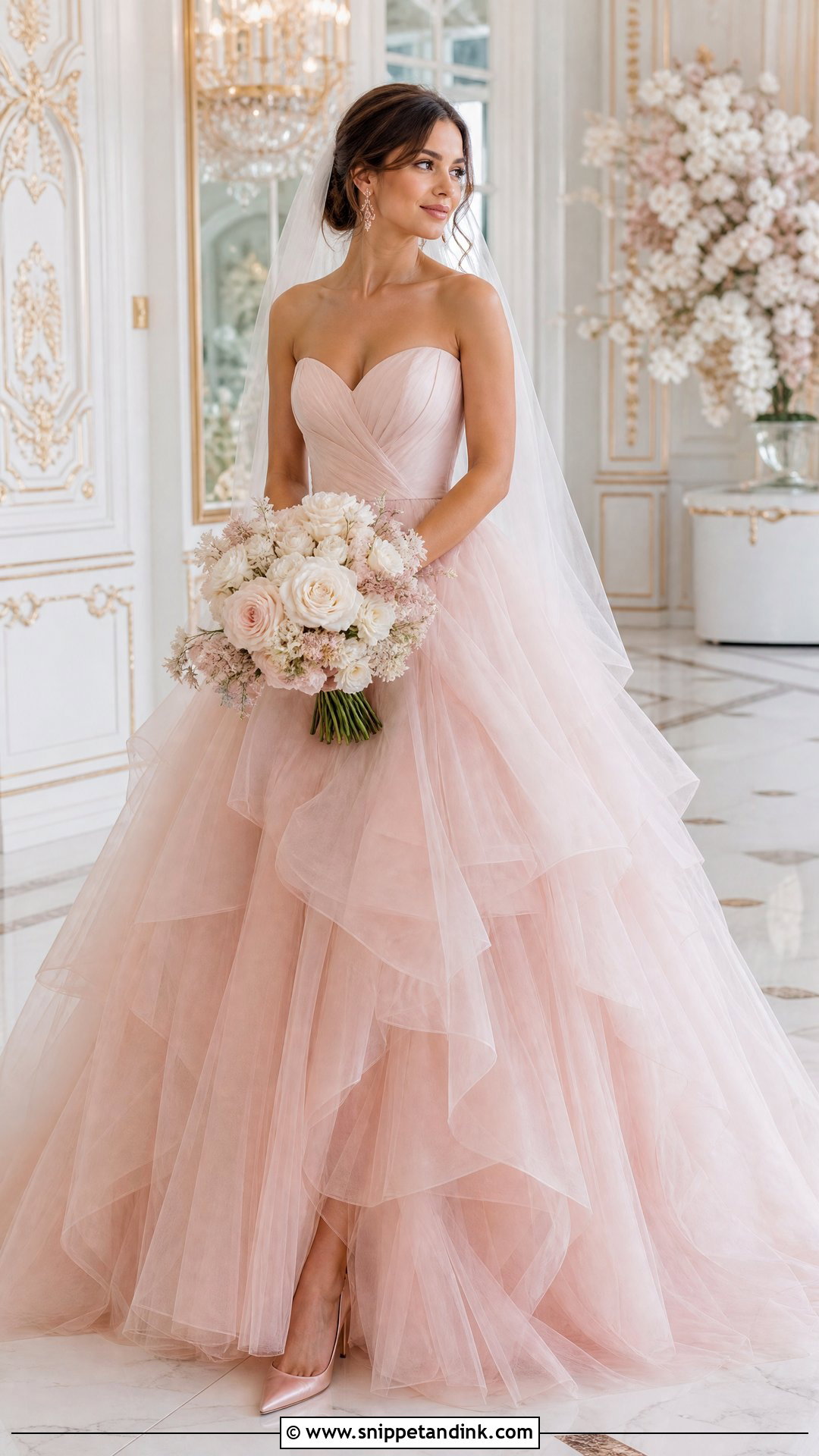
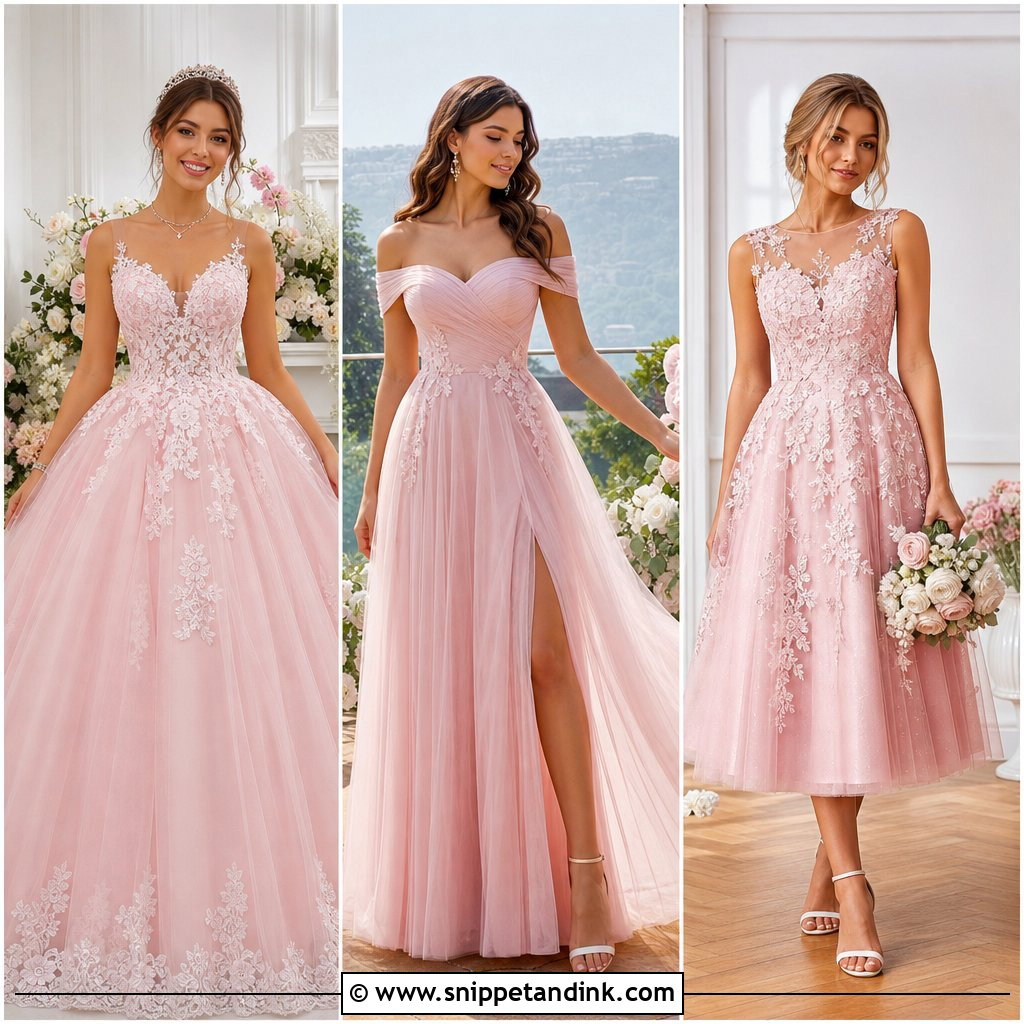
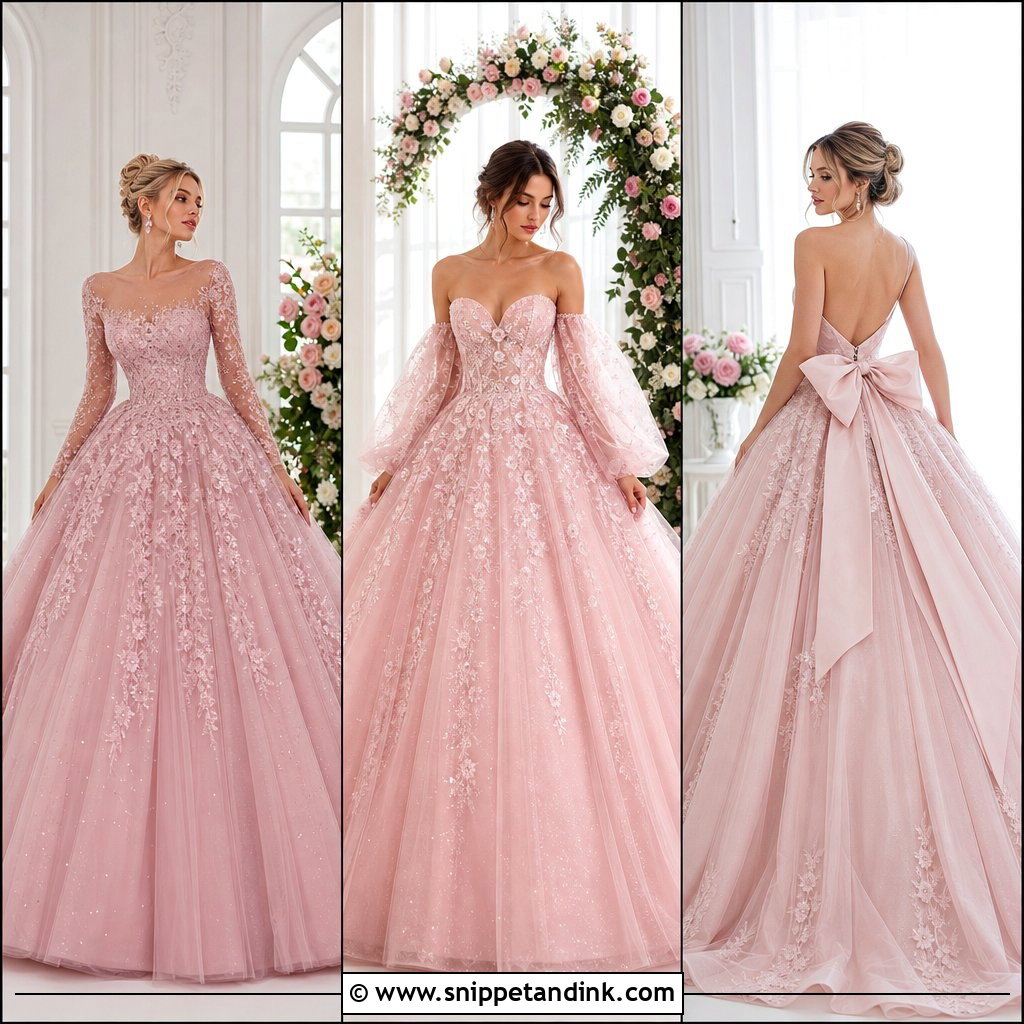
Blush on a full skirt gives you all the ceremony of a classic ball gown with a warmer glow next to the skin than bright white. The bodice does the real work here, so I look for proper boning and a waist seam that sits at your natural waist, because a heavy tulle skirt drags a loose bodice down by the evening. Pearls or small appliqués scattered over the skirt add depth; dense beading on blush tends to look busy. Blush satin pumps, rose-gold earrings and a fingertip veil with a faint pink cast keep the colour consistent. A loose low bun leaves the neckline clear. Pale pink and cream roses with soft greenery belong in the bouquet, and the whole look sits most comfortably in a ballroom or formal garden.
2. Powder Blue A-Line Wedding Dress
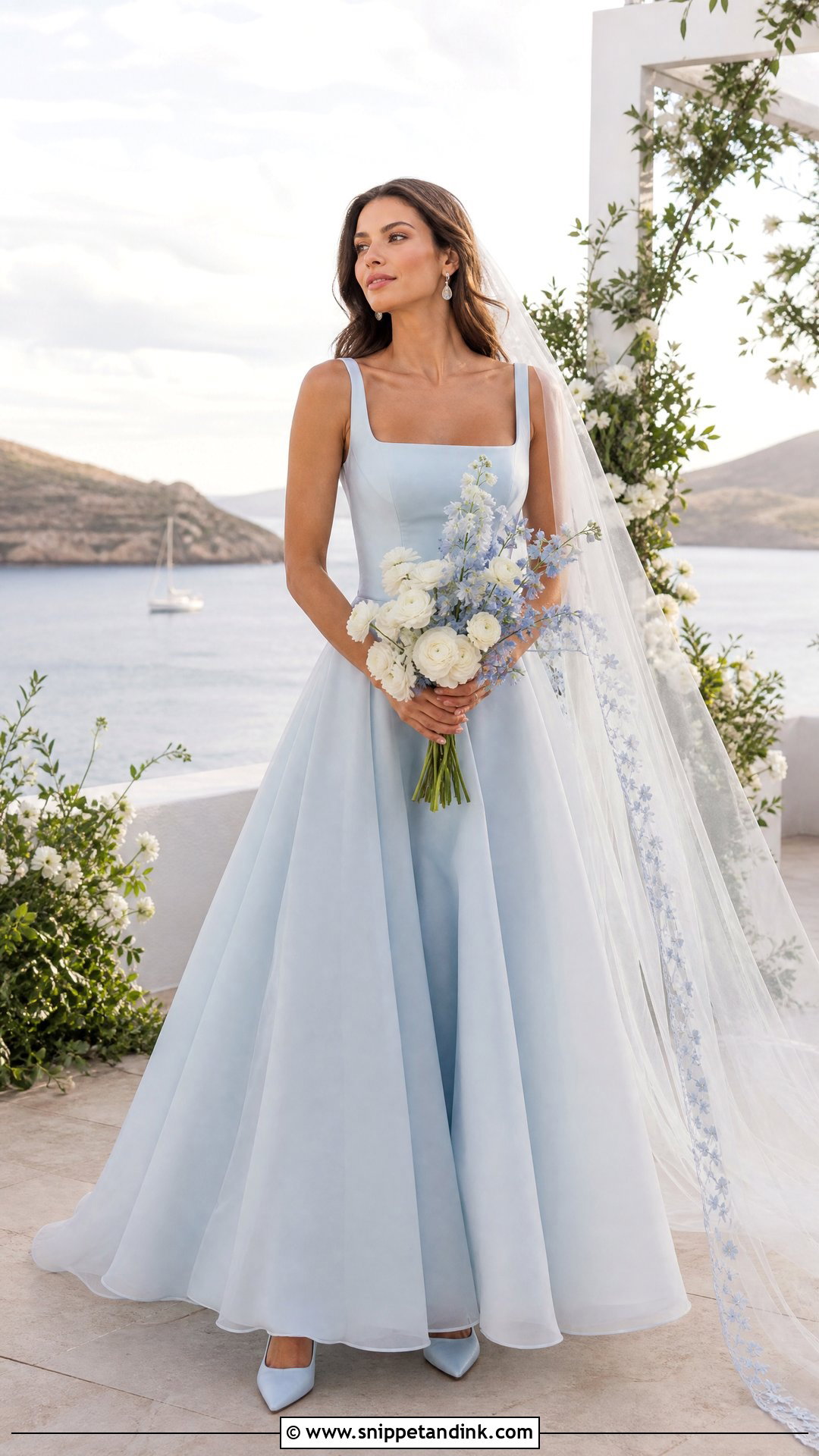
Powder blue is the pastel I see brides warm to fastest, because it reads clean rather than sweet. On an A-line, the fitted top marks the waist and the skirt opens enough to walk and dance without kicking at the hem. Organza and chiffon keep the colour airy; a heavy satin in this shade can drift toward a bridesmaid look, so feel the weight before you fall for a photo. A square or softly curved neckline keeps it modern. I’d wear it with silver drops, pale blue pointed heels and a long veil edged in tiny embroidered flowers, plus ranunculus, delphinium and eucalyptus in hand. Near the water or under bright daylight, the blue holds its own against the surroundings instead of washing out.
3. Lavender Tulle Wedding Dress
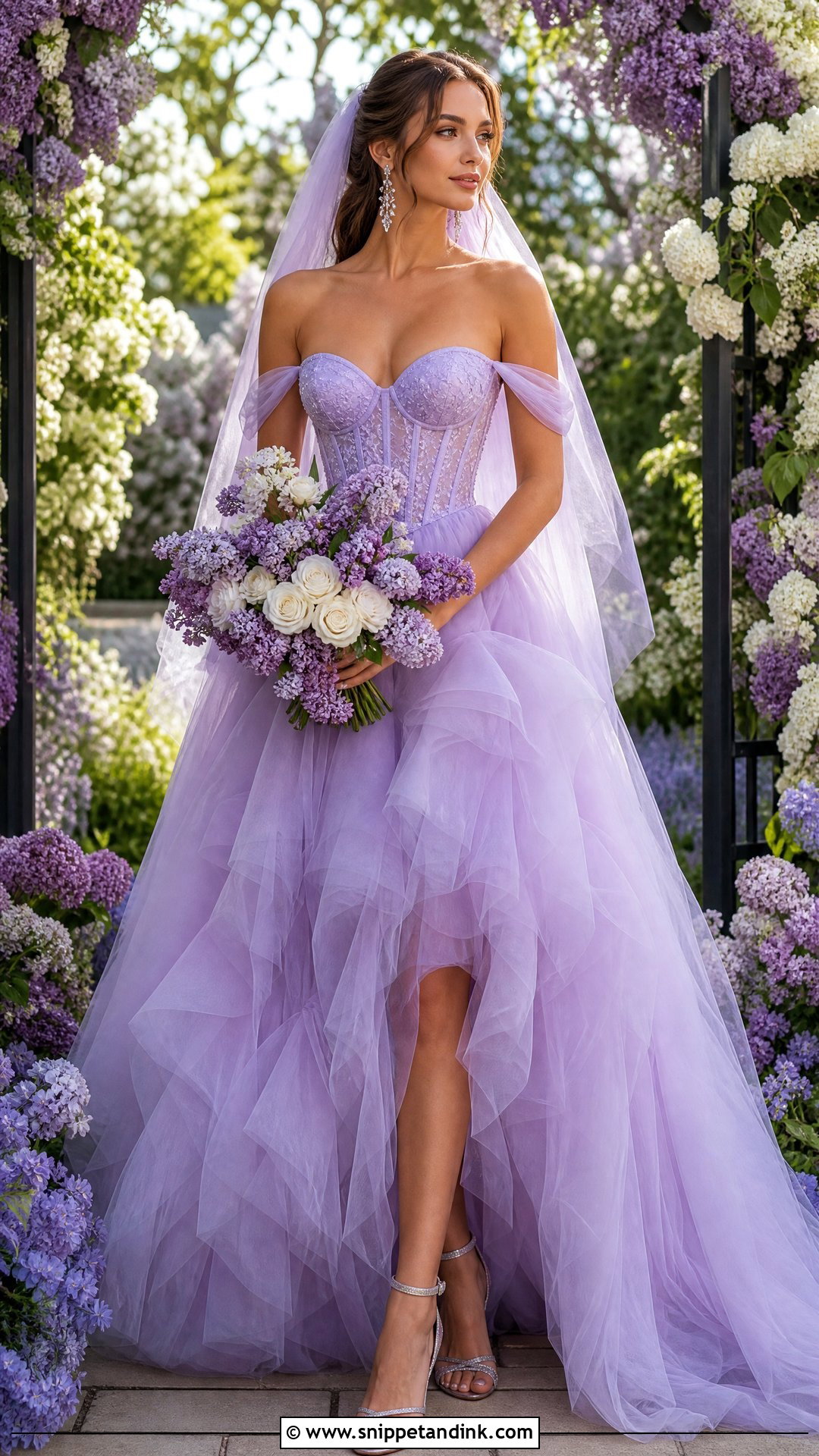
Lavender tulle looks weightless, but it only behaves if there’s a boned bodice underneath doing the lifting. That inner structure is what makes this style work across many bust sizes, so ask to see the inside of the gown, not just the front. A sweetheart neckline with detachable off-the-shoulder straps gives you two looks in one day: straps for the ceremony, strapless for dancing. Crystal earrings, silver heels and a sheer lavender veil that runs just past the train continue the colour, with lilac and white roses in the bouquet. A relaxed updo with a small crystal comb finishes it. One honest caution: lavender dye shifts more than most under warm tungsten bulbs, so it’s happiest at a daytime garden or greenhouse ceremony.
4. Sage Green Satin Wedding Dress
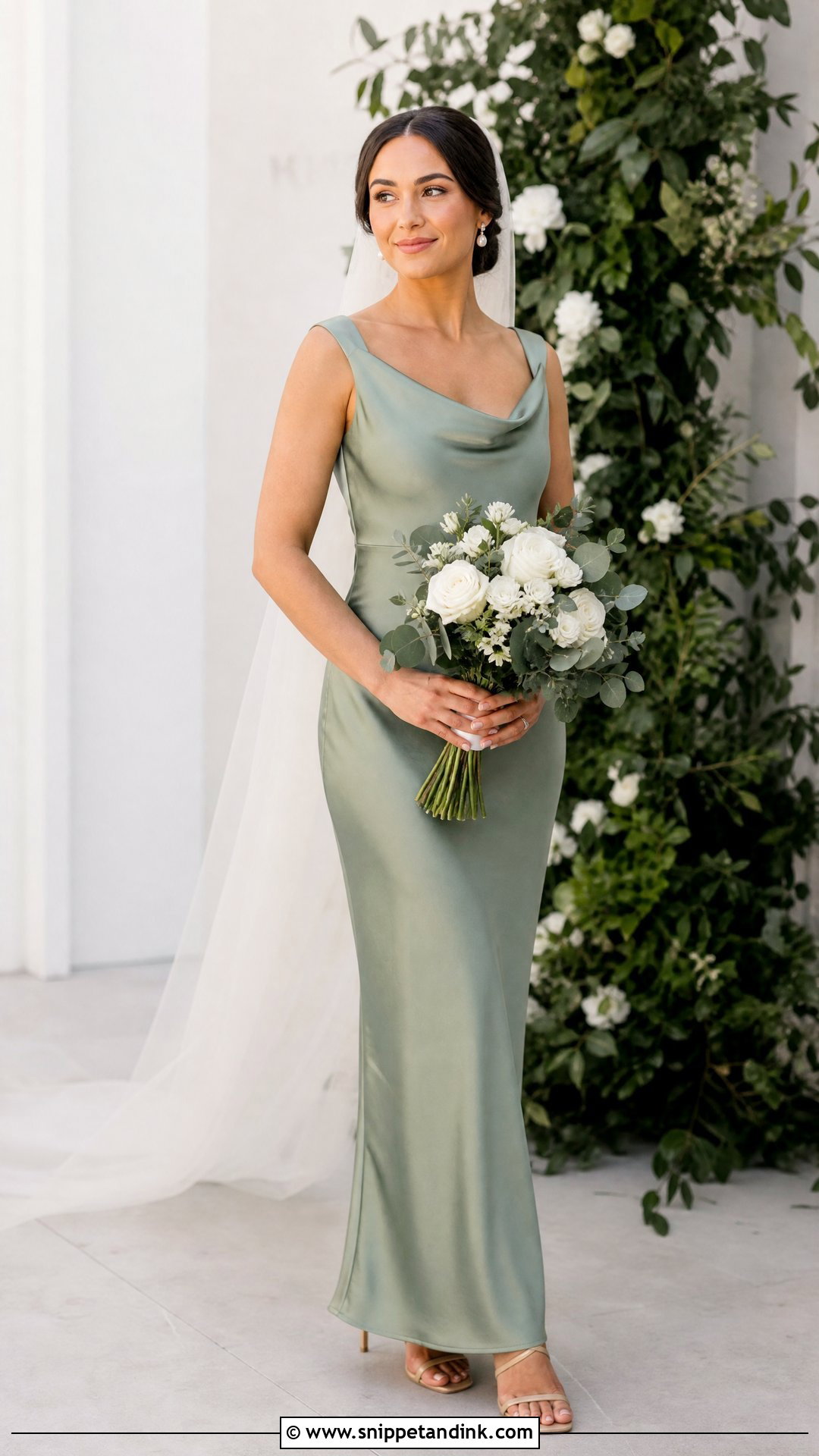
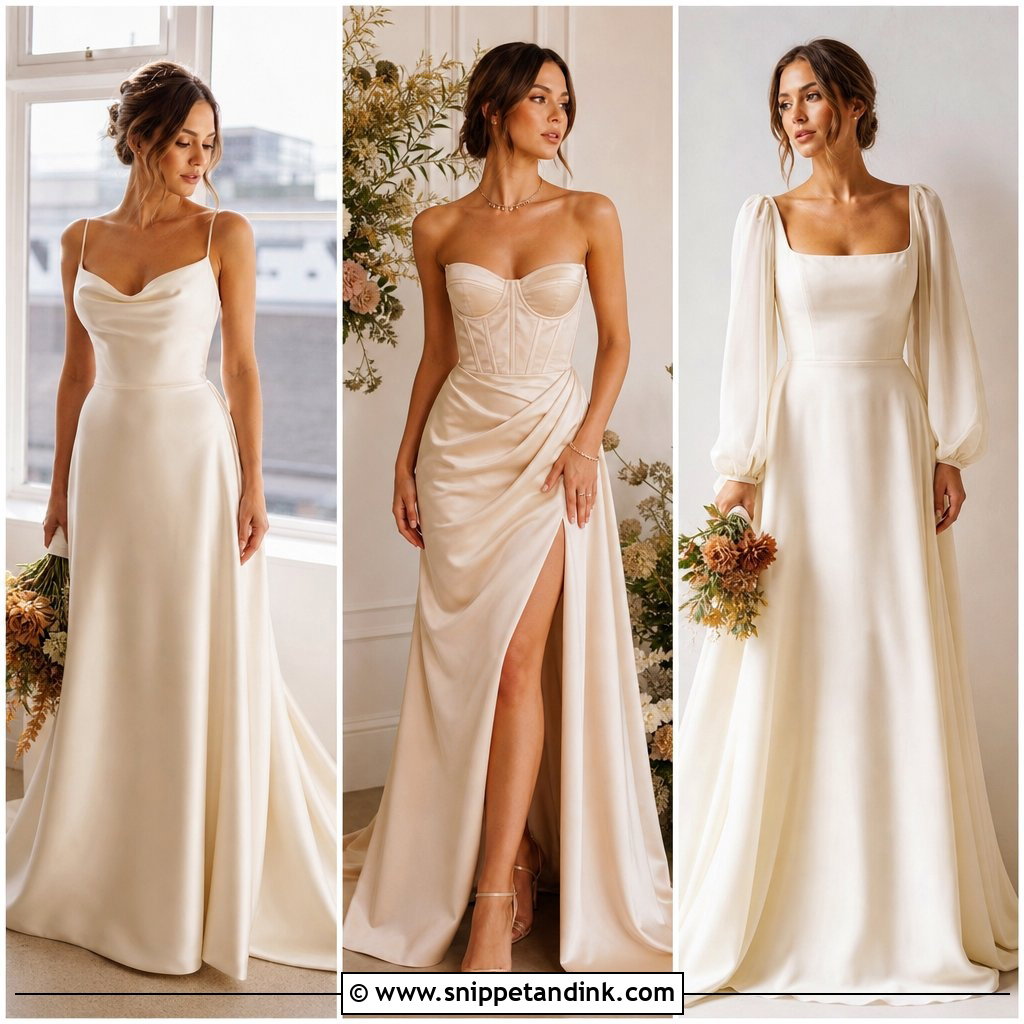
Sage satin is quiet in the way good tailoring is quiet. Because the fabric’s sheen is the feature, I’d keep the cut to a clean column or a fit-and-flare and resist adding lace on top. A softly draped neckline brings some movement, and wide straps or short sleeves give real support, which satin needs since it shows every pull across the bust. Pearl earrings, champagne heels and a plain ivory veil leave the green uncontested. White roses, herbs and silvery eucalyptus in a structured bouquet echo the shade without matching it. Wear a sleek low bun with one pearl pin. It suits a botanical venue or a pared-back modern room.
5. Butter Yellow Organza Wedding Dress
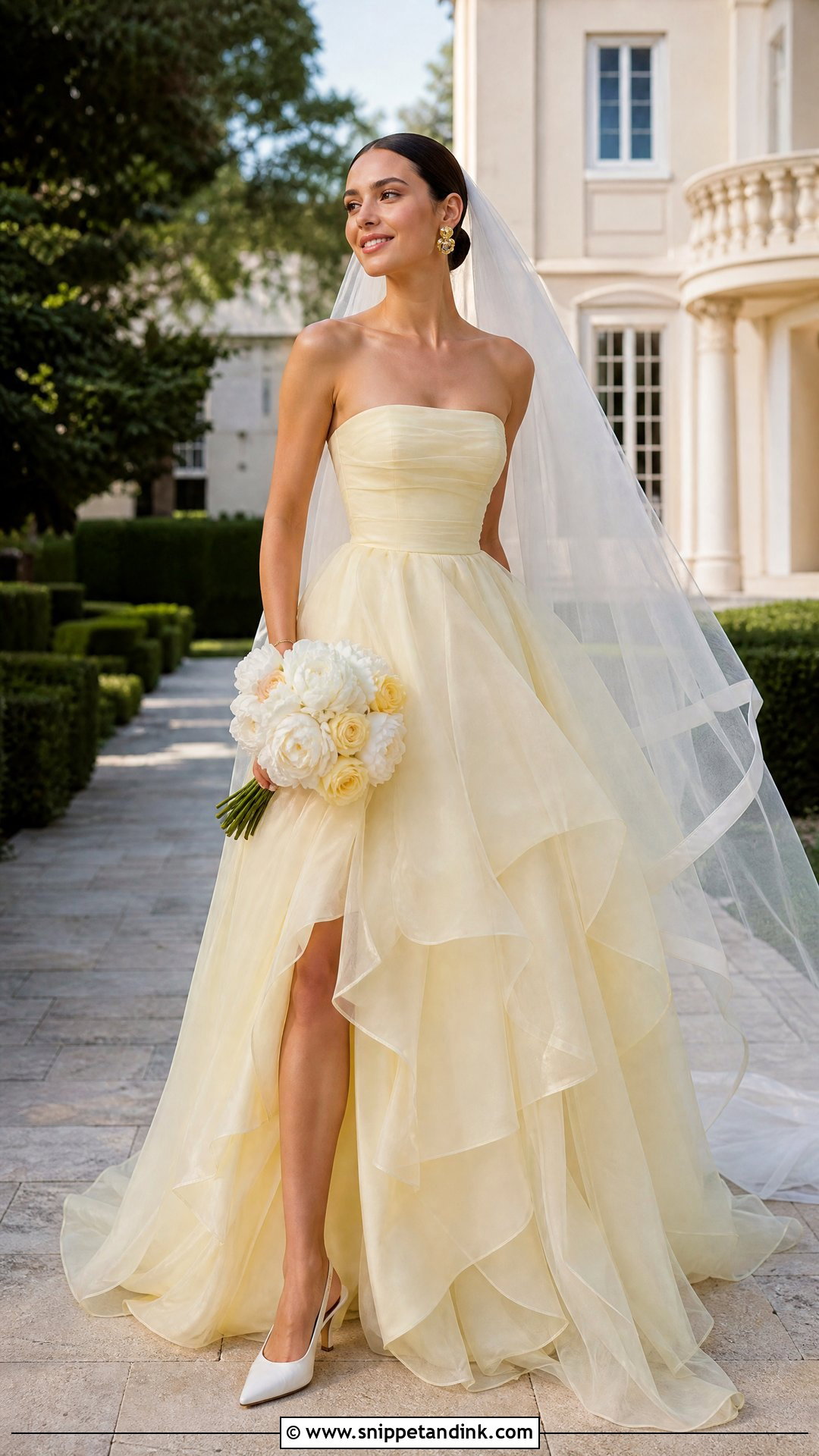
Butter yellow is the shade brides fear most and then often love, provided it’s in organza. Sheer layers let the light through so the yellow looks pale and lit from inside rather than flat. A fitted strapless bodice over a full skirt keeps the balance right, and tonal embroidery or a few small appliqués give the bodice texture. Before committing, hold the fabric to your face in daylight; yellow can make some complexions look sallow, and that’s far easier to spot at a swatch than at a final fitting. Ivory slingbacks, gold earrings and a cathedral veil with a narrow satin edge pair well. White peonies and pale yellow roses repeat the palette, and peach blush with a neutral lip keeps the makeup warm. Summer sun brings out the golden undertone best.
6. Peach Chiffon Wedding Dress
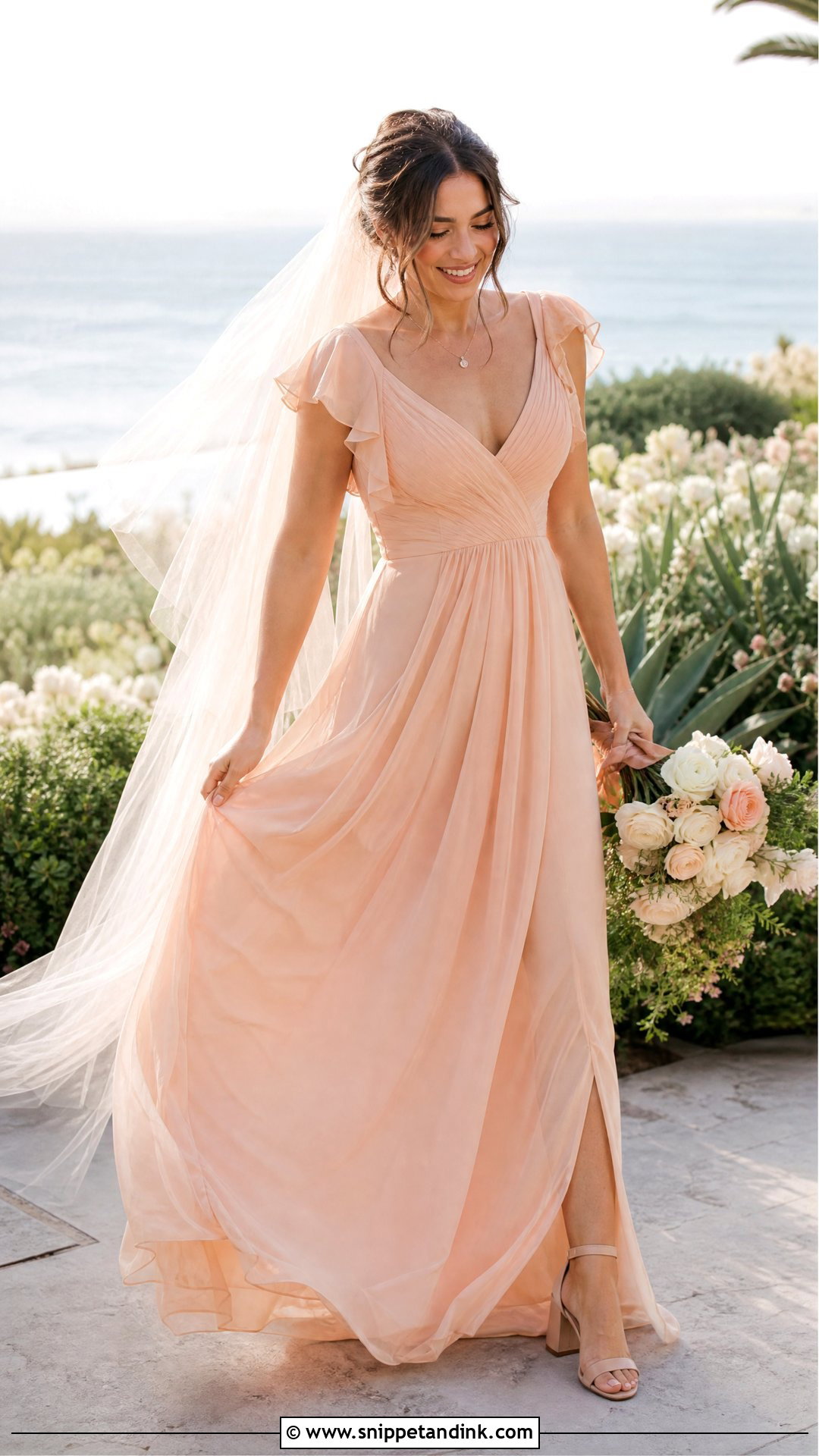
Peach chiffon is the most forgiving dress here to actually wear. An empire waist or flowing A-line gives coverage and comfort, and a gathered bodice with flutter sleeves frames the shoulders without anything digging in. Chiffon does crease where you sit, though, so I steam the skirt last and keep a travel steamer near the bridal suite. Nude block heels are kind on sand or lawn, and delicate gold jewellery with a peach-tinted veil keeps it soft. Cream roses and peach ranunculus suit the bouquet. Loose waves or a braided low bun match the easy mood, which makes sense for a beach or destination ceremony where a stiff gown would feel out of place.
7. Dusty Rose Lace Wedding Dress
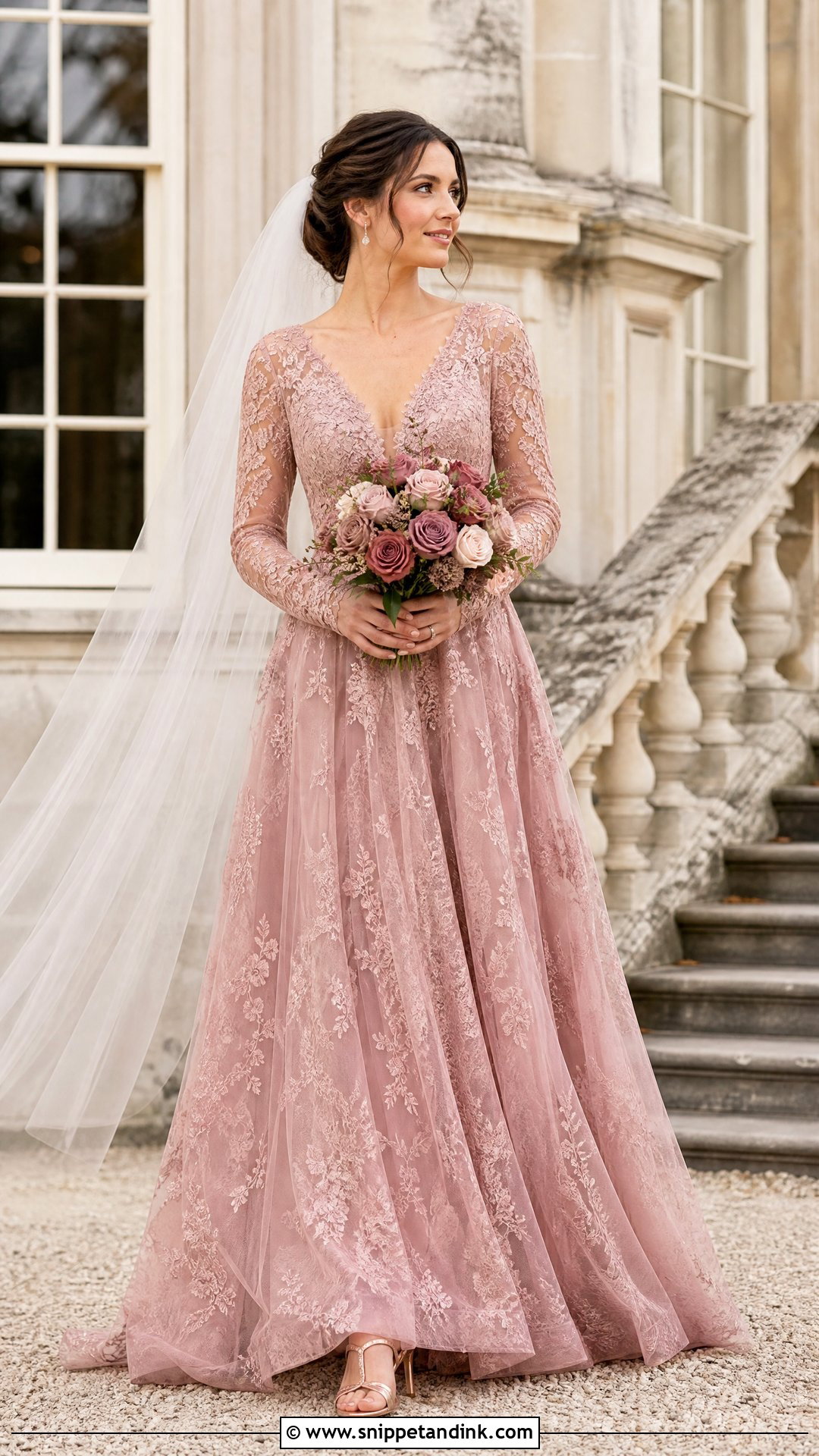
Dusty rose sits a shade deeper than blush, which is why it carries lace so well. The first thing I check on a coloured lace gown is the lining: a tonal lining lets the floral pattern show from across the room, while an ivory one underneath makes the lace look patchy. A fitted lace bodice and flowing skirt give shape without rigid boning. Long illusion sleeves add coverage, and a V-neck stops the sleeves from feeling heavy. Rose-gold heels, small pearl earrings and a plain tulle veil let the lace lead. Muted pink and mauve flowers with eucalyptus fit the palette, and the colour has enough depth for an autumn or evening wedding, especially if you love vintage gowns but not ivory.
8. Mint Green Tea-Length Wedding Dress
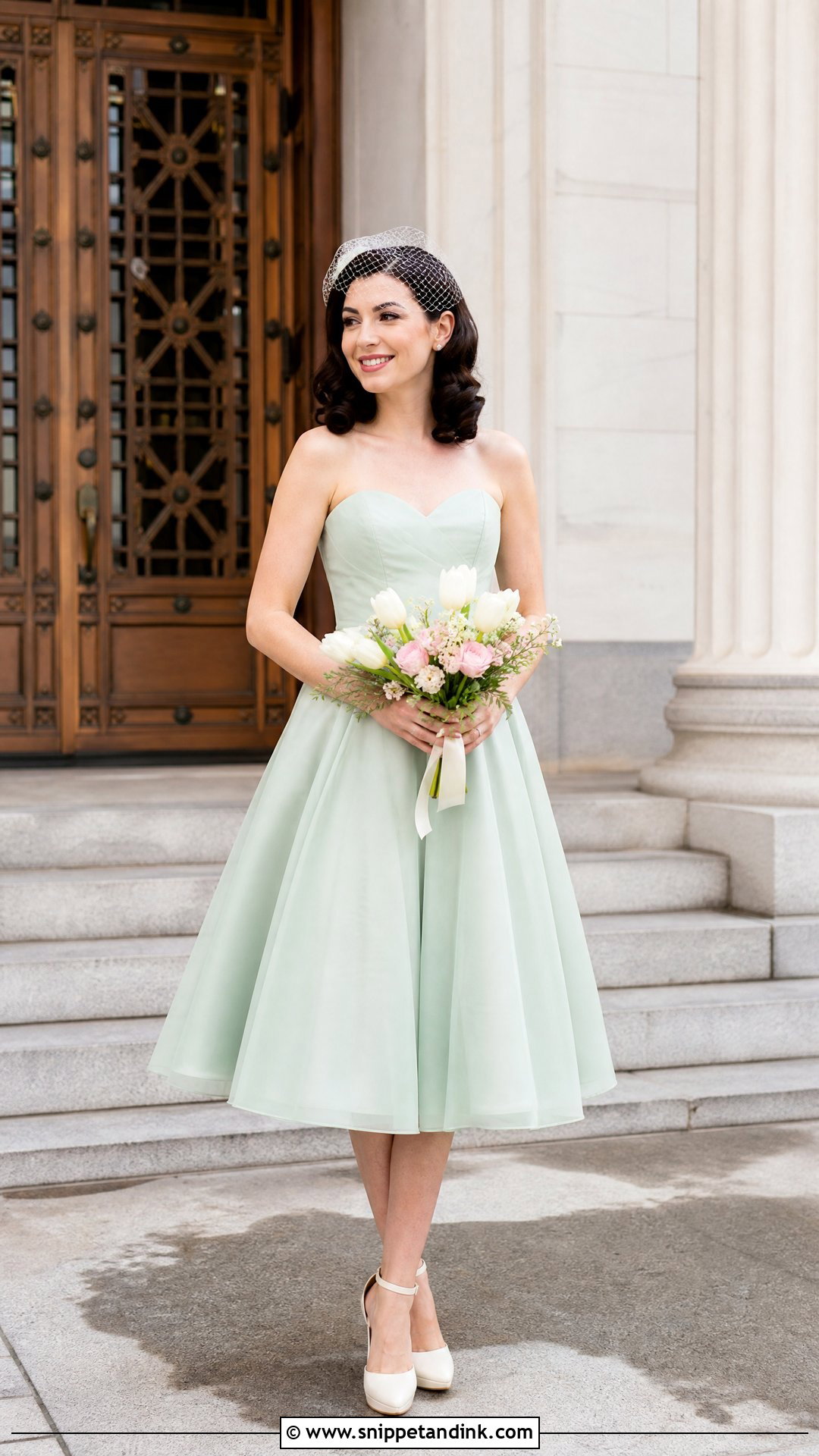
Mint at tea length has a cheerful, slightly retro feel, and the shorter hem is a practical gift: you can greet guests, climb steps and dance without a bustle. Look for a fitted waist, a softly flared skirt and a bateau or sweetheart neckline that holds its shape. Because the shoes are on show, ivory ankle-strap pumps matter more than usual; ankle straps also stop heels slipping as you walk. Pearl studs and a birdcage or shoulder-length veil keep the proportions right. A compact posy of white tulips, mint-toned foliage and a few pale pink stems adds contrast. Soft curls or a polished chin-length cut suit it. At a courthouse ceremony or restaurant reception a long train would be in the way anyway.
9. Pale Lilac Off-the-Shoulder Wedding Dress
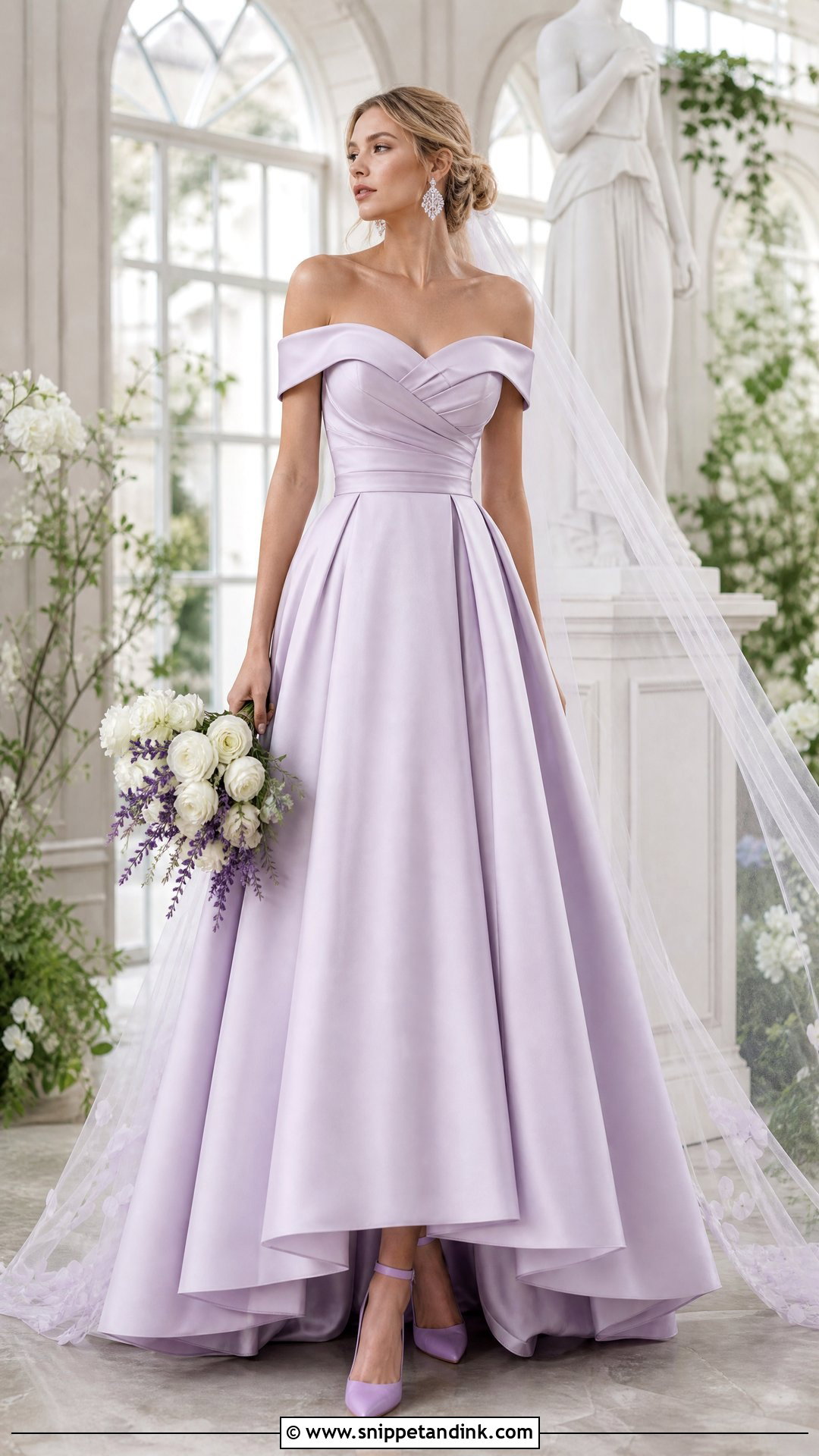
An off-the-shoulder neckline only looks relaxed if the engineering underneath is solid. On a pale lilac gown like this, I want internal boning and a silicone grip strip along the neckline so you aren’t hitching the bodice up between photos. A soft A-line skirt with subtle pleating adds dimension to such a light colour. Lavender satin heels, crystal drops and a long plain veil tucked beneath a low updo finish it. White roses, lavender sprigs and grey-green foliage complete the palette. Skip the necklace and let the open neckline breathe. This works for a bride who wants colour but would rather avoid heavy embroidery or sparkle.
10. Pastel Floral Embroidered Wedding Dress
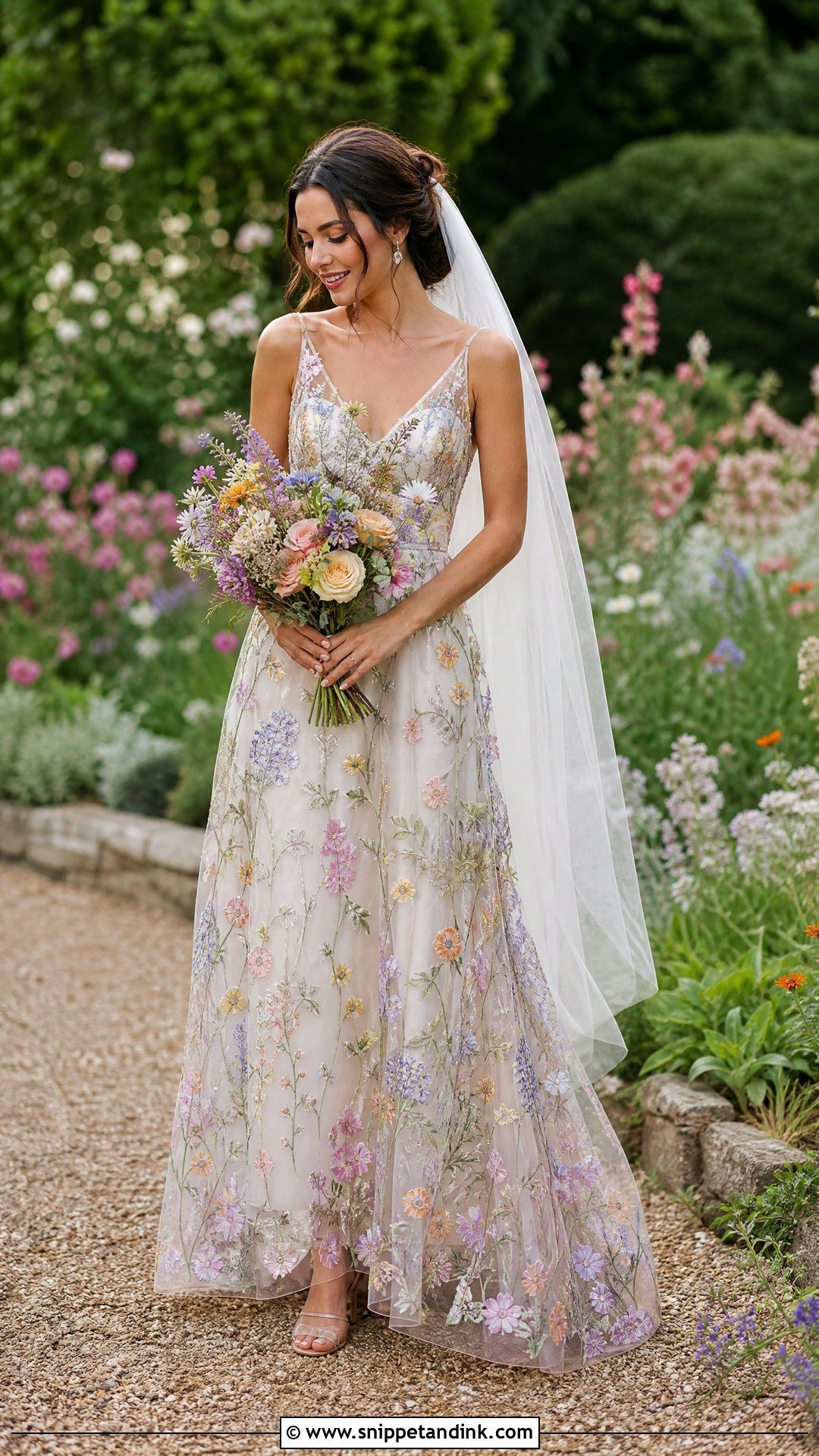
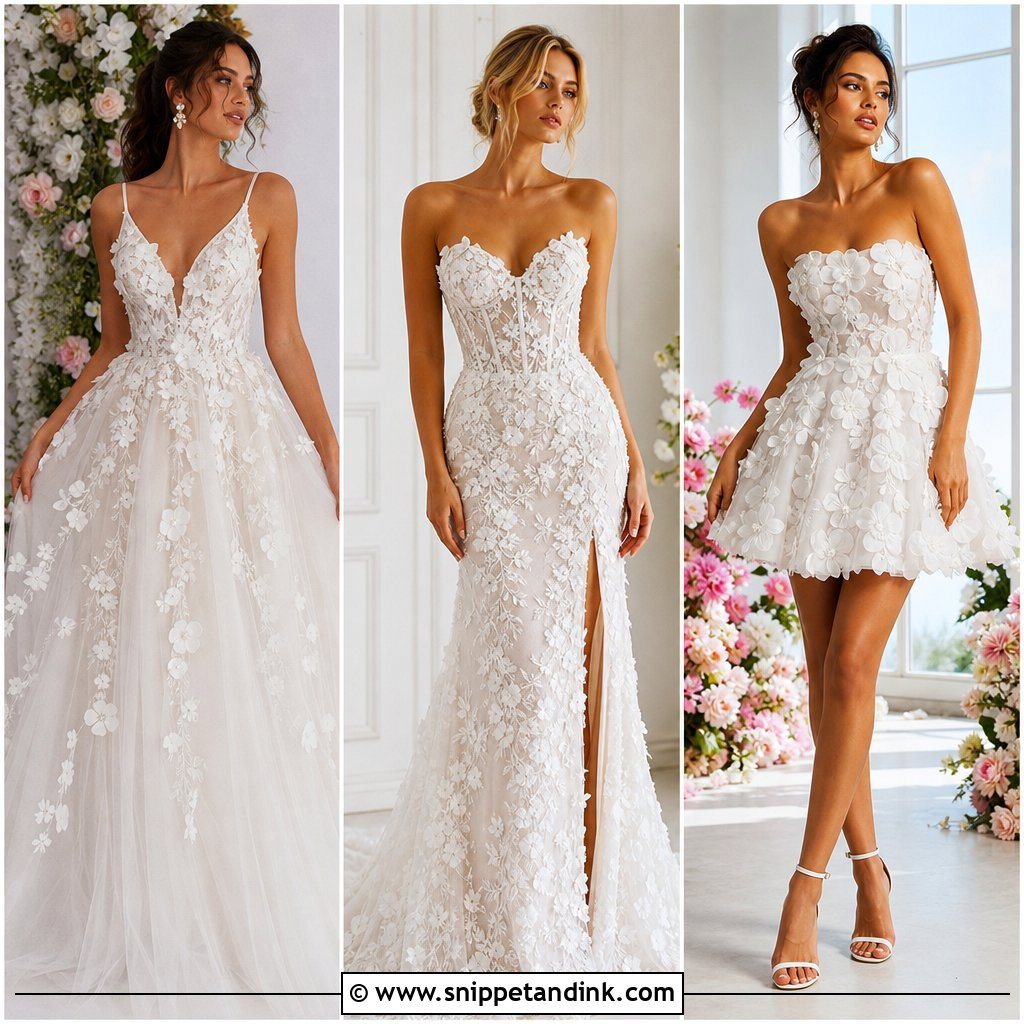
Floral embroidery lets you wear several pastels at once without the dress looking like a print. Start with an ivory, blush or pale blue base, then look for embroidery in lavender, peach and yellow, pink, and green details. When the embroidery sits on a sheer overlay, the flowers seem to float over the skirt, which is the effect most brides fall for in the photo. Hand-finished embroidery also adds weight, so try walking and sitting in the sample. Keep accessories restrained with pearl earrings, neutral heels and a plain veil in the gown’s palest background shade. In the bouquet, repeat two or three embroidery colours rather than every one. Soft waves or a low textured bun suit it, and it sits naturally among greenery at a woodland or garden venue.
11. Blush Pink Mermaid Wedding Dress
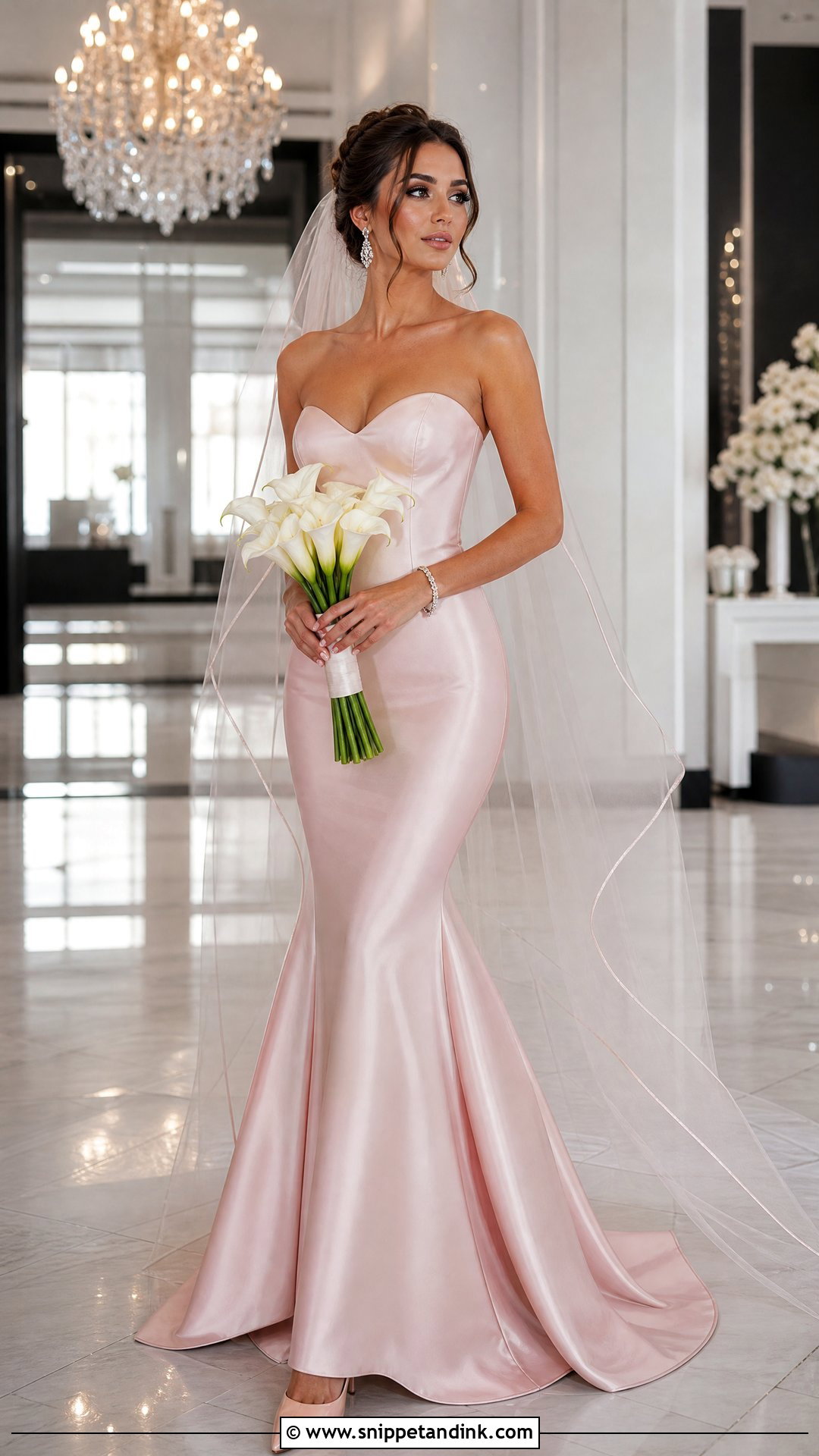
A mermaid cut changes how blush reads: on a close silhouette it looks sculpted and confident rather than sweet. The fit has to be exact through the bodice and hips before the flare opens near the knee, and I always have brides sit, climb a step and slow-dance at the fitting, because a flare placed too low makes stairs a problem. Stretch crepe, satin or lined lace hold the shape while still letting you move. Blush pointed heels, a delicate tennis bracelet and drop earrings put light near the face. A long sheer veil balances the narrow line behind you without hiding it. Calla lilies or pale roses in a streamlined bouquet suit it, with a sleek bun or polished waves, in a modern hotel or rooftop venue.
12. Pale Blue Satin Wedding Dress
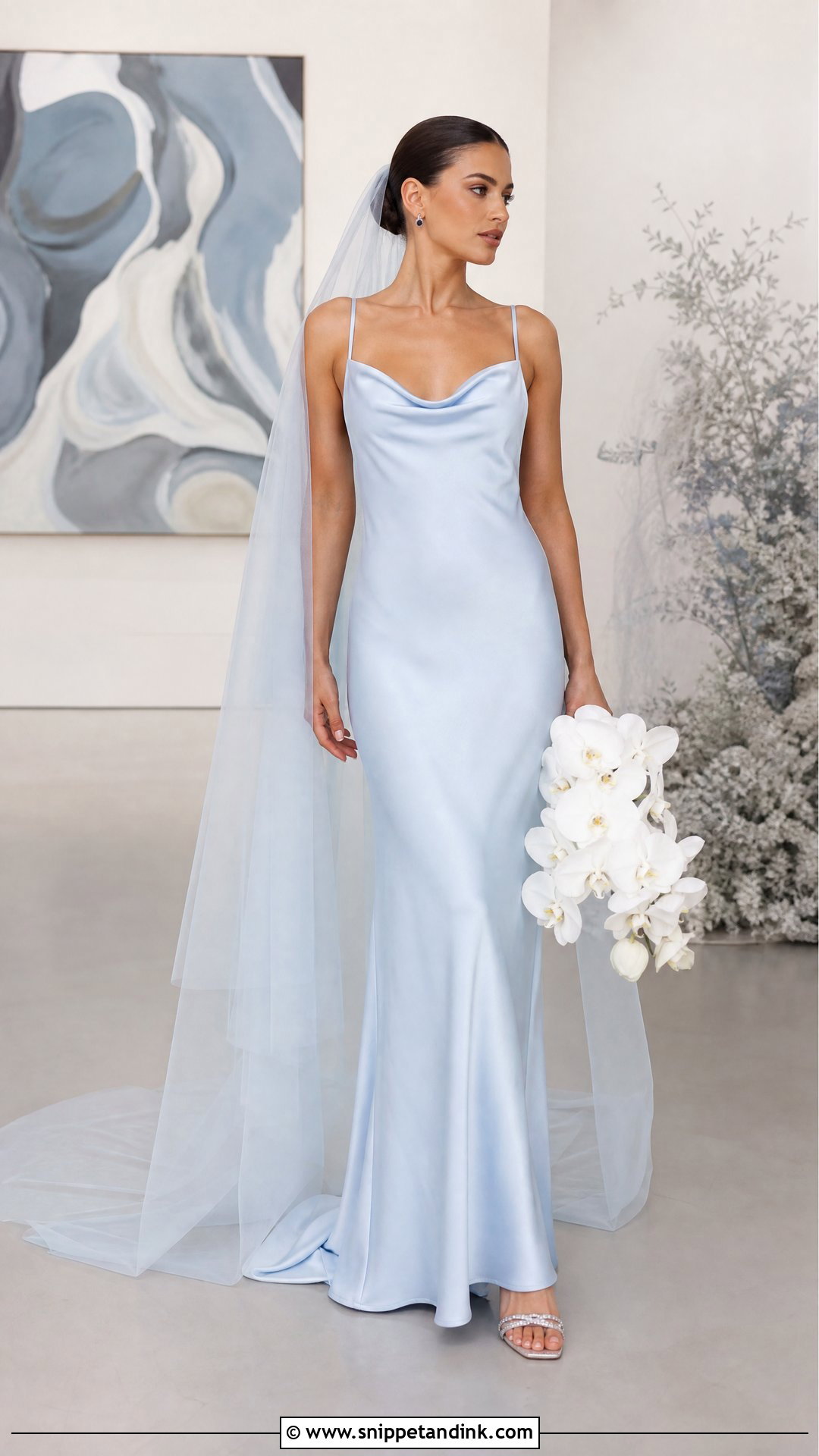
Pale blue satin has a glow that makes even a very plain dress look finished. A bias-cut slip drapes fluidly but shows everything underneath, so smooth, invisible underwear and a proper fitting are non-negotiable; a structured A-line in the same fabric is kinder if you want support. Choose satin with a soft sheen rather than a mirror finish, which can look cheap in flash photos. Silver sandals, sapphire or crystal studs and a barely blue veil complete it, and white orchids add a crisp, modern note. A smooth low bun, luminous skin and a cool pink lip all suit the blue. In an evening room with soft lighting, the satin picks up the light without needing decoration.
13. Champagne Pink Wedding Dress
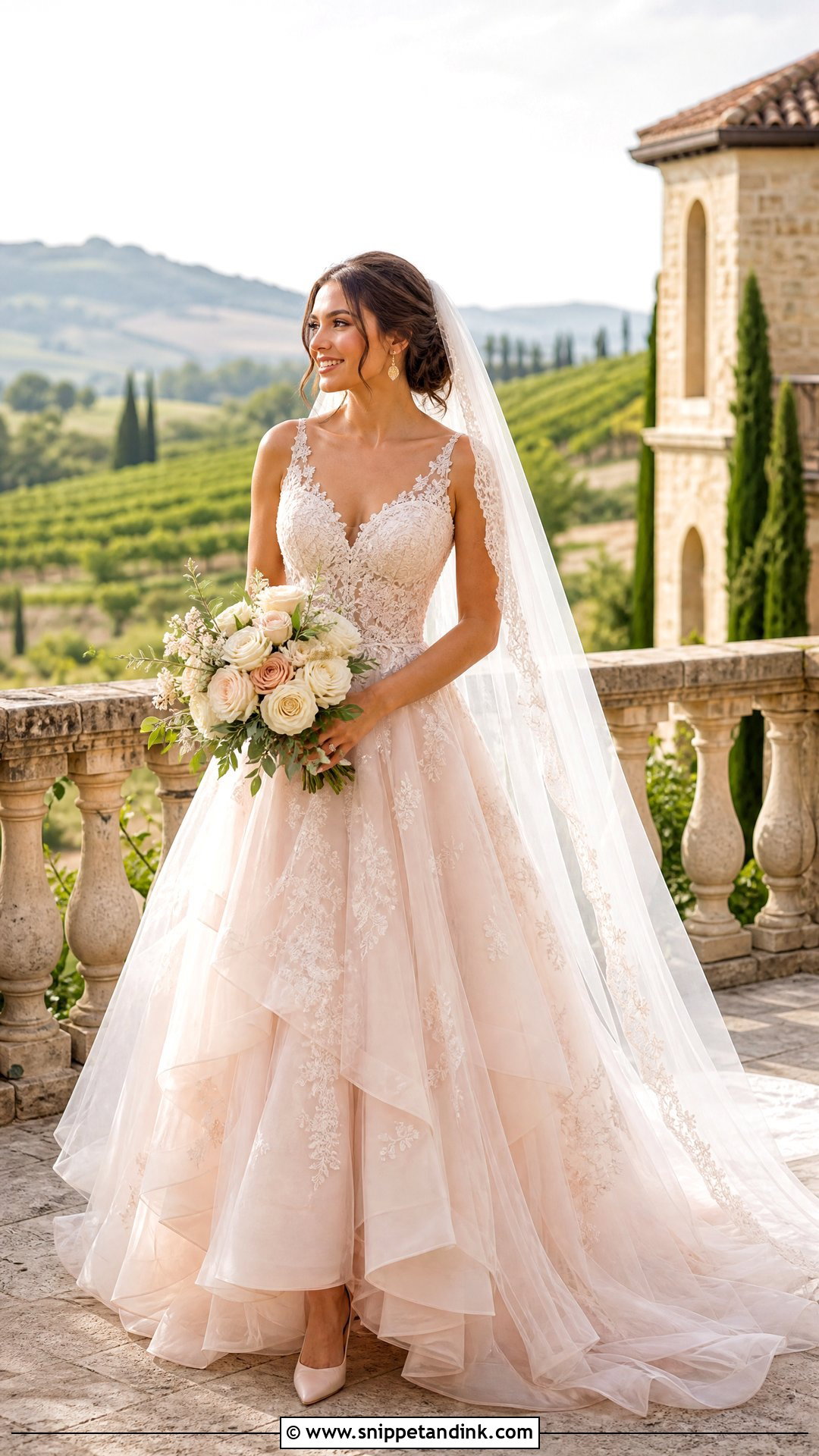
Champagne pink sits between warm beige and the faintest blush, and it’s the shade I suggest to brides who want colour that nobody will call colour. It shines as a lining under lace, beading or sheer tulle, because the tint throws the surface detail forward. A fitted bodice with a full skirt feels traditional; a clean A-line keeps things lighter. Champagne pumps, warm gold earrings and an ivory veil with understated lace edging fit the tone. Cream roses with blush blooms and muted greenery keep the bouquet calm. Keep hair in soft waves and makeup natural so the whole look doesn’t feel overmatched. It moves between seasons more easily than any other gown here.
14. Pistachio Green Wedding Dress
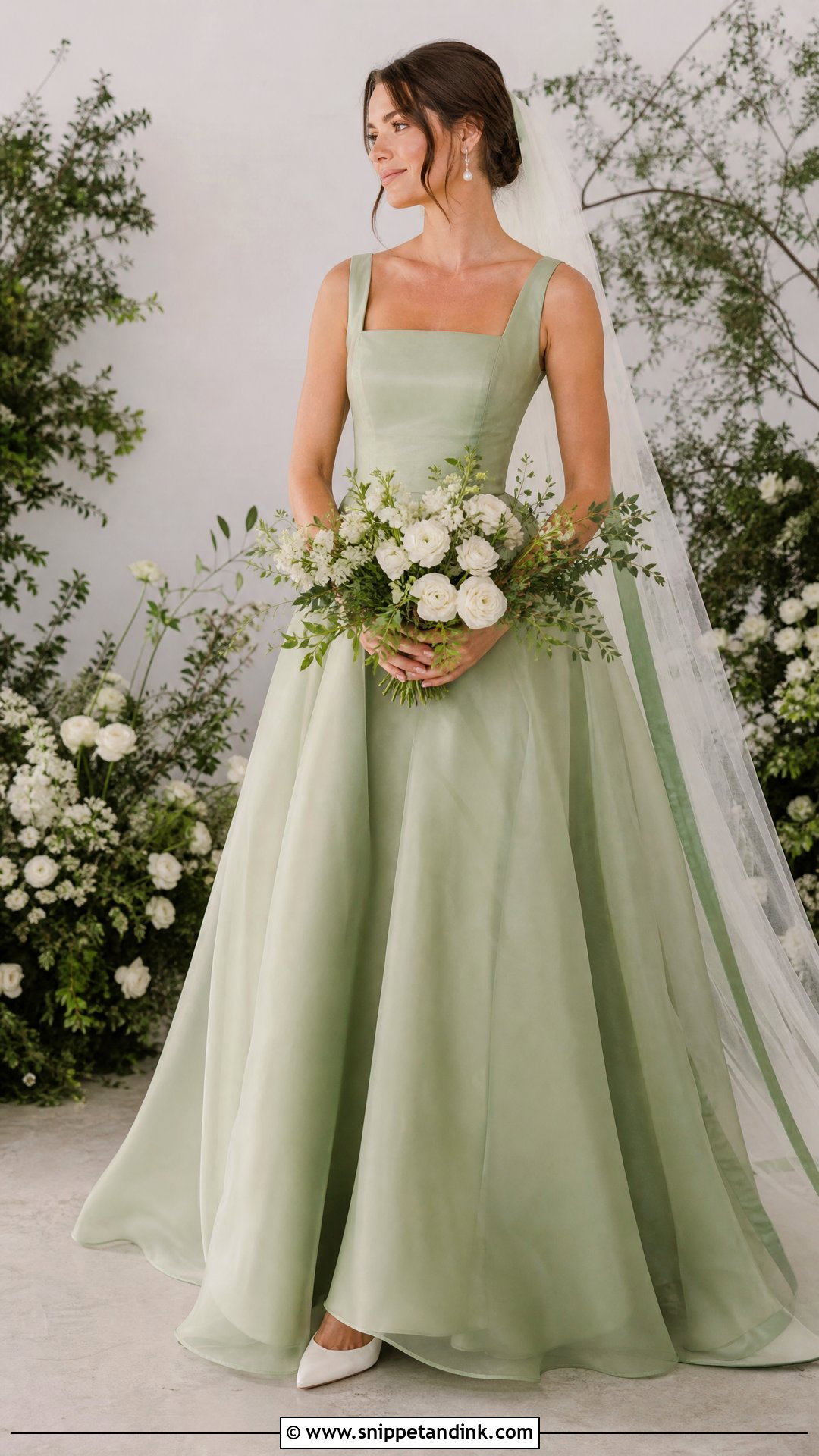
Pistachio is unusual enough that I’d let the colour carry the dress and keep the cut plain. Light tulle or silk organza suits it best; in heavy satin it can tip toward olive. A fitted square-neck bodice over a full, unembellished skirt feels clean and current. Pearl drop earrings, ivory pumps and a long sheer veil with a narrow green ribbon edge pull it together. Mostly white flowers with fresh foliage connect gown and bouquet naturally. A smooth low ponytail or structured bun matches the modern line. In a botanical space, the pale green complements the planting without disappearing into it.
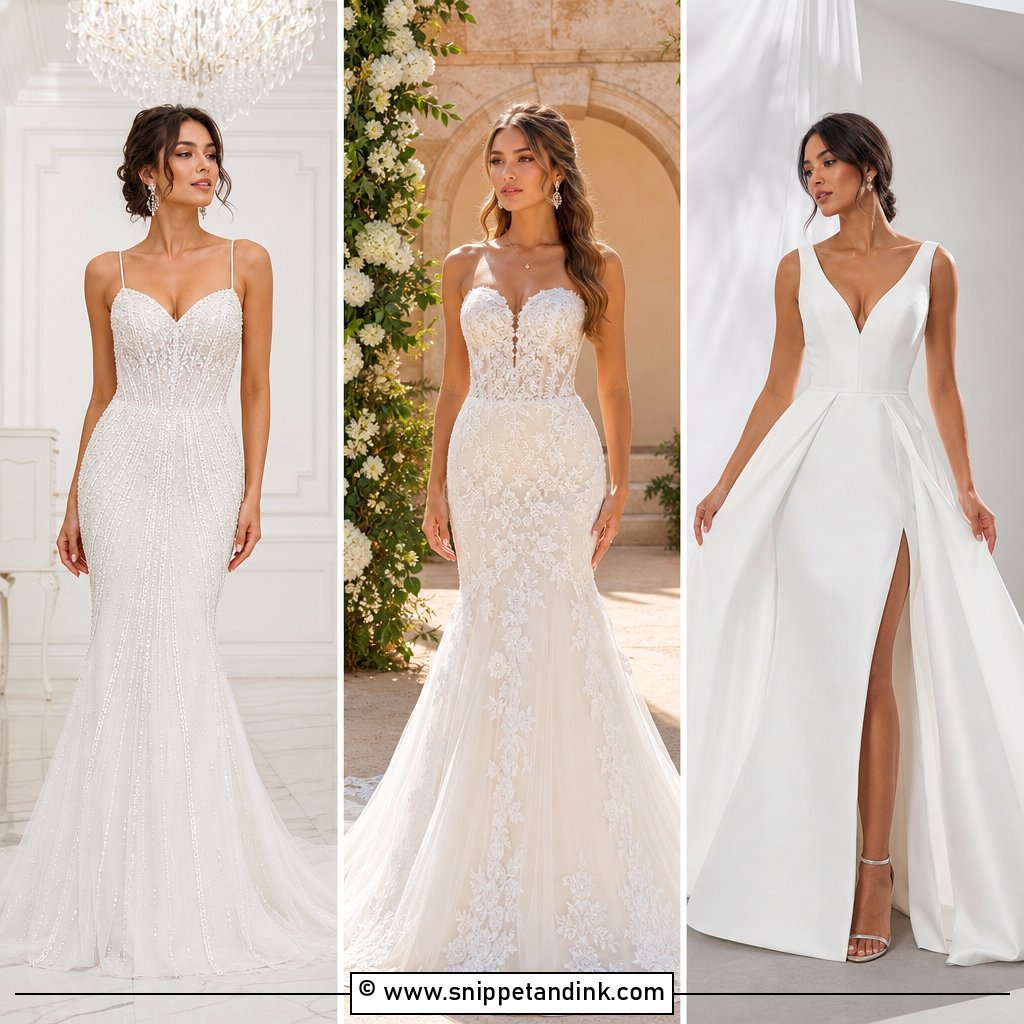
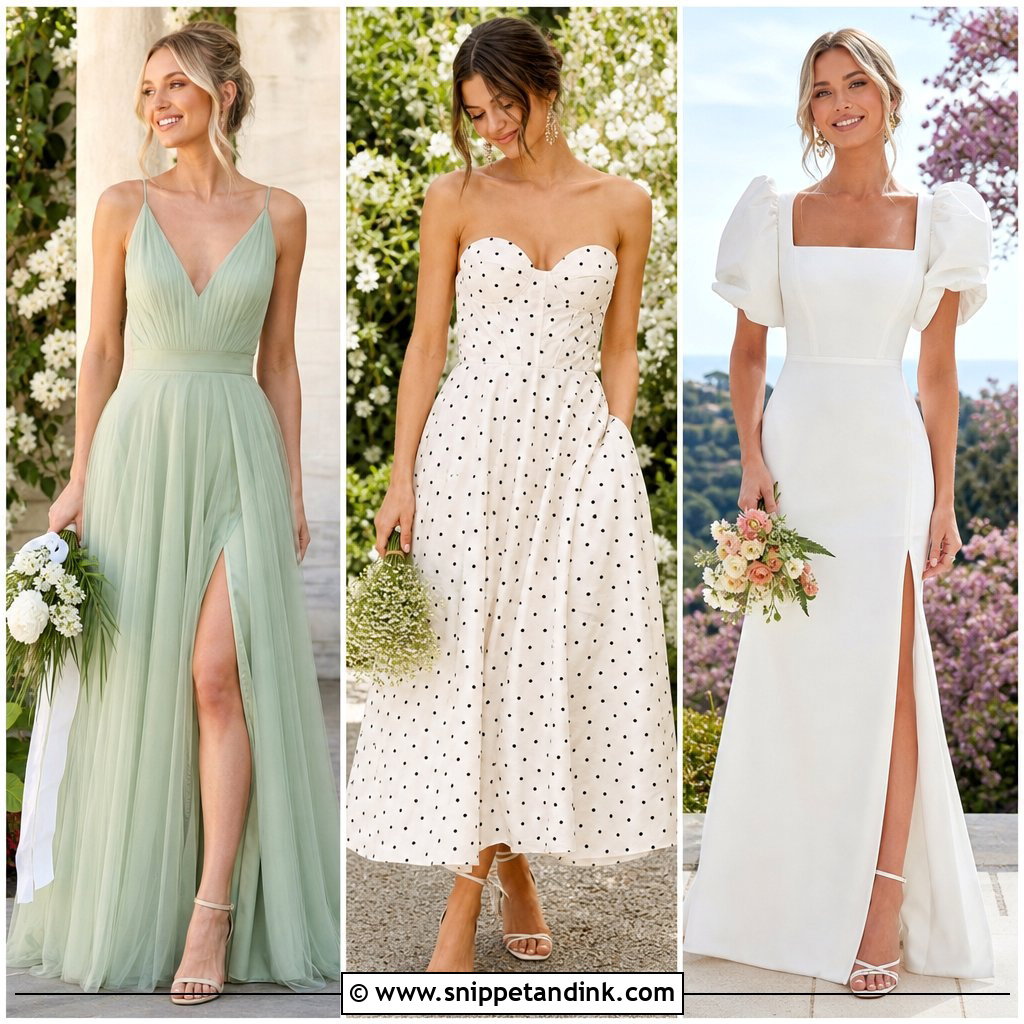
15. Soft Coral Ruffle Wedding Dress
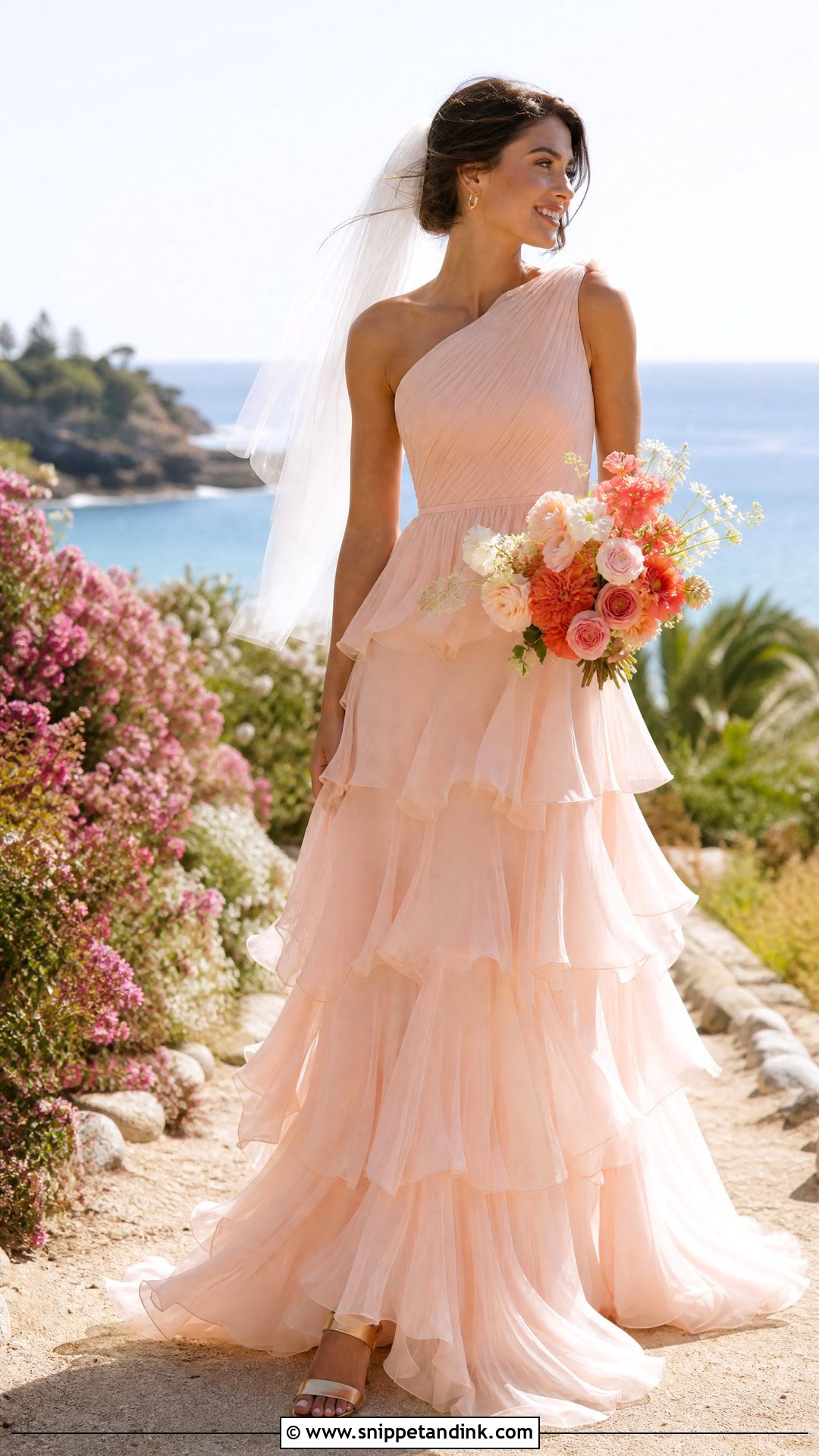
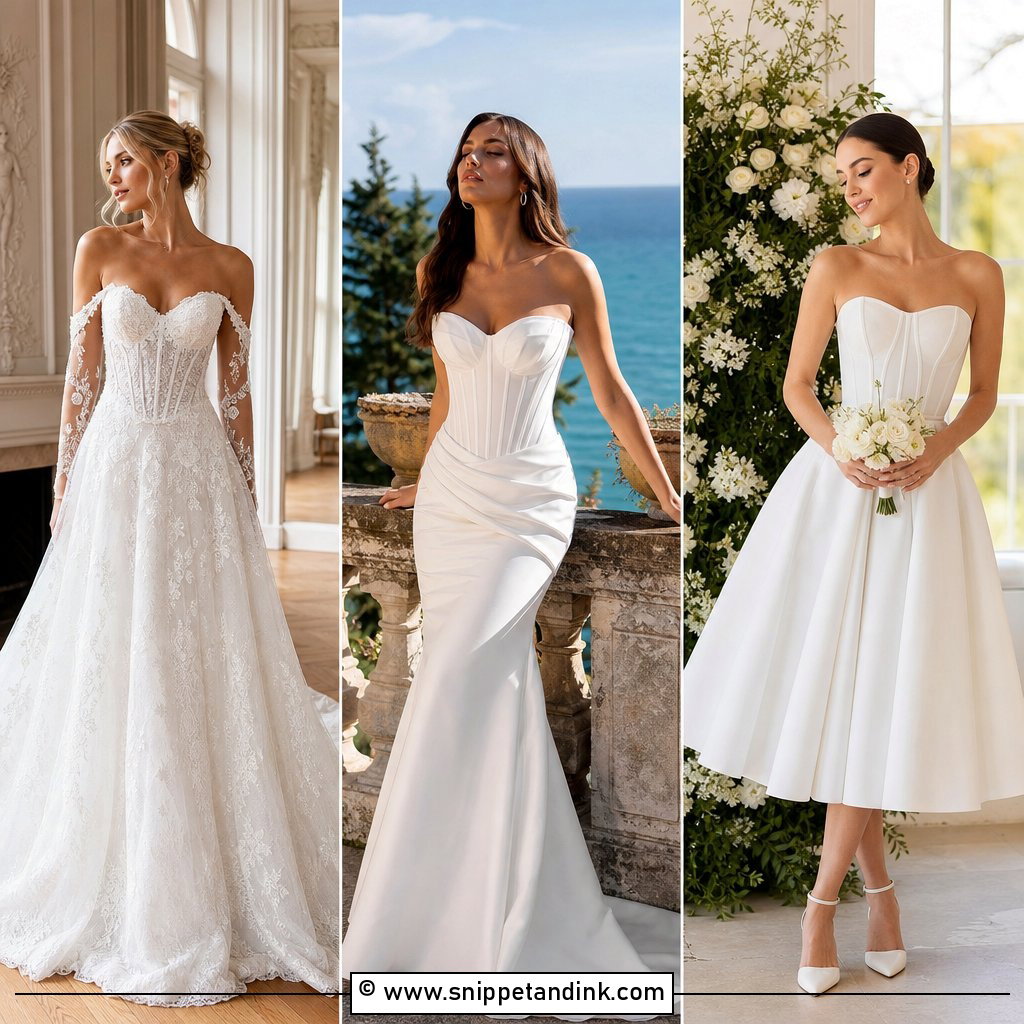
Coral is the warmest shade in this group, and ruffles are the smartest way to wear it. Each ruffle casts a small shadow, and those shadows reveal the peach-pink undertone that a flat panel of coral would hide. A one-shoulder or strapless bodice over a tiered chiffon or organza skirt keeps it moving. Pale gold sandals, small hoops and a lightweight veil pinned behind the hairstyle suit a coastal or destination wedding. Ivory, peach and coral flowers give a coordinated finish without getting loud. Wear a loose low bun so the neckline and ruffles stay visible. Coral is not for every skin tone, though; on very fair, pink-toned skin it can make cheeks look flushed in photos.
16. Periwinkle Wedding Dress With Sleeves
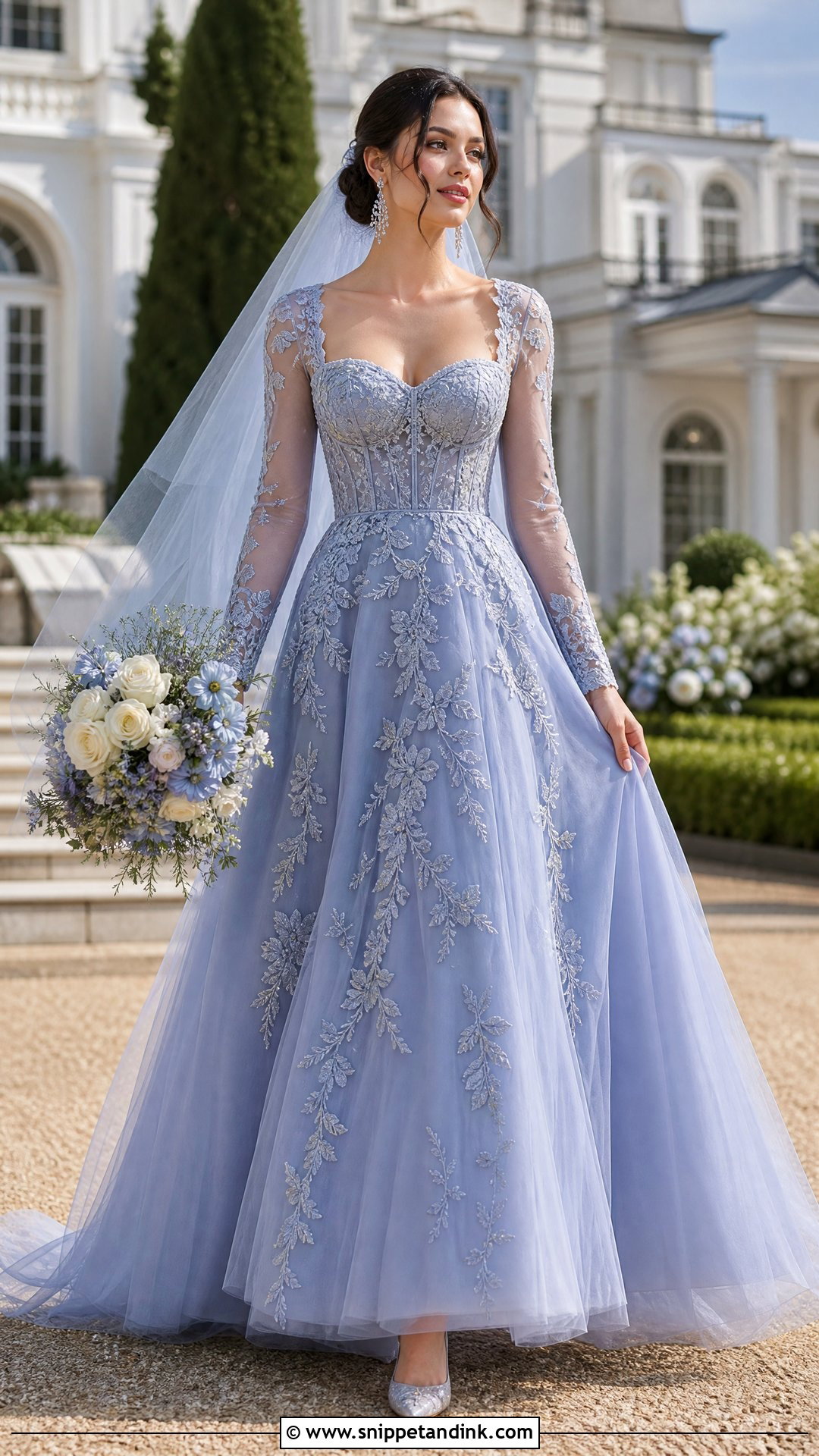
Periwinkle balances blue and purple, so it reads as colour without ever feeling loud. On a sleeved gown, I look for sheer long sleeves with tonal floral embroidery set against an opaque fitted bodice, which gives coverage that still looks light. Check the armhole when you raise your arms; a cut that’s too low will lift the whole bodice every time you hug someone. A flowing A-line or gentle ball gown skirt balances the sleeves. Silver pumps, crystal earrings and a periwinkle-tinted veil keep it cohesive, and white roses with blue flowers and lavender support both sides of the shade. A low chignon with a silver comb fits an early spring ceremony or a cooler outdoor day.
17. Pale Mauve Fit-and-Flare Wedding Dress
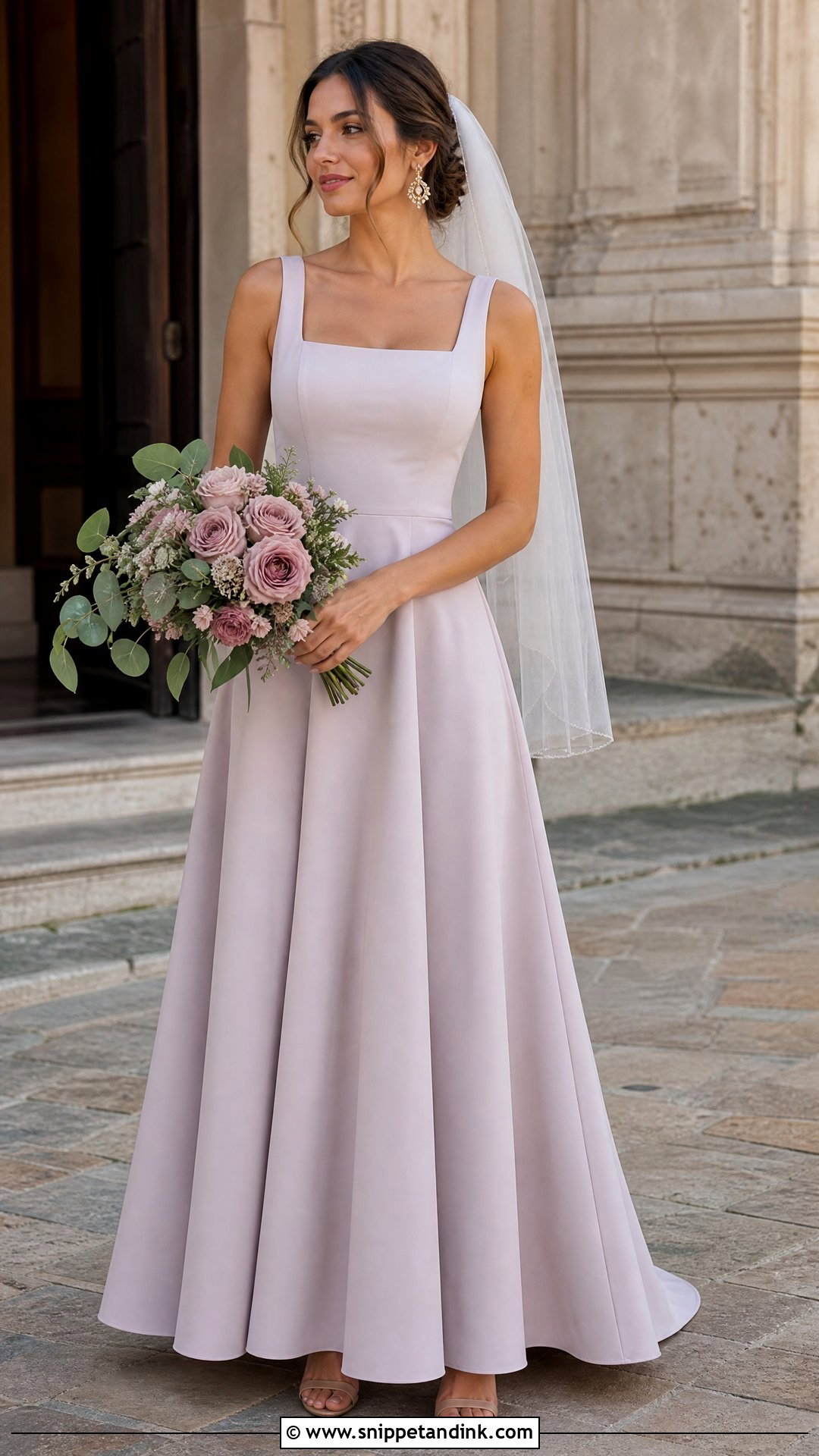
Pale mauve has a grown-up quality that I find suits brides who feel too old for blush. It works in crepe, matte satin or lace with a matching lining. Choose wider straps, a square neckline or gentle draping so the bodice feels secure. The flare should start gradually, around mid-thigh rather than at the knee, which lengthens the line and lets you take a normal stride. Mauve or nude heels, antique-style earrings and a plain fingertip veil complete it. Dusty pink roses, white blooms and eucalyptus complement the gown without darkening the palette. Soft waves or a low twisted bun suit it at a historic venue in spring or autumn.
18. Ombre Pastel Wedding Dress
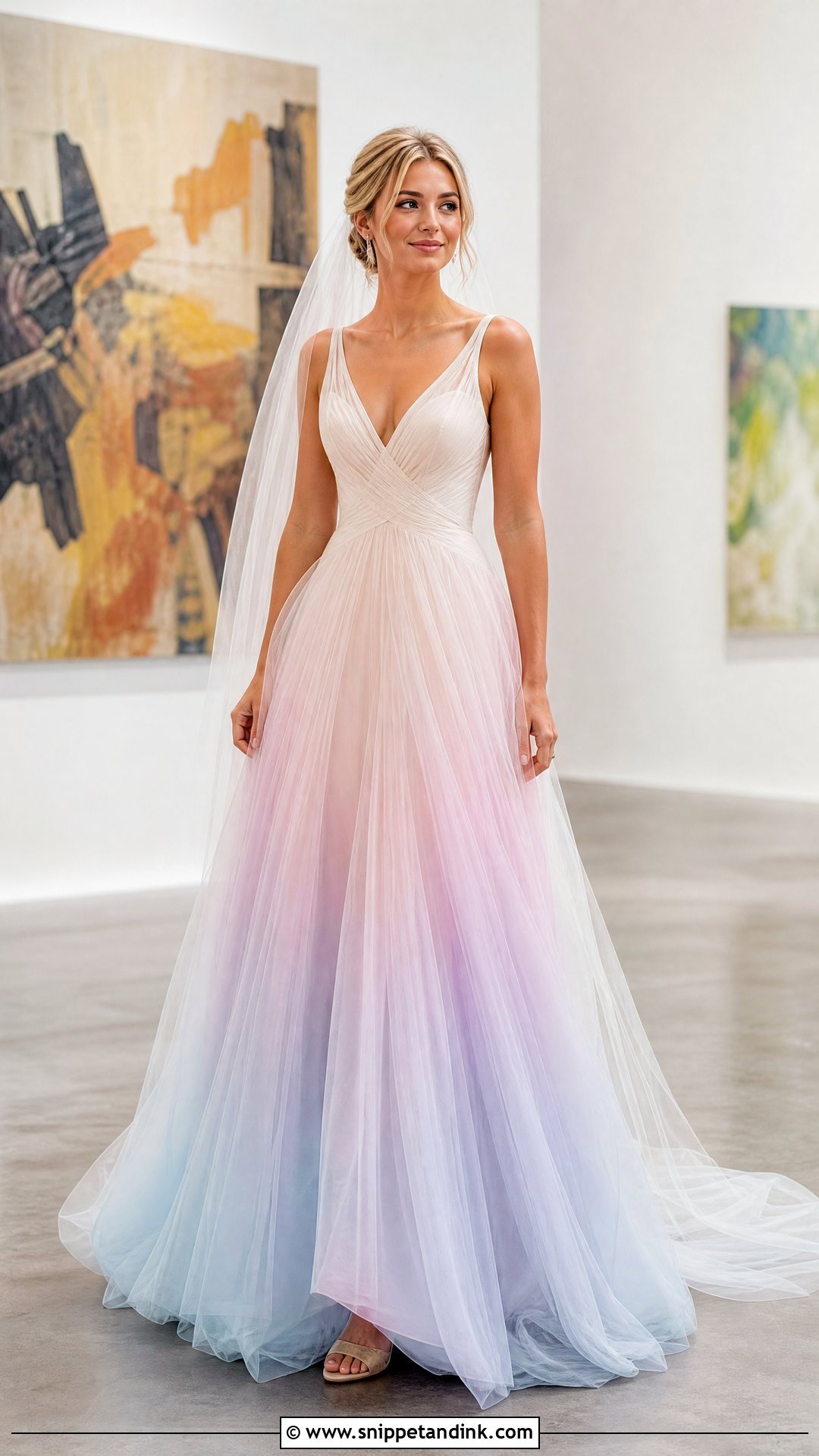
Ombre gives you several colours without the dress looking printed, but the dye work has to be good. I check the transition in daylight: the fade should be gradual, from ivory or blush at the bodice into lavender, blue, peach or pink near the hem, with no visible band where one dye bath ends. Layered tulle hides those transitions best and moves as you walk. Neutral heels, crystal studs and a sheer ivory veil keep the accessories out of the way. In the bouquet, pick one or two shades from the skirt, never all of them. A clean updo stops the overall look getting crowded, and at a creative or artistic venue the gown can be the main decoration.
19. Pastel Blue Mini Wedding Dress
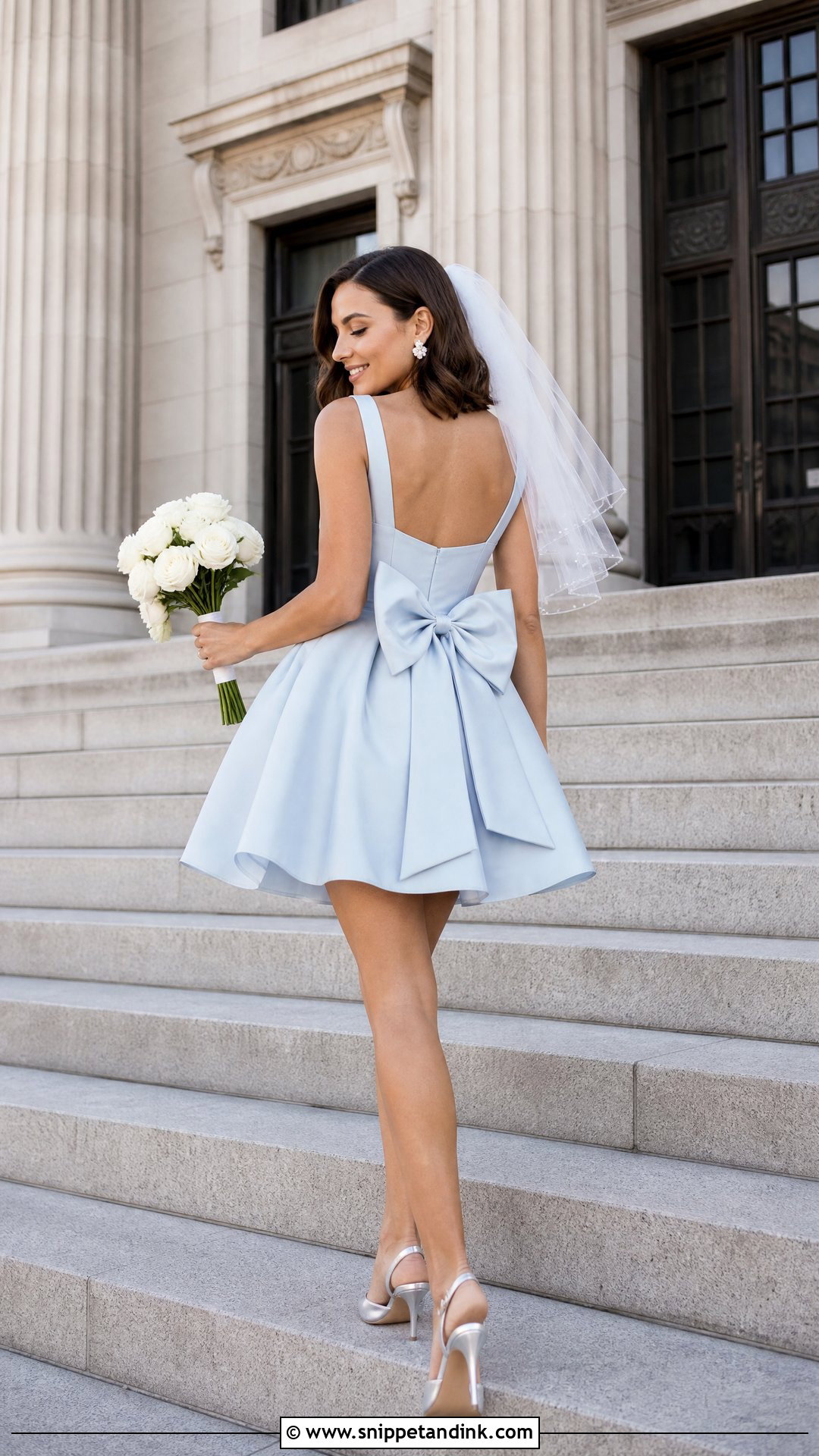
A short pastel blue dress works for a courthouse ceremony, a reception change or a small celebration, but it has to look deliberate. Look for a structured silhouette with a defined waist, a neat hem and one bridal detail such as a bow, a detachable train or floral appliqués. Hem length matters more on a mini: sit down at the fitting and see where it lands. White or silver slingbacks, pearl earrings and a short veil that ends near the shoulders keep it bridal. A small bouquet of white flowers stays in proportion. Sleek waves, a low ponytail or a simple bun finish it. Sharp tailoring and a fabric with some body are what separate a bridal mini from a party dress.

20. Rainbow Pastel Tulle Wedding Dress
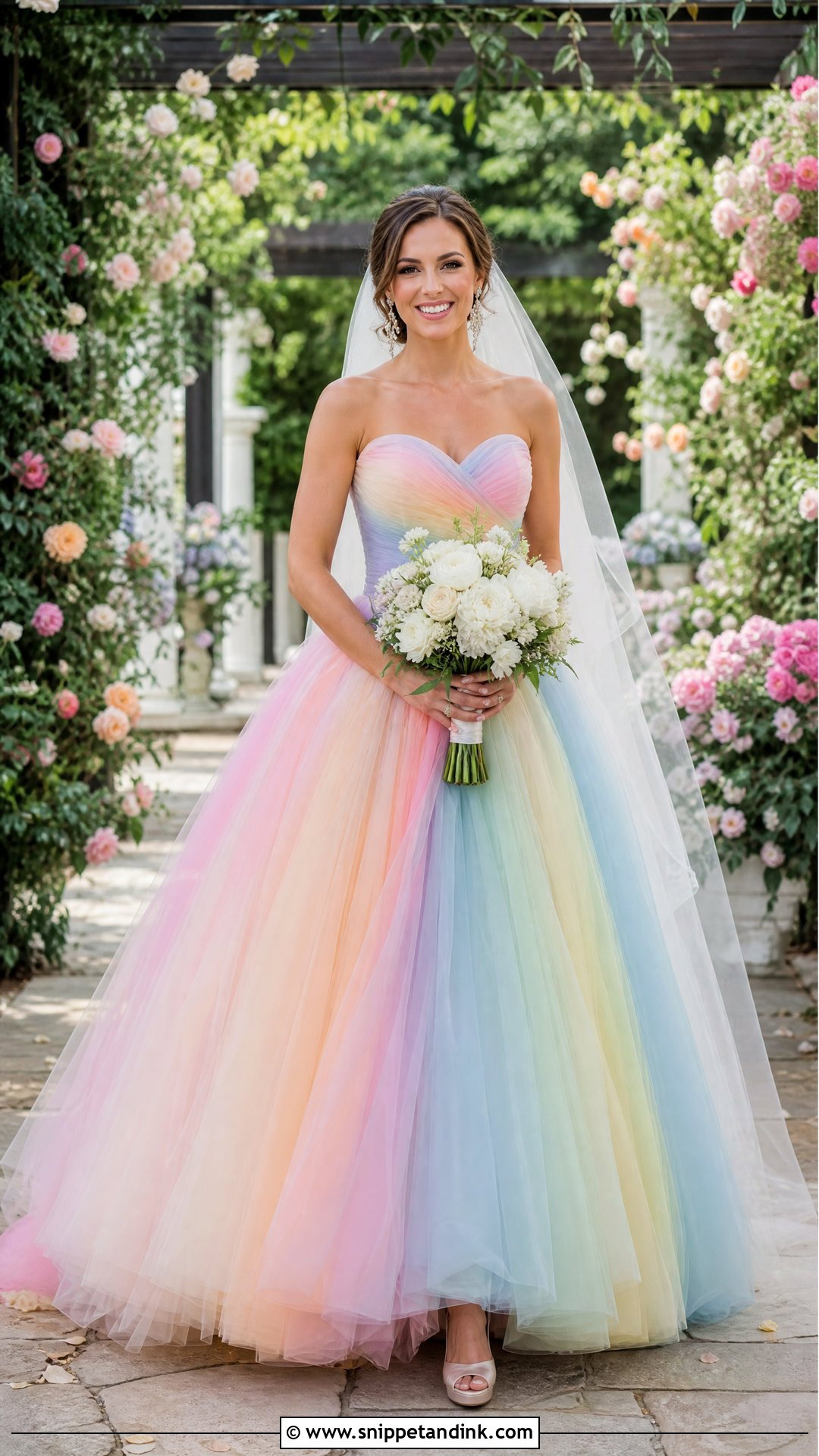
If you honestly can’t pick one shade, a rainbow pastel tulle wedding dress lets you keep them all. The difference between joyful and costume is blending: look for layers of blush, lilac, peach, mint, yellow and powder blue that melt into each other rather than sharp stripes. A simple fitted bodice keeps the skirt from feeling elaborate. Neutral satin heels, crystal earrings and a plain ivory veil let the tulle lead. Carry a mostly white bouquet with a few pastel stems tucked through it. A smooth bun or soft half-up style balances the colour. It belongs at a wedding where personal expression matters more than tradition.
Pale Fabric Shows Every Mark, So Plan the Day Around It
A white dress hides a surprising amount. A pastel doesn’t, because any stain shifts the colour as well as darkening it. Foundation on a blush neckline shows clearly, and lawn stains on a mint hem show even more. I build a little prevention into every pastel wedding morning.
On the Morning
- Step into the gown, never pull it over your head, and drape a scarf over your face if it has to go on that way.
- Let makeup set fully before dressing, and blot the jawline where it touches the neckline.
- Keep white chalk, a clean white cloth and a small bottle of plain water in the emergency kit. Dab marks rather than rubbing, since rubbing lifts dye on chiffon.
- Bustle a long pastel train before outdoor photos on grass or gravel.
After the Wedding
Pastel dye fades in light, so the gown should never live in a sunny room or in a clear plastic bag. Have it professionally cleaned within a few weeks, before body oils and sugary drink spills oxidise and turn yellow or brown. Store it folded in acid-free tissue inside a breathable cotton bag or archival box, somewhere cool and dark, and refold it along new lines once a year so the creases don’t become permanent.
Seeing the Shade in Three Kinds of Light
Pastel lets a wedding dress feel personal while keeping all the formality of a gown, whether that’s a blush ball gown, a blue mini or a skirt of mixed tulle. When you narrow down the options, compare undertone, fabric weight, the lighting at your venue and how much support the bodice gives. Try the dress with your real shoes, veil, jewellery and a sample of your flowers before deciding. Then take photos of the complete look by a window, under warm indoor bulbs and with a phone flash, because a pale shade can look like three different colours across those three. Pick the silhouette that feels most like you, and let fit and restraint in the styling do the rest.
You'll Like These Ideas:



Leave a Reply