
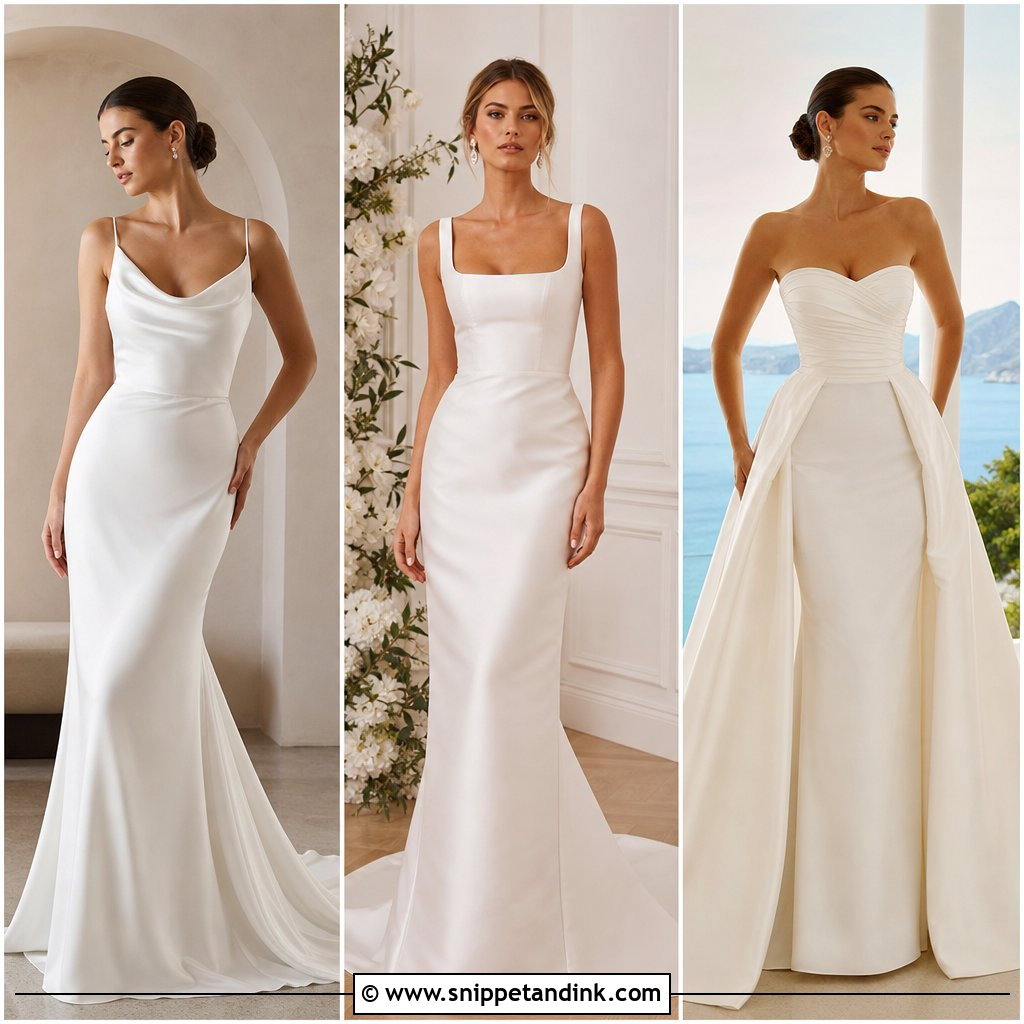
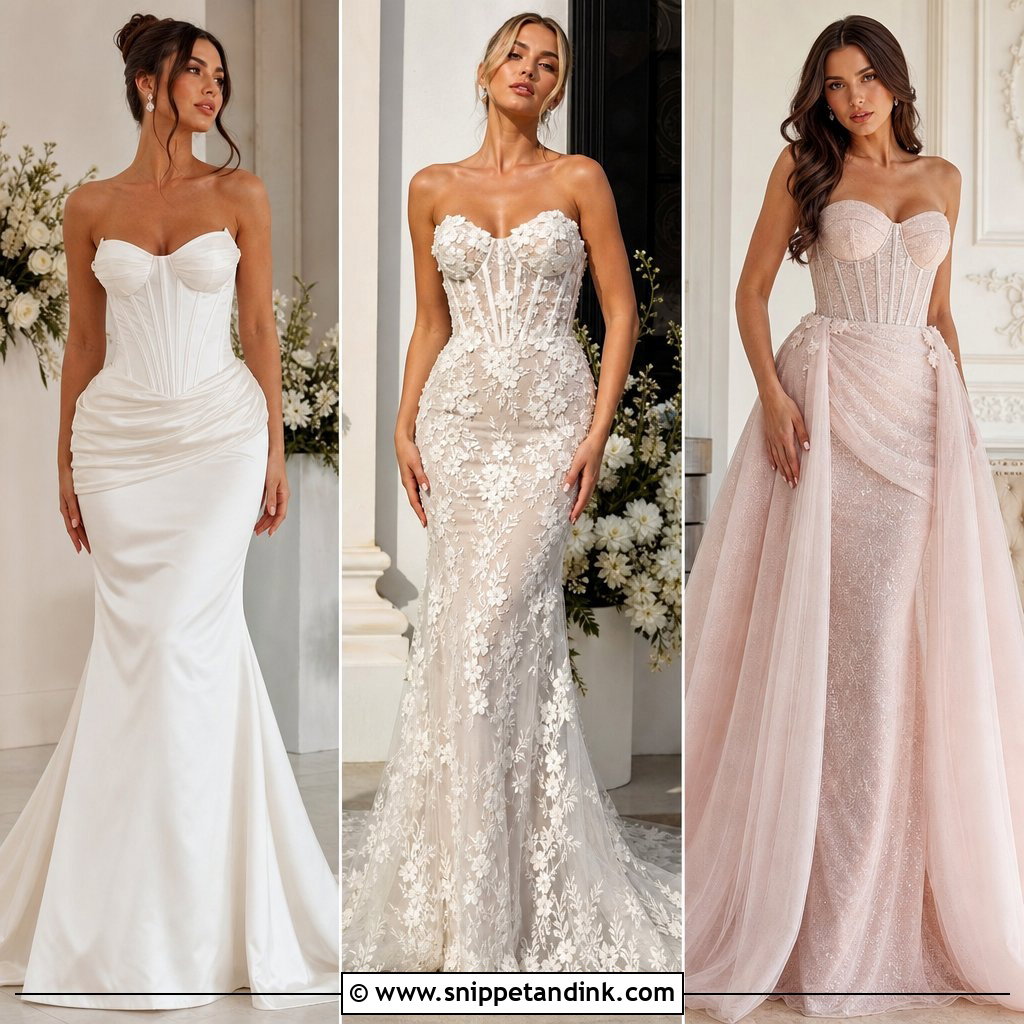
A blush gown keeps everything people love about a wedding dress and adds a soft wash of colour that feels like yours. What surprises most brides is how much the shade moves: the same dress can look barely pink, warm peach, muted rose or faintly mauve depending on the fabric, the lining and the light. It suits almost every silhouette, from a plain satin sheath to a full tulle ball gown, and current bridal design favours details that suit it well, like sculpted corsetry, Basque waists, airy fabrics, floral appliqués and fluid draping. Below I’ve styled twenty gowns as complete looks and noted what I check for each at a fitting. Keep your venue, season, comfort and how much drama you want in mind as you read.
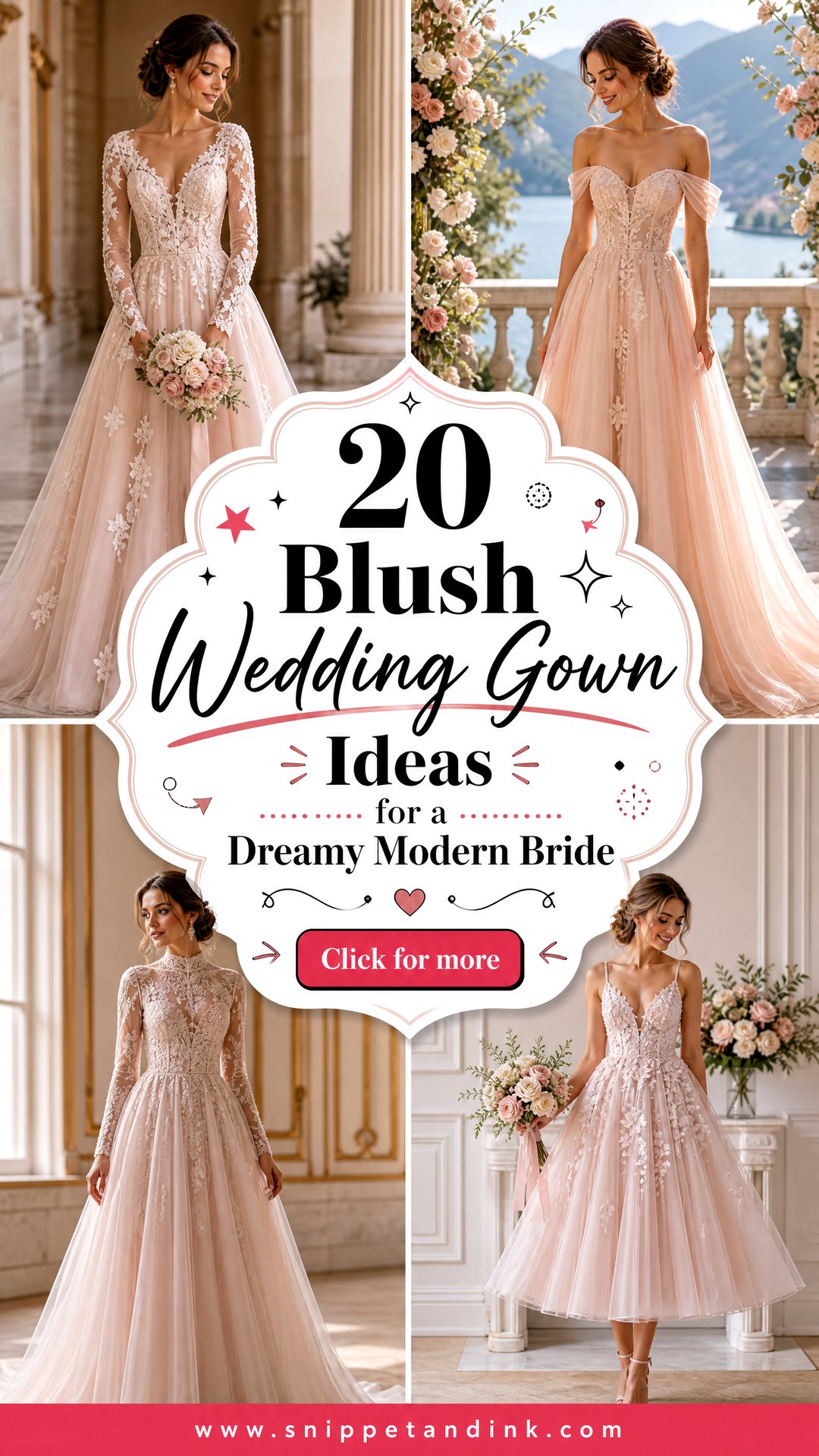
What Goes Underneath a Blush Gown Matters More Than With Ivory
Pale pink fabric is thinner-looking than it seems in the shop, and blush linings are often light enough that whatever you wear underneath can show through as a shadow. White underwear is the usual culprit: under a blush gown it shows as a bright patch, especially in flash photos. I ask brides to bring their planned undergarments to the very first fitting, not the last.
- Choose undergarments close to your own skin tone, not white and not pink. Skin-tone pieces disappear under pale fabric; white and pink ones don’t.
- Seam-free and lace-free pieces matter most under satin, crepe and bias-cut slips, where any edge shows as a line.
- For strapless and sweetheart gowns, ask whether cups can be sewn into the bodice. Built-in support often beats a strapless bra that shifts during the day.
- Shapewear should smooth, not compress. If it rolls at the waist when you sit, it will show under a fitted gown.
Then check it properly: stand by a window with the light behind you, and have someone take a photo with flash. If you can see an outline in either, adjust before the hem is set, because a change of undergarment can change where the gown sits.
1. Blush A-Line Wedding Gown
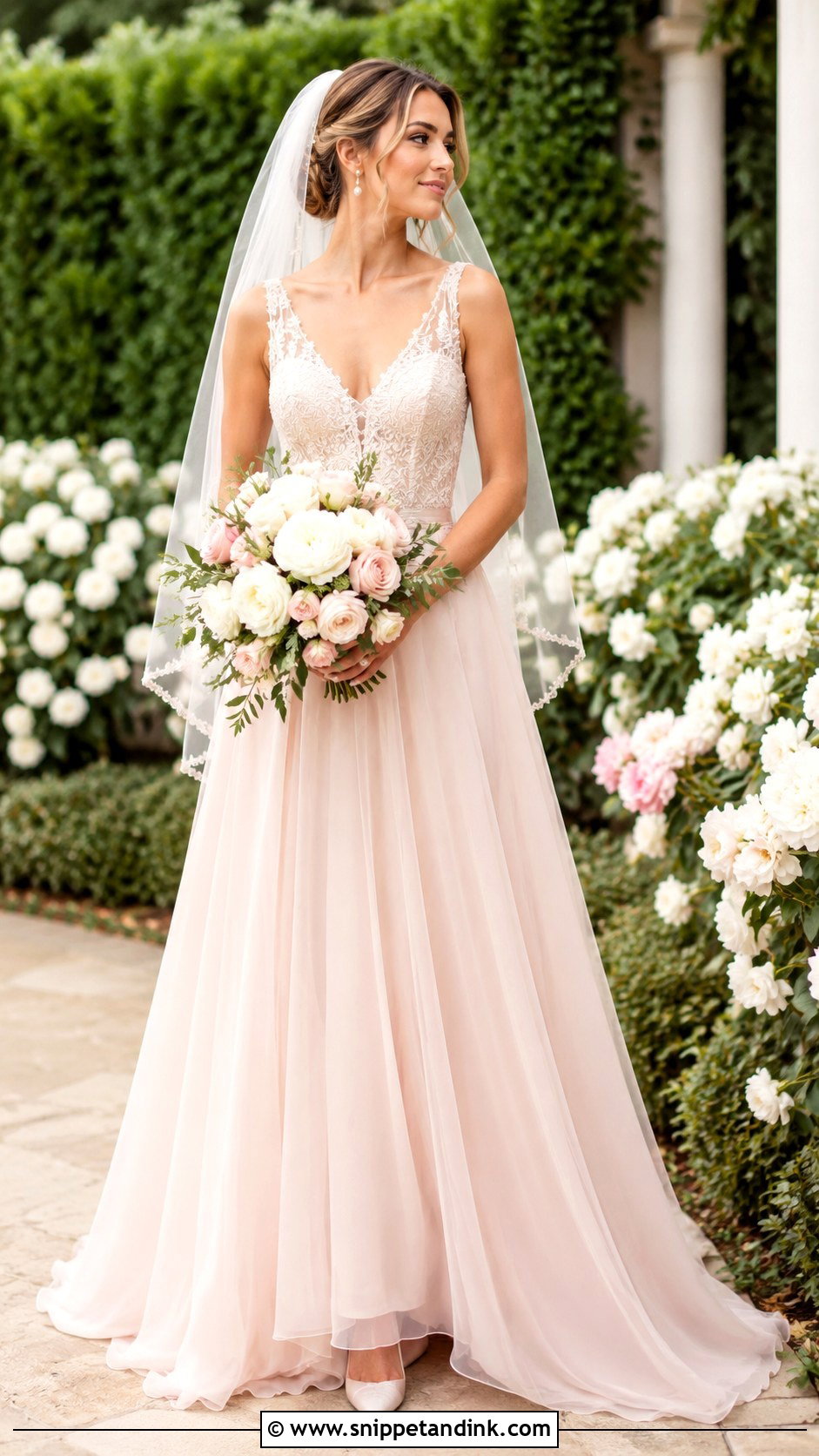
Reliable is the right word for a blush A-line. It defines the waist and then lets the skirt widen gradually from the hips, so you can walk, sit and dance without thinking about it. A softly structured bodice over chiffon, organza or light tulle is the version I fit most. One trick I like: a lining a shade deeper than the lace on top gives the gown depth without making it obviously pink. A fingertip veil, pearl drops, pointed ivory shoes and a small cream and pale pink bouquet finish it, and straps, sleeves or a removable belt can be added to make it yours.
2. Blush Ball Gown Wedding Gown
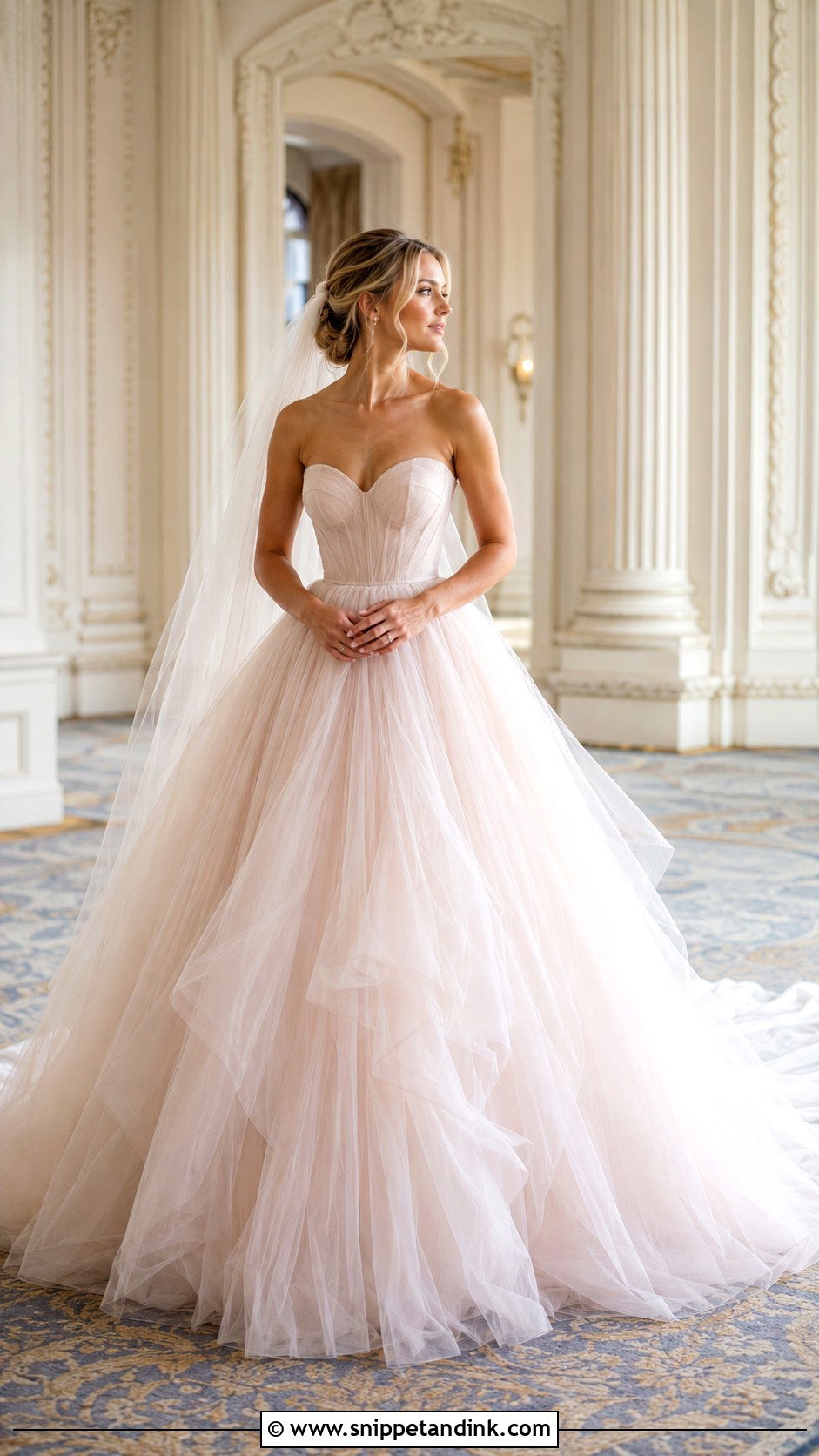
Fabric choice decides what kind of ball gown you get. Tulle makes it airy and soft, while satin or mikado gives a crisp, sculpted skirt. Either way, the bodice must be firmly fitted at the waist so the skirt reads as intentional. A sweetheart or softly curved strapless neckline balances the volume. Because nobody sees your feet, I always suggest block heels underneath. A cathedral veil, small studs and a low bun complete it, with a medium bouquet that won’t fight the skirt. If you want more security, ask for boning, wider straps or a corset back during alterations.
3. Blush Lace Wedding Gown
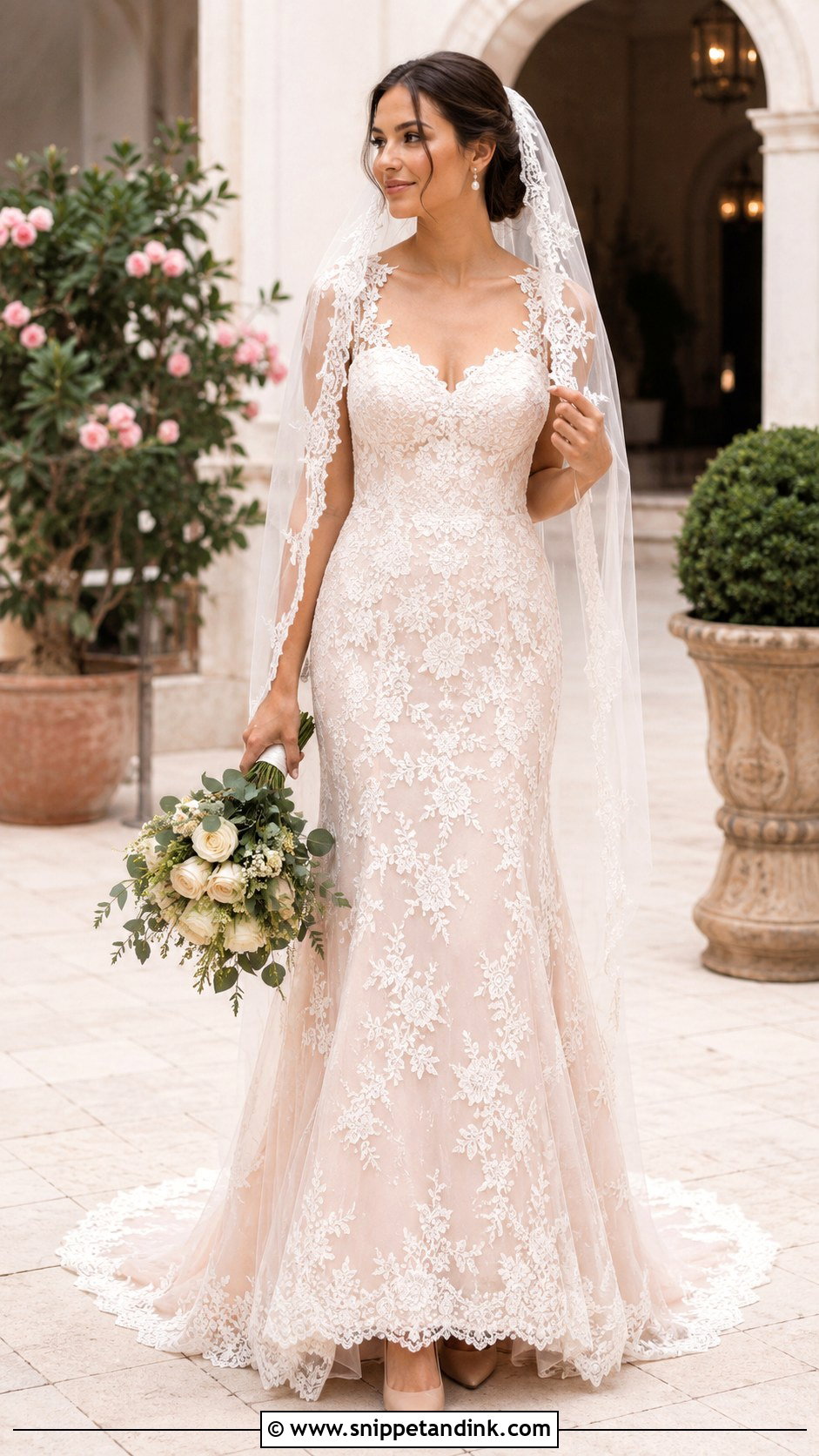
Ivory lace over a blush lining is my favourite way to show lace, because the pink behind it makes every leaf and vine visible in photos instead of blending into one pale surface. A softly fitted bodice with an A-line or fit-and-flare skirt keeps the pattern readable. Match the veil’s lace edging to the gown, and keep jewelry to pearl earrings with neutral pumps and a cream bouquet with greenery. Ornate accessories against busy lace never work. Look at the lace and lining together in daylight before ordering, since boutique bulbs and camera flash both change how blush reads.
4. Blush Satin Wedding Gown
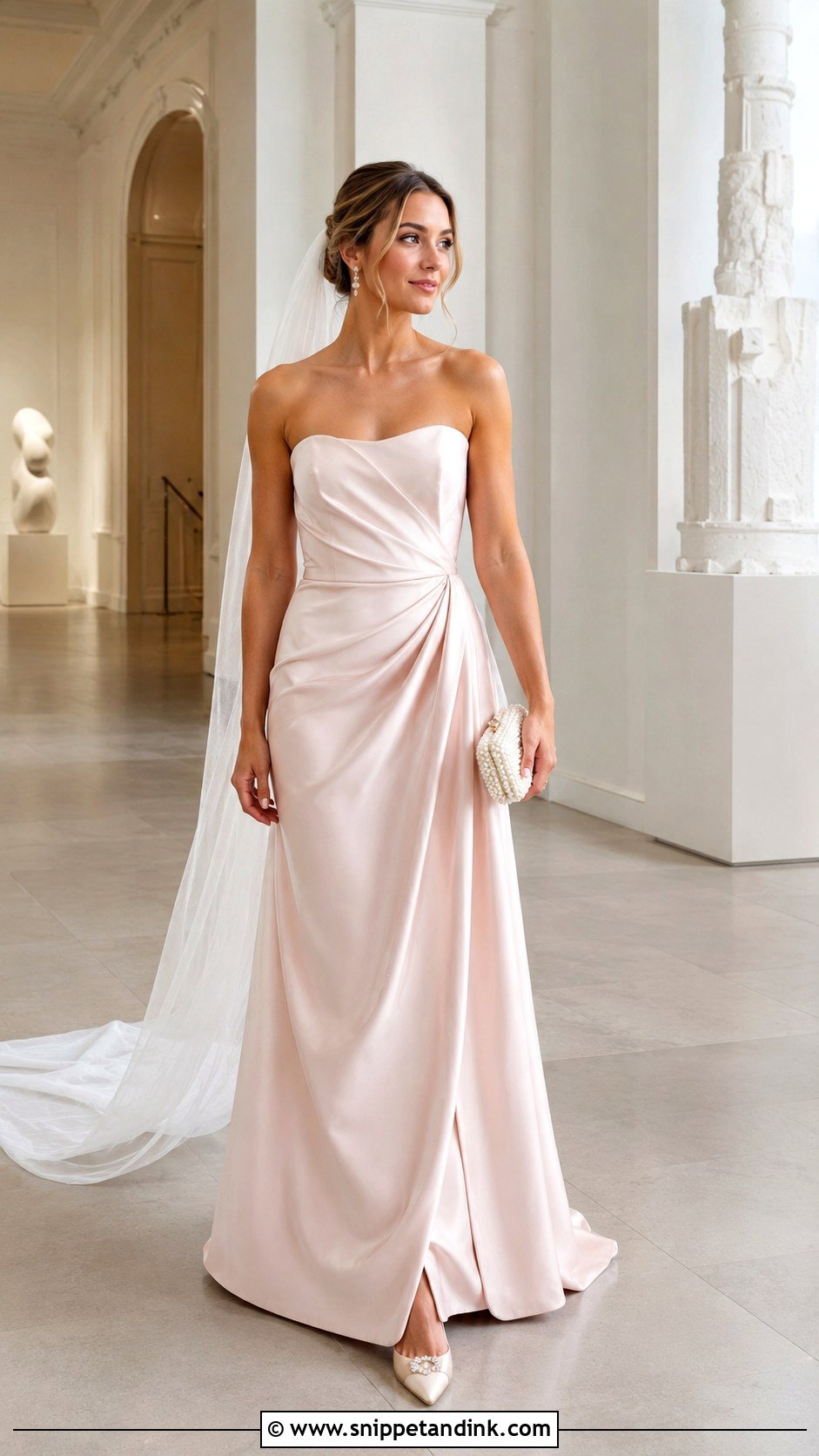
Satin is honest. Every pulled seam, every bra line and every crease shows, so a plain blush satin gown is only as good as its alterations and the undergarments beneath it. Matte satin feels quiet; a higher sheen feels formal. A clean A-line, column or softly draped cut with a supportive bodice suits it. Pointed ivory heels, a structured pearl clutch, small diamond or crystal earrings and a sleek low bun keep it minimal, with a plain chapel veil. For coverage, add a matching satin wrap or detachable off-the-shoulder sleeves.
5. Blush Tulle Wedding Gown
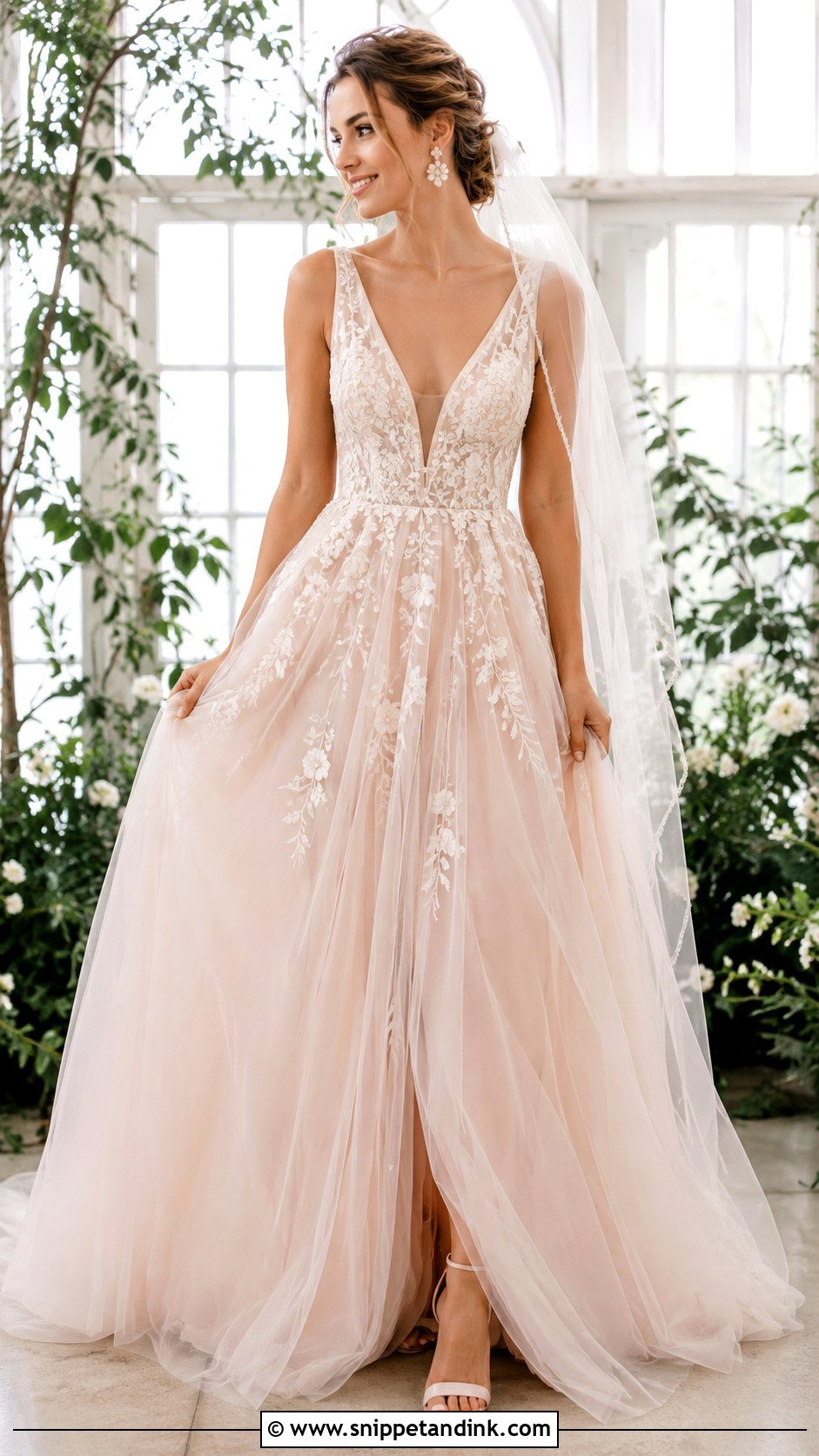
Tulle gowns are often built from three or more layers, and each one may be a different pink. That’s the question I ask the boutique first, because the top layer, lining and underskirt together decide the final colour, and a sample in one combination won’t look like an order in another. A fitted bodice with a V, square or sweetheart neckline balances the airy skirt. A sheer blush or ivory veil, slim ankle-strap heels, floral studs and a loose updo suit it. Keep the skirt plain or scatter small appliqués over it. With a long tulle train, a light bustle is a must.
6. Blush Mermaid Wedding Gown
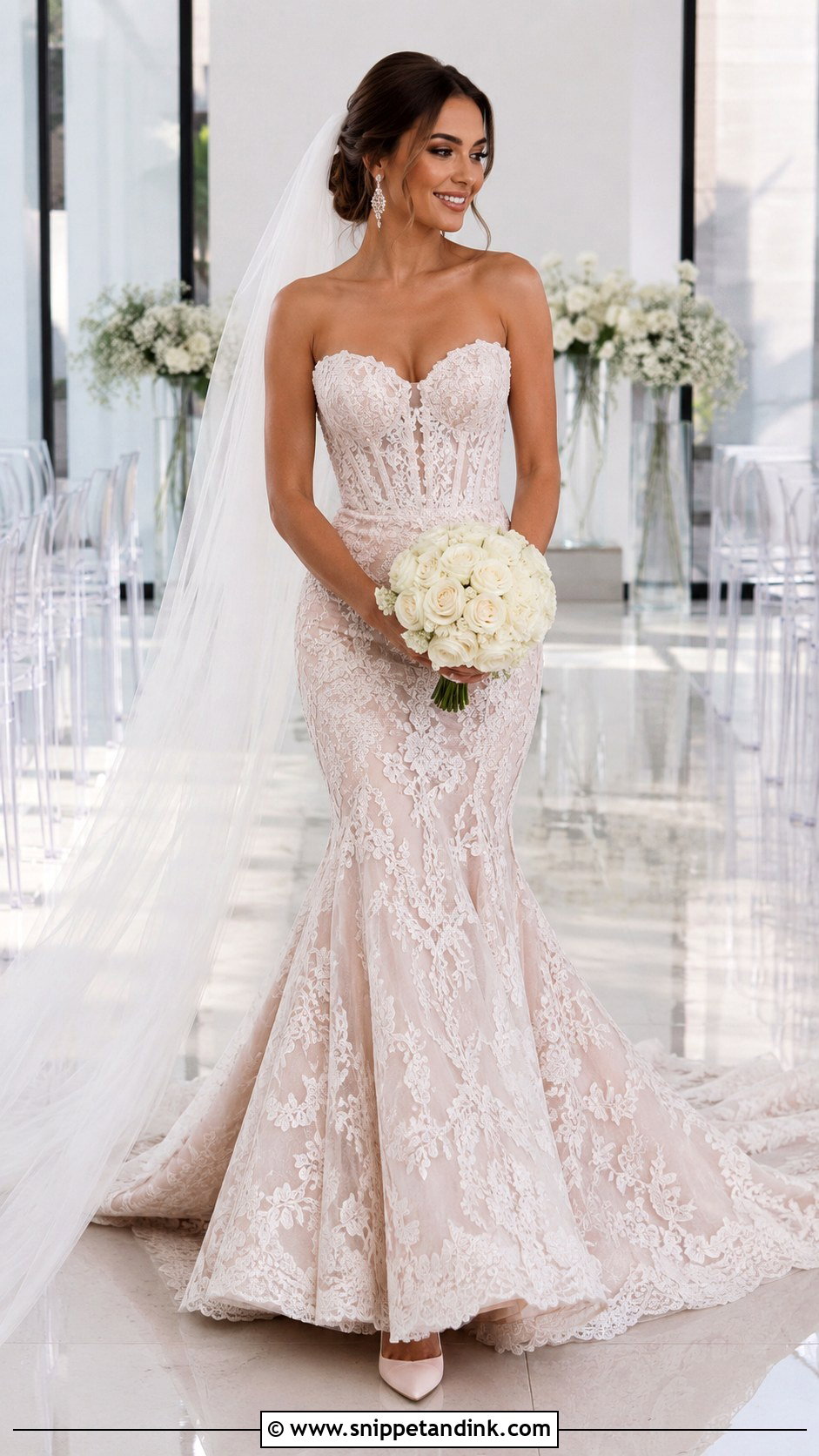
Where the flare starts matters more than anything else on a mermaid gown. A higher flare point lets you take normal steps; a low, sharply fitted one turns walking into shuffling. Stretch crepe, structured lace or supportive tulle should follow the body comfortably, and a corseted bodice can add shape as long as you can sit and breathe. Seams and appliqué placement can smooth the line across waist and hips. A long plain veil, drop earrings, pointed pumps and a compact bouquet keep the shape visible. At every fitting, sit down and take full strides.
7. Blush Long Sleeve Wedding Gown
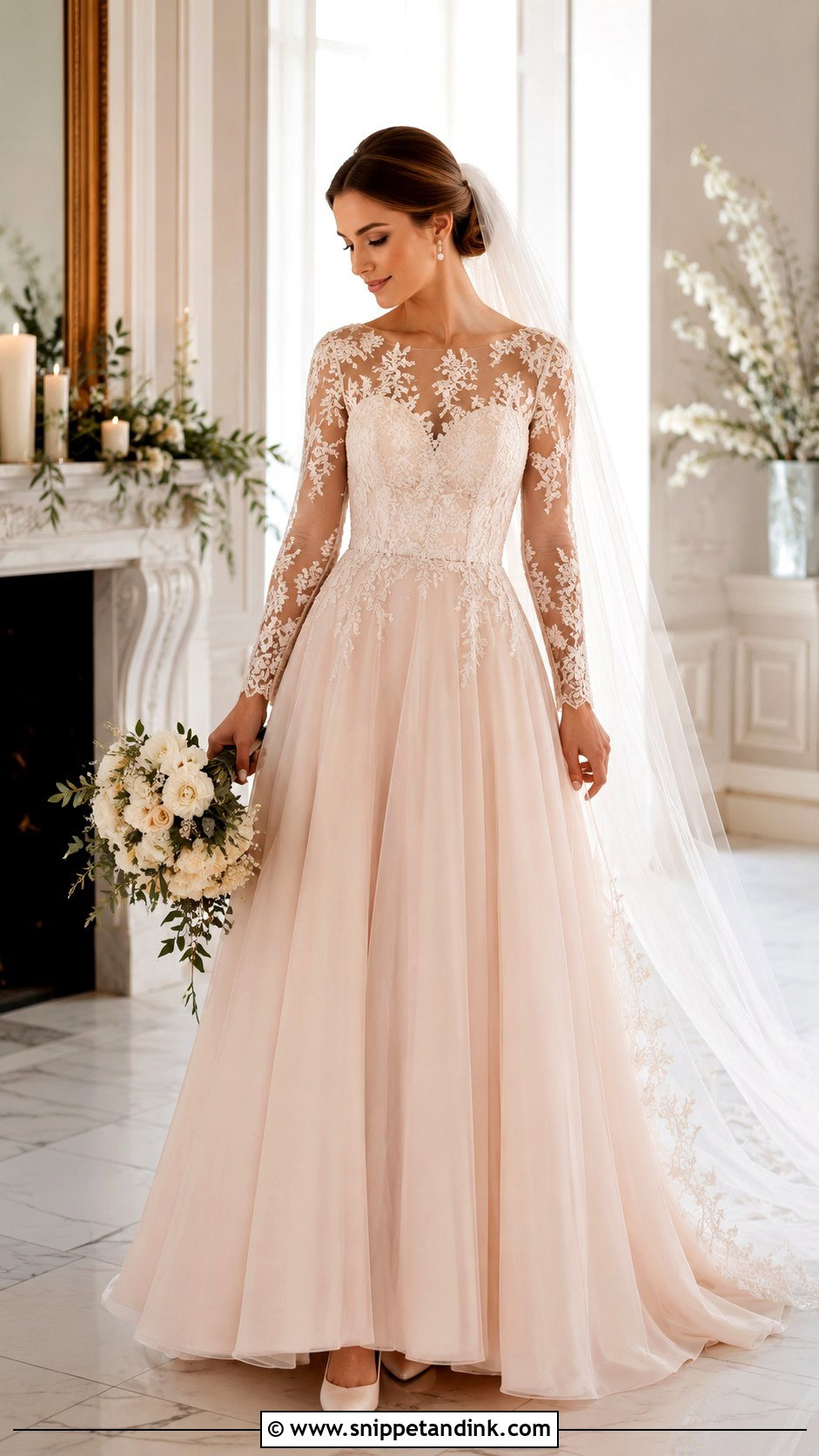
Sheer lace sleeves feel light and detailed; crepe or satin sleeves look sleeker and more modern. Balance them with an open back, a V-neck or a defined waist. The two fit points I check are the wrist, which shouldn’t be so tight it catches on a bracelet, and the armhole, which needs to let you raise your arms for hugs and dancing. Closed-toe heels, pearl earrings, a low chignon and a chapel veil below the hair complete it. It’s most at home in cooler months, though breathable lace works in a mild spring.
8. Blush Off-the-Shoulder Wedding Gown
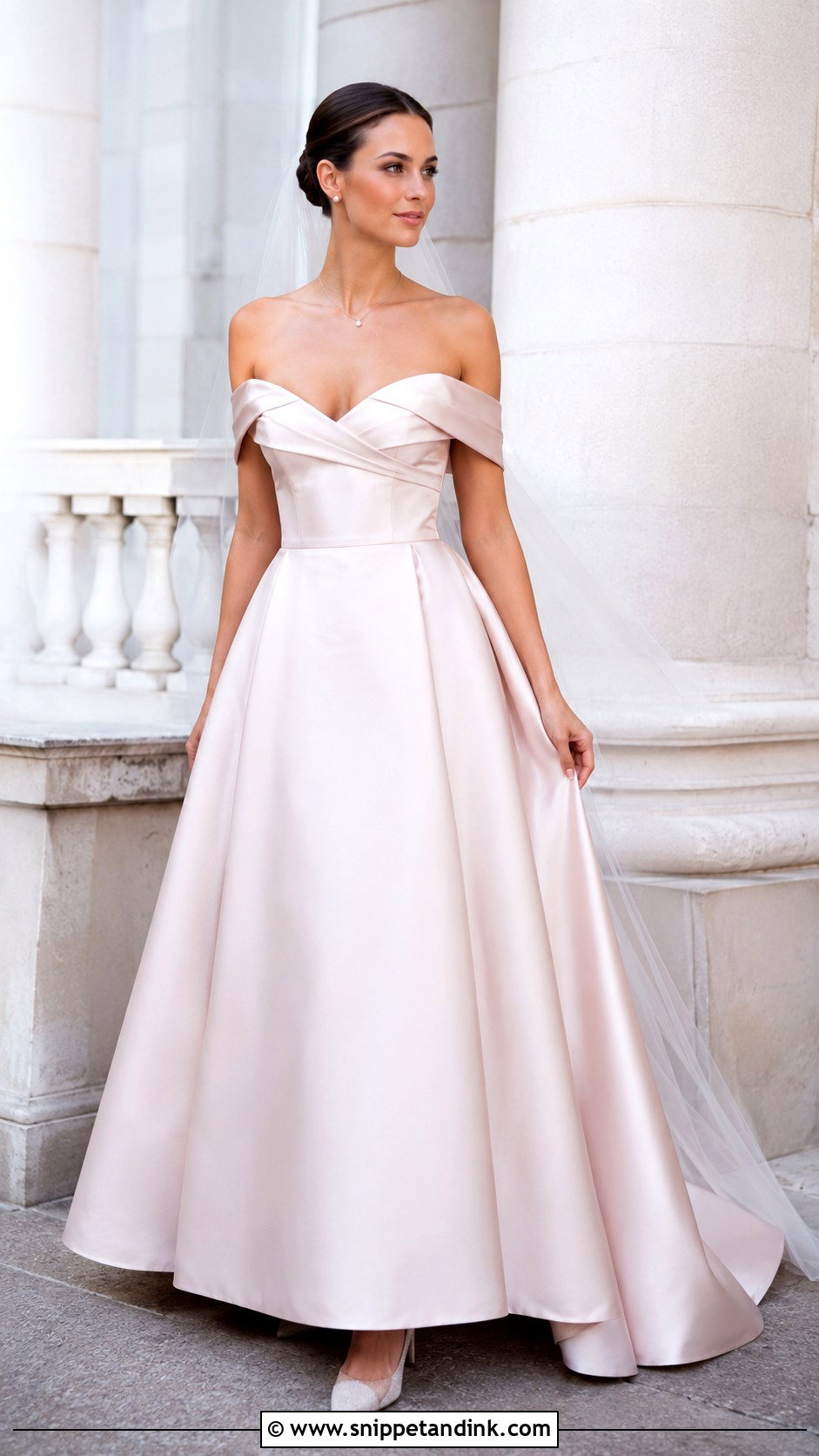
The off-the-shoulder sleeves on a blush gown are decoration; the bodice should be doing the holding. I test this by having the bride raise her arms, hug someone and sit, and if the neckline shifts, the internal structure needs work. A fitted bodice with an A-line skirt feels classic, and a draped satin skirt makes it more contemporary. A simple pendant, pearl studs, a smooth updo and pointed neutral heels suit it, with the veil set beneath the bun to keep the neckline clear. Detachable drapes let you change the look later in the evening.
9. Blush Corset Wedding Gown
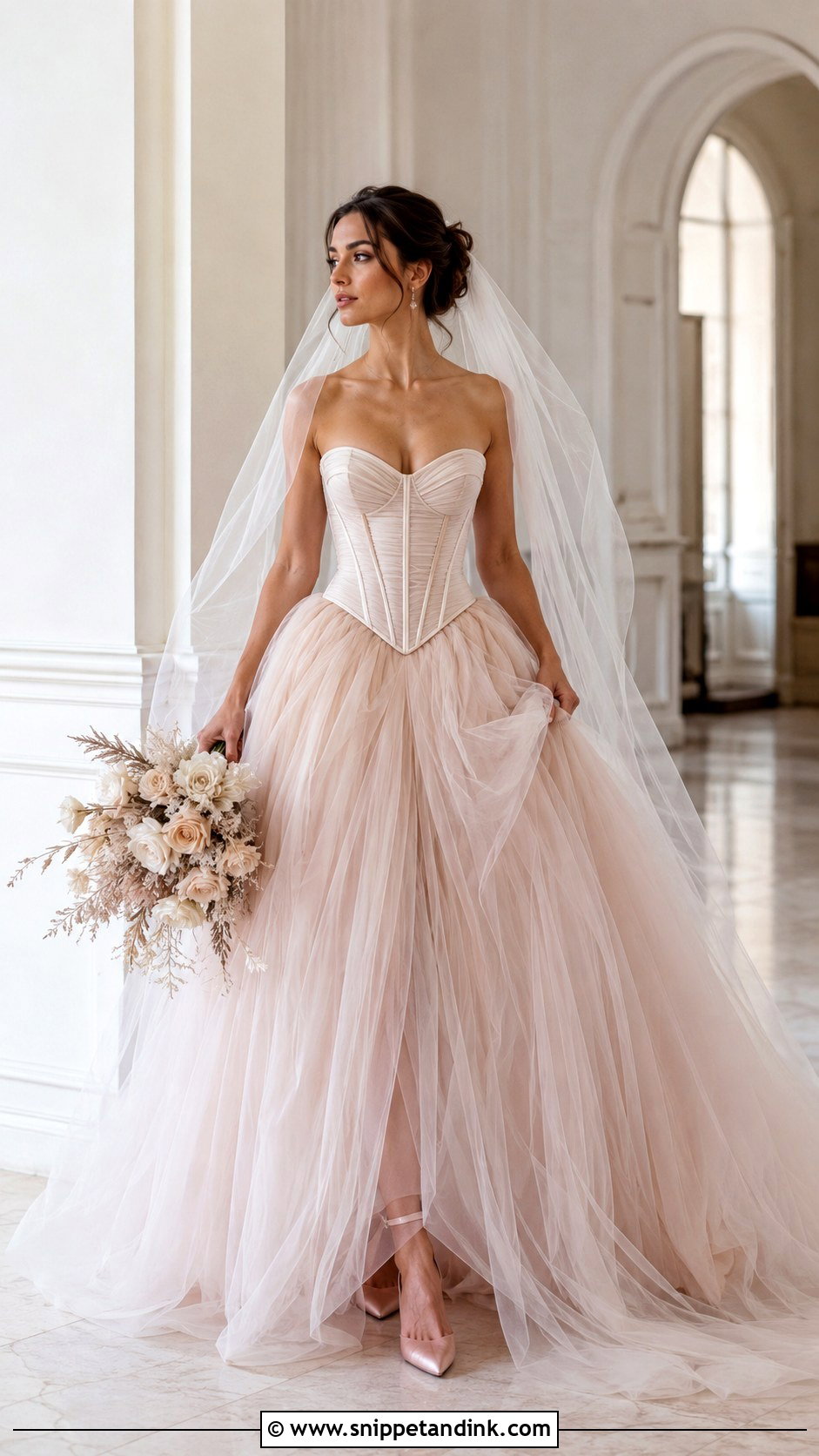
A corset should support, not hurt. I look for proper boning, shaped cups and a secure closure, and I’d rather a bride choose a corset she can breathe in than one laced to its tightest. A Basque or pointed waist lengthens the torso, and a full tulle skirt contrasts with the fitted top. If the corset includes illusion panels, hold the mesh against your skin in daylight to find the closest match; mismatched mesh looks grey or orange in photos. A sheer cathedral veil, small earrings, satin heels and a neat bouquet complete it, and a lined bodice or removable topper adds coverage.
10. Blush Floral Appliqué Wedding Gown
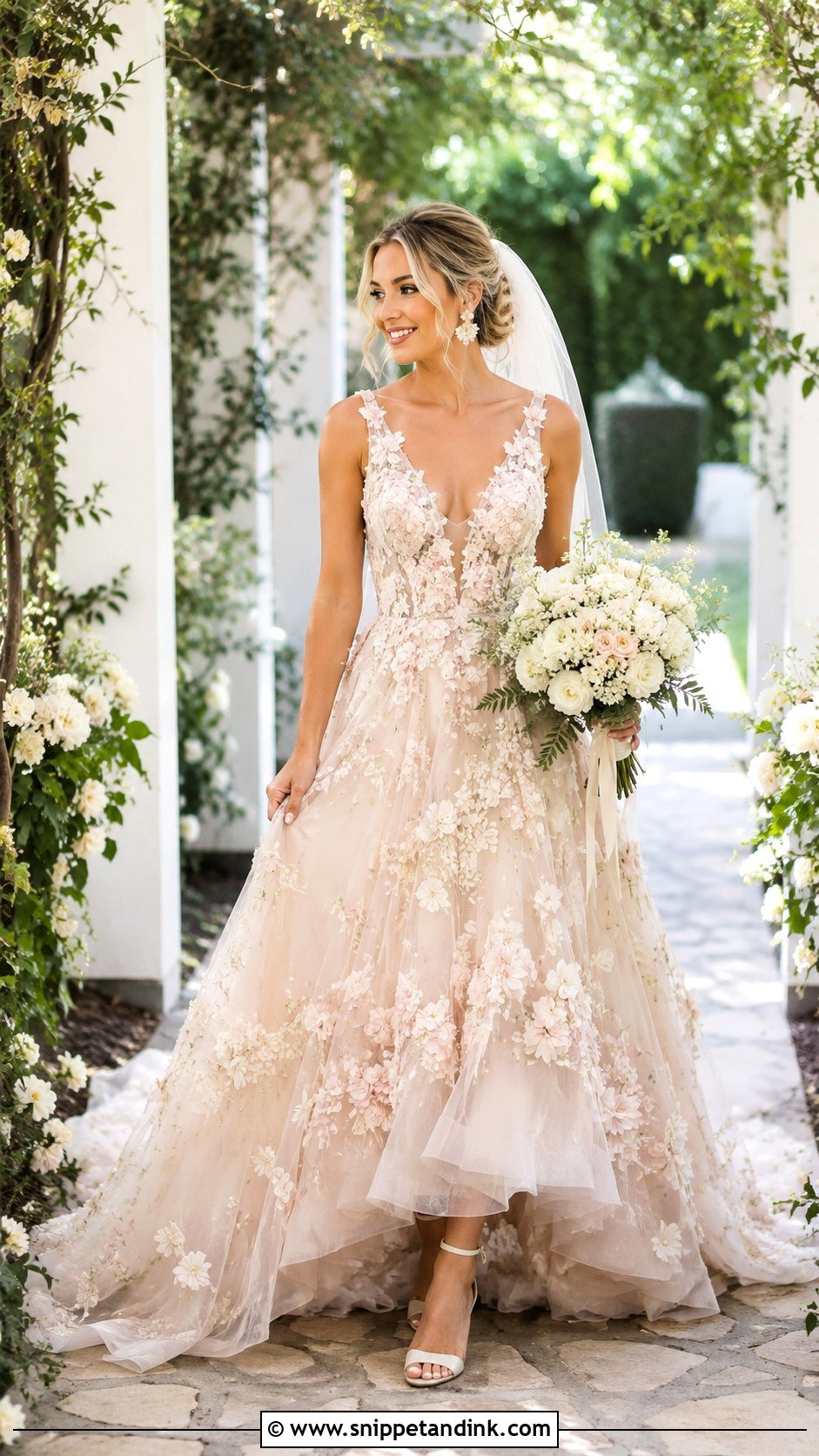
Raised petals near the arms and waist can be uncomfortable, which is something people only notice after wearing the gown for an hour. So I check that larger appliqués sit smoothly where your arms rest and where you hold the bouquet. Flowers in ivory, pale pink or tonal blush look best concentrated on the bodice and lighter across the skirt. A plain veil, floral earrings, neutral block heels and a bouquet repeating just a couple of the gown’s colours suit it. For a quieter effect, choose appliqués over a light blush lining rather than a strong one.
11. Blush Beaded Wedding Gown
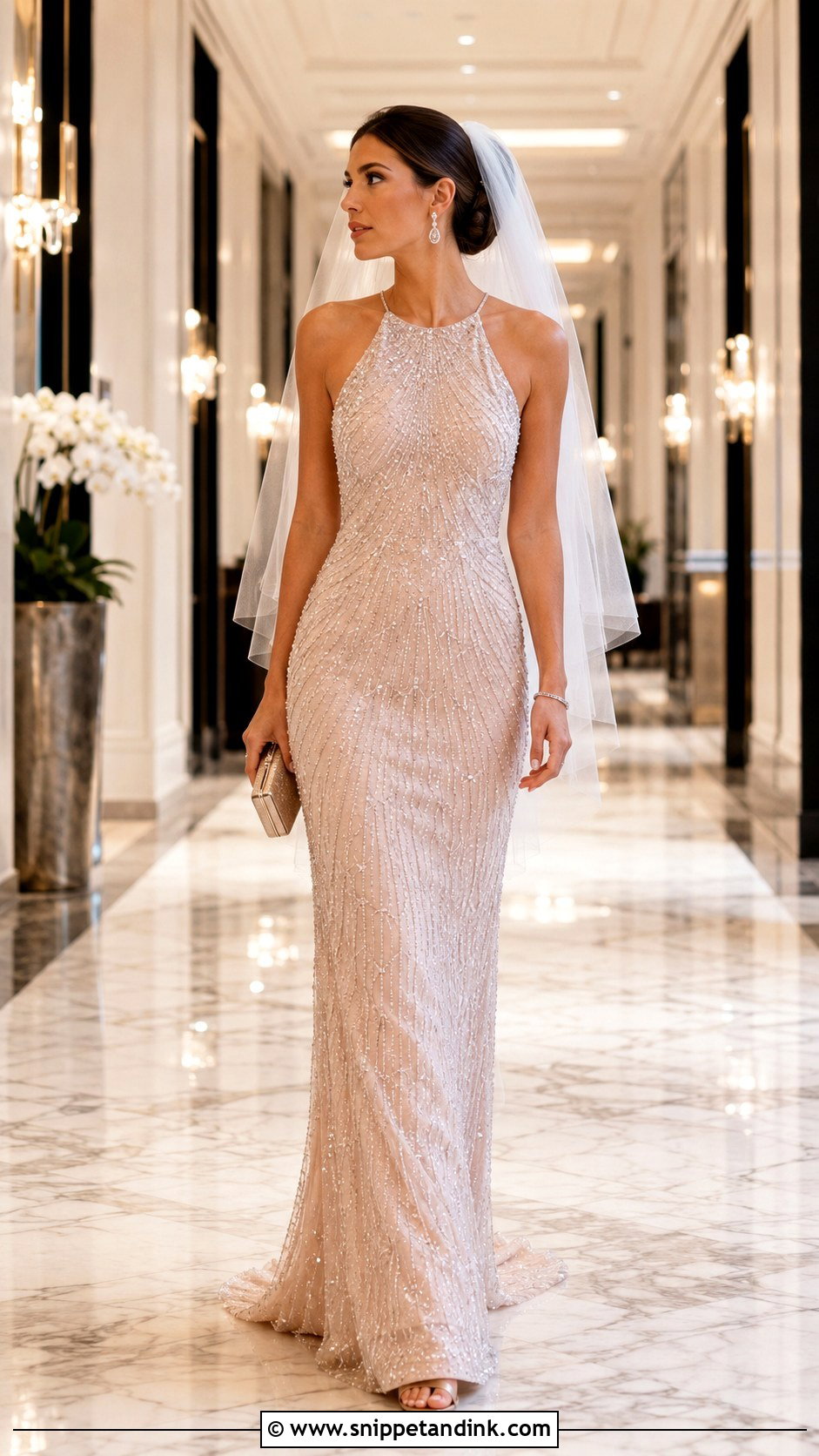
Fine beading catches light without becoming costume-like, as long as it’s tonal, silver or clear crystal on the pink base. A column, fit-and-flare or soft A-line keeps the texture refined. Simple drops, champagne heels, a sleek clutch and a plain veil suit it, and skip the big necklace when the neckline is beaded. Run your arms against the bodice; scratchy beading at the sides is common on sleeveless gowns. I also ask whether the boutique supplies spare beads, since a few always come loose. A good bustle keeps the beaded train off the dance floor.
12. Blush Square Neck Wedding Gown
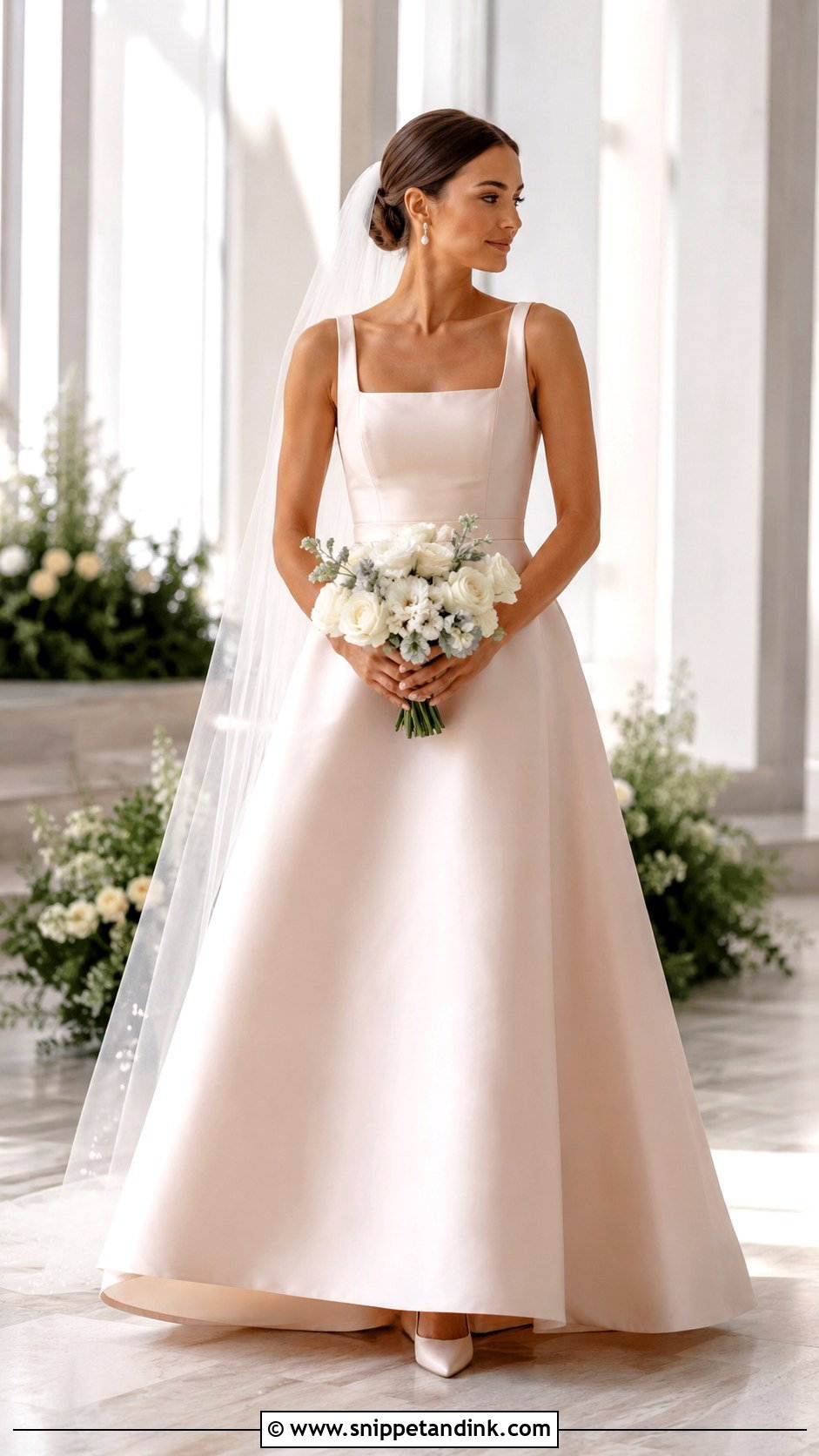
A square neck can be built on wide straps, fitted sleeves or a structured sleeveless bodice, and the choice changes how well it holds. Fuller busts usually need wider straps and built-in support; petite brides often look longer in a slightly lower square cut. Whatever the version, the bodice should lie flat across the chest without gaping near the straps. Pair it with an A-line satin skirt for a classic look or slim crepe for minimal. Short pearl earrings, a low bun, pointed pumps and a sheer chapel veil complete it, with at most a very fine chain at the neck.
13. Blush Sweetheart Wedding Gown
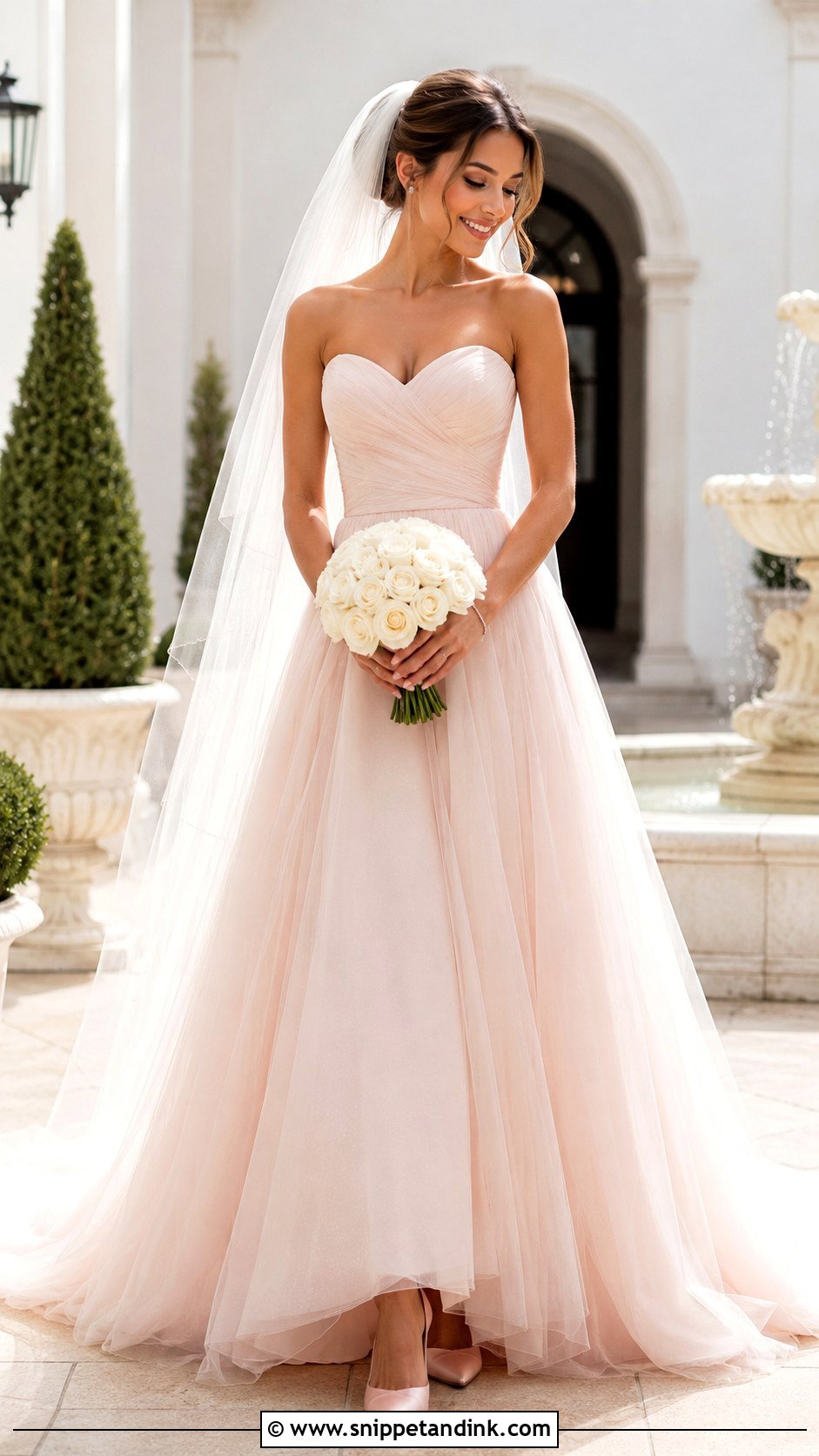
Look for a sweetheart that follows the curve of your bust, not an exaggerated plunge you’ll be adjusting all day. It works with a ball gown, A-line or mermaid skirt. Crystal studs, a fine bracelet, an ivory veil and satin pumps in a matching neutral finish it, and a short, simple necklace can follow the neckline. During alterations, I have the bride sit, walk quickly and lift her arms; if the bodice moves, it gets taken in or given detachable straps, off-the-shoulder drapes or an illusion panel.
14. Blush Chiffon Wedding Gown
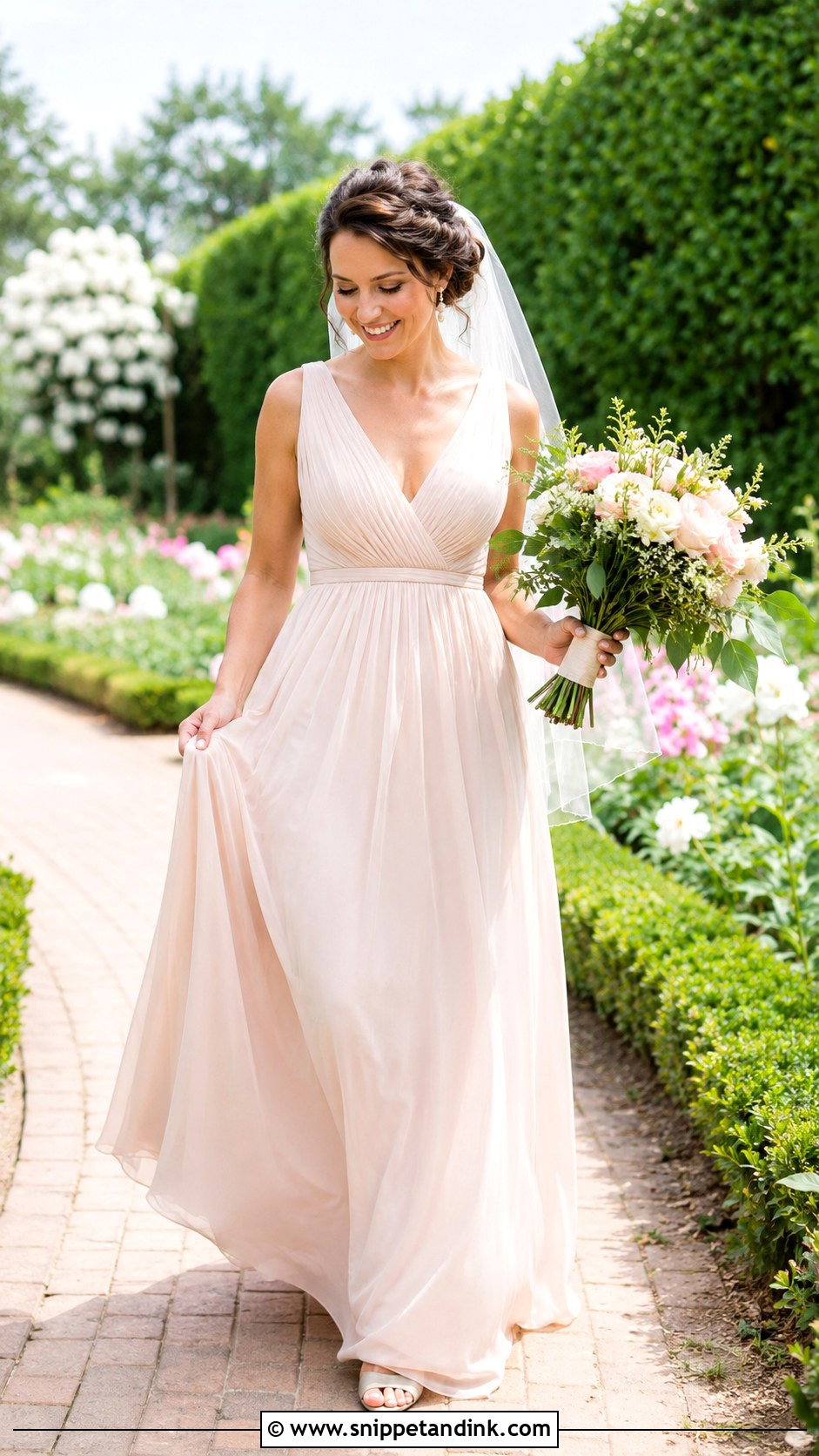
Chiffon moves beautifully outdoors, but a long chiffon train collects grass, leaves and gravel, and it whips around in wind. For garden or beach weddings I’d choose a chapel-length skirt or a short sweep train instead. An empire, A-line or softly gathered cut with a proper lining stops it going see-through. A crossover bodice or fine pleating defines the waist without stiffness. Block-heel sandals, small pearl earrings, a loose braided updo and a fingertip veil suit it. Steam it after travel, since chiffon creases in a garment bag.

15. Blush Slip Wedding Gown
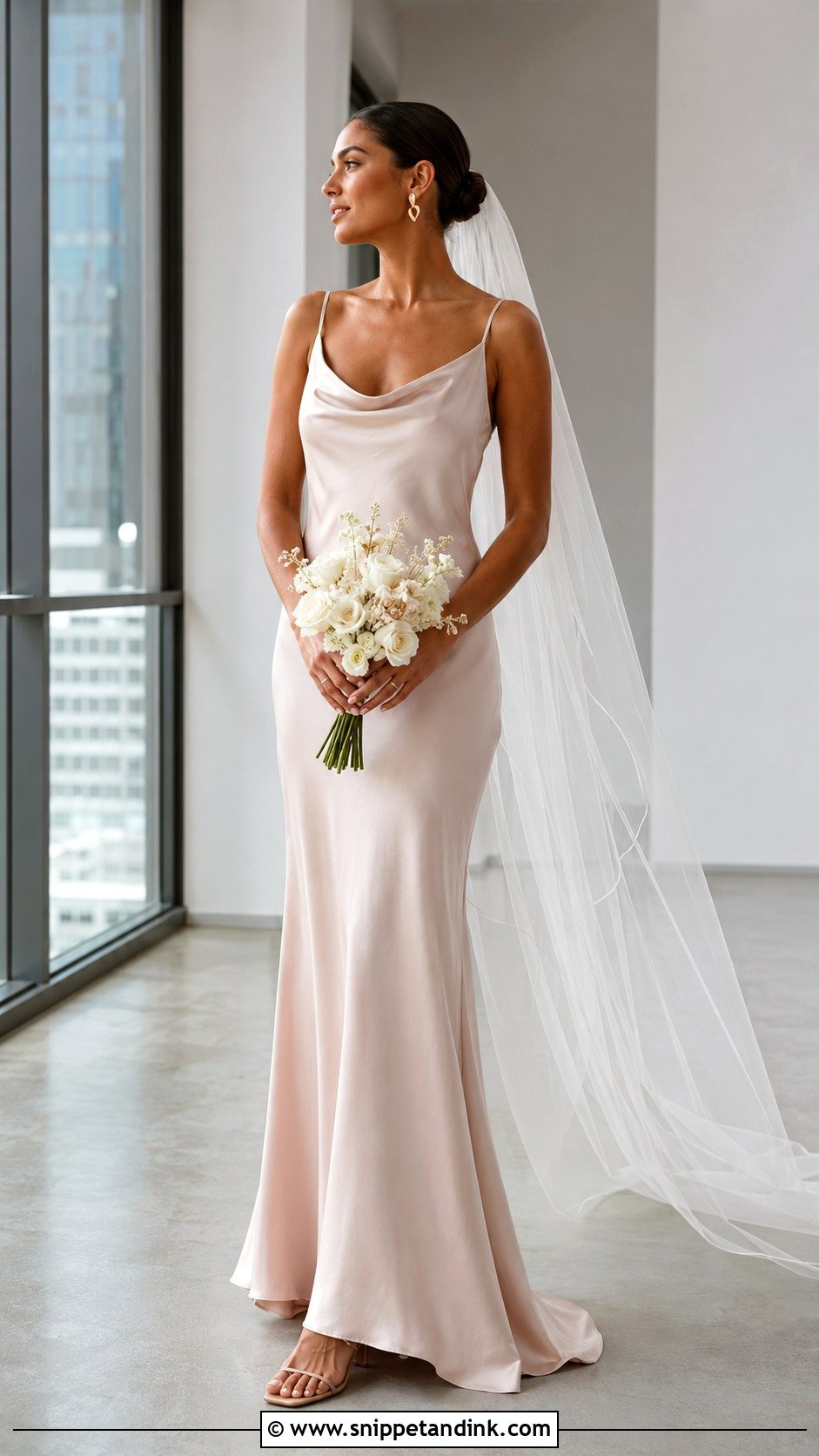
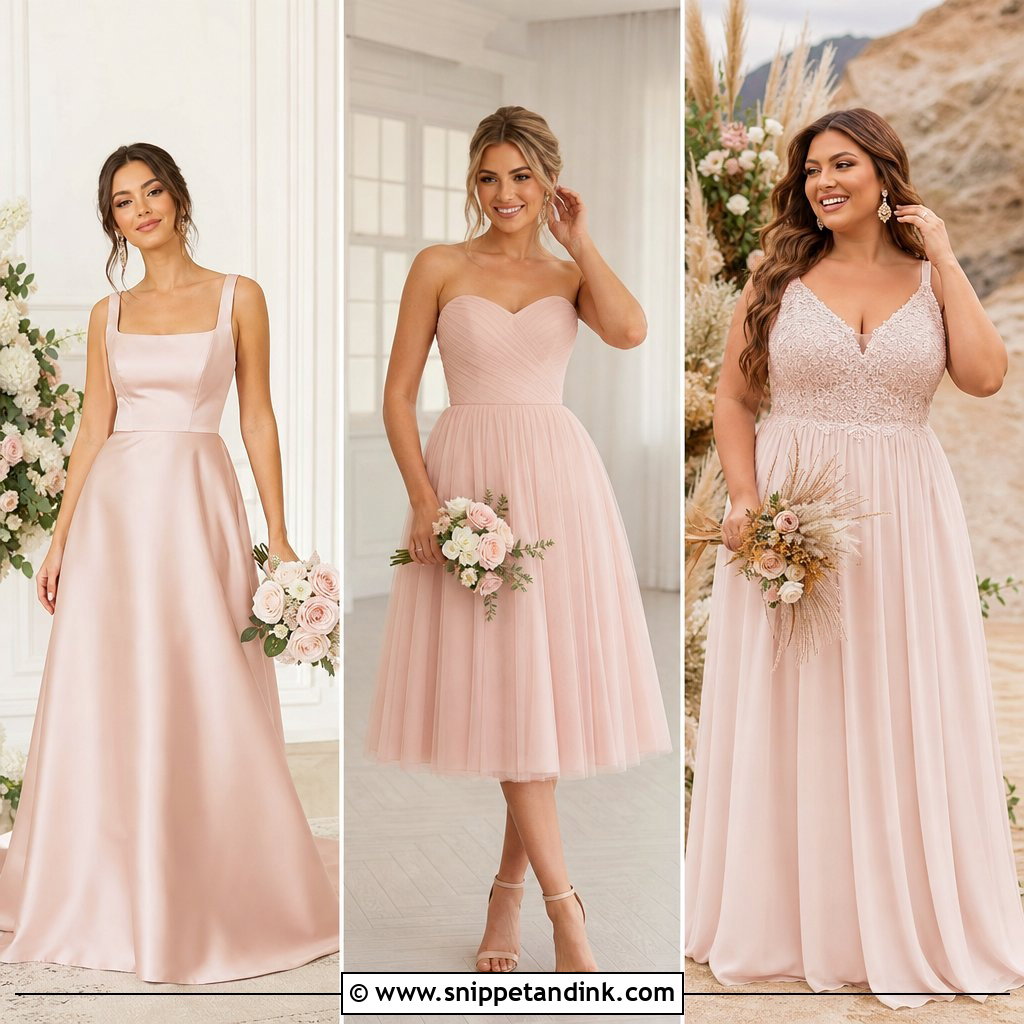
With so little decoration, a blush slip wedding gown depends almost entirely on the fabric and the cut. Silk, satin or crepe cut on the bias follows the body, and a cowl, V or straight neckline suits the plain shape. Bias-cut fabric is unforgiving with undergarments, so smooth, skin-toned pieces are essential, along with a professional hem. Barely-there neutral heels, sculptural earrings, a smooth bun and a long sheer veil complete it. For more drama at the ceremony, add a detachable chiffon cape, satin wrap or overskirt and take it off later.
16. Blush High Neck Wedding Gown
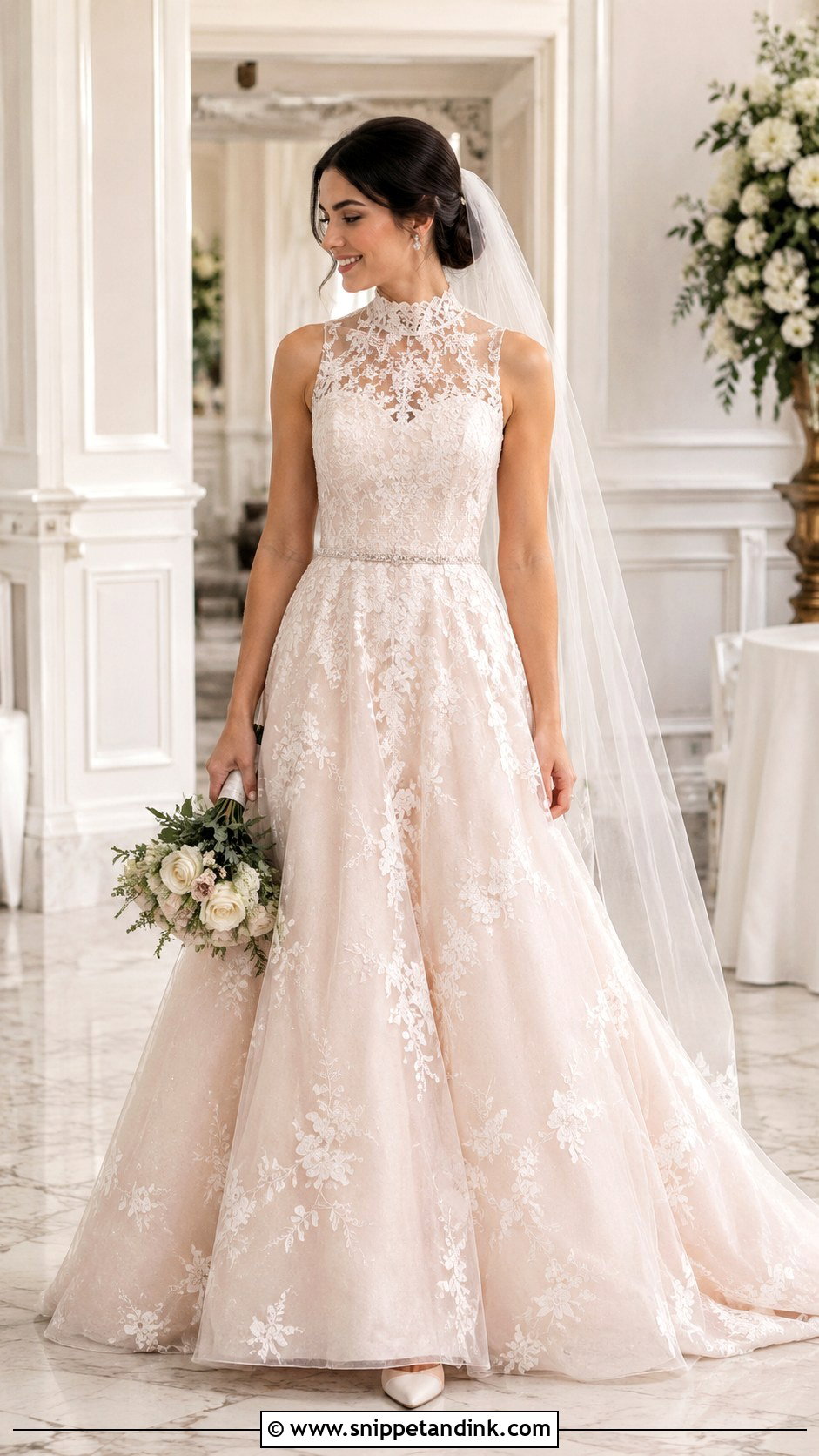
Will the collar rub? That’s the question for any high-neck gown, and the only way to answer it is to turn your head side to side in the fitting room. Sheer lace feels soft, satin looks structured and beaded tulle sparkles gently. An open back, defined waist or flowing skirt stops it feeling heavy. Small studs, a neat bun, closed-toe shoes and a veil under the hair suit it, with no necklace. For summer, choose breathable fabric with an illusion yoke instead of several layers around the neck.
17. Blush Tea Length Wedding Gown
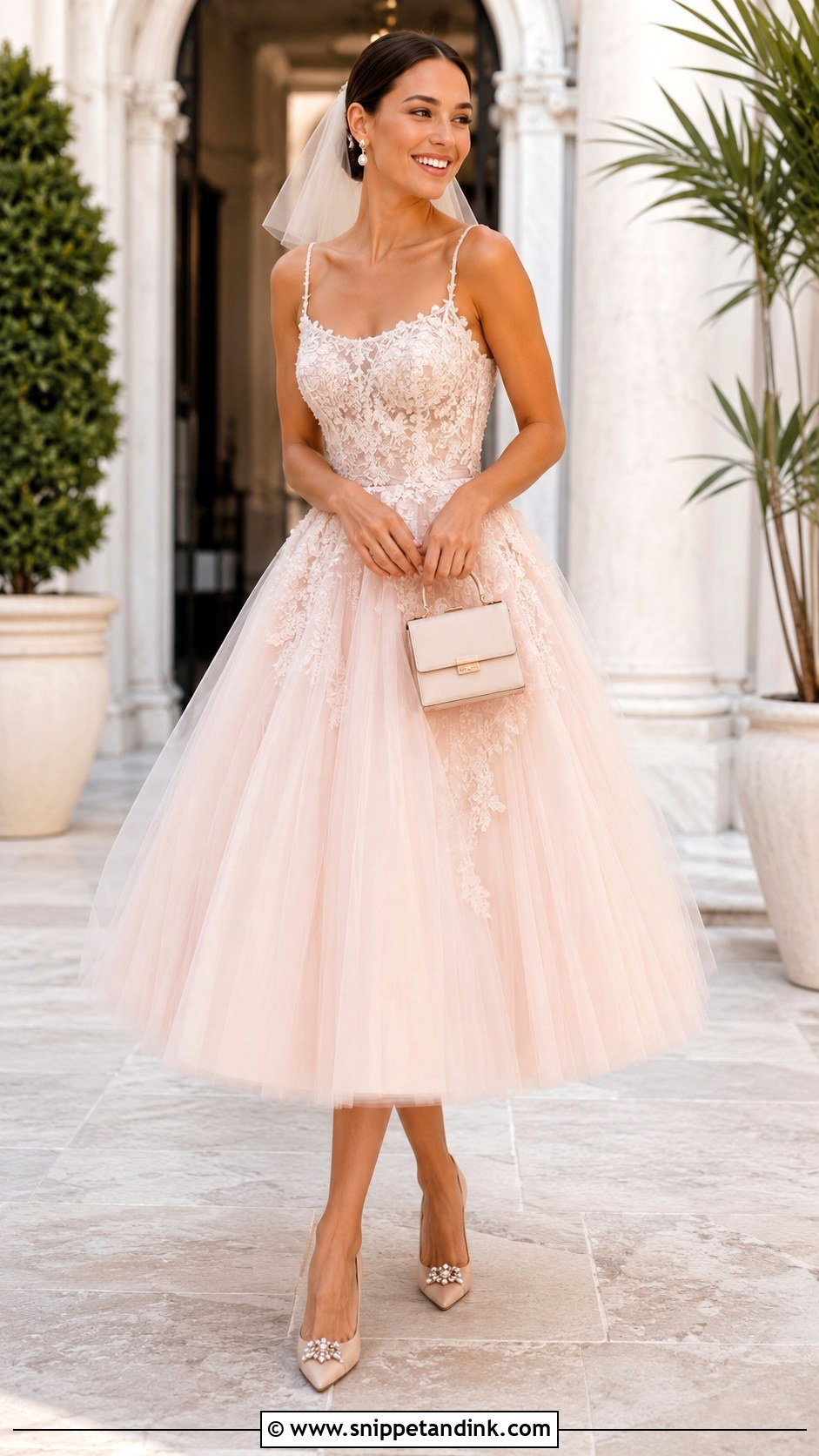
Tea length shows your shoes, so the hem needs to fall at a flattering point and stay level all the way round; an uneven hem is obvious at this length. A fitted bodice with a skirt between knee and ankle, in tulle for volume or satin for a smoother shape, suits it, and a defined waist balances the shorter skirt. Pointed pumps or embellished block heels, pearl earrings, a short veil and a small structured bag complete it. Some brides use it as a reception change. Add a cropped jacket or wrap if you need cover.
18. Blush Cape Wedding Gown
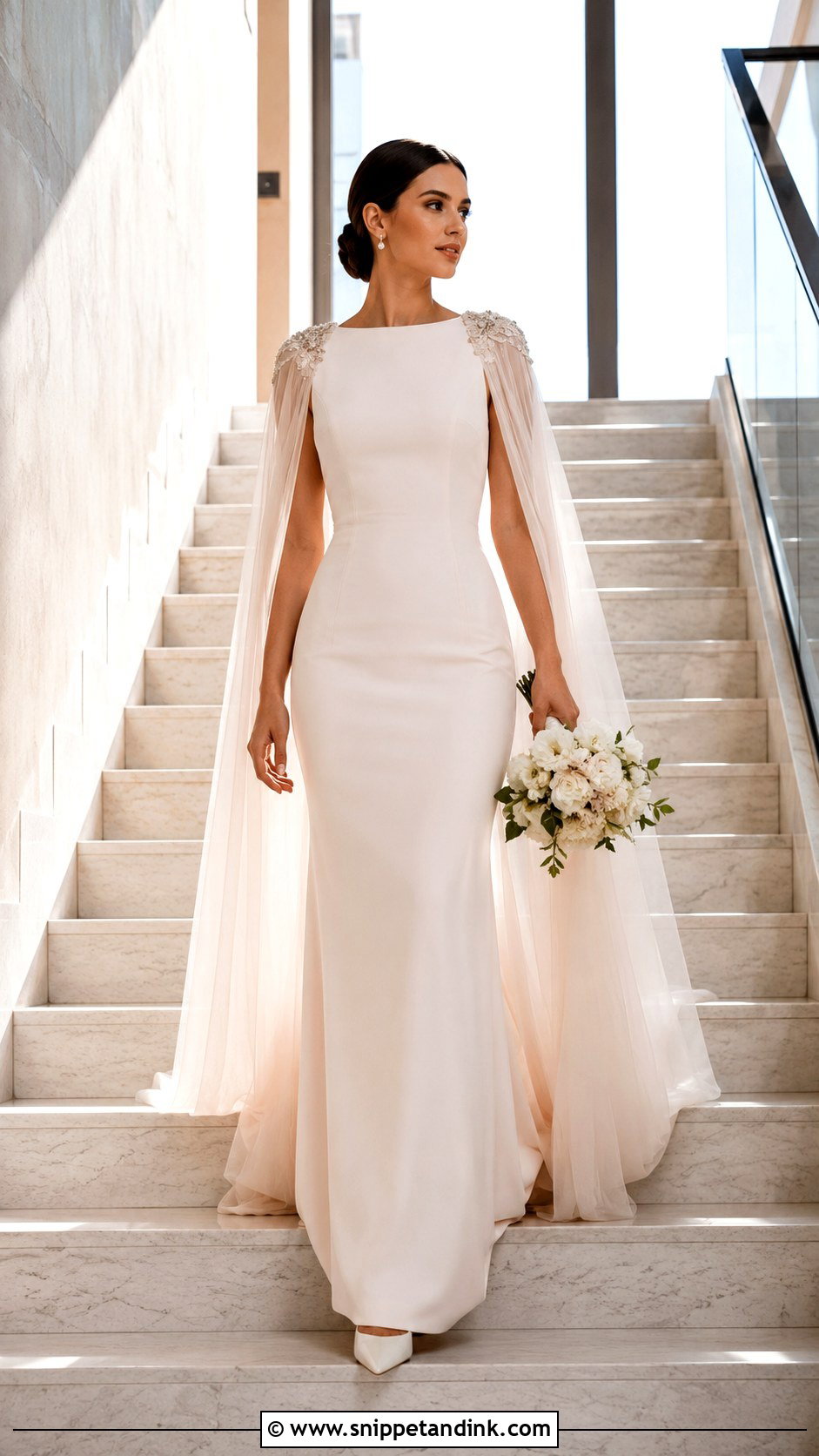
Capes can be featherlight or surprisingly heavy, especially beaded ones, and the weight pulls on whatever they’re fastened to. I test the weight and fastening before purchase and prefer a cape that attaches to the straps or a reinforced shoulder seam. Sheer tulle feels airy, chiffon moves softly and beading adds detail. Underneath, a clean column, A-line or fit-and-flare lets the cape lead. Understated earrings, pointed heels and a low hairstyle keep the neckline clear. A detachable cape gives you a ceremony entrance and a lighter look for the party.
19. Blush Two-Piece Wedding Gown
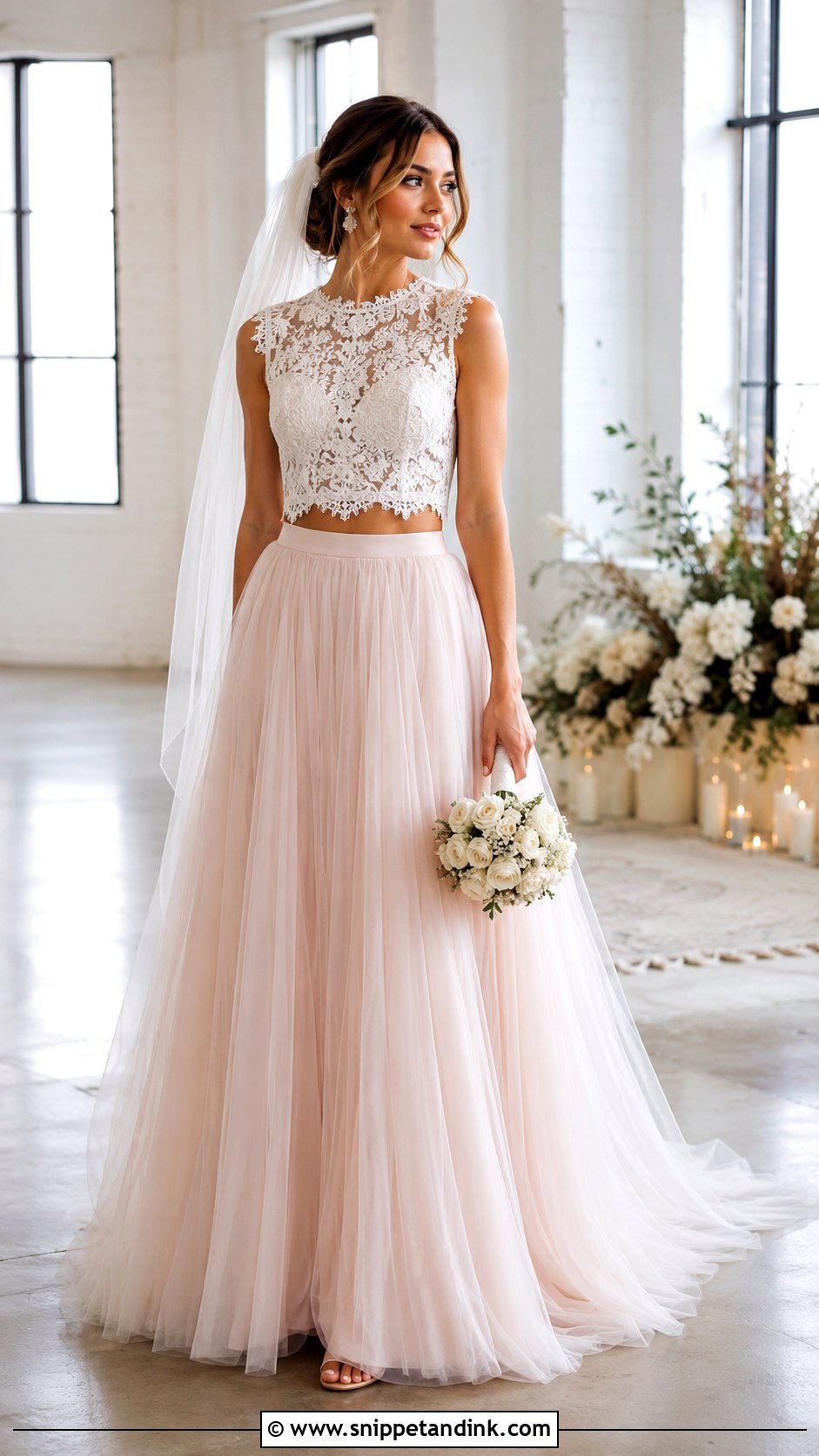
Two pieces give you freedom to mix: a fitted lace or satin top with a high-waisted A-line, column or full tulle skirt. Matching blush makes one continuous line, while ivory lace over a pink skirt gives a soft contrast. The join at the waist must be secure when you move. I always fit both pieces together, since altering the waist of one changes how the other sits. A simple veil, modern earrings, neutral heels and a compact bouquet complete it. Afterward, the top or skirt can be worn separately to other formal events.

20. Blush Wedding Gown With Overskirt
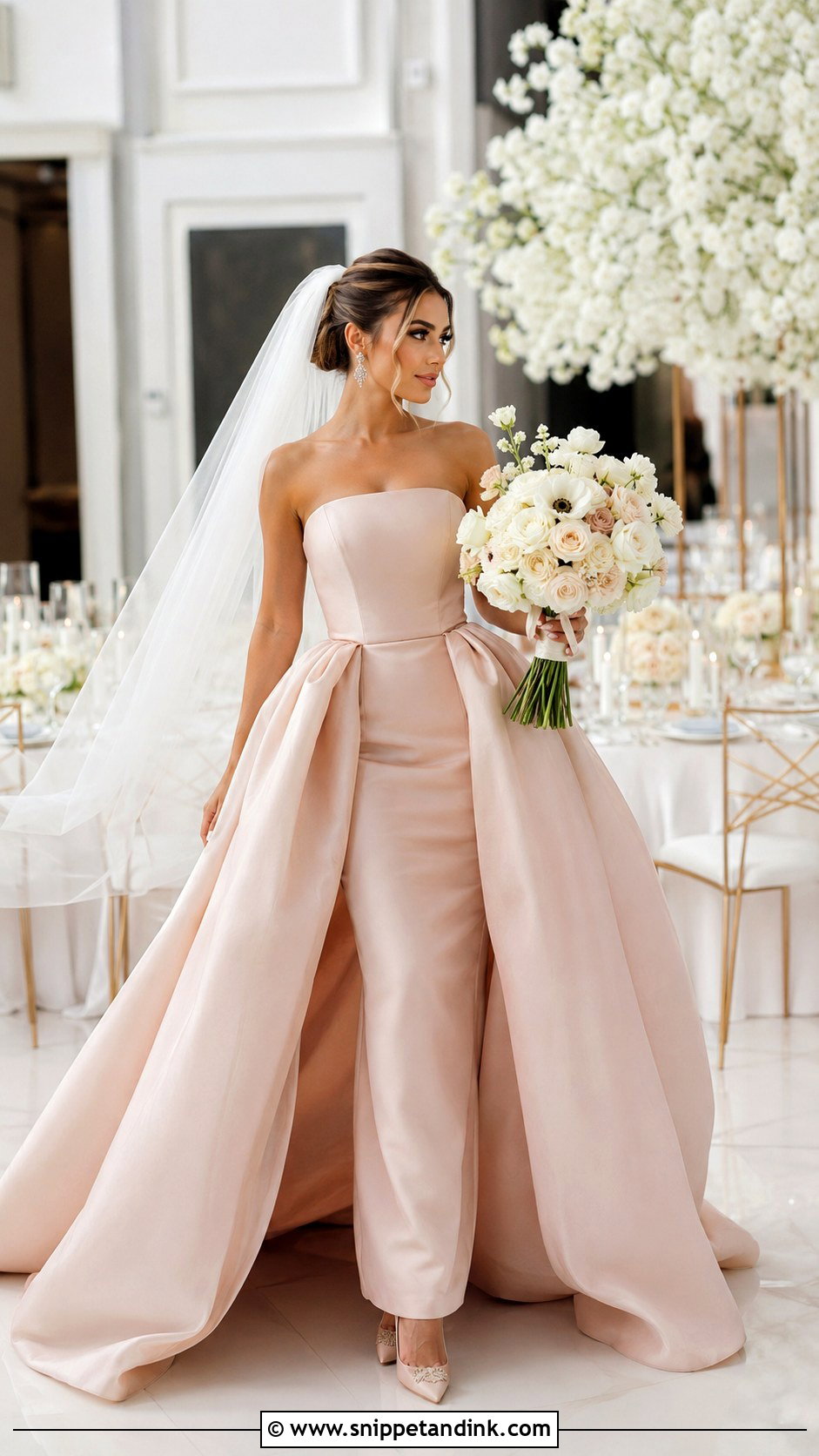
A detachable overskirt turns a fitted blush wedding gown into a ceremony look and back again. Start with a supportive column, mermaid or sheath, then add a full tulle, organza or satin layer at the waist. Check the fastening doesn’t leave bulk under the waistline, and that the overskirt blends with the base dress from every side. A long veil, refined earrings, pointed heels and a structured bouquet suit the ceremony. Practise removing it at a fitting with the attendant who’ll help on the day, so it comes off quickly and undamaged.
A Second Life for a Pink Wedding Dress
One quiet advantage of blush over ivory is that the dress looks like formalwear rather than a costume once the wedding is over. Brides ask me about this more often than you’d think, and some gowns adapt far better than others.
Gowns that adapt easily
Two-piece sets, slip dresses and plain satin or crepe columns are the easiest to rewear. A skilled seamstress can shorten a slip to midi or tea length, remove a train, or add straps. Separates can be worn with other pieces almost immediately.
Gowns better kept as they are
Heavily beaded bodices, corsets with structured cups and full tulle ball gowns don’t take well to big changes; the construction is built around the original shape. For these, proper cleaning and storage is the better plan. Have it cleaned soon after the wedding, then keep it flat or loosely folded with acid-free tissue in a breathable box, out of light, so the pink doesn’t fade unevenly along the folds.
Dyeing a blush gown darker is possible on some natural fibres, but synthetic tulle and polyester satin often take dye poorly or unevenly. I’d only try it with a specialist and a hidden test patch.
Undertone First, Then Everything Else
A blush gown should still feel bridal while suiting your personality, venue and comfort. Compare pink undertones in natural light, then try several silhouettes instead of sticking to the one you expected to love. Pay attention to support, fabric weight, train length and how easily you move. Ivory veils, pearls, neutral shoes and softly coloured flowers are dependable finishing pieces, while capes and detachable overskirts add more impact. Above all, leave time for alterations, because a romantic, minimal or dramatic gown only looks right once it fits.
You'll Like These Ideas:










Leave a Reply