
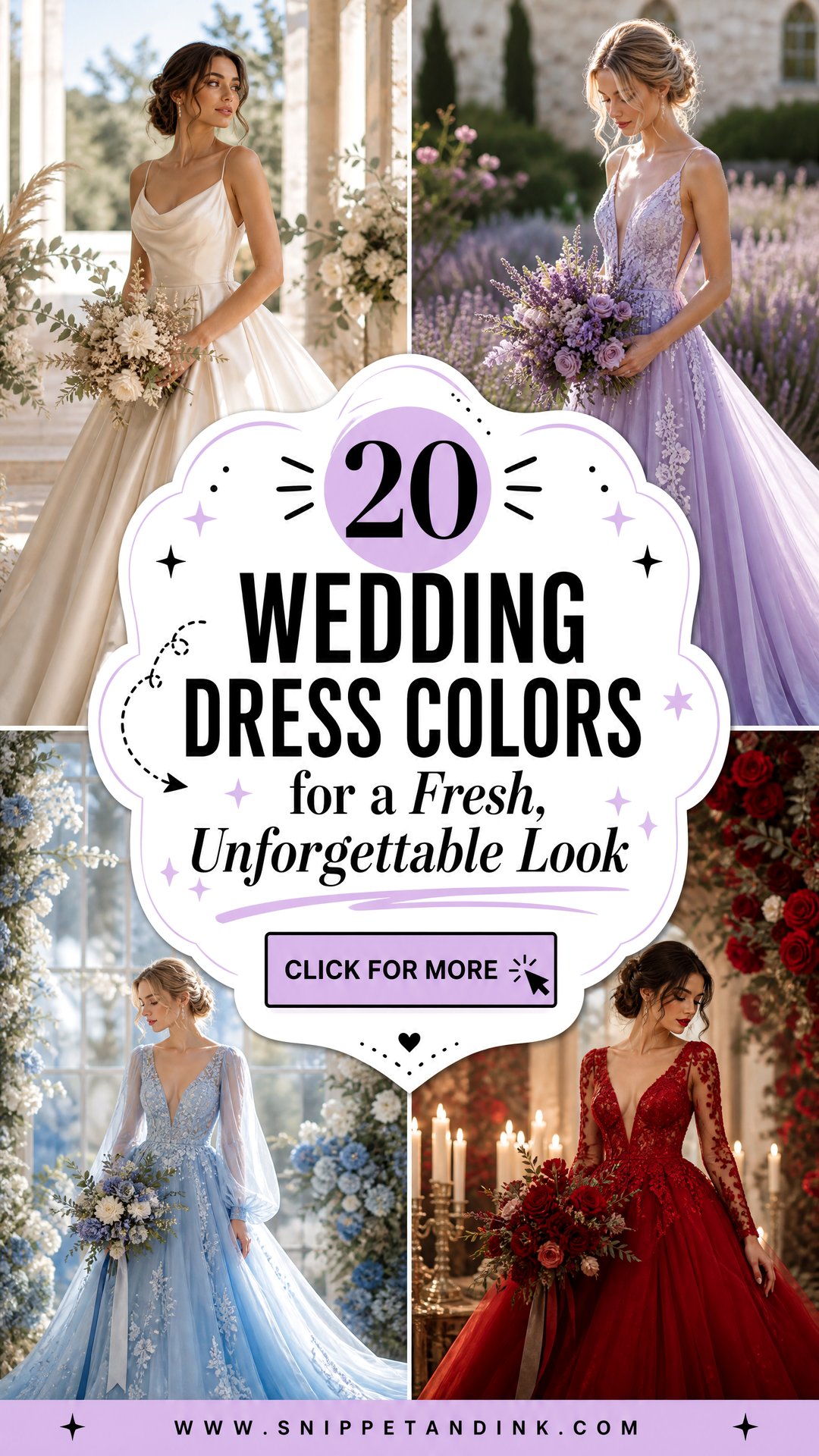
Color is the first thing I change my mind about in a fitting room. A bride walks in sure she wants bright white, tries an ivory in the same cut, and her whole face looks rested. Shade matters as much as silhouette, because it sits right against your skin and has to agree with the venue and the flowers too. White, ivory and cream are still the starting point for most brides, and soft blue, champagne, blush, black and gowns with colored florals have all found a place in recent bridal lines. Below are twenty shades, each styled from veil to shoes, with notes on fabric, undertone and the accessories that suit it. Hold any swatch beside your face in daylight and again indoors before you commit, then match your veil, metals and bouquet to the gown’s undertone.
Reading Your Undertone Against Real Fabric, Not a Paint Chip
Screens and printed color cards lie about bridal shades. The only test I trust is fabric against skin. I ask brides to come to a color appointment with a bare face or very light makeup, hair pulled back and a plain top on, then I drape swatches across the collarbone, one at a time, beside a window.
Watch the jaw and under the eyes, not the fabric. The wrong shade casts grey or yellow onto the skin and makes shadows look deeper. The right one makes your skin look even and clear without you doing anything. Cool undertones usually light up next to pure white, blue-leaning blush and silver-toned blues; warm undertones tend to come alive in ivory, cream, champagne and peach. Neutral undertones have the most freedom.
- Compare two shades at a time, never five at once.
- Look again under a warm indoor bulb; some dyes shift noticeably.
- Check the lining color too, because it changes how a sheer overlay reads.
- Bring your intended earrings so you see the metal and the fabric together.
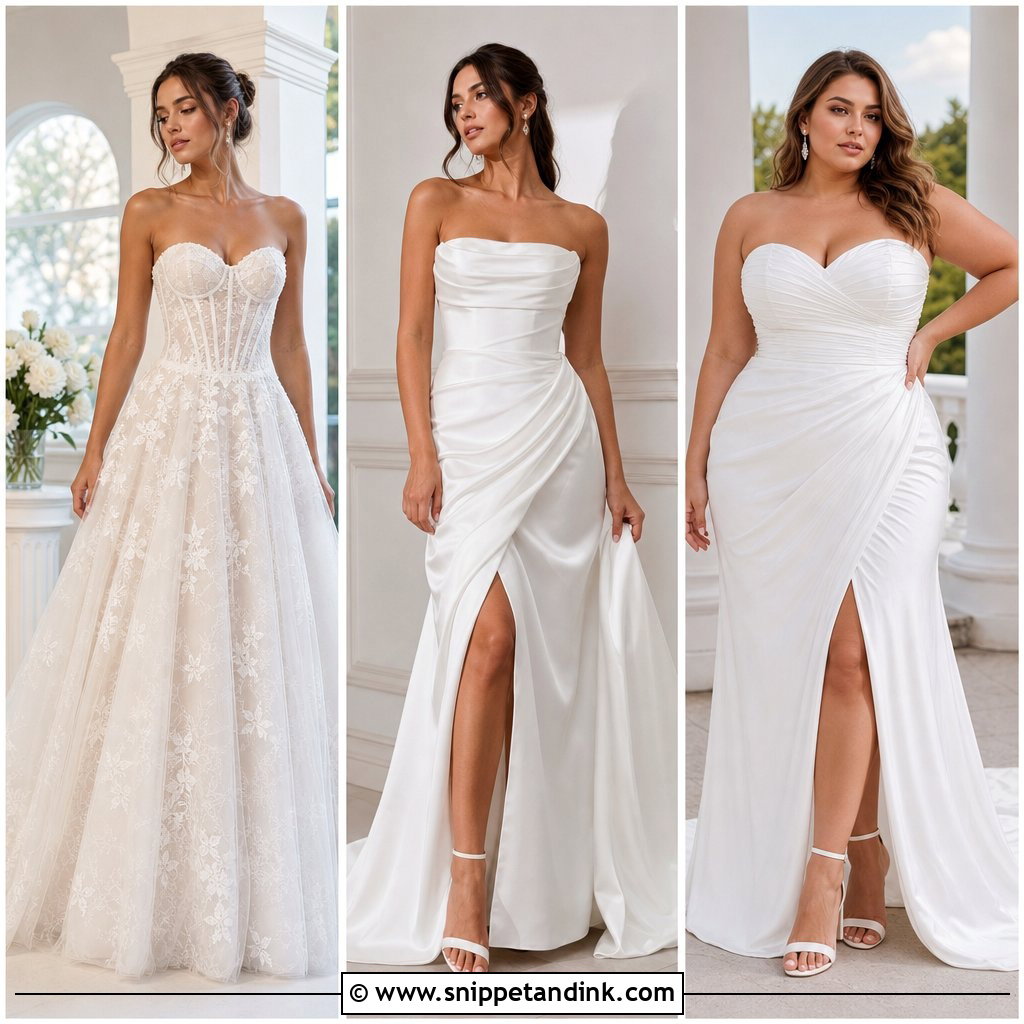
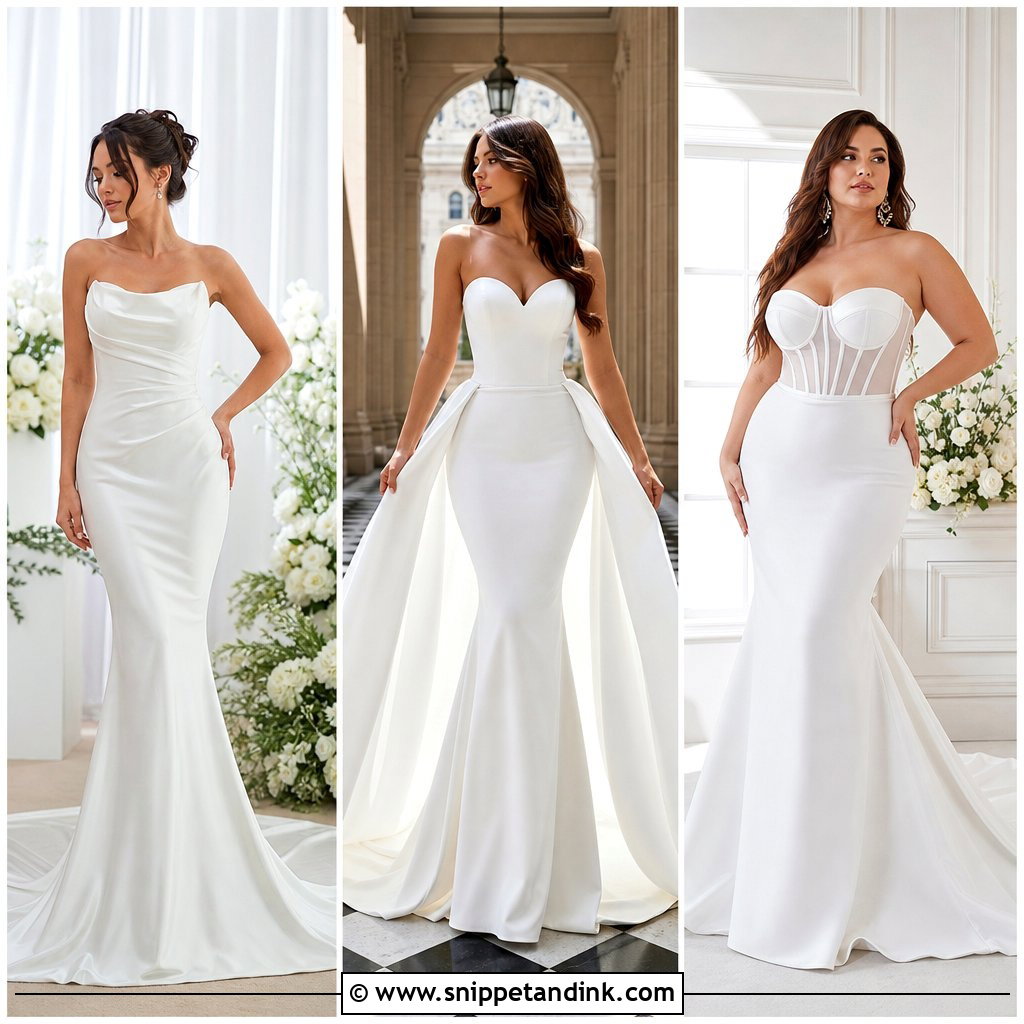
1. White Wedding Dress
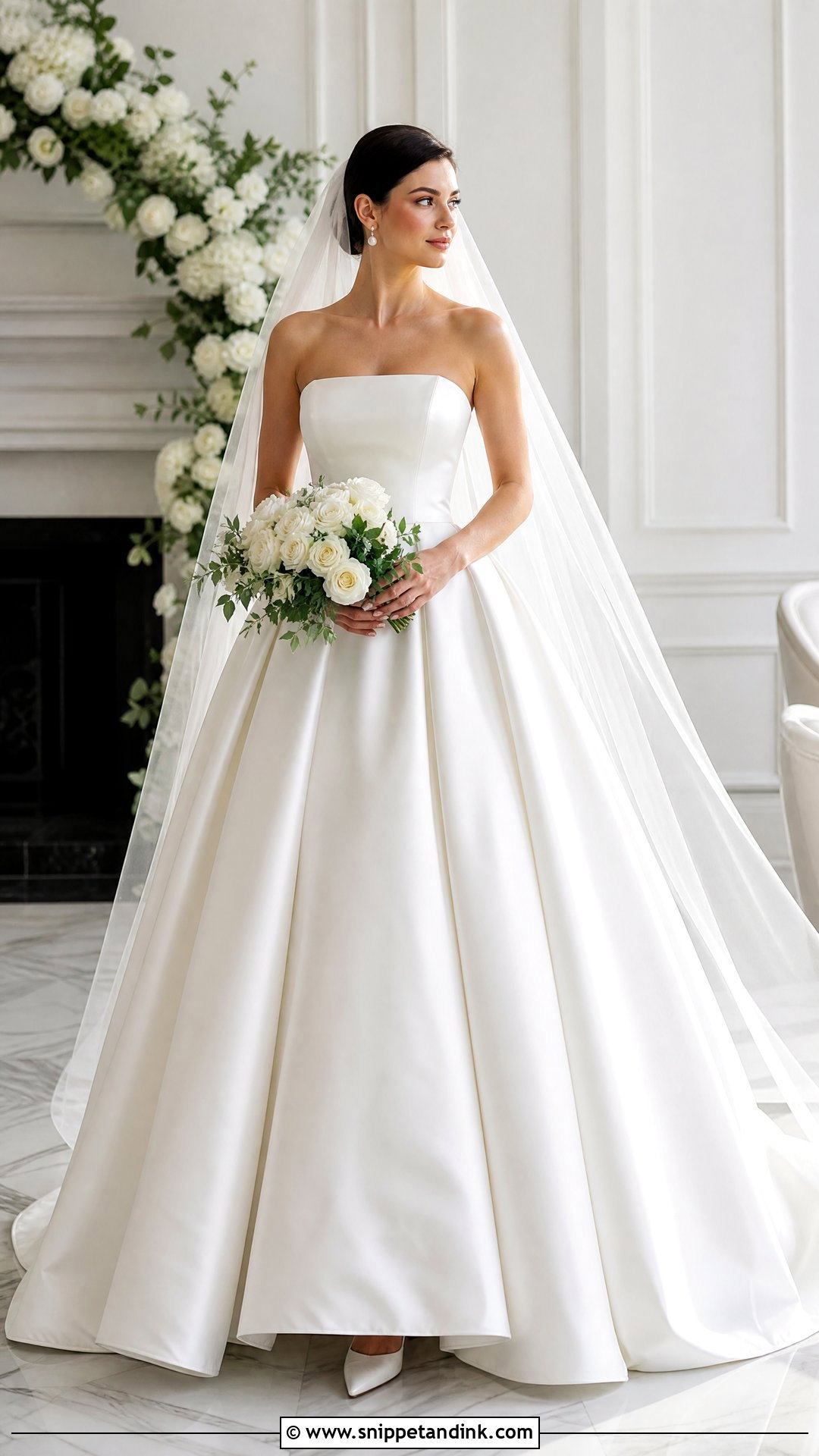
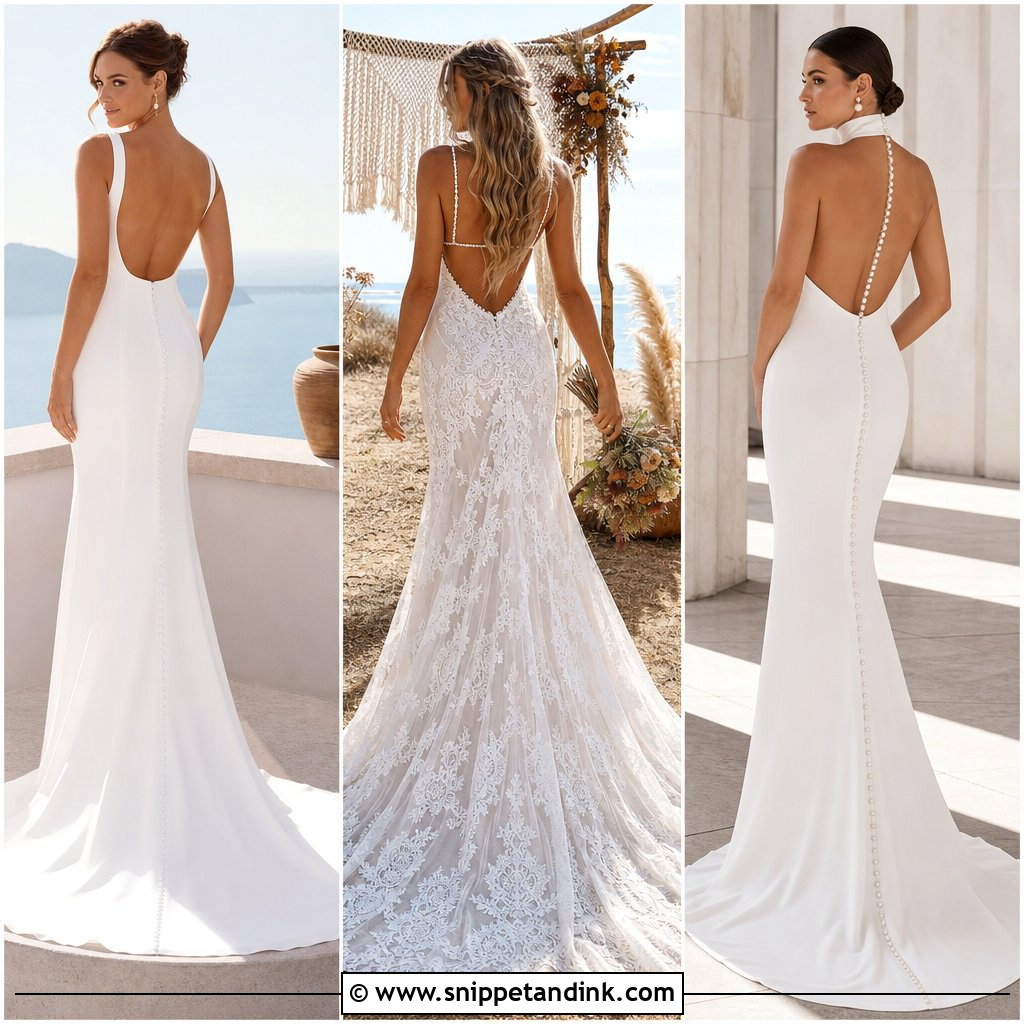
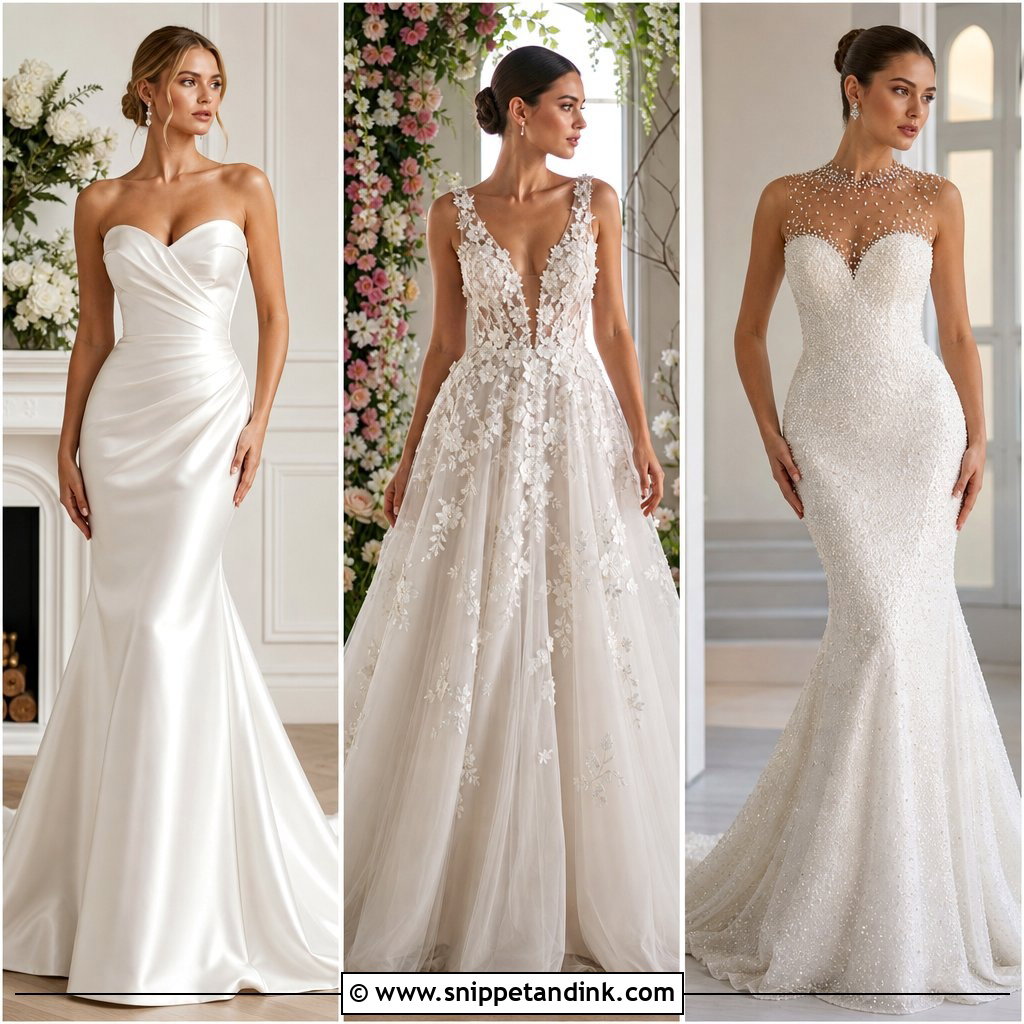
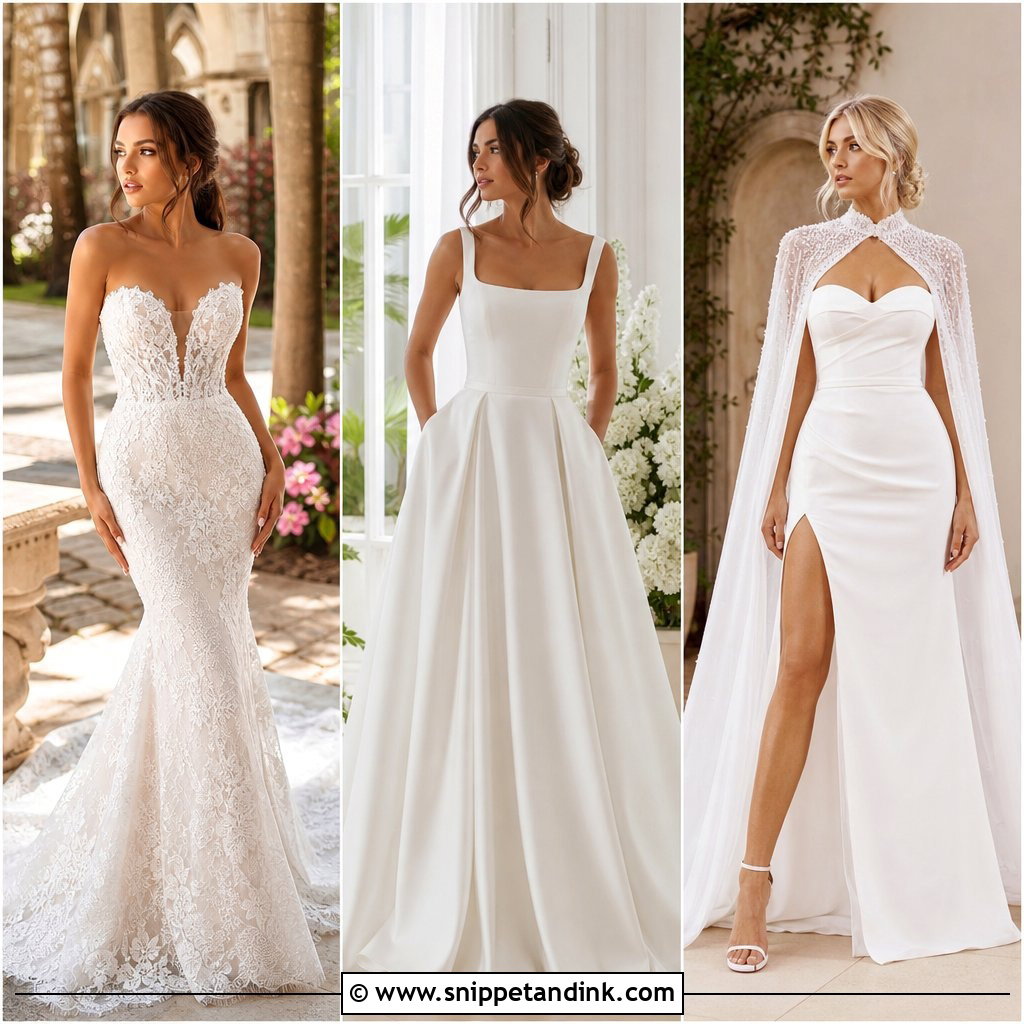
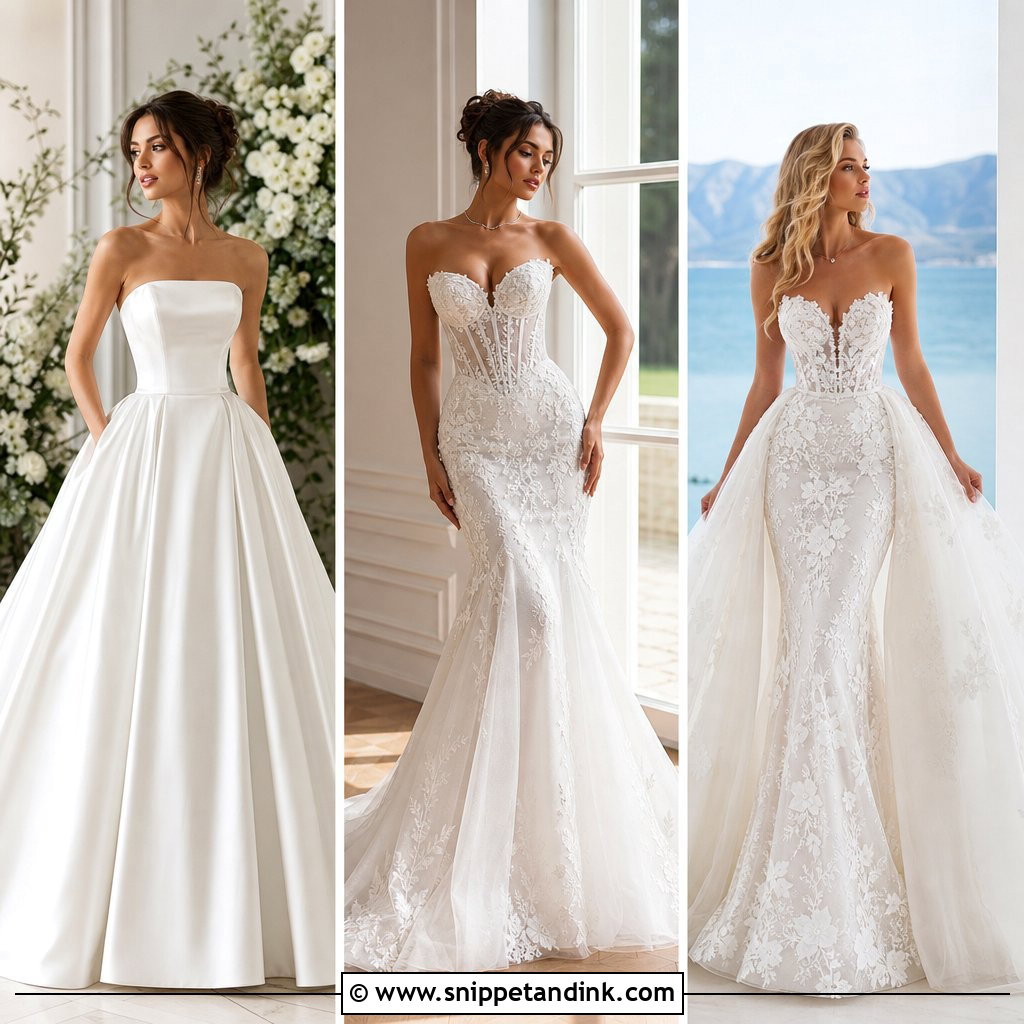
Bright white is at its best in fabrics with structure: clean satin, mikado or heavy crepe, cut as a sleek column or a full ball gown. A gown in pure white usually has a cool, slightly blue base, so silver, crystal and pearls sit more naturally against it than yellow gold. A cathedral veil, pointed satin pumps and white roses with plenty of green finish it. If you have warm undertones and love white anyway, I’d soften the contrast at the face with champagne-toned makeup and creamy flowers rather than giving up the dress. Check it near a window too, as optical white can look faintly blue under cool indoor bulbs.
2. Ivory Wedding Dress
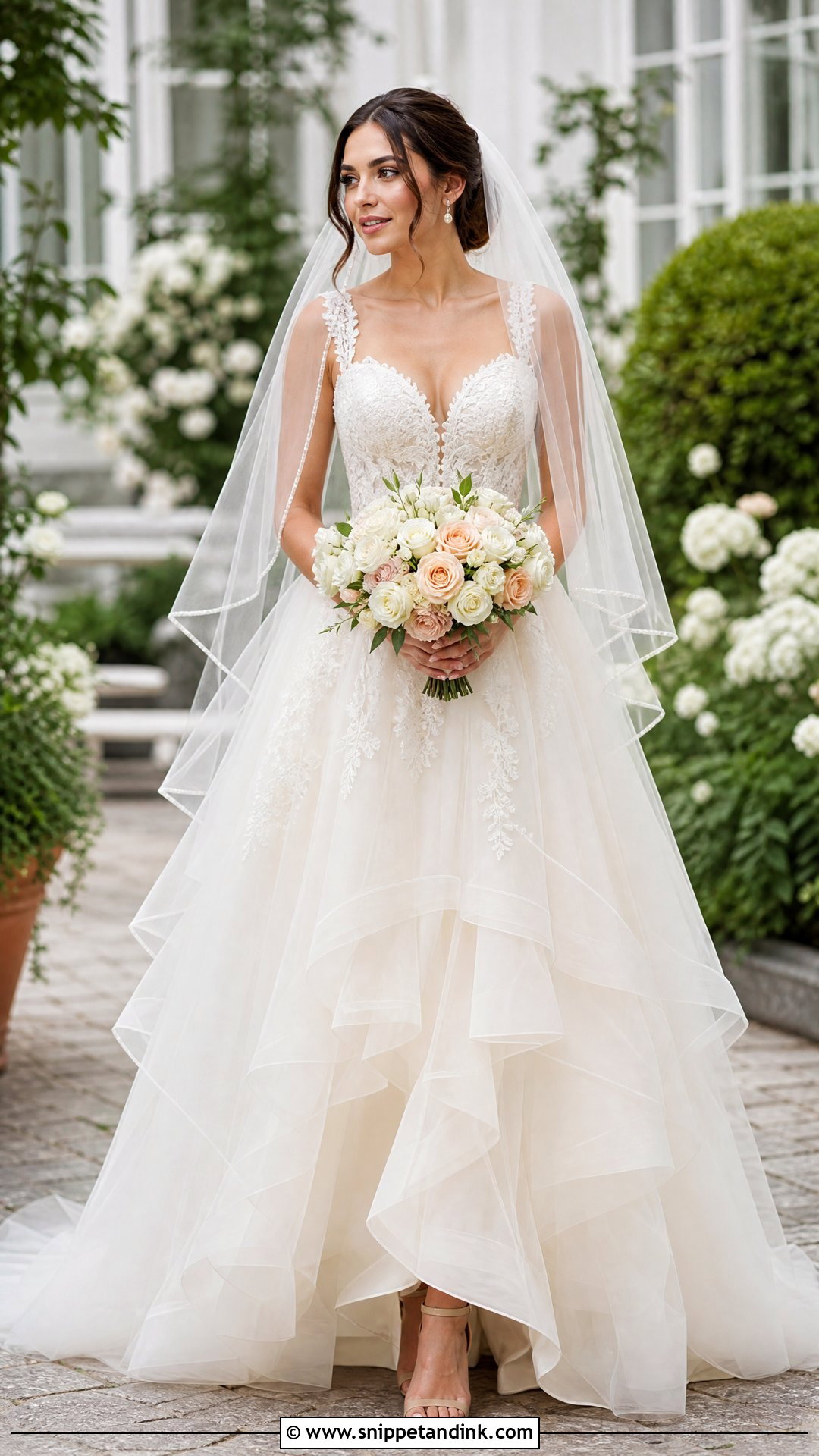
Ivory is the shade I’d put most brides in first, simply because it’s kinder to more skin tones than pure white. That creamy base suits lace, silk, organza and chiffon equally. An A-line with a fitted lace bodice, fine straps and a layered skirt is a balanced choice; add an ivory fingertip veil, pearl drops, nude heels and a satin clutch, with ivory roses, pale peach blooms and eucalyptus in the bouquet. The word covers a wide range. Some ivories lean yellow, others are barely off white, so line up three or four side by side and you’ll see it straight away.
3. Cream Wedding Dress
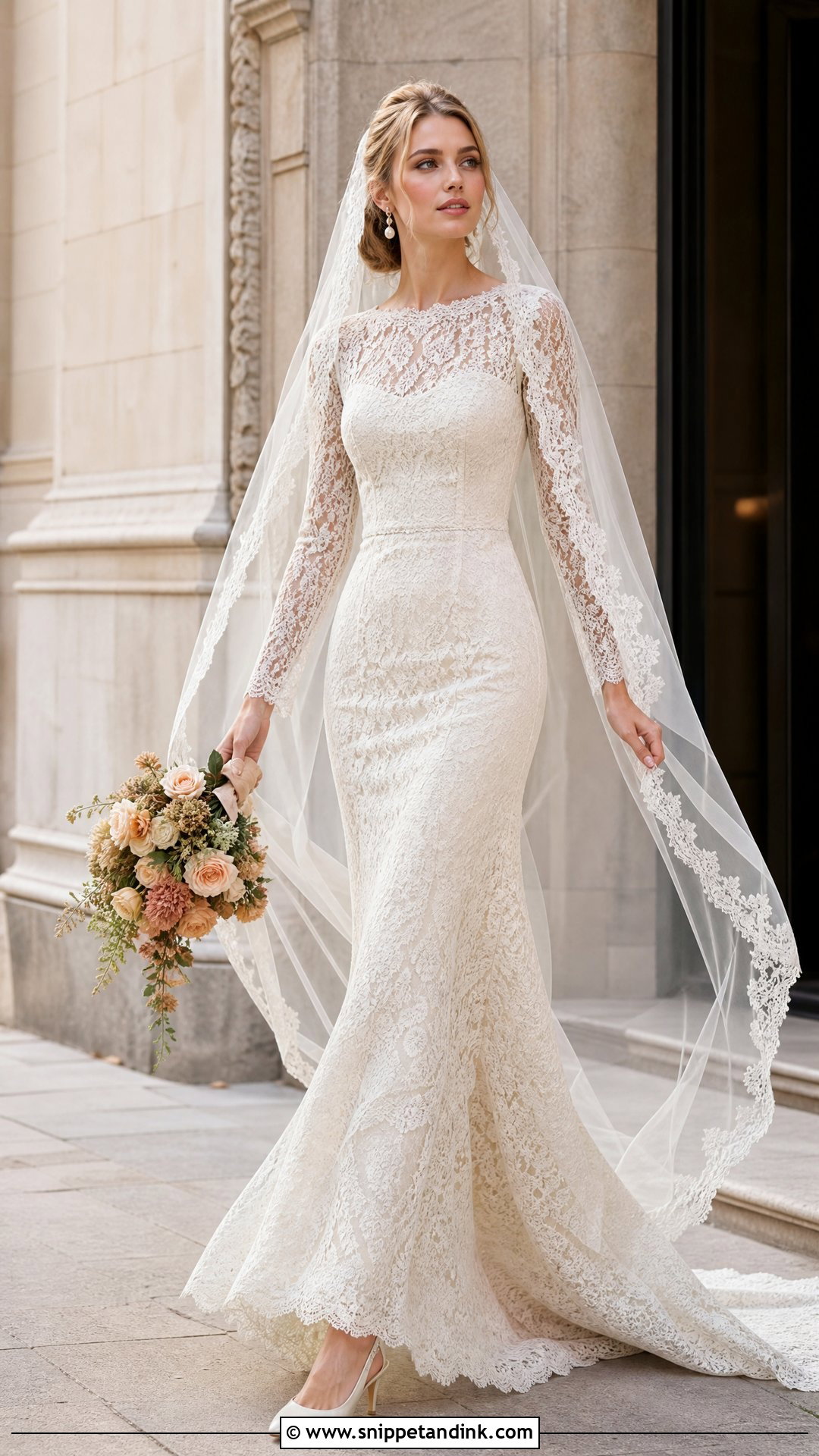
Cream is warmer again, and it’s where a gown starts to feel vintage. Matte satin, crochet lace, embroidered tulle and fluid silk all take it well. For a garden or an old house, a long-sleeve cream gown with a fitted waist and a soft flare, antique-style pearl earrings, a low textured bun, cream slingbacks and a lace-edged veil. Apricot, ivory, muted pink and greenery in the flowers carry the warmth through. Golden and olive skin tones usually glow in it. The one thing I won’t do is pair it with bright white accessories: next to optical white, cream suddenly reads as yellow.
4. Champagne Wedding Dress
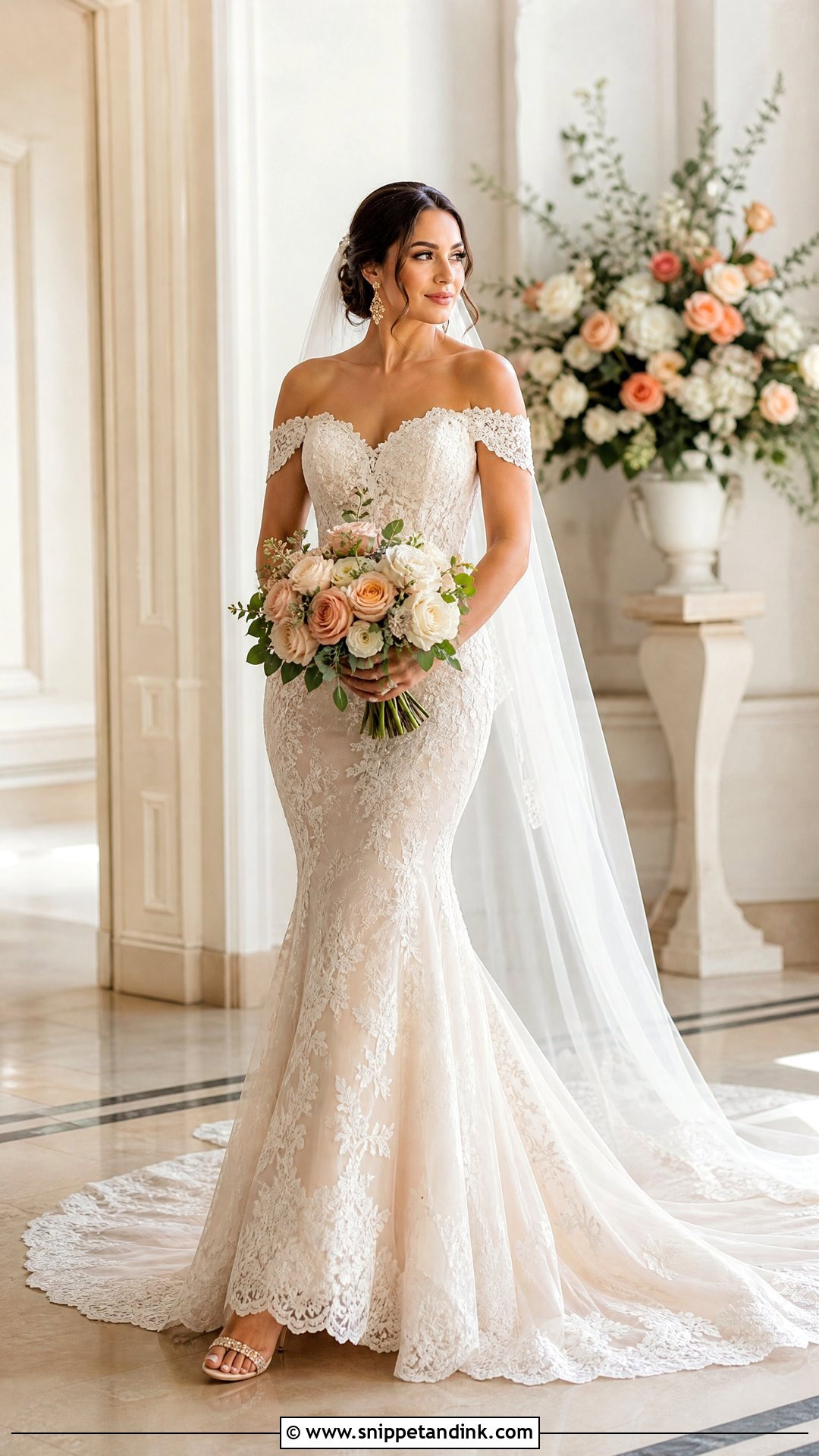
Champagne gives a gown subtle golden depth without turning it metallic, and it’s the lining I’d choose under ivory lace. The darker base makes every appliqué and bead stand out. A champagne fit-and-flare with an off-the-shoulder neckline, a lace overlay and a chapel train, warm gold earrings, champagne heels, an ivory veil and a bouquet of cream roses, pale peach and dried grasses. A beaded version suits an evening. Champagne runs from light beige to soft gold, and the paler end can wash out fair skin, so try it on rather than judging from the hanger.
5. Beige Wedding Dress
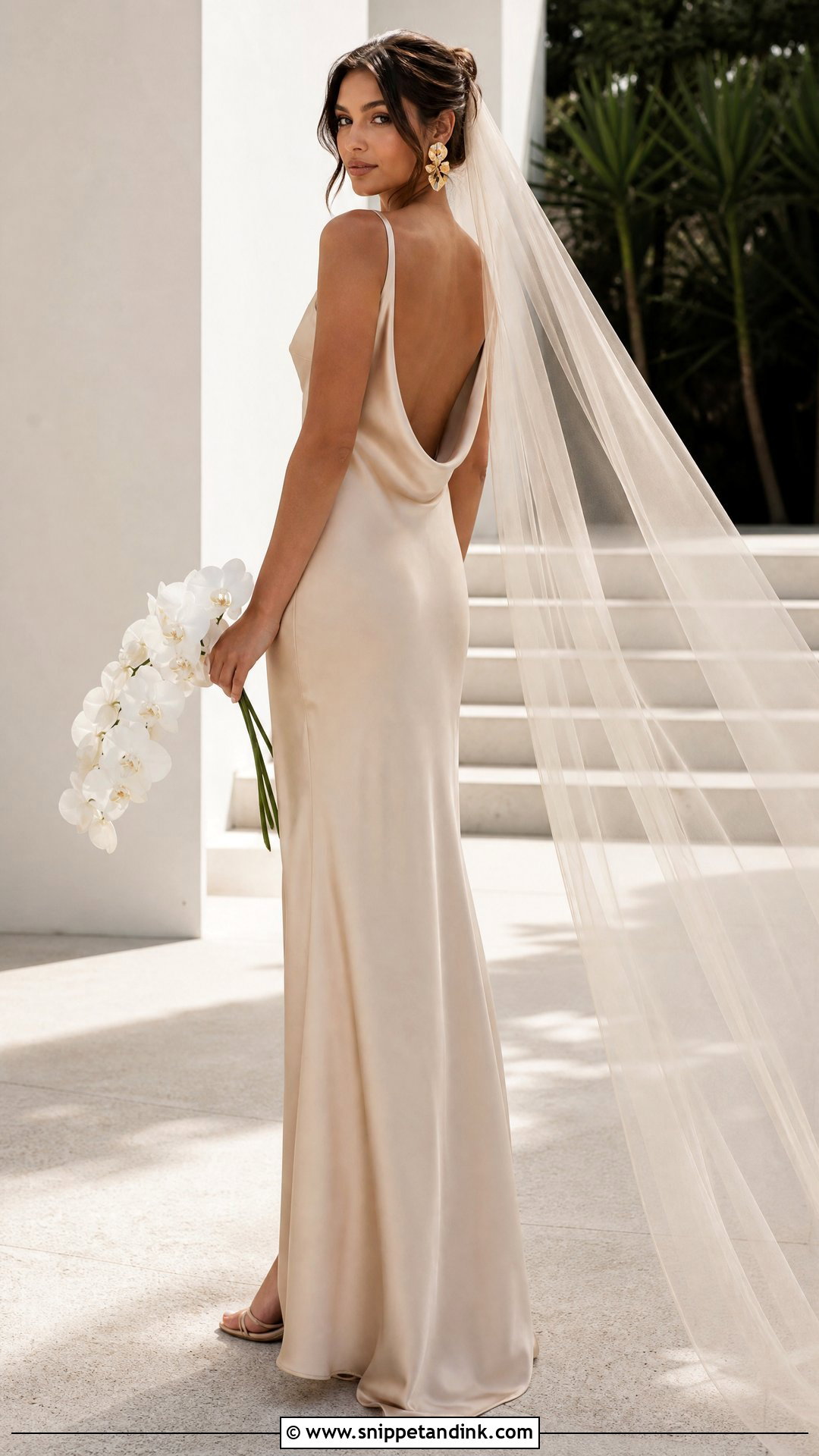
Beige is minimal and earthy, and it has one trap. If the shade sits too close to your own skin tone, the dress disappears and you look undressed from a distance. I look for a beige with a clear step of contrast from the bride’s skin. A draped satin slip with a low back and soft train suits a modern outdoor wedding; add a sheer beige veil, sculptural gold earrings, strappy neutral heels and white orchids. For something more formal, beige tulle under ivory embroidery adds depth. Fresh makeup with a rose or peach lip keeps it lively. Approve alterations only after you’ve seen it outside and under warm evening light.
6. Blush Pink Wedding Dress
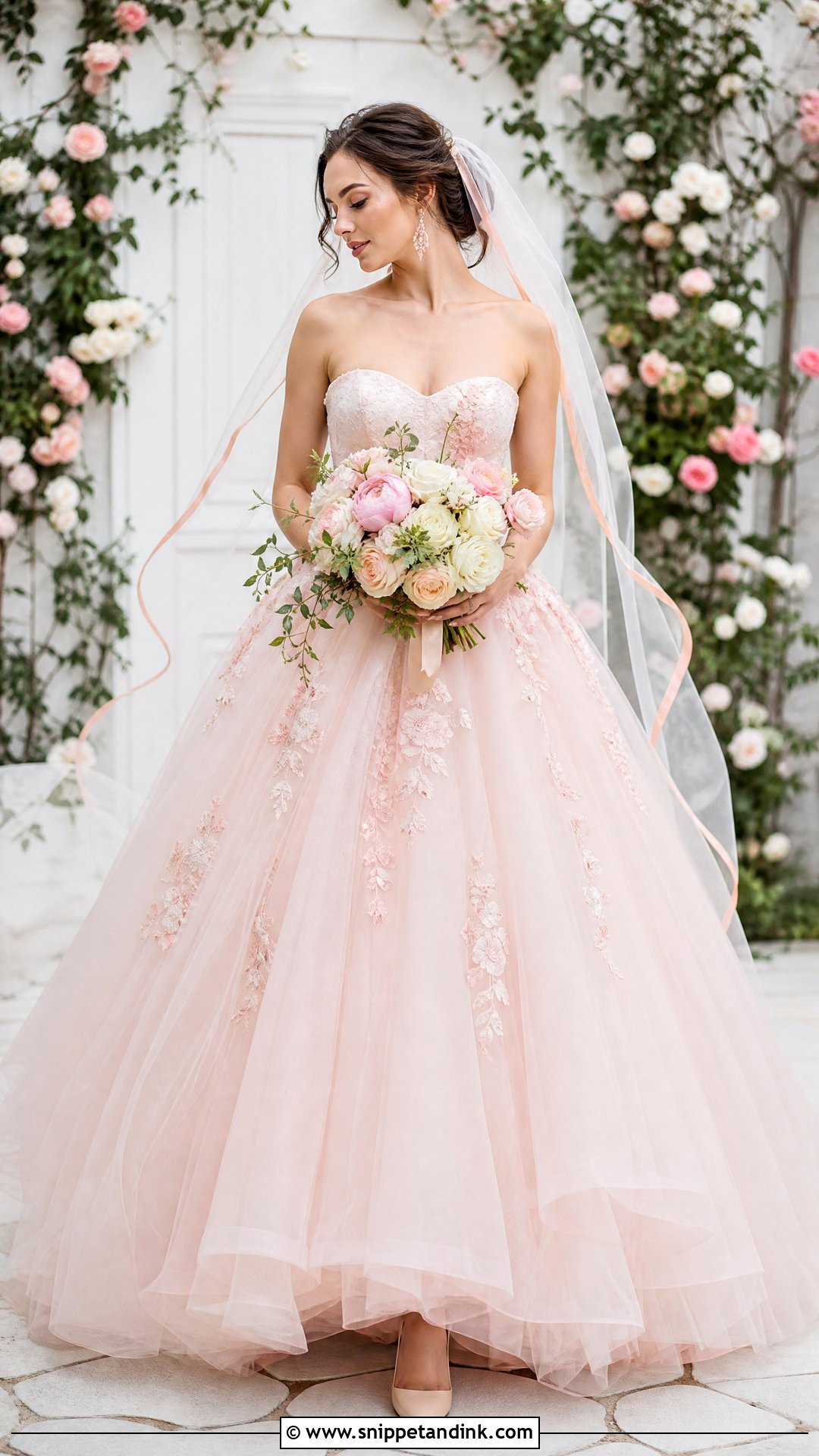
Blush is where I start a bride who wants a hint of pink and nothing louder. In a ball gown, several layers of pale blush tulle build up a soft depth that a single layer can’t. A strapless gown with a fitted bodice, floral appliqués and a sweeping skirt; rose gold earrings, nude pointed heels, a blush-edged veil and cream roses with pink peonies and sage. For something subtler, an ivory lace gown over a blush lining. Blush comes in cool pink, peach and beige-leaning versions, and the wrong one can make skin look sallow, so test it at your face.
7. Dusty Rose Wedding Dress
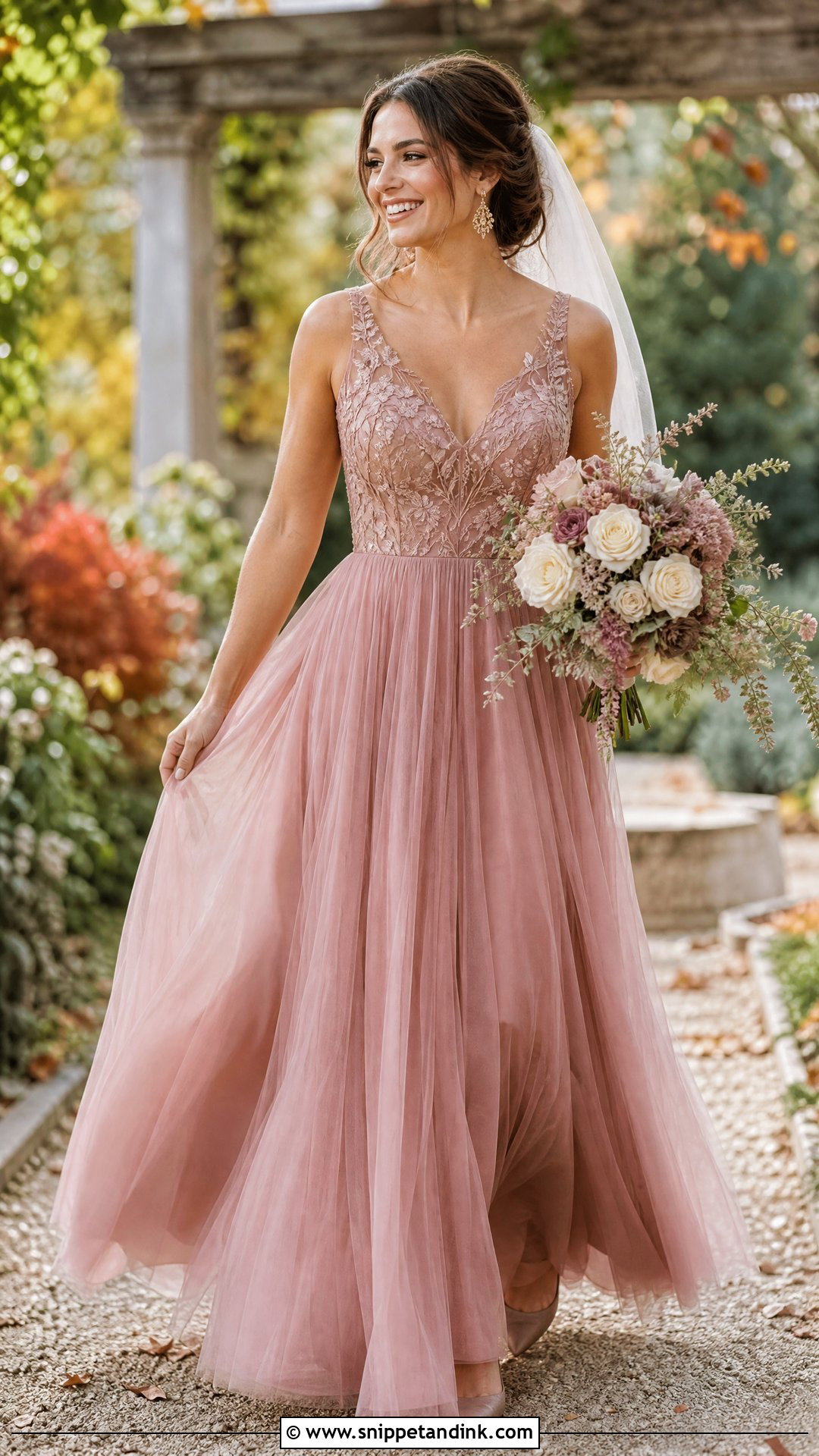
Dusty rose has more grey in it than blush, and that muted depth is what keeps it grown-up. Autumn weddings, gardens and formal rooms all suit it. An A-line with a pleated tulle skirt and embroidered bodice moves well without turning sugary. Antique gold earrings, taupe heels, a plain fingertip veil and ivory roses with mauve flowers and eucalyptus. For an evening, dusty rose satin with a structured neckline and a detachable train. Keep your makeup in rose and soft brown rather than matching the dress exactly. Ivory accessories brighten it; bright white ones fight with the muted tone.
8. Peach Wedding Dress
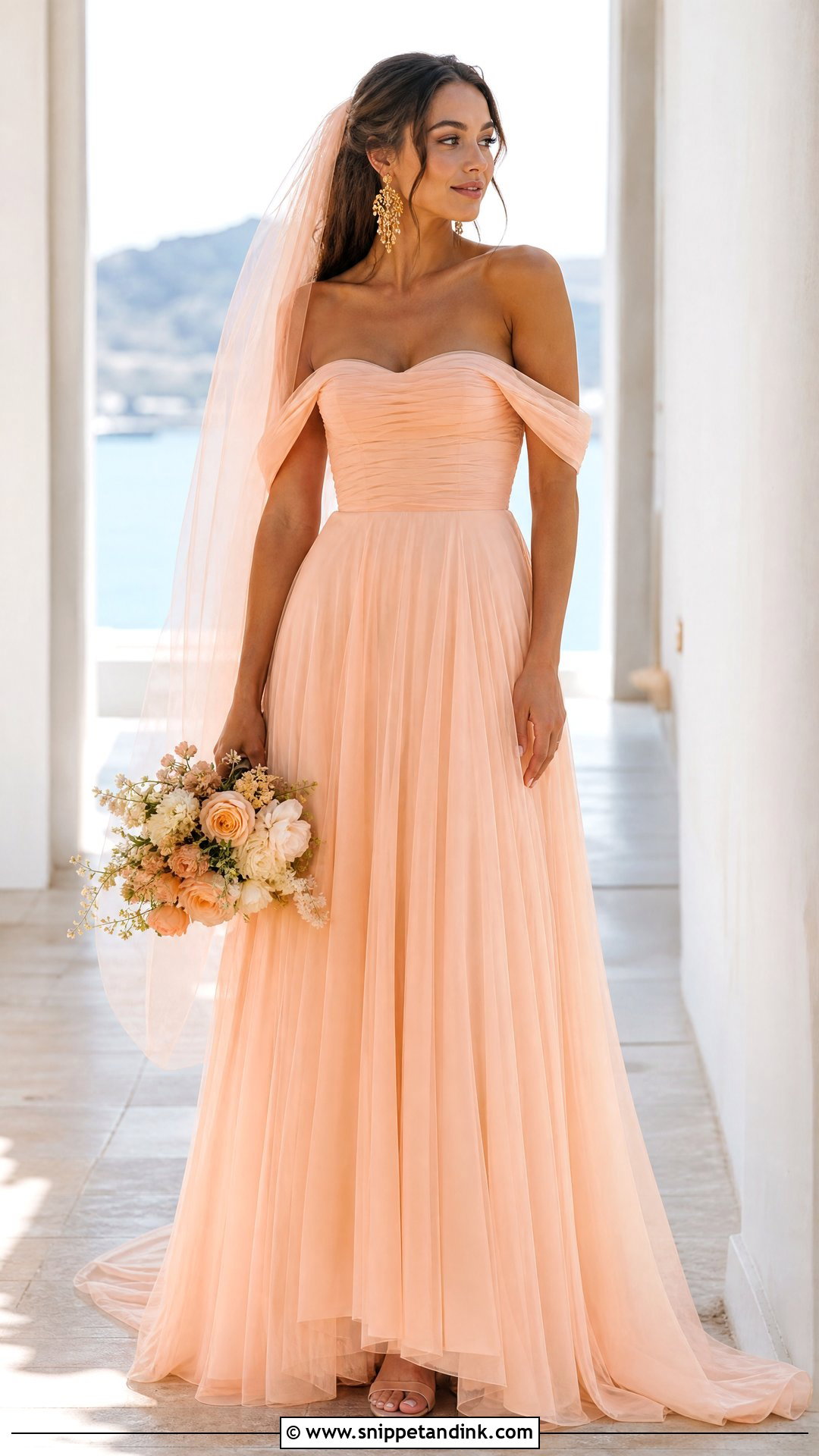
Peach belongs in warm weather: spring, summer or a sunny destination. It’s lightest in chiffon, silk organza and layered tulle. An off-the-shoulder gown with a gathered bodice, a defined waist and a flowing A-line skirt, gold drop earrings, nude sandals, a faintly peach veil and white ranunculus with apricot roses. Peach runs from a barely there tint to warm coral, and I’d go paler the fairer or cooler your skin. Keep the face light with peach blush and a neutral lip, and avoid orange accessories that concentrate the color.
9. Butter Yellow Wedding Dress
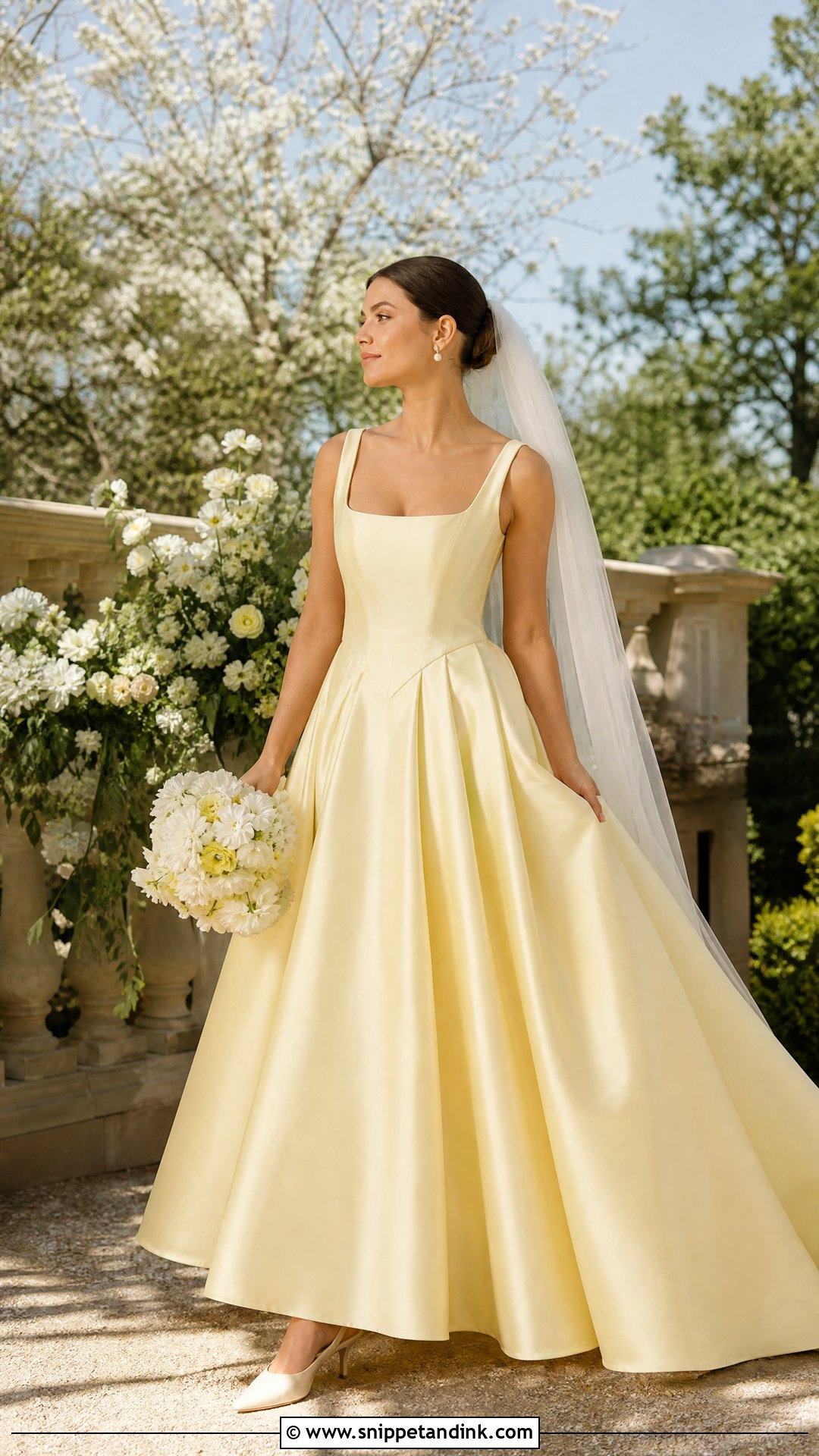
A butter yellow wedding dress is cheerful without tipping into costume, provided it stays pale. Sunny ceremonies, spring gardens and relaxed summer venues suit it. A silk gown with a square neckline, fitted waist and full skirt, pearl earrings, ivory low heels, a light cream veil and white flowers with a few small yellow accents. Pale yellow tulle with white floral embroidery adds texture. Yellow bounces color onto the skin under the chin, which flatters some brides and turns others slightly green. Hold it at your face in daylight before ordering. Neutral makeup, soft brown liner and a peachy lip balance its warmth.
10. Lavender Wedding Dress
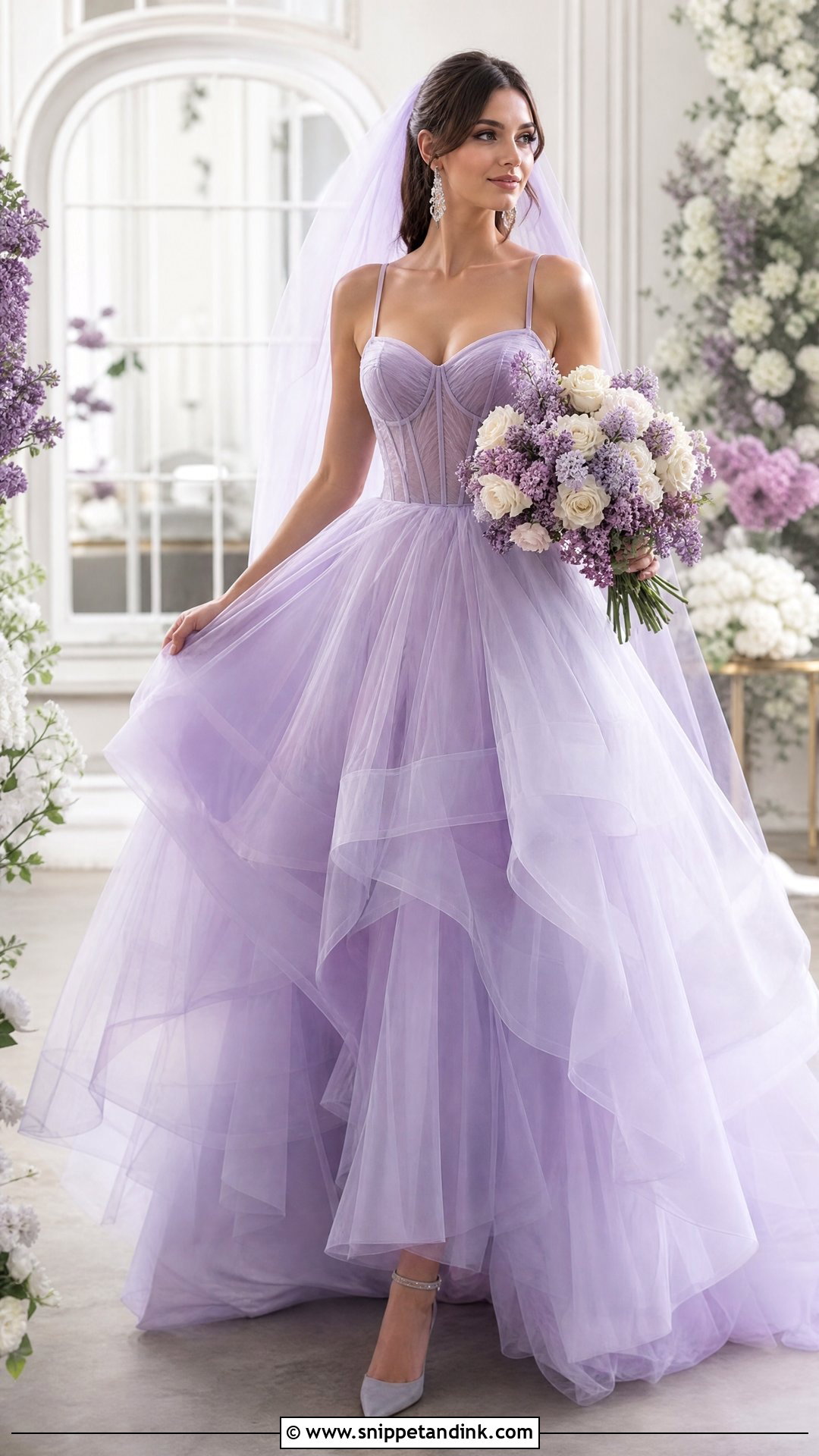
Lavender is pastel color for a bride who still wants softness. Tulle, organza and fine embroidered lace suit it best. A ball gown with a structured bodice, thin straps and airy layers is the formal version; a fitted lavender satin is the cleaner, modern one. Silver or white gold earrings, pale grey heels, a sheer lavender veil and ivory roses with lilac and muted greenery. Keep accessories light. Lavender can lean pink or blue, and the difference shows on your skin, so compare a few fabrics and pick the one that brightens your face, then let the florist work from that.
11. Powder Blue Wedding Dress
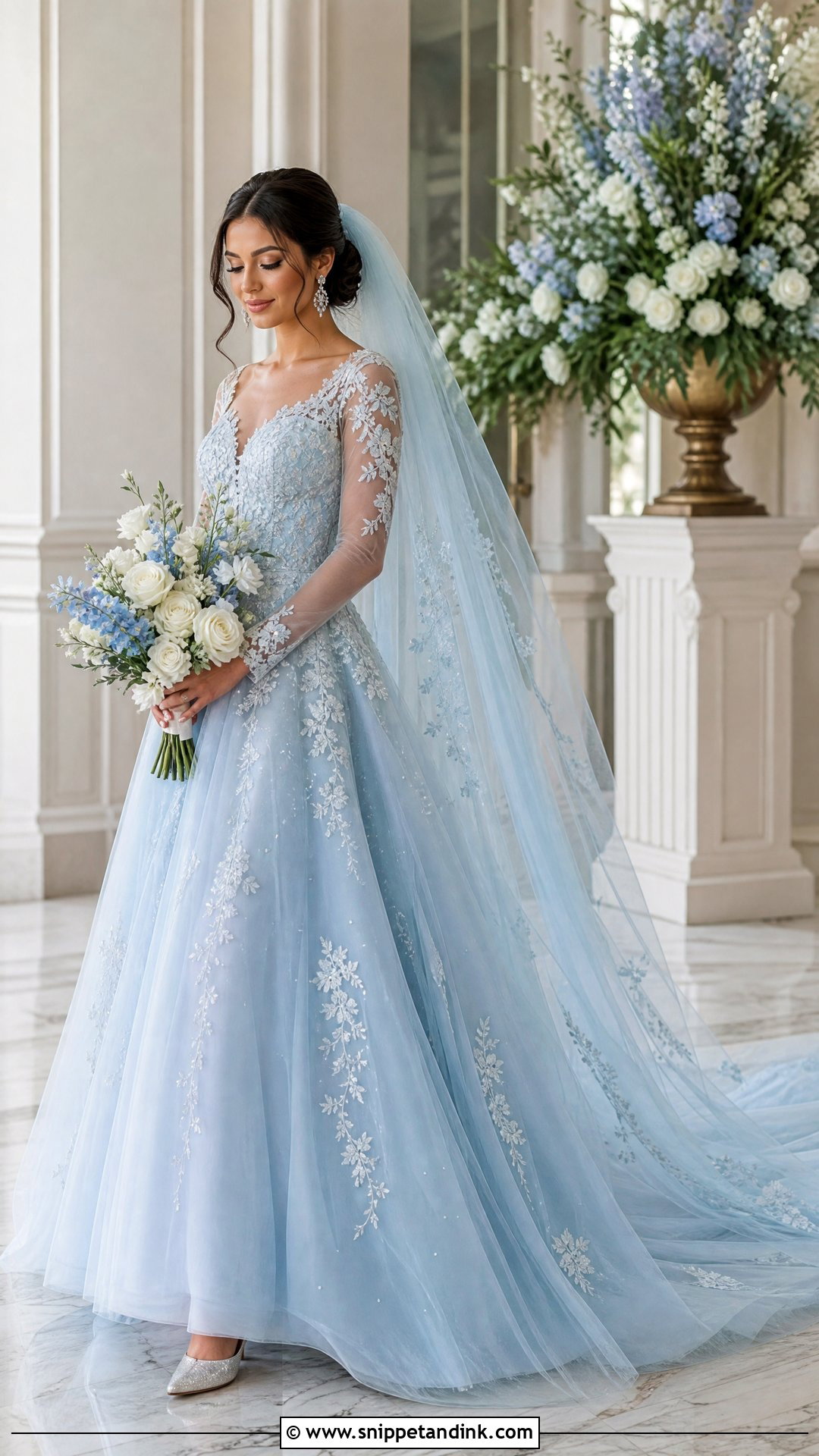
Powder blue turns “something blue” into the whole dress. Layered tulle, silk and floral jacquard all carry it well. An A-line with a fitted bodice, delicate appliqués and a sweeping train; crystal earrings, silver pumps, a soft blue veil and white roses, blue delphinium and eucalyptus. If a fully blue gown feels like too much, ivory lace over a powder blue lining gives a hint of color. Keep hair polished and makeup soft. Pale blue can look nearly white in bright sun and much cooler indoors, so look at the fabric in both before you settle on it.
12. Dusty Blue Wedding Dress
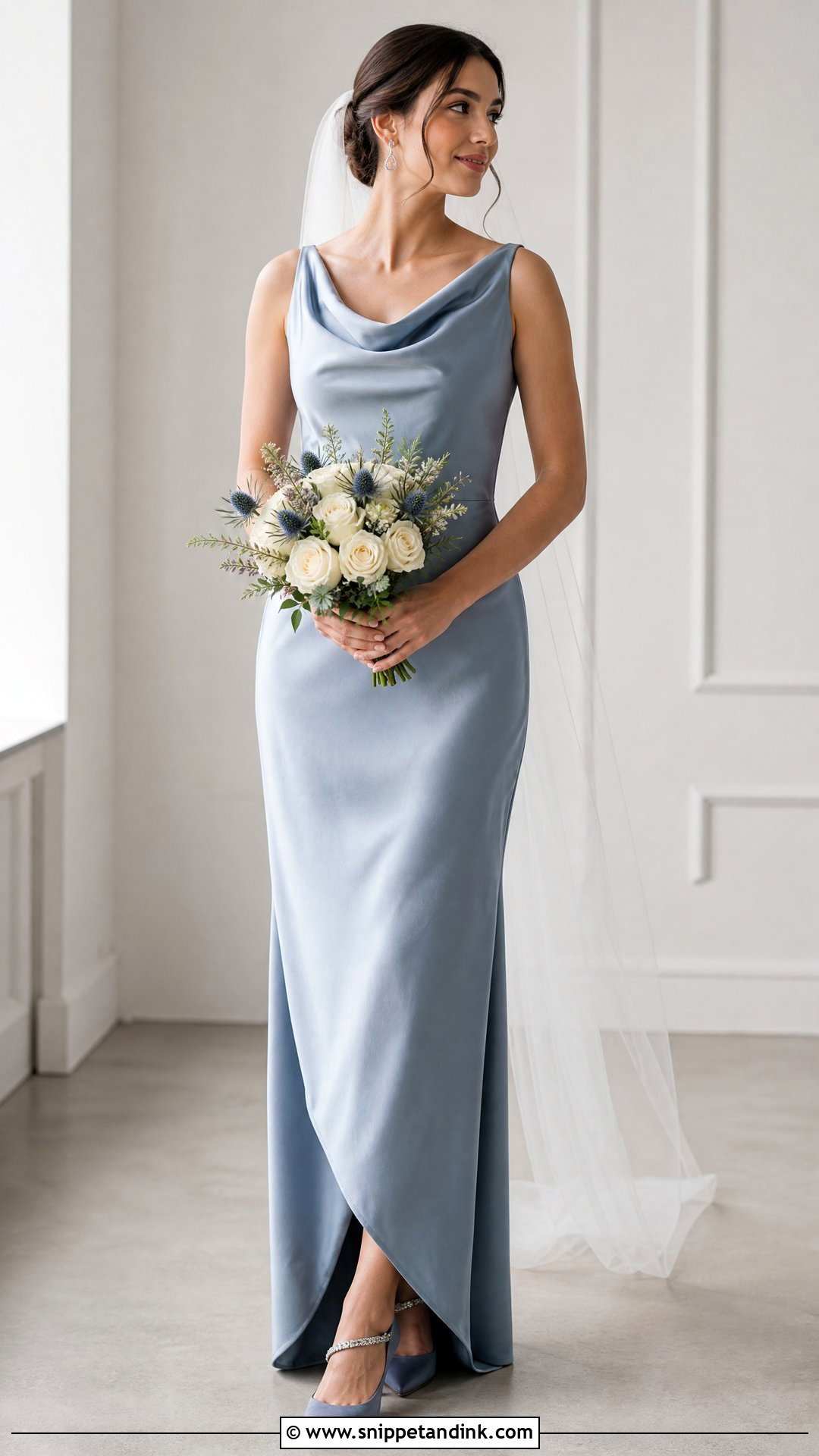
Dusty blue has enough grey to stay calm, which is why I find it suits brides who are nervous about color. A satin gown with a draped neckline, fitted waist and floor-length skirt is formal and easy to wear. Silver drops, slate-blue heels, a plain sheer veil and ivory roses with blue thistle. For a softer look, dusty blue tulle with ivory floral embroidery. Hold back on other blues around it; two or three different blues in the shoes, flowers and bridesmaids start to argue. Pearls bring back a familiar bridal note, and cool rose makeup suits it.
13. Sage Green Wedding Dress
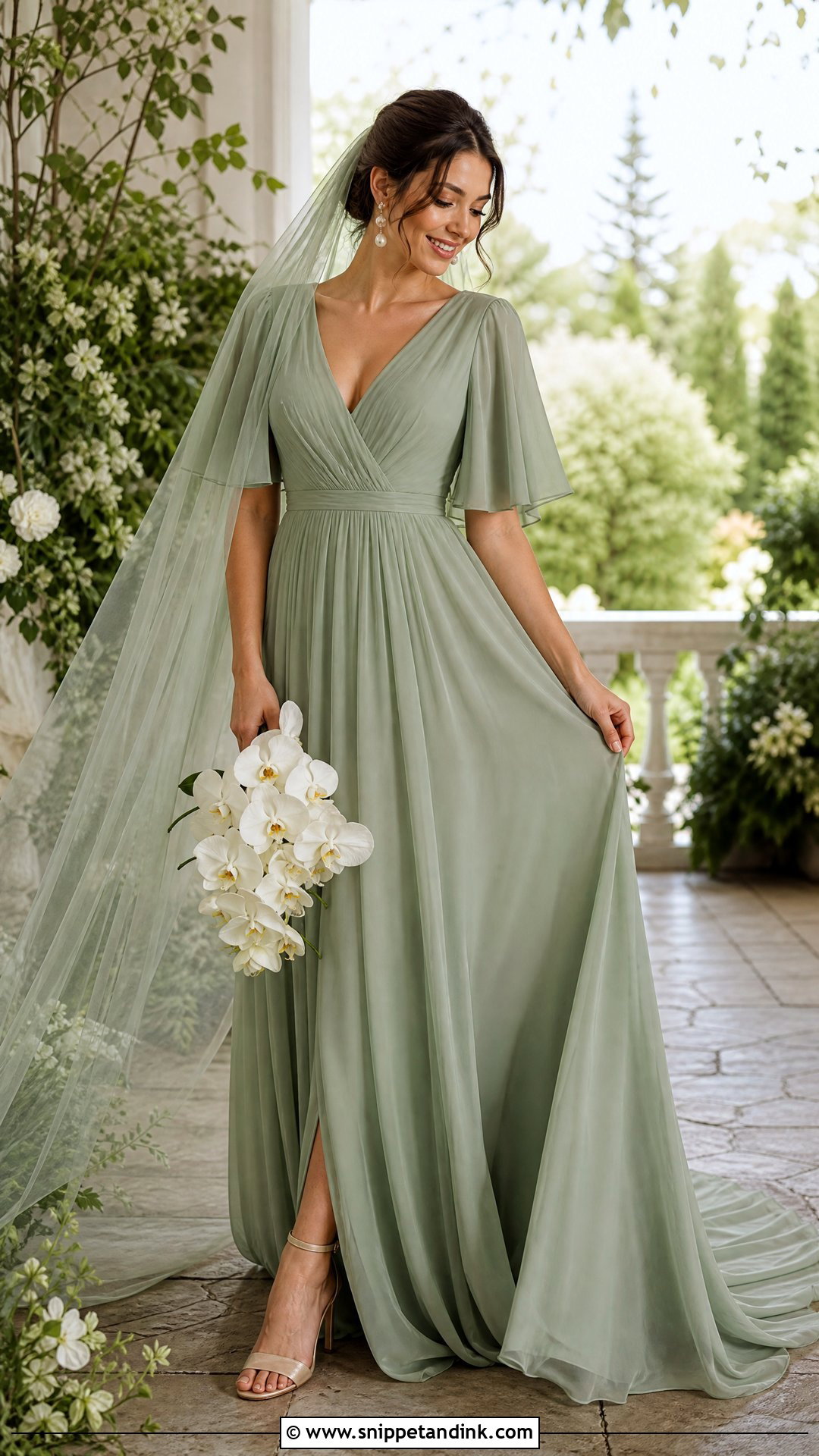
Sage is quiet and natural, and it settles into a garden or botanical venue as if it grew there. A softly draped sage chiffon gown with flutter sleeves, a defined waist and a flowing skirt is the understated version. Finish it with pearl earrings, champagne heels, a sheer sage veil and ivory flowers, white orchids and deeper green foliage. Structured sage satin works indoors. Because the color is so muted, I’d keep one unmistakably bridal element, a long veil or a real train, so nobody mistakes you for a guest. Sage can lean grey, yellow or blue; try all three.
14. Emerald Green Wedding Dress
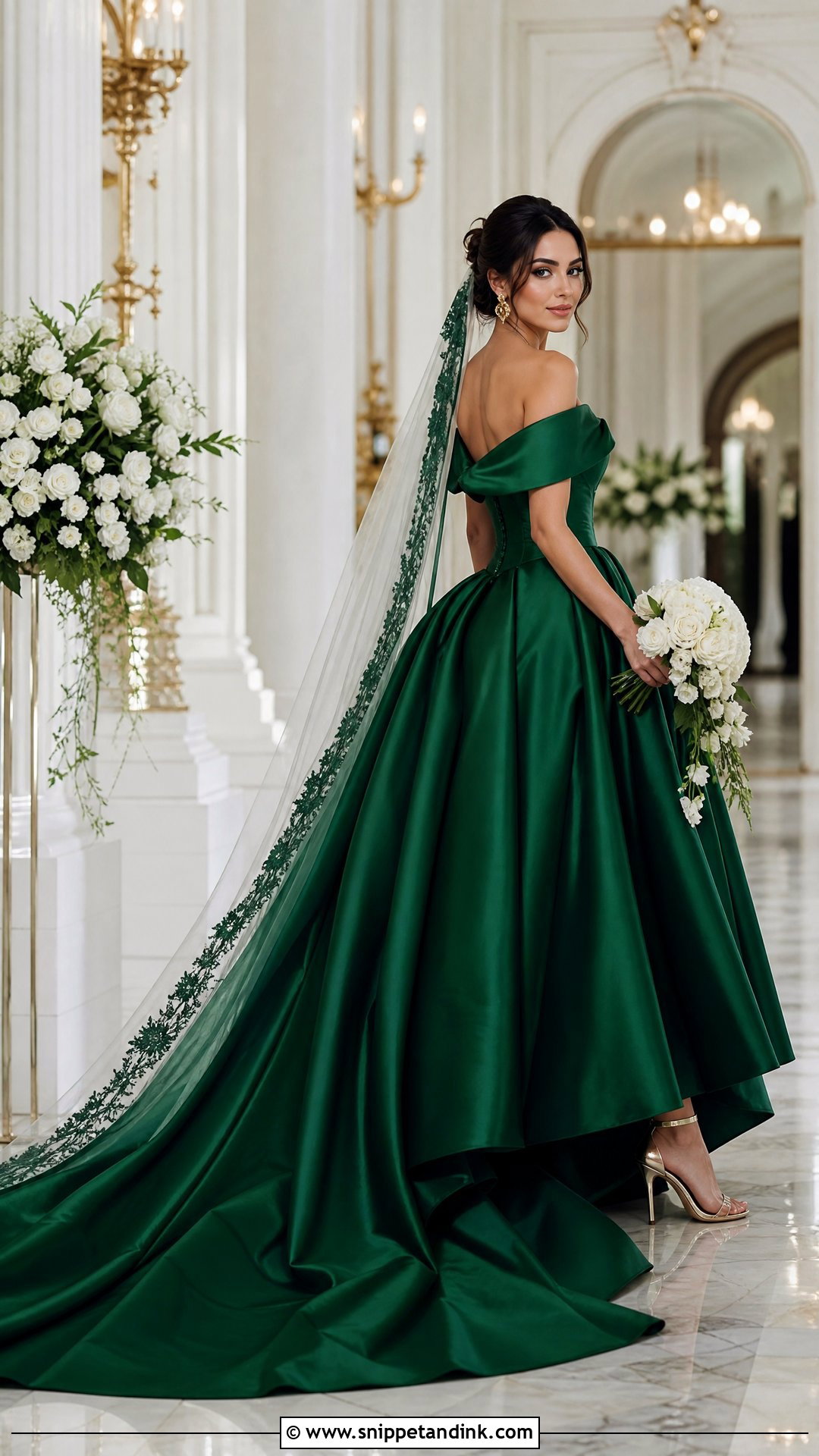
Emerald is a commitment, and it pays off at a formal evening wedding in a richly decorated room. Velvet, satin, mikado and smooth crepe show the color best. An off-the-shoulder ball gown with a fitted bodice, full skirt and long train gives a dramatic shade a classic bridal shape; a sleek column is the modern alternative. Gold earrings, metallic heels, an emerald-edged veil and ivory roses with dark foliage. Keep the other colors restrained. Warm neutral makeup works; a bright red lip competes. Velvet in this shade also crushes where you sit, so ask your seamstress about steaming it on the morning.
15. Silver Wedding Dress
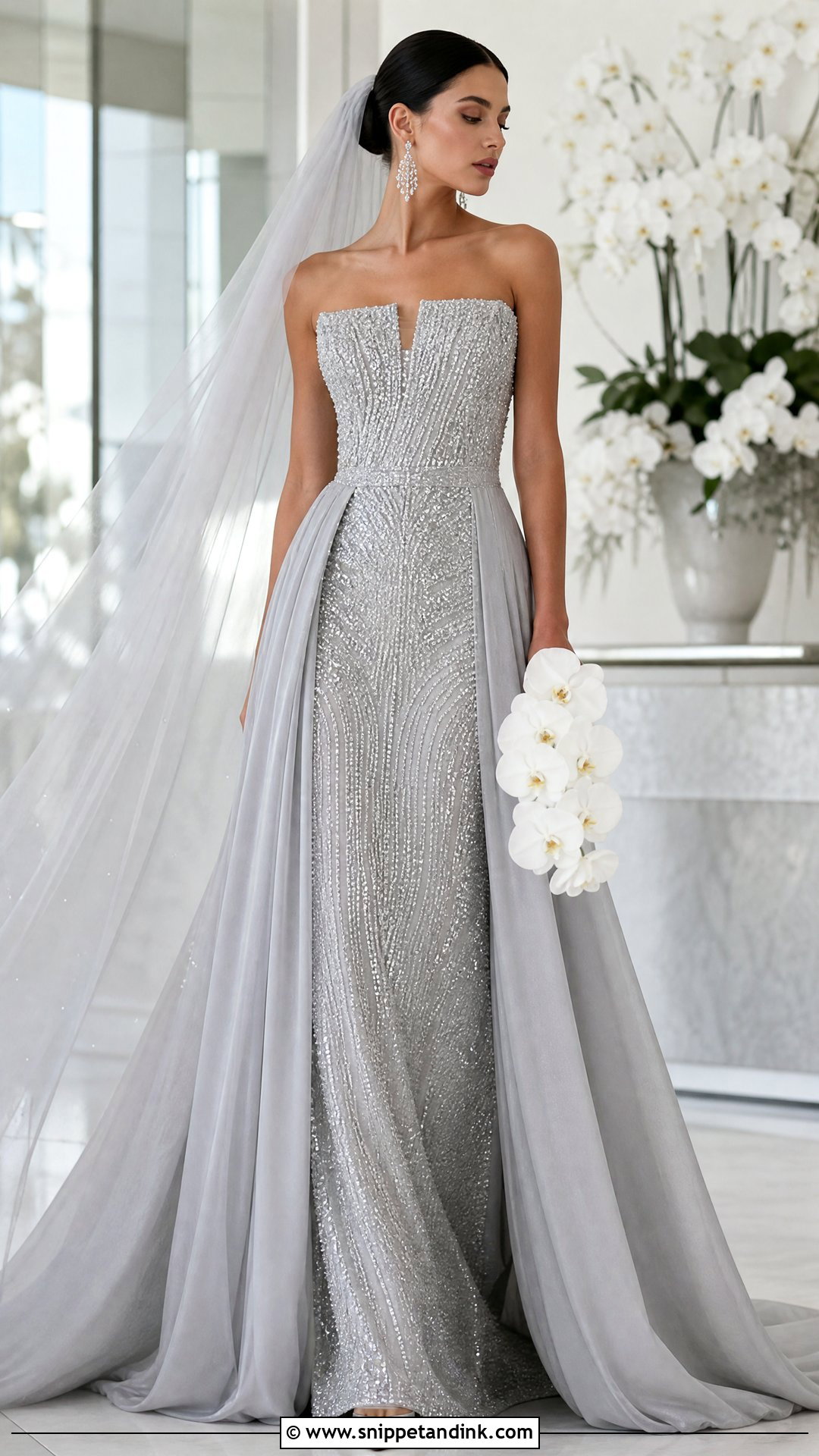
Silver is cool and luminous, best indoors and at night. A beaded silver column with a structured neckline and a detachable overskirt gives you two looks in one evening. Crystal earrings, metallic pumps, a plain pale grey veil and white orchids or calla lilies. If full silver feels too much, an ivory gown with silver embroidery or fine beading is gentler. Heavy beading adds real weight, so check how the gown sits on your shoulders after twenty minutes standing, and keep accessories few, since the fabric already throws light around. A sleek bun and cool neutral makeup suit it.
16. Gold Wedding Dress
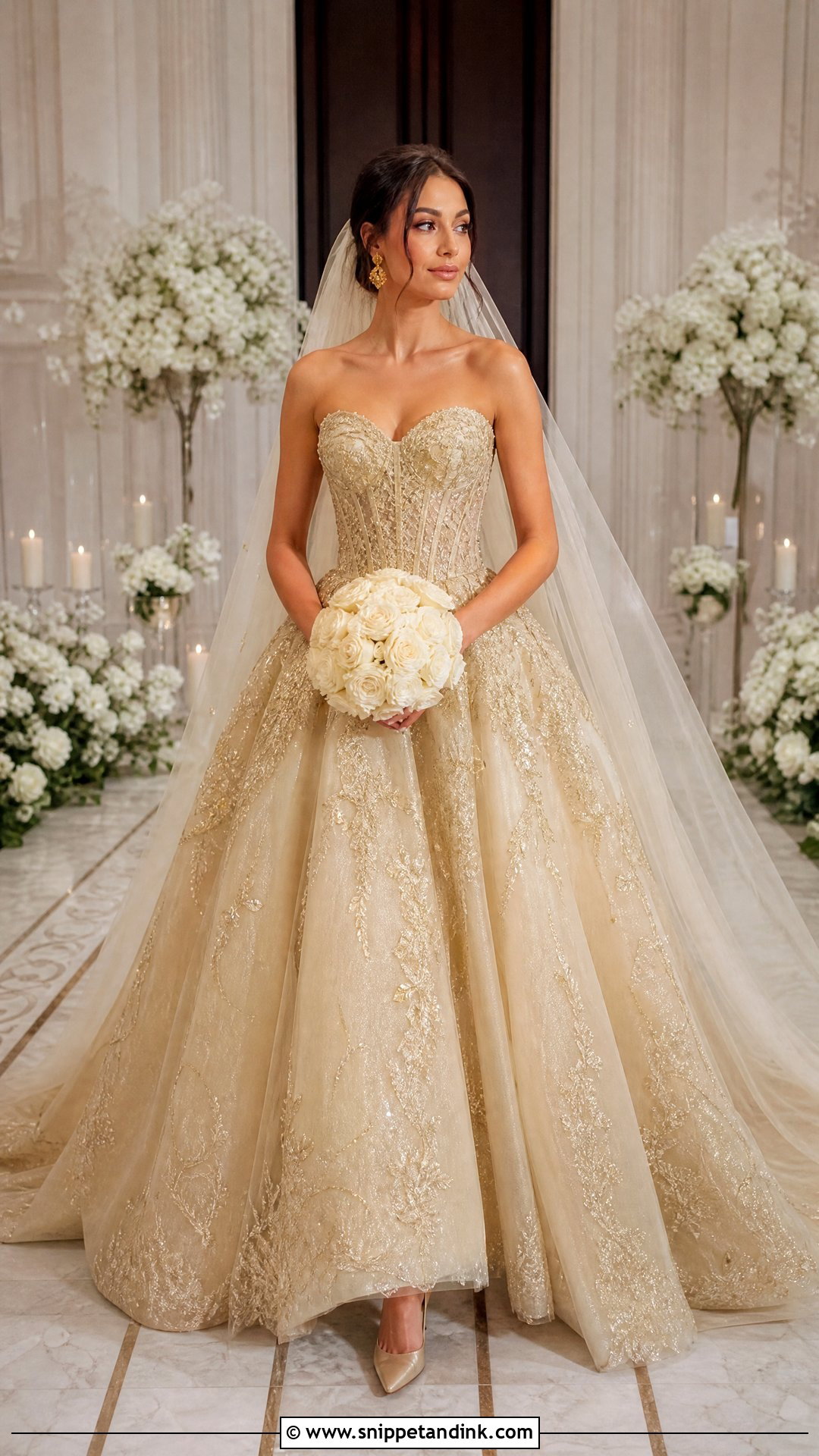
Gold suits an ornate or formal celebration and has real presence. A soft gold ball gown with a corseted bodice, embroidered tulle and a full skirt keeps a traditional shape; liquid gold satin in a draped column is sleeker. Understated gold earrings, champagne heels, a warm ivory veil and cream roses with muted greenery. Keep jewelry minimal so the whole thing doesn’t get heavy. Gold runs from pale champagne to deep antique, and the antique end can look brassy on cool skin. I’d lay your earrings and shoes on the actual fabric before choosing the final shade.
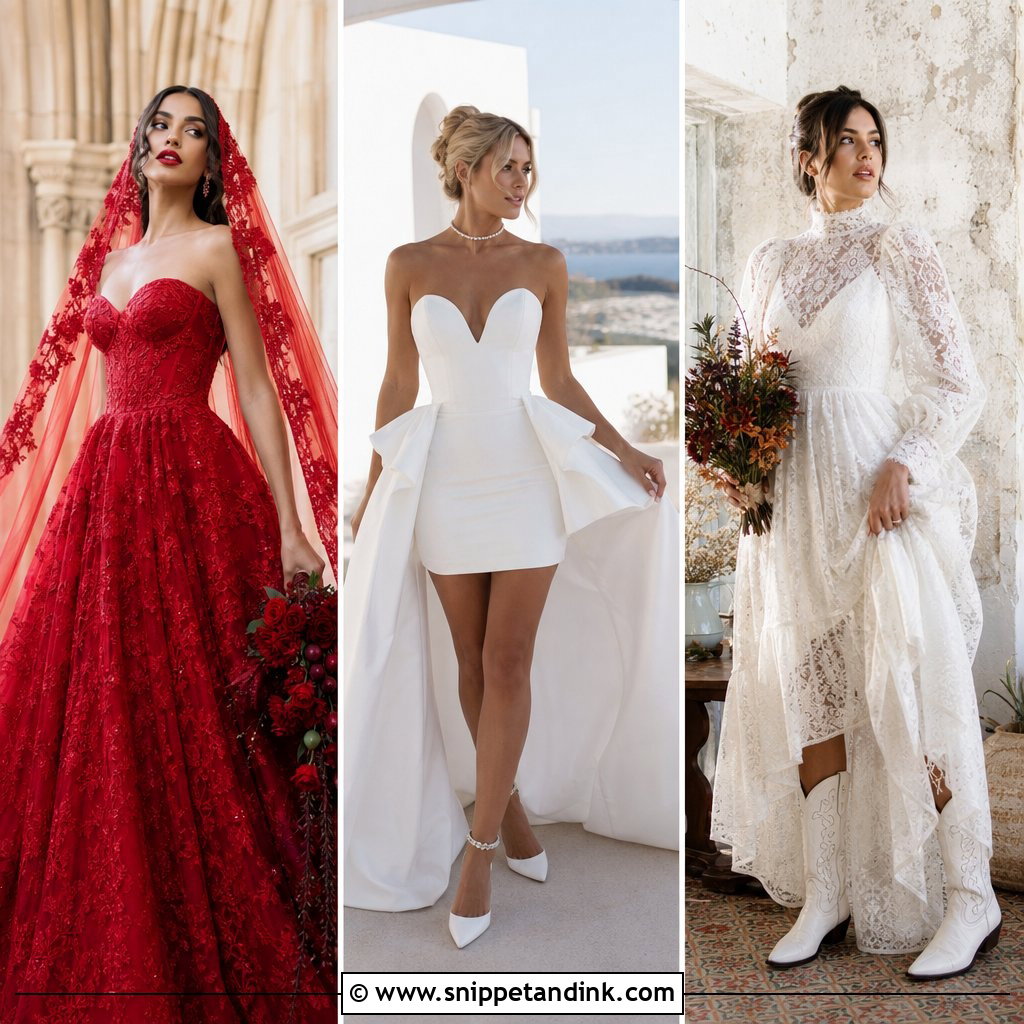
17. Red Wedding Dress
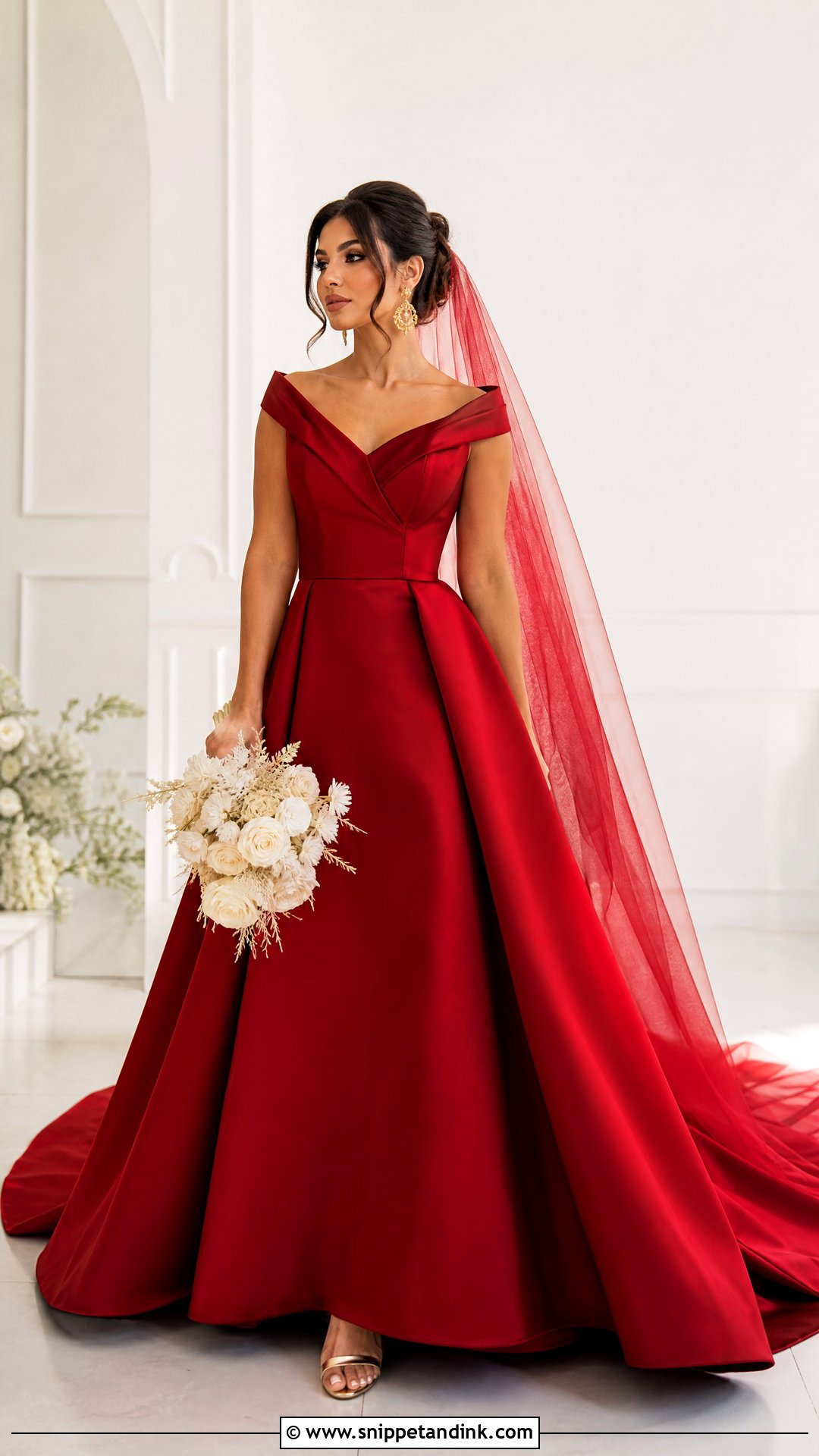
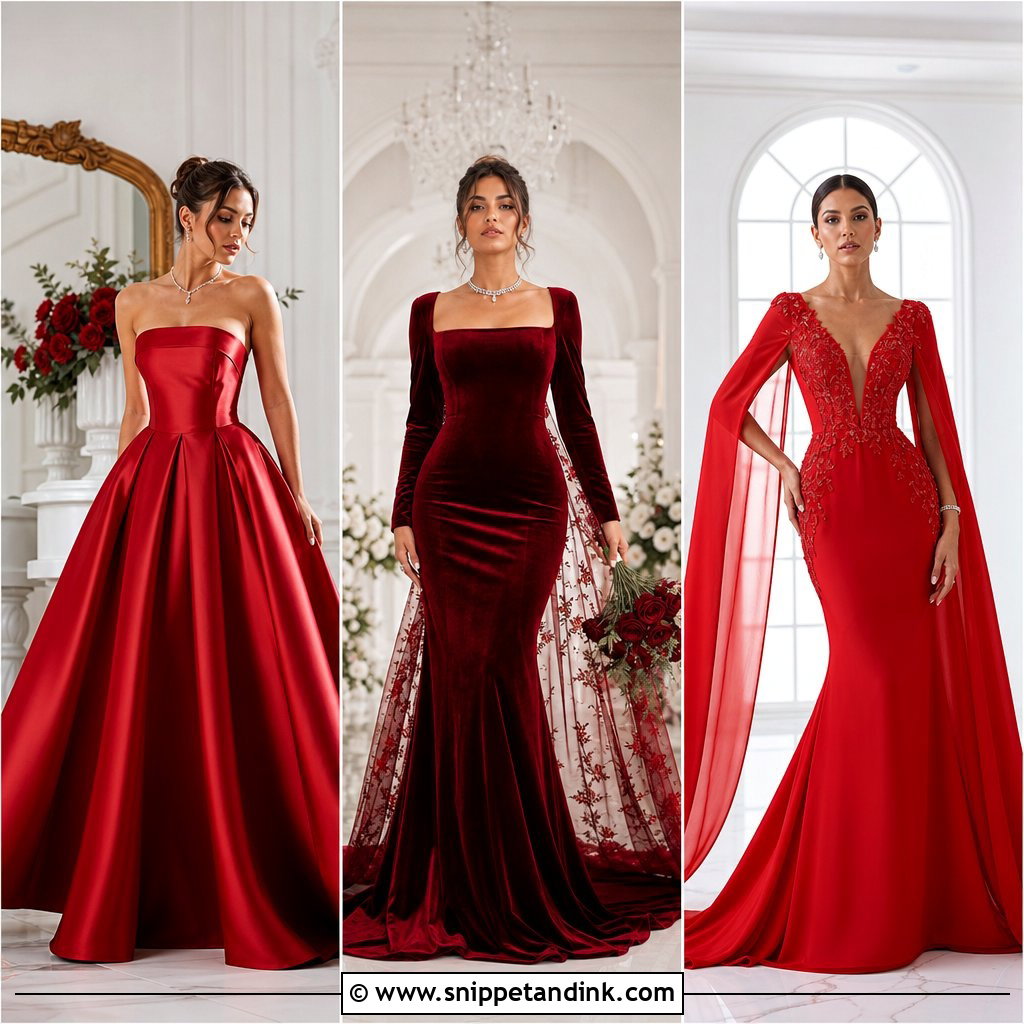
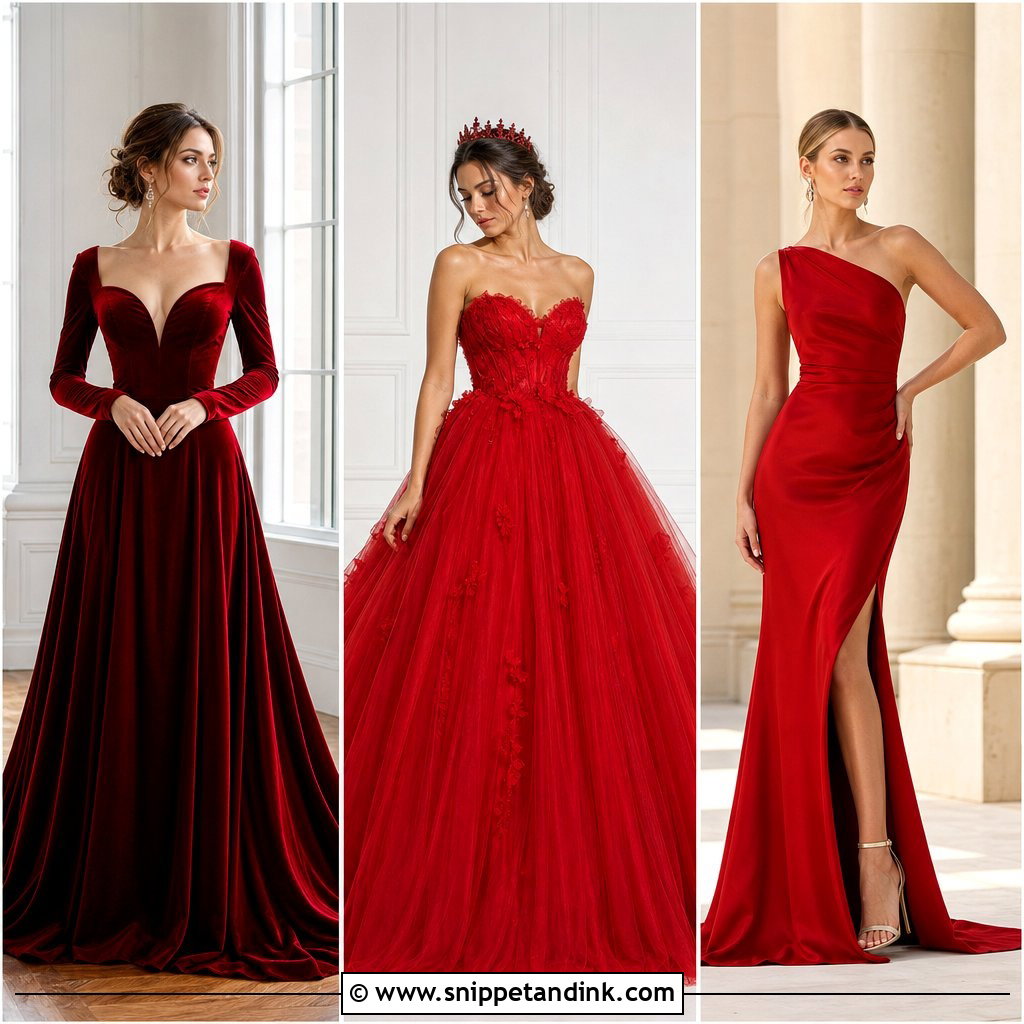
Red is confident and, in many cultures, deeply meaningful as a bridal color, so I always ask what it means to the bride and her family before we style it. A red satin A-line with a structured neckline, a defined waist and a long train is formal and clean; a fitted gown with embroidery is another route. Gold earrings, red or metallic heels, a coordinating veil and cream flowers with restrained greenery. Pick one red and stay with it. A blue-red dress with an orange-red lip or bouquet ribbon looks off. A neutral lip, or one matched carefully to the fabric, is safest.
18. Burgundy Wedding Dress
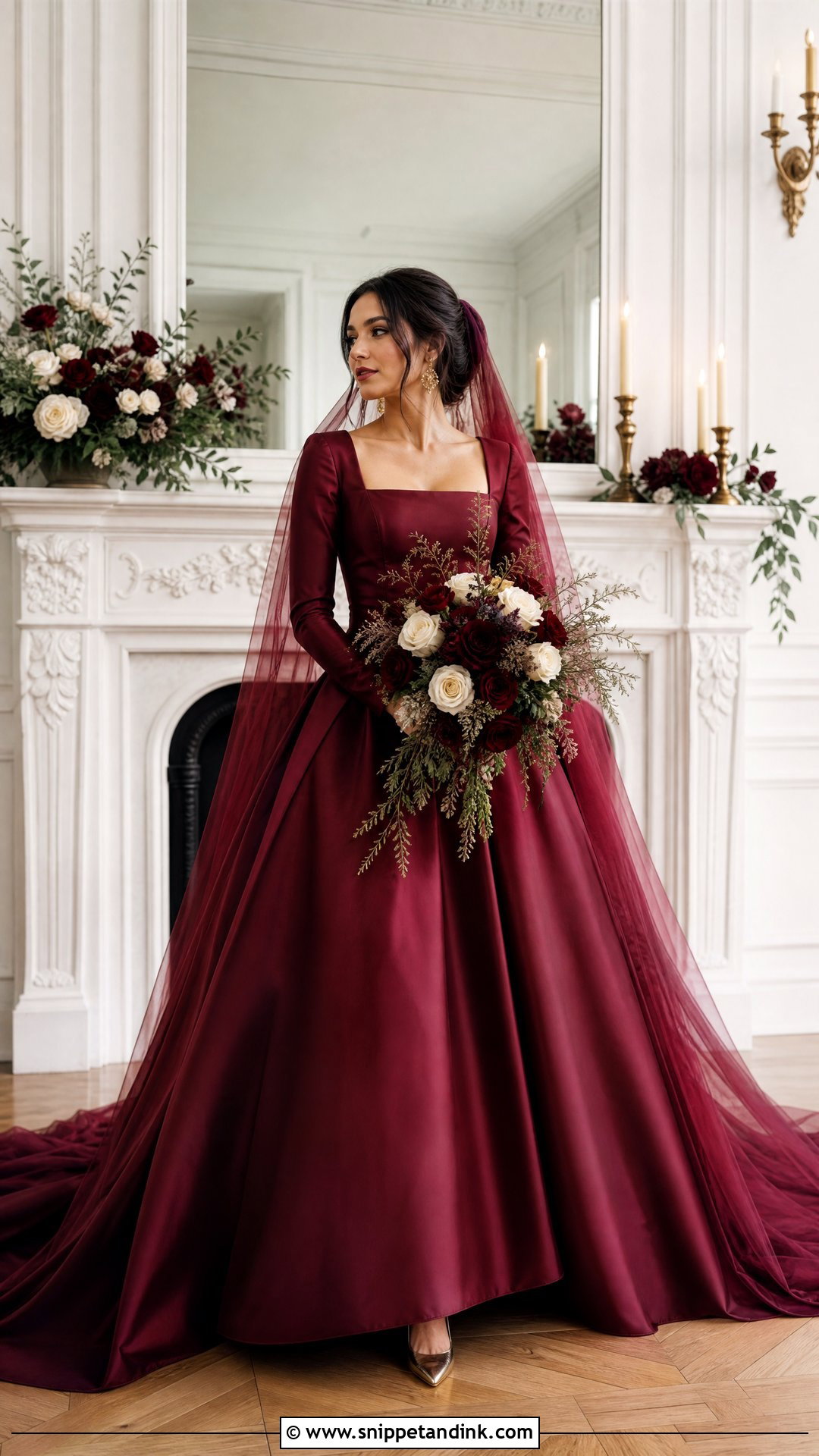
Burgundy has red’s drama with a lower voice, and it comes into its own in autumn and winter. Satin, velvet and layered tulle all suit it. A long-sleeve ball gown with a fitted waist, full skirt and chapel train; antique gold earrings, metallic pumps, a sheer burgundy veil and ivory roses with deep red flowers and eucalyptus. For a modern venue, a clean burgundy crepe with an asymmetric neckline. Warm neutral makeup stops the color feeling heavy. If the gown is richly textured, pare back the jewelry and bouquet.
19. Navy Blue Wedding Dress
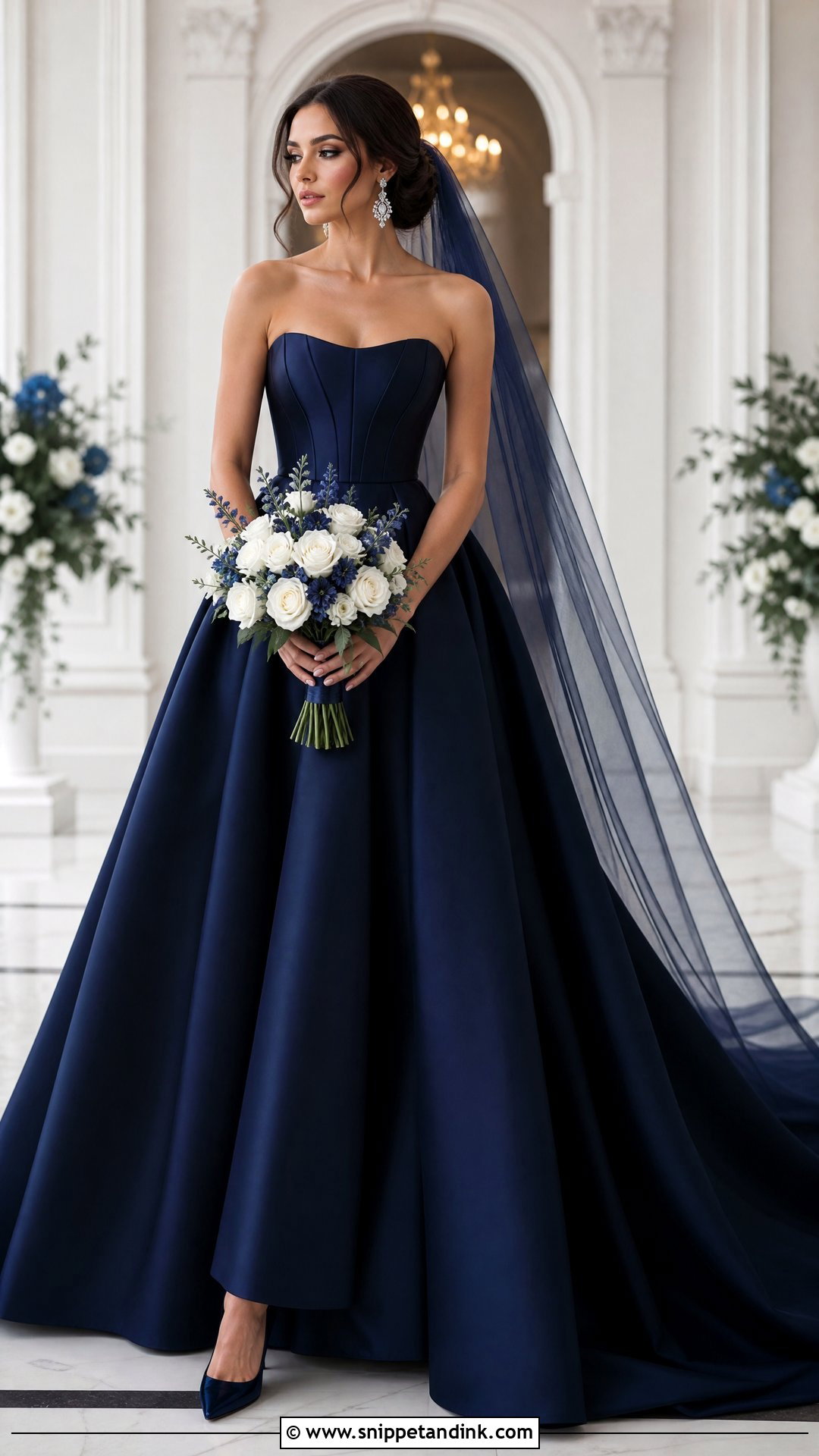
Navy has formality without the severity of black. Smooth satin, structured mikado, lace and softly shimmering tulle all hold it. A strapless gown with a fitted bodice, full skirt and dramatic train is a classic shape in an unexpected color; a navy column with a detachable cape is the streamlined alternative. Silver earrings, navy satin heels, a sheer matching veil and white roses with blue accents. Flat navy with no texture can look like a block in a dim room, so I’d choose a fabric with some sheen, embroidery or weave. Keep makeup luminous and accessories light.
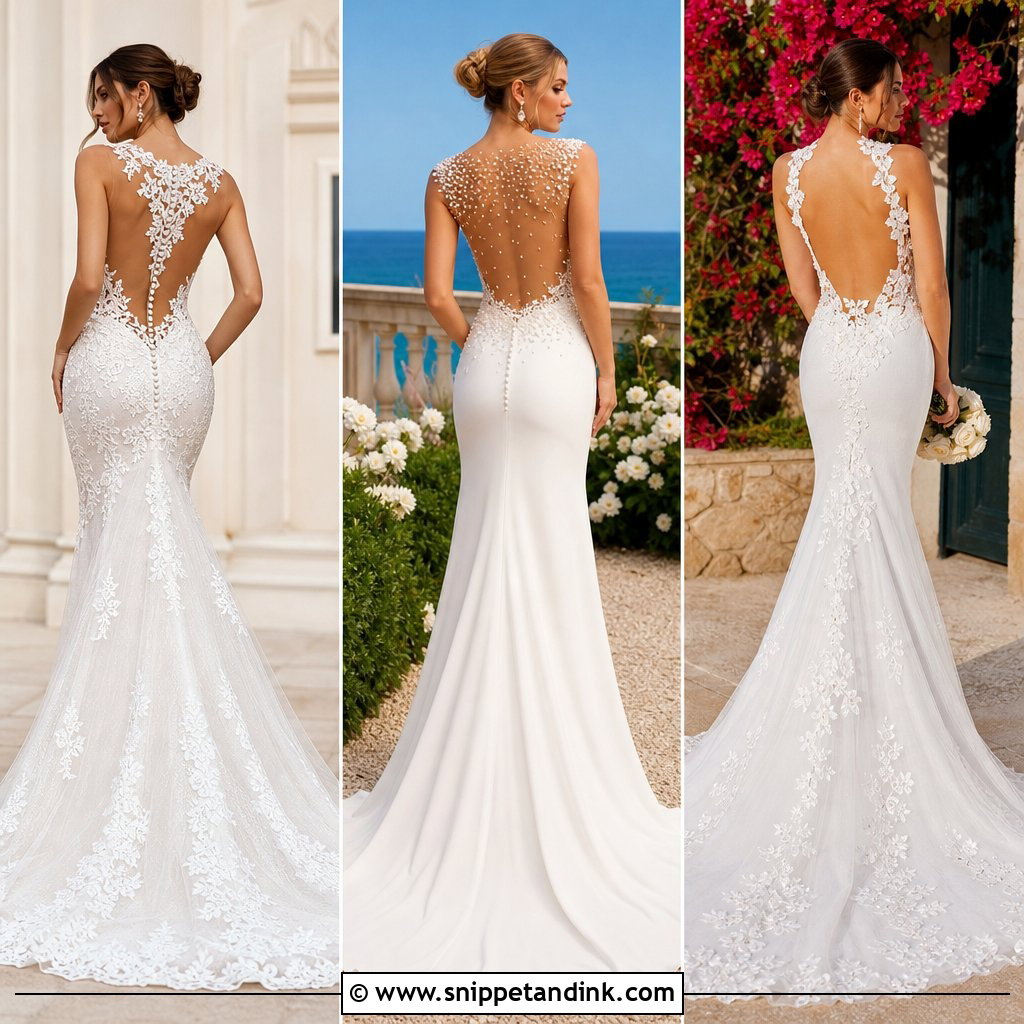
20. Black Wedding Dress
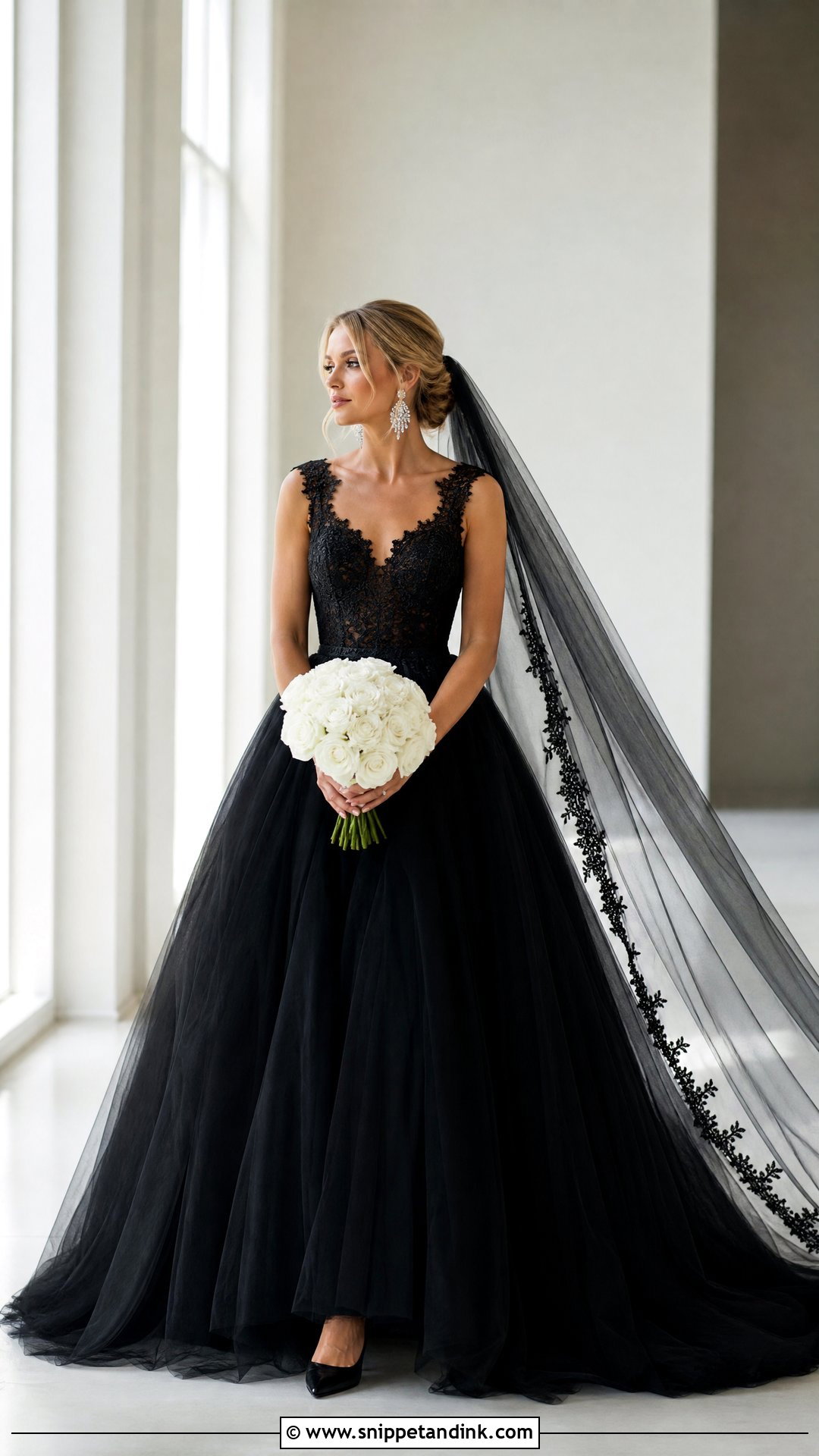
Black can still read as bridal when the silhouette and accessories do the work. A black lace ball gown with a fitted bodice, full tulle skirt and long train is the dramatic version; a minimal black satin column with a detachable overskirt or structured bow is the modern one. Crystal earrings, black pointed pumps, a cathedral black veil and white roses for contrast. Choose fabric with visible texture so the detail doesn’t sink. Black shows foundation and deodorant marks at the neckline and armholes, so put your makeup on before you step into it. Ivory embroidery, pearl accents or an edged veil soften it if you want a lighter finish.
Dye Lots, Lining Shades and Why a Colored Gown Needs Extra Time
Most bridal gowns are cut to order after you buy, and many shops quote several months for production. Colored versions can take longer, because the fabric is often dyed in a separate run. That also means the gown that arrives may sit a shade off the store sample. I always ask the shop to note on the order whether the dye lot can vary, and I compare the delivered gown with a swatch kept from the appointment.
Alterations on color
Your seamstress needs matching thread for every seam she touches, and on pale pinks, blues and greens that’s harder to find than on ivory. If a hem is taken up, any lining in a different shade will show at the edge, so ask her to shorten each layer separately. Darker fabrics also show old stitch holes when a seam is let out.
Keeping the color true afterward
Colored silk and chiffon fade where light hits them, and the fold lines are first to go. Have the gown cleaned soon after the wedding, store it in breathable cotton or an acid-free box, and keep it out of sunlight. Plastic garment bags trap moisture and can leave yellow or patchy marks on pastels within a year or two.
Does the Shade Still Look Like You at Midnight?
The right color is the one you forget about because it simply looks like you. White, ivory and cream are classic for good reason; champagne, blush and pastels add a whisper of color; jewel tones, metallics, navy and black are there if you want something unexpected. Whatever you lean toward, compare swatches against your face in daylight and indoors, and think about how the gown sits with your veil, shoes, jewelry, bouquet, venue and palette. Don’t choose a shade because it’s expected or because it’s everywhere this year. Choose it because it works on you.
You'll Like These Ideas:


Leave a Reply