
Short hair is the length I get the least nervous about on a wedding morning. There’s less weight dragging curls down by the first dance, less hair to slip out of pins, and the whole face stays in the frame. A cropped pixie, a blunt bob and a lob all give me something different to work with, and none of them is a compromise. What short hair does ask for is more planning around the cut itself, the pins and where an accessory can grip. Below are 20 looks I’d happily build on short lengths, with notes on how each one actually holds up.
Timing Your Last Trim Around the Wedding
With short hair, the haircut matters more than the styling. A pixie that was perfect three weeks ago can look shaggy at the ears by the wedding, and a fresh blunt bob can look too sharp the day after it’s cut. I usually suggest a trim one to two weeks before the wedding so the edges have softened but haven’t grown out. Do it with your regular stylist, not someone new.
If you’re growing out a pixie so you can try one of the updos below, keep the trial and the trim in sync. I want to do your trial on hair that’s close to the length it will be on the day, otherwise the pin placement we practice won’t match.
- Pixie: trim about a week before, mostly around the ears and neckline.
- Bob or lob: one to two weeks before, so the line relaxes.
- Growing out for an updo: no length off for at least two months before, just a dusting of the ends.
- Color: refresh roots about a week before, so the tone settles and the scalp isn’t sensitive.
1. Side-Swept Curly Bob for Weddings
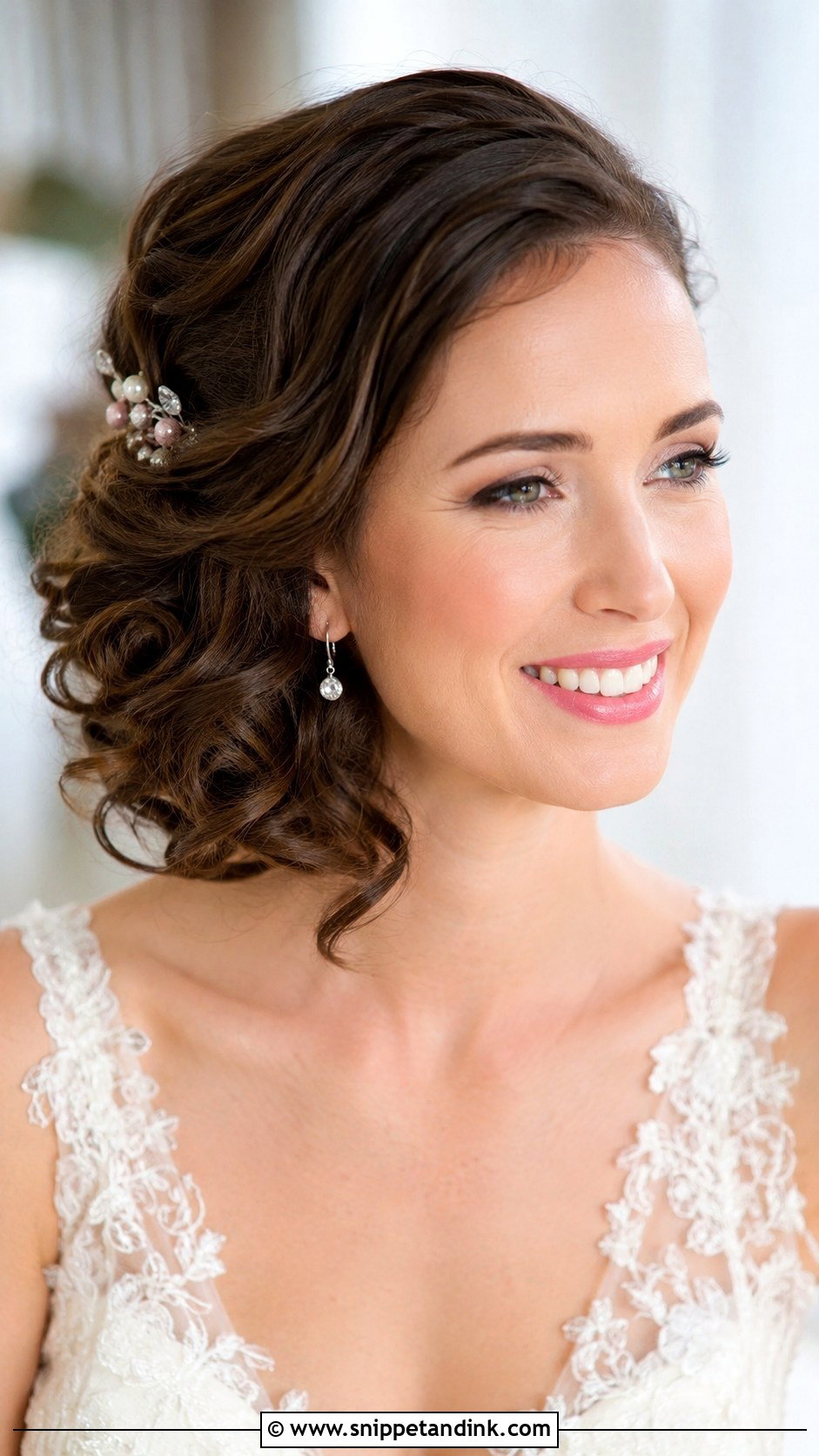
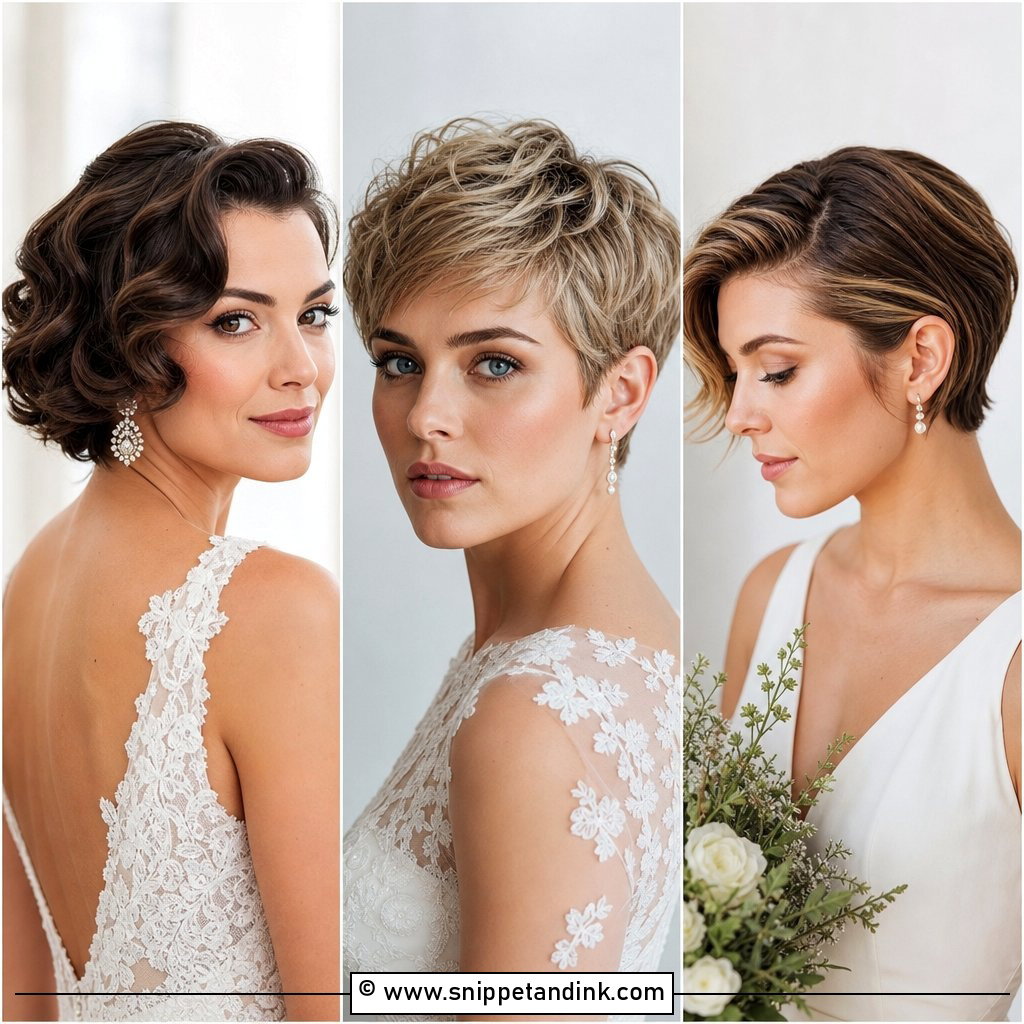
This one starts with a curling wand on an everyday bob, wrapping sections away from the face and then brushing them out so the spirals soften into one sweeping shape. I pin the shorter side behind the ear with two crossed bobby pins, because a single pin on blunt bob ends tends to slide out once you start hugging people. The asymmetry suits round and heart-shaped faces well, since it draws a diagonal line across the cheekbone. Put your statement earring on the pinned side so it isn’t hidden.
2. Vintage Finger Waves Pixie
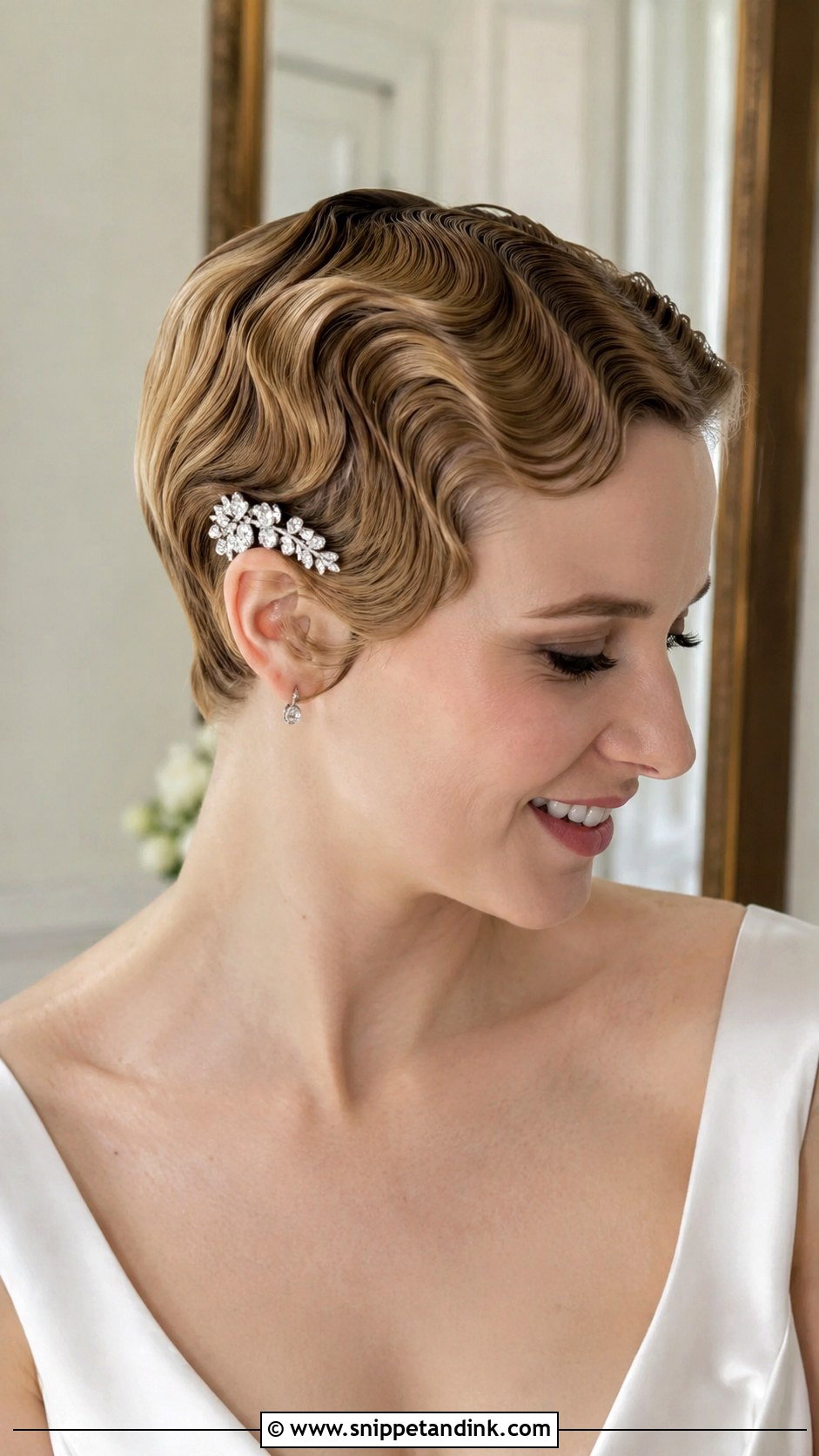
Finger waves are a 1920s set, and they still only work one way: strong gel on damp hair, the S-ridges pushed in with fingers and a fine-tooth comb, then left completely alone until dry. On a pixie I clip each ridge with a flat duckbill clip while it sets, and I don’t take the clips out until the hair is bone dry, which can mean sitting under a hood dryer for a while. Rush that step and the waves collapse into a crunchy mess. A small crystal pin at the temple is about all this style needs.
3. Half-Up Braided Bob
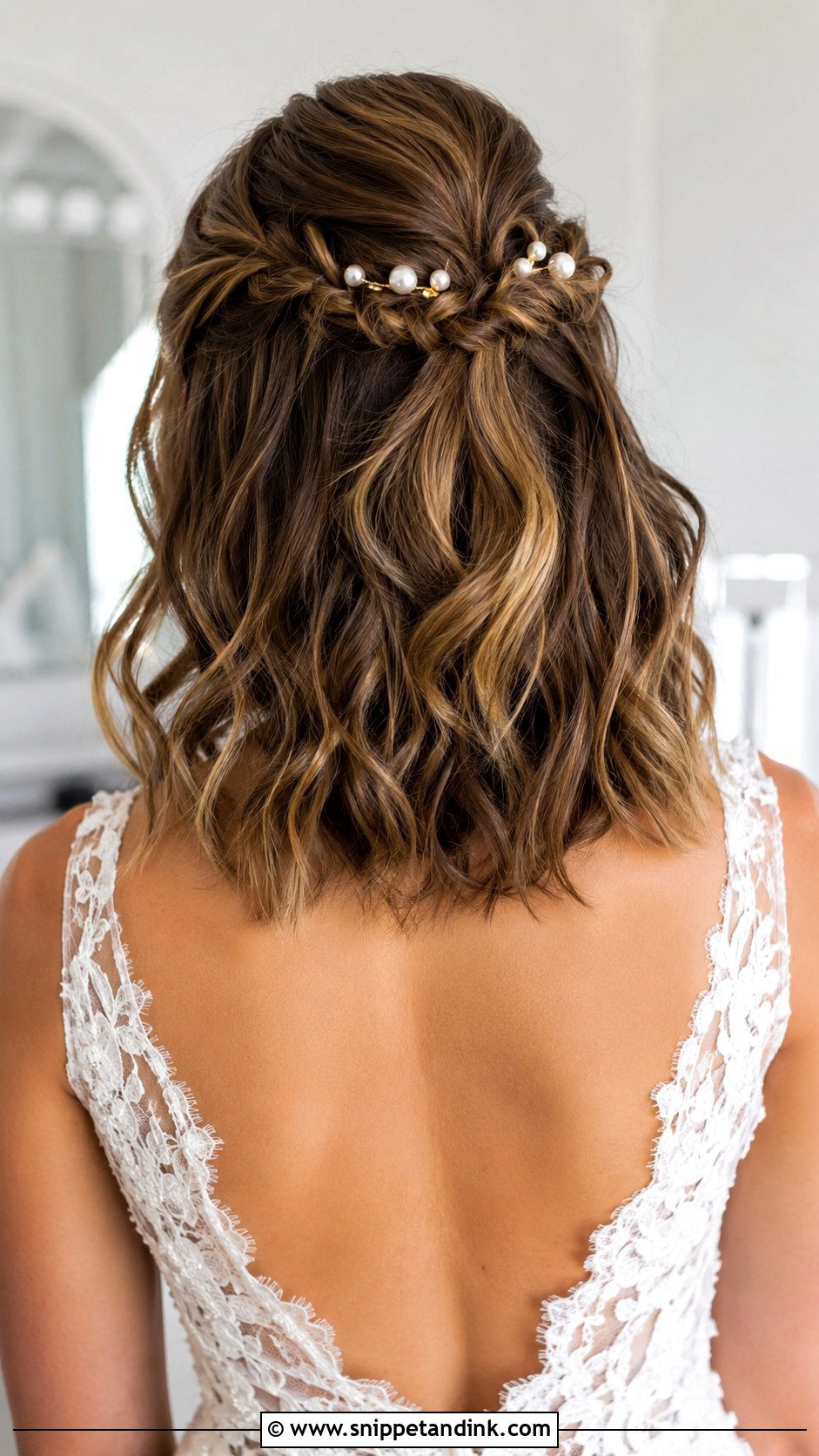
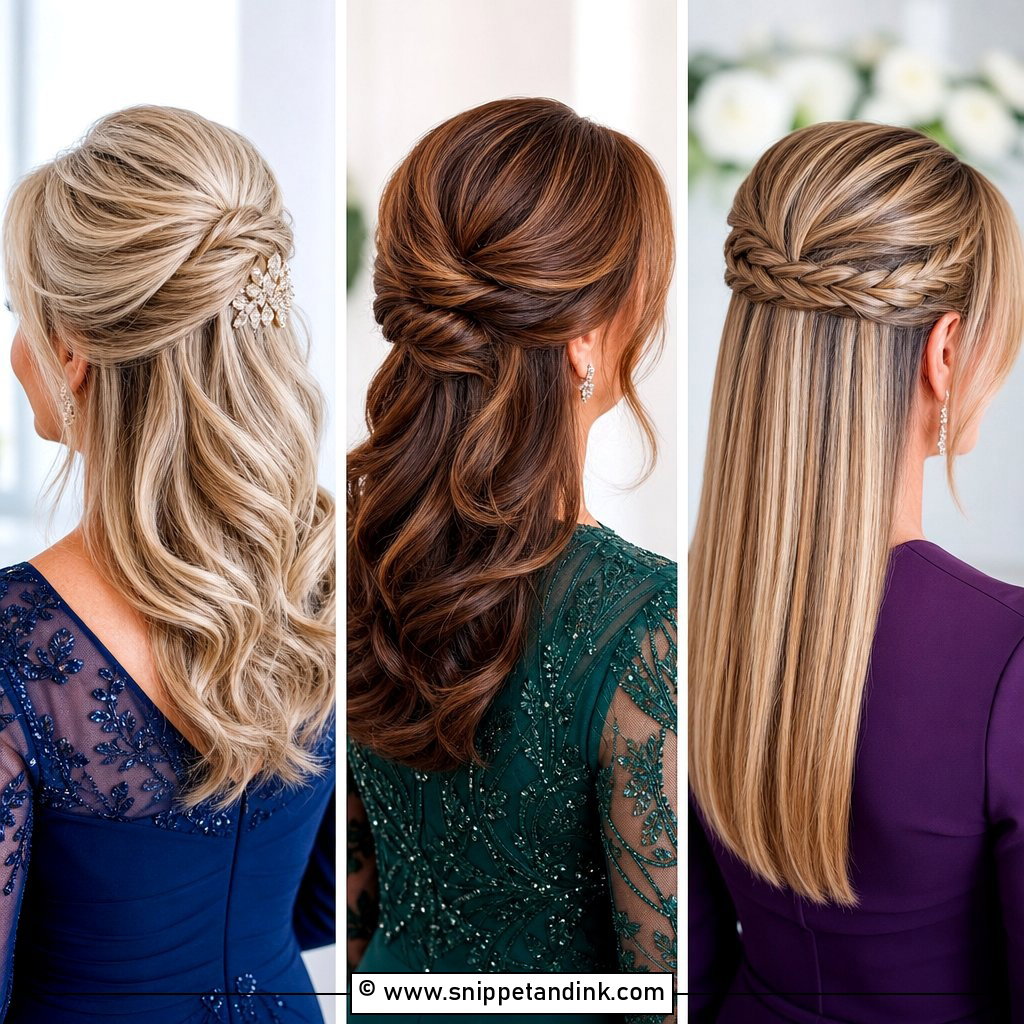
A half-up braid is the easiest way to give a bob some structure without pulling everything back. I take a small Dutch braid from each temple and meet them at the crown, then curl the length underneath. The catch with bob lengths is that the braids run out of hair quickly, so I keep them tight to the scalp and finish them early with a clear elastic hidden under the top layer. Where the braids join is the natural spot for a few pearl pins or tiny flowers, and it keeps hair off your face while you read vows.
4. Sleek Low Bun for Short Hair
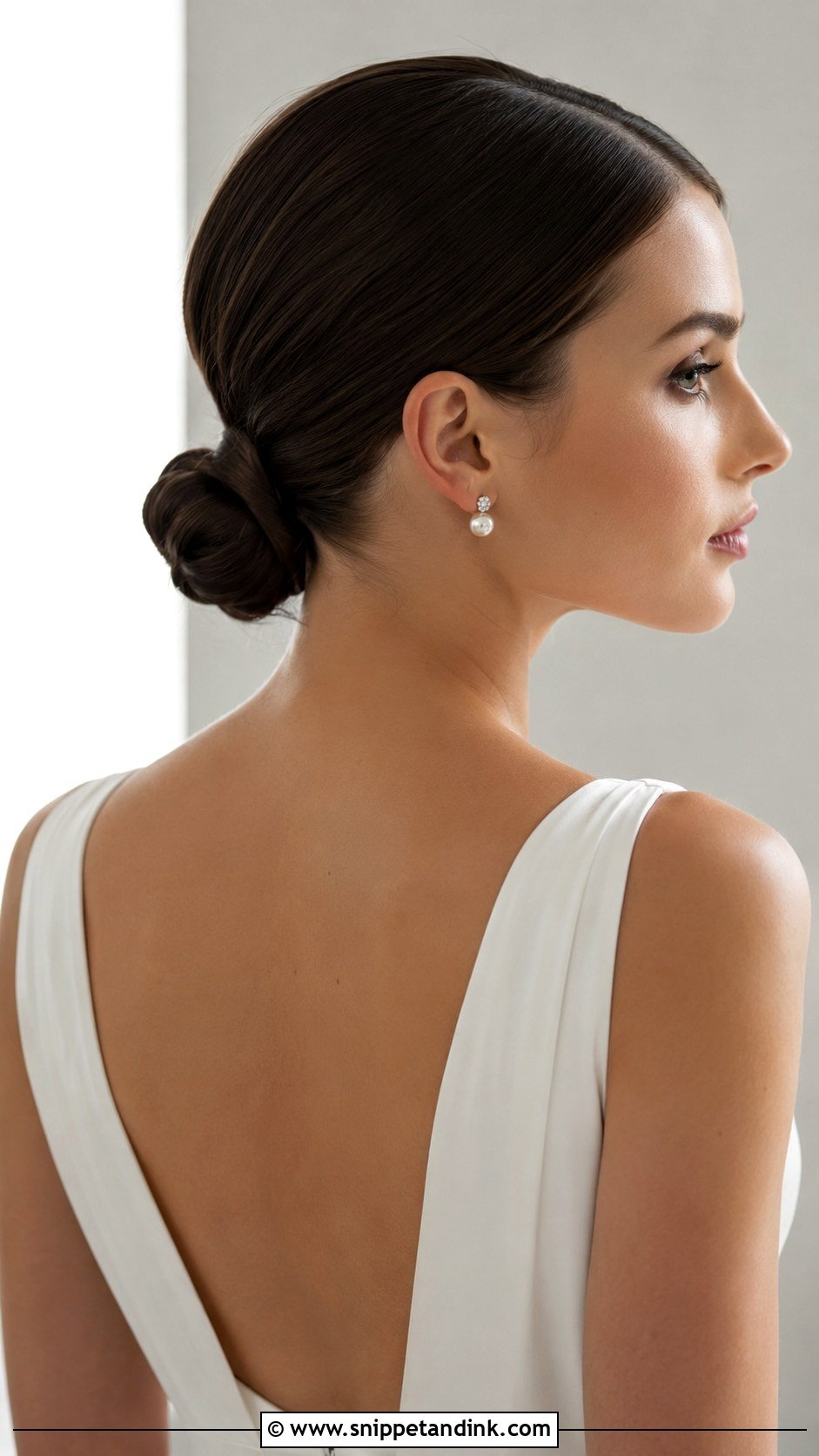
Yes, a bob can go into a low bun, but it’s a small bun and it’s built rather than twisted. I tease the back lightly for grip, smooth the front with a little serum, then gather what I can at the nape and pin the ends under in sections, working with the hair rather than forcing it into one band. Layers shorter than about chin length will poke out, and that’s the honest limit here. If you want a fuller shape, a few clip-in wefts placed just above the nape give me something solid to pin into. It’s a clean, minimal look that leaves room for a strong earring and a bare neckline.
5. Classic French Twist Updo
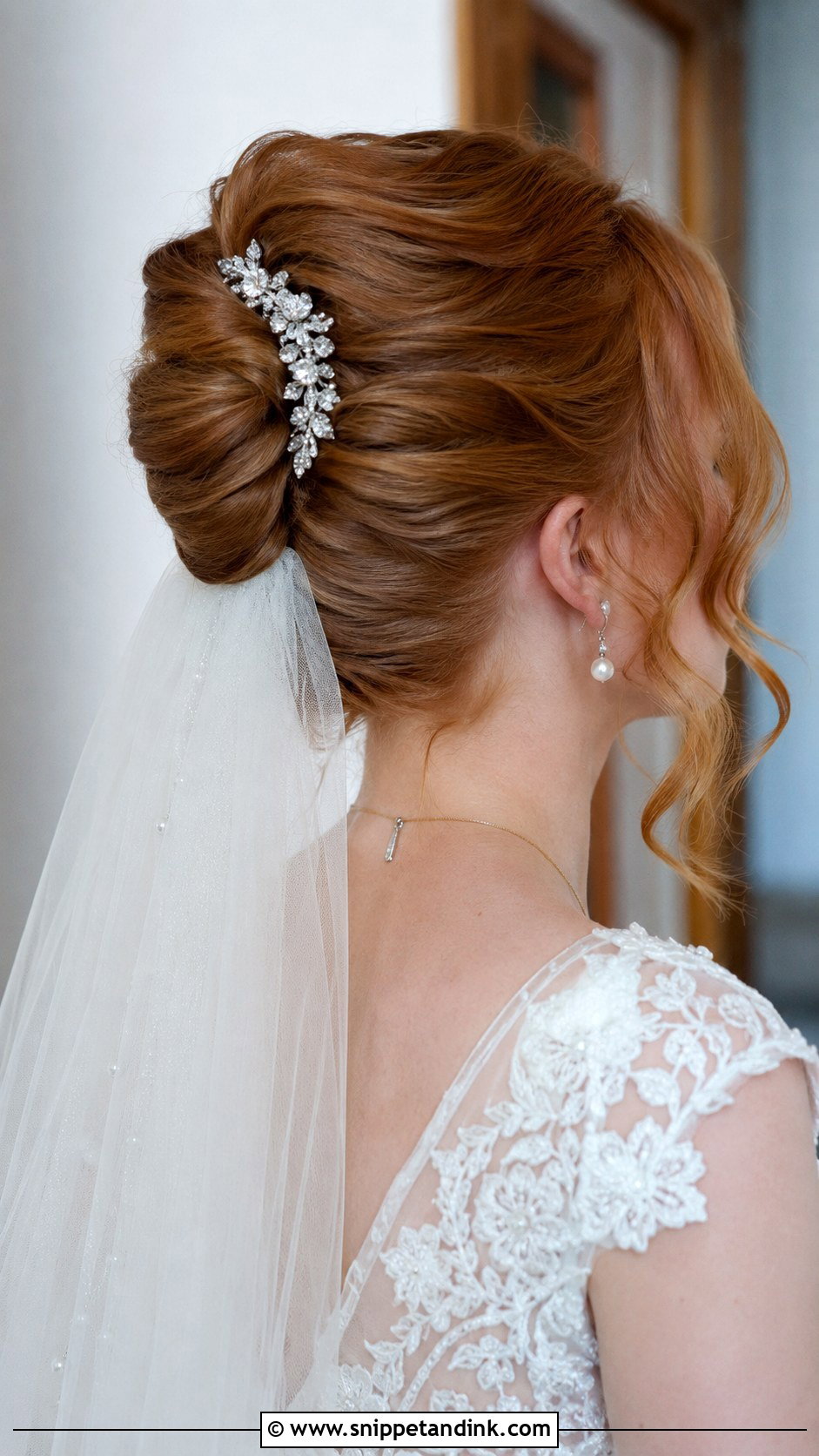
The French twist has stayed a bridal staple because it’s secure and it leaves the neckline clear, and it works on shorter hair more often than people expect. I sweep everything to one side, crossing pins along a hidden line, then roll the hair up vertically and pin into that line so the roll has something to lock onto. On short lengths the ends near the nape won’t reach, so I curl them into tendrils instead of fighting them. A veil comb or jeweled comb sits well right at the top of the roll.
6. Tousled Wavy Lob
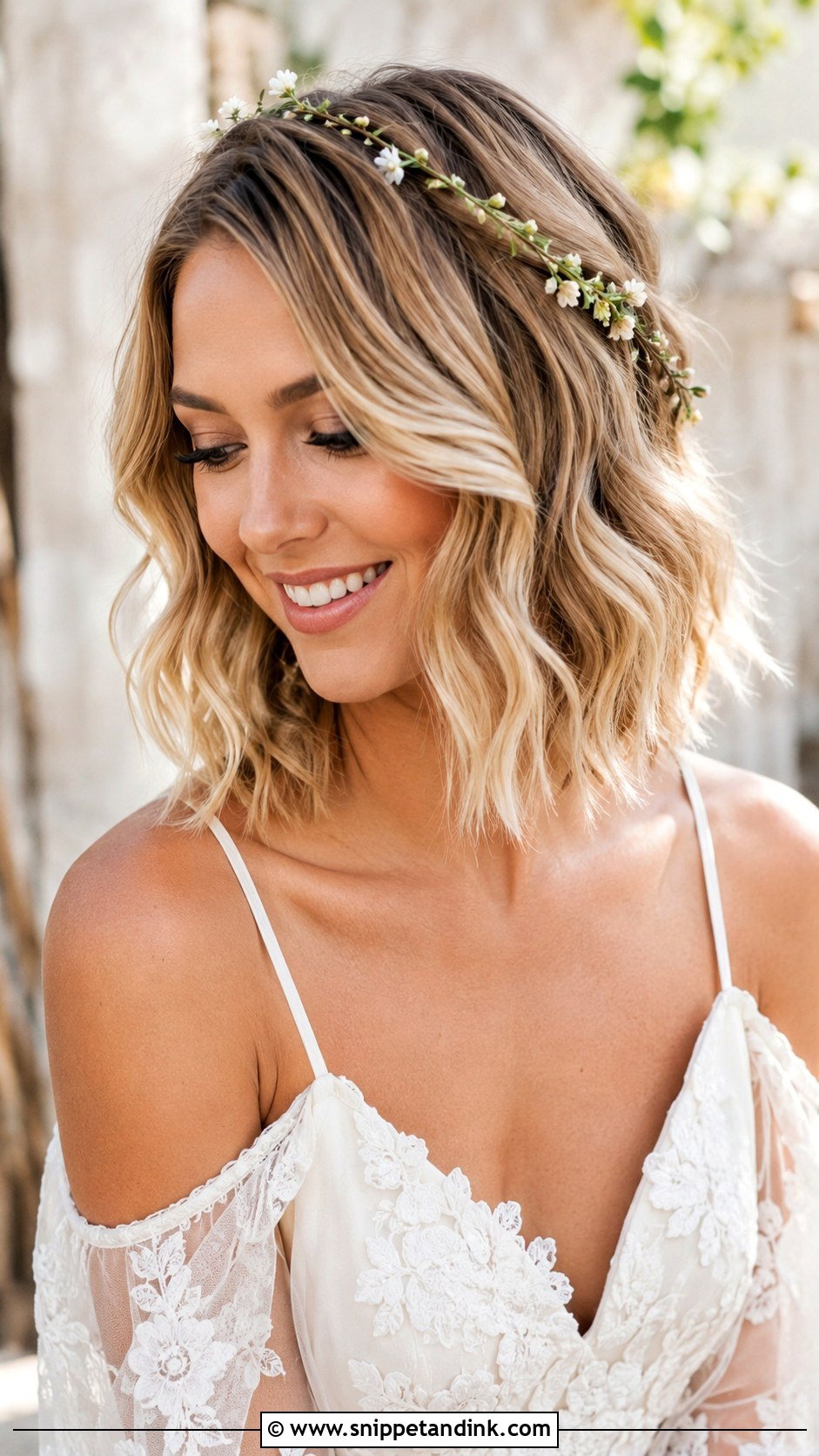
A lob has just enough length for loose, bent waves, the kind made with a flat iron twisted half a turn rather than a curling iron. I break them up with my fingers so they look lived-in. The risk with this style is that relaxed waves drop fast in humid weather, so for an outdoor wedding I prep with a texture spray at the roots and finish with a flexible hairspray, not a stiff one. A middle or deep side part both suit it. A thin floral vine across the crown fits the loose mood without adding weight.
7. Braided Crown for Short Hair
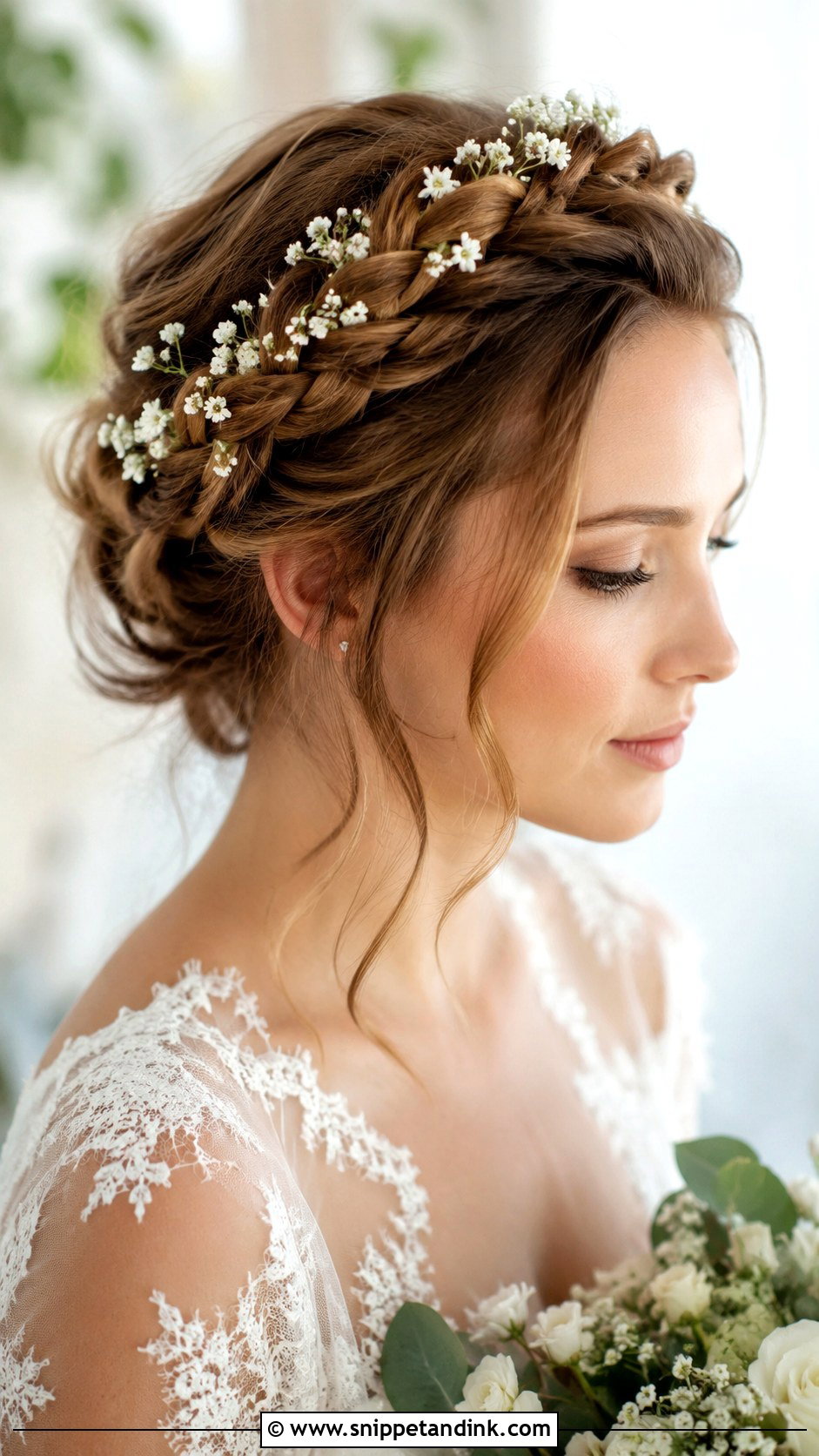
On short hair, a braided crown is two braids taken from a middle part, crossed over the top of the head and pinned. The first thing I check is whether the hair at the nape is long enough to braid at all; if it isn’t, I start the braids behind the ears and let the shorter pieces stay loose around the face. U-shaped pins hold a crown better than bobby pins because they hook into the braid instead of clamping it flat. Baby’s breath tucked into the braid holds up well, since it barely wilts.
8. Pinned-Back Pixie with Headband
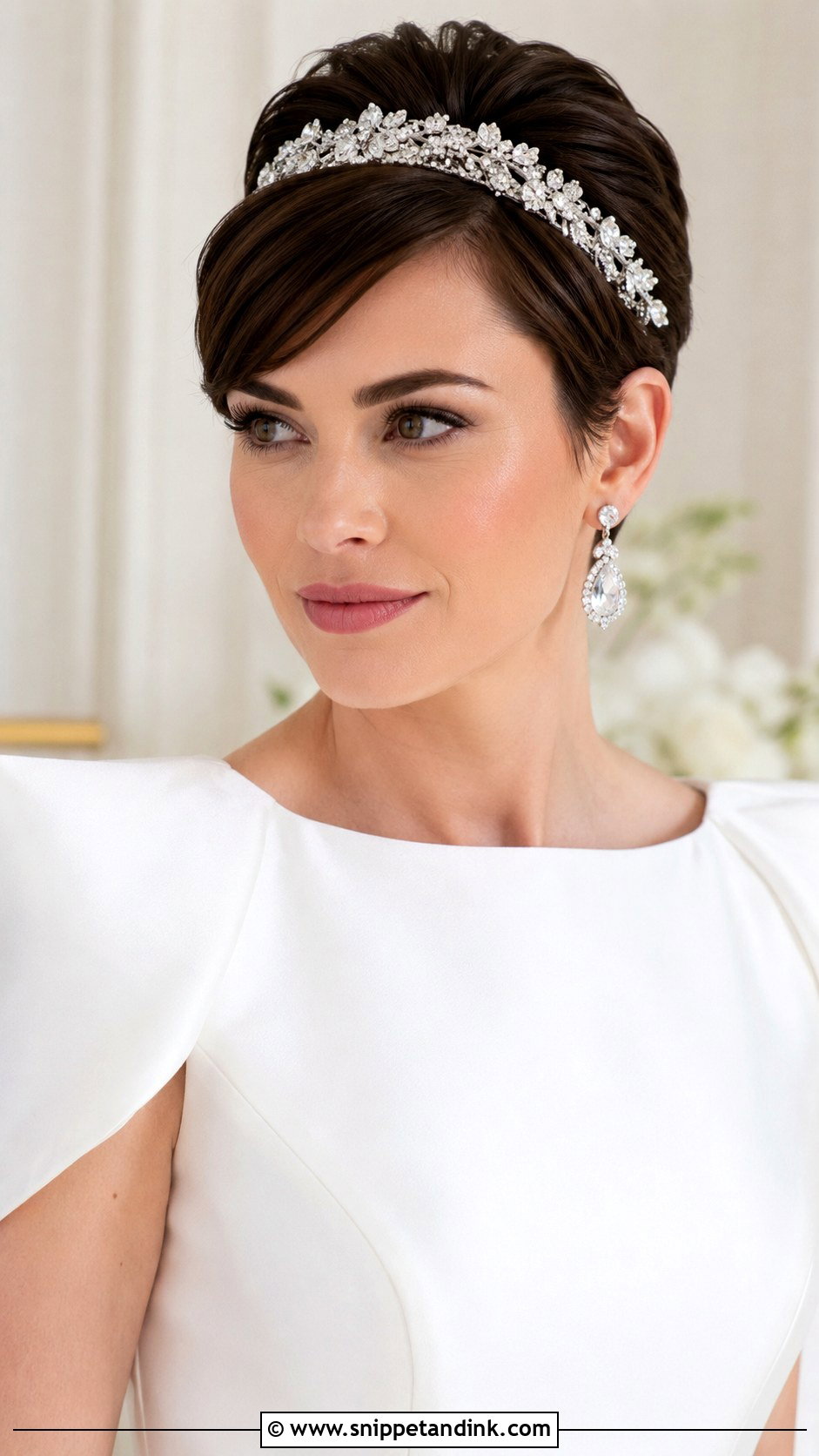
With a pixie, the accessory does most of the bridal work. I sweep the fringe to one side, pin back any longer pieces, then set an embellished headband so it sits just behind the hairline. Fine pixie hair is slippery, so I spray the roots with dry texture first and add two small bobby pins behind the ears that cross over the band to stop it creeping forward during the day. A bold earring and a strong lip balance the band.
9. Romantic Halo Twist
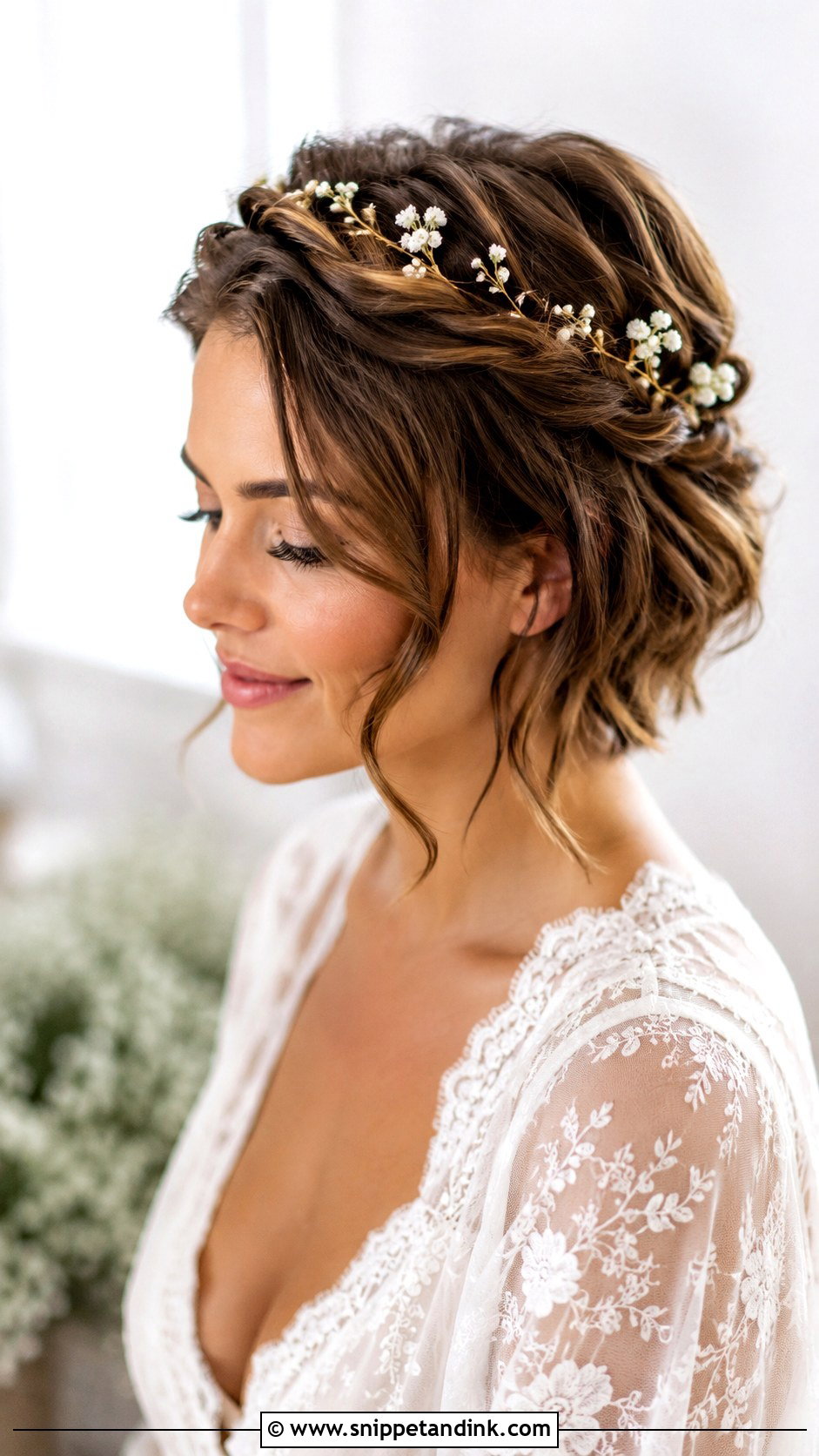
The halo twist gives you a softer ring of texture than a braid. I part down the middle, take small sections from each side and twist them back toward the crown, pinning each twist as I go so the ring builds gradually. Very short layers at the back won’t join the twist, which is fine; they sit under it. I usually curl the hair underneath first so the twists have some volume to rest on. Tiny pearl pins along the twist pick up light in photos without looking crowded.
10. Slicked-Back Wet-Look Bob
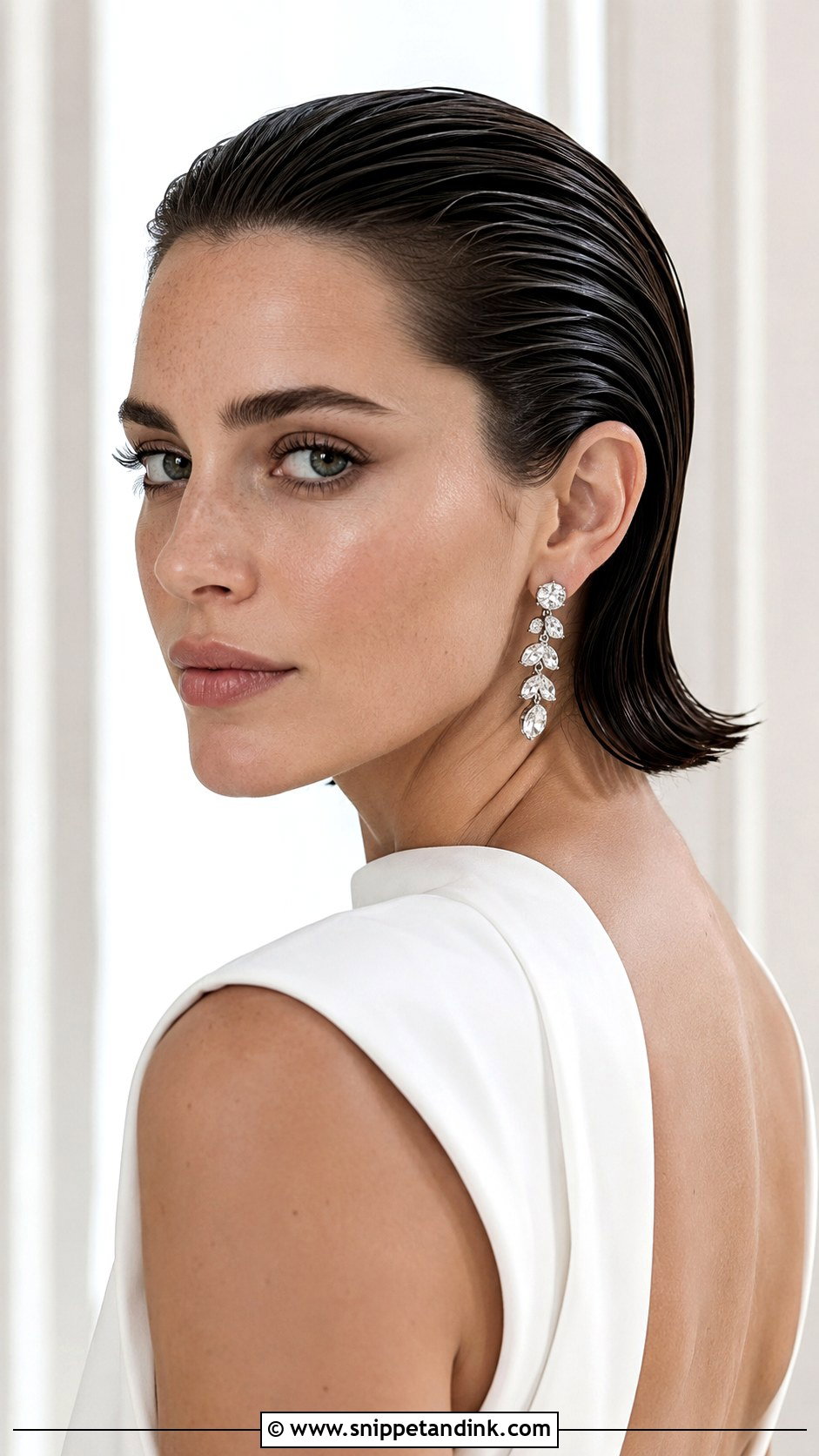
A slicked-back wet look is the most editorial option on this list, and it rewards a bob with a sharp cut line. I comb strong-hold gel from front to back on damp hair, then let it set without touching it. It won’t drop or frizz all night, which is the big advantage. The trade-off is that it shows every feature and every fine baby hair, so it suits brides who are comfortable with a very clean, exposed face. I’d skip it if you’re planning a soft, glowy makeup look; it pairs better with a polished, defined face.
11. Twisted Half-Up with Pearls
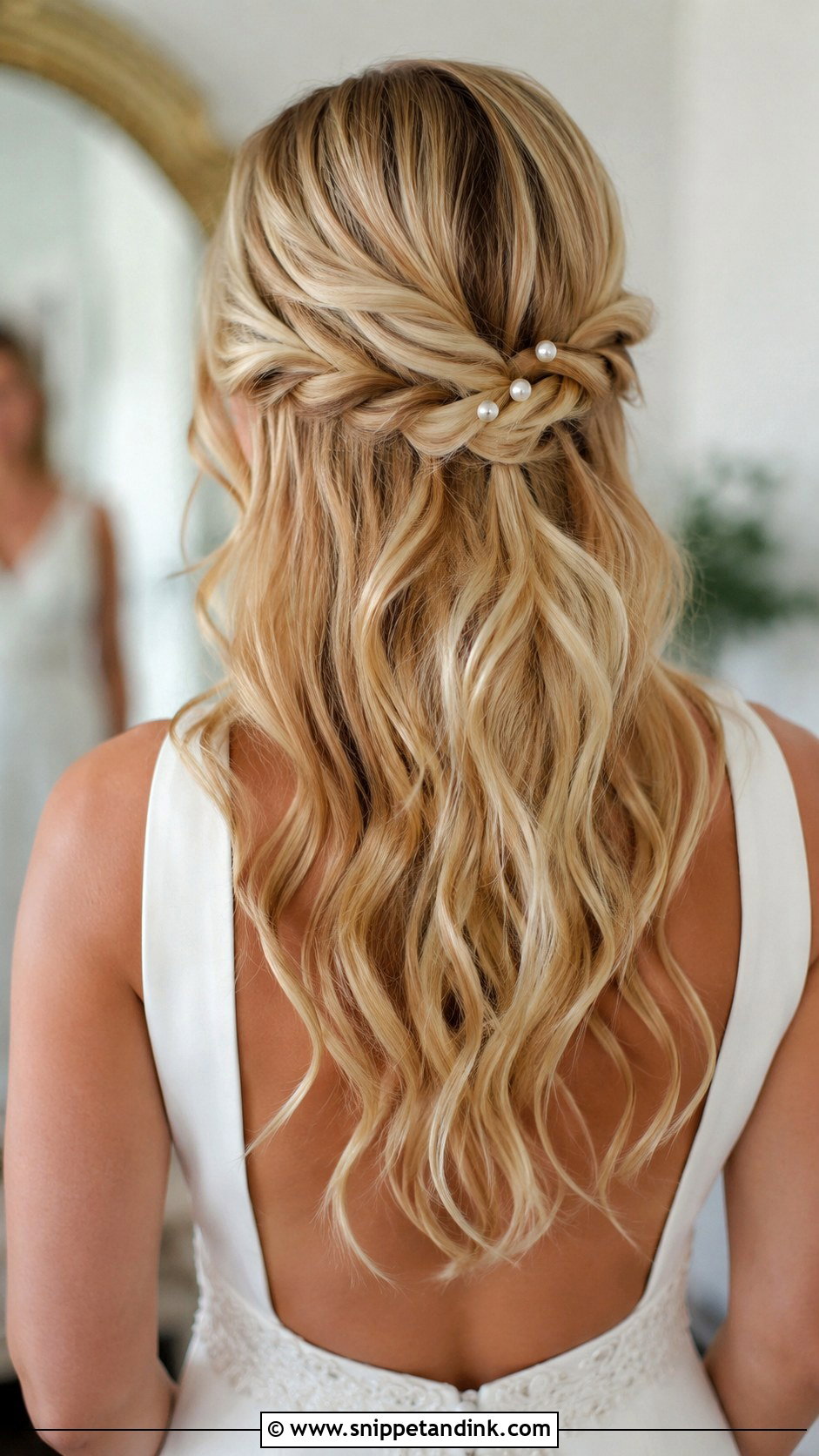
Pearls sit nicely on short hair because they’re small enough not to swamp it. I twist the top sections back toward the crown and secure each twist with a pearl pin, then wave the rest of the bob below. The thing to watch is that decorative pins rarely hold anything on their own. I lock each twist with a plain bobby pin first and slide the pearl pin in over it, so nothing slips when you take your veil off. It’s a quiet, classic look that works from a church ceremony to the reception.
12. Curly Pixie with Floral Clip
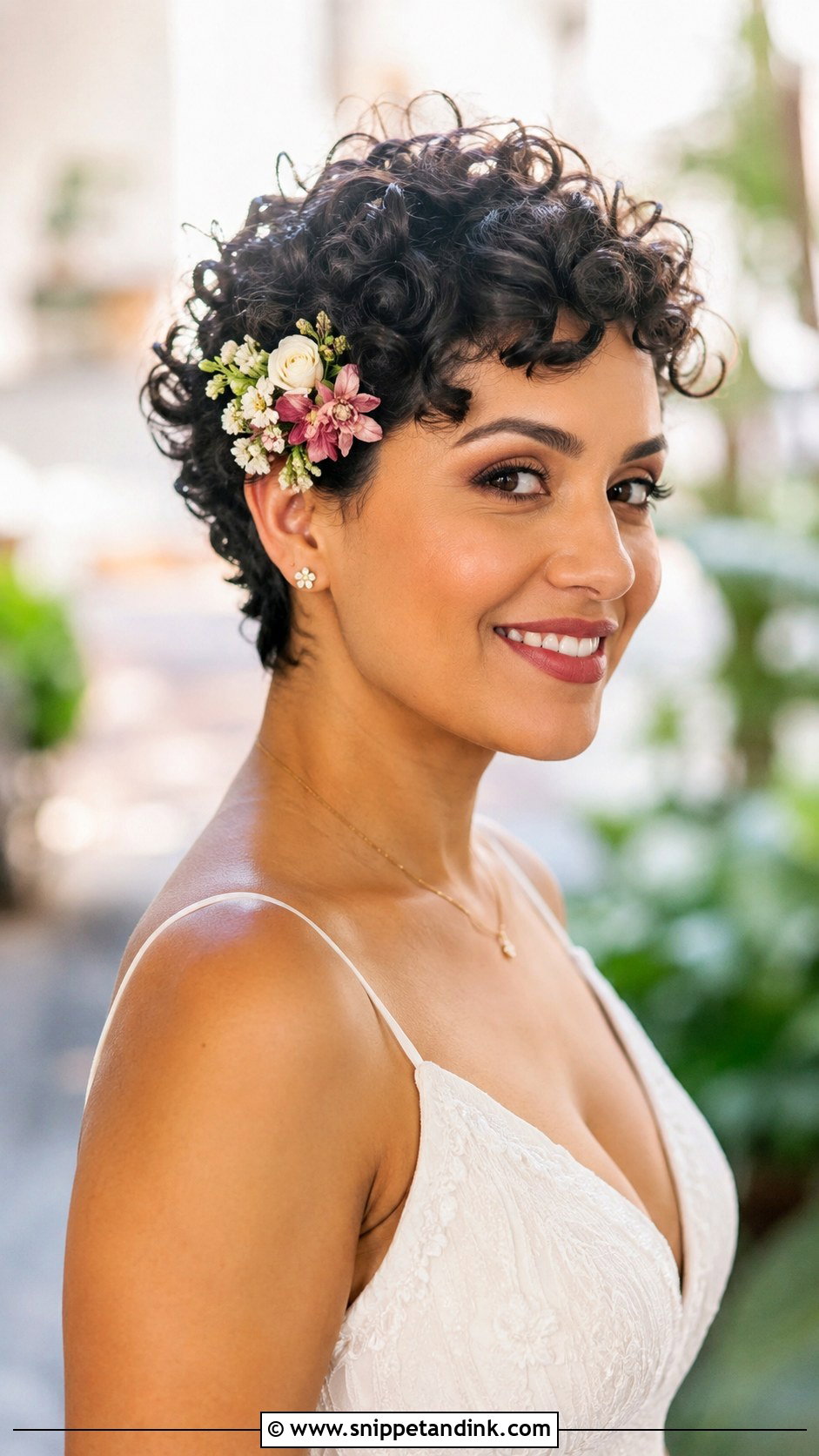
If you have natural curls and a pixie, I’d work with them. I define the curls with a light cream on damp hair and let them dry without touching them, because handling curls while they dry is what causes frizz. Too much product and short curls clump and look wet. A small floral clip or a cluster of blooms above one ear finishes it, and spring or summer flowers suit it well. It’s one of the lowest-maintenance styles on this list once it’s set.
13. Faux Bob Updo
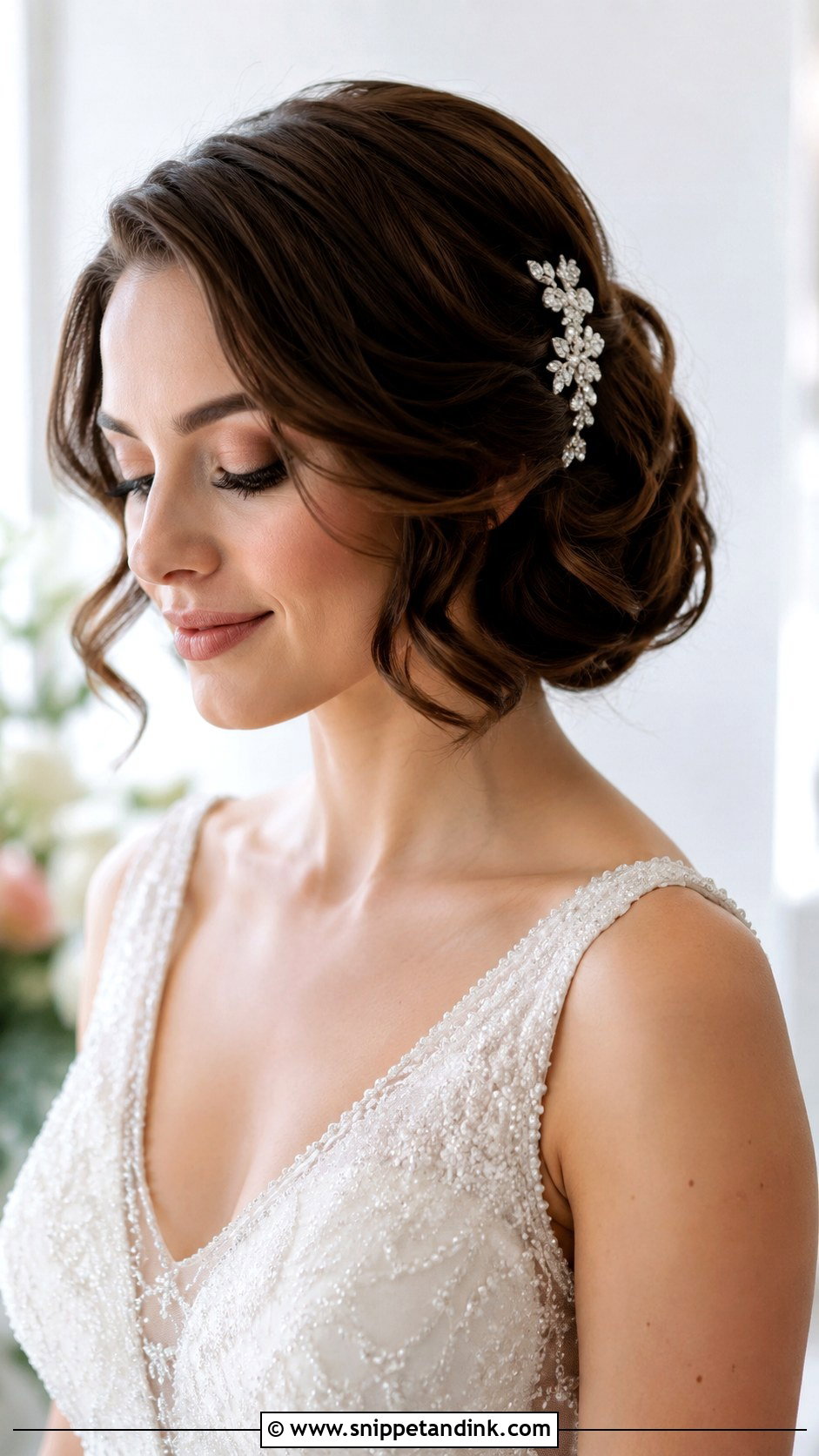
A faux bob suits hair that sits somewhere between a bob and shoulder length. I roll the ends under and pin them up against the nape so the outline reads as a chin-length bob from the front. It’s surprisingly secure once the pins are crossed, and it lets you try a shorter look for one day without cutting anything. Thick hair can bulk out at the back, so I take out some of the volume underneath before rolling. A few soft waves at the front and a sparkle pin on one side finish it.
14. Soft Bridal Waves on a Bob
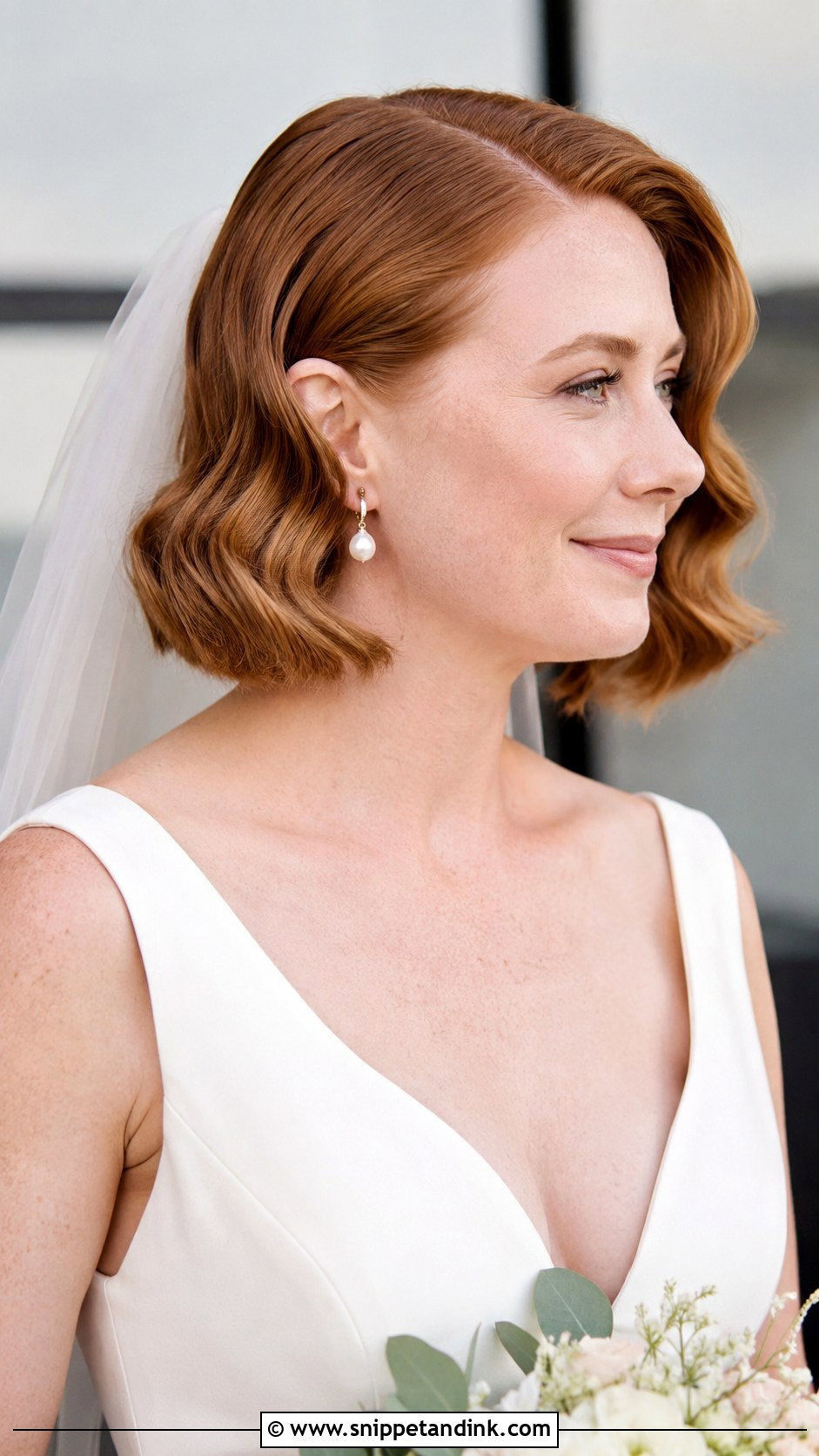
Sometimes the simplest version is the right one. I use a large-barrel iron, curling every section in the same direction, then brush through once so the waves link into smooth, glossy bends rather than separate curls. A deep side part gives it a little old-Hollywood angle. The reason I like this for a lot of brides is that it doesn’t compete with a detailed gown or a long veil. A light shine spray at the end helps under flash.
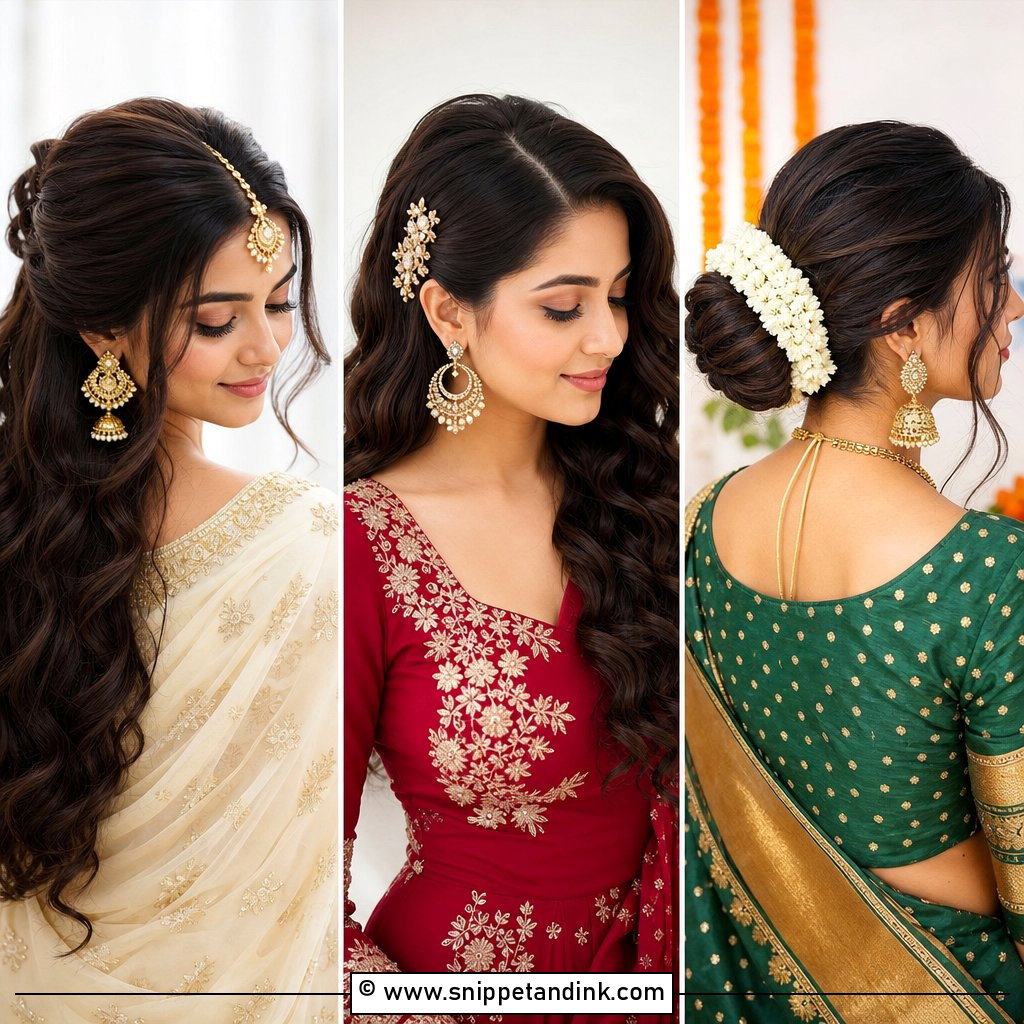
15. Side-Parted Glam Pixie
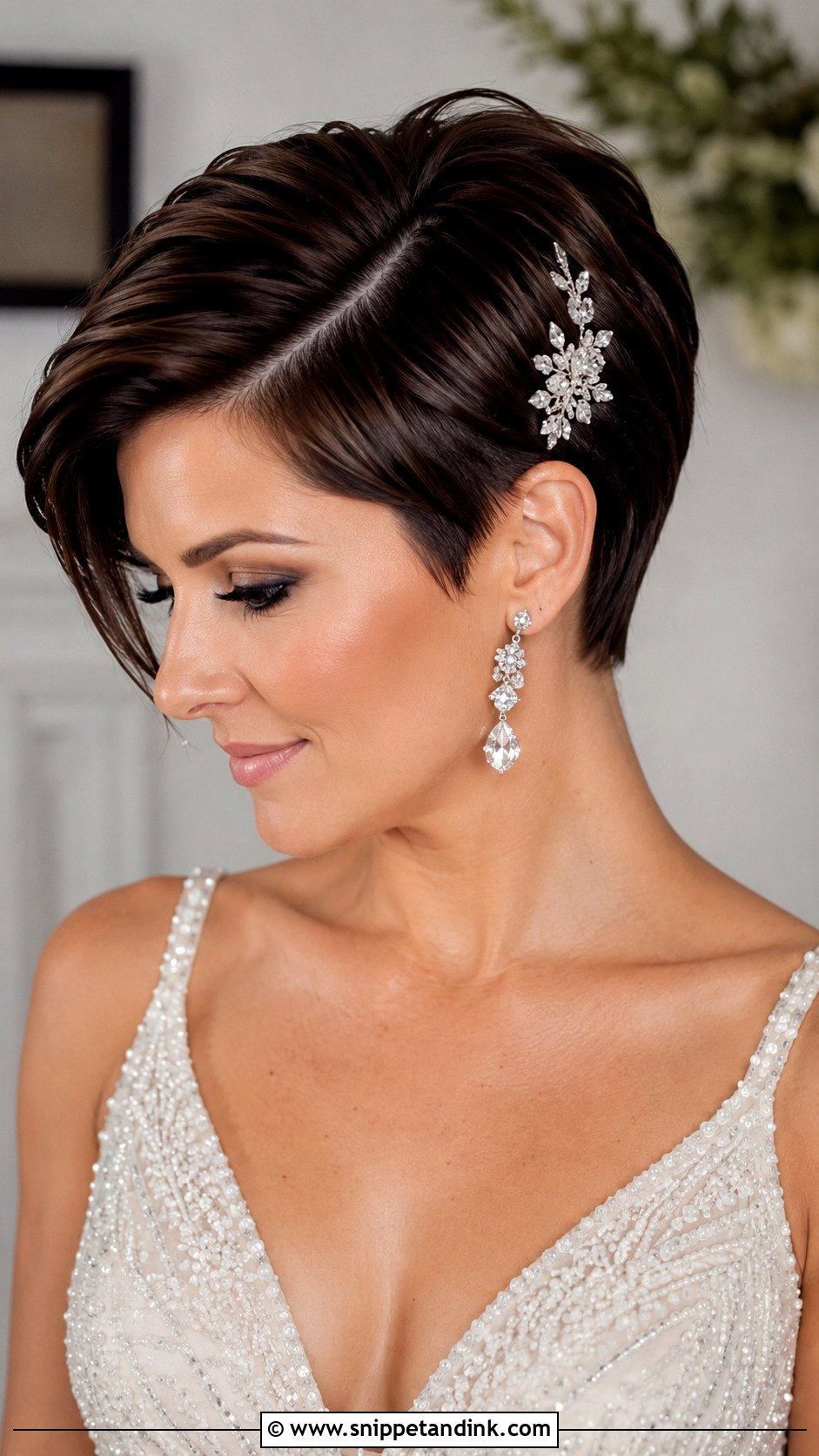
A glam pixie is mostly about the part and the crown. I set a deep side part, smooth the fringe across the forehead, and build a little lift at the crown with a round brush so the shape doesn’t sit flat. Pomade comes last, warmed between the palms, then pressed in to separate a few pieces. Too much and the hair looks greasy by evening, so I use less than you’d think. Chandelier earrings and a jeweled pin near the part bring it up to evening level.
16. Textured Low Chignon
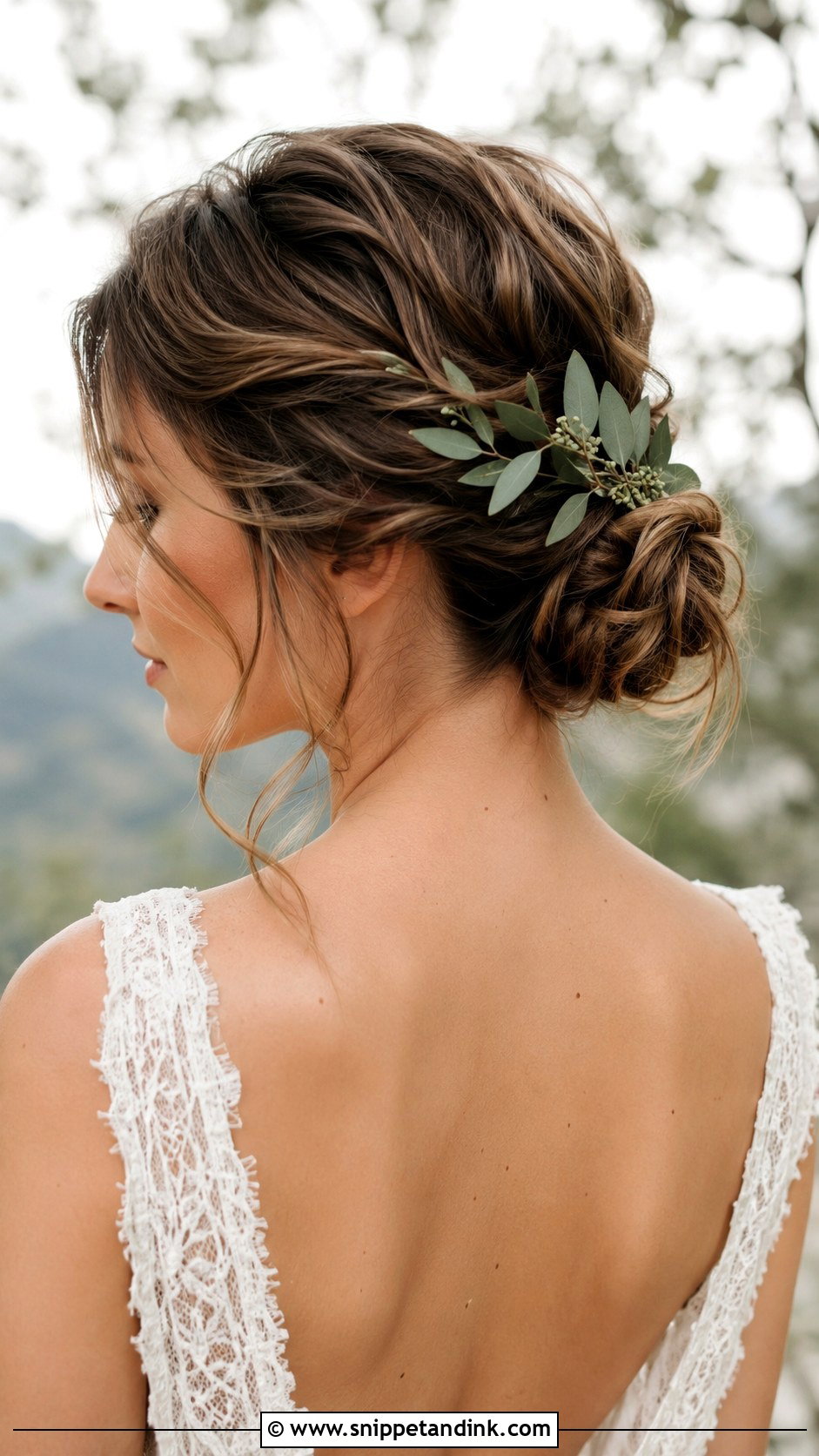
A low chignon on short hair depends on backcombing. I tease the hair at the nape for grip and volume, then twist it into a loose knot and pin as I go, pulling a few strands out around the face at the end. The low placement keeps it soft rather than stiff, and it works well for outdoor and rustic weddings. Because short hair can’t wrap around itself much, this chignon is built from several small pinned twists rather than one, and the texture hides the joins. A sprig of greenery tucked into the side suits it.
17. Double Twist Updo
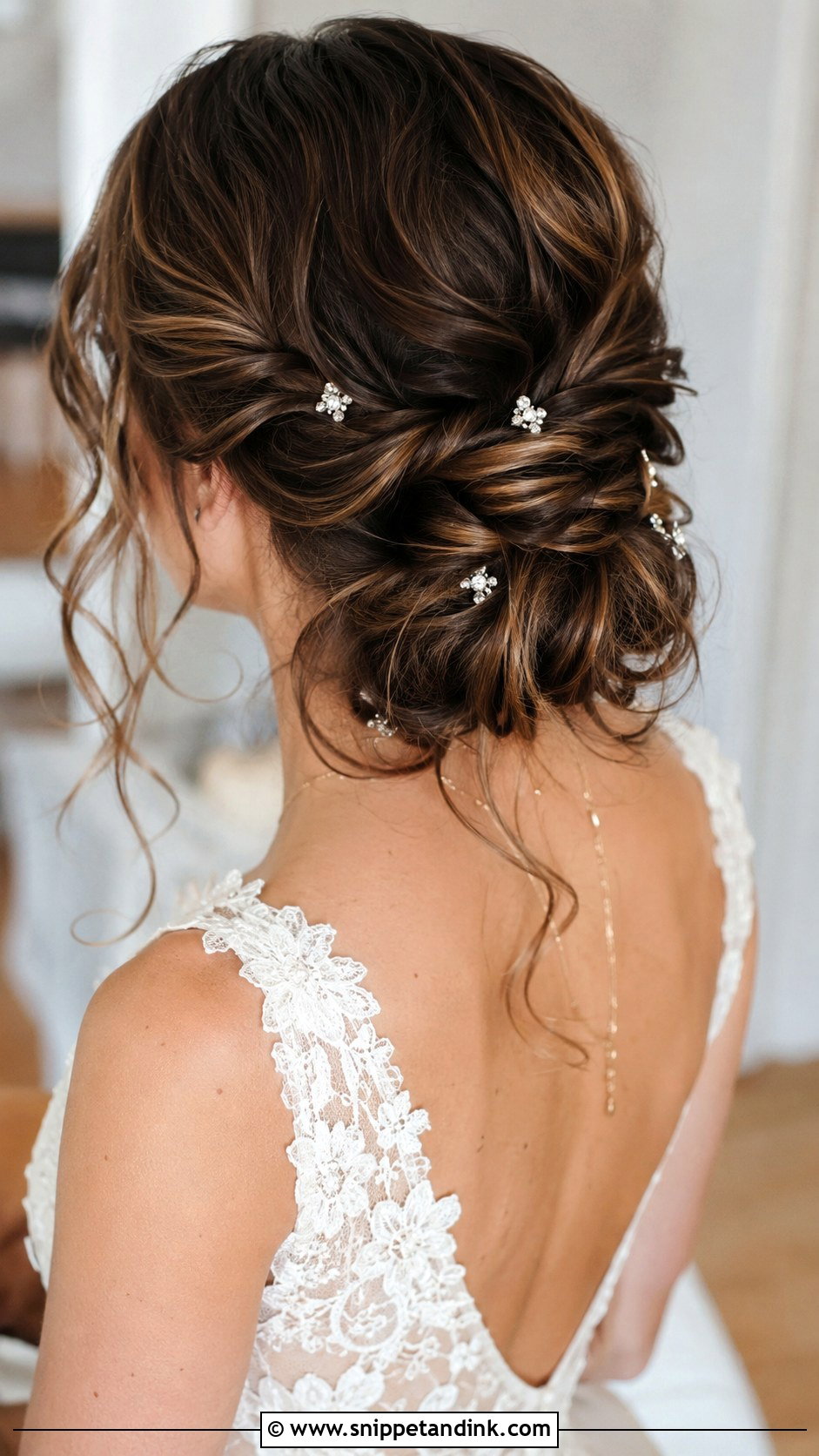
Two twists, crossed, can secure a surprising amount of short hair. I part down the center, twist each side back toward the nape, and layer one over the other, pinning firmly where they cross. Loose ends become small curled tendrils. This works best on bobs and longer pixies; on very short cuts the twists don’t reach far enough to cross. A few scattered crystal pins along the twists add some sparkle without crowding the shape.
18. Bob with a Bridal Tiara
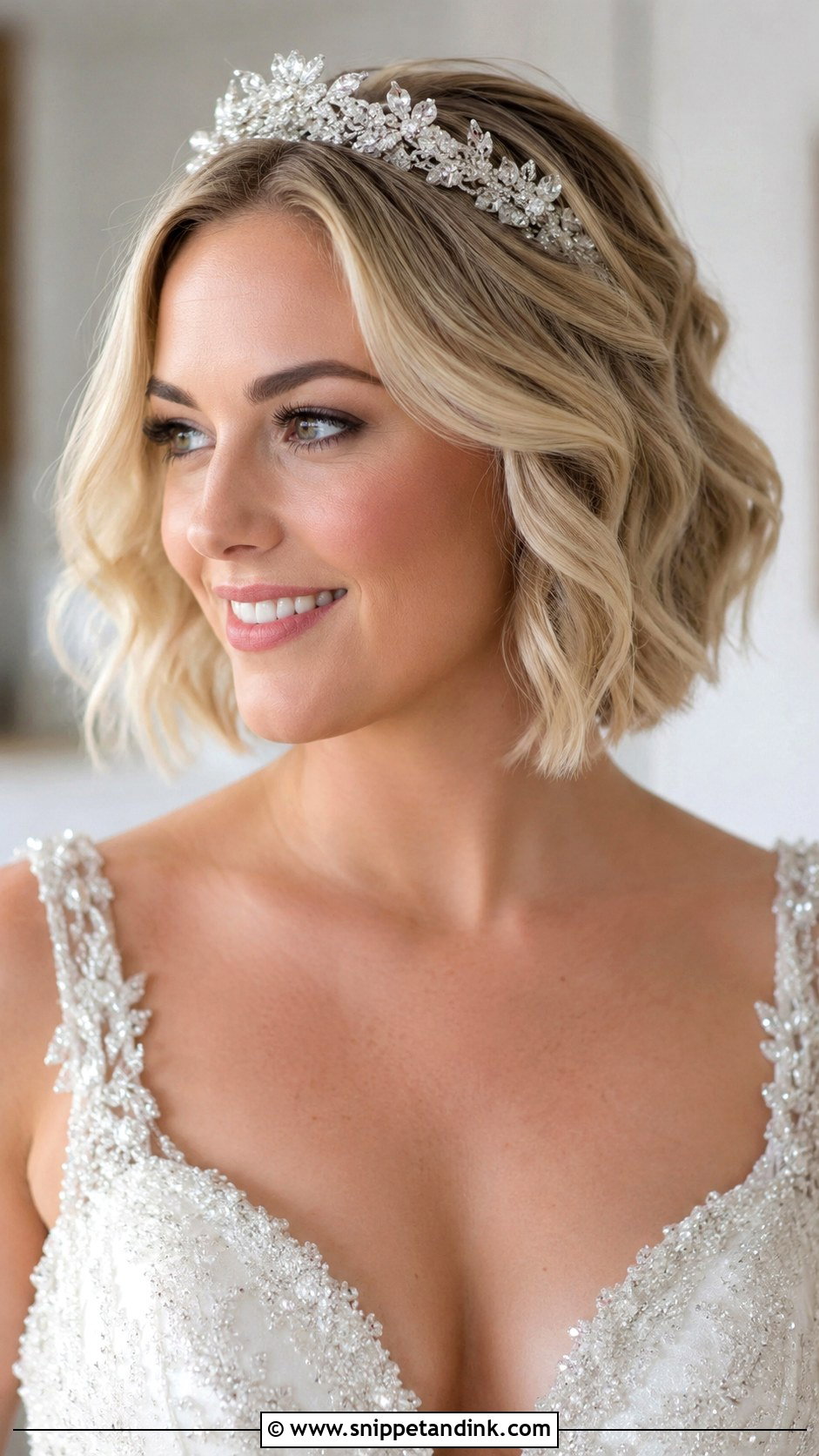
A sparkling tiara actually suits a bob well, because there’s no bulky updo competing with it. I set it just behind the front hairline on top of soft waves or a smooth finish. The question I always ask first is how the tiara will grip. Most have small combs or loops at the ends, and on short hair I build two tiny pin-curls or backcombed anchors under where they sit, then pin through the loops into them. Keep the rest simple so the tiara stays the focus. A center or slight side part both work.
19. Voluminous Blowout Bob
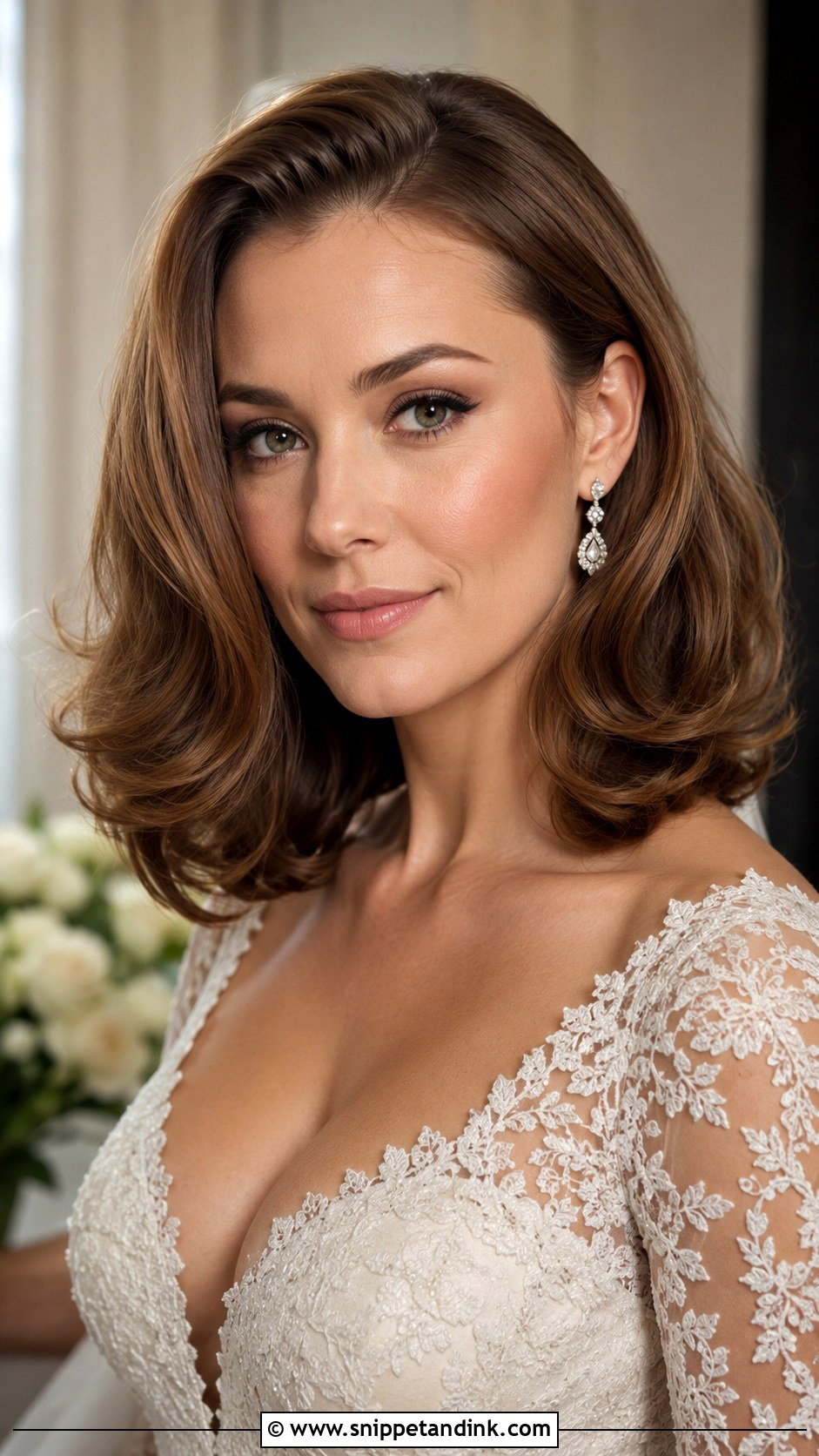
A glossy, voluminous blowout turns a basic bob into something polished. I use a round brush for lift at the roots and a gentle curve at the ends, and I let each section cool on the brush before releasing it, because that cooling is what sets the bend. The finish is full, healthy-looking hair with plenty of movement. It suits most face shapes and most gowns. In humidity a blowout is the first thing to puff, so I finish with a light shine spray that also seals the cuticle. Tuck one side behind the ear and pin it if you like.
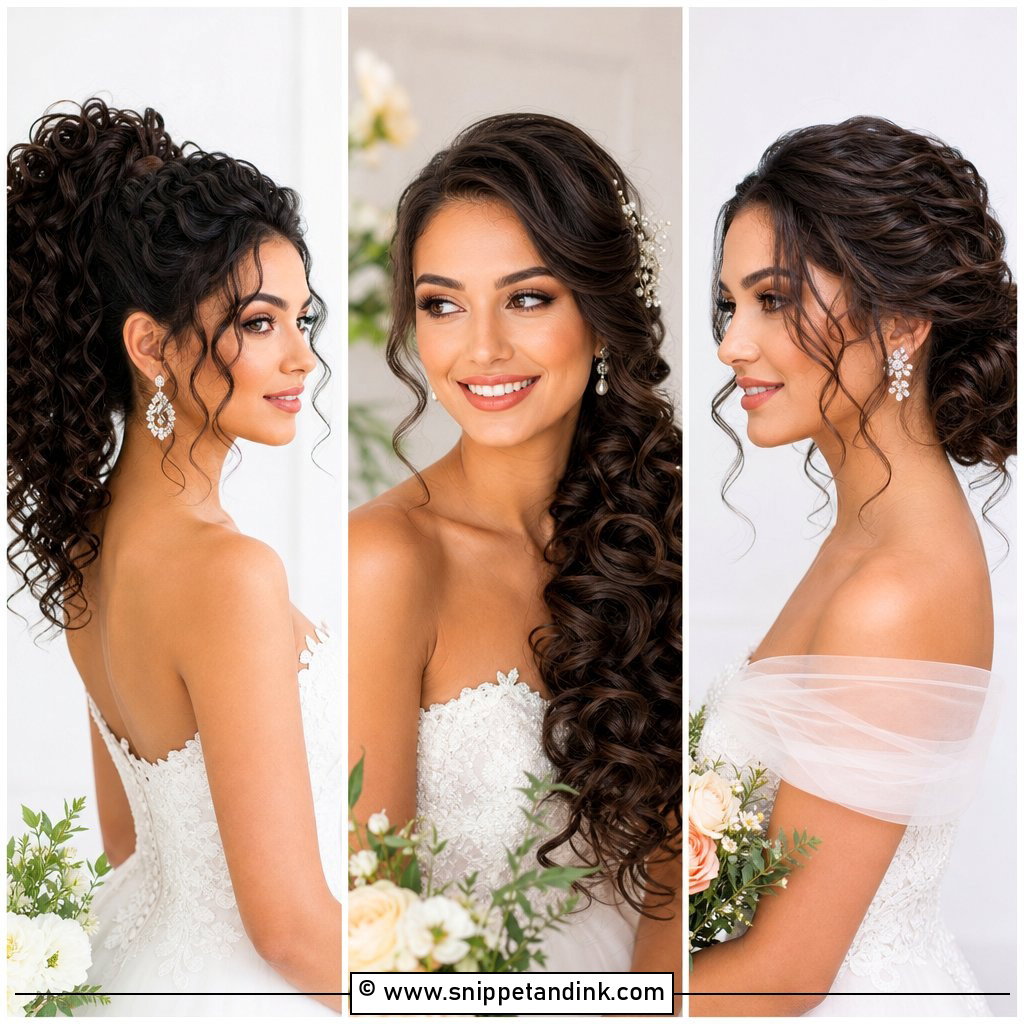


20. Boho Braided Short Hair with Flowers
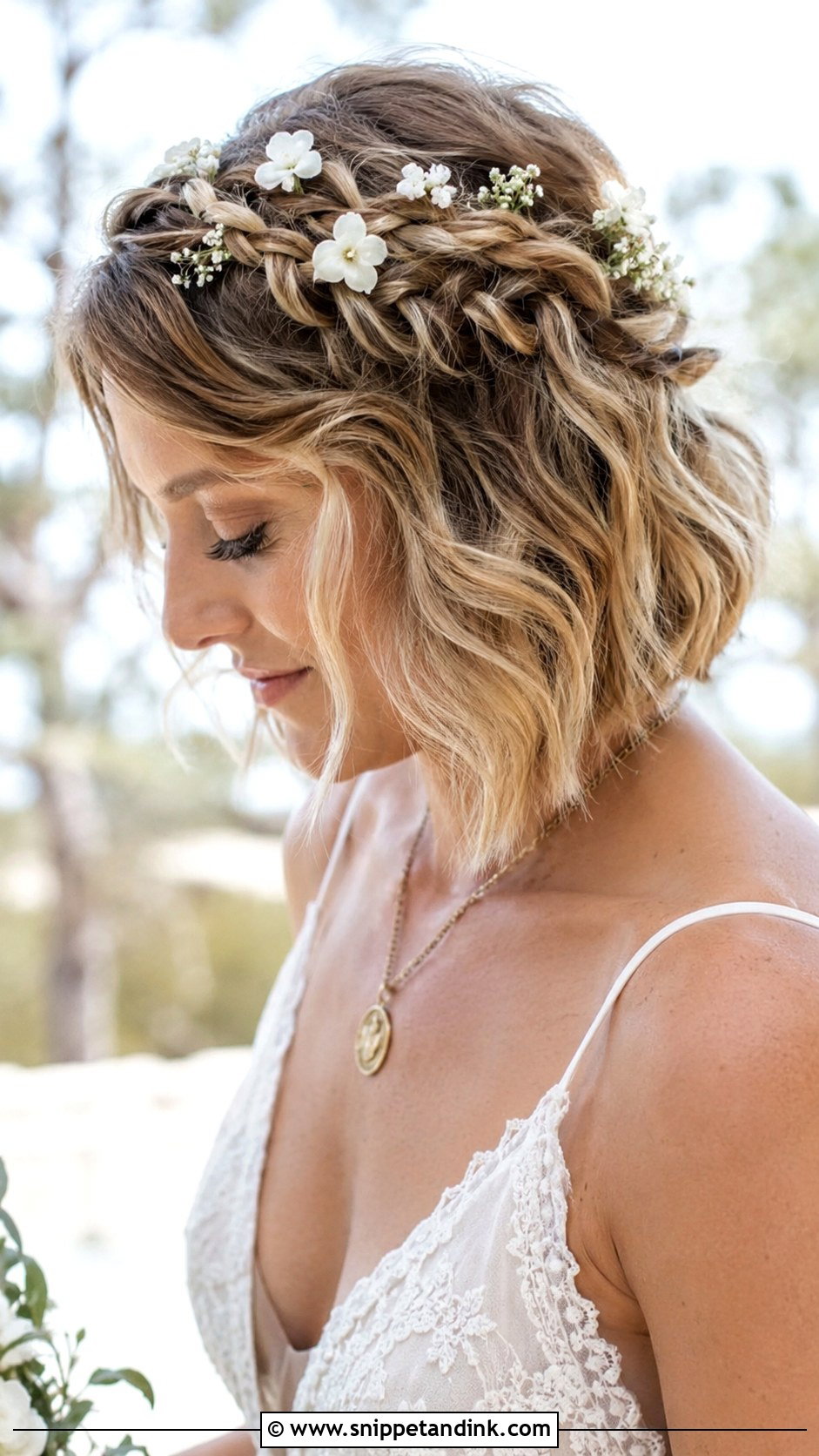
For a relaxed outdoor wedding, a few loose braids along one side or across the crown, gently pulled apart, give short hair a soft, airy texture. I leave the rest in relaxed waves and weave in fresh flowers, greenery or baby’s breath. A word on flowers: delicate blooms like gardenias bruise and brown within a few hours out of water, while waxflower, baby’s breath and small spray roses last much longer in hair. Ask your florist for a few extra stems and keep them cool until I’m ready to place them.
Anchoring a Veil Comb Without a Bun to Hold It
The question I get most from short-haired brides is where the veil goes. A veil comb needs something to bite into, and on a pixie or sleek bob there’s often nothing but scalp under it. I build a small anchor first: a tight pin-curl or a short braid flat against the head, exactly where the comb will sit. The comb then slides into that anchor and I cross two bobby pins over its spine.
A few other options work well on very short hair:
- Ask your veil maker to swap the comb for a narrow headband or a pair of snap clips, which grip short hair better.
- Place the veil lower, just above the nape, if you have more length there than on top.
- Pick a lighter tulle or a shorter veil; a cathedral-length veil drags on a small anchor.
Products I Keep Light on Short Lengths
Short hair shows product faster than long hair. There’s less length to spread it through, so a palmful of mousse that would vanish into long hair can make a pixie look stiff or wet by the evening. I work in small amounts: a dry texture spray at the roots for grip, a pea-sized amount of cream or pomade for finish, and a flexible spray to hold.
Also, wash your hair the night before or the morning of, not two days before. Short hair gets oily at the roots quickly, and a cut that’s been slept on for two nights won’t hold volume. If your hair is very fine, I’d rather you arrive with clean, dry hair and let me add the grip.
Less Weight, Fewer Dropped Curls by the Last Dance
Short hair often outlasts long hair on a wedding day, simply because there’s less weight pulling the style down through hugs, dancing and humidity. Finger waves, braided crowns and glossy blowouts all work on short lengths when the cut, the pins and the grip are planned for it. Choose the look that suits your cut as it will be on the day, book a trial at least a few weeks out, and bring the exact accessories you plan to wear.
You'll Like These Ideas:





Leave a Reply