
Retro heart cakes come straight out of old bakery windows: Lambeth overpiping, scalloped edges, piped cherries, bows and a message written across the top. I love making them, but the shape is less forgiving than a round. Every wobble in a border shows on the curve, and the point at the bottom of the heart is where piping either looks crisp or falls apart. For a wedding, the job is keeping the nostalgia while making the cake look deliberate rather than like a birthday order. Below are 30 versions I’d happily put on a reception table, from small elopement cakes to a full dessert spread, with notes on what each one asks of the decorator.
Planning Servings Around the Point of a Heart
A heart pan looks generous, but the point and the dip at the top cost you cake. A heart the same width as a round holds noticeably less, and the slices from the point come out narrow and awkward. When a couple gives me a guest count, I size the heart up from what they’d order in a round, or I plan a plain kitchen cake behind it to make up the numbers.
Cutting matters as much as size. I cut a heart in straight rows rather than wedges so every guest gets an even piece, and I send a simple cutting diagram with the cake. If your caterer is doing the cutting, make sure they see that diagram before the day.
Why the piping adds to the bill
Overpiped borders, scrolls and a written message are all done by hand on the finished, chilled cake. A plainly piped heart can be decorated in an afternoon, while a full Lambeth heart can take most of a working day. That’s why detailed retro cakes often cost more than a smooth round of the same size, and why many decorators want custom orders booked months ahead. Prices and lead times vary a lot by area, so ask early rather than assume.
1. Retro Heart Wedding Cake With Cherries
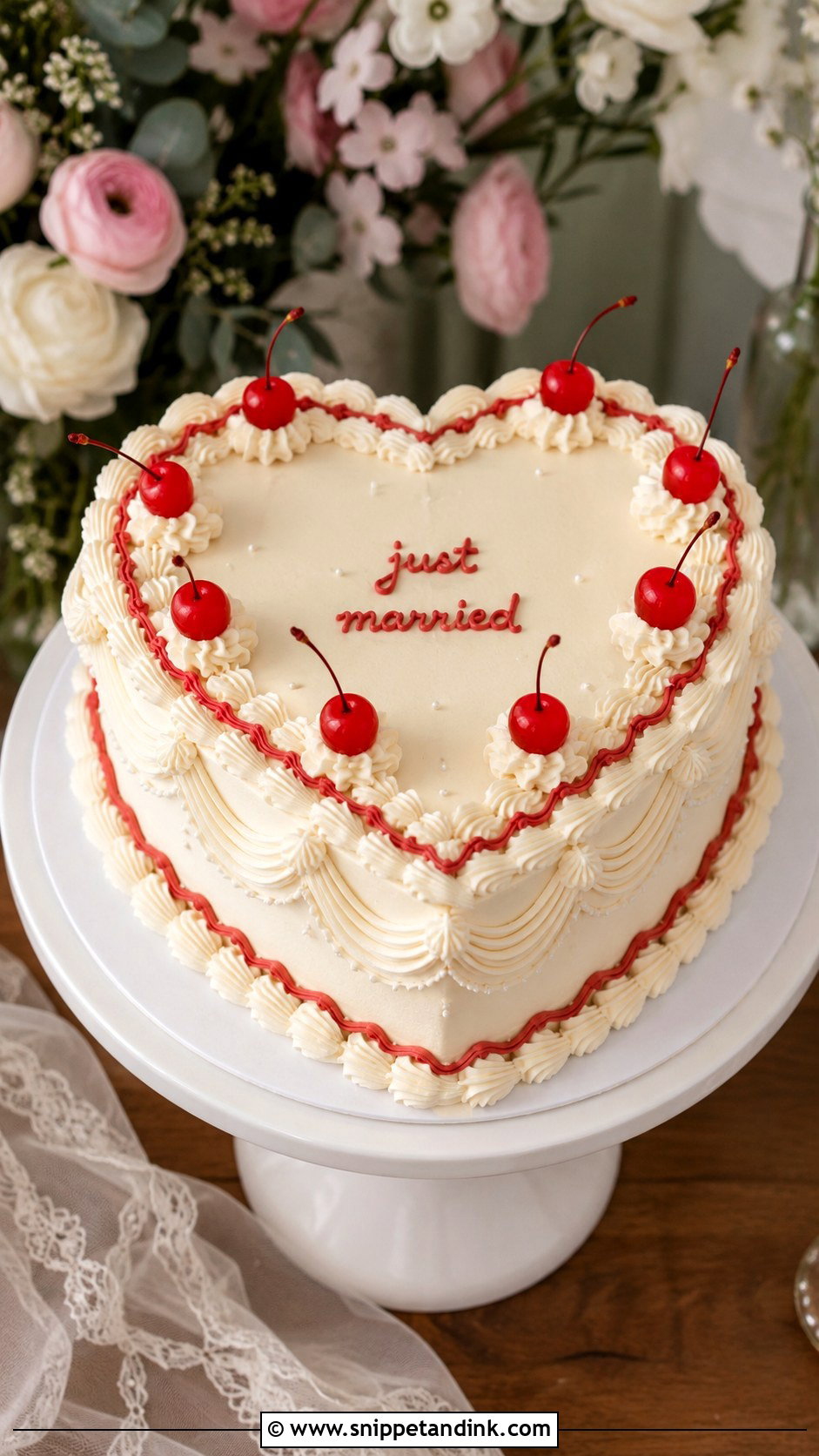
Cherries are the detail people recognize first, and they’re also the one I plan most carefully. Jarred cherries bleed red syrup into pale buttercream within an hour or two, so I drain them, blot them dry and add them as late as possible, ideally at the venue. Glossy red against smooth white frosting reads clearly in photos, and a vanilla or almond sponge keeps the inside pale to match. If the cake has to sit out through a long outdoor reception, ask about sugar cherries instead; they keep their shine without leaking.
2. Pink Retro Heart Wedding Cake
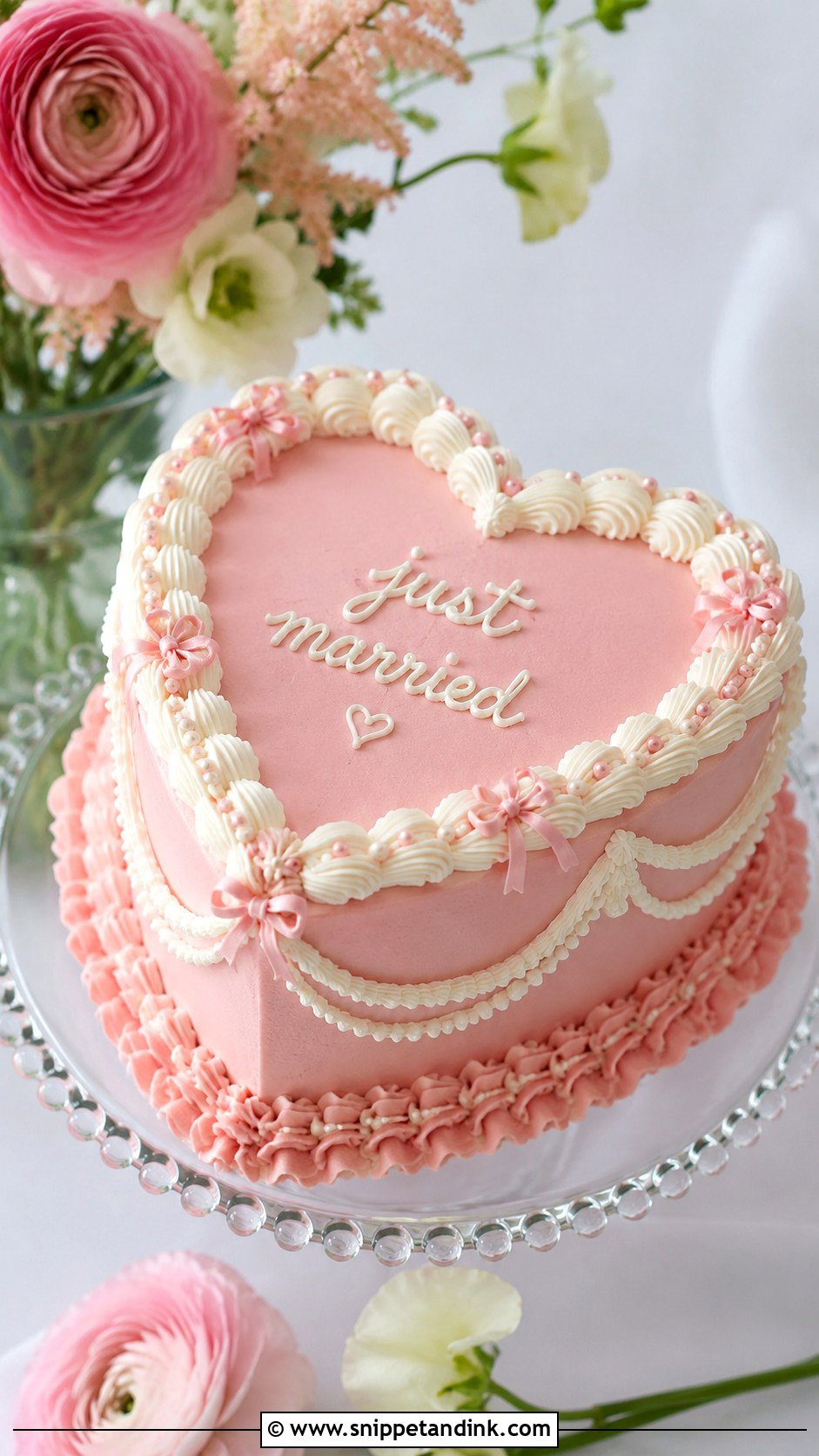
Blush is the easiest color for a heart cake to wear at a wedding because it calms all that busy piping. I tint the base very lightly and push the brighter pink into the borders, which keeps the vintage feel without tipping into party cake. Pink buttercream can fade toward beige under strong sun or hot lights, so I keep it boxed until it goes out. Strawberry or raspberry filling ties the inside to the outside without any extra decoration.
3. White Retro Heart Wedding Cake
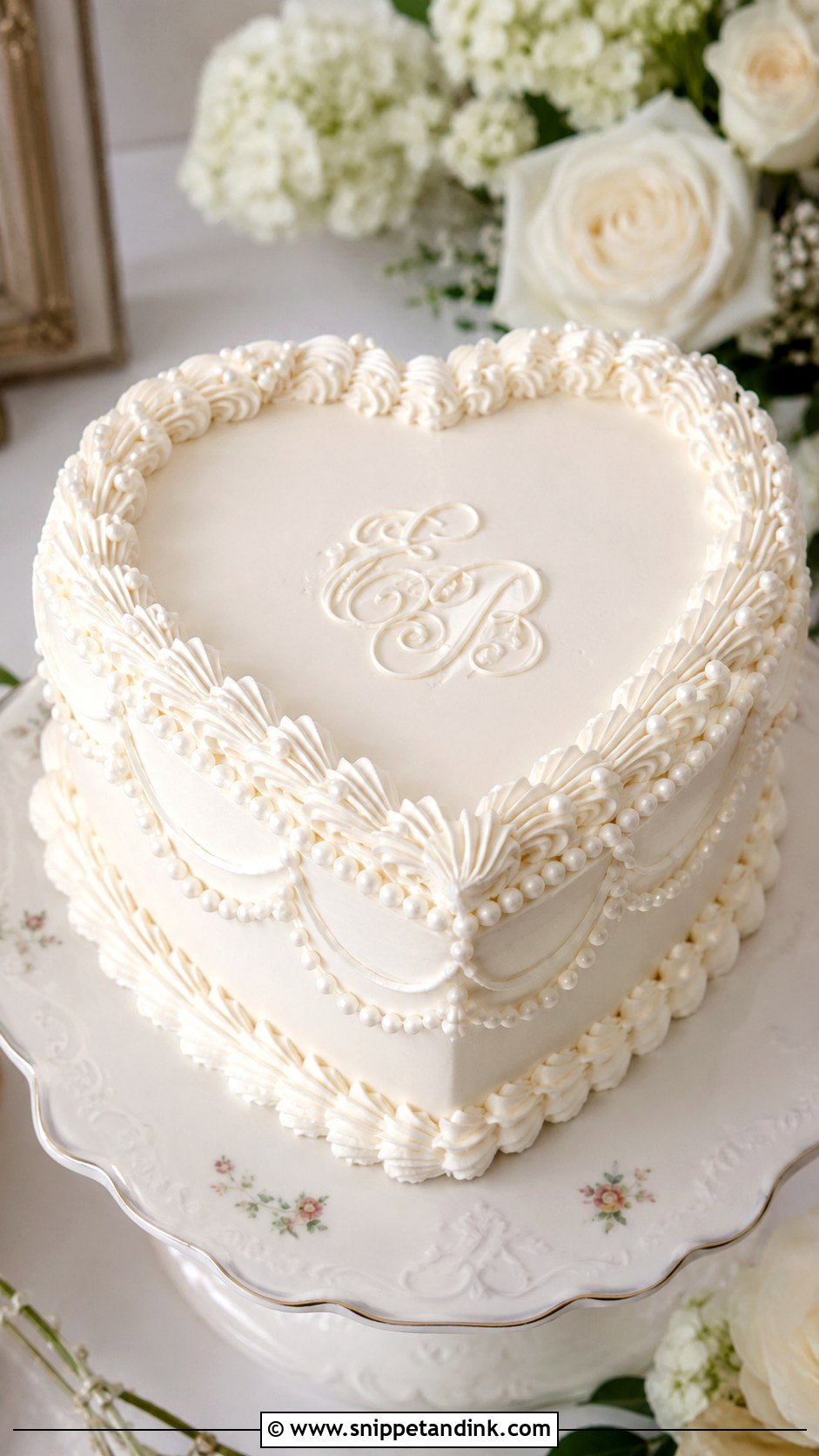
All-white is the version I suggest when a couple loves the heart shape but worries it will feel too cute. With no color to lean on, the piping does everything: shells, drop strings, pearl dots and maybe “Just Married” or initials in the middle. That leaves the decorator’s hand completely exposed, so ask to see white-on-white work in their portfolio before you commit. A glass stand makes it more formal, while a ceramic pedestal relaxes it. Vanilla bean or white chocolate keeps the crumb close to the frosting color.
4. Red Retro Heart Wedding Cake
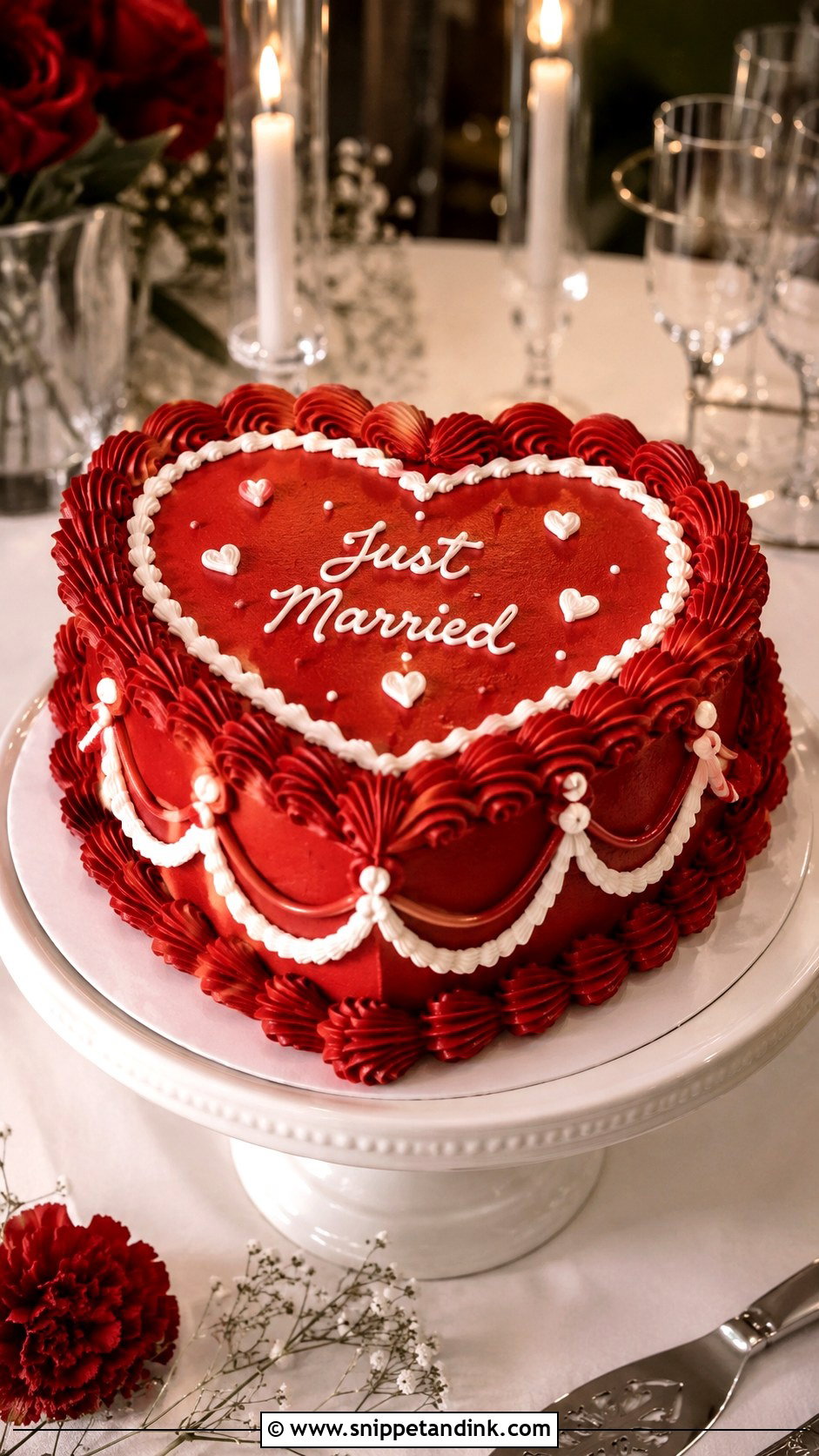
Deep red buttercream takes a lot of gel color to reach, and too much leaves a bitter edge and stained teeth. I mix it a day ahead, because red darkens as it rests, which lets me use less coloring for the same shade. White scalloped borders and piped hearts against that red give it the bakery-window look, and a plain stand stops it feeling loud. Red velvet is the obvious crumb, though chocolate raspberry or vanilla with cherry filling suits the color just as well. I’d skip this one if your flowers already carry a lot of competing reds.
5. Black And White Retro Heart Wedding Cake
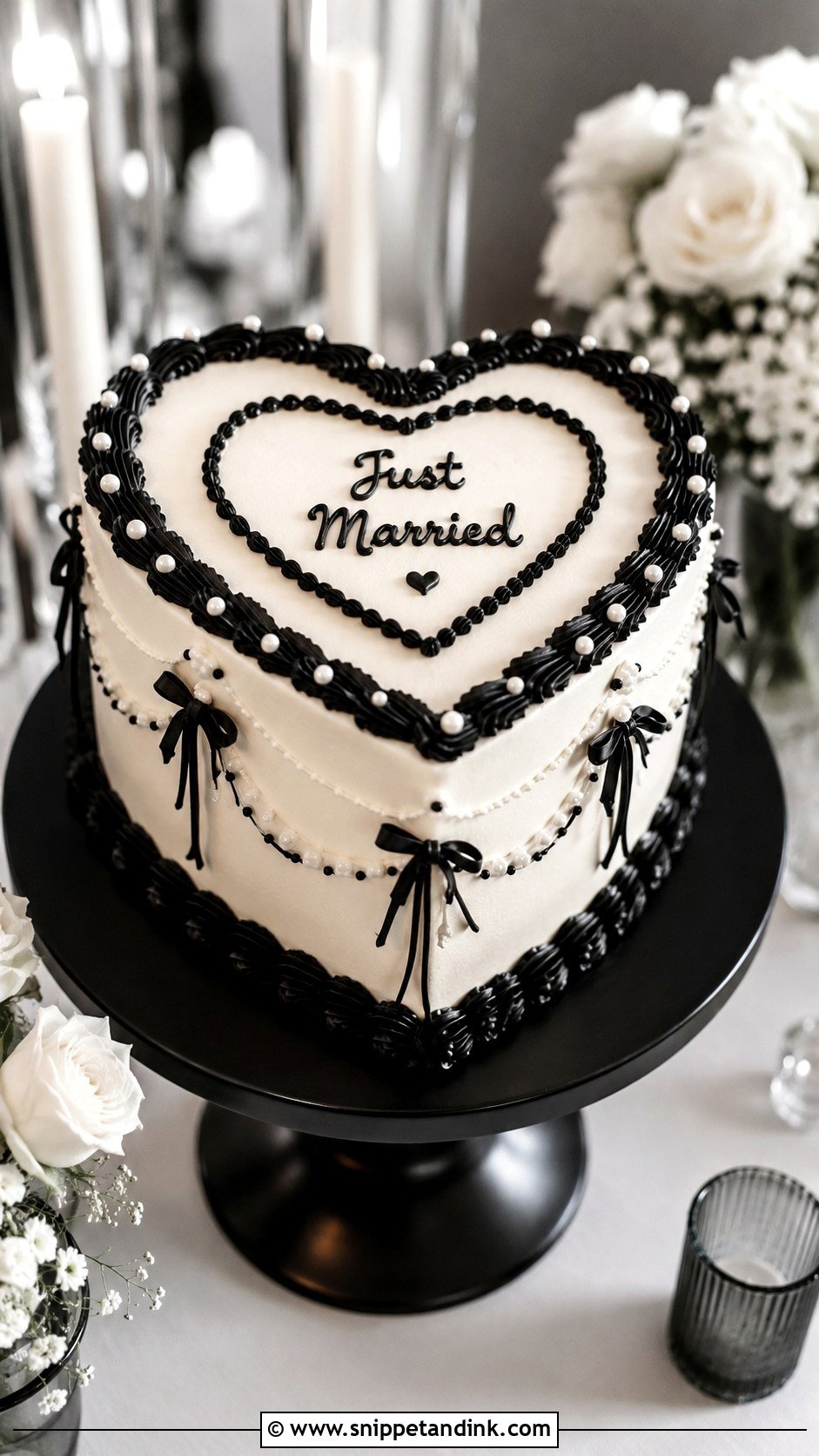
Black and white is the most graphic option here, and it reads from across a room, which helps in big venues and dim lighting. A white heart with thin black shells, black bows or black lettering looks refined; the reverse, dark frosting with white piping, feels moodier. True black buttercream needs heavy coloring, so I start from a chocolate base to get there with less dye. Chocolate, cookies and cream or espresso cake fits the palette. Go light on extras. The contrast is already doing the work.
6. Blue Retro Heart Wedding Cake
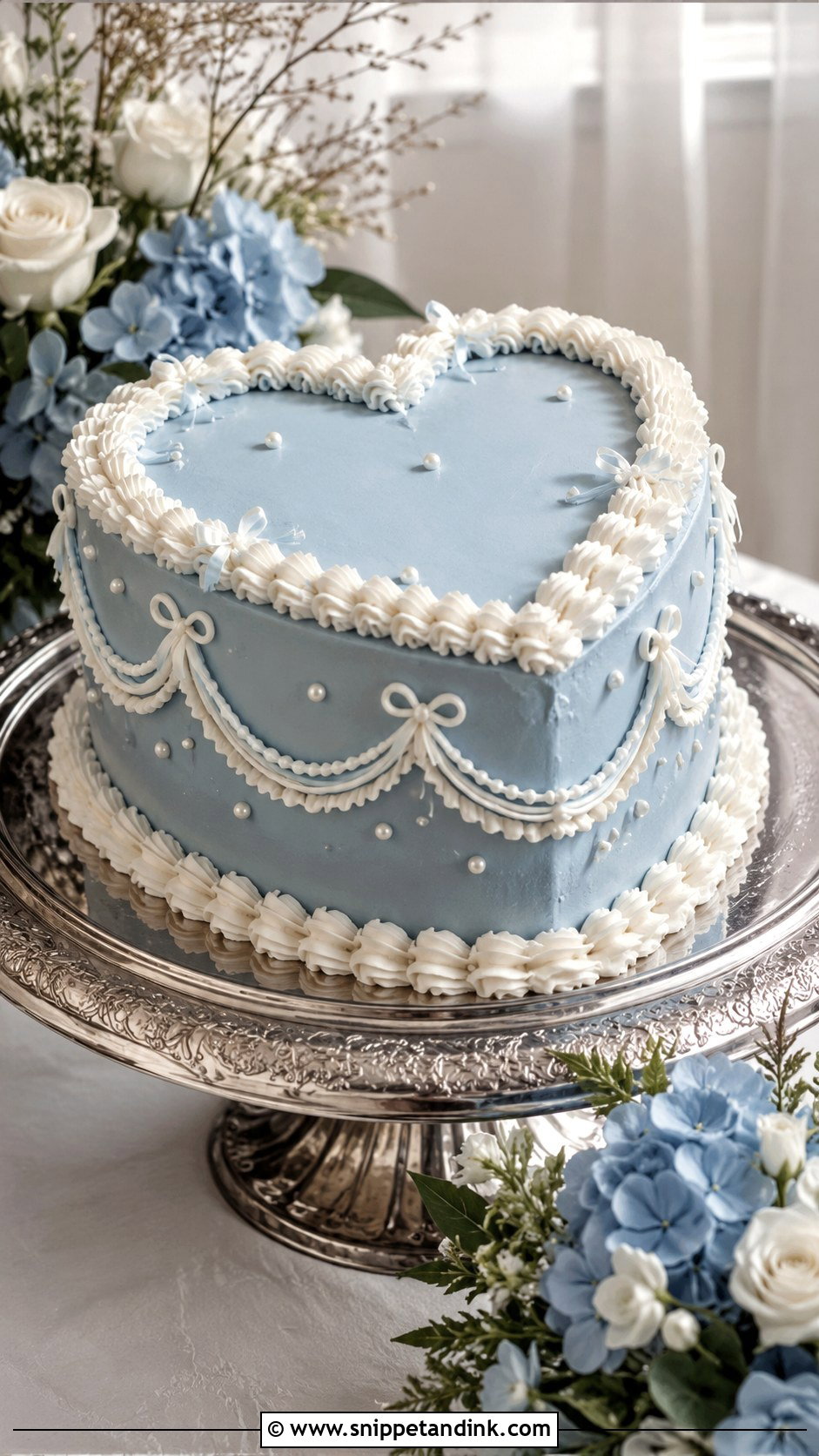
Powder blue doubles as your “something blue,” and white piping layered around the heart keeps it soft rather than nautical. Blue is fussy in buttercream: the natural yellow of butter pushes it toward green, so I knock the yellow back with a touch of violet before tinting. Pearl dots, tiny bows or a short message finish it. Lemon or blueberry cake suits the color, and it sits naturally at coastal or spring receptions or beside a blue invitation suite. Keep the rest of the cake table quiet so the blue doesn’t look muddy.
7. Yellow Retro Heart Wedding Cake
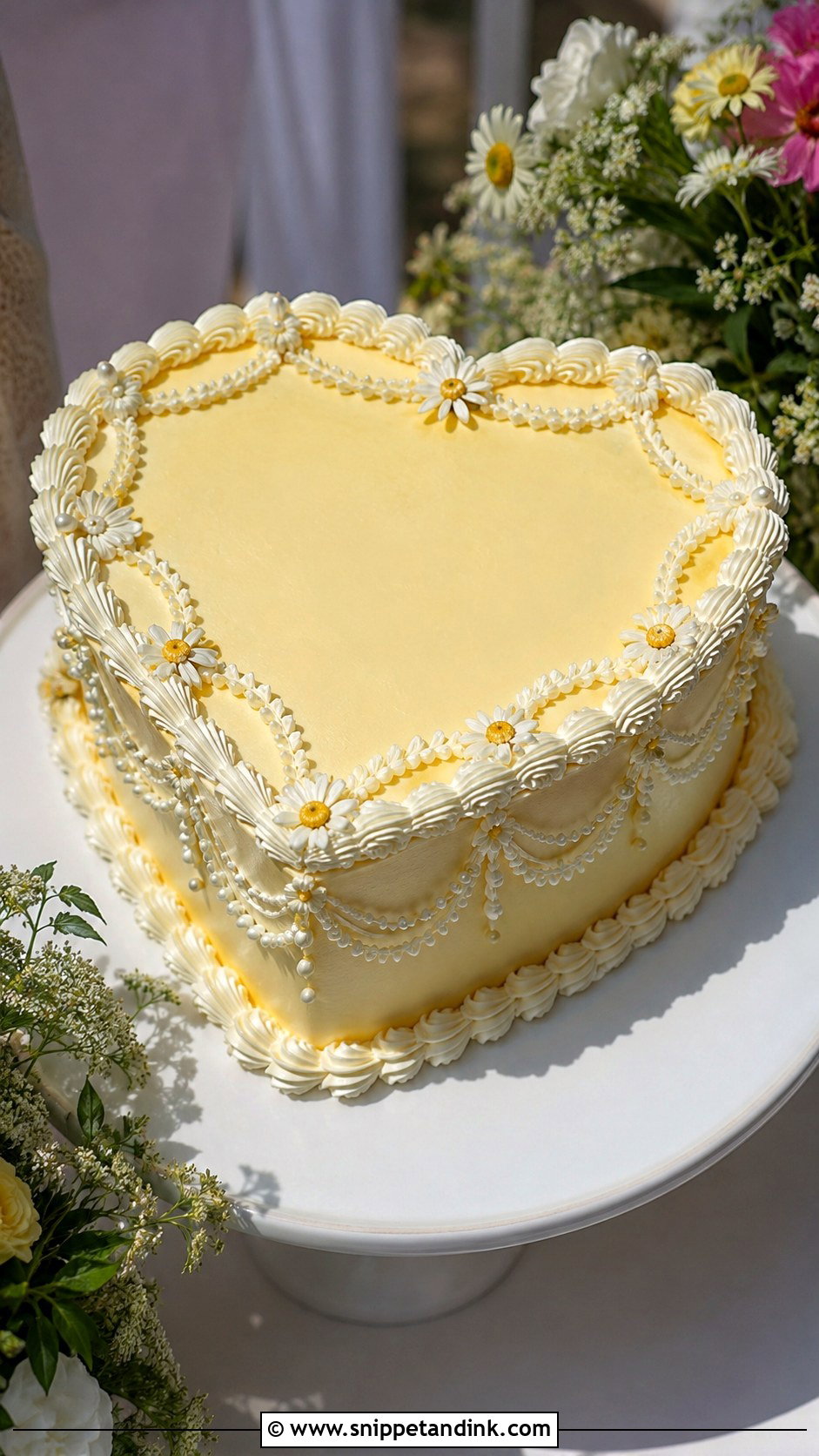
Butter yellow is the shade that keeps this from reading as a kids’ party cake; anything brighter starts to look neon in photos. White scalloped piping, pearl accents and a few small daisies make the difference between bridal and birthday. Lemon is the natural flavor, with honey or almond close behind. Yellow suits outdoor weddings and brunch receptions, but outdoors is also where buttercream struggles, so I’d keep it in the shade and bring it out shortly before cutting.
8. Pastel Retro Heart Wedding Cake
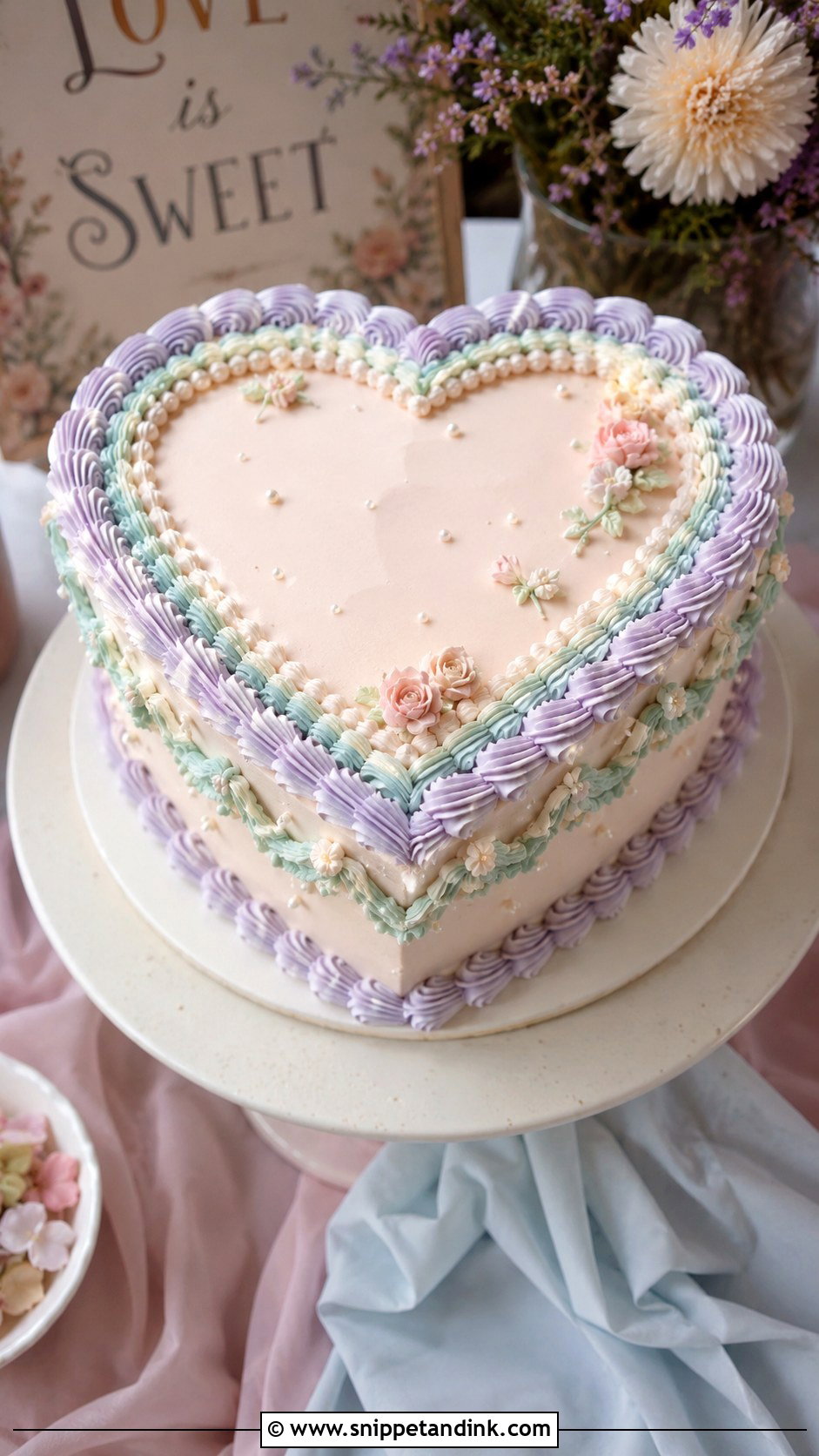
Pastels go wrong when every color gets equal space. I pick one shade for the base, use the others only in the piping, and cap it at two or three colors in total. Blush with lavender and mint, or butter yellow with baby blue, both work when the accents repeat evenly around the border instead of being scattered. Vanilla or lemon sponge keeps the flavor simple, and tiny pearls or buttercream flowers give the colors something calm to settle against.
9. Lambeth Retro Heart Wedding Cake
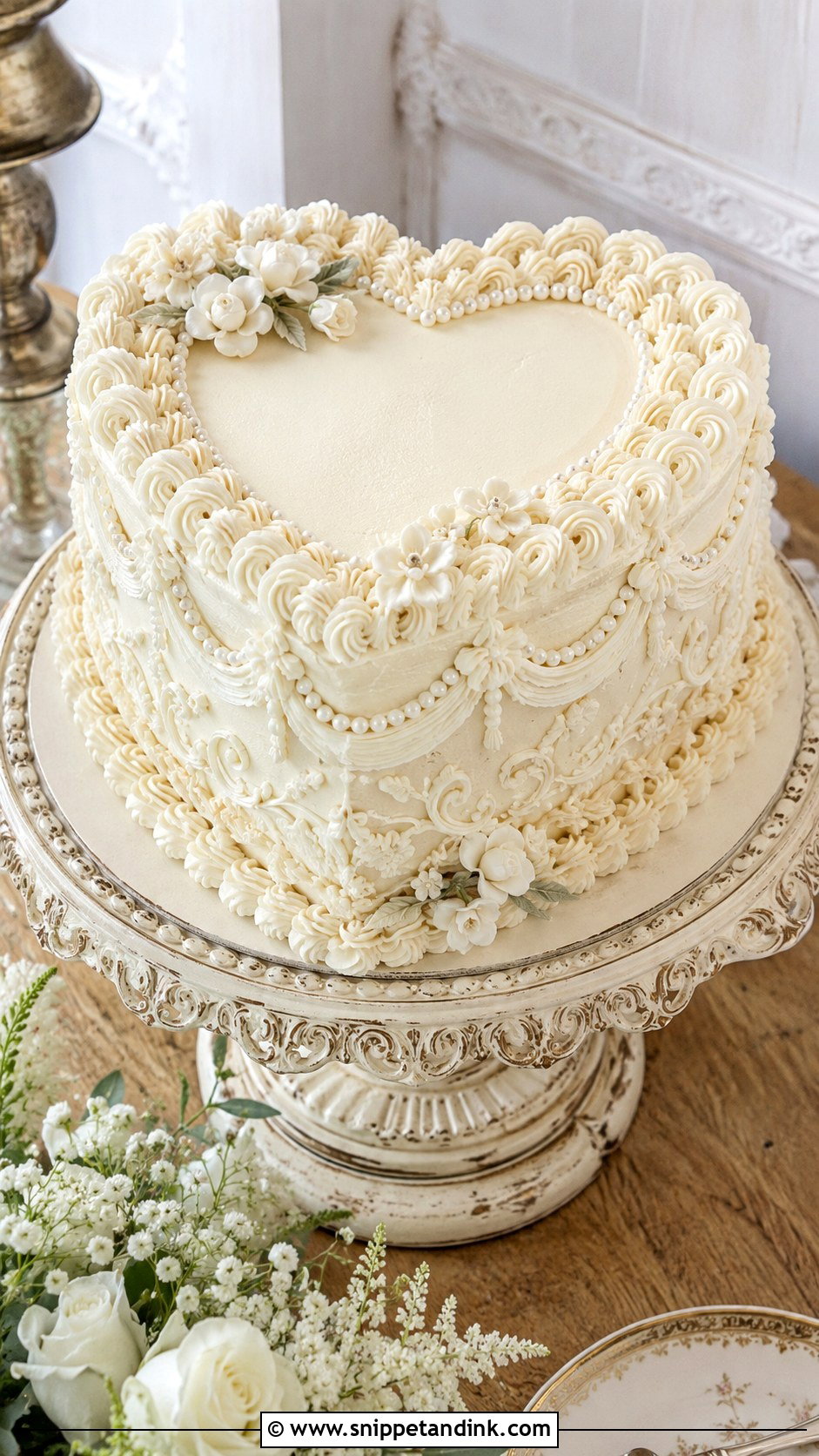
Lambeth is the hardest version on this list to pipe well. It’s built from stacked borders, overpiping, drop strings, shells and scrolls, each layer resting on the one below, and on a heart every curve gets outlined. It needs a firm, well-crusted buttercream and a lot of hours, so expect it to cost more than a simply piped cake. A soft ivory, blush or pale blue base keeps all that texture elegant rather than heavy, and a vanilla bean or almond sponge is sturdy enough to carry it. Ask your decorator whether they’ve piped Lambeth before. It isn’t something to learn on a wedding order.
10. Two Tier Retro Heart Wedding Cake
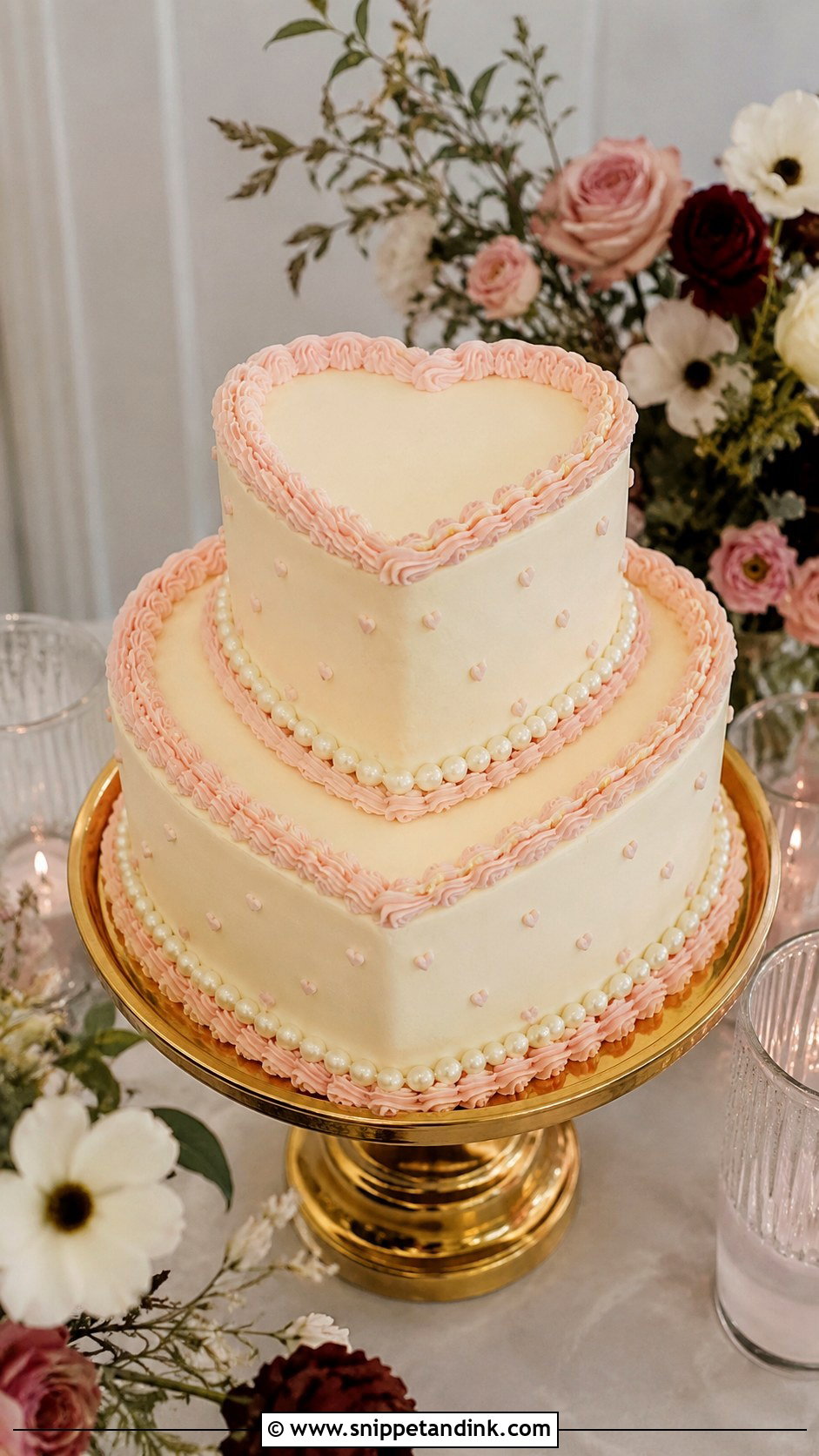
Stacking heart on heart needs more structure than people expect. The top tier sits on its own board over dowels in the lower tier, and the points have to line up exactly or the whole cake looks twisted from the front. I keep the piping identical on both tiers, same ruffle, same pearl spacing, same swag depth, so they read as one cake. It gives an intimate wedding real height without ordering far more cake than it needs. Two flavors is the bonus: vanilla and raspberry below, almond and cherry on top.
11. Mini Retro Heart Wedding Cake
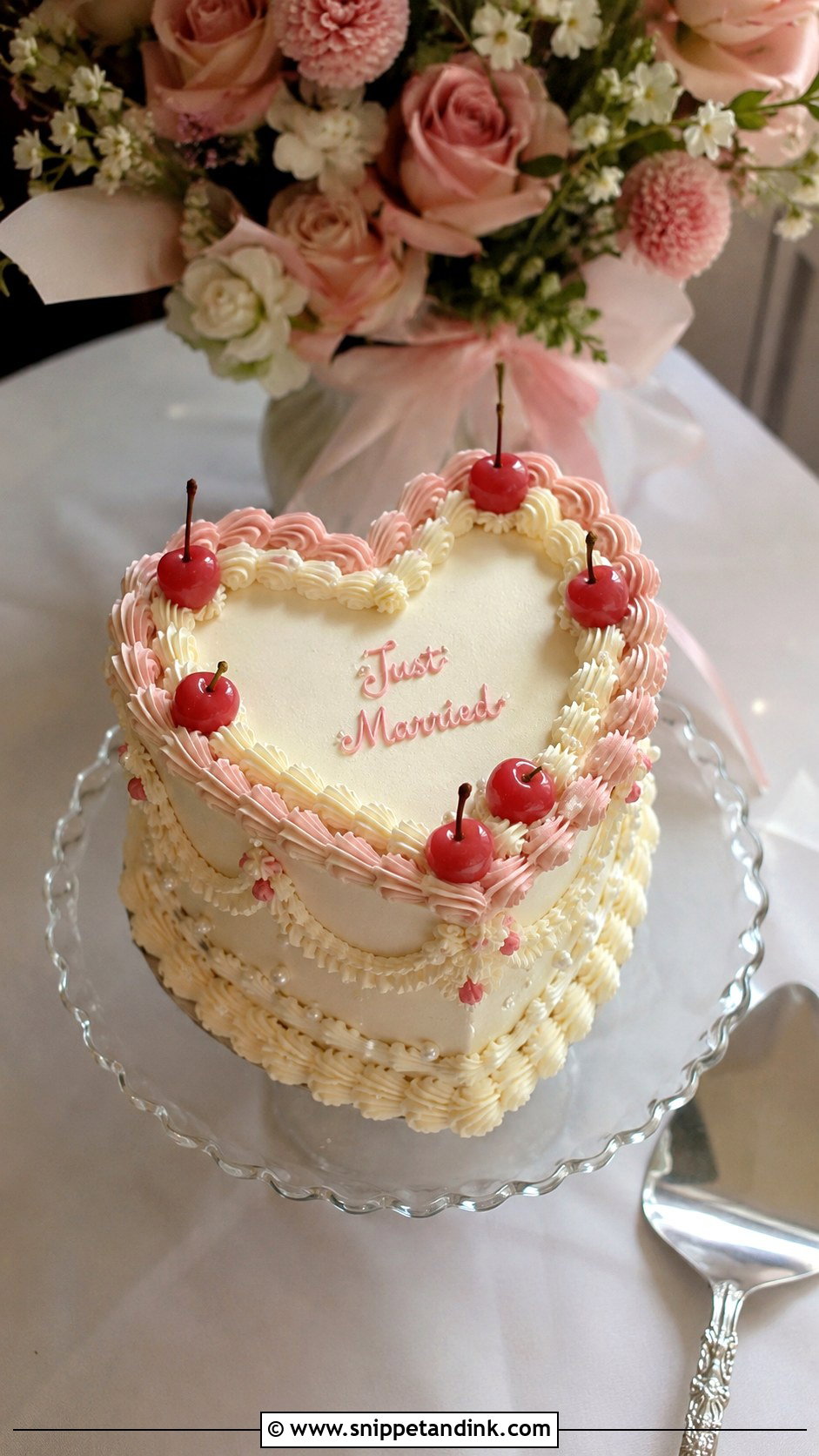
A small heart is what I suggest for elopements, sweetheart tables or a private cutting while guests are served sheet cake or other desserts. The temptation is to fit every detail from the big versions onto it, and that’s where it gets crowded. On a small heart I’d keep to one border, a short message and three or four cherries or flowers at most. Vanilla, chocolate or strawberry are all easy at this size. Raise it on a pedestal so it doesn’t disappear on the table.
12. Vintage Pearl Heart Wedding Cake
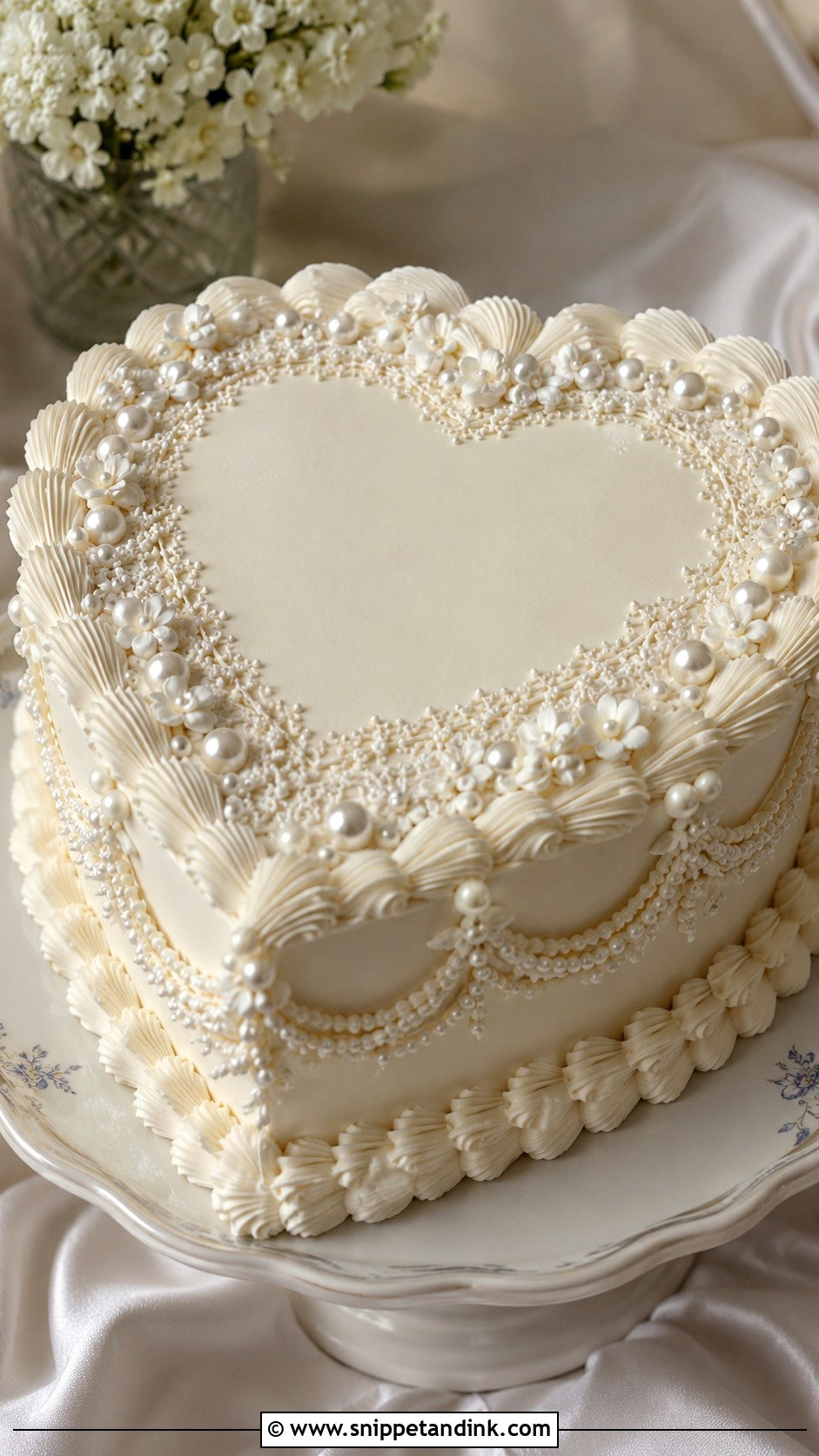
Pearls suit heart cakes because they fill the gaps curves leave in piping: along the border, between scallops, around a message. I mix two or three sizes so the line has depth instead of looking like a strand of beads. Sugar pearls are hard, so I keep the large ones away from slices meant for small children. Ivory or white buttercream with lace-style piping and smooth sides keeps it refined, with almond, coconut or white chocolate cake underneath. Skip it if you want color; this one is deliberately quiet.
13. Coquette Retro Heart Wedding Cake
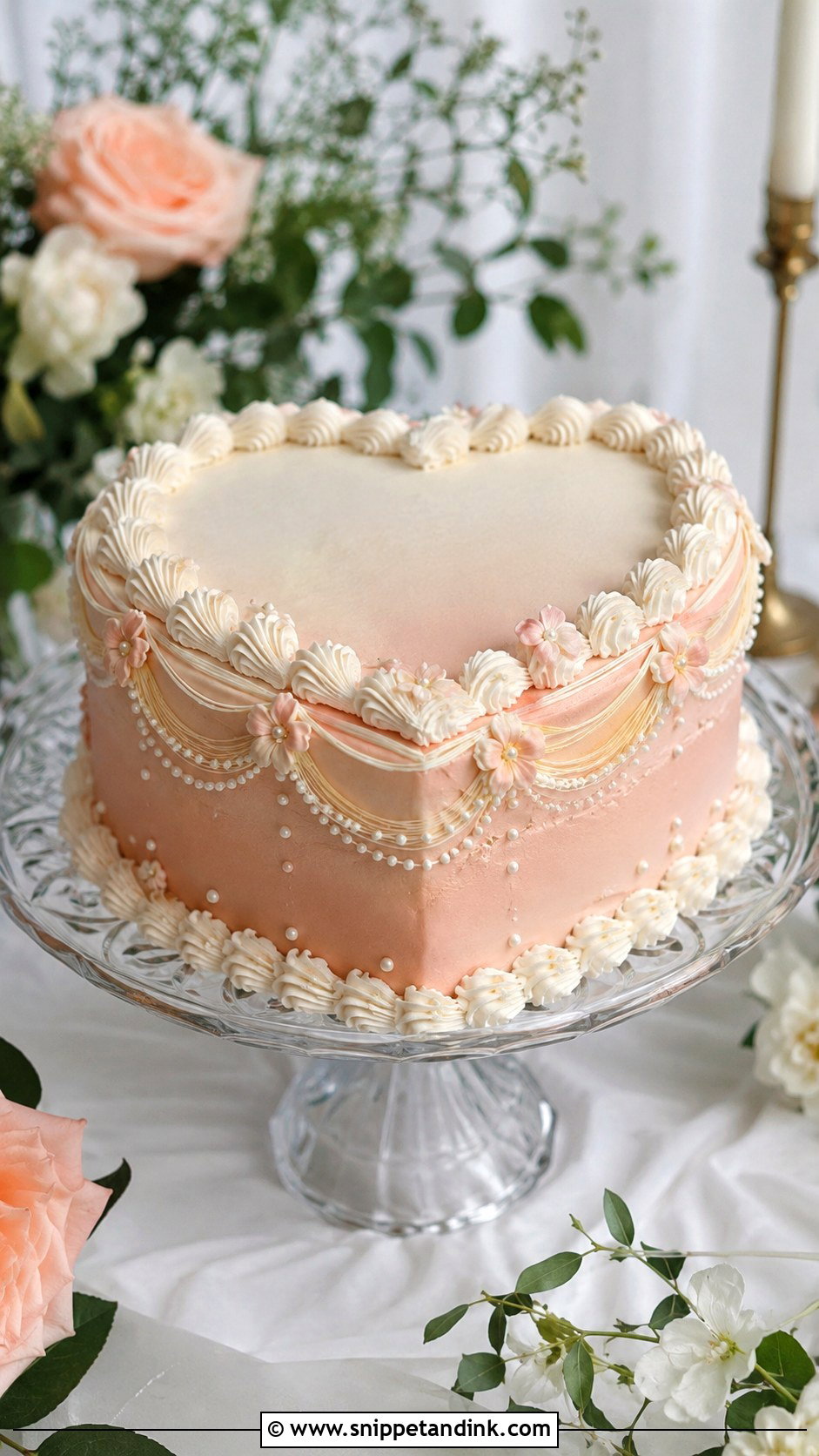
Coquette styling is all about bows, and bows are where a cake tips into clutter fastest. I space them evenly around the border, keep them small and stop there; one satin-style ribbon at the base is enough to frame it. A real ribbon needs a strip of parchment or acetate behind it, otherwise the butter in the frosting seeps through and leaves greasy spots. Blush, ivory, baby blue and pale pink are the usual bases, and strawberry or raspberry cake suits the mood at showers and garden receptions.
14. Floral Retro Heart Wedding Cake
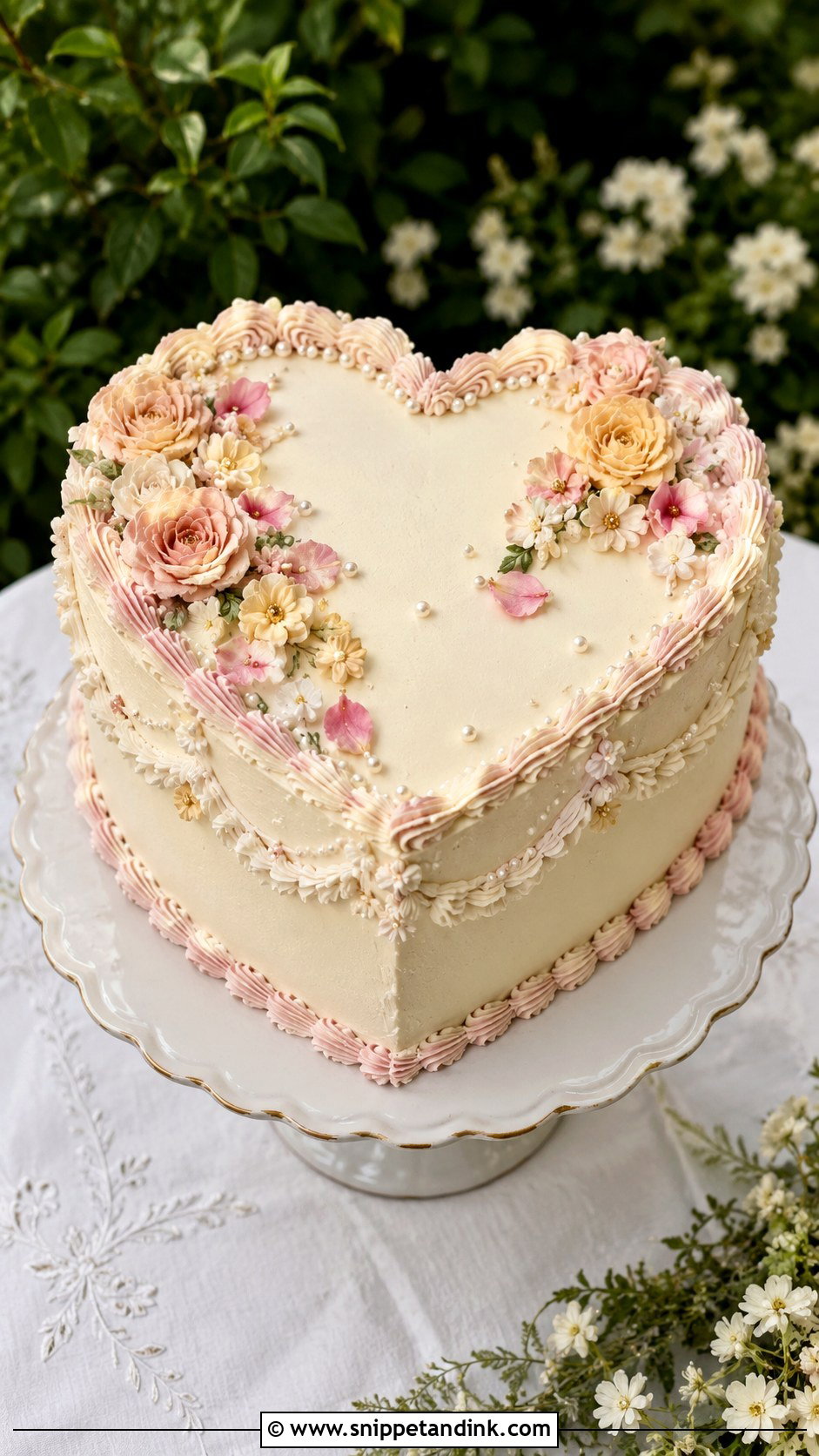
I keep flowers on a heart to the borders and top corners, because covering the surface hides the one thing that makes this cake different: its outline. Small piped blooms are the safest route. Fresh edible flowers have to be grown without sprays, which your florist or baker should confirm before anything touches the frosting. Soft pink, ivory, lavender and pale yellow suit most wedding palettes. Elderflower or lemon sponge echoes the garden feel at spring and outdoor receptions.
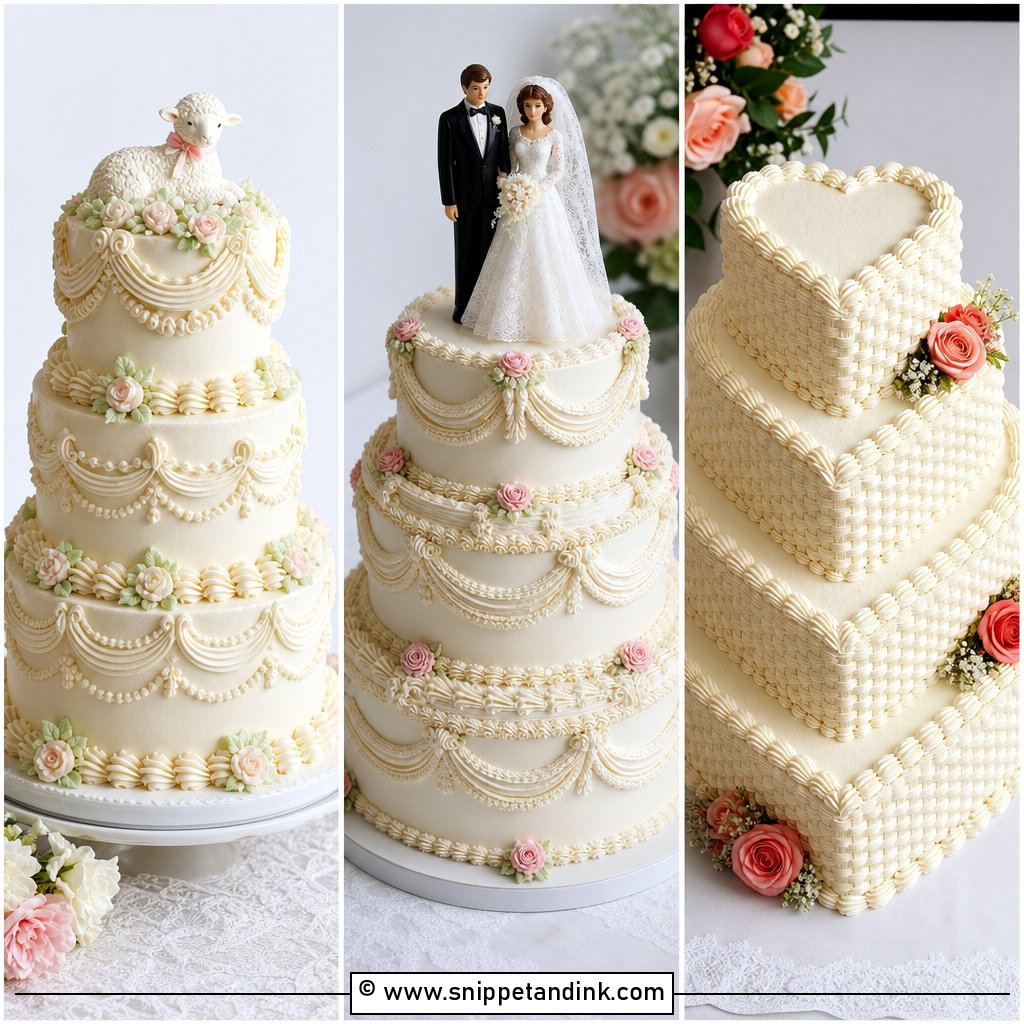


15. Lace Retro Heart Wedding Cake
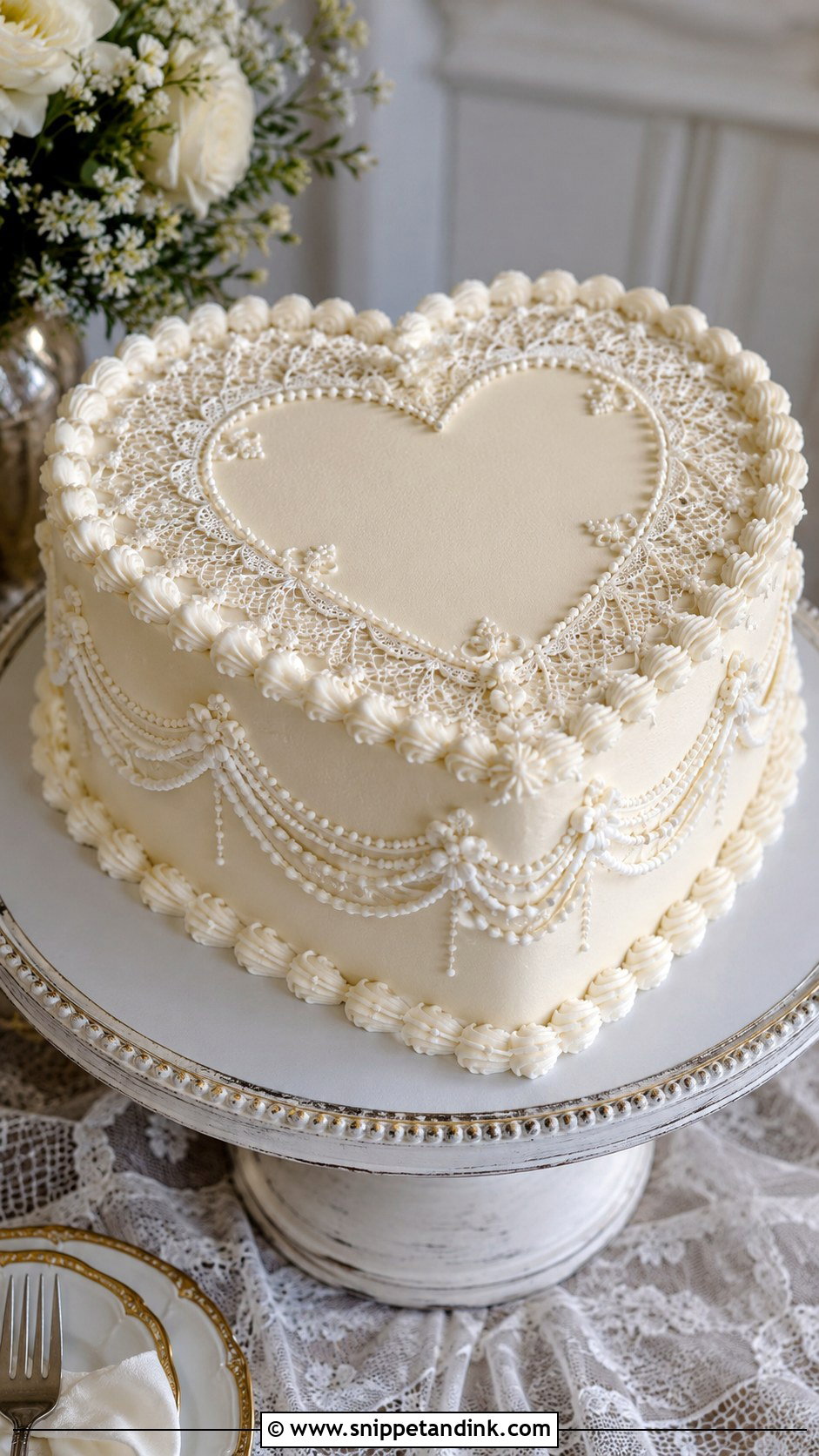
Piped lace is fine work: loops, dots and scallops through a very small tip, done in one steady pass because buttercream can’t be patched invisibly. An ivory or white base keeps it bridal, and it sits well with pearl accents, a few sugar flowers or a monogram in the center. If your dress has a distinctive lace pattern, send a close-up photo; most decorators can echo the motif loosely, though an exact copy is a much bigger job. Vanilla bean or white chocolate cake suits it, and lace linens around the stand tie it into the room.
16. Monogram Retro Heart Wedding Cake
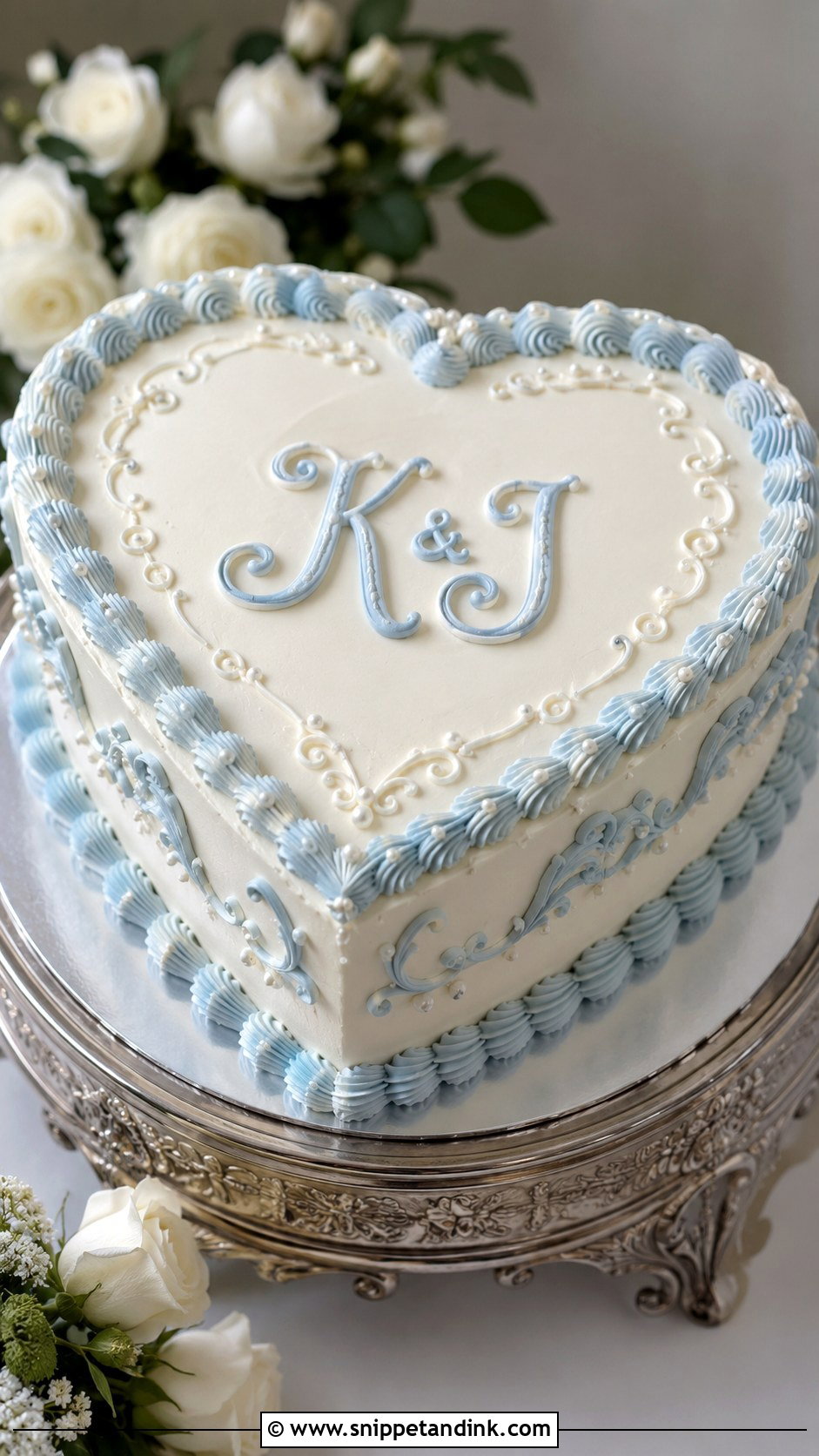
Initials make the cake personal without a long message, and they sit neatly in the widest part of the heart. Before piping, I draw the monogram at full size and mark it lightly onto the crusted frosting with a scribe, because freehand letters on a curve tend to drift. Scallops, pearls and small scrolls go around it, and a white, blush or pale blue base keeps the letters readable. For a more formal cake, pick one accent color for the initials and repeat it in the outer border. Almond or lemon cake works well here.
17. Just Married Retro Heart Wedding Cake
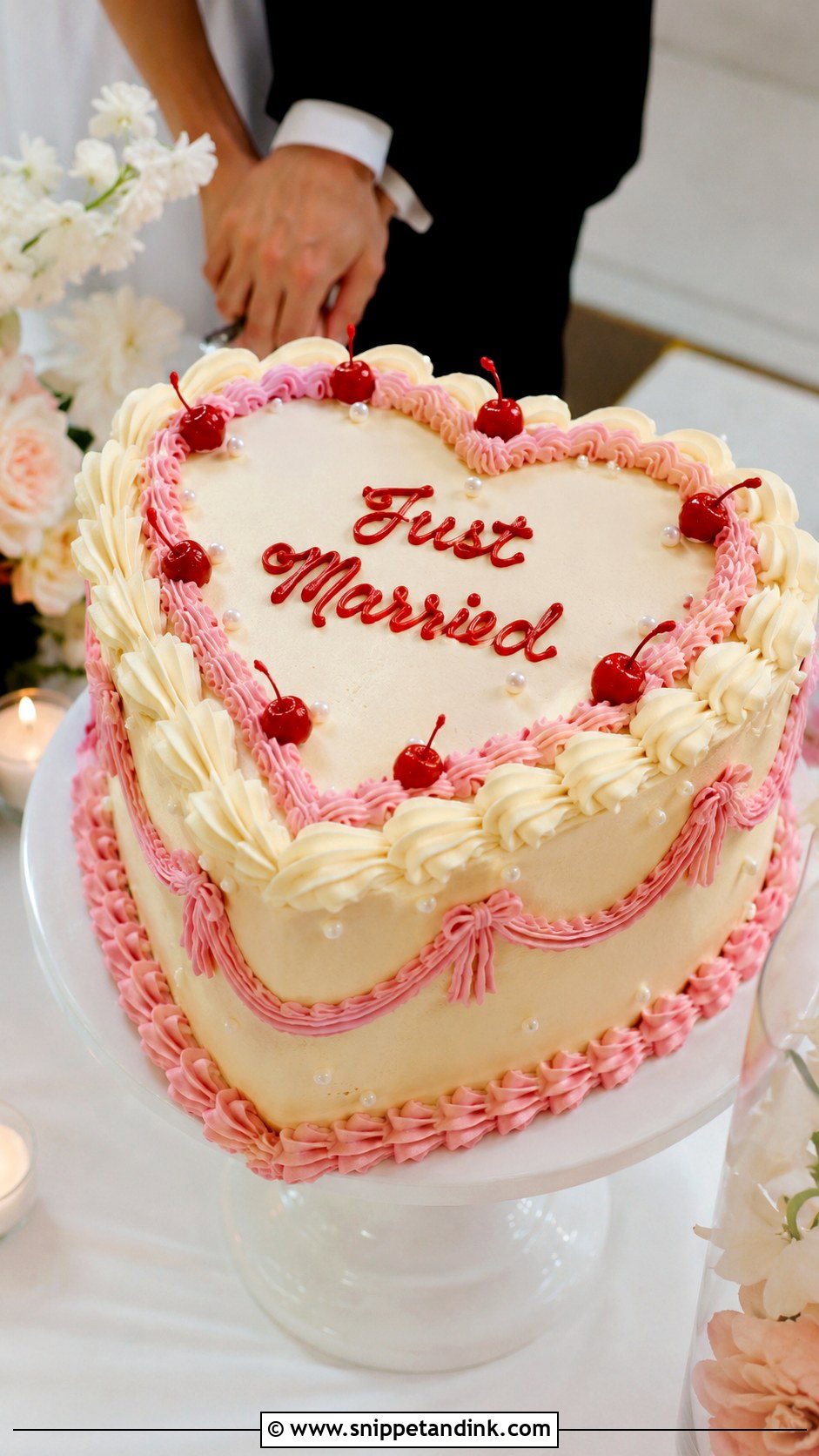
Guests and photographers both know exactly what to do with a Just Married heart cake. The phrase fits across the center, but only if the lettering is sized to the cake. I measure the usable width first, because squeezing the last letters into the curve is the most common mistake I see. Ruffled edges, shell borders and a few pearls or cherries balance the writing. Pink and red make it playful, ivory and white make it quieter, and vanilla, red velvet or chocolate cake all suit it.
18. Ombre Retro Heart Wedding Cake
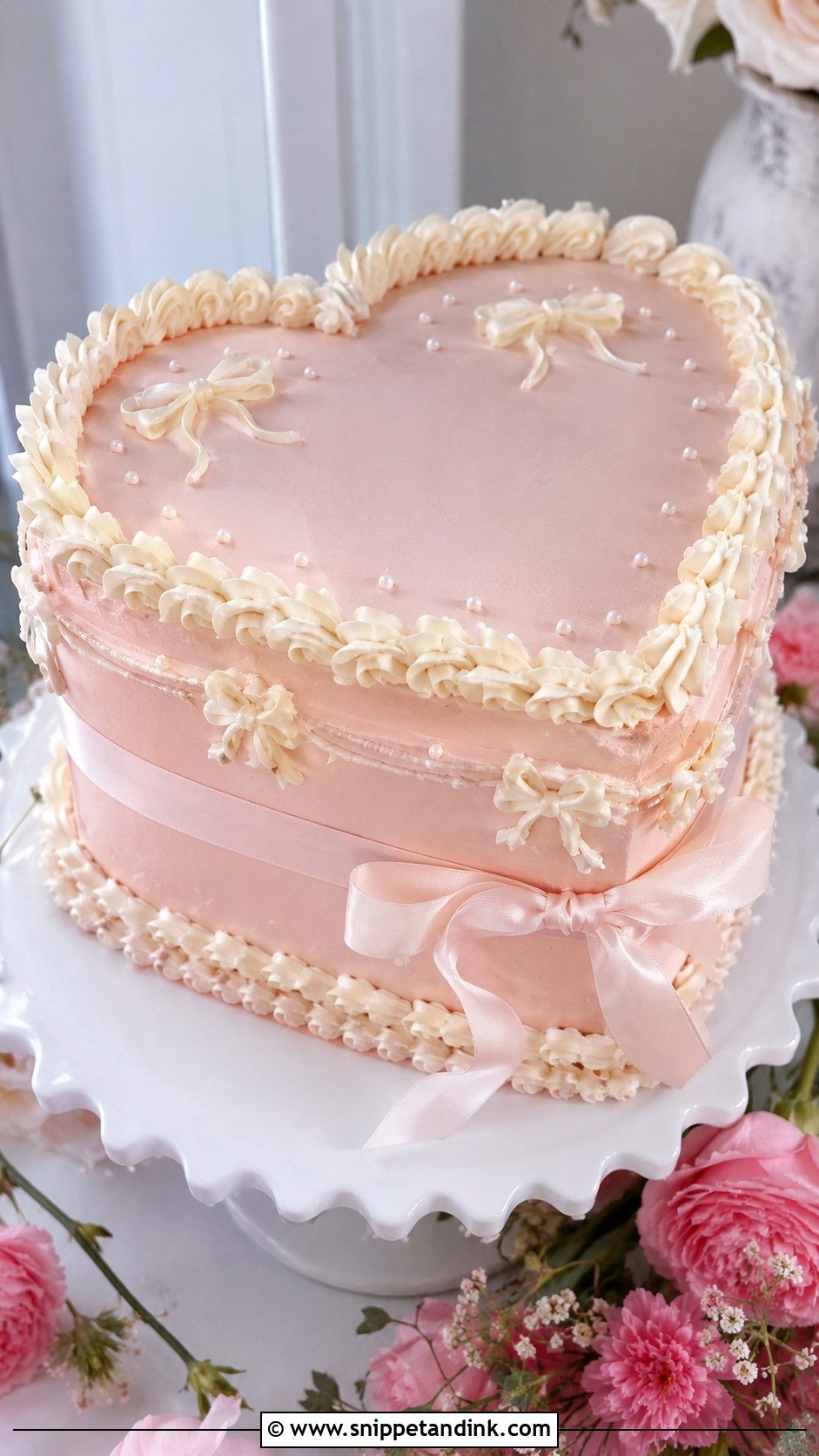
On a heart, I run the color fade in horizontal bands from top to bottom so the point and the cleft match; a fade that travels around the sides makes the shape look lopsided. Pale pink to ivory, blue to white and peach to cream are the gentlest versions. I keep the piping a shade lighter or darker than the frosting behind it, or the scallops and swags vanish into the gradient. Spring and summer palettes suit it best. Strawberry, lemon or peach cake can echo the colors, and a plain stand lets the fade carry the look.
19. Strawberry Retro Heart Wedding Cake
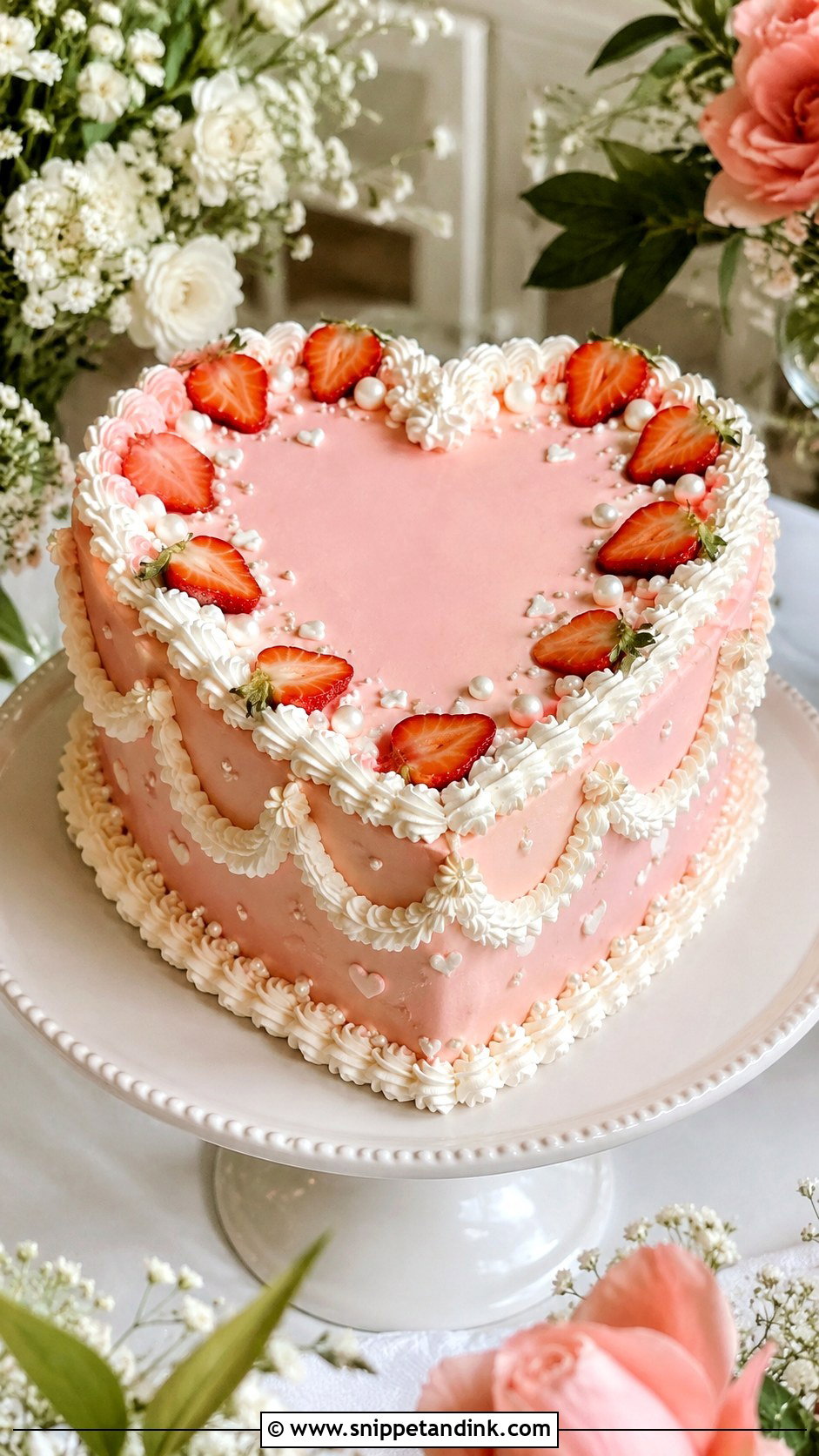
Fresh strawberries are lovely in the first hour and weepy by the fourth. Once cut, they release juice that pools on buttercream, so I use small whole berries or halves placed cut-side down, and add them close to serving. Inside, you can have strawberry cake, vanilla with strawberry filling or a pale pink sponge with berry buttercream. Outside, blush frosting with white piping, shell borders and a short message keeps it vintage. Neat, deliberate fruit placement is what stops it looking casual at a garden or brunch reception.


20. Chocolate Retro Heart Wedding Cake
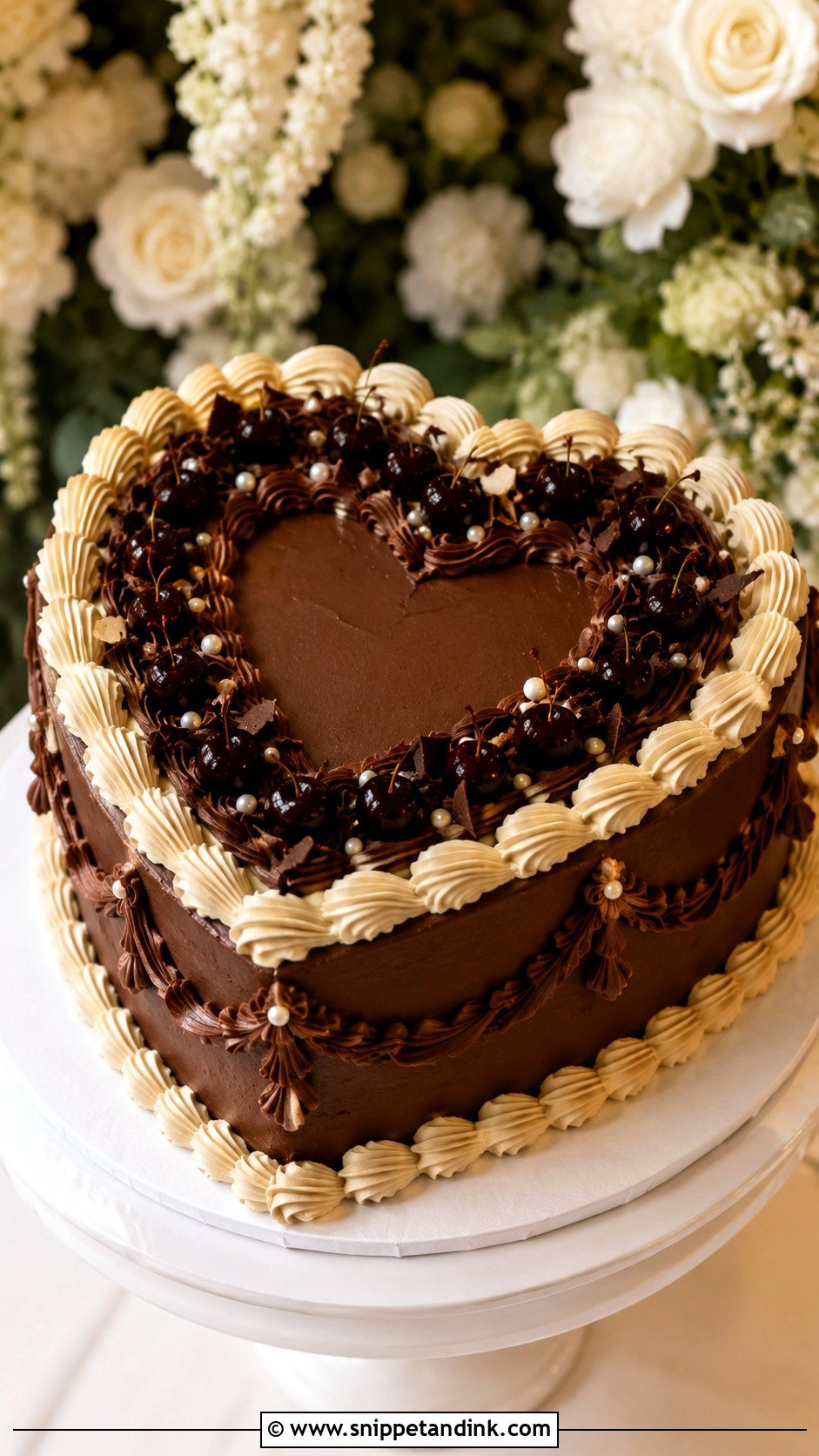
Chocolate is for couples who care more about flavor than an all-white cake. Ganache gives the sharpest edges on a heart and stays firmer in warm rooms than most buttercreams, which makes it my go-to base when a cake has to travel. Cream-colored piping shows clearly against it, and the heart shape softens the dark color. Chocolate curls, piped borders or a few cherries finish it, with mocha or chocolate raspberry inside. A white or gold stand makes the dark color look intentional.
21. Red Velvet Retro Heart Wedding Cake
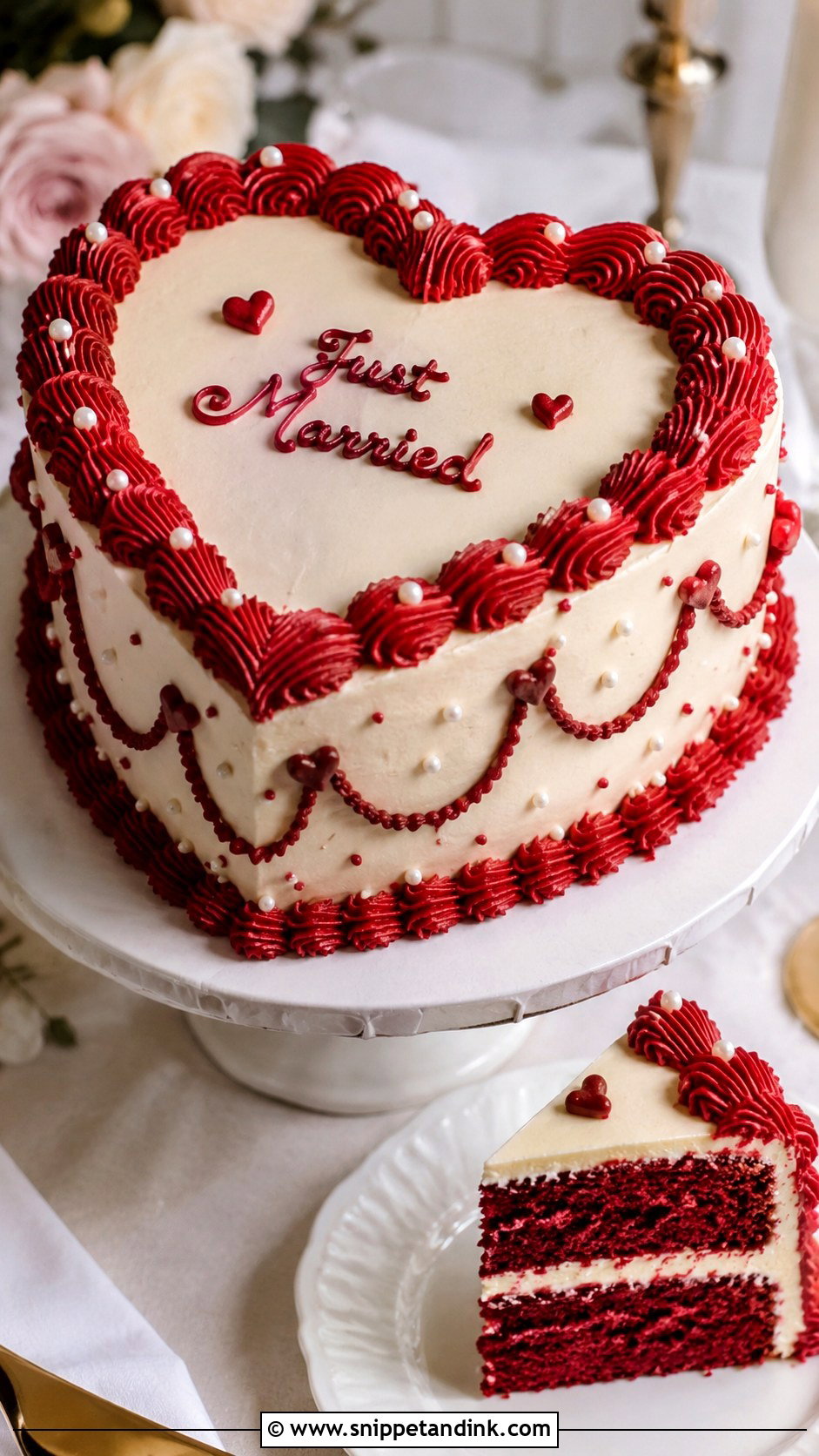
Red velvet earns its place on a heart cake at the moment it’s cut: the red crumb against pale cream cheese frosting is the reveal. The catch is that cream cheese frosting is soft and needs the fridge, so it won’t hold sharp Lambeth borders through a long, warm display. I often fill and coat with cream cheese, then pipe the decoration in a firmer buttercream. Red piping, small hearts, pearls or cherries bring in the retro style. Keep the outside mostly white for a refined finish, or add red accents for more drama at a candlelit reception.
22. Vanilla Retro Heart Wedding Cake
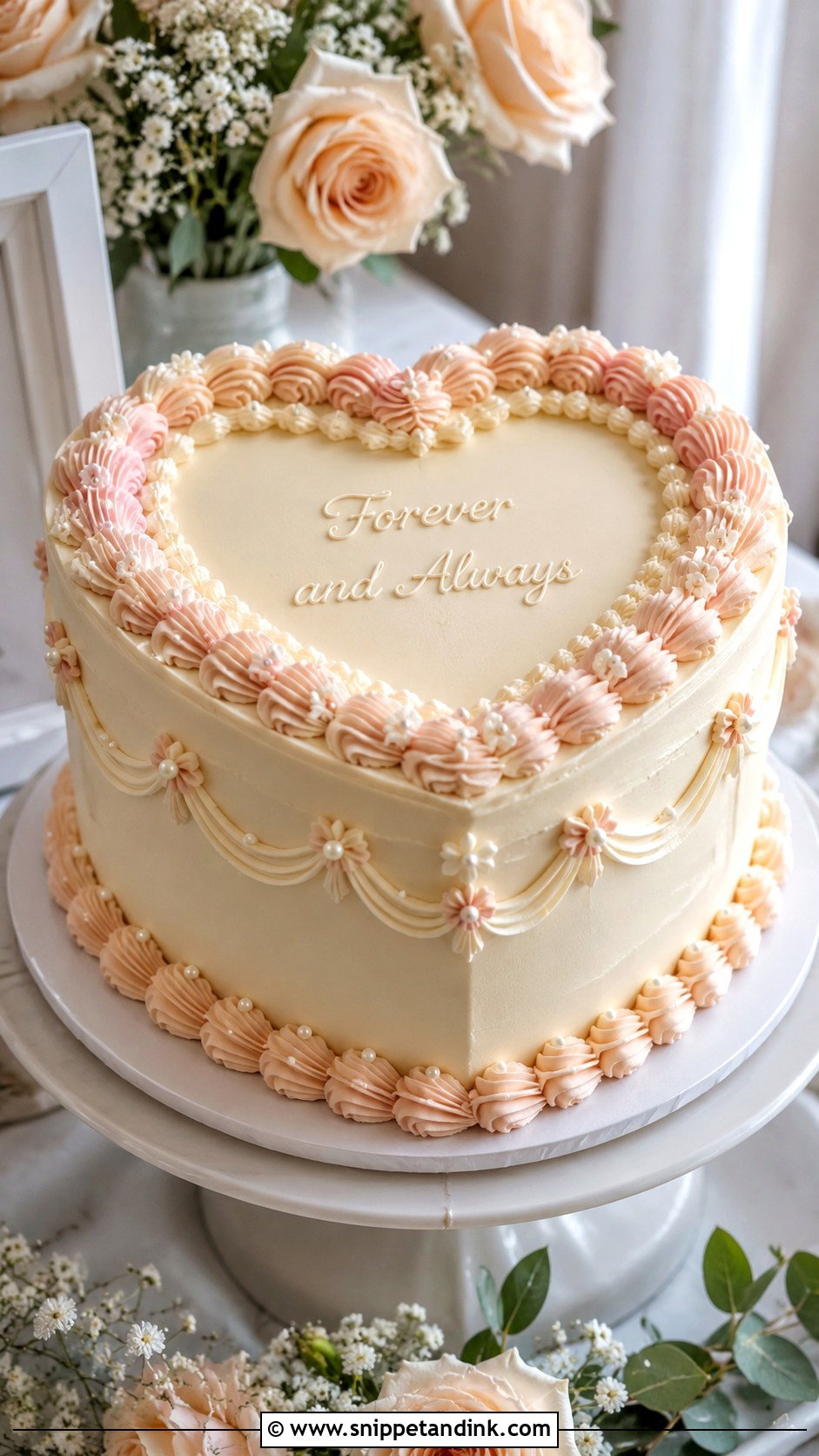
Vanilla is the crumb I trust most under heavy piping because it’s stable and almost everyone eats it. The pale cake and buttercream let the decoration take over, so the outside can go white, blush or pastel with no flavor clash. Shell borders, swags, pearls and a short message complete it. Vanilla also takes nearly any filling, from raspberry jam to lemon curd or chocolate mousse, which helps when two people can’t agree. Safe, yes, but not boring if the piping is good.
23. Cherry Bow Retro Heart Wedding Cake
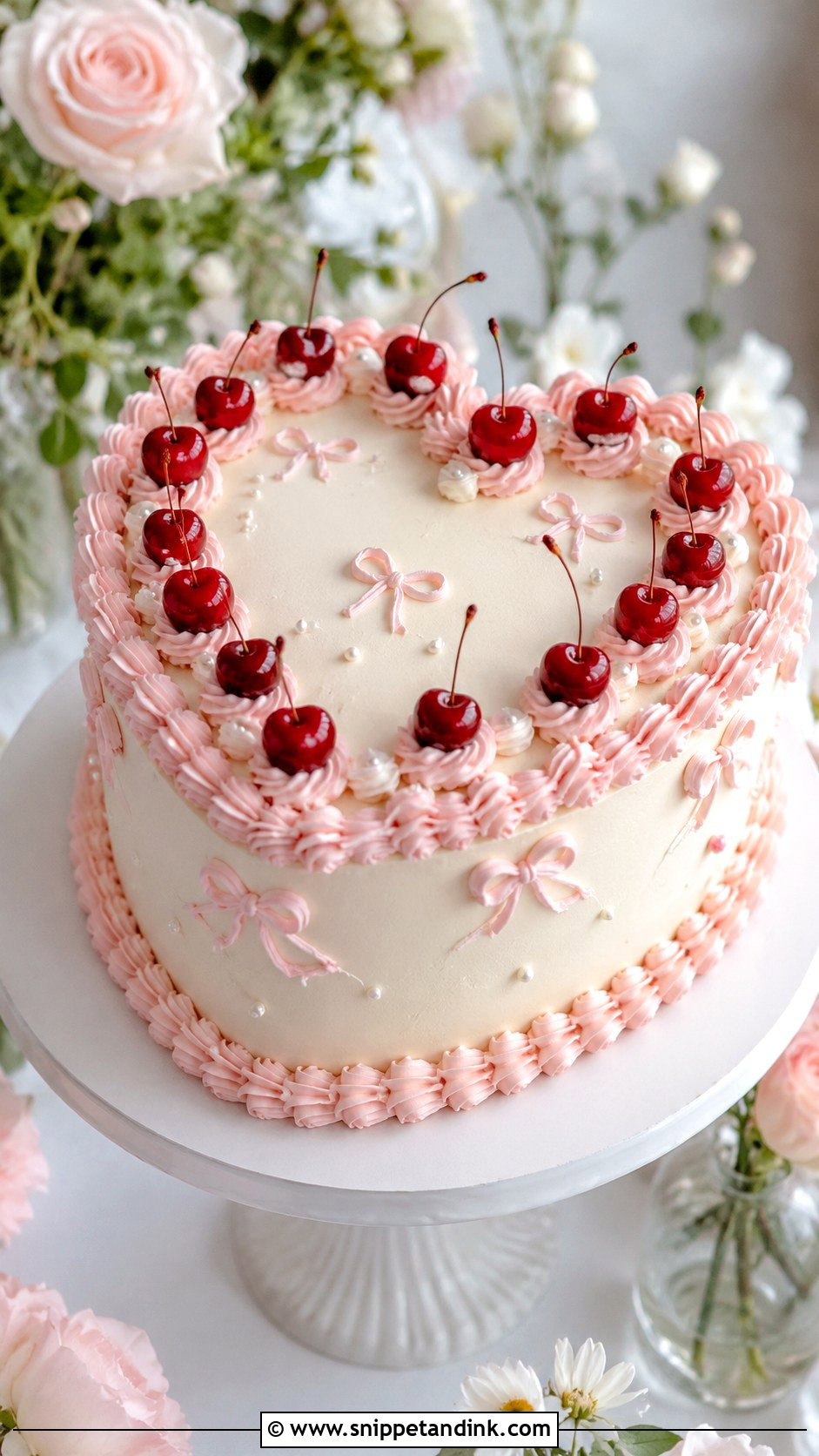
This one combines the two most familiar vintage details, which is exactly why it can look crowded. I give them separate jobs: piped bows along the border, cherries on the top curves or the center of the heart. A pale pink or ivory base lets both stand out, and strawberry, cherry almond or white chocolate cake suits the pairing. If you love the cherry bow retro heart wedding cake look but worry about clutter, ask for the bows in the same color as the base so the cherries carry the color alone.
24. Heart Sheet Wedding Cake
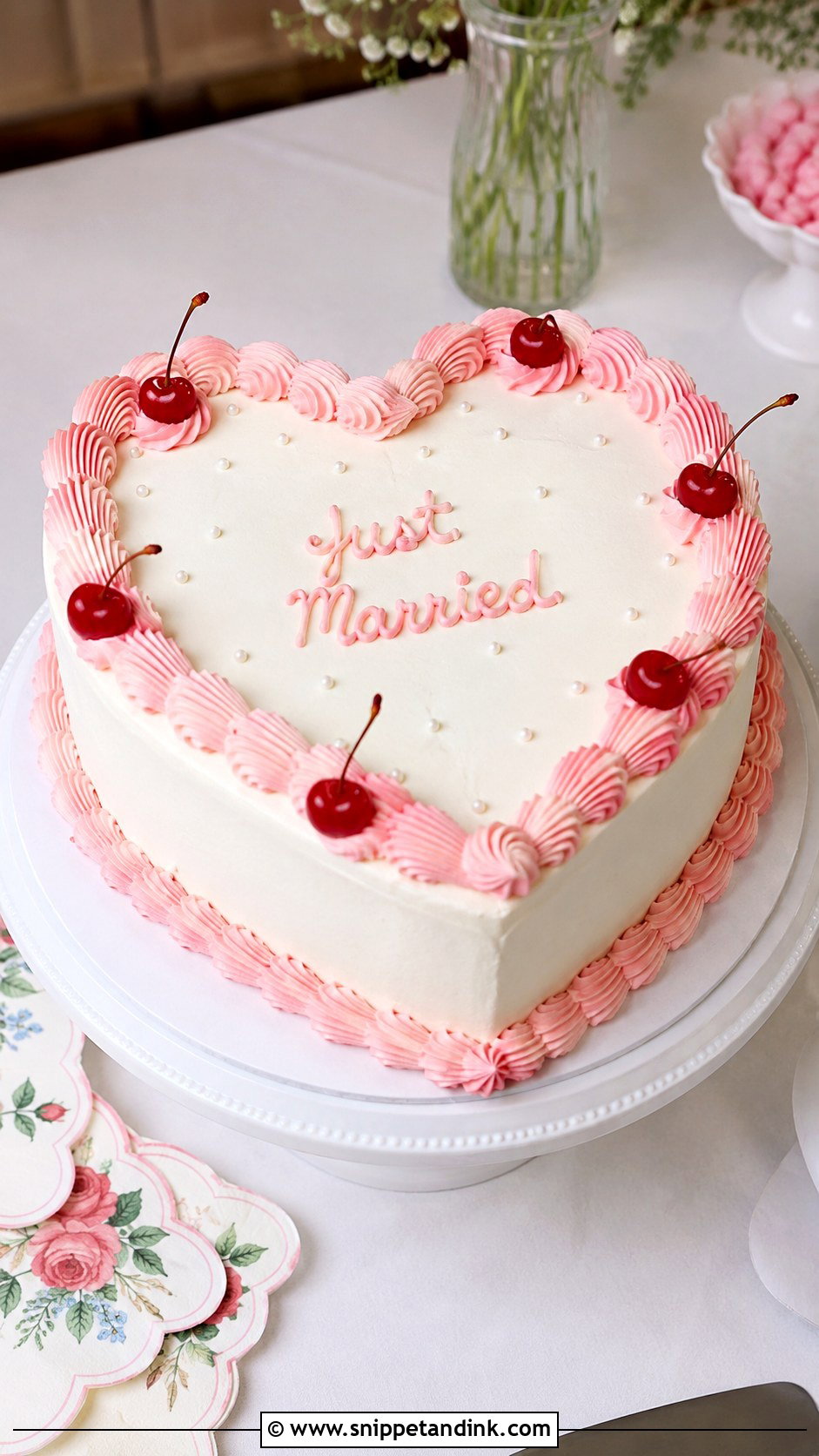
Going flat with a heart sheet wedding cake trades height for practicality. It’s lower and wider, far easier to slice into even pieces, and there’s no stacking to go wrong in transit. That suits casual receptions, backyard weddings and dessert tables with several sweets. The flat top is a big canvas, so I resist filling it: vintage piping around the edge, a piped message, and a few cherries or flowers. Set it on a raised board or stand so it doesn’t look like it came off a catering tray.

25. Retro Heart Wedding Cake With Buttercream Roses
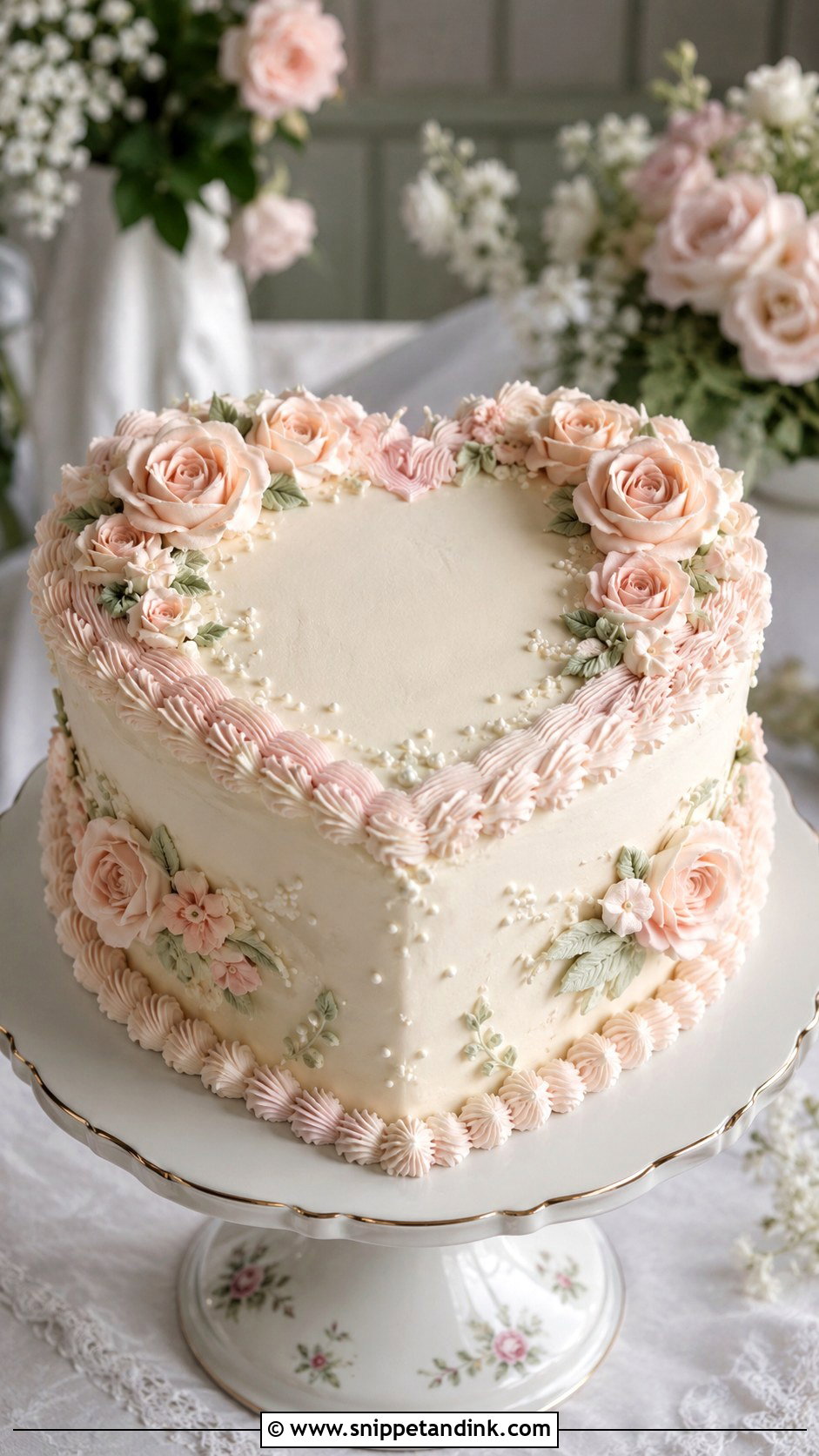
Piped roses add bulk quickly, so placement matters more than the number. I’ll cluster them in one corner, run them along the top edge or frame a message, but never all three at once. Ivory, blush, peach and dusty pink keep the cake soft. Roses piped from a stiff buttercream hold their petals in a warm room; silkier meringue buttercreams look prettier up close but droop sooner. Vanilla, almond or rosewater cake suits the floral theme at garden receptions and vintage venues.
26. Retro Heart Wedding Cake With Ruffles
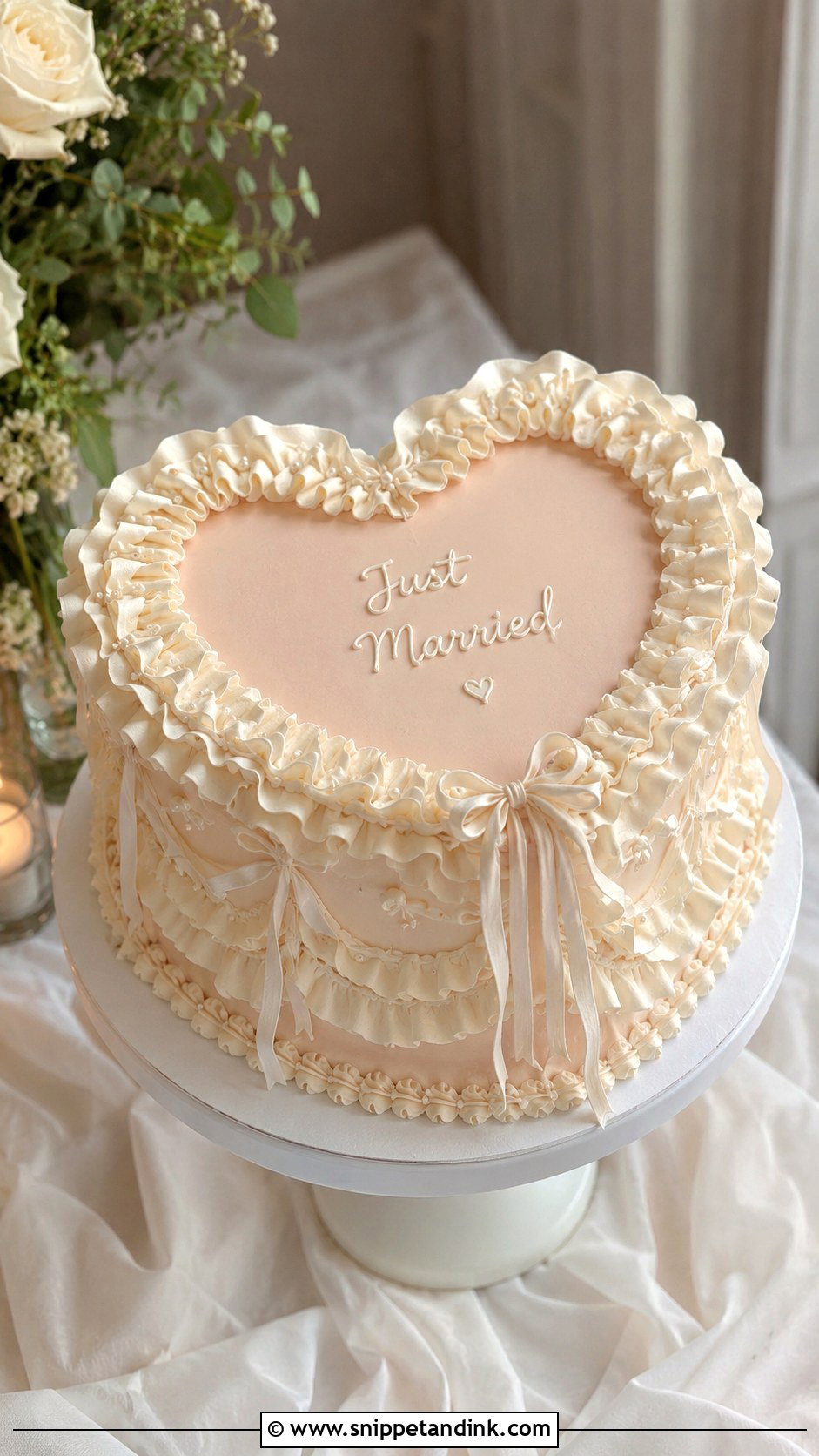
Ruffles are piped with a petal tip held at an angle, and their charm is the shadow each fold casts. That’s why white, blush and pale peach show them best, while dark colors flatten the effect. They can frame the heart, wrap the sides or form a frilly top border, finished with pearls, small bows or a short message. Ruffles are also more forgiving than smooth piping, since small unevenness disappears into the texture. Lemon or coconut cake keeps the whole thing light.
27. Retro Heart Wedding Cake With Gold Accents
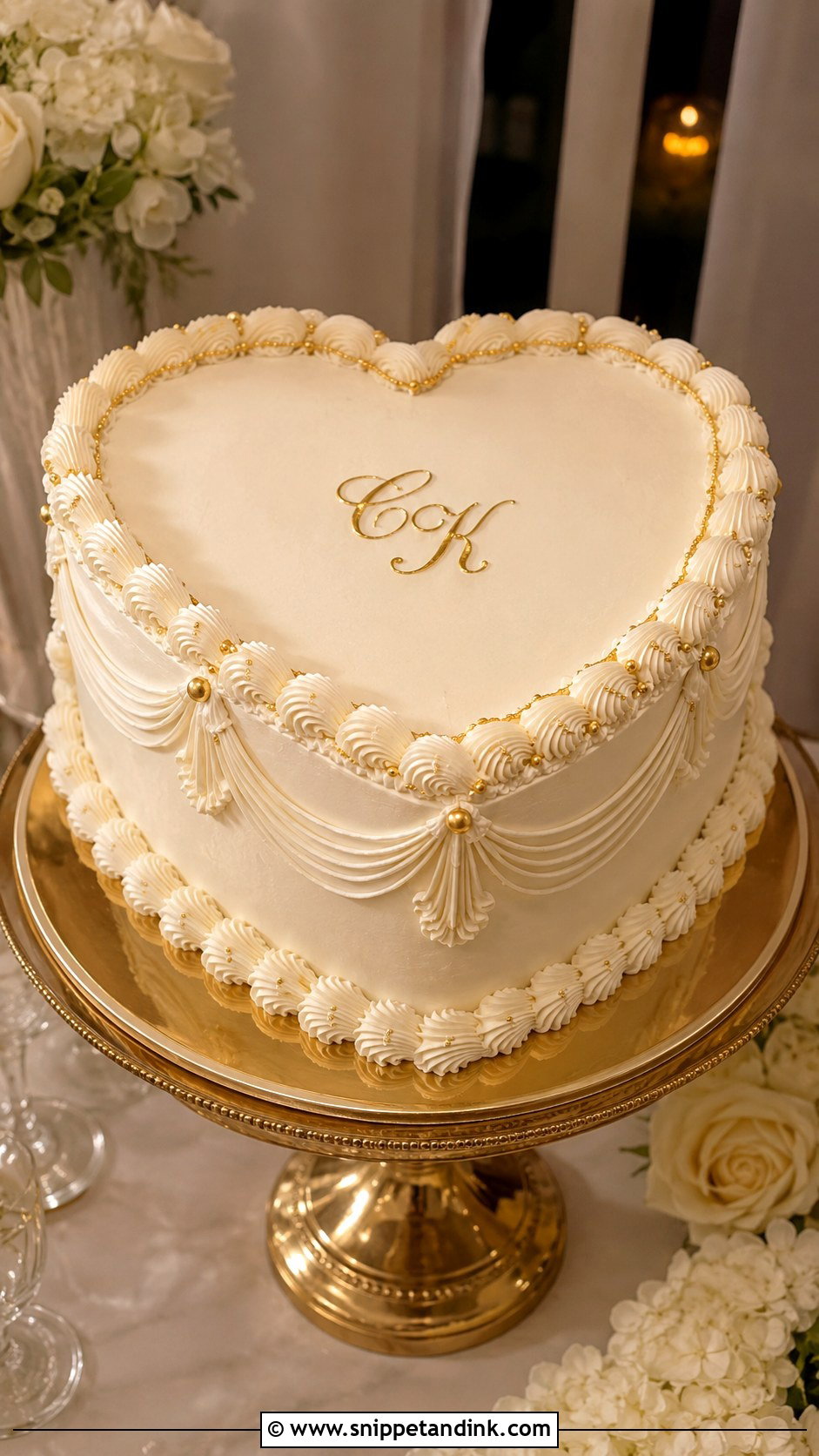
Gold works on this cake in small doses. A thin painted edge, a few gold pearls or a gold monogram is plenty; any more and the playful shape starts to look like a different cake. I paint gold onto a well-chilled, crusted surface, because it drags on soft buttercream. Check that the gold you’re promised is labeled edible, not just non-toxic, which means something different. Ivory, white, blush or champagne bases suit it, with almond, caramel or white chocolate cake inside, and it sits naturally at ballroom and evening receptions.
28. Retro Heart Wedding Cake With Fresh Flowers
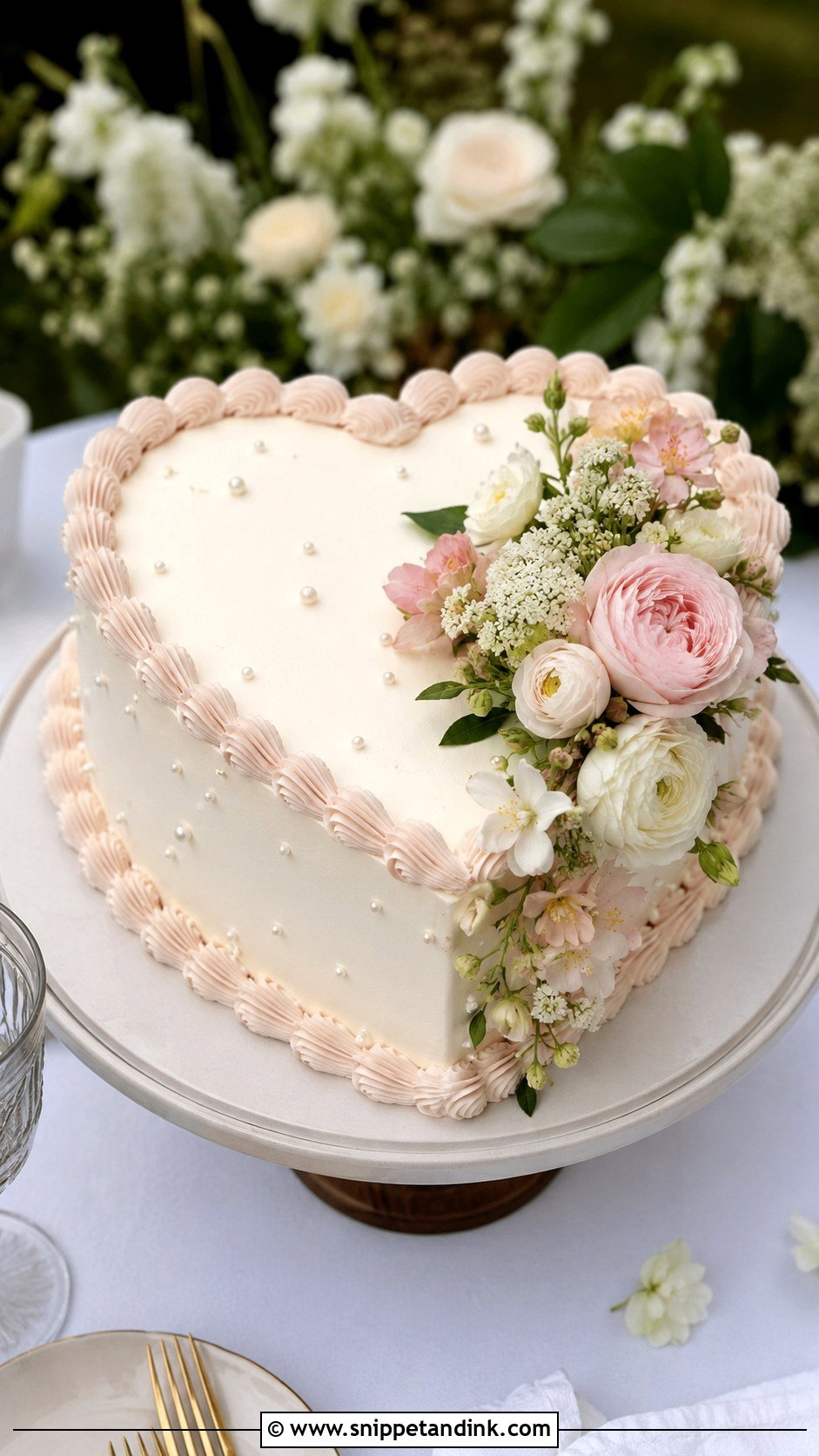
Fresh flowers make it easy to match the cake to the bouquet, but they need rules. I keep them in small clusters so the heart outline stays visible, and any stem going into the cake is wrapped in floral tape or set in a flower pick so sap never touches the sponge. Roses, ranunculus, chamomile and pansies can all work depending on the season, and your florist should confirm they’re unsprayed. The scalloped and shell piping stays as the frame around them. Lemon or berry cake suits garden and tented receptions.
29. Retro Heart Wedding Cake With Piped Message
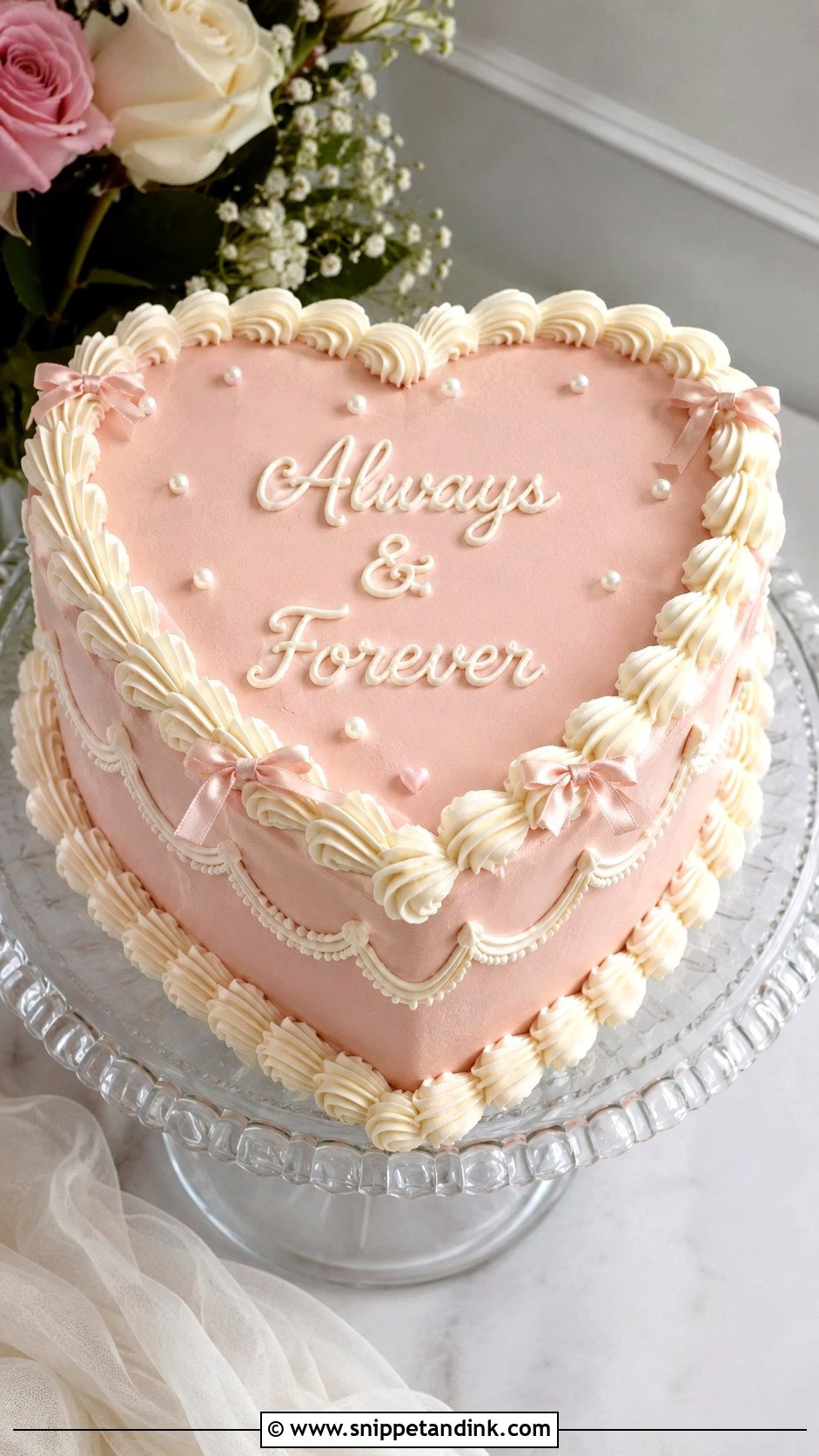
When the writing is the decoration, everything else has to step back. A piped message like “Just Married,” “Forever” or your names becomes the focal point, so I keep the outside to neat shells, soft swags and small pearl dots. Short words are kinder to a heart than long ones, since every extra letter has to squeeze toward the narrowing point. White, blush, red or pale blue bases all hold writing well. It suits small weddings that want something custom without a big tiered structure.
30. Retro Heart Wedding Cake Dessert Table
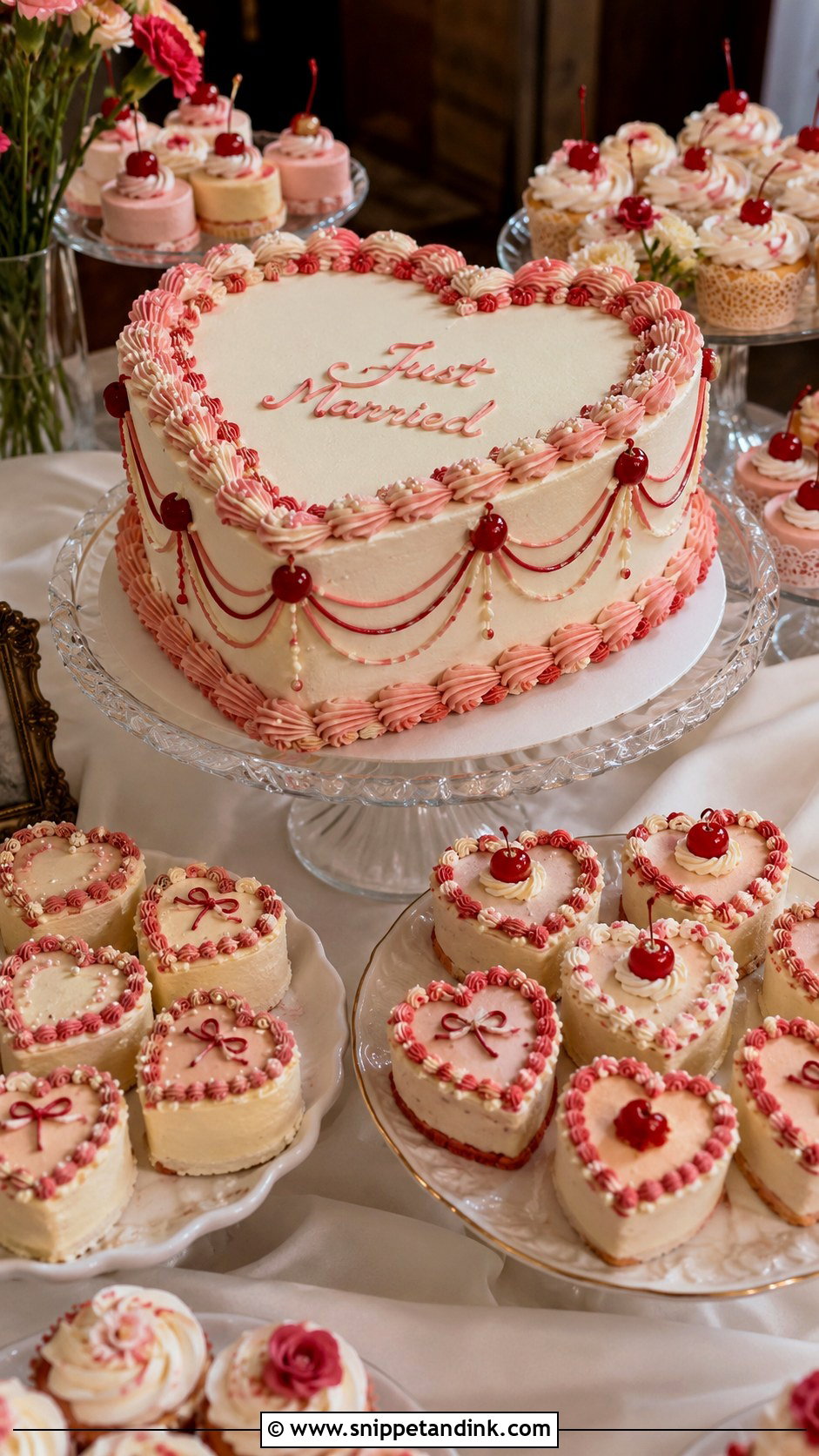
Here the heart cake becomes the anchor for a whole vintage display. Start with one main heart, then surround it with matching cupcakes, cookies, petit fours or mini heart cakes. What holds it together is a single palette repeated everywhere, and pink, ivory, red and pearl details work well. I set the main cake higher than everything else and leave a little empty space around it, or the table reads as crowded. Guests get variety while one strong design stays in charge.
Lambeth Borders Hate a Warm Room
Nearly every cake above is buttercream from top to bottom, and buttercream is the medium most affected by heat. Piped detail gives up before smooth frosting does: shells slump, drop strings sag and the edge of a heart starts to lean. I plan around that from the first conversation.
- Ask which buttercream your decorator uses. A crusting American-style buttercream holds piped detail better in warmth, while Swiss or Italian meringue is smoother and less sweet but softens sooner.
- Keep the cake indoors and out of direct sun until it’s time to cut. A shaded spot in an air-conditioned room is ideal.
- Delivery should happen in a cooled vehicle with the cake fully chilled before it leaves. A cold cake survives bumps far better than a soft one.
- Fruit, fresh flowers and gold go on at the venue, not the night before.
If your reception is outdoors in high summer, I’d lean toward a smaller display heart with the serving cake kept in the kitchen, or a ganache coating that holds its shape longer.
Sending Your Baker Reference Photos That Actually Help
Retro cakes look alike in a thumbnail, so one inspiration picture leaves too much to guesswork. I ask couples for three things: a photo of the overall cake they love, a close-up of the piping style they want, and a photo of their wedding colors taken in daylight. Tell your decorator which details you could live without, too. If the budget gets tight, knowing you care about the message more than the cherries saves a lot of back and forth.
Raise dietary needs early as well. Dairy-free buttercream behaves differently in a piping bag and holds borders less crisply, and it’s far better to test it at a tasting than to discover that on the wedding morning.
A Heart Cake Grown-Up Enough for the Wedding
A heart cake works at a wedding when the decoration is disciplined. Cherries and pink piping make it playful, pearls and ivory make it formal, red velvet and dramatic borders make it bold, and any of them can suit your venue, colors and guest count. A small heart is enough for an elopement; a two tier or a dessert table carries a bigger reception. Whichever direction you take, put the budget into clean piping and a controlled palette. That is what keeps it nostalgic rather than novelty.
You'll Like These Ideas:




Leave a Reply