
Geometry on a wedding cake is mostly about edges: clean lines, hard angles and sculptural tiers that still look like a celebration rather than a building model. I’ve found the style fits almost any room, from a ballroom to a rooftop, because the same idea can be whispered with ivory panels and a thin gold line or shouted with hexagon tiers, marble and color blocks. What changes between those two versions is the work behind them, and that’s what I’ll point out as we go. Use the 25 cakes below to show your baker what you like, and to understand why some of them need more time, more structure or a cooler room than others.
Sharp Angles Start Under the Icing
Every cake in this list depends on crisp edges, and those edges are decided before any decoration goes on. When a couple shows me a hexagon or a stack of hard-cornered squares, my first question isn’t about color. It’s what the cake will be covered in, and how warm the room will be.
Fondant over ganache
This is the most reliable route to razor corners. A firm chocolate ganache coat sets hard, holds the shape, and gives the fondant a smooth base. It also copes far better with a warm room than buttercream alone. If you dislike fondant, it peels off cleanly at the table and the cake underneath is still good to eat.
Buttercream on its own
Crisp buttercream edges are possible, and lovely when they’re done well, but they soften as the temperature climbs. Swiss or Italian meringue buttercream starts to slump in a hot marquee or in sun, and painted lines or pressed shapes on top move with it. For an outdoor summer reception I’d steer you to ganache and fondant, or keep the geometry to simple tiers with little surface decoration.
Whatever the finish, give your baker time. Sharp-edged cakes with hand-applied panels, pearls or sugar flowers are slow work, and many designers book up months ahead in peak season. Sugar flowers in particular are made well in advance so they can dry.
1. Geometric Wedding Cake With Gold Lines
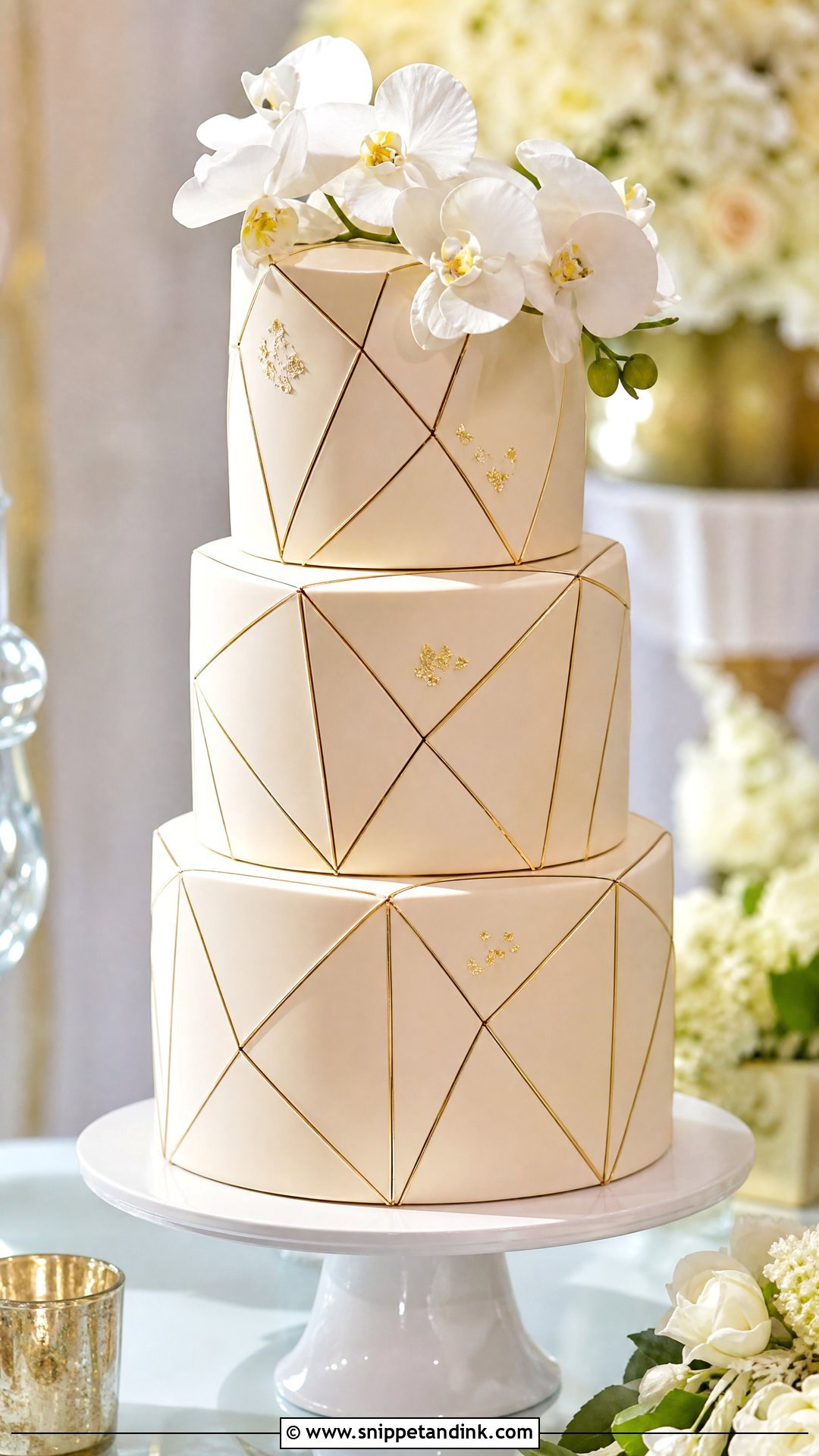
Thin gold lines are the gentlest way into geometry. The tiers stay white, ivory or champagne and the metal does the drawing, cutting triangles, diamonds or uneven panels across each layer. Those lines are only as clean as the surface under them, so I’d ask for fondant or a ganache coat with properly sharp edges; on soft buttercream a painted line wobbles wherever the icing dips. Keep any orchids, roses or pressed sugar petals in one cluster on one side, so the lines stay visible.
2. Hexagon Wedding Cake
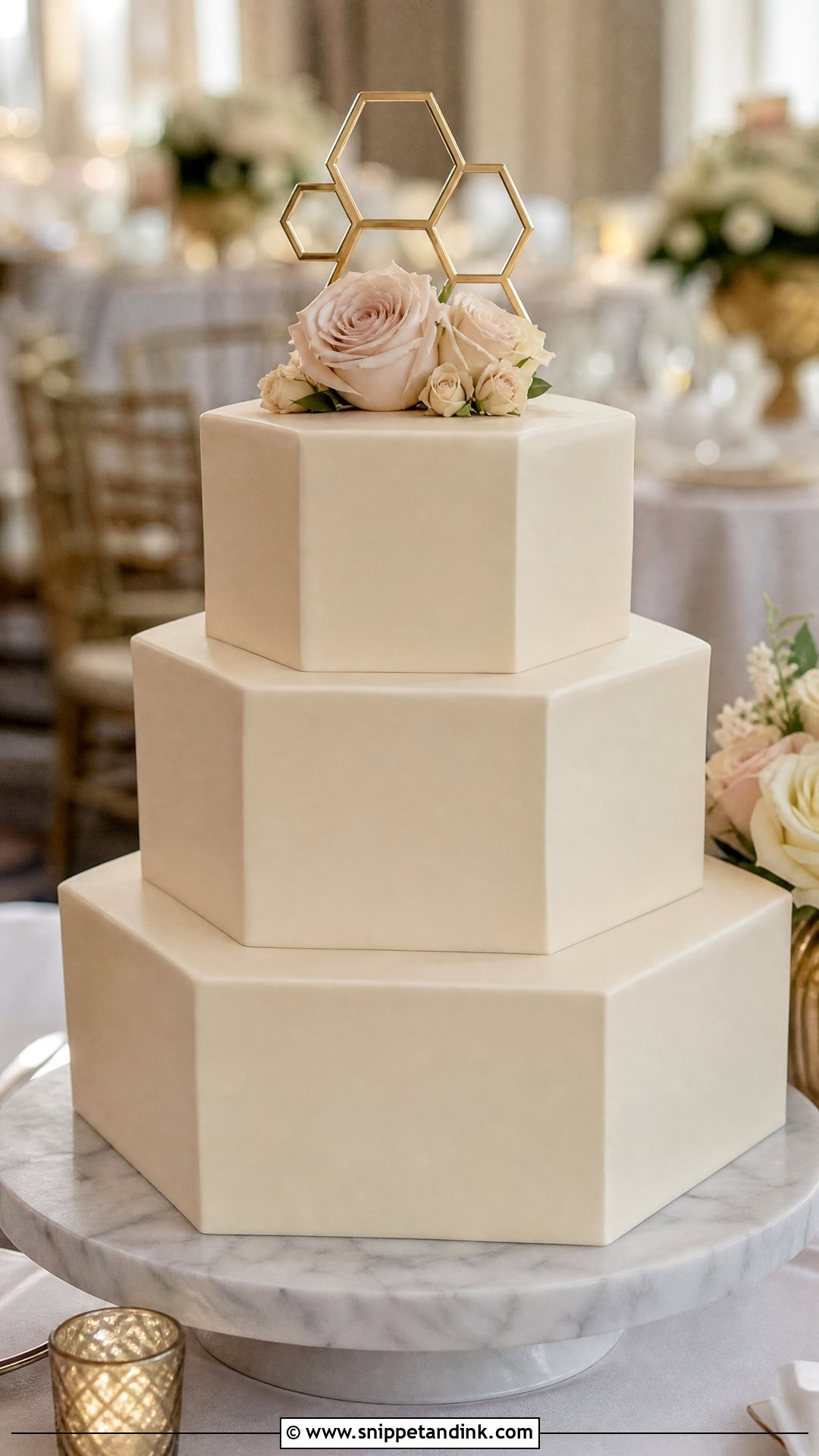
With six sides per tier, the shape is the decoration. I’d keep the surface quiet: smooth icing in white, blush, sage, taupe or soft gray, or a very light texture if the sharp edges feel too stark. Hexagons are fiddlier to cover than rounds, because every corner is a place for fondant to tear or buttercream to round off, so expect them to cost a little more in time. A small flower cluster, a few flakes of gold leaf or a simple monogram topper is all the balance it needs.
3. Marble Geometric Wedding Cake
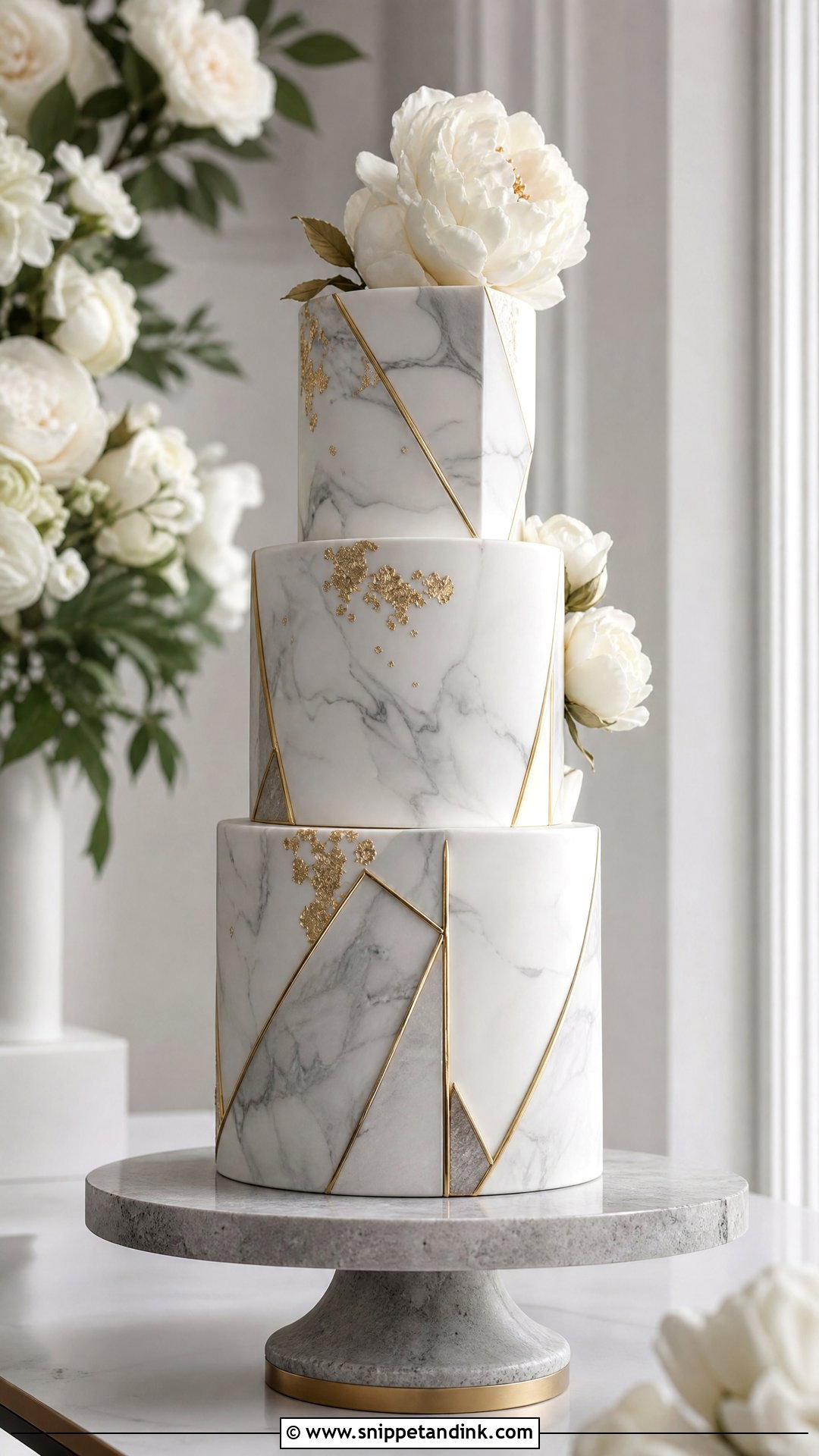
Marble already moves, so geometry on top of it should be sparse. The fondant is veined in soft gray, beige, blush or charcoal, then crossed with a few sharp lines, angled panels or metallic edges. It sits naturally in a black-and-white palette or a very modern room. I limit decoration to a few sugar flowers, gold leaf pieces or a slim topper. More than that and the veining and the ornaments start arguing with each other.
4. Geometric Wedding Cake With Triangles
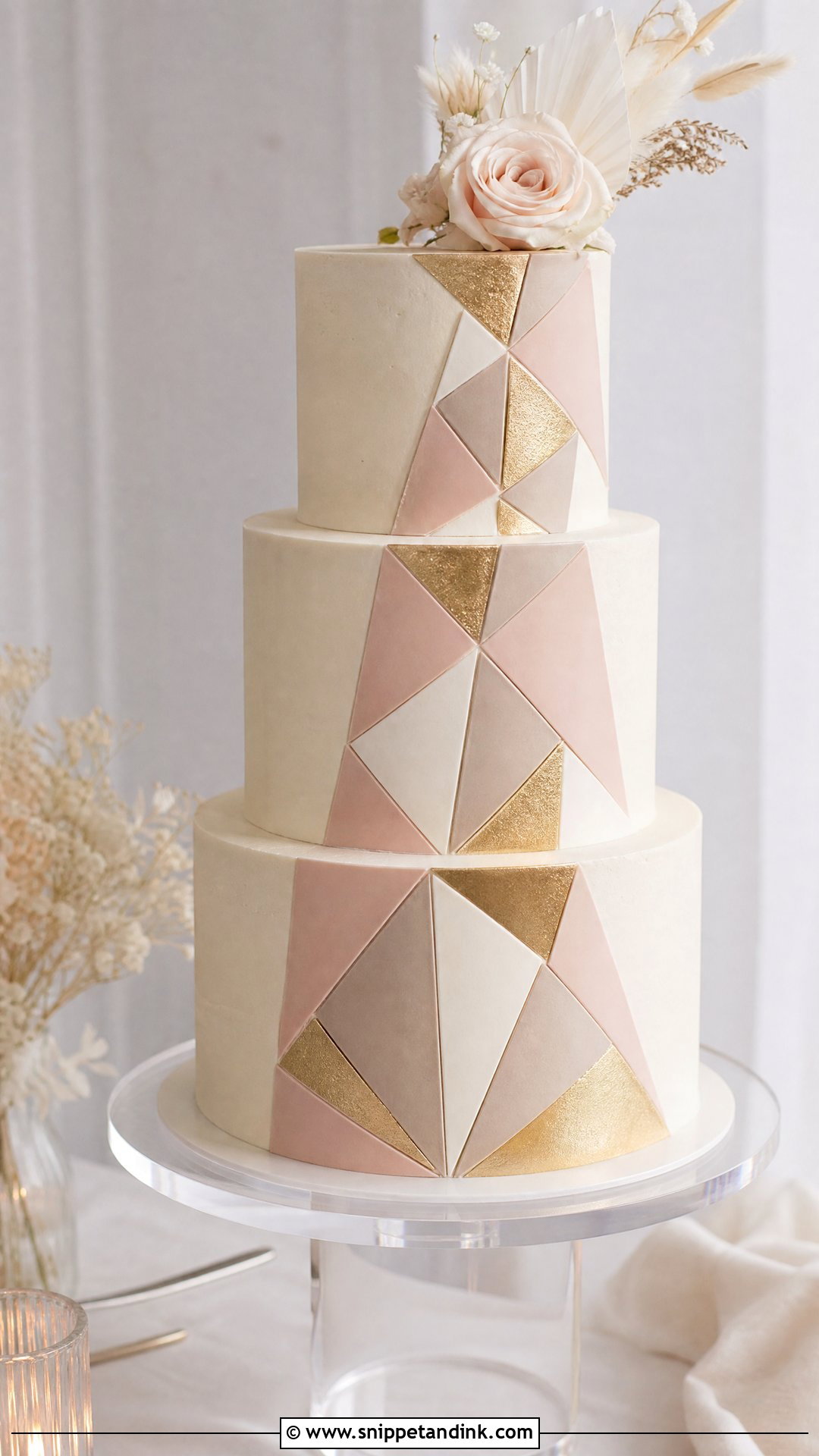
Triangles can be painted, cut from fondant, piped in relief or applied as metallic shapes, and each method changes the mood. In ivory, gold, blush, taupe or dusty blue they stay refined; in black, white and bronze they go gallery. My advice is to confine the pattern to one tier or let it travel diagonally across the cake rather than tiling every surface. A diagonal gives the eye a direction, which reads well both close up and in a wide shot of the whole table.
5. Art Deco Geometric Wedding Cake
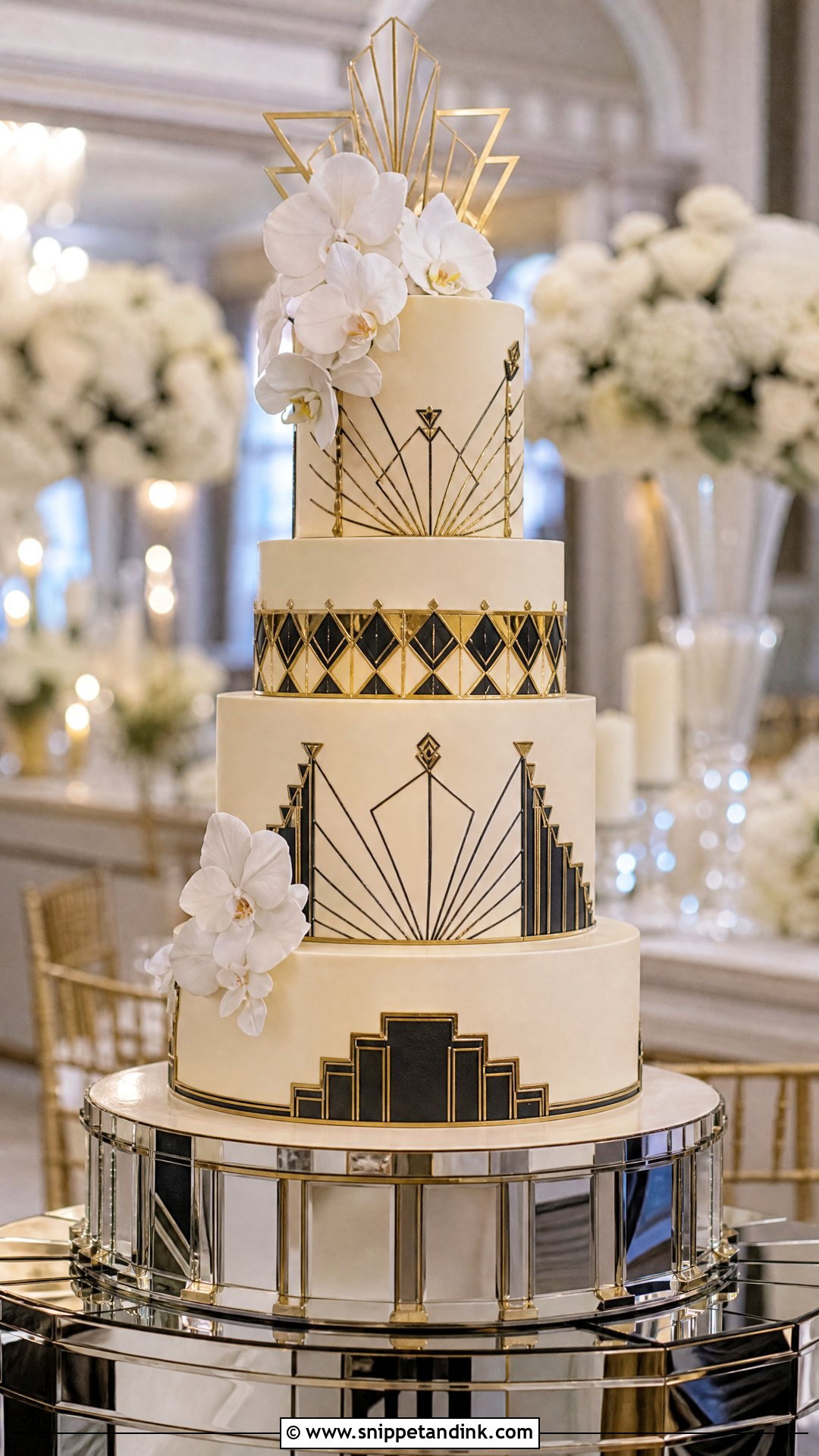
Art deco means fans, stepped lines and diamonds, usually in ivory with black and gold. A tall three-tier cake piped in gold deco patterns sits comfortably in a hotel ballroom or a museum hall. The style collapses when every inch is ornamented, so I alternate a decorated tier with a plain one. White roses, calla lilies or sugar orchids soften it, and it ties in neatly if your stationery, mirrors or flatware already repeat geometric borders.
6. Minimalist Geometric Wedding Cake
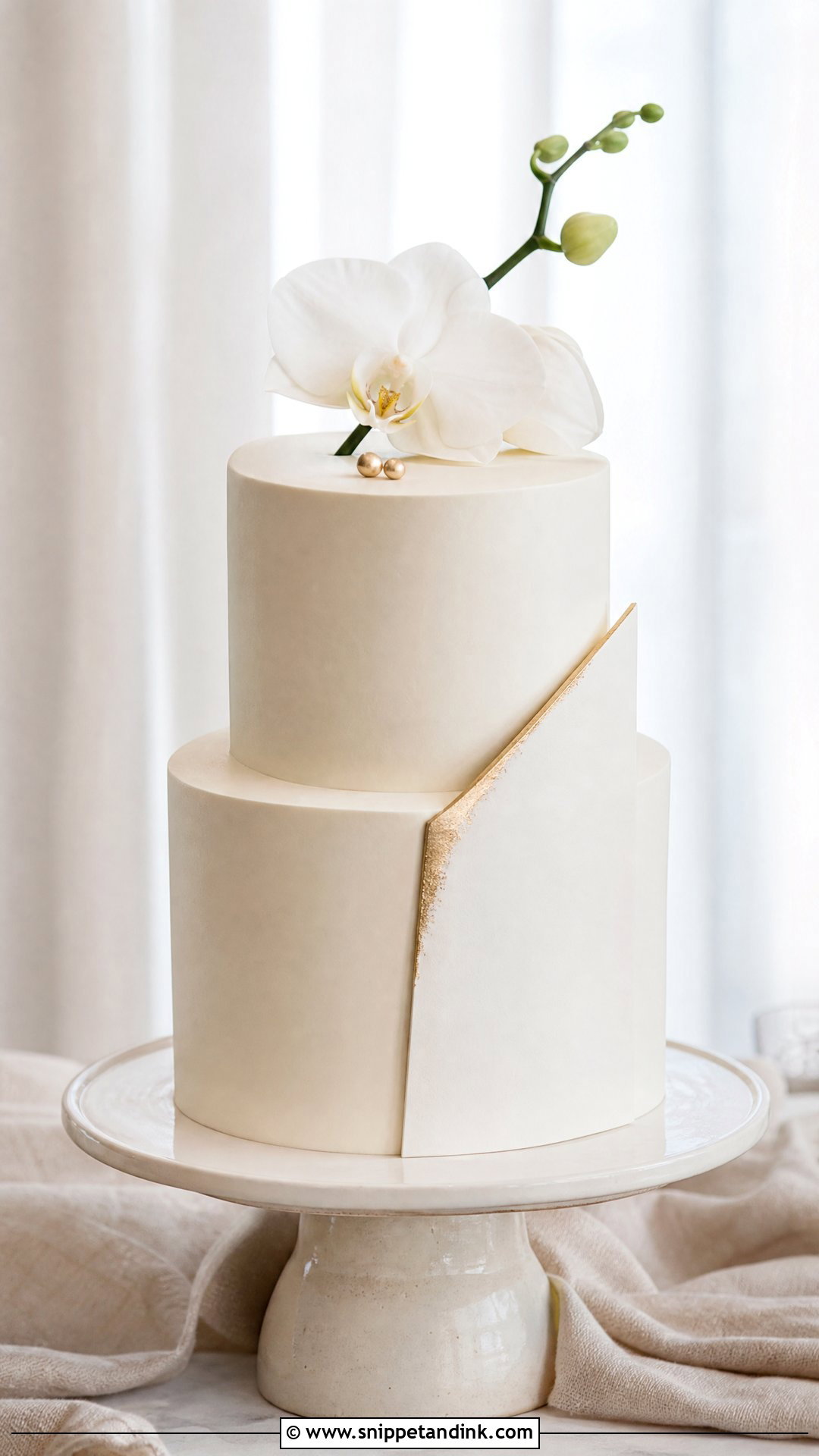
Minimal geometry rests on one or two moves: a single angled fondant panel, a fine line grid, or a stack that mixes square and round tiers. White, ivory, beige and soft gray suit it best. I’d pick one detail and stop there, maybe a small orchid spray or a brushed gold corner. The hard part is that restraint shows every flaw. A minimal cake needs the cleanest finish in the bakery, because there’s no decoration to cover a bulge or a dent.
7. Square Geometric Wedding Cake
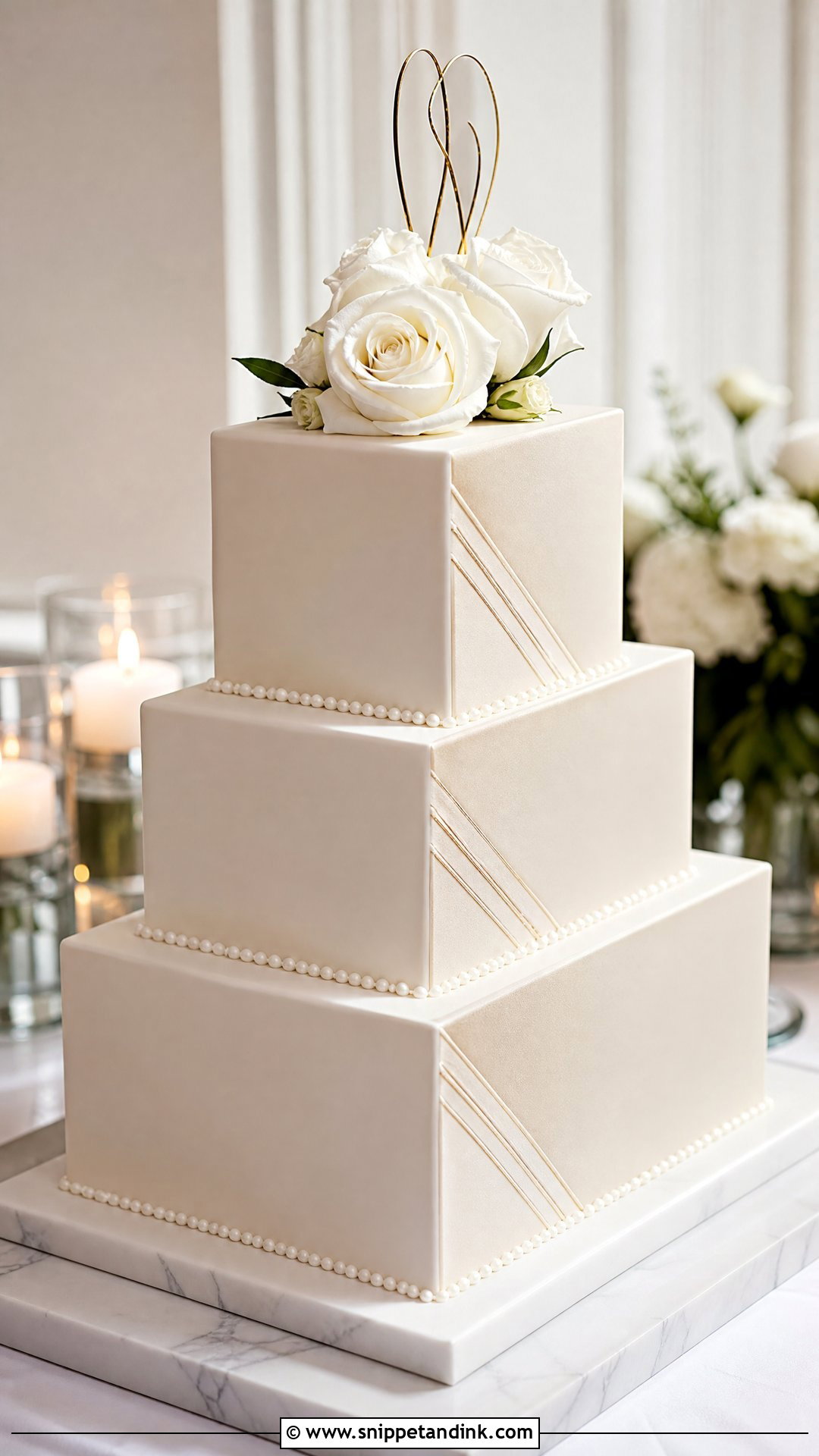
Square tiers are classic shapes used in an unexpected way. The corners give structure, especially in smooth fondant or a very sharp buttercream edge, and you can stack all squares for something bold or alternate square with round for contrast. Thin metallic lines, pearl borders or diagonal color blocks underline the geometry. It suits ballrooms, modern gardens and rooms with glass walls. One practical bonus: a square tier cuts into more portions than a round of the same width.
8. Geometric Wedding Cake With 3D Pattern
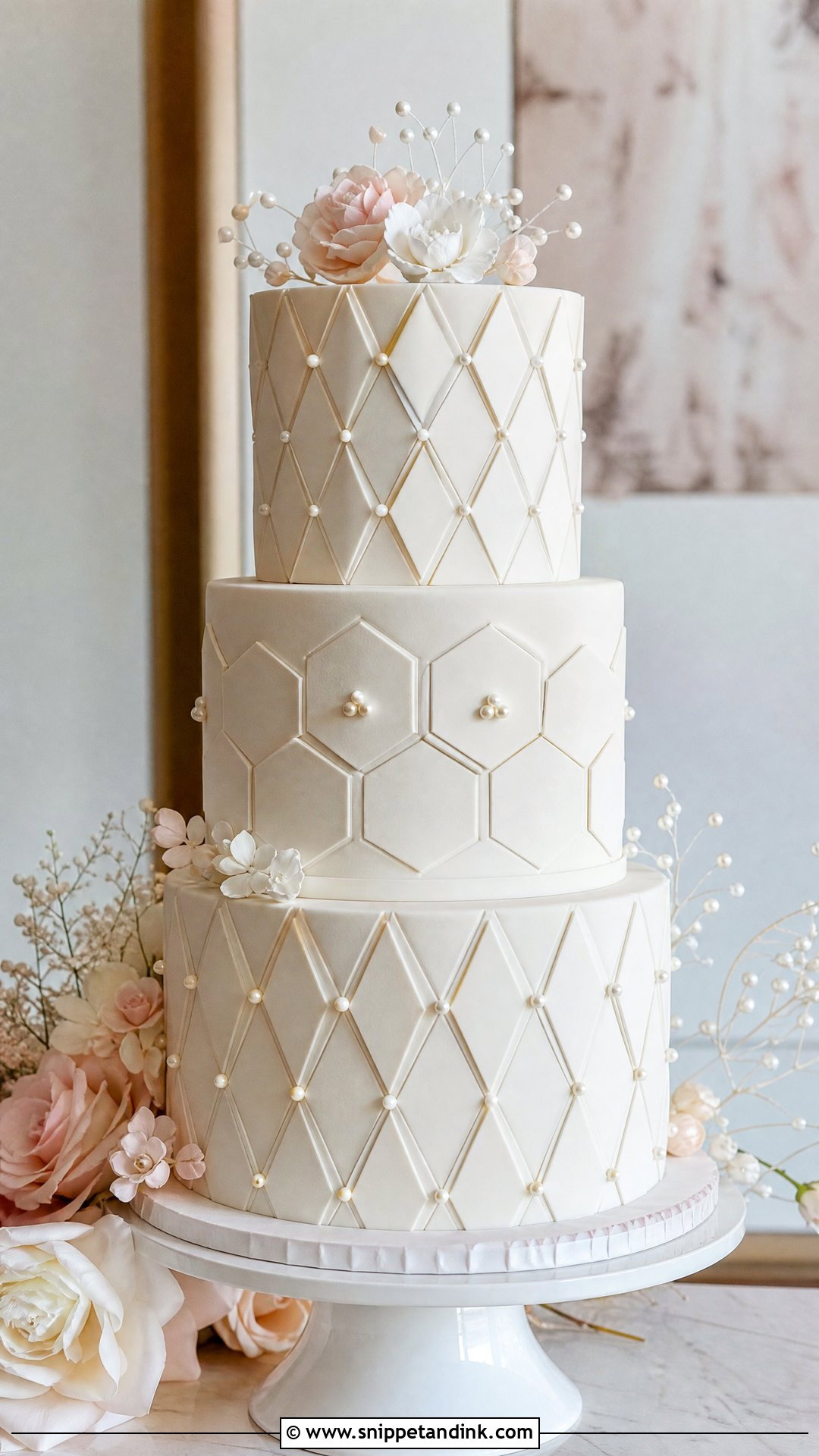
Raised diamonds, hexagons, cubes or triangles give the cake texture without any flowers at all. They can wrap a single tier or the whole cake. I keep the color soft, ivory, warm white, sand or pale blush, and let the shadows between the shapes do the work, perhaps with a little gold dust or pearl shimmer on the high points. Because the surface is already busy, one small floral cluster or a sprig of greenery is plenty.
9. Black And White Geometric Wedding Cake
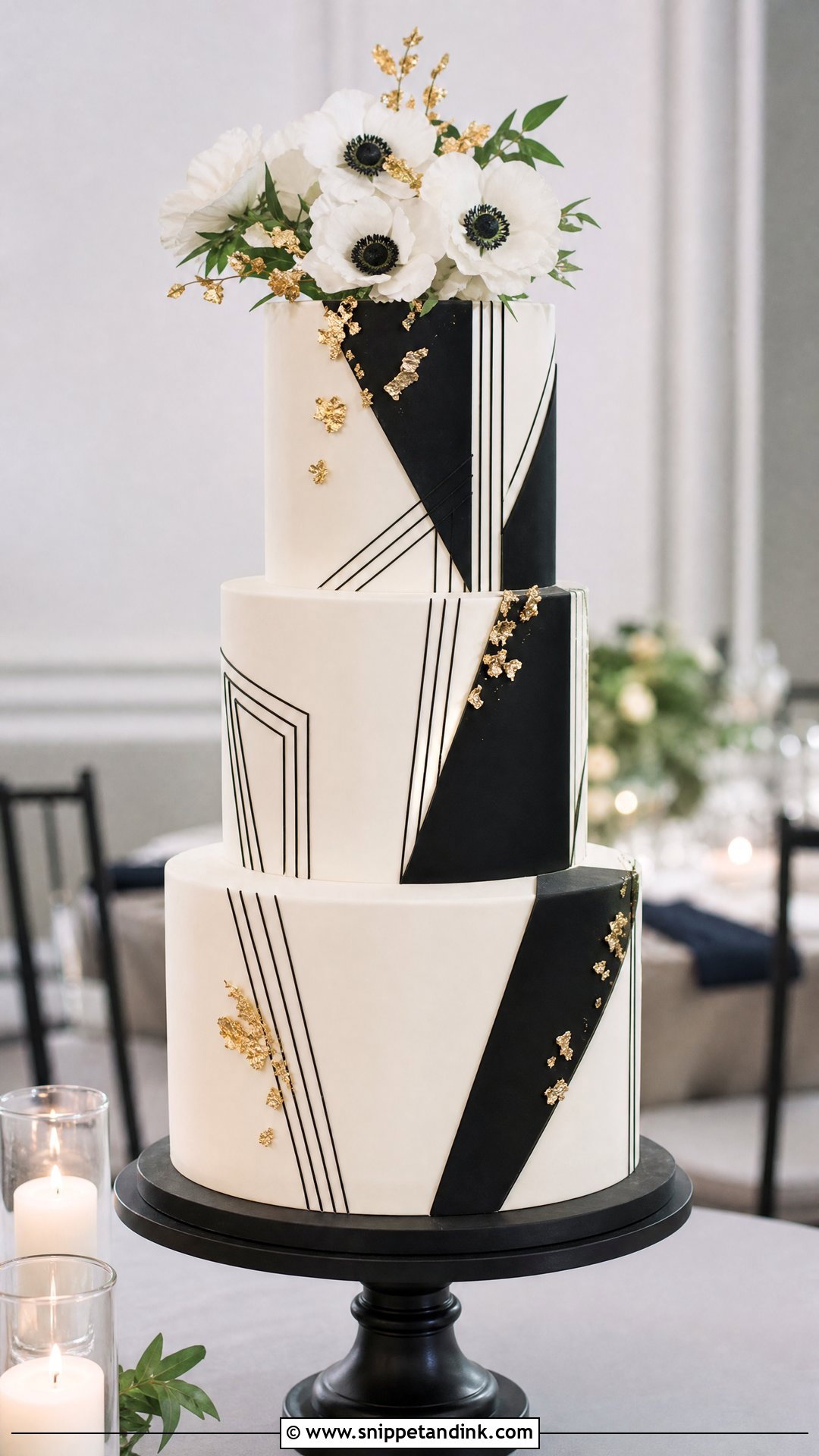
Black and white only works when the shapes are crisp: white tiers with black line art, black fondant panels, checker blocks or angular brushstrokes. White flowers, gold leaf or a satin ribbon around one tier keep it bridal, and it looks most at home at evening receptions or venues with monochrome decor. Something I always mention: black icing takes a lot of coloring and will stain teeth and lips for a while. I’d keep the black to an outer panel or one statement tier and leave the rest ivory.
10. Geometric Wedding Cake With Acrylic Topper
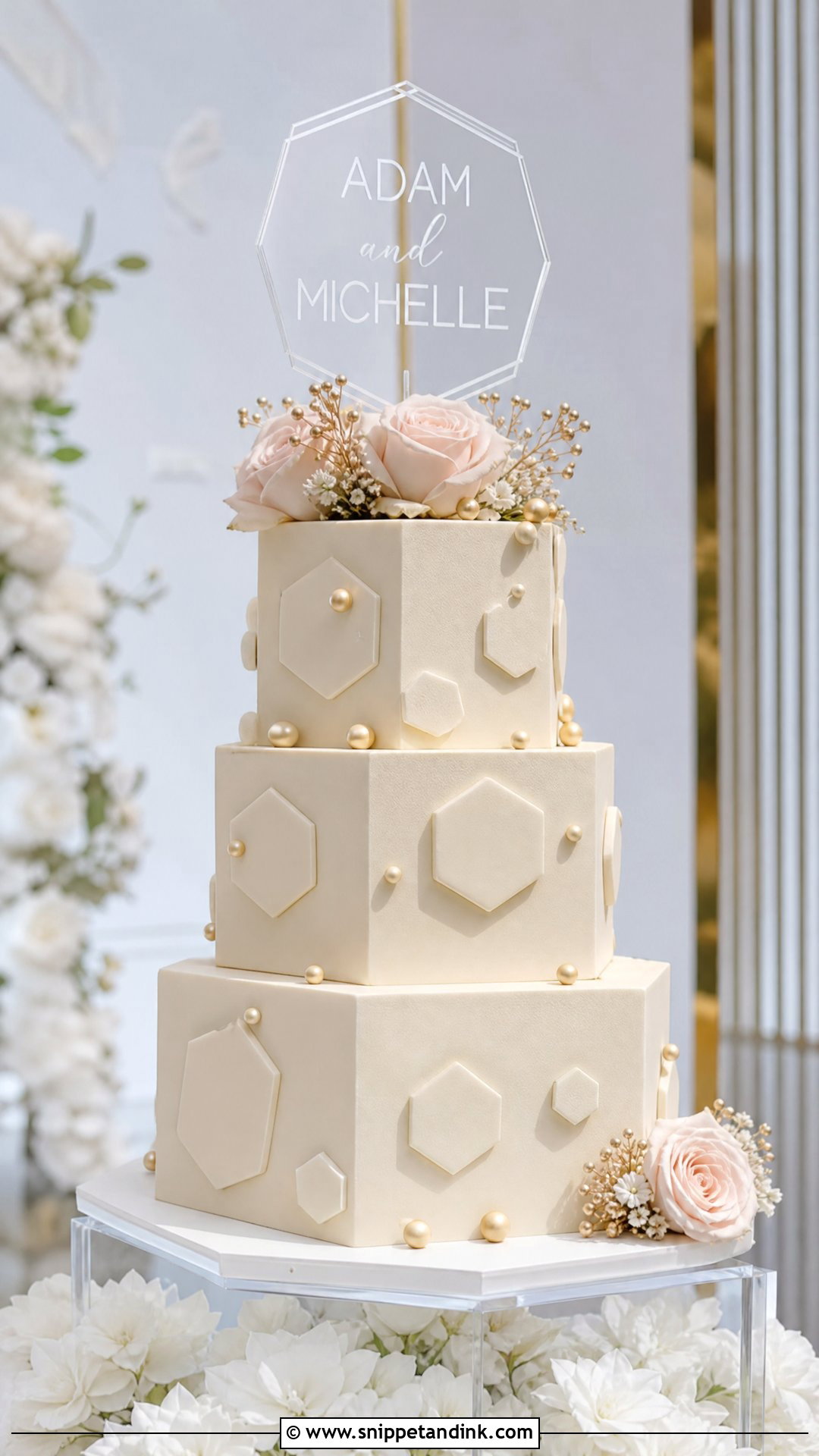
An acrylic topper is the easiest way to personalize a geometric cake: a clear hexagon, a gold mirror circle, initials or both names. It looks deliberate when the cake repeats its shape, so a hexagon topper goes with hexagon panels or angular gold lines. Keep the base smooth and neutral with a few delicate flowers. Make sure the topper arrives a few days early, because its stake needs to sit inside a supported part of the top tier, not in soft sponge where it will lean by the speeches.
11. Geometric Wedding Cake With Fresh Flowers
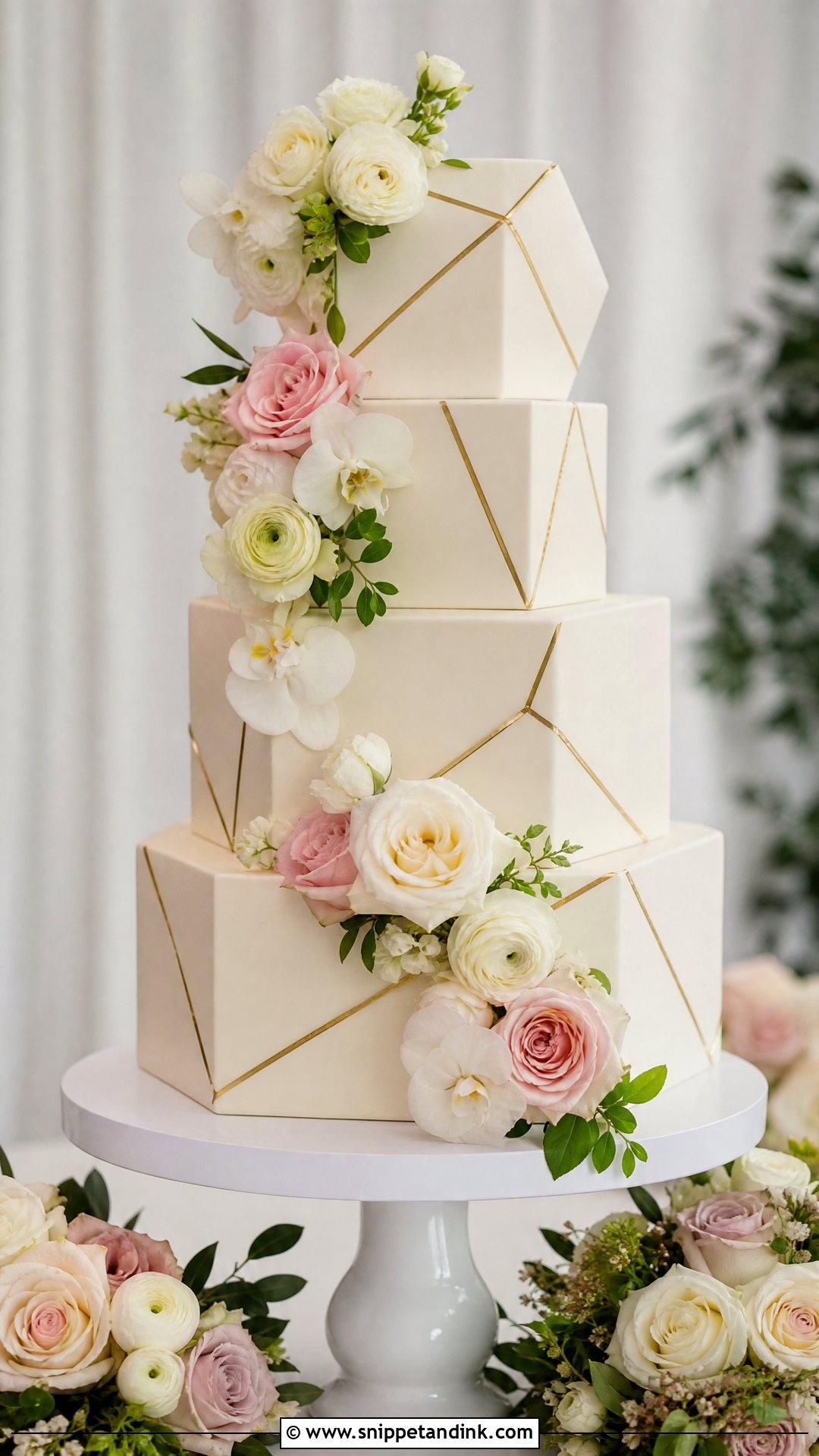
Fresh flowers bring the movement that hard angles lack. Hexagon tiers, angled panels or gold line patterns hold the structure, and roses, orchids, ranunculus, anemones or small seasonal blooms soften it. Placement matters more than variety. I’d ask for one strong cluster, a diagonal drift, or a frame down one side so the geometry stays readable. Your florist should supply flowers grown without heavy sprays, and the stems should be wrapped or set in picks before they go into the cake; not every pretty flower is safe to touch food.
12. Geometric Wedding Cake With Sugar Flowers
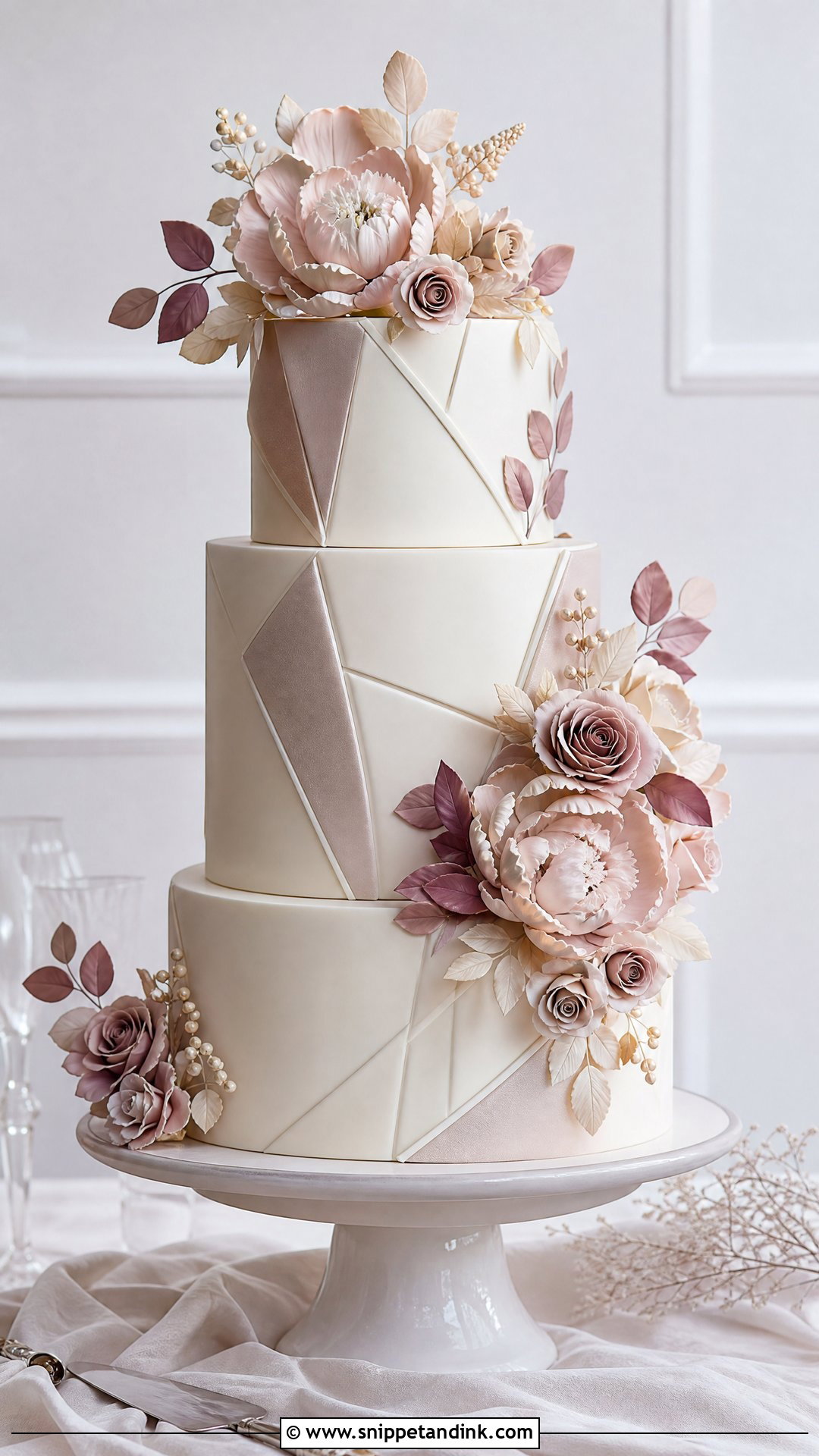
Sugar flowers give total control over color, which matters if you’re matching something specific like mauve, terracotta or dusty blue. The cake can carry sharp fondant panels, raised diamonds or a hexagon base, finished with handmade roses, peonies, orchids or leaves. They don’t wilt on a long display, though they do soften in humid air and should be kept out of the fridge. I’d choose one main flower and repeat it in two or three sizes; a mixed bouquet of sugar flowers fights the clean lines.
13. Geometric Wedding Cake With Gold Leaf
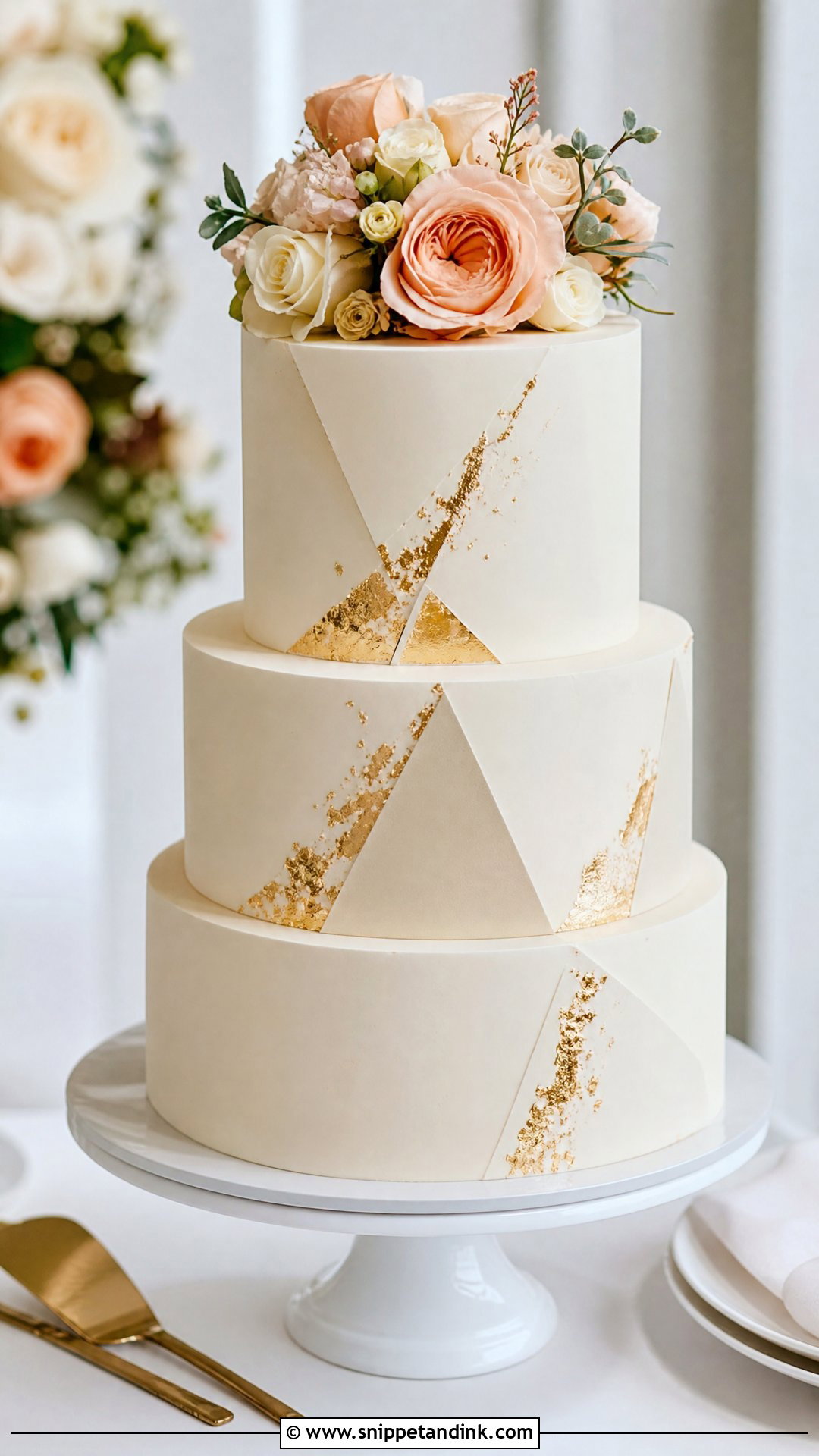
Gold leaf warms a geometric cake without making it look traditional. It sits well on marble fondant, white buttercream, black accents or blush panels. Rather than covering everything, place gold leaf along angles, corners, tier edges or a single diagonal section, which keeps it modern. Leaf and painted line work catch the light differently, so the two together have depth. Soft ivory, peach or pale pink flowers round it off and make it easy to match to gold reception decor.
14. Geometric Wedding Cake With Greenery
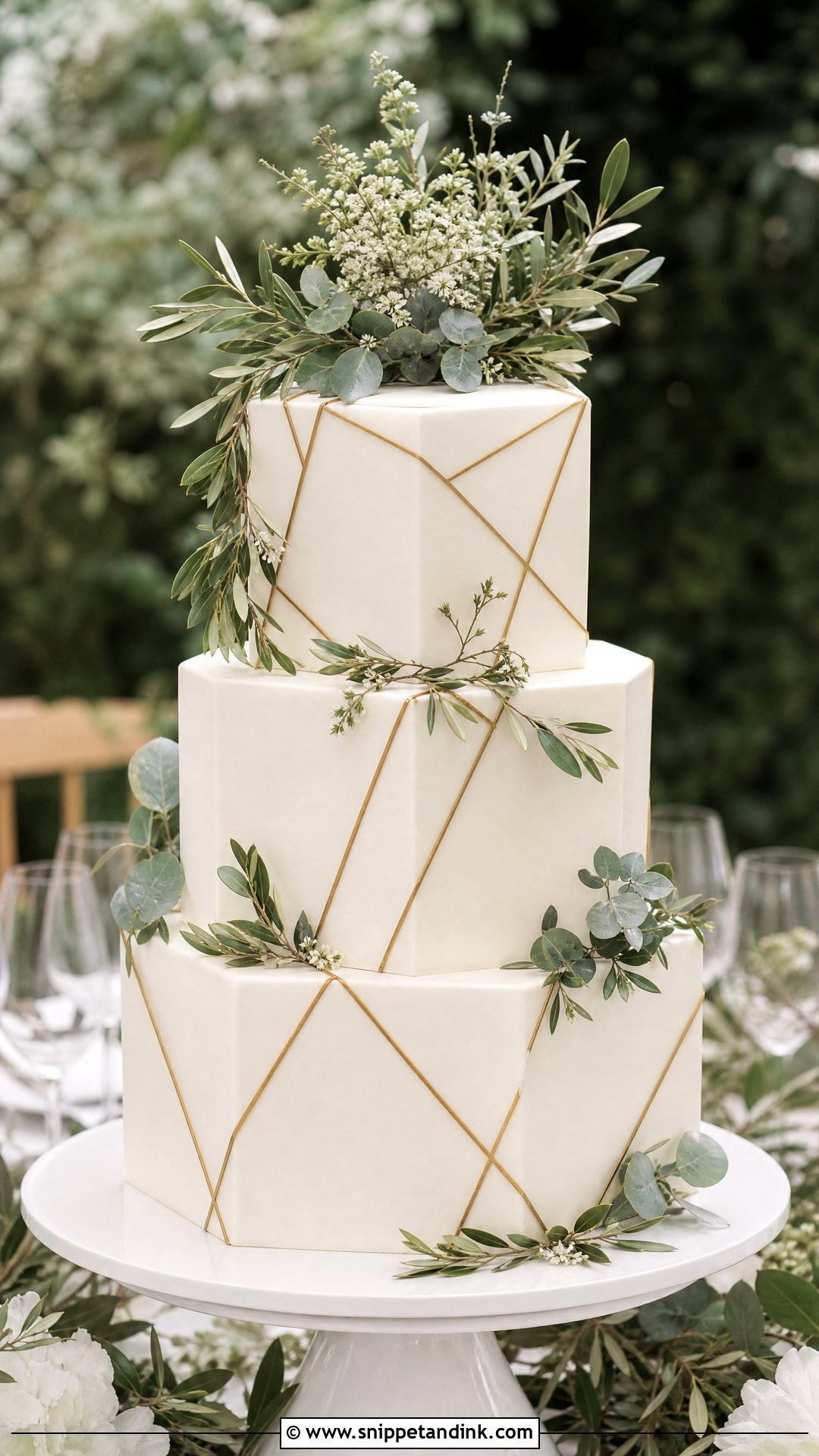
Greenery loosens a structured cake. Eucalyptus, olive branches, ruscus or ferns against an ivory base with thin gold lines, hexagon tiers or subtle relief suits gardens, greenhouses and outdoor receptions. I place the greenery in tight clusters rather than scattering loose sprigs, because scattered leaves blur the outline you paid for. Check with your florist which foliage is food-safe. Eucalyptus is popular on cakes, but it shouldn’t sit directly against icing that people will eat, so I put a barrier underneath it.


15. Geometric Wedding Cake With Color Blocking
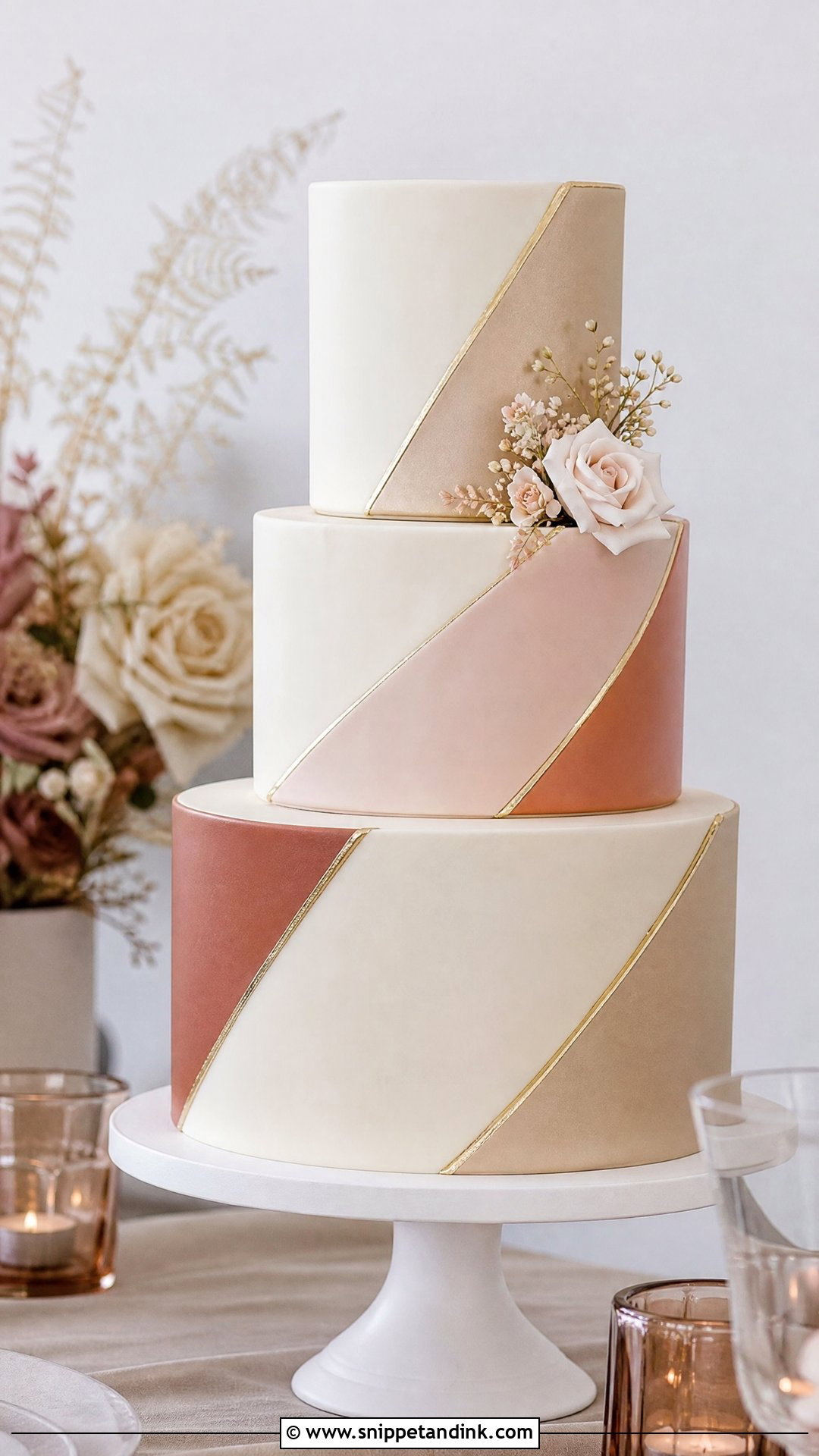
Color blocking sets the cake in large angled sections of two or more shades: ivory and champagne, blush and terracotta, sage and white, navy and gold, or black and cream. The shapes can be sharp triangles, diagonals or stacked blocks across the tiers. It’s an easy way to tie the cake to your invitations. I keep the finish smooth and the decoration almost absent; once the color does the talking, flowers start to feel like an afterthought.
16. Geometric Wedding Cake With Pearl Details
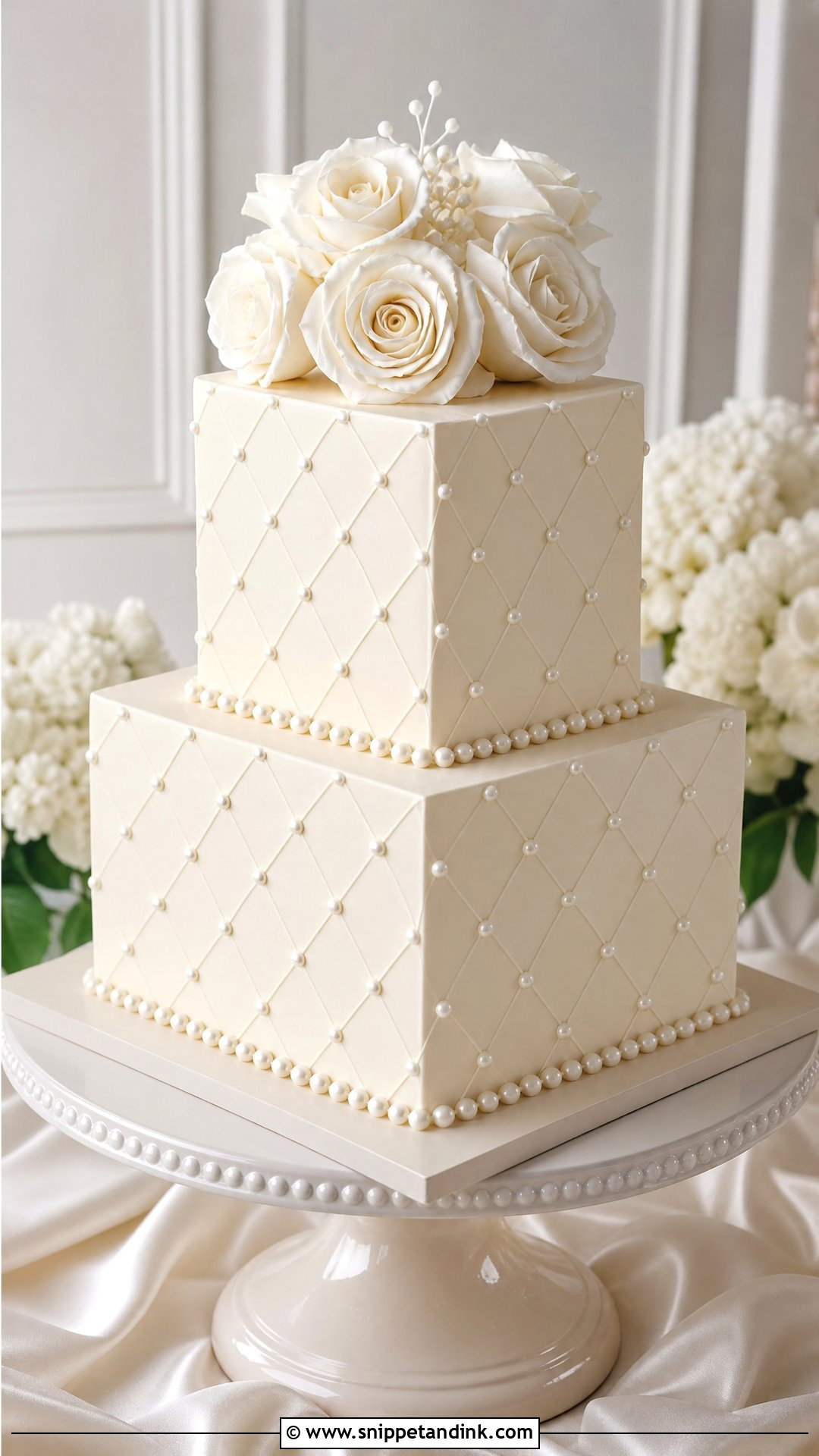
Pearls round off the sharpness of geometry. Small edible pearls along diamond patterns, fondant seams, tier edges or angled lines read as classic bridal detail on a modern shape. Tone-on-tone pearls whisper; champagne or gold ones stand out. I apply them last and by hand, so a dense pearl pattern adds real labor to the quote. A few sugar flowers or a satin ribbon finish it neatly.
17. Geometric Wedding Cake With Pressed Flowers
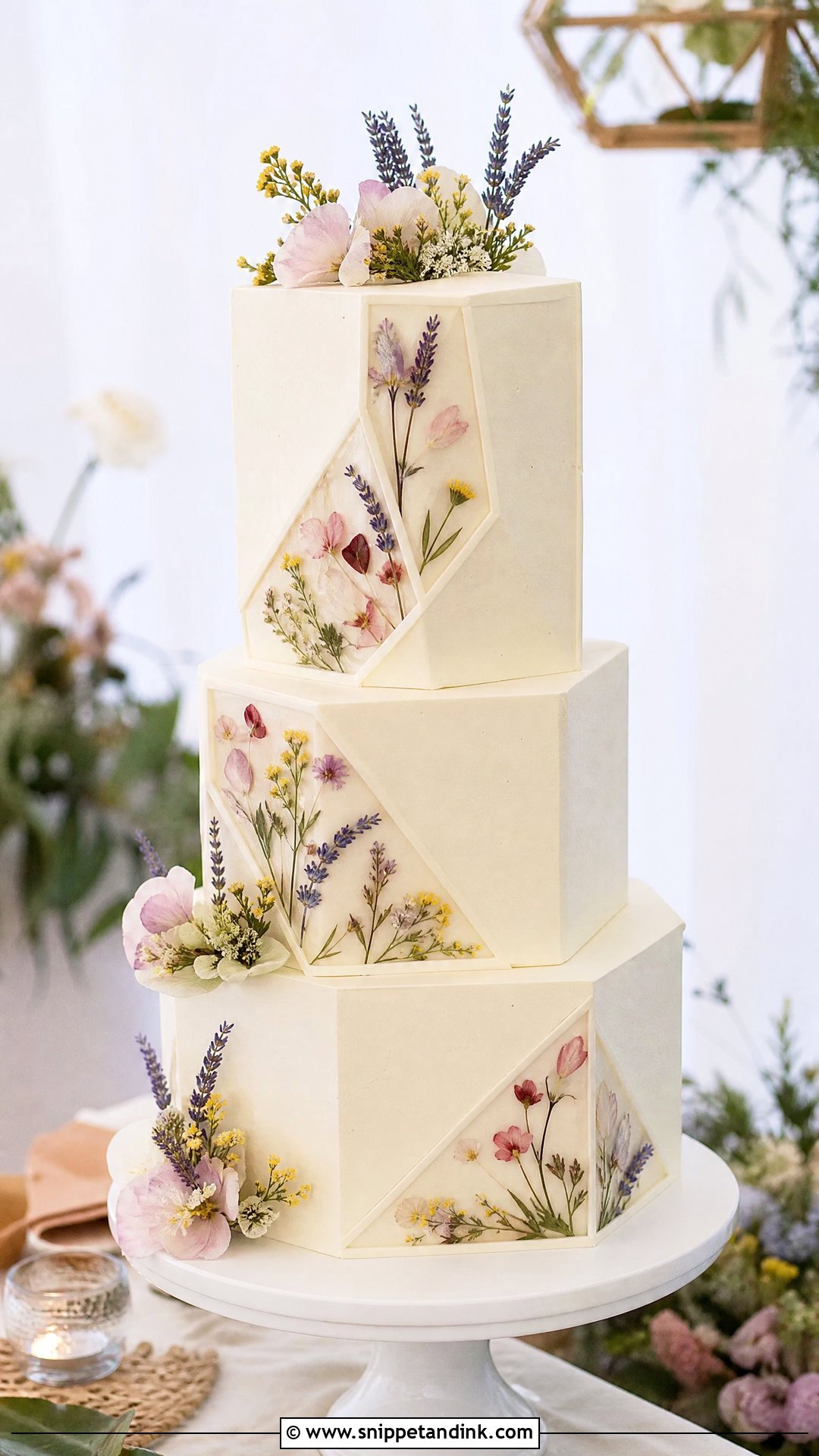
Pressed edible flowers inside angular frames or diagonal panels give a garden feel that stays orderly. Tiny lavender, blush, yellow or blue blooms work, matched to your palette. Pressed petals are fragile and pick up moisture, so I set them on fondant or a firm ganache surface close to the event rather than on soft buttercream days ahead, where they can darken and curl. It’s a good fit for spring weddings and botanical venues.
18. Geometric Wedding Cake With Ombre Tiers
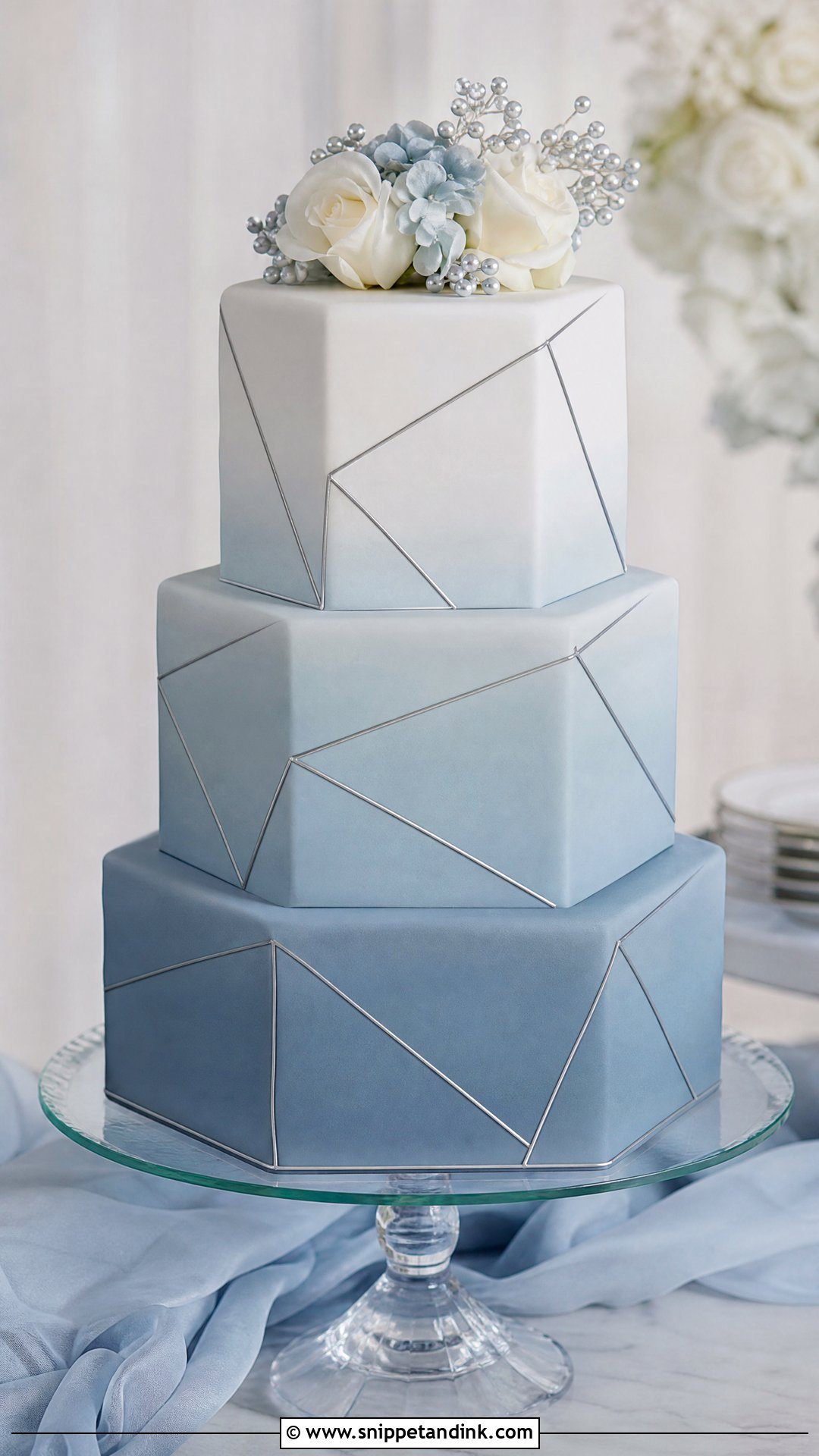
Ombre adds color in a gentle gradient: white to blush, ivory to champagne, sage to cream or dusty blue to pale gray. Thin lines, angled panels or raised shapes over the fade keep the geometry in charge. The gradient has to be soft, so I blend it in the icing rather than painting it on. Pinks and purples fade in direct sunlight, which is worth knowing if your cake will stand near a window for a few hours before it’s cut.
19. Geometric Wedding Cake With Metallic Accents
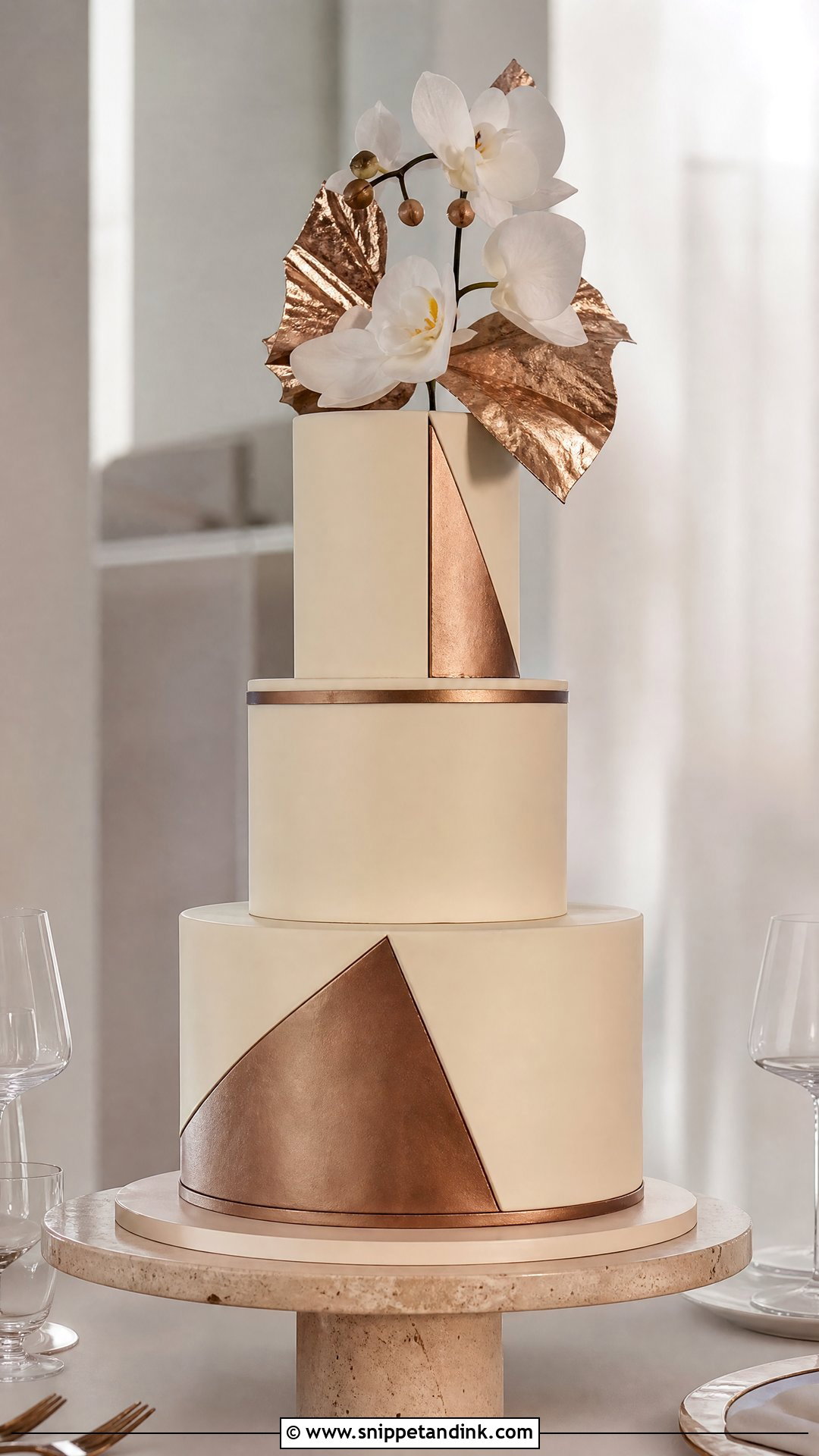
Metallics can carry a plain geometric cake: gold, rose gold, silver, bronze or champagne on tier edges, panels, line work or small fondant shapes. A little goes a long way, and a fully metallic tier is a deliberate bold move rather than a default. Ask your baker whether the metallic finish is edible or only food-contact safe; some lustres are meant to be removed before serving. I’d stick to one metal and repeat it in your signage or table decor.
20. Geometric Wedding Cake With Diamond Pattern
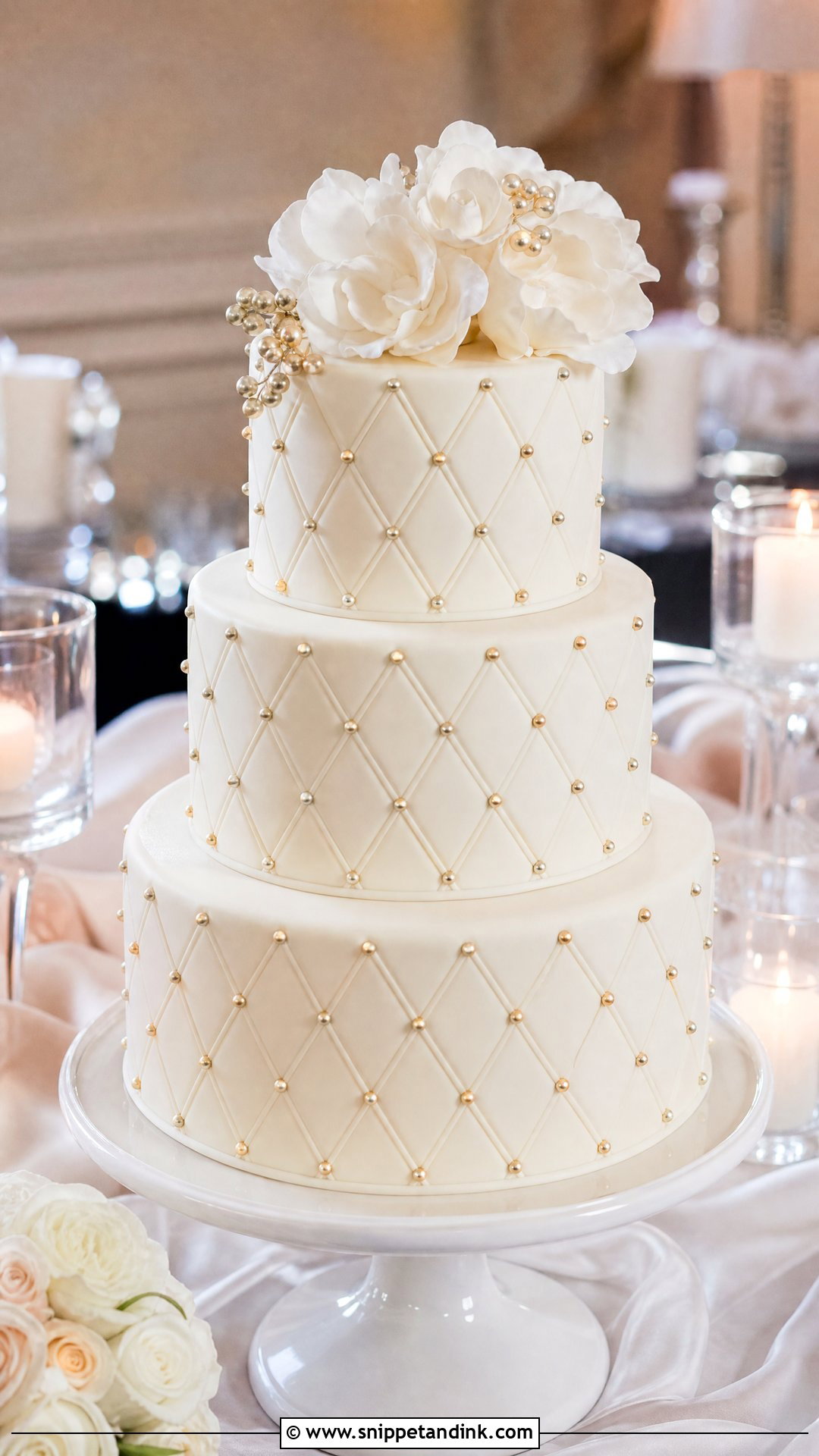
Diamonds have an obvious bridal association, which is why a diamond pattern feels elegant without any explanation. They can be piped, embossed, painted or built up in raised fondant. Tone-on-tone ivory keeps it soft; gold lines or pearl dots where the diamonds meet make it bolder. The texture casts small shadows that show up well in photos, and it works on round, square or hexagon tiers. Keep the top plain so the pattern stays the focus.
21. Geometric Wedding Cake With Chevron Pattern
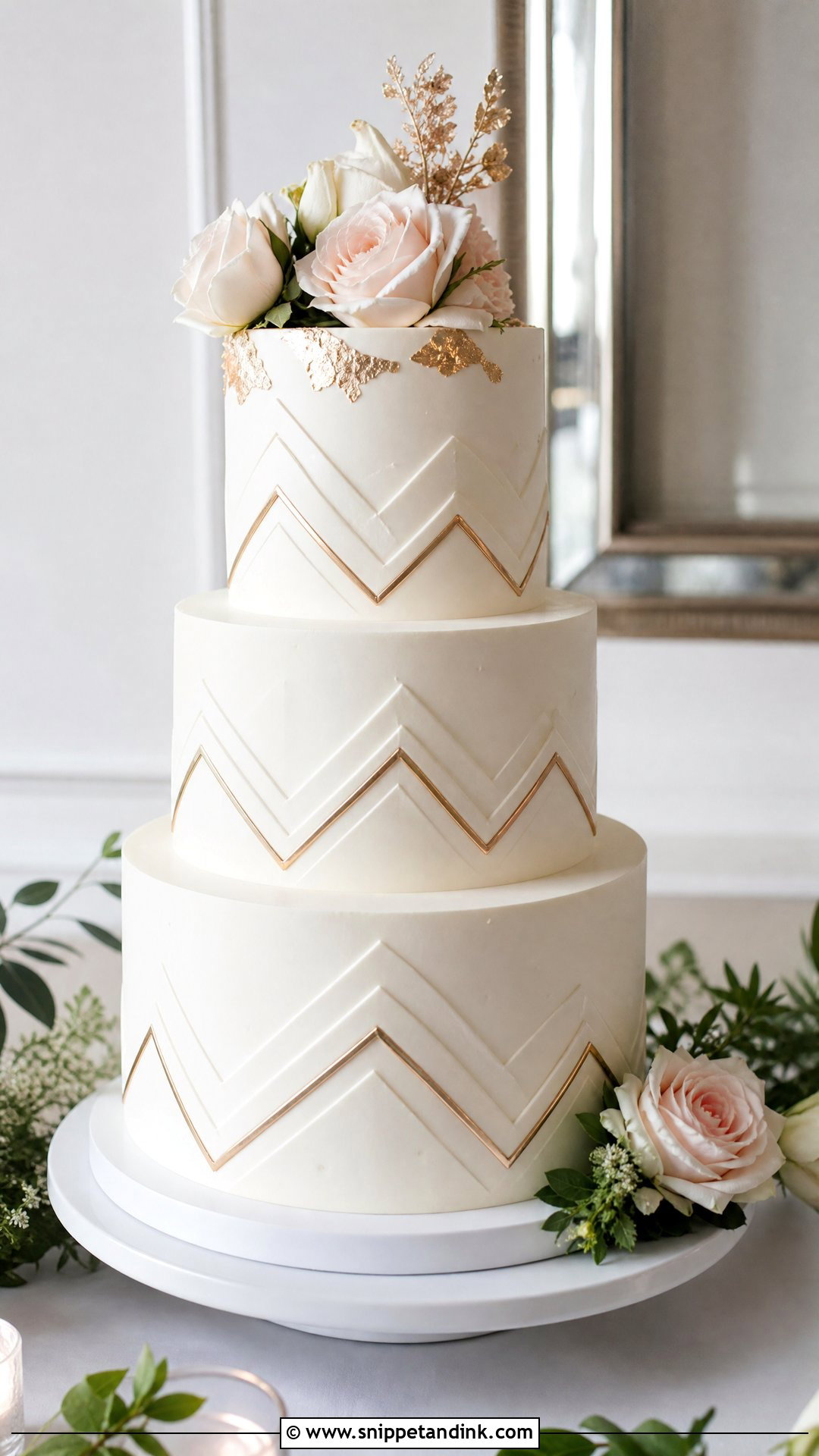
A chevron geometric wedding cake gives the table rhythm. Contrasting colors make it loud; white-on-white relief keeps it quiet, and soft metallic chevrons on ivory sit in between. Chevron is the pattern least forgiving of uneven spacing. If one zigzag is a few millimeters off, the eye catches it at once, so I measure and mark the tier before a single stripe goes on. One tier or a gentle repeat across the cake both work, with a small floral or greenery accent.
22. Geometric Wedding Cake With Arch Details
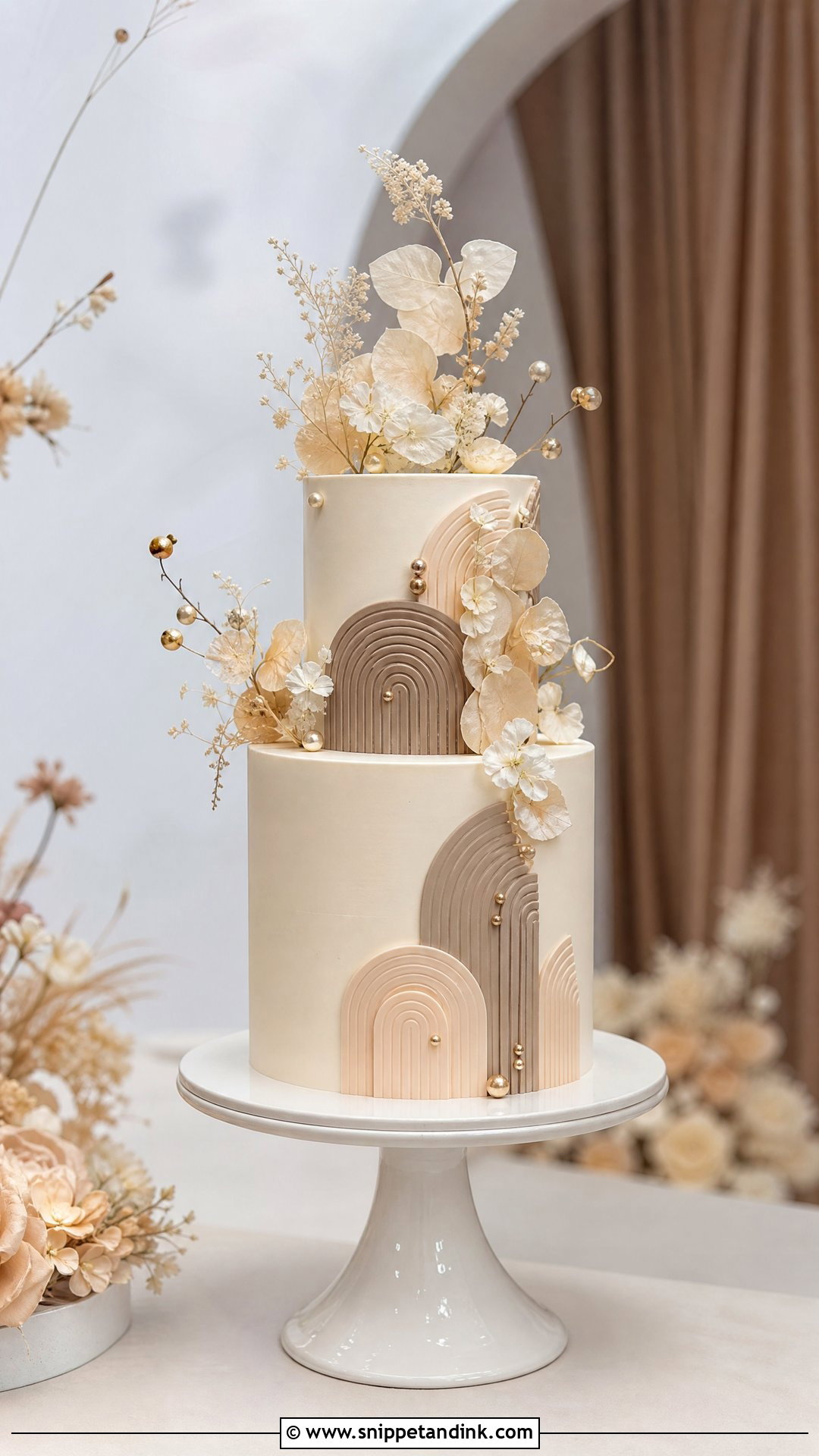
Arches are geometry with the edges sanded down. Fondant arches, painted panels or layered half-circles across the front of the tiers feel modern but much softer than triangles or cubes. Warm neutrals like ivory, beige, taupe, clay or peach suit them. They make the most sense when your ceremony backdrop, stationery or seating chart already uses arched shapes, so the cake becomes one more echo. A few flowers at the base or along one side are enough.
23. Geometric Wedding Cake With Cube Texture
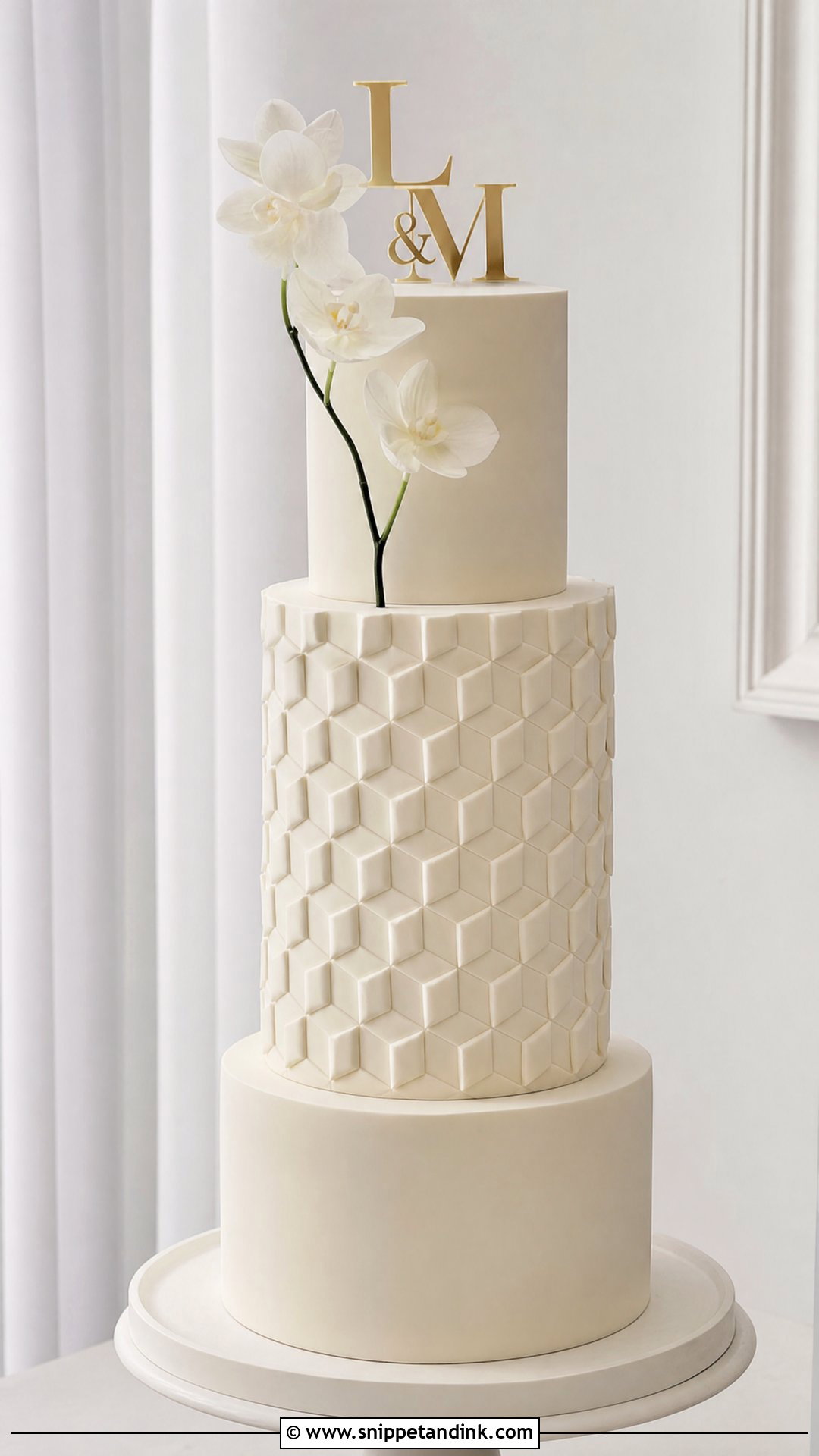
Cube texture looks like tile or a building facade: raised fondant cubes, cubes pressed into buttercream, or a repeat across one tall tier. White and ivory keep it clean; gray, black or metallic accents push it toward drama. It’s a strong visual, so I don’t add much else, maybe a single orchid stem or a thin gold topper. Raised fondant pieces add weight, which is one more reason this pattern often goes on just one tier.
24. Geometric Wedding Cake With Asymmetric Tiers
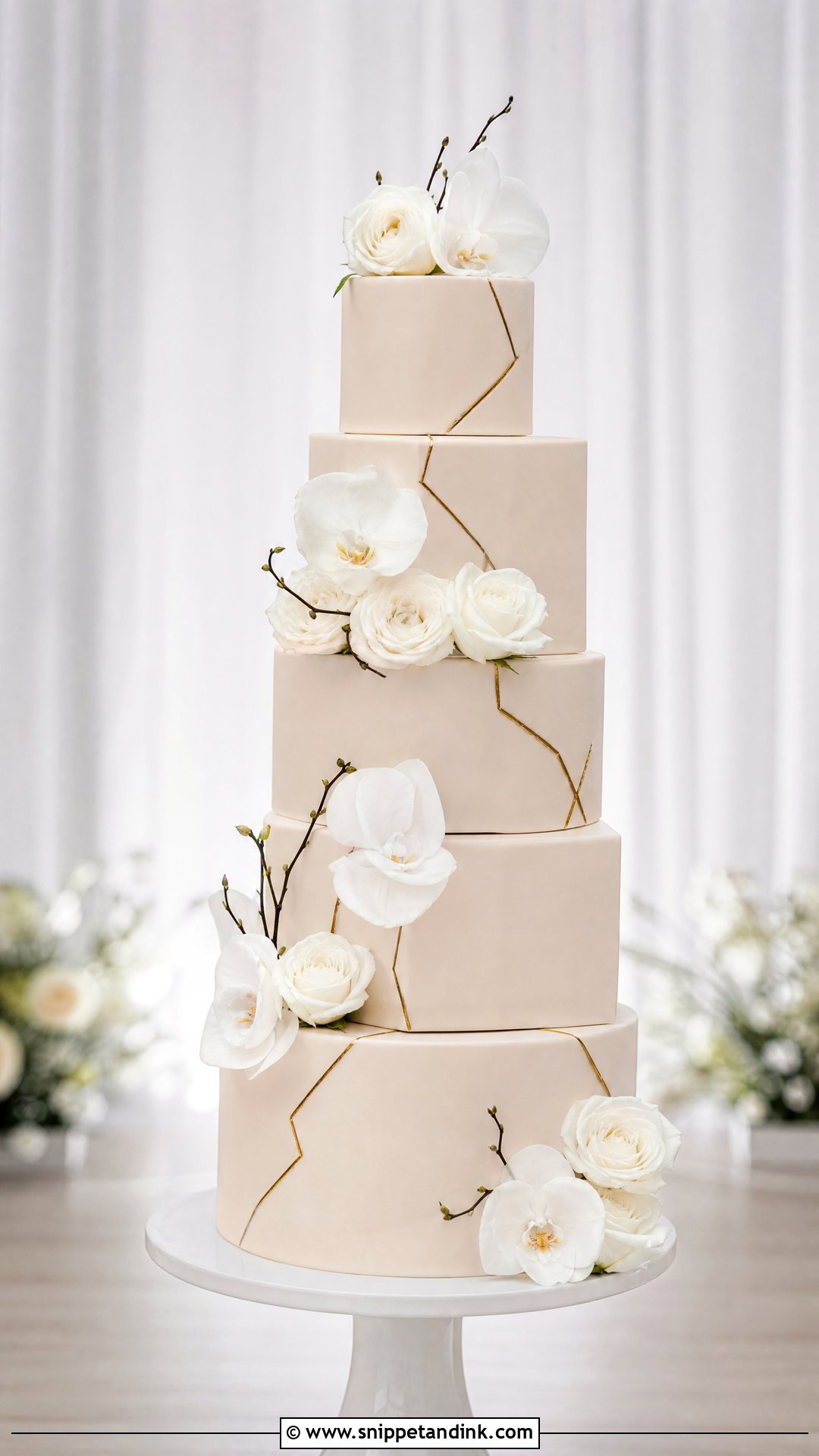
Offset stacks, unequal tier heights and mixes of round, square and hexagon layers give an asymmetric cake its editorial look. This is the one I’d only hand to an experienced baker, because an off-center stack puts weight where the cake doesn’t naturally want it, and it needs proper internal supports and often a central rod to stay put. Keep the palette restrained, white, ivory, taupe or soft gray, and set the flowers on one side to echo the lean.


25. Geometric Wedding Cake With Fondant Panels
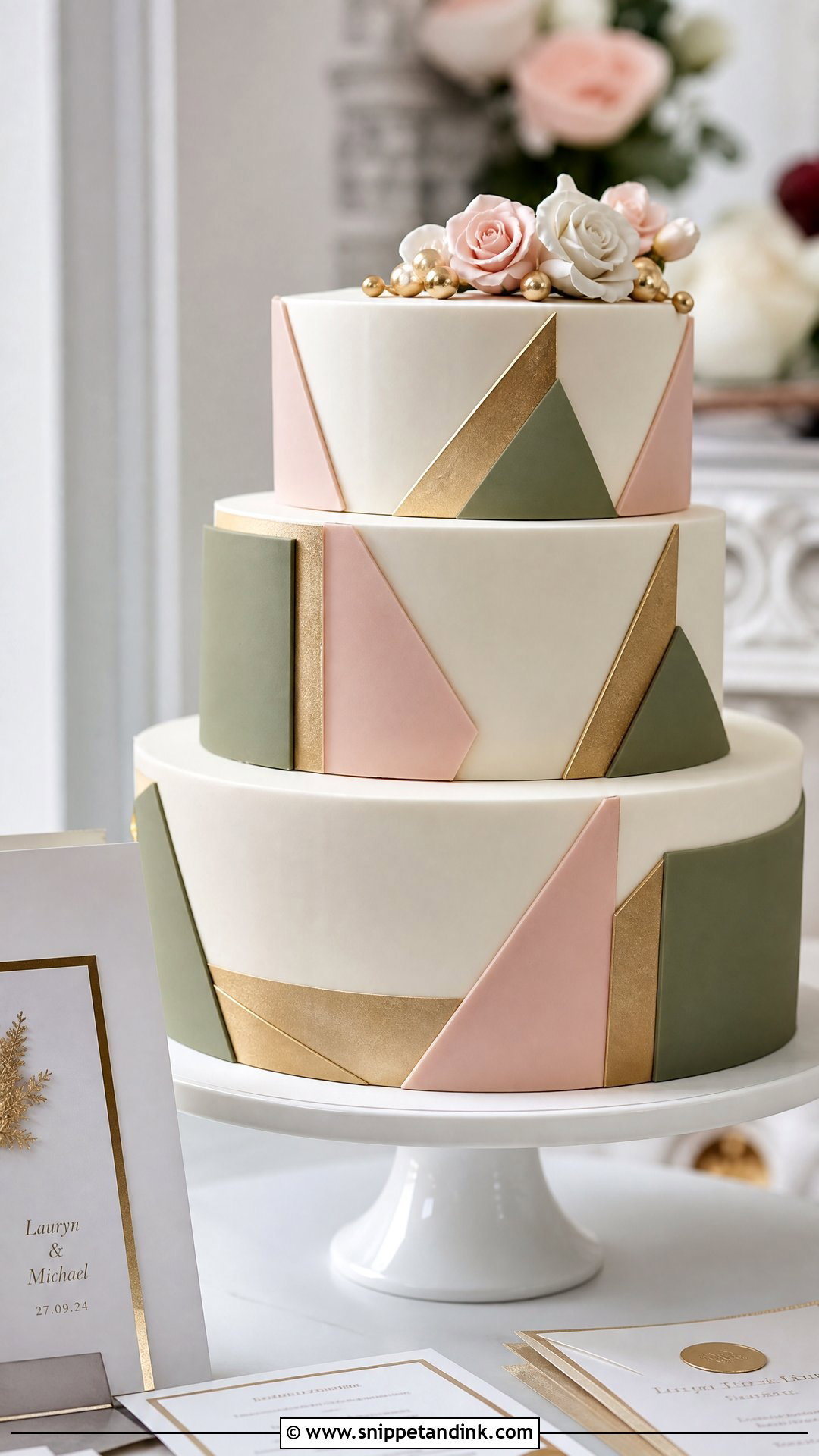
Fondant panels are the most adaptable approach: shapes cut and layered onto the cake to make triangles, arches, diamonds, rectangles or abstract blocks. They can be tone-on-tone or mix in blush, gold, black, sage or terracotta. I’d cap the palette at two or three colors and keep the underlying finish smooth, since panels sit right on the surface and show any lump beneath them. A small floral accent keeps it from feeling cold.
From the Bakery Van to the Cake Table With Every Corner Intact
A geometric cake shows damage more than a soft, ruffled one. A dented corner or a sagging tier edge breaks the whole idea. Most of that damage happens between the bakery and the table, so this is the part of the plan I care about as much as the design.
- Tall or offset cakes are often driven in separate tiers and stacked at the venue. Leave your baker a clear window and a cleared, level table to do it.
- Cold fondant brought into a warm, humid room will sweat. Beads of moisture can mark painted lines and gold leaf, so let the cake come up to room temperature where it will be displayed, and don’t move it again.
- Keep the table out of direct sun and away from heaters, dance-floor lights and the kitchen door.
- Ask the venue for a sturdy table, not a wobbly folding one. A slight tilt that nobody notices on a round cake is obvious on a hexagon.
- Decide in advance who receives the cake, and that nobody moves it to make room for gifts.
How many people a shaped tier feeds
Shape changes portion counts. A square tier gives noticeably more slices than a round of the same width, and a hexagon sits somewhere between the two. If you want a dramatic tall cake but a smaller guest list, extra-height tiers or a dummy tier in the stack keep the look without wasting cake. Tell your baker your final numbers and how the cake will be cut, wedding finger portions or a dessert-sized slice, before they size the tiers.
Do Your Invitations Already Hint at the Right Shape?
A geometric cake earns its place when its structure and its softness are in balance: hard lines on one side, flowers, greenery, pearls or a warm palette on the other. Before deciding, look at your venue, your table styling, your invitation and your florals together, and pick the cake that repeats a shape or color you already have. That repetition is what makes it look planned in photos. Bring your favorites to a tasting, and ask your baker honestly which ones suit your season and your room.
You'll Like These Ideas:










Leave a Reply