
Of everything on a reception table, the cake is the thing people film. Guests circle it with their phones, the photographer gets it from three sides, and the cutting turns into a short clip that gets passed around for weeks. So when I design a wedding cake I think about how it reads in motion as well as how it tastes: piping that throws shadows, pearls and leaf that catch a moving light, flowers that look right from the back. Below are 25 designs, each with my notes on how it’s built, what it needs to survive the day and where I’d point you elsewhere. Take the ones you like to your tasting and use them to start the conversation.
Serving Counts Shape the Cake Before the Design Does
The first number I ask for at a consultation isn’t your budget, it’s your guest count, because that decides how many tiers and what sizes the design can have. Wedding portions are cut smaller than party slices, roughly finger width, so a cake serves more people than its size suggests. As a loose guide, a single tier of six or eight inches suits an elopement or a cake with a kitchen sheet cake behind it, two tiers cover a small reception, and three tiers suit a mid-sized one. Exact counts depend on depth, shape and how your caterer cuts.
That’s why I’d settle the guest list before falling for a design. A tall single tier and a three tier cake look like completely different objects, and switching late changes the structure, not just the price.
- Popular cake designers often book months ahead for summer Saturdays, so enquire as soon as your date is fixed.
- Sugar flowers, bows and Lambeth piping are made days or weeks in advance, so final design changes have a cutoff.
- Tell your baker the room temperature, whether the cake is indoors, and how long it will stand before cutting.
1. Classic White Wedding Cake
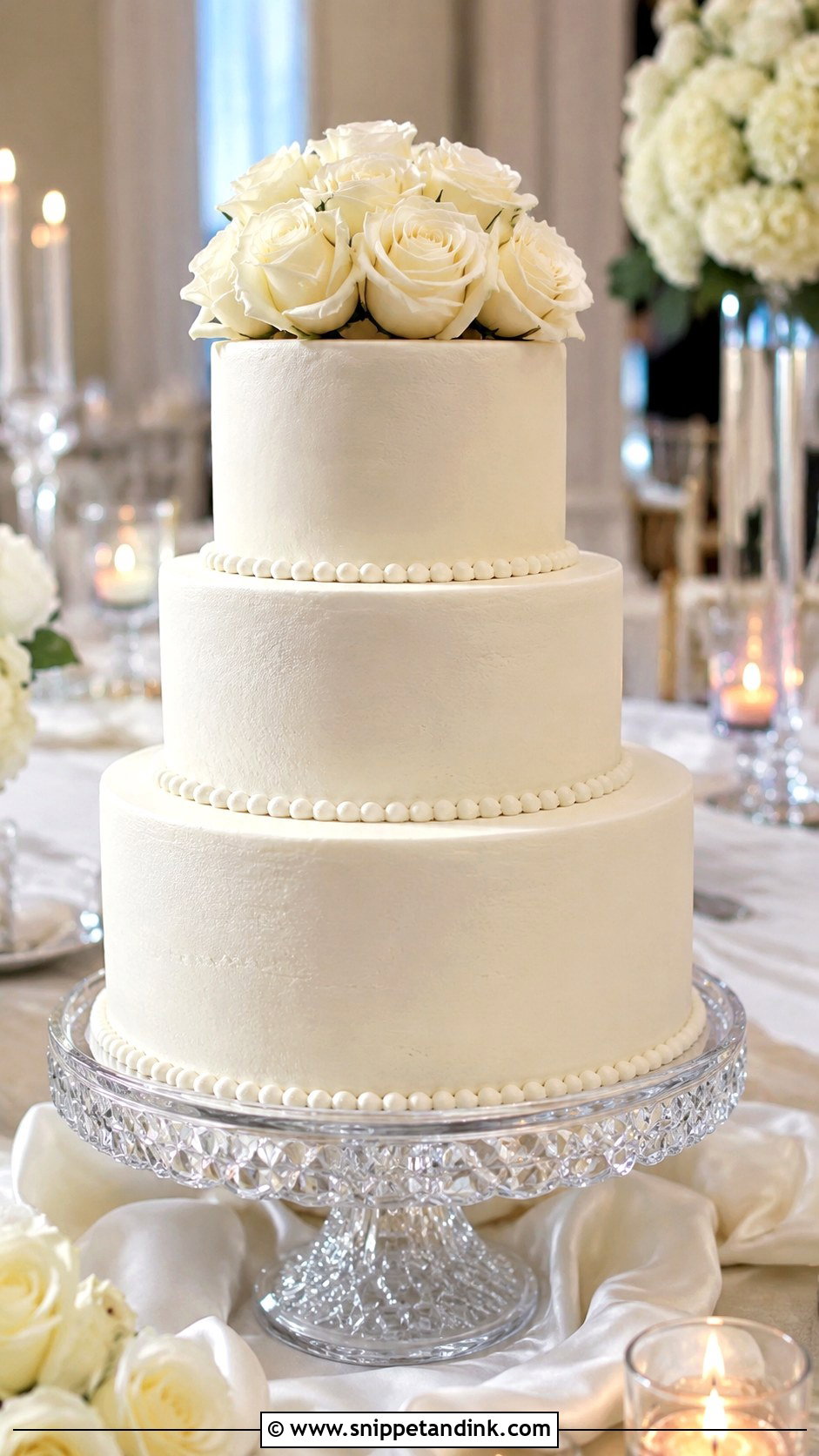
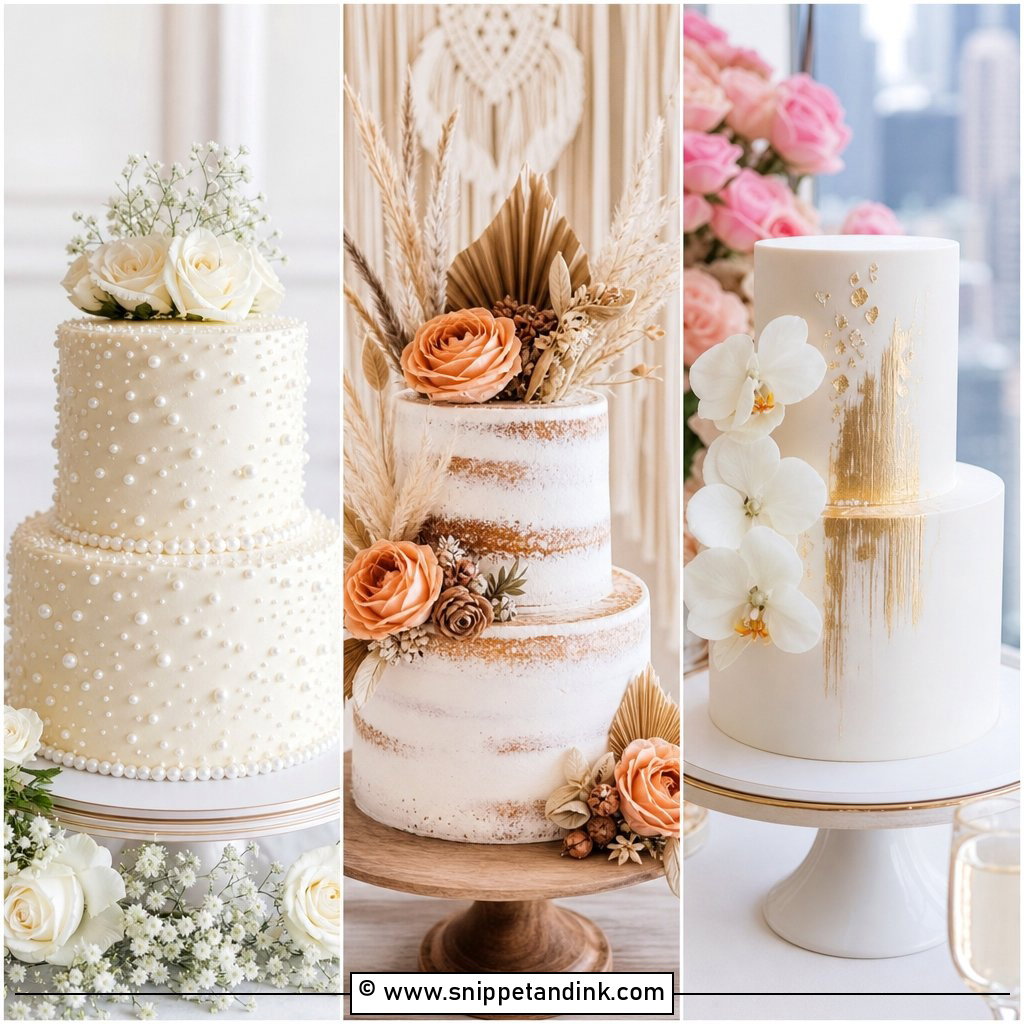
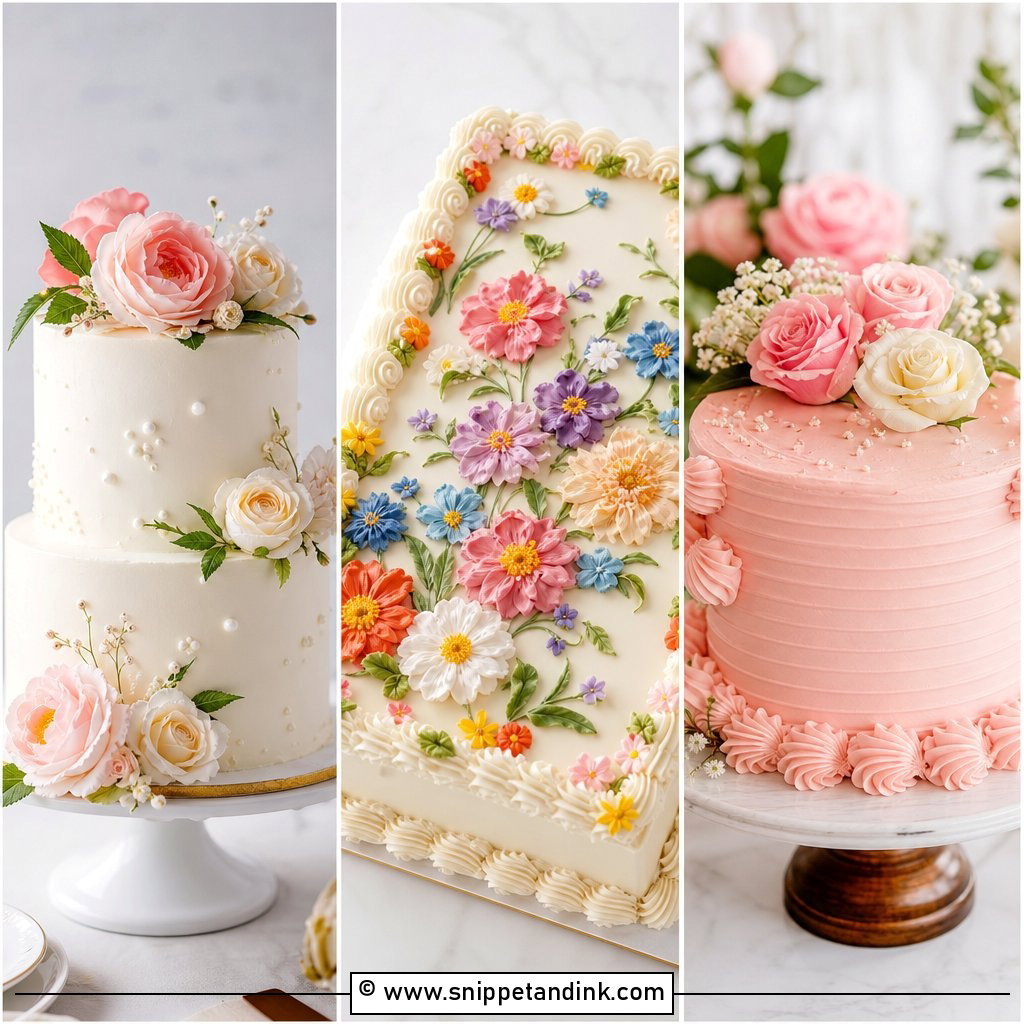
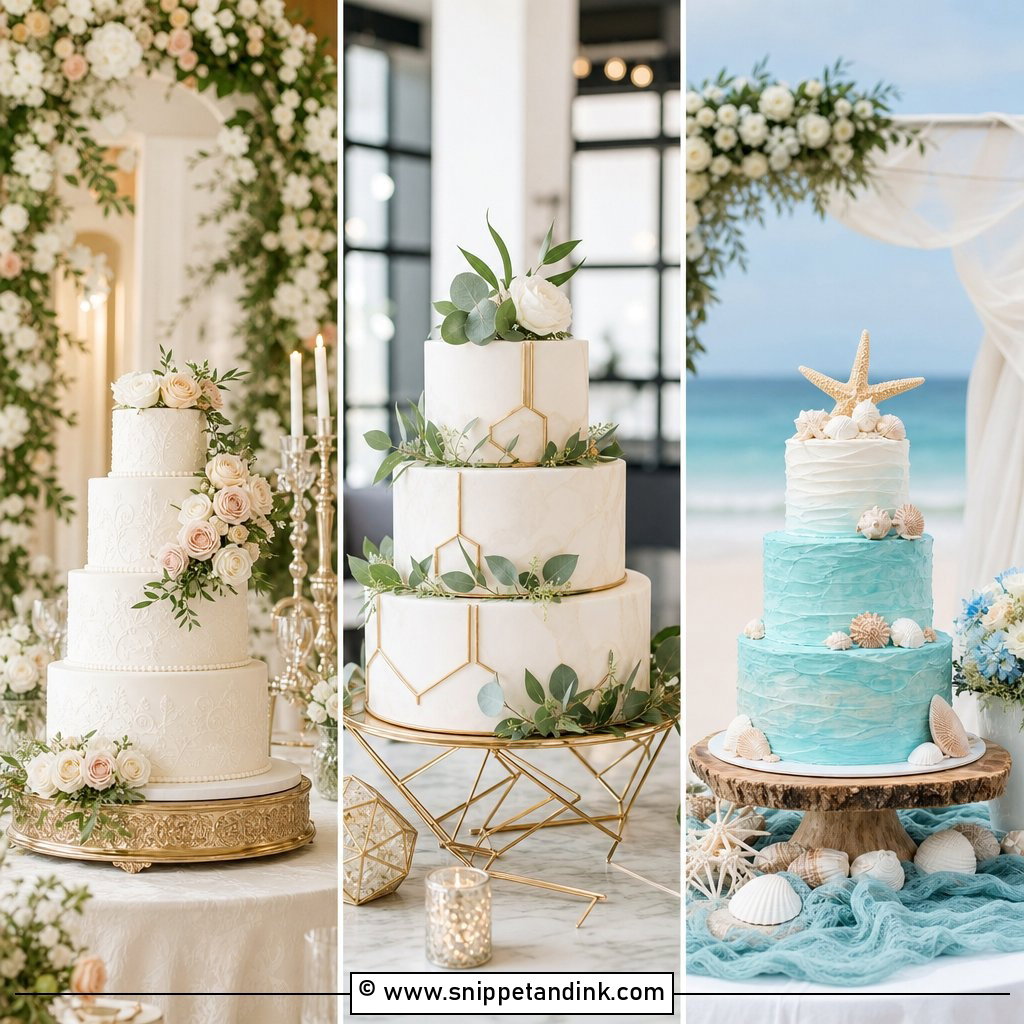
Plain white is harder to do well than it looks, because there’s nothing to hide behind. A clean ivory buttercream or fondant over two or three balanced tiers shows every dent and every leaning dowel, so the structure underneath has to be right. Small pearl borders, fine piping and a few white roses are enough. I usually suggest ivory over pure white, since bright white icing goes slightly blue in daylight and makes a cream dress look yellow beside it. Vanilla bean, almond, champagne or white chocolate sponge keeps the inside as light as the outside, and the flowers and stand decide whether it leans traditional or modern.
2. Vintage Lambeth Wedding Cake
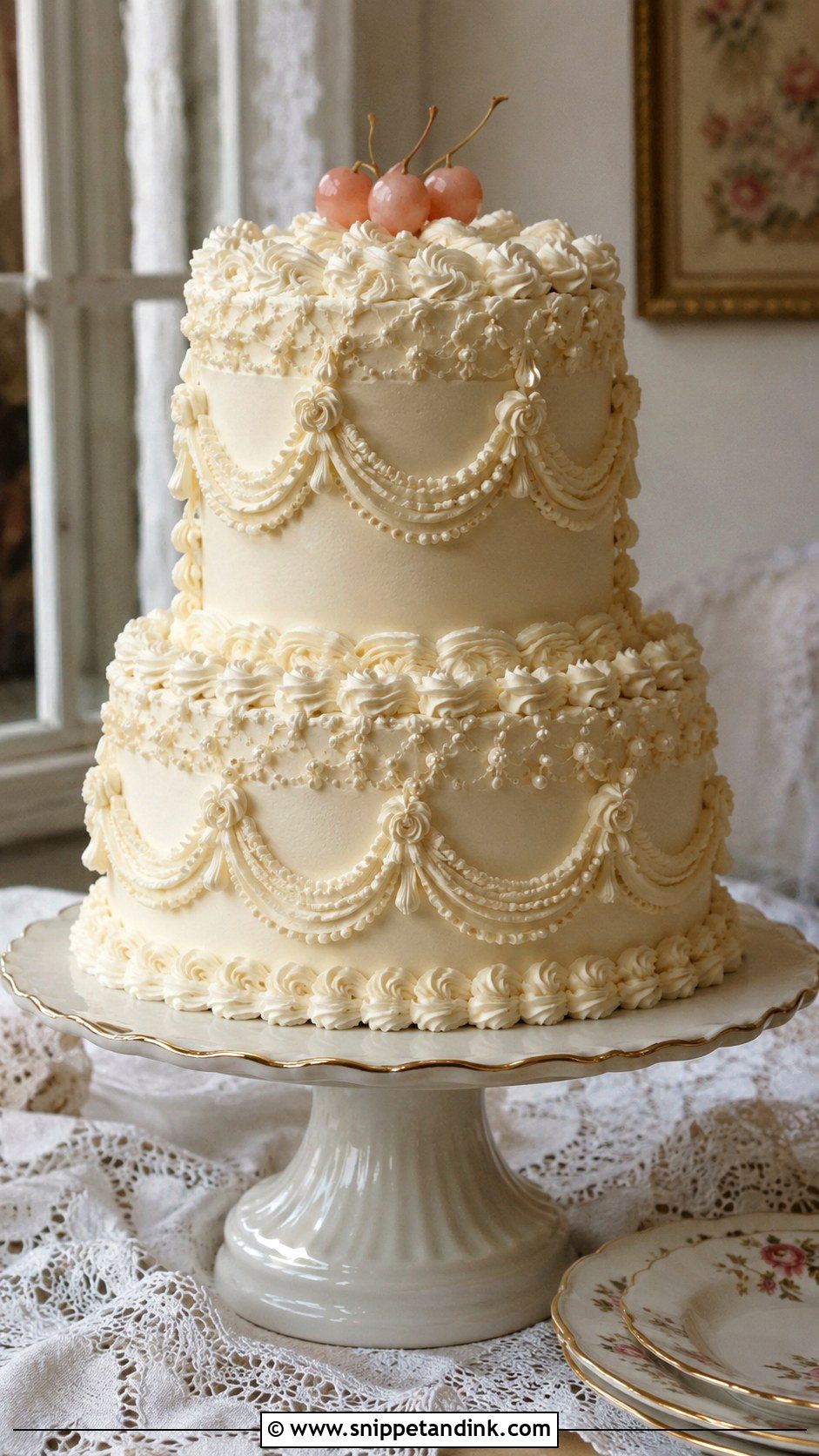
Lambeth is overpiping: layer after layer of scallops, shells, swags and ruffles built up until the cake looks carved. It’s slow work, often hours per tier, and that time is what you’re paying for. In buttercream it reads soft and generous; in royal icing it holds crisper lines and survives warmth better. Two or three tiers give the piping room to breathe. Vanilla, lemon, raspberry or almond sponge under Swiss meringue buttercream suits it. If your reception is outdoors in July, I’d talk you out of buttercream Lambeth, because fine piping is the first thing to sag in heat. Ivory, pale blue, blush and butter yellow all work for the icing.
3. Pearl Wedding Cake
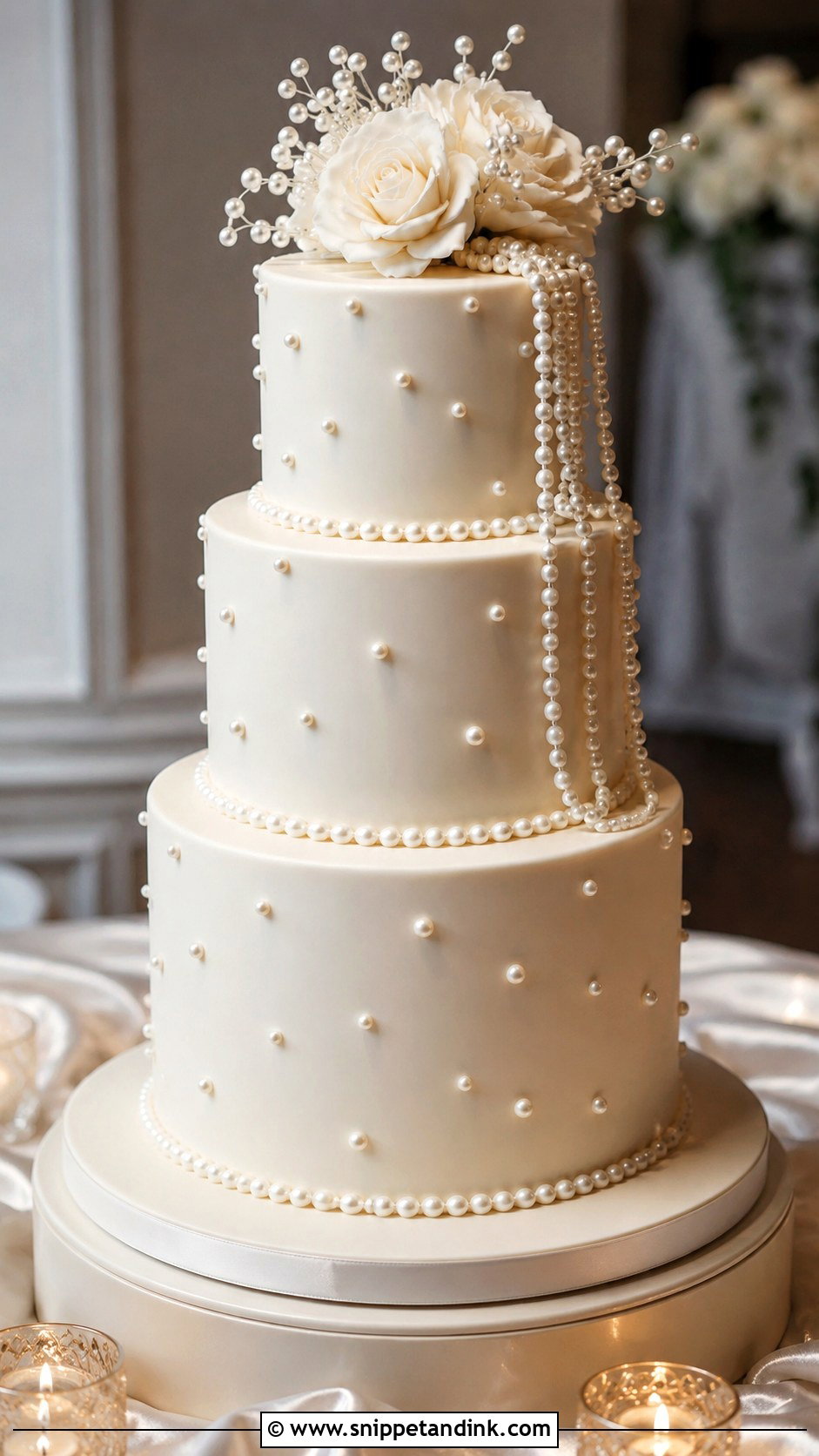
Pearls give you detail without noise. Tiny edible pearls can ring each tier, sit scattered over smooth icing or run in vertical lines for a more modern effect, and they suit satin gowns and candlelit rooms because they glint as the light moves. Keep the base ivory, white or champagne so they show. One practical warning: hard sugar dragées are tough on teeth, so I place them where they’ll be lifted off at cutting, or use soft fondant pearls on the tiers that get served. Vanilla champagne sponge with white chocolate buttercream is a classic match, finished with a few sugar flowers or a thin ribbon.
4. Floral Wedding Cake
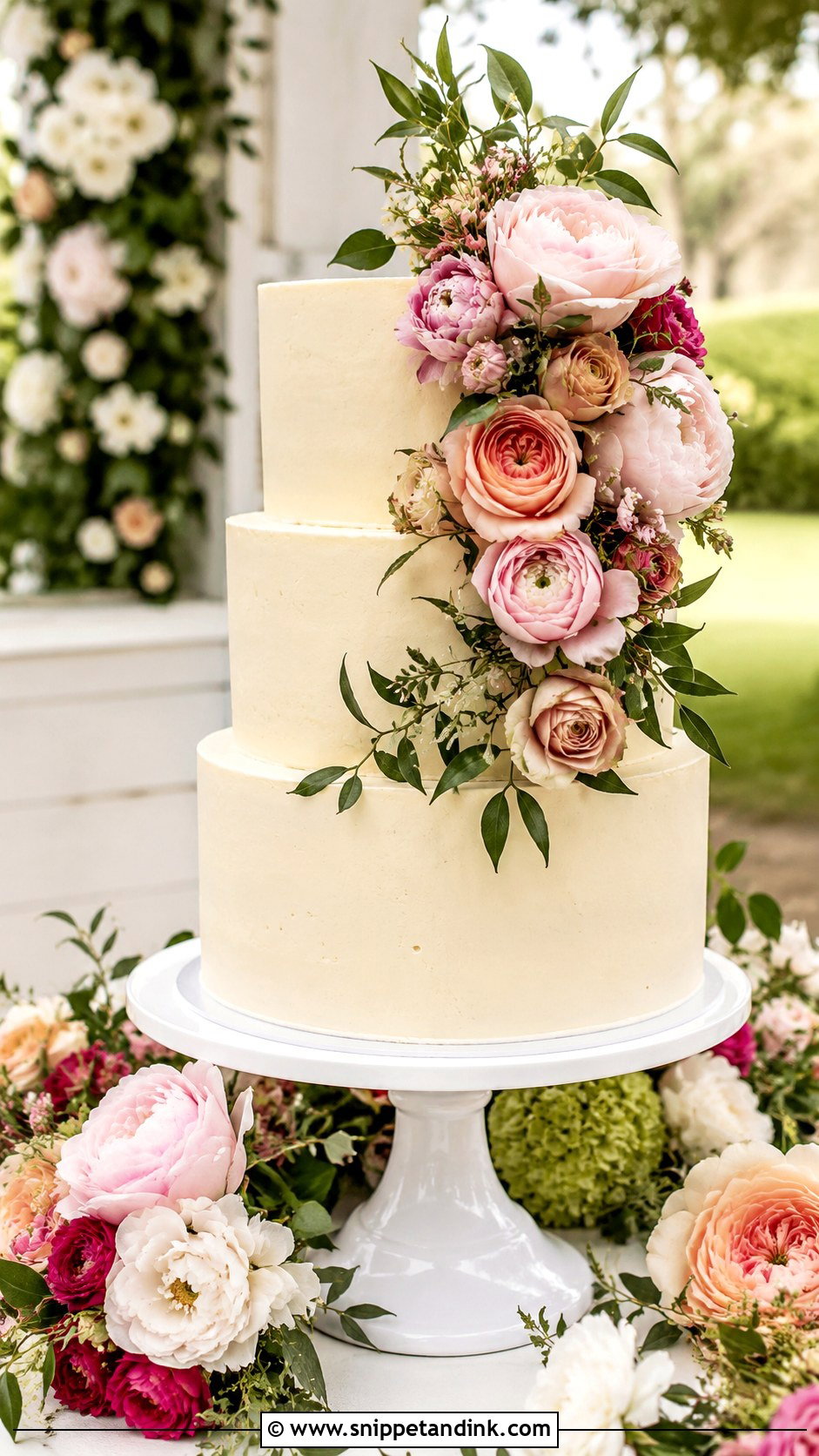
Florals tie the cake to everything else in the room, since the blooms can echo the bouquet, centerpieces or arch. Roses, peonies, ranunculus, orchids and baby’s breath each set a different mood. What most couples don’t realize is that fresh flowers on a cake need prep: the stems are wrapped or set into posy picks so sap never touches the icing, and they must be grown without pesticides. Some favorites, including hydrangea and lily of the valley, are toxic and shouldn’t sit directly on anything people eat. One cluster or a full cascade both work, as long as there’s bare icing between groups so it still looks like cake. Lemon elderflower, vanilla raspberry or almond cream suit it.
5. Buttercream Wedding Cake
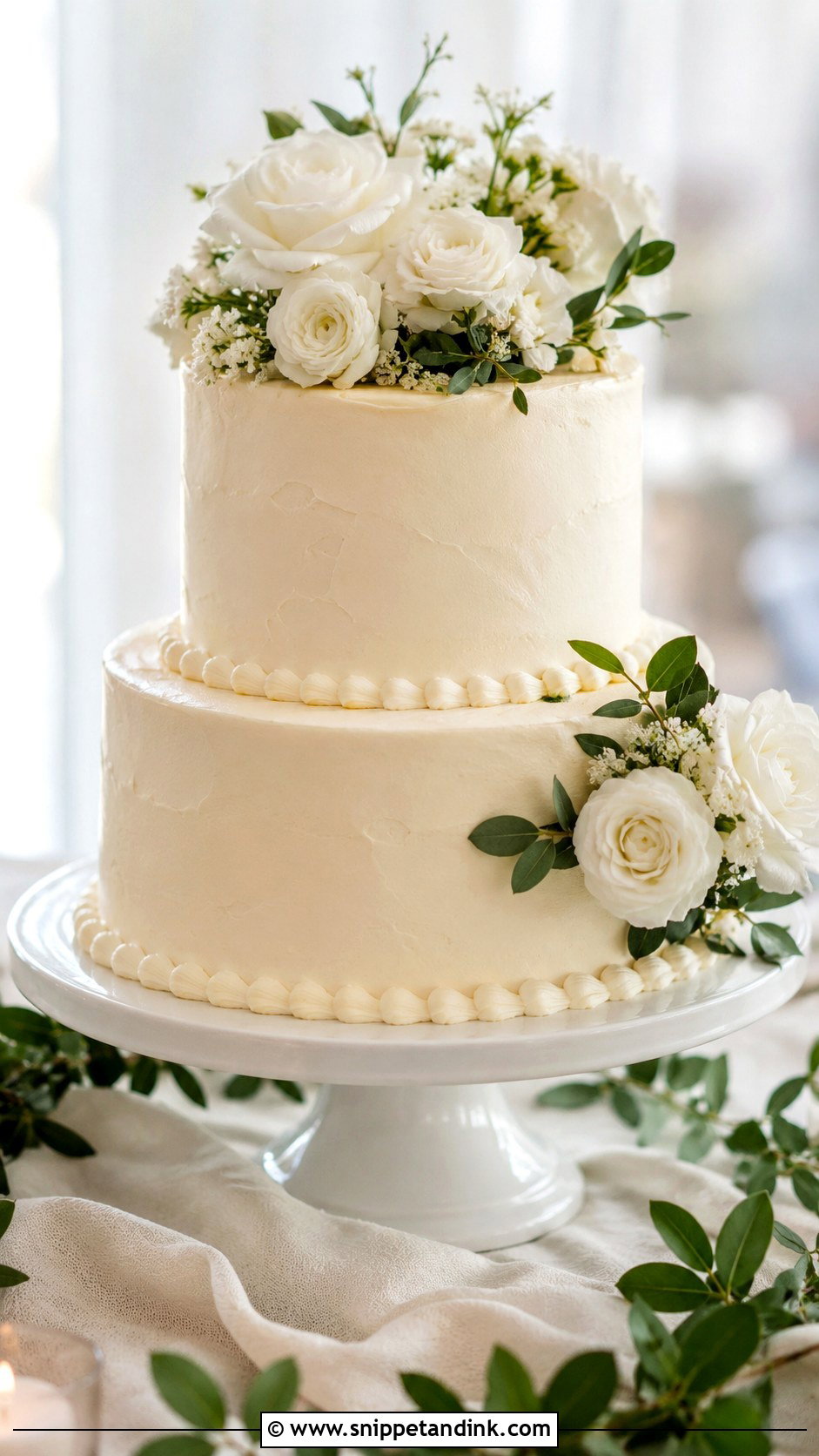
Buttercream is soft and creamy, and it can be smooth and modern or textured with palette-knife strokes and combed ridges. Swiss meringue is my default because it’s silky and not too sweet, and it takes flowers, pearls, ribbon, fruit or piping happily. Its weakness is temperature. Above roughly room warmth it starts to soften, so a buttercream cake needs a cool spot out of direct sun and shouldn’t sit on display for hours before cutting. Vanilla, chocolate, lemon and strawberry all sit well underneath. For a relaxed, generous cake that’s easy to slice and serve, it’s hard to beat.
6. Minimalist Wedding Cake
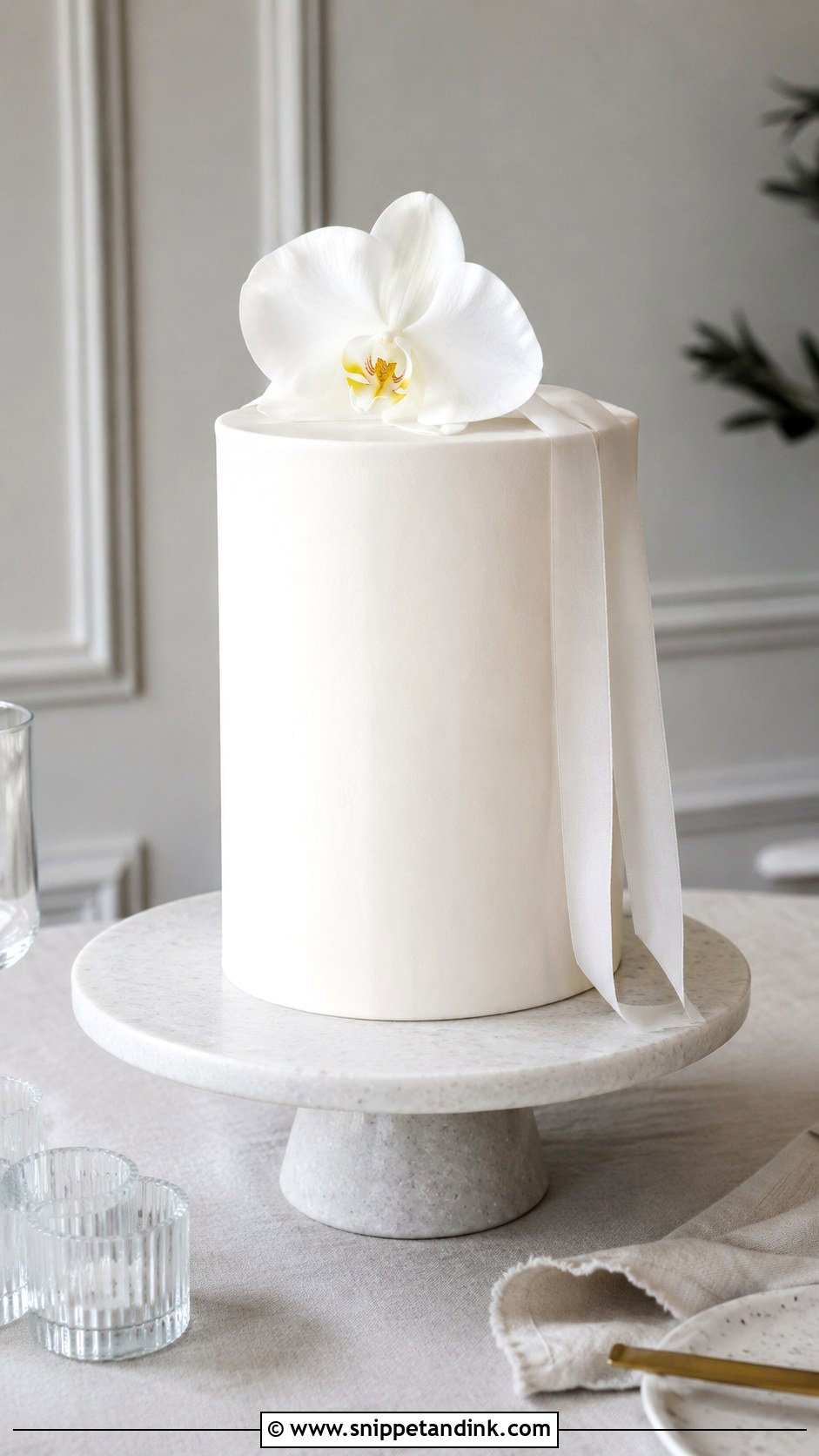
Minimal cakes are the least forgiving cakes I make. Smooth sides, sharp top edges, one neutral color and a single accent: an orchid, a silk ribbon, a thin gold line, a small white cluster. Those razor edges come from a ganache coat under the buttercream and a well-chilled cake, so ask your baker how they get them. A one or two tier cake can carry this look as well as a tall one if the proportions are right, and a tall single tier often looks more deliberate than two short ones. Vanilla bean, almond, coconut or lemon keep it light. It suits city venues and modern rooms.
7. Gold Wedding Cake
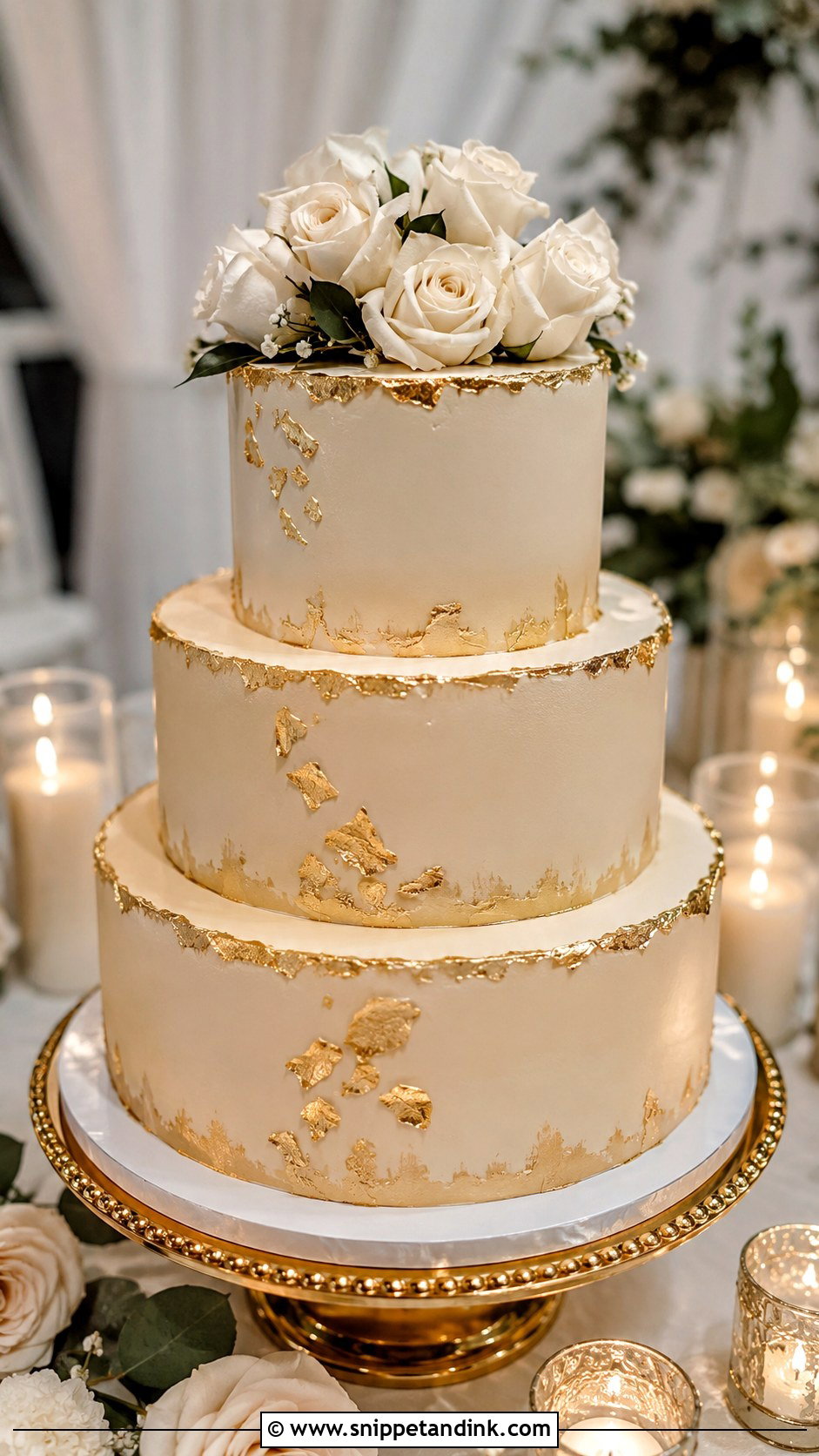
Gold works when it’s used sparingly. Flakes of leaf, a painted edge, a few brushstrokes or one gold tier under white ones will look rich; a fully gold cake tends to look like a prop under flash. Check that your baker uses edible gold leaf or edible lustre, not dust labelled non-toxic, which is meant for decorations that get removed. It pairs with ivory, blush, emerald, navy and black-tie palettes, and with champagne, caramel or vanilla almond sponge. Candlelight is where gold earns its place, since leaf flickers as people walk past it.
8. Rustic Wedding Cake
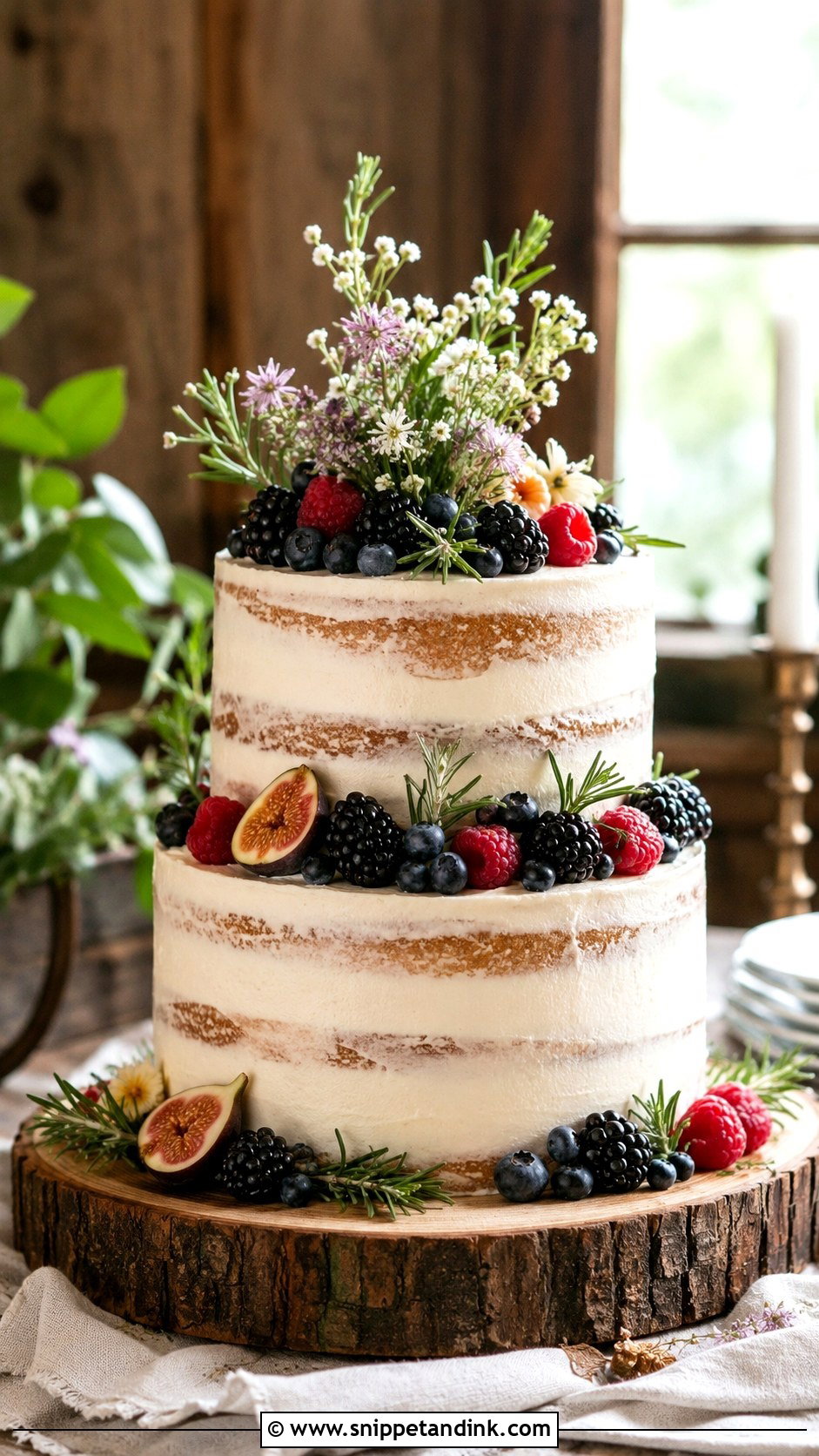
Rustic cakes rely on semi-naked frosting, textured buttercream, wood stands, greenery, berries and wildflowers, and they suit barns, vineyards and mountain venues. The trap is that a thin scrape coat dries out faster than a full coat, so a semi-naked cake shouldn’t be iced the day before and left uncovered. I aim for handmade, not messy: lightly exposed sponge, soft edges, natural decoration. Vanilla berry, carrot, spice, honey lavender or lemon all fit, with figs, rosemary, eucalyptus or small roses tucked in. Eucalyptus and some greenery aren’t food safe, so they need a barrier.
9. Garden Wedding Cake
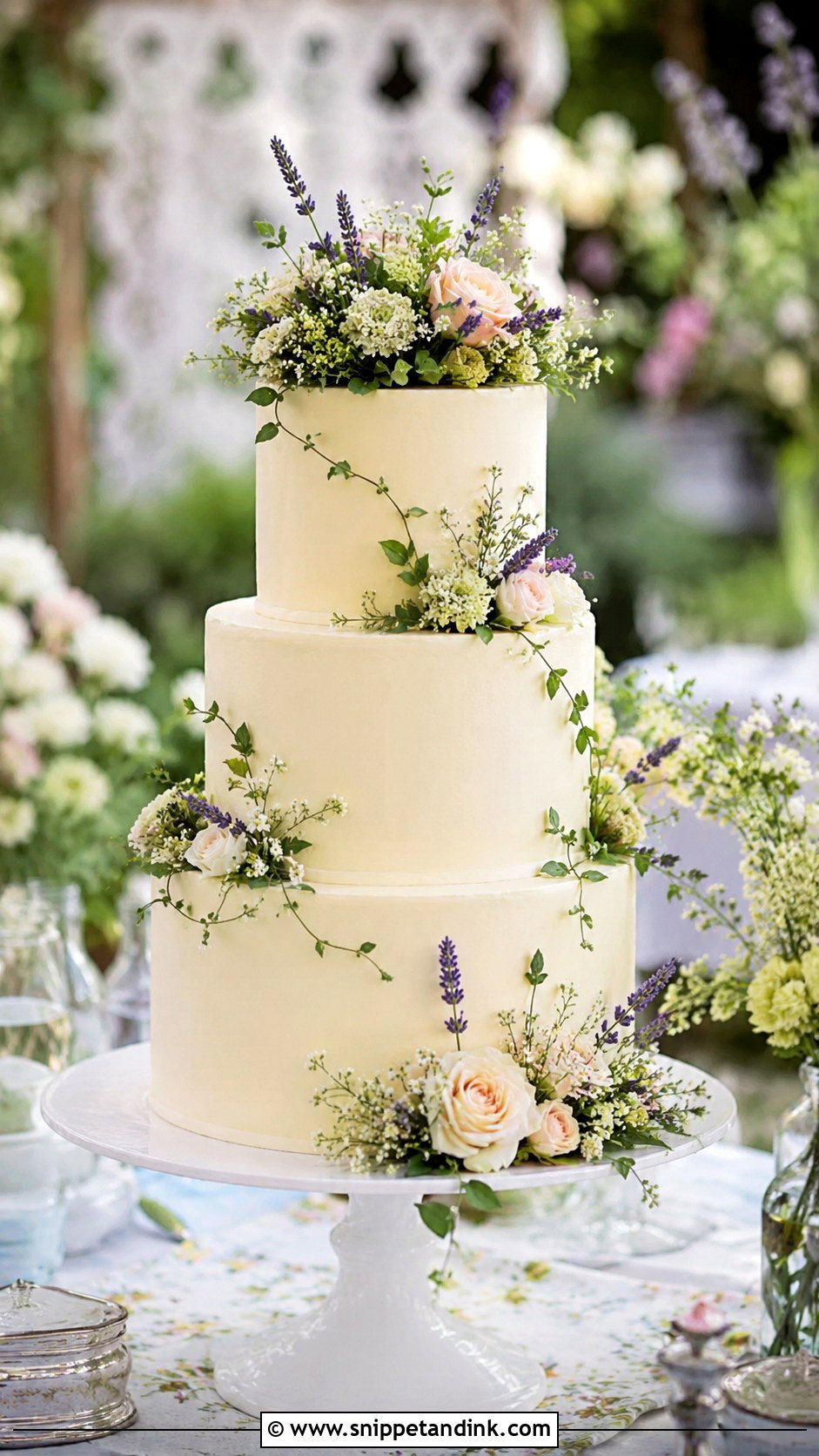
A garden cake needs room for flowers to climb, so I usually build it in three tiers and let pastel blooms, trailing vines and edible petals rise from the base. Buttercream reads softer and more organic here than fondant. Lemon elderflower, strawberry vanilla, lavender honey or pistachio rose suit the setting. I keep the palette to two or three gentle colors, say ivory, blush and sage, because more starts to look like a bouquet with a cake inside it. Since garden weddings are often outdoors, plan where the cake sits: a shaded table under a tent will keep both the icing and the petals fresh much longer.
10. Beach Wedding Cake
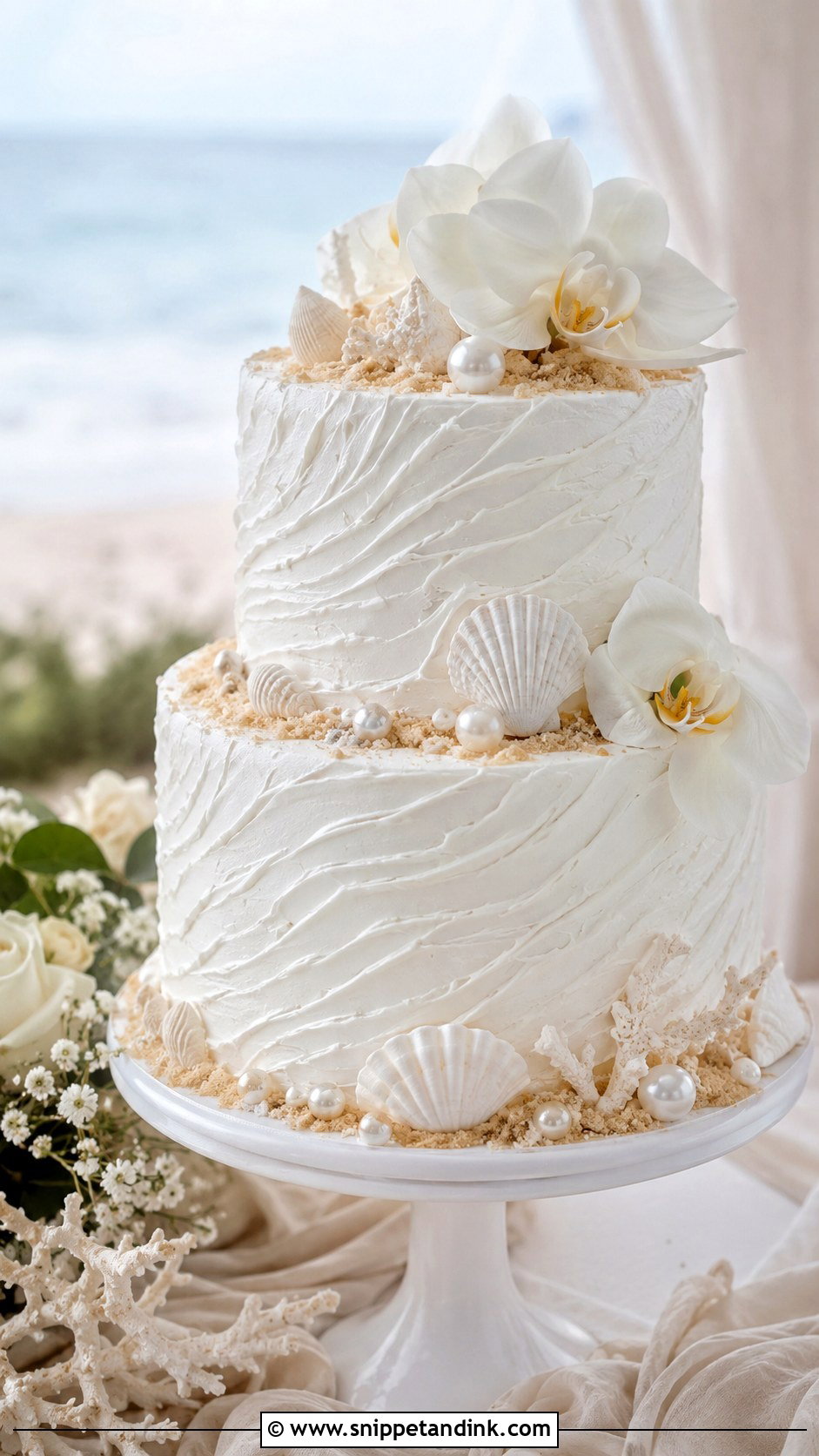
Beach cakes get themed very quickly. Soft white icing, a little pale blue, sugar or chocolate seashells, edible pearls and sandy beige details are enough for a coastal feel. Palette-knife buttercream can suggest waves, while a smooth tier keeps it grown-up. Coconut, lime, vanilla, passion fruit or pineapple fit the setting. The real issue on a beach is sun, wind and sand, and buttercream struggles with all three, so I’d always set the cake indoors or under cover and bring it out just before cutting. A clean white stand and light linens finish it without turning it into a party prop.
11. Boho Wedding Cake
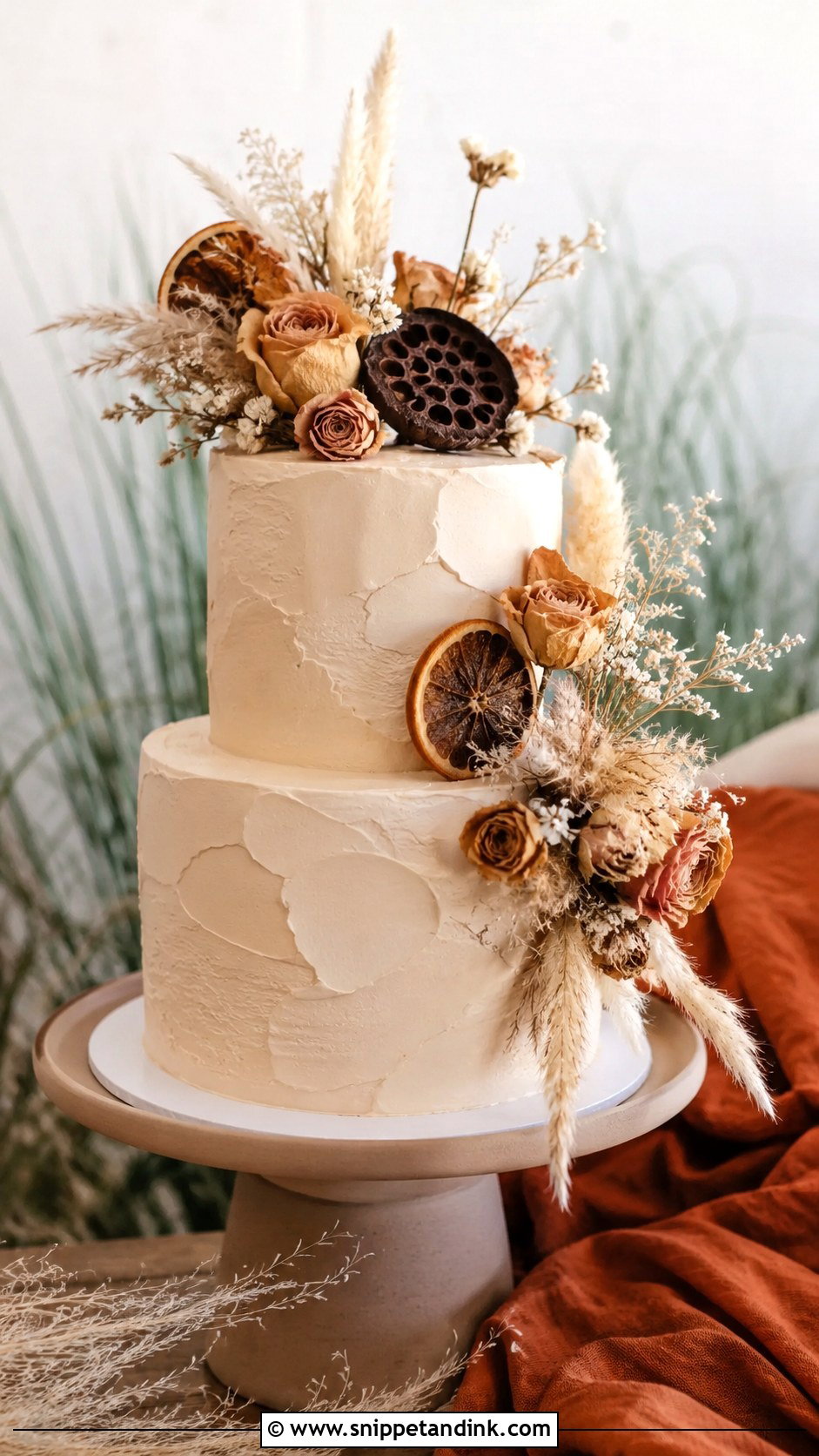
Boho cakes look loose but are planned carefully. Earthy colors, dried flowers, pampas, hand-smoothed buttercream and asymmetric decoration set the tone, in ivory, tan, terracotta, dusty rose and muted peach. Chai spice, vanilla honey, caramel or almond pear sponge suit the warm palette. Here’s my caution: most dried flowers and pampas are not food safe, they’re often sprayed, and pampas sheds fluff. I put them on a barrier or keep them to the top tier that isn’t served. Dried orange slices, seed pods and small roses can add texture safely. It suits desert weddings and tented receptions.
12. Black And White Wedding Cake
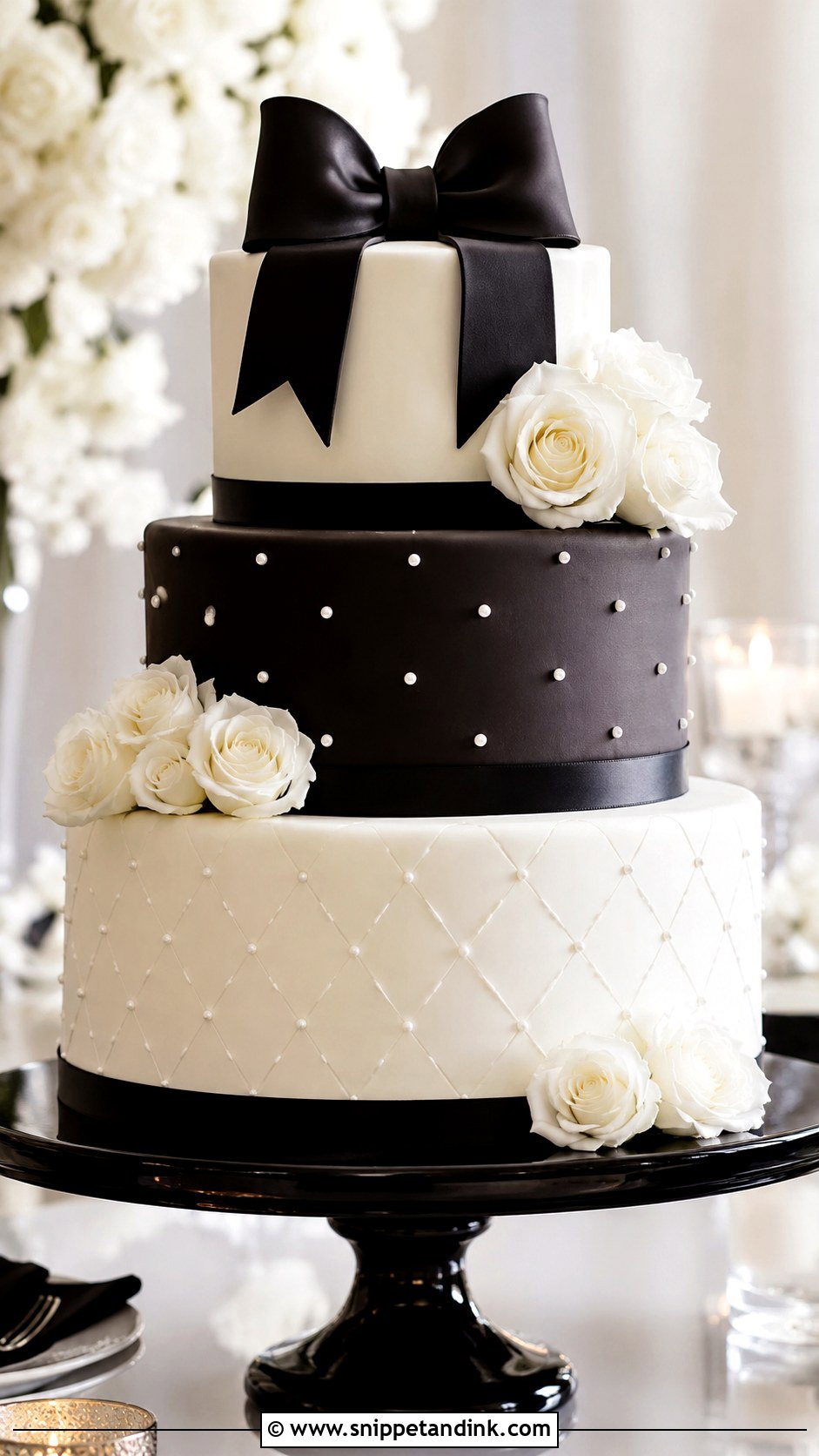
Contrast is everything with black and white, so the lines must be clean. White tiers with black ribbon, black piping, painted florals or one dramatic black tier all work in modern rooms and black-tie venues. Black icing takes a lot of gel color to reach true black, which can taste bitter and stain mouths, so I prefer black detail in ribbon or painted work, or one black fondant tier that’s mostly decorative. Inside it can stay classic: vanilla bean, dark chocolate, red velvet, cookies and cream. White roses, black sugar bows or pearls add polish. Give it good light and a plain backdrop.
13. Single Tier Wedding Cake
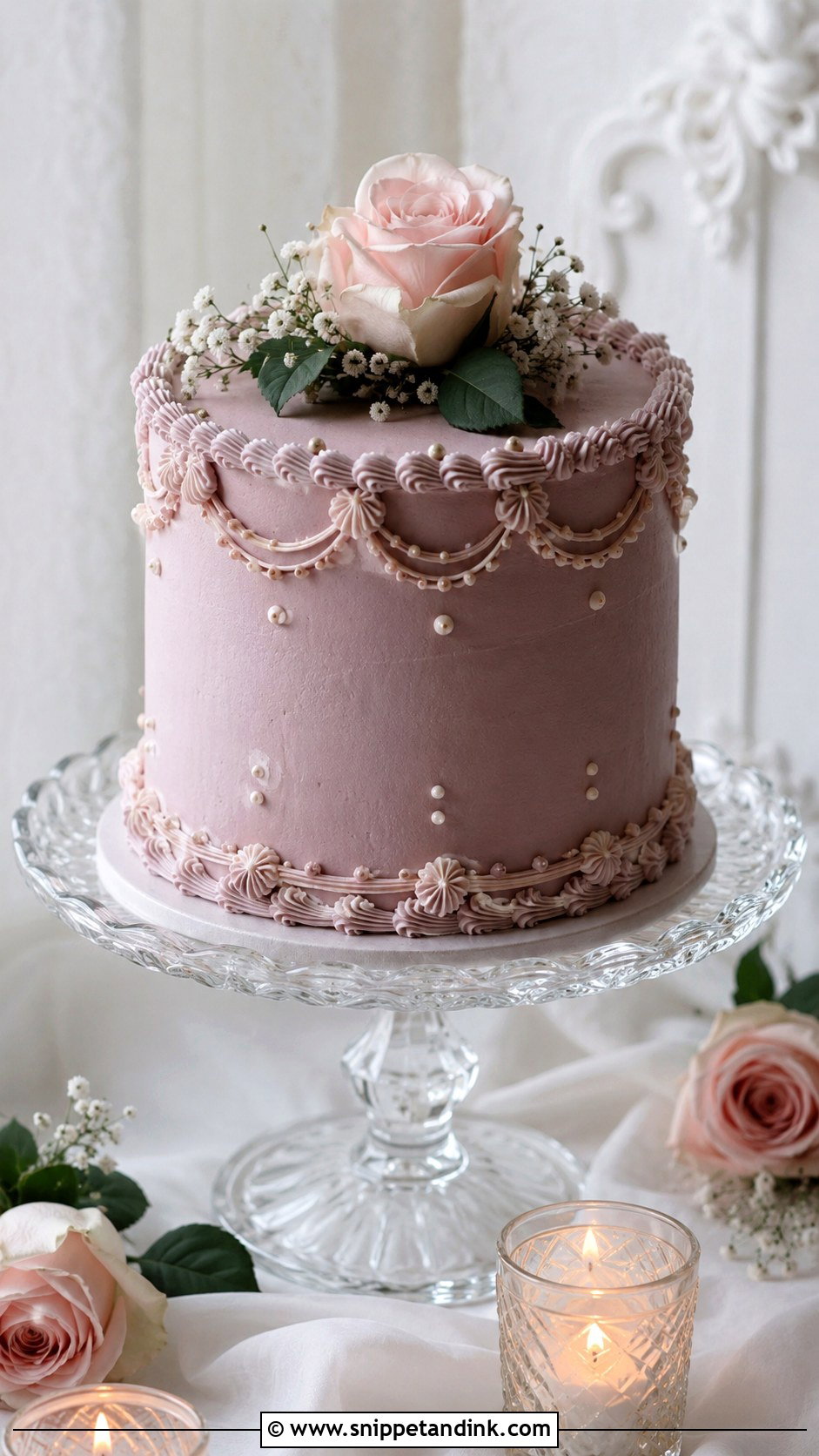
A single tier wedding cake suits small weddings, elopements and courthouse days, and it’s also a smart choice when a kitchen sheet cake does the real serving behind the scenes. The small canvas lets you spend the budget on detail: vintage piping, pressed flowers, pearls, fruit, a sculpted shape. I like a tall single tier, around six inches high or more, because it gives the cake presence on its own. Chocolate raspberry, lemon blueberry, almond or carrot all suit it. Display matters more here than with big cakes, so plan the stand, candles and flowers around it.
14. Two Tier Wedding Cake
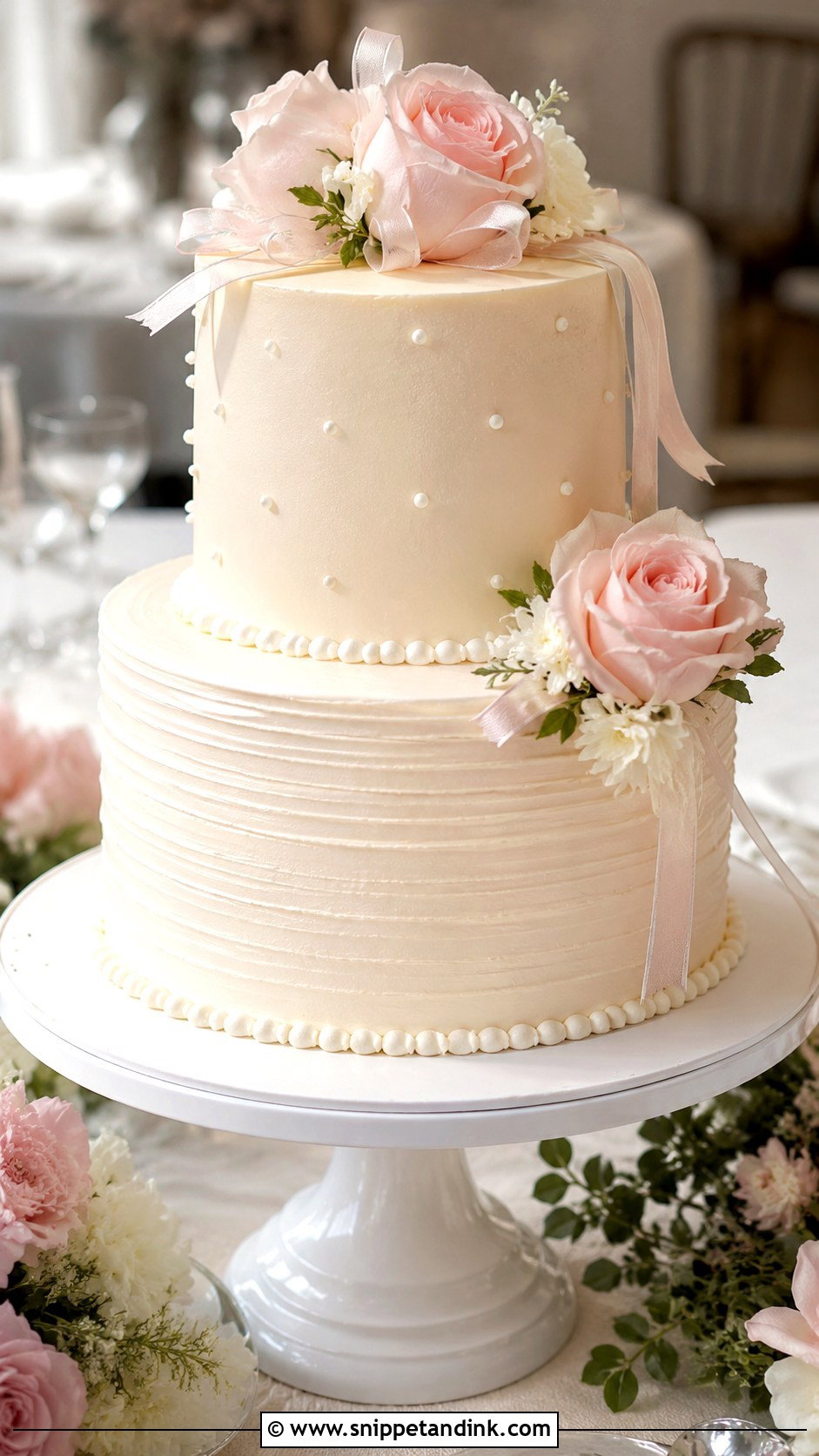
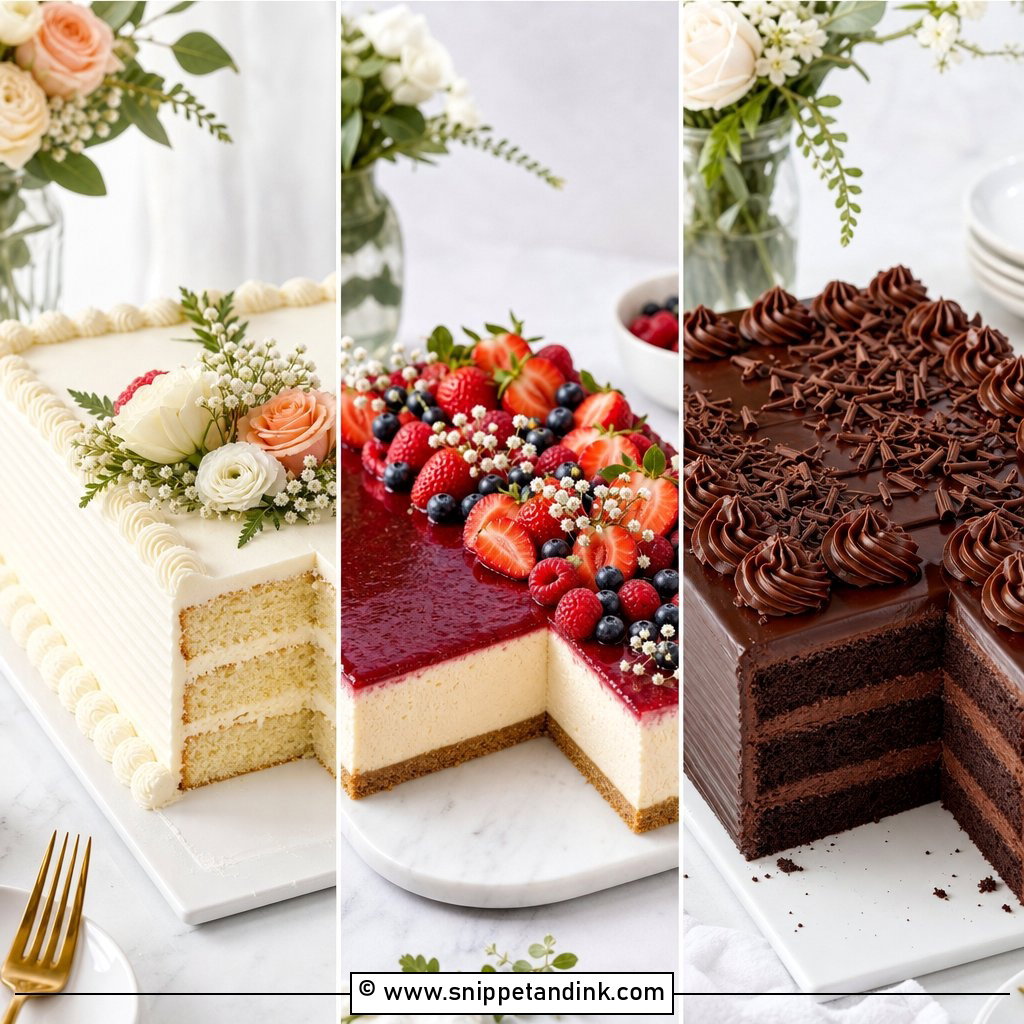
Two tiers give you a proper cutting moment without an oversized cake. A common pairing like a six and an eight inch round serves a small to medium reception, though serving counts vary with how your caterer slices. The tiers can match or contrast, such as a smooth base under a piped top. Buttercream, fondant, pearls, flowers, bows and fruit all suit this size. Vanilla strawberry, lemon elderflower, chocolate caramel or almond raspberry are good flavor choices. It also fits on almost any table, which saves you renting a larger one.
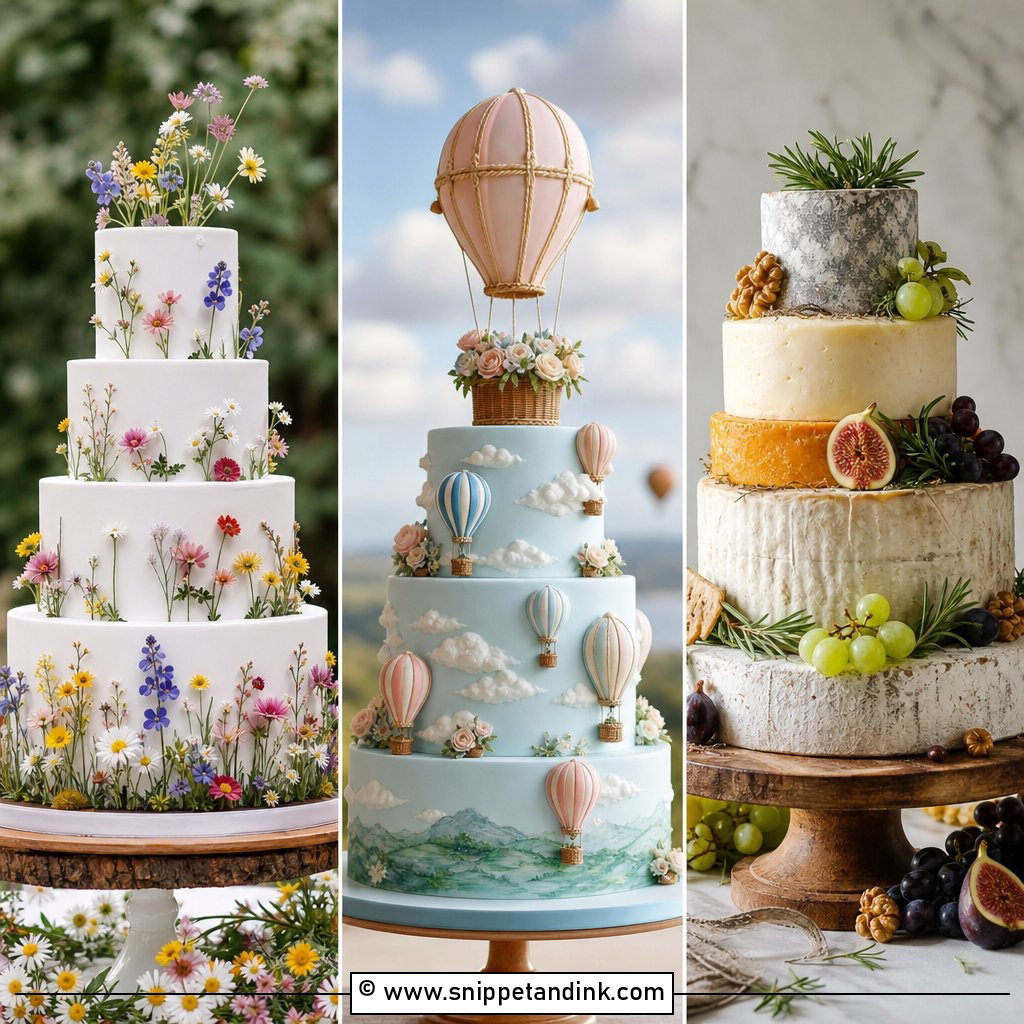
15. Three Tier Wedding Cake
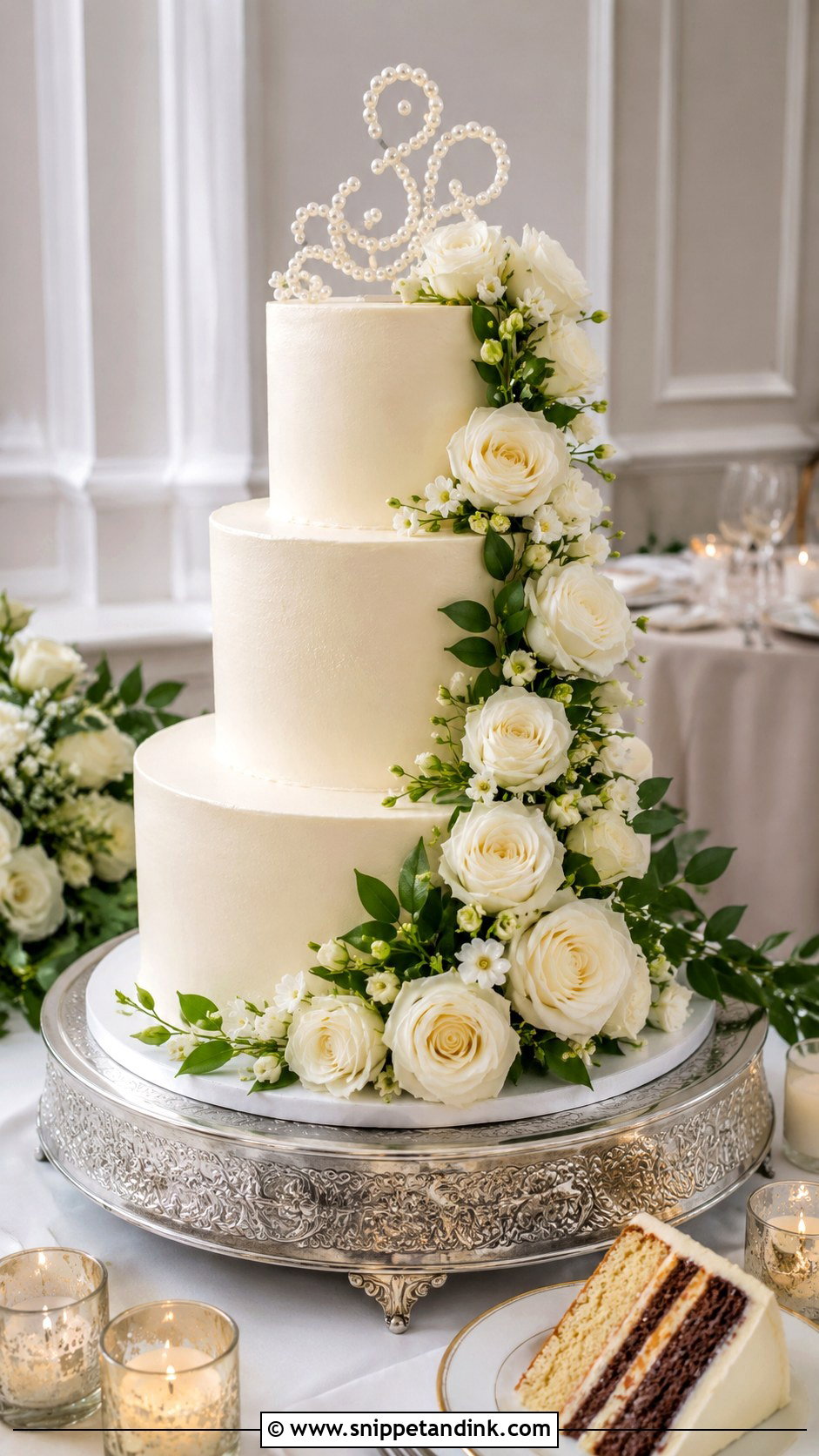
This is the shape most couples picture: three tiers with real height. You can keep it to smooth white icing and flowers or add piping, pearls, texture and metallic accents. It suits formal receptions and larger guest lists, and it lets you give each tier its own flavor, say vanilla bean on top, lemon raspberry in the middle and chocolate espresso at the base. I put the densest sponge at the bottom because it carries the weight. If the cake will stand in the middle of the room, ask for it to be decorated all the way round; many cakes are finished for a wall and look bare from behind.
16. Square Wedding Cake
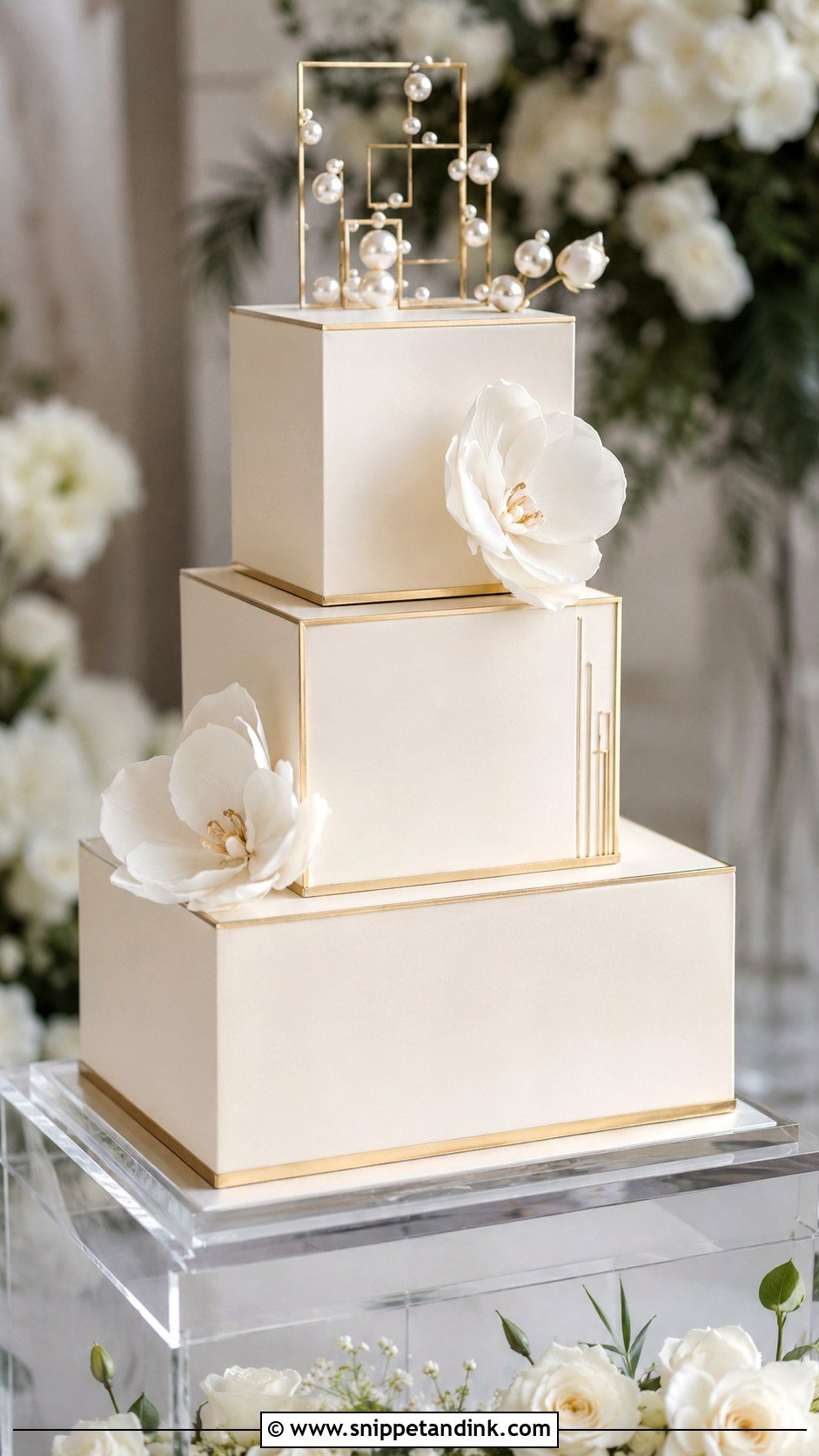
Square tiers look architectural, and they suit contemporary venues. Fondant gives the sharpest corners; buttercream can work, but the corners are the hardest part to keep crisp, so ask to see your baker’s square buttercream work. Keep decoration restrained: minimal flowers, thin piping, metallic trim or a geometric pattern. Almond, champagne, chocolate hazelnut or vanilla caramel fit the tone. You can stack the tiers evenly or rotate each one a few degrees. A practical bonus: a square tier cuts into more even portions than a round of the same width, which helps if you’re tight on servings.
17. Heart Wedding Cake
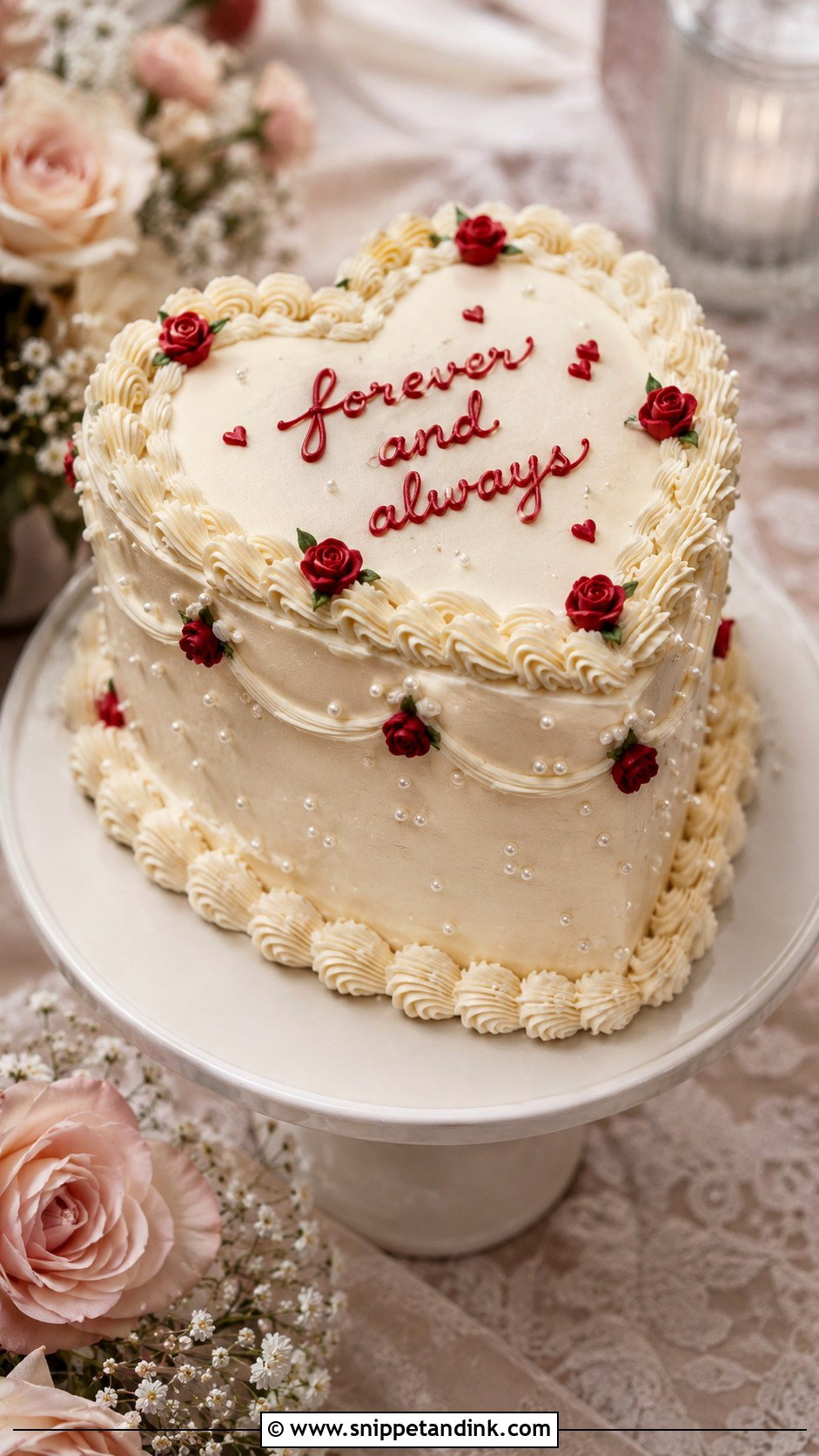
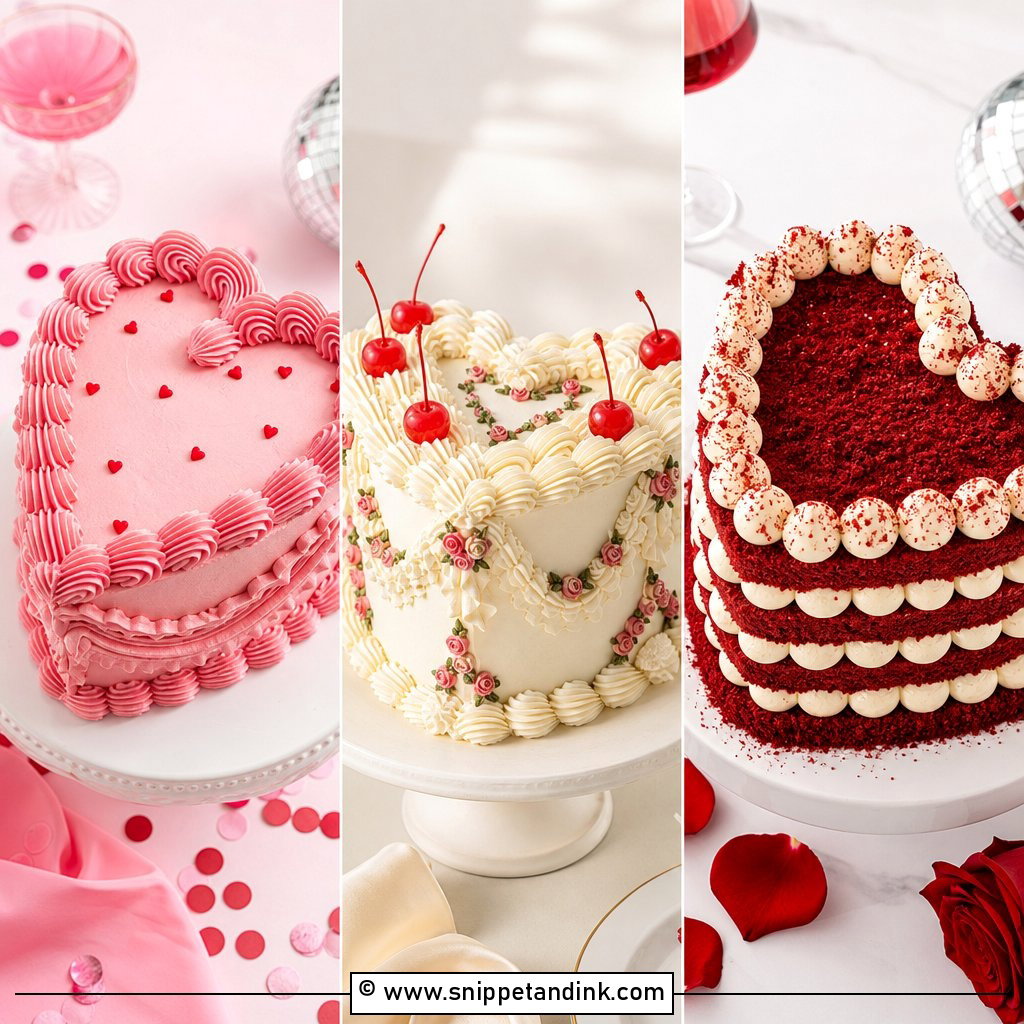
Heart cakes are sweet and a bit retro, and they’re at their best small: a single tier or a short two tier with vintage piping. Ivory buttercream, scalloped borders, pearl dots, small roses and a short message on top are all it needs. Vanilla raspberry, strawberry, red velvet or champagne sponge suit it. Two things to know. The point and the lobes are awkward to slice neatly, so tell your caterer in advance, and the shape reads best from above, so ask your photographer for an overhead shot. It suits elopements, courthouse weddings and intimate dinners.
18. Bow Wedding Cake
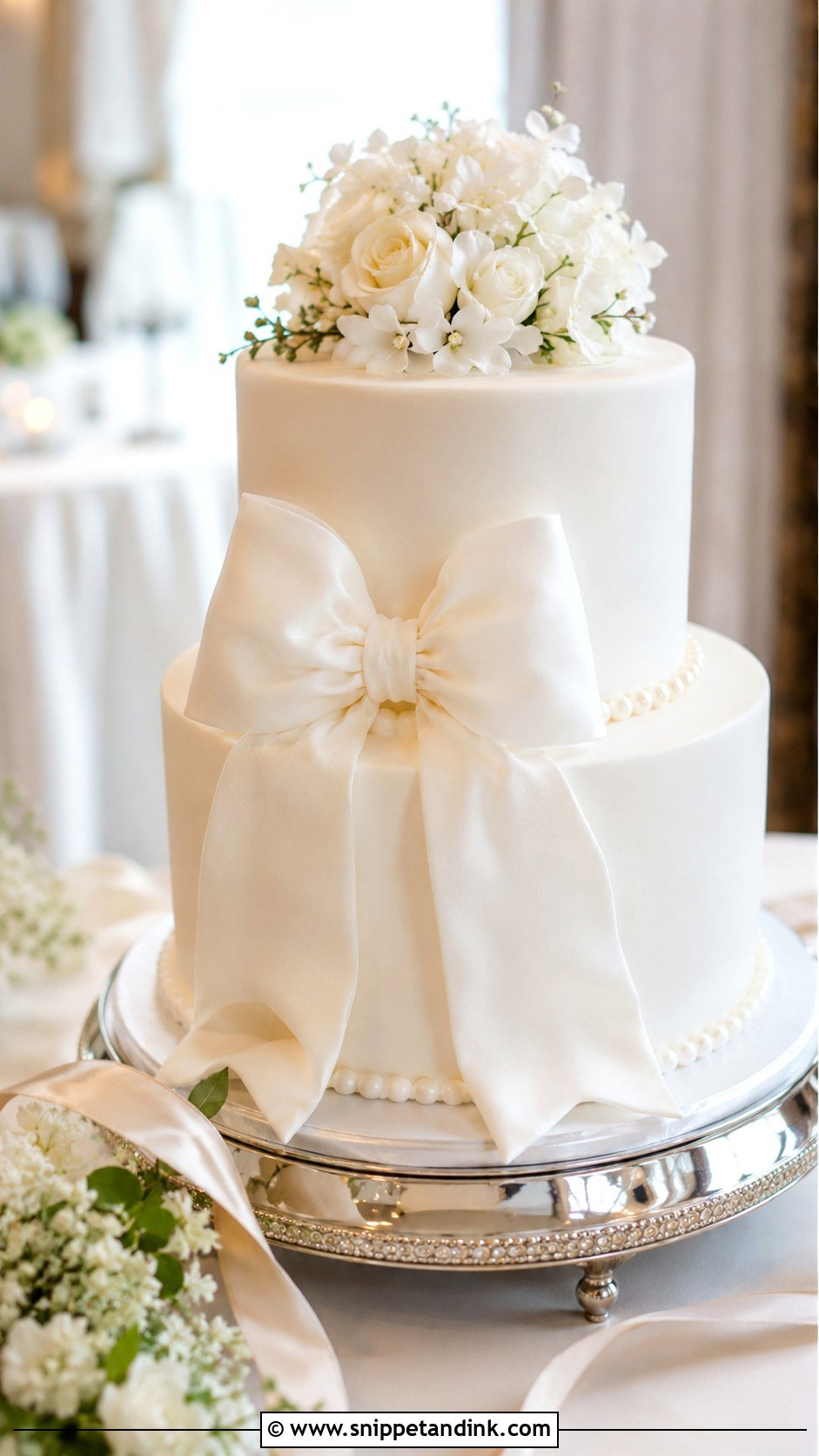
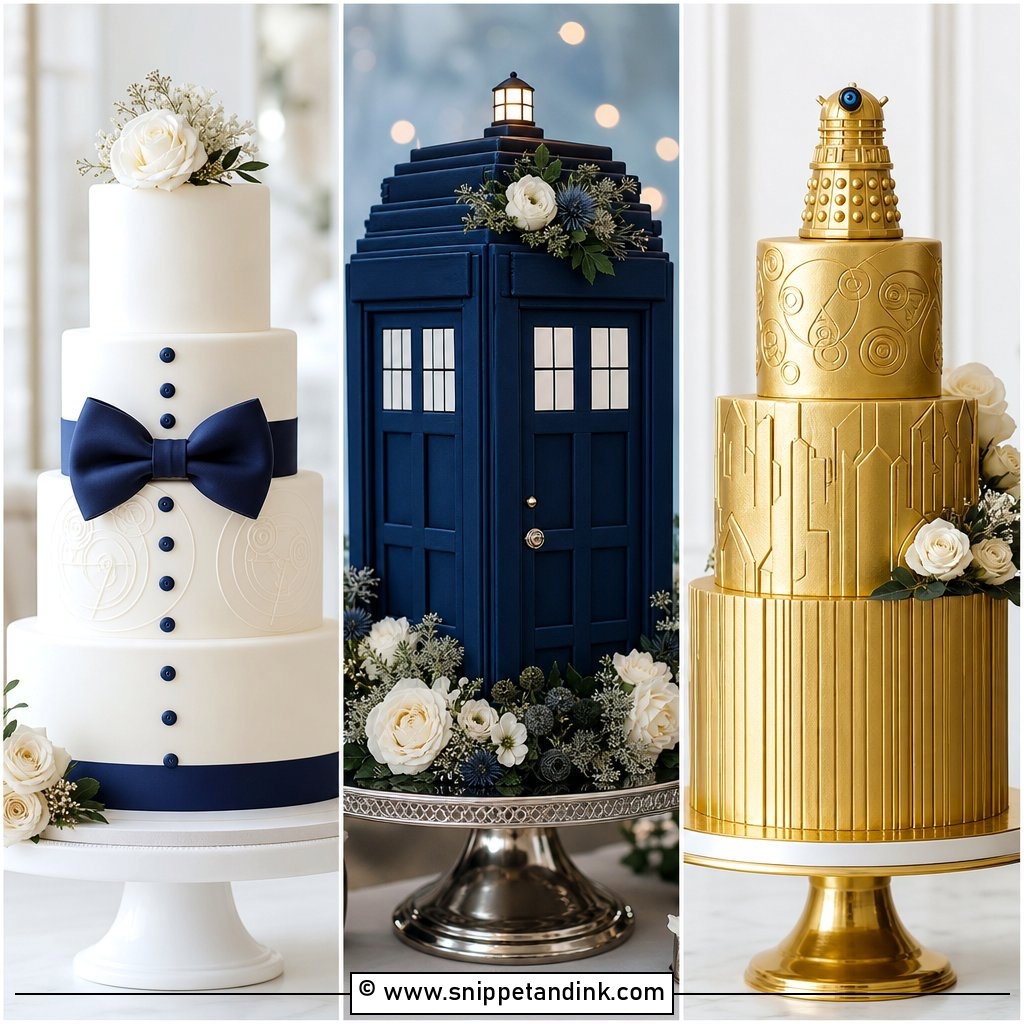
Bows are everywhere at the moment, and they can be sugar paste, fondant, silk ribbon or piped buttercream. One large bow on smooth white icing looks like fashion; several small ones look playful. Sugar bows have to be made days ahead so the loops dry hard enough to hold their shape, and a big one is heavy, so it often needs a hidden support. Keep the bow in proportion to the tier it sits on. Pearl borders, satin linens and soft flowers suit it, with vanilla bean, almond, champagne or white chocolate sponge inside. It works for receptions and bridal brunches alike.
19. Ruffle Wedding Cake
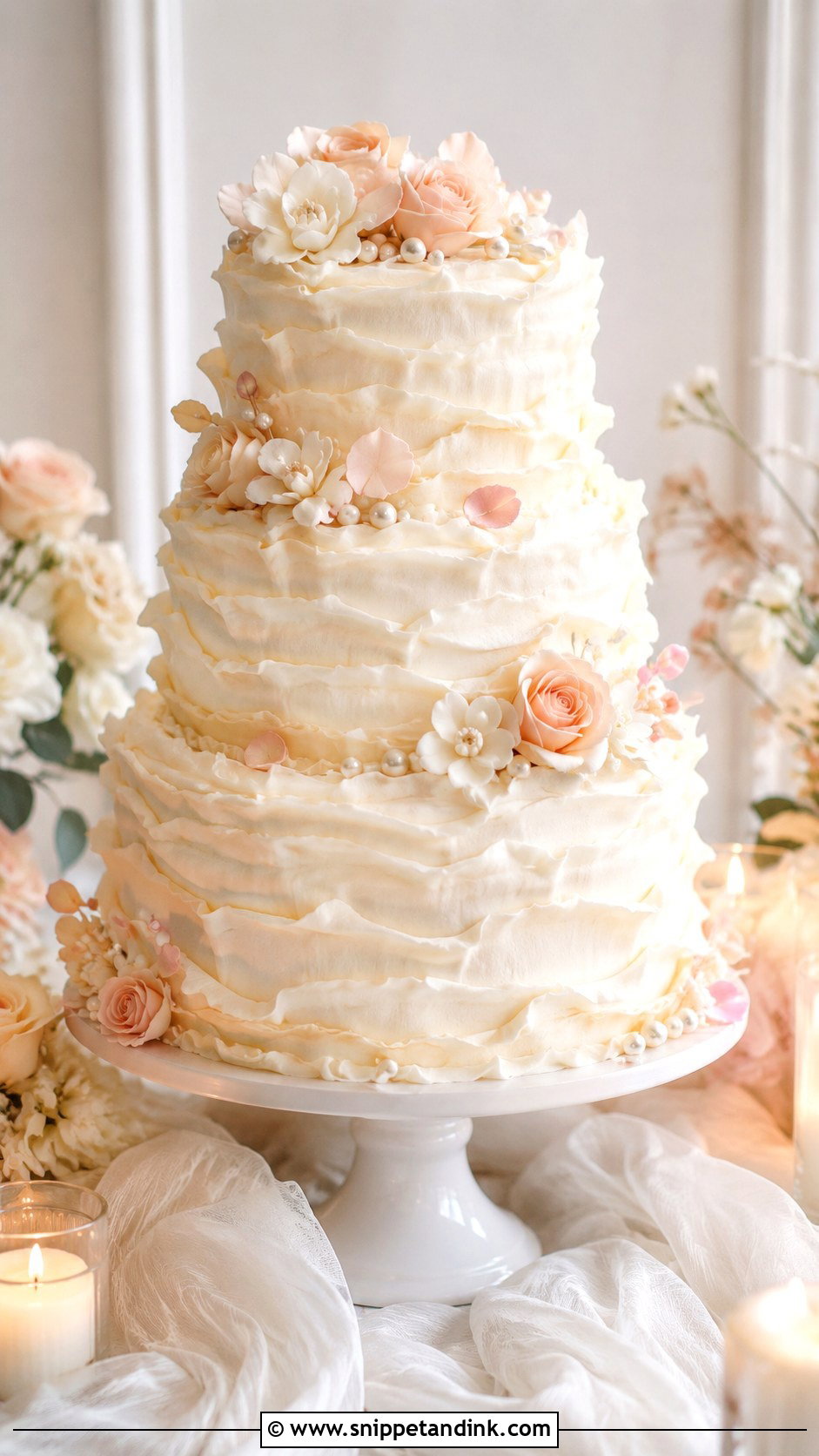
Ruffles give a cake the movement of fabric, which is why they look so good on video. They can be fondant, buttercream or wafer paper, on one tier or all of them. Ivory feels bridal; blush, champagne or pale blue feels more current. Each medium behaves differently: fondant ruffles are heavy and need a firm cake underneath, buttercream ruffles soften in heat, and wafer paper is feather light but can wilt in humid air. Vanilla cream, coconut, lemon or raspberry champagne sponge suits the texture. Keep extra decoration minimal, because the ruffles already carry the design.
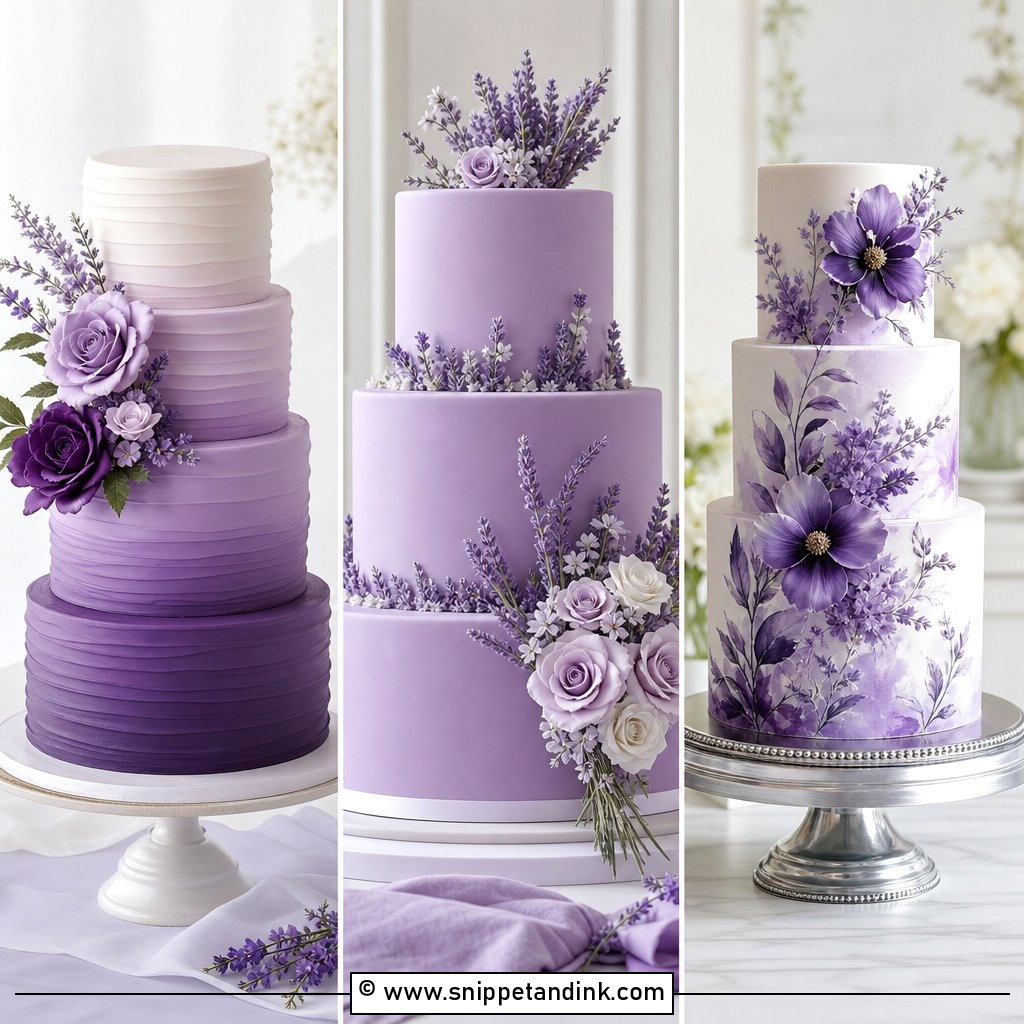
20. Pressed Flower Wedding Cake
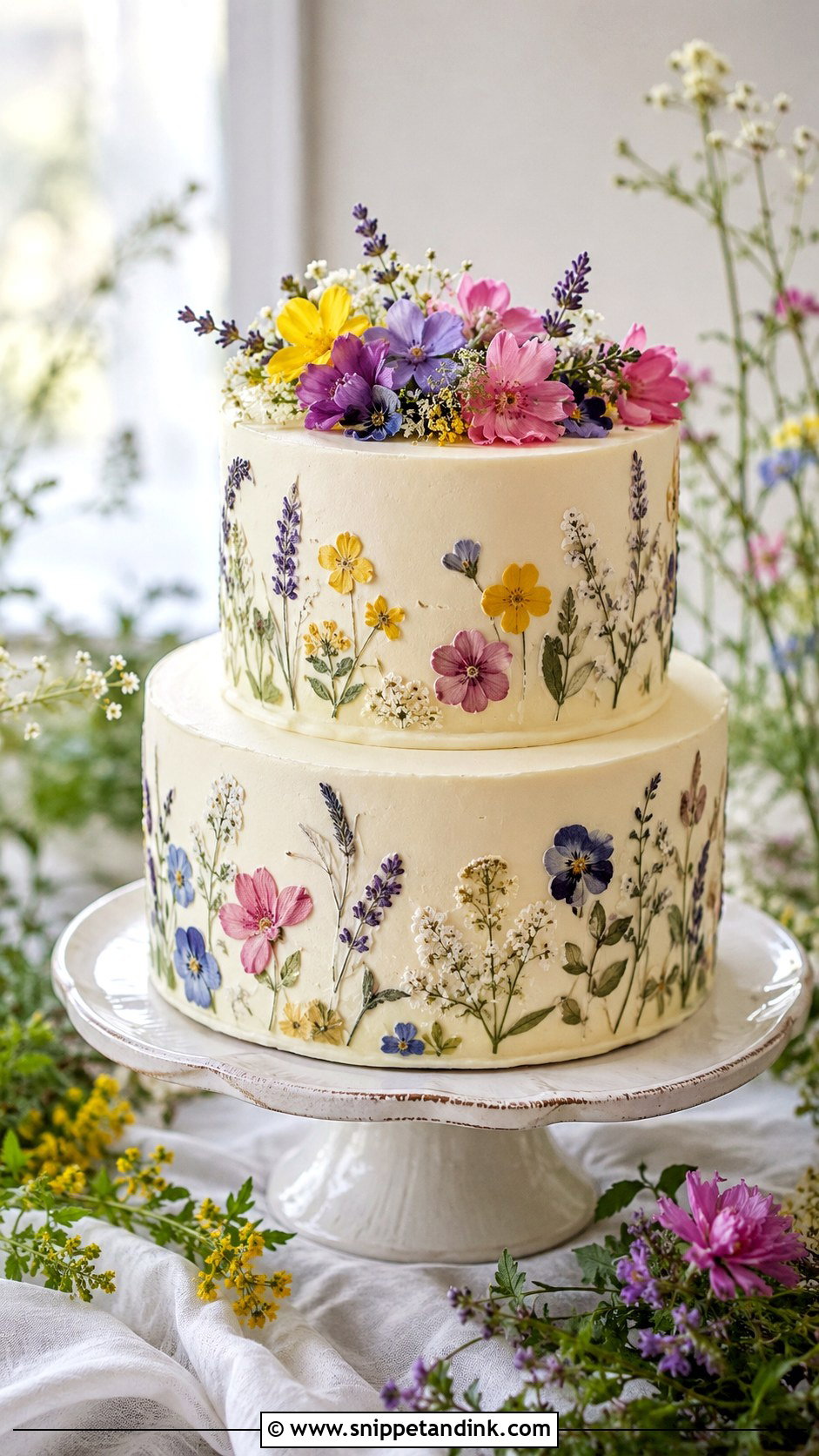
A pressed flower wedding cake uses flattened edible blooms laid over smooth icing, so it reads almost like a painting. Violas, pansies, cornflowers and small daisies press well and come in lavender, yellow, pink and blue. I apply them close to delivery, because on damp buttercream the petals can darken and go translucent over several hours; on fondant they hold much better. A white or ivory base lets them show. Lemon, vanilla, honey, lavender or elderflower sponge fits the feeling. Any tier count works, but leave space between flowers so each one reads.
21. Fruit Wedding Cake
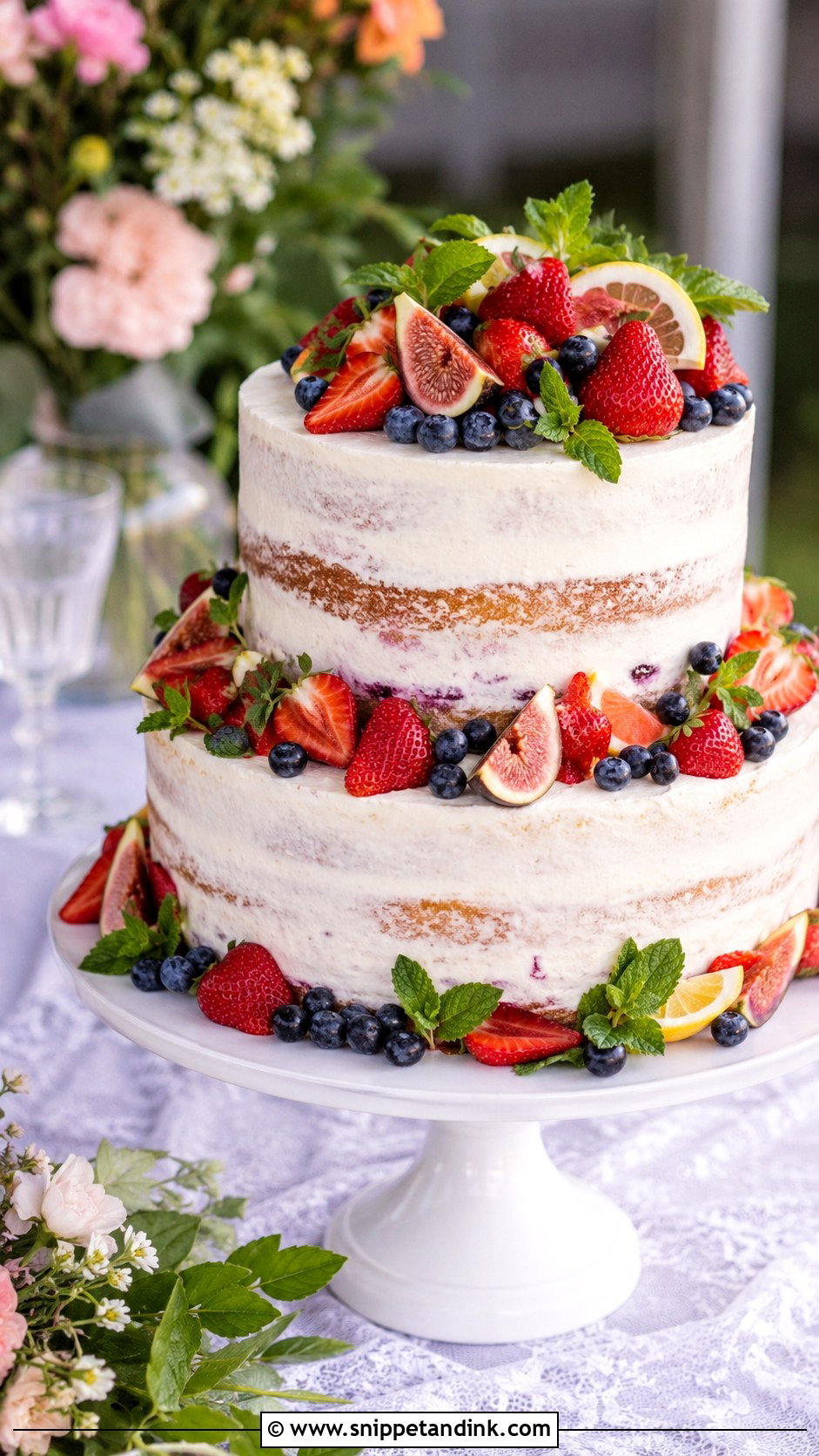
A fruit wedding cake changes with the season: berries, figs, grapes, citrus, cherries or stone fruit. Semi-naked buttercream suits an abundant look; smooth icing with neat clusters looks more polished. Timing matters with fruit. Whole berries and figs hold up well, but cut fruit weeps juice into the icing, so I add halved pieces at the venue, sometimes with a thin glaze to keep them glossy. Vanilla berry, lemon blueberry, almond apricot, chocolate cherry or orange blossom sponge all fit. It suits summer receptions and brunch weddings, and fruit gives color without much decoration.
22. Chocolate Wedding Cake
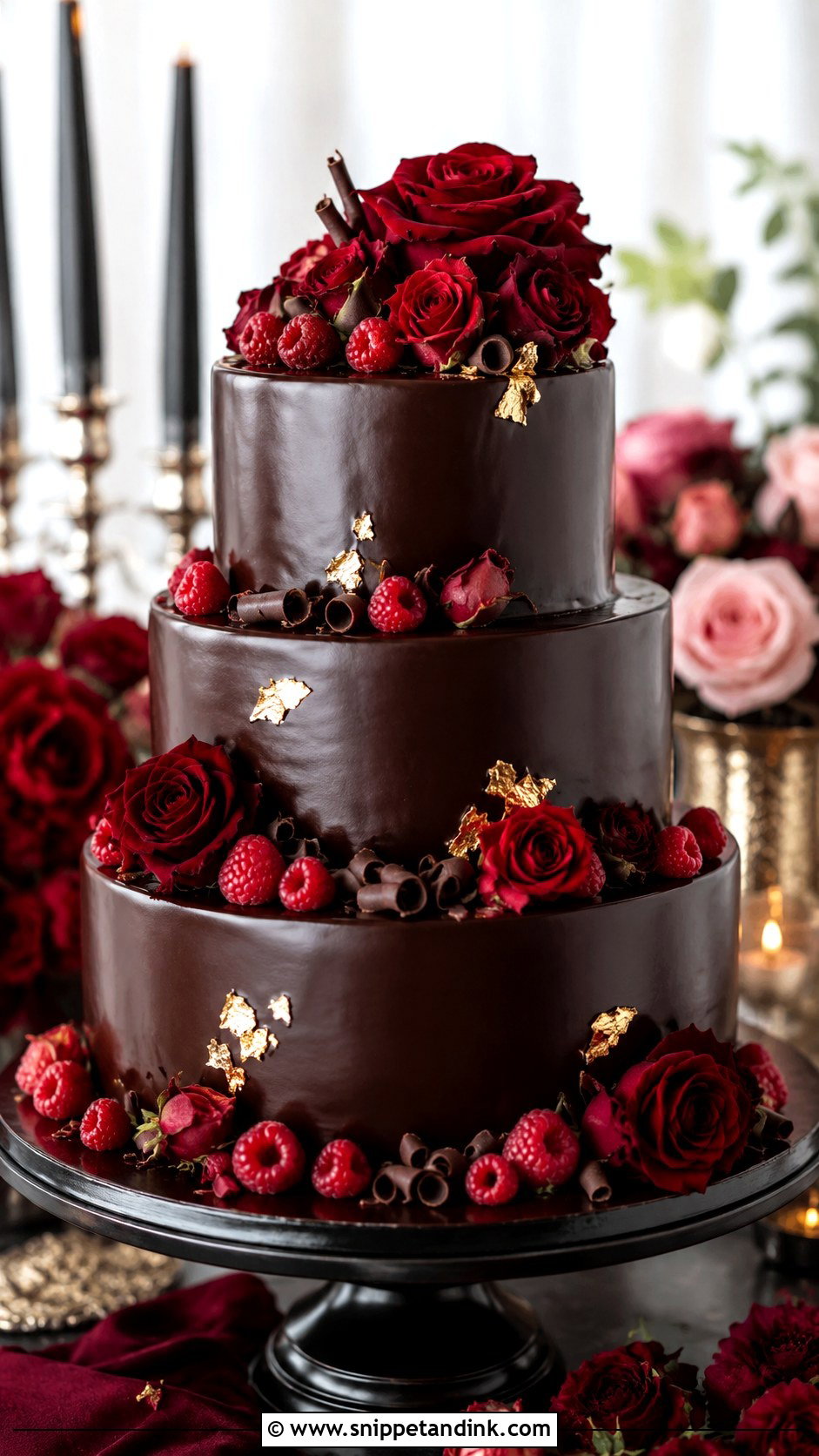
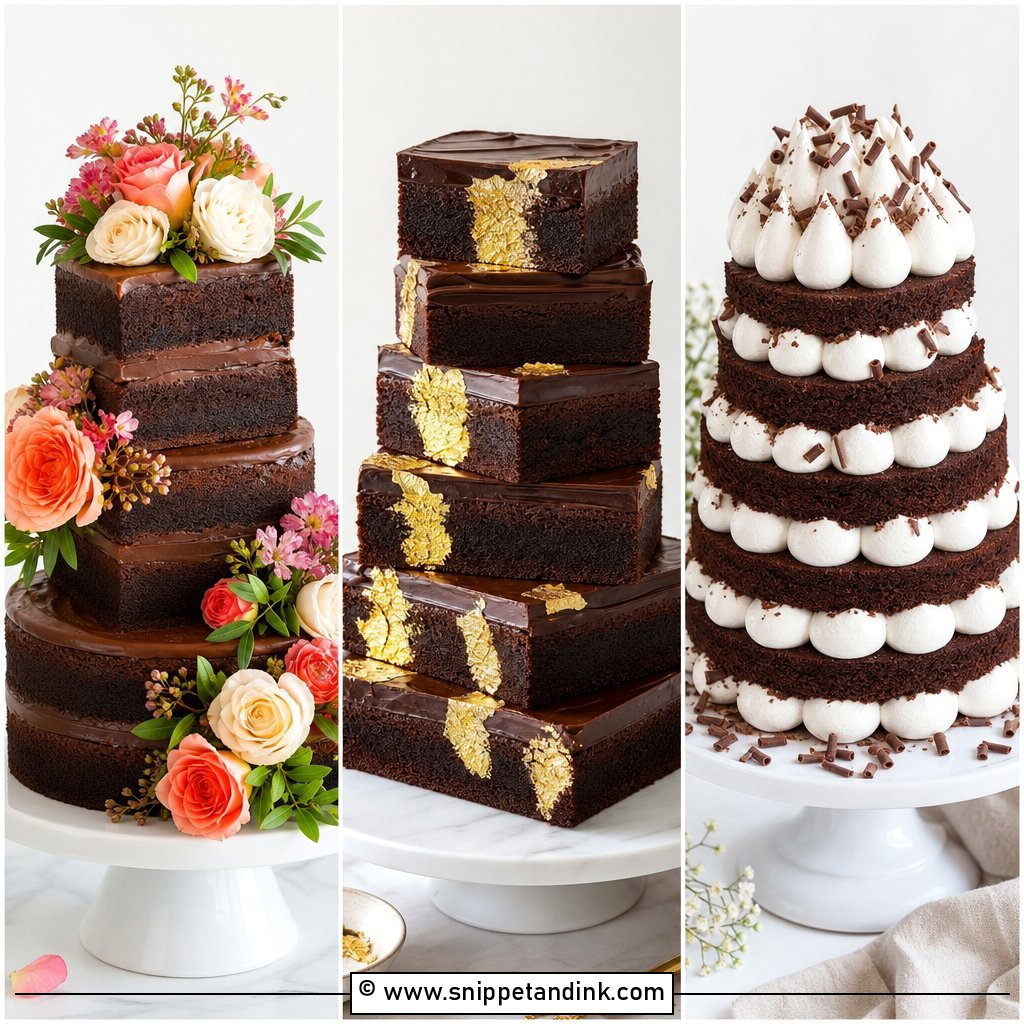
A chocolate wedding cake is a rich alternative to white cake. The outside can be dark ganache, chocolate buttercream, or white icing with a chocolate drip. I like ganache for warm venues because it sets firmer than buttercream and holds its edges longer. Berries, gold leaf, espresso beans, chocolate curls or deep red flowers dress it up. Inside, think fudge, mocha, salted caramel, raspberry or hazelnut. A tall two or three tier gives it presence, and keeping the finish smooth stops dark icing from looking heavy in photos.
23. Red Velvet Wedding Cake
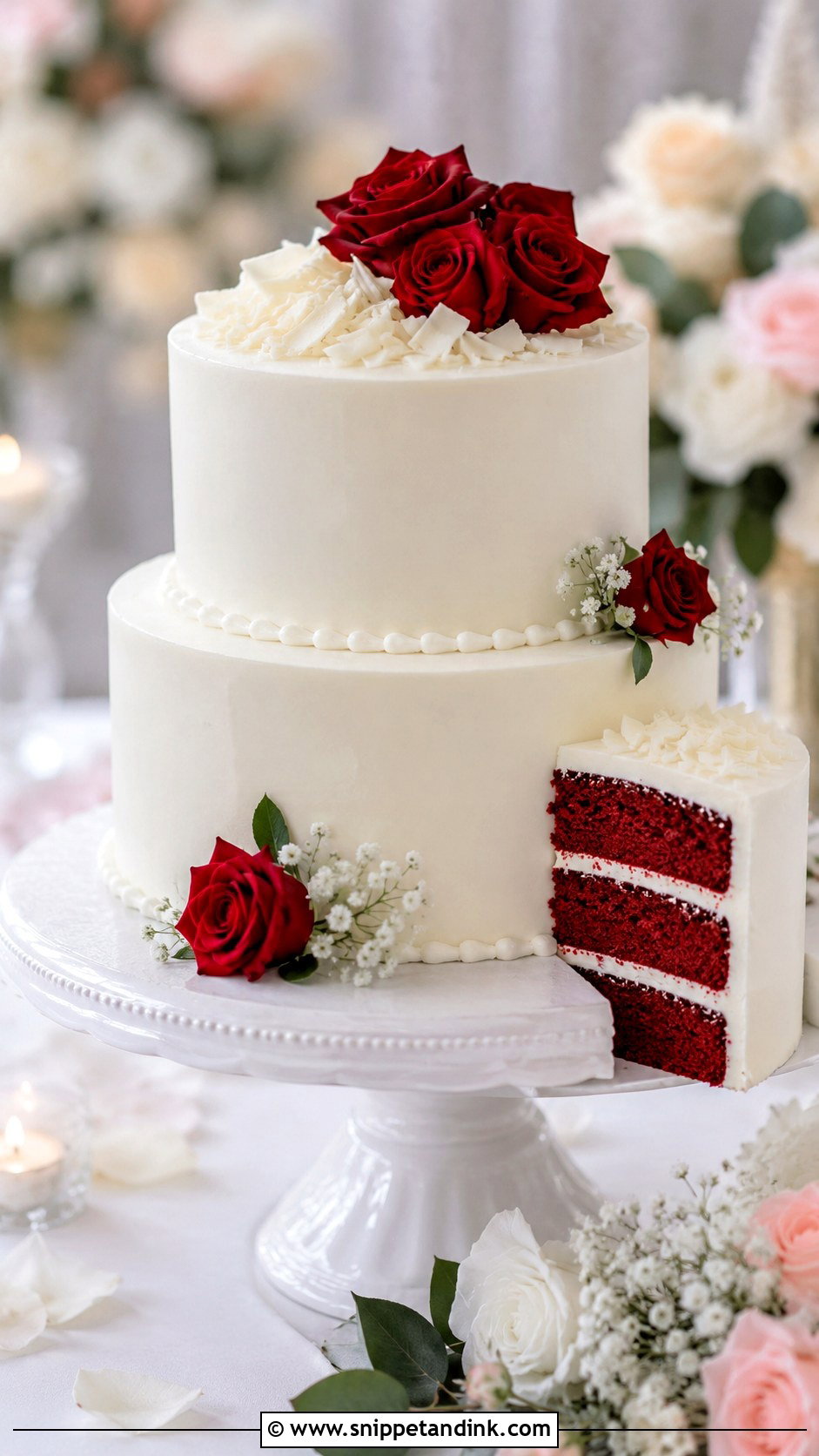
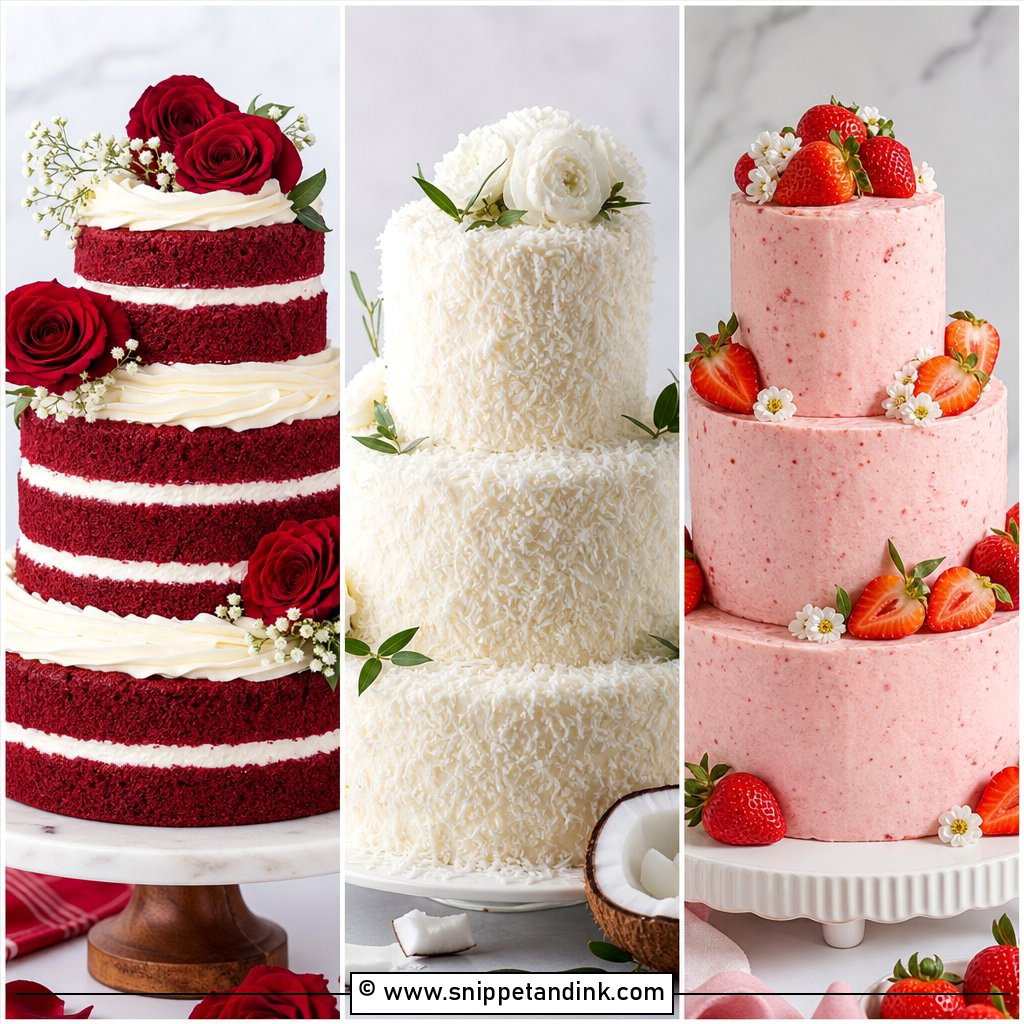
Red velvet’s best moment is the slice: deep red sponge against white cream cheese frosting or vanilla buttercream. Cream cheese frosting is the traditional pairing, but it’s soft and needs refrigeration, so for a stacked cake I often use buttercream outside and keep the cream cheese as filling. The outside can stay smooth or carry vintage piping, pearls or red sugar flowers, and a small floral cascade or white chocolate shavings add texture. It suits evening receptions and colder months without looking festive. The flavor is familiar enough to please most guests.
24. Lemon Elderflower Wedding Cake
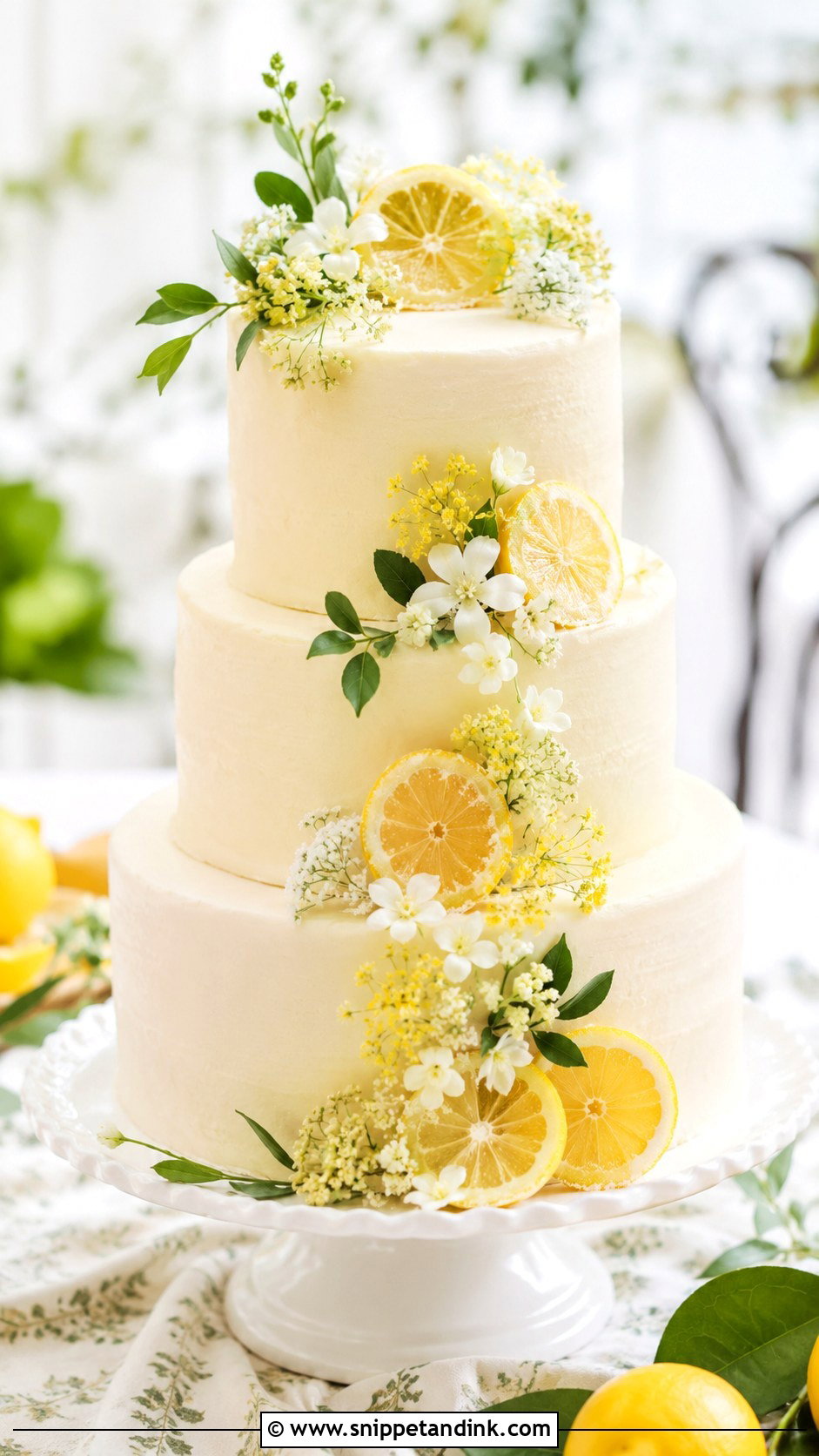
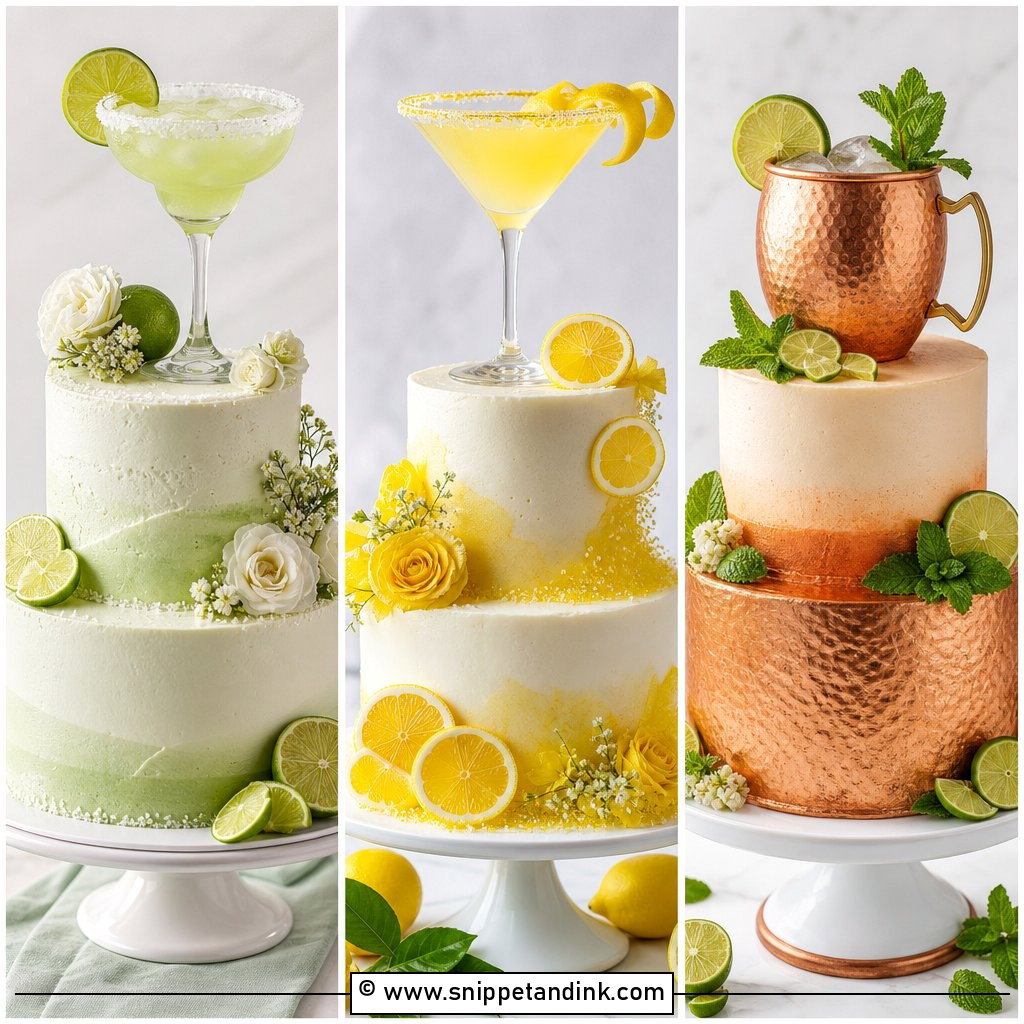
Lemon and elderflower taste like late spring, which is why I suggest them for garden and summer dates. The cake usually has pale yellow sponge, lemon curd or elderflower filling and smooth buttercream. Curd is soft, so I pipe a stiff buttercream dam around each layer to stop it bulging out of the sides once the tiers are stacked. Decorate with white flowers, tiny yellow blossoms, sugared lemon slices or a little greenery. Two or three tiers keep it formal. Pastel palettes and outdoor ceremonies suit it, and a hint of yellow on the outside tells guests what’s inside.
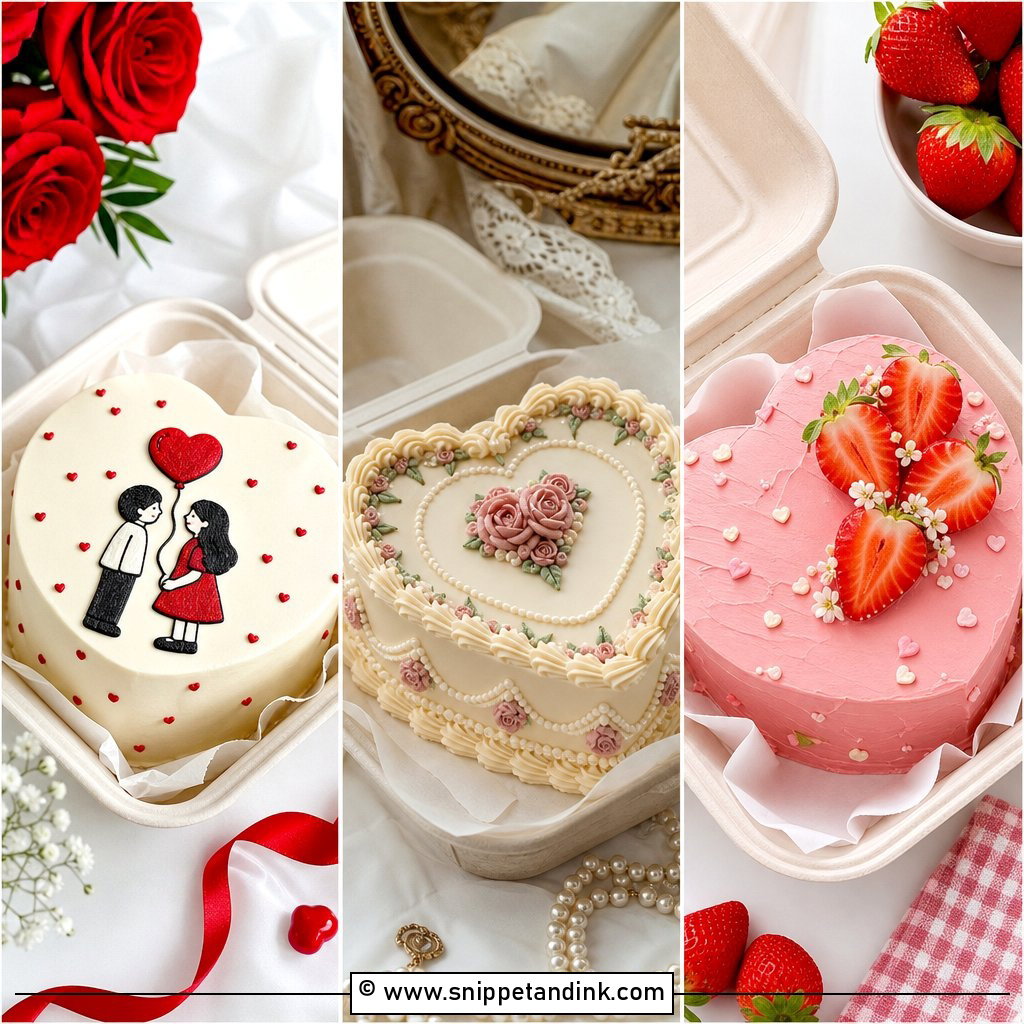
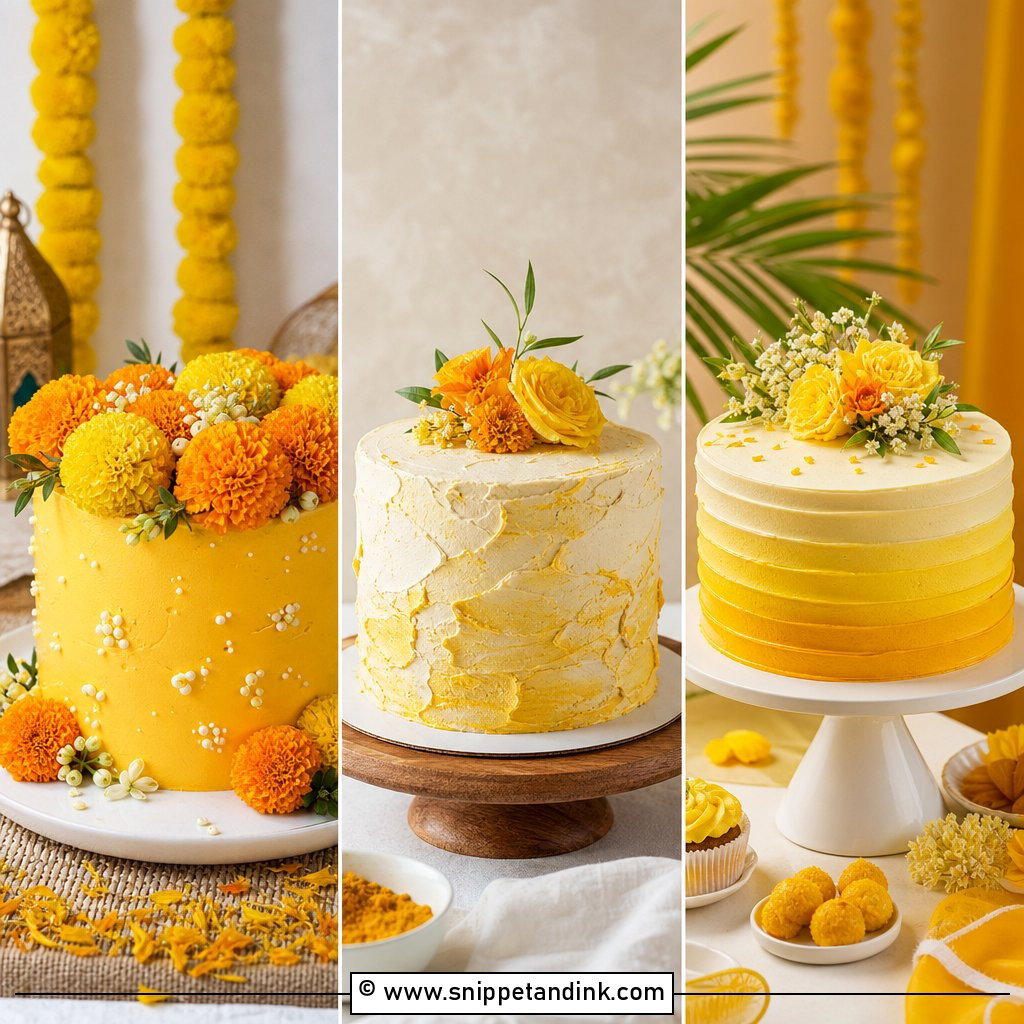
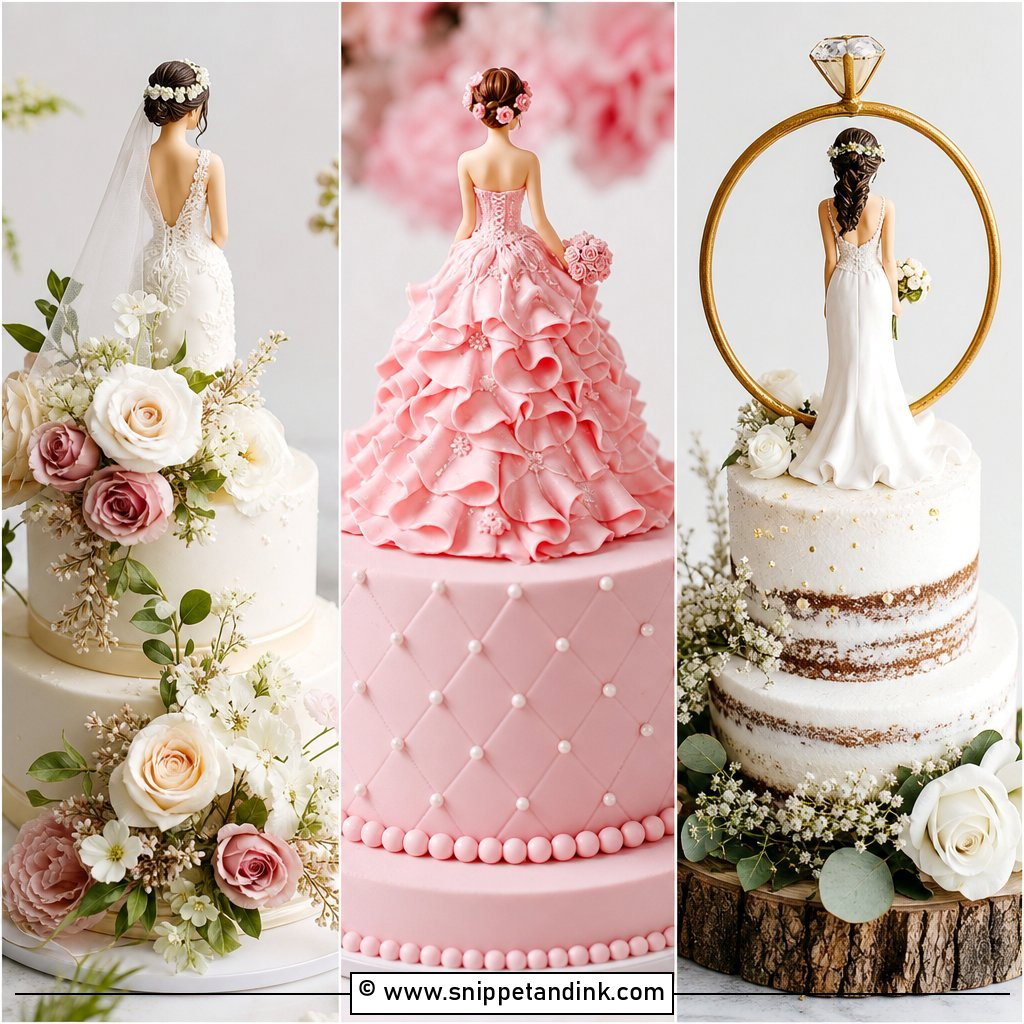
25. Watercolor Wedding Cake
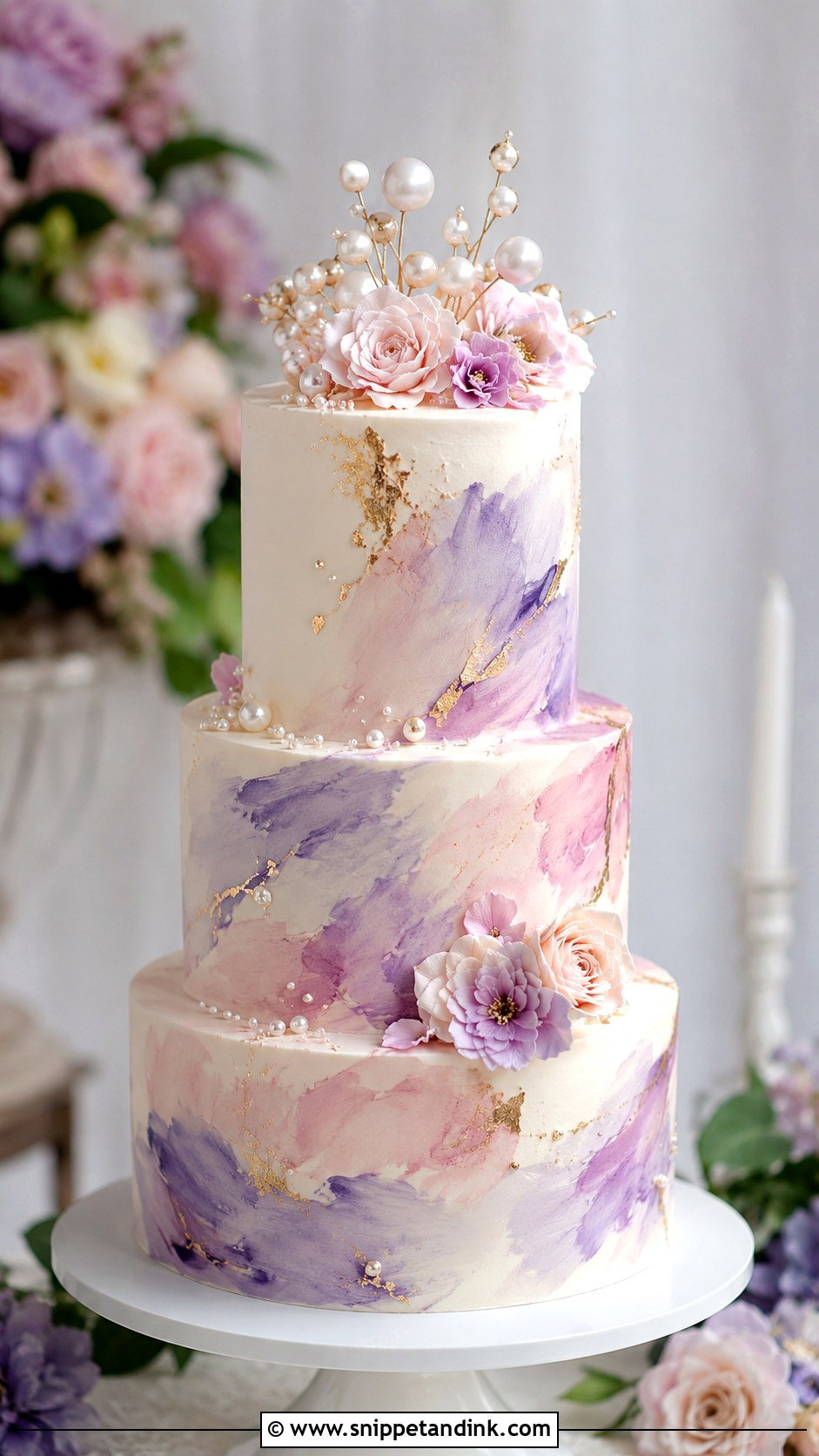
Watercolor icing is painted, not piped. On fondant I brush on diluted gel color; on buttercream the wash is spread with a palette knife, which gives softer, layered edges. Blush, blue, lavender, sage and champagne are the usual tones, and the aim is a gentle wash, never streaks. Gold leaf, sugar flowers, pearls or a simple floral topper finish it. Vanilla, almond, lemon or berry sponge keeps the inside light. Because each side of a painted cake is slightly different, it rewards a slow turn on camera more than almost any design here.
Getting a Short Looping Clip of the Cake Right
If you want the cake to end up as a short shareable clip, plan it with your baker and photographer rather than leaving it to a guest’s phone at the last minute. The designs that move best on video are the ones with texture and reflection: ruffles, Lambeth piping, pearls, gold leaf, painted sides. A smooth minimal cake looks calm in a still photo but can look static in motion.
- Ask for a few minutes with the cake before guests arrive, while the table is still tidy and nobody is leaning into the frame.
- Film at cake height, not from above, so the tiers stack in the shot the way they do in person. Heart cakes are the exception and look better from overhead.
- A slow quarter turn on a turntable gives a clean loop. Only do this with the bakery’s agreement, since lifting a stacked cake onto one is a job for them, not the venue staff.
- Side light from a window or candles makes pearls and leaf glint; flat overhead light flattens piping.
- For the cutting, have the knife entering from the back so your hands don’t block the decoration.
Buttercream, Ganache or Fondant When the Room Gets Warm
Many of the cakes above could be finished three ways, and the choice matters more than the decoration once you know where the cake will stand. This is how each one behaves in practice.
Buttercream
The best eating texture, but it softens as the room warms, and fine piping is the first thing to droop. Choose it for indoor, air-conditioned rooms and keep the cake out of direct sun.
Ganache
Sets firmer and holds sharp edges longer, which is why I often put it under buttercream or fondant for summer cakes. Dark ganache is the sturdiest; white chocolate ganache is softer.
Fondant
Protects the cake and takes painting, ruffles and bows well. Its weak spot is condensation. A fondant cake moved from a cold fridge into a warm, humid room will sweat and look wet for a while, so it should come up to temperature gradually rather than straight from the cooler to the table.
Which of These Cakes Will Hold Up in Your Room?
The right cake fits your venue, your guest count, the flavors you love and the way your day looks. A tall floral cake reads grand; a single heart reads intimate; piping, pearls, bows, pressed flowers, fruit, chocolate and watercolor each set their own mood. Save the designs you keep returning to, put them next to your colors, and then ask your baker one plain question: which of these will hold up best in my season and my room? A good designer will tell you honestly, and that answer matters more than any photo.
You'll Like These Ideas:


Leave a Reply