
Fruit is the decoration guests actually eat, which is half the reason I like it. It brings real flavor, texture and a clear sense of season to a cake without any sugar work. Berries read romantic, citrus makes a summer cake look bright, and figs, grapes, peaches, cherries and pomegranate give a richer look for fall or outdoor receptions. It sits on buttercream, fondant, naked layers and ganache, and it mixes easily with a few flowers. What fruit won’t do is stay put and stay dry on its own, and most of my planning goes into that. Here are 20 ways I’d build a wedding cake around fresh fruit, with what each one needs to survive the day.
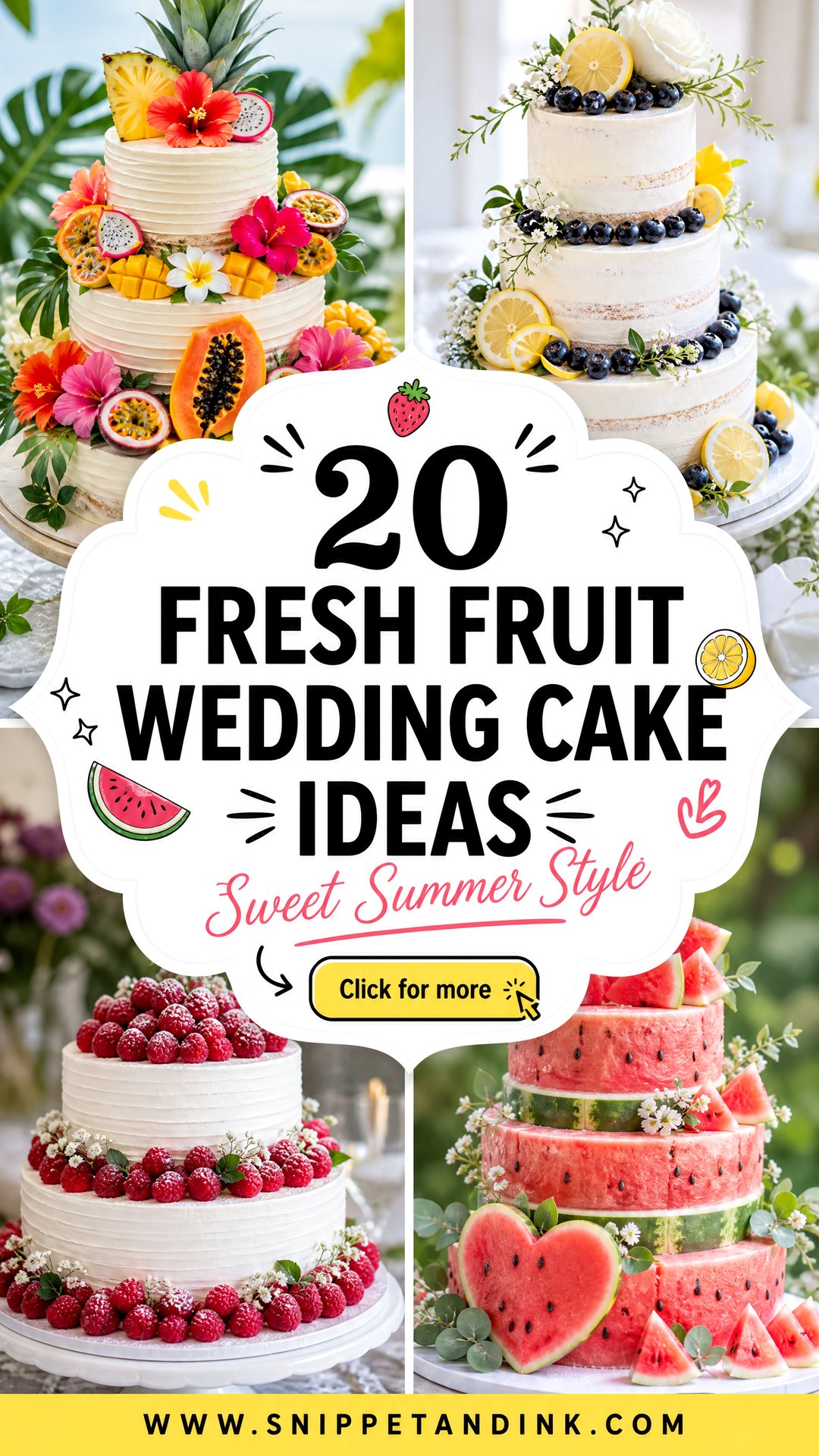
Why Cut Fruit Weeps, and What I Do About It
Fresh fruit is mostly water, and the moment you cut it, that water starts to leave. On a cake it runs into the buttercream, softens it, and leaves a colored tide mark under every piece. Sugar in the frosting draws the juice out even faster. Almost every fruit design I make is planned around this one problem.
Whole outside, cut inside
Whole berries, grapes, cherries and small figs keep their juice in their skins, so they’re what I use on the outside of the cake. Cut fruit goes into the filling, where the sponge and a firm buttercream dam hold it. When a design needs cut fruit on show, such as halved figs or citrus wheels, I pat each piece dry and place it last.
A thin glaze does three jobs
A light brush of neutral glaze or warmed, strained apricot jam seals the cut surface, slows browning on apples, pears and peaches, and keeps berries glossy under warm lights. It also adds a little sweetness, so tart fruit like raspberries tastes better on the slice.
The fruit that fights the cream
Fresh pineapple, kiwi and papaya contain enzymes that break down dairy and gelatin. Left on whipped cream or a gelatin-set mousse, they can make it bitter or watery within hours. Pair them with buttercream or ganache instead, or ask for them cooked into a compote, since heat stops the enzymes working.
1. Fresh Berry Wedding Cake
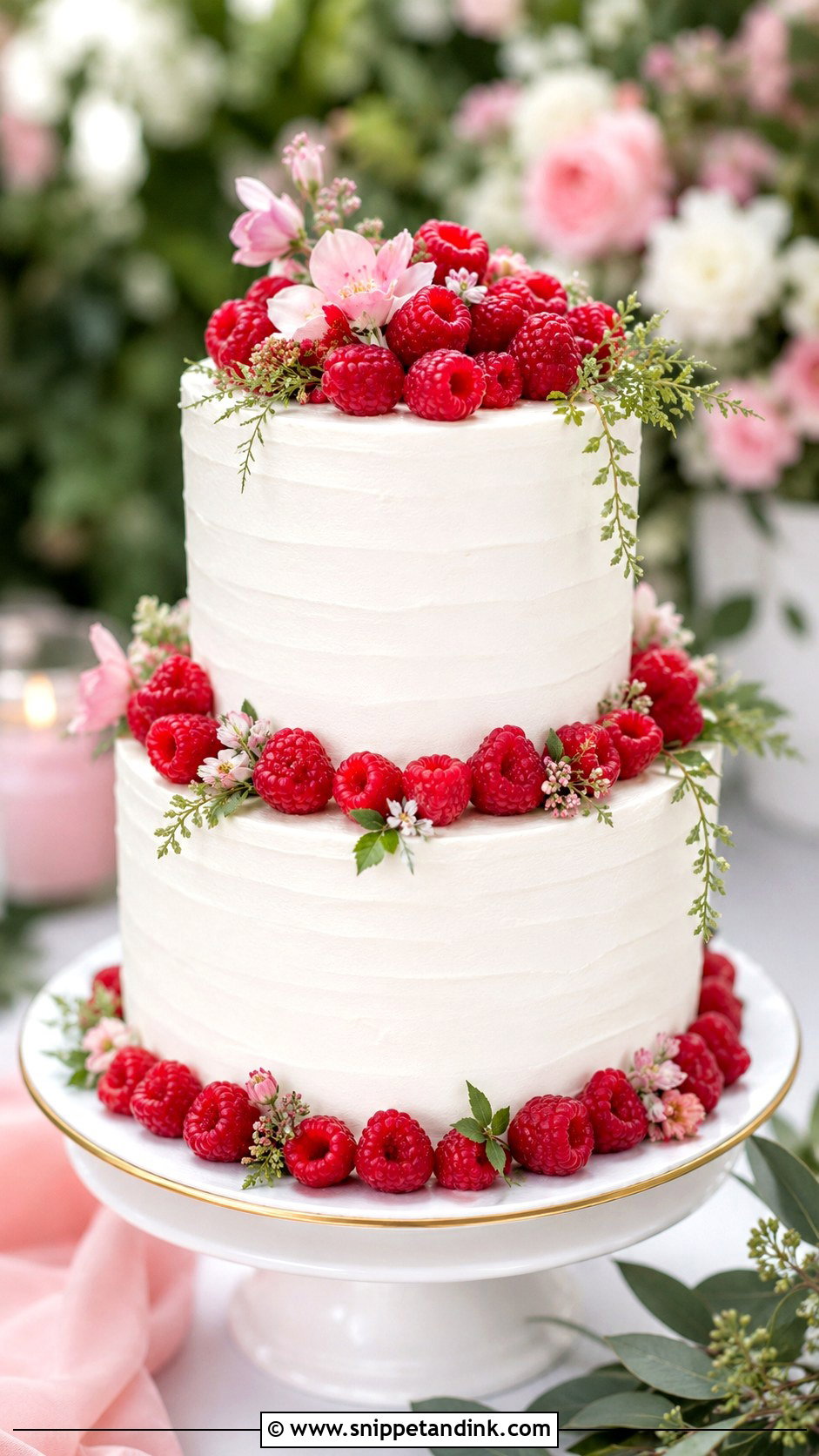
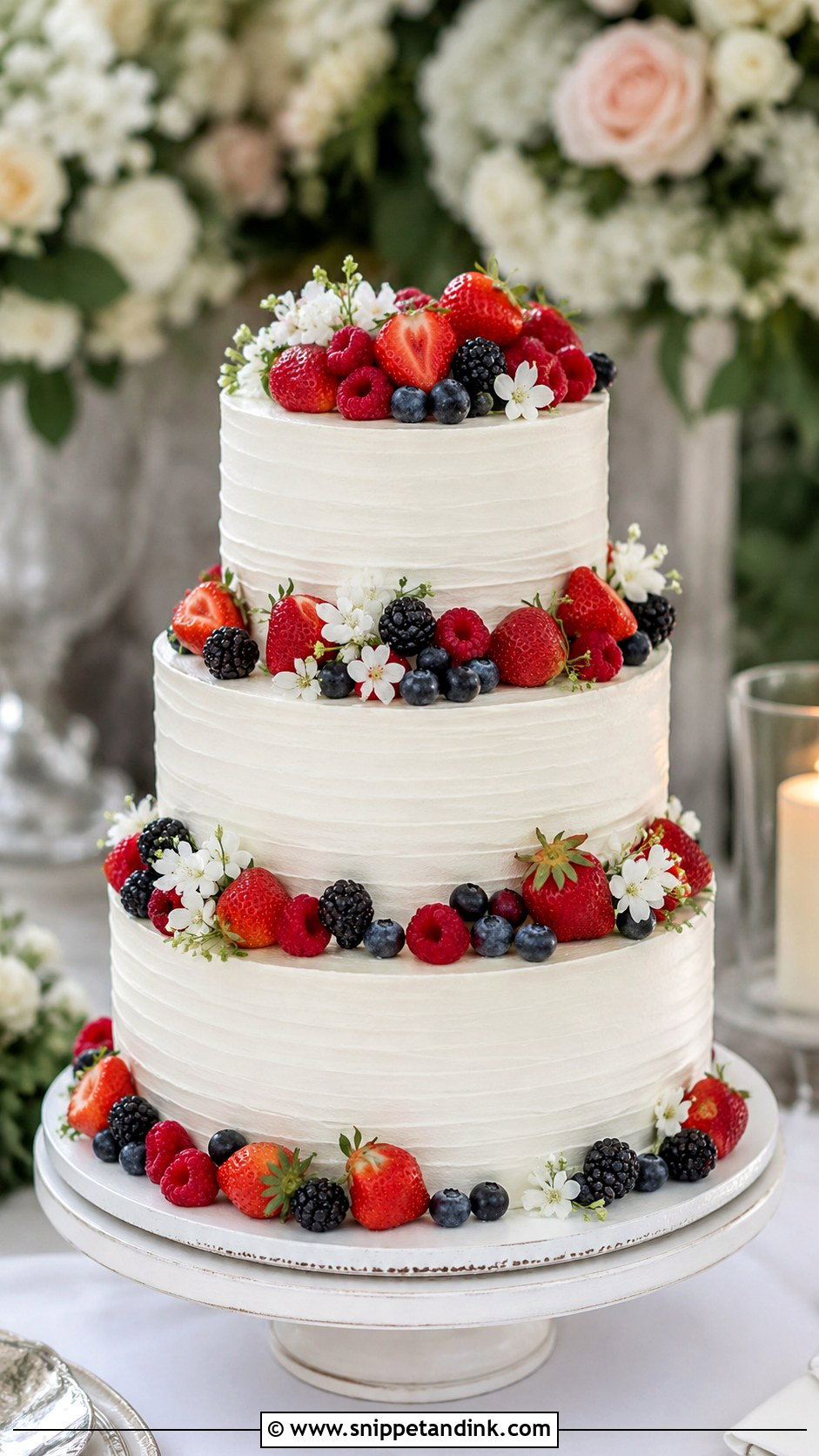
Strawberries, raspberries, blueberries and blackberries together are my safest fruit design, since every one of them is easy to source and holds color well. I like them on white buttercream over a vanilla sponge, with a few soft flowers tucked around the tiers. Cluster the berries in small groups rather than scattering them, or the cake starts to look like a fruit bowl. Red, blue and purple read clearly against white from across a room. Garden weddings, spring receptions and relaxed outdoor parties are where this one sits most naturally.
2. Naked Wedding Cake With Fresh Fruit
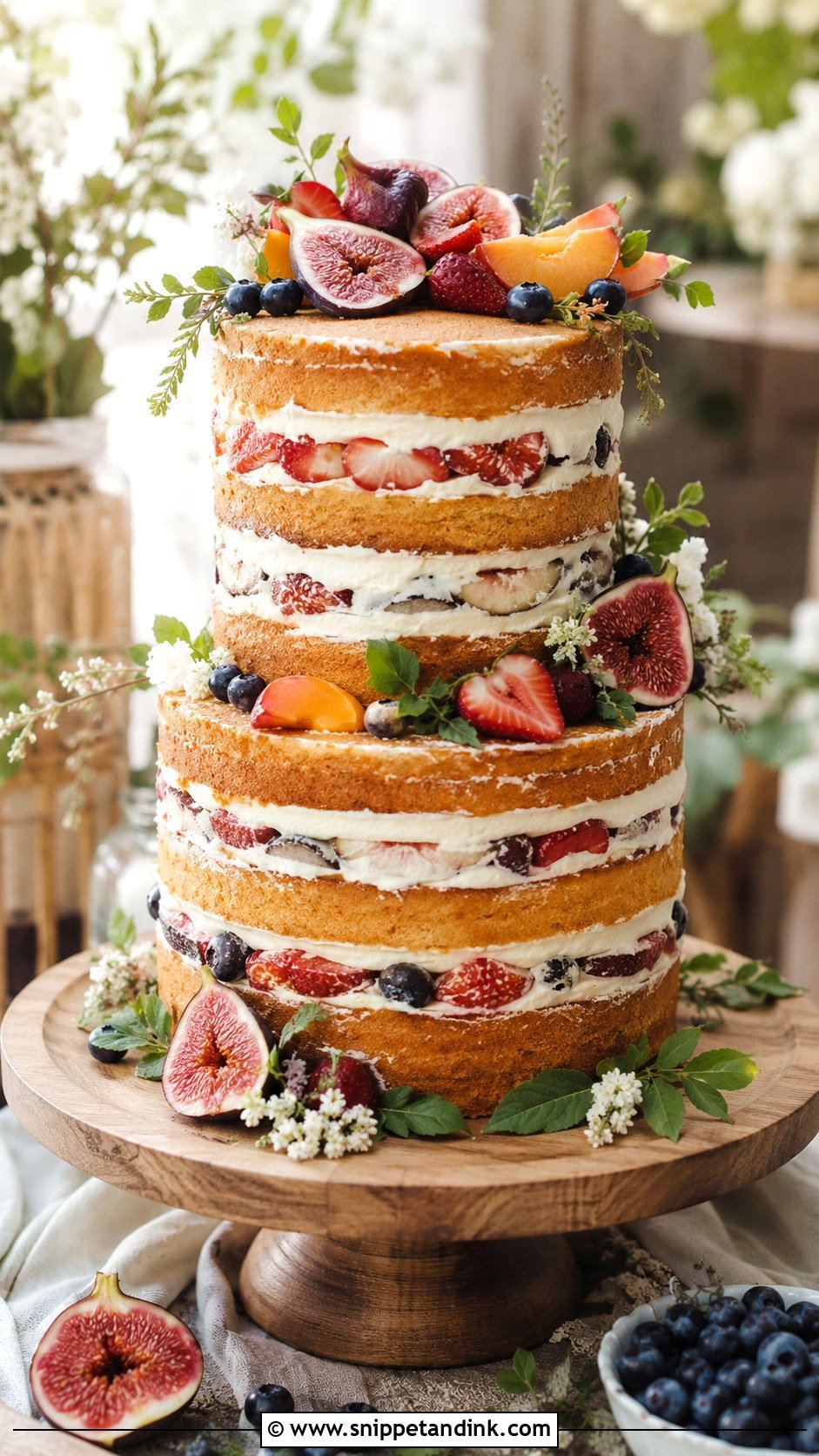
With a naked cake, the missing outer frosting puts the sponge on show, so the fruit becomes part of the structure rather than a garnish. Berries, figs, peaches and grapes look right between the tiers and on top. Here’s the honest downside: those exposed sides dry out, and I won’t stack a fully naked cake much before the day, because by evening the edges can go stale. A moist sponge, a stable filling and a light dusting of powdered sugar help. Barns, backyard receptions and couples who want something unfussy suit it.
3. Semi Naked Wedding Cake With Berries
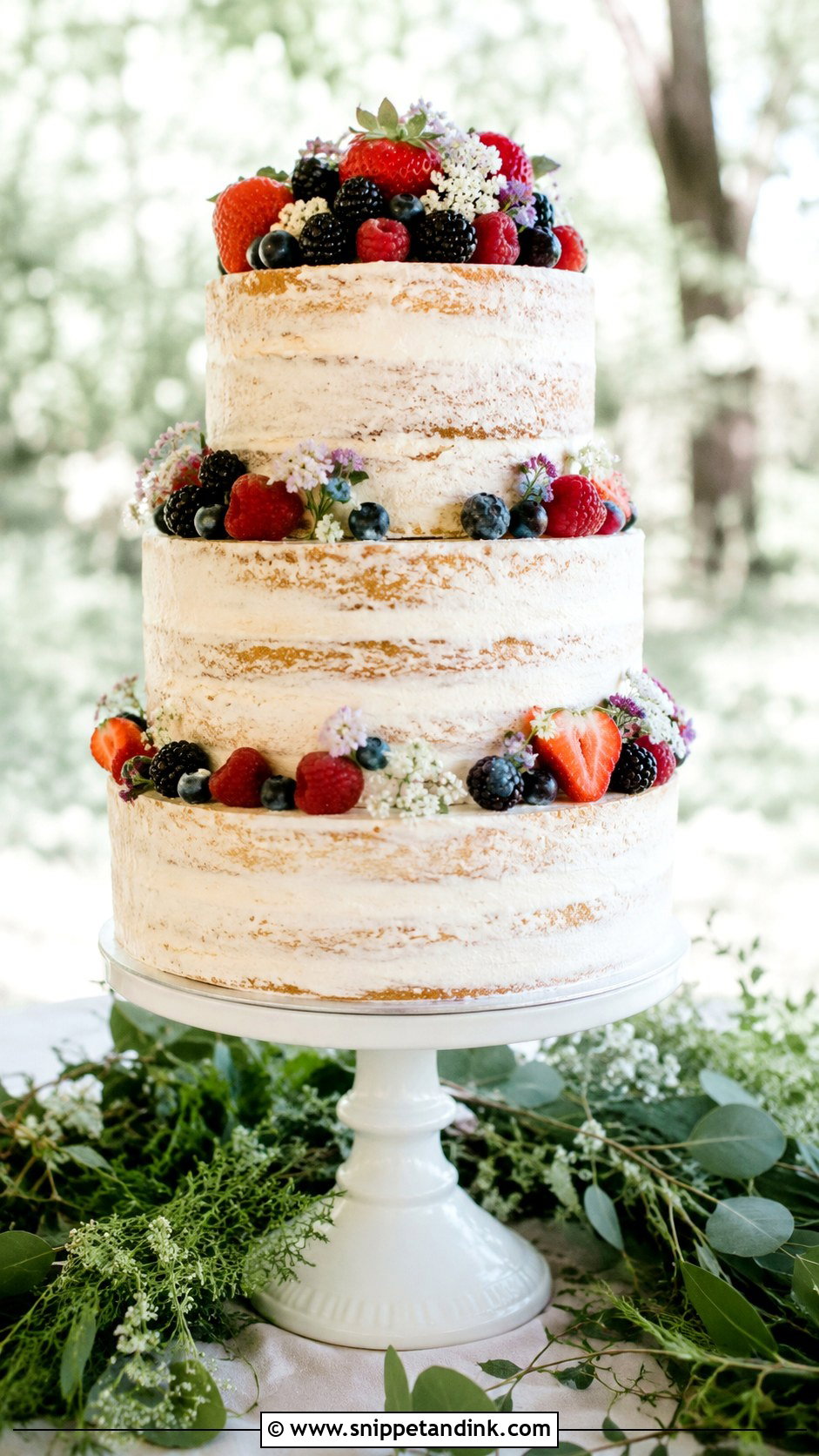
Semi naked is the compromise I recommend most often. A thin scrape of buttercream seals the sponge so it stays moist, while hints of cake still show through. Raspberries and strawberries give a warm palette; blueberries and blackberries look moodier. A few greenery sprigs or edible flowers add texture. If you love the rustic look but are nervous about a fully bare cake on a summer afternoon, this is the version I’d steer you toward.
4. Citrus Wedding Cake
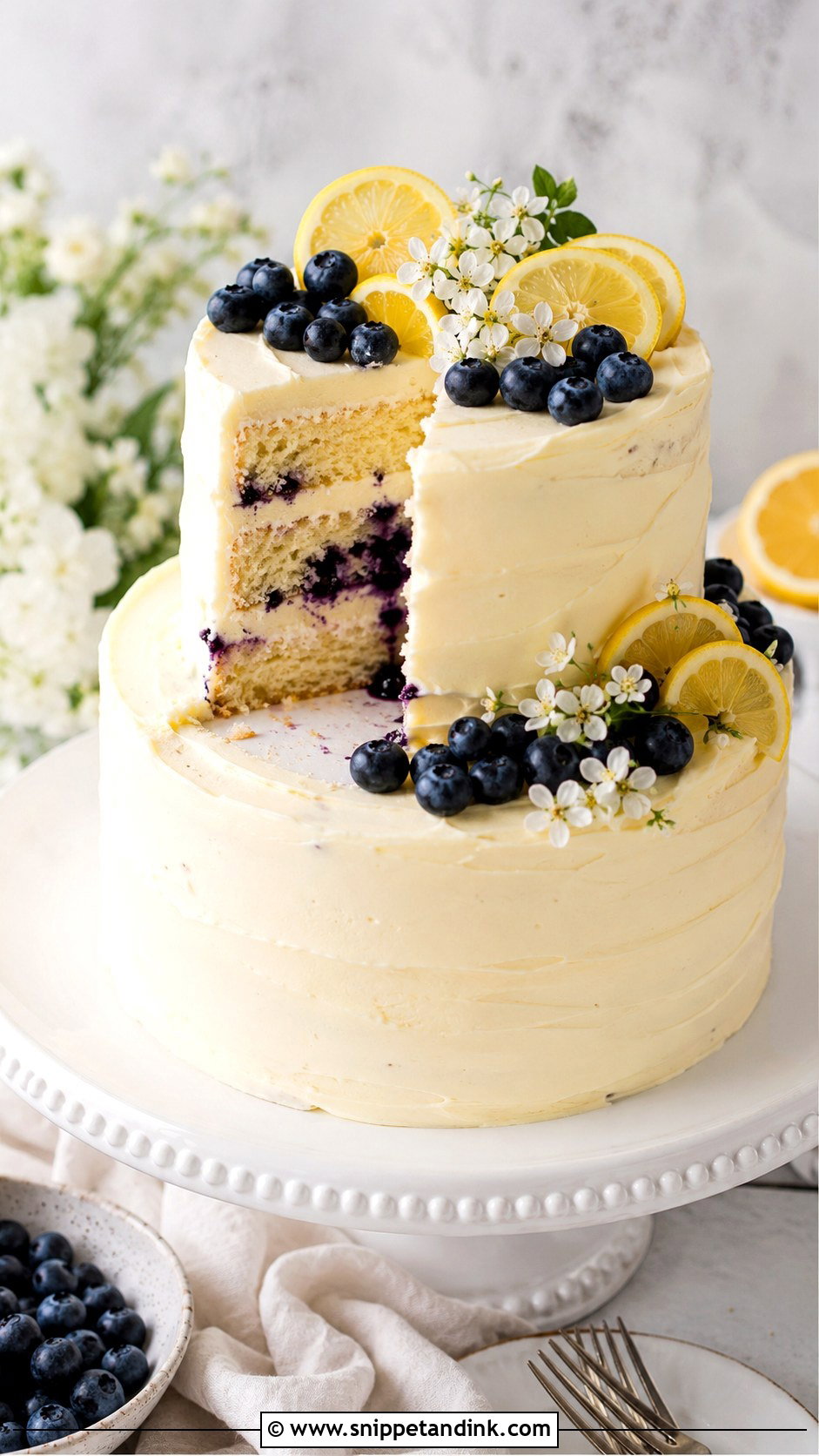
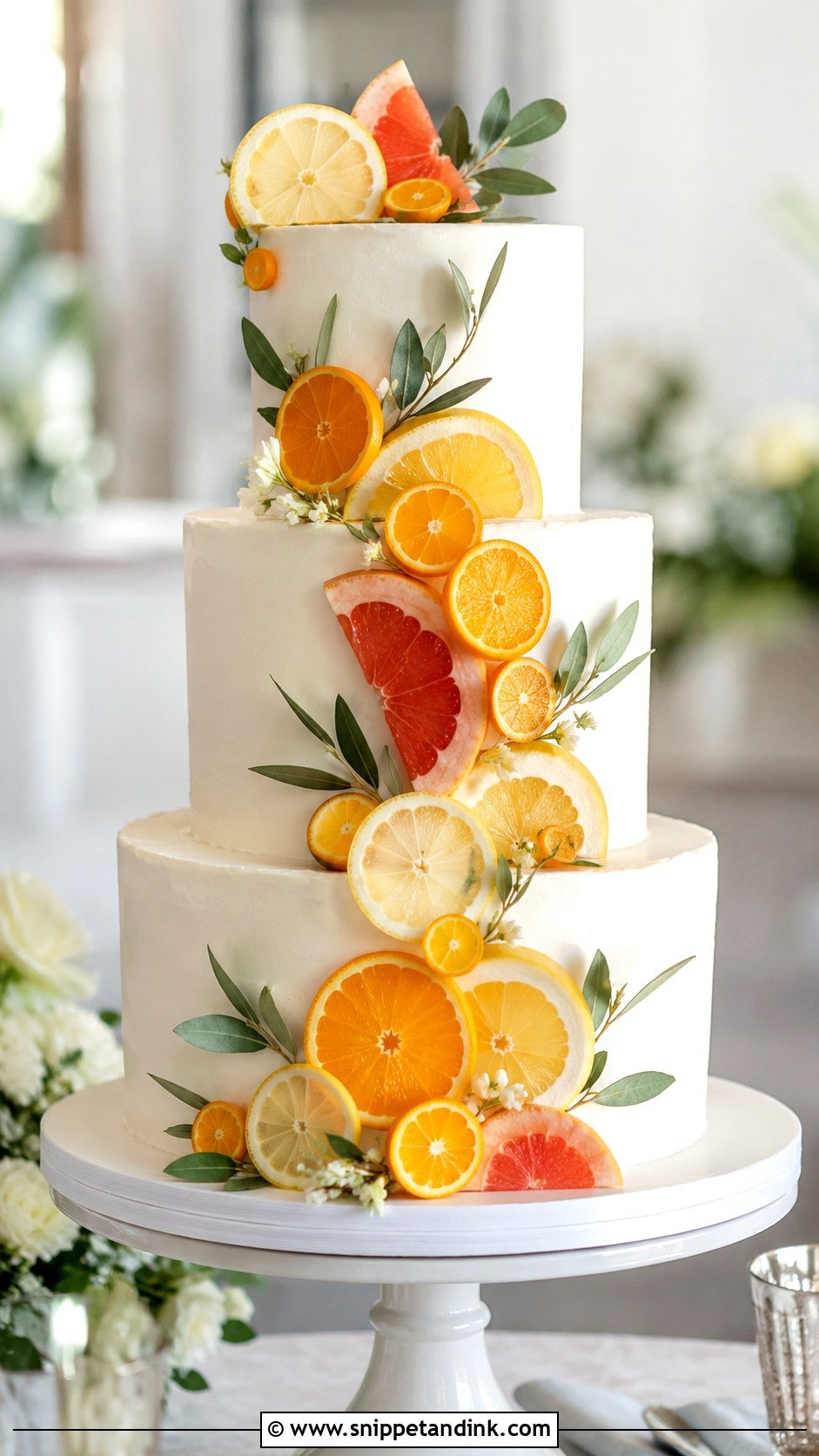
Lemon slices, orange wheels, grapefruit segments or tiny kumquats can turn a plain white cake into something bright and fresh. I pair it with lemon, vanilla, almond or elderflower sponge. Citrus is juicier than it looks, and a cut wheel pressed flat against buttercream will slowly bleed into it, so I pat slices dry and set them on their edges or on a small disc. Neat clusters on each tier look modern; mixed sizes with soft greenery look more organic. Smooth buttercream suits it best, for spring, summer, coastal venues and brunch receptions.
5. Strawberry Wedding Cake
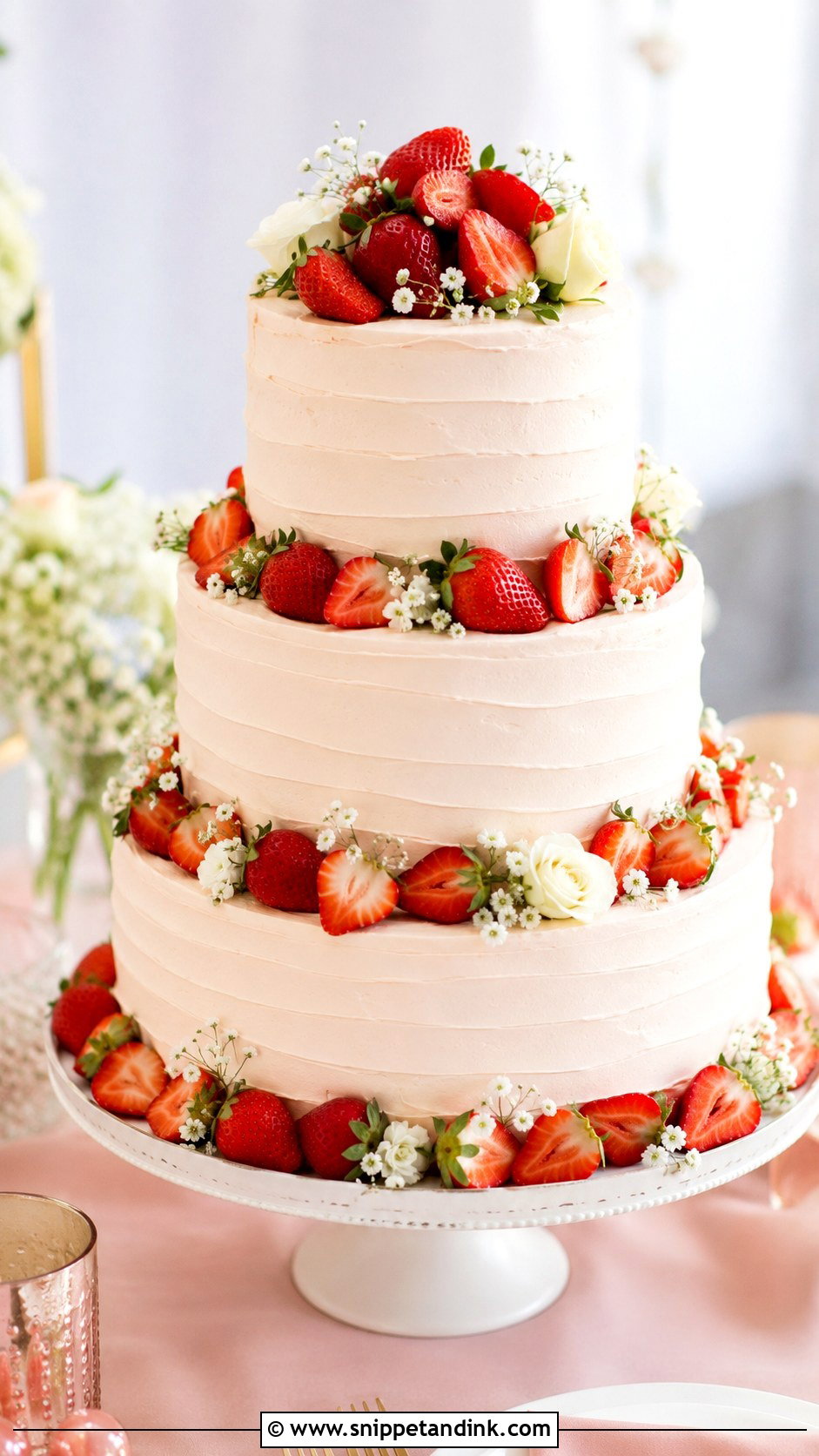
Strawberries are the fruit everyone recognizes, and how you cut them changes the whole design. Whole berries look bold on top of a tiered cake; halves and slices make neat lines between exposed layers. Vanilla, champagne, almond, lemon or strawberry sponge all work underneath, with a white or blush buttercream finish. Cut strawberries start leaking juice within an hour or two, so I keep cut fruit for the inside and use whole, dry berries outside, ideally with a thin glaze so they stay glossy. Outdoors, ask your baker exactly when the fruit goes on and how it’s chilled before serving.
6. Fig Wedding Cake
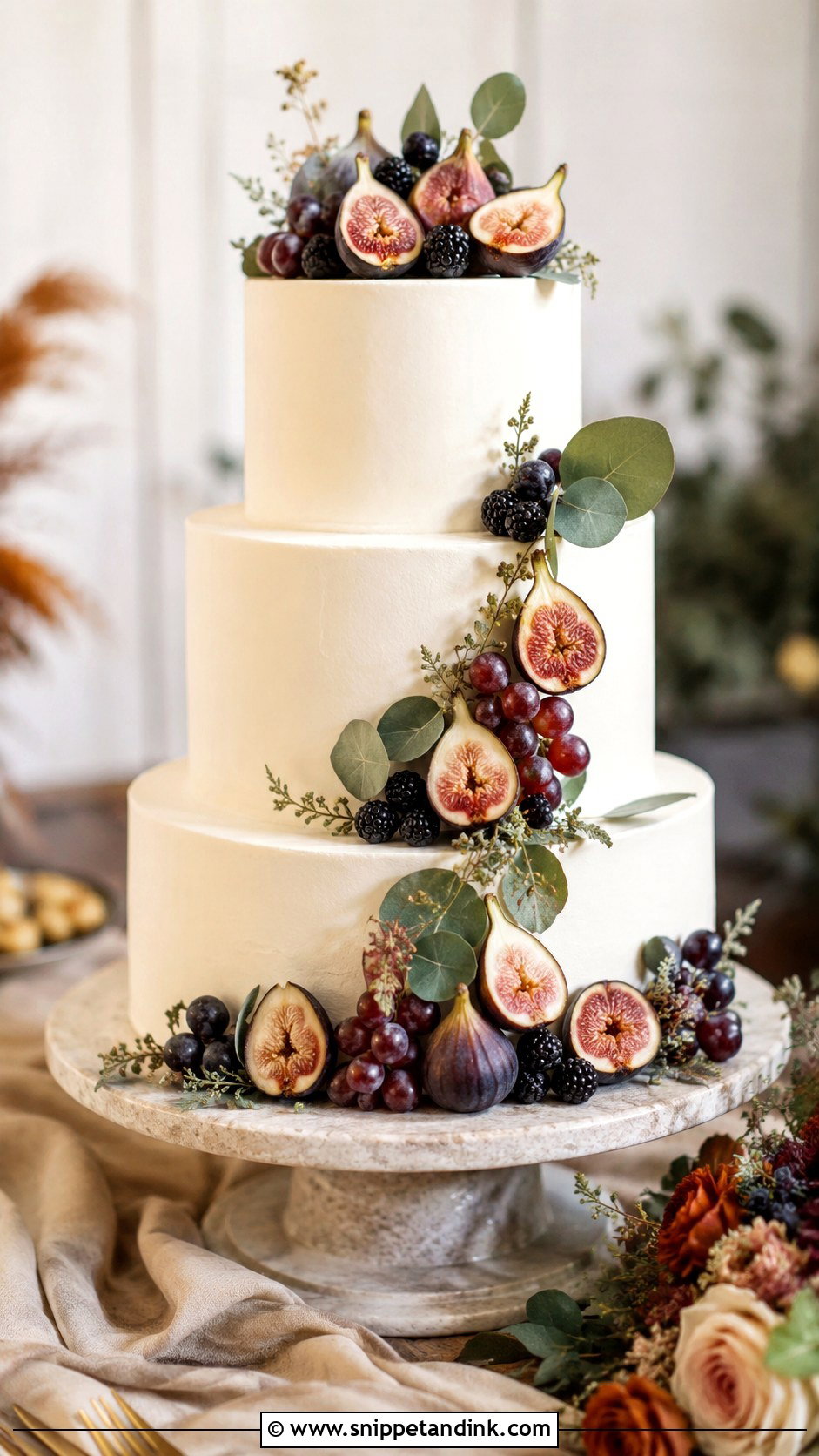
Figs give deep purple, green and rosy tones that sit well against ivory buttercream or dark chocolate ganache. The halved fig is the showpiece, with that jewel-like pattern inside. They are also soft and short-lived; a ripe fig bruises if you look at it wrong, so I buy them a day or two before and handle them as little as possible. Honey, almond, vanilla, spice and chocolate sponge all suit them. In small clusters with blackberries, grapes and greenery, figs feel grown-up and quietly luxurious, at vineyard-style settings, garden venues and moody fall receptions.
7. Peach Wedding Cake
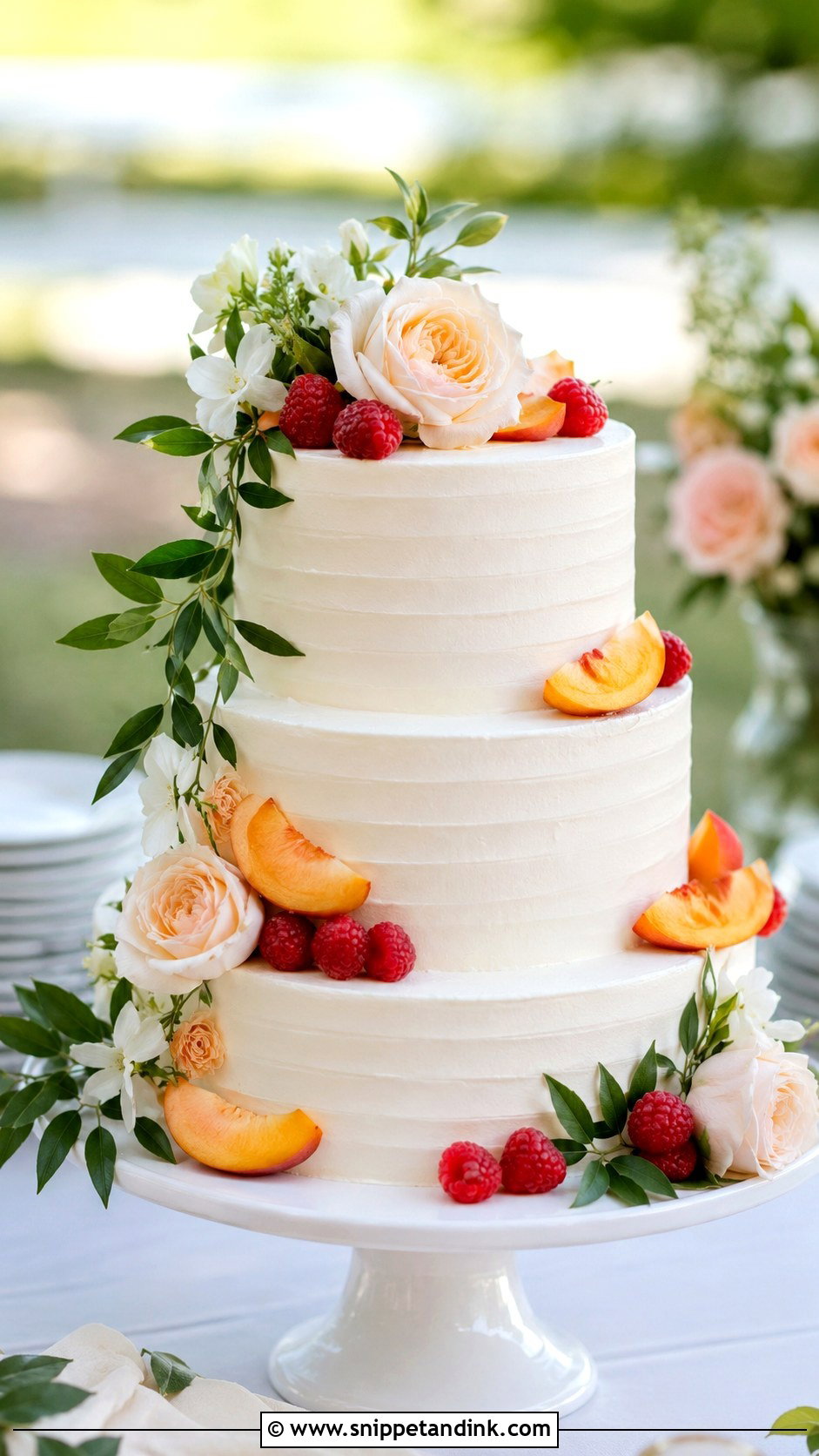
Peach slices add warm color without shouting, and they go with vanilla buttercream, almond or honey cake, or a light sponge filled with peach preserves. Combine them with raspberries, cream flowers and soft leaves for a garden look, or keep a smooth white cake with a single peach arrangement on each tier. The fruit has to be ripe but firm. Soft peaches slump and brown at the cut edge within the hour, so I slice at the venue and brush the faces with a little lemon juice or glaze. They suit outdoor weddings and warm evenings.
8. Tropical Fruit Wedding Cake
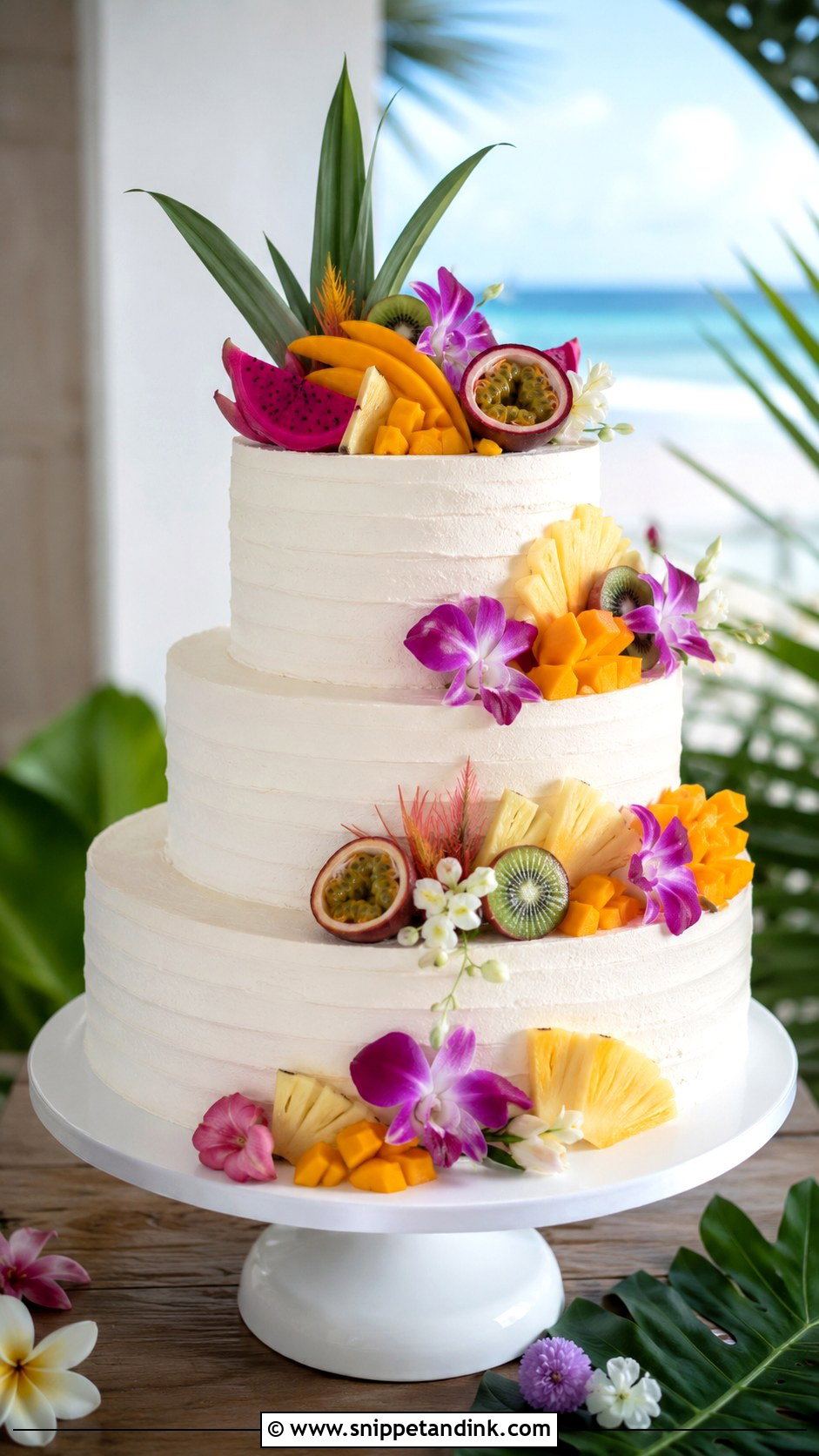
A tropical fruit wedding cake brings mango, pineapple, kiwi, passion fruit, dragon fruit and papaya to the table, with enough color that the frosting can stay white. Coconut, vanilla, lime or pineapple sponge fits the flavor. One technical warning: fresh pineapple, kiwi and papaya contain enzymes that break down dairy proteins and gelatin, so they can turn whipped cream bitter or make a set filling go runny over a few hours. I keep them on the outside of the cake, away from cream, and add them late. Clean clusters on smooth white buttercream look modern; for a beach reception, add palm-style greenery or edible flowers.
9. Lemon Blueberry Wedding Cake
Lemon and blueberry is one of the few pairings where the flavor and the look agree, which is why a lemon blueberry wedding cake is such an easy sell. Pale yellow sponge and deep blue berries give a soft contrast for spring or summer. Blueberries can line the tier edges, cascade down one side, or fill the top with lemon slices. Of all berries they travel best, firm skins and no juice until bitten. Cream cheese frosting, vanilla buttercream or lemon buttercream all work, and a semi naked finish lets the filling peek through.
10. Raspberry Wedding Cake
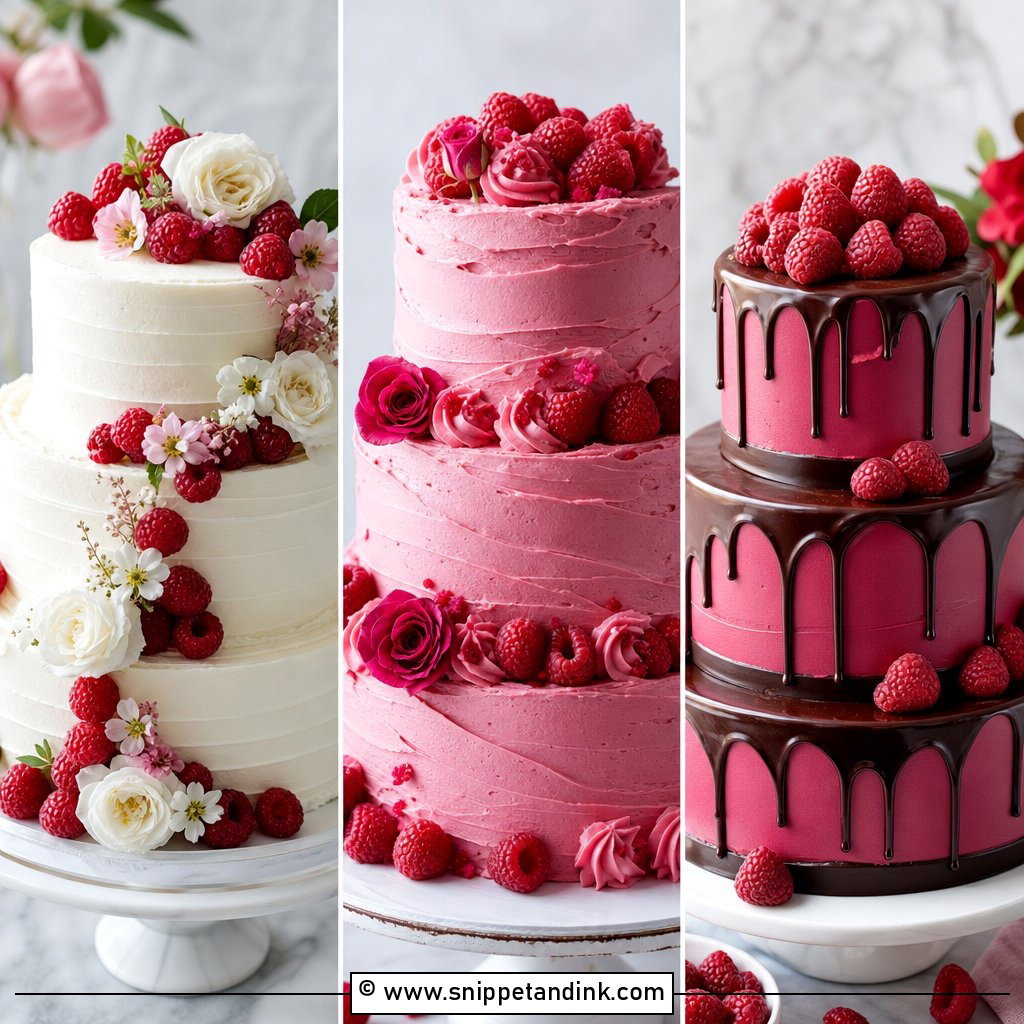
Raspberries are the fragile one. They crush under their own weight in a container, and once bruised they weep red juice that runs down white frosting. So I place them close to display time, one at a time, hollow side down. Against white buttercream the color stands out right across the dessert table. Lemon, vanilla, almond, pistachio and chocolate sponge all pair well. For a classic look, ring the base of each tier; for a garden style, mix them with small flowers and leaves.
11. Blackberry Wedding Cake
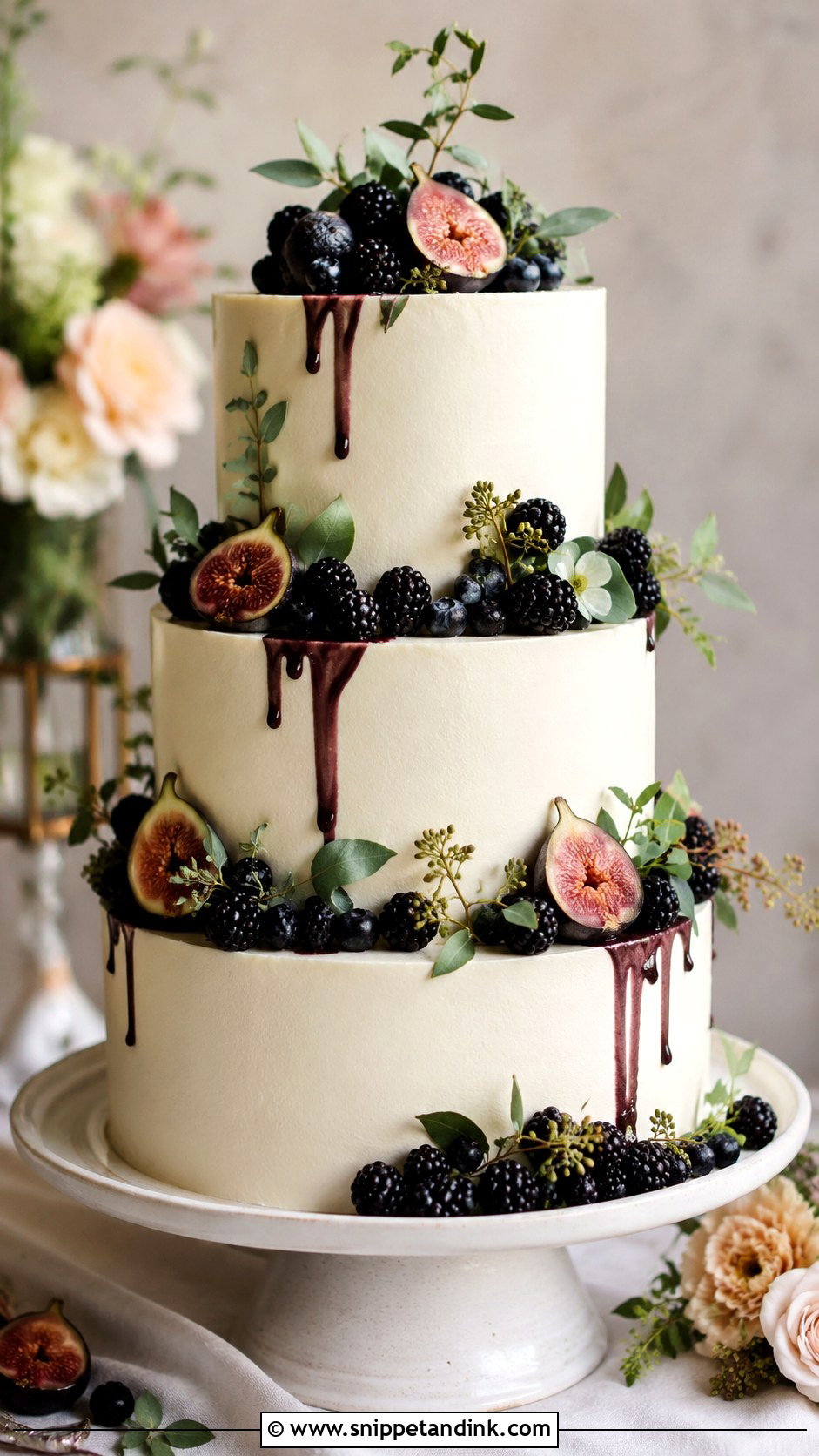
Blackberries bring purple-black tones for couples who like deeper color and a bit of drama. They sit well against ivory buttercream, chocolate ganache or lavender-tinted frosting, over vanilla, lemon, honey, almond or chocolate cake. Bold clusters on a smooth white finish look modern; berries between the layers of a semi naked cake look rustic. Their juice stains darker than any other berry, so I never stack them directly on pale frosting without drying them well first. Figs, blueberries or greenery add depth for late summer, fall and venues with natural textures.
12. Cherry Wedding Cake
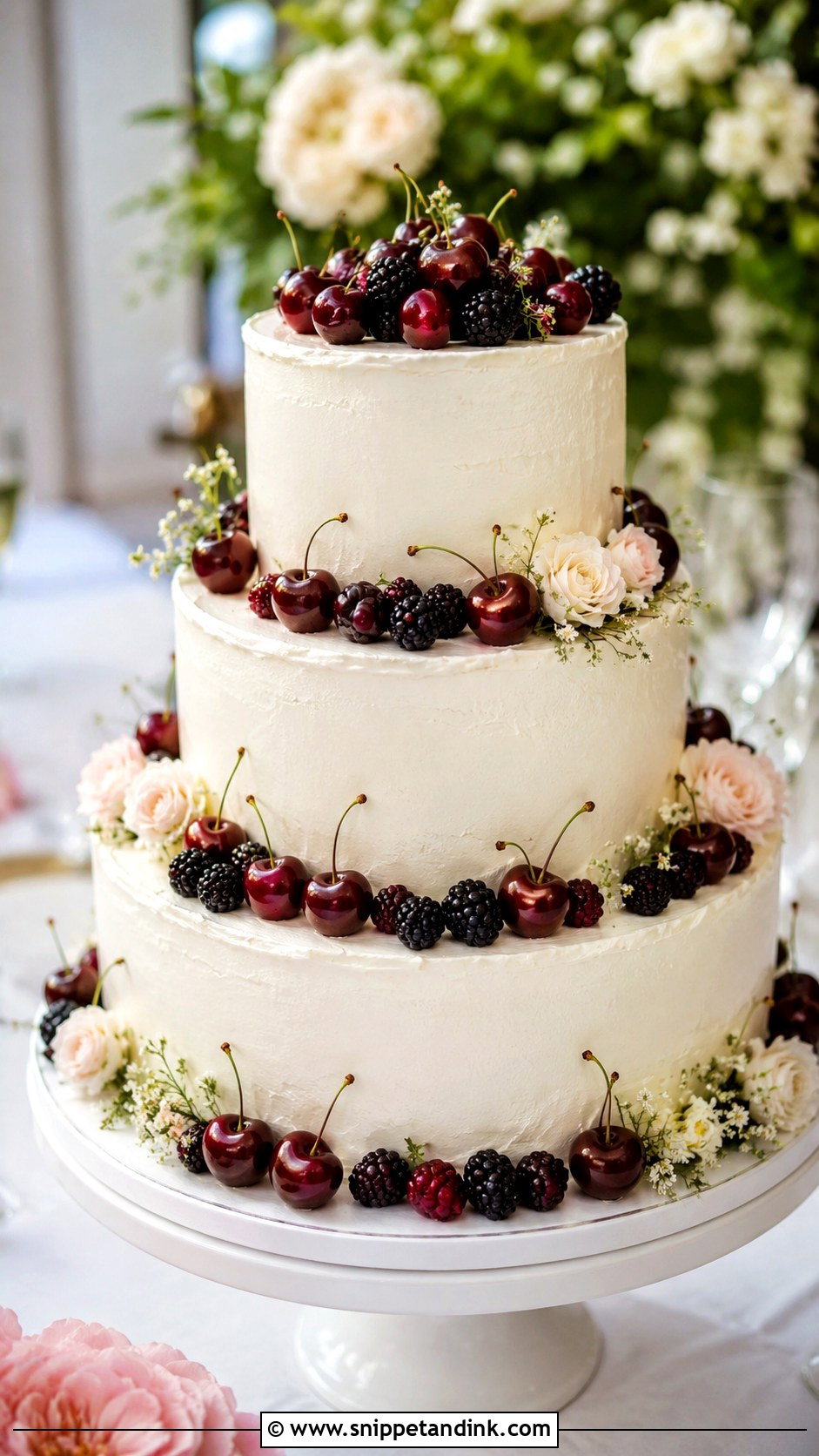
Cherries with their stems on have a slightly vintage charm without tipping into theme. In small clusters or around the top tier of a smooth white cake, they look deliberate. Dark cherries go with chocolate, almond, vanilla and black forest flavors; red cherries suit vanilla buttercream and soft pink flowers. For something richer, glossy cherries on chocolate ganache with a few dark berries. Every cherry needs to be firm, clean and completely dry, and remember guests will bite into a stone, so tell the caterer they’re whole fruit.
13. Pomegranate Wedding Cake
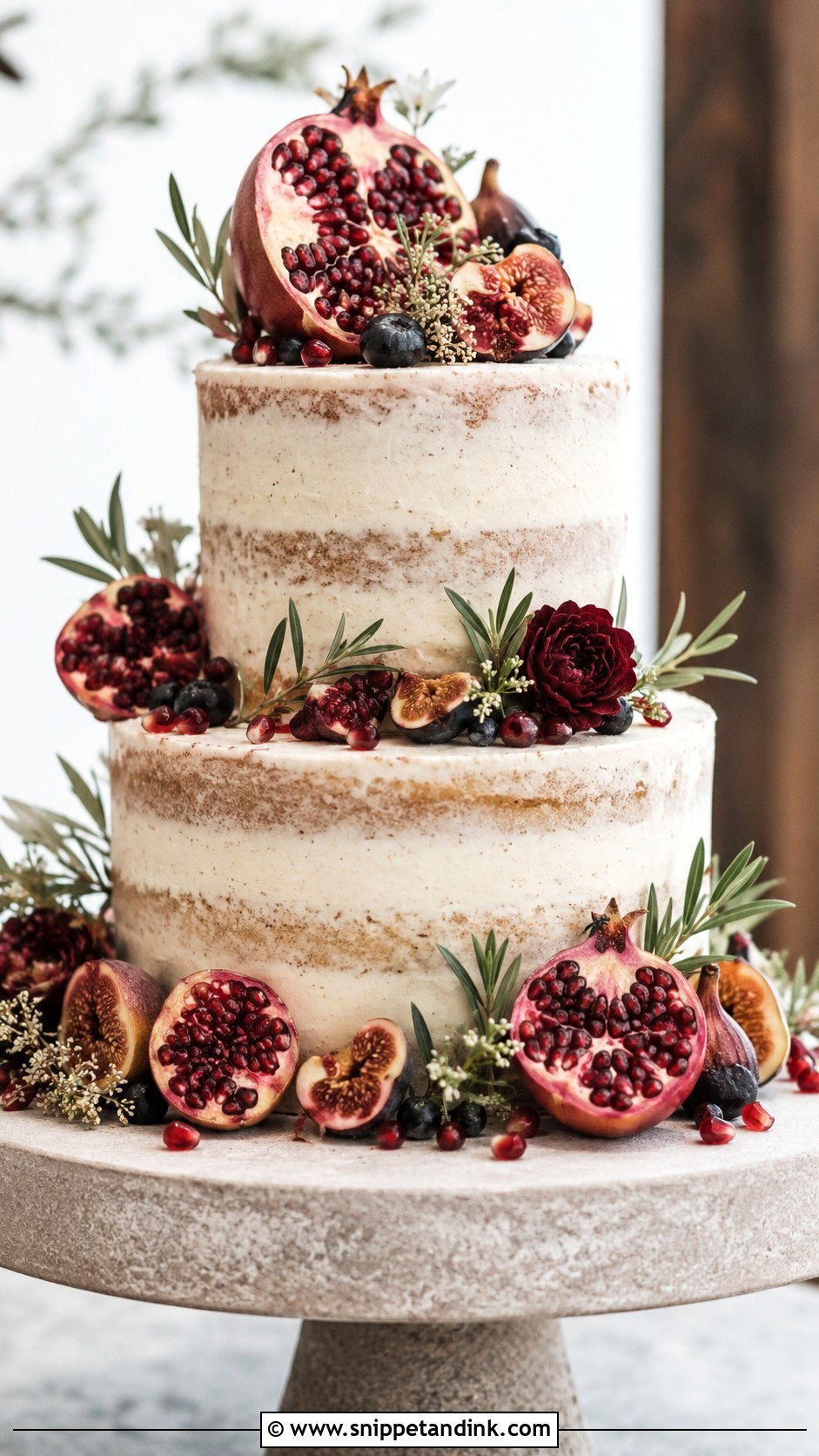
Pomegranate seeds catch the light against white buttercream, cream cheese frosting or ivory fondant, and they’re a good way to give a fall or winter cake color without going festive. Orange, vanilla, chocolate, almond and spice sponge all pair well. Halved pomegranates make bold accents, but a cut half leaks juice that stains, so I set it on a small plate or disc rather than straight on the icing. A small handful of seeds around the fruit clusters goes a long way. Add figs, berries or greenery for fullness.
14. Grape Wedding Cake
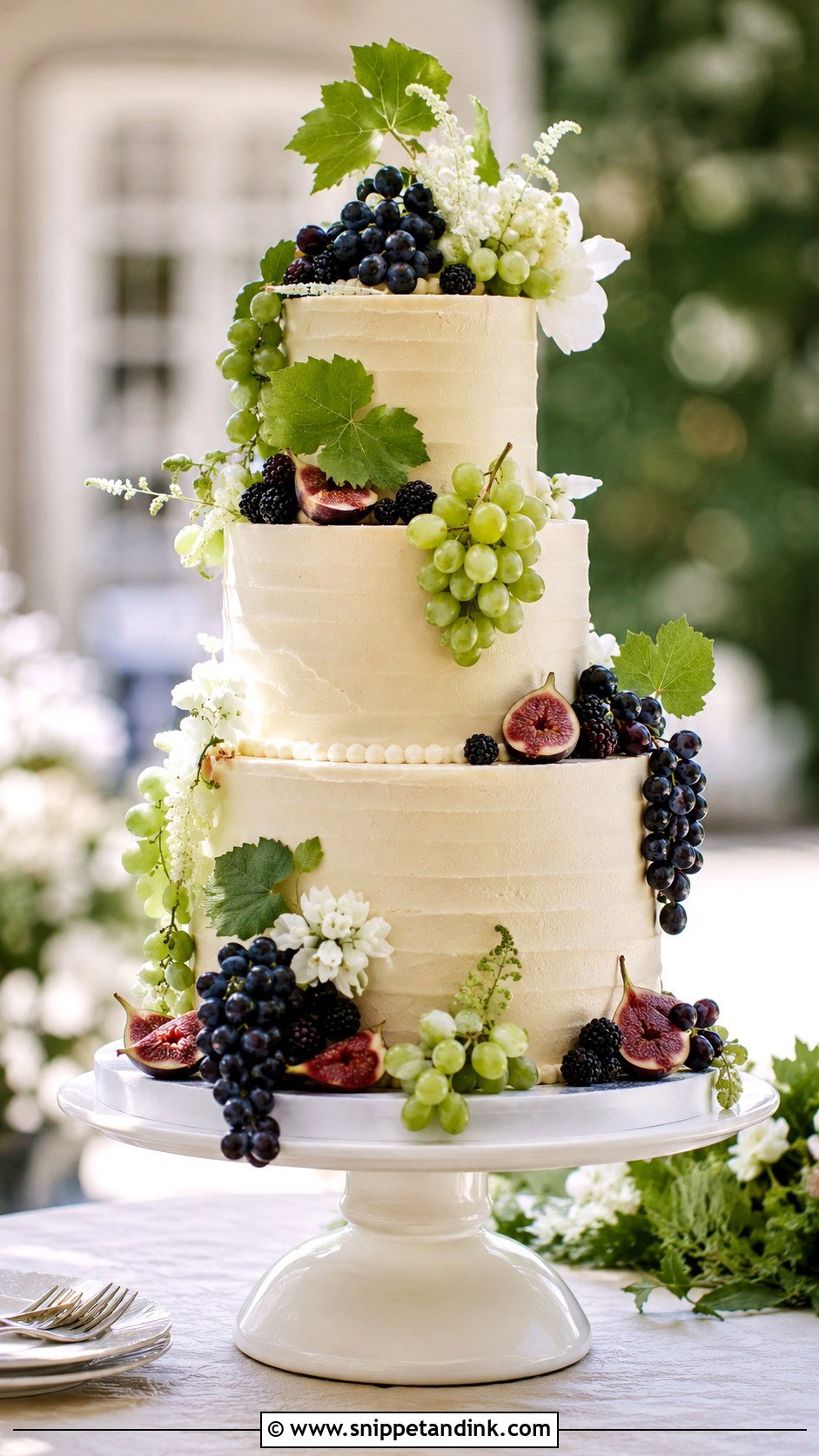
Grapes are the most practical fruit on this list. They hold their shape, rarely bruise, and stay fresh out of the fridge for hours, so small bunches can drape over tier edges and give the cake real movement. Green grapes with ivory buttercream and small white flowers look soft; black grapes with figs and blackberries look deeper. Vanilla, honey, almond, olive oil and citrus sponge all suit them. For a frosted look, I brush them with a little pasteurized egg white and roll them in sugar. They fit garden weddings, estate venues and outdoor receptions.


15. Kiwi Wedding Cake
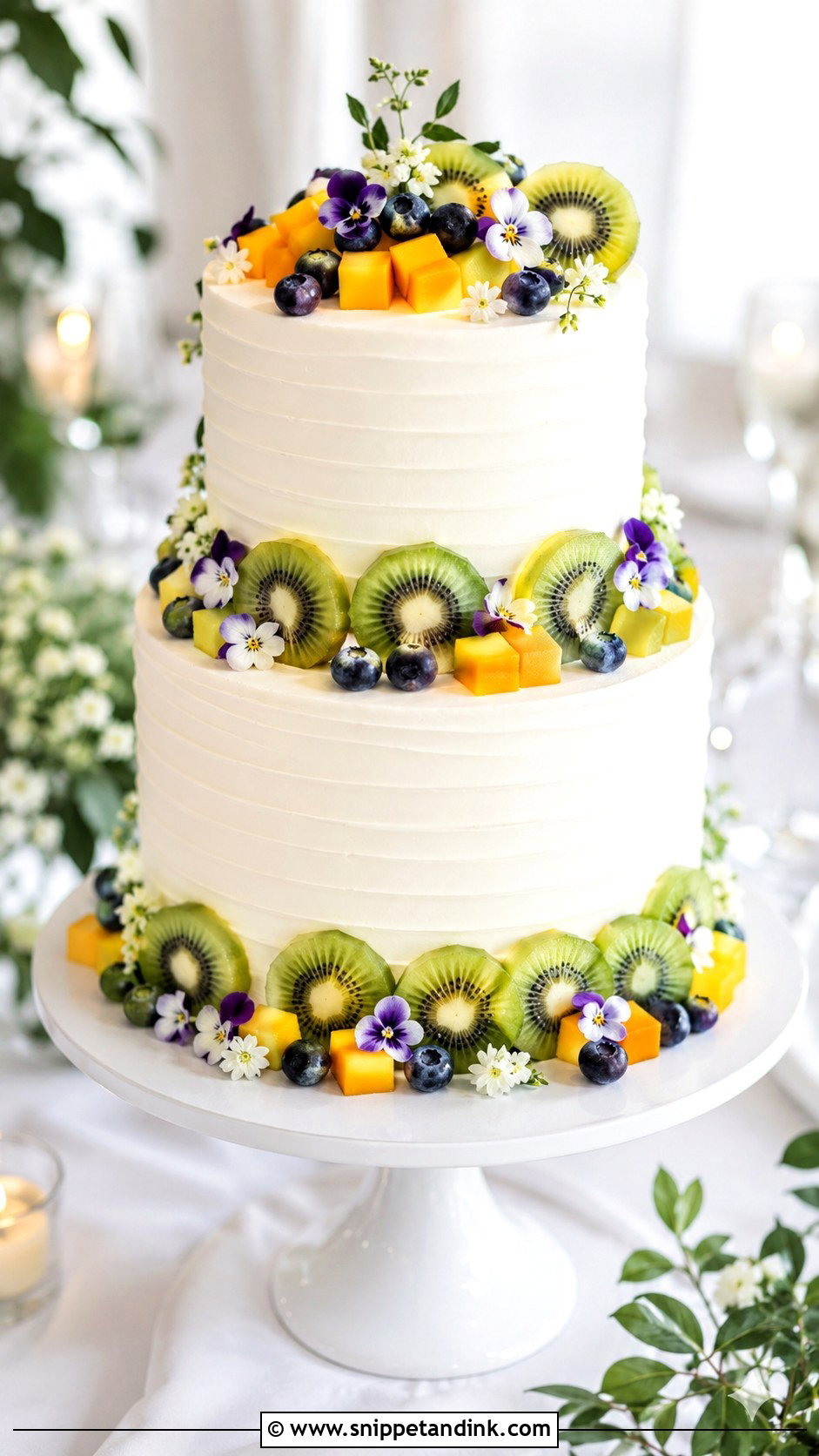
Kiwi is the surprise option. Sliced, it gives a bright green pattern against white frosting, and it goes with vanilla, coconut, lime, pineapple and passion fruit flavors. It’s visually strong, so clean lines or small clusters beat covering every tier. Like pineapple, kiwi breaks down cream and gelatin, so it sits on buttercream, never on whipped cream, and goes on late. Add berries or mango if the wedding is playful, or keep smooth buttercream and a white stand for a crisp modern cake.
16. Mango Wedding Cake
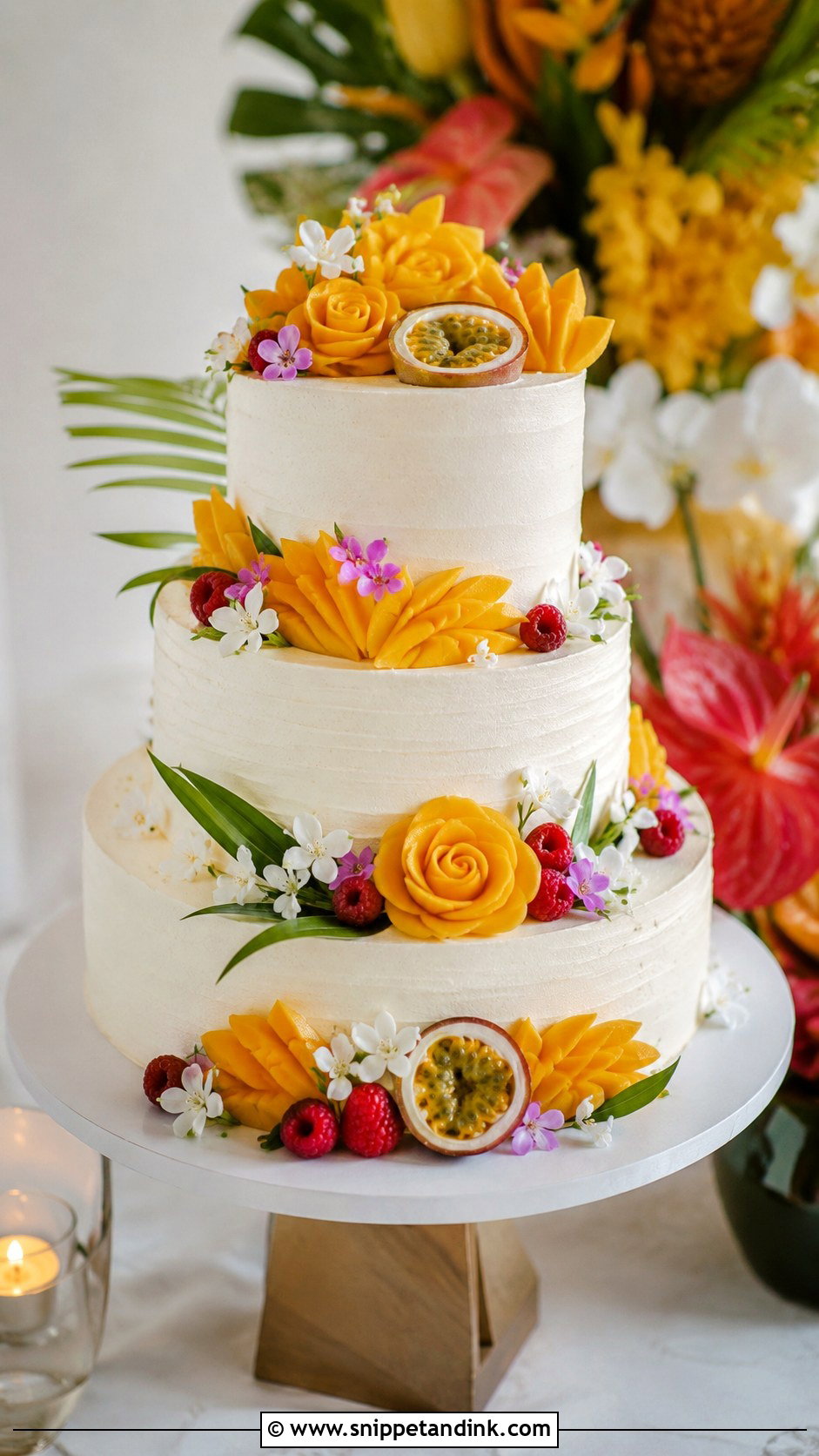
Mango adds warm gold and a soft tropical flavor. Thin slices can be curled into roses, layered across the top, or set beside berries for contrast, on coconut, vanilla, lime, passion fruit or light sponge. Smooth buttercream keeps it clean; whipped frosting makes it airy but won’t hold up long in heat. Ripe but firm is the rule, because an overripe mango turns stringy and slick when sliced. Use it as one main accent rather than a heaped topping, for summer weddings and beach-style receptions.
17. Watermelon Wedding Cake
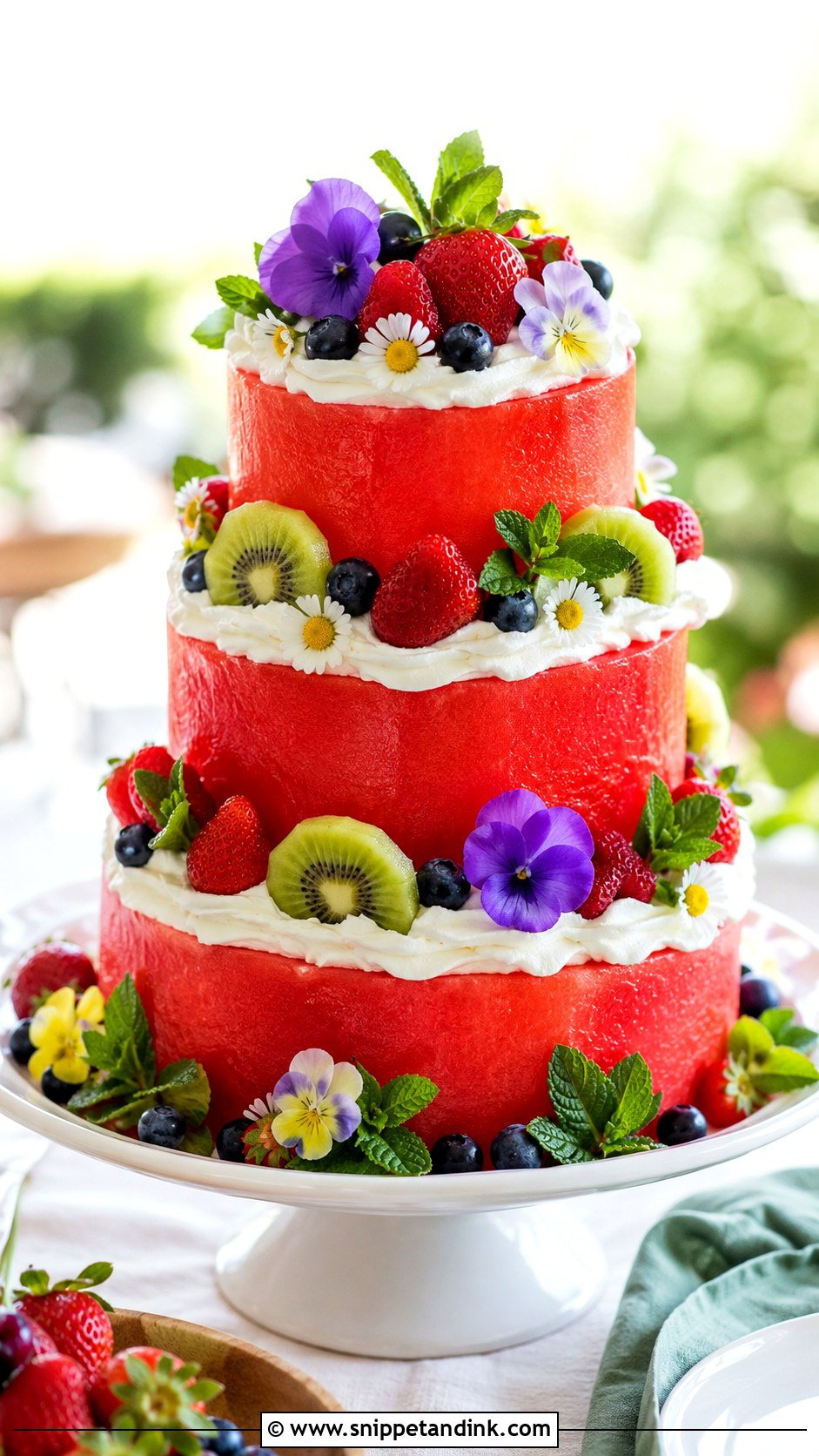
A watermelon cake can mean two things: a ‘cake’ cut from stacked watermelon rounds, or a regular sponge decorated with watermelon and berries. The first is a fun, very wet novelty that has to stay chilled and be served quickly, so I only suggest it for small, casual summer receptions. Either way, keep the shape clean and the decoration tidy. Whipped cream, mascarpone or coconut cream softens the bright red, and berries, kiwi, mint or edible flowers add detail. It suits brunch receptions and hot outdoor parties where nobody wants a heavy dessert.
18. Apple Wedding Cake
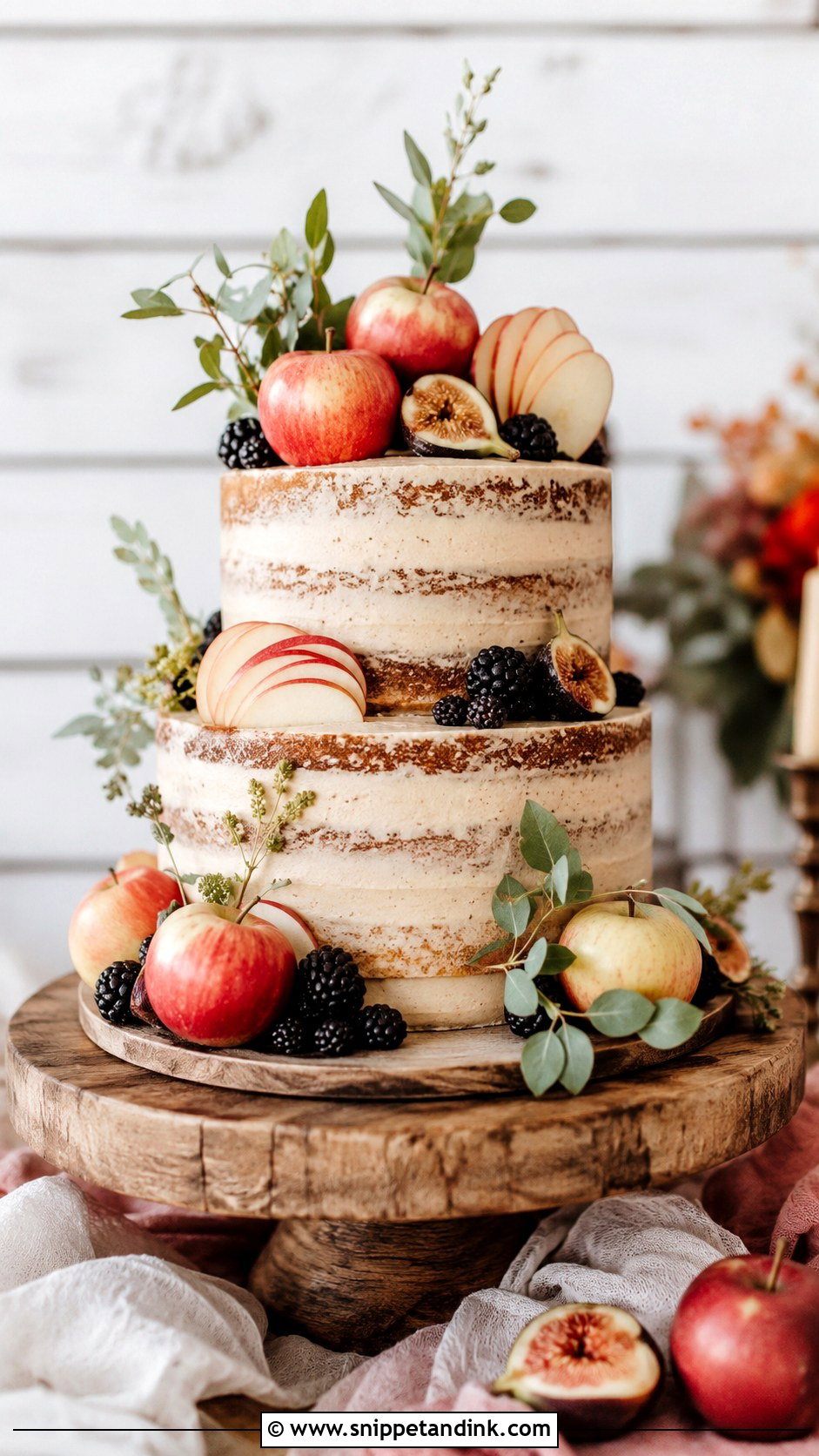
An apple wedding cake belongs to fall. Thin slices, small whole apples or sugared pieces give a warm seasonal look over spice, caramel, vanilla, cinnamon, almond or brown butter sponge. Cut apple browns within minutes, so I dip slices in acidulated water or glaze them before they go anywhere near the cake. Smooth ivory buttercream with apples, figs, berries and greenery looks polished. A semi naked cake with slices tucked between tiers feels rustic.
19. Pear Wedding Cake
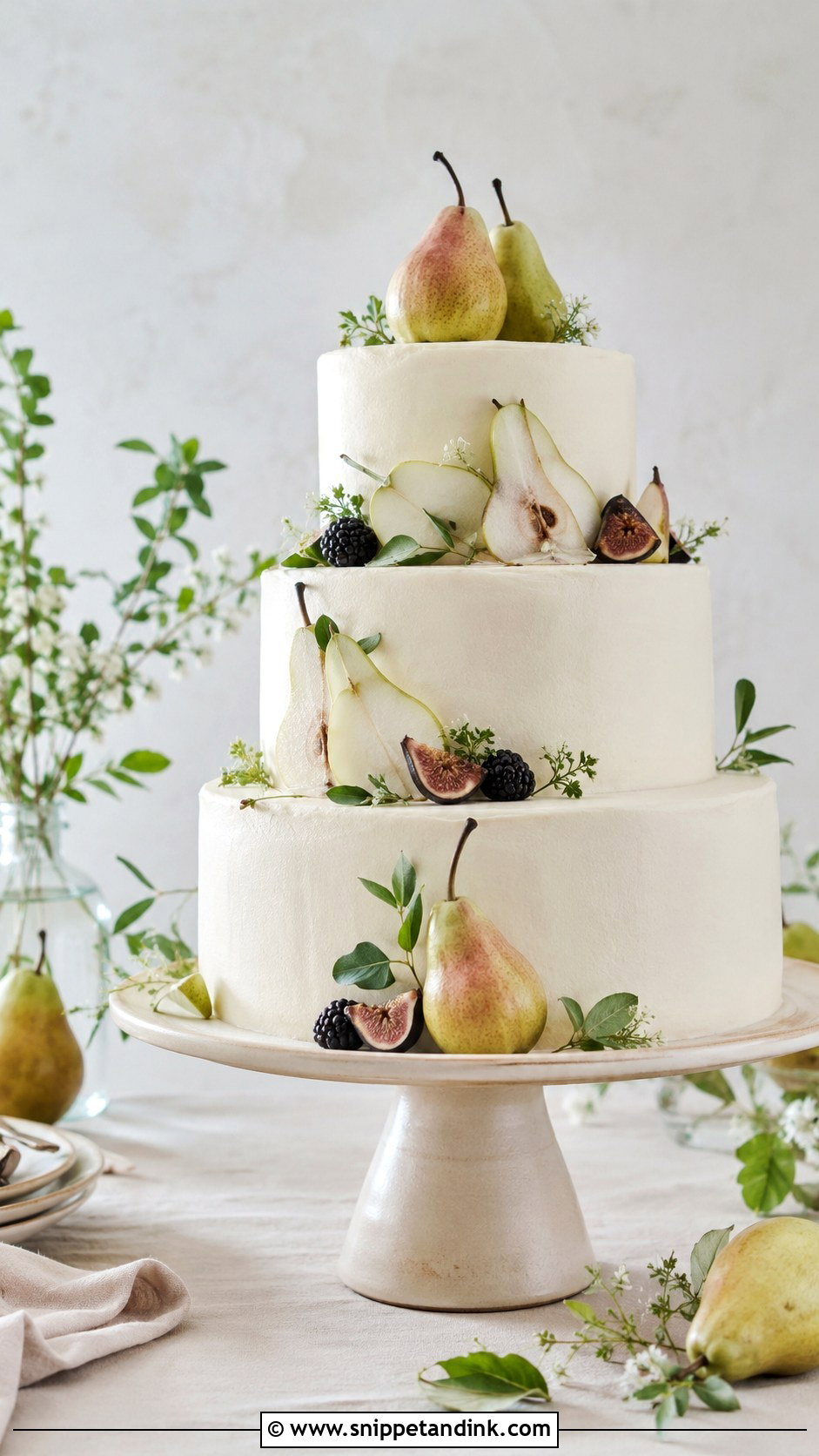
Pears are the understated pick. Their pale green or golden tone sits well with ivory frosting, caramel accents and simple greenery. Whole mini pears can sit on top, and thin slices can trim the sides or tier edges, though slices brown just like apple and need the same treatment. Vanilla, almond, honey, spice and brown butter cake all pair with pear. For a refined look, use smooth buttercream with pears, figs and a few berries. For something more rustic, a semi naked finish works. Poached pears hold their shape and color better than raw, which is worth asking your baker about.

20. Mixed Fresh Fruit Wedding Cake
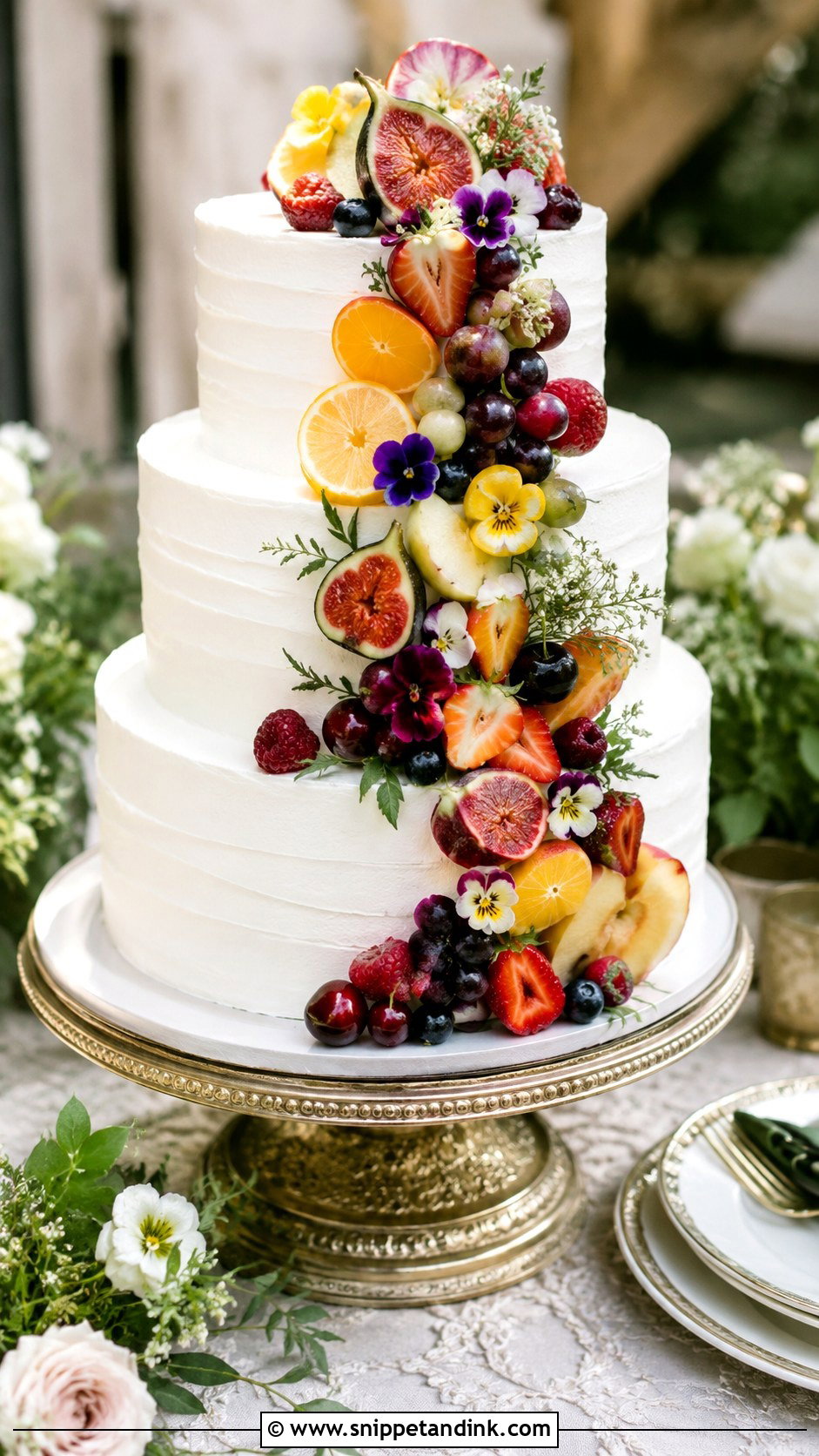
A mixed fruit cake gives you the most color and variety, and it’s also the easiest to get wrong. Choose fruit that shares a season and a palette: berries, figs, grapes, citrus, peaches and cherries can all sit together, but only if the arrangement looks planned. I build clusters that move from tier to tier with the firm fruit as a base and the soft fruit tucked on top, so nothing crushes. A white buttercream or semi naked finish gives the fruit room. Lighter fruit for spring, tropical for summer, figs and pomegranate for fall.
Is Your Fruit in Season the Week You Marry?
The inspiration photo was taken whenever that fruit was at its best, which may not be your wedding month. Strawberries and cherries peak in early summer, peaches and blackberries in late summer, figs and grapes into early fall, apples, pears and pomegranates through fall and winter, and citrus over the winter months. Out of season, most of it can still be bought, but it’s often paler, harder and less sweet, and it shows on a white cake.
So I’d suggest briefing your baker by color and mood rather than by a fixed list of fruit. Say you want deep reds and purples, or soft golds, and let them swap a blackberry for a fig if the figs that week aren’t good. A few questions worth asking at the tasting:
- Which fruit will be at its best in my wedding month, and what’s your backup if it isn’t?
- What goes on at the bakery, and what is added at the venue?
- How long can the decorated cake stand out of the fridge in my venue’s conditions?
- Will the outside fruit be glazed, and is any of it cut?
- Are there any stones, pits or seeds the caterer should warn guests about?
Fruit, Frosting and the Weather on the Day
Fruit works on a wedding cake because it tastes as good as it looks, and it can follow the season. A berry cake reads classic; citrus, mango or kiwi feel fresh and modern; figs, pears, apples, grapes and pomegranate bring a warmer, richer mood. But the right choice isn’t the prettiest photo. It’s the fruit that suits your weather, your frosting and how long the cake will stand on display, placed by someone who knows which pieces weep, brown or crush. Get those three right and the cake will look as fresh at the cutting as it did at setup.
You'll Like These Ideas:




Leave a Reply