
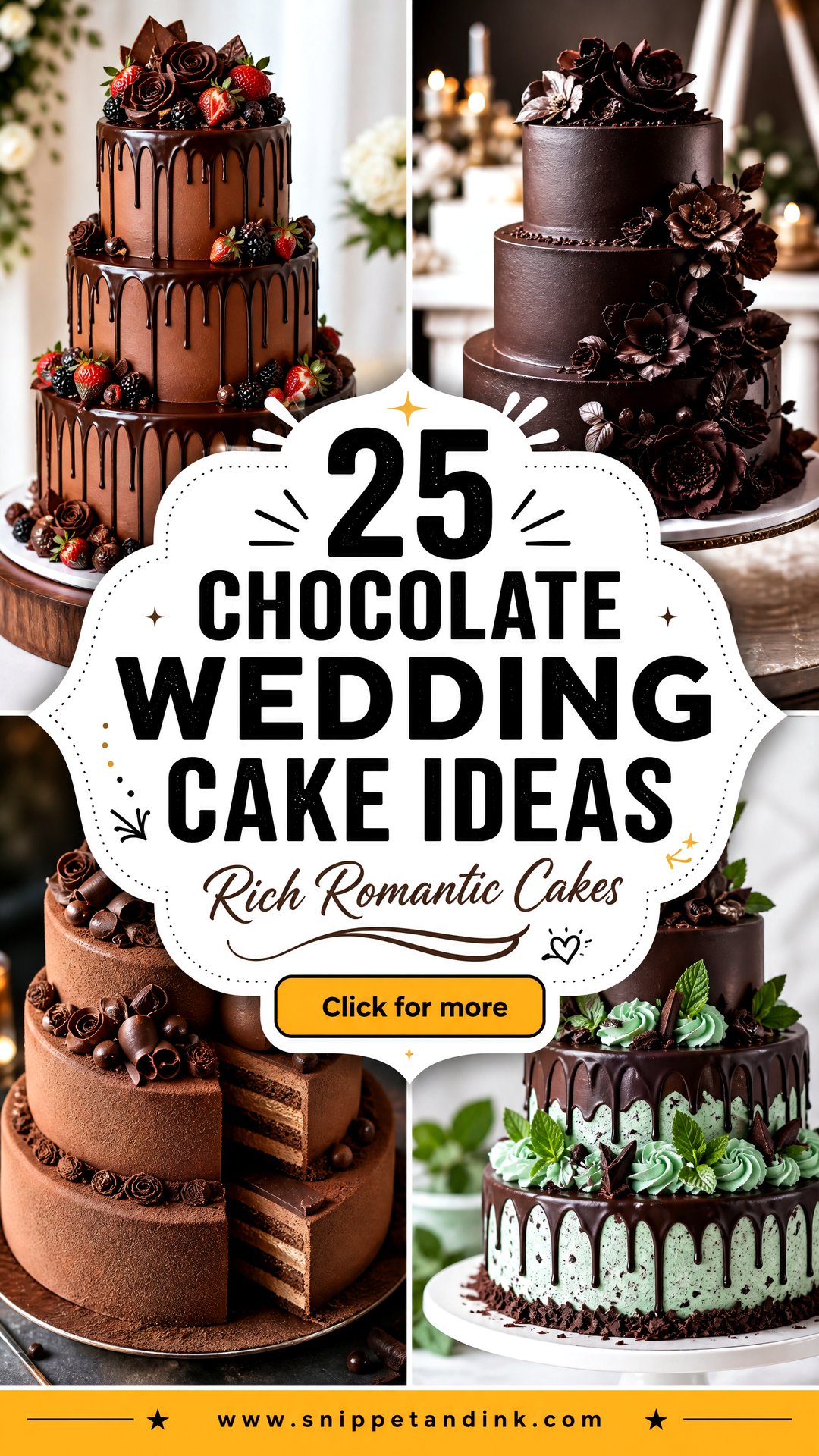
Chocolate wedding cakes used to be the alternative option. Now they’re half my enquiries, and I’m glad, because chocolate gives a designer more to work with than people expect: glossy ganache for a black-tie room, a nearly naked stack with berries for a barn, dark cocoa against ivory flowers and candlelight. It pairs with espresso, caramel, hazelnut, raspberry and orange as easily as with plain buttercream. The 25 designs below run from tall tiered cakes to small statement cakes, and for each I’ve said what it suits and where it struggles.
What the Cocoa Percentage Means for Your Slice
Couples often ask me for a dark chocolate cake and then find the tasting slice too bitter, or ask for plain chocolate and find it too sweet. The words mean different things to different bakers, so it helps to talk in a few specifics.
- Cocoa percentage is the share of the bar that comes from the cocoa bean. Higher numbers taste less sweet and more bitter; around the middle of the range is where most people find chocolate rich without being harsh.
- Milk chocolate makes softer, sweeter ganache that sets less firmly, so it’s better as a filling than as an outer coat on a warm day.
- Dutch-processed cocoa gives sponge a darker colour and a smoother, less acidic flavour than natural cocoa. Many deep brown wedding cakes owe their colour to it.
- Ask what chocolate your baker uses for ganache. Good couverture melts smoothly and tastes cleaner than cheap compound coatings.
At the tasting, I’d ask to try the sponge, the filling and the outer coating separately, then together. That’s the quickest way to tell which part is too sweet or too bitter, and what to change.
1. Chocolate Ganache Wedding Cake
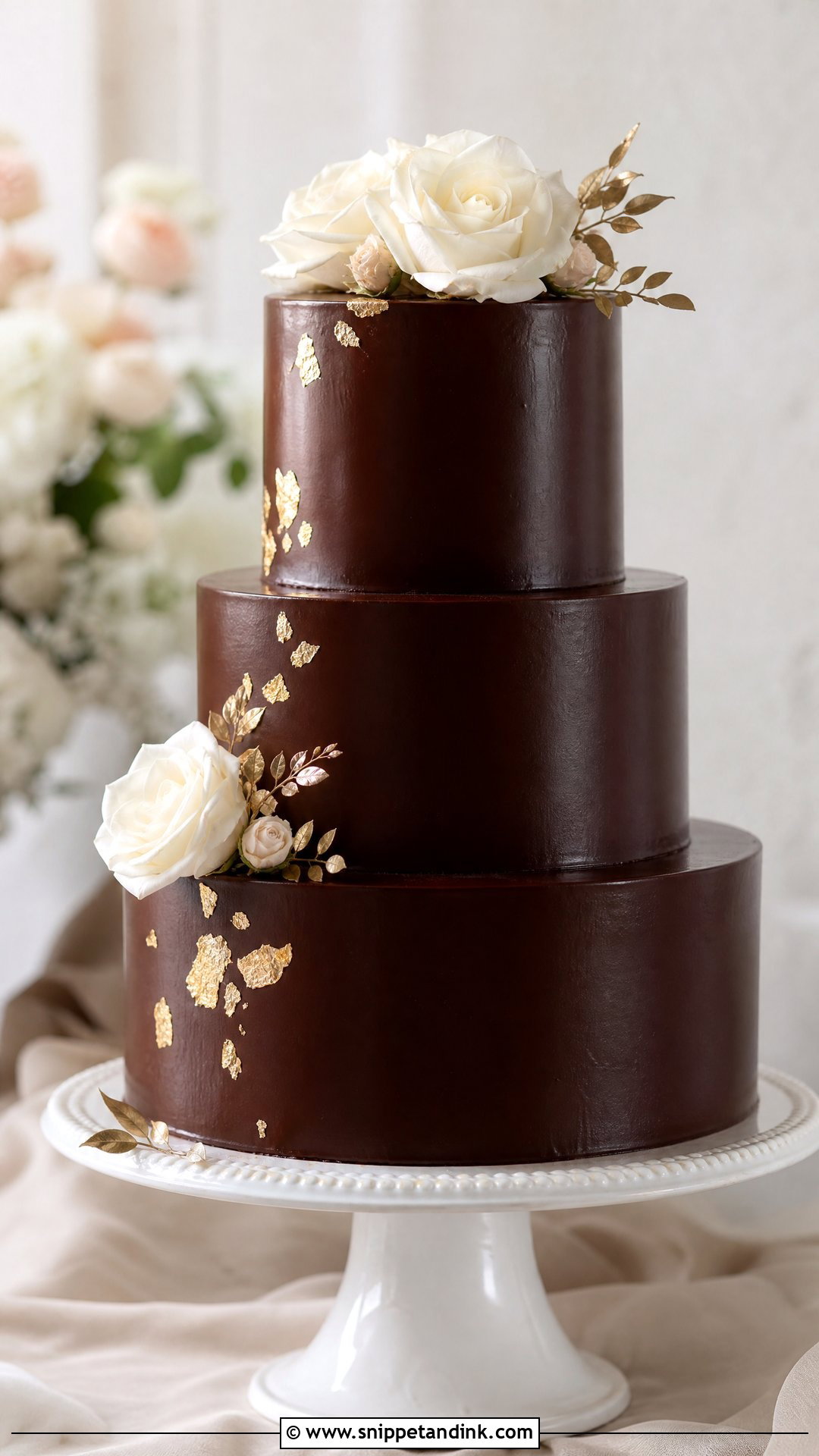
Ganache is the finish I trust most. It sets into a firm, smooth shell that takes sharp edges and protects the sponge from drying out, and its deep brown makes white roses or sugar orchids look brighter by comparison. Underneath, dark chocolate sponge with whipped ganache filling gives a rich bite that isn’t cloying. A thin gold edge or one floral cascade is all the decoration it needs.
2. Chocolate Drip Wedding Cake
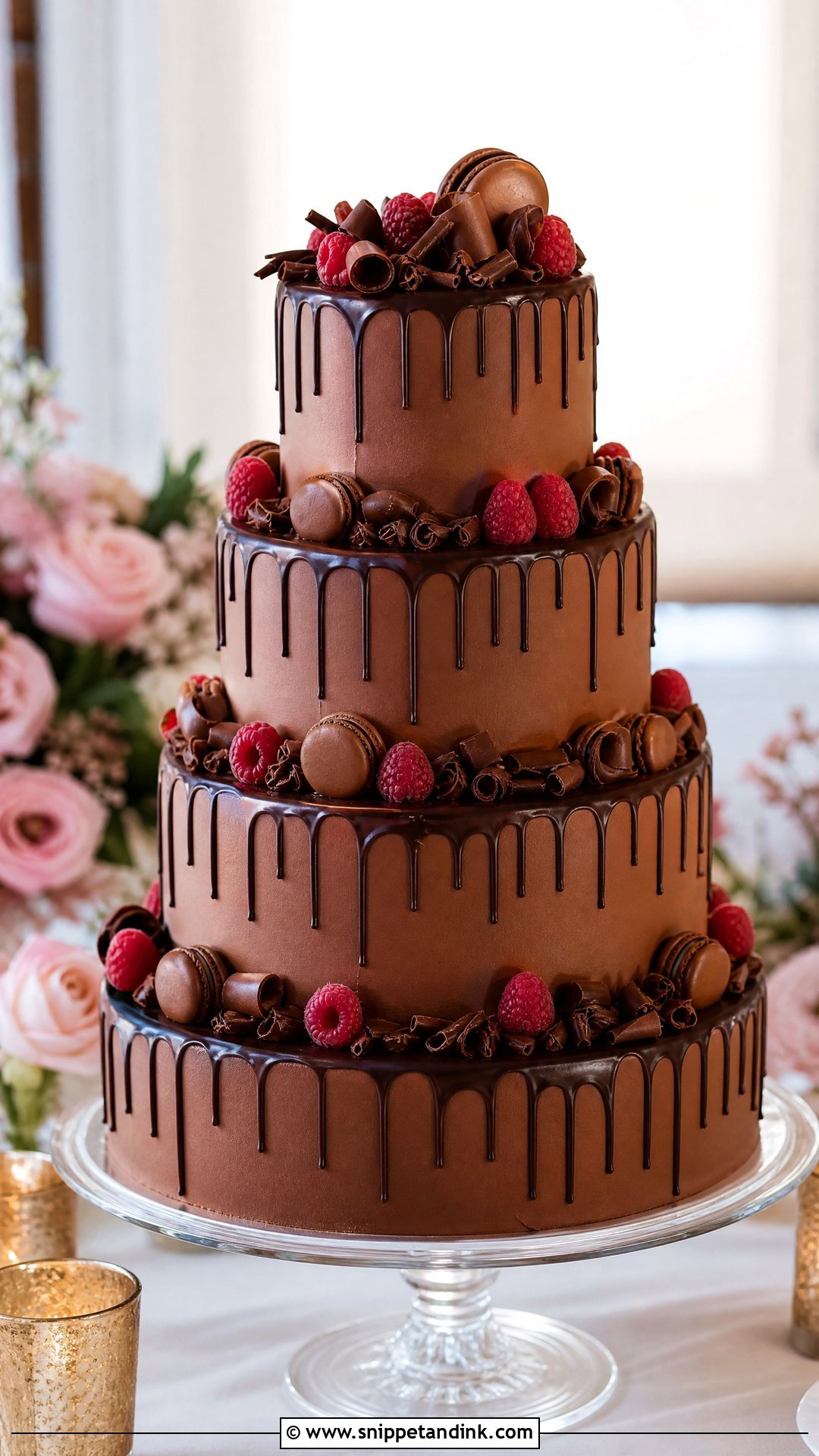
Drips look casual, but they’re temperature work. On a chocolate drip wedding cake, I chill the iced tiers hard, then pour ganache that’s cooled just enough to cling, so each drip stops partway down instead of pooling on the board. Dark over ivory buttercream gives the strongest contrast; milk over mocha is softer; white over cocoa reverses it. Group berries, macarons or shards on the top tier only. Spread them over every tier and the cake starts to look like a dessert buffet.
3. Naked Chocolate Wedding Cake
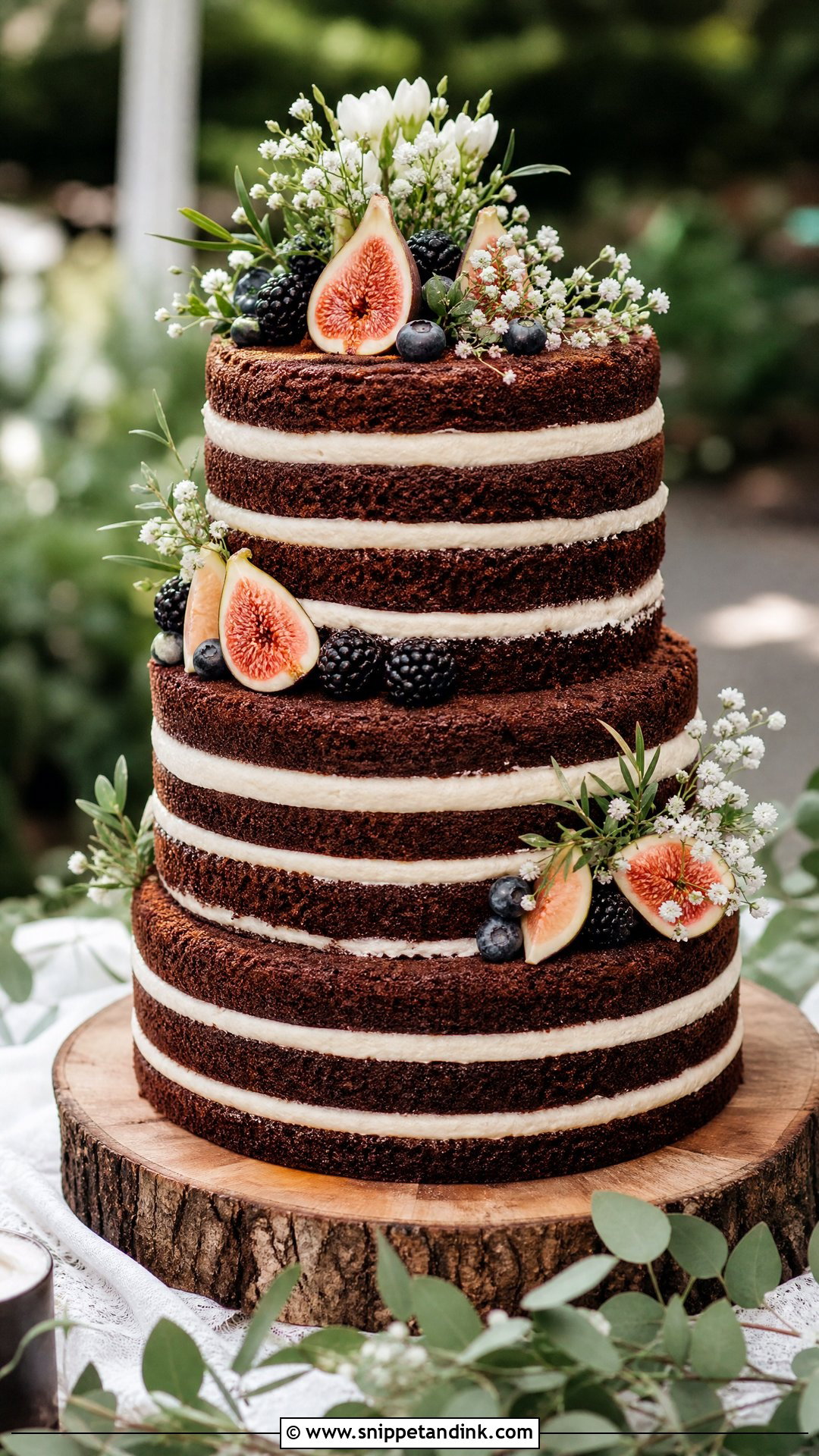
Naked suits a garden or barn, and it hides nothing. Uneven layers, a leaning stack or a dry edge all show, so I bake and level carefully and assemble close to the day. Chocolate sponge dries faster when exposed than people realise; I keep the cake wrapped until shortly before display. Berries, figs and icing sugar add softness. Fill it with chocolate buttercream or vanilla bean cream, which balances the sponge without much frosting outside.
4. Semi Naked Chocolate Wedding Cake
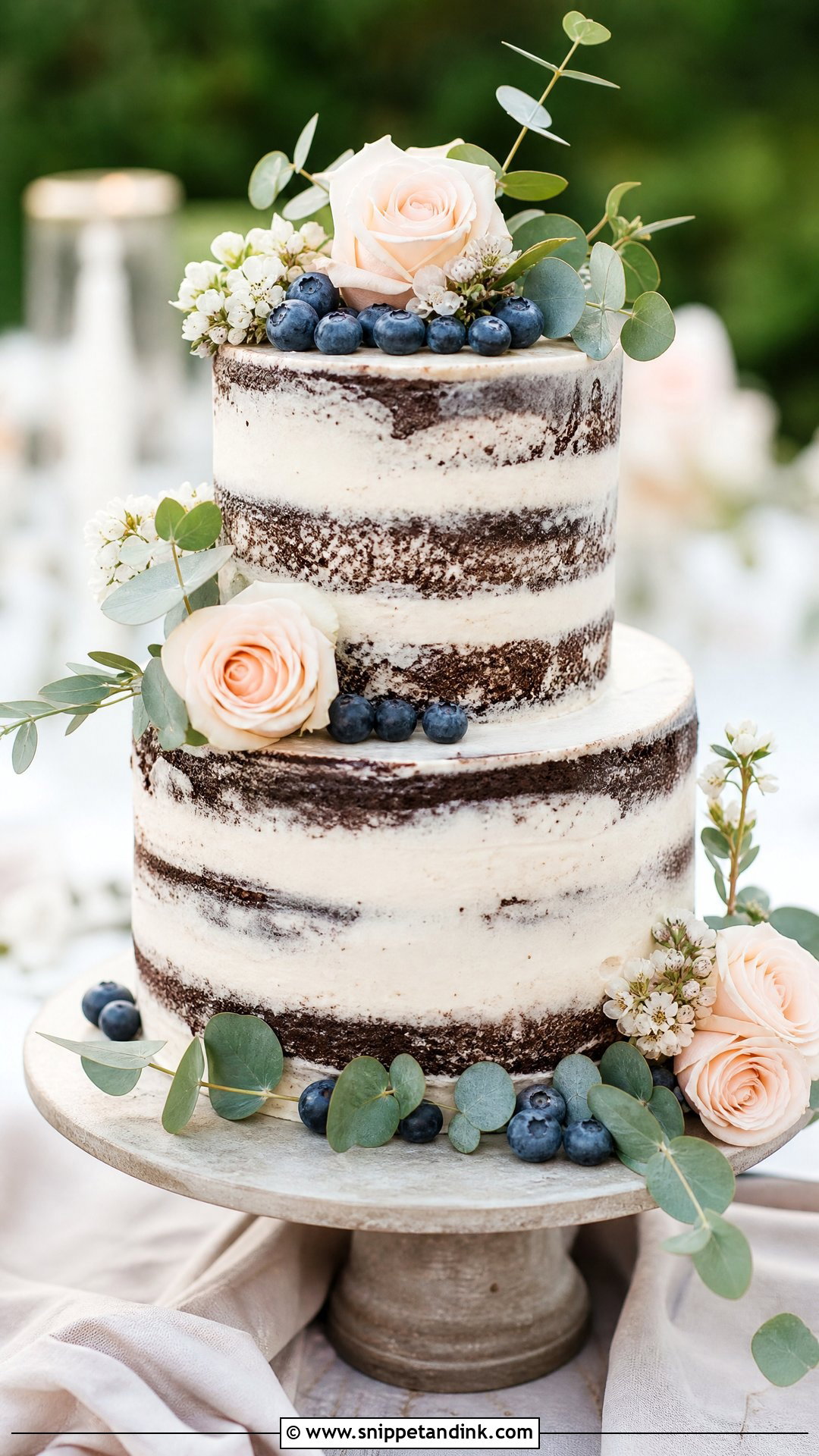
Semi naked is the version I suggest when a couple loves the rustic look but the cake will sit out for a few hours. That thin scrape of buttercream keeps the sponge moist while still letting dark layers show through. Greenery, small blooms and seasonal fruit suit it. The tricky part is judging how much to scrape away: too little and it looks fully iced, too much and the layers dry. For a slightly dressier version, add a touch of gold leaf or fine piping.
5. Chocolate Buttercream Wedding Cake
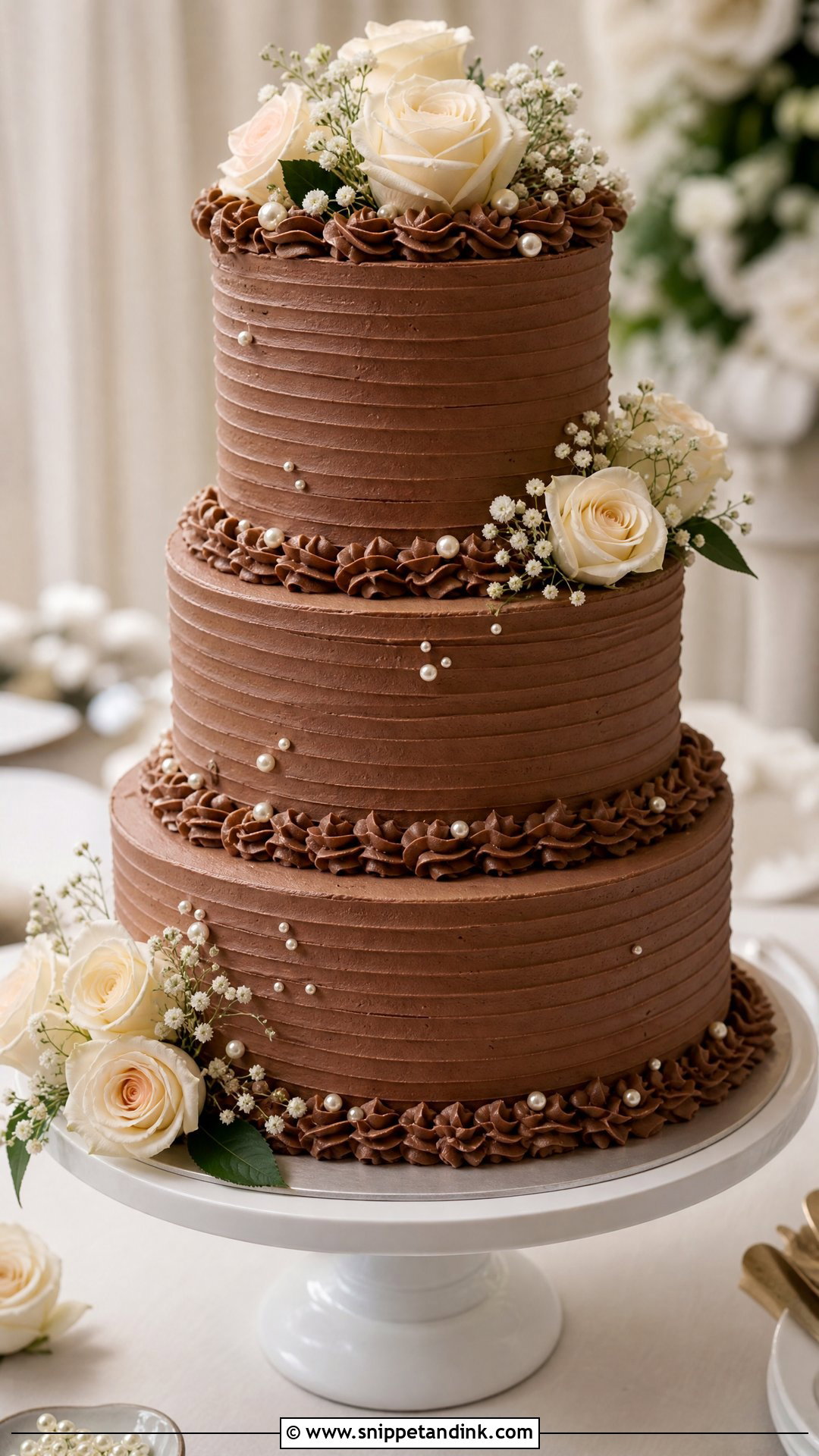
Chocolate buttercream is the flavour almost every guest finishes. It goes on smooth for a modern finish or with spatula strokes for a relaxed one, and it pipes well, so borders, rosettes and ruffles are all possible. Milk chocolate buttercream is sweeter and lighter in colour; dark is richer and pipes slightly stiffer. I pair the brown frosting with ivory or blush flowers so it still reads as a wedding cake rather than a birthday one.
6. Dark Chocolate Wedding Cake
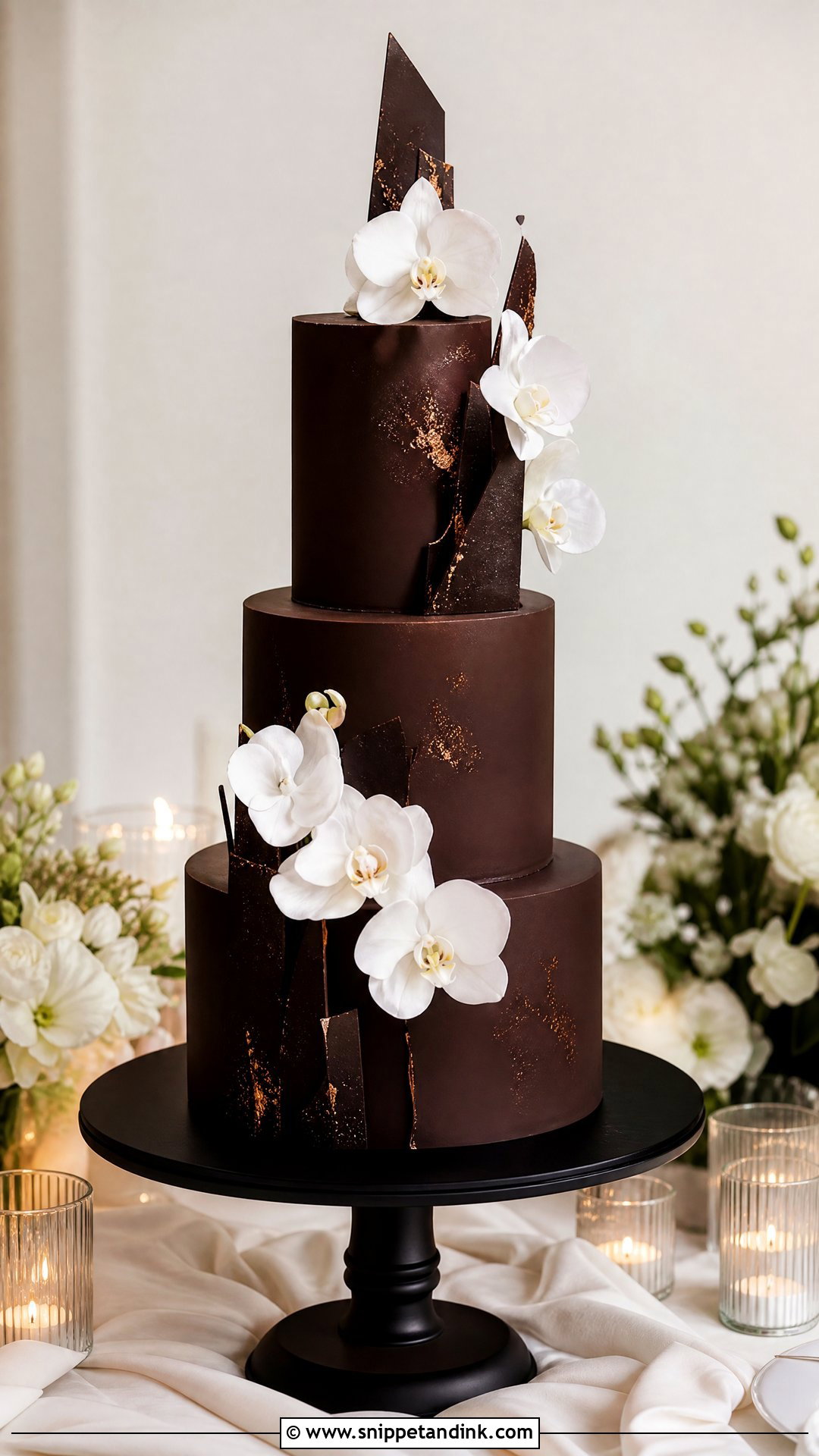
For couples who find wedding cake too sweet, dark chocolate is my first suggestion. It carries sharp fillings well: espresso, raspberry, salted caramel or orange. Visually, I keep the tiers tall and clean, because a short, wide dark cake can look heavy on a table. Matte black accents, ivory flowers or one sculptural branch are enough. It suits evening receptions and minimal venues.
7. White Chocolate Wedding Cake
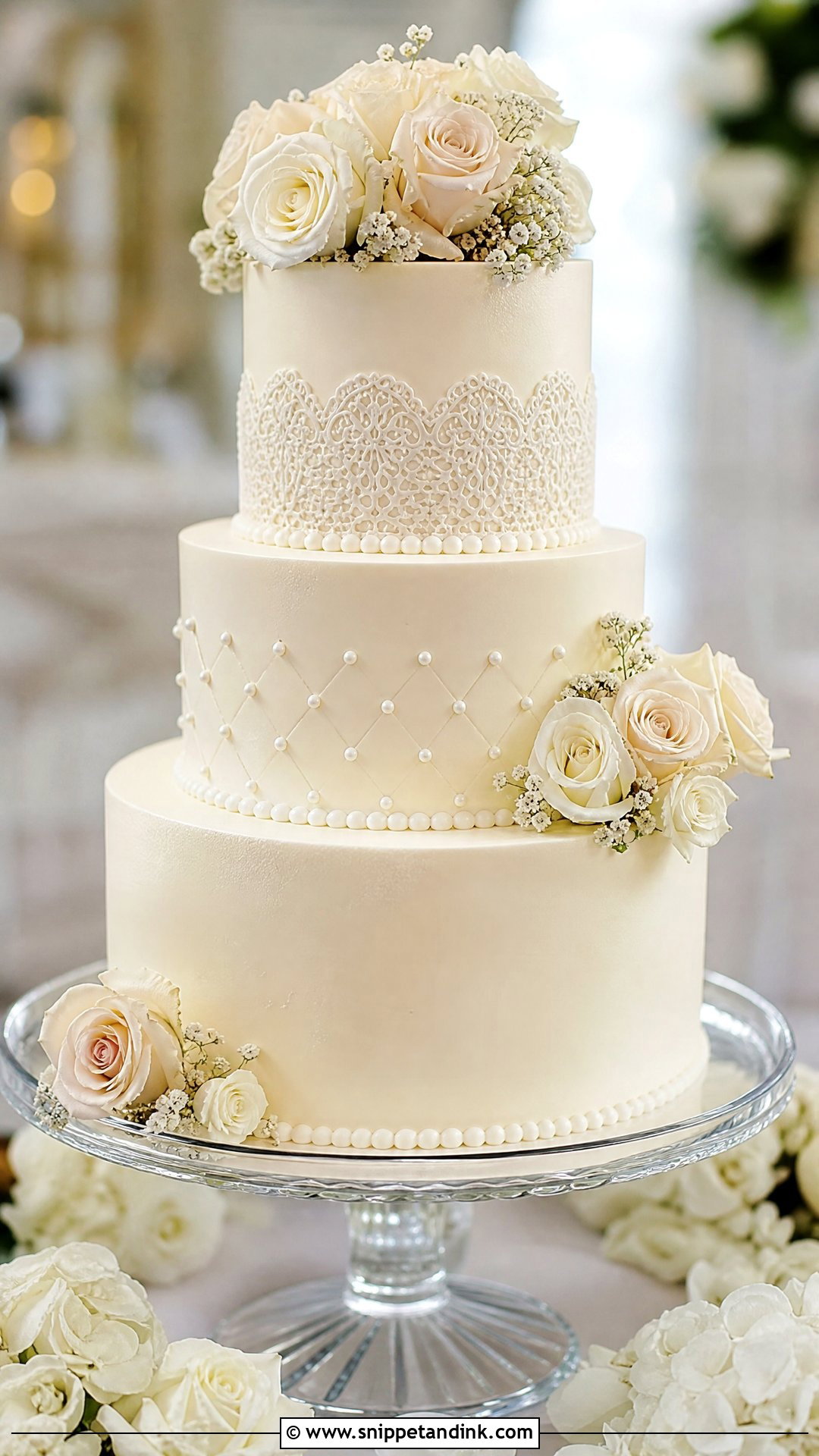
White chocolate gives chocolate flavour in a pale bridal finish. Inside, white chocolate sponge, mousse, or buttercream all work, though white chocolate on its own is very sweet. I always pair it with something sharp: raspberry, lemon or passion fruit. White chocolate ganache also sets softer than dark and leans ivory rather than white, so it’s better under fondant in a warm room. Pearls and sugar flowers suit it.
8. Chocolate Raspberry Wedding Cake
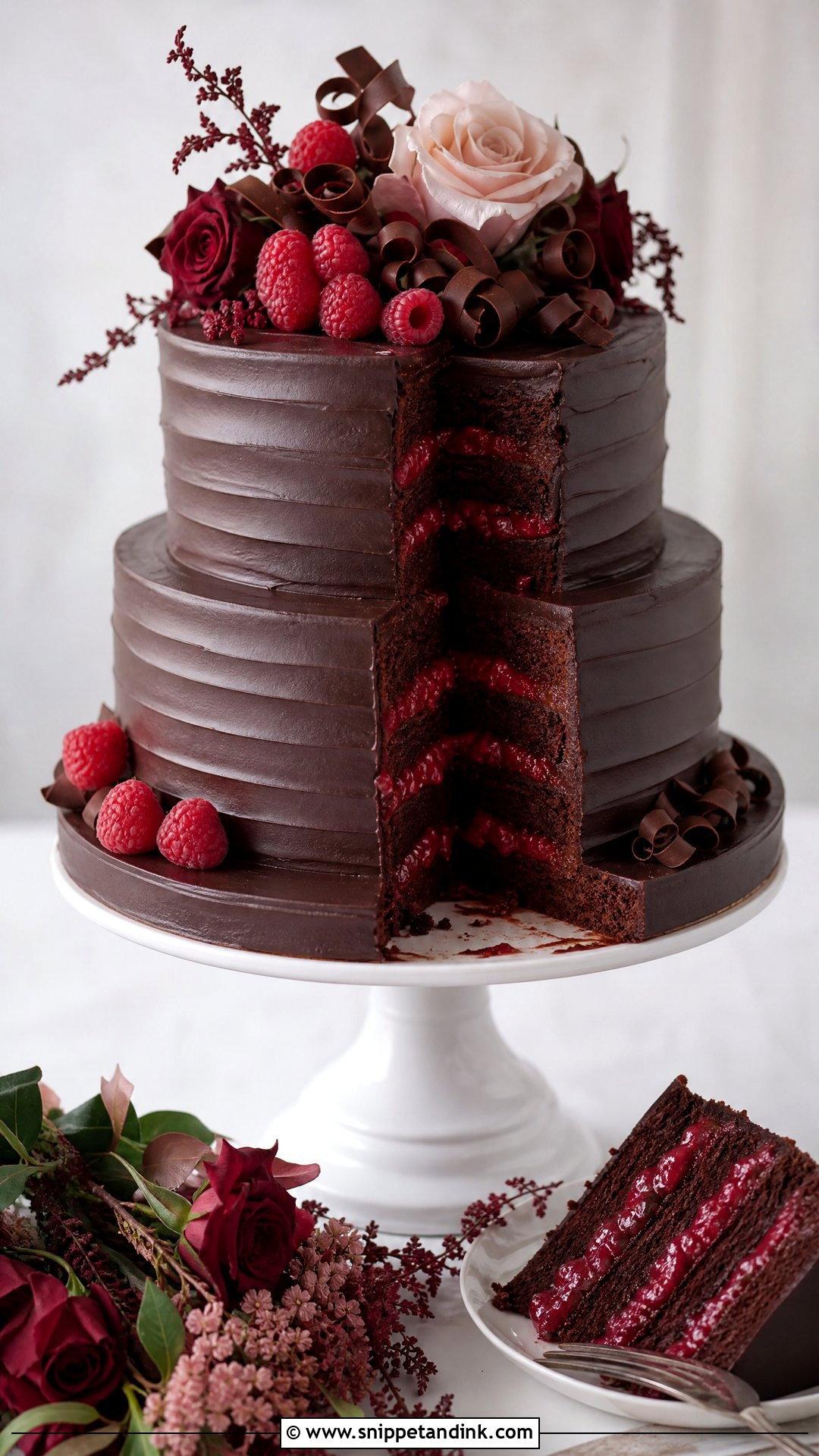
Raspberry is the filling I recommend most with chocolate, since its acidity cuts the richness and makes each slice feel lighter. The weak point is moisture. I cook the raspberries into a thick compote and pipe a buttercream dam around each layer so it can’t leak out and stain the sides. A thin ganache coat outside, fresh raspberries on top and blush or burgundy flowers suit it in any season.
9. Chocolate Strawberry Wedding Cake
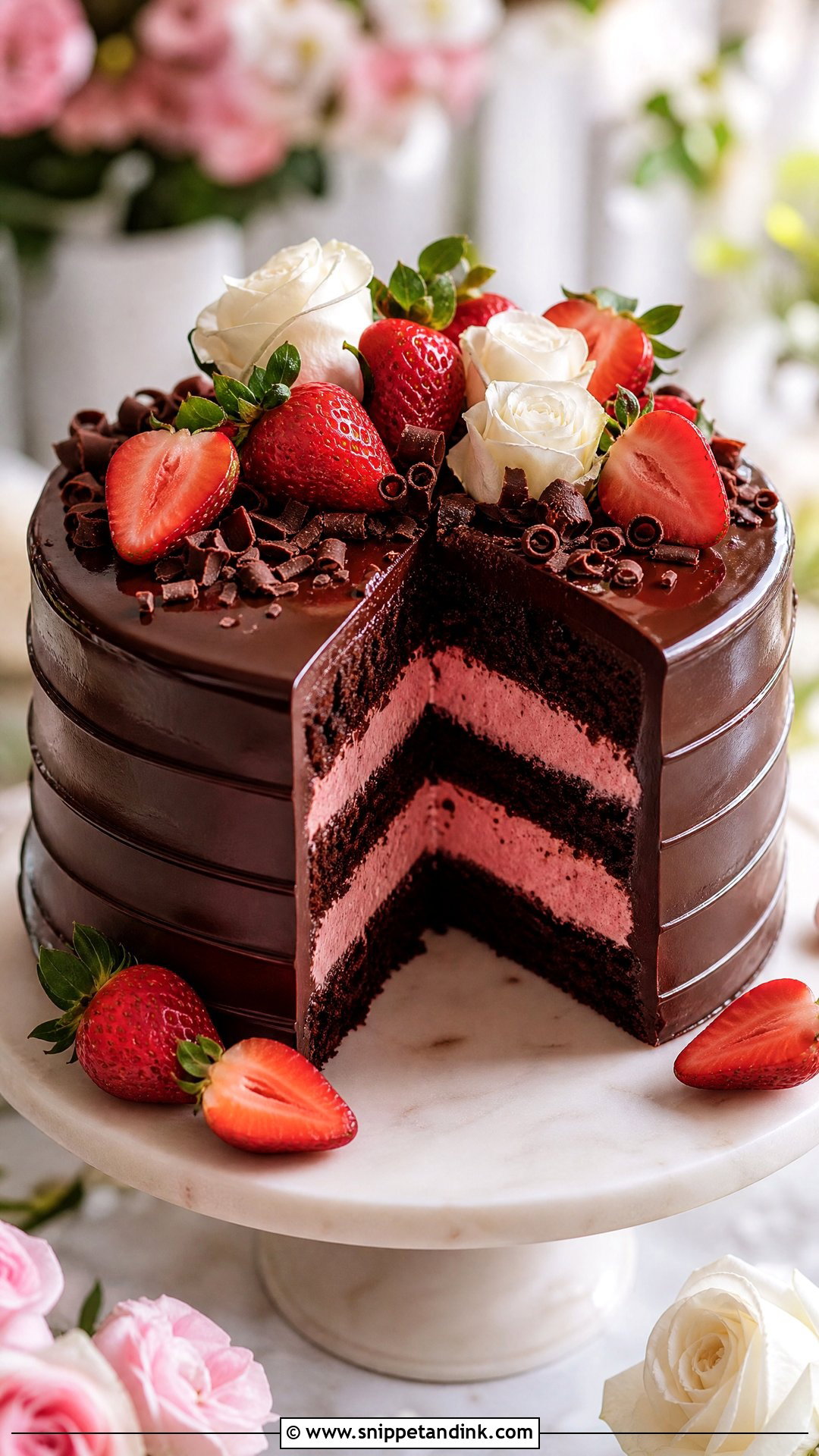
Guests recognise chocolate and strawberry immediately, which makes this a safe crowd choice. It can be dark chocolate sponge with strawberry filling, ganache with fresh berries on top, or a lighter chocolate sponge with strawberry buttercream. What keeps it from looking like a casual dessert is fruit placement: whole berries in one deliberate cascade, placed at the venue so they don’t weep on the icing overnight.
10. Chocolate Caramel Wedding Cake
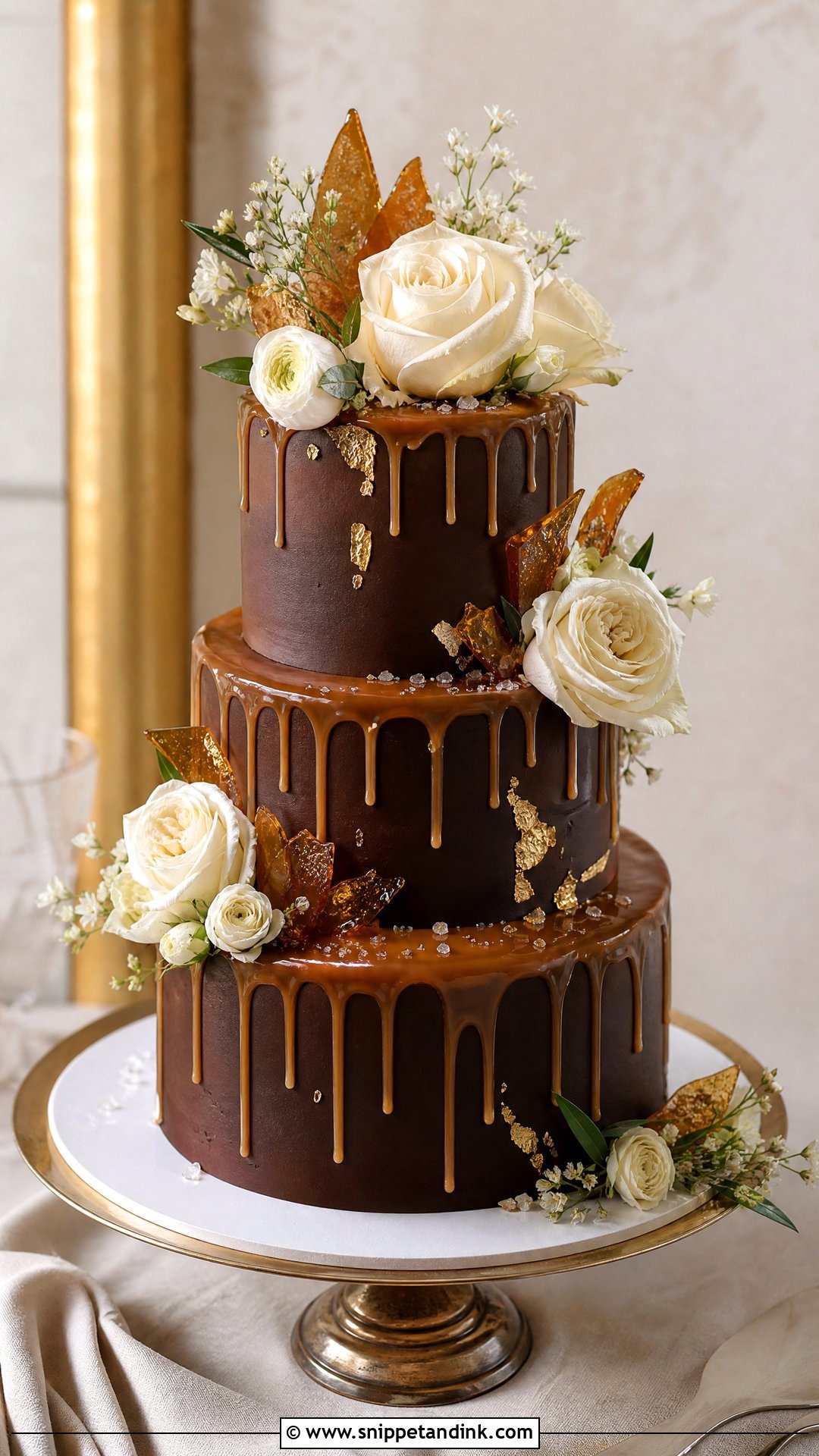
Salted caramel with chocolate is warmer and more buttery than chocolate alone, and the salt stops it tipping into too sweet. I’d use dark chocolate sponge, salted caramel filling and ganache outside. A caramel drip needs to be thicker than a chocolate one, since caramel keeps running if it’s even slightly warm. Caramel shards, toasted nuts or gold leaf decorate it well, especially for autumn and candlelit receptions.
11. Chocolate Hazelnut Wedding Cake
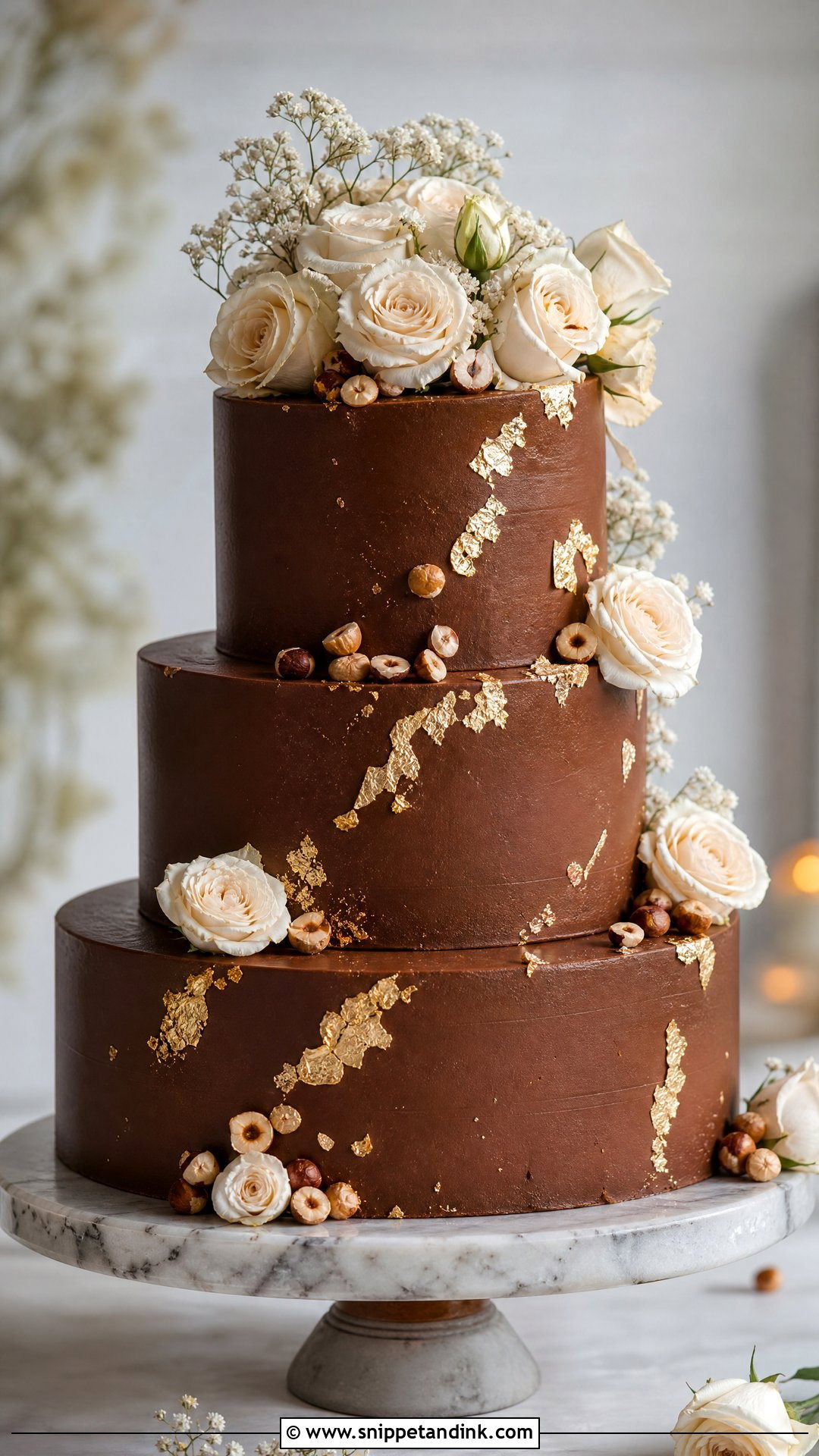
Hazelnut makes chocolate taste deeper and slightly toasted, and a thin layer of praline crunch between sponge layers adds texture guests notice. That crunch has to be thin, or the slice crumbles when it’s cut. Whipped ganache or Swiss meringue buttercream outside, with a few toasted hazelnuts and cream flowers, keeps it refined rather than candy-like. Label it clearly, since hazelnut is a common allergen.
12. Chocolate Espresso Wedding Cake
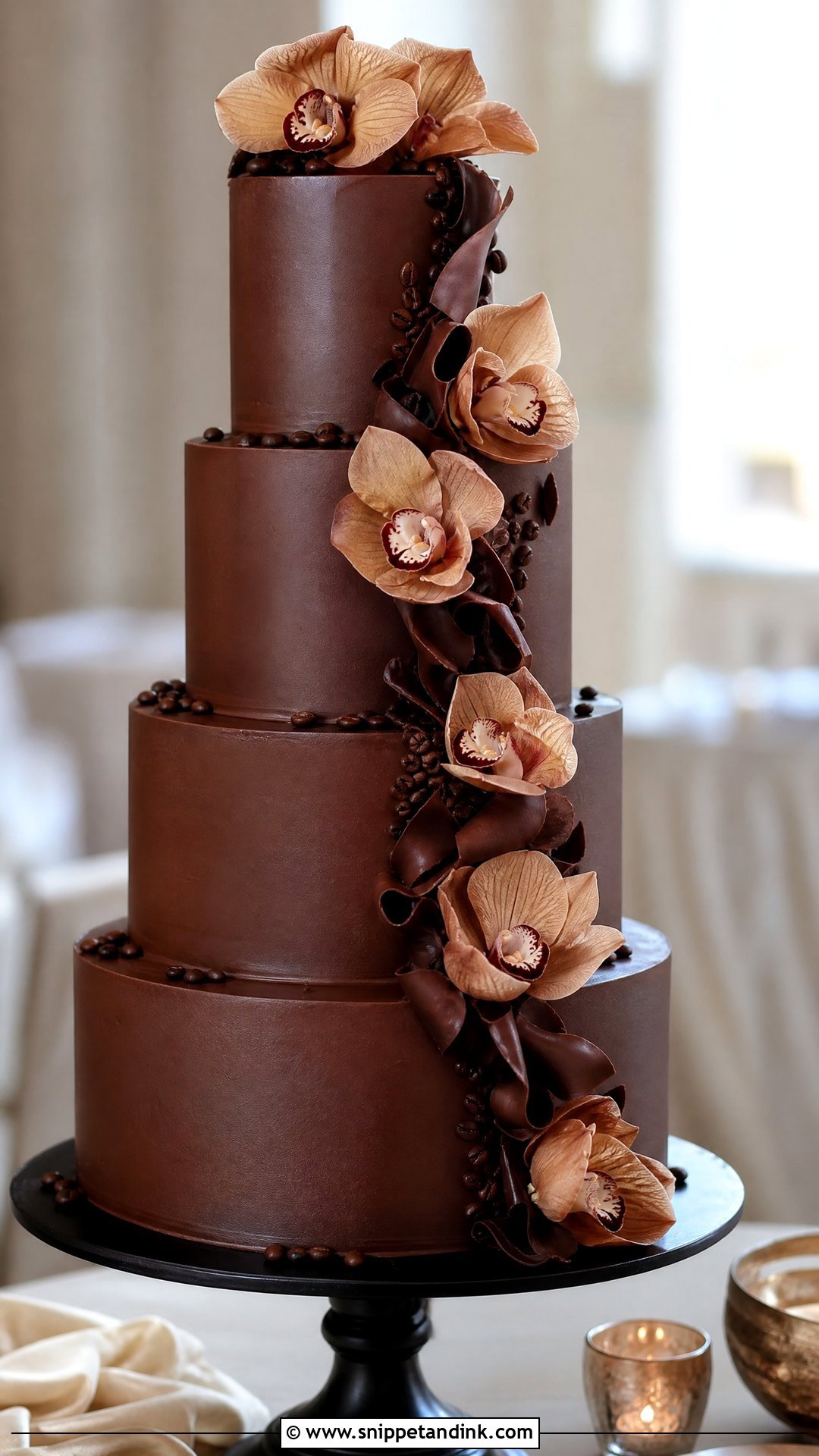
A little espresso in the sponge or ganache makes chocolate taste more chocolatey without the cake tasting of coffee. Push it further with mocha buttercream if you love coffee. Tall tiers, a dark drip and a few espresso beans look sleek; ivory roses or beige orchids soften the palette. I’d note the caffeine on a menu card, since cake is often served late in the evening.
13. Chocolate Mousse Wedding Cake
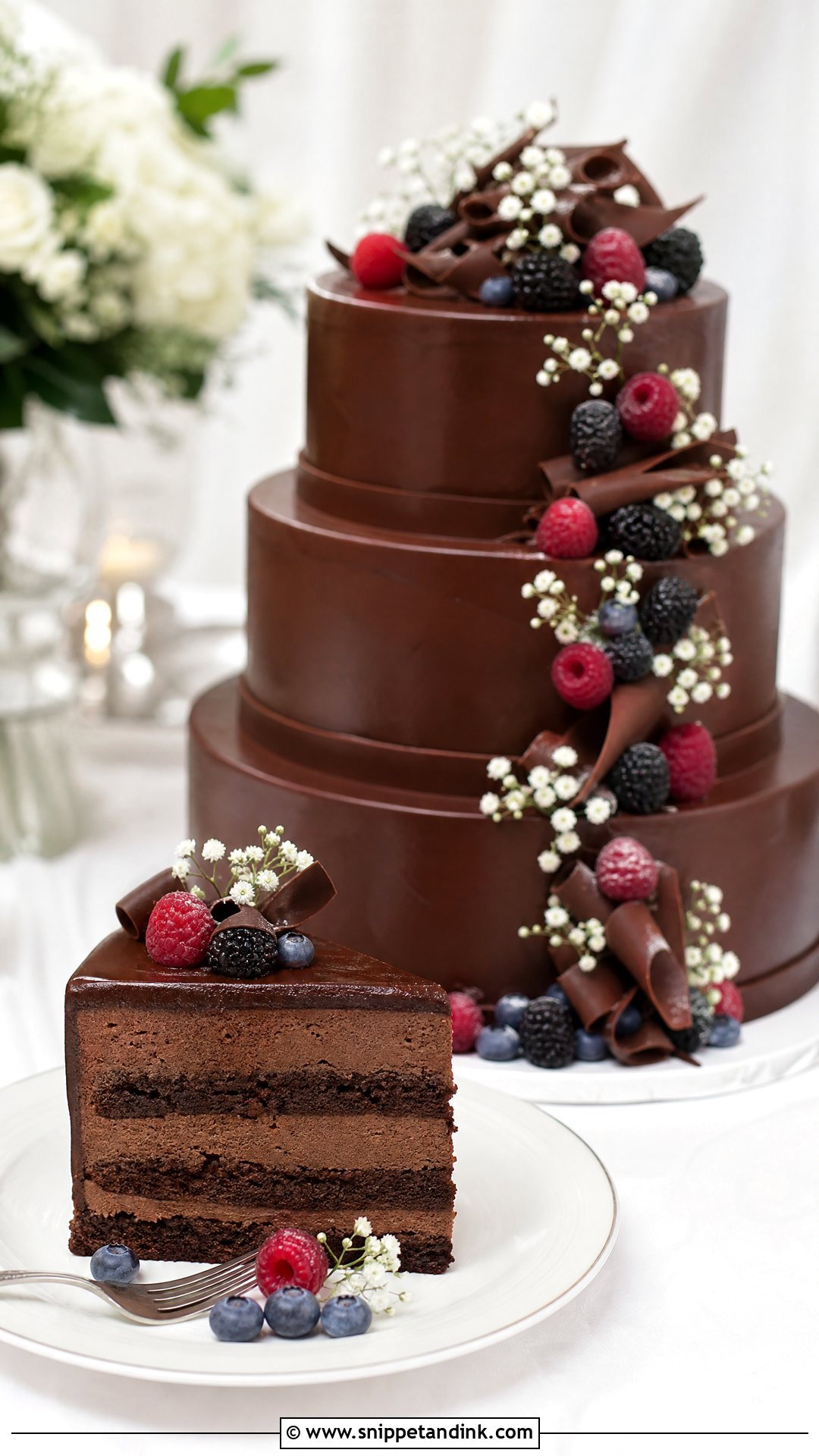
Mousse gives the lightest, creamiest slice in this list, and it’s also the least forgiving. Every tier needs internal supports and boards, the cake needs to stay chilled until close to serving, and I won’t put one on an outdoor table in summer heat. A ganache coat outside helps hold its shape. In a cool room, with a dark smooth finish and a few curls or berries, it’s a real treat.
14. Chocolate Fudge Wedding Cake
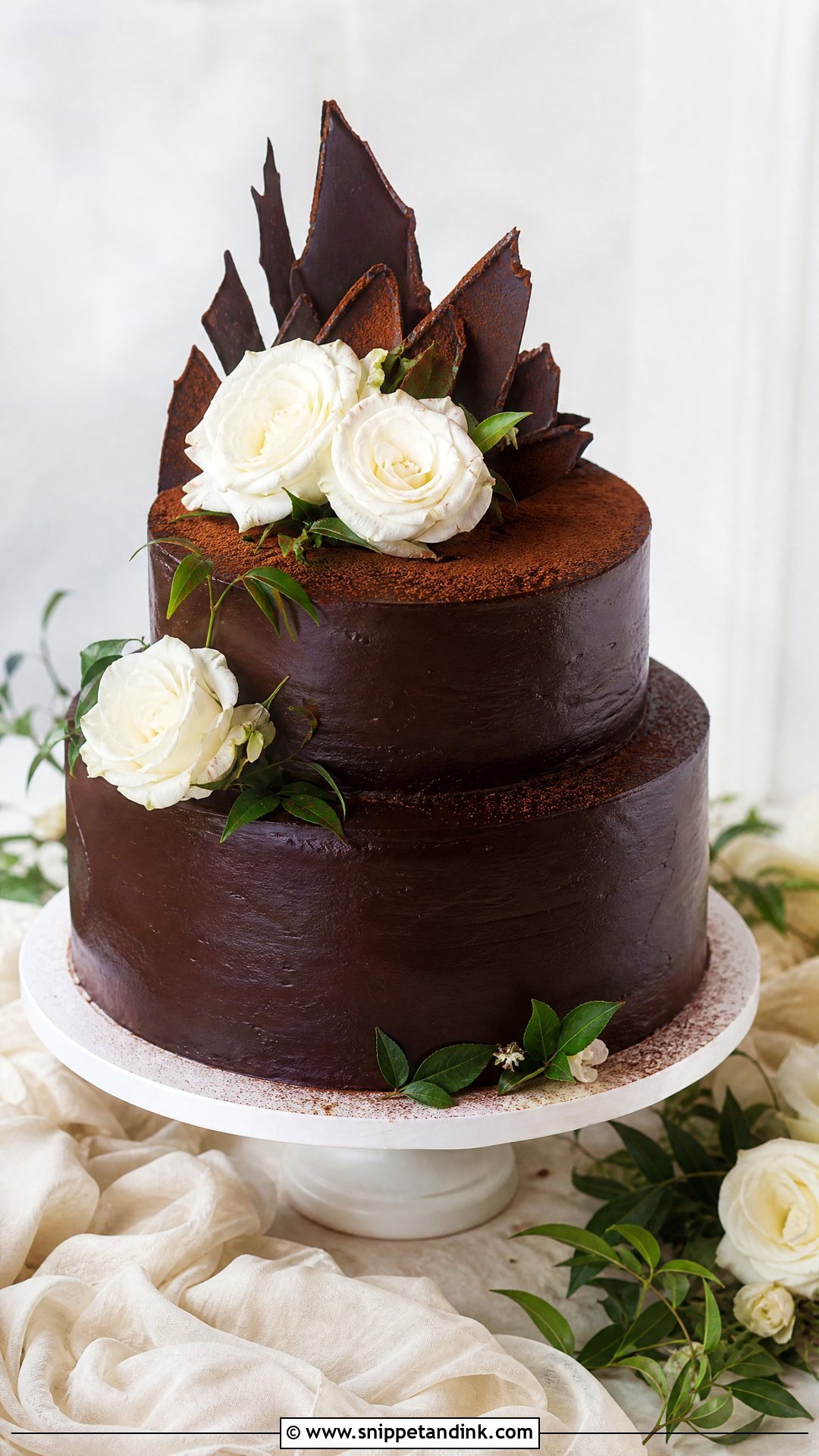
Fudge cake is dense and very rich, so slices can be smaller than usual, which suits a modest guest list. Because the flavour is so bold, the outside can stay simple: smooth ganache, a glossy top and a few white flowers. On a tiered cake, I’d make only one tier fudge and fill the others with something lighter, like vanilla cream or raspberry, so the cake doesn’t feel heavy after a big dinner.



15. Chocolate Orange Wedding Cake
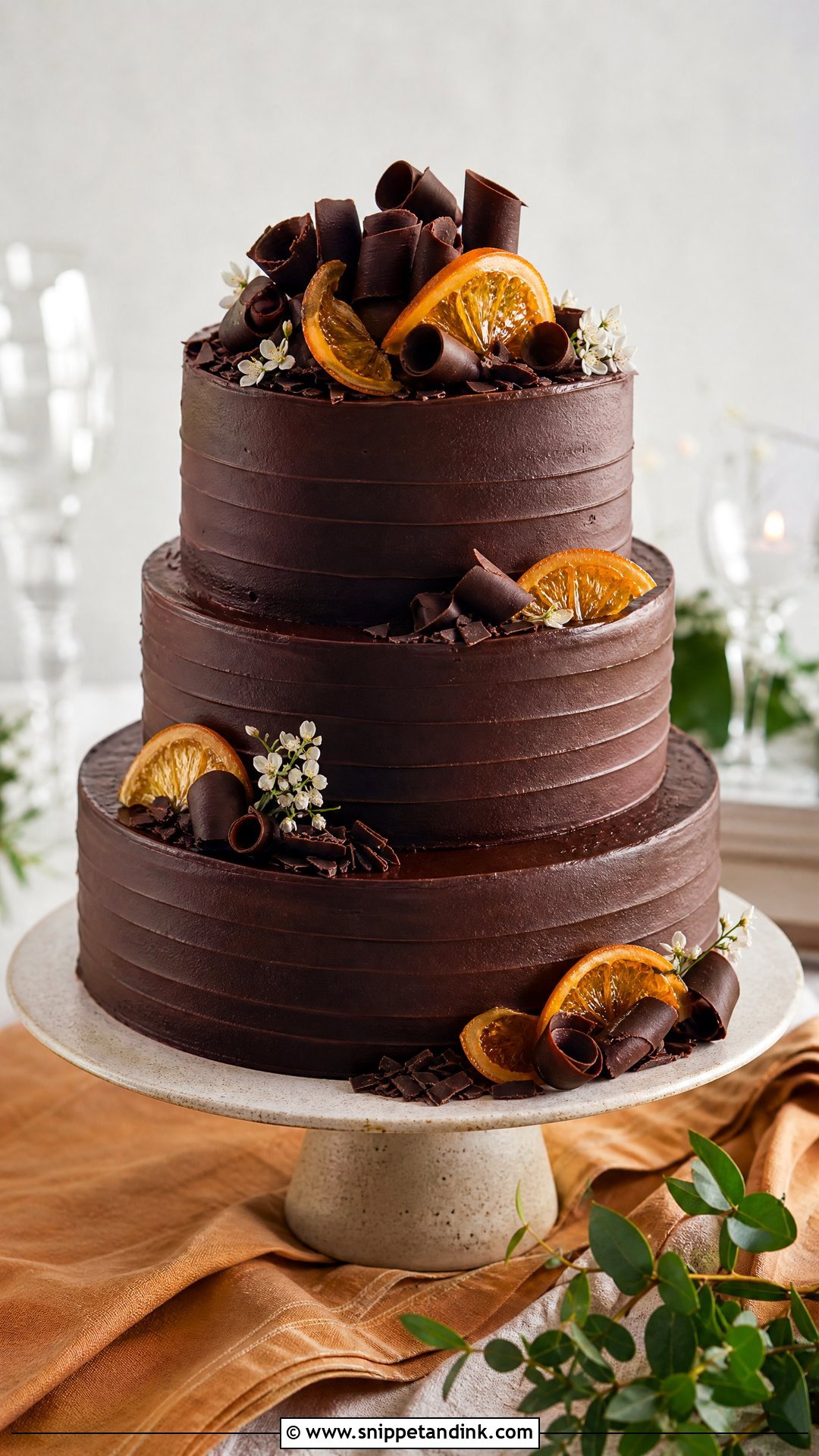
Orange lifts dark chocolate the way raspberry does, with a warmer, more grown-up note. I use zest in the sponge and an orange curd or buttercream between layers, since zest carries more flavour than juice. Candied orange slices on ganache look bright against the dark finish; they’re best added on the day so the syrup doesn’t run. It works well from late summer through the colder months.
16. Chocolate Mint Wedding Cake
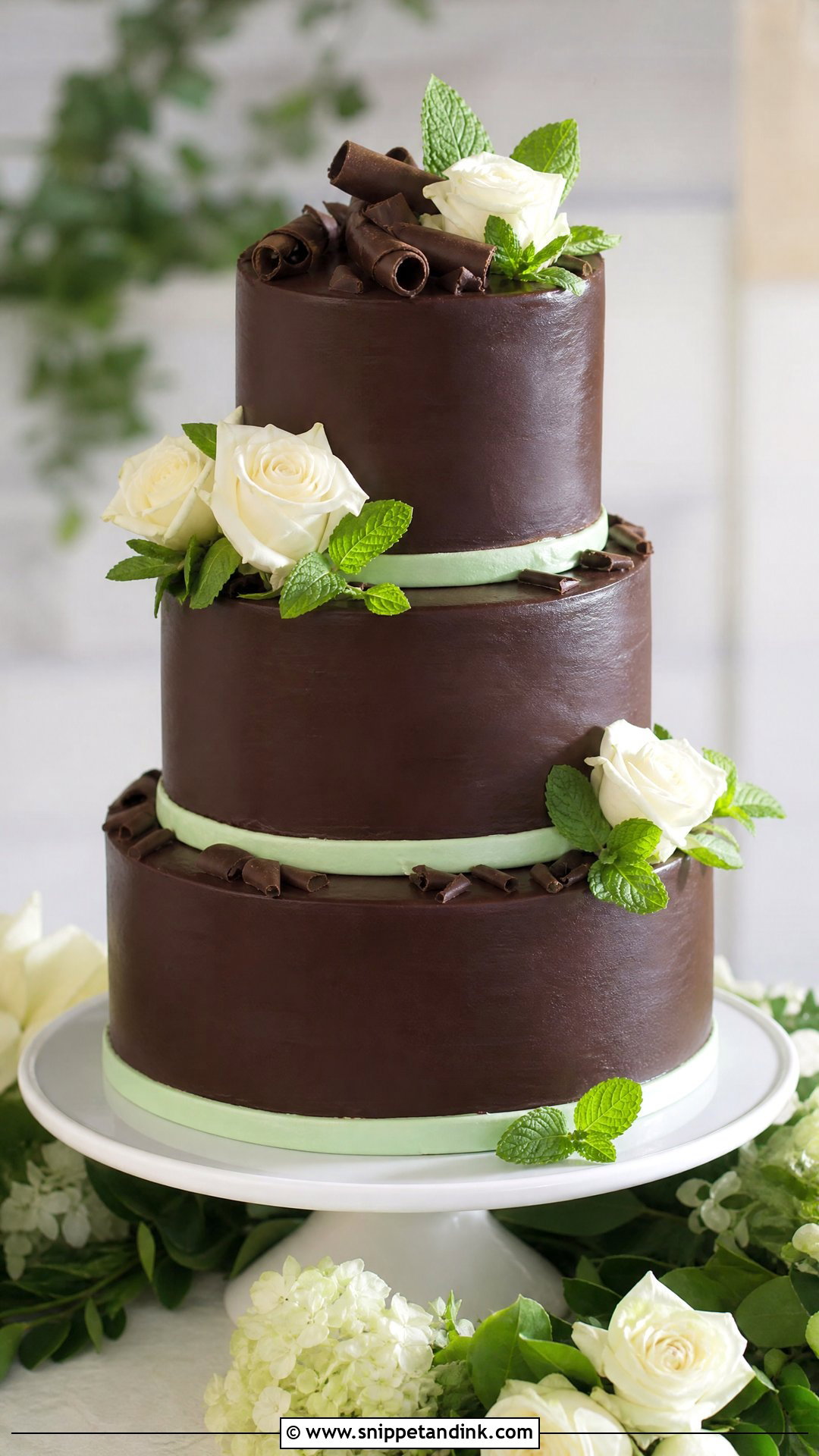
Mint needs a light hand. Too much peppermint extract and the cake tastes like toothpaste, so I add it gradually and taste as I go, keeping it to the buttercream or one filling layer. Skip the bright green colouring; a pale mint buttercream or plain ganache with fresh mint leaves looks far more refined. It’s a good last course after a rich dinner, since the slice finishes clean.
17. Chocolate Coconut Wedding Cake
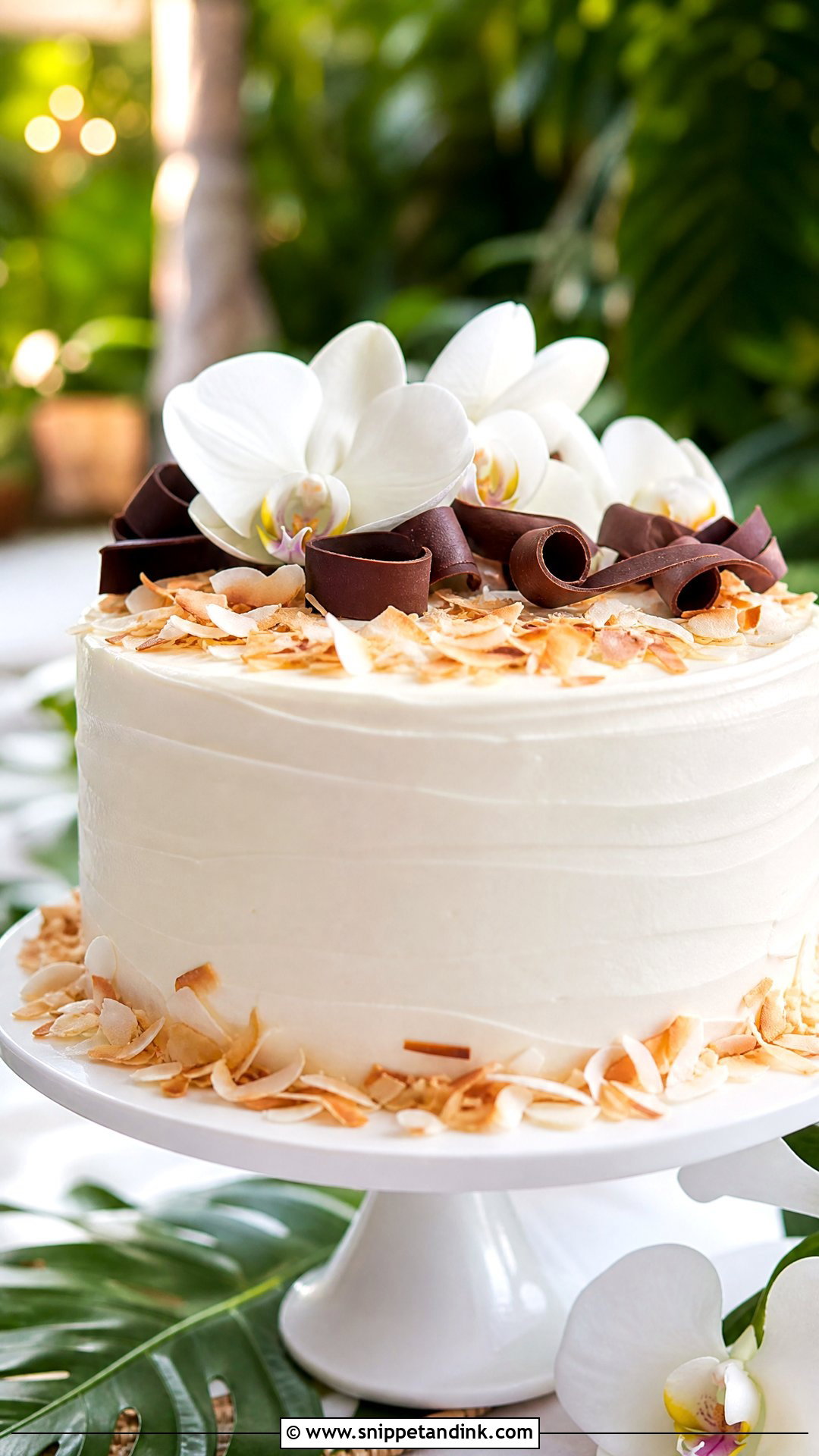
Coconut lightens chocolate and suits warm-weather weddings. Chocolate sponge with coconut cream filling or coconut buttercream, covered in smooth white frosting, hides the dark sponge until the cake is cut. Toasted coconut can look messy if it’s thrown on, so I press it into one band or the base only. White orchids and dark curls finish it neatly.
18. Chocolate Floral Wedding Cake
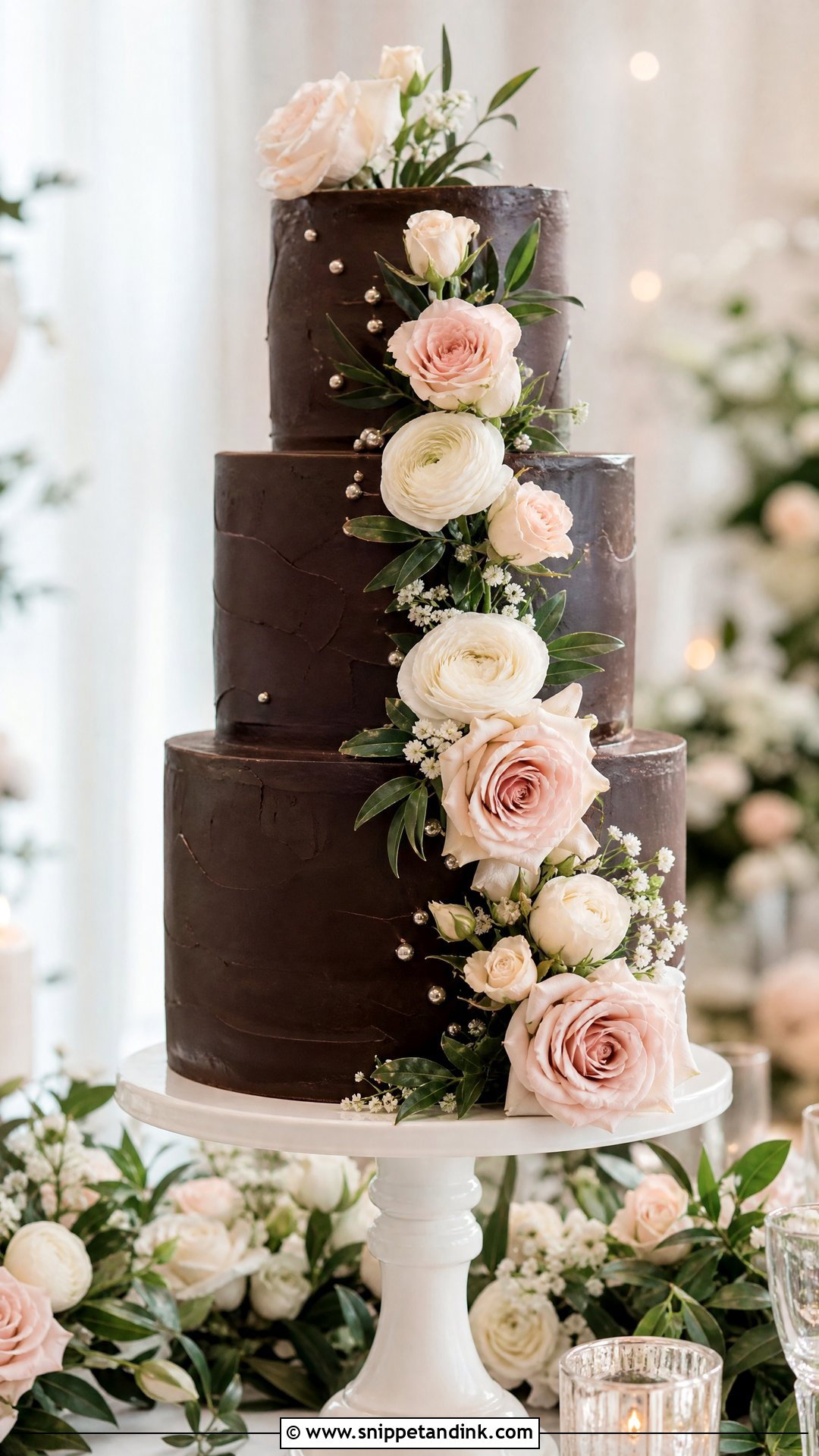
Flowers are the quickest way to make a dark cake romantic, because pale petals stand out so clearly against cocoa frosting. Roses, ranunculus, orchids or peonies all work, placed in one clean cascade or two balanced clusters rather than covering every inch. Some popular flowers and foliage aren’t food-safe, so I insist on unsprayed blooms, wrapped stems or barriers, and the florist and I agree beforehand on who places them.
19. Chocolate Gold Wedding Cake
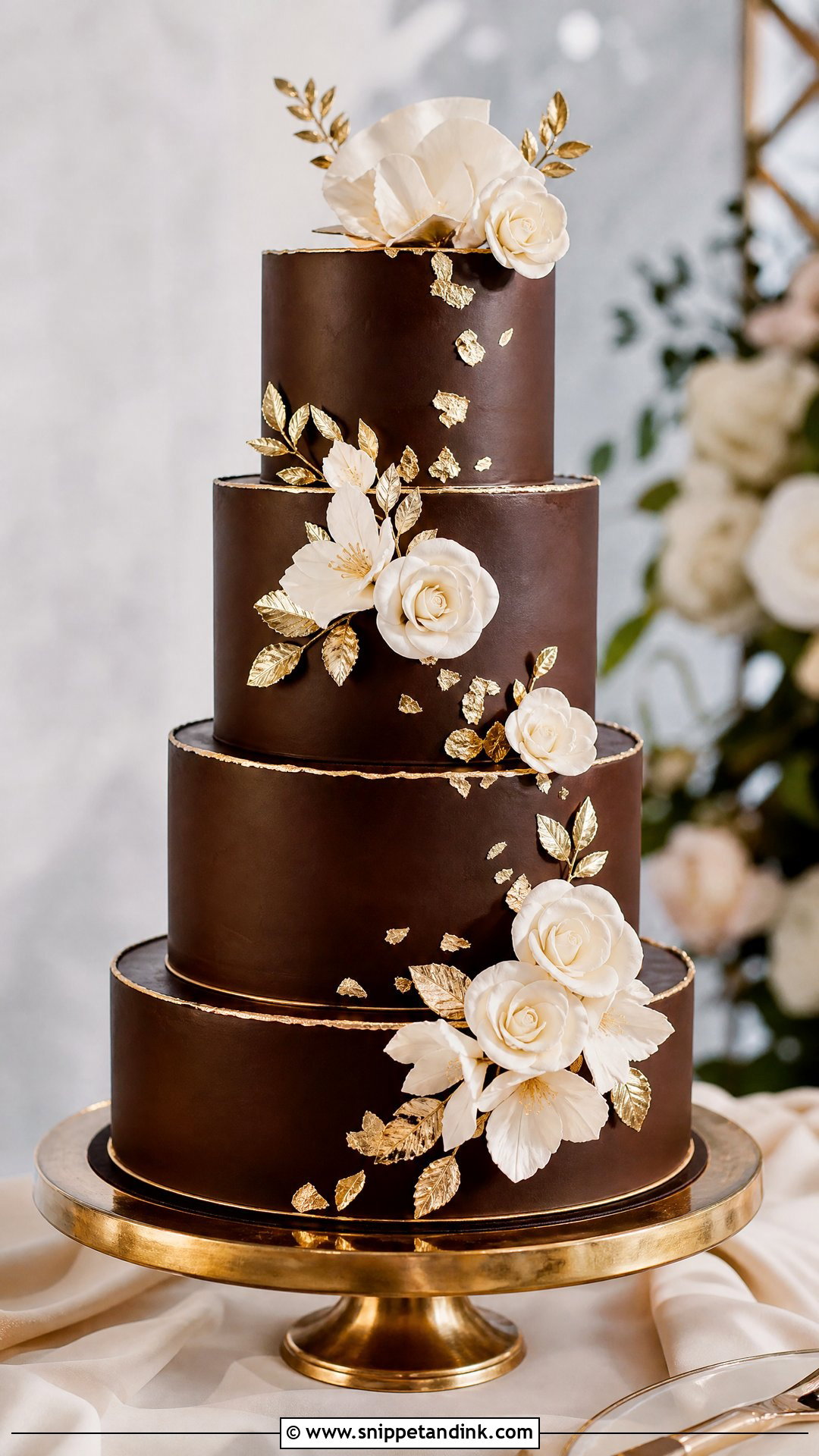
Gold is about restraint. Gold leaf on one tier, painted edges, a light metallic splatter or a single band makes dark chocolate look rich; covering everything makes it look like a trophy. I only use products sold as edible, which is a different label from non-toxic craft lustre. It pairs well with smooth ganache, dark buttercream or black cocoa, plus ivory flowers and a simple stand, especially by candlelight.




20. Black Chocolate Wedding Cake
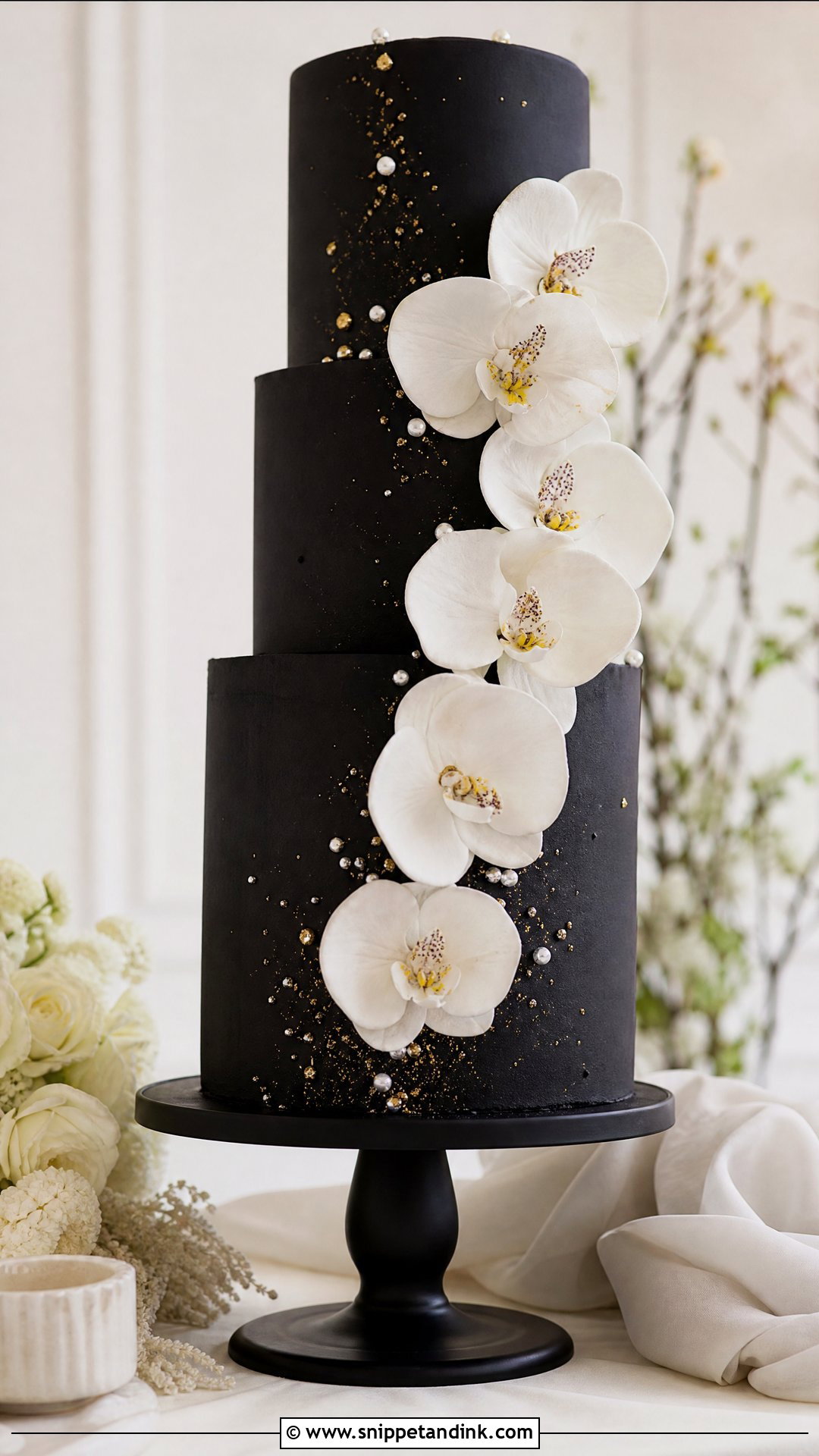
Black cocoa gives a nearly black, Oreo-like finish, and its flavour is noticeably bitter, so I use it in the outer buttercream and keep normal chocolate sponge inside. A truly black colour often needs gel colouring as well, which can stain lips. White sugar flowers, pearls or fine gold keep it bridal. Two or three tall tiers give the dark surface room; on a short cake it can look like a block.
21. Chocolate Marble Wedding Cake
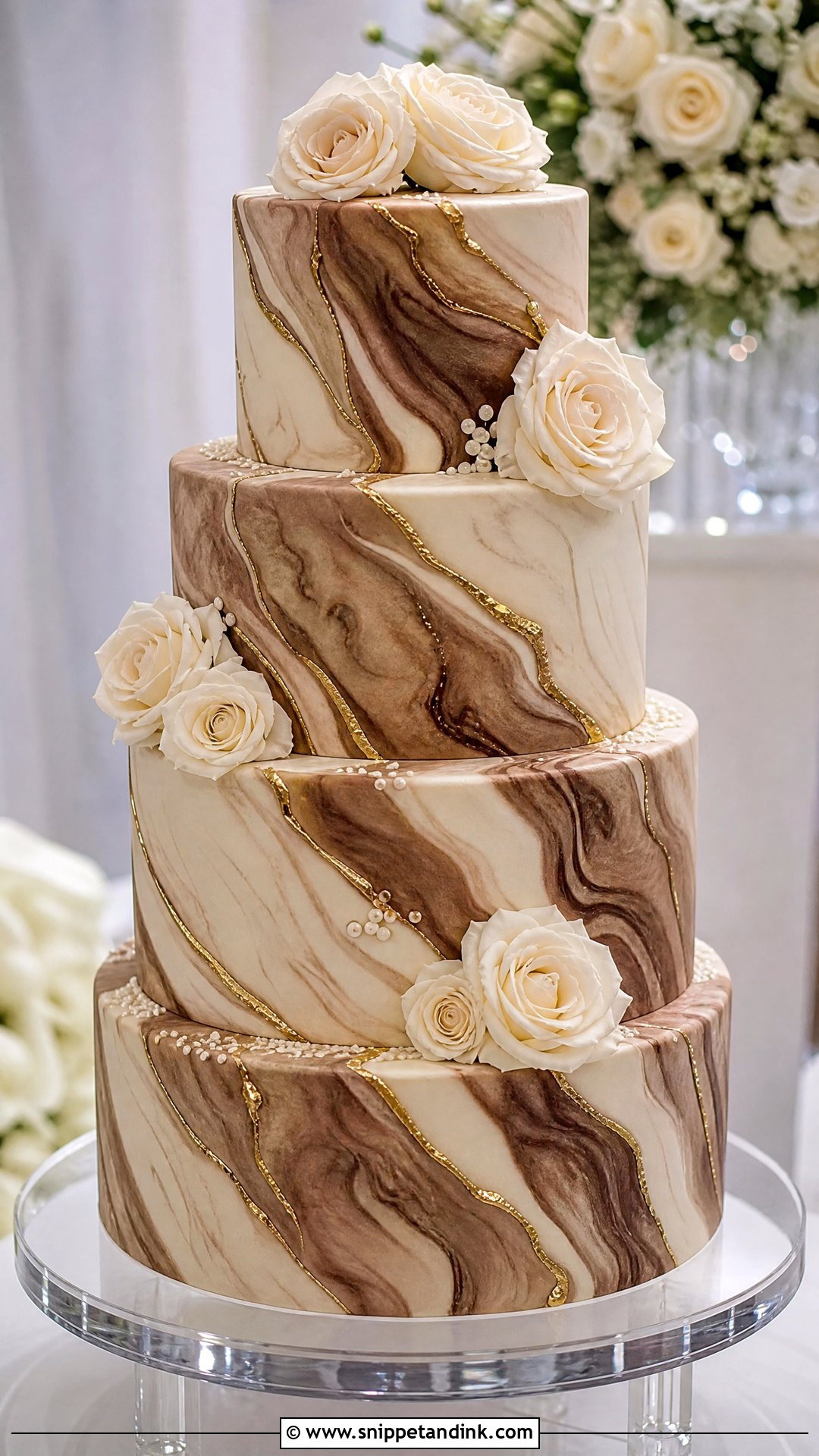
Marble can mean the inside, the outside or both. Inside, swirled chocolate and vanilla sponge settles mixed tastes in one slice. Outside, marbled fondant gives soft cocoa and ivory veins; I twist the colours together loosely and roll once, because overworking turns it muddy. White flowers or thin gold lines on top, perhaps with clear acrylic separators, give it a modern finish.
22. Chocolate Ruffle Wedding Cake
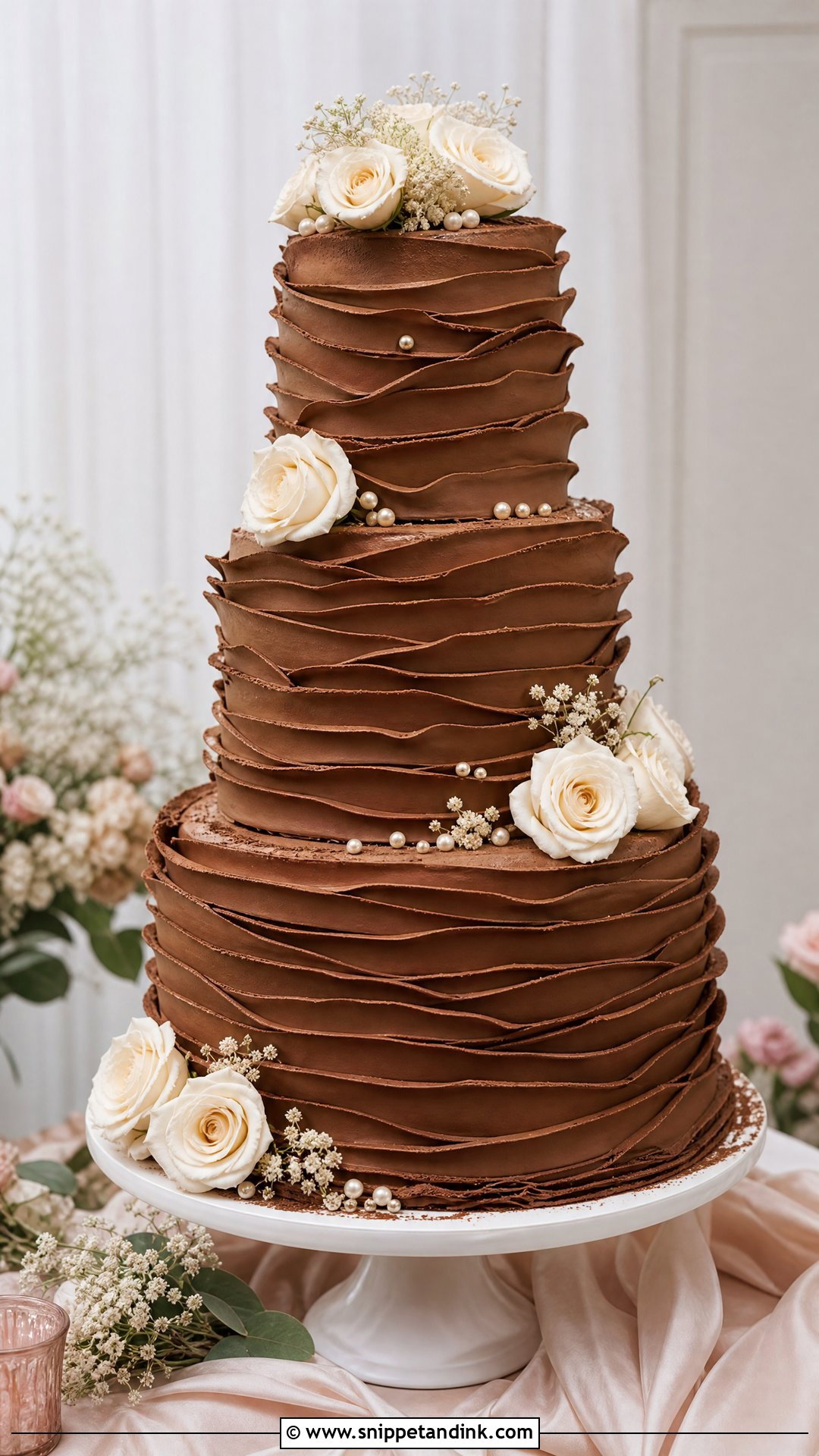
Ruffles can be piped buttercream, cut fondant or thin chocolate panels, and each behaves differently. Buttercream ruffles are soft and soften further in heat, fondant ruffles hold their shape longer, and chocolate panels need tempered chocolate or they bloom grey. On tall tiers, clean, evenly spaced ruffles look romantic; crowded ones look busy. A few flowers on the top tier complete it.
23. Chocolate Tiered Wedding Cake
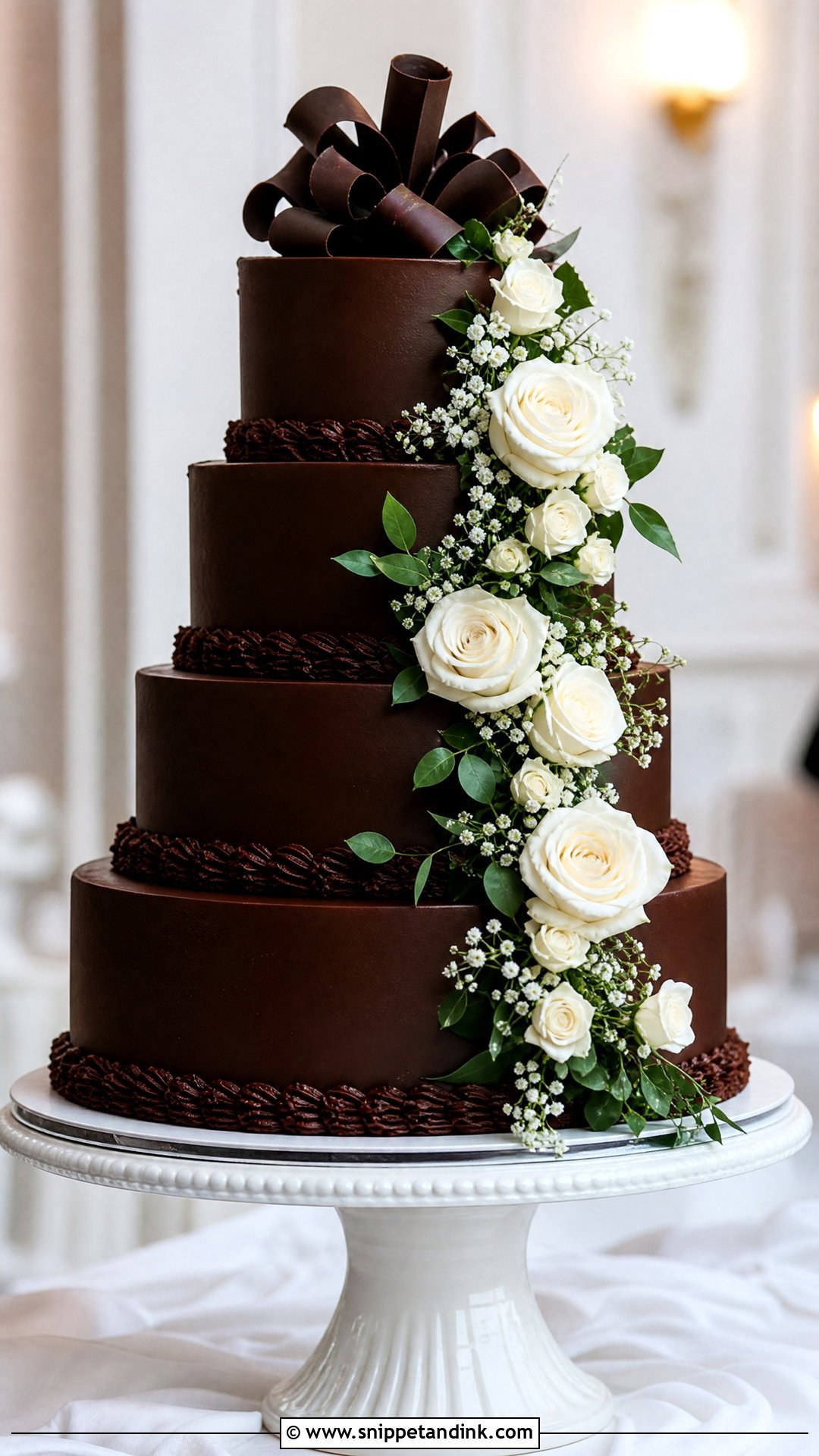
Height, presence and servings make the tiered cake the classic option for a bigger reception. Tiers can be all chocolate, or mixed with vanilla, raspberry, caramel or hazelnut, so guests with different tastes are covered. The finish (ganache, buttercream, fondant or semi naked) should match the room temperature as much as the style. Anything over three tiers needs proper dowels and a central support, and I stack the tallest cakes at the venue.
24. Small Chocolate Wedding Cake
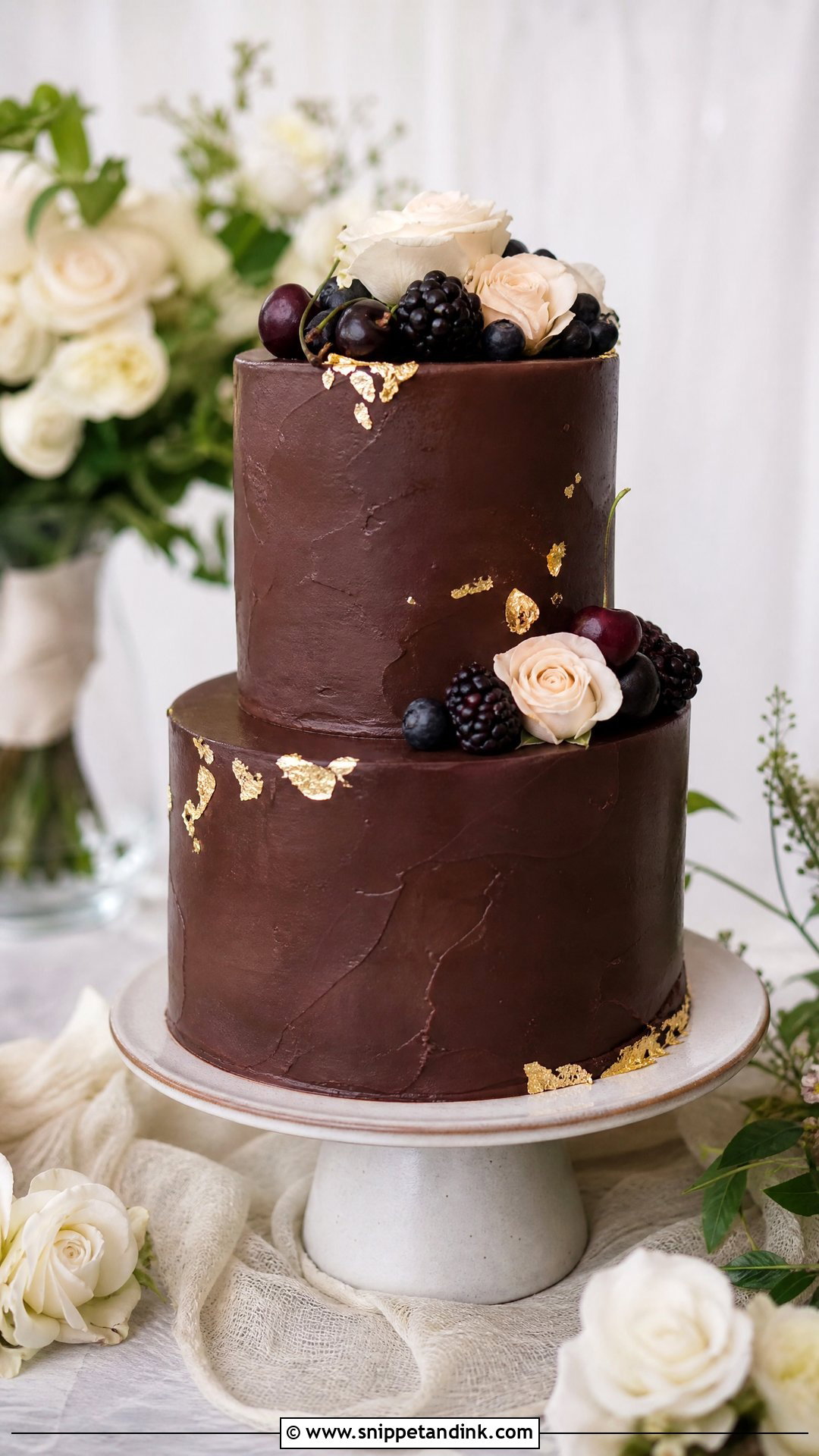
For an intimate wedding or a courthouse celebration, one or two tiers can carry a strong design: smooth ganache, a few flowers, maybe gold leaf. Small cakes let you choose a richer flavour since slices are modest. If it’s a cutting cake only, pair it with sheet cake or mini desserts for serving. It’s also far easier to transport and keep cool.


25. Square Chocolate Wedding Cake
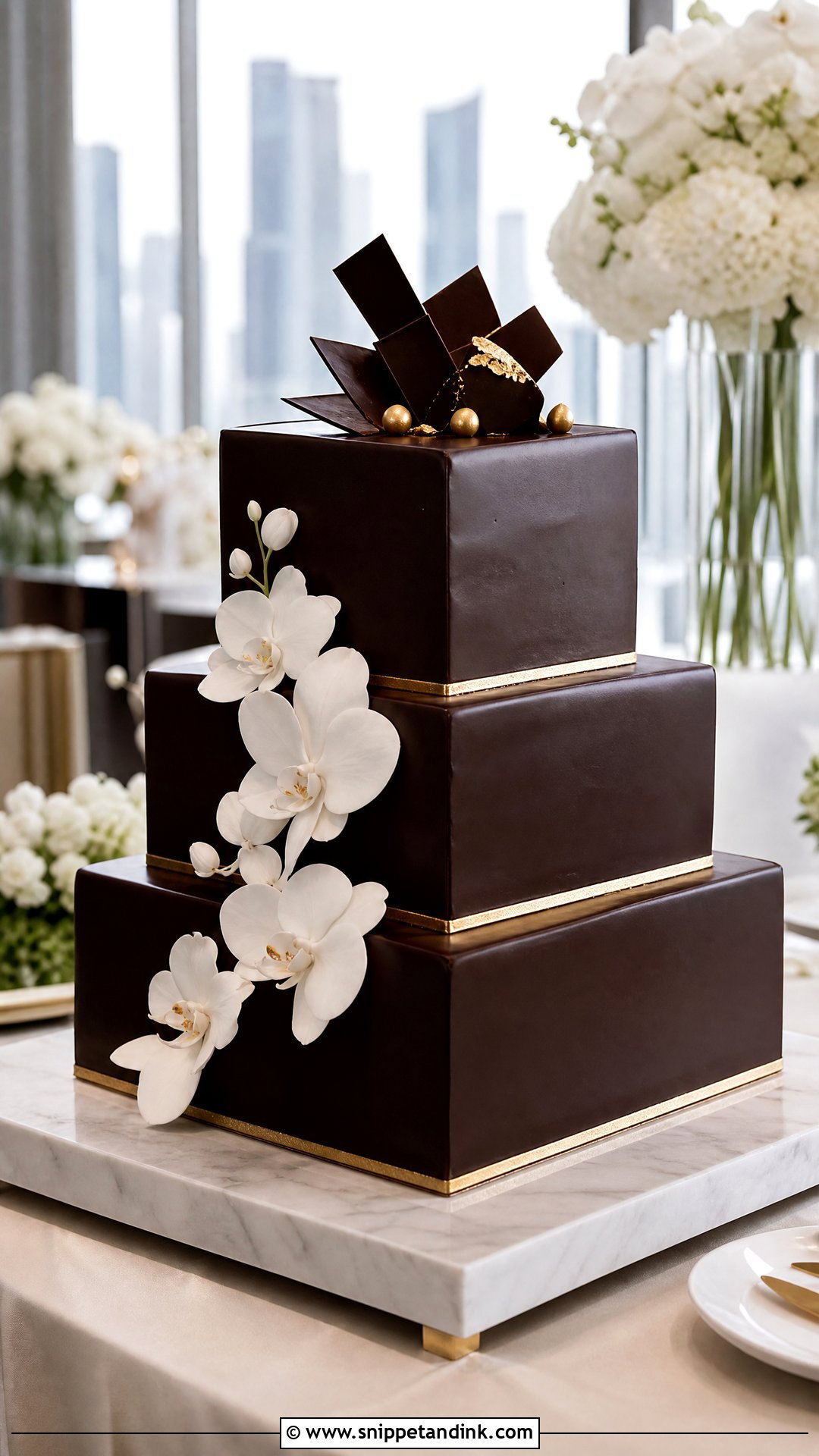
Square tiers make a chocolate cake look architectural, and ganache or fondant shows off the sharp corners best. They take longer to finish than round tiers, because each corner has to be built up and squared by hand. A floral corner arrangement, slim gold edging or one sugar flower per tier is plenty. Square cakes also slice into neat, even portions, which helps the catering team.
Allergy Questions Guests Will Ask About a Chocolate Cake
Chocolate cakes carry more hidden allergens than people expect. Milk is in most chocolate, including much dark chocolate, and many bars contain soy lecithin. Hazelnut praline, almond flour, coconut and toasted nuts all appear in the flavours above. Some guests with nut allergies also avoid coconut, so it’s worth flagging even though it’s a different case.
I’d handle it in three steps. First, give your baker a list of the allergies on your RSVPs before you finalise flavours. Second, ask whether the kitchen handles nuts at all, because a nut-free recipe made in a shared kitchen isn’t the same as a nut-free cake. Third, put a small card by the cake naming the flavours and main allergens in each tier.
For guests who need it, a separate small cake or a batch of cupcakes made to a safe recipe is often easier than changing the whole wedding cake. Dairy-free ganache can be made with plant cream, and it sets well, though the texture is slightly different. Keep those portions boxed and labelled so they don’t get mixed up during service.
Taste First, Then Decide How It Looks
Chocolate can go classic, rustic, bold or modern, and the finish decides which. Ganache reads polished, naked layers natural, drips playful, dark chocolate dramatic. Fillings like raspberry, caramel, espresso, hazelnut, orange or coconut make it personal. Bring your favourite photos to the tasting, but taste before you commit to a look; a design should follow a flavour you love, not the other way round.
You'll Like These Ideas:







Leave a Reply