
Purple is one of the colors I get asked to mix most often, and it is also the one that behaves least predictably once a cake leaves my kitchen. A lavender tier suits a spring garden ceremony; a deep plum buttercream can carry a formal evening reception. Ombré, marbled fondant, textured buttercream, edible flowers and fresh blooms all appear in the cakes below, but purple doesn’t have to take over the dessert table. A single accent tier can do the job. Here are twenty ways I’d build a purple cake, plus what I’d warn you about before you settle on a shade.
Why Purple Icing Shifts Between My Kitchen and Your Venue
Purple is the least stable color in cake decorating. The pigments that make violet break down in light, so a cake that left my kitchen lilac can look blue-grey after an afternoon beside a window or under a bright tent. Strong indoor lighting does the same thing, only more slowly. That’s why I keep purple cakes boxed until setup and ask where the cake table will stand before I mix a single batch.
What actually moves the shade
- Yellow butter. Buttercream starts out cream, and cream plus lavender drifts toward grey. I whiten the base first or agree on a slightly dustier target.
- Resting time. Dark buttercream keeps deepening for hours after mixing, so I make plum the day before and judge it then.
- Too much gel. Rushing a deep shade with extra color adds a bitter note and stains mouths. Patience works better.
- The light itself. Candlelight warms lavender toward pink, while daylight and cool LEDs push it bluer. I check samples under both.
If the cake has to match a bridesmaid dress, bring a fabric swatch to the tasting rather than a phone photo. Screens exaggerate saturation, and I’d rather match the cloth your guests will actually see.
1. Purple Ombre Wedding Cake
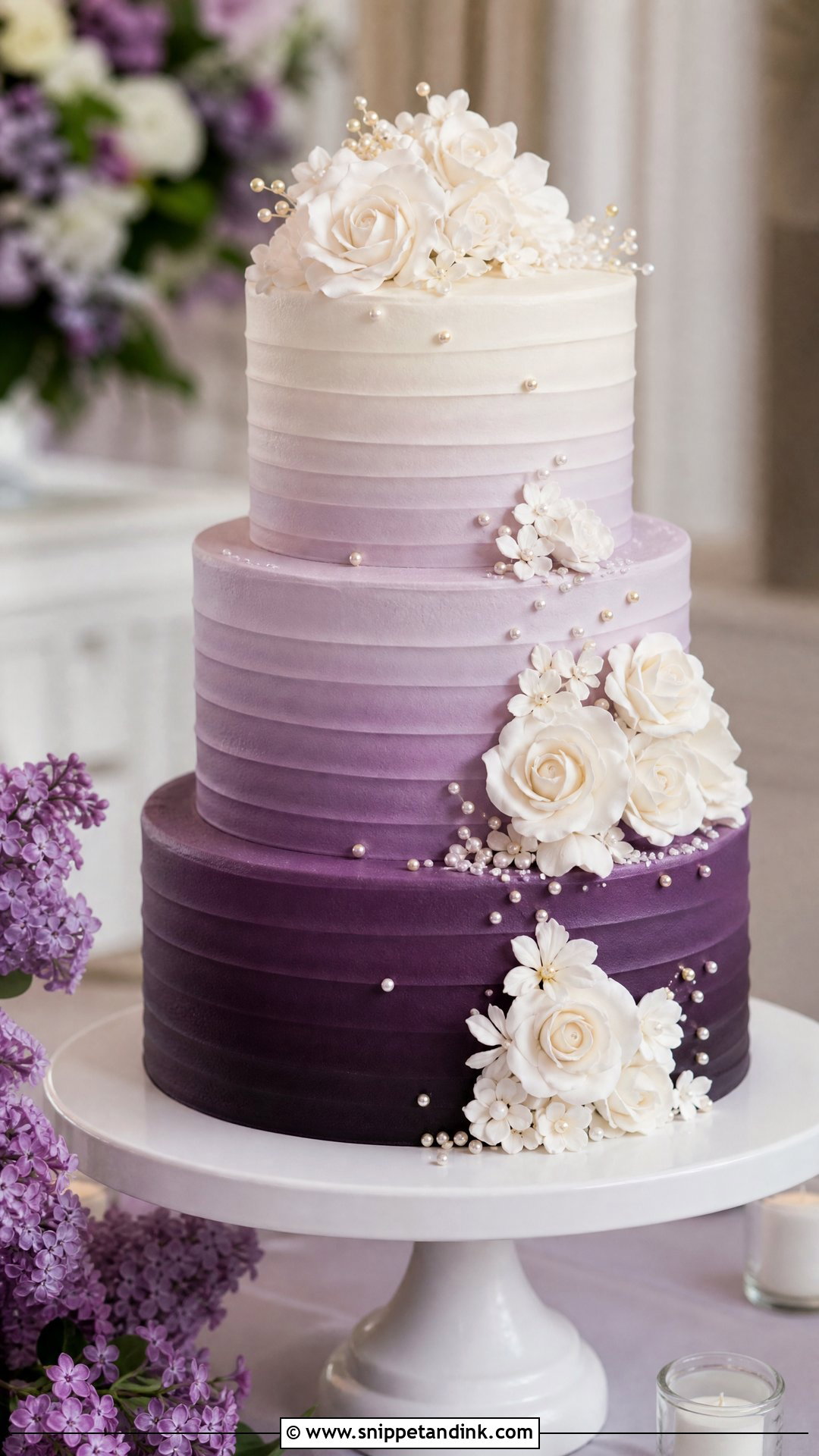
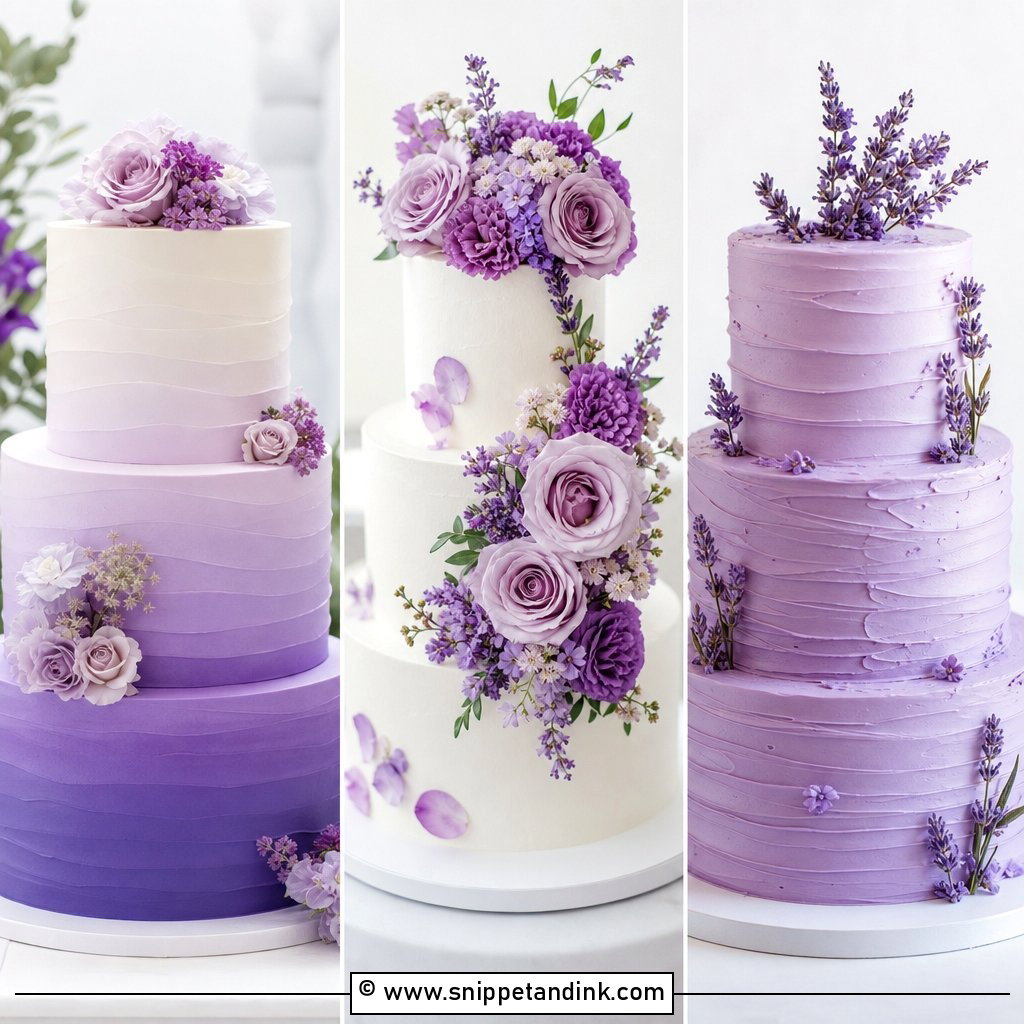
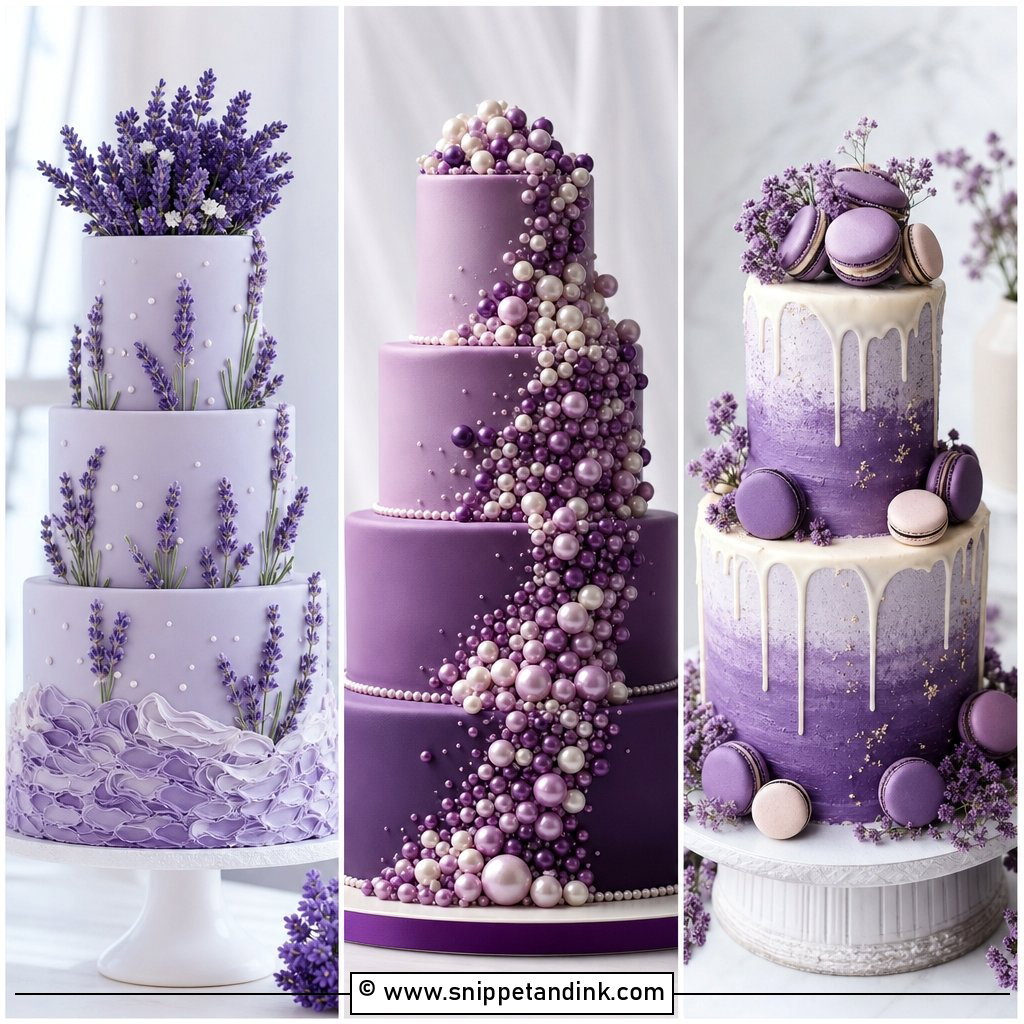
The fade only reads as a fade if every tier gets its own related batch of color. I mix the darkest shade first, then cut it back with white buttercream for each tier above, so the steps belong together instead of being guessed. Going from ivory or pale lavender at the top to plum at the base needs at least three tiers; on two, the jump looks like a mistake. Smooth buttercream softens the shift, while fondant gives a crisper line between bands. A few white sugar flowers or pearls are plenty, since the gradient is already doing the decorating.
2. Lavender Wedding Cake
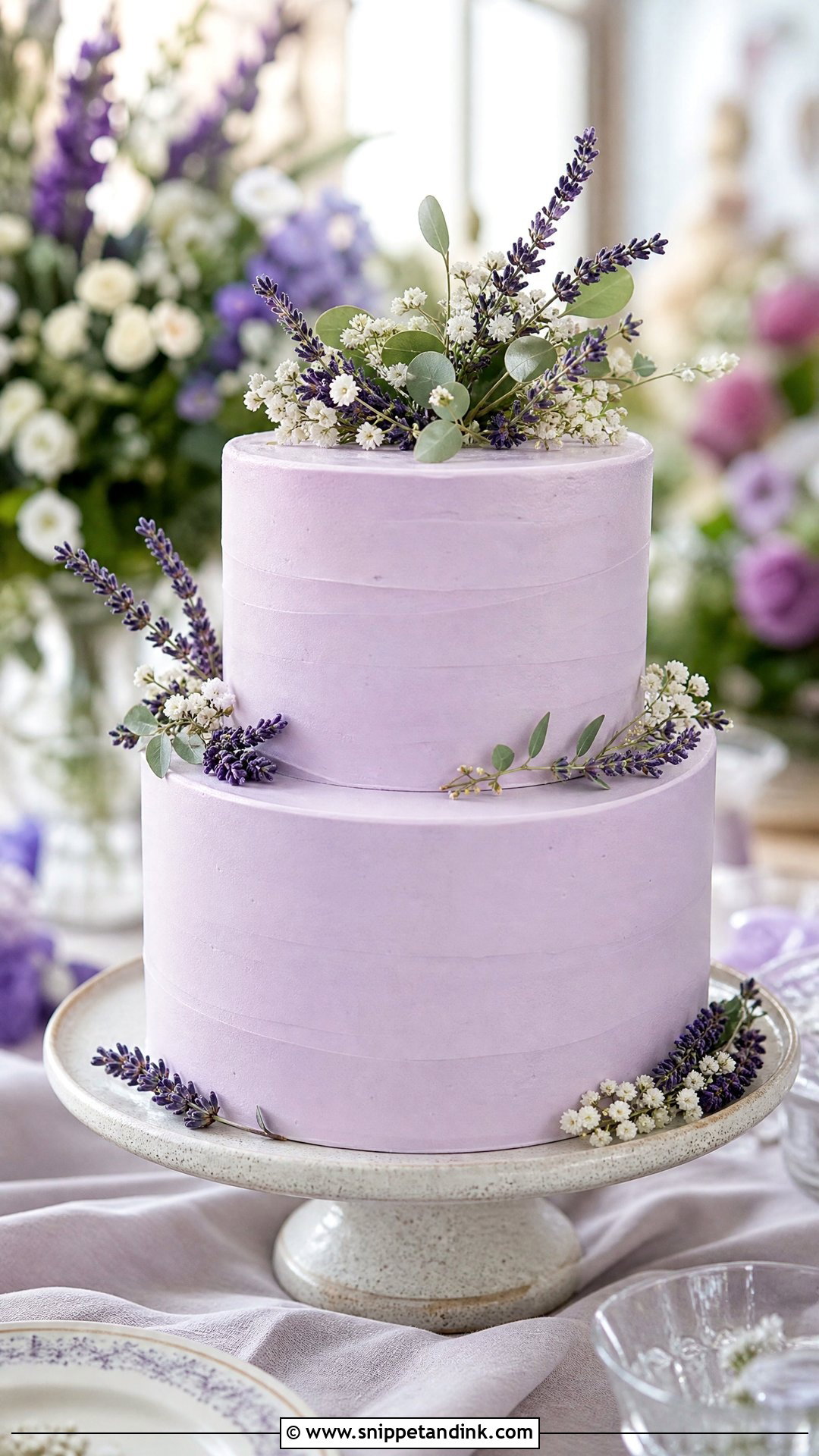
Lavender is the shade most likely to drift. Buttercream made with yellow butter pulls pale purple toward grey, so I either whiten the base first or agree with the couple on a slightly dustier tone. Keep the piping ivory and the sugar blossoms small. Use fresh lavender sprigs sparingly, too, because culinary lavender is strong and a heavy hand makes a slice taste like soap. Lemon, vanilla bean, honey, almond, and blueberry all sit well with it. For a refined finish, ask for smooth sides and very little decoration. For a garden feel, let loose greenery gather around the base.
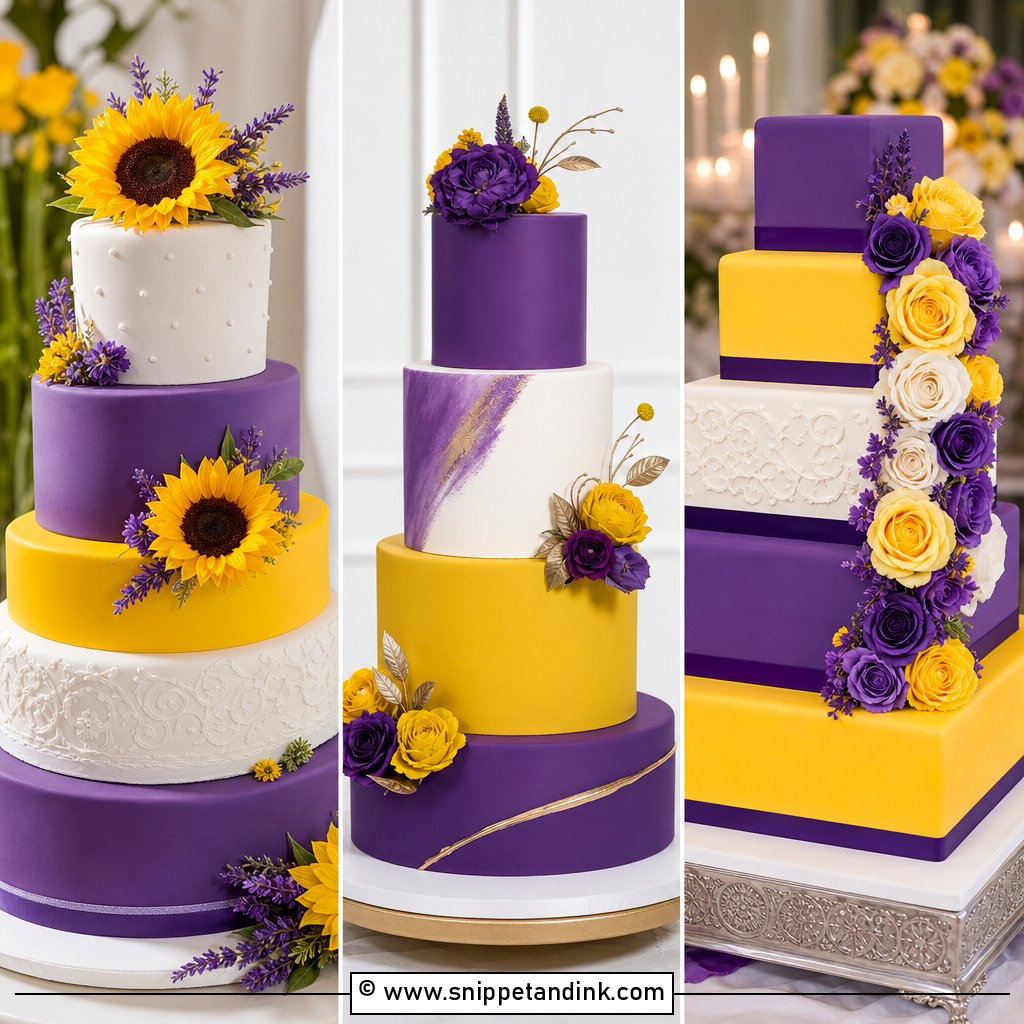
3. Purple And White Wedding Cake
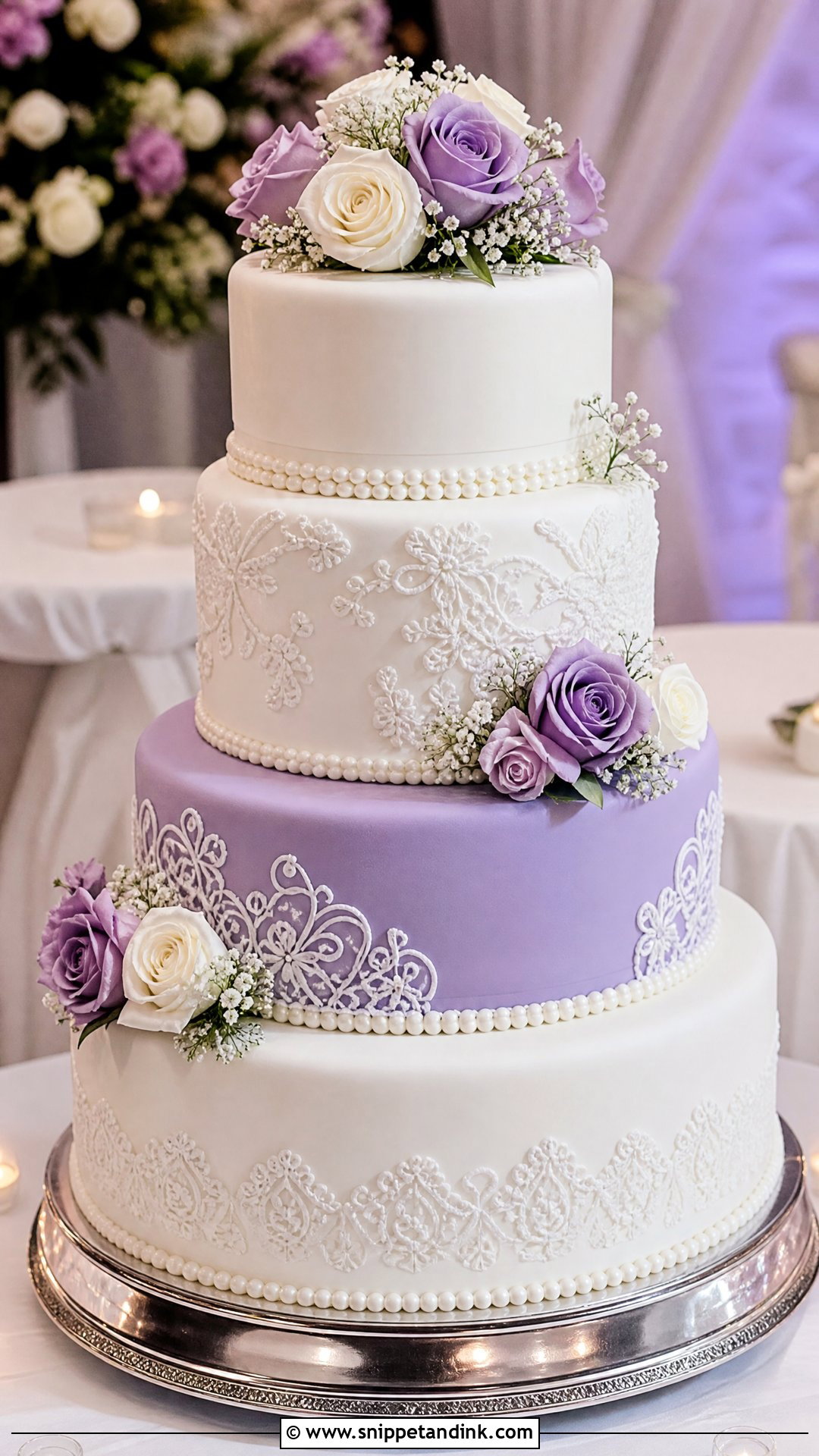
This is the pairing I suggest when a couple loves purple but the florist hasn’t confirmed the exact flower shades yet. White tiers keep the cake bridal, and the purple can live in florals, painted vines, a ribbon band or one lavender accent tier, which is easy to adjust if the bouquet changes. One practical warning: real satin ribbon wrapped straight onto buttercream soaks up fat and shows grease spots, so I back it with a strip of fondant or make the ribbon from sugar. White buttercream with lilac roses reads relaxed. White fondant with deep violet sugar flowers reads formal.
4. Purple Floral Wedding Cake
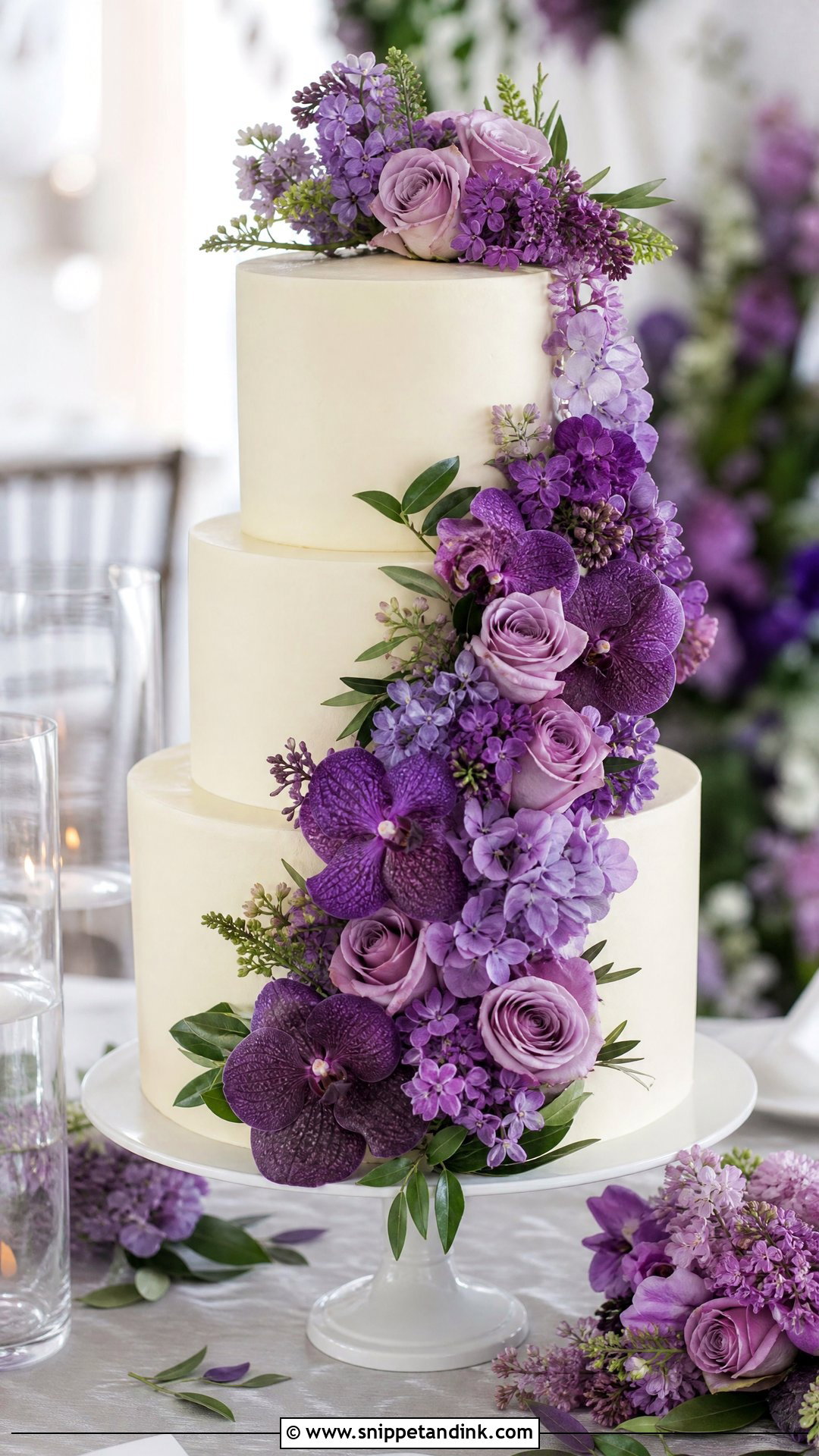
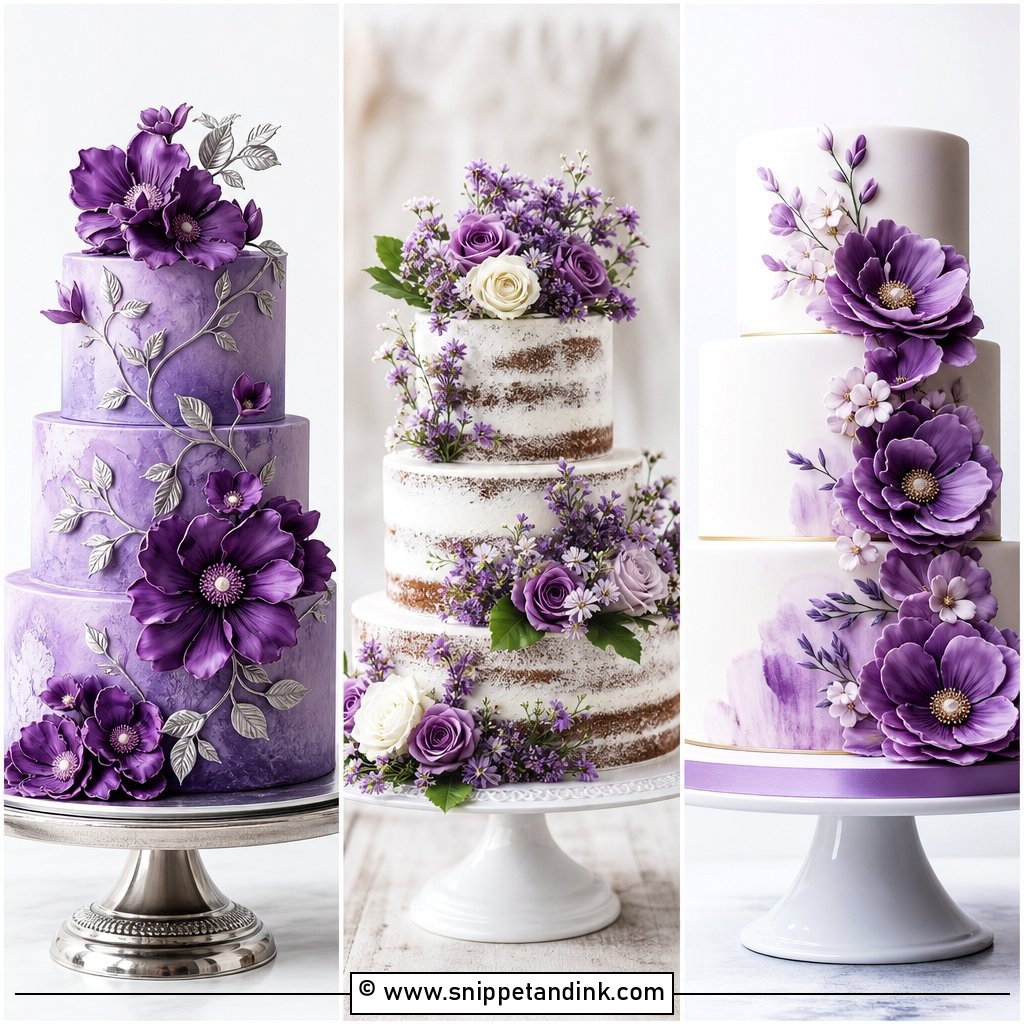
Roses, orchids, hydrangeas, lilacs, irises and calla lilies all come in purple, so the cake can echo the bouquet closely on a white, ivory, lavender or even pale grey base. Cascades suit tall cakes; small clusters suit shorter ones. Here’s what I raise at every consultation: several of those flowers, hydrangea, iris and calla lily among them, should never touch icing directly. I wrap the stems, push them into food-safe picks, and happily mix in sugar flowers where a real bloom would be risky. Ask your baker exactly how the fresh stems will be prepared before you sign off.
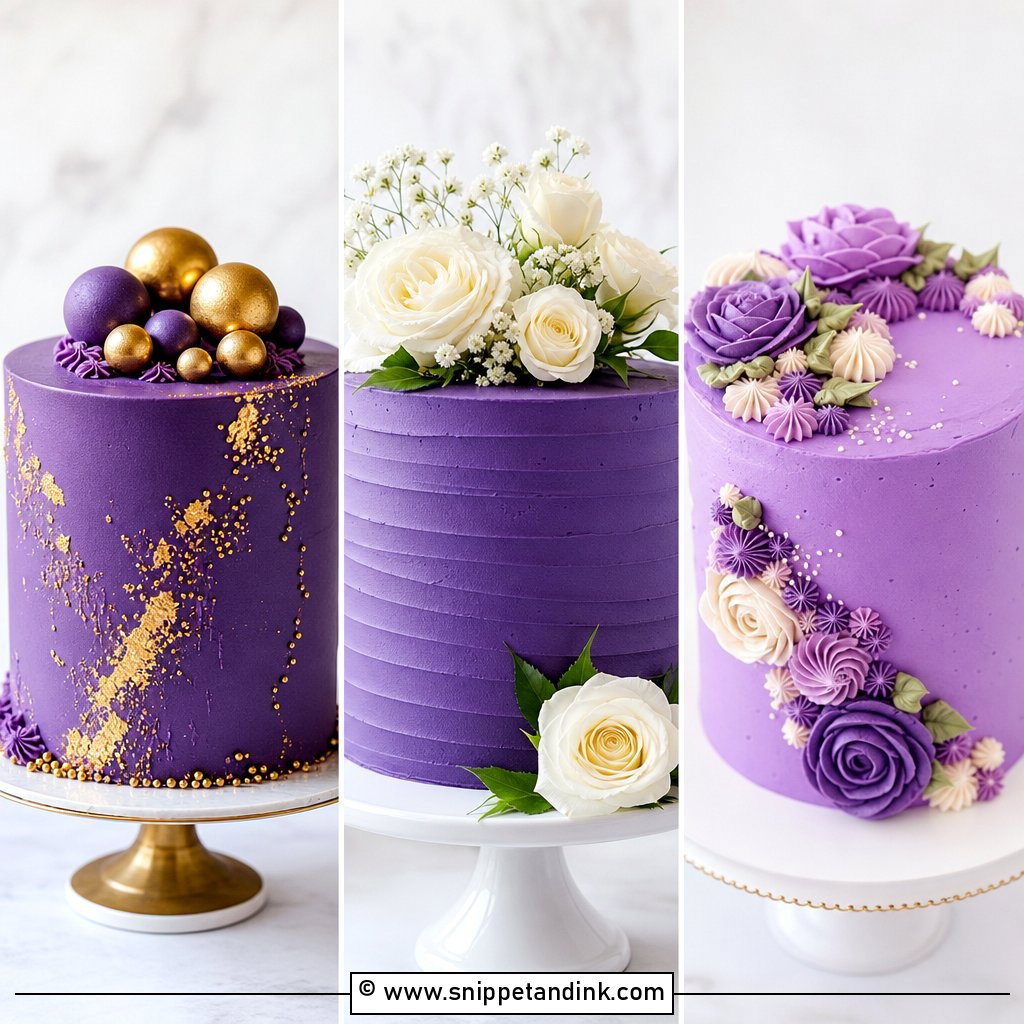
5. Purple Buttercream Wedding Cake
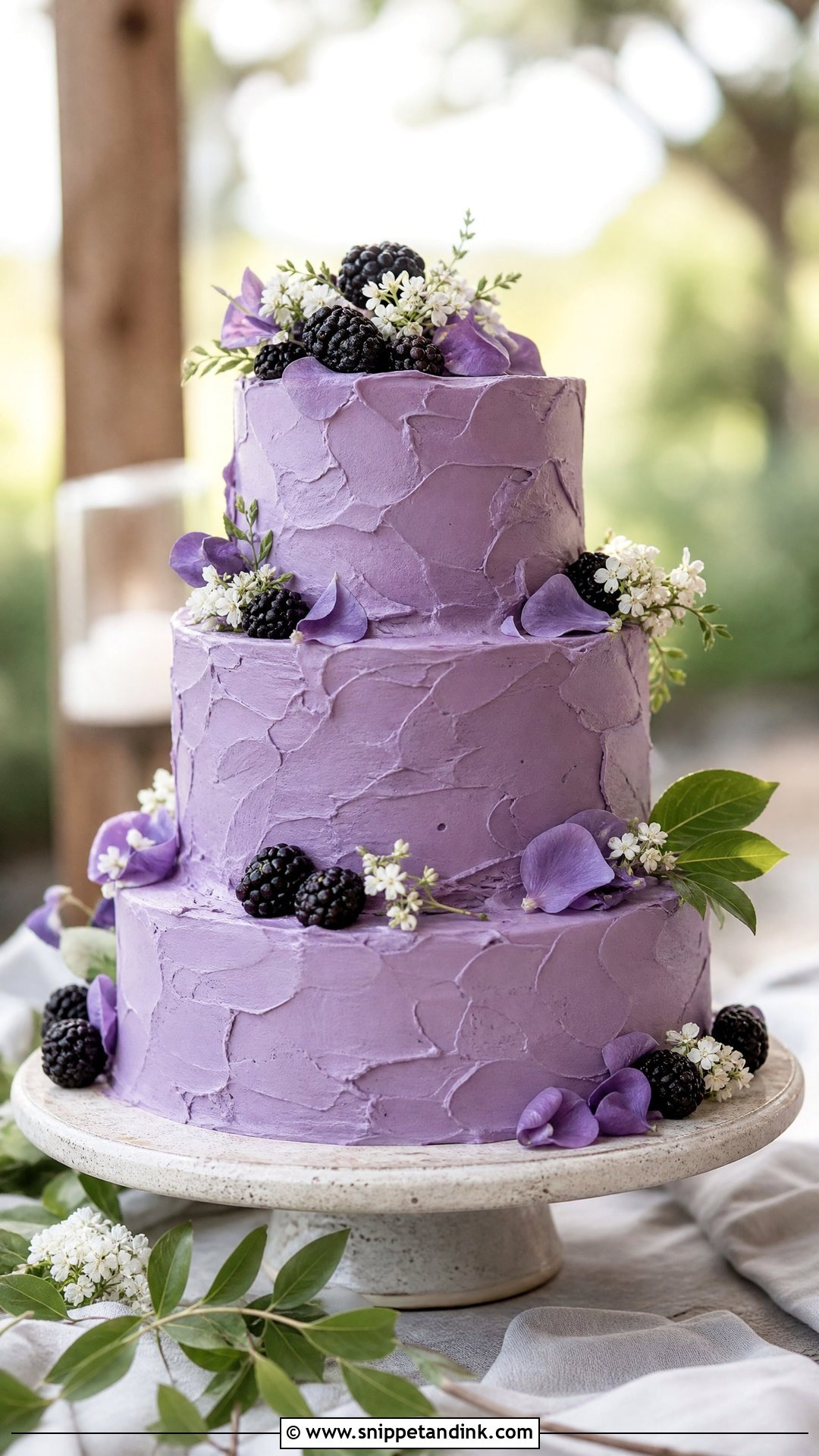
Buttercream gives a softer, more relaxed finish than fondant, anywhere from glass-smooth to rustic spatula strokes. The thing to know about deep plum is that it takes a lot of gel color, and overdoing it leaves a faint bitter edge and purple teeth during the toasts. I mix dark shades a day ahead because purple buttercream keeps deepening as it rests, so I need far less color to reach the target. It sits happily with fresh berries, pressed flowers and a little gold. Ask for visible texture if you love a handmade look, or sharp edges if you want polish.
6. Purple Fondant Wedding Cake
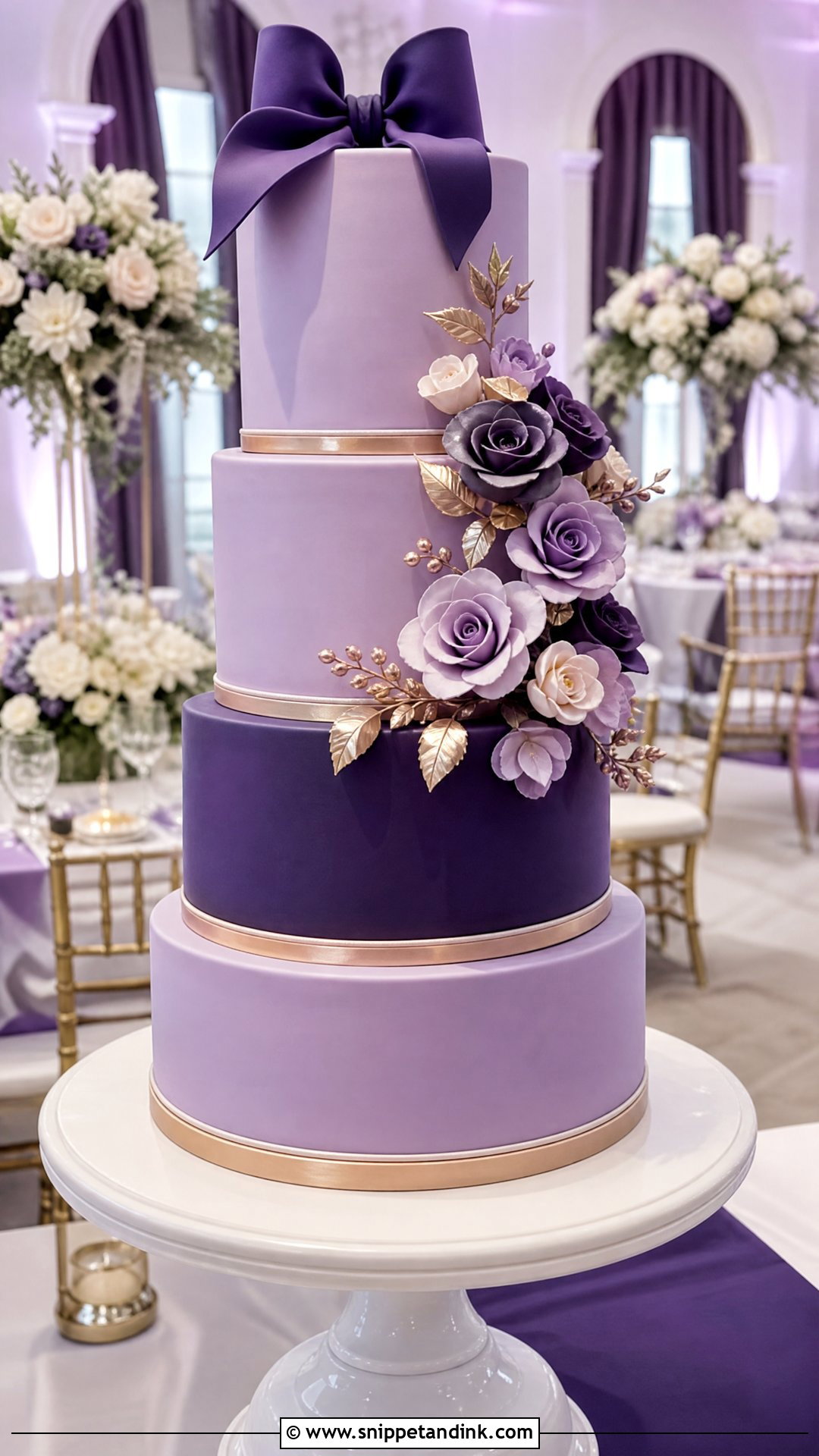
Fondant gives the crisp edges and smooth sides that hold detailed work like sugar flowers, metallic edging, stencils and bows. Colored fondant has one weakness I always flag. Purple pigment fades quickly under strong light, and a cake parked near a sunny window or under a bright marquee can turn patchy within hours, so mine stay boxed until the last moment. A single solid shade works, and so do alternating purple and white tiers. If you’re nervous about too much color, make one accent tier purple and keep the rest ivory.
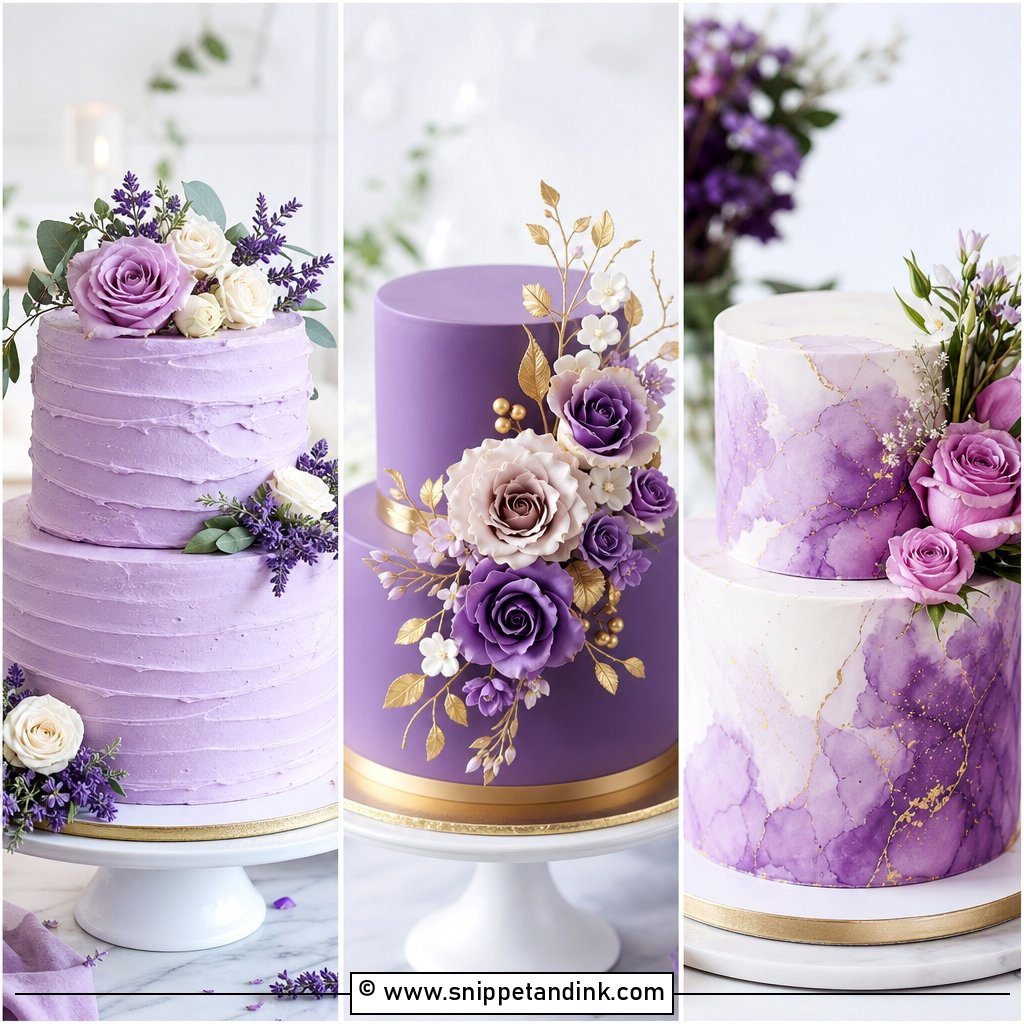
7. Purple Marble Wedding Cake
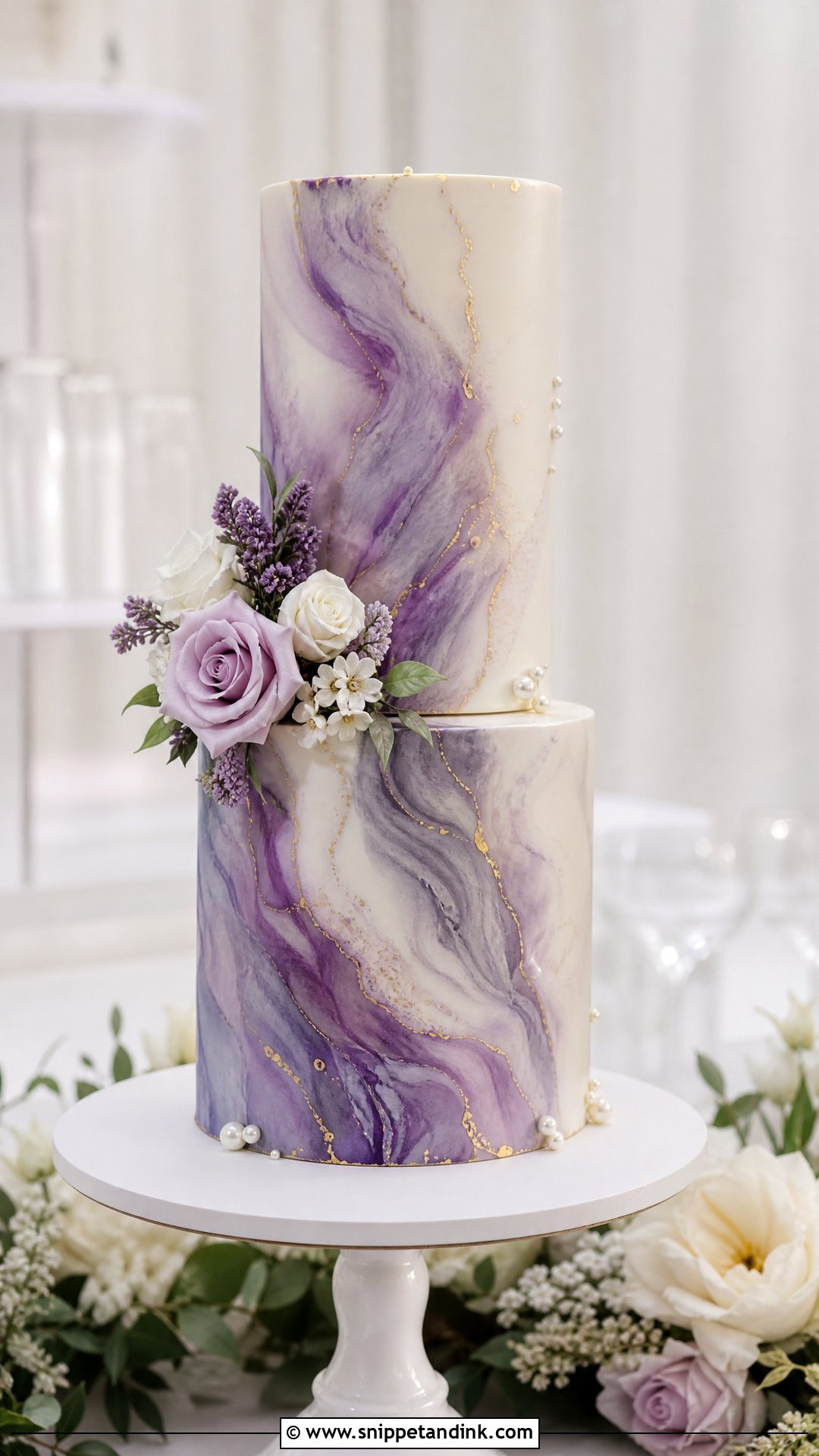
Marbling is mostly about restraint. I fold lilac, violet, ivory and a little grey fondant together only a few times; knead it longer and the streaks blur into flat mauve. Hand-painted gold veining adds warmth on top. Fondant shows the pattern most clearly, but painted buttercream can give a softer version. Keep the shape simple. A two or three tier round cake with one floral cluster lets the stone effect stay the point.
8. Purple Drip Wedding Cake
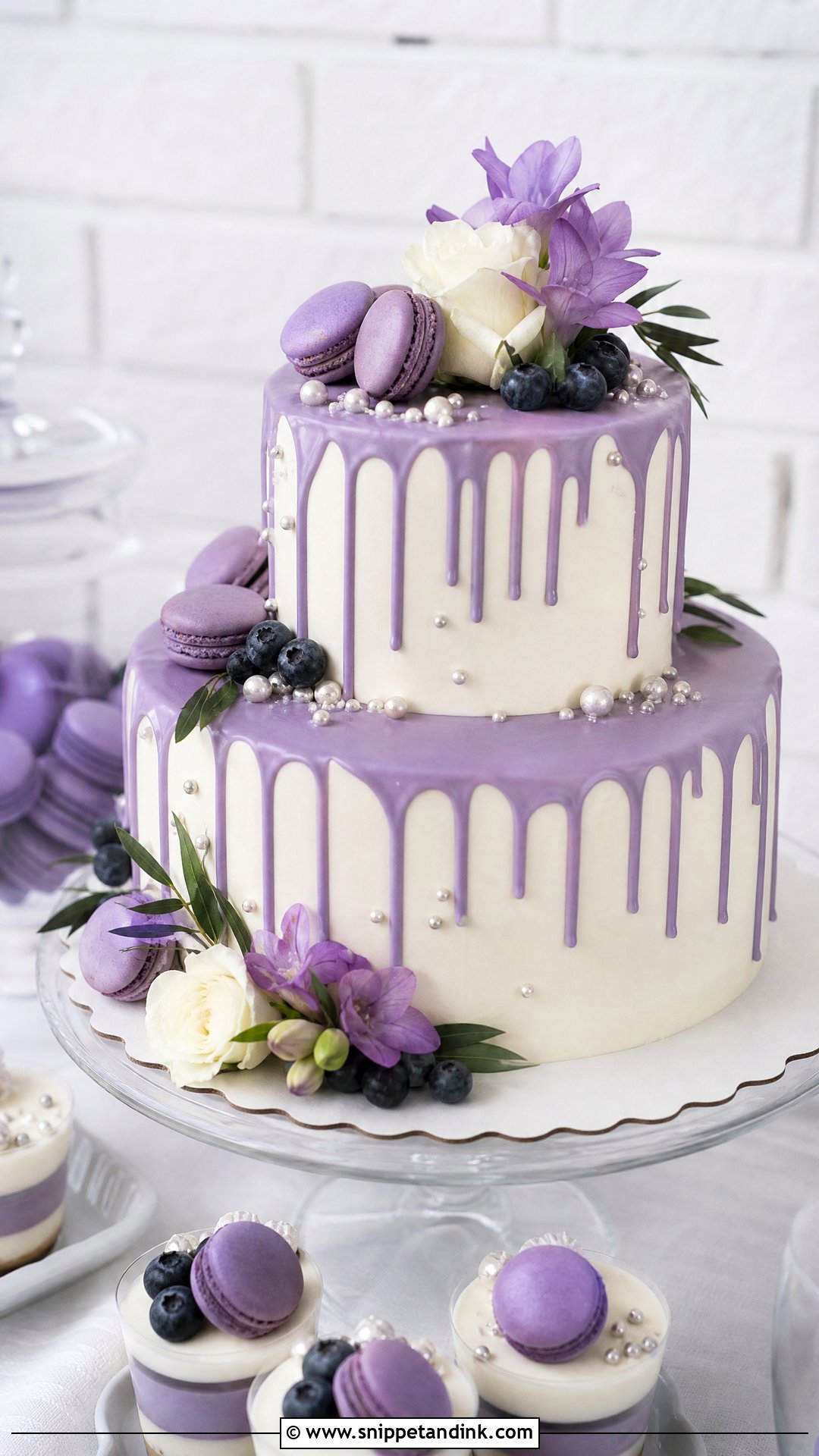
Drips are where I see the biggest gap between an inspiration photo and the real thing, because ganache temperature decides everything. Too warm and it races to the board; too cool and it stops in stubby blobs. I always test one drip on the back of the chilled cake before touching the front. White chocolate tinted purple needs an oil-based color, since water-based gel can make it seize. It works over white, pale lavender or plum buttercream, finished with macarons, berries or small edible pearls. Keep the drips short and even and it still looks like a wedding cake, with mini cakes or dessert shooters nearby if you want a fuller table.
9. Purple And Gold Wedding Cake
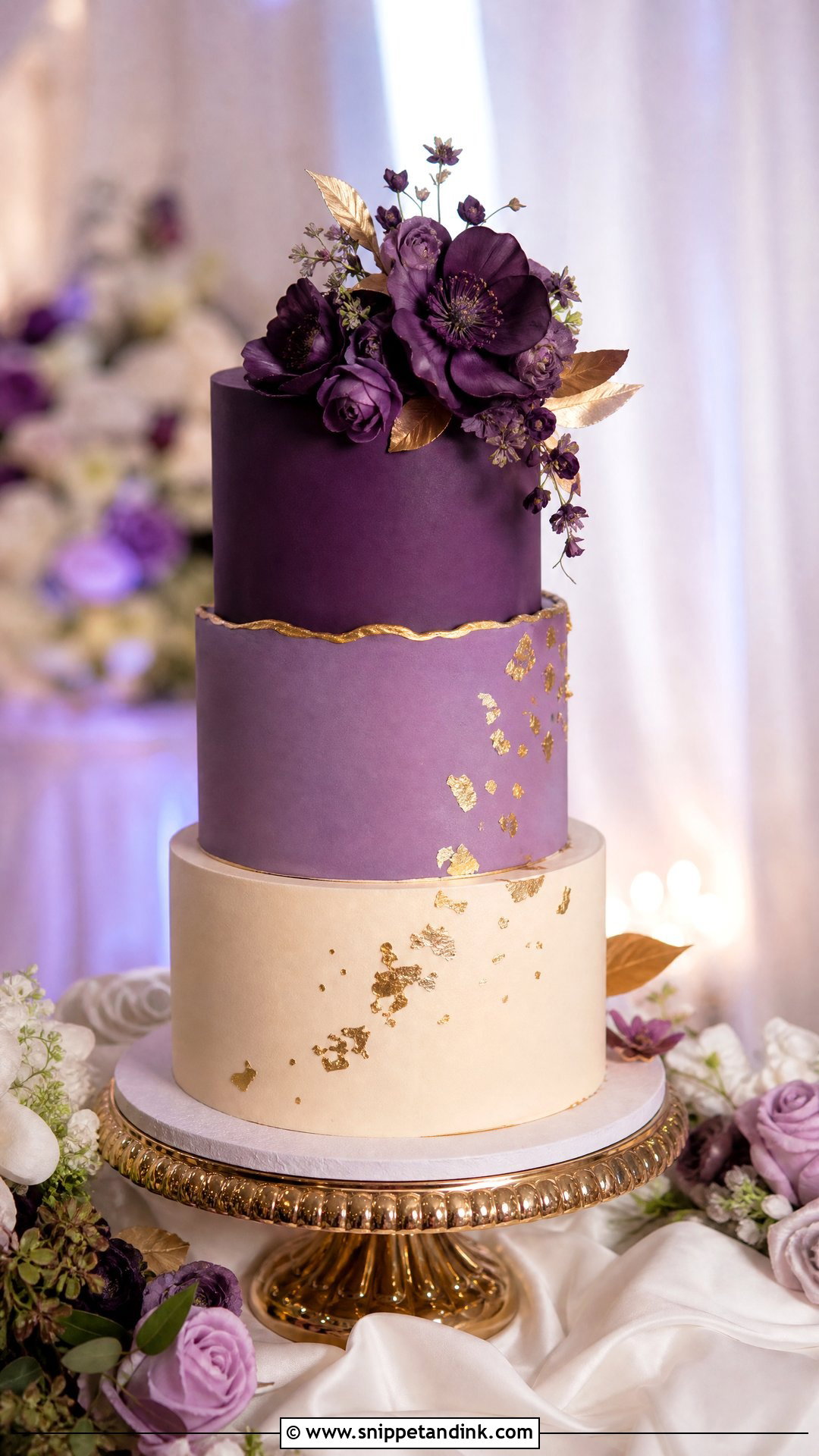
Purple and gold looks regal only while gold stays the accent. Deep purple with gold leaf feels dramatic; lavender with a soft gold edge feels gentler. My rule at the design stage is one main flower, one metal, one purple family, so painted trim, flecks, a monogram topper and thin separators are options to pick from, not a list to use together. Gold leaf is fiddly on buttercream and I apply it to chilled tiers at the bakery rather than on site. Vanilla, almond, white chocolate or a champagne-style flavor without alcohol all pair well with this look for an evening reception.
10. Purple And Silver Wedding Cake
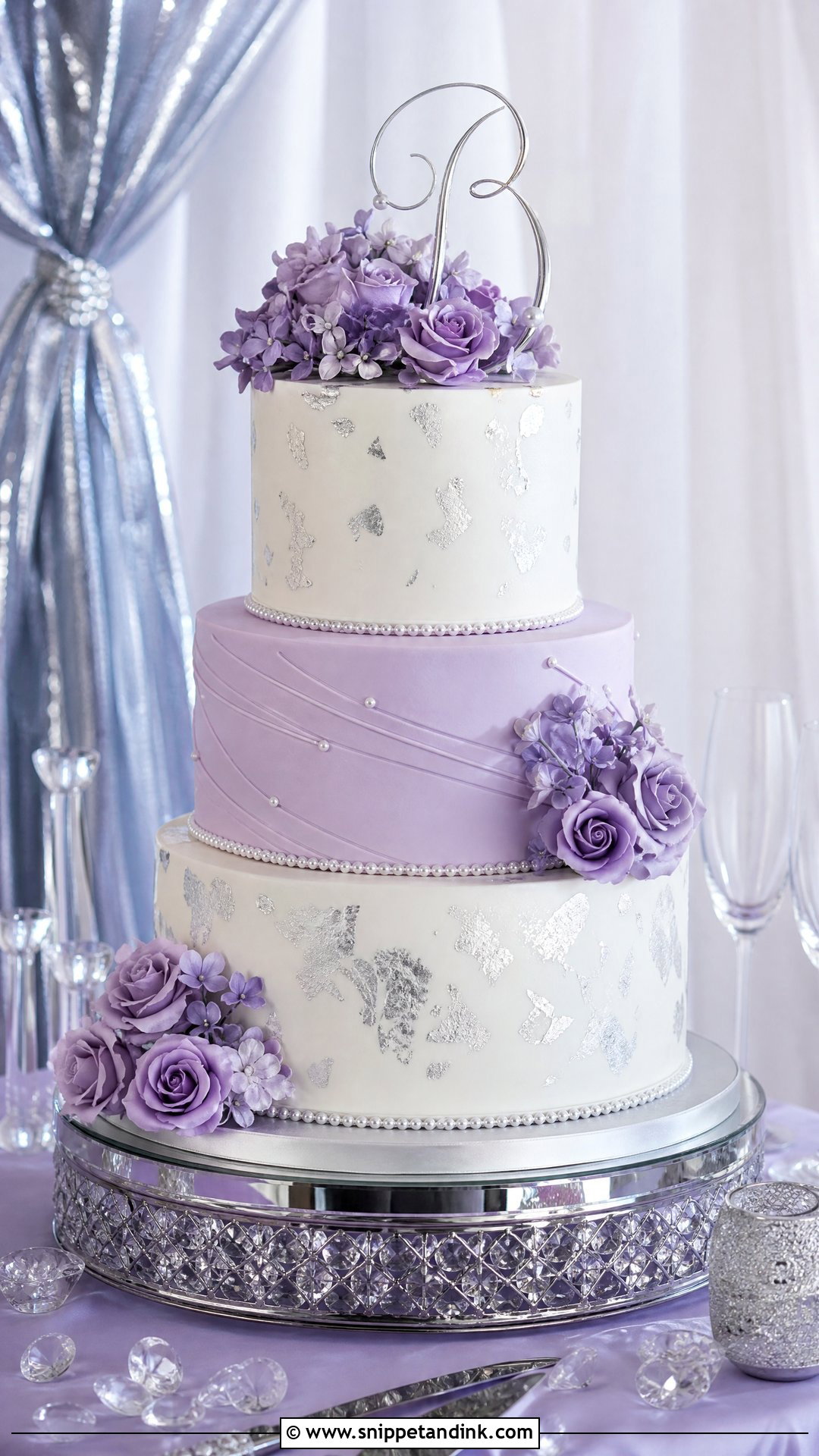
Silver reads cooler than gold, which suits winter or formal weddings without tipping into holiday styling. It flatters lavender, lilac, mauve and royal purple, especially against a white or pale grey base. I often suggest it when the reception already has crystal décor or mirrored trays, because the cake picks up the same cool light. Be aware that some metallic dusts sold for cakes are labelled non-toxic rather than edible, so I only use those on toppers and pieces that get removed. Pale lavender flowers with silver pearls keep it quiet; deep violet fondant brushed with silver is the bold version.
11. Purple Watercolor Wedding Cake
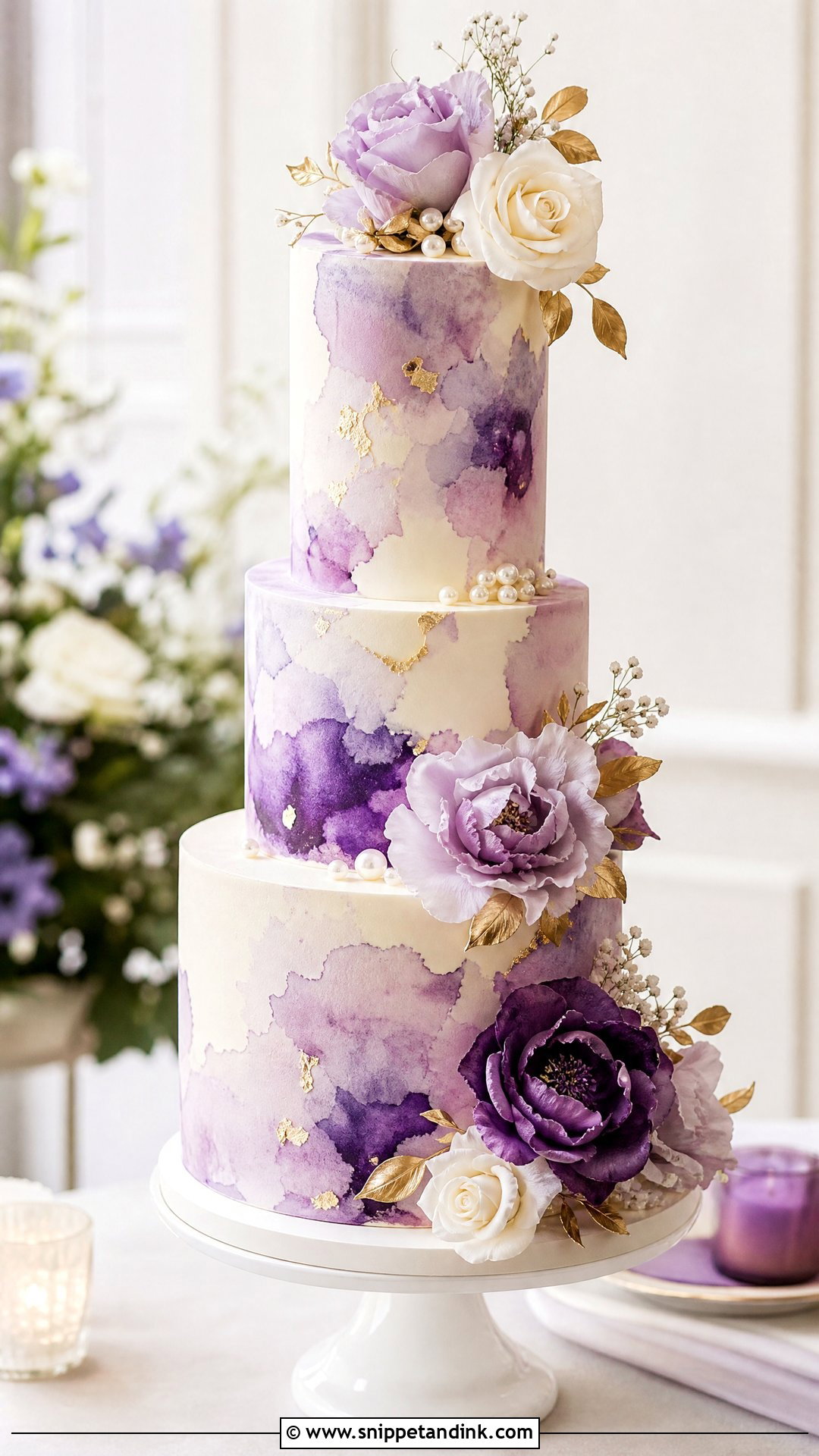
Watercolor tiers are painted rather than tinted, so the purple sits in washes across ivory or blush instead of solid blocks. On fondant I paint diluted gel with a quick-drying clear spirit so the washes don’t soften the surface. On buttercream, the effect comes from smearing patches of color with a scraper, which is softer and less controlled. Lavender, lilac, mauve and violet all suit the technique, and a few fresh flowers or gold flecks finish it. I’d point you elsewhere if your heart is set on crisp formality, but for an outdoor or art-led wedding it’s hard to beat.
12. Purple Ruffle Wedding Cake
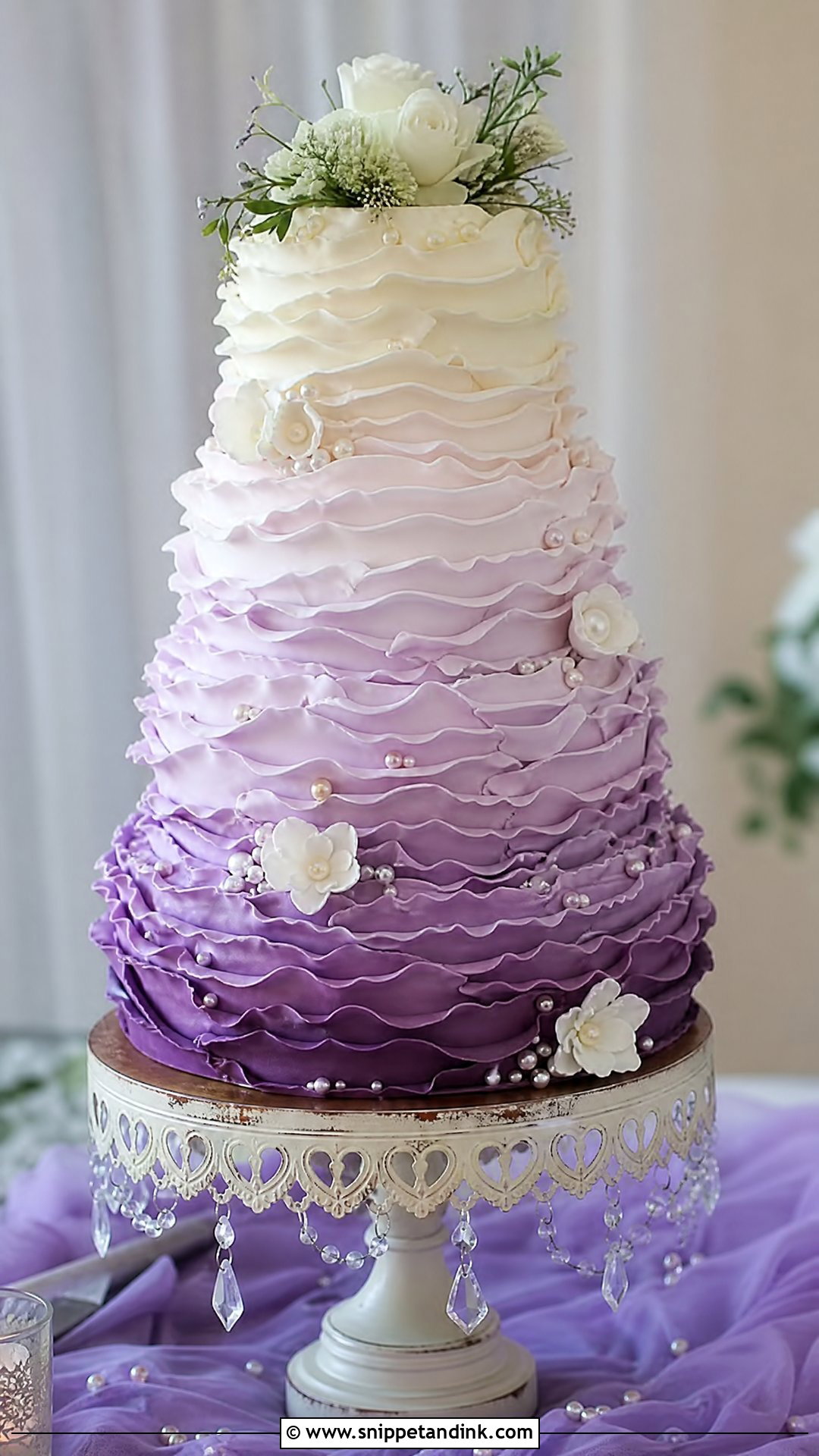
Ruffles add movement without heavy decoration, whether they cover one tier, the bottom layer or the whole cake. The folds throw small shadows, which is why tall ruffle cakes photograph so well. Fondant ruffles must be rolled thin and attached in overlapping rows; thick ones droop by evening in a warm room. Buttercream ruffles are piped with a petal tip and are more forgiving. Pair the texture with one smooth tier or a small floral accent, or grade the ruffles from pale lilac to plum so the ombré moves with them.
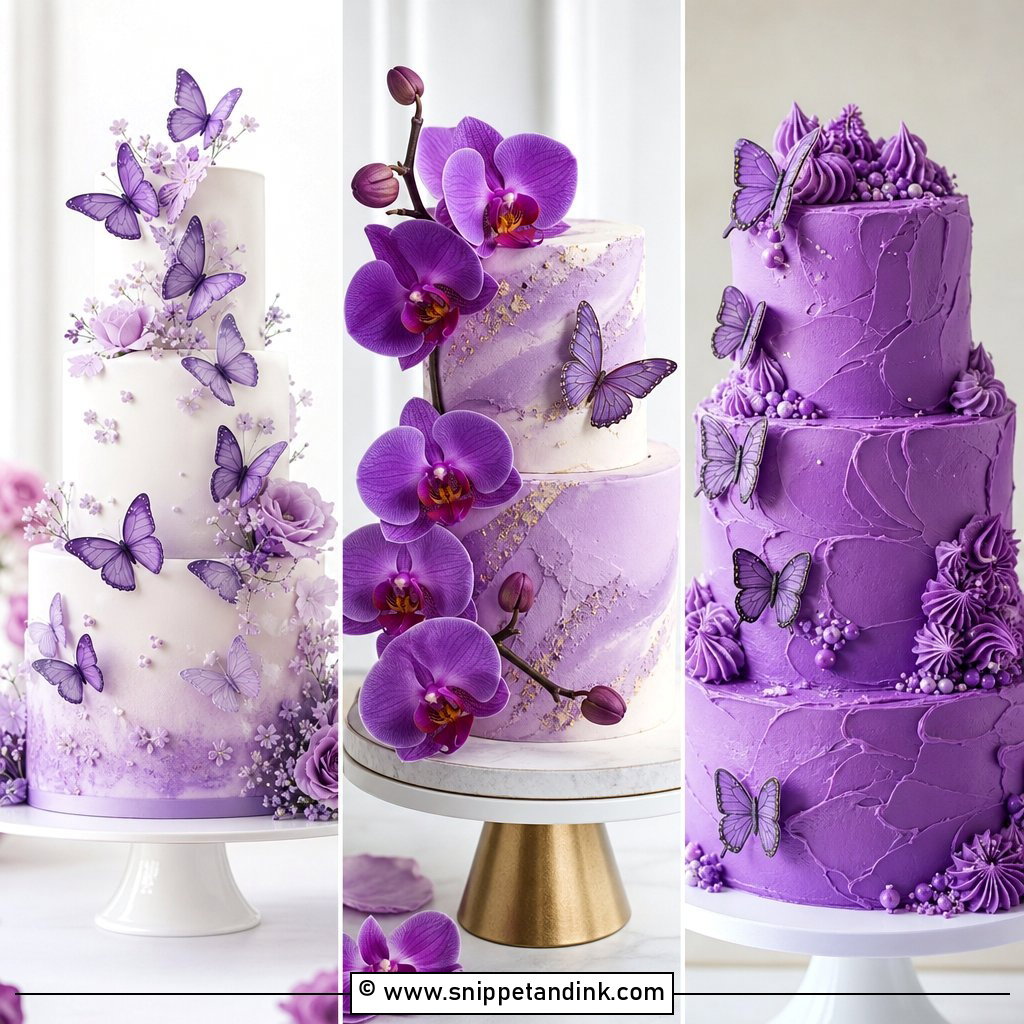
13. Purple Sugar Flower Wedding Cake
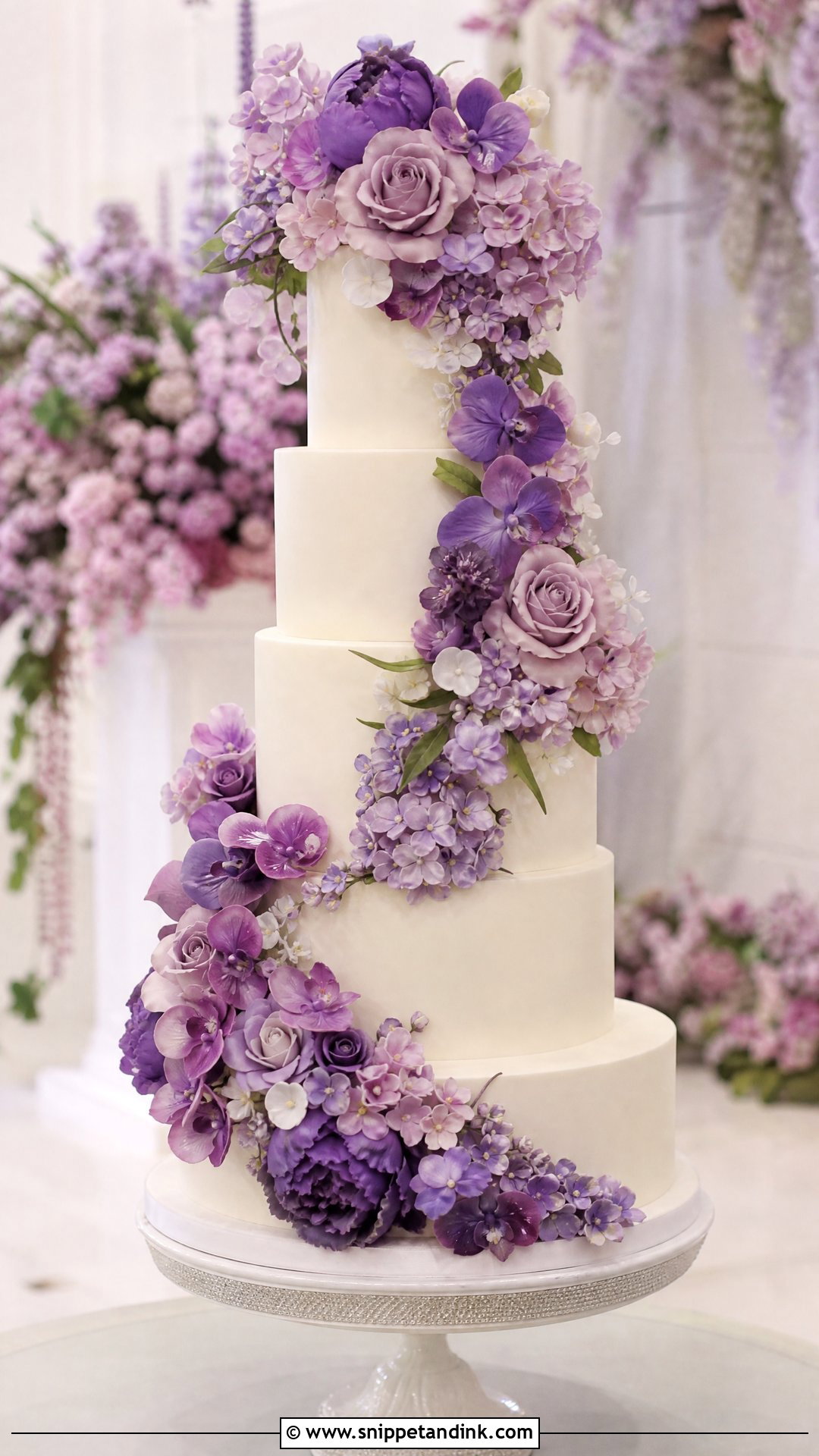
Sugar flowers are my answer when the purple bloom a couple wants is out of season or unsafe near food. Roses, orchids, peonies, lilacs, hydrangeas and fantasy blossoms can all be made in an exact shade, and they won’t wilt during a long reception. They do take time. A large cascade means many hours of petal work, so order early, and keep them away from humidity, which softens the petals. A white or ivory base lets them show. Most couples keep the top bloom afterward, since a sugar flower stored dry lasts for years.
14. Purple Orchid Wedding Cake
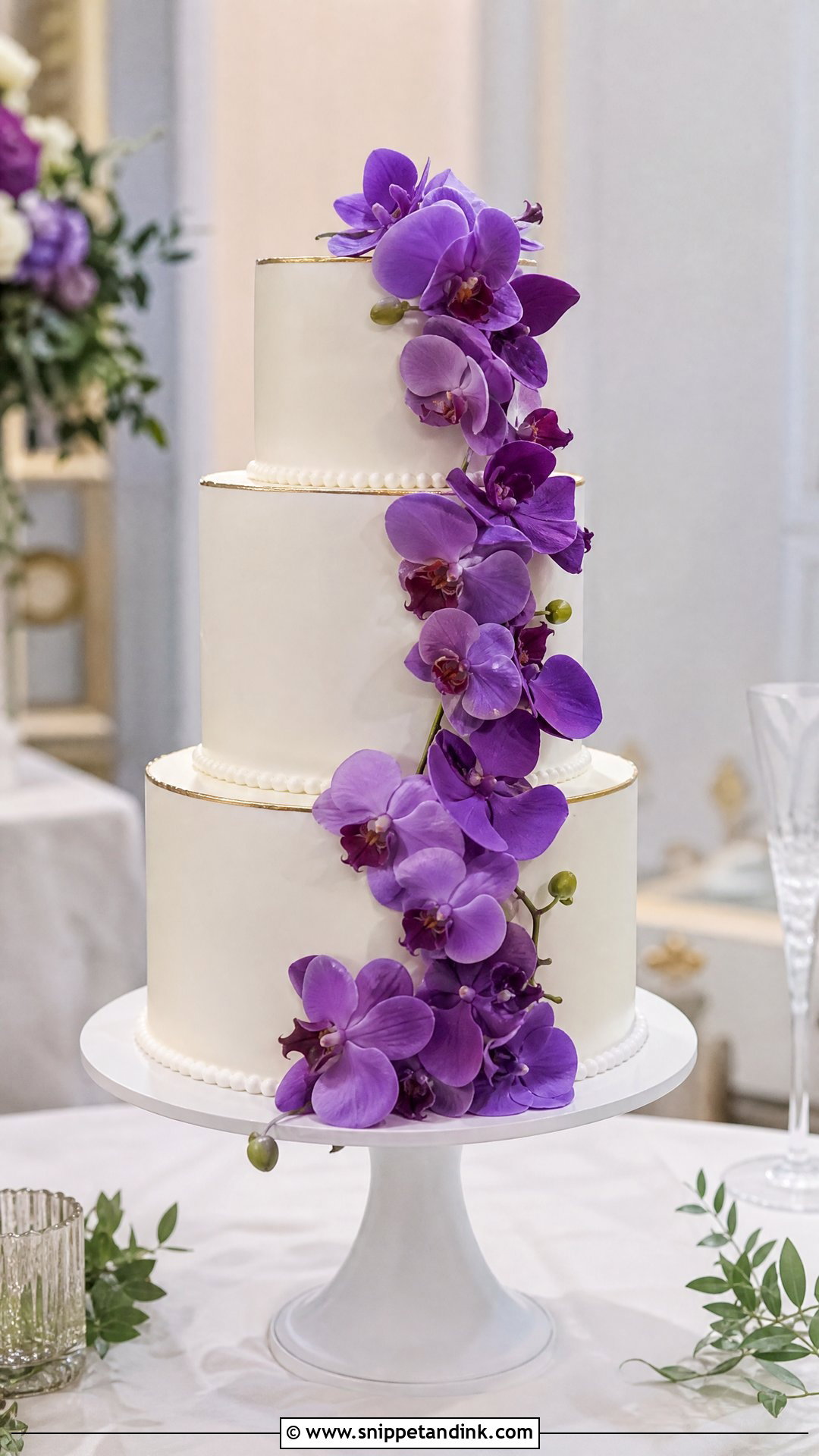
Orchids are sculptural on their own, so they look best against smooth white buttercream or clean fondant where the flower shape is the decoration. A few cascading stems can make a simple cake look far more expensive than it is, in a ballroom, a garden venue or a beach-inspired reception. I keep everything else plain: smooth sides, a few pearls, maybe a thin metallic trim. Purple orchids run from soft lavender to near magenta, so I ask the florist for an actual stem or a photo in daylight before I commit. Fresh orchids still need picks or a barrier like any other bloom.
15. Purple Rose Wedding Cake
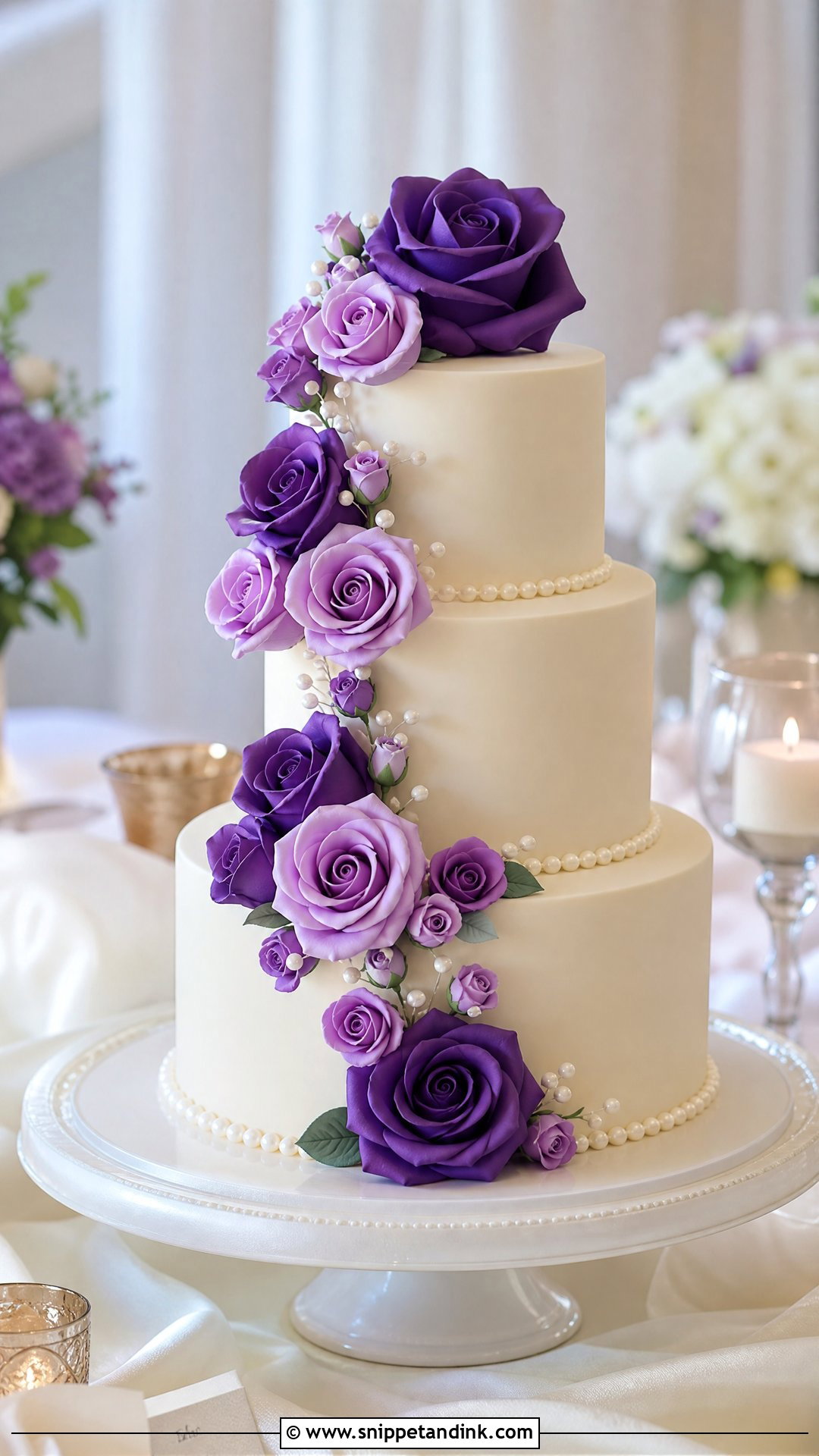
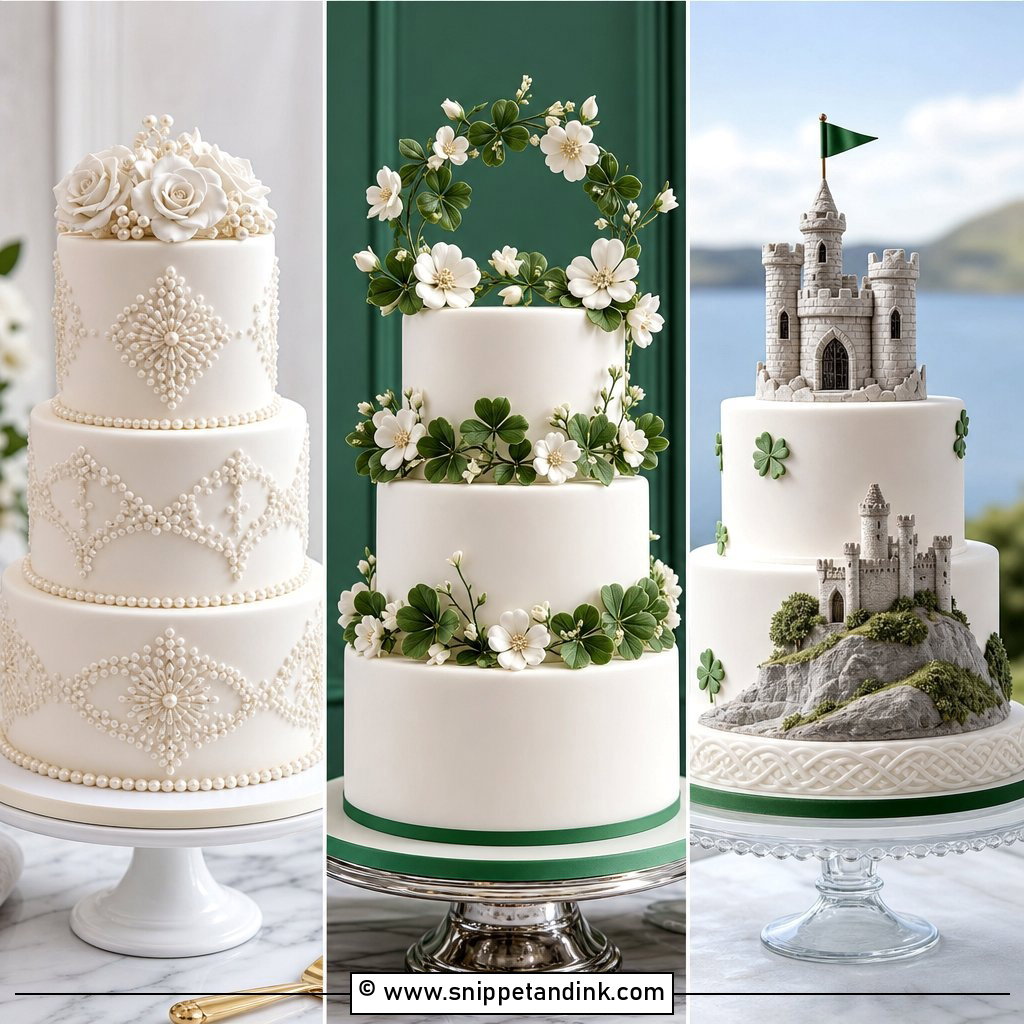
Roses are the easiest flower to adapt, because they can be fresh, sugar, piped in buttercream or hand-painted. Lilac roses give a garden feel; deep plum pushes the cake toward formal. White or ivory tiers are the safe base, though a lavender cake with ivory roses flips the scheme nicely. Piped buttercream roses are the gentlest on a budget, but they soften in heat, so for an outdoor summer reception I’d switch to sugar or fresh. Greenery, pearls or gold then set the mood.
16. Purple Geode Wedding Cake
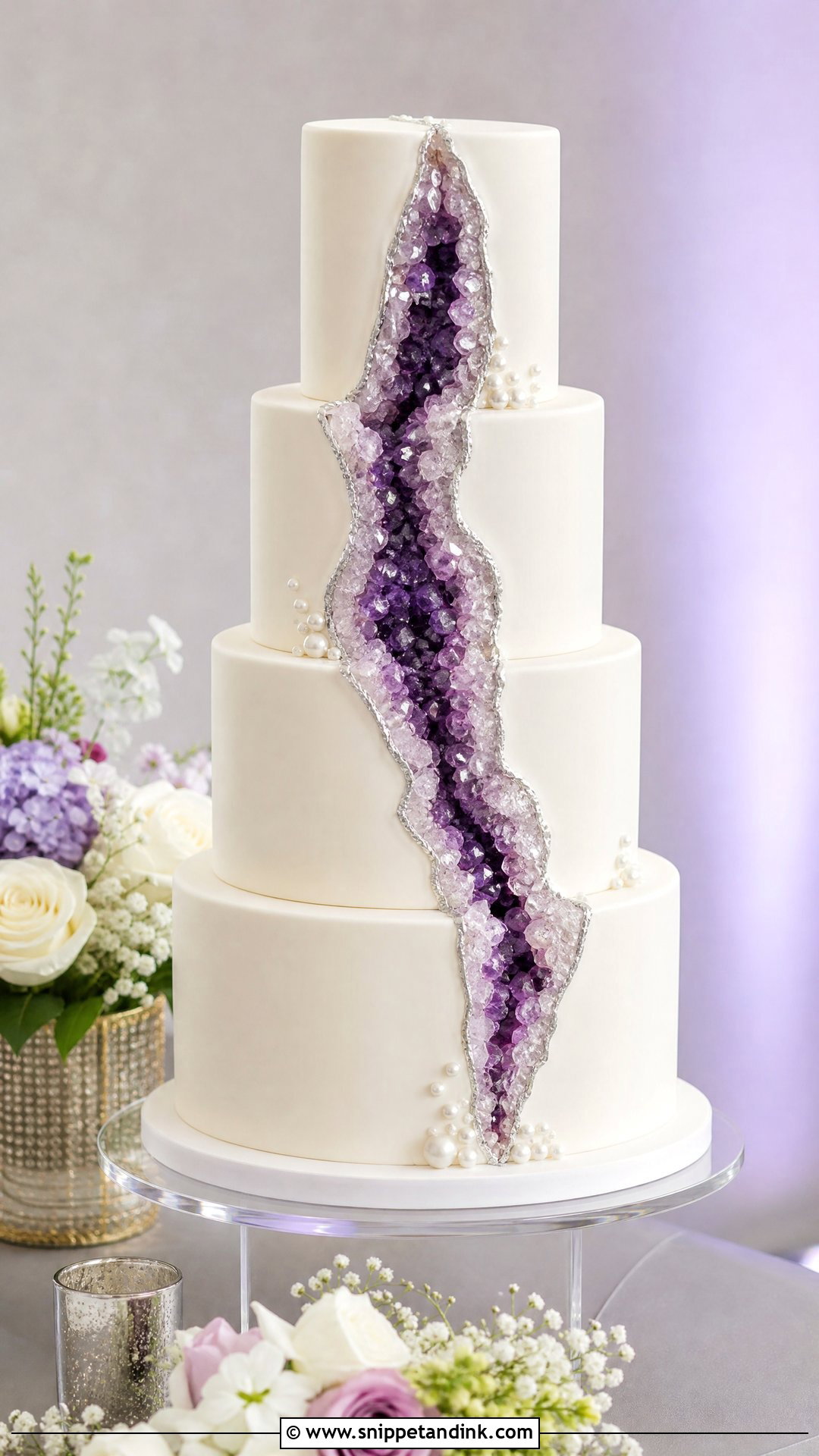
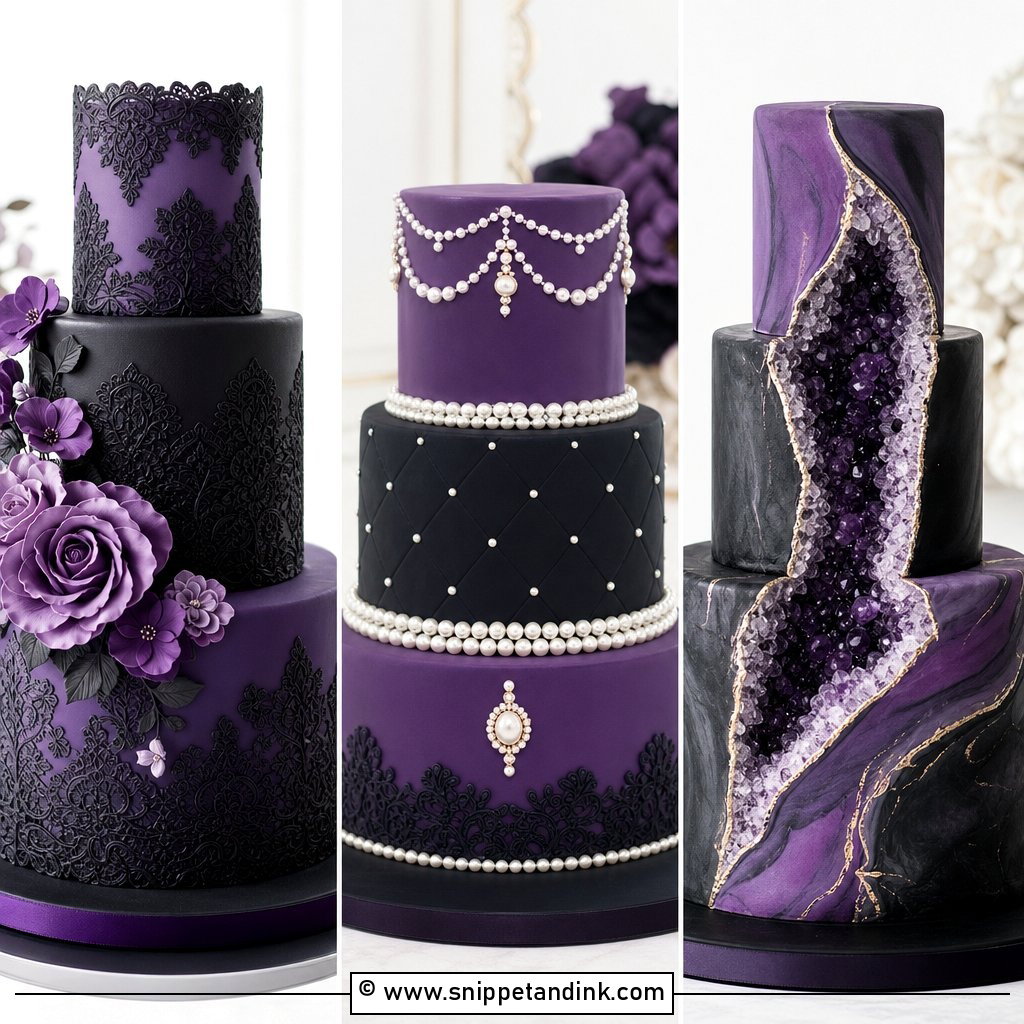
A purple geode wedding cake is made by carving a cavity into a tier and packing it with rock candy or isomalt crystals in amethyst, lavender and violet. The opening can sit in one tier or run down several like a split in stone. White fondant is the usual base because it keeps the crystals sharp, and I edge the cavity with gold or silver for definition. I tell couples honestly that the crystals are for show more than eating; they’re hard and heavy. They also catch light, which earns them a place in a dim modern venue. Keep everything else minimal.
17. Purple Naked Wedding Cake
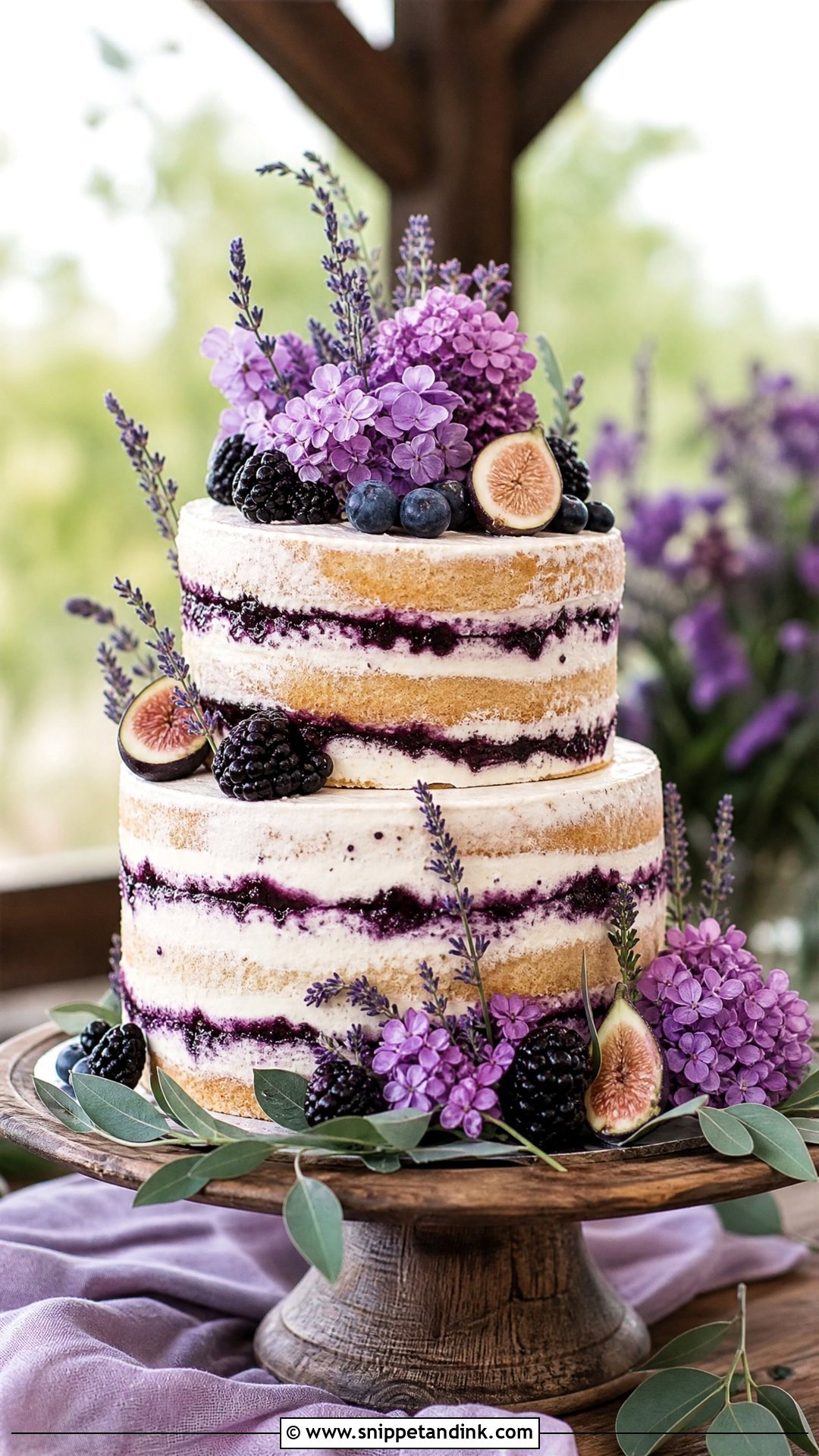
With a naked or semi-naked cake, the purple comes from inside and on top: berry filling, lavender buttercream between layers, figs, blackberries, blueberries, lilac flowers. Scraping the frosting thin lets the sponge show, which feels handmade and relaxed. The honest drawback is that exposed sponge dries out, so I assemble these as close to the event as possible and keep them covered until display. Vanilla, lemon, almond or honey sponge suits the fruit. I’d steer you away from it for a long afternoon outdoors in full sun.
18. Purple Vintage Wedding Cake
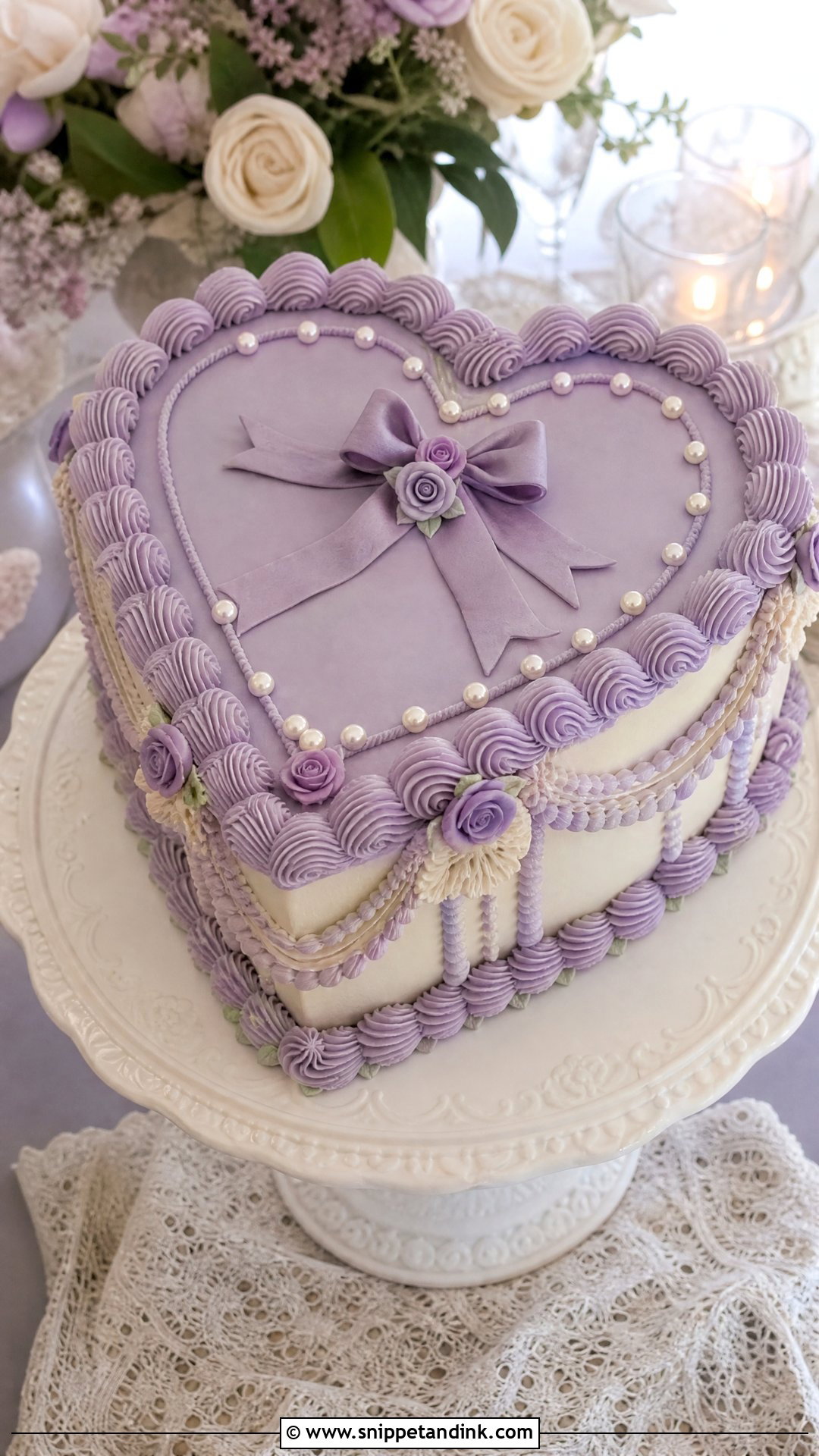
Vintage cakes live or die on the piping: shell borders, Lambeth over-piping, swags and ribbon details. Pale lavender reads soft, deep violet reads retro. Lambeth work is built up in slow layers, so it’s one of the most labor-heavy designs here, and that usually shows in the quote. Heart-shaped tiers and pearl borders lean into the nostalgia. I keep it to one or two purple shades, because dense piping in many colors looks crowded fast. Set it on a raised stand with soft flowers around the base and plain linens so the detail has room.
19. Purple Heart Wedding Cake
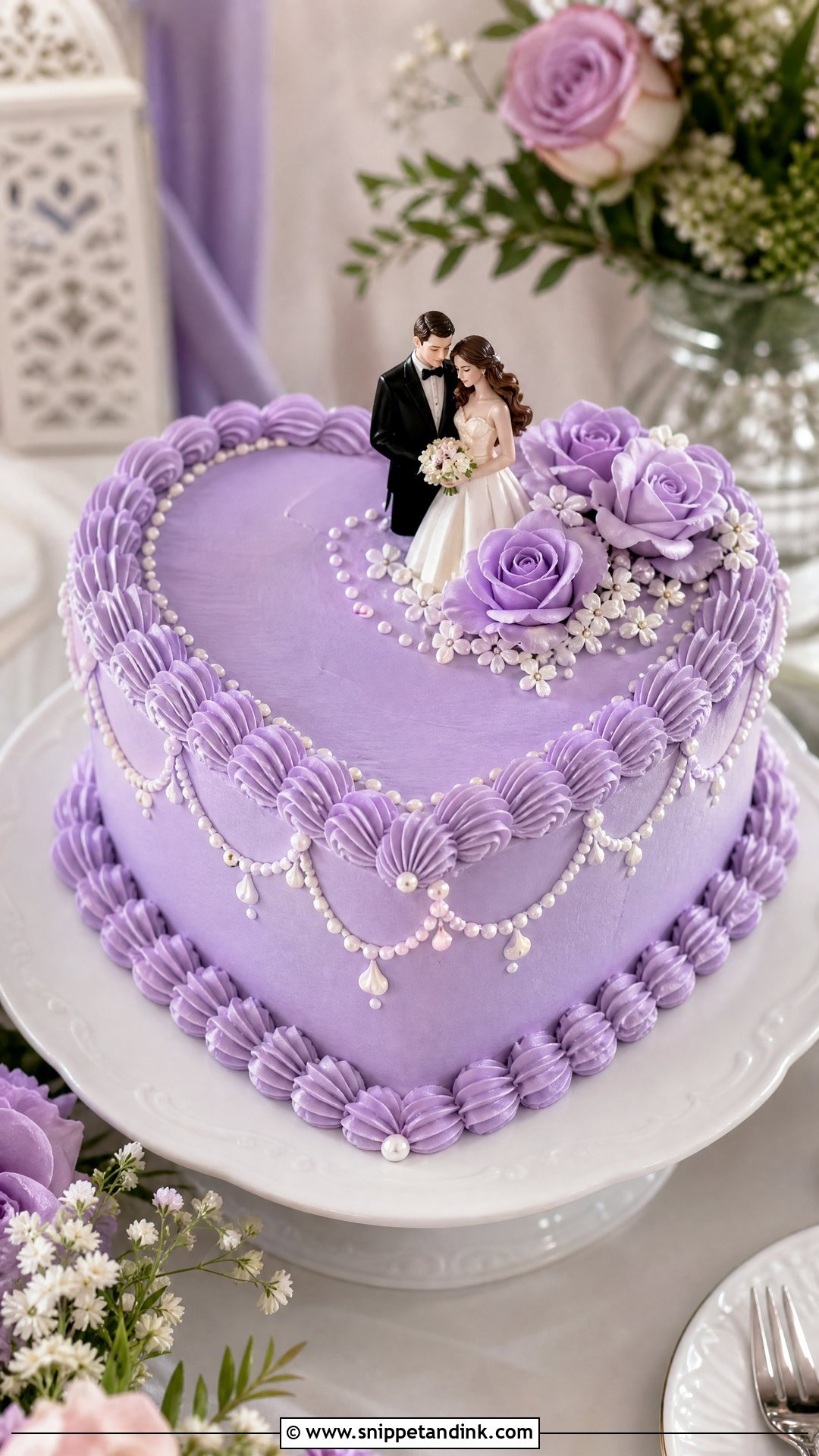
A heart can be a single tier for a small wedding or stacked for a bigger reception. Lavender buttercream with piped borders leans vintage, while smooth purple fondant looks modern. Hearts are harder to cover than rounds, because the point and the cleft tear fondant easily, so expect a buttercream finish to look cleaner unless your baker is confident with the shape. Pearls, sugar flowers or a small topper keep it wedding-focused. It makes a good cutting cake beside a larger dessert table, and the outline reads clearly from above.
20. Purple Tiered Wedding Cake
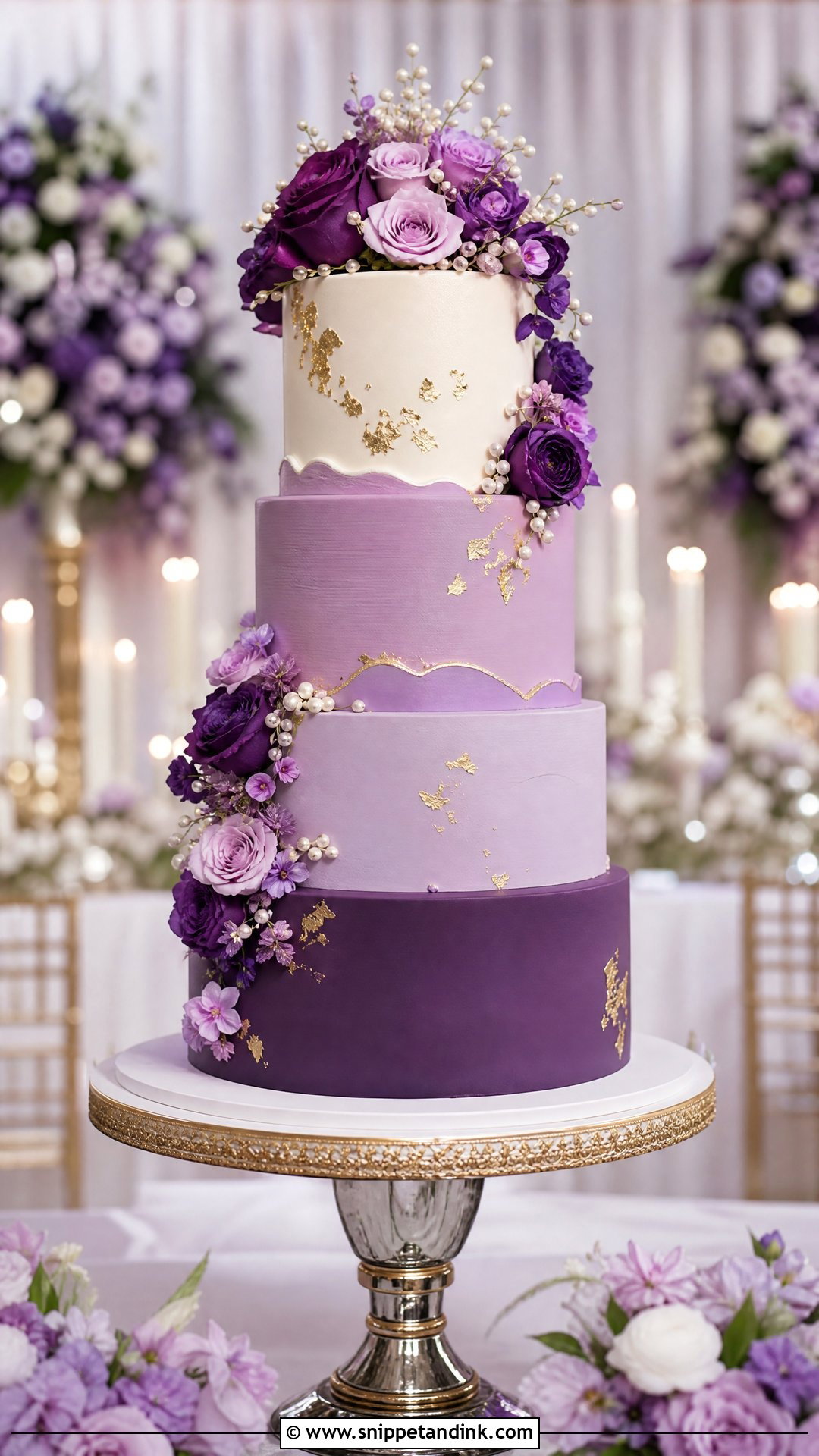
A purple tiered wedding cake gives you room to combine ombré, a painted accent tier, sugar flowers and gold leaf, with tiers in one shade or alternating ivory, lavender, lilac and plum. At this size my job is mostly editing. I pick one lead idea and let the rest support it, otherwise every tier competes. Tall cakes need dowels and a board at each level, and for anything over four tiers I’d rather stack the top on site than drive it fully assembled. Fresh flowers soften the height for a garden wedding.
Purple Blooms That Can Sit on Icing, and the Ones That Can’t
Most of the cakes above use flowers, and the purple ones are a mixed bag. Edible flowers grown without sprays can rest directly on icing. Everything else needs a barrier. I never use florist stock straight from the bucket either, because commercially grown flowers are usually treated with chemicals that don’t belong on food.
Fine on the cake when grown for eating
- Pansies and violas, which hold their color well
- Culinary lavender, in small amounts
- Lilac florets
- Borage, a true blue-violet star
Keep these off the icing
- Hydrangea
- Iris
- Calla lily
- Sweet pea
- Foxglove and wisteria
Non-edible stems get wrapped in floral tape and pushed into food-safe picks, or the heads rest on a small disc of parchment that comes off before cutting. Timing matters as much as safety. Flowers placed the evening before look tired by the first dance, so I dress the cake at setup and carry a few spare heads in a cool box to replace anything bruised on the drive.
Which Purple Belongs on Your Cake?
Lavender and lilac bring softness; plum and royal purple bring depth and formality. For something subtle, keep the tiers white and put the purple in the flowers or one accent tier. For a showpiece, look at marble fondant, geode crystals, ombré or a tall cake with a cascade. Whichever way you lean, bring your florist’s swatches and a photo of the venue at the hour you’ll cut the cake, so your baker can match the shade to the light it will really stand in. That one step saves more purple cakes than any decorating trick I know.
You'll Like These Ideas:


Leave a Reply